WO2023199557A1 - 液化石油ガス合成用触媒および液化石油ガスの製造方法 - Google Patents
液化石油ガス合成用触媒および液化石油ガスの製造方法 Download PDFInfo
- Publication number
- WO2023199557A1 WO2023199557A1 PCT/JP2022/048619 JP2022048619W WO2023199557A1 WO 2023199557 A1 WO2023199557 A1 WO 2023199557A1 JP 2022048619 W JP2022048619 W JP 2022048619W WO 2023199557 A1 WO2023199557 A1 WO 2023199557A1
- Authority
- WO
- WIPO (PCT)
- Prior art keywords
- mass
- catalyst material
- liquefied petroleum
- petroleum gas
- type zeolite
- Prior art date
- Legal status (The legal status is an assumption and is not a legal conclusion. Google has not performed a legal analysis and makes no representation as to the accuracy of the status listed.)
- Ceased
Links
Images


Classifications
-
- B—PERFORMING OPERATIONS; TRANSPORTING
- B01—PHYSICAL OR CHEMICAL PROCESSES OR APPARATUS IN GENERAL
- B01J—CHEMICAL OR PHYSICAL PROCESSES, e.g. CATALYSIS OR COLLOID CHEMISTRY; THEIR RELEVANT APPARATUS
- B01J29/00—Catalysts comprising molecular sieves
- B01J29/04—Catalysts comprising molecular sieves having base-exchange properties, e.g. crystalline zeolites
- B01J29/06—Crystalline aluminosilicate zeolites; Isomorphous compounds thereof
- B01J29/40—Crystalline aluminosilicate zeolites; Isomorphous compounds thereof of the pentasil type, e.g. types ZSM-5, ZSM-8 or ZSM-11, as exemplified by patent documents US3702886, GB1334243 and US3709979, respectively
- B01J29/42—Crystalline aluminosilicate zeolites; Isomorphous compounds thereof of the pentasil type, e.g. types ZSM-5, ZSM-8 or ZSM-11, as exemplified by patent documents US3702886, GB1334243 and US3709979, respectively containing iron group metals, noble metals or copper
- B01J29/46—Iron group metals or copper
-
- C—CHEMISTRY; METALLURGY
- C07—ORGANIC CHEMISTRY
- C07C—ACYCLIC OR CARBOCYCLIC COMPOUNDS
- C07C1/00—Preparation of hydrocarbons from one or more compounds, none of them being a hydrocarbon
- C07C1/02—Preparation of hydrocarbons from one or more compounds, none of them being a hydrocarbon from oxides of a carbon
- C07C1/04—Preparation of hydrocarbons from one or more compounds, none of them being a hydrocarbon from oxides of a carbon from carbon monoxide with hydrogen
- C07C1/0425—Catalysts; their physical properties
- C07C1/043—Catalysts; their physical properties characterised by the composition
- C07C1/0435—Catalysts; their physical properties characterised by the composition containing a metal of group 8 or a compound thereof
-
- B—PERFORMING OPERATIONS; TRANSPORTING
- B01—PHYSICAL OR CHEMICAL PROCESSES OR APPARATUS IN GENERAL
- B01J—CHEMICAL OR PHYSICAL PROCESSES, e.g. CATALYSIS OR COLLOID CHEMISTRY; THEIR RELEVANT APPARATUS
- B01J23/00—Catalysts comprising metals or metal oxides or hydroxides, not provided for in group B01J21/00
- B01J23/70—Catalysts comprising metals or metal oxides or hydroxides, not provided for in group B01J21/00 of the iron group metals or copper
- B01J23/76—Catalysts comprising metals or metal oxides or hydroxides, not provided for in group B01J21/00 of the iron group metals or copper combined with metals, oxides or hydroxides provided for in groups B01J23/02 - B01J23/36
- B01J23/80—Catalysts comprising metals or metal oxides or hydroxides, not provided for in group B01J21/00 of the iron group metals or copper combined with metals, oxides or hydroxides provided for in groups B01J23/02 - B01J23/36 with zinc, cadmium or mercury
-
- B—PERFORMING OPERATIONS; TRANSPORTING
- B01—PHYSICAL OR CHEMICAL PROCESSES OR APPARATUS IN GENERAL
- B01J—CHEMICAL OR PHYSICAL PROCESSES, e.g. CATALYSIS OR COLLOID CHEMISTRY; THEIR RELEVANT APPARATUS
- B01J29/00—Catalysts comprising molecular sieves
- B01J29/04—Catalysts comprising molecular sieves having base-exchange properties, e.g. crystalline zeolites
- B01J29/06—Crystalline aluminosilicate zeolites; Isomorphous compounds thereof
- B01J29/40—Crystalline aluminosilicate zeolites; Isomorphous compounds thereof of the pentasil type, e.g. types ZSM-5, ZSM-8 or ZSM-11, as exemplified by patent documents US3702886, GB1334243 and US3709979, respectively
- B01J29/42—Crystalline aluminosilicate zeolites; Isomorphous compounds thereof of the pentasil type, e.g. types ZSM-5, ZSM-8 or ZSM-11, as exemplified by patent documents US3702886, GB1334243 and US3709979, respectively containing iron group metals, noble metals or copper
- B01J29/44—Noble metals
-
- B—PERFORMING OPERATIONS; TRANSPORTING
- B01—PHYSICAL OR CHEMICAL PROCESSES OR APPARATUS IN GENERAL
- B01J—CHEMICAL OR PHYSICAL PROCESSES, e.g. CATALYSIS OR COLLOID CHEMISTRY; THEIR RELEVANT APPARATUS
- B01J35/00—Catalysts, in general, characterised by their form or physical properties
- B01J35/19—Catalysts containing parts with different compositions
-
- B—PERFORMING OPERATIONS; TRANSPORTING
- B01—PHYSICAL OR CHEMICAL PROCESSES OR APPARATUS IN GENERAL
- B01J—CHEMICAL OR PHYSICAL PROCESSES, e.g. CATALYSIS OR COLLOID CHEMISTRY; THEIR RELEVANT APPARATUS
- B01J37/00—Processes, in general, for preparing catalysts; Processes, in general, for activation of catalysts
- B01J37/0009—Use of binding agents; Moulding; Pressing; Powdering; Granulating; Addition of materials ameliorating the mechanical properties of the product catalyst
- B01J37/0027—Powdering
- B01J37/0036—Grinding
-
- B—PERFORMING OPERATIONS; TRANSPORTING
- B01—PHYSICAL OR CHEMICAL PROCESSES OR APPARATUS IN GENERAL
- B01J—CHEMICAL OR PHYSICAL PROCESSES, e.g. CATALYSIS OR COLLOID CHEMISTRY; THEIR RELEVANT APPARATUS
- B01J37/00—Processes, in general, for preparing catalysts; Processes, in general, for activation of catalysts
- B01J37/009—Preparation by separation, e.g. by filtration, decantation, screening
-
- B—PERFORMING OPERATIONS; TRANSPORTING
- B01—PHYSICAL OR CHEMICAL PROCESSES OR APPARATUS IN GENERAL
- B01J—CHEMICAL OR PHYSICAL PROCESSES, e.g. CATALYSIS OR COLLOID CHEMISTRY; THEIR RELEVANT APPARATUS
- B01J37/00—Processes, in general, for preparing catalysts; Processes, in general, for activation of catalysts
- B01J37/02—Impregnation, coating or precipitation
- B01J37/0201—Impregnation
-
- B—PERFORMING OPERATIONS; TRANSPORTING
- B01—PHYSICAL OR CHEMICAL PROCESSES OR APPARATUS IN GENERAL
- B01J—CHEMICAL OR PHYSICAL PROCESSES, e.g. CATALYSIS OR COLLOID CHEMISTRY; THEIR RELEVANT APPARATUS
- B01J37/00—Processes, in general, for preparing catalysts; Processes, in general, for activation of catalysts
- B01J37/02—Impregnation, coating or precipitation
- B01J37/03—Precipitation; Co-precipitation
- B01J37/031—Precipitation
-
- B—PERFORMING OPERATIONS; TRANSPORTING
- B01—PHYSICAL OR CHEMICAL PROCESSES OR APPARATUS IN GENERAL
- B01J—CHEMICAL OR PHYSICAL PROCESSES, e.g. CATALYSIS OR COLLOID CHEMISTRY; THEIR RELEVANT APPARATUS
- B01J37/00—Processes, in general, for preparing catalysts; Processes, in general, for activation of catalysts
- B01J37/04—Mixing
-
- B—PERFORMING OPERATIONS; TRANSPORTING
- B01—PHYSICAL OR CHEMICAL PROCESSES OR APPARATUS IN GENERAL
- B01J—CHEMICAL OR PHYSICAL PROCESSES, e.g. CATALYSIS OR COLLOID CHEMISTRY; THEIR RELEVANT APPARATUS
- B01J37/00—Processes, in general, for preparing catalysts; Processes, in general, for activation of catalysts
- B01J37/06—Washing
-
- B—PERFORMING OPERATIONS; TRANSPORTING
- B01—PHYSICAL OR CHEMICAL PROCESSES OR APPARATUS IN GENERAL
- B01J—CHEMICAL OR PHYSICAL PROCESSES, e.g. CATALYSIS OR COLLOID CHEMISTRY; THEIR RELEVANT APPARATUS
- B01J37/00—Processes, in general, for preparing catalysts; Processes, in general, for activation of catalysts
- B01J37/08—Heat treatment
- B01J37/082—Decomposition and pyrolysis
- B01J37/088—Decomposition of a metal salt
-
- B—PERFORMING OPERATIONS; TRANSPORTING
- B01—PHYSICAL OR CHEMICAL PROCESSES OR APPARATUS IN GENERAL
- B01J—CHEMICAL OR PHYSICAL PROCESSES, e.g. CATALYSIS OR COLLOID CHEMISTRY; THEIR RELEVANT APPARATUS
- B01J37/00—Processes, in general, for preparing catalysts; Processes, in general, for activation of catalysts
- B01J37/16—Reducing
-
- C—CHEMISTRY; METALLURGY
- C07—ORGANIC CHEMISTRY
- C07C—ACYCLIC OR CARBOCYCLIC COMPOUNDS
- C07C1/00—Preparation of hydrocarbons from one or more compounds, none of them being a hydrocarbon
- C07C1/02—Preparation of hydrocarbons from one or more compounds, none of them being a hydrocarbon from oxides of a carbon
- C07C1/04—Preparation of hydrocarbons from one or more compounds, none of them being a hydrocarbon from oxides of a carbon from carbon monoxide with hydrogen
- C07C1/0425—Catalysts; their physical properties
- C07C1/043—Catalysts; their physical properties characterised by the composition
-
- B—PERFORMING OPERATIONS; TRANSPORTING
- B01—PHYSICAL OR CHEMICAL PROCESSES OR APPARATUS IN GENERAL
- B01J—CHEMICAL OR PHYSICAL PROCESSES, e.g. CATALYSIS OR COLLOID CHEMISTRY; THEIR RELEVANT APPARATUS
- B01J35/00—Catalysts, in general, characterised by their form or physical properties
- B01J35/30—Catalysts, in general, characterised by their form or physical properties characterised by their physical properties
- B01J35/31—Density
- B01J35/32—Bulk density
-
- B—PERFORMING OPERATIONS; TRANSPORTING
- B01—PHYSICAL OR CHEMICAL PROCESSES OR APPARATUS IN GENERAL
- B01J—CHEMICAL OR PHYSICAL PROCESSES, e.g. CATALYSIS OR COLLOID CHEMISTRY; THEIR RELEVANT APPARATUS
- B01J37/00—Processes, in general, for preparing catalysts; Processes, in general, for activation of catalysts
- B01J37/0009—Use of binding agents; Moulding; Pressing; Powdering; Granulating; Addition of materials ameliorating the mechanical properties of the product catalyst
- B01J37/0063—Granulating
-
- C—CHEMISTRY; METALLURGY
- C07—ORGANIC CHEMISTRY
- C07C—ACYCLIC OR CARBOCYCLIC COMPOUNDS
- C07C2529/00—Catalysts comprising molecular sieves
- C07C2529/04—Catalysts comprising molecular sieves having base-exchange properties, e.g. crystalline zeolites, pillared clays
- C07C2529/06—Crystalline aluminosilicate zeolites; Isomorphous compounds thereof
- C07C2529/064—Crystalline aluminosilicate zeolites; Isomorphous compounds thereof containing iron group metals, noble metals or copper
-
- C—CHEMISTRY; METALLURGY
- C07—ORGANIC CHEMISTRY
- C07C—ACYCLIC OR CARBOCYCLIC COMPOUNDS
- C07C2529/00—Catalysts comprising molecular sieves
- C07C2529/04—Catalysts comprising molecular sieves having base-exchange properties, e.g. crystalline zeolites, pillared clays
- C07C2529/06—Crystalline aluminosilicate zeolites; Isomorphous compounds thereof
- C07C2529/40—Crystalline aluminosilicate zeolites; Isomorphous compounds thereof of the pentasil type, e.g. types ZSM-5, ZSM-8 or ZSM-11
- C07C2529/42—Crystalline aluminosilicate zeolites; Isomorphous compounds thereof of the pentasil type, e.g. types ZSM-5, ZSM-8 or ZSM-11 containing iron group metals, noble metals or copper
- C07C2529/46—Iron group metals or copper
-
- Y—GENERAL TAGGING OF NEW TECHNOLOGICAL DEVELOPMENTS; GENERAL TAGGING OF CROSS-SECTIONAL TECHNOLOGIES SPANNING OVER SEVERAL SECTIONS OF THE IPC; TECHNICAL SUBJECTS COVERED BY FORMER USPC CROSS-REFERENCE ART COLLECTIONS [XRACs] AND DIGESTS
- Y02—TECHNOLOGIES OR APPLICATIONS FOR MITIGATION OR ADAPTATION AGAINST CLIMATE CHANGE
- Y02P—CLIMATE CHANGE MITIGATION TECHNOLOGIES IN THE PRODUCTION OR PROCESSING OF GOODS
- Y02P20/00—Technologies relating to chemical industry
- Y02P20/50—Improvements relating to the production of bulk chemicals
- Y02P20/52—Improvements relating to the production of bulk chemicals using catalysts, e.g. selective catalysts
Definitions
- the present disclosure relates to a catalyst for liquefied petroleum gas synthesis and a method for producing liquefied petroleum gas.
- LPG Liquefied petroleum gas
- propane and butane exists inside oil fields and natural gas fields in a state where it is mixed with impurity gases such as methane and ethane. After such gas is transferred to above-ground facilities, propane and butane are separated and recovered from the gas, and impurities such as sulfur and mercury are removed to obtain liquefied petroleum gas.
- liquefied petroleum gas is also included in crude oil. Therefore, liquefied petroleum gas can also be obtained by separating and extracting propane and butane in the refining process of an oil refinery.
- liquefied petroleum gas is mainly produced using a methanol synthesis catalyst and a zeolite catalyst supporting palladium.
- liquefied petroleum gas In the production of liquefied petroleum gas, it is desirable to have a high CO conversion rate in order to increase the amount of liquefied petroleum gas produced. In addition, in the production of liquefied petroleum gas, it is desirable to have a high total yield of propane and butane. In particular, propane is easily vaporized and can be used as a fuel even in cold regions, so the yield of propane is particularly high among liquefied petroleum gases. It is desirable that the value is high.
- An object of the present disclosure is to provide a catalyst for liquefied petroleum gas synthesis and a method for producing liquefied petroleum gas that can improve the CO conversion rate, the total yield of propane and butane, and the yield of propane.
- [1] Contains a Cu-Zn-based catalyst material and an MFI-type zeolite catalyst material supporting Pt, and the Cu-Zn-based catalyst material contains copper oxide, zinc oxide, aluminum oxide, and zirconium oxide.
- the mass of the zirconium oxide (M(ZrO 2 )) in the Cu-Zn-based catalyst material is more than 0% by mass and 6.5% by mass with respect to the mass (M1) of the Cu-Zn-based catalyst material.
- a catalyst for liquefied petroleum gas synthesis wherein the MFI type zeolite catalyst material contains more than 0% by mass and less than 4.5% by mass of P.
- the mass of the aluminum oxide (M(Al 2 O 3 )) in the Cu-Zn catalyst material is 3.5% by mass or more with respect to the mass (M1) of the Cu-Zn catalyst material8.
- the catalyst for liquefied petroleum gas synthesis according to any one of [1] to [3] above.
- the Cu-Zn-based catalyst material and the MFI-type zeolite catalyst material exist independently of each other, and the Cu-Zn-based catalyst material and the MFI-type zeolite catalyst material are both powder particles or molded bodies.
- the liquefied petroleum gas synthesis catalyst according to any one of [1] to [4] above.
- a method for producing liquefied petroleum gas comprising: [7] The method for producing liquefied petroleum gas according to [6] above, wherein in the supply step, the gas hourly space velocity (GHSV) for supplying carbon monoxide and hydrogen is 500/h or more and 20,000/h or less.
- GHSV gas hourly space velocity
- a catalyst for liquefied petroleum gas synthesis and a method for producing liquefied petroleum gas that can improve the CO conversion rate, the total yield of propane and butane, and the yield of propane.
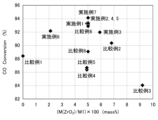
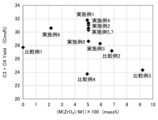
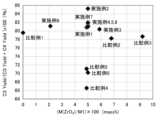
- FIG. 3 is a diagram showing the results of CO conversion rates in Examples and Comparative Examples. It is a figure showing the result of the total yield of propane and butane in an example and a comparative example. It is a figure showing the result of the yield of propane in an example and a comparative example. It is a figure showing the result of the yield of butane in an example and a comparative example. It is a figure which shows the result of the volume ratio of the yield of propane with respect to the total yield of propane and butane in an Example and a comparative example.
- the Cu-Zn catalyst material contains a Cu-Zn catalyst material and an MFI type zeolite catalyst material supporting Pt
- the Cu-Zn catalyst material contains copper oxide, zinc oxide, aluminum oxide and
- the mass of zirconium oxide (M(ZrO 2 )) in the Cu-Zn-based catalyst material is more than 0% by mass and 6.5% by mass or less with respect to the mass (M1) of the Cu-Zn-based catalyst material.
- the MFI type zeolite catalyst material improves the CO conversion rate, the total yield of propane and butane, and the yield of propane. We have found that improvements can be made, and have completed the present disclosure based on this knowledge.
- the catalyst for liquefied petroleum gas synthesis of the present embodiment includes a Cu-Zn-based catalyst material and an MFI-type zeolite catalyst material supporting Pt (hereinafter also simply referred to as MFI-type zeolite catalyst material).
- the catalyst material contains copper oxide, zinc oxide, aluminum oxide, and zirconium oxide, and the mass of zirconium oxide (M(ZrO 2 )) in the Cu-Zn-based catalyst material is the same as that of the Cu-Zn-based catalyst material. It is more than 0% by mass and 6.5% by mass or less with respect to mass (M1), and the MFI type zeolite catalyst material contains P in more than 0% by mass and less than 4.5% by mass.
- the liquefied petroleum gas synthesis catalyst of the present embodiment includes a Cu--Zn catalyst material and an MFI type zeolite catalyst material.
- a catalyst for liquefied petroleum gas synthesis can synthesize liquefied petroleum gas from carbon monoxide and hydrogen.
- the liquefied petroleum gas synthesized by the liquefied petroleum gas synthesis catalyst of this embodiment contains propane and butane, with propane being contained in a larger amount than butane.
- the total ratio of propane and butane to the liquefied petroleum gas is, for example, 28 Cmol% or more.
- the propane synthesized by the liquefied petroleum gas synthesis catalyst of this embodiment is 20 Cmol% or more. Furthermore, in the liquefied petroleum gas synthesized by the liquefied petroleum gas synthesis catalyst of the present embodiment, the ratio of propane to the total of propane and butane is, for example, 80 mol% or more by volume.
- the Cu-Zn-based catalyst material that constitutes the liquefied petroleum gas synthesis catalyst has a function as a liquefied petroleum gas precursor synthesis catalyst that synthesizes liquefied petroleum gas precursors such as methanol and dimethyl ether from carbon monoxide and hydrogen.
- the ratio (M1 /(M1+M2)) (hereinafter also simply referred to as the mass ratio of the Cu-Zn catalyst material), the lower limit is preferably 0.30 or more, more preferably 0.35 or more, and even more preferably 0.40 or more.
- the upper limit is preferably 0.95 or less, more preferably 0.80 or less, even more preferably 0.70 or less, particularly preferably 0.65 or less, and most preferably 0.60 or less.
- the Cu--Zn-based catalyst material constituting the liquefied petroleum gas synthesis catalyst is a catalyst containing copper oxide, zinc oxide, aluminum oxide, and zirconium oxide.
- the mass of zirconium oxide (M(ZrO 2 )) in the Cu--Zn-based catalyst material is more than 0% by mass and 6.5% by mass or less with respect to the mass (M1) of the Cu--Zn-based catalyst material.
- a catalyst containing copper oxide, zinc oxide, and aluminum oxide has excellent performance for synthesizing a liquefied petroleum gas precursor among catalysts for synthesizing a liquefied petroleum gas precursor.
- a part of aluminum oxide is replaced with a specific amount of zirconium oxide, that is, the mass of zirconium oxide (M(ZrO 2 )) is substituted with zirconium oxide in an amount that is more than 0% by mass and 6.5% by mass or less based on the mass (M1) of the Cu-Zn catalyst material, and contains a predetermined amount of P, which will be detailed later.
- the CO conversion rate and propane and butane conversion can be improved.
- the present inventors currently speculate as follows regarding the reason why the total yield and the propane yield can be improved.
- aluminum oxide the dispersibility of copper oxide and zinc oxide is improved, and the interface between copper and zinc oxide, which is assumed to be an active site, is increased, and by including a specific amount of zirconium oxide, copper oxide is Suppresses oxidation.
- the mass of zirconium oxide (M(ZrO 2 )) in the Cu-Zn catalyst material is more than 0 mass% and 6.5 mass% or less with respect to the mass (M1) of the Cu-Zn catalyst material, and the lower limit is preferably 2.0% by mass or more, more preferably 3.5% by mass or more, even more preferably 4.0% by mass or more, most preferably 4.5% by mass or more, and the upper limit is preferably 6% by mass or more. 0% by mass or less, more preferably 5.0% by mass or less.
- the total mass of the mass of zirconium oxide (M(ZrO 2 )) and the mass of aluminum oxide (M(Al 2 O 3 )) (M(ZrO 2 )+M(Al 2 O 3 ) )) has a lower limit of preferably 5.0% by mass or more, more preferably 7.5% by mass or more, and an upper limit of preferably It is 15.0% by mass or less, more preferably 12.5% by mass or less.
- the lower limit of the mass of aluminum oxide (M(Al 2 O 3 )) in the Cu-Zn catalyst material is preferably 3.5% by mass or more with respect to the mass (M1) of the Cu-Zn catalyst material, It is more preferably 4.0% by mass or more, further preferably 4.5% by mass or more, and the upper limit is preferably 8.0% by mass or less, more preferably 7.0% by mass or less, still more preferably 6.0% by mass or less. It is 0% by mass or less.
- the lower limit of the mass (M(CuO)) of copper oxide (CuO) in the Cu-Zn catalyst material is preferably 50% by mass or more, more preferably 50% by mass or more, based on the mass (M1) of the Cu-Zn catalyst material. is 55% by mass or more, more preferably 60% by mass or more, and the upper limit is preferably 75% by mass or less, more preferably 70% by mass or less, even more preferably 65% by mass or less.
- the lower limit of the mass (M(ZnO)) of zinc oxide (ZnO) in the Cu-Zn catalyst material is preferably 15% by mass or more, more preferably 15% by mass or more, based on the mass (M1) of the Cu-Zn catalyst material. is 20% by mass or more, more preferably 25% by mass or more, and the upper limit is preferably 40% by mass or less, more preferably 35% by mass or less, still more preferably 30% by mass or less.
- the ratio (M(ZnO)/M(CuO)) of the mass of zinc oxide (ZnO) (M(ZnO)) to the mass of copper oxide (CuO) (M(CuO)) is It is preferably 0.40 or more and 0.60 or less, more preferably 0.45 or more and 0.55 or less.
- the Cu-Zn-based catalyst material may contain gallium oxide, indium oxide, and the like. Furthermore, by using a catalyst containing gallium oxide, indium oxide, etc. in addition to copper oxide, zinc oxide, gallium oxide, and zirconium oxide as the Cu-Zn-based catalyst material constituting the catalyst for liquefied petroleum gas synthesis, this implementation As in the case of using a catalyst containing copper oxide, zinc oxide, aluminum oxide, and zirconium oxide in the form of copper oxide, the total yield of propane and butane, and the yield of propane can be improved.
- the presence or absence and content ratio of copper oxide, zinc oxide, aluminum oxide, and zirconium oxide in the Cu-Zn-based catalyst material can be measured by ICP-OES (inductively coupled plasma optical emission spectroscopy).
- the MFI type zeolite catalyst material that constitutes the catalyst for liquefied petroleum gas synthesis synthesizes liquefied petroleum gas from a liquefied petroleum gas precursor produced with a Cu-Zn-based catalyst material.
- the synthesized liquefied petroleum gas contains propane and butane, with more propane than butane.
- MFI type zeolite catalyst material has a smaller pore diameter than beta type zeolite, so of the components that make up liquefied petroleum gas, it can synthesize propane more efficiently than butane etc., increasing the yield of propane. It is assumed that it is possible.
- the MFI type zeolite catalyst material supports Pt (platinum). It is presumed that the MFI type zeolite catalyst material supporting Pt can efficiently react the liquefied petroleum gas precursor, and therefore can increase the yield of propane.
- the mass of Pt (M(Pt)) in the MFI type zeolite catalyst material has a lower limit of preferably 0.1% by mass or more, more preferably 0. .2% by mass or more, more preferably 0.3% by mass or more, and the upper limit is preferably 10.0% by mass or less, more preferably 5.0% by mass or less, even more preferably 3.0% by mass or less. It is.
- the MFI type zeolite catalyst material may further support a platinum group element such as Pd (palladium), rhodium (Rh), or ruthenium (Ru).
- the noble metals may be one type or two or more types. When there are two or more kinds of noble metals, the state of the noble metals supported on the MFI type zeolite catalyst material is not particularly limited. For example, each noble metal may be mixed as a single metal, may be alloyed, or may be A single substance and an alloy may be mixed.
- the presence or absence of noble metals such as Pd and Pt supported on the MFI type zeolite catalyst material and the mass of Pt (M (Pt)) relative to the mass (M2) of the MFI type zeolite catalyst material are determined by ICP-OES (inductively coupled plasma optical emission spectroscopy). ) can be measured.
- the MFI type zeolite catalyst material contains P (phosphorus) in an amount of more than 0% by mass and less than 4.5% by mass.
- P phosphorus
- the acid sites (solid acid sites) of the MFI type zeolite catalyst material increase and at the same time change to weak acid sites, so the yield of propane can be particularly improved, for example, The ratio of propane to the total of propane and butane can be increased.
- P As shown in the following formula (1), P It is assumed that they combine.
- the ratio (mass%) of the mass of P (M(P)) to the mass (M2) of the MFI type zeolite catalyst material ((M(P)/M2) ⁇ 100)) (hereinafter referred to as "P ) has a lower limit of more than 0% by mass, preferably 0.5% by mass or more, more preferably 1.0% by mass or more, even more preferably 1.5% by mass or more.
- the upper limit is less than 4.5% by mass, preferably 4.0% by mass or less, more preferably 3.0% by mass or less, even more preferably 2.5% by mass or less.
- the mass of P (M(P)) is more than 0% by mass with respect to the mass (M2) of the MFI type zeolite catalyst material, the CO conversion rate, the total yield of propane and butane, and the yield of propane and can be improved. If the mass of P (M(P)) is less than 4.5% by mass with respect to the mass of the MFI type zeolite catalyst material (M2), the ratio of propane to the total of propane and butane is due to excessive P content. It is possible to suppress the decrease in the yield of propane and butane and the decrease in the yield of propane and butane.
- the presence or absence of P in the MFI-type zeolite catalyst material and the content ratio of P can be measured by ICP-OES (Inductively Coupled Plasma Emission Spectroscopy).
- the ratio of the number of moles of SiO2 to the number of moles of Al2O3 contained in the MFI type zeolite catalyst material (the number of moles of SiO2 /the number of moles of Al2O3 ) (hereinafter simply referred to as the molar ratio ( SiO2 /Al 2 O 3 ) is preferably 20 or more and 60 or less.
- the MFI type zeolite catalyst material is an aluminosilicate. By changing some of the silicon atoms in the silicate that constitutes the zeolite skeleton of the MFI type zeolite catalyst material to aluminum atoms, the aluminum atoms become acid sites, so the MFI type zeolite catalyst material functions as a solid acid. manifest.
- the molar ratio (SiO 2 /Al 2 O 3 ) is 60 or less, the number of acid sites in the MFI-type zeolite catalyst material increases, which makes it possible to increase the amount of liquefied petroleum gas produced and to efficiently synthesize propane. , the amount of propane contained in liquefied petroleum gas can be increased.
- the molar ratio (SiO 2 /Al 2 O 3 ) is 20 or more, it is possible to easily prepare the MFI type zeolite catalyst material supporting Pt while maintaining high liquefied petroleum gas production ability and high propane synthesis ability. can be manufactured.
- the molar ratio (SiO 2 /Al 2 O 3 ) is preferably 20 or more, more preferably 25 or more, and even more preferably 30 or more. Further, from the viewpoint of the above-mentioned high catalytic performance, the above-mentioned molar ratio (SiO 2 /Al 2 O 3 ) is preferably 60 or less, more preferably 50 or less, and even more preferably 40 or less.
- the above molar ratio (SiO 2 /Al 2 O 3 ) can be measured by ICP-OES (inductively coupled plasma optical emission spectroscopy).
- the amount of solid acid in the MFI type zeolite catalyst material is, for example, 0.6 mmol/g or more, preferably 0.8 mmol/g or more.
- the amount of solid acid is 0.6 mmol/g or more, an MFI type zeolite catalyst material supporting a noble metal can be easily produced while maintaining high liquefied petroleum gas production ability and high propane synthesis ability.
- the amount of solid acid can be measured by NH 3 -TPD (ammonia temperature programmed desorption method).
- the Cu--Zn-based catalyst material and the MFI-type zeolite catalyst material exist independently of each other, and both the Cu--Zn-based catalyst material and the MFI-type zeolite catalyst material are preferably in the form of granules or compacts. In the liquefied petroleum gas synthesis catalyst, it is preferable that the Cu--Zn catalyst material and the MFI type zeolite catalyst material are not integrated (mixed into one).
- the Cu-Zn catalyst material and the MFI type zeolite catalyst material may be in the form of powder (powder, for example, particle size 10 -9 to 10 -4 m), or may have a particle size larger than the powder.
- the Cu-Zn catalyst material is a molded body containing the Cu-Zn catalyst material
- the MFI type zeolite catalyst material is a molded body containing the MFI type zeolite catalyst material
- propane or butane Yields can be even higher. That is, the catalyst for liquefied petroleum gas synthesis is preferably a mixture of a molded body containing a Cu--Zn catalyst material and a molded body containing an MFI type zeolite catalyst material.
- the content of the Cu-Zn catalyst substance contained in the molded body is preferably 80% by mass or more, more preferably 90% by mass or more, and still more preferably 95% by mass or more. It is.
- a liquefied petroleum gas precursor can be efficiently synthesized from carbon monoxide and hydrogen.
- the content of the Cu--Zn catalyst material contained in the molded body may be 100% by mass.
- the content ratio is preferably 98% by mass or less, more preferably 96% by mass or less, and even more preferably 94% by mass or less. When the content ratio is 98% by mass or less, the moldability and mechanical strength of the molded article can be improved while maintaining efficient synthesis of the liquefied petroleum gas precursor.
- a molded article containing a Cu--Zn-based catalyst material may contain, in addition to the Cu--Zn-based catalyst material, various additives that improve moldability and mechanical strength.
- various additives include molded binders such as graphite and carbon black.
- the content of the MFI type zeolite catalyst substance contained in the molded body is preferably 70% by mass or more, more preferably 80% by mass or more, and still more preferably 90% by mass or more.
- the content ratio is 70% by mass or more, liquefied petroleum gas can be efficiently synthesized from the liquefied petroleum gas precursor.
- the content of the molded body containing the MFI type zeolite catalyst material contained in the molded body may be 100% by mass.
- the content ratio is preferably 98% by mass or less, more preferably 96% by mass or less, and even more preferably 94% by mass or less. When the content ratio is 98% by mass or less, the moldability and mechanical strength of the molded article can be improved while maintaining efficient synthesis of liquefied petroleum gas.
- the molded article containing the MFI type zeolite catalyst material may contain various additives that improve moldability and mechanical strength in addition to the MFI type zeolite catalyst material.
- various additives include molding binders such as various clay binders, alumina binders, and silica binders.
- various clay binders include kaolin, bentonite, talc, pyrophyllite, molysite, verculolite, montmorillonite, chlorite, and halloysite.
- the molding binder is preferably a silica-based binder in order to efficiently improve the catalyst activity and suppress the formation of catalyst poisoning substances such as coke.
- the shape of the Cu-Zn catalyst material and the MFI type zeolite catalyst material is not particularly limited.
- a desired shape can be selected, such as a columnar shape, a clover shape, a ring shape, a spherical shape, and a multi-hole shape.
- a cylindrical or clover-shaped molded product it is preferably an extrusion molded product.
- the lower limit is preferably 200 ⁇ m or more, more preferably 300 ⁇ m or more, and the upper limit is preferably 10 mm or less. , more preferably 5 mm or less, still more preferably 3 mm or less.
- the particle size is 200 ⁇ m or more, pressure loss within the reactor can be prevented.
- the particle size is 10 mm or less, the efficiency of contact between the reactant and the liquefied petroleum gas synthesis catalyst (Cu--Zn catalyst material and MFI type zeolite catalyst material) can be increased.
- Particle size can be determined using a dry sieving test method.
- the lower limit value is preferably 0.5 g/cm 3 or more
- the upper limit value is preferably 1 .5 g/cm 3 or less, more preferably 1.0 g/cm 3 or less.
- the bulk density can be determined by the sock filling bulk density measurement method using a graduated cylinder.
- the liquefied petroleum gas synthesis catalyst of this embodiment even if the liquefied petroleum gas synthesis temperature is low (for example, 330°C or lower), the CO conversion rate can be increased, and propane and butane can be produced in high yields. In particular, propane can be produced in high yields.
- the catalyst for liquefied petroleum gas synthesis of this embodiment can be used even if the synthesis temperature of liquefied petroleum gas is low (for example, 330 °C or below), propane can be produced in high yield.
- the synthesis temperature is the temperature of the catalyst for liquefied petroleum gas synthesis during liquefied petroleum gas synthesis.
- the propane yield of the liquefied petroleum gas produced in this embodiment is, for example, 15 Cmol% or more, and may be 20 Cmol% or more, or even 24 Cmol% or more, even if the synthesis temperature is low (for example, 330° C. or lower). can.
- the total yield of propane and butane (the sum of the yield of propane and the yield of butane) produced in this embodiment is, for example, 28 Cmol% or more, and preferably 30 Cmol% or more.
- the volume ratio of the yield of propane to the total yield of propane and butane is, for example, 75% or more, preferably 76% or more, and It can also be increased to 80% or more.
- the method for producing liquefied petroleum gas according to the embodiment includes a reduction treatment step, a supply step, and a synthesis step.
- the above catalyst for liquefied petroleum gas synthesis is subjected to reduction treatment.
- the reduction treatment reduces copper oxide to copper.
- the liquefied petroleum gas synthesis catalyst is subjected to reduction treatment with hydrogen.
- carbon monoxide and hydrogen are supplied to the liquefied petroleum gas synthesis catalyst that has been reduced in the reduction treatment step.
- Carbon monoxide and hydrogen are gases.
- carbon monoxide and hydrogen may be supplied separately, or a mixed gas containing carbon monoxide and hydrogen such as synthesis gas may be supplied.
- the liquefied petroleum gas synthesis catalyst of the present embodiment is difficult to deteriorate and has excellent long-term stability, and can exhibit good catalytic performance for a long period of time (for example, for 70 hours or more when the synthesis temperature is 330° C. or lower).
- the lower limit of the gas hourly space velocity (GHSV) for supplying carbon monoxide and hydrogen is preferably 500/h or more, more preferably 1000/h or more, and even more preferably 1500/h or more.
- the upper limit is preferably 20,000/h or less, more preferably 10,000/h or less, even more preferably 5,000/h or less.
- GHSV gas hourly space velocity
- liquefied petroleum gas can be efficiently produced from carbon monoxide and hydrogen.
- the gas hourly space velocity (GHSV) is 20,000/h or less, an increase in the content of unreacted substances such as carbon monoxide and hydrogen can be suppressed in the gas containing liquefied petroleum gas obtained after synthesis.
- the lower limit of the catalyst temperature (synthesis temperature) in the synthesis step is preferably 260°C or higher, more preferably 270°C or higher, even more preferably 280°C or higher, and the upper limit is preferably 330°C or lower, more preferably 280°C or higher.
- the temperature is preferably 325°C or lower, more preferably 320°C or lower.
- liquefied petroleum gas can be efficiently produced from carbon monoxide and hydrogen. Further, in the synthesis step, if carbon monoxide and hydrogen are reacted at a temperature of 330° C. or lower, deterioration of the catalytic performance of the liquefied petroleum gas synthesis catalyst against temperature can be suppressed. In addition, in the synthesis process, if carbon monoxide and hydrogen are reacted at a temperature below 330°C, the yield will be reduced due to over-decomposition of the produced liquefied petroleum gas (decomposition of propane to ethane or decomposition of ethane to methane). The decline can be suppressed.
- the lower limit is preferably 2.0 MPa or more, more preferably 3.0 MPa or more, even more preferably 3.5 MPa or more, and the upper limit is preferably 6.0 MPa or less, more preferably Carbon monoxide and hydrogen are reacted at a pressure of 5.5 MPa or less, more preferably 5.0 MPa or less.
- a catalyst for liquefied petroleum gas synthesis can be produced, for example, by mixing a Cu--Zn-based catalyst material and an MFI-type zeolite catalyst material. Further, the composition, proportion, state, etc. of the Cu--Zn catalyst material and the MFI type zeolite catalyst material are appropriately set depending on the desired liquefied petroleum gas.
- the method for producing the Cu--Zn-based catalyst material is not particularly limited, and examples thereof include a coprecipitation method.
- a salt of a metal component (copper, zinc, aluminum, zirconium, etc.) contained in the Cu--Zn catalyst material and a precipitant are used.
- Salts include nitrates, sulfates, acetates, and chlorides.
- Precipitating agents include sodium carbonate and sodium bicarbonate.
- an aqueous solution of a salt of a metal component contained in a Cu-Zn catalyst material and an aqueous solution of a precipitant are added dropwise to heated water and stirred to form a precipitate (slurry).
- a precipitate slurry
- catalytic material aqueous solution of a salt of a metal component contained in a Cu-Zn catalyst material and an aqueous solution of a precipitant
- the concentration of the salt of each metal component in the aqueous solution of the salt of the metal component contained in the Cu--Zn-based catalyst material may be set depending on the Cu--Zn-based catalyst material to be produced.
- the precipitate (slurry) is aged by further stirring for about 10 minutes to 180 minutes.
- the progress of the reaction can be confirmed by the pH, and the pH of the reaction solution after aging (after completion of the reaction) is preferably 7.0 or more and about 7.5. Note that the dropwise addition and stirring are preferably performed while heating the reaction solution so that the temperature thereof is 50° C. or higher and 80° C. or lower.
- the precipitate is washed to remove Na and the like derived from the precipitant, and dried to obtain a Cu--Zn-based catalyst material.
- the above molar ratio (SiO 2 /Al 2 O 3 ) of the MFI type zeolite catalyst material can be controlled, for example, by the amount of aluminum source added during synthesis of the zeolite catalyst material.
- the amount of solid acid in the MFI type zeolite catalyst material can be controlled, for example, by the synthesis conditions (pH, etc.) during the synthesis of the zeolite catalyst material.
- the method of supporting noble metals such as platinum on the MFI type zeolite catalyst material is not particularly limited, and examples thereof include an impregnation method, a dipping method, and an ion exchange method.
- platinum and palladium are simultaneously supported using an impregnating liquid or dipping liquid containing platinum and palladium, rather than supporting each metal by sequential impregnation or sequential dipping. It is more preferable to support it.
- Examples of starting materials for platinum and palladium supported on the MFI type zeolite catalyst material include compounds containing platinum and palladium.
- As the starting material for platinum chloroplatinic acid hexahydrate, dinitrodiammine platinum, dichlorotetraammine platinum, platinum oxide, platinum chloride, etc. can be used.
- As a starting material for palladium palladium chloride, palladium nitrate, dinitrodiammine palladium, palladium sulfate, palladium oxide, etc. can be used.
- the concentration of the compound containing platinum or palladium in the solution of the compound containing platinum or palladium may be set depending on the amount of platinum or palladium to be supported.
- the concentration of the chloroplatinic acid hexahydrate solution is preferably 0.15% by mass or more and 3.50% by mass or less.
- the concentration of the palladium chloride solution is preferably 0.1% by mass or more and 2.5% by mass or less.
- the amount of Pt or Pd supported can be controlled by the concentration of the solution.
- the impregnation time or immersion time with the above solution is preferably 10 minutes or more and 5 hours or less.
- the firing temperature of the MFI type zeolite catalyst material is preferably 300°C or more and 600°C or less, and the firing time of the MFI type zeolite catalyst material is preferably 30 minutes or more and 300 minutes or less.
- the method of supporting phosphorus on the MFI type zeolite catalyst material is not particularly limited, and examples thereof include an impregnation method and a dipping method.
- Orthophosphoric acid, phosphoric acid ester, etc. can be used as a starting material for phosphorus when supporting phosphorus on the MFI type zeolite catalyst material.
- an aqueous solution of orthophosphoric acid or phosphoric acid ester can be used as the impregnating liquid or dipping liquid.
- the concentration of the phosphoric acid solution is preferably 2% by mass or more and 20% by mass or less.
- the impregnation time or immersion time of the phosphoric acid solution is preferably 10 minutes or more and 5 hours or less.
- the firing temperature of the MFI type zeolite catalyst material is preferably 300°C or higher and 600°C or lower.
- the firing time of the MFI type zeolite catalyst material is preferably 30 minutes or more and 300 minutes or less.
- the content ratio of P can be controlled by the concentration of the phosphoric acid solution and the impregnation time or immersion time with the phosphoric acid solution.
- the MFI type zeolite catalyst material contains P, it is preferable to make the MFI type zeolite catalyst material support a noble metal such as platinum or palladium.
- a noble metal such as platinum or palladium.
- the impregnated or immersed MFI type zeolite catalyst material is calcined, and the fired MFI type zeolite catalyst material is treated with platinum or After being impregnated or immersed in a solution containing a noble metal such as palladium, the MFI type zeolite catalyst material impregnated or immersed in a solution containing a noble metal such as platinum or palladium is preferably calcined.
- the liquefied petroleum gas obtained using the above catalyst for liquefied petroleum gas synthesis contains a large amount of propane as a component, it is suitably used as a fuel that can be stably used even in cold regions.
- Example 1 (Cu-Zn catalyst material) 9.513 g of copper nitrate trihydrate, 4.973 g of zinc nitrate hexahydrate, 1.933 g of aluminum nitrate nonahydrate, and 0.531 g of zirconium nitrate dihydrate are dissolved in 58.4 g of distilled water. In this way, Solution A was prepared. In addition, Solution B was prepared by dissolving 14.8 g of anhydrous sodium carbonate in 200 g of distilled water.
- the precipitate slurry was transferred to a suction filtration device and filtered to obtain a precipitate cake.
- the resulting precipitate cake was washed 20 times with 25 ml of distilled water to remove Na ions from the precipitate cake.
- the precipitate cake was transferred to an evaporating dish and dried in a drying oven at 120°C for 12 hours.
- the temperature was raised to 350° C. at a rate of 10° C./min in a firing furnace, and after firing at 350° C. for 2 hours, the obtained fired product was thoroughly ground in an agate mortar to form a powder.
- This powder was made into pellets with a diameter of 20 mm and a thickness of about 1 mm using a tablet press under a pressure of 5 MPa. After crushing the pellets in a mortar, the crushed sample was layered with a 300 ⁇ m mesh and a 500 ⁇ m mesh. It was sieved using As a result, a molded article made of a Cu--Zn-based catalyst material having a particle size of 300 to 500 ⁇ m, a granular shape, and a bulk density of 0.9 g/cm 3 was obtained.
- this Cu-Zn-based catalyst material consists of copper oxide (CuO), zinc oxide (ZnO), zirconium oxide (ZrO 2 ), and aluminum oxide (Al 2 O 3 ), and its chemical composition is , 62.6% by mass of copper oxide, 27.2% by mass of zinc oxide, 4.9% by mass of zirconium oxide, and 5.3% by mass of aluminum oxide.
- the MFI type zeolite was made into pellets with a diameter of 20 mm and a thickness of about 1 mm using a tablet press, and the pellets were crushed in a mortar, and then the crushed samples were sieved using a 300 ⁇ m mesh and a 500 ⁇ m mesh stacked together.
- a molded body made of a granular MFI type zeolite catalyst material having a particle size of 300 to 500 ⁇ m, a bulk density of 0.8 g/cm 3 , and containing P and supporting Pt was obtained.
- the chemical composition of this MFI type zeolite catalyst material is 0.5% by mass of platinum (0.5% by mass of (M(Pt)/M2) ⁇ 100) and 1.9% by mass of phosphorus. ((M(P)/M2) ⁇ 100 was 1.9% by mass), and the remainder was ZSM-5.
- a catalyst for liquefied petroleum gas synthesis As a catalyst for liquefied petroleum gas synthesis, a mixture of a molded body made of the Cu--Zn catalyst material obtained above and a molded body made of the MFI type zeolite catalyst material obtained above was used.
- the ratio (M1/(M1+M2)) of the mass of the Cu-Zn catalyst material (M1) to the total mass of the mixed mass of the Cu-Zn catalyst material (M1) and the mass of the MFI type zeolite catalyst material (M2) is , 0.5.
- M2 is the sum of the supported noble metal (Pt), the mass of the MFI type zeolite catalyst material supporting the noble metal (Pt), and the mass of P.
- a catalyst for liquefied petroleum gas synthesis was reduced using hydrogen.
- carbon monoxide and hydrogen were supplied to the liquefied petroleum gas synthesis catalyst at a gas hourly velocity (GHSV) of 2000/h.
- Liquefied petroleum gas is synthesized from carbon monoxide and hydrogen by controlling the temperature (synthesis temperature) to 320°C and pressure to 5.0 MPa while supplying carbon monoxide and hydrogen to a catalyst for liquefied petroleum gas synthesis. did.
- the reactor used was made of stainless steel (inner diameter 6.2 mm, total length 60 cm).
- a catalyst for liquefied petroleum gas synthesis was packed in the center of the reactor by sandwiching it between glass wool.
- the reactor was installed in an electric furnace, and the temperature of the electric furnace was measured with a thermocouple inserted into the center of the furnace and controlled by PID.
- the temperature of the liquefied petroleum gas synthesis catalyst was measured with a thermocouple inserted into the center of the catalyst layer in the reactor.
- the temperature of the catalyst for liquefied petroleum gas synthesis is the synthesis temperature.
- the reduction treatment of the catalyst for liquefied petroleum gas synthesis was performed by supplying H 2 to the catalyst in the reactor at a flow rate of 40 ml/min for 2 hours at 380° C. before the reaction.
- [1] Content ratio of zirconium oxide to Cu-Zn catalyst material (mass of zirconium oxide to mass (M1) of Cu-Zn catalyst material (M(ZrO 2 )) (M(ZrO 2 )/M1) x 100 ) The content ratio of zirconium oxide to the Cu--Zn catalyst material was measured by ICP-OES (inductively coupled plasma optical emission spectroscopy).
- [2] Content ratio of aluminum oxide to Cu-Zn catalyst material (mass of aluminum oxide to mass (M1) of Cu-Zn catalyst material (M(Al 2 O 3 )) (M(Al 2 O 3 )/ M1) x 100) (alumina)
- M1 of Cu-Zn catalyst material M(Al 2 O 3 )
- M1 x 100 alumina
- the content ratio of aluminum oxide to the Cu--Zn catalyst material was measured by ICP-OES (inductively coupled plasma optical emission spectroscopy).
- the above ratio (M(Pt)/M2) ⁇ 100 was measured by ICP-OES (inductively coupled plasma optical emission spectroscopy).
- [4] Content ratio of P to MFI type zeolite catalyst material (ratio of mass (M(P)) of P to mass (M2) of MFI type zeolite catalyst material ((M(P)/M2) ⁇ 100))
- the content ratio of P in the MFI type zeolite catalyst material was measured by ICP-OES (inductively coupled plasma optical emission spectroscopy).
- CO conversion rate [(CO flow rate at inlet ( ⁇ mol/min) - CO flow rate at outlet ( ⁇ mol/min))/CO flow rate at inlet ( ⁇ mol/min)] x 100
- the CO conversion rate indicates the rate at which carbon monoxide (CO) in the reaction raw material gas is converted into hydrocarbons and the like.
- the unit of the C3 production rate is C ⁇ mol/min, and the unit of the inlet CO flow rate is ml (normal)/min.
- C3 is propane.
- Butane yield (C4 Yield in Figure 2, 4 to 5) Butane yield (Cmol%) [(C4 production rate)/(inlet CO flow rate) x 10 6 /22400] x 100
- the unit of the C4 production rate is C ⁇ mol/min, and the unit of the inlet CO flow rate is ml (normal)/min.
- C4 is butane.
- Example 2 The same operation as in Example 1 was performed except that the amount of aluminum nitrate nonahydrate was changed to 1.896 g and the amount of zirconium nitrate dihydrate was changed to 0.542 g. Moreover, the MFI type zeolite catalyst material of Example 1 was used as the MFI type zeolite catalyst material.
- the obtained Cu-Zn-based catalyst material consists of copper oxide (CuO), zinc oxide (ZnO), aluminum oxide (Al 2 O 3 ) and zirconium oxide (ZrO 2 ), and has the following chemical composition: The content was 62.6% by mass of copper oxide, 27.2% by mass of zinc oxide, 5.2% by mass of aluminum oxide, and 5.0% by mass of zirconium oxide.
- Example 3 The same operation as in Example 1 was performed except that the amount of aluminum nitrate nonahydrate was changed to 1.565 g and the amount of zirconium nitrate dihydrate was changed to 0.640 g. Moreover, the MFI type zeolite catalyst material of Example 1 was used as the MFI type zeolite catalyst material.
- the obtained Cu-Zn-based catalyst material consists of copper oxide (CuO), zinc oxide (ZnO), aluminum oxide (Al 2 O 3 ) and zirconium oxide (ZrO 2 ), and has the following chemical composition: The content was 62.6% by mass of copper oxide, 27.2% by mass of zinc oxide, 4.3% by mass of aluminum oxide, and 5.9% by mass of zirconium oxide.
- Example 4 The same operation as in Example 2 was performed except that the MFI type zeolite catalyst material was changed to the following preparation method.
- the MFI type zeolite was made into pellets with a diameter of 20 mm and a thickness of about 1 mm using a tablet press, and the pellets were crushed in a mortar, and then the crushed samples were sieved using a 300 ⁇ m mesh and a 500 ⁇ m mesh stacked together.
- a molded body made of a granular MFI type zeolite catalyst material having a particle size of 300 to 500 ⁇ m, a bulk density of 0.8 g/cm 3 , and containing P and supporting Pt was obtained.
- the chemical composition of this MFI type zeolite catalyst material is 1.0% by mass of platinum ((M(Pt)/M2) ⁇ 100 is 1.0% by mass) and 1.95% by mass of phosphorus. ((M(P)/M2) ⁇ 100 was 1.93% by mass), and the remainder was ZSM-5.
- Example 5 The same operation as in Example 2 was performed except that the MFI type zeolite catalyst material was changed to the following preparation method.
- the MFI type zeolite was made into pellets with a diameter of 20 mm and a thickness of about 1 mm using a tablet press, and the pellets were crushed in a mortar, and then the crushed samples were sieved using a 300 ⁇ m mesh and a 500 ⁇ m mesh stacked together.
- a molded body made of a granular MFI type zeolite catalyst material having a particle size of 300 to 500 ⁇ m, a bulk density of 0.8 g/cm 3 , and containing P and supporting Pt was obtained.
- the chemical composition of this MFI type zeolite catalyst material is 2.0% by mass of platinum (2.0% by mass of (M(Pt)/M2) ⁇ 100) and 1.91% by mass of phosphorus. ((M(P)/M2) ⁇ 100 was 1.91% by mass), and the remainder was ZSM-5.
- Example 6 The same operation as in Example 1 was performed except that the amount of aluminum nitrate nonahydrate was changed to 2.963 g and the amount of zirconium nitrate dihydrate was changed to 0.228 g. Moreover, the MFI type zeolite catalyst material of Example 1 was used as the MFI type zeolite catalyst material.
- the obtained Cu-Zn-based catalyst material consists of copper oxide (CuO), zinc oxide (ZnO), aluminum oxide (Al 2 O 3 ) and zirconium oxide (ZrO 2 ), and has the following chemical composition: The content was 62.6% by mass of copper oxide, 27.2% by mass of zinc oxide, 8.1% by mass of aluminum oxide, and 2.1% by mass of zirconium oxide.
- Example 7 The same operation as in Example 2 was performed except that the MFI type zeolite catalyst material was changed to the following preparation method.
- the MFI type zeolite was made into pellets with a diameter of 20 mm and a thickness of about 1 mm using a tablet press, and the pellets were crushed in a mortar, and then the crushed samples were sieved using a 300 ⁇ m mesh and a 500 ⁇ m mesh stacked together.
- a molded body made of a granular MFI type zeolite catalyst material having a particle size of 300 to 500 ⁇ m, a bulk density of 0.8 g/cm 3 , and containing P and supporting Pt was obtained.
- the chemical composition of this MFI type zeolite catalyst material is 0.5% by mass of platinum (0.5% by mass of (M(Pt)/M2) ⁇ 100) and 1.0% by mass of phosphorus. ((M(P)/M2) ⁇ 100 was 1.0% by mass), and the rest was ZSM-5.
- Example 8> The same operation as in Example 2 was performed except that the MFI type zeolite catalyst material was changed to the following preparation method.
- the MFI type zeolite was made into pellets with a diameter of 20 mm and a thickness of about 1 mm using a tablet press, and the pellets were crushed in a mortar, and then the crushed samples were sieved using a 300 ⁇ m mesh and a 500 ⁇ m mesh stacked together.
- a molded body made of a granular MFI type zeolite catalyst material having a particle size of 300 to 500 ⁇ m, a bulk density of 0.8 g/cm 3 , and containing P and supporting Pt was obtained.
- the chemical composition of this MFI type zeolite catalyst material is 0.5% by mass of platinum (0.5% by mass of (M(Pt)/M2) ⁇ 100) and 2.9% by mass of phosphorus. ((M(P)/M2) ⁇ 100 was 2.9% by mass), and the remainder was ZSM-5.
- Example 1 The same operation as in Example 1 was performed except that the amount of aluminum nitrate nonahydrate was changed to 3.736 g and zirconium nitrate dihydrate was not used.
- the obtained Cu-Zn-based catalyst material consisted of copper oxide (CuO), zinc oxide (ZnO), and aluminum oxide (Al 2 O 3 ), and the chemical composition was 62.6 mass of copper oxide. %, zinc oxide 27.2% by mass, and aluminum oxide 10.2% by mass.
- Example 2 The same operation as in Example 1 was performed except that the amount of aluminum nitrate nonahydrate was changed to 1.234 g and the amount of zirconium nitrate dihydrate was changed to 0.738 g.
- the obtained Cu-Zn-based catalyst material consisted of copper oxide (CuO), zinc oxide (ZnO), aluminum oxide (Al 2 O 3 ) and zirconium oxide (ZrO 2 ), and had the following chemical composition: The content was 62.6% by mass of copper oxide, 27.2% by mass of zinc oxide, 3.4% by mass of aluminum oxide, and 6.8% by mass of zirconium oxide.
- Example 3 The same operation as in Example 1 was performed except that aluminum nitrate nonahydrate was not used and the amount of zirconium nitrate dihydrate was changed to 0.998 g.
- the obtained Cu-Zn-based catalyst material consisted of copper oxide (CuO), zinc oxide (ZnO), aluminum oxide (Al 2 O 3 ) and zirconium oxide (ZrO 2 ), and had the following chemical composition: The content was 62.6% by mass of copper oxide, 27.2% by mass of zinc oxide, 1.0% by mass of aluminum oxide, and 9.2% by mass of zirconium oxide.
- the MFI type zeolite was made into pellets with a diameter of 20 mm and a thickness of about 1 mm using a tablet press, and the pellets were crushed in a mortar, and then the crushed samples were sieved using a 300 ⁇ m mesh and a 500 ⁇ m mesh stacked together.
- a molded body made of a granular MFI type zeolite catalyst material having a particle size of 300 to 500 ⁇ m, a bulk density of 0.8 g/cm 3 , and containing P and supporting Pd was obtained.
- the chemical composition of this MFI type zeolite catalyst material was 0% by mass of platinum (0% by mass of (M(Pt)/M2) ⁇ 100), 0.5% by mass of palladium, and 1.5% by mass of phosphorus. 9% by mass ((M(P)/M2) ⁇ 100 is 1.9% by mass), and the rest was ZSM-5.
- the MFI type zeolite was made into pellets with a diameter of 20 mm and a thickness of about 1 mm using a tablet press, and the pellets were crushed in a mortar, and then the crushed samples were sieved using a 300 ⁇ m mesh and a 500 ⁇ m mesh stacked together.
- a molded body made of a granular MFI type zeolite catalyst material having a particle size of 300 to 500 ⁇ m, a bulk density of 0.8 g/cm 3 , and containing P and supporting Pt was obtained.
- the chemical composition of this MFI type zeolite catalyst material is 0.5% by mass of platinum (0.5% by mass of (M(Pt)/M2) ⁇ 100) and 4.7% by mass of phosphorus. ((M(P)/M2) ⁇ 100 was 4.7% by mass), and the remainder was ZSM-5.
- the MFI type zeolite was made into pellets with a diameter of 20 mm and a thickness of about 1 mm using a tablet press, and the pellets were crushed in a mortar, and then the crushed samples were sieved using a 300 ⁇ m mesh and a 500 ⁇ m mesh stacked together.
- a molded body made of a granular MFI type zeolite catalyst material having a particle size of 300 to 500 ⁇ m, a bulk density of 0.8 g/cm 3 , and supporting Pt was obtained.
- the chemical composition of this MFI type zeolite catalyst material was 0.5% by mass of platinum (0.5% by mass of (M(Pt)/M2) ⁇ 100) and 0% by mass of phosphorus (( M(P)/M2) ⁇ 100 was 0% by mass), and the rest was ZSM-5.
- the Cu-Zn-based catalyst material contains copper oxide, zinc oxide, aluminum oxide, and
- the mass of zirconium oxide (M(ZrO 2 )) in the Cu-Zn-based catalyst material is more than 0% by mass and 6.5% by mass with respect to the mass (M1) of the Cu-Zn-based catalyst material.
- Examples 1 to 8 in which the MFI type zeolite catalyst material contains more than 0% by mass and less than 4.5% by mass of P, Comparative Example 1, which does not contain zirconium oxide, and the mass of zirconium oxide (M(ZrO 2 )) is outside the range of more than 0% by mass and 6.5% by mass or less based on the mass (M1) of the Cu-Zn catalyst material, Comparative Example 4 that does not support Pt, P content ratio is outside the range of more than 0% by mass and less than 4.5% by mass, and Comparative Example 6 which does not contain P, the CO conversion rate, the total yield of propane and butane, and the yield of propane are all lower. it was high.
Landscapes
- Chemical & Material Sciences (AREA)
- Organic Chemistry (AREA)
- Chemical Kinetics & Catalysis (AREA)
- Engineering & Computer Science (AREA)
- Materials Engineering (AREA)
- Crystallography & Structural Chemistry (AREA)
- Oil, Petroleum & Natural Gas (AREA)
- General Chemical & Material Sciences (AREA)
- Physics & Mathematics (AREA)
- Thermal Sciences (AREA)
- Catalysts (AREA)
- Organic Low-Molecular-Weight Compounds And Preparation Thereof (AREA)
Priority Applications (6)
| Application Number | Priority Date | Filing Date | Title |
|---|---|---|---|
| JP2024514804A JPWO2023199557A1 (https=) | 2022-04-15 | 2022-12-28 | |
| AU2022452727A AU2022452727A1 (en) | 2022-04-15 | 2022-12-28 | Catalyst for liquefied petroleum gas synthesis, and method for producing liquefied petroleum gas |
| EP22937531.6A EP4509489A4 (en) | 2022-04-15 | 2022-12-28 | CATALYST FOR LIQUEFIED PETROLEUM GAS SYNTHESIS AND PROCESS FOR PRODUCING LIQUEFIED PETROLEUM GAS |
| CA3247586A CA3247586A1 (en) | 2022-04-15 | 2022-12-28 | Catalyst for the synthesis of liquefied petroleum gas and method for producing liquefied petroleum gas |
| US18/855,332 US20250242339A1 (en) | 2022-04-15 | 2022-12-28 | Catalyst for liquefied petroleum gas synthesis, and method for producing liquefied petroleum gas |
| KR1020247036883A KR20250002356A (ko) | 2022-04-15 | 2022-12-28 | 액화석유가스 합성용 촉매 및 액화석유가스의 제조 방법 |
Applications Claiming Priority (2)
| Application Number | Priority Date | Filing Date | Title |
|---|---|---|---|
| JP2022-067954 | 2022-04-15 | ||
| JP2022067954 | 2022-04-15 |
Publications (1)
| Publication Number | Publication Date |
|---|---|
| WO2023199557A1 true WO2023199557A1 (ja) | 2023-10-19 |
Family
ID=88329447
Family Applications (1)
| Application Number | Title | Priority Date | Filing Date |
|---|---|---|---|
| PCT/JP2022/048619 Ceased WO2023199557A1 (ja) | 2022-04-15 | 2022-12-28 | 液化石油ガス合成用触媒および液化石油ガスの製造方法 |
Country Status (7)
| Country | Link |
|---|---|
| US (1) | US20250242339A1 (https=) |
| EP (1) | EP4509489A4 (https=) |
| JP (1) | JPWO2023199557A1 (https=) |
| KR (1) | KR20250002356A (https=) |
| AU (1) | AU2022452727A1 (https=) |
| CA (1) | CA3247586A1 (https=) |
| WO (1) | WO2023199557A1 (https=) |
Citations (8)
| Publication number | Priority date | Publication date | Assignee | Title |
|---|---|---|---|---|
| JPS6211548A (ja) * | 1985-07-01 | 1987-01-20 | ナシヨナル デイステイラ−ズ アンド ケミカル コ−ポレ−シヨン | 結晶性アルミノシリケ−ト組成物、その製法及び低分子量炭化水素への合成ガス転化反応でのその利用 |
| JPH0352825A (ja) * | 1989-07-19 | 1991-03-07 | Nkk Corp | 二酸化炭素の水素化によるプロパンの製造方法 |
| WO2006054527A1 (ja) * | 2004-11-16 | 2006-05-26 | Idemitsu Kosan Co., Ltd. | 酸素含有炭化水素の改質触媒、それを用いた水素又は合成ガスの製造方法及び燃料電池システム |
| JP4989650B2 (ja) | 2006-07-31 | 2012-08-01 | 日本ガス合成株式会社 | 液化石油ガス製造用触媒、及び、この触媒を用いた液化石油ガスの製造方法 |
| JP5086658B2 (ja) | 2006-02-10 | 2012-11-28 | 日本ガス合成株式会社 | 液化石油ガスの製造方法 |
| JP5405103B2 (ja) | 2006-02-17 | 2014-02-05 | 日本ガス合成株式会社 | 液化石油ガス製造用触媒 |
| CN106281400A (zh) * | 2015-05-11 | 2017-01-04 | 中国科学院大连化学物理研究所 | 一种合成气转化制汽油的集成工艺方法 |
| JP2019037939A (ja) | 2017-08-25 | 2019-03-14 | 国立大学法人富山大学 | Lpg合成用触媒 |
Family Cites Families (5)
| Publication number | Priority date | Publication date | Assignee | Title |
|---|---|---|---|---|
| JPS545103B1 (https=) | 1970-10-23 | 1979-03-13 | ||
| JPS5319955Y2 (https=) | 1972-11-24 | 1978-05-26 | ||
| JPS5329937Y2 (https=) | 1973-12-14 | 1978-07-26 | ||
| US20240352365A1 (en) * | 2021-07-02 | 2024-10-24 | Furukawa Electric Co., Ltd. | Catalyst for synthesizing liquefied petroleum gas and method for producing liquefied petroleum gas |
| JPWO2023277188A1 (https=) * | 2021-07-02 | 2023-01-05 |
-
2022
- 2022-12-28 WO PCT/JP2022/048619 patent/WO2023199557A1/ja not_active Ceased
- 2022-12-28 EP EP22937531.6A patent/EP4509489A4/en active Pending
- 2022-12-28 JP JP2024514804A patent/JPWO2023199557A1/ja active Pending
- 2022-12-28 CA CA3247586A patent/CA3247586A1/en active Pending
- 2022-12-28 KR KR1020247036883A patent/KR20250002356A/ko active Pending
- 2022-12-28 US US18/855,332 patent/US20250242339A1/en active Pending
- 2022-12-28 AU AU2022452727A patent/AU2022452727A1/en active Pending
Patent Citations (8)
| Publication number | Priority date | Publication date | Assignee | Title |
|---|---|---|---|---|
| JPS6211548A (ja) * | 1985-07-01 | 1987-01-20 | ナシヨナル デイステイラ−ズ アンド ケミカル コ−ポレ−シヨン | 結晶性アルミノシリケ−ト組成物、その製法及び低分子量炭化水素への合成ガス転化反応でのその利用 |
| JPH0352825A (ja) * | 1989-07-19 | 1991-03-07 | Nkk Corp | 二酸化炭素の水素化によるプロパンの製造方法 |
| WO2006054527A1 (ja) * | 2004-11-16 | 2006-05-26 | Idemitsu Kosan Co., Ltd. | 酸素含有炭化水素の改質触媒、それを用いた水素又は合成ガスの製造方法及び燃料電池システム |
| JP5086658B2 (ja) | 2006-02-10 | 2012-11-28 | 日本ガス合成株式会社 | 液化石油ガスの製造方法 |
| JP5405103B2 (ja) | 2006-02-17 | 2014-02-05 | 日本ガス合成株式会社 | 液化石油ガス製造用触媒 |
| JP4989650B2 (ja) | 2006-07-31 | 2012-08-01 | 日本ガス合成株式会社 | 液化石油ガス製造用触媒、及び、この触媒を用いた液化石油ガスの製造方法 |
| CN106281400A (zh) * | 2015-05-11 | 2017-01-04 | 中国科学院大连化学物理研究所 | 一种合成气转化制汽油的集成工艺方法 |
| JP2019037939A (ja) | 2017-08-25 | 2019-03-14 | 国立大学法人富山大学 | Lpg合成用触媒 |
Non-Patent Citations (1)
| Title |
|---|
| See also references of EP4509489A4 |
Also Published As
| Publication number | Publication date |
|---|---|
| KR20250002356A (ko) | 2025-01-07 |
| EP4509489A4 (en) | 2025-07-16 |
| JPWO2023199557A1 (https=) | 2023-10-19 |
| AU2022452727A1 (en) | 2024-10-24 |
| EP4509489A1 (en) | 2025-02-19 |
| CA3247586A1 (en) | 2025-03-03 |
| US20250242339A1 (en) | 2025-07-31 |
Similar Documents
| Publication | Publication Date | Title |
|---|---|---|
| JP3882044B2 (ja) | Fischer−Tropsch合成用触媒の調製方法 | |
| WO2014184685A2 (en) | Alkaline earth metal/metal oxide supported catalysts | |
| CN110368967B (zh) | 醋酸加氢催化剂及其制备方法和应用 | |
| WO2023277188A1 (ja) | 液化石油ガス合成用触媒および液化石油ガスの製造方法 | |
| EP4364844A1 (en) | Catalyst for synthesizing liquefied petroleum gas and method for producing liquefied petroleum gas | |
| JP6131370B1 (ja) | 合成ガス製造触媒用担体及びその製造方法、合成ガス製造触媒及びその製造方法、並びに合成ガスの製造方法 | |
| JP2017029970A (ja) | 炭化水素の改質用触媒の製造方法及び軽質炭化水素の改質方法 | |
| WO2014034880A1 (ja) | 7-オクテナールの製造方法 | |
| KR100336968B1 (ko) | 수식된 지르코니아 담지 니켈계 개질촉매 및 이를 이용한천연가스로부터 합성가스의 제조방법 | |
| WO2023199557A1 (ja) | 液化石油ガス合成用触媒および液化石油ガスの製造方法 | |
| WO2023277189A1 (ja) | 液化石油ガス合成用触媒および液化石油ガスの製造方法 | |
| CN112165986B (zh) | 负载型含钴费-托催化剂、其制备方法及其用途 | |
| WO2017213093A1 (ja) | マグネシア系触媒担体及びその製造方法 | |
| JPWO2019156029A1 (ja) | 複合物、触媒及びアンモニアの製造方法 | |
| JP7679020B2 (ja) | 複合物、複合物の製造方法、触媒及びアンモニアの製造方法 | |
| WO2012102256A1 (ja) | フィッシャー・トロプシュ合成用触媒、及びその製造方法、並びにフィッシャー・トロプシュ合成用触媒を用いた炭化水素類の製造方法 | |
| CN117642227A (zh) | 液化石油气合成用催化剂及液化石油气的制造方法 | |
| CN114984950A (zh) | 一种低Pd含量高效复合Pd-Zn/ZnTiO3催化剂及其制备方法和应用 | |
| EP4643991A1 (en) | Liquid petroleum gas production reactor and liquid petroleum gas production reaction device | |
| JP4776403B2 (ja) | 炭化水素の改質用触媒 | |
| JP2024095452A (ja) | 混合触媒およびジメチルエーテルの製造方法 | |
| JP2025152962A (ja) | アルコール合成用触媒及びそれを用いたアルコールの製造方法 | |
| JP2003154268A (ja) | ジメチルエーテル改質触媒および該触媒を用いる水素含有ガス製造方法 | |
| CN114870852A (zh) | 乙酸自热重整制氢用负载型Ni/W-ZrO2催化剂 | |
| RO134749A0 (ro) | Catalizatori metalici pe suport cu distribuţie bimodală a porilor, metoda de obţinere şi utilizare |
Legal Events
| Date | Code | Title | Description |
|---|---|---|---|
| 121 | Ep: the epo has been informed by wipo that ep was designated in this application |
Ref document number: 22937531 Country of ref document: EP Kind code of ref document: A1 |
|
| ENP | Entry into the national phase |
Ref document number: 2024514804 Country of ref document: JP Kind code of ref document: A |
|
| WWE | Wipo information: entry into national phase |
Ref document number: AU2022452727 Country of ref document: AU |
|
| WWE | Wipo information: entry into national phase |
Ref document number: 18855332 Country of ref document: US |
|
| WWE | Wipo information: entry into national phase |
Ref document number: 202417078878 Country of ref document: IN |
|
| REG | Reference to national code |
Ref country code: BR Ref legal event code: B01A Ref document number: 112024021406 Country of ref document: BR |
|
| ENP | Entry into the national phase |
Ref document number: 2022452727 Country of ref document: AU Date of ref document: 20221228 Kind code of ref document: A |
|
| WWE | Wipo information: entry into national phase |
Ref document number: 1020247036883 Country of ref document: KR |
|
| WWE | Wipo information: entry into national phase |
Ref document number: 2022937531 Country of ref document: EP |
|
| NENP | Non-entry into the national phase |
Ref country code: DE |
|
| ENP | Entry into the national phase |
Ref document number: 2022937531 Country of ref document: EP Effective date: 20241115 |
|
| WWE | Wipo information: entry into national phase |
Ref document number: 11202407072X Country of ref document: SG |
|
| ENP | Entry into the national phase |
Ref document number: 112024021406 Country of ref document: BR Kind code of ref document: A2 Effective date: 20241015 |
|
| WWP | Wipo information: published in national office |
Ref document number: 18855332 Country of ref document: US |