WO2023112209A1 - 水溶性組成物及びその製造方法 - Google Patents
水溶性組成物及びその製造方法 Download PDFInfo
- Publication number
- WO2023112209A1 WO2023112209A1 PCT/JP2021/046291 JP2021046291W WO2023112209A1 WO 2023112209 A1 WO2023112209 A1 WO 2023112209A1 JP 2021046291 W JP2021046291 W JP 2021046291W WO 2023112209 A1 WO2023112209 A1 WO 2023112209A1
- Authority
- WO
- WIPO (PCT)
- Prior art keywords
- magnesium
- water
- sodium
- lactoferrin
- soluble composition
- Prior art date
- Legal status (The legal status is an assumption and is not a legal conclusion. Google has not performed a legal analysis and makes no representation as to the accuracy of the status listed.)
- Ceased
Links
Images





Classifications
-
- A—HUMAN NECESSITIES
- A61—MEDICAL OR VETERINARY SCIENCE; HYGIENE
- A61P—SPECIFIC THERAPEUTIC ACTIVITY OF CHEMICAL COMPOUNDS OR MEDICINAL PREPARATIONS
- A61P1/00—Drugs for disorders of the alimentary tract or the digestive system
- A61P1/02—Stomatological preparations, e.g. drugs for caries, aphtae, periodontitis
-
- A—HUMAN NECESSITIES
- A61—MEDICAL OR VETERINARY SCIENCE; HYGIENE
- A61K—PREPARATIONS FOR MEDICAL, DENTAL OR TOILETRY PURPOSES
- A61K33/00—Medicinal preparations containing inorganic active ingredients
-
- A—HUMAN NECESSITIES
- A61—MEDICAL OR VETERINARY SCIENCE; HYGIENE
- A61K—PREPARATIONS FOR MEDICAL, DENTAL OR TOILETRY PURPOSES
- A61K33/00—Medicinal preparations containing inorganic active ingredients
- A61K33/06—Aluminium, calcium or magnesium; Compounds thereof, e.g. clay
-
- A—HUMAN NECESSITIES
- A61—MEDICAL OR VETERINARY SCIENCE; HYGIENE
- A61K—PREPARATIONS FOR MEDICAL, DENTAL OR TOILETRY PURPOSES
- A61K38/00—Medicinal preparations containing peptides
- A61K38/16—Peptides having more than 20 amino acids; Gastrins; Somatostatins; Melanotropins; Derivatives thereof
- A61K38/17—Peptides having more than 20 amino acids; Gastrins; Somatostatins; Melanotropins; Derivatives thereof from animals; from humans
- A61K38/40—Transferrins, e.g. lactoferrins, ovotransferrins
-
- A—HUMAN NECESSITIES
- A61—MEDICAL OR VETERINARY SCIENCE; HYGIENE
- A61K—PREPARATIONS FOR MEDICAL, DENTAL OR TOILETRY PURPOSES
- A61K47/00—Medicinal preparations characterised by the non-active ingredients used, e.g. carriers or inert additives; Targeting or modifying agents chemically bound to the active ingredient
- A61K47/02—Inorganic compounds
-
- A—HUMAN NECESSITIES
- A61—MEDICAL OR VETERINARY SCIENCE; HYGIENE
- A61K—PREPARATIONS FOR MEDICAL, DENTAL OR TOILETRY PURPOSES
- A61K8/00—Cosmetics or similar toiletry preparations
- A61K8/18—Cosmetics or similar toiletry preparations characterised by the composition
- A61K8/19—Cosmetics or similar toiletry preparations characterised by the composition containing inorganic ingredients
-
- A—HUMAN NECESSITIES
- A61—MEDICAL OR VETERINARY SCIENCE; HYGIENE
- A61K—PREPARATIONS FOR MEDICAL, DENTAL OR TOILETRY PURPOSES
- A61K8/00—Cosmetics or similar toiletry preparations
- A61K8/18—Cosmetics or similar toiletry preparations characterised by the composition
- A61K8/30—Cosmetics or similar toiletry preparations characterised by the composition containing organic compounds
- A61K8/64—Proteins; Peptides; Derivatives or degradation products thereof
-
- A—HUMAN NECESSITIES
- A61—MEDICAL OR VETERINARY SCIENCE; HYGIENE
- A61K—PREPARATIONS FOR MEDICAL, DENTAL OR TOILETRY PURPOSES
- A61K9/00—Medicinal preparations characterised by special physical form
- A61K9/0012—Galenical forms characterised by the site of application
- A61K9/0031—Rectum, anus
-
- A—HUMAN NECESSITIES
- A61—MEDICAL OR VETERINARY SCIENCE; HYGIENE
- A61K—PREPARATIONS FOR MEDICAL, DENTAL OR TOILETRY PURPOSES
- A61K9/00—Medicinal preparations characterised by special physical form
- A61K9/08—Solutions
-
- A—HUMAN NECESSITIES
- A61—MEDICAL OR VETERINARY SCIENCE; HYGIENE
- A61K—PREPARATIONS FOR MEDICAL, DENTAL OR TOILETRY PURPOSES
- A61K9/00—Medicinal preparations characterised by special physical form
- A61K9/48—Preparations in capsules, e.g. of gelatin, of chocolate
- A61K9/50—Microcapsules having a gas, liquid or semi-solid filling; Solid microparticles or pellets surrounded by a distinct coating layer, e.g. coated microspheres, coated drug crystals
- A61K9/51—Nanocapsules; Nanoparticles
- A61K9/5107—Excipients; Inactive ingredients
- A61K9/5115—Inorganic compounds
-
- A—HUMAN NECESSITIES
- A61—MEDICAL OR VETERINARY SCIENCE; HYGIENE
- A61P—SPECIFIC THERAPEUTIC ACTIVITY OF CHEMICAL COMPOUNDS OR MEDICINAL PREPARATIONS
- A61P1/00—Drugs for disorders of the alimentary tract or the digestive system
- A61P1/10—Laxatives
-
- A—HUMAN NECESSITIES
- A61—MEDICAL OR VETERINARY SCIENCE; HYGIENE
- A61Q—SPECIFIC USE OF COSMETICS OR SIMILAR TOILETRY PREPARATIONS
- A61Q11/00—Preparations for care of the teeth, of the oral cavity or of dentures; Dentifrices, e.g. toothpastes; Mouth rinses
Definitions
- the present disclosure relates to a water-soluble composition and a method for producing the same.
- periodontal disease is recognized as a bacterial infection. Therefore, various oral compositions having a bactericidal effect have been proposed as means for improving periodontal disease.
- Patent Document 1 discloses an oral composition containing a cationic antiseptic such as cetylpyridinium chloride.
- an object of the present disclosure is to provide a water-soluble composition that improves the cell environment and a method for producing the same.
- the water-soluble composition is containing magnesium, sodium and protein,
- the protein is lactoferrin
- the content of magnesium is 2.0 to 12.0 w / v%
- the content of lactoferrin is 3.0 to 10.0 w/v%.
- nutrients are absorbed from the mucosal tissue and supplied to the cells, thereby improving the cell environment and providing various effects.
- an anti-inflammatory effect against bacterial inflammation is obtained.
- the water-soluble composition of the present disclosure When the water-soluble composition of the present disclosure is used in oral compositions such as dentifrices and mouthwashes, it reduces the motility of bad bacteria in the mouth and improves the cellular environment in the gums, leading to inflammation and bleeding in the gums. can be suppressed to prevent periodontal disease.
- the water-soluble composition of the present disclosure when the water-soluble composition of the present disclosure is orally ingested, it reduces the motility of bad bacteria in the gastrointestinal tract and improves the cell environment in the gastrointestinal tract. Constipation caused by can be improved.
- the water-soluble composition of the present disclosure when the water-soluble composition of the present disclosure is applied to a wounded or burned skin, it can promote improvement of inflammation.
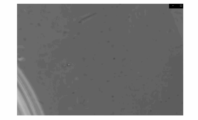
- FIG. 4 is an image of a phase-contrast microscope of Comparative Example 1.
- FIG. 4 is a phase-contrast microscope image of Example 1.
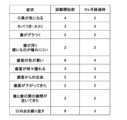
- FIG. It is an example of filling in a subjective evaluation check sheet used for evaluation of the water-soluble composition, and shows the evaluation results of subject 007.
- composition [Composition, action, use]
- the water-soluble composition of the present disclosure (hereinafter also simply referred to as the “composition”) contains high concentrations of magnesium, sodium, and lactoferrin as a protein, and is absorbed from mucosal tissue to supply nutrients to cells. As a result, the cell environment is improved, and various effects can be obtained.
- Magnesium ions are abundant in cells and are one of the major minerals essential for life support. Deficiency of magnesium ions in cells is thought to deteriorate the cellular environment and cause various diseases. The composition improves the cellular environment by allowing magnesium to be absorbed through mucosal tissue, making it possible to obtain various effects.
- the water-soluble composition preferably has a magnesium content of 2.0 to 12.0 w/v%, more preferably a magnesium content of 8.0 to 12.0 w/v%, more preferably 8.5 to 12.0 w/v%, particularly preferably 9.0 to 12.0 w/v%, most preferably 10.5 to 12.0 w/v%.
- a magnesium content of 2.0 to 12.0 w/v% more preferably a magnesium content of 8.0 to 12.0 w/v%, more preferably 8.5 to 12.0 w/v%, particularly preferably 9.0 to 12.0 w/v%, most preferably 10.5 to 12.0 w/v%.
- "-" is used to mean that the numerical values before and after it are included as lower and upper limits.
- magnesium deficiency is one of the factors that deteriorate the periodontal cell environment. Supplementation with magnesium is believed to be effective in alleviating various symptoms such as bleeding from gums and dissolution of alveolar bone caused by periodontal disease in which the periodontal cell environment deteriorates. It is considered that a high concentration of magnesium of 9.0 w/v% or more acts more effectively for periodontal disease symptoms, especially bleeding from the gums.
- a naturally occurring high-concentration magnesium solution can be a readily available commercial solution, such as a 12.0 w/v % magnesium solution produced from the water of Great Salt Lake, Utah, USA. .
- a magnesium content of 10.5 to 12.0 w/v% is suitable.
- [sodium] Sodium can promote the effect of magnesium by being included in the magnesium solution.
- the content ratio of magnesium and sodium (hereinafter also referred to as "Mg:Na ratio”) is considered to be important.
- the content ratio of magnesium to sodium is preferably 16 times or more, particularly preferably 40 times or more, relative to sodium.
- the Mg:Na ratio of the water-soluble composition is preferably 16:1 to 73:1.
- a sufficient amount of magnesium can be supplied to the mucosal tissue even in an environment where the composition is diluted.
- bittern An example of a magnesium solution is bittern, but the content ratio of magnesium and sodium in naturally derived bittern is not considered appropriate for improving the cell environment.
- Lactoferrin can impart foaming properties to the water-soluble composition. By containing lactoferrin, the composition stays in the mouth for a long time during brushing or gargling, making it possible to more effectively enhance magnesium absorption.
- the water-soluble composition preferably has a lactoferrin content of 3.0 to 10.0 w/v%.
- the lactoferrin is preferably lactoferrin that does not form a chelate structure, and more preferably lactoferrin that can form a complex.
- Preferred lactoferrins include, for example, lactoferrins with hollow lobes.
- FIG. 1 shows an image of the lactoferrin 2.0 w/v% preparation after 200 brushings.
- the preparation liquid containing 1.0 to 2.0 w/v % of lactoferrin hardly foamed.
- FIG. 2 shows an image of the lactoferrin 3.0 w/v % preparation after 200 brushings.
- lactoferrin it is preferable to use naturally-derived lactoferrin.
- By blending 3.0 to 10.0 w/v% of lactoferrin in the composition it is possible to form a composition with good foaming properties using only naturally-derived ingredients without containing foaming agents such as surfactants. can.
- the water-soluble composition can obtain various anti-inflammatory effects against bacterial inflammation by appropriately blending known ingredients within a range that does not interfere with the effects of the present disclosure and adopting various dosage forms. Therefore, the composition can also act as a dentifrice adjuvant.
- the water-soluble composition when used as an oral composition, it reduces the motility of bad bacteria in the mouth, improves the cellular environment in the gums, suppresses inflammation and bleeding in the gums, and prevents periodontal disease. be able to.
- the composition when the composition is orally ingested, it reduces the motility of bad bacteria in the gastrointestinal tract, improves the cell environment in the gastrointestinal tract, and improves constipation caused by an imbalance between good and bad bacteria in the intestine. be able to.
- the water-soluble composition when the water-soluble composition is applied to a wounded or burned skin, it can promote improvement of inflammation.
- a water-soluble composition can be applied to applications other than those mentioned above, but the composition is particularly suitable for use as an oral composition.
- oral compositions when employed as, for example, a dentifrice, flavoring agents, abrasives, humectants, foaming agents, thickeners, flavors, sweeteners, coloring agents, preservatives, pH adjusters, active ingredients, etc. It may be blended or used as an auxiliary agent for dentifrices.
- the water-soluble composition When used as an oral composition, it can contain a flavoring agent to mask the bitter taste of magnesium.
- a flavoring agent to mask the bitter taste of magnesium.
- preferred flavoring agents include cyclodextrins. Cyclodextrins include ⁇ -, ⁇ -, and ⁇ -forms, and each of them can be blended alone or in combination of two or more. In addition, other corrigents may be blended together with the cyclodextrin.
- abrasives examples include silica-based abrasives such as silica gel, dicalcium phosphate dihydrate and anhydride, tricalcium phosphate, calcium carbonate, aluminum hydroxide, alumina, magnesium carbonate, dimagnesium phosphate, One or two or more selected from magnesium triphosphate, magnesium acetate, zeolite, hydroxyapatite, pentonite, synthetic resins, and the like.
- silica-based abrasives such as silica gel, dicalcium phosphate dihydrate and anhydride, tricalcium phosphate, calcium carbonate, aluminum hydroxide, alumina, magnesium carbonate, dimagnesium phosphate, One or two or more selected from magnesium triphosphate, magnesium acetate, zeolite, hydroxyapatite, pentonite, synthetic resins, and the like.
- humectants include one or more selected from glycerin, sorbitol, ethylene glycol, propanediol, polyethylene glycol, 1,3-butylene glycol, propylene glycol, xylit, maltite and the like.
- foaming agents examples include anionic surfactants such as sodium lauryl sulfate, sodium ⁇ -olefin sulfonate, sodium N-methyl-N-acyl taurine, and sodium N-methyl-N-acylalanine, and sucrose fatty acid esters.
- anionic surfactants such as sodium lauryl sulfate, sodium ⁇ -olefin sulfonate, sodium N-methyl-N-acyl taurine, and sodium N-methyl-N-acylalanine, and sucrose fatty acid esters.
- maltose fatty acid ester maltitol fatty acid ester, lactitol fatty acid ester, sorbitan fatty acid ester, glycerin fatty acid ester, hexaglyceryl monolaurate, hexaglyceryl monomyristate, decaglyceryl monolaurate, polyoxyethylene sorbitan monolaurate, polyoxyethylene sorbitan
- nonionic surfactants such as monostearate, polyoxyethylene hydrogenated castor oil, polyoxyethylene lauryl ether, and lauric acid diethanolamide can be used.
- thickeners include one or more selected from guar gum, xanthan gum, karaya gum, carboxymethylcellulose, hydroxylmethylcellulose, colloidal magnesium aluminum silicate, and the like.
- Flavors include, for example, peppermint oil, spearmint oil, anise oil, eucalyptus oil, wintergreen oil, cassia oil, clove oil, thyme oil, sage oil, lemon oil, lime oil, orange oil, citrus oil, peppermint oil, and cardamom. oil, coriander oil, mandarin oil, lavender oil, rosemary oil, laurel oil, chamomile oil, caraway oil, marjoram oil, bay oil, lemongrass oil, origanum oil, pine needle oil, neroli oil, rose oil, jasmine oil , grapefruit oil, sweetie oil, and yuzu oil.
- Sweeteners include, for example, xylitol, saccharin sodium, and stevioside.
- antiseptics examples include methylparaben, ethylparaben, propylparaben, butylparaben, paraoxybenzoate, sodium benzoate, phenoxyethanol, and the like.
- pH adjusters examples include citric acid, phosphoric acid, malic acid, pyrophosphoric acid, lactic acid, tartaric acid, acetic acid, and nitric acid.
- active ingredients include anti-inflammatory agents such as tranexamic acid, epsilon aminocaproic acid, allantoin, glycyrrhetinic acid, and glycyrrhizic acid; zeolite, azulene, dihydrocholesterol, chlorophyll, angelica soft extract; Extracts, vitamins, anti-calculus agents, anti-plaque agents and the like.
- anti-inflammatory agents such as tranexamic acid, epsilon aminocaproic acid, allantoin, glycyrrhetinic acid, and glycyrrhizic acid
- zeolite azulene, dihydrocholesterol, chlorophyll, angelica soft extract
- Extracts vitamins, anti-calculus agents, anti-plaque agents and the like.
- the water-soluble composition may contain good bacteria such as lactic acid bacteria, natto bacteria, saccharifying bacteria, and butyric acid bacteria as useful ingredients.
- beneficial bacteria include bacteria of the genus Lactobacillus and Lactococcus.
- Useful ingredients include, for example, Bifidobacterium bifidum, Bifidobacterium longum, Bifidobacterium adolescentis, Bifidobacterium breve, Bifidobacterium infantis, Bifidobacterium ⁇ Bifidobacteria such as animalis, Bifidobacterium pseudolongum, Bifidobacterium lactis, Lactobacillus casei, Lactobacillus paracasei, Lactobacillus acidophilus, Lactobacillus reuteri, Lactobacillus gasseri, Lactobacillus - Lactic acid bacteria such as bulgaricus, Lactobacillus salivarius, Lactobacillus rhamnos
- the sodium-containing magnesium solution used as a raw material it is preferable to use a naturally derived magnesium solution produced from seawater or salt lake water.
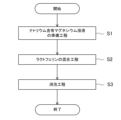
- lactoferrin is mixed with the sodium-containing magnesium solution.
- the resulting mixed solution is prepared to have a magnesium content of 2.0 to 12.0 w/v% and a lactoferrin content of 3.0 to 10.0 w/v%.
- other ingredients such as abrasives, wetting agents, foaming agents, thickeners, flavors, sweeteners, corrigents, coloring agents, preservatives, and active ingredients may be added together. may be mixed into
- the mixed solution foamed by the effect of lactoferrin is defoamed.
- a method of standing at normal temperature and pressure for a certain period of time for example, 3 days
- a method of keeping the state cooled to 0 to 5 ° C. at normal pressure for a certain period of time for example, 3 days
- pulling to 0 atm at room temperature There is a method of keeping the pressed state for a certain period of time (5 to 24 hours).
- the method for producing the water-soluble composition preferably does not further include a step of adjusting the amount of sodium. Specifically, it is more preferable that the method for producing the water-soluble composition does not further include the step of adding sodium and/or the step of removing sodium. That is, the Mg:Na ratio in the water-soluble composition is defined in step S1. In other words, the first step S1 includes a step of determining the content ratio of magnesium and sodium.
- Comparative example 1 First, the above plaque alone was applied to a slide glass, and a cover glass was placed on the slide glass, which was then observed under a phase-contrast microscope. A phase-contrast microscope image is shown in FIG. In Comparative Example 1, many bacteria were observed to move actively.
- Example 1 A water-soluble composition having a magnesium content of 10.5 w/v%, a sodium content of 0.25 w/v%, a potassium content of 1.18 w/v%, and a lactoferrin content of 4.5 w/v% (hereinafter referred to as sample 1 ) was prepared. Specifically, first, a sodium-containing magnesium solution having a magnesium content of 10.5 w/v% and a Mg:Na ratio of 42.7:1 (manufactured by Meitia, Magneforce (registered trademark)) prepared. Then, 0.45 g of lactoferrin was mixed with 10 mL of the sodium-containing magnesium solution to obtain a mixed solution as a precursor of sample 1.
- FIG. 5 shows an image obtained by a phase-contrast microscope when this sample 1 was dropped onto the plaque.
- the bacteria did not move at all, confirming that Sample 1 has the effect of suppressing the action of bacteria.
- Example 2 Same as in the preparation of sample 1 above, except that 0.1 g of sodium chloride was added to the sodium-containing magnesium solution (Magneforce (registered trademark), manufactured by Meitia) to make the Mg:Na ratio 16.4: 1. to prepare sample 1A.
- This sample 1A was dropped onto the plaque and observed with a phase-contrast microscope. As in Example 1, the bacteria did not move at all. rice field.
- Example 2 14 mL of purified water was added to 16 mL of a sodium-containing magnesium solution (manufactured by Meitia, Magneforce (registered trademark)) having a magnesium content of 10.5 w/v% and a Mg:Na ratio of 42.7:1. In addition, it was diluted and 0.11 g of sodium chloride was added thereto. Sample 2A was prepared with a magnesium content of 5.6 w/v% and a Mg:Na ratio of 20.3:1. This sample 2A was dropped onto the plaque and observed with a phase-contrast microscope.
- a sodium-containing magnesium solution manufactured by Meitia, Magneforce (registered trademark)
- Sample 2C was prepared by mixing 0.6 g of lactoferrin with 20 mL of commercially available bittern (manufactured by Hakumatsu Co., Ltd., trade name “Hamamishio seawater bittern”). Sample 2C has a magnesium content of 5.6 w/v%, a lactoferrin content of 3.0 w/v% and a Mg:Na ratio of 1.3:1. This sample 2C was dropped onto the plaque and observed with a phase-contrast microscope.
- Sample 2D was prepared by mixing 0.75 g of lactoferrin with a solution obtained by diluting 10 mL of commercially available bittern (manufactured by Hakumatsu Co., Ltd., trade name "Hamamishio seawater bittern") with 15 mL of purified water.
- Sample 2D has a magnesium content of 2.2 w/v%, a lactoferrin content of 3.0 w/v% and a Mg:Na ratio of 1.3:1. This sample 2D was dropped onto the plaque and observed with a phase-contrast microscope.
- Example 3 Using a sodium-containing magnesium solution (Magneforce (registered trademark) manufactured by Meitia) and lactoferrin, the magnesium content was 8.8 w/v%, the lactoferrin content was 3.9 w/v%, and the Mg:Na ratio was 47.7. Sample 3A was prepared which was :1. This sample 3A was dropped onto the plaque and observed with a phase contrast microscope.
- Magneticforce registered trademark manufactured by Meitia
- Example 4 Using a sodium-containing magnesium solution (Magneforce (registered trademark) manufactured by Meitia) and lactoferrin, the magnesium content was 8.0 w/v%, the lactoferrin content was 3.5 w/v%, and the Mg:Na ratio was 47.4. Sample 3B was prepared which was :1. This sample 3B was dropped onto the plaque and observed with a phase-contrast microscope. In Example 4, the state of bacteriostasis was not as clear as in Examples 1 to 3, but compared with Comparative Examples 1 to 5, the movement of bacteria was weakened, indicating a tendency toward bacteriostasis. I was able to say
- Table 1 shows the results of phase contrast observation using samples 1 and 1A, samples 2A to 2D, and samples 3A and 3B. As described above, it was confirmed that Sample 1, Sample 1A, Sample 3A and Sample 3B had a bacteriostatic effect.
- Subject evaluation Seventeen subjects were recruited to use the water-soluble composition of the present disclosure as a toothpaste for three months. The subjects were instructed to swallow as much of the water-soluble composition as possible without spitting out the gargling water when brushing their teeth. Subjects evaluated the following 10 subjective evaluation items with integers from 0 to 10 before the start of the study and after 3 months. For example, for each item, 10 points are given for "strongly feel” or “strongly agree”, and 0 points are given for "do not feel at all” or “do not agree at all”. ⁇ I'm concerned about bad breath ⁇ Stickiness ⁇ Slimy ⁇ Loose teeth 6 shows the evaluation results of subject 007 as an example of filling out a subjective evaluation check sheet. For some items, the scores after 3 months had decreased compared to before the start of the test, and the symptoms had improved.
- Table 2 shows the evaluation results of subjects 001 to 017.
- Toothpaste I Magnesium Toothpaste, manufactured by New Science. Contains magnesium chloride (MgCl.6H 2 O). The magnesium content calculated from the magnesium content is 1.8 w/v%. Contains no sodium or lactoferrin. Toothpaste II: Clear Clean (registered trademark) premium whitening manufactured by Kao Corporation. Toothpaste III: New Aquafresh® ZF3, manufactured by GlaxoSmithKline. Toothpaste IV: Sunstar Ora2® Premium Stain Clear.
- Toothpaste V Kamtect (registered trademark) Complete Care EX manufactured by GlaxoSmithKline.
- Toothpaste VI Shabondama Soap (registered trademark) toothpaste manufactured by Shabondama Soap Co., Ltd.
- Toothpaste VII Clear Clean (registered trademark) RR manufactured by Kao Corporation.
- Toothpaste VIII Medicated GUM (registered trademark) dental paste GS manufactured by Sunstar.
- Toothpaste IX crude drug Hc manufactured by Kobayashi Pharmaceutical Co., Ltd.; Dentifrices II-IX do not contain magnesium and lactoferrin.
- Toothpaste X B+ manufactured by AT-MARK CONSUL. The main ingredient is fossil coral.
- the content of magnesium in natural fossil coral is less than 1%, so it is considered that the content of magnesium in this toothpaste is also less than 1 w/v%. Does not contain lactoferrin. Toothpaste XI: Lion Corporation, Dentor Systema® EXW. Does not contain magnesium and lactoferrin.
- Subject 001 used a water-soluble composition having a magnesium content of 2.0 w/v%, a lactoferrin content of 3.2 w/v%, and a Mg:Na ratio of 42.8:1 (hereinafter referred to as sample 4). .
- Test subjects 002 to 017 used Sample 1 of Example 1 above.
- subject 001 used toothpaste I, which contained 1.8 w/v% magnesium and did not contain lactoferrin and sodium. After 3 months from the start of the test, subject 001 responded that symptoms such as bad breath, sticky/slimy gums, swollen and bleeding gums, and stomatitis were greatly improved. The results indicated that the combination of magnesium with sodium and lactoferrin improved the cellular environment in the mouth.
- Figures 7 and 8 are graphs visually showing changes in scores before the start of the test and after 3 months, regarding the subjective evaluation results of the 17 subjects.
- Table 2 an improvement of 3 points or more was marked as A, but it can be seen from FIGS. 7 and 8 that there are many subjects who felt a significant improvement of 8 to 10 points.
- Table 3 shows the results of the subjective evaluation of 17 subjects, the improvement rate calculated from the transition of points before the start of the test and after 3 months, and the improvement from the transition of the number of people who evaluated 5 points or less. The result of calculating the increase rate of the number of people who felt it is shown.
- the improvement rate and the rate of increase in the number of people who felt improvement also showed that the water-soluble composition of the present disclosure has the effect of adjusting the cellular environment in the mouth.
- the inspection table shown in Figures 9 and 10 was used for the probing inspection.
- the notation of "PD" in FIGS. 9 and 10 is the periodontal pocket depth (Probing depth).
- a periodontal pocket probe was inserted into the gingival sulcus on the front and back of all teeth, and the depth of insertion of the probe when the tip reached the bottom of the gingival sulcus was visually confirmed to measure the depth of the periodontal pocket.
- Numerals in FIGS. 9 and 10 indicate the measurement results of the periodontal pocket depth (unit: mm).
- the condition of the gums is considered to be good. 3 mm is diagnosed as mild periodontal disease, 4-5 mm as moderate periodontal disease, and 6 mm or more as severe periodontal disease. As shown in FIGS. 9 and 10, in the examination table, the numbers indicating the measurement results of the periodontal pocket depth are color-coded according to mild, moderate, and severe symptoms.
- the notation "BoP” indicates an inspection for the presence or absence of bleeding (Bleeding on Probing) during the probing inspection. , the squares are shown in color. Measurement of periodontal pocket depth is an important clinical examination, and if bleeding is observed from the measurement site during periodontal pocket depth measurement, it means that inflammation exists at that site. do. After measuring the depth of the periodontal pockets on the front and back of all teeth, the periodontal pocket probe was pulled out and it was visually determined whether there was bleeding from the gingival sulcus. As shown in FIGS. 9 and 10, in the inspection table, the locations where bleeding has been confirmed are colored. In other words, it is considered that the colored portion of the inspection table indicates that the gingiva is inflamed.
- BOP rate The number of test sites where bleeding was observed during the probing test, divided by the total number of test sites, and expressed as a percentage is called the "BOP rate.”
- Table 4 shows the results of the probing examinations performed before the start of the study and after 3 months had passed for 7 of the 17 subjects.
- the "improvement rate of periodontal pocket depth” is the number of inspection locations where the periodontal pocket depth became shallow after 3 months compared to before the start of the test, divided by the total number of inspection locations. It is a numerical value expressed as a percentage.
- "improved BOP rate” is the value obtained by subtracting the BOP rate after 3 months from the BOP rate before the start of the test. For both “improvement rate of periodontal pocket depth” and “improvement of BOP rate”, the larger the numerical value, the better the improvement.
- Subjects 016 and 017 answered that they did not feel any improvement in the subjective evaluation, but they did see improvement in the objective evaluation. Specifically, subject 016 showed significant improvement in both periodontal pocket depth and BOP ratio, and subject 017 showed improvement in BOP ratio. Subject 016 had mild to moderate periodontal disease, since the BOP rate before the start of the test was 92.9% and there were many places with periodontal pocket depths of 4 mm or more. Therefore, it is considered that Subject 017 showed a remarkable improvement effect. Subject 017 had a good oral environment, with a BOP rate of 5.4% before the start of the test, and no areas with a periodontal pocket depth of 4 mm or more. Therefore, although there was no remarkable change, it is considered that the oral environment was further improved.
- the periodontal pocket depth can be improved when the magnesium content is 2.0 w/v%. Do you get it. In addition, when the magnesium content was 10.5 w/v% or more, it was thought that the periodontal pocket depth and BOP ratio could be improved more effectively.
- Sample 1 As a toothpaste for 3 months. After 3 months from the start of the test, a total of 26 subjects were asked to freely state their impressions of using the water-soluble composition of the present disclosure, not only changes in the oral cavity, but also changes in their physical condition.
- Subject X instilled one drop of sample 1 into each of his left and right eyes.
- subject Y two drops of sample 1 were added to 2.5 ml of water to prepare a solution, and the eye was washed with the obtained solution.
- Subjects X and Y experienced no discomfort due to eye discharge or dry eye after eye drops or washing.
- Subject Y impregnated a cotton swab with several drops of Sample 1 and applied it to the ear canal. After 48 hours, the inflammation caused by abrasion of the outer ear subsided, suggesting that the bacterial balance in the ear canal was improved.
- Subject Y applied the solution obtained by dropping 0.2 ml of sample 1 into about 1.5 ml of commercially available lotion on the skin. After 8 hours, the condition of the sebum film and/or stratum corneum of the skin became smooth.
- Subject X applied an excess amount of the solution obtained by diluting Sample 1 to double the amount on the sural spasm area and percutaneously absorbed it. After 8 hours, the muscle tension in the calf was relaxed and the pain was improved.
- Sample 1 can also be packed in a capsule and used as a suppository, and can be expected to induce defecation, improve bleeding around the anus, improve symptoms of hemorrhoids, and improve the balance of bacteria in the rectum.
- subject Z used a suppository containing Sample 1 in a capsule, bleeding due to ulcerative colitis was suppressed.
- Sample 1 can be diluted and used as a nasal wash or nasal drops, and can be expected to improve inflammation of the nasal mucosa, improve sinusitis, and improve the balance of bacteria in the nasal cavity.
- the water-soluble composition When used as a toothpaste, it can improve stomatitis, reduce pain in areas covered by teeth, prevent dry mouth, improve bad breath, improve lip sores, improve lip swelling, It can also be expected to be effective in alleviating headaches.
- the water-soluble composition when used as an external preparation, is effective in improving sinusitis, improving skin itching, moisturizing the skin, preventing dandruff on the scalp, improving sunburn, and improving nipple sores. can be expected.
- the water-soluble composition is expected to be effective in improving hemorrhoids when used as an internal medicine.
- this water-soluble composition is particularly useful as an oral composition, but it has also been shown to be useful for other uses.
Landscapes
- Health & Medical Sciences (AREA)
- Life Sciences & Earth Sciences (AREA)
- Chemical & Material Sciences (AREA)
- Public Health (AREA)
- Veterinary Medicine (AREA)
- Animal Behavior & Ethology (AREA)
- General Health & Medical Sciences (AREA)
- Medicinal Chemistry (AREA)
- Pharmacology & Pharmacy (AREA)
- Epidemiology (AREA)
- Engineering & Computer Science (AREA)
- Bioinformatics & Cheminformatics (AREA)
- Inorganic Chemistry (AREA)
- General Chemical & Material Sciences (AREA)
- Organic Chemistry (AREA)
- Nuclear Medicine, Radiotherapy & Molecular Imaging (AREA)
- Chemical Kinetics & Catalysis (AREA)
- Zoology (AREA)
- Gastroenterology & Hepatology (AREA)
- Immunology (AREA)
- Proteomics, Peptides & Aminoacids (AREA)
- Birds (AREA)
- Biomedical Technology (AREA)
- Optics & Photonics (AREA)
- Nanotechnology (AREA)
- Physics & Mathematics (AREA)
- Oral & Maxillofacial Surgery (AREA)
- Cosmetics (AREA)
- Medicines That Contain Protein Lipid Enzymes And Other Medicines (AREA)
- Medicinal Preparation (AREA)
- Pharmaceuticals Containing Other Organic And Inorganic Compounds (AREA)
- Biological Depolymerization Polymers (AREA)
- Preparation Of Compounds By Using Micro-Organisms (AREA)
- Polysaccharides And Polysaccharide Derivatives (AREA)
- Jellies, Jams, And Syrups (AREA)
- Food Preservation Except Freezing, Refrigeration, And Drying (AREA)
Priority Applications (6)
| Application Number | Priority Date | Filing Date | Title |
|---|---|---|---|
| JP2022548951A JP7177568B1 (ja) | 2021-12-15 | 2021-12-15 | 水溶性組成物及びその製造方法 |
| AU2021478651A AU2021478651B2 (en) | 2021-12-15 | 2021-12-15 | Water-soluble composition and production method thereof |
| PCT/JP2021/046291 WO2023112209A1 (ja) | 2021-12-15 | 2021-12-15 | 水溶性組成物及びその製造方法 |
| EP21967440.5A EP4331591A4 (en) | 2021-12-15 | 2021-12-15 | WATER-SOLUBLE COMPOSITION AND METHOD OF MANUFACTURING THE SAME |
| TW111147892A TWI805533B (zh) | 2021-12-15 | 2022-12-14 | 水溶性組成物及其製造方法 |
| US18/525,147 US11957738B1 (en) | 2021-12-15 | 2023-11-30 | Water soluble composition and production method thereof |
Applications Claiming Priority (1)
| Application Number | Priority Date | Filing Date | Title |
|---|---|---|---|
| PCT/JP2021/046291 WO2023112209A1 (ja) | 2021-12-15 | 2021-12-15 | 水溶性組成物及びその製造方法 |
Related Child Applications (1)
| Application Number | Title | Priority Date | Filing Date |
|---|---|---|---|
| US18/525,147 Continuation US11957738B1 (en) | 2021-12-15 | 2023-11-30 | Water soluble composition and production method thereof |
Publications (1)
| Publication Number | Publication Date |
|---|---|
| WO2023112209A1 true WO2023112209A1 (ja) | 2023-06-22 |
Family
ID=84178883
Family Applications (1)
| Application Number | Title | Priority Date | Filing Date |
|---|---|---|---|
| PCT/JP2021/046291 Ceased WO2023112209A1 (ja) | 2021-12-15 | 2021-12-15 | 水溶性組成物及びその製造方法 |
Country Status (6)
| Country | Link |
|---|---|
| US (1) | US11957738B1 (https=) |
| EP (1) | EP4331591A4 (https=) |
| JP (1) | JP7177568B1 (https=) |
| AU (1) | AU2021478651B2 (https=) |
| TW (1) | TWI805533B (https=) |
| WO (1) | WO2023112209A1 (https=) |
Cited By (1)
| Publication number | Priority date | Publication date | Assignee | Title |
|---|---|---|---|---|
| JP7728041B1 (ja) | 2024-08-22 | 2025-08-22 | 株式会社グリーンハート・インターナショナル | 抗酸化性口腔ケア組成物及び歯肉線維芽細胞保護剤 |
Citations (9)
| Publication number | Priority date | Publication date | Assignee | Title |
|---|---|---|---|---|
| US5898037A (en) * | 1992-11-13 | 1999-04-27 | Marx; Alvin J. | Formulations of magnesium compounds for local application and methods of treatment using the same |
| JP2003246738A (ja) * | 2001-07-02 | 2003-09-02 | Meiteia:Kk | マグネシウム強化液並びにそれを用いた保湿剤、化粧品及び飲料 |
| JP2007223975A (ja) * | 2006-02-24 | 2007-09-06 | Sunstar Inc | ラクトフェリン内包リポソームを含有する口腔用組成物 |
| CN102112101A (zh) * | 2008-07-07 | 2011-06-29 | 《Wds》公司 | 用于口腔护理的治疗性和预防性制剂 |
| JP2013538199A (ja) * | 2010-08-07 | 2013-10-10 | ザ・リサーチ・フアウンデーシヨン・フオー・ザ・ステート・ユニバーシテイ・オブ・ニユー・ヨーク | 亜鉛化合物および抗微生物剤を含む口腔用組成物 |
| JP2016175901A (ja) * | 2015-03-18 | 2016-10-06 | 第一三共ヘルスケア株式会社 | L−アスパラギン酸またはその塩、及びニコチンアミドを含有する口腔ケア用組成物 |
| JP2016210758A (ja) * | 2015-05-07 | 2016-12-15 | ジャパンモード株式会社 | 口腔ケア組成物、錠剤、顆粒状薬剤 |
| JP2018016553A (ja) * | 2016-07-25 | 2018-02-01 | 森永乳業株式会社 | 口腔内細菌叢改善剤 |
| JP2018043982A (ja) | 2016-09-07 | 2018-03-22 | 第一三共ヘルスケア株式会社 | カチオン性殺菌剤、未修飾シリカ、及びベタイン系界面活性剤を含む口腔用組成物 |
Family Cites Families (3)
| Publication number | Priority date | Publication date | Assignee | Title |
|---|---|---|---|---|
| US20030003059A1 (en) * | 2001-04-03 | 2003-01-02 | Frederic Dana | Dentifrice compositions |
| WO2016174861A1 (ja) * | 2015-04-27 | 2016-11-03 | ジャパンモード株式会社 | 口腔ケア組成物 |
| AU2016255815B2 (en) | 2015-04-27 | 2021-05-13 | Japan Mode Co.Ltd. | Oral care composition |
-
2021
- 2021-12-15 WO PCT/JP2021/046291 patent/WO2023112209A1/ja not_active Ceased
- 2021-12-15 EP EP21967440.5A patent/EP4331591A4/en not_active Withdrawn
- 2021-12-15 JP JP2022548951A patent/JP7177568B1/ja active Active
- 2021-12-15 AU AU2021478651A patent/AU2021478651B2/en active Active
-
2022
- 2022-12-14 TW TW111147892A patent/TWI805533B/zh active
-
2023
- 2023-11-30 US US18/525,147 patent/US11957738B1/en active Active
Patent Citations (9)
| Publication number | Priority date | Publication date | Assignee | Title |
|---|---|---|---|---|
| US5898037A (en) * | 1992-11-13 | 1999-04-27 | Marx; Alvin J. | Formulations of magnesium compounds for local application and methods of treatment using the same |
| JP2003246738A (ja) * | 2001-07-02 | 2003-09-02 | Meiteia:Kk | マグネシウム強化液並びにそれを用いた保湿剤、化粧品及び飲料 |
| JP2007223975A (ja) * | 2006-02-24 | 2007-09-06 | Sunstar Inc | ラクトフェリン内包リポソームを含有する口腔用組成物 |
| CN102112101A (zh) * | 2008-07-07 | 2011-06-29 | 《Wds》公司 | 用于口腔护理的治疗性和预防性制剂 |
| JP2013538199A (ja) * | 2010-08-07 | 2013-10-10 | ザ・リサーチ・フアウンデーシヨン・フオー・ザ・ステート・ユニバーシテイ・オブ・ニユー・ヨーク | 亜鉛化合物および抗微生物剤を含む口腔用組成物 |
| JP2016175901A (ja) * | 2015-03-18 | 2016-10-06 | 第一三共ヘルスケア株式会社 | L−アスパラギン酸またはその塩、及びニコチンアミドを含有する口腔ケア用組成物 |
| JP2016210758A (ja) * | 2015-05-07 | 2016-12-15 | ジャパンモード株式会社 | 口腔ケア組成物、錠剤、顆粒状薬剤 |
| JP2018016553A (ja) * | 2016-07-25 | 2018-02-01 | 森永乳業株式会社 | 口腔内細菌叢改善剤 |
| JP2018043982A (ja) | 2016-09-07 | 2018-03-22 | 第一三共ヘルスケア株式会社 | カチオン性殺菌剤、未修飾シリカ、及びベタイン系界面活性剤を含む口腔用組成物 |
Non-Patent Citations (4)
| Title |
|---|
| KOBAYASHI TETSUO: "Effects of lactoferrin intake in patients with periodontal disease", LACTOFERRIN NEWS, vol. 3, 1 September 2011 (2011-09-01), pages 1 - 14, XP093072059 * |
| KONDO ICHIRO, KOBAYASHI TETSUO, WAKABAYASHI HIROYUKI, YAMAUCHI KOJI, IWATSUKI KEIJI, YOSHE HIROMASA: "Effects of Oral Administration of Bovine Lactoferrin on Periodontitis Patients", THE JAPANESE JOURNAL OF CONSERVATIVE DENTISTRY, vol. 51, no. 3, 1 January 2008 (2008-01-01), pages 281 - 291, XP093072056 * |
| PRESENTFUTURE: "Bittern Industry", FOCUS ON BROMINE, BULLETIN OF THE SOCIETY OF SEA WATER SCIENCE, JAPAN, vol. 34, no. 4, 1980, pages 217 - 23 |
| See also references of EP4331591A4 |
Cited By (2)
| Publication number | Priority date | Publication date | Assignee | Title |
|---|---|---|---|---|
| JP7728041B1 (ja) | 2024-08-22 | 2025-08-22 | 株式会社グリーンハート・インターナショナル | 抗酸化性口腔ケア組成物及び歯肉線維芽細胞保護剤 |
| JP2026037722A (ja) * | 2024-08-22 | 2026-03-06 | 株式会社グリーンハート・インターナショナル | 抗酸化性口腔ケア組成物及び歯肉線維芽細胞保護剤 |
Also Published As
| Publication number | Publication date |
|---|---|
| US11957738B1 (en) | 2024-04-16 |
| AU2021478651A1 (en) | 2023-12-14 |
| JPWO2023112209A1 (https=) | 2023-06-22 |
| TW202325318A (zh) | 2023-07-01 |
| AU2021478651B2 (en) | 2024-01-25 |
| EP4331591A1 (en) | 2024-03-06 |
| TWI805533B (zh) | 2023-06-11 |
| JP7177568B1 (ja) | 2022-11-24 |
| US20240100130A1 (en) | 2024-03-28 |
| EP4331591A4 (en) | 2024-06-26 |
Similar Documents
| Publication | Publication Date | Title |
|---|---|---|
| JP4697497B2 (ja) | 湿潤させる製剤 | |
| EA011125B1 (ru) | Лечебно-профилактический состав для ухода за полостью рта | |
| US20120288451A1 (en) | Means for removing tobacco tars and composition containing same | |
| JP5527219B2 (ja) | 練歯磨組成物 | |
| JP2006182705A (ja) | 歯牙貼付用製品及び口腔ケア物質の供給方法 | |
| US20210378945A1 (en) | Oral care product formulation | |
| US11957738B1 (en) | Water soluble composition and production method thereof | |
| RU2457829C2 (ru) | Минерально-витаминный комплекс для укрепления эмали зубов, композиция для гигиены полости рта и зубная паста | |
| JP2007169181A (ja) | 歯牙貼付用製品及び口腔ケア方法 | |
| JP2008143825A (ja) | 歯磨組成物 | |
| JP4826790B2 (ja) | 加水分解シルクを含有する口腔用組成物 | |
| US11723847B2 (en) | Dual component oral composition for enhancing remineralization of teeth | |
| KR980008210A (ko) | 구강위생 증진용 조성물 | |
| CN107106446A (zh) | 口腔护理组合物 | |
| CN101288636B (zh) | 一种中草药防龋齿的双组分牙膏的制备方法 | |
| JP2007197393A (ja) | 歯磨 | |
| KR0170108B1 (ko) | 유창목 수지 및 발색 조성물을 함유한 치약 조성물 | |
| CN1859852A (zh) | 基于大溪地诺丽果的口腔护理组合物和方法 | |
| JPH01287015A (ja) | 歯牙口腔液体洗滌剤 | |
| US20240148619A1 (en) | Dual component oral composition for enhancing remineralization of teeth | |
| RU2455975C2 (ru) | Зубная паста | |
| RU2453300C2 (ru) | Зубные пасты на основе металлокомплекса цинка с производными 1-алкенилимидазола | |
| RU2457824C2 (ru) | Лечебно-профилактическая зубная паста "stomatol" | |
| US20230041103A1 (en) | Composition for the prevention and treatment of dysbiosis | |
| JP2025035884A (ja) | 口腔内細菌叢用組成物 |
Legal Events
| Date | Code | Title | Description |
|---|---|---|---|
| WWE | Wipo information: entry into national phase |
Ref document number: 2022548951 Country of ref document: JP |
|
| 121 | Ep: the epo has been informed by wipo that ep was designated in this application |
Ref document number: 21967440 Country of ref document: EP Kind code of ref document: A1 |
|
| WWE | Wipo information: entry into national phase |
Ref document number: 2021478651 Country of ref document: AU Ref document number: 2021967440 Country of ref document: EP Ref document number: AU2021478651 Country of ref document: AU |
|
| ENP | Entry into the national phase |
Ref document number: 2021967440 Country of ref document: EP Effective date: 20231129 |
|
| ENP | Entry into the national phase |
Ref document number: 2021478651 Country of ref document: AU Date of ref document: 20211215 Kind code of ref document: A |
|
| NENP | Non-entry into the national phase |
Ref country code: DE |
|
| WWW | Wipo information: withdrawn in national office |
Ref document number: 2021967440 Country of ref document: EP |