WO2023100346A1 - 冷蔵庫および冷蔵庫通信システム - Google Patents
冷蔵庫および冷蔵庫通信システム Download PDFInfo
- Publication number
- WO2023100346A1 WO2023100346A1 PCT/JP2021/044462 JP2021044462W WO2023100346A1 WO 2023100346 A1 WO2023100346 A1 WO 2023100346A1 JP 2021044462 W JP2021044462 W JP 2021044462W WO 2023100346 A1 WO2023100346 A1 WO 2023100346A1
- Authority
- WO
- WIPO (PCT)
- Prior art keywords
- inspection
- refrigerator
- temperature
- temperature control
- information
- Prior art date
- Legal status (The legal status is an assumption and is not a legal conclusion. Google has not performed a legal analysis and makes no representation as to the accuracy of the status listed.)
- Ceased
Links
Images







Classifications
-
- F—MECHANICAL ENGINEERING; LIGHTING; HEATING; WEAPONS; BLASTING
- F25—REFRIGERATION OR COOLING; COMBINED HEATING AND REFRIGERATION SYSTEMS; HEAT PUMP SYSTEMS; MANUFACTURE OR STORAGE OF ICE; LIQUEFACTION SOLIDIFICATION OF GASES
- F25D—REFRIGERATORS; COLD ROOMS; ICE-BOXES; COOLING OR FREEZING APPARATUS NOT OTHERWISE PROVIDED FOR
- F25D11/00—Self-contained movable devices, e.g. domestic refrigerators
-
- F—MECHANICAL ENGINEERING; LIGHTING; HEATING; WEAPONS; BLASTING
- F25—REFRIGERATION OR COOLING; COMBINED HEATING AND REFRIGERATION SYSTEMS; HEAT PUMP SYSTEMS; MANUFACTURE OR STORAGE OF ICE; LIQUEFACTION SOLIDIFICATION OF GASES
- F25D—REFRIGERATORS; COLD ROOMS; ICE-BOXES; COOLING OR FREEZING APPARATUS NOT OTHERWISE PROVIDED FOR
- F25D23/00—General constructional features
Definitions
- the present disclosure relates to refrigerators with storage compartments for storing food and refrigerator communication systems.
- Patent Document 1 a system in which a web server operated by a refrigerator manufacturer inspects a refrigerator installed in a user's home via the Internet as a remote inspection device.
- a Web server receives operating state information of the refrigerator at regular intervals, compares the operating state information with data stored in a diagnostic database, and determines the operation of the refrigerator. Determine if there are signs of anomalies in the condition.
- the Web server determines that a sign of abnormality has appeared in the refrigerator, it transmits an inspection program for inspecting the electric circuit and the refrigerating cycle to the refrigerator. Then, the result of inspection by the inspection program is transmitted from the refrigerator to the web server.
- a refrigerator communication system includes a storage room for storing food, a temperature detecting means for detecting the temperature of the storage room, a refrigerant device for generating cold heat, and supplying air cooled by the cold heat to the storage room.
- a temperature control device including an auxiliary device that performs the inspection; communication means for receiving from a network an inspection execution request to the temperature control device; controlling the temperature control device according to a preset setting state; receiving a request from the network to operate the temperature control device according to a test program for testing the temperature control device; and storing the test program.
- a management controller for storing inspection results of the temperature control device in the management storage means and transmitting the inspection results to the network; terminal communication means for receiving the inspection results from an information processing device; display means for displaying the inspection results; and a terminal controller that transmits the temperature control device to the mobile terminal, and an inspection means for causing the device control means to perform an inspection for operating the temperature control device according to the inspection program when the inspection execution request is received from the mobile terminal. and determining whether or not the change in the temperature detected by the temperature detection means due to the operation of the equipment to be inspected by the inspection means, among the temperature control equipment, is within a predetermined normal range. and determining means for determining whether or not there is an abnormality in the device to be inspected, and outputting the determination result to the portable terminal as the inspection result.
- a refrigerator includes a storage chamber for storing food, a temperature detection means for detecting the temperature of the storage chamber, a refrigerant device for generating cold heat, and an auxiliary device for supplying air cooled by the cold heat to the storage chamber.
- a temperature control device including a device; a communication means for receiving a request to perform an inspection of the temperature control device from a mobile terminal via a network; a storage means for storing an inspection program for inspecting the temperature control device; device control means for controlling the temperature control device according to the set setting state; and when the communication means receives a request to perform the inspection from the mobile terminal, the temperature control device is sent to the device control means according to the inspection program.
- determination means for determining whether or not there is an abnormality in the device to be inspected by determining whether or not the equipment is abnormal, and transmitting the determination result as an inspection result to the portable terminal via the communication means.
- a worker who inspects or repairs a refrigerator can operate a mobile terminal to inspect an object to be inspected, even if the worker is away from the place where the information processing device is installed and the user's house where the refrigerator is installed.
- the refrigerator can be made to perform the inspection and the results of the inspection can be displayed on the mobile terminal.
- FIG. 1 is a block diagram showing a configuration example of a refrigerator communication system according to Embodiment 1;
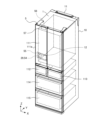
- FIG. 2 is an external perspective view showing one configuration example of the refrigerator shown in FIG. 1.
- FIG. 2 is an external perspective view showing another configuration example of the refrigerator shown in FIG. 1.
- FIG. 3 is a front view when the refrigerator shown in FIG. 2 is viewed from the front;
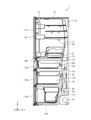
- FIG. 5 is a schematic cross-sectional view taken along line AA shown in FIG. 4;
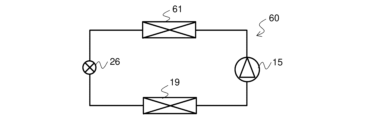
- 2 is a diagram showing an example of a refrigerant circuit included in the refrigerator shown in FIG. 1;
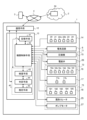
- FIG. 2 is a block diagram showing one configuration example of the refrigerator shown in FIG. 1.
- FIG. FIG. 8 is a hardware configuration diagram showing a configuration example of an operation controller shown in FIG. 7;
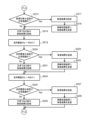
- FIG. 8 is a hardware configuration diagram showing another configuration example of the operation controller shown in FIG. 7; 7 is a block diagram showing a configuration example of the information processing apparatus shown in FIG. 6; FIG. 2 is a block diagram showing a configuration example of the mobile terminal shown in FIG. 1; FIG. 4 is a sequence diagram showing an operation procedure of the refrigerator communication system according to Embodiment 1; FIG. 4 is a flow chart showing an example of a procedure of an inspection program according to Embodiment 1; 4 is a flow chart showing an example of a procedure of an inspection program according to Embodiment 1; 4 is a flow chart showing an example of a procedure of an inspection program according to Embodiment 1; 4 is a flow chart showing another example of the procedure of the inspection program according to Embodiment 1. FIG. 4 is a flow chart showing another example of the procedure of the inspection program according to Embodiment 1.
- FIG. 9 is a flow chart showing still another example of the procedure of the inspection program in Embodiment 1.
- FIG. 9 is a flow chart showing still another example of the procedure of the inspection program in Embodiment 1.
- FIG. 9 is a flow chart showing still another example of the procedure of the inspection program in Embodiment 1.
- FIG. 8 is a block diagram showing another configuration example of the refrigerator shown in FIG. 7.
- FIG. 8 is a block diagram showing another configuration example of the refrigerator shown in FIG. 7.
- Embodiment 1 is a block diagram showing a configuration example of a refrigerator communication system according to Embodiment 1.
- FIG. 1 is a block diagram showing a configuration example of a refrigerator communication system according to Embodiment 1.
- the refrigerator 1 of Embodiment 1 is connected to the cloud 2 and the mobile terminal 3 via the network 4 for communication.
- the cloud 2 has an information processing device (not shown) such as a server.
- the cloud 2 may include a communication device (not shown) such as a router that forwards data received via the network 4 to the data destination.
- the mobile terminal 3 is a terminal carried by a worker who belongs to a company that maintains the refrigerator 1 .
- Network 4 is, for example, the Internet.
- FIG. 2 is an external perspective view showing one configuration example of the refrigerator shown in FIG.
- FIG. 3 is an external perspective view showing another configuration example of the refrigerator shown in FIG.
- FIG. 4 is a front view when the refrigerator shown in FIG. 2 is viewed from the front.
- FIG. 5 is a schematic cross-sectional view of AA shown in FIG. 2 to 5, the direction of the X-axis arrow is the right direction, and the opposite direction of the X-axis arrow is the left direction. 2 to 5, the direction of the Y-axis arrow is the back direction, and the opposite direction of the Y-axis arrow is the front direction.
- FIG. 6 is a diagram showing an example of a refrigerant circuit that the refrigerator shown in FIG. 1 has.
- FIG. 7 is a block diagram showing one configuration example of the refrigerator shown in FIG.
- the refrigerator 1 includes a plurality of storage compartments including a refrigerating compartment 111, an ice making compartment 112, an upper freezer compartment 113, a freezer compartment 114 and a vegetable compartment 115 in the housing 10. Doors for opening and closing each storage compartment are provided in the plurality of storage compartments. As shown in FIG. 4, a left door 111a and a right door 111b for the refrigerator compartment 111 are provided in front of the refrigerator compartment 111. As shown in FIG. An ice making chamber door 112 a is provided in front of the ice making chamber 112 . An upper freezer compartment door 113 a is provided in front of the upper freezer compartment 113 . A freezer compartment door 114 a is provided in front of the freezer compartment 114 . A vegetable compartment door 115 a is provided in front of the vegetable compartment 115 .
- the upper freezer compartment 113 functions as a freezer compartment in the first embodiment, but is a switchable compartment that the user can select between a freezer compartment and a refrigerator compartment.
- Refrigerator 1 includes temperature detection means 14 for detecting the temperature of each storage compartment, refrigerant device 71 for generating cold heat, auxiliary device 72 for supplying air cooled by cold heat to each storage compartment, and peripheral device 73 .
- Refrigerator 1 has compressor 15 , radiator plate 61 , electromagnetic valve 26 and cooler 19 as refrigerant equipment 71 .
- Refrigerator 1 has damper 16 and fan motor 17 as auxiliary equipment 72 .
- Refrigerator 1 also has heater 18 , defrosting heater 25 and pump motor 27 as peripheral devices 73 .
- the refrigerant device 71 and the auxiliary device 72 are temperature control devices that control the temperature inside each storage compartment.
- the temperature detection means 14 includes a refrigerator compartment temperature sensor 20, a chilled temperature sensor 21, an ice making compartment temperature sensor 22a, an upper freezer compartment temperature sensor 22b, a freezer compartment temperature sensor 23 and a vegetable compartment. includes a temperature sensor 24 for Each temperature sensor is, for example, a thermistor.
- the compressor 15, the radiator plate 61, the solenoid valve 26 having an expansion function, and the cooler 19 are connected by refrigerant pipes to form a refrigerant circuit 60 in which the refrigerant circulates.
- the compressor 15 sucks the refrigerant, compresses the sucked refrigerant, and discharges it.
- the compressor 15 is, for example, an inverter compressor whose capacity can be adjusted by changing the operating frequency.
- the radiator plate 61 is a heat exchanger that releases the heat of the refrigerant to the surroundings by exchanging heat between the surrounding air and the refrigerant.
- the electromagnetic valve 26 decompresses and expands the refrigerant.
- a capillary tube may be used instead of the solenoid valve 26 .
- Cooler 19 is a heat exchanger that cools the air in refrigerator 1 by exchanging heat between the air in refrigerator 1 and a refrigerant.
- the radiator plate 61 functions as a condenser and the cooler 19 functions as an evaporator. Cold heat is generated in the cooler 19 .
- the damper 16 is a flow control device for adjusting the amount of air cooled by the cooler 19 flowing into the storage chamber.
- a damper 16 is provided for each of the plurality of storage chambers.
- the damper 16 has a refrigerator compartment damper 16a, a chilled compartment damper 16b, an upper freezer compartment damper 16c, a freezer compartment damper 16d, an ice making compartment damper 16e, and a vegetable compartment damper 16f.
- the fan motor 17 has an internal fan motor 17a and a machine room fan motor 17b.
- the internal fan motor 17a is an electric motor that drives a fan (not shown) that circulates the air cooled by the cooler 19 to each storage compartment.
- the machine room fan motor 17b is an electric motor that drives a fan (not shown) that supplies outside air to the machine room in which the compressor 15 is installed in order to prevent the compressor 15 from overheating.
- the heater 18 serves to prevent the door from opening due to freezing of moisture at the opening/closing portion of each door.
- the heater 18 includes a refrigerating compartment door pillar dew prevention heater 181 , a chiller compartment heat retaining heater 182 , an ice making water supply pipe freeze prevention heater 183 , an air passage freeze prevention heater 184 and a vegetable compartment heat retaining heater 185 .
- the defrost heater 25 serves to melt frost adhering to the cooler 19 in order to prevent the cooling efficiency of the cooler 19 from decreasing.
- the pump motor 27 drives a water supply pump that supplies water from a water supply tank (not shown) to an ice tray (not shown) installed in the ice making chamber 112 through a water supply pipe.
- the electric circuit 6 shown in FIG. 7 is an extracted electric circuit provided in each device for controlling the temperature detection means 14, the compressor 15, the solenoid valve 26, the auxiliary device 72 and the peripheral device 73. be. In the inspection described later, whether or not there is an abnormality in the electric circuit itself, such as the state of the signal line of each device, the state of the power supply line to each device, and the electronic circuit that operates each device according to the input value In order to clarify the inspection, the equipment such as the compressor 15 is shown separately from the figure.
- the electrical circuit 6 also includes signal lines for the temperature sensing means 14 .
- the communication means 12 is provided inside the hinge 5 on the front side of the refrigerator 1 .
- a control board 11 that controls the entire refrigerator 1 is provided on the rear side of the housing 10 of the refrigerator 1 .
- the control board 11 has an operation controller 13 connected to the communication means 12 via wiring (not shown).
- the operation controller 13 controls the refrigerant equipment 71 , the auxiliary equipment 72 and the peripheral equipment 73 of the refrigerator 1 .
- the communication means 12 is a communication circuit having a function of communicating with the cloud 2 and the mobile terminal 3 via the network 4.
- the communication means 12 may include a wireless communication circuit for connecting with a wireless base station (not shown) provided in the network 4 by wireless communication.
- a wireless base station not shown
- Information processing device 50 is connected to communication means 12 via network 4 .
- the information processing device 50 is, for example, a server.
- the communication means 12 transmits and receives information to and from the information processing device 50 and the mobile terminal 3 according to, for example, TCP/IP (Transmission Control Protocol/Internet Protocol).
- the communication means 12 transmits information received from the device control means 42 to the mobile terminal 3 or the information processing device 50 .
- communication means 12 includes in the information a device identifier pre-assigned to refrigerator 1 as an identifier indicating a transmission source.
- the communication means 12 transmits information received from the information processing device 50 and the mobile terminal 3 to the operation controller 13 .
- the communication means 12 receives inspection request information including an inspection program and an inspection request from the information processing device 50 , the communication means 12 transmits the inspection request information to the operation controller 13 .
- the communication means 12 is provided inside the hinge 5 on the front side of the refrigerator 1.
- the first embodiment is limited to this case. do not have. Another installation example of the communication means 12 will be described with reference to FIG.
- the refrigerator 1 has an operation panel 29 in a space 55 inside the left door 111a of the refrigerator compartment, and an operation panel board 54 that generates a signal based on an instruction input by a user from the operation panel 29.
- the communication means 12 receives signals generated by the operation panel substrate 54 and transmits the received signals to the cloud 2 .
- the communication means 12 also transmits the signal received from the cloud 2 to the operation panel substrate 54 .
- the operation panel board 54 transmits the signal received from the communication means 12 to the control board 11 .
- the installation location of the communication means 12 is not limited to the case shown in FIG.
- the communication means 12 may be provided in a space other than the space 55 inside the left door 111a of the refrigerator compartment (for example, a space 57 provided along the upper side surface 56 inside the left door 111a of the refrigerator compartment).
- the communication means 12, the operation panel 29, and the operation panel substrate 54 may be provided inside a door other than the refrigerator compartment left door 111a provided in the refrigerator 1.
- the operation panel board 54 and the communication means 12 are connected by wiring (not shown), the operation panel board 54 and the control board 11 are connected by wiring (not shown), and the signal generated by the operation panel board 54 is It is transmitted to the cloud 2 by wireless communication via the communication means 12 . Also, the signal generated by the control board 11 is transmitted to the cloud 2 by wireless communication via the operation panel board 54 and the communication means 12 .
- the operation panel board 54 and the communication means 12 may communicate wirelessly instead of the wired connection, and the operation panel board 54 and the control board 11 may communicate wirelessly.
- the operation panel 29 is provided in front of the operation panel board 54 and electrically connected to the operation panel board 54. As shown in FIG. The operation panel 29 is provided along the front surface of the refrigerator compartment left door 111a.
- the inspection program is a program for inspecting whether each of the refrigerant equipment 71, the auxiliary equipment 72 and the peripheral equipment 73 has an abnormality.
- the inspection program not only checks whether there is an abnormality in the electric circuit 6 and the refrigerating cycle circuit, but also operates various electric parts of the refrigerator 1 in order, and checks the operation status before, during and after the operation, and the temperature detection. It is a program for transmitting information on the operating state including detection results by means 14 to the information processing device 50 . If the refrigerator 1 is provided with a humidity sensor (not shown), the operating state may include the detection result of the humidity sensor.
- the operation controller 13 is, for example, a microcomputer.
- the operation controller 13 has storage means 41 , equipment control means 42 , and an inspection executing section 40 .
- the inspection execution unit 40 has inspection means 43 , determination means 44 and estimation means 45 .
- the storage means 41 stores the setting state of the equipment including the set temperature of each storage room.
- the set state is a state set by the user for the storage compartment and equipment of the refrigerator 1 .
- the set state is, for example, the set temperature of each storage compartment.
- the setting state is stored in the storage means 41 . If the refrigerator 1 has a quick ice making function, the setting state may include whether or not a quick ice making instruction has been input.
- the storage unit 41 also stores information on the normal range, which is the temperature range of each storage compartment when the refrigerator 1 operates normally.
- the device control means 42 transmits the operation information of the refrigerator 1 to the information processing device 50 via the communication means 12 at a predetermined constant cycle T1.
- the operating information includes information on the operating state of each device, including the temperature detected by each temperature sensor, and information on the setting state.
- the operating state includes, for example, the temperature detected by each temperature sensor of the temperature detecting means 14, the operating frequency of the compressor 15, and whether or not devices such as the defrosting heater 25 and the internal fan motor 17a are on. , the opening/closing state of each damper such as the refrigerating chamber damper 16a. If an open/close sensor is provided to detect whether the door of each storage room is open or closed, the number of times the door is opened and closed per unit time (for example, one hour) of each storage room is included in the operating state. good too.
- the device control means 42 stores the operation information in time series in the storage means 41, and reads out the operation information accumulated in time series from the storage means 41 as one unit every cycle T2 longer than the cycle T1 to perform information processing. It may be sent to device 50 .
- the device control means 42 controls each device of the refrigerant device 71, the auxiliary device 72, and the peripheral device 73 according to the setting state.
- the device control means 42 controls the operating frequency of the compressor 15, the opening degree of the freezer compartment damper 16d, and the internal fan motor so that the temperature detected by the freezer compartment temperature sensor 23 matches the set temperature of the freezer compartment 114. to control the number of revolutions.
- the inspection execution unit 40 Upon receiving the inspection request information from the communication means 12 , the inspection execution unit 40 stores the inspection program in the storage means 41 . Each means of the inspection means 43 , the determination means 44 and the estimation means 45 performs the following processing according to the inspection program stored in the storage means 41 .
- the inspection means 43 causes the equipment control means 42 to perform inspection according to the inspection program.
- the inspection means 43 causes the device control means 42 to inspect the electric circuit 6, the refrigerant device 71, the auxiliary device 72 and the peripheral device 73 in this order.
- the determining means 44 stores the temperature change detected by the temperature detecting means 14 accompanying the operation of the equipment to be inspected by the inspecting means 43 among the refrigerant equipment 71, the auxiliary equipment 72 and the peripheral equipment 73 by the storage means 41. It is determined whether it is within the normal range. If the change in the temperature detected by the temperature detection means 14 is within the normal range with respect to the operation of the device to be inspected, the determination means 44 determines that the device to be inspected is normal, and determines that the temperature detected by the temperature detection means 14 is normal. If the change in is out of the normal range, it is determined that there is an abnormality in the device to be inspected. The determination means 44 transmits the determination result to the estimation means 45 . Further, the determination means 44 transmits the determination result to the information processing device 50 via the communication means 12 as an inspection result.
- the inspection result includes operating information indicating the current operating state and setting state of refrigerator 1 .
- the estimating means 45 estimates the cause of the impairment of the function of the device under inspection based on the result of the inspection by the inspecting means 43 and the determination result by the determining means 44. .
- the estimating means 45 transmits test result addition information including the fact that information on the estimated cause is to be added to the test result and information on the estimated cause to the information processing device 50 via the communication means 12 .
- the arrangement of the plurality of storage chambers is set as shown in FIGS. and are not limited to the arrangement example shown in FIG.
- the installation positions of the control board 11 and the communication means 12 are not limited to the positions shown in FIGS. If the communication means 12 can communicate with the network 4 and the control board 11 can control each device in the refrigerator 1 and execute an inspection based on the inspection program received from the information processing device 50 , the communication means 12 and the control board 11 are connected to the housing 10 . It may be located anywhere within or around the enclosure 10 .
- FIG. 8 is a hardware configuration diagram showing one configuration example of the operation controller shown in FIG.
- the operation controller 13 shown in FIG. 7 is configured with a processing circuit 90 as shown in FIG.
- the processing circuit 90 may be, for example, a single circuit, a composite circuit, a programmed processor, a parallel programmed processor, an ASIC (Application Specific Integrated Circuit), an FPGA (Field-Programmable Gate). Array), or a combination thereof.
- the functions of the storage means 41 , the device control means 42 , the inspection means 43 , the determination means 44 and the estimation means 45 may be realized by the processing circuit 90 . Also, the functions of the storage means 41 , device control means 42 , inspection means 43 , determination means 44 and estimation means 45 may be realized by one processing circuit 90 .
- FIG. 9 is a hardware configuration diagram showing another configuration example of the operation controller shown in FIG.
- the operation controller 13 shown in FIG. 7 is composed of a processor 91 such as a CPU (Central Processing Unit) and a memory 92 as shown in FIG.
- a processor 91 such as a CPU (Central Processing Unit)
- a memory 92 as shown in FIG.
- Each function of the storage means 41 , the device control means 42 , the inspection means 43 , the determination means 44 and the estimation means 45 is realized by the processor 91 and the memory 92 .
- FIG. 9 shows that processor 91 and memory 92 are communicatively connected to each other via bus 93 .
- the functions of device control means 42, inspection means 43, determination means 44, and estimation means 45 are realized by software, firmware, or a combination of software and firmware.
- Software and firmware are written as programs and stored in memory 92 .
- the processor 91 implements the functions of each means by reading and executing programs stored in the memory 92 .
- non-volatile semiconductor memories such as ROM (Read Only Memory), flash memory, EPROM (Erasable and Programmable ROM) and EEPROM (Electrically Erasable and Programmable ROM) are used.
- ROM Read Only Memory
- EPROM Erasable and Programmable ROM
- EEPROM Electrical Erasable and Programmable ROM
- a volatile semiconductor memory of RAM Random Access Memory
- removable recording media such as magnetic disks, flexible disks, optical disks, CDs (Compact Discs), MDs (Mini Discs) and DVDs (Digital Versatile Discs) may be used.
- FIG. 10 is a block diagram showing a configuration example of the information processing apparatus shown in FIG.
- the information processing device 50 is an information processing device that manages operation information of the refrigerator 1 of the user. A plurality of refrigerators 1 may be managed.
- the information processing device 50 has a management communication means 51 , a management storage means 52 and a management controller 53 .
- the management communication means 51 communicates with the mobile terminal 3 and the refrigerator 1 via the network 4 .
- the management communication means 51 is, for example, a communication circuit that transmits and receives information to and from the mobile terminal 3 and the refrigerator 1 via the network 4 according to TCP/IP.
- the management storage means 52 has an information storage means 52a that stores the operational information received from the refrigerator 1 in chronological order.
- Management storage means 52 stores an inspection program for inspecting refrigerator 1 .
- the management storage unit 52 stores a table for managing the refrigerators 1 for each user for a plurality of refrigerators 1 . User names are recorded in the table in association with device identifiers unique to the refrigerator 1 .
- the information accumulation means 52a stores the operation information in association with the device identifier. Further, the information storage means 52a may store information on the normal range, which is the temperature range of each storage compartment when the refrigerator 1 is operating normally, and stores information on abnormalities that are likely to occur in the refrigerator 1 and their causes. You may remember.
- the management storage means 52 is, for example, an HDD (Hard Disk Drive).
- the management controller 53 Upon receiving the operation information from the refrigerator 1, the management controller 53 stores the operation information in the information storage means 52a in association with the device identifier included in the operation information. When the management controller 53 receives the operation information request including the device identifier from the mobile terminal 3 , the management controller 53 reads the operation information corresponding to the device identifier from the information storage means 52 a and transmits it to the mobile terminal 3 .
- the management controller 53 When the management controller 53 receives from the portable terminal 3 a request to perform an inspection including the device identifier, the management controller 53 reads out the inspection program from the management storage means 52 . Then, the management controller 53 transmits the inspection request information including the inspection program and the inspection implementation request via the management communication means 51 to the refrigerator 1 specified by the received device identifier.
- the management controller 53 When the management controller 53 receives the inspection result including the device identifier from the refrigerator 1, it stores the inspection result in the information storage means 52a. The management controller 53 transfers the inspection result stored in the information storage means 52a to the mobile terminal 3 that requested the operation information of the refrigerator 1 . Further, when the management controller 53 receives additional inspection result information including the device identifier from the refrigerator 1 , the information of the estimated cause is stored in the information storage means 52 a and the additional inspection result information is transmitted to the portable terminal 3 . Note that the hardware configuration of the management controller 53 is the same as the configuration example described with reference to FIG. 9, so detailed description thereof will be omitted.
- FIG. 11 is a block diagram showing one configuration example of the mobile terminal shown in FIG.
- the mobile terminal 3 is a terminal carried by a worker who belongs to a company that maintains the refrigerator 1 .
- the mobile terminal 3 is, for example, an information processing terminal such as a smart phone and a PDA (Personal Digital Assistant).
- the mobile terminal 3 has a terminal communication means 31, a terminal storage means 32, an operation means 33 for the operator to input instructions, a display means 34, and a terminal controller 35 for controlling each means.
- the terminal communication means 31 has a wireless communication function, and communicates with the information processing device 50 and the refrigerator 1 via a wireless base station and the network 4 (not shown).
- the terminal communication means 31 is, for example, a communication circuit that transmits and receives information to and from the information processing device 50 and the refrigerator 1 via the network 4 according to TCP/IP.
- the terminal storage means 32 is, for example, a non-volatile memory such as a flash memory.
- the operating means 33 is, for example, a touch panel.
- the display means 34 is, for example, a liquid crystal display.
- the terminal controller 35 sends an inspection request including the device identifier to the information processing device 50 via the terminal communication means 31 . Send.
- the terminal controller 35 receives the driving information from the information processing device 50 via the terminal communication means 31, the terminal controller 35 causes the display means 34 to display the driving information.
- the terminal controller 35 receives the information on the test result from the information processing device 50 via the terminal communication means 31 , the terminal controller 35 causes the display means 34 to display the information on the test result.
- the terminal controller 35 receives the additional test result information from the information processing device 50 via the terminal communication means 31 , the terminal controller 35 causes the display means 34 to display information on the estimated cause.
- the hardware configuration of the terminal controller 35 is the same as the configuration example described with reference to FIGS. 8 and 9, so detailed description thereof will be omitted.
- FIG. 12 is a sequence diagram showing an operation procedure of the refrigerator communication system according to Embodiment 1.
- FIG. 12 is a sequence diagram showing an operation procedure of the refrigerator communication system according to Embodiment 1.
- the device control means 42 of the refrigerator 1 transmits the operation information to the information processing device 50 via the communication means 12 every cycle T1 (step S101).
- the management controller 53 of the information processing device 50 receives the operation information from the refrigerator 1, it stores the operation information in the information storage means 52a in association with the device identifier included in the operation information (step S102).
- the operation information of the refrigerator 1 is accumulated in the information accumulation means 52a of the information processing device 50 in chronological order by repeating the processing of steps S101 and S102 at a constant period T1.
- the operation information is accumulated in the information accumulation means 52a of the information processing device 50 in chronological order corresponding to the device identifier assigned to each of the plurality of refrigerators 1.
- the worker of the maintenance company of the refrigerator 1 receives the notification from the user that there is an abnormality in the refrigerator 1, he/she inputs the equipment identifier of the user's refrigerator 1 into the portable terminal 3 via the operation means 33 (step S111). ).
- the contact from the user to the worker of the maintenance company may be an e-mail addressed to the mobile terminal 3 or a telephone call to the worker.
- the terminal controller 35 of the portable terminal 3 sends a driving information request signal including information requesting the device identifier and the driving information via the terminal communication means 31 . It is transmitted to the processing device 50 (step S112).
- the management controller 53 of the information processing device 50 When the management controller 53 of the information processing device 50 receives the driving information request signal from the mobile terminal 3, it reads the driving information corresponding to the device identifier from the information storage means 52a. The management controller 53 then transmits the read operation information to the portable terminal 3 via the management communication means 51 (step S113).
- the terminal controller 35 of the mobile terminal 3 Upon receiving the driving information from the information processing device 50 via the terminal communication means 31, the terminal controller 35 of the mobile terminal 3 displays the received driving information on the display means 34 (step S114).
- the worker compares the cause of the abnormality that is likely to occur in the refrigerator 1 to be maintained with the operation information of the refrigerator 1, and estimates the cause of the abnormality that has occurred in the refrigerator 1 before going to the service site. can be done. For example, the worker operates the mobile terminal 3 to download information about an abnormality that is likely to occur in the refrigerator 1 and its cause from the information processing device 50 to the terminal storage means 32 of the mobile terminal 3 .
- the operator operates the portable terminal 3 to display the operation information of the refrigerator 1 and the information of the abnormality that is likely to occur in the refrigerator 1 and the cause thereof on the display means 34 .
- Abnormalities that are likely to occur in the refrigerator 1 are, for example, abnormalities specific to the product type of the refrigerator 1 . If the device identifier of the refrigerator 1 includes a different identifier for each product type, the terminal controller 35 displays on the display means 34 information about the abnormality corresponding to the product type specified by the device identifier input by the worker. You may let In this case, the operator can more accurately determine the abnormality that has occurred in the refrigerator 1 from the information displayed on the display means 34 .
- the terminal controller 35 transmits a request for inspection including the device identifier via the terminal communication means 31 . It is transmitted to the processing device 50 (step S115).
- the management controller 53 of the information processing device 50 transmits inspection request information including the inspection program and the inspection request to the refrigerator 1 specified by the device identifier (step S116).
- the inspection means 43 executes inspection according to the inspection program (step S117).
- the determination means 44 transmits the inspection result including the driving information to the information processing device 50 (step S118).
- the management controller 53 of the information processing device 50 When the management controller 53 of the information processing device 50 receives the inspection result including the operation information, it stores the inspection result in the information storage means 52a (step S119). Furthermore, the management controller 53 transmits inspection results including driving information to the mobile terminal 3 . In step S ⁇ b>118 , the determination unit 44 of the refrigerator 1 may transmit the inspection result to each of the information processing device 50 and the mobile terminal 3 . Further, in step S118, the estimation unit 45 of the refrigerator 1 may transmit the additional inspection result information to the information processing device 50 and the mobile terminal 3, respectively.
- the inspection result includes operation information of the refrigerator 1 when the inspection program was executed, and information as to whether or not each electric component and each device is normal. If there is an abnormality in either the electrical parts or the device, the additional inspection result information includes information on the estimated cause of the abnormality.
- the terminal controller 35 of the mobile terminal 3 Upon receiving the inspection result from the information processing device 50, the terminal controller 35 of the mobile terminal 3 causes the display means 34 to display the inspection result (step S120).
- the display means 34 displays the operation information of the refrigerator 1 when the inspection program is executed as well as the inspection result by the inspection program.
- the terminal controller 35 of the portable terminal 3 receives the additional test result information from the information processing device 50 , the terminal controller 35 causes the display means 34 to display the additional test result information. By looking at the information displayed by the display means 34, the operator can confirm the operation information during the execution of the inspection program performed on the refrigerator 1 to be maintained and the inspection result by the inspection program.
- the inspection program in Embodiment 1 sequentially operates the temperature detection means 14, the electric circuit 6 of each device, the compressor 15, the damper 16, and the heater 18, records the operating state of the refrigerator 1, and reports the inspection results as information.
- a case of transmission to the processing device 50 will be described.
- the fan motor 17 although the electric circuit is inspected, the description will be made assuming that it is not an inspection target device that involves an operation, but it may be an inspection target device that involves an operation.
- the fan motor 17 is operated at a predetermined rotational speed.
- FIG. 13 and 14 are flowcharts showing an example of the procedure of the inspection program according to Embodiment 1.
- the determination means 44 records inspection results including determination results in the storage means 41 via the inspection means 43 and the device control means 42 .
- the estimating means 45 also records additional inspection result information including the estimation result in the storage means 41 via the determining means 44 , the inspecting means 43 and the device control means 42 .
- the device control means 42 first inspects the electrical circuit 6 for disconnection, short circuit, and abnormality of individual electrical components (step S201).
- the electric circuit 6 includes various electric circuits such as the temperature detection means 14, the compressor 15, the damper 16, the fan motor 17, the heater 18, the electromagnetic valve 26, the pump motor 27, and the like.
- the judgment means 44 determines whether there is an abnormality in a single electric component due to wiring defects such as disconnection and short circuit from the input voltage value or the output signal as a result of the inspection performed by the device control means 42 for various electric circuits. It is determined whether or not (step S202).
- the equipment control means 42 proceeds to the process of step S204 according to the instruction of the inspection means 43.
- step S202 when the determination means 44 determines that there is an abnormality in the electric circuit 6, it records the location of the abnormality in the storage means 41 as an inspection result for the electric circuit 6 (step S203).
- the estimation means 45 estimates that the abnormal location is out of order, and records the estimation result in the storage means 41 . For example, when the abnormal location is the refrigerator temperature sensor 20, it is estimated that the refrigerator temperature sensor 20 is out of order.
- step S201 if the operation controller 13 is a microcomputer such as the hardware configuration example shown in FIG. You can inspect it yourself.
- step S204 the equipment control means 42 starts the compressor 15, which is the refrigerant equipment 71, according to the instruction of the inspection means 43, and operates the compressor 15 at a predetermined operating frequency (step S204).
- the determination means 44 determines whether or not the temperature detected by the freezer compartment temperature sensor 23 of the freezer compartment 114 decreases at a speed expected for the operation of the compressor 15 and enters the normal range (step S205). ). When the temperature of the freezer compartment 114 falls within the normal range, the determination means 44 records the inspection result indicating that there is no abnormality in the refrigeration cycle circuit in the storage means 41 (step S206).
- step S205 determines that the temperature of the freezer compartment 114 does not fall within the normal range, for example, if the temperature of the freezer compartment 114 does not drop.
- Devices related to control of the refrigerating cycle circuit include, in addition to the refrigerant device 71, the freezer compartment damper 16d and the freezer compartment temperature sensor 23. FIG. If the temperature of freezer compartment 114 does not drop, it is conceivable that one of refrigerant device 71, freezer compartment damper 16d, and freezer compartment temperature sensor 23 has malfunctioned.
- the determination means 44 records the inspection result indicating that there is an abnormality in the refrigeration cycle circuit in the storage means 41 (step S207). In addition, the determination means 44 records the inspection result in the storage means 41 including time-series temperature data regarding the temperature detected by the freezer compartment temperature sensor 23 .
- the estimating means 45 estimates that one of the refrigerant device 71, the freezing compartment damper 16d, and the freezing compartment temperature sensor 23 has an abnormality.
- the determination means 44 transmits the inspection result to the information processing device 50 (step S208).
- the estimation means 45 transmits the estimation result to the information processing device 50 .
- the determination means 44 is provided in the operation controller 13, but the determination means 44 may be provided in the management controller 53 of the information processing device 50, and the portable terminal 3 may be provided in the terminal controller 35 .
- the determination process including step S205 is executed by the information processing device 50 or the mobile terminal 3 . If the mobile terminal 3 displays the determination result, the worker can know the inspection result more quickly.
- step S206 when the determination means 44 records the inspection result indicating that the refrigeration cycle circuit is normal in the storage means 41, the inspection means 43 detects the auxiliary device 72 for conveying cold air generated by the refrigeration cycle circuit to the storage chamber. move to the inspection of Specifically, in step S210, the device control means 42 operates the damper 16 of each storage chamber in a state in which the ambient temperature of the cooler 19 is lowered to a predetermined temperature or less according to the instruction of the inspection means 43. Close all.
- the determining means 44 selects one of the plurality of storage chambers, and sets the temperature of the selected storage chamber as the temperature to be monitored. For example, the determination means 44 selects the freezer compartment 114 from a plurality of storage compartments, and sets the temperature detected by the freezer compartment temperature sensor 23 as the temperature to be monitored. The determination means 44 compares the normal temperature rise data of the temperature of the freezer compartment 114 when all the dampers 16 are closed with the temperature detected by the freezer compartment temperature sensor 23 .
- the determination means 44 determines that the temperature detected by the freezer compartment temperature sensor 23 after a lapse of a predetermined time from when all the dampers 16 are closed is a normal temperature rise of the freezer compartment 114 . It may be determined whether or not the data matches the data of
- step S210 the determination means 44 determines whether or not the temperature detected by the freezer compartment temperature sensor 23 is within the normal range based on the normal temperature rise data of the freezer compartment 114 temperature. When the temperature detected by the freezer compartment temperature sensor 23 is within the normal range, the determination means 44 determines that all the dampers 16 are closed and normal. In this case, the determination means 44 records the inspection result indicating normality in the storage means 41 (step S211).
- step S210 if the temperature detected by the freezer compartment temperature sensor 23 does not change or if the temperature detected by the freezer compartment temperature sensor 23 decreases, the determination means 44 determines that there is an abnormality. is recorded in the storage means 41 (step S212). Subsequently, the determination means 44 records the inspection result including the data indicating the temporal change of the temperature detected by the freezer compartment temperature sensor 23 in the storage means 41 (step S213). If the temperature detected by the freezer compartment temperature sensor 23 does not change or if the temperature detected by the freezer compartment temperature sensor 23 decreases, the freezer compartment temperature sensor 23 is considered to be abnormal. In this case, the worker operates the portable terminal 3 and sees the test results recorded in the information processing device 50 to go to the site where the refrigerator 1 is installed and check the surroundings of the freezer compartment temperature sensor 23. can be determined to be necessary.
- the device control means 42 opens all the dampers one by one according to the instruction of the inspection means 43 (step S214). That is, the device control means 42 changes one damper out of the refrigerator compartment damper 16a, the chilled compartment damper 16b, the upper freezer compartment damper 16c, the freezer compartment damper 16d, the ice making compartment damper 16e, and the vegetable compartment damper 16f from the closed state to the open state. to keep the other dampers closed.
- the determination means 44 uses the temperature of the temperature sensor provided in the storage chamber of the damper opened by the device control means 42 as the temperature to be monitored and inspected. For example, when the device control means 42 opens the freezer compartment damper 16d, the determination means 44 sets the temperature detected by the freezer compartment temperature sensor 23 as the temperature to be monitored. Subsequently, the determination means 44 compares the normal temperature drop data of the freezer compartment 114 when the freezer compartment damper 16d is open with the temperature detected by the freezer compartment temperature sensor 23 . Further, the determination means 44 determines that the temperature detected by the freezer compartment temperature sensor 23 is the normal temperature of the freezer compartment 114 after a predetermined time has elapsed since the freezer compartment damper 16d was opened. It may be determined whether or not there is a match with falling data.
- step S215 the determination means 44 determines whether or not the temperature detected by the freezer compartment temperature sensor 23 is within the normal range based on the normal temperature drop data of the freezer compartment 114 temperature. If the temperature detected by the freezer compartment temperature sensor 23 is within the normal range as a result of the determination in step S215, it is determined that the freezer compartment damper 16d is normal when opened. In this manner, the device control means 42 operates all the dampers, and when the temperature change in each storage chamber is normal due to the operation of the dampers, the determination means 44 determines whether the dampers 16, the temperature detection means 14 , and the inspection result indicating that the operation of the fan motor that operates with the open state of the damper is normal is recorded in the storage means 41 (step S216).
- step S215 if the temperature detected by the freezer compartment temperature sensor 23 does not change or if the temperature detected by the freezer compartment temperature sensor 23 does not decrease, the determination means 44 determines that the equipment related to the freezer compartment 114 is abnormal.
- the inspection result indicating that there is a is recorded in the storage means 41 (step S217).
- the operation of the freezer compartment damper 16d is physically restricted due to some factor such as freezing.
- Another physical limitation factor is that the inside of the freezer compartment damper 16d is clogged with an object, the inside of the air passage that introduces cool air from the freezer compartment damper 16d to the freezer compartment 114, or the cold air outlet is clogged with an object.
- the freezer compartment damper 16d is switched from the closed state to the open state, if the device control means 42 operates the internal fan motor 17a to control sending cold air, the internal fan (not shown) operates normally. It is possible that it has not started. In this case, it can be estimated that the internal fan motor 17a is out of order.
- step S ⁇ b>218 the determination means 44 transmits the inspection result to the information processing device 50 .
- the estimating means 45 transmits to the information processing device 50 an estimation result indicating that there is a suspicion of malfunction in any one of the freezer compartment temperature sensor 23, the freezer compartment damper 16d, the internal fan motor 17a, the cold air outlet, and the air passage. do.
- the equipment control means 42 turns off the heaters of all the storage chambers according to the instruction of the inspection means 43 (step S219).
- the determination means 44 determines whether the temperature of each storage chamber falls within the normal range (step S220). When the temperature of each storage chamber falls within the normal range, the determination means 44 records the test result indicating that all the heaters are off and normal in the storage means 41 (step S221). On the other hand, if it is determined in step S220 that there is a storage chamber whose temperature does not fall within the normal range, the determining means 44 determines that the storage chamber whose temperature does not fall within the normal range has an abnormality. Then, the determining means 44 records the inspection result including the information of the storage room determined to be abnormal in the storing means 41 (step S222). The determination means 44 transmits the inspection result to the information processing device 50 (step S223).
- the equipment control means 42 turns on the heaters in all the storage compartments according to the instruction of the inspection means 43 (step S224).
- the determination means 44 determines whether the temperature of each storage chamber falls within the normal range (step S225). When the temperature of each storage chamber falls within the normal range, the determination means 44 records the test result indicating that all the heaters are on and normal in the storage means 41 (step S226). On the other hand, if it is determined in step S226 that there is a storage chamber whose temperature does not fall within the normal range, the determining means 44 determines that the storage chamber whose temperature does not fall within the normal range has an abnormality. Then, the determination means 44 records the inspection result including the information of the storage room determined to be abnormal in the storage means 41 (step S227).
- the determination means 44 transmits the test results to the information processing device 50.
- the storage chamber determined to be abnormal in step S220 or S225 it is considered that there is a defect in the heater main body such as a short circuit in the heater wire, or there is a defect in the vicinity of the attachment portion of the heater wire.
- the estimating means 45 transmits to the information processing device 50 a result of estimating that there is a defect in the heater main body or in the vicinity of the attachment portion of the heater wire for the storage chamber determined to be abnormal by the determining means 44 .
- the inspection means 43 checks whether there are any failures or other abnormalities in the electrical circuits of the electrical parts of the equipment such as the electromagnetic valve, ice maker motor, thermistor, heater, damper, and fan motor. inspect. (Second stage) After confirming that there is no abnormality in the electric circuit in the first stage, the inspection means 43 inspects the refrigerant equipment 71 related to the refrigeration cycle circuit corresponding to the control equipment in the uppermost layer of the temperature control means. . For example, the inspection means 43 operates the compressor 15 at a predetermined operating frequency to check whether there is any abnormality.
- the inspection means 43 After confirming that there is no abnormality in the refrigerant equipment 71 in the second stage, the inspection means 43 next checks the auxiliary equipment 72 corresponding to the control equipment of the temperature control means one rank lower than the refrigeration cycle circuit. inspect. For example, the inspection means 43 checks the operation of the damper 16 and the fan motor 17 . After confirming that there is no abnormality in the auxiliary device 72 , the inspection means 43 then inspects the peripheral device 73 corresponding to the control device of the temperature control means one rank lower than the auxiliary device 72 . For example, the inspection means 43 checks the operation of the heater 18, the defrosting heater 25 and the pump motor 27 provided in each storage compartment.
- the inspection program of the first embodiment detects it as an abnormality. can.
- the inspection program according to the first embodiment can detect this as an abnormality.
- a refrigerator inspection program is executed from a remote location to determine whether an abnormality has occurred in the electric circuit and refrigeration cycle.
- Abnormalities determined by the inspection program disclosed in Patent Document 1 include sensor disconnection failure, damper motor failure, DC fan motor failure, defrosting circuit element failure, defrosting heater disconnection failure, and compressor motor failure. , ice maker motor failure, etc., only in the case of an abnormality in which an electrical component is clearly out of order.
- the estimation means 45 transmits the estimation result to the mobile terminal 3, so that the worker can check the occurrence of the abnormality based on the estimation result displayed on the display means 34.
- a more accurate cause can be estimated for the anomaly.
- workers can prepare more suitable parts.
- the inspection program of the first embodiment has a foreign matter caught between the blades of the fan, and even if the motor operates but the expected air volume cannot be sent, , can be detected as an anomaly.
- the inspection program according to the first embodiment can detect this as an abnormality.
- the inspection program of the first embodiment is not limited to that described with reference to FIGS. 13 and 14.
- 15 and 16 are flowcharts showing another example of the inspection program procedure according to the first embodiment.
- the inspection program described with reference to FIGS. 13 and 14 is executed to the end even if it is determined that there is an abnormality in the middle of the inspection.
- the inspection program may be terminated.
- step S254 the estimating means 45 records in the storage means 41 the result of estimating that there is an abnormality in the pump/motor 27 or that there is no water in the water supply tank (not shown). good.
- step S255 the estimating means 45 may transmit to the information processing device 50 an estimation result indicating that the pump motor 27 is abnormal or that the water supply tank (not shown) is out of water.
- the refrigerator communication system of Embodiment 1 includes refrigerator 1 , information processing device 50 , mobile terminal 3 , inspection means 43 , and determination means 44 .
- Refrigerator 1 includes a storage compartment for storing food, a temperature detection means 14 for detecting the temperature of the storage compartment, a refrigerant device 71 for generating cold energy, and an auxiliary device 72 for supplying air cooled by the cold energy to the storage compartment.
- the information processing device 50 includes a management storage means 52 that stores inspection programs, and a management controller 53 that stores inspection results of the temperature control equipment in the management storage means 52 and transmits the inspection results to the network 4 .
- the portable terminal 3 includes a terminal communication means 31 for receiving the test result from the information processing device 50 via the network 4, a display means 34 for displaying the test result, and a test execution command when an instruction to perform the test is input. and a terminal controller 35 for transmitting inspection request information including the request to the network 4 .
- the inspection means 43 Upon receiving a request for inspection from the mobile terminal 3, the inspection means 43 causes the device control means 42 to perform an inspection for operating the temperature control device according to the inspection program.
- the determination means 44 determines whether or not the temperature change detected by the temperature detection means 14 accompanying the operation of the inspection object equipment of the inspection means 43 among the temperature control equipment is within a predetermined normal range. It determines whether or not there is an abnormality in the device to be inspected, and outputs the determination result as the inspection result.
- the worker who inspects or repairs the refrigerator 1 can use the portable terminal 3 even if the worker is away from the place where the information processing device 50 is installed and the user's house where the refrigerator 1 is installed. is operated to cause the refrigerator 1 to be inspected to perform the inspection, and the inspection result can be displayed on the mobile terminal 3 . Therefore, the operator can quickly deal with the abnormality that has occurred in the refrigerator 1 to be inspected.
- a worker could remotely check the operating information of the refrigerator through the server and estimate the malfunctioning part by checking the operating information of the refrigerator.
- the failure site cannot be estimated with high accuracy, and there are cases where the parts are replaced on a suspicion basis.
- shortening the time interval at which the refrigerator transmits operation information to the server increases the probability of detecting instantaneous abnormalities.
- the mobile terminal 3 displays the inspection result, so that the worker can more accurately and accurately detect the abnormality that has occurred in the refrigerator 1 to be inspected. can respond faster. It is possible to prevent workers from visiting the user's house multiple times. Specifically, it is possible to prevent a worker from visiting the user's house without carrying the necessary replacement parts and then visiting the user's house again with the necessary replacement parts prepared.
- the inspection program simply operates various electric parts such as the temperature detection means 14, the compressor 15, the damper 16, the fan motor 17 and the heater 18, and checks whether the various electric parts are operating normally.
- a worker may operate the mobile terminal 3 to confirm the operation information.
- the storage means 41 of the refrigerator 1 may store in advance the temperature waveform expected for the inspection program. In this case, when the temperature detected by the temperature detection means 14 changes according to the expected temperature waveform, the inspection execution unit 40 of the refrigerator 1 sends only the determination result that the inspection result has no problem to the portable terminal 3. It may be transmitted and the worker may confirm only the result.
- the inspection program may execute the operations of the temperature detection means 14, the compressor 15, the damper 16, the fan motor 17 and the heater 18 as a series of operations, or may be configured to partially inspect.
- a partial inspection for inspecting only the damper 16 or a partial inspection for inspecting the damper 16 and the heater 18 can be performed by the operator operating the mobile terminal 3 and executing the entire inspection program from the mobile terminal 3 to the inspection execution unit 40. select the range to be
- Figs. 13 and 14 it is also possible to simply change the operation and temperature settings of electrical components through a mobile terminal without executing it as an inspection program. Therefore, if the worker wants to change the temperature setting of the storage room and check the operation of the refrigerator, the temperature setting can be changed through the portable terminal. For example, when it is desired to individually select whether to open or close the refrigerating compartment dampers, it is possible to select whether to open or close the refrigerating compartment dampers through the mobile terminal. As a result, skilled workers can check the operation of electrical parts and diagnose failures through their own mobile terminals based on their experience, while inexperienced workers can perform inspection programs at a certain level by executing inspection programs. Failure determination can be performed.
- the inspection execution unit 40 may automatically execute the inspection program. Further, the operation controller 13 of the refrigerator 1 may receive seasonal information from the information processing device 50, and using the received seasonal information, the inspection execution unit 40 may execute the inspection program at the timing when the season changes. .
- FIG. 20 is a block diagram showing another configuration example of the refrigerator shown in FIG.
- the refrigerator 1 is provided with door open/close detection means 28 for detecting the open/close state of the door of each storage compartment.
- the door opening/closing detection means 28 is, for example, an opening/closing sensor.
- the operation controller 13 also has a usage frequency prediction means 46 .
- the use frequency prediction means 46 determines the use time period during which the user uses the refrigerator 1 and the time period during which the refrigerator 1 is not used in a day, based on the detection result of the door opening/closing detection means 28 of each storage room. Estimate the non-use time period.
- the inspection means 43 causes the equipment control means 42 to operate the equipment according to the inspection program during the non-use time period estimated by the usage frequency prediction means 46 . In this case, since the inspection is not performed during the time when the user uses the refrigerator 1, it is possible to prevent the user from using the refrigerator 1.
- the inspection execution unit 40 displays ( (not shown).
- the user uses the refrigerator 1 during the non-use time period, even if the refrigerator 1 performs an operation that is not expected by the user, the user can assume that the refrigerator 1 is being automatically inspected and that the refrigerator 1 is not abnormal. I can judge.
- the case where the operation controller 13 of the refrigerator 1 executes the inspection program has been described.
- Various devices may be operated according to the above, and information on the operation of the devices and the temperature change associated with the operation may be transmitted to the information processing device 50 .
- the management controller 53 is provided with the inspection means 43 , the determination means 44 and the estimation means 45 , the information processing device 50 determines whether or not the refrigerator 1 is abnormal.
Landscapes
- Engineering & Computer Science (AREA)
- Chemical & Material Sciences (AREA)
- Combustion & Propulsion (AREA)
- Physics & Mathematics (AREA)
- Mechanical Engineering (AREA)
- Thermal Sciences (AREA)
- General Engineering & Computer Science (AREA)
- Devices That Are Associated With Refrigeration Equipment (AREA)
- Cold Air Circulating Systems And Constructional Details In Refrigerators (AREA)
Abstract
冷蔵庫通信システムは、冷蔵庫、情報処理装置、携帯端末、検査手段および判定手段を有し、冷蔵庫は、貯蔵室と、貯蔵室の温度を検知する温度検知手段と、温度制御機器と、温度制御機器に対する検査の実施要求をネットワークから受信する通信手段と、検査の実施要求をネットワークから受信すると、検査プログラムにしたがって温度制御機器を動作させる検査を実行する機器制御手段とを備え、情報処理装置は、検査プログラムを記憶し、検査結果をネットワークに送信し、携帯端末は、ネットワークを介して情報処理装置から検査結果を受信し、検査結果を表示し、検査の実施要求を含む検査要求情報をネットワークに送信し、検査手段は、検査プログラムにしたがって機器制御手段に温度制御機器を動作させる検査を実行させ、判定手段は、検査対象機器の動作に伴う温度検知手段の検知温度の変化が予め決められた正常範囲であるか否かを判定し、検査結果として出力する。
Description
本開示は、食品を保存する貯蔵室を備えた冷蔵庫および冷蔵庫通信システムに関する。
従来、冷蔵庫のメーカが運営するWebサーバが、遠隔点検装置として、ユーザの家に設置された冷蔵庫に対してインターネットを介して冷蔵庫を点検するシステムが知られている(例えば、特許文献1)。
特許文献1に開示された、冷蔵庫の遠隔点検システムにおいて、Webサーバは冷蔵庫の運転状態情報を一定時間ごとに受信し、運転状態情報と診断用データベースに格納されたデータと比較し、冷蔵庫の運転状態に異常の兆候があるか判断する。Webサーバは、冷蔵庫に異常の兆候が現れたと判断すると、電気回路および冷凍サイクルの検査を行う検査プログラムを冷蔵庫に送信する。そして、検査プログラムによる検査結果は、冷蔵庫からWebサーバに送信される。
特許文献1に示された、冷蔵庫の遠隔点検システムにおいては、作業員が冷蔵庫の検査を実施したい場合、Webサーバを操作して検査実行の指示を入力しなければならない。そのため、作業員は、Webサーバが設置された場所から離れたところにいるときにユーザから冷蔵庫に異常が発生した旨の連絡があると、一旦、Webサーバが設置された場所に行かなければならない。そのため、作業員は異常が発生した冷蔵庫への対応が遅くなってしまう。
本開示は、上記のような課題を解決するためになされたもので、冷蔵庫を修理する作業員が冷蔵庫を遠隔点検するサーバが設置された場所から離れたところにいても、より早く冷蔵庫の検査を実行できる冷蔵庫および冷蔵庫通信システムを提供するものである。
本開示に係る冷蔵庫通信システムは、食品を収納する貯蔵室と、前記貯蔵室の温度を検知する温度検知手段と、冷熱を生成する冷媒機器および前記冷熱によって冷却された空気を前記貯蔵室に供給する補助機器を含む温度制御機器と、前記温度制御機器に対する検査の実施要求をネットワークから受信する通信手段と、予め設定された設定状態にしたがって前記温度制御機器を制御し、前記通信手段が前記検査の実施要求を前記ネットワークから受信すると、前記温度制御機器を検査するための検査プログラムにしたがって前記温度制御機器を動作させる検査を実行する機器制御手段と、を備えた冷蔵庫と、前記検査プログラムを記憶する管理記憶手段と、前記温度制御機器の検査結果を前記管理記憶手段に記憶させるとともに、前記検査結果を前記ネットワークに送信する管理コントローラと、を備えた情報処理装置と、前記ネットワークを介して前記情報処理装置から前記検査結果を受信する端末通信手段と、前記検査結果を表示する表示手段と、前記検査の実施の指示が入力されると、前記検査の実施要求を含む検査要求情報を前記ネットワークに送信する端末コントローラと、を備えた携帯端末と、前記検査の実施要求を前記携帯端末から受信すると、前記検査プログラムにしたがって前記機器制御手段に前記温度制御機器を動作させる検査を実行させる検査手段と、前記温度制御機器のうち、前記検査手段の検査対象機器の動作に伴う前記温度検知手段によって検知される前記温度の変化が予め決められた正常範囲であるか否かを判定することによって前記検査対象機器に異常があるか否かを判定し、判定結果を前記検査結果として前記携帯端末に出力する判定手段と、を有するものである。
本開示に係る冷蔵庫は、食品を収納する貯蔵室と、前記貯蔵室の温度を検知する温度検知手段と、冷熱を生成する冷媒機器および前記冷熱によって冷却された空気を前記貯蔵室に供給する補助機器を含む温度制御機器と、ネットワークを介して携帯端末から前記温度制御機器に対する検査の実施要求を受信する通信手段と、前記温度制御機器を検査するための検査プログラムを記憶する記憶手段と、予め設定された設定状態にしたがって前記温度制御機器を制御する機器制御手段と、前記通信手段が前記携帯端末から前記検査の実施要求を受信すると、前記検査プログラムにしたがって前記機器制御手段に前記温度制御機器を動作させる検査を実行させる検査手段と、前記温度制御機器のうち、前記検査手段の検査対象機器の動作に伴う前記温度検知手段によって検知される前記温度の変化が予め決められた正常範囲であるか否かを判定することによって前記検査対象機器に異常があるか否かを判定し、判定結果を検査結果として前記携帯端末に前記通信手段を介して送信する判定手段と、を有するものである。
本開示によれば、冷蔵庫を点検または修理する作業員は、情報処理装置が設置された場所および冷蔵庫が設置されたユーザの家から離れた場所にいても、携帯端末を操作して検査対象の冷蔵庫に検査を実行させ、検査結果を携帯端末に表示させることができる。
実施の形態1.
本実施の形態1の冷蔵庫通信システムの構成を説明する。図1は、実施の形態1に係る冷蔵庫通信システムの一構成例を示すブロック図である。
本実施の形態1の冷蔵庫通信システムの構成を説明する。図1は、実施の形態1に係る冷蔵庫通信システムの一構成例を示すブロック図である。
本実施の形態1の冷蔵庫1は、ネットワーク4を介して、クラウド2および携帯端末3と通信接続される。クラウド2は、サーバ等の情報処理装置(図示せず)を有する。クラウド2は、ネットワーク4を介して受信するデータをデータの宛先に転送するルータ等の通信機器(図示せず)を含んでいてもよい。携帯端末3は、本実施の形態1においては、冷蔵庫1をメンテナンスする会社に所属する作業員が携帯する端末である。ネットワーク4は、例えば、インターネットである。
図1に示した冷蔵庫1の構成を説明する。図2は、図1に示した冷蔵庫の一構成例を示す外観斜視図である。図3は、図1に示した冷蔵庫の別の構成例を示す外観斜視図である。図4は、図2に示した冷蔵庫を正面から見たときの正面図である。図5は、図4に示すA-Aの断面模式図である。図2~図5において、X軸矢印方向を右方向とし、X軸矢印の反対方向を左方向とする。図2~図5において、Y軸矢印方向を背面方向とし、Y軸矢印の反対方向を正面方向とする。図2~図5において、Z軸矢印の方向を上方向とし、Z軸矢印の反対方向を下方向とする。図6は、図1に示した冷蔵庫が有する冷媒回路の一例を示す図である。図7は、図1に示した冷蔵庫の一構成例を示すブロック図である。
図2に示すように、冷蔵庫1は、筐体10内に、冷蔵室111、製氷室112、上段冷凍室113、冷凍室114および野菜室115を含む複数の貯蔵室を備えている。複数の貯蔵室には、各貯蔵室を開閉する扉が設けられている。図4に示すように、冷蔵室111の正面には冷蔵室左扉111aおよび冷蔵室右扉111bが設けられている。製氷室112の正面には製氷室扉112aが設けられている。上段冷凍室113の正面には上段冷凍室扉113aが設けられている。冷凍室114の正面には冷凍室扉114aが設けられている。野菜室115の正面には野菜室扉115aが設けられている。上段冷凍室113は、本実施の形態1において冷凍室として機能しているが、冷凍室または冷蔵室にユーザが選択できる切替室である。
冷蔵庫1は、各貯蔵室の温度を検知する温度検知手段14と、冷熱を生成する冷媒機器71と、冷熱によって冷却された空気を各貯蔵室に供給する補助機器72と、周辺機器73とを有する。冷蔵庫1は、冷媒機器71として、圧縮機15、放熱板61、電磁弁26および冷却器19を有する。冷蔵庫1は、補助機器72として、ダンパ16およびファンモータ17を有する。また、冷蔵庫1は、周辺機器73として、ヒータ18、霜取りヒータ25およびポンプモータ27を有する。冷媒機器71および補助機器72は、各貯蔵室内の温度を制御する温度制御機器である。
図7に示すように、温度検知手段14は、冷蔵室用温度センサ20、チルド用温度センサ21、製氷室用温度センサ22a、上段冷凍室用温度センサ22b、冷凍室用温度センサ23および野菜室用温度センサ24を含む。各温度センサは、例えば、サーミスタである。
図6に示すように、圧縮機15と、放熱板61と、膨張機能を備えた電磁弁26と、冷却器19とが冷媒配管で接続され、冷媒が循環する冷媒回路60が構成される。圧縮機15は、冷媒を吸入し、吸入した冷媒を圧縮して吐出する。圧縮機15は、例えば、運転周波数を変えることで容量を調節できるインバータ圧縮機である。放熱板61は、周囲空気と冷媒とを熱交換することで冷媒の熱を周囲に放出する熱交換器である。電磁弁26は、冷媒を減圧して膨張させる。電磁弁26の代わりに、例えば、キャピラリチューブを用いてもよい。冷却器19は、冷蔵庫1内の空気と冷媒とを熱交換させることで冷蔵庫1内の空気を冷却する熱交換器である。冷媒回路60を冷媒が循環する冷凍サイクル回路において、放熱板61は凝縮器として機能し、冷却器19は蒸発器として機能する。冷却器19において冷熱が生成される。
ダンパ16は、冷却器19において冷却された空気が貯蔵室に流入する量を調整するための流量調整機器である。ダンパ16は複数の貯蔵室毎に設けられている。ダンパ16は、冷蔵室ダンパ16a、チルド室ダンパ16b、上段冷凍室ダンパ16c、冷凍室ダンパ16d、製氷室ダンパ16eおよび野菜室ダンパ16fを有する。
ファンモータ17は、庫内ファンモータ17aおよび機械室ファンモータ17bを有する。庫内ファンモータ17aは、冷却器19によって冷却された空気を各貯蔵室に流通させるファン(図示せず)を駆動する電動機である。機械室ファンモータ17bは、圧縮機15の過熱を防ぐために圧縮機15が設置された機械室に庫外の空気を供給するファン(図示せず)を駆動する電動機である。
ヒータ18は、各扉の開閉部における水分の凍結によって扉が開かなくなることを防ぐ役目を果たすものである。ヒータ18は、冷蔵室扉間ピラー露付き防止ヒータ181、チルド室保温ヒータ182、製氷給水パイプ凍結防止ヒータ183、風路凍結防止ヒータ184および野菜室保温ヒータ185を有する。霜取りヒータ25は、冷却器19の冷却効率低下を防ぐために、冷却器19に付着する霜を解かす役目を果たすものである。ポンプモータ27は、製氷室112に設置される製氷皿(図示せず)に給水タンク(図示せず)から給水パイプを介して水を供給する給水ポンプを駆動するものである。
図7に示す電気回路6は、温度検知手段14、圧縮機15、電磁弁26、補助機器72および周辺機器73を制御するために各機器に設けられた電気回路を抽出して示したものである。後述する検査において、各機器の信号線の状態、各機器への電力供給線の状態、および各機器を入力値に対応して動作させる電子回路など、電気回路自体に異常があるか否かを検査することが明確になるように、圧縮機15等の機器とは別に図に示している。電気回路6は、温度検知手段14の信号線も含む。
図2に示す構成例においては、冷蔵庫1の正面側のヒンジ5内に通信手段12が設けられている。冷蔵庫1の筐体10の背面側に、冷蔵庫1全体を制御する制御基板11が設けられている。制御基板11は、配線(図示せず)を介して通信手段12と接続される運転コントローラ13を有する。運転コントローラ13は、冷蔵庫1の冷媒機器71、補助機器72および周辺機器73の各機器を制御する。
通信手段12は、クラウド2および携帯端末3とネットワーク4を介して相互に通信する機能を備えた通信回路である。通信手段12は、ネットワーク4に設けられた無線基地局(図示せず)と無線通信によって接続する無線通信回路を備えていてもよい。本実施の形態1においては、図6に示すように、情報処理装置50がクラウド2に設けられている場合で説明する。情報処理装置50は、ネットワーク4を介して通信手段12と接続される。情報処理装置50は、例えば、サーバである。
通信手段12は、例えば、TCP/IP(Transmission Control Protocol/Internet Protocol)にしたがって、情報処理装置50および携帯端末3と情報を送受信する。通信手段12は、機器制御手段42から受信する情報を携帯端末3または情報処理装置50に送信する。通信手段12は、情報処理装置50および携帯端末3に情報を送信する際、送信元を示す識別子として、冷蔵庫1に予め割り当てられた機器識別子を情報に含める。
通信手段12は、情報処理装置50および携帯端末3から受信する情報を運転コントローラ13に送信する。例えば、通信手段12は、検査プログラムおよび検査の実施要求を含む検査要求情報を情報処理装置50から受信すると、検査要求情報を運転コントローラ13に送信する。
なお、本実施の形態1では、図2に示されるように、冷蔵庫1の正面側のヒンジ5内に通信手段12が設けられる場合で説明したが、本実施の形態1はこの場合に限られない。図3を参照して、通信手段12の別の設置例を説明する。
図3に示すように、冷蔵庫1は、冷蔵室左扉111a内の空間55に、操作パネル29と、操作パネル29からユーザより入力された指示に基づき信号を生成する操作パネル基板54と、通信手段12とを備えている。通信手段12は、操作パネル基板54で生成された信号を受信し、受信した信号をクラウド2に送信する。また、通信手段12は、クラウド2から受信した信号を操作パネル基板54に送信する。操作パネル基板54は通信手段12から受信した信号を制御基板11に送信する。
通信手段12の設置場所は、図3に示す場合に限られない。通信手段12は、冷蔵室左扉111a内の空間55以外の他の空間(例えば、冷蔵室左扉111aの内側の、上側側面56に沿って設けられた空間57)に備えられていてもよい。さらに、通信手段12、操作パネル29および操作パネル基板54は、冷蔵庫1が備える冷蔵室左扉111a以外の他の扉の内部に備えられていてもよい。
操作パネル基板54と通信手段12とは配線(図示せず)で接続され、操作パネル基板54と制御基板11とは配線(図示せず)で接続され、操作パネル基板54で生成された信号は通信手段12を介してクラウド2に無線通信によって送信される。また、制御基板11で生成された信号は、操作パネル基板54および通信手段12を介して、クラウド2に無線通信によって送信される。
なお、配線接続による有線の代わりに、操作パネル基板54と通信手段12とが無線で通信を行ってもよく、操作パネル基板54と制御基板11とが無線で通信を行ってもよい。なお、図3の構成では、操作パネル29は、操作パネル基板54の手前に設けられ、操作パネル基板54と電気的に接続されている。操作パネル29は冷蔵室左扉111aの前面に沿って設けられている。
次に、検査プログラムについて説明する。検査プログラムは、冷媒機器71、補助機器72および周辺機器73の各機器に異常があるか否か検査するためのプログラムである。検査プログラムは、電気回路6の異常の有無および冷凍サイクル回路の異常の有無の検査結果だけでなく、冷蔵庫1の各種電気部品を順に動作させ、動作の前後および動作中の運転状態と、温度検知手段14による検知結果とを含む運転状態の情報を情報処理装置50に送信するプログラムである。冷蔵庫1に湿度センサ(図示せず)が設けられている場合、運転状態が湿度センサの検知結果を含んでいてもよい。
次に、運転コントローラ13について、図7を参照して説明する。運転コントローラ13は、例えば、マイクロコンピュータである。運転コントローラ13は、記憶手段41と、機器制御手段42と、検査実行部40とを有する。検査実行部40は、検査手段43と、判定手段44と、推定手段45とを有する。
記憶手段41は、各貯蔵室の設定温度を含む機器の設定状態を記憶する。設定状態は、ユーザによって冷蔵庫1の貯蔵室および機器に設定される状態である。設定状態は、例えば、各貯蔵室の設定温度である。設定状態は記憶手段41に記憶されている。冷蔵庫1が急速製氷の機能を備えている場合、急速製氷の指示が入力されているか否かの状態が、設定状態に含まれていてもよい。また、記憶手段41は、冷蔵庫1が正常に運転した場合の各貯蔵室の温度範囲である正常範囲の情報を記憶する。
機器制御手段42は、予め決められた一定の周期T1で冷蔵庫1の運転情報を、通信手段12を介して情報処理装置50に送信する。運転情報は、各温度センサによって検出される温度を含む各機器の運転状態の情報と、設定状態の情報とを有する。
運転状態は、例えば、温度検知手段14の各温度センサが検知する温度と、圧縮機15の運転周波数と、霜取りヒータ25および庫内ファンモータ17a等の機器がオンしているか否かの状態と、冷蔵室ダンパ16a等の各ダンパの開閉状態などがある。各貯蔵室の扉に開状態か閉状態かを検知する開閉センサが設けられている場合、各貯蔵室の単位時間(例えば、1時間)あたりの扉開閉回数が、運転状態に含まれていてもよい。
機器制御手段42は、運転情報を時系列で記憶手段41に記憶させ、時系列で蓄積した運転情報を1つの単位として、周期T1よりも長い周期T2毎に、記憶手段41から読み出して情報処理装置50に送信してもよい。
機器制御手段42は、設定状態にしたがって、冷媒機器71、補助機器72および周辺機器73の各機器を制御する。例えば、冷凍室用温度センサ23が検知する温度が冷凍室114の設定温度に一致するように、機器制御手段42は、圧縮機15の運転周波数、冷凍室ダンパ16dの開度および庫内ファンモータの回転数を制御する。
検査実行部40は、検査要求情報を通信手段12から受信すると、検査プログラムを記憶手段41に記憶させる。検査手段43、判定手段44および推定手段45の各手段は、記憶手段41に記憶された検査プログラムにしたがって、次のような処理を行う。検査手段43は、検査プログラムにしたがって機器制御手段42に検査を実行させる。検査手段43は、電気回路6、冷媒機器71、補助機器72および周辺機器73の順で、機器制御手段42に検査を実行させる。
判定手段44は、冷媒機器71、補助機器72および周辺機器73の機器のうち、検査手段43による検査対象機器の動作に伴う温度検知手段14によって検知される温度の変化が記憶手段41によって記憶される正常範囲であるか否かを判定する。判定手段44は、検査対象機器の動作に対して、温度検知手段14によって検知された温度の変化が正常範囲である場合、検査対象機器は正常と判定し、温度検知手段14によって検知される温度の変化が正常範囲でない場合、検査対象機器に異常があると判定する。判定手段44は、判定結果を推定手段45に送信する。また、判定手段44は、判定結果を検査結果として、通信手段12を介して情報処理装置50に送信する。検査結果には、冷蔵庫1の現在の運転状態および設定状態を示す運転情報が含まれる。
推定手段45は、判定手段44によって検査対象機器に異常があると判定されると、検査手段43による検査および判定手段44による判定結果に基づいて、検査対象機器の機能が損なわれる原因を推定する。推定手段45は、推定した原因の情報を検査結果に追加する旨と推定した原因の情報とを含む検査結果追加情報を、通信手段12を介して情報処理装置50に送信する。
なお、本実施の形態1においては、図2および図5に示すように複数の貯蔵室の配置を設定しているが、説明の便宜上設定したものであり、複数の貯蔵室の配置は図2および図5に示す配置例に限定されることなく、適宜、相互に入れ替えることができる。
また、制御基板11および通信手段12の設置位置についても、図2および図5に示した位置に限定されない。通信手段12がネットワーク4と通信でき、制御基板11が冷蔵庫1内の各機器の制御および情報処理装置50から受信する検査プログラムに基づく検査が実行できれば、通信手段12および制御基板11は筐体10内または筐体10の周囲のどこに設置されてもよい。
ここで、図7に示した運転コントローラ13のハードウェアの一例を説明する。図8は、図7に示した運転コントローラの一構成例を示すハードウェア構成図である。運転コントローラ13の各種機能がハードウェアで実行される場合、図7に示した運転コントローラ13は、図8に示すように、処理回路90で構成される。図7に示した、記憶手段41、機器制御手段42、検査手段43、判定手段44および推定手段45の各機能は、処理回路90により実現される。
各機能がハードウェアで実行される場合、処理回路90は、例えば、単一回路、複合回路、プログラム化したプロセッサ、並列プログラム化したプロセッサ、ASIC(Application Specific Integrated Circuit)、FPGA(Field-Programmable Gate Array)、または、これらを組み合わせたものに該当する。記憶手段41、機器制御手段42、検査手段43、判定手段44および推定手段45の各手段の機能のそれぞれを処理回路90で実現してもよい。また、記憶手段41、機器制御手段42、検査手段43、判定手段44および推定手段45の各手段の機能を1つの処理回路90で実現してもよい。
また、図7に示した運転コントローラ13の別のハードウェアの一例を説明する。図9は、図7に示した運転コントローラの別の構成例を示すハードウェア構成図である。運転コントローラ13の各種機能がソフトウェアで実行される場合、図7に示した運転コントローラ13は、図9に示すように、CPU(Central Processing Unit)等のプロセッサ91およびメモリ92で構成される。記憶手段41、機器制御手段42、検査手段43、判定手段44および推定手段45の各機能は、プロセッサ91およびメモリ92により実現される。図9は、プロセッサ91およびメモリ92が互いにバス93を介して通信可能に接続されることを示している。
各機能がソフトウェアで実行される場合、機器制御手段42、検査手段43、判定手段44および推定手段45の機能は、ソフトウェア、ファームウェア、またはソフトウェアとファームウェアとの組み合わせにより実現される。ソフトウェアおよびファームウェアは、プログラムとして記述され、メモリ92に格納される。プロセッサ91は、メモリ92に記憶されたプログラムを読み出して実行することにより、各手段の機能を実現する。
メモリ92として、例えば、ROM(Read Only Memory)、フラッシュメモリ、EPROM(Erasable and Programmable ROM)およびEEPROM(Electrically Erasable and Programmable ROM)等の不揮発性の半導体メモリが用いられる。また、メモリ92として、RAM(Random Access Memory)の揮発性の半導体メモリが用いられてもよい。さらに、メモリ92として、磁気ディスク、フレキシブルディスク、光ディスク、CD(Compact Disc)、MD(Mini Disc)およびDVD(Digital Versatile Disc)等の着脱可能な記録媒体が用いられてもよい。
次に、クラウド2に設けられた情報処理装置の一例として、図6に示した情報処理装置50の構成を説明する。図10は、図6に示した情報処理装置の一構成例を示すブロック図である。情報処理装置50は、ユーザの冷蔵庫1の運転情報を管理する情報処理装置である。管理対象の冷蔵庫1は複数であってもよい。情報処理装置50は、管理通信手段51と、管理記憶手段52と、管理コントローラ53とを有する。
管理通信手段51は、ネットワーク4を介して、携帯端末3および冷蔵庫1と通信接続する。管理通信手段51は、例えば、TCP/IPにしたがってネットワーク4を介して携帯端末3および冷蔵庫1と情報を送受信する通信回路である。
管理記憶手段52は、冷蔵庫1から受信する運転情報を時系列で記憶する情報蓄積手段52aを有する。管理記憶手段52は、冷蔵庫1を検査するための検査プログラムを記憶する。管理記憶手段52は、複数の冷蔵庫1について、ユーザ毎に冷蔵庫1を管理するためのテーブルを記憶する。テーブルには、冷蔵庫1に固有の機器識別子に対応付けてユーザの名前が記録されている。情報蓄積手段52aは、機器識別子に対応付けて運転情報を記憶する。さらに、情報蓄積手段52aは、冷蔵庫1が正常に運転した場合の各貯蔵室の温度範囲である正常範囲の情報を記憶していてもよく、冷蔵庫1に発生しやすい異常およびその原因の情報を記憶していてもよい。管理記憶手段52は、例えば、HDD(Hard Disk Drive)である。
管理コントローラ53は、冷蔵庫1から運転情報を受信すると、運転情報に含まれる機器識別子に対応付けて情報蓄積手段52aに運転情報を記憶させる。管理コントローラ53は、機器識別子を含む運転情報要求を携帯端末3から受信すると、機器識別子に対応する運転情報を情報蓄積手段52aから読み出して携帯端末3に送信する。
管理コントローラ53は、機器識別子を含む検査の実施要求を携帯端末3から受信すると、管理記憶手段52から検査プログラムを読み出す。そして、管理コントローラ53は、受信した機器識別子によって特定される冷蔵庫1を送信先として、検査プログラムおよび検査の実施要求を含む検査要求情報を、管理通信手段51を介して送信する。
管理コントローラ53は、機器識別子を含む検査結果を冷蔵庫1から受信すると、検査結果を情報蓄積手段52aに記憶させる。管理コントローラ53は、冷蔵庫1の運転情報を要求した携帯端末3に、情報蓄積手段52aに記憶させた検査結果を転送する。また、管理コントローラ53は、機器識別子を含む検査結果追加情報を冷蔵庫1から受信すると、推定された原因の情報を情報蓄積手段52aに記憶させ、検査結果追加情報を携帯端末3に送信する。なお、管理コントローラ53のハードウェア構成は、図9を参照して説明した構成例と同様になるため、その詳細な説明を省略する。
次に、図1に示した携帯端末3の構成を説明する。図11は、図1に示した携帯端末の一構成例を示すブロック図である。本実施の形態1においては、携帯端末3は、冷蔵庫1をメンテナンスする会社に所属する作業員が携帯する端末である。携帯端末3は、例えば、スマートフォンおよびPDA(Personal Digital Assistant)等の情報処理端末である。携帯端末3は、端末通信手段31と、端末記憶手段32と、作業員が指示を入力するための操作手段33と、表示手段34と、各手段を制御する端末コントローラ35とを有する。
端末通信手段31は、無線通信機能を備え、図に示さない無線基地局およびネットワーク4を介して、情報処理装置50および冷蔵庫1と通信接続する。端末通信手段31は、例えば、TCP/IPにしたがってネットワーク4を介して情報処理装置50および冷蔵庫1と情報を送受信する通信回路である。端末記憶手段32は、例えば、フラッシュメモリ等の不揮発性メモリである。操作手段33は、例えば、タッチパネルである。表示手段34は、例えば、液晶ディスプレイである。
端末コントローラ35は、操作手段33を介して冷蔵庫1の機器識別子および検査の実施の指示が入力されると、機器識別子を含む検査の実施要求を、端末通信手段31を介して情報処理装置50に送信する。端末コントローラ35は、端末通信手段31を介して情報処理装置50から運転情報を受信すると、運転情報を表示手段34に表示させる。端末コントローラ35は、端末通信手段31を介して情報処理装置50から検査結果の情報を受信すると、検査結果の情報を表示手段34に表示させる。端末コントローラ35は、端末通信手段31を介して情報処理装置50から検査結果追加情報を受信すると、推定された原因の情報を表示手段34に表示させる。
端末コントローラ35のハードウェア構成は、図8および図9を参照して説明した構成例と同様になるため、その詳細な説明を省略する。
次に、本実施の形態1における冷蔵庫通信システムの動作について説明する。ここでは、冷蔵庫通信システムが冷蔵庫1と、携帯端末3と、情報処理装置50とを有する場合で説明する。図12は、実施の形態1に係る冷蔵庫通信システムの動作手順を示すシーケンス図である。
冷蔵庫1の機器制御手段42は、周期T1毎に運転情報を、通信手段12を介して情報処理装置50に送信する(ステップS101)。情報処理装置50の管理コントローラ53は、冷蔵庫1から運転情報を受信すると、運転情報に含まれる機器識別子に対応付けて運転情報を情報蓄積手段52aに保存する(ステップS102)。このようにして、一定の周期T1でステップS101~S102の処理が繰り返されることで、冷蔵庫1の運転情報が時系列で情報処理装置50の情報蓄積手段52aに蓄積される。冷蔵庫1が複数ある場合、複数の冷蔵庫1毎に割り当てられた機器識別子に対応して運転情報が時系列で情報処理装置50の情報蓄積手段52aに蓄積される。
一方、冷蔵庫1のメンテナンス会社の作業員は、ユーザから冷蔵庫1に異常がある旨の連絡を受けると、操作手段33を介して携帯端末3にユーザの冷蔵庫1の機器識別子を入力する(ステップS111)。ユーザからメンテナンス会社の作業員への連絡は、携帯端末3を送信先とする電子メールであってもよく、作業員への電話であってもよい。携帯端末3の端末コントローラ35は、操作手段33を介して機器識別子が入力されると、機器識別子および運転情報を要求する旨の情報を含む運転情報要求信号を、端末通信手段31を介して情報処理装置50に送信する(ステップS112)。
情報処理装置50の管理コントローラ53は、運転情報要求信号を携帯端末3から受信すると、機器識別子に対応する運転情報を情報蓄積手段52aから読み出す。そして、管理コントローラ53は、読み出した運転情報を、管理通信手段51を介して携帯端末3に送信する(ステップS113)。
携帯端末3の端末コントローラ35は、端末通信手段31を介して情報処理装置50から運転情報を受信すると、受信した運転情報を表示手段34に表示させる(ステップS114)。このとき、作業員は、メンテナンス対象の冷蔵庫1に発生しやすい異常の原因と冷蔵庫1の運転情報とを照らし合わせて、サービス現場に出向く前に、冷蔵庫1に発生した異常の原因を推定することができる。例えば、作業員は、携帯端末3を操作して、冷蔵庫1に発生しやすい異常およびその原因の情報を情報処理装置50から携帯端末3の端末記憶手段32にダウンロードする。そして、作業員は、携帯端末3を操作して、冷蔵庫1の運転情報と、冷蔵庫1に発生しやすい異常およびその原因の情報とを表示手段34に表示させればよい。冷蔵庫1に発生しやすい異常は、例えば、冷蔵庫1の製品形に特有な異常である。冷蔵庫1の機器識別子に製品形毎に異なる識別子が含まれていれば、端末コントローラ35は、作業員によって入力された機器識別子で特定される製品形に対応する異常の情報を表示手段34に表示させてもよい。この場合、作業員は、表示手段34に表示された情報から冷蔵庫1に発生した異常をより正確に判定できる。
さらに、作業員が携帯端末3を操作して冷蔵庫1の機器識別子および検査の実施の指示が入力すると、端末コントローラ35は、機器識別子を含む検査の実施要求を、端末通信手段31を介して情報処理装置50に送信する(ステップS115)。情報処理装置50の管理コントローラ53は、検査の実施要求を携帯端末3から受信すると、機器識別子で特定される冷蔵庫1に対して、検査プログラムおよび検査の実施要求を含む検査要求情報を送信する(ステップS116)。
冷蔵庫1の運転コントローラ13が通信手段12を介して情報処理装置50から検査要求情報を受信すると、検査手段43が検査プログラムにしたがって検査を実行する(ステップS117)。判定手段44は、運転情報を含む検査結果を情報処理装置50に送信する(ステップS118)。
情報処理装置50の管理コントローラ53は、運転情報を含む検査結果を受信すると、検査結果を情報蓄積手段52aに保存する(ステップS119)。さらに、管理コントローラ53は、運転情報を含む検査結果を携帯端末3に送信する。ステップS118において、冷蔵庫1の判定手段44は、検査結果を情報処理装置50および携帯端末3のそれぞれに送信してもよい。また、ステップS118において、冷蔵庫1の推定手段45は、検査結果追加情報を情報処理装置50および携帯端末3のそれぞれに送信してもよい。検査結果には、検査プログラムが実行されたときの冷蔵庫1の運転情報と、各電気部品および各機器が正常か否かの情報とが含まれる。検査結果追加情報には、電気部品および機器のいずれかに異常がある場合、異常に対して推定される原因の情報が含まれる。
携帯端末3の端末コントローラ35は、情報処理装置50から検査結果を受信すると、検査結果を表示手段34に表示させる(ステップS120)。表示手段34は、検査プログラムによる検査結果だけでなく、検査プログラムが実行されたときの冷蔵庫1の運転情報を表示する。携帯端末3の端末コントローラ35は、情報処理装置50から検査結果追加情報を受信すると、検査結果追加情報を表示手段34に表示させる。作業員は、表示手段34が表示する情報を見ることで、メンテナンス対象の冷蔵庫1に対して実施した検査プログラム実行中の運転情報、および検査プログラムによる検査結果を確認できる。
次に、本実施の形態1における検査プログラムについて説明する。ここでは、検査プログラムは、温度検知手段14および各機器の電気回路6、圧縮機15、ダンパ16およびヒータ18を順に動作させて検査を行い、冷蔵庫1の運転状態を記録し、検査結果を情報処理装置50に送信する場合で説明する。ファンモータ17については、電気回路を検査するが、動作を伴う検査対象機器としない場合で説明するが、動作を伴う検査対象機器としてもよい。ここでは、ファンモータ17を予め決められた回転数で動作させるものとする。
図13および図14は、実施の形態1における検査プログラムの手順の一例を示すフローチャートである。ここでは、判定手段44は、判定結果を含む検査結果を、検査手段43および機器制御手段42を介して記憶手段41に記録する。また、推定手段45は、推定結果を含む検査結果追加情報を、判定手段44、検査手段43および機器制御手段42を介して記憶手段41に記録する。
図13および図14を参照して、検査プログラムが行う検査の順序について説明する。機器制御手段42は、検査手段43の指示にしたがって、最初に、電気回路6について、断線、短絡および電気部品単体の異常の有無について検査する(ステップS201)。電気回路6は、温度検知手段14、圧縮機15、ダンパ16、ファンモータ17、ヒータ18、電磁弁26およびポンプモータ27等の各種電気回路である。例えば、判定手段44は、各種電気回路について、機器制御手段42が実行した検査の結果、入力電圧の値または出力信号から、断線および短絡などの配線不良に起因する電気部品単体に異常があるか否かを判定する(ステップS202)。判定手段44が電気回路6に異常がないと判定すると、機器制御手段42は、検査手段43の指示にしたがって、ステップS204の処理に進む。
一方、ステップS202において、判定手段44は、電気回路6に異常があると判定すると、検査結果として、電気回路6について異常箇所を記憶手段41に記録する(ステップS203)。判定手段44によって電気回路6に異常があると判定されると、推定手段45は、異常箇所が故障していると推定し、推定結果を記憶手段41に記録する。例えば、異常箇所が冷蔵室用温度センサ20である場合、冷蔵室用温度センサ20が故障していると推定される。
なお、ステップS201において、運転コントローラ13が図9に示すハードウェア構成例のようなマイクロコンピュータである場合、プロセッサ91の一部に検査機能を設け、プロセッサ91が検査機能を実行させて、プロセッサ91自体を検査してもよい。
ステップS204において、機器制御手段42は、検査手段43の指示にしたがって、冷媒機器71である圧縮機15を起動し、予め決められた運転周波数で圧縮機15を動作させる(ステップS204)。判定手段44は、冷凍室114の冷凍室用温度センサ23によって検知される温度が圧縮機15の動作に対して予測される速度で低下し、正常範囲に入るか否かを判定する(ステップS205)。冷凍室114の温度が正常範囲に入る場合、判定手段44は、冷凍サイクル回路に異常がない旨の検査結果を記憶手段41に記録する(ステップS206)。
一方、ステップS205の判定の結果、冷凍室114の温度が正常範囲に入らない場合、例えば、冷凍室114の温度が下がらない場合、判定手段44は、冷凍サイクル回路に異常があると判定する。冷凍サイクル回路の制御に関連する機器は、冷媒機器71の他に、冷凍室ダンパ16dおよび冷凍室用温度センサ23が含まれる。冷凍室114の温度が下がらない場合、冷媒機器71、冷凍室ダンパ16dおよび冷凍室用温度センサ23のいずれかに不具合が発生したと考えられる。
この場合、判定手段44は、冷凍サイクル回路に異常がある旨の検査結果を記憶手段41に記録する(ステップS207)。また、判定手段44は、検査結果に、冷凍室用温度センサ23によって検知される温度について時系列の温度データを含めて記憶手段41に記録する。判定手段44によって冷凍サイクル回路に異常があると判定されると、推定手段45は、冷媒機器71、冷凍室ダンパ16dおよび冷凍室用温度センサ23のいずれかに異常があると推定する。判定手段44は検査結果を情報処理装置50に送信する(ステップS208)。推定手段45は推定結果を情報処理装置50に送信する。
なお、本実施の形態1においては、判定手段44が運転コントローラ13に設けられている場合で説明したが、判定手段44は情報処理装置50の管理コントローラ53に設けられていてもよく、携帯端末3の端末コントローラ35に設けられていてもよい。この場合、ステップS205を含む判定処理が情報処理装置50または携帯端末3で実行される。携帯端末3が判定結果を表示すれば、作業員は、より早く検査結果を知ることができる。
ステップS206において、冷凍サイクル回路が正常である旨の検査結果を判定手段44が記憶手段41に記録すると、検査手段43は、冷凍サイクル回路により生成される冷気を貯蔵室に伝えるための補助機器72の検査に移行する。具体的には、ステップS210において、機器制御手段42は、検査手段43の指示にしたがって、冷却器19の周囲の温度が予め決められた温度以下まで低下した状態で、各貯蔵室のダンパ16を全て閉状態にする。
全てのダンパ16が閉状態の場合について、各貯蔵室の温度がどのように上昇するか正常な温度上昇のデータが記憶手段41に予め記録されている。判定手段44は、複数の貯蔵室のうち、1つの貯蔵室を選択し、選択した貯蔵室の温度を監視対象の温度とする。例えば、判定手段44は、複数の貯蔵室から冷凍室114を選択し、冷凍室用温度センサ23が検知する温度を監視対象の温度とする。判定手段44は、全ダンパ16が閉状態の場合の冷凍室114の温度の正常な温度上昇のデータと冷凍室用温度センサ23によって検知される温度とを比較する。また、判定手段44は、全ダンパ16が閉状態になったときから予め決められた時間が経過した後、冷凍室用温度センサ23によって検知される温度が冷凍室114の温度の正常な温度上昇のデータに一致するか否かを判定してもよい。
ステップS210において、判定手段44は、冷凍室用温度センサ23によって検知される温度が冷凍室114の温度の正常な温度上昇のデータを基準とした正常範囲内であるか否かを判定する。冷凍室用温度センサ23によって検知される温度が正常範囲内である場合、判定手段44は、全ダンパ16が閉状態の場合で正常であると判定する。この場合、判定手段44は、正常である旨の検査結果を記憶手段41に記録する(ステップS211)。
一方、ステップS210の判定の結果、冷凍室用温度センサ23が検知する温度が変わらない場合または冷凍室用温度センサ23が検知する温度が下がる場合、判定手段44は、異常がある旨の検査結果を記憶手段41に記録する(ステップS212)。続いて、判定手段44は、冷凍室用温度センサ23が検知する温度の経時変化を示すデータを含む検査結果を記憶手段41に記録する(ステップS213)。冷凍室用温度センサ23が検知する温度が変わらない場合または冷凍室用温度センサ23が検知する温度が下がる場合、冷凍室用温度センサ23に異常があると考えられる。この場合、作業員は、携帯端末3を操作して情報処理装置50に記録された検査結果を見ることで、冷蔵庫1が設置された現場に行って冷凍室用温度センサ23の周囲を確認する必要があると判断できる。
ステップS211またはS213の後、機器制御手段42は、検査手段43の指示にしたがって、全ダンパを1つずつ順に開状態にする(ステップS214)。つまり、機器制御手段42は、冷蔵室ダンパ16a、チルド室ダンパ16b、上段冷凍室ダンパ16c、冷凍室ダンパ16d、製氷室ダンパ16eおよび野菜室ダンパ16fのうち、1つのダンパを閉状態から開状態に切り替え、他のダンパを閉状態に維持する。冷蔵室ダンパ16a、チルド室ダンパ16b、上段冷凍室ダンパ16c、冷凍室ダンパ16d、製氷室ダンパ16eおよび野菜室ダンパ16fのうち、1つのダンパが開状態で他のダンパが閉状態の場合について、各貯蔵室の温度がどのように上昇するか正常な温度下降のデータが記憶手段41に予め記録されている。
判定手段44は、機器制御手段42が開状態にしたダンパの貯蔵室に設けられた温度センサの温度を監視検査対象の温度とする。例えば、機器制御手段42が冷凍室ダンパ16dを開状態にした場合、判定手段44は、冷凍室用温度センサ23が検知する温度を監視対象の温度に設定する。続いて、判定手段44は、冷凍室ダンパ16dを開状態の場合の冷凍室114の正常な温度降下のデータと、冷凍室用温度センサ23が検知する温度とを比較する。また、判定手段44は、冷凍室ダンパ16dが開状態になったときから予め決められた時間が経過した後、冷凍室用温度センサ23によって検知される温度が冷凍室114の温度の正常な温度下降のデータに一致するか否かを判定してもよい。
ステップS215において、判定手段44は、冷凍室用温度センサ23によって検知される温度が冷凍室114の温度の正常な温度下降のデータを基準とした正常範囲内であるか否かを判定する。ステップS215の判定の結果、冷凍室用温度センサ23によって検知される温度が正常範囲内である場合、冷凍室ダンパ16dを開状態にした場合に正常であると判定する。このようにして、機器制御手段42が全てのダンパ毎に動作させ、ダンパの動作に伴って、各貯蔵室の温度の変化が正常である場合、判定手段44は、ダンパ16、温度検知手段14、およびダンパの開状態に伴って動作するファンモータの動作について正常である旨の検査結果を記憶手段41に記録する(ステップS216)。
一方、ステップS215において、冷凍室用温度センサ23が検知する温度が変わらない場合または冷凍室用温度センサ23が検知する温度が下がらない場合、判定手段44は、冷凍室114に関連する機器に異常がある旨の検査結果を記憶手段41に記録する(ステップS217)。この異常に対する原因がいくつか考えられる。例えば、冷凍室ダンパ16dの動作が氷結等何らかの要因によって物理的に動作が制限されていることが考えられる。物理的に制限される別の要因として、冷凍室ダンパ16d内に物が詰まっている、冷凍室ダンパ16dから冷凍室114に冷気を導入する風路内、または冷気の吹き出し口に物が詰まっていることが考えられる。さらに、冷凍室ダンパ16dが閉状態から開状態に切り替わったとき、機器制御手段42が庫内ファンモータ17aを動作させて冷気を送り込む制御を行う場合、庫内ファン(図示せず)が正常に起動していないことが考えられる。この場合、庫内ファンモータ17aが故障していると推定できる。
ステップS218において、判定手段44は、検査結果を情報処理装置50に送信する。推定手段45は、冷凍室用温度センサ23、冷凍室ダンパ16d、庫内ファンモータ17a、冷気の吹き出し口および風路のいずれかに不具合の疑いがある旨の推定結果を情報処理装置50に送信する。
ステップS216およびS218の後、機器制御手段42は、検査手段43の指示にしたがって、全貯蔵室のヒータをオフにする(ステップS219)。判定手段44は、各貯蔵室の温度が正常範囲に入るか否かを判定する(ステップS220)。各貯蔵室の温度が正常範囲に入る場合、判定手段44は、全ヒータがオフ状態で正常である旨の検査結果を記憶手段41に記録する(ステップS221)。一方、ステップS220の判定の結果、温度が正常範囲に入らない貯蔵室があると、判定手段44は、温度が正常範囲に入らない貯蔵室に異常があると判定する。そして、判定手段44は、異常があると判定した貯蔵室の情報を含む検査結果を記憶手段41に記録する(ステップS222)。判定手段44は、検査結果を情報処理装置50に送信する(ステップS223)。
ステップS221およびS223の後、機器制御手段42は、検査手段43の指示にしたがって、全貯蔵室内のヒータをオンにする(ステップS224)。判定手段44は、各貯蔵室の温度が正常範囲に入るか否かを判定する(ステップS225)。各貯蔵室の温度が正常範囲に入る場合、判定手段44は、全ヒータがオン状態で正常である旨の検査結果を記憶手段41に記録する(ステップS226)。一方、ステップS226の判定の結果、温度が正常範囲に入らない貯蔵室があると、判定手段44は、温度が正常範囲に入らない貯蔵室に異常があると判定する。そして、判定手段44は、異常があると判定した貯蔵室の情報を含む検査結果を記憶手段41に記録する(ステップS227)。
ステップS226およびS227の処理の後、判定手段44は検査結果を情報処理装置50に送信する。ステップS220またはS225において、異常があると判定された貯蔵室は、ヒータ線が部分に短絡しているなどヒータ本体に不具合があるか、ヒータ線の取り付け部付近に不具合があると考えられる。推定手段45は、判定手段44によって異常があると判定された貯蔵室について、ヒータ本体またはヒータ線の取り付け部付近に不具合がある旨の推定結果を情報処理装置50に送信する。
図13および図14を参照して説明した手順をまとめると、検査プログラムによる検査は、次の順番で行われる。ここでは、説明の便宜上、検査手段43が機器制御手段42を介さずに機器を検査する場合で説明する。
(第1段階)最初に、検査手段43は、電磁弁、製氷機モータ、サーミスタ、ヒータ、ダンパ、ファンモータ等の機器の電気部品の各種電気回路について、故障等の異常がないか、単体で検査する。
(第2段階)検査手段43は、第1段階において電気回路に異常がないことを確認すると、温度制御手段の最上層の制御機器に対応する冷凍サイクル回路に関連する冷媒機器71の検査を行う。例えば、検査手段43は、圧縮機15について、予め決められた運転周波数で動作させ、異常がないか確認する。
(第3段階)検査手段43は、第2段階において冷媒機器71に異常がないことを確認すると、次に、冷凍サイクル回路より1ランク下層の温度制御手段の制御機器に対応する補助機器72を検査する。例えば、検査手段43は、ダンパ16およびファンモータ17の動作を確認する。続いて、検査手段43は、補助機器72に異常がないことを確認すると、補助機器72よりも1ランク下層の温度制御手段の制御機器に対応する周辺機器73を検査する。例えば、検査手段43は、各貯蔵室に備えられたヒータ18、霜取りヒータ25およびポンプモータ27の動作を確認する。
(第2段階)検査手段43は、第1段階において電気回路に異常がないことを確認すると、温度制御手段の最上層の制御機器に対応する冷凍サイクル回路に関連する冷媒機器71の検査を行う。例えば、検査手段43は、圧縮機15について、予め決められた運転周波数で動作させ、異常がないか確認する。
(第3段階)検査手段43は、第2段階において冷媒機器71に異常がないことを確認すると、次に、冷凍サイクル回路より1ランク下層の温度制御手段の制御機器に対応する補助機器72を検査する。例えば、検査手段43は、ダンパ16およびファンモータ17の動作を確認する。続いて、検査手段43は、補助機器72に異常がないことを確認すると、補助機器72よりも1ランク下層の温度制御手段の制御機器に対応する周辺機器73を検査する。例えば、検査手段43は、各貯蔵室に備えられたヒータ18、霜取りヒータ25およびポンプモータ27の動作を確認する。
このような検査プログラムを冷蔵庫1に実施することで、次のような効果が得られる。冷蔵庫1の各種電気部品において、電気回路からの電気信号は正常であるが、狙いの動作ができていない状態のものについて、温度制御手段の最上層から順に検査を行うことで、故障した部品の絞り込みができる。一例として、ダンパのモータが正常な駆動電流を発生しているが、ダンパと風路のあいだに異物が詰まっておりダンパが閉じられない状況が考えられる。このような状況として、ダンパが備えるモータが動作するものの空回りしていることがある。このような場合、モータの電気信号は正常範囲にあり、特許文献1に開示された検査方法では異常と検知できなかった。これに対して、本実施の形態1の検査プログラムでは、温度制御手段の最上層から検査を行うことで、各種電気部品の電気信号に異常がない場合の異常も、詳細に知ることができる。
また、別の例を説明すると、ファンの羽の間に異物が挟まり、モータは動作するものの期待する風量を送れていない状態であっても、本実施の形態1の検査プログラムでは、異常として検知できる。また、給水ポンプにおいて、モータは動作するものの、回転しても、製氷機に給水ができていないような状態であっても、本実施の形態1の検査プログラムでは、異常として検知できる。
特許文献1に示される冷蔵庫の遠隔点検システムでは、遠隔地から冷蔵庫の検査プログラムを実施し、電気回路および冷凍サイクルに異常が発生しているかどうかを判定する。特許文献1に開示された検査プログラムによって判定される異常は、センサの断線不良、ダンパのモータ不良、DCファンのモータ不良、除霜回路の素子不良、除霜ヒータの断線不良、コンプレッサのモータ不良、製氷機のモータ不良等の、電気部品が明らかに故障している異常のみの場合である。
しかし、実際のメンテナンスの場面において、作業員が部品の見込み交換をするとき、各種電気部品に異常はないにも関わらず、貯蔵室の温度が狙いの温度にならない不具合が生じることがある。電気部品に不具合が無いにも関わらず、期待される動作をしない故障モードに対しては、作業員は、事前に適切な交換部品を想定できず、冷蔵庫が設置された場所で見込み交換を行ってしまうことがある。見込み交換とは、異常原因となる部品を確定できないまま、新しい部品に交換することをいう。
このような異常に対して、本実施の形態1においては、推定手段45が推定結果を携帯端末3に送信するので、作業員は、表示手段34に表示される推定結果に基づいて、発生した異常に対してより正確な原因を推定することができる。その結果、作業員は、より適切な部品を準備することができる。
また、従来の検査プログラムでは、ダンパのモータが正常な駆動電流を発生させていたとしても、物が詰まってダンパが開いたまま、または閉じたままになっている状態を検出できなかった。また、従来の検査プログラムでは、ファンの羽の間に異物が挟まり、期待する風量を送れない場合も、モータの電気信号または回転数の信号は正常なため、異常を検出できなかった。給水ポンプについても、モータが正常な駆動電流を発生させていたとしても、タンク内の水を送り出すポンプが外れていて、給水しない場合がある。さらに、センサチェックでは、センサ出力給水ポンプから判断して、断線および短絡のいずれの場合でなくても、センサの出力値が予測される通りでない場合、異常として検出できなかった。
このような問題に対して、本実施の形態1の検査プログラムでは、上述したように、ファンの羽の間に異物が挟まり、モータは動作するものの期待する風量を送れていない状態であっても、異常として検知できる。また、給水ポンプにおいて、モータは動作するものの、回転しても、製氷機に給水ができていないような状態であっても、本実施の形態1の検査プログラムでは、異常として検知できる。
なお、本実施の形態1の検査プログラムは、図13および図14を参照して説明したものに限らない。図15および図16は、実施の形態1における検査プログラムの手順の別の例を示すフローチャートである。図13および図14を参照して説明した検査プログラムは、検査の途中で異常があると判定されても、検査プログラムを最後まで実行するものである。これに対して、図15および図16に示すように、検査の途中で異常部位を発見した場合、検査プログラムを終了してもよい。
図17~図19は、実施の形態1における検査プログラムの手順について、さらに別の例を示すフローチャートである。図18に示すステップS219~S228のヒータ検査の後、図19のステップS251~S254に示すように、製氷用のポンプモータ27について検査を行ってもよい。この場合、ステップS254において、推定手段45は、ポンプモータ27に異常がある、または給水タンク(図示せず)に水が入っていない不具合がある旨の推定結果を記憶手段41に記録してもよい。ステップS255において、推定手段45は、ポンプモータ27に異常がある、または給水タンク(図示せず)に水が入っていない不具合がある旨の推定結果を情報処理装置50に送信してもよい。
本実施の形態1の冷蔵庫通信システムは、冷蔵庫1と、情報処理装置50と、携帯端末3と、検査手段43と、判定手段44とを有する。冷蔵庫1は、食品を収納する貯蔵室と、貯蔵室の温度を検知する温度検知手段14と、冷熱を生成する冷媒機器71および冷熱によって冷却された空気を貯蔵室に供給する補助機器72を含む温度制御機器と、温度制御機器に対する検査の実施要求をネットワークから受信する通信手段12と、予め設定された設定状態にしたがって温度制御機器を制御し、通信手段12が検査の実施要求をネットワーク4から受信すると、温度制御機器を検査するための検査プログラムにしたがって温度制御機器を動作させる検査を実行する機器制御手段42とを備えている。情報処理装置50は、検査プログラムを記憶する管理記憶手段52と、温度制御機器の検査結果を管理記憶手段52に記憶させるとともに、検査結果をネットワーク4に送信する管理コントローラ53とを備えている。携帯端末3は、ネットワーク4を介して情報処理装置50から検査結果を受信する端末通信手段31と、検査結果を表示する表示手段34と、検査の実施の指示が入力されると、検査の実施要求を含む検査要求情報をネットワーク4に送信する端末コントローラ35とを備えている。検査手段43は、検査の実施要求を携帯端末3から受信すると、検査プログラムにしたがって機器制御手段42に温度制御機器を動作させる検査を実行させる。判定手段44は、温度制御機器のうち、検査手段43の検査対象機器の動作に伴う温度検知手段14によって検知される温度の変化が予め決められた正常範囲であるか否かを判定することによって検査対象機器に異常があるか否かを判定し、判定結果を検査結果として出力する。
本実施の形態1によれば、冷蔵庫1を点検または修理する作業員は、情報処理装置50が設置された場所および冷蔵庫1が設置されたユーザの家から離れた場所にいても、携帯端末3を操作して検査対象の冷蔵庫1に検査を実行させ、検査結果を携帯端末3に表示させることができる。そのため、作業員は、検査対象の冷蔵庫1に発生した異常により早く対応することができる。
従来の遠隔通信システムとして、作業員がサーバを通じて遠隔地から冷蔵庫の運転情報を確認して、冷蔵庫の運転情報を確認して故障部位を推定することがあった。この場合、経験の浅い作業員では気がつきにくい故障であった場合、確度の高い故障部位の推定を行うことができず、見込みで部品交換をする場合があった。
また、従来の遠隔通信システムにおいて、冷蔵庫がサーバに運転情報を送信する時間間隔を短くすれば、瞬時的に発生する異常を検知する確率が高くなる。しかし、経験の浅い作業員にとって、蓄積された運転情報のデータを参照しても、検知された異常の原因の判断が難しい場合がある。経験の浅い作業員は、参照できる運転情報のデータが多くても、多くのデータから異常の原因を特定する判定材料を抽出することが困難だからである。
さらに、経験が浅くない作業員であったとしても、蓄積された運転情報のデータのみでは故障推定が難しい場合、遠隔で冷蔵庫の運転状態および設定状態を変更できないことがある。この場合、作業員は、ユーザの家まで足を運んで、電気部品等の動作を確認する必要があり、その際に、必要な交換部品を所持していなかった場合、再度、ユーザの家を訪問し直す必要があった。
このような問題に対して、本実施の形態1によれば、携帯端末3が検査結果を表示することで、作業員は、検査対象の冷蔵庫1に発生した異常に対して、より正確、かつより早く対応することができる。作業員が複数回、ユーザの家を訪問することを抑制できる。具体的には、作業員が必要な交換部品を所持せずにユーザの家を訪問し、再度、必要な交換部品を準備してユーザの家を訪問することを、抑制できる。
なお、検査プログラムは、単に温度検知手段14、圧縮機15、ダンパ16、ファンモータ17およびヒータ18を始めとする各種電気部品の動作を実施するのみで、各種電気部品を動作が正常か否かの判断を、作業員が携帯端末3を操作して運転情報を確認して行ってもよい。また、冷蔵庫1の記憶手段41が検査プログラムに予め期待される温度波形を記憶していてもよい。この場合、冷蔵庫1の検査実行部40は、温度検知手段14によって検知される温度が期待される温度波形通りに変化した場合、検査結果に問題なしと判定した判定結果のみを、携帯端末3に送信し、作業員は、その結果のみを確認するようにしてもよい。
また、検査プログラムは、温度検知手段14、圧縮機15、ダンパ16、ファンモータ17およびヒータ18の動作を一連の流れとして実行してもよく、部分的に検査をする構成としてもよい。例えば、ダンパ16のみ検査する部分検査、またはダンパ16およびヒータ18を検査する部分検査など、作業員が携帯端末3を操作して、検査プログラム全体のうち、携帯端末3から検査実行部40に実行させる範囲を選択する。
図13および図14は、また、検査プログラムとして実行せずとも、携帯端末を通して、単に電気部品の動作や温度設定を変更することが可能である。そのため、作業員が貯蔵室の温度設定を変更して冷蔵庫の動作を確認したい場合は、携帯端末を通して温度設定が変更可能である。例えば、冷蔵室ダンパを個別に開閉選択したい場合は、携帯端末を通して冷蔵室ダンパの開閉選択が可能である。これにより、熟練の作業員は、経験に基づいて各自携帯端末を通して電気部品等の動作を確認して故障診断しても良く、経験の浅い作業員は、検査プログラムを実行することで一定水準の故障判定を実施できる。
本実施の形態1においては、作業員が任意のタイミングで携帯端末3を介して、冷蔵庫1において検査プログラムを実行させる場合で説明したが、冷蔵庫1の検査を一定の周期で自動的に行うようにしてもよい。冷蔵庫1の運転継続時間が予め決められた時間に到達すると、検査実行部40が自動的に検査プログラムを実行してもよい。また、冷蔵庫1の運転コントローラ13が情報処理装置50から季節の情報を受信し、受信した季節の情報を利用して、季節が変化したタイミングで検査実行部40が検査プログラムを実行してもよい。
また、本実施の形態1において、ユーザが冷蔵庫1を使用しない時間帯に冷蔵庫1の検査プログラムを実行させるようにしてもよい。図20は、図7に示した冷蔵庫の別の構成例を示すブロック図である。
図20に示すように、冷蔵庫1には、各貯蔵室の扉の開閉状態を検知する扉開閉検知手段28が設けられている。扉開閉検知手段28は、例えば、開閉センサである。また、運転コントローラ13は、使用頻度予測手段46を有する。使用頻度予測手段46は、各貯蔵室の扉開閉検知手段28による検知結果に基づいて、1日のうち、ユーザが冷蔵庫1を使用する時間帯である使用時間帯および冷蔵庫1を使用しない時間帯である不使用時間帯を推定する。検査手段43は、使用頻度予測手段46によって推定された不使用時間帯に検査プログラムにしたがって機器制御手段42に機器の動作を実行させる。この場合、ユーザが冷蔵庫1を使用する時間帯に検査が行われないので、ユーザの冷蔵庫1の使用を妨げることを抑制できる。
さらに、例えば、図3に示した操作パネル29にディスプレイ(図示せず)が設けられている場合、検査実行部40は、検査プログラムの実行中に、検査実行中である旨のメッセージをディスプレイ(図示せず)に表示させてもよい。この場合、ユーザが不使用時間帯に冷蔵庫1を使用したとき、ユーザの想定外の動作を冷蔵庫1が行っても、ユーザは冷蔵庫1が自動検査実行中であり、冷蔵庫1の異常ではないと判断できる。
本実施の形態1では、冷蔵庫1の運転コントローラ13が検査プログラムを実行する場合で説明したが、情報処理装置50の管理コントローラ53が検査プログラムを実行して、冷蔵庫1は情報処理装置50の指示にしたがって各種機器を動作させ、機器の動作および動作に伴う温度変化の情報を情報処理装置50に送信してもよい。この場合、管理コントローラ53に検査手段43、判定手段44および推定手段45が設けられているので、冷蔵庫1の異常の有無について情報処理装置50によって判定される。
1 冷蔵庫、2 クラウド、3 携帯端末、4 ネットワーク、5 ヒンジ、6 電気回路、10 筐体、11 制御基板、12 通信手段、13 運転コントローラ、14 温度検知手段、15 圧縮機、16 ダンパ、16a 冷蔵室ダンパ、16b チルド室ダンパ、16c 上段冷凍室ダンパ、16d 冷凍室ダンパ、16e 製氷室ダンパ、16f 野菜室ダンパ、17 ファンモータ、17a 庫内ファンモータ、17b 機械室ファンモータ、18 ヒータ、19 冷却器、20 冷蔵室用温度センサ、21 チルド用温度センサ、22a 製氷室用温度センサ、22b 上段冷凍室用温度センサ、23 冷凍室用温度センサ、24 野菜室用温度センサ、25 霜取りヒータ、26 電磁弁、27 ポンプモータ、28 扉開閉検知手段、29 操作パネル、31 端末通信手段、32 端末記憶手段、33 操作手段、34 表示手段、35 端末コントローラ、40 検査実行部、41 記憶手段、42 機器制御手段、43 検査手段、44 判定手段、45 推定手段、46 使用頻度予測手段、50 情報処理装置、51 管理通信手段、52 管理記憶手段、52a 情報蓄積手段、53 管理コントローラ、54 操作パネル基板、55 空間、56 上側側面、57 空間、60 冷媒回路、61 放熱板、71 冷媒機器、72 補助機器、73 周辺機器、90 処理回路、91 プロセッサ、92 メモリ、93 バス、111 冷蔵室、111a 冷蔵室左扉、111b 冷蔵室右扉、112 製氷室、112a 製氷室扉、113 上段冷凍室、113a 上段冷凍室扉、114 冷凍室、114a 冷凍室扉、115 野菜室、115a 野菜室扉、181 冷蔵室扉間ピラー露付き防止ヒータ、182 チルド室保温ヒータ、183 製氷給水パイプ凍結防止ヒータ、184 風路凍結防止ヒータ、185 野菜室保温ヒータ。
Claims (11)
- 食品を収納する貯蔵室と、
前記貯蔵室の温度を検知する温度検知手段と、
冷熱を生成する冷媒機器および前記冷熱によって冷却された空気を前記貯蔵室に供給する補助機器を含む温度制御機器と、
前記温度制御機器に対する検査の実施要求をネットワークから受信する通信手段と、
予め設定された設定状態にしたがって前記温度制御機器を制御し、前記通信手段が前記検査の実施要求を前記ネットワークから受信すると、前記温度制御機器を検査するための検査プログラムにしたがって前記温度制御機器を動作させる検査を実行する機器制御手段と、
を備えた冷蔵庫と、
前記検査プログラムを記憶する管理記憶手段と、
前記温度制御機器の検査結果を前記管理記憶手段に記憶させるとともに、前記検査結果を前記ネットワークに送信する管理コントローラと、
を備えた情報処理装置と、
前記ネットワークを介して前記情報処理装置から前記検査結果を受信する端末通信手段と、
前記検査結果を表示する表示手段と、
前記検査の実施の指示が入力されると、前記検査の実施要求を含む検査要求情報を前記ネットワークに送信する端末コントローラと、
を備えた携帯端末と、
前記検査の実施要求を前記携帯端末から受信すると、前記検査プログラムにしたがって前記機器制御手段に前記温度制御機器を動作させる検査を実行させる検査手段と、
前記温度制御機器のうち、前記検査手段の検査対象機器の動作に伴う前記温度検知手段によって検知される前記温度の変化が予め決められた正常範囲であるか否かを判定することによって前記検査対象機器に異常があるか否かを判定し、判定結果を前記検査結果として前記携帯端末に出力する判定手段と、
を有する、
冷蔵庫通信システム。 - 前記判定手段によって前記検査対象機器に異常があると判定されると、前記検査手段による検査および前記判定手段による判定結果に基づいて、前記検査対象機器の機能が損なわれる原因を推定する推定手段を有し、
前記推定手段は、推定した原因の情報を、前記検査結果に追加する、
請求項1に記載の冷蔵庫通信システム。 - 前記検査手段は、
前記検査プログラムにしたがって、前記温度検知手段および前記温度制御機器の電気回路の検査を実行した後、複数の前記温度制御機器毎に検査を実行し、
前記検査プログラムは、
前記検査手段によって前記電気回路が正常と判定された場合および前記電気回路に異常があると判定された場合のいずれの場合にも、前記検査手段に前記複数の温度制御機器毎の検査を実行させ、前記推定手段に前記原因を推定させるものである、
請求項2に記載の冷蔵庫通信システム。 - 前記検査手段は、
前記複数の温度制御機器毎に検査を実行する際、前記冷媒機器および前記補助機器の順で検査を実行する、
請求項3に記載の冷蔵庫通信システム。 - 前記検査手段は、
前記冷蔵庫の運転中に、予め決められた周期毎に前記検査プログラムにしたがって前記温度制御機器を動作させる検査を前記機器制御手段に実行させる、
請求項1~4のいずれか1項に記載の冷蔵庫通信システム。 - 前記冷蔵庫は、
前記貯蔵室の扉の開閉状態を検知する扉開閉検知手段と、
前記扉開閉検知手段による検知結果に基づいて、1日のうち、ユーザが前記冷蔵庫を使用する時間帯である使用時間帯および前記冷蔵庫を使用しない時間帯である不使用時間帯を推定する使用頻度予測手段と、をさらに有し、
前記検査手段は、
前記使用頻度予測手段によって推定された前記不使用時間帯に前記検査プログラムにしたがって前記機器制御手段に前記温度制御機器を動作させる、
請求項1~5のいずれか1項に記載の冷蔵庫通信システム。 - 前記検査手段および前記判定手段が前記冷蔵庫に設けられ、
前記管理コントローラは、
前記携帯端末から受信した前記検査の実施要求および前記検査プログラムを含む前記検査要求情報を前記冷蔵庫の前記通信手段に送信する、
請求項1~6のいずれか1項に記載の冷蔵庫通信システム。 - 前記検査手段および前記判定手段が前記情報処理装置に設けられている、
請求項1~6のいずれか1項に記載の冷蔵庫通信システム。 - 前記通信手段は、
前記温度検知手段によって検出される温度を含む前記温度制御機器の運転状態の情報と前記貯蔵室の設定温度を含む前記温度制御機器の前記設定状態の情報とを有する運転情報を、前記ネットワークを介して前記情報処理装置に送信し、
前記管理コントローラは、
前記ネットワークを介して前記運転情報を前記冷蔵庫から受信すると、受信した前記運転情報を前記管理記憶手段に記憶させるとともに、前記ネットワークを介して前記運転情報を前記携帯端末に送信し、
前記端末コントローラは、
前記端末通信手段を介して前記運転情報を前記情報処理装置から受信すると、受信した前記運転情報を前記表示手段に表示させる、
請求項1~8のいずれか1項に記載の冷蔵庫通信システム。 - 食品を収納する貯蔵室と、
前記貯蔵室の温度を検知する温度検知手段と、
冷熱を生成する冷媒機器および前記冷熱によって冷却された空気を前記貯蔵室に供給する補助機器を含む温度制御機器と、
ネットワークを介して携帯端末から前記温度制御機器に対する検査の実施要求を受信する通信手段と、
前記温度制御機器を検査するための検査プログラムを記憶する記憶手段と、
予め設定された設定状態にしたがって前記温度制御機器を制御する機器制御手段と、
前記通信手段が前記携帯端末から前記検査の実施要求を受信すると、前記検査プログラムにしたがって前記機器制御手段に前記温度制御機器を動作させる検査を実行させる検査手段と、
前記温度制御機器のうち、前記検査手段の検査対象機器の動作に伴う前記温度検知手段によって検知される前記温度の変化が予め決められた正常範囲であるか否かを判定することによって前記検査対象機器に異常があるか否かを判定し、判定結果を検査結果として前記携帯端末に前記通信手段を介して送信する判定手段と、
を有する冷蔵庫。 - 前記検査手段は、
前記検査プログラムにしたがって、前記温度検知手段および前記温度制御機器の電気回路の検査を実行した後、複数の前記温度制御機器毎に検査を実行する、
請求項10に記載の冷蔵庫。
Priority Applications (2)
| Application Number | Priority Date | Filing Date | Title |
|---|---|---|---|
| JP2023564693A JP7551006B2 (ja) | 2021-12-03 | 2021-12-03 | 冷蔵庫および冷蔵庫通信システム |
| PCT/JP2021/044462 WO2023100346A1 (ja) | 2021-12-03 | 2021-12-03 | 冷蔵庫および冷蔵庫通信システム |
Applications Claiming Priority (1)
| Application Number | Priority Date | Filing Date | Title |
|---|---|---|---|
| PCT/JP2021/044462 WO2023100346A1 (ja) | 2021-12-03 | 2021-12-03 | 冷蔵庫および冷蔵庫通信システム |
Publications (1)
| Publication Number | Publication Date |
|---|---|
| WO2023100346A1 true WO2023100346A1 (ja) | 2023-06-08 |
Family
ID=86611799
Family Applications (1)
| Application Number | Title | Priority Date | Filing Date |
|---|---|---|---|
| PCT/JP2021/044462 Ceased WO2023100346A1 (ja) | 2021-12-03 | 2021-12-03 | 冷蔵庫および冷蔵庫通信システム |
Country Status (2)
| Country | Link |
|---|---|
| JP (1) | JP7551006B2 (ja) |
| WO (1) | WO2023100346A1 (ja) |
Citations (6)
| Publication number | Priority date | Publication date | Assignee | Title |
|---|---|---|---|---|
| JPH05248756A (ja) * | 1991-12-21 | 1993-09-24 | Gold Star Co Ltd | 冷蔵庫の除霜制御のための使用パターン学習方法 |
| JP2002162149A (ja) * | 2000-09-11 | 2002-06-07 | Toshiba Corp | 冷蔵庫の遠隔点検システム、冷蔵庫の遠隔点検装置、冷蔵庫の遠隔点検方法、冷蔵庫、冷蔵庫の制御方法およびプログラム |
| JP2002295939A (ja) * | 2001-03-29 | 2002-10-09 | Sanyo Electric Co Ltd | 冷蔵庫 |
| JP2003214631A (ja) * | 2002-01-22 | 2003-07-30 | Toshiba Corp | 加熱調理器の情報報知システム |
| KR20060110150A (ko) * | 2005-04-19 | 2006-10-24 | 삼성전자주식회사 | 냉장고 |
| WO2020144847A1 (ja) * | 2019-01-11 | 2020-07-16 | 三菱電機株式会社 | 冷蔵庫 |
-
2021
- 2021-12-03 WO PCT/JP2021/044462 patent/WO2023100346A1/ja not_active Ceased
- 2021-12-03 JP JP2023564693A patent/JP7551006B2/ja active Active
Patent Citations (6)
| Publication number | Priority date | Publication date | Assignee | Title |
|---|---|---|---|---|
| JPH05248756A (ja) * | 1991-12-21 | 1993-09-24 | Gold Star Co Ltd | 冷蔵庫の除霜制御のための使用パターン学習方法 |
| JP2002162149A (ja) * | 2000-09-11 | 2002-06-07 | Toshiba Corp | 冷蔵庫の遠隔点検システム、冷蔵庫の遠隔点検装置、冷蔵庫の遠隔点検方法、冷蔵庫、冷蔵庫の制御方法およびプログラム |
| JP2002295939A (ja) * | 2001-03-29 | 2002-10-09 | Sanyo Electric Co Ltd | 冷蔵庫 |
| JP2003214631A (ja) * | 2002-01-22 | 2003-07-30 | Toshiba Corp | 加熱調理器の情報報知システム |
| KR20060110150A (ko) * | 2005-04-19 | 2006-10-24 | 삼성전자주식회사 | 냉장고 |
| WO2020144847A1 (ja) * | 2019-01-11 | 2020-07-16 | 三菱電機株式会社 | 冷蔵庫 |
Also Published As
| Publication number | Publication date |
|---|---|
| JPWO2023100346A1 (ja) | 2023-06-08 |
| JP7551006B2 (ja) | 2024-09-13 |
Similar Documents
| Publication | Publication Date | Title |
|---|---|---|
| US20240210281A1 (en) | Systems and methods for monitoring, inferring state of health, and optimizing efficiency of refrigeration systems | |
| KR100406094B1 (ko) | 냉장고의 원격 점검 시스템 | |
| KR102520672B1 (ko) | 이상 상태의 원인을 진단하는 냉장고 및 클라우드 서버 | |
| US11009245B2 (en) | Method and system for proactively and remotely diagnosing an HVAC system | |
| JP3990884B2 (ja) | 冷蔵庫の遠隔点検システムおよび冷蔵庫の遠隔点検方法 | |
| CN106546065B (zh) | 控制方法和控制装置 | |
| US20190170613A1 (en) | Methods and Apparatus for Predictive Failure Analysis of a Cooling Device | |
| WO2022187428A1 (en) | Systems and methods for determining a fault of an air system for heating, ventilation and/or cooling | |
| CN111640244A (zh) | 一种自动售卖设备及其温度控制方法 | |
| CN108981278A (zh) | 家电设备系统、家电设备的诊断方法、以及终端设备 | |
| JP4572447B2 (ja) | 故障診断方法、故障診断装置、及び記録媒体 | |
| JP4415185B2 (ja) | 冷蔵庫の診断方法およびその診断方法が適用されてなる冷蔵庫 | |
| CN113723661A (zh) | 使用组合矩阵操作和诊断家用电器或电子组件的方法 | |
| JP2004113681A (ja) | メンテナンス時期判定方法、故障診断装置、プログラム | |
| JP7551006B2 (ja) | 冷蔵庫および冷蔵庫通信システム | |
| JPWO2019239549A1 (ja) | 機器管理システム | |
| JP2020143861A (ja) | 冷凍装置および異常予測システム | |
| JP2005127615A (ja) | 異常検出装置 | |
| JP2005101846A (ja) | 情報通信システム | |
| JP4806793B2 (ja) | 冷凍装置の冷媒漏れ検出方法 | |
| JP4759406B2 (ja) | 冷却貯蔵庫 | |
| CN119665579B (zh) | 一种冰箱风机故障检测方法及系统 | |
| JP2026044325A (ja) | 家電機器管理装置およびプログラム | |
| US20250327594A1 (en) | Advanced AI-Powered Universal Control Board with Enhanced Connectivity for HVAC and Refrigeration Systems | |
| JP2004069246A (ja) | 冷蔵庫 |
Legal Events
| Date | Code | Title | Description |
|---|---|---|---|
| 121 | Ep: the epo has been informed by wipo that ep was designated in this application |
Ref document number: 21966427 Country of ref document: EP Kind code of ref document: A1 |
|
| WWE | Wipo information: entry into national phase |
Ref document number: 2023564693 Country of ref document: JP |
|
| NENP | Non-entry into the national phase |
Ref country code: DE |
|
| 122 | Ep: pct application non-entry in european phase |
Ref document number: 21966427 Country of ref document: EP Kind code of ref document: A1 |