WO2023095711A1 - 食肉加工品用改良剤、食肉加工品、及び食肉加工品の製造方法 - Google Patents
食肉加工品用改良剤、食肉加工品、及び食肉加工品の製造方法 Download PDFInfo
- Publication number
- WO2023095711A1 WO2023095711A1 PCT/JP2022/042711 JP2022042711W WO2023095711A1 WO 2023095711 A1 WO2023095711 A1 WO 2023095711A1 JP 2022042711 W JP2022042711 W JP 2022042711W WO 2023095711 A1 WO2023095711 A1 WO 2023095711A1
- Authority
- WO
- WIPO (PCT)
- Prior art keywords
- starch
- processed
- processed meat
- oil
- acetylated
- Prior art date
- Legal status (The legal status is an assumption and is not a legal conclusion. Google has not performed a legal analysis and makes no representation as to the accuracy of the status listed.)
- Ceased
Links
Images





Classifications
-
- A—HUMAN NECESSITIES
- A23—FOODS OR FOODSTUFFS; TREATMENT THEREOF, NOT COVERED BY OTHER CLASSES
- A23L—FOODS, FOODSTUFFS OR NON-ALCOHOLIC BEVERAGES, NOT OTHERWISE PROVIDED FOR; PREPARATION OR TREATMENT THEREOF
- A23L13/00—Meat products; Meat meal; Preparation or treatment thereof
-
- A—HUMAN NECESSITIES
- A23—FOODS OR FOODSTUFFS; TREATMENT THEREOF, NOT COVERED BY OTHER CLASSES
- A23L—FOODS, FOODSTUFFS OR NON-ALCOHOLIC BEVERAGES, NOT OTHERWISE PROVIDED FOR; PREPARATION OR TREATMENT THEREOF
- A23L13/00—Meat products; Meat meal; Preparation or treatment thereof
- A23L13/40—Meat products; Meat meal; Preparation or treatment thereof containing additives
-
- A—HUMAN NECESSITIES
- A23—FOODS OR FOODSTUFFS; TREATMENT THEREOF, NOT COVERED BY OTHER CLASSES
- A23L—FOODS, FOODSTUFFS OR NON-ALCOHOLIC BEVERAGES, NOT OTHERWISE PROVIDED FOR; PREPARATION OR TREATMENT THEREOF
- A23L13/00—Meat products; Meat meal; Preparation or treatment thereof
- A23L13/60—Comminuted or emulsified meat products, e.g. sausages; Reformed meat from comminuted meat product
-
- A—HUMAN NECESSITIES
- A23—FOODS OR FOODSTUFFS; TREATMENT THEREOF, NOT COVERED BY OTHER CLASSES
- A23L—FOODS, FOODSTUFFS OR NON-ALCOHOLIC BEVERAGES, NOT OTHERWISE PROVIDED FOR; PREPARATION OR TREATMENT THEREOF
- A23L17/00—Food-from-the-sea products; Fish products; Fish meal; Fish-egg substitutes; Preparation or treatment thereof
Definitions
- the present invention relates to an improving agent for processed meat products, processed meat products, and a method for producing processed meat products.
- Patent Literature 1 discloses a method of obtaining a processed meat product with good texture and high yield by using a meat improving agent containing transglutaminase and vinegar.
- improvers are used for the purpose of improving texture.
- improvers are added for the purpose of suppressing syneresis.
- starch which has the effect of suppressing water syneresis, weakens the gel strength when it contains water, so there is a problem that the texture (especially suppleness and hardness) of processed meat products deteriorates.
- an object of the present invention is to provide a processed meat improver capable of imparting moderate flexibility and hardness to a processed meat product while suppressing syneresis, a processed meat product using the same, and a processed meat product. It is to provide a method of manufacturing a product.
- An improver for processed meat products includes an acetylated starch processed with oil and fat, and the acetyl group content of the acetylated starch processed with oil and fat is 1.1% by mass or more and 1.7% by mass. It is below.
- the acetylated starch may be acetylated crosslinked starch, and the solubility of the acetylated crosslinked starch may be 40.5% or more and 46.0% or less.
- the acetylated starch may be acetylated phosphate-crosslinked tapioca starch.
- the acetylated starch comprises a first acetylated starch having a first acetyl group content, and a first acetylated starch having a higher acetyl group content than the first content. and a second content of a second acetylated starch.
- a processed meat product according to one aspect of the present invention is a processed meat product containing the above-described improving agent for processed meat products.
- the above-mentioned processed meat product may be one selected from the group consisting of ham, sausage, hamburger steak, plant-based hamburger steak, salad chicken, and water-paste food.
- the syneresis rate of the above-mentioned processed meat product after freezing and then thawing may be 0.1% or more and 3.0% or less.
- a method for producing a processed meat product according to one aspect of the present invention is a method for producing a processed meat product, including the step of applying the above-described improving agent for processed meat products to meat.
- the meat modifier is added to the meat so that the amount of the oil-processed acetylated starch with respect to 100 parts by mass of the meat is 1 part by mass or more and 15 parts by mass or less. may be applied to
- a method for improving the texture of a processed meat product according to one aspect of the present invention is characterized by adding the above-described modifier for processed meat products to the meat when producing the processed meat product.
- the present invention provides a processed meat improver capable of imparting moderate flexibility and hardness to a processed meat product while suppressing syneresis, a processed meat product using the same, and a method for producing the processed meat product. can do.
- FIG. 4 is a graph showing the syneresis rate of the sample of Test 1 after cooling and thawing.
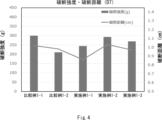
- 1 is a graph showing the breaking strength/breaking distance of a sample of Test 1 after refrigerated storage for 1 day.
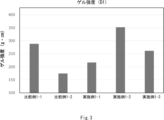
- 1 is a graph showing the gel strength of a sample of Test 1 after refrigerated storage for 1 day.
- 2 is a graph showing the breaking strength/breaking distance of the sample of Test 1 after refrigerated storage for 7 days.
- 4 is a graph showing the gel strength of the samples of Test 1 after refrigerated storage for 7 days.
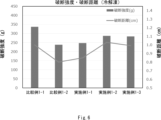
- 2 is a graph showing breaking strength/breaking distance after cooling and thawing of samples in Test 1.
- FIG. 2 is a graph showing the gel strength of samples of Test 1 after cold-thawing.
- 10 is a graph showing the syneresis rate of the sample for Test 2.
- FIG. 10 is a graph showing the breaking strength of the samples for Test 2.
- FIG. 10 is a graph showing the breaking strength of the samples for Test 2.
- the improving agent for processed meat products according to the present embodiment contains oil-processed acetylated starch, and the acetyl group content of the oil-processed acetylated starch is 1.1% by mass or more and 1.7% by mass or less. It is characterized by a
- the acetylated starch processed with fats and oils can be obtained by subjecting acetylated starch to processing with fats and oils.
- Acetylated starch can be obtained by subjecting raw material starch to acetylation treatment.
- raw material starch for example, at least one selected from the group consisting of tapioca starch, potato starch, waxy corn starch, corn starch, high amylose corn starch, sweet potato starch, wheat starch, rice starch and sago starch can be used. However, it is not limited to these.
- tapioca starch is preferably used as raw material starch.
- the acetylated starch used in the present embodiment is obtained by subjecting raw material starch to acetylation treatment.
- Acetylation treatment can be carried out by esterifying the raw material starch with, for example, acetic anhydride or vinyl acetate.
- the raw material starch may be subjected to other treatments in addition to the acetylation treatment.
- other treatments such as cross-linking treatment, etherification treatment, and enzyme treatment may be applied.
- a phosphoric acid cross-linking treatment is applied as another treatment, sodium trimetaphosphate or phosphorus oxychloride may be used to esterify the starting starch.
- acetylated phosphate-crosslinked starch obtained by subjecting raw material starch to acetylation treatment and phosphate-crosslinking treatment.
- acetylated phosphate-crosslinked tapioca starch using tapioca starch as raw material starch.
- acetylated starch processed with fats and oils can be obtained by subjecting acetylated starch to fats-and-oil processing.
- Fat processing can be performed by adding one or more selected from the group consisting of edible fats and edible fats and analogues to acetylated starch, followed by mixing and heating.
- Edible oils used for oil processing include safflower oil such as high linoleic safflower oil, soybean oil, corn oil, rapeseed oil, perilla oil, linseed oil, sunflower oil, peanut oil, cottonseed oil, olive oil, rice oil, and palm oil. , coconut oil, sesame oil, camellia oil, tea oil, mustard oil, kapok oil, kaya oil, walnut oil, poppy oil and the like.
- edible oil-and-fat analogues used for oil processing include monoglycerin fatty acid ester; polyglycerin fatty acid ester; polyglycerin condensed ricinoleic acid ester; organic acid fatty acid ester; sucrose fatty acid ester; sorbitan fatty acid ester; preferably one or two selected from monoglycerin fatty acid esters and polyglycerin fatty acid esters, more preferably polyglycerin fatty acid esters.
- the amount of the edible oil or edible oil-related substance when preparing the oil-processed starch is, for example, the sum of the edible oil and the edible oil-related substance with respect to 100 parts by mass of raw starch (e.g., acetylated starch). It may be 0.005 parts by mass or more, preferably 0.008 parts by mass or more, and more preferably 0.02 parts by mass or more.
- the amount of edible oil or edible oil-related substance blended with respect to 100 parts by mass of raw starch is, for example, 2 parts by mass or less in total of edible oil and edible oil-related substance. 0.5 parts by mass or less, more preferably 0.8 parts by mass or less.
- the mixture may contain a pH adjuster from the viewpoint of protecting the acetyl group of the acetylated starch contained as a raw material.
- the pH adjuster may be any pH adjuster that can be used in foods, and can be selected according to the type of raw starch and edible oil. from, hydroxides such as sodium hydroxide, potassium hydroxide, calcium hydroxide, magnesium hydroxide; carbonates such as sodium carbonate, sodium hydrogen carbonate, potassium carbonate; and disodium hydrogen phosphate, sodium dihydrogen phosphate, etc.
- organic acid salts other than the above such as trisodium citrate, sodium acetate, sodium lactate, disodium succinate, sodium gluconate, sodium tartrate, and monosodium fumarate, and one or more of these is preferably blended. More preferably, one or more carbonates such as sodium carbonate, sodium hydrogencarbonate and potassium carbonate are used, and more preferably one or more selected from the group consisting of sodium carbonate and trisodium citrate, and more preferably citric acid. Trisodium phosphate is used.
- the amount of the pH adjuster added when preparing the oil-processed starch is, for example, 0.005 parts by mass or more, preferably 0.03 parts by mass or more, and more preferably 0.05 parts by mass or more with respect to 100 parts by mass of starch. , and more preferably 0.08 parts by mass or more.
- the amount of the pH adjuster added is, for example, 2 parts by mass or less, preferably 1.5 parts by mass or less with respect to 100 parts by mass of starch. It is preferably 1.2 parts by mass or less, and more preferably 1 part by mass or less.
- the acetyl group content of the acetylated starch processed with oil is 1.1% by mass or more and 1.7% by mass or less, preferably 1.1% by mass or more and 1.6% by mass or less. More preferably, it is 1.2% by mass or more and 1.6% by mass or less.
- the acetylated starch may be acetylated crosslinked starch, and in this case, the solubility of the acetylated crosslinked starch is 40.5% or more and 46.0% or less, preferably 41.0% or more and 46%. 0% or less, more preferably 41.5% or more and 46.0% or less.
- the acetylated starch having the acetyl group content in the above range may be used alone, or two or more types of acetylated starch having different acetyl group contents may be mixed to obtain the above-mentioned A range of acetylated starches may be prepared.
- a first acetylated starch having a first acetyl group content and a first acetylated starch having a first acetyl group content A second acetylated starch that is a second content greater than the amount of acetylated starch may be used.
- the acetylated starch comprising the starch may be oil processed to form the oil processed acetylated starch.
- acetylated starch having a predetermined acetyl group content can be easily prepared.
- the acetyl group content of the acetylated starch can be adjusted with high precision.
- two or more types of acetylated starches that have been processed with oils and fats may be mixed. It is preferable to mix the above acetylated starches before fat processing.
- the improving agent for processed meat products according to the present embodiment may contain a powdery component in addition to the acetylated starch processed with fats and oils.
- a powdery component in addition to the acetylated starch processed with fats and oils.
- specific examples of such components include starches (unprocessed starches such as corn starch, tapioca starch, potato starch, wheat starch, etc.), and those processed by esterification, etherification, gelatinization, oxidation, acid treatment, etc.
- modified starch, sodium starch octenyl succinate, etc. seasonings such as salt, sugar and sodium glutamate; proteins such as soybean protein and powdered egg white; spices such as pepper and garlic powder; Preservatives such as sodium, glycine, and Na acetate; Antioxidants such as sodium ascorbate; Colorants such as cochineal dyes; Emulsion stabilizers such as sodium caseinate; Thickeners such as xanthan gum, locust bean gum, and guar gum; gelling agent; nutritional enhancers such as calcined shell calcium, eggshell calcium, and calcium carbonate.
- powdery ingredients that are commonly used in foods may also be included.
- the improving agent for processed meat products according to the present embodiment is in powder form, for example, it may be used as a meat processing liquid in which a powdery improving agent for processed meat products is dispersed in a liquid.
- the content of the oil-processed acetylated starch in the improved agent for processed meat products according to the present embodiment is, for example, 10% by mass or more and 100% by mass or less, preferably 15% by mass or more and 100% by mass or less. , more preferably 20% by mass or more and 100% by mass or less, and still more preferably 20% by mass or more and 99% by mass or less.
- the processed meat product according to the present embodiment is a processed meat product obtained by applying the above-described improving agent for processed meat product to meat.
- the meat used in the present embodiment is not particularly limited as long as it is meat, and examples include pork, beef, chicken, goat meat, mutton, horse meat, wild boar meat, venison, rabbit meat, bear meat, duck meat, and pigeon meat.
- duck, quail and turkey meat animal and poultry meat, fish such as salmon, sea bream, tuna, salmon, swordfish, cod, bonito, and sardines, and shrimp such as Amaebi, spiny lobster and tiger prawn 1 selected from the group consisting of crabs such as crabs, horse crabs, snow crabs, and king crabs, squids such as red squid, bluefin squid, cuttlefish, flying squid, firefly squid, spear squid, and seafood such as octopuses such as octopus and common octopus A species or two or more species can be used.
- the processed meat product according to the present embodiment is not particularly limited as long as it contains the above-described improving agent for processed meat products.
- Examples include ham, sausage, hamburger, salad chicken, meatball,
- Processed meat products include processed meat products such as steamed dumplings and dumplings, and processed marine products (water-paste products) such as kamaboko, fried kamaboko, hanpen, bamboo rings, and fish sausages.
- the invention according to the present embodiment can also be applied to animal meat-like processed products.
- meat processing product improver according to the present embodiment to vegetable proteins derived from beans such as soybeans and peas; grains such as wheat; vegetables; Meat-like processed products such as base hamburgers, plant-based sausages, and plant-based hams can be produced.
- the amount of acetylated starch processed with oil and fat is 1 part by mass or more and 15 parts by mass or less, preferably 2 parts by mass or more, relative to 100 parts by mass of meat.
- the improving agent for processed meat products may be applied to meat in an amount of 15 parts by mass or less, more preferably 4 parts by mass or more and 10 parts by mass or less.
- the improving agent for processed meat products according to the present embodiment to meat, it is possible to suppress syneresis and impart appropriate flexibility and hardness to the processed meat product. Moreover, the taste of processed meat products can be strengthened.
- the processed meat improver according to the present embodiment when the processed meat improver according to the present embodiment is applied to meat, after the processed meat is frozen and stored for a predetermined period, while suppressing syneresis of the processed meat when thawed, Flexibility and hardness can be imparted to processed meat products.
- the syneresis rate when the processed meat product is thawed after freezing can be 0.1% or more and 3.0% or less.
- the breaking strength when the processed meat product is thawed after freezing can be 200 g or more and 310 g or less.
- the method for producing the processed meat product according to the present embodiment is not particularly limited as long as it is a production method including the step of applying the above-described improving agent for processed meat product to meat.
- the improving agent for processed meat products according to the present embodiment is powdery, and for example, the powdery improving agent for processed meat products may be added to meat and used. Alternatively, the powdery processed meat improver may be dispersed in a liquid, and this liquid (meat processing liquid) may be applied to the meat.
- the amount of oil-processed acetylated starch contained in the meat processing liquid is 1% by mass or more and 10% by mass. % by mass or less, preferably 3% by mass or more and 8% by mass or less, more preferably 4% by mass or more and 6% by mass or less.
- the meat processing liquid may contain a liquid component in addition to the powder component that may be contained in the above-described meat improving agent.
- a liquid component in addition to the powder component that may be contained in the above-described meat improving agent.
- liquid seasonings such as soy sauce, vinegar, sake, and mirin; liquid oils such as canola oil, soybean oil, and blended oils; water such as water and ice; liquid proteins such as whey, egg yolk, and egg white. good.
- liquid ingredients that are commonly used in foods may also be included.
- injection treatment or tumbling treatment can be used.
- the injection process is a process of injecting a meat processing liquid into meat using an injector.
- Tumbling is the process of physically permeating meat with a meat processing liquid using a tumbler (a device with a rotating mechanism).
- Kamaboko manufacturing method When making Kamaboko, the raw materials shown in Table 3, for example, can be used. At this time, the improved agent for processed meat products according to the present embodiment is used as the oil-and-fat processed starch.
- these raw materials are mixed and mixed. Specifically, first, the cut frozen surimi is minced with a food processor. Thereafter, salt alone is added and mixed, and ice (crush) is added and mixed.
- the acetyl group content of the oil-processed acetylated starch contained in the processed meat improver is 1.1% by mass or more and 1.7% by mass or less.
- test 1 to 3 were carried out.
- the following tests are examples, and the present invention is not limited to Tests 1 to 3 below.
- Alcohol group content was measured by the following method.
- (1) The water content of the starch to be measured was measured using a moisture meter (manufactured by Kensei Kogyo Co., Ltd., electromagnetic moisture meter: model number MX50), and the moisture content (%) in the starch sample was calculated.
- (2) 20 mL of water and a few drops of 1.0 w/v % phenolphthalein ethanol solution were added to 1.8-2.0 g of starch sample.
- a 0.1N sodium hydroxide aqueous solution was added until the red color of the solution in (2) did not disappear, and then 8 mL of a 0.45N sodium hydroxide aqueous solution was added, followed by vigorous stirring at room temperature for 30 minutes.
- the solubility of oil-processed starch 2 is 39.0%, the solubility of oil-processed starch 3 is 41.8%, the solubility of oil-processed starch 4 is 42.5%, and the solubility of oil-processed starch 5 is 46.0%. there were.
- the raw materials after mixing were placed in a zipper bag and degassed with a vacuum packaging machine (Nichiwa Hot Temp). After that, it was filled into a vinyl casing. Also, keep the temperature low during the work. Then, it was allowed to stand in a hot bath at 30°C for 90 minutes (sitting). After that, it was heated in a hot water bath at 80° C. for 20 minutes. After heating, it was put into ice water and cooled for 10 minutes, and then stored in a refrigerator. In addition, some samples were stored frozen.
- Test 1 a sample according to Comparative Example 1-1 using oil-processed starch 1 (acetyl group content of 0%) and Comparative Example 1-2 using oil-processed starch 2 (acetyl group content of 0.9%) sample, Example 1-1 using oil-processed starch 3 (acetyl group content: 1.2%), Example 1 using oil-processed starch 4 (acetyl group content: 1.3%) -2 and samples of Examples 1-3 using oil-processed starch 5 (acetyl group content: 1.6%) were prepared.
- Test 1 a sample that was refrigerated for 1 day (hereinafter referred to as D1), a sample that was refrigerated for 7 days (hereinafter referred to as D7), and a sample that was repeatedly thawed three times (hereinafter referred to as thawed and thawed). described) was evaluated.
- the syneresis rate was measured for the sample after repeating the cooling and thawing three times.
- the freezing and thawing was performed by storing overnight in a freezer at ⁇ 10° C. and then leaving it in a refrigerator for 3 hours to thaw, which was repeated three times.
- the water syneresis rate is determined by lightly wiping the surface of the thawed sample with a paper towel, measuring the weight, calculating the difference from the previously measured weight of the sample before freezing, and using this difference as the weight of the sample before freezing. (see formula below).
- Syneresis rate (weight before freezing - weight after thawing) / weight before freezing x 100 (%)
- Table 4 and the graph in Fig. 1 show the measurement results of the water separation rate of each sample.
- the syneresis rate was measured for three samples for each test section.
- Table 4 shows the average value of the syneresis rate and the standard deviation of the syneresis rate of the three samples in each test plot.
- the graph in FIG. 1 shows the average syneresis of three samples in each plot.
- the syneresis rate of each sample decreased as the acetyl group content of the oil-processed starch increased.
- the samples according to Examples 1-1 to 1-3 had good syneresis rates of 2% or less.
- a texture analyzer (TA-XT Plus, Stable Micro Systems Co.) was used to measure the breaking strength and breaking distance.
- the casing was peeled off from the kamaboko stuffed in the casing, and the cylindrical kamaboko with a diameter of 30 mm was cut into a thickness of 25 mm and used as the measurement sample.
- the force of breaking through the kamaboko breaking strength (g)) and the distance traveled by the plunger until breakage (breaking distance (cm)
- Table 5 shows the measurement results of the breaking strength (g), breaking distance (cm), and gel strength (g ⁇ cm) of the sample (D1) stored in a refrigerator for one day. Table 5 shows the average value of four measurements of each value. Also, the graph shown in FIG. 2 shows the breaking strength (g) and breaking distance (cm) of each sample. The graph shown in FIG. 3 shows the gel strength (g ⁇ cm) of each sample. The graphs of FIGS. 2 and 3 plot the values shown in Table 5.
- the breaking strength (g) represents the hardness of the sample, and the breaking distance (cm) represents the flexibility of the sample. Moreover, the gel strength (g ⁇ cm) obtained by multiplying these values is an index representing their balance.
- Table 6 shows the measurement results of the breaking strength (g), breaking distance (cm), and gel strength (g ⁇ cm) of the sample (D7) stored in a refrigerator for 7 days. Table 6 shows the average value of four measurements of each value. Also, the graph shown in FIG. 4 shows the breaking strength (g) and breaking distance (cm) of each sample. The graph shown in FIG. 5 shows the gel strength (g ⁇ cm) of each sample. The graphs of FIGS. 4 and 5 plot the values shown in Table 6.
- the sample (D7) stored in a refrigerator for 7 days had good values of overall breaking strength (g), breaking distance (cm), and gel strength (g cm). It can be said that it has moderate hardness and flexibility. Therefore, in the samples according to Examples 1-1 to 1-3, it was possible to impart moderate flexibility and hardness to the kamaboko while suppressing syneresis.
- Table 7 shows the measurement results of breaking strength (g), breaking distance (cm), and gel strength (g ⁇ cm) of the cold-thawed samples. Table 7 shows the average of four measurements of each value. Also, the graph shown in FIG. 6 shows the breaking strength (g) and breaking distance (cm) of each sample. The graph shown in FIG. 7 shows the gel strength (g ⁇ cm) of each sample. The graphs of FIGS. 6 and 7 plot the values shown in Table 7.
- the cold-thawed samples generally showed good values for breaking strength (g), breaking distance (cm), and gel strength (g cm). , It can be said that it has moderate hardness and flexibility. Therefore, in the samples according to Examples 1-1 to 1-3, it was possible to impart moderate flexibility and hardness to the kamaboko while suppressing syneresis.
- Test 2 salt and auxiliary materials other than salt were weighed.
- the raw materials used in Test 2 are shown in Table 8.
- potato starch, egg white, phosphate-crosslinked tapioca starch, acetylated tapioca starch, fat-processed starch 1 (acetyl group content 0%), and fat-processed starch 3 (acetyl group content 1.2%) were prepared.
- the type of starch (egg white) used in each sample was varied.
- each ingredient was mixed in a food processor. After that, each sample (test section) was placed in a zipper bag and slammed against a stone table to remove air.
- a cylindrical casing tube with a diameter of 30 mm was filled with the mixture (minced gel) prepared as described above. After that, it was heated in a constant temperature bath at 73° C. for 30 minutes. Then, it was cooled with ice water for 30 minutes to prepare a heat-treated minced gel.
- the syneresis rate of each prepared sample was measured.
- the syneresis rate was measured using the same method as in Test 1.
- Test 2 the syneresis rate was measured for the refrigerated sample and the cold-thawed sample.
- FIG. 8 shows the water syneresis of the samples of Test 2.
- both the refrigerated samples and the cold-thawed samples had high syneresis rates.
- both the refrigerated sample and the cold-thawed sample had a low syneresis rate. Therefore, when the oil-processed starch 3 (acetyl group content: 1.2%) was used, the syneresis rate of the minced gel could be reduced.
- the breaking strength of each prepared sample was measured. Specifically, the minced gel was cut to a thickness of 15 mm and subjected to a compression test using a texture analyzer. A spherical plunger with a diameter of 7 mm was used to measure the breaking strength and breaking distance, respectively, and the minced gel was compressed under the conditions of a test speed of 1 mm/sec and 80% strain, and the stress (g) at break and the break. The distance (mm) that the plunger moved up to was measured. In Test 2, the breaking strength was measured for a sample that had been refrigerated and a sample that had been frozen and thawed. FIG. 9 shows the breaking strength of the samples for Test 2. As shown in FIG.
- Injection yield (%) (weight of meat after injection/weight of meat before injection) x 100...Formula 1
- the tumbling treatment was carried out by putting the injected meat into a tumbler and tumbling it at 4° C. under vacuum for 16 hours. Cooling tumbler ESK-60 manufactured by Bacona was used as the tumbler. Table 11 shows the tumbling yield of each sample. The yield after tumbling treatment (tumbling yield) was calculated using Equation 2 below.
- Tumbling yield (%) (Meat weight after tumbling/Meat weight before tumbling) x 100 Formula 2
- the meat after tumbling was placed in a casing and heat-treated.
- the heat treatment was performed using a steam convection oven (Combimaster Plus XS manufactured by Rational) under the following conditions. First, it was dried at a temperature of 60°C for 30 minutes, and then dried at a temperature of 70°C for 90 minutes. Then, it was heated and steamed for 78 minutes at a temperature of 78°C. At this time, the core temperature of the sample reached 63°C. Then, preheating was performed at a temperature of 64° C. for 30 minutes. After that, it was stored overnight in a refrigerator (4°C), and the next day, it was taken out from the refrigerator. Table 12 shows the heating yield of each sample. The heating yield was calculated using Equation 3 below.
- Heat yield (%) (mass after heat treatment/mass before heat treatment) x 100...Equation 3
Landscapes
- Life Sciences & Earth Sciences (AREA)
- Health & Medical Sciences (AREA)
- Nutrition Science (AREA)
- Chemical & Material Sciences (AREA)
- Engineering & Computer Science (AREA)
- Food Science & Technology (AREA)
- Polymers & Plastics (AREA)
- Marine Sciences & Fisheries (AREA)
- Zoology (AREA)
- Meat, Egg Or Seafood Products (AREA)
Priority Applications (2)
| Application Number | Priority Date | Filing Date | Title |
|---|---|---|---|
| JP2023563654A JP7802825B2 (ja) | 2021-11-29 | 2022-11-17 | 食肉加工品用改良剤、食肉加工品、及び食肉加工品の製造方法 |
| KR1020247008184A KR20240113894A (ko) | 2021-11-29 | 2022-11-17 | 식육 가공품용 개량제, 식육 가공품, 및 식육 가공품의 제조 방법 |
Applications Claiming Priority (2)
| Application Number | Priority Date | Filing Date | Title |
|---|---|---|---|
| JP2021-193436 | 2021-11-29 | ||
| JP2021193436 | 2021-11-29 |
Publications (1)
| Publication Number | Publication Date |
|---|---|
| WO2023095711A1 true WO2023095711A1 (ja) | 2023-06-01 |
Family
ID=86539602
Family Applications (1)
| Application Number | Title | Priority Date | Filing Date |
|---|---|---|---|
| PCT/JP2022/042711 Ceased WO2023095711A1 (ja) | 2021-11-29 | 2022-11-17 | 食肉加工品用改良剤、食肉加工品、及び食肉加工品の製造方法 |
Country Status (3)
| Country | Link |
|---|---|
| JP (1) | JP7802825B2 (https=) |
| KR (1) | KR20240113894A (https=) |
| WO (1) | WO2023095711A1 (https=) |
Citations (9)
| Publication number | Priority date | Publication date | Assignee | Title |
|---|---|---|---|---|
| JP2004041011A (ja) * | 2002-07-09 | 2004-02-12 | Honen Corp | 肉質改良材及びそれを用いた肉質の改良方法 |
| WO2012164801A1 (ja) * | 2011-06-01 | 2012-12-06 | 株式会社J-オイルミルズ | 油脂加工澱粉およびその製造方法 |
| JP2013110973A (ja) * | 2011-11-25 | 2013-06-10 | Nippon Shokuhin Kako Co Ltd | 畜肉製品用改良剤及び畜肉製品 |
| JP2016067336A (ja) * | 2014-10-02 | 2016-05-09 | グリコ栄養食品株式会社 | 食感改良組成物 |
| WO2020066845A1 (ja) * | 2018-09-28 | 2020-04-02 | 株式会社J-オイルミルズ | 食肉加工液 |
| JP2020162560A (ja) * | 2019-03-29 | 2020-10-08 | 日本食品化工株式会社 | 水畜産肉製品改良剤及び水畜産肉製品 |
| WO2021060350A1 (ja) * | 2019-09-27 | 2021-04-01 | 株式会社J-オイルミルズ | 食肉加工品の製造方法 |
| WO2021200333A1 (ja) * | 2020-03-30 | 2021-10-07 | 株式会社J-オイルミルズ | 食肉加工品の製造方法 |
| WO2021241736A1 (ja) * | 2020-05-29 | 2021-12-02 | 株式会社J-オイルミルズ | 食肉加工品用改良剤、食肉加工品、及び食肉加工品の製造方法 |
Family Cites Families (1)
| Publication number | Priority date | Publication date | Assignee | Title |
|---|---|---|---|---|
| JP2007189926A (ja) | 2006-01-18 | 2007-08-02 | Ajinomoto Co Inc | 食肉改質剤及び食肉加工品の製造方法 |
-
2022
- 2022-11-17 JP JP2023563654A patent/JP7802825B2/ja active Active
- 2022-11-17 KR KR1020247008184A patent/KR20240113894A/ko active Pending
- 2022-11-17 WO PCT/JP2022/042711 patent/WO2023095711A1/ja not_active Ceased
Patent Citations (9)
| Publication number | Priority date | Publication date | Assignee | Title |
|---|---|---|---|---|
| JP2004041011A (ja) * | 2002-07-09 | 2004-02-12 | Honen Corp | 肉質改良材及びそれを用いた肉質の改良方法 |
| WO2012164801A1 (ja) * | 2011-06-01 | 2012-12-06 | 株式会社J-オイルミルズ | 油脂加工澱粉およびその製造方法 |
| JP2013110973A (ja) * | 2011-11-25 | 2013-06-10 | Nippon Shokuhin Kako Co Ltd | 畜肉製品用改良剤及び畜肉製品 |
| JP2016067336A (ja) * | 2014-10-02 | 2016-05-09 | グリコ栄養食品株式会社 | 食感改良組成物 |
| WO2020066845A1 (ja) * | 2018-09-28 | 2020-04-02 | 株式会社J-オイルミルズ | 食肉加工液 |
| JP2020162560A (ja) * | 2019-03-29 | 2020-10-08 | 日本食品化工株式会社 | 水畜産肉製品改良剤及び水畜産肉製品 |
| WO2021060350A1 (ja) * | 2019-09-27 | 2021-04-01 | 株式会社J-オイルミルズ | 食肉加工品の製造方法 |
| WO2021200333A1 (ja) * | 2020-03-30 | 2021-10-07 | 株式会社J-オイルミルズ | 食肉加工品の製造方法 |
| WO2021241736A1 (ja) * | 2020-05-29 | 2021-12-02 | 株式会社J-オイルミルズ | 食肉加工品用改良剤、食肉加工品、及び食肉加工品の製造方法 |
Also Published As
| Publication number | Publication date |
|---|---|
| JP7802825B2 (ja) | 2026-01-20 |
| KR20240113894A (ko) | 2024-07-23 |
| JPWO2023095711A1 (https=) | 2023-06-01 |
Similar Documents
| Publication | Publication Date | Title |
|---|---|---|
| KR100352145B1 (ko) | 가공축류육 및 그것을 사용한 축류육식제 및 가공축류육 제조방법 | |
| TW201828827A (zh) | 食用肉加工用液及食用肉加工食品之製造方法 | |
| JPWO1995020323A1 (ja) | 加工畜類肉及びそれを用いた畜類肉食材、及び加工蓄類肉の製造方法 | |
| US20110091632A1 (en) | Meat Additive, Pickling Liquid and Processed Meat Product | |
| RS52833B (sr) | Uljana smeša za pripremanje prehrambenih proizvoda koji sadrže ulje | |
| EP2835060B1 (en) | Method for the preparation of oil-containing whole muscle meat-based products and reconstituted meat-based products | |
| JP7672987B2 (ja) | 成形食品の加工用組成物 | |
| KR20210071955A (ko) | 식육 가공액 | |
| RS53261B (sr) | Metod pripremanja mesnih proizvoda sa uljem koji sadrže smanjenu količinu aditiva | |
| JP7603661B2 (ja) | 食肉加工品の製造方法 | |
| JP3353383B2 (ja) | 酵素製剤及び結着成形食品の製造法 | |
| JP7621957B2 (ja) | 食肉加工品の製造方法 | |
| Praneetha et al. | Development of fish finger from rohu (Labeo rohita) and its quality evaluation during refrigerated storage condition | |
| JP7669358B2 (ja) | 食肉加工品用改良剤、食肉加工品、食肉加工液、及び食肉加工品の製造方法 | |
| JP7802825B2 (ja) | 食肉加工品用改良剤、食肉加工品、及び食肉加工品の製造方法 | |
| WO2020066844A1 (ja) | 食肉用組成物、食肉加工食品の製造方法、および、食肉加工食品の歯ごたえを向上させる方法 | |
| JP7069775B2 (ja) | 物性が改質された畜肉加工品又は水産加工品の製造方法 | |
| JP6782020B2 (ja) | 食品タンパク質結着剤、これを含む食品組成物及びこれを用いた食品の製造方法 | |
| CN105831612A (zh) | 一种用于改善冷冻肉制品品质的组合物 | |
| JP6890911B1 (ja) | 分散性に優れた油脂加工澱粉、その製造方法およびその用途 | |
| JPH0361416B2 (https=) | ||
| WO2018122757A1 (en) | Gelled restructured food product | |
| KR102096663B1 (ko) | 참치 후랑크/비앤나 소시지 및 그 제조 방법 | |
| JP7628412B2 (ja) | 乾燥水産練り製品及びその製造方法 | |
| JP7725760B1 (ja) | 冷凍米飯含有食品 |
Legal Events
| Date | Code | Title | Description |
|---|---|---|---|
| 121 | Ep: the epo has been informed by wipo that ep was designated in this application |
Ref document number: 22898495 Country of ref document: EP Kind code of ref document: A1 |
|
| WWE | Wipo information: entry into national phase |
Ref document number: 2023563654 Country of ref document: JP |
|
| WWE | Wipo information: entry into national phase |
Ref document number: 2401003132 Country of ref document: TH |
|
| NENP | Non-entry into the national phase |
Ref country code: DE |
|
| 122 | Ep: pct application non-entry in european phase |
Ref document number: 22898495 Country of ref document: EP Kind code of ref document: A1 |