WO2023017748A1 - 水素センサ - Google Patents
水素センサ Download PDFInfo
- Publication number
- WO2023017748A1 WO2023017748A1 PCT/JP2022/029406 JP2022029406W WO2023017748A1 WO 2023017748 A1 WO2023017748 A1 WO 2023017748A1 JP 2022029406 W JP2022029406 W JP 2022029406W WO 2023017748 A1 WO2023017748 A1 WO 2023017748A1
- Authority
- WO
- WIPO (PCT)
- Prior art keywords
- electrode
- terminal
- vias
- hydrogen sensor
- hydrogen
- Prior art date
- Legal status (The legal status is an assumption and is not a legal conclusion. Google has not performed a legal analysis and makes no representation as to the accuracy of the status listed.)
- Ceased
Links
Images





Classifications
-
- G—PHYSICS
- G01—MEASURING; TESTING
- G01N—INVESTIGATING OR ANALYSING MATERIALS BY DETERMINING THEIR CHEMICAL OR PHYSICAL PROPERTIES
- G01N27/00—Investigating or analysing materials by the use of electric, electrochemical, or magnetic means
- G01N27/02—Investigating or analysing materials by the use of electric, electrochemical, or magnetic means by investigating impedance
- G01N27/04—Investigating or analysing materials by the use of electric, electrochemical, or magnetic means by investigating impedance by investigating resistance
- G01N27/12—Investigating or analysing materials by the use of electric, electrochemical, or magnetic means by investigating impedance by investigating resistance of a solid body in dependence upon absorption of a fluid; of a solid body in dependence upon reaction with a fluid, for detecting components in the fluid
- G01N27/122—Circuits particularly adapted therefor, e.g. linearising circuits
-
- G—PHYSICS
- G01—MEASURING; TESTING
- G01N—INVESTIGATING OR ANALYSING MATERIALS BY DETERMINING THEIR CHEMICAL OR PHYSICAL PROPERTIES
- G01N27/00—Investigating or analysing materials by the use of electric, electrochemical, or magnetic means
- G01N27/02—Investigating or analysing materials by the use of electric, electrochemical, or magnetic means by investigating impedance
- G01N27/04—Investigating or analysing materials by the use of electric, electrochemical, or magnetic means by investigating impedance by investigating resistance
-
- G—PHYSICS
- G01—MEASURING; TESTING
- G01N—INVESTIGATING OR ANALYSING MATERIALS BY DETERMINING THEIR CHEMICAL OR PHYSICAL PROPERTIES
- G01N27/00—Investigating or analysing materials by the use of electric, electrochemical, or magnetic means
- G01N27/02—Investigating or analysing materials by the use of electric, electrochemical, or magnetic means by investigating impedance
- G01N27/04—Investigating or analysing materials by the use of electric, electrochemical, or magnetic means by investigating impedance by investigating resistance
- G01N27/12—Investigating or analysing materials by the use of electric, electrochemical, or magnetic means by investigating impedance by investigating resistance of a solid body in dependence upon absorption of a fluid; of a solid body in dependence upon reaction with a fluid, for detecting components in the fluid
-
- G—PHYSICS
- G01—MEASURING; TESTING
- G01N—INVESTIGATING OR ANALYSING MATERIALS BY DETERMINING THEIR CHEMICAL OR PHYSICAL PROPERTIES
- G01N27/00—Investigating or analysing materials by the use of electric, electrochemical, or magnetic means
- G01N27/26—Investigating or analysing materials by the use of electric, electrochemical, or magnetic means by investigating electrochemical variables; by using electrolysis or electrophoresis
- G01N27/416—Systems
Definitions
- the present disclosure relates to hydrogen sensors.
- Patent Document 1 discloses a thermal conductivity gas sensor that detects a target gas.
- Patent Document 1 the heat conduction type gas sensor disclosed in Patent Document 1 is heated to about several hundred degrees Celsius for gas detection, and requires a very large power consumption of about 100 mW. Moreover, there is a problem that the detection accuracy for hydrogen is low.
- the present disclosure provides a hydrogen sensor with low power consumption and high hydrogen detection accuracy.
- a hydrogen sensor includes a planar first electrode, a planar second electrode provided facing the first electrode and having an exposed portion exposed to a hydrogen-containing gas, a metal oxide layer sandwiched between two opposing surfaces of the first electrode and the second electrode, the exposed portion of which changes in resistance when it comes into contact with the gas; a first terminal, a second terminal and a heat sink; one or more first vias electrically connected to the first terminal and the second electrode and provided above the second electrode; one or more second vias electrically connected to the second electrode and provided above the second electrode; and one or more third vias in contact with the heat dissipation portion and provided above the second electrode. and a via.
- a hydrogen sensor includes a planar first electrode, and a planar second electrode provided facing the first electrode and having an exposed portion exposed to a gas containing hydrogen. and a metal oxide layer sandwiched between two opposing surfaces of the first electrode and the second electrode, the resistance value of which changes when the exposed portion comes into contact with the gas, and are provided separately from each other.
- a first terminal, a third terminal and a heat radiating portion one or more first vias electrically connected to the first terminal and the second electrode and provided above the second electrode; one or more fourth vias electrically connected to the terminal and the first electrode and provided below the first electrode; and one or more fourth vias provided above the second electrode in contact with the heat dissipation portion and a third via.
- a hydrogen sensor includes a planar first electrode, and a planar second electrode provided facing the first electrode and having an exposed portion exposed to a gas containing hydrogen. and a metal oxide layer sandwiched between two opposing surfaces of the first electrode and the second electrode, the resistance value of which changes when the exposed portion comes into contact with the gas, and are provided separately from each other.
- a first terminal, a second terminal, a third terminal and a heat radiating portion and one or more first vias electrically connected to the first terminal and the second electrode and provided above the second electrode.
- one or more second vias electrically connected to the second terminal and the second electrode and provided above the second electrode
- One or more third vias, and one or more fourth vias electrically connected to the third terminal and the first electrode and provided below the first electrode.
- the hydrogen sensor of the present disclosure has low power consumption and high hydrogen detection accuracy.
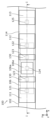
- FIG. 1 is a cross-sectional view showing a configuration example of a hydrogen sensor according to Embodiment 1.
- FIG. FIG. 2 is a plan view showing a configuration example of the hydrogen sensor according to Embodiment 1.
- FIG. 3 is a cross-sectional view showing a configuration example of a hydrogen sensor according to a comparative example.
- FIG. 4 is a diagram showing a table of temperature simulation results for the hydrogen sensor according to the example and the hydrogen sensor according to the comparative example.
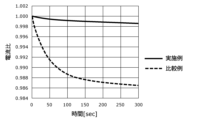
- FIG. 5 is a diagram showing changes in current values when a predetermined voltage is applied to the hydrogen sensor according to the example and the hydrogen sensor according to the comparative example.
- FIG. 6 is a diagram showing changes in current values during hydrogen detection in the hydrogen sensor according to the example and the hydrogen sensor according to the comparative example.
- FIG. 7 is a cross-sectional view showing a configuration example of a hydrogen sensor according to Embodiment 2.
- FIG. FIG. 8 is a plan view showing a configuration example of a hydrogen sensor according to
- each figure is a schematic diagram and is not necessarily strictly illustrated.
- substantially the same configurations are denoted by the same reference numerals, and overlapping descriptions are omitted or simplified.
- the terms “upper” and “lower” in the configuration of the hydrogen sensor do not refer to the upper (vertically upward) and downward (vertically downward) directions in terms of absolute spatial recognition, but rather the laminated structure. It is a term defined by a relative positional relationship based on the stacking order in . Also, the terms “above” and “below” are used only when two components are spaced apart from each other and there is another component between the two components, as well as when two components are spaced apart from each other. It also applies when two components are in contact with each other and are placed in close contact with each other.
- the x-axis, y-axis and z-axis indicate three axes of a three-dimensional orthogonal coordinate system.
- the x-axis and y-axis are two axes parallel to the planar first electrode of the hydrogen sensor, and the z-axis direction is perpendicular to the first electrode.
- planar view refers to when the first electrode of the hydrogen sensor is viewed from the positive direction of the z-axis.
- FIG. 1 is a cross-sectional view showing a configuration example of a hydrogen sensor 100 according to this embodiment.
- FIG. 2 is a plan view showing a configuration example of the hydrogen sensor 100 according to this embodiment. 1 shows a cross-sectional view at a position corresponding to line II in FIG.
- the hydrogen sensor 100 is a hydrogen sensor that detects hydrogen.
- the hydrogen sensor 100 includes a first electrode 103, a metal oxide layer 104, a second electrode 106, a metal layer 106s, a first via 121, a second via 122, two third vias 123, a fourth via 124 and a fifth via. 125 , a first terminal 111 , a second terminal 112 , a third terminal 113 , two heat dissipation parts 130 and wiring 114 .
- the hydrogen sensor 100 also includes an insulating layer 102 covering the above components, insulating layers 107a, 107b and 107c, and insulating layers 109a and 109b. These insulating layers are provided with an opening 106a, an opening 111a, an opening 112a, an opening 113a and two openings 130a. For simplicity, insulating layers other than the insulating layer 102 are not shown in FIG.
- the first electrode 103 is a planar electrode, and has two surfaces, an upper surface (surface on the z-axis positive side) and a lower surface (surface on the z-axis negative side).
- the top surface of the first electrode 103 contacts the metal oxide layer 104
- the bottom surface of the first electrode 103 contacts the insulating layer 107 a and the fourth via 124 .
- the shape of the first electrode 103 is rectangular with the same size as the second electrode 106 in plan view.
- the first electrode 103 may be made of materials such as tungsten, nickel, tantalum, titanium, aluminum, tantalum nitride, and titanium nitride, for example. These materials are preferably materials having a lower standard electrode potential than the metal in the metal oxide layer 104 . The higher the standard electrode potential, the more difficult it is to oxidize.
- the first electrode 103 is formed of, for example, tantalum nitride, titanium nitride, or a laminate thereof.
- the first electrode 103 is provided above the insulating layer 107a.
- a metal oxide layer 104 and a second electrode 106 are provided above the first electrode 103 .
- the second electrode 106 is a planar electrode provided facing the first electrode 103 .
- the second electrode 106 has two surfaces, an upper surface (surface on the z-axis positive side) and a lower surface (surface on the z-axis negative side).
- the bottom surface of the second electrode 106 is in contact with the metal oxide layer 104, and the top surface of the second electrode 106 is in contact with the metal layer 106s and the outside air.
- the second electrode 106 has an exposed portion 106e exposed to the outside air inside the opening 106a. That is, the opening 106a is an opening that exposes the upper surface of the second electrode 106 between the first terminal 111 and the second terminal 112 in plan view without being covered with the insulating layer 107b.
- the exposed portion 106e is a flat area exposed to gas containing hydrogen.
- the second electrode 106 is an electrode having hydrogen dissociation properties.
- the second electrode 106 extracts hydrogen atoms from a gas containing hydrogen (more specifically, hydrogen atoms) such as platinum, iridium, palladium, nickel, or an alloy containing at least one of these. It is composed of a material that has catalytic action to dissociate.
- the second electrode 106 shall be platinum.
- a metal layer 106s is formed on the upper surface of the second electrode 106 other than the opening 106a.
- the metal layer 106 s is made of TiAlN, for example, and is formed as an etching stopper for forming the first via 121 , the second via 122 and the two third vias 123 .
- metal layer 106s is not an essential component.
- the metal oxide layer 104 is a layer sandwiched between two opposing surfaces of the first electrode 103 and the second electrode 106 . That is, the metal oxide layer 104 is sandwiched between the top surface of the first electrode 103 and the bottom surface of the second electrode 106 .
- the metal oxide layer 104 is composed of an oxygen-deficient metal oxide.
- the metal oxide layer 104 is preferably an oxide of the following metals.
- the metal at least one may be selected from transition metals such as tantalum, hafnium, titanium, zirconium, niobium, tungsten, nickel and iron, and aluminum. Since transition metals can assume multiple oxidation states, different resistance states can be realized by oxidation-reduction reactions.
- the “degree of oxygen deficiency” of a metal oxide refers to the amount of oxygen deficiency in the metal oxide relative to the amount of oxygen in an oxide having a stoichiometric composition composed of the same elements as the metal oxide. Percentage.
- the amount of oxygen deficiency is a value obtained by subtracting the amount of oxygen in the metal oxide from the amount of oxygen in the metal oxide having a stoichiometric composition.
- the degree of oxygen deficiency of the metal oxide is defined based on the one with the highest resistance of Metal oxides of stoichiometric composition are more stable and have higher resistance values than metal oxides of other compositions.
- the metal oxide layer 104 is tantalum oxide, it can be expressed as TaO 2.5 , since the stoichiometric oxide by the above definition is Ta 2 O 5 .
- a metal oxide with excess oxygen has a negative value of oxygen deficiency.
- the degree of oxygen deficiency can take a positive value, 0, or a negative value.
- An oxide with a small degree of oxygen deficiency has a high resistance value because it is closer to an oxide having a stoichiometric composition, and an oxide with a large degree of oxygen deficiency has a lower resistance value because it is closer to a metal that constitutes the oxide.
- the metal oxide layer 104 includes a first layer 104a in contact with the first electrode 103, a second layer 104b provided above the first layer 104a and in contact with the first layer 104a and the second electrode 106, and an insulating separation layer 104i.
- the degree of oxygen deficiency of the second layer 104b is smaller than that of the first layer 104a.
- the first layer 104a is TaO x (0 ⁇ x ⁇ 2.5)
- the second layer 104b is Ta 2 O 5 with a smaller degree of oxygen deficiency than the first layer 104a.
- the metal oxide layer 104 has an insulating separation layer 104i on the outer circumference of the first electrode 103 in plan view.
- the metal oxide forming the metal oxide layer 104 functions as a gas-sensitive resistance film. Therefore, the resistance value of the metal oxide layer 104 changes when the exposed portion 106e of the second electrode 106 comes into contact with gas containing hydrogen.
- the resistance value of the metal oxide layer 104 decreases when hydrogen is present in the gas with which the exposed portion 106e is in contact. More specifically, the greater the amount of hydrogen, the lower the resistance value. Moreover, the resistance value of the metal oxide layer 104 reversibly changes depending on the presence or absence of hydrogen in the gas with which the exposed portion 106e is in contact.
- This change in resistance value is explained as follows.
- hydrogen atoms are dissociated.
- the dissociated hydrogen atoms penetrate into the metal oxide layer 104 .
- an impurity level is formed in the metal oxide layer 104, and the resistance value of the metal oxide layer 104 is lowered.
- first electrode 103, the metal oxide layer 104, the second electrode 106, and the metal layer 106s are surrounded by an insulating layer 107b. Furthermore, an insulating layer 109a is provided above the insulating layer 107b.
- a first via 121 , a second via 122 and two third vias 123 are provided above the second electrode 106 . Also, the first via 121, the second via 122, and the two third vias 123 are vias penetrating the insulating layer 107b and the insulating layer 109a and erected in the metal layer 106s.
- An insulating layer 107c and an insulating layer 109b are provided above the insulating layer 109a. Furthermore, above the first via 121, above the second via 122, and above each of the two third vias 123, the first terminal 111, the second terminal 112, and the two heat dissipation portions 130 are provided. Each and every. The first terminal 111, the second terminal 112, and the two heat dissipation portions 130 are provided separately from each other.
- the first terminal 111 is electrically connected to the second electrode 106 through the first via 121 and the metal layer 106s. That is, the first via 121 is electrically connected to the first terminal 111 and the second electrode 106 .
- hydrogen sensor 100 includes one first via 121 , it is not limited to this and may include one or more first vias 121 .
- the second terminal 112 is electrically connected to the second electrode 106 via the second via 122 and the metal layer 106s. That is, the second via 122 is electrically connected to the second terminal 112 and the second electrode 106 .
- hydrogen sensor 100 includes one second via 122 , it is not limited to this and may include one or more second vias 122 .
- Openings 111a and 112a are provided above the first terminal 111 and the second terminal 112, respectively, through the insulating layers 107c and 109b.
- the first terminal 111 and the second terminal 112 are connected to an external driving circuit for driving the hydrogen sensor 100 through openings 111a and 112a.
- the first terminal 111, the second terminal 112, the first via 121, and the second via 122 are made of a material having electrical conductivity, such as a metal having high electrical conductivity such as aluminum, copper, silver, or gold. It is good to be comprised by the material.
- the first terminal 111 and the second terminal 112 are arranged at positions sandwiching the exposed portion 106e in plan view.
- the exposed portion 106e of the second electrode 106 is energized, that is, current flows through the exposed portion 106e. It is considered that the energization of the exposed portion 106e activates the hydrogen dissociation action of the exposed portion 106e.
- the predetermined voltages may be voltages having polarities opposite to each other.
- the resistance value between the first terminal 111 and the second terminal 112 changes when the exposed portion 106e comes into contact with gas containing hydrogen while the exposed portion 106e is energized.
- a gas containing hydrogen is detected by the above drive circuit detecting the change in the resistance value.
- the third terminal 113 is electrically connected to the first electrode 103 through the fifth via 125, the wiring 114 and the fourth via 124.
- the fourth via 124 is a via provided below the second electrode 106 through the insulating layer 107 a and the insulating layer 102 .
- a fourth via 124 is electrically connected to the third terminal 113 and the first electrode 103 . Further, as shown in FIG. 2, in a plan view of the first electrode 103, the fourth via 124 and the exposed portion 106e overlap.
- hydrogen sensor 100 according to the present embodiment includes one fourth via 124 , it is not limited to this and may include one or more fourth vias 124 .
- the fifth via 125 is a via provided above the wiring 114 and below the third terminal 113 through the insulating layers 102, 107a, 107b and 109a.
- the opening 113a is provided above the third terminal 113 through the insulating layers 107c and 109b.
- the third terminal 113 is connected to an external drive circuit that drives the hydrogen sensor 100 through an opening 113a.
- the resistance value between the first electrode 103 and the second electrode 106 changes when the exposed portion 106e comes into contact with gas containing hydrogen while the exposed portion 106e is energized.
- the hydrogen sensor 100 changes the resistance value between the first terminal 111 or the second terminal 112 and the third terminal 113 by contacting the exposed portion 106e with the gas containing hydrogen while the exposed portion 106e is energized. change.
- the hydrogen-containing gas is also detected by the above drive circuit detecting the change in the resistance value.
- the insulating layer 102, the insulating layers 107a, 107b and 107c, and the insulating layers 109a and 109b, which cover the main parts of the hydrogen sensor 100, are formed of a silicon oxide film, a silicon nitride film, or the like.
- the laminate of the first electrode 103, the metal oxide layer 104, and the second electrode 106 has a configuration that can be used as a memory element of a resistance change memory (ReRAM).
- ReRAM resistance change memory
- the resistance change memory among the states that the metal oxide layer 104 can take, two states, a high resistance state and a low resistance state, are used as a digital memory element.
- the hydrogen sensor 100 of the present disclosure utilizes the high resistance state among possible states of the metal oxide layer 104 .
- the metal oxide layer 104 has a two-layer structure composed of a first layer 104a made of TaOx and a second layer 104b made of Ta2O5 having a low degree of oxygen deficiency. Although an example has been shown, a one-layer structure made of Ta 2 O 5 or TaO x having a small degree of oxygen deficiency may also be used.
- the two third vias 123 are provided between the first terminal 111 and the second terminal 112 in plan view.
- the first via 121, one third via 123, the fourth via 124, another third via 123 and the second via 122 are arranged linearly in this order.
- the two third vias 123 are provided on the path of current flowing from the first terminal 111 to the second terminal 112 via the first via 121, the second electrode 106, and the second via 122.
- the two third vias 123 extend from the first terminal 111 to the third terminal via the first via 121, the second electrode 106, the metal oxide layer 104, the first electrode 103, and the fourth via 124. 113 is provided on the current path.
- the two third vias 123 are in contact with the heat dissipation part 130 respectively.
- the hydrogen sensor 100 according to the present embodiment has two third vias 123, the present invention is not limited to this, and one or more third vias 123 may be provided.
- the two heat dissipation parts 130 are electrically isolated from each other. Also, each of the two heat dissipation parts 130 is electrically isolated from the first terminal 111 , the second terminal 112 and the third terminal 113 . In the present embodiment, the first terminal 111, one heat dissipation portion 130, the exposed portion 106e, the other heat dissipation portion 130, and the second terminal 112 are arranged linearly in this order.
- a part of the two heat radiating portions 130 (that is, one heat radiating portion 130) is provided between the first terminal 111 and the exposed portion 106e in plan view, and the other portion of the two heat radiating portions 130 is provided between the first terminal 111 and the exposed portion 106e.
- a part (that is, another one heat dissipation part 130) is provided between the second terminal 112 and the exposed part 106e.
- the other heat radiation portion 130 is provided between the third terminal 113 and the exposed portion 106e.
- the two heat dissipation parts 130 dissipate the heat in the second electrode 106 (more specifically, the exposed part 106e), the first via 121, the second via 122 and the fourth via 124.
- Heat in the second electrode 106 , the first via 121 and the second via 122 is radiated from the two heat dissipation parts 130 via the metal layer 106 s and the two third vias 123 .
- the heat in the fourth via 124 is radiated from the two heat dissipation parts 130 via the first electrode 103 , the metal oxide layer 104 , the second electrode 106 , the metal layer 106 s and the two third vias 123 .
- the two heat dissipation parts 130 dissipate heat in the exposed part 106e, the first via 121 and the second via 122.
- FIG. Also, for example, when a voltage is applied to the first terminal 111 and/or the third terminal 113, the two heat dissipation parts 130 dissipate the heat in the exposed part 106e, the first via 121 and the fourth via 124. .
- the two openings 130a are provided above the two heat radiating portions 130 through the insulating layers 107c and 109b. Heat is radiated out of the hydrogen sensor 100 through these two openings 130a.
- the two heat radiating parts 130 and the two third vias 123 are made of a material having thermal conductivity, for example, metal material having high thermal conductivity such as aluminum, copper, silver, or gold. good. Moreover, the two heat radiating portions 130 and the two third vias 123 may be made of a material having low electrical conductivity and high thermal conductivity, such as a ceramic material.
- the first via 121, the second via 122 and the two third vias 123 are preferably made of the same material, such as copper. This allows the first via 121, the second via 122 and the two third vias 123 to be formed simultaneously when the hydrogen sensor 100 according to the present embodiment is manufactured.
- the exposed portion 106e is provided between the first terminal 111 and the second terminal 112 in plan view.
- the exposed portion 106 e is provided on the path of current flowing from the first terminal 111 to the second terminal 112 via the first via 121 , the second electrode 106 and the second via 122 .
- the exposed portion 106e flows from the first terminal 111 to the third terminal 113 through the first via 121, the second electrode 106, the metal oxide layer 104, the first electrode 103, and the fourth via 124. It is provided on the current path.
- a voltage is applied between the first terminal 111 and the second terminal 112 .
- a potential of 0.75 V is applied to the first terminal 111
- a potential of 1.25 V is applied to the second terminal 112
- a potential of 0 V is applied to the third terminal 113.
- the value of current flowing through the ammeter is output from the ammeter. be.
- a resistance value between the first terminal 111 and the second terminal 112 is calculated from the output current value and the voltage value applied to the hydrogen sensor 100 .
- the resistance value between the first terminal 111 and the second terminal 112 changes when the exposed portion 106e contacts gas containing hydrogen while the exposed portion 106e is energized. More specifically, the resistance value changes due to the dissociated hydrogen atoms. The gas containing hydrogen is detected by the drive circuit detecting this change in resistance value.
- a voltage is applied between the first terminal 111 and the third terminal 113 .
- a potential of 0.75 V is applied to the first terminal 111
- a potential of 1.25 V is applied to the second terminal 112
- a potential of 0 V is applied to the third terminal 113.
- the value of current flowing through the ammeter is output from the ammeter.
- a resistance value between at least one of the first terminal 111 and the second terminal 112 and the third terminal 113 is calculated from the output current value and the voltage value applied to the hydrogen sensor 100 . More specifically, the resistance value between the first electrode 103 and the second electrode 106 is calculated.
- the resistance value between the first electrode 103 and the second electrode 106 changes when the exposed portion 106e contacts gas containing hydrogen while the exposed portion 106e is energized.
- the gas containing hydrogen is detected by the drive circuit detecting this change in resistance value.
- the applied voltage shown above is an example, and is not limited to such a value.
- FIG. 3 is a cross-sectional view showing a configuration example of a hydrogen sensor 100x according to a comparative example.
- the hydrogen sensors 100 according to the example and the present embodiment have the same configuration. Further, the hydrogen sensor 100x according to the comparative example has the same configuration as the hydrogen sensor 100 according to the present embodiment except that it does not include the two third vias 123 and the two heat radiating portions 130. FIG.
- FIG. 4 is a diagram showing a table of temperature simulation results for the hydrogen sensor 100 according to the example and the hydrogen sensor 100x according to the comparative example. More specifically, FIG. 4 shows simulation results of the temperatures of the exposed portion 106e and the first via 121 when a voltage is applied between the first terminal 111 and the second terminal 112. there is
- the heat generated in the hydrogen sensor 100 (more specifically, the exposed portion 106e and the first via 121) is dissipated by providing the hydrogen sensor 100 with the two third vias 123 and the two heat dissipation portions 130. is shown.
- FIG. 5 is a diagram showing changes in current values when a predetermined voltage is applied to the hydrogen sensor 100 according to the example and the hydrogen sensor 100x according to the comparative example. More specifically, FIG. 5 is a diagram showing changes in current values when a potential of 0 V is applied to the first terminal 111, a potential of 0.5 V is applied to the second terminal 112, and a potential of 0 V is applied to the third terminal 113. is.
- the change over time of the current value is large.
- the current value gradually decreases from the initial current (current at 0 sec) over time.
- vias such as the first via 121 made of a metal material increase in resistance as the temperature rises.
- the temperature of the first via 121 in the hydrogen sensor 100x tends to rise, so the resistance value tends to increase. For this reason, the change in the current value over time increases.
- the change in current value over time is small, and a constant current is maintained.
- the heat of the first via 121 is easily radiated by the two third vias 123 and the two heat radiating portions 130, and the increase in the resistance value of the first via 121 is suppressed. Therefore, the current is easily kept constant.
- FIG. 6 is a diagram showing changes in current values during hydrogen detection in the hydrogen sensor 100 according to the example and the hydrogen sensor 100x according to the comparative example.
- the current flowing between the first terminal 111 and the second terminal 112 is illustrated.
- the hydrogen sensor 100 and the hydrogen sensor 100x are exposed to the hydrogen-containing gas during the periods T1, T3 and T5, and are not exposed to the hydrogen-containing gas during the periods T0, T2, T4 and T6.
- the gas is a gas containing hydrogen molecules, and the concentration of the hydrogen molecules is 500 ppm.
- the current value In the hydrogen sensor 100, a constant current value is maintained during periods T1, T3, and T5, and the current value does not change significantly and is stable even when repeatedly exposed to gas containing hydrogen. On the other hand, in the hydrogen sensor 100x, the current value decreases in order during periods T1, T3, and T5, and is unstable.
- the heat of the first via 121 is easily dissipated by the two third vias 123 and the two heat radiating portions 130, and an increase in the resistance value of the first via 121 is suppressed. Therefore, while the hydrogen sensor 100 is detecting hydrogen, the current value tends to be kept constant.
- the resistance between the first terminal 111 and the second terminal 112 is determined from the output current value and the voltage value applied to the hydrogen sensor 100. value is calculated. Furthermore, gas containing hydrogen is detected based on this resistance value.
- the hydrogen sensor 100 including the two third vias 123 and the two heat radiating portions 130 the value of current flowing between the first terminal 111 and the second terminal 112 is kept constant even while hydrogen is being detected. Cheap. Therefore, the resistance value between the first terminal 111 and the second terminal 112 can be calculated with higher accuracy, and hydrogen can be detected based on the resistance value calculated with higher accuracy. Therefore, the hydrogen sensor 100 according to the present embodiment is a sensor with high detection accuracy for hydrogen.
- the hydrogen sensor 100 uses a voltage of several volts and a current of several mA to several tens of mA. Hydrogen can be detected by power consumption. Therefore, the hydrogen sensor 100 according to the present embodiment is a sensor with low power consumption.
- the hydrogen sensor 100 includes a first planar electrode 103 and a second planar electrode provided facing the first electrode 103 and having an exposed portion 106e exposed to a hydrogen-containing gas. 106, and a metal oxide layer 104 which is sandwiched between two opposing surfaces of the first electrode 103 and the second electrode 106 and whose resistance value changes when the exposed portion 106e comes into contact with gas, and which are provided separately from each other. and one or more first vias 121 electrically connected to the first terminal 111, the second terminal 112 and the heat dissipation part 130 and the first terminal 111 and the second electrode 106 and provided above the second electrode 106.
- one or more second vias 122 electrically connected to the second terminal 112 and the second electrode 106 and provided above the second electrode 106, and one or more second vias 122 in contact with the heat dissipation part 130 and above the second electrode 106. and one or more third vias 123 provided.
- the heat generated in the hydrogen sensor 100 (for example, the first via 121) is radiated by the two third vias 123 and the two heat radiating portions 130. Therefore, it is possible to prevent the resistance value of vias such as the first via 121 from increasing due to heat. Therefore, while the hydrogen sensor 100 is detecting hydrogen, the current value tends to be kept constant.
- the hydrogen sensor 100 according to the present embodiment as described in ⁇ Usage Example 1>, from the output current value and the voltage value applied to the hydrogen sensor 100, the first terminal 111 and the second terminal 112 A resistance value between is calculated. Furthermore, gas containing hydrogen is detected based on this resistance value.
- the hydrogen sensor 100 including the two third vias 123 and the two heat radiating portions 130, the value of current flowing between the first terminal 111 and the second terminal 112 is kept constant even while hydrogen is being detected. Cheap. Therefore, the resistance value between the first terminal 111 and the second terminal 112 can be calculated with higher accuracy, and hydrogen can be detected based on the resistance value calculated with higher accuracy. Therefore, the hydrogen sensor 100 according to the present embodiment is a sensor with high detection accuracy for hydrogen.
- the hydrogen sensor 100 can detect hydrogen with power consumption of several tens of mW. Therefore, the hydrogen sensor 100 according to the present embodiment is a sensor that consumes less power than the gas sensor disclosed in Patent Document 1, for example.
- the heat dissipation portion 130 includes the exposed portion 106e caused by applying a voltage to the first terminal 111 or the second terminal 112, one or more first vias 121, and one or more second vias 122. dissipate the heat in
- the exposed portion 106e extends from the first terminal 111 to the second terminal 112 via one or more first vias 121, the second electrode 106, and one or more second vias 122. It is provided on the path of the flowing current.
- one or more third vias 123 are provided from the first terminal 111 via one or more first vias 121, second electrodes 106, and one or more second vias 122, It is provided on the path of current flowing to the second terminal 112 .
- the resistance value between the first terminal 111 and the second terminal 112 increases due to the contact of the exposed portion 106e with gas. Change.
- gas containing hydrogen can be detected based on the change in this resistance value.
- a plurality of heat radiating portions 130 are provided, and in plan view of the first electrode 103, some of the plurality of heat radiating portions 130 are provided between the first terminal 111 and the exposed portion 106e. Another part of the heat radiating portion 130 is provided between the second terminal 112 and the exposed portion 106e.
- the hydrogen sensor 100 includes a first planar electrode 103 and a second planar electrode provided facing the first electrode 103 and having an exposed portion 106e exposed to a hydrogen-containing gas. 106, and a metal oxide layer 104 which is sandwiched between two opposing surfaces of the first electrode 103 and the second electrode 106 and whose resistance value changes when the exposed portion 106e comes into contact with gas, and which are provided separately from each other. and one or more first vias 121 electrically connected to the first terminal 111 , the third terminal 113 and the heat dissipation part 130 and the first terminal 111 and the second electrode 106 and provided above the second electrode 106 .
- one or more fourth vias 124 electrically connected to the third terminal 113 and the first electrode 103 and provided below the first electrode 103, and one or more fourth vias 124 in contact with the heat dissipation part 130 and above the second electrode 106. and one or more third vias 123 provided.
- the heat generated in the hydrogen sensor 100 (for example, the first via 121) is radiated by the two third vias 123 and the two heat radiating portions 130. Therefore, it is possible to prevent the resistance value of vias such as the first via 121 from increasing due to heat. Therefore, while the hydrogen sensor 100 is detecting hydrogen, the current value tends to be kept constant.
- the hydrogen sensor 100 according to the present embodiment as described in ⁇ Usage Example 2>, from the output current value and the voltage value applied to the hydrogen sensor 100, the first electrode 103 and the second electrode 106 A resistance value between is calculated. Furthermore, gas containing hydrogen is detected based on this resistance value.
- the hydrogen sensor 100 including the two third vias 123 and the two heat sinks 130, the current value flowing between the first electrode 103 and the second electrode 106 tends to be kept constant even while hydrogen is being detected. Therefore, the resistance value between the first electrode 103 and the second electrode 106 can be calculated more accurately, and hydrogen can be detected based on the accurately calculated resistance value. Therefore, the hydrogen sensor 100 according to the present embodiment is a sensor with high detection accuracy for hydrogen.
- the hydrogen sensor 100 can detect hydrogen with power consumption of several tens of mW. Therefore, the hydrogen sensor 100 according to the present embodiment is a sensor that consumes less power than the gas sensor disclosed in Patent Document 1, for example.
- the heat dissipation part 130 includes the exposed part 106 e due to the application of voltage to the first terminal 111 or the third terminal 113 , one or more first vias 121 and one or more fourth vias 124 . dissipate the heat in
- the exposed portion 106e includes one or more first vias 121, the second electrode 106, the metal oxide layer 104, the first electrode 103, and one or more fourth vias from the first terminal 111. 124 to the third terminal 113 .
- the one or more third vias 123 are connected from the first terminal 111 to the one or more first vias 121, the second electrode 106, the metal oxide layer 104, the first electrode 103, and one It is provided on the path of current flowing to the third terminal 113 via the fourth via 124 described above.
- the resistance value between the first electrode 103 and the second electrode 106 increases due to the contact of the exposed portion 106e with the gas. Change.
- gas containing hydrogen can be detected based on the change in this resistance value.
- one or more fourth vias 124 and the exposed portion 106e overlap in plan view of the first electrode 103 .
- the fourth via 124 and the two heat radiating portions 130 tend to be close to each other. Therefore, the heat of the fourth via 124 is more easily dissipated from the two heat dissipating portions 130 . Therefore, the value of current flowing between the first electrode 103 and the second electrode 106 can be more easily kept constant. In other words, the hydrogen sensor 100 with higher detection accuracy for hydrogen is realized.
- Hydrogen sensor 100 includes a plurality of heat radiating portions 130, and when viewed from the top of first electrode 103, some of the plurality of heat radiating portions 130 are located between first terminal 111 and exposed portion 106e. Another part of the plurality of heat radiating portions 130 is provided between the third terminal 113 and the exposed portion 106e.
- the hydrogen sensor 100 includes a first planar electrode 103 and a second planar electrode provided facing the first electrode 103 and having an exposed portion 106e exposed to a hydrogen-containing gas. 106, and a metal oxide layer 104 which is sandwiched between two opposing surfaces of the first electrode 103 and the second electrode 106 and whose resistance value changes when the exposed portion 106e comes into contact with gas, and which are provided separately from each other.
- the hydrogen sensor 100 according to the present embodiment can be used in both ⁇ Usage Example 1> and ⁇ Usage Example 2>. Therefore, as described above, the hydrogen sensor 100 according to the present embodiment is a sensor with high detection accuracy for hydrogen.
- the hydrogen sensor 100 can detect hydrogen with power consumption of several tens of mW. Therefore, the hydrogen sensor 100 according to the present embodiment is a sensor that consumes less power than the gas sensor disclosed in Patent Document 1, for example.
- FIG. 7 is a cross-sectional view showing a configuration example of the hydrogen sensor 200 according to this embodiment.
- the hydrogen sensor 200 has the same configuration as the hydrogen sensor 100 according to Embodiment 1, except that it includes a metal oxide layer 204 .
- the hydrogen sensor 200 includes a first electrode 103, a metal oxide layer 204, a second electrode 106, a metal layer 106s, a first via 121, a second via 122, two third vias 123, a fourth via 124 and a fifth via. 125 , a first terminal 111 , a second terminal 112 , a third terminal 113 , two heat dissipation parts 130 and wiring 114 .
- the hydrogen sensor 200 also includes an insulating layer 102 covering the above components, insulating layers 107a, 107b and 107c, and insulating layers 109a and 109b.
- the metal oxide layer 204 has the same configuration as the metal oxide layer 104 except that it has a bulk region and a local region 105 . That is, the metal oxide layer 204 has a first layer 104a, a second layer 104b, an isolation layer 104i, a bulk region, and a local region 105.
- FIG. 1 A block diagram illustrating an exemplary computing environment in accordance with the present disclosure.
- the second layer 104b included in the metal oxide layer 204 includes a bulk region and a local region 105 surrounded by this bulk region.
- the bulk region is a region other than the local region 105 in the second layer 104b shown in FIG.
- the local region 105 is also a region in contact with the second electrode 106 and not in contact with the first electrode 103 .
- the local region 105 is a region with a higher degree of oxygen deficiency than the bulk region.
- the degree of oxygen deficiency in the metal oxide contained in the local region 105 depends on the application of an electrical signal applied between the first electrode 103 and the second electrode 106 and the presence or absence of hydrogen in the gas with which the exposed portion 106e is in contact. changes reversibly.
- the local region 105 is a minute region containing filaments composed of oxygen defect sites. The filament acts as a conductive path.
- a localized region 105 is formed in the metal oxide layer 204 by applying an initial break voltage between the first electrode 103 and the second electrode 106 .
- the initial break voltage is the normal write voltage applied between the first electrode 103 and the second electrode 106 to reversibly transition the metal oxide layer 204 between the high resistance state and the low resistance state.
- the voltage may have a larger absolute value than the voltage.
- the initial break voltage may be a voltage whose absolute value is smaller than the above write voltage. In this case, the initial break voltage may be applied repeatedly or continuously for a predetermined period of time. The application of the initial break voltage forms a local region 105 in the metal oxide layer 204 that is in contact with the second electrode 106 and not in contact with the first electrode 103, as shown in FIG.
- the local region 105 may be formed at only one location in the metal oxide layer 204 of the hydrogen sensor 200.
- the number of local regions 105 in the metal oxide layer 204 can be confirmed by, for example, EBAC (Electron Beam Absorbed Current) analysis.
- the local region 105 is a region in which current flows more easily than in the bulk region.
- the local region 105 Due to its small size, the local region 105 generates heat due to a current of several tens of ⁇ A (that is, a power consumption of less than 0.1 mW) when a voltage of about 1 V is applied to read out the resistance value. A temperature rise occurs.
- the second electrode 106 is made of a catalytic metal such as Pt, and the portion of the second electrode 106 in contact with the local region 105 is heated by the heat generated in the local region 105 to generate hydrogen (more specifically, In other words, the efficiency of dissociating hydrogen atoms from a gas containing hydrogen atoms is increased.
- the hydrogen sensor 200 has the characteristic that the resistance value of the metal oxide layer 204 decreases when the exposed portion 106e comes into contact with gas containing hydrogen. Due to this characteristic, hydrogen contained in the gas can be detected when the gas to be inspected is brought into contact with the exposed portion 106e and the resistance value between the first electrode 103 and the second electrode 106 decreases.
- the gas containing hydrogen contacts the exposed portion 106e, thereby further reducing the resistance value. Therefore, hydrogen can be detected by the hydrogen sensor 200 in which the local region 105 is in either a high resistance state or a low resistance state.
- a hydrogen sensor 200 in which the local region 105 is electrically set to a high resistance state in advance may be used so that a decrease in resistance value can be detected more clearly.
- the metal oxide layer 204 has a bulk region and a local region 105 surrounded by the bulk region, and the local region 105 is more susceptible to current flow than the bulk region.
- the hydrogen sensor 200 can detect hydrogen with higher accuracy. Also, as described above, hydrogen can be detected with a power consumption of less than 0.1 mW. Therefore, hydrogen sensor 200 according to the present embodiment is a sensor with low power consumption.
- the metal oxide layer 204 is made of an oxygen-deficient metal oxide, and the local region 105 has a higher degree of oxygen deficiency than the bulk region.
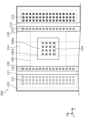
- FIG. 8 is a plan view showing a configuration example of the hydrogen sensor 300 according to this embodiment. 8 is a plan view corresponding to FIG. 2. FIG.
- the hydrogen sensor 300 is similar to the hydrogen sensor according to Embodiment 1, except that it mainly includes a plurality of first vias 121, a plurality of second vias 122, a plurality of third vias 123, and a plurality of fourth vias 124. It has the same configuration as 100.
- the hydrogen sensor 300 includes the first electrode 103, the metal oxide layer 104, the second electrode 106, the metal layer 106s, the plurality of first vias 121, the plurality of second vias 122, the plurality of third vias 123, the plurality of A fourth via 124 , a fifth via 125 , a first terminal 111 , a second terminal 112 , a third terminal 113 , two heat dissipation parts 130 and wiring 114 are provided.
- the hydrogen sensor 300 also includes an insulating layer 102 covering the above components, insulating layers 107a, 107b and 107c, and insulating layers 109a and 109b.
- each of the plurality of first vias 121 is hatched with the same type of hatching for identification. The same applies to the plurality of second vias 122 , the plurality of third vias 123 and the plurality of fourth vias 124 .
- All of the plurality of first vias 121 are electrically connected to the first terminal 111 and the second electrode 106 and provided above the second electrode 106 .
- All of the plurality of second vias 122 are electrically connected to the second terminal 112 and the second electrode 106 and provided above the second electrode 106 .
- All of the plurality of third vias 123 are in contact with one of the two heat dissipation parts 130 and provided above the second electrode 106 .
- All of the plurality of fourth vias 124 are electrically connected to the third terminal 113 and the first electrode 103 and provided below the first electrode 103 . Further, in a plan view of the first electrode 103, all of the plurality of fourth vias 124 and the exposed portion 106e overlap.
- planar view shape of the first electrode 103, the metal oxide layer 104, and the second electrode 106 is the same and is H-shaped.
- the hydrogen sensor 300 having such a configuration is also a sensor with high hydrogen detection accuracy and low power consumption.
- the hydrogen sensor according to the present disclosure can be widely used, for example, to detect leakage of gas containing hydrogen.
Landscapes
- Chemical & Material Sciences (AREA)
- Health & Medical Sciences (AREA)
- Life Sciences & Earth Sciences (AREA)
- Analytical Chemistry (AREA)
- Physics & Mathematics (AREA)
- Electrochemistry (AREA)
- Chemical Kinetics & Catalysis (AREA)
- Biochemistry (AREA)
- General Health & Medical Sciences (AREA)
- General Physics & Mathematics (AREA)
- Immunology (AREA)
- Pathology (AREA)
- Molecular Biology (AREA)
- Investigating Or Analyzing Materials By The Use Of Electric Means (AREA)
Priority Applications (3)
| Application Number | Priority Date | Filing Date | Title |
|---|---|---|---|
| JP2023541408A JPWO2023017748A1 (https=) | 2021-08-11 | 2022-07-29 | |
| CN202280055434.4A CN117795326A (zh) | 2021-08-11 | 2022-07-29 | 氢传感器 |
| US18/409,599 US12493009B2 (en) | 2021-08-11 | 2024-01-10 | Hydrogen sensor |
Applications Claiming Priority (2)
| Application Number | Priority Date | Filing Date | Title |
|---|---|---|---|
| JP2021130998 | 2021-08-11 | ||
| JP2021-130998 | 2021-08-11 |
Related Child Applications (1)
| Application Number | Title | Priority Date | Filing Date |
|---|---|---|---|
| US18/409,599 Continuation US12493009B2 (en) | 2021-08-11 | 2024-01-10 | Hydrogen sensor |
Publications (1)
| Publication Number | Publication Date |
|---|---|
| WO2023017748A1 true WO2023017748A1 (ja) | 2023-02-16 |
Family
ID=85200503
Family Applications (1)
| Application Number | Title | Priority Date | Filing Date |
|---|---|---|---|
| PCT/JP2022/029406 Ceased WO2023017748A1 (ja) | 2021-08-11 | 2022-07-29 | 水素センサ |
Country Status (4)
| Country | Link |
|---|---|
| US (1) | US12493009B2 (https=) |
| JP (1) | JPWO2023017748A1 (https=) |
| CN (1) | CN117795326A (https=) |
| WO (1) | WO2023017748A1 (https=) |
Cited By (1)
| Publication number | Priority date | Publication date | Assignee | Title |
|---|---|---|---|---|
| WO2025079597A1 (ja) * | 2023-10-11 | 2025-04-17 | ヌヴォトンテクノロジージャパン株式会社 | 水素検知装置及びその製造方法 |
Citations (10)
| Publication number | Priority date | Publication date | Assignee | Title |
|---|---|---|---|---|
| JPS5958348A (ja) * | 1982-09-29 | 1984-04-04 | Hitachi Ltd | 水素ガス検知素子 |
| JP2017173307A (ja) * | 2016-03-18 | 2017-09-28 | パナソニックIpマネジメント株式会社 | 水素センサ及び燃料電池自動車、並びに水素検出方法。 |
| JP2017181494A (ja) * | 2016-03-25 | 2017-10-05 | パナソニックIpマネジメント株式会社 | 気体センサ、水素検出方法、及び燃料電池自動車 |
| JP2017198660A (ja) * | 2016-04-26 | 2017-11-02 | パナソニックIpマネジメント株式会社 | 気体検出装置及び気体検出方法 |
| JP2017215312A (ja) * | 2016-05-25 | 2017-12-07 | パナソニックIpマネジメント株式会社 | 気体センサ装置、気体センサモジュール、及び気体検知方法 |
| WO2019044256A1 (ja) * | 2017-09-04 | 2019-03-07 | パナソニックIpマネジメント株式会社 | 気体センサ、気体検知装置、燃料電池自動車および気体センサの製造方法 |
| WO2020179226A1 (ja) * | 2019-03-07 | 2020-09-10 | パナソニックセミコンダクターソリューションズ株式会社 | 気体センサとその製造方法、および燃料電池自動車 |
| WO2020213223A1 (ja) * | 2019-04-16 | 2020-10-22 | パナソニックセミコンダクターソリューションズ株式会社 | 気体センサの駆動方法及び気体検出装置 |
| WO2021210453A1 (ja) * | 2020-04-16 | 2021-10-21 | ヌヴォトンテクノロジージャパン株式会社 | 水素センサ、水素検知方法および水素検知装置 |
| JP2022012739A (ja) * | 2020-07-02 | 2022-01-17 | パナソニックIpマネジメント株式会社 | ガスセンサ装置 |
Family Cites Families (3)
| Publication number | Priority date | Publication date | Assignee | Title |
|---|---|---|---|---|
| US5372785A (en) * | 1993-09-01 | 1994-12-13 | International Business Machines Corporation | Solid-state multi-stage gas detector |
| JP2018119846A (ja) | 2017-01-25 | 2018-08-02 | ヤマハファインテック株式会社 | 熱伝導式ガスセンサ |
| WO2019241417A1 (en) * | 2018-06-13 | 2019-12-19 | Invensas Bonding Technologies, Inc. | Tsv as pad |
-
2022
- 2022-07-29 JP JP2023541408A patent/JPWO2023017748A1/ja active Pending
- 2022-07-29 CN CN202280055434.4A patent/CN117795326A/zh active Pending
- 2022-07-29 WO PCT/JP2022/029406 patent/WO2023017748A1/ja not_active Ceased
-
2024
- 2024-01-10 US US18/409,599 patent/US12493009B2/en active Active
Patent Citations (10)
| Publication number | Priority date | Publication date | Assignee | Title |
|---|---|---|---|---|
| JPS5958348A (ja) * | 1982-09-29 | 1984-04-04 | Hitachi Ltd | 水素ガス検知素子 |
| JP2017173307A (ja) * | 2016-03-18 | 2017-09-28 | パナソニックIpマネジメント株式会社 | 水素センサ及び燃料電池自動車、並びに水素検出方法。 |
| JP2017181494A (ja) * | 2016-03-25 | 2017-10-05 | パナソニックIpマネジメント株式会社 | 気体センサ、水素検出方法、及び燃料電池自動車 |
| JP2017198660A (ja) * | 2016-04-26 | 2017-11-02 | パナソニックIpマネジメント株式会社 | 気体検出装置及び気体検出方法 |
| JP2017215312A (ja) * | 2016-05-25 | 2017-12-07 | パナソニックIpマネジメント株式会社 | 気体センサ装置、気体センサモジュール、及び気体検知方法 |
| WO2019044256A1 (ja) * | 2017-09-04 | 2019-03-07 | パナソニックIpマネジメント株式会社 | 気体センサ、気体検知装置、燃料電池自動車および気体センサの製造方法 |
| WO2020179226A1 (ja) * | 2019-03-07 | 2020-09-10 | パナソニックセミコンダクターソリューションズ株式会社 | 気体センサとその製造方法、および燃料電池自動車 |
| WO2020213223A1 (ja) * | 2019-04-16 | 2020-10-22 | パナソニックセミコンダクターソリューションズ株式会社 | 気体センサの駆動方法及び気体検出装置 |
| WO2021210453A1 (ja) * | 2020-04-16 | 2021-10-21 | ヌヴォトンテクノロジージャパン株式会社 | 水素センサ、水素検知方法および水素検知装置 |
| JP2022012739A (ja) * | 2020-07-02 | 2022-01-17 | パナソニックIpマネジメント株式会社 | ガスセンサ装置 |
Cited By (1)
| Publication number | Priority date | Publication date | Assignee | Title |
|---|---|---|---|---|
| WO2025079597A1 (ja) * | 2023-10-11 | 2025-04-17 | ヌヴォトンテクノロジージャパン株式会社 | 水素検知装置及びその製造方法 |
Also Published As
| Publication number | Publication date |
|---|---|
| JPWO2023017748A1 (https=) | 2023-02-16 |
| US20240175837A1 (en) | 2024-05-30 |
| US12493009B2 (en) | 2025-12-09 |
| CN117795326A (zh) | 2024-03-29 |
Similar Documents
| Publication | Publication Date | Title |
|---|---|---|
| JP6145762B1 (ja) | 気体センサ、及び燃料電池自動車 | |
| CN107315034B (zh) | 气体检测装置以及氢检测方法 | |
| JP6782642B2 (ja) | 気体センサ及び水素濃度判定方法 | |
| US12235232B2 (en) | Gas sensor, method of manufacturing gas sensor, and fuel cell vehicle | |
| JP7648606B2 (ja) | 水素センサ、水素検知方法および水素検知装置 | |
| CN107315033B (zh) | 气体检测装置以及氢检测方法 | |
| JP2017181494A (ja) | 気体センサ、水素検出方法、及び燃料電池自動車 | |
| JP2017215312A (ja) | 気体センサ装置、気体センサモジュール、及び気体検知方法 | |
| US20240272106A1 (en) | Hydrogen detection device and control method for hydrogen detection device | |
| US9664633B2 (en) | Resistive hydrogen sensor | |
| WO2023017748A1 (ja) | 水素センサ | |
| JP7138240B2 (ja) | 気体センサの駆動方法及び気体検出装置 | |
| WO2024009891A1 (ja) | 水素検知装置及びその製造方法 | |
| US9279782B2 (en) | Gas sensor | |
| JPS63101740A (ja) | 縦型電界効果トランジスタ型ガスセンサ | |
| JP2008545953A (ja) | ガス・センサ・アレーの作動回路装置 | |
| WO2025159102A1 (ja) | 水素検知装置及び水素検知方法 | |
| WO2025173708A1 (ja) | センサーパッケージおよびセンサーパッケージの製造方法 | |
| WO2024253130A1 (ja) | 半導体モジュール、異常判定システム及び異常判定方法 | |
| JP6134463B2 (ja) | ガスセンサ | |
| US20210109056A1 (en) | Electrochemical Gas Sensor |
Legal Events
| Date | Code | Title | Description |
|---|---|---|---|
| 121 | Ep: the epo has been informed by wipo that ep was designated in this application |
Ref document number: 22855811 Country of ref document: EP Kind code of ref document: A1 |
|
| WWE | Wipo information: entry into national phase |
Ref document number: 2023541408 Country of ref document: JP |
|
| WWE | Wipo information: entry into national phase |
Ref document number: 202280055434.4 Country of ref document: CN |
|
| NENP | Non-entry into the national phase |
Ref country code: DE |
|
| 122 | Ep: pct application non-entry in european phase |
Ref document number: 22855811 Country of ref document: EP Kind code of ref document: A1 |