WO2022254764A1 - 3-ヒドロキシ酪酸含有油脂組成物 - Google Patents
3-ヒドロキシ酪酸含有油脂組成物 Download PDFInfo
- Publication number
- WO2022254764A1 WO2022254764A1 PCT/JP2021/047689 JP2021047689W WO2022254764A1 WO 2022254764 A1 WO2022254764 A1 WO 2022254764A1 JP 2021047689 W JP2021047689 W JP 2021047689W WO 2022254764 A1 WO2022254764 A1 WO 2022254764A1
- Authority
- WO
- WIPO (PCT)
- Prior art keywords
- fat
- hydroxybutyric acid
- oil
- protein
- fat composition
- Prior art date
- Legal status (The legal status is an assumption and is not a legal conclusion. Google has not performed a legal analysis and makes no representation as to the accuracy of the status listed.)
- Ceased
Links
Images





Classifications
-
- A—HUMAN NECESSITIES
- A23—FOODS OR FOODSTUFFS; TREATMENT THEREOF, NOT COVERED BY OTHER CLASSES
- A23D—EDIBLE OILS OR FATS, e.g. MARGARINES, SHORTENINGS OR COOKING OILS
- A23D7/00—Edible oil or fat compositions containing an aqueous phase, e.g. margarines
- A23D7/005—Edible oil or fat compositions containing an aqueous phase, e.g. margarines characterised by ingredients other than fatty acid triglycerides
- A23D7/0053—Compositions other than spreads
-
- A—HUMAN NECESSITIES
- A23—FOODS OR FOODSTUFFS; TREATMENT THEREOF, NOT COVERED BY OTHER CLASSES
- A23D—EDIBLE OILS OR FATS, e.g. MARGARINES, SHORTENINGS OR COOKING OILS
- A23D9/00—Other edible oils or fats, e.g. shortenings or cooking oils
- A23D9/007—Other edible oils or fats, e.g. shortenings or cooking oils characterised by ingredients other than fatty acid triglycerides
-
- A—HUMAN NECESSITIES
- A23—FOODS OR FOODSTUFFS; TREATMENT THEREOF, NOT COVERED BY OTHER CLASSES
- A23D—EDIBLE OILS OR FATS, e.g. MARGARINES, SHORTENINGS OR COOKING OILS
- A23D9/00—Other edible oils or fats, e.g. shortenings or cooking oils
- A23D9/02—Other edible oils or fats, e.g. shortenings or cooking oils characterised by the production or working-up
- A23D9/04—Working-up
- A23D9/05—Forming free-flowing pieces
-
- A—HUMAN NECESSITIES
- A23—FOODS OR FOODSTUFFS; TREATMENT THEREOF, NOT COVERED BY OTHER CLASSES
- A23L—FOODS, FOODSTUFFS OR NON-ALCOHOLIC BEVERAGES, NOT OTHERWISE PROVIDED FOR; PREPARATION OR TREATMENT THEREOF
- A23L33/00—Modifying nutritive qualities of foods; Dietetic products; Preparation or treatment thereof
- A23L33/10—Modifying nutritive qualities of foods; Dietetic products; Preparation or treatment thereof using additives
- A23L33/115—Fatty acids or derivatives thereof; Fats or oils
- A23L33/12—Fatty acids or derivatives thereof
-
- A—HUMAN NECESSITIES
- A23—FOODS OR FOODSTUFFS; TREATMENT THEREOF, NOT COVERED BY OTHER CLASSES
- A23L—FOODS, FOODSTUFFS OR NON-ALCOHOLIC BEVERAGES, NOT OTHERWISE PROVIDED FOR; PREPARATION OR TREATMENT THEREOF
- A23L33/00—Modifying nutritive qualities of foods; Dietetic products; Preparation or treatment thereof
- A23L33/10—Modifying nutritive qualities of foods; Dietetic products; Preparation or treatment thereof using additives
- A23L33/17—Amino acids, peptides or proteins
-
- A—HUMAN NECESSITIES
- A23—FOODS OR FOODSTUFFS; TREATMENT THEREOF, NOT COVERED BY OTHER CLASSES
- A23V—INDEXING SCHEME RELATING TO FOODS, FOODSTUFFS OR NON-ALCOHOLIC BEVERAGES AND LACTIC OR PROPIONIC ACID BACTERIA USED IN FOODSTUFFS OR FOOD PREPARATION
- A23V2002/00—Food compositions, function of food ingredients or processes for food or foodstuffs
Definitions
- the present invention relates to a 3-hydroxybutyric acid-containing fat composition.
- 3-Hydroxybutyric acid (hereinafter simply referred to as "3HB") is a substance that originally exists in the human body, and is attracting attention as an epoch-making energy source that can replace carbohydrates.
- MCT medium-chain fatty acids
- 3HB has the effect of suppressing the absorption of fat and sugar by cells.
- external ingestion of 3HB has a dieting effect of suppressing sugar absorption and promoting fat burning.
- 3HB is said to have not only a role as a mere energy source, but also an improvement effect on cognitive function and long-term memory function, and a preventive effect on Alzheimer's disease.
- 3HB In view of these functions of 3HB, the application of 3HB as an energy substance or diet/health food for athletes is under consideration.
- 3HB and its salts are highly water-soluble and deliquescent, so it is extremely difficult to handle in a solid state such as powder.
- 3HB has a strong sour taste, it is accompanied by discomfort when taken orally.
- a method of neutralizing 3HB to make a 3HB salt is conceivable, but this is not preferable because the salt content is excessive.
- silicon dioxide, calcium silicate, or dextrin is not preferable in the combination of
- the present inventors have proposed a composition containing 3HB and a predetermined fat (among them, preferably a fat particle containing a fat component that is a ⁇ -type fat containing XXX-type triglyceride). It was found that both the deliquescence and acidity of 3HB can be suppressed by this.
- An object of the present invention is to solve the problems described above, and to provide a composition containing 3HB and fats and oils with improved dispersibility in water.
- the present inventors have made intensive studies to achieve the above object, and as a result, a composition containing 3HB and fat by containing 3-hydroxybutyric acid and/or a salt thereof, edible fat and oil, and protein WHEREIN: It discovered that the dispersibility with respect to water could be improved.
- the inventors of the present invention completed the present invention by conducting further studies based on such findings. That is, the present invention includes the following configurations.
- Item 1 A 3-hydroxybutyric acid-containing oil and fat composition containing 3-hydroxybutyric acid and/or a salt thereof, an edible oil and fat, and a protein.
- Section 2. The 3-hydroxybutyric acid-containing fat composition according to Item 1, wherein the edible fat is a fat particle containing a fat component containing one or more XXX triglycerides having fatty acid residues X at positions 1 to 3 of glycerin. thing.
- Item 3 The 3-hydroxybutyric acid-containing fat composition according to Item 2, wherein the fat component contains a ⁇ -type fat.
- Item 4 The 3-hydroxybutyric acid-containing fat composition according to Item 2 or 3, wherein the fatty acid residue has an integer of 10 to 22 carbon atoms.
- Item 5 The 3-hydroxybutyric acid-containing fat composition according to any one of items 2 to 4, wherein the fat particles have a plate-like shape.
- Item 6. The 3-hydroxy according to any one of Items 1 to 5, wherein the content of the edible oil is 0.5 to 200 parts by mass with respect to 100 parts by mass of the 3-hydroxybutyric acid and/or its salt. A butyric acid-containing fat composition.
- Item 7. Item 3. Item 3, wherein the protein is at least one selected from the group consisting of whey protein, casein protein, soy protein, pea protein, wheat protein, egg protein and rice protein. - A hydroxybutyric acid-containing fat composition.
- Item 8. The 3-hydroxybutyric acid-containing fat according to any one of Items 1 to 7, wherein the content of the protein is 30 to 2000 parts by mass with respect to 100 parts by mass of the 3-hydroxybutyric acid and/or salt thereof. Composition.
- Item 9. Item 9. Item 9. Item 9, wherein the salt of 3-hydroxybutyrate is at least one selected from the group consisting of alkali metal salts, alkaline earth metal salts and ammonium salts of 3-hydroxybutyrate. 3-Hydroxybutyric acid-containing oil and fat composition.
- Item 10. The 3-hydroxybutyric acid-containing oil and fat composition according to any one of items 1 to 9, wherein the 3-hydroxybutyric acid and/or its salt has the R configuration.
- Item 11 The 3-hydroxybutyric acid-containing fat composition according to any one of Items 1 to 10, which is a 3-hydroxybutyric acid-containing fat composition for oral intake.
- Item 12. The 3-hydroxybutyric acid-containing fat composition according to any one of Items 1 to 11, which is an aqueous dispersion.
- Item 13 The 3-hydroxybutyric acid-containing fat composition according to any one of Items 1 to 11, which is solid.
- Item 14 A method for producing the 3-hydroxybutyric acid-containing fat composition according to any one of Items 1 to 13, (1) A production method comprising a step of mixing the 3-hydroxybutyric acid and/or a salt thereof, the edible oil and fat, and the protein.
- step (1) is performed in water, and (2) removing water from the aqueous dispersion of the 3-hydroxybutyric acid-containing fat composition obtained in step (1) to isolate the solid 3-hydroxybutyric acid-containing fat composition; 15.
- Item 16 The production method according to Item 15, wherein the method for removing water is freeze-drying.
- Item 17 A dietary supplement containing the 3-hydroxybutyric acid-containing fat composition according to any one of Items 1 to 13.
- composition having improved dispersibility in water by adding protein to a composition containing 3HB and fats and oils.
- protein has no upper limit of content when taken orally, and can be contained in a large amount, so it is easy to improve dispersibility in water.
- protein when a large amount of protein is included in this way, it is possible to take in energy from 3HB and protein at the same time.
- a specific fat as the edible fat preferably fat particles containing a fat component that is a ⁇ -type fat containing XXX-type triglyceride
- deliquescence and sourness of 3HB are particularly easily suppressed.
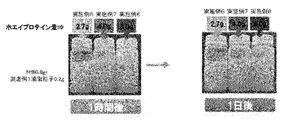
- FIG. 1 is a photograph showing the water dispersibility of Examples 1 to 5 and Comparative Example 1.
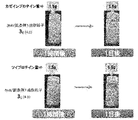
- FIG. 1 is a photograph showing the water dispersibility of Examples 6-8. 1 is a photograph showing the water dispersibility of Examples 9-12. 1 is a photograph showing the water dispersibility of Examples 13-16. 1 is a photograph showing the water dispersibility of Examples 17-20. 2 is a photograph showing the water dispersibility of Examples 21 and 22.
- FIG. 2 is a photograph showing the water dispersibility of Comparative Examples 2 to 10.
- FIG. 1 is a photograph showing the appearance of the 3-hydroxybutyric acid-containing fat and oil compositions obtained in Examples 23 to 25 one week after preparation.
- 3-Hydroxybutyric Acid-Containing Fat Composition contains 3-hydroxybutyric acid and/or a salt thereof, an edible fat, and a protein.
- 3-hydroxybutyric acid and/or its salt 3-hydroxybutyric acid (3HB) is a compound represented by the following formula.
- 3HB may be in the form of a salt.
- the form of the 3HB salt is not particularly limited, and examples thereof include alkali metal salts (sodium salt, potassium salt, lithium salt, etc.), alkaline earth metal salts (magnesium salt, calcium salt, etc.), ammonium salts and the like.
- 3HB and its salts can be used alone or in combination of two or more.
- a potassium salt having a large upper intake limit of salt it is preferable to include a potassium salt having a large upper intake limit of salt.
- 3HB potassium salt is included as 3-hydroxybutyric acid and/or its salt
- the total amount of 3-hydroxybutyric acid and/or its salt is 100% by mass
- the content of potassium salt is, for example, 20 to 100% by mass. , 40 to 100% by mass, 60 to 100% by mass, 80 to 100% by mass, and the like.
- the stereostructure of 3HB and/or a salt thereof may be R-configuration (R-configuration) or S-configuration (S-configuration).
- R-configuration is preferred from the viewpoints of energy transfer into the body, water dispersibility, suppression of deliquescence, suppression of acidity, and the like.
- the form of 3HB and/or its salt may be liquid (eg, aqueous solution or ethanol solution) or solid, but solid is particularly preferred. By having such a shape, it is easy to suppress the deliquescence of the resulting composition.
- aqueous solution or ethanol solution e.g., aqueous solution or ethanol solution
- solid solid is particularly preferred.
- the content ratio of 3HB contained in the composition can also be increased.
- the size of 3HB and/or its salt is not particularly limited, and can be appropriately set according to the type of salt in the 3HB salt.
- the method for producing 3HB used in the present invention is not particularly limited, and it can be produced by a conventionally known method.
- salts of 3-hydroxybutyric acid can be produced by conventionally used salt-forming processes, desalting processes, salt-exchanging processes, and the like.
- the content of 3HB and/or its salt is not particularly limited.
- the content of 3HB and/or a salt thereof is determined from the viewpoint of energy in the body, water dispersibility, suppression of deliquescence, suppression of acidity, etc.
- the total amount of the 3-hydroxybutyric acid-containing fat composition of the invention is preferably 5 to 70% by mass, more preferably 10 to 40% by mass, based on 100% by mass.
- the content of 3HB and/or a salt thereof is determined from the viewpoint of energy in the body, water dispersibility, suppression of deliquescence, suppression of acidity, etc. Therefore, the total amount of the 3-hydroxybutyric acid-containing oil and fat composition of the present invention is preferably 1 to 70% by mass, more preferably 2 to 40% by mass.
- Edible Oils and Fats are not particularly limited, and various oils can be used.
- Edible oils and fats include, for example, milk fat, shea butter, olive oil, soybean oil, safflower oil, corn oil, sunflower oil, rapeseed oil, coconut oil, palm oil, palm kernel oil, vegetable oils such as palm fractionated oil; , animal oils and fats such as fish oil, and the like.
- oils and fats also include oils and fats synthesized from glycerin and fatty acids, their fractionated oils, transesterified oils, hydrogenated oils, and the like.
- Examples of fats and oils synthesized from glycerin and fatty acids include medium-chain triglyceride (MCT) fats and the like.
- MCT medium-chain triglyceride
- Fractionated oils include, for example, palm oil fractionated oils such as palm olein, palm super olein, palm stearin, and palm mid fraction.
- transesterified oil for example, transesterified oil of the above-described oil or its fractionated oil and other liquid oil, or transesterified oil of medium-chain fatty acid triglyceride (MCT) oil and vegetable oil or the like can be used.
- MCT medium-chain fatty acid triglyceride
- Examples of the hydrogenated oil include the above-mentioned oils and fats, the hydrogenated oil of the fractionated oil thereof, and the hydrogenated oil of the transesterified oil.
- these edible oils and fats also include refined oils and fats, and there are no particular restrictions on the method for refining oils and fats when employing refined oils and fats. refining) and the like.
- Chemical refining is a method of refining crude oil that has been compressed and extracted from raw materials by subjecting it to degumming, deacidification, decolorization, dewaxing, deodorization, and the like.
- Physical refining is a method of refining crude oil pressed from raw materials by subjecting it to degumming, decolorization, deacidification/deodorization, and the like.
- These edible oils and fats can be used alone or in combination of two or more.
- shape of these edible fats and oils is not particularly limited, and may be solid or liquid.
- the oil particles contain an oil component containing one or more XXX-type triglycerides having fatty acid residues X at positions 1 to 3 of glycerin.
- Oil and Fat Particles tend to suppress deliquescence and sourness of 3HB particularly effectively, but tend to deteriorate water dispersibility. In the present invention, even in such a case, it is possible to improve the water dispersibility by containing the protein described below.
- oil particles are solid in shape, they are preferably powdery solids at room temperature (20°C) from the viewpoint of water dispersibility, suppression of deliquescence, suppression of sour taste, and the like.
- the loose bulk density of the oil and fat particles is preferably 0.05 to 0.6 g/cm 3 , more preferably 0.1 to 0.4 g/cm 3 from the viewpoint of water dispersibility, suppression of deliquescence, suppression of sour taste , etc. 0.1 to 0.3 g/cm 3 is more preferable.
- the loose bulk density is the packing density of the powder in a state of free fall.
- the loose bulk density (g/cm 3 ) is measured by dropping an appropriate amount of oil particles from about 2 cm above the upper open end of the graduated cylinder into a graduated cylinder with an inner diameter of 15 mm ⁇ 25 mL, and loosely filling the filled mass. Measure (g) and read the capacity (cm 3 ), calculate the mass (g) of the oil particles per 1 cm 3 , and take the average value of the three measurements.
- oil particles are not particularly limited, but from the viewpoint of water dispersibility, suppression of deliquescence, suppression of acidity, etc., it is preferable that the particles have a plate-like shape.
- the average particle diameter (effective diameter) of the particles is preferably 0.5 to 200 ⁇ m from the viewpoint of water dispersibility, suppression of deliquescence, suppression of sourness, etc. , more preferably 1 to 100 ⁇ m, more preferably 1 to 60 ⁇ m, and particularly preferably 1 to 30 ⁇ m.
- the average particle diameter (effective diameter) in the present invention is a wet measurement based on a laser diffraction scattering method (ISO133201 and ISO9276-1) with a particle size distribution measuring device (manufactured by Nikkiso Co., Ltd., device name: Microtrac MT3300ExII). (d50: measured value of particle size at 50% integrated value in particle size distribution).
- the effective diameter means the spherical particle size when the measured diffraction pattern of the crystal to be measured matches the theoretical diffraction pattern obtained assuming that the crystal is spherical.
- the effective diameter is calculated by matching the theoretical diffraction pattern obtained assuming a spherical shape with the actually measured diffraction pattern. Even a spherical shape can be measured by the same principle.
- the plate-like shape is not particularly limited, but from the viewpoint of water dispersibility, suppression of deliquescence, suppression of acidity, etc., the aspect ratio is preferably 1.1 or more, more preferably 1.2 to 3.0. Preferably, 1.3 to 2.5 is more preferable, and 1.4 to 2.0 is particularly preferable.
- the aspect ratio here is defined as the ratio of the length of the long side to the length of the short side of the rectangle surrounding the particle figure with a rectangle that circumscribes it so that the area is minimized.
- the aspect ratio is less than 1.1.
- the fat particles become spherical due to surface tension, and the aspect ratio becomes less than 1.1.
- the aspect ratio is obtained by measuring the length in the long axis direction and the length in the short axis direction of arbitrarily selected particles by direct observation with a scanning electron microscope, and is the average value of the measured number. Ask.
- Oil and Fat Component should contain an oil and fat component containing one or more XXX-type triglycerides having fatty acid residues X at positions 1 to 3 of glycerin, from the viewpoint of dispersibility in water, suppression of deliquescence, suppression of acidity, and the like. is preferred.
- the fat and oil component preferably contains at least one type of XXX triglyceride, and may contain other triglycerides.
- the above fat component preferably contains ⁇ -type fat.
- ⁇ -type fats and oils are fats and oils that consist only of ⁇ -type crystals, which is one of the crystal polymorphs of fats and oils.
- Other crystal polymorphic fats and oils include ⁇ '-type fats and oils and ⁇ -type fats and oils, and ⁇ '-type fats and oils are fats and oils that consist only of ⁇ '-type crystals, which is one of the crystal polymorphs of fats and oils.
- the ⁇ -type fats and oils are fats and oils composed only of ⁇ -type crystals, which is one of the crystal polymorphs of fats and oils.
- Some fat crystals have the same composition but different sublattice structures (crystal structures), which are called polymorphs. Typically, there are hexagonal type, orthorhombic perpendicular type and triclinic parallel type, which are called ⁇ -type, ⁇ ′-type and ⁇ -type, respectively.
- the melting point of each polymorph is higher in the order of ⁇ -type, ⁇ '-type, and ⁇ -type, and the melting point of each polymorph differs depending on the type of fatty acid residue X.
- Table 1 shows tricaprin, The melting point (° C.) of each polymorph when it is trilaurin, trimyristin, tripalmitin, tristearin, triarachidin, tribehenin is shown. Table 1 was created based on Nissim Garti et al., "Crystallization and Polymorphism of Fats and Fatty Acids", Marcel Dekker Inc., 1988, pp.32-33. In creating Table 1, the melting point temperature (°C) was rounded off to the first decimal place. Moreover, if the composition of the fat and the melting point of each polymorph thereof are known, it is possible to detect at least whether or not the ⁇ -type fat is present in the fat.
- a diffraction peak appears at a position that satisfies the above formula.
- d is the lattice constant
- ⁇ is the diffraction (incidence) angle
- ⁇ is the X-ray wavelength
- n is a natural number.
- Each peak may have an error of ⁇ 0.5°.
- the X-ray diffraction measurement is performed using an X-ray diffractometer (Rigaku Co., Ltd., horizontal sample X-ray diffractometer UItima IV) maintained at 20°C. CuK ⁇ rays (1.54 ⁇ ) are most often used as the X-ray source.
- the fat component preferably contains a ⁇ -type fat or a ⁇ -type fat as a main component (50% by mass or more), and is a preferred embodiment.
- the fat component consists essentially of ⁇ -type fat, a more preferable embodiment is that the fat component consists of ⁇ -type fat, and a particularly preferable embodiment is that the fat component consists only of ⁇ -type fat. It will be.
- the fat component consists only of ⁇ -type fat means the case where ⁇ -type fat and/or ⁇ '-type fat is not detected by differential scanning calorimetry.
- the fat component (or fat particles containing the fat component) has a diffraction peak near 4.5 to 4.7 ⁇ , preferably near 4.6 ⁇ in X-ray diffraction measurement, This is the case where the ⁇ -type fat and / or ⁇ '-type fat in Table 1 does not have a short plane spacing X-ray diffraction peak, in particular, does not have a diffraction peak near 4.2 ⁇ . can be determined to be ⁇ -type fats and oils.
- the indicator of the relative amount of ⁇ -type fat with respect to the total amount of ⁇ -type fat and ⁇ -type fat that the fat component “includes ⁇ -type fat” in the present invention is ⁇ Intensity ratio between characteristic peak of type fat and characteristic peak of ⁇ -type fat: [Intensity of characteristic peak of ⁇ -type fat / (Intensity of characteristic peak of ⁇ -type fat + Intensity of characteristic peak of ⁇ -type fat) ] (hereinafter also referred to as peak intensity ratio).
- the lower limit is, for example, preferably 0.4 or more, more preferably 0.5 or more, still more preferably 0.6 or more, particularly preferably 0.7 or more, particularly preferably 0.75 or more, and 0.8 or more. is very particularly preferred. If the peak intensity is 0.4 or more, it can be considered that the ⁇ -type fat is contained as a main component (50% by mass or more).
- the upper limit of the peak intensity ratio is preferably 1, but 0.99 or less, 0.98 or less, 0.95 or less, 0.93 or less, 0.90 or less, 0.85 or less, 0.80 or less and so on.
- the peak intensity ratio can be either or any combination of the above lower limit and upper limit.
- the above-mentioned fat and oil component should contain one or more XXX-type triglycerides having a fatty acid residue X with x carbon atoms at positions 1 to 3 of glycerin. is preferred.
- the XXX-type triglyceride is a triglyceride having fatty acid residues X with x carbon atoms at positions 1 to 3 of glycerol, and each fatty acid residue X is the same.
- the number of carbon atoms x is preferably an integer of 10 to 22, more preferably an integer of 12 to 22, even more preferably an integer of 14 to 20, from the viewpoint of water dispersibility, suppression of deliquescence, suppression of sourness, etc. Integers from ⁇ 18 are particularly preferred.
- the fatty acid residue X may be a saturated or unsaturated fatty acid residue.
- specific fatty acid residues X include, but are not limited to, residues of capric acid, lauric acid, myristic acid, palmitic acid, stearic acid, arachidic acid, and behenic acid.
- Preferred fatty acids are lauric acid, myristic acid, palmitic acid, stearic acid, arachidic acid, behenic acid, etc., from the viewpoint of water dispersibility, suppression of deliquescence, suppression of acidity, etc.
- Myristic acid, palmitic acid, stearic acid, arachidic acid. etc. are more preferable, and palmitic acid, stearic acid and the like are more preferable.
- XXX-type triglycerides can be used alone, or two or more types can be used, and from the viewpoint of water dispersibility, suppression of deliquescence, suppression of acidity, etc., one type or two types are preferable, and one type is more preferable.
- the content of the XXX-type triglyceride is preferably 50 to 100% by mass, preferably 60 to 99% by mass, based on the total amount of the oil and fat components contained in the oil and fat particles as 100% by mass, from the viewpoint of water dispersibility, suppression of deliquescence, suppression of acidity, etc. %, more preferably 70 to 97% by mass, and particularly preferably 80 to 95% by mass.
- the above oil particles may contain other triglycerides other than the above XXX triglycerides as oil components.
- Other triglycerides may be multiple types of triglycerides, and may be synthetic oils or natural oils.
- Synthetic fats and oils include, for example, glyceryl tricaprylate, glyceryl tricaprate, and the like.
- Examples of natural fats and oils include cocoa butter, sunflower oil, rapeseed oil, soybean oil, and cottonseed oil.
- the content of other triglycerides may be 1% by mass or more, for example, about 5 to 50% by mass, when the total amount of all triglycerides in the oil particles is 100% by mass.
- the content of other triglycerides is, for example, preferably 0 to 30% by mass, more preferably 0 to 18% by mass, even more preferably 0 to 15% by mass, and particularly preferably 0 to 8% by mass.
- Oil particles contain oil ingredients such as triglycerides, and optionally emulsifiers, flavors, skim milk powder, whole milk powder, cocoa powder, sugar, dextrin, sweeteners, coloring agents, and other ingredients. It may contain components (additives). Although these optional components can be externally added to the oil and fat particles, by including them in the oil and fat particles in advance, these optional components can be reliably and easily adhered onto the food base material.
- oil ingredients such as triglycerides, and optionally emulsifiers, flavors, skim milk powder, whole milk powder, cocoa powder, sugar, dextrin, sweeteners, coloring agents, and other ingredients. It may contain components (additives). Although these optional components can be externally added to the oil and fat particles, by including them in the oil and fat particles in advance, these optional components can be reliably and easily adhered onto the food base material.
- the amount of these other ingredients can be any amount as long as it does not impair the effects of the present invention, but it is preferable that it is not too much in consideration of oral ingestion use.
- the content of these other components is, for example, preferably 0.001 to 70% by mass, more preferably 0.01 to 65% by mass, and more preferably 0.1 to 30% by mass, with the total amount of oil particles being 100% by mass. More preferred.
- the oil and fat particles contained in the 3-hydroxybutyric acid-containing oil and fat composition of the present invention are substantially composed only of the above oil and fat components in consideration of water dispersibility, suppression of deliquescence, suppression of sourness, etc., as well as use for oral ingestion. It is preferable that the fat and oil component consists essentially of triglycerides.
- the content of the oil and fat components contained in the oil and fat particles is, for example, 85 to 100% by mass, preferably 90 to 100% by mass, more preferably 95 to 100% by mass.
- the content of the edible oil and fat is the same as that of the 3-hydroxybutyric acid-containing oil and fat composition of the present invention from the viewpoint of water dispersibility, suppression of deliquescence, suppression of acidity, etc. Taking the total amount as 100% by mass, it is preferably 1 to 50% by mass, more preferably 2 to 40% by mass.
- the 3-hydroxybutyric acid-containing oil and fat composition of the present invention is a liquid (aqueous dispersion)
- the content of the edible oil and fat is the 3-hydroxybutyric acid With respect to 100% by mass of the total amount of the contained oil and fat composition, it is preferably 0.1 to 40% by mass, more preferably 0.5 to 10% by mass.
- the 3-hydroxybutyric acid-containing fat composition of the present invention contains 3HB and/or a salt thereof, the above edible fat and oil, and protein.
- the content of edible fats and oils is preferably 0.5 to 200 parts by mass, and 1 to 100 parts by mass with respect to 100 parts by mass of 3HB and/or its salt, from the viewpoint of water dispersibility, suppression of deliquescence, suppression of acidity, etc. It is more preferably 3 to 90 parts by mass, and particularly preferably 5 to 50 parts by mass.
- the surface of 3HB and/or its salt is coated with the edible oil and fat, thereby suppressing deliquescence and sourness. is easy to obtain.
- the protein is not particularly limited, and whey protein, casein protein, soy protein (soybean protein), pea protein, wheat protein, egg protein, rice protein and the like can all be used.
- whey protein, casein protein, soy protein (soybean protein), pea protein, wheat protein, egg protein, rice protein and the like can all be used.
- water-soluble whey proteins such as whey protein, but also water-insoluble proteins can be improved in water dispersibility while suppressing deliquescence and acidity of 3HB.
- whey protein, casein protein, soy protein (soybean protein) and the like are preferable, and whey protein is more preferable, from the viewpoint of water dispersibility, suppression of deliquescence, suppression of acidity, and the like.
- proteins may be partially hydrolysates because they tend to improve water dispersibility and absorbability.
- partial hydrolyzates include water-soluble proteolytic hydrolysates obtained by partially degrading proteins contained in protein raw materials using proteolytic enzymes, acids, and the like. be done.
- the protein is preferably powdered when used.
- the form of protein includes so-called pulverized form, powder form, powder form, flake form, granule form, granular form and the like, and the individual forms are not strictly limited.
- the above proteins are not particularly limited, and known or commercially available products can be used.
- the protein content is the total amount of the 3-hydroxybutyric acid-containing fat composition of the present invention from the viewpoint of water dispersibility, suppression of deliquescence, suppression of acidity, etc. 100% by mass, preferably 20 to 90% by mass, more preferably 30 to 80% by mass.
- the 3-hydroxybutyric acid-containing oil and fat composition of the present invention is a liquid (aqueous dispersion)
- the protein content is determined from the viewpoint of water dispersibility, suppression of deliquescence, suppression of acidity, etc.
- the total amount of the oil and fat composition is preferably 1 to 90% by mass, more preferably 2 to 90% by mass, based on 100% by mass.
- the 3-hydroxybutyric acid-containing fat composition of the present invention contains 3HB and/or a salt thereof, the above edible fat and oil, and protein.
- the protein content is preferably 30 to 2000 parts by mass, more preferably 40 to 1000 parts by mass, based on 100 parts by mass of 3HB and/or its salt, from the viewpoint of water dispersibility, suppression of deliquescence, suppression of acidity, etc. 60 to 800 parts by mass is more preferable.
- protein can be ingested, it is possible to include it in excess as long as it can improve water dispersibility. It is also possible to
- the 3-hydroxybutyric acid-containing fat composition of the present invention preferably contains other components as appropriate within a range that does not impair the object and effect of the present invention.
- Such other ingredients are not particularly limited as long as they are edible, and include, for example, powdered carbohydrates and dietary fibers.
- Carbohydrates usually mean carbohydrates other than dietary fiber.
- carbohydrates include edible sugars such as monosaccharides, disaccharides, oligosaccharides, sugar alcohols, isomerized sugars, and starch hydrolysates. More specifically, glucose (monosaccharide), sugar, maltose (maltose), lactose, trehalose (disaccharide), maltitol, palatinit (sugar alcohol), fructose corn syrup, fructose corn syrup ( isomerized sugar), starch syrup (mixture of glucose, maltose and dextrin), dextrin (starch hydrolyzate) and the like.
- Dietary fibers include, for example, wheat bran, corn bran, oat bran, fiber mainly composed of cellulose extracted from plants (e.g., corn fiber, soybean dietary fiber, beet fiber, etc.), cellulose, crystalline cellulose, agar, chitosan, chitin. , hemicellulose, lignin, glucan, and the like.
- the content is preferably within a range that does not impair the object and effect of the present invention.
- the content of other components may be Taking the total amount of the composition as 100% by mass, it is preferably 0 to 10% by mass, more preferably 0.01 to 5% by mass.
- the 3-hydroxybutyric acid-containing oil and fat composition of the present invention is a liquid (aqueous dispersion)
- the content of other components is the 3-hydroxy
- the total amount of the butyric acid-containing fat composition is preferably 0 to 5% by mass, more preferably 0.01 to 3% by mass, based on 100% by mass.
- the 3-hydroxybutyric acid-containing fat composition of the present invention can be either solid or liquid (aqueous dispersion). That is, it can be stored as a solid such as powder and orally ingested as it is or in combination with water, or it can be orally ingested as an aqueous dispersion dispersed in water.
- the method for producing the 3-hydroxybutyric acid-containing fat composition of the present invention is not particularly limited, but for example, (1) It can be obtained by including a step of adding 3HB and/or a salt thereof, edible oil and fat, and protein.
- the 3-hydroxybutyric acid-containing oil and fat composition of the present invention contains other components as described above, it is preferable to add the other components when performing step (1).
- the step (1) is, for example, (1A) A step of dispersing 3HB and/or a salt thereof, edible oil and fat, and protein in water.
- excellent water dispersibility can also be obtained by directly dispersing 3HB and/or its salt, edible oil and fat, and protein in water without dry mixing.
- the 3-hydroxybutyric acid-containing fat composition of the present invention is obtained as a solid, 3HB and/or a salt thereof, an edible fat and a protein can be dry-mixed and pulverized. Also in this case, the water dispersibility of the obtained 3-hydroxybutyric acid-containing fat composition of the present invention can be improved to some extent.
- the mixing method is not particularly limited, and can be mixed by a known method.
- a method of mechanical mixing using a mixer or a mill can be exemplified.
- step (1A) rear (2) A step of removing water from the 3-hydroxybutyric acid-containing fat composition, which is the aqueous dispersion obtained in step (1A), to isolate the solid 3-hydroxybutyric acid-containing fat composition. is preferred.
- the method for removing water from the aqueous dispersion of the 3-hydroxybutyric acid-containing fat composition to isolate the solid 3-hydroxybutyric acid-containing fat composition is not particularly limited.
- a method of isolating water from the 3-hydroxybutyric acid-containing fat composition, which is an aqueous dispersion, by concentration using an evaporator or the like, freeze-drying, or the like can be exemplified.
- the freeze-drying method is not particularly limited.
- the 3-hydroxybutyric acid-containing oil and fat composition which is an aqueous dispersion, is frozen by standing at -80 to -20 ° C., preferably -50 to -30 ° C. for 8 to 48 hours, preferably 12 to 24 hours. After that, it can be dried using a freeze dryer or the like for 12 to 72 hours, preferably 24 to 48 hours.
- the order of mixing the components is not particularly limited, and they may be mixed simultaneously or sequentially.
- the edible oil and fat are oil and fat particles containing an oil and fat component containing one or more XXX-type triglycerides having fatty acid residues X at positions 1 to 3 of glycerin and are dry-mixed
- first, 3-hydroxybutyric acid And/or its salt is preferably mixed with the edible oil and fat, and then mixed with the protein.
- 3HB and/or a salt thereof, edible oil and fat, and protein are dispersed in water as in step (1A) described above, they can be added simultaneously without dry mixing.
- the method for producing the oil and fat particles is not particularly limited.
- Oil particles are obtained by melting a raw oil particle material containing one or more XXX-type triglycerides having fatty acid residues X at positions 1 to 3 of glycerin, keeping it at a specific cooling temperature, and solidifying it by cooling. Powdered oil particles can be obtained without using special processing means such as mechanical pulverization using a pulverizer such as a mill.
- a fat particle raw material containing the above XXX triglyceride is prepared, optionally in step (b), the fat particle raw material obtained in step (a) is heated, and the fat particle raw material is The triglyceride contained in is dissolved to obtain the raw oil particles in a molten state, and (d) the raw oil particles are cooled and solidified to obtain oil particles containing ⁇ -type oil and having a plate-like particle shape.
- the method of obtaining can be exemplified.
- the oil particles can also be produced by applying a known pulverizing means such as a hammer mill and a cutter mill to the solid matter obtained after cooling.
- ⁇ -type fat By cooling in such a temperature range, ⁇ -type fat can be efficiently produced and fine crystals can be formed, so fat particles can be easily obtained.
- fine means that the primary particles (crystals with the smallest size) are, for example, 20 ⁇ m or less, preferably 15 ⁇ m or less, more preferably 10 ⁇ m. Furthermore, by cooling in such a temperature range, it is easy to generate ⁇ -type fat and oil particles in a plate-like shape in a still state.
- the average particle size of the fat particles contained in the 3-hydroxybutyric acid-containing fat composition of the present invention is the same as described above.
- the fat particles are, for example, the following steps, (a) a step of preparing a fat particle raw material containing XXX-type triglycerides; (b) optionally heating the fat particle raw material obtained in step (a) to dissolve the triglyceride contained in the fat particle raw material to obtain the melted fat particle raw material; (d) a step of cooling and solidifying the fat particle raw material to obtain fat particles containing ⁇ -type fat and having a plate-like particle shape; It can be manufactured by a method comprising
- step (c) an optional step for promoting particle formation as step (c), such as (c1) seeding step, (c2) tempering step, or (c3) preliminary A cooling step may be included.
- step (d) oil particles can also be obtained by applying impact (pulverizing, loosening, vibrating, sieving, etc.) to the solid matter having voids obtained after cooling.
- the oil and fat particle raw material containing XXX triglycerides prepared in step (a) contains one or more XXX triglycerides having a fatty acid residue X with x carbon atoms at the 1- to 3-positions of glycerin.
- XXX-type triglycerides may be produced based on a method for producing ordinary fats and oils such as XXX-type triglycerides, or they may be easily obtained from the market.
- the XXX-type triglyceride specified by the carbon number x and the fatty acid residue X is the same as that of the finally obtained fat and oil component except for the crystal polymorphism.
- the raw material may contain ⁇ -type fat.
- the raw material may contain 0 to 0.1% by mass, 0.0001 to 0.05% by mass, or 0.0002 to 0.01% by mass of ⁇ -type fat.
- the raw material may be a raw material in a molten state.
- substantially not containing ⁇ -type fat means that not only XXX-type triglycerides but also substantially all fat components are not ⁇ -type fats.
- the presence of the type fat can be confirmed by the above-mentioned X-ray diffraction measurement, the diffraction peak attributed to the ⁇ type fat, and the confirmation of the ⁇ type fat by differential scanning calorimetry.
- the abundance of ⁇ -type fat in the case of “substantially free of ⁇ -type fat” is the intensity ratio between the characteristic peak of ⁇ -type and the characteristic peak of ⁇ -type among the X-ray diffraction peaks [characteristic of ⁇ -type can be estimated from the intensity of the characteristic peak/(intensity of characteristic peak of ⁇ -type+intensity of characteristic peak of ⁇ -type)] (peak intensity ratio).
- the peak intensity ratio of the fat particle raw material is, for example, preferably 0 to 0.2, more preferably 0.0001 to 0.15, and even more preferably 0.0002 to 0.10.
- the oil and fat particle raw material may contain one or more of the XXX triglycerides described above.
- the XXX type triglyceride can be produced by direct synthesis using a fatty acid or fatty acid derivative and glycerin.
- a method for directly synthesizing XXX triglycerides (i) a method of directly esterifying a fatty acid having X carbon atoms and glycerin (direct ester synthesis); (ii) A method of reacting fatty acid alkyl (e.g., fatty acid methyl, fatty acid ethyl, etc.) in which the carboxyl group of fatty acid X having x carbon atoms is bonded to an alkoxyl group with glycerin under basic or acidic catalytic conditions (fatty acid alkyl transesterification synthesis using), (iii) A method of reacting a fatty acid halide (e.g., fatty acid chloride, fatty acid bromide, etc.) in which the hydroxyl group of the carboxyl group of fatty acid X having
- XXX-type triglycerides can be produced by any of the above-described methods (i) to (iii), but from the viewpoint of ease of production, (i) direct ester synthesis or (ii) transesterification synthesis using fatty acid alkyl It is preferably produced, more preferably (i) by direct ester synthesis.
- XXX-type triglycerides by (i) direct ester synthesis, from the viewpoint of production efficiency, it is preferable to use 3 to 5 mol of fatty acid X or fatty acid Y per 1 mol of glycerin, and 3 to 4 mol is used. is more preferable.
- the reaction temperature in (i) direct ester synthesis of XXX-type triglycerides may be any temperature at which the water produced by the esterification reaction can be removed out of the system. More preferably, 180° C. to 250° C. is even more preferable. By carrying out the reaction at 180 to 250° C., XXX triglycerides can be produced particularly efficiently.
- a catalyst that promotes the esterification reaction may be used.
- the catalyst include acid catalysts and alkoxides of alkaline earth metals.
- the amount of the catalyst used is preferably about 0.001 to 1% by mass with respect to the total mass of the reaction raw materials.
- the amount of XXX triglycerides contained in the oil and fat particle raw material is preferably 50 to 100% by mass, and 55 to 95% by mass, when the total mass of all triglycerides contained in the raw material is 100% by mass. It is more preferably 60 to 90% by mass, and particularly preferably 65 to 85% by mass.
- triglyceride compositions or synthetic fats and oils can be used as raw materials for the fat and oil components contained in the fat and oil particles containing XXX-type triglycerides.
- examples of the triglyceride composition include hard palm stearin (manufactured by Nisshin OilliO Group, Ltd.), highly hydrogenated rapeseed oil (manufactured by Yokozeki Oil Industry Co., Ltd.), and highly hydrogenated soybean oil (manufactured by Yokozeki Oil Industry Co., Ltd.). can be done.
- the fat particles containing the XXX-type triglycerides may optionally contain other components such as partial glycerides, fatty acids, antioxidants, emulsifiers, and solvents such as water.
- the fat particle raw material containing the XXX-type triglyceride may be arbitrarily mixed when a plurality of components are contained. Any known mixing method may be used for the mixing operation as long as a homogeneous reaction substrate can be obtained. For example, a paddle mixer, an ajihomo mixer, a disper mixer, or the like can be used.
- the mixing operation may be performed under heating as necessary. It is preferable that the heating temperature be approximately the same as the heating temperature in step (b) described later. For example, it is preferably 50 to 120°C, more preferably 60 to 100°C, even more preferably 70 to 90°C, and particularly preferably 78 to 82°C.
- the fat particle raw material containing XXX triglycerides prepared in the step (a) is in a molten state at the time of preparation. In this case, it is preferable to cool without heating. On the other hand, if it is not in a molten state at the time of preparation, it is preferable to arbitrarily heat it to melt the triglycerides contained in the oil and fat particle raw material to obtain a molten oil and fat particle raw material.
- the oil and fat particle raw material is preferably heated to a temperature equal to or higher than the melting point of the triglyceride contained in the oil and fat particle raw material, and more preferably heated to a temperature at which XXX-type triglycerides can be melted.
- the heating temperature is preferably 70 to 200°C, more preferably 75 to 150°C, even more preferably 80 to 100°C.
- the heating can be continued, for example, for 0.1 to 3 hours, preferably 0.3 to 2 hours, more preferably 0.5 to 1 hour.
- Step of cooling the melted fat particle raw material to obtain fat particles It is preferable to incorporate ⁇ -type fat and form fat particles having a plate-like shape.
- the upper limit of the cooling temperature is set to lower than the melting point of the ⁇ -type oil of the oil component contained in the raw oil particles. Keeping at temperature is preferred.
- “A temperature lower than the melting point of the ⁇ -type fat in the fat component contained in the fat particle raw material” means, for example, in the case of XXX-type triglyceride having 3 stearic acid residues with 18 carbon atoms, the melting point of the ⁇ -type fat is 74 °C (Table 1), it is preferable to set the temperature to be 1 to 30°C lower than the melting point (that is, 44 to 73°C), and the temperature is to be 1 to 20°C lower than the melting point (that is, 54 to 73°C). is more preferred, a temperature lower than the melting point by 1 to 15°C (ie 59 to 73°C) is more preferred, and a temperature lower by 1 to 10°C (ie 64 to 73
- Cooling temperature (°C) carbon number x x 6.6 - 68
- the carbon number x indicates the carbon number x of the XXX-type triglyceride contained in the oil/fat particle raw material.
- the cooling temperature is set at the time of crystallization of the fat, such as ⁇ -type fats other than ⁇ -type fats and ⁇ ′-type fats. It tends to be difficult to crystallize. Since the cooling temperature mainly depends on the molecular size of the XXX-type triglyceride, it can be understood that there is a certain correlation between the carbon number x and the optimum lower limit of the cooling temperature.
- the lower limit of the cooling temperature is preferably 50.8°C or higher. Therefore, in the case of XXX-type triglycerides having three stearic acid residues with 18 carbon atoms, the temperature for "cooling and solidifying the molten fat particle raw material" is more preferably 50.8°C or higher and 72°C or lower.
- the XXX-type triglyceride is a mixture of two or more types, it is preferable to determine the lower limit value according to the cooling temperature for the one with the smaller number of carbon atoms x.
- the XXX triglyceride contained in the oil and fat particle raw material is a mixture of XXX triglyceride having three palmitic acid residues having 16 carbon atoms and XXX triglyceride having three stearic acid residues having 18 carbon atoms.
- the lower limit of the cooling temperature is preferably 37.6° C. or higher in accordance with the smaller number of carbon atoms of 16.
- the lower limit of the cooling temperature is suitably a temperature equal to or higher than the melting point of the ⁇ -type fat corresponding to the ⁇ -type fat of the oil-and-fat particle raw material containing the XXX-type triglyceride.
- the XXX-type triglyceride contained in the oil and fat particle raw material is an XXX-type triglyceride having three stearic acid residues having 18 carbon atoms
- the temperature for “cooling and solidifying the melted fat particle raw material” is preferably 55° C. or higher and 72° C. or lower.
- the cooling of the fat and oil raw material containing XXX-type triglycerides in a molten state for example, when x is 10 to 12, the final temperature is preferably -2 to 46 ° C., more preferably 12 to 44 ° C. , more preferably by cooling to a temperature of 14-42°C.
- the final temperature in cooling is preferably 24 to 56°C, more preferably 32 to 54°C, still more preferably 40 to 52°C when x is 13 or 14, and preferably when x is 15 or 16.
- x is 36 to 66°C, more preferably 44 to 64°C, more preferably 52 to 62°C, and when x is 17 or 18, preferably 50 to 72°C, more preferably 54 to 70°C, more preferably 58 to 68°C, and when x is 19 or 20, preferably 62 to 80°C, more preferably 66 to 78°C, still more preferably 70 to 77°C, and when x is 21 or 22, preferably It can be 66 to 84°C, more preferably 70 to 82°C, still more preferably 74 to 80°C.
- step (c) Particle formation promotion step It is also preferable to provide a particle formation promotion step (c) between the step (a) or (b) and the step (d) before the step (d).
- the melted oil and fat particle raw material used in the step (d) may be subjected to a seeding method, a tempering method, a pre-cooling method, or the like.
- the step (c) be a (c1) seeding step, a (c2) tempering step, or a (c3) pre-cooling step. Any one of these steps (c1) to (c3) may be performed alone, or a plurality of steps may be combined.
- between step (a) or (b) and step (d) means during step (a) or (b), after step (a) or (b) and in step (d) It is meant to include before and during step (d).
- the melted fat particle raw material is cooled to the final temperature in order to make it easier to powder.
- the previous is a method for promoting particle formation in which the raw material for oil particles in a molten state is treated.
- the seeding method is a method for promoting granulation by adding a small amount of a component that serves as the nucleus (seed) of the particles when cooling the raw oil and fat particles in a molten state.
- a component that serves as the nucleus (seed) of the particles when cooling the raw oil and fat particles in a molten state.
- XXX-type triglycerides having the same number of carbon atoms as XXX-type triglycerides in the oil and fat particle raw material in the melted oil and fat particle raw material obtained in the step (b) are preferably added to 80% by mass or more, and more
- an oil powder containing 90% by mass or more can be prepared as a core (seed) component.
- the temperature of the oil particle raw material is, for example, the final cooling temperature ⁇ 0 to +10 ° C., preferably +5 to +10 ° C. Then, by adding 0.1 to 1 part by mass, preferably 0.2 to 0.8 parts by mass, to 100 parts by mass of the fat particle raw material in the molten state, the granulation of the fat particle raw material is promoted. can be done.
- the tempering method is a temperature lower than the cooling temperature in step (d), for example, a temperature lower than 5 to 20 ° C., preferably a temperature lower than the cooling temperature in step (d) once before standing still at the final cooling temperature in cooling the oil and fat particle raw material in a molten state.
- a temperature lower than 5 to 20 ° C. preferably a temperature lower than the cooling temperature in step (d) once before standing still at the final cooling temperature in cooling the oil and fat particle raw material in a molten state.
- the pre-cooling method means that before cooling the melted fat particle raw material obtained in the step (a) or (b) in the step (d), the fat particle raw material containing the XXX triglyceride is A method of cooling once at a temperature between the temperature at the time of preparation and the cooling temperature at the time of cooling the oil and fat particle raw material, in other words, lower than the temperature of the molten state in step (a) or (b), step (d ) is a method of once pre-cooling at a temperature higher than the cooling temperature. (c3) It is preferable that, following the pre-cooling step, cooling is performed at the cooling temperature for cooling the oil/fat particle raw material in step (d).
- the temperature higher than the cooling temperature in step (d) is, for example, a temperature higher than the cooling temperature in step (d) by 2 to 40°C, preferably 3 to 30°C, more preferably 4 to 30°C, More preferably, the temperature may be about 5 to 10°C higher.
- the pre-cooling temperature is set lower, the main cooling time at the cooling temperature in step (d) can be shortened.
- the pre-cooling method is a method that can promote the granulation of the oil and fat particle raw material simply by lowering the cooling temperature in stages, and is highly advantageous for industrial production.
- the solid matter having voids obtained after cooling in step (d) is preferably a solid matter having voids and having a volume larger than that of the molten fat particle raw material, and the solid matter having voids is easily disintegrated. Since the material becomes a powdery substance, even if a powdering process is not provided, the voids can be collapsed and the powdery substance can be obtained in the filling process of filling the container or the transportation process.
- the fat particle raw material containing the XXX-type triglyceride is melted to obtain a melted fat particle raw material, and then cooled to obtain a solid matter having voids whose volume is larger than that of the melted fat particle raw material. is preferably formed.
- the oil and fat particle raw material that has become a solid matter having voids can be pulverized by applying a light impact, and the solid matter is easily disintegrated into particles.
- the method of applying the impact is not particularly limited, but for example, a method of pulverizing a solid material having voids using an ordinary pulverizer (hammer mill, cutter mill, etc.), a method of pulverizing a solid material having voids with a spatula, a rubber spatula, Examples include a method of loosening with a scoop or the like, a method of vibrating a solid material having voids put in a container, and a method of sieving a solid material having voids and applying impact.
- an ordinary pulverizer hammer mill, cutter mill, etc.
- a method of pulverizing a solid material having voids with a spatula, a rubber spatula examples include a method of loosening with a scoop or the like, a method of vibrating a solid material having voids put in a container, and a method of sieving a solid material having voids and applying impact.
- (R)-3-hydroxybutyric acid crystals were obtained by heating an R-3-hydroxybutyric acid aqueous solution produced according to the method described in Example 1 of JP-A-2019-176839 to 70°C. It was obtained by concentrating with a set evaporator until no water came out, adding seed crystals of 30% by mass of ethyl acetate and R-3-hydroxybutyric acid with respect to the weight of the concentrate, and leaving it at 4° C. overnight. In the following examples, this was filtered and used after drying.
- fat particles were produced according to Production Example 1 below. Coconard RK manufactured by Kao Corporation was used as medium-chain fatty acid (MCT) oil. BOSCO extra virgin olive oil manufactured by Nisshin OilliO Group Co., Ltd. was used as the olive oil.
- whey protein Isopro manufactured by BULKSPORTS (Body Plus International Co., Ltd.) was used.
- BULKSPORTS Body Plus International Co., Ltd. Big Casein was used.
- Soy Pro Soy Pro manufactured by BULKSPORTS (Body Plus International Co., Ltd.) was used.
- the loose bulk density (g/cm 3 ) of oil particles is obtained by loosely filling a graduated cylinder with an inner diameter of 15 mm ⁇ 25 mL by dropping oil particles from about 2 cm above the upper opening end of the graduated cylinder. The obtained mass (g) was measured and the capacity (cm 3 ) was read, and the mass (g) of the oil particles per 1 cm 3 was calculated.
- the average particle size of the obtained oil and fat particles is measured with a particle size distribution measuring device (manufactured by Nikkiso Co., Ltd., device name: Microtrac MT3300ExII), based on the laser diffraction scattering method (ISO133201 and ISO9276-1). Measured by measurement.
- a very small capacity circulator manufactured by Nikkiso Co., Ltd., device name: USVR
- water was circulated as the dispersion solvent.
- the measured value (d50) of the particle size at 50% of the integrated value in the obtained particle size distribution was taken as the average particle size.
- Triglyceride having a stearic acid residue (18 carbon atoms) at positions 1 to 3 (XXX type: 79.1% by mass, extremely hydrogenated rapeseed oil, manufactured by Yokozeki Oil Industry Co., Ltd.) 1 kg was maintained at 80 ° C. for 10 hours. and cooled in a 60° C. constant temperature bath for 15 hours to form a solid with increased volume and voids, complete crystallization, and then cooled to room temperature (25° C.).
- the obtained solids were pulverized with a hammer mill to obtain powdered oils and fats (melting point: 67.4°C, loose bulk density: 0.2 g/cm 3 , aspect ratio: 1.6, average particle size: 14.4 ⁇ m, X Line diffraction measurement diffraction peak: 4.6 ⁇ , peak intensity ratio: 0.89) was obtained. This was used as oil particles.
- Examples 1 to 22 and Comparative Example 1 35 g of distilled water and protein (whey protein, casein protein or soy protein) in amounts shown in Tables 2 to 7 were added to a mill mixer (IJM-M800-W, manufactured by Iris Ohyama Co., Ltd.) and lightly stirred. After that, (R)-3-hydroxybutyric acid crystals in the amounts shown in Tables 2 to 7 and edible oils and fats shown in Tables 2 to 7 in the amounts shown in Tables 2 to 7 were added, and pulverized for 5 seconds four times. rice field.
- Comparative Examples 3 to 10 when various emulsifiers such as those contained in proteins such as ratio P are used, even if the emulsifier is contained up to the limit amount that can be contained for oral ingestion. However, the water dispersibility could not be improved, and it can be understood that there is not much difference from Comparative Example 2 containing no emulsifier. In other words, it can be understood that emulsifiers are not suitable as water dispersants for compositions containing 3HB and edible fats and oils (especially compositions for oral intake).
- Example 26 1.4 g of (R)-3-hydroxybutyric acid crystals, 0.6 g of oil particles of Production Example 1 (Production Example 1), and 2.0 g of whey protein were added to 20 mL of distilled water, and a mill mixer (Iris Ohyama IJM-M800-W manufactured by Co., Ltd.) was stirred by performing stirring for 3 seconds five times.
- a mill mixer Iris Ohyama IJM-M800-W manufactured by Co., Ltd.
- the obtained 3-hydroxybutyric acid-containing fat and oil composition was transferred to a container and allowed to stand. After 1 hour and 1 day, a photograph was taken and the appearance was evaluated.
- the resulting 3-hydroxybutyric acid-containing fat composition was frozen overnight in a freezer at -30°C, and then treated with a freeze dryer (FREEZEDRYER FD-1 manufactured by EYELA) for 24 hours.
- FREEZEDRYER FD-1 manufactured by EYELA
- Example 27 1.4 g of (R)-3-hydroxybutyric acid crystals, 0.6 g of oil particles of Production Example 1 (Production Example 1), and 4.0 g of whey protein were added to 20 mL of distilled water, and a mill mixer (Iris Ohyama IJM-M800-W manufactured by Co., Ltd.) was stirred by performing stirring for 3 seconds five times.
- a mill mixer Iris Ohyama IJM-M800-W manufactured by Co., Ltd.
- the obtained 3-hydroxybutyric acid-containing fat and oil composition was transferred to a container and allowed to stand. After 1 hour and 1 day, a photograph was taken and the appearance was evaluated.
- the resulting 3-hydroxybutyric acid-containing fat composition was frozen overnight in a freezer at -30°C, and then treated with a freeze dryer (FREEZEDRYER FD-1 manufactured by EYELA) for 24 hours.
- FREEZEDRYER FD-1 manufactured by EYELA
- the resulting solid was loosened to give a powdery crystalline composition (loose bulk density: 0.2 g/cm 3 , aspect ratio: 2.0, average particle size: 119 ⁇ m, X-ray diffraction measurement diffraction peak: 4.0 ⁇ m). 6 ⁇ , peak intensity ratio: 0.90).
- the obtained solid was loosened to give a powdery crystal composition (loose bulk density: 0.3 g/cm 3 , aspect ratio: 1.4, average particle size: 99 ⁇ m, X-ray diffraction measurement diffraction peak: 4.6 ⁇ , peak intensity ratio: 0.88).
- the resulting solid was loosened to give a powdery crystalline composition (loose bulk density: 0.2 g/cm 3 , aspect ratio: 2.0, average particle size: 92 ⁇ m, X-ray diffraction measurement diffraction peak: 4.6 ⁇ , peak intensity ratio: 0.89).
- the resulting solid was loosened to give a powdery crystalline composition (loose bulk density: 0.2 g/cm 3 , aspect ratio: 2.0, average particle size: 30 ⁇ m, X-ray diffraction measurement diffraction peak: 4.6 ⁇ , peak intensity ratio: 0.93).
- the obtained solid was loosened to give a powdery crystalline composition (loose bulk density: 0.3 g/cm 3 , aspect ratio: 1.4, average particle size: 60 ⁇ m, X-ray diffraction measurement diffraction peak: 4.6 ⁇ , peak intensity ratio: 0.91).
- the raw material fat is maintained at 80°C for 0.5 hours to completely melt, and cooled in a 55°C constant temperature bath for 12 hours to form a voided solid with increased volume and complete crystallization. , cooled to room temperature (25° C.).
- a powdery crystal composition loose bulk density: 0.3 g/cm 3 , aspect ratio: 1.4, average particle size: 63 ⁇ m, X-ray diffraction measurement diffraction peak: 4.6 ⁇ , peak intensity ratio: 0.78).
- the extremely hydrogenated palm oil was used as a diluent component (hereinafter the same).
- the obtained solid was loosened to give a powdery crystalline composition (loose bulk density: 0.2 g/cm 3 , aspect ratio: 1.6, average particle size: 50 ⁇ m, X-ray diffraction measurement diffraction peak: 4.6 ⁇ , peak intensity ratio: 0.90).
- the obtained solid was loosened to give a powdery crystalline composition (loose bulk density: 0.2 g/cm 3 , aspect ratio: 1.6, average particle size: 52 ⁇ m, X-ray diffraction measurement diffraction peak: 4.6 ⁇ , peak intensity ratio: 0.89).
- a powdery crystal composition loosening the obtained solid, a powdery crystal composition (loose bulk density: 0.2 g/cm 3 , aspect ratio: 2.0, average particle size: 42 ⁇ m, X-ray diffraction measurement diffraction peak: 4.6 ⁇ , peak intensity ratio: 0.92).
- the obtained solid was loosened to give a powdery crystal composition (loose bulk density: 0.2 g/cm 3 , aspect ratio: 2.0, average particle size: 52 ⁇ m, X-ray diffraction measurement diffraction peak: 4.6 ⁇ , peak intensity ratio: 0.93).
- the raw material fat is maintained at 80°C for 0.5 hours to completely melt, cooled in a 55°C constant temperature bath for 16 hours to form a solid with increased volume and voids, and then loosened to form a powder.
- loose bulk density 0.2 g/cm 3 , aspect ratio: 1.6, average particle size: 74 ⁇ m, X-ray diffraction measurement diffraction peak: 4.6 ⁇ , peak intensity ratio: 0.90).
- the raw material fat is maintained at 80°C for 0.5 hours to completely melt, cooled in a 55°C constant temperature bath for 16 hours to form a solid with increased volume and voids, and then loosened to form a powder.
- loose bulk density 0.3 g/cm 3 , aspect ratio: 1.4, average particle size: 77 ⁇ m, X-ray diffraction measurement diffraction peak: 4.6 ⁇ , peak intensity ratio: 0.88).
Landscapes
- Chemical & Material Sciences (AREA)
- Life Sciences & Earth Sciences (AREA)
- Engineering & Computer Science (AREA)
- Food Science & Technology (AREA)
- Polymers & Plastics (AREA)
- Oil, Petroleum & Natural Gas (AREA)
- Mycology (AREA)
- Health & Medical Sciences (AREA)
- Nutrition Science (AREA)
- Proteomics, Peptides & Aminoacids (AREA)
- Edible Oils And Fats (AREA)
- Seasonings (AREA)
- Fats And Perfumes (AREA)
Priority Applications (3)
| Application Number | Priority Date | Filing Date | Title |
|---|---|---|---|
| US17/794,792 US20240196917A1 (en) | 2021-06-01 | 2021-12-22 | Oil and fat composition containing 3-hydroxybutyric acid |
| EP21944253.0A EP4256966A4 (en) | 2021-06-01 | 2021-12-22 | 3-hydroxybutyric-acid-containing oil and fat composition |
| JP2023525362A JP7757401B2 (ja) | 2021-06-01 | 2021-12-22 | 3-ヒドロキシ酪酸含有油脂組成物 |
Applications Claiming Priority (2)
| Application Number | Priority Date | Filing Date | Title |
|---|---|---|---|
| JP2021092538 | 2021-06-01 | ||
| JP2021-092538 | 2021-06-01 |
Publications (1)
| Publication Number | Publication Date |
|---|---|
| WO2022254764A1 true WO2022254764A1 (ja) | 2022-12-08 |
Family
ID=84324049
Family Applications (1)
| Application Number | Title | Priority Date | Filing Date |
|---|---|---|---|
| PCT/JP2021/047689 Ceased WO2022254764A1 (ja) | 2021-06-01 | 2021-12-22 | 3-ヒドロキシ酪酸含有油脂組成物 |
Country Status (5)
| Country | Link |
|---|---|
| US (1) | US20240196917A1 (https=) |
| EP (1) | EP4256966A4 (https=) |
| JP (1) | JP7757401B2 (https=) |
| TW (1) | TW202247839A (https=) |
| WO (1) | WO2022254764A1 (https=) |
Cited By (1)
| Publication number | Priority date | Publication date | Assignee | Title |
|---|---|---|---|---|
| WO2025062614A1 (ja) * | 2023-09-22 | 2025-03-27 | 大阪瓦斯株式会社 | 粒状組成物およびその製造方法 |
Citations (4)
| Publication number | Priority date | Publication date | Assignee | Title |
|---|---|---|---|---|
| WO2017051910A1 (ja) * | 2015-09-24 | 2017-03-30 | 日清オイリオグループ株式会社 | 粉末油脂組成物及びその製造方法 |
| JP2019176839A (ja) | 2018-03-30 | 2019-10-17 | 大阪瓦斯株式会社 | ヒドロキシアルカン酸の製造方法 |
| JP2020103214A (ja) * | 2018-12-28 | 2020-07-09 | 日油株式会社 | β−ヒドロキシ−β−メチル酪酸、タンパク質、及び液状油脂を含有する液状栄養組成物 |
| WO2021241351A1 (ja) * | 2020-05-28 | 2021-12-02 | 大阪瓦斯株式会社 | 3-ヒドロキシ酪酸含有油脂組成物 |
Family Cites Families (15)
| Publication number | Priority date | Publication date | Assignee | Title |
|---|---|---|---|---|
| CA2283642C (en) * | 1997-03-17 | 2012-05-15 | Btg International Limited | Therapeutic compositions |
| JP4157765B2 (ja) * | 2002-02-18 | 2008-10-01 | 花王株式会社 | 粉末油脂 |
| EP3070172B1 (en) * | 2013-11-12 | 2025-04-23 | National Institute of Advanced Industrial Science And Technology | Method for manufacturing 3-hydroxybutyric acid using halomonas sp. |
| JPWO2016010102A1 (ja) * | 2014-07-17 | 2017-04-27 | 日清オイリオグループ株式会社 | 栄養組成物 |
| US11241020B2 (en) * | 2016-01-21 | 2022-02-08 | The Nisshin Oillio Group, Ltd. | Powderizing agent for liquid component |
| US11241403B2 (en) * | 2016-03-11 | 2022-02-08 | Axcess Global Sciences, Llc | Beta-hydroxybutyrate mixed salt compositions and methods of use |
| JP6710098B2 (ja) * | 2016-05-10 | 2020-06-17 | 大阪瓦斯株式会社 | 栄養剤組成物及び栄養補助食品 |
| GB201710229D0 (en) * | 2017-06-27 | 2017-08-09 | Tdeltas Ltd | Compounds for new use |
| CN108308598B (zh) * | 2017-12-22 | 2021-07-13 | 正大青春宝药业有限公司 | 一种减肥代餐营养棒及其制备方法 |
| JP6991092B2 (ja) * | 2018-03-29 | 2022-01-12 | 大阪瓦斯株式会社 | 睡眠の質改善剤 |
| CN110862316A (zh) * | 2018-08-27 | 2020-03-06 | 浙江华睿生物技术有限公司 | 一种(r)-3-羟基丁酸的晶型及其应用 |
| CN109369372A (zh) * | 2018-11-28 | 2019-02-22 | 上海欣海国际贸易有限公司 | 一种制备3-羟基丁酸盐的方法 |
| JP7448555B2 (ja) * | 2019-02-11 | 2024-03-12 | アクセス・グローバル・サイエンシーズ・エルエルシー | ラセミベータ-ヒドロキシブチレート混合塩-酸組成物および使用方法 |
| CN110372487B (zh) * | 2019-07-22 | 2021-03-19 | 音芙医药科技(上海)有限公司 | 一种3-羟基丁酸钠产品及其制备方法 |
| EP4401712A4 (en) * | 2021-09-14 | 2025-08-27 | Nulixir Inc | ORAL COMPOSITIONS WITH IMPROVED BIOAVAILABILITY AND METHODS OF MANUFACTURE THEREOF |
-
2021
- 2021-12-22 US US17/794,792 patent/US20240196917A1/en active Pending
- 2021-12-22 WO PCT/JP2021/047689 patent/WO2022254764A1/ja not_active Ceased
- 2021-12-22 JP JP2023525362A patent/JP7757401B2/ja active Active
- 2021-12-22 EP EP21944253.0A patent/EP4256966A4/en active Pending
- 2021-12-24 TW TW110148735A patent/TW202247839A/zh unknown
Patent Citations (4)
| Publication number | Priority date | Publication date | Assignee | Title |
|---|---|---|---|---|
| WO2017051910A1 (ja) * | 2015-09-24 | 2017-03-30 | 日清オイリオグループ株式会社 | 粉末油脂組成物及びその製造方法 |
| JP2019176839A (ja) | 2018-03-30 | 2019-10-17 | 大阪瓦斯株式会社 | ヒドロキシアルカン酸の製造方法 |
| JP2020103214A (ja) * | 2018-12-28 | 2020-07-09 | 日油株式会社 | β−ヒドロキシ−β−メチル酪酸、タンパク質、及び液状油脂を含有する液状栄養組成物 |
| WO2021241351A1 (ja) * | 2020-05-28 | 2021-12-02 | 大阪瓦斯株式会社 | 3-ヒドロキシ酪酸含有油脂組成物 |
Non-Patent Citations (2)
| Title |
|---|
| NISSIM GARTI ET AL.: "Crystallization and Polymorphism of Fats and Fatty Acids", 1988, MARCEL DEKKER INC., pages: 32 - 33 |
| See also references of EP4256966A4 |
Cited By (1)
| Publication number | Priority date | Publication date | Assignee | Title |
|---|---|---|---|---|
| WO2025062614A1 (ja) * | 2023-09-22 | 2025-03-27 | 大阪瓦斯株式会社 | 粒状組成物およびその製造方法 |
Also Published As
| Publication number | Publication date |
|---|---|
| JP7757401B2 (ja) | 2025-10-21 |
| JPWO2022254764A1 (https=) | 2022-12-08 |
| TW202247839A (zh) | 2022-12-16 |
| EP4256966A4 (en) | 2024-12-11 |
| US20240196917A1 (en) | 2024-06-20 |
| EP4256966A1 (en) | 2023-10-11 |
Similar Documents
| Publication | Publication Date | Title |
|---|---|---|
| US20230210795A1 (en) | 3-hydroxybutyric-acid-containing oil and fat composition | |
| JPWO2016013582A1 (ja) | 粉末油脂組成物、粉末油脂組成物を含む食品及びこれらの製造方法 | |
| CN109315568B (zh) | 油脂组合物、其用途以及含有油脂组合物的食品 | |
| JP6398035B1 (ja) | 乳化用粉末油脂組成物および乳化組成物 | |
| CN87104735A (zh) | 制备含有油溶性物质的固体产品的方法 | |
| JP7757401B2 (ja) | 3-ヒドロキシ酪酸含有油脂組成物 | |
| JP7114322B2 (ja) | 可塑性油脂組成物およびその製造方法 | |
| TWI718235B (zh) | 含有α,α-海藻糖二含水結晶的粉末、其製造方法及用途 | |
| JP7853820B2 (ja) | 粒状組成物およびその製造方法 | |
| JP7154694B2 (ja) | 可塑性油脂組成物 | |
| JP7339108B2 (ja) | フレーク状又は粉末状チョコレートの製造方法 | |
| WO2025062614A1 (ja) | 粒状組成物およびその製造方法 | |
| WO2020026946A1 (ja) | ソフトカプセル充填用組成物、及びそれを充填したソフトカプセル | |
| JP7772536B2 (ja) | 食品組成物 | |
| JP7778626B2 (ja) | ヒドロキシアルカン酸塩組成物 | |
| JP7490300B2 (ja) | 可塑性油脂組成物 | |
| JP2019187383A (ja) | トッピング用粉末油脂組成物 | |
| JP7336882B2 (ja) | 餅とり粉用粉末油脂組成物、及び餅生地の硬化抑制剤。 | |
| JPS62275671A (ja) | 冷凍すりみの製造方法 | |
| JP7466986B2 (ja) | 油脂組成物 | |
| JP2514302B2 (ja) | 粉末状油脂 | |
| WO2025105184A1 (ja) | 顆粒の製造方法、及び顆粒 | |
| JP7754669B2 (ja) | ホイップクリーム様組成物 | |
| JPS608107B2 (ja) | 冷凍すり身及び練製品の品質改良剤 | |
| JP2023148314A (ja) | 3-ヒドロキシ酪酸カリウム結晶 |
Legal Events
| Date | Code | Title | Description |
|---|---|---|---|
| WWE | Wipo information: entry into national phase |
Ref document number: 17794792 Country of ref document: US |
|
| 121 | Ep: the epo has been informed by wipo that ep was designated in this application |
Ref document number: 21944253 Country of ref document: EP Kind code of ref document: A1 |
|
| ENP | Entry into the national phase |
Ref document number: 2023525362 Country of ref document: JP Kind code of ref document: A |
|
| ENP | Entry into the national phase |
Ref document number: 2021944253 Country of ref document: EP Effective date: 20230703 |
|
| NENP | Non-entry into the national phase |
Ref country code: DE |