WO2022220246A1 - 有機原料の分解方法、それを利用した液体燃料、固体燃料、又は活性炭の製造方法 - Google Patents
有機原料の分解方法、それを利用した液体燃料、固体燃料、又は活性炭の製造方法 Download PDFInfo
- Publication number
- WO2022220246A1 WO2022220246A1 PCT/JP2022/017616 JP2022017616W WO2022220246A1 WO 2022220246 A1 WO2022220246 A1 WO 2022220246A1 JP 2022017616 W JP2022017616 W JP 2022017616W WO 2022220246 A1 WO2022220246 A1 WO 2022220246A1
- Authority
- WO
- WIPO (PCT)
- Prior art keywords
- raw material
- cracked oil
- oil
- gas
- decomposition
- Prior art date
- Legal status (The legal status is an assumption and is not a legal conclusion. Google has not performed a legal analysis and makes no representation as to the accuracy of the status listed.)
- Ceased
Links
Images

Classifications
-
- C—CHEMISTRY; METALLURGY
- C10—PETROLEUM, GAS OR COKE INDUSTRIES; TECHNICAL GASES CONTAINING CARBON MONOXIDE; FUELS; LUBRICANTS; PEAT
- C10G—CRACKING HYDROCARBON OILS; PRODUCTION OF LIQUID HYDROCARBON MIXTURES, e.g. BY DESTRUCTIVE HYDROGENATION, OLIGOMERISATION, POLYMERISATION; RECOVERY OF HYDROCARBON OILS FROM OIL-SHALE, OIL-SAND, OR GASES; REFINING MIXTURES MAINLY CONSISTING OF HYDROCARBONS; REFORMING OF NAPHTHA; MINERAL WAXES
- C10G1/00—Production of liquid hydrocarbon mixtures from oil-shale, oil-sand, or non-melting solid carbonaceous or similar materials, e.g. wood, coal
- C10G1/10—Production of liquid hydrocarbon mixtures from oil-shale, oil-sand, or non-melting solid carbonaceous or similar materials, e.g. wood, coal from rubber or rubber waste
-
- C—CHEMISTRY; METALLURGY
- C10—PETROLEUM, GAS OR COKE INDUSTRIES; TECHNICAL GASES CONTAINING CARBON MONOXIDE; FUELS; LUBRICANTS; PEAT
- C10G—CRACKING HYDROCARBON OILS; PRODUCTION OF LIQUID HYDROCARBON MIXTURES, e.g. BY DESTRUCTIVE HYDROGENATION, OLIGOMERISATION, POLYMERISATION; RECOVERY OF HYDROCARBON OILS FROM OIL-SHALE, OIL-SAND, OR GASES; REFINING MIXTURES MAINLY CONSISTING OF HYDROCARBONS; REFORMING OF NAPHTHA; MINERAL WAXES
- C10G1/00—Production of liquid hydrocarbon mixtures from oil-shale, oil-sand, or non-melting solid carbonaceous or similar materials, e.g. wood, coal
- C10G1/08—Production of liquid hydrocarbon mixtures from oil-shale, oil-sand, or non-melting solid carbonaceous or similar materials, e.g. wood, coal with moving catalysts
- C10G1/086—Characterised by the catalyst used
-
- C—CHEMISTRY; METALLURGY
- C10—PETROLEUM, GAS OR COKE INDUSTRIES; TECHNICAL GASES CONTAINING CARBON MONOXIDE; FUELS; LUBRICANTS; PEAT
- C10G—CRACKING HYDROCARBON OILS; PRODUCTION OF LIQUID HYDROCARBON MIXTURES, e.g. BY DESTRUCTIVE HYDROGENATION, OLIGOMERISATION, POLYMERISATION; RECOVERY OF HYDROCARBON OILS FROM OIL-SHALE, OIL-SAND, OR GASES; REFINING MIXTURES MAINLY CONSISTING OF HYDROCARBONS; REFORMING OF NAPHTHA; MINERAL WAXES
- C10G1/00—Production of liquid hydrocarbon mixtures from oil-shale, oil-sand, or non-melting solid carbonaceous or similar materials, e.g. wood, coal
-
- C—CHEMISTRY; METALLURGY
- C01—INORGANIC CHEMISTRY
- C01B—NON-METALLIC ELEMENTS; COMPOUNDS THEREOF; METALLOIDS OR COMPOUNDS THEREOF NOT COVERED BY SUBCLASS C01C
- C01B32/00—Carbon; Compounds thereof
- C01B32/30—Active carbon
- C01B32/312—Preparation
- C01B32/318—Preparation characterised by the starting materials
- C01B32/324—Preparation characterised by the starting materials from waste materials, e.g. tyres or spent sulfite pulp liquor
-
- C—CHEMISTRY; METALLURGY
- C10—PETROLEUM, GAS OR COKE INDUSTRIES; TECHNICAL GASES CONTAINING CARBON MONOXIDE; FUELS; LUBRICANTS; PEAT
- C10B—DESTRUCTIVE DISTILLATION OF CARBONACEOUS MATERIALS FOR PRODUCTION OF GAS, COKE, TAR, OR SIMILAR MATERIALS
- C10B47/00—Destructive distillation of solid carbonaceous materials with indirect heating, e.g. by external combustion
- C10B47/18—Destructive distillation of solid carbonaceous materials with indirect heating, e.g. by external combustion with moving charge
- C10B47/22—Destructive distillation of solid carbonaceous materials with indirect heating, e.g. by external combustion with moving charge in dispersed form
- C10B47/24—Destructive distillation of solid carbonaceous materials with indirect heating, e.g. by external combustion with moving charge in dispersed form according to the "fluidised bed" technique
-
- C—CHEMISTRY; METALLURGY
- C10—PETROLEUM, GAS OR COKE INDUSTRIES; TECHNICAL GASES CONTAINING CARBON MONOXIDE; FUELS; LUBRICANTS; PEAT
- C10B—DESTRUCTIVE DISTILLATION OF CARBONACEOUS MATERIALS FOR PRODUCTION OF GAS, COKE, TAR, OR SIMILAR MATERIALS
- C10B53/00—Destructive distillation, specially adapted for particular solid raw materials or solid raw materials in special form
-
- C—CHEMISTRY; METALLURGY
- C10—PETROLEUM, GAS OR COKE INDUSTRIES; TECHNICAL GASES CONTAINING CARBON MONOXIDE; FUELS; LUBRICANTS; PEAT
- C10B—DESTRUCTIVE DISTILLATION OF CARBONACEOUS MATERIALS FOR PRODUCTION OF GAS, COKE, TAR, OR SIMILAR MATERIALS
- C10B53/00—Destructive distillation, specially adapted for particular solid raw materials or solid raw materials in special form
- C10B53/02—Destructive distillation, specially adapted for particular solid raw materials or solid raw materials in special form of cellulose-containing material
-
- C—CHEMISTRY; METALLURGY
- C10—PETROLEUM, GAS OR COKE INDUSTRIES; TECHNICAL GASES CONTAINING CARBON MONOXIDE; FUELS; LUBRICANTS; PEAT
- C10B—DESTRUCTIVE DISTILLATION OF CARBONACEOUS MATERIALS FOR PRODUCTION OF GAS, COKE, TAR, OR SIMILAR MATERIALS
- C10B53/00—Destructive distillation, specially adapted for particular solid raw materials or solid raw materials in special form
- C10B53/07—Destructive distillation, specially adapted for particular solid raw materials or solid raw materials in special form of solid raw materials consisting of synthetic polymeric materials, e.g. tyres
-
- C—CHEMISTRY; METALLURGY
- C10—PETROLEUM, GAS OR COKE INDUSTRIES; TECHNICAL GASES CONTAINING CARBON MONOXIDE; FUELS; LUBRICANTS; PEAT
- C10G—CRACKING HYDROCARBON OILS; PRODUCTION OF LIQUID HYDROCARBON MIXTURES, e.g. BY DESTRUCTIVE HYDROGENATION, OLIGOMERISATION, POLYMERISATION; RECOVERY OF HYDROCARBON OILS FROM OIL-SHALE, OIL-SAND, OR GASES; REFINING MIXTURES MAINLY CONSISTING OF HYDROCARBONS; REFORMING OF NAPHTHA; MINERAL WAXES
- C10G1/00—Production of liquid hydrocarbon mixtures from oil-shale, oil-sand, or non-melting solid carbonaceous or similar materials, e.g. wood, coal
- C10G1/002—Production of liquid hydrocarbon mixtures from oil-shale, oil-sand, or non-melting solid carbonaceous or similar materials, e.g. wood, coal in combination with oil conversion- or refining processes
-
- C—CHEMISTRY; METALLURGY
- C10—PETROLEUM, GAS OR COKE INDUSTRIES; TECHNICAL GASES CONTAINING CARBON MONOXIDE; FUELS; LUBRICANTS; PEAT
- C10G—CRACKING HYDROCARBON OILS; PRODUCTION OF LIQUID HYDROCARBON MIXTURES, e.g. BY DESTRUCTIVE HYDROGENATION, OLIGOMERISATION, POLYMERISATION; RECOVERY OF HYDROCARBON OILS FROM OIL-SHALE, OIL-SAND, OR GASES; REFINING MIXTURES MAINLY CONSISTING OF HYDROCARBONS; REFORMING OF NAPHTHA; MINERAL WAXES
- C10G1/00—Production of liquid hydrocarbon mixtures from oil-shale, oil-sand, or non-melting solid carbonaceous or similar materials, e.g. wood, coal
- C10G1/02—Production of liquid hydrocarbon mixtures from oil-shale, oil-sand, or non-melting solid carbonaceous or similar materials, e.g. wood, coal by distillation
-
- C—CHEMISTRY; METALLURGY
- C10—PETROLEUM, GAS OR COKE INDUSTRIES; TECHNICAL GASES CONTAINING CARBON MONOXIDE; FUELS; LUBRICANTS; PEAT
- C10G—CRACKING HYDROCARBON OILS; PRODUCTION OF LIQUID HYDROCARBON MIXTURES, e.g. BY DESTRUCTIVE HYDROGENATION, OLIGOMERISATION, POLYMERISATION; RECOVERY OF HYDROCARBON OILS FROM OIL-SHALE, OIL-SAND, OR GASES; REFINING MIXTURES MAINLY CONSISTING OF HYDROCARBONS; REFORMING OF NAPHTHA; MINERAL WAXES
- C10G1/00—Production of liquid hydrocarbon mixtures from oil-shale, oil-sand, or non-melting solid carbonaceous or similar materials, e.g. wood, coal
- C10G1/06—Production of liquid hydrocarbon mixtures from oil-shale, oil-sand, or non-melting solid carbonaceous or similar materials, e.g. wood, coal by destructive hydrogenation
-
- C—CHEMISTRY; METALLURGY
- C10—PETROLEUM, GAS OR COKE INDUSTRIES; TECHNICAL GASES CONTAINING CARBON MONOXIDE; FUELS; LUBRICANTS; PEAT
- C10G—CRACKING HYDROCARBON OILS; PRODUCTION OF LIQUID HYDROCARBON MIXTURES, e.g. BY DESTRUCTIVE HYDROGENATION, OLIGOMERISATION, POLYMERISATION; RECOVERY OF HYDROCARBON OILS FROM OIL-SHALE, OIL-SAND, OR GASES; REFINING MIXTURES MAINLY CONSISTING OF HYDROCARBONS; REFORMING OF NAPHTHA; MINERAL WAXES
- C10G3/00—Production of liquid hydrocarbon mixtures from oxygen-containing organic materials, e.g. fatty oils, fatty acids
-
- C—CHEMISTRY; METALLURGY
- C10—PETROLEUM, GAS OR COKE INDUSTRIES; TECHNICAL GASES CONTAINING CARBON MONOXIDE; FUELS; LUBRICANTS; PEAT
- C10G—CRACKING HYDROCARBON OILS; PRODUCTION OF LIQUID HYDROCARBON MIXTURES, e.g. BY DESTRUCTIVE HYDROGENATION, OLIGOMERISATION, POLYMERISATION; RECOVERY OF HYDROCARBON OILS FROM OIL-SHALE, OIL-SAND, OR GASES; REFINING MIXTURES MAINLY CONSISTING OF HYDROCARBONS; REFORMING OF NAPHTHA; MINERAL WAXES
- C10G3/00—Production of liquid hydrocarbon mixtures from oxygen-containing organic materials, e.g. fatty oils, fatty acids
- C10G3/50—Production of liquid hydrocarbon mixtures from oxygen-containing organic materials, e.g. fatty oils, fatty acids in the presence of hydrogen, hydrogen donors or hydrogen generating compounds
-
- C—CHEMISTRY; METALLURGY
- C10—PETROLEUM, GAS OR COKE INDUSTRIES; TECHNICAL GASES CONTAINING CARBON MONOXIDE; FUELS; LUBRICANTS; PEAT
- C10G—CRACKING HYDROCARBON OILS; PRODUCTION OF LIQUID HYDROCARBON MIXTURES, e.g. BY DESTRUCTIVE HYDROGENATION, OLIGOMERISATION, POLYMERISATION; RECOVERY OF HYDROCARBON OILS FROM OIL-SHALE, OIL-SAND, OR GASES; REFINING MIXTURES MAINLY CONSISTING OF HYDROCARBONS; REFORMING OF NAPHTHA; MINERAL WAXES
- C10G7/00—Distillation of hydrocarbon oils
-
- C—CHEMISTRY; METALLURGY
- C10—PETROLEUM, GAS OR COKE INDUSTRIES; TECHNICAL GASES CONTAINING CARBON MONOXIDE; FUELS; LUBRICANTS; PEAT
- C10K—PURIFYING OR MODIFYING THE CHEMICAL COMPOSITION OF COMBUSTIBLE GASES CONTAINING CARBON MONOXIDE
- C10K1/00—Purifying combustible gases containing carbon monoxide
- C10K1/04—Purifying combustible gases containing carbon monoxide by cooling to condense non-gaseous materials
-
- C—CHEMISTRY; METALLURGY
- C10—PETROLEUM, GAS OR COKE INDUSTRIES; TECHNICAL GASES CONTAINING CARBON MONOXIDE; FUELS; LUBRICANTS; PEAT
- C10L—FUELS NOT OTHERWISE PROVIDED FOR; NATURAL GAS; SYNTHETIC NATURAL GAS OBTAINED BY PROCESSES NOT COVERED BY SUBCLASSES C10G OR C10K; LIQUIFIED PETROLEUM GAS; USE OF ADDITIVES TO FUELS OR FIRES; FIRE-LIGHTERS
- C10L5/00—Solid fuels
- C10L5/40—Solid fuels essentially based on materials of non-mineral origin
- C10L5/44—Solid fuels essentially based on materials of non-mineral origin on vegetable substances
- C10L5/447—Carbonized vegetable substances, e.g. charcoal, or produced by hydrothermal carbonization of biomass
-
- C—CHEMISTRY; METALLURGY
- C01—INORGANIC CHEMISTRY
- C01P—INDEXING SCHEME RELATING TO STRUCTURAL AND PHYSICAL ASPECTS OF SOLID INORGANIC COMPOUNDS
- C01P2006/00—Physical properties of inorganic compounds
- C01P2006/12—Surface area
-
- C—CHEMISTRY; METALLURGY
- C10—PETROLEUM, GAS OR COKE INDUSTRIES; TECHNICAL GASES CONTAINING CARBON MONOXIDE; FUELS; LUBRICANTS; PEAT
- C10G—CRACKING HYDROCARBON OILS; PRODUCTION OF LIQUID HYDROCARBON MIXTURES, e.g. BY DESTRUCTIVE HYDROGENATION, OLIGOMERISATION, POLYMERISATION; RECOVERY OF HYDROCARBON OILS FROM OIL-SHALE, OIL-SAND, OR GASES; REFINING MIXTURES MAINLY CONSISTING OF HYDROCARBONS; REFORMING OF NAPHTHA; MINERAL WAXES
- C10G2300/00—Aspects relating to hydrocarbon processing covered by groups C10G1/00 - C10G99/00
- C10G2300/10—Feedstock materials
- C10G2300/1003—Waste materials
-
- C—CHEMISTRY; METALLURGY
- C10—PETROLEUM, GAS OR COKE INDUSTRIES; TECHNICAL GASES CONTAINING CARBON MONOXIDE; FUELS; LUBRICANTS; PEAT
- C10G—CRACKING HYDROCARBON OILS; PRODUCTION OF LIQUID HYDROCARBON MIXTURES, e.g. BY DESTRUCTIVE HYDROGENATION, OLIGOMERISATION, POLYMERISATION; RECOVERY OF HYDROCARBON OILS FROM OIL-SHALE, OIL-SAND, OR GASES; REFINING MIXTURES MAINLY CONSISTING OF HYDROCARBONS; REFORMING OF NAPHTHA; MINERAL WAXES
- C10G2300/00—Aspects relating to hydrocarbon processing covered by groups C10G1/00 - C10G99/00
- C10G2300/10—Feedstock materials
- C10G2300/1011—Biomass
-
- C—CHEMISTRY; METALLURGY
- C10—PETROLEUM, GAS OR COKE INDUSTRIES; TECHNICAL GASES CONTAINING CARBON MONOXIDE; FUELS; LUBRICANTS; PEAT
- C10G—CRACKING HYDROCARBON OILS; PRODUCTION OF LIQUID HYDROCARBON MIXTURES, e.g. BY DESTRUCTIVE HYDROGENATION, OLIGOMERISATION, POLYMERISATION; RECOVERY OF HYDROCARBON OILS FROM OIL-SHALE, OIL-SAND, OR GASES; REFINING MIXTURES MAINLY CONSISTING OF HYDROCARBONS; REFORMING OF NAPHTHA; MINERAL WAXES
- C10G2300/00—Aspects relating to hydrocarbon processing covered by groups C10G1/00 - C10G99/00
- C10G2300/10—Feedstock materials
- C10G2300/1011—Biomass
- C10G2300/1014—Biomass of vegetal origin
-
- C—CHEMISTRY; METALLURGY
- C10—PETROLEUM, GAS OR COKE INDUSTRIES; TECHNICAL GASES CONTAINING CARBON MONOXIDE; FUELS; LUBRICANTS; PEAT
- C10G—CRACKING HYDROCARBON OILS; PRODUCTION OF LIQUID HYDROCARBON MIXTURES, e.g. BY DESTRUCTIVE HYDROGENATION, OLIGOMERISATION, POLYMERISATION; RECOVERY OF HYDROCARBON OILS FROM OIL-SHALE, OIL-SAND, OR GASES; REFINING MIXTURES MAINLY CONSISTING OF HYDROCARBONS; REFORMING OF NAPHTHA; MINERAL WAXES
- C10G2300/00—Aspects relating to hydrocarbon processing covered by groups C10G1/00 - C10G99/00
- C10G2300/40—Characteristics of the process deviating from typical ways of processing
- C10G2300/4081—Recycling aspects
-
- C—CHEMISTRY; METALLURGY
- C10—PETROLEUM, GAS OR COKE INDUSTRIES; TECHNICAL GASES CONTAINING CARBON MONOXIDE; FUELS; LUBRICANTS; PEAT
- C10G—CRACKING HYDROCARBON OILS; PRODUCTION OF LIQUID HYDROCARBON MIXTURES, e.g. BY DESTRUCTIVE HYDROGENATION, OLIGOMERISATION, POLYMERISATION; RECOVERY OF HYDROCARBON OILS FROM OIL-SHALE, OIL-SAND, OR GASES; REFINING MIXTURES MAINLY CONSISTING OF HYDROCARBONS; REFORMING OF NAPHTHA; MINERAL WAXES
- C10G2300/00—Aspects relating to hydrocarbon processing covered by groups C10G1/00 - C10G99/00
- C10G2300/70—Catalyst aspects
-
- C—CHEMISTRY; METALLURGY
- C10—PETROLEUM, GAS OR COKE INDUSTRIES; TECHNICAL GASES CONTAINING CARBON MONOXIDE; FUELS; LUBRICANTS; PEAT
- C10G—CRACKING HYDROCARBON OILS; PRODUCTION OF LIQUID HYDROCARBON MIXTURES, e.g. BY DESTRUCTIVE HYDROGENATION, OLIGOMERISATION, POLYMERISATION; RECOVERY OF HYDROCARBON OILS FROM OIL-SHALE, OIL-SAND, OR GASES; REFINING MIXTURES MAINLY CONSISTING OF HYDROCARBONS; REFORMING OF NAPHTHA; MINERAL WAXES
- C10G2300/00—Aspects relating to hydrocarbon processing covered by groups C10G1/00 - C10G99/00
- C10G2300/80—Additives
-
- C—CHEMISTRY; METALLURGY
- C10—PETROLEUM, GAS OR COKE INDUSTRIES; TECHNICAL GASES CONTAINING CARBON MONOXIDE; FUELS; LUBRICANTS; PEAT
- C10G—CRACKING HYDROCARBON OILS; PRODUCTION OF LIQUID HYDROCARBON MIXTURES, e.g. BY DESTRUCTIVE HYDROGENATION, OLIGOMERISATION, POLYMERISATION; RECOVERY OF HYDROCARBON OILS FROM OIL-SHALE, OIL-SAND, OR GASES; REFINING MIXTURES MAINLY CONSISTING OF HYDROCARBONS; REFORMING OF NAPHTHA; MINERAL WAXES
- C10G2400/00—Products obtained by processes covered by groups C10G9/00 - C10G69/14
- C10G2400/08—Jet fuel
-
- C—CHEMISTRY; METALLURGY
- C10—PETROLEUM, GAS OR COKE INDUSTRIES; TECHNICAL GASES CONTAINING CARBON MONOXIDE; FUELS; LUBRICANTS; PEAT
- C10L—FUELS NOT OTHERWISE PROVIDED FOR; NATURAL GAS; SYNTHETIC NATURAL GAS OBTAINED BY PROCESSES NOT COVERED BY SUBCLASSES C10G OR C10K; LIQUIFIED PETROLEUM GAS; USE OF ADDITIVES TO FUELS OR FIRES; FIRE-LIGHTERS
- C10L2290/00—Fuel preparation or upgrading, processes or apparatus therefore, comprising specific process steps or apparatus units
- C10L2290/02—Combustion or pyrolysis
-
- Y—GENERAL TAGGING OF NEW TECHNOLOGICAL DEVELOPMENTS; GENERAL TAGGING OF CROSS-SECTIONAL TECHNOLOGIES SPANNING OVER SEVERAL SECTIONS OF THE IPC; TECHNICAL SUBJECTS COVERED BY FORMER USPC CROSS-REFERENCE ART COLLECTIONS [XRACs] AND DIGESTS
- Y02—TECHNOLOGIES OR APPLICATIONS FOR MITIGATION OR ADAPTATION AGAINST CLIMATE CHANGE
- Y02E—REDUCTION OF GREENHOUSE GAS [GHG] EMISSIONS, RELATED TO ENERGY GENERATION, TRANSMISSION OR DISTRIBUTION
- Y02E50/00—Technologies for the production of fuel of non-fossil origin
- Y02E50/30—Fuel from waste, e.g. synthetic alcohol or diesel
-
- Y—GENERAL TAGGING OF NEW TECHNOLOGICAL DEVELOPMENTS; GENERAL TAGGING OF CROSS-SECTIONAL TECHNOLOGIES SPANNING OVER SEVERAL SECTIONS OF THE IPC; TECHNICAL SUBJECTS COVERED BY FORMER USPC CROSS-REFERENCE ART COLLECTIONS [XRACs] AND DIGESTS
- Y02—TECHNOLOGIES OR APPLICATIONS FOR MITIGATION OR ADAPTATION AGAINST CLIMATE CHANGE
- Y02P—CLIMATE CHANGE MITIGATION TECHNOLOGIES IN THE PRODUCTION OR PROCESSING OF GOODS
- Y02P20/00—Technologies relating to chemical industry
- Y02P20/141—Feedstock
- Y02P20/143—Feedstock the feedstock being recycled material, e.g. plastics
Definitions
- Patent Document 7 describes producing fuel gas from biomass in the presence of activated carbon.
- JP 2008-189704 A Japanese Patent Application Laid-Open No. 2001-065364 JP 2013-170224 A JP 2016-079325 A Japanese Patent Publication No. 2016-517344 JP 2017-080662 A JP 2009-046644 A
- Patent Documents 5 and 6 there is room for improvement in the methods of Patent Documents 5 and 6. In other words, it was possible to increase the production efficiency of liquid fuel without necessarily using the catalyst containing zeolite disclosed in Patent Document 5. In addition, it was possible to increase the bio-oil production efficiency more than the method of Patent Document 6.
- the method of Patent Document 7 is not a method for producing liquid fuel. It was also found that liquid fuel can be produced efficiently without using activated carbon, which requires activation treatment, even when producing liquid fuel. Accordingly, an object of the present invention is to produce a liquid fuel from an organic raw material at a high yield without necessarily using a catalyst containing zeolite or requiring a complicated manufacturing process such as activated carbon. To manufacture a useful ingredient containing
- a gas-liquid separation step of cooling the non-solid cracked components discharged from the fluidized bed cracker and separating them into off-gas components and cracked oil A cracked oil separation step of separating the cracked oil obtained in the gas-liquid separation step into a light cracked oil and a heavy cracked oil using a boiling point difference and / or a solubility difference;
- a liquid fuel production method further comprising a liquid fuel production step of distilling the light cracked oil obtained in the cracked oil separation step.
- At least one selected from the heavy cracked oil obtained in the cracked oil separation step and the oil remaining without being distilled as a liquid fuel in the distillation in the liquid fuel production step is returned to the cracking step for reuse.
- a gas-liquid separation step of cooling the non-solid cracked components discharged from the fluidized bed cracker and separating them into off-gas components and cracked oil
- a cracked oil separation step of separating the cracked oil obtained in the gas-liquid separation step into a light cracked oil and a heavy cracked oil using a boiling point difference and / or a solubility difference
- the solid residue discharged in the cracking step and the heavy cracked oil obtained in the cracked oil separation step are subjected to one or more treatments selected from mixing, kneading, and kneading, and then molding and kneading as necessary.
- a solid fuel production method further comprising a solid fuel production step of calcination.
- a method for producing activated carbon further comprising an activated carbon production step of activating the solid residue discharged in the decomposition step and then purifying it as necessary.
- the production method according to [25] wherein the activated carbon is bio-activated carbon.
- a fluidized bed system that decomposes organic raw materials including biomass and/or organic polymer waste while fluidizing artificial carbon particles (but not containing activated carbon) with a carrier gas to produce non-solid decomposed components and solid residues.
- a decomposition device ; one or more raw material supply ports provided in the fluidized bed cracker for supplying the organic raw material and the artificial carbon particles (but not including activated carbon); a carrier gas line for supplying the carrier gas to the fluidized bed cracker; a gas discharge line for discharging the non-solid cracked components together with a carrier gas from the fluidized bed cracker; Decomposition equipment for organic raw materials.
- the organic polymer waste includes at least one synthetic polymer waste selected from synthetic resins, synthetic fibers, and synthetic rubbers; at least one natural polymer waste selected from natural fibers and natural rubber; Natural polymer waste also includes waste of recycled polymers (regenerated fibers, etc.) obtained by chemically processing natural polymers (regenerated fibers, etc.) and semi-synthetic polymers (semi-synthetic fibers, etc.).
- the synthetic resin includes thermoplastics (including resins), thermosetting plastics (including resins), etc.
- Known techniques can be used as appropriate for blending raw materials, and examples thereof include mixing, kneading, kneading, and granulation, with mixing being preferred. At least part (may be all) of the artificial carbon particles is preferably supplied to the fluidized bed cracker separately from the organic raw material in order to form a fluidized bed.
- a difficult component for example, a component that is gaseous at a temperature of 25° C.
- an off-gas component carbon monoxide, hydrogen, and hydrocarbons with 1 to 4 carbon atoms are also referred to as fuel gas
- said off-gas Components that are easier to liquefy than other components for example, components that are liquid at a temperature of 25° C.
- cracked oil components are included.
- the rate at which the organic raw material or the mixture of the organic raw material and artificial carbon particles is fed into the cracking device in the cracking step is, for example, 0.01 to 10 kg/min per 1 m 2 of the cross-sectional area of the cracking reactor of the cracking device. It is preferably 0.03 to 1 kg/min, and even more preferably 0.05 to 0.5 kg/min.
- the temperature in the cracker is, for example, 300-700°C, preferably 350-650°C, more preferably 400-600°C.
- the temperature in the decomposition apparatus is added to the manufacturing temperature of the artificial carbon particles, for example, within ⁇ 200°C, preferably within ⁇ 100°C, more preferably within ⁇ 50°C, and most preferably within ⁇ 20°C. It is possible.
- saturated fatty acids having about 6 to 30 carbon atoms such as caproic acid, caprylic acid, capric acid, lauric acid, myristic acid, stearic acid, arachidic acid, behenic acid, lignoceric acid, etc. , palmitoleic acid, oleic acid, elaidic acid, paxenoic acid, erucic acid, and other monounsaturated fatty acids with about 10 to 30 carbon atoms; linoleic acid, linolenic acid, arachidonic acid, eicosapentaenoic acid, docosahexaenoic acid, etc. is about 15 to 30 polyunsaturated fatty acids.
- the ratio of the component having 20 or less carbon atoms (light oil) contained in the HS component is, for example, 70 to 99% by mass, preferably 75 to 95% by mass, more preferably 78 to 90% by mass in 100% by mass of the HS component. %.
- the yield of the component having 20 or less carbon atoms (light oil) is, for example, 35 to 70% by mass. The light oil percentages and yields are achieved even when the cracked oil separates.
- components (off-gas) that are not liquefied by the cooling include carbon dioxide, carbon monoxide, hydrogen, hydrocarbons having 1 to 4 carbon atoms, and the like.
- the off-gas may be combusted in the presence of oxygen to heat the carrier gas prior to introduction into the fluidized bed cracker (heat recovery step).
- An off-gas or its combustion gas may be used as the atmosphere gas for the organic raw material and/or the artificial carbon particles, or may be used as the carrier gas.
- the offgas yield is, for example, 5 to 40% by weight, preferably 10 to 35% by weight, more preferably 15 to 30% by weight.
- the cracked oil before separation in the first distillation or the distillate obtained in the first distillation is dehydrogenated, converted, isomerized, and water It is preferable to carry out at least one reforming treatment selected from hydrocracking, hydrocracking and hydrorefining.
- the reforming process can improve the yield of the liquid fuel (especially the selectivity of the target liquid fuel) or quality.
- Fuels produced by the liquid fuel production process include, for example, naphtha (preferably bio-naphtha), aviation fuel (preferably SAF (Sustainable aviation fuel)), kerosene (preferably bio-kerosene), light oil (preferably bio-light oil). and so on.
- THFI rate THFI mass/cracked oil mass x 100
- HI rate Mix 2 g of decomposed oil and 200 ml of hexane, and decompose by irradiating ultrasonic waves (frequency 35 kHz, energy 36 kJ (60 W ⁇ 10 minutes)) until the insoluble matter is completely dispersed (until there is no change in appearance). After dissolving and suspending the oil, it is filtered through JIS P 3801 standard chemical analysis filter paper no. 2 (manufactured by ADVANTEC) to separate the insoluble matter (HI) and the filtrate. The filtered filter paper was washed with 20 ml of hexane by suction five times, dried together with the filter paper at 107° C.
- Example 2 Comparative Example 1, Reference Examples 1 to 4
- Example 1 was repeated except that the temperature inside the reaction tube, the nitrogen flow rate, the type and amount of the artificial carbon particles, and the type and amount of the organic raw material were changed as shown in Table 1.
- AC was used instead of artificial carbon particles. Table 1 shows the results.
- Examples 3 to 9 Other than changing the feed rate of the raw material mixture to 0.15 g/min, and changing the temperature inside the reaction tube, the nitrogen flow rate, the type and amount of the artificial carbon particles, and the type and amount of the raw material mixture as shown in Table 2, the experiment was carried out. Same as Example 1. Table 2 shows the results. Examples 3 to 6 are examples of decomposition tests by combining various types of organic acids (derived from fats and oils) and organic raw materials (woody biomass, fats and oils biomass, waste plastic) and artificial carbon particles (R2).
- the solid residue (R20) obtained from the pyrolysis process can also be used as artificial carbon particles (Example 7), and both the production of artificial carbon particles and the pyrolysis using them can be performed in the pyrolysis process. is possible.
- Rice husk charcoal (CC) can also be used as artificial carbon particles (Example 8). Good thermal decomposability was exhibited even in an example in which the manufacturing temperature of the artificial carbon particles was set to 450°C and the thermal decomposition temperature of the organic raw material using them was also set to 450°C, and the manufacturing temperature and the use temperature of the artificial carbon particles were combined ( Example 9).
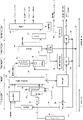
- Pretreatment device 12 Gas vessel 13 Mass flow controller 21 Fluidized bed decomposer 22 Raw material supply port 23 Oxygen-free gas replacement line 24 Supply amount adjustment unit 25 Reaction tube 26 Gas discharge line 27 Carrier gas line 28 Heating furnace 29 Fluidized bed 30 Filter 31 Cooler 32 Gas-liquid separation tank 41 Separator (illustrated example is the first distillation column) 51 reforming furnace 52 second distillation column 61 heat exchanger 71 outlet 72 storage 73 particle size adjuster 74 reuse system 75 return line (recracking system) 81 Activation device 82 Refining device 91 Mixer, kneader, kneader 92 Molding machine, baking device
Landscapes
- Chemical & Material Sciences (AREA)
- Engineering & Computer Science (AREA)
- Oil, Petroleum & Natural Gas (AREA)
- Organic Chemistry (AREA)
- Chemical Kinetics & Catalysis (AREA)
- General Chemical & Material Sciences (AREA)
- Life Sciences & Earth Sciences (AREA)
- Materials Engineering (AREA)
- Wood Science & Technology (AREA)
- Combustion & Propulsion (AREA)
- Inorganic Chemistry (AREA)
- Dispersion Chemistry (AREA)
- Environmental & Geological Engineering (AREA)
- Sustainable Development (AREA)
- Production Of Liquid Hydrocarbon Mixture For Refining Petroleum (AREA)
- Processing Of Solid Wastes (AREA)
- Coke Industry (AREA)
- Carbon And Carbon Compounds (AREA)
Priority Applications (7)
| Application Number | Priority Date | Filing Date | Title |
|---|---|---|---|
| PH1/2023/552844A PH12023552844A1 (en) | 2021-04-14 | 2022-04-12 | Organic feedstock decomposition method, and method for manufacturing liquid fuel, solid fuel, or activated carbon using same |
| CA3216230A CA3216230A1 (en) | 2021-04-14 | 2022-04-12 | A method for decomposing organic raw material, and a method for producing a liquid fuel, a solid fuel, or activated charcoal using the same |
| KR1020237037329A KR20230170005A (ko) | 2021-04-14 | 2022-04-12 | 유기 원료의 분해 방법, 그것을 이용한 액체 연료, 고체 연료, 또는 활성탄의 제조 방법 |
| US18/286,424 US12528994B2 (en) | 2021-04-14 | 2022-04-12 | Method for decomposing organic raw material, and a method for producing a liquid fuel, a solid fuel, or activated charcoal using the same |
| EP22788169.5A EP4324898A4 (en) | 2021-04-14 | 2022-04-12 | METHOD FOR DECOMPOSING ORGANIC FEEDSTOCK, AND METHOD FOR PRODUCING LIQUID FUEL, SOLID FUEL OR ACTIVATED CARBON USING SAME |
| CN202280028215.7A CN117396582A (zh) | 2021-04-14 | 2022-04-12 | 有机原料的分解方法、利用其的液体燃料、固体燃料或活性碳的制造方法 |
| JP2023514656A JPWO2022220246A1 (https=) | 2021-04-14 | 2022-04-12 |
Applications Claiming Priority (4)
| Application Number | Priority Date | Filing Date | Title |
|---|---|---|---|
| JP2021068497 | 2021-04-14 | ||
| JP2021-068497 | 2021-04-14 | ||
| JPPCT/JP2021/036613 | 2021-10-04 | ||
| JP2021036613 | 2021-10-04 |
Publications (1)
| Publication Number | Publication Date |
|---|---|
| WO2022220246A1 true WO2022220246A1 (ja) | 2022-10-20 |
Family
ID=83640103
Family Applications (1)
| Application Number | Title | Priority Date | Filing Date |
|---|---|---|---|
| PCT/JP2022/017616 Ceased WO2022220246A1 (ja) | 2021-04-14 | 2022-04-12 | 有機原料の分解方法、それを利用した液体燃料、固体燃料、又は活性炭の製造方法 |
Country Status (7)
| Country | Link |
|---|---|
| US (1) | US12528994B2 (https=) |
| EP (1) | EP4324898A4 (https=) |
| JP (1) | JPWO2022220246A1 (https=) |
| KR (1) | KR20230170005A (https=) |
| CA (1) | CA3216230A1 (https=) |
| PH (1) | PH12023552844A1 (https=) |
| WO (1) | WO2022220246A1 (https=) |
Cited By (1)
| Publication number | Priority date | Publication date | Assignee | Title |
|---|---|---|---|---|
| CN113713764A (zh) * | 2021-08-24 | 2021-11-30 | 冯伟铭 | 一种节能型活性炭脱附处理系统 |
Citations (17)
| Publication number | Priority date | Publication date | Assignee | Title |
|---|---|---|---|---|
| JPS5443902A (en) * | 1977-09-14 | 1979-04-06 | Agency Of Ind Science & Technol | Fluid thermal decomposition for municipal solid waste |
| JPS55135195A (en) * | 1979-04-10 | 1980-10-21 | Ebara Corp | Fluidized bed type thermal decomposition apparatus |
| JPS5837242B2 (ja) * | 1980-05-19 | 1983-08-15 | 工業技術院長 | 重質油のガス化方法 |
| JPH10185113A (ja) * | 1996-12-25 | 1998-07-14 | Ebara Corp | 流動層ガス化炉の排出固形物の分離・循環方法 |
| JP2001065364A (ja) | 1999-08-27 | 2001-03-13 | Toshiba Corp | 発電システム |
| JP2004339360A (ja) * | 2003-05-15 | 2004-12-02 | Mitsubishi Heavy Ind Ltd | バイオマス処理法とその装置及び該処理法により得られた流動燃料 |
| JP2005272782A (ja) * | 2004-03-26 | 2005-10-06 | Idemitsu Kosan Co Ltd | 流動層炉におけるタールの除去方法 |
| JP2008189704A (ja) | 2007-01-31 | 2008-08-21 | National Institute Of Advanced Industrial & Technology | バイオマスからの液体燃料製造装置 |
| JP2009046644A (ja) | 2007-08-23 | 2009-03-05 | National Institute Of Advanced Industrial & Technology | タール吸収塔から抜き出された活性炭を再利用したガス化システム |
| JP4371433B2 (ja) * | 1996-05-20 | 2009-11-25 | ダイナモーティブ・エナジー・システムズ・コーポレイション | 熱分解によるバイオマテリアルのエネルギ効率的な液化 |
| JP2011517470A (ja) * | 2008-04-06 | 2011-06-09 | ユーオーピー エルエルシー | バイオマス由来熱分解油からの燃料および燃料ブレンド成分 |
| JP2013170224A (ja) | 2012-02-21 | 2013-09-02 | Nihon Univ | 石油代替液体燃料の製造方法 |
| JP2016079325A (ja) | 2014-10-20 | 2016-05-16 | 株式会社Kri | バイオピッチの製造方法 |
| JP2016517344A (ja) | 2013-03-12 | 2016-06-16 | アネロテック・インコーポレイテッドAnellotech,Inc. | 触媒急速熱分解触媒の再生 |
| JP2017080662A (ja) | 2015-10-27 | 2017-05-18 | 株式会社Kri | バイオマスと廃プラスチック混合物の処理方法 |
| JP2018039989A (ja) * | 2016-09-02 | 2018-03-15 | Jfeスチール株式会社 | 有機物質の低分子化方法および有機物質の低分子化システム |
| JP2021068497A (ja) | 2019-10-17 | 2021-04-30 | 矢崎総業株式会社 | コネクタ |
Family Cites Families (8)
| Publication number | Priority date | Publication date | Assignee | Title |
|---|---|---|---|---|
| US3977947A (en) * | 1972-07-26 | 1976-08-31 | The Kingsford Company | Fluidized bed carbonization |
| JPS6027777B2 (ja) | 1981-08-26 | 1985-07-01 | 三菱電機株式会社 | 直送式給水装置 |
| US5728271A (en) | 1996-05-20 | 1998-03-17 | Rti Resource Transforms International Ltd. | Energy efficient liquefaction of biomaterials by thermolysis |
| US6534689B1 (en) * | 2001-08-24 | 2003-03-18 | Pyrocat Ltd. | Process for the conversion of waste plastics to produce hydrocarbon oils |
| DE102011106645A1 (de) * | 2011-07-05 | 2013-01-10 | Linde Aktiengesellschaft | Verfahren zur Erzeugung von Koks |
| KR102245634B1 (ko) * | 2012-12-04 | 2021-04-27 | 리써치 트라이앵글 인스티튜트 | 촉매 조성물 및 촉매적 바이오매스 열분해에서의 이의 용도 |
| WO2017202837A1 (en) | 2016-05-25 | 2017-11-30 | Shell Internationale Research Maatschappij B.V. | Conversion of biomass into a liquid hydrocarbon material |
| EP3516012B1 (en) | 2016-09-22 | 2021-01-06 | SABIC Global Technologies B.V. | An integrated process configuration and apparatus involving the steps of pyrolysis, hydrocracking, hydrodealkylation and steam cracking |
-
2022
- 2022-04-12 EP EP22788169.5A patent/EP4324898A4/en active Pending
- 2022-04-12 PH PH1/2023/552844A patent/PH12023552844A1/en unknown
- 2022-04-12 KR KR1020237037329A patent/KR20230170005A/ko active Pending
- 2022-04-12 CA CA3216230A patent/CA3216230A1/en active Pending
- 2022-04-12 US US18/286,424 patent/US12528994B2/en active Active
- 2022-04-12 JP JP2023514656A patent/JPWO2022220246A1/ja active Pending
- 2022-04-12 WO PCT/JP2022/017616 patent/WO2022220246A1/ja not_active Ceased
Patent Citations (17)
| Publication number | Priority date | Publication date | Assignee | Title |
|---|---|---|---|---|
| JPS5443902A (en) * | 1977-09-14 | 1979-04-06 | Agency Of Ind Science & Technol | Fluid thermal decomposition for municipal solid waste |
| JPS55135195A (en) * | 1979-04-10 | 1980-10-21 | Ebara Corp | Fluidized bed type thermal decomposition apparatus |
| JPS5837242B2 (ja) * | 1980-05-19 | 1983-08-15 | 工業技術院長 | 重質油のガス化方法 |
| JP4371433B2 (ja) * | 1996-05-20 | 2009-11-25 | ダイナモーティブ・エナジー・システムズ・コーポレイション | 熱分解によるバイオマテリアルのエネルギ効率的な液化 |
| JPH10185113A (ja) * | 1996-12-25 | 1998-07-14 | Ebara Corp | 流動層ガス化炉の排出固形物の分離・循環方法 |
| JP2001065364A (ja) | 1999-08-27 | 2001-03-13 | Toshiba Corp | 発電システム |
| JP2004339360A (ja) * | 2003-05-15 | 2004-12-02 | Mitsubishi Heavy Ind Ltd | バイオマス処理法とその装置及び該処理法により得られた流動燃料 |
| JP2005272782A (ja) * | 2004-03-26 | 2005-10-06 | Idemitsu Kosan Co Ltd | 流動層炉におけるタールの除去方法 |
| JP2008189704A (ja) | 2007-01-31 | 2008-08-21 | National Institute Of Advanced Industrial & Technology | バイオマスからの液体燃料製造装置 |
| JP2009046644A (ja) | 2007-08-23 | 2009-03-05 | National Institute Of Advanced Industrial & Technology | タール吸収塔から抜き出された活性炭を再利用したガス化システム |
| JP2011517470A (ja) * | 2008-04-06 | 2011-06-09 | ユーオーピー エルエルシー | バイオマス由来熱分解油からの燃料および燃料ブレンド成分 |
| JP2013170224A (ja) | 2012-02-21 | 2013-09-02 | Nihon Univ | 石油代替液体燃料の製造方法 |
| JP2016517344A (ja) | 2013-03-12 | 2016-06-16 | アネロテック・インコーポレイテッドAnellotech,Inc. | 触媒急速熱分解触媒の再生 |
| JP2016079325A (ja) | 2014-10-20 | 2016-05-16 | 株式会社Kri | バイオピッチの製造方法 |
| JP2017080662A (ja) | 2015-10-27 | 2017-05-18 | 株式会社Kri | バイオマスと廃プラスチック混合物の処理方法 |
| JP2018039989A (ja) * | 2016-09-02 | 2018-03-15 | Jfeスチール株式会社 | 有機物質の低分子化方法および有機物質の低分子化システム |
| JP2021068497A (ja) | 2019-10-17 | 2021-04-30 | 矢崎総業株式会社 | コネクタ |
Non-Patent Citations (1)
| Title |
|---|
| See also references of EP4324898A4 |
Cited By (2)
| Publication number | Priority date | Publication date | Assignee | Title |
|---|---|---|---|---|
| CN113713764A (zh) * | 2021-08-24 | 2021-11-30 | 冯伟铭 | 一种节能型活性炭脱附处理系统 |
| CN113713764B (zh) * | 2021-08-24 | 2026-03-10 | 冯伟铭 | 一种节能型活性炭脱附处理系统 |
Also Published As
| Publication number | Publication date |
|---|---|
| US12528994B2 (en) | 2026-01-20 |
| EP4324898A4 (en) | 2025-04-30 |
| JPWO2022220246A1 (https=) | 2022-10-20 |
| US20240191141A1 (en) | 2024-06-13 |
| EP4324898A1 (en) | 2024-02-21 |
| CA3216230A1 (en) | 2022-10-20 |
| PH12023552844A1 (en) | 2024-05-20 |
| KR20230170005A (ko) | 2023-12-18 |
Similar Documents
| Publication | Publication Date | Title |
|---|---|---|
| Farooq et al. | Influence of waste tire addition on wheat straw pyrolysis yield and oil quality | |
| US20130153394A1 (en) | Facility and Method for Production Fuels from Biomass/Plastic Mixtures | |
| US8657999B2 (en) | Methods for preparing fuel compositions from renewable sources, and related systems | |
| EP3289047B1 (en) | Conversion of biomass or residual waste material to biofuels | |
| Charusiri et al. | Upgrading bio-oil produced from the catalytic pyrolysis of sugarcane (Saccharum officinarum L) straw using calcined dolomite | |
| WO2012068252A1 (en) | Two-stage reactor and process for conversion of solid biomass meterial | |
| WO2021084016A1 (en) | Process for a plastic product conversion | |
| CN107532087A (zh) | 用于控制加氢热解过程和其产物的共处理 | |
| WO2010071677A1 (en) | Pretreatment of biomass with carbonaceous material | |
| JP2011529523A (ja) | ディレードコーキングユニットにおけるバイオマスの共処理による、バイオオイルの生成のための方法 | |
| JP2025514530A (ja) | 脂質補助転化 | |
| EP2834323A1 (en) | System and method for converting plastic/rubber to hydrocarbon fuel by thermo-catalytic process | |
| Ali et al. | Investigating the Effect of Pyrolysis Parameters on Product Yields of Mixed Wood Sawdust in a Semi-Batch Reactor and its Characterization. | |
| WO2022220246A1 (ja) | 有機原料の分解方法、それを利用した液体燃料、固体燃料、又は活性炭の製造方法 | |
| US10208255B2 (en) | Method for producing light oil through liquefying biomass | |
| CN108085038B (zh) | 一种生物质直接液化的方法 | |
| CN117396582A (zh) | 有机原料的分解方法、利用其的液体燃料、固体燃料或活性碳的制造方法 | |
| US20150051427A1 (en) | Integrated process for the production of renewable drop-in fuels | |
| Simanungkalit et al. | Effect of plastic blends on slow pyrolysis of oil palm empty fruit bunch | |
| Sunaryo et al. | Improving oil quality from waste pyrolysis using natural zeolite catalysts: towards sustainable resource recovery | |
| Zulkafli et al. | Catalytic co-pyrolysis of palm kernel shell and polypropylene to enhance pyrolysis yield and quality in a fixed-bed reactor | |
| Bilad et al. | Bio-oil production from waste and waste plastics | |
| Ali et al. | Sustainable biochemicals and fuels from catalytic fast co-pyrolysis of biomass and waste plastics | |
| JP2012092246A (ja) | バイオマスの油化方法及びそれを用いたバイオマス油化装置 | |
| WO2025136847A1 (en) | Renewable naphthenic base oil |
Legal Events
| Date | Code | Title | Description |
|---|---|---|---|
| 121 | Ep: the epo has been informed by wipo that ep was designated in this application |
Ref document number: 22788169 Country of ref document: EP Kind code of ref document: A1 |
|
| ENP | Entry into the national phase |
Ref document number: 2023514656 Country of ref document: JP Kind code of ref document: A |
|
| WWE | Wipo information: entry into national phase |
Ref document number: 3216230 Country of ref document: CA |
|
| WWE | Wipo information: entry into national phase |
Ref document number: 18286424 Country of ref document: US Ref document number: 2301006654 Country of ref document: TH |
|
| WWE | Wipo information: entry into national phase |
Ref document number: 12023552844 Country of ref document: PH Ref document number: 202280028215.7 Country of ref document: CN |
|
| ENP | Entry into the national phase |
Ref document number: 20237037329 Country of ref document: KR Kind code of ref document: A |
|
| WWE | Wipo information: entry into national phase |
Ref document number: 202347076905 Country of ref document: IN |
|
| WWE | Wipo information: entry into national phase |
Ref document number: 2022788169 Country of ref document: EP |
|
| NENP | Non-entry into the national phase |
Ref country code: DE |
|
| ENP | Entry into the national phase |
Ref document number: 2022788169 Country of ref document: EP Effective date: 20231114 |
|
| WWE | Wipo information: entry into national phase |
Ref document number: 11202307682P Country of ref document: SG |
|
| WWG | Wipo information: grant in national office |
Ref document number: 18286424 Country of ref document: US |