WO2022210426A1 - 表面改質層、表面改質シート、積層体、表面改質部材、塗装物、表面改質部材の製造方法、及び塗装物の製造方法 - Google Patents
表面改質層、表面改質シート、積層体、表面改質部材、塗装物、表面改質部材の製造方法、及び塗装物の製造方法 Download PDFInfo
- Publication number
- WO2022210426A1 WO2022210426A1 PCT/JP2022/014674 JP2022014674W WO2022210426A1 WO 2022210426 A1 WO2022210426 A1 WO 2022210426A1 JP 2022014674 W JP2022014674 W JP 2022014674W WO 2022210426 A1 WO2022210426 A1 WO 2022210426A1
- Authority
- WO
- WIPO (PCT)
- Prior art keywords
- modified
- resin
- unsaturated hydrocarbon
- hydrocarbon group
- modified layer
- Prior art date
- Legal status (The legal status is an assumption and is not a legal conclusion. Google has not performed a legal analysis and makes no representation as to the accuracy of the status listed.)
- Ceased
Links
Images

Classifications
-
- C—CHEMISTRY; METALLURGY
- C09—DYES; PAINTS; POLISHES; NATURAL RESINS; ADHESIVES; COMPOSITIONS NOT OTHERWISE PROVIDED FOR; APPLICATIONS OF MATERIALS NOT OTHERWISE PROVIDED FOR
- C09J—ADHESIVES; NON-MECHANICAL ASPECTS OF ADHESIVE PROCESSES IN GENERAL; ADHESIVE PROCESSES NOT PROVIDED FOR ELSEWHERE; USE OF MATERIALS AS ADHESIVES
- C09J175/00—Adhesives based on polyureas or polyurethanes; Adhesives based on derivatives of such polymers
- C09J175/04—Polyurethanes
- C09J175/14—Polyurethanes having carbon-to-carbon unsaturated bonds
-
- C—CHEMISTRY; METALLURGY
- C08—ORGANIC MACROMOLECULAR COMPOUNDS; THEIR PREPARATION OR CHEMICAL WORKING-UP; COMPOSITIONS BASED THEREON
- C08F—MACROMOLECULAR COMPOUNDS OBTAINED BY REACTIONS ONLY INVOLVING CARBON-TO-CARBON UNSATURATED BONDS
- C08F265/00—Macromolecular compounds obtained by polymerising monomers on to polymers of unsaturated monocarboxylic acids or derivatives thereof as defined in group C08F20/00
- C08F265/04—Macromolecular compounds obtained by polymerising monomers on to polymers of unsaturated monocarboxylic acids or derivatives thereof as defined in group C08F20/00 on to polymers of esters
- C08F265/06—Polymerisation of acrylate or methacrylate esters on to polymers thereof
-
- B—PERFORMING OPERATIONS; TRANSPORTING
- B32—LAYERED PRODUCTS
- B32B—LAYERED PRODUCTS, i.e. PRODUCTS BUILT-UP OF STRATA OF FLAT OR NON-FLAT, e.g. CELLULAR OR HONEYCOMB, FORM
- B32B27/00—Layered products comprising a layer of synthetic resin
- B32B27/06—Layered products comprising a layer of synthetic resin as the main or only constituent of a layer, which is next to another layer of the same or of a different material
- B32B27/08—Layered products comprising a layer of synthetic resin as the main or only constituent of a layer, which is next to another layer of the same or of a different material of synthetic resin
-
- B—PERFORMING OPERATIONS; TRANSPORTING
- B32—LAYERED PRODUCTS
- B32B—LAYERED PRODUCTS, i.e. PRODUCTS BUILT-UP OF STRATA OF FLAT OR NON-FLAT, e.g. CELLULAR OR HONEYCOMB, FORM
- B32B27/00—Layered products comprising a layer of synthetic resin
- B32B27/30—Layered products comprising a layer of synthetic resin comprising vinyl (co)polymers; comprising acrylic (co)polymers
- B32B27/308—Layered products comprising a layer of synthetic resin comprising vinyl (co)polymers; comprising acrylic (co)polymers comprising acrylic (co)polymers
-
- B—PERFORMING OPERATIONS; TRANSPORTING
- B32—LAYERED PRODUCTS
- B32B—LAYERED PRODUCTS, i.e. PRODUCTS BUILT-UP OF STRATA OF FLAT OR NON-FLAT, e.g. CELLULAR OR HONEYCOMB, FORM
- B32B27/00—Layered products comprising a layer of synthetic resin
- B32B27/36—Layered products comprising a layer of synthetic resin comprising polyesters
-
- B—PERFORMING OPERATIONS; TRANSPORTING
- B32—LAYERED PRODUCTS
- B32B—LAYERED PRODUCTS, i.e. PRODUCTS BUILT-UP OF STRATA OF FLAT OR NON-FLAT, e.g. CELLULAR OR HONEYCOMB, FORM
- B32B37/00—Methods or apparatus for laminating, e.g. by curing or by ultrasonic bonding
- B32B37/06—Methods or apparatus for laminating, e.g. by curing or by ultrasonic bonding characterised by the heating method
- B32B37/065—Methods or apparatus for laminating, e.g. by curing or by ultrasonic bonding characterised by the heating method resulting in the laminate being partially bonded
-
- C—CHEMISTRY; METALLURGY
- C08—ORGANIC MACROMOLECULAR COMPOUNDS; THEIR PREPARATION OR CHEMICAL WORKING-UP; COMPOSITIONS BASED THEREON
- C08F—MACROMOLECULAR COMPOUNDS OBTAINED BY REACTIONS ONLY INVOLVING CARBON-TO-CARBON UNSATURATED BONDS
- C08F220/00—Copolymers of compounds having one or more unsaturated aliphatic radicals, each having only one carbon-to-carbon double bond, and only one being terminated by only one carboxyl radical or a salt, anhydride ester, amide, imide or nitrile thereof
- C08F220/02—Monocarboxylic acids having less than ten carbon atoms; Derivatives thereof
- C08F220/10—Esters
- C08F220/12—Esters of monohydric alcohols or phenols
- C08F220/16—Esters of monohydric alcohols or phenols of phenols or of alcohols containing two or more carbon atoms
- C08F220/18—Esters of monohydric alcohols or phenols of phenols or of alcohols containing two or more carbon atoms with acrylic or methacrylic acids
- C08F220/1808—C8-(meth)acrylate, e.g. isooctyl (meth)acrylate or 2-ethylhexyl (meth)acrylate
-
- C—CHEMISTRY; METALLURGY
- C08—ORGANIC MACROMOLECULAR COMPOUNDS; THEIR PREPARATION OR CHEMICAL WORKING-UP; COMPOSITIONS BASED THEREON
- C08F—MACROMOLECULAR COMPOUNDS OBTAINED BY REACTIONS ONLY INVOLVING CARBON-TO-CARBON UNSATURATED BONDS
- C08F220/00—Copolymers of compounds having one or more unsaturated aliphatic radicals, each having only one carbon-to-carbon double bond, and only one being terminated by only one carboxyl radical or a salt, anhydride ester, amide, imide or nitrile thereof
- C08F220/02—Monocarboxylic acids having less than ten carbon atoms; Derivatives thereof
- C08F220/10—Esters
- C08F220/34—Esters containing nitrogen, e.g. N,N-dimethylaminoethyl (meth)acrylate
- C08F220/36—Esters containing nitrogen, e.g. N,N-dimethylaminoethyl (meth)acrylate containing oxygen in addition to the carboxy oxygen, e.g. 2-N-morpholinoethyl (meth)acrylate or 2-isocyanatoethyl (meth)acrylate
-
- C—CHEMISTRY; METALLURGY
- C08—ORGANIC MACROMOLECULAR COMPOUNDS; THEIR PREPARATION OR CHEMICAL WORKING-UP; COMPOSITIONS BASED THEREON
- C08F—MACROMOLECULAR COMPOUNDS OBTAINED BY REACTIONS ONLY INVOLVING CARBON-TO-CARBON UNSATURATED BONDS
- C08F299/00—Macromolecular compounds obtained by interreacting polymers involving only carbon-to-carbon unsaturated bond reactions, in the absence of non-macromolecular monomers
- C08F299/02—Macromolecular compounds obtained by interreacting polymers involving only carbon-to-carbon unsaturated bond reactions, in the absence of non-macromolecular monomers from unsaturated polycondensates
- C08F299/06—Macromolecular compounds obtained by interreacting polymers involving only carbon-to-carbon unsaturated bond reactions, in the absence of non-macromolecular monomers from unsaturated polycondensates from polyurethanes
- C08F299/065—Macromolecular compounds obtained by interreacting polymers involving only carbon-to-carbon unsaturated bond reactions, in the absence of non-macromolecular monomers from unsaturated polycondensates from polyurethanes from polyurethanes with side or terminal unsaturations
-
- C—CHEMISTRY; METALLURGY
- C08—ORGANIC MACROMOLECULAR COMPOUNDS; THEIR PREPARATION OR CHEMICAL WORKING-UP; COMPOSITIONS BASED THEREON
- C08F—MACROMOLECULAR COMPOUNDS OBTAINED BY REACTIONS ONLY INVOLVING CARBON-TO-CARBON UNSATURATED BONDS
- C08F8/00—Chemical modification by after-treatment
- C08F8/30—Introducing nitrogen atoms or nitrogen-containing groups
-
- C—CHEMISTRY; METALLURGY
- C08—ORGANIC MACROMOLECULAR COMPOUNDS; THEIR PREPARATION OR CHEMICAL WORKING-UP; COMPOSITIONS BASED THEREON
- C08G—MACROMOLECULAR COMPOUNDS OBTAINED OTHERWISE THAN BY REACTIONS ONLY INVOLVING UNSATURATED CARBON-TO-CARBON BONDS
- C08G18/00—Polymeric products of isocyanates or isothiocyanates
- C08G18/06—Polymeric products of isocyanates or isothiocyanates with compounds having active hydrogen
- C08G18/28—Polymeric products of isocyanates or isothiocyanates with compounds having active hydrogen characterised by the compounds used containing active hydrogen
- C08G18/40—High-molecular-weight compounds
- C08G18/62—Polymers of compounds having carbon-to-carbon double bonds
- C08G18/6216—Polymers of alpha-beta ethylenically unsaturated carboxylic acids or of derivatives thereof
- C08G18/622—Polymers of esters of alpha-beta ethylenically unsaturated carboxylic acids
- C08G18/6225—Polymers of esters of acrylic or methacrylic acid
-
- C—CHEMISTRY; METALLURGY
- C08—ORGANIC MACROMOLECULAR COMPOUNDS; THEIR PREPARATION OR CHEMICAL WORKING-UP; COMPOSITIONS BASED THEREON
- C08G—MACROMOLECULAR COMPOUNDS OBTAINED OTHERWISE THAN BY REACTIONS ONLY INVOLVING UNSATURATED CARBON-TO-CARBON BONDS
- C08G18/00—Polymeric products of isocyanates or isothiocyanates
- C08G18/06—Polymeric products of isocyanates or isothiocyanates with compounds having active hydrogen
- C08G18/70—Polymeric products of isocyanates or isothiocyanates with compounds having active hydrogen characterised by the isocyanates or isothiocyanates used
- C08G18/81—Unsaturated isocyanates or isothiocyanates
- C08G18/8108—Unsaturated isocyanates or isothiocyanates having only one isocyanate or isothiocyanate group
- C08G18/8116—Unsaturated isocyanates or isothiocyanates having only one isocyanate or isothiocyanate group esters of acrylic or alkylacrylic acid having only one isocyanate or isothiocyanate group
-
- C—CHEMISTRY; METALLURGY
- C08—ORGANIC MACROMOLECULAR COMPOUNDS; THEIR PREPARATION OR CHEMICAL WORKING-UP; COMPOSITIONS BASED THEREON
- C08J—WORKING-UP; GENERAL PROCESSES OF COMPOUNDING; AFTER-TREATMENT NOT COVERED BY SUBCLASSES C08B, C08C, C08F, C08G or C08H
- C08J7/00—Chemical treatment or coating of shaped articles made of macromolecular substances
- C08J7/04—Coating
- C08J7/0427—Coating with only one layer of a composition containing a polymer binder
-
- C—CHEMISTRY; METALLURGY
- C08—ORGANIC MACROMOLECULAR COMPOUNDS; THEIR PREPARATION OR CHEMICAL WORKING-UP; COMPOSITIONS BASED THEREON
- C08J—WORKING-UP; GENERAL PROCESSES OF COMPOUNDING; AFTER-TREATMENT NOT COVERED BY SUBCLASSES C08B, C08C, C08F, C08G or C08H
- C08J7/00—Chemical treatment or coating of shaped articles made of macromolecular substances
- C08J7/04—Coating
- C08J7/043—Improving the adhesiveness of the coatings per se, e.g. forming primers
-
- C—CHEMISTRY; METALLURGY
- C09—DYES; PAINTS; POLISHES; NATURAL RESINS; ADHESIVES; COMPOSITIONS NOT OTHERWISE PROVIDED FOR; APPLICATIONS OF MATERIALS NOT OTHERWISE PROVIDED FOR
- C09D—COATING COMPOSITIONS, e.g. PAINTS, VARNISHES OR LACQUERS; FILLING PASTES; CHEMICAL PAINT OR INK REMOVERS; INKS; CORRECTING FLUIDS; WOODSTAINS; PASTES OR SOLIDS FOR COLOURING OR PRINTING; USE OF MATERIALS THEREFOR
- C09D133/00—Coating compositions based on homopolymers or copolymers of compounds having one or more unsaturated aliphatic radicals, each having only one carbon-to-carbon double bond, and at least one being terminated by only one carboxyl radical, or of salts, anhydrides, esters, amides, imides, or nitriles thereof; Coating compositions based on derivatives of such polymers
- C09D133/04—Homopolymers or copolymers of esters
- C09D133/14—Homopolymers or copolymers of esters of esters containing halogen, nitrogen, sulfur or oxygen atoms in addition to the carboxy oxygen
-
- C—CHEMISTRY; METALLURGY
- C09—DYES; PAINTS; POLISHES; NATURAL RESINS; ADHESIVES; COMPOSITIONS NOT OTHERWISE PROVIDED FOR; APPLICATIONS OF MATERIALS NOT OTHERWISE PROVIDED FOR
- C09D—COATING COMPOSITIONS, e.g. PAINTS, VARNISHES OR LACQUERS; FILLING PASTES; CHEMICAL PAINT OR INK REMOVERS; INKS; CORRECTING FLUIDS; WOODSTAINS; PASTES OR SOLIDS FOR COLOURING OR PRINTING; USE OF MATERIALS THEREFOR
- C09D175/00—Coating compositions based on polyureas or polyurethanes; Coating compositions based on derivatives of such polymers
- C09D175/04—Polyurethanes
-
- C—CHEMISTRY; METALLURGY
- C09—DYES; PAINTS; POLISHES; NATURAL RESINS; ADHESIVES; COMPOSITIONS NOT OTHERWISE PROVIDED FOR; APPLICATIONS OF MATERIALS NOT OTHERWISE PROVIDED FOR
- C09J—ADHESIVES; NON-MECHANICAL ASPECTS OF ADHESIVE PROCESSES IN GENERAL; ADHESIVE PROCESSES NOT PROVIDED FOR ELSEWHERE; USE OF MATERIALS AS ADHESIVES
- C09J151/00—Adhesives based on graft polymers in which the grafted component is obtained by reactions only involving carbon-to-carbon unsaturated bonds; Adhesives based on derivatives of such polymers
- C09J151/003—Adhesives based on graft polymers in which the grafted component is obtained by reactions only involving carbon-to-carbon unsaturated bonds; Adhesives based on derivatives of such polymers grafted on to macromolecular compounds obtained by reactions only involving unsaturated carbon-to-carbon bonds
-
- C—CHEMISTRY; METALLURGY
- C09—DYES; PAINTS; POLISHES; NATURAL RESINS; ADHESIVES; COMPOSITIONS NOT OTHERWISE PROVIDED FOR; APPLICATIONS OF MATERIALS NOT OTHERWISE PROVIDED FOR
- C09J—ADHESIVES; NON-MECHANICAL ASPECTS OF ADHESIVE PROCESSES IN GENERAL; ADHESIVE PROCESSES NOT PROVIDED FOR ELSEWHERE; USE OF MATERIALS AS ADHESIVES
- C09J4/00—Adhesives based on organic non-macromolecular compounds having at least one polymerisable carbon-to-carbon unsaturated bond ; adhesives, based on monomers of macromolecular compounds of groups C09J183/00 - C09J183/16
- C09J4/06—Organic non-macromolecular compounds having at least one polymerisable carbon-to-carbon unsaturated bond in combination with a macromolecular compound other than an unsaturated polymer of groups C09J159/00 - C09J187/00
-
- C—CHEMISTRY; METALLURGY
- C09—DYES; PAINTS; POLISHES; NATURAL RESINS; ADHESIVES; COMPOSITIONS NOT OTHERWISE PROVIDED FOR; APPLICATIONS OF MATERIALS NOT OTHERWISE PROVIDED FOR
- C09J—ADHESIVES; NON-MECHANICAL ASPECTS OF ADHESIVE PROCESSES IN GENERAL; ADHESIVE PROCESSES NOT PROVIDED FOR ELSEWHERE; USE OF MATERIALS AS ADHESIVES
- C09J7/00—Adhesives in the form of films or foils
- C09J7/40—Adhesives in the form of films or foils characterised by release liners
- C09J7/401—Adhesives in the form of films or foils characterised by release liners characterised by the release coating composition
-
- C—CHEMISTRY; METALLURGY
- C09—DYES; PAINTS; POLISHES; NATURAL RESINS; ADHESIVES; COMPOSITIONS NOT OTHERWISE PROVIDED FOR; APPLICATIONS OF MATERIALS NOT OTHERWISE PROVIDED FOR
- C09J—ADHESIVES; NON-MECHANICAL ASPECTS OF ADHESIVE PROCESSES IN GENERAL; ADHESIVE PROCESSES NOT PROVIDED FOR ELSEWHERE; USE OF MATERIALS AS ADHESIVES
- C09J7/00—Adhesives in the form of films or foils
- C09J7/40—Adhesives in the form of films or foils characterised by release liners
- C09J7/405—Adhesives in the form of films or foils characterised by release liners characterised by the substrate of the release liner
-
- B—PERFORMING OPERATIONS; TRANSPORTING
- B32—LAYERED PRODUCTS
- B32B—LAYERED PRODUCTS, i.e. PRODUCTS BUILT-UP OF STRATA OF FLAT OR NON-FLAT, e.g. CELLULAR OR HONEYCOMB, FORM
- B32B37/00—Methods or apparatus for laminating, e.g. by curing or by ultrasonic bonding
- B32B37/12—Methods or apparatus for laminating, e.g. by curing or by ultrasonic bonding characterised by using adhesives
- B32B37/1207—Heat-activated adhesive
- B32B2037/1215—Hot-melt adhesive
- B32B2037/1223—Hot-melt adhesive film-shaped
-
- B—PERFORMING OPERATIONS; TRANSPORTING
- B32—LAYERED PRODUCTS
- B32B—LAYERED PRODUCTS, i.e. PRODUCTS BUILT-UP OF STRATA OF FLAT OR NON-FLAT, e.g. CELLULAR OR HONEYCOMB, FORM
- B32B2255/00—Coating on the layer surface
- B32B2255/10—Coating on the layer surface on synthetic resin layer or on natural or synthetic rubber layer
-
- B—PERFORMING OPERATIONS; TRANSPORTING
- B32—LAYERED PRODUCTS
- B32B—LAYERED PRODUCTS, i.e. PRODUCTS BUILT-UP OF STRATA OF FLAT OR NON-FLAT, e.g. CELLULAR OR HONEYCOMB, FORM
- B32B2255/00—Coating on the layer surface
- B32B2255/26—Polymeric coating
-
- C—CHEMISTRY; METALLURGY
- C08—ORGANIC MACROMOLECULAR COMPOUNDS; THEIR PREPARATION OR CHEMICAL WORKING-UP; COMPOSITIONS BASED THEREON
- C08J—WORKING-UP; GENERAL PROCESSES OF COMPOUNDING; AFTER-TREATMENT NOT COVERED BY SUBCLASSES C08B, C08C, C08F, C08G or C08H
- C08J2367/00—Characterised by the use of polyesters obtained by reactions forming a carboxylic ester link in the main chain; Derivatives of such polymers
- C08J2367/06—Unsaturated polyesters
- C08J2367/07—Unsaturated polyesters having terminal carbon-to-carbon unsaturated bonds
-
- C—CHEMISTRY; METALLURGY
- C08—ORGANIC MACROMOLECULAR COMPOUNDS; THEIR PREPARATION OR CHEMICAL WORKING-UP; COMPOSITIONS BASED THEREON
- C08J—WORKING-UP; GENERAL PROCESSES OF COMPOUNDING; AFTER-TREATMENT NOT COVERED BY SUBCLASSES C08B, C08C, C08F, C08G or C08H
- C08J2375/00—Characterised by the use of polyureas or polyurethanes; Derivatives of such polymers
- C08J2375/04—Polyurethanes
- C08J2375/14—Polyurethanes having carbon-to-carbon unsaturated bonds
-
- C—CHEMISTRY; METALLURGY
- C08—ORGANIC MACROMOLECULAR COMPOUNDS; THEIR PREPARATION OR CHEMICAL WORKING-UP; COMPOSITIONS BASED THEREON
- C08J—WORKING-UP; GENERAL PROCESSES OF COMPOUNDING; AFTER-TREATMENT NOT COVERED BY SUBCLASSES C08B, C08C, C08F, C08G or C08H
- C08J2433/00—Characterised by the use of homopolymers or copolymers of compounds having one or more unsaturated aliphatic radicals, each having only one carbon-to-carbon double bond, and only one being terminated by only one carboxyl radical, or of salts, anhydrides, esters, amides, imides, or nitriles thereof; Derivatives of such polymers
- C08J2433/04—Characterised by the use of homopolymers or copolymers of compounds having one or more unsaturated aliphatic radicals, each having only one carbon-to-carbon double bond, and only one being terminated by only one carboxyl radical, or of salts, anhydrides, esters, amides, imides, or nitriles thereof; Derivatives of such polymers esters
- C08J2433/06—Characterised by the use of homopolymers or copolymers of compounds having one or more unsaturated aliphatic radicals, each having only one carbon-to-carbon double bond, and only one being terminated by only one carboxyl radical, or of salts, anhydrides, esters, amides, imides, or nitriles thereof; Derivatives of such polymers esters of esters containing only carbon, hydrogen, and oxygen, the oxygen atom being present only as part of the carboxyl radical
- C08J2433/08—Homopolymers or copolymers of acrylic acid esters
-
- C—CHEMISTRY; METALLURGY
- C08—ORGANIC MACROMOLECULAR COMPOUNDS; THEIR PREPARATION OR CHEMICAL WORKING-UP; COMPOSITIONS BASED THEREON
- C08J—WORKING-UP; GENERAL PROCESSES OF COMPOUNDING; AFTER-TREATMENT NOT COVERED BY SUBCLASSES C08B, C08C, C08F, C08G or C08H
- C08J2475/00—Characterised by the use of polyureas or polyurethanes; Derivatives of such polymers
- C08J2475/04—Polyurethanes
-
- C—CHEMISTRY; METALLURGY
- C09—DYES; PAINTS; POLISHES; NATURAL RESINS; ADHESIVES; COMPOSITIONS NOT OTHERWISE PROVIDED FOR; APPLICATIONS OF MATERIALS NOT OTHERWISE PROVIDED FOR
- C09J—ADHESIVES; NON-MECHANICAL ASPECTS OF ADHESIVE PROCESSES IN GENERAL; ADHESIVE PROCESSES NOT PROVIDED FOR ELSEWHERE; USE OF MATERIALS AS ADHESIVES
- C09J2427/00—Presence of halogenated polymer
- C09J2427/005—Presence of halogenated polymer in the release coating
-
- C—CHEMISTRY; METALLURGY
- C09—DYES; PAINTS; POLISHES; NATURAL RESINS; ADHESIVES; COMPOSITIONS NOT OTHERWISE PROVIDED FOR; APPLICATIONS OF MATERIALS NOT OTHERWISE PROVIDED FOR
- C09J—ADHESIVES; NON-MECHANICAL ASPECTS OF ADHESIVE PROCESSES IN GENERAL; ADHESIVE PROCESSES NOT PROVIDED FOR ELSEWHERE; USE OF MATERIALS AS ADHESIVES
- C09J2467/00—Presence of polyester
- C09J2467/006—Presence of polyester in the substrate
-
- C—CHEMISTRY; METALLURGY
- C09—DYES; PAINTS; POLISHES; NATURAL RESINS; ADHESIVES; COMPOSITIONS NOT OTHERWISE PROVIDED FOR; APPLICATIONS OF MATERIALS NOT OTHERWISE PROVIDED FOR
- C09J—ADHESIVES; NON-MECHANICAL ASPECTS OF ADHESIVE PROCESSES IN GENERAL; ADHESIVE PROCESSES NOT PROVIDED FOR ELSEWHERE; USE OF MATERIALS AS ADHESIVES
- C09J2475/00—Presence of polyurethane
Definitions
- the present invention relates to a surface-modified layer, a surface-modified sheet, a laminate, a surface-modified member, a coated article, a method for producing a surface-modified member, and a method for producing a coated article.
- Patent Literature 1 describes a surface-modified sheet capable of imparting sufficient adhesive strength to a thermoplastic resin.
- the present invention has excellent adhesive strength, especially adhesive strength with paint, prevents the occurrence of unevenness, and has a uniform thickness and smooth surface modified layer and surface modified member. It is an object of the present invention to provide a surface-modified sheet that allows integral molding of a surface-modified layer and a resin member. Another object of the present invention is to provide a laminate, a surface-modified member, a coated article, a method for producing a surface-modified member, and a method for producing a coated article using this surface-modified layer or surface-modified sheet.
- Means for solving the above problems are as follows. [1] comprising a polymer component having a hydroxyl group and an unsaturated hydrocarbon group; The surface-modified layer, wherein the molar ratio of the unsaturated hydrocarbon group to the hydroxyl group is 0.01 or more and less than 1. [2] including the polymer component having the hydroxyl group and the unsaturated hydrocarbon group; The surface-modified layer according to [1], wherein the molar ratio of the unsaturated hydrocarbon group to the hydroxyl group is 0.01 or more and less than 0.5. [3] The surface-modified layer according to [1] or [2], wherein the unsaturated hydrocarbon group is a functional group derived from an unsaturated hydrocarbon group-containing isocyanate compound.
- a surface-modified sheet comprising the surface-modified layer according to any one of [1] to [4] and a release sheet.
- the surface modification layer according to any one of [1] to [4] is laminated on at least part of the surface of the resin member, A surface-modified member in which the resin member and the surface-modified layer are covalently bonded through a chemical reaction.
- [12] A method for producing a surface-modified member using the surface-modified layer according to any one of [1] to [4], A method for producing a surface-modified member, comprising a lamination step of laminating the surface-modified layer on a resin member by thermoforming. [13] The method for producing a surface-modified member according to [12], wherein the resin member contains an unsaturated polyester resin. [14] A method for producing a surface-modified member using the surface-modified sheet according to [5].
- the surface-modified layer according to the embodiment of the present invention has excellent adhesive strength, prevents the occurrence of unevenness, and is smooth with a uniform thickness. It is possible to integrally mold the surface modified layer and the resin member when forming the surface modified member.
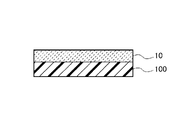
- FIG. 1 is a schematic cross-sectional view showing an example of a surface modifying member.
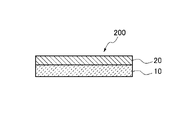
- FIG. 2 is a schematic cross-sectional view showing an example of a surface-modified sheet.
- FIG. 3 is a schematic cross-sectional view showing a configuration in which the surface-modified layer side of a surface-modified sheet, which is a laminate of a release sheet and a surface-modified layer, is placed on at least part of the surface of a resin material.
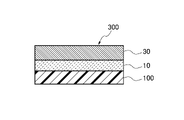
- FIG. 4 is a schematic cross-sectional view showing an example of a coated object.
- a surface-modified layer according to an embodiment of the present invention contains a polymer component having a hydroxyl group and an unsaturated hydrocarbon group, and the molar ratio of the unsaturated hydrocarbon group to the hydroxyl group is 0.01 or more and less than 1.
- the upper limit of the molar ratio of the unsaturated hydrocarbon group to the hydroxyl group is preferably 0.9 or less, more preferably 0.82 or less.
- the molar ratio of the unsaturated hydrocarbon group to the hydroxyl group is preferably 0.01 or more and less than 0.5.
- a surface-modified sheet according to an embodiment of the present invention includes a surface-modified layer and a release sheet.
- the polymer component contained in the surface-modified layer according to the embodiment of the present invention is an addition reaction product of a prepolymer having a unit derived from a hydroxyl group-containing monomer and an unsaturated hydrocarbon group-containing compound. It is preferable that the molar ratio of the unsaturated hydrocarbon group-containing compound to the hydroxyl group-containing monomer used is 0.01 or more and less than 0.5.
- the surface-modified sheet according to the embodiment of the present invention has a sheet-like surface-modified layer, it is not coated on the surface of the resin member, but is placed on the resin material and heat-treated, so that integral molding can be performed. can. Therefore, it is possible to prevent unevenness due to repelling or the like, and to form a surface modified layer with a uniform thickness on the surface of the resin member.
- the surface modification layer is provided on a part of the surface of the resin member, it is possible to suppress a decrease in yield due to protrusion or the like.
- the surface-modified sheet according to the embodiment of the present invention is suitable for manufacturing a surface-modified member using a resin member containing a thermosetting resin containing an unsaturated hydrocarbon group.
- the surface-modified layer contains a polymer component having a hydroxyl group and an unsaturated hydrocarbon group in a specific ratio, the unsaturated hydrocarbon group of the polymer component and the unsaturated hydrocarbon of the thermosetting resin in the resin member It is surmised that the bonding strength between the surface modified layer and the resin member is improved because the groups form a covalent bond through a chemical reaction.
- the coating film provided on the surface modification layer contains a coating material having a functional group capable of reacting or interacting with a hydroxyl group, such as a urethane-based coating material, at the interface between the surface modification layer and the coating film, the polymer
- the bonding strength between the surface-modified layer and the coating film can be improved by forming chemical bonds or intermolecular interactions between the hydroxyl groups in the component and the functional groups in the coating.
- Chemical bonds include covalent bonds, ionic bonds, and metallic bonds.
- Intermolecular interactions include hydrogen bonding, electrostatic interactions, aromatic ring interactions, van der Waalska and the like.
- the strength of the bonding force is covalent bond > ionic bond > metal bond > intermolecular interaction. Formation of covalent bonds is preferred.
- the polymer component contained in the surface-modified layer (which may be the material of the surface-modified layer) has hydroxyl groups and unsaturated hydrocarbon groups, and the molar ratio of the unsaturated hydrocarbon groups to the hydroxyl groups is 0. .01 or more and less than 1.
- the polymer component comprises a prepolymer having a unit derived from a hydroxyl group-containing monomer and an unsaturated hydrocarbon group-containing compound, and the molar ratio of the unsaturated hydrocarbon group-containing compound to the hydroxyl group-containing monomer is 0.01 to 0.01. It can be obtained by an addition reaction with less than 5.
- the polymer component is an addition reaction product of a prepolymer having a unit derived from a hydroxyl group-containing monomer and an unsaturated hydrocarbon group-containing compound, and the unsaturated hydrocarbon group-containing monomer is added to the hydroxyl group-containing monomer used in the synthesis of the prepolymer. It is preferable that the molar ratio of the compounds is 0.01 or more and less than 0.5.
- the prepolymer forming the main chain of the polymer component is derived from the hydroxyl group-containing monomer. It is obtained by polymerizing a monomer component having a unit and containing a hydroxyl group-containing monomer.
- the prepolymer may contain units derived from hydroxyl-free monomers in addition to units derived from hydroxyl-containing monomers. Examples of prepolymers include acrylic polymers, polyester polymers, urethane polymers, polyether polymers, and polyamide polymers. From the viewpoint of improving adhesion, the prepolymer is preferably an acrylic polymer.
- the acrylic polymer as the prepolymer is obtained, for example, by polymerizing a monomer component containing a hydroxyl-free acrylic monomer and a hydroxyl-containing acrylic monomer as a hydroxyl-containing monomer. It is preferably obtained by polymerizing a monomer component containing an ester and a hydroxyl group-containing (meth)acrylic acid alkyl ester.
- (meth)acrylic acid refers to acrylic acid and/or methacrylic acid.
- (Meth)acrylic acid alkyl esters include, for example, (meth)acrylic acid alkyl esters having a linear or branched alkyl group having 1 to 20 carbon atoms.
- Examples of such (meth)acrylic acid alkyl esters include methyl (meth)acrylate, ethyl (meth)acrylate, propyl (meth)acrylate, isopropyl (meth)acrylate, butyl (meth)acrylate, Isobutyl (meth) acrylate, s-butyl (meth) acrylate, t-butyl (meth) acrylate, pentyl (meth) acrylate, isopentyl (meth) acrylate, neopentyl (meth) acrylate, (meth) acrylic hexyl acid, heptyl (meth)acrylate, 2-ethylhexyl (meth)acrylate, octyl (meth)acryl
- Prepolymers such as acrylic polymers are obtained by polymerizing hydroxyl-free monomers such as (meth)acrylic acid alkyl esters and hydroxyl-containing monomers.
- hydroxyl group-containing (meth)acrylic acid alkyl esters examples include 2-hydroxyethyl (meth)acrylate, 2-hydroxypropyl (meth)acrylate, 2-hydroxybutyl (meth)acrylate, and 3 (meth)acrylic acid. -hydroxypropyl, 4-hydroxybutyl (meth)acrylate, 6-hydroxyhexyl (meth)acrylate, 8-hydroxyoctyl (meth)acrylate, 10-hydroxydecyl (meth)acrylate, 12 (meth)acrylic acid -hydroxylauryl, and (4-hydroxymethylcyclohexyl)methyl (meth)acrylate.
- the hydroxyl group-containing monomer such as a hydroxyl group-containing (meth)acrylic acid alkyl ester is preferably 1 mol part or more, more preferably 5 mol parts or more, and preferably 50 mol parts per 100 mol parts of the total monomer components. mol parts or less, more preferably 40 mol parts or less. If the hydroxyl group-containing monomer is 1 mol part or more, the amount of hydroxyl groups suitable for interacting with the paint is obtained, and the adhesion with the paint is improved. Further, when the hydroxyl group-containing monomer is 50 mol parts or less, it is possible to prevent gelation from occurring in the polymerization process of the prepolymer, which makes production difficult.
- Monomers, aromatic vinyl compounds, (meth)acrylic acid esters having an alicyclic hydrocarbon group, and (meth)acrylic acid esters having an aromatic hydrocarbon group can be mentioned.
- the content of the copolymerizable monomer is the total amount of the hydroxyl group-containing (meth)acrylic acid alkyl ester with respect to 100 mol parts of the (meth)acrylic acid alkyl ester. , preferably 1 mol part or more, more preferably 5 mol parts or more, and preferably 50 mol parts or less, more preferably 40 mol parts or less.
- Carboxyl group-containing monomers include, for example, acrylic acid, methacrylic acid, carboxyethyl acrylate, carboxypentyl acrylate, itaconic acid, maleic acid, fumaric acid, crotonic acid, and isocrotonic acid.
- Examples of monomers having a nitrogen atom-containing ring include N-vinyl-2-pyrrolidone, N-methylvinylpyrrolidone, N-vinylpyridine, N-vinylpiperidone, N-vinylpyrimidine, N-vinylpiperazine, N-vinylpyrazine, N-vinylpyrrole, N-vinylimidazole, N-vinyloxazole, N-(meth)acryloyl-2-pyrrolidone, N-(meth)acryloylpiperidine, N-(meth)acryloylpyrrolidine, N-vinylmorpholine, and N- Vinyl isothiazole is mentioned.
- sulfonic acid group-containing monomers examples include styrenesulfonic acid, allylsulfonic acid, sodium vinylsulfonate, 2-(meth)acrylamido-2-methylpropanesulfonic acid, (meth)acrylamidopropanesulfonic acid, sulfopropyl (meth) Acrylate, and (meth)acryloyloxynaphthalenesulfonic acid.
- Epoxy group-containing monomers include, for example, epoxy group-containing acrylates such as glycidyl (meth)acrylate and 2-ethylglycidyl (meth)acrylate, allyl glycidyl ether, and glycidyl (meth)acrylate.
- Amide group-containing monomers include, for example, (meth)acrylamide, N-alkyl(meth)acrylamide, N,N-dialkyl(meth)acrylamide, and N-(meth)acryloylmorpholine.
- N-alkyl(meth)acrylamides include, for example, N-ethyl(meth)acrylamide, N-isopropyl(meth)acrylamide, and N-butyl(meth)acrylamide.
- (Meth)acrylic acid esters having an alicyclic hydrocarbon group include, for example, cyclopentyl (meth)acrylate, cyclohexyl (meth)acrylate, isobornyl (meth)acrylate, and dicyclopentanyl (meth)acrylate.
- (Meth)acrylic acid esters having an aromatic hydrocarbon group include, for example, phenyl (meth)acrylate, phenoxyethyl (meth)acrylate, and benzyl (meth)acrylate.
- thermal polymerization initiators include azo polymerization initiators, peroxide polymerization initiators, and persulfates such as potassium persulfate.
- azo polymerization initiators include 2,2'-azobisisobutyronitrile, 2,2'-azobis-2-methylbutyronitrile, 2,2'-azobis(2-methylpropionate)dimethyl , 4,4′-azobis-4-cyanovaleric acid, azobisisovaleronitrile, and 2,2′-azobis(2-amidinopropane) dihydrochloride.
- Peroxide polymerization initiators include, for example, dibenzoyl peroxide, t-butyl permaleate, and lauroyl peroxide.
- photopolymerization initiators include benzoin ether-based photopolymerization initiators, acetophenone-based photopolymerization initiators, ⁇ -ketol-based photopolymerization initiators, aromatic sulfonyl chloride-based photopolymerization initiators, and photoactive oxime-based photopolymerization initiators.
- the polymer component contained in the surface-modified layer according to the embodiment of the invention contains a polymer component having a hydroxyl group and an unsaturated hydrocarbon group.
- the unsaturated hydrocarbon group is preferably a functional group derived from an unsaturated hydrocarbon group-containing isocyanate compound.
- the polymer component contained in the surface-modified layer according to the embodiment of the present invention may be an addition reaction product of a prepolymer having a unit derived from the hydroxyl group-containing monomer and an unsaturated hydrocarbon group-containing compound. .
- the unsaturated hydrocarbon group-containing compound has a predetermined functional group capable of reacting and bonding with a hydroxyl group, and the hydroxyl group in the prepolymer reacts with the functional group in the unsaturated hydrocarbon group-containing compound. introduces a side chain containing an unsaturated hydrocarbon group derived from the unsaturated hydrocarbon group-containing compound into the prepolymer to obtain a polymer component.
- unsaturated hydrocarbon group-containing isocyanate compounds examples include 2-methacryloyloxyethyl isocyanate (MOI) and 3-isopropenyl- ⁇ , ⁇ -dimethylbenzyl isocyanate. From the viewpoint of ease of introduction of unsaturated hydrocarbon groups into polymer side chains, the unsaturated hydrocarbon group-containing isocyanate compound is preferably MOI.
- the reaction temperature is, for example, 40° C. to 60° C.
- the reaction time is, for example, 4 to 6 hours.
- an addition reaction catalyst may be used for the reaction.
- the functional group in the unsaturated hydrocarbon group-containing compound is an isocyanate group
- dibutyltin dilaurate for example, can be used as the addition reaction catalyst.
- the amount of the addition reaction catalyst to be used is, for example, 0.3 to 0.6 parts by mass with respect to 100 parts by mass of the unsaturated hydrocarbon group-containing compound.
- the polymer component is obtained, for example, by adding an unsaturated hydrocarbon group-containing compound and an addition reaction catalyst to a prepolymer solution containing the above prepolymer to prepare a reaction solution and undergoing the above addition reaction in the reaction solution. It can be obtained as a polymer solution containing
- the molar ratio of the unsaturated hydrocarbon group-containing compound to the hydroxyl group-containing monomer used for prepolymer synthesis is preferably 0.01 or more and less than 0.5. If the above ratio is less than 0.01, the unsaturated hydrocarbon groups are not sufficiently introduced into the polymer component, making it difficult to obtain the effect of improving the adhesion between the resin member and the surface modification layer.
- the molar ratio is 0.5 or more
- the hydroxyl groups in the prepolymer are excessively consumed in the addition reaction, and the amount of hydroxyl groups in the polymer component becomes insufficient, resulting in an effect of improving the adhesion between the surface-modified layer and the coating film. is difficult to obtain.
- the ratio is preferably 0.02 or more, more preferably 0.05 or more, and even more preferably 0.1 or more from the viewpoint of adhesion to the resin member. Also, from the viewpoint of adhesion to paint, it is preferably 0.48 or less, more preferably 0.45 or less, and even more preferably 0.4 or less.
- the above ratio is the molar ratio of the unsaturated hydrocarbon group-containing compound to the hydroxyl group-containing monomer used in the prepolymer synthesis, not the molar ratio of the unsaturated hydrocarbon group to the hydroxyl group contained in the polymer component.
- the molar ratio of the unsaturated hydrocarbon group-containing compound to the hydroxyl group-containing monomer is Y / X
- the hydroxyl group in the resulting polymer component The molar ratio of unsaturated hydrocarbon groups to is Y/(XY).
- the molar ratio Y/X of the unsaturated hydrocarbon group-containing compound to the hydroxyl group-containing monomer is less than 0.5
- the molar ratio Y/(XY) of the unsaturated hydrocarbon group to the hydroxyl group in the polymer component is 1.0. calculated as less than
- the molar ratio of unsaturated hydrocarbon groups to hydroxyl groups in the polymer component can be calculated as a calculated value from the amount of the hydroxyl group-containing monomer and the amount of the unsaturated hydrocarbon group-containing compound used for polymerization.
- the calculated value and the measured value are close to each other. Measured values can be obtained by analyzing the molecular weights and composition ratios of polymer components using GPC, FT-IR, FT-NMR, and the like.
- the composition ratio of the constituent units derived from the monomers in the polymer component can be calculated from the charge composition ratio (molar ratio) of the monomers used for polymerization. That is, it can be said that the molar ratio of unsaturated hydrocarbon groups to hydroxyl groups in the obtained polymer component can be calculated from the amount of the hydroxyl group-containing monomer and the amount of the unsaturated hydrocarbon group-containing compound.
- the weight average molecular weight (Mw) of the polymer component is preferably 100,000 or more, more preferably 300,000 or more, from the viewpoint of film-forming properties and workability. from the viewpoint of, it is preferably 5,000,000 or less, more preferably 3,000,000 or less.
- the weight average molecular weight of the polymer component is measured by gel permeation chromatography (GPC) and calculated by polystyrene conversion.
- the content of the polymer component in the surface modification layer is preferably 50% by mass to 100% by mass, more preferably 70% by mass to 100% by mass, and still more preferably 90% by mass to 100% by mass. Yes, particularly preferably 92% by mass to 100% by mass, most preferably 95% by mass to 100% by mass.
- the surface-modified layer (which may be the material of the surface-modified layer) may contain other components as needed along with the polymer component.
- Other components include, for example, pH adjusters, cross-linking agents, viscosity modifiers (thickeners, etc.), leveling agents, release modifiers, plasticizers, softeners, fillers, colorants (pigments, dyes, etc.), Surfactants, antistatic agents, preservatives, anti-aging agents, UV absorbers, antioxidants, and light stabilizers are included.
- the release sheet is not particularly limited, but preferably has a heat resistance of 100° C. or higher and a tensile elastic modulus at 100° C. of 1 GPa or lower.
- it may be a non-silicone resin sheet or a silicone resin sheet, but it is preferably a non-silicone resin sheet.
- EFE unstretched extruded tetrafluoroethylene-perfluoroalkoxyethylene copolymer
- PFA polymer
- FEP unstretched extruded tetrafluoroethylene-hexafluoropropylene joint
- the thickness of the release sheet is preferably 1 ⁇ m to 1000 ⁇ m, more preferably 10 ⁇ m to 500 ⁇ m, still more preferably 20 ⁇ m to 300 ⁇ m, and particularly preferably 30 ⁇ m to 100 ⁇ m, from the viewpoint of conformability.
- the surface of the release sheet on the surface modification layer side or both surfaces may be subjected to a release treatment with an appropriate release agent such as silicone.
- a surface-modified sheet may be manufactured by any suitable method. For example, a method of dipping a release sheet in a solution (surface-modifying composition) containing a material for the surface-modifying layer and a solvent (surface-modifying composition) followed by drying as necessary, and a method of applying the material for the surface-modifying layer to the surface of the release sheet. A method of drying if necessary after applying a solution containing a solvent and a brush, and a method of drying if necessary after applying a solution containing the material of the surface modification layer and a solvent to the surface of the release sheet with various coaters. , a method of spray coating a solution containing the material for the surface-modifying layer and a solvent onto the surface of the release sheet, followed by drying as necessary.
- the solid content concentration in the surface-modifying composition can be appropriately set according to the purpose.
- the mass ratio is preferably 1% to 60% by mass, more preferably 10% to 50% by mass, and still more preferably 15% to 40% by mass. is.
- the surface-modifying composition may optionally contain other components that may be included in the surface-modifying layer along with the polymer components described above.
- a coloring agent for example, by adding a coloring agent, the surface modified layer can be visualized, making it easy to determine whether the surface of the resin member has already been modified, which is advantageous in terms of process control. It also functions as a base for improving the coloring of the paint.
- Colorants include, for example, dyes and pigments. Further, the colorant may be a fluorescent material that can be visually recognized under black light.
- the resin material may contain a fiber-reinforced resin
- the thermosetting resin may be a fiber-reinforced thermosetting resin.
- fiber-reinforced thermosetting resins include carbon fiber-reinforced thermosetting resins and glass fiber-reinforced thermosetting resins.
- the resin material preferably contains an unsaturated hydrocarbon group-containing thermosetting resin, as well as a reactive monomer, a curing agent, and glass fibers.
- Unsaturated hydrocarbon group-containing thermosetting resins such as unsaturated polyester resins are polymerized (tertiary original cross-linking) to obtain a cured product.
- the resin contained in the resin material is an unsaturated polyester resin
- styrene is preferably used as the reactive monomer
- benzoyl peroxide (BPO) is preferably used as the curing agent.
- Examples of the shape of the resin material include a plate shape having a flat surface, a plate shape having a curved surface, a sheet shape, a film shape, and the like.
- the thickness of the resin material is, for example, 0.001 mm to 10 mm.
- At least part of the surface of the resin material means at least part of all the surfaces of the resin material.
- the resin material is plate-shaped, sheet-shaped, or film-shaped, it means a part of at least one surface or the entirety of at least one surface.
- the above description can be used as it is.
- a surface-modified member according to an embodiment of the present invention is obtained by laminating a surface-modified layer according to an embodiment of the present invention on at least a part of a surface of a resin member, and the resin member and the surface-modified The layers are covalently bonded through a chemical reaction. Since the resin member and the surface modified layer form a covalent bond, the adhesive strength between the resin member and the surface modified layer is excellent.
- the resin member is obtained by molding a resin material, and the preferable shape and thickness of the resin member are the same as those of the resin material.
- At least part of the surface of the resin member means at least part of all the surfaces of the resin member.
- the resin member is plate-shaped, sheet-shaped, or film-shaped, it means a part of at least one surface or the entirety of at least one surface.
- Heat molding is preferable for molding the resin member.
- the thermoforming may be performed simultaneously with lamination of the resin material and the surface-modified sheet, or may be performed after lamination of the surface-modified sheet on the resin material.
- the method for manufacturing a surface-modified member can also be a method for treating the surface of a resin member (resin surface treatment method).
- the method for manufacturing a surface-modified member can also be a method for treating the surface of a resin member (method for surface treatment of a resin member).
- a surface-modified layer is formed on at least part of the surface of the resin material containing the thermosetting resin, where the curing temperature of the thermosetting resin contained in the resin member is T 2 °C. It is preferable to perform the heat molding at a temperature of T 1 ° C. or higher.
- the curing temperature is the temperature within the heat generation temperature range of the heat flow curve measured by DSC (differential scanning calorimetry) of the uncured thermosetting resin.
- the thermoforming temperature is preferably T 1 ° C. to T 3 ° C., more preferably (T 1 +10) ° C. to (T 3 -10) ° C., still more preferably (T 1 +20) ° C. to (T 3 -20)°C.
- T1 is the temperature (°C) at which heat generation begins when an uncured thermosetting resin is measured by DSC
- T3 is the temperature ( °C) at which heat generation ends.
- the interface between the surface modified layer and the resin member melts and contacts to form a covalent bond through a chemical reaction, thereby forming a covalent bond on the resin member.
- a surface-modified layer having excellent adhesion strength to the coating film. And such provision can be performed with high productivity and low cost.
- a method for producing a surface-modified member according to an embodiment of the present invention is a method for producing a surface-modified member using the above-described surface-modified layer, wherein the surface-modified layer is laminated on a resin member by heat molding.
- a lamination step may be included.
- the resin member preferably contains an unsaturated hydrocarbon group-containing thermosetting resin, and more preferably contains an unsaturated polyester resin.
- a method for manufacturing a surface-modified member according to an embodiment of the present invention may be a method for manufacturing a surface-modified member using the surface-modified sheet described above.
- the surface modification layer side of the surface modification sheet is placed on at least a part of the surface of the resin member in a molding machine (e.g., press machine, etc.), and molding with heating (for example, it is a mode in which integral molding by hot pressing is performed.
- a molding machine e.g., press machine, etc.
- molding with heating For example, it is a mode in which integral molding by hot pressing is performed.
- the molding pressure during compression molding is preferably 1 MPa or higher, more preferably 2 MPa or higher, and even more preferably 3 MPa or higher, from the viewpoint of deformation of the molded product by the mold.
- the viscosity is preferably 30 MPa or less, more preferably 25 MPa or less, and even more preferably 20 MPa or less.
- Injection molding may be used as the molding process for the resin member.
- injection molding for example, an injection molding machine equipped with a movable mold and a fixed mold can be used.
- the surface modified sheet is accommodated in the concave portion of the cavity of the movable side mold so that the release sheet faces the cavity, and the movable side mold and the fixed side mold are clamped. Then, the melted resin is injected into the cavity. After cooling and solidifying the resin in the mold, the movable side mold and the fixed side mold are separated from each other. Thus, a surface-modified member in which the surface-modified sheet and the resin member are integrated is obtained.
- the surface modified layer 10 is provided on the surface of the resin member 100 to obtain the surface modified member.
- the surface-modified sheet which is a laminate of a release sheet and a surface-modified layer, is a surface-modified sheet 200, which is a laminate of a release sheet 20 and a surface-modified layer 10, as shown in FIG.
- a coated article according to an embodiment of the present invention includes a coating film on at least a portion of a surface modifying member, and includes a coating film on at least a portion of the surface of the surface modifying member on the surface modification layer side. It is preferable that the As an example of a coated object according to an embodiment of the present invention, a coating film 30 is provided on the surface of the surface-modified member on the surface-modified layer side of the surface-modified member in which the surface-modified layer 10 is provided on the surface of the resin member 100 shown in FIG. 3 shows a painted object 300.
- the coating film preferably contains a paint, and a paint having a functional group that forms a chemical bond with a hydroxyl group or interacts intermolecularly. It is more preferable to include From the viewpoint of improving adhesion, the functional group is preferably a functional group that covalently bonds with a hydroxyl group, and is preferably an isocyanate group or an amino group.
- the paint contained in the coating film is preferably urethane-based paint such as urethane-based paint or acrylic/urethane paint, acrylic paint, epoxy paint, silicone paint, polyester resin/melamine resin-based paint, or fluorine-based paint, and more preferably urethane-based paint.
- Urethane paint is a general term for paints that combine a resin (polyol) having multiple hydroxyl groups as a main agent and a polyisocyanate as a curing agent.
- the polyisocyanate is not particularly limited as long as it is a compound having two or more isocyanate groups. Aliphatic ones such as hexamethylene diisocyanate, alicyclic ones such as isophorone diisocyanate, monomers thereof and multimers thereof such as burette type, nurate type and adduct type can be used.
- the surface-modifying layer is formed using a sheet-like surface-modifying sheet rather than coating the surface of the member, it is possible to prevent the occurrence of unevenness due to repelling or the like. Therefore, the surface modified layer can be formed with a uniform thickness on the surface of the resin member, and the coating film can be applied with a uniform thickness. Further, by providing the surface modified layer on the surface of the resin member in a molten state or a softened state, the surface modified layer and the resin member are chemically bonded by the heat of the surface of the resin member, and the surface modified layer and the resin member are bonded together. Since the adhesive strength increases, a coating film with excellent adhesion can be formed.
- the hydroxyl groups in the polymer component contained in the surface-modified layer and the functional groups in the paint contained in the coating film form chemical bonds or interact intermolecularly, thereby forming a surface-modified layer and the coating film.
- the adhesive strength with the adhesive becomes high, and a coating film having excellent adhesion can be formed.
- a cleaning treatment process using an organic solvent to remove the mold release agent before forming the coating film and polishing are performed. It does not require a treatment process, is highly safe, and can reduce the environmental load and workload.
- the thickness of the coating film is not particularly limited, and is preferably 0.01 to 2000 ⁇ m, more preferably 0.1 to 1000 ⁇ m, even more preferably 0.5 to 500 ⁇ m, particularly preferably 1 to 200 ⁇ m.
- a method for producing a painted article according to an embodiment of the present invention is a method for producing a painted article using the above-described surface modification layer, a step of laminating the surface-modified layer on a resin member by thermoforming to produce a surface-modified member; and forming a coating film on the surface modification layer side of the surface modification member.
- a method for manufacturing a coated object according to an embodiment of the present invention may be a method for manufacturing a coated object using the surface-modified sheet described above.
- the resin member preferably contains an unsaturated hydrocarbon group-containing thermosetting resin, and more preferably contains an unsaturated polyester resin. It is preferable that the coating film includes a coating material having a functional group that forms a chemical bond with a hydroxyl group or interacts with a molecule.
- the above descriptions can be used as they are.
- the description in the above [Method for producing surface-modified member] can be used as it is.
- the coating method of the coating film there are no particular restrictions on the coating method of the coating film, and general methods such as brush coating, roller coating, spray coating, and various coater coatings can be used, and the coating amount is not particularly limited.
- the time and temperature for heating the coating film can be appropriately determined depending on the coating material to be used, the coating amount, and the like.
- the surface-modifying composition or the surface-modifying layer may contain a dye, a pigment, or a crystalline substance. By containing such additives, the surface modified layer is visualized, making it easier to manage the manufacturing process.
- the surface-modifying composition As for the surface-modifying composition, the surface-modifying sheet, the coated article, and the additive, the above descriptions can be used as they are.
- a process control method for example, there is a method of visually confirming the surface-treated and colored part, or a method of recognizing and discriminating images taken with a camera.
- ⁇ evaluation ⁇ ⁇ Adhesion 1> The release sheets of the surface-modified members produced in Examples and Comparative Examples were peeled off, and cross-cut evaluation (cross-cut peeling) was performed according to the cross-cut method described in JIS K5600-5-6. The number of layers (the number attached) was counted. The adhesion between the resin member and the surface modified layer is good ( ⁇ ) when the number of unpeeled surface modified layers is 50 or more out of 100, and poor (x) when the number is 49 or less. I decided. ⁇ Cut interval: 2mm ⁇ Number of cross cuts: 100 squares ⁇ Peeling tape: (Nichiban) cellophane tape (registered trademark) 24 mm width
- ⁇ Adhesion 2> The coated objects prepared in Examples and Comparative Examples were subjected to cross-cut evaluation (cross-cut peeling) by the cross-cut method described in JIS K5600-5-6, and the number of unpeeled coating films (number attached). counted. When the number of unpeeled coating films is 50 or more out of 100, the adhesion between the surface modification layer and the coating film is good ( ⁇ ), and when it is 49 or less, it is judged to be bad (x). did.
- ⁇ Cut interval 2mm
- Number of cross cuts 100 squares
- Peeling tape (Nichiban) cellophane tape (registered trademark) 24 mm width
- ⁇ Thickness of Surface Modified Layer The film thickness of the surface modified layer was measured with a dial gauge (GC-9 manufactured by Peacock). The thickness of the surface-modified sheet is measured, the thickness ( ⁇ m) of the release sheet after removing the surface-modified layer at that location is measured, and the difference is the thickness ( ⁇ m) of the surface-modified layer (average thickness ( ⁇ m) ). The average thickness ( ⁇ m) is the average value obtained by measuring 10 points.
- a release sheet (Niftron 900UL: manufactured by Nitto Denko Co., Ltd. fluororesin sheet film (polytetrafluoroethylene (PTFE) (thickness 0.05 mm, dimensions : width 250 mm ⁇ length 450 mm))) and dried at 100 ° C. for 2 minutes in a constant temperature dryer to form a surface-modified sheet (1), which is a release sheet having a surface-modified layer. made.
- PTFE polytetrafluoroethylene
- Example 2 to 7 In synthesizing the polymer components, the MOI blending amount was changed to the amount shown in Table 1 to obtain polymer components 2-7. Surface modified sheets (2) to (7), surface modified members (2) to (7), and coated objects ( 2) to (7) were produced.
- Example 9 A surface-modified sheet (9), a surface-modified member (9 ), and coated article (9) were produced.
- Example 10 to 16 In synthesizing the polymer components, the amount of each component was changed to the amount shown in Table 1 to obtain polymer components 14-20. Surface modified sheets (10) to (16), surface modified members (10) to (16), and coated objects ( 10) to (16) were produced.
- Table 1 shows the molar ratio of the unsaturated hydrocarbon group-containing compound B (compound B) to the hydroxyl group-containing monomer A (monomer A (monomer A')) used for prepolymer synthesis, and the polymer contained in the surface modification layer
- the molar ratio (Y/(XY)) of unsaturated hydrocarbon groups to hydroxyl groups in the components is also shown.
- a coated article using the surface-modified sheet of the present invention has good adhesion between the resin member and the surface-modified layer and good adhesion between the surface-modified layer and the coating film, and the adhesion strength of the coating film is good. A very high coating was obtained.
- the molar ratio of the unsaturated hydrocarbon group-containing compound to the hydroxyl group-containing monomer was 0.5 or more, and the amount of hydroxyl groups in the polymer component was insufficient. Bonding with the film was not sufficiently formed, and the adhesion between the surface-modified layer and the coating film was poor.
- the surface-modified layer according to the embodiment of the present invention has excellent adhesive strength, prevents the occurrence of unevenness, and is smooth with a uniform thickness. It is possible to integrally mold the surface modified layer and the resin member when forming the surface modified member.
Landscapes
- Chemical & Material Sciences (AREA)
- Organic Chemistry (AREA)
- Chemical Kinetics & Catalysis (AREA)
- Health & Medical Sciences (AREA)
- Medicinal Chemistry (AREA)
- Polymers & Plastics (AREA)
- Life Sciences & Earth Sciences (AREA)
- Engineering & Computer Science (AREA)
- Materials Engineering (AREA)
- Wood Science & Technology (AREA)
- General Chemical & Material Sciences (AREA)
- Laminated Bodies (AREA)
Priority Applications (5)
| Application Number | Priority Date | Filing Date | Title |
|---|---|---|---|
| KR1020237032851A KR20230161980A (ko) | 2021-03-29 | 2022-03-25 | 표면 개질층, 표면 개질 시트, 적층체, 표면 개질 부재, 도장물, 표면 개질 부재의 제조 방법, 및 도장물의 제조 방법 |
| CN202280025568.1A CN117120491A (zh) | 2021-03-29 | 2022-03-25 | 表面改性层、表面改性片材、层叠体、表面改性部件、涂装物、表面改性部件的制造方法及涂装物的制造方法 |
| US18/284,572 US20240228847A1 (en) | 2021-03-29 | 2022-03-25 | Surface-modifying layer, surface-modifying sheet, laminate, surface-modified member, coated article, method for producing surface-modified member, and method for producing coated article |
| JP2023511205A JPWO2022210426A1 (https=) | 2021-03-29 | 2022-03-25 | |
| EP22780639.5A EP4317226A4 (en) | 2021-03-29 | 2022-03-25 | Surface-modified layer, surface-modified sheet, multilayer material, surface-modified member, painted article, method for producing surface-modified member, and method for producing painted article |
Applications Claiming Priority (2)
| Application Number | Priority Date | Filing Date | Title |
|---|---|---|---|
| JP2021055600 | 2021-03-29 | ||
| JP2021-055600 | 2021-03-29 |
Publications (1)
| Publication Number | Publication Date |
|---|---|
| WO2022210426A1 true WO2022210426A1 (ja) | 2022-10-06 |
Family
ID=83456255
Family Applications (1)
| Application Number | Title | Priority Date | Filing Date |
|---|---|---|---|
| PCT/JP2022/014674 Ceased WO2022210426A1 (ja) | 2021-03-29 | 2022-03-25 | 表面改質層、表面改質シート、積層体、表面改質部材、塗装物、表面改質部材の製造方法、及び塗装物の製造方法 |
Country Status (7)
| Country | Link |
|---|---|
| US (1) | US20240228847A1 (https=) |
| EP (1) | EP4317226A4 (https=) |
| JP (1) | JPWO2022210426A1 (https=) |
| KR (1) | KR20230161980A (https=) |
| CN (1) | CN117120491A (https=) |
| TW (1) | TW202307032A (https=) |
| WO (1) | WO2022210426A1 (https=) |
Citations (7)
| Publication number | Priority date | Publication date | Assignee | Title |
|---|---|---|---|---|
| JPH11343311A (ja) * | 1998-03-18 | 1999-12-14 | Dainippon Printing Co Ltd | 樹脂、耐熱塗料及び該塗料を用いた熱転写シ―ト |
| JP2013213085A (ja) * | 2012-03-30 | 2013-10-17 | Lintec Corp | 粘着性組成物、粘着剤および粘着シート |
| JP2017128722A (ja) | 2016-01-14 | 2017-07-27 | 日東電工株式会社 | 表面改質熱可塑性樹脂の製造方法、接合構造体の製造方法、接合構造体、熱転写表面改質シート、熱転写表面改質シート付熱可塑性樹脂、および、表面改質熱可塑性樹脂 |
| JP2019194015A (ja) | 2018-04-26 | 2019-11-07 | 日東電工株式会社 | 表面改質シート、表面改質部材、塗装物、印刷物、接合体、及び表面改質部材の製造方法 |
| JP2020189906A (ja) * | 2019-05-21 | 2020-11-26 | 東洋インキScホールディングス株式会社 | 光硬化性材料、それを用いた光硬化性樹脂組成物、光硬化物 |
| WO2021019805A1 (ja) * | 2019-07-30 | 2021-02-04 | 日東電工株式会社 | シリコーンゴム表面改質シート |
| JP2021055600A (ja) | 2019-09-30 | 2021-04-08 | 本田技研工業株式会社 | スペクトル算出装置及びスペクトル算出方法 |
Family Cites Families (3)
| Publication number | Priority date | Publication date | Assignee | Title |
|---|---|---|---|---|
| JP4667211B2 (ja) * | 2005-11-15 | 2011-04-06 | 三菱製紙株式会社 | 光重合性組成物および感光性平版印刷版材料 |
| JP5220515B2 (ja) * | 2008-08-21 | 2013-06-26 | 株式会社シミズ | 電着塗料組成物および水性電着塗料組成物 |
| JP2017227879A (ja) * | 2016-06-21 | 2017-12-28 | 富士フイルム株式会社 | ハーフミラーおよび画像表示機能付きミラー |
-
2022
- 2022-03-25 JP JP2023511205A patent/JPWO2022210426A1/ja active Pending
- 2022-03-25 EP EP22780639.5A patent/EP4317226A4/en not_active Withdrawn
- 2022-03-25 US US18/284,572 patent/US20240228847A1/en active Pending
- 2022-03-25 KR KR1020237032851A patent/KR20230161980A/ko active Pending
- 2022-03-25 CN CN202280025568.1A patent/CN117120491A/zh active Pending
- 2022-03-25 WO PCT/JP2022/014674 patent/WO2022210426A1/ja not_active Ceased
- 2022-03-29 TW TW111111840A patent/TW202307032A/zh unknown
Patent Citations (8)
| Publication number | Priority date | Publication date | Assignee | Title |
|---|---|---|---|---|
| JPH11343311A (ja) * | 1998-03-18 | 1999-12-14 | Dainippon Printing Co Ltd | 樹脂、耐熱塗料及び該塗料を用いた熱転写シ―ト |
| JP2013213085A (ja) * | 2012-03-30 | 2013-10-17 | Lintec Corp | 粘着性組成物、粘着剤および粘着シート |
| JP2017128722A (ja) | 2016-01-14 | 2017-07-27 | 日東電工株式会社 | 表面改質熱可塑性樹脂の製造方法、接合構造体の製造方法、接合構造体、熱転写表面改質シート、熱転写表面改質シート付熱可塑性樹脂、および、表面改質熱可塑性樹脂 |
| JP2019194015A (ja) | 2018-04-26 | 2019-11-07 | 日東電工株式会社 | 表面改質シート、表面改質部材、塗装物、印刷物、接合体、及び表面改質部材の製造方法 |
| JP2020189906A (ja) * | 2019-05-21 | 2020-11-26 | 東洋インキScホールディングス株式会社 | 光硬化性材料、それを用いた光硬化性樹脂組成物、光硬化物 |
| WO2021019805A1 (ja) * | 2019-07-30 | 2021-02-04 | 日東電工株式会社 | シリコーンゴム表面改質シート |
| JP2021020410A (ja) | 2019-07-30 | 2021-02-18 | 日東電工株式会社 | シリコーンゴム表面改質シート |
| JP2021055600A (ja) | 2019-09-30 | 2021-04-08 | 本田技研工業株式会社 | スペクトル算出装置及びスペクトル算出方法 |
Non-Patent Citations (1)
| Title |
|---|
| See also references of EP4317226A4 |
Also Published As
| Publication number | Publication date |
|---|---|
| US20240228847A1 (en) | 2024-07-11 |
| JPWO2022210426A1 (https=) | 2022-10-06 |
| EP4317226A4 (en) | 2025-04-09 |
| CN117120491A (zh) | 2023-11-24 |
| KR20230161980A (ko) | 2023-11-28 |
| TW202307032A (zh) | 2023-02-16 |
| EP4317226A1 (en) | 2024-02-07 |
Similar Documents
| Publication | Publication Date | Title |
|---|---|---|
| JP6564695B2 (ja) | 粘着剤組成物、その製造方法、粘着シートおよび画像表示装置 | |
| KR20100051079A (ko) | 접착 필름, 성형체의 제조 방법 | |
| TWI687447B (zh) | 光可固化組成物及包含彼之固化產物之塗覆層 | |
| WO2018016407A1 (ja) | ブロック共重合体、組成物およびフィルム | |
| CN107406733B (zh) | 真空热成型用粘结剂组合物及使用其的真空热成型用装饰薄片 | |
| JP6296184B1 (ja) | ポリ塩化ビニル用粘着剤および粘着シート | |
| TWI804552B (zh) | 接著劑組成物、及使用其之電池用材料、鋰離子電池用材料、熱熔著性構件、以及鋰離子電池用包裝材料 | |
| KR101927522B1 (ko) | 아크릴 실리콘을 이용한 이형필름 및 이의 제조방법 | |
| CN107406656B (zh) | 包含具有紫外线可交联位点的丙烯酸类聚合物的紫外线可交联组合物 | |
| JP5233614B2 (ja) | 樹脂組成物及びこれを用いた転写フィルム | |
| KR20130049154A (ko) | 활성 에너지선 경화형 수지, 활성 에너지선 경화형 수지 조성물, 활성 에너지선 경화형 하드코트제, 그들을 이용한 경화막, 경화막이 적층된 가식 필름 및 가식 필름을 이용한 플라스틱 사출 성형품 | |
| JP7834982B2 (ja) | ポリ塩化ビニル用粘着剤および粘着シート | |
| US8124706B2 (en) | Adhesive composition comprising end-reactive acrylic polymer and uses thereof | |
| JPH10237261A (ja) | 艶消しアクリルフィルムおよびアクリルフィルムを積層した艶消し成形品 | |
| TWI758597B (zh) | 活性能量線硬化型樹脂組成物、硬化物及積層體 | |
| CN117715948A (zh) | 包含具有羧酸基团的单体、具有羟基基团的单体、烷基单体和交联剂的组合物及相关制品和方法 | |
| WO2022210426A1 (ja) | 表面改質層、表面改質シート、積層体、表面改質部材、塗装物、表面改質部材の製造方法、及び塗装物の製造方法 | |
| WO2023054486A1 (ja) | 表面改質層、表面改質シート、積層体、表面改質部材、塗装物、表面改質部材の製造方法、及び塗装物の製造方法 | |
| WO2021019805A1 (ja) | シリコーンゴム表面改質シート | |
| JP2013086279A (ja) | 熱成形用フィルム向け硬化性樹脂組成物とこの樹脂組成物を積層した熱成形用フィルム | |
| CN120548251A (zh) | 加饰膜 | |
| JP2006289818A (ja) | 加飾用積層シ―ト及び被覆成形品の製造方法 | |
| JP2024049118A (ja) | 表面改質組成物、表面改質層、表面改質シート、積層体、表面改質部材、塗装物、表面改質部材の製造方法、塗装物の製造方法、機能層付部材、及び機能層付部材の製造方法 | |
| JP2024049119A (ja) | 表面改質組成物、表面改質層、表面改質シート、積層体、表面改質部材、塗装物、表面改質部材の製造方法、及び塗装物の製造方法 | |
| WO2024071274A1 (ja) | 表面改質組成物、表面改質層、表面改質シート、積層体、表面改質部材、塗装物、表面改質部材の製造方法、塗装物の製造方法、機能層付部材、及び機能層付部材の製造方法 |
Legal Events
| Date | Code | Title | Description |
|---|---|---|---|
| 121 | Ep: the epo has been informed by wipo that ep was designated in this application |
Ref document number: 22780639 Country of ref document: EP Kind code of ref document: A1 |
|
| WWE | Wipo information: entry into national phase |
Ref document number: 2023511205 Country of ref document: JP |
|
| WWE | Wipo information: entry into national phase |
Ref document number: 18284572 Country of ref document: US |
|
| WWE | Wipo information: entry into national phase |
Ref document number: 2022780639 Country of ref document: EP |
|
| NENP | Non-entry into the national phase |
Ref country code: DE |
|
| ENP | Entry into the national phase |
Ref document number: 2022780639 Country of ref document: EP Effective date: 20231030 |
|
| WWW | Wipo information: withdrawn in national office |
Ref document number: 2022780639 Country of ref document: EP |