WO2022196230A1 - リチウム(n-カルボニル)スルホンアミド化合物、リチウム二次電池用添加剤、リチウム二次電池用非水電解液、リチウム二次電池前駆体、リチウム二次電池、及びリチウム二次電池の製造方法 - Google Patents
リチウム(n-カルボニル)スルホンアミド化合物、リチウム二次電池用添加剤、リチウム二次電池用非水電解液、リチウム二次電池前駆体、リチウム二次電池、及びリチウム二次電池の製造方法 Download PDFInfo
- Publication number
- WO2022196230A1 WO2022196230A1 PCT/JP2022/006194 JP2022006194W WO2022196230A1 WO 2022196230 A1 WO2022196230 A1 WO 2022196230A1 JP 2022006194 W JP2022006194 W JP 2022006194W WO 2022196230 A1 WO2022196230 A1 WO 2022196230A1
- Authority
- WO
- WIPO (PCT)
- Prior art keywords
- group
- lithium
- carbon atoms
- mmol
- lithium secondary
- Prior art date
- Legal status (The legal status is an assumption and is not a legal conclusion. Google has not performed a legal analysis and makes no representation as to the accuracy of the status listed.)
- Ceased
Links
Images
Classifications
-
- C—CHEMISTRY; METALLURGY
- C07—ORGANIC CHEMISTRY
- C07C—ACYCLIC OR CARBOCYCLIC COMPOUNDS
- C07C311/00—Amides of sulfonic acids, i.e. compounds having singly-bound oxygen atoms of sulfo groups replaced by nitrogen atoms, not being part of nitro or nitroso groups
- C07C311/50—Compounds containing any of the groups, X being a hetero atom, Y being any atom
- C07C311/52—Y being a hetero atom
- C07C311/53—X and Y not being nitrogen atoms, e.g. N-sulfonylcarbamic acid
-
- C—CHEMISTRY; METALLURGY
- C07—ORGANIC CHEMISTRY
- C07C—ACYCLIC OR CARBOCYCLIC COMPOUNDS
- C07C307/00—Amides of sulfuric acids, i.e. compounds having singly-bound oxygen atoms of sulfate groups replaced by nitrogen atoms, not being part of nitro or nitroso groups
- C07C307/02—Monoamides of sulfuric acids or esters thereof, e.g. sulfamic acids
-
- H—ELECTRICITY
- H01—ELECTRIC ELEMENTS
- H01M—PROCESSES OR MEANS, e.g. BATTERIES, FOR THE DIRECT CONVERSION OF CHEMICAL ENERGY INTO ELECTRICAL ENERGY
- H01M10/00—Secondary cells; Manufacture thereof
- H01M10/05—Accumulators with non-aqueous electrolyte
- H01M10/052—Li-accumulators
-
- H—ELECTRICITY
- H01—ELECTRIC ELEMENTS
- H01M—PROCESSES OR MEANS, e.g. BATTERIES, FOR THE DIRECT CONVERSION OF CHEMICAL ENERGY INTO ELECTRICAL ENERGY
- H01M10/00—Secondary cells; Manufacture thereof
- H01M10/05—Accumulators with non-aqueous electrolyte
- H01M10/052—Li-accumulators
- H01M10/0525—Rocking-chair batteries, i.e. batteries with lithium insertion or intercalation in both electrodes; Lithium-ion batteries
-
- H—ELECTRICITY
- H01—ELECTRIC ELEMENTS
- H01M—PROCESSES OR MEANS, e.g. BATTERIES, FOR THE DIRECT CONVERSION OF CHEMICAL ENERGY INTO ELECTRICAL ENERGY
- H01M10/00—Secondary cells; Manufacture thereof
- H01M10/05—Accumulators with non-aqueous electrolyte
- H01M10/056—Accumulators with non-aqueous electrolyte characterised by the materials used as electrolytes, e.g. mixed inorganic/organic electrolytes
- H01M10/0564—Accumulators with non-aqueous electrolyte characterised by the materials used as electrolytes, e.g. mixed inorganic/organic electrolytes the electrolyte being constituted of organic materials only
- H01M10/0566—Liquid materials
- H01M10/0567—Liquid materials characterised by the additives
-
- H—ELECTRICITY
- H01—ELECTRIC ELEMENTS
- H01M—PROCESSES OR MEANS, e.g. BATTERIES, FOR THE DIRECT CONVERSION OF CHEMICAL ENERGY INTO ELECTRICAL ENERGY
- H01M10/00—Secondary cells; Manufacture thereof
- H01M10/05—Accumulators with non-aqueous electrolyte
- H01M10/056—Accumulators with non-aqueous electrolyte characterised by the materials used as electrolytes, e.g. mixed inorganic/organic electrolytes
- H01M10/0564—Accumulators with non-aqueous electrolyte characterised by the materials used as electrolytes, e.g. mixed inorganic/organic electrolytes the electrolyte being constituted of organic materials only
- H01M10/0566—Liquid materials
- H01M10/0568—Liquid materials characterised by the solutes
-
- H—ELECTRICITY
- H01—ELECTRIC ELEMENTS
- H01M—PROCESSES OR MEANS, e.g. BATTERIES, FOR THE DIRECT CONVERSION OF CHEMICAL ENERGY INTO ELECTRICAL ENERGY
- H01M4/00—Electrodes
- H01M4/02—Electrodes composed of, or comprising, active material
- H01M4/36—Selection of substances as active materials, active masses, active liquids
- H01M4/48—Selection of substances as active materials, active masses, active liquids of inorganic oxides or hydroxides
- H01M4/50—Selection of substances as active materials, active masses, active liquids of inorganic oxides or hydroxides of manganese
- H01M4/505—Selection of substances as active materials, active masses, active liquids of inorganic oxides or hydroxides of manganese of mixed oxides or hydroxides containing manganese for inserting or intercalating light metals, e.g. LiMn2O4 or LiMn2OxFy
-
- H—ELECTRICITY
- H01—ELECTRIC ELEMENTS
- H01M—PROCESSES OR MEANS, e.g. BATTERIES, FOR THE DIRECT CONVERSION OF CHEMICAL ENERGY INTO ELECTRICAL ENERGY
- H01M4/00—Electrodes
- H01M4/02—Electrodes composed of, or comprising, active material
- H01M4/36—Selection of substances as active materials, active masses, active liquids
- H01M4/48—Selection of substances as active materials, active masses, active liquids of inorganic oxides or hydroxides
- H01M4/52—Selection of substances as active materials, active masses, active liquids of inorganic oxides or hydroxides of nickel, cobalt or iron
- H01M4/525—Selection of substances as active materials, active masses, active liquids of inorganic oxides or hydroxides of nickel, cobalt or iron of mixed oxides or hydroxides containing iron, cobalt or nickel for inserting or intercalating light metals, e.g. LiNiO2, LiCoO2 or LiCoOxFy
-
- H—ELECTRICITY
- H01—ELECTRIC ELEMENTS
- H01M—PROCESSES OR MEANS, e.g. BATTERIES, FOR THE DIRECT CONVERSION OF CHEMICAL ENERGY INTO ELECTRICAL ENERGY
- H01M4/00—Electrodes
- H01M4/02—Electrodes composed of, or comprising, active material
- H01M2004/026—Electrodes composed of, or comprising, active material characterised by the polarity
- H01M2004/028—Positive electrodes
-
- H—ELECTRICITY
- H01—ELECTRIC ELEMENTS
- H01M—PROCESSES OR MEANS, e.g. BATTERIES, FOR THE DIRECT CONVERSION OF CHEMICAL ENERGY INTO ELECTRICAL ENERGY
- H01M50/00—Constructional details or processes of manufacture of the non-active parts of electrochemical cells other than fuel cells, e.g. hybrid cells
- H01M50/10—Primary casings; Jackets or wrappings
- H01M50/102—Primary casings; Jackets or wrappings characterised by their shape or physical structure
- H01M50/109—Primary casings; Jackets or wrappings characterised by their shape or physical structure of button or coin shape
-
- Y—GENERAL TAGGING OF NEW TECHNOLOGICAL DEVELOPMENTS; GENERAL TAGGING OF CROSS-SECTIONAL TECHNOLOGIES SPANNING OVER SEVERAL SECTIONS OF THE IPC; TECHNICAL SUBJECTS COVERED BY FORMER USPC CROSS-REFERENCE ART COLLECTIONS [XRACs] AND DIGESTS
- Y02—TECHNOLOGIES OR APPLICATIONS FOR MITIGATION OR ADAPTATION AGAINST CLIMATE CHANGE
- Y02E—REDUCTION OF GREENHOUSE GAS [GHG] EMISSIONS, RELATED TO ENERGY GENERATION, TRANSMISSION OR DISTRIBUTION
- Y02E60/00—Enabling technologies; Technologies with a potential or indirect contribution to GHG emissions mitigation
- Y02E60/10—Energy storage using batteries
Definitions
- the present disclosure includes a lithium (N-carbonyl) sulfonamide compound, an additive for lithium secondary batteries, a non-aqueous electrolyte for lithium secondary batteries, a lithium secondary battery precursor, a lithium secondary battery, and a lithium secondary battery. It relates to a manufacturing method.
- Lithium secondary batteries are attracting attention as batteries with high energy density.
- Patent Document 1 discloses compounds used as salts in electrolyte compositions.
- a compound specifically disclosed in Patent Document 1 is lithium trifluoromethylcarbonyltrifluoromethylsulfonamide.
- Patent Document 1 Japanese Patent Publication No. 2020-515558
- the present disclosure is a lithium (N-carbonyl) sulfonamide compound that can suppress an increase in direct current resistance and a decrease in discharge capacity even when a lithium secondary battery is stored in a high temperature environment.
- An object of the present invention is to provide an additive for a secondary battery, a non-aqueous electrolyte for a lithium secondary battery, a lithium secondary battery precursor, a lithium secondary battery, and a method for producing a lithium secondary battery.
- the means for solving the above problems include the following embodiments.
- Each of R 1 and R 2 is an alkyl group having 1 to 10 carbon atoms (at least one hydrogen atom of the alkyl group may be substituted with a halogen atom), an alkenyl group having 2 to 10 carbon atoms (the above At least one hydrogen atom of the alkenyl group may be substituted with a halogen atom.), an alkynyl group having 2 to 10 carbon atoms (at least one hydrogen atom of the alkynyl group may be substituted with a halogen atom.
- L 1 and L 2 represent a single bond or -O-. However, the case where each of L 1 and L 2 is a single bond is excluded.
- Each of R 1 and R 2 is an alkyl group having 1 to 10 carbon atoms (at least one hydrogen atom of the alkyl group may be substituted with a halogen atom, excluding a trifluoromethyl group), carbon 2 to 10 alkenyl groups (at least one hydrogen atom of the alkenyl group may be substituted with a halogen atom), alkynyl groups having 2 to 10 carbon atoms (at least one hydrogen atom of the alkynyl group is may be substituted with a halogen atom), or an aryl group (at least one hydrogen atom of the aryl group is substituted with a halogen atom, an alkoxy group having 1 to 6 carbon atoms, or an alkyl group having 1 to 6 carbon atoms.
- Each of L 1 and L 2 represents a single bond or -O-. ] ⁇ 3>
- Each of said R 1 and said R 2 is instead of the alkyl group, the alkenyl group, the alkynyl group, or the aryl group, an alkyl group having 1 to 10 carbon atoms (at least one hydrogen atom of said alkyl group may be substituted with a halogen atom), said alkenyl group, said alkynyl group, said aryl group, aralkyl having 7 to 16 carbon atoms; group (at least one hydrogen atom of the aromatic ring in the aralkyl group may be substituted with a halogen atom, an alkoxy group having 1 to 6 carbon atoms, or an alkyl group having 1 to 6 carbon atoms.), or a halogen atom represents When R 1 is a halogen atom and L 1 is —O—, when R 2 is a
- Each of R 1 and R 2 is an alkyl group having 1 to 10 carbon atoms (at least one hydrogen atom of the alkyl group may be substituted with a halogen atom, excluding a trifluoromethyl group), carbon 2 to 10 alkenyl groups (at least one hydrogen atom of the alkenyl group may be substituted with a halogen atom), alkynyl groups having 2 to 10 carbon atoms (at least one hydrogen atom of the alkynyl group is may be substituted with a halogen atom), or an aryl group (at least one hydrogen atom of the aryl group is substituted with a halogen atom, an alkoxy group having 1 to 6 carbon atoms, or an alkyl group having 1 to 6 carbon atoms.
- Each of L 1 and L 2 represents a single bond or -O-. ] ⁇ 5>
- Each of said R 1 and said R 2 is instead of the alkyl group, the alkenyl group, the alkynyl group, or the aryl group, an alkyl group having 1 to 10 carbon atoms (at least one hydrogen atom of said alkyl group may be substituted with a halogen atom), said alkenyl group, said alkynyl group, said aryl group, aralkyl having 7 to 16 carbon atoms; group (at least one hydrogen atom of the aromatic ring in the aralkyl group may be substituted with a halogen atom, an alkoxy group having 1 to 6 carbon atoms, or an alkyl group having 1 to 6 carbon atoms.), or a halogen atom represents When R 1 is a halogen atom and L 1 is
- the electrolyte includes lithium hexafluorophosphate (LiPF 6 ), lithium tetrafluoroborate (LiBF 4 ), lithium hexafluoroarsenate (LiAsF 6 ), lithium hexafluorotantalate (LiTaF 6 ), trifluoromethane.
- LiPF 6 lithium hexafluorophosphate
- LiBF 4 lithium tetrafluoroborate
- LiAsF 6 lithium hexafluoroarsenate
- LiTaF 6 lithium hexafluorotantalate
- lithium sulfonate LiCF3SO3
- lithium bis(trifluoromethanesulfonyl)imide Li ( CF3SO2 )2N
- lithium bis (pentafluoroethanesulfonyl)imide Li ( C2F5SO2 ) 2N
- the lithium (N-carbonyl)sulfonamide compound (I) is The R 1 represents the aryl group, said L 1 represents a single bond, wherein R 2 represents the alkyl group, the alkenyl group, the alkynyl group, the aryl group, or the aralkyl group;
- R 2 represents the alkyl group, the alkenyl group, the alkynyl group, the aryl group, or the aralkyl group;
- the non-aqueous electrolyte for a lithium secondary battery according to any one of ⁇ 4> to ⁇ 6>, wherein L 2 represents -O-.
- the lithium (N-carbonyl)sulfonamide compound (I) is The R 1 represents the alkyl group, the L 1 represents a single bond, the R 2 represents the alkyl group, the alkenyl group, the alkynyl group, the aryl group, or the aralkyl group;
- the non-aqueous electrolyte for a lithium secondary battery according to any one of ⁇ 4> to ⁇ 6>, wherein L 2 represents -O-.
- the lithium (N-carbonyl)sulfonamide compound (I) is The R 1 represents a fluorine atom, the L 1 represents a single bond, the R 2 represents the alkyl group, the alkenyl group, the alkynyl group, the aryl group, or the aralkyl group;
- ⁇ 11> The non-aqueous electrolyte for a lithium secondary battery according to any one of ⁇ 4> to ⁇ 10>, containing a compound (III) represented by the following formula (III).
- M is an alkali metal
- Y is a transition element, a group 13 element, a group 14 element, or a group 15 element of the periodic table
- b is an integer from 1 to 3
- m is an integer from 1 to 4
- n is an integer from 0 to 8, q is 0 or 1
- R 3 is an alkylene group having 1 to 10 carbon atoms, a halogenated alkylene group having 1 to 10 carbon atoms, an arylene group having 6 to 20 carbon atoms, or a halogenated arylene group having 6 to 20 carbon atoms (these groups are The structure may contain a substituent or a heteroatom, and when q is 1 and m is 2 to 4, each of m R 3 may be bonded.
- R 4 is a halogen atom, an alkyl group having 1 to 10 carbon atoms, a halogenated alkyl group having 1 to 10 carbon atoms, an aryl group having 6 to 20 carbon atoms, or
- R 5 is an oxygen atom, an alkylene group having 1 to 6 carbon atoms, or an alkenylene group having 2 to 6 carbon atoms
- R 6 is an alkylene group having 1 to 6 carbon atoms, an alkenylene group having 2 to 6 carbon atoms, a group represented by formula (iv-1), or a group represented by formula (iv-2); * indicates the binding position
- R 61 is an oxygen atom, an alkylene group having 1 to 6 carbon atoms, an alkenylene group having 2 to 6 carbon atoms, or an oxymethylene group
- R 62 is an alkyl group having 1 to 6 carbon atoms or an alkenyl group having 2 to 6 carbon atoms.
- the content of the lithium (N-carbonyl)sulfonamide compound (I) is 0.01% by mass or more and 5% by mass or less with respect to the total amount of the non-aqueous electrolyte for lithium secondary battery ⁇ 4 > to ⁇ 12>, the non-aqueous electrolyte for a lithium secondary battery according to any one of the above.
- the positive electrode contains a lithium-containing composite oxide represented by the following formula (C1) as a positive electrode active material. LiNiaCobMncO2 ...
- Formula ( C1 ) [In Formula (C1), a, b and c are each independently greater than 0 and less than 1, and the sum of a, b and c is 0.99 or more and 1.00 or less. ]
- ⁇ 16> A step of preparing the lithium secondary battery precursor according to ⁇ 14> or ⁇ 15>; and charging and discharging the lithium secondary battery precursor.
- ⁇ 17> A lithium secondary battery obtained by subjecting the lithium secondary battery precursor according to ⁇ 14> or ⁇ 15> to charging and discharging.
- a lithium (N-carbonyl) sulfonamide compound and a lithium secondary battery that can suppress an increase in DC resistance and a decrease in discharge capacity even when the lithium secondary battery is stored in a high-temperature environment.
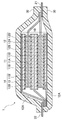
- FIG. 1 is a schematic cross-sectional view showing a laminate-type battery that is an example of a lithium secondary battery precursor of the present disclosure
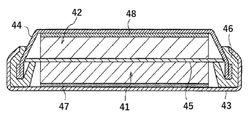
- FIG. 2 is a schematic cross-sectional view showing a coin-type battery that is another example of the lithium secondary battery precursor of the present disclosure
- a numerical range represented by “to” means a range including the numerical values before and after “to” as lower and upper limits.
- the amount of each component in the composition refers to the total amount of the multiple substances present in the composition unless otherwise specified when there are multiple substances corresponding to each component in the composition. means In this specification, the term "process” is used not only for independent processes, but also when the intended purpose of the process is achieved even if it cannot be clearly distinguished from other processes. be
- lithium (N-carbonyl) sulfonamide compound according to the present disclosure, an additive for lithium secondary batteries, a non-aqueous electrolyte for lithium secondary batteries, a lithium secondary battery precursor, a lithium secondary Embodiments of a battery and a method for manufacturing a lithium secondary battery will be described.
- the same or corresponding parts are denoted by the same reference numerals, and description thereof will not be repeated.
- the lithium (N-carbonyl)sulfonamide compound of the present disclosure is a novel compound represented by the following formula (I) (hereinafter sometimes referred to as "compound (A)").
- each of R 1 and R 2 is an alkyl group having 1 to 10 carbon atoms (at least one hydrogen atom of the alkyl group may be substituted with a halogen atom), 10 alkenyl group (at least one hydrogen atom of the alkenyl group may be substituted with a halogen atom), an alkynyl group having 2 to 10 carbon atoms (at least one hydrogen atom of the alkynyl group is a halogen atom, or an aryl group (at least one hydrogen atom of the aryl group may be substituted with a halogen atom, an alkoxy group having 1 to 6 carbon atoms, or an alkyl group having 1 to 6 carbon atoms ).
- Each of L 1 and L 2 represents a single bond or an ether bond (-O-). However, the case where each of L 1 and L 2 is a single bond is excluded.
- the lithium (N-carbonyl) sulfonamide compound (that is, compound (A)) of the present disclosure is represented by the following formula (I), so a non-aqueous electrolyte for lithium secondary batteries (hereinafter, “non-aqueous electrolyte ), it is possible to suppress an increase in DC resistance and a decrease in discharge capacity even when the lithium secondary battery is stored in a high-temperature environment. Details of the lithium secondary battery will be described later with reference to FIGS.
- a reaction product refers to a product from the reaction of a lithium (N-carbonyl)sulfonamide compound with a compound (eg, LiF) originating from the electrolyte.
- the stability of the lithium secondary battery using the lithium (N-carbonyl)sulfonamide compound (ie, compound (A)) of the present disclosure is excellent even in high-temperature environments.
- a battery reaction indicates a reaction in which lithium ions move in and out (intercalate) between a positive electrode and a negative electrode.
- the side reaction includes a reductive decomposition reaction of the electrolytic solution by the negative electrode, an oxidative decomposition reaction of the electrolytic solution by the positive electrode, elution of the metal element in the positive electrode active material, and the like. This suppresses the progress of the decomposition reaction of the non-aqueous electrolyte. As a result, even if the lithium secondary battery is stored in a high-temperature environment, the discharge capacity of the lithium secondary battery is less likely to decrease.
- the lithium (N-carbonyl)sulfonamide compound of the present disclosure that is, the compound (A)
- the lithium secondary battery can be stored in a high-temperature environment.
- an increase in DC resistance and a decrease in discharge capacity can be suppressed.
- the “alkyl group having 1 to 10 carbon atoms” represented by each of R 1 and R 2 is a linear or branched alkyl group having 1 or more and 10 or less carbon atoms.
- the "alkyl group having 1 to 10 carbon atoms” includes methyl group, ethyl group, propyl group, isopropyl group, butyl group, isobutyl group, sec-butyl group, tert-butyl group, pentyl group, 2-methylbutyl group, 1 -methylpentyl group, neopentyl group, 1-ethylpropyl group, hexyl group, 3,3-dimethylbutyl group, heptyl group, octyl group, nonyl group, decyl group and the like.
- the "alkyl group having 1 to 10 carbon atoms” is preferably an alkyl group having 1 to 6 carbon atoms, more preferably an alkyl group having 1 to 3 carbon atoms. At least one hydrogen atom of the "alkyl group having 1 to 10 carbon atoms" may be substituted with a halogen atom.
- the halogen atom is preferably a fluorine atom, a chlorine atom, a bromine atom, or an iodine atom, more preferably a fluorine atom, a chlorine atom, or a bromine atom, still more preferably a fluorine atom or a chlorine atom, and particularly preferably a fluorine atom.
- the number of hydrogen atoms to be substituted with halogen atoms is not particularly limited, is appropriately selected according to the number of carbon atoms in the alkyl group, and is preferably 1 to 7.
- the “alkenyl group having 2 to 10 carbon atoms” represented by each of R 1 and R 2 is a linear or branched alkenyl group having 2 or more and 10 or less carbon atoms.
- the "alkenyl group having 2 to 10 carbon atoms” includes a vinyl group, 2-propenyl group, 2-butenyl group, 3-butenyl group, 2-pentenyl group, 3-pentenyl group, 4-pentenyl group and 5-hexenyl group. etc.
- the "alkenyl group having 2 to 10 carbon atoms” is preferably an alkenyl group having 2 to 6 carbon atoms, more preferably an alkenyl group having 2 to 3 carbon atoms.
- At least one hydrogen atom in the "alkenyl group having 2 to 10 carbon atoms" may be substituted with a halogen atom.
- the halogen atom is preferably a fluorine atom, a chlorine atom, a bromine atom, or an iodine atom, more preferably a fluorine atom, a chlorine atom, or a bromine atom, still more preferably a fluorine atom or a chlorine atom, and particularly preferably a fluorine atom.
- the number of hydrogen atoms substituted with halogen atoms is not particularly limited, is appropriately selected according to the number of carbon atoms in the alkenyl group, and is preferably 1 to 7.
- the “alkynyl group having 2 to 10 carbon atoms” represented by each of R 1 and R 2 is a linear or branched alkynyl group having 2 or more and 10 or less carbon atoms.
- Examples of the "alkynyl group having 2 to 10 carbon atoms” include ethynyl group, propargyl group (2-propynyl group), 2-butynyl group, 3-butynyl group, 2-pentynyl group, 3-pentynyl group, 4-pentynyl group, 5-hexynyl group and the like.
- the "alkynyl group having 2 to 10 carbon atoms” is preferably an alkynyl group having 2 to 6 carbon atoms, more preferably an alkynyl group having 2 to 3 carbon atoms.
- At least one hydrogen atom in the "alkynyl group having 2 to 10 carbon atoms" may be substituted with a halogen atom.
- the halogen atom is preferably a fluorine atom, a chlorine atom, a bromine atom, or an iodine atom, more preferably a fluorine atom, a chlorine atom, or a bromine atom, still more preferably a fluorine atom or a chlorine atom, and particularly preferably a fluorine atom.
- the number of hydrogen atoms substituted with halogen atoms is not particularly limited, is appropriately selected according to the number of carbon atoms in the alkynyl group, and is preferably 1 to 7.
- At least one hydrogen atom in the "aryl group" represented by each of R 1 and R 2 is a halogen atom, or an alkoxy group having 1 to 6 carbon atoms , or may be substituted with an alkyl group having 1 to 6 carbon atoms.
- the halogen atom is preferably a fluorine atom, a chlorine atom, a bromine atom, or an iodine atom, more preferably a fluorine atom, a chlorine atom, or a bromine atom, still more preferably a fluorine atom or a chlorine atom, and particularly preferably a fluorine atom.
- the number of hydrogen atoms substituted with halogen atoms is not particularly limited, and is preferably 1 to 5.
- the alkyl group of the alkoxy group having 1 to 6 carbon atoms may be linear, branched or cyclic.
- the alkoxy group having 1 to 6 carbon atoms includes methoxy, ethoxy, n-propoxy, isopropoxy, n-butoxy, t-butoxy, pentyloxy and the like.
- the alkoxy group having 1 to 6 carbon atoms is preferably an alkoxy group having 1 to 3 carbon atoms, and more preferably a methoxy group and an ethoxy group.
- the number of hydrogen atoms substituted by the alkoxy group having 1 to 6 carbon atoms is not particularly limited, and is preferably 1 to 3.
- the alkyl group having 1 to 6 carbon atoms may be linear, branched or cyclic.
- Examples of alkyl groups having 1 to 6 carbon atoms include methyl group, ethyl group, n-propyl group, i-propyl group, n-butyl group, i-butyl group, t-butyl group, n-pentyl group and n-hexyl. group, cyclohexyl group, and the like.
- the alkyl group having 1 to 6 carbon atoms is preferably an alkyl group having 1 to 3 carbon atoms, and more preferably a methyl group and an ethyl group.
- the number of hydrogen atoms substituted by the alkyl group having 1 to 6 carbon atoms is not particularly limited, and preferably 1 to 3.
- each of L 1 and L 2 represents a single bond or -O-. However, the case where each of L 1 and L 2 is a single bond is excluded. In other words, except when L 1 is a single bond and L 2 is a single bond. Among them, L 1 preferably represents a single bond, and L 2 preferably represents -O-.
- lithium (N-carbonyl)sulfonamide compound that is, the compound (A)
- the lithium (N-carbonyl)sulfonamide compound include synthetic compounds (I-1) to synthetic compounds (I-41) synthesized in Examples described later (however, synthesis excluding compound (I-9)).
- the lithium (N-carbonyl)sulfonamide compounds of the present disclosure are in the lithium (N-carbonyl)sulfonamide compound (i.e., compound (A)) described above,
- Each of said R 1 and said R 2 is instead of the alkyl group, the alkenyl group, the alkynyl group, or the aryl group,
- the lithium (N-carbonyl)sulfonamide compound of the present disclosure may be a novel compound represented by the following formula (I) (hereinafter sometimes referred to as "compound (B)").
- each of R 1 and R 2 is an alkyl group having 1 to 10 carbon atoms (at least one hydrogen atom of the alkyl group may be substituted with a halogen atom), 10 alkenyl groups (at least one hydrogen atom of the alkenyl group may be substituted with a halogen atom), an alkynyl group having 2 to 10 carbon atoms (at least one hydrogen atom of the alkynyl group is a halogen atom, ), aryl group (at least one hydrogen atom of the aryl group may be substituted with a halogen atom, an alkoxy group having 1 to 6 carbon atoms, or an alkyl group having 1 to 6 carbon atoms.
- an aralkyl group having 7 to 16 carbon atoms (at least one hydrogen atom of the aromatic ring in the aralkyl group is substituted with a halogen atom, an alkoxy group having 1 to 6 carbon atoms, or an alkyl group having 1 to 6 carbon atoms. may be used.), or represents a halogen atom.
- Each of L 1 and L 2 represents a single bond or -O-.
- R 1 is a halogen atom and L 1 is —O—
- R 2 is a halogen atom and L 2 is —O—
- each of R 1 and R 2 is The case where it is the alkyl group or the aryl group and each of L 1 and L 2 is a single bond is excluded.
- the lithium (N-carbonyl)sulfonamide compound of the present disclosure that is, compound (B)
- compound (B) is added to a non-aqueous electrolyte and used, even if the lithium secondary battery is stored in a high-temperature environment, An increase in resistance and a decrease in discharge capacity can be suppressed.
- the reason for the above effect is that when the compound (A) is added to the non-aqueous electrolyte and used, the DC resistance increases and the discharge capacity increases even if the lithium secondary battery is stored in a high temperature environment. It is speculated that the decline may be suppressed for similar reasons.
- the "alkyl group having 1 to 10 carbon atoms” represented by each of R 1 and R 2 in the formula (I) corresponds to the "alkyl group having 1 to 10 carbon atoms” in the compound (A). ” is the same as that exemplified as In the compound (B), the “alkenyl group having 2 to 10 carbon atoms” represented by each of R 1 and R 2 in the formula (I) is equivalent to the “alkenyl group having 2 to 10 carbon atoms” in the compound (A).
- the “aralkyl group having 7 to 16 carbon atoms” represented by each of R 1 and R 2 in formula (I) is an aralkyl group having 7 to 16 carbon atoms including an aryl group.
- At least one hydrogen atom of the aromatic ring in the aralkyl group may be substituted with a halogen atom, an alkoxy group having 1 to 6 carbon atoms, or an alkyl group having 1 to 6 carbon atoms.
- the halogen atom is preferably a fluorine atom, a chlorine atom, a bromine atom, or an iodine atom, more preferably a fluorine atom, a chlorine atom, or a bromine atom, still more preferably a fluorine atom or a chlorine atom, and particularly preferably a fluorine atom.
- the number of hydrogen atoms substituted with halogen atoms is not particularly limited, and is preferably 1 to 5.
- the alkyl group of the alkoxy group having 1 to 6 carbon atoms may be linear, branched or cyclic.
- the alkoxy group having 1 to 6 carbon atoms includes methoxy, ethoxy, n-propoxy, isopropoxy, n-butoxy, t-butoxy, pentyloxy and the like.
- the alkoxy group having 1 to 6 carbon atoms is preferably an alkoxy group having 1 to 3 carbon atoms, and more preferably a methoxy group and an ethoxy group.
- the number of hydrogen atoms substituted by the alkoxy group having 1 to 6 carbon atoms is not particularly limited, and is preferably 1 to 3.
- the alkyl group having 1 to 6 carbon atoms may be linear, branched or cyclic.
- alkyl groups having 1 to 6 carbon atoms include methyl group, ethyl group, n-propyl group, i-propyl group, n-butyl group, i-butyl group, t-butyl group, n-pentyl group and n-hexyl. group, cyclohexyl group, and the like.
- the alkyl group having 1 to 6 carbon atoms is preferably an alkyl group having 1 to 3 carbon atoms, and more preferably a methyl group and an ethyl group.
- the number of hydrogen atoms substituted by the alkyl group having 1 to 6 carbon atoms is not particularly limited, and is preferably 1 to 3.
- the aralkyl group having 7 to 16 carbon atoms is preferably an aralkyl group consisting of an aryl group substituted with an alkylene group having 1 to 6 carbon atoms.
- an aryl group having 6 to 10 carbon atoms is preferable.
- Specific examples of the "aralkyl group having 7 to 16 carbon atoms” include a benzyl group, a phenylethyl group and a naphthylmethyl group.
- the "halogen atom" represented by each of R 1 and R 2 in the formula (I) is preferably a fluorine atom, a chlorine atom, a bromine atom, or an iodine atom, and a fluorine atom and a chlorine atom. , or a bromine atom is more preferred, a fluorine atom or a chlorine atom is more preferred, and a fluorine atom is particularly preferred.
- each of L 1 and L 2 represents a single bond or -O-. provided that when R 1 is a halogen atom and L 1 is —O—, when R 2 is a halogen atom and L 2 is —O—, and when each of R 1 and R 2 is The case where it is the alkyl group or the aryl group and each of L 1 and L 2 is a single bond is excluded.
- L 1 preferably represents a single bond
- L 2 preferably represents -O-.
- lithium (N-carbonyl)sulfonamide compound that is, compound (B)
- compound (B) Specific examples of the lithium (N-carbonyl)sulfonamide compound (that is, compound (B)) include synthetic compound (I-1) to synthetic compound (I-48) synthesized in Examples described later.
- the additive of the present disclosure contains a lithium (N-carbonyl)sulfonamide compound (I) represented by the following formula (I) (hereinafter sometimes referred to as "compound (C)").
- each of R 1 and R 2 is an alkyl group having 1 to 10 carbon atoms (at least one hydrogen atom of the alkyl group may be substituted with a halogen atom, provided that a trifluoromethyl group ), an alkenyl group having 2 to 10 carbon atoms (at least one hydrogen atom of the alkenyl group may be substituted with a halogen atom), an alkynyl group having 2 to 10 carbon atoms (at least One hydrogen atom may be substituted with a halogen atom.), or an aryl group (at least one hydrogen atom of the aryl group is a halogen atom, a C1-6 alkoxy group, or a C1-6 may be substituted with an alkyl group of.).
- Each of L 1 and L 2 represents a single bond or -O-.
- excluding a trifluoromethyl group in an alkyl group having 1 to 10 carbon atoms means that R 1 is a trifluoromethyl group, L 1 is a single bond, R 2 is a trifluoromethyl group, and L It shows that the case where 2 is a single bond is excluded from formula (I).
- additive (A) an additive containing compound (C) may be referred to as "additive (A)".
- the additive (A) of the present disclosure contains a lithium (N-carbonyl)sulfonamide compound (I) (that is, the compound (C)), when it is added to a non-aqueous electrolyte and used, under a high temperature environment Even if the lithium secondary battery is stored at , it is possible to suppress an increase in DC resistance and a decrease in discharge capacity.
- the reason for the above effect is that when the lithium (N-carbonyl)sulfonamide compound (I) (that is, compound (A)) of the present disclosure is added to a non-aqueous electrolyte and used, it can be used in a high-temperature environment. This is presumed to be the same as the reason why the increase in DC resistance and the decrease in discharge capacity can be suppressed even when the lithium secondary battery is stored.
- the additive (A) of the present disclosure is suitable as an additive for a non-aqueous electrolyte for lithium secondary batteries.
- each of L 1 and L 2 may be a single bond.
- the additive of the present disclosure is the above-described lithium secondary battery additive (that is, additive (A)),
- R 1 and said R 2 is instead of the alkyl group, the alkenyl group, the alkynyl group, or the aryl group, an alkyl group having 1 to 10 carbon atoms (at least one hydrogen atom of said alkyl group may be substituted with a halogen atom), said alkenyl group, said alkynyl group, said aryl group, aralkyl having 7 to 16 carbon atoms; group (at least one hydrogen atom of the aromatic ring in the aralkyl group may be substituted with a halogen atom, an alkoxy group having 1 to 6 carbon atoms, or an alkyl group having 1 to 6 carbon atoms.), or a halogen atom represents When R 1 is a halogen atom and L 1 is -O-, when R 2 is a halogen atom and L 2 is
- the lithium secondary battery additive of the present disclosure is an additive (hereinafter , may be referred to as “additive (B)”).
- each of R 1 and R 2 is an alkyl group having 1 to 10 carbon atoms (at least one hydrogen atom of the alkyl group may be substituted with a halogen atom), 10 alkenyl group (at least one hydrogen atom of the alkenyl group may be substituted with a halogen atom), an alkynyl group having 2 to 10 carbon atoms (at least one hydrogen atom of the alkynyl group is a halogen atom, ), aryl group (at least one hydrogen atom of the aryl group may be substituted with a halogen atom, an alkoxy group having 1 to 6 carbon atoms, or an alkyl group having 1 to 6 carbon atoms.
- an aralkyl group having 7 to 16 carbon atoms (at least one hydrogen atom of the aromatic ring in the aralkyl group is substituted with a halogen atom, an alkoxy group having 1 to 6 carbon atoms, or an alkyl group having 1 to 6 carbon atoms. may be used.), or represents a halogen atom.
- Each of L 1 and L 2 represents a single bond or -O-.
- R 1 is a halogen atom and L 1 is —O—
- R 2 is a halogen atom and L 2 is —O—
- each of R 1 and R 2 is The case where it is the alkyl group or the aryl group and each of L 1 and L 2 is a single bond is excluded.
- the additive (B) of the present disclosure contains a lithium (N-carbonyl)sulfonamide compound (I) (that is, the compound (B)), when it is added to a non-aqueous electrolyte and used, under a high temperature environment Even if the lithium secondary battery is stored at , it is possible to suppress an increase in DC resistance and a decrease in discharge capacity.
- the reason for the above effect is that when the additive (A) is added to the nonaqueous electrolyte and used, the DC resistance increases and the discharge capacity increases even if the lithium secondary battery is stored in a high temperature environment. It is presumed that the reason why the decrease in
- the additive (B) of the present disclosure is suitable as an additive for a non-aqueous electrolyte for lithium secondary batteries.
- Lithium (N-carbonyl)sulfonamide compound (I) (i.e., compound (B)) included in Addition (B) of the present disclosure is lithium (N-carbonyl)sulfonamide compound (I) (i.e., compound The same as those exemplified as (B)) can be mentioned.
- Non-aqueous electrolyte for lithium secondary batteries (Non-aqueous electrolyte (A)) A non-aqueous electrolyte for a lithium secondary battery of the present disclosure will be described.
- the non-aqueous electrolyte of the present disclosure is used as an electrolyte for lithium secondary batteries.
- the non-aqueous electrolyte of the present disclosure contains a lithium (N-carbonyl)sulfonamide compound (I) represented by the following formula (I) (ie, compound (C)).
- each of R 1 and R 2 is an alkyl group having 1 to 10 carbon atoms (at least one hydrogen atom of the alkyl group may be substituted with a halogen atom, provided that a trifluoromethyl group ), an alkenyl group having 2 to 10 carbon atoms (at least one hydrogen atom of the alkenyl group may be substituted with a halogen atom), an alkynyl group having 2 to 10 carbon atoms (at least One hydrogen atom may be substituted with a halogen atom.), or an aryl group (at least one hydrogen atom of the aryl group is a halogen atom, a C1-6 alkoxy group, or a C1-6 may be substituted with an alkyl group of.).
- Each of L 1 and L 2 represents a single bond or -O-.
- excluding a trifluoromethyl group means that R 1 is a trifluoromethyl group, L 1 is a single bond, R 2 is a trifluoromethyl group, and L 2 is a single bond. Indicates exclusion from (I).
- non-aqueous electrolyte containing compound (C) may be referred to as “non-aqueous electrolyte (A)".
- the nonaqueous electrolyte (A) of the present disclosure contains the lithium (N-carbonyl)sulfonamide compound (I) (that is, the compound (C)), even if the lithium secondary battery is stored in a high temperature environment, An increase in DC resistance and a decrease in discharge capacity can be suppressed.
- the reason for the above effect is that when the lithium (N-carbonyl)sulfonamide compound (I) (that is, compound (A)) of the present disclosure is added to a non-aqueous electrolyte and used, it can be used in a high-temperature environment. This is presumed to be the same as the reason why the increase in DC resistance and the decrease in discharge capacity can be suppressed even when the lithium secondary battery is stored.
- the lithium (N-carbonyl) sulfonamide compound (I) (that is, the compound (C)) contained in the non-aqueous electrolyte (A) of the present disclosure is the lithium contained in the additive (A) of the present disclosure ( N-Carbonyl)sulfonamide compound (I) (that is, compound (C)) is the same as those exemplified.
- Non-aqueous electrolyte (B) The non-aqueous electrolyte of the present disclosure is in the above non-aqueous electrolyte for lithium secondary batteries (that is, non-aqueous electrolyte (A)),
- Each of said R 1 and said R 2 is instead of the alkyl group, the alkenyl group, the alkynyl group, or the aryl group, an alkyl group having 1 to 10 carbon atoms (at least one hydrogen atom of said alkyl group may be substituted with a halogen atom), said alkenyl group, said alkynyl group, said aryl group, aralkyl having 7 to 16 carbon atoms; group (at least one hydrogen atom of the aromatic ring in the aralkyl group may be substituted with a halogen atom, an alkoxy group having 1 to 6 carbon atoms, or an alkyl group having 1 to 6 carbon atoms.), or a halogen atom represents When R 1 is
- non-aqueous electrolytic solution of the present disclosure contains an additive (hereinafter, may be referred to as “non-aqueous electrolyte (B)").
- each of R 1 and R 2 is an alkyl group having 1 to 10 carbon atoms (at least one hydrogen atom of the alkyl group may be substituted with a halogen atom), 10 alkenyl group (at least one hydrogen atom of the alkenyl group may be substituted with a halogen atom), an alkynyl group having 2 to 10 carbon atoms (at least one hydrogen atom of the alkynyl group is a halogen atom, ), aryl group (at least one hydrogen atom of the aryl group may be substituted with a halogen atom, an alkoxy group having 1 to 6 carbon atoms, or an alkyl group having 1 to 6 carbon atoms.
- an aralkyl group having 7 to 16 carbon atoms (at least one hydrogen atom of the aromatic ring in the aralkyl group is substituted with a halogen atom, an alkoxy group having 1 to 6 carbon atoms, or an alkyl group having 1 to 6 carbon atoms. may be used.), or represents a halogen atom.
- Each of L 1 and L 2 represents a single bond or -O-.
- R 1 is a halogen atom and L 1 is —O—
- R 2 is a halogen atom and L 2 is —O—
- each of R 1 and R 2 is The case where it is the alkyl group or the aryl group and each of L 1 and L 2 is a single bond is excluded.
- the non-aqueous electrolyte (B) of the present disclosure can suppress an increase in DC resistance and a decrease in discharge capacity even when a lithium secondary battery is stored in a high-temperature environment.
- the reason for the above effect is that when the non-aqueous electrolyte (A) is added to the non-aqueous electrolyte and used, the DC resistance increases even if the lithium secondary battery is stored in a high-temperature environment, and It is presumed that the reason why the decrease in discharge capacity can be suppressed is the same.
- the lithium (N-carbonyl)sulfonamide compound (I) (that is, the compound (B)) contained in the non-aqueous electrolyte (B) of the present disclosure is the lithium (N-carbonyl)sulfonamide compound (I) ( That is, the same compounds as those exemplified as the compound (B)) can be mentioned.
- compound (C) or compound (D) is simply referred to as “lithium (N-carbonyl)sulfonamide compound (I)".
- additive (A) or additive (B) is simply referred to as “additive”.
- non-aqueous electrolyte (A) or the non-electrolyte (B) is simply referred to as “non-aqueous electrolyte”.
- the lithium (N-carbonyl)sulfonamide compound (I) is preferably an aryl group-containing compound. Since the non-aqueous electrolyte solution of the present disclosure is an aryl group-containing compound, an increase in DC resistance and a decrease in discharge capacity can be further suppressed even when the lithium secondary battery is stored in a high-temperature environment.
- Aryl group-containing compounds are represented by formula (I), R 1 represents an aryl group (at least one hydrogen atom of the aryl group may be substituted with a halogen atom, an alkoxy group having 1 to 6 carbon atoms, or an alkyl group having 1 to 6 carbon atoms); L 1 represents a single bond, R 2 is an alkyl group having 1 to 10 carbon atoms (at least one hydrogen atom of the alkyl group may be substituted with a halogen atom), an alkenyl group having 2 to 10 carbon atoms (at least one hydrogen atom of the alkenyl group may be substituted with a halogen atom.), an alkynyl group having 2 to 10 carbon atoms (at least one hydrogen atom of the alkynyl group may be substituted with a halogen atom.), an aryl group (at least One hydrogen atom may be substituted with a halogen atom, an alkoxy group having 1 to 6 carbon atoms, or an al
- aryl group-containing compound examples include synthetic compound (I-1) to synthetic compound (I-9) synthesized in Examples described later, synthetic compound (I-24), synthetic compound (I-25), Synthetic compounds (I-30) to synthetic compounds (I-32), synthetic compounds (I-38) to synthetic compounds (I-40), synthetic compounds (I-47), synthetic compounds (I-48), etc. mentioned.
- the lithium (N-carbonyl)sulfonamide compound (I) is preferably an alkyl group-containing compound. Since the non-aqueous electrolyte of the present disclosure is an alkyl group-containing compound, even if the lithium secondary battery is stored in a high-temperature environment, an increase in DC resistance and a decrease in discharge capacity can be further suppressed.
- Alkyl group-containing compounds are represented by formula (I), R 1 represents an alkyl group having 1 to 10 carbon atoms (at least one hydrogen atom of the alkyl group may be substituted with a halogen atom); L 1 represents a single bond, R 2 is an alkyl group having 1 to 10 carbon atoms (at least one hydrogen atom of the alkyl group may be substituted with a halogen atom), an alkenyl group having 2 to 10 carbon atoms (at least one hydrogen atom of the alkenyl group Atoms may be substituted with halogen atoms.), alkynyl groups having 2 to 10 carbon atoms (at least one hydrogen atom of the alkynyl group may be substituted with a halogen atom.), aryl groups (the At least one hydrogen atom may be substituted with a halogen atom, an alkoxy group having 1 to 6 carbon atoms, or an alkyl group having 1 to 6 carbon atoms.), or an aralkyl
- alkyl group-containing compounds include synthetic compound (I-10) to synthetic compound (I-23) synthesized in Examples described later, synthetic compound (I-26) to synthetic compound (I-29), Synthetic compounds (I-33) to (I-37), synthetic compounds (I-41), and the like.
- Lithium (N-carbonyl)sulfonamide compound (I) is preferably a fluorine atom-containing compound.
- the fluorine atom-containing compound is represented by formula (I), R 1 represents a fluorine atom, L 1 represents a single bond, R 2 is an alkyl group having 1 to 10 carbon atoms (at least one hydrogen atom of the alkyl group may be substituted with a halogen atom), an alkenyl group having 2 to 10 carbon atoms (at least one hydrogen atom of the alkenyl group Atoms may be substituted with halogen atoms.), alkynyl groups having 2 to 10 carbon atoms (at least one hydrogen atom of the alkynyl group may be substituted with a halogen atom.), aryl groups (the At least one hydrogen atom may be substituted with a halogen atom, an alkoxy group having 1 to 6 carbon atoms, or an alkyl group having 1 to 6 carbon atoms.), or an aralkyl group having 7 to 16 carbon atoms (the above aralkyl group At least one hydrogen atom of the aromatic ring
- fluorine atom-containing compounds include synthetic compounds (I-42) to (I-46) synthesized in Examples described later.
- the intrinsic viscosity of the non-aqueous electrolyte is preferably 10.0 mPa ⁇ s or less at 25°C from the viewpoint of further improving the dissociation of the electrolyte and the mobility of ions.
- the amount of the lithium (N-carbonyl)sulfonamide compound (I) was compared with the amount added to the non-aqueous electrolyte. may have decreased over time. Even in this case, if even a small amount of the lithium (N-carbonyl)sulfonamide compound (I) is detected in the non-aqueous electrolyte taken out of the lithium secondary battery, the electrolyte of the lithium secondary battery is Included within the scope of the non-aqueous electrolyte of the present disclosure.
- the content of the lithium (N-carbonyl)sulfonamide compound (I) is preferably 0.01% by mass to 5.0% by mass, more preferably 0.05% by mass to 3%, based on the total amount of the non-aqueous electrolyte. 0 mass %, more preferably 0.10 mass % to 1.5 mass %, and particularly preferably 0.20 mass % to 1.5 mass %. If the content of the lithium (N-carbonyl)sulfonamide compound (I) is within the above range, the lithium secondary battery can operate without the SEI membrane impairing the conductivity of lithium cations. Furthermore, the SEI film containing the phosphoric acid structure improves the battery characteristics of the lithium secondary battery.
- the SEI film contains a sufficient amount of structures derived from the lithium (N-carbonyl)sulfonamide compound (I). This facilitates the formation of thermally and chemically stable inorganic salts or polymeric structures. Therefore, at high temperatures, elution of components of the SEI film and deterioration of the SEI film, which impair the durability of the SEI film, are less likely to occur. As a result, the durability of the SEI film and the characteristics after high-temperature storage of the lithium secondary battery are improved.
- the non-aqueous electrolyte of the present disclosure is a compound (II) that is at least one selected from the group consisting of lithium monofluorophosphate and lithium difluorophosphate (hereinafter sometimes referred to as "lithium fluorophosphate compound (II)"). There is.) is preferably included.
- Lithium difluorophosphate is represented by the following formula (II-1), and lithium monofluorophosphate is represented by the following formula (II-2).
- the non-aqueous electrolyte of the present disclosure contains the lithium fluorophosphate compound (II), so that in the charge-discharge cycle after being stored in a high-temperature environment Also, the decrease in discharge capacity and the increase in DC resistance of the lithium secondary battery are further suppressed.
- the content of the lithium fluorophosphate compound (II) is preferably 0.001% by mass to 5% with respect to the total amount of the non-aqueous electrolyte. % by mass, more preferably 0.01% to 3% by mass, still more preferably 0.1% to 2% by mass. If the content of the lithium fluorophosphate compound (II) is within the above range, the solubility of the lithium fluorophosphate in non-aqueous solvents can be ensured, and the DC resistance of the lithium secondary battery can be further reduced. can be done.
- the nonaqueous electrolytic solution of the present disclosure preferably contains a compound (III) represented by the following formula (III) (hereinafter referred to as "cyclic dicarbonyl compound (III)").
- M is an alkali metal
- Y is a transition element, a group 13 element, a group 14 element, or a group 15 element of the periodic table
- b is an integer from 1 to 3
- m is an integer from 1 to 4
- n is an integer from 0 to 8, q is 0 or 1
- R 3 is an alkylene group having 1 to 10 carbon atoms, a halogenated alkylene group having 1 to 10 carbon atoms, an arylene group having 6 to 20 carbon atoms, or a halogenated arylene group having 6 to 20 carbon atoms (these groups are The structure may contain a substituent or a heteroatom, and when q is 1 and m is 2 to 4, each of m R 3 may be bonded.
- R 4 is a halogen atom, an alkyl group having 1 to 10 carbon atoms, a halogenated alkyl group having 1 to 10 carbon atoms, an aryl group having 6 to 20 carbon atoms, or
- the non-aqueous electrolytic solution of the present disclosure By containing the cyclic dicarbonyl compound (III) in addition to the lithium (N-carbonyl) sulfonamide compound (I), the non-aqueous electrolytic solution of the present disclosure, even in charge-discharge cycles after being stored in a high-temperature environment, A decrease in discharge capacity and an increase in DC resistance of the lithium secondary battery are further suppressed. This effect is presumed to be due to the following reasons. Since the non-aqueous electrolyte contains the cyclic dicarbonyl compound (III) in addition to the lithium (N-carbonyl) sulfonamide compound (I), the SEI membrane and the like contain the above-mentioned reaction products and the like inside it.
- the lithium secondary battery may contain a bond derived from the cyclic dicarbonyl compound (III).
- This facilitates the formation of thermally and chemically stable inorganic salts or polymeric structures. Therefore, at high temperatures, elution of components of the SEI film, etc., which impair the durability of the SEI film, etc., and deterioration of the SEI film, etc., are unlikely to occur. As a result, a decrease in discharge capacity and an increase in direct current resistance of the lithium secondary battery are further suppressed even in charge-discharge cycles after long-term storage in a high-temperature environment.
- M is an alkali metal.
- Alkali metals include lithium, sodium, potassium and the like. Among them, M is preferably lithium.
- Y is a transition element, a group 13 element, a group 14 element, or a group 15 element of the periodic table. Y is preferably Al, B, V, Ti, Si, Zr, Ge, Sn, Cu, Y, Zn, Ga, Nb, Ta, Bi, P, As, Sc, Hf or Sb; , B or P are more preferred.
- Y is Al, B or P, synthesis of the anion compound is relatively easy, and production costs can be reduced.
- b represents the valence of the anion and the number of cations.
- b is an integer of 1 to 3, preferably 1; When b is 3 or less, the salt of the anion compound is easily dissolved in the mixed organic solvent.
- Each of m and n is a value related to the number of ligands. Each of m and n depends on the type of M. m is an integer of 1-4. n is an integer from 0 to 8; q is 0 or 1; When q is 0, the chelate ring is a five-membered ring, and when q is 1, the chelate ring is a six-membered ring.
- R 3 represents an alkylene group having 1 to 10 carbon atoms, a halogenated alkylene group having 1 to 10 carbon atoms, an arylene group having 6 to 20 carbon atoms, or a halogenated arylene group having 6 to 20 carbon atoms.
- These alkylene groups, halogenated alkylene groups, arylene groups or halogenated arylene groups may contain substituents and heteroatoms in their structures. Specifically, these groups may contain substituents instead of hydrogen atoms.
- substituents include halogen atoms, chain or cyclic alkyl groups, aryl groups, alkenyl groups, alkoxy groups, aryloxy groups, sulfonyl groups, amino groups, cyano groups, carbonyl groups, acyl groups, amide groups, or hydroxyl groups. be done. A structure in which a nitrogen atom, a sulfur atom, or an oxygen atom is introduced in place of the carbon atoms of these groups may also be used. When q is 1 and m is 2 to 4, each of m R 3 may be bonded. Examples of such may include ligands such as ethylenediaminetetraacetic acid.
- R 4 represents a halogen atom, an alkyl group having 1 to 10 carbon atoms, a halogenated alkyl group having 1 to 10 carbon atoms, an aryl group having 6 to 20 carbon atoms, or a halogenated aryl group having 6 to 20 carbon atoms.
- These alkyl groups, halogenated alkyl groups, aryl groups or halogenated aryl groups may contain substituents and heteroatoms in their structures , and when n is 2 to 8, n R 4 of may be combined to form a ring.
- an electron-withdrawing group is preferable, and a fluorine atom is particularly preferable.
- Q 1 and Q 2 each independently represent O or S; That is, the ligand will be attached to Y through these heteroatoms.
- cyclic dicarbonyl compound (III) examples include compounds represented by the following formulas (III-1) to (III-2).
- the compound represented by formula (III-1) may be referred to as "lithium bisoxalate borate (III-1)".
- the content of the cyclic dicarbonyl compound (III) is preferably 0.01% by mass to 10% by mass with respect to the total amount of the non-aqueous electrolyte, More preferably 0.05% by mass to 5.0% by mass, still more preferably 0.10% by mass to 3.0% by mass, and particularly preferably 0.10% by mass to 2.0% by mass. If the content of the cyclic dicarbonyl compound (III) is within the above range, the lithium secondary battery can operate without the SEI film or the like impairing the conductivity of lithium cations.
- the battery characteristics of the lithium secondary battery are improved as the SEI film or the like contains a cyclic dicarbonyl structure. If the content of the cyclic dicarbonyl compound (III) is within the above range, the SEI film or the like contains a sufficient amount of a structure mainly composed of a cyclic dicarbonyl structure. This facilitates the formation of thermally and chemically stable inorganic salts or polymeric structures. Therefore, under high temperature, the elution of the components of the SEI film, etc., which impair the durability of the SEI film, etc., and the deterioration of the SEI film, etc., are unlikely to occur. As a result, the durability of the SEI film and the like and the characteristics of the lithium secondary battery after high temperature storage are improved.
- the non-aqueous electrolytic solution of the present disclosure preferably contains a compound (IV) "(hereinafter referred to as a cyclic sulfur-containing ester compound (IV)”) represented by the following formula (IV).
- R 5 is an oxygen atom, an alkylene group having 1 to 6 carbon atoms, or an alkenylene group having 2 to 6 carbon atoms
- R 6 is an alkylene group having 1 to 6 carbon atoms, an alkenylene group having 2 to 6 carbon atoms, a group represented by formula (iv-1), or a group represented by formula (iv-2); * indicates the binding position
- R 61 is an oxygen atom, an alkylene group having 1 to 6 carbon atoms, an alkenylene group having 2 to 6 carbon atoms, or an oxymethylene group
- R 62 is an alkyl group having 1 to 6 carbon atoms or an alkenyl group having 2 to 6 carbon atoms.
- the non-aqueous electrolyte of the present disclosure contains the cyclic sulfur-containing ester compound (IV) in addition to the lithium (N-carbonyl) sulfonamide compound (I), lithium secondary A decrease in battery discharge capacity and an increase in DC resistance can be suppressed. This effect is presumed to be due to the following reasons.
- the reaction product is generated from the cyclic sulfur-containing ester compound (IV) and the electrolyte. (eg, LiF). This further enhances the stability of the lithium secondary battery in a high-temperature environment.
- R 5 is preferably an alkylene group having 2 to 3 carbon atoms, a vinylene group, or an oxygen atom, more preferably a trimethylene group, a vinylene group, or an oxygen atom. It is particularly preferred to have
- R5 is preferably an oxygen atom. This facilitates formation of a thermally and chemically stable inorganic salt structure. Therefore, under high temperature, the elution of the components of the SEI film, etc., which impair the durability of the SEI film, etc., and the deterioration of the SEI film, etc., are unlikely to occur. As a result, the durability of the SEI film and the like and the battery characteristics of the lithium secondary battery are improved.
- R6 is preferably a group represented by formula (iv-1) or a group represented by formula (iv-2).
- R 61 is preferably an alkylene group having 1 to 3 carbon atoms, an alkenylene group having 1 to 3 carbon atoms, or an oxymethylene group, more preferably an oxymethylene group.
- R 62 is preferably an alkyl group having 1 to 3 carbon atoms or an alkenyl group having 2 to 3 carbon atoms, more preferably a propyl group.
- cyclic sulfur-containing ester compound (IV) examples include compounds represented by formula (IV-1) and formulas (IV-1) to (IV-4).
- the compound represented by formula (IV-1) may be referred to as "cyclic sulfur-containing ester compound (IV-1)".
- the non-aqueous electrolyte may contain only one type of cyclic sulfur-containing ester compound (IV), or may contain two or more types.
- the content of the cyclic sulfur-containing ester compound (IV) is preferably 0.01% by mass to 5.0% by mass relative to the total amount of the non-aqueous electrolyte. 0 mass %, more preferably 0.05 mass % to 3.0 mass %, and still more preferably 0.10 mass % to 2.0 mass %. If the content of the cyclic sulfur-containing ester compound (IV) is within the above range, the lithium secondary battery can operate without the SEI film or the like impairing the conductivity of lithium ions. Furthermore, the battery characteristics of the lithium secondary battery are improved as the SEI film or the like contains a cyclic sulfur-containing ester structure.
- the SEI film or the like contains a sufficient amount of cyclic sulfur-containing ester structures. This facilitates the formation of thermally and chemically stable inorganic salts or polymeric structures. Therefore, under high temperature, the elution of the components of the SEI film, etc., which impair the durability of the SEI film, etc., and the deterioration of the SEI film, etc., are unlikely to occur. As a result, the durability of the SEI film and the like and the battery characteristics of the lithium secondary battery are improved.
- the non-aqueous electrolyte of the present disclosure may contain other additives.
- Other additives are not particularly limited, and any known ones can be used.
- additives described in paragraphs 0042 to 0055 of JP-A-2019-153443 can be used.
- a non-aqueous electrolyte generally contains a non-aqueous solvent.
- the non-aqueous solvent various known solvents can be appropriately selected. Only one type of non-aqueous solvent may be used, or two or more types may be used.
- Non-aqueous solvents include, for example, cyclic carbonates, fluorine-containing cyclic carbonates, chain carbonates, fluorine-containing chain carbonates, aliphatic carboxylic acid esters, fluorine-containing aliphatic carboxylic acid esters, and ⁇ -lactones. , fluorine-containing ⁇ -lactones, cyclic ethers, fluorine-containing cyclic ethers, chain ethers, fluorine-containing chain ethers, nitriles, amides, lactams, nitromethane, nitroethane, sulfolane, trimethyl phosphate, dimethyl sulfoxide , dimethyl sulfoxide phosphate, and the like.
- Examples of cyclic carbonates include ethylene carbonate (EC), propylene carbonate (PC), butylene carbonate (BC), and the like.
- Examples of fluorine-containing cyclic carbonates include fluoroethylene carbonate (FEC).
- Examples of chain carbonates include dimethyl carbonate (DMC), diethyl carbonate (DEC), ethylmethyl carbonate (EMC), methylpropyl carbonate (MPC), ethylpropyl carbonate (EPC), dipropyl carbonate (DPC), and the like. are mentioned.
- Examples of aliphatic carboxylic acid esters include methyl formate, methyl acetate, methyl propionate, methyl butyrate, methyl isobutyrate, methyl trimethylbutyrate, ethyl formate, ethyl acetate, ethyl propionate, ethyl butyrate, ethyl isobutyrate, trimethyl ethyl butyrate, and the like.
- Examples of ⁇ -lactones include ⁇ -butyrolactone, ⁇ -valerolactone, and the like.
- Cyclic ethers include, for example, tetrahydrofuran, 2-methyltetrahydrofuran, tetrahydropyran, 1,3-dioxolane, 4-methyl-1,3-dioxolane, 1,3-dioxane, 1,4-dioxane, and the like.
- chain ethers include 1,2-ethoxyethane (DEE), ethoxymethoxyethane (EME), diethyl ether, 1,2-dimethoxyethane, 1,2-dibutoxyethane, and the like.
- Nitriles include, for example, acetonitrile, glutaronitrile, adiponitrile, methoxyacetonitrile, 3-methoxypropionitrile, and the like.
- Amides include, for example, N,N-dimethylformamide.
- lactams include N-methylpyrrolidinone, N-methyloxazolidinone, N,N'-dimethylimidazolidinone, and the like.
- the non-aqueous solvent preferably contains at least one selected from the group consisting of cyclic carbonates, fluorine-containing cyclic carbonates, chain carbonates, and fluorine-containing chain carbonates.
- the total ratio of cyclic carbonates, fluorine-containing cyclic carbonates, chain carbonates, and fluorine-containing chain carbonates is preferably 50% by mass or more and 100% by mass or less with respect to the total amount of the non-aqueous solvent. , more preferably 60% by mass or more and 100% by mass or less, still more preferably 80% by mass or more and 100% by mass or less.
- the non-aqueous solvent preferably contains at least one selected from the group consisting of cyclic carbonates and chain carbonates.
- the total proportion of cyclic carbonates and chain carbonates in the non-aqueous solvent is preferably 50% by mass or more and 100% by mass or less, more preferably 60% by mass, relative to the total amount of the non-aqueous solvent. 100% by mass or less, more preferably 80% by mass or more and 100% by mass or less.
- the content of the nonaqueous solvent is preferably 60% by mass to 99% by mass, more preferably 70% by mass to 97% by mass, and still more preferably 70% by mass to 90% by mass, relative to the total amount of the nonaqueous electrolyte. be.
- the intrinsic viscosity of the non-aqueous solvent is preferably 10.0 mPa ⁇ s or less at 25°C from the viewpoint of further improving the dissociation of the electrolyte and the mobility of ions.
- a non-aqueous electrolyte generally contains an electrolyte.
- Electrode for lithium secondary batteries refers to a substance responsible for carrier transport between the positive electrode and the negative electrode.
- the solubility of the electrolyte in non-aqueous solvents is high, and the degree of dissociation of the electrolyte in non-aqueous solvents is high.
- Lithium salts are often used as electrolytes.
- the electrolyte preferably contains at least one of a fluorine-containing lithium salt (hereinafter sometimes referred to as a "fluorine-containing lithium salt”) and a fluorine-free lithium salt.
- a fluorine-containing lithium salt hereinafter sometimes referred to as a "fluorine-containing lithium salt”
- fluorine-free lithium salt a fluorine-free lithium salt
- fluorine-containing lithium salts include inorganic acid anion salts and organic acid anion salts.
- inorganic acid anion salts include lithium hexafluorophosphate (LiPF 6 ), lithium tetrafluoroborate (LiBF 4 ), lithium hexafluoroarsenate (LiAsF 6 ), lithium hexafluorotantalate ( LiTaF 6 ), and the like.
- organic acid anion salts examples include lithium trifluoromethanesulfonate (LiCF 3 SO 3 ), lithium bis(trifluoromethanesulfonyl)imide (Li(CF 3 SO 2 ) 2 N), lithium bis(pentafluoroethanesulfonyl) imide (Li(C 2 F 5 SO 2 ) 2 N) and the like.
- the fluorine-containing lithium salt is preferably a lithium salt other than the lithium (N-carbonyl)sulfonamide compound (I) represented by formula (I).
- the fluorine-containing lithium salt includes lithium hexafluorophosphate (LiPF 6 ), lithium tetrafluoroborate (LiBF 4 ), lithium hexafluoroarsenate (LiAsF 6 ), lithium hexafluorotantalate (LiTaF 6 ), lithium trifluoromethanesulfonate ( LiCF3SO3 ) , lithium bis (trifluoromethanesulfonyl)imide (Li ( CF3SO2 )2N), and lithium bis(pentafluoroethanesulfonyl)imide (Li( C2 It is preferably at least one selected from the group consisting of F 5 SO 2 ) 2 N).
- the fluorine-containing lithium salt is particularly preferably lithium hexafluorophosphate (LiPF 6 ).
- Lithium salts containing no fluorine include lithium perchlorate (LiClO 4 ), lithium tetrachloride aluminumate (LiAlCl 4 ), lithium decachlorodecaborate (Li 2 B 10 Cl 10 ), and the like.
- the content of the fluorine-containing lithium salt is preferably 50% by mass or more and 100% by mass or less, more preferably 60% by mass or more and 100% by mass or less, based on the total amount of the electrolyte. Preferably, it is 80% by mass or more and 100% by mass or less.
- the fluorine-containing lithium salt contains lithium hexafluorophosphate (LiPF 6 )
- the content of lithium hexafluorophosphate (LiPF 6 ) is preferably 50% by mass or more and 100% by mass with respect to the total amount of the electrolyte. Below, more preferably 60% by mass or more and 100% by mass or less, still more preferably 80% by mass or more and 100% by mass or less.
- the concentration of the electrolyte in the non-aqueous electrolyte is preferably 0.1 mol/L or more and 3 mol/L or less, more preferably 0.5 mol/L or more and 2 mol/L or less.
- the concentration of lithium hexafluorophosphate (LiPF 6 ) in the non-aqueous electrolyte is preferably 0.1 mol/L or more and 3 mol/L or less. , more preferably 0.5 mol/L or more and 2 mol/L or less.
- the non-aqueous electrolyte may contain other components as needed.
- Other components include acid anhydrides and the like.
- lithium secondary battery precursor Next, the lithium secondary battery precursor of the present disclosure will be described.
- a lithium secondary battery precursor of the present disclosure includes a case, a positive electrode, a negative electrode, a separator, and an electrolytic solution.
- the positive electrode, negative electrode, separator, and electrolyte are housed in a case.
- the positive electrode is a positive electrode capable of intercalating and deintercalating lithium ions.
- the negative electrode is a negative electrode capable of intercalating and deintercalating lithium ions.
- the electrolyte is the non-aqueous electrolyte of the present disclosure.
- a lithium secondary battery precursor indicates a lithium secondary battery before being subjected to charging and discharging. That is, in the lithium secondary battery precursor, the negative electrode does not contain the negative electrode SEI film, and the positive electrode does not contain the positive electrode SEI film.
- the shape of the case and the like are not particularly limited, and are appropriately selected according to the intended use of the lithium secondary battery precursor of the present disclosure.
- Examples of the case include a case including a laminate film, a case including a battery can and a battery can lid, and the like.
- the positive electrode is a positive electrode capable of intercalating and deintercalating lithium ions.
- the positive electrode preferably contains at least one positive electrode active material capable of intercalating and deintercalating lithium ions.
- the positive electrode includes a positive electrode current collector and a positive electrode mixture layer.
- the positive electrode mixture layer is provided on at least part of the surface of the positive electrode current collector.
- Examples of materials for the positive electrode current collector include metals and alloys. Specifically, examples of materials for the positive electrode current collector include aluminum, nickel, stainless steel (SUS), and copper. Among them, aluminum is preferable from the viewpoint of balance between high conductivity and cost.
- “aluminum” means pure aluminum or an aluminum alloy.
- Aluminum foil is preferred as the positive electrode current collector. The material of the aluminum foil is not particularly limited, and examples thereof include A1085 material and A3003 material.
- the positive electrode mixture layer contains a positive electrode active material and a binder.
- the positive electrode active material is not particularly limited as long as it is capable of intercalating and deintercalating lithium ions, and can be adjusted as appropriate according to the intended use of the lithium secondary battery precursor.
- positive electrode active materials include first oxides and second oxides.
- the first oxide contains lithium (Li) and nickel (Ni) as constituent metal elements.
- the second oxide contains Li, Ni, and at least one of metal elements other than Li and Ni as constituent metal elements.
- metal elements other than Li and Ni include transition metal elements and typical metal elements.
- the second oxide preferably contains a metal element other than Li and Ni in a proportion equal to or lower than that of Ni in terms of the number of atoms.
- Metal elements other than Li and Ni are, for example, Co, Mn, Al, Cr, Fe, V, Mg, Ca, Na, Ti, Zr, Nb, Mo, W, Cu, Zn, Ga, In, Sn, La and Ce. These positive electrode active materials may be used singly or in combination.
- the positive electrode active material preferably contains a lithium-containing composite oxide (hereinafter sometimes referred to as "NCM") represented by the following formula (C1).
- the lithium-containing composite oxide (C1) has advantages of high energy density per unit volume and excellent thermal stability. LiNiaCobMncO2 ... Formula ( C1 )
- a, b and c are each independently greater than 0 and less than 1, and the sum of a, b and c is 0.99 or more and 1.00 or less.
- NCM include LiNi0.33Co0.33Mn0.33O2 , LiNi0.5Co0.3Mn0.2O2 , LiNi0.5Co0.2Mn0.3O _ 2 , LiNi 0.6 Co 0.2 Mn 0.2 O 2 , LiNi 0.8 Co 0.1 Mn 0.1 O 2 and the like.
- the positive electrode active material may include a lithium-containing composite oxide (hereinafter sometimes referred to as "NCA") represented by the following formula (C2). LitNi1 -xyCoxAlyO2 ... Formula ( C2 )
- NCA lithium-containing composite oxide
- t is 0.95 or more and 1.15 or less
- x is 0 or more and 0.3 or less
- y is 0.1 or more and 0.2 or less
- x and y The sum is less than 0.5.
- Specific examples of NCA include LiNi 0.8 Co 0.15 Al 0.05 O 2 and the like.
- the positive electrode in the lithium secondary battery precursor of the present disclosure includes a positive electrode current collector and a positive electrode mixture layer containing a positive electrode active material and a binder
- the content of the positive electrode active material in the positive electrode mixture layer is , with respect to the total amount of the positive electrode mixture layer, preferably 10% by mass to 99.9% by mass, more preferably 30% by mass to 99.0% by mass, still more preferably 50% by mass to 99.0% by mass, particularly preferably is 70% by mass to 99.0% by mass.
- binders include polyvinyl acetate, polymethyl methacrylate, nitrocellulose, fluororesins, and rubber particles.
- fluororesins include polytetrafluoroethylene (PTFE), polyvinylidene fluoride (PVDF), tetrafluoroethylene-hexafluoropropylene copolymer (FEP), vinylidene fluoride-hexafluoropropylene copolymer, and the like.
- Rubber particles include styrene-butadiene rubber particles, acrylonitrile rubber particles, and the like. Among these, fluororesins are preferable from the viewpoint of improving the oxidation resistance of the positive electrode mixture layer.
- a binder can be used individually by 1 type, and can be used in combination of 2 or more types as needed.
- the content of the binder in the positive electrode mixture layer is It is preferably 0.1% by mass or more and 4% by mass or less.
- the content of the binder is 0.1% by mass or more, the adhesiveness of the positive electrode mixture layer to the positive electrode current collector and the binding property between the positive electrode active materials are further improved.
- the content of the binder is 4% by mass or less, the amount of the positive electrode active material in the positive electrode mixture layer can be increased, thereby further improving the discharge capacity.
- the positive electrode mixture layer preferably contains a conductive aid.
- a known conductive aid can be used as the material of the conductive aid.
- a conductive carbon material is preferable as the known conductive aid.
- Carbon materials having conductivity include graphite, carbon black, conductive carbon fiber, fullerene, and the like. These can be used alone or in combination of two or more.
- Examples of conductive carbon fibers include carbon nanotubes, carbon nanofibers, and carbon fibers.
- Examples of graphite include artificial graphite and natural graphite. Examples of natural graphite include flaky graphite, massive graphite, earthy graphite, and the like.
- the material of the conductive aid may be a commercially available product.
- Examples of commercially available carbon black include Toka Black #4300, #4400, #4500, #5500 (Furnace Black manufactured by Tokai Carbon Co., Ltd.), Printex L (Furnace Black manufactured by Degussa), Raven7000, 5750. , 5250, 5000 ULTRA III, 5000 ULTRA, etc., Conductex SC ULTRA, Conductex 975 ULTRA, etc., PUER BLACK 100, 115, 205, etc. (manufactured by Columbian, furnace black), # 2350, # 2400B, # 2600B, # 30050B, # 3030B, # 3230B, # 325 #3350B, #3400B, #5400B, etc.
- the positive electrode mixture layer may contain other components.
- Other ingredients include thickeners, surfactants, dispersants, wetting agents, antifoaming agents, and the like.
- the negative electrode is a negative electrode capable of intercalating and deintercalating lithium ions.
- the negative electrode preferably contains at least one negative electrode active material capable of intercalating and deintercalating lithium ions.
- the negative electrode more preferably comprises a negative electrode current collector and a negative electrode mixture layer.
- the negative electrode mixture layer is provided on at least part of the surface of the negative electrode current collector.
- the material of the negative electrode current collector is not particularly limited and can be arbitrarily known, and examples thereof include metals and alloys.
- examples of materials for the negative electrode current collector include aluminum, nickel, stainless steel (SUS), nickel-plated steel, and copper.
- SUS stainless steel
- nickel-plated steel nickel-plated steel
- copper copper is preferable as the material for the negative electrode current collector from the viewpoint of workability.
- a copper foil is preferable as the negative electrode current collector.
- the negative electrode mixture layer contains a negative electrode active material and a binder.
- the negative electrode active material is not particularly limited as long as it can absorb and release lithium ions.
- the negative electrode active material is, for example, a lithium metal, a lithium-containing alloy, a metal or alloy that can be alloyed with lithium, an oxide that can be doped and dedoped with lithium ions, a transition material that can be doped and dedoped with lithium ions. It is preferably at least one selected from the group consisting of metal nitrides and carbon materials capable of doping and dedoping lithium ions.
- the negative electrode active material is preferably a carbon material capable of doping and dedoping lithium ions (hereinafter referred to as “carbon material”).
- Examples of carbon materials include carbon black, activated carbon, graphite materials, and amorphous carbon materials. These carbon materials may be used singly or in combination of two or more.
- the form of the carbon material is not particularly limited, and examples thereof include fibrous, spherical, potato-like, and flake-like.
- the particle size of the carbon material is not particularly limited, and is preferably 5 ⁇ m or more and 50 ⁇ m or less, more preferably 20 ⁇ m or more and 30 ⁇ m or less.
- Examples of amorphous carbon materials include hard carbon, coke, mesocarbon microbeads (MCMB) fired at 1500° C. or lower, and mesophase pitch carbon fibers (MCF).
- Graphite materials include natural graphite and artificial graphite.
- Artificial graphite includes graphitized MCMB, graphitized MCF, and the like.
- the graphite material may contain boron.
- the graphite material may be coated with metal or amorphous carbon. Gold, platinum, silver, copper, tin and the like can be used as the material of the metal that coats the graphite material.
- the graphite material may be a mixture of amorphous carbon and graphite.
- the negative electrode mixture layer preferably contains a conductive aid.
- the conductive aid include conductive aids similar to the conductive aids exemplified as the conductive aid that can be contained in the positive electrode mixture layer.
- the negative electrode mixture layer may contain other components in addition to the above components.
- Other ingredients include thickeners, surfactants, dispersants, wetting agents, antifoaming agents, and the like.
- separators include porous resin flat plates.
- the material of the porous resin flat plate include resin, non-woven fabric containing this resin, and the like.
- resins include polyethylene (PE), polypropylene (PP), polymethylpentene (PMP), polyester, cellulose, and polyamide.
- the separator is preferably a porous resin sheet having a single-layer or multi-layer structure.
- the material of the porous resin sheet is mainly composed of one or more polyolefin resins.
- the thickness of the separator is preferably 5 ⁇ m or more and 30 ⁇ m or less.
- a separator is preferably placed between the positive and negative electrodes.
- FIG. 1 is a cross-sectional view of a lithium secondary battery precursor 1 according to an embodiment of the present disclosure.
- the lithium secondary battery precursor 1 is of a laminated type. As shown in FIG. 1 , in the lithium secondary battery precursor 1 , the battery element 10 is enclosed inside the exterior body 30 .
- the exterior body 30 is made of a laminate film.
- a positive electrode lead 21 and a negative electrode lead 22 are attached to the battery element 10 . Each of the positive electrode lead 21 and the negative electrode lead 22 is led out in opposite directions from the inside of the exterior body 30 toward the outside.
- the battery element 10 is formed by stacking a positive electrode 11, a separator 13, and a negative electrode 12, as shown in FIG.
- the positive electrode 11 is formed by forming positive electrode mixture layers 11B on both main surfaces of a positive electrode current collector 11A.
- the negative electrode 12 is formed by forming negative electrode mixture layers 12B on both main surfaces of a negative electrode current collector 12A.
- the non-aqueous electrolyte solution of the present disclosure is injected into the interior of the exterior body 30 of the lithium secondary battery precursor 1 .
- the non-aqueous electrolyte of the present disclosure permeates the positive electrode mixture layer 11B, the separator 13, and the negative electrode mixture layer 12B.
- one unit cell layer 14 is formed by the adjacent positive electrode mixture layer 11B, separator 13, and negative electrode mixture layer 12B.
- the positive electrode and the negative electrode may each have an active material layer formed on one side of each current collector.
- the lithium secondary battery precursor 1 is of a laminated type, but the present disclosure is not limited to this, and may be of a wound type, for example.
- the wound type is formed by stacking a positive electrode, a separator, a negative electrode, and a separator in this order and winding them in layers.
- a wound type includes a cylindrical shape or a square shape.
- the direction in which each of the positive electrode lead and the negative electrode lead protrudes from the interior of the exterior body 30 toward the outside is the opposite direction to the exterior body 30, but the present disclosure It is not limited to this.
- the positive electrode lead and the negative electrode lead may protrude from the inside of the package 30 toward the outside in the same direction with respect to the package 30 .
- a lithium secondary battery precursor is added to each surface of the positive electrode mixture layer 11B and the negative electrode mixture layer 12B in the lithium secondary battery precursor 1.
- a lithium secondary battery in which an SEI film is formed by charging and discharging the body 1 can be mentioned.
- FIG. 2 is a schematic perspective view showing an example of a coin-type battery, which is another example of the lithium secondary battery precursor of the present disclosure.
- a disk-shaped negative electrode 42, a separator 45 filled with a non-aqueous electrolyte, a disk-shaped positive electrode 41, and optionally spacer plates 47 and 48 made of stainless steel or aluminum are arranged in this order.
- a positive electrode can 43 hereinafter also referred to as "battery can”
- a sealing plate 44 hereinafter also referred to as "battery can lid”
- the positive electrode can 43 and the sealing plate 44 are caulked and sealed with a gasket 46 interposed therebetween.
- the non-aqueous electrolytic solution of the present disclosure is used as the non-aqueous electrolytic solution injected into the separator 45 .
- Lithium secondary battery Next, a lithium secondary battery according to embodiments of the present disclosure will be described.
- a lithium secondary battery includes a case, a positive electrode, a negative electrode, a separator, and an electrolytic solution.
- a positive electrode, a negative electrode, a separator, and an electrolytic solution are housed in a case.
- the positive electrode is a positive electrode capable of intercalating and deintercalating lithium ions.
- the negative electrode is a negative electrode capable of intercalating and deintercalating lithium ions.
- the electrolyte is the non-aqueous electrolyte of the present disclosure.
- the negative electrode includes a negative SEI film.
- the positive electrode includes a positive electrode SEI.
- the lithium secondary battery according to the present embodiment differs from the lithium secondary battery precursor according to the present embodiment mainly in the first point that the negative electrode includes a negative electrode SEI film and the second point that the positive electrode includes a positive electrode SEI film. . That is, the lithium secondary battery according to this embodiment is the same as the lithium secondary battery precursor according to this embodiment except for the first and second points. Therefore, the description of the constituent members of the lithium secondary battery of the present embodiment other than the first and second points will be omitted below.
- the negative electrode includes a negative electrode SEI film
- the first negative electrode form indicates a form in which a negative electrode SEI film is formed on at least a portion of the surface of the negative electrode mixture layer.
- the second negative electrode form indicates a form in which a negative electrode SEI film is formed on the surface of a negative electrode active material, which is a constituent material of the negative electrode mixture layer.
- the positive electrode includes a positive electrode SEI film
- the positive electrode includes a positive electrode SEI film
- the first positive electrode form indicates a form in which a positive electrode SEI film is formed on at least a portion of the surface of the positive electrode mixture layer.
- the second positive electrode form indicates a form in which a positive electrode SEI film is formed on the surface of the positive electrode active material, which is the constituent material of the positive electrode mixture layer.
- the SEI membrane consists of, for example, a decomposition product of the lithium (N-carbonyl)sulfonamide compound (I), a reaction product of the lithium (N-carbonyl)sulfonamide compound (I) and the electrolyte, and a decomposition product of the reaction product. including at least one selected from the group;
- the component of the negative electrode SEI film and the component of the positive electrode SEI film may be the same or different.
- the film thickness of the negative electrode SEI film and the film thickness of the positive electrode SEI film may be the same or different.
- the lithium secondary battery of the present disclosure is obtained by charging and discharging the lithium secondary battery precursor of the present disclosure.
- the lithium secondary battery of the present disclosure is obtained by subjecting it to the aging process described below.
- a method for producing a lithium (N-carbonyl)sulfonamide compound has a first step described later and a second step described later. The first step and the second step are executed in this order. This yields the lithium (N-carbonyl)sulfonamide compounds of the present disclosure.
- a sulfonamide compound and a carboxylic acid chloride or carboxylic acid anhydride are reacted in a solvent, the resulting salt is removed, and the (N-carbonyl) sulfonamide compound is obtained by column chromatography. .
- Each of the sulfonamide compound, the carboxylic acid chloride and the carboxylic acid anhydride is appropriately selected according to the type of the product (N-carbonyl)sulfonamide compound.
- sulfonamide compounds include trifluoromethanesulfonamide, methanesulfonamide, phenoxymethylsulfonamide, ethylsulfamate, 2,2,2-trifluoroethylsulfamate and the like.
- carboxylic acid chlorides examples include methyl chloroformate, ethyl chloroformate, propyl chloroformate, isopropyl chloroformate, butyl chloroformate, phenyl chloroformate, and acetyl chloride.
- carboxylic anhydrides include trifluoroacetic anhydride, acetic anhydride, trichloroacetic anhydride, di-tert-butyl dicarbonate, succinic anhydride, maleic anhydride, citraconic anhydride, itaconic anhydride, glutaric anhydride, and 1,2-cyclohexenedicarboxylic acid, n-octadecylsuccinic anhydride, 5-norbornene-2,3-dicarboxylic anhydride, phthalic anhydride, trimellitic anhydride, pyromellitic anhydride, naphthalic anhydride and the like.
- Solvents include non-aqueous solvents.
- non-aqueous solvents examples include tetrahydrofuran, diethyl ether, dimethoxyethane, 1,4-dioxane, acetone, ethyl acetate, acetonitrile, dimethyl carbonate, ethyl methyl carbonate, diethyl carbonate, pentane, hexane, heptane, octane, nonane, decane.
- Xylene includes ortho-xylene, meta-xylene, or para-xylene.
- the above reaction in the first step can be carried out under normal pressure or under reduced pressure.
- the reaction in the first step is preferably carried out in an inert atmosphere from the viewpoint of preventing the contamination of components (such as moisture) that inhibit the formation of the (N-carbonyl)sulfonamide compound. Water and the like are examples of components that inhibit the production of (N-carbonyl)sulfonamide compounds.
- Examples of the inert atmosphere include nitrogen atmosphere and argon atmosphere.
- the reaction temperature in the first step is preferably -20°C or higher and 60°C or lower, more preferably 0°C or higher and 40°C or lower, and still more preferably 10°C or higher and 30°C or lower. When the reaction temperature is 60° C.
- the reaction time in the first step is preferably 30 minutes or more and 12 hours or less, more preferably 1 hour or more and 6 hours or less, from the viewpoint of allowing the reaction to proceed efficiently.
- lithium salt compounds include lithium bis(trimethylsilyl)amide, lithium chloride, lithium carbonate, lithium hydroxide, lithium methoxide, lithium ethoxide, and lithium-t-butoxide.
- the lithium salt compound is preferably lithium bis(trimethylsilyl)amide, lithium chloride, lithium carbonate, or lithium hydroxide, and more preferably lithium bis(trimethylsilyl)amide.
- the above reaction in the second step can be carried out under normal pressure or under reduced pressure.
- the reaction in the synthesis step is preferably carried out under an inert atmosphere from the viewpoint of preventing the contamination of components (such as moisture) that inhibit the formation of the lithium (N-carbonyl)sulfonamide compound.
- components that inhibit the production of lithium (N-carbonyl)sulfonamide compounds include water.
- the inert atmosphere include nitrogen atmosphere and argon atmosphere.
- the reaction temperature in the second step is preferably ⁇ 20° C. or higher and 60° C. or lower, more preferably 0° C. or higher and 40° C. or lower, and still more preferably 10° C. or higher and 30° C. or lower.
- the reaction time in the second step is preferably 30 minutes or more and 12 hours or less, more preferably 1 hour or more and 6 hours or less, from the viewpoint of allowing the reaction to proceed efficiently.
- the method of extracting the lithium (N-carbonyl)sulfonamide compound from the product is not particularly limited, and can be adjusted as appropriate according to the state of the resulting product.
- the lithium (N-carbonyl)sulfonamide compound is removed without any special treatment.
- the slurry in which the lithium (N-carbonyl)sulfonamide compound is dispersed in the solvent is the product, the lithium (N-carbonyl)sulfonamide compound is recovered by separating the solvent from the slurry and drying it.
- the lithium (N-carbonyl)sulfonamide compound can be removed by distilling off the solvent from the solution by heating and concentrating.
- the product is a solution in which a lithium (N-carbonyl)sulfonamide compound is dissolved in a solvent
- lithium (N- The lithium (N-carbonyl)sulfonamide compound is removed by precipitating the carbonyl)sulfonamide compound, then separating the solvent from the solution and drying.
- the lithium (N-carbonyl)sulfonamide compound extracted from the product may be subjected to drying treatment.
- the drying treatment is not particularly limited. A method of supplying warm air or hot air using a dryer can be used.
- the pressure for drying the lithium (N-carbonyl)sulfonamide compound extracted from the product may be normal pressure or reduced pressure.
- the drying temperature for drying the lithium (N-carbonyl)sulfonamide compound extracted from the product is preferably 20° C. or higher and 100° C. or lower, more preferably 40° C. or higher and 80° C. or lower, further preferably 50° C. or higher and 70° C. It is below. Drying efficiency is excellent when the drying temperature is 20° C. or higher. When the drying temperature is 100° C. or lower, decomposition of the lithium (N-carbonyl)sulfonamide compound produced is suppressed, and the lithium (N-carbonyl)sulfonamide compound can be stably and easily extracted.
- the lithium (N-carbonyl)sulfonamide compound extracted from the product may be used as it is, for example, it may be used after being dispersed or dissolved in a solvent, or it may be used after being mixed with other substances. .
- the method for producing the lithium (N-carbonyl)sulfonamide compound (I) of the present disclosure comprises: a sulfonamide compound, a carboxylic acid such that each of L 1 and L 2 in formula (1) may be a single bond; Except that chlorides, carboxylic acid anhydrides, etc. may be selected, it is carried out in the same manner as the method for producing the lithium (N-carbonyl)sulfonamide compound (I) described above. This gives the lithium (N-carbonyl)sulfonamide compound (I).
- the manufacturing method of the non-aqueous electrolyte of the present disclosure includes a synthesis step, a dissolution step, and a mixing step. A dissolution process and a mixing process are performed in this order. The synthesis step may be performed before the mixing step.
- a lithium (N-carbonyl)sulfonamide compound (I) is synthesized.
- the synthetic steps can be carried out in the same manner as the method for producing the lithium (N-carbonyl)sulfonamide compound (I) described above.
- the electrolyte is dissolved in a non-aqueous solvent to obtain a solution. It is preferable that the electrical conductivity of the resulting non-aqueous electrolytic solution is lower than the electrical conductivity of the solution before adding the lithium (N-carbonyl)sulfonamide compound (I).
- the lithium (N-carbonyl)sulfonamide compound (I) and, if necessary, other additives are added to the solution and mixed.
- a non-aqueous electrolyte is obtained.
- the non-aqueous electrolyte solution obtained by the method for producing a non-aqueous electrolyte solution according to the present embodiment more effectively exhibits the effect of reducing direct current resistance in a lithium secondary battery.
- the method for producing a non-aqueous electrolyte according to the present disclosure includes a synthesis step, a dissolution step, and a mixing step, the present disclosure is not limited to this.
- the method for manufacturing a lithium secondary battery precursor of the present disclosure includes a first preparation process, a second preparation process, a third preparation process, a housing process, and an injection process.
- the accommodation process and the injection process are performed in this order.
- Each of the first preparation process, the second preparation process, and the third preparation process is performed before the accommodation process.
- a positive electrode is prepared.
- the method for preparing the positive electrode include a method of applying a positive electrode mixture slurry to the surface of the positive electrode current collector and drying the slurry.
- the positive electrode mixture slurry contains a positive electrode active material and a binder.
- An organic solvent is preferable as the solvent contained in the positive electrode mixture slurry.
- Organic solvents include N-methyl-2-pyrrolidone (NMP) and the like.
- the method of applying the positive electrode mixture slurry is not particularly limited, and examples thereof include slot die coating, slide coating, curtain coating, and gravure coating.
- the method for drying the positive electrode mixture slurry is not particularly limited, and includes drying with warm air, hot air, or low humidity air; vacuum drying; drying with infrared (for example, far-infrared) irradiation; and the like.
- the drying time is not particularly limited, and is preferably from 1 minute to 30 minutes.
- the drying temperature is not particularly limited, and is preferably 40°C or higher and 80°C or lower. It is preferable that the positive electrode current collector is coated with the positive electrode mixture slurry and the dried product is subjected to a pressure treatment. This reduces the porosity of the positive electrode active material layer. Examples of the method of pressure treatment include die pressing and roll pressing.
- a negative electrode is prepared in a 2nd preparation process.
- a method of preparing the negative electrode for example, a method of applying a negative electrode mixture slurry to the surface of the negative electrode current collector and drying the slurry can be used.
- the negative electrode mixture slurry contains a negative electrode active material and a binder.
- the solvent contained in the negative electrode mixture slurry include water and a liquid medium compatible with water. When the solvent contained in the negative electrode mixture slurry contains a liquid medium that is compatible with water, it is possible to improve the coatability onto the negative electrode current collector.
- Liquid media compatible with water include alcohols, glycols, cellosolves, aminoalcohols, amines, ketones, carboxylic acid amides, phosphoric acid amides, sulfoxides, carboxylic acid esters, and phosphate esters. , ethers, nitriles and the like.
- the application method, drying method, and pressure treatment of the negative electrode mixture slurry include the same methods as those exemplified as the application method, drying method, and pressure treatment of the positive electrode mixture slurry.
- a non-aqueous electrolyte is prepared in the third preparation step.
- the method for preparing the non-aqueous electrolyte is the same as the method described in the method for producing the non-aqueous electrolyte.
- the positive electrode, the negative electrode, and the separator are housed in the case.
- a battery element is created with a positive electrode, a negative electrode, and a separator.
- the positive electrode current collector of the positive electrode and the positive electrode lead are electrically connected
- the negative electrode current collector of the negative electrode and the negative electrode lead are electrically connected.
- the battery element is housed in the case and fixed.
- a method for electrically connecting the positive electrode current collector and the positive electrode lead is not particularly limited, and examples thereof include ultrasonic welding and resistance welding.
- a method for electrically connecting the negative electrode current collector and the negative electrode lead is not particularly limited, and examples thereof include ultrasonic welding and resistance welding.
- the state in which the positive electrode, the negative electrode, and the separator are accommodated in the case will be referred to as the "assembly".
- the non-aqueous electrolyte of the present disclosure is injected into the assembly. This allows the non-aqueous electrolyte to permeate the positive electrode mixture layer, the separator, and the negative electrode mixture layer. As a result, a lithium secondary battery precursor is obtained.
- the manufacturing method of the lithium secondary battery of the present disclosure includes a fourth preparation step and an aging step.
- a 4th preparation process and an aging process are performed in this order.
- a lithium secondary battery precursor is prepared.
- the method for preparing the lithium secondary battery precursor is the same as the method described in the method for producing the lithium secondary battery precursor.
- the lithium secondary battery precursor is subjected to aging treatment. Thereby, a negative electrode SEI film and a positive electrode SEI film are formed. That is, a lithium secondary battery is obtained.
- the aging treatment includes subjecting the lithium secondary battery precursor to charging and discharging under an environment of 25°C or higher and 70°C or lower. Specifically, the aging process includes a first charge phase, a first hold phase, a second charge phase, a second hold phase, and a charge/discharge phase.
- the lithium secondary battery precursor is charged in an environment of 25°C or higher and 70°C or lower.
- the first holding phase the lithium secondary battery precursor after the first charging phase is held in an environment of 25°C or higher and 70°C or lower.
- the lithium secondary battery precursor after the first holding phase is charged in an environment of 25°C or higher and 70°C or lower.
- the lithium secondary battery precursor after the second charging phase is held in an environment of 25°C or higher and 70°C or lower.
- the lithium secondary battery precursor after the second holding phase is subjected to a combination of charging and discharging one or more times under an environment of 25° C. or higher and 70° C. or lower.
- the lithium secondary battery obtained by the lithium secondary battery manufacturing method of the present disclosure more effectively exhibits the effect of suppressing an increase in DC resistance and a decrease in discharge capacity even when stored in a high-temperature environment.
- Synthetic compounds (I-1) to (I-48) represented by the following formula (I) were synthesized as follows. Tables 1 and 2 show R 1 , R 2 , L 1 , and L 2 in the formula (I) of each of Synthetic Compounds (I-1) to (I-48).
- lithium butoxytosylamide [synthetic compound (I-5)] was obtained according to the following reaction scheme.
- ⁇ Second step Synthesis of lithium methoxycarbonyltrifluoromethylsulfonamide (I-10)>
- a nitrogen-substituted 200 mL four-necked flask was charged with methoxycarbonyltrifluoromethylsulfonamide (1.90 g, 9.17 mmol) and diethyl ether (50 mL) as a solvent, maintained at -20 degrees, and lithium bis ( A solution of trimethylsilyl)amide (1.3 M) in tetrahydrofuran (7.1 mL, 9.17 mmol) was added over 5 minutes, then the temperature was returned to room temperature and the reaction was stirred for 3 hours.
- lithium methoxycarbonyltrifluoromethylsulfonamide (synthetic compound (I-10)] was obtained according to the following reaction scheme.
- ⁇ Second step Synthesis of lithium methoxycarbonyl tosylamide (I-1)> Methoxycarbonyltosylamide (1.52 g, 6.63 mmol), tetrahydrofuran (30 mL) as a solvent, and lithium bis(trimethylsilyl)amide (1.3 M) in the same manner as in the second step in Synthesis Example 1 (Synthetic Compound 5). The reaction was carried out using a tetrahydrofuran solution (5.1 mL, 6.63 mmol). This gave a sixth white solid, lithium methoxycarbonyl tosylamide (0.99 g, 4.20 mmol, 63% yield).
- Acetylethoxysulfonamide> Acetylethoxysulfonamidoethyl was synthesized following the patent document (International Publication No. 2017/156179). Chlorosulfonyl isocyanate (7.08 g, 50 mmol) and dichloromethane (100 mL) as a solvent were placed in a nitrogen-substituted 200 mL four-necked flask, kept at 0° C., acetic acid (3.0 g, 50 mmol) was added, The temperature was returned to room temperature and the mixture was reacted with stirring for 6 hours. After completion of the reaction, the solvent was removed by concentration to obtain a white solid.
- a first reaction solution was prepared by charging tetrahydrofuran (50 mL) into this four-necked flask and kept at 0°C. Separately, ethanol (2.92 g, 63.5 mmol), pyridine (5.02 g, 63.5 mmol), and 4-dimethylaminopyridine (0.78 g, 6.4 mmol) were added to tetrahydrofuran (50 mL) for a second reaction. A solution was prepared. This second reaction solution was added to the four-necked flask charged with the first reaction solution at 0° C. over 10 minutes, then returned to room temperature and stirred for 6 hours.
- ⁇ Second step Synthesis of lithium acetylethoxysulfonamide (I-19)> Acetylethoxysulfonamide (1.74 g, 10.4 mmol) and tetrahydrofuran (30 mL) as a solvent were placed in a nitrogen-substituted 200 mL four-necked flask, kept at ⁇ 20° C., and lithium bis(trimethylsilyl) amide ( 1.3 M) tetrahydrofuran solution (8.0 mL, 10.4 mmol) was added over 5 minutes, then the temperature was returned to room temperature and the reaction was stirred for 3 hours. After that, n-hexane (30 mL) was added to precipitate No.
- ⁇ Second step Synthesis of lithium ethoxysulfonyl-(2,2,2-trifluoroacetyl)amide (I-20))
- a nitrogen-purged 200 mL four-necked flask was charged with ethoxysulfonyl-(2,2,2-trifluoroacetyl)amide (1.0 g, 4.5 mmol) and tetrahydrofuran (20 mL) as a solvent.
- the temperature was maintained at the same temperature, and a lithium bis(trimethylsilyl)amide (1.3 M) tetrahydrofuran solution (3.5 mL, 4.5 mmol) was added over 5 minutes.
- a third reaction solution was prepared by charging tetrahydrofuran (100 mL) into the four-necked flask and kept at 0°C. Separately, 2,2,2-trifluoroethanol (12.0 g, 120 mmol), triethylamine (20.24 g, 200 mmol), and 4-dimethylaminopyridine (2.44 g, 20 mmol) were added to tetrahydrofuran (100 mL). 4 reaction solutions were prepared. This fourth reaction solution was added to the four-necked flask charged with the third reaction solution at 0° C. over 10 minutes, then returned to room temperature and stirred for 6 hours.
- ⁇ Second step Synthesis of lithium propionyl-(2,2,2-trifluoroethoxy)sulfonamide (I-21)> Propionyl-(2,2,2-trifluoroethoxy)sulfonamide (1.75 g, 7.4 mmol) and tetrahydrofuran (30 mL) as a solvent were charged into a 200 mL four-necked flask purged with nitrogen, and the temperature was -20. The temperature was maintained at the same temperature, and a lithium bis(trimethylsilyl)amide (1.3 M) tetrahydrofuran solution (5.7 mL, 7.4 mmol) was added over 5 minutes.
- ⁇ Second step Synthesis of lithium benzoyl-(2,2,2-trifluoroethoxy)sulfonamide (I-22)> Benzoyl-(2,2,2-trifluoroethoxy)sulfonamide (2.06 g, 7.3 mmol) and tetrahydrofuran (20 mL) as a solvent were placed in a nitrogen-purged 200 mL four-necked flask, and the temperature was -20. The temperature was maintained at the same temperature, and a lithium bis(trimethylsilyl)amide (1.3 M) tetrahydrofuran solution (5.6 mL, 7.3 mmol) was added over 5 minutes.
- ⁇ Second step Synthesis of lithium benzoylethoxysulfonamide (I-23)> Benzoylethoxysulfonamide (1.74 g, 7.6 mmol) and tetrahydrofuran (20 mL) as a solvent were charged into a nitrogen-substituted 200 mL four-necked flask, kept at ⁇ 20 degrees, and lithium bis(trimethylsilyl) amide ( 1.3 M) tetrahydrofuran solution (5.8 mL, 7.6 mmol) was added over 5 minutes, then the temperature was returned to room temperature and the reaction was stirred for 3 hours. After that, n-hexane (20 mL) was added to precipitate No.
- phenol (26.2 g, 278 mmol) and sodium hydride (6.67 g, 278 mmol) were added to tetrahydrofuran (100 mL) at 0° C. to prepare a sixth reaction solution.
- This sixth reaction solution was added to the four-necked flask in which the fifth reaction solution was prepared at 0° C. over 30 minutes, then returned to room temperature and stirred for 6 hours. After that, the salt was removed by filtering the obtained reaction solution, and the obtained solution was washed. That is, 100 mL of distilled water was added to the filtrate, 100 mL of ethyl acetate was added, and the mixture was extracted and washed with a separating funnel.
- the reaction formula in the first step of Synthesis Example 24 is as follows.
- ⁇ Second step Synthesis of acetylphenoxysulfonamide
- pyridine 4..99 g, 63.1 mmol
- 4-dimethylaminopyridine (0.77 g, 6.3 mmol
- tetrahydrofuran (30 mL) as a solvent
- methanesulfonamide was replaced with phenylsulfamate (2.68 g, 15.5 mmol)
- methyl chloroformate was replaced with acetyl chloride (1.46 g, 18.6 mmol).
- ⁇ Third step Synthesis of lithium acetylphenoxysulfonamide (I-24)> Acetylphenoxysulfonamide (2.11 g, 9.8 mmol) and tetrahydrofuran (20 mL) as a solvent were charged into a nitrogen-substituted 200 mL four-necked flask, kept at ⁇ 20 degrees, and lithium bis(trimethylsilyl) amide ( 1.3 M) tetrahydrofuran solution (7.5 mL, 9.8 mmol) was added over 5 minutes, then the mixture was returned to room temperature and stirred for 3 hours. After that, n-hexane (20 mL) was added to precipitate No. 48 white solid from the reaction solution.
- ⁇ Third step Synthesis of lithium benzoylphenoxysulfonamide (I-25)> Benzoylphenoxysulfonamide (3.12 g, 11.25 mmol) and tetrahydrofuran (30 mL) as a solvent were placed in a nitrogen-substituted 200 mL four-necked flask, kept at ⁇ 20 degrees, and lithium bis(trimethylsilyl) amide ( 1.3 M) tetrahydrofuran solution (8.7 mL, 11.25 mmol) was added over 5 minutes, then the mixture was returned to room temperature and stirred for 3 hours. After that, n-hexane (30 mL) was added to precipitate a 50th white solid from the reaction solution.
- the reaction formula in the first step of Synthesis Example 26 is as follows.
- ⁇ Second step Synthesis of lithium ethoxycarbonyl-(2,2,2-trifluoroethoxy)sulfonamide (I-27)> Ethoxycarbonyl-(2,2,2-trifluoroethoxy)sulfonamide (2.0 g, 7.96 mmol) and tetrahydrofuran (30 mL) as a solvent were placed in a nitrogen-substituted 200 mL four-necked flask, and After keeping the temperature at 20° C.
- ⁇ Second step Synthesis of lithium-(2,2,2-trifluoroethoxy)carbonyl-(2,2,2-trifluoroethoxy)sulfonamide (I-28)> 2,2,2-trifluoroethoxycarbonyl-(2,2,2-trifluoroethoxy)sulfonamide (1.50 g , 4.92 mmol), tetrahydrofuran (20 mL) as a solvent, and a solution of lithium bis(trimethylsilyl)amide (1.3 M) in tetrahydrofuran (3.75 mL, 4.88 mmol).
- ⁇ Second step Synthesis of p-tolyloxysulfonyl-(2,2,2-trifluoroethoxy)carbonylamide> p-Tolyloxycarbonylchlorosulfonamide (1.50 g, 6.01 mmol), chlorobenzene (10 mL) as a solvent, and 2, The reaction was carried out using 2,2-trifluoroethanol (0.60 g, 6.00 mmol). This gave a third clear colorless oil of p-tolyloxysulfonyl-(2,2,2-trifluoroethoxy)carbonylamide (1.01 g, 3.22 mmol, 54% yield).
- ⁇ Third step Synthesis of lithium-p-tolyloxysulfonyl-(2,2,2-trifluoroethoxy)carbonylamide (I-31)> p-Tolyloxysulfonyl-(2,2,2-trifluoroethoxy)carbonylamide (1.01 g, 3.22 mmol) in the same manner as in the second step in Synthesis Example 1 (Synthetic compound (I-5)) , tetrahydrofuran (15 mL) and lithium bis(trimethylsilyl)amide (1.3 M) in tetrahydrofuran (2.30 mL, 2.99 mmol) as solvents.
- ⁇ Second step Synthesis of lithium-p-tolyloxycarbonyl-p-tolyloxysulfonamide (I-32)> p-tolyloxycarbonyl-p-tolyloxysulfonamide (1.20 g, 3.73 mmol) and tetrahydrofuran (20 mL) as a solvent in the same manner as in the second step in Synthesis Example 1 (synthetic compound (I-5)) , lithium bis(trimethylsilyl)amide (1.3 M), and tetrahydrofuran solution (2.60 mL, 3.38 mmol).
- ⁇ Second step Synthesis of lithium-4-methoxyphenoxycarbonyltrifluoromethylsulfonamide (I-34)> 4-Methoxyphenoxycarbonyltrifluoromethylsulfonamide (0.95 g, 3.16 mmol), diethyl ether (20 mL) as a solvent, and The reaction was carried out using lithium bis(trimethylsilyl)amide (1.3 M) in tetrahydrofuran (2.4 mL, 3.16 mmol). This gave the 64th white solid lithium-4-methoxyphenoxycarbonyltrifluoromethylsulfonamide (0.79 g, 2.58 mmol, 82% yield). Measurement results of the 64th white solid by 1 H-NMR (DMSO-d6) are shown below. 1 H-NMR: ⁇ 3.55 (s, 3H), 6.13-6.28 (m, 2H), 6.43-6.52 (m, 2H)
- ⁇ Second step Synthesis of lithium phenoxycarbonylethoxysulfonamide (I-41)> Phenoxycarbonylethoxysulfonamide (2.19 g, 8.9 mmol) and tetrahydrofuran (20 mL) as a solvent were placed in a nitrogen-substituted 200 mL four-necked flask, kept at ⁇ 20 degrees, and lithium bis(trimethylsilyl) amide was added. A (1.3 M) tetrahydrofuran solution (6.9 mL, 8.9 mmol) was added over 5 minutes, then the temperature was returned to room temperature and the reaction was stirred for 3 hours.
- lithium fluorosulfonylmethoxycarbonylamide (synthetic compound (I-42)] was obtained according to the following reaction scheme.
- Example 1 A non-aqueous electrolyte was obtained as follows.
- Ethylene carbonate hereinafter referred to as EC
- DMC dimethyl carbonate
- EMC ethyl methyl carbonate
- the obtained electrolytic solution is referred to as the "basic electrolytic solution”.
- lithium butoxycarbonyl tosylamide (I-5) synthesized in Synthesis Example 1 and represented by the following formula (I-5) is used. It was added to the basic electrolytic solution so that the content (% by mass) described in 4 was obtained. A non-aqueous electrolyte was thus obtained.
- a coin-type battery (hereinafter also simply referred to as "battery") as a lithium secondary battery precursor was produced in the following manner.
- Graphite (96% by mass) as a negative electrode active material, carbon black (1% by mass) as a conductive agent, 1% by mass of solid content of carboxymethylcellulose sodium dispersed in pure water as a thickener, and pure Styrene-butadiene rubber (SBR) dispersed in water was mixed at a solid content of 2% by mass to obtain a negative electrode mixture slurry.
- a copper foil having a thickness of 10 ⁇ m was prepared as a negative electrode current collector. The resulting slurry was applied onto a copper foil, dried, and then rolled with a press to obtain a sheet-like negative electrode.
- the negative electrode is composed of a negative electrode current collector and a negative electrode active material layer.
- the non-aqueous electrolyte obtained in the production of the non-aqueous electrolyte described above was prepared.
- a porous polyethylene film was prepared as a separator.
- a negative electrode with a diameter of 14 mm, a positive electrode with a diameter of 13 mm, and a separator with a diameter of 17 mm were each punched out into a disc shape.
- a coin-shaped negative electrode, a coin-shaped positive electrode, and a coin-shaped separator were obtained.
- the obtained coin-shaped negative electrode, coin-shaped separator, and coin-shaped positive electrode were stacked in this order in a stainless battery can (size: 2032 size).
- 20 ⁇ L of non-aqueous electrolyte was injected into the battery can, and the separator, positive electrode, and negative electrode were impregnated with the non-aqueous electrolyte.
- an aluminum plate (thickness: 1.2 mm, diameter: 16 mm) and a spring were placed on the positive electrode, and the battery was sealed by crimping the battery can lid via a polypropylene gasket.
- a coin-shaped lithium secondary battery precursor having the configuration shown in FIG. 2 was obtained.
- the size of the lithium secondary battery precursor was 20 mm in diameter and 3.2 mm in height.
- the obtained lithium secondary battery precursor was subjected to the following aging treatment to obtain a first battery.
- the obtained first battery was subjected to the following initial charge/discharge treatment to obtain a second battery.
- the obtained second battery was subjected to the following DC resistance evaluation treatment to obtain a third battery.
- the obtained third battery was subjected to high-temperature storage treatment to obtain a fourth battery.
- the obtained fourth battery was subjected to the following late charge/discharge treatment to obtain a fifth battery.
- the capacity after high temperature storage, the resistance after high temperature storage, and the resistance increase rate were each measured by the following measurement method. These measurement results are shown in Table 4.
- the lithium secondary battery precursor was subjected to the following aging treatment to obtain a first battery.
- the battery precursor was charged at a temperature range of 25 to 70° C. with a final voltage range of 1.5 V to 3.5 V, and then rested for 5 to 50 hours. Next, the battery precursor was charged at a final voltage of 3.5 V to 4.2 V under a temperature range of 25 to 70° C. and held for 5 to 50 hours. Next, the battery precursor was charged to 4.2V and then discharged to 2.5V under a temperature range of 25-70°C.
- the first battery was held in a temperature environment of 25°C for 12 hours. Then, the first battery was charged at a charge rate of 0.2C to 4.2V (SOC (State Of Charge) 100%) by constant current and constant voltage charge (0.2C-CCCV), then rested for 30 minutes, and then the discharge rate Constant current discharge (0.2C-CC) was performed at 0.2C to 2.5V. This was repeated for 3 cycles to stabilize the battery. Then, constant current and constant voltage charge (0.5C-CCCV) to 4.2V at a charge rate of 0.2C, followed by resting for 30 minutes, and then constant current discharge (1C-CCV) to 2.5V at a discharge rate of 1C. ). Thus, a second battery was obtained.
- SOC State Of Charge
- the DC resistance evaluation process was performed in a temperature environment of 25°C.
- the second battery was CC-discharged to 2.5V at a discharge rate of 0.2C and CCCV-charged to 3.7V at a charge rate of 0.2C.
- CCCV charging means charging with a constant current constant voltage (Constant Current Constant Voltage).
- CC10s discharge means discharging for 10 seconds at a constant current (Constant Current).
- CC10s charging means charging for 10 seconds at a constant current (Constant Current).
- the second battery was subjected to CC10s discharge at a discharge rate of 0.5C and CC25s charge at a charge rate of 0.2C.
- the second battery was discharged at a discharge rate of 1C for CC10s and charged at a charge rate of 0.2C for CC50s.
- the second battery was discharged at a discharge rate of 2C for CC10s and charged at a charge rate of 0.2C for CC100s.
- a third battery was thus obtained.
- the third battery was subjected to the following high-temperature storage treatment to obtain a fourth battery.
- the third battery was charged at a constant current of 4.2 V at a charge rate of 0.2 C in a temperature environment of 25°C. Then, the charged battery was allowed to stand in an atmosphere of 60° C. for 14 days. Thus, a fourth battery was obtained.
- the fourth battery was radiated in a temperature environment of 25°C, and after the first discharge, the first charge was performed, and the second discharge was performed.
- the first discharge indicates constant current discharge (1C-CC) to 2.5V at a discharge rate of 1C.
- the first charge indicates constant current constant voltage charge (0.2C-CCCV) up to 4.2V at a charge rate of 0.2C.
- the second discharge indicates constant current discharge (1C-CC) to 2.5V at a discharge rate of 1C.
- the DC resistance was measured by the following method.
- the fifth battery was subjected to the same DC resistance evaluation process as the DC resistance evaluation process described above.
- the DC resistance ( ⁇ ) of the fifth battery was obtained based on each current value equivalent to ).
- the resistance increase rate is obtained by dividing the direct current resistance ( ⁇ ) of the fourth battery by the direct current resistance ( ⁇ ) of the second battery.
- Each of the direct current resistance ( ⁇ ) of the fourth battery and the direct current resistance ( ⁇ ) of the second battery is the same as the method of measuring the direct current resistance ( ⁇ ) of the fifth battery in the method of measuring resistance after high temperature storage described above. .
- the relative value of the DC resistance of the fifth battery after the high-temperature storage test corresponds to the DC resistance increase rate (%) due to storage (hereinafter also simply referred to as "resistance increase rate").
- the increase rate here is expressed as 100% when there is no increase or decrease, when it increases as more than 100%, and when it decreases as less than 100%.
- the reason for focusing on the resistance increase rate is that while a low resistance value itself is an important performance in terms of battery performance, it is also extremely important to reduce the resistance increase rate caused by deterioration during storage. Because there is
- “-” in Table 4 means that the corresponding component is not contained.
- “Content of each additive” indicates the content (% by mass) of the additive with respect to the total amount of the non-aqueous electrolyte for lithium secondary batteries.
- “(I)” represents a lithium (N-carbonyl)sulfonamide compound (I).
- “(II)” represents a lithium fluorophosphate compound (II).
- (C-1) represents lithium trifluoromethylcarbonyltrifluoromethylsulfonamide (C-1).
- “(III)” represents a cyclic dicarbonyl compound (III).
- “(IV)” represents a cyclic sulfur-containing ester compound (IV).
- (I-1) represents lithium methoxycarbonyl tosylamide (I-1).
- (I-2) represents lithium ethoxycarbonyltosylamide (I-2).
- (I-4) represents lithium isopropoxycarbonyltosylamide (I-4).
- (I-5) represents lithium butoxycarbonyl tosylamide (I-5).
- (I-10) represents lithium methoxycarbonyltrifluoromethylsulfonamide (I-10).
- (I-11) represents lithium ethoxycarbonyltrifluoromethylsulfonamide (I-11).
- (I-12) represents lithium propoxycarbonyltrifluoromethylsulfonamide (I-12).
- (I-13) represents lithium isopropoxycarbonyltrifluoromethylsulfonamide (I-13).
- (I-14) represents lithium butoxycarbonyltrifluoromethylsulfonamide (I-14).
- (I-16) represents lithium methoxycarbonylmethylsulfonamide (I-16).
- (I-23) represents lithium benzoylethoxysulfonamide (I-23).
- (I-27) represents lithium ethoxycarbonyl-2,2,2-trifluoroethoxysulfonamide (I-27).
- (I-28) represents lithium-(2,2,2-trifluoroethoxy)carbonyl-(2,2,2-trifluoroethoxy)sulfonamide (I-28).
- (I-30) represents lithium ethoxycarbonyl-p-tolyloxysulfonamide (I-30).
- (I-34) represents lithium-4-methoxyphenoxycarbonyltrifluoromethylsulfonamide (I-34).
- (I-37) represents lithium allyloxycarbonyltrifluoromethylsulfonamide (I-37).
- (I-39) represents lithium methoxycarbonyl-4-trifluoromethylphenylsulfonamide (I-39).
- (I-42) represents lithium fluorosulfonylmethoxycarbonylamide (I-42).
- (I-43) represents lithium fluorosulfonylethoxycarbonylamide (I-43).
- (I-44) represents lithium fluorosulfonylpropoxycarbonylamide (I-44).
- (I-45) represents lithium fluorosulfonylbutoxycarbonylamide (I-45).
- (I-46) represents lithium fluorosulfonylbenzyloxycarbonylamide (I-46).
- (II-1) represents lithium difluorophosphate (II-1).
- (III-1) represents lithium bisoxalate borate (III-1).
- (IV-1) represents a cyclic sulfur-containing ester compound (IV-1).
- the nonaqueous electrolyte solutions of Examples 1 to 49 contained the lithium (N-carbonyl)sulfonamide compound (I)
- the lithium secondary batteries of Examples 1 to 49 had a capacity after high temperature storage. 100% or more, the resistance after high temperature storage was 100% or less, and the resistance increase rate was 100% or less. That is, it was found that the lithium secondary batteries of Examples 1 to 49 were able to suppress an increase in DC resistance and a decrease in discharge capacity even when stored in a high-temperature environment.
- the nonaqueous electrolytic solution of Comparative Example 2 contained lithium trifluoromethylcarbonyltrifluoromethylsulfonamide (C-1) and did not contain lithium (N-carbonyl)sulfonamide compound (I).
- the lithium secondary battery of Comparative Example 2 had a capacity after high temperature storage of 100%, a resistance after high temperature storage of 106%, and a resistance increase rate of 102%. That is, it was found that when the lithium secondary battery of Comparative Example 2 was stored in a high-temperature environment, the increase in DC resistance and the decrease in discharge capacity could not be suppressed.
Landscapes
- Chemical & Material Sciences (AREA)
- General Chemical & Material Sciences (AREA)
- Electrochemistry (AREA)
- Chemical Kinetics & Catalysis (AREA)
- Engineering & Computer Science (AREA)
- Organic Chemistry (AREA)
- Inorganic Chemistry (AREA)
- Manufacturing & Machinery (AREA)
- General Physics & Mathematics (AREA)
- Condensed Matter Physics & Semiconductors (AREA)
- Physics & Mathematics (AREA)
- Materials Engineering (AREA)
- Secondary Cells (AREA)
Priority Applications (4)
| Application Number | Priority Date | Filing Date | Title |
|---|---|---|---|
| CN202280021052.XA CN116981656B (zh) | 2021-03-17 | 2022-02-16 | 锂(n-羰基)磺酰胺化合物、锂二次电池用添加剂、锂二次电池用非水电解液、锂二次电池前体、锂二次电池、及锂二次电池的制造方法 |
| US18/550,487 US20240186580A1 (en) | 2021-03-17 | 2022-02-16 | Lithium (n-carbonyl)sulfonamide compound, additive for lithium secondary battery, non-aqueous electrolyte for lithium secondary battery, lithium secondary battery precursor, lithium secondary battery, and method for producing lithium secondary battery |
| JP2023506885A JP7844437B2 (ja) | 2021-03-17 | 2022-02-16 | リチウム(n-カルボニル)スルホンアミド化合物、リチウム二次電池用添加剤、リチウム二次電池用非水電解液、リチウム二次電池前駆体、リチウム二次電池、及びリチウム二次電池の製造方法 |
| EP22770989.6A EP4310073A4 (en) | 2021-03-17 | 2022-02-16 | Lithium (N-carbonyl)sulfonamide compound, lithium secondary battery additive, non-aqueous lithium secondary battery electrolyte, lithium secondary battery precursor, lithium secondary battery, and lithium secondary battery production process |
Applications Claiming Priority (4)
| Application Number | Priority Date | Filing Date | Title |
|---|---|---|---|
| JP2021044154 | 2021-03-17 | ||
| JP2021-044154 | 2021-03-17 | ||
| JP2021143890 | 2021-09-03 | ||
| JP2021-143890 | 2021-09-03 |
Publications (1)
| Publication Number | Publication Date |
|---|---|
| WO2022196230A1 true WO2022196230A1 (ja) | 2022-09-22 |
Family
ID=83322284
Family Applications (1)
| Application Number | Title | Priority Date | Filing Date |
|---|---|---|---|
| PCT/JP2022/006194 Ceased WO2022196230A1 (ja) | 2021-03-17 | 2022-02-16 | リチウム(n-カルボニル)スルホンアミド化合物、リチウム二次電池用添加剤、リチウム二次電池用非水電解液、リチウム二次電池前駆体、リチウム二次電池、及びリチウム二次電池の製造方法 |
Country Status (5)
| Country | Link |
|---|---|
| US (1) | US20240186580A1 (https=) |
| EP (1) | EP4310073A4 (https=) |
| JP (1) | JP7844437B2 (https=) |
| CN (1) | CN116981656B (https=) |
| WO (1) | WO2022196230A1 (https=) |
Cited By (2)
| Publication number | Priority date | Publication date | Assignee | Title |
|---|---|---|---|---|
| WO2023149556A1 (ja) * | 2022-02-04 | 2023-08-10 | セントラル硝子株式会社 | 非水電解液、非水電解液電池、非水電解液電池の製造方法、化合物、及び非水電解液用添加剤 |
| WO2024167007A1 (ja) * | 2023-02-09 | 2024-08-15 | 三井化学株式会社 | 電池用非水電解液、リチウム二次電池前駆体、リチウム二次電池、及び、リチウム二次電池の製造方法 |
Citations (9)
| Publication number | Priority date | Publication date | Assignee | Title |
|---|---|---|---|---|
| JP2006210022A (ja) * | 2005-01-25 | 2006-08-10 | Toyota Motor Corp | 電解質およびその利用 |
| JP2011134459A (ja) * | 2009-12-22 | 2011-07-07 | Konica Minolta Holdings Inc | 電解質組成物、二次電池、および化合物 |
| WO2017126701A1 (ja) * | 2016-01-19 | 2017-07-27 | パイオトレック株式会社 | 高効率イオン電導型リチウムイオン電池またはリチウムイオンキャパシタ |
| WO2017156179A1 (en) | 2016-03-09 | 2017-09-14 | Raze Therapeutics, Inc. | 3-phosphoglycerate dehydrogenase inhibitors and uses thereof |
| WO2018176134A1 (en) * | 2017-03-27 | 2018-10-04 | HYDRO-QUéBEC | Salts for use in electrolyte compositions or as electrode additives |
| JP2019153443A (ja) | 2018-03-02 | 2019-09-12 | 三井化学株式会社 | 電池用非水電解液及びリチウム二次電池 |
| WO2020121850A1 (ja) * | 2018-12-13 | 2020-06-18 | 三井化学株式会社 | 電池用非水電解液及びリチウム二次電池 |
| JP2021044154A (ja) | 2019-09-11 | 2021-03-18 | 三洋化成工業株式会社 | リチウムイオン電池用電極の製造装置 |
| JP2021143890A (ja) | 2020-03-11 | 2021-09-24 | 株式会社東芝 | 故障検出回路及び半導体装置 |
Family Cites Families (2)
| Publication number | Priority date | Publication date | Assignee | Title |
|---|---|---|---|---|
| JP6809701B2 (ja) * | 2016-10-28 | 2021-01-06 | 国立研究開発法人物質・材料研究機構 | モノマー化合物、ポリマー化合物、ポリマー複合体、それらの製造方法、電解質材料、および、それを利用した用途 |
| JP7115724B2 (ja) * | 2018-03-27 | 2022-08-09 | 三井化学株式会社 | 電池用非水電解液及びリチウム二次電池 |
-
2022
- 2022-02-16 CN CN202280021052.XA patent/CN116981656B/zh active Active
- 2022-02-16 JP JP2023506885A patent/JP7844437B2/ja active Active
- 2022-02-16 EP EP22770989.6A patent/EP4310073A4/en active Pending
- 2022-02-16 US US18/550,487 patent/US20240186580A1/en active Pending
- 2022-02-16 WO PCT/JP2022/006194 patent/WO2022196230A1/ja not_active Ceased
Patent Citations (10)
| Publication number | Priority date | Publication date | Assignee | Title |
|---|---|---|---|---|
| JP2006210022A (ja) * | 2005-01-25 | 2006-08-10 | Toyota Motor Corp | 電解質およびその利用 |
| JP2011134459A (ja) * | 2009-12-22 | 2011-07-07 | Konica Minolta Holdings Inc | 電解質組成物、二次電池、および化合物 |
| WO2017126701A1 (ja) * | 2016-01-19 | 2017-07-27 | パイオトレック株式会社 | 高効率イオン電導型リチウムイオン電池またはリチウムイオンキャパシタ |
| WO2017156179A1 (en) | 2016-03-09 | 2017-09-14 | Raze Therapeutics, Inc. | 3-phosphoglycerate dehydrogenase inhibitors and uses thereof |
| WO2018176134A1 (en) * | 2017-03-27 | 2018-10-04 | HYDRO-QUéBEC | Salts for use in electrolyte compositions or as electrode additives |
| JP2020515558A (ja) | 2017-03-27 | 2020-05-28 | ハイドロ−ケベック | 電解質組成物中でまたは電極の添加剤として使用される塩 |
| JP2019153443A (ja) | 2018-03-02 | 2019-09-12 | 三井化学株式会社 | 電池用非水電解液及びリチウム二次電池 |
| WO2020121850A1 (ja) * | 2018-12-13 | 2020-06-18 | 三井化学株式会社 | 電池用非水電解液及びリチウム二次電池 |
| JP2021044154A (ja) | 2019-09-11 | 2021-03-18 | 三洋化成工業株式会社 | リチウムイオン電池用電極の製造装置 |
| JP2021143890A (ja) | 2020-03-11 | 2021-09-24 | 株式会社東芝 | 故障検出回路及び半導体装置 |
Non-Patent Citations (4)
| Title |
|---|
| "Perkin transactions I", JOURNAL OF THE CHEMICAL SOCIETY, 1982, pages 677 - 680 |
| PICARD, J.A. ET AL., J. MED. CHEM., vol. 39, 1996, pages 1243 |
| PICARD, J.A. ET AL.: "39", J. MED. CHEM., 1996, pages 1243 |
| See also references of EP4310073A4 |
Cited By (2)
| Publication number | Priority date | Publication date | Assignee | Title |
|---|---|---|---|---|
| WO2023149556A1 (ja) * | 2022-02-04 | 2023-08-10 | セントラル硝子株式会社 | 非水電解液、非水電解液電池、非水電解液電池の製造方法、化合物、及び非水電解液用添加剤 |
| WO2024167007A1 (ja) * | 2023-02-09 | 2024-08-15 | 三井化学株式会社 | 電池用非水電解液、リチウム二次電池前駆体、リチウム二次電池、及び、リチウム二次電池の製造方法 |
Also Published As
| Publication number | Publication date |
|---|---|
| JP7844437B2 (ja) | 2026-04-13 |
| EP4310073A4 (en) | 2025-11-12 |
| CN116981656B (zh) | 2025-09-26 |
| EP4310073A1 (en) | 2024-01-24 |
| US20240186580A1 (en) | 2024-06-06 |
| CN116981656A (zh) | 2023-10-31 |
| JPWO2022196230A1 (https=) | 2022-09-22 |
Similar Documents
| Publication | Publication Date | Title |
|---|---|---|
| EP2763231B1 (en) | Electrolyte solution for nonaqueous secondary batteries, and secondary battery | |
| CN104904055B (zh) | 氟代异丙基衍生物在电解质中作为添加剂的用途 | |
| CN108140887B (zh) | 非水电解液及非水电解液二次电池 | |
| CN105556728A (zh) | 作为锂离子电池中电解质的添加剂的环氧乙烷基衍生物 | |
| JP7209805B2 (ja) | ホウ酸リチウム化合物、リチウム二次電池用添加剤、リチウム二次電池用非水電解液、リチウム二次電池前駆体、及びリチウム二次電池の製造方法 | |
| JP7194281B2 (ja) | 電解液組成物及びこれを利用した二次電池 | |
| KR20160109664A (ko) | 유기전해액 및 이를 포함하는 리튬 전지 | |
| KR20160109663A (ko) | 유기전해액 및 이를 포함하는 리튬 전지 | |
| US10069166B2 (en) | Cyclic sulfonic acid ester compound, non-aqueous electrolyte solution, and lithium ion secondary battery using same | |
| JP7844437B2 (ja) | リチウム(n-カルボニル)スルホンアミド化合物、リチウム二次電池用添加剤、リチウム二次電池用非水電解液、リチウム二次電池前駆体、リチウム二次電池、及びリチウム二次電池の製造方法 | |
| JP2023137680A (ja) | リチウム二次電池用添加剤、リチウム二次電池用非水電解液、リチウム二次電池前駆体、リチウム二次電池、リチウムスルファート化合物及びリチウム二次電池の製造方法 | |
| CN110915052A (zh) | 用于锂电池的电解质组合物的杂环磺酰氟添加剂 | |
| JP7828753B2 (ja) | リチウム二次電池用添加剤、リチウム二次電池用非水電解液、リチウム二次電池前駆体、リチウム二次電池、リチウムスルホネート化合物及びリチウム二次電池の製造方法 | |
| TWI772486B (zh) | 添加劑的用途及鋰離子電池 | |
| JP7629373B2 (ja) | リチウムピロリジウムビス(サルフェート)化合物、リチウム二次電池用添加剤、リチウム二次電池用非水電解液、リチウム二次電池前駆体、リチウム二次電池の製造方法、及びリチウム二次電池 | |
| TWI889948B (zh) | 鋰二次電池用非水電解液、鋰二次電池前驅物、鋰二次電池、及鋰二次電池之製造方法 | |
| JP2023137679A (ja) | リチウム二次電池用添加剤、リチウム二次電池用非水電解液、リチウム二次電池前駆体、リチウム二次電池、アンモニウムスルファート化合物及びリチウム二次電池の製造方法 | |
| CN115611714B (zh) | 星型醚类化合物、电解液和锂电池 | |
| JP2023112560A (ja) | リチウム二次電池用添加剤、リチウム二次電池用非水電解液、リチウム二次電池前駆体、リチウム二次電池、及びリチウム二次電池の製造方法 | |
| JP2013038029A (ja) | 非水電解質およびその利用 | |
| CN110178259A (zh) | 用于锂电池组的电解质组合物的三官能添加剂 | |
| JP2023552607A (ja) | 組成物 | |
| JP2023094173A (ja) | リチウム二次電池用添加剤、非水電解液、リチウム二次電池前駆体、リチウム二次電池、アンモニウムスルホネート化合物及びリチウム二次電池の製造方法 | |
| EP4651256A1 (en) | Electrolyte for lithium secondary battery and lithium secondary battery including the same | |
| JP2023142129A (ja) | 電池用非水電解液、リチウム二次電池前駆体、リチウム二次電池、及びリチウム二次電池の製造方法 |
Legal Events
| Date | Code | Title | Description |
|---|---|---|---|
| 121 | Ep: the epo has been informed by wipo that ep was designated in this application |
Ref document number: 22770989 Country of ref document: EP Kind code of ref document: A1 |
|
| WWE | Wipo information: entry into national phase |
Ref document number: 202280021052.X Country of ref document: CN |
|
| WWE | Wipo information: entry into national phase |
Ref document number: 18550487 Country of ref document: US |
|
| WWE | Wipo information: entry into national phase |
Ref document number: 2023506885 Country of ref document: JP |
|
| WWE | Wipo information: entry into national phase |
Ref document number: 2022770989 Country of ref document: EP |
|
| NENP | Non-entry into the national phase |
Ref country code: DE |
|
| ENP | Entry into the national phase |
Ref document number: 2022770989 Country of ref document: EP Effective date: 20231017 |