WO2022190494A1 - 転落者検出システム、転落者検出方法、および転落者検出プログラム - Google Patents
転落者検出システム、転落者検出方法、および転落者検出プログラム Download PDFInfo
- Publication number
- WO2022190494A1 WO2022190494A1 PCT/JP2021/046200 JP2021046200W WO2022190494A1 WO 2022190494 A1 WO2022190494 A1 WO 2022190494A1 JP 2021046200 W JP2021046200 W JP 2021046200W WO 2022190494 A1 WO2022190494 A1 WO 2022190494A1
- Authority
- WO
- WIPO (PCT)
- Prior art keywords
- person
- image data
- fallen
- fallen person
- storage facility
- Prior art date
- Legal status (The legal status is an assumption and is not a legal conclusion. Google has not performed a legal analysis and makes no representation as to the accuracy of the status listed.)
- Ceased
Links
Images



Classifications
-
- F—MECHANICAL ENGINEERING; LIGHTING; HEATING; WEAPONS; BLASTING
- F23—COMBUSTION APPARATUS; COMBUSTION PROCESSES
- F23G—CREMATION FURNACES; CONSUMING WASTE PRODUCTS BY COMBUSTION
- F23G5/00—Incineration of waste; Incinerator constructions; Details, accessories or control therefor
- F23G5/44—Details; Accessories
-
- F—MECHANICAL ENGINEERING; LIGHTING; HEATING; WEAPONS; BLASTING
- F23—COMBUSTION APPARATUS; COMBUSTION PROCESSES
- F23G—CREMATION FURNACES; CONSUMING WASTE PRODUCTS BY COMBUSTION
- F23G5/00—Incineration of waste; Incinerator constructions; Details, accessories or control therefor
- F23G5/50—Control or safety arrangements
-
- F—MECHANICAL ENGINEERING; LIGHTING; HEATING; WEAPONS; BLASTING
- F23—COMBUSTION APPARATUS; COMBUSTION PROCESSES
- F23N—REGULATING OR CONTROLLING COMBUSTION
- F23N5/00—Systems for controlling combustion
- F23N5/02—Systems for controlling combustion using devices responsive to thermal changes or to thermal expansion of a medium
- F23N5/08—Systems for controlling combustion using devices responsive to thermal changes or to thermal expansion of a medium using light-sensitive elements
- F23N5/082—Systems for controlling combustion using devices responsive to thermal changes or to thermal expansion of a medium using light-sensitive elements using electronic means
-
- F—MECHANICAL ENGINEERING; LIGHTING; HEATING; WEAPONS; BLASTING
- F23—COMBUSTION APPARATUS; COMBUSTION PROCESSES
- F23N—REGULATING OR CONTROLLING COMBUSTION
- F23N5/00—Systems for controlling combustion
- F23N5/24—Preventing development of abnormal or undesired conditions, i.e. safety arrangements
- F23N5/242—Preventing development of abnormal or undesired conditions, i.e. safety arrangements using electronic means
-
- G—PHYSICS
- G06—COMPUTING OR CALCULATING; COUNTING
- G06V—IMAGE OR VIDEO RECOGNITION OR UNDERSTANDING
- G06V20/00—Scenes; Scene-specific elements
- G06V20/50—Context or environment of the image
- G06V20/52—Surveillance or monitoring of activities, e.g. for recognising suspicious objects
-
- G—PHYSICS
- G08—SIGNALLING
- G08B—SIGNALLING SYSTEMS, e.g. PERSONAL CALLING SYSTEMS; ORDER TELEGRAPHS; ALARM SYSTEMS
- G08B21/00—Alarms responsive to a single specified undesired or abnormal condition and not otherwise provided for
- G08B21/02—Alarms for ensuring the safety of persons
- G08B21/04—Alarms for ensuring the safety of persons responsive to non-activity, e.g. of elderly persons
- G08B21/0407—Alarms for ensuring the safety of persons responsive to non-activity, e.g. of elderly persons based on behaviour analysis
- G08B21/043—Alarms for ensuring the safety of persons responsive to non-activity, e.g. of elderly persons based on behaviour analysis detecting an emergency event, e.g. a fall
-
- G—PHYSICS
- G08—SIGNALLING
- G08B—SIGNALLING SYSTEMS, e.g. PERSONAL CALLING SYSTEMS; ORDER TELEGRAPHS; ALARM SYSTEMS
- G08B21/00—Alarms responsive to a single specified undesired or abnormal condition and not otherwise provided for
- G08B21/02—Alarms for ensuring the safety of persons
- G08B21/04—Alarms for ensuring the safety of persons responsive to non-activity, e.g. of elderly persons
- G08B21/0438—Sensor means for detecting
- G08B21/0476—Cameras to detect unsafe condition, e.g. video cameras
-
- H—ELECTRICITY
- H04—ELECTRIC COMMUNICATION TECHNIQUE
- H04N—PICTORIAL COMMUNICATION, e.g. TELEVISION
- H04N7/00—Television systems
- H04N7/18—Closed-circuit television [CCTV] systems, i.e. systems in which the video signal is not broadcast
- H04N7/188—Capturing isolated or intermittent images triggered by the occurrence of a predetermined event, e.g. an object reaching a predetermined position
Definitions
- the present disclosure relates to a fallen person detection system, a fallen person detection method, and a fallen person detection program that automatically detect a person who has fallen into a facility that stores objects to be processed.
- the images of the platform, which is the cause of the fall, and the track, which is the result of the fall are simultaneously captured by a surveillance camera and processed to detect the fallen person.
- the platform where the fall occurred and the waste pit where the fall occurred are separated by a garbage input door, so the side where the fall occurred and the side where the fall occurred can be photographed at the same time. It is difficult to install an imaging device such as a camera in the
- the size of the fallen object is determined by processing the image of the surveillance camera, and based on the size, it is determined whether the fallen object is a person or not. is sometimes used.
- waste incineration facility waste of various sizes is thrown into the waste pit from delivery vehicles (packer vehicles, light trucks, etc.). It is difficult to determine whether
- waste treatment facilities that are not of the pit and crane system, such as direct injection into storage facilities and convertor container systems (for example, large-sized waste crushing facilities and recycling facilities have the same problem.
- a fallen person detection system includes: a first image data acquisition unit that acquires first image data from a first camera that captures an image of the inside of a storage facility in which objects to be processed are stored; a second image data acquisition unit that acquires second image data from a second camera that captures an image of the inside of the platform adjacent to the storage facility; a first image analysis unit that analyzes the first image data to detect a person in the storage facility; a second image analysis unit that analyzes the second image data to detect a person in the platform and tracks the flow line of the detected person; a fallen person determination unit that determines the presence or absence of a fallen person who falls from the platform to the storage facility based on the combination of the analysis result of the first image data and the analysis result of the second image data; Prepare.
- a fallen person detection method includes: a step of acquiring first image data from a first camera that captures an image of the inside of a storage facility in which objects to be processed are stored; obtaining second image data from a second camera imaging within the platform adjacent to the storage facility; a step of image-analyzing the first image data to detect a person in the storage facility; a step of image-analyzing the second image data to detect a person in the platform and tracking the flow line of the detected person; a step of determining whether or not there is a person falling from the platform to the storage facility based on a combination of the analysis result of the first image data and the analysis result of the second image data; including.
- FIG. 1 is a schematic diagram showing the configuration of a waste disposal facility according to one embodiment.
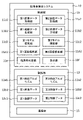
- FIG. 2 is a block diagram showing the configuration of a fallen person detection system according to one embodiment.
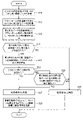
- FIG. 3 is a flow chart showing a first example of a fallen person detection method by the fallen person detection system according to one embodiment.
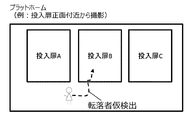
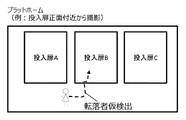
- FIG. 4A is a diagram showing an example of analysis results of second image data obtained by imaging the inside of the platform.
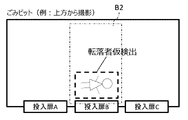
- FIG. 4B is a diagram illustrating an example of an analysis result of the first image data obtained by imaging the inside of the dust pit.
- FIG. 5 is a flow chart showing a second example of a fallen person detection method by the fallen person detection system according to one embodiment.
- FIG. 6A is a diagram showing an example of an analysis result of the first image data obtained by imaging the inside of the dust pit.
- FIG. 6B is a diagram showing an example of analysis results of second image data obtained by imaging the inside of the platform.
- a fallen person detection system includes: a first image data acquisition unit that acquires first image data from a first camera that captures an image of the inside of a storage facility in which objects to be processed are stored; a second image data acquisition unit that acquires second image data from a second camera that captures an image of the inside of the platform adjacent to the storage facility; a first image analysis unit that analyzes the first image data to detect a person in the storage facility; a second image analysis unit that analyzes the second image data to detect a person in the platform and tracks the flow line of the detected person; a fallen person determination unit that determines the presence or absence of a fallen person who falls from the platform to the storage facility based on the combination of the analysis result of the first image data and the analysis result of the second image data; Prepare.
- the falling from the platform to the storage facility can automatically detect a person.
- the detection accuracy of the machine learning model varies, and it is impossible to detect a fallen person with 100% accuracy.
- the system can be operated simply by installing a first camera that captures images of the inside of the storage facility and a second camera that captures images of the inside of the platform. In doing so, it is possible to improve the safety of existing facilities at low cost, without the need for major modifications to existing facilities.
- a fallen person detection system is the fallen person detection system according to the first aspect,
- the fallen person determination unit confirms the analysis result of the second image data, and when it is detected that a person has entered a predetermined area near the loading door that separates the storage facility and the platform at the first time. , the analysis result of the first image data at the first time is confirmed, and if a person is detected in the storage facility, it is determined that there is a fallen person.
- the analysis result of the second image data obtained by imaging the inside of the platform is confirmed, and the entry of a person into the predetermined area near the input door is detected (that is, when the second image data If a fallen person is tentatively detected in the analysis results), check the analysis results of the first image data, and if a person is detected in the storage facility (i.e., even in the analysis results of the first image data) When it is detected), it is possible to accurately detect the fallen person by making a final determination that there is a fallen person.
- a fallen person detection system is the fallen person detection system according to the second aspect,
- the fallen person determination unit stores first image data at the first time corresponding to the position of the input door when it is detected that a person has entered a predetermined area near the input door at the first time. Check the analysis results of the image captured in the area inside the facility.
- the analysis result of the second image data obtained by imaging the inside of the platform is confirmed, and the predetermined area near the loading door is confirmed.
- a fallen person detection system is a fallen person detection system according to the second or third aspect,
- the fallen person determination unit determines the first image data at the first time and from the first time A difference from the first image data at a second time after a predetermined time has elapsed is extracted, and if the extracted difference exceeds a predetermined threshold, it is determined that there is a fallen person, and if there is no difference , it is judged that there is no fallen person.
- the analysis result of the first image data obtained by imaging the inside of the storage facility shows that (the upper part of the fallen person (because the material to be processed is covered), the person was not detected in the storage facility.
- the image data is compared with the first image data at a second time after the lapse of a predetermined time from the first time, and the difference between them is extracted. Then, when the difference between the first image data at the first time and the first image data at the second time exceeds a predetermined threshold value, it is assumed that the pile of processed materials has collapsed in the storage facility.
- a fallen person detection system is the fallen person detection system according to the first aspect,
- the fallen person determination unit confirms the analysis result of the first image data, and if a person is detected in the storage facility at the first time, the second image up to a predetermined time before the first time.
- a data analysis result is confirmed, and if a person is out of the frame in a predetermined area near the loading door separating the storage facility and the platform, it is determined that there is a fallen person.
- the analysis result of the first image data obtained by imaging the inside of the storage facility is confirmed, and if a person is detected in the storage facility (that is, the fall person is tentatively detected in the analysis result of the first image data If the second image data analysis result is confirmed, and the person is out of the frame near the loading door (that is, if the fall person is tentatively detected even in the second image data analysis result) ), it is possible to accurately detect a fallen person by making a final determination that there is a fallen person.
- a fallen person detection system is the fallen person detection system according to the fifth aspect, When a person is detected in the storage facility at the first time, the fallen person determination unit determines whether the person is detected in the storage facility in the second image data up to a predetermined time before the first time. Check the analysis result of the image of the loading door at the position corresponding to the region where the
- the analysis result of the first image data obtained by imaging the inside of the storage facility is confirmed, and a person is detected in the storage facility.
- the possibility that a fallen person has occurred By checking the analysis result of the image of the loading door located at a high position, it is possible to detect a fallen person more accurately and in a short time.
- a fallen person detection system is the fallen person detection system according to the fifth or sixth aspect,
- the fallen person determination unit detects that the person is out of the frame outside the predetermined area near the entrance door when the analysis result of the second image data up to a predetermined time before the first time is confirmed. If so, it is determined that no one has fallen.
- the frame is extracted from the video for a reason unrelated to the person falling into the storage facility (for example, when the person is temporarily hidden behind the transport vehicle). It is possible to prevent erroneous determination that there is a fallen person when the person is out, and to increase the accuracy of fallen person detection.
- a fallen person detection system is a fallen person detection system according to any one of the fifth to seventh aspects,
- the fallen person determination unit detects that a person has entered a predetermined area near the loading door when confirming the analysis result of the second image data up to a predetermined time before the first time. If not, it is determined that there is no fallen person.
- the analysis result of the second image data that captures the inside of the platform is confirmed, if the person's entry into the vicinity of the loading door is not detected.
- a fallen person detection system is the fallen person detection system according to any one of the first to eighth aspects, When it is determined that there is a fallen person by the fallen person determination unit, (1) issue an alarm; (2) sending a control signal to the crane control device to stop the crane that agitates or transports the material to be processed stored in the storage facility; (3) sending a control signal to the input door controller to close the input door that partitions between the storage facility and the platform; (4) sending a control signal to the crane controller to operate the crane to rescue the fallen person; (5) Sending a control signal to the rescue equipment control device to operate the rescue equipment provided in the storage facility to rescue the fallen person; It further comprises an instruction unit that performs at least one of the following processes.
- a fallen person detection system is the fallen person detection system according to any one of the first to ninth aspects,
- the first image analysis unit generates first teacher data by giving an artificial label as information to an area in which a person or a dummy imitating a person exists in the past image data in the storage facility.
- first detection algorithm constructed by machine learning new image data in the storage facility is used as an input to detect a person in the storage facility.
- a fallen person detection system is a fallen person detection system according to any one of the first to tenth aspects,
- the second image analysis unit generates second teacher data by adding an artificial label as information to an area in which a person or a dummy imitating a person exists in the past image data in the platform.
- a second detection algorithm constructed by machine learning is used to detect a person in the platform with input of new image data in the platform.
- a fallen person detection system is a fallen person detection system according to the eleventh aspect,
- an artificial label is given as information to the past image data in the platform in the area where a person or a dummy imitating a person exists, and the area where the loading vehicle exists. It is generated by adding an artificial separate label as information.
- a person for example, a worker
- an artificial label is given as information to the area where a person or a dummy imitating a person exists, and another artificial label is given to the area where the delivery vehicle exists.
- a fallen person detection system is the fallen person detection system according to the tenth aspect,
- the first detection algorithm is one of Maximum Likelihood Classification, Boltzmann Machine, Neural Network, Support Vector Machine, Bayesian Network, Sparse Regression, Decision Tree, Statistical Inference Using Random Forest, Reinforcement Learning, Deep Learning. including one or more.
- a fallen person detection system is the fallen person detection system according to the eleventh or twelfth aspect
- the second detection algorithm is one of Maximum Likelihood Classification, Boltzmann Machine, Neural Network, Support Vector Machine, Bayesian Network, Sparse Regression, Decision Tree, Statistical Inference Using Random Forest, Reinforcement Learning, Deep Learning. including one or more.
- a fallen person detection system is the fallen person detection system according to any one of the first to fourteenth aspects, Algorithms used by the second image analysis unit to track the movement line of a person include one or more of optical flow, background subtraction, Kalman filter, particle filter, and deep learning.
- a fallen person detection system is the fallen person detection system according to any one of the first to fifteenth aspects,
- the first camera includes one or more of an RGB camera, a near-infrared camera, a 3D camera, or an RGB-D camera.
- a fallen person detection system is the fallen person detection system according to any one of the first to sixteenth aspects,
- the second camera includes one or more of an RGB camera, a near-infrared camera, a 3D camera, or an RGB-D camera.
- a waste disposal facility includes a fallen person detection system according to any one of the first to seventeenth aspects.
- a fallen person detection method includes: a step of acquiring first image data from a first camera that captures an image of the inside of a storage facility in which objects to be processed are stored; obtaining second image data from a second camera imaging within the platform adjacent to the storage facility; a step of image-analyzing the first image data to detect a person in the storage facility; a step of image-analyzing the second image data to detect a person in the platform and tracking the flow line of the detected person; a step of determining whether or not there is a person falling from the platform to the storage facility based on a combination of the analysis result of the first image data and the analysis result of the second image data; including.
- a computer-readable recording medium non-temporarily records the following fallen victim detection program: to the computer, a step of acquiring first image data from a first camera that captures an image of the inside of a storage facility in which objects to be processed are stored; obtaining second image data from a second camera imaging within the platform adjacent to the storage facility; a step of image-analyzing the first image data to detect a person in the storage facility; a step of image-analyzing the second image data to detect a person in the platform and tracking the flow line of the detected person; a step of determining the presence or absence of a person falling from the platform to the storage facility based on a combination of the analysis result of the first image data and the analysis result of the second image data; to run.
- FIG. 1 is a schematic diagram showing the configuration of a waste disposal facility 100 according to one embodiment.
- the waste treatment facility 100 includes a platform 21 on which transport vehicles (packer vehicles, light trucks, etc.) 22 for loading wastes stop, and a waste station on which the wastes thrown from the platform 21 are stored.
- a pit (storage facility) 3 a crane 5 for agitating and transporting the waste stored in the waste pit 3, a hopper 4 into which the waste transported by the crane 5 is put, and waste thrown from the hopper 4.
- An incinerator 1 for incinerating materials and an exhaust heat boiler 2 for recovering exhaust heat from exhaust gas generated in the incinerator 1 are provided.
- the type of incinerator 1 is not limited to a stoker furnace as shown in FIG. 1, but also includes a fluidized bed furnace (also called fluidized bed furnace).
- the structure of the dust pit 3 is not limited to the one-stage pit shown in FIG. 1, but includes a two-stage pit in which the dust pit is divided into an input section and a storage section.
- the garbage pit 3 and the platform 21 are partitioned by a loading door 24.
- the waste disposal facility 100 is also provided with a loading door control device 20 that controls the operation of the loading door 24 and a crane control device 30 that controls the operation of the crane 5 .
- the waste that is loaded on the transport vehicle 22 is thrown into the garbage pit 3 from the platform 21 through the throw-in door 24 and stored in the garbage pit 3 .
- the waste stored in the waste pit 3 is agitated by the crane 5, transported to the hopper 4 by the crane 5, thrown into the incinerator 1 via the hopper 4, and placed inside the incinerator 1. incinerated and processed.
- the waste disposal facility 100 is provided with a first camera 6 for imaging the inside of the waste pit 3 and a waste identification system 40 for identifying the type of waste within the waste pit 3. .
- the first camera 6 is arranged above the garbage pit 3 and fixed to the rail of the crane 5 in the illustrated example so that the waste stored in the garbage pit 3 can be imaged from above the garbage pit 3. It has become. Only one first camera 6 may be installed, or a plurality of first cameras 6 may be installed.
- the first camera 6 may be an RGB camera that outputs shape and color image data of the waste as an imaging result, or a near-infrared camera that outputs near-infrared image data of the waste as an imaging result. However, it may be a 3D camera or an RGB-D camera that captures three-dimensional image data of the waste as an imaging result, or a combination of two or more of these.
- the dust identification system 40 acquires image data (also referred to as first image data) from the first camera 6 that captures an image of the inside of the dust pit 3 , analyzes the first image data, and collects the data stored in the dust pit 3 . Identify the types of waste that are For example, the garbage identification system 40 uses an identification algorithm (learned model) constructed by machine-learning teacher data in which past image data of the inside of the garbage pit 3 is labeled with the type of waste. The type of waste stored in the garbage pit 3 may be identified by using new image data in the garbage pit 3 as an input.
- image data also referred to as first image data
- the garbage identification system 40 uses an identification algorithm (learned model) constructed by machine-learning teacher data in which past image data of the inside of the garbage pit 3 is labeled with the type of waste.
- the type of waste stored in the garbage pit 3 may be identified by using new image data in the garbage pit 3 as an input.
- the garbage identification system 40 generates a map displaying the ratio of the types of waste in each area as the identification result of the types of waste stored in the garbage pit 3 and transmits it to the crane control device 30 .
- the crane controller 30 operates the crane 5 to agitate the waste in the waste pit 3 based on the map received from the waste identification system 40 so that the ratio of waste types is equal in all areas. . This enables automatic operation of the crane 5 .
- garbage identification system 40 for example, an information processing device described in Japanese Patent No. 6731680 can be used.
- the waste disposal facility 100 further includes a second camera 23 that captures an image of the inside of the platform 21, and a fallen person detection system 10 that detects a fallen person who falls from the platform 21 into the garbage pit 3. is provided.
- the second camera 23 is arranged above the platform 21 and is fixed to the wall of the platform 21 located near the front of the loading door 24 in the illustrated example, and images the inside of the platform 21 from near the front of the loading door 24. It is possible. Only one second camera 23 may be installed, or a plurality of second cameras may be installed.
- the second camera 23 may be an RGB camera that outputs shape and color image data of an object (a person such as a worker or the transport vehicle 22) as an imaging result, or a near-infrared image of the object as an imaging result. It may be a near-infrared camera that outputs data, a 3D camera or an RGB-D camera that captures three-dimensional image data of an object as an imaging result, or a combination of two or more of these may be
- FIG. 2 is a block diagram showing the configuration of the fallen person detection system 10.
- the fallen person detection system 10 may be configured by one computer, or may be configured by a plurality of computers communicably connected to each other.
- the fallen person detection system 10 has a control unit 11, a storage unit 12, and a communication unit 13. Each part is connected so as to be able to communicate with each other via a bus or a network.
- the communication unit 13 is a communication interface for the first camera 6, the second camera 23, the crane control device 30, and the closing door control device 20.
- the communication unit 13 transmits and receives information between each of the first camera 6 , the second camera 23 , the crane control device 30 and the entry door control device 20 and the fallen person detection system 10 .
- the storage unit 12 is non-volatile data storage such as a hard disk or flash memory. Various data handled by the control unit 11 are stored in the storage unit 12 .
- the storage unit 12 also stores a first detection algorithm 12a1 constructed by a first model construction unit 11c1, a second detection algorithm 12a2 constructed by a second model construction unit 11c2, and a first image data acquisition unit. First image data 12b1 acquired by 11a1, second image data 12b2 acquired by second image data acquisition unit 11a2, first teacher data 12c1 generated by first teacher data generation unit 11b1, and second The second teacher data 12c2 generated by the teacher data generator 11b2 is stored.
- the control unit 11 is control means for performing various processes of the fallen person detection system 10 .
- the control unit 11 includes a first image data acquisition unit 11a1, a second image data acquisition unit 11a2, a first teacher data generation unit 11b1, a second teacher data generation unit 11b2, a first It has a model construction section 11c1, a second model construction section 11c2, a first image analysis section 11d1, a first image analysis section 11d2, a fallen person determination section 11e, and an instruction section 11f.
- Each of these units may be realized by the processor in the fallen person detection system 10 executing a predetermined program, or may be implemented by hardware.
- the first image data acquisition unit 11a1 acquires the first image data from the first camera 6 that captures the inside of the dust pit 3.
- the first image data may be a moving image or a series of still images.
- the frame rate of the first image data may be a general frame rate (about 30 fps), and does not have to be a particularly high frame rate. good.
- the metadata of the first image data includes information on the shooting date and time.
- the first image data 12b1 acquired by the first image data acquiring section 11a1 is stored in the storage section 12.
- the second image data acquisition unit 11 a 2 acquires second image data from the second camera 23 that captures the inside of the platform 21 .
- the second image data may be a moving image or a series of still images.
- the frame rate of the second image data may be a general frame rate (about 30 fps), and does not have to be a particularly high frame rate. good.
- the metadata of the second image data includes information on the shooting date and time.
- the second image data 12b2 acquired by the second image data acquiring section 11a2 is stored in the storage section 12.
- the first training data generation unit 11b1 identifies a person (that is, a fallen person) or a person visually identified by a skilled operator who operates the waste incineration facility 100 in the past image data of the inside of the garbage pit 3.
- a person that is, a fallen person
- a person visually identified by a skilled operator who operates the waste incineration facility 100 in the past image data of the inside of the garbage pit 3.
- the first teacher data is obtained. to generate
- the first training data generation unit 11b1 generates the first training data for the image data of the inside of the garbage pit 3 after a dummy doll imitating a person is intentionally dropped into the garbage pit 3.
- the first teacher data may be generated for image data (composite image data) obtained by synthesizing an image of a person with past image data of the inside of the dust pit 3 .
- the first training data generation unit 11b1 identifies a person (that is, a fallen person) or a person visually identified by a skilled operator who operates the waste incineration facility 100 in the past image data of the inside of the garbage pit 3.
- the information of the area where the simulated dummy exists and the information of the area where the transportation vehicle 22 exists that is, the area where the person or the dummy imitating the person exists and the transportation vehicle exist) are labeled.
- the first teacher data may be generated by giving an artificial label as information to the area where the error occurs.
- the storage unit 12 stores the first teacher data 12c1 generated by the first teacher data generator 11b1.
- the second training data generation unit 11b2 determines whether a person or a dummy modeled on a person visually identified by a skilled operator who operates the waste incineration facility 100 exists in the past image data of the inside of the platform 21.
- the second teacher data is generated by labeling the information of the area where the person or the person-like dummy exists (that is, giving an artificial label as information to the area where the person or the dummy imitating the person exists).
- the second training data generation unit 11b2 generates the second training data for the image data of the inside of the platform 21 after a dummy doll imitating a person is intentionally installed in the platform 21.
- the second teacher data may be generated for image data (composite image data) obtained by synthesizing an image of a person with past image data of the inside of the platform 21 .
- the second training data generation unit 11b2 creates a human or a human-like dummy that is visually identified by the skilled operator who operates the waste incineration facility 100 in the past image data of the inside of the garbage pit 3.
- Information about the area where the transport vehicle 22 exists and information about the area where the transport vehicle 22 exists (that is, an area where a person or a dummy imitating a person exists and the transport vehicle exists) are labeled.
- the second teacher data may be generated by adding an artificial label to the region as information).
- a person e.g., a worker frequently works in the vicinity of the carrying-in vehicle 22 within the platform 21, and there is a relationship between the position of the person and the position of the carrying-in vehicle 22.
- the model construction 11c2 gives an artificial label as information to the image data of the inside of the platform 21 in which a person or a dummy imitating a person exists, and the area in which the delivery vehicle 22 exists.
- the second detection algorithm 12a2 is constructed by machine-learning teacher data in which another artificial label is given as information to the second detection algorithm 12a2. In addition to what can be done, the fall of the transport vehicle 22 can also be detected.
- the information on the area where the person or the dummy imitating the person exists and the information on the area where the transportation vehicle 22 exists are labeled, for example, in a state superimposed on the image data as layers. given as).
- the second teacher data 12c2 generated by the second teacher data generator 11b2 is stored in the memory 12.
- the first model construction unit 11c1 performs machine learning on the first teacher data 12c1 stored in the storage unit 12, and uses new image data in the garbage pit 3 as an input to determine the person (that is, the fallen person) in the garbage pit 3.
- a first detection algorithm 12a1 (learned model) for detecting is constructed.
- the first detection algorithm 12a1 is one of maximum likelihood classification, Boltzmann machine, neural network, support vector machine, Bayesian network, sparse regression, decision tree, statistical estimation using random forest, reinforcement learning, and deep learning. It may contain one or more.
- the first detection algorithm 12a1 constructed by the first model construction unit 11c1 is stored in the storage unit 12.
- the second model construction unit 11c2 performs machine learning on the second teacher data 12c2 stored in the storage unit 12, thereby obtaining a second detection algorithm for detecting a person on the platform 21 with input of new image data on the platform 21.
- 12a2 (trained model) is constructed.
- the second detection algorithm 12a2 is one of maximum likelihood classification, Boltzmann machine, neural network, support vector machine, Bayesian network, sparse regression, decision tree, statistical estimation using random forest, reinforcement learning, and deep learning. It may contain one or more.
- the second detection algorithm 12 a 2 built by the second model building section 11 c 2 is stored in the storage section 12 .
- the first image analysis unit 11d1 detects a person in the dust pit 3 by image-analyzing the first image data acquired by the first image data acquisition unit 11a1. Specifically, for example, the first image analysis unit 11d uses the first detection algorithm 12a1 (learned model) constructed by the first model construction unit 11c1 to input new image data in the dust pit 3. , a person in the garbage pit 3 is detected. As a modified example, the first image analysis unit 11d1 may detect the person and the transport vehicle 22 in the garbage pit 3 by image-analyzing the first image data acquired by the first image data acquisition unit 11a1. Specifically, for example, the first image analysis unit 11d uses the first detection algorithm 12a1 (learned model) constructed by the first model construction unit 11c1 to input new image data in the dust pit 3. , the person in the garbage pit 3 and the transportation vehicle 22 may be detected.
- the first detection algorithm 12a1 (learned model) constructed by the first model construction unit 11c1
- the first image analysis unit 11d1 divides the surface of the dust pit 3 into a plurality of blocks, inputs new image data in the dust pit 3 into the first detection algorithm 12a1 (learned model) in units of blocks, and , the detection result of the person (or the person and the transportation vehicle 22) may be obtained. As a result, it becomes possible to accurately grasp where in the garbage pit 3 the fallen person (or the fallen person and the fall of the transportation vehicle 22) occurred.
- the second image analysis unit 11d2 performs image analysis on the second image data acquired by the second image data acquisition unit 11a2, detects a person in the platform 21, and tracks the flow line of the detected person. Specifically, for example, the second image analysis unit 11d uses the second detection algorithm 12a2 (learned model) constructed by the second model construction unit 11c2 to input new image data in the platform 21. , to detect a person in the platform 21 . Next, the second image analysis unit 11 d tracks the detected person and detects the person's entry into a predetermined area near the input door 24 . As a modified example, the second image analysis unit 11d2 performs image analysis on the second image data acquired by the second image data acquisition unit 11a2 to detect the person and the transport vehicle 22 in the platform 21, respectively.
- the lines of flow of people and transport vehicles 22 are respectively tracked.
- the second image analysis unit 11d uses the second detection algorithm 12a2 (learned model) constructed by the second model construction unit 11c2 to input new image data in the platform 21. , the person in the platform 21 and the transport vehicle 22 respectively.
- the second image analysis unit 11d tracks the detected person and transport vehicle 22, respectively, and detects entry of the person and transport vehicle 22 into a predetermined area near the loading door 24.
- FIG. Algorithms used for tracking may include one or more of optical flow, background subtraction, Kalman filtering, particle filtering, and deep learning.
- the second image analysis unit 11d2 performs image analysis on the second image data acquired by the second image data acquisition unit 11a2, detects a person in the platform 21, and determines the flow line of the detected person.
- the wearing status of safety equipment (safety belt or helmet) of the detected person is detected by image processing, and it is determined whether or not there is a person working near the loading door 24 without wearing safety equipment. You may Then, when it is determined that there is a person working near the loading door 24 without wearing safety equipment, the instruction unit 11f, which will be described later, may issue an alarm.
- a control signal may be sent to the input door controller 20 to prevent the door 24 from opening (if it is closed) or to close it (if it is open).
- the fallen person determination unit 11e moves the person from the platform 21 to the garbage pit 3. It is determined whether or not there is a person who falls.
- the detection accuracy of the machine learning model varies, and it is impossible to detect a fallen person with 100% accuracy.
- the analysis result of the first image data obtained by imaging the inside of the garbage pit 3 and the analysis result of the second image data obtained by imaging the inside of the platform 21 it is possible to increase the accuracy of detecting a fallen person. can.
- the fallen person determination unit 11e confirms the analysis result of the second image data, and as shown in FIG. is detected (i.e., when the fallen person is tentatively detected in the analysis result of the second image data), the analysis result of the first image data at the first time is confirmed, and as shown in FIG. 4B, the garbage pit 3 (that is, when a fallen person is tentatively detected in the analysis result of the first image data), it may be finally determined that there is a fallen person. This makes it possible to accurately detect a fallen person.
- the fallen person determination unit 11e detects that a person has entered a predetermined area near the input door 25 (the input door B in the illustrated example) at the first time.
- an area in the garbage pit 3 corresponding to the position of the input door (that is, the input door B) in the first image data at the first time in FIG. You may confirm the analysis result of the image which imaged the enclosed area
- the analysis result of the second image data obtained by imaging the inside of the platform 21 is confirmed, and the predetermined area near the input door B is checked.
- the fallen person determination unit 11e confirms the analysis result of the first image data at the first time, if no person is detected in the garbage pit 3, the first image data at the first time, comparing the first image data at a second time after elapse of a predetermined time (for example, 5 minutes) from the first time to extract the difference between the first image data at the first time and the second time; If the difference from the first image data in , exceeds a predetermined threshold value, it may be determined that there is a fallen person, and if there is no difference, it may be determined that there is no fallen person. The reason for this is as follows.
- the analysis result of the first image data indicates that the inside of the garbage pit 3 (because the upper part of the fallen person is covered with waste)
- the first image data at the first time and the first image data at the second time and extract the difference between them.
- the difference between the first image data at the first time and the first image data at the second time exceeds a predetermined threshold, it is considered that the pile of waste has collapsed in the waste pit 3.
- the fallen person cannot be seen because the waste from the collapsed mountain covers the top of the fallen person, so it is determined that there is a fallen person. This makes it possible to automatically detect the fallen person even when the upper part of the fallen person is covered with waste in the garbage pit 3 .
- the fallen person determination unit 11e first checks the analysis result of the first image data, and as shown in FIG. 6A, when a person is detected in the garbage pit 3 at the first time
- the analysis result of the second image data up to a predetermined time (for example, 5 minutes before) is confirmed with respect to the first time, and FIG.
- a predetermined time for example, 5 minutes before
- FIG. As shown in , when a person is out of the frame in a predetermined area near the loading door 24 (that is, when a fallen person is tentatively detected even in the analysis result of the second image data), A final judgment may be made that there is a person who has fallen. This makes it possible to accurately detect a fallen person.
- the fallen person determination unit 11e detects the person before the first time by a predetermined time as shown in FIG. 6B.
- the input door In the illustrated example, the analysis result of the image taken of the input door B) may be confirmed.
- the analysis result of the first image data obtained by imaging the inside of the garbage pit 3 is checked, and if a person is detected inside the garbage pit 3.
- the analysis result of the entire second image data captured inside the platform 21 it is possible to check the analysis result of the image of the loading door B at the position where the fall is likely to occur. A fallen person can be detected accurately and in a short time.
- the fallen person determination unit 11e confirms the analysis result of the second image data up to a predetermined time (for example, 5 minutes) before the first time. If a person is out of the frame of the image outside the region where the image is drawn, it may be determined that there is no fallen person. As a result, in the second image data obtained by imaging the inside of the platform 21, the person is out of the frame for a reason unrelated to the fall into the garbage pit 3 (for example, when the person is temporarily hidden behind the transport vehicle 22). It is possible to prevent an erroneous determination that there is a fallen person, and increase the accuracy of fallen person detection.
- a predetermined time for example, 5 minutes
- the fallen person determination unit 11e confirms the analysis result of the second image data up to a predetermined time (for example, 5 minutes) before the first time. It may be determined that there is no fallen person when entry of a person into the region is not detected.
- a predetermined time for example, 5 minutes
- the first image data obtained by imaging the inside of the garbage pit 3 for example, when a waste object having a size similar to that of a person is erroneously detected as a person (that is, in the analysis result of the first image data, the Even if the person is tentatively detected), if the person's entry into the vicinity of the loading door 24 is not detected when confirming the analysis result of the second image data that captures the inside of the platform 21, the fall
- the fall By determining that there is no person, it is possible to prevent erroneous determination that there is a person who has fallen, and it is possible to increase the accuracy of detecting a person who has fallen.
- the instruction unit 11f confirms the determination result of the fallen person determination unit 11e, and when the fallen person determination unit 11e determines that there is a fallen person, (1) issue an alarm; (2) sending a control signal to the crane control device 30 to stop the crane 5 that agitates or transports the waste stored in the waste pit 3; (3) sending a control signal to the input door control device 20 to close the input door 24 that partitions between the garbage pit 3 and the platform 21; (4) Sending a control signal to the crane control device 30 to operate the crane 5 to rescue the fallen person; (5) Sending a control signal to a rescue equipment control device (not shown) to operate the rescue equipment (not shown) provided in the garbage pit 3 to rescue the fallen person; at least one of As a result, even if a fallen person occurs during automatic operation of the crane 5 (that is, when the crane operator is absent), it is possible to quickly rescue the fallen person, and the safety of the facility can be improved. .
- FIG. 3 is a flow chart showing a first example of a fallen person detection method.
- the first image data acquisition unit 11a1 acquires the first image data from the first camera 6 that captures the inside of the dust pit 3 (step S10).
- the acquired first image data 12 b 1 is stored in the storage unit 12 .
- the second image data acquisition unit 11a2 acquires second image data from the second camera 23 that captures the inside of the platform 21 (step S11).
- the acquired first image data 12 b 2 is stored in the storage unit 12 . Note that either step S10 or step S11 may be performed first, or may be performed at the same time.
- the second image analysis unit 11d2 performs image analysis on the second image data acquired by the second image data acquisition unit 11a2, detects a person in the platform 21, and tracks the flow line of the detected person. (Step S12).
- the fallen person determination unit 11e confirms the analysis result of the second image data by the second image analysis unit 11d2 (step S13).
- step S13 If the entry of a person into the predetermined area near the input door 24 is not detected at the first time (that is, if the fall person is not tentatively detected in the analysis result of the second image data) (step S13: NO), the fallen person determination unit 11e determines that there is no fallen person (step S19).
- step S13 when the entry of a person into a predetermined area near the loading door 24 is detected at the first time (i.e., a fallen person is tentatively detected in the analysis result of the second image data). If so) (step S13: YES), the first image analysis unit 11d1 performs image analysis on the first image data at the first time acquired by the first image data acquisition unit 11a1 to identify the person in the garbage pit 3. is detected (step S14).
- the fallen person determination unit 11e confirms the analysis result of the first image data at the first time by the first image analysis unit 11d1 (step S15).
- the fallen person determination unit 11e detects that a person has entered a predetermined area near the loading door 25 (the loading door B in the illustrated example) at the first time.
- the area in the garbage pit 3 corresponding to the position of the input door (that is, the input door B) (labeled B1 in FIG. 4B) You may confirm the analysis result of the image which imaged the area
- step 15 when a person is detected in the garbage pit 3 (that is, when a fallen person is provisionally detected also in the analysis result of the first image data) (step 15: YES), a fallen person is determined.
- the unit 11e determines that there is a fallen person (step S17).
- the fallen person determination unit 11e extracting a difference between first image data at a first time and first image data at a second time after a predetermined time (for example, 5 minutes) from the first time; is compared with the threshold value (step S16).
- step S16 When the difference between the first image data at the first time and the first image data at the second time exceeds a predetermined threshold (step S16: YES), the pile of waste collapses in the waste pit 3. etc., and there is a possibility that the fallen person cannot be seen because the waste from the collapsed mountain covers the top of the fallen person, so the fallen person determination unit 11e determines that there is a fallen person (step S17).
- step S16 if the difference between the first image data at the first time and the first image data at the second time does not exceed the predetermined threshold (step S16: NO), the fallen person determination unit 11e It is determined that there is no person (step S19).
- step S17 when the fallen person determination unit 11e determines that there is a fallen person (after step S17), the instruction unit 11f issues an alarm to inform other workers, and the crane 5 (step S18).
- step S18 the instructing unit 11f throws in so as to close the throw-in door 24 separating the garbage pit 3 and the platform 21 in order to prevent the waste from throwing onto the fallen person and making rescue difficult.
- a control signal may be transmitted to the door control device 20 .
- the instruction unit 11f transmits a control signal to the crane control device 30 to operate the crane 5 to rescue the fallen person. good too.
- the instruction unit 11f may transmit a control signal to a rescue equipment control device (not shown) to operate the rescue equipment (not shown) provided in the garbage pit 3 to rescue the fallen person. .
- FIG. 5 is a flow chart showing a second example of the fallen person detection method.
- the first image data acquisition unit 11a1 acquires the first image data from the first camera 6 that captures the inside of the dust pit 3 (step S20).
- the acquired first image data 12 b 1 is stored in the storage unit 12 .
- the second image data acquisition unit 11a2 acquires second image data from the second camera 23 that captures the inside of the platform 21 (step S21).
- the acquired first image data 12 b 2 is stored in the storage unit 12 . Note that either step S20 or step S21 may be performed first, or may be performed at the same time.
- the first image analysis unit 11d1 performs image analysis on the first image data acquired by the first image data acquisition unit 11a1 to detect a person in the dust pit 3 (step S22).
- the fallen person determination unit 11e confirms the analysis result of the first image data by the first image analysis unit 11d1 (step S23).
- step S23 When a person is not detected in the garbage pit 3 at the first time (that is, when a fallen person is not tentatively detected in the analysis result of the first image data) (step S23: NO), the fallen person determination unit 11e determines that there is no fallen person (step S29).
- the second image analysis unit 11d2 analyzes the second image data acquired by the second image data acquisition unit 11a2 up to a predetermined time (for example, five minutes) before the first time.
- a predetermined time for example, five minutes
- the fallen person determination unit 11e confirms whether or not the entry of a person into a predetermined area near the loading door 24 is detected in the analysis result of the second image data by the second image analysis unit 11d2. (step S25).
- the fallen person determination unit 11e determines a predetermined value for the first time as shown in FIG. 6B. of the second image data up to the specified time (for example, five minutes ago) corresponding to the area where a person was detected in the dust pit 3 (the area surrounded by the dashed-dotted line labeled B2 in FIG. 6A). You may confirm the analysis result of the image which imaged the loading door (the loading door B in the illustrated example).
- step S25: NO If the entry of a person into the predetermined area near the loading door 24 is not detected (that is, if the falling person is not tentatively detected in the analysis result of the second image data) (step S25: NO ), the fallen person determination unit 11e determines that there is no fallen person (step S29).
- step S25 when the analysis result of the second image data detects that a person has entered a predetermined area near the loading door 24 (step S25: YES), the fallen person The determination unit 11e confirms whether or not the person is out of the video within a predetermined area near the input door 24 in the analysis result of the second image data (step S26).
- step S26 When the person is out of the frame in the predetermined area near the loading door 24 (that is, when the fallen person is also tentatively detected in the analysis result of the second image data) (step S26: YES ), the fallen person determination unit 11e determines that there is a fallen person (step S27).
- step S26: NO if the person is not out of the frame in the predetermined area near the input door 24 (step S26: NO), the fallen person determination unit 11e determines that there is no fallen person (step S26: NO). S29).
- step S27 when the fallen person determination unit 11e determines that there is a fallen person (after step S27), the instruction unit 11f issues an alarm to inform other workers, and the crane 5 (step S28).
- step S28 the instructing unit 11f throws in so as to close the throw-in door 24 that separates the garbage pit 3 and the platform 21 in order to prevent the waste from throwing onto the fallen person and making rescue difficult.
- a control signal may be transmitted to the door control device 20 .
- the instruction unit 11f transmits a control signal to the crane control device 30 to operate the crane 5 to rescue the fallen person. good too.
- the instruction unit 11f may transmit a control signal to a rescue equipment control device (not shown) to operate the rescue equipment (not shown) provided in the garbage pit 3 to rescue the fallen person. .
- the platform 21, which is the side that caused the fall, and the garbage pit 3, which is the side that caused the fall, are separated by the garbage input door 24. Therefore, the fallen person detection system used in the railway industry is used. As described above, it is difficult to install an imaging device such as a camera in a place where the fall cause side and the fall result side can be photographed at the same time.
- the first camera 6 that takes an image of the inside of the garbage pit 3 that is the fall result side
- the second image data is acquired from the second camera 23 that captures the inside of the platform 21, which is the side of the fall, and the analysis result of the first image data that captures the inside of the garbage pit 3 and the platform
- the detection accuracy of the machine learning model varies, and it is impossible to detect a fallen person with 100% accuracy.
- the accuracy of detecting a fallen person is increased. be able to.
- the present system can be operated simply by additionally installing the first camera 6 for imaging the inside of the garbage pit 3 and the second camera 23 for imaging the inside of the platform 21. Since it is possible to operate this system, there is no need to make major modifications to existing facilities when introducing this system, and it is possible to improve the safety of existing facilities at low cost.
- the waste disposal facility 100 provided with the fallen person detection system 10 is a facility provided with the garbage identification system 40, and based on the identification result of the garbage identification system 40, the crane 5 automatic operation is performed, but it is not limited to this. It may be a facility.
- the fallen person detection system 10 is based on a combination of the analysis result of the first image data that captures the inside of the garbage pit 3 and the analysis result of the second image data that captures the inside of the platform 21.
- the person who has fallen can be determined based only on the analysis result of the first image data.
- the presence or absence of a fallen person can be determined based only on the analysis results of the second image data. good.
- the fallen person detection system 10 can be configured by one or more computers, but a program for realizing the fallen person detection system 10 in one or more computers and the program can be executed in a non-temporary manner.
- a recording medium in which a document is recorded in a systematic manner is also subject to protection in this case.
Landscapes
- Engineering & Computer Science (AREA)
- Mechanical Engineering (AREA)
- General Engineering & Computer Science (AREA)
- Multimedia (AREA)
- General Physics & Mathematics (AREA)
- Health & Medical Sciences (AREA)
- Physics & Mathematics (AREA)
- Emergency Management (AREA)
- General Health & Medical Sciences (AREA)
- Chemical & Material Sciences (AREA)
- Combustion & Propulsion (AREA)
- Business, Economics & Management (AREA)
- Gerontology & Geriatric Medicine (AREA)
- Social Psychology (AREA)
- Psychology (AREA)
- Psychiatry (AREA)
- Theoretical Computer Science (AREA)
- Signal Processing (AREA)
- Image Analysis (AREA)
- Closed-Circuit Television Systems (AREA)
- Alarm Systems (AREA)
- Incineration Of Waste (AREA)
- Emergency Alarm Devices (AREA)
- Train Traffic Observation, Control, And Security (AREA)
Priority Applications (2)
| Application Number | Priority Date | Filing Date | Title |
|---|---|---|---|
| EP21930339.3A EP4306852A4 (en) | 2021-03-12 | 2021-12-15 | SYSTEM FOR DETECTING FALLEN PERSONS, METHOD FOR DETECTING FALLEN PERSONS AND PROGRAM FOR DETECTING FALLEN PERSONS |
| CN202180094662.8A CN116868244B (zh) | 2021-03-12 | 2021-12-15 | 跌落者检测系统、跌落者检测方法以及跌落者检测程序 |
Applications Claiming Priority (2)
| Application Number | Priority Date | Filing Date | Title |
|---|---|---|---|
| JP2021040498A JP7113930B1 (ja) | 2021-03-12 | 2021-03-12 | 転落者検出システム、転落者検出方法、および転落者検出プログラム |
| JP2021-040498 | 2021-03-12 |
Publications (1)
| Publication Number | Publication Date |
|---|---|
| WO2022190494A1 true WO2022190494A1 (ja) | 2022-09-15 |
Family
ID=82740440
Family Applications (1)
| Application Number | Title | Priority Date | Filing Date |
|---|---|---|---|
| PCT/JP2021/046200 Ceased WO2022190494A1 (ja) | 2021-03-12 | 2021-12-15 | 転落者検出システム、転落者検出方法、および転落者検出プログラム |
Country Status (4)
| Country | Link |
|---|---|
| EP (1) | EP4306852A4 (https=) |
| JP (3) | JP7113930B1 (https=) |
| CN (1) | CN116868244B (https=) |
| WO (1) | WO2022190494A1 (https=) |
Families Citing this family (2)
| Publication number | Priority date | Publication date | Assignee | Title |
|---|---|---|---|---|
| JP7852469B2 (ja) * | 2022-11-14 | 2026-04-28 | Jfeエンジニアリング株式会社 | 情報処理方法、情報処理装置、およびプログラム |
| JP7845216B2 (ja) * | 2023-02-09 | 2026-04-14 | Jfeエンジニアリング株式会社 | 情報処理方法、情報処理装置、およびプログラム |
Citations (6)
| Publication number | Priority date | Publication date | Assignee | Title |
|---|---|---|---|---|
| JPH0431680B2 (https=) | 1983-08-26 | 1992-05-27 | ||
| JPH09182061A (ja) * | 1995-12-22 | 1997-07-11 | Furukawa Electric Co Ltd:The | 画像による安全監視方法 |
| JP4041678B2 (ja) | 2002-02-22 | 2008-01-30 | 東日本旅客鉄道株式会社 | ホーム転落者検知方法及び装置 |
| JP5386744B2 (ja) | 2010-02-05 | 2014-01-15 | 株式会社日立国際電気 | 監視システム |
| JP2016057998A (ja) * | 2014-09-12 | 2016-04-21 | 株式会社日立国際電気 | 物体識別方法 |
| WO2020040110A1 (ja) * | 2018-08-23 | 2020-02-27 | 荏原環境プラント株式会社 | 情報処理装置、情報処理プログラム、および情報処理方法 |
Family Cites Families (18)
| Publication number | Priority date | Publication date | Assignee | Title |
|---|---|---|---|---|
| JP2002202202A (ja) * | 2000-12-27 | 2002-07-19 | Nikon Corp | 測温計及び赤外線カメラ |
| JP3961865B2 (ja) * | 2002-03-26 | 2007-08-22 | 三菱電機株式会社 | ホーム転落検知装置 |
| JP3785456B2 (ja) * | 2002-07-25 | 2006-06-14 | 独立行政法人産業技術総合研究所 | 駅ホームにおける安全監視装置 |
| JP5231159B2 (ja) * | 2008-10-21 | 2013-07-10 | Necソフト株式会社 | 人物検出装置及び方法、学習モデル作成装置及び方法、並びにプログラム |
| JP2011218075A (ja) * | 2010-04-14 | 2011-11-04 | Quest Engineering:Kk | 電動車椅子 |
| JP2016066280A (ja) * | 2014-09-25 | 2016-04-28 | 株式会社リコー | 画像処理装置、人物検出方法、及びプログラム |
| CN207583045U (zh) * | 2017-11-14 | 2018-07-06 | 上海国动网络通信有限公司 | 一种具有防风和防攀爬功能的智能型通讯铁塔 |
| JP2019110421A (ja) * | 2017-12-18 | 2019-07-04 | トヨタ自動車株式会社 | 動画配信システム |
| CN110155550A (zh) * | 2018-03-14 | 2019-08-23 | 钱月英 | 一种基于集装箱运输的智能防护系统 |
| JP7132743B2 (ja) * | 2018-04-27 | 2022-09-07 | 日立造船株式会社 | 情報処理装置、制御装置、および不適物検出システム |
| CN208400277U (zh) * | 2018-04-27 | 2019-01-18 | 云南省建设投资控股集团有限公司 | 一种多功能安全监测报警系统 |
| JP7108847B2 (ja) * | 2018-05-22 | 2022-07-29 | パナソニックIpマネジメント株式会社 | 駐車監視システム、駐車監視方法およびプログラム |
| JP2019212106A (ja) * | 2018-06-06 | 2019-12-12 | 日本電信電話株式会社 | 領域抽出モデル学習装置、領域抽出モデル学習方法、プログラム |
| JP7039409B2 (ja) * | 2018-07-18 | 2022-03-22 | 株式会社日立製作所 | 映像解析装置、人物検索システムおよび人物検索方法 |
| JP6731680B2 (ja) * | 2018-08-23 | 2020-07-29 | 荏原環境プラント株式会社 | 情報処理装置、情報処理プログラム、および情報処理方法 |
| TWI662514B (zh) * | 2018-09-13 | 2019-06-11 | 緯創資通股份有限公司 | 跌倒偵測方法以及使用此方法的電子系統 |
| JP2020149407A (ja) * | 2019-03-14 | 2020-09-17 | 株式会社東芝 | 監視システムおよび監視方法 |
| CN111243230B (zh) * | 2020-01-20 | 2022-05-06 | 南京邮电大学 | 基于两台深度相机的人体跌倒检测装置和方法 |
-
2021
- 2021-03-12 JP JP2021040498A patent/JP7113930B1/ja active Active
- 2021-12-15 CN CN202180094662.8A patent/CN116868244B/zh active Active
- 2021-12-15 EP EP21930339.3A patent/EP4306852A4/en active Pending
- 2021-12-15 WO PCT/JP2021/046200 patent/WO2022190494A1/ja not_active Ceased
-
2022
- 2022-07-26 JP JP2022118403A patent/JP7717034B2/ja active Active
-
2025
- 2025-07-22 JP JP2025121839A patent/JP2025160283A/ja active Pending
Patent Citations (6)
| Publication number | Priority date | Publication date | Assignee | Title |
|---|---|---|---|---|
| JPH0431680B2 (https=) | 1983-08-26 | 1992-05-27 | ||
| JPH09182061A (ja) * | 1995-12-22 | 1997-07-11 | Furukawa Electric Co Ltd:The | 画像による安全監視方法 |
| JP4041678B2 (ja) | 2002-02-22 | 2008-01-30 | 東日本旅客鉄道株式会社 | ホーム転落者検知方法及び装置 |
| JP5386744B2 (ja) | 2010-02-05 | 2014-01-15 | 株式会社日立国際電気 | 監視システム |
| JP2016057998A (ja) * | 2014-09-12 | 2016-04-21 | 株式会社日立国際電気 | 物体識別方法 |
| WO2020040110A1 (ja) * | 2018-08-23 | 2020-02-27 | 荏原環境プラント株式会社 | 情報処理装置、情報処理プログラム、および情報処理方法 |
Non-Patent Citations (1)
| Title |
|---|
| See also references of EP4306852A4 |
Also Published As
| Publication number | Publication date |
|---|---|
| CN116868244B (zh) | 2026-02-17 |
| JP2022139916A (ja) | 2022-09-26 |
| EP4306852A4 (en) | 2025-02-26 |
| JP7717034B2 (ja) | 2025-08-01 |
| EP4306852A1 (en) | 2024-01-17 |
| TW202307370A (zh) | 2023-02-16 |
| CN116868244A (zh) | 2023-10-10 |
| JP7113930B1 (ja) | 2022-08-05 |
| JP2025160283A (ja) | 2025-10-22 |
| JP2022160510A (ja) | 2022-10-19 |
Similar Documents
| Publication | Publication Date | Title |
|---|---|---|
| JP2025160283A (ja) | 転落者検出システム、転落者検出方法、および転落者検出プログラム | |
| TWI797402B (zh) | 資訊處理裝置、資訊處理程式、及資訊處理方法 | |
| JP3960983B2 (ja) | 監視センターサーバ | |
| JP7132743B2 (ja) | 情報処理装置、制御装置、および不適物検出システム | |
| WO2020040110A1 (ja) | 情報処理装置、情報処理プログラム、および情報処理方法 | |
| CN117836560A (zh) | 信息处理方法、信息处理装置及信息处理程序 | |
| TWI921442B (zh) | 墜落者檢測系統、廢棄物處理設施、墜落者檢測方法、及墜落者檢測程式 | |
| Qi et al. | A hierarchical HAZOP-like safety analysis for learning-enabled systems | |
| JP4533394B2 (ja) | 監視センターサーバ | |
| CN115348415A (zh) | 智能监控废弃物清理的系统与方法 | |
| CN112651281B (zh) | 信息处理装置、信息处理方法、以及记录介质 | |
| CN118953205A (zh) | 一种车厢尾板安全监控方法、系统、设备及介质 | |
| CN114044005B (zh) | 一种站台屏蔽门与列车间异物探测处置装置及处置方法 | |
| CN204799662U (zh) | 一种基于物联网的电子废弃物处理监管系统 | |
| CN114093072A (zh) | 一种码头外场查验车道系统 | |
| KR20240003607A (ko) | 작업현장 위험감지 시스템 | |
| CN112652014A (zh) | 信息处理装置、同一性判定方法、以及存储介质 | |
| JP2023063857A (ja) | 廃棄物選別システム | |
| CN110769042A (zh) | 一种用于铁路装卸作业信息采集的系统 | |
| CN118862095B (zh) | 一种基于arm平台ai应用部署的安全生产智慧监管系统 | |
| CN121281178A (zh) | 迁车台作业风险管控方法、装置、计算机设备和存储介质 | |
| HK40046786A (en) | Information processing device, information processing method, and recording medium | |
| CN115035480A (zh) | 一种乘梯检测预警方法、装置及电子设备 | |
| HK40046786B (zh) | 信息处理装置、信息处理方法、以及记录介质 | |
| HK40046785A (en) | Information processing device, identity determination method, and storage medium |
Legal Events
| Date | Code | Title | Description |
|---|---|---|---|
| 121 | Ep: the epo has been informed by wipo that ep was designated in this application |
Ref document number: 21930339 Country of ref document: EP Kind code of ref document: A1 |
|
| WWE | Wipo information: entry into national phase |
Ref document number: 202180094662.8 Country of ref document: CN |
|
| WWE | Wipo information: entry into national phase |
Ref document number: 2021930339 Country of ref document: EP |
|
| NENP | Non-entry into the national phase |
Ref country code: DE |
|
| ENP | Entry into the national phase |
Ref document number: 2021930339 Country of ref document: EP Effective date: 20231012 |