WO2022131187A1 - ステンレス鋼表面の粗化処理方法、粗化ステンレス鋼製造方法、及び、これらの方法で用いられる水性組成物 - Google Patents
ステンレス鋼表面の粗化処理方法、粗化ステンレス鋼製造方法、及び、これらの方法で用いられる水性組成物 Download PDFInfo
- Publication number
- WO2022131187A1 WO2022131187A1 PCT/JP2021/045737 JP2021045737W WO2022131187A1 WO 2022131187 A1 WO2022131187 A1 WO 2022131187A1 JP 2021045737 W JP2021045737 W JP 2021045737W WO 2022131187 A1 WO2022131187 A1 WO 2022131187A1
- Authority
- WO
- WIPO (PCT)
- Prior art keywords
- aqueous composition
- stainless steel
- mass
- roughening treatment
- post
- Prior art date
- Legal status (The legal status is an assumption and is not a legal conclusion. Google has not performed a legal analysis and makes no representation as to the accuracy of the status listed.)
- Ceased
Links
Images


Classifications
-
- C—CHEMISTRY; METALLURGY
- C23—COATING METALLIC MATERIAL; COATING MATERIAL WITH METALLIC MATERIAL; CHEMICAL SURFACE TREATMENT; DIFFUSION TREATMENT OF METALLIC MATERIAL; COATING BY VACUUM EVAPORATION, BY SPUTTERING, BY ION IMPLANTATION OR BY CHEMICAL VAPOUR DEPOSITION, IN GENERAL; INHIBITING CORROSION OF METALLIC MATERIAL OR INCRUSTATION IN GENERAL
- C23C—COATING METALLIC MATERIAL; COATING MATERIAL WITH METALLIC MATERIAL; SURFACE TREATMENT OF METALLIC MATERIAL BY DIFFUSION INTO THE SURFACE, BY CHEMICAL CONVERSION OR SUBSTITUTION; COATING BY VACUUM EVAPORATION, BY SPUTTERING, BY ION IMPLANTATION OR BY CHEMICAL VAPOUR DEPOSITION, IN GENERAL
- C23C18/00—Chemical coating by decomposition of either liquid compounds or solutions of the coating forming compounds, without leaving reaction products of surface material in the coating; Contact plating
- C23C18/54—Contact plating, i.e. electroless electrochemical plating
-
- C—CHEMISTRY; METALLURGY
- C22—METALLURGY; FERROUS OR NON-FERROUS ALLOYS; TREATMENT OF ALLOYS OR NON-FERROUS METALS
- C22C—ALLOYS
- C22C38/00—Ferrous alloys, e.g. steel alloys
-
- C—CHEMISTRY; METALLURGY
- C22—METALLURGY; FERROUS OR NON-FERROUS ALLOYS; TREATMENT OF ALLOYS OR NON-FERROUS METALS
- C22C—ALLOYS
- C22C38/00—Ferrous alloys, e.g. steel alloys
- C22C38/60—Ferrous alloys, e.g. steel alloys containing lead, selenium, tellurium, or antimony, or more than 0.04% by weight of sulfur
-
- C—CHEMISTRY; METALLURGY
- C23—COATING METALLIC MATERIAL; COATING MATERIAL WITH METALLIC MATERIAL; CHEMICAL SURFACE TREATMENT; DIFFUSION TREATMENT OF METALLIC MATERIAL; COATING BY VACUUM EVAPORATION, BY SPUTTERING, BY ION IMPLANTATION OR BY CHEMICAL VAPOUR DEPOSITION, IN GENERAL; INHIBITING CORROSION OF METALLIC MATERIAL OR INCRUSTATION IN GENERAL
- C23C—COATING METALLIC MATERIAL; COATING MATERIAL WITH METALLIC MATERIAL; SURFACE TREATMENT OF METALLIC MATERIAL BY DIFFUSION INTO THE SURFACE, BY CHEMICAL CONVERSION OR SUBSTITUTION; COATING BY VACUUM EVAPORATION, BY SPUTTERING, BY ION IMPLANTATION OR BY CHEMICAL VAPOUR DEPOSITION, IN GENERAL
- C23C18/00—Chemical coating by decomposition of either liquid compounds or solutions of the coating forming compounds, without leaving reaction products of surface material in the coating; Contact plating
- C23C18/16—Chemical coating by decomposition of either liquid compounds or solutions of the coating forming compounds, without leaving reaction products of surface material in the coating; Contact plating by reduction or substitution, e.g. electroless plating
- C23C18/1601—Process or apparatus
- C23C18/1633—Process of electroless plating
- C23C18/1689—After-treatment
-
- C—CHEMISTRY; METALLURGY
- C23—COATING METALLIC MATERIAL; COATING MATERIAL WITH METALLIC MATERIAL; CHEMICAL SURFACE TREATMENT; DIFFUSION TREATMENT OF METALLIC MATERIAL; COATING BY VACUUM EVAPORATION, BY SPUTTERING, BY ION IMPLANTATION OR BY CHEMICAL VAPOUR DEPOSITION, IN GENERAL; INHIBITING CORROSION OF METALLIC MATERIAL OR INCRUSTATION IN GENERAL
- C23F—NON-MECHANICAL REMOVAL OF METALLIC MATERIAL FROM SURFACE; INHIBITING CORROSION OF METALLIC MATERIAL OR INCRUSTATION IN GENERAL; MULTI-STEP PROCESSES FOR SURFACE TREATMENT OF METALLIC MATERIAL INVOLVING AT LEAST ONE PROCESS PROVIDED FOR IN CLASS C23 AND AT LEAST ONE PROCESS COVERED BY SUBCLASS C21D OR C22F OR CLASS C25
- C23F1/00—Etching metallic material by chemical means
-
- C—CHEMISTRY; METALLURGY
- C23—COATING METALLIC MATERIAL; COATING MATERIAL WITH METALLIC MATERIAL; CHEMICAL SURFACE TREATMENT; DIFFUSION TREATMENT OF METALLIC MATERIAL; COATING BY VACUUM EVAPORATION, BY SPUTTERING, BY ION IMPLANTATION OR BY CHEMICAL VAPOUR DEPOSITION, IN GENERAL; INHIBITING CORROSION OF METALLIC MATERIAL OR INCRUSTATION IN GENERAL
- C23F—NON-MECHANICAL REMOVAL OF METALLIC MATERIAL FROM SURFACE; INHIBITING CORROSION OF METALLIC MATERIAL OR INCRUSTATION IN GENERAL; MULTI-STEP PROCESSES FOR SURFACE TREATMENT OF METALLIC MATERIAL INVOLVING AT LEAST ONE PROCESS PROVIDED FOR IN CLASS C23 AND AT LEAST ONE PROCESS COVERED BY SUBCLASS C21D OR C22F OR CLASS C25
- C23F1/00—Etching metallic material by chemical means
- C23F1/10—Etching compositions
- C23F1/14—Aqueous compositions
- C23F1/16—Acidic compositions
- C23F1/18—Acidic compositions for etching copper or alloys thereof
-
- C—CHEMISTRY; METALLURGY
- C23—COATING METALLIC MATERIAL; COATING MATERIAL WITH METALLIC MATERIAL; CHEMICAL SURFACE TREATMENT; DIFFUSION TREATMENT OF METALLIC MATERIAL; COATING BY VACUUM EVAPORATION, BY SPUTTERING, BY ION IMPLANTATION OR BY CHEMICAL VAPOUR DEPOSITION, IN GENERAL; INHIBITING CORROSION OF METALLIC MATERIAL OR INCRUSTATION IN GENERAL
- C23F—NON-MECHANICAL REMOVAL OF METALLIC MATERIAL FROM SURFACE; INHIBITING CORROSION OF METALLIC MATERIAL OR INCRUSTATION IN GENERAL; MULTI-STEP PROCESSES FOR SURFACE TREATMENT OF METALLIC MATERIAL INVOLVING AT LEAST ONE PROCESS PROVIDED FOR IN CLASS C23 AND AT LEAST ONE PROCESS COVERED BY SUBCLASS C21D OR C22F OR CLASS C25
- C23F1/00—Etching metallic material by chemical means
- C23F1/10—Etching compositions
- C23F1/14—Aqueous compositions
- C23F1/16—Acidic compositions
- C23F1/28—Acidic compositions for etching iron group metals
-
- C—CHEMISTRY; METALLURGY
- C23—COATING METALLIC MATERIAL; COATING MATERIAL WITH METALLIC MATERIAL; CHEMICAL SURFACE TREATMENT; DIFFUSION TREATMENT OF METALLIC MATERIAL; COATING BY VACUUM EVAPORATION, BY SPUTTERING, BY ION IMPLANTATION OR BY CHEMICAL VAPOUR DEPOSITION, IN GENERAL; INHIBITING CORROSION OF METALLIC MATERIAL OR INCRUSTATION IN GENERAL
- C23F—NON-MECHANICAL REMOVAL OF METALLIC MATERIAL FROM SURFACE; INHIBITING CORROSION OF METALLIC MATERIAL OR INCRUSTATION IN GENERAL; MULTI-STEP PROCESSES FOR SURFACE TREATMENT OF METALLIC MATERIAL INVOLVING AT LEAST ONE PROCESS PROVIDED FOR IN CLASS C23 AND AT LEAST ONE PROCESS COVERED BY SUBCLASS C21D OR C22F OR CLASS C25
- C23F11/00—Inhibiting corrosion of metallic material by applying inhibitors to the surface in danger of corrosion or adding them to the corrosive agent
- C23F11/08—Inhibiting corrosion of metallic material by applying inhibitors to the surface in danger of corrosion or adding them to the corrosive agent in other liquids
- C23F11/10—Inhibiting corrosion of metallic material by applying inhibitors to the surface in danger of corrosion or adding them to the corrosive agent in other liquids using organic inhibitors
- C23F11/12—Oxygen-containing compounds
- C23F11/122—Alcohols; Aldehydes; Ketones
-
- H—ELECTRICITY
- H01—ELECTRIC ELEMENTS
- H01M—PROCESSES OR MEANS, e.g. BATTERIES, FOR THE DIRECT CONVERSION OF CHEMICAL ENERGY INTO ELECTRICAL ENERGY
- H01M4/00—Electrodes
- H01M4/02—Electrodes composed of, or comprising, active material
- H01M4/64—Carriers or collectors
- H01M4/66—Selection of materials
- H01M4/661—Metal or alloys, e.g. alloy coatings
-
- H—ELECTRICITY
- H01—ELECTRIC ELEMENTS
- H01M—PROCESSES OR MEANS, e.g. BATTERIES, FOR THE DIRECT CONVERSION OF CHEMICAL ENERGY INTO ELECTRICAL ENERGY
- H01M4/00—Electrodes
- H01M4/02—Electrodes composed of, or comprising, active material
- H01M4/64—Carriers or collectors
- H01M4/66—Selection of materials
- H01M4/669—Steels
Definitions
- the present invention relates to an aqueous composition used in a method for roughening the surface of stainless steel, a method for producing roughened stainless steel including the roughening treatment method, a method for roughening the surface of stainless steel, and the like.
- stainless steel has been considered for expansion into various fields in recent years due to its excellent durability and weather resistance.
- stainless steel is being increasingly used in housings for electronic parts, battery current collector foils, and automobile parts.
- the surface of the stainless steel is roughened for the purpose of adhering a dielectric substance or an organic substance.
- the surface of the stainless steel is roughened for the purpose of promoting heat dissipation.
- the roughening level is not always sufficient, and the treatment time and cost are increased because a complicated process is required.
- the surface quality of stainless steel after the roughening treatment can also be a problem.
- the appearance of the surface of the stainless steel obtained by the roughening treatment is not uniform, which may hinder commercialization. That is, in the present invention, it is possible to efficiently apply sufficient roughening treatment to the surface of stainless steel in a simple process, and stably roughen the roughened stainless steel having good surface quality such as appearance. The issue was the realization of the method of obtaining.
- the present inventors can efficiently roughen the surface of stainless steel with sufficient and few steps by using an aqueous composition having a specific composition. At the same time, they have found that the surface quality such as the appearance of the stainless steel surface can be improved, and have completed the present invention.
- a roughening treatment method for roughening the surface of stainless steel which comprises a roughening treatment step using a first aqueous composition and a post-treatment step using a second aqueous composition.
- the roughening treatment step is a step of contacting the surface of stainless steel containing copper or a metal having a higher ionization tendency than copper with the first aqueous composition for roughening treatment.
- the first aqueous composition is Hydrogen peroxide is contained in an amount of 0.1 to 20% by mass based on the total amount of the first aqueous composition. It contains 0.25 to 40% by mass of copper ions based on the total amount of the first aqueous composition.
- the post-treatment step is a step of bringing the second aqueous composition into contact with the surface of the roughened stainless steel in the roughening treatment step under acidic conditions to perform post-treatment.
- the second aqueous composition is Contains at least peroxide, Roughening treatment method.
- the precipitate is derived from copper or a metal having a higher ionization tendency than copper contained in the stainless steel to be roughened and the copper ion contained in the first aqueous composition.
- the second aqueous composition is The roughening treatment method according to any one of the above [1] to [3], wherein the peroxide is contained in an amount of 0.2 to 20% by mass based on the total amount of the second aqueous composition.
- Any of the above [1] to [4], wherein the peroxide contained in the second aqueous composition contains at least one selected from the group consisting of hydrogen peroxide, persulfuric acid and salts thereof.
- the roughening treatment method described in 1. [6] The above-mentioned [1] to [5], wherein the second aqueous composition further contains 0.5 to 15% by mass of an acid based on the total amount of the second aqueous composition. Roughening treatment method. [7] The roughening treatment according to any one of [1] to [6] above, wherein the acid contained in the second aqueous composition contains at least one selected from the group consisting of sulfuric acid and sodium hydrogensulfate. Method. [8] The second aqueous composition according to any one of the above [1] to [7], further containing 0.1 to 5% by mass of the alcohol based on the total amount of the second aqueous composition. The roughening treatment method described.
- the maximum height (Sz) specified by ISO 25178 of the surface of the stainless steel that has been roughened in the roughening treatment step and the post-treatment in the post-treatment step is 10.0 ⁇ m or more.
- the maximum height (Sz) specified by ISO 25178 of the surface of the stainless steel that has been roughened in the roughening treatment step and the post-treatment in the post-treatment step is 20.0 ⁇ m or less.
- the value of the maximum height (Sz) specified by ISO 25178 on the surface of the stainless steel that has been roughened in the roughening treatment step and the post-treatment in the post-treatment step is untreated.
- the arithmetic mean height (Sa) specified by ISO 25178 on the surface of the roughened stainless steel surface subjected to the roughening treatment in the roughening treatment step and the post-treatment in the post-treatment step is 0.4 ⁇ m.
- the arithmetic mean height (Sa) specified by ISO 25178 on the surface of the roughened stainless steel surface subjected to the roughening treatment in the roughening treatment step and the post-treatment in the post-treatment step is 1.0 ⁇ m.
- the arithmetic mean height (Sa) specified by ISO 25178 on the surface of the roughened stainless steel surface that has been roughened in the roughening treatment step and the post-treatment in the post-treatment step is untreated.
- the roughening treatment method according to any one of [1] to [20] above which is 0.1 ⁇ m or more larger than the arithmetic mean height (Sa) of a flat surface of stainless steel.
- a method for producing roughened stainless steel which comprises the roughening treatment method according to any one of the above [1] to [22].
- a catalyst carrier, an electromagnetic wave shielding member, or a heat radiating member A second aqueous composition used for post-treatment of the surface of stainless steel that has been roughened with the first aqueous composition.
- the first aqueous composition is Hydrogen peroxide is contained in an amount of 0.1 to 20% by mass based on the total amount of the first aqueous composition. It contains 0.25 to 40% by mass of copper ions based on the total amount of the first aqueous composition.
- Halide ion is contained in an amount of 1 to 30% by mass based on the total amount of the first aqueous composition.
- the second aqueous composition is Peroxide is contained in an amount of 0.2 to 20% by mass based on the total amount of the second aqueous composition.
- Aqueous composition [26] The aqueous composition according to the above [25], wherein the peroxide contained in the second aqueous composition contains at least one selected from the group consisting of hydrogen peroxide, persulfuric acid and salts thereof. [27] The aqueous composition according to [25] or [26] above, wherein the second aqueous composition further contains an acid in an amount of 0.5 to 15% by mass based on the total amount of the second aqueous composition. Composition. [28] The aqueous composition according to the above [27], wherein the acid contained in the second aqueous composition contains at least one selected from the group consisting of sulfuric acid and sodium sulfate.
- the second aqueous composition further contains alcohol in an amount of 0.1 to 5% by mass based on the total amount of the second aqueous composition.
- the aqueous composition of the description. [30] The aqueous composition according to the above [29], wherein the alcohol is an alcohol having 1 to 3 carbon atoms.
- the surface of stainless steel can be sufficiently roughened by an efficient method with a small number of steps, and roughened stainless steel having good surface quality such as appearance can be stably obtained. Is.
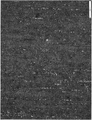
- FIG. 1 It is a figure which shows the metal microscope image of the surface of the stainless steel after post-treatment in Example 1.
- FIG. It is a figure which shows the metal microscope image of the surface of the stainless steel after post-treatment in the comparative example 1.
- FIG. It is a figure which shows the metal microscope image of the surface of the stainless steel after post-treatment in the comparative example 2.
- FIG. 1 It is a figure which shows the metal microscope image of the surface of the stainless steel after post-treatment in Example 1.
- the roughening treatment method for roughening the surface of stainless steel of the present invention (also referred to as a roughening treatment method for stainless steel in the present specification), a roughening treatment step and a post-treatment step are performed. That is, the roughening treatment method of the present invention comprises a roughening treatment step of roughening the surface of stainless steel using the first aqueous composition described in detail later, and a second aqueous composition described in detail later. It includes a post-treatment step of post-treating the surface of stainless steel after roughening using it.
- performing roughening treatment and post-treatment of the stainless steel surface using the aqueous composition means bringing the aqueous composition used for each treatment into contact with the stainless steel surface.
- the roughening treatment method for stainless steel of the present invention includes at least a step of bringing the first aqueous composition and the second aqueous composition into contact with the surface of the stainless steel.
- the roughening treatment step is a step of bringing the first aqueous composition, which will be described in detail later, into contact with the stainless steel to be roughened.
- the temperature of the roughening treatment is preferably 20 to 60 ° C, more preferably 25 to 55 ° C, and particularly preferably 30 to 50 ° C.
- the method for roughening stainless steel of the present invention is excellent in that the surface of stainless steel is roughened even at room temperature of 25 ° C. even if the temperature is not so high.
- the temperature of the roughening treatment refers to the temperature at which the first aqueous composition and the surface of the stainless steel are brought into contact with each other, particularly the liquid temperature of the first aqueous composition which is brought into contact with the surface of the stainless steel.
- the roughening treatment time is preferably 30 seconds to 120 seconds, more preferably 40 seconds to 100 seconds, and particularly preferably 50 seconds to 90 seconds. ..
- the method for roughening stainless steel of the present invention is excellent in that the roughening of stainless steel progresses even if it does not take a very long time.
- the roughening treatment time refers to the time for contacting the surface of the stainless steel with the first aqueous composition. For example, from the time when the stainless steel is immersed in the first aqueous composition, from the time when the first aqueous composition is sprayed on the surface of the stainless steel, to the time when the first aqueous composition is removed by water or the like. It's time.
- the method of contacting the first aqueous composition with the surface of the stainless steel is not particularly limited, and for example, a method of bringing the first aqueous composition into contact with the stainless steel by a form such as dropping or spraying (spraying). Alternatively, a method of immersing the stainless steel in the first aqueous composition can be adopted. In the present invention, any method may be adopted. For example, a method of spraying a first aqueous composition onto stainless steel processed into a specific shape to obtain a roughened stainless steel, a method of dropping a first aqueous composition between stainless steel foil rolls, and spraying.
- An device or dipping device is installed to allow the untreated stainless steel foil to pass in the vicinity of the device while being unrolled and moved from the roll around which the untreated stainless steel foil was wound by a roll-to-roll method to create an aqueous composition.
- Examples thereof include a method of supplying an article and winding a roughened stainless steel foil to obtain a roll.
- the post-treatment step is mainly performed in order to maintain good surface quality of the roughened stainless steel in the above-mentioned roughening treatment step.
- the stainless steel to be roughened contains a relatively large amount of base metal, it is considered to be caused by the substitution reaction between the copper ion contained in the first aqueous composition described in detail later and the base metal. Maintaining surface quality is important because deposits can form on the surface of stainless steel. For example, depending on the composition of the stainless steel, precipitates that can be visually confirmed after the roughening treatment may be observed, which may hinder the appearance and performance of the product.
- the above-mentioned base metal examples include copper and a metal having a higher ionization tendency than copper, as will be described in detail later. That is, the precipitate is a precipitate derived from copper or a metal having a higher ionization tendency than copper contained in the stainless steel to be roughened and copper ions contained in the first aqueous composition. Is preferable. Examples of such precipitates are compounds mainly containing copper, and examples thereof include metallic copper, copper-containing oxides, and hydroxides. According to the post-treatment step, the above-mentioned precipitates generated on the surface of the stainless steel by the roughening treatment can be efficiently removed by etching.
- the post-treatment step is a step of further treating the roughened stainless steel in the roughening treatment step.
- a post-treatment is performed in which the surface of the roughened stainless steel is brought into contact with a second aqueous composition, which will be described in detail later, under acidic conditions.
- the post-treatment is preferably performed at a temperature of 20 to 60 ° C, more preferably 25 to 55 ° C, and particularly preferably 30 to 50 ° C.
- the roughening treatment method for stainless steel of the present invention is excellent in that the surface of stainless steel can be post-treated even at room temperature of 25 ° C. even if the temperature is not so high.
- the temperature of the post-treatment is the temperature at which the second aqueous composition and the surface of the stainless steel are brought into contact with each other, as in the case of the roughening treatment, particularly the second aqueous solution which is brought into contact with the surface of the stainless steel.
- the liquid temperature of the composition is the temperature at which the second aqueous composition and the surface of the stainless steel are brought into contact with each other, as in the case of the roughening treatment, particularly the second aqueous solution which is brought into contact with the surface of the stainless steel.
- the post-treatment time is preferably 10 seconds to 120 seconds, more preferably 15 seconds to 100 seconds, and particularly preferably 20 seconds to 90 seconds.
- the roughening treatment method for stainless steel of the present invention is excellent in that the post-treatment of stainless steel can be performed without a very long time.
- the post-treatment time refers to the time for contacting the surface of the stainless steel with the second aqueous composition. For example, from the time when the stainless steel is immersed in the second aqueous composition, from the time when the second aqueous composition is sprayed on the surface of the stainless steel, to the time when the second aqueous composition is removed by water or the like. It's time.
- the method of bringing the second aqueous composition into contact with the stainless steel surface is the same as the case where the first aqueous composition and the stainless steel surface are brought into contact in the above-mentioned roughening treatment step.
- the stainless steel roughened in the roughening treatment step may be subjected to a treatment such as washing with water.
- the stainless steel post-treated in the post-treatment step may be subjected to a treatment such as washing with water.
- roughened stainless steel also referred to as roughened stainless steel in the present specification, and stainless steel foil (film or sheet) is also included in stainless steel.
- the maximum height (Sz) of the surface of the steel can be 5.0 ⁇ m or more, for example, 7.0 ⁇ m or more, 10.0 ⁇ m or more, or 12.0 ⁇ m or more.
- the post-treatment step can mainly maintain a good appearance of the stainless steel surface, while the surface roughness can be maintained to be substantially the same as that of the roughened stainless steel.
- a precipitate may be formed on the surface of the stainless steel, and the surface roughness immediately after the roughening treatment step is the target for this precipitate.
- the precipitate is removed by the post-treatment step, and the desired surface roughness can be achieved.
- the surface roughness obtained by the roughening treatment step can be maintained to the same level even after the post-treatment step. Therefore, in the method for roughening stainless steel of the present invention, all the treatments have been completed for the stainless steel immediately after either the roughening treatment step or the post-treatment step, and finally obtained.
- the maximum height (Sz) of the surface can be 5.0 ⁇ m or more, for example, 7.0 ⁇ m or more, 10.0 ⁇ m or more, or 12.0 ⁇ m or more.
- the point that the targeted roughening level is achieved immediately after the roughening treatment step and the post-treatment step and on the surface of the stainless steel of the final product is the following surface roughness (height) parameters ( The same applies to (including Sa).
- the maximum height (Sz) of the surface of the roughened stainless steel is 5.0 ⁇ m or more, 7 after both the roughening treatment step and the post-treatment step. It is preferably 0.0 ⁇ m or more, 7.5 ⁇ m or more, more preferably 10.0 ⁇ m or more, further preferably 11.0 ⁇ m or more, further preferably 11.5 ⁇ m or more, and even more preferably 12.5 ⁇ m or more. More preferably, it is more preferably 13.0 ⁇ m or more, and particularly preferably 13.5 ⁇ m or more.
- the upper limit of the maximum height (Sz) of the roughened stainless steel surface and the post-treated stainless steel surface is not particularly limited, but is, for example, 20.0 ⁇ m or less. It may be 17.0 ⁇ m or less.
- the height (Sz) is not particularly limited, but is, for example, 0.2 to 3.0 ⁇ m, and is about 1.0 to 2.5 ⁇ m.
- the maximum height (Sz) of the roughened stainless steel surface is the untreated stainless steel surface both after the roughening treatment step and after the post-treatment step. It is possible to make the value 2.0 ⁇ m or more larger than the value of the maximum height (Sz) of, and it is preferable to make the value 5.0 ⁇ m or more larger than that of untreated stainless steel. Further, it is more preferable to set the value to be 7.0 ⁇ m or more larger than that of the untreated stainless steel, and further to set the value to be 9.0 ⁇ m or more larger than that of the untreated stainless steel both after the roughening treatment step and after the post-treatment step.
- the value may be 10.0 ⁇ m or more or 11.0 ⁇ m or more.
- the increased width of the maximum height (Sz) as compared with the untreated stainless steel surface is within the above range only after either the roughening treatment step or the post-treatment step. You may.
- the arithmetic mean height (Sa) of the surface of the roughened stainless steel is 0.4 ⁇ m or more after both the roughening treatment step and the post-treatment step. It is possible to.
- the arithmetic mean height (Sa) of the surface of the roughened stainless steel is 0.45 ⁇ m or more after both the roughening treatment step and the post-treatment step. It is preferably possible, more preferably 0.50 ⁇ m or more, further preferably 0.55 ⁇ m or more, and it may be possible to make 0.60 ⁇ m or more, 0.70 ⁇ m or more, 0.80 ⁇ m or more, or 1.0 ⁇ m or more.
- the upper limit of the arithmetic mean height (Sa) of the surface of the roughened stainless steel is not particularly limited, but may be, for example, 1.0 ⁇ m or less, and may be 0.9 ⁇ m or less.
- the arithmetic mean height (Sa) of the untreated stainless steel is not particularly limited, but is, for example, 0.05 to 0.5 ⁇ m or 0.1 to 0.3 ⁇ m.
- the arithmetic average height (Sa) of the surface of the roughened stainless steel is untreated stainless steel both after the roughening treatment step and after the post-treatment step. It is possible to make the value 0.1 ⁇ m or more larger than the arithmetic average height (Sa) of the flat surface of the steel, preferably 0.2 ⁇ m or more larger than the untreated stainless steel, and 0.3 ⁇ m or more. A large value is more preferable, a value larger than 0.4 ⁇ m is more preferable, and a value larger than 0.5 ⁇ m, 0.6 ⁇ m or more, or 0.7 ⁇ m or more may be used. Further, the increased width of the arithmetic mean height (Sa) when compared with the untreated stainless steel surface only after either the roughening treatment step or the post-treatment step is within the above range. There may be.
- the above-mentioned maximum height (Sz) and arithmetic mean height (Sa) are calculated according to ISO 25178.
- the device used for the measurement is not particularly limited, but for example, a laser microscope can be used.
- the maximum height (Sz) after the roughening treatment step after the precipitates are removed from the surface of the roughened stainless steel in which the precipitates are generated after the roughening treatment by physical means such as an adhesive tape.
- the value of the arithmetic mean height (Sa) can be measured.
- such physical means are not always practical as part of the manufacturing process.
- the etching rate of the stainless steel in the roughening treatment step is not particularly limited, but is, for example, 0.5 ⁇ m / min or more, preferably 0.7 ⁇ m / min or more, and more preferably 1.0 ⁇ m / min. Minutes or more, more preferably 1.2 ⁇ m / min or more, and particularly preferably 1.4 ⁇ m / min or more.
- a substantially one-step treatment that is, a roughening treatment in which the aqueous composition of the present invention is brought into contact with the surface of the stainless steel to be treated. It is possible to obtain stainless steel with enlarged surface irregularities only by further performing appropriate cleaning (for example, water cleaning) according to the above. Further, even if the above-mentioned precipitates are formed on the surface of the roughened stainless steel, the precipitates can be removed by the post-treatment step, and the roughened stainless steel having good surface quality such as appearance can be obtained. can. Further, as described above, since the treatment conditions in the roughening treatment and the post-treatment are mild and the required time is short, the roughening treatment of stainless steel can be efficiently performed according to the present invention.
- Examples of the stainless steel to be roughened and post-treated by the aqueous composition of the present invention include copper or one containing a metal having a higher ionization tendency than copper. Specific examples of such stainless steel include those containing at least aluminum. In stainless steel having a secondary metal component such as aluminum, precipitates are likely to be formed on the surface of the stainless steel by the roughening treatment, but the precipitates can be efficiently removed by the post-treatment step. As the stainless steel to be the target of the roughening treatment method using the aqueous composition of the present invention, copper containing 5% by mass or more or a metal having a higher ionization tendency than copper is suitable, and 7% by mass or more of copper.
- those containing a metal having a higher ionizing tendency than copper are more suitable, and those containing 10% by mass or more of copper or a metal having a higher ionizing tendency than copper are particularly suitable.
- the upper limit of the content of copper or a metal having a higher ionization tendency than copper is not particularly limited, but is, for example, 20% by mass or 30% by mass. May be the upper limit.
- Copper or a metal having a higher ionization tendency than copper includes Zn (zinc), Cd (cadmium), Co (cobalt), Sn (tin), Pb (lead), etc., in addition to the above-mentioned Al (aluminum). Can be mentioned.
- those other than steel that is, Copper, aluminum, lead, zinc, tin, tungsten, indium, molybdenum, germanium, tantalum, magnesium, cobalt, cadmium, titanium, zirconium, vanadium, gallium, antimony, manganese, berylium, hafnium, niobium, bismuth, renium, tarium, etc. Can also be included.
- the aqueous composition of the present invention copper or stainless steel containing aluminum as a metal having a higher ionization tendency than copper is preferable. This is because, in stainless steel containing aluminum, precipitates are likely to be formed on the surface of the stainless steel by the roughening treatment, but the precipitates can be efficiently removed by the post-treatment step.
- the lower limit of the aluminum content in stainless steel containing aluminum as a metal having a higher ionization tendency than copper or copper is not particularly limited, but is preferably 3% by mass or more, more preferably 5% by mass or more. Yes, more preferably 7% by mass or more, and may be 10% by mass or more.
- the upper limit of the aluminum content is not particularly limited, but may be, for example, 20% by mass or 30% by mass.
- the size, thickness, and shape of the stainless steel to be roughened and post-treated are not particularly limited, and for example, it can be applied to stainless steel foil.
- the thickness of the stainless steel foil to be roughened and post-treated is not particularly limited, but is, for example, 1 ⁇ m or more and 500 ⁇ m or less, preferably 10 ⁇ m or more and 100 ⁇ m or less.
- the maximum height (Sz) on the surface of the roughened stainless steel after the roughening treatment and the post-treatment is, for example, 5.0 ⁇ m or more, 7.0 ⁇ m or more, and 10.0 ⁇ m or more. It is preferably 11.0 ⁇ m or more, more preferably 11.5 ⁇ m or more, further preferably 12.0 ⁇ m or more or 12.5 ⁇ m or more, and further preferably 13.0 ⁇ m or more. It is preferably 13.5 ⁇ m or more, and particularly preferably 13.5 ⁇ m or more.
- the upper limit of the maximum height (Sz) of the roughened stainless steel surface after the roughening treatment and the post-treatment is not particularly limited, but is, for example, 20.0 ⁇ m or less and 17.0 ⁇ m or less. May be.
- the arithmetic mean height (Sa) of the surface of the roughened stainless steel after the roughening treatment and the post-treatment is, for example, 0.40 ⁇ m or more, preferably 0.45 ⁇ m or more, and preferably 0.50 ⁇ m or more. More preferably, it is more preferably 0.55 ⁇ m or more, and it may be 0.60 ⁇ m or more and 0.70 ⁇ m or more, 0.80 ⁇ m or more, or 1.0 ⁇ m or more.
- the upper limit of the arithmetic mean height (Sa) of the surface of the roughened stainless steel after the roughening treatment and the post-treatment is not particularly limited, but is, for example, 1.0 ⁇ m or less, and 0. It may be 9 ⁇ m or less.
- the method for producing roughened stainless steel of the present invention includes at least the above-mentioned roughening treatment method.
- the surface of the stainless steel is rougher than that before the roughening treatment step, that is, the surface of the stainless steel has a surface in which the unevenness is enlarged more than the surface before the treatment. Roughened stainless steel with excellent quality can be manufactured.
- the stainless steel that is the target of the method for producing roughened stainless steel of the present invention is described in the above [2. Stainless steel] as described in the column.
- the maximum height (Sz) and arithmetic mean height (Sa) of the surface of the roughened stainless steel obtained by the method for producing the roughened stainless steel of the present invention are described in the above [2. Stainless steel] as described in the column.
- the roughened stainless steel obtained by the method for producing roughened stainless steel of the present invention is, for example, a collector foil for batteries such as solid-state batteries and lithium-ion batteries, a solar cell base material, a flexible substrate for electronic devices, and a substrate for power storage devices. It can be used as a carrier such as an exhaust gas purification catalyst, an electromagnetic wave shielding member, and a heat radiating member.
- the roughened stainless steel foil obtained by the method for producing roughened stainless steel of the present invention is suitably used as, for example, a current collector foil for a battery.
- the aqueous composition used in the roughening treatment method for stainless steel of the present invention includes a first aqueous composition used in the roughening treatment step and a second aqueous composition used in the post-treatment step. Is done.
- Preferred examples of the roughening treatment and post-treatment of the aqueous composition of the present invention include the above-mentioned stainless steel.
- the first aqueous composition is suitably used for roughening the surface of stainless steel, that is, for roughening the surface of stainless steel and expanding unevenness.
- the first aqueous composition is 0.1 to 20% by mass of hydrogen hydrogen, 0.25 to 40% by mass of copper ion, and 0.25 to 40% by mass of copper ions, based on the total amount (total mass) of the first aqueous composition. Contains 1-30% by mass of halide ions.
- the aqueous composition comprises water, in particular ion-exchanged water or ultrapure water.
- each component of the first aqueous composition will be described.
- the hydrogen peroxide contained in the first aqueous composition is usually mixed with other components as an aqueous solution having an appropriate concentration.
- concentration of hydrogen peroxide in the aqueous hydrogen peroxide solution used for producing the aqueous composition is not particularly limited, and may be, for example, 10 to 90%, and 35% to 60% according to industrial standards. Is preferable.
- hydrogen peroxide may contain a stabilizer up to about 0.01% by mass, and examples of an acceptable stabilizer include sulfuric acid and phosphoric acid.
- the production process and acquisition route of hydrogen peroxide are not limited, and for example, those produced by the anthraquinone method and the like are used.
- the concentration of hydrogen hydrogen contained in the first aqueous composition is 0.1 to 20% by mass, preferably 0.12 to 20% by mass, based on the total amount (total mass) of the first aqueous composition. It is 15% by mass, more preferably 0.15 to 10% by mass, and particularly preferably 0.18 to 8% by mass. Further, the lower limit of the concentration of hydrogen peroxide contained in the first aqueous composition is, for example, 0.001% by mass and 0.01% by mass based on the total amount (total mass) of the first aqueous composition.
- the upper limit of the concentration of hydrogen peroxide contained in the first aqueous composition is, for example, 40% by mass based on the total amount (total mass) of the first aqueous composition. , 35% by mass, 30% by mass, 25% by mass, 18% by mass, 15% by mass, 12% by mass, 10% by mass, 8% by mass, 7% by mass, 5% by mass, 3% by mass, 2% by mass, etc. There may be.
- the range of the concentration of hydrogen peroxide is a range in which the above-mentioned lower limit value and upper limit value are appropriately combined, for example, 0.001 to 40% by mass, 0.01 to 30% by mass, 0.05 to 20% by mass, and 0. .1 to 5.0% by mass, 0.1 to 3.0% by mass, 0.1 to 2.0% by mass, 0.2 to 20% by mass, 0.2 to 5.0% by mass, 0.2 It can be appropriately selected from ⁇ 3.0% by mass, 0.2 to 2.0% by mass and the like. By setting the concentration of hydrogen peroxide in these ranges, the action and effect of the present invention tend to be more preferably achieved.
- the copper ions contained in the first aqueous composition can be generated by mixing a copper compound as a copper ion source with other components.
- the type of copper ion source is not particularly limited as long as it is a copper compound capable of supplying copper ions in the aqueous composition.
- Examples of such copper compounds include copper sulfate such as cupric sulfate, copper chloride such as cupric chloride, and copper tetrafluoroborate, which may be anhydrous or pentahydrate. , Copper bromide, cupric oxide, copper phosphate, copper acetate, copper formic acid, copper nitrate and the like.
- copper sulfate or copper chloride is preferable, and cupric sulfate or cupric chloride is more preferable, from the viewpoints of more effective and reliable effect of the present invention, ease of handling, and economy. Copper sulfate is more preferred. These may be used alone or in combination of two or more.
- the copper ions contained in the first aqueous composition cause a substitution reaction with nickel and chromium, which are components of stainless steel, in the roughening treatment, and then the substitution reaction product derived from the copper ions is removed. It is presumed that a roughened shape can be obtained.
- the concentration of copper ions contained in the first aqueous composition is 0.25 to 40% by mass, preferably 0.25 to 30%, based on the total amount (total mass) of the first aqueous composition. It is mass% or 1.0 to 30% by mass, more preferably 0.5 to 25% by mass or 3.0 to 25% by mass, and particularly preferably 1.5 to 20% by mass or 5.0. It is about 20% by mass. Further, the lower limit of the concentration of copper ions contained in the first aqueous composition is, for example, 0.01% by mass, 0.1% by mass, based on the total amount (total mass) of the first aqueous composition.
- the upper limit of the concentration of copper ions contained in the first aqueous composition is based on the total amount of the first aqueous composition, for example, 45% by mass, 40% by mass, 35% by mass, 30% by mass, 25. It may be mass%, 20 mass%, 18 mass%, 15 mass%, 10 mass%, 9 mass%, 7 mass%, 5 mass%, 3 mass% and the like.
- the range of the concentration of copper ions is a range in which the above-mentioned lower limit value and upper limit value are appropriately combined, for example, 0.01 to 45% by mass, 0.1 to 40% by mass, 0.2 to 35% by mass, 0. It can be appropriately selected from 4 to 25% by mass, 1.0 to 9% by mass, 1.0 to 10% by mass, 1.5 to 9% by mass, 1.5 to 10% by mass and the like. By setting the concentration of copper ions in these ranges, the effects of the present invention tend to be more preferably achieved.
- the type of the halide ion contained in the first aqueous composition is not particularly limited, and may be, for example, a fluoride ion, a chloride ion, a bromide ion, or an iodide ion, but the chloride ion is easy to handle. It is more preferable from the viewpoint of sex and economy.
- the halogen compound that gives the halide ion is not particularly limited, and is, for example, a halide of an alkali metal such as sodium halide and potassium halide, a halide of an alkaline earth metal such as calcium halide, and a halogen.
- Examples include ammonium oxide, copper halide, and hydrogen halide.
- a halide of an alkali metal or a hydrogen halide is preferable, and hydrochloric acid or sodium chloride is more preferable, from the viewpoint of more effectively and surely exerting the action and effect of the present invention.
- the halogen compound is used alone or in combination of two or more.
- the halogen compound may overlap with the above-mentioned copper compound.
- the copper halide also corresponds to the copper compound as the copper ion source described above.
- the halogenated copper copper chloride is preferable.
- Halogen compounds (halide ions) cause pitting corrosion on the passivation film in the roughening treatment of the stainless steel surface.
- the concentration of the halide ion contained in the first aqueous composition is 1 to 30% by mass, preferably 2.0 to 25% by mass, based on the total amount (total mass) of the first aqueous composition. %, More preferably 3.0 to 20% by mass, particularly preferably 5.0 to 15% by mass, still more preferably 8 to 15% by mass. Further, as the range of the concentration of the halide ion contained in the first aqueous composition, 0.01% by mass, 0.1% by mass, and 0.
- any of 5% by mass, 1.0% by mass, 2.0% by mass, 3.0% by mass, 5.0% by mass and 8% by mass as the lower limit value, based on the total amount of the first aqueous composition Any of 40% by mass, 35% by mass, 30% by mass, 25% by mass, 20% by mass, 15% by mass, 12% by mass, and 10% by mass may be set as the upper limit.
- the range of the halide ion concentration is a range in which the above-mentioned lower limit value and upper limit value are appropriately combined, for example, 0.01 to 40% by mass, 0.1 to 40% by mass, 0.05 to 35% by mass, 1.
- the first aqueous composition of the present invention may contain water, preferably water.
- the water is not particularly limited, but is preferably water from which metal ions, organic impurities, particles, etc. have been removed by distillation, ion exchange treatment, filter treatment, various adsorption treatments, etc., more preferably pure water, and ultrapure water. Especially preferable.
- the content of water in the first aqueous composition of the present invention is the balance of each of the above-mentioned components and the additives described in detail later, and is not particularly limited, but is the total amount (total mass) of the first aqueous composition.
- it is preferably 10 to 98.6% by mass, more preferably 50 to 98% by mass, still more preferably 65 to 95% by mass, and particularly preferably 75 to 90% by mass.
- the first aqueous composition of the present invention is preferably a solution, and preferably does not contain a component insoluble in the composition which is the solution, for example, solid particles such as abrasive particles.
- the first aqueous composition containing each of the above-mentioned components functions as follows in the roughening treatment of the surface of stainless steel.
- Halide ions are responsible for pitting the oxide film normally formed on the surface of stainless steel.
- the copper ion has an action of causing a substitution reaction with nickel and chromium, which are components of the stainless steel, and then the substitution reaction product derived from the copper ion is removed, and Sz is formed on the surface of the stainless steel. It is considered that large unevenness, that is, a roughened shape is formed.
- hydrogen peroxide serves to remove the substitution reaction product derived from the copper ion after the above-mentioned substitution reaction.
- the first aqueous composition is prepared by adding the above-mentioned hydrogen peroxide-containing component, copper ion supply component, halide ion supply component and water, and other components as necessary, and stirring until uniform. Will be done.
- the properties of the first aqueous composition are not particularly limited, but the pH value is preferably ⁇ 1.0 to 4.0, more preferably ⁇ 0.5 to 3.0, and further. It is preferably ⁇ 0.25 to 2.5, and particularly preferably 0.0 to 2.0.
- the pH value can be measured, for example, by the method described in Examples.
- the second aqueous composition is mainly used in the above-mentioned post-treatment step for the purpose of removing the precipitates deposited on the surface of the stainless steel by the roughening treatment using the first aqueous composition. Due to the second aqueous composition, the precipitates considered to be caused by the substitution reaction between the copper ions contained in the first aqueous composition and the copper in stainless steel or the above-mentioned metal having a higher ionization tendency than copper are produced. Efficiently etched and removed from the stainless steel surface.
- the second aqueous composition comprises a peroxide (oxidizing agent).
- the second aqueous composition preferably contains 0.2 to 20% by weight of a peroxide (oxidizing agent) based on the total amount (total mass) of the second aqueous composition.
- the second aqueous composition is based on the total amount (total mass) of the second aqueous composition, preferably further containing 0.5 to 15% by mass of an acid, and more preferably further 0.1 to 100% by mass. Contains 5.0% by weight alcohol.
- the second aqueous composition comprises water, particularly preferably ion-exchanged water or ultrapure water.
- each component of the second aqueous composition will be described.
- the peroxide contained in the second aqueous composition is not particularly limited, but is preferably selected from the group consisting of hydrogen peroxide, persulfuric acid, and a salt of persulfuric acid. These may be used alone or as a mixture of a plurality of types.
- As the salt of persulfate for example, sodium persulfate, potassium persulfate, ammonium persulfate and the like are used.
- hydrogen peroxide, persulfuric acid, and sodium persulfate are preferable from the viewpoint of more effectively and surely exerting the action and effect of the present invention.
- an oxidizing agent other than the peroxide may be used. Oxidizing agents other than peroxides can be used in place of or with peroxides.
- the concentration of the peroxide contained in the second aqueous composition is preferably 0.2 to 20% by mass based on the total amount (total mass) of the second aqueous composition, but more preferably 0. It is .5 to 10% by mass, more preferably 0.7 to 6% by mass, particularly preferably 1.0 to 4% by mass, and even more preferably 1.5 to 3% by mass. .. Further, the lower limit of the concentration of the peroxide contained in the second aqueous composition is, for example, 0.01% by mass and 0.05% by mass based on the total amount (total mass) of the second aqueous composition.
- the concentration of the peroxide contained in the second aqueous composition is, for example, 30 based on the total amount (total mass) of the second aqueous composition.
- Mass% 25% by mass, 20% by mass, 15% by mass, 12% by mass, 10% by mass, 9% by mass, 7% by mass, 5% by mass, 4.5% by mass, 3.5% by mass, etc. May be good.
- the range of the concentration of peroxide is a range in which the above-mentioned lower limit value and upper limit value are appropriately combined, for example, 0.01 to 30% by mass, 0.05 to 25% by mass, 0.1 to 20% by mass, and 0. .1 to 15% by mass, 0.25 to 12% by mass, 0.3 to 9% by mass, 0.6 to 7% by mass, 1.2 to 5.0% by mass, 1.8 to 4.5% by mass , 2.0 to 3.5% by mass and the like can be appropriately selected.
- concentration of the peroxide in these ranges, the action and effect of the present invention tend to be more preferably achieved.
- the total amount may satisfy the above range.
- the range of the concentration of hydrogen hydrogen is preferably 0.3 to 0.3 based on the total amount (total mass) of the second aqueous composition. It is 18% by mass, more preferably 0.5 to 15% by mass, still more preferably 1.0 to 12% by mass, and particularly preferably 1.2 to 10% by mass. It may be 5 to 8.0% by mass.
- the content of hydrogen peroxide in the second aqueous composition may be in the range described in the preceding paragraph.
- the total content of the persulfate and the salt of persulfate is the same as that of hydrogen peroxide when hydrogen peroxide is used. It is preferable to increase the content slightly more than the content.
- the total content of persulfate and the salt of persulfate is preferably 5.0 to 20% by mass, more preferably 5. It is 5 to 18% by mass, more preferably 6.0 to 16% by mass, particularly preferably 7.0 to 14% by mass, and may be 8.0 to 12% by mass.
- the total content of persulfuric acid and the salt of persulfuric acid in the second aqueous composition may be in the range described in the preceding paragraph.
- the second aqueous composition preferably contains an acid.
- an acid As the acid contained in the second aqueous composition, a protonic acid (breasted acid), a salt of the protonic acid, a Lewis acid and the like can be used without any special limitation, but the protonic acid, for example, nitric acid is preferable. , Hydrochloric acid, nitric acid, etc. are used.
- the acid here also includes an acid salt, and salts such as sodium hydrogensulfate, potassium hydrogensulfate, and calcium sulfate may be used. These may be used alone or as a mixture of a plurality of types. Among these, sulfuric acid or sodium hydrogensulfate is preferable, and sulfuric acid is more preferable, from the viewpoint of more effectively and surely exerting the action and effect of the present invention.
- the concentration of the acid contained in the second aqueous composition is preferably 0.5 to 15% by mass, more preferably 2.0, based on the total amount (total mass) of the second aqueous composition. It is -10% by mass, more preferably 3.0 to 8.0% by mass, particularly preferably 3.5 to 6.0% by mass, and 4.0 to 5.0% by mass. You may. Further, the lower limit of the concentration of the acid contained in the second aqueous composition is, for example, 0.05% by mass, 0.1% by mass, 0 based on the total amount (total mass) of the second aqueous composition.
- the upper limit of the concentration of the acid contained in the second aqueous composition is, for example, 40% by mass, 30% by mass, and 25% by mass based on the total amount (total mass) of the second aqueous composition. , 20% by mass, 18% by mass, 15% by mass, 12% by mass, 9.0% by mass, 7.0% by mass, 6.5% by mass and the like.
- the range of the acid concentration is a range in which the above-mentioned lower limit value and upper limit value are appropriately combined, for example, 0.05 to 40% by mass, 0.1 to 30% by mass, 0.2 to 25% by mass, 0.3.
- the second aqueous composition preferably contains an alcohol, particularly a water-soluble alcohol.
- the alcohol preferably has 1 to 5 carbon atoms, more preferably 1 to 3 carbon atoms, and is, for example, methanol, ethanol, n-propanol or the like. As the alcohol, only one of them may be used, or a mixture of a plurality of types may be used.
- the concentration of the alcohol contained in the second aqueous composition is preferably 0.1 to 5.0% by mass based on the total amount (total mass) of the second aqueous composition, but more preferably. It is 0.2 to 4.0% by mass, more preferably 0.3 to 3.5% by mass, and particularly preferably 0.5 to 2.5% by mass, and 0.7 to 2. It may be 0% by mass. Further, the lower limit of the concentration of alcohol contained in the second aqueous composition is, for example, 0.005% by mass, 0.01% by mass, 0 based on the total amount (total mass) of the second aqueous composition.
- the range of the concentration of alcohol is a range in which the above-mentioned lower limit value and upper limit value are appropriately combined, for example, 0.005 to 20% by mass, 0.01 to 15% by mass, 0.1 to 10% by mass, 0.25. ⁇ 9.0% by mass, 0.35 to 8.0% by mass, 0.4 to 6.0% by mass, 0.6 to 5.5% by mass, 0.8 to 4.5% by mass, 0.8 It can be appropriately selected from ⁇ 3.0% by mass and the like. By setting the concentration of alcohol in these ranges, the action and effect of the present invention tend to be more preferably achieved.
- the second aqueous composition of the present invention may contain water, preferably water.
- the water is not particularly limited, but is preferably water from which metal ions, organic impurities, particles, etc. have been removed by distillation, ion exchange treatment, filter treatment, various adsorption treatments, etc., more preferably pure water, and ultrapure water. Especially preferable.
- the content of water in the second aqueous composition of the present invention is the balance of each of the above-mentioned components and the additives described in detail later, and is not particularly limited, but is the total amount (total mass) of the second aqueous composition. By reference, it is preferably 50 to 99.8% by mass, more preferably 60 to 99% by mass, still more preferably 70 to 97% by mass, and particularly preferably 80 to 95% by mass.
- the second aqueous composition of the present invention is preferably a solution, and preferably does not contain a component insoluble in the composition which is the solution, for example, solid particles such as abrasive particles.
- the second aqueous composition containing each of the above-mentioned components functions as follows in the post-treatment step of the stainless steel surface. It is considered that peroxides, oxidizing agents, and acids react only with precipitates derived from copper ions and the like deposited on the surface of stainless steel to change them into water-soluble compounds, and the roughness of the surface of stainless steel is considered. Does not affect, or does not affect the surface roughness to a large extent. Further, the alcohol functions as a solvent, and is considered to contribute to the removal of the precipitate by facilitating the dispersion of the decomposition product of the precipitate in the aqueous composition or the washing water.
- the properties of the second aqueous composition are not particularly limited, but the pH value is less than 7, for example, the pH value is preferably 0 to 6.5, and more preferably 0 to 6. It is more preferably 0 to 5, particularly preferably 0 to 4, and particularly preferably 0 to 3.
- the pH value can be measured by the method described in Examples.
- the lower limit of the pH of the second aqueous composition may be, for example, 0.1, 0.2, 0.4, 0.6, 0.8, 1.0, 1.2.
- the upper limit of the pH of the second aqueous composition is, for example, 6.5, 5.5, 4.5, 3.5, 3.0, 2.8, 2.5, 2.0 and the like. May be good.
- the pH range of the second aqueous composition may be a range in which the above-mentioned lower limit value and upper limit value are appropriately combined.
- the first aqueous composition may contain an additive as a component other than the above-mentioned hydrogen peroxide, copper ion, and halide ion as long as the effect of the present invention is exhibited.
- the same applies to the second aqueous composition which may contain additives other than the peroxide (oxidizing agent) and the acid.
- additives include heterocyclic nitrogen compounds (azole compounds), organic solvents and the like. These may be used alone or in combination of two or more.
- examples of the additive include a surfactant, a pH adjuster and the like, but these should not be included in the aqueous composition of the present invention.
- the concentration of the additive that may be contained in each aqueous composition is preferably 10% by mass or less, more preferably 5.0% by mass or less, and more preferably 2.0% by mass. It is less than or equal to, and particularly preferably 1.0% by mass or less.
- Example 1 A stainless steel (foil) having a thickness of 40 ⁇ m, a length and a width of 30 mm ⁇ 30 mm, and a material of JFE20-5USR (manufactured by JFE Steel Corporation) was prepared.
- the stainless steel (foil) of JFE20-5USR contained 5.5% by mass of aluminum as a metal having a higher ionization tendency than copper.
- the Sz of the stainless steel foil that is, the stainless steel foil in the untreated state, measured according to the above-mentioned "Measurement of Surface Roughness of Stainless Steel Foil" was 2.2 ⁇ m and Sa was 0.1 ⁇ m.
- the surface roughness values of the untreated stainless steel foil are shown in Table 1 below as a reference example.
- hydrogen peroxide is finally added to 0.3% by mass (1 g of 60 wt% hydrogen peroxide aqueous solution)
- copper sulfate pentahydrate is added to 6% by mass (12 g)
- hydrochloric acid is added.
- An aqueous composition A1 (corresponding to the first aqueous composition) was prepared by adding 35% by mass (69 g) of a 35 wt% aqueous solution.
- the concentration of copper ion (Cu 2+ ) derived from copper sulfate in this composition A1 is 1.5% by mass based on the total amount of the aqueous composition
- the concentration of halide ion (Cl ⁇ ) derived from hydrochloric acid is the aqueous composition. It was 12% by mass based on the total amount of the substance.
- an amount of hydrogen peroxide that finally becomes 2% by mass 7 g of 60 wt% hydrogen peroxide aqueous solution
- an amount of sulfuric acid that finally becomes 4.5% by mass (46 wt%) 20 g) of sulfuric acid aqueous solution and 1% by mass (2 g) of n-propanol were added to prepare an aqueous composition B1 (corresponding to a second aqueous composition).
- Step 1 Roughening process
- the stainless steel foil was first immersed in the aqueous composition A1 at a liquid temperature of 35 ° C. for 60 seconds. Then, the stainless steel foil after immersion was thoroughly washed with ultrapure water to develop a roughened shape on the surface of the stainless steel foil. On the surface of the stainless steel foil thus roughened, a precipitate (Cu precipitate) considered to be derived from copper ions or the like of the aqueous composition A1 was observed. That is, Cu precipitates similar to the precipitates that were not finally removed in Comparative Examples 1 and 2 described later were confirmed.
- Step 2 Post-treatment step
- the stainless steel foil that had undergone the roughening treatment in step 1 was immersed in the aqueous composition B1 at a liquid temperature of 30 ° C. for 30 seconds. Then, the stainless steel foil after immersion was thoroughly washed with ultrapure water and then sufficiently dried to obtain a surface-treated foil. With respect to the obtained surface-treated foil, it was confirmed whether or not Cu precipitates remained on the surface of the stainless steel after the post-treatment according to the description in the column of "Evaluation of residual copper amount on the surface of alloy (stainless steel)". Since no residual Cu precipitate was found in the metallurgical microscope image, it was judged to be ⁇ (good). The metallurgical microscope image at this time is shown in FIG. FIG.
- Example 2 A stainless steel (foil) having a thickness of 40 ⁇ m, a length and a width of 30 mm ⁇ 30 mm, and a material of JFE20-5USR (manufactured by JFE Steel Corporation) was prepared.
- the stainless steel (foil) of JFE20-5USR contained 5.5% by mass of aluminum as a metal having a higher ionization tendency than copper.
- hydrogen peroxide is finally added to 0.3% by mass (1 g of 60 wt% hydrogen peroxide aqueous solution), copper sulfate pentahydrate is added to 6% by mass (12 g), and hydrochloric acid is added.
- An aqueous composition A1 (corresponding to the first aqueous composition) was prepared by adding 35% by mass (69 g) of a 35 wt% aqueous solution.
- the concentration of copper ion (Cu 2+ ) derived from copper sulfate in this composition A1 is 1.5% by mass based on the total amount of the aqueous composition, and the concentration of halide ion (Cl ⁇ ) derived from hydrochloric acid is the aqueous composition. It was 12% by mass based on the total amount of the substance.
- Aqueous composition B2 (corresponding to the second aqueous composition) was prepared by adding 20 g of the sulfuric acid aqueous solution of the above.
- Step 1 Roughening process
- the stainless steel foil was first immersed in the aqueous composition A1 at a liquid temperature of 35 ° C. for 60 seconds. Then, the stainless steel foil after immersion was thoroughly washed with ultrapure water to develop a roughened shape on the surface of the stainless steel foil. Precipitates (Cu precipitates) were observed on the surface of the stainless steel foil thus roughened.
- Step 2 Post-treatment step
- the stainless steel foil that had undergone the roughening treatment in step 1 was immersed in the aqueous composition B2 at a liquid temperature of 30 ° C. for 30 seconds. Then, the stainless steel foil after immersion was thoroughly washed with ultrapure water and then sufficiently dried to obtain a surface-treated foil.
- Example 3 A stainless steel (foil) having a thickness of 40 ⁇ m, a length and a width of 30 mm ⁇ 30 mm, and a material of JFE20-5USR (manufactured by JFE Steel Corporation) was prepared.
- the stainless steel (foil) of JFE20-5USR contained 5.5% by mass of aluminum as a metal having a higher ionization tendency than copper.
- hydrogen peroxide is finally added to 0.3% by mass (1 g of 60 wt% hydrogen peroxide aqueous solution), copper sulfate pentahydrate is added to 6% by mass (12 g), and hydrochloric acid is added.
- An aqueous composition A1 (corresponding to the first aqueous composition) was prepared by adding 35% by mass (69 g) of a 35 wt% aqueous solution.
- the concentration of copper ion (Cu 2+ ) derived from copper sulfate in this composition A1 is 1.5% by mass based on the total amount of the aqueous composition, and the concentration of halide ion (Cl ⁇ ) derived from hydrochloric acid is the aqueous composition. It was 12% by mass based on the total amount of the substance.
- aqueous composition B3 (second) in which sodium persulfate was finally added in an amount (18 g) of 9.0 mass% and n-propanol was added in an amount of 1 mass% (2 g) to 180 ml of ultrapure water. (Corresponding to an aqueous composition) was prepared.
- Step 1 Roughening process
- the stainless steel foil was first immersed in the aqueous composition A1 at a liquid temperature of 35 ° C. for 60 seconds. Then, the stainless steel foil after immersion was thoroughly washed with ultrapure water to develop a roughened shape on the surface of the stainless steel foil. Precipitates (Cu precipitates) were observed on the surface of the stainless steel foil thus roughened.
- Step 2 Post-treatment step
- the stainless steel foil that had undergone the roughening treatment in step 1 was immersed in the aqueous composition B3 at a liquid temperature of 30 ° C. for 30 seconds. Then, the stainless steel foil after immersion was thoroughly washed with ultrapure water and then sufficiently dried to obtain a surface-treated foil.
- Example 4 to 8 in addition to using an aqueous composition different from that in Example 1, a roughening treatment step and a post-treatment step were carried out in the same manner as in Example 1.
- the composition of the aqueous composition used in Step 1 (roughening treatment step) and Step 2 (post-treatment step) of Examples 4 to 8 and the treatment results are shown in Table 1 below.
- a stainless steel (foil) having a thickness of 40 ⁇ m, a length and a width of 30 mm ⁇ 30 mm, and a material of JFE20-5USR (manufactured by JFE Steel Corporation) was prepared.
- the stainless steel (foil) of JFE20-5USR contained 5.5% by mass of aluminum as a metal having a higher ionization tendency than copper.
- hydrogen peroxide is finally added to 0.3% by mass (1 g of 60 wt% hydrogen peroxide aqueous solution), copper sulfate pentahydrate is added to 6% by mass (12 g), and hydrochloric acid is added.
- An aqueous composition A1 was prepared by adding 35% by mass (69 g) of a 35 wt% aqueous solution.
- the concentration of copper ion (Cu 2+ ) derived from copper sulfate in this composition A1 is 1.5% by mass based on the total amount of the aqueous composition, and the concentration of halide ion (Cl ⁇ ) derived from hydrochloric acid is the aqueous composition. It was 12% by mass based on the total amount of the substance.
- an aqueous composition B4 was prepared by adding 4.5% by mass (20 g of a 46 wt% sulfuric acid aqueous solution) and 1% by mass (2 g) of n-propanol to 178 ml of ultrapure water.
- Step 1 Roughening process
- the stainless steel foil was first immersed in the aqueous composition A1 at a liquid temperature of 35 ° C. for 60 seconds. Then, the stainless steel foil after immersion was thoroughly washed with ultrapure water to develop a roughened shape on the surface of the stainless steel foil.
- Step 2 Post-treatment step
- the stainless steel foil that had undergone the roughening treatment in step 1 was immersed in the aqueous composition B4 at a liquid temperature of 30 ° C. for 30 seconds. Then, the stainless steel foil after immersion was thoroughly washed with ultrapure water and then sufficiently dried to obtain a surface-treated foil.
- a stainless steel (foil) having a thickness of 40 ⁇ m, a length and a width of 30 mm ⁇ 30 mm, and a material of JFE20-5USR (manufactured by JFE Steel Corporation) was prepared.
- the stainless steel (foil) of JFE20-5USR contained 5.5% by mass of aluminum as a metal having a higher ionization tendency than copper.
- hydrogen peroxide is finally added to 0.3% by mass (1 g of 60 wt% hydrogen peroxide aqueous solution), and copper sulfate pentahydrate is added to 6% by mass (12.0 g).
- An aqueous composition A1 was prepared by adding 35% by mass (69 g) of a 35 wt% aqueous solution of hydrochloric acid.
- the concentration of copper ion (Cu 2+ ) derived from copper sulfate in this composition A1 is 1.5% by mass based on the total amount of the aqueous composition, and the concentration of halide ion (Cl ⁇ ) derived from hydrochloric acid is the aqueous composition. It was 12% by mass based on the total amount of the substance.
- an aqueous composition in which hydrogen peroxide is finally added to 191 ml of ultrapure water in an amount of 2% by mass (7 g of a 60 wt% hydrogen peroxide aqueous solution) and 1% by mass (2 g) of n-propanol.
- aqueous composition in which hydrogen peroxide is finally added to 191 ml of ultrapure water in an amount of 2% by mass (7 g of a 60 wt% hydrogen peroxide aqueous solution) and 1% by mass (2 g) of n-propanol.
- Step 1 Roughening process
- the stainless steel foil was first immersed in the aqueous composition A1 at a liquid temperature of 35 ° C. for 60 seconds. Then, the stainless steel foil after immersion was thoroughly washed with ultrapure water to develop a roughened shape on the surface of the stainless steel foil.
- Step 2 Post-treatment step
- the stainless steel foil that had undergone the roughening treatment in step 1 was immersed in the aqueous composition B5 at a liquid temperature of 30 ° C. for 30 seconds. Then, the stainless steel foil after immersion was thoroughly washed with ultrapure water and then sufficiently dried to obtain a surface-treated foil.
- Example 3 In Example 3, an aqueous composition different from that of Comparative Example 1 was used in step 1 (roughening treatment step), and step 2 (post-treatment step) was further carried out.
- the composition of the aqueous composition used in each step of Comparative Example 3 and the results of the treatment are shown in Table 1 below.
- the surface of stainless steel can be sufficiently and efficiently roughened in a short time with a sufficient number of steps. Furthermore, it is possible to maintain good surface quality of stainless steel. Then, if stainless steel having a rough surface while maintaining a good appearance is used for a battery current collector foil, an automobile component housing, or the like, a dielectric substance or an organic substance can be effectively adhered or retained. can. Further, as a member for dissipating heat, stainless steel having a roughened surface can be preferably used. Therefore, the present invention has industrial applicability in the field of surface roughening treatment of material members, for example, stainless steel used in the above products.
Landscapes
- Chemical & Material Sciences (AREA)
- Engineering & Computer Science (AREA)
- Materials Engineering (AREA)
- Mechanical Engineering (AREA)
- Metallurgy (AREA)
- Organic Chemistry (AREA)
- Chemical Kinetics & Catalysis (AREA)
- General Chemical & Material Sciences (AREA)
- Electrochemistry (AREA)
- ing And Chemical Polishing (AREA)
- Chemical Treatment Of Metals (AREA)
Priority Applications (5)
| Application Number | Priority Date | Filing Date | Title |
|---|---|---|---|
| CN202180083201.0A CN116583614A (zh) | 2020-12-15 | 2021-12-13 | 不锈钢表面的粗糙化处理方法、粗糙化不锈钢制造方法、及这些方法中使用的水性组合物 |
| US18/266,624 US12351922B2 (en) | 2020-12-15 | 2021-12-13 | Roughening treatment method for stainless steel surface, method for manufacturing roughened stainless steel, and aqueous composition used in said methods |
| EP21906549.7A EP4265822A4 (en) | 2020-12-15 | 2021-12-13 | PROCESS FOR ROUGHING TREATMENT FOR STAINLESS STEEL SURFACE, PROCESS FOR PRODUCING ROUGHED STAINLESS STEEL AND AQUEOUS COMPOSITION USED IN SUCH PROCESS |
| JP2022569968A JPWO2022131187A1 (https=) | 2020-12-15 | 2021-12-13 | |
| KR1020237018289A KR20230121044A (ko) | 2020-12-15 | 2021-12-13 | 스테인리스강 표면의 조화처리방법, 조화 스테인리스강 제조방법, 및, 이들의 방법에서 이용되는 수성 조성물 |
Applications Claiming Priority (2)
| Application Number | Priority Date | Filing Date | Title |
|---|---|---|---|
| JP2020207186 | 2020-12-15 | ||
| JP2020-207186 | 2020-12-15 |
Publications (1)
| Publication Number | Publication Date |
|---|---|
| WO2022131187A1 true WO2022131187A1 (ja) | 2022-06-23 |
Family
ID=82057746
Family Applications (1)
| Application Number | Title | Priority Date | Filing Date |
|---|---|---|---|
| PCT/JP2021/045737 Ceased WO2022131187A1 (ja) | 2020-12-15 | 2021-12-13 | ステンレス鋼表面の粗化処理方法、粗化ステンレス鋼製造方法、及び、これらの方法で用いられる水性組成物 |
Country Status (7)
| Country | Link |
|---|---|
| US (1) | US12351922B2 (https=) |
| EP (1) | EP4265822A4 (https=) |
| JP (1) | JPWO2022131187A1 (https=) |
| KR (1) | KR20230121044A (https=) |
| CN (1) | CN116583614A (https=) |
| TW (1) | TWI906431B (https=) |
| WO (1) | WO2022131187A1 (https=) |
Families Citing this family (1)
| Publication number | Priority date | Publication date | Assignee | Title |
|---|---|---|---|---|
| EP4265823A4 (en) * | 2020-12-15 | 2024-07-03 | Mitsubishi Gas Chemical Company, Inc. | AQUEOUS COMPOSITION, METHOD FOR ROUGHING A STAINLESS STEEL SURFACE THEREOF, AND METHOD FOR PRODUCING ROUGHED STAINLESS STEEL |
Citations (7)
| Publication number | Priority date | Publication date | Assignee | Title |
|---|---|---|---|---|
| JPS58193372A (ja) * | 1983-04-25 | 1983-11-11 | Nitto Electric Ind Co Ltd | スズ−ニツケル合金のエツチング液 |
| JP2011168017A (ja) | 2010-02-22 | 2011-09-01 | Nisshin Steel Co Ltd | ステンレス鋼板と熱可塑性樹脂組成物の成形体とが接合された複合体、およびその製造方法 |
| JP2015183239A (ja) | 2014-03-25 | 2015-10-22 | 株式会社日立製作所 | ステンレス鋼の表面加工方法とそれを用いた熱交換器 |
| WO2019039332A1 (ja) * | 2017-08-23 | 2019-02-28 | 富士フイルム株式会社 | 金属箔、金属箔の製造方法、二次電池用負極および二次電池用正極 |
| CN111421747A (zh) * | 2020-03-04 | 2020-07-17 | 博罗县东明化工有限公司 | 不锈钢基材表面处理方法及不锈钢纳米注塑方法 |
| WO2020250784A1 (ja) * | 2019-06-11 | 2020-12-17 | 三菱瓦斯化学株式会社 | 水性組成物、これを用いたステンレス鋼表面の粗化処理方法、ならびに粗化処理されたステンレス鋼およびその製造方法 |
| WO2021020253A1 (ja) * | 2019-07-30 | 2021-02-04 | 三菱瓦斯化学株式会社 | 組成物、これを用いたステンレス鋼表面の粗化処理方法、ならびに粗化処理されたステンレス鋼およびその製造方法 |
Family Cites Families (11)
| Publication number | Priority date | Publication date | Assignee | Title |
|---|---|---|---|---|
| NL6413117A (https=) * | 1963-11-19 | 1965-05-20 | ||
| JPS61227193A (ja) * | 1985-04-01 | 1986-10-09 | Nippon Yakin Kogyo Co Ltd | 着色ステンレス鋼板の製造方法 |
| JP2585936B2 (ja) * | 1991-11-15 | 1997-02-26 | 住友電気工業株式会社 | 弗素樹脂被覆物の製造方法 |
| JP2001250807A (ja) * | 1999-12-28 | 2001-09-14 | Shin Etsu Handotai Co Ltd | エッチング液、エッチング方法及び半導体シリコンウェーハ |
| US8192556B2 (en) * | 2002-10-15 | 2012-06-05 | Henkel Kgaa | Pickling or brightening/passivating solution and process for steel and stainless steel |
| CN101568420B (zh) * | 2006-12-28 | 2014-06-25 | 大成普拉斯株式会社 | 金属和树脂的复合体及其制造方法 |
| JP2011038166A (ja) | 2009-08-13 | 2011-02-24 | Nisshin Steel Co Ltd | 燃料電池用通電部材およびその製造方法 |
| GB2508827A (en) * | 2012-12-11 | 2014-06-18 | Henkel Ag & Co Kgaa | Aqueous compositions and processes for passivating and brightening stainless steel surfaces |
| CN104217878B (zh) * | 2014-09-15 | 2016-06-22 | 南通万德科技有限公司 | 一种镀贵金属开关触点元件及其制备方法 |
| CN104233302B (zh) * | 2014-09-15 | 2016-09-14 | 南通万德科技有限公司 | 一种蚀刻液及其应用 |
| CN104805440B (zh) | 2015-05-18 | 2017-07-07 | 攀钢集团成都钢钒有限公司 | 超高强度合金结构钢原始奥氏体晶界的腐蚀剂及显示方法 |
-
2021
- 2021-12-13 US US18/266,624 patent/US12351922B2/en active Active
- 2021-12-13 EP EP21906549.7A patent/EP4265822A4/en active Pending
- 2021-12-13 WO PCT/JP2021/045737 patent/WO2022131187A1/ja not_active Ceased
- 2021-12-13 CN CN202180083201.0A patent/CN116583614A/zh active Pending
- 2021-12-13 KR KR1020237018289A patent/KR20230121044A/ko active Pending
- 2021-12-13 JP JP2022569968A patent/JPWO2022131187A1/ja active Pending
- 2021-12-13 TW TW110146473A patent/TWI906431B/zh active
Patent Citations (7)
| Publication number | Priority date | Publication date | Assignee | Title |
|---|---|---|---|---|
| JPS58193372A (ja) * | 1983-04-25 | 1983-11-11 | Nitto Electric Ind Co Ltd | スズ−ニツケル合金のエツチング液 |
| JP2011168017A (ja) | 2010-02-22 | 2011-09-01 | Nisshin Steel Co Ltd | ステンレス鋼板と熱可塑性樹脂組成物の成形体とが接合された複合体、およびその製造方法 |
| JP2015183239A (ja) | 2014-03-25 | 2015-10-22 | 株式会社日立製作所 | ステンレス鋼の表面加工方法とそれを用いた熱交換器 |
| WO2019039332A1 (ja) * | 2017-08-23 | 2019-02-28 | 富士フイルム株式会社 | 金属箔、金属箔の製造方法、二次電池用負極および二次電池用正極 |
| WO2020250784A1 (ja) * | 2019-06-11 | 2020-12-17 | 三菱瓦斯化学株式会社 | 水性組成物、これを用いたステンレス鋼表面の粗化処理方法、ならびに粗化処理されたステンレス鋼およびその製造方法 |
| WO2021020253A1 (ja) * | 2019-07-30 | 2021-02-04 | 三菱瓦斯化学株式会社 | 組成物、これを用いたステンレス鋼表面の粗化処理方法、ならびに粗化処理されたステンレス鋼およびその製造方法 |
| CN111421747A (zh) * | 2020-03-04 | 2020-07-17 | 博罗县东明化工有限公司 | 不锈钢基材表面处理方法及不锈钢纳米注塑方法 |
Non-Patent Citations (1)
| Title |
|---|
| See also references of EP4265822A4 |
Also Published As
| Publication number | Publication date |
|---|---|
| EP4265822A4 (en) | 2024-07-03 |
| TW202235684A (zh) | 2022-09-16 |
| KR20230121044A (ko) | 2023-08-17 |
| CN116583614A (zh) | 2023-08-11 |
| TWI906431B (zh) | 2025-12-01 |
| US12351922B2 (en) | 2025-07-08 |
| JPWO2022131187A1 (https=) | 2022-06-23 |
| EP4265822A1 (en) | 2023-10-25 |
| US20240044014A1 (en) | 2024-02-08 |
Similar Documents
| Publication | Publication Date | Title |
|---|---|---|
| JP6908207B2 (ja) | 水性組成物、これを用いたステンレス鋼表面の粗化処理方法、ならびに粗化処理されたステンレス鋼およびその製造方法 | |
| WO2022131188A1 (ja) | 水性組成物、これを用いたステンレス鋼表面の粗化処理方法、ならびに粗化ステンレス鋼の製造方法 | |
| JPH0480117B2 (https=) | ||
| CN102011115B (zh) | 用于稀土转化处理前的预处理液及预处理方法 | |
| CN102234513A (zh) | 含钛膜层的退镀液及其使用方法 | |
| WO2022131187A1 (ja) | ステンレス鋼表面の粗化処理方法、粗化ステンレス鋼製造方法、及び、これらの方法で用いられる水性組成物 | |
| CN119866393A (zh) | 水性组合物、使用其的不锈钢的制造方法以及薄膜化处理方法 | |
| WO2024058249A1 (ja) | ステンレス鋼の製造方法、軽量化処理方法、ステンレス鋼及び水性組成物 | |
| JP3307882B2 (ja) | マグネシウム含有金属の低電気抵抗性皮膜処理物及びその表面処理方法 | |
| WO2011010472A1 (ja) | 金属表面処理液および金属材料の表面処理方法 | |
| JP7673638B2 (ja) | 組成物、これを用いたステンレス鋼表面の粗化処理方法、ならびに粗化処理されたステンレス鋼およびその製造方法 | |
| US20040242449A1 (en) | Nitric acid and chromic acid-free compositions and process for cleaning aluminum and aluminum alloy surfaces | |
| JP6255209B2 (ja) | 銅箔の防錆方法、防錆液、及び銅箔 | |
| US3562039A (en) | Method of improving the solderability of conductor plates | |
| JP4065110B2 (ja) | 銅または銅合金の表面処理法およびプリント配線板の製造法 | |
| JP5114834B2 (ja) | 冷延鋼板およびその製造方法 | |
| JP2005097669A (ja) | メッキ表面の後処理液、及び後処理方法 | |
| WO2025094882A1 (ja) | アルミニウム開孔箔の製造方法 | |
| TW202407151A (zh) | 蝕刻處理液、鋁或鋁合金的表面處理方法 | |
| JP2023184437A (ja) | エッチング処理液、アルミニウム又はアルミニウム合金の表面処理方法 | |
| WO2026014394A1 (ja) | 水性組成物、ステンレス鋼開孔箔およびその製造方法 | |
| WO2026014395A1 (ja) | 水性組成物、ステンレス鋼開孔箔およびその製造方法 | |
| CN117248215A (zh) | 蚀刻处理液、铝或铝合金的表面处理方法 | |
| JP2004285417A (ja) | スズホイスカ防止剤、及びこれを用いたホイスカ防止性スズメッキ物の製造方法 | |
| RO125457B1 (ro) | Procedeu de fosfatare microcristalină a unor piese metalice pe bază de fier |
Legal Events
| Date | Code | Title | Description |
|---|---|---|---|
| 121 | Ep: the epo has been informed by wipo that ep was designated in this application |
Ref document number: 21906549 Country of ref document: EP Kind code of ref document: A1 |
|
| ENP | Entry into the national phase |
Ref document number: 2022569968 Country of ref document: JP Kind code of ref document: A |
|
| WWE | Wipo information: entry into national phase |
Ref document number: 202180083201.0 Country of ref document: CN |
|
| WWE | Wipo information: entry into national phase |
Ref document number: 18266624 Country of ref document: US |
|
| NENP | Non-entry into the national phase |
Ref country code: DE |
|
| ENP | Entry into the national phase |
Ref document number: 2021906549 Country of ref document: EP Effective date: 20230717 |
|
| WWG | Wipo information: grant in national office |
Ref document number: 18266624 Country of ref document: US |