WO2022070810A1 - 分散液、非水電解質二次電池用電極組成物、非水電解質二次電池用電極、非水電解質二次電池及び非水電解質二次電池用電極の製造方法 - Google Patents
分散液、非水電解質二次電池用電極組成物、非水電解質二次電池用電極、非水電解質二次電池及び非水電解質二次電池用電極の製造方法 Download PDFInfo
- Publication number
- WO2022070810A1 WO2022070810A1 PCT/JP2021/032926 JP2021032926W WO2022070810A1 WO 2022070810 A1 WO2022070810 A1 WO 2022070810A1 JP 2021032926 W JP2021032926 W JP 2021032926W WO 2022070810 A1 WO2022070810 A1 WO 2022070810A1
- Authority
- WO
- WIPO (PCT)
- Prior art keywords
- secondary battery
- electrolyte secondary
- aqueous electrolyte
- electrode
- carboxymethyl cellulose
- Prior art date
- Legal status (The legal status is an assumption and is not a legal conclusion. Google has not performed a legal analysis and makes no representation as to the accuracy of the status listed.)
- Ceased
Links
Images

Classifications
-
- C—CHEMISTRY; METALLURGY
- C01—INORGANIC CHEMISTRY
- C01B—NON-METALLIC ELEMENTS; COMPOUNDS THEREOF; METALLOIDS OR COMPOUNDS THEREOF NOT COVERED BY SUBCLASS C01C
- C01B32/00—Carbon; Compounds thereof
- C01B32/15—Nano-sized carbon materials
- C01B32/158—Carbon nanotubes
- C01B32/168—After-treatment
- C01B32/174—Derivatisation; Solubilisation; Dispersion in solvents
-
- H—ELECTRICITY
- H01—ELECTRIC ELEMENTS
- H01M—PROCESSES OR MEANS, e.g. BATTERIES, FOR THE DIRECT CONVERSION OF CHEMICAL ENERGY INTO ELECTRICAL ENERGY
- H01M4/00—Electrodes
- H01M4/02—Electrodes composed of, or comprising, active material
- H01M4/13—Electrodes for accumulators with non-aqueous electrolyte, e.g. for lithium-accumulators; Processes of manufacture thereof
- H01M4/139—Processes of manufacture
-
- H—ELECTRICITY
- H01—ELECTRIC ELEMENTS
- H01M—PROCESSES OR MEANS, e.g. BATTERIES, FOR THE DIRECT CONVERSION OF CHEMICAL ENERGY INTO ELECTRICAL ENERGY
- H01M4/00—Electrodes
- H01M4/02—Electrodes composed of, or comprising, active material
- H01M4/62—Selection of inactive substances as ingredients for active masses, e.g. binders, fillers
-
- Y—GENERAL TAGGING OF NEW TECHNOLOGICAL DEVELOPMENTS; GENERAL TAGGING OF CROSS-SECTIONAL TECHNOLOGIES SPANNING OVER SEVERAL SECTIONS OF THE IPC; TECHNICAL SUBJECTS COVERED BY FORMER USPC CROSS-REFERENCE ART COLLECTIONS [XRACs] AND DIGESTS
- Y02—TECHNOLOGIES OR APPLICATIONS FOR MITIGATION OR ADAPTATION AGAINST CLIMATE CHANGE
- Y02E—REDUCTION OF GREENHOUSE GAS [GHG] EMISSIONS, RELATED TO ENERGY GENERATION, TRANSMISSION OR DISTRIBUTION
- Y02E60/00—Enabling technologies; Technologies with a potential or indirect contribution to GHG emissions mitigation
- Y02E60/10—Energy storage using batteries
Definitions
- the present invention relates to a dispersion liquid, an electrode composition for a non-aqueous electrolyte secondary battery, an electrode for a non-aqueous electrolyte secondary battery, a non-aqueous electrolyte secondary battery, and a method for manufacturing an electrode for a non-aqueous electrolyte secondary battery.
- the basic configuration of such a lithium ion secondary battery consists of a positive electrode, a negative electrode, a separator, and a non-aqueous electrolyte solution.
- the positive electrode includes a positive electrode active material capable of storing and releasing lithium ions, a conductive auxiliary agent, and a binder.
- a positive electrode mixture coating material containing a coating material and an organic solvent is applied onto an aluminum foil current collector, and dried and formed into a film.
- CNT carbon nanotubes
- CB carbon black
- CNT When CNT is used as a conductive auxiliary agent for the positive electrode of a lithium ion secondary battery, the dispersibility of CNT in the positive electrode is important, but in the case of conventional fine carbon fibers such as CNT, the fibers are complicated with each other. Since they are entangled to form a secondary structure and the dispersibility in the positive electrode is insufficient, the binder is taken into the complicatedly entangled secondary structure, and at the interface between the positive electrode mixture and the aluminum current collector. The binding property is reduced, and the battery performance is also reduced. In addition, there is a problem that the cost for dispersion increases.
- Patent Document 1 As a means for obtaining a good dispersed state of CNTs in the positive electrode, there is a method of suppressing aggregation of CNTs by dry-mixing the active material and carbon fibers and then mixing the dry mixture with the binder and the solvent (Patent Document 1). ).
- Patent Document 1 it was difficult to completely and uniformly disperse the CNTs in the positive electrode slurry by the method of Patent Document 1.
- the dispersion was insufficient, it is necessary to increase the addition rate of CNT in the positive electrode slurry in order to maintain the conductivity by the conductive auxiliary agent in the positive electrode, which directly contributes to the charge / discharge capacity in the positive electrode.
- the amount of the substance is reduced and the energy density as the positive electrode is lowered.
- An object of the present invention is a dispersion liquid that can be used for both positive and negative electrodes and can maintain a good dispersion state of CNT, an electrode composition for a non-aqueous electrolyte secondary battery, an electrode for a non-aqueous electrolyte secondary battery, and non-water. It is an object of the present invention to provide a method for manufacturing an electrode for an electrolyte secondary battery and a non-aqueous electrolyte secondary battery.
- Carboxymethyl cellulose and / or a salt thereof contains at least carbon nanotubes, and the carboxymethyl cellulose and / or a salt thereof has a carboxymethyl substitution degree in the range of 0.5 to 1.2 and a solid content of 1.
- a dispersion liquid characterized in that the viscosity (30 rpm, 25 ° C.) when made into an aqueous dispersion of% (w / v) is in the range of 1 to 1000 mPa ⁇ s.
- Step (1) A step of preparing a dispersion containing carboxymethyl cellulose and / or a salt thereof and a carbon nanotube, adding an electrode active material, and obtaining an electrode composition for a non-aqueous electrolyte secondary battery, or a step.
- a method for producing an electrode for a non-aqueous electrolyte secondary battery wherein the electrode composition for use is applied onto a current collector, and the carboxymethyl cellulose and / or a salt thereof has a carboxymethyl substitution degree of 0.5 to 1.
- Non-water characterized in that the viscosity (30 rpm, 25 ° C.) of the aqueous dispersion having a solid content of 1% (w / v) in the range of 2 is in the range of 1 to 1000 mPa ⁇ s.
- Step (3) A step of applying an electrode composition for a non-aqueous electrolyte secondary battery containing at least an electrode active material on a current collector to obtain an active material coated body, and a step (4): obtained.
- a method for producing an electrode for a non-aqueous electrolyte secondary battery comprising a step of further applying a dispersion liquid containing carboxymethyl cellulose and / or a salt thereof and a carbon nanotube to the active material coating material, wherein the carboxymethyl cellulose and / or the above-mentioned carboxymethyl cellulose and /.
- the salt thereof has a carboxymethyl substitution degree in the range of 0.5 to 1.2 and a viscosity (30 rpm, 25 ° C.) of 1 when it is made into an aqueous dispersion having a solid content of 1% (w / v).
- a method for manufacturing an electrode for a non-aqueous electrolyte secondary battery which is characterized by being in the range of about 1000 mPa ⁇ s.
- a dispersion liquid that can be used for both positive and negative electrodes and can maintain a good dispersion state of CNT, an electrode composition for a non-aqueous electrolyte secondary battery, an electrode for a non-aqueous electrolyte secondary battery, and non-water. It is possible to provide a method for manufacturing an electrode for an electrolyte secondary battery and a non-aqueous electrolyte secondary battery.
- the dispersion of the present invention is characterized by containing at least carboxymethyl cellulose and / or a salt thereof and carbon nanotubes.
- Carboxymethyl cellulose and / or its salt used in the present invention has a structure in which the hydroxyl group in the glucose unit constituting the cellulose is substituted with a carboxymethyl ether group.
- Carboxymethyl cellulose may be in the form of a salt.
- the salt of carboxymethyl cellulose include metal salts such as sodium carboxymethyl cellulose salt.
- cellulose means a polysaccharide having a structure in which D-glucopyranose (simply referred to as “glucose unit” or “anhydrous glucose”) is linked by ⁇ , 1-4 bonds.
- D-glucopyranose simply referred to as "glucose unit” or “anhydrous glucose”
- Cellulose is generally classified into natural cellulose, regenerated cellulose, fine cellulose, microcrystalline cellulose excluding amorphous regions, etc. according to the origin, manufacturing method, and the like.
- Examples of natural cellulose include bleached or unbleached pulp, purified linters, cellulose produced by microorganisms such as acetic acid bacteria, and the like.
- the raw material of the bleached or unbleached pulp is not particularly limited, and examples thereof include wood, cotton, straw, and bamboo.
- the method for producing bleached or unbleached pulp is also not particularly limited, and a mechanical method, a chemical method, or a method in which a mechanical method and a chemical method are combined is exemplified.
- Examples of bleached or unbleached pulp include mechanical pulp, chemical pulp, crushed wood pulp, sulfite pulp, kraft pulp, and papermaking pulp.
- dissolved pulp which is a main raw material such as artificial fiber and cellophane, which is chemically refined and mainly dissolved in a chemical and used, is also exemplified.
- regenerated cellulose examples include regenerated cellulose obtained by dissolving cellulose in a solvent such as a copper ammonia solution, a cellulose zantate solution, or a morpholine derivative and spinning it again.
- a solvent such as a copper ammonia solution, a cellulose zantate solution, or a morpholine derivative
- fine cellulose a fine cellulose or a cellulosic material obtained by depolymerizing a cellulosic material such as natural cellulose or regenerated cellulose by acid hydrolysis, alkali hydrolysis, enzymatic decomposition, blasting treatment, vibration ball mill treatment, etc.
- a fine cellulose obtained by mechanical treatment examples thereof include fine cellulose obtained by mechanical treatment.
- CMC used in the present invention
- a known manufacturing method of CMC can be applied.
- CMC can be produced by treating cellulose with a mercerizing agent (alkali) to prepare mercerized cellulose (alkali cellulose), and then adding an etherifying agent to the mercerized cellulose to cause an etherification reaction. ..
- the raw material cellulose the above-mentioned cellulose can be used without particular limitation, but one having a high cellulose purity is preferable, and dissolving pulp or linter is more preferable. By using these, CMC with high purity can be obtained.
- Examples of the mercerizing agent include alkali metal hydroxide salts such as sodium hydroxide and potassium hydroxide.
- Examples of the etherifying agent include monochloroacetic acid and sodium monochloroacetic acid.
- the molar ratio of the mercerizing agent to the etherifying agent is 2.00 to 2.
- the etherifying agent When monochloroacetic acid is used as the etherifying agent. 45 is common. The reason is that the etherification reaction can be sufficiently carried out when the amount is 2.00 or more, and it is possible to prevent unreacted monochloroacetic acid from remaining and being wasted. When it is 2.45 or less, it is possible to prevent the side reaction due to the excess mercerizing agent and monochloroacetic acid from proceeding and the formation of an alkali metal glycolic acid salt, which is economical.
- the CMC may be a commercially available product. Examples of commercially available products include the trade name "Sunrose" manufactured by Nippon Paper Industries, Ltd.
- the ratio of the group substituted with the carboxymethyl ether group (-OCH 2 COOH) among the hydroxyl groups (-OH) in the glucose unit constituting the cellulose can also be expressed as the degree of etherification of CMC.
- the CMC used in the present invention has a degree of substitution of carboxymethyl group per glucose unit (hereinafter, may be referred to as "CM-DS" or "DS value”) in the range of 0.5 to 1.2. Is preferable.
- CM-DS carboxymethyl group per glucose unit
- the solubility in water can be kept good, and the generation of undissolved substances can be suppressed.
- the CM-DS is 1.2 or less, the increase in the spinnability of the liquid can be suppressed and the handling can be easily maintained.
- CM-DS can be calculated by the method shown in the examples. Therefore, the CM-DS of the CMC of the present invention is preferably 0.5 to 1.2, more preferably 0.5 to 1.0, and even more preferably 0.6 to 0.9.
- the method for measuring the degree of substitution of the carboxymethyl group is as follows: Weigh about 2.0 g of the sample and place it in a 300 mL Erlenmeyer flask with a stopper. 100 mL of a solution prepared by adding 100 mL of special grade concentrated nitric acid to 1000 mL of methanol is added, and the mixture is shaken for 3 hours to convert the salt of carboxymethyl cellulose (CMC) into H-CMC (hydrogen type carboxymethyl cellulose). Weigh 1.5 to 2.0 g of the absolutely dry H-CMC and place it in a 300 mL Erlenmeyer flask with a stopper.
- CMC carboxymethyl cellulose
- H-CMC hydrogen type carboxymethyl cellulose
- the viscosity measured by using a B-type viscometer of an aqueous dispersion of CMC having a solid content of 1% (w / v) at 25 ° C. is preferably 1 to 1,000 mPa ⁇ s. It is more preferably 800 mPa ⁇ s, and even more preferably 1 to 600 mPa ⁇ s.
- the method for measuring viscosity is as follows: Carboxymethyl cellulose or a salt thereof is measured in a 1000 mL glass beaker and dispersed in 900 mL of distilled water to prepare an aqueous dispersion having a solid content of 1% (w / v). The aqueous dispersion is stirred at 25 ° C. using a stirrer at 600 rpm for 3 hours. After that, according to the method of JIS-Z-8803, a B-type viscometer (manufactured by Toki Sangyo Co., Ltd.) was used to obtain No. The viscosity after 3 minutes is measured at 1 rotor / rotation speed of 30 rpm.
- the CMC used in the present invention may be one kind or a combination of two or more kinds of CMCs having different degrees of etherification, CM-DS, viscosity, molecular weight and the like.
- the CNT used in the present invention may be a single-walled CNT or a multi-walled CNT. Further, in the case of single-walled CNT, the aspect ratio is preferably 10 2 to 107 .
- the diameter is preferably 0.1 to 100 nm, more preferably 1 to 10 nm, and the length is preferably 0.1 to 1000 ⁇ m, more preferably 1 to 700 ⁇ m.
- the aspect ratio is preferably 10 to 1000, more preferably 10 to 100.
- the diameter is preferably 10 to 500 nm, more preferably 100 to 300 nm, and the length is preferably 0.1 to 1000 ⁇ m, more preferably 0.5 to 50 ⁇ m.
- the CNT is preferably used in an amount of 300% by mass or less, more preferably 100% by mass or less, based on 100% by mass of carboxymethyl cellulose and / or a salt thereof.
- the CNT used in the present invention may be one type or a combination of two or more types of CNTs.
- the method for producing the dispersion is not particularly limited, and for example, carbon nanotubes may be added to an aqueous solution of carboxymethyl cellulose and / or a salt thereof, and mixed using a high-pressure homogenizer or the like to prepare the dispersion.
- the stirring conditions of the high-pressure homogenizer are not particularly limited, but are preferably 50 to 300 MPa, more preferably 100 to 200 MPa. Further, the number of passes may be increased as needed, and it is preferable to perform 1 to 2 passes.
- the use of the dispersion liquid of the present invention is not particularly limited, but it can be suitably used for, for example, a battery such as a non-aqueous electrolyte secondary battery, and more specifically, an electrode constituting such a battery. Further, when the dispersion liquid is used for the electrode for a non-aqueous electrolyte secondary battery, the CNT has a function as a conductive auxiliary agent.
- the composition for a non-aqueous electrolyte secondary battery containing the dispersion liquid and the electrode active material of the present invention is applied onto the current collector to form the active material coated body, whereby the composition for the non-aqueous electrolyte secondary battery is used.
- An electrode can be obtained, and a non-aqueous electrolyte secondary battery can be manufactured using this electrode.
- Electrode composition for non-aqueous electrolyte secondary battery contains the above dispersion, and preferably further contains an electrode active material, and if necessary. It may contain other components such as a conductive auxiliary agent other than CNT.
- the dispersion liquid can form an electrode composition together with the electrode active material.
- the dispersion liquid in the electrode composition is preferably 0.5 to 5.0% by mass with respect to the entire electrode composition.
- the electrode active material contained in the electrode composition is a negative electrode active material when used for a non-aqueous electrolyte secondary battery electrode for a negative electrode, and a positive electrode when used for a non-aqueous electrolyte secondary battery electrode for a positive electrode. It is an active material.
- a graphite material such as graphite (natural graphite, artificial graphite, etc.), coke, carbon fiber, etc .
- an element capable of forming an alloy with lithium that is, for example, a silicon compound, Al, Sn, Ag, Elements such as Bi, Mg, Zn, In, Ge, Pb, Ti
- compounds containing elements capable of forming alloys with lithium elements capable of forming alloys with lithium and the compounds, carbon and / Or a compound with the above-mentioned graphite material, a nitride containing lithium, or the like
- graphitic materials and silicon-based compounds are preferable, and silicon particles or silicon oxide particles are more preferable as graphite and silicon-based compounds.
- the silicon oxide in the present invention is represented by SiO x (0 ⁇ x ⁇ 2).
- the negative electrode active material may be a silicon compound alone or a composite of a silicon compound and a graphitic material.
- the negative electrode active material is a composite of a graphite material and a silicon-based compound
- the content of the silicon-based active material is preferably 10% by mass or more, and more preferably 20% by mass or more in 100% by mass of the negative electrode active material.
- LiFePO 4 LiMe x Oy (Me means a transition metal containing at least one of Ni, Co, and Mn. X and y mean an arbitrary number) -based positive electrode active material. Is preferable.
- the content of the electrode active material in the electrode composition is usually 90 to 99% by mass, preferably 91 to 99% by mass, more preferably 92 to 99% by mass, still more preferably 95 to 99% by mass, and particularly preferably. It is 96 to 99% by mass, most preferably 98 to 99% by mass.
- the electrode composition may contain other dispersants other than the dispersion liquid of the present invention.
- examples of other binders used in the electrode composition for the negative electrode include synthetic rubber-based binders.
- synthetic rubber-based binder one or more selected from the group consisting of styrene butadiene rubber (SBR), nitrile butadiene rubber, methyl methacrylate butadiene rubber, chloroprene rubber, carboxy-modified styrene butadiene rubber and latex of these synthetic rubbers is used. can. Of these, styrene-butadiene rubber (SBR) is preferable.
- SBR styrene-butadiene rubber
- PTFE polytetrafluoroethylene
- the content of the other dispersant in the electrode composition is usually 1 to 10% by mass, preferably 1 to 6% by mass, and more preferably 1 to 2% by mass.
- the electrode composition may contain a conductive auxiliary agent other than CNT, if necessary.
- the conductive auxiliary agent include conductive carbon such as carbon black, acetylene black, and ketjen black.
- the content of the conductive auxiliary agent in the electrode composition is usually 0.01 to 20% by mass, preferably 0.1 to 10% by mass.
- an aqueous solvent is preferable.
- the type of the aqueous solvent is not particularly limited, but water, a water-soluble organic solvent, or a mixed solvent thereof is preferable, and water is more preferable.
- the water-soluble organic solvent is an organic solvent that dissolves in water.
- examples are methanol, ethanol, 2-propanol, butanol, glycerin, acetone, methyl ethyl ketone, 1,4-dioxane, N-methyl-2-pyrrolidone, tetrahydrofuran (THF), N, N-dimethylformamide (DMF), N. , N-dimethylacetamide, dimethyl sulfoxide (DMSO), acetonitrile, methyltriglycoldiester succinate, acetic acid and combinations thereof.
- the amount of the water-soluble organic solvent in the mixed solvent is preferably 10% by mass or more, more preferably 50% by mass or more, still more preferably 70% by mass or more.
- the upper limit of the amount is not limited, but is preferably 95% by mass or less, and more preferably 90% by mass or less.
- the aqueous solvent may contain a water-insoluble organic solvent as long as the effects of the invention are not impaired.
- the production conditions of the electrode composition are not particularly limited, but for example, the above dispersion is prepared, then other components (electrode active material, etc.) constituting the electrode composition are added, and the mixture is mixed with stirring as necessary. It is possible to go through a step of adding an active substance or the like at the same time as the step of preparing the dispersion liquid.
- additional carboxymethyl cellulose and / or a salt thereof may be added in addition to the carboxymethyl cellulose and / or a salt thereof for CNT dispersion contained in the dispersion liquid.
- the additional carboxymethyl cellulose and / or a salt thereof has a function as a binder.
- the additional carboxymethyl cellulose and / or a salt thereof may be the same as or different from the carboxymethyl cellulose and / or a salt thereof contained in the above dispersion liquid (having a DS value and a viscosity).
- the amount of carbon nanotubes in the salt electrode composition shall be 50% by mass or less with respect to 100% by mass of the additional carboxymethyl cellulose and / or a salt thereof. It is preferable, and it is more preferable that it is 10% by mass or less.
- the properties of the electrode composition are not particularly limited. For example, liquid, paste, slurry and the like can be mentioned, and any of them may be used.
- Electrodes for non-aqueous electrolyte secondary batteries By applying the electrode composition for a non-aqueous electrolyte secondary battery obtained as described above onto a current collector, the active material coated body formed on the current collector is used as it is for the non-aqueous electrolyte secondary battery of the present invention. It may be used as an electrode, or the dispersion liquid may be further applied to the active material coating body formed on the current collector and used as the electrode for the non-aqueous electrolyte secondary battery of the present invention. Examples of the method for applying the electrode composition for a non-aqueous electrolyte secondary battery include blade coating, bar coating, and die coating, and blade coating is preferable.
- a method of casting the electrode composition for a non-aqueous electrolyte secondary battery of the present invention on a current collector using a coating device such as a doctor blade is exemplified.
- the present invention is not limited to the above specific example, and a method of ejecting and applying the electrode composition from an extrusion-type injector having a slot nozzle onto a current collector that is wound around a backup roll and travels is also exemplified.
- the active material coating material is further dried by heating (temperature is, for example, 80 to 120 ° C., heating time is, for example, 4 to 12 hours) and pressurized by a roll press. Can be formed.
- the method of applying the dispersion liquid to the active material coating body is not particularly limited, and for example, the same method as the coating method of the electrode composition for a non-aqueous electrolyte secondary battery can be selected, whereby the electrode can be selected.
- the conductivity is improved and an electrode for a non-aqueous electrolyte secondary battery suitable for the present invention can be obtained.
- ⁇ Current collector> As the current collector, any electric conductor that does not cause a fatal chemical change in the configured electrodes or batteries can be used.
- the electrode When the electrode is a negative electrode, a current collector for a negative electrode can be used, and when the electrode is a positive electrode, a current collector for a positive electrode can be used.
- Examples of the material of the current collector for the negative electrode include those obtained by adhering carbon, nickel, titanium or silver to the surface of stainless steel, nickel, copper, titanium, carbon, copper or stainless steel. Of these, copper or a copper alloy is preferable, and copper is more preferable.
- Examples of the material of the current collector for the positive electrode include metals such as aluminum and stainless steel, and aluminum is preferable.
- Examples of the shape of the current collector include a net, punched metal, foam metal, and a foil processed into a plate shape, and a foil processed into a plate shape is preferable.
- the electrode for a non-aqueous electrolyte secondary battery of the present invention is used as an electrode (at least one of a negative electrode or a positive electrode) of a non-aqueous electrolyte secondary battery. That is, the present invention also provides a non-aqueous electrolyte secondary battery.
- the non-aqueous electrolyte secondary battery of the present invention may have a structure in which positive electrodes and negative electrodes are alternately laminated via a separator and wound many times.
- a non-aqueous electrolyte secondary battery can be obtained by putting a laminated body of a positive electrode, a separator, and a negative electrode wound many times into a battery container, injecting a non-aqueous electrolyte and sealing the battery.
- the shape of the non-aqueous electrolyte secondary battery is not particularly limited, and a cylindrical type, a square type, a flat type, a coin type, a button type, a sheet type, etc. can be adopted.
- the material of the battery container is not particularly limited as long as the purpose of preventing the intrusion of moisture into the battery can be achieved, and examples thereof include laminating of metal, aluminum, and the like.
- the separator is usually impregnated with a non-aqueous electrolyte.
- a non-aqueous electrolyte for example, a microporous membrane made of polyolefin such as polyethylene or polypropylene or a non-woven fabric can be used.
- the non-aqueous electrolyte usually comprises a lithium salt and a non-aqueous solvent.
- the lithium salt include LiPF 6 , LiAsF 6 , LiBF 4 , LiClO 4 , and the like.
- the non-aqueous solvent include ethylene carbonate, diethyl carbonate, dimethyl carbonate, propylene carbonate, butylene carbonate, and methyl ethyl carbonate.
- the non-aqueous solvent one type may be used alone, or two or more types may be used in combination.
- the concentration of the lithium salt in the non-aqueous electrolyte can be usually used at a concentration of 0.5 to 2.5 mol / L.
- Example 1 (Preparation of dispersion) Carbon nanotube A (single-walled CNT, diameter 1.2 ⁇ ) with respect to 99.8 g of an aqueous dispersion (0.3 mass%) of carboxymethyl cellulose a (DS value: 0.89, 1% viscosity: 30 mPa ⁇ s). 0.2 g of 2 nm, length 2 to 10 ⁇ m, manufactured by Tuball Co., Ltd.) was added, and the mixture was passed through 1 pass at 150 MPa with a high-pressure homogenizer (manufactured by Bitsubu Co., Ltd.) to obtain a dispersion liquid 1.
- a high-pressure homogenizer manufactured by Bitsubu Co., Ltd.
- Example 2 The same operation as in Example 1 was performed except that the carboxymethyl cellulose a in Example 1 was changed to carboxymethyl cellulose b (DS value: 0.75, 1% viscosity: 10 mPa ⁇ s) to obtain a dispersion liquid 2. ..
- Example 3 The same operation as in Example 1 was performed except that the carboxymethyl cellulose a in Example 1 was changed to carboxymethyl cellulose c (DS value: 0.69, 1% viscosity: 110 mPa ⁇ s) to obtain a dispersion liquid 3. ..
- Example 4 The same operation as in Example 1 was carried out except that the carboxymethyl cellulose a of Example 1 was changed to carboxymethyl cellulose d (DS value: 0.67, 1% viscosity: 285 mPa ⁇ s) to obtain a dispersion liquid 4. ..
- Example 5 The same operation as in Example 1 was carried out except that the carboxymethyl cellulose a of Example 1 was changed to carboxymethyl cellulose e (DS value: 0.68, 1% viscosity: 550 mPa ⁇ s) to obtain a dispersion liquid 5. ..
- Example 6 The same operation as in Example 1 was carried out except that the carboxymethyl cellulose a of Example 1 was changed to carboxymethyl cellulose i (DS value: 0.87, 1% viscosity: 49 mPa ⁇ s) to obtain a dispersion liquid 6. ..
- Example 7 The same operation as in Example 1 was performed except that the carboxymethyl cellulose a of Example 1 was changed to carboxymethyl cellulose j (DS value: 0.72, 1% viscosity: less than 5 mPa ⁇ s) to obtain a dispersion liquid 7. rice field.
- Example 8 Carboxymethyl cellulose a of Example 1 was changed to carboxymethyl cellulose b (DS value: 0.75, 1% viscosity: 10 mPa ⁇ s), and carbon nanotube A was changed to carbon nanotube B (single-walled CNT, diameter 3 to 5 nm,). The same operation as in Example 1 was carried out except that the length was changed to 300 to 500 ⁇ m (manufactured by Sigma Aldrich) to obtain a dispersion liquid 8.
- Example 9 Carboxymethyl cellulose a of Example 1 was changed to carboxymethyl cellulose b (DS value: 0.75, 1% viscosity: 10 mPa ⁇ s), and carbon nanotube A was changed to carbon nanotube C (multi-walled CNT, diameter 110 to 170 nm, length). The same operation as in Example 1 was carried out except that the thickness was changed to 5 to 9 ⁇ m, manufactured by Sigma Aldrich) to obtain a dispersion liquid 9.
- Example 1 The same operation as in Example 1 was performed except that the carboxymethyl cellulose a of Example 1 was changed to carboxymethyl cellulose f (DS value: 0.90, 1% viscosity: 1,890 mPa ⁇ s), and the dispersion liquid 10 was added. Obtained.
- Example 2 The same operation as in Example 1 was performed except that the carboxymethyl cellulose a of Example 1 was changed to carboxymethyl cellulose g (DS value: 1.34, 1% viscosity: 4,220 mPa ⁇ s), and the dispersion liquid 11 was prepared. Obtained.
- Example 3 The same operation as in Example 1 was carried out except that the carboxymethyl cellulose a of Example 1 was changed to carboxymethyl cellulose h (DS value: 1.42, 1% viscosity: 34 mPa ⁇ s) to obtain a dispersion liquid 12. ..
- Example 4 Carboxymethyl cellulose a of Example 1 was changed to carboxymethyl cellulose h (DS value: 1.42, 1% viscosity: 34 mPa ⁇ s), and carbon nanotube A was changed to carbon nanotube B (single-walled CNT, diameter 3 to 5 nm,). The same operation as in Example 1 was carried out except that the length was changed to 300 to 500 ⁇ m (manufactured by Sigma Aldrich) to obtain a dispersion liquid 13.
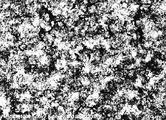
- FIG. 1 is an observation image of Example 2
- FIG. 2 is an observation image of Comparative Example 2 by a scanning electron microscope.
- the viscosity (30 rpm, 25 ° C.) of an aqueous dispersion having a degree of carboxymethyl substitution in the range of 0.5 to 1.2 and a solid content of 1% (w / v) is It can be seen that the dispersibility of the carbon nanotubes is good by using carboxymethyl cellulose and / or a salt thereof in the range of 1 to 1000 mPa ⁇ s.
- slurry 1 Water was added so as to be%, and the mixture was well stirred with a mazel star (KK-250S manufactured by Kurabo Industries Ltd.) to obtain slurry 1.
- This slurry was applied to a copper foil (manufactured by Furukawa Electric Co., Ltd., NC-WS) having a length of 320 mm, a width of 170 mm, and a thickness of 17 ⁇ m with an applicator, air-dried for 30 minutes, and then dried at 60 ° C. for 30 minutes in a dryer. ..
- the negative electrode is pressed under the conditions of 5 kN and a roll peripheral speed of 50 m / min, and has a basis weight of 62.9 g / m 2 and an effective discharge capacity of 330 mAh / g. I got a plate 1.
- the obtained negative electrode plate 1 and the LiCoO 2 positive electrode plate (manufactured by Hosen Co., Ltd., with a grain size of 110.2 g / m 2 , effective discharge capacity of 145 mAh / g) were punched out to form a circle with a diameter of 16 mm, and the negative electrode plate was punched out.
- the positive electrode plate was vacuum dried at 120 ° C. for 12 hours.
- a separator (polypropylene separator with a thickness of 20 ⁇ m manufactured by CS Tech) was punched out so as to have a circular shape with a diameter of 17 mm, and vacuum dried at 60 ° C. for 12 hours.
- the negative electrode plate 1 is placed in a stainless steel circular dish-shaped container with a diameter of 20.0 mm, then a separator, a positive electrode plate, a spacer (diameter 15.5 mm, thickness 1 mm), and a stainless steel washer (manufactured by Hosen Co., Ltd.).
- a separator a positive electrode plate
- a spacer spacer
- a stainless steel washer manufactured by Hosen Co., Ltd.
- the final voltage was set to 3.0 V.
- the constant current of the discharge process was performed at 0.2 C, and the discharge capacity (mAh / g) after one cycle was measured after the discharge.
- the constant current of the discharge process was set as follows, and the discharge capacity (mAh / g) was measured after each cycle of discharge.
- Constant current of discharge processing in each cycle 2 to 10 cycles: Constant current 0.2C for discharge processing 11 to 20 cycles: constant current 1C for discharge processing 21 cycles: Constant current 0.2C for discharge processing 22-31 cycles: constant current 2C for discharge processing 32 cycles: Constant current 0.2C for discharge processing 33-42 cycles: constant current 3C for discharge processing 43-52 cycles: constant current 0.2C for discharge processing
- the viscosity (30 rpm, 25 ° C.) of an aqueous dispersion having a degree of carboxymethyl substitution in the range of 0.5 to 1.2 and a solid content of 1% (w / v) is The performance of the non-aqueous electrolyte secondary battery produced by using the dispersion liquid containing carboxymethyl cellulose and / or a salt thereof in the range of 1 to 1000 mPa ⁇ s and carbon nanotubes was good.
Landscapes
- Chemical & Material Sciences (AREA)
- Engineering & Computer Science (AREA)
- Materials Engineering (AREA)
- Chemical Kinetics & Catalysis (AREA)
- Electrochemistry (AREA)
- General Chemical & Material Sciences (AREA)
- Nanotechnology (AREA)
- Organic Chemistry (AREA)
- Manufacturing & Machinery (AREA)
- Inorganic Chemistry (AREA)
- Battery Electrode And Active Subsutance (AREA)
- Secondary Cells (AREA)
Priority Applications (1)
| Application Number | Priority Date | Filing Date | Title |
|---|---|---|---|
| JP2022553739A JPWO2022070810A1 (https=) | 2020-09-29 | 2021-09-08 |
Applications Claiming Priority (2)
| Application Number | Priority Date | Filing Date | Title |
|---|---|---|---|
| JP2020162806 | 2020-09-29 | ||
| JP2020-162806 | 2020-09-29 |
Publications (1)
| Publication Number | Publication Date |
|---|---|
| WO2022070810A1 true WO2022070810A1 (ja) | 2022-04-07 |
Family
ID=80950160
Family Applications (1)
| Application Number | Title | Priority Date | Filing Date |
|---|---|---|---|
| PCT/JP2021/032926 Ceased WO2022070810A1 (ja) | 2020-09-29 | 2021-09-08 | 分散液、非水電解質二次電池用電極組成物、非水電解質二次電池用電極、非水電解質二次電池及び非水電解質二次電池用電極の製造方法 |
Country Status (3)
| Country | Link |
|---|---|
| JP (1) | JPWO2022070810A1 (https=) |
| TW (1) | TWI789002B (https=) |
| WO (1) | WO2022070810A1 (https=) |
Cited By (4)
| Publication number | Priority date | Publication date | Assignee | Title |
|---|---|---|---|---|
| JPWO2022137977A1 (https=) * | 2020-12-23 | 2022-06-30 | ||
| WO2024024446A1 (ja) * | 2022-07-29 | 2024-02-01 | 日本ゼオン株式会社 | カーボンナノチューブ分散液、非水系二次電池負極用スラリー、非水系二次電池用負極及び非水系二次電池 |
| WO2024070397A1 (ja) | 2022-09-30 | 2024-04-04 | 第一工業製薬株式会社 | カーボンナノチューブ分散液、及びそれを用いた電極用塗料、電極、非水電解質二次電池 |
| JP2025501317A (ja) * | 2022-10-21 | 2025-01-17 | エルジー エナジー ソリューション リミテッド | 負極組成物、これを含むリチウム二次電池用負極、および負極を含むリチウム二次電池 |
Citations (5)
| Publication number | Priority date | Publication date | Assignee | Title |
|---|---|---|---|---|
| WO2012127762A1 (ja) * | 2011-03-23 | 2012-09-27 | ヤマハ発動機株式会社 | 導電性組成物、分散系、導電性組成物の製造方法及び固体電解質電池 |
| JP2016028109A (ja) * | 2012-11-13 | 2016-02-25 | 保土谷化学工業株式会社 | 多層カーボンナノチューブ含有カルボキシメチルセルロースナトリウム水分散液 |
| JP2016204203A (ja) * | 2015-04-23 | 2016-12-08 | 東レ株式会社 | カーボンナノチューブ含有組成物の分散液および導電性成形体 |
| JP2020105316A (ja) * | 2018-12-27 | 2020-07-09 | 東洋インキScホールディングス株式会社 | カーボンナノチューブ分散液およびその利用 |
| JP6860740B1 (ja) * | 2020-04-27 | 2021-04-21 | 東洋インキScホールディングス株式会社 | カーボンナノチューブ分散液、それを用いた二次電池電極用組成物、電極膜、および二次電池。 |
Family Cites Families (1)
| Publication number | Priority date | Publication date | Assignee | Title |
|---|---|---|---|---|
| KR102873228B1 (ko) * | 2018-12-19 | 2025-10-20 | 닛뽄세이시가부시끼가이샤 | 비수 전해질 이차 전지용 카르복시메틸 셀룰로오스 또는 그 염 |
-
2021
- 2021-09-08 WO PCT/JP2021/032926 patent/WO2022070810A1/ja not_active Ceased
- 2021-09-08 JP JP2022553739A patent/JPWO2022070810A1/ja active Pending
- 2021-09-10 TW TW110133717A patent/TWI789002B/zh active
Patent Citations (5)
| Publication number | Priority date | Publication date | Assignee | Title |
|---|---|---|---|---|
| WO2012127762A1 (ja) * | 2011-03-23 | 2012-09-27 | ヤマハ発動機株式会社 | 導電性組成物、分散系、導電性組成物の製造方法及び固体電解質電池 |
| JP2016028109A (ja) * | 2012-11-13 | 2016-02-25 | 保土谷化学工業株式会社 | 多層カーボンナノチューブ含有カルボキシメチルセルロースナトリウム水分散液 |
| JP2016204203A (ja) * | 2015-04-23 | 2016-12-08 | 東レ株式会社 | カーボンナノチューブ含有組成物の分散液および導電性成形体 |
| JP2020105316A (ja) * | 2018-12-27 | 2020-07-09 | 東洋インキScホールディングス株式会社 | カーボンナノチューブ分散液およびその利用 |
| JP6860740B1 (ja) * | 2020-04-27 | 2021-04-21 | 東洋インキScホールディングス株式会社 | カーボンナノチューブ分散液、それを用いた二次電池電極用組成物、電極膜、および二次電池。 |
Non-Patent Citations (3)
| Title |
|---|
| ANONYMOUS: "CMC Daicel Ammonium", CMC DAICEL AMMONIUM, XP055918929, Retrieved from the Internet <URL:https://www.daicelmiraizu.com/business/wsp/special> [retrieved on 20220509] * |
| ANONYMOUS: "sodium carboxymethyl cellulose Supplier ", DAI-ICHI KOGYO SEIYAKU CO. LTD, XP055918922, Retrieved from the Internet <URL:https://www.worldofchemicals.com/chemicals/chemical-suppliers/26352/sodium-carboxymethyl-cellulose.html> [retrieved on 20220509] * |
| ANONYMOUS: "Sunrose® (CMC) Chemical Products", NIPPON PAPER GROUP, XP055918918, Retrieved from the Internet <URL:https://www.nipponpapergroup.com/products/chemical/functional_cellulose/sunrose.html> [retrieved on 20220509] * |
Cited By (7)
| Publication number | Priority date | Publication date | Assignee | Title |
|---|---|---|---|---|
| JPWO2022137977A1 (https=) * | 2020-12-23 | 2022-06-30 | ||
| US12374693B2 (en) | 2020-12-23 | 2025-07-29 | Panasonic Intellectual Property Management Co., Ltd. | Electrode slurry carbon nanotube liquid dispersion, negative electrode slurry, non-aqueous electrolyte secondary battery, and method for producing electrode slurry carbon nanotube liquid dispersion |
| JP7840016B2 (ja) | 2020-12-23 | 2026-04-03 | パナソニックIpマネジメント株式会社 | 電極スラリー用カーボンナノチューブ分散液、負極スラリー、非水電解質二次電池、及び、電極スラリー用カーボンナノチューブ分散液の製造方法 |
| WO2024024446A1 (ja) * | 2022-07-29 | 2024-02-01 | 日本ゼオン株式会社 | カーボンナノチューブ分散液、非水系二次電池負極用スラリー、非水系二次電池用負極及び非水系二次電池 |
| WO2024070397A1 (ja) | 2022-09-30 | 2024-04-04 | 第一工業製薬株式会社 | カーボンナノチューブ分散液、及びそれを用いた電極用塗料、電極、非水電解質二次電池 |
| KR20250084284A (ko) | 2022-09-30 | 2025-06-10 | 다이이치 고교 세이야쿠 가부시키가이샤 | 카본 나노튜브 분산액, 및 그것을 사용한 전극용 도료, 전극, 비수 전해질 이차전지 |
| JP2025501317A (ja) * | 2022-10-21 | 2025-01-17 | エルジー エナジー ソリューション リミテッド | 負極組成物、これを含むリチウム二次電池用負極、および負極を含むリチウム二次電池 |
Also Published As
| Publication number | Publication date |
|---|---|
| TWI789002B (zh) | 2023-01-01 |
| TW202213841A (zh) | 2022-04-01 |
| JPWO2022070810A1 (https=) | 2022-04-07 |
Similar Documents
| Publication | Publication Date | Title |
|---|---|---|
| WO2022070810A1 (ja) | 分散液、非水電解質二次電池用電極組成物、非水電解質二次電池用電極、非水電解質二次電池及び非水電解質二次電池用電極の製造方法 | |
| KR102873228B1 (ko) | 비수 전해질 이차 전지용 카르복시메틸 셀룰로오스 또는 그 염 | |
| JP7748405B2 (ja) | カルボキシメチルセルロースおよび/又はその塩、非水電解質二次電池用電極組成物、非水電解質二次電池用電極および非水電解質二次電池 | |
| JP7337630B2 (ja) | 非水電解質二次電池用結合剤、非水電解質二次電池用電極組成物、非水電解質二次電池用電極および非水電解質二次電池 | |
| WO2021060322A1 (ja) | 非水電解質二次電池用結合剤、非水電解質二次電池用電極組成物、非水電解質二次電池用電極および非水電解質二次電池 | |
| JP7337616B2 (ja) | 非水電解質二次電池用結合剤、非水電解質二次電池用電極組成物、非水電解質二次電池用電極および非水電解質二次電池 | |
| JP7232951B1 (ja) | カルボキシメチルセルロースおよび/又はその塩、非水電解質二次電池用電極組成物、非水電解質二次電池用電極および非水電解質二次電池 | |
| KR20220049550A (ko) | 비수 전해질 이차 전지용 결합제, 비수 전해질 이차 전지용 전극 조성물, 비수 전해질 이차 전지용 전극, 비수 전해질 이차 전지 및 비수 전해질 이차 전지용 결합제의 제조 방법 | |
| JP2021047988A (ja) | 非水電解質二次電池用電極組成物、非水電解質二次電池用電極および非水電解質二次電池 | |
| JP2021128887A (ja) | 非水電解質二次電池用結合剤、非水電解質二次電池用電極組成物、非水電解質二次電池用電極、非水電解質二次電池および非水電解質二次電池用結合剤の製造方法 | |
| JP2026064266A (ja) | 非水電解質二次電池電極用結合剤、非水電解質二次電池用電極組成物、非水電解質二次電池用電極および非水電解質二次電池 | |
| JP2021128886A (ja) | 非水電解質二次電池用結合剤、非水電解質二次電池用電極組成物、非水電解質二次電池用電極、非水電解質二次電池および非水電解質二次電池用結合剤の製造方法 | |
| TWI750759B (zh) | 非水電解質二次電池用電極、及其製造方法 | |
| WO2020129897A1 (ja) | 非水電解質二次電池用電極、その製造方法、及び非水電解質二次電池 | |
| JP2024001512A (ja) | カルボキシメチルセルロースおよび/又はその塩、分散液、非水電解質二次電池用電極組成物、非水電解質二次電池用電極および非水電解質二次電池 | |
| JP2021128888A (ja) | 非水電解質二次電池用結合剤、非水電解質二次電池用電極組成物、非水電解質二次電池用電極、非水電解質二次電池および非水電解質二次電池用結合剤の製造方法 | |
| JP2025022258A (ja) | カルボキシメチルセルロースリチウム塩およびカルボキシメチルセルロースリチウム塩の製造方法、非水電解質二次電池用電極組成物、非水電解質二次電池用電極および非水電解質二次電池 | |
| JP2023070235A (ja) | 非水電解質二次電池電極用結合剤、非水電解質二次電池用電極組成物、非水電解質二次電池用電極および非水電解質二次電池 | |
| JP2026019377A (ja) | カルボキシメチルセルロースリチウム塩およびカルボキシメチルセルロースリチウム塩の製造方法、カルボキシメチルセルロースナノファイバーリチウム塩、非水電解質二次電池用電極組成物、非水電解質二次電池用電極および非水電解質二次電池 | |
| JP2026019378A (ja) | カルボキシメチルセルロースリチウム塩の製造方法、非水電解質二次電池用電極組成物の製造方法、非水電解質二次電池用電極の製造方法、及び非水電解質二次電池の製造方法 | |
| WO2025115721A1 (ja) | 非水電解質二次電池電極用結合剤、非水電解質二次電池用電極組成物、非水電解質二次電池用電極および非水電解質二次電池 |
Legal Events
| Date | Code | Title | Description |
|---|---|---|---|
| 121 | Ep: the epo has been informed by wipo that ep was designated in this application |
Ref document number: 21875112 Country of ref document: EP Kind code of ref document: A1 |
|
| ENP | Entry into the national phase |
Ref document number: 2022553739 Country of ref document: JP Kind code of ref document: A |
|
| NENP | Non-entry into the national phase |
Ref country code: DE |
|
| 122 | Ep: pct application non-entry in european phase |
Ref document number: 21875112 Country of ref document: EP Kind code of ref document: A1 |