WO2021157399A1 - シュリンクラベルからのインキ層の除去方法 - Google Patents
シュリンクラベルからのインキ層の除去方法 Download PDFInfo
- Publication number
- WO2021157399A1 WO2021157399A1 PCT/JP2021/002384 JP2021002384W WO2021157399A1 WO 2021157399 A1 WO2021157399 A1 WO 2021157399A1 JP 2021002384 W JP2021002384 W JP 2021002384W WO 2021157399 A1 WO2021157399 A1 WO 2021157399A1
- Authority
- WO
- WIPO (PCT)
- Prior art keywords
- shrink label
- ink layer
- shrink
- temperature
- alkali
- Prior art date
- Legal status (The legal status is an assumption and is not a legal conclusion. Google has not performed a legal analysis and makes no representation as to the accuracy of the status listed.)
- Ceased
Links
Images
Classifications
-
- C—CHEMISTRY; METALLURGY
- C08—ORGANIC MACROMOLECULAR COMPOUNDS; THEIR PREPARATION OR CHEMICAL WORKING-UP; COMPOSITIONS BASED THEREON
- C08J—WORKING-UP; GENERAL PROCESSES OF COMPOUNDING; AFTER-TREATMENT NOT COVERED BY SUBCLASSES C08B, C08C, C08F, C08G or C08H
- C08J11/00—Recovery or working-up of waste materials
- C08J11/04—Recovery or working-up of waste materials of polymers
- C08J11/10—Recovery or working-up of waste materials of polymers by chemically breaking down the molecular chains of polymers or breaking of crosslinks, e.g. devulcanisation
- C08J11/14—Recovery or working-up of waste materials of polymers by chemically breaking down the molecular chains of polymers or breaking of crosslinks, e.g. devulcanisation by treatment with steam or water
-
- B—PERFORMING OPERATIONS; TRANSPORTING
- B29—WORKING OF PLASTICS; WORKING OF SUBSTANCES IN A PLASTIC STATE IN GENERAL
- B29B—PREPARATION OR PRETREATMENT OF THE MATERIAL TO BE SHAPED; MAKING GRANULES OR PREFORMS; RECOVERY OF PLASTICS OR OTHER CONSTITUENTS OF WASTE MATERIAL CONTAINING PLASTICS
- B29B17/00—Recovery of plastics or other constituents of waste material containing plastics
- B29B17/02—Separating plastics from other materials
-
- C—CHEMISTRY; METALLURGY
- C09—DYES; PAINTS; POLISHES; NATURAL RESINS; ADHESIVES; COMPOSITIONS NOT OTHERWISE PROVIDED FOR; APPLICATIONS OF MATERIALS NOT OTHERWISE PROVIDED FOR
- C09D—COATING COMPOSITIONS, e.g. PAINTS, VARNISHES OR LACQUERS; FILLING PASTES; CHEMICAL PAINT OR INK REMOVERS; INKS; CORRECTING FLUIDS; WOODSTAINS; PASTES OR SOLIDS FOR COLOURING OR PRINTING; USE OF MATERIALS THEREFOR
- C09D9/00—Chemical paint or ink removers
- C09D9/005—Chemical paint or ink removers containing organic solvents
-
- B—PERFORMING OPERATIONS; TRANSPORTING
- B29—WORKING OF PLASTICS; WORKING OF SUBSTANCES IN A PLASTIC STATE IN GENERAL
- B29B—PREPARATION OR PRETREATMENT OF THE MATERIAL TO BE SHAPED; MAKING GRANULES OR PREFORMS; RECOVERY OF PLASTICS OR OTHER CONSTITUENTS OF WASTE MATERIAL CONTAINING PLASTICS
- B29B17/00—Recovery of plastics or other constituents of waste material containing plastics
- B29B17/0026—Recovery of plastics or other constituents of waste material containing plastics by agglomeration or compacting
- B29B17/0036—Recovery of plastics or other constituents of waste material containing plastics by agglomeration or compacting of large particles, e.g. beads, granules, pellets, flakes, slices
-
- B—PERFORMING OPERATIONS; TRANSPORTING
- B29—WORKING OF PLASTICS; WORKING OF SUBSTANCES IN A PLASTIC STATE IN GENERAL
- B29B—PREPARATION OR PRETREATMENT OF THE MATERIAL TO BE SHAPED; MAKING GRANULES OR PREFORMS; RECOVERY OF PLASTICS OR OTHER CONSTITUENTS OF WASTE MATERIAL CONTAINING PLASTICS
- B29B17/00—Recovery of plastics or other constituents of waste material containing plastics
- B29B17/04—Disintegrating plastics, e.g. by milling
- B29B17/0412—Disintegrating plastics, e.g. by milling to large particles, e.g. beads, granules, flakes, slices
-
- B—PERFORMING OPERATIONS; TRANSPORTING
- B29—WORKING OF PLASTICS; WORKING OF SUBSTANCES IN A PLASTIC STATE IN GENERAL
- B29B—PREPARATION OR PRETREATMENT OF THE MATERIAL TO BE SHAPED; MAKING GRANULES OR PREFORMS; RECOVERY OF PLASTICS OR OTHER CONSTITUENTS OF WASTE MATERIAL CONTAINING PLASTICS
- B29B17/00—Recovery of plastics or other constituents of waste material containing plastics
- B29B2017/001—Pretreating the materials before recovery
-
- B—PERFORMING OPERATIONS; TRANSPORTING
- B29—WORKING OF PLASTICS; WORKING OF SUBSTANCES IN A PLASTIC STATE IN GENERAL
- B29B—PREPARATION OR PRETREATMENT OF THE MATERIAL TO BE SHAPED; MAKING GRANULES OR PREFORMS; RECOVERY OF PLASTICS OR OTHER CONSTITUENTS OF WASTE MATERIAL CONTAINING PLASTICS
- B29B17/00—Recovery of plastics or other constituents of waste material containing plastics
- B29B17/02—Separating plastics from other materials
- B29B2017/0213—Specific separating techniques
- B29B2017/0286—Cleaning means used for separation
- B29B2017/0289—Washing the materials in liquids
-
- B—PERFORMING OPERATIONS; TRANSPORTING
- B29—WORKING OF PLASTICS; WORKING OF SUBSTANCES IN A PLASTIC STATE IN GENERAL
- B29B—PREPARATION OR PRETREATMENT OF THE MATERIAL TO BE SHAPED; MAKING GRANULES OR PREFORMS; RECOVERY OF PLASTICS OR OTHER CONSTITUENTS OF WASTE MATERIAL CONTAINING PLASTICS
- B29B17/00—Recovery of plastics or other constituents of waste material containing plastics
- B29B17/04—Disintegrating plastics, e.g. by milling
- B29B2017/0424—Specific disintegrating techniques; devices therefor
- B29B2017/0476—Cutting or tearing members, e.g. spiked or toothed cylinders or intermeshing rollers
-
- B—PERFORMING OPERATIONS; TRANSPORTING
- B29—WORKING OF PLASTICS; WORKING OF SUBSTANCES IN A PLASTIC STATE IN GENERAL
- B29L—INDEXING SCHEME ASSOCIATED WITH SUBCLASS B29C, RELATING TO PARTICULAR ARTICLES
- B29L2031/00—Other particular articles
- B29L2031/744—Labels, badges, e.g. marker sleeves
-
- Y—GENERAL TAGGING OF NEW TECHNOLOGICAL DEVELOPMENTS; GENERAL TAGGING OF CROSS-SECTIONAL TECHNOLOGIES SPANNING OVER SEVERAL SECTIONS OF THE IPC; TECHNICAL SUBJECTS COVERED BY FORMER USPC CROSS-REFERENCE ART COLLECTIONS [XRACs] AND DIGESTS
- Y02—TECHNOLOGIES OR APPLICATIONS FOR MITIGATION OR ADAPTATION AGAINST CLIMATE CHANGE
- Y02W—CLIMATE CHANGE MITIGATION TECHNOLOGIES RELATED TO WASTEWATER TREATMENT OR WASTE MANAGEMENT
- Y02W30/00—Technologies for solid waste management
- Y02W30/50—Reuse, recycling or recovery technologies
- Y02W30/62—Plastics recycling; Rubber recycling
Definitions
- the present disclosure relates to a method for removing an ink layer from a shrink label.
- PET bottles polyethylene terephthalate bottles
- plastic shrink label having an ink layer printed for displaying product information or the like may be attached to the body of a PET bottle, but the shrink label has not yet been reused. ..
- Patent Document 1 describes a method in which a heat-shrinkable label is heat-shrinked under non-water immersion conditions and then brought into contact with low-temperature alkaline water to remove and remove the ink layer.
- a step of preheating a shrink label provided with an ink layer a step of crushing the shrink label after the step of preheating to prepare a shrink label piece, and a step of producing a shrink label piece from the shrink label piece.
- a method for removing an ink layer from a shrink label which comprises a step of removing the ink layer by alkali desorption, wherein the temperature of preheating is the same as the temperature of the alkali desorption or higher than the temperature of the alkali desorption. can do.
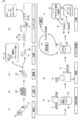
- FIGS. 1 to (i) are diagrams illustrating an example of the flow of the method of removing the ink layer from the shrink label of the embodiment.
- FIGS. 1 (a) to 1 (i) show an example of a flow of a method for removing an ink layer from a shrink label according to an embodiment.
- a method of removing the ink layer from the shrink label of the embodiment will be described with reference to FIGS. 1 (a) to 1 (i).
- the PET bottle 10 is collected in the collection box 12.
- a shrink label 11 provided with an ink layer is attached to the body of the PET bottle 10.
- the ink layer is a printing layer for displaying products and the like.
- a shrink label having an alkaline water-removable ink layer on at least one surface of a heat-shrinkable shrink film can be used.
- the shrink film include a polyester film made of polyethylene terephthalate, polyethylene naphthalate and the like; a styrene film made of a styrene-butadiene block copolymer and the like; an olefin film made of an olefin resin such as polyethylene and polypropylene; a vinyl chloride resin. Examples thereof include a vinyl chloride film made of. These may be foam films.
- the shrink film may be a single layer or a laminated body having two or more layers. The color of the shrink film is not particularly limited and may be milky white or transparent, for example.
- the heat shrinkage rate of the shrink film in at least one direction X is preferably 30% or more, more preferably 50% or more, from the viewpoint of shrinkage adhesion to various containers and the like.
- the thickness of the shrink film can be appropriately selected in consideration of the handleability of the shrink label 11, and can be, for example, about 10 to 100 ⁇ m, preferably about 15 to 60 ⁇ m.
- the numerical value of these shrink films is the numerical value of the shrink film used for producing the shrink label 11 before mounting on a container such as a PET bottle 10.
- the surface of the shrink film may be subjected to surface treatment such as corona discharge treatment or an anchor coat layer may be provided, if necessary, in order to enhance the adhesiveness with the ink layer.
- the anchor coat layer can be formed by a conventionally known anchor coat agent or the like.
- the ink layer may be dissolved or swollen in an alkaline aqueous solution and can be detached from the base material, and can be composed of, for example, either an oil-based ink or a water-based ink.
- an ink layer on the surface of the shrink film for example, a method of forming an ink layer on the surface of the shrink film by gravure printing, flexographic printing, screen printing, inkjet printing, or the like can be used.
- the ink layer may be a single layer or a multi-layer ink layer.
- the thickness of the ink layer can be appropriately selected depending on the intended use and the like, and can be, for example, about 0.1 to 100 ⁇ m.
- the ink layer is multi-layered, the entire ink layer may be alkali-soluble, and at least in the laminated structure, the ink layer located closest to the shrink film side may be alkali-soluble.
- the shrink label 11 is removed from the PET bottle 10 of the shrink-labeled bale 20 at the recycling factory 30, and the PET bottle 10 and the shrink label 11 are separated.
- the object to be removed from the PET bottle 10 also includes a normal label 40 other than the shrink label 11.
- the PET bottle 10 from which the shrink label 11 and / or the normal label 11 is separated is reused in the existing PET bottle recycling process.
- Examples of the ordinary label 40 include a shrink label or a non-shrink label having a non-alkali water-removable ink layer.
- the shrink label 11 and the normal label 40 are sorted to separate and collect the shrink label 11 from the normal label 40.
- the normal label 40 separated and recovered from the shrink label 11 is reused, for example, in a thermal recycling process.
- the shrink label 11 provided with the ink layer is preheated.
- the method for preheating the shrink label 11 is not particularly limited as long as it can suppress the amount of shrinkage and curling of the shrink label piece in the alkali desorption described later, but the temperature of the preheating is the temperature of the alkali desorption. It is carried out so as to be higher than the same or alkali desorption temperature. From the viewpoint of efficiently removing the ink layer from the shrink label piece in the alkali desorption described later, the preheating temperature is preferably 5 ° C. or more higher than the alkali desorption temperature.
- Examples of the method of preheating the shrink label 11 include a method of passing the shrink label 11 through the hot air tunnel 61 and a method of immersing the shrink label 11 in hot water 60 in the hot water tank 62.
- the shrink label 11 is immersed in the hot water 60 in the hot water tank 62 rather than the method of passing the shrink label 11 through the hot air tunnel 61. It is preferable to use the method of causing.
- the shrink label 11 removed from the PET bottle 10 is blown off by the hot air, which makes control difficult.
- the method of immersing in warm water is easier to control the temperature than the method of using hot air.
- the method of immersing in warm water has a smaller footprint of the device than the method of using hot air.
- the method of immersing in warm water is less likely to cause uneven shrinkage of the shrink label 11 than the method of using hot air, and can shrink uniformly.
- the shrink label 11 When the shrink label 11 is preheated by immersing the shrink label 11 in the hot water 60 in the hot water tank 62, for example, the shrink label 11 is immersed in warm water of about 80 ° C. to 90 ° C. for about 10 seconds to 20 seconds. It can be done by.
- the preheating temperature means the surface temperature of the shrink label 11 at the time of preheating. Therefore, when the shrink label 11 is preheated by immersing the shrink label 11 in the hot water 60 in the hot water tank 62, the temperature of the preheating can be replaced with the temperature of the hot water. Further, when the shrink label 11 is preheated by passing the shrink label 11 through the hot air tunnel 61, the temperature of the preheating can be replaced with the temperature of the hot air.
- the shrink label 11 after preheating is crushed by a crusher 70 to prepare a shrink label piece 71.
- the method for crushing the shrink label 11 after preheating is not particularly limited as long as the size of the shrink label piece 71 generated after the crushing is smaller than the size of the shrink label 11 after preheating.
- the shrink label 11 after preheating can be crushed to a size (for example, several cm square) that can efficiently remove the ink layer from the shrink label piece 71 in the alkali desorption described later.
- the ink layer is removed from the shrink label piece 71 by alkali desorption.
- the alkali desorption can be carried out by, for example, any of the following treatments (1) and (2).
- the treatment can be carried out by stirring the shrink label piece 71 while immersing it in the alkaline aqueous solution 80 in the hot alkaline tank 82.
- the time required for the treatment varies depending on the stirring speed, the amount of the shrink label piece 71 dropped on the alkaline aqueous solution 80, and the like, but is about 30 seconds to 20 minutes. According to this treatment, the shrink film piece 101 and the ink coating film 103 can be efficiently separated in the alkaline aqueous solution 80.
- the temperature of the preheating is set to be the same as the temperature of the alkali desorption or higher than the temperature of the alkali desorption.
- the alkali desorption temperature means that it is the surface temperature of the shrink label piece 71 at the time of alkali desorption. Therefore, the temperature of the alkali desorption can be replaced with the temperature of the alkaline aqueous solution 80 in which the shrink label piece 71 is immersed.
- the alkali desorption temperature (the temperature of the alkaline aqueous solution 80) is preferably 65 ° C. or higher.
- the upper limit of the alkali desorption temperature is theoretically 100 ° C., more preferably the alkali desorption temperature is 85 ° C. or higher and 95 ° C. or lower, and further preferably the alkali desorption temperature is 80 ° C. or higher and 90 ° C. It is as follows.
- the alkaline aqueous solution 80 after removing the ink layer from the shrink label piece 71 may be discarded as a waste liquid, or may be reused as the alkaline aqueous solution 80 for alkali desorption.
- the alkaline aqueous solution 80 is not particularly limited as long as the ink layer can be removed from the shrink label piece 71 by immersing the shrink label piece 71, and is particularly limited as long as it is an alkaline aqueous solution containing an alkaline substance.
- an aqueous solution of alkali metal hydroxide such as sodium hydroxide (NaOH) or potassium hydroxide (KOH)
- an aqueous solution of alkali metal carbonate such as sodium carbonate (Na 2 CO 3 ), sodium hydrogen carbonate (NaHCO).
- An aqueous solution of alkali metal hydrogen carbonate such as 3) or aqueous ammonia can be used.
- the concentration of the alkaline substance in the alkaline aqueous solution 80 can be appropriately selected within a range that does not impair the desorption ability, operability, workability, etc. of the ink layer, and is, for example, about 0.1 to 10% by weight, preferably 0. It is about 5 to 5% by weight, more preferably about 1 to 3% by weight.
- the temperature of the water in the water tank is not particularly limited, but it is preferably a temperature lower than the temperature of alkali desorption from the viewpoint of avoiding unintentional shrinkage of the shrink label piece 71, and from the viewpoint of energy consumption, it is about room temperature (from the viewpoint of energy consumption). It is preferably around 27 ° C.).
- the shrink label piece 71 is gently immersed in the alkaline aqueous solution 80.
- the adhesion between the two can be lowered while suppressing the complete separation of the ink layer from the shrink label piece 71.
- the term "quietly immersed" means a state in which the alkaline aqueous solution 80 is not agitated or is agitated extremely gently so that complete separation between the two does not occur. Then, the shrink film piece 101 and the ink coating film 103 can be separated in water by the subsequent immersion and stirring in water.
- the alkaline aqueous solution 80 after immersing the shrink label piece 71 may be discarded as a waste liquid, or may be reused as the alkaline aqueous solution 80 for alkali desorption.
- the characteristics of the alkaline aqueous solution 80 change less than in the one-tank treatment, so that the alkaline aqueous solution 80 can be reused more efficiently. Examples of changes in the characteristics of the alkaline aqueous solution 80 include mixing a large amount of ink layer.
- the shrink film piece 91 and the ink coating film 93 are separated. Specifically, for example, the shrink film piece 91 after the ink layer has been removed from the shrink label piece by the first net 90 having a relatively large opening is collected, and the second mesh having a relatively small opening is collected.
- the ink coating film 93 which is smaller than the shrink film piece 91, is collected by the net 92.
- the ink coating film 93 is a film in which the ink layer removed from the shrink label piece at the time of alkali desorption is finely divided.
- the shrink film piece 91 collected by the first net 90 can be reused as a plastic raw material for manufacturing a plastic product such as pellets. Further, by mixing the shrink film piece 91 with the raw material of the new shrink label, it can be reused as a shrink label.
- the ink coating film 93 collected by the second net 92 can be reused, for example, in a thermal recycling process.
- the method for removing the ink layer from the shrink label of the embodiment includes a step of preheating the shrink label provided with the ink layer, a step of crushing the shrink label after the step of preheating, and a step of producing a shrink label piece.
- the preheating temperature is the same as the alkali desorption temperature or higher than the alkali desorption temperature, including the step of removing the ink layer from the label piece by alkali desorption.
- the method for removing the ink layer from the shrink label of the embodiment can remove the ink layer from the shrink label more efficiently than before by providing at least these configurations.
- the shrink label is crushed into a shrink label piece prior to removing the ink layer from the shrink label by alkali desorption. This is because the ink layer can be efficiently removed from the shrink label by desorbing the alkali in a state where the shrink label is crushed into smaller shrink label pieces.
- the shrink label attached to the PET bottle etc. was heat-shrinked once at the time of attachment, but the shrinkage ability still remains in the shrink label. Therefore, when the temperature of the alkaline aqueous solution at the time of alkali desorption is high, the shrink label piece is further heat-shrinked. On the other hand, when the temperature of the alkaline aqueous solution is low, the ink layer cannot be efficiently removed from the shrink label piece.
- the shrink label before the shrink label is crushed into a shrink label piece, the shrink label is preheated at a temperature equal to or higher than the alkali desorption temperature to be heat-shrinked in advance. .. Then, the shape of the shrink label can be made into a wavy shape with a small degree of curl, for example.
- shrink label pieces obtained by crushing shrink labels with a small degree of curl also have a small degree of curl. If the shrink label is preheated after the shrink label is crushed, the shrink label piece is curled (rolled up) as a whole, which is not suitable for removing the ink layer.
- shrink label pieces are subjected to alkali desorption at the same temperature as or lower than the preheating.
- the ink layer can be removed while suppressing the shrinkage of the shrink label piece during alkali desorption.
- the ink layer can be removed more efficiently than before in the present embodiment.
- most of the shrink labels 11 removed from a container such as a PET bottle 10 have a side of 10 cm or more, and after the shrink labels 11 having such a size are heat-shrinked by preheating, they are several cm square.
- the efficiency of removing the ink layer can be remarkably improved by crushing the ink layer to 5 cm square or less and desorbing the alkali at 65 ° C. or higher, preferably 80 ° C. or higher, more preferably 85 ° C. or higher.
- the shrink label 11 suitable for the method of the present embodiment has a shrinkage rate measured in the radial direction (main shrinkage direction) of the container after being removed from a container such as a PET bottle 10 and immersed in a warm bath at 95 ° C. for 10 seconds.
- a shrink label of 30% or more, preferably 40% or more, more preferably 50% or more can be mentioned.
- the alkaline aqueous solution can come into contact with the entire surface of the label piece 71 without vigorous stirring. Therefore, the ink layer can be removed from the shrink label 11.
- the first ink layer is 56% by weight ethyl acetate, 8% by weight isopropyl alcohol, 15% by weight -n-propyl acetate, 3% by weight nitrocellulose, 15% by weight acrylic resin, 3 It was a resin layer formed by drying an ink containing a weight% vinyl chloride-vinyl acetate copolymer.
- the second ink layer was a resin layer obtained by drying the product name "Chorus 114 Beni KT2" (manufactured by DIC Graphics Corporation).
- the third ink layer was a resin layer obtained by drying the product name "NT High Ramic (NF) 701 White” (manufactured by Dainichiseika Kogyo Co., Ltd.).
- a PET bottle with a shrink label was produced by shrinking the shrink label in a state where the shrink label was attached to a tubular PET bottle having an outer diameter of 54 mm.
- the shrinkage rate of the shrink label at this time was about 30%, and the area of the shrink label after mounting was about 70% of the area of the shrink label before mounting. Then, the shrink label was peeled off from the PET bottle.
- the shrink label peeled off from the PET bottle was immersed in warm water at 70 ° C. for 20 seconds while gently stirring the warm water for preheating.
- the area of the shrink label became about 50% of the area of the shrink label before preheating (the area of the shrink label after mounting).
- the shrink label after preheating was crushed to prepare a substantially square shrink label piece having a length of 40 mm and a width of 40 mm.
- the shrink label piece was immersed in a 1.5 wt% NaOH aqueous solution at 70 ° C. for 60 seconds while stirring the NaOH aqueous solution to remove the alkali from the shrink film.
- Example 3 the ink layer was removed from the shrink film of the shrink label piece under the same method and conditions as in Experimental Example 1 except that the temperatures of the hot water and the aqueous NaOH solution were set to 90 ° C., respectively. The number of shrink label pieces from which was removed was confirmed. The results are shown in Table 1.
- Example 4 the ink layer was removed from the shrink film of the shrink label piece under the same method and conditions as in Experimental Example 1 except that the temperatures of the hot water and the aqueous NaOH solution were set to 95 ° C., respectively. The number of shrink label pieces from which was removed was confirmed. The results are shown in Table 1.
- Example 5 the ink layer was removed from the shrink film of the shrink label piece under the same method and conditions as in Experimental Example 1 except that the temperature of the hot water was set to 80 ° C. The number of shrink label pieces was confirmed. The results are shown in Table 2.
- Example 6 the ink layer was removed from the shrink film of the shrink label piece under the same method and conditions as in Experimental Example 1 except that the temperature of the hot water was set to 90 ° C. The number of shrink label pieces was confirmed. The results are shown in Table 2.
- Example 7 the shrink film of the shrink label piece was used as the ink layer under the same method and conditions as in Experimental Example 1 except that the temperature of the hot water was 90 ° C and the temperature of the NaOH aqueous solution was 85 ° C. The ink layer was removed, and the number of shrink label pieces from which the ink layer was removed was confirmed. The results are shown in Table 2.
- Example 8 From the shrink film of the shrink label piece to the ink layer under the same method and conditions as in Experimental Example 1 except that the temperature of the hot water was set to 90 ° C and the temperature of the NaOH aqueous solution was set to 80 ° C. The ink layer was removed, and the number of shrink label pieces from which the ink layer was removed was confirmed. The results are shown in Table 2.
- Example 9 In Experimental Example 9, the shrink label piece was immersed in a NaOH aqueous solution at 80 ° C. for 10 minutes without stirring, and then the shrink label piece taken out from the NaOH aqueous solution was stirred and water at 27 ° C. (room temperature). The ink layer was removed from the shrink film of the shrink label piece under the same method and the same conditions as in Example 5 except that the ink layer was immersed in the shrink label piece for 5 minutes, and the number of shrink label pieces from which the ink layer was removed was confirmed. .. The results are shown in Table 2.
- Example 10 From the shrink film of the shrink label piece to the ink layer under the same method and conditions as in Experimental Example 1 except that the temperature of the hot water was set to 80 ° C and the temperature of the NaOH aqueous solution was set to 90 ° C. The ink layer was removed, and the number of shrink label pieces from which the ink layer was removed was confirmed. The results are shown in Table 3.
- Example 12 From the shrink film of the shrink label piece to the ink layer under the same method and conditions as in Experimental Example 1 except that the temperature of the hot water was 90 ° C. and the temperature of the NaOH aqueous solution was 95 ° C. The ink layer was removed, and the number of shrink label pieces from which the ink layer was removed was confirmed. The results are shown in Table 3.
- Experimental Examples 1 to 9 are Examples, and Experimental Examples 10 to 12 are Comparative Examples.
- the shrink label is preheated and then the shrink label is crushed into a shrink label piece, and the ink layer from the shrink label piece is preheated with warm water.
- Experimental Examples 1 to 9 in which the alkali was desorbed with a NaOH aqueous solution having a temperature lower than the temperature, more than in Experimental Examples 10 to 12 in which the alkali was desorbed with a NaOH aqueous solution having a temperature higher than the temperature of the preheated hot water. It was confirmed that the ink layer could be removed from the shrink label piece.
Landscapes
- Chemical & Material Sciences (AREA)
- Engineering & Computer Science (AREA)
- Life Sciences & Earth Sciences (AREA)
- Mechanical Engineering (AREA)
- Chemical Kinetics & Catalysis (AREA)
- Environmental & Geological Engineering (AREA)
- Organic Chemistry (AREA)
- Sustainable Development (AREA)
- Health & Medical Sciences (AREA)
- Medicinal Chemistry (AREA)
- Polymers & Plastics (AREA)
- General Chemical & Material Sciences (AREA)
- Materials Engineering (AREA)
- Wood Science & Technology (AREA)
- Separation, Recovery Or Treatment Of Waste Materials Containing Plastics (AREA)
Priority Applications (4)
| Application Number | Priority Date | Filing Date | Title |
|---|---|---|---|
| EP21750624.5A EP4101880A4 (en) | 2020-02-06 | 2021-01-25 | METHOD FOR REMOVAL OF INK LAYERS FROM A SHRINK FILM |
| JP2021575730A JPWO2021157399A1 (https=) | 2020-02-06 | 2021-01-25 | |
| US17/796,470 US12460062B2 (en) | 2020-02-06 | 2021-01-25 | Method of removing ink layer from shrink sleeve label |
| JP2025082057A JP2025107492A (ja) | 2020-02-06 | 2025-05-15 | シュリンクラベルからのインキ層の除去方法 |
Applications Claiming Priority (2)
| Application Number | Priority Date | Filing Date | Title |
|---|---|---|---|
| JP2020-018775 | 2020-02-06 | ||
| JP2020018775 | 2020-02-06 |
Publications (1)
| Publication Number | Publication Date |
|---|---|
| WO2021157399A1 true WO2021157399A1 (ja) | 2021-08-12 |
Family
ID=77199448
Family Applications (1)
| Application Number | Title | Priority Date | Filing Date |
|---|---|---|---|
| PCT/JP2021/002384 Ceased WO2021157399A1 (ja) | 2020-02-06 | 2021-01-25 | シュリンクラベルからのインキ層の除去方法 |
Country Status (4)
| Country | Link |
|---|---|
| US (1) | US12460062B2 (https=) |
| EP (1) | EP4101880A4 (https=) |
| JP (2) | JPWO2021157399A1 (https=) |
| WO (1) | WO2021157399A1 (https=) |
Cited By (5)
| Publication number | Priority date | Publication date | Assignee | Title |
|---|---|---|---|---|
| JP7014284B1 (ja) | 2020-12-07 | 2022-02-01 | 東洋インキScホールディングス株式会社 | 積層体の処理装置、および、これを用いた樹脂基材の回収方法 |
| JP2023051161A (ja) * | 2021-09-30 | 2023-04-11 | 株式会社フジシールインターナショナル | インキの回収方法、基材の回収方法、基材のリサイクル方法、及び再生基材の製造方法 |
| JP2023051162A (ja) * | 2021-09-30 | 2023-04-11 | 株式会社フジシールインターナショナル | インキ層の除去方法、ラベルのリサイクル方法およびプラスチック製品の製造方法 |
| JP2024011940A (ja) * | 2022-07-15 | 2024-01-25 | グンゼ株式会社 | 印刷層の除去方法 |
| JP2024066537A (ja) * | 2022-11-02 | 2024-05-16 | artience株式会社 | プラスチック基材の分離回収方法 |
Families Citing this family (1)
| Publication number | Priority date | Publication date | Assignee | Title |
|---|---|---|---|---|
| WO2025068267A1 (en) * | 2023-09-27 | 2025-04-03 | Borealis Ag | A mechanical polypropylene recycling process |
Citations (6)
| Publication number | Priority date | Publication date | Assignee | Title |
|---|---|---|---|---|
| JP2001350411A (ja) | 2000-06-05 | 2001-12-21 | Fuji Seal Inc | 熱収縮性ラベルからのインキ層の除去方法 |
| JP2002060518A (ja) * | 2000-08-18 | 2002-02-26 | Mitsubishi Plastics Ind Ltd | ポリエステル系フィルム及び印刷インキの剥離方法 |
| JP2002249571A (ja) * | 2001-02-23 | 2002-09-06 | Toyobo Co Ltd | 中空成形体ボトル、インキ除去方法、中空成形体ボトルの再生方法、再生ペレット |
| JP2003122256A (ja) * | 2002-06-17 | 2003-04-25 | Toyobo Co Ltd | ラベルを装着したボトル及びその再生方法 |
| JP2005298354A (ja) * | 2004-04-07 | 2005-10-27 | Is:Kk | ポリエステルフィルムからのエステルモノマーの回収方法 |
| JP2008100413A (ja) * | 2006-10-18 | 2008-05-01 | Sharp Corp | プラスチック廃材の再資源化方法およびプラスチック原料の製造方法、プラスチック部材の製造方法、ならびにプラスチック原料、プラスチック部材 |
Family Cites Families (3)
| Publication number | Priority date | Publication date | Assignee | Title |
|---|---|---|---|---|
| JP2002088172A (ja) * | 2000-09-18 | 2002-03-27 | Mitsubishi Rayon Co Ltd | 熱収縮性ポリエステルフィルム |
| KR101255388B1 (ko) * | 2005-04-08 | 2013-04-17 | 도요보 가부시키가이샤 | 열수축성 폴리에스테르계 필름 및 열수축성 라벨 |
| ES2427019B2 (es) * | 2012-03-26 | 2014-05-09 | Universidad De Alicante | Procedimiento para la eliminación de tinta impresa en film de plástico |
-
2021
- 2021-01-25 JP JP2021575730A patent/JPWO2021157399A1/ja active Pending
- 2021-01-25 EP EP21750624.5A patent/EP4101880A4/en active Pending
- 2021-01-25 WO PCT/JP2021/002384 patent/WO2021157399A1/ja not_active Ceased
- 2021-01-25 US US17/796,470 patent/US12460062B2/en active Active
-
2025
- 2025-05-15 JP JP2025082057A patent/JP2025107492A/ja active Pending
Patent Citations (6)
| Publication number | Priority date | Publication date | Assignee | Title |
|---|---|---|---|---|
| JP2001350411A (ja) | 2000-06-05 | 2001-12-21 | Fuji Seal Inc | 熱収縮性ラベルからのインキ層の除去方法 |
| JP2002060518A (ja) * | 2000-08-18 | 2002-02-26 | Mitsubishi Plastics Ind Ltd | ポリエステル系フィルム及び印刷インキの剥離方法 |
| JP2002249571A (ja) * | 2001-02-23 | 2002-09-06 | Toyobo Co Ltd | 中空成形体ボトル、インキ除去方法、中空成形体ボトルの再生方法、再生ペレット |
| JP2003122256A (ja) * | 2002-06-17 | 2003-04-25 | Toyobo Co Ltd | ラベルを装着したボトル及びその再生方法 |
| JP2005298354A (ja) * | 2004-04-07 | 2005-10-27 | Is:Kk | ポリエステルフィルムからのエステルモノマーの回収方法 |
| JP2008100413A (ja) * | 2006-10-18 | 2008-05-01 | Sharp Corp | プラスチック廃材の再資源化方法およびプラスチック原料の製造方法、プラスチック部材の製造方法、ならびにプラスチック原料、プラスチック部材 |
Non-Patent Citations (1)
| Title |
|---|
| See also references of EP4101880A4 |
Cited By (8)
| Publication number | Priority date | Publication date | Assignee | Title |
|---|---|---|---|---|
| JP7014284B1 (ja) | 2020-12-07 | 2022-02-01 | 東洋インキScホールディングス株式会社 | 積層体の処理装置、および、これを用いた樹脂基材の回収方法 |
| JP2022090235A (ja) * | 2020-12-07 | 2022-06-17 | 東洋インキScホールディングス株式会社 | 積層体の処理装置、および、これを用いた樹脂基材の回収方法 |
| JP2023051161A (ja) * | 2021-09-30 | 2023-04-11 | 株式会社フジシールインターナショナル | インキの回収方法、基材の回収方法、基材のリサイクル方法、及び再生基材の製造方法 |
| JP2023051162A (ja) * | 2021-09-30 | 2023-04-11 | 株式会社フジシールインターナショナル | インキ層の除去方法、ラベルのリサイクル方法およびプラスチック製品の製造方法 |
| JP7657130B2 (ja) | 2021-09-30 | 2025-04-04 | 株式会社フジシールインターナショナル | インキの回収方法、基材の回収方法、基材のリサイクル方法、及び再生基材の製造方法 |
| JP7762531B2 (ja) | 2021-09-30 | 2025-10-30 | 株式会社フジシールインターナショナル | インキ層の除去方法、ラベルのリサイクル方法およびプラスチック製品の製造方法 |
| JP2024011940A (ja) * | 2022-07-15 | 2024-01-25 | グンゼ株式会社 | 印刷層の除去方法 |
| JP2024066537A (ja) * | 2022-11-02 | 2024-05-16 | artience株式会社 | プラスチック基材の分離回収方法 |
Also Published As
| Publication number | Publication date |
|---|---|
| US20230048686A1 (en) | 2023-02-16 |
| EP4101880A4 (en) | 2024-03-06 |
| US12460062B2 (en) | 2025-11-04 |
| JPWO2021157399A1 (https=) | 2021-08-12 |
| JP2025107492A (ja) | 2025-07-17 |
| EP4101880A1 (en) | 2022-12-14 |
Similar Documents
| Publication | Publication Date | Title |
|---|---|---|
| WO2021157399A1 (ja) | シュリンクラベルからのインキ層の除去方法 | |
| WO2021225070A1 (ja) | シュリンクラベルからのインキ層の除去方法 | |
| JP5874153B2 (ja) | 剥離ライナーの製造方法 | |
| CN115273646A (zh) | 一种贴设在pet材料上的电子防盗软标签及pet材料回收方法 | |
| KR101486799B1 (ko) | 저비중을 갖는 라벨용 열 수축성 필름 및 그 제조방법 | |
| JP2003122256A (ja) | ラベルを装着したボトル及びその再生方法 | |
| JPH11333952A (ja) | ラベル並びにそのラベルを装着したボトル及びその再生方法 | |
| JP2025085833A (ja) | 基材の回収方法及び基材のリサイクル方法 | |
| JP2023051155A (ja) | ラベル、ラベルの分別方法、及びラベルからの基材の回収方法 | |
| JP4012361B2 (ja) | 熱収縮ラベル及び印刷インキの剥離方法 | |
| CN218729600U (zh) | 一种贴设在pet材料上的电子防盗软标签 | |
| JP3424801B2 (ja) | ラベルを装着したボトル及びその再生方法 | |
| JP2023163841A (ja) | 熱収縮性積層体からの再生樹脂の製造方法 | |
| JP7762531B2 (ja) | インキ層の除去方法、ラベルのリサイクル方法およびプラスチック製品の製造方法 | |
| JP7674979B2 (ja) | ラベルの再利用方法 | |
| JP4488126B2 (ja) | ラベル並びにそのラベルを装着したボトル及びその再生方法 | |
| JP2024056243A (ja) | 再生樹脂の製造方法 | |
| JP2002032024A (ja) | リサイクル性に優れる熱収縮性ポリエステルラベル | |
| CN101475702A (zh) | 利用力化学法快速剥离铝塑复合材料的方法 | |
| JP2024060835A (ja) | 再生樹脂の製造方法 | |
| JP7832896B2 (ja) | シュリンクラベルおよびシュリンクラベルの分別方法 | |
| JP2025151926A (ja) | リサイクル材料の製造方法 | |
| JPH11237841A (ja) | ラベル並びにそのラベルを装着したボトル及びその再生方法 | |
| CN210481263U (zh) | 一种可回收的热水减粘胶带 | |
| JP2003341249A (ja) | 熱転写フィルム |
Legal Events
| Date | Code | Title | Description |
|---|---|---|---|
| 121 | Ep: the epo has been informed by wipo that ep was designated in this application |
Ref document number: 21750624 Country of ref document: EP Kind code of ref document: A1 |
|
| ENP | Entry into the national phase |
Ref document number: 2021575730 Country of ref document: JP Kind code of ref document: A |
|
| NENP | Non-entry into the national phase |
Ref country code: DE |
|
| ENP | Entry into the national phase |
Ref document number: 2021750624 Country of ref document: EP Effective date: 20220906 |
|
| WWG | Wipo information: grant in national office |
Ref document number: 17796470 Country of ref document: US |