WO2020195462A1 - 情報提示システム - Google Patents
情報提示システム Download PDFInfo
- Publication number
- WO2020195462A1 WO2020195462A1 PCT/JP2020/007529 JP2020007529W WO2020195462A1 WO 2020195462 A1 WO2020195462 A1 WO 2020195462A1 JP 2020007529 W JP2020007529 W JP 2020007529W WO 2020195462 A1 WO2020195462 A1 WO 2020195462A1
- Authority
- WO
- WIPO (PCT)
- Prior art keywords
- information
- vehicle
- user
- indicator
- presentation system
- Prior art date
- Legal status (The legal status is an assumption and is not a legal conclusion. Google has not performed a legal analysis and makes no representation as to the accuracy of the status listed.)
- Ceased
Links
Images




Classifications
-
- B—PERFORMING OPERATIONS; TRANSPORTING
- B60—VEHICLES IN GENERAL
- B60J—WINDOWS, WINDSCREENS, NON-FIXED ROOFS, DOORS, OR SIMILAR DEVICES FOR VEHICLES; REMOVABLE EXTERNAL PROTECTIVE COVERINGS SPECIALLY ADAPTED FOR VEHICLES
- B60J5/00—Doors
-
- B—PERFORMING OPERATIONS; TRANSPORTING
- B60—VEHICLES IN GENERAL
- B60K—ARRANGEMENT OR MOUNTING OF PROPULSION UNITS OR OF TRANSMISSIONS IN VEHICLES; ARRANGEMENT OR MOUNTING OF PLURAL DIVERSE PRIME-MOVERS IN VEHICLES; AUXILIARY DRIVES FOR VEHICLES; INSTRUMENTATION OR DASHBOARDS FOR VEHICLES; ARRANGEMENTS IN CONNECTION WITH COOLING, AIR INTAKE, GAS EXHAUST OR FUEL SUPPLY OF PROPULSION UNITS IN VEHICLES
- B60K35/00—Instruments specially adapted for vehicles; Arrangement of instruments in or on vehicles
- B60K35/20—Output arrangements, i.e. from vehicle to user, associated with vehicle functions or specially adapted therefor
- B60K35/28—Output arrangements, i.e. from vehicle to user, associated with vehicle functions or specially adapted therefor characterised by the type of the output information, e.g. video entertainment or vehicle dynamics information; characterised by the purpose of the output information, e.g. for attracting the attention of the driver
-
- B—PERFORMING OPERATIONS; TRANSPORTING
- B60—VEHICLES IN GENERAL
- B60K—ARRANGEMENT OR MOUNTING OF PROPULSION UNITS OR OF TRANSMISSIONS IN VEHICLES; ARRANGEMENT OR MOUNTING OF PLURAL DIVERSE PRIME-MOVERS IN VEHICLES; AUXILIARY DRIVES FOR VEHICLES; INSTRUMENTATION OR DASHBOARDS FOR VEHICLES; ARRANGEMENTS IN CONNECTION WITH COOLING, AIR INTAKE, GAS EXHAUST OR FUEL SUPPLY OF PROPULSION UNITS IN VEHICLES
- B60K35/00—Instruments specially adapted for vehicles; Arrangement of instruments in or on vehicles
- B60K35/80—Arrangements for controlling instruments
-
- B—PERFORMING OPERATIONS; TRANSPORTING
- B60—VEHICLES IN GENERAL
- B60R—VEHICLES, VEHICLE FITTINGS, OR VEHICLE PARTS, NOT OTHERWISE PROVIDED FOR
- B60R11/00—Arrangements for holding or mounting articles, not otherwise provided for
- B60R11/02—Arrangements for holding or mounting articles, not otherwise provided for for radio sets, television sets, telephones, or the like; Arrangement of controls thereof
-
- G—PHYSICS
- G01—MEASURING; TESTING
- G01C—MEASURING DISTANCES, LEVELS OR BEARINGS; SURVEYING; NAVIGATION; GYROSCOPIC INSTRUMENTS; PHOTOGRAMMETRY OR VIDEOGRAMMETRY
- G01C21/00—Navigation; Navigational instruments not provided for in groups G01C1/00 - G01C19/00
- G01C21/26—Navigation; Navigational instruments not provided for in groups G01C1/00 - G01C19/00 specially adapted for navigation in a road network
- G01C21/34—Route searching; Route guidance
-
- G—PHYSICS
- G06—COMPUTING OR CALCULATING; COUNTING
- G06F—ELECTRIC DIGITAL DATA PROCESSING
- G06F3/00—Input arrangements for transferring data to be processed into a form capable of being handled by the computer; Output arrangements for transferring data from processing unit to output unit, e.g. interface arrangements
- G06F3/01—Input arrangements or combined input and output arrangements for interaction between user and computer
-
- G—PHYSICS
- G08—SIGNALLING
- G08G—TRAFFIC CONTROL SYSTEMS
- G08G1/00—Traffic control systems for road vehicles
- G08G1/16—Anti-collision systems
-
- B—PERFORMING OPERATIONS; TRANSPORTING
- B60—VEHICLES IN GENERAL
- B60K—ARRANGEMENT OR MOUNTING OF PROPULSION UNITS OR OF TRANSMISSIONS IN VEHICLES; ARRANGEMENT OR MOUNTING OF PLURAL DIVERSE PRIME-MOVERS IN VEHICLES; AUXILIARY DRIVES FOR VEHICLES; INSTRUMENTATION OR DASHBOARDS FOR VEHICLES; ARRANGEMENTS IN CONNECTION WITH COOLING, AIR INTAKE, GAS EXHAUST OR FUEL SUPPLY OF PROPULSION UNITS IN VEHICLES
- B60K35/00—Instruments specially adapted for vehicles; Arrangement of instruments in or on vehicles
- B60K35/20—Output arrangements, i.e. from vehicle to user, associated with vehicle functions or specially adapted therefor
- B60K35/29—Instruments characterised by the way in which information is handled, e.g. showing information on plural displays or prioritising information according to driving conditions
Definitions
- the present invention relates to an information presentation system that executes information presentation using an information presentation device.
- an obstacle detection system that detects that a vehicle approaches an obstacle while driving the vehicle and notifies the driver is well known.
- a proximity sensor provided on the vehicle body detects an approaching state with an obstacle, and when an obstacle approaches the vehicle body, the driver is notified by, for example, a beep sound. To do.
- An object of the present invention is to provide an information presentation system capable of presenting information that is easy to understand.
- the information presentation system has a configuration in which information including a warning is presented to the user, and is an information presentation device having an indicator and a main body supported so that the indicator can move.
- a control unit for controlling the presentation direction of the information so that the indicator points in accordance with the content of the information directed to the user is provided.
- the block diagram of the information presentation system of 1st Embodiment Schematic diagram of the information presentation device.
- Explanatory drawing which shows operation to specify a destination.
- the explanatory view which shows the operation example of the information presenting apparatus.
- the information presentation system 1 executes driving and driving support through an information presentation device 3 capable of interactively communicating with a occupant such as a driver of a vehicle 2.
- driving and driving support executed by the information presentation system 1 for example, there is a warning for ensuring driving safety.
- information such as where the destination specified by the occupants is.
- the information presenting device 3 presents this kind of alerting and information provision while interacting with an occupant such as a driver.
- the information presenting device 3 is preferably an anthropomorphic agent.
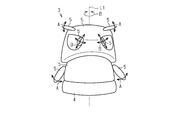
- the information presenting device 3 includes a main body 4 and an indicator 5 that can operate on the main body 4.
- the information presentation device 3 is a device capable of transmitting information by gesture to an occupant such as a driver.
- the indicator body 5 is supported on the main body 4 so as to be movable.
- the indicator body 5 is preferably, for example, an anthropomorphic agent's arm, head, body, line of sight, ear, finger, tail, tactile sensation, or the like.
- the indicator body 5 preferably swings in the direction of arrow A in the figure with the base as a fulcrum. Further, in the case of the head or body, for example, the indicator body 5 preferably takes a motion of rotating in the arrow B direction around the axis L1. For example, in the case of a line of sight, the indicator body 5 preferably moves in all directions, up, down, left, and right, as shown by the cross arrow B in the figure. As described above, the indicator body 5 may be moved by any movement such as swinging, rotating, and sliding.
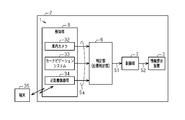
- the information presentation system 1 controls the operation of the determination unit 6 for determining what kind of content is to be presented to the user and the operation of the information presentation device 3 based on the determination result of the determination unit 6.
- a unit 7 is provided.
- the determination unit 6 determines the content of the presentation based on at least the information Sa required when presenting the information for calling attention to the occupant in the vehicle 2.
- the determination unit 6 acquires the information Sa required for alerting the driver, and based on this information Sa, the occupant is notified. Judge the content of the presentation.
- the determination unit 6 acquires the information Sa required when calling attention to driving from the detection unit 8.
- the alert is to alert the occupants when the vehicle 2 approaches an obstacle.
- the detection unit 8 is preferably, for example, an obstacle detection sensor provided on the vehicle body.
- the obstacle detection sensors are, for example, proximity sensors arranged at the four corners of the vehicle body.
- examples of the detection unit 8 other than this include a camera, a millimeter wave radar, an infrared sensor, and the like.
- the determination unit 6 is preferably an obstacle determination unit.
- the obstacle determination unit executes determination of the direction of the obstacle and determination of the approaching state of the obstacle based on the information Sa input from the detection unit 8. After the determination is completed, the determination unit 6 outputs the determination signal S1 which is the determination result to the control unit 7.
- the control unit 7 executes the presentation to the occupant by operating the information presenting device 3 capable of communicating through the exchange of intentions with the user based on the determination signal S1 input from the determination unit 6.
- the control unit 7 outputs the output signal S2 based on the determination signal S1 input from the determination unit 6 to the information presenting device 3, so that the information presenting device 3 executes a gesture based on the determination result of the determination unit 6.
- the control unit 7 of this example controls the information presenting device 3 having the main body unit 4 and the indicator body 5 so that the indicator body 5 points to the presentation direction of the information according to the content of the information directed to the user. ..
- the information presenting device 3 includes a device control unit 10 that controls the operation of the information presenting device 3.
- the indicator body 5 is connected to the device control unit 10 via each drive unit 11 provided for each indicator body 5.
- the device control unit 10 executes the gesture by the indicator body 5 by operating the indicator body 5 through the drive unit 11 based on the output signal S2 input from the control unit 7.
- the gesture of the indicator body 5 is preferably a beat motion in which the indicator body 5 is repeatedly shaken up and down while pointing at the indicator body 5 with the direction of the obstacle as the presentation direction.
- the information presenting device 3 enables a sound collecting unit 12 that collects surrounding sounds in the information presenting device 3, a sound output unit 13 that enables sound output from the information presenting device 3, and a visual manifestation of intention. It includes a display unit 14.
- the sound collecting unit 12 is, for example, a microphone.
- the sound output unit 13 is, for example, a speaker.
- the display unit 14 is preferably lighting provided on the agent, for example.
- the information presenting device 3 controls the sound collecting unit 12, the sound output unit 13, and the display unit 14 to execute communication through a voice dialogue with the occupant.
- the detection unit 8 such as the proximity sensor provided on the front right side of the vehicle body.
- the detection unit 8 outputs information Sa according to the direction of the obstacle 15 as seen from the vehicle body and the distance to the obstacle 15 to the determination unit 6.
- the determination unit 6 determines the direction and the approaching state of the obstacle 15 based on the information Sa input from the detection unit 8, and outputs the determination signal S1 to the control unit 7 as the determination result.
- the control unit 7 outputs an output signal S2 based on the determination signal S1 to the information presenting device 3, and causes the information presenting device 3 to perform a gesture according to the situation with the obstacle 15 approaching the vehicle 2.
- the information presenting device 3 directs the indicator 5 in the same direction with the direction of the obstacle 15 as the presentation direction, and the indicator 5 makes a beat motion.
- the beat movement is a movement in which the indicator body 5 is repeatedly shaken up and down.
- the beat motion of the indicator body 5 may be changed according to the degree of approach of the obstacle 15 to the vehicle 2. For example, the closer the obstacle 15 is to the vehicle 2, the faster the beat movement or the larger the amount of shaking. By doing so, it is possible to inform the driver of the degree of urgency that the vehicle 2 comes into contact with the obstacle 15.
- a control unit 7 is provided in the information presentation system 1, and the information presentation device 3 having the main body 4 and the indicator 5 is indicated by the indicator 5 according to the content of the information directed to the user. Control.
- the information presenting device 3 capable of communicating through the exchange of intentions with the user is used, and the information presenting device 3 is operated in a manner according to the content of the presentation to present the occupant with a warning. Is possible. Therefore, the information can be presented in an easy-to-understand manner using the information presenting device 3. In addition, the visual burden when finding the obstacle 15 can be reduced.
- the control unit 7 continuously operates the indicator 5 of the information presenting device 3, that is, a so-called beat operation, when there is an object for the information to be presented to the user. Therefore, various intention presentations can be provided to the user by the continuous operation of the indicator body 5.
- control unit 7 When the information presented to the user is used as a warning, the control unit 7 operates the indicator 5 in a manner corresponding to the degree of the warning. Therefore, it is possible to make the user immediately recognize the degree of attention alerting, and it is possible to make the user take appropriate measures as appropriate.
- the alert is a notification that the vehicle 2 on which the user is riding approaches the obstacle 15. Therefore, it is possible to intuitively make the occupants such as the driver intuitively understand the approach of the vehicle 2 to the obstacle 15 outside the vehicle. Therefore, appropriate driving support can be provided.
- the control unit 7 executes the presentation to the occupant by operating the indicator 5 provided in the information presentation device 3. Therefore, various presentations can be made to the occupant in an intuitive and easy-to-understand manner of moving the indicator body 5.
- the control unit 7 indicates the direction in which the attention-calling target exists by the indicator 5 of the information presenting device 3. Therefore, it is possible to notify the user in an easy-to-understand manner where the target of the alert is located.
- the second embodiment is an embodiment in which the content of the information presented to the user described in the first embodiment is changed. Therefore, the same parts as those in the first embodiment are designated by the same reference numerals, detailed description thereof will be omitted, and only different parts will be described in detail.
- the information presentation system 1 of this example executes attention to the occupants and information provision through the gesture of the information presentation device 3.
- the device 20 is preferably an in-vehicle device.
- the operation of the device 20 is incomplete, for example, the vehicle door is a half door, the window of the vehicle door is not fully closed, the interior lamp is forgotten to be turned off, and the like.
- information provision for example, when there is an utterance in the vehicle, there is a notification that informs the driver of where in the vehicle the utterance is located.
- the detection unit 8 of this example includes a door open / close sensor 21 that detects the opening / closing of the vehicle door, a window opening / closing sensor 22 that detects the opening / closing of the window of the vehicle door, an in-vehicle lamp switch 23 that detects the on / off of the in-vehicle lamp, and an occupant.
- a camera 24 capable of photographing.
- Door opening / closing and window opening / closing are not limited to detection by sensors 21 and 22, but may be detected by a switch. Further, the camera 24 is not limited to the camera installed inside the vehicle, and may be a camera installed outside the vehicle.
- the detection unit 8 outputs the sensor signal, the switch signal, the detection data, and the like as the information Sa to the determination unit 6.
- the determination unit 6 of this example includes a half-door determination unit 25, a window open / close determination unit 26, a lamp on / off determination unit 27, a speaker determination unit 28, and a state determination unit 29.
- the half-door determination unit 25 determines whether or not the door is a half-door based on the sensor signal of the door open / close sensor 21, and outputs the determination signal S11 to the state determination unit 29.
- the window open / close determination unit 26 determines the open / close amount and open / closed state of the window based on the sensor signal of the window open / close sensor 22, and outputs the determination signal S12 to the state determination unit 29.
- the lamp on / off determination unit 27 determines whether the in-vehicle lamp is on or off based on the switch signal of the in-vehicle lamp switch, and outputs the determination signal S13 to the state determination unit 29.
- the speaker determination unit 28 determines who the speaker is in the vehicle based on the image data acquired from the camera 24, and outputs the determination result S14 to the state determination unit 29.
- the state determination unit 29 determines the content to be alerted based on these determination signals S11 to S14. For example, when the vehicle door is a half door, the state determination unit 29 determines that the operation of the vehicle door is incomplete, and determines the vehicle door as an object to be alerted. Then, the state determination unit 29 outputs the determination result of the content to be called attention to the control unit 7 as the determination signal S15.
- the control unit 7 causes the information presenting device 3 to perform a gesture based on the determination signal S15 input from the state determination unit 29, and notifies the position of the device 20 to be alerted through the gesture.
- the information presenting device 3 points the indicator 5 toward the device 20 to alert the object. Notify the driver of the device 20.
- the head and arms, which are the indicators 5 of the information presentation device 3 may be directed to the target of attention.
- the information presenting device 3 may notify a warning message from the sound output unit 13. By doing so, it becomes possible for the driver to intuitively understand which device 20 has not been operated.
- the information presenting device 3 can also make a gesture of directing the indicator 5 in the direction of the speaker of the conversation.
- the speaker determination unit 28 acquires the image of the conversation between the occupants in the vehicle with the camera 24 and identifies the speaker of the conversation.
- the state determination unit 29 identifies the speaker of the conversation based on the determination result of the speaker determination unit 28, the voice acquired by the sound collection unit 12, and the like, and directs the indicator 5 toward the speaker. In this way, the information presenting device 3 can accurately guide who is the speaker in the conversation in the vehicle.
- the control unit 7 indicates the direction in which the target for alerting or providing information exists by the indicator 5 of the information presenting device 3. Therefore, it is possible to notify the user in an easy-to-understand manner where the target of alerting or information provision exists. Further, when the information is presented by the warning sound or the like, the driver can easily grasp what the presentation is from the movement of the information presenting device 3 as compared with the case where the warning sound is suddenly notified. Further, if the target is guided by the gesture of the information presenting device 3 and then the notification is performed by voice or the like, the driver can easily grasp the information.
- control unit 7 executes alerting or information provision through continuous operation of the indicator body 5 of the information presenting device 3, a so-called beat motion. Therefore, various intention presentations can be provided to the user by the continuous operation of the indicator body 5.
- the alert is a notification that the operation of the device 20 used by the user is incomplete. Therefore, it is possible to intuitively make the occupants such as the driver intuitively understand that the operation of the device 20 is incomplete. Therefore, it is not necessary to leave the device 20 in an unfinished operation, which is advantageous for improving the security of the vehicle 2.
- the information presented to the user includes providing information notifying the position of the interlocutor in the conversation between the occupants. Therefore, since it is possible to immediately understand the position of the interlocutor, it is possible to support a smooth conversation between the occupants.
- the information presentation system 1 of this example executes information provision to the occupants through the gesture of the information presentation device 3.
- the information provision to the occupant is the information provision for notifying the occupant such as the driver of the destination of the vehicle 2 designated by the occupant.
- the destination specified by the occupant is, for example, a restaurant or an intersection where you want to turn.
- the detection unit 8 of this example includes an in-vehicle camera 32 that captures the inside of the vehicle, a car navigation system 33 that supports the driving of the vehicle 2, and a short-range wireless unit 34 capable of short-range wireless communication.
- the short-range wireless unit 34 communicates with a terminal 35 such as a high-performance mobile phone through, for example, Bluetooth (Bluetooth: registered trademark).
- the terminal 35 is preferably a high-performance mobile phone owned by an occupant other than the driver, for example, in the vehicle.
- the detection unit 8 detects the destination designated by the occupant and outputs the information Sa to the determination unit 6.
- the determination unit 6 of this example is preferably a position determination unit.
- the position determination unit determines where the destination designated by the occupant is based on the information Sa input from the detection unit 8.
- the position determination unit outputs the determination signal S1 to the control unit 7 as the determination result.
- the control unit 7 causes the information presenting device 3 to perform a gesture based on the determination signal S1 input from the determination unit 6, and notifies the driver of the destination designated by the occupant.
- a passenger in the passenger seat or a rear seat executes an operation of inputting a destination by a gesture such as pointing, a line of sight, an operation of the car navigation system 33, an operation of the terminal 35, or the like. ..
- the gesture and the line of sight are detected by the in-vehicle camera 32.
- the destination is specified by the car navigation system 33
- the destination is specified on the map displayed on the screen.
- the map application is displayed on the screen of the terminal 35, and the destination is specified by the application.
- the position data is transmitted to the vehicle 2 through short-range wireless communication.
- the determination unit 6 determines the destination specified by the occupant based on the image data input from the in-vehicle camera 32, the position information input from the car navigation system 33, the position information received from the terminal 35 via short-range wireless communication, and the like. Determine the position.
- the determination unit 6 outputs the determination signal S1 as the determination result to the control unit 7.
- the control unit 7 causes the information presenting device 3 to perform a gesture based on the determination signal S1 input from the determination unit 6, and notifies the destination designated by the occupant through the gesture.
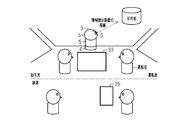
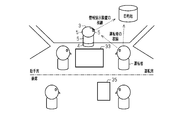
- the information presenting device 3 executes a gesture in which the indicator body 5 faces the destination designated by the occupant after determining the destination.
- the body and the line of sight of the information presenting device 3 are directed toward the destination designated by the occupant, and the line of sight of the information presenting device 3 is directed toward the purpose.
- the information presenting device 3 is arranged at a position where it can easily enter the driver's line of sight. Therefore, the driver can intuitively understand the destination from the gesture by the information presenting device 3. That is, the destination designated by the occupant can be immediately determined from the gesture of the information presenting device 3 arranged at a position where it is easy to see.
- the position that is easily visible is preferably, for example, the upper surface of the dashboard in the vehicle.
- the information presented to the user includes the provision of information relating to the destination of the vehicle 2 designated by the occupant during traveling. Therefore, it is possible for the driver to intuitively understand the destination of the vehicle 2 designated by the occupant. Therefore, appropriate driving support can be provided. In addition, the amount of movement of the driver's eyes can be suppressed to a small extent, and communication between occupants can be facilitated.
- the information presenting device 3 may omit the sound collecting unit 12, the sound output unit 13, and the display unit 14.
- communication by voice dialogue may be carried out by using a similar device mounted on the vehicle.
- the information presentation device 3 is not limited to an anthropomorphic design, and may be, for example, a copy of an animal, a plant, or a character.
- the information presenting device 3 may be configured to be detachable from the vehicle body.
- the information presentation device 3 may be incorporated in the vehicle body as a part of the vehicle 2.
- the information presentation device 3 is not limited to the anthropomorphic design, and may have a configuration having an indicator body 5.
- the indicator 5 may be a part capable of expressing a gesture.
- the direction pointed by the indicator 5 is not limited to one direction, and may be multiple directions when there are a plurality of objects to be instructed.
- the pointing by the indicator 5 is not limited to the mode in which the indicator 5 is directed in a predetermined direction, and may be any mode in which the occupant can recognize the direction, for example, by swinging the indicator 5 in the pointing direction. ..
- the continuous movement of the indicator body 5 is not limited to the beat movement, and may be any movement that repeats the same movement even if the amount of movement is large or small.
- the expression of the operation at that time is not limited to expressing the degree by the speed or amount of the operation, and the indicator body 5 Should be moved differently than usual.
- the destination is not limited to the destination specified by the occupant during driving, but is specified by the occupant, for example, a point registered in advance on the terminal 35 or the network, or a recommended place provided by the service. It may be a place other than.
- the alert is not limited to approaching obstacles, etc., and includes a notification for ensuring the safety of occupants during driving and ensuring security related to unauthorized use of the vehicle.
- the alert includes a notice to ensure normal operation to prevent accidents.
- the alert may include a voice notification in addition to the gesture by the information presenting device 3.
- the alert may include a notification by an in-vehicle speaker, buzzer, display, or the like.
- the information provision includes a notification for facilitating communication between occupants.
- the information provision includes a notification to support driving.
- the information provision includes a notification that supports smooth driving to the destination.
- the information provision may include a voice notification in addition to the gesture by the information presentation device 3. Further, the information provision may include a notification by an in-vehicle speaker, a buzzer, a display, or the like, in addition to the gesture by the information presenting device 3.
- the information Sa is not limited to being acquired from the sensors and switches mounted on the vehicle, and includes, for example, information acquired from the terminal 35 and the instrument device possessed by the user.
- the information Sa may be data acquired from the outside such as a server through network communication.
- communication through communication with the user is not limited to voice dialogue, but also includes facial expressions and gestures of the user.
- communication through communication with the user is not limited to the mode using only the information presenting device 3, for example, an in-vehicle device (speaker, display of car navigation device, lighting in a car, etc.), and the like. It may be a mode in which terminals 35 such as high-performance mobile phones owned by the user are linked.
- the incomplete operation of the device 20 means that, for example, the vehicle 2 is not in the state that the device 20 should take when parking.
- the device 20 is not limited to the in-vehicle device, and may be any device used by the user.
- the determination unit 6 and the control unit 7 are not limited to being provided on the vehicle body side, but may be provided on, for example, the information presenting device 3.
- the determination unit 6 and the control unit 7 may be configured to impose a part of the processing on an external server or a terminal such as a high-performance mobile phone owned by the user.
- the detection unit 8 is not limited to the on-board device or component, and may be a terminal 35 such as a high-performance mobile phone.
- gestures may be collected by using, for example, a camera function or a microphone function provided in the terminal.
- the information presentation system 1 is not limited to being used for the vehicle 2, and may be used for other devices and systems.
- the determination unit 6 and / or the control unit 7 constituting the information presentation system 1 includes one or a plurality of processors and instructions that can be executed by the processors. It can be constructed as a computer system including a non-temporary memory that stores instructions for realizing information presentation processing according to any of the other examples. Alternatively, the determination unit 6 and / or the control unit 7 may be configured with dedicated hardware such as an application specific integrated circuit (ASIC).
- ASIC application specific integrated circuit
- the present disclosure includes the following embodiments.
- (Embodiment 1) It a computer system, With one or more processors It includes a non-temporary memory that is an instruction that can be executed by the processor and stores an instruction for realizing information presentation processing.
- the information presentation process An information presenting device having a main body and an indicator supported so as to be movable with respect to the main body is made to execute a gesture according to the content of information directed to the user, and the information is presented.
- a computer system comprising causing the information presenter to perform a gesture such that the indicator points in a direction.
- the information presentation process further includes determining the content of the information to be presented to the user based on the information provided by the detection unit.
- Making the information presenting device perform a gesture includes controlling at least one of swinging, rotating, and sliding of the indicator with respect to the main body, depending on the content of the determined information.
- the computer system of embodiment 1. (Embodiment 3)
- the information directed to the user Notification of the approach of an obstacle to the vehicle on which the user is riding, Notification that informs the operating status of the equipment mounted on the vehicle, Notification to let you know who the speaker is in the vehicle, Notification to inform the destination specified by the occupant of the vehicle, Any one selected from the group containing
- the presentation direction of the information pointed to by the indicator is Direction indicating the position of the obstacle with respect to the vehicle, Direction indicating the position of the device, Direction indicating the position of the speaker, The direction of the destination,
- the computer system of embodiment 1 or 2 which is any one selected from the group including the above according to the information directed to the user.
Landscapes
- Engineering & Computer Science (AREA)
- Mechanical Engineering (AREA)
- Chemical & Material Sciences (AREA)
- Combustion & Propulsion (AREA)
- Transportation (AREA)
- Remote Sensing (AREA)
- Radar, Positioning & Navigation (AREA)
- Physics & Mathematics (AREA)
- General Physics & Mathematics (AREA)
- Theoretical Computer Science (AREA)
- General Engineering & Computer Science (AREA)
- Human Computer Interaction (AREA)
- Automation & Control Theory (AREA)
- Traffic Control Systems (AREA)
- User Interface Of Digital Computer (AREA)
Abstract
注意喚起を含む情報をユーザに提示する情報提示システム(1)は、指示体(5)と、指示体(5)が可動するように支持された本体部とを有した情報提示装置(3)を、ユーザに向けた情報の内容に応じて、情報の提示方向を指示体(5)が指し示すように制御する制御部(7)を備える。
Description
本発明は、情報提示装置を用いた情報提示を実行する情報提示システムに関する。
従来、運転者等の乗員に運転に係る各種情報を提示する情報提示システムの一種として、車両の運転時に車両が障害物に近づいたことを検知して運転者に通知する障害物検知システムが周知である(特許文献1等参照)。この種の障害物検知システムでは、例えば車体に設けた近接センサで障害物との接近状態を検知し、障害物が車体に接近した場合には、例えばビープ音等でその旨を運転者に通知する。
ところで、障害物の検知時、ビープ音による報知では、障害物がどの方向に存在するのかが分かり難い現状がある。この問題は、障害物検知の存在を報知する場合に限らず、運転者等の乗員に提示を行うシステムや機能についても同様である。すなわち、従来の技術では、利用者に対する情報提示が分かり難いものであるという問題があった。
本発明の目的は、理解し易い情報を提示可能にした情報提示システムを提供することにある。
一実施形態による情報提示システムは、注意喚起を含む情報をユーザに提示する構成であって、指示体と、前記指示体が可動するように支持された本体部とを有した情報提示装置を、前記ユーザに向けた情報の内容に応じて、前記情報の提示方向を前記指示体が指し示すように制御する制御部を備えた。
(第1実施形態)
以下、情報提示システムの第1実施形態を図1~図4に従って説明する。
以下、情報提示システムの第1実施形態を図1~図4に従って説明する。
図1に示すように、情報提示システム1は、車両2の運転者等の乗員と対話形式のコミュニケーションをとることが可能な情報提示装置3を通じて、運転や走行の支援を実行するものである。情報提示システム1が実行する運転や走行の支援としては、例えば運転の安全性を確保するための注意喚起がある。また、これ以外としては、乗員等が指定した行き先がどこであるかの情報提供などがある。情報提示装置3は、この種の注意喚起や情報提供を、運転者等の乗員と対話しながら提示する。
図2に示すように、情報提示装置3は、擬人化されたエージェントであることが好ましい。この場合、情報提示装置3は、本体部4と、この本体部4に対して動作可能な指示体5とを備える。情報提示装置3は、運転者等の乗員へジェスチャによる情報伝達が可能な装置である。本体部4には、指示体5が可動するように支持されている。指示体5は、例えば擬人化エージェントの腕、頭部、身体、目線、耳、指、尻尾、触覚等であることが好ましい。
指示体5は、例えば腕や耳などの場合、付け根を支点に図の矢印A方向に揺動する動きをとることが好ましい。また、指示体5は、例えば頭部や身体などの場合、軸線L1回りの矢印B方向に回動する動きをとることが好ましい。指示体5は、例えば目線の場合、目が同図の十字矢印Bに示すように、上下左右の全方向に移動する動きをとることが好ましい。このように、指示体5は、揺動、回転、スライド等のいずれの動きでもよい。
図1に戻り、情報提示システム1は、ユーザにどのような内容の提示を実行するのかを判定する判定部6と、判定部6の判定結果を基に情報提示装置3の動作を制御する制御部7とを備える。判定部6は、車両2において少なくとも注意喚起の情報の提示を乗員に行う際に必要となる情報Saを基に、提示の内容を判定する。本例の場合、情報提示装置3が注意喚起のジェスチャを実行する場合、判定部6は、運転の注意喚起を行う際に必要となる情報Saを取得し、この情報Saを基に乗員への提示の内容を判定する。判定部6は、運転の注意喚起を行う際に必要となる情報Saを検知部8から取得する。
本例の場合、注意喚起は、車両2が障害物に接近することに対しての乗員への注意喚起である。この場合、検知部8は、例えば車体に設けられた障害物検知センサであることが好ましい。障害物検知センサは、例えば車体の四隅に配設された近接センサである。また、これ以外の検知部8としては、例えばカメラ、ミリ波レーダ、赤外線センサなどがある。
判定部6は、車両2に対する障害物の接近を検出する場合、障害物判定部であることが好ましい。障害物判定部は、検知部8から入力した情報Saを基に、障害物の方向の判定や、障害物の接近状態の判定を実行する。判定部6は、判定完了後、判定結果である判定信号S1を制御部7に出力する。
制御部7は、判定部6から入力する判定信号S1を基に、ユーザとの意志交換を通じたコミュニケーションが可能な情報提示装置3を動作させることにより、乗員に提示を実行する。制御部7は、判定部6から入力した判定信号S1に基づく出力信号S2を情報提示装置3に出力することにより、判定部6の判定結果に基づくジェスチャを情報提示装置3に実行させる。また、本例の制御部7は、本体部4及び指示体5を有する情報提示装置3を、ユーザに向けた情報の内容に応じて、情報の提示方向を指示体5が指し示すように制御する。
情報提示装置3は、情報提示装置3の動作を制御する装置制御部10を備える。指示体5は、指示体5ごとに設けられた各々の駆動部11を介して装置制御部10に接続されている。装置制御部10は、制御部7から入力する出力信号S2を基に、駆動部11を通じて指示体5を動作させることにより、指示体5によるジェスチャを実行する。指示体5のジェスチャは、例えば障害物の方向を提示方向として指示体5で指し示しながら指示体5を上下に繰り返し振るビート運動であることが好ましい。
情報提示装置3は、情報提示装置3において周辺の音を収集する集音部12と、情報提示装置3からの音出力を可能にする音出力部13と、視覚的な意志表示を可能にする表示部14とを備える。集音部12は、例えばマイクである。音出力部13は、例えばスピーカである。表示部14は、情報提示装置3が擬人化エージェントの場合、例えばエージェントに設けられた照明であることが好ましい。情報提示装置3は、集音部12、音出力部13及び表示部14を制御して、乗員との音声対話を通じたコミュニケーションを実行する。
次に、図3及び図4を用いて、本実施形態の情報提示システム1の作用について説明する。
図3に示すように、例えば車両2が前進している場合に、車体右前部に障害物15が接近したとする。このとき、車体の右側前部に設けた近接センサ等の検知部8で障害物15を検知する。検知部8は、車体から見た障害物15の方向や、障害物15との間の距離に応じた情報Saを判定部6に出力する。判定部6は、検知部8から入力した情報Saを基に、障害物15の方向及び接近状態を判定し、その判定結果として判定信号S1を制御部7に出力する。制御部7は、この判定信号S1に基づく出力信号S2を情報提示装置3に出力し、車両2に接近する障害物15との状況に応じたジェスチャを情報提示装置3に実行させる。
図4に示すように、情報提示装置3は、車両2が障害物15に接近した場合、その障害物15の方向を提示方向として同方向に指示体5を向かせ、指示体5をビート運動させる。ビート運動は、指示体5を上下に繰り返し振る運動である。このとき、指示体5のビート運動は、車両2に対する障害物15の接近度合いに応じて変化するようにしてもよい。例えば、車両2に障害物15が接近する程、ビート運動が速くなったり、振る量が大きくなったりするとよい。こうすることで、車両2が障害物15に接触してしまう緊迫度を運転者に伝えることが可能となる。
上記実施形態の情報提示システム1によれば、以下のような効果を得ることができる。
情報提示システム1に制御部7を設け、本体部4及び指示体5を有した情報提示装置3を、ユーザに向けた情報の内容に応じて、情報の提示方向を指示体5が指し示すように制御する。本例の場合、ユーザとの意思交換を通じたコミュニケーションが可能な情報提示装置3を用い、提示の内容に応じた態様で情報提示装置3を動作させることにより、乗員に注意喚起の提示を行うことが可能となる。よって、情報提示装置3を利用した理解し易い態様で情報を提示することができる。また、障害物15を発見するに際しての視認負担も軽減することができる。
制御部7は、ユーザに提示する情報に対する対象が存在する場合に、情報提示装置3の指示体5を連続動作、いわゆるビート動作させる。よって、指示体5の連続動作によって、種々の意思提示をユーザに提供することができる。
制御部7は、ユーザに提示する情報を注意喚起とする場合、その注意喚起の度合いに応じた態様で指示体5を動作させる。よって、どの程度の度合いの注意喚起なのかをユーザに直ちに認識させることが可能となるので、適切な対処をユーザに適宜取らせることができるようになる。
注意喚起は、ユーザが乗車する車両2が障害物15に接近することを知らせる通知である。よって、車外の障害物15に対する車両2の接近を、運転者等の乗員に直感的に理解させることが可能となる。よって、適切な運転支援を実施することができる。
制御部7は、情報提示装置3に設けられた指示体5を動作させることにより、乗員に対する提示を実行する。よって、指示体5を動かすという直感的な理解し易い態様で、乗員に各種提示を行うことができる。
制御部7は、注意喚起の対象が存在する方向を、情報提示装置3の指示体5によって指し示す。よって、注意喚起の対象がどこに存在するのかを、ユーザに分かり易く通知することができる。
(第2実施形態)
次に、第2実施形態を図5及び図6に従って説明する。なお、第2実施形態は、第1実施形態に記載したユーザに提示する情報の内容を変更した実施例である。よって、第1実施形態と同様の部分には同一符号を付して詳しい説明を省略し、異なる部分についてのみ詳述する。
次に、第2実施形態を図5及び図6に従って説明する。なお、第2実施形態は、第1実施形態に記載したユーザに提示する情報の内容を変更した実施例である。よって、第1実施形態と同様の部分には同一符号を付して詳しい説明を省略し、異なる部分についてのみ詳述する。
図5に示すように、本例の情報提示システム1は、乗員への注意喚起や情報提供を、情報提示装置3のジェスチャを通じて実行する。注意喚起としては、例えばユーザが使用した機器20が動作未完了であることの通知がある。情報提供としては、例えば発話者が車内の誰であるかなどの通知がある。機器20は、車載機器であることが好ましい。本例の場合、機器20が動作未完了であるとは、例えば車両ドアが半ドアであること、車両ドアの窓が全閉状態でないこと、室内ランプを消し忘れていることなどがある。また、情報提供としては、例えば車内で発話があった場合に、その発話者が車内のどの場所に位置するのかを運転者に知らせる通知がある。
本例の検知部8は、車両ドアの開閉を検出するドア開閉センサ21と、車両ドアの窓の開閉を検出する窓開閉センサ22と、車内ランプのオンオフを検出する車内ランプスイッチ23と、乗員を撮影可能なカメラ24とを含む。ドア開閉や窓開閉は、センサ21,22で検出することに限らず、スイッチで検出してもよい。また、カメラ24は、車内に設置されたカメラに限定されず、車外に設置されたカメラでもよい。検知部8は、情報Saとして、センサ信号、スイッチ信号、検出データ等を判定部6に出力する。
本例の判定部6は、半ドア判定部25、窓開閉判定部26、ランプオンオフ判定部27、発話者判定部28及び状態判定部29を含む。半ドア判定部25は、ドア開閉センサ21のセンサ信号を基に半ドアか否かを判定し、その判定信号S11を状態判定部29に出力する。窓開閉判定部26は、窓開閉センサ22のセンサ信号を基に窓の開閉量や開閉状態を判定し、その判定信号S12を状態判定部29に出力する。ランプオンオフ判定部27は、車内ランプスイッチのスイッチ信号を基に車内ランプがオン又はオフのいずれかを判定し、その判定信号S13を状態判定部29に出力する。発話者判定部28は、カメラ24から取得した画像データを基に、発話者が車内の誰であるのかを判定し、その判定結果S14を状態判定部29に出力する。
状態判定部29は、これら判定信号S11~S14を基に、注意喚起すべき内容を判定する。例えば、車両ドアが半ドアの場合、状態判定部29は、車両ドアが動作未完了であると判定し、その車両ドアを注意喚起すべき対象として判定する。そして、状態判定部29は、注意喚起すべき内容の判定結果を判定信号S15として制御部7に出力する。制御部7は、状態判定部29から入力した判定信号S15を基に、情報提示装置3にジェスチャを実行させ、そのジェスチャを通じて、注意喚起したい機器20の位置を通知する。
図6に示すように、情報提示装置3は、注意喚起すべき対象の機器20が存在する場合、指示体5をその機器20の方向に向けて指し示すようにすることにより、注意喚起する対象の機器20を運転者に通知する。通知例としては、例えば情報提示装置3の指示体5である頭部及び腕を注意喚起の対象に向けるようにしてもよい。また、情報提示装置3は、音出力部13から注意喚起のメッセージを報知してもよい。こうすることで、運転者に対し、動作未完了の機器20がどれであるのかを直感的に理解させることが可能となる。
また、情報提示装置3は、車内で乗員同士に会話があった場合に、その会話の発話者の方向に、指示体5を向けるジェスチャも可能である。この場合、発話者判定部28は、車内における乗員同士の会話の映像をカメラ24で取得し、会話の発話者を識別する。状態判定部29は、発話者判定部28の判定結果や、集音部12で取得した音声等に基づき、会話の発話者を特定し、その発話者の方向に指示体5を向ける。このようにして、車内の会話における発話者が誰であるかを、情報提示装置3によって的確に案内することも可能となる。
上記実施形態の情報提示システム1によれば、以下のような効果を得ることができる。
制御部7は、注意喚起や情報提供の対象が存在する方向を、情報提示装置3の指示体5によって指し示す。よって、注意喚起や情報提供の対象がどこに存在するのかを、ユーザに分かり易く通知することができる。また、警告音等で情報提示を行う場合、警告音が突然報知されることに比べて、運転者は何の提示であるかを情報提示装置3の動きから把握し易い。さらに、情報提示装置3のジェスチャで対象を案内してから音声等による報知を行えば、運転者は情報の把握が容易となる。
制御部7は、注意喚起や情報提供する対象が存在する場合に、情報提示装置3の指示体5の連続動作、いわゆるビート運動を通じて、注意喚起や情報提供を実行する。よって、指示体5の連続動作によって、種々の意思提示をユーザに提供することができる。
注意喚起は、ユーザが使用した機器20の動作未完了の状態であることの通知である。このため、機器20が動作未完了の状態であることを、運転者等の乗員に直感的に理解させることが可能となる。よって、機器20を動作未完了のまま放置させずに済むので、車両2のセキュリティ性向上に有利となる。
ユーザに提示する情報は、乗員間の会話における対話者の位置を通知する情報提供を含む。よって、対話者の位置を直ぐに理解することが可能となるので、乗員同士のスムーズな会話を支援することができる。
(第3実施形態)
次に、第3実施形態を図7~図10に従って説明する。なお、第3実施形態も、第1実施形態及び第2実施形態に対して異なる部分についてのみ説明する。
次に、第3実施形態を図7~図10に従って説明する。なお、第3実施形態も、第1実施形態及び第2実施形態に対して異なる部分についてのみ説明する。
図7に示すように、本例の情報提示システム1は、乗員への情報提供を、情報提示装置3のジェスチャを通じて実行する。本例の場合、乗員への情報提供は、乗員が指定した車両2の目的地を運転者等の乗員に通知する情報提供である。乗員が指定する目的地は、例えば飲食店や、曲がりたい交差点などがある。
本例の検知部8は、車内を撮影する車内カメラ32と、車両2の運転を支援するカーナビゲーションシステム33と、近距離無線通信が可能な近距離無線部34とを含む。近距離無線部34は、例えばブルートゥース(Bluetooth:登録商標)を通じて、高機能携帯電話等の端末35と通信する。端末35は、例えば車内において運転者以外の乗員が所持する高機能携帯電話であることが好ましい。検知部8は、乗員が指定した目的地を検知し、その情報Saを判定部6に出力する。
本例の判定部6は、乗員が指定した目的地を情報提示装置3で提示する場合、位置判定部であることが好ましい。位置判定部は、検知部8から入力する情報Saを基に、乗員が指定した目的地がどこであるのかを判定する。位置判定部は、目的地の判定が完了すると、その判定結果として判定信号S1を制御部7に出力する。制御部7は、判定部6から入力した判定信号S1を基に、情報提示装置3にジェスチャを実行させ、乗員が指定した目的地を運転者に通知する。
次に、図8~図10を用いて、第3実施形態の情報提示システム1の作用について説明する。
図8に示すように、例えば助手席や後席の乗員が、指差し等のジェスチャ、視線、カーナビゲーションシステム33の操作、端末35の操作などにより、目的地を入力する操作を実行したとする。ジェスチャ及び視線は、車内カメラ32によって検知される。カーナビゲーションシステム33で目的地を指定する場合、画面に表示された地図で目的地を指定する。また、端末35で目的地を指定する場合、端末35の画面に地図アプリケーションを表示し、同アプリケーションで目的地を指定する。端末35で目的地が入力された場合、その位置データは、近距離無線通信を通じて車両2に送信される。
判定部6は、車内カメラ32から入力する画像データや、カーナビゲーションシステム33から入力する位置情報や、端末35から近距離無線通信を通じて受信した位置情報などを基に、乗員が指定した目的地の位置を判定する。判定部6は、位置判定が完了すると、判定結果としての判定信号S1を制御部7に出力する。そして、制御部7は、判定部6から入力した判定信号S1を基に、情報提示装置3にジェスチャを実行させ、そのジェスチャを通じて、乗員により指定された目的地を通知する。
図9に示すように、情報提示装置3は、目的地の判定後、乗員が指定した目的地に指示体5が向くジェスチャを実行する。本例の場合、例えば情報提示装置3の身体や目線を、乗員が指定した目的地に向けて、情報提示装置3の視線を目的に向くようにする。
図10に示すように、情報提示装置3は、運転者の視線に入り易い位置に配置されている。このため、運転者は、情報提示装置3によるジェスチャから直感的に目的地を理解することが可能となる。すなわち、視認し易い位置に配置された情報提示装置3のジェスチャから、乗員が指定した目的地が直ぐに判断することが可能となる。なお、視認し易い位置とは、例えば車内のダッシュボードの上面などが好ましい。
上記実施形態の情報提示システム1によれば、以下のような効果を得ることができる。
ユーザに提示する情報は、走行時において乗員が指定した車両2の目的地に係る情報提供を含む。このため、乗員が指定した車両2の目的地を運転者に直感的に理解させることが可能となる。よって、適切な運転支援を実施することができる。また、運転者の目線の移動量を少なく抑えることができ、かつ乗員間のコミュニケーションの円滑化も実現することができるようになる。
なお、上記各実施形態は、以下のように変更して実施することができる。上記各実施形態及び以下の変更例は、技術的に矛盾しない範囲で互いに組み合わせて実施することができる。
[情報提示装置3について]
・各実施形態において、情報提示装置3は、集音部12、音出力部13及び表示部14が省略されてもよい。この場合、車載された同様の機器を利用して、音声対話によるコミュニケーションを実施してもよい。
・各実施形態において、情報提示装置3は、集音部12、音出力部13及び表示部14が省略されてもよい。この場合、車載された同様の機器を利用して、音声対話によるコミュニケーションを実施してもよい。
・各実施形態において、情報提示装置3は、擬人化されたデザインのものに限定されず、例えば動物、植物、キャラクターを模写したものでもよい。
・各実施形態において、情報提示装置3は、車体に対して着脱可能に構成されてもよい。
・各実施形態において、情報提示装置3は、車両2の部品として車体に組み込まれてもよい。
・各実施形態において、情報提示装置3は、擬人化したデザインに限定されず、指示体5を有する構成のものであればよい。
[指示体5及びその動作について]
・各実施形態において、指示体5は、ジェスチャを表現できる部位であればよい。
・各実施形態において、指示体5は、ジェスチャを表現できる部位であればよい。
・各実施形態において、指示体5が指し示す方向は、一方向に限定されず、指示の対象が複数存在する場合には、複数方向としてよい。
・各実施形態において、指示体5による指し示しは、指示体5を所定方向に向ける態様に限定されず、例えば指し示す方向に指示体5を大きく振るなど、乗員が方向を認識できる態様であればよい。
・各実施形態において、指示体5の連続動作は、ビート運動に限定されず、動きの量の大小は存在していても同様の動きを繰り返す動作であればよい。
・各実施形態において、指示体5を注意喚起の度合いに応じた態様で動作させる場合、その際の動作の表現は、動作の速度や量で度合いを表現することに限定されず、指示体5が通常とは異なるように動かすことであればよい。
・各実施形態において、目的地は、運転中に乗員が指定した目的地に限らず、例えば予め端末35やネットワーク上で登録しておいた地点や、サービスが提供するおすすめの場所など、乗員指定以外の場所としてもよい。
[注意喚起を含む情報について]
・各実施形態において、注意喚起は、障害物接近等に限定されず、運転時における乗員の安全確保や、車両不正使用に係るセキュリティ確保のための通知を含む。
・各実施形態において、注意喚起は、障害物接近等に限定されず、運転時における乗員の安全確保や、車両不正使用に係るセキュリティ確保のための通知を含む。
・各実施形態において、注意喚起は、事故防止のための正常な運転を確保する通知を含む。
・各実施形態において、注意喚起は、情報提示装置3によるジェスチャに加え、音声による通知を含めてもよい。また、注意喚起は、情報提示装置3によるジェスチャに加え、車載されたスピーカ、ブザー、ディスプレイ等による通知も含めてもよい。
・各実施形態において、情報提供は、乗員間のコミュニケーションを円滑に行うための通知を含む。
・各実施形態において、情報提供は、運転をサポートするための通知を含む。
・各実施形態において、情報提供は、目的地への円滑な運転を支援する通知を含む。
・各実施形態において、情報提供は、情報提示装置3によるジェスチャに加え、音声による通知を含めてもよい。また、情報提供は、情報提示装置3によるジェスチャに加え、車載されたスピーカ、ブザー、ディスプレイ等による通知も含めてもよい。
[提示の内容の判定に用いる情報Saについて]
・各実施形態において、情報Saは、車載されたセンサ類やスイッチ類から取得することに限定されず、例えばユーザが所持する端末35や計器類機器から取得する情報も含む。
・各実施形態において、情報Saは、車載されたセンサ類やスイッチ類から取得することに限定されず、例えばユーザが所持する端末35や計器類機器から取得する情報も含む。
・各実施形態において、情報Saは、ネットワーク通信を通じてサーバ等の外部から取得したデータでもよい。
[ユーザとの意思交換を通じたコミュニケーションについて]
・各実施形態において、ユーザとの意思交換を通じたコミュニケーションは、音声対話に限定されず、ユーザの表情や仕草等も判断対象としたものも含む。
・各実施形態において、ユーザとの意思交換を通じたコミュニケーションは、音声対話に限定されず、ユーザの表情や仕草等も判断対象としたものも含む。
・各実施形態において、ユーザとの意思交換を通じたコミュニケーションは、情報提示装置3のみを使用した態様に限らず、例えば車載された機器(スピーカ、カーナビゲーション装置のディスプレイ、車内の照明等)や、ユーザが所持する高機能携帯電話等の端末35を連携させた態様でもよい。
[機器20の動作未完了について]
・各実施形態において、機器20の動作未完了とは、例えば車両2が駐車の際に機器20がとるべき状態をとっていないことをいう。
・各実施形態において、機器20の動作未完了とは、例えば車両2が駐車の際に機器20がとるべき状態をとっていないことをいう。
・機器20は、車載機器に限定されず、ユーザによって使用された機器類であればよい。
[判定部6及び制御部7について]
・各実施形態において、判定部6及び制御部7は、車体側に設けられることに限らず、例えば情報提示装置3に設けられてもよい。
・各実施形態において、判定部6及び制御部7は、車体側に設けられることに限らず、例えば情報提示装置3に設けられてもよい。
・各実施形態において、判定部6及び制御部7は、処理の一部を外部のサーバや、ユーザが所持する高機能携帯電話等の端末に課す構成としてもよい。
[その他]
・各実施形態において、検知部8は、車載された装置や部品に限定されず、例えば高機能携帯電話等の端末35でもよい。この場合、例えば端末に設けられたカメラ機能やマイク機能を用いて、ジェスチャを収集するとよい。
・各実施形態において、検知部8は、車載された装置や部品に限定されず、例えば高機能携帯電話等の端末35でもよい。この場合、例えば端末に設けられたカメラ機能やマイク機能を用いて、ジェスチャを収集するとよい。
・各実施形態において、情報提示システム1は、車両2に使用されることに限定されず、他の機器やシステムに使用してもよい。
・情報提示システム1(図1,5,7参照)を構成する判定部6及び/又は制御部7は、1つ又は複数のプロセッサと、当該プロセッサが実行可能な命令であって上記実施形態及び別例のいずれかに従った情報提示処理を実現するための命令を記憶した非一時的メモリとを含むコンピュータシステムとして構築することができる。或いは、判定部6及び/又は制御部7は、特定用途向け集積回路(ASIC)などの専用ハードウェアで構成されてもよい。
・本開示は以下の実施態様を包含する。
(実施態様1)
コンピュータシステムであって、
1つ又は複数のプロセッサと、
前記プロセッサが実行可能な命令であって情報提示処理を実現するための命令を記憶した非一時的メモリと、を備え、
前記情報提示処理が、
本体部と、当該本体部に対して可動するように支持された指示体とを有する情報提示装置に、ユーザに向けた情報の内容に応じたジェスチャを実行させることであって、前記情報の提示方向を前記指示体が指し示すように前記情報提示装置にジェスチャを実行させることを含む、コンピュータシステム。
(実施態様2)
前記情報提示処理がさらに、検知部から提供された情報に基づいて、前記ユーザに提示すべき前記情報の内容を判定することを含み、
前記情報提示装置にジェスチャを実行させることが、前記判定された前記情報の内容に応じて、前記本体部に対する前記指示体の揺動、回転、及びスライドの少なくとも一つを制御することを含む、実施態様1のコンピュータシステム。
(実施態様3)
前記ユーザに向けた前記情報が、
前記ユーザが乗車している車両への障害物の接近を知らせる通知、
前記車両に搭載された機器の動作状態を知らせる通知、
前記車両内での発話者が誰かを知らせる通知、
前記車両の乗員が指定した目的地を知らせる通知、
を含む群から選択されるいずれか一つであり、
前記指示体が指し示す前記情報の提示方向が、
前記車両に対する前記障害物の位置を示す方向、
前記機器の位置を示す方向、
前記発話者の位置を示す方向、
前記目的地の方向、
を含む群から前記ユーザに向けた前記情報に応じて選択されるいずれか一つである、実施態様1又は2のコンピュータシステム。
(実施態様1)
コンピュータシステムであって、
1つ又は複数のプロセッサと、
前記プロセッサが実行可能な命令であって情報提示処理を実現するための命令を記憶した非一時的メモリと、を備え、
前記情報提示処理が、
本体部と、当該本体部に対して可動するように支持された指示体とを有する情報提示装置に、ユーザに向けた情報の内容に応じたジェスチャを実行させることであって、前記情報の提示方向を前記指示体が指し示すように前記情報提示装置にジェスチャを実行させることを含む、コンピュータシステム。
(実施態様2)
前記情報提示処理がさらに、検知部から提供された情報に基づいて、前記ユーザに提示すべき前記情報の内容を判定することを含み、
前記情報提示装置にジェスチャを実行させることが、前記判定された前記情報の内容に応じて、前記本体部に対する前記指示体の揺動、回転、及びスライドの少なくとも一つを制御することを含む、実施態様1のコンピュータシステム。
(実施態様3)
前記ユーザに向けた前記情報が、
前記ユーザが乗車している車両への障害物の接近を知らせる通知、
前記車両に搭載された機器の動作状態を知らせる通知、
前記車両内での発話者が誰かを知らせる通知、
前記車両の乗員が指定した目的地を知らせる通知、
を含む群から選択されるいずれか一つであり、
前記指示体が指し示す前記情報の提示方向が、
前記車両に対する前記障害物の位置を示す方向、
前記機器の位置を示す方向、
前記発話者の位置を示す方向、
前記目的地の方向、
を含む群から前記ユーザに向けた前記情報に応じて選択されるいずれか一つである、実施態様1又は2のコンピュータシステム。
Claims (7)
- 注意喚起を含む情報をユーザに提示する情報提示システムであって、
指示体と、前記指示体が可動するように支持された本体部とを有した情報提示装置を、前記ユーザに向けた情報の内容に応じて、前記情報の提示方向を前記指示体が指し示すように制御する制御部を備えた情報提示システム。 - 前記制御部は、前記ユーザに提示する情報に対する対象が存在する場合に、前記情報提示装置の前記指示体を連続動作させる
請求項1に記載の情報提示システム。 - 前記制御部は、前記ユーザに提示する情報を注意喚起とする場合、その注意喚起の度合いに応じた態様で前記指示体を動作させる
請求項1又は2に記載の情報提示システム。 - 前記注意喚起は、前記ユーザが乗車する車両が障害物に接近することを前記ユーザに知らせる通知である
請求項1~3のうちいずれか一項に記載の情報提示システム。 - 前記注意喚起は、前記ユーザが使用した機器の動作未完了の状態であることの通知である
請求項1~4のうちいずれか一項に記載の情報提示システム。 - 前記情報は、ユーザ間の会話における対話者の位置を通知する情報提供を含む
請求項1~5のうちいずれか一項に記載の情報提示システム。 - 前記情報は、前記ユーザが乗車する車両において乗員が指定した前記車両の目的地に係る情報提供を含む
請求項1~6のうちいずれか一項に記載の情報提示システム。
Priority Applications (1)
| Application Number | Priority Date | Filing Date | Title |
|---|---|---|---|
| CN202080022934.9A CN113613931A (zh) | 2019-03-26 | 2020-02-25 | 信息提示系统 |
Applications Claiming Priority (2)
| Application Number | Priority Date | Filing Date | Title |
|---|---|---|---|
| JP2019058652A JP2020160726A (ja) | 2019-03-26 | 2019-03-26 | 情報提示システム |
| JP2019-058652 | 2019-03-26 |
Publications (1)
| Publication Number | Publication Date |
|---|---|
| WO2020195462A1 true WO2020195462A1 (ja) | 2020-10-01 |
Family
ID=72609189
Family Applications (1)
| Application Number | Title | Priority Date | Filing Date |
|---|---|---|---|
| PCT/JP2020/007529 Ceased WO2020195462A1 (ja) | 2019-03-26 | 2020-02-25 | 情報提示システム |
Country Status (3)
| Country | Link |
|---|---|
| JP (1) | JP2020160726A (ja) |
| CN (1) | CN113613931A (ja) |
| WO (1) | WO2020195462A1 (ja) |
Cited By (1)
| Publication number | Priority date | Publication date | Assignee | Title |
|---|---|---|---|---|
| DE102024206652A1 (de) * | 2024-07-16 | 2026-01-22 | Volkswagen Aktiengesellschaft | System sowie Verfahren zum Betreiben eines Systems |
Families Citing this family (4)
| Publication number | Priority date | Publication date | Assignee | Title |
|---|---|---|---|---|
| JP7717519B2 (ja) * | 2021-07-29 | 2025-08-04 | 株式会社Subaru | エージェント装置 |
| JP7713329B2 (ja) * | 2021-07-29 | 2025-07-25 | 株式会社Subaru | エージェント装置 |
| JP2023102704A (ja) * | 2022-01-12 | 2023-07-25 | パイオニア株式会社 | 情報処理装置、情報処理方法および情報処理プログラム |
| JP2024025227A (ja) * | 2022-08-10 | 2024-02-26 | 日産自動車株式会社 | 情報処理方法及び情報処理装置 |
Citations (7)
| Publication number | Priority date | Publication date | Assignee | Title |
|---|---|---|---|---|
| JPH1038601A (ja) * | 1996-07-29 | 1998-02-13 | Takaaki Nagai | 車両用情報表示装置 |
| JP2000193480A (ja) * | 1998-12-25 | 2000-07-14 | Fujitsu Ltd | 車載入出力装置 |
| JP2002104103A (ja) * | 2000-09-29 | 2002-04-10 | Mazda Motor Corp | 車両用報知装置 |
| JP2004093354A (ja) * | 2002-08-30 | 2004-03-25 | Casio Comput Co Ltd | 運転情報出力装置およびプログラム |
| JP2007099127A (ja) * | 2005-10-05 | 2007-04-19 | Denso Corp | 車両用コミュニケーション装置 |
| JP2010096773A (ja) * | 2010-01-22 | 2010-04-30 | Ixs Research:Kk | ロボットナビゲーションシステム |
| JP2014170154A (ja) * | 2013-03-05 | 2014-09-18 | Panasonic Corp | 車内会話支援装置 |
Family Cites Families (3)
| Publication number | Priority date | Publication date | Assignee | Title |
|---|---|---|---|---|
| JP5228716B2 (ja) * | 2007-10-04 | 2013-07-03 | 日産自動車株式会社 | 情報提示システム |
| JP2013164737A (ja) * | 2012-02-10 | 2013-08-22 | Nec Corp | 障害物アラーム表示システム、情報処理装置、障害物アラーム表示方法および障害物アラーム表示プログラム |
| WO2016194144A1 (ja) * | 2015-06-02 | 2016-12-08 | 三菱電機株式会社 | 車両ドア開放警告装置および車両ドア開放警告システム |
-
2019
- 2019-03-26 JP JP2019058652A patent/JP2020160726A/ja active Pending
-
2020
- 2020-02-25 WO PCT/JP2020/007529 patent/WO2020195462A1/ja not_active Ceased
- 2020-02-25 CN CN202080022934.9A patent/CN113613931A/zh active Pending
Patent Citations (7)
| Publication number | Priority date | Publication date | Assignee | Title |
|---|---|---|---|---|
| JPH1038601A (ja) * | 1996-07-29 | 1998-02-13 | Takaaki Nagai | 車両用情報表示装置 |
| JP2000193480A (ja) * | 1998-12-25 | 2000-07-14 | Fujitsu Ltd | 車載入出力装置 |
| JP2002104103A (ja) * | 2000-09-29 | 2002-04-10 | Mazda Motor Corp | 車両用報知装置 |
| JP2004093354A (ja) * | 2002-08-30 | 2004-03-25 | Casio Comput Co Ltd | 運転情報出力装置およびプログラム |
| JP2007099127A (ja) * | 2005-10-05 | 2007-04-19 | Denso Corp | 車両用コミュニケーション装置 |
| JP2010096773A (ja) * | 2010-01-22 | 2010-04-30 | Ixs Research:Kk | ロボットナビゲーションシステム |
| JP2014170154A (ja) * | 2013-03-05 | 2014-09-18 | Panasonic Corp | 車内会話支援装置 |
Cited By (2)
| Publication number | Priority date | Publication date | Assignee | Title |
|---|---|---|---|---|
| DE102024206652A1 (de) * | 2024-07-16 | 2026-01-22 | Volkswagen Aktiengesellschaft | System sowie Verfahren zum Betreiben eines Systems |
| DE102024206652B4 (de) | 2024-07-16 | 2026-05-13 | Volkswagen Aktiengesellschaft | System sowie Verfahren zum Betreiben eines Systems |
Also Published As
| Publication number | Publication date |
|---|---|
| JP2020160726A (ja) | 2020-10-01 |
| CN113613931A (zh) | 2021-11-05 |
Similar Documents
| Publication | Publication Date | Title |
|---|---|---|
| CN112141119B (zh) | 智能驾驶控制方法及装置、车辆、电子设备和存储介质 | |
| JP2020160726A (ja) | 情報提示システム | |
| EP3165994B1 (en) | Information processing device | |
| CN104685550B (zh) | 环境危险的指示 | |
| US10466800B2 (en) | Vehicle information processing device | |
| CN104755308B (zh) | 具有手势识别的机动车操作接口 | |
| US11181909B2 (en) | Remote vehicle control device, remote vehicle control system, and remote vehicle control method | |
| WO2018230527A1 (ja) | 運転支援方法、運転支援プログラム及び車両制御装置 | |
| JP2015516772A (ja) | 携帯型通信装置を使用した自動車の遠隔制御操縦 | |
| JP2004086523A (ja) | 車両用警戒情報提供装置 | |
| CN108430819A (zh) | 车载装置 | |
| CN104301507A (zh) | 移动终端及其控制方法 | |
| US10674003B1 (en) | Apparatus and system for identifying occupants in a vehicle | |
| KR20190037335A (ko) | 네비게이션 인터페이스 백그라운드를 위한 안전성 시각화 | |
| US20190286118A1 (en) | Remote vehicle control device and remote vehicle control method | |
| JP2022118076A (ja) | 情報提供装置、制御方法、及びプログラム | |
| WO2022239642A1 (ja) | 車両用情報提供装置、車両用情報提供方法、及び車両用情報提供プログラム | |
| TWI571838B (zh) | Road traffic communication method and its device | |
| US12175021B2 (en) | Display system | |
| JP2020055430A (ja) | 光通知制御装置、プログラム、および光通知システム | |
| CN115071563A (zh) | 车辆提示信息生成方法、装置、车门锁控制器及车辆 | |
| CN113361361A (zh) | 与乘员交互的方法及装置、车辆、电子设备和存储介质 | |
| US12630013B2 (en) | Vehicle display system, vehicle display method, and computer-readable non-transitory storage medium storing vehicle display program | |
| CN116895186B (en) | Traffic safety auxiliary system | |
| JP7571866B2 (ja) | 車両用表示システム、車両用表示方法、及び車両用表示プログラム |
Legal Events
| Date | Code | Title | Description |
|---|---|---|---|
| 121 | Ep: the epo has been informed by wipo that ep was designated in this application |
Ref document number: 20778047 Country of ref document: EP Kind code of ref document: A1 |
|
| NENP | Non-entry into the national phase |
Ref country code: DE |
|
| 122 | Ep: pct application non-entry in european phase |
Ref document number: 20778047 Country of ref document: EP Kind code of ref document: A1 |