WO2020179843A1 - ゲームシステム、ゲーム制御装置、プログラム、及びゲーム制御方法 - Google Patents
ゲームシステム、ゲーム制御装置、プログラム、及びゲーム制御方法 Download PDFInfo
- Publication number
- WO2020179843A1 WO2020179843A1 PCT/JP2020/009251 JP2020009251W WO2020179843A1 WO 2020179843 A1 WO2020179843 A1 WO 2020179843A1 JP 2020009251 W JP2020009251 W JP 2020009251W WO 2020179843 A1 WO2020179843 A1 WO 2020179843A1
- Authority
- WO
- WIPO (PCT)
- Prior art keywords
- user
- information
- performance
- change
- game
- Prior art date
- Legal status (The legal status is an assumption and is not a legal conclusion. Google has not performed a legal analysis and makes no representation as to the accuracy of the status listed.)
- Ceased
Links
Images





Classifications
-
- A—HUMAN NECESSITIES
- A63—SPORTS; GAMES; AMUSEMENTS
- A63F—CARD, BOARD, OR ROULETTE GAMES; INDOOR GAMES USING SMALL MOVING PLAYING BODIES; VIDEO GAMES; GAMES NOT OTHERWISE PROVIDED FOR
- A63F13/00—Video games, i.e. games using an electronically generated display having two or more dimensions
- A63F13/55—Controlling game characters or game objects based on the game progress
- A63F13/56—Computing the motion of game characters with respect to other game characters, game objects or elements of the game scene, e.g. for simulating the behaviour of a group of virtual soldiers or for path finding
-
- A—HUMAN NECESSITIES
- A63—SPORTS; GAMES; AMUSEMENTS
- A63F—CARD, BOARD, OR ROULETTE GAMES; INDOOR GAMES USING SMALL MOVING PLAYING BODIES; VIDEO GAMES; GAMES NOT OTHERWISE PROVIDED FOR
- A63F13/00—Video games, i.e. games using an electronically generated display having two or more dimensions
- A63F13/30—Interconnection arrangements between game servers and game devices; Interconnection arrangements between game devices; Interconnection arrangements between game servers
- A63F13/35—Details of game servers
-
- A—HUMAN NECESSITIES
- A63—SPORTS; GAMES; AMUSEMENTS
- A63F—CARD, BOARD, OR ROULETTE GAMES; INDOOR GAMES USING SMALL MOVING PLAYING BODIES; VIDEO GAMES; GAMES NOT OTHERWISE PROVIDED FOR
- A63F13/00—Video games, i.e. games using an electronically generated display having two or more dimensions
- A63F13/50—Controlling the output signals based on the game progress
- A63F13/53—Controlling the output signals based on the game progress involving additional visual information provided to the game scene, e.g. by overlay to simulate a head-up display [HUD] or displaying a laser sight in a shooting game
- A63F13/533—Controlling the output signals based on the game progress involving additional visual information provided to the game scene, e.g. by overlay to simulate a head-up display [HUD] or displaying a laser sight in a shooting game for prompting the player, e.g. by displaying a game menu
-
- A—HUMAN NECESSITIES
- A63—SPORTS; GAMES; AMUSEMENTS
- A63F—CARD, BOARD, OR ROULETTE GAMES; INDOOR GAMES USING SMALL MOVING PLAYING BODIES; VIDEO GAMES; GAMES NOT OTHERWISE PROVIDED FOR
- A63F13/00—Video games, i.e. games using an electronically generated display having two or more dimensions
- A63F13/55—Controlling game characters or game objects based on the game progress
-
- A—HUMAN NECESSITIES
- A63—SPORTS; GAMES; AMUSEMENTS
- A63F—CARD, BOARD, OR ROULETTE GAMES; INDOOR GAMES USING SMALL MOVING PLAYING BODIES; VIDEO GAMES; GAMES NOT OTHERWISE PROVIDED FOR
- A63F13/00—Video games, i.e. games using an electronically generated display having two or more dimensions
- A63F13/55—Controlling game characters or game objects based on the game progress
- A63F13/57—Simulating properties, behaviour or motion of objects in the game world, e.g. computing tyre load in a car race game
-
- A—HUMAN NECESSITIES
- A63—SPORTS; GAMES; AMUSEMENTS
- A63F—CARD, BOARD, OR ROULETTE GAMES; INDOOR GAMES USING SMALL MOVING PLAYING BODIES; VIDEO GAMES; GAMES NOT OTHERWISE PROVIDED FOR
- A63F13/00—Video games, i.e. games using an electronically generated display having two or more dimensions
- A63F13/55—Controlling game characters or game objects based on the game progress
- A63F13/58—Controlling game characters or game objects based on the game progress by computing conditions of game characters, e.g. stamina, strength, motivation or energy level
-
- A—HUMAN NECESSITIES
- A63—SPORTS; GAMES; AMUSEMENTS
- A63F—CARD, BOARD, OR ROULETTE GAMES; INDOOR GAMES USING SMALL MOVING PLAYING BODIES; VIDEO GAMES; GAMES NOT OTHERWISE PROVIDED FOR
- A63F13/00—Video games, i.e. games using an electronically generated display having two or more dimensions
- A63F13/60—Generating or modifying game content before or while executing the game program, e.g. authoring tools specially adapted for game development or game-integrated level editor
- A63F13/65—Generating or modifying game content before or while executing the game program, e.g. authoring tools specially adapted for game development or game-integrated level editor automatically by game devices or servers from real world data, e.g. measurement in live racing competition
-
- A—HUMAN NECESSITIES
- A63—SPORTS; GAMES; AMUSEMENTS
- A63F—CARD, BOARD, OR ROULETTE GAMES; INDOOR GAMES USING SMALL MOVING PLAYING BODIES; VIDEO GAMES; GAMES NOT OTHERWISE PROVIDED FOR
- A63F13/00—Video games, i.e. games using an electronically generated display having two or more dimensions
- A63F13/80—Special adaptations for executing a specific game genre or game mode
-
- A—HUMAN NECESSITIES
- A63—SPORTS; GAMES; AMUSEMENTS
- A63F—CARD, BOARD, OR ROULETTE GAMES; INDOOR GAMES USING SMALL MOVING PLAYING BODIES; VIDEO GAMES; GAMES NOT OTHERWISE PROVIDED FOR
- A63F13/00—Video games, i.e. games using an electronically generated display having two or more dimensions
- A63F13/80—Special adaptations for executing a specific game genre or game mode
- A63F13/812—Ball games, e.g. soccer or baseball
-
- A—HUMAN NECESSITIES
- A63—SPORTS; GAMES; AMUSEMENTS
- A63F—CARD, BOARD, OR ROULETTE GAMES; INDOOR GAMES USING SMALL MOVING PLAYING BODIES; VIDEO GAMES; GAMES NOT OTHERWISE PROVIDED FOR
- A63F2300/00—Features of games using an electronically generated display having two or more dimensions, e.g. on a television screen, showing representations related to the game
- A63F2300/50—Features of games using an electronically generated display having two or more dimensions, e.g. on a television screen, showing representations related to the game characterized by details of game servers
- A63F2300/55—Details of game data or player data management
- A63F2300/5546—Details of game data or player data management using player registration data, e.g. identification, account, preferences, game history
- A63F2300/5553—Details of game data or player data management using player registration data, e.g. identification, account, preferences, game history user representation in the game field, e.g. avatar
Definitions
- the present invention relates to a game system, a game control device, a program, and a game control method.
- a game in which a game object moves in a virtual space.
- a game object moves in a virtual space.
- a sports game in which characters belonging to each of a user team and an opponent team (an example of a game object) play a sports game such as soccer in a virtual space.
- variations in the way the user is involved in the game object include, for example, the user operating the game object, the user selecting an action option (command, etc.) to be performed on the game object, or
- the method is limited to a method in which the user presets action guidelines (role, strategy, etc.) for the game object.
- the present invention has been made in view of the above problems, and an object of the present invention is to provide a game system, a game control device, a program, and a game control method capable of providing a new way of engaging a user with a game object. To provide.
- the game system is a game in which a user and an opponent play against each other, and a user object which is a game object used by the user and the use of the opponent.
- a game system that executes a game in which an opponent object, which is a game object, moves in a virtual space, a first motion control that controls the motion of the user object based on a first performance information relating to the performance of the user object.
- second motion control means for controlling the motion of the opponent object based on second performance information regarding the performance of the opponent object, and the first performance associated with the target area in the virtual space.
- the information changing means for changing the information and the performance change information related to the change of the second performance information based on the change instruction of the user or the opponent, and the above when the user object is located in the target area.
- the first performance changing means for changing the first performance information based on the performance change information associated with the target area, and the second performance information when the opponent object is located in the target area. Is changed based on the performance change information associated with the target area.
- the game control device is a game in which a user and an opponent play against each other, and a user object which is a game object used by the user and an opponent who is a game object used by the opponent.
- a game control device that executes a game in which an object moves in a virtual space
- a first motion control means that controls the motion of the user object based on the first performance information regarding the performance of the user object, and the opponent.
- the first performance information and the second performance associated with the second motion control means for controlling the motion of the object based on the second performance information regarding the performance of the opponent object and the target area in the virtual space.
- the information changing means for changing the performance change information regarding the change of information based on the change instruction of the user or the opponent, and the first performance information when the user object is located in the target area.
- the first performance changing means to be changed based on the performance change information associated with the target area and the second performance information when the opponent object is located in the target area are referred to as the target area.
- Second performance changing means for making a change based on the associated performance change information.
- the game control method is a game in which a user and an opponent play against each other, and a user object which is a game object used by the user and an opponent who is a game object used by the opponent.
- a first motion control means controls the motion of the user object based on the first performance information regarding the performance of the user object.
- a second motion control step in which the second motion control means controls the motion of the opponent object based on the second performance information regarding the performance of the opponent object, and the information changing means in the virtual space.
- FIG. 1 shows an example of the overall configuration of a game system 1 according to an embodiment of the present invention.
- the game system 1 according to the present embodiment includes a game terminal 10 and a server 30.
- the game terminal 10 is a computer used by a user to play a game.
- the game terminal 10 includes a mobile phone (including a smartphone), a personal digital assistant (including a tablet computer), a desktop computer, a laptop computer, a home-use game machine (stationary game machine), and a portable game machine. Or, it is a commercial game machine installed in a game facility or the like.
- the game system 1 may include a plurality of game terminals 10 respectively used by a plurality of users.
- the game terminal 10 includes a control unit 11, a storage unit 12, a communication unit 13, an operation unit 14, a display unit 15, and an audio output unit 16.
- the control unit 11 includes at least one microprocessor (CPU), and executes information processing according to a program stored in the storage unit 12.
- the storage unit 12 includes a main storage unit (for example, a RAM) and an auxiliary storage unit (for example, a nonvolatile semiconductor memory, a hard disk drive, or a solid state drive), and stores programs and data.
- the communication unit 13 is for performing data communication with other devices via the network N.
- the game terminal 10 can perform data communication with the server 30 or another game terminal 10 (not shown) via the network N.
- the operation unit 14 is for the user to perform various operations.
- the display unit 15 is for displaying various images, and is, for example, a liquid crystal display or an organic EL display.
- the audio output unit 16 is for outputting audio data, and is, for example, a speaker or headphones.
- the operation unit 14 and the display unit 15 may be integrally configured as a touch panel. However, it is not essential that the operation unit 14 and the display unit 15 are integrally configured as a touch panel, and the operation unit 14 is, for example, a button (key), a lever (stick), a touch pad (track pad), a mouse, or the like. As described above, the display unit 15 may be provided separately. Further, the operation unit 14 may be for the user to perform an operation by voice or gesture.
- the operation unit 14, the display unit 15, and the audio output unit 16 may be provided on the game terminal 10 itself, or may be provided as an external device connected to the game terminal 10.
- the display unit 15 may be a monitor, a television receiver, a head-mounted display (HMD), a projector, or the like connected to the game terminal 10 as an external device.
- HMD head-mounted display
- the server 30 is, for example, a server computer. As shown in FIG. 1, the server 30 includes a control unit 31, a storage unit 32, and a communication unit 33.
- the control unit 31, the storage unit 32, and the communication unit 33 are the same as the control unit 11, the storage unit 12, and the communication unit 13 of the game terminal 10.
- the server 30 can access the database 34.
- the database 34 may be built in the server 30 or may be built in a server computer different from the server 30.
- the program or data is supplied to the game terminal 10 or the server 30 from a remote location via the network N, and is stored in the storage unit 12 or the storage unit 32.
- the game terminal 10 or the server 30 may be provided with components (for example, an optical disk drive or a memory card slot) for reading programs and data stored in an information storage medium (for example, an optical disk or a memory card). .. Then, the program or data may be supplied to the game terminal 10 or the server 30 via the information storage medium.
- the game terminal 10 is a smartphone or a tablet computer equipped with a touch panel.
- the game system 1 (game terminal 10) can execute various games. For example, games such as sports games (games using baseball, soccer, tennis, American football, basketball, volleyball, etc.), racing games, fighting games, fighting games, card games, role-playing games, or simulation games. It is possible to play various games regardless of format and genre.
- the game may be executed by the game terminal 10 alone, or may be executed by performing data communication between the game terminal 10 and the server 30 or another game terminal 10.
- a soccer game using soccer as a subject will be described.
- a soccer match is played between a user team, which is a soccer team organized by users, and an opponent team, which is an opponent's soccer team.
- the opponent may be a computer or another user, but the description below assumes that the opponent is a computer.
- a player card which is a card object associated with a game character representing a soccer player (hereinafter referred to as "player character"), is given to the user.
- player character a player card in which the player character is converted into a card object is given to the user.
- the player character may be a game character that imitates a real soccer player, or may be a game character that imitates a fictitious soccer player.
- one or more player cards are given to the user.
- the user can perform lottery for player cards by consuming game points or the like.
- the player cards selected from the group of player cards prepared in the game system 1 based on the lottery process are given to the user.
- the user can exchange player cards with other users, and can receive player cards from other users.
- the user forms his / her own soccer team (user team) using the player cards obtained as described above, and uses the soccer team to play a soccer match with the opponent team.
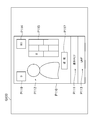
- FIG. 2 shows an example of a card information image G100 showing player card information.
- the card information image G100 is an image displayed on the display unit 15 of the game terminal 10.
- the card information image G100 includes a part P110 corresponding to the image of the player card.
- the part P110 includes parts P111 to P117.
- Parts P111, P112, and P113 each indicate the name, image, and favorite position of the player character associated with the player card.
- the player characters are good at positions such as GK (goalkeeper), CB (center back), LSB (left side back), RSB (right side back), DMF (defensive midfielder), and CMF (central midfielder). ), LMF (left midfielder), RMF (right midfielder), OMF (offensive midfielder), LWG (left wing), RWG (right wing), ST (second top), CF (center forward) Is set.
- the part P114 indicates the general ability information of the player character associated with the player card.
- the total ability information indicates the total ability of the player character. For example, the total ability information takes a numerical value from “0" to "100", and the higher the numerical value, the higher the total ability of the player character.
- a plurality of ability information indicating the level of various abilities is associated with each player character. For example, as a plurality of ability information, a plurality of numerical values indicating the level of each of the plurality of abilities (for example, running ability, pass ability, shooting ability, dribbling ability, defense ability, etc.) in the range of "0" to "100". Is associated with each player character, and the higher the value, the higher the ability. Further, for example, information indicating whether or not a special skill has been acquired may be associated with each player character as ability information. The comprehensive ability information of the player character is calculated based on a plurality of ability information of the player character.
- Parts P115, P116, and P117 show influence information, cost information, and skill information of the player card, respectively.
- a player card is used during a match between the user team and the opponent team to set a specific area on the pitch so that the user team has a dominant area over the opponent team. (See FIGS. 6 to 9), and in the dominant area of the user team, the ability of the player character belonging to the user team is improved. Influence information, cost information, and skill information are information related to this function.
- the influence information indicates presence/absence and magnitude of influence exerted by the player card on each of the plurality of areas set on the pitch. As will be described later, the greater the influence that the player card has on the area, the easier it is for the area to become the dominant area of the user team when the player card is used (see FIGS. 6 to 9).
- FIG. 3 shows an example of a virtual space.
- the virtual space VW shown in FIG. 3 is a virtual three-dimensional space in which the Xw axis, the Yw axis, and the Zw axis, which are three coordinate axes orthogonal to each other, are set.
- the position in the virtual space VW is specified by the three-dimensional coordinates of the XwYwZw coordinate system.
- an object representing a soccer field FD is arranged in the virtual space VW.
- Two touch lines TL, two goal lines GL, and one halfway line HL are represented on the field FD.
- the soccer match is played within the pitch PT surrounded by the touch line TL and the goal line GL.
- an object representing a soccer goal GO is placed on the field FD. Further, on the field FD, an object representing a soccer ball BO, an object representing a user character UC which is a player character belonging to the user team, and an opponent character OC which is a player character belonging to the opponent team are represented. The object is placed. Although not shown in FIG. 2, 11 objects respectively representing 11 user characters UC belonging to the user team and 11 objects respectively representing 11 opponent characters OC belonging to the opponent team. Is placed on the field FD. In the following, when it is not necessary to distinguish between the user character UC and the opponent character OC, they are collectively referred to as “player character PC”.
- the player character PC performs various actions such as moving action, passing action, shooting action, pressing action, and tackle action. Under predetermined conditions, the player character PC and the ball BO are associated with each other. In this case, the movement operation of the player character PC is a dribble operation.
- motion data is used to make the player character PC perform actions.
- the "motion data” is data for specifying a change in the posture of the player character PC for each frame when the player character PC is made to perform an operation.
- the player character PC is caused to perform an action by reproducing the motion data for the player character PC (that is, changing the posture of the player character PC according to the motion data). That is, in this soccer game, motion data corresponding to various motions such as movement motion, pass motion, shoot motion, press motion, tackle motion, etc. are prepared. For example, when the player character PC is made to pass, the player character PC is prepared to perform the pass.
- the motion data of the pass motion is reproduced for the player character PC (that is, the posture of the player character PC is changed according to the motion data of the pass motion).
- a virtual viewpoint VP is set in the virtual space VW.
- a virtual space image representing the virtual space VW when the line-of-sight direction VD is viewed from the viewpoint VP is displayed on the display unit 15 (see FIGS. 6 to 8).
- the viewpoint VP and the line-of-sight direction VD are set based on the position of the ball BO so that the ball BO is included in the virtual space image.
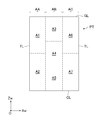
- FIG. 4 shows an example of a plurality of areas set on the pitch PT.
- seven areas A1 to A7 are set on the pitch PT.
- Areas A1 and A2 are areas in which one area AA on the touchline TL side is bisected in the touchline TL direction.
- Areas A6 and A7 are areas obtained by equally dividing the area AC on the other touch line TL side in the touch line TL direction.
- Areas A3 to A5 are areas obtained by dividing the area AB (central area) between the areas AA and AC into three equal parts in the touch line TL direction.
- each of the areas A1 to A7 may be collectively referred to as "area A".
- the influence information indicates the presence / absence and magnitude of the influence that the player card has on each of the plurality of areas A1 to A7 set on the pitch PT.
- the greater the influence on the area A the more easily the area A becomes the dominant area of the user team when the player card is used.
- the influence information is information in which the seven areas A1 to A7 set on the pitch PT are associated with numerical information indicating the presence / absence and magnitude of the influence on each area A.
- the numerical value “2” is associated with the area A1. This indicates that the player card affects area A1. Further, it indicates that the magnitude of the influence of the player card on the area A1 is "2".
- the numerical value is not associated with each of the areas A2 to A7, but this indicates that the numerical value "0" is associated with each of the areas A2 to A7. That is, it indicates that the player card does not affect each of the areas A2 to A7.
- the above numerical value associated with each of the areas A1 to A7 will be referred to as “influence value”.
- the area associated with the influence value indicating the presence / absence and magnitude of the influence corresponds to the areas A1 to A7 in the pitch PT as shown in FIG. It is easier for users to grasp influence information.
- the method of setting the area is not limited to the example shown in FIG. 4, and an area different from the areas A1 to A7 shown in FIG. 4 may be set.
- the way of displaying the influence information is not limited to the part P115 shown in FIG. 2, and the influence information may be displayed in another way.
- the cost information indicates the cost required to use the player card during the match between the user team and the opponent team. Details will be described later (see FIGS. 6 to 8).
- Skill information indicates the skill set on the player card.
- a skill has the effect of increasing or decreasing its influence value.
- the skill "adversity" is set in the player card.
- This skill has the effect of increasing the influence value when a player card is used while the soccer team is being led (defeated).
- the influence value of area A1 is increased by 1 from the normal numerical value "2". The value becomes "3".
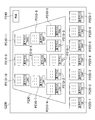
- FIG. 5 shows an example of a deck setting image G200 for setting a deck corresponding to a soccer team.
- the deck setting image G200 is an image displayed on the display unit 15 of the game terminal 10.
- 11 player cards corresponding to the starting member and 7 player cards corresponding to the reserve members are designated from the player cards owned by the user.
- the deck setting image G200 includes 11 parts P210-1 to P210-11. These 11 parts P210-1 to P210-11 indicate 11 player cards designated as player cards corresponding to the starting members. These 11 parts P210-1 to P210-11 are displayed on the parts P230 indicating the pitch PT, and are displayed at positions corresponding to the formation specified by the user. In the example shown in FIG. 5, parts P210-1 to P210-11 are displayed at positions corresponding to the formation of "4-3-3".
- the deck setting image G200 includes seven parts P220-1 to P220-7. These seven parts P220-1 to P220-7 indicate seven player cards designated as player cards corresponding to the reserve members.
- the part P210-1 is associated with a process for displaying an owned card list image showing a list of player cards owned by the user on the display unit 15. Therefore, when the part P210-1 is designated (for example, when the tap operation is performed on the part P210-1), the owned card list image is displayed on the display unit 15. Then, when any one of the player cards displayed in the owned card list image is designated, the player card is displayed as the part P210-1.
- the parts P210-2 to P210-11 and the parts P220-1 to P220-7 are the same applies to the parts P210-2 to P210-11 and the parts P220-1 to P220-7.
- the deck setting image G200 includes a part P240. “Register” is displayed in the part P240, and the process of registering (saving) the deck set by the user is associated with the part P240. Therefore, when the part P240 is specified, the process is executed and the deck set by the user is registered (see FIG. 13).
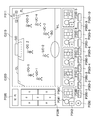
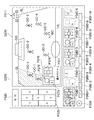
- FIG. 6 shows an example of the game image G300 displayed on the display unit 15 of the game terminal 10 during the game between the user team and the opponent team.
- the match image G300 includes a virtual space image G310.
- the virtual space image G310 is an image representing the virtual space VW when the line-of-sight direction VD is viewed from the viewpoint VP.
- the virtual space image G310 includes the part P311.
- Part P311 indicates the elapsed time since the start of the match and the current scores of both teams.
- the elapsed time from the start of the match is represented by the time in the virtual space VW.
- the time in the virtual space VW is set so that one minute in the real world corresponds to 10 minutes in the virtual space VW.
- One minute in the virtual space VW may correspond to one minute in the real world.
- the user characters UC-1, UC-2, UC-3, UC-4, the opponent characters OC-1, OC-2, OC-3, the ball BO, and the goal GO are displayed. It is displayed in the virtual space image G310.
- 11 player character PCs associated with each of the 11 player cards set as starting members in the user's deck are placed in the virtual space VW as 11 user character UCs.
- the deck corresponding to the opponent's soccer team is set as well as the user.
- eleven player characters PC associated with the eleven player cards set as starting members in the opponent's deck are placed in the virtual space VW as eleven opponent characters OC.
- the opponent is a computer
- the computer uses a deck preset by the game developer or the like.
- a deck registered by another user may be diverted by the computer.
- the player character PC associated with the player card when the player character PC associated with the player card is placed in the virtual space VW, the player character PC has the ability to correspond to the ability information associated with the player card, and various operations of the player character PC are performed. It is controlled based on the ability information associated with the player card. For example, the moving speed and the dribbling speed of the player character PC are controlled based on the ability information (running ability information, dribbling ability information, or the like) associated with the player card. Further, for example, the accuracy of the pass or shot of the player character PC is controlled based on the ability information (pass ability information, shot ability information, or the like) associated with the player card. Further, for example, whether or not the pass, shoot, dribble, tackle, etc.
- the success probability of passing, shooting, dribbling, tackling, or the like of the player character PC is controlled based on the ability information associated with the player card.
- both the user character UC and the opponent character OC are operated by the computer. That is, for each individual user character UC, the type and content of the operation to be performed by the user character UC are determined by the computer, and the user character UC performs the operation of the type and content determined by the computer. The same applies to the opponent character OC.
- the virtual space image G310 displays the user character UC and the opponent character OC that act according to the instruction of the computer, and basically, the user is the user character UC and the opponent character OC operated by the computer. Will be watching the soccer match as a manager or team owner.
- the user is involved in the match by using the player card displayed in the match image G300.
- the match image G300 includes the part P320.
- the part P320 is displayed as "substitution”, and is associated with a process for displaying a player substitution image for receiving a player substitution instruction on the display unit 15. Therefore, when the part P320 is specified, the player substitution image is displayed on the display unit 15, and the user character UC currently participating in the match can be replaced with the user character UC of the reserve member.
- the match image G300 includes the part P330.
- the part P330 numerical values are displayed in association with each of the areas A1 to A7.
- the numerical value associated with each of the areas A1 to A7 in the part P330 will be referred to as a “momentum value”.
- the user team has an advantage over the opponent team in the area A on the pitch PT.
- the area can be an area, and the ability of the user character UC is improved in the dominant area of the user team.
- the momentum value associated with the area A indicates whether or not the area A is the dominant area of the user team. In other words, the momentum value associated with the area A indicates whether or not the ability of the user character UC is increased in the area A.
- area A is the dominant area in which the user team is superior to the opponent team (in other words, the inferior area in which the opponent team is inferior to the user team). ) Is set. In the dominant area of the user team, the ability information of the user character UC is set higher than the original ability information (normal ability information) of the user character UC.
- the momentum value associated with area A is less than zero, that area A is the dominant area where the opponent team is superior to the user team (in other words, the inferior area where the user team is inferior to the opponent team). Is set as. In the superior area of the opponent team, the ability information of the opponent character OC is set higher than the original ability information (normal ability information) of the opponent character OC.
- the momentum value associated with area A is zero, that area A is not set in either the user team or the opponent team's dominant area.
- the area A that is not set as the superior area of either the user team or the opponent team is referred to as a “balanced area”.
- the equilibrium area the ability information of the user character UC and the opponent character OC remains unchanged and remains the original ability information.
- the match image G300 includes five parts P340-1, P340-2, P340-3, P340-4, and P340-5.
- the player card can be used to change the momentum value of at least one of the areas A1 to A7.
- Parts P340-1 to P340-5 indicate five player cards that are candidates for player cards that can be used by the user.
- the candidate of a player card which a user can use is described as a "user's use candidate card.”
- the part P340-1 includes parts P341, P342, and P343.
- the part P341 is an image of the player character associated with the usage candidate card of the user.
- Parts P342 and P343 indicate cost information and influence information of the usage candidate card of the user.
- each of the parts P340-1 to P340-5 may be collectively referred to as "part P340".
- the game image G300 includes parts P350, parts P360-1, P360-2, P360-3, P360-4, P360-5, P360-6, P360-7, P360-8, P360-9, P360-. Includes 10.
- Part P350 indicates the current user's card points.
- Parts P360-1 to P360-10 also indicate the current user's card points. For example, as shown in FIG. 6, when the user's card point is "6", the parts P360-1 to P360-6 are displayed separately from the remaining parts P360-7 to P360-10. , The user's card point is shown to be "6".
- Card points will be increased over time. For example, every time a predetermined time (for example, one minute in the virtual space VW) elapses, the card points are increased by one point.
- Part P340-1 is associated with a process using a player card associated with part P340-1.
- the momentum value of at least one of the areas A1 to A7 changes based on the influence information of the used player card.
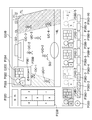
- FIG. 7 shows an example of the match image G300 when the part P340-1 is specified by the user, that is, when the player card associated with the part P340-1 is used by the user.
- the match image G300 in this case includes a part P370.
- Part P370 shows a player card used by the user.
- the player card used by the user is described as a "user's use card.”
- the part P370 includes parts P371, P372, P373 and P374.
- Parts P371 and P372 indicate the names and images of the player characters associated with the cards used by the user.
- Parts P373 and P374 indicate cost information and influence information of the card used by the user.
- the display mode of the part P340-1 indicates that the player card associated with the part P340-1 is used.
- the mode is updated as shown, and the part P340-1 cannot be specified.
- a part P340-1 is hatched with an upward slope.
- the cost of the player card associated with part P340-1 is set to "3"
- the user's card points are consumed by 3 points as shown by parts P350 and parts P360-1 to P360-10. Then, the remaining amount of the user's card points is reduced from "6" to "3".
- the player card whose cost is higher than "3" cannot be used. Therefore, the parts P340-2 and P340 associated with the player card whose cost is "4" or "5" are associated.
- the display mode of -5 is updated to a mode showing that the parts P340-2 and P340-5 cannot be designated. In the example shown in FIG. 7, parts P340-2 and P340-5 are indicated by dotted lines.
- the influence value of the area A1 is set to "2"
- the momentum value of the area A1 is increased by 2 and indicated by the part P330.
- the momentum value of the area A1 is updated from “0" to "+2”.
- the area A1 is set as the dominant area of the user team.
- the area A1 is the dominant area of the user team, as shown in FIG. 7, in the virtual space image G310, the area A1 is not the dominant area of the user team in order to show that the area A1 is the dominant area of the user team. It is displayed separately from other areas A. In the example shown in FIG. 7, the area A1 is displayed in a distinctive manner by adding a diagonal line to the right of the area with a dotted line.
- the ability information of the user character UC is set higher than the original ability information of the user character UC. That is, the values of various abilities (running ability, pass ability, shooting ability, dribbling ability, defense ability, etc.) of the user character UC are set to higher values than the original values.
- all of the plurality of ability information associated with the user character UC will be described as being set to a value higher than the original value, but among the plurality of ability information associated with the user character UC. It is also possible to set only a part of the capability information of the above to a value higher than the original value.
- the values of various abilities of the user character UC-1 are set to higher values than the original values. To be done. In this case, since the area A other than the area A1 is not the dominant area of the user team, when the user character UC-1 moves out of the area A1, the values of various abilities of the user character UC-1 are returned to the original values. Be done. When the user character UC-1 that has moved out of the area A1 moves into the area A1, the values of various abilities of the user character UC-1 are set to higher values than the original values.
- the user characters UC-2, UC-3, and UC-4 are not located in the area A1, but for example, when the user character UC-2 moves into the area A1.
- the values of various abilities of the user character UC-2 are set to values higher than their original values.
- the opponent character OC-1 is located in the area A1, but the ability information of the opponent character OC-1 is not changed.
- the ability information of the opponent character OC is not changed, but the opponent character OC is the user team. If the opponent character OC is located in the superior area, the values of various abilities of the opponent character OC may be set to values lower than the original values.
- FIG. 8 shows an example of the match image G300 when the player card is used by the opponent.
- the match image G300 in this case includes a part P380.
- Part P380 indicates the card used by the opponent.
- the part P380 includes parts P381, P382, P383 and P384.
- the parts P381 to P384 are the same as the parts P371 to P374 in FIG. 7, and thus the description thereof is omitted here.
- the opponent's card points are not displayed in the match image G300, but the opponent's card points are reduced by 4 points because the cost of the card used by the opponent is set to "4".
- the areas A6 and A7 are the dominant areas of the opponent team, as shown in FIG. 8, in the virtual space image G310, the areas A6 and A7 are used to show that the areas A6 and A7 are the dominant areas of the opponent team. However, it is displayed separately from other areas A which are not the superior area of the opponent team. In the example shown in FIG. 8, the areas A6 and A7 are distinguished and displayed by adding both the upward-sloping diagonal line and the downward-sloping diagonal line to the areas A6 and A7 with dotted lines.
- the ability information of the opponent character OC is set higher than the original ability information of the opponent character OC. That is, the values of various abilities (running ability, pass ability, shooting ability, dribbling ability, defense ability, etc.) of the opponent character OC are set to higher values than the original values.
- all of the plurality of ability information associated with the opponent character OC will be described as being set to a value higher than the original value, but the plurality of ability information associated with the opponent character OC will be described. Only part of the capability information may be set to a value higher than the original value.
- the opponent characters OC-1 and OC-2 are not located in the areas A6 and A7, for example, when the opponent character OC-2 moves into the areas A6 and A7.
- the values of various abilities of the opponent character OC-2 are set to values higher than the original values.
- the user character UC-4 is located in the area A6, but the ability information of the user character UC-4 is not changed.
- the ability information of the user character UC is not changed, but the user character UC is the opponent team.
- the values of various abilities of the user character UC may be set to a value lower than the original value.
- the momentum value of the area A1 is increased by 2 to become “+2" by using the player card associated with the part P340-1. That is, the effect of increasing "2" is generated with respect to the momentum value of the area A1, and the area A1 is the dominant area of the user team.
- the increasing effect of "1" out of the increasing effects of "2” disappears. That is, the momentum value of the area A1 is decremented by 1 and updated from "+2" to "+1". Further, when the predetermined time elapses, the remaining increasing effect of "1" disappears.
- the momentum value of area A6 is reduced by 2 to "-2" and the momentum value of area A7 is reduced by 1 due to the use of the player card by the opponent. It is "-1". That is, a reduction effect of "2" is generated on the momentum value of area A6, a reduction effect of "1” is generated on the momentum value of area A7, and areas A6 and A7 are the dominant areas of the opponent team. Has become.
- the reduction effect of "1” among the reduction effects of "2" on the momentum value of the area A6 disappears. That is, the momentum value of the area A6 is incremented by 1 and updated from "-2" to "-1".
- the effect of reducing "1" on the momentum value of area A7 disappears. That is, the momentum value of the area A7 is incremented by 1 and updated from “-1" to "0", and the area A7 becomes an equilibrium area. Then, when the predetermined time further elapses, the remaining reduction effect of "1” among the reduction effects of "2" on the momentum value of the area A6 disappears. That is, the momentum value of the area A6 is increased by 1 and updated from "-1" to "0", the area A6 also becomes an equilibrium area, and all the reduction effects of the cards used are eliminated. In the present embodiment, at this point, one player card is newly selected as a candidate card for use by the opponent.
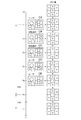
- FIG. 9 shows an example of changes in the momentum value due to the use of player cards and the passage of time.
- the t-axis shown in FIG. 9 is a time axis, and “5 minutes” indicates time in the virtual space VW.
- the time point T0 shown in FIG. 9 indicates the time point when the game starts.
- the momentum values of the areas A1 to A7 are set to "0", and each of the areas A1 to A7 is set to the equilibrium area.
- the player card CA is used by the user at time T1 after time T0.
- the influence value of area A1 of the player card CA is set to "2”
- "2" is added to the momentum value "0" of area A1 and the momentum value of area A1 becomes "+2".
- area A1 is set as the dominant area of the user team.
- the player card CB is used by the opponent at the time point T2 after the time point T1.
- the influence value of area A6 of the player card CB is set to "2”
- "2" is subtracted from the momentum value "0” of area A6, and the momentum value of area A6 is "-2".
- the influence value of area A7 of the player card CB is set to "1”
- "1" is subtracted from the momentum value "0" of area A7
- the momentum value of area A7 becomes "-1”. Will be updated.
- the areas A6 and A7 are set as the superior areas of the opponent team.
- the player card CC is used by the opponent at the time point T3 after the time point T2.
- the influence value of the area A4 of the player card CC is set to "1”
- "1” is subtracted from the momentum value "0" of the area A4
- the momentum value of the area A4 is "-1”.
- area A4 is also set as the dominant area of the opponent team.
- the influence value of area A7 of the player card CC is set to "1”
- "1" is further subtracted from the momentum value "-1" of area A7
- the momentum value of area A7 is "-2". Is updated to.
- the player card CD is used by the user at time T4 after time T3.
- the influence value of area A4 of the player card CD is set to "2”
- "2" is added to the momentum value "-1" of area A4, and the momentum value of area A4 is "+1". Will be updated to.
- the area A4 is set as the dominant area of the user team.
- the influence value of the area A7 of the player card CC is set to "2”
- "2" is added to the momentum value "-2" of the area A7, and the momentum value of the area A7 becomes "0". Will be updated.
- the area A7 is set as the equilibrium area.
- Area A4 was set as the dominant area of the opponent team at time T3, but area A4 has changed to the dominant area of the user team because the player card CD was used by the user at time T4. In this case, the user has captured the area A4 from the opponent by using the player card CD. Also, at time point T3, area A7 was set as the dominant area of the opponent team, but at time point T4, the player card CD was used by the user, so area A7 has changed to an equilibrium area. In this case, the user uses the player card CD to prevent the area A7 from remaining in the dominant area of the opponent team.
- the momentum values of areas A1 and A4 are "+2" and "+1", respectively, and areas A1 and A4 are set as the dominant areas of the user team.
- the values of various abilities of the user character UC located in the areas A1 and A4 are set higher than their original values.
- the momentum value of area A1 is larger than the momentum value of area A4, but in this soccer game, the degree of increase (degree) of the values of various abilities in area A1 is the same as that of area A4. ing. That is, when the momentum value of the area A is larger than zero, the degree of increase (degree) of the ability of the user character UC located in the area A is the same regardless of the magnitude of the momentum value. There is.
- area A1 is less likely to be a balanced area or a superior area of the opponent team than area A4.
- area A4 when a player card whose influence value of area A4 is set to "1" is used by an opponent, area A4 becomes a balanced area and the influence value of area A4 is "2".
- the influence value of area A1 is set to "1".
- area A1 is not a balanced area, and even if the player card with the influence value of area A1 set to "2" is used by the opponent, area A1 Does not become the dominant area of the opponent team.
- the degree of increase in the value of various abilities in the area A may be changed depending on the magnitude of the momentum value. That is, in the case of the state at the time point T4, the increase in the values of various abilities in the area A1 may be different from the increase in the values of the various abilities in the area A4. For example, the increase in the value of various abilities in the area A1 may be made larger than the increase in the value of various abilities in the area A4.
- the player card CE is used by the user at the time point T5 after the time point T4.
- the influence value of area A7 of the player card CE is set to "1”
- "1” is added to the momentum value "0" of area A7
- the momentum value of area A7 becomes "+1". Will be updated.
- area A7 is set as the dominant area of the user team.
- the total influence value of the area A7 of the user's card (player card CA, CD, CE) is "3", and the area of the opponent's card (player card CB, CC).
- the total value of the influence values of A7 is "2".
- the momentum value of area A7 is obtained by subtracting the total influence value "2" of the area A7 of the opponent's card from the total influence value "3" of the area A7 of the user's card. It becomes the numerical value to be.
- the momentum value of the area An (integer of n: 1 to 7) is the influence value of the area An of the opponent's card from the total value of the influence value of the area An of the user's card. It is a numerical value obtained by subtracting the total value of.
- the time point T6 shown in FIG. 9 is a time point after the time point T5, and indicates a time point 5 minutes after the time point T1. That is, at time T6, 5 minutes have passed since time T1 when the player card CA was used. For example, in a mode in which the increasing effect or decreasing effect of the player card on the momentum value of area A weakens by 1 point every 5 minutes in the virtual space VW after the player card is used. At time point T6, out of the increasing effect of "2" on the momentum value of area A1 by the player card CA, the increasing effect of "1" disappears, so “1” is subtracted from the momentum value "+2" of area A1 and the area The momentum value of A1 is updated to "+1".
- Time point T7 shown in FIG. 9 indicates a time point 5 minutes after time point T6.
- time point T7 another 5 minutes have passed from time point T6, and of the effect of increasing "2" on the momentum value of area A1 by the player card CA, the effect of increasing the remaining "1" disappears, so area A1 "1” is subtracted from the momentum value "+1" of, and the momentum value of area A1 is updated to "0".
- the area A1 returns to the balanced area.
- all or part of the effect of increasing or decreasing the momentum of areas A3, A6, and A7 by each of the player cards CB, CC, CD, and CE has disappeared.
- the ability of the user character UC is higher than the original ability in the dominant area of the user team, and the ability of the opponent character OC is originally in the dominant area of the opponent team. Will be higher than the ability of.
- the user character UC which is higher than the original ability, can easily win the competition such as the competition with the opponent character OC.
- a user character UC whose ability is higher than the original ability can easily pull out the opponent character OC by dribbling, or can easily steal the ball BO from the opponent character OC holding the ball BO.
- the user character UC is less likely to win the competition such as the competition with the opponent character OC, which is higher than the original ability.
- the user uses the player card to change the momentum value of area A to make area A the dominant area of the user team, or to prevent area A from becoming the dominant area of the opponent team. Aim to win the game by being involved in the user team (user character UC) and the game.
- the opponent also uses the player card to change the momentum value of area A to make area A the dominant area of the opponent team, or prevent area A from becoming the dominant area of the user team. By doing so, we aim to win the match by being involved in the opponent team (opposite character OC) and the match.
- the user team (user character UC) is changed by changing the momentum values of each of the areas A1 to A7 using the player card. It can provide a new way of getting involved.
- the user team (user character UC) is not directly involved, but by changing the momentum values of each of the areas A1 to A7. ) Can provide a new interest of being indirectly involved.
- the presence / absence or magnitude of the influence on each of the areas A1 to A7 is different for each player card, and the presence / absence or magnitude of the influence on each of the areas A1 to A7.
- the area A for changing the momentum value can be specified, or the degree of change in the momentum value of the area A can be specified ( In other words, it is possible to provide the user with the interest of specifying which area A's momentum value is changed and how).
- the candidate cards used by the user are limited to five player cards (parts P340-1 to P340-5), and the momentum of the area A or the area A for changing the momentum value. Since the options that the user can specify as the degree of changing the value are limited, the interest of the user is to specify the area A whose momentum value is to be changed and the degree of changing the momentum value of the area A from the limited options. Can be provided to.
- the soccer game described above five player cards randomly selected based on a predetermined probability are presented to the user as candidate cards for use by the user (parts P340-1 to P340-5).
- the user's candidate cards can not always be the same, and the user's candidate cards can be changed.
- the period during which the card used by the user or the opponent has an influence on the area A is limited, the period during which the card used by the user or the opponent has an influence on the area A is limited. It is possible to provide the user with the interest of using the player card while considering that the player card will be used.
- the player card has a role as a player character PC (user character UC) acting in the virtual space VW and a role as an item for changing the momentum value of the area A.
- a player character PC user character UC
- a role as an item for changing the momentum value of the area A has both roles. Therefore, when constructing the deck, both the performance as the player character PC (total ability information and ability information) and the ability as an item for changing the momentum value of the area A (influence information) are set. In consideration, it is necessary to set the deck. As a result, the deck is set while considering both the performance as the player character PC (total ability information and ability information) and the ability as an item for changing the momentum value of the area A (influence information). The interest can be provided to the user.
- the player card has both of the above-mentioned roles, so that an item for changing the momentum value of the area A can be prepared or obtained separately from the player character PC. You can eliminate the need to
- a cost is set for each player card, and if the user's card points fall below the cost of the player card, the player card cannot be used, so the user's card points and player card It is possible to provide the user with the interest of using the player card in consideration of the cost.
- the use candidate card of the user is selected from the 11 player cards corresponding to the 11 user characters UC participating in the match.
- the user's candidate card may be selected from the 18 player cards that are members (that is, the 18 player cards corresponding to the 18 user character UCs belonging to the user team).
- the user's candidate card may be selected from the seven player cards corresponding to the seven user character UCs who have not participated in the match.
- the use card can be selected from the 11 player cards. It may be. Further, for example, by setting 18 player cards that are members of the user's deck (that is, 18 player cards corresponding to 18 user characters UC belonging to the user team) as use candidate cards for the user, The card to be used may be selected from the 18 player cards.
- the user's deck is set by selecting a deck member from the player cards owned by the user, but all the players prepared in the game system 1 are used.
- the deck of the user may be set by selecting a member of the deck from the cards.
- one momentum value common to the user team and the opponent team is set for each of the areas A1 to A7, but each momentum value of each of the areas A1 to A7 is set for each team. May be set to. That is, two momentum values, a momentum value of the user team and a momentum value of the opponent team, may be set for each of the areas A1 to A7.
- the total influence value of the area A1 of the card used by the user is set as the momentum value of the user team in the area A1, and is located in the area A1 based on the momentum value of the user team in the area A1.
- the ability information of the user character UC may be changed.
- the ability information of the user character UC located in area A1 is originally used. It may be set higher than the ability information.
- the total influence value of the opponent's card used in area A1 is set as the momentum value of the opponent team in area A1, and based on the momentum value of the opponent team in area A1, the force value is set in the area A1.
- the ability information of the opponent character OC located may be changed.
- the ability information of the opponent character OC located in area A1. May be set higher than the original ability information. The same applies to areas A2 to A7.
- the user's card points are set and the cost is set for each player card, but such a configuration is not indispensable.
- a gauge that expands (or contracts) over time is associated with each player card, and the use of the player card is restricted until the length of the gauge associated with the player card reaches a predetermined length.
- the player card may be used when the length becomes a predetermined length.
- the concept of cost may be eliminated, and for example, the user may be able to use each player card only once at any time.
- the user character UC is operated by the computer, but the user may operate the user character UC.
- the user character UC to be operated among the user character UC belonging to the user team may be operated by the user, and the other user character UC may be operated by the computer.
- one user may perform both the operation of the user character UC and the use of the player card, or the user operates the user character UC and another collaborator of the user. The user may use the player card.
- the momentum value of at least one of the areas A1 to A7 is changed by using the player card, but by using the item other than the card, the areas A1 to A7 It may be configured to change at least one of the momentum values.
- the user may directly specify at least one of the areas A1 to A7 to change the momentum value of the designated area A.
- the parts P340-1 to P340-5 seven parts indicating each of the areas A1 to A7 are displayed in the game image G300, and at least one of these seven parts is designated. May be good.
- the fixed areas A1 to A7 are set within the pitch PT, but the position, size, or shape of the area A may be arbitrarily set by the user.
- the position, size, or shape of the area A may be set by the user before the start of the game, half-time, or the like.
- the player card has both a role as a player character PC (user character UC) acting in the virtual space VW and a role as an item for changing the momentum value of the area A.
- the player card does not have to have both of these roles. That is, the card may be provided as an item for changing the momentum value of the area A separately from the player character PC acting in the virtual space VW. In this case, the card may not be a player character card, but may be a tactic or strategy card, for example. Further, the item for changing the momentum value of the area A may be an item other than the card.
- a soccer game has been described as an example of a game executed in the game system 1.
- a game object moving in the virtual space can be obtained.
- the new way of engaging with a game object, which is to be involved, is also applicable to sports games other than soccer games, games other than sports games, and games other than competitive games, such as a game object moving in a virtual space. It can be applied to various games.
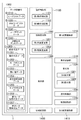
- FIG. 10 is a functional block diagram showing functional blocks related to the functions described above among the functional blocks realized by the game system 1.
- the game system 1 is changed into a data storage unit 1000, an operation control unit 1100, a performance change unit 1200, a first change release unit 1210, a reception unit 1300, and a display control unit 1310. It includes a unit 1320, a reception restriction unit 1330, a restriction release unit 1340, an information change unit 1400, and a second change release unit 1410.
- the data storage unit 1000 is realized by at least one of the storage unit 12, the storage unit 32, and the database 34.
- the functional blocks other than the data storage unit 1000 are realized by the control unit 11 of the game terminal 10.
- a part of the functional blocks other than the data storage unit 1000 may be realized by the control unit 11 of the game terminal 10, and the rest may be realized by the control unit 31 of the server 30.
- all the functional blocks other than the data storage unit 1000 may be realized by the control unit 31 of the server 30.
- a game in which game objects move in the virtual space is executed.
- a game in which a plurality of game objects move in the virtual space is executed.
- a plurality of game objects that are members of the game object group are arranged in the virtual space, and a game in which the plurality of game objects move in the virtual space is executed.
- “Virtual space” is a virtual space displayed on the display unit.
- the “virtual space” is a virtual space constructed in main memory (or VRAM).
- the “virtual space” may be a three-dimensional space or a two-dimensional space.
- a game object is an object that moves in a virtual space. That is, the "game object” is an object that is arranged in the virtual space and whose position in the virtual space changes.
- the “game object” can be rephrased as a moving body object indicating a moving body that moves in the virtual space. For example, the "game object” is displayed on the display unit 15 by displaying the image of the virtual space on the display unit 15.
- a "game object” is an object that represents a person.
- the “person” may be a real person or a fictitious person.
- the “game object” may be an object representing a living thing other than a human.
- the “organism” may be a real life creature or a fictitious creature.
- the "game object” may be an object representing a non-living object.
- it may be an object representing a robot, a car, a motorcycle, or the like.
- performance information regarding performance is set for each "game object”.
- a game character or the like corresponds to an example of a “game object”.
- a “game object” is, for example, a game object that moves in a virtual space in response to a computer instruction. That is, the "game in which a plurality of game objects each move in the virtual space” is, for example, a game in which a plurality of game objects each move in the virtual space according to a computer instruction.
- a "game object that moves according to a computer instruction” is a game object that moves in a movement direction determined by a computer. That is, the “game object that moves in the virtual space according to the instruction of the computer” is a game object whose presence/absence, movement direction, movement mode, and the like are determined by the computer.
- the "game object that moves in the virtual space in response to a computer instruction” is, for example, a game object operated by a computer, and may be called a CPU character or the like.
- the user's game object corresponds to an example of "a game object that moves according to a computer instruction".
- the enemy object is a “game object that moves according to instructions from the computer”.
- the second game object is a “game that moves based on instructions from the computer”.
- the object corresponds to an example of "object”.
- a plurality of game objects move in the virtual space according to instructions of the computer means that the instructions of the computer are given to each of the plurality of game objects, and each of the plurality of game objects is It is to move in the virtual space according to the instruction of the computer for each.
- game object may be a game object that moves in the virtual space according to a user's instruction (operation).
- a game object moves in a virtual space
- a plurality of game objects that are members of a game object group are arranged in a virtual space, and the plurality of game objects move in the virtual space. It corresponds to an example of "game”.
- the virtual space VW corresponds to an example of “virtual space”.
- the player character PC (user character UC or opponent character OC) corresponds to an example of a "game object".
- the user watches a soccer game between a user team operated by a computer and an opponent team operated by a computer as a manager or a team owner, such as the soccer game described above
- the user Each player character PC (user character UC) belonging to the team corresponds to an example of "a game object that moves according to a computer instruction”.
- each player character PC (opponent character OC) belonging to the opponent team also corresponds to an example of "a game object that moves according to a computer instruction”.
- a player character PC (opponent character OC) belonging to the opponent team.
- This corresponds to an example of “a game object that moves according to an instruction from a computer”.
- the player character PCs (user characters UC) belonging to the user team
- the player character PCs (player character PCs operated by the computer) other than the player character PC that is the operation target of the user are also “instructed by the computer. It corresponds to an example of “a game object that moves accordingly”.
- the data storage unit 1000 stores data necessary for executing the game.
- the data storage unit 1000 stores the card list data D1010, the owned card list data D1020, the user deck data D1030, the opponent deck data D1040, and the match status data D1050.
- Card list data D1010 is data indicating a list of player cards provided by the game system 1.
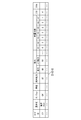
- FIG. 11 shows an example of card list data D1010.
- the card list data D1010 contains "card ID”, "player name”, “position”, “image”, “total ability”, “ability”, “influence value”, “cost”, and Includes “Skill” field.
- the “card ID” field indicates a card ID that is identification information that uniquely identifies each player card.
- the "player name”, “position”, “image”, “comprehensive ability”, and “competence” fields indicate the name, strength, image, comprehensive ability information, and ability information of the player character associated with the player card. Shown.
- the "ability” field numerical values indicating the level of various abilities (running ability, pass ability, shooting ability, dribbling ability, defense ability, etc.) of the player character associated with the player card are registered.
- the "influence value”, "cost”, and “skill” fields indicate the influence information, cost information, and skill information of the player card.
- the influence value field the influence value of the player card for each of the areas A1 to A7 is registered.
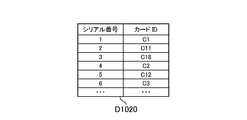
- Owned card list data D1020 is data indicating a list of player cards owned by the user.
- FIG. 12 shows an example of the possessed card list data D1020.
- the owned card list data D1020 is stored for each user (in association with the user ID).
- the user ID is identification information that uniquely identifies each user.
- the owned card list data D1020 includes the "serial number” and "card ID” fields.
- the “serial number” field indicates a serial number for uniquely identifying the player card owned by the user.
- the “card ID” field shows the card ID of the player card owned by the user. When a user owns a plurality of the same player cards, the card IDs of these player cards are the same, but the serial numbers are different.
- User deck data D1030 is data indicating a deck used by the user (that is, a deck set by the user).
- the user deck data D1030 is stored for each user (in association with the user ID).
- the deck corresponds to a soccer team (see FIG. 5), and the user deck data D1030 includes formation data.
- the formation data is data indicating a soccer formation (for example, "4-3-3") set by the user.
- the user deck data D1030 includes the member data D1031.
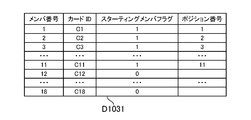
- FIG. 13 shows an example of the member data D1031.
- the member data D1031 is data indicating a list of player cards set as deck members from among the player cards registered in the owned card list data D1020. As shown in FIG. 13, member data D1031 includes "member number”, “card ID”, “starting member flag”, and "position number” fields.
- the “Member number” field indicates a member number for uniquely identifying a member of the deck.
- the “Card ID” field indicates the card ID of the player card selected as a member of the deck.
- the “starting member flag” field a starting member flag indicating whether or not the player card is set as a starting member is registered. The starting member flag is set to ON (1) when the player card is set as the starting member, and the starting member flag is set to OFF (0) when the player card is not set as the starting member. Will be done.
- the “position number” field indicates which position in the formation is set.
- the starting member flag is set to ON, and for the player cards associated with parts P220-1 to P220-7. , The starting member flag is set to off. Further, for example, for the player card associated with the parts P210-n, the numerical value "n" is set in the "position number” field. For the player cards associated with parts P220-1 to P220-7, the "position number” field is set to blank (Null).
- Opponent deck data D1040 is data indicating the deck used by the opponent. Like the user deck data D1030, the opponent deck data D1040 includes formation data and member data.
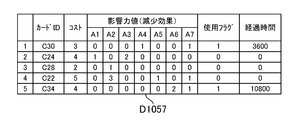
- Match status data D1050 is data indicating the current status of the match between the user team and the opponent team. As shown in FIG. 10, the match status data D1050 includes progress status data D1051, card point data D1052, momentum value data D1053, virtual space status data D1054, character status data D1055, and first card usage status data. D1056 and second card usage status data D1057 are included.
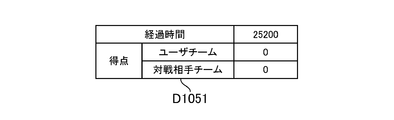
- Progress data D1051 is data indicating the progress of the match.
- FIG. 14 shows an example of progress data D1051.
- progress data D1051 includes "elapsed time” and "score" fields.
- the "elapsed time” field indicates the elapsed time since the start of the match. This elapsed time is indicated by the time in the virtual space VW. For example, a numerical value indicating the elapsed time in 1/60 second units is registered in the "elapsed time” field. In the example shown in FIG. 14, the numerical value “25200” is registered in the “elapsed time” field, which indicates that 7 minutes have elapsed since the start of the match.
- the “score” field indicates the score of each of the user team and the opponent team.
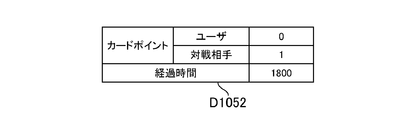
- Card point data D1052 is data related to each card point of the user and the opponent.
- FIG. 15 shows an example of card point data D1052.
- the card point data D1052 includes the "card point” and "elapsed time” fields.
- the “card point” field indicates the current card points of the user and the opponent.
- the "Elapsed time” field indicates the elapsed time. This elapsed time is indicated by the time in the virtual space VW. For example, a numerical value indicating the elapsed time in 1/60 second units is registered in the "elapsed time" field. As described above, each time a predetermined time (for example, one minute in the virtual space VW) elapses, the card points of the user and the opponent are increased by 1 point.
- the "elapsed time” field is a field for determining whether or not a predetermined time has elapsed.
- the value of the “elapsed time” field is increased with the passage of time.
- the value of the "elapsed time” field becomes 3600 or more
- the card points of each of the user and the opponent are increased by 1 point
- the value of the "elapsed time” field is initialized to zero.
- the value of the "elapsed time” field is increased according to the elapsed time, and when the value of the "elapsed time” field becomes 3600 or more again, the card points of the user and the opponent are increased by 1 point.
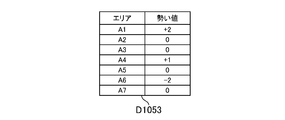
- Momentum value data D1053 is data relating to each momentum value of areas A1 to A7.
- FIG. 16 shows an example of the momentum value data D1053.
- the momentum data D1053 includes an "area” and “momentum value” fields, and indicates the current momentum value of each of the areas A1 to A7.
- Virtual space state data D1054 is data indicating the current state of the virtual space VW.
- the virtual space state data D1054 includes state information (position, line-of-sight direction VD, etc.) indicating the current state of the viewpoint VP, and state information (position, moving direction, moving speed, etc.) indicating the current state of the ball BO. including.
- Character state data D1055 is data indicating the current situation of each player character PC (user character UC or opponent character OC).
- FIG. 17 shows an example of character state data D1055.
- the character state data D1055 has "character number”, “team belonging”, “card ID”, “ability”, “participation flag”, “substitution flag”, “position number”, “position”, It includes "direction”, “moving speed”, “playback motion”, and “playback frame” fields.
- the "character number” field indicates a character number for uniquely identifying each of the player character PCs (user character UC and opponent character OC).
- the "team” field indicates the team to which the player character PC belongs.
- the "card ID” field indicates the card ID of the player card with which the player character PC is associated.
- the “capability” field includes “original capability” and “current capability” fields as subfields.
- the “original ability” field shows the original value (normal value) of various abilities (running ability, passing ability, shooting ability, dribbling ability, defense ability, etc.) of the player character PC.
- the “current ability” field indicates the current value of various abilities of the player character PC.
- the values of various abilities registered in the “ability” field of the card list data D1010 are registered in the “original ability” and “current ability” fields. Then, the value of the “current ability” field is referred to when causing the player character PC to perform an action during the match.
- the “current ability” field is set so that the ability of the player character PC is higher than the original ability. The value is increased. Further, when this player character PC moves out of the dominant area of the user team, the value of the “original ability” field is registered in the “current ability” field so that the ability of the player character PC returns to the original ability. Will be done.
- a participation flag indicating whether or not the player character PC is participating in (or has already participated in) the game is registered. If the player character PC has not yet participated in the match, the participation flag is set to off (0), and when the player character PC participates in the match, the participation flag is set to on (1).
- substitution flag a substitution flag indicating whether or not the player character PC that participated in the match has been replaced by another player character PC is registered.
- the substitution flag is initialized to OFF (0), and the substitution flag is set to ON (1) when the player character PC who participated in the game substitutes another player character PC.
- the player character PC with the participation flag set to ON and the substitution flag set to OFF is the player character PC currently participating in the match. Further, the player character PC for which both the participation flag and the substitution flag are set to ON is the player character PC that has participated in the game but has already been replaced with another player character PC. Further, the player character PC in which both the participation flag and the substitution flag are set to off is a reserved player character PC that has not yet participated in the game.
- the “position number” field indicates which position in the formation the player character is assigned to.
- the “position” field indicates the current position of the player character in the virtual space VW.
- the “Orientation” field indicates the direction in which the player character is currently facing. The position and orientation are indicated using the world coordinate system.
- “Movement speed” indicates the current movement speed of the player character.
- the “playback motion” field indicates the motion data currently being played for the player character. That is, the “playback motion” field indicates the type of motion the player character is currently performing.
- the Playback Frame field indicates the current playback position of the motion data. For example, the number of frames of motion data currently being played is registered in the "playback frame".
- the first card usage status data D1056 is data indicating the usage status of the player card by the user.
- FIG. 18 shows an example of the first card usage status data D1056.
- the first card usage status data D1056 information regarding the five player cards selected as the user's candidate cards for use is registered.
- the game image G300 five parts P340-1 to P340-5 indicating the five player cards registered in the first card usage status data D1056 are displayed.
- the first card usage status data D1056 includes "card ID”, “cost”, “influence value (increasing effect)”, “usage flag”, and “elapsed time” fields.
- the "card ID” and “cost” fields indicate the card ID and cost information of the player card selected as the user's candidate card for use.
- the “influence value (increase effect)” field shows the current influence value of the player card for each of areas A1 to A7. That is, the “influence value (increase effect)” field shows the increase effect of the player card with respect to each momentum value of areas A1 to A7.
- the “use flag” field a use flag indicating whether or not the player card has been used by the user is registered. The use flag is set to off (0) when the player card is not used by the user, and the use flag is set to on (1) when the player card is used by the user.
- the "elapsed time” field indicates the elapsed time. This elapsed time is indicated by the time in the virtual space VW. For example, a numerical value indicating the elapsed time in 1/60 second units is registered in the "elapsed time" field. As described above, in a soccer game, when a player card is used, the effect of increasing the player card on the momentum value of area A every time a predetermined time (for example, 5 minutes in the virtual space VW) elapses. Is becoming weaker.
- the "elapsed time” field is a field for determining whether or not a predetermined time has elapsed.
- the value in the "elapsed time” field Is increased with the passage of time, and when the value of the "elapsed time” field becomes 18,000 or more, it is determined that 5 minutes have passed, and the value of the "elapsed time” field is initialized to zero. Then, again, the value of the "elapsed time” field is increased according to the passage of time, and when the value of the "elapsed time” field becomes 18,000 or more, it is determined that 5 minutes have passed.
- the second card usage status data D1057 is data indicating the usage status of the player card by the opponent.
- FIG. 19 shows an example of the second card usage status data D1057.
- the second card usage status data D1057 includes “card ID”, “cost”, “influence value (decrease effect)”, “use flag”, and “elapsed time” fields.
- the "influence value (decrease effect)” field indicates the current influence value of the player card for each of the areas A1 to A7. That is, the "influence value (increase effect)” field shows the effect of decreasing the player card on each momentum value of areas A1 to A7.
- the other fields are the same as the first card usage status data D1056, and therefore the description thereof is omitted here.
- the data stored in the data storage unit 1000 is not limited to the data described above.
- data or the like that identifies a plurality of areas A1 to A7 set on the pitch PT is also stored in the data storage unit 1000.
- the motion control unit 1100 controls the motion of the game object based on the performance information of the game object. For example, the motion control unit 1100 controls the motion of each of the plurality of game objects arranged in the virtual space based on the performance information of each of the plurality of game objects. For example, the motion control unit 1100 moves the game object in the virtual space. Further, for example, the motion control unit 1100 causes the game object to perform a motion other than the moving motion in the virtual space.
- Performance information is information related to the performance of the game object, and is information associated with the game object.
- the “performance information” is information indicating whether the performance of the game object is high or low (or large or small).
- the “performance information” may be information indicating the presence or absence of a specific performance.
- information indicating whether or not a game object has acquired a specific skill also corresponds to an example of "performance information”.
- the "performance information” may be information indicating the performance numerically, or may be information indicating the performance numerically.
- Controlling the operation of the game object based on the performance information means controlling the speed, accuracy (accuracy), result (success or failure), etc. of the operation of the game object based on the performance information.
- controlling the operating speed of the game object based on the performance information means controlling the moving speed of the game object based on the performance information.
- controlling the motion of a game object based on performance information means whether to make the game object perform a special motion, such as learning performance information (for example, mastering skills capable of performing a special motion). It may be decided based on (whether or not it is).
- the ability information of the player character PC corresponds to an example of "performance information”. That is, a numerical value indicating the level of various abilities (for example, running ability, pass ability, shooting ability, dribbling ability, defense ability, etc.) of the player character PC corresponds to an example of "performance information”.
- the motion control unit 1100 controls the motion of the player character PC based on the ability information of the player character PC. For example, the motion control unit 1100 controls the moving speed and the dribbling speed of the player character PC based on the ability information (running ability information, dribbling ability information, etc.) of the player character PC. Further, the motion control unit 1100 controls the accuracy of the kick motion (pass or shoot, etc.) of the player character PC based on the ability information (pass ability information, shoot ability information, etc.) of the player character PC. In addition, the motion control unit 1100 determines whether or not the player character PC's pass, shoot, dribble, tackle, etc.
- the motion control unit 1100 controls the success probability of the player character PC's pass, shoot, dribble, tackle, etc. based on the ability information.
- the total ability information of the player character PC can also correspond to an example of "performance information”, and the motion control unit 1100 performs the operation of the player character PC with the total ability information of the player character PC. It may be controlled based on.
- the motion control unit 1100 determines whether or not the player character PC is to perform a special action (for example, a special feint action) by the player character PC with a special skill (skill for performing the special action). ) May be decided based on the information on whether or not the student has mastered the above.
- a special action for example, a special feint action
- the performance change unit 1200 sets the performance information when the game object is located in the target area of the virtual space as the first change information regarding the change of the performance information associated with the target area. Change based on (performance change information).
- the performance changing unit 1200 changes the performance information of the game object when any one of the plurality of game objects arranged in the virtual space is located in the target area, the first change being associated with the target area. Make informed changes.
- the “target area” is an area in the virtual space.
- the “target area” is an area associated with the first change information. Further, the “target area” is an area that is a target of determination as to whether or not the game object is located.
- the “target area” is a target area for which the performance information of the game object should be changed. That is, the “target area” is a target area for setting the performance information of the game object to the performance information changed based on the first change information.
- the target area is a part of the virtual space.
- the virtual space includes a plurality of target areas, and each of the plurality of target areas is associated with the first change information.
- the performance changing unit 1200 sets, for each of the plurality of target areas in the virtual space, the performance information when the game object is located in the target area as the first change information associated with the target area. Change based on.
- the virtual space may include only one target area. Further, the entire virtual space may be one target area.
- the target area may be a fixed area set by the game developer or the like, or may be an area arbitrarily set by the user. That is, the position, size, shape, etc. of the target area in the virtual space may be preset by the game developer or the like, or may be arbitrarily set by the user before the start of the game, half-time, or the like.
- the “performance information when the game object is located in the target area of the virtual space” means the motion control unit 1100 for controlling the motion of the game object when the game object is located in the target area. Performance information used (referenced) by.
- the "first change information” is information that is the basis for changing the performance information, and may be paraphrased as "performance change information” or the like.
- the "first change information" is information that is the basis for determining whether or not to change the performance information of the game object.
- the "first change information” is information that is the basis for determining how to change the performance information of the game object. Specifically, the “first change information” is whether or not the performance information is changed so as to improve the performance of the game object (or whether or not the performance information is changed so as to decrease the performance of the game object). This is the information that is the basis of the judgment.
- the "first change information" is whether or not the performance information of the game object is changed so as to be advantageous to the user (or whether or not the performance information of the game object is changed so as to be disadvantageous to the user). It may be information that is the basis of the judgment of (whether or not).
- the performance information of the game object used by the user is set to improve the performance of the game object.
- the performance information of the game object used by the user is changed so that the performance of the game object is lowered, or the performance information of the game object used by the opponent is changed so that the performance of the game object is raised. This corresponds to an example of "changing the performance information of a game object so as to be disadvantageous to the user".
- the game object that is a member of the game object group used by the user is It corresponds to "the game object to be used”
- the game object which is a member of the game object group used by the opponent corresponds to "the game object used by the opponent”.
- the "first change information" may be, for example, information that is the basis for determining the degree of change in the performance information of the game object.
- index information indicating superiority or inferiority (advantage / disadvantage) of the game object in the target area is set as "first change information". For example, when the index information (first change information) indicates that the game object is dominant (advantageous) in the target area, the performance information is changed so that the performance of the game object is improved. Further, for example, when the index information (first change information) indicates that the game object is inferior (disadvantageous) in the target area, the performance information is changed so that the performance of the game object is lowered.
- Changing the performance information when the game object is located in the target area means that the performance information when the game object is located in the target area is changed from the original performance information. Is to set to.
- the "original performance information” is the performance information before being changed, and is the performance information indicating the performance originally possessed by the game object. That is, the “original performance information” is performance information when the game object is located in an area outside the target area (area not associated with the first change information). In other words, the “original performance information” is an operation for controlling the operation of the game object when the game object is located in an area outside the target area (area not associated with the first change information). This is performance information used (referenced) by the control unit 1100.
- the performance changing unit 1200 determines whether to change the performance information when the game object is located in the target area, based on the first change information associated with the target area. Specifically, the performance changing unit 1200 determines whether or not the first change information associated with the target area satisfies a predetermined condition, so that the performance when the game object is located in the target area is improved. Decide whether to change the information. Then, when the performance change unit 1200 decides to change the performance information, the performance change unit 1200 changes the performance information when the game object is located in the target area.
- the performance changing unit 1200 determines the degree of change when changing the performance information when the game object is located in the target area, based on the first change information associated with the target area. You may. That is, the performance change unit 1200 may change the performance information when the game object is located in the target area to the extent that it is determined based on the first change information associated with the target area.
- the performance changing unit 1200 sets the performance information when the game object is located in the target area to the performance information changed based on the first change information associated with the target area.
- the "performance information changed based on the first change information” is the performance information obtained by changing the original performance information of the game object based on the first change information.
- the performance information changed by the performance changing unit 1200 indicates the action of the game object by the action control unit 1100. Used to control.
- the performance change unit 1200 changes the performance information of the game object based on the first change information associated with the target area according to the movement of the game object into the target area.
- to change the performance information of the game object according to the movement of the game object into the target area means that the performance information of the game object is immediately changed when the game object moves into the target area.
- the performance information of the game object may be changed when a predetermined period of time elapses after the game object moves into the target area.
- “changing the performance information of the game object according to the movement of the game object into the target area” means that the game object moves into the target area before the game object moves into the target area.
- the performance information of the game object may be changed when is determined.
- the performance changing unit 1200 sets the performance information when the game object is located in the target area based on the first change information associated with the target area and the type information regarding the type of the game object. You may change it.
- Type information is information related to the type of game object, and is information associated with the game object.
- information indicating whether a game object fits a specific type or a game object that does not fit a specific type corresponds to an example of "type information”.
- information indicating whether the game object has a specific performance or the game object does not have a specific performance corresponds to an example of "type information”.
- the game object used by the user Information indicating whether the game object is (or a game object that is a member of the game object group used by the user) or a game object used by the opponent (or a game object that is a member of the game object group used by the opponent).
- type information indicating whether the game object is (or a game object that is a member of the game object group used by the user) or a game object used by the opponent (or a game object that is a member of the game object group used by the opponent.
- the performance changing unit 1200 does not change the performance information when the game object is located in the target area based on the first change information, Only when the type of is not a specific type, the performance information when the game object is located in the target area may be changed based on the first change information.
- the performance changing unit 1200 does not change the performance information when the game object is located in the target area based on the first change information, and Only when the type is a specific type, the performance information when the game object is located in the target area may be changed based on the first change information.
- the performance changing unit 1200 determines the degree of change when changing the performance information when the game object is located in the target area based on the first change information, and the type of the game object is a specific type.
- the type of game object may be smaller (or larger) than when it is not a specific type.
- the performance change unit 1200 may perform the game.
- the performance information when the object is located in the target area may be changed. For example, when the first change information associated with the target area satisfies the first condition and the type of the game object located in the target area is the first type, or the first change information associated with the target area is the first type.
- the performance changing unit 1200 determines that the game object is located in the target area. Performance information of may be changed.
- the performance changing unit 1200 determines that the game object is located in the target area if the type of the game object located in the target area is the first type. If the performance information when it is located is changed so that the performance is improved and the type of the game object located in the target area is the second type, the game object is located in the target area. The performance information may be changed so that the performance is lowered.
- the performance changing unit 1200 determines that the game object is located in the target area if the type of the game object located in the target area is the second type. If the performance information is changed so that the performance is improved and the type of the game object located in the target area is the first type, the performance when the game object is located in the target area. The information may be modified to reduce performance.
- the target area may be associated with the first change information corresponding to each type of the game object. Then, the performance changing unit 1200 sets the performance information when the game object is located in the target area to the first corresponding to the type of the game object in the first change information associated with the target area. It may be changed based on the change information.
- each of the areas A1 to A7 corresponds to an example of the "target area”
- each momentum value of each of the areas A1 to A7 corresponds to an example of the "first change information”.
- the total value of the influence value of the area An of the card used by the user also corresponds to an example of the "first change information" of the area An (n: 1 to 1 to 1). Integer of 7). That is, among the player cards registered in the first card usage status data D1056, the total value of the influence value of the area An of the player card whose use flag is on (the effect of increasing the momentum value of the area An) is also the area An.
- the total value of the influence value of the area An of the opponent's card also corresponds to an example of the "first change information" of the area An (n: 1). Integer from 7). That is, among the player cards registered in the second card usage status data D1057, the total value of the influence value (decrease effect on the momentum value of the area An) of the player card whose usage flag is on is also the area An. It can also be said that it corresponds to an example of "first change information”.
- the team to which the player character PC belongs corresponds to an example of “type information”.
- the performance changing unit 1200 changes the ability information when the player character PC is located in the area A1 based on the momentum value of the area A1 and the team to which the player character PC belongs. .. The same applies to areas A2 to A7.
- the performance changing unit 1200 sets the ability information of the user character UC higher than the original ability information when the user character UC is located in the dominant area of the user team. That is, when the momentum value of the area A1 is larger than zero and the player character PC located in the area A1 is the user character UC, the performance changing unit 1200 is located in the area A1.
- the ability information of the player character PC is set higher than the original ability information.
- the total value of the influence value of the area A1 of the user's card is the influence value of the area A1 of the opponent's card (decrease effect on the momentum value of the area A1).
- the performance change unit 1200 is the player character PC located in the area A1.
- the ability information is set higher than the original ability information.
- the performance change unit 1200 sets the ability information of the opponent character OC higher than the original ability information when the opponent character OC is located in the superior area of the opponent team. That is, when the momentum value of the area A1 is smaller than zero and the player character PC located in the area A1 is the opponent character OC, the performance change unit 1200 is located in the area A1.
- the ability information of the player character PC is set higher than the original ability information.
- the total value of the influence value of the area A1 of the user's card is the influence value of the area A1 of the opponent's card (decrease effect on the momentum value of the area An).
- the performance change unit 1200 is located in the area A1 of the player character PC. Set the ability information of to higher than the original ability information.
- the performance change unit 1200 may set the ability information of the user character UC lower than the original ability information when the user character UC is located in the superior area of the opponent team. Further, the performance changing unit 1200 may set the ability information of the opponent character OC lower than the original ability information when the opponent character OC is located in the superior area of the user team.
- the type of the player character PC to be changed by the performance change unit 1200 may be limited to the user character UC. That is, the performance changing unit 1200 may not change the ability information of the opponent character OC even if the opponent character OC is located within the superior area of the opponent team. Alternatively, the type of the player character PC for which the performance change unit 1200 changes the ability information may be limited to the opponent character OC.
- information on whether or not the user character UC has acquired a special skill can correspond to an example of "type information".
- type information For example, in the performance change unit 1200, when the user character UC has acquired a special skill, the user character UC is in the dominant area of the user team as compared with the case where the user character UC has not acquired the special skill. The degree of increase in the capability information may be increased when the vehicle is located at. Alternatively, in the performance change unit 1200, when the user character UC has acquired a special skill, the user character UC has acquired a special skill as compared with the case where the user character UC has not acquired a special skill. The degree of deterioration of the capability information when located inside may be reduced.
- the performance change unit 1200 does not reduce the ability information when the user character UC is located in the dominant area of the opponent team. Good. The same applies to the opponent character OC. In this way, the ability changing unit 1200 may change the ability information in consideration of whether or not the user character UC (or the opponent character OC) has acquired a special skill.
- information on whether or not the user character UC is a skilled player can also correspond to an example of "type information".
- the performance change unit 1200 indicates that the user character UC is a skilled player (that is, the user character UC has more than a predetermined number of years of experience) and the user character UC is not a skilled player (that is, the user character UC).
- the number of years of experience is less than the predetermined number of years), the degree of increase in the capability information when the user character UC is located in the dominant area of the user team may be increased.
- the performance change unit 1200 has the ability when the user character UC is a skilled player and the user character UC is located in the superior area of the opponent team as compared with the case where the user character UC is not a skilled player. The degree of deterioration of information may be reduced. Alternatively, when the user character UC is a skilled player, the performance changing unit 1200 may not reduce the ability information when the user character UC is located in the superior area of the opponent team. The same applies to the opponent character OC. In this way, the ability information may be changed by the performance changing unit 1200 in consideration of whether or not the user character UC (or the opponent character OC) is a skilled player.
- two momentum values that is, the momentum value of the user team and the momentum value of the opponent team may be set for each of the areas A1 to A7. That is, for example, the total influence value of the area A1 of the card used by the user is set as the momentum value of the user team in the area A1, and the total influence value of the area A1 of the card used by the opponent is set in the area A1. It may be set as the momentum value of the opponent team.
- the performance change unit 1200 is located in the area A1 if the momentum value of the user team in the area A1 (the total value of the influence values of the area A1 of the user's card) is larger than zero.
- the ability information of the user character UC may be set higher than the original ability information.
- the performance change unit 1200 is located in the area A1 if the momentum value of the opponent team in the area A1 (the total value of the influence values of the opponent's cards used in the area A1) is larger than zero.
- the ability information of the opponent character OC may be set higher than the original ability information. The same applies to areas A2 to A7.
- the first change canceling unit 1210 in response to the movement of the game object located in the target area outside the target area, changes the first change information (performance) associated with the target area.
- the modification of the performance information of the game object based on the modification information) is canceled.
- “Releasing the modification of the performance information based on the first modification information associated with the target area” means that the performance information of the game object is changed from the status based on the first modification information associated with the target area, It is to change the change to the canceled state.
- the first change release unit 1210 immediately releases the game object located in the target area when it moves out of the target area.
- the first change release unit 1210 may release the game object located in the target area when a predetermined period has elapsed after moving the game object out of the target area.
- the first change canceling unit 1210 cancels the game object located in the target area, before moving the game object outside the target area, when the game object is determined to move outside the target area. May be done.
- the first change canceling unit 1210 causes the game object to By returning the performance information of the above to the original performance information, the change based on the first change information associated with the target area is released.
- the first change release unit 1210 receives the performance information of the game object as the first target. Associated with the first target area by changing from the state in which the change was made based on the first change state associated with the area to the state in which the change was made based on the first change state associated with the second target area. Cancel the change based on the first change state made.
- the performance changing unit 1200 determines that the user who is located in the area A1.
- the ability information of the character UC is set higher than the original ability information.
- the performance changing unit 1200 the user character UC located in the area A1 moves to the outside of the area A1.
- the first change canceling unit 1210 cancels the above change made by the performance changing unit 1200.
- areas A2 to A7 the same applies to areas A2 to A7.
- the performance change unit 1200 is the opponent character OC located in the area A1.
- the opponent character OC located in the area A1 is outside the area A1.
- the first change canceling unit 1210 cancels the above-mentioned change by the performance changing unit 1200 when moving to the. The same applies to areas A2 to A7.
- the reception unit 1300 receives a change instruction for changing the first change information (performance change information) associated with the target area.
- the information change unit 1400 changes the first change information (performance change information) associated with the target area based on the change instruction.
- “Change instruction” is an instruction to change the first change information associated with the target area.
- the "change instruction” may include instructing at least one of the plurality of target areas as an area for which the first change information should be changed.
- the "change instruction” may include instructing how to change the first change information.
- the "change instruction” may include instructing how much the first change information is changed.
- Changing the first change information means changing the first change information so as to influence the judgment as to whether or not to change the performance information of the game object.
- changing the first change information means changing the first change information so as to affect the determination of how to change the performance information of the game object.
- “changing the first change information” means increasing or decreasing the numerical value indicated by the first change information.
- “changing the first change information” means that the layer indicated by the first change information is included in the plurality of layers. It is to change to another hierarchy.
- the reception unit 1300 receives from the user a change operation for changing the first change information (performance change information) associated with the target area.
- the information change unit 1400 changes the first change information (performance change information) associated with the target area based on the change operation of the user.
- the information change unit 1400 changes the first change information associated with the target area when the change operation is performed by the user.
- a change operation is an operation for instructing to change the first change information associated with the target area.
- the “change operation” is performed by the user using the operation unit 14. Further, “accepting the change operation” means determining whether or not the change operation has been performed based on the operation signal supplied from the operation unit 14. Note that “accepting the change operation” may mean receiving information indicating that the change operation has been performed from another device.
- the reception unit 1300 sets at least one of the plurality of target areas. First Accepts a change operation including a designated operation that specifies (selects) the change information as an area to be changed. Then, when the designation operation is accepted, the information changing unit 1400 changes the first change information associated with the target area designated by the designation operation among the plurality of target areas.
- the reception unit 1300 accepts a change operation including a designation operation for specifying how to change the first change information. Specifically, the reception unit 1300 accepts a change operation including a designation operation for specifying how much the first change information is changed. Then, when the designated operation is accepted, the information changing unit 1400 changes the first change information of the target area in a manner (degree) as specified by the designated operation.
- the operation of designating any one of the parts P340-1 to P340-5 of the match image G300 is equivalent to an example of “change instruction”, “change operation”, and “designation operation”. That is, the receiving unit 1300 receives an operation of designating any one of the parts P340-1 to P340-5.
- the information changing unit 1400 changes the momentum value of at least one of the areas A1 to A7 based on the designated part P340. For example, when the part P340-1 shown in FIG. 6 is specified, the influence value of the area A1 is set to “2” in the player card associated with the part P340-1, so the information changing unit 1400 sets the area Increase the momentum value of A1 by 2 (see FIG. 7).
- the parts P340-1 to P340-5 may be displayed in the game image G300.
- the operation of designating at least one of the seven parts indicating each of the areas A1 to A7 corresponds to an example of "change instruction", "change operation", and "designation operation”. That is, the reception unit 1300 may accept an operation for designating at least one of the seven parts, and the information changing unit 1400 may change the momentum value of the area A corresponding to the designated parts.
- two momentum values that is, the momentum value of the user team and the momentum value of the opponent team may be set for each of the areas A1 to A7. That is, for example, the total influence value of the area A1 of the card used by the user is set as the momentum value of the user team in the area A1, and the total influence value of the area A1 of the card used by the opponent is set in the area A1. It may be set as the momentum value of the opponent team.
- the information changing unit 1400 may change the momentum value of the user team in at least one of the areas A1 to A7 based on the user's change instruction.
- the information changing unit 1400 may change the momentum value of the opponent team in at least one of the areas A1 to A7 based on the instruction to change the opponent.
- the “given period” is the period during which the first change information associated with the target area continues to be changed. That is, the “given period” is a period in which the change by the information changing unit 1400 continues to be effective.
- the length of the "given period” may or may not be constant.
- the length of the “given period” may be set randomly. Further, for example, the length of the “given period” may be different depending on the target area.
- the "given period” starts from the time when the first change information associated with the target area is changed by the information change unit 1400.
- the "given period" may be started from a time when a predetermined condition is satisfied after the first change information associated with the target area is changed by the information change unit 1400.
- the "given period” is the time when any game object moves into the target area after the first change information associated with the target area is changed by the information change unit 1400. You may start from. Further, for example, in a game in which a user and an opponent play against each other, when the first change information associated with the target area is changed in response to a change instruction of the user, the change is performed for a "given period". After being deleted, the game object (user object) used by the user may be started at the time when the game object is moved into the target area. On the other hand, when the first change information associated with the target area is changed according to the change instruction of the opponent, the “given period” is the game object used by the opponent after the change is made. It may start from the time when the (opponent object) moves into the target area.
- “Releasing the change by the information changing unit 1400” means changing the first change information associated with the target area from the state in which the change is made by the information changing unit 1400 to the state in which the change is canceled. is there.
- the second change canceling unit 1410 unconditionally (immediately) cancels the change by the information changing unit 1400 when a given period has elapsed.
- the second change release unit 1410 may release the change by the information change unit 1400 under predetermined conditions when a given period has elapsed. For example, when a given period has elapsed, the second change canceling unit 1410 randomly determines whether or not to cancel the change by the information changing unit 1400 based on a predetermined probability, and decides to cancel the change. In that case, the change by the information changing unit 1400 may be canceled. When it is determined not to cancel the change, the second change canceling unit 1410 randomly determines whether to cancel the change by the information changing unit 1400 after a predetermined time has elapsed, based on a predetermined probability. You may.
- the influence value of the area A1 is set to "2", so that the part P340-1 is specified by the user.
- the information changing unit 1400 increases the momentum value of the area A1 by 2.
- the second change cancellation unit 1410 determines the momentum of the area A1 when a predetermined time elapses after the part P340-1 is designated (that is, the player card associated with the part P340-1 is used). The value is decremented by 1, and thereafter, the momentum value of the area A1 is decremented by 1 when a predetermined time has elapsed. In this way, the change (increase by 2) of the momentum value of the area A1 by the information changing unit 1400 is canceled.
- the momentum value of the area A1 is increased by 2 when the part P340-1 shown in FIG. 6 is designated by the user (that is, the player card associated with the part P340-1 is used). If this is done, the second change release unit 1410 waits for any user character UC to be located in the area A1 if none of the user character UCs is located in the area A1. After the user character UC is located in the area A1, the momentum value of the area A1 is decreased by 1 when a predetermined time has elapsed, and then the momentum value of the area A1 is decreased by 1 when a further predetermined time has elapsed. You may try to reduce it.
- the display control unit 1310 serves as an instruction object for instructing a change of the first change information associated with at least one of the plurality of target areas, and at least one of the plurality of target areas. Then, the display unit 15 displays the instruction object associated with the second change information related to the change of the first change information.
- “Second change information” is information that is the basis for deciding how to change the first change information.
- the “second change information” is information indicating the degree of change when changing the first change information.
- the "second change information" is whether or not the first change information is changed so that the performance of the game object is likely to increase (or the performance of the game object is likely to decrease.
- the "second change information” is whether or not the first change information is changed in an advantageous manner for the user (or whether or not the first change information is changed in a disadvantageous manner for the user). It may be information indicating (?). It should be noted that whether or not it is advantageous to the user (whether or not it is disadvantageous to the user) depends on the rules of the game.
- the “instruction object” is an object displayed on the display unit 15 so that the user can instruct the change of the first change information associated with at least one of the plurality of target areas.
- the “instruction object” is an object displayed on the display unit 15 to receive an instruction to combine at least one target area and the second change information.
- Display the instruction object on the display unit 15 means displaying an image including the instruction object on the display unit 15.
- “Displaying an image on the display unit 15” may mean displaying the image on the display unit 15 of the game terminal 10 by transmitting data for displaying the image to the game terminal 10.
- the "data for displaying an image” may be, for example, data indicating the image itself, data for generating the image, or data for instructing the display of the image.
- the display control unit 1310 causes the display unit 15 to display a plurality of instruction objects in which at least one of the plurality of target areas and the second change information are associated with each other.
- a plurality of instruction objects in which at least one target area and the second change information are associated are displayed on the display unit 15.
- the plurality of instruction objects are displayed on the display unit 15 as a plurality of options for selecting a combination of at least one target area and the second change information.
- the display control unit 1310 may cause the display unit 15 to display a plurality of instruction objects at once, or may cause the display unit 15 to sequentially display a plurality of instruction objects.
- the display control unit 1310 may cause the display unit 15 to sequentially display a predetermined number of instruction objects.
- the receiving unit 1300 receives the designation of the instruction object displayed on the display unit 15.
- "Accepting the designation of the instruction object” means accepting the designation operation for designating the instruction object displayed on the display unit 15. For example, an operation of pressing a predetermined button with the cursor pointing to the instruction object, a tap operation, a double-click operation on the instruction object, or the like corresponds to an example of “designation operation”.
- the “predetermined button” may be an actual button or a virtual button displayed on the display unit 15.
- accepting the designation of the instruction object may mean receiving data indicating that the instruction object displayed on the display unit 15 has been designated. Further, the designation of the designated object may be accepted at all times during the game, or may be accepted at a plurality of designated opportunities set during the game.
- the reception unit 1300 accepts at least one designation of the plurality of instruction objects.
- "Accepting at least one designation of a plurality of instruction objects” means accepting a designation operation that specifies at least one of a plurality of instruction objects.
- "accepting the designation of at least one of the plurality of instruction objects” may mean receiving data indicating that at least one of the plurality of instruction objects has been designated.
- the information change unit 1400 changes the first change information associated with the target area associated with the instruction object based on the designation of the instruction object, based on the second change information associated with the instruction object. ..
- the information change unit 1400 displays the first change information associated with the target area associated with the specified instruction object from among the plurality of instruction objects. Make changes based on the second change information associated with the specified instruction object.
- the information change unit 1400 transfers the first change information associated with the target area associated with the specified instruction object to the second change information associated with the specified instruction object. Change according to the change method (degree, etc.) as shown in the change information.
- a plurality of game objects associated with at least one of a plurality of target areas and a second change information are moved in the virtual space.
- the instruction object is associated with at least one of a plurality of game objects.
- the game object associated with the instruction object is included.
- a game object other than the game object in which at least one target area and the second change information are associated with each other may be arranged in the virtual space. That is, a game object to which at least one of the target area and the second change information is not associated may move in the virtual space. Note that only a plurality of game objects associated with at least one target area and the second change information may move in the virtual space.
- the information changing unit 1400 determines, based on the designation of the instruction object, the target area associated with the game object based on the second change information associated with the game object associated with the instruction object. Modify the first modification information associated with the area.
- a plurality of game objects in a predetermined game object group move in the virtual space, and each game object in the predetermined game object group Is associated with at least one of the plurality of target areas and the second change information, and the display control unit 1310 causes the display control unit 1310 to associate the plurality of instruction objects with the plurality of game objects of the predetermined game object group. Is displayed on the display unit 15. Then, the receiving unit 1300 receives the designation of at least one of the plurality of instruction objects, and the information changing unit 1400 is associated with the game object associated with the instruction object designated from the plurality of instruction objects. Based on the second change information, the first change information associated with the target territory area associated with the game object is changed.
- a predetermined game object group is a group of a plurality of game objects.
- the "predetermined game object group” is a game object group set by the user before the start of the game.
- the “predetermined game object group” is a game object group set by the user selecting a plurality of game objects to be used in the game from the game object group owned by the user.
- the "predetermined game object group” is a game object group set by the user selecting a plurality of game objects to be used in the game from a plurality of game object groups preset by a game developer or the like. It may be.
- the "predetermined game object group” may be a game object group owned by the user.
- the “predetermined game object group” may be a game object group preset by a game developer or the like.
- Multiple game objects in a predetermined game object group in the phrase "a plurality of game objects in a predetermined game object group move in a virtual space” means "a plurality of game objects in a predetermined game object group”. May be a part of the game objects, or all the game objects in the predetermined game object group.
- the user team corresponds to an example of a “predetermined game object group”, and among the user characters UC belonging to the user team, 11 user characters UC participating in the match are in the phrase. Of "a plurality of game objects in a predetermined game object group”.
- the user All user characters UC belonging to the team correspond to an example of "a plurality of game objects in a predetermined game object group" in the wording.
- a plurality of game objects in a predetermined game object group in the phrase "displaying a plurality of instruction objects associated with a plurality of game objects in a predetermined game object group on the display unit 15"? , It may be a part of the game objects in the predetermined game object group, or it may be all the game objects in the predetermined game object group.
- a plurality of game objects in a predetermined game object group in the wording means "a predetermined game” in the phrase “a plurality of game objects in a predetermined game object group move in a virtual space”. The plurality of game objects in the object group" may be different or the same.
- the plurality of game objects associated with the plurality of instruction objects displayed on the display unit 15 may be different from or the same as the plurality of game objects moving in the virtual space.
- the “plurality of instruction objects associated with the plurality of game objects in the predetermined game object group” are the plurality of instruction objects associated with the plurality of game objects moving in the virtual space.
- the user character UC belonging to the user team, and five user character UCs out of the 11 user character UCs participating in the game are "plurality of the predetermined game object group”.
- "Displaying a plurality of instruction objects associated with the game object on the display unit 15" corresponds to an example of "a plurality of game objects in a predetermined game object group”.
- a plurality of instruction objects associated with a plurality of game objects is a plurality of instruction objects associated with at least one of the plurality of game objects. For example, it is a plurality of instruction objects that are associated with each game object among the plurality of game objects in a one-to-one relationship.
- a plurality of game objects specified by the user from a predetermined group of game objects move in the virtual space, and the display control unit 1310 is used to perform a plurality of game objects specified by the user.
- a plurality of instruction objects associated with the game object are displayed on the display unit 15.
- a plurality of game objects among a plurality of game objects specified by the user means a plurality of game objects (a plurality of game objects moving in the virtual space) specified by the user from the predetermined game object group. ), or all of the plurality of game objects designated by the user (a plurality of game objects moving in the virtual space) out of a predetermined game object group. It may be an object.
- the display control unit 1310 causes the display unit 15 to display a plurality of instruction objects associated with a plurality of game objects selected based on a predetermined probability from the predetermined game object group.
- the "predetermined probability” is the probability that each game object is selected. As the probability of being selected, the same probability may be set for each game object, or different probabilities may be set.
- a plurality of game objects selected from a predetermined game object group based on a predetermined probability means, for example, that the total number of game objects included in the predetermined game object group is N (N: an integer of 3 or more). ) Are M game objects (M: an integer of 2 or more and less than N) randomly selected from these N game objects based on a predetermined probability.
- areas A1 to A7 correspond to an example of "plurality of target areas", and influence information corresponds to an example of "second change information”.
- the player card corresponds to an example of an "instruction object”.
- each of the displayed parts P340-1 to P340-5 of the game image G300 corresponds to an example of the "instruction object”.
- the 18 user character UCs belonging to the user team corresponds to an example of the "predetermined game object group”. To do.
- the display control unit Reference numeral 1310 is five parts P340-1 to P340 indicating five player cards associated with five user character UCs randomly selected from the 11 user character UCs based on a predetermined probability.
- -5 is displayed in the match image G300.
- the receiving unit 1300 receives the designation of any one of the parts P340-1 to P340-5.
- the information changing unit 1400 changes the momentum value of at least one of the areas A1 to A7 based on the designated part P340. For example, since the influence value of the area A1 of the player card associated with the part P340-1 shown in FIG. 6 is set to “2”, when the part P340-1 is designated, the information changing unit 1400 Increase the momentum value of area A by 2 (see FIG. 7).
- the display control unit 1310 is an 18 user character UC belonging to the user team, and 11 parts showing 11 player cards associated with the 11 user character UCs participating in the game. P340 may be displayed in the game image G300.
- the display control unit 1310 is associated with a plurality of user character UCs selected from the seven user character UCs that have not participated in the game among the 18 user character UCs belonging to the user team.
- a plurality of parts P340 indicating a plurality of player cards may be displayed in the match image G300.
- the display control unit 1310 has seven parts indicating seven player cards associated with the seven user character UCs who have not participated in the match among the 18 user character UCs belonging to the user team. P340 may be displayed in the game image G300.
- the display control unit 1310 may use a plurality of player cards associated with a plurality of user character UCs selected from among 18 user character UCs belonging to the user team regardless of whether or not they are participating in a match.
- a plurality of parts P340 indicating “” may be displayed in the match image G300.
- the display control unit 1310 may display 18 parts P340 indicating 18 player cards associated with the 18 user characters UC belonging to the user team in the match image G300.
- the display control unit 1310 may display an item object other than the card as an "instruction object” on the display unit 15. That is, the display control unit 1310 may display a part indicating an item object other than the card as an "instruction object” in the match image G300.
- the display control unit 1310 may display seven parts indicating each of the areas A1 to A7 in the match image G300 as “instruction objects”. By doing so, the user may directly specify at least one of the areas A1 to A7.
- the change unit 1320 gives a change to a predetermined parameter, and includes a first change unit 1321 and a second change unit 1322.
- the accepting unit 1300 accepts the change instruction
- the first changing unit 1321 gives the first parameter a first change that is one of a decrease and an increase.
- the second changing unit 1322 gives the second change, which is the other of the decrease and the increase, to the predetermined parameter.
- the "predetermined parameter” is a first change that is one of a decrease and an increase is given each time a change instruction is received by the reception unit 1300, and a second change that is the other of the decrease and increase is given over time. Is a given parameter.
- the "predetermined parameter” is a parameter referred to as a basis for determining whether or not to restrict the reception of change instructions by the reception unit 1300.
- the first changing unit 1321 decreases the predetermined parameter when the receiving unit 1300 receives the change instruction
- the second changing unit 1322 increases the predetermined parameter based on the elapse of time. That is, the second change unit 1322 adds an amount corresponding to the elapsed time to a predetermined parameter. For example, the second changing unit 1322 adds a predetermined amount to a predetermined parameter every time a predetermined time has elapsed.
- the first change unit 1321 increases the predetermined parameter when the change instruction is received by the reception unit 1300, and the second change unit 1322 decreases the predetermined parameter based on the passage of time. That is, the second change unit 1322 subtracts the amount corresponding to the elapsed time from the predetermined parameter. For example, the second changing unit 1322 subtracts a predetermined amount from a predetermined parameter every time a predetermined time has elapsed.
- the reception restriction unit 1330 restricts the reception designated by the reception unit 1300 based on the first change of the predetermined parameter.
- the restriction release unit 1340 releases the restriction by the reception restriction unit 1330 based on the second change of the predetermined parameter.
- the first changing unit 1321 gives a first change (one of decrease and increase) to a predetermined parameter when at least one of the plurality of instruction objects is designated.
- the first change unit 1321 sets the amount of change of the first change with respect to a predetermined parameter to an amount different depending on the designated instruction object (amount corresponding to the designated instruction object). For example, each of the plurality of instruction objects is associated with change amount information regarding the change amount of the first change of a predetermined parameter. Then, the first change unit 1321 sets the change amount of the first change given to a predetermined parameter based on the change amount information associated with the designated instruction object from the plurality of instruction objects.
- the variation amount with respect to the predetermined parameter is set to a different amount depending on the designated instruction object, it may be a constant amount regardless of the designated instruction object.
- the reception restriction unit 1330 restricts the reception designated by the reception unit 1300 based on the first change of the predetermined parameter. That is, the reception restriction unit 1330 restricts acceptance of the designation of the instruction object for at least one of the plurality of instruction objects based on the first change of the predetermined parameter.
- the reception restriction unit 1330 restricts the reception of designation by the reception unit 1300 for at least one of the plurality of instruction objects based on a predetermined parameter and the change amount information of each of the plurality of instruction objects. ..
- the second change unit 1322 gives a second change (the other of decrease and increase) to a predetermined parameter based on the passage of time.
- the restriction release unit 1340 releases the restriction on at least one designated reception of the plurality of instruction objects by the reception restriction unit 1330 based on the second change of the predetermined parameter.
- the first change unit 1321 reduces a predetermined parameter when an instruction object is specified.
- the reception restriction unit 1330 accepts the designation of the instruction object.
- the “instruction object that satisfies the restriction condition” is an instruction object such that a predetermined parameter falls below a lower limit value (for example, zero) when it is assumed that the instruction object is designated. That is, the instruction object is such that the amount of decrease of the predetermined parameter when the instruction object is specified is larger than the difference (absolute value) between the current value of the predetermined parameter and the lower limit value of the predetermined parameter.
- the second change unit 1322 increases a predetermined parameter based on the passage of time.
- the restriction releasing unit 1340 specifies the instruction object. Allow to accept.
- the user's card points correspond to an example of "predetermined parameters"
- the cost information of the player card corresponds to an example of "change amount information”.
- the first change unit 1321 points the user's card points corresponding to the cost of the player card corresponding to the specified part P340. Reduce from.
- the second changing unit 1322 increases the user's card points by one point each time a predetermined time elapses.
- the reception restriction unit 1330 restricts the part P340 from being specified (FIG. 7). See parts P340-2 and P340-5). Then, when the user's card points increase with the passage of time and the user's card points exceed the cost of the player card corresponding to the part P340, the restriction release unit 1340 is restricted by the reception restriction unit 1330. Is released so that the part P340 can be specified.
- the first change unit 1321 increases a predetermined parameter when the instruction object is specified.
- the reception restriction unit 1330 accepts the designation of the instruction object. Deter that.
- the "instruction object satisfying the restriction condition" here is an instruction object in which a predetermined parameter exceeds the upper limit value when it is assumed that the instruction object is specified. That is, the instruction object is such that the amount of increase of the predetermined parameter when the instruction object is specified is larger than the difference (absolute value) between the upper limit value of the predetermined parameter and the current value of the predetermined parameter.
- the second change unit 1322 reduces a predetermined parameter based on the passage of time.
- the restriction releasing unit 1340 specifies the instruction object. Allow to accept.
- the first change unit 1321 determines the cost (change amount) of the player card corresponding to the specified part P340 when any of the parts P340-1 to P340-5 of the game image G300 is specified. You may make it add the point corresponded to an example of information to a user's card point (an example of a predetermined parameter).
- the second change unit 1322 may reduce the user's card points by one point each time a predetermined time elapses.
- the reception restriction unit 1330 determines.
- the part P340 may be restricted so that it cannot be specified. Then, when the difference becomes equal to or greater than the cost of the player card corresponding to the part P340 due to the decrease of the user's card points with the passage of time, the restriction release unit 1340 releases the restriction by the reception restriction unit 1330.
- the part P340 may be specified.
- the motion control unit 1100 moves a plurality of game objects associated with a plurality of item objects in a predetermined item object group in the virtual space. Further, the motion control unit 1100 controls the motion of each of the plurality of game objects based on the performance information of each of the plurality of game objects.
- Identity object is an item object associated with a game object.
- an “item object” is an object that represents a game object in the form of an item.
- an “item object” is an object made by itemizing a game object. Further, the “item object” is displayed on the display unit 15.
- a game character corresponds to an example of a "game object”
- a card object representing a character in the form of a card that is, a card object indicating a character card
- one game object is associated with one item object.
- a plurality of game objects may be associated with one item object.
- the same game object may be associated with a plurality of item objects. Note that even game objects having the same name may be treated as different game objects if the performance information is different.
- a predetermined item object group is a collection of multiple item objects.
- the "predetermined item object group” is an item object group set by the user before the start of the game.
- the “predetermined item object group” is an item object group set to allow the user to select a plurality of item objects to be used in the game from the owned item object group of the user.
- the “predetermined item object group” is an item object group set by the user selecting a plurality of item objects to be used in the game from a plurality of item object groups preset by the game developer or the like. It may be.
- the "predetermined item object group” may be called a deck or the like.
- the "predetermined item object group” may be a user-owned item object group.
- the “predetermined item object group” may be an item object group preset by a game developer or the like.
- the performance changing unit 1200 For each of the plurality of target areas in the virtual space, the performance changing unit 1200 provides the performance information of the game object when any one of the plurality of game objects is located in the target area. The change is performed based on the first change information related to the change of the performance information, which is associated with.
- the display control unit 1310 causes the display unit 15 to display a plurality of item objects of a predetermined item object group.
- Multiple item objects in a predetermined item object group in the phrase "displaying a plurality of item objects in a predetermined item object group on the display unit 15" means "a plurality of item objects in a predetermined item object group”. May be a part of the item objects, or all the item objects in the predetermined item object group.
- Multiple item objects in a predetermined item object group in the wording means "move a plurality of game objects associated with a plurality of item objects in a predetermined item object group in a virtual space". May be different from or the same as "a plurality of item objects of a predetermined item object group” in the phrase. That is, the plurality of item objects displayed on the display unit 15 and the plurality of item objects associated with the plurality of objects moving in the virtual space may be different or the same.
- 11 user character UCs associated with 11 player cards selected from the user's deck are to participate in the game, and out of the 11 player cards.
- the selected five player cards of "a plurality of item objects in a predetermined item object group” in the phrase "display a plurality of item objects in a predetermined item object group on the display unit 15" Corresponds to one example.
- the display control unit 1310 displays a plurality of item objects as a plurality of options for selecting a combination of at least one target area and the second change information.
- the display control unit 1310 may cause the display unit 15 to display a plurality of item objects at once, or may cause the display unit 15 to sequentially display a plurality of item objects.
- a predetermined number of item objects may be sequentially displayed on the display unit 15.
- the receiving unit 1300 receives the designation of at least one of the plurality of item objects displayed on the display unit 15.
- the information changing unit 1400 changes the first change information associated with at least one of the plurality of target areas based on the reception by the reception unit 1300.
- each item object in the predetermined item object group is associated with at least one of a plurality of target areas and the second change information regarding the change of the first change information, and the information change unit 1400 ,
- the first associated with the target area associated with the specified item object based on the second change information associated with the specified item object from among the plurality of item objects displayed on the display unit 15. Change the change information.
- the 18 player cards included in the user's deck correspond to an example of the "predetermined item object group", and 11 of the 18 player cards included in the user's deck are 11 player cards.
- Eleven user characters UC associated with will participate in the match. That is, the motion control unit 1100 moves the 11 user characters UC participating in the game in the virtual space VW.
- the performance changing unit 1200 displays the performance information of the user character UC when any one of the 11 user characters UC participating in the match is located in the area A. , Change based on the momentum value associated with the area A.
- the display control unit 1310 displays parts P340-1 to P340-5 indicating five player cards selected from the above 11 player cards in the game image G300.
- the receiving unit 1300 receives the designation of any one of the parts P340-1 to P340-5.
- the information changing unit 1400 changes the momentum value of at least one of the areas A1 to A7 based on the part P340 designated from the parts P340-1 to P340-5.
- the display control unit 1310 may display the 11 parts P340 indicating the above 11 player cards in the match image G300.
- the display control unit 1310 displays a plurality of player cards selected from among the seven player cards other than the eleven player cards out of the eighteen player cards included in the user's deck.
- the part P340 may be displayed in the match image G300.
- the display control unit 1310 displays in the game image G300 seven parts P340 indicating seven player cards other than the above 11 card objects among the 18 player cards included in the user's deck. You may let me.
- the display control unit 1310 displays, in the match image G300, a plurality of parts P340 indicating a plurality of player cards selected from the 18 player cards included in the user's deck regardless of participation in the match. You may let me.
- 18 parts P340 showing 18 player cards that are members of the user's deck may be displayed in the game image G300.
- the display control unit 1310 may display, in the match image G300, a part indicating an item object other than the player card, instead of the part P340. That is, in the soccer game, an item object other than the player card may be used instead of the player card. For example, a card indicating a tactic or strategy may be used, or an item object other than the card may be used.
- the "user” here is a player who plays a game and is a player who plays against an opponent in the game.
- the "opponent” is an opponent who plays against the user.
- the “opponent” may be a computer or another user.
- User object is a game object used by the user in a battle.
- the “user object” may be a game object that is a member of a game object group (for example, a team or a party) that the user uses in a battle.
- the "user object” may be a game object to be instructed or operated by the user. Further, for example, the “user object” may be a game object that is a user's alter ego. Further, for example, the “user object” may be a game object that is a member of the game object group organized by the user. Depending on the game, the user object may move according to the instruction of the computer (that is, the user object is operated by the computer).
- the opponent object is a game object used by the opponent in the battle.
- the “competitor object” may be a game object that is a member of a game object group (for example, a team or a party) that the opponent uses in the competition.
- the “opponent object” may be a game object that is an instruction target or an operation target of the opponent.
- the “competitor object” may be a game object that is the alter ego of the opponent.
- the “opponent object” may be a game object that is a member of the game object group formed by the opponent.
- the operation control unit 1100, the performance change unit 1200, and the information change unit 1400 will be described on the premise that the above-mentioned battle game is executed. It should be noted that the first motion control unit 1101 and the second motion control unit 1102 included in the motion control unit 1100, and the first performance changing unit 1201 and the second performance changing unit 1202 included in the performance changing unit 1200 are such games. It is a functional block on the assumption that is executed.
- the first operation control unit 1101 controls the operation of the user object based on the first performance information regarding the performance of the user object.
- the first performance change unit 1201 changes the first performance information when the user object is located in the target area based on the first change information associated with the target area.
- the "first performance information" is the performance information of the user object.
- the second motion control unit 1102 controls the motion of the opponent object based on the second performance information regarding the performance of the opponent object.
- the second performance change unit 1202 changes the second performance information when the opponent object is located in the target area based on the first change information associated with the target area.
- the "second performance information" is the performance information of the opponent object.
- the "first change information" associated with the target area is the information related to the change of the first performance information and the second performance information.
- the “first change information” in this case is, for example, information that serves as a basis for determining whether to change the first performance information or the second performance information.
- the “first change information” in this case is information that is a basis for determining how to change the first performance information or the second performance information.
- the “first change information” in this case is whether or not the first performance information is changed so as to improve the performance of the user object (or the first performance is decreased by decreasing the performance of the user object). This is the information that is the basis for the decision (whether or not to change the information).
- the "first change information” in this case is whether or not the second performance information is changed by increasing the performance of the opponent object (or the second performance information by decreasing the performance of the opponent object). This is the information that is the basis for the decision (whether or not to change).
- the "first change information" in this case is whether or not the first performance information or the second performance information is changed in an advantageous manner for the user (or the first performance information or the second performance information is changed by the user. It is the information that is the basis of the judgment (whether or not to change it so as to be disadvantageous to the user).
- the “first change information” in this case indicates whether to change the first performance information or the second performance information so as to be advantageous to the opponent (or the first performance information or the second performance information. This is the information that is the basis for the decision (whether or not to change it so that it is disadvantageous to the opponent).
- the "first change information" in this case is information that is the basis for determining the degree of change in the first performance information or the second performance information.
- the “first change information” in this case serves as an index indicating the superiority/inferiority (advantage/disadvantage) of the user object or the opponent object in the target area. For example, if the first change information indicates that the user object is superior (advantageous) in the target area, in other words, the opponent object is inferior (disadvantageous) in the target area, the performance of the user object is increased. The first performance information is changed, or the second performance information is changed so that the performance of the opponent object is lowered.
- the performance of the user object is lowered.
- the first performance information is changed, or the second performance information is changed so that the performance of the opponent object is improved.
- the "first performance information when the user object is located in the target area" is the first operation for controlling the operation of the user object when the position of the user object is included in the target area. This is the first performance information used (referenced) by the control unit 1101.
- “Second performance information when the opponent object is located in the target area” is to control the operation of the opponent object when the position of the opponent object is included in the target area. It is the second performance information used (referenced) by the second operation control unit 1102.
- the information change unit 1400 changes the first change information associated with the target area in the virtual space based on the change instruction of the user or the opponent. For example, when the change instruction is given by the user or the opponent, the information changing unit 1400 changes the first change information associated with the target area.
- changing the first change information means, for example, changing the first change information so as to affect the determination of whether or not to change the first performance information or the second performance information. ..
- changing the first change information means, for example, changing the first change information so as to affect the determination of how to change the first performance information or the second performance information. ..
- the information change unit 1400 makes a first change associated with the target area designated by the designation instruction. Change the information.
- the information change unit 1400 is as specified by the designation instruction.
- the first change information of the target area is changed in the mode (degree).
- the first change information includes specific information that specifies whether to change the first performance information or the second performance information so as to be advantageous to the user or the opponent.
- the “specific information” is (a) information for specifying whether or not to change the first performance information so as to be advantageous to the user (in other words, disadvantageous to the opponent), and (b) advantageous to the user.
- the information that specifies whether or not to change the first performance information as described above, and (d) the information that specifies whether or not to change the second performance information so as to be advantageous to the opponent (in other words, disadvantageous to the user). Includes at least one of the information.
- the information change unit 1400 changes the first change information (specific information) associated with the target area so as to be advantageous to the user, based on the change instruction of the user. Further, the information changing unit 1400 changes the first change information (specific information) associated with the target area so as to be advantageous to the opponent based on the instruction to change the opponent.
- “Changing the first change information to be advantageous to the user” means that the first change information (specific information) is changed so that the first performance information or the second performance information is changed to be advantageous to the user. ) Is to be changed.
- “changing the first change information so as to be advantageous to the opponent” means that the first change is made so that the first performance information or the second performance information is changed to be advantageous to the opponent. It is to change the information (specific information). It should be noted that whether or not it is advantageous to the user (whether or not it is disadvantageous to the user) and whether or not it is advantageous to the opponent (whether or not it is disadvantageous to the opponent) are determined by the rules of the game.
- the first change information includes, as specific information, a first numerical value in response to a user's change instruction and a second numerical value in response to an opponent's change instruction.
- the “first numerical value” is a numerical value that changes according to the change instruction of the user
- the “second numerical value” is a numerical value that changes according to the change instruction of the opponent.
- the first performance information or the second performance information is set so that it is advantageous for the user (in other words, it is disadvantageous for the opponent) that the comparison result of the first numerical value and the second numerical value is the first result. Indicates to change.
- the comparison result of the first numerical value and the second numerical value is the second result
- the first performance information or the second performance information is set so as to be advantageous to the opponent (in other words, disadvantageous to the user). Indicates to change.
- one of the first numerical value and the second numerical value is larger than the other, which corresponds to an example of the "first result”
- the other of the first numerical value and the second numerical value is larger than the other. This corresponds to an example of “second result”.
- the “first numerical value” is a numerical value that increases in response to a user's change instruction
- the “second numerical value” is a numerical value that increases in response to an opponent's change instruction.
- the first performance information or the second performance information is changed so that the fact that the first numerical value is larger than the second numerical value (first result) is advantageous for the user (in other words, disadvantageous for the opponent). Indicates to do.
- changing the first performance information or the second performance information so that the second numerical value is larger than the first numerical value (second result) is advantageous to the opponent (in other words, disadvantageous to the user). Indicates that.
- the “first numerical value” may be a numerical value that decreases in response to a user's change instruction
- the “second numerical value” may be a numerical value that decreases in response to an opponent's change instruction.
- the first performance information or the second performance information is changed so that the fact that the first numerical value is smaller than the second numerical value (first result) is advantageous for the user (in other words, disadvantageous for the opponent). Indicates to do.
- the second numerical value is smaller than the first numerical value (second result)
- the first performance information or the second performance information is changed so as to be advantageous to the opponent (in other words, disadvantageous to the user). Show that.
- the first performance change unit 1201 obtains the first performance information when the user object is located in the target area when the comparison result between the first numerical value and the second numerical value is the first result. Change to improve the performance of user objects.
- the first performance change unit 1201 obtains the first performance information when the user object is located in the target area when the comparison result between the first numerical value and the second numerical value is the second result. Change so that the performance of the user object is reduced.
- the second performance change unit 1202 provides the second performance information when the opponent object is located in the target area when the comparison result between the first numerical value and the second numerical value is the second result. , Change to improve the performance of the opponent object.
- the second performance change unit 1202 provides the second performance information when the opponent object is located in the target area when the comparison result between the first numerical value and the second numerical value is the first result. Change the performance of the opponent object so that it is reduced.
- the above-mentioned soccer game is "a battle game in which a user and an opponent play against each other, and a user object which is a game object used by the user and an opponent object which is a game object used by the opponent move in a virtual space.
- the user character UC corresponds to an example of "user object”
- the opponent character OC corresponds to an example of "opposite object”.
- the ability information (or total ability information) of the user character UC corresponds to an example of “first performance information”
- the ability information of the opponent character OC is an example of “second performance information”. Equivalent to.
- the first motion control unit 1101 controls the motion of the user character UC based on the ability information (or total ability information) of the user character UC.
- the second motion control unit 1102 controls the motion of the opponent character OC based on the ability information (or total ability information) of the opponent character OC.
- the total value of the influence values (the effect of increasing the momentum value of the area A1) of the user's used card in the area A1 corresponds to an example of the above-mentioned “first numerical value” of the area A1.
- the total value of the influence value (decrease effect on the momentum value of the area A1) of the card used by the opponent in the area A1 corresponds to an example of the above “second numerical value” of the area A1.
- the total value of the influence value (increase effect) of the area A1 of the card used by the user is larger than the total value of the influence value (decrease effect) of the area A1 of the card used by the opponent. It corresponds to an example.
- the total value of the influence values (increase effect) of the area A1 of the card used by the user is smaller than the total value of the influence values (decrease effect) of the area A1 of the card used by the opponent. It corresponds to an example. The same applies to areas A2 to A7.
- the first performance change unit 1201 sets the ability information of the user character UC located in the area A1 to be higher than the original ability information.
- the second performance changing unit 1202 sets the ability information of the opponent character OC located in the area A1 to be higher than the original ability information.
- the first performance change unit 1201 may set the ability information of the user character UC located in the area A1 to be lower than the original ability information.
- the second performance change unit 1202 may set the ability information of the opponent character OC located in the area A1 to be lower than the original ability information.
- the first change information includes, as specific information, a numerical value that changes according to the change instruction of the user and changes according to the change instruction of the opponent.
- the "numerical value” is given the first change, which is one of increase and decrease, according to the change instruction of the user, and the second change, which is the other of increase and decrease, according to the change instruction of the opponent. It is a given number. Further, it indicates that the first performance information or the second performance information is changed so that the value included in the first numerical value range is advantageous to the user (in other words, disadvantageous to the opponent). On the other hand, it indicates that the first performance information or the second performance information is changed so that the numerical value is included in the second numerical range to be advantageous to the opponent (in other words, disadvantageous to the user).
- the "first numerical range” is a numerical range in which the possibility that the numerical value is included is increased by giving the first change to the numerical value
- the “second numerical range” is a numerical value. On the other hand, it is a numerical range in which the possibility that the numerical value is included is increased by giving the second change.
- the above “numerical value” is a numerical value that is increased according to the change instruction of the user and decreased according to the change instruction of the opponent.
- the first numerical range is a numerical range larger than the first threshold value
- the second numerical range is a numerical range smaller than the second threshold value.
- the first threshold value and the second threshold value may be the same value (for example, zero) or may be different. In the latter case, the second threshold is a value smaller than the first threshold.
- the above “numerical value” is a numerical value that is decreased according to the change instruction of the user and increased according to the change instruction of the opponent.
- the first numerical range is a numerical range smaller than the first threshold value
- the second numerical range is a numerical range larger than the second threshold value.
- the first threshold value and the second threshold value may be the same value (for example, zero) or may be different. In the latter case, the second threshold value is larger than the first threshold value.
- the first performance change unit 1201 obtains the first performance information when the user object is located in the target area when the numerical value associated with the target area is included in the first numerical range. Change to improve the performance of. Alternatively, the first performance change unit 1201 obtains the first performance information when the user object is located in the target area when the numerical value associated with the target area is included in the second numerical range. Change so that the performance of the user object is reduced.
- the second performance changing unit 1202 sets the second performance information when the opponent object is located in the target area, to the battle. Change to improve the performance of the other object.
- the second performance change unit 1202 provides the second performance information when the opponent object is located in the target area when the numerical value associated with the target area is included in the first numerical range. Change the performance of the opponent object.
- the information changing unit 1400 gives a first change, which is one of an increase and a decrease, to the numerical value associated with the target area according to the user's change instruction.
- the information changing unit 1400 gives the second change, which is the other change of increase and decrease, to the numerical value associated with the target area, according to the change instruction of the opponent.
- the momentum value of area A1 corresponds to an example of the above “numerical value” of area A1.
- Increasing the momentum value of the area A1 corresponds to an example of "first change”
- decreasing the momentum value of the area A1 corresponds to an example of "second change”.
- areas A2 to A7 The same applies to areas A2 to A7.
- a numerical range larger than zero corresponds to an example of the "first numerical range”
- a numerical range smaller than zero corresponds to an example of the "second numerical range”.
- the information changing unit 1400 increases the momentum value of the area A1 based on the influence value of the area A1 of the card used by the user. In addition, the information changing unit 1400 reduces the momentum value of the area A1 based on the influence value of the area A1 of the opponent's card.
- the first performance change unit 1201 obtains the ability information of the user character UC located in the area A1. Set so that it is higher than the original ability information.
- the second performance changing unit 1202 when the momentum value of the area A1 is smaller than zero (that is, when the area A1 is the dominant area of the opponent team), the opponent character OC located in the area A1.
- the ability information of is set to be higher than the original ability information.
- the first performance changing unit 1201 determines that the user character UC located in the area A1 is in a case where the momentum value of the area A1 is smaller than zero (that is, the area A1 is the dominant area of the opponent team).
- the capability information may be set to be lower than the original capability information.
- the second performance changing unit 1202 determines that the opponent character OC located in the area A1 is in a case where the momentum value of the area A1 is greater than zero (that is, the area A1 is the dominant area of the user team).
- the capability information may be set to be lower than the original capability information.
- FIG. 20 shows an example of processing executed by the control unit 11 of the game terminal 10 before the start of the match between the user team and the opponent team.
- the control unit 11 initializes the progress data D1051 (S100). That is, the control unit 11 sets "0" in the "elapsed time” field, and sets "0" in the "score” field as the scores of the user team and the opponent team.
- the control unit 11 After executing step S100, the control unit 11 initializes the card point data D1052 (S102). That is, the control unit 11 sets "5" in the "card point” field and "0" in the "elapsed time” field as the card points of the user and the opponent.
- control unit 11 After executing step S102, the control unit 11 initializes the momentum value data D1053 (S104). That is, the control unit 11 sets "0" in the "momentum value” field as the momentum value of each of the areas A1 to A7.
- control unit 11 After executing step S104, the control unit 11 initializes the virtual space state data D1054 (S106). That is, the control unit 11 sets the state information of the viewpoint VP and the ball BO to a predetermined initial state.
- control unit 11 After executing step S106, the control unit 11 initializes the character state data D1055 (S108).
- control unit 11 registers 18 user character UCs corresponding to the 18 player cards registered in the user deck data D1030 (member data D1031) in the character state data D1055. At this time, the control unit 11 sets the value registered in the “ability” field of the card list data D1010 for the 18 player cards registered in the user deck data D1030 (member data D1031) to “the original state of the character state data D1055”. Register in both the "Ability” and “Current Ability” fields. Further, the control unit 11 sets the "participation flag” field of the user character UC corresponding to the player card in which the starting member flag is on to on, and sets the "position number", "position", “direction”, and "movement speed".
- control unit 11 sets the "participation flag” field of the user character UC corresponding to the player card whose starting member flag is off to off. Further, the control unit 11 sets the "alternate flag” field of all user character UCs to off.
- control unit 11 also registers the 18 opponent character OCs corresponding to the 18 player cards registered in the opponent deck data D1040 (member data) in the character status data D1055.
- the control unit 11 After executing step S108, the control unit 11 initializes the first card usage status data D1056 (S110). That is, the control unit 11 refers to the character state data D1055, and randomly selects 5 player cards from the 11 player cards corresponding to the 11 user character UCs whose participation flags are on, based on a predetermined probability. To select. Then, the control unit 11 acquires the cost information and influence information of the five selected player cards from the card list data D1010 and registers them in the first card usage status data D1056. Further, the control unit 11 sets the "use flag" field of those five player cards to off, and sets "0" in the "elapsed time” field.
- the control unit 11 After executing step S110, the control unit 11 initializes the second card usage status data D1057 (S112). That is, the control unit 11 refers to the character state data D1055, and selects 5 player cards from the 11 player cards corresponding to the 11 opponent character OCs whose participation flags are on, based on a predetermined probability. Select randomly. Then, the control unit 11 acquires the cost information and influence information of the selected five player cards from the card list data D1010 and registers them in the second card usage status data D1057. Further, the control unit 11 sets the "use flag" field of those five player cards to off, and sets "0" in the "elapsed time” field.
- FIGS. 21A and 21B show an example of processing executed by the control unit 11 of the game terminal 10 during a match between the user team and the opponent team. That is, while the match image G300 is displayed on the display unit 15, the processing shown in FIGS. 21A and 21B is executed every predetermined time (here, 1/60 seconds).
- the control unit 11 determines whether or not any of the use candidate cards presented in the match image G300 has been designated as a use card by the user (S120). For example, the control unit 11 determines whether or not an operation for designating any of the parts P340-1 to P340-5 of the game image G300 has been performed.
- the control unit 11 When it is determined that any of the use candidate cards has been designated as a use card by the user (S120: Yes), the control unit 11 registers the player card designated by the user as the user's use card (S122). .. For example, the control unit 11 accesses the first card usage status data D1056 and sets the "use flag" field of the player card specified by the user to on.
- the control unit 11 changes the influence value of the player card based on the skill information of the player card specified by the user. For example, when the player card specified by the user has the skill of "adversity", if the score of the current opponent team is higher than the score of the user team, the control unit 11 controls the "effect" of the first card usage data D1056. Access “Power Value (Increase Effect)” and increase the influence value of the player card that is greater than zero by 1.
- step S122 After the execution of step S122 or in step S120, if it is not determined that any of the use candidate cards has been designated as a use card by the user (S120: No), the control unit 11 depends on the user's use card. It is determined whether or not the timing for weakening the effect of increasing the momentum value has arrived (S124). For example, in the soccer game, the effect of increasing the momentum value by the card used by the user is weakened every time 5 minutes elapse in the virtual space VW. Therefore, in step S124, it is determined whether or not the time in the virtual space VW has elapsed for 5 minutes.
- control unit 11 accesses the first card usage status data D1056, and adds a predetermined value to the value in the "elapsed time" field of the player card whose usage flag is on. For example, when 1 minute in the real world corresponds to 10 minutes in the virtual space VW (that is, 1/60 second in the real world corresponds to 10/60 seconds in the virtual space VW), the predetermined value is "10". Is set to.
- control unit 11 determines whether or not there is a player card whose "elapsed time” field value is 18,000 or more among the player cards for which the use flag is on. Since the "elapsed time” field stores a numerical value indicating the elapsed time in units of 1/60 seconds, the value in the "elapsed time” field is 18,000 or more, and 5 minutes or more has passed. Equivalent to.
- the control unit 11 uses the player card (used card). It is determined that it is time to weaken the effect of increasing the momentum value. In this case, the control unit 11 sets "0" in the "elapsed time” field.
- the control unit 11 weakens the effect of increasing the momentum value by the card used (S126). For example, the control unit 11 accesses the first card usage status data D1056 and updates the "influence value (increase effect)" field of the used card. For example, if the value of the area A1 registered in the "influence value (increasing effect)" field is greater than zero, the control unit 11 determines the value of the area A1 registered in the "influence value (increasing effect)" field. Is reduced by 1. The control unit 11 also executes the same processing for the areas A2 to A7.
- the control unit 11 determines whether or not the effect of increasing the momentum value due to the used card has disappeared (S128). For example, the control unit 11 refers to the "influence value (increase effect)" field of the first card usage status data D1056, and all the influence values (increase effect) of the areas A1 to A7 of the used card become zero. It is determined whether or not the card has been used, and if the influence value (increase effect) of each of the areas A1 to A7 of the card used is zero, it is determined that the effect of increasing the momentum value by the card used has disappeared.
- control unit 11 When it is determined that the effect of increasing the momentum value by the used card has disappeared (S128: Yes), the control unit 11 newly registers one player card in the first card usage status data D1056 as a user's usage candidate card. (S130).
- the control unit 11 refers to the character state data D1055, and selects one of the 11 player cards corresponding to the 11 user characters UC whose participation flag is ON and whose substitution flag is OFF.
- the player card of is randomly selected based on a predetermined probability.
- the control unit 11 deletes the used card determined that the effect of increasing the momentum value has disappeared from the first card usage status data D1056, and instead, deletes the newly selected player card from the first card usage status data D1056.
- the control unit 11 acquires cost information and influence information of the newly selected player card from the card list data D1010 and registers them in the first card usage status data D1056.
- the control unit 11 sets the "use flag" field of the newly selected player card to off, and sets the "elapsed time” field to "0".
- step S130 when it is determined that the timing to weaken the effect of increasing the momentum value by the used card has not arrived (S124: No), or in step S128, the momentum value by the used card
- the control unit 11 designates one of the player cards registered in the second card usage status data D1057 as the used card as the opponent. Whether or not to do so is determined (S132). For example, the control unit 11 executes a process as described below according to an algorithm for determining whether or not to use a player card and determining a player card to be used.
- the control unit 11 decides whether or not to use the player card. Then, when it is determined to use the player card, the control unit 11 selects the player card registered in the second card usage status data D1057 based on the card point data D1052 and the second card usage status data D1057. As the used card, one player card whose usage flag is off and the cost is equal to or less than the opponent's card points is selected.
- the control unit 11 registers the designated player card as the use card of the opponent (S134). For example, the control unit 11 accesses the second card usage status data D1057 and sets the “use flag” field of the designated player card to ON.
- step S134 determines the timing to weaken the effect of reducing the momentum value by the used card of the opponent. It is determined whether or not it has arrived (S136). That is, the control unit 11 executes the same process as in step S124 for the second card usage status data D1057.
- control unit 11 weakens the effect of reducing the momentum value by the used card (S138). That is, the control unit 11 executes the same process as in step S126 for the second card usage status data D1057.
- step S138 the control unit 11 determines whether or not the effect of reducing the momentum value by the card used has disappeared (S140). That is, the control unit 11 executes the same process as in step S128 for the second card usage status data D1057.
- the control unit 11 When it is determined that the effect of reducing the momentum value by the used card has disappeared (S140: Yes), the control unit 11 newly registers one player card in the second card usage data D1057 as a candidate for use by the opponent. (S142).
- control unit 11 refers to the character state data D1055, and one of the 11 player cards corresponding to each of the 11 opponent character OCs whose participation flag is on and the substitution flag is off.
- the player card of is randomly selected based on a predetermined probability.
- the control unit 11 deletes the used card determined that the effect of reducing the momentum value has disappeared from the second card usage status data D1057, and instead, deletes the newly selected player card from the second card usage status data D1057. Register with. This process is similar to step S130.
- step S142 After execution of step S142, or in step S136, when it is determined that the timing to weaken the effect of reducing the momentum value by the used card has not arrived (S136: No), or in step S140, the momentum value by the used card When it is determined that the reduction effect of is not eliminated (S140: No), as shown in FIG. 21B, the control unit 11 updates the momentum values of the areas A1 to A7 (S144).
- the control unit 11 updates the momentum value of the area A1. That is, the control unit 11 refers to the first card usage status data D1056, and calculates the total value X of the influence value (increase effect) of the area A1 of the player card whose usage flag is on. Further, the control unit 11 refers to the second card usage status data D1057, and calculates the total value Y of the influence value (decrease effect) of the area A1 of the player card whose usage flag is on. Then, the control unit 11 accesses the momentum value data D1053 and registers the value obtained by subtracting the total value Y from the total value X as the momentum value of the area A1. For example, in the case of the example shown in FIG.
- control unit 11 sets ability information of the player character PC (user character UC or opponent character OC) (S146).
- FIG. 22 shows an example of the setting process for setting the ability information of the user character UC among the processes executed in step S146.
- the control unit 11 performs the setting process shown in FIG. 22 for each of the user characters UC participating in the match (that is, the user character UC in which the participation flag is on and the substitution flag is off). Execute.
- control unit 11 determines whether or not the user character UC is located in the dominant area of the user team (S1460).
- the control unit 11 determines whether or not the current position of the user character UC is included in the area A whose momentum value is larger than zero. Specifically, the control unit 11 acquires the current position of the user character UC by referring to the "position" field of the character state data D1055, and includes the current position of the user character UC in the areas A1 to A7. The area A in which the departure is made is specified. Further, the control unit 11 refers to the momentum value data D1053 and determines whether or not the momentum value of the specified area A is larger than zero. Then, if the momentum value of the specified area A is larger than zero, the control unit 11 determines that the user character UC is located in the dominant area of the user team. On the other hand, if the momentum value of the specified area A is not larger than zero, the control unit 11 determines that the user character UC is not located in the dominant area of the user team.
- the control unit 11 uses the ability information of the user character UC as the original ability information (that is, normal ability information). Is set to (S1462). That is, the control unit 11 accesses the character state data D1055 and registers the value registered in the "original ability" field of the user character UC in the "current ability” field.
- the control unit 11 sets the ability information of the user character UC higher than the original ability information (S1460: Yes). S1464). That is, the control unit 11 accesses the character state data D1055 and registers a value obtained by increasing the value registered in the "original ability” field of the user character UC in the "current ability” field. Specifically, the control unit 11 registers a value obtained by adding a predetermined value to the value registered in the "original ability” field in the "current ability” field.
- the "predetermined value” here may be a fixed value or a value obtained by multiplying the value registered in the "original ability” field by a predetermined ratio.
- step S146 each of the opponent characters OC participating in the game (that is, the opponent character OC in which the participation flag is on and the substitution flag is off) is the same as the processing shown in FIG. The process is executed.
- step S1460 it is determined whether or not the opponent character OC is located in the superior area of the opponent team. That is, it is determined whether or not the current position of the opponent character OC is included in the area A whose momentum value is smaller than zero.
- control unit 11 updates the state information of the player character PC (user character UC and opponent character OC), the ball BO, and the viewpoint VP (S148).
- the control unit 11 updates the position, orientation, movement speed, playback motion, and playback frame of the player character PC. For example, according to an algorithm for determining the action to be performed by the player character PC, the control unit 11 determines the action to be performed by the player character PC, and based on the determination result, the position, orientation, and moving speed of the player character PC. , Playback motion, and playback frame are updated.
- the control unit 11 When maintaining the direction and the moving speed of the player character PC, the control unit 11 updates the position of the player character PC based on the direction and the moving speed. On the other hand, when changing at least one of the direction and the moving speed of the player character PC, the control unit 11 updates at least one of the direction and the moving speed of the player character PC, and then turns the position of the player character PC. And update based on movement speed.
- the control unit 11 sets the motion data of the operation as the reproduction motion of the player character PC, and sets the first frame as the reproduction frame.
- the control unit 11 sets the frame immediately after the current frame as the playback frame.
- control unit 11 updates the position, moving direction, and moving speed of the ball BO. For example, when a kick operation (pass, shoot, dribble, etc.) is performed on the ball BO by any player character PC, the control unit 11 moves the ball BO based on the kick direction and strength. And the movement speed are updated, and the position of the ball BO is updated based on the movement direction and the movement speed. On the other hand, when the kick operation is not performed on the ball BO, the control unit 11 updates the position of the ball BO based on the moving direction and the moving speed.
- a kick operation pass, shoot, dribble, etc.
- the "current ability" field of the character state data D1055 is referred to.
- control unit 11 sets the moving speed of the player character PC based on the running force value registered in the “current ability” field of the character state data D1055.
- control unit 11 sets the accuracy of the pass or shoot of the player character PC based on the value of the pass ability or shoot ability registered in the "current ability" field of the character state data D1055. That is, the control unit 11 sets the moving direction of the ball BO passed or shot by the player character PC based on the value of the pass ability or the shooting ability registered in the "current ability” field of the character state data D1055. Specifically, when the player character PC has a low pass ability or shooting ability, the control unit 11 moves and targets the ball BO that has been passed or shot, as compared with the case where the pass ability or shooting ability is high. The movement direction of the ball BO passed or shot by the player character PC is set so that the deviation from the ball BO becomes large.
- the control unit 11 determines whether or not the user character UC can dribble and pull out the opponent character OC. It is determined based on the value of the dribble ability of the user character UC and the value of the defense ability of the opponent character OC registered in the "current ability" field of.
- step S148 the control unit 11 sets the viewpoint VP and the line-of-sight direction VD so that the position of the ball BO is included in the visual field range from the viewpoint VP.
- the control unit 11 updates the game progress information (S150). For example, the control unit 11 accesses the progress data D1051 and adds a predetermined value to the value in the “elapsed time” field. For example, when 1 minute in the real world corresponds to 10 minutes in the virtual space VW (that is, 1/60 seconds in the real world corresponds to 10/60 seconds in the virtual space VW), the predetermined value is “10”. Is set to. Also, for example, when a score is scored for the user team or the opponent team, the control unit 11 updates the "score" field.
- step S150 the control unit 11 determines whether or not the timing for increasing the card points of the user and the opponent has arrived (S152). For example, in a soccer game, the card points of the user and the opponent are incremented by 1 each time one minute elapses in the virtual space VW. Therefore, in step S152, it is determined whether or not the time in the virtual space VW has elapsed for 1 minute.
- control unit 11 accesses the card point data D1052 and adds a predetermined value to the value of the "elapsed time" field. For example, when 1 minute in the real world corresponds to 10 minutes in the virtual space VW (that is, 1/60 second in the real world corresponds to 10/60 seconds in the virtual space VW), the predetermined value is "10". Is set to.
- control unit 11 determines whether or not the value in the "elapsed time” field is 3600 or more. Since the "elapsed time” field stores a numerical value indicating the elapsed time in units of 1/60 seconds, the value in the "elapsed time” field is 3600 or more when 1 minute or more has passed. Equivalent to.
- the control unit 11 determines that the timing for increasing the card points of the user and the opponent has arrived. In this case, the control unit 11 updates the value of the "elapsed time" field to zero.
- the control unit 11 accesses the card point data D1052 and increases the card points of the user and the opponent by 1 point. (S154).
- step S154 when it is determined that the timing for increasing the card points of the user and the opponent has not arrived (S152: No), the control unit 11 updates the match image G300. (S156).
- the control unit 11 generates a match image G300 on the VRAM based on the match status data D1050.
- the match image G300 generated on the VRAM is displayed on the display unit 15.
- control unit 11 generates a virtual space image G310 representing the virtual space VW when the line-of-sight direction VD is viewed from the viewpoint VP, based on the virtual space state data D1054 and the character state data D1055.
- control unit 11 sets the part P330 based on the momentum value data D1053. Further, the control unit 11 sets the parts P350 and the parts P360-1 to P360-10 based on the user's card points stored in the card point data D1052.
- control unit 11 sets five parts P340-1 to P340-5 indicating each of the five player cards registered in the first card usage status data D1056.
- the control unit 11 sets the part P340 corresponding to the player card whose use flag is on in a mode indicating that the player card has been used, and sets the part P340 in a state in which the user cannot specify it (FIG. FIG. 7 Part P340-1).
- the control unit 11 lacks the user's card points for the part P340 corresponding to the player card whose cost is larger than the user's card points based on the user's card points stored in the card point data D1052. Is set in the mode shown in the above, and is set in a state where it cannot be specified by the user (see parts P340-2 and P340-5 in FIG. 7).
- the control unit 11 when the part P320 of the game image G300 is specified, the control unit 11 causes the display unit 15 to display the player change image for receiving the player change instruction. Then, the control unit 11 updates the character state data D1055 based on the player change instruction. That is, the control unit 11 updates the replacement flag of the user character UC to be replaced to ON, and updates the participation flag of the user character UC who participates in the match instead of the user character UC to ON.
- the control unit 11 determines whether or not to replace the player of the opponent team as the opponent of the user. This decision is based on an algorithm for deciding whether or not to change players on the opponent team.
- the control unit 11 updates the character state data D1055 when it is determined that the player of the opponent team is replaced. That is, the control unit 11 updates the replacement flag of the opponent character OC to be replaced to ON, and updates the participation flag of the opponent character OC who participates in the match in place of the opponent character OC to ON.
- the ability of the user character UC is set higher than the original ability in the superior area of the user team, and the ability of the opponent character OC is original in the superior area of the opponent team. It is set higher than the ability. Then, the user uses the player card to change the momentum value of the area A to make the area A the dominant area of the user team or prevent the area A from becoming the dominant area of the opponent team. , Can be involved in the user team (user character UC) and can be involved in the match.
- the user team (user character UC) is changed by changing the momentum value of each of the areas A1 to A7 using the player card.
- the momentum values of the areas A1 to A7 are changed instead of being directly involved in the user team (user character UC).
- the presence / absence or magnitude of the influence on each of the areas A1 to A7 is different for each player card, and the presence / absence or magnitude of the influence on each of the areas A1 to A7 is different.
- the area A for which the momentum value is changed can be specified, or the degree of change in the momentum value of the area A can be specified (in other words). In this way, the interest of specifying which area A momentum value is changed and how) can be provided to the user.
- the present invention can also be applied to a sports game other than a soccer game.
- the present invention can also be applied to games other than sports games.
- the present invention can also be applied to games other than competitive games.
- the present invention can be applied to various games in which a game object moves in a virtual space.
- a game system (1) includes an action of a game object (for example, a user character UC) moving in a virtual space (for example, a virtual space VW) in response to an instruction from a computer.
- a game object for example, a user character UC
- a virtual space for example, a virtual space VW
- the motion control means (1100) for controlling based on the performance information (eg, ability information) regarding the performance of the game object and the game object located in the target area (eg, each of the areas A1 to A7) of the virtual space.
- a performance changing means (1200) that changes the performance information based on the performance change information (for example, a momentum value) related to the change of the performance information associated with the target area, and the performance change associated with the target area.
- the reception means (1300) that accepts a change operation for changing information (for example, an operation that specifies any of parts P340-1 to P340-5) and the performance change information associated with the target area are changed.
- an information changing unit (1400) for changing the information based on the above.
- the game control device (10 or 30) determines the operation of a game object that moves in a virtual space in response to a computer instruction based on performance information regarding the performance of the game object.
- the operation control means (1100) that controls the game object and the performance information when the game object is located in the target area of the virtual space are associated with the target area to change the performance related to the change of the performance information.
- a performance changing means (1200) that changes based on information
- a receiving means (1300) that accepts a change operation for changing the performance change information associated with the target area, and the performance associated with the target area.
- the information changing means (1400) for changing the change information based on the change operation is included.
- the program according to one aspect of the first invention uses a computer as the game system (1) according to any one of A1) to A6) or the game control device (10 or 30) according to A7). It is a program to make it function.
- the motion control means (1100) controls the motion of the game object moving in the virtual space according to the instruction of the computer, and the performance related to the performance of the game object.
- the operation control step (S148) that controls based on the information and the performance changing means (1200) associate the performance information when the game object is located in the target area of the virtual space with the target area.
- the performance change step (S146) for changing based on the performance change information related to the change of the performance information, and the change operation for changing the performance change information associated with the target area by the receiving means (1300).
- the reception step (S120) for receiving the above is included, and the information change step (S144) in which the information changing means (1400) changes the performance change information associated with the target area based on the change operation.
- the information storage medium according to one aspect of the first invention is a computer-readable information storage medium in which the program described in A8) is recorded.
- the performance information when the game object is located in the target area of the virtual space is based on the performance change information associated with the target area. Since the performance change information that is changed and associated with the target area is changed based on the change operation, the user can be involved in the game object by changing the performance change information associated with the target area.
- the degree of user's involvement in the game object is lower than that of a game object operated by the user himself.
- the invention according to A1), A7) to A10) above According to this, it is possible to increase the degree of user's involvement in the game object operated by the computer.
- the game system (1) is the game system (1) for executing a game in which a game object (for example, a user character UC) moves in a virtual space (for example, a virtual space VW).
- a motion control means (1100) for controlling the motion of the game object based on performance information (eg, capability information) relating to the performance of the game object, and a plurality of target regions (eg, areas A1 to A6) in the virtual space. For each, the performance information when the game object is located in the target area is changed based on the first change information (for example, momentum value) related to the change of the performance information associated with the target area.
- performance information eg, capability information
- target regions e.g, areas A1 to A6
- Performance changing means (1200) and an instruction object for instructing a change of the first change information associated with at least one of the plurality of target areas for example, parts P340-1 to P340-5: in other words.
- an instruction object in which at least one of the plurality of target areas is associated with second change information (for example, influence value) related to the change of the first change information is displayed on the display means (15).
- the game control device (10 or 30) is an operation of the game object in the game control device (10 or 30) that executes a game in which the game object moves in the virtual space.
- the game object is located in the target area for each of the operation control means (1100) and the plurality of target areas in the virtual space, which controls the operation based on the performance information regarding the performance of the game object.
- a performance changing means (1200) that changes the performance information based on the first change information related to the change of the performance information associated with the target area, at least one of the plurality of target areas, and the first.
- Information change means information change means for changing the first change information associated with the target area associated with the instruction object based on the second change information associated with the instruction object based on the designation of the object. 1400).
- the program according to one aspect of the second invention is the game system (1) according to any one of B1) to B9), or the game control device (10 or 30) according to B10) or B11). Is a program for operating a computer as.
- the motion control means (1100) controls the motion of the game object.
- the operation control step (S148) of controlling based on the performance information regarding the performance of the performance of the game object, and the performance changing means (1200) determine that the game object is located in the target area for each of the plurality of target areas in the virtual space.
- the information change step (S144) of changing the first change information based on the second change information associated with the instruction object is included.
- the information storage medium according to one aspect of the second invention is a computer-readable information storage medium on which the program described in B12) is recorded.
- the performance information when the game object is located in the target area of the virtual space is associated with the target area.
- the first change information associated with the target area associated with the instruction object is associated with the instruction object. Since the change is made based on the second change information, the user can be involved in the game object by changing the first change information associated with the target area by designating the instruction object to be displayed on the display means.
- the game system (1) is a game in which a user and an opponent play against each other, and a user object (for example, a user character UC) which is a game object used by the user.
- a user object for example, a user character UC
- an opponent object for example, an opponent character OC
- a virtual space for example, a virtual space VW
- the first motion control means (1101) that controls based on the first performance information (for example, the ability information of the user character UC) regarding the performance of the user object and the motion of the opponent object are the first regarding the performance of the opponent object.
- the second motion control means (1102) controlled based on the performance information (for example, the ability information of the opponent character OC) and the target area (for example, each of the areas A1 to A7) in the virtual space are associated with each other.
- the information changing means (1400) that changes the performance change information (for example, the momentum value) related to the change of the first performance information and the second performance information based on the change instruction of the user or the opponent, and the user object A first performance changing unit (1201) for changing the first performance information when located in the target area based on the performance change information associated with the target area; and the opponent object as the target. It includes a second performance changing means (1202) that changes the second performance information when it is located in the area based on the performance change information associated with the target area.
- the game control device (10 or 30) is a game in which a user and an opponent compete with each other, and a user object which is a game object used by the user, and the competition.
- the operation of the user object is the first performance information regarding the performance of the user object.
- the first motion control means (1101) that controls based on the above
- the second motion control means (1102) that controls the motion of the opponent object based on the second performance information regarding the performance of the opponent object, and the above.
- the first performance changing means (1201) that changes the first performance information when the user object is located in the target area based on the performance change information associated with the target area.
- a second performance changing means (1202) that changes the second performance information when the opponent object is located in the target area based on the performance change information associated with the target area.
- the program according to one aspect of the third invention is a computer as the game system (1) according to any one of C1) to C4) or the game control device (10 or 30) according to C5). It is a program to make it function.
- the game control method is a game in which a user and an opponent play against each other, and a user object which is a game object used by the user and a game used by the opponent.
- the first motion control means (1101) determines the motion of the user object based on the first performance information regarding the performance of the user object.
- the first motion control step (S148) and the second motion control means (1102) control the motion of the opponent object based on the second performance information regarding the performance of the opponent object.
- the control step (S148) and the information changing means (1400) provide the user or the said performance change information regarding the change of the first performance information and the second performance information associated with the target area in the virtual space.
- the information change step (S144) for changing based on the opponent's change instruction and the first performance change means (1201) provide the first performance information when the user object is located in the target area.
- the first performance change step (S146) and the second performance change means (1202), which are changed based on the performance change information associated with the target area, are such that the opponent object is located in the target area.
- the second performance change step (S146) of changing the second performance information of the case based on the performance change information associated with the target area is included.
- the information storage medium according to one aspect of the third invention is a computer-readable information storage medium on which the program described in C6) is recorded.
- the first performance information when the user object is located in the target area and the case where the opponent object is located in the target area.
- the second performance information is changed based on the performance change information associated with the target area, and the performance change information associated with the target area is changed based on the change instruction of the user or the opponent.
- the opponent can be involved in the user object or the opponent object by changing the performance change information associated with the target area.
- the user object is changed by changing the performance change information associated with the target area of the virtual space.
- it is indirectly involved in the user object or opponent object by changing the performance change information associated with the target area of the virtual space. It can provide a new interest of doing.
- the performance change information specifies whether to change the first performance information or the second performance information so as to be advantageous to the user or the opponent.
- the information changing means (1400) changes the performance change information associated with the target area to be advantageous to the user based on the user's change instruction, and changes the opponent's change instruction. Based on, the performance change information associated with the target area may be changed so as to be advantageous to the opponent.
- the performance change information associated with the target area is changed so as to be advantageous to the user, and when the opponent gives the change instruction, the target It is possible to provide the user with the interest that the performance change information associated with the area is changed to be advantageous to the opponent.
- the performance change information is the first numerical value (for example, the total value of the influence values of the cards used by the user) in response to the change instruction of the user as the specific information, and the battle.
- the first performance changing means (1201) includes the first numerical value and the second numerical value, including the second numerical value (for example, the total value of the influence values of the cards used by the opponent) in response to the opponent's change instruction.
- the comparison result of is the first result (for example, when the total influence value of the cards used by the user is larger than the total influence value of the cards used by the opponent)
- the user object is the target area.
- the performance of the user object is the first performance information when the user object is located in the target area.
- the second performance changing means (1202) includes at least one of means for changing so as to be lowered, and the opponent object is located in the target area when the comparison result is the second result.
- the second performance information in the case of the above may include at least one of means for changing the performance of the opponent object so as to decrease the performance.
- the user object is targeted by the comparison result between the first numerical value corresponding to the change instruction of the user and the second numerical value corresponding to the change instruction of the opponent associated with the target area.
- the first performance information when it is located in the area is changed so that the performance of the user object increases or decreases, or the second performance information when the opponent object is located in the target area is changed. It can provide the interest of being modified to increase or decrease the performance of the opponent object.
- the performance change information is, as the specific information, a numerical value that changes according to a change instruction of the user and changes according to a change instruction of the opponent (for example, a momentum value).
- the information changing means (1400) responds to the change instruction of the user with a first change (for example, an increase) which is one of an increase and a decrease with respect to the numerical value associated with the target area.
- a second change for example, decrease
- the changing means (1201) when the numerical value associated with the target area is included in the first numerical range (for example, when the momentum value is larger than zero), the user object is located in the target area.
- the first performance information is changed so that the performance of the user object is improved and the numerical value associated with the target area is included in the second numerical range (for example, the momentum value is zero).
- the first performance information when the user object is located in the target area includes at least one of means for changing the performance of the user object so as to decrease.
- the second performance changing means (1202) is the second performance changing means (1202) when the opponent object is located in the target area when the numerical value associated with the target area is included in the second numerical range.
- the second performance information when the object is located may include at least one of means for changing the performance of the opponent object so as to decrease the performance.
- the numerical values that are associated with the target area and that change according to the change instruction of the user and that change according to the change instruction of the opponent are the first numerical value range and the second numerical value range.
- the first performance information when the user object is located in the target area is changed so that the performance of the user object is increased or decreased, or the opponent object is included in the target area. It is possible to provide the interest that the second performance information when it is located is changed so that the performance of the opponent object is increased or decreased.
Landscapes
- Engineering & Computer Science (AREA)
- Multimedia (AREA)
- Human Computer Interaction (AREA)
- Theoretical Computer Science (AREA)
- Physics & Mathematics (AREA)
- Optics & Photonics (AREA)
- Processing Or Creating Images (AREA)
Abstract
ゲームオブジェクトに対するユーザの新たな関与の仕方を提供することが可能なゲームシステム、ゲーム制御装置、プログラム、及びゲーム制御方法を提供する。第1動作制御部(1101)は、ユーザオブジェクトの動作を第1性能情報に基づいて制御する。第2動作制御部(1102)は、対戦相手オブジェクトの動作を第2性能情報に基づいて制御する。情報変更部(1400)は、仮想空間内の対象領域と関連付けられた性能変更情報をユーザ又は対戦相手の変更指示に基づいて変更する。第1性能変更部(1201)は、ユーザオブジェクトが対象領域内に位置している場合の第1性能情報を、当該対象領域と関連付けられた性能変更情報に基づいて変更する。第2性能変更部(1202)は、対戦相手オブジェクトが対象領域内に位置している場合の第2性能情報を、当該対象領域と関連付けられた性能変更情報に基づいて変更する。
Description
本発明はゲームシステム、ゲーム制御装置、プログラム、及びゲーム制御方法に関する。
ゲームオブジェクトが仮想空間内を移動するようなゲームが知られている。例えば、このようなゲームの一例として、ユーザチーム及び対戦相手チームの各々に属するキャラクタ(ゲームオブジェクトの一例)が仮想空間内でサッカー等のスポーツの試合を行うようなスポーツゲームが知られている。
上記のようなスポーツゲームにおいては、ゲームオブジェクトに対するユーザの関与の仕方のバリエーションは、例えば、ユーザがゲームオブジェクトを操作する、ユーザがゲームオブジェクトに行わせる動作の選択肢(コマンド等)を選択する、又は、ユーザがゲームオブジェクトに対して行動指針(役割又は作戦等)を予め設定しておく等といった仕方に限られていた。
本発明は上記課題に鑑みてなされたものであって、その目的は、ゲームオブジェクトに対するユーザの新たな関与の仕方を提供することが可能なゲームシステム、ゲーム制御装置、プログラム、及びゲーム制御方法を提供することにある。
上記課題を解決するために、本発明の一態様に係るゲームシステムは、ユーザと対戦相手とが対戦するゲームであって、前記ユーザの使用するゲームオブジェクトであるユーザオブジェクトと、前記対戦相手の使用するゲームオブジェクトである対戦相手オブジェクトとが仮想空間内を移動するゲームを実行するゲームシステムにおいて、前記ユーザオブジェクトの動作を、当該ユーザオブジェクトの性能に関する第1性能情報に基づいて制御する第1動作制御手段と、前記対戦相手オブジェクトの動作を、当該対戦相手オブジェクトの性能に関する第2性能情報に基づいて制御する第2動作制御手段と、前記仮想空間内の対象領域と関連付けられた、前記第1性能情報及び前記第2性能情報の変更に関する性能変更情報を、前記ユーザ又は前記対戦相手の変更指示に基づいて変更する情報変更手段と、前記ユーザオブジェクトが前記対象領域内に位置している場合の前記第1性能情報を、当該対象領域と関連付けられた前記性能変更情報に基づいて変更する第1性能変更手段と、前記対戦相手オブジェクトが前記対象領域内に位置している場合の前記第2性能情報を、当該対象領域と関連付けられた前記性能変更情報に基づいて変更する第2性能変更手段と、を含む。
本発明の一態様に係るゲーム制御装置は、ユーザと対戦相手とが対戦するゲームであって、前記ユーザの使用するゲームオブジェクトであるユーザオブジェクトと、前記対戦相手の使用するゲームオブジェクトである対戦相手オブジェクトとが仮想空間内を移動するゲームを実行するゲーム制御装置において、前記ユーザオブジェクトの動作を、当該ユーザオブジェクトの性能に関する第1性能情報に基づいて制御する第1動作制御手段と、前記対戦相手オブジェクトの動作を、当該対戦相手オブジェクトの性能に関する第2性能情報に基づいて制御する第2動作制御手段と、前記仮想空間内の対象領域と関連付けられた、前記第1性能情報及び前記第2性能情報の変更に関する性能変更情報を、前記ユーザ又は前記対戦相手の変更指示に基づいて変更する情報変更手段と、前記ユーザオブジェクトが前記対象領域内に位置している場合の前記第1性能情報を、当該対象領域と関連付けられた前記性能変更情報に基づいて変更する第1性能変更手段と、前記対戦相手オブジェクトが前記対象領域内に位置している場合の前記第2性能情報を、当該対象領域と関連付けられた前記性能変更情報に基づいて変更する第2性能変更手段と、を含む。
本発明の一態様に係るゲーム制御方法は、ユーザと対戦相手とが対戦するゲームであって、前記ユーザの使用するゲームオブジェクトであるユーザオブジェクトと、前記対戦相手の使用するゲームオブジェクトである対戦相手オブジェクトとが仮想空間内を移動するゲームのゲーム制御方法において、第1動作制御手段が、前記ユーザオブジェクトの動作を、当該ユーザオブジェクトの性能に関する第1性能情報に基づいて制御する第1動作制御ステップと、第2動作制御手段が、前記対戦相手オブジェクトの動作を、当該対戦相手オブジェクトの性能に関する第2性能情報に基づいて制御する第2動作制御ステップと、情報変更手段が、前記仮想空間内の対象領域と関連付けられた、前記第1性能情報及び前記第2性能情報の変更に関する性能変更情報を、前記ユーザ又は前記対戦相手の変更指示に基づいて変更する情報変更ステップと、第1性能変更手段が、前記ユーザオブジェクトが前記対象領域内に位置している場合の前記第1性能情報を、当該対象領域と関連付けられた前記性能変更情報に基づいて変更する第1性能変更ステップと、第2性能変更手段が、前記対戦相手オブジェクトが前記対象領域内に位置している場合の前記第2性能情報を、当該対象領域と関連付けられた前記性能変更情報に基づいて変更する第2性能変更ステップと、を含む。
以下、本発明の実施形態の例を図面に基づいて説明する。
[1.ゲームシステムの構成]図1は、本発明の実施形態に係るゲームシステム1の全体構成の一例を示す。図1に示すように、本実施形態に係るゲームシステム1はゲーム端末10とサーバ30とを含む。
ゲーム端末10は、ユーザがゲームをプレイするために使用するコンピュータである。例えば、ゲーム端末10は、携帯電話機(スマートフォンを含む)、携帯情報端末(タブレット型コンピュータを含む)、デスクトップ型コンピュータ、ラップトップ型コンピュータ、家庭用ゲーム機(据置型ゲーム機)、携帯用ゲーム機、又は遊戯施設等に設置される業務用ゲーム機である。図1には一台のゲーム端末10のみが示されているが、ゲームシステム1は、複数のユーザによってそれぞれ使用される複数のゲーム端末10を含んでもよい。
図1に示すように、ゲーム端末10は制御部11、記憶部12、通信部13、操作部14、表示部15、及び音声出力部16を含む。制御部11は少なくとも1つのマイクロプロセッサ(CPU)を含み、記憶部12に記憶されたプログラムに従って情報処理を実行する。記憶部12は主記憶部(例えばRAM)及び補助記憶部(例えば、不揮発性の半導体メモリ、ハードディスクドライブ、又はソリッドステートドライブ)を含み、プログラムやデータを記憶する。通信部13は、ネットワークNを介して他の装置とデータ通信するためのものである。ゲーム端末10はネットワークNを介して、サーバ30又は図示していない他のゲーム端末10と相互にデータ通信を行うことが可能である。
操作部14は、ユーザが各種操作を行うためのものである。表示部15は各種画像を表示するためのものであり、例えば液晶ディスプレイ又は有機ELディスプレイ等である。音声出力部16は音声データを出力するためのものであり、例えばスピーカ又はヘッドホン等である。
図1では操作部14と表示部15とが別個に表されているが、操作部14と表示部15とはタッチパネルとして一体的に構成されてもよい。ただし、操作部14と表示部15とをタッチパネルとして一体的に構成することは必須ではなく、操作部14は、例えばボタン(キー)、レバー(スティック)、タッチパッド(トラックパッド)、又はマウス等のように、表示部15と別個に設けられてもよい。また、操作部14は、ユーザが音声又はジェスチャによって操作を行うためのものであってもよい。
操作部14、表示部15、及び音声出力部16はゲーム端末10自体に設けられてもよいし、ゲーム端末10に接続された外部装置として設けられてもよい。例えば、表示部15は、ゲーム端末10に外部装置として接続されたモニタ、テレビジョン受像機、ヘッドマウントディスプレイ(HMD)、又はプロジェクター等であってもよい。
サーバ30は例えばサーバコンピュータである。図1に示すように、サーバ30は制御部31、記憶部32、及び通信部33を含む。制御部31、記憶部32、及び通信部33はゲーム端末10の制御部11、記憶部12、及び通信部13と同様である。サーバ30はデータベース34にアクセスできる。データベース34はサーバ30内に構築されていてもよいし、サーバ30とは別のサーバコンピュータ内に構築されていてもよい。
プログラムやデータはネットワークNを介して遠隔地からゲーム端末10又はサーバ30に供給されて、記憶部12又は記憶部32に記憶される。なお、情報記憶媒体(例えば光ディスク又はメモリカード等)に記憶されたプログラムやデータを読み取るための構成要素(例えば光ディスクドライブ又はメモリーカードスロット等)がゲーム端末10又はサーバ30に備えられていてもよい。そして、プログラムやデータが情報記憶媒体を介してゲーム端末10又はサーバ30に供給されるようにしてもよい。
なお以下では、ゲーム端末10がタッチパネルを備えたスマートフォン又はタブレット型コンピュータである場合について説明する。
[2.ゲームの概要]ゲームシステム1(ゲーム端末10)では各種ゲームを実行することが可能である。例えば、スポーツゲーム(野球、サッカー、テニス、アメリカンフットボール、バスケットボール、バレーボール等を題材としたゲーム)、レースゲーム、格闘ゲーム、戦闘ゲーム、カードゲーム、ロールプレイングゲーム、又はシミュレーションゲーム等のように、ゲーム形式・ジャンルを問わず様々なゲームを実行することが可能である。ゲームはゲーム端末10単体で実行されてもよいし、ゲーム端末10とサーバ30又は他のゲーム端末10との間でデータ通信を行うことによって実行されてもよい。
以下では、ゲームシステム1で実行されるゲームの一例として、サッカーを題材としたサッカーゲームについて説明する。このサッカーゲームでは、ユーザによって編成されたサッカーチームであるユーザチームと、対戦相手のサッカーチームである対戦相手チームとの間でサッカーの試合が行われる。なお、対戦相手はコンピュータであってもよいし、他のユーザであってもよいが、以下では、対戦相手がコンピュータであることを前提として説明する。
[2-1]このサッカーゲームでは、サッカー選手を表すゲームキャラクタ(以下「選手キャラクタ」と記載する。)が関連付けられたカードオブジェクトである選手カードがユーザに付与される。言い換えれば、選手キャラクタをカードオブジェクト化した選手カードがユーザに付与される。なお、選手キャラクタは実在のサッカー選手を模したゲームキャラクタであってもよいし、架空のサッカー選手を模したゲームキャラクタであってもよい。
例えば、サッカーゲームを始めてプレイする際に1又は複数の選手カードがユーザに付与される。また例えば、ユーザはゲームポイントを消費すること等によって、選手カードの抽選を行うことができる。選手カードの抽選を行うと、ゲームシステム1で用意された選手カード群のうちから抽選処理に基づいて選択された選手カードがユーザに付与される。また例えば、ユーザは他のユーザと選手カードを交換したり、他のユーザから選手カードを譲り受けたりすることができる。ユーザは以上のようにして入手した選手カードを使用して自らのサッカーチーム(ユーザチーム)を編成し、そのサッカーチームを使用して対戦相手チームとサッカーの試合を行う。
図2は、選手カードの情報を示すカード情報画像G100の一例を示す。カード情報画像G100はゲーム端末10の表示部15に表示される画像である。図2に示すように、カード情報画像G100は、選手カードの画像に相当するパーツP110を含む。パーツP110はパーツP111~P117を含む。
パーツP111,P112,P113は、それぞれ、選手カードに関連付けられている選手キャラクタの名称、画像、得意ポジションを示す。本実施形態では、選手キャラクタの得意ポジションとして、GK(ゴールキーパー)、CB(センターバック)、LSB(左サイドバック)、RSB(右サイドバック)、DMF(ディフェンシブミッドフィールダー)、CMF(セントラルミッドフィールダー)、LMF(左ミッドフィールダー)、RMF(右ミッドフィールダー)、OMF(オフェンシブミッドフィールダー)、LWG(左ウイング)、RWG(右ウイング)、ST(セカンドトップ)、CF(センターフォワード)のいずれかが設定される。
パーツP114は、選手カードに関連付けられている選手キャラクタの総合能力情報を示す。総合能力情報は選手キャラクタの総合能力を示す。例えば、総合能力情報は「0」~「100」の数値をとり、数値が高いほど、選手キャラクタの総合能力が高いことを示す。カード情報画像G100では示されていないが、個々の選手キャラクタに対しては、各種能力の高低を示す複数の能力情報が関連付けられている。例えば、複数の能力情報として、複数の能力(例えば、走力、パス能力、シュート能力、ドリブル能力、又はディフェンス能力等)の各々の高低を「0」~「100」の範囲で示す複数の数値が個々の選手キャラクタに関連付けられており、数値が高いほど、その能力が高いことを示す。また例えば、個々の選手キャラクタに対しては、特別な技能を修得しているか否かを示す情報が能力情報として関連付けられていてもよい。選手キャラクタの総合能力情報は、当該選手キャラクタの複数の能力情報に基づいて算出される。
パーツP115,P116,P117は、それぞれ、選手カードの影響力情報、コスト情報、スキル情報を示す。
後述するように、このサッカーゲームでは、ユーザチームと対戦相手チームとの間の試合中に選手カードを使用することによって、ピッチ上の特定エリアを、ユーザチームが対戦相手チームよりも優勢な優勢エリアとすることができ(図6~9参照)、ユーザチームの優勢エリア内では、ユーザチームに所属する選手キャラクタの能力が上がるようになっている。影響力情報、コスト情報、スキル情報はこの機能に関わる情報である。
[2-2]影響力情報は、選手カードがピッチ上に設定される複数のエリアの各々に及ぼす影響力の有無及び大きさを示す。後述するように、選手カードがエリアに及ぼす影響力が大きいほど、選手カードを使用した場合に当該エリアがユーザチームの優勢エリアになり易くなる(図6~9参照)。
サッカーゲームでは、ユーザチームと対戦相手チームとの間のサッカーの試合を実行する際に、サッカーの試合会場を示す仮想空間(ゲーム空間)が設定される。図3は仮想空間の一例を示す。図3に示す仮想空間VWは、互いに直交する3つの座標軸であるXw軸、Yw軸、及びZw軸が設定された仮想的な3次元空間である。仮想空間VW内の位置はXwYwZw座標系の3次元座標で特定される。
図3に示すように、仮想空間VWには、サッカーのフィールドFDを表すオブジェクトが配置される。フィールドFD上には、2本のタッチラインTL、2本のゴールラインGL、及び1本のハーフウェーラインHLが表される。サッカーの試合は、タッチラインTL及びゴールラインGLによって囲まれたピッチPT内で行われる。
また、フィールドFD上には、サッカーのゴールGOを表すオブジェクトが配置される。さらに、フィールドFD上には、サッカーのボールBOを表すオブジェクトと、ユーザチームに所属する選手キャラクタであるユーザキャラクタUCを表すオブジェクトと、対戦相手チームに所属する選手キャラクタである対戦相手キャラクタOCを表すオブジェクトとが配置される。図2では省略しているが、ユーザチームに所属する11人のユーザキャラクタUCをそれぞれ表す11個のオブジェクトと、対戦相手チームに所属する11人の対戦相手キャラクタOCをそれぞれ表す11個のオブジェクトとがフィールドFD上に配置される。なお、以下では、ユーザキャラクタUCと対戦相手キャラクタOCとを区別する必要がない場合にはこれらを総称して「選手キャラクタPC」と記載する。
選手キャラクタPCは、移動動作、パス動作、シュート動作、プレス動作、タックル動作等の各種動作を行う。所定条件の下、選手キャラクタPCとボールBOとが関連付けられる。この場合の選手キャラクタPCの移動動作はドリブル動作となる。
なお、選手キャラクタPCに動作を行わせるためにモーションデータが使用される。「モーションデータ」とは、選手キャラクタPCに動作を行わせる場合のフレームごとの選手キャラクタPCの姿勢の変化を特定するためのデータである。選手キャラクタPCを対象としてモーションデータを再生する(すなわち、モーションデータに従って選手キャラクタPCの姿勢を変化させる)ことによって、選手キャラクタPCに動作を行わせる。すなわち、このサッカーゲームでは、移動動作、パス動作、シュート動作、プレス動作、タックル動作等の各種動作に対応するモーションデータが用意されており、例えば、選手キャラクタPCにパスを行わせる場合には、選手キャラクタPCを対象としてパス動作のモーションデータを再生する(すなわち、パス動作のモーションデータに従って選手キャラクタPCの姿勢を変化させる)。
また、仮想空間VWには仮想的な視点VPが設定される。後述するように、視点VPから視線方向VDを見た場合の仮想空間VWを表す仮想空間画像が表示部15に表示される(図6~8参照)。例えば、ボールBOが仮想空間画像に含まれるように、視点VPや視線方向VDはボールBOの位置に基づいて設定される。
このサッカーゲームでは、ピッチPT上に複数のエリアが設定される。図4はピッチPT上に設定される複数のエリアの一例を示す。図4に示す例では、7個のエリアA1~A7がピッチPT上に設定されている。エリアA1,A2は、一方のタッチラインTL側のエリアAAをタッチラインTL方向に2等分した領域である。エリアA6,A7は、他方のタッチラインTL側のエリアACをタッチラインTL方向に2等分した領域である。エリアA3~A5は、エリアAAとエリアACとの間のエリアAB(中央領域)をタッチラインTL方向に3等分した領域である。以下では、エリアA1~A7の各々を区別する必要のない場合にエリアA1~A7の各々を総称して「エリアA」と記載する場合がある。
影響力情報は、選手カードが、ピッチPT上に設定された複数のエリアA1~A7の各々に及ぼす影響力の有無及び大きさを示す。エリアAに及ぼす影響力が大きいほど、選手カードを使用した場合に当該エリアAがユーザチームの優勢エリアになり易くなる。
例えば、影響力情報は、ピッチPT上に設定された7つのエリアA1~A7と、各エリアAに及ぼす影響力の有無及び大きさを示す数値情報とを関連付けた情報である。図2に示すパーツP115では、数値「2」がエリアA1に関連付けられている。これは、選手カードがエリアA1に影響を及ぼすことを示す。また、選手カードがエリアA1に及ぼす影響力の大きさが「2」であることを示す。図2に示すパーツP115では、数値がエリアA2~A7の各々に関連付けられていないが、これは、数値「0」がエリアA2~A7の各々に関連付けられていることを示す。すなわち、選手カードがエリアA2~A7の各々に影響を及ぼさないことを示す。なお、以下では、エリアA1~A7の各々に関連付けられる上記数値のことを「影響力値」と記載する。
なお、以上に説明した影響力情報では、影響力の有無及び大きさを示す影響力値が関連付けられるエリアが図4に示したようなピッチPT内のエリアA1~A7と対応しているため、ユーザにとって影響力情報を把握しやすくなっている。なお、エリアの設定の仕方は図4に示した例に限られず、図4に示したエリアA1~A7とは異なるエリアが設定されてもよい。また、影響力情報の表示の仕方は図2に示したパーツP115に限られず、他の表示の仕方で影響力情報を表示してもよい。
[2-3]コスト情報は、ユーザチームと対戦相手チームとの間の試合中に選手カードを使用する際に必要なコストを示す。詳細については後述する(図6~8参照)。
[2-4]スキル情報は、選手カードに設定されたスキルを示す。例えば、スキルは影響力値を増減する効果を有する。図2に示す例では、「逆境」というスキルが選手カードに設定されている。このスキルは、自分のサッカーチームがリードされている(負けている)状態で選手カードが使用された場合に影響力値が増加するという効果を有する。例えば、ユーザチームが対戦相手チームにリードされている状態で図2に示す選手カードがユーザによって使用された場合には、エリアA1の影響力値が通常の数値「2」よりも1増加された数値「3」になる。
[2-5]このサッカーゲームでは、対戦相手チームとの間のサッカーの試合を行うにあたって、ユーザはサッカーの試合で使用する自らのサッカーチーム(ユーザチーム)を、自らの所有する選手カードを使用して編成する。具体的には、ユーザの所有する選手カードのうちから所定のルールに則って任意のカードを組み合わせることによって、サッカーの試合で使用するサッカーチーム(ユーザチーム)に相当するデッキを設定する。
図5は、サッカーチームに相当するデッキを設定するためのデッキ設定画像G200の一例を示す。デッキ設定画像G200はゲーム端末10の表示部15に表示される画像である。
デッキ設定画像G200では、ユーザの所有する選手カードのうちから、スターティングメンバに相当する11枚の選手カードと、控えメンバに相当する7枚の選手カードとが指定される。
図5に示すように、デッキ設定画像G200は11個のパーツP210-1~P210-11を含む。これら11個のパーツP210-1~P210-11は、スターティングメンバに相当する選手カードとして指定された11枚の選手カードを示す。これら11個のパーツP210-1~P210-11は、ピッチPTを示すパーツP230上に表示され、ユーザによって指定されたフォーメーションに応じた位置に表示される。図5に示す例では、パーツP210-1~P210-11が「4-3-3」のフォーメーションに応じた位置に表示されている。
また図5に示すように、デッキ設定画像G200は7個のパーツP220-1~P220-7を含む。これら7個のパーツP220-1~P220-7は、控えメンバに相当する選手カードとして指定された7枚の選手カードを示す。
例えば、パーツP210-1には、ユーザの所有する選手カードのリストを示す所有カードリスト画像を表示部15に表示するための処理が関連付けられている。このため、パーツP210-1が指定された場合(例えば、パーツP210-1に対してタップ操作が行われた場合)には所有カードリスト画像が表示部15に表示される。そして、所有カードリスト画像に表示される選手カードのうちからいずれかが指定されると、当該選手カードがパーツP210-1として表示される。パーツP210-2~P210-11やパーツP220-1~P220-7に関しても同様である。
また図5に示すように、デッキ設定画像G200はパーツP240を含む。パーツP240には「登録」と表示されており、ユーザによって設定されたデッキを登録(保存)する処理が関連付けられている。このため、パーツP240が指定された場合には当該処理が実行され、ユーザによって設定されたデッキが登録される(図13参照)。
[2-6]図6は、ユーザチームと対戦相手チームとの間の試合中にゲーム端末10の表示部15に表示される試合画像G300の一例を示す。
図6に示すように、試合画像G300は仮想空間画像G310を含む。仮想空間画像G310は、視点VPから視線方向VDを見た場合の仮想空間VWを表す画像である。
仮想空間画像G310はパーツP311を含む。パーツP311は、試合が開始されてからの経過時間と、両チームの現在の得点とを示す。試合が開始されてからの経過時間は仮想空間VW内の時間によって表される。例えば、実世界の1分が仮想空間VW内の10分に相当するようにして仮想空間VW内の時間は設定される。なお、仮想空間VW内の1分が実世界の1分に相当してもよい。
図6に示す例では、ユーザキャラクタUC-1,UC-2,UC-3,UC-4と、対戦相手キャラクタOC-1,OC-2,OC-3と、ボールBOと、ゴールGOとが仮想空間画像G310内に表示されている。
試合開始時には、ユーザのデッキにおいてスターティングメンバとして設定された11枚の選手カードにそれぞれ関連付けられた11人の選手キャラクタPCが11人のユーザキャラクタUCとして仮想空間VWに配置される。
対戦相手に関しても、ユーザと同様、対戦相手のサッカーチーム(対戦相手チーム)に相当するデッキが設定されている。試合開始時には、対戦相手のデッキにおいてスターティングメンバとして設定された11枚の選手カードにそれぞれ関連付けられた11人の選手キャラクタPCが11人の対戦相手キャラクタOCとして仮想空間VWに配置される。なお、対戦相手がコンピュータである場合、ゲーム開発者等によって予め設定されたデッキがコンピュータによって使用される。または、他のユーザによって登録されたデッキがコンピュータによって流用されてもよい。
例えば、選手カードに関連付けられた選手キャラクタPCが仮想空間VWに配置された場合、選手キャラクタPCは選手カードに関連付けられた能力情報に対応する能力を有しており、選手キャラクタPCの各種動作は選手カードに関連付けられた能力情報に基づいて制御される。例えば、選手キャラクタPCの移動速度やドリブル速度が、選手カードに関連付けられた能力情報(走力情報又はドリブル能力情報等)に基づいて制御される。また例えば、選手キャラクタPCのパス又はシュートの精度が、選手カードに関連付けられた能力情報(パス能力情報又はシュート能力情報等)に基づいて制御される。また例えば、選手キャラクタPCのパス、シュート、ドリブル、又はタックル等が成功するか否かが、選手カードに関連付けられた能力情報(パス能力情報、シュート能力情報、ドリブル能力情報、又はディフェンス能力情報等)に基づいて制御される。具体的には、選手キャラクタPCのパス、シュート、ドリブル、又はタックル等の成功確率が、選手カードに関連付けられた能力情報に基づいて制御される。
このサッカーゲームでは、ユーザキャラクタUC及び対戦相手キャラクタOCの両方がコンピュータによって操作される。すなわち、個々のユーザキャラクタUCごとに、当該ユーザキャラクタUCが行うべき動作の種類や内容がコンピュータによって決定され、コンピュータによって決定された種類・内容の動作を当該ユーザキャラクタUCが行う。対戦相手キャラクタOCに関しても同様である。
このため、仮想空間画像G310には、コンピュータの指示に応じて行動するユーザキャラクタUCや対戦相手キャラクタOCが表示され、基本的に、ユーザは、コンピュータによって操作されるユーザキャラクタUCや対戦相手キャラクタOCがサッカーの試合を行う様子を監督又はチームオーナー等の立場で見守ることになる。
下記に説明するように、このサッカーゲームでは、ユーザは試合画像G300内に表示される選手カードを使用することによって試合に関与するようになっている。
図6に示すように、試合画像G300はパーツP320を含む。パーツP320には「交代」と表示されており、選手交代指示を受け付けるための選手交代画像を表示部15に表示させるための処理が関連付けられている。このため、パーツP320が指定された場合、選手交代画像が表示部15に表示され、試合に出場中のユーザキャラクタUCを控えメンバのユーザキャラクタUCと交代させることが可能になる。
また、試合画像G300はパーツP330を含む。パーツP330では、エリアA1~A7の各々に関連付けて数値が表示される。以下では、パーツP330においてエリアA1~A7の各々に関連付けられる数値のことを「勢い値」と記載する。
後述するように、このサッカーゲームでは、ユーザチームと対戦相手チームとの間の試合中に選手カードを使用することによって、ピッチPT上のエリアAを、ユーザチームが対戦相手チームよりも優勢な優勢エリアとすることができ、ユーザチームの優勢エリア内ではユーザキャラクタUCの能力が上がるようになっている。エリアAに関連付けられた勢い値は、当該エリアAがユーザチームの優勢エリアであるか否かを示す。言い換えれば、エリアAに関連付けられた勢い値は、当該エリアA内においてユーザキャラクタUCの能力が上がるか否かを示す。
例えば、エリアAに関連付けられた勢い値が零よりも大きい場合、そのエリアAは、ユーザチームが対戦相手チームよりも優勢な優勢エリア(言い換えれば、対戦相手チームがユーザチームよりも劣勢な劣勢エリア)として設定される。ユーザチームの優勢エリアでは、ユーザキャラクタUCの能力情報が当該ユーザキャラクタUCの本来の能力情報(通常の能力情報)よりも高く設定される。
一方、エリアAに関連付けられた勢い値が零よりも小さい場合、そのエリアAは対戦相手チームがユーザチームよりも優勢な優勢エリア(言い換えれば、ユーザチームが対戦相手チームよりも劣勢な劣勢エリア)として設定される。対戦相手チームの優勢エリアでは、対戦相手キャラクタOCの能力情報が当該対戦相手キャラクタOCの本来の能力情報(通常の能力情報)よりも高く設定される。
また、エリアAに関連付けられた勢い値が零である場合、そのエリアAはユーザチーム及び対戦相手チームのいずれの優勢エリアにも設定されない。なお、以下では、ユーザチーム及び対戦相手チームのいずれの優勢エリアにも設定されてないエリアAのことを「均衡エリア」と記載する。均衡エリアでは、ユーザキャラクタUCや対戦相手キャラクタOCの能力情報は変更されず、本来の能力情報のままとなる。
また、試合画像G300は5個のパーツP340-1,P340-2,P340-3,P340-4,P340-5を含む。このサッカーゲームでは、選手カードを使用することによってエリアA1~A7のうちの少なくとも1つの勢い値を変えることができる。パーツP340-1~P340-5は、ユーザが使用することが可能な選手カードの候補である5枚の選手カードを示す。なお、以下では、ユーザが使用することが可能な選手カードの候補のことを「ユーザの使用候補カード」と記載する。
このサッカーゲームでは、試合に出場中の11人のユーザキャラクタUCに対応する11枚の選手カードのうちから、ユーザの使用候補カードとして、5枚の選手カードが所定の確率に基づいてランダムに選択され、それら5枚の使用候補カードをそれぞれ示す5個のパーツP340-1~P340-5が試合画像G300内に表示される。
図6に示すように、パーツP340-1はパーツP341,P342,P343を含む。パーツP341は、ユーザの使用候補カードに関連付けられている選手キャラクタの画像である。パーツP342,P343は、ユーザの使用候補カードのコスト情報、影響力情報を示す。パーツP340-2~P340-5に関しても同様である。なお、以下では、パーツP340-1~P340-5の各々のことを区別する必要がない場合にパーツP340-1~P340-5の各々を総称して「パーツP340」と記載する場合がある。
さらに、試合画像G300は、パーツP350と、パーツP360-1,P360-2,P360-3,P360-4,P360-5,P360-6,P360-7,P360-8,P360-9,P360-10とを含む。パーツP350は現在のユーザのカードポイントを示す。パーツP360-1~P360-10も現在のユーザのカードポイントを示す。例えば、図6に示すように、ユーザのカードポイントが「6」である場合には、パーツP360-1~P360-6が残りのパーツP360-7~P360-10とは区別表示されることによって、ユーザのカードポイントが「6」であることが示される。
コストが「n」である選手カードがユーザによって使用される際にはユーザのカードポイントがnポイント消費される。このため、ユーザのカードポイントがnポイント未満である場合、ユーザの使用候補カードのうちの、コストが「n」以上である選手カードの使用が制限される。なお、カードポイントは時間経過に基づいて増加される。例えば、所定時間(例えば仮想空間VW内の時間で1分等)が経過するごとに、カードポイントが1ポイントずつ増加される。
[2-7]パーツP340-1には、パーツP340-1と関連付けられた選手カードを使用する処理が関連付けられている。パーツP340-2~P340-5に関しても同様である。このため、ユーザはパーツP340-1~P340-5のうちから任意のパーツP340を指定することにより、5枚の使用候補カードのうちから任意の選手カードを使用できる。ユーザによって選手カードが使用された場合、使用された選手カードの影響力情報に基づいて、エリアA1~A7のうちの少なくとも1つの勢い値が変わる。
図7は、パーツP340-1がユーザによって指定された場合、すなわち、パーツP340-1と関連付けられた選手カードがユーザによって使用された場合の試合画像G300の一例を示す。
図7に示すように、この場合の試合画像G300はパーツP370を含む。パーツP370はユーザによって使用された選手カードを示す。なお、以下では、ユーザによって使用された選手カードのことを「ユーザの使用カード」と記載する。
パーツP370はパーツP371,P372,P373,P374を含む。パーツP371,P372は、ユーザの使用カードに関連付けられている選手キャラクタの名称、画像を示す。パーツP373,P374は、ユーザの使用カードのコスト情報、影響力情報を示す。
パーツP340-1と関連付けられた選手カードがユーザによって使用された場合、図7に示すように、パーツP340-1の表示態様が、パーツP340-1と関連付けられた選手カードを使用されたことを示す態様に更新され、パーツP340-1は指定できない状態となる。図7に示す例ではパーツP340-1に右上がり斜線が付されている。
また、パーツP340-1と関連付けられた選手カードのコストは「3」に設定されているため、パーツP350やパーツP360-1~P360-10によって示されるように、ユーザのカードポイントが3ポイント消費され、ユーザのカードポイントの残量が「6」から「3」に減少する。この場合、ユーザの使用候補カードのうち、コストが「3」よりも多い選手カードを使用できなくなるため、コストが「4」又は「5」である選手カードが関連付けられたパーツP340-2,P340-5の表示態様が、当該パーツP340-2,P340-5を指定できないことを示す態様に更新される。図7に示す例ではパーツP340-2,P340-5が点線で表されている。
また、パーツP340-1と関連付けられた選手カードの影響力情報では、エリアA1の影響力値が「2」に設定されているため、エリアA1の勢い値が2増加され、パーツP330によって示されるように、エリアA1の勢い値が「0」から「+2」に更新される。そして、その結果として、エリアA1がユーザチームの優勢エリアとして設定される。
エリアA1がユーザチームの優勢エリアである場合、図7に示すように、エリアA1がユーザチームの優勢エリアであることを示すべく、仮想空間画像G310では、エリアA1がユーザチームの優勢エリアではない他のエリアAと区別表示される。図7に示す例では、エリアA1に右上がり斜線を点線で付すことによってエリアA1が区別表示されている。
ユーザキャラクタUCがユーザチームの優勢エリア内に位置している場合、当該ユーザキャラクタUCの能力情報が当該ユーザキャラクタUCの本来の能力情報よりも高く設定される。すなわち、当該ユーザキャラクタUCの各種能力(走力、パス能力、シュート能力、ドリブル能力、又はディフェンス能力等)の値が本来の値よりも高い値に設定される。なお、ここでは、ユーザキャラクタUCに関連付けられた複数の能力情報のすべてについて、本来の値よりも高い値に設定されることとして説明するが、ユーザキャラクタUCに関連付けられた複数の能力情報のうちの一部の能力情報のみについて、本来の値よりも高い値に設定されるようにしてもよい。
図7に示す例では、ユーザチームの優勢エリアであるエリアA1内にユーザキャラクタUC-1が位置しているため、ユーザキャラクタUC-1の各種能力の値が本来の値よりも高い値に設定される。なお、この場合、エリアA1以外のエリアAはユーザチームの優勢エリアではないため、ユーザキャラクタUC-1がエリアA1外に移動すると、ユーザキャラクタUC-1の各種能力の値は本来の値に戻される。なお、エリアA1外に移動したユーザキャラクタUC-1がエリアA1内に移動すると、再び、ユーザキャラクタUC-1の各種能力の値が本来の値よりも高い値に設定される。
また、図7に示す例では、ユーザキャラクタUC-2,UC-3,UC-4がエリアA1内に位置していないが、例えば、ユーザキャラクタUC-2がエリアA1内に移動した場合には、ユーザキャラクタUC-2の各種能力の値が本来の値よりも高い値に設定される。
一方、図7に示す例では、対戦相手キャラクタOC-1がエリアA1内に位置しているが、当該対戦相手キャラクタOC-1の能力情報は変更されない。なお、本実施形態では、対戦相手キャラクタOCがユーザチームの優勢エリア内に位置していたとしても、当該対戦相手キャラクタOCの能力情報を変更しないようにしているが、対戦相手キャラクタOCがユーザチームの優勢エリア内に位置している場合には、当該対戦相手キャラクタOCの各種能力の値を本来の値よりも低い値に設定してもよい。
[2-8]ユーザと同様、対戦相手に関しても、カードポイントが設定されたり、試合に出場中の11人の対戦相手キャラクタOCに対応する11枚の選手カードのうちから、対戦相手の使用候補カードとして、5枚の選手カードが所定の確率に基づいてランダムに選択されたりしており、対戦相手のカードポイントの範囲内で、対戦相手も当該5枚の使用候補カードのうちから任意の選手カードを使用することが可能になっている。
図8は、対戦相手によって選手カードが使用された場合の試合画像G300の一例を示す。図8に示すように、この場合の試合画像G300はパーツP380を含む。パーツP380は対戦相手の使用カードを示す。パーツP380はパーツP381,P382,P383,P384を含む。パーツP381~P384は図7のパーツP371~P374と同様であるため、ここでは説明を省略する。
この場合、対戦相手のカードポイントは試合画像G300に表示されていないが、対戦相手の使用カードのコストは「4」に設定されているため、対戦相手のカードポイントが4ポイント減少される。
また、この場合、対戦相手の使用カードの影響力情報では、エリアA6の影響力値が「2」に設定されているため、エリアA6の勢い値が2減少され、パーツP330によって示されるように、エリアA6の勢い値が「0」から「-2」に更新される。また、エリアA7の影響力値が「1」に設定されているため、エリアA7の勢い値が1減少され、パーツP330によって示されるように、エリアA7の勢い値が「0」から「-1」に更新される。そして、それらの結果として、エリアA6,A7が対戦相手チームの優勢エリアとして設定される。
エリアA6,A7が対戦相手チームの優勢エリアである場合、図8に示すように、エリアA6,A7が対戦相手チームの優勢エリアであることを示すべく、仮想空間画像G310では、エリアA6,A7が、対戦相手チームの優勢エリアではない他のエリアAと区別表示される。図8に示す例では、エリアA6,A7に右上がり斜線及び右下がり斜線の両方を点線で付すことによってエリアA6,A7が区別表示されている。
対戦相手キャラクタOCが対戦相手チームの優勢エリア内に位置している場合、当該対戦相手キャラクタOCの能力情報が当該対戦相手キャラクタOCの本来の能力情報よりも高く設定される。すなわち、当該対戦相手キャラクタOCの各種能力(走力、パス能力、シュート能力、ドリブル能力、又はディフェンス能力等)の値が本来の値よりも高い値に設定される。なお、ここでは、対戦相手キャラクタOCに関連付けられた複数の能力情報のすべてについて、本来の値よりも高い値に設定されることとして説明するが、対戦相手キャラクタOCに関連付けられた複数の能力情報のうちの一部の能力情報のみについて、本来の値よりも高い値に設定されるようにしてもよい。
図8に示す例では、対戦相手チームの優勢エリアであるエリアA6内に対戦相手キャラクタOC-3が位置しているため、対戦相手キャラクタOC-3の各種能力の値が本来の値よりも高い値に設定される。
この場合、エリアA6,A7に隣接するエリアA3~A5は対戦相手チームの優勢エリアでないため、対戦相手キャラクタOC-3がエリアA6,A7外に移動すると、対戦相手キャラクタOC-3の各種能力の値は本来の値に戻される。なお、エリアA6,A7外に移動した対戦相手キャラクタOC-3がエリアA6,A7内に移動すると、再び、対戦相手キャラクタOC-3の各種能力の値が本来の値よりも高い値に設定される。
また、図8に示す例では、対戦相手キャラクタOC-1,OC-2がエリアA6,A7内に位置していないが、例えば、対戦相手キャラクタOC-2がエリアA6,A7内に移動した場合には、対戦相手キャラクタOC-2の各種能力の値が本来の値よりも高い値に設定される。
一方、図8に示す例では、ユーザキャラクタUC-4がエリアA6内に位置しているが、ユーザキャラクタUC-4の能力情報は変更されない。なお、本実施形態では、ユーザキャラクタUCが対戦相手チームの優勢エリア内に位置していたとしても、当該ユーザキャラクタUCの能力情報を変更しないようにしているが、ユーザキャラクタUCが対戦相手チームの優勢エリア内に位置している場合には、当該ユーザキャラクタUCの各種能力の値を本来の値よりも低い値に設定してもよい。
[2-9]ユーザ又は対戦相手の使用カードによる勢い値の増加効果又は減少効果は時間経過に基づいて消える(なくなる)。例えば、選手カードが使用された後、所定時間(例えば仮想空間VW内の時間で5分等)が経過するごとに、各エリアAに対する増加効果又は減少効果が1ポイントずつ弱まるようになっている。
図7に示した例の場合、パーツP340-1と関連付けられた選手カードが使用されたことによってエリアA1の勢い値が2増加されて「+2」になっている。すなわち、エリアA1の勢い値に対して「2」の増加効果が発生し、エリアA1がユーザチームの優勢エリアになっている。この場合、当該選手カードの使用後、所定時間が経過すると、「2」の増加効果のうち、「1」の増加効果が消える。すなわち、エリアA1の勢い値が1減少されて「+2」から「+1」に更新される。そして、さらに、所定時間が経過すると、残りの「1」の増加効果が消える。すなわち、エリアA1の勢い値が1減少されて「+1」から「0」に更新され、上記使用カードの増加効果がすべてなくなり、エリアA1は均衡エリアになる。本実施形態では、この時点で、新たに1枚の選手カードがユーザの使用候補カードとして選択され、当該選手カードがパーツP340-1として表示される。
同様に、図8に示した例の場合、対戦相手によって選手カードが使用されたことによってエリアA6の勢い値が2減少されて「-2」になり、エリアA7の勢い値が1減少されて「-1」になっている。すなわち、エリアA6の勢い値に対して「2」の減少効果が発生し、エリアA7の勢い値に対して「1」の減少効果が発生し、エリアA6,A7が対戦相手チームの優勢エリアになっている。この場合、当該選手カードの使用後、所定時間が経過すると、エリアA6の勢い値に対する「2」の減少効果のうち、「1」の減少効果が消える。すなわち、エリアA6の勢い値が1増加されて「-2」から「-1」に更新される。また、エリアA7の勢い値に対する「1」の減少効果が消える。すなわち、エリアA7の勢い値が1増加されて「-1」から「0」に更新され、エリアA7は均衡エリアになる。そして、さらに、所定時間が経過すると、エリアA6の勢い値に対する「2」の減少効果のうち、残りの「1」の減少効果が消える。すなわち、エリアA6の勢い値が1増加されて「-1」から「0」に更新され、エリアA6も均衡エリアになり、上記使用カードの減少効果がすべてなくなる。本実施形態では、この時点で、新たに1枚の選手カードが対戦相手の使用候補カードとして選択される。
[2-10]図9は、選手カードの使用や時間経過による勢い値の変化の一例を示す。図9に示したt軸は時間軸であり、「5分」は仮想空間VW内の時間を示している。
図9に示す時点T0は試合開始時点を示している。図9に示す例では、時点T0において、エリアA1~A7の各々の勢い値が「0」に設定されており、エリアA1~A7の各々が均衡エリアに設定されている。
図9に示す例では、時点T0よりも後の時点T1において、選手カードCAがユーザによって使用されている。この場合、選手カードCAのエリアA1の影響力値が「2」に設定されているため、エリアA1の勢い値「0」に「2」が加算され、エリアA1の勢い値が「+2」に更新される。その結果、エリアA1がユーザチームの優勢エリアに設定される。
また図9に示す例では、時点T1よりも後の時点T2において、選手カードCBが対戦相手によって使用されている。この場合、選手カードCBのエリアA6の影響力値が「2」に設定されているため、エリアA6の勢い値「0」から「2」が減算され、エリアA6の勢い値が「-2」に更新される。さらに、選手カードCBのエリアA7の影響力値が「1」に設定されているため、エリアA7の勢い値「0」から「1」が減算され、エリアA7の勢い値が「-1」に更新される。その結果、エリアA6,A7が対戦相手チームの優勢エリアに設定される。
また図9に示す例では、時点T2よりも後の時点T3において、選手カードCCが対戦相手によって使用されている。この場合、選手カードCCのエリアA4の影響力値が「1」に設定されているため、エリアA4の勢い値「0」から「1」が減算され、エリアA4の勢い値が「-1」に更新される。その結果、エリアA4も対戦相手チームの優勢エリアに設定される。さらに、選手カードCCのエリアA7の影響力値が「1」に設定されているため、エリアA7の勢い値「-1」から「1」がさらに減算され、エリアA7の勢い値が「-2」に更新される。
また図9に示す例では、時点T3よりも後の時点T4において、選手カードCDがユーザによって使用されている。この場合、選手カードCDのエリアA4の影響力値が「2」に設定されているため、エリアA4の勢い値「-1」に「2」が加算され、エリアA4の勢い値が「+1」に更新される。その結果、エリアA4がユーザチームの優勢エリアに設定される。さらに、選手カードCCのエリアA7の影響力値が「2」に設定されているため、エリアA7の勢い値「-2」に「2」が加算され、エリアA7の勢い値が「0」に更新される。その結果、エリアA7が均衡エリアに設定される。
時点T3でエリアA4は対戦相手チームの優勢エリアに設定されたが、時点T4で選手カードCDがユーザによって使用されたことによって、エリアA4はユーザチームの優勢エリアに変わっている。この場合、ユーザは選手カードCDを使用することによって、エリアA4を対戦相手から奪い返したことになる。また、時点T3でエリアA7は対戦相手チームの優勢エリアに設定されたが、時点T4で選手カードCDがユーザによって使用されたことによって、エリアA7が均衡エリアに変わっている。この場合、ユーザは選手カードCDを使用することによって、エリアA7が対戦相手チームの優勢エリアのままとなることを妨げたことになる。
なお、時点T4では、エリアA1,A4の勢い値がそれぞれ「+2」,「+1」になっており、エリアA1,A4がユーザチームの優勢エリアに設定されている。この場合、エリアA1,A4内に位置しているユーザキャラクタUCの各種能力の値が本来の値よりも高く設定される。この場合、エリアA1の勢い値がエリアA4の勢い値よりも大きくなっているが、このサッカーゲームでは、エリアA1内における各種能力の値の上がり具合(程度)はエリアA4と同じになるようにしている。すなわち、エリアAの勢い値が零よりも大きい場合、勢い値の大きさによらず、当該エリアA内に位置しているユーザキャラクタUCの能力の上がり具合(程度)は同じになるようにしている。
ただし、時点T4の状態の場合、エリアA1はエリアA4に比べて、均衡エリア又は対戦相手チームの優勢エリアになり難い。例えば、エリアA4に関しては、エリアA4の影響力値が「1」に設定された選手カードが対戦相手によって使用されると、エリアA4が均衡エリアになり、エリアA4の影響力値が「2」に設定された選手カードが対戦相手によって使用されると、エリアA4が対戦相手チームの優勢エリアになってしまうのに対し、エリアA1に関しては、エリアA1の影響力値が「1」に設定された選手カードが対戦相手によって使用されたとしても、エリアA1が均衡エリアにならず、エリアA1の影響力値が「2」に設定された選手カードが対戦相手によって使用されたとしても、エリアA1は対戦相手チームの優勢エリアにならない。
なお、エリアAの勢い値が零よりも大きい場合、勢い値の大きさによって、当該エリアA内における各種能力の値の上がり具合を変えてもよい。すなわち、時点T4の状態の場合、エリアA1内における各種能力の値の上がり具合を、エリアA4内における各種能力の値の上がり具合と異ならせるようにしてもよい。例えば、エリアA1内における各種能力の値の上がり具合を、エリアA4内における各種能力の値の上がり具合よりも大きくしてもよい。
また図9に示す例では、時点T4よりも後の時点T5において、選手カードCEがユーザによって使用されている。この場合、選手カードCEのエリアA7の影響力値が「1」に設定されているため、エリアA7の勢い値「0」に「1」が加算され、エリアA7の勢い値が「+1」に更新される。その結果、エリアA7がユーザチームの優勢エリアに設定される。
時点T5では、ユーザの使用カード(選手カードCA,CD,CE)のエリアA7の影響力値の合計値が「3」になっており、対戦相手の使用カード(選手カードCB,CC)のエリアA7の影響力値の合計値が「2」になっている。この場合、エリアA7の勢い値は、ユーザの使用カードのエリアA7の影響力値の合計値「3」から対戦相手の使用カードのエリアA7の影響力値の合計値「2」を引いて得られる数値となる。要するに、このサッカーゲームでは、エリアAn(n:1~7の整数)の勢い値は、ユーザの使用カードのエリアAnの影響力値の合計値から対戦相手の使用カードのエリアAnの影響力値の合計値を引いて得られる数値となる。
図9に示す時点T6は時点T5よりも後の時点であり、時点T1から5分後の時点を示している。すなわち、時点T6では、選手カードCAが使用された時点T1から5分経過している。例えば、選手カードが使用された後、仮想空間VW内の時間で5分が経過するごとに、当該選手カードによるエリアAの勢い値に対する増加効果又は減少効果が1ポイントずつ弱まるような態様では、時点T6において、選手カードCAによるエリアA1の勢い値に対する「2」の増加効果のうち、「1」の増加効果が消えるため、エリアA1の勢い値「+2」から「1」が減算され、エリアA1の勢い値が「+1」に更新される。
図9に示す時点T7は時点T6よりも5分後の時点を示している。時点T7では、時点T6からさらに5分経過しており、選手カードCAによるエリアA1の勢い値に対する「2」の増加効果のうち、さらに、残りの「1」の増加効果も消えるため、エリアA1の勢い値「+1」から「1」が減算され、エリアA1の勢い値が「0」に更新される。その結果、エリアA1が均衡エリアに戻る。なお、時点T7では、選手カードCB,CC,CD,CEの各々によるエリアA3,A6,A7の勢い値に対する増加効果又は減少効果の全部又は一部も消えている。
[2-11]以上に説明したサッカーゲームでは、ユーザチームの優勢エリア内ではユーザキャラクタUCの能力が本来の能力よりも高くなり、対戦相手チームの優勢エリア内では対戦相手キャラクタOCの能力が本来の能力よりも高くなる。本来の能力よりも高くなったユーザキャラクタUCは対戦相手キャラクタOCとの競り合い等の勝負に勝ちやすくなる。例えば、本来の能力よりも高くなったユーザキャラクタUCは、ドリブルで対戦相手キャラクタOCを抜きやすくなったり、ボールBOを保持している対戦相手キャラクタOCからボールBOを奪いやすくなったりする。逆に、ユーザキャラクタUCは、本来の能力よりも高くなった対戦相手キャラクタOCとの競り合い等の勝負に勝ちにくくなる。そして、ユーザは選手カードを使用してエリアAの勢い値を変更して、エリアAをユーザチームの優勢エリアとしたり、エリアAが対戦相手チームの優勢エリアとならないように妨害したりすることによって、ユーザチーム(ユーザキャラクタUC)や試合に関与して、試合に勝利することを目指す。同様に、対戦相手も選手カードを使用してエリアAの勢い値を変更して、エリアAを対戦相手チームの優勢エリアとしたり、エリアAがユーザチームの優勢エリアとならないように妨害したりすることによって、対戦相手チーム(対戦相手キャラクタOC)や試合に関与して、試合に勝利することを目指す。
以上に説明したサッカーゲームでは、ユーザチーム(ユーザキャラクタUC)に対するユーザの関与の仕方として、選手カードを使用してエリアA1~A7の各々の勢い値を変更することによってユーザチーム(ユーザキャラクタUC)に関与するという新たな関与の仕方を提供できる。
言い換えれば、ユーザキャラクタUCを操作することによって、ユーザチーム(ユーザキャラクタUC)に直接的に関与するのではなく、エリアA1~A7の各々の勢い値を変更することによって、ユーザチーム(ユーザキャラクタUC)に対して間接的に関与するという新たな興趣を提供できる。
なお、コンピュータによって操作されるユーザチーム(ユーザキャラクタUC)や対戦相手チーム(対戦相手キャラクタOC)との間のサッカーの試合を見守るようなゲームでは、ユーザ自身によってユーザキャラクタUCが操作されるゲームに比べて、ユーザチーム(ユーザキャラクタUC)に対するユーザの関与の程度が低くなるが、以上に説明したサッカーゲームによれば、コンピュータによって操作されるユーザチーム(ユーザキャラクタUC)に対するユーザの関与の程度を高めることができる。
また、以上に説明したサッカーゲームでは、選手カードごとに、エリアA1~A7の各々に及ぼす影響力の有無又は大きさが異なっており、エリアA1~A7の各々に及ぼす影響力の有無又は大きさが異なる複数の選手カードのうちから任意の選手カードを使用カードとして指定することによって、勢い値を変更するエリアAを指定したり、当該エリアAの勢い値の変更の程度を指定したりする(言い換えれば、どのエリアAの勢い値をどのように変更するかを指定する)という興趣をユーザに提供できる。
また、以上に説明したサッカーゲームでは、ユーザの使用候補カードが5枚の選手カードに限られており(パーツP340-1~P340-5)、勢い値を変更するエリアAや当該エリアAの勢い値の変更の程度としてユーザが指定可能な選択肢が限られるため、限られた選択肢のうちから、勢い値を変更するエリアAや当該エリアAの勢い値の変更の程度を指定するという興趣をユーザに提供できる。
また、以上に説明したサッカーゲームでは、ユーザの使用候補カードとして、所定の確率に基づいてランダムに選択された5枚の選手カードがユーザに提示されるため(パーツP340-1~P340-5)、ユーザの使用候補カードが常に同じにならないようにすることができ、ユーザの使用候補カードに変化を与えることができる。
また、以上に説明したサッカーゲームでは、ユーザ又は対戦相手の使用カードがエリアAに影響力が及ぼす期間が限定されるため、ユーザ又は対戦相手の使用カードがエリアAに影響力が及ぼす期間が限定されることを考慮しつつ、選手カードを使用するという興趣をユーザに提供できる。
また、以上に説明したサッカーゲームでは、選手カードが、仮想空間VW内で行動する選手キャラクタPC(ユーザキャラクタUC)としての役割と、エリアAの勢い値を変更するためのアイテムとしての役割との両方の役割を兼ねている。このため、デッキを構成する際には、選手キャラクタPCとしての性能(総合能力情報や能力情報)と、エリアAの勢い値を変更するためのアイテムとしての性能(影響力情報)との両方を考慮して、デッキを設定する必要がある。その結果、選手キャラクタPCとしての性能(総合能力情報や能力情報)と、エリアAの勢い値を変更するためのアイテムとしての性能(影響力情報)との両方を考慮しつつ、デッキを設定するという興趣をユーザに提供できる。
また、以上に説明したサッカーゲームでは、上記の両方の役割を選手カードに兼ねさせたことにより、エリアAの勢い値を変更するためのアイテムを選手キャラクタPCとは別個に用意したり、入手したりする必要をなくすことができる。
また、以上に説明したサッカーゲームでは、各選手カードに対してコストが設定され、ユーザのカードポイントが選手カードのコストを下回ると、当該選手カードを使用できなくなるため、ユーザのカードポイントや選手カードのコストを考慮して選手カードを使用するという興趣をユーザに提供できる。
[2-12]なお、以上の説明では、試合に出場中の11人のユーザキャラクタUCに対応する11枚の選手カードのうちからユーザの使用候補カードを選択していたが、ユーザのデッキのメンバである18枚の選手カード(すなわち、ユーザチームに所属する18人のユーザキャラクタUCに対応する18枚の選手カード)のうちからユーザの使用候補カードを選択してもよい。または、試合に出場していない7人のユーザキャラクタUCに対応する7枚の選手カードのうちからユーザの使用候補カードを選択してもよい。
また、以上の説明では、ユーザの使用候補カードとして5枚の選手カードを選択していたが、ユーザの使用候補カードとして、4枚以下の選手カードを選択してもよいし、6枚以上の選手カードを選択してもよい。なお、例えば、試合に出場中の11人のユーザキャラクタUCに対応する11枚の選手カードをユーザの使用候補カードとして設定することによって、当該11枚の選手カードのうちから使用カードを選択できるようにしてもよい。また例えば、ユーザのデッキのメンバである18枚の選手カード(すなわち、ユーザチームに所属する18人のユーザキャラクタUCに対応する18枚の選手カード)をユーザの使用候補カードとして設定することによって、当該18枚の選手カードのうちから使用カードを選択できるようにしてもよい。
また、以上の説明では、ユーザが所有している選手カードのうちからデッキのメンバを選択することによってユーザのデッキを設定するようになっていたが、ゲームシステム1で用意されているすべての選手カードのうちからデッキのメンバを選択することによってユーザのデッキを設定するようにしてもよい。
また、以上の説明では、エリアA1~A7の各々に対して、ユーザチームと対戦相手チームとに共通の1つの勢い値を設定していたが、エリアA1~A7の各々の勢い値をチームごとに設定してもよい。すなわち、エリアA1~A7の各々に対して、ユーザチームの勢い値と、対戦相手チームの勢い値との2つの勢い値を設定してもよい。例えば、ユーザの使用カードのエリアA1の影響力値の合計値を、エリアA1におけるユーザチームの勢い値として設定し、エリアA1におけるユーザチームの勢い値に基づいて、エリアA1内に位置しているユーザキャラクタUCの能力情報を変更してもよい。例えば、エリアA1におけるユーザチームの勢い値(ユーザの使用カードのエリアA1の影響力値の合計値)が零よりも大きければ、エリアA1内に位置しているユーザキャラクタUCの能力情報を本来の能力情報よりも高く設定してもよい。同様に、対戦相手の使用カードのエリアA1の影響力値の合計値を、エリアA1における対戦相手チームの勢い値として設定し、エリアA1における対戦相手チームの勢い値に基づいて、エリアA1内に位置している対戦相手キャラクタOCの能力情報を変更してもよい。例えば、エリアA1における対戦相手チームの勢い値(対戦相手の使用カードのエリアA1の影響力値の合計値)が零よりも大きければ、エリアA1内に位置している対戦相手キャラクタOCの能力情報を本来の能力情報よりも高く設定してもよい。エリアA2~A7に関しても同様である。
また、以上の説明では、ユーザのカードポイントを設け、選手カードごとにコストを設けていたが、このような構成は必須なものではない。例えば、選手カードごとに、時間経過に基づいて伸張(又は収縮)するゲージを関連付けておき、選手カードに関連付けられたゲージの長さが所定長になるまで当該選手カードの使用を制限し、ゲージの長さが所定長になったら、当該選手カードの使用が可能になるような構成としてもよい。コストの概念をなくし、例えば、ユーザが個々の選手カードを任意のタイミングで一度だけ使用できるような構成としてもよい。
また、以上の説明では、ユーザキャラクタUCがコンピュータによって操作されるようになっていたが、ユーザがユーザキャラクタUCを操作するようにしてもよい。例えば、ユーザチームに所属するユーザキャラクタUCのうちの操作対象のユーザキャラクタUCがユーザによって操作され、他のユーザキャラクタUCがコンピュータによって操作されるような構成としてもよい。また、この場合、1人のユーザがユーザキャラクタUCの操作と選手カードの使用との両方を行うようにしてもよいし、ユーザがユーザキャラクタUCの操作を行い、ユーザの協力者である他のユーザが選手カードの使用を行うようにしてもよい。
また、以上の説明では、選手カードを使用することによって、エリアA1~A7のうちの少なくとも1つの勢い値を変更することとして説明したが、カード以外のアイテムを使用することによって、エリアA1~A7のうちの少なくとも1つの勢い値を変更するような構成としてもよい。または、ユーザがエリアA1~A7のうちの少なくとも1つを直接指定することによって、指定されたエリアAの勢い値を変更するような構成としてもよい。例えば、パーツP340-1~P340-5の代わりに、エリアA1~A7の各々を示す7つのパーツを試合画像G300内に表示させ、それら7つのパーツのうちの少なくとも1つの指定を受け付けるようにしてもよい。
また、以上の説明では、複数のエリアAがピッチPT上に設定されることとして説明したが、1つのエリアAのみをピッチPT上に設定してもよい。ピッチPT全体を1つのエリアAとして設定してもよい。
また、以上の説明では、固定のエリアA1~A7がピッチPT内に設定されることとして説明したが、エリアAの位置、大きさ、又は形状をユーザが任意に設定できるようにしてもよい。なお、ユーザによるエリアAの位置、大きさ、又は形状の設定は、試合開始前又はハーフタイム等に行われるようにしてもよい。
また、以上の説明では、選手カードが、仮想空間VW内で行動する選手キャラクタPC(ユーザキャラクタUC)としての役割と、エリアAの勢い値を変更するためのアイテムとしての役割との両方の役割を兼ねていたが、このような両方の役割を選手カードに兼ねさせなくてもよい。つまり、仮想空間VW内で行動する選手キャラクタPCとは別個に、エリアAの勢い値を変更するためのアイテムとしてカードを提供してもよい。この場合、選手キャラクタを示すカードではなく、例えば戦術又は作戦を示すカードとしてもよい。また、エリアAの勢い値を変更するためのアイテムはカード以外のアイテムであってもよい。
また、以上の説明では、ゲームシステム1で実行されるゲームの一例としてサッカーゲームについて説明したが、仮想空間内の領域に関連付けられたパラメータを変更することによって、仮想空間内を移動するゲームオブジェクトに関与するというゲームオブジェクトに対する新たな関与の仕方は、サッカーゲーム以外のスポーツゲーム、スポーツゲーム以外のゲームや、対戦ゲーム以外のゲームにおいても適用可能であり、ゲームオブジェクトが仮想空間内を移動するような各種ゲームにおいて適用可能である。
[3.機能ブロック]図10は、ゲームシステム1で実現される機能ブロックのうち、以上に説明した機能に関連する機能ブロックを示す機能ブロック図である。
図10に示すように、ゲームシステム1は、データ記憶部1000と、動作制御部1100と、性能変更部1200と、第1変更解除部1210と、受付部1300と、表示制御部1310と、変化部1320と、受付制限部1330と、制限解除部1340と、情報変更部1400と、第2変更解除部1410とを含む。
例えば、データ記憶部1000は記憶部12、記憶部32、及びデータベース34の少なくとも一つによって実現される。また例えば、データ記憶部1000以外の機能ブロックはゲーム端末10の制御部11によって実現される。なお、データ記憶部1000以外の機能ブロックのうちの一部をゲーム端末10の制御部11によって実現し、残りをサーバ30の制御部31によって実現してもよい。または、データ記憶部1000以外の機能ブロックのすべてをサーバ30の制御部31によって実現してもよい。
[3-1]ゲームシステム1では、ゲームオブジェクトが仮想空間内を移動するゲームが実行される。例えば、ゲームシステム1では、複数のゲームオブジェクトがそれぞれ仮想空間内を移動するゲームが実行される。具体的には、ゲームシステム1では、ゲームオブジェクトグループのメンバである複数のゲームオブジェクトが仮想空間に配置され、当該複数のゲームオブジェクトがそれぞれ仮想空間内を移動するゲームが実行される。
「仮想空間」とは、表示部に表示される仮想的な空間である。言い換えれば、「仮想空間」とは、主記憶(又はVRAM)に構築される仮想的な空間である。「仮想空間」は、3次元空間であってもよいし、2次元空間であってもよい。
「ゲームオブジェクト」とは、仮想空間内で移動するオブジェクトである。すなわち、「ゲームオブジェクト」とは、仮想空間内に配置され、仮想空間内における位置が変化するオブジェクトである。「ゲームオブジェクト」は、仮想空間内を移動する移動体を示す移動体オブジェクトと言い換えることもできる。例えば、仮想空間の画像が表示部15に表示されることによって、「ゲームオブジェクト」は表示部15に表示される。
例えば、「ゲームオブジェクト」は、人を表すオブジェクトである。「人」は実在の人物であってもよいし、架空の人物であってもよい。また例えば、「ゲームオブジェクト」は、人以外の生物を表すオブジェクトであってもよい。「生物」は実在の生物であってもよいし、架空の生物であってもよい。また例えば、「ゲームオブジェクト」は、生物以外を表すオブジェクトであってもよい。例えば、ロボット、車、又はオートバイ等を表すオブジェクトであってもよい。例えば、個々の「ゲームオブジェクト」には、性能に関する性能情報が設定される。例えば、ゲームキャラクタ等が「ゲームオブジェクト」の一例に相当する。
「ゲームオブジェクト」は、例えば、コンピュータの指示に応じて仮想空間内を移動するゲームオブジェクトである。すなわち、「複数のゲームオブジェクトがそれぞれ仮想空間内を移動するゲーム」とは、例えば、複数のゲームオブジェクトが、それぞれ、コンピュータの指示に応じて仮想空間内を移動するゲームである。
「コンピュータの指示に応じて移動するゲームオブジェクト」とは、コンピュータによって決定された移動方向に移動するゲームオブジェクトである。すなわち、「コンピュータの指示に応じて仮想空間内を移動するゲームオブジェクト」とは、移動の有無、移動方向、又は移動態様等がコンピュータによって決定されるゲームオブジェクトである。「コンピュータの指示に応じて仮想空間内を移動するゲームオブジェクト」とは、例えば、コンピュータによって操作されるゲームオブジェクトであり、CPUキャラクタ等と呼ばれる場合がある。
例えば、コンピュータによって操作されるユーザのゲームオブジェクトが仮想空間内で行動するゲームの場合、ユーザのゲームオブジェクトは「コンピュータの指示に応じて移動するゲームオブジェクト」の一例に相当する。また例えば、コンピュータによって操作される敵オブジェクト(ユーザ又はユーザのゲームオブジェクトと対立するゲームオブジェクト)が仮想空間内で行動するゲームの場合、敵オブジェクトが「コンピュータの指示に応じて移動するゲームオブジェクト」の一例に相当する。また例えば、ユーザによって操作される第1ゲームオブジェクトと、コンピュータによって操作される第2ゲームオブジェクトとが仮想空間内で行動するゲームの場合、第2ゲームオブジェクトが「コンピュータの指示に基づいて移動するゲームオブジェクト」の一例に相当する。
また、「複数のゲームオブジェクトが、それぞれ、コンピュータの指示に応じて仮想空間内を移動する」とは、コンピュータの指示が複数のゲームオブジェクトの各々に対して行われ、複数のゲームオブジェクトの各々が各々に対するコンピュータの指示に応じて仮想空間内で移動することである。
なお、「ゲームオブジェクト」は、ユーザの指示(操作)に応じて仮想空間内を移動するゲームオブジェクトであってもよい。
先述のサッカーゲームは「ゲームオブジェクトが仮想空間内を移動するゲーム」や「ゲームオブジェクトグループのメンバである複数のゲームオブジェクトが仮想空間に配置され、当該複数のゲームオブジェクトがそれぞれ仮想空間内を移動するゲーム」の一例に相当している。また、先述のサッカーゲームでは、仮想空間VWが「仮想空間」の一例に相当する。
また、先述のサッカーゲームでは、選手キャラクタPC(ユーザキャラクタUCや対戦相手キャラクタOC)が「ゲームオブジェクト」の一例に相当する。先述のサッカーゲームのような、コンピュータによって操作されるユーザチームと、コンピュータによって操作される対戦相手チームとのサッカーの試合をユーザが監督又はチームオーナー等の立場で見守るようなサッカーゲームの場合、ユーザチームに所属する各選手キャラクタPC(ユーザキャラクタUC)が「コンピュータの指示に応じて移動するゲームオブジェクト」の一例に相当する。この場合、対戦相手チームに所属する各選手キャラクタPC(対戦相手キャラクタOC)も「コンピュータの指示に応じて移動するゲームオブジェクト」の一例に相当する。また、例えば、ユーザによって操作されるユーザチームと、コンピュータによって操作される対戦相手チームとのサッカーの試合が行われるサッカーゲームの場合、対戦相手チームに所属する選手キャラクタPC(対戦相手キャラクタOC)が「コンピュータの指示に応じて移動するゲームオブジェクト」の一例に相当する。なお、この場合、ユーザチームに所属する選手キャラクタPC(ユーザキャラクタUC)のうち、ユーザの操作対象の選手キャラクタPC以外の選手キャラクタPC(コンピュータによって操作される選手キャラクタPC)も「コンピュータの指示に応じて移動するゲームオブジェクト」の一例に相当する。
[3-2]データ記憶部1000は、データ記憶部1000はゲームを実行するために必要なデータを記憶する。ここでは、データ記憶部1000に記憶されるデータの具体例として、先述のサッカーゲームを実行するために必要なデータの例について説明する。図10に示すように、データ記憶部1000は、カードリストデータD1010と、所有カードリストデータD1020と、ユーザデッキデータD1030と、対戦相手デッキデータD1040と、試合状況データD1050とを記憶する。
[3-2-1]カードリストデータD1010は、ゲームシステム1で提供されている選手カードのリストを示すデータである。図11はカードリストデータD1010の一例を示す。図11に示すように、カードリストデータD1010は「カードID」、「選手名」、「ポジション」、「画像」、「総合能力」、「能力」、「影響力値」、「コスト」、及び「スキル」フィールドを含む。
「カードID」フィールドは、各選手カードを一意に識別する識別情報であるカードIDを示す。「選手名」、「ポジション」、「画像」、「総合能力」、及び「能力」フィールドは、選手カードに関連付けられている選手キャラクタの名前、得意ポジション、画像、総合能力情報、及び能力情報を示す。「能力」フィールドには、選手カードに関連付けられている選手キャラクタの各種能力(走力、パス能力、シュート能力、ドリブル能力、又はディフェンス能力等)の高低を示す数値が登録される。
「影響力値」、「コスト」、及び「スキル」フィールドは、選手カードの影響力情報、コスト情報、及びスキル情報を示す。「影響力値」フィールドには、エリアA1~A7の各々に対する選手カードの影響力値が登録される。
[3-2-2]所有カードリストデータD1020は、ユーザが所有している選手カードのリストを示すデータである。図12は所有カードリストデータD1020の一例を示す。なお、所有カードリストデータD1020がサーバ30の記憶部32又はデータベース34に記憶される場合、所有カードリストデータD1020はユーザごとに(ユーザIDと関連付けて)記憶される。ユーザIDは各ユーザを一意に識別する識別情報である。
図12に示すように、所有カードリストデータD1020は「シリアル番号」及び「カードID」フィールドを含む。「シリアル番号」フィールドは、ユーザが所有している選手カードを一意に識別するためのシリアル番号を示す。「カードID」フィールドは、ユーザが所有している選手カードのカードIDを示す。ユーザが同一の選手カードを複数所有する場合、これらの選手カードのカードIDは同一であるが、シリアル番号は異なる。
[3-2-3]ユーザデッキデータD1030は、ユーザの使用するデッキ(すなわち、ユーザによって設定されたデッキ)を示すデータである。なお、ユーザデッキデータD1030がサーバ30の記憶部32又はデータベース34に記憶される場合、ユーザデッキデータD1030はユーザごとに(ユーザIDと関連付けて)記憶される。
先述したように、デッキはサッカーチームに相当しており(図5参照)、ユーザデッキデータD1030はフォーメーションデータを含む。フォーメーションデータは、ユーザによって設定されたサッカーのフォーメーション(例えば「4-3-3」等)を示すデータである。また、ユーザデッキデータD1030はメンバデータD1031を含む。
図13はメンバデータD1031の一例を示す。メンバデータD1031は、所有カードリストデータD1020に登録されている選手カードのうちからデッキのメンバとして設定された選手カードのリストを示すデータである。図13に示すように、メンバデータD1031は「メンバ番号」、「カードID」、「スターティングメンバフラグ」、及び「ポジション番号」フィールドを含む。
「メンバ番号」フィールドは、デッキのメンバを一意に識別するためのメンバ番号を示す。「カードID」フィールドは、デッキのメンバとして選択された選手カードのカードIDを示す。「スターティングメンバフラグ」フィールドには、選手カードがスターティングメンバとして設定されているか否かを示すスターティングメンバフラグが登録される。選手カードがスターティングメンバとして設定されている場合にスターティングメンバフラグはオン(1)に設定され、選手カードがスターティングメンバとして設定されていない場合にスターティングメンバフラグはオフ(0)に設定される。「ポジション番号」フィールドは、フォーメーションのうちのどのポジションに設定されているのかを示す。
例えば、デッキ設定画像G200のパーツP210-1~P210-11に関連付けられた選手カードに関しては、スターティングメンバフラグがオンに設定され、パーツP220-1~P220-7に関連付けられた選手カードに関しては、スターティングメンバフラグがオフに設定される。また例えば、パーツP210-nに関連付けられた選手カードに関しては、数値「n」が「ポジション番号」フィールドに設定される。なお、パーツP220-1~P220-7に関連付けられた選手カードに関しては、「ポジション番号」フィールドが空欄(Null)に設定される。
[3-2-4]対戦相手デッキデータD1040は、対戦相手の使用するデッキを示すデータである。ユーザデッキデータD1030と同様、対戦相手デッキデータD1040はフォーメーションデータとメンバデータとを含む。
[3-2-5]試合状況データD1050は、ユーザチームと対戦相手チームとの間の試合の現在の状況を示すデータである。図10に示すように、試合状況データD1050は、進行状況データD1051と、カードポイントデータD1052と、勢い値データD1053と、仮想空間状態データD1054と、キャラクタ状態データD1055と、第1カード使用状況データD1056と、第2カード使用状況データD1057とを含む。
[3-2-6]進行状況データD1051は、試合の進行状況を示すデータである。図14は進行状況データD1051の一例を示す。図14に示すように、進行状況データD1051は「経過時間」及び「得点」フィールドを含む。「経過時間」フィールドは、試合が開始されてからの経過時間を示す。この経過時間は仮想空間VW内の時間で示される。例えば、経過時間を1/60秒単位で示す数値が「経過時間」フィールドに登録される。図14に示す例では、数値「25200」が「経過時間」フィールドに登録されており、これは、試合が開始されてから7分経過していることを示す。「得点」フィールドは、ユーザチームと対戦相手チームとの各々の得点を示す。
[3-2-7]カードポイントデータD1052は、ユーザ及び対戦相手の各々のカードポイントに関するデータである。図15はカードポイントデータD1052の一例を示す。図15に示すように、カードポイントデータD1052は「カードポイント」及び「経過時間」フィールドを含む。「カードポイント」フィールドは、ユーザ及び対戦相手の現在のカードポイントを示す。
「経過時間」フィールドは経過時間を示す。この経過時間は仮想空間VW内の時間で示される。例えば、経過時間を1/60秒単位で示す数値が「経過時間」フィールドに登録される。先述したように、所定時間(例えば仮想空間VW内の時間で1分等)が経過するごとに、ユーザ及び対戦相手の各々のカードポイントは1ポイント増加される。「経過時間」フィールドは、所定時間が経過したか否かを判定するためのフィールドである。
例えば、仮想空間VW内の時間で1分経過するごとに、ユーザ及び対戦相手の各々のカードポイントを1ポイント増加させるような態様では、「経過時間」フィールドの値が時間経過に応じて増加され、「経過時間」フィールドの値が3600以上になると、ユーザ及び対戦相手の各々のカードポイントが1ポイント増加され、「経過時間」フィールドの値が零に初期化される。そして、「経過時間」フィールドの値が時間経過に応じて増加され、再度、「経過時間」フィールドの値が3600以上になると、ユーザ及び対戦相手の各々のカードポイントが1ポイント増加される。
[3-2-8]勢い値データD1053は、エリアA1~A7の各々の勢い値に関するデータである。図16は勢い値データD1053の一例を示す。勢い値データD1053は「エリア」及び「勢い値」フィールドを含み、エリアA1~A7の各々の現在の勢い値を示す。
[3-2-9]仮想空間状態データD1054は、仮想空間VWの現在の状態を示すデータである。例えば、仮想空間状態データD1054は、視点VPの現在の状態を示す状態情報(位置及び視線方向VD等)や、ボールBOの現在の状態を示す状態情報(位置、移動方向や、移動速度等)を含む。
[3-2-10]キャラクタ状態データD1055は、選手キャラクタPC(ユーザキャラクタUCや対戦相手キャラクタOC)の各々の現在の状況を示すデータである。図17はキャラクタ状態データD1055の一例を示す。図17に示すように、キャラクタ状態データD1055は「キャラクタ番号」、「所属チーム」、「カードID」、「能力」、「出場フラグ」、「交代フラグ」、「ポジション番号」、「位置」、「向き」、「移動速度」、「再生モーション」、及び「再生フレーム」フィールドを含む。
「キャラクタ番号」フィールドは、選手キャラクタPC(ユーザキャラクタUCや対戦相手キャラクタOC)の各々を一意に識別するためのキャラクタ番号を示す。「所属チーム」フィールドは、選手キャラクタPCが所属するチームを示す。「カードID」フィールドは、選手キャラクタPCが関連付けられている選手カードのカードIDを示す。
「能力」フィールドは、サブフィールドとして、「本来能力」及び「現在能力」フィールドを含む。「本来能力」フィールドは選手キャラクタPCの各種能力(走力、パス能力、シュート能力、ドリブル能力、又はディフェンス能力等)の本来の値(通常の値)を示す。一方、「現在能力」フィールドは選手キャラクタPCの各種能力の現在の値を示す。
試合を開始するにあたって、カードリストデータD1010の「能力」フィールドに登録された各種能力の値が「本来能力」及び「現在能力」フィールドに登録される。そして、試合中に選手キャラクタPCに動作を行わせる際には「現在能力」フィールドの値が参照される。
例えば、選手キャラクタPCがユーザチームであり、かつ、ユーザチームの優勢エリア内に位置している場合には、当該選手キャラクタPCの能力が本来の能力よりも高くように、「現在能力」フィールドの値が増加される。また、この選手キャラクタPCがユーザチームの優勢エリア外に移動した場合には、当該選手キャラクタPCの能力が本来の能力に戻るように、「本来能力」フィールドの値が「現在能力」フィールドに登録される。
「出場フラグ」フィールドには、選手キャラクタPCが試合に出場中(又は出場済み)であるか否かを示す出場フラグが登録される。選手キャラクタPCが試合にまだ出場していない場合には出場フラグがオフ(0)に設定され、選手キャラクタPCが試合に出場すると出場フラグがオン(1)に設定される。
「交代フラグ」フィールドには、試合に出場した選手キャラクタPCが他の選手キャラクタPCと交代したか否かを示す交代フラグが登録される。交代フラグはオフ(0)に初期化されており、試合に出場した選手キャラクタPCが他の選手キャラクタPCと交代した場合に交代フラグがオン(1)に設定される。
このため、出場フラグがオンに設定され、かつ、交代フラグがオフに設定された選手キャラクタPCは、現在試合に出場中の選手キャラクタPCである。また、出場フラグ及び交代フラグがともにオンに設定された選手キャラクタPCは、試合に出場したがすでに他の選手キャラクタPCと交代した選手キャラクタPCである。また、出場フラグ及び交代フラグがともにオフに設定された選手キャラクタPCは、試合にまだ出場していない控えの選手キャラクタPCである。
試合に出場中の選手キャラクタPCに関しては、「ポジション番号」、「位置」、「向き」、「移動速度」、「再生モーション」、及び「再生フレーム」フィールドに情報が登録される。試合に出場中でない選手キャラクタPCに関しては、これらのフィールドが空欄(Null)に設定される。
「ポジション番号」フィールドは、選手キャラクタがフォーメーションのどのポジションに割り当てられているのかを示す。「位置」フィールドは、仮想空間VWにおける選手キャラクタの現在位置を示す。「向き」フィールドは、選手キャラクタが現在向いている方向を示す。位置や向きはワールド座標系を用いて示される。「移動速度」は、選手キャラクタの現在の移動速度を示す。「再生モーション」フィールドは、選手キャラクタに関して現在再生されているモーションデータを示す。すなわち、「再生モーション」フィールドは、選手キャラクタが現在行っている動作の種類を示す。「再生フレーム」フィールドは、モーションデータの現在再生位置を示す。例えば、モーションデータの何フレーム目を現在再生中であるのかが「再生フレーム」に登録される。
[3-2-11]第1カード使用状況データD1056は、ユーザによる選手カードの使用状況を示すデータである。図18は第1カード使用状況データD1056の一例を示す。第1カード使用状況データD1056には、ユーザの使用候補カードとして選択された5枚の選手カードに関する情報が登録される。試合画像G300には、第1カード使用状況データD1056に登録された5枚の選手カードを示す5個のパーツP340-1~P340-5が表示される。
図18に示すように、第1カード使用状況データD1056は「カードID」、「コスト」、「影響力値(増加効果)」、「使用フラグ」、及び「経過時間」フィールドを含む。「カードID」及び「コスト」フィールドは、ユーザの使用候補カードとして選択された選手カードのカードID及びコスト情報を示す。
「影響力値(増加効果)」フィールドは、エリアA1~A7の各々に対する選手カードの現在の影響力値を示す。すなわち、「影響力値(増加効果)」フィールドは、エリアA1~A7の各々の勢い値に対する選手カードの増加効果を示す。「使用フラグ」フィールドには、選手カードがユーザによって使用されたか否かを示す使用フラグが登録される。選手カードがユーザによって使用されていない場合には使用フラグがオフ(0)に設定され、選手カードがユーザによって使用された場合に使用フラグがオン(1)に設定される。
「経過時間」フィールドは経過時間を示す。この経過時間は仮想空間VW内の時間で示される。例えば、経過時間を1/60秒単位で示す数値が「経過時間」フィールドに登録される。先述したように、サッカーゲームでは、選手カードが使用されると、所定時間(例えば仮想空間VW内の時間で5分等)が経過するごとに、エリアAの勢い値に対する当該選手カードの増加効果が弱まるようになっている。「経過時間」フィールドは、所定時間が経過したか否かを判定するためのフィールドである。
例えば、選手カードが使用された後、仮想空間VW内の時間で5分経過するごとに、エリアAの勢い値に対する当該選手カードの増加効果が弱まるような態様では、「経過時間」フィールドの値が時間経過に応じて増加され、「経過時間」フィールドの値が18000以上になると、5分経過したと判定され、「経過時間」フィールドの値が零に初期化される。そして、再度、「経過時間」フィールドの値が時間経過に応じて増加され、「経過時間」フィールドの値が18000以上になると、5分経過したと判定される。
[3-2-12]第2カード使用状況データD1057は、対戦相手による選手カードの使用状況を示すデータである。図19は第2カード使用状況データD1057の一例を示す。図19に示すように、第2カード使用状況データD1057は「カードID」、「コスト」、「影響力値(減少効果)」、「使用フラグ」、及び「経過時間」フィールドを含む。このうち、「影響力値(減少効果)」フィールドは、エリアA1~A7の各々に対する選手カードの現在の影響力値を示す。すなわち、「影響力値(増加効果)」フィールドは、エリアA1~A7の各々の勢い値に対する選手カードの減少効果を示す。他のフィールドは第1カード使用状況データD1056と同様であるため、ここでは説明を省略する。
[3-2-13]データ記憶部1000に記憶されるデータは、以上に説明したデータに限られない。例えば、ピッチPT上に設定される複数のエリアA1~A7を特定するデータ等もデータ記憶部1000に記憶される。
[3-3]次に、動作制御部1100、性能変更部1200、第1変更解除部1210、受付部1300、情報変更部1400、及び第2変更解除部1410の基本的な構成について説明する。
[3-3-1]動作制御部1100は、ゲームオブジェクトの動作を当該ゲームオブジェクトの性能情報に基づいて制御する。例えば、動作制御部1100は、仮想空間内に配置される複数のゲームオブジェクトの各々の動作を、複数のゲームオブジェクトの各々の性能情報に基づいて制御する。例えば、動作制御部1100は、仮想空間内においてゲームオブジェクトを移動させる。また例えば、動作制御部1100は、仮想空間内においてゲームオブジェクトに移動動作以外の動作を行わせる。
「性能情報」とは、ゲームオブジェクトの性能に関する情報であり、ゲームオブジェクトと関連付けられた情報である。例えば、「性能情報」は、ゲームオブジェクトの性能の高低(又は大小)を示す情報である。また例えば、「性能情報」は、特定の性能の有無を示す情報であってもよい。例えば、ゲームオブジェクトが特定の技能を修得しているか否かを示す情報も「性能情報」の一例に相当する。「性能情報」は、性能を数値によって示す情報であってもよいし、性能を数値以外によって示す情報であってもよい。
「ゲームオブジェクトの動作を性能情報に基づいて制御する」とは、ゲームオブジェクトの動作の速さ、正確さ(精度)、又は結果(成否)等を性能情報に基づいて制御することである。例えば、「ゲームオブジェクトの動作の速さを性能情報に基づいて制御する」とは、ゲームオブジェクトの移動速度を性能情報に基づいて制御することである。なお、「ゲームオブジェクトの動作を性能情報に基づいて制御する」とは、ゲームオブジェクトに特別の動作を行わせるか否かを性能情報(例えば、特別の動作を行うことが可能な技能を修得しているか否か)に基づいて決定することであってもよい。
先述のサッカーゲームでは、選手キャラクタPCの能力情報が「性能情報」の一例に相当する。すなわち、選手キャラクタPCの各種能力(例えば、走力、パス能力、シュート能力、ドリブル能力、又はディフェンス能力等)の高低を示す数値が「性能情報」の一例に相当する。
動作制御部1100は、選手キャラクタPCの動作を当該選手キャラクタPCの能力情報に基づいて制御する。例えば、動作制御部1100は、選手キャラクタPCの移動速度やドリブル速度を当該選手キャラクタPCの能力情報(走力情報又はドリブル能力情報等)に基づいて制御する。また、動作制御部1100は、選手キャラクタPCのキック動作(パス又はシュート等)の精度を当該選手キャラクタPCの能力情報(パス能力情報又はシュート能力情報等)に基づいて制御する。また、動作制御部1100は、選手キャラクタPCのパス、シュート、ドリブル、又はタックル等が成功するか否かを該選手キャラクタPCの能力情報(パス能力情報、シュート能力情報、ドリブル能力情報、又はディフェンス能力情報等)に基づいて制御する。具体的には、動作制御部1100は、選手キャラクタPCのパス、シュート、ドリブル、又はタックル等の成功確率を能力情報に基づいて制御する。
なお、先述のサッカーゲームでは、選手キャラクタPCの総合能力情報も「性能情報」の一例に相当し得るものであり、動作制御部1100は、選手キャラクタPCの動作を当該選手キャラクタPCの総合能力情報に基づいて制御してもよい。
また、特別な技能を修得しているか否かを示す情報が能力情報として個々の選手キャラクタに関連付けられている場合には、当該情報も「性能情報」の一例に相当し得る。この場合、動作制御部1100は、特別の動作(例えば特別なフェイント動作等)を選手キャラクタPCに行わせるか否かを、当該選手キャラクタPCが特別な技能(当該特別の動作を行うための技能)を修得している否かの情報に基づいて決定してもよい。
[3-3-2]性能変更部1200は、ゲームオブジェクトが仮想空間の対象領域内に位置している場合の性能情報を、当該対象領域と関連付けられた、性能情報の変更に関する第1変更情報(性能変更情報)に基づいて変更する。性能変更部1200は、仮想空間に配置された複数のゲームオブジェクトのうちのいずれかが対象領域内に位置している場合の当該ゲームオブジェクトの性能情報を、当該対象領域と関連付けられた第1変更情報に基づいて変更する。
「対象領域」とは、仮想空間内の領域である。また、「対象領域」とは、第1変更情報が関連付けられた領域である。また、「対象領域」とは、ゲームオブジェクトが位置しているか否かの判定の対象となる領域である。また、「対象領域」とは、ゲームオブジェクトの性能情報を変更すべき対象の領域である。すなわち、「対象領域」とは、ゲームオブジェクトの性能情報を第1変更情報に基づいて変更された性能情報に設定する対象の領域である。
例えば、対象領域は仮想空間内の一部の領域である。例えば、仮想空間は複数の対象領域を含み、複数の対象領域の各々と第1変更情報とが関連付けられる。この場合、性能変更部1200は、仮想空間内の複数の対象領域の各々について、当該対象領域内にゲームオブジェクトが位置している場合の性能情報を、当該対象領域と関連付けられた第1変更情報に基づいて変更する。なお、仮想空間は1つの対象領域のみを含むようにしてもよい。また、仮想空間全体を1つの対象領域としてもよい。
また、対象領域は、ゲーム開発者等によって設定された固定の領域であってもよいし、ユーザによって任意に設定された領域であってもよい。すなわち、対象領域の仮想空間内における位置、大きさ、又は形状等はゲーム開発者等によって予め設定されていてもよいし、ユーザによって試合開始前やハーフタイム等に任意に設定されてもよい。
「ゲームオブジェクトが仮想空間の対象領域内に位置している場合の性能情報」とは、ゲームオブジェクトが対象領域内に位置している場合に当該ゲームオブジェクトの動作を制御するために動作制御部1100によって用いられる(参照される)性能情報である。
「第1変更情報」とは、性能情報の変更の基礎となる情報であり、「性能変更情報」等と言い換えてもよい。
例えば、「第1変更情報」とは、ゲームオブジェクトの性能情報を変更するか否かの判断の基礎となる情報である。
また例えば、「第1変更情報」とは、ゲームオブジェクトの性能情報をどのように変更するかの判断の基礎となる情報である。具体的には、「第1変更情報」とは、ゲームオブジェクトの性能を上げるようにして性能情報を変更するか否か(または、ゲームオブジェクトの性能を下げるようにして性能情報を変更するか否か)の判断の基礎となる情報である。
または、「第1変更情報」とは、ゲームオブジェクトの性能情報をユーザにとって有利になるようにして変更するか否か(または、ゲームオブジェクトの性能情報をユーザにとって不利になるようにして変更するか否か)の判断の基礎となる情報であってもよい。
なお、ユーザのゲームオブジェクトが仮想空間内で行動するゲームの場合、ユーザのゲームオブジェクトの性能情報を当該ゲームオブジェクトの性能が上がるようにして変更することが「ゲームオブジェクトの性能情報をユーザにとって有利になるようにして変更する」ことの一例に相当する。また、ユーザのゲームオブジェクトの性能情報を当該ゲームオブジェクトの性能が下がるようにして変更することが「ゲームオブジェクトの性能情報をユーザにとって不利になるようにして変更する」ことの一例に相当する。
また、ユーザ又はユーザのゲームオブジェクトと対立するゲームオブジェクトである敵オブジェクトが仮想空間内で行動するゲームの場合、敵オブジェクトの性能情報を当該敵オブジェクトの性能が下がるようにして変更することが「ゲームオブジェクトの性能情報をユーザにとって有利になるようにして変更する」ことの一例に相当する。また、敵オブジェクトの性能情報を当該敵オブジェクトの性能が上がるようにして変更することが「ゲームオブジェクトの性能情報をユーザにとって不利になるようにして変更する」ことの一例に相当する。
また、ユーザの使用するゲームオブジェクトと、対戦相手の使用するゲームオブジェクトとが仮想空間内で行動するようなゲームの場合、ユーザの使用するゲームオブジェクトの性能情報を当該ゲームオブジェクトの性能が上がるようにして変更すること、又は、対戦相手の使用するゲームオブジェクトの性能情報を当該ゲームオブジェクトの性能が下がるようにして変更することが「ゲームオブジェクトの性能情報をユーザにとって有利になるようにして変更する」ことの一例に相当する。また、ユーザの使用するゲームオブジェクトの性能情報を当該ゲームオブジェクトの性能が下がるようにして変更すること、又は、対戦相手の使用するゲームオブジェクトの性能情報を当該ゲームオブジェクトの性能が上がるようにして変更することが「ゲームオブジェクトの性能情報をユーザにとって不利になるようにして変更する」ことの一例に相当する。なお、ユーザの使用するゲームオブジェクトグループと、対戦相手の使用するゲームオブジェクトグループとが仮想空間内で行動するようなゲームの場合、ユーザの使用するゲームオブジェクトグループのメンバであるゲームオブジェクトが「ユーザの使用するゲームオブジェクト」に相当し、対戦相手の使用するゲームオブジェクトグループのメンバであるゲームオブジェクトが「対戦相手の使用するゲームオブジェクト」に相当する。
あるいは、「第1変更情報」とは、例えば、ゲームオブジェクトの性能情報の変更の程度の判断の基礎となる情報であってもよい。
例えば、対象領域におけるゲームオブジェクトの優劣(有利/不利)を示す指標情報が「第1変更情報」として設定される。例えば、対象領域においてゲームオブジェクトが優勢(有利)であることを指標情報(第1変更情報)が示す場合、ゲームオブジェクトの性能が上がるように性能情報が変更される。また例えば、対象領域においてゲームオブジェクトが劣勢(不利)であることを指標情報(第1変更情報)が示す場合、ゲームオブジェクトの性能が下がるように性能情報が変更される。
「ゲームオブジェクトが対象領域内に位置している場合の性能情報を変更する」とは、ゲームオブジェクトが対象領域内に位置している場合の性能情報を、本来の性能情報から変更された性能情報に設定することである。ここで、「本来の性能情報」とは、変更される前の性能情報であって、ゲームオブジェクトが本来有する性能を示す性能情報である。すなわち、「本来の性能情報」とは、対象領域外の領域(第1変更情報が関連付けられていない領域)にゲームオブジェクトが位置している場合の性能情報である。言い換えれば、「本来の性能情報」とは、対象領域外の領域(第1変更情報が関連付けられていない領域)にゲームオブジェクトが位置している場合に当該ゲームオブジェクトの動作を制御するために動作制御部1100によって用いられる(参照される)性能情報である。
例えば、性能変更部1200は、ゲームオブジェクトが対象領域内に位置している場合の性能情報を変更するか否かを、当該対象領域と関連付けられた第1変更情報に基づいて決定する。具体的には、性能変更部1200は、対象領域と関連付けられた第1変更情報が所定条件を満足するか否かを判定することによって、ゲームオブジェクトが対象領域内に位置している場合の性能情報を変更するか否かを決定する。そして、性能変更部1200は、性能情報を変更すると決定した場合に、ゲームオブジェクトが対象領域内に位置している場合の性能情報を変更する。
また例えば、性能変更部1200は、ゲームオブジェクトが対象領域内に位置している場合の性能情報を変更する際の変更の程度を、当該対象領域と関連付けられた第1変更情報に基づいて決定してもよい。すなわち、性能変更部1200は、ゲームオブジェクトが対象領域内に位置している場合の性能情報を、当該対象領域と関連付けられた第1変更情報に基づいて決定される程度で変更してもよい。
なお、性能変更部1200は、ゲームオブジェクトが対象領域内に位置している場合の性能情報を、対象領域と関連付けられた第1変更情報に基づいて変更された性能情報に設定するものであると言い換えることもできる。ここで、「第1変更情報に基づいて変更された性能情報」とは、ゲームオブジェクトの本来の性能情報を第1変更情報に基づいて変更することによって得られた性能情報である。
ゲームオブジェクトが対象領域内に位置している場合の性能情報が性能変更部1200によって変更された場合には、性能変更部1200によって変更された性能情報が動作制御部1100によって当該ゲームオブジェクトの動作を制御するために使用される。
性能変更部1200は、対象領域内へのゲームオブジェクトの移動に応じて、当該ゲームオブジェクトの性能情報を当該対象領域と関連付けられた第1変更情報に基づいて変更する。なお、「対象領域内へのゲームオブジェクトの移動に応じて当該ゲームオブジェクトの性能情報を変更する」とは、ゲームオブジェクトが対象領域内に移動した場合に、直ちに、当該ゲームオブジェクトの性能情報を変更することであってもよいし、ゲームオブジェクトが対象領域内に移動した後、所定期間が経過した場合に、当該ゲームオブジェクトの性能情報を変更することであってもよい。または、「対象領域内へのゲームオブジェクトの移動に応じて当該ゲームオブジェクトの性能情報を変更する」とは、ゲームオブジェクトが対象領域内に移動する前において、ゲームオブジェクトが対象領域内に移動することが確定した時点で、当該ゲームオブジェクトの性能情報を変更することであってもよい。
なお、性能変更部1200は、ゲームオブジェクトが対象領域内に位置している場合の性能情報を、当該対象領域と関連付けられた第1変更情報と、当該ゲームオブジェクトの種類に関する種類情報とに基づいて変更してもよい。
「種類情報」はゲームオブジェクトの種類に関する情報であり、ゲームオブジェクトと関連付けられた情報である。
例えば、特定の類型に当てはまるゲームオブジェクトであるか、特定の類型に当てはまらないゲームオブジェクトであるかを示す情報が「種類情報」の一例に相当する。
また例えば、特定の性能を有するゲームオブジェクトであるか、特定の性能を有しないゲームオブジェクトであるかを示す情報が「種類情報」の一例に相当する。
また例えば、ユーザの使用するゲームオブジェクト(又はゲームオブジェクトグループ)と、対戦相手の使用するゲームオブジェクト(又はゲームオブジェクトグループ)とが仮想空間内で行動するようなゲームの場合、ユーザの使用するゲームオブジェクト(又はユーザの使用するゲームオブジェクトグループのメンバであるゲームオブジェクト)であるか、対戦相手の使用するゲームオブジェクト(又は対戦相手の使用するゲームオブジェクトグループのメンバであるゲームオブジェクト)であるかを示す情報が「種類情報」の一例に相当する。
例えば、性能変更部1200は、ゲームオブジェクトの種類が特定種類である場合には、ゲームオブジェクトが対象領域内に位置している場合の性能情報を第1変更情報に基づいて変更せず、ゲームオブジェクトの種類が特定種類でない場合に限って、ゲームオブジェクトが対象領域内に位置している場合の性能情報を第1変更情報に基づいて変更してもよい。
または、性能変更部1200は、ゲームオブジェクトの種類が特定種類でない場合には、ゲームオブジェクトが対象領域内に位置している場合の性能情報を第1変更情報に基づいて変更せず、ゲームオブジェクトの種類が特定種類である場合に限って、ゲームオブジェクトが対象領域内に位置している場合の性能情報を第1変更情報に基づいて変更してもよい。
また例えば、性能変更部1200は、ゲームオブジェクトが対象領域内に位置している場合の性能情報を第1変更情報に基づいて変更する場合の変更の程度を、ゲームオブジェクトの種類が特定種類である場合には、ゲームオブジェクトの種類が特定種類でない場合に比べて小さく(又は大きく)してもよい。
また例えば、対象領域に関連づけられた第1変更情報が所定条件を満足し、かつ、当該対象領域内に位置するゲームオブジェクトの種類が特定種類である場合に限って、性能変更部1200は、ゲームオブジェクトが対象領域内に位置している場合の性能情報を変更してもよい。例えば、対象領域と関連付けられた第1変更情報が第1条件を満足し、かつ、当該対象領域内に位置するゲームオブジェクトの種類が第1種類である場合や、対象領域と関連付けられた第1変更情報が第2条件を満足し、かつ、当該対象領域内に位置するゲームオブジェクトの種類が第2種類である場合に、性能変更部1200は、ゲームオブジェクトが対象領域内に位置している場合の性能情報を変更してもよい。
また例えば、第1変更情報が第1条件を満足する場合に、性能変更部1200は、対象領域内に位置するゲームオブジェクトの種類が第1種類であれば、当該ゲームオブジェクトが当該対象領域内に位置している場合の性能情報を性能が上がるように変更し、対象領域内に位置するゲームオブジェクトの種類が第2種類であれば、当該ゲームオブジェクトが当該対象領域内に位置している場合の性能情報を性能が下げるように変更してもよい。
一方、第1変更情報が第2条件を満足する場合に、性能変更部1200は、対象領域内に位置するゲームオブジェクトの種類が第2種類であれば、当該ゲームオブジェクトが当該対象領域内に位置している場合の性能情報を性能が上がるように変更し、対象領域内に位置するゲームオブジェクトの種類が第1種類であれば、当該ゲームオブジェクトが当該対象領域内に位置している場合の性能情報を性能が下げるように変更してもよい。
また例えば、対象領域には、ゲームオブジェクトの各種類に対応する第1変更情報が関連付けられていてもよい。そして、性能変更部1200は、ゲームオブジェクトが対象領域内に位置している場合の性能情報を、当該対象領域に関連付けられた第1変更情報のうちの、当該ゲームオブジェクトの種類に対応する第1変更情報に基づいて変更してもよい。
先述のサッカーゲームでは、エリアA1~A7の各々が「対象領域」の一例に相当し、エリアA1~A7の各々の勢い値が「第1変更情報」の一例に相当する。なお、ユーザの使用カードのエリアAnの影響力値(エリアAnの勢い値に対する増加効果)の合計値もエリアAnの「第1変更情報」の一例に相当するということもできる(n:1~7の整数)。すなわち、第1カード使用状況データD1056に登録されている選手カードのうち、使用フラグがオンである選手カードのエリアAnの影響値(エリアAnの勢い値に対する増加効果)の合計値もエリアAnの「第1変更情報」の一例に相当するということもできる。また、対戦相手の使用カードのエリアAnの影響力値(エリアAnの勢い値に対する減少効果)の合計値もエリアAnの「第1変更情報」の一例に相当するということもできる(n:1~7の整数)。すなわち、第2カード使用状況データD1057に登録されている選手カードのうち、使用フラグがオンである選手カードのエリアAnの影響値(エリアAnの勢い値に対する減少効果)の合計値もエリアAnの「第1変更情報」の一例に相当するということもできる。また、選手キャラクタPCの所属チームが「種類情報」の一例に相当する。
先述のサッカーゲームでは、性能変更部1200は、選手キャラクタPCがエリアA1内に位置している場合の能力情報を、当該エリアA1の勢い値と、選手キャラクタPCの所属チームとに基づいて変更する。エリアA2~A7に関しても同様である。
例えば、性能変更部1200は、ユーザキャラクタUCがユーザチームの優勢エリア内に位置している場合に、当該ユーザキャラクタUCの能力情報を本来の能力情報よりも高く設定する。すなわち、エリアA1の勢い値が零よりも大きく、かつ、エリアA1内に位置している選手キャラクタPCがユーザキャラクタUCである場合に、性能変更部1200は、エリアA1内に位置している当該選手キャラクタPCの能力情報を本来の能力情報よりも高く設定する。言い換えれば、ユーザの使用カードのエリアA1の影響力値(エリアA1の勢い値に対する増加効果)の合計値が対戦相手の使用カードのエリアA1の影響力値(エリアA1の勢い値に対する減少効果)の合計値よりも大きく、かつ、エリアA1内に位置している選手キャラクタPCの所属チームがユーザチームである場合に、性能変更部1200は、エリアA1内に位置している当該選手キャラクタPCの能力情報を本来の能力情報よりも高く設定する。
また、性能変更部1200は、対戦相手キャラクタOCが対戦相手チームの優勢エリア内に位置している場合に、当該対戦相手キャラクタOCの能力情報を本来の能力情報よりも高く設定する。すなわち、エリアA1の勢い値が零よりも小さく、かつ、エリアA1内に位置している選手キャラクタPCが対戦相手キャラクタOCである場合に、性能変更部1200は、エリアA1内に位置している当該選手キャラクタPCの能力情報を本来の能力情報よりも高く設定する。言い換えれば、ユーザの使用カードのエリアA1の影響力値(エリアAnの勢い値に対する増加効果)の合計値が対戦相手の使用カードのエリアA1の影響力値(エリアAnの勢い値に対する減少効果)の合計値よりも小さく、かつ、エリアA1内に位置している選手キャラクタPCの所属チームが対戦相手チームである場合に、性能変更部1200は、エリアA1内に位置している当該選手キャラクタPCの能力情報を本来の能力情報よりも高く設定する。
なお、性能変更部1200は、ユーザキャラクタUCが対戦相手チームの優勢エリア内に位置している場合に、当該ユーザキャラクタUCの能力情報を本来の能力情報よりも低く設定してもよい。また、性能変更部1200は、対戦相手キャラクタOCがユーザチームの優勢エリア内に位置している場合に、当該対戦相手キャラクタOCの能力情報を本来の能力情報よりも低く設定してもよい。
また、性能変更部1200による能力情報の変更の対象とする選手キャラクタPCの種類をユーザキャラクタUCに限定してもよい。すなわち、性能変更部1200は、対戦相手キャラクタOCが対戦相手チームの優勢エリア内に位置していたとしても、対戦相手キャラクタOCの能力情報を変更しないようにしてもよい。または、性能変更部1200による能力情報の変更の対象とする選手キャラクタPCの種類を対戦相手キャラクタOCに限定してもよい。
また、ユーザキャラクタUCが特別な技能を修得しているか否かの情報も「種類情報」の一例に相当し得る。例えば、性能変更部1200は、ユーザキャラクタUCが特別な技能を修得している場合に、ユーザキャラクタUCが特別な技能を修得していない場合に比べて、ユーザキャラクタUCがユーザチームの優勢エリア内に位置している場合の能力情報の上昇の程度が大きくなるようにしてもよい。または、性能変更部1200は、ユーザキャラクタUCが特別な技能を修得している場合に、ユーザキャラクタUCが特別な技能を修得していない場合に比べて、ユーザキャラクタUCが対戦相手チームの優勢エリア内に位置している場合の能力情報の低下の程度が小さくなるようにしてもよい。あるいは、ユーザキャラクタUCが特別な技能を修得している場合に、性能変更部1200は、ユーザキャラクタUCが対戦相手チームの優勢エリア内に位置している場合の能力情報を低下させないようにしてもよい。対戦相手キャラクタOCに関しても同様である。このようにして、性能変更部1200による能力情報の変更が、ユーザキャラクタUC(又は対戦相手キャラクタOC)が特別な技能を修得しているか否かも考慮して行われるようにしてもよい。
また、ユーザキャラクタUCが熟練選手であるか否か(言い換えれば、ユーザキャラクタUCのサッカー選手としての経験年数)の情報も「種類情報」の一例に相当し得る。例えば、性能変更部1200は、ユーザキャラクタUCが熟練選手である場合(すなわち、ユーザキャラクタUCの経験年数が所定年数以上である場合)に、ユーザキャラクタUCが熟練選手でない場合(すなわち、ユーザキャラクタUCの経験年数が所定年数未満である場合)に比べて、ユーザキャラクタUCがユーザチームの優勢エリア内に位置している場合の能力情報の上昇の程度が大きくなるようにしてもよい。または、性能変更部1200は、ユーザキャラクタUCが熟練選手である場合に、ユーザキャラクタUCが熟練選手でない場合に比べて、ユーザキャラクタUCが対戦相手チームの優勢エリア内に位置している場合の能力情報の低下の程度が小さくなるようにしてもよい。あるいは、ユーザキャラクタUCが熟練選手である場合に、性能変更部1200は、ユーザキャラクタUCが対戦相手チームの優勢エリア内に位置している場合の能力情報を低下させないようにしてもよい。対戦相手キャラクタOCに関しても同様である。このようにして、性能変更部1200による能力情報の変更が、ユーザキャラクタUC(又は対戦相手キャラクタOC)が熟練選手であるか否かも考慮して行われるようにしてもよい。
また、エリアA1~A7の各々に対して、ユーザチームの勢い値と、対戦相手チームの勢い値との2つの勢い値を設定してもよい。すなわち、例えば、ユーザの使用カードのエリアA1の影響力値の合計値をエリアA1におけるユーザチームの勢い値として設定し、対戦相手の使用カードのエリアA1の影響力値の合計値をエリアA1における対戦相手チームの勢い値として設定してもよい。この場合、例えば、性能変更部1200は、エリアA1におけるユーザチームの勢い値(ユーザの使用カードのエリアA1の影響力値の合計値)が零よりも大きければ、エリアA1内に位置しているユーザキャラクタUCの能力情報を本来の能力情報よりも高く設定してもよい。同様に、性能変更部1200は、エリアA1における対戦相手チームの勢い値(対戦相手の使用カードのエリアA1の影響力値の合計値)が零よりも大きければ、エリアA1内に位置している対戦相手キャラクタOCの能力情報を本来の能力情報よりも高く設定してもよい。エリアA2~A7に関しても同様である。
[3-3-3]第1変更解除部1210は、対象領域内に位置していたゲームオブジェクトの当該対象領域外への移動に応じて、当該対象領域と関連付けられた第1変更情報(性能変更情報)に基づく当該ゲームオブジェクトの性能情報の変更を解除する。
「対象領域と関連付けられた第1変更情報に基づく性能情報の変更を解除する」とは、ゲームオブジェクトの性能情報を、対象領域と関連付けられた第1変更情報に基づく変更がなされた状態から、当該変更が取り消された状態へと変えることである。
例えば、第1変更解除部1210は、対象領域内に位置していたゲームオブジェクトの当該対象領域外へと移動した場合に直ちに解除を行う。または、第1変更解除部1210は、対象領域内に位置していたゲームオブジェクトの当該対象領域外へと移動した後、所定期間が経過した場合に、解除を行うようにしてもよい。あるいは、第1変更解除部1210は、対象領域内に位置していたゲームオブジェクトの当該対象領域外へと移動する前において、当該ゲームオブジェクトが対象領域外に移動することが確定した時点で、解除を行うようにしてもよい。
例えば、対象領域内に位置していたゲームオブジェクトが、当該対象領域外の領域であって、第1変更情報が関連付けられていない領域内に移動した場合に、第1変更解除部1210はゲームオブジェクトの性能情報を本来の性能情報に戻すことによって、対象領域と関連付けられた第1変更情報に基づく変更を解除する。
または、第1対象領域内に位置していたゲームオブジェクトが当該第1対象領域から第2対象領域内に移動した場合に、第1変更解除部1210は、ゲームオブジェクトの性能情報を、第1対象領域と関連付けられた第1変更状態に基づく変更がなされた状態から、第2対象領域と関連付けられた第1変更状態に基づく変更がなされた状態へと変化させることによって、第1対象領域と関連付けられた第1変更状態に基づく変更を解除する。
先述のサッカーゲームでは、例えば、エリアA1がユーザチームの優勢エリアである(すなわち、エリアA1の勢い値が零よりも大きい)場合に、性能変更部1200は、エリアA1内に位置しているユーザキャラクタUCの能力情報を本来の能力情報よりも高く設定する。そして、性能変更部1200による当該変更(エリアA1の勢い値に基づくユーザキャラクタUCの能力情報の変更)が行われた後、エリアA1内に位置していた当該ユーザキャラクタUCがエリアA1外に移動した場合に、第1変更解除部1210は、性能変更部1200による上記変更を解除する。エリアA2~A7に関しても同様である。
また例えば、エリアA1が対戦相手チームの優勢エリアである(すなわち、エリアA1の勢い値が零よりも小さい)場合に、性能変更部1200は、エリアA1内に位置している対戦相手キャラクタOCの能力情報を本来の能力情報よりも高く設定する。そして、性能変更部1200による当該変更(エリアA1の勢い値に基づく対戦相手キャラクタOCの能力情報の変更)が行われた後、エリアA1内に位置していた当該対戦相手キャラクタOCがエリアA1外に移動した場合に、第1変更解除部1210は、性能変更部1200による上記変更を解除する。エリアA2~A7に関しても同様である。
[3-3-4]受付部1300は、対象領域と関連付けられた第1変更情報(性能変更情報)を変更するための変更指示を受け付ける。情報変更部1400は、対象領域と関連付けられた第1変更情報(性能変更情報)を変更指示に基づいて変更する。
「変更指示」とは、対象領域と関連付けられた第1変更情報の変更を指示することである。例えば、仮想空間が複数の対象領域を含む場合、「変更指示」は、複数の対象領域のうちの少なくとも1つを、第1変更情報を変更すべき領域として指示することを含んでもよい。また例えば、「変更指示」は、第1変更情報をどのように変更するのかを指示することを含んでもよい。具体的には、「変更指示」は、第1変更情報をどの程度変更するのかを指示することを含んでもよい。
「第1変更情報を変更する」とは、ゲームオブジェクトの性能情報を変更するか否かの判断に影響を及ぼすように第1変更情報を変更することである。または、「第1変更情報を変更する」とは、ゲームオブジェクトの性能情報をどのように変更するかの判断に影響を及ぼすように第1変更情報を変更することである。
例えば、数値を示す情報が第1変更情報に含まれる場合、「第1変更情報を変更する」とは、第1変更情報の示す数値を増加又は減少させることである。また例えば、複数の階層のうちのいずれかを示す情報が第1変更情報に含まれる場合、「第1変更情報を変更する」とは、第1変更情報の示す階層を複数の階層のうちの他の階層に変更することである。
例えば、受付部1300は、対象領域と関連付けられた第1変更情報(性能変更情報)を変更するための変更操作をユーザから受け付ける。情報変更部1400は、対象領域と関連付けられた第1変更情報(性能変更情報)をユーザの変更操作に基づいて変更する。情報変更部1400は、変更操作がユーザによって行われた場合に、対象領域と関連付けられた第1変更情報を変更する。
「変更操作」とは、対象領域と関連付けられた第1変更情報の変更を指示する操作である。「変更操作」はユーザによって操作部14を使用して行われる。また、「変更操作を受け付ける」とは、操作部14から供給される操作信号に基づいて変更操作が行われたか否かを判定することである。なお、「変更操作を受け付ける」とは、変更操作が行われたことを示す情報を他の装置から受信することであってもよい。
例えば、仮想空間が複数の対象領域を含んでおり、複数の対象領域の各々と第1変更情報とが関連付けられている場合、受付部1300は、複数の対象領域のうちの少なくとも1つを、第1変更情報を変更すべき領域として指定(選択)する指定操作を含む変更操作を受け付ける。そして、当該指定操作が受け付けられた場合に、情報変更部1400は、複数の対象領域のうちの、指定操作によって指定された対象領域と関連付けられた第1変更情報を変更する。
また例えば、受付部1300は、第1変更情報をどのように変更するのかを指定する指定操作を含む変更操作を受け付ける。具体的には、受付部1300は、第1変更情報をどの程度変更するのかを指定する指定操作を含む変更操作を受け付ける。そして、当該指定操作が受け付けられた場合に、情報変更部1400は、当該指定操作によって指定されたような態様(程度)で対象領域の第1変更情報を変更する。
先述のサッカーゲームでは、試合画像G300のパーツP340-1~P340-5のいずれかを指定する操作が「変更指示」、「変更操作」、及び「指定操作」の一例に相当する。すなわち、受付部1300は、パーツP340-1~P340-5のいずれかを指定する操作を受け付ける。情報変更部1400は、指定されたパーツP340に基づいて、エリアA1~A7のうちの少なくとも1つの勢い値を変更する。例えば、図6に示したパーツP340-1が指定された場合、パーツP340-1に関連付けられた選手カードではエリアA1の影響値が「2」に設定されているため、情報変更部1400はエリアA1の勢い値を2増加する(図7参照)。
なお、パーツP340-1~P340-5の代わりに、エリアA1~A7の各々を示す7つのパーツを試合画像G300内に表示させてもよい。この場合、エリアA1~A7の各々を示す7つのパーツのうちの少なくとも1つを指定する操作が「変更指示」、「変更操作」、及び「指定操作」の一例に相当する。すなわち、受付部1300は、7つのパーツのうちの少なくとも1つを指定する操作を受け付け、情報変更部1400は、指定されたパーツに対応するエリアAの勢い値を変更してもよい。
また、エリアA1~A7の各々に対して、ユーザチームの勢い値と、対戦相手チームの勢い値との2つの勢い値を設定してもよい。すなわち、例えば、ユーザの使用カードのエリアA1の影響力値の合計値をエリアA1におけるユーザチームの勢い値として設定し、対戦相手の使用カードのエリアA1の影響力値の合計値をエリアA1における対戦相手チームの勢い値として設定してもよい。エリアA2~A7に関しても同様である。この場合、情報変更部1400は、ユーザの変更指示に基づいて、エリアA1~A7のうちの少なくとも1つにおけるユーザチームの勢い値を変更してもよい。また、情報変更部1400は、対戦相手の変更指示に基づいて、エリアA1~A7のうちの少なくとも1つにおける対戦相手チームの勢い値を変更してもよい。
[3-3-5]第2変更解除部1410は、対象領域と関連付けられた第1変更情報(性能変更情報)が情報変更部1400によって変更された状態で、所与の期間が経過した場合に、情報変更部1400による変更を解除する。
「所与の期間」とは、対象領域と関連付けられた第1変更情報が変更された状態が継続する期間である。すなわち、「所与の期間」とは、情報変更部1400による変更が有効であり続ける期間である。
「所与の期間」の長さは一定であってもよいし、一定でなくてもよい。例えば、「所与の期間」の長さはランダムに設定されてもよい。また例えば、「所与の期間」の長さは対象領域によって異なるようにしてもよい。
例えば、「所与の期間」は、対象領域と関連付けられた第1変更情報が情報変更部1400によって変更された時点から開始する。
また例えば、「所与の期間」は、対象領域と関連付けられた第1変更情報が情報変更部1400によって変更された後、所定条件が満足された時点から開始してもよい。
具体的には、例えば、「所与の期間」は、対象領域と関連付けられた第1変更情報が情報変更部1400によって変更された後、いずれかのゲームオブジェクトが当該対象領域内に移動した時点から開始してもよい。また例えば、ユーザと対戦相手とが対戦するゲームにおいて、ユーザの変更指示に応じて、対象領域と関連付けられた第1変更情報が変更された場合、「所与の期間」は、当該変更が行われた後、ユーザの使用するゲームオブジェクト(ユーザオブジェクト)が当該対象領域内に移動した時点から開始してもよい。一方、対戦相手の変更指示に応じて、対象領域と関連付けられた第1変更情報が変更された場合、「所与の期間」は、当該変更が行われた後、対戦相手の使用するゲームオブジェクト(対戦相手オブジェクト)が当該対象領域内に移動した時点から開始してもよい。
「情報変更部1400による変更を解除する」とは、対象領域と関連付けられた第1変更情報を、情報変更部1400による変更がなされた状態から、当該変更が取り消された状態へと変えることである。
例えば、第2変更解除部1410は、所与の期間が経過した場合に、無条件に(直ちに)、情報変更部1400による変更を解除する。または、第2変更解除部1410は、所与の期間が経過した場合に、所定条件の下、情報変更部1400による変更を解除してもよい。例えば、所与の期間が経過した場合に、第2変更解除部1410は、情報変更部1400による変更を解除するか否かを所定の確率に基づいてランダムに決定し、変更を解除すると決定した場合に、情報変更部1400による変更を解除してもよい。なお、変更を解除しないと決定した場合、さらに所定時間が経過した後で、第2変更解除部1410は、情報変更部1400による変更を解除するか否かを所定の確率に基づいてランダムに決定してもよい。
先述のサッカーゲームでは、例えば、図6に示したパーツP340-1に関連付けられた選手カードではエリアA1の影響値が「2」に設定されているため、パーツP340-1がユーザによって指定された(すなわち、パーツP340-1に関連付けられた選手カードがユーザによって使用された)場合に、情報変更部1400はエリアA1の勢い値を2増加する。この場合、第2変更解除部1410は、パーツP340-1が指定された(すなわち、パーツP340-1に関連付けられた選手カードが使用された)後、所定時間が経過した場合にエリアA1の勢い値を1減少させ、その後、さらに所定時間が経過した場合にエリアA1の勢い値を1減少させる。このようにして、情報変更部1400によるエリアA1の勢い値の変更(2増加)が解除される。
なお、上記のように、図6に示したパーツP340-1がユーザによって指定された(すなわち、パーツP340-1に関連付けられた選手カードが使用された)ことによってエリアA1の勢い値が2増加された場合、第2変更解除部1410は、いずれのユーザキャラクタUCもエリアA1内に位置していなければ、いずれのユーザキャラクタUCがエリアA1内に位置する状態になるのを待ち、いずれかのユーザキャラクタUCがエリアA1内に位置する状態になった後、所定時間が経過した場合にエリアA1の勢い値を1減少させ、その後、さらに所定時間が経過した場合にエリアA1の勢い値を1減少させるようにしてもよい。
[3-4]次に、受付部1300に関連する機能ブロックである表示制御部1310について説明する。
[3-4-1]表示制御部1310は、複数の対象領域のうちの少なくとも1つと関連付けられた第1変更情報の変更を指示するための指示オブジェクトとして、複数の対象領域のうちの少なくとも1つと、第1変更情報の変更に関する第2変更情報とが関連付けられた指示オブジェクトを表示部15に表示させる。
「第2変更情報」とは、第1変更情報をどのように変更するかの決定の基礎となる情報である。例えば、「第2変更情報」は、第1変更情報を変更する際の変更の程度を示す情報である。
具体的には、「第2変更情報」とは、ゲームオブジェクトの性能が上がりやすくなるようにして第1変更情報を変更するか否か(または、ゲームオブジェクトの性能が下がりやすくなるようにして第1変更情報を変更するか否か)を示す情報である。言い換えれば、「第2変更情報」とは、ユーザにとって有利になるようにして第1変更情報を変更するか否か(または、ユーザにとって不利になるようにして第1変更情報を変更するか否か)を示す情報であってもよい。なお、ユーザにとって有利か否か(ユーザにとって不利か否か)は、ゲームのルールによって決まることである。
「指示オブジェクト」とは、複数の対象領域のうちの少なくとも1つと関連付けられた第1変更情報の変更をユーザが指示できるようにするために表示部15に表示されるオブジェクトである。言い換えれば、「指示オブジェクト」とは、少なくとも1つの対象領域と第2変更情報との組み合わせの指示を受け付けるために表示部15に表示されるオブジェクトである。
「指示オブジェクトを表示部15に表示させる」とは、指示オブジェクトを含む画像を表示部15に表示させることである。「画像を表示部15に表示させる」とは、画像を表示するためのデータをゲーム端末10に送信することによって、画像を当該ゲーム端末10の表示部15に表示させることであってもよい。なお、「画像を表示するためのデータ」とは、例えば、画像自体を示すデータ、画像を生成するためのデータ、又は、画像の表示を指示するデータであってもよい。
例えば、表示制御部1310は、複数の対象領域のうちの少なくとも1つと、第2変更情報とが各々に関連付けられた複数の指示オブジェクトを表示部15に表示させる。この場合、少なくとも1つの対象領域と第2変更情報とが関連付けられた指示オブジェクトが表示部15に複数表示される。またこの場合、複数の指示オブジェクトは、少なくとも1つの対象領域と第2変更情報との組み合わせを選択するための複数の選択肢として表示部15に表示されることになる。なお、表示制御部1310は、複数の指示オブジェクトを一度に表示部15に表示させてもよいし、複数の指示オブジェクトを順次表示部15に表示させてもよい。例えば、表示制御部1310は、指示オブジェクトを所定数個ずつ順番に表示部15に表示させてもよい。
受付部1300は、表示部15に表示される指示オブジェクトの指定を受け付ける。「指示オブジェクトの指定を受け付ける」とは、表示部15に表示された指示オブジェクトを指定する指定操作を受け付けることである。例えば、カーソルが指示オブジェクトを指し示した状態で所定ボタンを押下する操作や、指示オブジェクトに対するタップ操作又はダブルクリック操作等が「指定操作」の一例に相当する。なお、「所定ボタン」は現実のボタンであってもよいし、表示部15に表示される仮想的なボタンであってもよい。
なお、「指示オブジェクトの指定を受け付ける」とは、表示部15に表示された指示オブジェクトが指定されたことを示すデータを受信することであってもよい。また、指定オブジェクトの指定は、ゲーム中において常時受け付けられてもよいし、ゲーム中において設定される複数回の指定機会において受け付けられてもよい。
複数の指示オブジェクトが表示部15に表示される場合、受付部1300は、複数の指示オブジェクトのうちの少なくとも1つの指定を受け付ける。「複数の指示オブジェクトのうちの少なくとも1つの指定を受け付ける」とは、複数の指示オブジェクトのうちの少なくとも1つを指定する指定操作を受け付けることである。または、「複数の指示オブジェクトのうちの少なくとも1つの指定を受け付ける」とは、複数の指示オブジェクトのうちの少なくとも1つが指定されたことを示すデータを受信することであってもよい。
情報変更部1400は、指示オブジェクトの指定に基づいて、当該指示オブジェクトと関連付けられた対象領領域と関連付けられた第1変更情報を、当該指示オブジェクトと関連付けられた第2変更情報に基づいて変更する。複数の指示オブジェクトが表示部15に表示される場合、情報変更部1400は、複数の指示オブジェクトのうちから指定された指示オブジェクトと関連付けられた対象領領域と関連付けられた第1変更情報を、当該指定された指示オブジェクトと関連付けられた第2変更情報に基づいて変更する。
例えば、指示オブジェクトが指定された場合に、情報変更部1400は、指定された指示オブジェクトと関連付けられた対象領領域と関連付けられた第1変更情報を、指定された指示オブジェクトと関連付けられた第2変更情報が示すような変更の仕方(程度等)で変更する。
[3-4-2]例えば、ゲームでは、複数の対象領域のうちの少なくとも1つと、第2変更情報とが各々に関連付けられた複数のゲームオブジェクトが仮想空間内を移動するようになっており、指示オブジェクトは、複数のゲームオブジェクトのうちの少なくとも1つと関連付けられる。
この場合、少なくとも1つの対象領域と第2変更情報とが関連付けられたゲームオブジェクトが仮想空間内に複数存在していることになる。また、仮想空間内を移動する複数のゲームオブジェクトのうちには、指示オブジェクトと関連付けられたゲームオブジェクトが含まれることになる。なお、この場合、仮想空間には、少なくとも1つの対象領域と第2変更情報とが関連付けられたゲームオブジェクト以外のゲームオブジェクトが配置されてもよい。すなわち、少なくとも1つの対象領域と第2変更情報との少なくとも一方が関連付けられていないゲームオブジェクトが仮想空間内を移動するようにしてもよい。なお、少なくとも1つの対象領域と第2変更情報とが関連付けられた複数のゲームオブジェクトのみが仮想空間内を移動するようにしてもよい。
上記のような場合、情報変更部1400は、指示オブジェクトの指定に基づいて、当該指示オブジェクトと関連付けられたゲームオブジェクトと関連付けられた第2変更情報に基づいて、当該ゲームオブジェクトと関連付けられた対象領領域と関連付けられた第1変更情報を変更する。
[3-4-3]また例えば、ゲームでは、所定のゲームオブジェクト群のうちの複数のゲームオブジェクトが仮想空間内を移動するようになっており、当該所定のゲームオブジェクト群のうちの各ゲームオブジェクトには、複数の対象領域のうちの少なくとも1つと、第2変更情報とが関連付けられ、表示制御部1310は、当該所定のゲームオブジェクト群のうちの複数のゲームオブジェクトと関連付けられた複数の指示オブジェクトを表示部15に表示させる。そして、受付部1300は、当該複数の指示オブジェクトのうちの少なくとも1つの指定を受け付け、情報変更部1400は、当該複数の指示オブジェクトのうちから指定された指示オブジェクトと関連付けられたゲームオブジェクトと関連付けられた第2変更情報に基づいて、当該ゲームオブジェクトと関連付けられた対象領領域と関連付けられた第1変更情報を変更する。
「所定のゲームオブジェクト群」とは、複数のゲームオブジェクトの集まりである。
例えば、「所定のゲームオブジェクト群」とは、ゲームの開始前にユーザによって設定されたゲームオブジェクト群である。具体的には、「所定のゲームオブジェクト群」とは、ユーザが自らの所有ゲームオブジェクト群のうちからゲームで使用する複数のゲームオブジェクトを選択することによって設定されたゲームオブジェクト群である。または、「所定のゲームオブジェクト群」とは、ゲーム開発者等によって予め設定された複数のゲームオブジェクト群のうちからユーザがゲームで使用する複数のゲームオブジェクトを選択することによって設定されたゲームオブジェクト群であってもよい。
また例えば、「所定のゲームオブジェクト群」とは、ユーザの所有ゲームオブジェクト群であってもよい。または、「所定のゲームオブジェクト群」とは、ゲーム開発者等によって予め設定されたゲームオブジェクト群であってもよい。
「所定のゲームオブジェクト群のうちの複数のゲームオブジェクトが仮想空間内を移動する」との文言中の「所定のゲームオブジェクト群のうちの複数のゲームオブジェクト」とは、所定のゲームオブジェクト群のうちの一部のゲームオブジェクトであってもよいし、所定のゲームオブジェクト群のうちの全部のゲームオブジェクトであってもよい。先述のサッカーゲームでは、ユーザチームが「所定のゲームオブジェクト群」の一例に相当し、ユーザチームに所属するユーザキャラクタUCのうちの、試合に出場している11人のユーザキャラクタUCが当該文言中の「所定のゲームオブジェクト群のうちの複数のゲームオブジェクト」の一例に相当する。なお、控えメンバの概念がなく、ユーザチームに属する全ユーザキャラクタUCが試合に出場するようなサッカーゲームの場合(言い換えれば、ユーザチームが11人のユーザキャラクタから構成される場合)には、ユーザチームに属する全ユーザキャラクタUC(ゲームオブジェクト群のうちの複数のゲームオブジェクトの一例)が当該文言中の「所定のゲームオブジェクト群のうちの複数のゲームオブジェクト」の一例に相当する。
「所定のゲームオブジェクト群のうちの複数のゲームオブジェクトと関連付けられた複数の指示オブジェクトを表示部15に表示させる」との文言中の「所定のゲームオブジェクト群のうちの複数のゲームオブジェクト」とは、所定のゲームオブジェクト群のうちの一部のゲームオブジェクトであってもよいし、所定のゲームオブジェクト群のうちの全部のゲームオブジェクトであってもよい。当該文言中の「所定のゲームオブジェクト群のうちの複数のゲームオブジェクト」は、「所定のゲームオブジェクト群のうちの複数のゲームオブジェクトが仮想空間内を移動する」との文言中の「所定のゲームオブジェクト群のうちの複数のゲームオブジェクト」と異なっていてもよいし、同じであってもよい。すなわち、表示部15に表示される複数の指示オブジェクトと関連付けられた複数のゲームオブジェクトは、仮想空間内を移動する複数のゲームオブジェクトと異なっていてもよいし、同じであってもよい。後者の場合、「所定のゲームオブジェクト群のうちの複数のゲームオブジェクトと関連付けられた複数の指示オブジェクト」とは、仮想空間内で移動する複数のゲームオブジェクトと関連付けられた複数の指示オブジェクトとなる。先述のサッカーゲームでは、ユーザチームに所属するユーザキャラクタUCであって、試合に出場している11人のユーザキャラクタUCのうちの5人のユーザキャラクタUCが「所定のゲームオブジェクト群のうちの複数のゲームオブジェクトと関連付けられた複数の指示オブジェクトを表示部15に表示させる」との文言中の「所定のゲームオブジェクト群のうちの複数のゲームオブジェクト」の一例に相当する。
「複数のゲームオブジェクトと関連付けられた複数の指示オブジェクト」とは、複数のゲームオブジェクトのうちの少なくとも1つが各々に関連付けられた複数の指示オブジェクトである。例えば、複数のゲームオブジェクトのうちの各ゲームオブジェクトと1対1に関連付けられた複数の指示オブジェクトである。
なお、例えば、ゲームでは、所定のゲームオブジェクト群のうちからユーザが指定した複数のゲームオブジェクトが仮想空間内を移動し、表示制御部1310は、ユーザが指定した複数のゲームオブジェクトのうちの複数のゲームオブジェクトと関連付けられた複数の指示オブジェクトを表示部15に表示させる。
ここで、「ユーザが指定した複数のゲームオブジェクトのうちの複数のゲームオブジェクト」とは、所定のゲームオブジェクト群のうちからユーザが指定した複数のゲームオブジェクト(仮想空間内を移動する複数のゲームオブジェクト)のうちの一部のゲームオブジェクトであってもよいし、所定のゲームオブジェクト群のうちからユーザが指定した複数のゲームオブジェクト(仮想空間内を移動する複数のゲームオブジェクト)のうちの全部のゲームオブジェクトであってもよい。
また、例えば、表示制御部1310は、所定のゲームオブジェクト群のうちから所定の確率に基づいて選択された複数のゲームオブジェクトと関連付けられた複数の指示オブジェクトを表示部15に表示させる。
ここで、「所定の確率」とは、各ゲームオブジェクトが選択される確率である。選択される確率として、各ゲームオブジェクトに対して同一の確率が設定されてもよいし、異なる確率が設定されてもよい。
「所定のゲームオブジェクト群のうちから所定の確率に基づいて選択された複数のゲームオブジェクト」とは、例えば、所定のゲームオブジェクト群に含まれるゲームオブジェクトの総数がN個(N:3以上の整数)である場合、これらN個のゲームオブジェクトのうちから所定の確率に基づいてランダムに選択されたM個(M:2以上であってN未満の整数)のゲームオブジェクトである。
[3-4-4]先述のサッカーゲームでは、エリアA1~A7が「複数の対象領域」の一例に相当し、影響力情報が「第2変更情報」の一例に相当する。また、選手カードが「指示オブジェクト」の一例に相当する。具体的には、試合画像G300の表示されるパーツP340-1~P340-5の各々が「指示オブジェクト」の一例に相当する。また、ユーザチームに所属する18人のユーザキャラクタUC(すなわち、ユーザのデッキに含まれる18枚の選手カードと関連付けられた18人の選手キャラクタPC)が「所定のゲームオブジェクト群」の一例に相当する。
先述のサッカーゲームでは、ユーザチームに所属する18人のユーザキャラクタUCのうちの、試合に出場している11人のユーザキャラクタUCが仮想空間VW内を移動するようになっており、表示制御部1310は、当該11人のユーザキャラクタUCのうちから所定の確率に基づいてランダムに選択された5人のユーザキャラクタUCと関連付けられた5枚の選手カードを示す5個のパーツP340-1~P340-5を試合画像G300内に表示する。受付部1300は、パーツP340-1~P340-5のうちのいずれかの指定を受け付ける。情報変更部1400は、指定されたパーツP340に基づいて、エリアA1~A7のうちの少なくとも1つの勢い値を変更する。例えば、図6に示したパーツP340-1に関連付けられた選手カードのエリアA1の影響力値は「2」に設定されているため、パーツP340-1が指定された場合、情報変更部1400はエリアAの勢い値を2増加させる(図7参照)。
なお、表示制御部1310は、ユーザチームに所属する18人のユーザキャラクタUCであって、試合に出場している11人のユーザキャラクタUCと関連付けられた11枚の選手カードを示す11個のパーツP340を試合画像G300内に表示してもよい。
または、表示制御部1310は、ユーザチームに所属する18人のユーザキャラクタUCのうちの、試合に出場していない7人のユーザキャラクタUCのうちから選択された複数のユーザキャラクタUCと関連付けられた複数の選手カードを示す複数のパーツP340を試合画像G300内に表示してもよい。あるいは、表示制御部1310は、ユーザチームに所属する18人のユーザキャラクタUCのうちの、試合に出場していない7人のユーザキャラクタUCと関連付けられた7枚の選手カードを示す7個のパーツP340を試合画像G300内に表示してもよい。
または、表示制御部1310は、ユーザチームに所属する18人のユーザキャラクタUCのうちから、試合に出場しているか否かに関係なく選択された複数のユーザキャラクタUCと関連付けられた複数の選手カードを示す複数のパーツP340を試合画像G300内に表示してもよい。あるいは、表示制御部1310は、ユーザチームに所属する18人のユーザキャラクタUCと関連付けられた18枚の選手カードを示す18個のパーツP340を試合画像G300内に表示してもよい。
なお、表示制御部1310は、カード以外のアイテムオブジェクトを「指示オブジェクト」として表示部15に表示させてもよい。すなわち、表示制御部1310は、カード以外のアイテムオブジェクトを示すパーツを「指示オブジェクト」として試合画像G300内に表示してもよい。
または、表示制御部1310は、エリアA1~A7の各々を示す7つのパーツを「指示オブジェクト」として試合画像G300内に表示してもよい。このようにすることによって、ユーザがエリアA1~A7のうちの少なくとも1つを直接指定できるようにしてもよい。
[3-5]次に、受付部1300に関連する機能ブロックである変化部1320、受付制限部1330、及び制限解除部1340について説明する。
[3-5-1]まず、変化部1320、受付制限部1330、及び制限解除部1340の基本的な構成について説明する。
変化部1320は所定のパラメータに対して変化を与えるものであり、第1変化部1321と第2変化部1322とを含む。第1変化部1321は、受付部1300によって変更指示が受け付けられた場合に、所定のパラメータに対して、減少及び増加の一方である第1変化を与える。第2変化部1322は、所定のパラメータに対して、減少及び増加の他方である第2変化を与える。
「所定のパラメータ」とは、受付部1300によって変更指示が受け付けられるごとに、減少及び増加の一方である第1変化が与えられ、時間経過に基づいて、減少及び増加の他方である第2変化が与えられるパラメータである。「所定のパラメータ」は、受付部1300による変更指示の受付に対する制限を行うか否かを判断する際の基礎として参照されるパラメータである。
例えば、第1変化部1321は、受付部1300によって変更指示が受け付けられた場合に所定のパラメータを減少させ、第2変化部1322は、時間経過に基づいて、所定のパラメータを増加させる。すなわち、第2変化部1322は、経過時間に対応する量を所定のパラメータに加算する。例えば、第2変化部1322は、所定時間が経過するごとに所定量を所定のパラメータに加算する。
または、第1変化部1321は、受付部1300によって変更指示が受け付けられた場合に所定のパラメータを増加させ、第2変化部1322は、時間経過に基づいて、所定のパラメータを減少させる。すなわち、第2変化部1322は、経過時間に対応する量を所定のパラメータから減算する。例えば、第2変化部1322は、所定時間が経過するごとに所定量を所定のパラメータから減算する。
受付制限部1330は、所定のパラメータの第1変化に基づいて、受付部1300による指定の受付を制限する。制限解除部1340は、所定のパラメータの第2変化に基づいて、受付制限部1330による制限を解除する。
[3-5-2]次に、複数の指示オブジェクトが表示部15に表示されることを前提とした場合の変化部1320、受付制限部1330、及び制限解除部1340の構成について説明する。
第1変化部1321は、複数の指示オブジェクトのうちの少なくとも1つが指定された場合に、所定のパラメータに対して第1変化(減少及び増加の一方)を与える。
例えば、第1変化部1321は、所定のパラメータに対する第1変化の変化量を、指定された指示オブジェクトによって異なる量(指定された指示オブジェクトに対応する量)に設定する。例えば、複数の指示オブジェクトの各々には、所定のパラメータの第1変化の変化量に関する変化量情報が関連付けられている。そして、第1変化部1321は、複数の指示オブジェクトのうちから指定された指示オブジェクトと関連付けられた変化量情報に基づいて、所定のパラメータに対して与える第1変化の変化量を設定する。
なお、ここでは、所定のパラメータに対する変化量を、指定された指示オブジェクトによって異なる量に設定することとして説明するが、指定された指示オブジェクトによらず一定量としてもよい。
受付制限部1330は、所定のパラメータの第1変化に基づいて、受付部1300による指定の受付を制限する。すなわち、受付制限部1330は、所定のパラメータの第1変化に基づいて、複数の指示オブジェクトのうちの少なくとも1つについて、当該指示オブジェクトの指定を受け付けることを制限する。
例えば、受付制限部1330は、所定のパラメータと、複数の指示オブジェクトの各々の変化量情報とに基づいて、複数の指示オブジェクトのうちの少なくとも1つについて、受付部1300による指定の受付を制限する。
第2変化部1322は、時間経過に基づいて、所定のパラメータに対して第2変化(減少及び増加の他方)を与える。制限解除部1340は、所定のパラメータの第2変化に基づいて、受付制限部1330による複数の指示オブジェクトのうちの少なくとも1つの指定の受付の制限を解除する。
[3-5-2-1]例えば、第1変化部1321は、指示オブジェクトが指定された場合に所定のパラメータを減少させる。第1変化部1321によって所定のパラメータが減少されたことによって、所定の制限条件を満足するような指示オブジェクトが存在するようになった場合に、受付制限部1330は当該指示オブジェクトの指定を受け付けることを抑止する。ここでの「制限条件を満足する指示オブジェクト」とは、指示オブジェクトが指定されたと仮定した場合に所定のパラメータが下限値(例えば零)を下回ることになるような指示オブジェクトである。すなわち、指示オブジェクトが指定されたと仮定した場合の所定のパラメータの減少量が所定のパラメータの現在値と所定のパラメータの下限値との差(絶対値)よりも大きいような指示オブジェクトである。
第2変化部1322は、時間経過に基づいて、所定のパラメータを増加させる。第2変化部1322によって所定のパラメータが増加されたことによって、所定の制限条件を満足していた指示オブジェクトが当該制限条件を満足しなくなった場合に、制限解除部1340は当該指示オブジェクトの指定を受け付けることを許容する。
先述のサッカーゲームでは、ユーザのカードポイントが「所定のパラメータ」の一例に相当し、選手カードのコスト情報が「変化量情報」の一例に相当する。
第1変化部1321は、試合画像G300のパーツP340-1~P340-5のいずれかが指定された場合に、指定されたパーツP340に対応する選手カードのコストに相当するポイントをユーザのカードポイントから減少させる。第2変化部1322は、所定時間が経過するごとに、ユーザのカードポイントを1ポイントずつ増加させる。
ユーザのカードポイントが減少されたことによってユーザのカードポイントがパーツP340に対応する選手カードのコスト未満になった場合、受付制限部1330は、当該パーツP340を指定できないように制限する(図7のパーツP340-2,P340-5参照)。そして、時間経過に応じてユーザのカードポイントが増加されたことによってユーザのカードポイントが上記パーツP340に対応する選手カードのコスト以上になった場合、制限解除部1340は受付制限部1330による上記制限を解除し、当該パーツP340を指定できるようにする。
[3-5-2-2]または、第1変化部1321は、指示オブジェクトが指定された場合に所定のパラメータを増加させる。第1変化部1321によって所定のパラメータが増加されたことによって、所定の制限条件を満足するような指示オブジェクトが存在するようになった場合に、受付制限部1330は、当該指示オブジェクトの指定を受け付けることを抑止する。ここでの「制限条件を満足する指示オブジェクト」とは、指示オブジェクトが指定されたと仮定した場合に所定のパラメータが上限値を上回ることになるような指示オブジェクトである。すなわち、指示オブジェクトが指定されたと仮定した場合の所定のパラメータの増加量が所定のパラメータの上限値と所定のパラメータの現在値との差(絶対値)よりも大きいような指示オブジェクトである。
一方、第2変化部1322は、時間経過に基づいて、所定のパラメータを減少させる。第2変化部1322によって所定のパラメータが減少されたことによって、所定の制限条件を満足していた指示オブジェクトが当該制限条件を満足しなくなった場合に、制限解除部1340は当該指示オブジェクトの指定を受け付けることを許容する。
先述のサッカーゲームでは、第1変化部1321は、試合画像G300のパーツP340-1~P340-5のいずれかが指定された場合に、指定されたパーツP340に対応する選手カードのコスト(変化量情報の一例)に相当するポイントをユーザのカードポイント(所定パラメータの一例)に加算するようにしてもよい。第2変化部1322は、所定時間が経過するごとに、ユーザのカードポイントを1ポイントずつ減少させるようにしてもよい。
また、ユーザのカードポイントが増加されたことによってユーザのカードポイントと所定の上限値(例えば10)との差がパーツP340に対応する選手カードのコスト未満になった場合、受付制限部1330は、当該パーツP340を指定できないように制限するようにしてもよい。そして、時間経過に応じてユーザのカードポイントが減少されたことによって上記差が上記パーツP340に対応する選手カードのコスト以上になった場合、制限解除部1340は受付制限部1330による上記制限を解除し、当該パーツP340を指定できるようにしてもよい。
[3-6]例えば、ゲームシステム1では、所定のアイテムオブジェクト群のうちの複数のアイテムオブジェクトと関連付けられた複数のゲームオブジェクトが仮想空間内を移動するようなゲームが実行される。ここでは、このようなゲームが実行されることを前提とした場合の動作制御部1100、性能変更部1200、受付部1300、表示制御部1310、及び情報変更部1400について説明する。
動作制御部1100は、所定のアイテムオブジェクト群のうちの複数のアイテムオブジェクトと関連付けられた複数のゲームオブジェクトを仮想空間内において移動させる。また、動作制御部1100は、当該複数のゲームオブジェクトの各々の動作を当該複数のゲームオブジェクトの各々の性能情報に基づいて制御する。
「アイテムオブジェクト」とは、ゲームオブジェクトと関連付けられたアイテムオブジェクトである。例えば、「アイテムオブジェクト」とは、ゲームオブジェクトをアイテムの形式で表したオブジェクトである。言い換えれば、「アイテムオブジェクト」とは、ゲームオブジェクトをアイテム化してなるオブジェクトである。また、「アイテムオブジェクト」は表示部15に表示されるものである。
例えば、ゲームキャラクタが「ゲームオブジェクト」の一例に相当し、キャラクタをカードの形式で表したカードオブジェクト(すなわち、キャラクタカードを示すカードオブジェクト)が「アイテムオブジェクト」の一例に相当する。
例えば、1つのアイテムオブジェクトには1つのゲームオブジェクトが関連付けられる。なお、1つのアイテムオブジェクトに複数のゲームオブジェクトが関連付けられてもよい。また、複数のアイテムオブジェクトに同一のゲームオブジェクトが関連付けられてもよい。なお、同一の名称のゲームオブジェクトであっても、性能情報が異なれば、異なるゲームオブジェクトとして扱うようにしてもよい。
「所定のアイテムオブジェクト群」とは、複数のアイテムオブジェクトの集まりである。
例えば、「所定のアイテムオブジェクト群」とは、ゲームの開始前にユーザによって設定されたアイテムオブジェクト群である。具体的には、「所定のアイテムオブジェクト群」とは、ユーザが自らの所有アイテムオブジェクト群のうちからゲームで使用する複数のアイテムオブジェクトを選択することに設定されたアイテムオブジェクト群である。または、「所定のアイテムオブジェクト群」とは、ゲーム開発者等によって予め設定された複数のアイテムオブジェクト群のうちからユーザがゲームで使用する複数のアイテムオブジェクトを選択することによって設定されたアイテムオブジェクト群であってもよい。「所定のアイテムオブジェクト群」は、デッキ等と呼ばれることがある。
また例えば、「所定のアイテムオブジェクト群」とは、ユーザの所有アイテムオブジェクト群であってもよい。または、「所定のアイテムオブジェクト群」とは、ゲーム開発者等によって予め設定されたアイテムオブジェクト群であってもよい。
「所定のアイテムオブジェクト群のうちの複数のアイテムオブジェクトと関連付けられた複数のゲームオブジェクトを仮想空間内において移動させる」との文言中の「所定のアイテムオブジェクト群のうちの複数のアイテムオブジェクト」とは、所定のアイテムオブジェクト群のうちの一部のアイテムオブジェクトであってもよいし、所定のアイテムオブジェクト群のうちの全部のアイテムオブジェクトであってもよい。先述のサッカーゲームでは、選手カードが「アイテムオブジェクト」の一例に相当し、ユーザチーム(ユーザのサッカーチーム)に相当するように構成されたユーザのデッキが「所定のアイテムオブジェクト群」の一例に相当し、ユーザのデッキのうちの11枚の選手カードが当該文言中の「所定のアイテムオブジェクト群のうちの複数のアイテムオブジェクト」の一例に相当する。なお、控えメンバの概念がなく、ユーザのデッキに含まれる全選手カードと関連付けられたユーザキャラクタUCが試合に出場するようなサッカーゲームの場合(言い換えれば、ユーザのデッキが11枚の選手カードから構成されている場合)、ユーザのデッキに含まれる全選手カードが当該文言中の「所定のアイテムオブジェクト群のうちの複数のアイテムオブジェクトの一例に相当することになる。
性能変更部1200は、仮想空間内の複数の対象領域の各々について、当該対象領域内に複数のゲームオブジェクトのうちのいずれかが位置している場合の当該ゲームオブジェクトの性能情報を、当該対象領域と関連付けられた、性能情報の変更に関する第1変更情報に基づいて変更する。
表示制御部1310は、所定のアイテムオブジェクト群のうちの複数のアイテムオブジェクトを表示部15に表示させる。
「所定のアイテムオブジェクト群のうちの複数のアイテムオブジェクトを表示部15に表示させる」との文言中の「所定のアイテムオブジェクト群のうちの複数のアイテムオブジェクト」とは、所定のアイテムオブジェクト群のうちの一部のアイテムオブジェクトであってもよいし、所定のアイテムオブジェクト群のうちの全部のアイテムオブジェクトであってもよい。
当該文言中の「所定のアイテムオブジェクト群のうちの複数のアイテムオブジェクト」は、「所定のアイテムオブジェクト群のうちの複数のアイテムオブジェクトと関連付けられた複数のゲームオブジェクトを仮想空間内において移動させる」との文言中の「所定のアイテムオブジェクト群のうちの複数のアイテムオブジェクト」と異なっていてもよいし、同じであってもよい。すなわち、表示部15に表示される複数のアイテムオブジェクトと、仮想空間内で移動する複数のオブジェクトと関連付けられた複数のアイテムオブジェクトとは異なっていてもよいし、同じであってもよい。先述のサッカーゲームでは、ユーザのデッキのうちから選択された11枚の選手カードに関連付けられた11人のユーザキャラクタUCが試合に出場するようになっており、当該11枚の選手カードのうちから選択された5枚の選手カードが「所定のアイテムオブジェクト群のうちの複数のアイテムオブジェクトを表示部15に表示させる」との文言中の「所定のアイテムオブジェクト群のうちの複数のアイテムオブジェクト」の一例に相当する。
例えば、表示制御部1310は、複数のアイテムオブジェクトを、少なくとも1つの対象領域と第2変更情報との組み合わせを選択するための複数の選択肢として表示する。なお、表示制御部1310は、複数のアイテムオブジェクトを一度に表示部15に表示させてもよいし、複数のアイテムオブジェクトを順次表示部15に表示させてもよい。アイテムオブジェクトを所定数個ずつ順番に表示部15に表示させてもよい。
受付部1300は、表示部15に表示される複数のアイテムオブジェクトのうちの少なくとも1つの指定を受け付ける。情報変更部1400は、受付部1300による受付に基づいて、複数の対象領域のうちの少なくとも1つと関連付けられた第1変更情報を変更する。例えば、所定のアイテムオブジェクト群のうちの各アイテムオブジェクトには、複数の対象領域のうちの少なくとも1つと、第1変更情報の変更に関する第2変更情報とが関連付けられており、情報変更部1400は、表示部15に表示される複数のアイテムオブジェクトのうちから指定されたアイテムオブジェクトと関連付けられた第2変更情報に基づいて、当該指定されたアイテムオブジェクトと関連付けられた対象領域と関連付けられた第1変更情報を変更する。
先述のサッカーゲームでは、ユーザのデッキに含まれる18枚の選手カードが「所定のアイテムオブジェクト群」の一例に相当し、ユーザのデッキに含まれる18枚の選手カードのうちの11枚の選手カードと関連付けられた11人のユーザキャラクタUCが試合に出場する。すなわち、動作制御部1100は、試合に出場中の11人のユーザキャラクタUCを仮想空間VW内において移動させる。性能変更部1200は、エリアA1~A7の各々について、試合に出場中の11人のユーザキャラクタUCのうちのいずれかが当該エリアA内に位置している場合の当該ユーザキャラクタUCの性能情報を、当該エリアAと関連付けられた勢い値に基づいて変更する。
表示制御部1310は、上記11枚の選手カードのうちから選択された5枚の選手カードを示すパーツP340-1~P340-5を試合画像G300内に表示させる。受付部1300は、パーツP340-1~P340-5のうちのいずれかの指定を受け付ける。情報変更部1400は、パーツP340-1~P340-5のうちから指定されたパーツP340に基づいて、エリアA1~A7のうちの少なくとも1つの勢い値を変更する。
なお、表示制御部1310は、上記11枚の選手カードを示す11個のパーツP340を試合画像G300内に表示させてもよい。または、表示制御部1310は、ユーザのデッキに含まれる18枚の選手カードのうちの、上記11枚の選手カード以外の7枚の選手カードのうちから選択された複数の選手カードを示す複数のパーツP340を試合画像G300内に表示させてもよい。または、表示制御部1310は、ユーザのデッキに含まれる18枚の選手カードのうちの、上記11枚のカードオブジェクト以外の7枚の選手カードを示す7個のパーツP340を試合画像G300内に表示させてもよい。または、表示制御部1310は、ユーザのデッキに含まれる18枚の選手カードのうちから、試合への出場に関係なく選択された複数の選手カードを示す複数のパーツP340を試合画像G300内に表示させてもよい。あるいは、ユーザのデッキのメンバである18枚の選手カードを示す18個のパーツP340を試合画像G300内に表示させてもよい。
なお、表示制御部1310は、パーツP340の代わりに、選手カード以外のアイテムオブジェクトを示すパーツを試合画像G300内に表示してもよい。すなわち、サッカーゲームでは、選手カードの代わりに、選手カード以外のアイテムオブジェクトが使用されるようにしてもよい。例えば、戦術又は作戦を示すカードが使用されるようにしてもよいし、カード以外のアイテムオブジェクトが使用されるようにしてもよい。
[3-7]例えば、ゲームシステム1では、ユーザと対戦相手とが対戦する対戦ゲームであって、ユーザの使用するゲームオブジェクトであるユーザオブジェクトと、対戦相手の使用するゲームオブジェクトである対戦相手オブジェクトとが仮想空間内を移動するゲームが実行される。
ここでの「ユーザ」とは、ゲームをプレイするプレイヤであって、ゲームで対戦相手と対戦するプレイヤである。また、「対戦相手」とは、ユーザと対戦する相手である。「対戦相手」はコンピュータであってもよいし、他のユーザであってもよい。
「ユーザオブジェクト」とは、ユーザが対戦で使用するゲームオブジェクトである。「ユーザオブジェクト」とは、ユーザが対戦で使用するゲームオブジェクトグループ(例えばチーム又はパーティ等)のメンバであるゲームオブジェクトであってもよい。
例えば、「ユーザオブジェクト」とは、ユーザの指示対象又は操作対象のゲームオブジェクトであってもよい。また例えば、「ユーザオブジェクト」とは、ユーザの分身であるゲームオブジェクトであってもよい。また例えば、「ユーザオブジェクト」とは、ユーザによって編成されたゲームオブジェクトグループのメンバであるゲームオブジェクトであってもよい。なお、ゲームによっては、ユーザオブジェクトがコンピュータの指示に応じて移動する(すなわち、ユーザオブジェクトがコンピュータによって操作される)ようになっている場合もある。
「対戦相手オブジェクト」とは、対戦相手が対戦で使用するゲームオブジェクトである。「対戦相手オブジェクト」とは、対戦相手が対戦で使用するゲームオブジェクトグループ(例えばチーム又はパーティ等)のメンバであるゲームオブジェクトであってもよい。
例えば、「対戦相手オブジェクト」とは、対戦相手の指示対象又は操作対象のゲームオブジェクトであってもよい。また例えば、「対戦相手オブジェクト」とは、対戦相手の分身であるゲームオブジェクトであってもよい。また例えば、「対戦相手オブジェクト」とは、対戦相手によって編成されたゲームオブジェクトグループのメンバであるゲームオブジェクトであってもよい。
ここでは、上記のような対戦ゲームが実行されることを前提とした場合の動作制御部1100、性能変更部1200、及び情報変更部1400について説明する。なお、動作制御部1100に含まれる第1動作制御部1101及び第2動作制御部1102や、性能変更部1200に含まれる第1性能変更部1201及び第2性能変更部1202は、このようなゲームが実行されることを前提とした場合の機能ブロックである。
第1動作制御部1101は、ユーザオブジェクトの動作を、当該ユーザオブジェクトの性能に関する第1性能情報に基づいて制御する。第1性能変更部1201は、ユーザオブジェクトが対象領域内に位置している場合の第1性能情報を、当該対象領域と関連付けられた第1変更情報に基づいて変更する。「第1性能情報」はユーザオブジェクトの性能情報である。
第2動作制御部1102は、対戦相手オブジェクトの動作を、当該対戦相手オブジェクトの性能に関する第2性能情報に基づいて制御する。第2性能変更部1202は、対戦相手オブジェクトが対象領域内に位置している場合の第2性能情報を、当該対象領域と関連付けられた第1変更情報に基づいて変更する。「第2性能情報」は対戦相手オブジェクトの性能情報である。
この場合、対象領域と関連付けられた「第1変更情報」は、第1性能情報及び第2性能情報の変更に関する情報である。
例えば、この場合の「第1変更情報」は、例えば、第1性能情報又は第2性能情報を変更するか否かの判断の基礎となる情報である。
また例えば、この場合の「第1変更情報」は、第1性能情報又は第2性能情報をどのように変更するかの判断の基礎となる情報である。
具体的には、この場合の「第1変更情報」は、ユーザオブジェクトの性能を上げるようにして第1性能情報を変更するか否か(または、ユーザオブジェクトの性能を下げるようにして第1性能情報を変更するか否か)の判断の基礎となる情報である。または、この場合の「第1変更情報」は、対戦相手オブジェクトの性能を上げるようにして第2性能情報を変更するか否か(または、対戦相手オブジェクトの性能を下げるようにして第2性能情報を変更するか否か)の判断の基礎となる情報である。
または、この場合の「第1変更情報」は、第1性能情報又は第2性能情報をユーザにとって有利になるようにして変更するか否か(または、第1性能情報又は第2性能情報をユーザにとって不利になるようにして変更するか否か)の判断の基礎となる情報である。あるいは、この場合の「第1変更情報」は、第1性能情報又は第2性能情報を対戦相手にとって有利になるようにして変更するか否か(または、第1性能情報又は第2性能情報を対戦相手にとって不利になるようにして変更するか否か)の判断の基礎となる情報である。
または、この場合の「第1変更情報」は、第1性能情報又は第2性能情報の変更の程度の判断の基礎となる情報である。
例えば、この場合の「第1変更情報」は、対象領域におけるユーザオブジェクトや対戦相手オブジェクトの優勢/劣勢(有利/不利)を示す指標としての役割を果たす。例えば、対象領域においてユーザオブジェクトが優勢(有利)であること、言い換えれば、対象領域において対戦相手オブジェクトが劣勢(不利)であることを第1変更情報が示す場合、ユーザオブジェクトの性能が上がるように第1性能情報が変更されたり、対戦相手オブジェクトの性能が下がるように第2性能情報が変更されたりする。また例えば、対象領域においてユーザオブジェクトが劣勢(不利)であること、言い換えれば、対象領域において対戦相手オブジェクトが優勢(有利)であることを第1変更情報が示す場合、ユーザオブジェクトの性能が下がるように第1性能情報が変更されたり、対戦相手オブジェクトの性能が上がるように第2性能情報が変更されたりする。
「ユーザオブジェクトが対象領域内に位置している場合の第1性能情報」とは、ユーザオブジェクトの位置が対象領域内に含まれている場合に当該ユーザオブジェクトの動作を制御するために第1動作制御部1101によって用いられる(参照される)第1性能情報である。
「対戦相手オブジェクトが対象領域内に位置している場合の第2性能情報」とは、対戦相手オブジェクトの位置が対象領域内に含まれている場合に当該対戦相手オブジェクトの動作を制御するために第2動作制御部1102によって用いられる(参照される)第2性能情報である。
なお、「ユーザオブジェクトが対象領域内に位置している場合の第1性能情報を変更する」や「対戦相手オブジェクトが対象領域内に位置している場合の第2性能情報を変更する」とは、先に説明した「ゲームオブジェクトが対象領域内に位置している場合の性能情報を変更する」と同様である。また、「ユーザオブジェクトが対象領域内に位置している場合の第1性能情報を、対象領域と関連付けられた第1変更情報に基づいて変更する」や「対戦相手オブジェクトが対象領域内に位置している場合の第2性能情報を、対象領域と関連付けられた第1変更情報に基づいて変更する」とは、先に説明した「ゲームオブジェクトが対象領域内に位置している場合の性能情報を、対象領域と関連付けられた第1変更情報に基づいて変更する」と同様である。
情報変更部1400は、仮想空間内の対象領域と関連付けられた第1変更情報を、ユーザ又は対戦相手の変更指示に基づいて変更する。例えば、変更指示がユーザ又は対戦相手によって行われた場合に、情報変更部1400は、対象領域と関連付けられた第1変更情報を変更する。
ここでの「第1変更情報を変更する」とは、例えば、第1性能情報又は第2性能情報を変更するか否かの判断に影響を及ぼすように第1変更情報を変更することである。または、「第1変更情報を変更する」とは、例えば、第1性能情報又は第2性能情報をどのように変更するかの判断に影響を及ぼすように第1変更情報を変更することである。
例えば、対象領域を指定(選択)する指定指示を含む変更指示がユーザ又は対戦相手によって行われた場合に、情報変更部1400は、当該指定指示によって指定された対象領域と関連付けられた第1変更情報を変更する。
また例えば、第1変更情報をどのように変更するのかを指定する指定指示を含む変更指示がユーザ又は対戦相手によって行われた場合に、情報変更部1400は、当該指定指示によって指定されたような態様(程度)で対象領域の第1変更情報を変更する。
例えば、第1変更情報は、ユーザ又は対戦相手のいずれにとって有利となるように第1性能情報又は第2性能情報を変更するのかを特定する特定情報を含む。
「特定情報」とは、(a)ユーザにとって有利となる(言い換えれば、対戦相手にとって不利となる)ように第1性能情報を変更するのか否かを特定する情報と、(b)ユーザにとって有利となる(言い換えれば、対戦相手にとって不利となる)ように第2性能情報を変更するのか否かを特定する情報と、(c)対戦相手にとって有利となる(言い換えれば、ユーザにとって不利となる)ように第1性能情報を変更するのか否かを特定する情報と、(d)対戦相手にとって有利となる(言い換えれば、ユーザにとって不利となる)ように第2性能情報を変更するのかを特定する情報とのうちの少なくとも1つ含む。
情報変更部1400は、ユーザの変更指示に基づいて、対象領域と関連付けられた第1変更情報(特定情報)をユーザにとって有利となるように変更する。また、情報変更部1400は、対戦相手の変更指示に基づいて、対象領域と関連付けられた第1変更情報(特定情報)を対戦相手にとって有利となるように変更する。
「第1変更情報をユーザにとって有利となるように変更する」とは、ユーザにとって有利となるような第1性能情報又は第2性能情報の変更が行われるように、第1変更情報(特定情報)を変更することである。一方、「第1変更情報を対戦相手にとって有利となるように変更する」とは、対戦相手にとって有利となるような第1性能情報又は第2性能情報の変更が行われるように、第1変更情報(特定情報)を変更することである。なお、ユーザにとって有利か否か(ユーザにとって不利か否か)や、対戦相手にとって有利か否か(対戦相手にとって不利か否か)はゲームのルールによって決まることである。
[3-7-1]具体的には、第1変更情報は、特定情報として、ユーザの変更指示に応じた第1数値と、対戦相手の変更指示に応じた第2数値とを含む。
「第1数値」は、ユーザの変更指示に応じて変化する数値であり、「第2数値」は、対戦相手の変更指示に応じて変化する数値である。そして、第1数値と第2数値との比較結果が第1結果であることが、ユーザにとって有利となる(言い換えれば、対戦相手にとって不利となる)ように第1性能情報又は第2性能情報を変更することを示す。一方、第1数値と第2数値との比較結果が第2結果であることが、対戦相手にとって有利となる(言い換えれば、ユーザにとって不利となる)ように第1性能情報又は第2性能情報を変更することを示す。なお例えば、第1数値と第2数値との一方が他方よりも大きいことが「第1結果」の一例に相当し、第1数値と第2数値との上記他方が上記一方よりも大きいことが「第2結果」の一例に相当する。
具体的には、「第1数値」は、ユーザの変更指示に応じて増加する数値であり、「第2数値」は、対戦相手の変更指示に応じて増加する数値である。この場合、第1数値が第2数値よりも大きいこと(第1結果)が、ユーザにとって有利となる(言い換えれば、対戦相手にとって不利となる)ように第1性能情報又は第2性能情報を変更することを示す。一方、第2数値が第1数値よりも大きいこと(第2結果)が、対戦相手にとって有利となる(言い換えれば、ユーザにとって不利となる)ように第1性能情報又は第2性能情報を変更することを示す。
または、「第1数値」は、ユーザの変更指示に応じて減少する数値であり、「第2数値」は、対戦相手の変更指示に応じて減少する数値であってもよい。この場合、第1数値が第2数値よりも小さいこと(第1結果)が、ユーザにとって有利となる(言い換えれば、対戦相手にとって不利となる)ように第1性能情報又は第2性能情報を変更することを示す。一方、第2数値が第1数値よりも小さいこと(第2結果)が、対戦相手にとって有利となる(言い換えれば、ユーザにとって不利となる)ように第1性能情報又は第2性能情報を変更することを示す。
例えば、第1性能変更部1201は、第1数値と第2数値との比較結果が第1結果である場合に、ユーザオブジェクトが対象領域内に位置している場合の第1性能情報を、当該ユーザオブジェクトの性能が上がるように変更する。または、第1性能変更部1201は、第1数値と第2数値との比較結果が第2結果である場合に、ユーザオブジェクトが対象領域内に位置している場合の第1性能情報を、当該ユーザオブジェクトの性能が下がるように変更する。
また例えば、第2性能変更部1202は、第1数値と第2数値との比較結果が第2結果である場合に、対戦相手オブジェクトが対象領域内に位置している場合の第2性能情報を、当該対戦相手オブジェクトの性能が上がるように変更する。または、第2性能変更部1202は、第1数値と第2数値との比較結果が第1結果である場合に、対戦相手オブジェクトが対象領域内に位置している場合の第2性能情報を、当該対戦相手オブジェクトの性能が下がるように変更する。
先述のサッカーゲームは「ユーザと対戦相手とが対戦する対戦ゲームであって、ユーザの使用するゲームオブジェクトであるユーザオブジェクトと、対戦相手の使用するゲームオブジェクトである対戦相手オブジェクトとが仮想空間内を移動するゲーム」の一例に相当しており、ユーザキャラクタUCが「ユーザオブジェクト」の一例に相当し、対戦相手キャラクタOCが「対戦相手オブジェクト」の一例に相当する。また、ユーザキャラクタUCの能力情報(又は総合能力情報)が「第1性能情報」の一例に相当し、対戦相手キャラクタOCの能力情報(又は総合能力情報)が「第2性能情報」の一例に相当する。
第1動作制御部1101は、ユーザキャラクタUCの動作を、当該ユーザキャラクタUCの能力情報(又は総合能力情報)に基づいて制御する。第2動作制御部1102は、対戦相手キャラクタOCの動作を、当該対戦相手キャラクタOCの能力情報(又は総合能力情報)に基づいて制御する。
先述のサッカーゲームでは、ユーザの使用カードのエリアA1の影響力値(エリアA1の勢い値に対する増加効果)の合計値がエリアA1の上記「第1数値」の一例に相当する。また、対戦相手の使用カードのエリアA1の影響力値(エリアA1の勢い値に対する減少効果)の合計値がエリアA1の上記「第2数値」の一例に相当する。また、ユーザの使用カードのエリアA1の影響力値(増加効果)の合計値が対戦相手の使用カードのエリアA1の影響力値(減少効果)の合計値よりも大きいことが上記「第1結果」の一例に相当する。ユーザの使用カードのエリアA1の影響力値(増加効果)の合計値が対戦相手の使用カードのエリアA1の影響力値(減少効果)の合計値よりも小さいことが上記「第2結果」の一例に相当する。エリアA2~A7に関しても同様である。
例えば、ユーザの使用カードのエリアA1の影響力値(増加効果)の合計値が対戦相手の使用カードのエリアA1の影響力値(減少効果)の合計値よりも大きい場合(すなわち、エリアA1がユーザチームの優勢エリアである場合)、第1性能変更部1201は、エリアA1に位置しているユーザキャラクタUCの能力情報を本来の能力情報よりも高くなるように設定する。
また、ユーザの使用カードのエリアA1の影響力値(増加効果)の合計値が対戦相手の使用カードのエリアA1の影響力値(減少効果)の合計値よりも小さい場合(すなわち、エリアA1が対戦相手チームの優勢エリアである場合)、第2性能変更部1202は、エリアA1に位置している対戦相手キャラクタOCの能力情報を本来の能力情報よりも高くなるように設定する。
なお、ユーザの使用カードのエリアA1の影響力値(増加効果)の合計値が対戦相手の使用カードのエリアA1の影響力値(減少効果)の合計値よりも小さい場合(すなわち、エリアA1が対戦相手チームの優勢エリアである場合)、第1性能変更部1201は、エリアA1に位置しているユーザキャラクタUCの能力情報を本来の能力情報よりも低くなるように設定してもよい。
また、ユーザの使用カードのエリアA1の影響力値(増加効果)の合計値が対戦相手の使用カードのエリアA1の影響力値(減少効果)の合計値よりも大きい場合(すなわち、エリアA1がユーザチームの優勢エリアである場合)、第2性能変更部1202は、エリアA1に位置している対戦相手キャラクタOCの能力情報を本来の能力情報よりも低くなるように設定してもよい。
[3-7-2]または、第1変更情報は、特定情報として、ユーザの変更指示に応じて変化し、かつ、対戦相手の変更指示に応じて変化する数値を含む。
ここで、「数値」は、ユーザの変更指示に応じて、増加及び減少の一方である第1変化が与えられ、対戦相手の変更指示に応じて、増加及び減少の他方である第2変化が与えられる数値である。また、当該数値が第1数値範囲内に含まれることが、ユーザにとって有利となる(言い換えれば、対戦相手にとって不利となる)ように第1性能情報又は第2性能情報を変更することを示す。一方、当該数値が第2数値範囲内に含まれることが、対戦相手にとって有利となる(言い換えれば、ユーザにとって不利となる)ように第1性能情報又は第2性能情報を変更することを示す。なお、「第1数値範囲」は、数値に対して第1変化が与えられることによって、当該数値が含まれる可能性が高くなるような数値範囲であり、「第2数値範囲」は、数値に対して第2変化が与えられることによって、当該数値が含まれる可能性が高くなるような数値範囲である。
例えば、上記「数値」は、ユーザの変更指示に応じて増加され、対戦相手の変更指示に応じて減少される数値である。また、第1数値範囲は、第1閾値よりも大きい数値範囲であり、第2数値範囲は、第2閾値よりも小さい数値範囲である。なお、第1閾値と第2閾値とは同一の値(例えば零)であってもよいし、異なっていてもよい。後者の場合、第2閾値は第1閾値よりも小さい値である。
または、上記「数値」は、ユーザの変更指示に応じて減少され、対戦相手の変更指示に応じて増加される数値である。また、第1数値範囲は、第1閾値よりも小さい数値範囲であり、第2数値範囲は、第2閾値よりも大きい数値範囲である。なお、第1閾値と第2閾値とは同一の値(例えば零)であってもよいし、異なっていてもよい。後者の場合、第2閾値は第1閾値よりも大きい値である。
第1性能変更部1201は、対象領域と関連付けられた数値が第1数値範囲内に含まれる場合に、当該対象領域内にユーザオブジェクトが位置している場合の第1性能情報を、当該ユーザオブジェクトの性能が上がるように変更する。または、第1性能変更部1201は、対象領域と関連付けられた数値が第2数値範囲内に含まれる場合に、当該対象領域内にユーザオブジェクトが位置している場合の第1性能情報を、当該ユーザオブジェクトの性能が下がるように変更する。
第2性能変更部1202は、対象領域と関連付けられた数値が第2数値範囲内に含まれる場合に、当該対象領域内に対戦相手オブジェクトが位置している場合の第2性能情報を、当該対戦相手オブジェクトの性能が上がるように変更する。または、第2性能変更部1202は、対象領域と関連付けられた数値が第1数値範囲内に含まれる場合に、当該対象領域内に対戦相手オブジェクトが位置している場合の第2性能情報を、当該対戦相手オブジェクトの性能が下がるように変更する。
情報変更部1400は、ユーザの変更指示に応じて、対象領域と関連付けられた数値に対して、増加及び減少の一方の変化である第1変化を与える。また、情報変更部1400は、対戦相手の変更指示に応じて、対象領域と関連付けられた数値に対して、増加及び減少の他方の変化である第2変化を与える。
先述のサッカーゲームでは、エリアA1の勢い値がエリアA1の上記「数値」の一例に相当する。エリアA1の勢い値を増加させることが「第1変化」の一例に相当し、エリアA1の勢い値を減少させることが「第2変化」の一例に相当する。エリアA2~A7に関しても同様である。また、零よりも大きい数値範囲が「第1数値範囲」の一例に相当し、零よりも小さい数値範囲が「第2数値範囲」の一例に相当する。
先述のサッカーゲームでは、情報変更部1400は、ユーザの使用カードのエリアA1の影響力値に基づいて、エリアA1の勢い値を増加させる。また、情報変更部1400は、対戦相手の使用カードのエリアA1の影響力値に基づいて、エリアA1の勢い値を減少させる。
第1性能変更部1201は、エリアA1の勢い値が零よりも大きい場合(すなわち、エリアA1がユーザチームの優勢エリアである場合)に、エリアA1に位置しているユーザキャラクタUCの能力情報を本来の能力情報よりも高くなるように設定する。また、第2性能変更部1202は、エリアA1の勢い値が零よりも小さい場合(すなわち、エリアA1が対戦相手チームの優勢エリアである場合)に、エリアA1に位置している対戦相手キャラクタOCの能力情報を本来の能力情報よりも高くなるように設定する。
なお、第1性能変更部1201は、エリアA1の勢い値が零よりも小さい場合(すなわち、エリアA1が対戦相手チームの優勢エリアである場合)に、エリアA1に位置しているユーザキャラクタUCの能力情報を本来の能力情報よりも低くなるように設定してもよい。また、第2性能変更部1202は、エリアA1の勢い値が零よりも大きい場合(すなわち、エリアA1がユーザチームの優勢エリアである場合)に、エリアA1に位置している対戦相手キャラクタOCの能力情報を本来の能力情報よりも低くなるように設定してもよい。
[4.処理]次に、ゲームシステム1で実行される処理について説明する。
[4-1]図20は、ユーザチームと対戦相手チームとの間の試合開始前にゲーム端末10の制御部11によって実行される処理の一例を示す。
図20に示すように、まず、制御部11は進行状況データD1051を初期化する(S100)。すなわち、制御部11は「経過時間」フィールドに「0」を設定し、ユーザチーム及び対戦相手チームの各々の得点として「得点」フィールドに「0」を設定する。
ステップS100の実行後、制御部11はカードポイントデータD1052を初期化する(S102)。すなわち、制御部11はユーザ及び対戦相手の各々のカードポイントとして「カードポイント」フィールドに「5」を設定し、「経過時間」フィールドに「0」を設定する。
ステップS102の実行後、制御部11は勢い値データD1053を初期化する(S104)。すなわち、制御部11はエリアA1~A7の各々の勢い値として「勢い値」フィールドに「0」を設定する。
ステップS104の実行後、制御部11は仮想空間状態データD1054を初期化する(S106)。すなわち、制御部11は視点VPやボールBOの状態情報を所定の初期状態に設定する。
ステップS106の実行後、制御部11はキャラクタ状態データD1055を初期化する(S108)。
すなわち、制御部11は、ユーザデッキデータD1030(メンバデータD1031)に登録された18枚の選手カードに対応する18人のユーザキャラクタUCをキャラクタ状態データD1055に登録する。この際、制御部11は、ユーザデッキデータD1030(メンバデータD1031)に登録された18枚の選手カードについて、カードリストデータD1010の「能力」フィールドに登録された値をキャラクタ状態データD1055の「本来能力」及び「現在能力」フィールドの両方に登録する。また制御部11は、スターティングメンバフラグがオンである選手カードに対応するユーザキャラクタUCの「出場フラグ」フィールドをオンに設定し、「ポジション番号」、「位置」、「向き」、「移動速度」、「再生モーション」、及び「再生フレーム」フィールドも初期設定する。また制御部11は、スターティングメンバフラグがオフである選手カードに対応するユーザキャラクタUCの「出場フラグ」フィールドをオフに設定する。また制御部11は、すべてのユーザキャラクタUCの「交代フラグ」フィールドをオフに設定する。
また同様に、制御部11は、対戦相手デッキデータD1040(メンバデータ)に登録された18枚の選手カードに対応する18人の対戦相手キャラクタOCもキャラクタ状態データD1055に登録する。
ステップS108の実行後、制御部11は第1カード使用状況データD1056を初期化する(S110)。すなわち、制御部11はキャラクタ状態データD1055を参照し、出場フラグがオンである11人のユーザキャラクタUCにそれぞれ対応する11枚の選手カードうちから5枚の選手カードを所定の確率に基づいてランダムに選択する。そして、制御部11は、選択した5枚の選手カードのコスト情報や影響力情報をカードリストデータD1010から取得して第1カード使用状況データD1056に登録する。また、制御部11は、それら5枚の選手カードの「使用フラグ」フィールドをオフに設定し、「経過時間」フィールドに「0」を設定する。
ステップS110の実行後、制御部11は第2カード使用状況データD1057を初期化する(S112)。すなわち、制御部11はキャラクタ状態データD1055を参照し、出場フラグがオンである11人の対戦相手キャラクタOCにそれぞれ対応する11枚の選手カードうちから5枚の選手カードを所定の確率に基づいてランダムに選択する。そして、制御部11は、選択した5枚の選手カードのコスト情報や影響力情報をカードリストデータD1010から取得して第2カード使用状況データD1057に登録する。また、制御部11は、それら5枚の選手カードの「使用フラグ」フィールドをオフに設定し、「経過時間」フィールドに「0」を設定する。
[4-2]図21A及び図21Bは、ユーザチームと対戦相手チームとの間の試合中にゲーム端末10の制御部11によって実行される処理の一例を示す。すなわち、試合画像G300が表示部15に表示されている間に、図21A及び図21Bに示す処理が所定時間(ここでは1/60秒とする)ごとに実行される。
図21Aに示すように、制御部11は、試合画像G300で提示される使用候補カードのうちのいずれかがユーザによって使用カードとして指定されたか否かを判定する(S120)。例えば、制御部11は試合画像G300のパーツP340-1~P340-5のいずれかを指定する操作が行われたか否かを判定する。
使用候補カードのうちのいずれかがユーザによって使用カードとして指定されたと判定された場合(S120:Yes)、制御部11は、ユーザによって指定された選手カードをユーザの使用カードとして登録する(S122)。例えば、制御部11は第1カード使用状況データD1056にアクセスし、ユーザによって指定された選手カードの「使用フラグ」フィールドをオンに設定する。
なお、この場合、制御部11は、ユーザによって指定された選手カードのスキル情報に基づいて、当該選手カードの影響力値を変更する。例えば、ユーザによって指定された選手カードが「逆境」のスキルを有する場合、現在の対戦相手チームの得点がユーザチームの得点よりも多ければ、制御部11は第1カード使用状況データD1056の「影響力値(増加効果)」にアクセスし、当該選手カードの影響力値のうち、零よりも大きい影響力値を1増加する。
ステップS122の実行後、又は、ステップS120において、使用候補カードのうちのいずれかがユーザによって使用カードとして指定されたと判定されなかった場合(S120:No)、制御部11は、ユーザの使用カードによる勢い値の増加効果を弱めるタイミングが到来したか否かを判定する(S124)。例えば、サッカーゲームでは、仮想空間VW内の時間が5分経過するごとに、ユーザの使用カードによる勢い値の増加効果を弱める。このため、ステップS124では、仮想空間VW内の時間が5分経過したか否かを判定する。
具体的には、制御部11は第1カード使用状況データD1056にアクセスし、使用フラグがオンである選手カードの「経過時間」フィールドの値に所定値を加算する。例えば、実世界の1分が仮想空間VW内の10分に相当する場合(すなわち、実世界の1/60秒が仮想空間VW内の10/60秒に相当する場合)、所定値は「10」に設定される。
また、制御部11は、使用フラグがオンである選手カードのうちに、「経過時間」フィールドの値が18000以上になった選手カードが存在しているか否かを判定する。なお、「経過時間」フィールドには、経過時間を1/60秒単位で示す数値が記憶されるため、「経過時間」フィールドの値が18000以上になった場合とは、5分以上経過した場合に相当する。
そして、使用フラグがオンである選手カードのうちに、「経過時間」フィールドの値が18000以上になった選手カードが存在している場合に、制御部11は、当該選手カード(使用カード)による勢い値の増加効果を弱めるタイミングが到来したと判定する。なお、この場合、制御部11は「経過時間」フィールドに「0」を設定する。
ユーザの使用カードによる勢い値の増加効果を弱めるタイミングが到来したと判定された場合(S124:Yes)、制御部11は当該使用カードによる勢い値の増加効果を弱める(S126)。例えば、制御部11は第1カード使用状況データD1056にアクセスし、当該使用カードの「影響力値(増加効果)」フィールドを更新する。例えば、「影響力値(増加効果)」フィールドに登録されたエリアA1の値が零よりも大きければ、制御部11は、「影響力値(増加効果)」フィールドに登録されたエリアA1の値を1減少させる。エリアA2~A7に関しても、制御部11は同様の処理を実行する。
ステップS126の実行後、制御部11は当該使用カードによる勢い値の増加効果がなくなったか否かを判定する(S128)。例えば、制御部11は第1カード使用状況データD1056の「影響力値(増加効果)」フィールドを参照し、当該使用カードのエリアA1~A7の各々の影響力値(増加効果)がすべて零になったか否かを判定し、当該使用カードのエリアA1~A7の各々の影響力値(増加効果)がすべて零になっていれば、当該使用カードによる勢い値の増加効果がなくなったと判定する。
使用カードによる勢い値の増加効果がなくなったと判定された場合(S128:Yes)、制御部11は、ユーザの使用候補カードとして新たに1枚の選手カードを第1カード使用状況データD1056に登録する(S130)。
例えば、制御部11はキャラクタ状態データD1055を参照し、出場フラグがオンであって、かつ、交代フラグがオフである11人のユーザキャラクタUCにそれぞれ対応する11枚の選手カードのうちから1枚の選手カードを所定の確率に基づいてランダムに選択する。そして、制御部11は、勢い値の増加効果がなくなったと判定された使用カードを第1カード使用状況データD1056から削除し、その代わりに、新たに選択した選手カードを第1カード使用状況データD1056に登録する。この際、制御部11は、新たに選択した選手カードのコスト情報や影響力情報をカードリストデータD1010から取得して第1カード使用状況データD1056に登録する。また、制御部11は、新たに選択した選手カードの「使用フラグ」フィールドをオフに設定し、「経過時間」フィールドを「0」に設定する。
ステップS130の実行後、又は、ステップS124において、使用カードによる勢い値の増加効果を弱めるタイミングが到来していないと判定された場合(S124:No)、又は、ステップS128において、使用カードによる勢い値の増加効果がなくなっていないと判定された場合(S128:No)、制御部11は、対戦相手として、第2カード使用状況データD1057に登録された選手カードのうちのいずれかを使用カードとして指定するか否かを決定する(S132)。例えば、選手カードの使用の有無を決定したり、使用する選手カードを決定したりするためのアルゴリズムに従って、制御部11は下記に説明するような処理を実行する。
まず、制御部11は選手カードを使用するか否かを決定する。そして、選手カードを使用すると決定した場合、制御部11は、カードポイントデータD1052と第2カード使用状況データD1057とに基づいて、第2カード使用状況データD1057に登録された選手カードのうちから、使用カードとして、使用フラグがオフであり、かつ、コストが対戦相手のカードポイント以下である選手カードを1枚選択する。
制御部11は、対戦相手として使用カードを指定した場合(S132:Yes)、指定した選手カードを対戦相手の使用カードとして登録する(S134)。例えば、制御部11は第2カード使用状況データD1057にアクセスし、指定した選手カードの「使用フラグ」フィールドをオンに設定する。
ステップS134の実行後、又は、ステップS132において、対戦相手として使用カードを指定しなかった場合(S132:No)、制御部11は、対戦相手の使用カードによる勢い値の減少効果を弱めるべきタイミングが到来したか否かを判定する(S136)。すなわち、制御部11は第2カード使用状況データD1057を対象としてステップS124と同様の処理を実行する。
対戦相手の使用カードによる勢い値の減少効果を弱めるべきタイミングが到来したと判定された場合(S136:Yes)、制御部11は当該使用カードによる勢い値の減少効果を弱める(S138)。すなわち、制御部11は第2カード使用状況データD1057を対象としてステップS126と同様の処理を実行する。
ステップS138の実行後、制御部11は当該使用カードによる勢い値の減少効果がなくなったか否かを判定する(S140)。すなわち、制御部11は第2カード使用状況データD1057を対象としてステップS128と同様の処理を実行する。
使用カードによる勢い値の減少効果がなくなったと判定された場合(S140:Yes)、制御部11は、対戦相手の使用候補カードとして新たに1枚の選手カードを第2カード使用状況データD1057に登録する(S142)。
例えば、制御部11はキャラクタ状態データD1055を参照し、出場フラグがオンであって、かつ、交代フラグがオフである11人の対戦相手キャラクタOCにそれぞれ対応する11枚の選手カードうちから1枚の選手カードを所定の確率に基づいてランダムに選択する。そして、制御部11は、勢い値の減少効果がなくなったと判定された使用カードを第2カード使用状況データD1057から削除し、その代わりに、新たに選択した選手カードを第2カード使用状況データD1057に登録する。この処理はステップS130と同様である。
ステップS142の実行後、又は、ステップS136において、使用カードによる勢い値の減少効果を弱めるタイミングが到来していないと判定された場合(S136:No)、又は、ステップS140において、使用カードによる勢い値の減少効果がなくなっていないと判定された場合(S140:No)、図21Bに示すように、制御部11はエリアA1~A7の各々の勢い値を更新する(S144)。
例えば、下記に説明するようにして、制御部11はエリアA1の勢い値を更新する。すなわち、制御部11は第1カード使用状況データD1056を参照し、使用フラグがオンである選手カードのエリアA1の影響力値(増加効果)の合計値Xを算出する。また、制御部11は第2カード使用状況データD1057を参照し、使用フラグがオンである選手カードのエリアA1の影響力値(減少効果)の合計値Yを算出する。そして、制御部11は勢い値データD1053にアクセスし、合計値Xから合計値Yを引いた値を、エリアA1の勢い値として登録する。例えば図18に示した例の場合、合計値Xとして「2」が算出され、例えば図19に示した例の場合、合計値Yとして「0」が算出される。そして、エリアA1の勢い値として「+2」が登録される。同様にして、制御部11は他のエリアA2~A7の勢い値も更新する。
ステップS144の実行後、制御部11は、選手キャラクタPC(ユーザキャラクタUCや対戦相手キャラクタOC)の能力情報を設定する(S146)。
図22は、ステップS146で実行される処理のうち、ユーザキャラクタUCの能力情報を設定する設定処理の一例を示す。ステップS146において、制御部11は、試合に出場中のユーザキャラクタUC(すなわち、出場フラグがオンであり、交代フラグがオフであるユーザキャラクタUC)の各々を対象として、図22に示す設定処理を実行する。
図22に示すように、制御部11は、ユーザキャラクタUCがユーザチームの優勢エリア内に位置しているか否かを判定する(S1460)。
例えば、制御部11は、勢い値が零よりも大きいエリアA内にユーザキャラクタUCの現在位置が含まれているか否かを判定する。具体的には、制御部11はキャラクタ状態データD1055の「位置」フィールドを参照することによって、ユーザキャラクタUCの現在位置を取得し、エリアA1~A7のうちの、ユーザキャラクタUCの現在位置を含んでいるエリアAを特定する。また、制御部11は勢い値データD1053を参照し、特定したエリアAの勢い値が零よりも大きいか否かを判定する。そして、特定したエリアAの勢い値が零よりも大きければ、制御部11は、ユーザキャラクタUCがユーザチームの優勢エリア内に位置していると判定する。一方、特定したエリアAの勢い値が零よりも大きくなければ、制御部11は、ユーザキャラクタUCがユーザチームの優勢エリア内に位置していないと判定する。
ユーザキャラクタUCがユーザチームの優勢エリア内に位置していないと判定された場合(S1460:No)、制御部11は当該ユーザキャラクタUCの能力情報を本来の能力情報(すなわち、通常の能力情報)に設定する(S1462)。すなわち、制御部11はキャラクタ状態データD1055にアクセスし、当該ユーザキャラクタUCの「本来能力」フィールドに登録されている値を「現在能力」フィールドに登録する。
一方、ユーザキャラクタUCがユーザチームの優勢エリア内に位置していると判定された場合(S1460:Yes)、制御部11は当該ユーザキャラクタUCの能力情報を本来の能力情報よりも高く設定する(S1464)。すなわち、制御部11はキャラクタ状態データD1055にアクセスし、当該ユーザキャラクタUCの「本来能力」フィールドに登録されている値を増加してなる値を「現在能力」フィールドに登録する。具体的には、制御部11は「本来能力」フィールドに登録されている値に所定値を加算してなる値を「現在能力」フィールドに登録する。ここでの「所定値」は、固定値であってもよいし、「本来能力」フィールドに登録されている値に所定割合を乗じることによって得られる値であってもよい。
なお、ステップS146では、試合に出場中の対戦相手キャラクタOC(すなわち、出場フラグがオンであり、交代フラグがオフである対戦相手キャラクタOC)の各々を対象として、図22に示す処理と同様の処理が実行される。なお、この場合、ステップS1460では、対戦相手キャラクタOCが対戦相手チームの優勢エリア内に位置しているか否かが判定される。すなわち、勢い値が零よりも小さいエリアA内に対戦相手キャラクタOCの現在位置が含まれているか否かが判定される。
ステップS146の実行後、制御部11は、選手キャラクタPC(ユーザキャラクタUC及び対戦相手キャラクタOC)、ボールBOや、視点VPの状態情報を更新する(S148)。
まず、制御部11は、選手キャラクタPCの位置、向き、移動速度、再生モーション、及び再生フレームを更新する。例えば、選手キャラクタPCに行わせる動作を決定するためのアルゴリズムに従って、制御部11は、選手キャラクタPCに行わせる動作を決定し、当該決定結果に基づいて、選手キャラクタPCの位置、向き、移動速度、再生モーション、及び再生フレームを更新する。
選手キャラクタPCの向きや移動速度を維持する場合、制御部11は当該選手キャラクタPCの位置を当該向きや移動速度に基づいて更新する。一方、選手キャラクタPCの向きと移動速度との少なくとも一方を変更する場合、制御部11は当該選手キャラクタPCの向きと移動速度との少なくとも一方を更新し、その後、当該選手キャラクタPCの位置を向きや移動速度に基づいて更新する。
選手キャラクタPCに新たに動作を開始させる場合、制御部11は、当該動作のモーションデータを、選手キャラクタPCの再生モーションとして設定し、第1フレームを再生フレームとして設定する。一方、選手キャラクタPCが現在行っている動作をそのまま当該選手キャラクタPCに継続させる場合、制御部11は現在のフレームの1つ後のフレームを再生フレームとして設定する。
また、制御部11は、ボールBOの位置、移動方向、及び移動速度を更新する。例えば、いずれかの選手キャラクタPCによってボールBOに対してキック動作(パス、シュート、又はドリブル等)が行われた場合、制御部11は、キック方向や強さに基づいて、ボールBOの移動方向や移動速度を更新し、ボールBOの位置を移動方向や移動速度に基づいて更新する。一方、ボールBOに対するキック動作が行われていない場合、制御部11はボールBOの位置を移動方向や移動速度に基づいて更新する。
なお、選手キャラクタPCやボールBOの状態情報を更新する際には、キャラクタ状態データD1055の「現在能力」フィールドが参照される。
例えば、制御部11は、選手キャラクタPCの移動速度を、キャラクタ状態データD1055の「現在能力」フィールドに登録された走力の値に基づいて設定する。
また例えば、制御部11は、選手キャラクタPCのパス又はシュートの精度を、キャラクタ状態データD1055の「現在能力」フィールドに登録されたパス能力又はシュート能力の値に基づいて設定する。すなわち、制御部11は、選手キャラクタPCによってパス又はシュートされたボールBOの移動方向を、キャラクタ状態データD1055の「現在能力」フィールドに登録されたパス能力又はシュート能力の値に基づいて設定する。具体的には、制御部11は、選手キャラクタPCのパス能力又はシュート能力が低い場合には、パス能力又はシュート能力が高い場合に比べて、パス又はシュートされたボールBOの移動方向と目標方向との間のずれが大きくなるようにして、選手キャラクタPCによってパス又はシュートされたボールBOの移動方向を設定する。
また例えば、ユーザキャラクタUCがドリブルで対戦相手キャラクタOCを抜こうとする場合に、制御部11は、ユーザキャラクタUCがドリブルで対戦相手キャラクタOCを抜くことができるか否かを、キャラクタ状態データD1055の「現在能力」フィールドに登録されたユーザキャラクタUCのドリブル能力の値や対戦相手キャラクタOCのディフェンス能力の値に基づいて決定する。
また、ステップS148において、制御部11は、ボールBOの位置が視点VPからの視野範囲内に含まれるように、視点VPや視線方向VDを設定する。
ステップS148の実行後、制御部11は試合の進行状況情報を更新する(S150)。例えば、制御部11は進行状況データD1051にアクセスし、「経過時間」フィールドの値に所定値を加算する。例えば、実世界の1分が仮想空間VW内の10分に相当する場合(すなわち、実世界の1/60秒が仮想空間VW内の10/60秒に相当する場合)、所定値は「10」に設定される。また例えば、ユーザチーム又は対戦相手チームに得点が入った場合に、制御部11は「得点」フィールドを更新する。
ステップS150の実行後、制御部11は、ユーザ及び対戦相手のカードポイントを増加すべきタイミングが到来したか否かを判定する(S152)。例えば、サッカーゲームでは、仮想空間VW内の時間が1分経過するごとに、ユーザ及び対戦相手のカードポイントが1ポイント増加される。このため、ステップS152では、仮想空間VW内の時間が1分経過したか否かを判定する。
具体的には、制御部11はカードポイントデータD1052にアクセスし、「経過時間」フィールドの値に所定値を加算する。例えば、実世界の1分が仮想空間VW内の10分に相当する場合(すなわち、実世界の1/60秒が仮想空間VW内の10/60秒に相当する場合)、所定値は「10」に設定される。
また、制御部11は「経過時間」フィールドの値が3600以上になったか否かを判定する。なお、「経過時間」フィールドには、経過時間を1/60秒単位で示す数値が記憶されるため、「経過時間」フィールドの値が3600以上になった場合とは、1分以上経過した場合に相当する。
そして、「経過時間」フィールドの値が3600以上になった場合に、制御部11は、ユーザ及び対戦相手のカードポイントを増加すべきタイミングが到来したと判定する。なお、この場合、制御部11は「経過時間」フィールドの値を零に更新する。
ユーザ及び対戦相手のカードポイントを増加すべきタイミングが到来したと判定された場合(S152:Yes)、制御部11はカードポイントデータD1052にアクセスし、ユーザ及び対戦相手のカードポイントを1ポイント増加させる(S154)。
ステップS154の実行後、又は、ステップS152において、ユーザ及び対戦相手のカードポイントを増加すべきタイミングが到来していないと判定された場合(S152:No)、制御部11は試合画像G300を更新する(S156)。制御部11は試合状況データD1050に基づいて試合画像G300をVRAM上に生成する。VRAM上に生成された試合画像G300は表示部15に表示される。
このとき、制御部11は、仮想空間状態データD1054やキャラクタ状態データD1055に基づいて、視点VPから視線方向VDを見た場合の仮想空間VWを表す仮想空間画像G310を生成する。
また、制御部11は勢い値データD1053に基づいてパーツP330を設定する。さらに、制御部11はカードポイントデータD1052に記憶されたユーザのカードポイントに基づいて、パーツP350やパーツP360-1~P360-10を設定する。
また、制御部11は、第1カード使用状況データD1056に登録されている5枚の選手カードをそれぞれ示す5個のパーツP340-1~P340-5を設定する。なお、制御部11は、使用フラグがオンである選手カードに対応するパーツP340を、選手カードが使用済みであることを示す態様に設定し、ユーザによる指定が不可能な状態に設定する(図7のパーツP340-1参照)。また、制御部11は、カードポイントデータD1052に記憶されたユーザのカードポイントに基づき、コストがユーザのカードポイントよりも大きい選手カードに対応するパーツP340を、ユーザのカードポイントが不足していることを示す態様に設定し、ユーザによる指定が不可能な状態に設定する(図7のパーツP340-2,P340-5参照)。
なお、図21A,図21Bでは省略しているが、試合画像G300のパーツP320が指定された場合、制御部11は、選手交代指示を受け付けるための選手交代画像を表示部15に表示させる。そして、制御部11は、選手交代指示に基づいて、キャラクタ状態データD1055を更新する。すなわち、制御部11は、交代させられるユーザキャラクタUCの交代フラグをオンに更新し、当該ユーザキャラクタUCの代わりに試合に出場するユーザキャラクタUCの出場フラグをオンに更新する。
同様に、図21A,図21Bでは省略しているが、試合中において、制御部11は、ユーザの対戦相手として、対戦相手チームの選手交代を行うか否かを決定する。この決定は、対戦相手チームの選手交代を行うか否かを決定するためのアルゴリズムに基づいて行われる。制御部11は、対戦相手チームの選手交代を行うと決定した場合にキャラクタ状態データD1055を更新する。すなわち、制御部11は、交代させられる対戦相手キャラクタOCの交代フラグをオンに更新し、当該対戦相手キャラクタOCの代わりに試合に出場する対戦相手キャラクタOCの出場フラグをオンに更新する。
[5.まとめ]以上に説明したゲームシステム1では、ユーザチームの優勢エリア内ではユーザキャラクタUCの能力が本来の能力よりも高く設定され、対戦相手チームの優勢エリア内では対戦相手キャラクタOCの能力が本来の能力よりも高く設定される。そして、ユーザは選手カードを使用してエリアAの勢い値を変更して、エリアAをユーザチームの優勢エリアとしたり、エリアAが対戦相手チームの優勢エリアとならないように妨害したりすることによって、ユーザチーム(ユーザキャラクタUC)に関与でき、試合に関与できる。
すなわち、ゲームシステム1によれば、ユーザチーム(ユーザキャラクタUC)に対するユーザの関与の仕方として、選手カードを使用してエリアA1~A7の各々の勢い値を変更することによってユーザチーム(ユーザキャラクタUC)に関与するという新たな関与の仕方を提供できる。言い換えれば、ゲームシステム1によれば、ユーザキャラクタUCを操作することによって、ユーザチーム(ユーザキャラクタUC)に直接的に関与するのではなく、エリアA1~A7の各々の勢い値を変更することによって、ユーザチーム(ユーザキャラクタUC)に対して間接的に関与するという新たな興趣を提供できる。
コンピュータによって操作されるユーザチーム(ユーザキャラクタUC)や対戦相手チーム(対戦相手キャラクタOC)との間のサッカーの試合を見守るようなゲームでは、ユーザ自身によってユーザキャラクタUCが操作されるゲームに比べて、ユーザチーム(ユーザキャラクタUC)に対するユーザの関与の程度が低くなるが、ゲームシステム1によれば、コンピュータによって操作されるユーザチーム(ユーザキャラクタUC)に対するユーザの関与の程度を高めることができる。
また、ゲームシステム1によれば、選手カードごとに、エリアA1~A7の各々に及ぼす影響力の有無又は大きさが異なっており、エリアA1~A7の各々に及ぼす影響力の有無又は大きさが異なる複数の選手カードのうちから任意の選手カードを使用カードとして指定することによって、勢い値を変更するエリアAを指定したり、当該エリアAの勢い値の変更の程度を指定したりする(言い換えれば、どのエリアAの勢い値をどのように変更するかを指定する)という興趣をユーザに提供できる。
[6.変形例]本発明は以上に説明した実施形態に限定されるものではない。
[6-1]以上では、図20,図21A,図21Bの処理がゲーム端末10の制御部11によって実行することとして説明したが、これらの処理はサーバ30の制御部31によって実行されてもよい。この場合、処理を実行するために必要なデータは予めサーバ30の記憶部32又はデータベース34に記憶されていてもよいし、ゲーム端末10からサーバ30に送信されてもよい。
[6-2]以上では、本発明をサッカーゲームに適用した例について主に説明したが、本発明はサッカーゲーム以外のスポーツゲームにも適用できる。また、本発明はスポーツゲーム以外のゲームにも適用できる。また、本発明は対戦ゲーム以外のゲームにも適用できる。本発明は、ゲームオブジェクトが仮想空間内を移動するような各種ゲームに適用できる。
[7.付記]以上のような記載から、本発明は例えば以下のような第1発明~第3発明として把握される。なお、本発明の理解を容易にするために、適宜図面に記載された符号を括弧書きで記載するが、それにより本発明が図示の態様に限定されるものではない。
A1)第1発明の一態様に係るゲームシステム(1)は、コンピュータの指示に応じて仮想空間(例えば仮想空間VW)内を移動するゲームオブジェクト(例えばユーザキャラクタUC)の動作を、当該ゲームオブジェクトの性能に関する性能情報(例えば能力情報)に基づいて制御する動作制御手段(1100)と、前記ゲームオブジェクトが前記仮想空間の対象領域(例えばエリアA1~A7の各々)内に位置している場合の前記性能情報を、当該対象領域と関連付けられた、前記性能情報の変更に関する性能変更情報(例えば勢い値)に基づいて変更する性能変更手段(1200)と、前記対象領域と関連付けられた前記性能変更情報を変更するための変更操作(例えばパーツP340-1~P340-5のいずれかを指定する操作)を受け付ける受付手段(1300)と、前記対象領域と関連付けられた前記性能変更情報を前記変更操作に基づいて変更する情報変更手段(1400)と、を含む。
A7)また、第1発明の一態様に係るゲーム制御装置(10又は30)は、コンピュータの指示に応じて仮想空間内を移動するゲームオブジェクトの動作を、当該ゲームオブジェクトの性能に関する性能情報に基づいて制御する動作制御手段(1100)と、前記ゲームオブジェクトが前記仮想空間の対象領域内に位置している場合の前記性能情報を、当該対象領域と関連付けられた、前記性能情報の変更に関する性能変更情報に基づいて変更する性能変更手段(1200)と、前記対象領域と関連付けられた前記性能変更情報を変更するための変更操作を受け付ける受付手段(1300)と、前記対象領域と関連付けられた前記性能変更情報を前記変更操作に基づいて変更する情報変更手段(1400)と、を含む。
A8)また、第1発明の一態様に係るプログラムは、A1)~A6)のいずれかに記載のゲームシステム(1)、又は、A7)に記載のゲーム制御装置(10又は30)としてコンピュータを機能させるためのプログラムである。
A9)また、第1発明の一態様に係るゲーム制御方法は、動作制御手段(1100)が、コンピュータの指示に応じて仮想空間内を移動するゲームオブジェクトの動作を、当該ゲームオブジェクトの性能に関する性能情報に基づいて制御する動作制御ステップ(S148)と、性能変更手段(1200)が、前記ゲームオブジェクトが前記仮想空間の対象領域内に位置している場合の前記性能情報を、当該対象領域と関連付けられた、前記性能情報の変更に関する性能変更情報に基づいて変更する性能変更ステップ(S146)と、受付手段(1300)が、前記対象領域と関連付けられた前記性能変更情報を変更するための変更操作を受け付ける受付ステップ(S120)と、情報変更手段(1400)が、前記対象領域と関連付けられた前記性能変更情報を前記変更操作に基づいて変更する情報変更ステップ(S144)と、を含む。
A10)また、第1発明の一態様に係る情報記憶媒体は、A8)に記載のプログラムを記録したコンピュータで読み取り可能な情報記憶媒体である。
上記A1)、A7)~A10)に記載の発明によれば、ゲームオブジェクトが仮想空間の対象領域内に位置している場合の性能情報が、当該対象領域と関連付けられた性能変更情報に基づいて変更され、対象領域と関連付けられた性能変更情報が変更操作に基づいて変更されるため、ユーザは対象領域と関連付けられた性能変更情報を変更することによってゲームオブジェクトに関与できる。
すなわち、上記A1)、A7)~A10)に記載の発明によれば、ゲームオブジェクトに対するユーザの関与の仕方として、仮想空間の対象領域と関連付けられた性能変更情報を変更することによってゲームオブジェクトに関与するという新たな関与の仕方を提供できる。言い換えれば、ゲームオブジェクトに対して直接的に関与するのではなく、仮想空間の対象領域と関連付けられた性能変更情報を変更することによって、ゲームオブジェクトに対して間接的に関与するという新たな興趣を提供できる。
例えば、コンピュータによって操作されるゲームオブジェクトに関しては、ユーザ自身によって操作されるゲームオブジェクトに比べて、ゲームオブジェクトに対するユーザの関与の程度が低くなるが、上記A1)、A7)~A10)に記載の発明によれば、コンピュータによって操作されるゲームオブジェクトに対するユーザの関与の程度を高めることができる。
B1)また、第2発明の一態様に係るゲームシステム(1)は、ゲームオブジェクト(例えばユーザキャラクタUC)が仮想空間(例えば仮想空間VW)内を移動するゲームを実行するゲームシステム(1)において、前記ゲームオブジェクトの動作を当該ゲームオブジェクトの性能に関する性能情報(例えば能力情報)に基づいて制御する動作制御手段(1100)と、前記仮想空間内の複数の対象領域(例えばエリアA1~A6)の各々について、当該対象領域内に前記ゲームオブジェクトが位置している場合の前記性能情報を、当該対象領域と関連付けられた、前記性能情報の変更に関する第1変更情報(例えば勢い値)に基づいて変更する性能変更手段(1200)と、前記複数の対象領域のうちの少なくとも1つと関連付けられた前記第1変更情報の変更を指示するための指示オブジェクト(例えばパーツP340-1~P340-5:言い換えれば選手カード)として、前記複数の対象領域のうちの少なくとも1つと、前記第1変更情報の変更に関する第2変更情報(例えば影響力値等)とが関連付けられた指示オブジェクトを表示手段(15)に表示させる表示制御手段(1310)と、前記指示オブジェクトの指定を受け付ける受付手段(1300)と、前記指示オブジェクトの指定に基づいて、当該指示オブジェクトと関連付けられた前記対象領領域と関連付けられた前記第1変更情報を、当該指示オブジェクトと関連付けられた前記第2変更情報に基づいて変更する情報変更手段(1400)と、を含む。
B10)また、第2発明の一態様に係るゲーム制御装置(10又は30)は、ゲームオブジェクトが仮想空間内を移動するゲームを実行するゲーム制御装置(10又は30)において、前記ゲームオブジェクトの動作を当該ゲームオブジェクトの性能に関する性能情報に基づいて制御する動作制御手段(1100)と、前記仮想空間内の複数の対象領域の各々について、当該対象領域内に前記ゲームオブジェクトが位置している場合の前記性能情報を、当該対象領域と関連付けられた、前記性能情報の変更に関する第1変更情報に基づいて変更する性能変更手段(1200)と、前記複数の対象領域のうちの少なくとも1つと、前記第1変更情報の変更に関する第2変更情報とが関連付けられた指示オブジェクトを表示手段(15)に表示させる表示制御手段(1310)と、前記指示オブジェクトの指定を受け付ける受付手段(1300)と、前記指示オブジェクトの指定に基づいて、当該指示オブジェクトと関連付けられた前記対象領領域と関連付けられた前記第1変更情報を、当該指示オブジェクトと関連付けられた前記第2変更情報に基づいて変更する情報変更手段(1400)と、を含む。
B12)また、第2発明の一態様に係るプログラムは、B1)~B9)のいずれかに記載のゲームシステム(1)、又は、B10)又はB11)に記載のゲーム制御装置(10又は30)としてコンピュータを機能させるためのプログラムである。
B13)また、第2発明の一態様に係るゲーム制御方法は、ゲームオブジェクトが仮想空間内を移動するゲームのゲーム制御方法において、動作制御手段(1100)が、前記ゲームオブジェクトの動作を当該ゲームオブジェクトの性能に関する性能情報に基づいて制御する動作制御ステップ(S148)と、性能変更手段(1200)が、前記仮想空間内の複数の対象領域の各々について、当該対象領域内に前記ゲームオブジェクトが位置している場合の前記性能情報を、当該対象領域と関連付けられた、前記性能情報の変更に関する第1変更情報に基づいて変更する性能変更ステップ(S146)と、表示制御手段(1310)が、前記複数の対象領域のうちの少なくとも1つと、前記第1変更情報の変更に関する第2変更情報とが関連付けられた指示オブジェクトを表示手段(15)に表示させる表示制御ステップ(S156)と、受付手段(1300)が、前記指示オブジェクトの指定を受け付ける受付ステップ(S120)と、情報変更手段(1400)が、前記指示オブジェクトの指定に基づいて、当該指示オブジェクトと関連付けられた前記対象領領域と関連付けられた前記第1変更情報を、当該指示オブジェクトと関連付けられた前記第2変更情報に基づいて変更する情報変更ステップ(S144)と、を含む。
B15)また、第2発明の一態様に係る情報記憶媒体は、B12)に記載のプログラムを記録したコンピュータで読み取り可能な情報記憶媒体である。
上記B1)、B10)、B12)、B13)、B15)に記載の発明によれば、ゲームオブジェクトが仮想空間の対象領域内に位置している場合の性能情報が、当該対象領域と関連付けられた性能変更情報に基づいて変更され、表示手段に表示される指示オブジェクトの指定に基づいて、当該指示オブジェクトと関連付けられた対象領領域と関連付けられた第1変更情報が、当該指示オブジェクトと関連付けられた第2変更情報に基づいて変更されるため、ユーザは表示手段に表示される指示オブジェクトを指定することにより、対象領域と関連付けられた第1変更情報を変更することによってゲームオブジェクトに関与できる。
すなわち、上記B1)、B10)、B12)、B13)、B15)に記載の発明によれば、ゲームオブジェクトに対するユーザの関与の仕方として、表示手段に表示される指示オブジェクトを指定することにより、仮想空間の対象領域と関連付けられた第1変更情報を変更することによってゲームオブジェクトに関与するという新たな関与の仕方を提供できる。言い換えれば、ゲームオブジェクトに対して直接的に関与するのではなく、対象領域と関連付けられた第1変更情報を変更することによって、ゲームオブジェクトに対して間接的に関与するという新たな興趣を提供できる。
C1)また、第3発明の一態様に係るゲームシステム(1)は、ユーザと対戦相手とが対戦するゲームであって、前記ユーザの使用するゲームオブジェクトであるユーザオブジェクト(例えばユーザキャラクタUC)と、前記対戦相手の使用するゲームオブジェクトである対戦相手オブジェクト(例えば対戦相手キャラクタOC)とが仮想空間(例えば仮想空間VW)内を移動するゲームを実行するゲームシステムにおいて、前記ユーザオブジェクトの動作を、当該ユーザオブジェクトの性能に関する第1性能情報(例えばユーザキャラクタUCの能力情報)に基づいて制御する第1動作制御手段(1101)と、前記対戦相手オブジェクトの動作を、当該対戦相手オブジェクトの性能に関する第2性能情報(例えば対戦相手キャラクタOCの能力情報)に基づいて制御する第2動作制御手段(1102)と、前記仮想空間内の対象領域(例えばエリアA1~A7の各々)と関連付けられた、前記第1性能情報及び前記第2性能情報の変更に関する性能変更情報(例えば勢い値)を、前記ユーザ又は前記対戦相手の変更指示に基づいて変更する情報変更手段(1400)と、前記ユーザオブジェクトが前記対象領域内に位置している場合の前記第1性能情報を、当該対象領域と関連付けられた前記性能変更情報に基づいて変更する第1性能変更手段(1201)と、前記対戦相手オブジェクトが前記対象領域内に位置している場合の前記第2性能情報を、当該対象領域と関連付けられた前記性能変更情報に基づいて変更する第2性能変更手段(1202)と、を含む。
C5)また、第3発明の一態様に係るゲーム制御装置(10又は30)は、ユーザと対戦相手とが対戦するゲームであって、前記ユーザの使用するゲームオブジェクトであるユーザオブジェクトと、前記対戦相手の使用するゲームオブジェクトである対戦相手オブジェクトとが仮想空間内を移動するゲームを実行するゲーム制御装置(10又は30)において、前記ユーザオブジェクトの動作を、当該ユーザオブジェクトの性能に関する第1性能情報に基づいて制御する第1動作制御手段(1101)と、前記対戦相手オブジェクトの動作を、当該対戦相手オブジェクトの性能に関する第2性能情報に基づいて制御する第2動作制御手段(1102)と、前記仮想空間内の対象領域と関連付けられた、前記第1性能情報及び前記第2性能情報の変更に関する性能変更情報を、前記ユーザ又は前記対戦相手の変更指示に基づいて変更する情報変更手段(1400)と、前記ユーザオブジェクトが前記対象領域内に位置している場合の前記第1性能情報を、当該対象領域と関連付けられた前記性能変更情報に基づいて変更する第1性能変更手段(1201)と、前記対戦相手オブジェクトが前記対象領域内に位置している場合の前記第2性能情報を、当該対象領域と関連付けられた前記性能変更情報に基づいて変更する第2性能変更手段(1202)と、を含む。
C6)また、第3発明の一態様に係るプログラムは、C1)~C4)のいずれかに記載のゲームシステム(1)、又は、C5)に記載のゲーム制御装置(10又は30)としてコンピュータを機能させるためのプログラムである。
C7)また、第3発明の一態様に係るゲーム制御方法は、ユーザと対戦相手とが対戦するゲームであって、前記ユーザの使用するゲームオブジェクトであるユーザオブジェクトと、前記対戦相手の使用するゲームオブジェクトである対戦相手オブジェクトとが仮想空間内を移動するゲームのゲーム制御方法において、第1動作制御手段(1101)が、前記ユーザオブジェクトの動作を、当該ユーザオブジェクトの性能に関する第1性能情報に基づいて制御する第1動作制御ステップ(S148)と、第2動作制御手段(1102)が、前記対戦相手オブジェクトの動作を、当該対戦相手オブジェクトの性能に関する第2性能情報に基づいて制御する第2動作制御ステップ(S148)と、情報変更手段(1400)が、前記仮想空間内の対象領域と関連付けられた、前記第1性能情報及び前記第2性能情報の変更に関する性能変更情報を、前記ユーザ又は前記対戦相手の変更指示に基づいて変更する情報変更ステップ(S144)と、第1性能変更手段(1201)が、前記ユーザオブジェクトが前記対象領域内に位置している場合の前記第1性能情報を、当該対象領域と関連付けられた前記性能変更情報に基づいて変更する第1性能変更ステップ(S146)と、第2性能変更手段(1202)が、前記対戦相手オブジェクトが前記対象領域内に位置している場合の前記第2性能情報を、当該対象領域と関連付けられた前記性能変更情報に基づいて変更する第2性能変更ステップ(S146)と、を含む。
C8)また、第3発明の一態様に係る情報記憶媒体は、C6)に記載のプログラムを記録したコンピュータで読み取り可能な情報記憶媒体である。
上記C1)、C5)~C8)に記載の発明によれば、ユーザオブジェクトが対象領域内に位置している場合の第1性能情報や、対戦相手オブジェクトが対象領域内に位置している場合の第2性能情報が、当該対象領域と関連付けられた性能変更情報に基づいて変更され、対象領域と関連付けられた性能変更情報がユーザ又は対戦相手の変更指示に基づいて変更されるため、ユーザや対戦相手は対象領域と関連付けられた性能変更情報を変更することによってユーザオブジェクトや対戦相手オブジェクトに関与できる。
すなわち、上記C1)、C5)~C8)に記載の発明によれば、ユーザオブジェクトや対戦相手オブジェクトに対する関与の仕方として、仮想空間の対象領域と関連付けられた性能変更情報を変更することによってユーザオブジェクトや対戦相手オブジェクトに関与するという新たな関与の仕方を提供できる。言い換えれば、ユーザオブジェクトや対戦相手オブジェクトに直接的に関与するのではなく、仮想空間の対象領域と関連付けられた性能変更情報を変更することによって、ユーザオブジェクトや対戦相手オブジェクトに対して間接的に関与するという新たな興趣を提供できる。
C2)第3発明の一態様では、前記性能変更情報は、前記ユーザ又は前記対戦相手のいずれにとって有利となるように前記第1性能情報又は前記第2性能情報を変更するのかを特定する特定情報を含み、前記情報変更手段(1400)は、前記ユーザの変更指示に基づいて、前記対象領域と関連付けられた前記性能変更情報を前記ユーザにとって有利となるように変更し、前記対戦相手の変更指示に基づいて、前記対象領域と関連付けられた前記性能変更情報を前記対戦相手にとって有利となるように変更するようにしてもよい。
C2)に記載の発明によれば、ユーザが変更指示を行うことによって、対象領域と関連付けられた性能変更情報がユーザにとって有利となるように変更され、対戦相手が変更指示を行うことによって、対象領域と関連付けられた性能変更情報が対戦相手にとって有利となるように変更されるという興趣をユーザに提供できる。
C3)第3発明の一態様では、前記性能変更情報は、前記特定情報として、前記ユーザの変更指示に応じた第1数値(例えばユーザの使用カードの影響力値の合計値)と、前記対戦相手の変更指示に応じた第2数値(例えば対戦相手の使用カードの影響力値の合計値)とを含み、前記第1性能変更手段(1201)は、前記第1数値と前記第2数値との比較結果が第1結果である場合(例えばユーザの使用カードの影響力値の合計値が対戦相手の使用カードの影響力値の合計値よりも大きい場合)に、前記ユーザオブジェクトが前記対象領域内に位置している場合の前記第1性能情報を、当該ユーザオブジェクトの性能が上がるように変更する手段と、前記比較結果が第2結果である場合(例えばユーザの使用カードの影響力値の合計値が対戦相手の使用カードの影響力値の合計値よりも小さい場合)に、前記ユーザオブジェクトが前記対象領域内に位置している場合の前記第1性能情報を、当該ユーザオブジェクトの性能が下がるように変更する手段と、の少なくとも一方を含み、前記第2性能変更手段(1202)は、前記比較結果が前記第2結果である場合に、前記対戦相手オブジェクトが前記対象領域内に位置している場合の前記第2性能情報を、当該対戦相手オブジェクトの性能が上がるように変更する手段と、前記比較結果が前記第1結果である場合に、前記対戦相手オブジェクトが前記対象領域内に位置している場合の前記第2性能情報を、当該対戦相手オブジェクトの性能が下がるように変更する手段と、の少なくとも一方を含むようにしてもよい。
C3)に記載の発明によれば、対象領域と関連付けられた、ユーザの変更指示に応じた第1数値と、対戦相手の変更指示に応じた第2数値との比較結果によって、ユーザオブジェクトが対象領域内に位置している場合の第1性能情報が、当該ユーザオブジェクトの性能が上がる又は下がるように変更されたり、対戦相手オブジェクトが対象領域内に位置している場合の第2性能情報が、当該対戦相手オブジェクトの性能が上がる又は下がるように変更されたりするという興趣を提供できる。
C4)第3発明の一態様では、前記性能変更情報は、前記特定情報として、前記ユーザの変更指示に応じて変化し、かつ、前記対戦相手の変更指示に応じて変化する数値(例えば勢い値)を含み、前記情報変更手段(1400)は、前記ユーザの変更指示に応じて、前記対象領域と関連付けられた前記数値に対して、増加及び減少の一方の変化である第1変化(例えば増加)を与え、前記対戦相手の変更指示に応じて、前記対象領域と関連付けられた前記数値に対して、増加及び減少の他方の変化である第2変化(例えば減少)を与え、前記第1性能変更手段(1201)は、前記対象領域と関連付けられた前記数値が第1数値範囲内に含まれる場合(例えば勢い値が零よりも大きい場合)に、当該対象領域内に前記ユーザオブジェクトが位置している場合の前記第1性能情報を、当該ユーザオブジェクトの性能が上がるように変更する手段と、前記対象領域と関連付けられた前記数値が第2数値範囲内に含まれる場合(例えば勢い値が零よりも小さい場合)に、当該対象領域内に前記ユーザオブジェクトが位置している場合の前記第1性能情報を、当該ユーザオブジェクトの性能が下がるように変更する手段と、の少なくとも一方を含み、前記第2性能変更手段(1202)は、前記対象領域と関連付けられた前記数値が前記第2数値範囲内に含まれる場合に、当該対象領域内に前記対戦相手オブジェクトが位置している場合の前記第2性能情報を、当該対戦相手オブジェクトの性能が上がるように変更する手段と、前記対象領域と関連付けられた前記数値が前記第1数値範囲内に含まれる場合に、当該対象領域内に前記対戦相手オブジェクトが位置している場合の前記第2性能情報を、当該対戦相手オブジェクトの性能が下がるように変更する手段と、の少なくとも一方を含むようにしてもよい。
C4)に記載の発明によれば、対象領域と関連付けられた、ユーザの変更指示に応じて変化し、かつ、対戦相手の変更指示に応じて変化する数値が第1数値範囲及び第2数値範囲のいずれに含まれるかによって、ユーザオブジェクトが対象領域内に位置している場合の第1性能情報が、当該ユーザオブジェクトの性能が上がる又は下がるように変更されたり、対戦相手オブジェクトが対象領域内に位置している場合の第2性能情報が、当該対戦相手オブジェクトの性能が上がる又は下がるように変更されたりするという興趣を提供できる。
Claims (7)
- ユーザと対戦相手とが対戦するゲームであって、前記ユーザの使用するゲームオブジェクトであるユーザオブジェクトと、前記対戦相手の使用するゲームオブジェクトである対戦相手オブジェクトとが仮想空間内を移動するゲームを実行するゲームシステムにおいて、
前記ユーザオブジェクトの動作を、当該ユーザオブジェクトの性能に関する第1性能情報に基づいて制御する第1動作制御手段と、
前記対戦相手オブジェクトの動作を、当該対戦相手オブジェクトの性能に関する第2性能情報に基づいて制御する第2動作制御手段と、
前記仮想空間内の対象領域と関連付けられた、前記第1性能情報及び前記第2性能情報の変更に関する性能変更情報を、前記ユーザ又は前記対戦相手の変更指示に基づいて変更する情報変更手段と、
前記ユーザオブジェクトが前記対象領域内に位置している場合の前記第1性能情報を、当該対象領域と関連付けられた前記性能変更情報に基づいて変更する第1性能変更手段と、
前記対戦相手オブジェクトが前記対象領域内に位置している場合の前記第2性能情報を、当該対象領域と関連付けられた前記性能変更情報に基づいて変更する第2性能変更手段と、
を含むゲームシステム。 - 請求項1に記載のゲームシステムにおいて、
前記性能変更情報は、前記ユーザ又は前記対戦相手のいずれにとって有利となるように前記第1性能情報又は前記第2性能情報を変更するのかを特定する特定情報を含み、
前記情報変更手段は、
前記ユーザの変更指示に基づいて、前記対象領域と関連付けられた前記性能変更情報を前記ユーザにとって有利となるように変更し、
前記対戦相手の変更指示に基づいて、前記対象領域と関連付けられた前記性能変更情報を前記対戦相手にとって有利となるように変更する、
ゲームシステム。 - 請求項2に記載のゲームシステムにおいて、
前記性能変更情報は、前記特定情報として、前記ユーザの変更指示に応じた第1数値と、前記対戦相手の変更指示に応じた第2数値とを含み、
前記第1性能変更手段は、
前記第1数値と前記第2数値との比較結果が第1結果である場合に、前記ユーザオブジェクトが前記対象領域内に位置している場合の前記第1性能情報を、当該ユーザオブジェクトの性能が上がるように変更する手段と、
前記比較結果が第2結果である場合に、前記ユーザオブジェクトが前記対象領域内に位置している場合の前記第1性能情報を、当該ユーザオブジェクトの性能が下がるように変更する手段と、の少なくとも一方を含み、
前記第2性能変更手段は、
前記比較結果が前記第2結果である場合に、前記対戦相手オブジェクトが前記対象領域内に位置している場合の前記第2性能情報を、当該対戦相手オブジェクトの性能が上がるように変更する手段と、
前記比較結果が前記第1結果である場合に、前記対戦相手オブジェクトが前記対象領域内に位置している場合の前記第2性能情報を、当該対戦相手オブジェクトの性能が下がるように変更する手段と、の少なくとも一方を含む、
ゲームシステム。 - 請求項2に記載のゲームシステムにおいて、
前記性能変更情報は、前記特定情報として、前記ユーザの変更指示に応じて変化し、かつ、前記対戦相手の変更指示に応じて変化する数値を含み、
前記情報変更手段は、
前記ユーザの変更指示に応じて、前記対象領域と関連付けられた前記数値に対して、増加及び減少の一方の変化である第1変化を与え、
前記対戦相手の変更指示に応じて、前記対象領域と関連付けられた前記数値に対して、増加及び減少の他方の変化である第2変化を与え、
前記第1性能変更手段は、
前記対象領域と関連付けられた前記数値が第1数値範囲内に含まれる場合に、当該対象領域内に前記ユーザオブジェクトが位置している場合の前記第1性能情報を、当該ユーザオブジェクトの性能が上がるように変更する手段と、
前記対象領域と関連付けられた前記数値が第2数値範囲内に含まれる場合に、当該対象領域内に前記ユーザオブジェクトが位置している場合の前記第1性能情報を、当該ユーザオブジェクトの性能が下がるように変更する手段と、の少なくとも一方を含み、
前記第2性能変更手段は、
前記対象領域と関連付けられた前記数値が前記第2数値範囲内に含まれる場合に、当該対象領域内に前記対戦相手オブジェクトが位置している場合の前記第2性能情報を、当該対戦相手オブジェクトの性能が上がるように変更する手段と、
前記対象領域と関連付けられた前記数値が前記第1数値範囲内に含まれる場合に、当該対象領域内に前記対戦相手オブジェクトが位置している場合の前記第2性能情報を、当該対戦相手オブジェクトの性能が下がるように変更する手段と、の少なくとも一方を含む、
ゲームシステム。 - ユーザと対戦相手とが対戦するゲームであって、前記ユーザの使用するゲームオブジェクトであるユーザオブジェクトと、前記対戦相手の使用するゲームオブジェクトである対戦相手オブジェクトとが仮想空間内を移動するゲームを実行するゲーム制御装置において、
前記ユーザオブジェクトの動作を、当該ユーザオブジェクトの性能に関する第1性能情報に基づいて制御する第1動作制御手段と、
前記対戦相手オブジェクトの動作を、当該対戦相手オブジェクトの性能に関する第2性能情報に基づいて制御する第2動作制御手段と、
前記仮想空間内の対象領域と関連付けられた、前記第1性能情報及び前記第2性能情報の変更に関する性能変更情報を、前記ユーザ又は前記対戦相手の変更指示に基づいて変更する情報変更手段と、
前記ユーザオブジェクトが前記対象領域内に位置している場合の前記第1性能情報を、当該対象領域と関連付けられた前記性能変更情報に基づいて変更する第1性能変更手段と、
前記対戦相手オブジェクトが前記対象領域内に位置している場合の前記第2性能情報を、当該対象領域と関連付けられた前記性能変更情報に基づいて変更する第2性能変更手段と、
を含むゲーム制御装置。 - 請求項1乃至4のいずれか1項に記載のゲームシステム、又は、請求項5に記載のゲーム制御装置としてコンピュータを機能させるためのプログラム。
- ユーザと対戦相手とが対戦するゲームであって、前記ユーザの使用するゲームオブジェクトであるユーザオブジェクトと、前記対戦相手の使用するゲームオブジェクトである対戦相手オブジェクトとが仮想空間内を移動するゲームのゲーム制御方法において、
第1動作制御手段が、前記ユーザオブジェクトの動作を、当該ユーザオブジェクトの性能に関する第1性能情報に基づいて制御する第1動作制御ステップと、
第2動作制御手段が、前記対戦相手オブジェクトの動作を、当該対戦相手オブジェクトの性能に関する第2性能情報に基づいて制御する第2動作制御ステップと、
情報変更手段が、前記仮想空間内の対象領域と関連付けられた、前記第1性能情報及び前記第2性能情報の変更に関する性能変更情報を、前記ユーザ又は前記対戦相手の変更指示に基づいて変更する情報変更ステップと、
第1性能変更手段が、前記ユーザオブジェクトが前記対象領域内に位置している場合の前記第1性能情報を、当該対象領域と関連付けられた前記性能変更情報に基づいて変更する第1性能変更ステップと、
第2性能変更手段が、前記対戦相手オブジェクトが前記対象領域内に位置している場合の前記第2性能情報を、当該対象領域と関連付けられた前記性能変更情報に基づいて変更する第2性能変更ステップと、
を含むゲーム制御方法。
Priority Applications (1)
| Application Number | Priority Date | Filing Date | Title |
|---|---|---|---|
| US17/461,970 US11992766B2 (en) | 2019-03-04 | 2021-08-30 | Game system, game control device information storage medium, and method of controlling game system |
Applications Claiming Priority (2)
| Application Number | Priority Date | Filing Date | Title |
|---|---|---|---|
| JP2019-038876 | 2019-03-04 | ||
| JP2019038876A JP7319650B2 (ja) | 2019-03-04 | 2019-03-04 | ゲームシステム、ゲーム制御装置、プログラム、及びゲーム制御方法 |
Related Child Applications (1)
| Application Number | Title | Priority Date | Filing Date |
|---|---|---|---|
| US17/461,970 Continuation US11992766B2 (en) | 2019-03-04 | 2021-08-30 | Game system, game control device information storage medium, and method of controlling game system |
Publications (1)
| Publication Number | Publication Date |
|---|---|
| WO2020179843A1 true WO2020179843A1 (ja) | 2020-09-10 |
Family
ID=72338167
Family Applications (1)
| Application Number | Title | Priority Date | Filing Date |
|---|---|---|---|
| PCT/JP2020/009251 Ceased WO2020179843A1 (ja) | 2019-03-04 | 2020-03-04 | ゲームシステム、ゲーム制御装置、プログラム、及びゲーム制御方法 |
Country Status (3)
| Country | Link |
|---|---|
| US (1) | US11992766B2 (ja) |
| JP (2) | JP7319650B2 (ja) |
| WO (1) | WO2020179843A1 (ja) |
Families Citing this family (7)
| Publication number | Priority date | Publication date | Assignee | Title |
|---|---|---|---|---|
| JP7103245B2 (ja) * | 2019-01-29 | 2022-07-20 | 信越化学工業株式会社 | ポリシロキサザン化合物およびその製造方法並びにこれを含む組成物および硬化物 |
| CN111405310B (zh) * | 2020-03-31 | 2022-02-08 | 北京达佳互联信息技术有限公司 | 直播互动方法、装置、电子设备及存储介质 |
| CN112717398A (zh) * | 2021-01-20 | 2021-04-30 | 上海莉莉丝网络科技有限公司 | 游戏对象的战斗控制方法、计算机可读存储介质及智能终端 |
| USD1123952S1 (en) * | 2021-04-28 | 2026-04-28 | William Maxwell PRESTON | Board game |
| US12172079B2 (en) * | 2021-07-23 | 2024-12-24 | Electronic Arts Inc. | Route generation system within a virtual environment of a game application |
| CN115068948B (zh) * | 2022-07-18 | 2024-11-05 | 北京字跳网络技术有限公司 | 在虚拟环境中执行动作的方法和装置 |
| US12472428B2 (en) * | 2022-12-16 | 2025-11-18 | Nitikorn Waropas | Enabling a coach and multiple players to interact in a virtual game session |
Family Cites Families (37)
| Publication number | Priority date | Publication date | Assignee | Title |
|---|---|---|---|---|
| JP2000157730A (ja) | 1998-11-27 | 2000-06-13 | Square Co Ltd | ゲーム制御装置、情報記録媒体およびゲーム制御方法 |
| JP2000167247A (ja) * | 1998-12-10 | 2000-06-20 | Koei:Kk | シミュレーションロールプレイングゲーム装置の制御方法及び当該ゲームプログラムを記録した可読記録媒体 |
| JP3184186B2 (ja) | 1999-07-14 | 2001-07-09 | 株式会社スクウェア | プレイヤキャラクタの行動能力制御方法、行動能力制御プログラムを記録した記録媒体及びゲーム装置 |
| JP2001029655A (ja) * | 1999-07-23 | 2001-02-06 | Square Co Ltd | 行動選択支援方法、記録媒体およびゲーム装置 |
| JP3343099B2 (ja) * | 2000-03-08 | 2002-11-11 | 株式会社コナミコンピュータエンタテインメント大阪 | キャラクタ育成制御プログラムを記録したコンピュータ読み取り可能な記録媒体 |
| JP4057222B2 (ja) * | 2000-06-06 | 2008-03-05 | 株式会社コナミデジタルエンタテインメント | ゲーム装置及び記録媒体 |
| US7452279B2 (en) * | 2001-08-09 | 2008-11-18 | Kabushiki Kaisha Sega | Recording medium of game program and game device using card |
| US20040143852A1 (en) * | 2003-01-08 | 2004-07-22 | Meyers Philip G. | Systems and methods for massively multi-player online role playing games |
| JP3526302B1 (ja) | 2003-03-19 | 2004-05-10 | 株式会社コナミコンピュータエンタテインメント東京 | ゲーム装置、ゲーム制御方法、及びプログラム |
| JP4064291B2 (ja) * | 2003-04-25 | 2008-03-19 | 株式会社バンダイナムコゲームス | プログラム、情報記憶媒体及びゲーム装置 |
| JP5042483B2 (ja) | 2005-09-15 | 2012-10-03 | 株式会社バンダイナムコゲームス | プログラム、情報記憶媒体及びゲーム装置 |
| US8128476B1 (en) * | 2007-02-02 | 2012-03-06 | Popcap Games, Inc. | Electronic game, such as a computer game involving removing pegs |
| JP5250830B2 (ja) * | 2007-04-19 | 2013-07-31 | 株式会社セガ | ネットワークゲームシステム |
| JP2009207780A (ja) * | 2008-03-06 | 2009-09-17 | Konami Digital Entertainment Co Ltd | ゲームプログラム、ゲーム装置、およびゲーム制御方法 |
| JP5265232B2 (ja) * | 2008-04-03 | 2013-08-14 | 株式会社バンダイナムコゲームス | プログラム、情報記憶媒体、およびゲーム装置 |
| JP5425725B2 (ja) * | 2010-07-02 | 2014-02-26 | 株式会社コナミデジタルエンタテインメント | ゲーム装置、及びプログラム |
| JP5079854B2 (ja) * | 2010-08-18 | 2012-11-21 | 株式会社コナミデジタルエンタテインメント | ゲームシステム、ゲームシステムの制御方法及びプログラム |
| US20120142429A1 (en) * | 2010-12-03 | 2012-06-07 | Muller Marcus S | Collaborative electronic game play employing player classification and aggregation |
| US8613646B2 (en) * | 2011-01-21 | 2013-12-24 | Henk B. Rogers | Systems and methods for controlling player characters in an interactive multiplayer story |
| JP5497079B2 (ja) * | 2011-12-27 | 2014-05-21 | 株式会社スクウェア・エニックス | ゲームシステム |
| JP5613201B2 (ja) * | 2012-07-03 | 2014-10-22 | 株式会社スクウェア・エニックス | ゲーム装置 |
| JP5270022B1 (ja) * | 2012-08-29 | 2013-08-21 | 株式会社 ディー・エヌ・エー | サーバー装置、及び、ゲームプログラム |
| JP5345728B1 (ja) * | 2012-12-28 | 2013-11-20 | 株式会社バンダイ | ゲームシステム、プログラム、及びオブジェクト |
| JP6175658B2 (ja) | 2013-03-29 | 2017-08-09 | 株式会社コナミデジタルエンタテインメント | ゲーム制御装置、ゲームシステム、ゲーム制御方法、及びプログラム |
| US20140309007A1 (en) * | 2013-04-16 | 2014-10-16 | In Game Fantasy Sports, LLC | Systems and Methods for Conducting Interactive Fantasy Sports Games |
| JP5832488B2 (ja) | 2013-08-12 | 2015-12-16 | 株式会社コナミデジタルエンタテインメント | ゲームシステム、ゲーム装置、及びプログラム |
| JP6218584B2 (ja) | 2013-12-06 | 2017-10-25 | 株式会社カプコン | ゲームプログラムおよびゲーム装置 |
| JP5600205B1 (ja) * | 2013-12-27 | 2014-10-01 | グリー株式会社 | プログラム、ゲームの制御方法、及びサーバ装置 |
| JP6400442B2 (ja) | 2014-11-21 | 2018-10-03 | 株式会社バンダイナムコエンターテインメント | ゲームシステム及びサーバ |
| JP6698277B2 (ja) | 2015-03-26 | 2020-05-27 | 株式会社バンダイナムコエンターテインメント | プログラム及びゲームシステム |
| JP6371749B2 (ja) * | 2015-09-30 | 2018-08-08 | 株式会社コナミデジタルエンタテインメント | ゲームシステム、ゲーム制御装置、及びプログラム |
| US10067636B2 (en) * | 2016-02-09 | 2018-09-04 | Unity IPR ApS | Systems and methods for a virtual reality editor |
| JP6727501B2 (ja) * | 2017-06-09 | 2020-07-22 | 株式会社コナミデジタルエンタテインメント | ゲームシステム、及びプログラム |
| JP6481185B1 (ja) * | 2017-10-31 | 2019-03-13 | 株式会社コナミデジタルエンタテインメント | ゲームシステム、ゲーム制御装置、及びプログラム |
| US10709972B2 (en) * | 2018-02-09 | 2020-07-14 | Daniel Choi | Sports-based card game systems and methods |
| JP7228827B2 (ja) | 2018-04-09 | 2023-02-27 | 任天堂株式会社 | 情報処理システム、情報処理方法、情報処理装置、および情報処理プログラム |
| US10918937B2 (en) * | 2019-07-16 | 2021-02-16 | Electronic Arts Inc. | Dynamic gameplay session management system |
-
2019
- 2019-03-04 JP JP2019038876A patent/JP7319650B2/ja active Active
-
2020
- 2020-03-04 WO PCT/JP2020/009251 patent/WO2020179843A1/ja not_active Ceased
-
2021
- 2021-08-30 US US17/461,970 patent/US11992766B2/en active Active
-
2023
- 2023-07-11 JP JP2023113386A patent/JP7578311B2/ja active Active
Non-Patent Citations (2)
| Title |
|---|
| "Color field, '' Super Robot Wars ZIII: Tengoku-hen", PERFECT BIBLE, 4 June 2016 (2016-06-04), pages 14, 15 * |
| "Fighting studio, '' Game Boy Advance, Perfect strategy series A13T", MEDAROT G WINNING STRATEGY, CORRESPONDING TO BOTH VERSIONS OF KABUTO AND KUWAGATA, 2002, pages 26 - 30 * |
Also Published As
| Publication number | Publication date |
|---|---|
| JP2020141758A (ja) | 2020-09-10 |
| US20210394067A1 (en) | 2021-12-23 |
| JP7319650B2 (ja) | 2023-08-02 |
| JP7578311B2 (ja) | 2024-11-06 |
| US11992766B2 (en) | 2024-05-28 |
| JP2023119068A (ja) | 2023-08-25 |
Similar Documents
| Publication | Publication Date | Title |
|---|---|---|
| JP7578311B2 (ja) | ゲームシステム、ゲーム制御装置、プログラム、及びゲーム制御方法 | |
| JP7231950B2 (ja) | ゲームシステム、ゲーム制御装置、及びプログラム | |
| TWI702979B (zh) | 遊戲控制裝置、遊戲系統、電腦程式產品及遊戲控制方法 | |
| JP6632008B1 (ja) | ゲームシステム、ゲーム制御装置、プログラム、及びゲーム制御方法 | |
| JP6748810B2 (ja) | ゲームシステム、ゲーム制御装置、及びプログラム | |
| CN111542378B (zh) | 游戏系统、游戏控制装置以及记录介质 | |
| JP2020108795A (ja) | ゲームシステム、ゲーム端末、及びプログラム | |
| JP2025123420A (ja) | ゲーム制御装置、ゲームシステム、及びプログラム | |
| JP7299581B2 (ja) | ゲームシステム、ゲーム制御装置、プログラム、及びゲーム制御方法 | |
| JP7257678B2 (ja) | ゲームシステム、ゲーム制御装置、プログラム、及びゲーム制御方法 | |
| JP5349518B2 (ja) | ゲームシステム、ゲームシステムの制御方法、及びプログラム | |
| JP2019030699A (ja) | ゲーム制御装置、ゲームシステム、及びプログラム | |
| TWI696483B (zh) | 遊戲控制裝置、遊戲系統、及電腦程式產品 | |
| CN112165977B (zh) | 游戏系统、游戏控制装置和记录介质 | |
| JP6420811B2 (ja) | ゲーム制御装置、ゲームシステム、及びプログラム | |
| JP7352312B2 (ja) | ゲームシステム、ゲーム制御装置、及びプログラム | |
| JP2020179252A (ja) | ゲームシステム、ゲーム制御装置、ゲーム端末及びプログラム | |
| JP7191395B2 (ja) | ゲーム制御装置、ゲームシステム、及びプログラム | |
| JP2019209184A (ja) | ゲームシステム、ゲーム制御装置、及びプログラム | |
| JP2019080950A (ja) | ゲームシステム、ゲーム制御装置、及びプログラム | |
| JP6767062B2 (ja) | ゲームシステム、ゲーム制御装置、及びプログラム | |
| JP6761156B2 (ja) | ゲームシステム、ゲーム制御装置、ゲーム端末及びプログラム | |
| JP5350425B2 (ja) | ゲームシステム、ゲームシステムの制御方法、及びプログラム | |
| JP6655227B2 (ja) | ゲームシステム、ゲーム制御装置、及びプログラム | |
| JP2019069260A (ja) | ゲーム制御装置、ゲームシステム、及びプログラム |
Legal Events
| Date | Code | Title | Description |
|---|---|---|---|
| 121 | Ep: the epo has been informed by wipo that ep was designated in this application |
Ref document number: 20765618 Country of ref document: EP Kind code of ref document: A1 |
|
| NENP | Non-entry into the national phase |
Ref country code: DE |
|
| 122 | Ep: pct application non-entry in european phase |
Ref document number: 20765618 Country of ref document: EP Kind code of ref document: A1 |