WO2020179447A1 - 車両用灯具及び車両 - Google Patents
車両用灯具及び車両 Download PDFInfo
- Publication number
- WO2020179447A1 WO2020179447A1 PCT/JP2020/006472 JP2020006472W WO2020179447A1 WO 2020179447 A1 WO2020179447 A1 WO 2020179447A1 JP 2020006472 W JP2020006472 W JP 2020006472W WO 2020179447 A1 WO2020179447 A1 WO 2020179447A1
- Authority
- WO
- WIPO (PCT)
- Prior art keywords
- antenna
- vehicle
- unit
- outer cover
- space
- Prior art date
- Legal status (The legal status is an assumption and is not a legal conclusion. Google has not performed a legal analysis and makes no representation as to the accuracy of the status listed.)
- Ceased
Links
Images






Classifications
-
- G—PHYSICS
- G01—MEASURING; TESTING
- G01S—RADIO DIRECTION-FINDING; RADIO NAVIGATION; DETERMINING DISTANCE OR VELOCITY BY USE OF RADIO WAVES; LOCATING OR PRESENCE-DETECTING BY USE OF THE REFLECTION OR RERADIATION OF RADIO WAVES; ANALOGOUS ARRANGEMENTS USING OTHER WAVES
- G01S13/00—Systems using the reflection or reradiation of radio waves, e.g. radar systems; Analogous systems using reflection or reradiation of waves whose nature or wavelength is irrelevant or unspecified
- G01S13/88—Radar or analogous systems specially adapted for specific applications
- G01S13/93—Radar or analogous systems specially adapted for specific applications for anti-collision purposes
- G01S13/931—Radar or analogous systems specially adapted for specific applications for anti-collision purposes of land vehicles
-
- B—PERFORMING OPERATIONS; TRANSPORTING
- B60—VEHICLES IN GENERAL
- B60Q—ARRANGEMENT OF SIGNALLING OR LIGHTING DEVICES, THE MOUNTING OR SUPPORTING THEREOF OR CIRCUITS THEREFOR, FOR VEHICLES IN GENERAL
- B60Q1/00—Arrangement of optical signalling or lighting devices, the mounting or supporting thereof or circuits therefor
- B60Q1/0017—Devices integrating an element dedicated to another function
- B60Q1/0023—Devices integrating an element dedicated to another function the element being a sensor, e.g. distance sensor, camera
-
- B—PERFORMING OPERATIONS; TRANSPORTING
- B60—VEHICLES IN GENERAL
- B60Q—ARRANGEMENT OF SIGNALLING OR LIGHTING DEVICES, THE MOUNTING OR SUPPORTING THEREOF OR CIRCUITS THEREFOR, FOR VEHICLES IN GENERAL
- B60Q1/00—Arrangement of optical signalling or lighting devices, the mounting or supporting thereof or circuits therefor
- B60Q1/0064—Arrangement of optical signalling or lighting devices, the mounting or supporting thereof or circuits therefor with provision for maintenance, e.g. changing the light bulb
-
- B—PERFORMING OPERATIONS; TRANSPORTING
- B60—VEHICLES IN GENERAL
- B60Q—ARRANGEMENT OF SIGNALLING OR LIGHTING DEVICES, THE MOUNTING OR SUPPORTING THEREOF OR CIRCUITS THEREFOR, FOR VEHICLES IN GENERAL
- B60Q1/00—Arrangement of optical signalling or lighting devices, the mounting or supporting thereof or circuits therefor
- B60Q1/0088—Details of electrical connections
- B60Q1/0094—Arrangement of electronic circuits separated from the light source, e.g. mounting of housings for starter circuits for discharge lamps
-
- B—PERFORMING OPERATIONS; TRANSPORTING
- B60—VEHICLES IN GENERAL
- B60R—VEHICLES, VEHICLE FITTINGS, OR VEHICLE PARTS, NOT OTHERWISE PROVIDED FOR
- B60R11/00—Arrangements for holding or mounting articles, not otherwise provided for
- B60R11/02—Arrangements for holding or mounting articles, not otherwise provided for for radio sets, television sets, telephones, or the like; Arrangement of controls thereof
-
- F—MECHANICAL ENGINEERING; LIGHTING; HEATING; WEAPONS; BLASTING
- F21—LIGHTING
- F21S—NON-PORTABLE LIGHTING DEVICES; SYSTEMS THEREOF; VEHICLE LIGHTING DEVICES SPECIALLY ADAPTED FOR VEHICLE EXTERIORS
- F21S41/00—Illuminating devices specially adapted for vehicle exteriors, e.g. headlamps
- F21S41/10—Illuminating devices specially adapted for vehicle exteriors, e.g. headlamps characterised by the light source
- F21S41/14—Illuminating devices specially adapted for vehicle exteriors, e.g. headlamps characterised by the light source characterised by the type of light source
- F21S41/141—Light emitting diodes [LED]
- F21S41/151—Light emitting diodes [LED] arranged in one or more lines
- F21S41/153—Light emitting diodes [LED] arranged in one or more lines arranged in a matrix
-
- F—MECHANICAL ENGINEERING; LIGHTING; HEATING; WEAPONS; BLASTING
- F21—LIGHTING
- F21S—NON-PORTABLE LIGHTING DEVICES; SYSTEMS THEREOF; VEHICLE LIGHTING DEVICES SPECIALLY ADAPTED FOR VEHICLE EXTERIORS
- F21S41/00—Illuminating devices specially adapted for vehicle exteriors, e.g. headlamps
- F21S41/20—Illuminating devices specially adapted for vehicle exteriors, e.g. headlamps characterised by refractors, transparent cover plates, light guides or filters
- F21S41/25—Projection lenses
- F21S41/275—Lens surfaces, e.g. coatings or surface structures
-
- F—MECHANICAL ENGINEERING; LIGHTING; HEATING; WEAPONS; BLASTING
- F21—LIGHTING
- F21S—NON-PORTABLE LIGHTING DEVICES; SYSTEMS THEREOF; VEHICLE LIGHTING DEVICES SPECIALLY ADAPTED FOR VEHICLE EXTERIORS
- F21S45/00—Arrangements within vehicle lighting devices specially adapted for vehicle exteriors, for purposes other than emission or distribution of light
-
- G—PHYSICS
- G01—MEASURING; TESTING
- G01S—RADIO DIRECTION-FINDING; RADIO NAVIGATION; DETERMINING DISTANCE OR VELOCITY BY USE OF RADIO WAVES; LOCATING OR PRESENCE-DETECTING BY USE OF THE REFLECTION OR RERADIATION OF RADIO WAVES; ANALOGOUS ARRANGEMENTS USING OTHER WAVES
- G01S17/00—Systems using the reflection or reradiation of electromagnetic waves other than radio waves, e.g. lidar systems
- G01S17/88—Lidar systems specially adapted for specific applications
- G01S17/93—Lidar systems specially adapted for specific applications for anti-collision purposes
-
- G—PHYSICS
- G01—MEASURING; TESTING
- G01S—RADIO DIRECTION-FINDING; RADIO NAVIGATION; DETERMINING DISTANCE OR VELOCITY BY USE OF RADIO WAVES; LOCATING OR PRESENCE-DETECTING BY USE OF THE REFLECTION OR RERADIATION OF RADIO WAVES; ANALOGOUS ARRANGEMENTS USING OTHER WAVES
- G01S7/00—Details of systems according to groups G01S13/00, G01S15/00, G01S17/00
- G01S7/02—Details of systems according to groups G01S13/00, G01S15/00, G01S17/00 of systems according to group G01S13/00
- G01S7/027—Constructional details of housings, e.g. form, type, material or ruggedness
-
- H—ELECTRICITY
- H01—ELECTRIC ELEMENTS
- H01Q—ANTENNAS, i.e. RADIO AERIALS
- H01Q1/00—Details of, or arrangements associated with, antennas
- H01Q1/12—Supports; Mounting means
- H01Q1/22—Supports; Mounting means by structural association with other equipment or articles
-
- H—ELECTRICITY
- H01—ELECTRIC ELEMENTS
- H01Q—ANTENNAS, i.e. RADIO AERIALS
- H01Q1/00—Details of, or arrangements associated with, antennas
- H01Q1/27—Adaptation for use in or on movable bodies
- H01Q1/32—Adaptation for use in or on road or rail vehicles
-
- G—PHYSICS
- G01—MEASURING; TESTING
- G01S—RADIO DIRECTION-FINDING; RADIO NAVIGATION; DETERMINING DISTANCE OR VELOCITY BY USE OF RADIO WAVES; LOCATING OR PRESENCE-DETECTING BY USE OF THE REFLECTION OR RERADIATION OF RADIO WAVES; ANALOGOUS ARRANGEMENTS USING OTHER WAVES
- G01S13/00—Systems using the reflection or reradiation of radio waves, e.g. radar systems; Analogous systems using reflection or reradiation of waves whose nature or wavelength is irrelevant or unspecified
- G01S13/88—Radar or analogous systems specially adapted for specific applications
- G01S13/93—Radar or analogous systems specially adapted for specific applications for anti-collision purposes
- G01S13/931—Radar or analogous systems specially adapted for specific applications for anti-collision purposes of land vehicles
- G01S2013/9327—Sensor installation details
- G01S2013/93271—Sensor installation details in the front of the vehicles
-
- G—PHYSICS
- G01—MEASURING; TESTING
- G01S—RADIO DIRECTION-FINDING; RADIO NAVIGATION; DETERMINING DISTANCE OR VELOCITY BY USE OF RADIO WAVES; LOCATING OR PRESENCE-DETECTING BY USE OF THE REFLECTION OR RERADIATION OF RADIO WAVES; ANALOGOUS ARRANGEMENTS USING OTHER WAVES
- G01S13/00—Systems using the reflection or reradiation of radio waves, e.g. radar systems; Analogous systems using reflection or reradiation of waves whose nature or wavelength is irrelevant or unspecified
- G01S13/88—Radar or analogous systems specially adapted for specific applications
- G01S13/93—Radar or analogous systems specially adapted for specific applications for anti-collision purposes
- G01S13/931—Radar or analogous systems specially adapted for specific applications for anti-collision purposes of land vehicles
- G01S2013/9327—Sensor installation details
- G01S2013/93277—Sensor installation details in the lights
Definitions
- the present disclosure relates to a vehicle lamp and a vehicle.
- the vehicle system automatically controls the traveling of the vehicle. Specifically, in the automatic driving mode, the vehicle system performs steering control based on information (surrounding environment information) indicating the surrounding environment of the vehicle obtained from sensors such as cameras and radars (for example, laser radar and millimeter wave radar). At least one of (control of the traveling direction of the vehicle), brake control and accelerator control (control of vehicle braking and acceleration / deceleration) is automatically performed.
- information for example, laser radar and millimeter wave radar.
- the driver controls the running of the vehicle, as is the case with many conventional vehicles.
- the traveling of the vehicle is controlled in accordance with the driver's operation (steering operation, braking operation, accelerator operation), and the vehicle system does not automatically perform steering control, brake control and accelerator control.
- the vehicle driving mode is not a concept that exists only in some vehicles, but a concept that exists in all vehicles including conventional vehicles that do not have an automatic driving function. For example, vehicle control. It is classified according to the method.
- Patent Document 1 discloses an automatic following traveling system in which a following vehicle automatically follows the preceding vehicle.
- each of the preceding vehicle and the following vehicle is provided with an illumination system, and character information for preventing another vehicle from interrupting between the preceding vehicle and the following vehicle is added to the illumination system of the preceding vehicle.
- the character information indicating that the vehicle is automatically following is displayed on the illumination system of the following vehicle.
- An object of the present disclosure is to successfully mount a radio wave transmitting / receiving module on a vehicle lamp without reducing the external size of the antenna part and / or the communication circuit part of the radio wave transmitting / receiving module.
- a vehicle lamp includes a housing, an outer cover that covers an opening of the housing, and a radio wave transmission/reception module.
- the radio wave transmission / reception module An antenna unit including a transmitting antenna and a receiving antenna, A transmitting side RF circuit electrically connected to the transmitting antenna; A receiving RF circuit electrically connected to the receiving antenna, A signal processing circuit configured to process the digital signal output from the reception side RF circuit, and a communication circuit unit including the signal processing circuit.
- the antenna section is provided on the outer cover.
- the communication circuit section is arranged in a space formed by the housing and the outer cover.
- the radio wave transmission/reception module can be successfully mounted in the vehicle lamp without reducing the outer size of the antenna section and/or the communication circuit section of the radio wave transmission/reception module.
- the antenna part may be provided inside the outer cover.
- the radio wave transmitting/receiving module can be successfully used for vehicles without reducing the outer size of the antenna part and/or the communication circuit part of the radio wave transmitting/receiving module. It can be mounted on a lamp.
- the antenna part may be provided on the surface of the outer cover.
- the radio wave transmitting/receiving module can be successfully mounted on the vehicle without reducing the outer size of the antenna section and/or the communication circuit section of the radio wave transmitting/receiving module. It can be mounted on a lighting fixture.
- the antenna unit and the communication circuit unit may be electrically connected to each other via a metal fixing member that fixes the outer cover and the housing.
- the antenna unit and the communication circuit unit can be electrically connected by using a metal fixing member that fixes the outer cover and the housing.
- the radio wave transmission / reception module may be a millimeter wave radar configured to acquire data indicating the surrounding environment of the vehicle.
- the millimeter wave radar can be successfully mounted on the vehicle lamp without reducing the external size of the antenna portion and / or the communication circuit portion of the millimeter wave radar.
- the radio wave transmission/reception module may be a wireless communication module configured to wirelessly communicate with an external device.
- the wireless communication module can be successfully mounted on the vehicle lamp without reducing the antenna section and/or the outer size of the wireless communication module.
- a vehicle equipped with the above vehicle lighting may be provided.
- the radio wave transmission/reception module can be successfully mounted in the vehicle lamp without reducing the external size of the antenna section and/or the communication circuit of the radio wave transmission/reception module.
- a vehicular lamp is mounted on a vehicle, Housing, An outer cover that covers the opening of the housing and A lighting unit arranged in a space formed by the housing and the outer cover;
- a millimeter-wave radar configured to acquire data indicating the surrounding environment of the vehicle, Equipped with.
- the millimeter wave radar An antenna unit having a transmitting antenna and a receiving antenna; A transmitting side RF circuit electrically connected to the transmitting antenna; A receiving side RF circuit electrically connected to the receiving antenna; And a signal processing circuit configured to process the digital signal output from the reception side RF circuit, and a communication circuit unit having the signal processing circuit.
- the antenna unit and the communication circuit unit are physically separated from each other.
- the antenna unit is arranged in the space.
- the millimeter wave radar since the antenna unit and the communication circuit unit of the millimeter wave radar are separated from each other, the millimeter wave radar can be successfully mounted on the vehicle lamp without downsizing the millimeter wave radar.
- the vehicle lamp may further include a partition member configured to divide the space into a first space and a second space.
- the antenna portion and the lighting unit may be arranged in the first space.
- the communication circuit unit may be arranged in the second space.
- the antenna unit and the lighting unit are arranged in the first space, while the communication circuit unit is arranged in the second space. Therefore, it is possible to preferably prevent the communication circuit unit from being adversely affected by the heat generated from the lighting unit.
- the housing may have an opening and a lid configured to close the opening.
- the communication circuit section may be arranged on the lid section.
- the communication circuit unit since the communication circuit unit is arranged on the lid portion of the housing, the communication circuit unit can be easily taken out from the vehicle lamp. Therefore, when there is an abnormality in the communication circuit unit, the communication circuit unit can be quickly taken out from the vehicle lamp, so that the handleability of the millimeter wave radar mounted on the vehicle lamp is improved.
- the communication circuit unit may be arranged outside the space.
- the communication circuit section is arranged outside the space, it is possible to preferably prevent the communication circuit section from being adversely affected by the heat generated from the lighting unit.
- the antenna part may be attached to the outer cover.
- the antenna portion is attached to the outer cover, it is not necessary to secure a space in the lamp for arranging the antenna portion. In this way, the degree of freedom in designing the vehicle lamp can be improved, and the millimeter wave radar can be successfully mounted in the vehicle lamp without downsizing the millimeter wave radar.
- the antenna part may be transparent to visible light.
- the antenna part is transparent to visible light, it is difficult for the antenna part to be visually recognized from the outside of the vehicle. In this way, it is possible to improve the design of the vehicle lamp equipped with the millimeter wave radar.
- a vehicle equipped with the above vehicle lighting may be provided.
- the millimeter wave radar can be successfully mounted on the vehicle lamp without downsizing the millimeter wave radar.
- the radio wave transmission / reception module can be successfully mounted on a vehicle lamp without reducing the external size of the antenna portion and / or the communication circuit portion of the radio wave transmission / reception module.
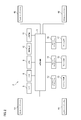
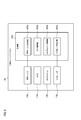
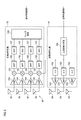
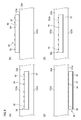
- the schematic diagram of the vehicle which comprises the vehicle system which concerns on 1st Embodiment of this invention is shown. It is a block diagram showing a vehicle system concerning a 1st embodiment. It is a block diagram which shows the left front sensing system. It is a block diagram which shows the structure of a millimeter wave radar. It is a figure which shows the structure of a transmission side RF circuit and a reception side RF circuit.
- A) is a front view of the antenna part provided with the transmitting antenna and the receiving antenna.
- (B) is an AA cross-sectional view of the antenna section shown in (a). It is a vertical cross-sectional view which shows the left front lamp equipped with a millimeter wave radar.
- FIG. 1D is a diagram showing an antenna portion according to a modified example arranged inside the outer cover. It is a vertical cross-sectional view which shows the left front lamp which concerns on the 2nd Embodiment equipped with the millimeter wave radar. It is a vertical cross-sectional view which shows the left front lamp which concerns on the 1st modification which mounted the millimeter wave radar. It is a vertical cross-sectional view which shows the left front lamp which concerns on the 2nd modification which mounted the millimeter wave radar.
- the “front-rear direction” is a direction including the “front direction” and the “rear direction”.
- the “left-right direction” is a direction including the “left direction” and the “right direction”.
- the “vertical direction” is a direction including "upward direction” and "downward direction”. Although the vertical direction is not shown in FIG. 1, the vertical direction is a direction perpendicular to the front-back direction and the left-right direction.
- FIG. 1 is a schematic diagram showing a top view of a vehicle 1 including a vehicle system 2.
- FIG. 2 is a block diagram showing the vehicle system 2.
- a vehicle 1 is a vehicle (automobile) capable of traveling in an automatic driving mode, and includes a vehicle system 2, a left front lamp 7a, a right front lamp 7b, a left rear lamp 7c, and a right rear lamp. 7d and.
- the vehicle system 2 includes a vehicle control unit 3, a left front sensing system 4a (hereinafter, simply referred to as “sensing system 4a”), and a right front sensing system 4b (hereinafter, simply “sensing system”). 4b ”), a left rear sensing system 4c (hereinafter, simply referred to as“ sensing system 4c ”), and a right rear sensing system 4d (hereinafter, simply referred to as“ sensing system 4d ”) are provided at least.
- a left front sensing system 4a hereinafter, simply referred to as “sensing system 4a”
- a right front sensing system 4b hereinafter, simply “sensing system”. 4b ”
- 4c left rear sensing system 4c
- a right rear sensing system 4d hereinafter, simply referred to as“ sensing system 4d ”
- the vehicle system 2 includes a sensor 5, an HMI (Human Machine Interface) 8, a GPS (Global Positioning System) 9, a wireless communication unit 10, and a storage device 11.
- the vehicle system 2 also includes a steering actuator 12, a steering device 13, a brake actuator 14, a brake device 15, an accelerator actuator 16, and an accelerator device 17.
- the vehicle control unit 3 is configured to control the traveling of the vehicle 1.
- the vehicle control unit 3 is composed of, for example, at least one electronic control unit (ECU: Electronic Control Unit).
- the electronic control unit includes a computer system (for example, SoC (System on a Chip)) including one or more processors and one or more memories, and an electronic circuit including active elements such as transistors and passive elements.
- the processor includes, for example, at least one of a CPU (Central Processing Unit), an MPU (Micro Processing Unit), a GPU (Graphics Processing Unit), and a TPU (Tensor Processing Unit).
- the CPU may be composed of a plurality of CPU cores.
- the GPU may be composed of a plurality of GPU cores.
- the memory includes a ROM (Read Only Memory) and a RAM (Random Access Memory).
- a vehicle control program may be stored in the ROM.
- the vehicle control program may include an artificial intelligence (AI) program for autonomous driving.
- the AI program is a program (learned model) constructed by supervised or unsupervised machine learning (in particular, deep learning) using a multilayer neural network.
- a vehicle control program, vehicle control data, and/or surrounding environment information indicating a surrounding environment of the vehicle may be temporarily stored in the RAM.
- the processor may be configured to expand a program designated from various vehicle control programs stored in the ROM on the RAM and execute various processes in cooperation with the RAM.
- the computer system may be configured by a non-Von Neumann computer such as an ASIC (Application Specific Integrated Circuit) or an FPGA (Field-Programmable Gate Array). Further, the computer system may be composed of a combination of a von Neumann computer and a non-Von Neumann computer.
- a non-Von Neumann computer such as an ASIC (Application Specific Integrated Circuit) or an FPGA (Field-Programmable Gate Array).
- the computer system may be composed of a combination of a von Neumann computer and a non-Von Neumann computer.
- Each of the sensing systems 4a to 4d is configured to detect the surrounding environment of the vehicle 1. In the description of this embodiment, it is assumed that each of the sensing systems 4a to 4d has the same constituent element. Therefore, in the following, the sensing system 4a will be described with reference to FIG. FIG. 3 is a block diagram showing the sensing system 4a.
- the sensing system 4a includes a control unit 40a, a lighting unit 42a, a camera 43a, a LiDAR (Light Detection and Ringing) unit 44a, and a millimeter-wave radar 45a.
- the control unit 40a, the lighting unit 42a, the camera 43a, the LiDAR unit 44a, and the millimeter wave radar 45a are provided in the space Sa formed by the housing 24a of the left front lamp 7a and the translucent outer cover 22a shown in FIG. Is located in.
- the control unit 40a may be arranged at a predetermined place of the vehicle 1 other than the space Sa.
- the control unit 40a may be integrally configured with the vehicle control unit 3.
- the control unit 40a is configured to control the operations of the illumination unit 42a, the camera 43a, the LiDAR unit 44a, and the millimeter wave radar 45a.
- the control unit 40a functions as the illumination unit control unit 420a, the camera control unit 430a, the LiDAR unit control unit 440a, and the millimeter wave radar control unit 450a.
- the control unit 40a is composed of at least one electronic control unit (ECU).
- the electronic control unit includes a computer system (for example, SoC or the like) including one or more processors and one or more memories, and an electronic circuit including active elements such as transistors and passive elements.
- the processor includes at least one of CPU, MPU, GPU and TPU.
- the memory includes a ROM and a RAM.
- the computer system may be composed of a non-Von Neumann computer such as an ASIC or FPGA.
- the lighting unit 42a is configured to form a light distribution pattern by emitting light toward the outside (front) of the vehicle 1.
- the lighting unit 42a has a light source that emits light and an optical system.
- the light source may be composed of, for example, a plurality of light emitting elements arranged in a matrix (for example, N rows ⁇ M columns, N> 1, M> 1).
- the light emitting element is, for example, an LED (Light Emitting Diode), an LD (LaSer Diode), or an organic EL element.
- the optical system is configured to reflect the light emitted from the light source toward the front of the illumination unit 42a, and to refract the light directly emitted from the light source or the light reflected by the reflector. At least one of the lens and the lens may be included.
- the lighting unit control unit 420a is configured to control the lighting unit 42a so that the lighting unit 42a emits a predetermined light distribution pattern toward the front region of the vehicle 1.
- the lighting unit control unit 420a may change the light distribution pattern emitted from the lighting unit 42a according to the driving mode of the vehicle 1.
- the camera 43a is configured to detect the surrounding environment of the vehicle 1.
- the camera 43a is configured to acquire image data indicating the surrounding environment of the vehicle 1 and then transmit the image data to the camera control unit 430a.
- the camera control unit 430a may specify the surrounding environment information based on the transmitted image data.
- the surrounding environment information may include information on an object existing outside the vehicle 1.
- the surrounding environment information may include information about the attribute of an object existing outside the vehicle 1 and information about the distance, direction, and/or position of the object with respect to the vehicle 1.
- the camera 43a includes, for example, an image sensor such as a CCD (Charge-Coupled Device) or a CMOS (Complementary MOS: Metal Oxide Semiconductor).
- the LiDAR unit 44a is configured to detect the surrounding environment of the vehicle 1. Particularly, the LiDAR unit 44a is configured to acquire the point cloud data indicating the surrounding environment of the vehicle 1 and then transmit the point cloud data to the LiDAR unit control unit 440a.
- the LiDAR unit controller 440a may specify the surrounding environment information based on the transmitted point cloud data.
- the LiDAR unit 44a acquires information regarding the time-of-flight (TOF: Time of Flight) ⁇ T1 of the laser light (light pulse) at each emission angle (horizontal angle ⁇ , vertical angle ⁇ ) of the laser light.
- TOF Time of Flight
- the LiDAR unit 44a can acquire information about the distance D between the LiDAR unit 44a at each emission angle and an object existing outside the vehicle 1 based on the information about the flight time ⁇ T1 at each emission angle.
- the millimeter wave radar 45a is configured to detect radar data indicating the surrounding environment of the vehicle 1.
- the millimeter-wave radar 45a is configured to acquire radar data and then transmit the radar data to the millimeter-wave radar control unit 450a.
- the millimeter wave radar control unit 450a is configured to acquire the surrounding environment information based on the radar data.
- the surrounding environment information may include information about an object existing outside the vehicle 1.
- the surrounding environment information may include, for example, information on the position and direction of the object with respect to the vehicle 1 and information on the relative speed of the object with respect to the vehicle 1.
- the millimeter wave radar 45a is a pulse modulation method, an FM-CW (Frequency Modulated-Continuous Wave) method, or a dual frequency CW method, and is a distance and direction between the millimeter wave radar 45a and an object existing outside the vehicle 1. Can be obtained.
- the pulse modulation method is used, the millimeter wave radar 45a acquires information about the flight time ⁇ T2 of the millimeter wave, and then, based on the information about the flight time ⁇ T2, the millimeter wave radar 45a and an object existing outside the vehicle 1. Information about the distance D between can be obtained.
- the millimeter wave radar 45a is arranged between the phase of the millimeter wave (reception wave) received by one reception antenna and the phase of the millimeter wave (reception wave) received by the other reception antenna adjacent to the one reception antenna. Information on the direction of the object with respect to the vehicle 1 can be acquired based on the phase difference. Further, the millimeter wave radar 45a acquires information on the relative velocity V of the object with respect to the millimeter wave radar 45a based on the frequency f0 of the transmitted wave emitted from the transmitting antenna and the frequency f1 of the received wave received by the receiving antenna. be able to. The specific structure of the millimeter wave radar 45a will be described later.
- each of the sensing systems 4b to 4d similarly includes a control unit, an illumination unit, a camera, a LiDAR unit, and a millimeter wave radar.
- these devices of the sensing system 4b are arranged in the space Sb formed by the housing 24b of the right front lamp 7b and the translucent outer cover 22b shown in FIG.
- These devices of the sensing system 4c are arranged in a space Sc formed by the housing 24c of the left rear lamp 7c and the translucent outer cover 22c.
- These devices of the sensing system 4d are arranged in a space Sd formed by the housing 24d of the right rear lamp 7d and the translucent outer cover 22d.
- the senor 5 may include an acceleration sensor, a speed sensor, a gyro sensor, and the like.
- the sensor 5 is configured to detect the running state of the vehicle 1 and output running state information indicating the running state of the vehicle 1 to the vehicle control unit 3. Further, the sensor 5 may have an outside air temperature sensor that detects the outside air temperature of the vehicle 1.
- the HMI 8 is composed of an input unit that receives an input operation from the driver and an output unit that outputs driving information and the like to the driver.
- the input unit includes a steering wheel, an accelerator pedal, a brake pedal, an operation mode changeover switch for changing over the operation mode of the vehicle 1, and the like.
- the output unit is a display (for example, Head Up Display (HUD) or the like) that displays various driving information.
- the GPS 9 is configured to acquire the current position information of the vehicle 1 and output the acquired current position information to the vehicle control unit 3.
- the wireless communication unit 10 is configured to receive information about other vehicles around the vehicle 1 from the other vehicle and transmit information about the vehicle 1 to the other vehicle (vehicle-to-vehicle communication). Further, the wireless communication unit 10 is configured to receive infrastructure information from infrastructure equipment such as traffic lights and indicator lights and to transmit traveling information of vehicle 1 to the infrastructure equipment (road-to-vehicle communication). Further, the wireless communication unit 10 receives information about the pedestrian from the portable electronic device (smartphone, tablet, wearable device, etc.) carried by the pedestrian, and transmits the own vehicle traveling information of the vehicle 1 to the portable electronic device. It is configured to do (communication between pedestrians). The vehicle 1 may directly communicate with another vehicle, infrastructure equipment, or a portable electronic device in an ad hoc mode, or may communicate with a communication network such as the Internet.
- a communication network such as the Internet.
- the storage device 11 is an external storage device such as a hard disk drive (HDD) or SSD (Solid State Drive).
- the storage device 11 may store two-dimensional or three-dimensional map information and/or a vehicle control program.
- the three-dimensional map information may be composed of 3D mapping data (point cloud data).
- the storage device 11 is configured to output map information and a vehicle control program to the vehicle control unit 3 in response to a request from the vehicle control unit 3.
- the map information and the vehicle control program may be updated via the wireless communication unit 10 and the communication network.
- the vehicle control unit 3 uses at least the steering control signal, the accelerator control signal, and the brake control signal based on the traveling state information, the surrounding environment information, the current position information, the map information, and the like. Generate one automatically.
- the steering actuator 12 is configured to receive a steering control signal from the vehicle control unit 3 and control the steering device 13 based on the received steering control signal.
- the brake actuator 14 is configured to receive a brake control signal from the vehicle control unit 3 and control the brake device 15 based on the received brake control signal.
- the accelerator actuator 16 is configured to receive an accelerator control signal from the vehicle control unit 3 and control the accelerator device 17 based on the received accelerator control signal.
- the vehicle control unit 3 automatically controls the travel of the vehicle 1 based on the travel state information, the surrounding environment information, the current position information, the map information, and the like. That is, in the automatic driving mode, the traveling of the vehicle 1 is automatically controlled by the vehicle system 2.
- the vehicle control unit 3 when the vehicle 1 travels in the manual driving mode, the vehicle control unit 3 generates a steering control signal, an accelerator control signal, and a brake control signal according to the manual operation of the driver on the accelerator pedal, the brake pedal, and the steering wheel.
- the steering control signal, the accelerator control signal, and the brake control signal are generated by the manual operation of the driver, so that the traveling of the vehicle 1 is controlled by the driver.
- FIG. 4 is a block diagram showing the configuration of the millimeter wave radar 45a.
- the millimeter wave radar 45a includes an antenna unit 56 and a communication circuit unit 50.
- the antenna unit 56 includes a plurality of transmitting antennas 54 configured to radiate millimeter waves, which are radio waves having a wavelength of 1 mm to 10 mm, and a plurality of receiving antennas 55 configured to receive millimeter waves.
- the radiated radio wave radiated from the transmitting antenna 54 is reflected by the object P, and then the reflected radio wave from the object P is received by the receiving antenna 55.
- the transmitting antenna 54 may be configured as, for example, a patch antenna.
- each of the nine transmitting antennas 54 is configured as a patch antenna (metal pattern) made of a conductive material.
- three transmitting antennas 54 are arranged in the D1 direction (column direction), and three transmitting antennas 54 are arranged in the D2 direction (row direction).
- the transmitting antenna group including each of the three transmitting antennas 54 is 54a, 54b, 54c, respectively, the phase of the high frequency signal supplied to the three transmitting antenna groups 54a, 54b, 54c arranged in the D2 direction is changed.
- the phase of the high frequency signal supplied to the three transmitting antenna groups 54a, 54b, 54c arranged in the D2 direction is changed.
- the beam direction of the synthetic radio wave can be changed without mechanically rotating the antenna portion 56.
- the receiving antenna 55 may also be similarly configured as a patch antenna.
- each of the 12 receiving antennas 55 is configured as a patch antenna made of a conductive material.
- three receiving antennas 55 are arranged in the D1 direction, and four receiving antennas 55 are arranged in the D2 direction. In this way, the directivity of the receiving antenna 55 in the D1 direction and the D2 direction can be improved.
- the antenna portion 56 further includes an insulating substrate 60 made of an insulating material and a ground electrode 57.
- the transmitting antenna 54 and the receiving antenna 55 are formed as patch antennas on the upper surface 62 of the insulating substrate 60, and the ground electrode 57 is formed on the lower surface 63 of the insulating substrate 60.
- the antenna unit 56 is configured as an antenna substrate including a receiving antenna and a transmitting antenna.
- the communication circuit unit 50 includes a transmitter RF (radio frequency) circuit 51, a receiver RF circuit 52, and a signal processing circuit 53.
- the communication circuit unit 50 is configured as a monolithic microwave integrated circuit (MMIC).
- the transmission side RF circuit 51 is electrically connected to each transmission antenna 54.
- the receiving RF circuit 52 is electrically connected to each receiving antenna 55.
- the signal processing circuit 53 is configured to control the transmitting-side RF circuit 51 and the receiving-side RF circuit 52 according to the control signal from the millimeter wave radar control unit 450a. Further, the signal processing circuit 53 generates radar data by processing the digital signal output from the receiving side RF circuit 52, and then transmits the generated radar data to the millimeter wave radar control unit 450a. It is configured.
- the signal processing circuit 53 includes, for example, a DSP (Digital Signal Processor) configured to process the digital signal transmitted from the reception side RF circuit 52, and a microcomputer including a processor and a memory.
- DSP Digital Signal Processor
- FIG. 5 is a diagram showing a configuration of a transmitting side RF circuit 51 and a receiving side RF circuit 52.
- the transmitting side RF circuit 51 includes a high frequency generating circuit 150, a phase device 152, and an amplifier 153.
- the high frequency generation circuit 150 is configured to generate a high frequency signal.
- the high-frequency generation circuit 150 when the millimeter-wave radar 45a is a millimeter-wave radar adopting the FMCW method, the high-frequency generation circuit 150 generates a chirp signal (FMCW signal) whose frequency changes linearly with the passage of time. ..
- Each of the phase shifters 152 is configured to adjust the phase of the high frequency signal output from the high frequency generation circuit 150. In this way, by adjusting the phase of the high frequency signal by each phase device 152, it is possible to change the beam direction in the horizontal direction of the combined radio wave of the radiated radio wave radiated from the plurality of transmitting antennas 54. In this respect, the phase difference between the high-frequency signal that has passed through the upper phase device 152 and the high-frequency signal that has passed through the middle-stage phase device 152, and the high-frequency signal that has passed through the middle-stage phase device 152 and the lower-stage phase device 152 have passed. The horizontal beam direction of the composite radio wave can be changed according to the phase difference from the high frequency signal.
- each phase shifter 152 does not adjust the phase of the high frequency signal, the beam direction of the combined radio wave of the radiated radio wave does not change. If the millimeter-wave radar 45a is not a phased array radar, the transmission side RF circuit 51 may not be provided with the phase device 152.
- the amplifier 153 is configured to amplify the high frequency signal that has passed through the phase shifter 152. By supplying the high-frequency signal amplified by the amplifier 153 to each transmitting antenna 54 in this way, each transmitting antenna 54 radiates radio waves (millimeter waves) corresponding to the high-frequency signal into the air.
- the receiving side RF circuit 52 includes an amplifier 154, a mixer 155, a bandpass filter (BPF) 156, an AD converter 157, and a filter circuit 158.
- the amplifier 154 is configured to amplify the high frequency signal output from the reception antenna 55.
- the receiving antenna 55 receives the reflected radio wave reflected by the object and then converts the received reflected radio wave into a high frequency signal.
- the amplifier 154 amplifies the weak high frequency signal output by the receiving antenna 55.
- the mixer 155 mixes the high frequency signal (RX signal) output from the amplifier 154 and the high frequency signal (TX signal) from the high frequency generation circuit 150 to generate an intermediate frequency (IF) signal (also referred to as a beat frequency signal). To generate.
- IF intermediate frequency
- the IF signal (analog signal) that has passed through the BPF 156 is converted from the analog signal to the digital signal by the AD converter 157.
- the digital signal is transmitted to the signal processing circuit 53 via the filter circuit 158.
- the signal processing circuit 53 performs fast Fourier transform (FFT) on the digital signal (IF signal) to generate radar data indicating the position and relative velocity of the target object.
- FFT fast Fourier transform
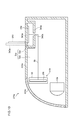
- FIG. 7 is a vertical cross-sectional view showing the left front lamp 7a on which the millimeter wave radar 45a is mounted.
- the illustration of a device other than the millimeter wave radar 45a (for example, a lighting unit 42a or the like) is omitted.
- the space Sa is formed by the housing 24a and the outer cover 22a covering the opening of the housing 24a.
- One end of the outer cover 22a is fixed to the housing 24a via a metal fixing member 73, and the other end of the outer cover 22a is fixed to the housing 24a via a metal fixing member 72.
- the metal fixing members 72, 73 are, for example, screws, rivets or springs.
- the communication circuit unit 50 of the millimeter wave radar 45a is arranged in the space Sa.
- the communication circuit unit 50 is arranged on the surface of the housing 24a in the space Sa.
- the antenna section 56 of the millimeter wave radar 45a is provided inside the outer cover 22a.
- the transmitting antenna 54 and the receiving antenna 55 face the outer surface 123a of the outer cover 22a, while the ground electrode 57 faces the inner surface 122a of the outer cover 22a.
- the antenna portion 56 is provided inside the outer cover 22a so as to face each other. In this case, the transmitting antenna 54 can efficiently radiate the radiated radio wave toward the outside of the vehicle 1, and the receiving antenna 55 can efficiently receive the reflected radio wave.
- the communication circuit unit 50 and the antenna unit 56 are mounted on the left front lamp 7a in a state of being separated from each other.
- the antenna section 56 is electrically connected to the communication circuit section 50 via the metal fixing member 72 and the cable 70.
- the antenna unit 56 is provided inside the outer cover 22a, while the communication circuit unit 50 is arranged inside the space Sa. Therefore, the millimeter wave radar 45a can be successfully mounted on the left front lamp 7a without reducing the outer size of the antenna section 56 and/or the communication circuit section 50 of the millimeter wave radar 45a.
- the antenna portion 56 and the communication circuit portion 50 can be electrically connected by using the metal fixing member 72 that fixes the outer cover 22a and the housing 24a.
- the antenna portion 56 is provided inside the outer cover 22a, but the present embodiment is not limited to this.
- the antenna portion 56 may be arranged on the outer surface 123a of the outer cover 22a.
- the antenna portion 56 may be arranged on the inner surface 122a of the outer cover 22a.
- the insulating substrate 60 constituting the antenna portion 56 may be replaced with a part 220a of the outer cover 22a.
- the antenna portion 56x according to the modified example is the ground electrode 57 facing the transmitting antenna 54 and the receiving antenna 55 via the transmitting antenna 54, the receiving antenna 55, a part 220a of the outer cover 22a, and a part 220a.
- FIG. 9 is a vertical cross-sectional view showing the left front lamp 170a on which the millimeter wave radar 145a is mounted. Note that, in this figure, for convenience of description, devices other than the millimeter wave radar 145a and the illumination unit 42a (for example, a camera, a LiDAR unit, etc.) are not shown.
- the millimeter wave radar 145a of the present embodiment has the same configuration as the millimeter wave radar 45a of the first embodiment.
- the antenna unit 256 of the millimeter wave radar 145a has the same configuration as the antenna unit 56 of the first embodiment.
- the communication circuit unit 250 of the millimeter wave radar 145a has the same configuration as the communication circuit unit 50 of the first embodiment.
- a space S a0 is formed by the housing 124a of the left front lamp 170a and the outer cover 222a that covers the opening of the housing 124a.
- the left front lamp 170a is provided with a plate-shaped partition member 245a.
- the partition member 245a is configured to partition the space S a0 into a first space S a1 and a second space S a2 .
- the antenna unit 256 of the millimeter wave radar 145a and the lighting unit 42a are arranged in the first space S a1 .
- the antenna unit 256 is arranged in the first space S a1 so that the transmitting antenna and the receiving antenna face the outer cover 222a.
- the transmitting antenna can efficiently radiate the radiated radio wave to the outside of the vehicle 1, and the receiving antenna can efficiently receive the reflected radio wave.
- the antenna portion 256 is packed by the radome 58.
- the camera and the LiDAR unit are not shown in the figure, it is assumed that the camera and the LiDAR unit are also arranged in the first space S a1 .
- the communication circuit section 250 of the millimeter wave radar 145a is arranged in the second space S a2 .
- the communication circuit section 250 is electrically connected to the antenna section 256 via the electric cable 59.
- the partition member 245a is provided with an opening 246a that allows passage of the electric cable 59.
- the electric cable 59 may be, for example, a coaxial cable.
- the housing 124a is provided with an opening 242a communicating with the external space and the second space S a2, and a lid 243a configured to close the opening 242a.
- the lid 243a is closed during normal use of the left front lamp 170a.
- millimeter wave radar 145a (in particular, the communication circuit unit 250) when there is an abnormality, the operator, the left front lamp the communication circuit unit 250 disposed in the second space S a2 by opening the lid 243a It can be quickly removed from 170a.
- the lid 243a improves the handling of the millimeter wave radar 145a.
- the antenna unit 256 and the communication circuit unit 250 of the millimeter wave radar 145a are arranged in the space S a0 while being physically separated from each other. Therefore, the millimeter wave radar 145a can be successfully mounted on the left front lamp 170a without downsizing the millimeter wave radar 145a. Further, the antenna unit 256 and the lighting unit 42a are arranged in the first space S a1 , while the communication circuit unit 250 is arranged in the second space S a2 . Therefore, it is possible to preferably prevent the communication circuit unit 250 from being adversely affected by the heat generated from the lighting unit 42a.
- the antenna part 256 may not be packed by the radome 58.
- the antenna unit 256 may be transparent to visible light.
- the insulating substrate may be, for example, a glass substrate that is transparent to visible light.
- the transmitting antenna and the receiving antenna may be configured as, for example, a patch antenna made of a transparent conductive material.
- the transparent conductive material for example, ITO (indium, tin oxide) which is a transparent conductive film may be used.
- the antenna portion 256 is transparent to visible light, the antenna portion 256 becomes difficult to see from the outside of the vehicle 1, and the design of the left front lamp 170a equipped with the millimeter wave radar 145a can be improved. it can.
- FIG. 10 is a vertical cross-sectional view showing a left front lamp 270a according to a first modification in which the millimeter wave radar 145a is mounted.
- the left front lamp 270a shown in FIG. 10 and the left front lamp 170a shown in FIG. 9 differ from each other mainly in the configuration of the partition member.
- a space S ra is formed by the housing 224a and the outer cover 222a that covers the opening of the housing 224a.
- the front left lamp 270a is provided with a partition member 345a that surrounds the communication circuit unit 250.
- the partition member 345a is configured to partition the space S ra into a first space S a3 and a second space S a4 .
- the antenna unit 256 and the lighting unit 42a are arranged in the first space S a3 .
- the antenna unit 256 is arranged in the first space S a3 so that the transmitting antenna and the receiving antenna face the outer cover 222a.
- the camera and the LiDAR unit are not shown, but it is assumed that the camera and the LiDAR unit are also arranged in the first space S a3 .
- the communication circuit unit 250 is arranged in the second space Sa4 .
- the communication circuit section 250 is arranged on the lid section 343a provided on the housing 224a.
- the communication circuit section 250 is electrically connected to the antenna section 256 via the electric cable 59.
- the partition member 345a is provided with an opening 346a that allows passage of the electric cable 59.
- the antenna unit 256 and the communication circuit unit 250 are arranged in the space S ra in a state where they are physically separated from each other. Therefore, it is possible to successfully mount the millimeter wave radar 145a on the left front lamp 270a without downsizing the millimeter wave radar 145a. Further, the antenna unit 256 and the lighting unit 42a are arranged in the first space S a3 , while the communication circuit unit 250 is arranged in the second space S a4 . Therefore, it is possible to preferably prevent the communication circuit unit 250 from being adversely affected by the heat generated from the lighting unit 42a.
- the operator when there is an abnormality in the millimeter wave radar 145a (particularly, the communication circuit unit 250), the operator opens the lid portion 343a to perform communication arranged on the lid portion 343a.
- the circuit unit 250 can be easily taken out from the left front lamp 270a.
- the antenna portion 256 does not have to be packed by the radome 58.
- the antenna unit 256 may be transparent to visible light.
- FIG. 11 is a vertical cross-sectional view showing a left front lamp 370a according to a second modification in which the millimeter wave radar 345a is mounted.
- the left front lamp 370a shown in FIG. 11 differs from the left front lamp 170a shown in FIG. 9 in the configuration of the antenna unit 356 of the millimeter wave radar 345a. Only the configuration of the antenna unit 356 will be described below.
- the antenna part 356 is not packed by the radome, but is attached to the outer cover 222a. Further, the antenna portion 356 is transparent to visible light and has flexibility.
- the insulating substrate of the antenna unit 356 may be a flexible substrate made of a material transparent to visible light.
- the transmitting antenna and the receiving antenna of the antenna unit 356 may be configured as patch antennas made of a transparent conductive material, for example. ITO, for example, may be used as the transparent conductive material.
- an adhesive layer that contacts the outer cover 222a may be provided on the insulating substrate of the antenna unit 356.
- the antenna portion 356 is attached to the outer cover 222a, it is not necessary to secure a space for arranging the antenna portion 356 in the first space Sa1 . In this way, the degree of freedom in designing the left front lamp 370a can be improved, and the millimeter wave radar 345a can be successfully mounted in the left front lamp 370a without downsizing the millimeter wave radar 345a. Further, since the antenna portion 356 is transparent to visible light, the antenna portion 356 becomes difficult to see from the outside of the vehicle 1, and the design of the left front lamp 370a equipped with the millimeter wave radar 345a can be improved.
- the millimeter wave radar 45a has been described as an example of the radio wave transmitting/receiving module, but the radio wave transmitting/receiving module is not limited to the millimeter wave radar.
- the radio wave transmitting/receiving module may be a wireless communication module (wireless communication unit 10) configured to wirelessly communicate with an external device.
- the wireless communication module may be a wireless communication module for a fifth generation (5G) mobile communication system.
- the antenna portion of the wireless communication module is provided on the outer cover 22a of the left front lamp 7a.
- the communication circuit unit of the wireless communication module is arranged in the space Sa of the left front lamp 7a.
- the configurations of the communication circuit unit and the antenna unit of the wireless communication module may be different from the configurations of the communication circuit unit and the antenna unit of the millimeter wave radar.
- the communication circuit unit 250 is arranged in the space S a0 (particularly, the second space) of the left front lamp 170a, but the second embodiment is limited to this. It's not a thing.
- the communication circuit unit 250 may be arranged outside the space Sa0 .
- the communication circuit unit 250 may be arranged outside the space Sa and on the outer surface of the housing 124a. In this case as well, the communication circuit section 250 can be preferably prevented from being adversely affected by the heat generated from the lighting unit 42a.
- Vehicle 2 Vehicle system 3: Vehicle control unit 4a: Left front sensing system 4b: Right front sensing system 4c: Left rear sensing system 4d: Right rear sensing system 5: Sensors 7a, 170a, 270a, 370a: Left front lamp 7b: Right front Lighting 7c: Left rear lighting 7d: Right rear lighting 10: Radio communication unit 11: Storage device 12: Steering actuator 13: Steering device 14: Brake actuator 15: Brake device 16: Accelerator actuator 17: Accelerator device 22a, 22b, 22c, 22d, 222a: Outer cover 24a, 24b, 24c, 24d, 124a: Housing 40a: Control unit 42a: Lighting unit 43a: Camera 44a: LiDAR unit 45a, 145a, 345a: Millimeter wave radar 50, 250: Communication circuit unit 51: Transmission side RF circuit 52: Reception side RF circuit 53: Signal processing circuit 54: Transmission antenna 55: Reception antennas 56, 56x, 256, 356: Antenna part 57
Landscapes
- Engineering & Computer Science (AREA)
- Physics & Mathematics (AREA)
- Radar, Positioning & Navigation (AREA)
- Remote Sensing (AREA)
- General Physics & Mathematics (AREA)
- Computer Networks & Wireless Communication (AREA)
- Mechanical Engineering (AREA)
- Electromagnetism (AREA)
- General Engineering & Computer Science (AREA)
- Mathematical Physics (AREA)
- Microelectronics & Electronic Packaging (AREA)
- Optics & Photonics (AREA)
- Radar Systems Or Details Thereof (AREA)
- Traffic Control Systems (AREA)
Priority Applications (2)
| Application Number | Priority Date | Filing Date | Title |
|---|---|---|---|
| US17/436,415 US20220134939A1 (en) | 2019-03-06 | 2020-02-19 | Vehicular lamp and vehicle |
| JP2021503530A JPWO2020179447A1 (https=) | 2019-03-06 | 2020-02-19 |
Applications Claiming Priority (6)
| Application Number | Priority Date | Filing Date | Title |
|---|---|---|---|
| JP2019040704 | 2019-03-06 | ||
| JP2019-040703 | 2019-03-06 | ||
| JP2019-040704 | 2019-03-06 | ||
| JP2019040703 | 2019-03-06 | ||
| JP2020022494 | 2020-02-13 | ||
| JP2020-022494 | 2020-02-13 |
Publications (1)
| Publication Number | Publication Date |
|---|---|
| WO2020179447A1 true WO2020179447A1 (ja) | 2020-09-10 |
Family
ID=72337880
Family Applications (1)
| Application Number | Title | Priority Date | Filing Date |
|---|---|---|---|
| PCT/JP2020/006472 Ceased WO2020179447A1 (ja) | 2019-03-06 | 2020-02-19 | 車両用灯具及び車両 |
Country Status (3)
| Country | Link |
|---|---|
| US (1) | US20220134939A1 (https=) |
| JP (1) | JPWO2020179447A1 (https=) |
| WO (1) | WO2020179447A1 (https=) |
Cited By (3)
| Publication number | Priority date | Publication date | Assignee | Title |
|---|---|---|---|---|
| JP2021196345A (ja) * | 2020-06-09 | 2021-12-27 | ヒュンダイ・モービス・カンパニー・リミテッド | 車両レーダ装置 |
| JP2022150931A (ja) * | 2021-03-26 | 2022-10-07 | 本田技研工業株式会社 | 灯体装置 |
| JP2022150934A (ja) * | 2021-03-26 | 2022-10-07 | 本田技研工業株式会社 | 灯体装置 |
Families Citing this family (5)
| Publication number | Priority date | Publication date | Assignee | Title |
|---|---|---|---|---|
| DE102018217774A1 (de) * | 2018-10-17 | 2020-04-23 | Fraunhofer-Gesellschaft zur Förderung der angewandten Forschung e.V. | Radar- und Lichtausstrahlungsanordnung für Fahrzeuge zum Ausstrahlen von Licht und Radarstrahlung sowie Verfahren und Verwendung |
| JP2023061263A (ja) * | 2021-10-19 | 2023-05-01 | スタンレー電気株式会社 | ランプ装置 |
| US12066563B2 (en) * | 2021-11-02 | 2024-08-20 | Stanley Electric Co., Ltd. | Vehicular lamp fitting, radar-cover removing method, and radar-cover attaching method |
| CN116486396B (zh) * | 2023-04-14 | 2025-10-31 | 南京航空航天大学 | 一种基于4d毫米波雷达点云的3d目标检测方法 |
| CN116953681B (zh) * | 2023-09-20 | 2023-12-12 | 成都智芯雷通微系统技术有限公司 | 一种球面相控阵雷达 |
Citations (6)
| Publication number | Priority date | Publication date | Assignee | Title |
|---|---|---|---|---|
| JPH0669708A (ja) * | 1992-05-19 | 1994-03-11 | Thomson Csf | マイクロ波アンテナ |
| JP2004506348A (ja) * | 2000-05-18 | 2004-02-26 | ローベルト ボツシユ ゲゼルシヤフト ミツト ベシユレンクテル ハフツング | 自動車アンテナ装置 |
| JP2008162391A (ja) * | 2006-12-27 | 2008-07-17 | Koito Mfg Co Ltd | 車両用灯具 |
| JP2009266733A (ja) * | 2008-04-28 | 2009-11-12 | Koito Mfg Co Ltd | 車両用灯具 |
| JP2015093632A (ja) * | 2013-11-14 | 2015-05-18 | 日産自動車株式会社 | アンテナ装置 |
| JP3198460U (ja) * | 2015-04-22 | 2015-07-02 | 億昶祥工業股▲ふん▼有限公司Yichang Hsiang Industrial Co.,Ltd. | ヘッドライト搭載の線形型アンテナ |
Family Cites Families (4)
| Publication number | Priority date | Publication date | Assignee | Title |
|---|---|---|---|---|
| US7327322B2 (en) * | 2005-06-22 | 2008-02-05 | Delphi Technologies, Inc. | Directional antenna having a selected beam pattern |
| JP4919179B2 (ja) * | 2010-05-11 | 2012-04-18 | 独立行政法人電子航法研究所 | ミリ波レーダ組み込み型ヘッドランプ |
| US20140247349A1 (en) * | 2013-03-04 | 2014-09-04 | GM Global Technology Operations LLC | Integrated lighting, camera and sensor unit |
| US11623558B2 (en) * | 2016-09-15 | 2023-04-11 | Koito Manufacturing Co., Ltd. | Sensor system |
-
2020
- 2020-02-19 JP JP2021503530A patent/JPWO2020179447A1/ja active Pending
- 2020-02-19 US US17/436,415 patent/US20220134939A1/en not_active Abandoned
- 2020-02-19 WO PCT/JP2020/006472 patent/WO2020179447A1/ja not_active Ceased
Patent Citations (6)
| Publication number | Priority date | Publication date | Assignee | Title |
|---|---|---|---|---|
| JPH0669708A (ja) * | 1992-05-19 | 1994-03-11 | Thomson Csf | マイクロ波アンテナ |
| JP2004506348A (ja) * | 2000-05-18 | 2004-02-26 | ローベルト ボツシユ ゲゼルシヤフト ミツト ベシユレンクテル ハフツング | 自動車アンテナ装置 |
| JP2008162391A (ja) * | 2006-12-27 | 2008-07-17 | Koito Mfg Co Ltd | 車両用灯具 |
| JP2009266733A (ja) * | 2008-04-28 | 2009-11-12 | Koito Mfg Co Ltd | 車両用灯具 |
| JP2015093632A (ja) * | 2013-11-14 | 2015-05-18 | 日産自動車株式会社 | アンテナ装置 |
| JP3198460U (ja) * | 2015-04-22 | 2015-07-02 | 億昶祥工業股▲ふん▼有限公司Yichang Hsiang Industrial Co.,Ltd. | ヘッドライト搭載の線形型アンテナ |
Cited By (6)
| Publication number | Priority date | Publication date | Assignee | Title |
|---|---|---|---|---|
| JP2021196345A (ja) * | 2020-06-09 | 2021-12-27 | ヒュンダイ・モービス・カンパニー・リミテッド | 車両レーダ装置 |
| JP7126746B2 (ja) | 2020-06-09 | 2022-08-29 | ヒュンダイ・モービス・カンパニー・リミテッド | 車両レーダ装置 |
| US11808845B2 (en) | 2020-06-09 | 2023-11-07 | Hyundai Mobis Co., Ltd. | Radar device for vehicle |
| JP2022150931A (ja) * | 2021-03-26 | 2022-10-07 | 本田技研工業株式会社 | 灯体装置 |
| JP2022150934A (ja) * | 2021-03-26 | 2022-10-07 | 本田技研工業株式会社 | 灯体装置 |
| JP7192019B2 (ja) | 2021-03-26 | 2022-12-19 | 本田技研工業株式会社 | 灯体装置 |
Also Published As
| Publication number | Publication date |
|---|---|
| US20220134939A1 (en) | 2022-05-05 |
| JPWO2020179447A1 (https=) | 2020-09-10 |
Similar Documents
| Publication | Publication Date | Title |
|---|---|---|
| WO2020179447A1 (ja) | 車両用灯具及び車両 | |
| US11858410B2 (en) | Vehicular lamp and vehicle | |
| EP3929041B1 (en) | Dirt detection system and vehicle | |
| US20220126792A1 (en) | Sensing system for vehicle and vehicle | |
| US11252338B2 (en) | Infrared camera system and vehicle | |
| JPWO2019026437A1 (ja) | 車両用照明システム及び車両 | |
| JP6643390B2 (ja) | 電子機器、電子機器の制御方法、及び電子機器の制御プログラム | |
| US20250167423A1 (en) | Antenna and vehicle | |
| KR102746204B1 (ko) | 차량용 레이다 | |
| CN114270624A (zh) | 移动体安装的雷达天线、用于移动体安装的雷达天线的模块以及移动体安装的雷达天线系统 | |
| WO2020189685A1 (ja) | 車両用センシングシステム、車両システム、車両用灯具及び車両 | |
| CN111660915B (zh) | 车辆用灯具以及车辆 | |
| CN117716580A (zh) | 天线装置、雷达装置以及车辆控制系统 | |
| WO2022004467A1 (ja) | 車両用レーダシステム及び車両 | |
| CN211468304U (zh) | 红外线相机系统以及车辆 | |
| US12278428B2 (en) | Low elevation sidelobe antenna with fan-shaped beam | |
| CN111665472A (zh) | 车辆用灯具以及车辆 | |
| US20240061073A1 (en) | Apparatus for driver assistance | |
| WO2022014269A1 (ja) | 車両用レーダシステム及び車両 | |
| WO2025018046A1 (ja) | 電子機器及びレーダ装置 | |
| CN211468307U (zh) | 红外线相机模块以及车辆 | |
| WO2022044916A1 (ja) | 車両用レーダシステム及び車両 | |
| WO2020230694A1 (ja) | 移動体 | |
| CN119744359A (zh) | 雷达装置和车载感测系统 | |
| JP6948366B2 (ja) | 電子機器、電子機器の制御方法、及び電子機器の制御プログラム |
Legal Events
| Date | Code | Title | Description |
|---|---|---|---|
| 121 | Ep: the epo has been informed by wipo that ep was designated in this application |
Ref document number: 20765470 Country of ref document: EP Kind code of ref document: A1 |
|
| ENP | Entry into the national phase |
Ref document number: 2021503530 Country of ref document: JP Kind code of ref document: A |
|
| NENP | Non-entry into the national phase |
Ref country code: DE |
|
| 122 | Ep: pct application non-entry in european phase |
Ref document number: 20765470 Country of ref document: EP Kind code of ref document: A1 |