WO2020075729A1 - パーフルオロシクロアルケン化合物の製造方法 - Google Patents
パーフルオロシクロアルケン化合物の製造方法 Download PDFInfo
- Publication number
- WO2020075729A1 WO2020075729A1 PCT/JP2019/039726 JP2019039726W WO2020075729A1 WO 2020075729 A1 WO2020075729 A1 WO 2020075729A1 JP 2019039726 W JP2019039726 W JP 2019039726W WO 2020075729 A1 WO2020075729 A1 WO 2020075729A1
- Authority
- WO
- WIPO (PCT)
- Prior art keywords
- compound represented
- general formula
- formula
- perfluorocycloalkene
- mol
- Prior art date
- Legal status (The legal status is an assumption and is not a legal conclusion. Google has not performed a legal analysis and makes no representation as to the accuracy of the status listed.)
- Ceased
Links
Classifications
-
- C—CHEMISTRY; METALLURGY
- C07—ORGANIC CHEMISTRY
- C07C—ACYCLIC OR CARBOCYCLIC COMPOUNDS
- C07C17/00—Preparation of halogenated hydrocarbons
- C07C17/35—Preparation of halogenated hydrocarbons by reactions not affecting the number of carbon or of halogen atoms in the reaction
-
- C—CHEMISTRY; METALLURGY
- C07—ORGANIC CHEMISTRY
- C07C—ACYCLIC OR CARBOCYCLIC COMPOUNDS
- C07C17/00—Preparation of halogenated hydrocarbons
- C07C17/35—Preparation of halogenated hydrocarbons by reactions not affecting the number of carbon or of halogen atoms in the reaction
- C07C17/358—Preparation of halogenated hydrocarbons by reactions not affecting the number of carbon or of halogen atoms in the reaction by isomerisation
-
- C—CHEMISTRY; METALLURGY
- C07—ORGANIC CHEMISTRY
- C07C—ACYCLIC OR CARBOCYCLIC COMPOUNDS
- C07C21/00—Acyclic unsaturated compounds containing halogen atoms
- C07C21/22—Acyclic unsaturated compounds containing halogen atoms containing carbon-to-carbon triple bonds
-
- C—CHEMISTRY; METALLURGY
- C07—ORGANIC CHEMISTRY
- C07C—ACYCLIC OR CARBOCYCLIC COMPOUNDS
- C07C23/00—Compounds containing at least one halogen atom bound to a ring other than a six-membered aromatic ring
- C07C23/02—Monocyclic halogenated hydrocarbons
- C07C23/06—Monocyclic halogenated hydrocarbons with a four-membered ring
-
- C—CHEMISTRY; METALLURGY
- C23—COATING METALLIC MATERIAL; COATING MATERIAL WITH METALLIC MATERIAL; CHEMICAL SURFACE TREATMENT; DIFFUSION TREATMENT OF METALLIC MATERIAL; COATING BY VACUUM EVAPORATION, BY SPUTTERING, BY ION IMPLANTATION OR BY CHEMICAL VAPOUR DEPOSITION, IN GENERAL; INHIBITING CORROSION OF METALLIC MATERIAL OR INCRUSTATION IN GENERAL
- C23F—NON-MECHANICAL REMOVAL OF METALLIC MATERIAL FROM SURFACE; INHIBITING CORROSION OF METALLIC MATERIAL OR INCRUSTATION IN GENERAL; MULTI-STEP PROCESSES FOR SURFACE TREATMENT OF METALLIC MATERIAL INVOLVING AT LEAST ONE PROCESS PROVIDED FOR IN CLASS C23 AND AT LEAST ONE PROCESS COVERED BY SUBCLASS C21D OR C22F OR CLASS C25
- C23F1/00—Etching metallic material by chemical means
- C23F1/10—Etching compositions
- C23F1/12—Gaseous compositions
-
- H—ELECTRICITY
- H10—SEMICONDUCTOR DEVICES; ELECTRIC SOLID-STATE DEVICES NOT OTHERWISE PROVIDED FOR
- H10P—GENERIC PROCESSES OR APPARATUS FOR THE MANUFACTURE OR TREATMENT OF DEVICES COVERED BY CLASS H10
- H10P50/00—Etching of wafers, substrates or parts of devices
- H10P50/20—Dry etching; Plasma etching; Reactive-ion etching
- H10P50/24—Dry etching; Plasma etching; Reactive-ion etching of semiconductor materials
- H10P50/242—Dry etching; Plasma etching; Reactive-ion etching of semiconductor materials of Group IV materials
-
- C—CHEMISTRY; METALLURGY
- C07—ORGANIC CHEMISTRY
- C07B—GENERAL METHODS OF ORGANIC CHEMISTRY; APPARATUS THEREFOR
- C07B61/00—Other general methods
-
- C—CHEMISTRY; METALLURGY
- C07—ORGANIC CHEMISTRY
- C07C—ACYCLIC OR CARBOCYCLIC COMPOUNDS
- C07C2601/00—Systems containing only non-condensed rings
- C07C2601/04—Systems containing only non-condensed rings with a four-membered ring
Definitions
- the present disclosure relates to a method for producing a perfluorocycloalkene compound.
- a perfluorocycloalkene compound is a compound expected as a building block for organic synthesis in addition to a dry etching gas for semiconductors, and is a cyclic compound having one carbon-carbon double bond.
- hexafluorocyclobutene is obtained in a yield of 47% by heating hexafluorobutadiene at 300 ° C. for 64 hours in a batch reaction. .
- the present disclosure includes the following configurations.
- R 1 to R 4 are the same or different and each represents a fluorine atom or a perfluoroalkyl group.
- R 1 to R 4 are the same or different and each represents a fluorine atom or a perfluoroalkyl group.
- R 1 to R 4 are the same or different and each represents a fluorine atom or a perfluoroalkyl group.
- Item 4. The method according to Item 1 or 3, wherein the catalyst is a fluoride containing at least one metal element belonging to Groups 1 to 12 of the periodic table.
- Item 5 The production method according to Item 4, wherein the fluoride is a fluoride containing at least one selected from the group consisting of alkali metals, alkaline earth metals, and metal elements belonging to Group 4 of the periodic table.
- Item 6. The production method according to any one of Items 1 to 5, wherein the cyclization reaction is performed at 270 ° C or higher.
- Item 7 In the cyclization reaction step, in addition to the perfluorocycloalkene compound represented by the general formula (1), a general formula (3): CR 1 2 R 2 -C ⁇ C-CR 3 R 4 2 (3) [In the formula, R 1 to R 4 are the same as defined above. ] Item 7.
- R 1 to R 4 are the same or different and each represents a fluorine atom or a perfluoroalkyl group.
- a production method comprising a step of using the perfluorocycloalkene compound by-produced by the production method according to any one of Items 1 to 7 as a substrate to obtain the perfluoroalkadiene compound.
- R 1 to R 4 are the same or different and each represents a fluorine atom or a perfluoroalkyl group.
- R 1 to R 4 are the same as defined above.
- Item 10 The composition according to Item 9, which is used as an etching gas or a building block for organic synthesis.
- the conversion rate of the reaction is high, and the perfluorocycloalkene compound can be obtained in high yield and high selectivity.
- inclusion is a concept including “comprise”, “consistently essentially of”, and “consistent of”. Further, in the present specification, when the numerical range is indicated by “A to B”, it means A or more and B or less.
- Method for producing perfluorocycloalkene compound (part 1: in the presence of catalyst)
- the method for producing the perfluorocycloalkene compound of the present disclosure has the general formula (1):
- R 1 to R 4 are the same or different and each represents a fluorine atom or a perfluoroalkyl group.
- Non-Patent Document 1 even when reacted at a high temperature of 300 ° C., the yield of the perfluorocycloalkene compound is only 47%, which is not sufficient.
- An example in which a fluorocycloalkene compound cannot be produced depending on heating conditions is also described, and it is difficult to improve the yield.
- the conversion rate of the reaction is high, and the perfluorocycloalkene compound can be obtained in high yield and high selectivity.
- the gas phase continuous flow system is particularly economically advantageous.
- the raw materials are always supplied, so that the raw material concentration does not decrease with the lapse of time and a high reaction rate can be maintained. Therefore, a high production amount per unit time can be achieved.
- the perfluoroalkyl group represented by R 1 to R 4 is not particularly limited, and examples thereof include a perfluoroalkyl group having 1 to 6 carbon atoms (particularly 1 to 4). , Trifluoromethyl group, pentafluoroethyl group and the like.
- each of R 1 to R 4 is a fluorine atom from the viewpoints of reaction conversion, high yield and high selectivity of the resulting perfluorocycloalkene compound. It is preferable. Note that R 1 to R 4 may be the same or different.
- the perfluorocycloalkene compound represented by the general formula (1) to be produced is, for example,
- perfluoroalkadiene compounds represented by the general formula (2) can be used alone or in combination of two or more kinds.
- a known or commercially available product can be adopted. It is also possible to synthesize them according to a conventional method such as Japanese Patent Laid-Open No. 2001-192345.
- the catalyst for the cyclization reaction is not particularly limited, but the conversion of the reaction is particularly high, and in view of being able to obtain the perfluorocycloalkene compound in a higher yield and a higher selectivity, the periodic table A fluoride containing at least one metal element belonging to Groups 1 to 12 is preferable, and a fluoride containing at least one metal element belonging to Group 4 of the periodic table, such as an alkali metal, an alkaline earth metal, is preferable. Fluoride containing at least one of sodium, magnesium, zirconium and the like is more preferable.
- the catalyst for the cyclization reaction may contain only one kind of the above-mentioned metal elements, or may contain two or more kinds thereof.
- cyclization reaction catalyst satisfying such conditions include NaF, MgF 2 , ZrF 4, and the like.
- the fluorides used as catalysts for these cyclization reactions may be used alone or in combination of two or more.
- the amount of the catalyst for the cyclization reaction as described above can be a catalytic amount and is not particularly limited, but the conversion of the reaction is particularly high, and the perfluorocycloalkene compound is obtained in a higher yield and a higher selectivity.
- the catalyst weight ratio (W / F) to the perfluoroalkadiene compound supply rate per hour is preferably 0.1 to 200 g ⁇ sec. / Cc, more preferably 0.5 to 150 g ⁇ sec. / Cc.
- W / F specifies the amount of catalyst particularly in the case of gas phase reaction, but even when adopting the liquid phase reaction, the amount of fluoride used can be the amount of catalyst and should be appropriately adjusted. You can
- the cyclization reaction step is for the purpose of diluting heat transfer and catalyst concentration in addition to the perfluoroalkadiene compound represented by the general formula (2) which is a substrate and the catalyst of the cyclization reaction.
- metallic nickel particularly metallic nickel beads
- activated carbon etc. so that the W / F is 0.1 to 200 g ⁇ sec. / Cc, especially 0.5 to 150 g ⁇ sec. / Cc.
- the above W / F specifies the amount used especially in the case of gas phase reaction, but the amount of metal nickel or activated carbon used can be adjusted appropriately even when liquid phase reaction is adopted.
- the production method of the present disclosure can be performed in a liquid phase, but is preferably performed in a gas phase, particularly in a gas phase continuous flow system using a fixed bed reactor.
- gas phase continuous flow system the apparatus, operation and the like can be simplified, and it is economically advantageous.
- the cyclization reaction step is preferably performed by heating. Specifically, it is preferable to heat the system after bringing the perfluoroalkadiene compound represented by the general formula (2), which is a substrate, into contact with the catalyst for the cyclization reaction.
- the heating temperature at this time is preferably 270 ° C. or higher, more preferably 320 to 800 ° C., from the viewpoint that the conversion rate of the reaction is particularly high and the perfluorocycloalkene compound can be obtained in a higher yield and a higher selectivity. .
- the atmosphere in the cyclization reaction step is not particularly limited, and for example, the reaction atmosphere is preferably an inert gas atmosphere (nitrogen gas atmosphere, argon gas atmosphere, etc.), and the reaction time (maintenance time at the highest reached temperature) ) Can be such that the reaction proceeds sufficiently.
- the reaction atmosphere is preferably an inert gas atmosphere (nitrogen gas atmosphere, argon gas atmosphere, etc.), and the reaction time (maintenance time at the highest reached temperature) ) Can be such that the reaction proceeds sufficiently.
- the perfluorocycloalkene compound represented by the general formula (1) can be obtained by performing a purification treatment according to a conventional method as needed.
- the perfluorocycloalkene compound represented by the general formula (1) produced by the production method of the present disclosure after performing a purification treatment according to a conventional method as necessary, the perfluorocycloalkene compound is It is also possible to obtain a perfluoroalkyne compound represented by the general formula (3) by using it as a substrate. Regarding the method and conditions in this case, those described in JP-A-2014-058488 can be adopted. Preferred specific examples can also be adopted.
- the perfluorocycloalkene compound represented by the general formula (1) is used as a substrate to obtain a perfluoroalkyne compound represented by the general formula (3) by isomerization using an isomerization catalyst.
- This step can be carried out in the gas phase, particularly in a gas phase continuous flow system using a fixed bed reactor, but it can also be carried out by a batch reaction.
- sodium fluoride which has low hygroscopicity, is easy to handle in the air, and has high activity and high selectivity.
- sodium fluoride itself is used as the catalyst, it may be in powder form, but pellet form is preferable for the gas phase continuous flow reaction. It is also possible to use sodium fluoride supported on a carrier such as alumina, porous aluminum fluoride, activated carbon, silica or zeolite. It is also possible to use sodium fluoride mixed with other components.
- the temperature of the isomerization reaction is usually preferably 200 to 800 ° C, more preferably 400 to 600 ° C.
- R 1 to R 4 are the same or different and each represents a fluorine atom or a perfluoroalkyl group.
- the perfluorocycloalkene compound can also be produced by a method including a step of performing the cyclization reaction of the perfluoroalkadiene compound represented by Also in this method, the conversion rate of the reaction is high, and the perfluorocycloalkene compound can be obtained in high yield and high selectivity.
- a catalyst for the cyclization reaction it is preferable to use a catalyst for the cyclization reaction.
- a metal element belonging to Groups 1 to 12 of the periodic table is used from the viewpoint that the conversion of the reaction is particularly high and the perfluorocycloalkene compound can be obtained in a higher yield and a higher selectivity.
- a fluoride containing at least one kind is preferable, an alkali metal, an alkaline earth metal, a fluoride containing at least one kind of a metal element belonging to Group 4 of the periodic table is preferable, and at least one kind such as sodium, magnesium and zirconium. Fluoride containing is more preferable.
- the catalyst for the cyclization reaction may contain only one kind of the above-mentioned metal elements, or may contain two or more kinds thereof.
- the catalyst for such a cyclization reaction the catalyst described in "1. Method for producing perfluorocycloalkene compound (part 1: presence of catalyst)" can be adopted. The same applies to preferable specific examples and contents.
- the amount used can be a catalytic amount and is not particularly limited, but the conversion rate of the reaction is particularly high, and the perfluorocycloalkene compound can be obtained in higher yield and high selectivity.
- the catalyst weight ratio (W / F) to the perfluoroalkadiene compound supply rate per hour is preferably 0.1 to 200 g ⁇ sec. / Cc, more preferably 0.5 to 150 g ⁇ sec. / Cc.
- the cyclization reaction step is for the purpose of diluting heat transfer and catalyst concentration in addition to the perfluoroalkadiene compound represented by the general formula (2) which is a substrate and the catalyst of the cyclization reaction. It is also possible to use metallic nickel (particularly metallic nickel beads), activated carbon or the like so that the W / F is 0.1 to 200 g ⁇ sec. / Cc, particularly 0.5 to 150 g ⁇ sec. / Cc.
- the production method of the present disclosure is performed by a gas phase continuous flow system using a fixed bed reactor.
- the apparatus, operation and the like can be simplified, and it is economically advantageous.
- the cyclization reaction step is preferably performed by heating. Specifically, it is preferable to heat the substrate after bringing the perfluoroalkadiene compound represented by the general formula (2), which is a substrate, into contact with the catalyst for the cyclization reaction, if necessary.
- the heating temperature at this time is preferably 270 ° C. or higher, more preferably 280 to 800 ° C., from the viewpoint that the conversion rate of the reaction is particularly high and the perfluorocycloalkene compound can be obtained in higher yield and high selectivity.
- the heating temperature is particularly preferably 280 to 800 ° C when no catalyst is used, and particularly preferably 320 to 800 ° C when a catalyst is used.
- the atmosphere in the cyclization reaction step is not particularly limited, and for example, the reaction atmosphere is preferably an inert gas atmosphere (nitrogen gas atmosphere, argon gas atmosphere, etc.), and the reaction time (maintenance time at the highest reached temperature) ) Can be such that the reaction proceeds sufficiently.
- the reaction atmosphere is preferably an inert gas atmosphere (nitrogen gas atmosphere, argon gas atmosphere, etc.), and the reaction time (maintenance time at the highest reached temperature) ) Can be such that the reaction proceeds sufficiently.
- the perfluorocycloalkene compound represented by the general formula (1) can be obtained by performing a purification treatment according to a conventional method as needed.
- the perfluorocycloalkene compound represented by the general formula (1) produced by the production method of the present disclosure after performing a purification treatment according to a conventional method as necessary, the perfluorocycloalkene compound is It is also possible to obtain a perfluoroalkyne compound represented by the general formula (3) by using it as a substrate. Regarding the method and conditions in this case, the above can be adopted.
- R 1 to R 4 are the same or different and each represents a fluorine atom or a perfluoroalkyl group.
- the perfluorocycloalkene compound can also be produced by a method including a step of performing the cyclization reaction of the perfluoroalkadiene compound represented by Also in this method, the conversion rate of the reaction is high, and the perfluorocycloalkene compound can be obtained in high yield and high selectivity.
- Examples of the perfluorocycloalkene compound represented by the general formula (1), the perfluoroalkadiene compound represented by the general formula (2), and the catalyst include the above-mentioned "1. Method for producing perfluorocycloalkene compound (part 1: In the presence of a catalyst) ". The same applies to the preferred specific examples.
- the cyclization reaction step is for the purpose of diluting heat transfer and catalyst concentration in addition to the perfluoroalkadiene compound represented by the general formula (2) which is a substrate and the catalyst of the cyclization reaction. It is also possible to use metallic nickel (particularly metallic nickel beads), activated carbon or the like so that the W / F is 0.1 to 200 g ⁇ sec. / Cc, particularly 0.5 to 150 g ⁇ sec. / Cc.
- the production method of the present disclosure is performed by a gas phase continuous flow system using a fixed bed reactor.
- the apparatus, operation and the like can be simplified, and it is economically advantageous.
- the cyclization reaction step is preferably performed by heating. Specifically, it is preferable to heat the perfluoroalkadiene compound represented by the general formula (2), which is a substrate, after contacting the catalyst for the cyclization reaction.
- the heating temperature at this time is preferably 270 ° C. or higher, more preferably 320 to 800 ° C., from the viewpoint that the conversion rate of the reaction is particularly high and the perfluorocycloalkene compound can be obtained in a higher yield and a higher selectivity. .
- the atmosphere in the cyclization reaction step is not particularly limited, and for example, the reaction atmosphere is preferably an inert gas atmosphere (nitrogen gas atmosphere, argon gas atmosphere, etc.), and the reaction time (maintenance time at the highest reached temperature) ) Can be such that the reaction proceeds sufficiently.
- the reaction atmosphere is preferably an inert gas atmosphere (nitrogen gas atmosphere, argon gas atmosphere, etc.), and the reaction time (maintenance time at the highest reached temperature) ) Can be such that the reaction proceeds sufficiently.
- the perfluorocycloalkene compound represented by the general formula (1) can be obtained by performing a purification treatment according to a conventional method as needed.
- the perfluorocycloalkene compound represented by the general formula (1) produced by the production method of the present disclosure after performing a purification treatment according to a conventional method as necessary, the perfluorocycloalkene compound is It is also possible to obtain a perfluoroalkyne compound represented by the general formula (3) by using it as a substrate. Regarding the method and conditions in this case, the above can be adopted.
- perfluorocycloalkene composition As described above, the perfluorocycloalkene compound represented by the general formula (1) can be obtained.
- Examples of the perfluoroalkyne compound represented by the general formula (3) include CF 3 C ⁇ CCF 3 , CF 3 C ⁇ CCF 2 CF 3 , CF 3 C ⁇ CCF (CF 3 ) 2 , CF 3 C ⁇ CC.
- (CF 3 ) 3 CF 3 CF 2 C ⁇ CCF 2 CF 3 , CF 3 CF 2 C ⁇ CCF (CF 3 ) 2 , CF 3 CF 2 C ⁇ CC (CF 3 ) 3 , (CF 3 ) 2 CFC ⁇ CCF (CF 3) 2, ( CF 3) 2 CFC ⁇ CC (CF 3) 3, include 3 etc.
- the perfluoroalkyne compound represented by the general formula (3) can be used alone or in combination of two or more kinds.
- the content of the perfluorocycloalkene compound represented by the general formula (1) is 60 to 99.9, with the total amount of the perfluorocycloalkene composition of the present disclosure being 100 mol%. Mol% is preferable, 70 to 99.8 mol% is more preferable, and 80 to 99.7 mol% is further preferable. Further, the content of the perfluoroalkyne compound represented by the general formula (3) is preferably 0.1 to 40 mol% and 0.2 to 30 mol% in the same manner, with the total amount of the perfluorocycloalkene composition of the present disclosure being 100 mol%. The mol% is more preferable, and 0.3 to 20 mol% is further preferable.
- the perfluorocycloalkene composition of the present disclosure may include a perfluoroalkene compound represented by the general formula (4A) and a fluoroalkene compound represented by the general formula (4B).
- a perfluoroalkene compound represented by the general formula (4A) When the perfluoroalkene compound represented by the general formula (4A) is contained in the perfluorocycloalkene composition of the present disclosure, its content is 100% from the viewpoint of etchant performance.
- the mol% is preferably 0.05 mol% or less, more preferably 0.03 mol% or less. From the viewpoint of production cost, 0.0001 mol% or more is preferable, and 0.0002 mol% or more is more preferable.
- the perfluorocycloalkene composition of the present disclosure contains a fluoroalkene compound represented by the general formula (4B), the content thereof is the total amount of the perfluorocycloalkene composition from the viewpoint of etchant performance.
- a fluoroalkene compound represented by the general formula (4B) As 100 mol%, 0.3 mol% or less is preferable, and 0.2 mol% or less is more preferable. From the viewpoint of production cost, 0.001 mol% or more is preferable, and 0.002 mol% or more is more preferable.
- the perfluorocycloalkene compound represented by the general formula (1) as described above has a particularly high yield.
- it since it can be obtained with a high selectivity, it is possible to reduce the components other than the perfluorocycloalkene compound represented by the general formula (1) in the perfluorocycloalkene composition. ) Can reduce the labor of purification for obtaining the perfluorocycloalkene compound.
- Such a perfluorocycloalkene composition of the present disclosure is similar to the case of the above-mentioned perfluorocycloalkene compound alone, in addition to etching gas for forming the latest fine structure such as semiconductors and liquid crystals, organic synthesis. It can be effectively used for various purposes such as building blocks.
- the building block for organic synthesis means a substance that can be a precursor of a compound having a highly reactive skeleton.
- a fluoroalkyl group such as CF 3 group is introduced to remove the detergent. It is also possible to convert it to a substance that can be a fluorinated pharmaceutical intermediate.
- Sodium fluoride (NaF) was charged as a catalyst into a metal tubular reactor.
- CF 2 CF CFCF 2
- the gas phase continuous flow system is used.
- the reaction proceeded. After about 1 hour, the outflow gas from the reaction tube was analyzed by gas chromatography, the conversion rate was 99.2 mol%, and the selectivity of each component was 1,2,3,3,4,4-hexa.
- the reaction was allowed to proceed in the same manner as in Example 1 except that the heating temperature was 400 ° C.
- the outflow gas from the reaction tube was analyzed by gas chromatography, the conversion was 99.3 mol%, and the selectivity of each component was 1,2,3,3,4,4-hexa.
- the reaction was allowed to proceed in the same manner as in Example 1 except that the W / F was 90 g ⁇ sec. / Cc and the heating temperature was 400 ° C.
- the outflow gas from the reaction tube was analyzed by gas chromatography, the conversion rate was 98.9 mol%, and the selectivity of each component was 1,2,3,3,4,4-hexa.
- the reaction was allowed to proceed in the same manner as in Example 1 except that MgF 2 was used as the catalyst. After about 1 hour, the outflow gas from the reaction tube was analyzed by gas chromatography, the conversion was 99.7 mol%, and the selectivity of each component was 1,2,3,3,4,4-hexa.
- the reaction was allowed to proceed in the same manner as in Example 1 except that MgF 2 was used as the catalyst and the heating temperature was 400 ° C.
- the outflow gas from the reaction tube was analyzed by gas chromatography, the conversion was 99.8 mol%, and the selectivity of each component was 1,2,3,3,4,4-hexa.
- the reaction was allowed to proceed in the same manner as in Example 1 except that ZrF 4 was used as the catalyst and W / F was set to 15 g ⁇ sec. / Cc.
- the outflow gas from the reaction tube was analyzed by gas chromatography, the conversion was 99.1 mol%, and the selectivity of each component was 1,2,3,3,4,4-hexa.
- Fluoro-1-cyclobutene (cC 4 F 6 ) is 95.3 mol%
- 1,1,1,4,4,4-hexafluoro-2-butyne (CF 3 C ⁇ CCF 3 ) is 3.71 mol%
- the reaction was allowed to proceed in the same manner as in Example 1 except that ZrF 4 was used as the catalyst.
- the reaction was allowed to proceed in the same manner as in Example 1 except that the catalyst was not used and the heating temperature was 300 ° C.
- the outflow gas from the reaction tube was analyzed by gas chromatography, the conversion was 97.9 mol%, and the selectivity of each component was 1,2,3,3,4,4-hexa.
- Fluoro-1-cyclobutene (cC 4 F 6 ) was 77.8 mol% and other by-products were 22.2 mol% in total.
- the reaction was allowed to proceed in the same manner as in Example 1 except that the catalyst was not used and the heating temperature was 400 ° C.
- the outflow gas from the reaction tube was analyzed by gas chromatography, the conversion was 98.1 mol%, and the selectivity of each component was 1,2,3,3,4,4-hexa.
- Fluoro-1-cyclobutene (cC 4 F 6 ) was 67.4 mol%, and other by-products were 32.6 mol% in total.
Landscapes
- Chemical & Material Sciences (AREA)
- Organic Chemistry (AREA)
- Chemical Kinetics & Catalysis (AREA)
- Engineering & Computer Science (AREA)
- Metallurgy (AREA)
- Mechanical Engineering (AREA)
- Materials Engineering (AREA)
- General Chemical & Material Sciences (AREA)
- Organic Low-Molecular-Weight Compounds And Preparation Thereof (AREA)
- Physics & Mathematics (AREA)
- Plasma & Fusion (AREA)
- Low-Molecular Organic Synthesis Reactions Using Catalysts (AREA)
- ing And Chemical Polishing (AREA)
Abstract
Description

で表されるパーフルオロシクロアルケン化合物の製造方法であって、
触媒存在下に、
一般式(2):
CR1 2=CR2-CR3=CR4 2 (2)
[式中、R1~R4は同一又は異なって、フッ素原子又はパーフルオロアルキル基を示す。]
で表されるパーフルオロアルカジエン化合物の環化反応を行う工程
を備える、製造方法。
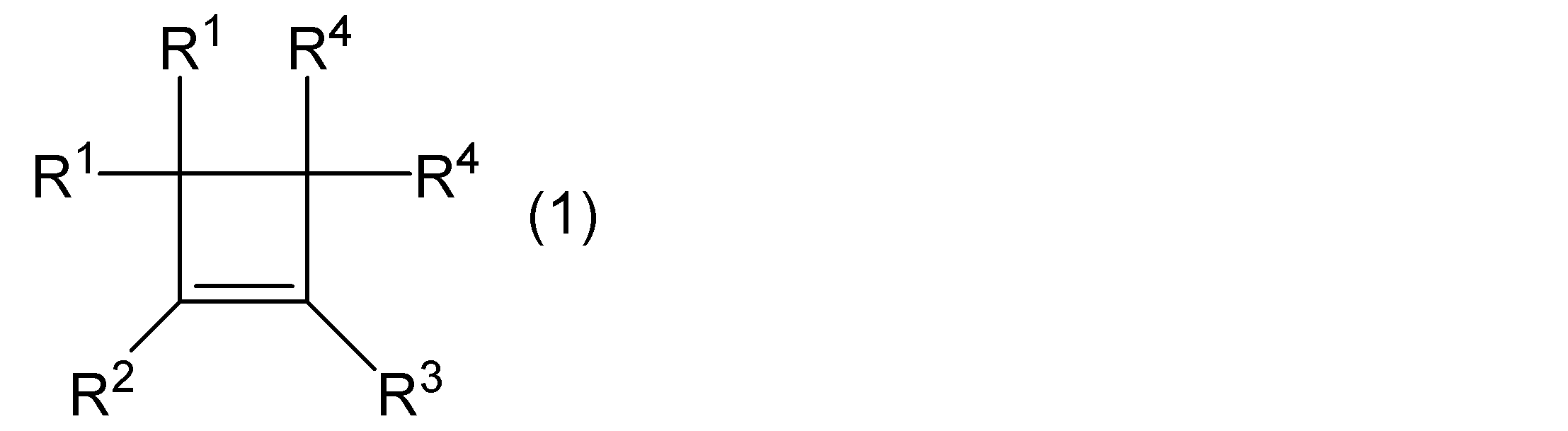
で表されるパーフルオロシクロアルケン化合物の製造方法であって、
一般式(2):
CR1 2=CR2-CR3=CR4 2 (2)
[式中、R1~R4は同一又は異なって、フッ素原子又はパーフルオロアルキル基を示す。]
で表されるパーフルオロアルカジエン化合物の環化反応を気相連続流通式で行う工程
を備える、製造方法。
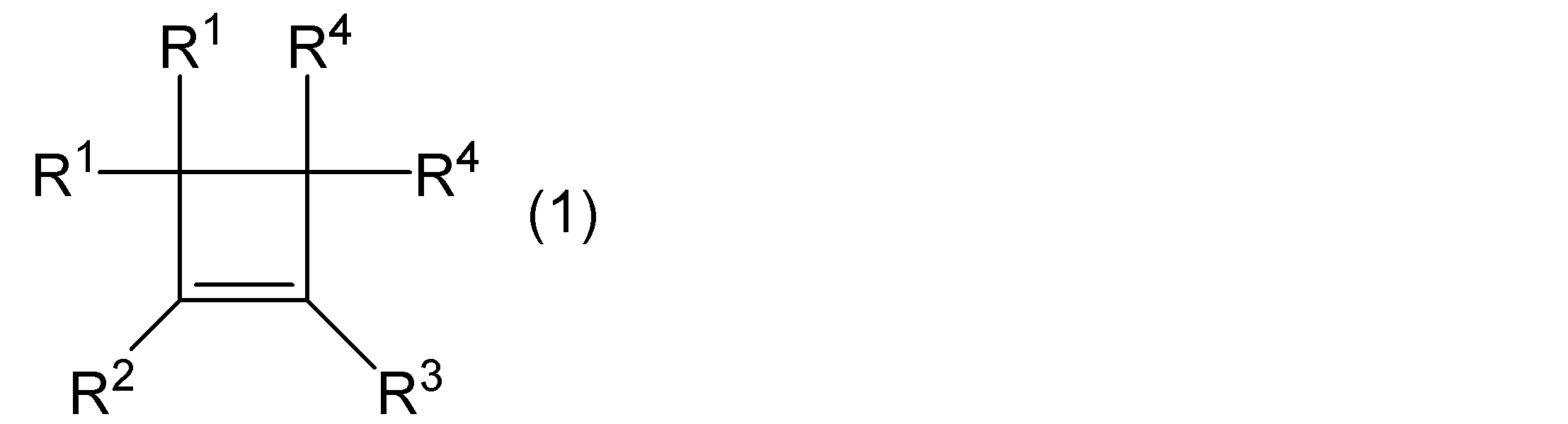
で表されるパーフルオロシクロアルケン化合物の製造方法であって、
触媒存在下に、
一般式(2):
CR1 2=CR2-CR3=CR4 2 (2)
[式中、R1~R4は同一又は異なって、フッ素原子又はパーフルオロアルキル基を示す。]
で表されるパーフルオロアルカジエン化合物の環化反応を気相連続流通式で行う工程
を備える、製造方法。
CR1 2R2-C≡C-CR3R4 2 (3)
[式中、R1~R4は前記に同じである。]
で表されるパーフルオロアルキン化合物も製造する工程である、項1~6のいずれか1項に記載の製造方法。
CR1 2R2-C≡C-CR3R4 2 (3)
[式中、R1~R4は同一又は異なって、フッ素原子又はパーフルオロアルキル基を示す。]
で表されるパーフルオロアルキン化合物の製造方法であって、
項1~7のいずれか1項に記載の製造方法により副生されたパーフルオロシクロアルケン化合物を基質として用いて、前記パーフルオロアルカジエン化合物を得る工程を備える、製造方法。
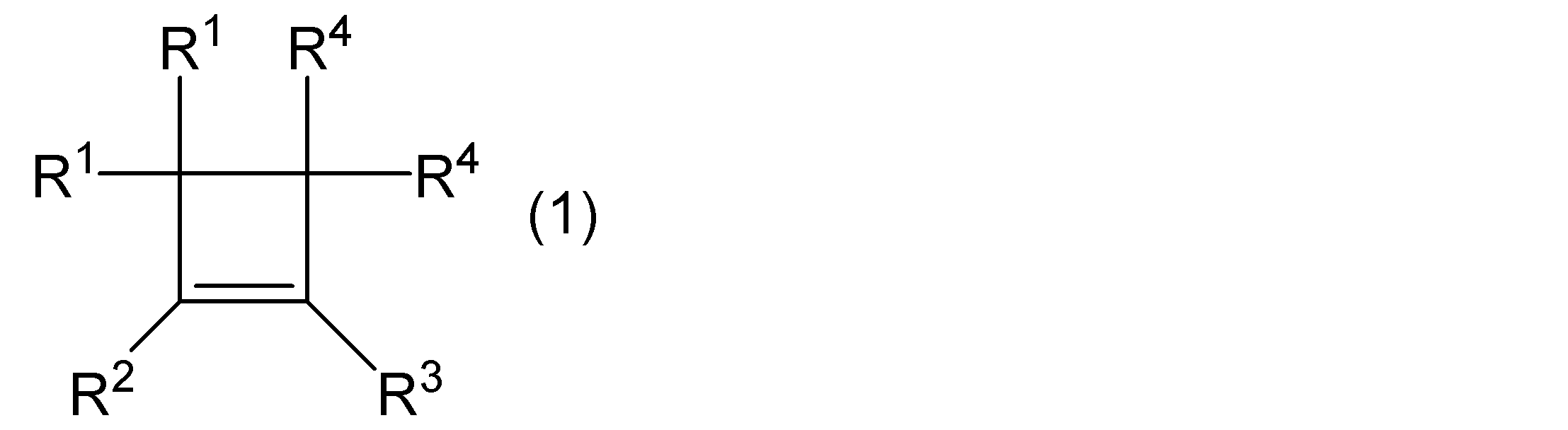
で表されるパーフルオロシクロアルケン化合物と、
一般式(3):
CR1 2R2-C≡C-CR3R4 2 (3)
[式中、R1~R4は前記に同じである。]
で表されるパーフルオロアルキン化合物とを含有する組成物であって、
組成物全量を100モル%として、前記一般式(1)で表されるパーフルオロシクロアルケン化合物の含有量が60~99.9モル%である、組成物。
本開示のパーフルオロシクロアルケン化合物の製造方法は、一般式(1):
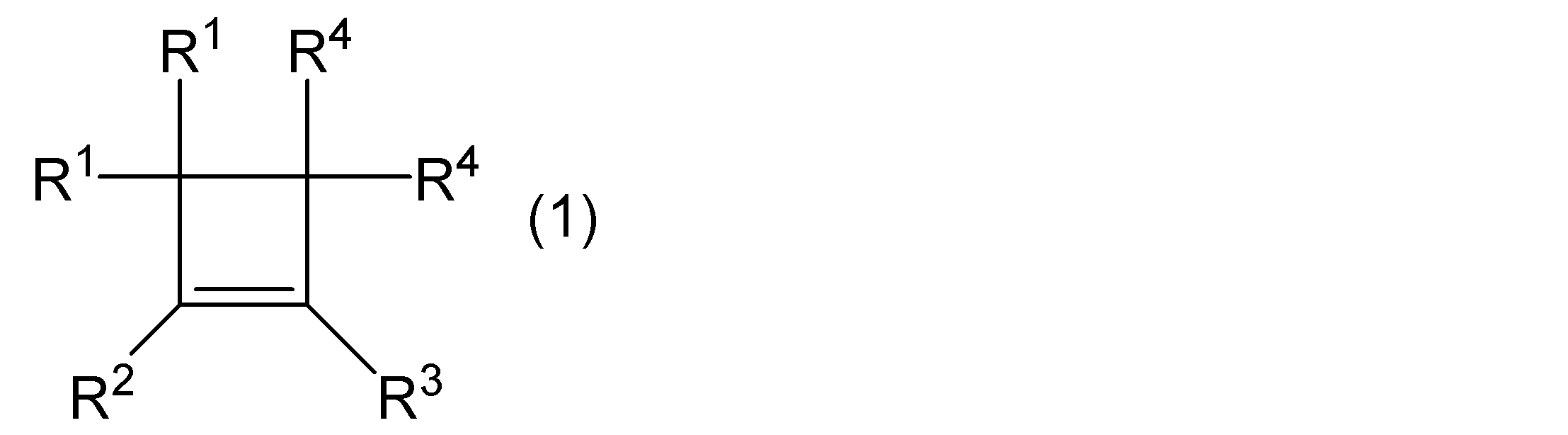
で表されるパーフルオロシクロアルケン化合物の製造方法であって、
触媒存在下に、
一般式(2):
CR1 2=CR2-CR3=CR4 2 (2)
[式中、R1~R4は同一又は異なって、フッ素原子又はパーフルオロアルキル基を示す。]
で表されるパーフルオロアルカジエン化合物の環化反応を行う工程
を備える。

CR1 2R2-C≡C-CR3R4 2 (3)
[式中、R1~R4は前記に同じである。]
で表されるパーフルオロアルキン化合物も製造され得る。なお、一般式(3)で表されるパーフルオロアルキン化合物の詳細については後述する。
本開示の製造方法においては、一般式(1):
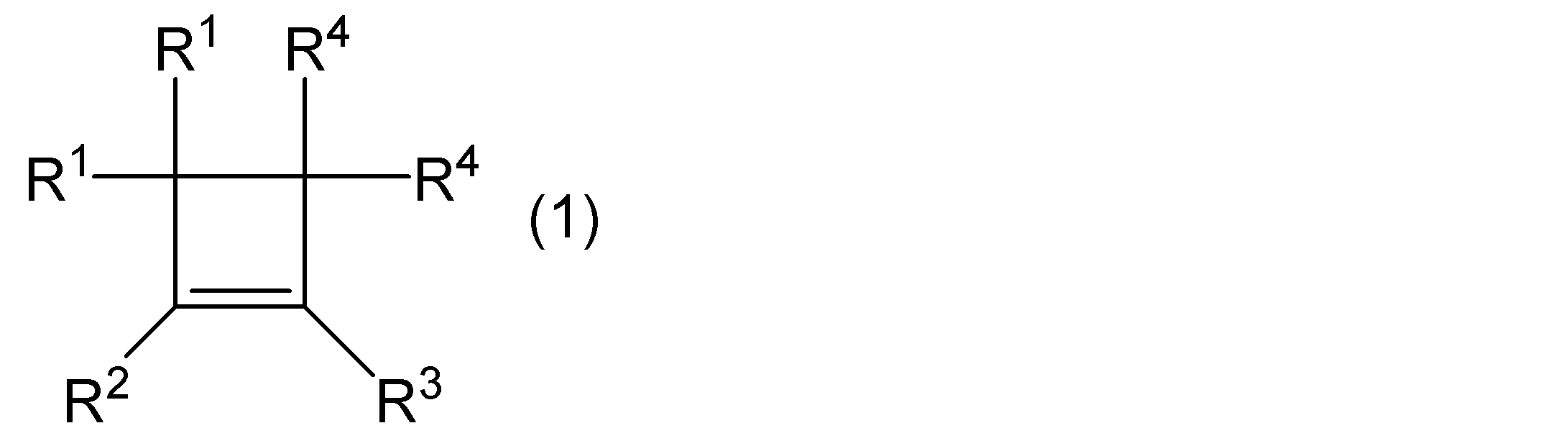
で表されるパーフルオロシクロアルケン化合物の製造方法であって、
一般式(2):
CR1 2=CR2-CR3=CR4 2 (2)
[式中、R1~R4は同一又は異なって、フッ素原子又はパーフルオロアルキル基を示す。]
で表されるパーフルオロアルカジエン化合物の環化反応を気相連続流通式で行う工程
を備える方法によっても、パーフルオロシクロアルケン化合物を製造することができる。この方法においても、反応の転化率が高く、パーフルオロシクロアルケン化合物を高収率及び高選択率に得ることができる。
CR1 2R2-C≡C-CR3R4 2 (3)
[式中、R1~R4は前記に同じである。]
で表されるパーフルオロアルキン化合物も製造され得る。なお、一般式(3)で表されるパーフルオロアルキン化合物の詳細については後述する。
本開示の製造方法においては、一般式(1):

で表されるパーフルオロシクロアルケン化合物の製造方法であって、
触媒存在下に、
一般式(2):
CR1 2=CR2-CR3=CR4 2 (2)
[式中、R1~R4は同一又は異なって、フッ素原子又はパーフルオロアルキル基を示す。]
で表されるパーフルオロアルカジエン化合物の環化反応を気相連続流通式で行う工程
を備える方法によっても、パーフルオロシクロアルケン化合物を製造することができる。この方法においても、反応の転化率が高く、パーフルオロシクロアルケン化合物を高収率及び高選択率に得ることができる。
CR1 2R2-C≡C-CR3R4 2 (3)
[式中、R1~R4は前記に同じである。]
で表されるパーフルオロアルキン化合物も製造され得る。なお、一般式(3)で表されるパーフルオロアルキン化合物の詳細については後述する。
以上のようにして、一般式(1)で表されるパーフルオロシクロアルケン化合物を得ることができるが、上記のように、一般式(1)で表されるパーフルオロアルカジエン化合物と、一般式(3):
CR1 2R2-C≡C-CR3R4 2 (3)
[式中、R1~R4は前記に同じである。]
で表されるパーフルオロアルキン化合物とを含有する、パーフルオロシクロアルケン組成物の形で得られることもある。この本開示のパーフルオロシクロアルケン組成物において、一般式(1)で表されるパーフルオロシクロアルケン化合物は単独で用いることもでき、2種以上を組合せて用いることもできる。
一般式(4A):
CR1 2=CR2-CFR3-CFR4 2 (4A)
[式中、R1~R4は前記に同じである。]
で表されるパーフルオロアルケン化合物や、
一般式(4B):
CFR1 2-CR2=CH-CFR4 2 (4B)
[式中、R1~R4は前記に同じである。]
で表されるフルオロアルケン化合物
等も製造され得る。
触媒として、フッ化ナトリウム(NaF)を金属製管状反応器に充填した。この反応管を350℃まで加熱してW/Fが30g・sec./ccとなるようにヘキサフルオロブタジエン(CF2CF=CFCF2)を反応管に供給することで、気相連続流通式で反応を進行させた。約1時間経過後、反応管からの流出ガスをガスクロトマトグラフィーで分析したところ、転化率は99.2モル%であり、各成分の選択率は、1,2,3,3,4,4-ヘキサフルオロ-1-シクロブテン(c-C4F6)が98.1モル%、1,1,1,4,4,4-ヘキサフルオロ-2-ブチン(CF3C≡CCF3)が1.60モル%、1,1,2,3,3,4,4,4-オクタフルオロ-1-ブテン(CF2=CFCF2CF3)が0.00272モル%(E体及びZ体の合計量)、1,1,1,2,4,4,4-ヘプタフルオロ-2-ブテン(CF3CF=CHCF3)が0.0492モル%(E体及びZ体の合計量)、その他副生成物が合計0.245モル%であった。
加熱温度を400℃としたこと以外は実施例1と同様に反応を進行させた。約1時間経過後、反応管からの流出ガスをガスクロトマトグラフィーで分析したところ、転化率は99.3モル%であり、各成分の選択率は、1,2,3,3,4,4-ヘキサフルオロ-1-シクロブテン(c-C4F6)が98.3モル%、1,1,1,4,4,4-ヘキサフルオロ-2-ブチン(CF3C≡CCF3)が0.696モル%、1,1,2,3,3,4,4,4-オクタフルオロ-1-ブテン(CF2=CFCF2CF3)が0.00215モル%(E体及びZ体の合計量)、1,1,1,2,4,4,4-ヘプタフルオロ-2-ブテン(CF3CF=CHCF3)が0.0410モル%(E体及びZ体の合計量)、その他副生成物が合計0.956モル%であった。
W/Fを90g・sec./ccとし、加熱温度を400℃としたこと以外は実施例1と同様に反応を進行させた。約1時間経過後、反応管からの流出ガスをガスクロトマトグラフィーで分析したところ、転化率は98.9モル%であり、各成分の選択率は、1,2,3,3,4,4-ヘキサフルオロ-1-シクロブテン(c-C4F6)が98.3モル%、1,1,1,4,4,4-ヘキサフルオロ-2-ブチン(CF3C≡CCF3)が0.941モル%、1,1,2,3,3,4,4,4-オクタフルオロ-1-ブテン(CF2=CFCF2CF3)が0.0238モル%(E体及びZ体の合計量)、1,1,1,2,4,4,4-ヘプタフルオロ-2-ブテン(CF3CF=CHCF3)が0.0391モル%(E体及びZ体の合計量)、その他副生成物が合計0.695モル%であった。
触媒としてMgF2を使用したこと以外は実施例1と同様に反応を進行させた。約1時間経過後、反応管からの流出ガスをガスクロトマトグラフィーで分析したところ、転化率は99.7モル%であり、各成分の選択率は、1,2,3,3,4,4-ヘキサフルオロ-1-シクロブテン(c-C4F6)が98.3モル%、1,1,1,4,4,4-ヘキサフルオロ-2-ブチン(CF3C≡CCF3)が1.21モル%、1,1,2,3,3,4,4,4-オクタフルオロ-1-ブテン(CF2=CFCF2CF3)が0.00220モル%(E体及びZ体の合計量)、1,1,1,2,4,4,4-ヘプタフルオロ-2-ブテン(CF3CF=CHCF3)が0.0440モル%(E体及びZ体の合計量)、その他副生成物が合計0.414モル%であった。
触媒としてMgF2を使用し、加熱温度を400℃としたこと以外は実施例1と同様に反応を進行させた。約1時間経過後、反応管からの流出ガスをガスクロトマトグラフィーで分析したところ、転化率は99.8モル%であり、各成分の選択率は、1,2,3,3,4,4-ヘキサフルオロ-1-シクロブテン(c-C4F6)が99.0モル%、1,1,1,4,4,4-ヘキサフルオロ-2-ブチン(CF3C≡CCF3)が0.340モル%、1,1,2,3,3,4,4,4-オクタフルオロ-1-ブテン(CF2=CFCF2CF3)が0.00190モル%(E体及びZ体の合計量)、1,1,1,2,4,4,4-ヘプタフルオロ-2-ブテン(CF3CF=CHCF3)が0.00440モル%(E体及びZ体の合計量)、その他副生成物が合計0.654モル%であった。
触媒としてZrF4を使用し、W/Fを15g・sec./ccとしたこと以外は実施例1と同様に反応を進行させた。約1時間経過後、反応管からの流出ガスをガスクロトマトグラフィーで分析したところ、転化率は99.1モル%であり、各成分の選択率は、1,2,3,3,4,4-ヘキサフルオロ-1-シクロブテン(c-C4F6)が95.3モル%、1,1,1,4,4,4-ヘキサフルオロ-2-ブチン(CF3C≡CCF3)が3.71モル%、1,1,2,3,3,4,4,4-オクタフルオロ-1-ブテン(CF2=CFCF2CF3)が0.0163モル%(E体及びZ体の合計量)、1,1,1,2,4,4,4-ヘプタフルオロ-2-ブテン(CF3CF=CHCF3)が0.0851モル%(E体及びZ体の合計量)、その他副生成物が合計0.923モル%であった。
触媒としてZrF4を使用したこと以外は実施例1と同様に反応を進行させた。約1時間経過後、反応管からの流出ガスをガスクロトマトグラフィーで分析したところ、転化率は99.5モル%であり、各成分の選択率は、1,2,3,3,4,4-ヘキサフルオロ-1-シクロブテン(c-C4F6)が96.3モル%、1,1,1,4,4,4-ヘキサフルオロ-2-ブチン(CF3C≡CCF3)が2.68モル%、1,1,2,3,3,4,4,4-オクタフルオロ-1-ブテン(CF2=CFCF2CF3)が0.0127モル%(E体及びZ体の合計量)、1,1,1,2,4,4,4-ヘプタフルオロ-2-ブテン(CF3CF=CHCF3)が0.118モル%(E体及びZ体の合計量)、その他副生成物が合計0.916モル%であった。
触媒を使用せず、加熱温度を300℃としたこと以外は実施例1と同様に反応を進行させた。約1時間経過後、反応管からの流出ガスをガスクロトマトグラフィーで分析したところ、転化率は97.9モル%であり、各成分の選択率は、1,2,3,3,4,4-ヘキサフルオロ-1-シクロブテン(c-C4F6)が77.8モル%、その他副生成物が合計22.2モル%であった。
触媒を使用せず、加熱温度を400℃としたこと以外は実施例1と同様に反応を進行させた。約1時間経過後、反応管からの流出ガスをガスクロトマトグラフィーで分析したところ、転化率は98.1モル%であり、各成分の選択率は、1,2,3,3,4,4-ヘキサフルオロ-1-シクロブテン(c-C4F6)が67.4モル%、その他副生成物が合計32.6モル%であった。

Claims (10)
- 一般式(1):

で表されるパーフルオロシクロアルケン化合物の製造方法であって、
触媒存在下に、
一般式(2):
CR1 2=CR2-CR3=CR4 2 (2)
[式中、R1~R4は同一又は異なって、フッ素原子又はパーフルオロアルキル基を示す。]
で表されるパーフルオロアルカジエン化合物の環化反応を行う工程
を備える、製造方法。 - 一般式(1):
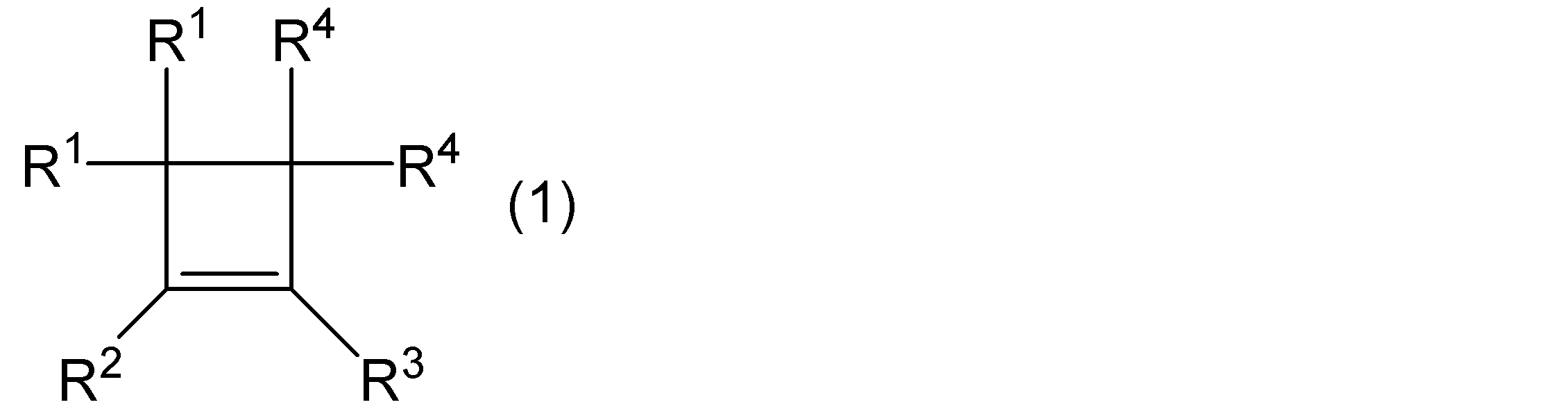
で表されるパーフルオロシクロアルケン化合物の製造方法であって、
一般式(2):
CR1 2=CR2-CR3=CR4 2 (2)
[式中、R1~R4は同一又は異なって、フッ素原子又はパーフルオロアルキル基を示す。]
で表されるパーフルオロアルカジエン化合物の環化反応を気相連続流通式で行う工程
を備える、製造方法。 - 一般式(1):

で表されるパーフルオロシクロアルケン化合物の製造方法であって、
触媒存在下に、
一般式(2):
CR1 2=CR2-CR3=CR4 2 (2)
[式中、R1~R4は同一又は異なって、フッ素原子又はパーフルオロアルキル基を示す。]
で表されるパーフルオロアルカジエン化合物の環化反応を気相連続流通式で行う工程
を備える、製造方法。 - 前記触媒が、周期表第1族~第12族に属する金属元素の少なくとも1種を含むフッ化物である、請求項1又は3に記載の製造方法。
- 前記フッ化物が、アルカリ金属、アルカリ土類金属及び周期表第4族に属する金属元素よりなる群から選ばれる少なくとも1種を含むフッ化物である、請求項4に記載の製造方法。
- 前記環化反応が、270℃以上で行われる、請求項1~5のいずれか1項に記載の製造方法。
- 前記環化反応工程が、前記一般式(1)で表されるパーフルオロシクロアルケン化合物の他、一般式(3):
CR1 2R2-C≡C-CR3R4 2 (3)
[式中、R1~R4は前記に同じである。]
で表されるパーフルオロアルキン化合物も製造する工程である、請求項1~6のいずれか1項に記載の製造方法。 - 一般式(3):
CR1 2R2-C≡C-CR3R4 2 (3)
[式中、R1~R4は同一又は異なって、フッ素原子又はパーフルオロアルキル基を示す。]
で表されるパーフルオロアルキン化合物の製造方法であって、
請求項1~7のいずれか1項に記載の製造方法により副生されたパーフルオロシクロアルケン化合物を基質として用いて、前記パーフルオロアルカジエン化合物を得る工程を備える、製造方法。 - 一般式(1):
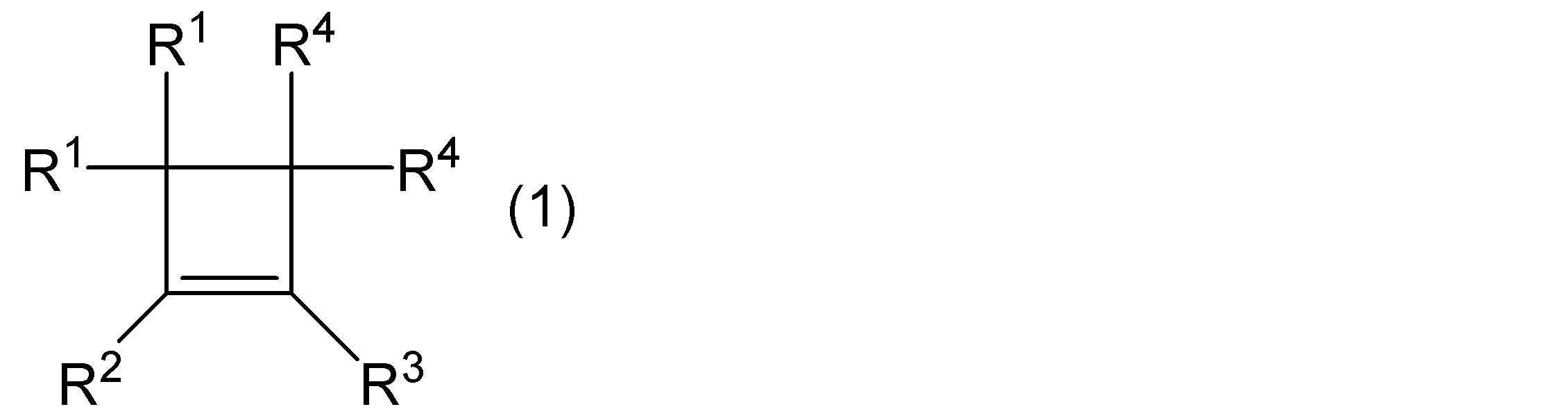
で表されるパーフルオロシクロアルケン化合物と、
一般式(3):
CR1 2R2-C≡C-CR3R4 2 (3)
[式中、R1~R4は前記に同じである。]
で表されるパーフルオロアルキン化合物とを含有する組成物であって、
組成物全量を100モル%として、前記一般式(1)で表されるパーフルオロシクロアルケン化合物の含有量が60~99.9モル%である、組成物。 - エッチングガス又は有機合成用ビルディングブロックとして用いられる、請求項9に記載の組成物。
Priority Applications (4)
| Application Number | Priority Date | Filing Date | Title |
|---|---|---|---|
| CN202410053061.8A CN117924020A (zh) | 2018-10-09 | 2019-10-08 | 含有全氟环烯烃化合物的组合物 |
| KR1020217011885A KR102737400B1 (ko) | 2018-10-09 | 2019-10-08 | 퍼플루오로시클로알켄 화합물의 제조 방법 |
| SG11202103673UA SG11202103673UA (en) | 2018-10-09 | 2019-10-08 | Method for producing perfluorocycloalkene compound |
| CN201980066353.2A CN112912360B (zh) | 2018-10-09 | 2019-10-08 | 全氟环烯烃化合物的制造方法 |
Applications Claiming Priority (2)
| Application Number | Priority Date | Filing Date | Title |
|---|---|---|---|
| JP2018-190994 | 2018-10-09 | ||
| JP2018190994A JP6753443B2 (ja) | 2018-10-09 | 2018-10-09 | パーフルオロシクロアルケン化合物の製造方法 |
Publications (1)
| Publication Number | Publication Date |
|---|---|
| WO2020075729A1 true WO2020075729A1 (ja) | 2020-04-16 |
Family
ID=70164534
Family Applications (1)
| Application Number | Title | Priority Date | Filing Date |
|---|---|---|---|
| PCT/JP2019/039726 Ceased WO2020075729A1 (ja) | 2018-10-09 | 2019-10-08 | パーフルオロシクロアルケン化合物の製造方法 |
Country Status (6)
| Country | Link |
|---|---|
| JP (1) | JP6753443B2 (ja) |
| KR (1) | KR102737400B1 (ja) |
| CN (2) | CN117924020A (ja) |
| SG (1) | SG11202103673UA (ja) |
| TW (1) | TWI791907B (ja) |
| WO (1) | WO2020075729A1 (ja) |
Cited By (1)
| Publication number | Priority date | Publication date | Assignee | Title |
|---|---|---|---|---|
| CN114436759A (zh) * | 2020-11-04 | 2022-05-06 | 浙江省化工研究院有限公司 | 一种1,1,1,2,4,4,4-七氟-2-丁烯的气相制备方法 |
Families Citing this family (1)
| Publication number | Priority date | Publication date | Assignee | Title |
|---|---|---|---|---|
| JP7250654B2 (ja) * | 2018-10-09 | 2023-04-03 | ダイキン工業株式会社 | パーフルオロアルキン化合物の製造方法 |
Citations (2)
| Publication number | Priority date | Publication date | Assignee | Title |
|---|---|---|---|---|
| JP2014058488A (ja) * | 2012-09-19 | 2014-04-03 | National Institute Of Advanced Industrial & Technology | 1,1,1,4,4,4−ヘキサフルオロ−2−ブチンの製造方法 |
| CN107602340A (zh) * | 2017-10-17 | 2018-01-19 | 北京宇极科技发展有限公司 | 气相异构化制备全氟二烯烃和全氟炔烃的方法 |
Family Cites Families (4)
| Publication number | Priority date | Publication date | Assignee | Title |
|---|---|---|---|---|
| KR20030009503A (ko) * | 2000-06-02 | 2003-01-29 | 아사히 가라스 가부시키가이샤 | 열분해 반응에 의한 불포화 화합물의 제조방법 |
| CN1301947C (zh) * | 2001-02-23 | 2007-02-28 | 昭和电工株式会社 | 全氟化碳的生产方法及其用途 |
| JP5598910B2 (ja) * | 2010-06-14 | 2014-10-01 | 独立行政法人産業技術総合研究所 | フッ素化合物の製造方法 |
| CN105348034B (zh) * | 2015-12-07 | 2018-06-01 | 天津医科大学 | 一种合成六氟-2-丁炔的方法 |
-
2018
- 2018-10-09 JP JP2018190994A patent/JP6753443B2/ja active Active
-
2019
- 2019-10-08 CN CN202410053061.8A patent/CN117924020A/zh active Pending
- 2019-10-08 CN CN201980066353.2A patent/CN112912360B/zh active Active
- 2019-10-08 KR KR1020217011885A patent/KR102737400B1/ko active Active
- 2019-10-08 SG SG11202103673UA patent/SG11202103673UA/en unknown
- 2019-10-08 WO PCT/JP2019/039726 patent/WO2020075729A1/ja not_active Ceased
- 2019-10-09 TW TW108136677A patent/TWI791907B/zh active
Patent Citations (2)
| Publication number | Priority date | Publication date | Assignee | Title |
|---|---|---|---|---|
| JP2014058488A (ja) * | 2012-09-19 | 2014-04-03 | National Institute Of Advanced Industrial & Technology | 1,1,1,4,4,4−ヘキサフルオロ−2−ブチンの製造方法 |
| CN107602340A (zh) * | 2017-10-17 | 2018-01-19 | 北京宇极科技发展有限公司 | 气相异构化制备全氟二烯烃和全氟炔烃的方法 |
Non-Patent Citations (2)
| Title |
|---|
| WILLIAM R. DOLBIER ET AL.: "The electrocyclic interconversion of pefluoro-3-methycyclobutene with Z- and E-perfluoro-1,3-pentadiene", TETRAHEDRON LETTERS, vol. 27, no. 37, 1986, pages 4387 - 4390, XP055701502 * |
| XIAOQING JIA ET AL.: "Preparation of cis-1, 1, 1, 4, 4, 4-hexafluorobut-2-ene by cis-selective semi-hydrogenation of perfluoro-2-butyne", JOURNAL OF FLUORINE CHEMISTRY, vol. 132, 2011, pages 1188 - 1193, XP028303386, DOI: 10.1016/j.jfluchem.2011.06.004 * |
Cited By (2)
| Publication number | Priority date | Publication date | Assignee | Title |
|---|---|---|---|---|
| CN114436759A (zh) * | 2020-11-04 | 2022-05-06 | 浙江省化工研究院有限公司 | 一种1,1,1,2,4,4,4-七氟-2-丁烯的气相制备方法 |
| CN114436759B (zh) * | 2020-11-04 | 2023-10-27 | 浙江省化工研究院有限公司 | 一种1,1,1,2,4,4,4-七氟-2-丁烯的气相制备方法 |
Also Published As
| Publication number | Publication date |
|---|---|
| CN112912360B (zh) | 2024-05-07 |
| CN117924020A (zh) | 2024-04-26 |
| SG11202103673UA (en) | 2021-05-28 |
| TW202033482A (zh) | 2020-09-16 |
| JP6753443B2 (ja) | 2020-09-09 |
| KR102737400B1 (ko) | 2024-12-03 |
| TWI791907B (zh) | 2023-02-11 |
| JP2020059664A (ja) | 2020-04-16 |
| RU2021137864A (ru) | 2022-01-26 |
| KR20210063381A (ko) | 2021-06-01 |
| CN112912360A (zh) | 2021-06-04 |
Similar Documents
| Publication | Publication Date | Title |
|---|---|---|
| WO2019216175A1 (ja) | フルオロオレフィンの製造方法 | |
| JP6827246B2 (ja) | ハロゲン化ブテン化合物の製造方法 | |
| JP2021185161A (ja) | パーフルオロアルキン化合物の製造方法 | |
| JP7624144B2 (ja) | フルオロオレフィン化合物の製造方法 | |
| CN112912360B (zh) | 全氟环烯烃化合物的制造方法 | |
| JP5946821B2 (ja) | ヒドロクロロフルオロアルカン類の脱塩化水素方法 | |
| TWI777113B (zh) | 環丁烯之製造方法 | |
| CN112209803B (zh) | 乙烯基化合物的制造方法 | |
| JP6874778B2 (ja) | シクロブタンの製造方法 | |
| JP7206501B2 (ja) | ハロゲン化シクロアルカン化合物の製造方法 | |
| RU2855289C9 (ru) | Способ получения перфторциклоалкенового соединения | |
| RU2779442C1 (ru) | Способ получения перфторциклоалкенового соединения | |
| RU2855289C2 (ru) | Способ получения перфторциклоалкенового соединения | |
| JP7712582B2 (ja) | フッ化ビニル化合物の製造方法 | |
| RU2807184C9 (ru) | Способ получения циклобутана | |
| RU2807184C2 (ru) | Способ получения циклобутана |
Legal Events
| Date | Code | Title | Description |
|---|---|---|---|
| 121 | Ep: the epo has been informed by wipo that ep was designated in this application |
Ref document number: 19872019 Country of ref document: EP Kind code of ref document: A1 |
|
| NENP | Non-entry into the national phase |
Ref country code: DE |
|
| ENP | Entry into the national phase |
Ref document number: 20217011885 Country of ref document: KR Kind code of ref document: A |
|
| 122 | Ep: pct application non-entry in european phase |
Ref document number: 19872019 Country of ref document: EP Kind code of ref document: A1 |
|
| WWG | Wipo information: grant in national office |
Ref document number: 11202103673U Country of ref document: SG |
|
| WWP | Wipo information: published in national office |
Ref document number: 11202103673U Country of ref document: SG |