WO2020021975A1 - 診断支援装置、診断支援方法及び診断支援プログラム - Google Patents
診断支援装置、診断支援方法及び診断支援プログラム Download PDFInfo
- Publication number
- WO2020021975A1 WO2020021975A1 PCT/JP2019/026081 JP2019026081W WO2020021975A1 WO 2020021975 A1 WO2020021975 A1 WO 2020021975A1 JP 2019026081 W JP2019026081 W JP 2019026081W WO 2020021975 A1 WO2020021975 A1 WO 2020021975A1
- Authority
- WO
- WIPO (PCT)
- Prior art keywords
- information
- patient
- diagnosis support
- unit
- inquiry
- Prior art date
- Legal status (The legal status is an assumption and is not a legal conclusion. Google has not performed a legal analysis and makes no representation as to the accuracy of the status listed.)
- Ceased
Links
Images




Classifications
-
- G—PHYSICS
- G16—INFORMATION AND COMMUNICATION TECHNOLOGY [ICT] SPECIALLY ADAPTED FOR SPECIFIC APPLICATION FIELDS
- G16H—HEALTHCARE INFORMATICS, i.e. INFORMATION AND COMMUNICATION TECHNOLOGY [ICT] SPECIALLY ADAPTED FOR THE HANDLING OR PROCESSING OF MEDICAL OR HEALTHCARE DATA
- G16H15/00—ICT specially adapted for medical reports, e.g. generation or transmission thereof
-
- G—PHYSICS
- G16—INFORMATION AND COMMUNICATION TECHNOLOGY [ICT] SPECIALLY ADAPTED FOR SPECIFIC APPLICATION FIELDS
- G16H—HEALTHCARE INFORMATICS, i.e. INFORMATION AND COMMUNICATION TECHNOLOGY [ICT] SPECIALLY ADAPTED FOR THE HANDLING OR PROCESSING OF MEDICAL OR HEALTHCARE DATA
- G16H50/00—ICT specially adapted for medical diagnosis, medical simulation or medical data mining; ICT specially adapted for detecting, monitoring or modelling epidemics or pandemics
- G16H50/30—ICT specially adapted for medical diagnosis, medical simulation or medical data mining; ICT specially adapted for detecting, monitoring or modelling epidemics or pandemics for calculating health indices; for individual health risk assessment
-
- G—PHYSICS
- G16—INFORMATION AND COMMUNICATION TECHNOLOGY [ICT] SPECIALLY ADAPTED FOR SPECIFIC APPLICATION FIELDS
- G16H—HEALTHCARE INFORMATICS, i.e. INFORMATION AND COMMUNICATION TECHNOLOGY [ICT] SPECIALLY ADAPTED FOR THE HANDLING OR PROCESSING OF MEDICAL OR HEALTHCARE DATA
- G16H10/00—ICT specially adapted for the handling or processing of patient-related medical or healthcare data
- G16H10/20—ICT specially adapted for the handling or processing of patient-related medical or healthcare data for electronic clinical trials or questionnaires
-
- G—PHYSICS
- G16—INFORMATION AND COMMUNICATION TECHNOLOGY [ICT] SPECIALLY ADAPTED FOR SPECIFIC APPLICATION FIELDS
- G16H—HEALTHCARE INFORMATICS, i.e. INFORMATION AND COMMUNICATION TECHNOLOGY [ICT] SPECIALLY ADAPTED FOR THE HANDLING OR PROCESSING OF MEDICAL OR HEALTHCARE DATA
- G16H50/00—ICT specially adapted for medical diagnosis, medical simulation or medical data mining; ICT specially adapted for detecting, monitoring or modelling epidemics or pandemics
- G16H50/20—ICT specially adapted for medical diagnosis, medical simulation or medical data mining; ICT specially adapted for detecting, monitoring or modelling epidemics or pandemics for computer-aided diagnosis, e.g. based on medical expert systems
Definitions
- the present invention relates to a diagnosis support device, a diagnosis support method, and a diagnosis support program for supporting a diagnosis of a patient by medical personnel.
- Patent Document 1 discloses a medical care data management system that manages medical care data related to medical care and treatment.
- this medical care data management system past medical care data relating to a patient can be accumulated, and the accumulated medical care data can be taken out at any terminal.
- an object of the present invention is to provide a diagnosis support apparatus, a diagnosis support method, and a diagnosis support program that can effectively use information about a patient in diagnosis. .
- the present invention takes, for example, the following measures in order to solve the above-mentioned problems.
- the diagnosis support device is an acquisition unit that acquires health management information indicating a health condition or a living condition of a patient, and inquiry item information including a plurality of question items associated with a disease type. And a generating unit that generates medical questionnaire form template data including a question item corresponding to the health condition or the living condition of the patient based on the acquired health management information and medical check item information.
- a medical staff member such as a doctor can make an inquiry using an inquiry screen generated based on the current health condition or living condition of the patient.
- the diagnosis can be performed efficiently and accurately by performing the diagnosis using the questionnaire items corresponding to the current health condition and living condition of the patient.
- the generation unit predicts a disease type of the patient based on the acquired health management information, and preferentially displays a question associated with the predicted disease type. Generates the questionnaire form template data to be performed.
- the generation unit predicts a disease type of the patient based on the acquired health management information, and a disease type predicted from question items included in the question item information.
- An associated questionnaire is selected, and questionnaire form template data for displaying the selected questionnaire is generated.
- the acquisition unit acquires at least one of the number of steps, the amount of activity, the travel history, the weight, the blood sugar level, the diet, the body temperature, and the blood pressure as the health management information.
- the acquisition unit further acquires past medical information on the patient, and the generating unit, based on the acquired health management information, medical information, and question item information, The medical questionnaire template data is generated.
- the acquisition unit acquires, as the medical treatment information, at least one of the patient's medical history information, vaccination information, genetic information, medication information, and allergy information.
- the acquisition unit further acquires environment information around the patient, and the generation unit, based on the acquired health management information, diagnosis information, question item information, and environment information. Then, the medical questionnaire template data is generated.
- At least one of temperature change, season, and fashion information is acquired as the environmental information.
- the present invention it is possible to provide a diagnosis support apparatus, a diagnosis support method, and a diagnosis support program that can effectively use information on a patient in diagnosis.
- FIG. 1 is a block diagram illustrating a functional configuration of a diagnosis support device according to an application example.
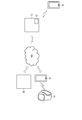
- FIG. 2 is a schematic diagram illustrating the configuration of a diagnosis support system including a diagnosis support circuit as an example of the diagnosis support device according to the first embodiment.
- FIG. 3 is a block diagram illustrating a hardware configuration of the blood pressure measurement device according to the first embodiment.
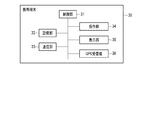
- FIG. 4 is a block diagram illustrating a hardware configuration of the mobile terminal according to the first embodiment.
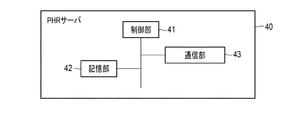
- FIG. 5 is a block diagram illustrating a hardware configuration of the PHR server according to the first embodiment.
- FIG. 6 is a block diagram illustrating a hardware configuration of the in-hospital terminal according to the first embodiment.
- FIG. 7 is a block diagram illustrating a hardware configuration of the EMR server according to the first embodiment.
- FIG. 1 is a block diagram illustrating a functional configuration of a diagnosis support device according to an application example.
- FIG. 2 is a schematic diagram illustrating the configuration of a diagnosis support system including a diagnosis
- FIG. 8 is a block diagram illustrating a functional configuration of a diagnosis support circuit as an example of the diagnosis support device according to the first embodiment.
- FIG. 9 is a flowchart illustrating a processing procedure of an inquiry data generation process by a diagnosis support system including a diagnosis support circuit as an example of the diagnosis support device according to the first embodiment.
- FIG. 10 is a diagram illustrating an example of the inquiry screen displayed based on the output data generated by the inquiry data generation process of the diagnosis support circuit as an example of the diagnosis support device according to the first embodiment.
- the diagnosis support device 1 is used, for example, in a medical institution such as a hospital, for a medical person to make an inquiry to a person to be diagnosed using a display device. Medical personnel are, for example, doctors and nurses.
- the diagnosis target is, for example, a patient.
- the display device is, for example, a mobile terminal such as a tablet having a display screen.
- the diagnosis support apparatus 1 executes an inquiry screen generation process based on a diagnosis support program. As shown in FIG. 1, the diagnosis support device 1 includes an acquisition unit 2, a generation unit 3, and an output unit 4.
- the acquisition unit 2 acquires PHR information and questionnaire item information. In this application example, the acquisition unit 2 further acquires EMR information.
- $ PHR (Personal ⁇ Health ⁇ Records) is a medical / health record in which data acquired by an individual is managed by the individual.
- the PHR information is information obtained from the PHR.
- the PHR information indicates the current health or living condition of the patient.
- PHR information is an example of health management information.
- the PHR information can include biological information and behavior information.
- the biological information is information on a biological parameter of the patient.
- the biological information can include age, gender, weight, blood sugar level, body temperature, blood pressure information, pulse, and the like.
- the blood pressure information is a systolic blood pressure, a diastolic blood pressure, or another index.
- the behavior information is information relating to the behavior of the patient.
- the behavior information can include the number of steps, the amount of activity, travel information, meal information, and the like.
- EMR Electronic Medical Records
- the EMR information is information on past examinations and diagnoses at medical institutions.
- EMR information is an example of medical information acquired at a medical institution.
- EMR information can include test information, diagnostic information, and the like.
- the test information includes height, weight, blood sugar level, genetic information, and the like.
- the diagnostic information can include past history information, medication information, allergy information, vaccination information, and the like.
- the interview item information can include a plurality of question items.
- the question items are questions for specifying a disease type, a symptom, a cause, and the like of the patient.
- Each of the question items is stored in association with one or more related disease types.
- the generation unit 3 generates medical inquiry form template data corresponding to the current state and the past medical data for the target patient based on the PHR information, the EMR information, and the medical inquiry item information.
- the inquiry form template data is display data for displaying an inquiry screen on the display screen of the display device. On the inquiry screen, a plurality of questions corresponding to the current state and past medical data of the target patient are displayed side by side.
- the generation unit 3 extracts, for example, one or more types of disease that may have a patient based on a table or a database that indicates the relationship between each type of information included in the PHR information and the EMR information and the type of disease.
- the generation unit 3 extracts one or more question items related to the extracted disease type from a plurality of question items included in the question item information. Then, the generation unit 3 generates medical questionnaire form template data for displaying the extracted question items.
- the generating unit 3 sets the importance of each of the extracted question items. For example, the generation unit 3 sets a higher degree of importance for a question related to a disease that is likely to have a patient than a question related to a disease that is less likely to have a patient. . Then, the generation unit 3 generates the interview form template data in which the extracted question items are arranged in descending order of importance.
- the output unit 4 outputs the medical questionnaire template data generated by the generation unit 3 to the outside.
- an inquiry can be made using the inquiry screen generated based on the PHR information. That is, it is possible to perform an inquiry corresponding to the current health condition and the current living condition of the patient.
- questions related to the disease type that is determined to have a high possibility of suffering from the patient are displayed with priority. For this reason, a diagnostician such as a physician can obtain information about a disease type that is likely to be affected by a patient preferentially and reliably, improving the efficiency of diagnosis and improving the accuracy of diagnosis, and It can be expected to reduce the burden on patients during medical interviews.
- EMR information is obtained in addition to PHR information. For this reason, it is possible to perform an inquiry corresponding to the patient's current health condition, current living condition, past medical data, and the like. As a result, the efficiency of diagnosis and the accuracy of diagnosis can be improved, and the burden on the patient at the time of interview can be further reduced.
- PHR information obtained by individuals themselves is generally less reliable than EMR information obtained at medical institutions. For this reason, highly reliable diagnosis can be performed by generating an inquiry screen using EMR information obtained at a medical institution in addition to PHR information.
- the diagnosis support system described below includes an EMR server having a diagnosis support circuit.
- the diagnosis support circuit is an example of a diagnosis support device.
- FIG. 2 is a diagram schematically illustrating an example of an application scene of the diagnosis support system according to the present embodiment.
- the diagnosis support system includes an in-hospital terminal 50 and an EMR server 70.
- the hospital terminal 50 and the EMR server 70 can be connected via a network NW such as the Internet.
- NW such as the Internet.
- the EMR is, for example, an electronic medical record system.
- a plurality of in-hospital terminals 50 may be provided.
- the communication between the in-hospital terminal 50 and the EMR server 70 may be short-range wireless communication or wired communication as communication not via the network NW.
- the blood pressure measurement system further includes a blood pressure measurement device 10, a mobile terminal 30, and a PHR server 40.
- a plurality of each of the blood pressure measurement device 10 and the portable terminal 30 may be provided.
- the blood pressure measurement device 10 and the mobile terminal 30 are connected by short-range wireless communication or wired communication.
- the mobile terminal 30 can be connected to the PHR server 40 via the network NW.
- the mobile terminal 30 may be further connected to the EMR server 70 via the network NW.
- the blood pressure measurement device 10 can be connected to the PHR server 40 and the EMR server 70 via the mobile terminal 30. That is, the blood pressure measurement device 10 can communicate with the PHR server 40 and the EMR server 70 via the mobile terminal 30.
- the blood pressure measurement device 10 is a device that can be attached to any measurement location (for example, a wrist).
- the blood pressure measurement device 10 is an example of a device possessed by a patient.
- the blood pressure measurement device 10 measures a patient's blood pressure value at a measurement location.
- the blood pressure measurement device 10 can transmit the blood pressure information including the measurement result of the blood pressure value to the portable terminal 30.
- the blood pressure measurement device 10 can acquire pulse information of a patient.
- the pulse information includes a pulse value and a pulse wave.
- the blood pressure measurement device 10 can transmit the pulse information to the portable terminal 30.
- the blood pressure measurement device 10 has a clock function, and can transmit the blood pressure information and the pulse information to the portable terminal 30 in association with the measurement date and time.
- the mobile terminal 30 is, for example, a terminal that can be carried by a patient.
- the mobile terminal 30 is an example of a device possessed by a patient.
- the mobile terminal 30 receives the blood pressure information and the pulse information from the blood pressure measurement device 10.
- the mobile terminal 30 can transfer the received blood pressure information and pulse information to the PHR server 40 in association with the measurement date and time.
- the amount of activity, travel history, weight, blood sugar level, meal, body temperature, and the like are input as information managed by the patient.
- the mobile terminal 30 can transfer the input information to the PHR server 40.
- the PHR server 40 is a server computer that stores information transmitted from the mobile terminal 30.
- PHR Personal Health Records
- the PHR server 40 can transmit the stored information to the EMR server 70.
- the in-hospital terminal 50 is a terminal that can be operated by medical personnel such as doctors and nurses. The medical staff examines the patient, for example, and diagnoses the patient's condition based on test data and the like.
- the in-hospital terminal 50 can receive test data from a not-shown test device or the like in the hospital and present it to medical personnel.
- the in-hospital terminal 50 inputs diagnostic information and the like regarding the patient.
- the in-hospital terminal 50 can transmit the diagnostic information to the EMR server 70. Further, the in-hospital terminal 50 can receive the inquiry form template data from the EMR server 70 and display an inquiry screen based on the inquiry form template data.
- the hospital terminal 50 is an example of a display device.
- the EMR server 70 is a server computer that stores information transmitted from the PHR server 40 and each inspection device.
- the EMR server 70 is an example of a server in a medical institution.
- EMR Electronic Medical Records
- the stored information is stored, for example, as an electronic medical record. Further, the EMR server 70 can transmit the stored information to the PHR server 40 and the hospital terminal 50.
- the EMR server 70 includes a diagnosis support circuit 80.
- the diagnosis support circuit 80 acquires the information on the patient accumulated in the EMR server 70, and generates the questionnaire form template data based on the acquired information.
- the diagnosis support circuit 80 outputs the generated inquiry form template data to the EMR server 70 as output data.
- the EMR server 70 can transmit the questionnaire form template data generated by the diagnosis support circuit 80 to the PHR server 40 and the hospital terminal 50.
- the diagnosis support circuit 80 is an example of a diagnosis support device.
- the diagnosis support circuit 80 may be provided in the hospital terminal 50, for example.
- FIG. 3 is a block diagram illustrating an example of a hardware configuration of the blood pressure measurement device 10 according to the present embodiment.
- the blood pressure measurement device 10 according to the present embodiment includes a control unit 11, a storage unit 12, a communication unit 13, an operation unit 14, a display unit 15, and a blood pressure sensor 16.
- the blood pressure measurement device 10 may further include at least one of an acceleration sensor 17 and a temperature / humidity sensor 18.
- the control unit 11 includes a CPU (Central Processing Unit), a RAM (Random Access Memory), a ROM (Read Only Memory), and controls each component according to information processing.
- the control unit 11 includes a clock (not shown) and has a function of acquiring the current date and time.
- the control unit 11 may have a function of displaying the acquired date and time on the display unit 15.
- the control unit 11 generates blood pressure information, pulse information, activity information, and environment information based on the measurement results obtained by the blood pressure sensor 16, the acceleration sensor 17, the temperature and humidity sensor 18, and the results obtained from a network or the like.
- the blood pressure information includes, for example, a blood pressure value of the patient based on the measurement by the blood pressure sensor 16.
- the pulse information includes, for example, a measurement result of a patient's pulse wave and a pulse value based on measurement by the blood pressure sensor 16.
- the activity information includes the amount of activity, the number of steps, and the sleep state of the patient based on the measurement by the acceleration sensor 17.
- the environmental information includes the temperature and humidity around the patient based on the measurement by the temperature and humidity sensor 18.
- the environmental information includes current date, recent weather information, current season, fashion information, and the like.
- Each of the blood pressure information, the pulse information, the activity information, and the environment information is associated with a measurement date and time based on the current date and time acquired by the clock. Further, each of the blood pressure information, the pulse information, the activity information, and the environment information may be further associated with a device ID that uniquely identifies the blood pressure measurement device 10.
- the storage unit 12 is, for example, an auxiliary storage device such as a solid state drive.
- the storage unit 12 may be a hard disk drive.
- the storage unit 12 stores programs executed by the control unit 11, blood pressure information, pulse information, activity information, environmental information, and the like.
- the communication unit 13 is a communication interface that manages communication with the mobile terminal 30.
- the communication unit 13 transmits, for example, blood pressure information, pulse information, activity information, environmental information, and the like to the mobile terminal 30.
- the communication with the mobile terminal 30 by the communication unit 13 may be, for example, short-range wireless communication such as Bluetooth (registered trademark), but is not limited thereto.
- the communication by the communication unit 13 may be, for example, communication via a network NW such as a LAN (Local Area Network) or wired communication using a communication cable.
- NW Local Area Network
- the operation unit 14 includes, for example, a user interface such as a touch panel and operation buttons.
- the operation unit 14 detects an operation performed by the patient via the user interface, and outputs a signal indicating the content of the detected operation to the control unit 11.
- the display unit 15 includes, for example, a display screen and an indicator.
- the display screen is, for example, an LCD (Liquid Crystal Display) or an EL (Electroluminescence) display.
- the display unit 15 displays information according to a signal from the control unit 11 and notifies the patient.
- the display unit 15 can display, for example, blood pressure information, pulse information, activity information, environmental information, and the like stored in the storage unit 12.
- the blood pressure sensor 16 measures the blood pressure value of the patient.
- the blood pressure value includes a representative index such as a systolic blood pressure and a diastolic blood pressure.
- the blood pressure sensor 16 may be, for example, a continuous measurement type capable of measuring a patient's blood pressure for each beat of a heartbeat (continuously) or a non-continuous measurement type capable of measuring a spot (non-continuously) at a predetermined time.
- the continuous measurement type blood pressure sensor 16 continuously measures a patient's blood pressure based on a pulse wave transit time (PTT; Pulse (Transmit Time), and continuously measures a blood pressure based on a pressure pulse wave. (A tonometry method) or the like can be applied.
- the method of continuously measuring the blood pressure is not limited to the above example, and a method of detecting a pulse wave using a light emitting element or the like can be appropriately applied.
- a method (oscillometric method) of detecting a pulse wave by compressing a blood vessel using a cuff as a pressure sensor is applicable to the discontinuous measurement type blood pressure sensor 16. Therefore, the blood pressure sensor 16 can acquire pulse information.
- the acceleration sensor 17 detects the patient's acceleration occurring at the place where the blood pressure measurement device 10 is mounted as a set of three-axis components. Further, the acceleration sensor 17 may further include a gyro sensor, and may further detect the angular velocity in addition to the acceleration as a set of three-axis components.
- the temperature and humidity sensor 18 measures the temperature and humidity around the patient.
- FIG. 4 is a block diagram illustrating an example of a hardware configuration of the mobile terminal 30 according to the present embodiment.
- the mobile terminal 30 according to the present embodiment includes a control unit 31, a storage unit 32, a communication unit 33, an operation unit 34, a display unit 35, and a GPS (Global Positioning System) receiver 36. .
- GPS Global Positioning System
- the control unit 31 and the storage unit 32 are the same as the control unit 11 and the storage unit 12 of the blood pressure measurement device 10, respectively.
- the storage unit 32 of the mobile terminal 30 stores information received from the blood pressure measurement device 10 and position information generated by the GPS receiver 36 under the control of the control unit 31.
- the information received from the blood pressure measurement device 10 includes blood pressure information, pulse information, activity information, environmental information, and the like.
- the storage unit 32 stores the biological information, the behavior information, and the like input by the operation unit 34 under the control of the control unit 31.
- the biological information input at the operation unit 34 includes age, gender, weight, blood sugar level, body temperature, and the like.
- the behavior information input in the operation unit 34 includes travel information, meal information, and the like.
- the information acquisition date and time can be stored together.
- the travel information can also be generated based on the position information generated by the GPS receiver 36.
- the communication unit 33 is a communication interface that manages communication with the blood pressure measurement device 10 and the PHR server 40.
- the communication unit 33 receives, for example, blood pressure information, pulse information, activity information, environmental information, and the like from the blood pressure measurement device 10. Further, the communication unit 33 transmits blood pressure information, pulse information, activity information, environmental information, position information, biological information, behavior information, and the like to the PHR server 40.
- the operation unit 34 and the display unit 35 are the same as the operation unit 14 and the display unit 15 of the blood pressure measurement device 10, respectively.
- the display unit 35 can display an input screen for biological information and behavior information.
- the operation unit 34 can input biological information and behavior information.
- the GPS receiver 36 measures the position of the mobile terminal 30 and generates position information.
- the position information includes, for example, the positioning date and time, and the latitude and longitude of the mobile terminal 30 at the positioning date and time.
- the positioning by the GPS receiver 36 can be performed, for example, in synchronization with the measurement of the blood pressure sensor 16 of the blood pressure measurement device 10.
- FIG. 5 is a block diagram illustrating an example of a hardware configuration of the PHR server 40 according to the present embodiment.
- the PHR server 40 according to the present embodiment includes a control unit 41, a storage unit 42, and a communication unit 43.
- the control unit 41 and the storage unit 42 are the same as the control unit 11 and the storage unit 12 of the blood pressure measurement device 10, respectively.
- the storage unit 42 of the PHR server 40 stores information transmitted from the mobile terminal 30.
- the communication unit 43 is a communication interface that manages communication with the mobile terminal 30 and the EMR server 70.
- the communication unit 43 receives, for example, blood pressure information, pulse information, activity information, environmental information, biological information, behavior information, and the like from the mobile terminal 30.
- the communication unit 43 can transmit the information stored in the storage unit 42 to the mobile terminal 30 and the EMR server 70.
- FIG. 6 is a block diagram illustrating an example of a hardware configuration of the hospital terminal 50 according to the present embodiment.
- the in-hospital terminal 50 according to the present embodiment includes a control unit 51, a storage unit 52, a communication unit 53, an operation unit 54, and a display unit 55.
- the control unit 51 and the storage unit 52 are the same as the control unit 11 and the storage unit 12 of the blood pressure measurement device 10, respectively.
- the control unit 51 of the in-hospital terminal 50 generates diagnostic information, medication information, and the like regarding the patient.
- the storage unit 52 of the in-hospital terminal 50 stores the diagnostic information, medication information, and the like for the patient generated by the control unit 51. Further, the storage unit 52 temporarily stores the medical inquiry form template data and the like received from the EMR server 70.
- the communication unit 53 is a communication interface that manages communication with the EMR server 70.
- the communication unit 53 transmits diagnostic information, medication information, and the like regarding the patient to the EMR server 70.
- the communication unit 53 can receive medical inquiry form template data and the like from the EMR server 70.
- the operation unit 54 and the display unit 55 are the same as the operation unit 14 and the display unit 15 of the blood pressure measurement device 10, respectively.
- medication information, test information acquired by various test devices, and the like can be input.
- the medication information and the test information may be recorded in the EMR server 70 via a network such as a hospital LAN.
- the display unit 55 can display an inquiry screen based on the inquiry form template data generated by the diagnosis support circuit 80.
- the display unit 55 is an example of a display screen.
- FIG. 7 is a block diagram illustrating an example of a hardware configuration of the EMR server 70 according to the present embodiment.
- the EMR server 70 according to the present embodiment includes a control unit 71, a storage unit 72, a communication unit 73, and a diagnosis support circuit 80.
- the control unit 71 and the storage unit 72 are the same as the control unit 11 and the storage unit 12 of the blood pressure measurement device 10, respectively.
- the storage unit 72 of the EMR server 70 stores information transmitted from the PHR server 40, the in-hospital terminal 50, and each test device.
- the information transmitted from the in-hospital terminal 50 and each test device includes test information on test results, diagnostic information on diagnostic results, environmental information, and the like.
- the storage unit 72 of the EMR server 70 can also temporarily store the questionnaire form template data obtained from the diagnosis support circuit 80.
- the communication unit 73 is a communication interface that manages communication with the PHR server 40, the hospital terminal 50, and each test device.
- the communication unit 73 receives, for example, blood pressure information, pulse information, activity information, environmental information, biological information, behavior information, and the like from the PHR server 40.
- the communication unit 73 receives the test information, the diagnostic information, and the environment information from the hospital terminal 50 and each of the test devices.
- the communication unit 73 may receive the environment information acquired by the mobile terminal 30 or the like from the PHR server 40 or the like.
- the communication unit 73 can transmit the information stored in the storage unit 72 to the PHR server 40 and the hospital terminal 50.
- the diagnosis support circuit 80 includes, for example, a processor 80a and a memory 80b.
- the diagnosis support circuit 80 implements various operation controls, data processing, and the like by the processor 80a executing a program stored in the memory 80b. Further, the diagnosis support circuit 80 has a clock (not shown) and can measure the current date and time.
- the processor 80a is, for example, a CPU including an arithmetic circuit or an MPU (Micro Processing Unit).
- the processor 80a can execute control of each unit and data processing by executing a program stored in the memory 80b or the storage unit 72.
- the memory 80b includes, for example, a nonvolatile memory for storing a program executed by the processor 80a, and a volatile memory such as a RAM used as a working memory.
- the diagnosis support circuit 80 executes an inquiry data generation process based on an inquiry data generation program.
- the inquiry data generation program is an example of a diagnosis support program.
- the inquiry data generation processing by the diagnosis support circuit 80 will be described later.
- the inquiry data generation program is a program for causing the diagnosis support circuit 80 to execute the inquiry data generation processing.
- the interview data generation program may be stored in the memory 80b or may be stored in the storage unit 72.
- the control unit 71 may function as the diagnosis support circuit 80. That is, the control unit 71 may double as the diagnosis support circuit 80. In this case, the CPU of the control unit 71 becomes the processor 80a of the diagnosis support circuit 80, the ROM of the control unit 71 becomes the non-volatile memory of the memory 80b of the diagnosis support circuit 80, and the RAM of the control unit 71 becomes the memory 80b of the diagnosis support circuit 80. Volatile memory.
- FIG. 8 is a block diagram schematically illustrating an example of a functional configuration of the diagnosis support circuit 80 of the diagnosis support system according to the present embodiment.
- the processor 80a of the diagnosis support circuit 80 expands the inquiry data generation program stored in the non-volatile memory of the memory 80b in the volatile memory of the memory 80b.
- the processor 80a functions as the acquisition unit 81, the generation unit 82, and the output unit 83 by interpreting and executing the inquiry data generation program developed in the volatile memory.
- the volatile memory of the memory 80b functions as a PHR information storage unit 86a, an EMR information storage unit 86b, a diagnostic information storage unit 86c, an environment information storage unit 86d, and an output data storage unit 86e.
- the PHR information storage unit 86a stores PHR information.
- the PHR information is information acquired from the blood pressure measurement device 10 and the mobile terminal 30 via the PHR server 40.
- the blood pressure measurement device 10 and the portable terminal 30 are examples of a device possessed by a patient. Therefore, the PHR information represents the current health or living condition of the patient.
- PHR information is an example of health management information.
- the PHR information can include biological information and behavior information.
- the biological information is information on a biological parameter of the patient.
- the biological information can include age, gender, weight, blood sugar level, body temperature, blood pressure information, pulse, and the like.
- the blood pressure information is a systolic blood pressure, a diastolic blood pressure, or another index.
- the behavior information is information relating to the behavior of the patient.
- the behavior information can include the number of steps, the amount of activity, travel information, meal information, and the like.
- the EMR information storage unit 86b stores EMR information.
- the EMR information is information on past examinations and diagnoses at medical institutions.
- the EMR information is information obtained from the EMR server 70.
- the EMR server 70 is an example of a server in a medical institution. Therefore, the EMR information is an example of medical information acquired by a medical institution.
- EMR information can include test information, diagnostic information, and the like.
- the test information can include height, weight, blood sugar level, genetic information, and the like.
- the diagnostic information can include past history information, medication information, allergy information, vaccination information, and the like.
- Diagnostic information storage unit 86c stores diagnostic information.
- the diagnostic information can include question item information.
- the interview item information can include a plurality of question items.
- the question items are questions for specifying a disease type, a symptom, a cause, and the like. Each of the question items is stored in association with one or more related disease types.
- the diagnostic information may further include a table or database indicating the relationship between the PHR information and the EMR information and the type of the patient likely to have.
- the diagnostic information can include a table or a database indicating a relationship between the environmental information and a disease that the patient may have.
- the environmental information is information relating to the situation around the patient.
- Environmental information relates to the current time and environment.
- the environmental information may include current date, recent weather information, current season, trend information, and the like.
- the epidemic information is information on the current epidemic of the disease.
- Recent weather information may include, for example, recent changes in temperature.
- the interview data template data is stored as output data in the output data storage unit 86e.
- the inquiry form template data is image data for displaying an inquiry screen on a display screen of the display device.
- the questionnaire form template data may be print image data for displaying a questionnaire item on a printed matter. On the interview screen, a plurality of questions are displayed side by side.
- each of the information storage units has been described, but the present invention is not limited thereto.
- a plurality of storage units for each patient may be provided.
- the acquisition unit 81 acquires PHR information, EMR information, diagnostic information, and environmental information.
- the acquisition unit 81 acquires each piece of information from the communication unit 73 or the storage unit 72, for example.
- the acquisition unit 81 stores each of the acquired information in a corresponding area among the storage units 86a to 86d of the memory 80b.
- the generation unit 82 generates the questionnaire form template data corresponding to the health condition or the living condition of the target patient based on at least the PHR information, the EMR information, and the diagnostic information among the information stored in the memory 80b.
- the generating unit 82 generates medical questionnaire template data corresponding to the target patient based on the PHR information, EMR information, diagnostic information, and environmental information stored in the memory 80b.
- the display device is, for example, the in-hospital terminal 50, and the display screen is, for example, the display unit 55.
- the generation unit 82 stores the generated interview form template data in the output data storage unit 86e of the memory 80b.
- the generating unit 82 first determines the kind of disease that the patient may have, based on the PHR information, EMR information, diagnostic information, and environmental information stored in the memory 80b. Predict. At this time, the generation unit 82 may determine whether the patient is affected based on, for example, a table or a database indicating the relationship between each piece of information included in the PHR information and the EMR information and a disease type that may be affected by the patient. Extract one or more sexually active diseases. The generation unit 82 extracts one or more question items related to the extracted disease type from the plurality of question items included in the question item information. Then, the generating unit 82 generates medical inquiry form template data for displaying the extracted question items. In addition, the generation unit 82 determines the type of disease that the patient may have, based on the environment information and the table or database indicating the relationship between the environment information and the type of disease that the patient may have. Can also be predicted.
- the generation unit 82 sets the importance of each of the extracted question items. For example, the generation unit 82 sets the importance of a question related to a disease that is likely to have a patient to be higher than a question related to a disease that is unlikely to have a patient. . Then, the generation unit 82 can also generate medical inquiry form template data in which the extracted question items are arranged in descending order of importance.
- the output unit 83 outputs the questionnaire form template data stored in the output data storage unit 86e of the memory 80b to the storage unit 72 of the EMR server 70 as output data.
- FIG. 9 is a flowchart illustrating an example of the procedure of the inquiry data generation process by the processor 80a of the diagnosis support circuit 80 according to the present embodiment.
- the processor 80a starts the inquiry data generation process based on, for example, an operation input for displaying the inquiry screen on the display unit 55 in the hospital terminal 50.
- the processor 80a first acquires PHR information, EMR information, diagnostic information, and environmental information from, for example, the storage unit 72 of the EMR server 70 (S101). At this time, the processor 80a acquires PHR information and EMR information regarding the patient to be diagnosed.
- the processor 80a predicts a disease type that may have a patient (S102). For example, the processor 80a may select one type of the disease that the patient may have, based on a table or a database indicating the relationship between the PHR information and the EMR information and the type of the disease that the patient may have. Extract above.
- the processor 80a extracts question items related to the predicted disease type from the question items of the question item information based on the disease type predicted in the process of S102 (S103).
- the processor 80a extracts, for example, one or more question items related to a symptom that develops when the patient has the disease for each of the disease types predicted in the process of S102.
- the processor 80a sets the importance for each of the extracted question items (S104). For example, the processor 80a sets the importance of a question related to a disease that is likely to have a patient higher than a question related to a disease that is unlikely to have a patient.
- the processor 80a generates medical questionnaire form template data based on the extracted question items (S105). At this time, the processor 80a generates questionnaire form template data in which the questions are arranged and displayed in descending order of importance based on the importance set for each of the questions.
- the processor 80a outputs the generated medical questionnaire template data to the outside as output data (S106).
- the processor 80a outputs the questionnaire form template data to, for example, the control unit 71 of the EMR server 70.
- the questionnaire form template data output to the EMR server 70 is transmitted to the in-hospital terminal 50 by the EMR server 70. Then, in the hospital terminal 50, an inquiry screen is displayed on the display unit 55 based on the received inquiry form template data.
- FIG. 10 shows a display example of an inquiry screen generated by the inquiry screen generation process of the diagnosis support circuit 80.
- the inquiry display screen 90 is an example of an inquiry screen.
- the inquiry display screen 90 is displayed on, for example, the display unit 55 of the in-hospital terminal 50, and is used by a medical staff member to interview a diagnosis target. Medical personnel are, for example, nurses, doctors, and the like.
- the diagnosis target is, for example, a patient or the like.
- the inquiry display screen 90 includes a personal information display section 91 and a question display section 92.
- personal information is displayed.
- Personal information is information for identifying an individual.
- the personal information can include a management number, gender, age, and the like.
- the personal information may further include a patient name and the like.
- the personal information display section 91 may display PHR information in addition to the personal information.
- question display section 92 a plurality of question items and answer columns corresponding to each of the question items are displayed.
- question items related to the disease type predicted based on the PHR information, the EMR information, and the environmental information are displayed.
- question items are displayed in descending order of importance.
- the question display section 92 of the question display screen 90 displays the symptoms of the cold and the cold.
- the question about the cause is displayed first.
- the question display section 92 for example, the presence or absence of a headache, abdominal pain, cough, and the like, the recent bedtime situation, and the recent meal situation are displayed with priority.
- the question display section 92 displays a question about the influenza. Items are displayed with priority.
- the question about influenza is, for example, a question regarding the presence or absence of a symptom that is likely to develop when suffering from influenza.
- a question about influenza is arranged on the upper side of the inquiry screen, and another question is arranged on a lower side of the inquiry screen.
- the question display unit 92 determines that the importance of the question about the symptom of the disease type that is determined to be low is low, and displays the question about another disease with priority.
- an interview can be performed using an inquiry screen generated based on PHR information, EMR information, and environmental information. That is, it is possible to perform an inquiry corresponding to the patient's current health condition, current living condition, past medical data, and the like.
- questions related to the disease type that is determined to have a high possibility of suffering from the patient are displayed with priority. For this reason, a diagnostician such as a physician can obtain information about a disease type that is likely to be affected by a patient preferentially and reliably, improving the efficiency of diagnosis and improving the accuracy of diagnosis, and It can be expected to reduce the burden on patients during medical interviews.
- PHR information obtained by individuals themselves is generally less reliable than EMR information obtained at medical institutions.
- EMR information obtained at a medical institution in addition to PHR information, it is possible to generate an interview screen based on more reliable prediction.
- a diagnosis support apparatus (1:80) acquires health management information indicating a health state or a living state of a patient and inquiry item information including a plurality of question items associated with a disease type.
- the present invention is not limited to the above-described embodiment, and can be variously modified in an implementation stage without departing from the scope of the invention.
- the embodiments may be appropriately combined and implemented, and in that case, the combined effects can be obtained.
- the above-described embodiment includes various inventions, and various inventions can be extracted by combinations selected from a plurality of disclosed constituent features. For example, even if some components are deleted from all the components shown in the embodiment, if the problem can be solved and an effect can be obtained, a configuration from which the components are deleted can be extracted as an invention.
- the hardware processor (80a) includes: Acquiring health management information representing a health condition or a living condition of a patient and question item information including a plurality of question items associated with a disease type; and storing the acquired health management information and the question item information in the memory (80b).
Landscapes
- Engineering & Computer Science (AREA)
- Health & Medical Sciences (AREA)
- Medical Informatics (AREA)
- Public Health (AREA)
- General Health & Medical Sciences (AREA)
- Primary Health Care (AREA)
- Epidemiology (AREA)
- Biomedical Technology (AREA)
- Data Mining & Analysis (AREA)
- Databases & Information Systems (AREA)
- Pathology (AREA)
- Measuring And Recording Apparatus For Diagnosis (AREA)
- Medical Treatment And Welfare Office Work (AREA)
Priority Applications (3)
| Application Number | Priority Date | Filing Date | Title |
|---|---|---|---|
| CN201980042096.9A CN112334987A (zh) | 2018-07-26 | 2019-07-01 | 诊断辅助装置、诊断辅助方法及诊断辅助程序 |
| DE112019002919.3T DE112019002919T5 (de) | 2018-07-26 | 2019-07-01 | Diagnoseunterstützungsvorrichtung, diagnoseunterstützungsverfahren und diagnoseunterstützungsprogramm |
| US17/151,342 US20210142913A1 (en) | 2018-07-26 | 2021-01-18 | Diagnosis support device, diagnosis support method, and non-transitory recording medium storing diagnosis support program |
Applications Claiming Priority (2)
| Application Number | Priority Date | Filing Date | Title |
|---|---|---|---|
| JP2018-140353 | 2018-07-26 | ||
| JP2018140353A JP7119707B2 (ja) | 2018-07-26 | 2018-07-26 | 診断支援装置、診断支援方法及び診断支援プログラム |
Related Child Applications (1)
| Application Number | Title | Priority Date | Filing Date |
|---|---|---|---|
| US17/151,342 Continuation US20210142913A1 (en) | 2018-07-26 | 2021-01-18 | Diagnosis support device, diagnosis support method, and non-transitory recording medium storing diagnosis support program |
Publications (1)
| Publication Number | Publication Date |
|---|---|
| WO2020021975A1 true WO2020021975A1 (ja) | 2020-01-30 |
Family
ID=69180407
Family Applications (1)
| Application Number | Title | Priority Date | Filing Date |
|---|---|---|---|
| PCT/JP2019/026081 Ceased WO2020021975A1 (ja) | 2018-07-26 | 2019-07-01 | 診断支援装置、診断支援方法及び診断支援プログラム |
Country Status (5)
| Country | Link |
|---|---|
| US (1) | US20210142913A1 (https=) |
| JP (1) | JP7119707B2 (https=) |
| CN (1) | CN112334987A (https=) |
| DE (1) | DE112019002919T5 (https=) |
| WO (1) | WO2020021975A1 (https=) |
Families Citing this family (5)
| Publication number | Priority date | Publication date | Assignee | Title |
|---|---|---|---|---|
| JP7552057B2 (ja) * | 2020-03-31 | 2024-09-18 | 株式会社ニデック | 診療補助プログラムおよび診療補助システム |
| JP7470601B2 (ja) * | 2020-08-19 | 2024-04-18 | 浜松ホトニクス株式会社 | 身体状態推定システム及び身体状態推定方法 |
| JP7685321B2 (ja) * | 2020-10-28 | 2025-05-29 | キヤノンメディカルシステムズ株式会社 | 健康管理装置および健康管理システム |
| US11830627B2 (en) * | 2021-04-13 | 2023-11-28 | Electronics And Telecommunications Research Institute | System and method for predicting disease based on biosignal data and medical knowledge base convergence |
| KR102494757B1 (ko) * | 2021-04-22 | 2023-02-06 | 주식회사 에이치디정션 | 환자 맞춤형 전자 문진 시스템, 문진용 단말 및 이를 이용한 문진 방법 |
Citations (3)
| Publication number | Priority date | Publication date | Assignee | Title |
|---|---|---|---|---|
| JP2003150707A (ja) * | 2001-11-12 | 2003-05-23 | Omron Corp | 医療用問診装置 |
| WO2006046648A1 (ja) * | 2004-10-27 | 2006-05-04 | Sharp Kabushiki Kaisha | 健康管理装置及びこれを機能させるためのプログラム |
| JP2012120597A (ja) * | 2010-12-06 | 2012-06-28 | Fujitsu Ten Ltd | 車載装置 |
Family Cites Families (7)
| Publication number | Priority date | Publication date | Assignee | Title |
|---|---|---|---|---|
| US7149756B1 (en) * | 2000-05-08 | 2006-12-12 | Medoctor, Inc. | System and method for determining the probable existence of disease |
| JP2003242248A (ja) | 2002-02-18 | 2003-08-29 | Ip Corporation:Kk | 問診判定方法及び問診判定システム |
| JP5091595B2 (ja) * | 2007-09-05 | 2012-12-05 | 株式会社東芝 | 健康指標値提示システムおよび健康指標値提示方法 |
| US20120078062A1 (en) * | 2010-09-24 | 2012-03-29 | International Business Machines Corporation | Decision-support application and system for medical differential-diagnosis and treatment using a question-answering system |
| CN103164616A (zh) * | 2013-02-02 | 2013-06-19 | 杭州卓健信息科技有限公司 | 一种智能导诊系统和方法 |
| JP6586818B2 (ja) * | 2015-08-21 | 2019-10-09 | オムロンヘルスケア株式会社 | 診療支援装置、診療支援方法、診療支援プログラム、生体情報測定装置 |
| CN107610774A (zh) * | 2017-10-25 | 2018-01-19 | 医渡云(北京)技术有限公司 | 智能问诊方法及装置、存储介质、电子设备 |
-
2018
- 2018-07-26 JP JP2018140353A patent/JP7119707B2/ja active Active
-
2019
- 2019-07-01 DE DE112019002919.3T patent/DE112019002919T5/de active Pending
- 2019-07-01 WO PCT/JP2019/026081 patent/WO2020021975A1/ja not_active Ceased
- 2019-07-01 CN CN201980042096.9A patent/CN112334987A/zh active Pending
-
2021
- 2021-01-18 US US17/151,342 patent/US20210142913A1/en not_active Abandoned
Patent Citations (3)
| Publication number | Priority date | Publication date | Assignee | Title |
|---|---|---|---|---|
| JP2003150707A (ja) * | 2001-11-12 | 2003-05-23 | Omron Corp | 医療用問診装置 |
| WO2006046648A1 (ja) * | 2004-10-27 | 2006-05-04 | Sharp Kabushiki Kaisha | 健康管理装置及びこれを機能させるためのプログラム |
| JP2012120597A (ja) * | 2010-12-06 | 2012-06-28 | Fujitsu Ten Ltd | 車載装置 |
Also Published As
| Publication number | Publication date |
|---|---|
| JP7119707B2 (ja) | 2022-08-17 |
| DE112019002919T5 (de) | 2021-03-11 |
| JP2020017120A (ja) | 2020-01-30 |
| CN112334987A (zh) | 2021-02-05 |
| US20210142913A1 (en) | 2021-05-13 |
Similar Documents
| Publication | Publication Date | Title |
|---|---|---|
| JP7124453B2 (ja) | 投薬管理装置、投薬管理方法及び投薬管理プログラム | |
| WO2020021975A1 (ja) | 診断支援装置、診断支援方法及び診断支援プログラム | |
| US9596991B2 (en) | Self-examination apparatus and method for self-examination | |
| JP6350959B1 (ja) | ソフトウェア、健康状態判定装置及び健康状態判定方法 | |
| US11742062B1 (en) | Mobile algorithm-based vascular health evaluation processes | |
| CN110832602A (zh) | 软件、健康状态判定装置及健康状态判定方法 | |
| CN110402465B (zh) | 给药辅助装置、方法以及记录介质 | |
| JP6273631B2 (ja) | 健康状態判定装置 | |
| JP2017174168A (ja) | 健康管理サーバ及び健康管理システム | |
| JP2014023715A (ja) | 測定支援装置、測定支援方法、制御プログラム、および、記録媒体 | |
| JP7076967B2 (ja) | データ処理装置、データ処理方法及びデータ処理プログラム | |
| US20210118539A1 (en) | Medication management device, medication management method, and non-transitory computer-readable storage medium storing medication management program | |
| WO2018168803A1 (ja) | 投薬支援装置、方法およびプログラム | |
| JP2019003570A (ja) | 健康管理装置、健康管理方法、および健康管理プログラム | |
| JP2023088513A (ja) | 診療支援システム、診療支援装置及びプログラム | |
| Armentano et al. | Multidisciplinary, holistic and patient specific approach to follow up elderly adults | |
| US20260094729A1 (en) | Medical information processing device, medical information processing method, and storage medium | |
| JP7706879B2 (ja) | 生体情報判読支援装置、生体情報判読支援方法及び生体情報判読支援プログラム | |
| Puranik et al. | Remote Health Surveillance (RHS) | |
| Yadav | Detection and Classification of Media for Improving Healthcare | |
| CN117795608A (zh) | 诊疗辅助系统、诊疗辅助装置以及程序 | |
| CN117795614A (zh) | 诊疗辅助系统、诊疗辅助装置以及程序 | |
| Giorgio | ICT for telemedicine and health care innovation | |
| Burgsteiner et al. | Development of a Generic Monitoring Application by the Example of Coronary Artery Disease. |
Legal Events
| Date | Code | Title | Description |
|---|---|---|---|
| 121 | Ep: the epo has been informed by wipo that ep was designated in this application |
Ref document number: 19841995 Country of ref document: EP Kind code of ref document: A1 |
|
| 122 | Ep: pct application non-entry in european phase |
Ref document number: 19841995 Country of ref document: EP Kind code of ref document: A1 |