WO2019244729A1 - 薬剤仕分装置 - Google Patents
薬剤仕分装置 Download PDFInfo
- Publication number
- WO2019244729A1 WO2019244729A1 PCT/JP2019/023215 JP2019023215W WO2019244729A1 WO 2019244729 A1 WO2019244729 A1 WO 2019244729A1 JP 2019023215 W JP2019023215 W JP 2019023215W WO 2019244729 A1 WO2019244729 A1 WO 2019244729A1
- Authority
- WO
- WIPO (PCT)
- Prior art keywords
- medicine
- unit
- sorting
- drug
- image
- Prior art date
- Legal status (The legal status is an assumption and is not a legal conclusion. Google has not performed a legal analysis and makes no representation as to the accuracy of the status listed.)
- Ceased
Links
Images







Classifications
-
- G—PHYSICS
- G16—INFORMATION AND COMMUNICATION TECHNOLOGY [ICT] SPECIALLY ADAPTED FOR SPECIFIC APPLICATION FIELDS
- G16H—HEALTHCARE INFORMATICS, i.e. INFORMATION AND COMMUNICATION TECHNOLOGY [ICT] SPECIALLY ADAPTED FOR THE HANDLING OR PROCESSING OF MEDICAL OR HEALTHCARE DATA
- G16H20/00—ICT specially adapted for therapies or health-improving plans, e.g. for handling prescriptions, for steering therapy or for monitoring patient compliance
- G16H20/10—ICT specially adapted for therapies or health-improving plans, e.g. for handling prescriptions, for steering therapy or for monitoring patient compliance relating to drugs or medications, e.g. for ensuring correct administration to patients
-
- A—HUMAN NECESSITIES
- A61—MEDICAL OR VETERINARY SCIENCE; HYGIENE
- A61J—CONTAINERS SPECIALLY ADAPTED FOR MEDICAL OR PHARMACEUTICAL PURPOSES; DEVICES OR METHODS SPECIALLY ADAPTED FOR BRINGING PHARMACEUTICAL PRODUCTS INTO PARTICULAR PHYSICAL OR ADMINISTERING FORMS; DEVICES FOR ADMINISTERING FOOD OR MEDICINES ORALLY; BABY COMFORTERS; DEVICES FOR RECEIVING SPITTLE
- A61J3/00—Devices or methods specially adapted for bringing pharmaceutical products into particular physical or administering forms
-
- A—HUMAN NECESSITIES
- A61—MEDICAL OR VETERINARY SCIENCE; HYGIENE
- A61J—CONTAINERS SPECIALLY ADAPTED FOR MEDICAL OR PHARMACEUTICAL PURPOSES; DEVICES OR METHODS SPECIALLY ADAPTED FOR BRINGING PHARMACEUTICAL PRODUCTS INTO PARTICULAR PHYSICAL OR ADMINISTERING FORMS; DEVICES FOR ADMINISTERING FOOD OR MEDICINES ORALLY; BABY COMFORTERS; DEVICES FOR RECEIVING SPITTLE
- A61J7/00—Devices for administering medicines orally, e.g. spoons; Pill counting devices; Arrangements for time indication or reminder for taking medicine
- A61J7/0076—Medicament distribution means
- A61J7/0084—Medicament distribution means for multiple medicaments
-
- B—PERFORMING OPERATIONS; TRANSPORTING
- B07—SEPARATING SOLIDS FROM SOLIDS; SORTING
- B07C—POSTAL SORTING; SORTING INDIVIDUAL ARTICLES, OR BULK MATERIAL FIT TO BE SORTED PIECE-MEAL, e.g. BY PICKING
- B07C5/00—Sorting according to a characteristic or feature of the articles or material being sorted, e.g. by control effected by devices which detect or measure such characteristic or feature; Sorting by manually actuated devices, e.g. switches
- B07C5/02—Measures preceding sorting, e.g. arranging articles in a stream orientating
-
- B—PERFORMING OPERATIONS; TRANSPORTING
- B07—SEPARATING SOLIDS FROM SOLIDS; SORTING
- B07C—POSTAL SORTING; SORTING INDIVIDUAL ARTICLES, OR BULK MATERIAL FIT TO BE SORTED PIECE-MEAL, e.g. BY PICKING
- B07C5/00—Sorting according to a characteristic or feature of the articles or material being sorted, e.g. by control effected by devices which detect or measure such characteristic or feature; Sorting by manually actuated devices, e.g. switches
- B07C5/34—Sorting according to other particular properties
- B07C5/342—Sorting according to other particular properties according to optical properties, e.g. colour
-
- B—PERFORMING OPERATIONS; TRANSPORTING
- B07—SEPARATING SOLIDS FROM SOLIDS; SORTING
- B07C—POSTAL SORTING; SORTING INDIVIDUAL ARTICLES, OR BULK MATERIAL FIT TO BE SORTED PIECE-MEAL, e.g. BY PICKING
- B07C5/00—Sorting according to a characteristic or feature of the articles or material being sorted, e.g. by control effected by devices which detect or measure such characteristic or feature; Sorting by manually actuated devices, e.g. switches
- B07C5/34—Sorting according to other particular properties
- B07C5/342—Sorting according to other particular properties according to optical properties, e.g. colour
- B07C5/3422—Sorting according to other particular properties according to optical properties, e.g. colour using video scanning devices, e.g. TV-cameras
-
- B—PERFORMING OPERATIONS; TRANSPORTING
- B07—SEPARATING SOLIDS FROM SOLIDS; SORTING
- B07C—POSTAL SORTING; SORTING INDIVIDUAL ARTICLES, OR BULK MATERIAL FIT TO BE SORTED PIECE-MEAL, e.g. BY PICKING
- B07C5/00—Sorting according to a characteristic or feature of the articles or material being sorted, e.g. by control effected by devices which detect or measure such characteristic or feature; Sorting by manually actuated devices, e.g. switches
- B07C5/34—Sorting according to other particular properties
- B07C5/342—Sorting according to other particular properties according to optical properties, e.g. colour
- B07C5/3425—Sorting according to other particular properties according to optical properties, e.g. colour of granular material, e.g. ore particles, grain
-
- B—PERFORMING OPERATIONS; TRANSPORTING
- B07—SEPARATING SOLIDS FROM SOLIDS; SORTING
- B07C—POSTAL SORTING; SORTING INDIVIDUAL ARTICLES, OR BULK MATERIAL FIT TO BE SORTED PIECE-MEAL, e.g. BY PICKING
- B07C5/00—Sorting according to a characteristic or feature of the articles or material being sorted, e.g. by control effected by devices which detect or measure such characteristic or feature; Sorting by manually actuated devices, e.g. switches
- B07C5/36—Sorting apparatus characterised by the means used for distribution
-
- B—PERFORMING OPERATIONS; TRANSPORTING
- B65—CONVEYING; PACKING; STORING; HANDLING THIN OR FILAMENTARY MATERIAL
- B65B—MACHINES, APPARATUS OR DEVICES FOR, OR METHODS OF, PACKAGING ARTICLES OR MATERIALS; UNPACKING
- B65B3/00—Packaging plastic material, semiliquids, liquids or mixed solids and liquids, in individual containers or receptacles, e.g. bags, sacks, boxes, cartons, cans, or jars
- B65B3/003—Filling medical containers such as ampoules, vials, syringes or the like
-
- B—PERFORMING OPERATIONS; TRANSPORTING
- B65—CONVEYING; PACKING; STORING; HANDLING THIN OR FILAMENTARY MATERIAL
- B65B—MACHINES, APPARATUS OR DEVICES FOR, OR METHODS OF, PACKAGING ARTICLES OR MATERIALS; UNPACKING
- B65B57/00—Automatic control, checking, warning, or safety devices
- B65B57/10—Automatic control, checking, warning, or safety devices responsive to absence, presence, abnormal feed, or misplacement of articles or materials to be packaged
- B65B57/14—Automatic control, checking, warning, or safety devices responsive to absence, presence, abnormal feed, or misplacement of articles or materials to be packaged and operating to control, or stop, the feed of articles or material to be packaged
-
- B—PERFORMING OPERATIONS; TRANSPORTING
- B65—CONVEYING; PACKING; STORING; HANDLING THIN OR FILAMENTARY MATERIAL
- B65G—TRANSPORT OR STORAGE DEVICES, e.g. CONVEYORS FOR LOADING OR TIPPING, SHOP CONVEYOR SYSTEMS OR PNEUMATIC TUBE CONVEYORS
- B65G1/00—Storing articles, individually or in orderly arrangement, in warehouses or magazines
- B65G1/02—Storage devices
- B65G1/04—Storage devices mechanical
- B65G1/137—Storage devices mechanical with arrangements or automatic control means for selecting which articles are to be removed
-
- B—PERFORMING OPERATIONS; TRANSPORTING
- B65—CONVEYING; PACKING; STORING; HANDLING THIN OR FILAMENTARY MATERIAL
- B65G—TRANSPORT OR STORAGE DEVICES, e.g. CONVEYORS FOR LOADING OR TIPPING, SHOP CONVEYOR SYSTEMS OR PNEUMATIC TUBE CONVEYORS
- B65G1/00—Storing articles, individually or in orderly arrangement, in warehouses or magazines
- B65G1/02—Storage devices
- B65G1/04—Storage devices mechanical
- B65G1/137—Storage devices mechanical with arrangements or automatic control means for selecting which articles are to be removed
- B65G1/1371—Storage devices mechanical with arrangements or automatic control means for selecting which articles are to be removed with data records
-
- G—PHYSICS
- G06—COMPUTING OR CALCULATING; COUNTING
- G06F—ELECTRIC DIGITAL DATA PROCESSING
- G06F18/00—Pattern recognition
- G06F18/20—Analysing
- G06F18/24—Classification techniques
- G06F18/243—Classification techniques relating to the number of classes
- G06F18/2431—Multiple classes
-
- G—PHYSICS
- G06—COMPUTING OR CALCULATING; COUNTING
- G06V—IMAGE OR VIDEO RECOGNITION OR UNDERSTANDING
- G06V20/00—Scenes; Scene-specific elements
- G06V20/50—Context or environment of the image
- G06V20/52—Surveillance or monitoring of activities, e.g. for recognising suspicious objects
-
- G—PHYSICS
- G16—INFORMATION AND COMMUNICATION TECHNOLOGY [ICT] SPECIALLY ADAPTED FOR SPECIFIC APPLICATION FIELDS
- G16H—HEALTHCARE INFORMATICS, i.e. INFORMATION AND COMMUNICATION TECHNOLOGY [ICT] SPECIALLY ADAPTED FOR THE HANDLING OR PROCESSING OF MEDICAL OR HEALTHCARE DATA
- G16H20/00—ICT specially adapted for therapies or health-improving plans, e.g. for handling prescriptions, for steering therapy or for monitoring patient compliance
- G16H20/10—ICT specially adapted for therapies or health-improving plans, e.g. for handling prescriptions, for steering therapy or for monitoring patient compliance relating to drugs or medications, e.g. for ensuring correct administration to patients
- G16H20/13—ICT specially adapted for therapies or health-improving plans, e.g. for handling prescriptions, for steering therapy or for monitoring patient compliance relating to drugs or medications, e.g. for ensuring correct administration to patients delivered from dispensers
-
- G—PHYSICS
- G16—INFORMATION AND COMMUNICATION TECHNOLOGY [ICT] SPECIALLY ADAPTED FOR SPECIFIC APPLICATION FIELDS
- G16H—HEALTHCARE INFORMATICS, i.e. INFORMATION AND COMMUNICATION TECHNOLOGY [ICT] SPECIALLY ADAPTED FOR THE HANDLING OR PROCESSING OF MEDICAL OR HEALTHCARE DATA
- G16H70/00—ICT specially adapted for the handling or processing of medical references
- G16H70/40—ICT specially adapted for the handling or processing of medical references relating to drugs, e.g. their side effects or intended usage
-
- H—ELECTRICITY
- H04—ELECTRIC COMMUNICATION TECHNIQUE
- H04N—PICTORIAL COMMUNICATION, e.g. TELEVISION
- H04N7/00—Television systems
- H04N7/18—Closed-circuit television [CCTV] systems, i.e. systems in which the video signal is not broadcast
-
- A—HUMAN NECESSITIES
- A61—MEDICAL OR VETERINARY SCIENCE; HYGIENE
- A61J—CONTAINERS SPECIALLY ADAPTED FOR MEDICAL OR PHARMACEUTICAL PURPOSES; DEVICES OR METHODS SPECIALLY ADAPTED FOR BRINGING PHARMACEUTICAL PRODUCTS INTO PARTICULAR PHYSICAL OR ADMINISTERING FORMS; DEVICES FOR ADMINISTERING FOOD OR MEDICINES ORALLY; BABY COMFORTERS; DEVICES FOR RECEIVING SPITTLE
- A61J2205/00—General identification or selection means
- A61J2205/40—General identification or selection means by shape or form, e.g. by using shape recognition
-
- B—PERFORMING OPERATIONS; TRANSPORTING
- B65—CONVEYING; PACKING; STORING; HANDLING THIN OR FILAMENTARY MATERIAL
- B65G—TRANSPORT OR STORAGE DEVICES, e.g. CONVEYORS FOR LOADING OR TIPPING, SHOP CONVEYOR SYSTEMS OR PNEUMATIC TUBE CONVEYORS
- B65G2203/00—Indexing code relating to control or detection of the articles or the load carriers during conveying
- B65G2203/02—Control or detection
- B65G2203/0208—Control or detection relating to the transported articles
-
- B—PERFORMING OPERATIONS; TRANSPORTING
- B65—CONVEYING; PACKING; STORING; HANDLING THIN OR FILAMENTARY MATERIAL
- B65G—TRANSPORT OR STORAGE DEVICES, e.g. CONVEYORS FOR LOADING OR TIPPING, SHOP CONVEYOR SYSTEMS OR PNEUMATIC TUBE CONVEYORS
- B65G2203/00—Indexing code relating to control or detection of the articles or the load carriers during conveying
- B65G2203/04—Detection means
- B65G2203/041—Camera
-
- G—PHYSICS
- G06—COMPUTING OR CALCULATING; COUNTING
- G06V—IMAGE OR VIDEO RECOGNITION OR UNDERSTANDING
- G06V2201/00—Indexing scheme relating to image or video recognition or understanding
- G06V2201/03—Recognition of patterns in medical or anatomical images
-
- H—ELECTRICITY
- H04—ELECTRIC COMMUNICATION TECHNIQUE
- H04N—PICTORIAL COMMUNICATION, e.g. TELEVISION
- H04N7/00—Television systems
- H04N7/18—Closed-circuit television [CCTV] systems, i.e. systems in which the video signal is not broadcast
- H04N7/183—Closed-circuit television [CCTV] systems, i.e. systems in which the video signal is not broadcast for receiving images from a single remote source
Definitions
- the present invention relates to a medicine sorting device for sorting medicines and the like.
- the drug to be returned is a drug that is prescribed or prescribed to various patients. Therefore, based on the prescription information for each patient, a medicine (tablet) (one or a plurality of kinds) is prepared for each dose period from a medicine group (pharmaceutical cassette) pre-arranged in the dispensing device or the like.
- a medicine group pharmaceutical cassette pre-arranged in the dispensing device or the like.
- the number of medicines to be dispensed for a single dose is generally about 2 to 3 kinds, and at most about 10 kinds.
- the returned drug is discarded as it is in a pharmacy or hospital (more precisely, in-hospital drug department). Also exists.
- Patent Literature 1 discloses a medicine sorting apparatus that automatically recognizes and stores returned ampules or vials.
- the drug sorting device recognizes the direction and posture of the ampule or vial, and the properties (eg, shape, size, type, and expiration date) of the ampule or vial. Then, the storage area set for each ampule or vial at the time of storage according to the recognized ampule or vial size is associated with the identification information of each ampule or vial, and the ampules or vials are individually arranged. , Whereby individual ampules or vials are removably stored.
- Patent Literature 1 the return target in Patent Literature 1 is an ampoule or a vial, not a drug such as a tablet or a capsule that is not contained in a container or the like, or a drug that is not packaged. Therefore, Patent Document 1 does not assume that such a drug (eg, tablet or capsule) itself is identified and automatically sorted.
- a drug eg, tablet or capsule
- Patent Literature 1 does not disclose details of a process for registering data in a medicine database (medicine master) for managing medicine data on a plurality of kinds of medicines.
- a medicine sorting device includes a first storage unit that stores a plurality of types of drugs, a second storage unit that stores at least a portion of the drugs in a state of being sorted for each type, An imaging unit that captures an image of the medicine, a determination unit that determines whether medicine data corresponding to an image captured by the imaging unit is present in medicine data regarding a plurality of types of medicines registered in advance, and Are stored in the first area of the second storage unit for each type, and for the drugs for which it is determined that there is no drug data corresponding to the image, A sorting section accommodated in a second area different from the first area.
- a medicine sorting device includes a first storage unit that stores a plurality of types of drugs, a second storage unit that stores the drugs in a state of being sorted by type, and an image of the drugs.
- An image capturing unit a determining unit configured to determine a type of the medicine based on an image captured by the image capturing unit, and storing the drug in the second storage unit for each type based on a determination result by the determining unit.
- a sorting unit a medicine table on which the medicine is placed in the imaging region of the imaging unit, and a swing for swinging the medicine table based on the size and shape of the medicine placed on the medicine table. And a mechanism.
- a medicine sorting device includes a first storage unit that stores a plurality of types of drugs, a second storage unit that stores the drugs in a state of being sorted by type, and an image of the drugs.
- the imaging unit to perform, the characteristics of the medicine extracted from the image captured by the imaging unit, of the registered medicine data of a plurality of types of medicine, the medicine data related to the medicine packaged by the packaging machine within a predetermined period, A comparing unit that determines the type of the medicine by collating; and a sorting unit that stores the medicine in the second storage unit for each type based on a result of the determination by the determining unit.
- the medicine sorting device includes a first storage unit that stores a plurality of types of drugs, a second storage unit that stores the drugs in a state of being sorted for each type, and the second storage unit.
- the temporary storage unit for temporarily placing the medicine that could not be accommodated in the unit, the imaging unit for imaging the medicine, and the image imaged by the imaging unit are compared with medicine data on a plurality of types of registered medicines.
- a determining unit for determining the type of the medicine, determining a sorting position of the medicine based on a determination result by the determining unit, and linking the determined sorting position with the medicine data used by the determining unit for comparison.
- a medicine sorting device includes a first storage unit that stores a plurality of types of drugs, a second storage unit that stores the drugs in a state of being sorted by type, and an image of the drugs. And comparing the feature of the drug extracted from the image captured by the image capturing unit with drug data relating to a plurality of types of registered drugs, and as a result, matching data with the feature is equal to or greater than a predetermined value. Is specified as candidate data for specifying the type of the drug, and the characteristics of the drug extracted from the image obtained by re-imaging the drug by the imaging unit are compared with the candidate data, whereby the type of the drug is determined. And a sorting unit that stores the medicine in the second storage unit for each type based on a result of the determination by the determination unit.
- the medicine sorting device includes a first storage unit that stores a plurality of types of drugs, a second storage unit that stores the drugs in a state of being sorted for each type, and the first storage unit.
- An imaging unit that images the medicine taken out of the unit, a determination unit that determines the type of the medicine based on an image captured by the imaging unit, and a determination unit that determines the type of the medicine based on a result of the determination by the determination unit.
- a sorting unit that is stored in the second storage unit, a packaging unit that packages the medicine stored in the second storage unit, and is connected to the packaging unit, and is sorted by the sorting unit;
- the medicine sorting device includes a first storage unit that stores a plurality of types of drugs, a second storage unit that stores the drugs in a state of being sorted for each type, and the first storage unit.
- An imaging unit that images the medicine taken out of the unit, a determination unit that determines the type of the medicine based on an image captured by the imaging unit, and a determination unit that determines the type of the medicine based on a result of the determination by the determination unit.
- the medicine sorting device includes a first storage unit that stores a plurality of types of drugs, a second storage unit that stores the drugs in a state of being sorted for each type, and the first storage unit.
- An imaging unit that images the medicine taken out of the unit, a determination unit that determines the type of the medicine based on an image captured by the imaging unit, and a determination unit that determines the type of the medicine based on a result of the determination by the determination unit.
- a sorting unit that is stored in the second storage unit, a sorting container that is detachably disposed in the second storage unit, and that stores the medicine sorted by the sorting unit, are defined by moving horizontally.
- an object detection unit that detects an object existing in an upper space of the sorting container placed in the second storage unit in the folded state.
- the medicine sorting device includes a first storage unit that stores a plurality of types of drugs, a second storage unit that stores the drugs in a state of being sorted for each type, and the first storage unit.
- An imaging unit that images the medicine taken out of the unit, a determination unit that determines the type of the medicine based on an image captured by the imaging unit, and a determination unit that determines the type of the medicine based on a result of the determination by the determination unit.
- a drug injection section into which the drug is injected an injection imaging section for imaging the inside of the drug injection section, and a number determination for determining the number of drugs injected into the drug injection section based on an image captured by the injection imaging section.
- a drug transfer determining unit that determines the transfer of the drug from the drug input unit to the packaging unit when it is determined that the number of the drugs input is one
- the number determination unit includes: If it is determined that a plurality of medicines are contained in the image, and the medicine taken in the medicine taking section is taken out in a state where the medicine taken in the medicine introduction section is taken out, and the medicine is not contained in the image taken again, the medicine It is determined that the number of medicines injected into the injection section is one.
- the medicine sorting device includes a first storage unit that stores a plurality of types of drugs, a second storage unit that stores the drugs in a state of being sorted for each type, and the first storage unit.
- An imaging unit that images the medicine taken out of the unit, a determination unit that determines the type of the medicine based on an image captured by the imaging unit, and a determination unit that determines the type of the medicine based on a result of the determination by the determination unit.
- a sorting unit that stores the medicine in the second storage unit, a sorting container that is detachably disposed in the second storage unit, and stores the medicine that is sorted by the sorting unit, and a sorting container before the sorting unit sorts the medicine.
- a container imaging unit for imaging the inside of the sorting container after being dispensed to a packing unit for packing the medicine, and Based on the image captured by the container imaging unit, A storage determination unit that determines whether the drug is stored in the sorting container, and when the storage determination unit determines that the drug is stored in the sorting container, the drug is stored in the sorting container.
- An information storage control unit that stores storage information indicating that the storage container is stored in association with container identification information for identifying the sorting container.
- the medicine itself can be recognized and automatically sorted. Further, the medicine can be sorted regardless of whether or not the medicine data is registered.
- FIG. 1 It is a block diagram showing the whole medicine sorter composition. It is a figure which shows the structural example of a medicine sorting device, (a) is a perspective view of a medicine sorting device, (b) is a perspective view which shows the basic structure of a medicine sorting area. (A) and (b) are perspective views showing the entire configuration of the imaging unit, and (c) is a perspective view showing an example of a medicine mounting table. (A) And (b) is a figure for demonstrating the rotation of an imaging unit. It is a figure for explaining an example of a medicine sorting process. It is a figure showing the example of a display of a sorting picture. It is a figure showing the example of a display of an inspection picture.
- FIG. 1 It is a figure showing the example of a display of a check picture.
- (A) And (b) is a figure which shows the example of a display of a search image
- (c) is a figure which shows an example of the image which the 1st camera imaged.
- (A) is a figure showing an example of a registered image
- (b) is a figure for explaining an example of image adjustment processing. It is a figure showing an example of a registration picture when registering a capsule. It is a figure showing an example of a registration picture at the time of registering another capsule. It is a figure showing an example of a data management system.
- FIG. 5 is a diagram illustrating an example of an image obtained by capturing a first housing unit by a second camera. It is a figure for explaining an example of a packing machine, (a) is a front view of a packing machine, (b) is a figure showing an example of a cassette storage mechanism, and (c) and (d) use a replenishment table. It is a figure for explaining an example. It is a block diagram showing an example of a packing machine.
- FIG. 6 is a diagram illustrating an example of a user setting image.
- (A) is a perspective view showing a configuration example of a medicine dispensing machine
- (b) is a perspective view showing a configuration example of a manual dispensing unit.
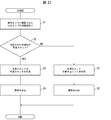
- 5 is a flowchart illustrating an example of a packaging process in a packaging machine. It is a flowchart which shows another example of the packaging process in a packaging machine.
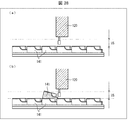
- (A) And (b) is a figure which shows the operation example of an adsorption
- FIG. 1 It is a figure which shows an example of an elongated medicine, (a) is a top view, (b) is a side view. (A) is a figure showing an example of composition of a medicine sorter as a modification, and (b) and (c) are figures for explaining shape and operation of a tip part of a sorting cup conveyance mechanism. It is a block diagram showing an example of a control part.
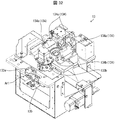
- (A) is a perspective view showing another example of a medicine sorting device, and (b) is a schematic plan view showing the another example.
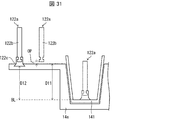
- (A) And (b) is a figure for demonstrating an upper space.
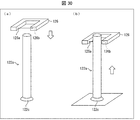
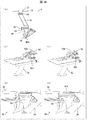
- (A)-(d) is a figure for demonstrating the positioning operation of a medicine conveyance part.
- FIGS. 9D and 9E are diagrams for explaining the opening and closing operation of the lower shutter mechanism.
- FIGS. 9D and 9E are diagrams for explaining the opening and closing operation of the lower shutter mechanism.
- FIG. 1 It is a flowchart for demonstrating the example of a process for dropping a medicine one by one from a medicine inlet at the time of a packaging process. It is a figure showing an example of a residual medicine check image.
- A is a figure showing an example of a similar medicine registration image
- (b) is a figure showing an example of a similar medicine selection image.
- (A) is a figure which shows an example of the sorting image before selection of a return source
- (b) is a figure which shows an example of a return source registration image.
- A) is a figure which shows an example of a return source selection image
- (b) is a figure which shows an example of a sorting image after return source selection.
- A is a figure which shows the example of a print on a packaging paper
- (b) is a figure which shows the example of a print on a journal.
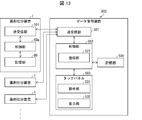
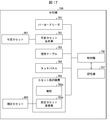
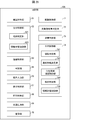
- FIG. 1 is a block diagram showing the overall configuration of the medicine sorting device 1.
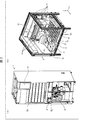
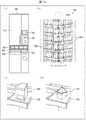
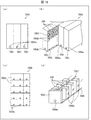
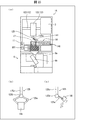
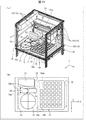
- FIG. 2A and 2B are diagrams illustrating a configuration example of the medicine sorting device 1, wherein FIG. 2A is a perspective view of the medicine sorting device 1, and FIG. 2B is a perspective view illustrating a basic structure of the medicine sorting region 2.
- the medicine sorting device 1 includes a medicine sorting area 2, a touch panel 3, a print output unit 4, and a packaging mechanism 6.
- the medicine sorting apparatus 1 images each of a plurality of kinds of medicines, determines the kind of medicine based on the image obtained as a result of the imaging, and sorts the medicines for each kind. Specifically, this processing is performed in the medicine sorting area 2.
- the medicine sorting area 2 (the internal configuration of the medicine sorting apparatus 1) will be described later.
- the medicines sorted for each type are packaged or returned to a medicine shelf or a packing machine after a visual inspection by a user.
- the plurality of types of drugs are drugs that are not contained in a container or the like, or drugs that are not packaged or the like, and an example is described as a tablet or capsule. Also, a description will be given assuming that a plurality of types of medicines are returned medicines.
- a drug may be returned if the drug used at the pharmacy or hospital is returned as a "returned drug” at the pharmacy or hospital, or if the drug is issued at another pharmacy or hospital other than the drug used at the pharmacy or hospital. "Bringed medicines” which may also include returned medicines.
- the concept of the drug to be returned includes at least one of the “return drug” and the “bringing drug”. After the medicine is returned, the medicine sorting apparatus 1 can automatically perform processing from imaging to sorting.
- the touch panel 3 accepts various user inputs on the operation unit 31 and displays various images (eg, an image showing a transition of medicine sorting, an image for visual inspection) on the display unit 32.
- various images eg, an image showing a transition of medicine sorting, an image for visual inspection
- the print output unit 4 prints a journal indicating drug data (eg, data indicating a drug name, a manufacturer, or a component) relating to the drug after the visual inspection according to a user input after the visual inspection.
- the medicine data may include image data indicating an image unique to the medicine.
- the packaging mechanism 6 packages the sorted medicine.
- the packaging mechanism 6 is an optional mechanism.
- the processing from sorting the returned medicine to packaging after visual inspection can be performed by the medicine sorting apparatus 1 in a lump.
- the medicine is supplied to the packaging mechanism 6 by the transport / sorting unit 12, the above-described processing from sorting to packaging can be automatically performed except for visual inspection.
- the packaging mechanism 6 it is possible to adopt a packaging section of a conventionally used tablet packaging machine or powder packaging machine.
- the medicine in the sorting cup 141 sorted for each medicine type can be divided into one packet or a plurality of packets.
- the medicine sorting apparatus 1 includes a first RFID (Radio Frequency Identifier) reader / writer unit 5.
- the first RFID reader / writer unit 5 is provided on the side of the base 19 where the medicine is taken out, as shown in FIG. 2B.
- the first RFID reader / writer unit 5 reads data on the medicine stored in each sorting cup 141 stored in an RFID tag (not shown) provided at the bottom of each sorting cup 141 of the second storage unit 14.
- Examples of the data include the number of stored medicines, medicine data, and image data acquired by the imaging unit 13.
- the data may include medicine data determined by visual inspection (medical data after visual inspection).
- the medicine data after the visual inspection may be written in the RFID tag.
- the medicine data after the visual inspection is obtained by, when the medicine stored in the corresponding sorting cup 141 is packed by (1) the packing mechanism 6 or a packing machine different from the medicine sorting apparatus 1, or (2) the medicine shelf. Used when returning to.
- the medicine sorting apparatus 1 includes an opening / closing shutter 51 and an opening / closing door 52 that can open and close the medicine take-out side.
- the medicine sorting apparatus 1 includes, for example, a packaging hopper (not shown) for temporarily holding the medicine, and holding the medicine in the packaging hopper.
- a moving path (not shown) for moving the medicine to the packaging mechanism 6 is provided. Further, at least the moving passage is removable. By opening the door 52, the moving passage can be taken out of the medicine sorting device 1.
- the medicine sorting area 2 mainly includes, as hardware, a first storage unit 11, a transport / sort unit 12 (sorting unit), an imaging unit 13, and a second storage unit. 14, a standby tray 15, a collection tray 16, a medicine inlet 17, and a second RFID reader / writer unit 18.
- Each member except the transport / sort unit 12 is provided on the pedestal 19.
- the main functions of the transport / sort unit 12, the imaging unit 13, and the second RFID reader / writer unit 18 will be described in detail in the following description of each process.
- the first storage unit 11 stores a plurality of types of medicines returned by the user in a mixed state.
- the first storage unit 11 is divided into a plurality of storage units.
- the first housing portion 11 may be provided rotatably with respect to the Z axis (the center of the columnar shape).
- the control unit 60a of the computer 60 may rotate the first storage unit 11 so that the transport / sort unit 12 can easily acquire the medicine, for example, when one storage unit is empty.
- the second storage unit 14 includes a plurality of sorting cups 141 for storing the medicines in a state of being sorted for each type.
- the control unit 60a determines the type of the medicine based on the image of the medicine captured by the imaging unit 13, and determines the sorting cup 141 that stores the medicine based on the determination result.
- the drug is transported to the determined sorting cup 141 by the transport / sorting unit 12 and stored.
- the standby tray 15 is a storage section in which the medicine is temporarily placed.
- the medicine determined by the control unit 60a to be any other type is temporarily placed on the standby tray 15.
- the medicine may be conveyed from the standby tray 15 to the sorting cup 141.
- an estimated medicine (described later) estimated to be a medicine may be temporarily placed on the standby tray 15.
- the estimated medicine is temporarily placed, it is transported to a predetermined area of the second storage unit 14 according to the determination result of the control unit 60a.
- the collection tray 16 is a storage unit that stores an object whose type cannot be determined by the control unit 60a (eg, a foreign substance other than a medicine).
- a foreign substance other than the drug for example, a fragment of a PTP (Press Through Pack) sheet can be mentioned. Fragments of the PTP sheet may be mixed into the first storage unit 11 when returning the medicine.
- the control unit 60a also stores the medicine registered as the medicine to be discarded in the medicine database or the medicine that the user desires to discard (eg, the medicine whose manufacturing date is old) in the collection tray 16.
- the medicine inlet 17 is used by the carrying / sorting unit 12 to transport the medicine stored in the second storage unit 14 to the packaging mechanism 6 when the medicine sorting apparatus 1 is provided with the packaging mechanism 6. Things. Naturally, when the medicine sorting apparatus 1 is not provided with the packaging mechanism 6, the medicine inlet 17 is unnecessary.
- a computer 60 is provided to control the above-mentioned respective components (hardware) of the medicine sorting apparatus 1.
- the computer 60 mainly includes a transport control unit 61, a sorting control unit 62, an imaging control unit 63, a determination unit 64, an operation input unit 66, a display control unit 67, an RFID control unit 68, and a print output as a control unit 60a (software).
- a control unit 69 and a registration unit 70 are provided.
- the transport control unit 61, the sorting control unit 62, the imaging control unit 63, the determination unit 64, and the registration unit 70 will be described in detail in the following description of each process.
- the operation input unit 66 and the display control unit 67 control the operation unit 31 and the display unit 32 of the touch panel 3 respectively.
- the RFID control unit 68 controls the first RFID reader / writer unit 5 and the second RFID reader / writer unit 18.
- the print output control unit 69 controls the print output unit 4 according to the user input received by the operation input unit 66.
- the control unit 60a includes a packaging control unit that controls the packaging mechanism 6.
- the computer 60 includes a storage unit 80.
- the storage unit 80 stores a medicine database (medicine master) for managing medicine data relating to a plurality of kinds of medicines, image data indicating an image captured by the first camera 131, and the like.
- the various data stored in the storage unit 80 may not be managed by the storage unit 80, and may be managed by, for example, an external device.
- the control unit 60a may acquire the various types of data from the external device through a communication line such as the Internet as needed.
- the medicine database may be updated by adding new medicine data.
- the transport / sort unit 12 transports each medicine returned to the first storage unit 11 to the imaging unit 13.
- the imaging unit 13 sequentially images each transported medicine.
- the control unit 60a determines the type of each medicine based on the captured image, and also determines the sorting position of the determined medicine in the second storage unit 14.
- the transport / sorting unit 12 transports each medicine to the determined sorting position.
- the information on the medicine stored in the second storage unit 14 is written on the RFID tag of the sorting cup 141, stored in the storage unit 80, or displayed on the touch panel 3.
- the user operates the touch panel 3 to perform processes such as visual inspection and packaging.
- each process will be specifically described.
- the transport / sort unit 12 transports the medicine stored in the first storage unit 11 to a receiving area Ar1 (see FIG. 3B) where the imaging unit 13 receives the medicine.
- the transfer control section 61 controls the transfer processing by the transfer / sorting unit 12.
- the transport / sort unit 12 includes a second camera 121, a suction / shutter mechanism 122, and a transport mechanism 123.
- the second camera 121 sequentially captures images of the first storage unit 11 in order to specify a medicine to be transported.
- the imaging control unit 63 controls an imaging process of the second camera 121.
- the second camera 121 is provided at an end of the transport / sorting unit 12 (specifically, of a housing including at least the suction / shutter mechanism 122) on the side facing the pedestal 19.
- the second camera 121 may be provided at a distal end of a suction mechanism described later.
- the imaging control unit 63 analyzes the captured image and determines whether the image contains a medicine. When it is determined that the medicine is included, the transport control unit 61, for example, brings the tip portion closer to the first storage unit 11, and specifies the medicine included in the image captured at that time as the medicine to be transported. .
- the adsorption / shutter mechanism 122 includes an adsorption mechanism that adsorbs the medicine specified as the transport target, and a shutter mechanism that prevents the medicine adsorbed by the adsorption mechanism from dropping.
- the suction mechanism is provided movably in the Z-axis direction.
- the shutter mechanism is provided in front of the end so as to be movable substantially in parallel with the XY plane.
- the adsorption mechanism extends from the end portion, adsorbs the specified drug at the distal end thereof, and returns to the position of the end portion.
- the transport control unit 61 moves the shutter mechanism to a position facing the above-mentioned end, and maintains the position of the shutter mechanism during the drug transport (closed state).
- the transport control unit 61 moves the suction / shutter mechanism 122 to a position facing the medicine mounting table 133a (see FIG. 3B) of the medicine holding mechanism 133 disposed in the receiving area Ar1
- the conveyance mechanism 61 sets the shutter mechanism to Move to a position not facing the end (opened). After the suction mechanism is extended from the end, the suction state is released, and the medicine is placed on the medicine mounting table 133a.
- the transport mechanism 123 moves the suction / shutter mechanism 122 in the X-axis and Y-axis directions under the control of the transport controller 61.
- the transport mechanism 123 enables the movement of the suction / shutter mechanism 122 when searching for a drug to be transported on the first storage unit 11 or the transport of the drug from the first storage unit 11 to the drug mounting table 133a. . Also in the medicine sorting process described later, the medicine can be transported from the medicine mounting table 133a to the second storage section 14, the standby tray 15, or the collection tray 16.
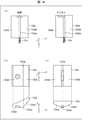
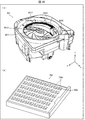
- FIGS. 3A and 3B are perspective views showing the overall configuration of the imaging unit 13
- FIG. 3C is a perspective view showing an example of the medicine mounting table 133a.
- FIGS. 4A and 4B are diagrams for explaining the turning of the imaging unit 13.
- the medicine imaging process is mainly performed by the imaging unit 13 and the imaging control unit 63.
- the imaging unit 13 is mounted on the medicine mounting table 133a, and images the medicine arranged in the arrangement area Ar2 (imaging area) where the medicine to be imaged is arranged shown in FIG. 3B. .
- the imaging control unit 63 controls the imaging processing by the imaging unit 13, the turning movement of the first camera 131 and the illuminator 134, and the movement of the medicine holding mechanism 133.
- the imaging unit 13 includes a first camera 131 (imaging unit), a rotating mechanism 132 (rotating unit), a medicine holding mechanism 133 (medicine mounting table, moving mechanism), and an illuminator 134. (Ultraviolet light irradiator, visible light irradiator).
- the first camera 131 captures an image of the medicine arranged in the arrangement area Ar2 facing the first camera 131 so that the type of the medicine is determined by the determination unit 64 described below.
- the medicine holding mechanism 133 is a mechanism for holding a medicine, and as shown in FIGS. 3A and 3B, a medicine mounting table (dish) 133a, a turning mechanism 133b (moving mechanism), and a medicine mounting table. 133a and a shaft 133c that connects the turning mechanism 133b.
- the medicine mounting table 133a is for mounting a medicine to be imaged.
- the turning mechanism 133b moves the medicine placing table 133a. Specifically, the turning mechanism 133b causes the medicine placing table 133a to turn with respect to the XY plane, and also causes the shaft 133c to turn in the circumferential direction of the shaft 133c.
- the imaging control unit 63 drives the turning mechanism 133b to move the medicine placing table 133a from the receiving area Ar1 to the arrangement area Ar2. Move. Thereafter, at least the first camera 131 and the illuminator 134 are controlled to image the medicine placed in the placement area Ar2.
- the captured image is stored in the storage unit 80 as image data.
- the imaging control unit 63 drives the turning mechanism 133b to move the medicine mounting table 133a on which the imaged medicine is mounted from the arrangement area Ar2 to the receiving area Ar1.
- two drug mounting tables 133a are provided at the tip (end) of the shaft 133c.
- the swivel mechanism 133b by rotating the shaft 133c, arranges one medicine placing table 133a in the arrangement area Ar2 and arranges the other medicine placing table 133a in the receiving area Ar1.
- the medicine is transported from the first accommodating section 11 to the medicine mounting table 133a existing in the receiving area Ar1 by the transportation / sorting unit 12, so that the continuous medicine imaging processing is performed.
- the medicine mounting table 133a is in a state where no medicine is mounted, such as after the medicine sorting process in the second storage unit 14.
- the medicine mounting table 133a has transparency. Therefore, the first camera 131 can image the medicine placed on the medicine placing table 133a from various directions through the medicine placing table 133a.
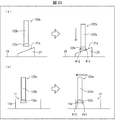
- the medicine mounting table 133a may have a substantially V-shaped cross section with a concave bottom.
- the groove direction having a substantially V-shaped cross section (the extending direction of the shaft 133c). ) Is substantially parallel to the turning axis Ay of the imaging mechanism (described later) by the rotation mechanism 132.
- the bottom of the medicine mounting table 133a may not be an acute V-shape. As shown in FIG.
- the bottom portion may include a bottom surface portion 133aa and an inclined surface portion 133ab inclined from two opposing portions of the bottom surface portion 133aa.
- the shape of the bottom is such that the information (engraved information or printed information) indicated by the engraving or print of the medicine can be recognized even when viewed from the back side of the medicine mounting table 133a (even if it is imaged), and the degree that the medicine is fixed. Any shape is acceptable.
- the medicine is a capsule or a deformed tablet (eg, a rugby ball shape)
- the medicine does not align on the XY plane, and a clear image of the medicine (engraved information or printing) Information) can be difficult to obtain.
- the cross section is substantially V-shaped, a capsule or a deformable tablet is fitted at the lowermost end, and the drug can be fixed. Therefore, a clear image of the medicine can be easily obtained.
- the flat portion (inclined surface portion 133ab) of the medicine mounting table 133a is opposed to the first camera 131. It may be ensured that the medicine does not move.
- the turning mechanism 133b can also vibrate (move or shake the medicine placing table 133a).
- the printed portion of the capsule can be directed in a predetermined direction (for example, the portion will be described later).
- a cylindrical (bottom circular) tablet is placed in a state of standing on the flat portion due to the above-described vibration, the tablet is turned sideways (so that the bottom of the tablet faces the flat portion). To be arranged).
- the illuminator 134 emits light applied to the medicine when the medicine is imaged under the control of the imaging control unit 63. As shown in FIG. 3A, the illuminator 134 includes a visible light irradiator (a first irradiator 134a and a second irradiator 134b) that irradiates the medicine with visible light, and an ultraviolet light that irradiates the medicine with ultraviolet light. A light irradiation unit 134c.
- the first irradiation unit 134a and the second irradiation unit 134b irradiate the medicine with white light as visible light.
- the first irradiation unit 134a is a bar-shaped visible light source (bar illumination)
- the second irradiation unit 134b is a ring-shaped visible light source (ring illumination).
- the first camera 131 acquires an image (visible light image) based on visible light by receiving visible light emitted from the first irradiation unit 134a or the second irradiation unit 134b and reflected by the medicine.
- the imaging control unit 63 outputs image data indicating the visible light image acquired by the first camera 131 to the determination unit 64.
- the ultraviolet light irradiation unit 134c irradiates the drug with ultraviolet light (eg, light having a peak wavelength of 365 nm or more and 410 nm or less) to excite components contained in the drug. Thereby, fluorescence (for example, light having a peak wavelength of 410 nm or more and 800 nm or less) is extracted from the drug.
- the first camera 131 acquires an image (ultraviolet light image) based on ultraviolet light by receiving the fluorescence emitted from the medicine.
- the imaging control unit 63 outputs image data indicating the ultraviolet light image acquired by the first camera 131 to the determination unit 64.
- the rotation mechanism 132 rotates the first camera 131 so as to turn around the arrangement area Ar2 (the medicine mounting table 133a arranged at the position) where the medicine to be imaged is arranged. Is rotated.
- the first camera 131 captures an image of the medicine arranged in the arrangement area Ar2 from a plurality of positions rotated by the rotation mechanism 132.
- the imaging mechanism including the first camera 131 and the illuminator 134 is rotated so as to rotate around the arrangement area Ar2. Therefore, the first camera 131 can image the medicine from a plurality of directions while maintaining the positional relationship between the first camera 131 and the illuminator 134 with respect to the arrangement area Ar2.
- the rotation mechanism 132 includes an imaging mechanism driving unit 132a and a power transmission mechanism 132b.
- the imaging mechanism driving unit 132a generates power for rotating the imaging mechanism around the arrangement area Ar2.
- the power transmission mechanism 132b transmits the power generated by the imaging mechanism driving unit 132a to the imaging mechanism.
- the imaging mechanism driving unit 132a is driven under the control of the imaging control unit 63, and changes the position of the imaging mechanism around the arrangement area Ar2.
- the rotation mechanism 132 rotates the imaging mechanism between an initial position and a position facing the initial position.
- the initial position is a position substantially perpendicular to the arrangement area Ar2, and is a position above the arrangement area Ar2.
- the position opposing the initial position is a position substantially perpendicular to the arrangement region Ar2 and a position below the arrangement region Ar2.
- the position is a position where the first camera 131 faces the bottom of the medicine table 133a located in the arrangement area Ar2.
- an axis passing through the center of the arrangement area Ar2 and parallel to the Z axis is defined as an axis Ax0
- an axis passing through the center of the arrangement area Ar2 and the center of the imaging mechanism is defined as an axis Ax1.
- the angle between the axis Ax0 and the axis Ax1 is defined as ⁇ .
- the medicine can be imaged from a plurality of directions while the medicine is fixed to the arrangement area Ar2.
- the medicine may be imaged from a plurality of directions by fixing the imaging mechanism and rotating the medicine.
- the imaging control unit 63 first sets the imaging mechanism to the initial position, and causes the first camera 131 to image the medicine placed in the arrangement area Ar2 at the initial position. At this time, the first camera 131 acquires a visible light image (two visible light images) based on the visible light from the first irradiating unit 134a and the second irradiating unit 134b, and the ultraviolet light from the ultraviolet irradiating unit 134c. Obtain an ultraviolet light image based on.
- the imaging control unit 63 sets the imaging mechanism at a position facing the initial position, causes the first camera 131 to image the medicine placed in the placement area Ar2 at the position, and sets two visible light images and Obtain an ultraviolet light image.
- the determination unit 64 analyzes the visible light image at this time to determine the type of the medicine.
- image processing / discrimination processing image processing for an image captured by the imaging unit 13 and determination processing of a medicine based on the result of the image processing will be described with reference to FIG.
- the image processing is mainly performed by the imaging control unit 63, and the determination processing is mainly performed by the determination unit 64.
- the determination unit 64 determines the type of the drug based on the image of the drug captured by the first camera 131. Specifically, the determination unit 64 determines the type of the medicine based on the imaging result (visible light image) of the medicine captured in a state where visible light is emitted from the first irradiation unit 134a or the second irradiation unit 134b. I do. In addition, the determination unit 64 determines the type of the medicine based on the imaging result (ultraviolet light image) of the medicine captured in a state where the ultraviolet light is irradiated.
- the determination unit 64 performs image analysis on each of the visible light image and / or the ultraviolet light image, thereby extracting characteristics of the medicine included in the image.
- the determination unit 64 includes a feature extraction unit 64a (identification information extraction unit) that extracts a feature of the medicine.
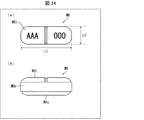
- the characteristics of the medicine include, for example, size, shape, marking, printing, dividing lines, and representative colors (colors of the area where the marking or printing is added).
- OCR Optical Character Recognition
- the characteristics of the drug the name of the drug (eg, identification code) or identification information indicating the manufacturer (identification information for identifying the drug) indicated by engraving or printing, use Other information such as a time limit is extracted.
- a characteristic of a medicine is a representative color of the medicine in the image.
- the determination unit 64 stores the extracted feature of each drug in the storage unit 80 in association with the image data of the drug.
- the feature extraction of the medicine may be performed by a known technique.
- the determination unit 64 determines the type of the medicine by comparing the characteristics of each medicine with the medicine database.
- the determination unit 64 has a medicine data extraction unit 64b that narrows down the medicine data candidates related to the imaged medicine from the medicine database using pattern matching or the like based on the characteristics of the extracted medicine. .
- drug data candidates are narrowed down using at least one of the above-described size, shape, stamp, print, dividing line, and representative color.
- the determination unit 64 performs OCR or the like, reads the identification information or the like shown on the stamp or print, and further narrows down the type of the drug from the candidates using pattern matching or the like.
- the determination unit 64 determines that the drug (tablet or capsule) is based on at least a part of the target feature. If it is estimated, the type of drug is determined as the estimated drug.
- the estimated medicine can also be a target to be sorted into the second storage unit 14 or the standby tray 15. In the present embodiment, the estimated medicine may be temporarily placed on the standby tray 15 first.
- the determination unit 64 stores the medicine data corresponding to the image (image data) captured by the first camera 131 in the medicine data (drug database) regarding a plurality of types of medicine registered in advance. It is determined whether or not exists.
- the determination unit 64 outputs the determination result of the type of the medicine to the sorting control unit 62. For example, when the type of drug can be specified as one, or when the number of candidates is narrowed down to a predetermined number or less, drug data relating to the drug is output as a determination result. In this case, the determination unit 64 stores the drug data relating to the drug in the storage unit 80 in association with the image data of the drug.
- the determination unit 64 When the type of the medicine is determined as the estimated medicine, the determination unit 64 outputs the characteristic of the medicine (the characteristic of the object estimated as the estimated medicine) as the determination result. On the other hand, if the determination unit 64 determines that the drug is registered as a drug to be discarded in the drug database, or determines that the substance stored in the first storage unit 11 is a foreign substance other than the drug, The fact that the medicine is an outside medicine is output as a determination result.
- FIG. 5 is a diagram for explaining an example of the medicine sorting process.
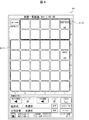
- FIG. 6 is a diagram illustrating a display example of the sorting image Im1 (sorting screen).
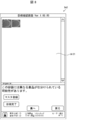
- FIG. 7 is a diagram illustrating a display example of the inspection image Im2 (inspection screen).
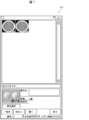
- FIG. 8 is a diagram illustrating a display example of the confirmation image (confirmation screen) Im3.
- the medicine sorting process is mainly performed by the transport / sorting unit 12 and the sorting control unit 62.
- the sorting cup 141 is a sorting container for storing the sorted medicines, and can be removably mounted on the second storage portion 14.
- the medicine stored in the first storage unit 11 is transported from the first storage unit 11 to the receiving area Ar1 (see (i) of FIG. 5), the medicine is moved to the arrangement area Ar2. .
- the medicine After being imaged by the first camera 131, the medicine is moved from the arrangement area Ar2 to the receiving area Ar1 again. Thereafter, in the present embodiment, the medicine is transported via the route shown in (ii), (iii) to (v), or (vi) of FIG. 5 based on the determination result by the determination unit 64.
- the transport / sort unit 12 stores the medicines in the second storage unit 14 for each type or in the standby tray 15 based on the determination result by the determination unit 64 ((ii) in FIG. 5). And (iii)).
- the sorting control unit 62 controls the transport / sorting unit 12 so that the medicine arranged in the receiving area Ar1 after the imaging and the discriminating process is determined based on the discrimination result, by a predetermined sorting cup 141 or a standby tray of the second storage unit 14. Conveyed to 15.
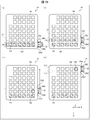
- a fixed area Ar ⁇ b> 11 (first area) and a temporary determination area Ar ⁇ b> 12 (second area) are set in the second storage unit 14.
- the confirmed area Ar11 is an area for containing a medicine determined by the determination unit 64 to have medicine data corresponding to the image data.
- the tentative determination area Ar12 is an area set at a position different from that of the fixed area Ar11 in which a drug determined to have no drug data corresponding to image data by the determination unit 64 is stored.
- a fixed area Ar11 is set in A-1 to F-5 on the medicine take-out side, and a tentative determination area Ar12 is set in B-6 to F-7, which are far from the medicine take-out side. Have been.
- the set position and range of the fixed area Ar11 and the provisional determination area Ar12 are not limited to this, and can be changed according to the convenience of the user.
- the medicine sorting apparatus 1 uses the determined area Ar11 in the second storage unit 14 effectively. It may be referred to as being set to "utilization mode".
- the transport / sort unit 12 accommodates the medicine determined to have the medicine data corresponding to the image data in the defined area Ar11 for each type (see (ii) or (v) in FIG. 5). On the other hand, the transport / sort unit 12 accommodates the medicine determined to have no medicine data corresponding to the image data in the temporary judgment area Ar12 (see (iv) in FIG. 5).
- the sorting control unit 62 receives the medicine data related to the medicine as the determination result, the sorting unit 64 determines that the medicine data corresponding to the image data exists, and determines the sorting position (sorting) for storing the medicine in the defined area Ar11. The cup 141) is determined. In addition, the sorting control unit 62 stores the determination result (drug data) and the determined sorting position in the storage unit 80 together with the determined sorting position.
- the sorting control unit 62 controls the transport mechanism 123 similarly to the transport control unit 61 to move the transport / sort unit 12 above the receiving area Ar1.
- the sorting control unit 62 controls the second camera 121 and the suction / shutter mechanism 122 in the same manner as the transport control unit 61 to suck the medicine arranged in the receiving area Ar1.
- the transport mechanism 123 transports the medicine to the determined sorting cup 141.
- the medicine is stored in the sorting cup 141 by releasing the suction.
- the sorting control unit 62 counts the number of medicines stored in the sorting cup 141 and stores the number in the storage unit 80 in association with the sorting position.
- the sorting control unit 62 receives the determination result that the type of the drug is the estimated drug, the sorting unit 64 determines that the drug data corresponding to the image data does not exist, and sets the standby tray 15 as the sorting position. decide. Then, the sorting control section 62 controls the transport / sorting unit 12 to transport the medicine from the receiving area Ar1 to the standby tray 15.
- the medicine is stored in the standby tray 15.
- the discrimination processing by the discriminating unit 64 is performed again on the performed medicine. That is, in the “determined area effective use mode”, the medicine whose type is determined is sorted into the defined area Ar11, and the estimated medicine is temporarily stored in the standby tray 15 temporarily. Then, after sorting the medicine whose type is determined into the defined area Ar11, re-sorting of the estimated medicine stored in the standby tray 15 is executed.
- the sorting control unit 62 controls the transport / sorting unit 12 to transport the medicine from the standby tray 15 to the receiving area Ar1. Then, after the medicine is moved from the receiving area Ar1 to the arrangement area Ar2, the medicine imaging processing and the image processing / determination processing are performed on the medicine.
- the sorting control unit 62 determines whether the sorting cup 141 in which the medicine is not stored in the defined area Ar11 (the sorting cup whose sorting position is not determined as the sorting position). 141) is determined as the sorting position. Thereafter, as described above, the sorting control unit 62 controls the transport / sorting unit 12 to transport the medicine from the receiving area Ar1 to the sorting cup 141 in the fixed area Ar11 determined as the sorting position (see FIG. 5). (V)). In addition, the sorting control unit 62 stores the drug data specified in the drug database and the determined sorting position in the storage unit 80 in association with each other.
- the sorting control unit 62 determines the sorting cup 141 in the temporary determination area Ar12 where the medicine is not stored as the sorting position. . Then, the sorting control unit 62 stores the characteristics of the medicine related to the estimated medicine in association with the determined sorting position in the storage unit 80.
- the sorting control unit 62 determines a sorting position in the temporary determination area Ar12 based on at least one of the characteristics of the medicine (estimated medicine) included in the image. For example, the sorting control unit 62 determines a sorting position in the tentative determination area Ar12 based on at least one of the color and shape of the estimated medicine in the image, or information attached to the medicine. Specifically, the sorting control unit 62 determines the sorting position of the estimated medicines that are considered to match at least one of the color and shape of the medicine or the information added to the medicine so that the sorting positions are the same. To determine.
- the information attached to the medicine refers to, for example, at least a part of the identification information attached to the medicine.
- the medicines with the identification information may be stored in the same sorting cup 141. I do not care.
- the sorting control unit 62 determines whether or not the estimated medicine to be initially sorted into the tentative determination area Ar12 and the estimated drug to be sorted having characteristics that do not match the characteristics of the already-sorted estimated medicine are stored in the tentative determination area Ar12.
- the stored sorting cup 141 is determined as a sorting position.
- the sorting control unit 62 controls the transport / sorting unit 12 to transport the medicine to the sorting cup 141 in the temporary determination area Ar12 determined as the sorting position (see (iv) in FIG. 5). Specifically, the transport / sorting unit 12 determines, for the estimated medicine, each of the provisional determination areas Ar12 based on at least one of the color and shape of the medicine included in the image or information attached to the medicine. Sort at the position (each sorting cup 141).
- the sorting control unit 62 moves the standby tray 15 to the sorting position if the medicine is stored in all the sorting cups 141 in the confirmation area Ar11. To be determined. In this case, the sorting control unit 62 determines the sorting position of the medicines sorted on the standby tray 15 as the position where the sorting cup 141 is arranged, when the sorting cup 141 in the confirmation area Ar11 is vacant. When the medicine is stored in all of the sorting cups 141 in the temporary determination area Ar12, the sorting control unit 62 waits for the drug in the standby tray 15 until the sorting cup 141 in the temporary determination area Ar12 becomes empty. Let it.
- the size of the fixed area Ar11 can be arbitrarily set by the user as described above.
- the user may set the determined area Ar11 to be as large as possible (in the “determined area effective use mode”).
- the setting of the fixed area Ar11 may be such that the following two settings can be selected in the “fixed area effective use mode”. (1) The setting of the fixed area Ar11 in which the medicine whose type is determined is allowed to be stored in the standby tray 15.
- control unit 60a stores the medicine temporarily placed on the standby tray 15 in the defined area Ar11 when a space is created in the defined area Ar11. (2) Setting the largest possible fixed area Ar11 so as to minimize the sorting of the medicine whose type has been determined to the standby tray 15.
- the estimated medicine may be directly transported to the temporary determination area Ar12 without being temporarily placed on the standby tray 15. That is, after the determination process for the medicine stored in the first storage unit 11 is completed, the control unit 60a may sequentially sort the medicine into one of the fixed area Ar11 and the temporary determination area Ar12 according to the determination result. Absent.
- the control unit 60a may execute the determination process again. This is because there is a possibility that the type of the medicine can be determined by the determination processing again.
- the determination process is performed a predetermined number of times, for example.
- the predetermined number of times may be set to a number (for example, three times) in which there is a possibility that the type of the medicine can be determined by the determination processing again, and the influence on the increase in the processing time is small.
- the control unit 60a conveys the medicine to the defined area Ar11. On the other hand, if the type of the medicine cannot be determined even after performing the predetermined number of times of determination processing, the medicine is transported to the temporary determination area Ar12.
- the medicine to be sorted is stored in the standby tray 15. Is done.
- the estimated medicine to be sorted is stored in the standby tray 15. That is, when there is no more position to sort in each of the fixed area Ar11 and the temporary determination area Ar12, the medicine to be sorted or the estimated medicine is transported to the standby tray 15 and accumulated without being accommodated in the other area. Go.
- the medicine sorting apparatus 1 may be settable to any one of the “confirmed area effective use mode” and the “confirmed area ineffective use mode”.
- the “confirmed area effective utilization mode” is set, as described above, the estimated medicine is temporarily placed on the standby tray 15 and then sorted into the confirmed area Ar11 or the provisional determination area Ar12.
- the “confirmed area ineffective use mode” is set, as described above, the estimated medicine is not temporarily placed on the standby tray 15 and is directly sorted into the temporary determination area Ar12.
- the sorting control unit 62 determines whether the determined drug is a drug registered as a drug to be discarded in the drug database, or determines in the receiving area Ar1 after the determination.
- the placed object is a foreign substance. Therefore, the sorting control unit 62 controls the transport / sorting unit 12 to transport the drug or foreign substance to the collection tray 16.
- the sorting control unit 62 removes all of the objects stored in the first storage unit 11 into one of the second storage unit 14, the standby tray 15, and the collection tray 16 regardless of the determination result of the type of the medicine. To be stored. Therefore, even when the type of medicine cannot be specified as one, or when foreign matter is mixed in the first storage unit 11, the sorting process can be continued without stopping for that reason.
- the medicine to be determined is a medicine registered in the medicine database
- the medicine can be sorted into the confirmed area Ar11, and if the medicine is not registered, the medicine can be sorted into the temporary judgment area Ar12. Therefore, the medicines can be sorted regardless of whether the medicine data is registered in the storage unit 80. Further, since the area to be sorted can be changed depending on whether or not the medicine data is registered in the storage unit 80, the convenience of the medicine registration process described later can be improved.
- the sorting control unit 62 causes the second camera 121 to take an image of the medicine mounting table 133a in order to take out the medicine for which the determination process is completed from the medicine mounting table 133a arranged in the receiving area Ar1. Narrow the position.
- the sorting control unit 62 causes the second camera 121 to image the sorting cup 141 in order to take out the medicine from the sorting cup 141. Then, the drugs to be transported are narrowed down.
- the medicine data on the medicine stored in the sorting cup 141 by the sorting control unit 62 is stored in the RFID tag provided in the sorting cup 141 by the second RFID reader / writer unit 18.
- the second RFID reader / writer unit 18 writes drug data or the like to the RFID tag or reads drug data or the like stored in the RFID tag, similarly to the first RFID reader / writer unit 5.
- the sorting control unit 62 causes the RFID control unit 68 to write data on the medicine each time the medicine is stored in the sorting cup 141.
- the second RFID reader / writer unit 18 is provided below the second housing unit 14. Specifically, it is provided so as to face the bottom of each sorting cup 141 when reading or writing data related to the medicine stored in the RFID tag of each sorting cup 141.
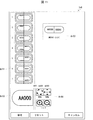
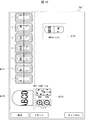
- the display control unit 67 can display the sorting image Im1 as shown in FIG.
- Each of the plurality of sorting positions where the medicines are sorted, the sorting cup 141 disposed at the sorting position, and the medicine data (or data including at least a part of the target feature) regarding the medicines contained in the sorting cup 141 are linked. And stored in the storage unit 80. The number of medicines contained in the sorting cup 141 and the image data of the medicines are also linked and stored in the storage unit 80.
- the display control unit 67 can display the sorting image Im1 reflecting the plurality of sorting positions in the second storage unit 14 and the sorting status (eg, the number of stored medicines) at each of the sorting positions.
- the display control unit 67 displays the inspection result and the like at the position where the medicine is sorted in the sorting image Im1.
- the display control unit 67 displays, as a result of the inspection, “not visually checked” indicating that the inspection is not visually checked, or “viewed” indicating that the inspection is completed.
- the display control unit 67 displays “temporary sorting” indicating that the drug data has not been registered, and is sorted into the temporary determination area Ar12. By these displays, the user can confirm the sorting cup 141 in which the medicines not yet inspected are sorted or the sorting cup 141 in which the medicines to be registered in the medicine database are sorted.
- the display control unit 67 accepts a user input for the sorting position of the fixed area Ar11 shown in the sorting image Im1, and displays the medicine inspection image Im2 (see FIG. 7) associated with the sorting position on the display unit 32. indicate. Thereby, the inspection image Im2 of the medicine that the user desires to perform the visual inspection can be displayed.
- the display control unit 67 displays the confirmation image Im3 of the medicine associated with the sorting position on the display unit 32 by receiving a user input for the sorting position of the temporary determination area Ar12 indicated in the sorting image Im1. .
- This allows the user to display the confirmation image Im3 (see FIG. 8) of the medicine desired to be registered in the medicine database.
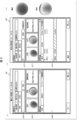
- FIG. 9A and 9B are diagrams illustrating a display example of a search image (search screen) Im4, and FIG. 9C is a diagram illustrating an example of an image captured by the first camera 131.
- FIG. 10A is a diagram illustrating an example of a registered image (registration screen) Im5
- FIG. 10B is a diagram illustrating an example of an image adjustment process.
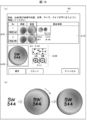
- the display control unit 67 displays the confirmation image Im3 as shown in FIG. 8 by accepting the user input for the sorting position of the temporary determination area Ar12 shown in the sorting image Im1 shown in FIG.
- the confirmation image Im3 includes at least an image display area Ar31 and a “master registration” button.
- the image (the image captured by the first camera 131) indicated by the image data of the medicine stored in the sorting cup 141 stored in the storage unit 80 in association with the sorting position is stored in the sorting cup 141.
- This area is displayed for the number of stored medicines.
- images of two medicines stored in the sorting cup 141 arranged at the position of F-7 are displayed.
- the “master registration” button accepts a user input for starting the registration of the medicine selected in the image display area Ar31 into the medicine database.
- the control unit 60a When a user input to the “master registration” button is received in a state where one image data is selected, the control unit 60a performs a registration process of a medicine corresponding to the image data. Specifically, as shown in FIG. 1, the control unit 60a includes a registration unit 70.
- the registration unit 70 performs overall processing of registering the medicine data on the medicines sorted into the temporary determination area Ar12 in the medicine database. That is, the registration unit 70 associates the medicine data of the medicine related to the image data, which is specified by the user, with the medicine data determined by the determination unit 64 that there is no medicine data corresponding to the image data, with the image data. To register.
- the registration unit 70 controls the display control unit 67 to cause the display unit 32 to display the search image Im4 illustrated in FIG.
- the search image Im4 is an image showing a search result for the medicine stored in the sorting cup 141.
- the search image Im4 includes at least a character input area Ar41, an image display area Ar42, a search result list area Ar43, and a “select” button.
- the character input area Ar41 is an area in which characters for searching for a medicine displayed in the image display area Ar42 can be input.
- the image display area Ar42 is an area for displaying an image captured by the first camera 131 (the same image as the image selected in FIG. 8).
- the search result list area Ar43 is an area for displaying a search result when a user input to the “search” button is received.
- the “select” button is used to determine the selection of one drug data from the drug data displayed in the search result list area Ar43.
- the first camera 131 captures an image of the medicine placed on the medicine placing table 133a arranged in the arrangement area Ar2. Therefore, the direction of the information (eg, stamp information or print information) attached to the medicine in the image data stored in the storage unit 80 differs depending on the medicine.
- the image display area Ar42 the image indicated by the image data stored in the storage unit 80 (the image captured by the first camera 131) is displayed as it is. Therefore, in the image display area Ar42, for example, as shown in FIG. 9A, an image in which the engraving information is directed downward is displayed. For example, when the engraving information is captured in a horizontal state, an image in which the engraving information is in a horizontal state is displayed in the image display area Ar42 as shown in FIG. 9C.
- the display controller 67 displays the search image Im4 shown in FIG. 9A
- the user recognizes the engraving information by checking the image displayed in the image display area Ar42.
- the user inputs at least a part of the recognized stamp information into the character input area Ar41.
- the registration unit 70 determines whether the character input in the character input area Ar41 is Perform a search based on
- the drug comprehensive database manages drug data relating to a plurality of types of drugs.
- the medicine comprehensive database is a database that can be connected to the medicine sorting device 1 so as to be communicable and is managed by a data management device 500 (see FIG. 13) that integrally manages a plurality of types of medicines.
- the data management device 500 is a device used by, for example, the manufacturer of the medicine sorting device 1.
- the comprehensive medicine database stores medicine data on all medicines that can be handled by the medicine sorting device 1 used in various places (hospitals, hospital wards, pharmacies, etc.) and devices other than the medicine sorting device 1 (eg, packaging machines). Including.
- the medicine database is a database managed by the medicine sorting apparatus 1 or a hospital, a ward, a pharmacy, or the like in which the medicine sorting apparatus 1 is used.
- the medicine database is managed by, for example, the storage unit 80 as described above. Since the number of drug data managed in the comprehensive drug database is enormous, it is not realistic to include all of them in the drug database. Therefore, the medicine database extracts and manages medicine data that is assumed to be used in each medicine sorting device 1 or in each hospital, ward, pharmacy, or the like, from medicine data included in the medicine comprehensive database. are doing. That is, even if the drug data does not exist in the drug database, it exists in the drug comprehensive database. Therefore, the registration unit 70 performs a search in the drug comprehensive database.
- the medicine data registered in the medicine comprehensive database and the medicine database include image data of the medicine in which the identification information (eg, stamp information or print information) attached to the medicine is adjusted to the specified direction and size. Is included.
- the direction and the size are set, for example, for each type or size of the medicine.
- the registration unit 70 displays a search result for the character “SW” in the comprehensive medicine database in the search result list area Ar43.
- the user selects medicine data that matches the information “SW344” included in the image in the search result list area Ar43.
- the registration unit 70 controls the display control unit 67 to accept the user input to the “select” button in a state where one piece of medicine data displayed in the search result list area Ar43 is selected, and display the registered image Im5. It is displayed on the display unit 32. At this time, the registration unit 70 controls the determination unit 64 (the feature extraction unit 64a) to extract the engraving information from the image captured by the first camera (the same image as the image selected in FIG. 8). . If the image includes a dividing line, the registration unit 70 also extracts the dividing line. A known technique can be used for extracting the engraving information.
- the registered image Im5 includes at least an image display area Ar51, a medicine information display area Ar52, an image adjustment area Ar53, an operation section display area Ar54, and a “confirm” button.
- the image display area Ar51 is an area for displaying an image captured by the first camera 131. The same image as the image selected in FIG. 8 is displayed in the image display area Ar51. However, in the image display area Ar51, images obtained by imaging one medicine from a plurality of directions may be displayed. In FIG. 10, four images of one medicine taken from different directions are displayed.
- the medicine information display area Ar52 is an area for displaying medicine data (for example, image data, a medicine name, and engraved information (for example, an identification code)) on a medicine extracted from the comprehensive medicine database.
- the image adjustment area Ar53 is an area for adjusting the direction or size of an image.
- the operation section display area Ar54 is an area for displaying an operation section for adjusting the direction or size of the image displayed in the image adjustment area Ar53.
- the “confirm” button is for confirming the registration in the medicine database.
- the registration unit 70 displays the image in the image adjustment area Ar53.
- the registration unit 70 displays in the image adjustment area Ar53 the engraving information extracted at the time of receiving a user input to the “select” button of the search image Im4. That is, the registration unit 70 superimposes and displays the extracted engraving information and the selected image on the image adjustment area Ar53.
- the registration unit 70 displays the extracted engraving information in the image adjustment area Ar53.
- the registration unit 70 displays the extracted stamp information in the image adjustment area Ar53 in a state where the direction and the size of the extracted stamp information are matched with the direction and the size specified in the medicine database. Therefore, by changing the direction and the size of the selected image in accordance with the engraving information displayed in the image adjustment area Ar53, the image data including the engraving information in the direction and the size specified in the medicine database can be converted to the medicine. Can be registered in the database.
- the user operates the operation unit displayed in the operation unit display area Ar54 in a state where the extracted engraving information and the selected image are superimposed.
- the user rotates the selected image, moves the selected image vertically or horizontally, or changes the size of the image.
- the registration unit 70 sequentially displays images reflecting the user input to the operation unit in the image adjustment area Ar53. Accordingly, the user can change the direction, size, and position of the selected image while checking the image adjustment area Ar53 so as to substantially match the direction and size of the extracted engraving information.
- the registration unit 70 displays the extracted engraving information in the image adjustment area Ar53, and then displays the selected image in the image adjustment area Ar53.
- the engraving information is downward in the image captured by the first camera 131. That is, in the image adjustment area Ar53, the extracted engraving information and the engraving information of the selected image are in opposite directions.
- each character of the extracted engraving information “SW344” is shown in bold, and each character of the engraving information “SW344” in the selected image is shown by a dotted line so as to be clearly distinguished. .
- the user operates the operation unit displayed in the operation unit display area Ar54 to change the direction, size, and position of the selected image, thereby extracting the engraving information included in the selected image.
- the direction and size of the engraving information are made to substantially match.
- the registration unit 70 Upon receiving a user input to the “enter” button, the registration unit 70 links the image data (the adjusted image data) indicating the image adjusted in the image adjustment area Ar53 with the drug data selected as a result of the search. And register it in the drug database.
- the determination unit 64 extracts the stamp information (identification information) indicated on the medicine included in the image captured by the first camera 131.
- the display control unit 67 displays the image and the stamp information on the display unit 32. Specifically, the image and the engraving information are displayed in the image adjustment area Ar53 of the registered image Im5.
- the registration unit 70 stores the extracted engraving information in a predetermined direction (a predetermined direction defined in the medicine database) when the extracted engraving information is displayed on the display unit 32. Image data indicating the image when the directions are matched is registered.
- the image data including the marking information of the direction and the size specified in the medicine database can be registered in the medicine database. Therefore, the accuracy of the collation using the medicine database by the determination unit 64 can be improved, and the speed can be increased.
- the registration unit 70 may perform the above-described medicine registration process on each image.
- a plurality of image data for one medicine is registered in the medicine database.
- the registration unit 70 may register the adjusted image data in the medicine database for only one image selected from a plurality of images (for example, an image that the user has determined that the engraving information is clearly reflected). I do not care.
- FIG. 11 is a diagram illustrating an example of a registered image Im6 when a capsule is registered.
- FIG. 12 is a diagram illustrating an example of a registered image Im7 when another capsule is registered.
- the registration unit 70 controls the display control unit 67 to cause the display unit 32 to display a plurality of images captured from a plurality of positions around the capsule.
- print information eg, an identification code
- the registration unit 70 allows the user to select an image that clearly includes print information from among the plurality of images as an image to be registered. Therefore, even in the case of a capsule, image data suitable for registration in the medicine database can be registered.
- the registered image Im6 includes at least an image display area Ar61, a medicine information display area Ar62, an image adjustment area Ar63, an operation section display area Ar64, and a “confirm” button.
- Each of the area and the “enter” button have the same functions as the image display area Ar51, the medicine information display area Ar52, the image adjustment area Ar53, the operation section display area Ar54, and the “enter” button shown in FIG. Having.
- the image display area Ar61 a plurality of images (seven images in this example) captured from a plurality of positions around the capsule are displayed.
- the print information is attached to each of the two divided areas of the capsule.
- the user selects an image in which print information is displayed near the center of each of the two divided areas in the seven images. That is, the user selects, for each area, an image including print information that is as similar as possible to the print information included in the image data displayed in the medicine information display area Ar62. In this example, the user selects the third image and the sixth image. Thereafter, the same drug registration processing as that described with reference to FIG. 10 is performed.
- the user substantially matches the print information of the image selected in the image display area Ar61 with the print information extracted from the captured medicine image and displayed so as to face a predetermined direction. To change the direction, size, and position of the image. Thereafter, in a state where the print information of the selected image substantially matches the extracted print information, the user presses the “OK” button. Receiving the user input to the “OK” button, the registration unit 70 registers the adjusted image data in the medicine database in association with the medicine data selected as a result of the search. In this example, the medicine registration process is performed for each of the third image and the sixth image.
- the registration unit 70 displays the print information in the image adjustment area Ar63 in the upward direction for the print information in one area and downward in the print information in the other area. Therefore, the user sets the direction of each image such that the print information of the third image substantially matches the print information of the upward direction, and the print information of the sixth image substantially matches the print information of the downward image. Change size and position.
- printing information is included in the short direction of the capsule.
- the registration unit 70 causes the display unit 32 to display images captured from a plurality of directions.
- the registered image Im6 includes at least an image display area Ar71, a medicine information display area Ar72, an image adjustment area Ar73, an operation section display area Ar74, and a "confirm” button.
- Each of the areas and the “enter” button have the same functions as the image display area Ar61, the medicine information display area Ar62, the image adjustment area Ar63, the operation section display area Ar64, and the “enter” button shown in FIG.
- the user selects an image that includes more print information in each of the two divided areas among the seven images included in the image display area Ar71. That is, the user selects, for each area, an image including print information that is as similar as possible to the print information included in the image data displayed in the medicine information display area Ar72.
- the user selects the third, fourth, and fifth images for one region, and selects the fourth and fifth images for the other region. Then, similarly to the case described with reference to FIG. 11, the third, fourth, and fifth images are adjusted for one region, and the fourth and fifth images are adjusted for the other region. Is adjusted for each image.
- the image data including the print information of the direction and the size specified in the medicine database can be registered in the medicine database.
- the user need not select all of the images that include more print information.
- the user may select only one image including print information as similar as possible to the print information included in the image data displayed in the medicine information display area Ar72 for each area.
- the print information of one area is “ABCD (E)” and the print information of the other area is “5 mg”. It is facing left. Therefore, when displaying the print information of both areas, the registration unit 70 displays the print information of the left direction in the image adjustment area Ar73.
- FIG. 13 is a diagram illustrating an example of the data management system.
- the data management system includes a plurality of medicine sorting devices 1 and a data management device 500 that can be communicably connected to each of the medicine sorting devices 1.
- the medicine sorting device 1 and the data management device 500 transmit and receive data via the Internet line or a dedicated VPN (Virtual Private Network) line.
- the data management system may include only one drug sorting device 1.
- the medicine sorting apparatus 1 includes a transmission / reception unit 101 that transmits and receives data to and from the data management device 500, in addition to the control unit 60a and the storage unit 80 illustrated in FIG.
- the transmission / reception unit 101 transmits, for example, the image data of the medicine sorted into the temporary determination area Ar12 to the data management device 500.
- the data management device 500 includes a transmission / reception unit 501, a control unit 502, a touch panel 503, and a storage unit 504.
- the transmission / reception unit 501 transmits / receives data to / from the medicine sorting apparatus 1.
- the transmission / reception unit 501 receives image data from the transmission / reception unit 101, for example.
- the control unit 502 controls the data management device 500 as a whole, and mainly includes a registration unit 521.
- the registration unit 521 has the same function as the registration unit 70 shown in FIG.
- the touch panel 503 includes an operation unit 531 and a display unit 532.
- the touch panel 503, the operation unit 531 and the display unit 532 have the same functions as the touch panel 3, the operation unit 31 and the display unit 32 shown in FIG.
- the storage unit 504 stores a drug comprehensive database and a drug database.
- the medicine database may be dedicated to each medicine sorting device 1 or may be common to each medicine sorting device 1.
- the transmission / reception unit 501 receives, from each medicine sorting device 1, the image data of the medicine sorted in the temporary determination area Ar12 in each medicine sorting device 1. Then, the above-described medicine registration processing is performed on each image data.
- the registration unit 521 registers the adjusted image data in the medicine database in association with the medicine data specified by the user.
- the control unit 502 controls the transmission / reception unit 501 to transmit a medicine database in which the adjusted image data is registered to each medicine sorting apparatus 1. Note that the control unit 502 may transmit only the data including the adjusted image data and the medicine data associated with the image data to each medicine sorting apparatus 1. Further, the control unit 502 may transmit the medicine database only to the medicine sorting apparatus 1 that has transmitted the image data.
- the data management device 500 includes, in the medicine sorting device 1, the transmitting / receiving unit 501 that receives the image data of the medicine determined that the medicine data corresponding to the image data does not exist, and the image data specified by the user. And a registration unit 521 for registering the medicine data of the medicine according to the above in association with the image data. Thereby, even if the medicine sorting apparatus 1 does not have the registration unit 70 (even if the medicine registration processing is not performed in the medicine sorting apparatus 1), the image data of the estimated medicine can be registered in the medicine database.
- the data management device 500 manages a drug database used in each drug sorting device 1. Therefore, the medicine database does not have to be managed in the storage unit 80 of each medicine sorting apparatus 1.
- transmission and reception of data between the medicine sorting device 1 and the data management device 500 may not be performed using the above-described line.
- data may be transmitted to and received from the data management device 500 using a communication device (eg, a PC (Personal Computer)) different from the medicine sorting device 1.
- a storage medium storing data to be transmitted to the destination eg, a hard disk drive (HDD) or a digital versatile disc (DVD)
- HDD hard disk drive
- DVD digital versatile disc
- the data management device 500 may transmit the comprehensive medicine database to a data management device installed in a hospital, ward, pharmacy, or the like.
- the comprehensive medicine database can be managed in a hospital, a ward, a pharmacy, or the like.
- the storage medium storing the drug comprehensive database may be distributed to hospitals, hospital wards, pharmacies, and the like.
- FIG. 14A is a plan view illustrating an example of the medicine placing table 133a that has moved to the arrangement area Ar2
- FIGS. 14B and 14C are diagrams of the medicine placing table 133a after adjusting the position of the medicine. It is a top view showing an example.
- the medicine sorting device 1 of the present embodiment does not need to include the registration unit 70. That is, it is not necessary that the two areas of the fixed area Ar11 and the tentative determination area Ar12 are set in the second storage unit 14.
- the control unit 60a sorts the medicine for which the type of medicine can be determined and the estimated medicine to any of the sorting positions (sorting cup 141) of the second storage unit 14. That is, the estimated medicine is also sorted into the second storage section 14 without being sorted into the standby tray 15 if the sorting cup 141 has an empty space.
- the medicine sorting device 1 of the present embodiment only needs to have at least the following configuration as its basic configuration.
- a first storage unit 11 for storing a plurality of types of drugs in a mixed state
- a second storage unit 14 for storing the medicines in a state of being sorted for each type
- An imaging unit 13 for imaging the medicine taken out of the first storage section 11
- a determination unit 64 that determines the type of medicine based on the image captured by the imaging unit 13
- a transport / sort unit 12 for storing the medicine in the second storage unit 14 for each type based on the determination result by the determination unit 64;
- the turning mechanism 133b illustrated in FIGS. 3A and 3B can vibrate the medicine mounting table 133a.
- the stamp information or the print information can be directed in a predetermined direction.
- the medicine mounting table 133a when the medicine mounting table 133a is swiveled from the receiving area Ar1 to the arrangement area Ar2 by the turning mechanism 133b, the medicine is centrifugally applied to the medicine, and the medicine is moved. It may move to the end of the mounting table 133a. In this case, if a certain vibration is performed irrespective of the size or shape of the medicine, the medicine continuously collides with the edge of the medicine mounting table 133a, so that the medicine cannot be directed in a predetermined direction. There is also. If it is not possible to turn in the predetermined direction, there is a possibility that the number of times of imaging increases, or that only an image for which it is difficult to extract the engraved information or the printed information may be captured.
- the turning mechanism 133b moves the medicine mounting table 133a arranged in the arrangement area Ar2 based on the size and shape of the medicine mounted on the medicine mounting table 133a.
- Rock (vibrate).
- the imaging control unit 63 specifies the length (size) and shape of the medicine contained in the image based on the image captured by the first camera 131.
- a publicly-known technique can be adopted for this identification.
- the storage unit 80 stores the length of the medicine, the shape of the medicine, the amount of vibration (magnitude of vibration) of the medicine mounting table 133a, and the number of vibrations per unit time in association with each other. The amount of vibration and the number of vibrations are set, for example, by experiments or the like.
- the drug is a tablet, as shown in FIG. 14B, for example, from the state shown in FIG. 14A, the one near the center of the inclined surface portion 133ab when one inclined surface portion 133ab is substantially horizontal.
- the amount of vibration and the number of vibrations are set so that the medicine is placed.
- the medicine is a capsule, as shown in FIG. 14C, for example, from the state shown in FIG. 14A, near the center of the bottom surface 133aa when the bottom surface 133aa is substantially horizontal.
- the amount of vibration and the number of vibrations are set so that the medicine is placed. For example, the smaller the length (size) of the medicine, the larger the amount of movement accompanying the vibration of the medicine mounting table 133a, and thus the smaller the amount of vibration.
- the imaging control unit 63 vibrates the medicine mounting table 133a in the arrangement area Ar2 with the vibration amount and the number of vibrations linked to the length or shape of the medicine specified from the captured image.
- the first camera 131 captures engraved information or print information. Drugs can be placed at easy positions. Therefore, an increase in the number of times of imaging can be prevented.
- the medicine mounting table 133a by vibrating the medicine mounting table 133a based on the size and shape of the medicine, it is possible to prevent the medicine from jumping out of the medicine mounting table 133a due to the vibration of the medicine mounting table 133a. Further, it is possible to prevent the medicine from continuously colliding with the edge of the medicine mounting table 133a due to the vibration of the medicine mounting table 133a. Therefore, the possibility of damage to the medicine due to the collision can be reduced (the burden on the medicine can be reduced).
- FIG. 15 is a diagram illustrating an example of an image in which the second camera 121 captures the first storage unit 11.
- the medicine sorting apparatus 1 includes, in addition to the basic configuration described in the second embodiment, an adsorption mechanism (extraction mechanism) for extracting the medicine stored in the first storage unit 11 and an adsorption mechanism, as in the first embodiment.
- a second camera 121 (second imaging unit) that images the medicine when the medicine is taken out.
- the transport control unit 61 determines a medicine to be adsorbed to the adsorption mechanism from a plurality of kinds of medicines stored in the first storage unit 11 based on the analysis result of the imaging control unit 63 with respect to the image captured by the second camera 121. I do.
- the transport control unit 61 may determine the medicine to be adsorbed by the adsorption mechanism based on the size of the contour of the medicine (object) included in the image, detected by the imaging control unit 63. Note that a known technique may be employed for detecting the contour.
- the order of taking out the medicines is set in advance. For example, it is set to take out the contours in descending order.
- the images captured by the second camera 121 include drugs “A” to “E” of different types (sizes).
- the size is assumed to be medicine “A”> drug “B”> drug “C”> drug “D”> drug “E”.
- the adsorption mechanism first takes out the medicine “A” continuously.
- the medicine “B” is subsequently continuously taken out.
- the medicine “C” is continuously taken out
- the medicine “D” is taken out continuously
- the medicine “E” is taken out continuously. That is, the adsorption mechanism continuously takes out each of the medicines “A” to “E”.
- the determination unit 64 determines, in the image captured by the second camera 121, the outline of the medicine that the suction mechanism has taken out this time and the outline of the medicine that the suction mechanism has taken out up to the previous time. It is determined whether or not the degree of coincidence is equal to or greater than a predetermined value. When determining that the degree of coincidence is equal to or greater than the predetermined value, the determination unit 64 uses the drug data applied when determining the type of the drug taken out up to the previous time to determine the type of the drug taken out this time. Apply.
- the predetermined value may be set, for example, to an extent that it is possible to determine that a medicine having these contours is the same kind of medicine when contours of the same kind of medicine are compared by performing an experiment, for example. .
- a known technique may be employed for calculating the degree of coincidence. The determination of the degree of coincidence may be performed by, for example, the transport control unit 61.
- the imaging control unit 63 detects the contours of all the medicines contained in the first storage unit 11 by analyzing the image captured by the second camera 121.
- the transport control unit 61 determines the medicine to be taken out according to a preset medicine taking-out order.
- the transport control unit 61 stores the contour data indicating the contour of the medicine determined as the medicine to be taken out in the storage unit 80.
- the determination unit 64 determines the type of the drug by extracting the feature of the extracted drug from the image captured by the first camera 131 and matching the feature with the drug database, as in the first embodiment. I do.
- the determination unit 64 stores the type of the drug (drug data) specified at this time in the storage unit 80 in association with the contour data of the drug.
- the transport control unit 61 takes out the next medicine in accordance with the medicine taking order set in advance, and stores the contour data of the medicine in the storage unit 80.
- the determination unit 64 calculates the degree of coincidence between the contours of these medicines by comparing the contour data of the medicine taken out last time with the contour data of the medicine taken out this time, and determines whether the degree of coincidence is equal to or greater than a predetermined value. It is determined whether or not. When determining that the degree of coincidence is equal to or greater than the predetermined value, the determination unit 64 compares the feature of the drug taken out this time with the drug data linked to the contour data of the drug taken out last time, The type of the drug is determined.
- the determining unit 64 repeats the above processing. In other words, if the degree of coincidence between the contour data of the drug taken out this time and the contour data of the medicine taken out last time stored in the storage unit 80 is equal to or more than the predetermined value, the determination unit 64 The characteristics of the medicine thus obtained are compared with the medicine data of the medicines taken out up to the previous time.
- the same type of medicine is stored in the first storage unit 11, the same type of medicine is continuously taken out.
- the degree of coincidence is equal to or greater than a predetermined value, it is assumed that a medicine of the same type as the previous time has been taken out, and the type of the medicine taken out this time is used as the medicine data of the medicine taken out so far. It is determined using Thus, for each of the same type of medicine, it is not necessary to check the feature of the medicine extracted from the image captured by the first camera 131 with the medicine database as in the first embodiment. Therefore, it is possible to reduce the processing time required for determining the type of medicine.
- the determination unit 64 determines that a medicine of a different type from the previous medicine has been extracted, and uses the medicine database as in the first embodiment. To determine the type of the drug.
- the transport control unit 61 updates the contour data of the medicine stored in the storage unit 80 to the contour data of the medicine taken out this time.
- the determination unit 64 uses the updated contour data in the subsequent processing. Note that the contour data may be updated by the transport control unit 61.
- medicines of different types but of substantially the same size may be stored in the first storage unit 11.
- the size of the medicine taken out this time is substantially the same as the medicine taken out until the previous time
- the kind of the medicine taken out this time may be different from the kind of the medicine taken out so far.
- the determination unit 64 determines that the degree of coincidence is equal to or greater than the predetermined value. However, even if the matching is performed using the drug data of the drug extracted up to the previous time, the determination unit 64 determines the type of the drug extracted this time. Can not.
- the determination unit 64 determines the type of the medicine at least a predetermined number of times. If not, the application of the drug data may be stopped. In this case, it is possible to suppress an increase in the processing time even when medicines having substantially the same size but different types are sequentially taken out.
- the predetermined number of times may be set to a number (for example, three times) that has little effect on increasing the processing time.
- the determination unit 64 takes an image of the medicine taken out this time by the first camera 131 as in the first embodiment. Using the result of analyzing the image and the drug database, the type of the drug is determined.
- the medicine sorting device 1 of the present embodiment has the following configuration.
- the medicine sorting device 1 includes the first storage unit 11 that stores a plurality of types of drugs in a mixed state and the second storage unit that stores the drugs in a state of being sorted by type. 14, an imaging unit 13 (imaging unit) for imaging the medicine, a determination unit 64 for determining the type of the medicine based on the image captured by the imaging unit 13, and a type of the medicine based on the determination result by the determination unit 64.
- the transport / sort unit 12 sorting unit that stores the medicine in the second storage unit 14 for each time, an adsorption mechanism (extraction mechanism) that extracts the medicine stored in the first storage unit 11, and a suction mechanism that extracts the medicine.
- a second camera 121 (second imaging unit) for imaging the drug; the determination unit 64 determines, in an image captured by the second camera 121, the outline of the drug that the suction mechanism has taken out this time and the suction mechanism Take out by If the degree of coincidence with the contour of the drug is a predetermined value or more, the agent data applied when determining the type of drug taken out up to the previous time, it is applied to determine the type of the current extraction agents.
- the determination unit 64 determines the type of the currently extracted medicine by applying the medicine data applied when determining the type of the medicine that has been previously extracted. If the type of the drug cannot be determined a predetermined number of times or more when the determination is applied, the application of the drug data may be stopped.
- FIGS. 16A and 16B are diagrams for explaining an example of the packaging machine 700, wherein FIG. 16A is a front view of the packaging machine 700, FIG. 16B is a diagram showing an example of the cassette storage mechanism 705, and FIGS. d) is a diagram for explaining an example of use of the replenishment table 703.
- FIG. 17 is a block diagram showing an example of the packaging machine 700.
- the packaging machine 700 is for packaging medicines, and as shown in FIGS. 16A and 17, a barcode reader 701, a variable cassette mounting section 702, a replenishment table (filling table) 703, and a touch panel 704. Is provided.
- the packaging machine 700 is a return destination of the medicine sorted by the medicine sorting apparatus 1.
- a cassette storage mechanism 705 is provided inside the packaging machine 700 with the opening / closing door 710 opened.
- the barcode reader 701 reads information contained in a barcode attached to a journal issued by the medicine sorting apparatus 1 or the packaging machine 700 or a barcode attached to a medicine box containing medicines.
- the barcode is, for example, a GS1 code to which identification information such as a drug name is added.
- variable cassette mounting section 702 drives the mounted variable cassette 801.
- the variable cassette 801 discharges the inserted medicine to a packaging mechanism (not shown) built in the packaging machine 700.
- the replenishment table 703 is a table on which the fixed cassette 800 can be placed as shown in FIG.
- the replenishment table 703 has a plurality of fixed cassettes stored in the cassette storage mechanism 705 in a state in which the replenishment table 703 is pulled out on the front side (a side from which the fixed cassette 800 is taken out) of the packaging machine 700 provided with the opening and closing door 710.
- One of the fixed cassettes 800 is placed.
- An RFID reader is provided at a position on the replenishment table 703 where the fixed cassette 800 is placed.
- an RFID tag At the bottom of the fixed cassette 800, an RFID tag is provided.
- the RFID tag stores medicine data (eg, identification information) of the medicine contained in the fixed cassette 800.
- the RFID reader reads the medicine data stored in the RFID tag.
- the touch panel 704 receives various user inputs and displays various images.
- the cassette storage mechanism 705 includes a plurality of fixed cassette mounting units 705b (cassette storage units) that can store the fixed cassette 800 that stores a medicine.
- the plurality of fixed cassette mounting portions 705b (the fixed cassettes 800 stored in the respective fixed cassette mounting portions 705b) are provided rotatably about the Z axis so that all of them can be arranged on the front side of the packaging machine 700.
- the cassette storage mechanism 705 includes a shaft portion 705a that rotates about the Z axis, and a plurality of fixed cassette mounting portions 705b that are provided substantially perpendicular to the shaft portion 705a.
- the packaging machine 700 includes a control unit 706 that controls each unit of the packaging machine 700, and a storage unit 707 that stores various data.
- the storage unit 707 for example, the position of each fixed cassette mounting unit 705b, the cassette number assigned to each fixed cassette 800, and the identification information of the medicine stored in each fixed cassette 800 are stored in association with each other. ing.
- the barcode reader 701 reads the identification information included in the barcode attached to the journal or the medicine box.
- the control unit 706 specifies the cassette number linked to the read identification information by referring to the storage unit 707, and also specifies the storage position of the fixed cassette 800 to which the specified cassette number is assigned.
- the control unit 706 rotates the shaft unit 705a so that the specified storage position is on the front side of the packaging machine 700.
- the user can take out the fixed cassette 800 to be filled with the medicine, which is arranged on the front side of the packaging machine 700 and place it on the replenishment table 703, so that the medicine can be stored in the fixed cassette 800.
- the control unit 706 checks the identification information read by the RFID reader with the identification information read by the barcode reader 701. This makes it possible to determine whether or not the fixed cassette 800 is an appropriate fixed cassette 800 as a filling destination of the medicine before filling the medicine.
- the reading of the identification information by the barcode reader 701 causes the shaft 705a to be rotated. Just fine. That is, in this case, there is no need to rotate the shaft 705a when the identification information is read by the RFID reader of the replenishment table 703.
- the medicine sorting apparatus 1 into the packaging machine 700 when the filling of the medicine sorted by the medicine sorting apparatus 1 into the packaging machine 700 is taken into consideration, it is necessary to rotate the shaft 705a triggered by reading the identification information stored in the RFID tag of the sorting cup 141. is there.
- the fixed cassette 800 containing the same kind of medicine as the medicine contained in the sorting cup 141 is arranged on the front side of the packaging machine 700, and This is because it is necessary to make the fixed cassette 800 removable.
- the user When filling the medicine sorted by the medicine sorting apparatus 1 into the fixed cassette 800 stored in the packing machine 700, the user carries the sorting cup 141 containing the medicine to be filled in the fixed cassette 800 to the packing machine 700. . Then, as shown in FIG. 16D, the user places the user on the refill table 703 of the packaging machine 700. That is, it can be said that the replenishment table 703 is a table on which the sorting cup 141 can be placed.
- the identification information (medicine data) of the sorted medicine is stored in the RFID tag of the sorting cup 141. Therefore, when the sorting cup 141 is placed on the refill table 703, the RFID reader reads the identification information stored in the RFID tag of the sorting cup 141.
- control unit 706 specifies the cassette number linked to the identification information read from the RFID tag of the sorting cup 141 by the RFID reader by referring to the storage unit 707, and adds the specified cassette number.
- the storage position of the fixed cassette 800 is specified. That is, the control unit 706 rotates the shaft unit 705 a so that the identified storage position (fixed cassette mounting unit 705 b) is arranged on the front side of the packaging machine 700 in response to the reading of the identification information by the RFID reader.
- the user takes out the fixed cassette 800, which is arranged on the front side of the packaging machine 700, to which the medicine contained in the sorting cup 141 is to be filled, and places the medicine on the fixed cassette 800 by placing it on the replenishment table 703. Can be accommodated.
- the reading of the identification information of the refill table 703 by the RFID reader need only be performed when the sorting cup 141 is provided. For example, when a weighing device (not shown) is provided on the refill table, the control unit 706 determines that the weight is less than the predetermined value, the sorting cup 141, and the identification read by the RFID reader.
- the shaft 705a may be rotated using the information.
- the cassette storage mechanism 705 is a mechanism in which the plurality of fixed cassette mounting portions 705b rotate around the shaft 705a, but is not limited thereto.
- a non-rotatable cassette storage mechanism in which a plurality of fixed cassette mounting sections do not rotate may be used.
- FIGS. 18A and 18B are views showing an example of a non-rotatable cassette storage mechanism 705A.
- FIG. 18A is a front view of the cassette storage mechanism 705A
- FIG. 18B is a perspective view of the cassette storage mechanism 705A with the cassette storage shelf 7051 pulled out.
- FIGS. 18C and 18D are views showing an example of a non-rotating cassette storage mechanism 705B.
- FIG. 18C is a front view of the cassette storage mechanism 705B
- FIG. 18D is a perspective view of the cassette storage mechanism 705B with the cassette storage shelf 7055 pulled out.
- the cassette storage mechanism 705A includes a plurality of cassette storage shelves 7051 that can be pulled out to the front side of the packaging machine 700.
- a plurality of partition plates 7052 are provided on the cassette storage shelf 7051 so as to be parallel to the bottom 7053.
- the plurality of partition plates 7052 and the bottom portion 7053 form a plurality of fixed cassette mounting portions.
- a notifying unit 7054a is provided on the front surface of the cassette storage shelf 7051.
- a notification unit 7054b is provided on each of the plurality of fixed cassette mounting units of the partition plate 7052 and the bottom 7053.
- the notification units 7054a and 7054b are members for notifying the storage position of the fixed cassette 800 specified as the filling destination of the medicine, and are realized by, for example, an LED (Light Emitting Diode).
- the control unit 706 specifies the storage position of the fixed cassette 800 as the filling destination of the medicine by referring to the storage unit 707, and notifies the notification unit 7054a of the cassette storage shelf 7051 in which the storage position exists, Then, the notification unit 7054b of the storage position is turned on.
- the cassette storage mechanism 705B includes a plurality of cassette storage shelves 7055 that can be pulled out to the front side of the packaging machine 700.
- the cassette storage shelf 7055 is provided with a partition plate 7057 for dividing the bottom 7056 into two parts in the depth direction (drawing direction).
- a plurality of fixed cassette mounting portions on which the fixed cassette 800 can be placed in the depth direction on both sides of the partition plate 7057 are formed in the bottom portion 7056.
- a notifying unit 7058a having the same function as the notifying unit 7054a is provided on the front surface of the cassette storage shelf 7055.
- a notification unit 7058b having the same function as the notification unit 7054b is provided in each of the plurality of fixed cassette mounting units on the bottom 7056.
- the control unit 706 specifies the storage position of the fixed cassette 800 as the filling destination of the medicine by referring to the storage unit 707, and notifies the notification unit 7058a of the cassette storage shelf 7055 in which the storage position exists, Then, the notification unit 7058b of the storage position is turned on.
- the non-rotating cassette storage mechanism is not limited to the configuration shown in FIG.
- the number of cassette storage shelves may be one.
- one cassette storage shelf may be divided by a partition plate extending in the depth direction, and the fixed cassettes 800 may be placed in two rows in the depth direction.
- one cassette storage shelf may not be divided by the partition plate, and the fixed cassettes 800 may be placed in one row in the depth direction.
- the non-rotatable cassette storage mechanism does not have to have a configuration in which a plurality of fixed cassette mounting portions are provided for one cassette storage shelf.
- a configuration may be adopted in which all of the plurality of fixed cassette mounting sections are arranged so as to face the front side of the packaging machine 700 and can be pulled out to the front side.
- a notification unit is provided for each of the plurality of fixed cassette mounting units.
- the non-rotating cassette storage mechanism includes the notification unit, so that the user can take out a desired fixed cassette 800.
- the notification unit may be the touch panel 704.
- an image indicating each storage position is displayed on the touch panel 704, and when the storage position of the fixed cassette 800 as the filling destination of the medicine is specified, the control unit 706 highlights the storage position. .
- the cassette storage shelf in which the storage position exists is highlighted in addition to the storage position.
- the medicine sorting apparatus 1 may display a user setting image (user setting screen) Im8 as shown in FIG.
- FIG. 19 is a diagram illustrating an example of the user setting image Im8.
- the user setting image Im8 includes a sorting condition setting area in which a sorting condition for discarding the medicine stored in the first storage unit 11 without returning it to the packaging machine 700 or the medicine shelf can be set.
- Ar81, Ar82 and Ar83 are provided.
- the sorting condition setting area Ar81 is an area in which the input of the number of days elapsed from the last packing date paid out by the packing machine 700 can be received. Information indicating the final packaging date of each medicine can be obtained from the packaging machine 700.
- the control unit 60a conveys the medicine to the collection tray 16 without performing the discrimination process, for the medicine in which the medicine sorting date has passed the number of days input from the last packaging date indicated by the acquired information.
- the medicine returned to the fixed cassette 800 of the packaging machine 700 is placed on the medicine stored in the fixed cassette 800 at the time of return.
- the medicine stored in the fixed cassette 800 is returned with an older date of manufacture than the medicine stored in the fixed cassette 800
- the medicine is stored above the fixed cassette 800.
- the medicine is dispensed from below the fixed cassette 800. Therefore, when the medicine with an old manufacturing date is returned, the medicine is not easily dispensed. For this reason, it is not preferable in terms of the operation or safety of the medicine that the medicine whose manufacturing date is older is accommodated above.
- a medicine with an old manufacturing date is returned to the medicine container on the medicine shelf, or the medicine is returned to the medicine shelf after being packaged with packaging paper.
- the medicine with an old manufacturing date can be transported to the collection tray 16. Therefore, the drug can be discarded, and the use of the drug can be avoided.
- the sorting condition setting area Ar82 is an area in which an input of a drug price as the above sorting condition can be received.
- the drug price unit price of each drug is stored in the storage unit 80 in association with, for example, drug data.
- the control unit 60a conveys the medicine having the unit price of drug price or less to the collection tray 16 without performing the determination process.
- the sorting condition setting area Ar83 is an area in which the user can input a medicine name of a medicine to be discarded as the sorting condition.
- the control unit 60a conveys the medicine to the collection tray 16 without performing the determination process.
- the medicine corresponding to the information input to the sorting condition setting areas Ar82 and Ar83 can be transported to the collection tray 16. That is, as in the case where the sorting condition setting area Ar81 is used, the medicine desired by the user to be discarded can be transported to the collection tray 16. Therefore, the drug can be discarded, and the use of the drug can be avoided.
- the medicine sorting device 1 of the present embodiment only needs to have the basic configuration described in the second embodiment. That is, similarly to the second embodiment, it is not always necessary to provide the registration unit 70, and it is not always necessary to set the two areas of the fixed area Ar11 and the temporary determination area Ar12 in the second storage unit 14.
- the determination unit 64 determines the type of medicine based on the image captured by the first camera 131. For example, the determination unit 64 analyzes the visible light image and the ultraviolet light image to extract the characteristics of the medicine such as the size, shape, stamp, print, score line, and representative color, and stores the characteristics of the medicine in the medicine database. Collate. Specifically, the discriminating unit 64 narrows down the drug data candidates from the drug database using at least one of the extracted drug features, and then identifies the identification information or the like shown on the stamp or print. The types of drugs are further narrowed down from the candidates using reading, pattern matching, and the like.
- an increase in the number of drug data items registered in the drug database means an increase in the number of drug data items to be matched with the characteristics of the extracted drug. For this reason, as the number of medicine data increases, the time required for checking the characteristics of the extracted medicine with the medicine database increases, and the processing time of the medicine sorting process increases.
- the discriminating unit 64 has the following functions in order to suppress an increase in the processing time. That is, the determination unit 64 divides the feature of the medicine extracted from the image captured by the first camera 131 within a predetermined period (eg, within one month) of the medicine data on the plurality of registered medicines. The type of the medicine is determined by comparing the medicine with the medicine data on the medicine packaged by the packaging machine 700. That is, the determination unit 64 regards the medicine data on the medicine that has been packaged by the packaging machine 700 within the predetermined period as a target for collating the characteristic of the medicine extracted from the captured image.
- a predetermined period eg, within one month
- the date and time packed by the packaging mechanism 6 of the packaging machine 700 and the medicine sorting device 1 are managed in association with the medicine data to be packed. I do.
- the medicine sorting apparatus 1 can manage not only the date and time packed by the packing mechanism 6 but also the date and time packed by the packaging machine 700.
- the management of the date and time when the packaging is performed by the packaging mechanism 6 of the packaging machine 700 and the medicine sorting apparatus 1 may be performed by an upper system that is communicably connected to the packaging machine 700 and the medicine sorting apparatus 1.
- the medicine sorting apparatus 1 may specify the date and time at which the medicine is packaged by the packaging machine 700 or the packaging mechanism 6 based on the received prescription data (eg, prescription information for each patient).
- the determination unit 64 extracts drug data whose packing date and time is within a predetermined period from the drug database, and sets the extracted drug data as a target to be checked against the feature of the drug extracted from the captured image. Accordingly, it is not always necessary to set all the medicine data registered in the medicine database as the collation target, so that the collation time (the processing time for discriminating the type of medicine) can be reduced.
- the medicines sorted by the medicine sorting apparatus 1 are packed by the packing mechanism 6 or the packing machine 700 or returned to the medicine shelf. That is, the sorted medicine is used for prescription. Therefore, old medicines (eg, medicines whose packing date and time are out of the predetermined period) are discarded (not packaged or returned), and may be required to be sorted by the medicine sorting apparatus 1. Is low. Therefore, there is a high possibility that the type of the medicine stored in the first storage unit 11 can be determined even when the medicine data on the medicine packaged within the predetermined period is set as the comparison target.
- the transport / sort unit 12 transfers the medicine to the standby tray 15. It may be transported.
- the transport / sort unit 12 may transport the medicine to the standby tray 15 or the temporary determination area Ar12 set in the second storage unit 14.
- the determination unit 64 may set all the drug data (excluding the drug data to be checked) registered in the drug database as the matching target.
- the medicine sorting device 1 of the present embodiment may have the basic configuration described in the second embodiment, as in the sixth embodiment.
- the medicine sorting apparatus 1 of the present embodiment includes a standby tray 15 and a sorting control unit 62 in addition to the above basic configuration.
- the standby tray 15 is a tray (temporary storage unit) for temporarily storing medicines that could not be stored in the second storage unit 14.
- the sorting control unit 62 determines the sorting position of the medicine based on the determination result by the determining unit 64.
- the assortment control unit 62 stores the determined assortment position in the storage unit 80 in association with the medicine data used by the determination unit 64 for comparison.
- the determination unit 64 when the medicine stored in the standby tray 15 is stored in the second storage unit 14 (in the case of re-sorting), the determination unit 64 performs the following processing. That is, the determination unit 64 takes the image of the medicine taken out of the standby tray 15 and captured by the first camera 131 into the medicine linked to the standby tray 15 as the sorting position determined by the sorting control unit 62. The type of the drug is determined by comparing the data with the data.
- the above-described process in the case of re-sorting may be performed by another determination unit (second determination unit) different from the determination unit 64.
- second determination unit another determination unit
- a description will be given assuming that the processing is performed by the determination unit 64 (that is, the determination unit 64 has the function of the second determination unit).
- the medicine whose type is determined is stored in the sorting cup 141 of the second storage section 14 for each type.
- the medicines are stored in the standby tray 15.
- the fixed area Ar11 and the temporary determination area Ar12 are set in the second storage unit 14, and when the medicine cannot be stored in the fixed area Ar11, the medicine to be stored in the fixed area Ar11 afterwards May be stored in the standby tray 15.
- the medicines stored in the standby tray 15 are re-sorted after the sorting cup 141 of the second storage unit 14 is vacant. That is, the medicine stored in the standby tray 15 is again imaged by the first camera 131, and then stored in the empty sorting cup 141 based on the determination result by the determination unit 64.
- the determination unit 64 may extract the feature of the medicine from the captured image and collate the feature of the medicine with all the medicine data registered in the medicine database.
- matching with all drug data requires processing time for the number of registered drug data.
- the collation with all the registered medicine data is similarly performed after being taken out from the standby tray 15. It is not necessary to do.
- the determination unit 64 converts the image of the medicine taken after being taken out from the standby tray 15 into the standby tray 15 of all the registered medicine data. Collates with the medicine data registered as the sorting position. Specifically, the determination unit 64 extracts the feature of the medicine from the captured image of the medicine, and compares the extracted feature of the medicine with the medicine data in which the standby tray 15 is registered as the sorting position.
- the determination unit 64 uses the determined sorting position (standby tray 15) as the determination result (identification result) of the medicine stored in the standby tray 15 and the drug data used by the determination unit 64 for matching the drug. It is linked and memorized. As a result, when the medicine that has been successfully discriminated once is stored in the standby tray 15, at the time of the second type determination for re-sorting, the determination unit 64 is stored in the standby tray 15 and the type is determined. The type of the drug can be determined using only the drug data related to the drug being used. Therefore, it is possible to shorten the time for the determination process and to improve the drug identification rate.
- the packaging machine 700 divides and supplies the medicine supplied from the fixed cassette 800, the variable cassette 801 and the manual dispensing unit 709 by a packaging mechanism (not shown) provided for itself.
- the packaging machine 700 packages medicines in predetermined packaging units (eg, dosage time units) based on, for example, prescription data (eg, prescription information per patient).
- prescription data eg, prescription information per patient.
- the packaging machine 700 may include a powder supply unit that discharges powder.
- the user when filling the medicine sorted by the medicine sorting apparatus 1 into the fixed cassette 800 stored in the packing machine 700, the user should fill the fixed cassette 800.
- the sorting cup 141 containing the medicine is transported to the packaging machine 700.
- the user places the user on the refill table 703 of the packaging machine 700.
- the RFID reader (cassette collation reader) of the replenishment table 703 reads information (eg, identification information (eg, YJ code) and the number of medicines) on the medicine contained in the sorting cup 141 from the RFID tag of the sorting cup 141.
- the control unit 706 uniformly controls all the fixed cassette mounting units 705b so that the identified storage position (fixed cassette mounting unit 705b) is arranged on the front side of the packaging machine 700 in response to the reading of the identification information by the RFID reader. To rotate.
- the packaging machine 700 includes the shaft 705a, and the control unit 706 rotates the shaft 705a such that the specified fixed cassette mounting unit 705b is disposed on the front side. It is not limited to this. It is not always necessary to provide the shaft 705a in the packaging machine 700 of the present specification. That is, the packaging machine 700 only needs to include a rotation mechanism that uniformly rotates all the fixed cassette mounting portions 705b in the circumferential direction so that the specified fixed cassette mounting portion 705b is disposed on the front side. .
- the reading of the identification information by the RFID reader triggers the filling of the medicine contained in the sorting cup 141 not only into the fixed cassette 800 but also into the variable cassette 801 and the manual dispensing unit 709. Then, you may be able to pack them.
- the fixed cassette 800 is a cassette (drug cassette) for paying out a predetermined type of drug. It can be said that the fixed cassette 800 is a dedicated cassette in which an object to be dispensed is limited to a specific type of medicine. That is, the fixed cassette 800 stores a specific type of drug in advance (a predetermined drug is stored).
- the “specific type” is not limited to the type of drug classified based on the name (component) of the drug and the like, but the size (weight) of the drug, the shape of the drug, the state (texture) of the surface of the drug, It indicates that at least one index among various indexes, such as the hardness of a drug, is the same. That is, the fixed cassette 800 is limited to the dispensing of a medicine in which at least one index among the kind, size, shape, surface state, and hardness of the medicine is the same.
- the state of the surface of the medicine refers to, for example, a feeling of touch such as slippery or rough.
- the fixed cassette 800 can dispense the stored medicine in unit amounts (for example, one tablet).
- the fixed cassette 800 includes a medicine container for accommodating a medicine, and a medicine dispensing unit provided below the medicine container and individually dispensing the medicine contained in the medicine container.
- FIG. 20A is a perspective view illustrating a configuration example of the variable cassette 801.
- the variable cassette 801 is a cassette (drug cassette) to which a drug of the type indicated by the dispensing instruction is to be dispensed.
- the variable cassette 801 can be said to be a general-purpose cassette in which the dispensed target is not limited to a specific type of medicine. That is, the variable cassette 801 stores one of a plurality of drugs.
- the variable cassette 801 differs from the fixed cassette 800 in that the variable cassette 801 does not contain a predetermined specific type of medicine. For example, the medicine contained in the variable cassette 801 is stored in accordance with prescription data. Can be changed as appropriate.
- the variable cassette 801 can dispense any type of stored medicine per unit amount by changing the driving conditions. Further, the variable cassette 801 can be said to be a cassette that can change the passage width of the medicine according to the type of the medicine to be stored.
- the variable cassette 801 can be removably mounted on the variable cassette mounting section 702.
- the variable cassette mounting section 702 is a mounting unit (motor base) on which the variable cassette 801 can be mounted.
- the variable cassette mounting unit 702 supplies a driving force to a driving mechanism of the medicine in response to a medicine dispensing instruction from the control unit 706 to dispense the medicine from the mounted variable cassette 801. That is, the control unit 706 controls the variable cassette 801 via the variable cassette mounting unit 702.
- a medicine to be dispensed is allocated to one of the variable cassettes 801 owned by the user. After that, when the variable cassette 801 is provided in the variable cassette mounting section 702, the lock of the variable cassette mounting section 702 is released, and the variable cassette 801 can be removed from the variable cassette mounting section 702. After the user accommodates the medicine allocated to the variable cassette 801, the user can return the variable cassette 801 to the variable cassette mounting section 702, and thereby pay out the medicine from the variable cassette 801.
- the variable cassette 801 mainly includes a first rotating body 8011, a second rotating body 8012, a height regulating body 8013, and a width regulating body 8014.
- the first rotating body 8011 and the second rotating body 8012 are a medicine transport mechanism that transports the injected medicine to the payout port 8015 by rotating.
- the height regulating body 8013 and the width regulating body 8014 are provided on the second rotating body 8012 with a medicine passage path (passage path width; transfer height h1 and transfer width) in which the medicines can be arranged in a line and conveyed to the payout port 8015. w1).
- FIG. 20B is a perspective view illustrating a configuration example of the manual distributing unit 709.
- the manual dispensing unit 709 is a unit that allows a user to input a medicine to be dispensed. As shown in FIG. 20 (b), the manual dispensing unit 709 is housed in a plurality of manual dispensing storage units 709a (cells) into which the user inputs the medicine in packaging units, and each manual distributing storage unit 709a. A manual dispensing and dispensing unit 709b for dispensing the medicine for each manual dispensing storage unit 709a.
- the plurality of manual dispensing accommodation sections 709a are arranged in a matrix.
- the manual dispensing unit 709b is provided, for example, on the bottom surface of each manual dispensing container 709a so that each manual dispensing container 709a can be individually opened and closed.
- the user accommodates the medicine in each manual dispensing container 709a while checking the instructions indicating which medicine is to be accommodated in which manual dispensing container 709a.
- each manual dispensing storage unit 709a is individually opened in accordance with the timing of packaging by its own packaging mechanism, so that each manual dispensing storage unit 709a is accommodated in each manual distribution storage unit 709a.
- the drug is dispensed.
- the instruction is issued by the control unit 706.
- the control unit 706 specifies from which unit (for example, the fixed cassette 800, the variable cassette 801 and the manual dispensing unit 709) the medicine contained in the sorting cup 141 or the medicine contained in the prescription data is to be dispensed.
- the control unit 706 specifies the position of the manual dispensing container 709a for accommodating the medicine for each sorting cup 141 or based on the prescription data.
- the control unit 706 prints the position of the manual dispensing container 709a for accommodating the medicine on the instruction sheet.
- FIG. 21 is a flowchart illustrating an example of the packaging process in the packaging machine 700.
- the user places the sorting cup 141 on the refill table 703.
- the RFID reader of the refill table 703 reads the identification information of the medicine contained in the sorting cup 141 from the RFID tag of the sorting cup 141 (S1).
- control unit 706 specifies whether the designated filling destination of the medicine is the variable cassette 801 or the manual dispensing unit 709 (S2).
- the medicine sorting apparatus 1 determines whether the medicine is to be charged into the variable cassette 801 or the manual dispensing unit. 709. Then, a journal on which the filling destination information (return destination information) indicating the designated filling destination is printed is issued. Which of the variable cassette 801 and the manual dispensing unit 709 is designated may be determined, for example, for each type of medicine.
- the medicine sorting device 1 also stores information on the variable cassette 801 that can be used in the packaging machine 700. Therefore, the medicine sorting device 1 can designate the variable cassette 801 to be used for allocating the medicine stored in the sorting cup 141. When the user owns a plurality of packing machines 700, information on the variable cassette 801 usable for each packing machine 700 is stored in the medicine sorting apparatus 1.
- the control unit 706 specifies the filling destination of the medicine stored in the sorting cup 141 by referring to the filling destination information of the journal read by the barcode reader 701, for example. At this time, the control unit 706 determines whether or not the journal to be referred is appropriate by referring to the identification information read in S1.
- the control unit 706 When the designated medicine filling destination is the variable cassette 801 (YES in S2), the control unit 706 removes the medicine contained in the sorting cup 141 from the variable cassette 801 indicated by the filling destination information read from the journal. It is specified as a member to be paid out (S3). After that, the control unit 706 makes the specified variable cassette 801 detachable.
- the control unit 706 notifies the user to fill the specified variable cassette 801 with the medicine.
- the user stores the medicine stored in the sorting cup 141 in the specified variable cassette 801
- the user performs, for example, a user operation for starting packing.
- the control unit 706 performs a packaging process of the medicine (S4). That is, the medicine stored in the sorting cup 141 can be dispensed from the variable cassette 801 and packed, for example, to return to the medicine shelf.
- the control unit 706 specifies the manual dispensing unit 709 as a member for dispensing the medicine contained in the sorting cup 141 ( S5).
- the control unit 706 determines the position of the manual dispensing container 709a for accommodating the medicine, and issues an instruction reflecting the determination result.
- the user stores the medicine contained in the sorting cup 141 in the manual dispensing container 709a, and then performs, for example, a user operation for starting packaging. Thereby, the control unit 706 performs a packaging process of the medicine (S6). That is, the medicine contained in the sorting cup 141 can be dispensed from the manual dispensing unit 709 and packaged, for example, to return to the medicine shelf.
- variable cassette 801 or the manual dispensing unit 709 is specified as a destination to be filled with the medicine stored in the sorting cup 141.
- the packaging machine 700 packages the medicine dispensed from the variable cassette 801 or the manual dispensing unit 709 for returning to the medicine shelf. That is, the medicine stored in the sorting cup 141 is packaged on the assumption that the medicine is not mounted on the packaging machine 700 (non-mounted medicine). Therefore, the user can fill the medicine shelf with the medicine contained in the sorting cup 141 without being conscious of whether or not the medicine is mounted on the packaging machine 700.
- the medicine stored in the sorting cup 141 can be stored in the variable cassette 801 or the manual distributing unit 709 at a time, and can be sequentially dispensed from the variable cassette 801 or the manual distributing unit 709. it can. For this reason, the processing time can be reduced as compared with the packaging using the packaging mechanism 6. Further, the sorting cup 141 can be emptied at an early stage, and can be used for sorting a different kind of medicine from the stored medicine.
- the packaging mechanism 6 is an optional function of the medicine sorting apparatus 1, it may not be provided in the medicine sorting apparatus 1. Even in this case, the medicine contained in the sorting cup 141 can be packaged by the packaging machine 700.
- the number of medicines stored in each of the plurality of sorting cups 141 by the number of usable variable cassettes 801 can be stored in each of the variable cassettes 801.
- the medicines accommodated in each of the plurality of sorting cups 141 can be accommodated in each manual dispensing accommodation section 709a by the number of the manual dispensing accommodation sections 709a capable of accommodating the medicine in the manual dispensing unit 709. Therefore, it is possible to divide the medicines contained in each of the plurality of sorting cups 141 at the same time.
- the processing of S2, S4 and S5 may be performed by the user.
- the user may specify the filling destination of the medicine stored in the sorting cup 141 by checking the journal issued by the medicine sorting apparatus 1.
- the control unit 706 displays the identification information read from the sorting cup 141 on the touch panel 704. This allows the user to confirm whether the journal is for the drug.
- the medicine stored in the sorting cup 141 is not stored in the fixed cassette 800.
- the control unit 706 determines that the fixed drug is stored in the sorting cup 141 as a filling destination of the drug.
- the cassette 800 may be specified.
- FIG. 22 is a flowchart illustrating another example of the packaging process in the packaging machine 700.
- the control unit 706 determines the presence or absence of the fixed cassette 800 containing the medicine (the medicine to be dispensed) included in the prescription data (S22). If the control unit 706 determines that the corresponding fixed cassette 800 exists (YES in S22), the control unit 706 specifies the fixed cassette 800 as a cassette for dispensing the medicine (S23).
- control unit 706 determines whether there is a usable variable cassette 801 among the variable cassettes 801 owned by the user. (S24).
- the control unit 706 When determining that there is a usable variable cassette 801 (YES in S24), the control unit 706 specifies the variable cassette 801 as a cassette for dispensing a medicine to be dispensed (S25). That is, the control unit 706 allocates the identification information of the medicine to be dispensed to the variable cassette 801.
- the control unit 706 notifies the user that the specified variable cassette 801 is filled with the medicine.
- the user takes out the sorting cup 141 containing the medicine from the medicine sorting apparatus 1 and places the sorting cup 141 on the replenishment table 703.
- the RFID reader of the refill table 703 reads the identification information stored in the RFID tag of the sorting cup 141 (S26). If the control unit 706 determines that the read identification information matches the identification information assigned to the specified variable cassette 801, the control unit 706 places the variable cassette 801 in a state in which a medicine can be injected (for example, a variable cassette mounting unit). 702). After that, the user stores the medicine stored in the sorting cup 141 in the variable cassette 801 and then performs, for example, a user operation for starting packaging. Thus, the medicine to be dispensed can be dispensed from the variable cassette 801.
- the control unit 706 determines that there is no usable variable cassette 801 (NO in S24).
- the control unit 706 specifies the manual dispensing unit 709 as a unit for dispensing the medicine to be dispensed (S27).
- the control unit 706 determines the position of the manual dispensing container 709a for accommodating the medicine to be dispensed based on the prescription data, and issues an instruction reflecting the determination result.
- the user while checking the instruction sheet, stores the medicine (the medicine to be dispensed) housed in the sorting cup 141 in the manual dispensing housing section 709a, and then performs, for example, a user operation of starting packing. Thereby, the medicine to be dispensed can be dispensed from the manual dispensing unit 709.
- the control unit 706 specifies the payout destination for all the medicines included in the prescription data as described above. Thereafter, the control unit 706 pays out the medicine from the fixed cassette 800, the variable cassette 801 and / or the manual dispensing unit 709 based on the prescription data, and divides the medicine (S28).
- the control unit 706 may notify the user that the medicine is stored in the fixed cassette 800. In this case, by confirming the notification, the user removes the sorting cup 141 containing the medicine from the medicine sorting apparatus 1 and places it on the replenishment table 703. Accordingly, the control unit 706 rotates all the fixed cassette mounting units 705b so that the corresponding fixed cassette 800 is disposed on the front side of the packaging machine 700, so that the user is accommodated in the sorting cup 141. The medicine can be stored in the fixed cassette 800.
- the control unit 706 may specify which of the fixed cassette 800, the variable cassette 801 and the manual dispensing unit 709 to pay out for each type of medicine included in the prescription data.
- the control unit 706 specifies the medicine dispensing destination according to the dispensing destination information predetermined for each type of medicine. That is, in this case, the control unit 706 specifies the dispensing destination of the medicine included in the prescription data without determining whether the fixed cassette 800 and the variable cassette 801 can be used. Processing time can be reduced.
- the sorting control unit 62 determines the sorting position in the temporary determination area Ar12 based on at least one of the color and shape of the estimated medicine in the image or the information attached to the medicine. I do. Specifically, the sorting control unit 62 sorts the presumed medicines so that at least one of the color and shape of the presumed medicine or the information attached to the medicine is considered to be the same and the presumed medicines have the same sorting position. Determine the position.
- the threshold value used for determining whether or not they match may not be a fixed value but may be changed by a user operation. That is, the threshold value for determining whether at least one of the color and the shape of the estimated medicine or the information attached to the estimated medicine matches can be set variably, and the sorting control unit 62 sets the temporary determination area Ar12 When the sorting position is determined, the above determination may be made using the threshold value.
- the criteria for the above determination that the user should be accommodated in the same sorting cup 141 differ depending on the user. For example, in the case of white, even if the size or shape is slightly different, if there is a user who wants to accommodate the same sorting cup 141, if the color, size and shape do not match to some extent, the same sorting cup 141 Some users think that it cannot be accommodated. In addition, there is a user who thinks that the engraving information on the front side and the engraving information on the back side cannot be accommodated in the same sorting cup 141 unless they match to some extent.
- the search range for specifying the type of drug is widened and enormous as compared with the drug, because the drug is not a drug prescribed by the user. Therefore, in the case of bring-drugs, in particular, by setting a threshold value so that drugs having a relatively high degree of coincidence are accommodated in the same sorting cup 141 arranged in the temporary determination area Ar12, It is possible to narrow the search range.
- the sorting control unit 62 stores the image of the medicine stored in the sorting cup 141 in association with the medicine data of the medicine even if the kind of the medicine cannot be specified. Therefore, it becomes possible to leave evidence of a drug whose type could not be specified. For example, with regard to bring-drugs, it is not a drug prescribed by the user, so that it is difficult to identify the type. By storing the image, the image can be effectively used for specifying the bring-drug.
- the number of sorting cups 141 in the provisional determination area Ar12 is finite and small. By setting the threshold value so as to allow a certain difference in color or shape, the number of sorting cups 141 used in the temporary determination area Ar12 can be reduced.
- each level can be set for a plurality of determination targets. For example, when the determination target is a color, the range of the chromaticity determined to match is set, and when the determination target is a shape, the range of the shape determined to match is set as the threshold. In addition, whether to use thresholds for a plurality of determination targets can be set. For example, when the determination target is a color and a shape, only the color, only the shape, or both the color and the shape can be selected as the determination target to be used.
- the operation unit for adjusting the level includes various types such as a touch-type LED level bar, a dial-type operation unit, and a quick-wheel-type operation unit.
- Specific examples of the determination target include, in addition to the color and shape of the medicine, for example, the presence / absence of stamp information, the position of the stamp information, and the size of the medicine. If the position of the engraving information is set to “one side”, the one with the engraving information on one side is extracted as a candidate for the same type of medicine, and if the position of the engraving information is set to “two sided”, the one with the engraving information on both sides Only as a candidate for the same type of drug. Further, the threshold value of the size of the medicine can be set in units of 1 mm.
- the medicine sorting device 1 of the present embodiment may have the basic configuration described in the second embodiment, as in the sixth embodiment.
- the controller 60a of the medicine sorting device 1 specifies the medicine contained in the sorting cup 141 as a packaging target when a predetermined condition is satisfied, regardless of the number of medicines contained in the sorting cup 141.
- the control unit 60a uses the sorting cup 141 containing a medicine (non-mounted medicine) not mounted on the packaging machine 700 or the sorting cup 141 selected by the user as the sorting cup 141 containing the medicine to be packaged. Identify. In this case, the larger the number of medicines specified as the packaging target, the longer the packaging process takes.
- the number for determining whether or not the medicine contained in the sorting cup 141 is to be packaged is set in advance.
- the control unit 60a specifies the sorting cups 141 in which the number of the medicines stored in each of the sorting cups 141 is equal to or less than a preset number. Then, the control unit 60a specifies the medicine contained in the specified sorting cup 141 as the medicine to be packaged.
- the sorting cup 141 occupied by a small number of stored medicines can be preferentially emptied (a state usable for sorting the next medicine). Therefore, even when the medicine is stored in all the sorting cups 141, the empty sorting cup 141 can be prepared in a shorter time, so that the time of the medicine sorting process can be reduced.
- the user needs to operate the packaging mechanism 6, for example, in order to empty any of the sorting cups 141.
- the packaging mechanism 6 for example, it is necessary to take out the sorting cup 141 and fill the medicine contained in the sorting cup 141 into the packaging machine 700 or the medicine shelf.
- the control unit 60a stores the medicines in the sorting cups 141 in which the number of the medicines stored in each of the sorting cups 141 is equal to or less than a preset number.
- the determined medicine is determined as a packaging target by the packaging mechanism 6. That is, the empty sorting cup 141 can be automatically prepared without user's operation. Therefore, the burden on the user due to the above operation can be reduced.
- the control unit 60a specifies the sorting cup 141 in which the number of the accommodated medicines is equal to or less than the preset number. Then, the control unit 60a may set the medicine stored in the specified sorting cup 141 as a packaging target by the packaging mechanism 6. The same applies when the medicine is stored in all the sorting cups 141 in the temporary determination area Ar12.
- FIGS. 23A and 23B are diagrams illustrating an operation example of the suction mechanism 122a.
- the medicine sorting device 1 of the present embodiment may have the basic configuration described in the second embodiment, as in the sixth embodiment.
- the suction / shutter mechanism 122 includes the suction mechanism 122a that suctions the medicine specified as the transport target.
- the suction mechanism 122a includes an air pipe 122b through which air flows, and a suction pad 122c at the distal end of the air pipe 122b, which comes into contact with the medicine to be transported.
- the suction pad 122c is connected to a vacuum pump (not shown) that generates a vacuum (aspirates air) through an air pipe 122b through which air flows.
- the suction pad 122c can be removed from the air pipe 122b and cleaned. After cleaning, the suction pad 122c is attached to the air pipe 122b.
- the transport control unit 61 controls the suction mechanism from the bottom of the first storage unit 11 or the pedestal 19 (reference surface) to a predetermined height. Let go down.
- the predetermined height is set to such a height that the suction pad 122c contacts the reference surface when the suction pad 122c is attached.
- the transfer control unit 61 measures the flow rate in the air pipe 122b by performing suction at a predetermined height. If there is a change in the flow rate, it is determined that the suction pad 122c is attached. If there is no change in the flow rate, it is determined that the suction pad 122c is not attached.
- the reference surface is so set that the distance between the reference surface and at least two points on the tip surface is different from each other. Is defined with respect to the position of the tip end surface.
- a pedestal 19 is provided with an inclined base 21.
- the inclined table 21 has an inclined surface 21a that is inclined with respect to the tip end surface of the suction mechanism 122a (the bottom surface of the suction pad 122c when the suction pad 122c is attached).
- the inclined surface 21a is the reference surface.
- the predetermined height is defined at a position where a part of the suction pad 122c (here, the first portion Pr1) contacts when the suction pad 122c is attached.
- the transport control unit 61 can determine that the change in the flow rate has become equal to or more than the threshold value (the flow rate has become less than the threshold value), and can determine that the suction pad 122c is attached.
- the amount of change in the flow rate at each position differs depending on the distance between each position on the suction pad 122c and the inclined surface 21a.
- the shape of the suction pad 122c changes due to the difference in the amount of change in the flow rate. Specifically, the change in the flow rate in the suction pad 122c becomes larger as the distance becomes shorter (for example, the change in the flow rate becomes larger in the first portion Pr1 than in the second portion Pr2). The shape of the suction pad 122c changes. Therefore, the flow rate of the first portion Pr1 is more likely to change significantly than the flow rate of the second portion Pr2.
- the transport control unit 61 can determine whether or not the suction pad 122c is attached based on a change in the flow rate.
- the transport control unit 61 can determine that the change in the flow rate is less than the threshold value (the flow rate remains at or above the threshold value), and can determine that the suction pad 122c is not attached.
- the suction pad 122c it may be determined whether or not the suction pad 122c is attached by bringing the suction mechanism 122a closer to the wall surface 11a of the first storage unit 11.
- the wall surface 11a is the reference surface.
- the suction mechanism 122a is lowered into the first housing portion 11 and then approached to a predetermined distance from the wall surface 11a to perform suction.
- the predetermined distance is defined at a position where a part of the suction pad 122c (here, the second portion Pr2) contacts when the suction pad 122c is attached.
- the transport control unit 61 can determine that the change in the flow rate has become equal to or greater than the threshold, and can determine that the suction pad 122c is attached. Note that, as described above, the shape of the suction pad 122c changes because the amount of change in the flow rate in the suction pad 122c differs according to the distance between each position on the suction pad 122c and the wall surface 11a. Due to this, the flow rate of the second portion Pr2 is more likely to change significantly than the flow rate of the first portion Pr1.
- the transport control unit 61 can determine that the change in the flow rate is less than the threshold, and can determine that the suction pad 122c is not attached.
- the predetermined height or the predetermined distance can be set at a position slightly apart from the contact position between the reference surface and the suction pad 122c. Due to individual differences of the suction pads 122c, design changes of the suction pads 122c, etc., it is also assumed that suction pads 122c of various shapes or sizes are mixedly used. By setting the predetermined height or the predetermined distance as described above, the transport control unit 61 can stably detect whether or not the suction pad 122c is attached irrespective of the suction pad 122c having various shapes or sizes.
- FIG. 24 is a diagram showing an example of an elongated medicine, in which (a) is a plan view and (b) is a side view.
- the medicine sorting device 1 of the present embodiment may have the basic configuration described in the second embodiment, as in the sixth embodiment.
- the turning mechanism 133b illustrated in FIGS. 3A and 3B can vibrate the medicine mounting table 133a.
- the stamp information or the print information can be directed in a predetermined direction (for example, upward (+ Z axis direction)).
- a medicine that does not exist near the center of the medicine placing table 133a can be moved to substantially the center.
- the turning mechanism 133b rotates the shaft 133c such that the inclined surface 133ab of the medicine mounting table 133a is substantially horizontal.
- the turning mechanism 133b turns the imaging mechanism including the first camera 131 and the illuminator 134 so as to turn around the arrangement area Ar2.
- the vibration causes the marking information or the printing information to be directed in a direction other than a predetermined direction (an unintended direction).
- a predetermined direction an unintended direction.
- the engraved information (“AAA 000” in FIG. 24A) indicates an unintended direction. It may be turned.
- the stamp information is attached to the upper surface MDt, and the stamp information is not attached to the side surface MDs.
- the side surface MDs has a planar shape having an area equal to or larger than a predetermined area. Therefore, no matter which of the upper surface MDt, the lower surface MDu, and the side surface MDs faces the bottom of the medicine mounting table 133a, the medicine will stand up.
- the medicine having such a shape has an elongated shape as shown in (a) and (b) of FIG.
- the engraving information is directed in the horizontal direction (direction substantially perpendicular to the Z-axis direction). Since the first camera 131 captures an image from a predetermined position (for example, the above four locations), there is a possibility that the image cannot be captured to the extent that the engraved information can be identified depending on its orientation.
- the rotation mechanism 133b rotates the shaft 133c for changing the magnitude of the vibration applied to the medicine mounting table 133a and the inclination angle of the inclined surface 133ab based on the shape of the medicine. Change speed.
- the determination unit 64 obtains the length L1 and the length L2 of the short side of the medicine by analyzing the captured image, and calculates the aspect ratio of the medicine.
- the determination unit 64 determines whether the ratio of the length L1 of the long side to the length L2 of the short side (the length L1 of the long side / the length L2 of the short side) is equal to or greater than a predetermined value based on the aspect ratio of the drug. Determine whether or not.
- the predetermined value may be set, for example, to a value large enough to detect a medicine standing up with the side surface MDs downward, for example, after an experiment.
- the determination unit 64 determines that the ratio of the length L1 of the long side to the length L2 of the short side is equal to or greater than a predetermined value (that is, the determination unit 64 determines that the medicine stands up with the side surface MDs down). , The magnitude of the vibration and the rotation speed are set according to the set value when it is equal to or more than the predetermined value.
- the imaging control unit 63 controls the turning mechanism 133b to vibrate and rotate the medicine mounting table 133a at the magnitude and the rotational speed of the vibration set according to the set values.
- both the vibration and the rotation speed are set smaller than the set value when the ratio of the length L1 of the long side to the length L2 of the short side is less than a predetermined value.
- the vibration is set to, for example, zero.
- the vibration and the rotation speed are reduced, so that the medicine standing up with the side surface MDs downward is provided.
- FIG. 25A is a diagram illustrating a configuration example of a medicine sorting apparatus 1A as a modified example
- FIGS. 25B and 25C are diagrams for explaining the shape and operation of the distal end portion of the sorting cup transport mechanism 125.
- FIG. 25A is a diagram illustrating a configuration example of a medicine sorting apparatus 1A as a modified example
- FIGS. 25B and 25C are diagrams for explaining the shape and operation of the distal end portion of the sorting cup transport mechanism 125.
- the medicine sorting apparatus 1A differs from the medicine sorting apparatus 1 in that the medicine sorting apparatus 1A includes a sorting cup transport mechanism 125 and a variable cassette 801 as shown in FIG. That is, the medicine sorting device 1 ⁇ / b> A has the same configuration and function as the medicine sorting device 1 except for the configuration other than the sorting cup transport mechanism 125 and the variable cassette 801.
- the medicine sorting device 1A only needs to have at least the basic configuration described in the second embodiment.
- the medicine sorting device 1A includes a packaging mechanism 6.
- the packaging mechanism 6 includes a packaging hopper 6a for temporarily holding the medicine, and a heater roller 6b for heat-sealing the packaging paper containing the medicine.
- the medicine dispensed from the variable cassette 801 is transferred to the heater roller 6b via the packaging hopper 6a, and is separated into wrapping paper by the heater roller 6b.
- the medicine sorting apparatus 1A includes a variable cassette 801 shown in FIG.
- the variable cassette 801 is for dispensing the medicines injected into the medicine inlet 17 one tablet at a time.
- the variable cassette 801 is installed below the medicine inlet 17 so that the medicine inputted from the medicine inlet 17 can be received by the first rotating body 8011.
- the variable cassette 801 is installed above the packaging hopper 6a so that the packaging hopper 6a can receive the medicine dispensed from the dispensing port 8015 by the second rotating body 8012.
- the medicine sorting apparatus 1A includes a variable cassette mounting unit (not shown) for mounting and driving the variable cassette 801.
- the suction / shutter mechanism 122 includes a suction mechanism (eg, the suction mechanism 122a in FIG. 23) and a sorting cup transport mechanism 125 as shown in FIG. Both the suction mechanism and the sorting cup transport mechanism 125 can move in the ⁇ Z-axis direction.
- the adsorption mechanism is for adsorbing the medicine specified as the transport target. Therefore, the transport control unit 61 or the sorting control unit 62 controls the movement of the suction mechanism in the ⁇ Z-axis direction when transporting the medicine.
- the sorting cup transport mechanism 125 moves the sorting cup 141 between the second storage part 14 and the medicine inlet 17. Therefore, the sorting control unit 62 controls the movement of the sorting cup transport mechanism 125 in the ⁇ Z-axis direction when the medicine is packed by the packing mechanism 6.
- the sorting cup transport mechanism 125 includes, for example, a gripper 125a, a rotating part 125b, and a support 125c.
- the gripper 125a grips the sorting cup 141.
- the grip 125a is realized by two claws that can perform an opening and closing operation.
- the rotating portion 125b has a rotating shaft extending in a direction substantially perpendicular to the Z-axis direction, and rotates the grip 125a.
- the support portion 125c supports the grip portion 125a at its tip.
- the sorting control unit 62 controls the transport mechanism 123 to place the medicine on the sorting cup 141 containing the medicine and the sorting cup transport mechanism 125. Move. After that, the sorting control unit 62 moves the sorting cup transport mechanism 125 downward, and causes the gripping unit 125a to grip the sorting cup 141.
- the sorting control section 62 moves the sorting cup transport mechanism 125 above the medicine inlet 17 with the gripping section 125a gripping the sorting cup 141, and then drives the rotating section 125b to drive the gripping section 125a. Is rotated upward. As a result, the medicine contained in the sorting cup 141 can be introduced into the medicine introduction port 17.
- the control unit 60a drives the height regulating body 8013 and the width regulating body 8014 before the medicine is loaded into the variable cassette 801 and adjusts the transfer height h1 and the transfer width w1 based on the size of the medicine. Then, for example, when the medicine is loaded into the variable cassette 801, the control unit 60 a rotates the first rotating body 8011 and the second rotating body 8012 to pay out the charged medicine to the packaging hopper 6 a one tablet at a time. put out. Thus, the medicine can be packaged by the packaging mechanism 6.
- variable cassette 801 attachable below the medicine inlet 17 like the medicine sorting apparatus 1A
- the medicine contained in the sorting cup 141 can be put into the variable cassette 801 at one time. Therefore, even when the medicine is contained in all the sorting cups 141, the empty sorting cup 141 can be prepared in a short time for sorting the next medicine, so that the time of the medicine sorting process can be reduced. It becomes possible. In addition, the time for the packaging process can be reduced.
- the medicine sorting apparatus 1A includes the sorting cup transport mechanism 125, the medicine stored in the sorting cup 141 can be automatically discharged to the packaging mechanism 6. Therefore, when packaging using the packaging mechanism 6, the user has to carry the sorting cup 141 to the medicine inlet 17 and put the medicine contained in the sorting cup 141 into the medicine inlet 17. Can be reduced.
- the sorting cup transport mechanism 125 has been described as being provided with the transport / sorting unit 12, but is not limited thereto, and may be provided in the medicine sorting apparatus 1 separately from the transport / sorting unit 12. Absent.
- the medicine sorting device 1 of the present embodiment may have the basic configuration described in the second embodiment, as in the sixth embodiment.
- drugs used in the prescription there are drugs that are similar in color and size even if they are different types. For example, some users use about 70 to 80% of adopted drugs as white tablets having a predetermined size (eg, 7 mm in diameter).
- the determination unit 64 checks the feature of the drug extracted from the image captured by the first camera 131 with a plurality of drug data registered in the drug database. I do. The determination unit 64 calculates, for example, a degree of coincidence between the feature of the drug and the drug data as a score, and ranks the drug data in descending order of the score. Then, the determination unit 64 specifies the drug data up to the set order (eg, the first to tenth drug data) as drug data candidates (candidate data) used to specify the type of drug.
- the set order eg, the first to tenth drug data
- the determination unit 64 specifies up to the order (for example, 10th) set as described above as candidate data, the determination unit 64 can sufficiently specify the type of medicine.
- the candidate data is specified as described above, there is a possibility that the type of a drug having different types but similar in size and color cannot be specified accurately.
- the scores may be similar even in the order lower than the set order (when the set order is 10th, 11th and higher). High. Therefore, there is a possibility that medicine data to be originally specified exists in the lower rank.
- the determination unit 64 compares the feature of the drug extracted from the image with the registered drug data, and as a result, the degree of matching with the feature is equal to or more than a predetermined value. Is specified as candidate data. Then, the determination unit 64 determines the type of the medicine by comparing the characteristic of the medicine extracted from the image of the medicine that has been captured again with the candidate data.
- the determination unit 64 calculates the degree of coincidence (score) of the drug data included in the drug database with the feature of the drug extracted from the image, and specifies the drug data having the highest score.
- the determination unit 64 specifies all of the drug data within the range of the difference value from the score of the first-ranked drug data set in advance as candidate data. Then, for example, the determination unit 64 sets a flag on the medicine data specified as the candidate data.
- the first camera 131 takes an image of the medicine again, and the determination unit 64 calculates a score by comparing the feature of the medicine included in the taken image with the specified candidate data. Then, candidate data whose score is within the range of the preset difference value is specified as further candidate data.
- the determination unit 64 uniquely specifies the medicine data by repeating this process.
- the determination of whether or not to image the medicine again may be determined based on the number of identified candidate data and the like.
- the position of the medicine may be different each time imaging is performed.
- the imaging conditions may be better than the imaging conditions at the time of the previous imaging. Therefore, there is a possibility that a score can be calculated with high accuracy by repeatedly performing imaging of the same medicine.
- the determination unit 64 may execute a repeating process of collating the feature of the medicine included in the image with the candidate data as follows in order to uniquely specify the medicine data.
- the discriminating unit 64 calculates the scores for all the candidate data by comparing the characteristics of the medicine included in the image with all the specified candidate data.
- the discriminating unit 64 sets the candidate data having the higher score among the calculated scores (for example, the candidate data within the upper 75% (that is, the drug data having the score equal to or more than the predetermined value)) as the second matching target. Identify as candidate data.
- candidate data having a lower score eg, candidate data within the lower 25%
- the determination unit 64 identifies candidate data having a higher score (eg, candidate data within the upper 75%) among the scores calculated in the second matching as candidate data to be subjected to the third matching. I do.
- the discriminating unit 64 determines that the degree of coincidence with the stamp information of the medicine included in the image is equal to or more than a predetermined value (e.g. The drug data having the stamp information of (degree) is specified as candidate data to be subjected to the next check.
- a predetermined value e.g. The drug data having the stamp information of (degree) is specified as candidate data to be subjected to the next check.
- the medicine sorting device 1 according to the present embodiment may include the packaging mechanism 6 in addition to the basic configuration described in the second embodiment.
- the prescription may be changed and the contents of the package may be changed in a hurry. For example, when a change in the prescription to remove one type of medicine occurs, the user tears each medicine package, removes the medicine from each medicine package, and reseals each medicine package with an adhesive tape or the like. It is also possible to perform such operations.
- the number of medicine packages is small, such manual repacking by the user is also possible, but when the number of medicine packages increases, the manual repackaging is practically impossible. Becomes difficult. Therefore, when the number of medicine packages to be repackaged increases, in fact, all medicine packages are discarded and repackaging based on the modified prescription data is performed by the packaging machine 700 or the like. There is also.
- the medicine sorting apparatus 1 may perform the packaging process by the packaging mechanism 6 based on the prescription data. For example, when a change in prescription occurs after the medicine is packaged based on the prescription data, the user puts the medicine contained in each medicine pack into the first storage unit 11.
- the medicine sorting device 1 sorts the medicine stored in the first storage unit 11 into the classification cups 141 of the second storage unit 14 for each type. After the sorting for each type is completed, the medicine sorting apparatus 1 sorts the medicine sorted into the second storage unit 14 by the packaging mechanism 6 based on the corrected prescription data (the prescription data reflecting the change). Wrap.
- the medicine sorting device 1 can perform re-packaging according to the change. Therefore, when there is a change in the prescription, for example, when one kind of drug is removed, it is possible to eliminate the labor of removing the drug from each medicine package and then sealing the medicine package with an adhesive tape or the like. It becomes. In addition, it becomes possible to perform re-packing without discarding all medicine packages.
- the medicine sorting apparatus 1 may store the medicine to be repackaged in the same medicine package in the same sorting cup 141 based on the corrected prescription data. In this case, as in the above, the medicine sorting apparatus 1 sorts the medicines into the second storage section 14 and then divides the medicines by the packing mechanism 6 based on the corrected prescription data.
- the sorting cup 141 can be transported to the medicine inlet 17 as described above. That is, in the medicine sorting apparatus 1A, the medicine contained in one sorting cup 141 can be injected into the medicine inlet 17 at one time. Therefore, when the medicine to be repackaged in the same medicine package is contained in the same sorting cup 141, the medicine for one medicine package can be put into the packaging mechanism 6 at a time, so that the packaging processing is performed. It is possible to perform it more efficiently.
- the packaging mechanism 6 of the medicine sorting apparatus 1 is used for the packaging process based on the corrected prescription data. It may be used for processing.
- the medicine is stored in each medicine package (separation band) based on the pre-made data by the packing machine 700 or the like, if the content of the pre-made data changes, the medicine sorting device 1 Similar to the packaging process based on the data, the packaging process based on the modified prefabricated data may be performed.
- the pre-production data is data created for pre-production, and is data relating to a method of accommodating a medicine in each bandage.
- a case has been described as an example in which a change in prescription to remove a drug has occurred.
- a change in prescription to add a drug may occur.
- the user stores the medicine to be added in the sorting cup 141, and arranges the sorting cup 141 in the second storage unit 14.
- the medicine sorting apparatus 1 can repackage the medicine by the packing mechanism 6 based on the corrected prescription data. .
- the medicine is stored in the second storage unit 14 for each type.
- the meaning that the medicine is stored in the second storage unit 14 for each type means that if the type of the medicine can be uniquely (completely) specified, the same position (the same position) is set for each uniquely specified type. Is contained in the sorting cup 141).
- the meaning does not mean that the type of drug can be uniquely specified, but if it is possible to specify that the drugs (estimated drugs) have similar characteristics to some extent based on the color, shape, etc. of the drug, This includes storing the medicine in the same position for each medicine having similar characteristics.
- the medicine sorting device 1 of the present embodiment has at least the basic configuration described in the second embodiment. The same applies to the following embodiments.
- FIG. 26 is a block diagram illustrating an example of the control unit 60b.
- the control unit 60b includes a drive control unit 71, an object presence / absence determination unit 72, a flow rate determination unit 73, and a packaging control unit 74 in addition to the configuration of the control unit 60a.
- the control unit may have the control unit 60a as a basic configuration and include at least one of the above-described members necessary for the operation and processing of each embodiment.
- the drive control unit 71 controls the movement of a housing including the second camera 121 and the suction / shutter mechanism 122 (hereinafter, referred to as a medicine transport unit 120), and the movement of the obstacle detection mechanism 22. Specifically, the drive control unit 71 moves the obstacle detection mechanism 22 so as to interlock with the movement of the medicine transporting unit 120.
- the object presence / absence determining unit 72 determines whether or not an object to be installed on the pedestal 19 exists.
- an object to be determined for example, the sorting cup base 14a (see FIG. 27), the standby tray 15 (see FIG. 27), the collection tray 16 (see FIG. 27), and the suction pad 122c (see FIGS. 23 and 31) ).
- the flow rate determination unit 73 determines whether the suction mechanism 122a is damaged (abnormal suction) by determining whether the flow rate in the suction mechanism 122a (see FIGS. 23 and 31) is equal to or less than a predetermined value. Is determined.
- the packaging control unit 74 controls the operation of the packaging mechanism 6. In addition, the packaging control unit 74 transports the medicine stored in the sorting cup 141 to the medicine inlet 17 (drug inlet), or returns the medicine charged in the medicine inlet 17 to the sorting cup 141. The operation of the transport unit 120 is controlled.
- At least “packing” used in the description of the drug sorting device 1 means “packing a drug separately for each dose time based on prescription data” and “related to prescription data. Rather, simply packaging the medicine sorted into the second storage section 14 ".
- FIG. 27A is a perspective view showing another example of the medicine sorting apparatus 1
- FIG. 27B is a schematic plan view showing the other example.
- (A) and (b) of FIG. 28 are diagrams for explaining the upper space US.
- the medicine sorting apparatus 1 of the present embodiment includes an obstacle detection mechanism 22 and a reflection mirror 23.
- the obstacle detection mechanism 22 detects that any obstacle is placed in the medicine sorting area 2. Specifically, the obstacle detection mechanism 22 detects the obstacle existing in the upper space US (see FIG. 28) of the sorting cup 141 placed (correctly placed) in the second storage unit 14 in a prescribed state. It functions as an object detection unit that detects an object (object). As shown in FIG. 27A, the obstacle detection mechanism 22 is provided at one end of the medicine sorting device 1 (pedestal 19).
- the obstacle detection mechanism 22 includes a light source (eg, a laser light source) that emits light to the upper space US, and a sensor that receives light emitted from the light source.
- a light source eg, a laser light source
- the sensor detects that an obstacle has been placed in the upper space US by being unable to receive light emitted by the light source.
- the reflection mirror 23 is provided at a position (the other end) facing the obstacle detection mechanism 22, and reflects the light emitted by the obstacle detection mechanism 22 toward the obstacle detection mechanism 22.
- the sensor of the obstacle detection mechanism 22 receives light emitted from the light source of the obstacle detection mechanism 22 and reflected by the reflection mirror 23 when no obstacle exists in the upper space US.
- the sensor cannot receive light emitted from the light source and reflected by the reflection mirror 23.
- the obstacle detection mechanism 22 detects an obstacle existing in the upper space US. That is, the target object presence / absence determination unit 72 determines that no obstacle exists in the upper space US when the obstacle detection mechanism 22 is receiving light, and determines that the obstacle is not present when no light is received. It is determined that it exists.
- the obstacle detection mechanism 22 moves in the horizontal direction under the control of the drive control unit 71 (or the transport control unit 61, the sorting control unit 62, and the packaging control unit 74). As shown in FIG. 27B, in the present embodiment, the obstacle detection mechanism 22 moves in the y-axis direction (on a straight line connecting the medicine take-out side and the back side in the medicine sorting apparatus 1). Therefore, the reflection mirror 23 is provided so as to extend in the y-axis direction at the other end.
- the second housing can be provided without providing a plurality of obstacle detection mechanisms or providing one obstacle detection mechanism extending in the predetermined direction.
- an obstacle existing in the upper space US can be detected. That is, a mechanism for detecting an obstacle can be prepared at low cost.
- the medicine sorting device 1 includes an imaging unit 13. Therefore, the reflection mirror 23 is provided on the inside of the casing (wall surface) of the medicine sorting device 1 facing the obstacle detection mechanism 22 and on the imaging unit 13.
- the end 23a of each reflection mirror 23 has a curved shape as shown in FIG. By thus forming the end 23a in a curved shape, it is possible to avoid erroneous detection of an obstacle that may occur when the end 23a has a non-curved shape.
- the upper space US includes, for example, the bottom of the medicine transporting unit 120 (the lowermost surface facing the pedestal 19) and the sorting cup 141 when correctly placed on the pedestal 19. This is the space between the top surface.
- the sorting cup 141 is removably arranged in the second storage section 14. For this reason, as shown in FIG. 28B, the sorting cup 141 may not be placed correctly and may be placed obliquely with respect to the pedestal 19.
- the state shown in FIG. 28A is a state in which all of the sorting cups 141 are correctly placed. That is, a state where the sorting cup 141 is placed so that the uppermost surface thereof is substantially horizontal is a state where the sorting cup 141 is correctly placed.
- the obstacle detection mechanism 22 detects the uppermost surface (upper surface) of the sorting cup 141 when correctly placed on the pedestal 19. A part of the sorting cup 141 protruding more than (1) is detected as an obstacle.
- the object presence / absence determining unit 72 determines that an obstacle exists in the upper space DA.
- the display control unit 67 notifies the user that the obstacle is removed (for example, the sorting cup 141 is correctly placed). Further, the drive control unit 71 (or the transport control unit 61, the sorting control unit 62, and the packaging control unit 74) stops the medicine transporting unit 120 in the moving state.
- the obstacle detecting mechanism 22 and the object presence / absence determining unit 72 cause the tip of the medicine transporting unit 120 to collide with the obstacle when the medicine transporting unit 120 moves due to the presence of the obstacle in the upper space US.
- an obstacle eg, the sorting cup 141
- the obstacle detection mechanism 22 detects the medicine protruding from the uppermost surface as an obstacle. That is, the obstacle detection mechanism 22 also functions as a mechanism for detecting a drug that has jumped out from the upper surface of the drugs stored in the standby tray 15 or the sorting cup 141. In this case, the display controller 67 notifies the user that the medicine is full in the standby tray 15 or the sorting cup 141. Thus, it is possible to prevent the medicine from jumping out of the standby tray 15 or the sorting cup 141 to the outside thereof.
- the reflection mirror 23 need not be provided.
- the obstacle detection mechanism 22 detects an obstacle existing in the upper space US when the light emitted by the mechanism itself is received (that is, when the emitted light receives light reflected by the obstacle). . That is, the target object presence / absence determination unit 72 determines that an obstacle exists in the upper space US.
- FIGS. 29A to 29D are views for explaining the positioning operation of the medicine transport section 120.
- the obstacle detection mechanism 22 has two obstacle detection units.
- One obstacle detection unit includes a light source 22a1 and a sensor 22b1
- the other obstacle detection unit includes a light source 22a2 and a sensor 22b2.
- the two obstacle detection units are spaced apart from each other by a distance larger than the width of the medicine transport unit 120 (so that the light La1 and La2 emitted from the respective obstacle detection units are not irradiated on the medicine transport unit 120). It is arranged to have a distance D1).
- the member existing in the upper space US is the suction mechanism 122a. Therefore, the distance D1 only has to be larger than at least the width of the suction mechanism 122a.
- the drive control unit 71 moves the obstacle detection mechanism 22 so as to interlock with the movement of the medicine transporting unit 120.
- the obstacle detection mechanism 22 is movable in the y-axis direction. Therefore, the obstacle detection mechanism 22 moves so as to interlock with the movement of the medicine transport section 120 in the y-axis direction.
- the medicine sorting apparatus 1 performs a positioning operation of the medicine transport section 120 with respect to the second storage section 14 (specifically, the sorting cup base 14a).
- the control unit 60b in particular, the sorting control unit 62 and the packaging control unit 74
- the control unit 60b can accurately specify the positions of the plurality of sorting cups 141 stored in the second storage unit 14.
- the medicine transport section 120 In order to perform the positioning operation, it is necessary to move the medicine transport section 120 in a direction (x-axis direction and y-axis direction) in which each side constituting the area where the sorting cup 141 is placed extends.
- one end (for example, the left end when viewed from the front of the medicine sorting apparatus 1) of the second container 14 on the medicine take-out side is set as an initial position at which the positioning operation is started.
- the drive control unit 71 first moves the medicine transporting unit 120 to the initial position, and then starts the positioning operation. At this time, the drive control unit 71 causes the light source 22a1 to emit light La1 and the light source 22a2 to emit light La2 by turning on the obstacle detection mechanism 22. If there is no obstacle in the upper space US, the lights La1 and La2 are reflected by the reflection mirror 23 and received by the sensor of the obstacle detection mechanism 22.
- the drive control unit 71 moves the medicine transporting unit 120 and the obstacle detection mechanism 22 in the y-axis direction, for example, so as to exceed the distance D1.
- this movement causes the medicine transport section 120 to be at a position corresponding to the sorting cup 141 in the second row in the y-axis direction. That is, the medicine transporting unit 120 is located at a position where it can move on the sorting cup 141 in the second row in the x-axis direction.
- the moving distance in the y-axis direction is not limited to this, and is such that the light La2 emitted from the light source 22a2 can detect the popping out of the sorting cup 141 in the first row (the light La2 travels above the sorting cup 141 in the first row). It is sufficient if the distance is within the range of passing. Note that the sorting cup 141 in the first row indicates the sorting cup 141 shaded in FIG.
- the drive control unit 71 may move the medicine transporting unit 120 in the y-axis direction after moving on the sorting cup 141 in the first row from the initial position.
- the medicine transport section 120 is at the initial position, as shown in FIG. 29A, both the light La1 emitted from the light source 22a1 and the light La2 emitted from the light source 22a2 are in the first row. It has not passed over the sorting cup 141. Therefore, even if any one of the sorting cups 141 in the first row is protruding, the light La1 and La2 are not blocked by the protruding sorting cup 141. It cannot be detected.
- the medicine transporting unit 120 when the medicine transporting unit 120 is moved from the initial position on the sorting cup 141 in the first row, if any of the sorting cups 141 in the first row is protruding, the medicine transporting unit 120 is It collides with the sorting cup 141 that has protruded.
- the object presence / absence determination unit 72 causes the medicine delivery unit 120 to move
- the light La2 emitted from the light source 22a2 can be used to check whether or not the first row of sorting cups 141 has popped out, without moving over the first row of sorting cups 141.
- the drive control unit 71 moves the medicine transporting unit 120 along the x-axis direction on the sorting cup 141 along the other end (for example, It is moved to the right end (as viewed from the front of the medicine sorting device 1).
- the medicine transport section 120 moves the sorting cup 141 on the second row along the x-axis direction to the sorting cup 141 arranged on the other end side.
- the sorting cup 141 in the second row while the medicine transporting unit 120 and the obstacle detection mechanism 22 are moving in the y-axis direction from the initial position, the presence or absence of popping out by the light La1 emitted from the light source 22a1 is checked. Be done. Therefore, if any of the sorting cups 141 in the second row is detected to move out, the movement of the medicine transporting unit 120 is stopped, so that the medicine conveying unit 120 is prevented from colliding with the jumping out sorting cup 141. it can.
- the drive control section 71 moves the medicine transport section 120 and the obstacle detection mechanism 22 over the sorting cup 141 arranged on the other end side along the y-axis. The movement along the direction ends the positioning operation.
- the drive control unit 71 moves the sorting cup 141 of the first row while the medicine transporting unit 120 and the obstacle detection mechanism 22 are moving along the y-axis direction as shown in FIG.
- the medicine transport unit 120 and the obstacle detection mechanism 22 are stopped.
- the medicine conveying unit 120 is configured to control the light La1 or the light La1 emitted from the light source 22a1 or 22a2 of the obstacle detection mechanism 22 that moves in conjunction with the medicine conveying unit 120 on the second storage unit 14.
- the area after La2 has passed is moved.
- the medicine sorting apparatus 1 can determine whether there is an obstacle in the area where the medicine transport unit 120 is scheduled to move before the medicine transport unit 120 moves. Therefore, it is possible to avoid collision of the medicine transporting unit 120 with the protruding sorting cup 141.
- the movement example shown in FIG. 29 is only an example.
- the medicine transporting unit 120 moves along the x-axis direction on the sorting cup 141 in the first row. After the movement, it may move along the y-axis direction on the sorting cup 141 arranged on the other end side.
- the filter included in the adsorption mechanism 122a checks for clogging due to foreign matter such as dust.
- the filter is for collecting foreign matter such as dust sucked up from the suction pad 122c.
- the suction mechanism 122a includes a flow rate sensor (not shown) that detects the flow rate of air flowing through the air pipe 122b (see FIGS. 23 and 31).
- the transport control unit 61 or the sorting control unit 62 and the packaging control unit 74
- the flow rate determination unit 73 determines whether or not the flow rate of air in the air pipe 122b when the drug is not adsorbed is equal to or less than a first predetermined value (predetermined flow rate). When determining that the flow rate is equal to or less than the first predetermined value, the flow rate determination unit 73 determines that the filter is clogged. In this case, the display control unit 67 notifies the user that the filter needs to be cleaned or replaced because the filter is clogged. Control part 60b stops operation at the time of starting in medicine sorter 1.
- a first predetermined value predetermined flow rate
- the display control unit 67 may notify the user that the suction pad 122c has an abnormality. This processing may be performed before the start of the medicine sorting processing.
- the predetermined value determined by the flow rate determining unit 73 may be set in two stages of a first predetermined value and a second predetermined value.
- the first predetermined value is set as an index for determining that filter clogging has occurred to such an extent that cleaning is required.
- the second predetermined value is set as an index for determining that the filter is not clogged to such an extent that cleaning is required, but is clogged to such an extent that cleaning is required in the near future. Therefore, the second predetermined value is set higher than the first predetermined value.
- the flow rate determination unit 73 determines whether or not the flow rate of air in the air pipe 122b when the drug is not adsorbed is equal to or less than a second predetermined value. If it is determined that the value is equal to or less than the second predetermined value, the display control unit 67 notifies the user that the filter needs to be cleaned in the near future.
- the control unit 60b temporarily stops the operation at the time of activation (or the medicine sorting process) in the medicine sorting apparatus 1, but restarts the operation when the operation input unit 66 receives a user input indicating restart.
- the medicine sorting apparatus 1 checks whether or not the sorting cup base 14a is installed on the pedestal 19. This process may be performed before the start of the drug sorting process.
- the sorting cup base 14a is a storage unit that stores the plurality of sorting cups 141 in an aligned state.
- FIGS. 30A and 30B are diagrams for explaining the target object detection process using the push detection unit 126.
- the medicine transport section 120 includes a push detection section 126.
- the push detection unit 126 detects that the suction mechanism 122a has been pressed in the direction opposite to the direction in which the suction mechanism 122a extends from the medicine transporting unit 120 toward the pedestal 19.
- the push detection unit 126 has a substantially C-shape, and a light source 126a and a sensor 126b are provided inside thereof so as to face each other.
- the push detection unit 126 is provided above the suction mechanism 122a so that the suction mechanism 122a can pass through the inside.
- the push detection unit 126 moves in conjunction with the extension operation of the suction mechanism 122a, as shown in FIG.
- an object for example, the sorting cup base 14a
- the suction mechanism 122a is pushed up by the force of a spring (not shown) provided in the medicine transport section 120.
- the sensor 126b cannot receive light emitted from the light source 126a.
- the object presence / absence determination unit 72 determines that the tip of the suction mechanism 122a has come into contact with the object when the sensor 126b cannot receive light. That is, when the sensor 126b cannot receive light, the object presence / absence determining unit 72 determines that the object 126 has come into contact with an object that should exist, that is, that the object exists.
- the sorting cup base 14a has an area where the sorting cup 141 is not accommodated. Using this area, the presence or absence of the sorting cup base 14a is determined. Hereinafter, this area is referred to as a presence / absence determination area 14aa.
- the drive control unit 71 lowers the suction mechanism 122a in the presence / absence determination area 14aa.
- the descending distance at this time is such that when the sorting cup base 14a is installed, the push detection unit 126 can detect contact with the presence / absence determination area 14aa, and when the sorting cup base 14a is not installed. May be set so as not to contact the pedestal 19.
- the target object presence / absence determination unit 72 determines that the sorting cup base 14a is present. On the other hand, if the suction mechanism 122a is not pushed up and the sensor 126b continues to receive light even when the suction mechanism 122a is lowered by the above-described descending distance, the object presence / absence determination unit 72 determines that the sorting cup base 14a is not present. It is determined not to be performed. In this case, the display control unit 67 notifies the user to install the sorting cup base 14a on the pedestal 19.
- the medicine sorting apparatus 1 checks whether or not the adsorption can be normally detected when the adsorption mechanism 122a adsorbs the medicine. This process may be performed before the start of the drug sorting process.
- the flow rate determination unit 73 determines whether or not the flow rate of air in the air pipe 122b when the drug is not adsorbed is equal to or less than a third predetermined value.
- the third predetermined value may be set to, for example, a flow rate when the drug is adsorbed, which is specified in advance by an experiment or the like.
- the drive control unit 71 lowers the suction mechanism 122a in the presence / absence determination area 14aa, for example, to contact the sorting cup base 14a.
- the flow rate determination unit 73 determines that the medicine can be normally adsorbed (that is, the control unit 60b can normally detect the adsorption of the medicine).
- the flow rate determination unit 73 determines that the value does not fall below the third predetermined value
- the flow rate determination unit 73 determines that the medicine cannot be normally absorbed.
- the display control unit 67 notifies the user that the adsorption mechanism 122a is in a state where the medicine cannot be normally adsorbed. If the value does not fall below the third predetermined value, it is considered that an abnormality such as breakage of the air pipe 122b or the suction pad 122c has occurred. By notifying the user, it is possible to specify and repair a damaged portion.
- the medicine sorting apparatus 1 When the medicine sorting apparatus 1 is started, it checks whether or not the standby tray 15 is set on the pedestal 19. This process may be performed before the start of the drug sorting process.
- the imaging control unit 63 takes an image of the area on the area where the standby tray 15 is installed by the second camera 121 provided in the medicine transporting unit 120.
- the object presence / absence determination unit 72 determines whether or not the standby tray 15 is included in the image by analyzing the image captured by the imaging control unit 63.
- the target object presence / absence determination unit 72 determines that the standby tray 15 is installed on the pedestal 19.
- the display control unit 67 notifies the user to install the standby tray 15.
- the medicine sorting apparatus 1 checks whether or not the collection tray 16 is set on the pedestal 19. This process may be performed before the start of the drug sorting process.
- the object presence / absence determination unit 72 determines whether or not the collection tray 16 is installed by bringing the suction mechanism 122a into contact with any of the protrusions 16a provided at the four corners.
- This processing is performed by the same method as the above-described method of confirming the presence / absence of the sorting cup base 14a. Specifically, the drive control unit 71 lowers the suction mechanism 122a above the area where the collection tray 16 is installed. The descending distance at this time is such that the push detection unit 126 can detect contact with the protruding portion 16a when the collection tray 16 is installed, and when the collection tray 16 is not installed, What is necessary is just to set it so that it may not contact the pedestal 19.
- the object presence / absence determination unit 72 determines that the collection tray 16 is present. On the other hand, if the suction mechanism 122a is not pushed up even when the suction mechanism 122a is lowered by the above-described descending distance and the sensor 126b continues to receive light, the target object presence / absence determination unit 72 determines that the collection tray 16 does not exist. Is determined. In this case, the display control unit 67 notifies the user to install the collection tray 16.
- FIG. 31 is a diagram for describing the presence / absence determination of the suction pad 122c.
- the determination of the presence or absence of the suction pad 122c is performed based on whether or not the flow rate of air in the air pipe 122b when the drug is not suctioned is, for example, equal to or less than a third predetermined value.
- the drive control unit 71 lowers the suction mechanism 122a in the presence / absence determination area 14aa, for example, to contact the sorting cup base 14a. In this state, when the flow rate determination unit 73 determines that the value is equal to or smaller than the third predetermined value, it determines that the suction pad 122c is attached to the suction mechanism 122a.
- the flow rate determination unit 73 determines that the suction pad 122c does not fall below the third predetermined value, it determines that the suction pad 122c is not attached to the suction mechanism 122a. In this case, the display control unit 67 notifies the user to attach the suction pad 122c to the suction mechanism 122a. Thereby, forgetting to attach the suction pad 122c can be prevented.
- the distance from the end (the initial position of the suction mechanism 122a) of the medicine conveying section 120 facing the pedestal 19 to the bottom of the sorting cup 141 correctly placed on the sorting cup base 14a is constant. . Therefore, when the present process is performed in the presence / absence determination area 14aa, the descending distance of the suction mechanism 122a (the stop position of the suction mechanism 122a) is determined from the position of the bottom as a starting point, so that the descending distance can be precisely determined (for example, milli At).
- the distance D11 from the reference line BL defining the position of the bottom to the surface of the sorting cup base 14a is constant. Therefore, the distance D12 obtained by subtracting a value (eg, a value that is half the thickness) in consideration of the thickness of the suction pad 122c from the distance D11 is also a constant value. Therefore, a position separated by the distance D12 from the reference line BL may be determined as the stop position of the suction mechanism 122a. That is, the descending distance may be determined as the distance from the initial position of the suction mechanism 122a to the stop position.
- a value eg, a value that is half the thickness
- the suction distance is set to the lowering distance (stop position).
- the distance (position) can be set so that the tip of the mechanism 122a does not contact the surface.
- the suction pad 122c comes into contact with the surface of the sorting cup base 14a and the flow rate is reduced. Is less than or equal to a third predetermined value.
- a gap OP is generated between the tip of the suction mechanism 122a and the surface of the sorting cup base 14a, so that the flow rate does not fall below the third predetermined value. Therefore, the target object presence / absence determination unit 72 can accurately determine the presence / absence of the suction pad 122c.
- FIG. 32 is a perspective view illustrating an example of an arrangement position of the illuminator 134 and the backlight 135.
- the first irradiation unit 134a visible light irradiation unit; bar lighting
- the second irradiation unit 134b visible light irradiation unit; ring lighting
- the ultraviolet light irradiation unit 134c are arranged as shown in FIG. Have been.
- a backlight 135 is provided in the receiving area Ar1 to irradiate the medicine mounting table 133a located in the receiving area Ar1 from below.
- the adsorption mechanism 122a adsorbs the medicine placed on the medicine mounting table 133a located in the receiving area Ar1 (that is, when determining the adsorption position on the medicine mounting table 133a)
- the backlight 135 is turned on. .
- the suction position can be accurately determined.
- the imaging control unit 63 captures an image of the medicine table 133a located in the receiving area Ar1. As a result of analyzing the captured image, the imaging control unit 63 determines that there is dirt on the medicine mounting table 133a when detecting an area with relatively low luminance. In this case, the display control unit 67 notifies the user to clean the medicine mounting table 133a because the medicine mounting table 133a is dirty.
- a technique for detecting the region having a relatively low luminance for example, a known technique such as dynamic threshold processing is used.
- the imaging control unit 63 analyzes the captured image to determine whether or not a medicine is present on the medicine mounting table 133a.
- the imaging control unit 63 determines that the medicine is placed on the medicine placing table 133a, for example, when the degree of coincidence between the pre-specified medicine and the estimated size and shape is a predetermined value or more.
- the drive control section 71 controls the transport / sorting unit 12 to transport the drug placed on the drug loading table 133a to the first storage section 11. Therefore, it is possible to prevent the medicine sorting process from being started while the medicine is placed on the medicine mounting table 133a.
- the medicine can be sorted, and it is not necessary to notify that the medicine is placed on the medicine mounting table 133a.
- the drive control unit 71 performs the positioning operation after moving the medicine transporting unit 120 to the initial position where the positioning operation is started. When the positioning operation is completed, the drive control section 71 moves the medicine transport section 120 to the first storage section 11.
- the drive control unit 71 executes a process of sweeping air by the suction mechanism 122a on the first storage unit 11. Thereby, when the medicine is attached to the suction pad 122c, it is possible to prevent the medicine sorting process from being started in the state where the medicine is attached. In addition, by accommodating the medicine adhering to the suction pad 122c in the first accommodating portion 11, the medicine can also be sorted, and it is necessary to notify that the medicine is adhering to the suction pad 122c. There is no.
- the drive control section 71 moves the medicine transport section 120 to the presence / absence determination area 14aa. At this position, the processes of checking the presence / absence of the sorting cup base 14a, checking the presence / absence of the suction pad 122c, checking the presence / absence of abnormal suction, and checking the clogging of the filter are performed.
- the drive control section 71 moves the medicine transport section 120 to the standby tray 15. As a result, a process of confirming the presence or absence of the standby tray 15 is performed. Next, the drive control section 71 moves the medicine transport section 120 to the collection tray 16. Thereby, the process of confirming the presence or absence of the collection tray 16 is performed. Finally, the drive control unit 71 moves the medicine transporting unit 120 to the receiving area Ar1. As a result, a process of confirming whether the medicine mounting table 133a is dirty and whether or not there is a residual medicine is performed.
- the drug sorting apparatus 1 can safely and reliably perform the drug sorting process.
- FIG. 33 is a diagram for explaining an example of the arrangement of the medicine on the standby tray 15. In FIG. 33, it is assumed that the medicines MD1 to MD5 are arranged on the standby tray 15 in that order.
- the obstacle detection mechanism 22 detects the presence of the medicine that has protruded from the upper surface of the standby tray 15 (a state in which the medicine is fully loaded).
- the medicine MD1 to MD5 are arranged so as not to overlap with the medicine arranged at least one before, so that the medicines are more difficult to be stacked in the standby tray 15.
- the medicine is placed next at a position separated by a predetermined distance (eg, about 2 mm) from the placed medicine.
- the arrangement position on the standby tray 15 is determined by the control unit 60b.
- the shape or size of the drug in addition to the shape (eg, cross section is substantially circular, substantially elliptical, substantially rectangular) or size of general tablets and capsules, for example, the following shapes or sizes are used. Things also exist. (1) Half tablet shape (shape with one arc and two corners), (2) a shape different from the shape of general tablets and capsules (eg, a shape of a drug having a deeper score than a general drug) (hereinafter, referred to as a different shape); (3) Drugs smaller than the size of general tablets and capsules (hereinafter referred to as small drugs. Small drugs are pixels of an image that are equal to or less than a predetermined number, that is, included in an area of the drug image in the image. The number of pixels is equal to or less than a predetermined number of pixels.)
- the control unit 60b When adsorbing the medicine, the control unit 60b performs an initial setting operation of lowering the suction mechanism 122a while sucking the medicine. By controlling in this way, depending on the drug, the drug can be adsorbed before coming into contact with the drug, so that the drug sorting process can be performed efficiently. However, if the suction mechanism 122a is lowered while sucking the medicine having the shape or size as described in the above (1) to (3), the medicine violates before the suction due to the flow of air due to the suction. Drugs may not be adsorbed. Further, the medicine may move due to the flow of the air, and an appropriate position may not be adsorbed.
- the sorting control unit 62 performs the initial setting operation by lowering the suction mechanism 122a and bringing the suction pad 122c into contact with the medicine (pressing). After that, the operation is switched to the special setting operation of starting suction.
- the contact with the medicine can be determined by the change in the flow rate.
- the determination unit 64 determines whether or not the medicine is designated as an odd-shaped medicine by referring to the medicine database. .
- the sorting control unit 62 switches the adsorption operation from the initial setting operation to the special setting operation.
- the determination unit 64 specifies the shape and size of the medicine placed in the arrangement area Ar2 based on the image captured by the first camera 131. As a result, when the determination unit 64 determines that the medicine is a half-tablet-shaped medicine or a small medicine, the sorting control unit 62 switches the suction operation from the initial setting operation to the special setting operation. If the number of pixels included in the region of the medicine image in the image is equal to or less than the predetermined number of pixels, it is determined that the medicine is a small medicine.
- the medicine cannot be adsorbed or the improper position is determined by switching the adsorption operation to the special setting operation. It is possible to avoid a situation where a drug is adsorbed.
- the sorting control unit 62 may sort the half-tablet-shaped medicine into the same sorting cup 141 when the determination unit 64 determines that the medicine is a half-tablet-shaped medicine.
- the determining unit 64 analyzes the image captured by the first camera 131 when determining the type of the medicine.
- the medicine type discriminating process is interrupted, and the imaging control unit 63 moves the medicine placing table 133a from the arrangement area Ar2 to the receiving area Ar1.
- the transport control unit 61 moves the drug transport unit 120 over the receiving area Ar1, and then, based on the image captured by the second camera 121, one of the plurality of drugs placed on the drug mounting table 133a. Is taken out and transported to the first storage section 11.
- the transport control unit 61 repeats the process until all of the plurality of drugs placed on the drug mounting table 133a are transported to the first storage unit 11.
- the transport control unit 61 takes out one medicine from the first storage unit 11 again and mounts the medicine on the medicine mounting table 133a. As a result, the temporarily interrupted drug type determination process is restarted.
- the medicine sorting apparatus 1 when a plurality of medicines are placed on the medicine mounting table 133a, the medicine sorting apparatus 1 returns the medicines to the first storage section 11 to surely store the medicines one by one. A determination process can be performed.
- FIG. 34 is a diagram illustrating a configuration example of the packaging mechanism 6.
- FIG. 34A is a diagram schematically illustrating a configuration example of a part of the packaging mechanism 6.
- 34 (b) and (c) are diagrams for explaining the opening and closing operation in the upper shutter mechanism 6d
- FIGS. 34 (d) and (e) are diagrams for explaining the opening and closing operation in the lower shutter mechanism 6e. It is.
- the packaging mechanism 6 includes a packaging hopper 6a, a heater roller 6b, a moving passage 6c, an upper shutter mechanism 6d, and a lower shutter mechanism 6e. Control of the heater roller 6b, the upper shutter mechanism 6d, and the lower shutter mechanism 6e is performed by a packaging control unit 74.
- the packaging hopper 6a receives the medicine that has passed (falled) through the moving passage 6c, and guides the medicine to the packaging paper PP set on the heater roller 6b. Specifically, the packaging hopper 6a guides the medicine that has passed through the movement passage 6c to a pre-packing medicine mounting area MPAr to be mounted before the medicine is packed by the heater roller 6b.
- the wrapping paper PP is indicated by a chain line.
- the packaging hopper 6a is tapered toward the heater roller 6b in order to place the medicine near the bottom of the heater roller 6b in the pre-packing medicine placement area MPAr.
- the heater roller 6b wraps the medicine in the wrapping paper PP one package at a time. Specifically, the heater roller 6b thermally fuses the packaging paper PP to package the medicine in the packaging paper PP. By placing one package of medicine on the packaging paper PP in the pre-packaging medicine placement area MPAr, the medicine can be packaged on the packaging paper PP for each package.
- the packaging mechanism 6 divides all the medicines stored in one sorting cup 141 into one package when the medicines taken out of the sorting cups 141 sorted by the same type are packaged. No problem.
- the medicine may be divided into a plurality of packets by a predetermined number and divided.
- the medicine name may be printed on the packaging paper PP by a printing mechanism (not shown) provided in the packaging mechanism 6.
- the packaging control unit 74 reads the medicine data from the RFID of the sorting cup 141 from which the medicine is taken out, and causes the medicine name of the medicine to be printed on the packaging paper PP containing the medicine.
- the user can confirm which kind of medicine is packaged in each package. Further, when the packet is divided into a plurality of packets and the packets are packaged, the packaging mechanism 6 performs printing such as 1 /, / on each packet, and the user can reduce the total number of packets of the packaged target medicine. You may be able to check it. Further, the packaging mechanism 6 may print on the packaging paper PP the date or date and time when the sorting process was performed, or information on the ward or the like where the sorting process was performed.
- the moving passage 6c is provided between the medicine inlet 17 into which the medicine (the medicine to be packaged) sorted by the transport / sorting unit 12 is injected and the packaging hopper 6a, and is injected through the medicine inlet 17.
- the medicine is guided to the packaging hopper 6a.
- the moving passage 6c connects the medicine inlet 17 and the pre-packing medicine placement area MPAr, and guides the medicine injected into the medicine introduction port 17 to the pre-packing medicine placement area MPAr. .
- the upper shutter mechanism 6 d is connected to the medicine inlet 17, and functions as a medicine drop prevention unit that prevents the medicine, which is not to be packaged, injected into the medicine inlet 17 from falling into the packing mechanism 6. I do.
- the upper shutter mechanism 6d includes an upper shutter 6da and an upper shutter driving unit 6db.
- the upper shutter 6da is an openable and closable shutter that functions as the bottom of the medicine inlet 17.
- the upper shutter driver 6db controls the opening and closing operation of the upper shutter 6da by driving the upper shutter 6da.
- FIG. 34B shows a state in which the upper shutter 6da is open
- FIG. 34C shows a state in which the upper shutter 6da is closed.
- the upper shutter 6da is normally closed, and opens when the medicine to be packaged is introduced into the medicine inlet 17.
- the packaging control section 74 controls the transport / sorting unit 12 to take out the medicine to be packaged from the corresponding sorting cup 141 and transport the medicine to the medicine inlet 17.
- the packaging control unit 74 opens the closed upper shutter 6 da by controlling the upper shutter mechanism 6 d.
- the medicine injected into the medicine inlet 17 is guided to the packaging hopper 6a via the moving passage 6c.
- the packaging control unit 74 closes the open upper shutter 6da after a lapse of a predetermined time (a time sufficient for the injected medicine to drop into the moving passage 6c).
- the second camera 121 (medicine imaging unit), under the control of the packaging control unit 74, takes an image of the medicine injected into the medicine inlet 17 before the upper shutter 6da is opened.
- the packaging control unit 74 stores the image captured by the second camera 121 in the storage unit 80 as packaging evidence.
- the user can confirm whether or not the medicine is correctly packaged, using the image of the medicine taken immediately before being packed by the packing mechanism 6.
- the lower shutter mechanism 6e temporarily holds the medicine supplied from the medicine inlet 17 until all the medicines contained in one package created by the packaging mechanism 6 are introduced through the medicine inlet 17. Functions as a medicine holding unit. In other words, the lower shutter mechanism 6e prevents the medicine contained in one package from being introduced into the pre-packaging medicine placement area MPAr until all of the medicines contained in one package are introduced from the medicine introduction port 17. Therefore, the lower shutter mechanism 6e (specifically, a lower shutter 6ea described later) may be provided between the medicine inlet 17 and the pre-packing medicine mounting area MPAr. In the present embodiment, the lower shutter mechanism 6e is provided between the packaging hopper 6a and the moving passage 6c. However, the present invention is not limited thereto. For example, the lower shutter mechanism 6e may be provided inside the packaging hopper 6a or the moving passage 6c. .
- the lower shutter mechanism 6e includes a lower shutter 6ea (shutter) that can be opened and closed. Further, the lower shutter mechanism 6e includes a lower shutter driving unit (not shown). The lower shutter driving unit controls the opening and closing operation of the lower shutter 6ea by driving the lower shutter 6ea.
- FIG. 34D shows a state in which the lower shutter 6ea is open
- FIG. 34E shows a state in which the lower shutter 6ea is closed.
- the lower shutter 6ea is normally in a closed state, and opens when one package of medicine is held on the lower shutter 6ea.
- the packaging control unit 74 sets the lower shutter 6ea after a predetermined time has elapsed since the last of a plurality of pharmaceuticals contained in one package is injected into the drug inlet 17 and the upper shutter 6da is opened. open.
- the medicines for one package are collectively guided to the packaging hopper 6a (that is, the medicine placement area MPAr before packaging).
- the last medicine is the medicine.
- the storage unit 80 stores information indicating the maximum number that can be accommodated in one package for each type of medicine (or size, shape, etc. of medicine). Specifically, information indicating the maximum number that can be accommodated in one packet having a standard bag length (eg, 80 mm) is stored for each type of medicine.
- the packaging control unit 74 reads the number of medicines stored in the sorting cup 141 from the RFID of the sorting cup 141, compares the number with the maximum number of stored medicines, and thereby determines the bag length of one package and one package. Determine the quantity to be packaged in
- the packaging control unit 74 determines that the number is smaller than the maximum storage number, the packaging control unit 74 supplies all the medicines stored in the sorting cup 141 to the medicine loading port 17 and stores the medicines in the sorting cup 141. Shorten the bag length of one package for packaging the medicine. For example, in the case of a medicine in which the maximum number of stored medicines is 8 tablets when the standard bag length is 80 mm, if the number of medicines packaged in one package is 7 tablets, the bag length is changed to 70 mm. Note that the bag length may be changed stepwise. In this case, for example, the bag length can be changed among 70 mm, 76 mm, 80 mm (standard bag length), 90 mm, and 110 mm.
- the packaging control unit 74 determines that the number is the same as the maximum number of containers, the packaging control unit 74 puts all the medicines stored in the sorting cup 141 into the medicine inlet 17 and stores the medicines in the sorting cup 141.
- the bag length of one packet for dispensing the prepared medicine is kept as the standard bag length.
- the packaging control unit 74 determines that the number is larger than the maximum number of containers, the packaging control unit 74 sets the bag length of one package to a bag length larger than the standard bag length (eg, 110 mm), and The number of medicines that can be packaged in one bag of the bag length is calculated based on the type of the bag. Then, the calculated number of medicines may be introduced from the sorting cup 141 to the medicine introduction port 17. Similar processing may be performed when it is desired to divide as many medicines as possible into one packet according to the user's request (when such a setting is made).
- the standard bag length eg, 110 mm
- the packaging control unit 74 determines the quantity to be packaged in one package, and thus can specify which medicine of one package is being injected into the medicine loading port 17 based on the quantity. Note that the packaging control unit 74 may specify which medicine for one package is being injected into the medicine inlet 17 based on the prescription data.
- the packaging control unit 74 executes the feeding operation of the packaging paper PP for one package at the timing when the medicine for one packaging can be placed in the pre-packaging medicine mounting area MPAr. After the completion, the one sheet of the wrapping paper PP is thermally fused by the heater roller 6b. Thereby, the medicine can be packaged in the packaging paper PP for each package.
- the predetermined time may be set to a time sufficient for opening the upper shutter 6da and allowing the medicine to reach the lower shutter 6ea via the moving passage 6c.
- the packaging control unit 74 opens the lower shutter 6ea while the feeding operation of the packaging paper PP is stopped.
- the packaging control unit 74 closes the open lower shutter 6ea.
- the medicine sorting apparatus 1 can divide the medicine for one package into the wrapping paper PP by the heater roller 6b.
- the medicine for one package can be dropped into the pre-packing medicine mounting area MPAr at a time. Therefore, by dropping the medicines one by one, the medicine is sandwiched between the pre-packaged medicine placement areas MPAr and the pre-packaged medicine placement area MPAr before the heat-sealed packaging paper PP. It is possible to avoid a phenomenon that the player cannot drop.
- the medicine sorting apparatus 1 can efficiently pack medicines.
- the packaging mechanism 6 may have a configuration different from the configuration described in the present embodiment.
- the packaging hopper 6a may temporarily hold the medicine supplied from the medicine input port 17.
- the moving passage 6c may move the medicine held by the packaging hopper 6a to the pre-packing medicine placement area MPAr.
- a pre-process of the packaging process will be described. It is also conceivable that a drug not to be packaged is left on the upper shutter 6da and the lower shutter 6ea shown in FIG. 34, for example, the drug used in the previous packaging process remains as it is. Can be In order to prevent such medicines from being packaged, the packaging control unit 74 opens the upper shutter 6da and the lower shutter 6ea at the start of the packaging process. When a medicine that is not to be packaged remains on the upper shutter 6da and the lower shutter 6ea, this operation allows the medicine to drop to the pre-packaging medicine placement area MPAr.
- the packaging control unit 74 divides the medicine placed in the pre-packing medicine placement area MPAr with the packaging paper PP, so that the medicine sorted in the second storage unit 14 is separated. Then, the medicine can be dispensed to the outside of the medicine sorting device 1.
- the packaging device In general, at the start of the packaging process, it is necessary for the packaging device to feed several packages of the packaging paper PP at the start of the packaging process without emptying the medicine.
- the packaging mechanism 6 the medicines left on the upper shutter 6da and the lower shutter 6ea can be packaged in the packaging paper PP (empty packaging) that is fed in an empty state. Therefore, in the packaging mechanism 6, the empty gun generated due to the restriction of the device can be effectively used as the collection bag of the medicine.
- the printing mechanism may print the character "recovery package” on the packaging paper PP so that it can be distinguished from other packages.
- an automatic drawing device (not shown) using a pen may be provided in the packaging mechanism 6, and a colored line may be drawn on the corresponding package as a marking that can be identified as a collection package.
- FIG. 35 is a flowchart for explaining the processing example.
- the packaging control unit 74 includes a number determination unit 741, a medicine movement determination unit 742, and a packaged medicine transport control unit 743.
- the number determination unit 741 determines the number of medicines injected into the medicine inlet 17 based on an image inside the medicine inlet 17 captured by the second camera 121 (injection imaging unit). Specifically, when it is determined that the image captured by the second camera 121 includes a plurality of medicines, the number determination unit 741 removes the medicine injected into the medicine injection port 17 and removes the second camera 121. It is determined that one medicine has been injected into the medicine inlet 17 when the medicine is not included in the image captured again.
- the medicine movement determining unit 742 determines the movement of the medicine from the medicine inlet 17 to the packaging mechanism 6. .
- the medicine movement determining unit 742 drives the upper shutter driving unit 6db to open the upper shutter 6da.
- the medicine can be moved to the packaging mechanism 6 only when one medicine has been introduced into the medicine inlet 17. That is, the medicines can be dropped one by one from the medicine inlet 17.
- the packaged medicine transport control section 743 transports the medicine stored in the second storage section 14 to the medicine inlet 17 by controlling the transport / sorting unit 12.
- the packaged medicine transport control unit 743 determines that a plurality of medicines are included in the image captured by the second camera 121, the medicine packed in the medicine inlet 17 is taken out of the second camera 121. If the medicine is contained in the image taken again, the medicine put into the medicine inlet 17 is returned to the second storage section 14.
- the packaged medicine transport control unit 743 returns one of the plurality of medicines injected into the medicine inlet 17 to the sorting cup 141 from which the medicine has been taken out. Specifically, the packaged medicine transport control unit 743 returns the medicine taken out of the medicine inlet 17 to image the medicine inlet 17 again to the sorting cup 141 from which the medicine has been taken out. The packaged medicine transport control unit 743 repeats the medicine returning operation until the number of medicines inputted into the medicine inlet 17 becomes one. Accordingly, even when a plurality of medicines are injected into the medicine inlet 17, before the medicines are dropped from the medicine inlet 17 to the packaging mechanism 6, the number of medicines present in the medicine inlet 17 is reduced by one. Can be individual.
- the packaged medicine transport control unit 743 inputs the medicine to be packaged into the medicine inlet 17 (S31).
- the packaging control unit 74 captures an image of the inside of the medicine inlet 17 after the medicine is introduced (S32).
- the number determining unit 741 analyzes the image captured by the second camera 121 to determine whether the image contains a plurality of medicines (S33).
- the drug transfer determination unit 742 determines the transfer of the drugs from the drug inlet 17 to the packaging mechanism 6. I do. That is, in this case, the medicine movement determination unit 742 controls the upper shutter mechanism 6d to open the upper shutter 6da (S36).
- the medicine movement determination unit 742 keeps the upper shutter 6da closed.
- the packaging control unit 74 controls the second camera 121 in this state to again image the inside of the medicine inlet 17. Let it. Then, the number determining unit 741 analyzes the image captured by the second camera 121 again to determine whether the image contains a medicine (S35).
- the medicine movement determination unit 742 determines movement of the medicine from the medicine inlet 17 to the packaging mechanism 6. That is, the medicine movement determining unit 742 controls the upper shutter mechanism 6d to open the upper shutter 6da, assuming that one medicine has been injected into the medicine inlet 17 (S36).
- the medicine movement determination unit 742 determines that there are a plurality of medicines injected into the medicine inlet 17 and The upper shutter 6da is kept closed.
- the packaged medicine transport control unit 743 returns the medicine taken out in S34 to the sorting cup 141 from which the medicine was taken out (S37). After that, the process returns to S32.
- the transport / sorting unit 12 takes out one medicine that has been injected into the medicine inlet 17. Therefore, if there are a plurality of medicines injected into the medicine inlet 17, at least one medicine remains in the medicine inlet 17 even if the medicine is taken out in S34. On the other hand, if there is only one drug injected into the drug inlet 17, it means that no drug exists in the drug inlet 17 after taking out the drug in S 34.
- the captured image (the image after removing one drug) does not include a drug in S35. It may be determined that they have not been done. This is because, depending on the type of the medicine (shape such as an engraved mark), the image processing result may result in the determination of two medicines, even though the imaging result is one medicine. In this case, since one medicine has been injected into the medicine inlet 17, the medicine movement determining unit 742 opens the upper shutter 6 da and guides the medicine to the packaging mechanism 6.
- the medicine sorting apparatus 1 can avoid dispensing a plurality of medicines from the medicine inlet 17 to the packaging mechanism 6 at the same time.
- the final And one medicine can be dispensed to the packaging mechanism 6. That is, when the determination is incorrect, the medicine is not returned to the sorting cup 141 from the medicine inlet 17 or the user is not notified that a plurality of medicines are present in the medicine inlet 17.
- FIG. 36 is a diagram illustrating an example of the remaining drug confirmation image Im10.
- the sorting control unit 62 includes a storage determination unit 621 and an information storage control unit 622.
- the storage determination unit 621 determines whether or not a medicine is stored in the sorting cup 141 based on an image inside the sorting cup 141 captured by the second camera 121 (container imaging unit).
- the image to be analyzed by the storage determination unit 621 is obtained by the second camera 121 capturing the inside of the unused sorting cup 141 before the transport / sorting unit 12 sorts the medicine. That is, when the unused sorting cup 141 is determined as a medicine sorting position, the storage determination unit 621 determines whether a medicine is stored in the sorting cup 141.
- the information storage control unit 622 transmits the storage information indicating that the medicine is stored in the sorting cup 141 to the sorting cup 141. Is stored in association with container identification information for identifying Specifically, the information storage control unit 622 stores the stored information in the RFID tag provided in the sorting cup 141 for which the storage determination unit 621 has determined that the medicine is stored. As a result, the storage information and the container identification information are stored in the RFID tag in a linked state. However, the storage unit 80 may store the storage information and the container identification information in a linked state.
- the medicine sorting apparatus 1 stores the storage information and the container identification information in association with each other so that the unused sorting cup 141 can store the unused medicine. It can specify that it is not a state. Therefore, the medicine sorting device 1 can avoid sorting the medicine into the sorting cup 141. Further, the medicine sorting device 1 can specify the placement position of the sorting cup 141 even when the placement position of the sorting cup 141 is changed in the second storage unit 14.
- the sorting control unit 62 suspends the medicine sorting process on the sorting cup 141. Then, the sorting control section 62 transfers the medicine adsorbed by the transfer / sorting unit 12 to the first storage section 11. In this case, the sorting control unit 62 may determine another unused sorting cup 141 as a sorting position and sort the medicine into the sorting cup 141.
- the packaging control unit 74 includes a storage determination unit 744 and an information storage control unit 745.
- the storage determination unit 744 and the information storage control unit 745 have the same functions as the storage determination unit 621 and the information storage control unit 622, respectively.
- the image to be analyzed by the storage determination unit 744 is such that the inside of the sorting cup 141 after the transport / sorting unit 12 has paid out all the medicines stored in the sorting cup 141 to the packaging mechanism 6 is This is an image captured by the second camera 121.
- the display control section 67 displays a remaining medicine confirmation image Im10 as shown in FIG.
- the remaining medicine confirmation image Im10 displays the storage state of whether or not the medicine sorted by the sorting control unit 62 is stored together with the state of sorting the medicine into the second storage unit 14.
- the remaining medicine confirmation image Im10 displays the image of each sorting cup 141 and displays the frame line of the image of each sorting cup 141 in different colors, thereby indicating the storage status.
- the display control unit 67 sets (1) the frame line of the image of the unused sorting cup 141 to blue, and (2) the frame of the image of the sorting cup 141 in which the drugs sorted by the sorting control unit 62 are stored. Make the line green.
- the display control unit 67 sets the frame line of the image of the sorting cup 141 to red (that is, To display "drug remaining”.
- the frame line in the case (1) is represented by a dotted line
- the frame line in the case (2) is represented by a double line
- the frame line in the case (3) is represented by a thick line.
- the display control unit 67 can specify the sorting cup 141 in which the medicine data is stored in the RFID tag as the sorting cup 141 in which the medicine sorted by the sorting control unit 62 is stored.
- the display control unit 67 can specify the sorting cup 141 in which the stored information is stored in the RFID tag as the unused sorting cup 141 in which the medicine is stored.
- the display control unit 67 is a sorting cup 141 in which the medicine data and the storage information are not stored in the RFID tag, and an unused sorting cup 141 in which the medicine is not stored (the medicine can be sorted). Can be specified.
- the display control unit 67 notification control unit notifies that fact. This allows the user to check the unused sorting cup 141 in which the medicine is stored.
- the unused sorting cup 141 in which the medicine is stored will not be sorted until the user performs a clear operation (it is not determined as the sorting position of the medicine). That is, the sorting control unit 62 detects that the user has taken out the sorting cup 141, and the operation input unit 66 receives the user input indicating that the visual confirmation of the sorting cup 141 has been completed.
- the sorting cup 141 is recognized as a drug sorting target.
- control unit 60b causes the second camera 121 to image the inside of each sorting cup 141. In this case, the control unit 60b determines whether each of the assortment cups 141 contains a medicine in the image of each of the assortment cups 141 and whether or not medicine data is stored in the RFID tag of each of the assortment cups 141. You may check the remaining drug.
- the display control unit 67 displays the frame of the image in green.
- the display control unit 67 displays the frame of the image in blue.
- the display control unit 67 displays the frame of the image in red when the image contains a medicine and the medicine data is not stored in the RFID tag.
- the display control unit 67 displays, as the remaining medicine confirmation image, the state of taking out the medicine from the sorting cup 141 by the packaging control unit 74 together with the state of sorting the medicine into the second storage unit 14. For example, when the medicine is stored in the sorting cup 141 after all the medicines are taken out by the packaging control unit 74, the display control unit 67 changes the frame line of the image of the sorting cup 141 to another A color different from the sorting cup 141 (for example, red). In other words, the display control unit 67 displays “remaining medicine remaining” on the sorting cup 141.
- the display control unit 67 can specify the sorting cup 141 in which the stored information is stored in the RFID tag as the sorting cup 141 of “with residual medicine”.
- the drive control unit 71 moves the medicine transport unit 120 over the reception area Ar1. Thereafter, the imaging control unit 63 turns on the backlight 135 and images the one medicine mounting table 133a with the second camera 121. When the imaging of one of the medicine placing tables 133a is completed, the imaging control unit 63 moves the other medicine placing table 133a to the receiving area Ar1, and then takes an image of the medicine placing table 133a.
- the display control unit 67 displays images of the two medicine mounting tables 133a. This allows the user to check the state (dirt condition) of the medicine table 133a.
- the control unit 60b positions the medicine mounting table 133a in the receiving area Ar1. Thereafter, the control unit 60b releases the lock of the open / close shutter. Thereby, the user can easily take out and clean the medicine mounting table 133a selected as the cleaning target.
- the medicine placing table 133a It is also possible for the user to manually turn the medicine placing table 133a in order to move the medicine placing table 133a to be cleaned to the receiving area Ar1.
- the medicine placing table 133a may be damaged depending on the position where the medicine placing table 133a is gripped or the inclination of the rotating medicine placing table 133a.
- the medicine placement table 133a to be cleaned is automatically moved to the receiving area Ar1 (performed by the control of the control unit 60b), so that damage to the medicine placement table 133a can be avoided.
- FIG. 37A is a diagram illustrating an example of a similar medicine display image Im11
- FIG. 37B is a diagram illustrating an example of a similar medicine selection image Im12.
- the determination unit 64 determines the type of the medicine based on the image captured by the first camera 131. At this time, when the determination unit 64 determines that the medicine included in the image is similar to the medicine image registered in the medicine database, the medicine to be determined and the medicine registered in the medicine database are registered.
- the drug is specified as a similar drug.
- the similarity determination is made based on whether or not the feature of the drug extracted from the image for determining the type of the drug is similar to the feature of the drug registered in the drug database.
- the similar criterion may be set in advance by an experiment or the like.
- the determination unit 64 uses the characteristics of the medicine extracted from the image as characteristics of all the medicines registered in the medicine database (including the characteristics of the medicines registered in the similar medicine list described later). To match. As a result, when the determination unit 64 determines that the medicine is not registered in the medicine database (estimated medicine), among the medicines registered in the medicine database, medicines having characteristics similar to those of the estimated medicine are included. It is determined whether or not exists.
- the determination unit 64 determines that there is a drug having similar characteristics
- the determination unit 64 determines the characteristics of the estimated drug that is the type determination target and the drugs registered in the drug database that have similar characteristics as similar drugs. And specify. Then, the determination unit 64 registers the medicine data of the estimated medicine in the medicine database, links the medicine data of the two medicines specified as similar medicines as similar medicines, and registers these medicines in the similar medicine list.
- the similar medicine list is a list indicating which medicines among the medicines registered in the medicine database are similar to each other.
- the (designated) drug data is specified as drug data of a similar drug.
- the determination unit 64 checks only the specified drug data for the similar drug with the drug data of the drug whose type is to be determined. In other words, when the drug data of the similar drug is not specified, all the drug data of each drug specified as the similar drug are to be collated with the drug data of the drug whose type is to be determined.
- the determination unit 64 deletes the drug data from the drug database. I do.
- a drug in which a similar drug no longer exists is excluded from the similar drug list.
- the sorting control unit 62 stores the drugs registered in the similar drug list in the same sorting cup 141.
- the display control unit 67 displays information indicating that the similar medicine is stored in the sorting cup 141 in which the similar medicine is stored, in the image displaying the sorting state of the medicine in the second storage unit 14. For example, the display control unit 67 displays “similar medicine” on the sorting cup 141 in the image. However, when one medicine data is designated as the medicine data of the similar medicine, the display control unit 67 displays the medicine name indicated by the medicine data instead of the display of “similar medicine”.
- the user can visually inspect the presumed medicine together with the medicine. .
- the medicines are of the same type, they may be determined to have different characteristics depending on the change of the selling agency (or the manufacturer) or the date of sale (new or old). For example, when the sales source is changed, the YJ code is different even if the engraving information acquired from the image is the same. Therefore, when the YJ code after the change of the sales source is not registered in the drug database for such a drug, there is a possibility that the drug is not stored in the same sorting cup 141 as the drug having the YJ code before the change of the sales source. is there. By storing an estimated medicine similar to a medicine registered in the medicine database in the same sorting cup 141 as the medicine, it is possible to avoid storing medicines of substantially the same type in separate sorting cups 141. In addition, such drugs can be sorted more safely by promoting visual inspection.
- drugs having the inscriptions “10”, “8”, “XYZ”, “B” and “13” are referred to as “10” drug, “8” drug, “XYZ” drug, “B” drug, and “ 13 "Drug.
- the determination unit 64 compares the stamp “B” with each of the stamps “10”, “8”, and “XYZ” of the drug registered in the drug database. As a result, it is determined that the stamp “B” is similar to the stamp “8”. The determination unit 64 registers the drug data of the “B” drug in the drug database and registers “8” drug and “B” drug in the similar drug list.
- the sorting control unit 62 stores the “8” medicine and the “B” medicine in the same sorting cup 141.
- the display control unit 67 displays “similar medicine” on the sorting cup 141 in the image displaying the sorting status.
- the determination unit 64 replaces the mark “13” with the marks “10”, “8”, “XYZ”, and “B” of the drugs registered in the drug database. Each is compared with each other, and as a result, it is determined that the stamp “13” is similar to the stamp “B”.
- the determination unit 64 registers the drug data of the “13” drug in the drug database and registers the “B” drug and the “13” drug in the similar drug list.
- the sorting control unit 62 stores the “8” medicine, the “B” medicine, and the “13” medicine in the same sorting cup 141.
- the medicine data of the medicine “B” is deleted from the medicine database, it is not determined that the medicine “8” and the medicine “13” are similar, and thus the similar medicines (1) and (2) are used. Removed from the list.
- the similar medicine display image Im11 displays data on medicines registered in the similar medicine list.
- the similar medicine display image Im11 displays a YJ code, a medicine name, and an image captured by the first camera 131 for each medicine registered as a similar medicine.
- the similar drug selection image Im12 is an image for selecting whether or not to use drug data of any of the similar drugs registered in the similar drug list as the drug data of the similar drug.
- the similar drug selection image Im12 displays the image of the drug constituting the similar drug selected in the similar drug display image Im11, the drug name, and the engraving information, and the adoption button Bo11. , Bo12, and a release button Bo2 are displayed.
- the adoption buttons Bo11 and Bo12 are displayed for each drug constituting the similar drug, and are operation buttons for determining the drug data of the drug to be adopted as the drug data of the similar drug. For example, when the user touches the adoption button Bo ⁇ b> 11 displaying “Adopt similar drug 1”, the drug data of “Similar drug 1” is adopted as the drug data of the similar drug.
- the release button Bo2 is for releasing the above-mentioned adoption.
- a registration approval process for a medicine database will be described.
- the medicine database visual inspection is performed by the user, and after approval by the user, medicine data is registered.
- the medicine sorting apparatus 1 prompts the user to perform a visual inspection at the first use of the medicine data provisionally registered in the medicine database.
- the user After visually inspecting the temporarily registered medicine data, the user performs a user input to approve the official registration of the medicine data in the medicine database.
- the medicine sorting apparatus 1 Upon receiving the user input, performs the official registration of the medicine data in the medicine database.
- Registration of the medicine data in the medicine database may be performed by a third party other than the user who has the authority to perform the visual inspection (eg, a selling agency or a manufacturer of the medicine sorting apparatus 1). Therefore, by registering (mainly registering) the medicine data in the medicine database after the user's approval, the safety of the medicine sorting apparatus 1 can be improved.
- a third party asks for the type of drug used at the delivery destination (eg, hospital) of the drug sorting device 1 and creates a drug database, but for a drug that the third party does not have information on, Cannot be registered in the drug database. For this reason, the third party has the delivery destination provide data and images related to the unregistered medicine, and registers the unregistered medicine in the medicine database. Even in such a case, unregistered medicine data is finally registered in the medicine database after the user's approval at the first use.
- the delivery destination eg, hospital
- the third party has the delivery destination provide data and images related to the unregistered medicine, and registers the unregistered medicine in the medicine database. Even in such a case, unregistered medicine data is finally registered in the medicine database after the user's approval at the first use.
- FIG. 38A is a diagram illustrating an example of a sorting image Im15 before selection of a return source
- FIG. 38B is a diagram illustrating an example of a return source registration image Im16 (facility master editing screen).
- FIG. 39A is a diagram illustrating an example of the return source selection image Im17
- FIG. 39B is a diagram illustrating an example of the assortment image Im15 after the return source selection.
- FIG. 40A is a diagram illustrating an example of printing on a wrapper
- FIG. 40B is a diagram illustrating an example of printing on a journal.
- the “return source” displayed in the sorting image Im15 shown in FIG. 38A is a place where the medicine was stored before being put into the medicine sorting apparatus 1, for example, a ward, a medical department, Facility (eg, medical institution).
- the return source indicates, for example, each store in the case where a dispensing pharmacy is operating in a chain.
- the drug sorting device 1 when a dispensing pharmacy is operating in a chain, the drug sorting device 1 is introduced in one store, and the drugs returned in the own store and other stores are sorted and packaged by the drug sorting device 1 collectively. It is necessary to return the sorted drugs to the original store. Since the drugs handled at each store may be different from each other, it is necessary to surely return the sorted drugs to the original store. Conventionally, the sorted medicine is stored in a basket or the like prepared for each store, thereby preventing the sorted medicine from being stored in a basket other than the basket of the target store.
- the medicine since the medicine is manually managed, the sorted medicine may be inadvertently stored in a basket other than the basket of the target store. Further, there is no method of mechanically confirming when a product is stored in a basket other than the basket of the target store.
- the drug sorting device 1 of the present embodiment stores information indicating the selected return source.
- the medicine sorting apparatus 1 registers each store by inputting a store name and an ID (facility code) indicating the store name as a return source. As shown in FIG. 38A, the medicine sorting apparatus 1 displays each menu when receiving a user input to the “menu” button Bo3 of the sorting image Im15. Upon receiving a user input for the “facility master”, the medicine sorting apparatus 1 displays a return source registration image Im16 shown in FIG. 38B. The medicine sorting apparatus 1 acquires the store name and the facility code in the return source registration image Im16.
- the medicine sorting apparatus 1 displays a return source selection image Im17 shown in FIG. 39A by receiving a user input to the “return source selection” button Bo4 of the sorting image Im15.
- the medicine sorting apparatus 1 stores information indicating the selected store and stores the information of FIG.
- the sorting image Im15 shown in (b) the selected store name (B store in this example) is displayed. Thereafter, the sorting process is started based on the user input.
- the medicine sorting apparatus 1 prints information indicating the store that is the return source together with information indicating the packed medicine on a packing paper or a journal based on the stored information at the time of packing by the packing mechanism 6. I do. These pieces of information are printed, for example, as characters and in a form readable by an information reader installed in each store (eg, a barcode readable by a barcode reader). In the examples of (a) and (b) of FIG. 40, a GS1 code Co1 indicating the type of the medicine and a store barcode Co2 indicating the store name are printed.
- the visual check and the mechanical check by the information reader can be performed, and the store can be filled with the medicine. Therefore, even if the medicine sorting device 1 is introduced into one of the plurality of stores, and the medicines returned in the own store and other stores are sorted and packaged by the drug sorting device 1 in a lump, the original medicine sorting device 1 may be used. You can definitely return it to the store.
- control blocks (particularly, the control units 60a and 60b) of the medicine sorting apparatuses 1 and 1A may be realized by a logic circuit (hardware) formed on an integrated circuit (IC chip) or the like, or may be realized by software. Is also good.
- the medicine sorting apparatuses 1 and 1A each include a computer that executes instructions of a program that is software for realizing each function.
- This computer includes, for example, one or more processors and a computer-readable recording medium storing the above-described program. Then, in the computer, the object of the present invention is achieved when the processor reads the program from the recording medium and executes the program.
- the processor for example, a CPU (Central Processing Unit) can be used.
- the recording medium a "temporary tangible medium" such as a ROM (Read Only Memory), a tape, a disk, a card, a semiconductor memory, and a programmable logic circuit can be used.
- a RAM Random Access Memory
- the program may be supplied to the computer via an arbitrary transmission medium (a communication network, a broadcast wave, or the like) capable of transmitting the program.
- a transmission medium a communication network, a broadcast wave, or the like
- one embodiment of the present invention can also be realized in the form of a data signal embedded in a carrier wave, in which the program is embodied by electronic transmission.
- control block of the data management device 500 particularly, the control unit 502
- control block of the packaging machine 700 particularly, the control unit 706).
- Packaging mechanism (packing section) 6d Upper shutter mechanism (drug drop prevention part) 6da Upper shutter (shutter) 6e Lower shutter mechanism (drug holding unit) 6ea Lower shutter (shutter) 11 1st accommodation section 12 Conveying / sorting unit (sorting unit) 14 Second storage unit 15 Standby tray (temporary storage section) 17 Drug input port (Drug input section) 22 Obstacle detection mechanism (object detection unit) 22a1, 22a2 Light source 22b1, 22b2 sensor 32 Display 62 Sorting control section 64 discrimination unit (judgment unit) 64a Feature extraction unit (identification information extraction unit) 67 Display control unit (notification control unit) 70 Registration Department 80 storage unit 121 second camera (second imaging unit, medicine imaging unit, loading imaging unit, container imaging unit) 122 Suction / shutter mechanism (remove mechanism) 131 first camera (imaging unit) 133a Drug loading table 133b Swing mechanism (swing mechanism) 141 Sorting cup (sorting container) 621, 744 storage determination
Landscapes
- Engineering & Computer Science (AREA)
- Health & Medical Sciences (AREA)
- Public Health (AREA)
- General Health & Medical Sciences (AREA)
- Medicinal Chemistry (AREA)
- Chemical & Material Sciences (AREA)
- Bioinformatics & Cheminformatics (AREA)
- Primary Health Care (AREA)
- Medical Informatics (AREA)
- Epidemiology (AREA)
- Mechanical Engineering (AREA)
- Life Sciences & Earth Sciences (AREA)
- Multimedia (AREA)
- Theoretical Computer Science (AREA)
- Veterinary Medicine (AREA)
- Pharmacology & Pharmacy (AREA)
- Animal Behavior & Ethology (AREA)
- General Physics & Mathematics (AREA)
- Physics & Mathematics (AREA)
- Data Mining & Analysis (AREA)
- Signal Processing (AREA)
- Computer Vision & Pattern Recognition (AREA)
- Toxicology (AREA)
- Bioinformatics & Computational Biology (AREA)
- Artificial Intelligence (AREA)
- General Engineering & Computer Science (AREA)
- Evolutionary Biology (AREA)
- Evolutionary Computation (AREA)
- Medical Preparation Storing Or Oral Administration Devices (AREA)
Priority Applications (9)
| Application Number | Priority Date | Filing Date | Title |
|---|---|---|---|
| KR1020247039192A KR20240172764A (ko) | 2018-06-19 | 2019-06-12 | 약제 분류 장치 |
| KR1020257040826A KR102952117B1 (ko) | 2018-06-19 | 2019-06-12 | 약제 분류 장치 |
| KR1020207032495A KR102736546B1 (ko) | 2018-06-19 | 2019-06-12 | 약제 분류 장치 |
| KR1020257040825A KR20250174734A (ko) | 2018-06-19 | 2019-06-12 | 약제 분류 장치 |
| EP19822845.4A EP3811921B1 (en) | 2018-06-19 | 2019-06-12 | Medicine sorting device |
| US17/059,250 US12183442B2 (en) | 2018-06-19 | 2019-06-12 | Medicine sorting device |
| KR1020247039193A KR20240172765A (ko) | 2018-06-19 | 2019-06-12 | 약제 분류 장치 |
| JP2019556717A JP6787504B2 (ja) | 2018-06-19 | 2019-06-12 | 薬剤仕分装置 |
| US18/953,078 US20250095816A1 (en) | 2018-06-19 | 2024-11-20 | Medicine sorting device |
Applications Claiming Priority (6)
| Application Number | Priority Date | Filing Date | Title |
|---|---|---|---|
| JP2018116206 | 2018-06-19 | ||
| JP2018-116206 | 2018-06-19 | ||
| JP2018-157492 | 2018-08-24 | ||
| JP2018157492 | 2018-08-24 | ||
| JP2018-234914 | 2018-12-14 | ||
| JP2018234914 | 2018-12-14 |
Related Child Applications (2)
| Application Number | Title | Priority Date | Filing Date |
|---|---|---|---|
| US17/059,250 A-371-Of-International US12183442B2 (en) | 2018-06-19 | 2019-06-12 | Medicine sorting device |
| US18/953,078 Division US20250095816A1 (en) | 2018-06-19 | 2024-11-20 | Medicine sorting device |
Publications (1)
| Publication Number | Publication Date |
|---|---|
| WO2019244729A1 true WO2019244729A1 (ja) | 2019-12-26 |
Family
ID=68982719
Family Applications (1)
| Application Number | Title | Priority Date | Filing Date |
|---|---|---|---|
| PCT/JP2019/023215 Ceased WO2019244729A1 (ja) | 2018-06-19 | 2019-06-12 | 薬剤仕分装置 |
Country Status (6)
| Country | Link |
|---|---|
| US (2) | US12183442B2 (https=) |
| EP (1) | EP3811921B1 (https=) |
| JP (9) | JP6787504B2 (https=) |
| KR (5) | KR102952117B1 (https=) |
| TW (1) | TWI831775B (https=) |
| WO (1) | WO2019244729A1 (https=) |
Cited By (9)
| Publication number | Priority date | Publication date | Assignee | Title |
|---|---|---|---|---|
| CN113458020A (zh) * | 2021-07-27 | 2021-10-01 | 广东中科华屹智能制造有限公司 | 一种医院耗材自动分拣方法及其装置 |
| JP2022049484A (ja) * | 2020-09-16 | 2022-03-29 | 株式会社トーショー | 薬剤仕分装置 |
| JP2022049488A (ja) * | 2020-09-16 | 2022-03-29 | 株式会社トーショー | 薬剤仕分装置 |
| JP2022186448A (ja) * | 2021-06-04 | 2022-12-15 | 株式会社トーショー | 薬剤仕分装置 |
| WO2023032635A1 (ja) * | 2021-08-31 | 2023-03-09 | 日立チャネルソリューションズ株式会社 | 薬剤監査装置及び薬剤監査方法 |
| JP2023053609A (ja) * | 2021-10-01 | 2023-04-13 | 株式会社タカゾノ | 薬剤供給装置 |
| CN117531708A (zh) * | 2024-01-05 | 2024-02-09 | 四川省中医药科学院 | 中药挑拣装置 |
| JP2024121828A (ja) * | 2023-02-27 | 2024-09-06 | 日立チャネルソリューションズ株式会社 | 薬剤監査装置及び薬剤監査方法 |
| JP2025116261A (ja) * | 2021-08-02 | 2025-08-07 | 株式会社タカゾノ | 薬剤供給装置 |
Families Citing this family (12)
| Publication number | Priority date | Publication date | Assignee | Title |
|---|---|---|---|---|
| TWI831775B (zh) * | 2018-06-19 | 2024-02-11 | 日商湯山製作所股份有限公司 | 藥劑分類裝置 |
| CN108875845B (zh) * | 2018-07-26 | 2024-02-20 | 广东数相智能科技有限公司 | 一种药品分类装置 |
| CA3138736A1 (en) * | 2019-06-07 | 2020-12-10 | Yuyama Mfg. Co., Ltd. | Drug audit support device, drug audit support system, and drug audit method |
| JP7730034B2 (ja) * | 2020-09-03 | 2025-08-27 | 株式会社湯山製作所 | 薬剤撮影装置および薬剤分包装置 |
| KR102531180B1 (ko) * | 2021-03-29 | 2023-05-10 | (주)크레템 | 블리스터 팩용 약제 분배 유닛 및 이를 구비한 약제의 블리스터 팩킹 장치 |
| US11273103B1 (en) | 2021-06-22 | 2022-03-15 | Vmi Holland B.V. | Method, computer program product and dispensing device for dispensing discrete medicaments |
| WO2023276915A1 (ja) * | 2021-06-29 | 2023-01-05 | 株式会社湯山製作所 | 薬剤仕分装置 |
| JP2023151702A (ja) * | 2022-04-01 | 2023-10-16 | ブラザー工業株式会社 | 印刷装置 |
| KR102733204B1 (ko) * | 2023-03-08 | 2024-11-21 | 한현진 | 스마트 센서, 이를 이용한 알약의 종류 및 개수의 검출 방법, 및 컴퓨터 프로그램 |
| IL324385A (en) * | 2023-05-25 | 2026-01-01 | Equashield Medical Ltd | Direct drive actuation and control in a robotic pharmaceutical preparation system |
| TWI897031B (zh) * | 2023-09-12 | 2025-09-11 | 南臺學校財團法人南臺科技大學 | 智慧藥物取樣與標註方法、系統及其設備 |
| CN117799998A (zh) * | 2024-01-19 | 2024-04-02 | 深圳市联新移动医疗科技有限公司 | 一种基于自助发药机的运行监测方法及系统 |
Citations (5)
| Publication number | Priority date | Publication date | Assignee | Title |
|---|---|---|---|---|
| JP2013055970A (ja) * | 2011-09-06 | 2013-03-28 | Windy:Kk | 分包薬剤検査システム |
| WO2015170761A1 (ja) | 2014-05-09 | 2015-11-12 | 株式会社湯山製作所 | 薬剤仕分装置及び薬剤仕分方法 |
| WO2016047569A1 (ja) * | 2014-09-25 | 2016-03-31 | 株式会社湯山製作所 | 鑑査支援システム、錠剤分包装置 |
| WO2016047295A1 (ja) * | 2014-09-25 | 2016-03-31 | 株式会社湯山製作所 | 薬剤鑑査支援装置 |
| WO2018190394A1 (ja) * | 2017-04-14 | 2018-10-18 | 株式会社湯山製作所 | 薬剤仕分装置、仕分容器、及び薬剤返却方法 |
Family Cites Families (21)
| Publication number | Priority date | Publication date | Assignee | Title |
|---|---|---|---|---|
| AU2003260261A1 (en) * | 2002-04-04 | 2003-10-20 | Monsanto Technology Llc | Automated picking, weighing and sorting system for particulate matter |
| WO2004112685A1 (ja) | 2003-06-19 | 2004-12-29 | Yuyama Mfg. Co., Ltd. | 薬剤監査装置 |
| EP2719368B1 (en) * | 2004-01-05 | 2019-06-26 | Tosho Inc. | Drug feeder and assembly thereof |
| US7080755B2 (en) | 2004-09-13 | 2006-07-25 | Michael Handfield | Smart tray for dispensing medicaments |
| WO2010113436A1 (ja) | 2009-03-31 | 2010-10-07 | パナソニック株式会社 | 薬剤管理方法 |
| JP6154826B2 (ja) * | 2012-01-23 | 2017-06-28 | パーセプティメッド インコーポレイテッドPerceptimed, Inc. | 自動化された医薬品錠剤の識別 |
| JP5902022B2 (ja) * | 2012-04-06 | 2016-04-13 | 株式会社セントラルユニ | 返品薬仕分け装置および返品薬仕分け方法 |
| JP5916032B2 (ja) * | 2012-09-27 | 2016-05-11 | 富士フイルム株式会社 | 薬剤検査支援装置及び方法 |
| KR102223436B1 (ko) | 2012-10-03 | 2021-03-05 | 가부시키가이샤 유야마 세이사쿠쇼 | 약제 감사 시스템, 권취 장치, 조출 장치 및 홀더 |
| JP6369456B2 (ja) * | 2013-02-20 | 2018-08-08 | 株式会社湯山製作所 | 薬剤鑑査装置、及び薬剤分包システム |
| JP5457599B1 (ja) | 2013-09-12 | 2014-04-02 | 株式会社Windy | 薬剤分包システム |
| US9940439B2 (en) * | 2013-11-29 | 2018-04-10 | Atabak Reza Royaee | Method and device for identification and/or sorting of medicines |
| JP6747288B2 (ja) * | 2014-05-09 | 2020-08-26 | 株式会社湯山製作所 | 薬剤仕分装置 |
| US9846077B2 (en) * | 2015-01-26 | 2017-12-19 | H2Optx Inc. | Devices and methods for analyzing granular samples |
| JP6362112B2 (ja) * | 2015-07-06 | 2018-07-25 | 株式会社トーショー | 薬剤手撒き装置 |
| CN108778226A (zh) * | 2016-03-18 | 2018-11-09 | 株式会社汤山制作所 | 药品配给装置、药品配给程序 |
| CN109069346B (zh) | 2016-04-19 | 2022-02-01 | 株式会社汤山制作所 | 用于药剂鉴别的程序和图像处理装置 |
| WO2017217366A1 (ja) | 2016-06-17 | 2017-12-21 | 株式会社湯山製作所 | 鑑査支援システム、薬品払出装置 |
| JP6766546B2 (ja) * | 2016-09-15 | 2020-10-14 | 株式会社湯山製作所 | 薬品払出装置 |
| TWI831775B (zh) | 2018-06-19 | 2024-02-11 | 日商湯山製作所股份有限公司 | 藥劑分類裝置 |
| US10872688B2 (en) * | 2018-07-30 | 2020-12-22 | Arxium, Inc. | Visual analysis pill dispenser |
-
2019
- 2019-04-24 TW TW108114243A patent/TWI831775B/zh active
- 2019-06-12 KR KR1020257040826A patent/KR102952117B1/ko active Active
- 2019-06-12 WO PCT/JP2019/023215 patent/WO2019244729A1/ja not_active Ceased
- 2019-06-12 KR KR1020257040825A patent/KR20250174734A/ko active Pending
- 2019-06-12 JP JP2019556717A patent/JP6787504B2/ja active Active
- 2019-06-12 KR KR1020207032495A patent/KR102736546B1/ko active Active
- 2019-06-12 KR KR1020247039193A patent/KR20240172765A/ko active Pending
- 2019-06-12 KR KR1020247039192A patent/KR20240172764A/ko active Pending
- 2019-06-12 US US17/059,250 patent/US12183442B2/en active Active
- 2019-06-12 EP EP19822845.4A patent/EP3811921B1/en active Active
- 2019-11-06 JP JP2019201646A patent/JP6680398B1/ja active Active
-
2020
- 2020-04-28 JP JP2020079681A patent/JP7264105B2/ja active Active
- 2020-11-26 JP JP2020196343A patent/JP6879427B2/ja active Active
-
2021
- 2021-04-16 JP JP2021069967A patent/JP7343795B2/ja active Active
-
2022
- 2022-11-02 JP JP2022176690A patent/JP7372570B2/ja active Active
-
2023
- 2023-10-16 JP JP2023178451A patent/JP7469729B2/ja active Active
-
2024
- 2024-04-03 JP JP2024060175A patent/JP7568995B2/ja active Active
- 2024-09-26 JP JP2024167735A patent/JP7846400B2/ja active Active
- 2024-11-20 US US18/953,078 patent/US20250095816A1/en active Pending
Patent Citations (5)
| Publication number | Priority date | Publication date | Assignee | Title |
|---|---|---|---|---|
| JP2013055970A (ja) * | 2011-09-06 | 2013-03-28 | Windy:Kk | 分包薬剤検査システム |
| WO2015170761A1 (ja) | 2014-05-09 | 2015-11-12 | 株式会社湯山製作所 | 薬剤仕分装置及び薬剤仕分方法 |
| WO2016047569A1 (ja) * | 2014-09-25 | 2016-03-31 | 株式会社湯山製作所 | 鑑査支援システム、錠剤分包装置 |
| WO2016047295A1 (ja) * | 2014-09-25 | 2016-03-31 | 株式会社湯山製作所 | 薬剤鑑査支援装置 |
| WO2018190394A1 (ja) * | 2017-04-14 | 2018-10-18 | 株式会社湯山製作所 | 薬剤仕分装置、仕分容器、及び薬剤返却方法 |
Cited By (19)
| Publication number | Priority date | Publication date | Assignee | Title |
|---|---|---|---|---|
| JP7424630B2 (ja) | 2020-09-16 | 2024-01-30 | 株式会社トーショー | 薬剤仕分装置 |
| JP2022049484A (ja) * | 2020-09-16 | 2022-03-29 | 株式会社トーショー | 薬剤仕分装置 |
| JP2022049488A (ja) * | 2020-09-16 | 2022-03-29 | 株式会社トーショー | 薬剤仕分装置 |
| JP7424631B2 (ja) | 2020-09-16 | 2024-01-30 | 株式会社トーショー | 薬剤仕分装置 |
| JP7520375B2 (ja) | 2021-06-04 | 2024-07-23 | 株式会社トーショー | 薬剤仕分装置 |
| JP2022186448A (ja) * | 2021-06-04 | 2022-12-15 | 株式会社トーショー | 薬剤仕分装置 |
| CN113458020A (zh) * | 2021-07-27 | 2021-10-01 | 广东中科华屹智能制造有限公司 | 一种医院耗材自动分拣方法及其装置 |
| JP2025116261A (ja) * | 2021-08-02 | 2025-08-07 | 株式会社タカゾノ | 薬剤供給装置 |
| CN117835950A (zh) * | 2021-08-31 | 2024-04-05 | 日立金融系统株式会社 | 药剂核查装置及药剂核查方法 |
| JP2023034930A (ja) * | 2021-08-31 | 2023-03-13 | 日立チャネルソリューションズ株式会社 | 薬剤監査装置及び薬剤監査方法 |
| WO2023032635A1 (ja) * | 2021-08-31 | 2023-03-09 | 日立チャネルソリューションズ株式会社 | 薬剤監査装置及び薬剤監査方法 |
| JP7746074B2 (ja) | 2021-08-31 | 2025-09-30 | 日立チャネルソリューションズ株式会社 | 薬剤監査装置及び薬剤監査方法 |
| JP2023053609A (ja) * | 2021-10-01 | 2023-04-13 | 株式会社タカゾノ | 薬剤供給装置 |
| JP7816742B2 (ja) | 2021-10-01 | 2026-02-18 | 株式会社タカゾノ | 薬剤供給装置 |
| JP2024121828A (ja) * | 2023-02-27 | 2024-09-06 | 日立チャネルソリューションズ株式会社 | 薬剤監査装置及び薬剤監査方法 |
| JP7684464B2 (ja) | 2023-02-27 | 2025-05-27 | 日立チャネルソリューションズ株式会社 | 薬剤監査装置及び薬剤監査方法 |
| US12608786B2 (en) | 2023-02-27 | 2026-04-21 | Hitachi Channel Solutions, Corp. | Drug inspection apparatus and drug inspection method |
| CN117531708A (zh) * | 2024-01-05 | 2024-02-09 | 四川省中医药科学院 | 中药挑拣装置 |
| CN117531708B (zh) * | 2024-01-05 | 2024-03-19 | 四川省中医药科学院 | 中药挑拣装置 |
Also Published As
Similar Documents
| Publication | Publication Date | Title |
|---|---|---|
| JP7372570B2 (ja) | 薬剤仕分装置 | |
| KR100491632B1 (ko) | 약제분류포장장치,약병및약제검사방법 | |
| KR20190000870A (ko) | 약제 인출 장치 | |
| JPWO2018190394A1 (ja) | 薬剤仕分装置、仕分容器、及び薬剤返却方法 | |
| JP2023055934A (ja) | 薬剤仕分装置、及び、薬剤仕分装置の制御方法 | |
| WO2022092130A1 (ja) | 種類判別装置、種類判別方法、種類判別プログラム、及び薬剤仕分装置 | |
| JP7283644B1 (ja) | 薬剤仕分装置 | |
| JP2025092372A (ja) | データ作成装置、データ作成装置の制御方法、データ作成プログラム、薬剤仕分装置、薬剤仕分装置の制御方法、および、薬剤仕分プログラム | |
| KR101774698B1 (ko) | 약제 인출 장치 | |
| JPH11169435A (ja) | 薬剤分包装置、薬瓶及び薬剤検査方法 | |
| KR20180006343A (ko) | 약제 인출 장치 |
Legal Events
| Date | Code | Title | Description |
|---|---|---|---|
| ENP | Entry into the national phase |
Ref document number: 2019556717 Country of ref document: JP Kind code of ref document: A |
|
| 121 | Ep: the epo has been informed by wipo that ep was designated in this application |
Ref document number: 19822845 Country of ref document: EP Kind code of ref document: A1 |
|
| NENP | Non-entry into the national phase |
Ref country code: DE |
|
| ENP | Entry into the national phase |
Ref document number: 2019822845 Country of ref document: EP Effective date: 20210119 |