WO2019188652A1 - 感光性組成物 - Google Patents
感光性組成物 Download PDFInfo
- Publication number
- WO2019188652A1 WO2019188652A1 PCT/JP2019/011681 JP2019011681W WO2019188652A1 WO 2019188652 A1 WO2019188652 A1 WO 2019188652A1 JP 2019011681 W JP2019011681 W JP 2019011681W WO 2019188652 A1 WO2019188652 A1 WO 2019188652A1
- Authority
- WO
- WIPO (PCT)
- Prior art keywords
- mass
- photosensitive composition
- compound
- group
- less
- Prior art date
- Legal status (The legal status is an assumption and is not a legal conclusion. Google has not performed a legal analysis and makes no representation as to the accuracy of the status listed.)
- Ceased
Links
- 0 C*(C)CC(C1)(COCC1(*(C)C)C(OC)=O)C(OC)=O Chemical compound C*(C)CC(C1)(COCC1(*(C)C)C(OC)=O)C(OC)=O 0.000 description 3
Classifications
-
- G—PHYSICS
- G03—PHOTOGRAPHY; CINEMATOGRAPHY; ANALOGOUS TECHNIQUES USING WAVES OTHER THAN OPTICAL WAVES; ELECTROGRAPHY; HOLOGRAPHY
- G03F—PHOTOMECHANICAL PRODUCTION OF TEXTURED OR PATTERNED SURFACES, e.g. FOR PRINTING, FOR PROCESSING OF SEMICONDUCTOR DEVICES; MATERIALS THEREFOR; ORIGINALS THEREFOR; APPARATUS SPECIALLY ADAPTED THEREFOR
- G03F7/00—Photomechanical, e.g. photolithographic, production of textured or patterned surfaces, e.g. printing surfaces; Materials therefor, e.g. comprising photoresists; Apparatus specially adapted therefor
- G03F7/0005—Production of optical devices or components in so far as characterised by the lithographic processes or materials used therefor
- G03F7/0007—Filters, e.g. additive colour filters; Components for display devices
-
- C—CHEMISTRY; METALLURGY
- C09—DYES; PAINTS; POLISHES; NATURAL RESINS; ADHESIVES; COMPOSITIONS NOT OTHERWISE PROVIDED FOR; APPLICATIONS OF MATERIALS NOT OTHERWISE PROVIDED FOR
- C09B—ORGANIC DYES OR CLOSELY-RELATED COMPOUNDS FOR PRODUCING DYES, e.g. PIGMENTS; MORDANTS; LAKES
- C09B67/00—Influencing the physical, e.g. the dyeing or printing properties of dyestuffs without chemical reactions, e.g. by treating with solvents grinding or grinding assistants, coating of pigments or dyes; Process features in the making of dyestuff preparations; Dyestuff preparations of a special physical nature, e.g. tablets, films
- C09B67/006—Preparation of organic pigments
- C09B67/0063—Preparation of organic pigments of organic pigments with only macromolecular substances
- C09B67/0064—Preparation of organic pigments of organic pigments with only macromolecular substances of phthalocynanines with only macromolecular substances
-
- C—CHEMISTRY; METALLURGY
- C08—ORGANIC MACROMOLECULAR COMPOUNDS; THEIR PREPARATION OR CHEMICAL WORKING-UP; COMPOSITIONS BASED THEREON
- C08F—MACROMOLECULAR COMPOUNDS OBTAINED BY REACTIONS ONLY INVOLVING CARBON-TO-CARBON UNSATURATED BONDS
- C08F2/00—Processes of polymerisation
- C08F2/38—Polymerisation using regulators, e.g. chain terminating agents, e.g. telomerisation
-
- C—CHEMISTRY; METALLURGY
- C08—ORGANIC MACROMOLECULAR COMPOUNDS; THEIR PREPARATION OR CHEMICAL WORKING-UP; COMPOSITIONS BASED THEREON
- C08F—MACROMOLECULAR COMPOUNDS OBTAINED BY REACTIONS ONLY INVOLVING CARBON-TO-CARBON UNSATURATED BONDS
- C08F2/00—Processes of polymerisation
- C08F2/44—Polymerisation in the presence of compounding ingredients, e.g. plasticisers, dyestuffs, fillers
-
- C—CHEMISTRY; METALLURGY
- C08—ORGANIC MACROMOLECULAR COMPOUNDS; THEIR PREPARATION OR CHEMICAL WORKING-UP; COMPOSITIONS BASED THEREON
- C08F—MACROMOLECULAR COMPOUNDS OBTAINED BY REACTIONS ONLY INVOLVING CARBON-TO-CARBON UNSATURATED BONDS
- C08F2/00—Processes of polymerisation
- C08F2/46—Polymerisation initiated by wave energy or particle radiation
- C08F2/48—Polymerisation initiated by wave energy or particle radiation by ultraviolet or visible light
-
- C—CHEMISTRY; METALLURGY
- C08—ORGANIC MACROMOLECULAR COMPOUNDS; THEIR PREPARATION OR CHEMICAL WORKING-UP; COMPOSITIONS BASED THEREON
- C08F—MACROMOLECULAR COMPOUNDS OBTAINED BY REACTIONS ONLY INVOLVING CARBON-TO-CARBON UNSATURATED BONDS
- C08F2/00—Processes of polymerisation
- C08F2/46—Polymerisation initiated by wave energy or particle radiation
- C08F2/48—Polymerisation initiated by wave energy or particle radiation by ultraviolet or visible light
- C08F2/50—Polymerisation initiated by wave energy or particle radiation by ultraviolet or visible light with sensitising agents
-
- C—CHEMISTRY; METALLURGY
- C08—ORGANIC MACROMOLECULAR COMPOUNDS; THEIR PREPARATION OR CHEMICAL WORKING-UP; COMPOSITIONS BASED THEREON
- C08F—MACROMOLECULAR COMPOUNDS OBTAINED BY REACTIONS ONLY INVOLVING CARBON-TO-CARBON UNSATURATED BONDS
- C08F20/00—Homopolymers and copolymers of compounds having one or more unsaturated aliphatic radicals, each having only one carbon-to-carbon double bond, and only one being terminated by only one carboxyl radical or a salt, anhydride, ester, amide, imide or nitrile thereof
- C08F20/02—Monocarboxylic acids having less than ten carbon atoms, Derivatives thereof
- C08F20/10—Esters
- C08F20/12—Esters of monohydric alcohols or phenols
- C08F20/14—Methyl esters, e.g. methyl (meth)acrylate
-
- C—CHEMISTRY; METALLURGY
- C08—ORGANIC MACROMOLECULAR COMPOUNDS; THEIR PREPARATION OR CHEMICAL WORKING-UP; COMPOSITIONS BASED THEREON
- C08F—MACROMOLECULAR COMPOUNDS OBTAINED BY REACTIONS ONLY INVOLVING CARBON-TO-CARBON UNSATURATED BONDS
- C08F220/00—Copolymers of compounds having one or more unsaturated aliphatic radicals, each having only one carbon-to-carbon double bond, and only one being terminated by only one carboxyl radical or a salt, anhydride ester, amide, imide or nitrile thereof
- C08F220/02—Monocarboxylic acids having less than ten carbon atoms; Derivatives thereof
- C08F220/10—Esters
- C08F220/12—Esters of monohydric alcohols or phenols
- C08F220/16—Esters of monohydric alcohols or phenols of phenols or of alcohols containing two or more carbon atoms
- C08F220/18—Esters of monohydric alcohols or phenols of phenols or of alcohols containing two or more carbon atoms with acrylic or methacrylic acids
- C08F220/1807—C7-(meth)acrylate, e.g. heptyl (meth)acrylate or benzyl (meth)acrylate
-
- C—CHEMISTRY; METALLURGY
- C08—ORGANIC MACROMOLECULAR COMPOUNDS; THEIR PREPARATION OR CHEMICAL WORKING-UP; COMPOSITIONS BASED THEREON
- C08F—MACROMOLECULAR COMPOUNDS OBTAINED BY REACTIONS ONLY INVOLVING CARBON-TO-CARBON UNSATURATED BONDS
- C08F220/00—Copolymers of compounds having one or more unsaturated aliphatic radicals, each having only one carbon-to-carbon double bond, and only one being terminated by only one carboxyl radical or a salt, anhydride ester, amide, imide or nitrile thereof
- C08F220/02—Monocarboxylic acids having less than ten carbon atoms; Derivatives thereof
- C08F220/10—Esters
- C08F220/22—Esters containing halogen
- C08F220/24—Esters containing halogen containing perhaloalkyl radicals
-
- C—CHEMISTRY; METALLURGY
- C08—ORGANIC MACROMOLECULAR COMPOUNDS; THEIR PREPARATION OR CHEMICAL WORKING-UP; COMPOSITIONS BASED THEREON
- C08F—MACROMOLECULAR COMPOUNDS OBTAINED BY REACTIONS ONLY INVOLVING CARBON-TO-CARBON UNSATURATED BONDS
- C08F265/00—Macromolecular compounds obtained by polymerising monomers on to polymers of unsaturated monocarboxylic acids or derivatives thereof as defined in group C08F20/00
- C08F265/04—Macromolecular compounds obtained by polymerising monomers on to polymers of unsaturated monocarboxylic acids or derivatives thereof as defined in group C08F20/00 on to polymers of esters
- C08F265/06—Polymerisation of acrylate or methacrylate esters on to polymers thereof
-
- C—CHEMISTRY; METALLURGY
- C08—ORGANIC MACROMOLECULAR COMPOUNDS; THEIR PREPARATION OR CHEMICAL WORKING-UP; COMPOSITIONS BASED THEREON
- C08K—Use of inorganic or non-macromolecular organic substances as compounding ingredients
- C08K5/00—Use of organic ingredients
- C08K5/16—Nitrogen-containing compounds
- C08K5/22—Compounds containing nitrogen bound to another nitrogen atom
-
- C—CHEMISTRY; METALLURGY
- C08—ORGANIC MACROMOLECULAR COMPOUNDS; THEIR PREPARATION OR CHEMICAL WORKING-UP; COMPOSITIONS BASED THEREON
- C08K—Use of inorganic or non-macromolecular organic substances as compounding ingredients
- C08K5/00—Use of organic ingredients
- C08K5/16—Nitrogen-containing compounds
- C08K5/32—Compounds containing nitrogen bound to oxygen
- C08K5/33—Oximes
-
- C—CHEMISTRY; METALLURGY
- C08—ORGANIC MACROMOLECULAR COMPOUNDS; THEIR PREPARATION OR CHEMICAL WORKING-UP; COMPOSITIONS BASED THEREON
- C08K—Use of inorganic or non-macromolecular organic substances as compounding ingredients
- C08K5/00—Use of organic ingredients
- C08K5/36—Sulfur-, selenium-, or tellurium-containing compounds
- C08K5/37—Thiols
-
- C—CHEMISTRY; METALLURGY
- C09—DYES; PAINTS; POLISHES; NATURAL RESINS; ADHESIVES; COMPOSITIONS NOT OTHERWISE PROVIDED FOR; APPLICATIONS OF MATERIALS NOT OTHERWISE PROVIDED FOR
- C09B—ORGANIC DYES OR CLOSELY-RELATED COMPOUNDS FOR PRODUCING DYES, e.g. PIGMENTS; MORDANTS; LAKES
- C09B67/00—Influencing the physical, e.g. the dyeing or printing properties of dyestuffs without chemical reactions, e.g. by treating with solvents grinding or grinding assistants, coating of pigments or dyes; Process features in the making of dyestuff preparations; Dyestuff preparations of a special physical nature, e.g. tablets, films
- C09B67/0033—Blends of pigments; Mixtured crystals; Solid solutions
-
- C—CHEMISTRY; METALLURGY
- C09—DYES; PAINTS; POLISHES; NATURAL RESINS; ADHESIVES; COMPOSITIONS NOT OTHERWISE PROVIDED FOR; APPLICATIONS OF MATERIALS NOT OTHERWISE PROVIDED FOR
- C09B—ORGANIC DYES OR CLOSELY-RELATED COMPOUNDS FOR PRODUCING DYES, e.g. PIGMENTS; MORDANTS; LAKES
- C09B67/00—Influencing the physical, e.g. the dyeing or printing properties of dyestuffs without chemical reactions, e.g. by treating with solvents grinding or grinding assistants, coating of pigments or dyes; Process features in the making of dyestuff preparations; Dyestuff preparations of a special physical nature, e.g. tablets, films
- C09B67/0071—Process features in the making of dyestuff preparations; Dehydrating agents; Dispersing agents; Dustfree compositions
- C09B67/0084—Dispersions of dyes
- C09B67/0085—Non common dispersing agents
- C09B67/009—Non common dispersing agents polymeric dispersing agent
-
- C—CHEMISTRY; METALLURGY
- C09—DYES; PAINTS; POLISHES; NATURAL RESINS; ADHESIVES; COMPOSITIONS NOT OTHERWISE PROVIDED FOR; APPLICATIONS OF MATERIALS NOT OTHERWISE PROVIDED FOR
- C09D—COATING COMPOSITIONS, e.g. PAINTS, VARNISHES OR LACQUERS; FILLING PASTES; CHEMICAL PAINT OR INK REMOVERS; INKS; CORRECTING FLUIDS; WOODSTAINS; PASTES OR SOLIDS FOR COLOURING OR PRINTING; USE OF MATERIALS THEREFOR
- C09D4/00—Coating compositions, e.g. paints, varnishes or lacquers, based on organic non-macromolecular compounds having at least one polymerisable carbon-to-carbon unsaturated bond ; Coating compositions, based on monomers of macromolecular compounds of groups C09D183/00 - C09D183/16
- C09D4/06—Organic non-macromolecular compounds having at least one polymerisable carbon-to-carbon unsaturated bond in combination with a macromolecular compound other than an unsaturated polymer of groups C09D159/00 - C09D187/00
-
- G—PHYSICS
- G02—OPTICS
- G02B—OPTICAL ELEMENTS, SYSTEMS OR APPARATUS
- G02B5/00—Optical elements other than lenses
- G02B5/20—Filters
-
- G—PHYSICS
- G03—PHOTOGRAPHY; CINEMATOGRAPHY; ANALOGOUS TECHNIQUES USING WAVES OTHER THAN OPTICAL WAVES; ELECTROGRAPHY; HOLOGRAPHY
- G03F—PHOTOMECHANICAL PRODUCTION OF TEXTURED OR PATTERNED SURFACES, e.g. FOR PRINTING, FOR PROCESSING OF SEMICONDUCTOR DEVICES; MATERIALS THEREFOR; ORIGINALS THEREFOR; APPARATUS SPECIALLY ADAPTED THEREFOR
- G03F7/00—Photomechanical, e.g. photolithographic, production of textured or patterned surfaces, e.g. printing surfaces; Materials therefor, e.g. comprising photoresists; Apparatus specially adapted therefor
- G03F7/004—Photosensitive materials
- G03F7/027—Non-macromolecular photopolymerisable compounds having carbon-to-carbon double bonds, e.g. ethylenic compounds
-
- G—PHYSICS
- G03—PHOTOGRAPHY; CINEMATOGRAPHY; ANALOGOUS TECHNIQUES USING WAVES OTHER THAN OPTICAL WAVES; ELECTROGRAPHY; HOLOGRAPHY
- G03F—PHOTOMECHANICAL PRODUCTION OF TEXTURED OR PATTERNED SURFACES, e.g. FOR PRINTING, FOR PROCESSING OF SEMICONDUCTOR DEVICES; MATERIALS THEREFOR; ORIGINALS THEREFOR; APPARATUS SPECIALLY ADAPTED THEREFOR
- G03F7/00—Photomechanical, e.g. photolithographic, production of textured or patterned surfaces, e.g. printing surfaces; Materials therefor, e.g. comprising photoresists; Apparatus specially adapted therefor
- G03F7/004—Photosensitive materials
- G03F7/027—Non-macromolecular photopolymerisable compounds having carbon-to-carbon double bonds, e.g. ethylenic compounds
- G03F7/028—Non-macromolecular photopolymerisable compounds having carbon-to-carbon double bonds, e.g. ethylenic compounds with photosensitivity-increasing substances, e.g. photoinitiators
- G03F7/031—Organic compounds not covered by group G03F7/029
-
- G—PHYSICS
- G03—PHOTOGRAPHY; CINEMATOGRAPHY; ANALOGOUS TECHNIQUES USING WAVES OTHER THAN OPTICAL WAVES; ELECTROGRAPHY; HOLOGRAPHY
- G03F—PHOTOMECHANICAL PRODUCTION OF TEXTURED OR PATTERNED SURFACES, e.g. FOR PRINTING, FOR PROCESSING OF SEMICONDUCTOR DEVICES; MATERIALS THEREFOR; ORIGINALS THEREFOR; APPARATUS SPECIALLY ADAPTED THEREFOR
- G03F7/00—Photomechanical, e.g. photolithographic, production of textured or patterned surfaces, e.g. printing surfaces; Materials therefor, e.g. comprising photoresists; Apparatus specially adapted therefor
- G03F7/004—Photosensitive materials
- G03F7/027—Non-macromolecular photopolymerisable compounds having carbon-to-carbon double bonds, e.g. ethylenic compounds
- G03F7/032—Non-macromolecular photopolymerisable compounds having carbon-to-carbon double bonds, e.g. ethylenic compounds with binders
- G03F7/033—Non-macromolecular photopolymerisable compounds having carbon-to-carbon double bonds, e.g. ethylenic compounds with binders the binders being polymers obtained by reactions only involving carbon-to-carbon unsaturated bonds, e.g. vinyl polymers
-
- G—PHYSICS
- G03—PHOTOGRAPHY; CINEMATOGRAPHY; ANALOGOUS TECHNIQUES USING WAVES OTHER THAN OPTICAL WAVES; ELECTROGRAPHY; HOLOGRAPHY
- G03F—PHOTOMECHANICAL PRODUCTION OF TEXTURED OR PATTERNED SURFACES, e.g. FOR PRINTING, FOR PROCESSING OF SEMICONDUCTOR DEVICES; MATERIALS THEREFOR; ORIGINALS THEREFOR; APPARATUS SPECIALLY ADAPTED THEREFOR
- G03F7/00—Photomechanical, e.g. photolithographic, production of textured or patterned surfaces, e.g. printing surfaces; Materials therefor, e.g. comprising photoresists; Apparatus specially adapted therefor
- G03F7/004—Photosensitive materials
- G03F7/038—Macromolecular compounds which are rendered insoluble or differentially wettable
- G03F7/0388—Macromolecular compounds which are rendered insoluble or differentially wettable with ethylenic or acetylenic bands in the side chains of the photopolymer
-
- G—PHYSICS
- G03—PHOTOGRAPHY; CINEMATOGRAPHY; ANALOGOUS TECHNIQUES USING WAVES OTHER THAN OPTICAL WAVES; ELECTROGRAPHY; HOLOGRAPHY
- G03F—PHOTOMECHANICAL PRODUCTION OF TEXTURED OR PATTERNED SURFACES, e.g. FOR PRINTING, FOR PROCESSING OF SEMICONDUCTOR DEVICES; MATERIALS THEREFOR; ORIGINALS THEREFOR; APPARATUS SPECIALLY ADAPTED THEREFOR
- G03F7/00—Photomechanical, e.g. photolithographic, production of textured or patterned surfaces, e.g. printing surfaces; Materials therefor, e.g. comprising photoresists; Apparatus specially adapted therefor
- G03F7/004—Photosensitive materials
- G03F7/09—Photosensitive materials characterised by structural details, e.g. supports, auxiliary layers
- G03F7/105—Photosensitive materials characterised by structural details, e.g. supports, auxiliary layers having substances, e.g. indicators, for forming visible images
-
- H—ELECTRICITY
- H10—SEMICONDUCTOR DEVICES; ELECTRIC SOLID-STATE DEVICES NOT OTHERWISE PROVIDED FOR
- H10F—INORGANIC SEMICONDUCTOR DEVICES SENSITIVE TO INFRARED RADIATION, LIGHT, ELECTROMAGNETIC RADIATION OF SHORTER WAVELENGTH OR CORPUSCULAR RADIATION
- H10F39/00—Integrated devices, or assemblies of multiple devices, comprising at least one element covered by group H10F30/00, e.g. radiation detectors comprising photodiode arrays
- H10F39/10—Integrated devices
- H10F39/12—Image sensors
Definitions
- the present invention relates to a photosensitive composition for pulse exposure. More specifically, the present invention relates to a photosensitive composition for pulse exposure used for a solid-state imaging device, a color filter and the like.
- a color filter or the like has been produced using a photosensitive composition containing a radical polymerizable compound and a photo radical polymerization initiator (see Patent Documents 1 and 2).
- the inventor has intensively studied a photosensitive composition containing a radical polymerizable compound and a radical photopolymerization initiator. By exposing the photosensitive composition to pulse exposure, curability is good, and a mask is obtained.
- the present inventors have found that it is easy to form a good pattern along the opening shape. Further, as a result of further investigation by the present inventors, in the case of pulse exposure, the line width of the pattern obtained even when the exposure amount is changed is less likely to be thicker or thinner than the opening size of the mask. It has been found that it is easy to form a good pattern along the opening shape of the mask. For this reason, it is easy to form a pattern with a desired line width by changing the opening size of the mask.
- the line width of the pattern obtained by adjusting the formulation of the composition is made thicker or thinner than the opening size of the mask without changing the opening size of the mask.
- an object of the present invention is to provide a photosensitive composition for pulse exposure that can adjust the line width of the pattern obtained without changing the opening size of the mask.
- the present invention provides the following. ⁇ 1> a radical polymerizable compound; A radical photopolymerization initiator; At least one selected from chain transfer agents and radical trapping agents; A photosensitive composition for pulse exposure, comprising: ⁇ 2> The photosensitive composition according to ⁇ 1>, further including a coloring material.
- ⁇ 3> The photosensitive composition according to ⁇ 1> or ⁇ 2>, wherein the chain transfer agent is at least one selected from a dimer of a thiol compound, a thiocarbonylthio compound, and an aromatic ⁇ -methylalkenyl.
- the radical trapping agent is at least one selected from a hindered phenol compound, a hindered amine compound, an N-oxyl compound, a hydrazyl compound, and a ferdazyl compound.
- ⁇ 5> The photosensitive composition according to any one of ⁇ 1> to ⁇ 4>, wherein the content of the chain transfer agent in the total solid content of the photosensitive composition is 0.01 to 10% by mass.
- ⁇ 6> The photosensitive composition according to any one of ⁇ 1> to ⁇ 5>, comprising 0.1 to 100 parts by mass of a chain transfer agent with respect to 100 parts by mass of the radical polymerizable compound.
- ⁇ 7> The photosensitive composition according to any one of ⁇ 1> to ⁇ 6>, comprising 0.2 to 200 parts by mass of a chain transfer agent with respect to 100 parts by mass of the radical photopolymerization initiator.
- ⁇ 8> The photosensitive composition according to any one of ⁇ 1> to ⁇ 7>, wherein the content of the radical trapping agent in the total solid content of the photosensitive composition is 0.01 to 10% by mass.
- the photosensitive composition according to any one of ⁇ 1> to ⁇ 8> comprising 0.1 to 100 parts by mass of a radical trapping agent with respect to 100 parts by mass of the radical polymerizable compound.
- the photosensitive composition according to any one of ⁇ 1> to ⁇ 9> comprising 0.2 to 200 parts by mass of a radical trapping agent with respect to 100 parts by mass of the photoradical polymerization initiator.
- the photosensitive composition according to any one of ⁇ 1> to ⁇ 10> comprising a resin having an acid group.
- the photosensitive composition according to any one of ⁇ 1> to ⁇ 11> which is a photosensitive composition for pulse exposure with light having a wavelength of 300 nm or less.
- the photosensitive composition according to any one of ⁇ 1> to ⁇ 12> which is a photosensitive composition for pulse exposure under conditions of a maximum instantaneous illuminance of 50000000 W / m 2 or more.
- ⁇ 15> The photosensitive composition according to any one of ⁇ 1> to ⁇ 13>, which is a photosensitive composition for a color filter.
- a photosensitive composition for pulse exposure that can adjust the line width of an obtained pattern without changing the opening size of the mask.
- ⁇ is used to mean that the numerical values described before and after it are included as a lower limit value and an upper limit value.
- the notation in which neither substitution nor substitution is described includes a group (atomic group) having a substituent together with a group (atomic group) having no substituent.
- the “alkyl group” includes not only an alkyl group having no substituent (unsubstituted alkyl group) but also an alkyl group having a substituent (substituted alkyl group).
- (meth) acrylate represents both and / or acrylate and methacrylate
- (meth) acryl represents both and / or acrylic and “(meth) acrylic”.
- "Acryloyl” represents both and / or acryloyl and methacryloyl.
- a weight average molecular weight and a number average molecular weight are the polystyrene conversion values measured by GPC (gel permeation chromatography) method.
- infrared refers to light having a wavelength of 700 to 2500 nm.
- the total solid content refers to the total mass of components obtained by removing the solvent from all components of the composition.
- the term “process” is not limited to an independent process, and is included in the term if the intended action of the process is achieved even when it cannot be clearly distinguished from other processes. .
- the photosensitive composition of the present invention is a photosensitive composition for pulse exposure containing a radical polymerizable compound, a photo radical polymerization initiator, and at least one selected from a chain transfer agent and a radical trap agent. It is characterized by that.
- the photosensitive composition of the present invention is a photosensitive composition for pulse exposure.
- radicals are removed from components such as a photoradical polymerization initiator in the exposed portion.
- a large amount can be generated instantaneously.
- the radically polymerizable monomer can be efficiently cured by the effect that, for example, a large amount of radicals are instantaneously generated in the exposed portion, thereby suppressing the deactivation due to oxygen.
- the photosensitive composition of this invention is excellent in sclerosis
- the pulse exposure is an exposure method in which exposure is performed by repeatedly irradiating and pausing light in a short cycle (for example, a millisecond level or less).
- the line width of the resulting pattern can be adjusted. That is, by including a radical trapping agent in the photosensitive composition of the present invention, the line width of the resulting pattern can be reduced, and by increasing the amount of the radical trapping agent, the line width of the resulting pattern can be increased. Can be made thinner. Moreover, by including a chain transfer agent in the photosensitive composition of the present invention, the line width of the resulting pattern can be increased, and by increasing the blending amount of the chain transfer agent, the line width of the obtained pattern can be increased. Can be fattened.
- the blending amount of the photo radical polymerization initiator is adjusted.
- the line width of the pattern has been conventionally adjusted, but when the photosensitive composition is pulse-exposed, the amount of the radical photopolymerization initiator is reduced as shown in the examples below, Increasing the number has little effect on the line width of the pattern obtained.
- the photosensitive composition of the present invention is a photosensitive composition for pulse exposure.
- the light used for exposure may be light having a wavelength exceeding 300 nm or may be light having a wavelength of 300 nm or less.
- the light having a wavelength of 300 nm or less is preferable, light having a wavelength of 270 nm or less is more preferable, and light having a wavelength of 250 nm or less is still more preferable because excellent curability is easily obtained.
- the above-described light is preferably light having a wavelength of 180 nm or more. Specific examples include KrF rays (wavelength 248 nm), ArF rays (wavelength 193 nm), and KrF rays (wavelength 248 nm) are preferred for the reason that better curability is easily obtained.
- the exposure conditions for pulse exposure are preferably the following conditions.
- the pulse width is preferably 100 nanoseconds (ns) or less, more preferably 50 nanoseconds or less, and further preferably 30 nanoseconds or less, because it is easy to generate a large amount of radicals instantaneously.
- the lower limit of the pulse width is not particularly limited, but can be 1 femtosecond (fs) or more, and can be 10 femtoseconds or more.
- the frequency is preferably 1 kHz or more, more preferably 2 kHz or more, and further preferably 4 kHz or more.
- the upper limit of the frequency is preferably 50 kHz or less, more preferably 20 kHz or less, and even more preferably 10 kHz or less because it is easy to suppress deformation of the substrate or the like due to exposure heat.
- Maximum instantaneous intensity is preferably from the viewpoint of curability is 50000000W / m 2 or more, more preferably 100000000W / m 2 or more, more preferably 200000000W / m 2 or more.
- the upper limit of the maximum instantaneous intensity is preferably high intensity reciprocity law failure is the perspective from 1000000000W / m 2 or less inhibition, more preferably 800000000W / m 2 or less, further preferably 500000000W / m 2 or less .
- the pulse width is the length of time during which light is irradiated in the pulse period.
- the frequency is the number of pulse periods per second.
- the maximum instantaneous illuminance is the average illuminance within the time during which light is irradiated in the pulse period.
- the pulse period is a period in which light irradiation and pause in pulse exposure are one cycle.
- the photosensitive composition of the present invention is preferably used as a composition for forming color filters, light-shielding films, infrared transmission filters and the like.
- the color filter include a filter having a colored pixel that transmits light of a specific wavelength, and at least one colored pixel selected from a red pixel, a blue pixel, a green pixel, a yellow pixel, a cyan pixel, and a magenta pixel. It is preferable that the filter has
- the infrared transmission filter is a filter that transmits at least part of infrared rays.
- the infrared transmission filter has a maximum transmittance of 20% or less (preferably 15% or less, more preferably 10% or less) in the wavelength range of 400 to 640 nm, and the minimum transmittance in the wavelength range of 1100 to 1300 nm. Examples thereof include a filter that satisfies the spectral characteristics having a value of 70% or more (preferably 75% or more, more preferably 80% or more).
- the infrared transmission filter is preferably a filter that satisfies any of the following spectral characteristics (1) to (4).
- the maximum value of transmittance in the wavelength range of 400 to 640 nm is 20% or less (preferably 15% or less, more preferably 10% or less), and the minimum value of transmittance in the wavelength range of 800 to 1300 nm is A filter that is 70% or more (preferably 75% or more, more preferably 80% or more).
- the maximum value of transmittance in the wavelength range of 400 to 750 nm is 20% or less (preferably 15% or less, more preferably 10% or less), and the minimum value of transmittance in the wavelength range of 900 to 1300 nm is A filter that is 70% or more (preferably 75% or more, more preferably 80% or more).
- the maximum value of transmittance in the wavelength range of 400 to 830 nm is 20% or less (preferably 15% or less, more preferably 10% or less), and the minimum value of transmittance in the wavelength range of 1000 to 1300 nm is A filter that is 70% or more (preferably 75% or more, more preferably 80% or more).
- the maximum value of transmittance in the wavelength range of 400 to 950 nm is 20% or less (preferably 15% or less, more preferably 10% or less), and the minimum value of transmittance in the wavelength range of 1100 to 1300 nm is A filter that is 70% or more (preferably 75% or more, more preferably 80% or more).
- the photosensitive composition of the present invention When the photosensitive composition of the present invention is used as a composition for an infrared transmission filter, the photosensitive composition of the present invention has a minimum absorbance Amin in the wavelength range of 400 to 640 nm and an absorbance in the wavelength range of 1100 to 1300 nm. It is preferable that Amin / Bmax, which is a ratio with respect to the maximum value Bmax, satisfies a spectral characteristic of 5 or more. Amin / Bmax is more preferably 7.5 or more, further preferably 15 or more, and particularly preferably 30 or more.
- the absorbance A ⁇ at a certain wavelength ⁇ is defined by the following equation (1).
- a ⁇ ⁇ log (T ⁇ / 100) (1)
- a ⁇ is the absorbance at the wavelength ⁇
- T ⁇ is the transmittance (%) at the wavelength ⁇ .
- the absorbance value may be a value measured in a solution state or may be a value in a film formed using a photosensitive composition.
- the photosensitive composition is applied on a glass substrate by a method such as spin coating so that the film thickness after drying becomes a predetermined thickness, and a hot plate is used. It is preferable to measure using a film prepared by drying at 100 ° C. for 120 seconds.
- the photosensitive composition of the present invention When the photosensitive composition of the present invention is used as a composition for an infrared transmission filter, it is more preferable that the photosensitive composition of the present invention satisfies any of the following spectral characteristics (11) to (14).
- Amin2 / Bmax2 which is a ratio of the minimum absorbance Amin2 in the wavelength range of 400 to 750 nm and the maximum absorbance Bmax2 in the wavelength range of 900 to 1300 nm, is 5 or more, and is 7.5 or more Preferably, it is 15 or more, more preferably 30 or more. According to this aspect, it is possible to form a film capable of blocking light in the wavelength range of 400 to 750 nm and transmitting light having a wavelength of 850 nm or more.
- Amin3 / Bmax3 which is a ratio of the minimum absorbance Amin3 in the wavelength range of 400 to 850 nm and the maximum absorbance Bmax3 in the wavelength range of 1000 to 1300 nm, is 5 or more and 7.5 or more Preferably, it is 15 or more, more preferably 30 or more. According to this aspect, it is possible to form a film capable of blocking light in the wavelength range of 400 to 850 nm and transmitting light having a wavelength of 940 nm or more.
- Amin4 / Bmax4 which is a ratio of the minimum absorbance Amin4 in the wavelength range of 400 to 950 nm and the maximum absorbance Bmax4 in the wavelength range of 1100 to 1300 nm, is 5 or more and 7.5 or more Preferably, it is 15 or more, more preferably 30 or more. According to this aspect, it is possible to form a film capable of blocking light in the wavelength range of 400 to 950 nm and transmitting light having a wavelength of 1040 nm or more.
- the photosensitive composition of the present invention can be preferably used as a photosensitive composition for a solid-state imaging device.
- the photosensitive composition of this invention can be used preferably as a photosensitive composition for color filters. Specifically, it can be preferably used as a photosensitive composition for forming a pixel of a color filter, and can be more preferably used as a photosensitive composition for forming a pixel of a color filter used in a solid-state imaging device.
- the photosensitive composition of this invention contains a radically polymerizable compound.
- the radical polymerizable compound include compounds having an ethylenically unsaturated bond group such as vinyl group, allyl group, methallyl group, styrene group, styryl group, (meth) acryloyl group.
- the radical polymerizable compound may be a monomer (hereinafter also referred to as a radical polymerizable monomer) or a polymer (hereinafter also referred to as a radical polymerizable polymer).
- the molecular weight of the radical polymerizable monomer is preferably less than 2000, more preferably 1500 or less, and even more preferably 1000 or less.
- the lower limit is preferably 100 or more, and more preferably 150 or more.
- the weight average molecular weight (Mw) of the radical polymerizable polymer is preferably 2,000 to 2,000,000.
- the upper limit is preferably 1000000 or less, and more preferably 500000 or less.
- the lower limit is preferably 3000 or more, and more preferably 5000 or more.
- a radically polymerizable polymer can also be used as resin mentioned later.
- a radical polymerizable monomer and a radical polymerizable polymer may be used in combination as the radical polymerizable compound.
- the content of the radical polymerizable monomer is preferably 10 to 1000 parts by weight, more preferably 20 to 500 parts by weight, based on 100 parts by weight of the radical polymerizable polymer, More preferably, it is -200 parts by mass.
- the radical polymerizable monomer is preferably a compound (bifunctional or higher compound) having two or more radical polymerizable groups (preferably ethylenically unsaturated bond groups), and has 2 to 15 radical polymerizable groups. More preferably, it is a compound (2 to 15 functional compound), more preferably a compound having 2 to 10 radical polymerizable groups (2 to 10 functional compound), and 2 to 6 radical polymerizable groups. It is particularly preferable that the compound has two (bi to hexafunctional compounds).
- the radical polymerizable monomer is preferably a bifunctional or higher functional (meth) acrylate compound, more preferably a 2 to 15 functional (meth) acrylate compound, and more preferably a 2 to 10 functional (meth) acrylate (meth) acrylate compound.
- Acrylate compounds are more preferred, and bi- to hexafunctional (meth) acrylate compounds are particularly preferred. Specific examples thereof include compounds described in JP-A 2009-288705, paragraph numbers 0095 to 0108, JP-A 2013-29760, paragraph number 0227, and JP-A 2008-292970, paragraphs 0254 to 0257. The contents of which are incorporated herein.
- the radical polymerizable group value of the radical polymerizable monomer is preferably 1 mmol / g or more, more preferably 6 mmol / g or more, and still more preferably 10 mmol / g or more.
- the upper limit is preferably 30 mmol / g or less.
- the radical polymerizable group value of the radical polymerizable monomer was calculated by dividing the number of radical polymerizable groups contained in one molecule of the radical polymerizable monomer by the molecular weight of the polymerizable monomer.
- radical polymerizable monomer having a fluorene skeleton it is also preferable to use a radical polymerizable monomer having a fluorene skeleton as the radical polymerizable monomer.
- a radically polymerizable monomer having a fluorene skeleton undergoes self-reactions such as reaction of radically polymerizable groups within the same molecule even when a large amount of radicals are instantaneously generated from a photoradical polymerization initiator by pulse exposure.
- the radically polymerizable monomer can be efficiently cured by pulse exposure to form a film having a high crosslink density.
- the radical polymerizable monomer having a fluorene skeleton is preferably a compound having a partial structure represented by the formula (Fr). Further, the radical polymerizable monomer having a fluorene skeleton is preferably a compound having two or more ethylenically unsaturated bond groups, more preferably a compound having 2 to 15 ethylenically unsaturated bond groups, A compound having 2 to 10 ethylenically unsaturated bond groups is more preferable, and a compound having 2 to 6 ethylenically unsaturated bond groups is particularly preferable.
- R f1 and R f2 each independently represent a substituent
- m and n each independently represent an integer of 0 to 5.
- m R f1 s may be the same or different from each other, and two R f1s out of m R f1s are bonded to form a ring.
- n R f2 s may be the same or different from each other, and two R f2s out of n R f2s are bonded to form a ring. Also good.
- R f1 and R f2 examples include a halogen atom, a cyano group, a nitro group, an alkyl group, an aryl group, a heteroaryl group, —OR f11 , —COR f12 , —COOR f13 , —OCOR f14 , —NR f15 R f16 , —NHCOR f17 , —CONR f18 R f19 , —NHCONR f20 R f21 , —NHCOOR f22 , —SR f23 , —SO 2 R f24 , —SO 2 OR f25 , —NHSO 2 R f26 or —SO 2 NR f27 R f28 may be mentioned.
- R f11 ⁇ R f28 are each independently represent a hydrogen atom, an alkyl group, an aryl group or a heteroaryl group.
- radical polymerizable monomer having a fluorene skeleton examples include compounds having the following structure.
- examples of commercially available radical polymerizable monomers having a fluorene skeleton include Ogsol EA-0200, EA-0300 (manufactured by Osaka Gas Chemical Co., Ltd., (meth) acrylate monomers having a fluorene skeleton).
- radical polymerizable monomer compounds represented by the following formulas (MO-1) to (MO-6) can also be preferably used.
- T is an oxyalkylene group
- the terminal on the carbon atom side is bonded to R.
- n is 0 to 14, and m is 1 to 8.
- a plurality of R and T present in one molecule may be the same or different.
- at least one of a plurality of R is —OC ( ⁇ O) CH ⁇ CH 2 , —OC ( ⁇ O).
- C (CH 3 ) ⁇ CH 2 , —NHC ( ⁇ O) CH ⁇ CH 2 or —NHC ( ⁇ O) C (CH 3 ) ⁇ CH 2 is represented.
- Specific examples of the compounds represented by the above formulas (MO-1) to (MO-6) include compounds described in paragraphs 0248 to 0251 of JP-A No. 2007-267979.
- the compound having a caprolactone structure is preferably a compound represented by the following formula (Z-1).
- R 1 represents a hydrogen atom or a methyl group
- m represents a number of 1 or 2
- “*” represents a bond.
- R 1 represents a hydrogen atom or a methyl group
- “*” represents a bond
- radical polymerizable monomer a compound represented by the formula (Z-4) or (Z-5) can also be used.
- each E independently represents — ((CH 2 ) y CH 2 O) — or — ((CH 2 ) y CH (CH 3 ) O) —.
- Each represents independently an integer of 0 to 10
- each X independently represents a (meth) acryloyl group, a hydrogen atom, or a carboxyl group.
- the total number of (meth) acryloyl groups is 3 or 4
- each m independently represents an integer of 0 to 10
- the total of each m is an integer of 0 to 40.
- the total number of (meth) acryloyl groups is 5 or 6
- each n independently represents an integer of 0 to 10, and the total of each n is an integer of 0 to 60.
- m is preferably an integer of 0 to 6, and more preferably an integer of 0 to 4.
- the total of each m is preferably an integer of 2 to 40, more preferably an integer of 2 to 16, and particularly preferably an integer of 4 to 8.
- n is preferably an integer of 0 to 6, and more preferably an integer of 0 to 4.
- the total of each n is preferably an integer of 3 to 60, more preferably an integer of 3 to 24, and particularly preferably an integer of 6 to 12.
- — ((CH 2 ) y CH 2 O) — or — ((CH 2 ) y CH (CH 3 ) O) — represents an oxygen atom side.
- a form in which the terminal of X is bonded to X is preferred.
- Radical polymerizable monomers include compounds described in JP-A-2017-48367, JP-A-6057891, JP-A-6031807, compounds described in JP-A-2017-194462, 8UH-1006, It is also preferable to use 8UH-1012 (above, Taisei Fine Chemical Co., Ltd.), light acrylate POB-A0 (Kyoeisha Chemical Co., Ltd.), or the like.
- radical polymerizable polymer examples include a resin containing a repeating unit having a radical polymerizable group.
- Examples of the repeating unit having a radical polymerizable group include the following (A2-1) to (A2-4).
- R 1 represents a hydrogen atom or an alkyl group.
- the alkyl group preferably has 1 to 5 carbon atoms, more preferably 1 to 3 carbon atoms, and particularly preferably 1 carbon atom.
- R 1 is preferably a hydrogen atom or a methyl group.
- L 51 represents a single bond or a divalent linking group.
- the divalent linking group include an alkylene group, an arylene group, —O—, —S—, —CO—, —COO—, —OCO—, —SO 2 —, —NR 10 — (R 10 represents a hydrogen atom or Represents an alkyl group, preferably a hydrogen atom), or a group consisting of a combination thereof.
- the alkylene group preferably has 1 to 30 carbon atoms, more preferably 1 to 15 carbon atoms, and still more preferably 1 to 10 carbon atoms.
- the alkylene group may have a substituent, but is preferably unsubstituted.
- the alkylene group may be linear, branched or cyclic. Further, the cyclic alkylene group may be monocyclic or polycyclic.
- the number of carbon atoms of the arylene group is preferably 6 to 18, more preferably 6 to 14, and still more preferably 6 to 10.
- P 1 represents a radical polymerizable group.
- the radical polymerizable group include an ethylenically unsaturated bond group such as vinyl group, allyl group, methallyl group, styrene group, styryl group, and (meth) acryloyl group.
- the radical polymerizable group value of the polymerizable polymer is preferably 0.5 to 3 mmol / g.
- the upper limit is preferably 2.5 mmol / g or less, and more preferably 2 mmol / g or less.
- the lower limit is preferably 0.9 mmol / g or more, and more preferably 1.2 mmol / g or more.
- the radical polymerizable group value of the radical polymerizable polymer is a numerical value representing the molar amount of the radical polymerizable group value per 1 g of the solid content of the radical polymerizable polymer.
- the C ⁇ C value of the radical polymerizable polymer is preferably 0.6 to 2.8 mmol / g.
- the upper limit is preferably 2.3 mmol / g or less, and more preferably 1.8 mmol / g or less.
- the lower limit is preferably 1.0 mmol / g or more, and more preferably 1.3 mmol / g or more.
- the radical polymerizable polymer includes a repeating unit having an acid group.
- a polymer can be used as an alkali-soluble resin.
- the acid group include a carboxyl group, a phosphate group, a sulfo group, and a phenolic hydroxy group, and a carboxyl group is preferable.
- the acid value of the radical polymerizable polymer is preferably 30 to 200 mgKOH / g.
- the lower limit is preferably 50 mgKOH / g or more, more preferably 70 mgKOH / g or more, and still more preferably 100 mgKOH / g or more.
- the upper limit is preferably 180 mgKOH / g or less, and more preferably 150 mgKOH / g or less.
- radical polymerizable polymer examples include resins having the following structure.
- Me represents a methyl group.
- the content of the radical polymerizable compound in the total solid content of the photosensitive composition is preferably 30% by mass or less, more preferably 20% by mass or less, and further preferably 15% by mass or less.
- the lower limit is preferably 3% by mass or more, more preferably 5% by mass or more, and still more preferably 8% by mass or more from the viewpoint of curability.
- the content of the radical polymerizable monomer in the total solid content of the photosensitive composition is preferably 15% by mass or less, more preferably 10% by mass or less, because it is easy to suppress pattern thickening. More preferably, it is at most mass%.
- the lower limit is preferably 1% by mass or more, more preferably 3% by mass or more, and still more preferably 5% by mass or more from the viewpoint of curability.
- the photosensitive composition of the present invention contains a radical photopolymerization initiator.
- the radical photopolymerization initiator is preferably a compound that generates radicals in response to light having a wavelength of 300 nm or less.
- the radical photopolymerization initiator is also preferably a compound that easily absorbs two photons. Two-photon absorption is an excitation process that simultaneously absorbs two photons.
- the photo radical polymerization initiator is preferably at least one compound selected from alkylphenone compounds, acylphosphine compounds, benzophenone compounds, thioxanthone compounds, triazine compounds, and oxime compounds, and more preferably oxime compounds.
- alkylphenone compounds include benzyl dimethyl ketal compounds, ⁇ -hydroxyalkylphenone compounds, ⁇ -aminoalkylphenone compounds, and the like.
- Examples of the benzyldimethyl ketal compound include 2,2-dimethoxy-2-phenylacetophenone.
- Examples of commercially available products include IRGACURE-651 (manufactured by BASF).
- ⁇ -Hydroxyalkylphenone compounds include 1-hydroxy-cyclohexyl-phenyl-ketone, 2-hydroxy-2-methyl-1-phenyl-propan-1-one, 1- [4- (2-hydroxyethoxy) -phenyl ] -2-Hydroxy-2-methyl-1-propan-1-one, 2-hydroxy-1- ⁇ 4- [4- (2-hydroxy-2-methyl-propionyl) -benzyl] phenyl ⁇ -2-methyl -Propan-1-one and the like.
- Examples of commercially available ⁇ -hydroxyalkylphenone compounds include IRGACURE-184, DAROCUR-1173, IRGACURE-500, IRGACURE-2959, IRGACURE-127 (above, manufactured by BASF).
- Examples of ⁇ -aminoalkylphenone compounds include 2-methyl-1- (4-methylthiophenyl) -2-morpholinopropan-1-one, 2-benzyl-2-dimethylamino-1- (4-morpholinophenyl) Examples include -1-butanone, 2-dimethylamino-2-[(4-methylphenyl) methyl] -1- [4- (4-morpholinyl) phenyl] -1-butanone, and the like. Examples of commercially available ⁇ -aminoalkylphenone compounds include IRGACURE-907, IRGACURE-369, and IRGACURE-379 (manufactured by BASF).
- acylphosphine compound examples include 2,4,6-trimethylbenzoyl-diphenyl-phosphine oxide and bis (2,4,6-trimethylbenzoyl) -phenylphosphine oxide.
- examples of commercially available acylphosphine compounds include IRGACURE-819 and IRGACURE-TPO (above, manufactured by BASF).
- benzophenone compounds include benzophenone, methyl o-benzoylbenzoate, 4-phenylbenzophenone, 4-benzoyl-4'-methyldiphenyl sulfide, 3,3 ', 4,4'-tetra (t-butylperoxycarbonyl) benzophenone 2,4,6-trimethylbenzophenone and the like.
- thioxanthone compound examples include 2-isopropylthioxanthone, 4-isopropylthioxanthone, 2,4-diethylthioxanthone, 2,4-dichlorothioxanthone, 1-chloro-4-propoxythioxanthone and the like.
- triazine compounds examples include 2,4-bis (trichloromethyl) -6- (4-methoxyphenyl) -1,3,5-triazine, 2,4-bis (trichloromethyl) -6- (4-methoxynaphthyl) -1,3,5-triazine, 2,4-bis (trichloromethyl) -6-piperonyl-1,3,5-triazine, 2,4-bis (trichloromethyl) -6- (4-methoxystyryl)- 1,3,5-triazine, 2,4-bis (trichloromethyl) -6- [2- (5-methylfuran-2-yl) ethenyl] -1,3,5-triazine, 2,4-bis ( Trichloromethyl) -6- [2- (furan-2-yl) ethenyl] -1,3,5-triazine, 2,4-bis (trichloromethyl) -6- [2- (4-diethylamino-2-
- Examples of the oxime compound include compounds described in JP-A No. 2001-233842, compounds described in JP-A No. 2000-80068, compounds described in JP-A No. 2006-342166, J.P. C. S. Perkin II (1979, pp.1653-1660), J.M. C. S. Compounds described in Perkin II (1979, pp. 156-162), compounds described in Journal of Photopolymer Science and Technology (1995, pp. 202-232), compounds described in Japanese Patent Application Laid-Open No. 2000-66385, Compounds described in JP-A No. 2000-80068, compounds described in JP-T No. 2004-534797, compounds described in JP-A No.
- oxime compound examples include, for example, 3-benzoyloxyiminobutan-2-one, 3-acetoxyiminobutan-2-one, 3-propionyloxyiminobutan-2-one, 2-acetoxyiminopentane-3- ON, 2-acetoxyimino-1-phenylpropan-1-one, 2-benzoyloxyimino-1-phenylpropan-1-one, 3- (4-toluenesulfonyloxy) iminobutan-2-one, and 2-ethoxy And carbonyloxyimino-1-phenylpropan-1-one.
- oxime compounds include IRGACURE-OXE01, IRGACURE-OXE02, IRGACURE-OXE03, IRGACURE-OXE04 (above, manufactured by BASF), TR-PBG-304 (manufactured by Changzhou Power Electronic New Materials Co., Ltd.), Adekaoptomer N-1919 (manufactured by ADEKA Corporation, photopolymerization initiator 2 described in JP 2012-14052 A).
- Examples of commercially available products include Adeka Arcles NCI-730, NCI-831, and NCI-930 (above, manufactured by ADEKA Corporation).
- an oxime compound having a fluorene ring can also be used.
- Specific examples of the oxime compound having a fluorene ring include compounds described in JP-A-2014-137466. This content is incorporated herein.
- an oxime compound having a fluorine atom can also be used.
- Specific examples of the oxime compound having a fluorine atom include compounds described in JP 2010-262028 A, compounds 24 and 36 to 40 described in JP-A-2014-500852, and JP-A 2013-164471. Compound (C-3). This content is incorporated herein.
- an oxime compound having a nitro group can be used as the oxime compound.
- the oxime compound having a nitro group is also preferably a dimer.
- Specific examples of the oxime compound having a nitro group include compounds described in paragraphs 0031 to 0047 of JP2013-114249A, paragraphs 0008 to 0012 and 0070 to 0079 of JP2014-137466A, Examples include compounds described in paragraph Nos. 0007 to 0025 of Japanese Patent No. 4223071, Adeka Arcles NCI-831 (manufactured by ADEKA Corporation).
- an oxime compound having a benzofuran skeleton can also be used.
- Specific examples include OE-01 to OE-75 described in International Publication No. WO2015 / 036910.
- oxime compounds that are preferably used in the present invention are shown below, but the present invention is not limited thereto.
- a bifunctional or trifunctional or higher functional photo radical polymerization initiator may be used as the photo radical polymerization initiator.
- a radical photopolymerization initiator two or more radicals are generated from one molecule of the radical photopolymerization initiator, so that good sensitivity can be obtained.
- the crystallinity is lowered and the solubility in a solvent is improved, so that it is difficult to precipitate over time, and the temporal stability of the photosensitive composition can be improved. it can.
- bifunctional or trifunctional or higher functional photopolymerization initiators are disclosed in JP 2010-527339 A, JP 2011-524436 A, International Publication WO 2015/004565, and JP 2016-532675 A.
- a pinacol compound can also be used as a radical photopolymerization initiator.
- the pinacol compound include benzopinacol, 1,2-dimethoxy-1,1,2,2-tetraphenylethane, 1,2-diethoxy-1,1,2,2-tetraphenylethane, 1,2-diphenoxy- 1,1,2,2-tetraphenylethane, 1,2-dimethoxy-1,1,2,2-tetra (4-methylphenyl) ethane, 1,2-diphenoxy-1,1,2,2-tetra (4-methoxyphenyl) ethane, 1,2-bis (trimethylsiloxy) -1,1,2,2-tetraphenylethane, 1,2-bis (triethylsiloxy) -1,1,2,2-tetraphenyl Ethane, 1,2-bis (t-butyldimethylsiloxy) -1,1,2,2-tetraphenylethane, 1-hydroxy-2-trimethylsiloxy-1,1,2,2-tetraphen
- radical photopolymerization initiator b1 which satisfy
- Condition 1 A propylene glycol monomethyl ether acetate solution containing 0.035 mmol / L of radical photopolymerization initiator b1 is irradiated with light having a wavelength of 355 nm under conditions of a maximum instantaneous illuminance of 375000000 W / m 2 , a pulse width of 8 nanoseconds, and a frequency of 10 Hz.
- the quantum yield q 355 after pulse exposure is 0.05 or more.
- the quantum yield q 355 of the radical photopolymerization initiator b1 is preferably 0.10 or more, more preferably 0.15 or more, still more preferably 0.25 or more, and 0.35 or more. Is even more preferable, and is particularly preferably 0.45 or more.
- the quantum yield q 355 of the photoradical polymerization initiator b1 is the number of decomposed molecules of the photoradical polymerization initiator b1 after the pulse exposure under the condition 1 described above, and the absorption of the photoradical polymerization initiator b1. It is a value obtained by dividing by the number of photons.
- the number of absorbed photons the number of irradiated photons is obtained from the exposure time in pulse exposure under the above condition 1, the average of the absorbance at 355 nm before and after exposure is converted into transmittance, and the number of irradiated photons is (1-transmitted). The number of absorbed photons was obtained by multiplying the rate.
- the decomposition rate of the photo radical polymerization initiator b1 is obtained from the absorbance of the photo radical polymerization initiator b1 after exposure, and the number of decomposing molecules is obtained by multiplying the decomposition rate by the number of existing molecules of the photo radical polymerization initiator b1. Asked. Moreover, about the light absorbency of radical photopolymerization initiator b1, the propylene glycol monomethyl ether acetate solution containing 0.035 mmol / L radical photopolymerization initiator b1 is put into an optical cell of 1 cm ⁇ 1 cm ⁇ 4 cm, and a spectrophotometer is used. Can be measured.
- HP8453 made from Agilent can be used, for example.
- the radical photopolymerization initiator b1 that satisfies the above condition 1 include IRGACURE-OXE01, OXE02, OXE03 (above, manufactured by BASF).
- a compound having the following structure can also be preferably used as the photoradical polymerization initiator b1 that satisfies the above-mentioned condition 1.
- IRGACURE-OXE01 and OXE02 are preferably used from the viewpoint of adhesion. From the viewpoint of curability, a compound represented by the following formula (I3) is preferably used.
- the radical photopolymerization initiator b1 preferably further satisfies the following condition 2.
- Condition 2 a light having a wavelength of 265 nm, a maximum instantaneous illuminance of 375000000 W / m 2 , a pulse width of 8 nanoseconds, with respect to a 1.0 ⁇ m-thick film containing 5% by mass of a radical photopolymerization initiator b1 and 95% by mass of a resin,
- the quantum yield q 265 after pulse exposure under the condition of a frequency of 10 Hz is 0.05 or more.
- the quantum yield q 265 of the radical photopolymerization initiator b1 is preferably 0.10 or more, more preferably 0.15 or more, and further preferably 0.20 or more.
- the quantum yield q 265 of the photoradical polymerization initiator b1 is the number of decomposed molecules of the photoradical polymerization initiator b1 per 1 cm 2 of the film after pulse exposure under the condition 2 above. It is a value obtained by dividing by the number of absorbed photons of the polymerization initiator b1.
- the number of absorbed photons the number of irradiated photons is obtained from the exposure time in the pulse exposure under the above condition 2, and the number of absorbed photons is obtained by multiplying the number of irradiated photons per 1 cm 2 of the film by (1-transmittance). It was.
- the decomposition rate of the photoradical polymerization initiator b1 is obtained from the change in absorbance of the film before and after exposure, and the decomposition of the photoradical polymerization initiator b1 is performed. It was calculated by multiplying the rate by the number of existing molecules of the photoradical polymerization initiator b1 in the film per cm 2 .
- the radical photopolymerization initiator b1 used in the present invention preferably satisfies the following condition 3.
- Condition 3 a light having a wavelength in the range of 248 to 365 nm is irradiated with light having a maximum instantaneous illuminance of 625000000 W / m 2 , a pulse width of 8 nanoseconds, with respect to a film containing 5% by weight of the radical photopolymerization initiator b1 and a resin. After exposing one pulse under the condition of a frequency of 10 Hz, the radical concentration in the film reaches 0.000000001 mmol or more per cm 2 of film.
- the radical concentration in the film under the above condition 3 preferably reaches 0.000000005 mmol or more per 1 cm 2 of film, more preferably reaches 0.00000001 mmol or more, still more preferably reaches 0.00000003 mmol or more. It is particularly preferable to reach 0000001 mmol or more.
- the radical concentration in the film described above is obtained by multiplying the quantum yield of the initiator b1 in the light of the measured wavelength by (1 ⁇ film transmittance), and the decomposition rate per incident photon number. And the concentration of the photoradical polymerization initiator b1 that decomposes per 1 cm 2 of the film is calculated from “mol number of photons per pulse” ⁇ “decomposition rate of the initiator b1 per number of incident photons”. It was. In calculating the radical concentration, it is a value calculated on the assumption that all the photoradical polymerization initiator b1 decomposed by light irradiation becomes a radical (reacts on the way and does not disappear).
- the resin used in the measurement under the above conditions 2 and 3 is not particularly limited as long as it is compatible with the radical photopolymerization initiator b1.
- a resin (A) having the following structure is preferably used.
- the numerical value attached to the repeating unit is a molar ratio, the weight average molecular weight is 40000, and the dispersity (Mn / Mw) is 5.0.
- the photo radical polymerization initiator b1 is preferably an alkylphenone compound and an oxime compound, more preferably an oxime compound, because radicals are easily generated instantaneously in large quantities by pulse exposure.
- the radical photopolymerization initiator b1 is preferably a compound that can easily absorb two-photons. Two-photon absorption is an excitation process that simultaneously absorbs two photons.
- the radical photopolymerization initiator used in the present invention may be only one kind or may contain two or more kinds of radical photopolymerization initiators.
- each radical photopolymerization initiator may be the radical photopolymerization initiator b1 that satisfies the condition 1 described above.
- fill the conditions 1 mentioned above may be included respectively.
- radical photopolymerization initiators contained in the radical photopolymerization initiator are only the radical photopolymerization initiator b1 satisfying the above-mentioned condition 1, it is necessary for curing the radical polymerizable compound by pulse exposure. It is easy to generate an amount of radicals instantaneously.
- Two or more kinds of radical photopolymerization initiators contained in the radical photopolymerization initiator are each one of radical photopolymerization initiator b1 that satisfies the above-mentioned condition 1 and radical photopolymerization initiator b2 that does not satisfy the above-mentioned condition 1. When more than one species is included, it is easy to suppress desensitization with time due to pulse exposure.
- the radical photopolymerization initiator used in the present invention preferably contains two or more kinds of radical photopolymerization initiators because the sensitivity can be easily adjusted. Moreover, when the radical photopolymerization initiator used by this invention contains 2 or more types of radical photopolymerization initiators, it is preferable that radical photopolymerization initiator satisfy
- Condition 1a Light having a wavelength of 355 nm and maximum instantaneous illuminance with respect to a propylene glycol monomethyl ether acetate solution containing 0.035 mmol / L of a mixture in which two or more kinds of radical photopolymerization initiators are mixed in a ratio contained in the photosensitive composition
- the quantum yield q 355 after pulse exposure under the conditions of 375000000 W / m 2 , pulse width 8 nanoseconds, and frequency 10 Hz is preferably 0.05 or more, more preferably 0.10 or more, and It is still more preferably 15 or more, still more preferably 0.25 or more, still more preferably 0.35 or more, and particularly preferably 0.45 or more.
- radical photopolymerization initiator used by this invention contains 2 or more types of radical photopolymerization initiators, it is preferable that radical photopolymerization initiator satisfy
- Condition 2a Light having a wavelength of 265 nm is applied to a film having a thickness of 1.0 ⁇ m containing 5% by mass of a mixture of two or more kinds of photoradical initiators in a ratio contained in the photosensitive composition and 95% by mass of a resin.
- the quantum yield q 265 after pulse exposure under the conditions of maximum instantaneous illuminance of 375000000 W / m 2 , pulse width of 8 nanoseconds and frequency of 10 Hz is preferably 0.05 or more, more preferably 0.10 or more. Preferably, it is 0.15 or more, more preferably 0.20 or more.
- radical photopolymerization initiator used by this invention contains 2 or more types of radical photopolymerization initiators, it is preferable that radical photopolymerization initiator satisfy
- Condition 3a Light having a wavelength in the range of 248 to 365 nm with respect to a film containing 5% by mass of a mixture obtained by mixing two or more kinds of photoradical initiators in a ratio contained in the photosensitive composition and a resin Is preferably exposed to a maximum instantaneous illuminance of 625000000 W / m 2 , a pulse width of 8 nanoseconds, and a frequency of 10 Hz for 0.1 second, and then the radical concentration in the film reaches 0.000000001 mmol or more per 1 cm 2 of film. More preferably, it reaches 0.000000005 mmol or more, more preferably 0.00000001 mmol or more, particularly preferably 0.00000003 mmol or more, and most preferably 0.0000001 mmol or more.
- the content of the photo radical polymerization initiator in the total solid content of the photosensitive composition is preferably 15% by mass or less, more preferably 10% by mass or less, and further preferably 7% by mass or less.
- the lower limit is preferably 1% by mass or more, more preferably 2% by mass or more, and still more preferably 3% by mass or more.
- the content of the photo radical polymerization initiator is preferably 10 to 200 parts by mass with respect to 100 parts by mass of the radical polymerizable compound from the viewpoint of curability.
- the upper limit is preferably 100 parts by mass or less, and more preferably 50 parts by mass or less.
- the lower limit is preferably 20 parts by mass or more, and more preferably 30 parts by mass or more.
- the content of the above-mentioned photo radical polymerization initiator b1 in the total solid content of the photosensitive composition is preferably 15% by mass or less, more preferably 10% by mass or less, and further preferably 7% by mass or less.
- the lower limit is preferably 1% by mass or more, more preferably 2% by mass or more, and still more preferably 3% by mass or more.
- the content of the above-mentioned photo radical polymerization initiator b1 is preferably 10 to 200 parts by mass with respect to 100 parts by mass of the radical polymerizable compound from the viewpoint of curability.
- the upper limit is preferably 100 parts by mass or less, and more preferably 50 parts by mass or less.
- the lower limit is preferably 20 parts by mass or more, and more preferably 30 parts by mass or more.
- the photosensitive composition of this invention contains at least 1 sort (s) chosen from a chain transfer agent and a radical trap agent.
- the line width of the resulting pattern can be reduced by adding a radical trapping agent to the photosensitive composition of the present invention. And the line width of the pattern obtained can be made thinner by increasing the compounding quantity of a radical trap agent. Moreover, by including a chain transfer agent in the photosensitive composition of the present invention, the line width of the resulting pattern can be increased, and by increasing the blending amount of the chain transfer agent, the line width of the obtained pattern can be increased. Can be fattened.
- chain transfer agent used for the photosensitive composition of this invention.
- chain transfer agents include thiol compounds, thiocarbonylthio compounds, and aromatic ⁇ -methylalkenyl dimers, and thiol compounds because the line width of the pattern can be easily adjusted even with a small amount. Is preferred.
- a chain transfer agent is a compound with little coloring.
- the thiol compound is a compound having one or more thiol groups, and preferably a compound having two or more thiol groups.
- the upper limit of the number of thiol groups contained in the thiol compound is preferably 20 or less, more preferably 15 or less, still more preferably 10 or less, still more preferably 8 or less, and particularly preferably 6 or less.
- the lower limit of the number of thiol groups contained in the thiol compound is preferably 3 or more. It is particularly preferable that the thiol compound is a compound having four thiol groups because the effects of the present invention are more easily obtained.
- the thiol compound is also preferably a compound derived from a polyfunctional alcohol.
- the thiol compound is preferably a compound represented by the following formula (SH-1).
- L 1- (SH) n Formula (SH-1) (In the formula, SH represents a thiol group, L 1 represents an n-valent group, and n represents an integer of 1 or more.)
- the n-valent group represented by L 1 is a hydrocarbon group, a heterocyclic group, —O—, —S—, —NR—, —CO—, —COO—, —OCO—. , —SO 2 —, or a combination thereof.
- R represents a hydrogen atom, an alkyl group or an aryl group, preferably a hydrogen atom.
- the hydrocarbon group may be an aliphatic hydrocarbon group or an aromatic hydrocarbon group.
- the aliphatic hydrocarbon group may be cyclic or acyclic.
- the aliphatic hydrocarbon group may be a saturated aliphatic hydrocarbon group or an unsaturated aliphatic hydrocarbon group.
- the hydrocarbon group may have a substituent or may not have a substituent.
- the cyclic aliphatic hydrocarbon group and the aromatic hydrocarbon group may be monocyclic or condensed rings.
- the heterocyclic group may be a single ring or a condensed ring.
- the heterocyclic group is preferably a 5-membered ring or a 6-membered ring.
- the heterocyclic group may be an aliphatic heterocyclic group or an aromatic heterocyclic group.
- a hetero atom which comprises a heterocyclic group a nitrogen atom, an oxygen atom, a sulfur atom, etc. are mentioned.
- the number of carbon atoms constituting L 1 is preferably 3 to 100, and more preferably 6 to 50.
- n represents an integer of 1 or more.
- the upper limit of n is preferably 20 or less, more preferably 15 or less, still more preferably 10 or less, still more preferably 8 or less, and particularly preferably 6 or less.
- the lower limit of n is preferably 2 or more, and more preferably 3 or more. n is particularly preferably 4.
- thiol compound examples include compounds having the following structure.
- PEMP manufactured by SC Organic Chemical Co., Ltd., thiol compounds
- Sunseller M manufactured by Sanshin Chemical Industry Co., Ltd., thiol compounds
- Karenz MT BD1 manufactured by Showa Denko KK Thiol compounds
- the thiocarbonylthio compound is a compound having a thiocarbonylthio group (—S—C ( ⁇ S) —) in the molecule, represented by the bis (thiocarbonyl) disulfide compound (formula (SC-1) below).
- SC-1 bis (thiocarbonyl) disulfide compound
- Compound dithioester compound (compound represented by the following formula (SC-2)), trithiocarbonate compound (compound represented by the following formula (SC-3)), dithiocarbamate compound (following formula ( SC-4)), xanthate compounds (compounds represented by the following formula (SC-5)), and the like.
- Z 1 to Z 11 each independently represents a substituent.
- Examples of the substituent represented by Z 1 to Z 11 include an alkyl group, an aryl group, a heteroaryl group, —SR Z1 , —NR Z1 R Z2 , —NR Z1 —NR Z2 R Z3 , —COOR Z1 , —OCOR Z1 , — CONR Z1 R Z2 , —P ( ⁇ O) (OR Z1 ) 2 or —OP ( ⁇ O) R Z1 R Z2 (wherein R Z1 , R Z2 and R Z3 each independently represents an alkyl group or an aryl group) Or a heteroaryl group).
- one or more hydrogen atoms bonded to the carbon atom may be substituted with a cyano group, a carboxyl group, or the like.
- the alkyl group preferably has 1 to 30 carbon atoms, more preferably 1 to 15 carbon atoms, and still more preferably 1 to 8 carbon atoms.
- the alkyl group may be linear, branched or cyclic, and is preferably linear or branched.
- the aryl group preferably has 6 to 30 carbon atoms, more preferably 6 to 20 carbon atoms, and still more preferably 6 to 12 carbon atoms.
- the heteroaryl group is preferably a monocyclic heteroaryl group or a condensed ring heteroaryl group having a condensation number of 2 to 8, more preferably a monocyclic heteroaryl group or a condensed ring heteroaryl group having a condensation number of 2 to 4. preferable.
- the number of heteroatoms constituting the ring of the heteroaryl group is preferably 1 to 3.
- the hetero atom constituting the ring of the heteroaryl group is preferably a nitrogen atom, an oxygen atom or a sulfur atom.
- the heteroaryl group is preferably a 5-membered ring or a 6-membered ring.
- the number of carbon atoms constituting the ring of the heteroaryl group is preferably 3 to 30, more preferably 3 to 18, and more preferably 3 to 12.
- bis (thiocarbonyl) disulfide compounds include tetraethylthiuram disulfide, tetramethylthiuram disulfide, bis (n-octylmercapto-thiocarbonyl) disulfide, bis (n-dodecylmercapto-thiocarbonyl) disulfide, bis (benzylmercapto).
- -Thiocarbonyl) disulfide bis (n-butylmercapto-thiocarbonyl) disulfide, bis (t-butylmercapto-thiocarbonyl) disulfide, bis (n-heptylmercapto-thiocarbonyl) disulfide, bis (n-hexylmercapto-thio) Carbonyl) disulfide, bis (n-pentylmercapto-thiocarbonyl) disulfide, bis (n-nonylmercapto-thiocarbonyl) disulfide, bis (n Decylmercapto-thiocarbonyl) disulfide, bis (t-dodecylmercapto-thiocarbonyl) disulfide, bis (n-tetradecylmercapto-thiocarbonyl) disulfide, bis (n-hexadecylmercapto-thiocarbonyl) disulfide, bis (n- And o
- dithioester compound examples include 2-phenyl-2-propylbenzothioate, 4-cyano-4- (phenylthiocarbonylthio) pentanoic acid, 2-cyano-2-propylbenzodithioate and the like.
- trithiocarbonate compounds include S- (2-cyano-2-propyl) -S-dodecyl trithiocarbonate, 4-cyano-4-[(dodecylsulfanyl-thiocarbonyl) sulfanyl] pentanoic acid, cyano Examples include methyldodecyl trithiocarbonate, 2- (dodecylthiocarbonothiolthio) -2-methylpropionic acid, and the like.
- dithiocarbamate compound examples include cyanomethylmethyl (phenyl) carbamodithioate, cyanomethyldiphenylcarbamodithioate, and the like.
- xanthate compounds include xanthate esters.
- dimer of aromatic ⁇ -methylalkenyl examples include 2,4-diphenyl-4-methyl-1-pentene.
- the molecular weight of the chain transfer agent is preferably 200 or more for reasons such as suppressing device contamination due to sublimation.
- the upper limit is preferably 1000 or less, more preferably 800 or less, and even more preferably 600 or less because the SH valence per weight can be increased.
- radical trapping agent used for the photosensitive composition of the present invention.
- the radical trapping agent include naphthalene derivatives, thioether compounds, hindered phenol compounds, hindered amine compounds, N-oxyl compounds, hydrazyl compounds and ferdazyl compounds. Ferdazyl compounds are preferred.
- the radical trapping agent is quantitatively compared with radicals for the purpose of adjusting the sensitivity of the photosensitive composition by controlling the amount of radicals generated from the photoradical polymerization initiator contained in the photosensitive composition during exposure.
- a compound that reacts is preferred.
- the radical trapping agent is preferably an N-oxyl compound and a hydrazyl compound. From the viewpoint of radical trapping ability, N-oxyl compounds are preferably used.
- a hydrazyl compound is preferably used from the viewpoint of easy control of sensitivity adjustment.
- the radical trapping agent is preferably a compound with little coloring.
- naphthalene derivatives examples include naphthohydroquinone compounds such as naphthohydroquinone sulfonate onium salts. Specific examples thereof include 1,4-dihydroxynaphthalene, 6-amino-2,3-dihydro-5,8-dihydroxynaphthalene-1,4-dione, 6-methylamino-2,3-dihydro-5,8.
- the thioether compound is not particularly limited as long as it is a compound having at least one thioether group in the molecule.
- Examples of the hindered amine compound include compounds having a partial structure represented by the following formula (HA1).
- Formula (HA1) In the formula, a wavy line represents a bond, R T1 to R T4 each independently represent a hydrogen atom or an alkyl group, and R T5 represents an alkyl group, an alkoxy group, an aryloxy group, or an oxygen radical.
- R T1 to R T4 each independently represent a hydrogen atom or an alkyl group
- R T5 represents an alkyl group, an alkoxy group, an aryloxy group, or an oxygen radical.
- As the alkyl group a linear alkyl group having 1 to 3 carbon atoms is preferable, and a methyl group is more preferable.
- the alkoxy group is preferably a linear alkoxy group having 1 to 4 carbon atoms.
- the molecular weight of the hindered amine compound is preferably 2000 or less, and more preferably 1000 or less.
- hindered amine compounds include ADK STAB LA-52, LA-57, LA-72, LA-77Y, LA-77G, LA-81, LA-82, LA-87, LA-402AF, LA-502XP (( And TINUVIN 765, TINUVIN 770 DF, TINUVIN XT 55 FB, TINUVIN 111 FDL, TINUVIN 783 FDL, TINUVIN 791 FB, TINUVIN 123, TINUVIN 144, and TINUVIN 152 (manufactured by BASF).
- Examples of the hindered phenol compound include a compound including a structure represented by the following formula (HP1).
- Formula (HP1) In the formula, a wavy line represents a bond, Rp1 represents an alkyl group having 3 or more carbon atoms, Rp2 represents a substituent, m represents an integer of 1 or more, n represents an integer of 0 or more, and m + n is 4 It is as follows.
- hindered phenol compound examples include 4-tert-butylcatechol, 4,4′-thiobis (3-methyl-6-t-butylphenol), 2,2′-methylenebis (4-methyl-6-t- Butylphenol), pentaerythritol tetrakis [3- (3,5-di-tert-butyl-4-hydroxyphenyl) propionate] and the like.
- hindered phenol compounds include ADK STAB AO-20, ADK STAB AO-30, ADK STAB AO-40, ADK STAB AO-50, ADK STAB AO-50F, ADK STAB AO-60, ADK STAB AO-60G, ADK STAB AO-80, ADK STAB AO-330 (above, ADEKA Co., Ltd.) and the like.
- N-oxyl compound is not particularly limited as long as it is a compound having an N-oxyl group, and a known compound can be used. Examples include piperidine 1-oxyl compounds, pyrrolidine 1-oxyl compounds, and the like.
- piperidine 1-oxyl compounds include piperidine 1-oxyl, 2,2,6,6-tetramethylpiperidine 1-oxyl, 4-oxo-2,2,6,6-tetramethylpiperidine 1-oxyl, 4 -Hydroxy-2,2,6,6-tetramethylpiperidine 1-oxyl, 4-acetamido-2,2,6,6-tetramethylpiperidine 1-oxyl, 4-maleimide-2,2,6,6-tetra Examples include methylpiperidine 1-oxyl and 4-phosphonooxy-2,2,6,6-tetramethylpiperidine 1-oxyl.
- the pyrrolidine 1-oxyl compounds include 3-carboxyproxyl, 3-carboxy-2,2,5,5-tetramethylpyrrolidine 1-oxyl.
- the hydrazyl compound is not particularly limited as long as it is a compound having a hydrazyl group, and a known compound can be used.
- a known compound can be used.
- 2,2-diphenyl-1-picrylhydrazyl, 2,2-di (4-tert-octylphenyl) -1-picrylhydrazyl and the like can be mentioned.
- the ferdazyl compound is not particularly limited as long as it is a compound having a ferdazyl group, and a known compound can be used. For example, triphenyl ferdazyl etc. are mentioned.
- the content of the chain transfer agent in the total solid content of the photosensitive composition is preferably 0.01 to 10% by mass.
- the upper limit is preferably 9% by mass or less, more preferably 8% by mass or less, and still more preferably 7% by mass or less.
- the lower limit is preferably 0.02% by mass or more, more preferably 0.05% by mass or more, and further preferably 0.1% by mass or more.
- the chain transfer agent is preferably contained in an amount of 0.1 to 100 parts by mass with respect to 100 parts by mass of the radical polymerizable compound.
- the upper limit is preferably 20 parts by mass or less, and more preferably 10 parts by mass or less.
- the lower limit is preferably 0.5 parts by mass or more, and more preferably 1 part by mass or more.
- the chain transfer agent is preferably contained in an amount of 0.2 to 200 parts by mass with respect to 100 parts by mass of the radical photopolymerization initiator.
- the upper limit is preferably 100 parts by mass or less, more preferably 50 parts by mass or less, and still more preferably 20 parts by mass or less.
- the lower limit is preferably 1 part by mass or more, more preferably 1.5 parts by mass or more, and still more preferably 2 parts by mass or more.
- the content of the radical trapping agent in the total solid content of the photosensitive composition is preferably 0.01 to 10.0% by mass.
- the upper limit is preferably 9% by mass or less, more preferably 8% by mass or less, and still more preferably 7% by mass or less.
- the lower limit is preferably 0.02% by mass or more, more preferably 0.05% by mass or more, and further preferably 0.1% by mass or more.
- the radical trapping agent is preferably contained in an amount of 0.1 to 100 parts by mass with respect to 100 parts by mass of the radical polymerizable compound.
- the upper limit is preferably 20 parts by mass or less, and more preferably 10 parts by mass or less.
- the lower limit is preferably 0.5 parts by mass or more, and more preferably 1 part by mass or more. Further, it is preferable to contain 0.2 to 200 parts by mass of a radical trapping agent with respect to 100 parts by mass of the radical photopolymerization initiator.
- the upper limit is preferably 100 parts by mass or less, more preferably 50 parts by mass or less, and still more preferably 20 parts by mass or less.
- the lower limit is preferably 1 part by mass or more, more preferably 1.5 parts by mass or more, and still more preferably 2 parts by mass or more.
- the photosensitive composition of the present invention contains a chain transfer agent and a radical trap agent
- the upper limit is preferably 250 parts by mass or less, and more preferably 200 parts by mass or less.
- the lower limit is preferably 20 parts by mass or more, and more preferably 30 parts by mass or more.
- the total content of the chain transfer agent and the radical trapping agent in the total solid content of the photosensitive composition is preferably 0.01 to 10.0% by mass.
- the upper limit is preferably 9% by mass or less, more preferably 8% by mass or less, and still more preferably 7% by mass or less.
- the lower limit is preferably 0.02% by mass or more, more preferably 0.05% by mass or more, and further preferably 0.1% by mass or more.
- the total amount of the chain transfer agent and the radical trapping agent is preferably 0.1 to 100 parts by mass with respect to 100 parts by mass of the radical polymerizable compound.
- the upper limit is preferably 20 parts by mass or less, and more preferably 10 parts by mass or less.
- the lower limit is preferably 0.5 parts by mass or more, and more preferably 1 part by mass or more.
- the total amount of the chain transfer agent and the radical trapping agent is preferably 0.2 to 200 parts by mass with respect to 100 parts by mass of the radical photopolymerization initiator.
- the upper limit is preferably 100 parts by mass or less, more preferably 50 parts by mass or less, and still more preferably 20 parts by mass or less.
- the lower limit is preferably 1 part by mass or more, more preferably 1.5 parts by mass or more, and still more preferably 2 parts by mass or more.
- the photosensitive composition of the present invention preferably contains a color material.
- the color material include chromatic colorants, black colorants, infrared absorbing dyes, and the like.
- the color material used in the photosensitive composition of the present invention preferably contains at least a chromatic colorant.
- the chromatic colorant examples include a red colorant, a green colorant, a blue colorant, a yellow colorant, a purple colorant, and an orange colorant.
- the chromatic colorant may be a pigment or a dye.
- a pigment is preferable.
- the average particle diameter (r) of the pigment is preferably 20 nm ⁇ r ⁇ 300 nm, more preferably 25 nm ⁇ r ⁇ 250 nm, and still more preferably 30 nm ⁇ r ⁇ 200 nm.
- the “average particle size” here means the average particle size of secondary particles in which primary particles of the pigment are aggregated.
- the particle size distribution of secondary particles of the pigment that can be used (hereinafter also simply referred to as “particle size distribution”) is such that the secondary particles contained in the range of the average particle size ⁇ 100 nm are 70% by mass or more of the total. It is preferable that it is 80% by mass or more.
- the pigment is preferably an organic pigment.
- the following are mentioned as an organic pigment.
- C. I. Pigment Red 1, 2, 3, 4, 5, 6, 7, 9, 10, 14, 17, 22, 23, 31, 38, 41, 48: 1, 48: 2, 48: 3, 48: 4 49, 49: 1, 49: 2, 52: 1, 52: 2, 53: 1, 57: 1, 60: 1, 63: 1, 66, 67, 81: 1, 81: 2, 81: 3 83, 88, 90, 105, 112, 119, 122, 123, 144, 146, 149, 150, 155, 166, 168, 169, 170, 171, 172, 175, 176, 177, 178, 179, 184 185, 187, 188, 190, 200, 202, 206, 207, 208, 209, 210, 216, 220, 224, 22
- a metal containing at least one anion selected from an azo compound represented by the following formula (I) and an azo compound having a tautomer structure thereof, two or more metal ions, and a melamine compound Azo pigments can also be used.
- R 1 and R 2 are each independently —OH or —NR 5 R 6
- R 3 and R 4 are each independently ⁇ O or ⁇ NR 7
- R 5 to R 7 Each independently represents a hydrogen atom or an alkyl group.
- the alkyl group represented by R 5 to R 7 preferably has 1 to 10 carbon atoms, more preferably 1 to 6 carbon atoms, and still more preferably 1 to 4 carbon atoms.
- the alkyl group may be linear, branched or cyclic, and is preferably linear or branched, more preferably linear.
- the alkyl group may have a substituent.
- the substituent is preferably a halogen atom, a hydroxy group, an alkoxy group, a cyano group or an amino group.
- R 1 and R 2 are preferably —OH.
- R 3 and R 4 are preferably ⁇ O.
- the melamine compound in the metal azo pigment is preferably a compound represented by the following formula (II).
- R 11 to R 13 each independently represents a hydrogen atom or an alkyl group.
- the alkyl group preferably has 1 to 10 carbon atoms, more preferably 1 to 6 carbon atoms, and still more preferably 1 to 4 carbon atoms.
- the alkyl group may be linear, branched or cyclic, and is preferably linear or branched, more preferably linear.
- the alkyl group may have a substituent.
- the substituent is preferably a hydroxy group.
- at least one of R 11 ⁇ R 13 is a hydrogen atom, more preferably all of R 11 ⁇ R 13 is a hydrogen atom.
- the metal azo pigment includes at least one anion selected from the azo compound represented by the above formula (I) and an azo compound having a tautomer structure thereof, a metal ion containing at least Zn 2+ and Cu 2+ , It is preferable that it is a metal azo pigment of the aspect containing a melamine compound.
- the total amount of Zn 2+ and Cu 2+ is preferably 95 to 100 mol%, more preferably 98 to 100 mol%, based on 1 mol of all metal ions of the metal azo pigment.
- the content is more preferably 99.9 to 100 mol%, particularly preferably 100 mol%.
- the metal azo pigment may further contain a divalent or trivalent metal ion (hereinafter also referred to as metal ion Me1) other than Zn 2+ and Cu 2+ .
- the metal ions Me1 include Ni 2+ , Al 3+ , Fe 2+ , Fe 3+ , Co 2+ , Co 3+ , La 3+ , Ce 3+ , Pr 3+ , Nd 2+ , Nd 3+ , Sm 2+ , Sm 3+ , Eu 2+ , Eu 3+ , Gd 3+, Tb 3+, Dy 3+, Ho 3+, Yb 2+, Yb 3+, Er 3+, Tm 3+, Mg 2+, Ca 2+, Sr 2+, Mn 2+, Y 3+, Sc 3+, Ti 2+, Ti 3+, Nb 3+ , Mo 2+ , Mo 3+ , V 2+ , V 3+ , Zr 2+ , Zr 3+ , Cd 2+ , Cr 3+ , Pb 2+ , Ba 2+ , Al 3+ , Fe 2+ , Fe 3+ , Co 2+ , Co 3+ , la 3+, Ce 3+,
- the content of the metal ion Me1 is preferably 5 mol% or less, more preferably 2 mol% or less, and more preferably 0.1 mol% or less, based on 1 mol of all metal ions of the metal azo pigment. More preferably it is.
- paragraph numbers 0011 to 0062 and 0137 to 0276 in JP-A-2017-171912 paragraph numbers 0010 to 0062 and 0138 to 0295 in JP-A-2017-171913, and JP-A-2017-171914.
- the descriptions of paragraph numbers 0011 to 0062 and 0139 to 0190 of the publication and paragraph numbers 0010 to 0065 and 0142 to 0222 of JP-A-2017-171915 can be referred to, and the contents thereof are incorporated in the present specification.
- red pigment a compound having a structure in which an aromatic ring group in which a group in which an oxygen atom, a sulfur atom, or a nitrogen atom is bonded to an aromatic ring is bonded to a diketopyrrolopyrrole skeleton can be used.
- a compound represented by the formula (DPP1) is preferable, and a compound represented by the formula (DPP2) is more preferable.
- R 11 and R 13 each independently represent a substituent
- R 12 and R 14 each independently represent a hydrogen atom, an alkyl group, an aryl group, or a heteroaryl group
- n11 and n13 each independently X 12 and X 14 each independently represent an oxygen atom, a sulfur atom or a nitrogen atom
- m12 represents 1, If 12 is a nitrogen atom, m12 represents 2, if X 14 is an oxygen atom or a sulfur atom, m14 represents 1, if X 14 is a nitrogen atom, m14 represents 2.
- Examples of the substituent represented by R 11 and R 13 include an alkyl group, aryl group, halogen atom, acyl group, alkoxycarbonyl group, aryloxycarbonyl group, heteroaryloxycarbonyl group, amide group, cyano group, nitro group, trifluoro group.
- a methyl group, a sulfoxide group, a sulfo group and the like are preferable examples.
- a halogenated zinc phthalocyanine pigment having an average number of halogen atoms in one molecule of 10 to 14, bromine atoms of 8 to 12 and chlorine atoms of 2 to 5 is used. You can also. Specific examples include the compounds described in International Publication No. WO2015 / 118720.
- an aluminum phthalocyanine compound having a phosphorus atom can be used as a blue pigment.
- Specific examples include compounds described in paragraphs 0022 to 0030 of JP2012-247491A and paragraph 0047 of JP2011-157478A.
- the dye is not particularly limited, and a known dye can be used.
- a known dye can be used.
- pyrazole azo, anilinoazo, triarylmethane, anthraquinone, anthrapyridone, benzylidene, oxonol, pyrazolotriazole azo, pyridone azo, cyanine, phenothiazine, pyrrolopyrazole azomethine, xanthene Examples include phthalocyanine-based, benzopyran-based, indigo-based, and pyromethene-based dyes. Moreover, you may use the multimer of these dyes. Further, the dyes described in JP-A-2015-028144 and JP-A-2015-34966 can also be used.
- Black colorant examples include inorganic black colorants such as carbon black, metal oxynitrides (titanium black, etc.), metal nitrides (titanium nitride, etc.), bisbenzofuranone compounds, azomethine compounds, perylene compounds, azo compounds, etc.
- Organic black colorant is preferably a bisbenzofuranone compound or a perylene compound.
- the bisbenzofuranone compounds include compounds described in JP-T 2010-534726, JP-2012-515233, JP-2012-515234 and the like, for example, “Irgaphor Black” manufactured by BASF It is available.
- perylene compounds include C.I. I.
- the bisbenzofuranone compound is preferably a compound represented by any of the following formulas or a mixture thereof.
- R 1 and R 2 each independently represent a hydrogen atom or a substituent
- R 3 and R 4 each independently represent a substituent
- a and b each independently represent an integer of 0 to 4
- the plurality of R 3 may be the same or different
- the plurality of R 3 may be bonded to form a ring
- b is 2 or more
- the plurality of R 4 may be the same or different, and the plurality of R 4 may be bonded to form a ring.
- the substituents represented by R 1 to R 4 are a halogen atom, a cyano group, a nitro group, an alkyl group, an alkenyl group, an alkynyl group, an aralkyl group, an aryl group, a heteroaryl group, —OR 301 , —COR 302 , —COOR 303 , —OCOR 304 , —NR 305 R 306 , —NHCOR 307 , —CONR 308 R 309 , —NHCONR 310 R 311 , —NHCOOR 312 , —SR 313 , —SO 2 R 314 , —SO 2 OR 315 , —NHSO 2 R 316 or —SO 2 NR 317 R 318 , each of R 301 to R 318 independently represents a hydrogen atom, an alkyl group, an alkenyl group, an alkynyl group, an aryl group or a heteroaryl group
- the infrared absorbing dye is preferably a compound having a maximum absorption wavelength in the wavelength range of 700 to 1300 nm, more preferably in the wavelength range of 700 to 1000 nm.
- the infrared absorbing dye may be a pigment or a dye.
- the infrared absorbing dye a compound having a ⁇ -conjugated plane containing a monocyclic or condensed aromatic ring can be preferably used.
- the number of atoms other than hydrogen constituting the ⁇ -conjugated plane of the infrared absorbing dye is preferably 14 or more, more preferably 20 or more, further preferably 25 or more, and 30 or more. It is particularly preferred that For example, the upper limit is preferably 80 or less, and more preferably 50 or less.
- the ⁇ -conjugated plane of the infrared absorbing dye preferably includes two or more monocyclic or condensed aromatic rings, more preferably includes three or more of the aforementioned aromatic rings, and includes four or more of the aforementioned aromatic rings.
- the aromatic ring includes benzene ring, naphthalene ring, pentalene ring, indene ring, azulene ring, heptalene ring, indacene ring, perylene ring, pentacene ring, quaterylene ring, acenaphthene ring, phenanthrene ring, anthracene ring, naphthacene ring, Chrysene ring, triphenylene ring, fluorene ring, pyridine ring, quinoline ring, isoquinoline ring, imidazole ring, benzimidazole ring, pyrazole ring, thiazole ring, benzothiazole ring, triazole ring, be
- Infrared absorbing dyes are pyrrolopyrrole compounds, cyanine compounds, squarylium compounds, phthalocyanine compounds, naphthalocyanine compounds, quaterylene compounds, merocyanine compounds, croconium compounds, oxonol compounds, diimonium compounds, dithiol compounds, triarylmethane compounds, pyromethene compounds, azomethine compounds
- At least one selected from anthraquinone compounds and dibenzofuranone compounds is preferred, and at least one selected from pyrrolopyrrole compounds, cyanine compounds, squarylium compounds, phthalocyanine compounds, naphthalocyanine compounds and diimonium compounds is more preferred, pyrrolopyrrole compounds, cyanine More preferably at least one selected from a compound and a squarylium compound, Ropiroru compounds are particularly preferred.
- Examples of the pyrrolopyrrole compound include compounds described in paragraph Nos. 0016 to 0058 of JP-A-2009-263614, compounds described in paragraph Nos. 0037 to 0052 of JP-A-2011-68731, and international publication WO2015 / 166873. Examples include the compounds described in paragraphs 0010 to 0033, the contents of which are incorporated herein.
- Examples of the squarylium compound include compounds described in paragraph Nos. 0044 to 0049 of JP2011-208101A, compounds described in paragraph Nos. 0060 to 0061 of JP6065169A, paragraph No. 0040 of International Publication WO2016 / 181987.
- Compounds described in WO2013 / 133099, compounds described in WO2014 / 088063, compounds described in JP2014-126642, and described in JP2016-146619A A compound described in JP-A-2015-176046, a compound described in JP-A-2017-25311, a compound described in International Publication WO2016 / 154882, a compound described in Japanese Patent No. 5884953, and a patent 603668
- Compounds described in JP-A compound according to Japanese Patent No. 5810604 can be mentioned compounds described in JP-A-2017-068120, the contents of which are incorporated herein.
- Examples of the cyanine compound include compounds described in paragraph Nos. 0044 to 0045 of JP-A-2009-108267, compounds described in paragraph Nos. 0026 to 0030 of JP-A No. 2002-194040, and JP-A-2015-172004.
- the compounds described in JP-A-2015-172102, the compounds described in JP-A-2008-88426, the compounds described in JP-A-2017-031394, and the like are described in the present specification. Incorporated into.
- Examples of the diimonium compound include compounds described in JP-T-2008-528706, and the contents thereof are incorporated in the present specification.
- Examples of the phthalocyanine compound include compounds described in paragraph No. 0093 of JP2012-77153A, oxytitanium phthalocyanine described in JP2006-343631, paragraph Nos. 0013 to 0029 of JP2013-195480A. And the contents of which are incorporated herein.
- Examples of the naphthalocyanine compound include compounds described in paragraph No. 0093 of JP2012-77153A, the contents of which are incorporated herein.
- a commercially available product can be used as the infrared absorbing dye.
- SDO-C33 manufactured by Arimoto Chemical Industry Co., Ltd.
- e-ex color IR-14 e-ex color IR-10A
- e-ex color TX-EX-801B e-ex color TX-EX-805K (inc.
- the content of the coloring material in the total solid content of the photosensitive composition is preferably 40% by mass or more, more preferably 50% by mass or more, and 55% by mass from the viewpoint of thinning the resulting film. More preferably, it is more preferably 60% by mass or more.
- the upper limit is preferably 80% by mass or less, more preferably 75% by mass or less, and still more preferably 70% by mass or less from the viewpoint of film formability.
- the color material used in the photosensitive composition of the present invention preferably contains at least one selected from chromatic colorants and black colorants. Further, the content of the chromatic colorant and the black colorant in the total mass of the colorant is preferably 30% by mass or more, more preferably 50% by mass or more, and 70% by mass or more. Is more preferable. The upper limit can be 100% by mass, or 90% by mass or less. Moreover, it is preferable that the color material used for the photosensitive composition of this invention contains a green colorant at least. Further, the content of the green colorant in the total mass of the coloring material is preferably 30% by mass or more, more preferably 40% by mass or more, and further preferably 50% by mass or more. The upper limit can be 100% by mass, or 75% by mass or less.
- the pigment content in the total mass of the color material is preferably 50% by mass or more, more preferably 70% by mass or more, and 90% by mass. It is still more preferable that it is above.
- the content of the pigment in the total mass of the color material is in the above range, a film in which spectral fluctuation due to heat is suppressed is easily obtained.
- the photosensitive composition of the present invention is used as a composition for a color filter (more specifically, a composition for forming a colored pixel of a color filter), chromatic coloring in the total solid content of the photosensitive composition.
- the content of the agent is preferably 40% by mass or more, more preferably 50% by mass or more, still more preferably 55% by mass or more, and particularly preferably 60% by mass or more.
- the content of the chromatic colorant in the total mass of the coloring material is preferably 25% by mass or more, more preferably 45% by mass or more, and further preferably 65% by mass or more.
- the upper limit can be 100% by mass, or 75% by mass or less.
- the colorant preferably contains at least a green colorant.
- the content of the green colorant in the total mass of the coloring material is preferably 35% by mass or more, more preferably 45% by mass or more, and further preferably 55% by mass or more.
- the upper limit can be 100% by mass, and can also be 80% by mass or less.
- content of the black coloring agent (preferably inorganic black coloring agent) in the total solid of a photosensitive composition is 40 mass% or more. It is preferably 50% by mass or more, more preferably 55% by mass or more, and particularly preferably 60% by mass or more. Further, the content of the black colorant in the total mass of the coloring material is preferably 30% by mass or more, more preferably 50% by mass or more, and further preferably 70% by mass or more. The upper limit can be 100% by mass, or 90% by mass or less.
- the color material used in the present invention preferably satisfies at least one of the following requirements (1) to (3).
- Black is formed by a combination of two or more chromatic colorants including two or more chromatic colorants. It is preferable that black is formed by a combination of two or more colorants selected from a red colorant, a blue colorant, a yellow colorant, a purple colorant and a green colorant.
- Examples of the preferred combination of the above aspect (1) include the following.
- (1-1) An embodiment containing a red colorant and a blue colorant.
- (1-2) An embodiment containing a red colorant, a blue colorant, and a yellow colorant.
- (1-3) An embodiment containing a red colorant, a blue colorant, a yellow colorant, and a purple colorant.
- (1-4) An embodiment containing a red colorant, a blue colorant, a yellow colorant, a purple colorant, and a green colorant.
- (1-5) An embodiment containing a red colorant, a blue colorant, a yellow colorant, and a green colorant.
- (1-6) An embodiment containing a red colorant, a blue colorant, and a green colorant.
- (1-7) An embodiment containing a yellow colorant and a purple colorant.
- a chromatic colorant By using the organic black colorant and the chromatic colorant in combination, excellent spectral characteristics can be easily obtained.
- the chromatic colorant used in combination with the organic black colorant include a red colorant, a blue colorant, and a purple colorant, and a red colorant and a blue colorant are preferable. These may be used alone or in combination of two or more.
- the mixing ratio of the chromatic colorant and the organic black colorant is preferably 10 to 200 parts by mass, more preferably 15 to 150 parts by mass with respect to 100 parts by mass of the organic black colorant.
- the content of the infrared absorbing dye in the total mass of the coloring material is preferably 5 to 40% by mass.
- the upper limit is preferably 30% by mass or less, and more preferably 25% by mass or less.
- the lower limit is preferably 10% by mass or more, and more preferably 15% by mass or more.
- the photosensitive composition of the present invention can contain a resin.
- the resin refers to an organic compound other than a color material and having a molecular weight of 2000 or more. Resin is mix
- a resin that is mainly used for dispersing particles such as pigment is also referred to as a dispersant.
- such use of the resin is an example, and the resin can be used for purposes other than such use.
- resin which has a radically polymerizable group is a component applicable also to the radically polymerizable compound mentioned above.
- the weight average molecular weight (Mw) of the resin is preferably 2,000 to 2,000,000.
- the upper limit is preferably 1000000 or less, and more preferably 500000 or less.
- the lower limit is preferably 3000 or more, and more preferably 5000 or more.
- Resins include (meth) acrylic resin, ene / thiol resin, polycarbonate resin, polyether resin, polyarylate resin, polysulfone resin, polyethersulfone resin, polyphenylene resin, polyarylene ether phosphine oxide resin, polyimide resin, polyamideimide resin , Polyolefin resin, cyclic olefin resin, polyester resin, styrene resin and the like. One of these resins may be used alone, or two or more thereof may be mixed and used.
- the cyclic olefin resin a norbornene resin can be preferably used from the viewpoint of improving heat resistance.
- Examples of commercially available norbornene resins include the ARTON series (for example, ARTON F4520) manufactured by JSR Corporation.
- the resin includes a resin described in Examples of International Publication WO2016 / 088845, a resin described in JP2017-57265A, a resin described in JP2017-32685A, and JP2017.
- the resin described in JP-A-075248 and the resin described in JP-A-2017-0666240 can also be used, the contents of which are incorporated herein.
- a resin having an acid group as the resin.
- the developability of the photosensitive composition can be improved, and a pixel excellent in rectangularity can be easily formed.
- the acid group include a carboxyl group, a phosphate group, a sulfo group, and a phenolic hydroxy group, and a carboxyl group is preferable.
- the resin having an acid group can be used as an alkali-soluble resin, for example.
- the resin having an acid group preferably contains a repeating unit having an acid group in the side chain, and more preferably contains 5 to 70 mol% of the repeating unit having an acid group in the side chain in the total repeating unit of the resin.
- the upper limit of the content of the repeating unit having an acid group in the side chain is preferably 50 mol% or less, and more preferably 30 mol% or less.
- the lower limit of the content of the repeating unit having an acid group in the side chain is preferably 10 mol% or more, and more preferably 20 mol% or more.
- the resin having an acid group is a monomer containing a compound represented by the following formula (ED1) and / or a compound represented by the following formula (ED2) (hereinafter, these compounds may be referred to as “ether dimers”). It is also preferable to include a repeating unit derived from the component.
- R 1 and R 2 each independently represent a hydrogen atom or a hydrocarbon group having 1 to 25 carbon atoms which may have a substituent.
- R represents a hydrogen atom or an organic group having 1 to 30 carbon atoms.
- the details of the formula (ED2) can be referred to the description of JP 2010-168539 A, the content of which is incorporated herein.
- paragraph number 0317 of JP2013-29760A can be referred to, and the contents thereof are incorporated in the present specification.
- the resin used in the present invention preferably contains a repeating unit derived from a compound represented by the following formula (X).
- R 1 represents a hydrogen atom or a methyl group
- R 2 represents an alkylene group having 2 to 10 carbon atoms
- R 3 represents a hydrogen atom or 1 to 20 carbon atoms that may contain a benzene ring.
- n represents an integer of 1 to 15.
- Examples of the resin having an acid group include resins having the following structure. Of the resins listed in the specific examples below, the resin having a radical polymerizable group also corresponds to the above-described radical polymerizable compound.
- the acid value of the resin having an acid group is preferably 30 to 500 mgKOH / g.
- the lower limit is more preferably 50 mgKOH / g or more, further preferably 70 mgKOH / g or more, and particularly preferably 80 mgKOH / g or more.
- the upper limit is more preferably 400 mgKOH / g or less, and even more preferably 250 mgKOH / g or less.
- the weight average molecular weight (Mw) of the resin having an acid group is preferably 5000 to 100,000.
- the number average molecular weight (Mn) of the resin having an acid group is preferably 1000 to 20000.
- the photosensitive composition of the present invention can also contain a resin as a dispersant.
- the dispersant include an acidic dispersant (acidic resin) and a basic dispersant (basic resin).
- the acidic dispersant (acidic resin) represents a resin in which the amount of acid groups is larger than the amount of basic groups.
- the acidic dispersant (acidic resin) is preferably a resin in which the amount of acid groups occupies 70 mol% or more when the total amount of acid groups and basic groups is 100 mol%. A resin consisting only of groups is more preferred.
- the acid group possessed by the acidic dispersant (acidic resin) is preferably a carboxyl group.
- the acid value of the acidic dispersant is preferably 40 to 105 mgKOH / g, more preferably 50 to 105 mgKOH / g, and still more preferably 60 to 105 mgKOH / g.
- the basic dispersant (basic resin) represents a resin in which the amount of basic groups is larger than the amount of acid groups.
- the basic dispersant (basic resin) is preferably a resin in which the amount of basic groups exceeds 50 mol% when the total amount of acid groups and basic groups is 100 mol%.
- the basic group possessed by the basic dispersant is preferably an amino group.
- the resin used as the dispersant preferably contains a repeating unit having an acid group.
- the resin used as a dispersant contains a repeating unit having an acid group, so that when a pixel is formed by a photolithography method, a residue generated on the base of the pixel can be further reduced, and a photosensitive composition having excellent developability. It can be a thing.
- the resin used as the dispersant is also preferably a graft copolymer. Since the graft copolymer has an affinity for the solvent by the graft chain, it is excellent in pigment dispersibility and dispersion stability after aging. Details of the graft copolymer can be referred to the descriptions in paragraphs 0025 to 0094 of JP2012-255128A, the contents of which are incorporated herein. Specific examples of the graft copolymer include the following resins. The following resins are also resins having acid groups (alkali-soluble resins). Examples of the graft copolymer include resins described in JP-A-2012-255128, paragraphs 0072 to 0094, the contents of which are incorporated herein.
- an oligoimine copolymer containing a nitrogen atom in at least one of the main chain and the side chain is also preferable to use as the resin (dispersant).
- the oligoimine copolymer has a structural unit having a partial structure X having a functional group of pKa14 or less, and a side chain containing a side chain Y having 40 to 10,000 atoms, and has a main chain and side chains
- a resin having a basic nitrogen atom in at least one of them is preferred.
- the basic nitrogen atom is not particularly limited as long as it is a basic nitrogen atom.
- oligoimine-based copolymer the description of paragraph numbers 0102 to 0166 in JP 2012-255128 A can be referred to, and the contents thereof are incorporated herein.
- a resin having the following structure, or a resin described in paragraph numbers 0168 to 0174 of JP 2012-255128 A can be used.
- the alkali-soluble resin described above can be used as a dispersant.
- the resin used as the dispersant is preferably a resin containing a repeating unit having an ethylenically unsaturated bond group in the side chain.
- the content of the repeating unit having an ethylenically unsaturated bond group in the side chain is preferably 10 mol% or more, more preferably 10 to 80 mol%, more preferably 20 to 70 mol% in all repeating units of the resin. % Is more preferable.
- a commercially available product can also be used as the dispersant.
- the product described in paragraph No. 0129 of JP2012-137564A can be used as a dispersant.
- the DISPERBYK series for example, DISPERBYK-161, etc.
- the resin described as the dispersant can be used for purposes other than the dispersant. For example, it can be used as a binder.
- the content of the resin in the total solid content of the photosensitive composition is preferably 5 to 50% by mass.
- the lower limit is preferably 10% by mass or more, and more preferably 15% by mass or more.
- the upper limit is preferably 40% by mass or less, more preferably 35% by mass or less, and still more preferably 30% by mass or less.
- the content of the resin having an acid group in the total solid content of the photosensitive composition (when the radical polymerizable compound includes a radical polymerizable polymer having an acid group, the content of the radical polymerizable polymer having an acid group Is also preferably 5 to 50% by mass.
- the lower limit is preferably 10% by mass or more, and more preferably 15% by mass or more.
- the upper limit is preferably 40% by mass or less, more preferably 35% by mass or less, and still more preferably 30% by mass or less.
- the content of the resin having an acid group in the total amount of the resin is preferably 30% by mass or more, more preferably 50% by mass or more, still more preferably 70% by mass or more, because excellent developability is easily obtained. 80 mass% or more is particularly preferable.
- the upper limit can be 100% by mass, 95% by mass, or 90% by mass or less.
- the total content of the radical polymerizable monomer and the resin in the total solid content of the photosensitive composition is preferably 15 to 65% by mass because the curability, the developability, and the film property are easily aligned.
- the lower limit is preferably 20% by mass or more, more preferably 25% by mass or more, and further preferably 30% by mass or more.
- the upper limit is preferably 60% by mass or less, more preferably 55% by mass or less, and further preferably 50% by mass or less. Further, it is preferable to contain 30 to 300 parts by mass of the resin with respect to 100 parts by mass of the radical polymerizable monomer.
- the lower limit is preferably 50 parts by mass or more, and more preferably 80 parts by mass or more.
- the upper limit is preferably 250 parts by mass or less, and more preferably 200 parts by mass or less.
- the photosensitive composition of the present invention can contain a compound having a cyclic ether group.
- the cyclic ether group include an epoxy group and an oxetanyl group.
- the compound having a cyclic ether group is preferably a compound having an epoxy group.
- the compound having an epoxy group include compounds having one or more epoxy groups in one molecule, and compounds having two or more epoxy groups are preferable. It is preferable to have 1 to 100 epoxy groups in one molecule.
- the upper limit of the epoxy group can be, for example, 10 or less, or 5 or less.
- the lower limit of the epoxy group is preferably 2 or more.
- Examples of the compound having an epoxy group include paragraph numbers 0034 to 0036 of JP2013-011869A, paragraphs 0147 to 0156 of JP2014043556A, and paragraphs 0085 to 0092 of JP2014089408A.
- the described compounds and the compounds described in JP-A-2017-179172 can also be used. These contents are incorporated herein.
- the compound having an epoxy group may be a low molecular weight compound (for example, a molecular weight of less than 2000, or even a molecular weight of less than 1000), or a macromolecule (for example, a molecular weight of 1000 or more, in the case of a polymer, the weight average molecular weight is 1000 or more).
- the weight average molecular weight of the compound having an epoxy group is preferably 200 to 100,000, more preferably 500 to 50,000.
- the upper limit of the weight average molecular weight is preferably 10,000 or less, more preferably 5000 or less, and still more preferably 3000 or less.
- An epoxy resin can be preferably used as the compound having an epoxy group.
- the epoxy resin include an epoxy resin that is a glycidyl etherified product of a phenol compound, an epoxy resin that is a glycidyl etherified product of various novolak resins, an alicyclic epoxy resin, an aliphatic epoxy resin, a heterocyclic epoxy resin, and a glycidyl ester type.
- the epoxy equivalent of the epoxy resin is preferably 310 to 3300 g / eq, more preferably 310 to 1700 g / eq, and still more preferably 310 to 1000 g / eq.
- Examples of commercially available compounds having a cyclic ether group include EHPE3150 (manufactured by Daicel Corporation), EPICLON N-695 (manufactured by DIC Corporation), Marproof G-0150M, G-0105SA, G-0130SP, G -0250SP, G-1005S, G-1005SA, G-1010S, G-2050M, G-01100, G-01758 (above, manufactured by NOF Corporation, epoxy group-containing polymer).
- the content of the compound having a cyclic ether group in the total solid content of the photosensitive composition is preferably 0.1 to 20% by mass.
- the lower limit is, for example, preferably 0.5% by mass or more, and more preferably 1% by mass or more.
- the upper limit is preferably 15% by mass or less, and more preferably 10% by mass or less.
- the compound having a cyclic ether group may be only one type or two or more types. In the case of two or more types, the total amount thereof is preferably in the above range.
- the photosensitive composition of the present invention can contain a silane coupling agent. According to this aspect, it is possible to improve the adhesion of the obtained film to the support.
- the silane coupling agent means a silane compound having a hydrolyzable group and other functional groups.
- the hydrolyzable group refers to a substituent that is directly bonded to a silicon atom and can generate a siloxane bond by at least one of a hydrolysis reaction and a condensation reaction.
- a hydrolysable group a halogen atom, an alkoxy group, an acyloxy group etc. are mentioned, for example, An alkoxy group is preferable.
- the silane coupling agent is preferably a compound having an alkoxysilyl group.
- functional groups other than hydrolyzable groups include vinyl groups, (meth) allyl groups, (meth) acryloyl groups, mercapto groups, epoxy groups, oxetanyl groups, amino groups, ureido groups, sulfide groups, and isocyanate groups.
- a phenyl group, and an amino group, a (meth) acryloyl group and an epoxy group are preferable.
- silane coupling agent examples include compounds described in paragraph numbers 0018 to 0036 of JP-A-2009-288703, and compounds described in paragraph numbers 0056 to 0066 of JP-A-2009-242604. Is incorporated herein by reference.
- the content of the silane coupling agent in the total solid content of the photosensitive composition is preferably 0.1 to 5% by mass.
- the upper limit is preferably 3% by mass or less, and more preferably 2% by mass or less.
- the lower limit is preferably 0.5% by mass or more, and more preferably 1% by mass or more.
- the silane coupling agent may be only one type or two or more types. In the case of two or more types, the total amount is preferably within the above range.
- the photosensitive composition of the present invention can further contain a pigment derivative.
- the pigment derivative include compounds having a structure in which a part of the pigment is substituted with an acid group, a basic group, a group having a salt structure, or a phthalimidomethyl group.
- a compound represented by the formula (B1) is preferable.
- P represents a dye structure
- L represents a single bond or a linking group
- X represents an acid group, a basic group, a group having a salt structure, or a phthalimidomethyl group
- m is an integer of 1 or more.
- N represents an integer of 1 or more.
- pyrrolopyrrole dye structure As the dye structure represented by P, pyrrolopyrrole dye structure, diketopyrrolopyrrole dye structure, quinacridone dye structure, anthraquinone dye structure, dianthraquinone dye structure, benzoisoindole dye structure, thiazine indigo dye structure, azo dye structure, quinophthalone
- a dye structure At least one selected from a dye structure, a phthalocyanine dye structure, a naphthalocyanine dye structure, a dioxazine dye structure, a perylene dye structure, a perinone dye structure, a benzimidazolone dye structure, a benzothiazole dye structure, a benzimidazole dye structure, and a benzoxazole dye structure
- linking group represented by L examples include a hydrocarbon group, a heterocyclic group, —NR—, —SO 2 —, —S—, —O—, —CO—, or a combination thereof.
- R represents a hydrogen atom, an alkyl group or an aryl group.
- Examples of the acid group represented by X include a carboxyl group, a sulfo group, a carboxylic acid amide group, a sulfonic acid amide group, and an imido acid group.
- a carboxylic acid amide group a group represented by —NHCOR X1 is preferable.
- a group represented by —NHSO 2 R X2 is preferable.
- the imido acid group a group represented by —SO 2 NHSO 2 R X3 , —CONHSO 2 R X4 , —CONHCOR X5 or —SO 2 NHCOR X6 is preferable.
- R X1 to R X6 each independently represents a hydrocarbon group or a heterocyclic group.
- the hydrocarbon group and heterocyclic group represented by R X1 to R X6 may further have a substituent.
- a halogen atom is preferable, and a fluorine atom is more preferable.
- An amino group is mentioned as a basic group which X represents. Examples of the salt structure represented by X include the salts of the acid groups or basic groups described above.
- pigment derivative examples include compounds having the following structure. Also, JP-A-56-118462, JP-A-63-264673, JP-A-1-217077, JP-A-3-9961, JP-A-3-26767, JP-A-3-153780.
- the content of the pigment derivative is preferably 1 to 50 parts by mass with respect to 100 parts by mass of the pigment.
- the lower limit is preferably 3 parts by mass or more, and more preferably 5 parts by mass or more.
- the upper limit is preferably 40 parts by mass or less, and more preferably 30 parts by mass or less. If content of a pigment derivative is the said range, the dispersibility of a pigment can be improved and aggregation of a pigment can be suppressed efficiently. Only one pigment derivative may be used, or two or more pigment derivatives may be used. When using 2 or more types, it is preferable that a total amount becomes the said range.
- the photosensitive composition of the present invention can contain a solvent.
- the solvent include organic solvents.
- the solvent is basically not particularly limited as long as the solubility of each component and the coating property of the composition are satisfied.
- the organic solvent include esters, ethers, ketones, aromatic hydrocarbons and the like. Regarding these details, paragraph number 0223 of International Publication No. WO2015 / 1666779 can be referred to, the contents of which are incorporated herein. Further, ester solvents substituted with a cyclic alkyl group and ketone solvents substituted with a cyclic alkyl group can also be preferably used.
- organic solvent examples include polyethylene glycol monomethyl ether, dichloromethane, methyl 3-ethoxypropionate, ethyl 3-ethoxypropionate, ethyl cellosolve acetate, ethyl lactate, diethylene glycol dimethyl ether, butyl acetate, methyl 3-methoxypropionate, -Heptanone, cyclohexanone, cyclohexyl acetate, cyclopentanone, ethyl carbitol acetate, butyl carbitol acetate, propylene glycol monomethyl ether, propylene glycol monomethyl ether acetate and the like.
- the organic solvent may be used individually by 1 type, and may be used in combination of 2 or more type.
- 3-methoxy-N, N-dimethylpropanamide and 3-butoxy-N, N-dimethylpropanamide are preferable from the viewpoint of improving solubility.
- aromatic hydrocarbons benzene, toluene, xylene, ethylbenzene, etc.
- aromatic hydrocarbons as a solvent may be better reduced for environmental reasons (for example, 50 ppm by weight per part of organic solvent). (million) or less, or 10 mass ppm or less, or 1 mass ppm or less).
- a solvent having a low metal content it is preferable to use a solvent having a low metal content, and the metal content of the solvent is preferably, for example, 10 mass ppb (parts per billion) or less. If necessary, a solvent having a mass ppt (parts per trillation) level may be used, and such a high-purity solvent is provided, for example, by Toyo Gosei Co., Ltd. (Chemical Industry Daily, November 13, 2015).
- Examples of the method for removing impurities such as metals from the solvent include distillation (molecular distillation, thin film distillation, etc.) and filtration using a filter.
- the filter pore diameter of the filter used for filtration is preferably 10 ⁇ m or less, more preferably 5 ⁇ m or less, and even more preferably 3 ⁇ m or less.
- the filter material is preferably polytetrafluoroethylene, polyethylene or nylon.
- the solvent may contain isomers (compounds having the same number of atoms but different structures). Moreover, only 1 type may be included and the isomer may be included multiple types.
- the organic solvent preferably has a peroxide content of 0.8 mmol / L or less, and more preferably contains substantially no peroxide.
- the content of the solvent in the photosensitive composition is preferably 10 to 95% by mass, more preferably 20 to 90% by mass, and further preferably 30 to 90% by mass.
- the photosensitive composition of the present invention does not substantially contain an environmentally regulated substance from the viewpoint of environmental regulations.
- “substantially containing no environmentally regulated substance” means that the content of the environmentally regulated substance in the photosensitive composition is 50 mass ppm or less, and is 30 mass ppm or less. Preferably, it is more preferably 10 mass ppm or less, and particularly preferably 1 mass ppm or less.
- environmentally regulated substances include benzene; alkylbenzenes such as toluene and xylene; halogenated benzenes such as chlorobenzene, and the like.
- VOC Volatile Organic Registered
- VOC Volatile Organic Substances
- the method is strictly regulated. These compounds may be used as a solvent when producing each component used in the photosensitive composition of the present invention, and may be mixed into the photosensitive composition as a residual solvent. It is preferable to reduce these substances as much as possible from the viewpoint of human safety and consideration for the environment.
- As a method for reducing the environmentally regulated substance there is a method of heating and depressurizing the system so as to make it equal to or higher than the boiling point of the environmentally regulated substance to distill off the environmentally regulated substance from the system.
- distilling off a small amount of environmentally regulated substances it is also useful to azeotrope with a solvent having a boiling point equivalent to that of the corresponding solvent in order to increase efficiency.
- a polymerization inhibitor or the like is added and the solvent is distilled off under reduced pressure in order to prevent the radical polymerization reaction from proceeding during the vacuum distillation and causing cross-linking between molecules. May be.
- These distillation methods can be performed either at the raw material stage, the product obtained by reacting the raw material (for example, a resin solution after polymerization or a polyfunctional monomer solution), or a composition stage prepared by mixing these compounds. It is also possible in stages.
- the photosensitive composition of the present invention can contain a polymerization inhibitor.
- the polymerization inhibitor include hydroquinone, p-methoxyphenol, di-tert-butyl-p-cresol, pyrogallol, benzoquinone, and N-nitrosophenylhydroxyamine salt (ammonium salt, primary cerium salt, etc.). Of these, p-methoxyphenol is preferred.
- the content of the polymerization inhibitor in the total solid content of the photosensitive composition is preferably 0.001 to 5% by mass.
- the photosensitive composition of the present invention can contain a surfactant.
- a surfactant various surfactants such as a fluorine-based surfactant, a nonionic surfactant, a cationic surfactant, an anionic surfactant, and a silicon-based surfactant can be used.
- paragraph numbers 0238 to 0245 of International Publication No. WO2015 / 166679 can be referred to, the contents of which are incorporated herein.
- the surfactant is preferably a fluorosurfactant.
- a fluorosurfactant in the photosensitive composition, liquid properties (particularly fluidity) can be further improved, and liquid-saving properties can be further improved.
- a film with small thickness unevenness can be formed.
- the fluorine content in the fluorosurfactant is preferably 3 to 40% by mass, more preferably 5 to 30% by mass, and particularly preferably 7 to 25% by mass.
- a fluorine-based surfactant having a fluorine content within this range is effective in terms of uniformity of coating film thickness and liquid-saving properties, and has good solubility in the composition.
- fluorosurfactant examples include surfactants described in paragraph Nos. 0060 to 0064 of JP-A No. 2014-41318 (paragraph Nos. 0060 to 0064 of International Publication No. 2014/17669), JP-A No. 2011-2011, and the like. Examples include surfactants described in paragraph Nos. 0117 to 0132 of No. 132503, the contents of which are incorporated herein. Examples of commercially available fluorosurfactants include Megafac F171, F172, F173, F176, F177, F141, F142, F143, F144, R30, F437, F475, F479, F482, F554, F780, EXP, MFS.
- the fluorine-based surfactant has a molecular structure having a functional group containing a fluorine atom, and an acrylic compound in which the fluorine atom is volatilized by cleavage of the functional group containing the fluorine atom when heat is applied. It can be used suitably.
- a fluorosurfactant include Megafac DS series manufactured by DIC Corporation (Chemical Industry Daily, February 22, 2016) (Nikkei Sangyo Shimbun, February 23, 2016). -21.
- fluorosurfactant it is also preferable to use a polymer of a fluorine atom-containing vinyl ether compound having a fluorinated alkyl group or a fluorinated alkylene ether group and a hydrophilic vinyl ether compound.
- a fluorine-based surfactant can be referred to the description in JP-A-2016-216602, the contents of which are incorporated herein.
- a block polymer can be used. Examples thereof include compounds described in JP2011-89090A.
- the fluorine-based surfactant has a repeating unit derived from a (meth) acrylate compound having a fluorine atom and 2 or more (preferably 5 or more) alkyleneoxy groups (preferably ethyleneoxy group or propyleneoxy group) (meth).
- a fluorine-containing polymer compound containing a repeating unit derived from an acrylate compound can also be preferably used.
- the following compounds are also exemplified as the fluorosurfactant used in the present invention.
- the weight average molecular weight of the above compound is preferably 3,000 to 50,000, for example, 14,000. In the above compounds,% indicating the ratio of repeating units is mol%.
- a fluoropolymer having an ethylenically unsaturated bond group in the side chain can also be used.
- Specific examples thereof include compounds described in paragraph Nos. 0050 to 0090 and paragraph Nos. 0289 to 0295 of JP2010-164965A, for example, Megafac RS-101, RS-102, RS-718K manufactured by DIC Corporation. RS-72-K and the like.
- the fluorine-based surfactant compounds described in paragraph numbers 0015 to 0158 of JP-A No. 2015-117327 can also be used.
- Nonionic surfactants include glycerol, trimethylolpropane, trimethylolethane and their ethoxylates and propoxylates (eg, glycerol propoxylate, glycerol ethoxylate, etc.), polyoxyethylene lauryl ether, polyoxyethylene stearyl ether, Polyoxyethylene oleyl ether, polyoxyethylene octyl phenyl ether, polyoxyethylene nonyl phenyl ether, polyethylene glycol dilaurate, polyethylene glycol distearate, sorbitan fatty acid ester, Pluronic L10, L31, L61, L62, 10R5, 17R2, 25R2 (BASF ), Tetronic 304, 701, 704, 901, 904, 150R1 (BAS) Solsperse 20000 (manufactured by Nippon Lubrizol Co., Ltd.), NCW-101, NCW-1001, NCW-1002 (manufactured by FUJIF
- silicone-based surfactant examples include Torre Silicone DC3PA, Torre Silicone SH7PA, Torre Silicone DC11PA, Torre Silicone SH21PA, Torree Silicone SH28PA, Torree Silicone SH29PA, Torree Silicone SH30PA, Torree Silicone SH8400 (above, Toray Dow Corning Co., Ltd.) ), TSF-4440, TSF-4300, TSF-4445, TSF-4460, TSF-4442 (above, manufactured by Momentive Performance Materials), KP-341, KF-6001, KF-6002 (above, Shin-Etsu Silicone Co., Ltd.), BYK307, BYK323, BYK330 (above, manufactured by BYK Chemie) and the like.
- the compound of the following structure can also be used for a silicon-type surfactant.
- the content of the surfactant in the total solid content of the photosensitive composition is preferably 0.001% by mass to 5.0% by mass, and more preferably 0.005% by mass to 3.0% by mass. Only one type of surfactant may be used, or two or more types may be used. In the case of two or more types, the total amount is preferably within the above range.
- the photosensitive composition of the present invention can contain an ultraviolet absorber.
- an ultraviolet absorber a conjugated diene compound, an aminodiene compound, a salicylate compound, a benzophenone compound, a benzotriazole compound, an acrylonitrile compound, a hydroxyphenyltriazine compound, an indole compound, a triazine compound, or the like can be used. Details of these are described in paragraph numbers 0052 to 0072 of JP2012-208374A, paragraph numbers 0317 to 0334 of JP2013-68814A, and paragraph numbers 0061 to 0080 of JP2016-162946A. Which are incorporated herein by reference. Specific examples of the ultraviolet absorber include compounds having the following structure.
- UV-503 manufactured by Daito Chemical Co., Ltd.
- MYUA series Chemical Industry Daily, February 1, 2016
- the content of the ultraviolet absorber in the total solid content of the photosensitive composition is preferably 0.01 to 10% by mass, more preferably 0.01 to 5% by mass.
- only one type of ultraviolet absorber may be used, or two or more types may be used. When using 2 or more types, it is preferable that a total amount becomes the said range.
- the photosensitive composition of the present invention may be a sensitizer, a curing accelerator, a filler, a thermal curing accelerator, a plasticizer, and other auxiliary agents (for example, conductive particles, a filler, an antifoaming agent) as necessary. , Flame retardants, leveling agents, peeling accelerators, fragrances, surface tension modifiers, chain transfer agents, and the like). Properties such as film properties can be adjusted by appropriately containing these components. These components are described, for example, in paragraphs No. 0183 and later of JP2012-003225A (corresponding to paragraph No. 0237 of US Patent Application Publication No. 2013/0034812) and paragraphs of JP2008-250074A.
- the photosensitive composition of this invention may contain a latent antioxidant as needed.
- the latent antioxidant is a compound in which a site functioning as an antioxidant is protected with a protecting group, and is heated at 100 to 250 ° C. or heated at 80 to 200 ° C. in the presence of an acid / base catalyst.
- a compound that functions as an antioxidant due to elimination of the protecting group can be mentioned.
- Examples of the latent antioxidant include compounds described in International Publication WO2014 / 021023, International Publication WO2017 / 030005, and Japanese Unexamined Patent Publication No. 2017-008219.
- Examples of commercially available products include Adeka Arcles GPA-5001 (manufactured by ADEKA Corporation).
- the viscosity (23 ° C.) of the photosensitive composition of the present invention is preferably 1 to 100 mPa ⁇ s, for example, when a film is formed by coating.
- the lower limit is more preferably 2 mPa ⁇ s or more, and further preferably 3 mPa ⁇ s or more.
- the upper limit is more preferably 50 mPa ⁇ s or less, further preferably 30 mPa ⁇ s or less, and particularly preferably 15 mPa ⁇ s or less.
- a storage container of the photosensitive composition of this invention A well-known storage container can be used.
- a container for the purpose of suppressing impurities from being mixed into raw materials and compositions, a multilayer bottle in which the inner wall of the container is composed of six types and six layers of resin, and a bottle having six types of resin and a seven layer structure are used. It is also preferable to use it. Examples of such a container include a container described in JP-A-2015-123351.
- the photosensitive composition of the present invention can be prepared by mixing the aforementioned components. In preparing the photosensitive composition, all the components may be simultaneously dissolved or dispersed in a solvent to prepare the photosensitive composition. If necessary, two or more solutions in which each component is appropriately blended or A dispersion liquid may be prepared in advance, and these may be mixed at the time of use (at the time of application) to prepare a photosensitive composition.
- the photosensitive composition of the present invention contains particles such as pigment
- the mechanical force used for dispersing the particles includes compression, squeezing, impact, shearing, cavitation and the like.
- Specific examples of these processes include a bead mill, a sand mill, a roll mill, a ball mill, a paint shaker, a microfluidizer, a high speed impeller, a sand grinder, a flow jet mixer, a high pressure wet atomization, and an ultrasonic dispersion.
- the particles may be refined in the salt milling process.
- materials, equipment, processing conditions, etc. used in the salt milling process for example, descriptions in JP-A Nos. 2015-194521 and 2012-046629 can be referred to.
- any filter can be used without particular limitation as long as it is a filter that has been conventionally used for filtration.
- fluororesin such as polytetrafluoroethylene (PTFE), polyamide resin such as nylon (eg nylon-6, nylon-6,6), polyolefin resin such as polyethylene and polypropylene (PP) (high density, ultra high molecular weight)
- PP polypropylene
- polypropylene including high density polypropylene
- nylon are preferable.
- the pore size of the filter is suitably about 0.01 to 7.0 ⁇ m, preferably about 0.01 to 3.0 ⁇ m, and more preferably about 0.05 to 0.5 ⁇ m. If the pore diameter of the filter is in the above range, fine foreign matters can be reliably removed. It is also preferable to use a fiber-shaped filter medium.
- the fiber-shaped filter medium include polypropylene fiber, nylon fiber, and glass fiber.
- filter cartridges of SBP type series (such as SBP008), TPR type series (such as TPR002 and TPR005), and SHPX type series (such as SHPX003) manufactured by Loki Techno Co., Ltd. may be mentioned.
- filters for example, a first filter and a second filter
- filtration with each filter may be performed only once or may be performed twice or more.
- filtration with a 1st filter may be performed only with respect to a dispersion liquid, and after mixing other components, it may filter with a 2nd filter.
- the method for producing an optical filter in the present invention comprises a step of forming a photosensitive composition layer by applying the above-described photosensitive composition of the present invention on a support (photosensitive composition layer forming step), and a photosensitive composition.
- Photosensitive composition layer forming step In the photosensitive composition layer forming step, the above-described photosensitive composition of the present invention is applied onto a support to form a photosensitive composition layer.
- the support include a substrate made of a material such as silicon, alkali-free glass, soda glass, Pyrex (registered trademark) glass, or quartz glass. It is also preferable to use an InGaAs substrate or the like.
- the support may be formed with a charge coupled device (CCD), a complementary metal oxide semiconductor (CMOS), a transparent conductive film, or the like.
- the support may be formed with a black matrix that isolates each pixel. Further, the support may be provided with an undercoat layer for improving adhesion to the upper layer, preventing diffusion of substances, or flattening the substrate surface, if necessary.
- a known method can be used as a method for applying the photosensitive composition to the support.
- a dropping method drop casting
- a slit coating method for example, a spray method; a roll coating method; a spin coating method (spin coating); a casting coating method; a slit and spin method; a pre-wet method (for example, JP 2009-145395 A).
- Methods described in the publication inkjet (for example, on-demand method, piezo method, thermal method), ejection printing such as nozzle jet, flexographic printing, screen printing, gravure printing, reverse offset printing, metal mask printing method, etc.
- the application method in the ink jet is not particularly limited.
- the prebaking temperature is preferably 150 ° C. or lower, more preferably 120 ° C. or lower, and even more preferably 110 ° C. or lower.
- the lower limit may be 50 ° C. or higher, and may be 80 ° C. or higher.
- the pre-bake time is preferably 10 to 3000 seconds, more preferably 40 to 2500 seconds, and still more preferably 80 to 2200 seconds. Drying can be performed with a hot plate, oven, or the like.
- the photosensitive composition layer on the support formed as described above is irradiated with light in a pulse manner to be exposed in a pattern (pulse exposure).
- the photosensitive composition layer By exposing the photosensitive composition layer to pulse through a mask having a predetermined mask pattern, the photosensitive composition layer can be pulse-exposed in a pattern. Thereby, the exposed part of the photosensitive composition layer can be hardened.
- the light used for the pulse exposure may be light having a wavelength of more than 300 nm, or may be light having a wavelength of 300 nm or less, but is light having a wavelength of 300 nm or less for the reason that better curability is easily obtained. It is preferable that the light has a wavelength of 270 nm or less, and it is more preferable that the light has a wavelength of 250 nm or less. Further, the above-described light is preferably light having a wavelength of 180 nm or more. Specific examples include KrF rays (wavelength 248 nm), ArF rays (wavelength 193 nm), and KrF rays (wavelength 248 nm) are preferred for the reason that better curability is easily obtained.
- the pulse exposure conditions are preferably the following conditions.
- the pulse width is preferably 100 nanoseconds (ns) or less, more preferably 50 nanoseconds or less, and more preferably 30 nanoseconds or less from the viewpoint of easily generating a large amount of active species such as radicals instantaneously. More preferably it is.
- the lower limit of the pulse width is not particularly limited, but can be 1 femtosecond (fs) or more, and can be 10 femtoseconds or more.
- the frequency is preferably 1 kHz or more, more preferably 2 kHz or more, and further preferably 4 kHz or more.
- the upper limit of the frequency is preferably 50 kHz or less, more preferably 20 kHz or less, and even more preferably 10 kHz or less because it is easy to suppress deformation of the substrate or the like due to exposure heat.
- Maximum instantaneous intensity is preferably from the viewpoint of curability is 50000000W / m 2 or more, more preferably 100000000W / m 2 or more, more preferably 200000000W / m 2 or more.
- the upper limit of the maximum instantaneous intensity is preferably high intensity reciprocity law failure is the perspective from 1000000000W / m 2 or less inhibition, more preferably 800000000W / m 2 or less, further preferably 500000000W / m 2 or less .
- the exposure amount is preferably 1 to 1000 mJ / cm 2 .
- the upper limit is preferably 500 mJ / cm 2 or less, and more preferably 200 mJ / cm 2 or less.
- the lower limit is desirably 10 mJ / cm 2 or more, more preferably 20 mJ / cm 2 or more, 30 mJ / cm 2 or more is more preferable.
- the oxygen concentration at the time of exposure can be appropriately selected.
- a low oxygen atmosphere having an oxygen concentration of 19% by volume or less for example, 15% by volume, 5% by volume, substantially oxygen-free
- a high oxygen atmosphere for example, 22% by volume, 30% by volume, 50% by volume
- the unexposed photosensitive composition layer in the photosensitive composition layer after the exposure process is developed and removed to form a pixel (pattern).
- the development removal of the photosensitive composition layer of an unexposed part can be performed using a developing solution.
- the photosensitive composition layer of an unexposed part elutes in a developing solution, and only the part photocured by said exposure process remains on a support body.
- the temperature of the developer is preferably 20 to 30 ° C., for example.
- the development time is preferably 20 to 180 seconds. Further, in order to improve the residue removability, the process of shaking off the developer every 60 seconds and further supplying a new developer may be repeated several times.
- the developer is preferably an alkaline aqueous solution obtained by diluting an alkaline agent with pure water.
- alkaline agent include ammonia, ethylamine, diethylamine, dimethylethanolamine, diglycolamine, diethanolamine, hydroxyamine, ethylenediamine, tetramethylammonium hydroxide, tetraethylammonium hydroxide, tetrapropylammonium hydroxide, tetrabutylammonium hydroxide.
- Organic compounds such as ethyltrimethylammonium hydroxide, benzyltrimethylammonium hydroxide, dimethylbis (2-hydroxyethyl) ammonium hydroxide, choline, pyrrole, piperidine, 1,8-diazabicyclo [5.4.0] -7-undecene
- Alkaline compounds sodium hydroxide, potassium hydroxide, sodium carbonate, sodium bicarbonate, sodium silicate Um, and inorganic alkaline compound such as sodium metasilicate.
- the alkaline agent a compound having a large molecular weight is preferable in terms of environment and safety.
- the concentration of the alkaline agent in the alkaline aqueous solution is preferably 0.001 to 10% by mass, and more preferably 0.01 to 1% by mass.
- the developer may further contain a surfactant.
- the surfactant include the above-described surfactants, and nonionic surfactants are preferable.
- the developer may be once manufactured as a concentrated solution and diluted to a necessary concentration at the time of use from the viewpoint of convenience of transportation and storage.
- the dilution factor is not particularly limited, but can be set, for example, in the range of 1.5 to 100 times.
- alkaline aqueous solution is used as a developing solution, it is preferable to wash
- additional exposure processing and heat treatment can be performed.
- the additional exposure processing and post-baking are post-development processing for complete film curing.
- the light used for exposure is light with a wavelength of 400 nm or less.
- the film thickness of the pixel (pattern) to be formed is appropriately selected according to the type of pixel.
- it is preferably 2.0 ⁇ m or less, more preferably 1.0 ⁇ m or less, and still more preferably 0.3 to 1.0 ⁇ m.
- the upper limit is preferably 0.8 ⁇ m or less, and more preferably 0.6 ⁇ m or less.
- the lower limit is preferably 0.4 ⁇ m or more.
- the size (line width) of the pixel (pattern) to be formed is preferably selected as appropriate according to the application and the type of pixel. For example, 2.0 ⁇ m or less is preferable.
- the upper limit is preferably 1.0 ⁇ m or less, and more preferably 0.9 ⁇ m or less.
- the lower limit is preferably 0.4 ⁇ m or more.
- At least one type of pixels may be formed through the above-described steps, and the first pixel to be formed (first type of pixels) is formed through the above-described steps. Is preferred.
- the second and subsequent pixels may be formed through the same steps as described above, or pixels may be formed by performing exposure with continuous light.
- compositions 1 to 26, R1-R3 were prepared.
- the solid content concentrations of the compositions 1 to 8, 10 to 26, and R1 to R3 were adjusted by changing the blending amount of propylene glycol monomethyl ether acetate (PGMEA).
- the numerical values in the blending amount column shown in the table below are parts by mass.
- (Pigment dispersion) A1 Pigment dispersion prepared by the following method I. 10.7 parts by mass of Pigment Green 58, C.I. I. Pigment Yellow 185 2.7 parts by mass, Pigment derivative 1 1.3 parts by mass, Dispersant 1 5.3 parts by mass, and Propylene glycol monomethyl ether acetate (PGMEA) 80 parts by mass.
- PGMEA Propylene glycol monomethyl ether acetate
- This pigment dispersion A1 had a solid content concentration of 20% by mass and a pigment content of 13.4% by mass.
- Pigment derivative 1 a compound having the following structure.
- Pigment dispersion prepared by the following method I. Pigment Blue 15: 6, 11.8 parts by mass, C.I. I. Pigment Violet 23 (3.0 parts by mass), Dispersant 2 (5.2 parts by mass), and propylene glycol monomethyl ether acetate (PGMEA) (80 parts by mass) were mixed in a mixed solution of zirconia beads having a diameter of 0.3 mm (230 mass).
- the pigment dispersion liquid A2 was prepared by dispersing the beads for 3 hours using a paint shaker and separating the beads by filtration. This pigment dispersion had a solid content concentration of 20% by mass and a pigment content of 14.8% by mass.
- Pigment dispersion prepared by the following method I. Pigment Red 254, 11.8 parts by mass, C.I. I. Pigment Yellow 139 (3.0 parts by mass), Dispersant 2 (5.2 parts by mass), and propylene glycol monomethyl ether acetate (PGMEA) (80 parts by mass) were mixed with a mixed solution of zirconia beads having a diameter of 0.3 mm (230 mass).
- the pigment dispersion liquid A3 was prepared by carrying out a dispersion treatment for 3 hours using a paint shaker and separating the beads by filtration. This pigment dispersion had a solid content concentration of 20% by mass and a pigment content of 14.8% by mass.
- (resin) B1 Resin having the following structure (the numerical values attached to the main chain are molar ratios. Mw: 10,000, acid value: 70 mgKOH / g)
- B2 Acrybase FF-426 (Fujikura Kasei Co., Ltd., alkali-soluble resin)
- I1 IRGACURE-OXE01 (manufactured by BASF, oxime compound)
- I2 Compound having the following structure (oxime compound)
- I3 IRGACURE-379 (manufactured by BASF, ⁇ -aminoalkylphenone compound)
- CT1 pentaerythritol tetra (3-mercaptopropionate)
- CT2 2,4-diphenyl-4-methyl-1-pentene
- CT3 Cyanomethyldodecyltrithiocarbonate
- CT4 Sunseller M (manufactured by Sanshin Chemical Industry Co., Ltd., thiol compound)
- CT5 2-cyano-2-propyldodecyltrithiocarbonate
- CT6 Karenz MT BD1 (manufactured by Showa Denko KK, thiol compound)
- RT1 2,2,6,6-tetramethylpiperidine 1-oxyl
- RT2 2,2-diphenyl-1-picrylhydrazyl
- RT3 ADK STAB AO-20 (manufactured by ADEKA)
- RT4 ADK STAB LA-52 (manufactured by ADEKA Corporation)
- RT5 Triphenylferdazil
- RT6 Adeka Stub AO-60G (manufactured by ADEKA Corporation)
- UV1 UV-503 (Daito Chemical Co., Ltd., UV absorber)
- Each photosensitive composition obtained above was applied on an 8-inch (203.2 mm) silicon wafer with an undercoat layer by spin coating so that the film thickness after application was 0.5 ⁇ m. Subsequently, it post-baked for 2 minutes at 100 degreeC using the hotplate. Next, pulse exposure was performed using a KrF scanner exposure machine through a mask having a 0.9 ⁇ m square Bayer pattern under the following conditions. Subsequently, paddle development was performed at 23 ° C. for 60 seconds using a 0.3% by mass aqueous solution of tetramethylammonium hydroxide (TMAH). Then, it rinsed with the spin shower and further washed with pure water.
- TMAH tetramethylammonium hydroxide
- a pixel (pattern) was formed by heating (post-baking) at 200 ° C. for 5 minutes using a hot plate.
- the pulse exposure conditions are as follows. Exposure light: KrF line (wavelength 248nm) Exposure: 200 mJ / cm 2 for 200 mJ / cm 2, Test Examples R1 ⁇ R3 for Test Examples 1 to 26, 250 or 300 mJ / cm 2 Maximum instantaneous illuminance: 250000000 W / m 2 (average illuminance: 30000 W / m 2 ) Pulse width: 30 nanoseconds Frequency: 4 kHz The formed pixel (pattern) was observed with a scanning electron microscope, and the line width of the pixel was measured. The following table shows the line width of the formed pixel (pattern) for each exposure amount.
- Test Examples 1 to 3, 7, 9, and 11 to 22 using compositions 1 to 3, 7, 9, and 11 to 22 containing a chain transfer agent are based on Test Examples R1 to R3.
- the line width of the pixel (pattern) could be increased.
- Test Examples 4 to 6, 8, 10, 23 to 26 using the compositions 4 to 6, 8, 10, 23 to 26 containing the radical trapping agent had pixels (patterns) more than Test Examples R1 to R3.
- the line width of can be reduced.
- the line width of the pattern obtained can be adjusted without changing the opening size of the mask.
- the pixels obtained in Test Examples 1 to 26 are sufficiently cured to the bottom, and have excellent adhesion and solvent resistance characteristics equivalent to those obtained in Test Examples R1 to R3. It was.
- Test Examples R1 to R3 the line width of the pattern obtained was almost unchanged even when the exposure amount was changed.
Landscapes
- Chemical & Material Sciences (AREA)
- Physics & Mathematics (AREA)
- Chemical Kinetics & Catalysis (AREA)
- Organic Chemistry (AREA)
- Health & Medical Sciences (AREA)
- Polymers & Plastics (AREA)
- Medicinal Chemistry (AREA)
- General Physics & Mathematics (AREA)
- Spectroscopy & Molecular Physics (AREA)
- Engineering & Computer Science (AREA)
- Architecture (AREA)
- Structural Engineering (AREA)
- Dispersion Chemistry (AREA)
- Life Sciences & Earth Sciences (AREA)
- Materials Engineering (AREA)
- Optics & Photonics (AREA)
- Wood Science & Technology (AREA)
- Materials For Photolithography (AREA)
- Optical Filters (AREA)
- Polymerisation Methods In General (AREA)
- Acyclic And Carbocyclic Compounds In Medicinal Compositions (AREA)
Abstract
Description
<1> ラジカル重合性化合物と、
光ラジカル重合開始剤と、
連鎖移動剤およびラジカルトラップ剤から選ばれる少なくとも1種と、
を含む、パルス露光用の感光性組成物。
<2> さらに色材を含む、<1>に記載の感光性組成物。
<3> 連鎖移動剤が、チオール化合物、チオカルボニルチオ化合物および芳香族α-メチルアルケニルの二量体から選ばれる少なくとも1種である、<1>または<2>に記載の感光性組成物。
<4> ラジカルトラップ剤が、ヒンダードフェノール化合物、ヒンダードアミン化合物、N-オキシル化合物、ヒドラジル化合物およびフェルダジル化合物から選ばれる少なくとも1種である、<1>または<2>に記載の感光性組成物。
<5> 感光性組成物の全固形分中における連鎖移動剤の含有量が0.01~10質量%である、<1>~<4>のいずれか1つに記載の感光性組成物。
<6> ラジカル重合性化合物の100質量部に対して、連鎖移動剤を0.1~100質量部含む、<1>~<5>のいずれか1つに記載の感光性組成物。
<7> 光ラジカル重合開始剤の100質量部に対して、連鎖移動剤を0.2~200質量部含む、<1>~<6>のいずれか1つに記載の感光性組成物。
<8> 感光性組成物の全固形分中におけるラジカルトラップ剤の含有量が0.01~10質量%である、<1>~<7>のいずれか1つに記載の感光性組成物。
<9> ラジカル重合性化合物の100質量部に対して、ラジカルトラップ剤を0.1~100質量部含む、<1>~<8>のいずれか1つに記載の感光性組成物。
<10> 光ラジカル重合開始剤の100質量部に対して、ラジカルトラップ剤を0.2~200質量部含む、<1>~<9>のいずれか1つに記載の感光性組成物。
<11> 酸基を有する樹脂を含む、<1>~<10>のいずれか1つに記載の感光性組成物。
<12> 波長300nm以下の光でのパルス露光用の感光性組成物である、<1>~<11>のいずれか1つに記載の感光性組成物。
<13> 最大瞬間照度50000000W/m2以上の条件でのパルス露光用の感光性組成物である、<1>~<12>のいずれか1つに記載の感光性組成物。
<14> 固体撮像素子用の感光性組成物である、<1>~<13>のいずれか1つに記載の感光性組成物。
<15> カラーフィルタ用の感光性組成物である、<1>~<13>のいずれか1つに記載の感光性組成物。
本明細書において、「~」とはその前後に記載される数値を下限値および上限値として含む意味で使用される。
本明細書における基(原子団)の表記において、置換および無置換を記していない表記は、置換基を有さない基(原子団)と共に置換基を有する基(原子団)をも包含する。例えば、「アルキル基」とは、置換基を有さないアルキル基(無置換アルキル基)のみならず、置換基を有するアルキル基(置換アルキル基)をも包含する。
本明細書において、「(メタ)アクリレート」は、アクリレートおよびメタクリレートの双方、または、いずれかを表し、「(メタ)アクリル」は、アクリルおよびメタクリルの双方、または、いずれかを表し、「(メタ)アクリロイル」は、アクリロイルおよびメタクリロイルの双方、または、いずれかを表す。
本明細書において、重量平均分子量および数平均分子量は、GPC(ゲルパーミエーションクロマトグラフィ)法により測定したポリスチレン換算値である。
本明細書において、赤外線とは、波長700~2500nmの光をいう。
本明細書において、全固形分とは、組成物の全成分から溶剤を除いた成分の総質量をいう。
本明細書において「工程」との語は、独立した工程だけではなく、他の工程と明確に区別できない場合であってもその工程の所期の作用が達成されれば、本用語に含まれる。
本発明の感光性組成物は、ラジカル重合性化合物と、光ラジカル重合開始剤と、連鎖移動剤およびラジカルトラップ剤から選ばれる少なくとも1種と、を含む、パルス露光用の感光性組成物であることを特徴とする。
(1):波長400~640nmの範囲における透過率の最大値が20%以下(好ましくは15%以下、より好ましくは10%以下)であり、波長800~1300nmの範囲における透過率の最小値が70%以上(好ましくは75%以上、より好ましくは80%以上)であるフィルタ。
(2):波長400~750nmの範囲における透過率の最大値が20%以下(好ましくは15%以下、より好ましくは10%以下)であり、波長900~1300nmの範囲における透過率の最小値が70%以上(好ましくは75%以上、より好ましくは80%以上)であるフィルタ。
(3):波長400~830nmの範囲における透過率の最大値が20%以下(好ましくは15%以下、より好ましくは10%以下)であり、波長1000~1300nmの範囲における透過率の最小値が70%以上(好ましくは75%以上、より好ましくは80%以上)であるフィルタ。
(4):波長400~950nmの範囲における透過率の最大値が20%以下(好ましくは15%以下、より好ましくは10%以下)であり、波長1100~1300nmの範囲における透過率の最小値が70%以上(好ましくは75%以上、より好ましくは80%以上)であるフィルタ。
Aλ=-log(Tλ/100) ・・・(1)
Aλは、波長λにおける吸光度であり、Tλは、波長λにおける透過率(%)である。
本発明において、吸光度の値は、溶液の状態で測定した値であってもよく、感光性組成物を用いて製膜した膜での値であってもよい。膜の状態で吸光度を測定する場合は、ガラス基板上にスピンコート等の方法により、乾燥後の膜の厚さが所定の厚さとなるように感光性組成物を塗布し、ホットプレートを用いて100℃、120秒間乾燥して調製した膜を用いて測定することが好ましい。
(11):波長400~640nmの範囲における吸光度の最小値Amin1と、波長800~1300nmの範囲における吸光度の最大値Bmax1との比であるAmin1/Bmax1が5以上であり、7.5以上であることが好ましく、15以上であることがより好ましく、30以上であることが更に好ましい。この態様によれば、波長400~640nmの範囲の光を遮光して、波長720nm以上の光を透過可能な膜を形成することができる。
(12):波長400~750nmの範囲における吸光度の最小値Amin2と、波長900~1300nmの範囲における吸光度の最大値Bmax2との比であるAmin2/Bmax2が5以上であり、7.5以上であることが好ましく、15以上であることがより好ましく、30以上であることが更に好ましい。この態様によれば、波長400~750nmの範囲の光を遮光して、波長850nm以上の光を透過可能な膜を形成することができる。
(13):波長400~850nmの範囲における吸光度の最小値Amin3と、波長1000~1300nmの範囲における吸光度の最大値Bmax3との比であるAmin3/Bmax3が5以上であり、7.5以上であることが好ましく、15以上であることがより好ましく、30以上であることが更に好ましい。この態様によれば、波長400~850nmの範囲の光を遮光して、波長940nm以上の光を透過可能な膜を形成することができる。
(14):波長400~950nmの範囲における吸光度の最小値Amin4と、波長1100~1300nmの範囲における吸光度の最大値Bmax4との比であるAmin4/Bmax4が5以上であり、7.5以上であることが好ましく、15以上であることがより好ましく、30以上であることが更に好ましい。この態様によれば、波長400~950nmの範囲の光を遮光して、波長1040nm以上の光を透過可能な膜を形成することができる。
本発明の感光性組成物はラジカル重合性化合物を含む。ラジカル重合性化合物としては、ビニル基、アリル基、メタリル基、スチレン基、スチリル基、(メタ)アクリロイル基などエチレン性不飽和結合基を有する化合物が挙げられる。
ラジカル重合性モノマーとしては、ラジカル重合性基(好ましくはエチレン性不飽和結合基)を2個以上有する化合物(2官能以上の化合物)であることが好ましく、ラジカル重合性基を2~15個有する化合物(2~15官能の化合物)であることがより好ましく、ラジカル重合性基を2~10個有する化合物(2~10官能の化合物)であることが更に好ましく、ラジカル重合性基を2~6個有する化合物(2~6官能の化合物)であることが特に好ましい。具体的には、ラジカル重合性モノマーは、2官能以上の(メタ)アクリレート化合物であることが好ましく、2~15官能の(メタ)アクリレート化合物であることがより好ましく、2~10官能の(メタ)アクリレート化合物であることが更に好ましく、2~6官能の(メタ)アクリレート化合物であることが特に好ましい。具体例としては、特開2009-288705号公報の段落番号0095~0108、特開2013-29760号公報の段落番号0227、特開2008-292970号公報の段落番号0254~0257に記載の化合物が挙げられ、これらの内容は本明細書に組み込まれる。

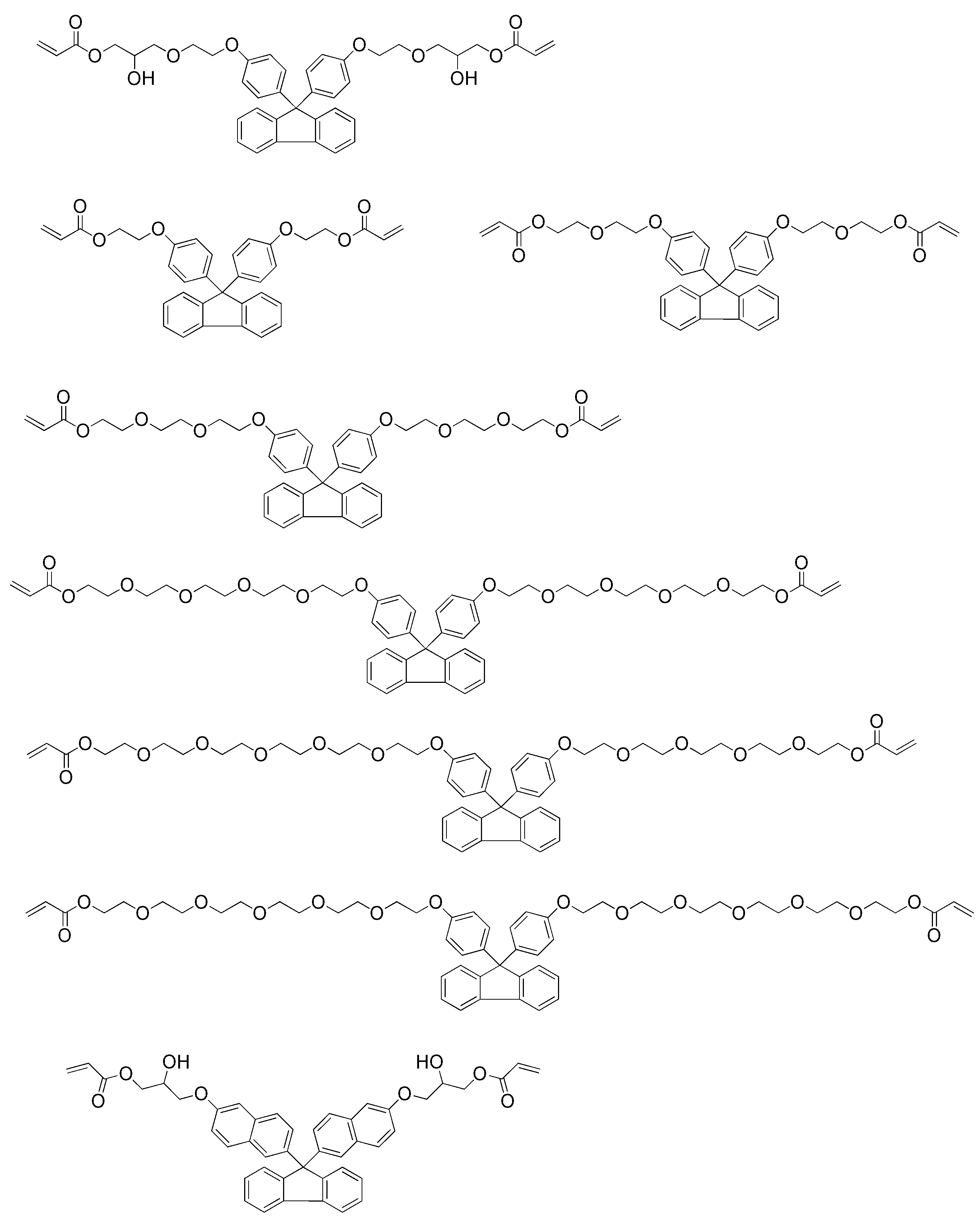
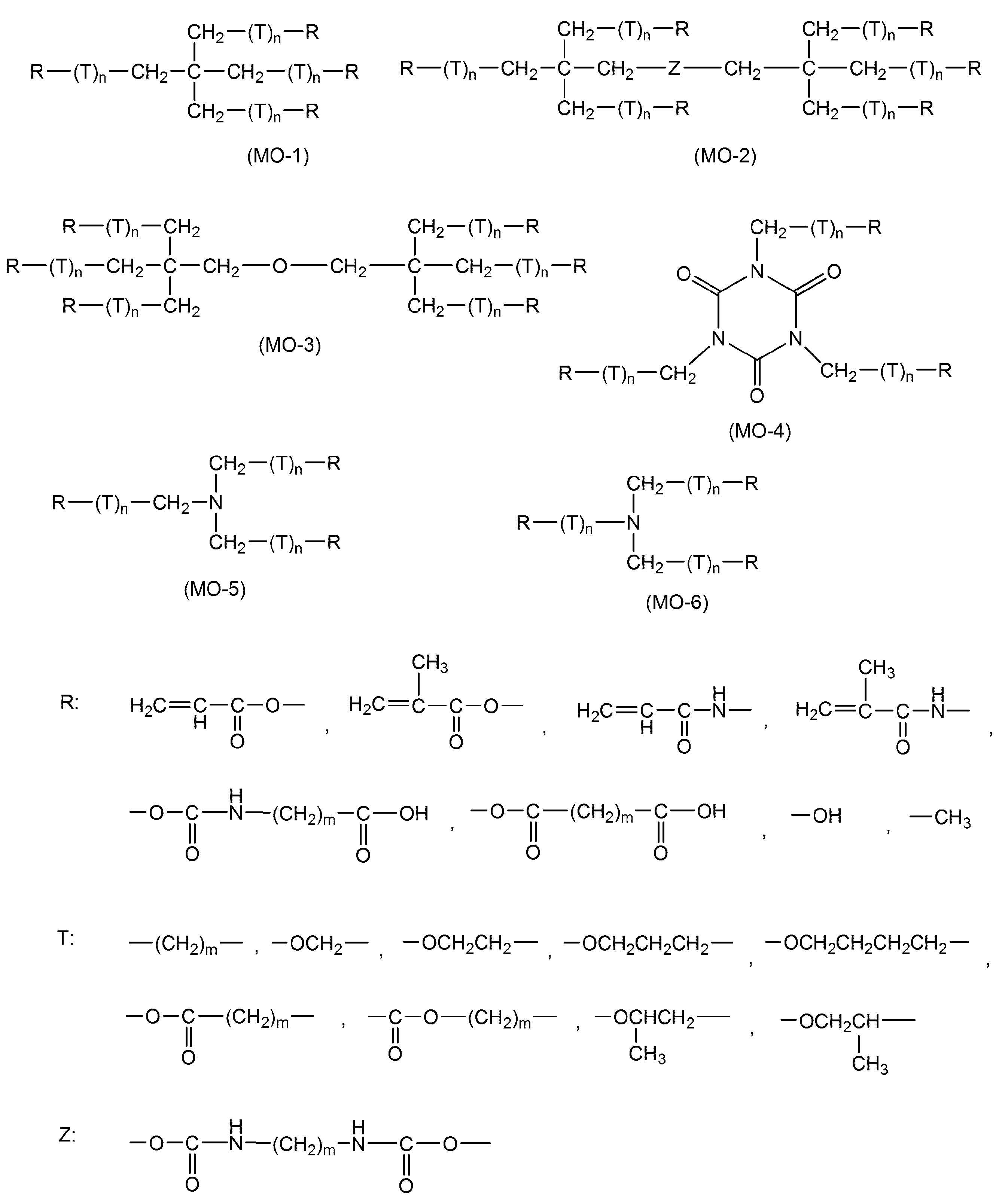
上記式(MO-1)~(MO-6)で表される化合物の各々において、複数のRの内の少なくとも1つは、-OC(=O)CH=CH2、-OC(=O)C(CH3)=CH2、-NHC(=O)CH=CH2または-NHC(=O)C(CH3)=CH2を表す。
上記式(MO-1)~(MO-6)で表される化合物の具体例としては、特開2007-269779号公報の段落0248~0251に記載されている化合物が挙げられる。



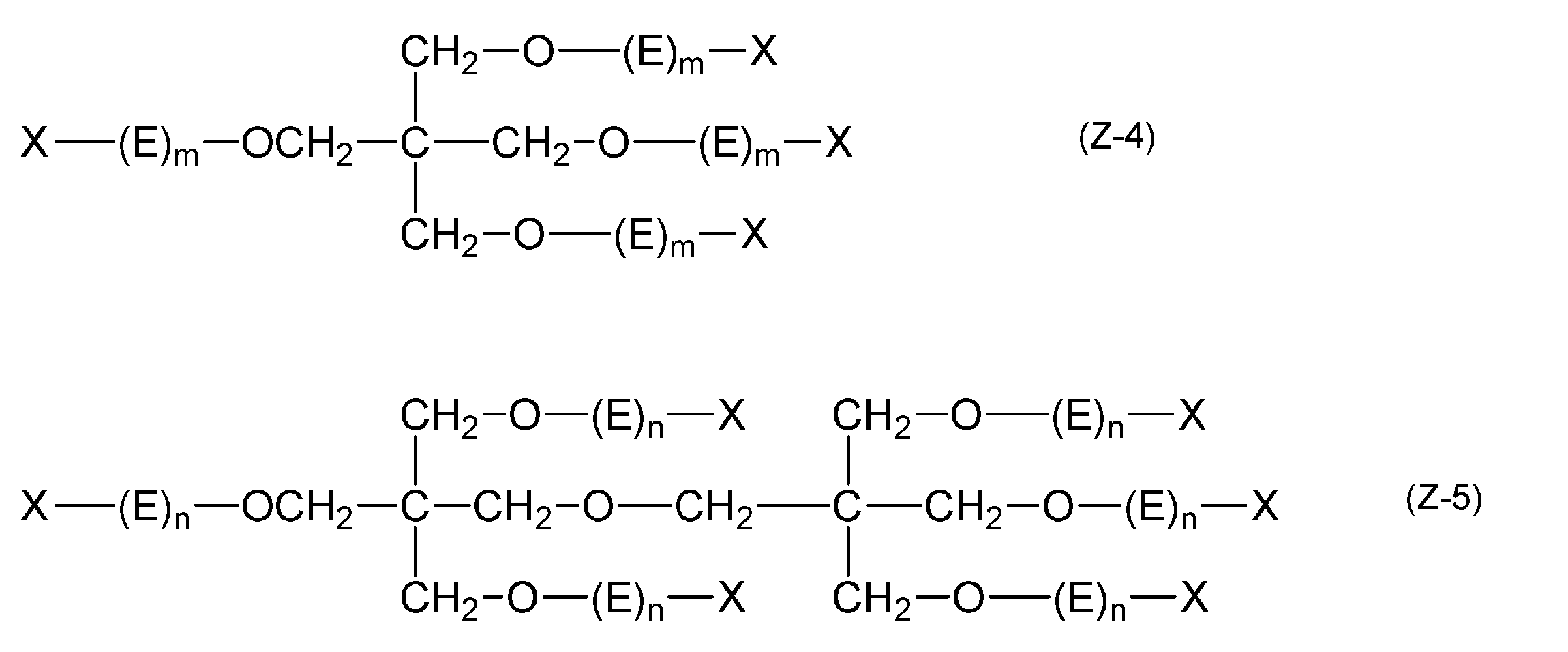
式(Z-5)中、nは、0~6の整数が好ましく、0~4の整数がより好ましい。また、各nの合計は、3~60の整数が好ましく、3~24の整数がより好ましく、6~12の整数が特に好ましい。
また、式(Z-4)又は式(Z-5)中の-((CH2)yCH2O)-又は-((CH2)yCH(CH3)O)-は、酸素原子側の末端がXに結合する形態が好ましい。
ラジカル重合性ポリマーとしては、ラジカル重合性基を有する繰り返し単位を含む樹脂が挙げられる。
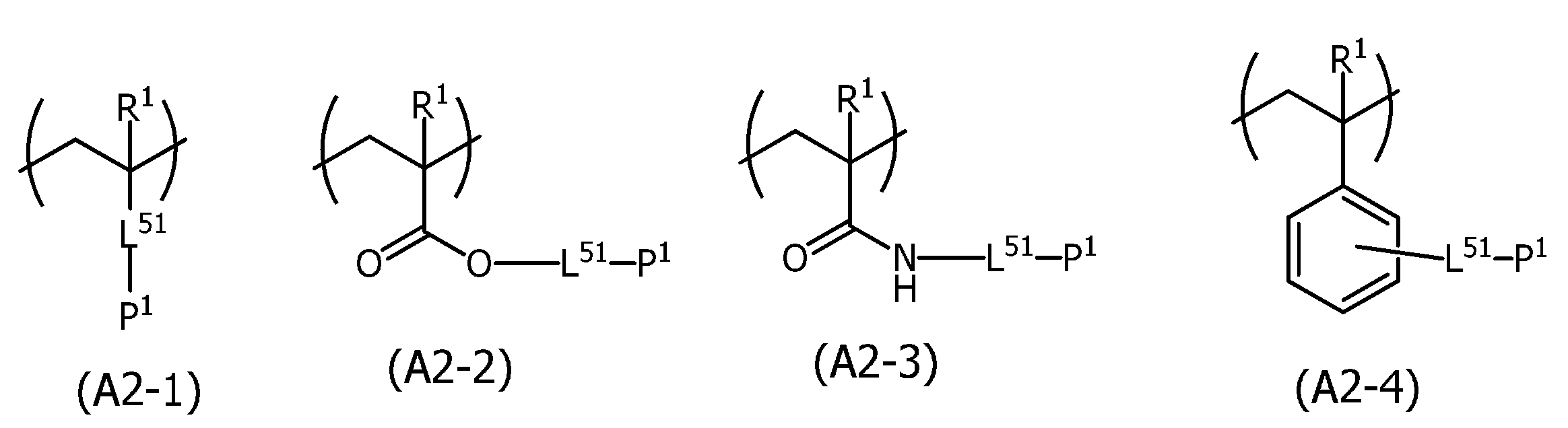
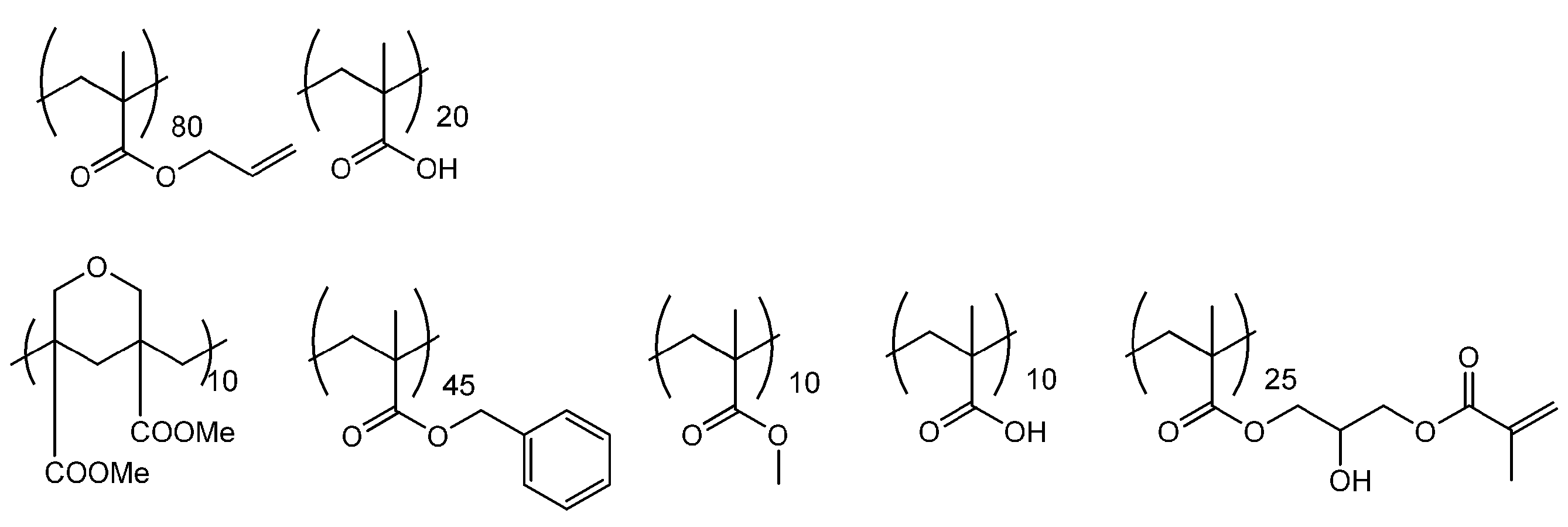
本発明の感光性組成物は光ラジカル重合開始剤を含む。光ラジカル重合開始剤は、波長300nm以下の光に反応してラジカルを発生する化合物であることが好ましい。

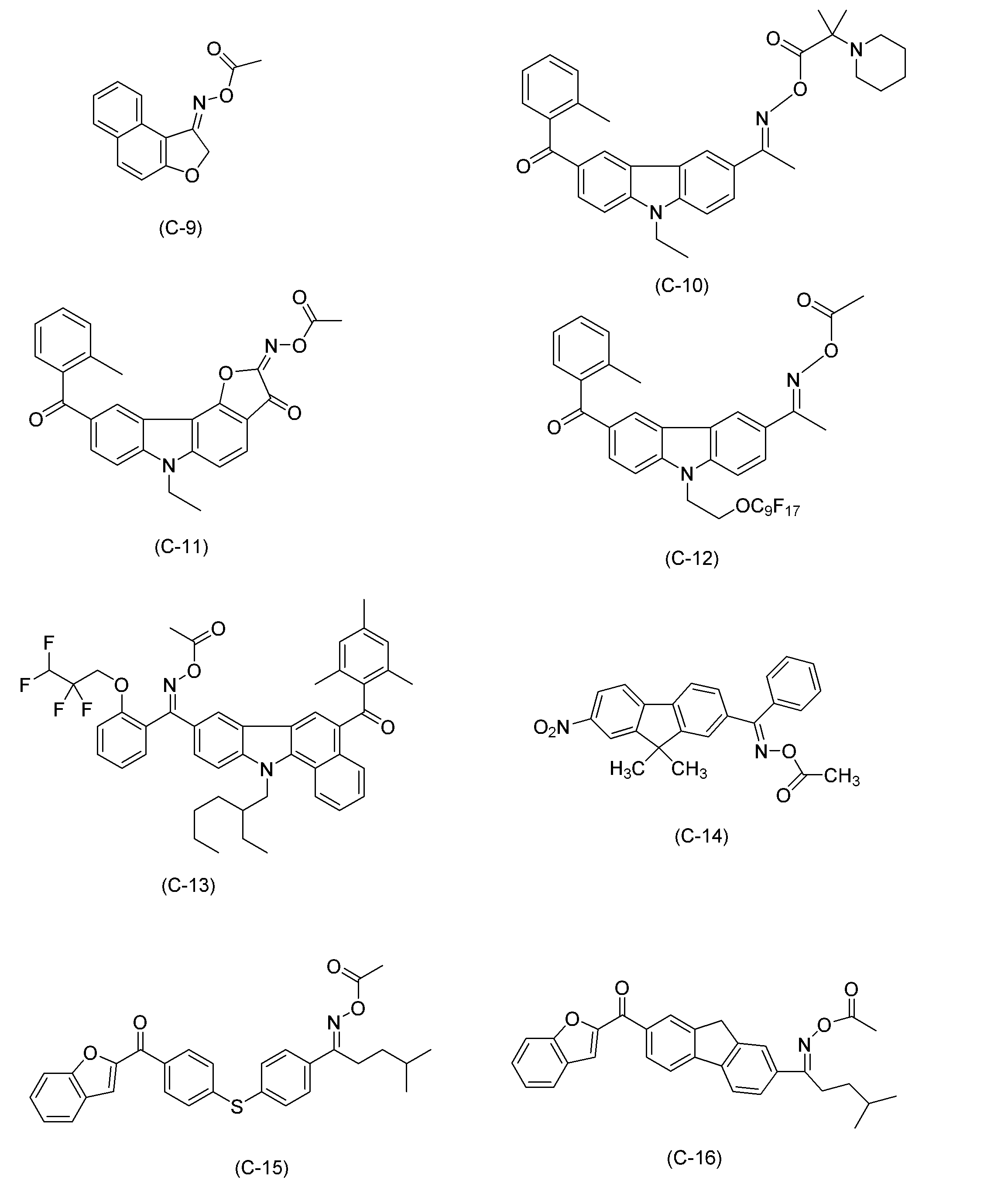
条件1:光ラジカル重合開始剤b1を0.035mmol/L含むプロピレングリコールモノメチルエーテルアセテート溶液に対し、波長355nmの光を、最大瞬間照度375000000W/m2、パルス幅8ナノ秒、周波数10Hzの条件でパルス露光した後の量子収率q355が0.05以上である。
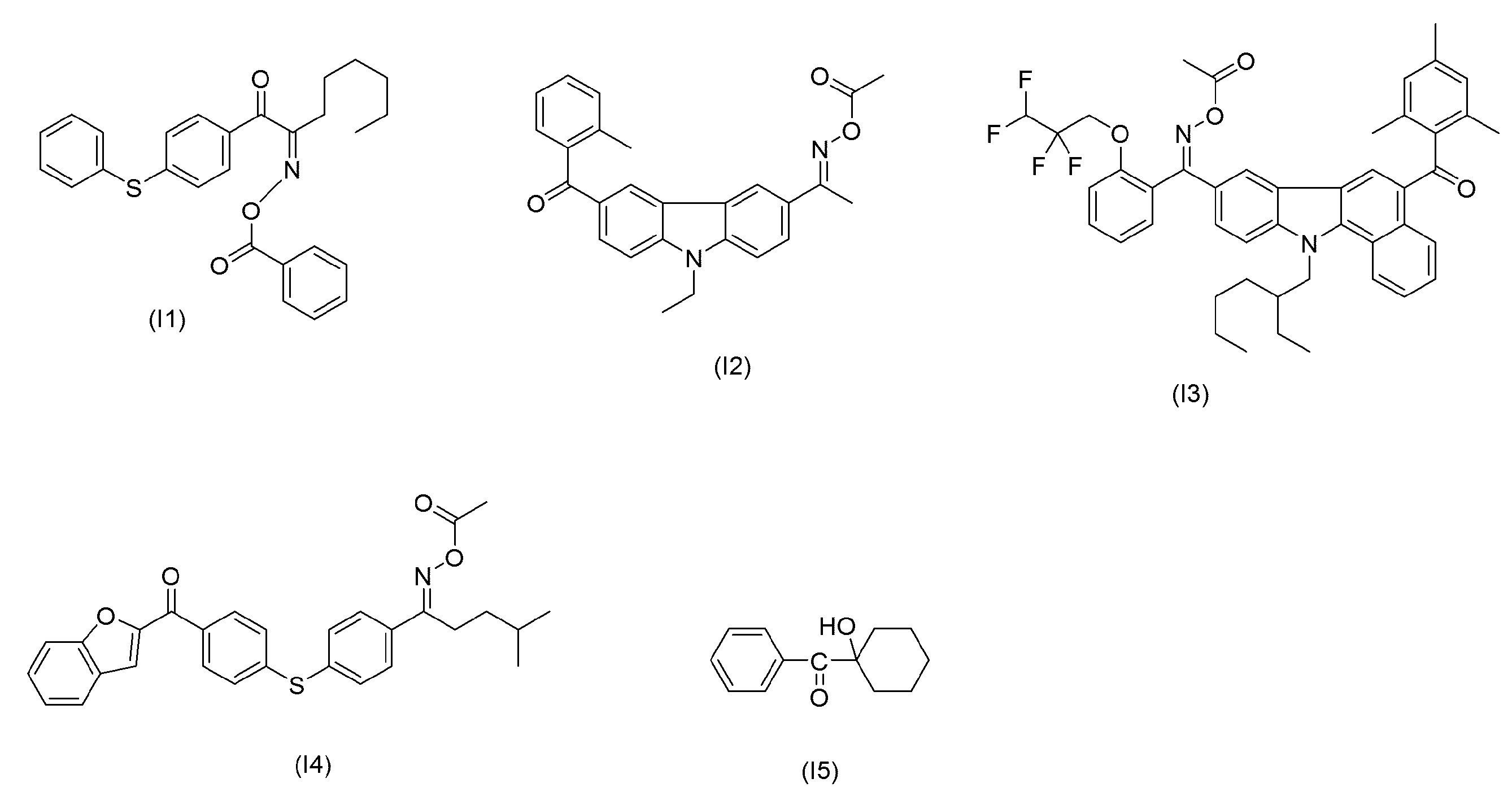
条件2:光ラジカル重合開始剤b1を5質量%、樹脂を95質量%含む厚さ1.0μmの膜に対し、波長265nmの光を、最大瞬間照度375000000W/m2、パルス幅8ナノ秒、周波数10Hzの条件でパルス露光した後の量子収率q265が0.05以上である。
条件3:光ラジカル重合開始剤b1を5質量%と樹脂とを含む膜に対して波長248~365nmの範囲のいずれかの波長の光を最大瞬間照度625000000W/m2、パルス幅8ナノ秒、周波数10Hzの条件で1パルスを露光した後に、膜中のラジカル濃度が膜1cm2あたり0.000000001mmol以上に達する。
樹脂(A)

条件1a:2種以上の光ラジカル重合開始剤を感光性組成物に含まれる比率で混合した混合物を0.035mmol/L含むプロピレングリコールモノメチルエーテルアセテート溶液に対し、波長355nmの光を、最大瞬間照度375000000W/m2、パルス幅8ナノ秒、周波数10Hzの条件でパルス露光した後の量子収率q355が0.05以上であることが好ましく、0.10以上であることがより好ましく、0.15以上であることが更に好ましく、0.25以上であることがより一層好ましく、0.35以上であることがより更に一層好ましく、0.45以上であることが特に好ましい。
条件2a:2種以上の光ラジカル開始剤を感光性組成物に含まれる比率で混合した混合物を5質量%、樹脂を95質量%含む厚さ1.0μmの膜に対し、波長265nmの光を、最大瞬間照度375000000W/m2、パルス幅8ナノ秒、周波数10Hzの条件でパルス露光した後の量子収率q265が0.05以上であることが好ましく、0.10以上であることがより好ましく、0.15以上であることが更に好ましく、0.20以上であることが特に好ましい。
条件3a:2種以上の光ラジカル開始剤を感光性組成物に含まれる比率で混合した混合物を5質量%と樹脂とを含む膜に対して波長248~365nmの範囲のいずれかの波長の光を最大瞬間照度625000000W/m2、パルス幅8ナノ秒、周波数10Hzの条件で0.1秒間パルス露光した後に、膜中のラジカル濃度が膜1cm2あたり0.000000001mmol以上に達することが好ましく、0.000000005mmol以上に達することがより好ましく、0.00000001mmol以上に達することが更に好ましく、0.00000003mmol以上に達することが特に好ましく、0.0000001mmol以上に達することが最も好ましい。
本発明の感光性組成物は、連鎖移動剤およびラジカルトラップ剤から選ばれる少なくとも1種を含む。
まず、本発明の感光性組成物に用いられる連鎖移動剤について説明する。連鎖移動剤としては、チオール化合物、チオカルボニルチオ化合物、芳香族α-メチルアルケニルの2量体などが挙げられ、少量の配合量であってもパターンの線幅を調整し易いという理由からチオール化合物が好ましい。また、連鎖移動剤は、着色が少ない化合物であることが好ましい。
チオール化合物は、チオール基を1個以上有する化合物であり、チオール基を2個以上有する化合物であることが好ましい。チオール化合物に含まれるチオール基の数の上限は、20以下が好ましく、15以下がより好ましく、10以下が更に好ましく、8以下がより一層好ましく、6以下が特に好ましい。チオール化合物に含まれるチオール基の数の下限は、3以上が好ましい。本発明の効果がより顕著に得られやすいという理由から、チオール化合物はチオール基を4個有する化合物であることが特に好ましい。
L1-(SH)n ・・・式(SH-1)
(式中、SHはチオール基を表し、L1は、n価の基を表し、nは1以上の整数を表す。)

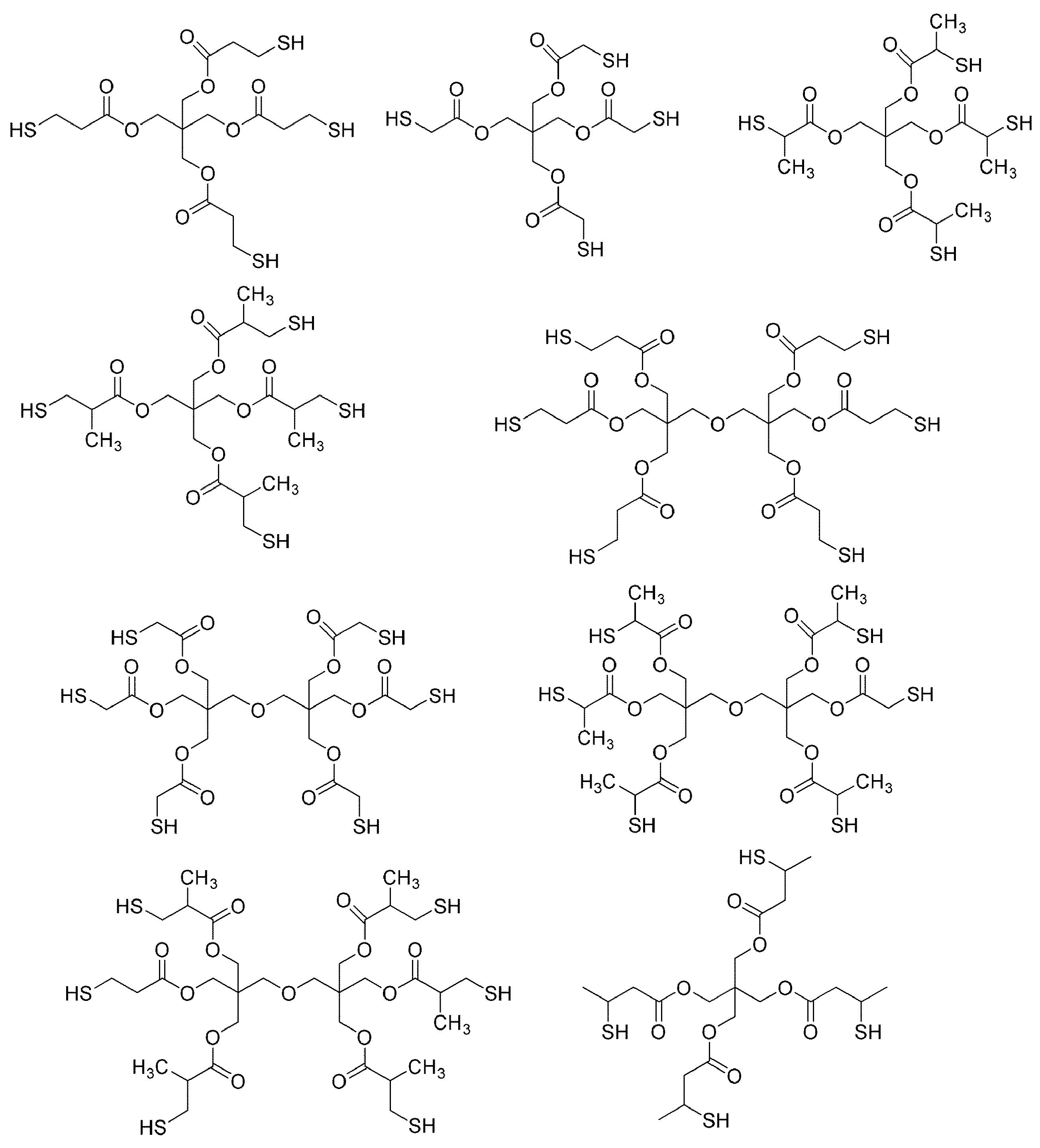
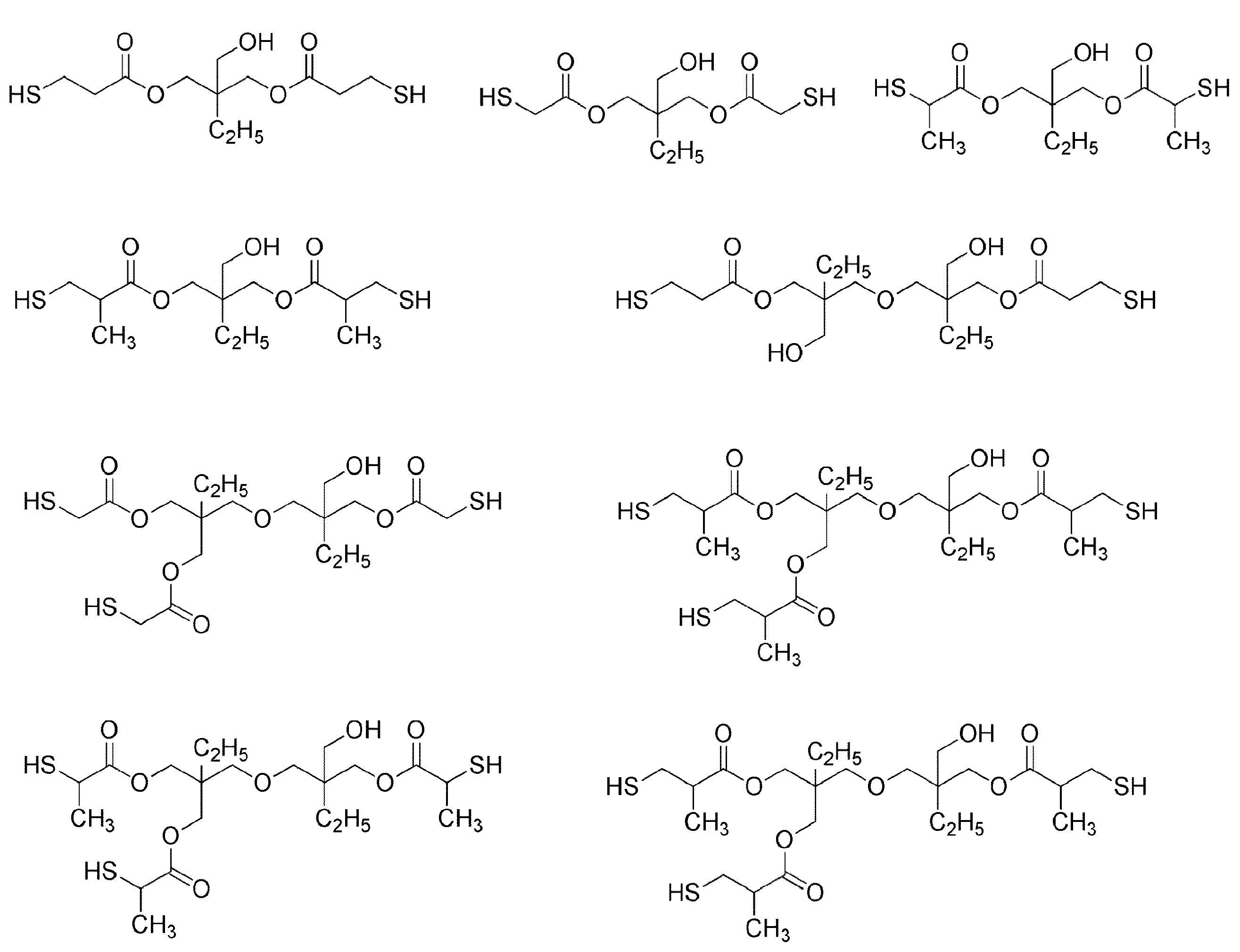

チオカルボニルチオ化合物としては、分子内にチオカルボニルチオ基(-S-C(=S)-)を有する化合物であって、ビス(チオカルボニル)ジスルフィド化合物(下記式(SC-1)で表される化合物)、ジチオエステル化合物(下記式(SC-2)で表される化合物)、トリチオカルボナート化合物(下記式(SC-3)で表される化合物)、ジチオカルバマート化合物(下記式(SC-4)で表される化合物)、キサンタート化合物(下記式(SC-5)で表される化合物)等が挙げられる。
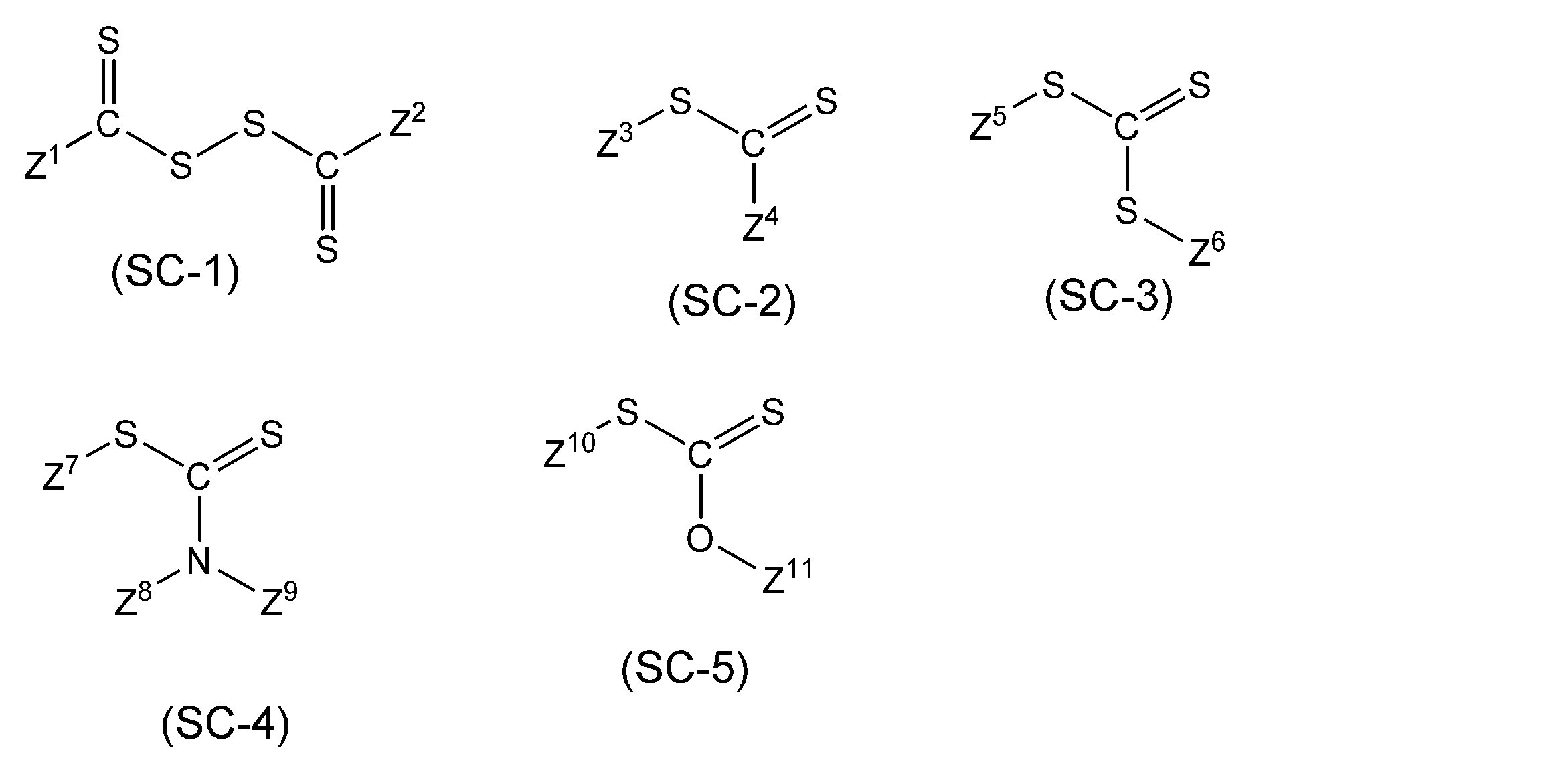
アルキル基の炭素数は、1~30が好ましく、1~15がより好ましく、1~8が更に好ましい。アルキル基は、直鎖、分岐、環状のいずれでもよく、直鎖または分岐が好ましい。
アリール基の炭素数は、6~30が好ましく、6~20がより好ましく、6~12が更に好ましい。
ヘテロアリール基は、単環のヘテロアリール基または縮合数が2~8の縮合環のヘテロアリール基が好ましく、単環のヘテロアリール基または縮合数が2~4の縮合環のヘテロアリール基がより好ましい。ヘテロアリール基の環を構成するヘテロ原子の数は1~3が好ましい。ヘテロアリール基の環を構成するヘテロ原子は、窒素原子、酸素原子または硫黄原子が好ましい。ヘテロアリール基は、5員環または6員環が好ましい。ヘテロアリール基の環を構成する炭素原子の数は3~30が好ましく、3~18がより好ましく、3~12がより好ましい。
芳香族α-メチルアルケニルの2量体としては、2,4-ジフェニル-4-メチル-1-ペンテンなどが挙げられる。
次に、本発明の感光性組成物に用いられるラジカルトラップ剤について説明する。ラジカルトラップ剤としては、ナフタレン誘導体、チオエーテル化合物、ヒンダードフェノール化合物、ヒンダードアミン化合物、N-オキシル化合物、ヒドラジル化合物およびフェルダジル化合物が挙げられ、ヒンダードフェノール化合物、ヒンダードアミン化合物、N-オキシル化合物、ヒドラジル化合物およびフェルダジル化合物が好ましい。また、ラジカルトラップ剤については、露光時に感光性組成物に含まれる光ラジカル重合開始剤などから発生するラジカルの量を制御して感光性組成物の感度を調整する目的上、ラジカルと定量的に反応する化合物であることが好ましい。その観点からは、ラジカルトラップ剤は、N-オキシル化合物およびヒドラジル化合物であることが好ましい。また、ラジカルトラップ能の観点からは、N-オキシル化合物が好ましく用いられる。また、感度調整の制御のし易さの観点からは、ヒドラジル化合物が好ましく用いられる。また、ラジカルトラップ剤は、着色が少ない化合物であることが好ましい。
ナフタレン誘導体としては、ナフトヒドロキノンスルホナートオニウム塩等のナフトヒドロキノン化合物などが挙げられる。その具体例としては、1,4-ジヒドロキシナフタレン、6-アミノ-2,3-ジヒドロ-5,8-ジヒドロキシナフタレン-1,4-ジオン、6-メチルアミノ-2,3-ジヒドロ-5,8-ジヒドロキシナフタレン-1,4-ジオン、6-エチルアミノ-2,3-ジヒドロ-5,8-ジヒドロキシナフタレン-1,4-ジオン、6-プロピルアミノ-2,3-ジヒドロ-5,8-ジヒドロキシナフタレン-1,4-ジオン、6-ブチルアミノ-2,3-ジヒドロ-5,8-ジヒドロキシナフタレン-1,4-ジオン、2-(α,α-ジメチル)ナフタレン、2-(α,αジメチルベンジル)ナフタレン、2-t-アミルナフタレン、2-トリメチルシリル-1,4,5,8,-ジメチル-1,2,3,4,4a,5,8,8a-オクタヒドロナフタレン等が挙げられる。これらの中でも、1,4-ジヒドロキシナフタレンが特に好ましい。
チオエーテル化合物としては、分子内に少なくとも一個のチオエーテル基を有する化合物であれば特に限定されない。例えば、3,3’-チオジプロピオン酸ジメチル、ジヘキシルチオジプロピオネート、ジノニルチオジプロピオネート、ジデシルチオジプロピオネート、ジウンデシルチオジプロピオネート、ジドデシルチオジプロピオネート、ジトリデシルチオジプロピオネート、ジテトラデシルチオジプロピオネート、ジペンタデシルチオジプロピオネート、ヘキサデシルチオジプロピオネート、ジヘプタデシルチオジプロピオネート、ジオクタデシルチオジプロピオネート、ジヘキシルチオジブチレート、ジノニルチオジブチレート、ジデシルチオジブチレート、ジウンデシルチオジブチレート、ジドデシルチオジブチレート、ジトリデシルチオジブチレート、ジテトラデシルチオジブチレート、ジペンタデシルチオジブチレート、ヘキサデシルチオジブチレート、3-メトキシ-2-[2-[シクロプロピル(3-フルオロフェニルイミノ)メチルチオメチル]フェニル]アクリル酸メチルエステル、ジヘプタデシルチオジブチレート等が挙げられる。これらの中でも、3,3’-チオジプロピオン酸ジメチルが特に好ましい。
ヒンダードアミン化合物としては、例えば、下記式(HA1)で表される部分構造を有する化合物が挙げられる。
式(HA1)
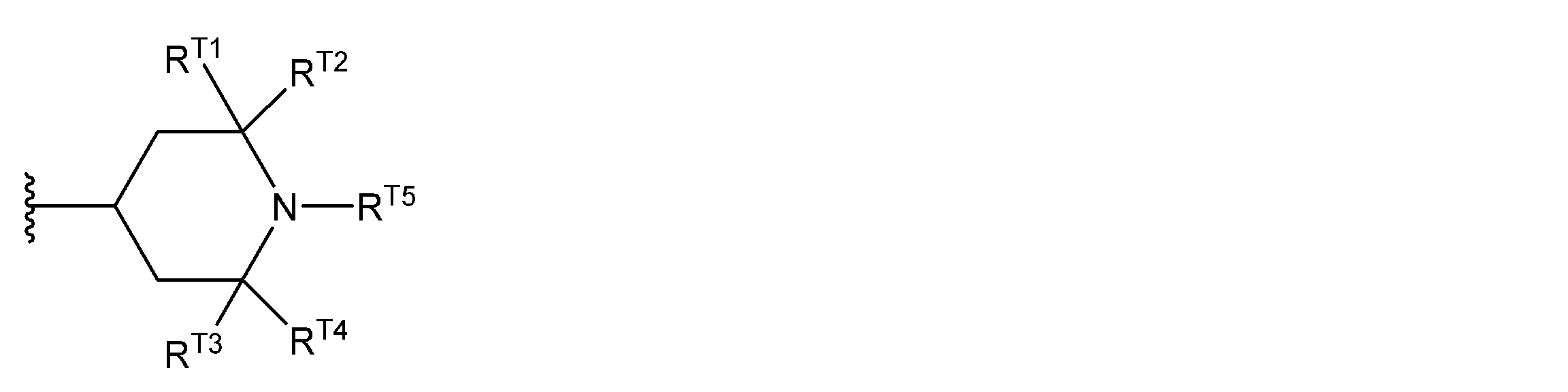
アルキル基としては、直鎖状の炭素数1~3のアルキル基が好ましく、メチル基がより好ましい。アルコキシ基は、直鎖状の炭素数1~4のアルコキシ基が好ましい。
ヒンダードアミン化合物の分子量は、2000以下が好ましく、1000以下がより好ましい。ヒンダードアミン化合物の市販品としては、アデカスタブLA-52、LA-57、LA-72、LA-77Y、LA-77G、LA-81、LA-82、LA-87、LA-402AF、LA-502XP((株)ADEKA製)、TINUVIN765、TINUVIN770 DF、TINUVIN XT 55 FB、TINUVIN111 FDL、TINUVIN783 FDL、TINUVIN791 FB、TINUVIN123、TINUVIN144、TINUVIN152(BASF製)などが挙げられる。
ヒンダードフェノール化合物としては、下記式(HP1)で表される構造を含む化合物が挙げられる。
式(HP1)
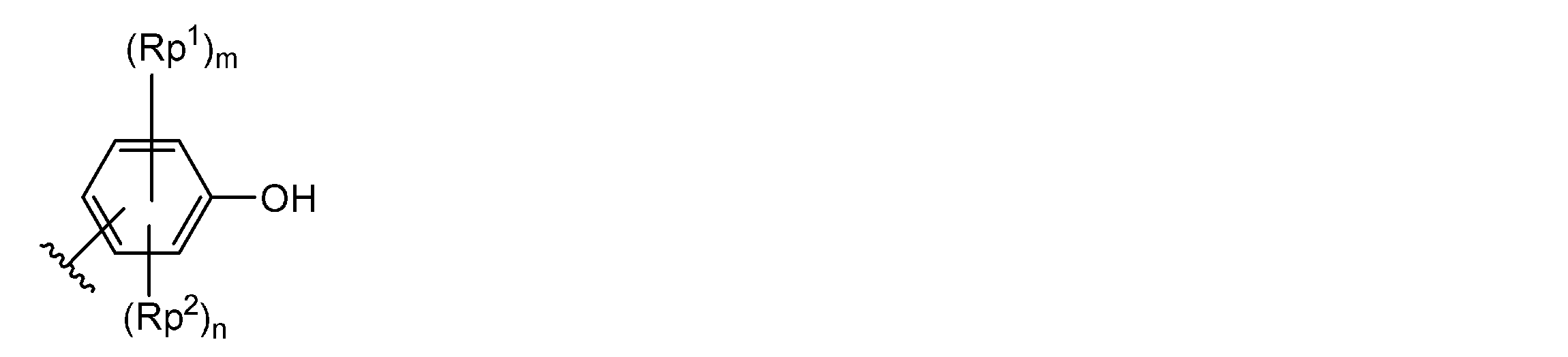
N-オキシル化合物としては、N-オキシル基を有する化合物であれば特に制限はなく、公知の化合物を用いることができる。例えば、ピペリジン1-オキシル化合物類、ピロリジン1-オキシル化合物類などが挙げられる。ピペリジン1-オキシル化合物類としては、例えばピペリジン1-オキシル、2,2,6,6-テトラメチルピペリジン1-オキシル、4-オキソ-2,2,6,6-テトラメチルピペリジン1-オキシル、4-ヒドロキシ-2,2,6,6-テトラメチルピペリジン1-オキシル、4-アセトアミド-2,2,6,6-テトラメチルピペリジン1-オキシル、4-マレイミド-2,2,6,6-テトラメチルピペリジン1-オキシル、及び4-ホスホノオキシ-2,2,6,6-テトラメチルピペリジン1-オキシルなどが挙げられる。ピロリジン1-オキシル化合物類としては、例えば3-カルボキシプロキシル、3-カルボキシ-2,2,5,5-テトラメチルピロリジン1-オキシルなどが挙げられる。
ヒドラジル化合物としては、ヒドラジル基を有する化合物であれば特に制限はなく、公知の化合物を用いることができる。例えば、2,2-ジフェニル-1-ピクリルヒドラジル、2,2-ジ(4-tert-オクチルフェニル)-1-ピクリルヒドラジルなどが挙げられる。
フェルダジル化合物としては、フェルダジル基を有する化合物であれば特に制限はなく、公知の化合物を用いることができる。例えば、トリフェニルフェルダジルなどが挙げられる。
また、ラジカル重合性化合物の100質量部に対して、連鎖移動剤を0.1~100質量部含むことが好ましい。上限は、20質量部以下が好ましく、10質量部以下がより好ましい。下限は0.5質量部以上が好ましく、1質量部以上がより好ましい。
また、光ラジカル重合開始剤の100質量部に対して、連鎖移動剤を0.2~200質量部含むことが好ましい。上限は、100質量部以下が好ましく、50質量部以下がより好ましく、20質量部以下が更に好ましい。下限は1質量部以上が好ましく、1.5質量部以上がより好ましく、2質量部以上が更に好ましい。
また、ラジカル重合性化合物の100質量部に対して、ラジカルトラップ剤を0.1~100質量部含むことが好ましい。上限は、20質量部以下が好ましく、10質量部以下がより好ましい。下限は0.5質量部以上が好ましく、1質量部以上がより好ましい。
また、光ラジカル重合開始剤の100質量部に対して、ラジカルトラップ剤を0.2~200質量部含むことが好ましい。上限は、100質量部以下が好ましく、50質量部以下がより好ましく、20質量部以下が更に好ましい。下限は1質量部以上が好ましく、1.5質量部以上がより好ましく、2質量部以上が更に好ましい。
また、感光性組成物の全固形分中における連鎖移動剤とラジカルトラップ剤との合計の含有量は0.01~10.0質量%であることが好ましい。上限は、9質量%以下が好ましく、8質量%以下がより好ましく、7質量%以下が更に好ましい。下限は0.02質量%以上が好ましく、0.05質量%以上がより好ましく、0.1質量%以上が更に好ましい。
また、ラジカル重合性化合物の100質量部に対して、連鎖移動剤とラジカルトラップ剤を合計で0.1~100質量部含むことが好ましい。上限は、20質量部以下が好ましく、10質量部以下がより好ましい。下限は0.5質量部以上が好ましく、1質量部以上がより好ましい。
また、光ラジカル重合開始剤の100質量部に対して、連鎖移動剤とラジカルトラップ剤を合計で0.2~200質量部含むことが好ましい。上限は、100質量部以下が好ましく、50質量部以下がより好ましく、20質量部以下が更に好ましい。下限は1質量部以上が好ましく、1.5質量部以上がより好ましく、2質量部以上が更に好ましい。
本発明の感光性組成物は、色材を含むことが好ましい。色材としては、有彩色着色剤、黒色着色剤、赤外線吸収色素などが挙げられる。本発明の感光性組成物に用いられる色材は、有彩色着色剤を少なくとも含むことが好ましい。
有彩色着色剤としては、赤色着色剤、緑色着色剤、青色着色剤、黄色着色剤、紫色着色剤、オレンジ色着色剤などが挙げられる。有彩色着色剤は、顔料であってもよく、染料であってもよい。好ましくは顔料である。顔料の平均粒径(r)は、20nm≦r≦300nmであることが好ましく、25nm≦r≦250nmであることがより好ましく、30nm≦r≦200nmであることが更に好ましい。ここでいう「平均粒径」とは、顔料の一次粒子が集合した二次粒子についての平均粒径を意味する。また、使用しうる顔料の二次粒子の粒径分布(以下、単に「粒径分布」ともいう。)は、平均粒径±100nmの範囲に含まれる二次粒子が全体の70質量%以上であることが好ましく、80質量%以上であることがより好ましい。
カラーインデックス(C.I.)Pigment Yellow 1,2,3,4,5,6,10,11,12,13,14,15,16,17,18,20,24,31,32,34,35,35:1,36,36:1,37,37:1,40,42,43,53,55,60,61,62,63,65,73,74,77,81,83,86,93,94,95,97,98,100,101,104,106,108,109,110,113,114,115,116,117,118,119,120,123,125,126,127,128,129,137,138,139,147,148,150,151,152,153,154,155,156,161,162,164,166,167,168,169,170,171,172,173,174,175,176,177,179,180,181,182,185,187,188,193,194,199,213,214等(以上、黄色顔料)、
C.I.Pigment Orange 2,5,13,16,17:1,31,34,36,38,43,46,48,49,51,52,55,59,60,61,62,64,71,73等(以上、オレンジ色顔料)、
C.I.Pigment Red 1,2,3,4,5,6,7,9,10,14,17,22,23,31,38,41,48:1,48:2,48:3,48:4,49,49:1,49:2,52:1,52:2,53:1,57:1,60:1,63:1,66,67,81:1,81:2,81:3,83,88,90,105,112,119,122,123,144,146,149,150,155,166,168,169,170,171,172,175,176,177,178,179,184,185,187,188,190,200,202,206,207,208,209,210,216,220,224,226,242,246,254,255,264,270,272,279等(以上、赤色顔料)、
C.I.Pigment Green 7,10,36,37,58,59,62,63等(以上、緑色顔料)、
C.I.Pigment Violet 1,19,23,27,32,37,42等(以上、紫色顔料)、
C.I.Pigment Blue 1,2,15,15:1,15:2,15:3,15:4,15:6,16,22,60,64,66,79,80等(以上、青色顔料)。
これら有機顔料は、単独で若しくは種々組合せて用いることができる。


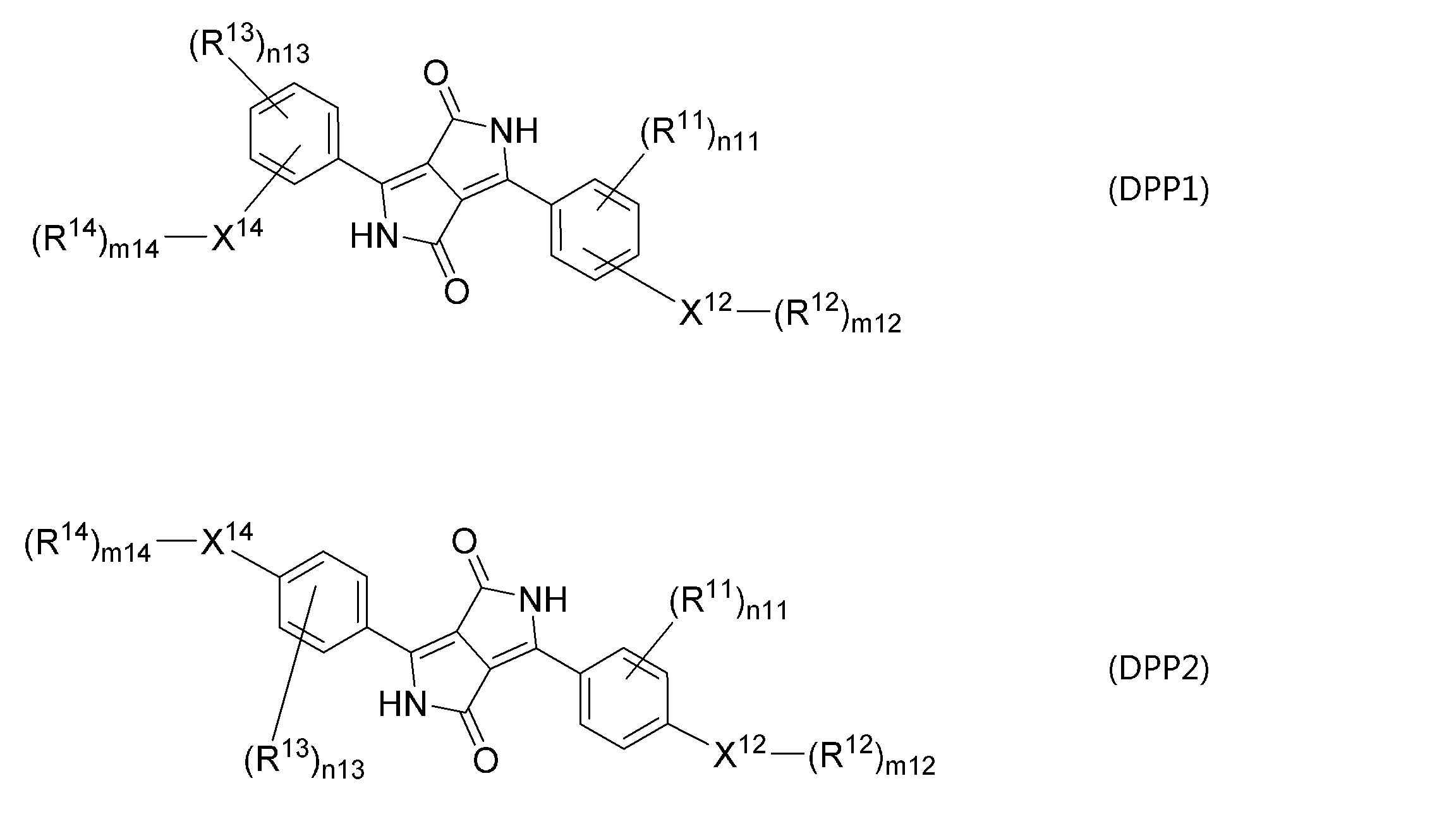
黒色着色剤としては、カーボンブラック、金属酸窒化物(チタンブラック等)、金属窒化物(チタンナイトライド等)などの無機黒色着色剤や、ビスベンゾフラノン化合物、アゾメチン化合物、ペリレン化合物、アゾ化合物などの有機黒色着色剤が挙げられる。有機黒色着色剤は、ビスベンゾフラノン化合物、ペリレン化合物が好ましい。ビスベンゾフラノン化合物としては、特表2010-534726号公報、特表2012-515233号公報、特表2012-515234号公報などに記載の化合物が挙げられ、例えば、BASF社製の「Irgaphor Black」として入手可能である。ペリレン化合物としては、C.I.Pigment Black 31、32などが挙げられる。アゾメチン化合物としては、特開平1-170601号公報、特開平2-34664号公報などに記載のものが挙げられ、例えば、大日精化社製の「クロモファインブラックA1103」として入手できる。ビスベンゾフラノン化合物は、下記式のいずれかで表される化合物またはこれらの混合物であることが好ましい。

赤外線吸収色素としては、波長700~1300nmの範囲、より好ましくは波長700~1000nmの範囲に極大吸収波長を有する化合物が好ましい。赤外線吸収色素は、顔料であってもよく、染料であってもよい。
また、本発明の感光性組成物に用いられる色材は、緑色着色剤を少なくとも含むことが好ましい。また、色材の全質量中における緑色着色剤の含有量は、30質量%以上であることが好ましく、40質量%以上であることがより好ましく、50質量%以上であることが更に好ましい。上限は、100質量%とすることができ、75質量%以下とすることもできる。
(2):有機黒色着色剤を含む。
(3):上記(1)または(2)において、更に赤外線吸収色素を含む。
(1-1)赤色着色剤と青色着色剤とを含有する態様。
(1-2)赤色着色剤と青色着色剤と黄色着色剤とを含有する態様。
(1-3)赤色着色剤と青色着色剤と黄色着色剤と紫色着色剤とを含有する態様。
(1-4)赤色着色剤と青色着色剤と黄色着色剤と紫色着色剤と緑色着色剤とを含有する態様。
(1-5)赤色着色剤と青色着色剤と黄色着色剤と緑色着色剤とを含有する態様。
(1-6)赤色着色剤と青色着色剤と緑色着色剤とを含有する態様。
(1-7)黄色着色剤と紫色着色剤とを含有する態様。
本発明の感光性組成物は、樹脂を含有することができる。なお、本発明において樹脂とは、色材以外の有機化合物であって、分子量が2000以上の有機化合物のことを言う。樹脂は、例えば、顔料などの粒子を組成物中で分散させる用途やバインダーの用途で配合される。なお、主に顔料などの粒子を分散させるために用いられる樹脂を分散剤ともいう。ただし、樹脂のこのような用途は一例であって、このような用途以外の目的で使用することもできる。なお、ラジカル重合性基を有する樹脂は、上述したラジカル重合性化合物にも該当する成分である。



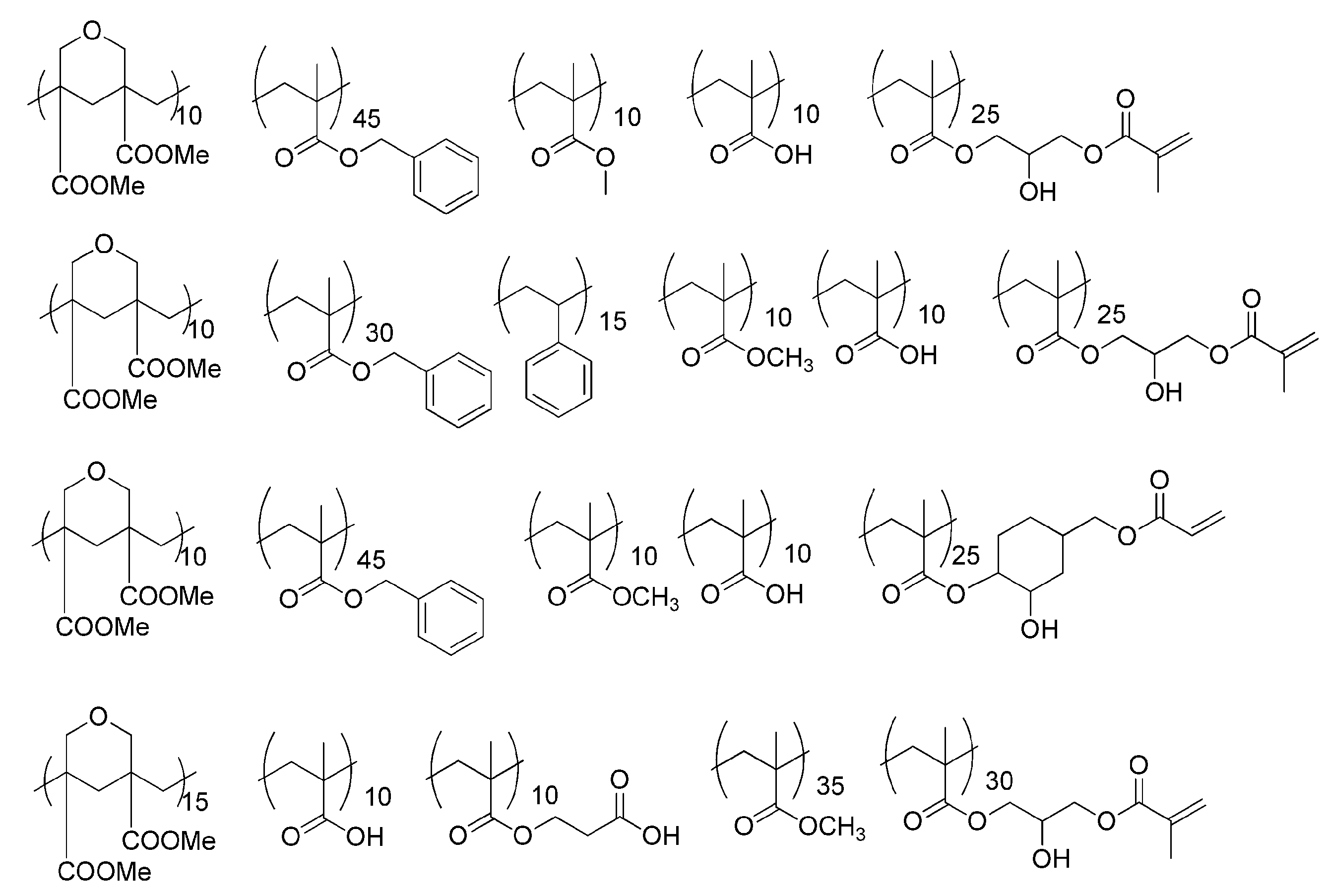



本発明の感光性組成物は、環状エーテル基を有する化合物を含有することができる。環状エーテル基としては、エポキシ基、オキセタニル基などが挙げられる。環状エーテル基を有する化合物は、エポキシ基を有する化合物であることが好ましい。エポキシ基を有する化合物としては、1分子内にエポキシ基を1つ以上有する化合物が挙げられ、エポキシ基を2つ以上有する化合物が好ましい。エポキシ基は、1分子内に1~100個有することが好ましい。エポキシ基の上限は、例えば、10個以下とすることもでき、5個以下とすることもできる。エポキシ基の下限は、2個以上が好ましい。エポキシ基を有する化合物としては、特開2013-011869号公報の段落番号0034~0036、特開2014-043556号公報の段落番号0147~0156、特開2014-089408号公報の段落番号0085~0092に記載された化合物、特開2017-179172号公報に記載された化合物を用いることもできる。これらの内容は、本明細書に組み込まれる。
本発明の感光性組成物は、シランカップリング剤を含有することができる。この態様によれば、得られる膜の支持体との密着性を向上させることができる。本発明において、シランカップリング剤は、加水分解性基とそれ以外の官能基とを有するシラン化合物を意味する。また、加水分解性基とは、ケイ素原子に直結し、加水分解反応及び縮合反応の少なくともいずれかによってシロキサン結合を生じ得る置換基をいう。加水分解性基としては、例えば、ハロゲン原子、アルコキシ基、アシルオキシ基などが挙げられ、アルコキシ基が好ましい。すなわち、シランカップリング剤は、アルコキシシリル基を有する化合物が好ましい。また、加水分解性基以外の官能基としては、例えば、ビニル基、(メタ)アリル基、(メタ)アクリロイル基、メルカプト基、エポキシ基、オキセタニル基、アミノ基、ウレイド基、スルフィド基、イソシアネート基、フェニル基などが挙げられ、アミノ基、(メタ)アクリロイル基およびエポキシ基が好ましい。シランカップリング剤の具体例としては、特開2009-288703号公報の段落番号0018~0036に記載の化合物、特開2009-242604号公報の段落番号0056~0066に記載の化合物が挙げられ、これらの内容は本明細書に組み込まれる。
本発明の感光性組成物は、更に顔料誘導体を含有することができる。顔料誘導体としては、顔料の一部を、酸基、塩基性基、塩構造を有する基又はフタルイミドメチル基で置換した構造を有する化合物が挙げられる。顔料誘導体としては、式(B1)で表される化合物が好ましい。

式(B1)中、Pは色素構造を表し、Lは単結合または連結基を表し、Xは酸基、塩基性基、塩構造を有する基またはフタルイミドメチル基を表し、mは1以上の整数を表し、nは1以上の整数を表し、mが2以上の場合は複数のLおよびXは互いに異なっていてもよく、nが2以上の場合は複数のXは互いに異なっていてもよい。
本発明の感光性組成物は、溶剤を含有することができる。溶剤としては、有機溶剤が挙げられる。溶剤は、各成分の溶解性や組成物の塗布性を満足すれば基本的には特に制限はない。有機溶剤の例としては、例えば、エステル類、エーテル類、ケトン類、芳香族炭化水素類などが挙げられる。これらの詳細については、国際公開WO2015/166779号公報の段落番号0223を参酌でき、この内容は本明細書に組み込まれる。また、環状アルキル基が置換したエステル系溶剤、環状アルキル基が置換したケトン系溶剤を好ましく用いることもできる。有機溶剤の具体例としては、ポリエチレングリコールモノメチルエーテル、ジクロロメタン、3-エトキシプロピオン酸メチル、3-エトキシプロピオン酸エチル、エチルセロソルブアセテート、乳酸エチル、ジエチレングリコールジメチルエーテル、酢酸ブチル、3-メトキシプロピオン酸メチル、2-ヘプタノン、シクロヘキサノン、酢酸シクロヘキシル、シクロペンタノン、エチルカルビトールアセテート、ブチルカルビトールアセテート、プロピレングリコールモノメチルエーテル、及びプロピレングリコールモノメチルエーテルアセテートなどが挙げられる。本発明において有機溶剤は、1種単独で用いてもよく、2種以上を組み合わせて用いてもよい。また、3-メトキシ-N,N-ジメチルプロパンアミド、3-ブトキシ-N,N-ジメチルプロパンアミドも溶解性向上の観点から好ましい。ただし溶剤としての芳香族炭化水素類(ベンゼン、トルエン、キシレン、エチルベンゼン等)は、環境面等の理由により低減したほうがよい場合がある(例えば、有機溶剤全量に対して、50質量ppm(parts per million)以下とすることもでき、10質量ppm以下とすることもでき、1質量ppm以下とすることもできる)。
本発明の感光性組成物は、重合禁止剤を含有することができる。重合禁止剤としては、ハイドロキノン、p-メトキシフェノール、ジ-tert-ブチル-p-クレゾール、ピロガロール、ベンゾキノン、N-ニトロソフェニルヒドロキシアミン塩(アンモニウム塩、第一セリウム塩等)が挙げられる。中でも、p-メトキシフェノールが好ましい。感光性組成物の全固形分中における重合禁止剤の含有量は、0.001~5質量%が好ましい。
本発明の感光性組成物は、界面活性剤を含有することができる。界面活性剤としては、フッ素系界面活性剤、ノニオン系界面活性剤、カチオン系界面活性剤、アニオン系界面活性剤、シリコン系界面活性剤などの各種界面活性剤を使用することができる。界面活性剤については、国際公開WO2015/166779号公報の段落番号0238~0245を参酌でき、この内容は本明細書に組み込まれる。

本発明の感光性組成物は、紫外線吸収剤を含有することができる。紫外線吸収剤は、共役ジエン化合物、アミノジエン化合物、サリシレート化合物、ベンゾフェノン化合物、ベンゾトリアゾール化合物、アクリロニトリル化合物、ヒドロキシフェニルトリアジン化合物、インドール化合物、トリアジン化合物などを用いることができる。これらの詳細については、特開2012-208374号公報の段落番号0052~0072、特開2013-68814号公報の段落番号0317~0334、特開2016-162946号公報の段落番号0061~0080の記載を参酌でき、これらの内容は本明細書に組み込まれる。紫外線吸収剤の具体例としては、下記構造の化合物などが挙げられる。紫外線吸収剤の市販品としては、例えば、UV-503(大東化学(株)製)などが挙げられる。また、ベンゾトリアゾール化合物としては、ミヨシ油脂製のMYUAシリーズ(化学工業日報、2016年2月1日)が挙げられる。
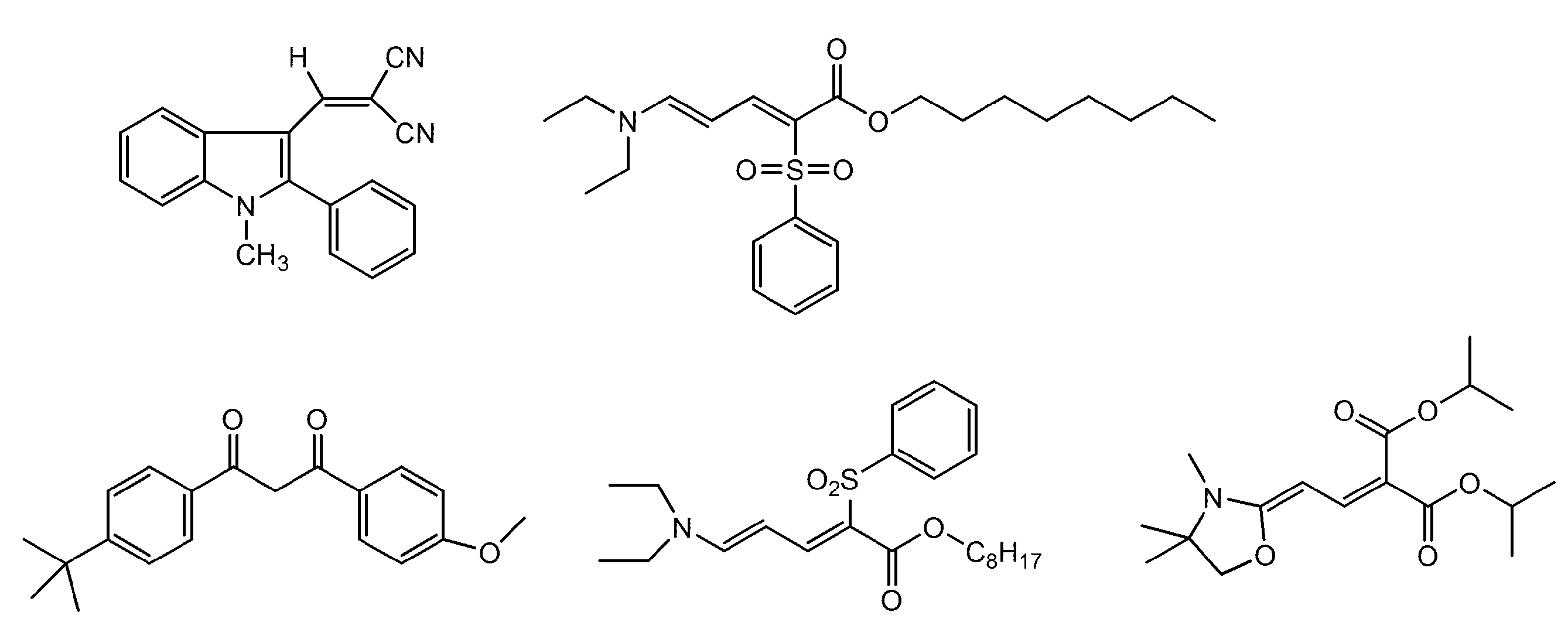
本発明の感光性組成物は、必要に応じて、増感剤、硬化促進剤、フィラー、熱硬化促進剤、可塑剤及びその他の助剤類(例えば、導電性粒子、充填剤、消泡剤、難燃剤、レベリング剤、剥離促進剤、香料、表面張力調整剤、連鎖移動剤など)を含有してもよい。これらの成分を適宜含有させることにより、膜物性などの性質を調整することができる。これらの成分は、例えば、特開2012-003225号公報の段落番号0183以降(対応する米国特許出願公開第2013/0034812号明細書の段落番号0237)の記載、特開2008-250074号公報の段落番号0101~0104、0107~0109等の記載を参酌でき、これらの内容は本明細書に組み込まれる。また、本発明の感光性組成物は、必要に応じて、潜在酸化防止剤を含有してもよい。潜在酸化防止剤としては、酸化防止剤として機能する部位が保護基で保護された化合物であって、100~250℃で加熱するか、又は酸/塩基触媒存在下で80~200℃で加熱することにより保護基が脱離して酸化防止剤として機能する化合物が挙げられる。潜在酸化防止剤としては、国際公開WO2014/021023号公報、国際公開WO2017/030005号公報、特開2017-008219号公報に記載された化合物が挙げられる。市販品としては、アデカアークルズGPA-5001((株)ADEKA製)等が挙げられる。
本発明の感光性組成物の収容容器としては、特に限定はなく、公知の収容容器を用いることができる。また、収容容器として、原材料や組成物中への不純物混入を抑制することを目的に、容器内壁を6種6層の樹脂で構成する多層ボトルや6種の樹脂を7層構造にしたボトルを使用することも好ましい。このような容器としては例えば特開2015-123351号公報に記載の容器が挙げられる。
本発明の感光性組成物は、前述の成分を混合して調製できる。感光性組成物の調製に際しては、全成分を同時に溶剤に溶解または分散して感光性組成物を調製してもよいし、必要に応じては、各成分を適宜配合した2つ以上の溶液または分散液をあらかじめ調製し、使用時(塗布時)にこれらを混合して感光性組成物として調製してもよい。
次に、本発明の感光性組成物を用いた光学フィルタの製造方法について説明する。光学フィルタの種類としては、カラーフィルタ、赤外線透過フィルタなどが挙げられる。
本発明における光学フィルタの製造方法は、上述した本発明の感光性組成物を支持体上に適用して感光性組成物層を形成する工程(感光性組成物層形成工程)と、感光性組成物層に対して光をパルス的に照射してパターン状に露光(パルス露光)する工程(露光工程)と、未露光部の感光性組成物層を現像除去して画素を形成する工程(現像工程)と、を含むことが好ましい。以下、各工程について説明する。
感光性組成物層形成工程では、上述した本発明の感光性組成物を支持体上に適用して感光性組成物層を形成する。支持体としては、例えば、シリコン、無アルカリガラス、ソーダガラス、パイレックス(登録商標)ガラス、石英ガラスなどの材質で構成された基板が挙げられる。また、InGaAs基板などを用いることも好ましい。また、支持体には、電荷結合素子(CCD)、相補型金属酸化膜半導体(CMOS)、透明導電膜などが形成されていてもよい。また、支持体には、各画素を隔離するブラックマトリクスが形成されている場合もある。また、支持体には、必要により、上部の層との密着性改良、物質の拡散防止或いは基板表面の平坦化のために下塗り層が設けられていてもよい。
次に、上述のようにして形成した支持体上の感光性組成物層に対して、光をパルス的に照射してパターン状に露光(パルス露光)する。感光性組成物層に対し、所定のマスクパターンを有するマスクを介してパルス露光することで、感光性組成物層をパターン状にパルス露光することができる。これにより、感光性組成物層の露光部分を硬化することができる。
次に、露光工程後の感光性組成物層における未露光部の感光性組成物層を現像除去して画素(パターン)を形成する。未露光部の感光性組成物層の現像除去は、現像液を用いて行うことができる。これにより、未露光部の感光性組成物層が現像液に溶出し、上記の露光工程で光硬化した部分だけが支持体上に残る。現像液の温度は、例えば、20~30℃が好ましい。現像時間は、20~180秒が好ましい。また、残渣除去性を向上するため、現像液を60秒ごとに振り切り、更に新たに現像液を供給する工程を数回繰り返してもよい。
樹脂の重量平均分子量は、ゲルパーミエーションクロマトグラフィ(GPC)により、以下の条件で測定した。
カラムの種類:TOSOH TSKgel Super HZM-Hと、TOSOH TSKgel Super HZ4000と、TOSOH TSKgel Super HZ2000とを連結したカラム
展開溶媒:テトラヒドロフラン
カラム温度:40℃
流量(サンプル注入量):1.0μL(サンプル濃度:0.1質量%)
装置名:東ソー製 HLC-8220GPC
検出器:RI(屈折率)検出器
検量線ベース樹脂:ポリスチレン樹脂
下記表に記載の原料を混合した後、孔径0.45μmのナイロン製フィルタ(日本ポール(株)製)でろ過して、固形分濃度20質量%の感光性組成物(組成物1~26、R1~R3)を調製した。なお、組成物1~8、10~26、R1~R3の固形分濃度はプロピレングリコールモノメチルエーテルアセテート(PGMEA)の配合量を変えることで調整した。また、組成物9の固形分濃度はPGMEAとポリエチレングリコールモノメチルエーテルとの混合溶剤(PGMEA:ポリエチレングリコールモノメチルエーテル=9:1(質量比))の配合量を変えることで調整した。下記表に示す配合量の欄の数値は質量部である。

(顔料分散液)
A1:以下の方法で調製した顔料分散液
C.I.Pigment Green 58の10.7質量部、C.I.Pigment Yellow 185の2.7質量部、顔料誘導体1の1.3質量部、分散剤1の5.3質量部、および、プロピレングリコールモノメチルエーテルアセテート(PGMEA)の80質量部を混合した混合液に、直径0.3mmのジルコニアビーズ230質量部を加えて、ペイントシェーカーを用いて3時間分散処理を行い、ビーズをろ過で分離して顔料分散液A1を調製した。この顔料分散液A1は、固形分濃度が20質量%であり、顔料含有量が13.4質量%であった。
顔料誘導体1:下記構造の化合物。


C.I.Pigment Blue 15:6の11.8質量部、C.I.Pigment Violet 23の3.0質量部、分散剤2の5.2質量部、および、プロピレングリコールモノメチルエーテルアセテート(PGMEA)の80質量部を混合した混合液に、直径0.3mmのジルコニアビーズ230質量部を加えて、ペイントシェーカーを用いて3時間分散処理を行い、ビーズをろ過で分離して顔料分散液A2を調製した。この顔料分散液は、固形分濃度が20質量%であり、顔料含有量が14.8質量%であった。
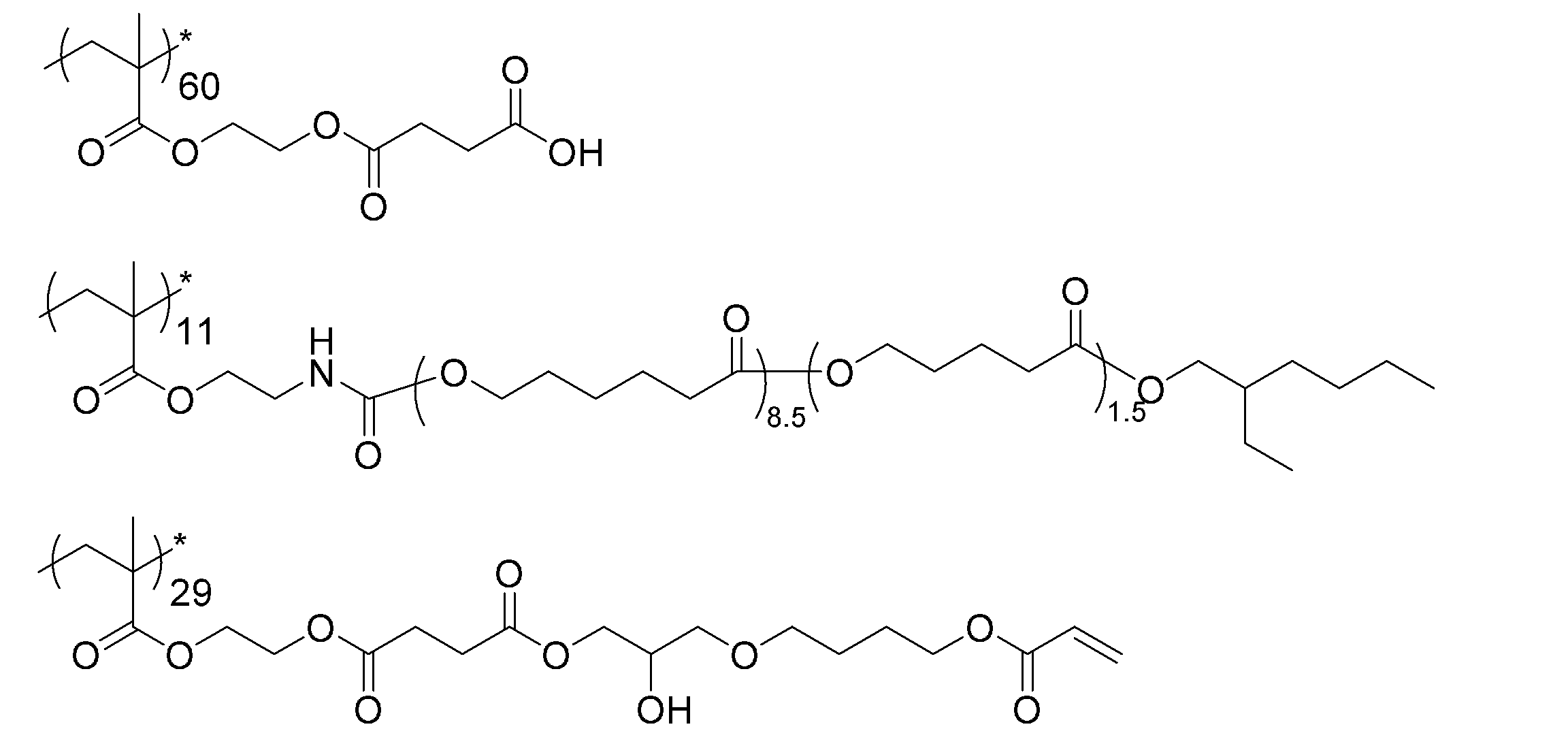
C.I.Pigment Red 254の11.8質量部、C.I.Pigment Yellow 139の3.0質量部、分散剤2の5.2質量部、および、プロピレングリコールモノメチルエーテルアセテート(PGMEA)の80質量部を混合した混合液に、直径0.3mmのジルコニアビーズ230質量部を加えて、ペイントシェーカーを用いて3時間分散処理を行い、ビーズをろ過で分離して顔料分散液A3を調製した。この顔料分散液は、固形分濃度が20質量%であり、顔料含有量が14.8質量%であった。
B1:下記構造の樹脂(主鎖に付記した数値はモル比である。Mw:10,000、酸価:70mgKOH/g)
B2:アクリベースFF-426(藤倉化成(株)製、アルカリ可溶性樹脂)

M1:下記構造の化合物(アクリレートモノマー、ラジカル重合性基価:11.4mmol/g)
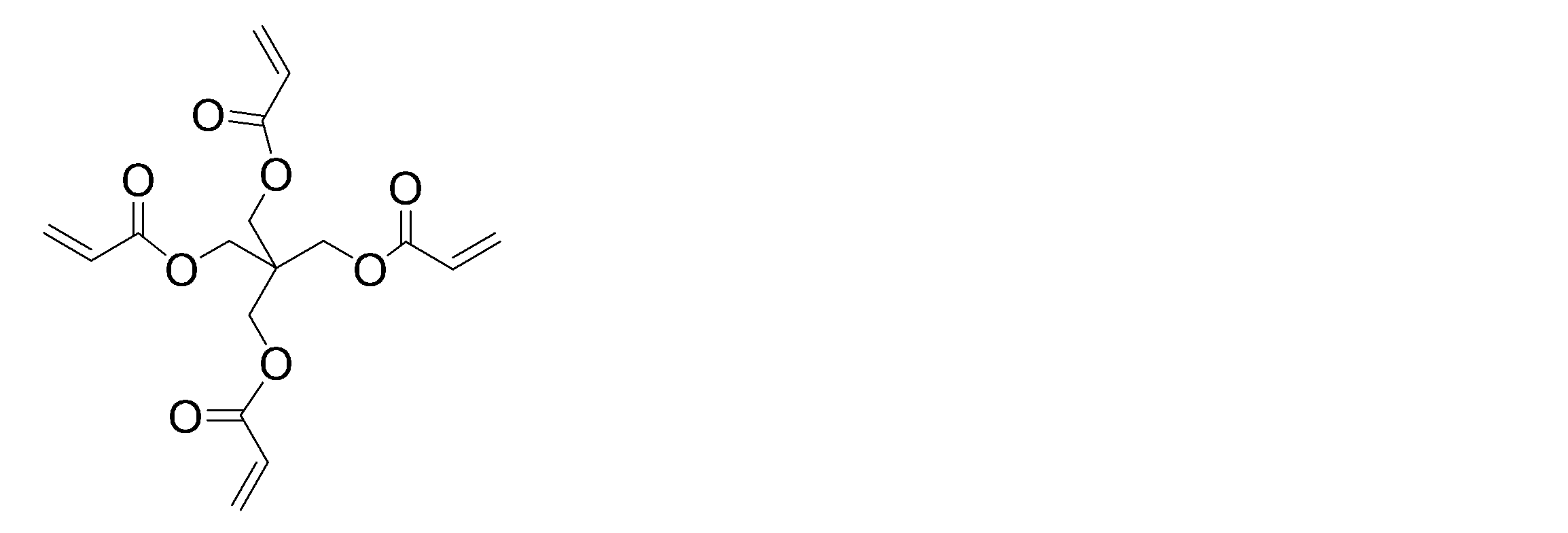
I1:IRGACURE-OXE01(BASF社製、オキシム化合物)
I2:下記構造の化合物(オキシム化合物)

W1:KF-6002(信越シリコーン(株)製)
W2:下記構造の化合物(Mw:14000、繰り返し単位の割合を示す%の数値はモル%である)

CT1:ペンタエリトリトールテトラ(3-メルカプトプロピオナート)
CT2:2,4-ジフェニル-4-メチル-1-ペンテン
CT3:シアノメチルドデシルトリチオカルボナート
CT4:サンセラー M(三新化学工業(株)製、チオール化合物)
CT5:2-シアノ-2-プロピルドデシルトリチオカルボナート
CT6:カレンズMT BD1(昭和電工社(株)製、チオール化合物)
RT1:2,2,6,6-テトラメチルピペリジン1-オキシル
RT2:2,2-ジフェニル-1-ピクリルヒドラジル
RT3:アデカスタブAO-20((株)ADEKA製)
RT4:アデカスタブ LA-52((株)ADEKA製)
RT5:トリフェニルフェルダジル
RT6:アデカスタブAO-60G((株)ADEKA製)
UV1:UV-503(大東化学(株)製、紫外線吸収剤)
上記で得られた各感光性組成物を、下塗り層付き8インチ(203.2mm)のシリコンウェハ上に塗布後の膜厚が0.5μmとなるようにスピンコート法で塗布した。次いで、ホットプレートを用い、100℃で2分間ポストベークした。次いで、KrFスキャナ露光機を用い、0.9μm四方のベイヤーパターンを有するマスクを介して、以下の条件でパルス露光を行った。次いで、水酸化テトラメチルアンモニウム(TMAH)0.3質量%水溶液を用い、23℃で60秒間パドル現像を行った。その後、スピンシャワーにてリンスを行い、さらに純水にて水洗した。次いで、ホットプレートを用い、200℃で5分間加熱(ポストベーク)することで、画素(パターン)を形成した。パルス露光条件は以下の通りである。
露光光:KrF線(波長248nm)
露光量:試験例1~26については200mJ/cm2、試験例R1~R3については200mJ/cm2、250または300mJ/cm2
最大瞬間照度:250000000W/m2(平均照度:30000W/m2)
パルス幅:30ナノ秒
周波数:4kHz
形成された画素(パターン)を走査型電子顕微鏡で観察し、画素の線幅を測定した。下記表に、各露光量に対する形成された画素(パターン)の線幅を記す。
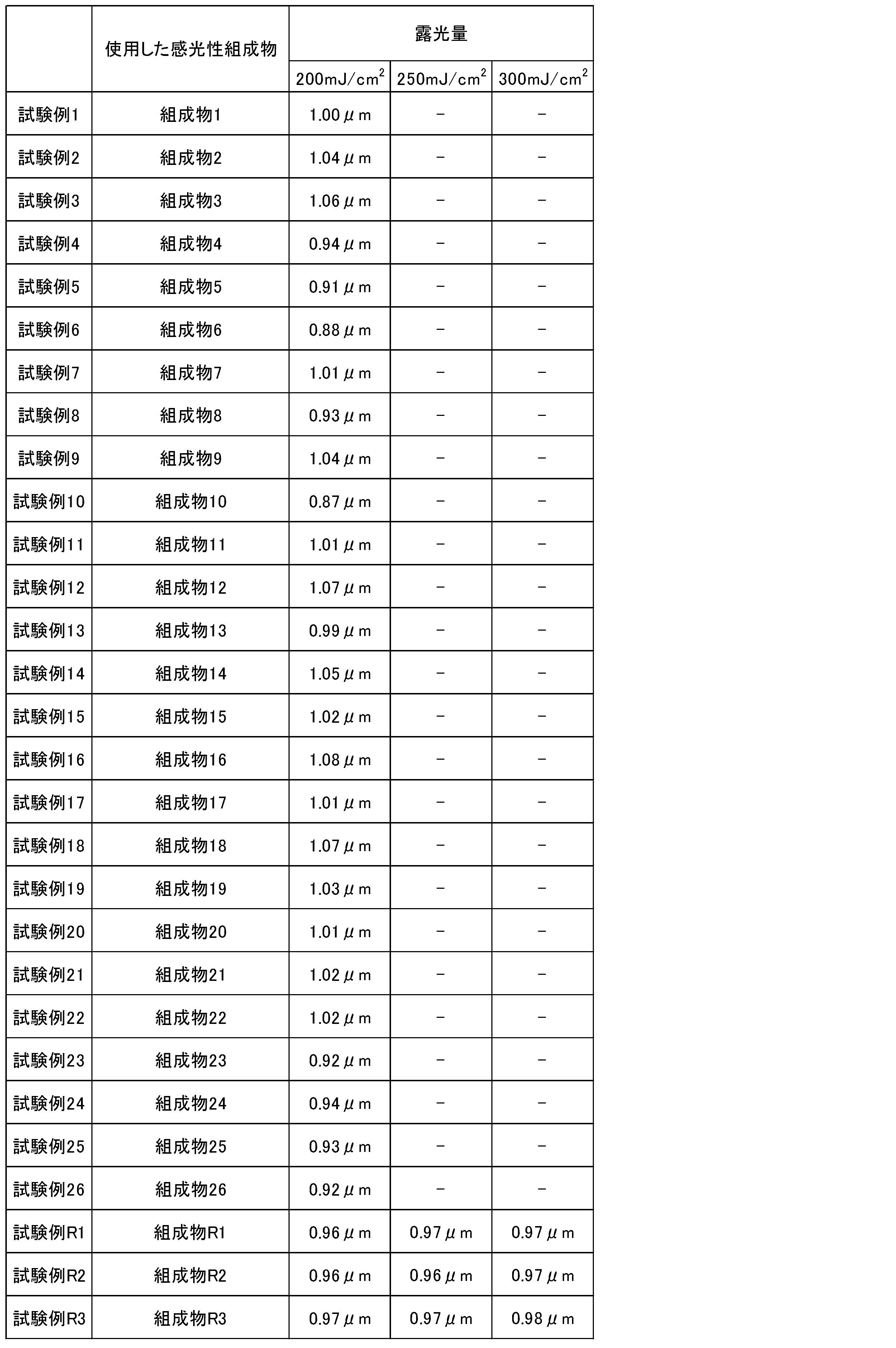
また、試験例1~26によって得られた画素は底部まで十分に硬化しており、試験例R1~R3によって得られた画素と同等の優れた密着性や耐溶剤性などの特性を有していた。
(顔料分散液A100)
C.I.Pigment Green 36の10.7質量部、C.I.Pigment Yellow 185の2.7質量部、顔料誘導体1の1.3質量部、分散剤1の5.3質量部、および、PGMEAの80質量部を混合した混合液に、直径0.3mmのジルコニアビーズ230質量部を加えて、ペイントシェーカーを用いて3時間分散処理を行い、ビーズをろ過で分離して顔料分散液A100を調製した。
Claims (15)
- ラジカル重合性化合物と、
光ラジカル重合開始剤と、
連鎖移動剤およびラジカルトラップ剤から選ばれる少なくとも1種と、
を含む、パルス露光用の感光性組成物。 - さらに色材を含む、請求項1に記載の感光性組成物。
- 前記連鎖移動剤が、チオール化合物、チオカルボニルチオ化合物および芳香族α-メチルアルケニルの二量体から選ばれる少なくとも1種である、請求項1または2に記載の感光性組成物。
- 前記ラジカルトラップ剤が、ヒンダードフェノール化合物、ヒンダードアミン化合物、N-オキシル化合物、ヒドラジル化合物およびフェルダジル化合物から選ばれる少なくとも1種である、請求項1または2に記載の感光性組成物。
- 感光性組成物の全固形分中における前記連鎖移動剤の含有量が0.01~10質量%である、請求項1~4のいずれか1項に記載の感光性組成物。
- 前記ラジカル重合性化合物の100質量部に対して、前記連鎖移動剤を0.1~100質量部含む、請求項1~5のいずれか1項に記載の感光性組成物。
- 前記光ラジカル重合開始剤の100質量部に対して、前記連鎖移動剤を0.2~200質量部含む、請求項1~6のいずれか1項に記載の感光性組成物。
- 感光性組成物の全固形分中における前記ラジカルトラップ剤の含有量が0.01~10質量%である、請求項1~7のいずれか1項に記載の感光性組成物。
- ラジカル重合性化合物の100質量部に対して、ラジカルトラップ剤を0.1~100質量部含む、請求項1~8のいずれか1項に記載の感光性組成物。
- 光ラジカル重合開始剤の100質量部に対して、ラジカルトラップ剤を0.2~200質量部含む、請求項1~9のいずれか1項に記載の感光性組成物。
- 酸基を有する樹脂を含む、請求項1~10のいずれか1項に記載の感光性組成物。
- 波長300nm以下の光でのパルス露光用の感光性組成物である、請求項1~11のいずれか1項に記載の感光性組成物。
- 最大瞬間照度50000000W/m2以上の条件でのパルス露光用の感光性組成物である、請求項1~12のいずれか1項に記載の感光性組成物。
- 固体撮像素子用の感光性組成物である、請求項1~13のいずれか1項に記載の感光性組成物。
- カラーフィルタ用の感光性組成物である、請求項1~13のいずれか1項に記載の感光性組成物。
Priority Applications (8)
| Application Number | Priority Date | Filing Date | Title |
|---|---|---|---|
| CN201980018463.1A CN111868626A (zh) | 2018-03-26 | 2019-03-20 | 感光性组合物 |
| JP2020510777A JPWO2019188652A1 (ja) | 2018-03-26 | 2019-03-20 | 感光性組成物 |
| KR1020247019540A KR102803975B1 (ko) | 2018-03-26 | 2019-03-20 | 감광성 조성물 |
| CN202510038011.7A CN119805864A (zh) | 2018-03-26 | 2019-03-20 | 感光性组合物 |
| KR1020207026832A KR20200122356A (ko) | 2018-03-26 | 2019-03-20 | 감광성 조성물 |
| US17/006,237 US20200392344A1 (en) | 2018-03-26 | 2020-08-28 | Photosensitive composition |
| JP2022121041A JP7462708B2 (ja) | 2018-03-26 | 2022-07-29 | 感光性組成物 |
| JP2024045378A JP7728913B2 (ja) | 2018-03-26 | 2024-03-21 | 感光性組成物 |
Applications Claiming Priority (2)
| Application Number | Priority Date | Filing Date | Title |
|---|---|---|---|
| JP2018-058035 | 2018-03-26 | ||
| JP2018058035 | 2018-03-26 |
Related Child Applications (1)
| Application Number | Title | Priority Date | Filing Date |
|---|---|---|---|
| US17/006,237 Continuation US20200392344A1 (en) | 2018-03-26 | 2020-08-28 | Photosensitive composition |
Publications (1)
| Publication Number | Publication Date |
|---|---|
| WO2019188652A1 true WO2019188652A1 (ja) | 2019-10-03 |
Family
ID=68058170
Family Applications (1)
| Application Number | Title | Priority Date | Filing Date |
|---|---|---|---|
| PCT/JP2019/011681 Ceased WO2019188652A1 (ja) | 2018-03-26 | 2019-03-20 | 感光性組成物 |
Country Status (6)
| Country | Link |
|---|---|
| US (1) | US20200392344A1 (ja) |
| JP (3) | JPWO2019188652A1 (ja) |
| KR (2) | KR102803975B1 (ja) |
| CN (2) | CN119805864A (ja) |
| TW (2) | TWI877616B (ja) |
| WO (1) | WO2019188652A1 (ja) |
Cited By (4)
| Publication number | Priority date | Publication date | Assignee | Title |
|---|---|---|---|---|
| JP2020139071A (ja) * | 2019-02-28 | 2020-09-03 | コニカミノルタ株式会社 | 活性光線硬化型インクジェットインク |
| JPWO2021049241A1 (ja) * | 2019-09-13 | 2021-03-18 | ||
| WO2022181403A1 (ja) * | 2021-02-24 | 2022-09-01 | 株式会社Dnpファインケミカル | 感光性着色樹脂組成物、硬化物、カラーフィルタ、及び表示装置 |
| JP2022141965A (ja) * | 2018-03-26 | 2022-09-29 | 富士フイルム株式会社 | 感光性組成物 |
Families Citing this family (3)
| Publication number | Priority date | Publication date | Assignee | Title |
|---|---|---|---|---|
| JP7186249B2 (ja) * | 2021-01-19 | 2022-12-08 | 凸版印刷株式会社 | 光学フィルム、これを用いた表示装置、光学フィルムの製造に用いる着色層形成用組成物 |
| JP2022110814A (ja) * | 2021-01-19 | 2022-07-29 | 凸版印刷株式会社 | 光学フィルム、これを用いた表示装置、光学フィルムの製造に用いる紫外線吸収層形成用組成物 |
| JP7088352B1 (ja) * | 2021-03-12 | 2022-06-21 | 凸版印刷株式会社 | 光学フィルムおよび表示装置 |
Citations (4)
| Publication number | Priority date | Publication date | Assignee | Title |
|---|---|---|---|---|
| JP2011227311A (ja) * | 2010-04-20 | 2011-11-10 | Fujifilm Corp | 着色感光性樹脂組成物、パターン形成方法、カラーフィルタの製造方法、カラーフィルタ及びそれを備えた表示装置 |
| JP2012008262A (ja) * | 2010-06-23 | 2012-01-12 | Fujifilm Corp | 着色感光性樹脂組成物、パターン形成方法、カラーフィルタの製造方法、カラーフィルタ、およびそれを備えた表示装置 |
| JP2012113104A (ja) * | 2010-11-24 | 2012-06-14 | Fujifilm Corp | 着色感光性樹脂組成物、パターン形成方法、カラーフィルタの製造方法、カラーフィルタ及びそれを備えた表示装置 |
| JP2012194516A (ja) * | 2010-04-27 | 2012-10-11 | Fujifilm Corp | 着色感光性樹脂組成物、パターン形成方法、カラーフィルタの製造方法、カラーフィルタ及びそれを備えた表示装置 |
Family Cites Families (25)
| Publication number | Priority date | Publication date | Assignee | Title |
|---|---|---|---|---|
| EP1783548B1 (en) * | 2005-11-08 | 2017-03-08 | Rohm and Haas Electronic Materials LLC | Method of forming a patterned layer on a substrate |
| JP2007334322A (ja) * | 2006-05-17 | 2007-12-27 | Fujifilm Corp | パターン形成方法、カラーフィルタ、構造材、及び液晶表示装置 |
| EP2058702A1 (en) * | 2006-08-25 | 2009-05-13 | National University Corporation The University of Electro - Communications | Photosensitive composition comprising organic-zirconia composite microparticle |
| JP5130230B2 (ja) * | 2007-02-05 | 2013-01-30 | 新日鉄住金化学株式会社 | 体積位相型ホログラム記録材料及び光情報記録媒体 |
| JP2009063895A (ja) * | 2007-09-07 | 2009-03-26 | Fujifilm Corp | 硬化性組成物、これを用いたカラーフィルタ及びその製造方法 |
| JP2010015063A (ja) * | 2008-07-04 | 2010-01-21 | Fujifilm Corp | 着色感光性樹脂組成物、カラーフィルタ、及びカラーフィルタの製造方法 |
| TW201009498A (en) * | 2008-07-07 | 2010-03-01 | Fujifilm Corp | Colored photosensitive resin composition, method of forming pattern using ultraviolet laser, method of producing color filter using the pattern forming method, color filter, and display device |
| JP2010235739A (ja) * | 2009-03-31 | 2010-10-21 | Toyo Ink Mfg Co Ltd | 感光性黒色組成物 |
| JP5388284B2 (ja) * | 2009-05-26 | 2014-01-15 | 三菱レイヨン株式会社 | 硬化性組成物、及び物品 |
| KR101573937B1 (ko) | 2009-07-02 | 2015-12-03 | 동우 화인켐 주식회사 | 초단파장 노광기를 이용한 고체 촬상 소자용 컬러 필터의 제조방법, 그 방법에 의해 제조된 컬러 필터 및 이를 포함하는 고체 촬상 소자 |
| KR20110002607A (ko) * | 2009-07-02 | 2011-01-10 | 동우 화인켐 주식회사 | 300nm 이하의 초단파장 노광기를 이용한 고체 촬상 소자의 컬러 필터 제조용 착색 감광성 수지 조성물, 이를 이용한 컬러 필터 및 이를 포함하는 고체 촬상 소자 |
| CN102770809A (zh) | 2009-07-02 | 2012-11-07 | 东友精细化工有限公司 | 用于制备利用300nm以下超短波长曝光器的固体摄像元件的彩色滤光片的着色感光性树脂组合物、利用其的彩色滤光片以及含有该彩色滤光片的固体摄像元件 |
| JP5535814B2 (ja) * | 2009-09-14 | 2014-07-02 | 富士フイルム株式会社 | 光重合性組成物、カラーフィルタ、及びその製造方法、固体撮像素子、液晶表示装置、平版印刷版原版、並びに、新規化合物 |
| JP5660774B2 (ja) * | 2009-11-04 | 2015-01-28 | 住友化学株式会社 | 着色感光性樹脂組成物、塗膜、パターン及び表示装置 |
| TWI438570B (zh) * | 2010-03-11 | 2014-05-21 | Toyo Ink Mfg Co | 感光性著色組合物及濾色器 |
| JP5657452B2 (ja) * | 2010-05-07 | 2015-01-21 | 富士フイルム株式会社 | 着色感光性組成物、カラーフィルタの製造方法、カラーフィルタ、及び液晶表示装置 |
| US9051397B2 (en) * | 2010-10-05 | 2015-06-09 | Basf Se | Oxime ester |
| TW201222413A (en) * | 2010-11-22 | 2012-06-01 | Hon Hai Prec Ind Co Ltd | System and method for updating firmware of a baseboard management controller |
| JP5646426B2 (ja) * | 2011-09-30 | 2014-12-24 | 富士フイルム株式会社 | 着色感光性組成物、カラーフィルタ及びその製造方法、並びに液晶表示装置 |
| BR112014016337A8 (pt) * | 2012-01-31 | 2017-07-04 | Agfa Gevaert | impressão com tinta a jato de tinta curável por radiação e resistente ao ataque químico |
| JP2014186066A (ja) * | 2013-03-22 | 2014-10-02 | Nippon Kayaku Co Ltd | 着色樹脂組成物 |
| KR101840528B1 (ko) * | 2013-03-29 | 2018-03-20 | 도오꾜오까고오교 가부시끼가이샤 | 비닐기 함유 플루오렌계 화합물 |
| JP7106244B2 (ja) * | 2015-10-29 | 2022-07-26 | 三菱ケミカル株式会社 | 粘着剤組成物、それを用いて得られる剥離性粘着剤、剥離性粘着シート、およびその剥離性粘着シートの使用方法 |
| KR102208741B1 (ko) * | 2016-05-27 | 2021-01-28 | 후지필름 가부시키가이샤 | 경화성 조성물, 경화막, 컬러 필터, 차광막, 고체 촬상 소자, 화상 표시 장치, 및 경화막의 제조 방법 |
| CN119805864A (zh) * | 2018-03-26 | 2025-04-11 | 富士胶片株式会社 | 感光性组合物 |
-
2019
- 2019-03-20 CN CN202510038011.7A patent/CN119805864A/zh active Pending
- 2019-03-20 WO PCT/JP2019/011681 patent/WO2019188652A1/ja not_active Ceased
- 2019-03-20 CN CN201980018463.1A patent/CN111868626A/zh active Pending
- 2019-03-20 KR KR1020247019540A patent/KR102803975B1/ko active Active
- 2019-03-20 KR KR1020207026832A patent/KR20200122356A/ko not_active Ceased
- 2019-03-20 JP JP2020510777A patent/JPWO2019188652A1/ja active Pending
- 2019-03-21 TW TW112116113A patent/TWI877616B/zh active
- 2019-03-21 TW TW108109861A patent/TWI803599B/zh active
-
2020
- 2020-08-28 US US17/006,237 patent/US20200392344A1/en not_active Abandoned
-
2022
- 2022-07-29 JP JP2022121041A patent/JP7462708B2/ja active Active
-
2024
- 2024-03-21 JP JP2024045378A patent/JP7728913B2/ja active Active
Patent Citations (4)
| Publication number | Priority date | Publication date | Assignee | Title |
|---|---|---|---|---|
| JP2011227311A (ja) * | 2010-04-20 | 2011-11-10 | Fujifilm Corp | 着色感光性樹脂組成物、パターン形成方法、カラーフィルタの製造方法、カラーフィルタ及びそれを備えた表示装置 |
| JP2012194516A (ja) * | 2010-04-27 | 2012-10-11 | Fujifilm Corp | 着色感光性樹脂組成物、パターン形成方法、カラーフィルタの製造方法、カラーフィルタ及びそれを備えた表示装置 |
| JP2012008262A (ja) * | 2010-06-23 | 2012-01-12 | Fujifilm Corp | 着色感光性樹脂組成物、パターン形成方法、カラーフィルタの製造方法、カラーフィルタ、およびそれを備えた表示装置 |
| JP2012113104A (ja) * | 2010-11-24 | 2012-06-14 | Fujifilm Corp | 着色感光性樹脂組成物、パターン形成方法、カラーフィルタの製造方法、カラーフィルタ及びそれを備えた表示装置 |
Cited By (10)
| Publication number | Priority date | Publication date | Assignee | Title |
|---|---|---|---|---|
| JP2022141965A (ja) * | 2018-03-26 | 2022-09-29 | 富士フイルム株式会社 | 感光性組成物 |
| JP2020139071A (ja) * | 2019-02-28 | 2020-09-03 | コニカミノルタ株式会社 | 活性光線硬化型インクジェットインク |
| JP7163822B2 (ja) | 2019-02-28 | 2022-11-01 | コニカミノルタ株式会社 | 活性光線硬化型インクジェットインク |
| JPWO2021049241A1 (ja) * | 2019-09-13 | 2021-03-18 | ||
| WO2021049241A1 (ja) * | 2019-09-13 | 2021-03-18 | 旭化成株式会社 | 感光性樹脂組成物、及び感光性エレメント |
| KR20220035454A (ko) * | 2019-09-13 | 2022-03-22 | 아사히 가세이 가부시키가이샤 | 감광성 수지 조성물, 및 감광성 엘리먼트 |
| JP7223864B2 (ja) | 2019-09-13 | 2023-02-16 | 旭化成株式会社 | 感光性樹脂組成物、及び感光性エレメント |
| KR102730592B1 (ko) * | 2019-09-13 | 2024-11-14 | 아사히 가세이 가부시키가이샤 | 감광성 수지 조성물, 및 감광성 엘리먼트 |
| WO2022181403A1 (ja) * | 2021-02-24 | 2022-09-01 | 株式会社Dnpファインケミカル | 感光性着色樹脂組成物、硬化物、カラーフィルタ、及び表示装置 |
| JPWO2022181403A1 (ja) * | 2021-02-24 | 2022-09-01 |
Also Published As
| Publication number | Publication date |
|---|---|
| TW201940969A (zh) | 2019-10-16 |
| TW202334754A (zh) | 2023-09-01 |
| JP2022141965A (ja) | 2022-09-29 |
| JP2024074823A (ja) | 2024-05-31 |
| TWI877616B (zh) | 2025-03-21 |
| JPWO2019188652A1 (ja) | 2021-02-18 |
| CN119805864A (zh) | 2025-04-11 |
| JP7728913B2 (ja) | 2025-08-25 |
| JP7462708B2 (ja) | 2024-04-05 |
| TWI803599B (zh) | 2023-06-01 |
| KR102803975B1 (ko) | 2025-05-09 |
| KR20240096881A (ko) | 2024-06-26 |
| KR20200122356A (ko) | 2020-10-27 |
| US20200392344A1 (en) | 2020-12-17 |
| CN111868626A (zh) | 2020-10-30 |
Similar Documents
| Publication | Publication Date | Title |
|---|---|---|
| JP7462708B2 (ja) | 感光性組成物 | |
| JP7074838B2 (ja) | 感光性組成物 | |
| JP7516477B2 (ja) | 光学フィルタの製造方法 | |
| JP2022167942A (ja) | 着色感光性組成物および光学フィルタの製造方法 | |
| JP7075477B2 (ja) | 感光性組成物 | |
| JP7297119B2 (ja) | 感光性組成物 | |
| WO2019188653A1 (ja) | 感光性組成物 |
Legal Events
| Date | Code | Title | Description |
|---|---|---|---|
| 121 | Ep: the epo has been informed by wipo that ep was designated in this application |
Ref document number: 19775439 Country of ref document: EP Kind code of ref document: A1 |
|
| ENP | Entry into the national phase |
Ref document number: 2020510777 Country of ref document: JP Kind code of ref document: A |
|
| ENP | Entry into the national phase |
Ref document number: 20207026832 Country of ref document: KR Kind code of ref document: A |
|
| NENP | Non-entry into the national phase |
Ref country code: DE |
|
| 122 | Ep: pct application non-entry in european phase |
Ref document number: 19775439 Country of ref document: EP Kind code of ref document: A1 |