WO2019107012A1 - 異常報知装置、記録媒体及び異常報知方法 - Google Patents
異常報知装置、記録媒体及び異常報知方法 Download PDFInfo
- Publication number
- WO2019107012A1 WO2019107012A1 PCT/JP2018/039211 JP2018039211W WO2019107012A1 WO 2019107012 A1 WO2019107012 A1 WO 2019107012A1 JP 2018039211 W JP2018039211 W JP 2018039211W WO 2019107012 A1 WO2019107012 A1 WO 2019107012A1
- Authority
- WO
- WIPO (PCT)
- Prior art keywords
- user
- state
- biological information
- unit
- abnormality
- Prior art date
- Legal status (The legal status is an assumption and is not a legal conclusion. Google has not performed a legal analysis and makes no representation as to the accuracy of the status listed.)
- Ceased
Links
Images





Classifications
-
- A—HUMAN NECESSITIES
- A61—MEDICAL OR VETERINARY SCIENCE; HYGIENE
- A61B—DIAGNOSIS; SURGERY; IDENTIFICATION
- A61B5/00—Measuring for diagnostic purposes; Identification of persons
- A61B5/02—Detecting, measuring or recording for evaluating the cardiovascular system, e.g. pulse, heart rate, blood pressure or blood flow
- A61B5/024—Measuring pulse rate or heart rate
- A61B5/0245—Measuring pulse rate or heart rate by using sensing means generating electric signals, i.e. ECG signals
-
- A—HUMAN NECESSITIES
- A61—MEDICAL OR VETERINARY SCIENCE; HYGIENE
- A61B—DIAGNOSIS; SURGERY; IDENTIFICATION
- A61B5/00—Measuring for diagnostic purposes; Identification of persons
- A61B5/103—Measuring devices for testing the shape, pattern, colour, size or movement of the body or parts thereof, for diagnostic purposes
- A61B5/11—Measuring movement of the entire body or parts thereof, e.g. head or hand tremor or mobility of a limb
- A61B5/1102—Ballistocardiography
-
- A—HUMAN NECESSITIES
- A61—MEDICAL OR VETERINARY SCIENCE; HYGIENE
- A61B—DIAGNOSIS; SURGERY; IDENTIFICATION
- A61B5/00—Measuring for diagnostic purposes; Identification of persons
- A61B5/02—Detecting, measuring or recording for evaluating the cardiovascular system, e.g. pulse, heart rate, blood pressure or blood flow
- A61B5/024—Measuring pulse rate or heart rate
-
- A—HUMAN NECESSITIES
- A61—MEDICAL OR VETERINARY SCIENCE; HYGIENE
- A61B—DIAGNOSIS; SURGERY; IDENTIFICATION
- A61B5/00—Measuring for diagnostic purposes; Identification of persons
- A61B5/08—Measuring devices for evaluating the respiratory organs
- A61B5/0816—Measuring devices for examining respiratory frequency
-
- A—HUMAN NECESSITIES
- A61—MEDICAL OR VETERINARY SCIENCE; HYGIENE
- A61B—DIAGNOSIS; SURGERY; IDENTIFICATION
- A61B5/00—Measuring for diagnostic purposes; Identification of persons
- A61B5/103—Measuring devices for testing the shape, pattern, colour, size or movement of the body or parts thereof, for diagnostic purposes
- A61B5/11—Measuring movement of the entire body or parts thereof, e.g. head or hand tremor or mobility of a limb
-
- A—HUMAN NECESSITIES
- A61—MEDICAL OR VETERINARY SCIENCE; HYGIENE
- A61B—DIAGNOSIS; SURGERY; IDENTIFICATION
- A61B5/00—Measuring for diagnostic purposes; Identification of persons
- A61B5/103—Measuring devices for testing the shape, pattern, colour, size or movement of the body or parts thereof, for diagnostic purposes
- A61B5/11—Measuring movement of the entire body or parts thereof, e.g. head or hand tremor or mobility of a limb
- A61B5/1113—Local tracking of patients, e.g. in a hospital or private home
- A61B5/1115—Monitoring leaving of a patient support, e.g. a bed or a wheelchair
-
- A—HUMAN NECESSITIES
- A61—MEDICAL OR VETERINARY SCIENCE; HYGIENE
- A61B—DIAGNOSIS; SURGERY; IDENTIFICATION
- A61B5/00—Measuring for diagnostic purposes; Identification of persons
- A61B5/103—Measuring devices for testing the shape, pattern, colour, size or movement of the body or parts thereof, for diagnostic purposes
- A61B5/11—Measuring movement of the entire body or parts thereof, e.g. head or hand tremor or mobility of a limb
- A61B5/1118—Determining activity level
-
- A—HUMAN NECESSITIES
- A61—MEDICAL OR VETERINARY SCIENCE; HYGIENE
- A61B—DIAGNOSIS; SURGERY; IDENTIFICATION
- A61B5/00—Measuring for diagnostic purposes; Identification of persons
- A61B5/48—Other medical applications
- A61B5/4806—Sleep evaluation
- A61B5/4809—Sleep detection, i.e. determining whether a subject is asleep or not
-
- A—HUMAN NECESSITIES
- A61—MEDICAL OR VETERINARY SCIENCE; HYGIENE
- A61B—DIAGNOSIS; SURGERY; IDENTIFICATION
- A61B5/00—Measuring for diagnostic purposes; Identification of persons
- A61B5/68—Arrangements of detecting, measuring or recording means, e.g. sensors, in relation to patient
- A61B5/6887—Arrangements of detecting, measuring or recording means, e.g. sensors, in relation to patient mounted on external non-worn devices, e.g. non-medical devices
- A61B5/6891—Furniture
-
- A—HUMAN NECESSITIES
- A61—MEDICAL OR VETERINARY SCIENCE; HYGIENE
- A61B—DIAGNOSIS; SURGERY; IDENTIFICATION
- A61B5/00—Measuring for diagnostic purposes; Identification of persons
- A61B5/74—Details of notification to user or communication with user or patient; User input means
- A61B5/746—Alarms related to a physiological condition, e.g. details of setting alarm thresholds or avoiding false alarms
-
- G—PHYSICS
- G08—SIGNALLING
- G08B—SIGNALLING SYSTEMS, e.g. PERSONAL CALLING SYSTEMS; ORDER TELEGRAPHS; ALARM SYSTEMS
- G08B21/00—Alarms responsive to a single specified undesired or abnormal condition and not otherwise provided for
- G08B21/02—Alarms for ensuring the safety of persons
-
- G—PHYSICS
- G08—SIGNALLING
- G08B—SIGNALLING SYSTEMS, e.g. PERSONAL CALLING SYSTEMS; ORDER TELEGRAPHS; ALARM SYSTEMS
- G08B21/00—Alarms responsive to a single specified undesired or abnormal condition and not otherwise provided for
- G08B21/18—Status alarms
- G08B21/22—Status alarms responsive to presence or absence of persons
-
- G—PHYSICS
- G08—SIGNALLING
- G08B—SIGNALLING SYSTEMS, e.g. PERSONAL CALLING SYSTEMS; ORDER TELEGRAPHS; ALARM SYSTEMS
- G08B25/00—Alarm systems in which the location of the alarm condition is signalled to a central station, e.g. fire or police telegraphic systems
- G08B25/01—Alarm systems in which the location of the alarm condition is signalled to a central station, e.g. fire or police telegraphic systems characterised by the transmission medium
- G08B25/04—Alarm systems in which the location of the alarm condition is signalled to a central station, e.g. fire or police telegraphic systems characterised by the transmission medium using a single signalling line, e.g. in a closed loop
-
- A—HUMAN NECESSITIES
- A61—MEDICAL OR VETERINARY SCIENCE; HYGIENE
- A61B—DIAGNOSIS; SURGERY; IDENTIFICATION
- A61B5/00—Measuring for diagnostic purposes; Identification of persons
- A61B5/0002—Remote monitoring of patients using telemetry, e.g. transmission of vital signals via a communication network
- A61B5/0015—Remote monitoring of patients using telemetry, e.g. transmission of vital signals via a communication network characterised by features of the telemetry system
- A61B5/002—Monitoring the patient using a local or closed circuit, e.g. in a room or building
-
- A—HUMAN NECESSITIES
- A61—MEDICAL OR VETERINARY SCIENCE; HYGIENE
- A61B—DIAGNOSIS; SURGERY; IDENTIFICATION
- A61B5/00—Measuring for diagnostic purposes; Identification of persons
- A61B5/02—Detecting, measuring or recording for evaluating the cardiovascular system, e.g. pulse, heart rate, blood pressure or blood flow
- A61B5/024—Measuring pulse rate or heart rate
- A61B5/02405—Determining heart rate variability
-
- A—HUMAN NECESSITIES
- A61—MEDICAL OR VETERINARY SCIENCE; HYGIENE
- A61B—DIAGNOSIS; SURGERY; IDENTIFICATION
- A61B5/00—Measuring for diagnostic purposes; Identification of persons
- A61B5/103—Measuring devices for testing the shape, pattern, colour, size or movement of the body or parts thereof, for diagnostic purposes
- A61B5/11—Measuring movement of the entire body or parts thereof, e.g. head or hand tremor or mobility of a limb
- A61B5/1116—Determining posture transitions
-
- A—HUMAN NECESSITIES
- A61—MEDICAL OR VETERINARY SCIENCE; HYGIENE
- A61B—DIAGNOSIS; SURGERY; IDENTIFICATION
- A61B5/00—Measuring for diagnostic purposes; Identification of persons
- A61B5/103—Measuring devices for testing the shape, pattern, colour, size or movement of the body or parts thereof, for diagnostic purposes
- A61B5/11—Measuring movement of the entire body or parts thereof, e.g. head or hand tremor or mobility of a limb
- A61B5/113—Measuring movement of the entire body or parts thereof, e.g. head or hand tremor or mobility of a limb occurring during breathing
-
- A—HUMAN NECESSITIES
- A61—MEDICAL OR VETERINARY SCIENCE; HYGIENE
- A61B—DIAGNOSIS; SURGERY; IDENTIFICATION
- A61B5/00—Measuring for diagnostic purposes; Identification of persons
- A61B5/48—Other medical applications
- A61B5/4806—Sleep evaluation
- A61B5/4812—Detecting sleep stages or cycles
-
- A—HUMAN NECESSITIES
- A61—MEDICAL OR VETERINARY SCIENCE; HYGIENE
- A61B—DIAGNOSIS; SURGERY; IDENTIFICATION
- A61B5/00—Measuring for diagnostic purposes; Identification of persons
- A61B5/48—Other medical applications
- A61B5/4806—Sleep evaluation
- A61B5/4818—Sleep apnoea
-
- A—HUMAN NECESSITIES
- A61—MEDICAL OR VETERINARY SCIENCE; HYGIENE
- A61B—DIAGNOSIS; SURGERY; IDENTIFICATION
- A61B5/00—Measuring for diagnostic purposes; Identification of persons
- A61B5/72—Signal processing specially adapted for physiological signals or for diagnostic purposes
- A61B5/7235—Details of waveform analysis
- A61B5/7264—Classification of physiological signals or data, e.g. using neural networks, statistical classifiers, expert systems or fuzzy systems
- A61B5/7267—Classification of physiological signals or data, e.g. using neural networks, statistical classifiers, expert systems or fuzzy systems involving training the classification device
Definitions
- the present invention relates to an abnormality notification device, a recording medium, and an abnormality notification method.
- Patent Document 1 the living activity and life activity of the user are detected by the noninvasive vital sensor and classified into a plurality, and the allowable continuation time for each classification is sequentially integrated, and the integration time exceeds the threshold
- Patent Document 2 the living activity and life activity of the user are detected by the noninvasive vital sensor and classified into a plurality, and the allowable continuation time for each classification is sequentially integrated, and the integration time exceeds the threshold
- Patent Document 1 the living activity and life activity of the user are detected by the noninvasive vital sensor and classified into a plurality, and the allowable continuation time for each classification is sequentially integrated, and the integration time exceeds the threshold
- the invention of notifying a caregiver is known.
- a system that reports an abnormality of a user determines whether the user is abnormal based on whether a measurement value (biological information value) associated with the abnormality of the user exceeds a threshold. And it is common to notify staff, such as a medical worker, and a carer based on the decision result of whether it is abnormal or not.
- a measurement value biological information value
- staff such as a medical worker
- a carer based on the decision result of whether it is abnormal or not.
- the strength of the association with the user's state or abnormality it is determined that the life activity or life activity accumulated time exceeds the predetermined threshold as an abnormality. Report to the caregiver based on the determination result.
- the accuracy with which it is determined to be abnormal decreases, and the strength of the association between life activity and life activity and the abnormality changes. Therefore, regardless of the user's condition or the like, if it is simply determined to be abnormal only by the user's biometric information value, it may be notified without reliability.
- the conventional system for reporting an abnormality of a user sets a normal range of strong vital information values related to the user's condition such as heart rate and respiratory rate, and the user is abnormal when exceeding the normal range. Determine that there is. In this case, the system misses an abnormality if the biological information value does not deviate from the normal range.
- the system erroneously determines that the user's heart rate is abnormal if exercised temporarily. However, when the user is an athlete with high cardiopulmonary function, the system may erroneously determine that the heart rate is low even during normal times. Similarly, depending on the user, the system may not be determined to be abnormal because the user may not deviate from the normal range even when abnormal.
- the conventional system determines the abnormality only by the fact that the biometric information value of the user deviates from the normal range. Therefore, when the system informs a caregiver or the like that the user is abnormal, there have been cases in which false alarms or missed abnormalities tend to be frequent.
- the present invention aims to provide an abnormality notification device or the like capable of accurately inferring the state of the user based on the biological information value of the user.
- a biological signal acquisition unit that acquires a biological signal on the user's bed, a biological information value calculation unit that calculates multiple types of biological information values from the acquired biological signal, and Providing an estimation unit that estimates the state of the user based on multiple types of biological information values; and a notification unit that notifies when the state of the user is determined to be abnormal by the estimation unit.
- the computer-readable recording medium of the present invention comprises the steps of acquiring a biological signal on a user's bed, calculating a plurality of types of biological information values from the acquired biological signal, and For causing a computer to execute processing including a step of estimating the state of the user based on a biological information value and a step of notifying when the state of the user is determined to be abnormal by the estimation function I have recorded a program.
- the abnormality notification method is the abnormality notification method in the abnormality notification device capable of notifying an abnormality when it is determined that the state of the user is abnormal, wherein the abnormality notification device is configured to output a biological signal on the user's bed.
- the method further comprises: an estimation step of estimating the condition of the person by the abnormality notification device; and a notification step of notifying the abnormality notification device when the user's condition is determined to be abnormal by the estimation step.
- the biological information value is calculated from the biological signal in the bed of the user, and the state of the user is estimated based on the biological information value. Then, when it is determined that the state of the user is abnormal, notification is performed. That is, by utilizing the biological information at the time of lying down of the user, it is possible to appropriately infer the state of the user, and it becomes possible to notify an abnormality at the same time.
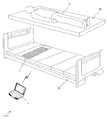
- FIG. 1 is a view for explaining the overall outline of a system 1 to which the present invention is applied.
- the system 1 comprises a floor of the bed 10, a detection device 3 placed between the mattress 20, and a processing device 5 for processing the values output from the detection device 3 Is configured.
- the detection device 3 and the processing device 5 constitute an output device of biological information.
- the detection device 3 detects body vibration (vibration generated from the human body) as a biological signal of the user P when the user P is on the mattress 20. Then, the detection device 3 calculates the biological information value of the user P based on the detected vibration. In the present embodiment, the detection device 3 can output the calculated biological information value (at least the respiration rate, the heart rate, and the amount of activity) as the biological information value of the user P. Alternatively, the detection device 3 may detect a vibration, and the processing device 5 may calculate a biological information value. The processing device 5 can output and display the biological information value.
- the detection device 3 and the processing device 5 may be integrally configured by providing the detection device 3 with a storage unit, a display unit, and the like.
- the processing device 5 may be a general-purpose device, the processing device 5 is not limited to an information processing device such as a computer, and may be configured by a device such as a tablet or a smartphone.
- the user may be a user of the bed apparatus and may be a person (patient) who is in medical treatment or a person who needs care (cared person). Also, the user may be a healthy person who does not require care, an elderly person, a child, a disabled person, or a person or an animal.
- the detection device 3 is configured in a sheet shape so as to be thinner. Thereby, even if placed between the bed 10 and the mattress 20, it can be used without making the user P feel uncomfortable. Thereby, the detection device 3 measures the biological information value on the bed for a long period of time (for example, a predetermined period such as one hour or more, eight hours or more, overnight, one sleep, one week, one month, one month, one year, ten years It will be possible to measure for a predetermined period such as a year or more.
- a predetermined period such as one hour or more, eight hours or more, overnight, one sleep, one week, one month, one month, one year, ten years It will be possible to measure for a predetermined period such as a year or more.
- the detection device 3 has a function of determining the reliability of the measured body vibration data and recording only highly reliable data.
- JP-A-2010-264193 title of the invention: sleep state determination device, program and sleep state determination system, filing date: May 18, 2009
- JP-A-2015-12948 title of the invention: sleep evaluation device, sleep evaluation method, and sleep evaluation program, filing date: July 4, 2013.
- This patent application is incorporated in its entirety by reference.
- the detection apparatus 3 should just be able to acquire the user's P biological signal (a body movement, a respiratory movement, a heart rhythm etc.).
- the detection device 3 calculates the heart rate and the respiration rate based on the body vibration.
- the detection device 3 acquires a user's biological signal using, for example, an infrared sensor, acquires a user's biological signal by using an acquired image, or uses an actuator with a strain gauge. You may acquire a biosignal.
- the detection device 3 may be realized by a smartphone, a tablet or the like. In this case, the detection device 3 acquires a biological signal using an acceleration sensor or the like built in a smartphone or a tablet.
- bed is a place where a patient who is a user sleeps.
- the term “bed” generally refers to a mattress placed on the bottom of the bed apparatus or on the bottom, on an air cell, on a futon, or the like.
- a bed if a bed is a place where a patient sleeps, it shall include a broad term such as a seat for a car and a sofa.
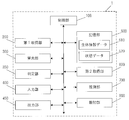
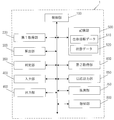
- the functional configuration of the system 1 will be described with reference to FIG.
- the system 1 in the present embodiment is configured to include the detection device 3 and the processing device 5, and each functional unit (process) may be realized by any means other than the first acquisition unit 200. That is, by combining these devices, the device functions as an abnormality notification device.
- the medical staff, the care facility staff, and the user's family are the destinations notified when the system 1 has an abnormal condition of the user. These include medical staff, nursing home staff, users' families, etc. Further, as a method of notifying the staff of the state of the user, the system 1 may simply notify by sound or screen display, or may notify the portable terminal device by e-mail or the like. In addition, the system 1 may notify terminal devices and the like other than those connected to the detection device 3.
- the system 1 (abnormality notification device) includes a control unit 100, a first acquisition unit 200, a calculation unit 300, a determination unit 350, an input unit 400, an output unit 450, a storage unit 500, and a second acquisition unit. 600 is configured to include an estimation unit 700 and a notification unit 800.
- the control unit 100, the first acquisition unit 200, and the storage unit 500 are included in the detection device 3, and the processing device 5 is otherwise included.
- the second acquisition unit 600 may use the first acquisition unit 200 or may be separately provided in the bed 10.
- the control unit 100 is a functional unit for controlling the operation of the system 1.
- it may be configured by a control device such as a CPU (Central Processing Unit) or may be configured by a control device such as a computer.
- the control unit 100 realizes various processes by reading and executing various programs stored in the storage unit 500.
- the control unit 100 may be provided in each of the detection device 3 and the processing device 5.
- the first acquisition unit 200 acquires a biological signal of the user.
- the first acquisition unit 200 detects a body vibration, which is a type of biological signal, using a sensor that detects a pressure change.
- the first acquisition unit 200 acquires biological signals such as respiration and heart rate from the detected body vibration of the user.
- the biological signal is converted by the control unit 100 or the calculation unit 300 into biological information value data such as a respiration rate, a heart rate, and an activity amount.
- the control unit 100 can acquire or determine the state of the user based on the detected body vibration. The state of the user indicates which state the user is in.
- indicating whether the user is on the bed or leaving the bed indicating the posture of the user (eg, sitting at the end), the position in the bed apparatus, or the user is in a sleep / wake state
- indicating the posture of the user eg, sitting at the end
- the position in the bed apparatus e.g. sitting at the end
- the user is in a sleep / wake state Indicate the user's sleep state (sleep state).
- the first acquisition unit 200 in the present embodiment detects, for example, body vibration of the patient by a pressure sensor, and acquires biological signals such as respiration and heart rate from the body vibration.
- the first acquisition unit 200 may acquire a biological signal by the load sensor based on changes in the position of the center of gravity of the patient or a load value, or by providing a microphone, the biological signal is acquired based on the sound picked up by the microphone. It is good.
- the first acquisition unit 200 only needs to acquire a patient's biological signal using any of the sensors.
- the first acquisition unit 200 may be provided in the detection device 3 or may receive a biological signal from an external device.
- the calculation unit 300 calculates biometric information values (respiration rate, heart rate, and the like) of the user P.
- the calculation unit 300 extracts a respiration component and a heart rate component from the body vibration acquired from the first acquisition unit 200, and calculates biological information values of the respiration rate and the heart rate based on the respiration interval and the heart interval. can do.
- the calculation unit 300 may analyze periodicity of body vibration (Fourier transform or the like), and may calculate biological information values such as respiration rate and heart rate from peak frequency, pattern recognition or artificial intelligence (machine learning) ) May be used to calculate the biological information value.
- the determination unit 350 determines the state of the user when the user is present. For example, based on the biological signal (body vibration) acquired by the first acquisition unit 200, it is determined whether the user is awake or asleep. In addition, the determination unit 350 may determine “REM sleep” or “non-REM sleep” as the state of the user's sleep, or may determine the depth of sleep.
- JP-A-2010-264193 title of the invention: sleep state determination device, program and sleep state determination system, filing date: May 18, 2009
- the sleep state determination method described in JP-A-2016-87355 title of the invention: sleep state determination device, sleep state determination method and program, filing date: November 11, 2014
- This patent application is incorporated in its entirety by reference.
- the input unit 400 allows the user or the staff to input various conditions or to input an operation to start measurement.
- it is realized by any input means such as a hardware key or a software key.
- the output unit 450 outputs various information.
- the output unit 450 outputs, for example, biological information values such as heart rate and respiratory rate, and the state of the user. Further, the output unit 450 may output an abnormality when the user's state is abnormal.
- the output unit 450 may be a display device such as a display, or may be an output sound output device such as an alarm. Also, the output unit 450 may be an external storage device that outputs and stores the user's condition and biometric information value, or a transmitting device / communication device that transmits the user's condition and biometric information value to another device. Good.
- the storage unit 500 stores various data and programs for the system 1 to operate.
- the control unit 100 realizes a function by reading and executing a program stored in the storage unit 500.
- the storage unit 500 is configured of, for example, a semiconductor memory, a magnetic disk device, or the like.
- the storage unit 500 stores biometric information data 510 and status data 520.
- the biological information data 510 stores a biological signal (body vibration data) of the user and biological information values (respiration rate, heart rate, etc.) calculated from the biological signal.
- biological information data 510 stores the respiratory rate, the heart rate, and the body vibration data, at least one of them may be stored as needed.
- other information for example, a respiratory event index based on a change in respiratory amplitude, a periodic physical activity index based on the periodicity of body movement is further stored Also good.
- the state data 520 stores the state of the user. For example, the state of the user (first state) output by the determination unit 350 and the state (second state) of the user output by the second acquisition unit 600 are stored.
- the state data 520 stores, as the first state of the user, whether the user is in the state of awakening or sleep. Furthermore, as the state of the user's sleep, a state such as REM sleep or non-REM sleep may be stored. In addition, the state data 520 stores, as the second state of the user, whether the user is present or left the bed. Furthermore, while the user is on the floor, the position of the user and the position of the user on the bed apparatus (eg, bottom or mattress) may be stored.
- the second acquisition unit 600 acquires the second state of the user.
- the second acquisition unit 600 may use the first acquisition unit 200, a load sensor provided separately from the first acquisition unit 200, etc. get.
- the user's position on the bed apparatus for example, whether it is a sitting position
- the posture for example, whether it is a supine position
- Posture may acquire things such as sitting and sleeping posture.
- the estimation unit 700 uses various parameters such as a biological signal, a biological information value, a first state of the user determined by the determination unit 350, and a second state of the user acquired from the second acquisition unit 600. Infer whether the user is in an abnormal state (the third state of the user). When the estimation unit 700 estimates that the state of the user is abnormal, the notification unit 800 outputs (notifies) an alert.
- the timing at which the estimation unit 700 estimates the third state of the user may be real time, or may be estimated at predetermined time intervals.
- the estimation unit 700 may estimate, for example, every five minutes or every hour as the timing of estimating the state of the user.
- the estimation unit 700 may estimate the state of the user periodically once at a determined time in the morning or night (for example, at 6 am, 9 pm, etc.), or at the determined time.
- the third state of the user may be inferred twice or three times.
- the estimation unit 700 may estimate the third state of the user at the time of sleep of the user or 30 minutes after the user is present.
- the estimating unit 700 can estimate the third state of the user once a day at a fixed time, it can be estimated under the same condition, so that the estimation accuracy can be enhanced.
- estimating the user's third condition on a regular basis once a day when the user wakes up is effective to reduce false alarms and false alarms.
- the state that becomes abnormal as the third state of the user often appears in the biological information value calculated during the user's sleep.
- the estimation unit 700 compares the information from the user's bed-breaking to the morning on the current day to the wake-up (or a fixed time zone at night) with the past information, from the bed-stayed to the wake-up (or the night fixed time zone) This is because it is effective to estimate the abnormality by evaluating the temporal change of the biological information value of.
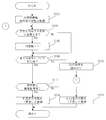
- FIG. 3 is an operation flow for explaining the inference processing for inferring the state of the user.
- the estimation unit 700 estimates the state of the user by executing the process of FIG. 3.
- the estimation unit 700 acquires (calculates) the biological information value and the user's state (first state, second state) (step S102).
- the estimation unit 700 determines that the respiration rate, the heart rate, and the activity amount are important as biological information values to be acquired.
- the estimation unit 700 acquires a parameter used as a condition for determining an abnormality described later.
- the estimation unit 700 acquires the state (first state, second state) of the user such as the user's sleep, awakening (living in the bed), or leaving the bed as needed.
- the estimation unit 700 makes more detailed use taking into consideration changes such as the user's sleeplessness, increased time spent in bed, increased time not spent in bed, etc., continuous stay time, continuous stay time, etc. It is possible to estimate the condition of the person.
- the estimation unit 700 may use an index (biometric index) on the user as one of the biological information values.
- the biomedical index is a respiratory event index, a periodic physical activity index, and the like.
- the estimation unit 700 obtains the biological information value, the state of the user and / or the biological index (hereinafter, biological information value etc.), thereby changing the absolute value of the biological information value etc., the change in the daily average value, 24 hours It is possible to estimate the user's state in more detail from the change of time-series distribution and the like.
- the estimation unit 700 acquires a history such as a biological information value, acquires a past value, an average value, a standard deviation, a coefficient of variation, and a value / proportion of change in a predetermined predetermined time, and utilizes it. You may guess the state.
- the biological information value may be acquired from the calculation unit 300 as a biological information value, or may be calculated by acquiring a biological signal from the first acquisition unit 200 and executing a predetermined operation. Further, the biological information value or the index may be calculated from one or more different biological information values.
- the estimation unit 700 determines whether or not the biological information value or the like matches the condition for determining an abnormality (step S104).
- the estimation unit 700 adds one to the number of determinations to determine abnormality (step S104; Yes ⁇ step S106).
- the estimation unit 700 reads the condition for determining the next abnormality if the determination is not completed for all the conditions for determining the abnormality. Then, the estimation unit 700 determines whether the biological information value or the like matches the condition for determining an abnormality (Step S108; No ⁇ Step S110 ⁇ Step S104).
- the estimating unit 700 estimates the third state of the user, it determines whether or not the condition for determining one or a plurality of abnormalities matches the biological information value or the like, the state of the user (first It will be determined based on the state, the second state).
- the condition for determining abnormality will be described below.
- the following conditions can be considered.
- the biometric information value utilized on each condition is what is acquired at the following timing.
- the estimation unit 700 determines, as a heart rate, a respiration rate, and an activity amount among the user's biological information values acquired in a bed, in a time zone where noise is small, that is, nighttime than daytime, sleeptime than awakening time Use biometric data.
- the estimation unit 700 may use data other than at night.
- the vital information value changes to the 24-hour leaving condition and staying condition such as getting up in the daytime, getting disturbed and getting out of bed in the daytime, etc. Will appear. Therefore, the estimation unit 700 uses the biological information value as a condition regardless of whether it is daytime or nighttime, awake time or sleep time.
- Average respiratory rate for the last 30 minutes (The accuracy is improved by using a value for a relatively long time rather than an instantaneous value) (2) The difference between the latest nightly average respiratory rate and the past average value (The average nightly respiratory rate has little variation within the individual and the accuracy is good) (3) Average heart rate for the last 60 minutes (Because measurement accuracy is lower than respiration rate, calculation time is longer than (1)) (4) The difference between the latest average value of the average heart rate at night and the past average value (the measurement accuracy is lower than the respiration rate, so the abnormality determination condition is less likely to be met than (2), or the weight of the abnormality determination result is small Do) (5) Slope of linear approximation line of respiratory rate at night (High accuracy due to global fluctuation tendency.
- Respiratory rate tends to rise from night to morning, such as the difference between the average value in the first half of the night and the average value in the second half It is sufficient if it is an indicator that can assess whether there is a downtrend or not.)
- Slope of linear approximation line of heart rate at night it is high accuracy due to global fluctuation tendency but lower accuracy than respiration rate, so it is difficult to satisfy abnormality judgment condition or weight of abnormality judgment result It should be smaller, as long as it is an indicator that can assess whether the heart rate is rising or falling from night to morning, such as the difference between the average value in the first half of the night and the average in the second half.
- the estimation unit 700 determines whether the biological information value or the like exceeds a reference value based on each condition. For example, in the case of the condition (1), the estimation unit 700 determines, of the input biological information values, whether or not the condition for determining an abnormality is satisfied using the respiration rate. For example, the estimation unit 700 calculates an average respiration rate for the last 30 minutes. The estimation unit 700 adds one to the number of determinations when the calculated average respiratory rate is not within the reference value (for example, 8 to 28).
- the estimation unit 700 may change the method of determining whether the state of the user is abnormal.
- the estimation unit 700 changes the conditions as appropriate depending on the attribute of the user, the current disease or medical history, the characteristics of the first acquisition 200, whether to reduce false alarms or whether to reduce missed notices, or the like. For example, in the case where the condition is changed according to the user's medical history, the estimation unit 700 may raise the importance of the corresponding condition when the user has a heart condition and should be careful. The estimation unit 700 may lower the importance of the condition related to the heart rate, since the accuracy of the heart rate decreases if the user has a heart condition and an arrhythmia appears.
- the estimation unit 700 places the first acquisition unit 200 under the user to detect body vibration, the respiration rate can be acquired more accurately than the heart rate. Therefore, as a condition for the estimation unit 700 to determine an abnormality, weighting of the respiration rate is weighted.
- the estimation unit 700 can acquire the heart rate more accurately than the respiration rate. Therefore, the weighting of the heart rate is weighted as a condition for the estimation unit 700 to determine an abnormality.
- the importance (weighting or priority) of the condition when the estimating unit 700 determines the state of the user may be assigned according to the type and characteristics of the first acquisition unit 200 (sensor).
- the estimation unit 700 estimates the state of the user by combining a plurality of these conditions. For example, when “3” is set as the abnormality reference value, the estimation unit 700 sets the state (third state) of the user to “3” if the number of determinations is “3” or more, which is the abnormality reference value. It is estimated that "abnormal" (step S112; Yes-> step S114). In addition, when the number of determinations is less than the abnormal reference value, the estimation unit 700 estimates that the user's state (third state) is normal. For example, when the number of determinations is “2” or less (in the case where the abnormality reference value is “3”), the estimation unit 700 estimates that the state of the user is normal.
- the estimation unit 700 estimates the state of the user based on the number determined to be abnormal under the condition for determining abnormality using the determination number and the abnormality reference value.
- the estimation unit 700 can estimate the state of the user by other methods.
- the estimation unit 700 calculates the degree of abnormality from the determination formula for determining the degree of abnormality for each of the cases, instead of determining the conformity to the condition for determining each abnormality. Then, the estimation unit 700 may estimate the state of the user using the calculated total value of the degree of abnormality. For example, the estimation unit 700 performs multivariate analysis (multiple regression analysis or the like) with the abnormality degree calculated for each condition as an explanatory variable and the entire abnormality degree as an objective variable. Then, the estimation unit 700 may estimate the state of the user from the calculated total degree of abnormality.
- multivariate analysis multiple regression analysis or the like
- the estimation unit 700 does not have to use all the conditions for determining an abnormality, and may combine them as necessary.
- the estimation unit 700 determines the attribute of the user, the current disease or history, and the characteristics of the first acquisition unit 200.
- the number of judgments for judging an abnormality may be weighted depending on whether it is desired to reduce false alarms or miss (missing alarms). That is, the estimation unit 700 may weight the number of determinations according to the strength of association with a true abnormality, and may estimate the state of the user using the weighted number of determinations.
- the estimation unit 700 may estimate the state of the user by preferentially using important conditions among the plurality of abnormality determination conditions. For example, when placed under the user and based on body vibration, among the above-described conditions, the condition (1) is the most effective, so the estimating unit 700 prioritizes the condition (1).
- the state of the user may be inferred by using or weighting that is important.
- the estimation unit 700 determines the input biological information based on the condition for determining abnormality, and estimates the user's state.
- the present embodiment describes a case where the estimation unit 700 estimates a user's state (third state) using artificial intelligence (machine learning).
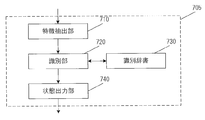
- This embodiment estimates the state of the user based on the estimation unit 705 of FIG. 4 instead of the estimation process of FIG. 3.
- the estimation unit 705 takes the biological information value and the user's state as input values (input data), and estimates the state of the user by using artificial intelligence and various statistical indicators.
- the estimation unit 705 includes a feature extraction unit 710, an identification unit 720, an identification dictionary 730, and a state output unit 740.
- the estimation unit 705 inputs and uses various parameters.
- the parameters for example, in the present embodiment, the biological information value calculated by the calculation unit 300 based on the body vibration data acquired from the first acquisition unit 200, the state of the user (first state, second state Use of).
- the estimation unit 705 uses, for example, “breathing rate”, “heart rate”, and “activity amount” as the biological information value.
- “variation in respiration rate” “variation in heart rate” calculated from these biological information values
- “respiratory event index” “periodic body movement index” calculated from the same body vibration data Is also available.
- the estimation unit 705 can use the state of the user as being in the bed or whether the user is out of bed as the state of the user (first state, second state). . In addition, the estimation unit 705 can use whether the user is in an awake state or a sleep state when in the bed. In addition, when the user is in a sleep state, the estimation unit 705 may use rem sleep / non-rem sleep and the depth of sleep.
- the estimation unit 705 uses the number of significant changes in respiratory amplitude per hour of sleep as the “respiratory event index”, it uses the number of apnea per hour of sleep (apnea index), or sleep The total number of apnea and hypopnea per hour (apnea / hypopnea index) may be used.
- the “periodic physical activity index” uses the number of occurrences of periodic physical motion per hour of sleep, the estimation unit 705 also uses the number of periodic limb movements per hour of sleep. Good.
- the feature extraction unit 710 extracts feature points based on the input parameters and outputs the feature points as feature vectors.
- the following can be considered as the ones that the feature extraction unit 710 extracts as feature points.
- Respiration rate of 30 [times / minute] or more or 8 [times / minute] or less continues for a fixed time or more
- Heart rate 120 [times / minute] or more or 40 [times / minute] or less continues for a fixed time or more
- the trend of heart rate or breathing rate rises (10% or more) from the start to the end of night sleep (4) Variability (standard deviation, coefficient of variation) of respiratory rate or heart rate at night (21:00 to 6:59) is above a certain value (5)
- the respiratory event index or periodicity dynamic index is significantly reduced (6 )
- Respiration event index or periodic movement index significantly increases or exceeds a certain value (night time)
- Activity amount increases or decreases significantly
- Sleep determination continues for a fixed time or more, and awakening determination at night is 95% or more
- the feature extraction unit 710 outputs a feature vector by combining one or more of these feature points.
- a feature point is one example, and is not limited to the said value.
- the condition of (1) may be a respiration rate of 25 [times / minute] or more, or a respiration rate of 10 [times / minute] or less.
- each value is for convenience of explanation.
- the feature extraction unit 710 may output the corresponding feature point as “1”, the non-corresponding feature point as “0”, or may output a random variable.
- the feature space is eight-dimensional, and the feature extraction unit 710 outputs the eight-dimensional feature vector to the identification unit 720.
- the identification unit 720 identifies a class corresponding to the state of the user from the input feature vector. At this time, the identification unit 720 identifies a class by collating with a plurality of prototypes prepared in advance as an identification dictionary 730.
- the prototype may be stored as a feature vector corresponding to each class, or may store a feature vector representing the class.
- the identification unit 720 determines the class to which the closest prototype belongs.
- the identification unit 720 may determine the class by the nearest neighbor determination rule, or may determine the class by the k-nearest neighbor method.
- the identification dictionary 730 used by the identification unit 720 may store a prototype in advance, or may store the prototype using machine learning.
- the state output unit 740 outputs the state (third state) of the user corresponding to the class identified by the identification unit 720.
- the state output unit 740 outputs “normal” or “abnormal” as the state of the user (third state).
- the state output unit 740 may further output a state such as “heat generation” or “change in condition”.
- the state output unit 740 may output a random variable.
- the state of the user output by the state output unit 740 is the state of the user (third state) estimated by the estimation unit 705.
- the biological information value including the "respiratory rate”, “heart rate”, “activity amount”, “getting out of bed”, and “being in bed” and the state of the user (first state, second state ), And from these pieces of information, it is possible to infer the user's state (third state).
- a diary output unit 650 is further provided. Further, instead of the estimation unit 700, an estimation unit 750 is provided which estimates the user's state using a neural network.
- the diary output unit 650 is a pixel of each minute of diary data in which one row is set to 24 hours for the acquired biometric information value and the state of the user (0: leaving bed, 1: being present / awakening, 2: sleeping).
- the image data image data of “1440 pixels ⁇ pixels for days” as the value of the value is output as a log (patient log) of the patient who is the user.
- the diary output unit 650 as a diary, a respiration diary representing the user's respiration rate, a heart rate diary representing the user's heart rate, a sleep diary representing the user's sleep, an activity amount representing the user's body movement
- a diary, a respiratory event diary representing the number of respiratory events, a periodic physical activity diary representing the number of periodic physical movement events, and the like can be output.
- the journal output unit 650 may combine these parameters and output as one journal.
- the journal output unit 650 can output the graphs of these journals as journal data which is image data.
- the estimating unit 750 estimates the user's state (third state) from the input diary data.
- deep learning deep neural network
- the estimation unit 750 uses the method. The processing in this deep learning will be briefly described using FIG.
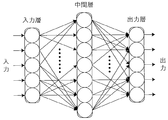
- the estimation unit 750 inputs the signal of the diary data (image data) output from the diary output unit 650 into a neural network configured by a plurality of layers and neurons included in each layer. Each neuron receives a signal from another plurality of neurons, and outputs the calculated signal to another plurality of neurons.
- the neural network has a multilayer structure, it is referred to as an input layer, an intermediate layer (hidden layer), and an output layer in the order of signal flow.
- the middle layer of the neural network consists of multiple layers, it is called a deep neural network (for example, Convolutional Neural Network with convolution operation), and the machine learning method using this is called deep learning. Call.
- the estimation unit 750 performs various operations (convolution operation, pooling operation, normalization operation, matrix operation, and the like) on neurons in each layer of the neural network, flows while changing the form, and outputs a plurality of signals from the output layer. That is, the estimating unit 750 determines the structure and parameters of the neural network from the diary data, which is image data, using a learned model for estimating the user's state (third state). Then, a plurality of signals are output from the output layer by inputting the diary data into the neural network based on the learned model.
- the learned model may be prepared in advance, or may be generated by the estimating unit 750 learning as data in which information on diary data and the state of the user is paired as teacher data.
- the estimation unit 750 refers to a plurality of output values from the neural network, and infers the state of the patient linked to the state of the patient and linked to the output value having the largest value. Also, even if the neural network does not directly output the patient's condition, the estimating unit 750 may pass one or more output values to the classifier to infer the patient's condition from the output of the classifier.
- Parameters which are coefficients used for various operations of the neural network, input in advance many diary data and the patient status of the diary data to the neural network. Then, the error between the output value and the correct value is determined by propagating the neural network in the reverse direction by the error back propagation method and updating the parameter of the neuron of each layer many times. The process of updating and determining parameters in this manner is called learning.
- the structure of the neural network and individual operations are known techniques described in a book or a paper, and any one of them may be used.
- the user's state (third state) is inferred from the user's biometric information value and input parameters such as the user's state (first state, second state) Be done.
- the estimation unit 750 uses a neural network based on diary data in which one row is set to 24 hours, but may be based on other diary data. For example, the estimation unit 750 may consider that one row is seven days in consideration of the rhythmicity in units of weeks, diary data in which one row is twenty eight days in consideration of the rhythmicity in units of months generally, the rhythmicity in units of years You may use the diary data which made 1 line 365 days in consideration of. In addition, the estimation unit 750 may use a neural network by inputting biological information values that do not consider rhythmicity in advance.
- the estimation unit 750 synchronizes each time axis with information such as "heart rate,” “breathing rate,” “activity amount,” “getting out of the bed,” and “doing in bed,” and inputs it to the neural network to learn. You may guess the state.
- the estimation unit 750 is described as estimating the user's state using a neural network, it is natural that a machine learning method other than the neural network may be used. For example, as a machine learning method, a support vector machine, a decision tree, or naive Bayes may be used. Also, the estimation unit 750 may generate a learned model according to the method of machine learning to be used, based on the teacher data.
- the fourth embodiment differs from the first embodiment in that the estimation unit 700 uses a neural network.
- the estimation unit 700 uses the various parameters described above. For example, in the present embodiment, the estimation unit 700 uses “breathing rate”, “heart rate”, and “activity amount” calculated from the body vibration data acquired by the first acquisition unit 200. The estimation unit 700 can also use “breathing event index” and “periodic body movement index” calculated from the same body vibration data.
- the state of the user determined by the determination unit 350 first state
- the state of the user acquired from the second acquisition unit 600 that is, the user's The user's state such as “bed”, “sleep” and “wake up” can also be used.
- the estimation unit 700 inputs these biological information values and the user's condition (hereinafter referred to as "user information") into a neural network constituted by a plurality of layers and neurons included in each layer. Each neuron receives a signal from another plurality of neurons, and outputs the calculated signal to another plurality of neurons.
- the neural network has a multilayer structure, it is referred to as an input layer, an intermediate layer (hidden layer), and an output layer in the order of signal flow.
- the neural network has been described in the other embodiments, so the details thereof will be omitted.
- the estimation unit 700 estimates the user's state (third state) from the user information.
- the estimation unit 700 may use a Recurrent Neural Network (RNN) in the case of biological information values calculated based on a biological signal or time-series data such as a sleep state. This is to extend the method of the neural network as described above so that time series data can be handled.
- RNN Recurrent Neural Network
- There are various networks such as Elman Network (Elman Network), Jordan Network (Jordan Network), Echo State Network (Echo State Network), and Long Short-Term Memory Network (LSTM) as recurrent neural networks, but appropriate networks By utilizing, the estimation unit 700 can more appropriately estimate the state of the user.
- the biometric information of the past user can be influenced by the current prediction, and the estimation unit 700 can determine the state of the user even on the basis of the relationship in time. It is possible to infer the third state).
- user information for example, “breathing rate” “heart rate” “sleeping state (REM sleep, non REM sleep, shallow sleep, deep sleep, etc.)” "activity amount” “breathing Use neural networks, recurrent networks, etc. from various information such as “variation”, “variation in heart rate”, “respiratory event index”, “periodic body movement index”, “sleeping”, “waking up”, “resting”, “resting”, etc.)
- the guessing unit 700 can teach a set of user information and a user's state as teacher data. And may generate a learned model.
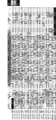
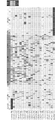
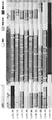
- FIG. 7 is a diagram for explaining an example of the diary.
- the sleep diary which represented the mode of a user's sleep for every day.
- a graph showing the state of sleep on a daily basis in the vertical direction is displayed.
- the bed may be represented by white (C100), awakening (bed) in orange (C102), and sleep (bed) in blue (C104).
- the color is displayed dark, such as leaving the bed, awakening (being present), and sleeping (being present).
- the biological information value shows periodic fluctuation such as 24 hours, one week and so on.
- the diary for example, long-term fluctuation of the user can be easily seen by medical staff, staff and the like.
- the staff etc. notice the poor health of the user quickly. Since daily change is displayed by the diary data, it becomes possible for staff members etc. to estimate the state of the user with high accuracy. For example, when there is no change in other biological information values such as respiration rate during a time zone in which the heart rate shows an abnormal value, when an abnormal value is shown in a fixed time zone every day, etc. Etc. can be determined not to be abnormal.
- the diary data in FIG. 8 to FIG. 12 are diaries before admission to the hospital for elderly people who need nursing care living in a certain nursing home.
- FIG. 8 is a sleep log
- FIG. 9 is a respiration log
- FIG. 10 is a heart rate log
- FIG. 11 is a respiratory event log
- FIG. 12 is a periodic activity log.
- the respiration diary in FIG. 9 is a graph showing the user's respiration rate in the range of 8 to 30 using color and gradation.
- the user's respiratory rate of 30 or more is red (the color of high respiration rate is red), and the respiratory rate of 8 or less is blue (the respiratory rate is blue)
- red the color of high respiration rate
- blue the respiratory rate
- FIG. 9 shows the graph in gray scale.
- the graph of 12/23 increases in yellow and red (light gray in FIG. 9) from 18:00 to 04:00, indicating an abnormality in the user's respiratory rate.
- 12/21 (Mon) and 22 (Tue) do not indicate the user's abnormality.
- the heart rate diary in FIG. 10 is a graph showing the user's heart rate in the range of 40 to 120 using color and gradation.
- the heart rate diary when the heart rate diary is expressed in color, the user's heart rate of 120 or more is red (the heart rate is high red color), the heart rate of 40 or less is blue (the heart rate is low blue)
- the color of that is, when the heart rate diary is expressed in color, when the heart rate changes from 40 to 120, the wavelength of the color changes from blue to light blue to green to yellow to orange to red in a stepwise manner.
- the color change is, for example, 81 stages in this case.
- FIG. 10 shows the graph in gray scale.
- the heart rate diary 12/20 ⁇ is almost gray (green when expressed in color), but light gray (in color) from 18:00 to 22:00 on 12/21 and 12/23. In the case of expression, yellow, red, etc. slightly appear. This indicates that the user's heartbeat is slightly disturbed.
- the heart rate diary shows that a large amount of white (red when it is expressed in color) appears mostly after 04:00 on 12/28, indicating that the condition of the user is getting worse.
- the respiratory event diary in FIG. 11 is a graph showing the user's respiratory event index in the range of 0 to 5 using color and gradation.
- the respiratory event diary when the respiratory event diary is expressed in color, the user's respiratory event index of 5 or more is red (the respiratory event index is high red color), the user's respiratory event index is 0 (blue) (respiratory event index is It is preferable to express low color with bluish color). That is, when the respiratory event diary is expressed in color, when the respiratory event index changes from 0 to 5, the color changes stepwise from blue to light blue to green to yellow to orange to red.
- FIG. 11 shows the graph in gray scale.
- the respiratory event log of FIG. 11 shows that the user's respiratory event index does not change so clearly.
- the respiratory event diary in FIG. 11 indicates that the respiratory event index has decreased slightly from around 12/22. Usually, a decrease in the respiratory event index is a positive change for the user.
- the periodic activity diary of FIG. 12 is a graph representing the user's periodic activity index in the range of 0 to 10 using color and gradation.
- the user's periodical movement index 10 or more is red (the periodical movement index is high is red color)
- the user's periodic movement index It is preferable to express 0 in blue (a blue periodic color having low periodicity kinetic index). That is, when the periodic body movement index changes from 0 to 10, the color changes stepwise from blue to light blue to green to yellow to orange to red.
- FIG. 12 shows the graph in gray scale.
- the periodic activity diary in FIG. 12 shows that the periodic activity has decreased from about 12/22 as a change in the user's periodic activity index.
- the periodical activity diary in FIG. 12 indicates that the user's condition has changed (it is normally good to reduce periodical activity, but in this case, it can be estimated to be worse along with changes in other biological information values Show that).
- the system 1 estimates the state of the user, the state of the user (displacement, presence in the bed or sleeping state or sleep state as shown in FIG. 8 is the amount of activity determined from the amount of activity); By adding periodic movement, it is possible to infer an abnormality as early as 12/22 and at most 12/24.
- the system 1 can be combined to infer the user's state (third state) by using a plurality of biological information values, an index, and the user's state.
- the system 1 reports the condition based on the estimated condition (third condition) of the user, so that the condition (third condition) of the user is abnormal with only one parameter (biometric information). It becomes possible to estimate the user's condition more appropriately than when guessing whether it is normal or not.
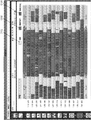
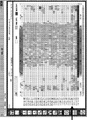
- FIGS. 13A to 13C are an example of a diary for explaining a user's heat generation case.
- FIG. 13A is a sleep diary showing the state of the user's sleep (in this example, it is a sleep determined from the amount of activity, so it may be an amount of activity);
- FIG. 13B is a heart rate diary showing the heart rate of the user; Is a breathing diary that shows the respiratory rate of
- the heart rate diary and the respiration diary are in a state where the color changes depending on the numerical value.
- the upper limit for example, the heart rate is 120 or more, the respiration rate is 30 or more
- the lower limit for example, the heart rate is 40 or less, the respiration rate is 8 or less
- the color changes in stages from red to orange, yellow, green, light blue, blue, etc., and the staff etc. understand the state of numerical values and changes by looking at these diaries It is possible to 13A-C are displayed in gray scale. Also in this case, it is sufficient to decide the color density corresponding to the upper limit and the lower limit, and it may be changed stepwise.
- the patient's condition estimation unit 700/750 estimates that the user's condition is "fever". Therefore, it is determined that the state of the user is abnormal, and an alert is output (notified).
- the system 1 can more reliably estimate the user's abnormality and report it as compared with the case where the abnormality is determined only from the respiration rate and the heart rate. An effect is obtained.
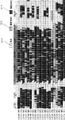
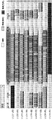
- FIG. 14A to 14C are an example of a diary for explaining a pneumonia case.
- FIG. 14A is a sleep diary showing the state of the user's sleep
- FIG. 14B is a respiration diary showing the user's respiration rate
- FIG. 14C is a heartbeat diary showing the user's heart rate.
- a graph based on each biological information is displayed on the upper side (wide area) and a graph based on the state of sleep on the lower side (narrow area).
- the wake-up time of the user of 11/27 indicates wake-up at about 2 o'clock, as opposed to usually about 5 o'clock. Therefore, the user indicates that the wake-up time is earlier than usual.
- the respiratory diary in FIG. 14B indicates that the green graph has been increasing since around 18:00 on 11/27, which indicates that the user's respiratory rate is high.
- the heart rate diary in FIG. 14C has increased in yellow from about 0 o'clock on 11/27, indicating that a change has occurred in the user's heart rate.
- the user's breathing rate and heart rate show no outliers at all.
- the system 1 refers to the user's respiratory rate and heart rate together with the user's condition (for example, the appearance of sleep shown in the sleep diary). Can be inferred and reported. In fact, because this patient had an abnormality estimated only from his / her respiratory rate and heart rate, he / she was found abnormal by a staff interview at around 11/29 10 o'clock late for a full day or more, and he was hospitalized for pneumonia.
- the respiration rate and heart rate measured on the bed during the sleeping time from bedtime to wake-up time
- a certain time zone such as 23:00 to 5:59
- biological information values strongly associated with abnormalities under unified conditions are acquired daily.
- the acquired biological information value and the state of the user it is possible to perform estimation and notification of the user's abnormality with high accuracy.
- the system according to the above-described embodiment is accurate from long-term data by being able to continuously acquire the respiration rate, the heart rate, and the body vibration, which are determined to be abnormal as the user's condition, with strong correlation on a daily basis under unified conditions. Change can be captured. As a result, the system can predict and notify the user of an abnormality without being affected by individual differences or measurement errors. In addition, since there is body movement even at sleep time or at night, the system takes into consideration fluctuations in heart rate and respiration rate due to body movement artefacts and noise and deterioration in accuracy by including body movement in the analysis item (input parameter) It is possible to infer or notify of an abnormality.
- the biological information is output in the processing device 5 based on the result output by the detection device 3, but all may be calculated by the detection device 3.
- processing may be performed on the server side, and the processing result may be returned to the terminal device.
- the processing described above may be realized on the server side by uploading biological information from the detection device 3 to the server.
- the detection device 3 may be realized by, for example, a device such as a smartphone incorporating an acceleration sensor and a vibration sensor.
- a program that operates in each device is a program (a program that causes a computer to function) that controls a CPU or the like so as to realize the functions of the above-described embodiment. Then, the information handled by these devices is temporarily stored in a temporary storage device (for example, RAM) at the time of processing, and then stored in storage devices of various ROMs, HDDs, and SSDs, and read by the CPU as needed. , Correction and writing are performed.
- a temporary storage device for example, RAM
- the program can be stored and distributed in a portable recording medium, or can be transferred to a server computer connected via a network such as the Internet.
- a server computer connected via a network such as the Internet.
- the storage device of the server computer is also included in the present invention.
Landscapes
- Health & Medical Sciences (AREA)
- Life Sciences & Earth Sciences (AREA)
- Physics & Mathematics (AREA)
- Engineering & Computer Science (AREA)
- Surgery (AREA)
- Public Health (AREA)
- Veterinary Medicine (AREA)
- Biophysics (AREA)
- Pathology (AREA)
- General Health & Medical Sciences (AREA)
- Biomedical Technology (AREA)
- Heart & Thoracic Surgery (AREA)
- Medical Informatics (AREA)
- Molecular Biology (AREA)
- Animal Behavior & Ethology (AREA)
- Physiology (AREA)
- Cardiology (AREA)
- Pulmonology (AREA)
- Oral & Maxillofacial Surgery (AREA)
- Dentistry (AREA)
- Emergency Management (AREA)
- Business, Economics & Management (AREA)
- General Physics & Mathematics (AREA)
- Signal Processing (AREA)
- Anesthesiology (AREA)
- Measuring And Recording Apparatus For Diagnosis (AREA)
- Measurement Of The Respiration, Hearing Ability, Form, And Blood Characteristics Of Living Organisms (AREA)
- Emergency Alarm Devices (AREA)
- Alarm Systems (AREA)
- Measuring Pulse, Heart Rate, Blood Pressure Or Blood Flow (AREA)
Priority Applications (2)
| Application Number | Priority Date | Filing Date | Title |
|---|---|---|---|
| US16/491,740 US20200029832A1 (en) | 2017-11-30 | 2018-10-22 | Abnormality reporting device, recording medium, and abnormality reporting method |
| CN201880017026.3A CN111372507A (zh) | 2017-11-30 | 2018-10-22 | 异常通知装置、记录介质及异常通知方法 |
Applications Claiming Priority (2)
| Application Number | Priority Date | Filing Date | Title |
|---|---|---|---|
| JP2017-231222 | 2017-11-30 | ||
| JP2017231222A JP6869167B2 (ja) | 2017-11-30 | 2017-11-30 | 異常報知装置、プログラム及び異常報知方法 |
Publications (1)
| Publication Number | Publication Date |
|---|---|
| WO2019107012A1 true WO2019107012A1 (ja) | 2019-06-06 |
Family
ID=66664939
Family Applications (1)
| Application Number | Title | Priority Date | Filing Date |
|---|---|---|---|
| PCT/JP2018/039211 Ceased WO2019107012A1 (ja) | 2017-11-30 | 2018-10-22 | 異常報知装置、記録媒体及び異常報知方法 |
Country Status (4)
| Country | Link |
|---|---|
| US (1) | US20200029832A1 (enExample) |
| JP (2) | JP6869167B2 (enExample) |
| CN (1) | CN111372507A (enExample) |
| WO (1) | WO2019107012A1 (enExample) |
Cited By (2)
| Publication number | Priority date | Publication date | Assignee | Title |
|---|---|---|---|---|
| CN113180971A (zh) * | 2021-04-29 | 2021-07-30 | 新乡市中心医院 | 一种中医护理装置和控制方法 |
| US20220125376A1 (en) * | 2019-02-13 | 2022-04-28 | Kyoto University | Sleep apnea syndrome determination apparatus, sleep apnea syndrome determination method, and sleep apnea syndrome determination program |
Families Citing this family (18)
| Publication number | Priority date | Publication date | Assignee | Title |
|---|---|---|---|---|
| GB201800120D0 (en) * | 2018-01-04 | 2018-02-21 | Essential Healthcare Solutions Uk Ltd | Patient monitoring system and apparatus |
| US11094180B1 (en) * | 2018-04-09 | 2021-08-17 | State Farm Mutual Automobile Insurance Company | Sensing peripheral heuristic evidence, reinforcement, and engagement system |
| JP7198165B2 (ja) * | 2019-06-26 | 2022-12-28 | パラマウントベッド株式会社 | 睡眠評価装置及び判定装置 |
| JP7383440B2 (ja) | 2019-10-03 | 2023-11-20 | キヤノンメディカルシステムズ株式会社 | 診断支援システム、診断支援装置及びプログラム |
| KR102186486B1 (ko) * | 2019-12-20 | 2020-12-03 | 주식회사 슈파스 | 인공지능 기반의 이미지 분석을 통한 의학적 이벤트 발생 감지 방법, 장치 및 컴퓨터프로그램 |
| WO2021215495A1 (ja) * | 2020-04-24 | 2021-10-28 | 国立大学法人大阪大学 | 予測支援システム、予測支援方法、予測支援プログラム、記録媒体、学習用データセットおよび学習済みモデルの生成方法 |
| KR102434393B1 (ko) * | 2020-05-06 | 2022-08-22 | 주식회사 슈파스 | 인공지능을 이용한 환자의 쇼크 발생 예측 방법, 장치 및 컴퓨터프로그램 |
| JP7489857B2 (ja) * | 2020-08-06 | 2024-05-24 | Toa株式会社 | レーザーを用いた音波の再現 |
| JP2022049369A (ja) * | 2020-09-16 | 2022-03-29 | コニカミノルタ株式会社 | 介護支援のシステムおよび方法 |
| JP7677344B2 (ja) | 2020-10-02 | 2025-05-15 | コニカミノルタ株式会社 | 生体状態診断システム |
| US20240095310A1 (en) * | 2020-12-07 | 2024-03-21 | Sony Group Corporation | Information processing device, data generation method, grouping model generation method, grouping model learning method, emotion estimation model generation method, and grouping user information generation method |
| US20220336093A1 (en) * | 2021-04-16 | 2022-10-20 | Canon Kabushiki Kaisha | Information processing system, information processing method, and storage medium |
| JP7354200B2 (ja) * | 2021-09-22 | 2023-10-02 | 株式会社三共 | 遊技機 |
| JP7354201B2 (ja) * | 2021-09-22 | 2023-10-02 | 株式会社三共 | 遊技機 |
| CN114469004A (zh) * | 2022-02-16 | 2022-05-13 | 中物云信息科技(无锡)有限公司 | 基于光纤光栅传感器的人体睡眠健康监测方法 |
| CN116313094B (zh) * | 2023-03-21 | 2023-11-07 | 江苏二郎神塑业有限公司 | 一种远程宠物治疗检测系统及方法 |
| WO2024249474A2 (en) * | 2023-05-30 | 2024-12-05 | Yale University | System and method for integrated lifestyle medicine |
| KR20250102742A (ko) * | 2023-12-28 | 2025-07-07 | 주식회사 메인 | 심박수 및 호흡수 기반의 급성 심정지 예측정보 생성 장치 및 방법 |
Citations (6)
| Publication number | Priority date | Publication date | Assignee | Title |
|---|---|---|---|---|
| JPH1014889A (ja) * | 1996-07-04 | 1998-01-20 | Matsushita Electric Ind Co Ltd | 生体信号検出装置 |
| JP2002336207A (ja) * | 2001-05-14 | 2002-11-26 | Matsushita Electric Ind Co Ltd | 在床異常モニタ装置 |
| JP2010514498A (ja) * | 2006-12-27 | 2010-05-06 | カーディアック ペースメイカーズ, インコーポレイテッド | 代償不全を管理する患者内アルゴリズム |
| WO2016121816A1 (ja) * | 2015-01-29 | 2016-08-04 | パラマウントベッド株式会社 | 生体情報出力装置、生体情報出力方法及びプログラム |
| WO2017018506A1 (ja) * | 2015-07-30 | 2017-02-02 | ミネベア株式会社 | 身体状況検知装置、身体状況検知方法及びベッドシステム |
| JP2017064350A (ja) * | 2015-09-29 | 2017-04-06 | ミネベアミツミ株式会社 | 生体情報モニタリングシステム |
Family Cites Families (17)
| Publication number | Priority date | Publication date | Assignee | Title |
|---|---|---|---|---|
| JPH09238908A (ja) * | 1996-03-06 | 1997-09-16 | Seiko Epson Corp | リラックス度測定装置 |
| US20070118054A1 (en) * | 2005-11-01 | 2007-05-24 | Earlysense Ltd. | Methods and systems for monitoring patients for clinical episodes |
| EP2020919B1 (en) * | 2006-06-01 | 2019-07-31 | ResMed Sensor Technologies Limited | Apparatus, system, and method for monitoring physiological signs |
| US8585607B2 (en) * | 2007-05-02 | 2013-11-19 | Earlysense Ltd. | Monitoring, predicting and treating clinical episodes |
| US10238351B2 (en) * | 2008-05-12 | 2019-03-26 | Earlysense Ltd. | Monitoring, predicting and treating clinical episodes |
| JP5302722B2 (ja) * | 2009-03-12 | 2013-10-02 | パナソニック株式会社 | 生活支援報知システム |
| WO2011006199A1 (en) * | 2009-07-16 | 2011-01-20 | Resmed Ltd | Detection of sleep condition |
| JP5900129B2 (ja) * | 2012-04-18 | 2016-04-06 | セイコーエプソン株式会社 | 血圧推定パラメーター校正方法、血圧計測方法及び血圧計測装置 |
| WO2015107681A1 (ja) * | 2014-01-17 | 2015-07-23 | 任天堂株式会社 | 情報処理システム、情報処理サーバ、情報処理プログラム、および情報提供方法 |
| CN104107037A (zh) * | 2014-07-15 | 2014-10-22 | 北京博实联创科技有限公司 | 生理信息采集和处理系统 |
| US11160459B2 (en) * | 2015-06-12 | 2021-11-02 | ChroniSense Medical Ltd. | Monitoring health status of people suffering from chronic diseases |
| WO2017156476A1 (en) * | 2016-03-10 | 2017-09-14 | Rainey J Tim | Dental appliance |
| US10441184B2 (en) * | 2016-03-16 | 2019-10-15 | Ventrilink Corporation | Electrocardiogram device and methods |
| JP2017164350A (ja) * | 2016-03-17 | 2017-09-21 | 日本電気株式会社 | 異常通知装置、緊急度判定装置、通報方法、及びプログラム |
| CN106108910A (zh) * | 2016-06-17 | 2016-11-16 | 美的集团股份有限公司 | 一种智能家电的控制方法及控制装置 |
| CN106725385A (zh) * | 2016-12-29 | 2017-05-31 | 深圳汇通智能化科技有限公司 | 一种用于监测睡眠状态的健康分析系统 |
| CN107028426B (zh) * | 2017-04-12 | 2020-04-10 | 佛山市量脑科技有限公司 | 一种智能床垫系统 |
-
2017
- 2017-11-30 JP JP2017231222A patent/JP6869167B2/ja active Active
-
2018
- 2018-10-22 CN CN201880017026.3A patent/CN111372507A/zh active Pending
- 2018-10-22 US US16/491,740 patent/US20200029832A1/en not_active Abandoned
- 2018-10-22 WO PCT/JP2018/039211 patent/WO2019107012A1/ja not_active Ceased
-
2021
- 2021-04-13 JP JP2021067711A patent/JP7043655B2/ja active Active
Patent Citations (6)
| Publication number | Priority date | Publication date | Assignee | Title |
|---|---|---|---|---|
| JPH1014889A (ja) * | 1996-07-04 | 1998-01-20 | Matsushita Electric Ind Co Ltd | 生体信号検出装置 |
| JP2002336207A (ja) * | 2001-05-14 | 2002-11-26 | Matsushita Electric Ind Co Ltd | 在床異常モニタ装置 |
| JP2010514498A (ja) * | 2006-12-27 | 2010-05-06 | カーディアック ペースメイカーズ, インコーポレイテッド | 代償不全を管理する患者内アルゴリズム |
| WO2016121816A1 (ja) * | 2015-01-29 | 2016-08-04 | パラマウントベッド株式会社 | 生体情報出力装置、生体情報出力方法及びプログラム |
| WO2017018506A1 (ja) * | 2015-07-30 | 2017-02-02 | ミネベア株式会社 | 身体状況検知装置、身体状況検知方法及びベッドシステム |
| JP2017064350A (ja) * | 2015-09-29 | 2017-04-06 | ミネベアミツミ株式会社 | 生体情報モニタリングシステム |
Cited By (4)
| Publication number | Priority date | Publication date | Assignee | Title |
|---|---|---|---|---|
| US20220125376A1 (en) * | 2019-02-13 | 2022-04-28 | Kyoto University | Sleep apnea syndrome determination apparatus, sleep apnea syndrome determination method, and sleep apnea syndrome determination program |
| US12310743B2 (en) * | 2019-02-13 | 2025-05-27 | Kyoto University | Sleep apnea syndrome determination apparatus, sleep apnea syndrome determination method, and sleep apnea syndrome determination program |
| CN113180971A (zh) * | 2021-04-29 | 2021-07-30 | 新乡市中心医院 | 一种中医护理装置和控制方法 |
| CN113180971B (zh) * | 2021-04-29 | 2023-09-22 | 新乡市中心医院 | 一种中医护理装置和控制方法 |
Also Published As
| Publication number | Publication date |
|---|---|
| US20200029832A1 (en) | 2020-01-30 |
| JP7043655B2 (ja) | 2022-03-29 |
| CN111372507A (zh) | 2020-07-03 |
| JP2021118858A (ja) | 2021-08-12 |
| JP6869167B2 (ja) | 2021-05-12 |
| JP2019097828A (ja) | 2019-06-24 |
Similar Documents
| Publication | Publication Date | Title |
|---|---|---|
| JP7043655B2 (ja) | 異常報知装置、プログラム及び異常報知方法 | |
| US11547298B2 (en) | Abnormality determination apparatus and non-transitory computer readable medium storing program | |
| JP5775868B2 (ja) | 不眠症のための行動療法を提供するシステム及びその制御方法 | |
| JP4185846B2 (ja) | 活動状態判断装置、見守り支援システム、及び活動状態判断方法 | |
| JP6149515B2 (ja) | 検知方法,検知装置および検知プログラム | |
| JP7034687B2 (ja) | 異常報知装置及びプログラム | |
| US12514494B2 (en) | System and method for sleep apnea detection, computer device and storage medium | |
| JP4058310B2 (ja) | 睡眠状態判定装置及び就寝モニタリングシステム | |
| JP6923426B2 (ja) | 異常判定装置及びそれに用いるプログラム | |
| JP6932668B2 (ja) | 評価装置及びプログラム | |
| JP7198165B2 (ja) | 睡眠評価装置及び判定装置 | |
| EP4210561A1 (en) | Intelligent weight system | |
| JP7261913B2 (ja) | 異常報知装置、プログラム及び異常報知方法 | |
| Eldib et al. | Sleep analysis for elderly care using a low-resolution visual sensor network | |
| Jones et al. | A pressure sensitive home environment | |
| JP7688593B2 (ja) | 判定装置及びプログラム | |
| Nakasho et al. | Implementation of a vital signs monitoring system in combination with a bed-leaving detection system | |
| CN121176854B (zh) | 基于无接触式干预的睡眠呼吸暂停监测系统 | |
| CN111904399A (zh) | 一种针对老年人的呼吸监测病床 | |
| JP2025107829A (ja) | 異常判定装置 | |
| WO2024204406A1 (ja) | 体調変異予測モデルの作成方法、体調変異予測システム、体調変異予測方法、体調変異予測モデル、及び規則性特定モデルの作成方法 | |
| CN121176854A (zh) | 基于无接触式干预的睡眠呼吸暂停监测系统 | |
| Aghajan | Sleep Analysis for Elderly Care Using a Low-Resolution Visual Sensor Network |
Legal Events
| Date | Code | Title | Description |
|---|---|---|---|
| 121 | Ep: the epo has been informed by wipo that ep was designated in this application |
Ref document number: 18884366 Country of ref document: EP Kind code of ref document: A1 |
|
| NENP | Non-entry into the national phase |
Ref country code: DE |
|
| 122 | Ep: pct application non-entry in european phase |
Ref document number: 18884366 Country of ref document: EP Kind code of ref document: A1 |