WO2019049673A1 - 配向助剤、液晶組成物及び液晶表示素子 - Google Patents
配向助剤、液晶組成物及び液晶表示素子 Download PDFInfo
- Publication number
- WO2019049673A1 WO2019049673A1 PCT/JP2018/031104 JP2018031104W WO2019049673A1 WO 2019049673 A1 WO2019049673 A1 WO 2019049673A1 JP 2018031104 W JP2018031104 W JP 2018031104W WO 2019049673 A1 WO2019049673 A1 WO 2019049673A1
- Authority
- WO
- WIPO (PCT)
- Prior art keywords
- group
- mass
- less
- liquid crystal
- formula
- Prior art date
- Legal status (The legal status is an assumption and is not a legal conclusion. Google has not performed a legal analysis and makes no representation as to the accuracy of the status listed.)
- Ceased
Links
- SMGOYQROXYBGTP-UHFFFAOYSA-N CC(C(Oc(ccc(-c(cc1)ccc1OCCCCCCCCCCCC(CO)CO)c1)c1F)=[U])=C Chemical compound CC(C(Oc(ccc(-c(cc1)ccc1OCCCCCCCCCCCC(CO)CO)c1)c1F)=[U])=C SMGOYQROXYBGTP-UHFFFAOYSA-N 0.000 description 1
- NFZYYLLXHQYGAN-UHFFFAOYSA-N CCCCCC(CC1)CCC1c(cc1)cc(F)c1-c(cc1)ccc1OCC(CO)(CO)COC(C(C)=C)=O Chemical compound CCCCCC(CC1)CCC1c(cc1)cc(F)c1-c(cc1)ccc1OCC(CO)(CO)COC(C(C)=C)=O NFZYYLLXHQYGAN-UHFFFAOYSA-N 0.000 description 1
- QOKNYJDMBDQDOC-UHFFFAOYSA-N CCCCCCCCOc(c(F)c1)ccc1-c(cc1)cc(CCCOC(C(C)=C)=O)c1OCC(CO)(CO)COC(C(C)=C)=O Chemical compound CCCCCCCCOc(c(F)c1)ccc1-c(cc1)cc(CCCOC(C(C)=C)=O)c1OCC(CO)(CO)COC(C(C)=C)=O QOKNYJDMBDQDOC-UHFFFAOYSA-N 0.000 description 1
- LHIFFCXTWXSAQH-UHFFFAOYSA-N CCCCCCCCOc(c(F)c1)ccc1-c(cc1)cc(CCCOC(C(C)=C)=O)c1OCC(CO)CO Chemical compound CCCCCCCCOc(c(F)c1)ccc1-c(cc1)cc(CCCOC(C(C)=C)=O)c1OCC(CO)CO LHIFFCXTWXSAQH-UHFFFAOYSA-N 0.000 description 1
- AIHYEQSZVBAZKT-UHFFFAOYSA-N CCCCCc(cc1)ccc1-c(cc1)ccc1OC(C(CCO)=C)=O Chemical compound CCCCCc(cc1)ccc1-c(cc1)ccc1OC(C(CCO)=C)=O AIHYEQSZVBAZKT-UHFFFAOYSA-N 0.000 description 1
- 0 CCCNc1ccc(C(CC2)CCC2C(C2)CC(C(CC(CC3)C(CC4)CCC4c4ccc(*)cc4)C3C(CC)N)C(C(CC)N)C2C(CC(CC2)C(CC3)CCC3c3ccc(C)cc3)C2C(CC)N)cc1 Chemical compound CCCNc1ccc(C(CC2)CCC2C(C2)CC(C(CC(CC3)C(CC4)CCC4c4ccc(*)cc4)C3C(CC)N)C(C(CC)N)C2C(CC(CC2)C(CC3)CCC3c3ccc(C)cc3)C2C(CC)N)cc1 0.000 description 1
Images


Classifications
-
- C—CHEMISTRY; METALLURGY
- C09—DYES; PAINTS; POLISHES; NATURAL RESINS; ADHESIVES; COMPOSITIONS NOT OTHERWISE PROVIDED FOR; APPLICATIONS OF MATERIALS NOT OTHERWISE PROVIDED FOR
- C09K—MATERIALS FOR MISCELLANEOUS APPLICATIONS, NOT PROVIDED FOR ELSEWHERE
- C09K19/00—Liquid crystal materials
- C09K19/04—Liquid crystal materials characterised by the chemical structure of the liquid crystal components, e.g. by a specific unit
- C09K19/06—Non-steroidal liquid crystal compounds
- C09K19/08—Non-steroidal liquid crystal compounds containing at least two non-condensed rings
- C09K19/10—Non-steroidal liquid crystal compounds containing at least two non-condensed rings containing at least two benzene rings
- C09K19/12—Non-steroidal liquid crystal compounds containing at least two non-condensed rings containing at least two benzene rings at least two benzene rings directly linked, e.g. biphenyls
-
- C—CHEMISTRY; METALLURGY
- C09—DYES; PAINTS; POLISHES; NATURAL RESINS; ADHESIVES; COMPOSITIONS NOT OTHERWISE PROVIDED FOR; APPLICATIONS OF MATERIALS NOT OTHERWISE PROVIDED FOR
- C09K—MATERIALS FOR MISCELLANEOUS APPLICATIONS, NOT PROVIDED FOR ELSEWHERE
- C09K19/00—Liquid crystal materials
- C09K19/04—Liquid crystal materials characterised by the chemical structure of the liquid crystal components, e.g. by a specific unit
- C09K19/06—Non-steroidal liquid crystal compounds
- C09K19/08—Non-steroidal liquid crystal compounds containing at least two non-condensed rings
- C09K19/10—Non-steroidal liquid crystal compounds containing at least two non-condensed rings containing at least two benzene rings
- C09K19/14—Non-steroidal liquid crystal compounds containing at least two non-condensed rings containing at least two benzene rings linked by a carbon chain
-
- C—CHEMISTRY; METALLURGY
- C09—DYES; PAINTS; POLISHES; NATURAL RESINS; ADHESIVES; COMPOSITIONS NOT OTHERWISE PROVIDED FOR; APPLICATIONS OF MATERIALS NOT OTHERWISE PROVIDED FOR
- C09K—MATERIALS FOR MISCELLANEOUS APPLICATIONS, NOT PROVIDED FOR ELSEWHERE
- C09K19/00—Liquid crystal materials
- C09K19/04—Liquid crystal materials characterised by the chemical structure of the liquid crystal components, e.g. by a specific unit
- C09K19/06—Non-steroidal liquid crystal compounds
- C09K19/08—Non-steroidal liquid crystal compounds containing at least two non-condensed rings
- C09K19/10—Non-steroidal liquid crystal compounds containing at least two non-condensed rings containing at least two benzene rings
- C09K19/14—Non-steroidal liquid crystal compounds containing at least two non-condensed rings containing at least two benzene rings linked by a carbon chain
- C09K19/16—Non-steroidal liquid crystal compounds containing at least two non-condensed rings containing at least two benzene rings linked by a carbon chain the chain containing carbon-to-carbon double bonds, e.g. stilbenes
-
- C—CHEMISTRY; METALLURGY
- C09—DYES; PAINTS; POLISHES; NATURAL RESINS; ADHESIVES; COMPOSITIONS NOT OTHERWISE PROVIDED FOR; APPLICATIONS OF MATERIALS NOT OTHERWISE PROVIDED FOR
- C09K—MATERIALS FOR MISCELLANEOUS APPLICATIONS, NOT PROVIDED FOR ELSEWHERE
- C09K19/00—Liquid crystal materials
- C09K19/04—Liquid crystal materials characterised by the chemical structure of the liquid crystal components, e.g. by a specific unit
- C09K19/06—Non-steroidal liquid crystal compounds
- C09K19/08—Non-steroidal liquid crystal compounds containing at least two non-condensed rings
- C09K19/10—Non-steroidal liquid crystal compounds containing at least two non-condensed rings containing at least two benzene rings
- C09K19/14—Non-steroidal liquid crystal compounds containing at least two non-condensed rings containing at least two benzene rings linked by a carbon chain
- C09K19/18—Non-steroidal liquid crystal compounds containing at least two non-condensed rings containing at least two benzene rings linked by a carbon chain the chain containing carbon-to-carbon triple bonds, e.g. tolans
-
- C—CHEMISTRY; METALLURGY
- C09—DYES; PAINTS; POLISHES; NATURAL RESINS; ADHESIVES; COMPOSITIONS NOT OTHERWISE PROVIDED FOR; APPLICATIONS OF MATERIALS NOT OTHERWISE PROVIDED FOR
- C09K—MATERIALS FOR MISCELLANEOUS APPLICATIONS, NOT PROVIDED FOR ELSEWHERE
- C09K19/00—Liquid crystal materials
- C09K19/04—Liquid crystal materials characterised by the chemical structure of the liquid crystal components, e.g. by a specific unit
- C09K19/06—Non-steroidal liquid crystal compounds
- C09K19/08—Non-steroidal liquid crystal compounds containing at least two non-condensed rings
- C09K19/10—Non-steroidal liquid crystal compounds containing at least two non-condensed rings containing at least two benzene rings
- C09K19/20—Non-steroidal liquid crystal compounds containing at least two non-condensed rings containing at least two benzene rings linked by a chain containing carbon and oxygen atoms as chain links, e.g. esters or ethers
-
- C—CHEMISTRY; METALLURGY
- C09—DYES; PAINTS; POLISHES; NATURAL RESINS; ADHESIVES; COMPOSITIONS NOT OTHERWISE PROVIDED FOR; APPLICATIONS OF MATERIALS NOT OTHERWISE PROVIDED FOR
- C09K—MATERIALS FOR MISCELLANEOUS APPLICATIONS, NOT PROVIDED FOR ELSEWHERE
- C09K19/00—Liquid crystal materials
- C09K19/04—Liquid crystal materials characterised by the chemical structure of the liquid crystal components, e.g. by a specific unit
- C09K19/06—Non-steroidal liquid crystal compounds
- C09K19/08—Non-steroidal liquid crystal compounds containing at least two non-condensed rings
- C09K19/10—Non-steroidal liquid crystal compounds containing at least two non-condensed rings containing at least two benzene rings
- C09K19/24—Non-steroidal liquid crystal compounds containing at least two non-condensed rings containing at least two benzene rings linked by a chain containing nitrogen-to-nitrogen bonds
-
- C—CHEMISTRY; METALLURGY
- C09—DYES; PAINTS; POLISHES; NATURAL RESINS; ADHESIVES; COMPOSITIONS NOT OTHERWISE PROVIDED FOR; APPLICATIONS OF MATERIALS NOT OTHERWISE PROVIDED FOR
- C09K—MATERIALS FOR MISCELLANEOUS APPLICATIONS, NOT PROVIDED FOR ELSEWHERE
- C09K19/00—Liquid crystal materials
- C09K19/04—Liquid crystal materials characterised by the chemical structure of the liquid crystal components, e.g. by a specific unit
- C09K19/06—Non-steroidal liquid crystal compounds
- C09K19/08—Non-steroidal liquid crystal compounds containing at least two non-condensed rings
- C09K19/30—Non-steroidal liquid crystal compounds containing at least two non-condensed rings containing saturated or unsaturated non-aromatic rings, e.g. cyclohexane rings
-
- C—CHEMISTRY; METALLURGY
- C09—DYES; PAINTS; POLISHES; NATURAL RESINS; ADHESIVES; COMPOSITIONS NOT OTHERWISE PROVIDED FOR; APPLICATIONS OF MATERIALS NOT OTHERWISE PROVIDED FOR
- C09K—MATERIALS FOR MISCELLANEOUS APPLICATIONS, NOT PROVIDED FOR ELSEWHERE
- C09K19/00—Liquid crystal materials
- C09K19/04—Liquid crystal materials characterised by the chemical structure of the liquid crystal components, e.g. by a specific unit
- C09K19/06—Non-steroidal liquid crystal compounds
- C09K19/32—Non-steroidal liquid crystal compounds containing condensed ring systems, i.e. fused, bridged or spiro ring systems
-
- C—CHEMISTRY; METALLURGY
- C09—DYES; PAINTS; POLISHES; NATURAL RESINS; ADHESIVES; COMPOSITIONS NOT OTHERWISE PROVIDED FOR; APPLICATIONS OF MATERIALS NOT OTHERWISE PROVIDED FOR
- C09K—MATERIALS FOR MISCELLANEOUS APPLICATIONS, NOT PROVIDED FOR ELSEWHERE
- C09K19/00—Liquid crystal materials
- C09K19/04—Liquid crystal materials characterised by the chemical structure of the liquid crystal components, e.g. by a specific unit
- C09K19/06—Non-steroidal liquid crystal compounds
- C09K19/34—Non-steroidal liquid crystal compounds containing at least one heterocyclic ring
-
- C—CHEMISTRY; METALLURGY
- C09—DYES; PAINTS; POLISHES; NATURAL RESINS; ADHESIVES; COMPOSITIONS NOT OTHERWISE PROVIDED FOR; APPLICATIONS OF MATERIALS NOT OTHERWISE PROVIDED FOR
- C09K—MATERIALS FOR MISCELLANEOUS APPLICATIONS, NOT PROVIDED FOR ELSEWHERE
- C09K19/00—Liquid crystal materials
- C09K19/04—Liquid crystal materials characterised by the chemical structure of the liquid crystal components, e.g. by a specific unit
- C09K19/38—Polymers
-
- C—CHEMISTRY; METALLURGY
- C09—DYES; PAINTS; POLISHES; NATURAL RESINS; ADHESIVES; COMPOSITIONS NOT OTHERWISE PROVIDED FOR; APPLICATIONS OF MATERIALS NOT OTHERWISE PROVIDED FOR
- C09K—MATERIALS FOR MISCELLANEOUS APPLICATIONS, NOT PROVIDED FOR ELSEWHERE
- C09K19/00—Liquid crystal materials
- C09K19/04—Liquid crystal materials characterised by the chemical structure of the liquid crystal components, e.g. by a specific unit
- C09K19/42—Mixtures of liquid crystal compounds covered by two or more of the preceding groups C09K19/06 - C09K19/40
-
- C—CHEMISTRY; METALLURGY
- C09—DYES; PAINTS; POLISHES; NATURAL RESINS; ADHESIVES; COMPOSITIONS NOT OTHERWISE PROVIDED FOR; APPLICATIONS OF MATERIALS NOT OTHERWISE PROVIDED FOR
- C09K—MATERIALS FOR MISCELLANEOUS APPLICATIONS, NOT PROVIDED FOR ELSEWHERE
- C09K19/00—Liquid crystal materials
- C09K19/52—Liquid crystal materials characterised by components which are not liquid crystals, e.g. additives with special physical aspect: solvents, solid particles
- C09K19/54—Additives having no specific mesophase characterised by their chemical composition
-
- C—CHEMISTRY; METALLURGY
- C09—DYES; PAINTS; POLISHES; NATURAL RESINS; ADHESIVES; COMPOSITIONS NOT OTHERWISE PROVIDED FOR; APPLICATIONS OF MATERIALS NOT OTHERWISE PROVIDED FOR
- C09K—MATERIALS FOR MISCELLANEOUS APPLICATIONS, NOT PROVIDED FOR ELSEWHERE
- C09K19/00—Liquid crystal materials
- C09K19/52—Liquid crystal materials characterised by components which are not liquid crystals, e.g. additives with special physical aspect: solvents, solid particles
- C09K19/54—Additives having no specific mesophase characterised by their chemical composition
- C09K19/56—Aligning agents
-
- G—PHYSICS
- G02—OPTICS
- G02F—OPTICAL DEVICES OR ARRANGEMENTS FOR THE CONTROL OF LIGHT BY MODIFICATION OF THE OPTICAL PROPERTIES OF THE MEDIA OF THE ELEMENTS INVOLVED THEREIN; NON-LINEAR OPTICS; FREQUENCY-CHANGING OF LIGHT; OPTICAL LOGIC ELEMENTS; OPTICAL ANALOGUE/DIGITAL CONVERTERS
- G02F1/00—Devices or arrangements for the control of the intensity, colour, phase, polarisation or direction of light arriving from an independent light source, e.g. switching, gating or modulating; Non-linear optics
- G02F1/01—Devices or arrangements for the control of the intensity, colour, phase, polarisation or direction of light arriving from an independent light source, e.g. switching, gating or modulating; Non-linear optics for the control of the intensity, phase, polarisation or colour
- G02F1/13—Devices or arrangements for the control of the intensity, colour, phase, polarisation or direction of light arriving from an independent light source, e.g. switching, gating or modulating; Non-linear optics for the control of the intensity, phase, polarisation or colour based on liquid crystals, e.g. single liquid crystal display cells
-
- G—PHYSICS
- G02—OPTICS
- G02F—OPTICAL DEVICES OR ARRANGEMENTS FOR THE CONTROL OF LIGHT BY MODIFICATION OF THE OPTICAL PROPERTIES OF THE MEDIA OF THE ELEMENTS INVOLVED THEREIN; NON-LINEAR OPTICS; FREQUENCY-CHANGING OF LIGHT; OPTICAL LOGIC ELEMENTS; OPTICAL ANALOGUE/DIGITAL CONVERTERS
- G02F1/00—Devices or arrangements for the control of the intensity, colour, phase, polarisation or direction of light arriving from an independent light source, e.g. switching, gating or modulating; Non-linear optics
- G02F1/01—Devices or arrangements for the control of the intensity, colour, phase, polarisation or direction of light arriving from an independent light source, e.g. switching, gating or modulating; Non-linear optics for the control of the intensity, phase, polarisation or colour
- G02F1/13—Devices or arrangements for the control of the intensity, colour, phase, polarisation or direction of light arriving from an independent light source, e.g. switching, gating or modulating; Non-linear optics for the control of the intensity, phase, polarisation or colour based on liquid crystals, e.g. single liquid crystal display cells
- G02F1/133—Constructional arrangements; Operation of liquid crystal cells; Circuit arrangements
- G02F1/1333—Constructional arrangements; Manufacturing methods
- G02F1/1337—Surface-induced orientation of the liquid crystal molecules, e.g. by alignment layers
Definitions
- the present invention relates to an alignment aid, a liquid crystal composition and a liquid crystal display device.
- a polyimide (PI) layer that functions as an alignment layer on an electrode is used to induce vertical alignment of liquid crystal molecules when no voltage is applied and to realize horizontal alignment of liquid crystal molecules when voltage is applied. It is provided.
- PI polyimide
- Patent Document 1 discloses a liquid crystal medium based on a mixture of polar compounds having negative dielectric anisotropy and containing at least one kind of spontaneous orientation additive. It is described that it can be suitably used in the display which does not contain the orientation layer. And in patent document 1, the specific compound which has a hydroxyl group is used as a spontaneous orientation additive.
- the alignment control force for vertically aligning the liquid crystal molecules is not sufficient, and it has a PI layer. That when the liquid crystal display element is manufactured, alignment unevenness is caused due to the liquid crystal molecules not showing a predetermined alignment state at the end of the liquid crystal display element, and improvement is necessary, and the spontaneous alignment additive It has been found that crystals are deposited during storage of the liquid crystal composition containing H, and there is room for improvement in terms of storage stability.
- the object of the present invention is to ensure the storage stability of the liquid crystal composition containing the alignment assistant (self-alignment additive) and the liquid crystal molecules, and spontaneously eliminate the liquid crystal molecules even if the PI layer is omitted.
- An object of the present invention is to provide an alignment aid for vertically aligning.
- another object of the present invention is a liquid crystal composition which is excellent in storage stability and can realize a liquid crystal display element such as PSA type, PSVA type or VA type even if PI layer is omitted, and the liquid crystal composition. It is providing the used liquid crystal display element.
- the present invention is an alignment aid which is disposed along with liquid crystal molecules between two substrates and causes the liquid crystal molecules to be spontaneously aligned,
- a first compound comprising at least one first affinity group having an affinity for the substrate;
- the present invention also provides a liquid crystal composition containing the alignment assistant of the present invention and liquid crystal molecules and having a negative dielectric anisotropy ( ⁇ ).
- the present invention provides a liquid crystal display device comprising two substrates and a liquid crystal layer comprising the liquid crystal composition of the present invention provided between the two substrates.
- an alignment aid which is excellent in storage stability and capable of uniform vertical alignment of liquid crystal molecules even if the PI layer is omitted, a liquid crystal composition containing the alignment aid, and the liquid crystal composition It is possible to provide a liquid crystal display device using the
- the alignment assistant of the present invention can align liquid crystal molecules spontaneously by being disposed along with the liquid crystal molecules between two substrates.
- the orientation aid includes a first compound containing at least one first affinity group having an affinity for the substrate, at least one having an affinity for the substrate and having a polarity lower than that of the first affinity group. And a second compound containing two second affinity groups.
- the first compound and the second compound each have an affinity group having an affinity for the substrate and another portion (other structure) having a lower affinity for the substrate than the affinity group.
- both of the first compound and the second compound are used as affinity groups. It can be adsorbed (adhered) to the substrate, and the other part can be arranged (oriented) away from the substrate.
- an adsorptive group (adhesive group), a PEG group, a sinker It can also be referred to as a group (sinker group) or an anchor group.
- the liquid crystal molecules are aligned (in the absence of voltage application, the vertical alignment of the liquid crystal molecules is induced, and in the voltage application, the horizontal alignment of liquid crystal molecules is realized. It is possible to Therefore, both the first compound and the second compound are suitably used to aid the spontaneous alignment of liquid crystal molecules in the liquid crystal layer.
- the first affinity group and the second affinity group are different in polarity from each other, and in particular, the polarity of the first affinity group is higher than that of the second affinity group. Therefore, when the liquid crystal composition is supplied onto the substrate, the first affinity group is adsorbed to the substrate earlier than the second affinity group. As a result, the first compound is fixed to the substrate preferentially to the second compound.
- the second compound is fixed to the substrate after being uniformly wetted and spread on the substrate. At this time, the second compound can be aligned (oriented) with respect to the first compound fixed to the substrate.
- the alignment aid of the present invention has a polar affinity containing a first compound containing at least one first affinity group and a second compound containing a second affinity group.
- a polar affinity containing a first compound containing at least one first affinity group and a second compound containing a second affinity group.
- the first compound since the first compound has a relatively high polarity first affinity group, it tends to be easily precipitated when the amount contained in the liquid crystal composition is increased.
- the alignment assistant of the present invention prevents or suppresses the precipitation of the first compound in the liquid crystal composition by containing the second compound having the second affinity group having a relatively low polarity. it can. Thereby, the storage stability of the liquid crystal composition (particularly, the stability during storage at low temperature) can be secured.
- the ratio of the first compound to the second compound in the alignment aid is not particularly limited, but it is preferably about 1: 0.1 to 1:10 by weight ratio, 1: 0.5. It is more preferable that the ratio is about 1: 5.
- the alignment assistant has both an effect of enhancing the alignment control power of liquid crystal molecules and an effect of securing the storage stability of the liquid crystal composition. Can be demonstrated with certainty.
- Specific amounts of the first compound and the second compound to be used can be defined in relation to the amount of liquid crystal molecules in the liquid crystal composition.
- the amount of the first compound is preferably about 0.1 to 1.5% by weight, and more preferably about 0.3 to 1.3% by weight, with respect to 100% by weight of liquid crystal molecules.
- the amount of the second compound is also preferably about 0.1 to 1.5% by weight, more preferably about 0.3 to 1.3% by weight, with respect to 100% by weight of liquid crystal molecules. preferable.
- the total amount of the first and second compounds is preferably as small as possible (preferably 1.% with respect to 100% by weight of liquid crystal molecules) within a range capable of sufficiently and sufficiently exhibiting the effect of enhancing the alignment regulating power of liquid crystal molecules. It is preferable to adjust to 4 wt% or less, more preferably about 0.5 to 1 wt%). Thereby, the storage stability of the liquid crystal composition can be further improved.
- the first affinity group and the second affinity group each include a group selected from the following group, and are designed such that the polarity of the second affinity group is lower than the polarity of the first affinity group It is preferable that it is a substituted group.
- the polarity of the second affinity group is lower than the polarity of the first affinity group and the polarity of the first affinity group. It can be designed as easily.
- the first affinity group preferably contains a group selected from the group represented by the following chemical formula 2, and more preferably selected from the group represented by the following general formulas (K1-1) to (K1-3) preferable.
- the black dot at the left end represents a bond
- W K2 represents a methine group, C—CH 3 , C—C 2 H 5 , a nitrogen atom or a silicon atom
- W K3 represents a carbon atom
- X 1 to X 5 each independently represent a hydrogen atom, an —OH group or CH 2 CC (CH 3 ) COO—
- At least one of X 1 and X 2 represents an —OH group
- At least one of X 3 , X 4 and X 5 represents an —OH group
- Sp 1 , Sp 2 and Sp 3 each represent a single bond or a spacer group.
- Such a first affinity group has a sufficiently high polarity, and thus exerts a higher affinity (adsorption capacity) to the substrate.
- Sp 1 , Sp 2 and Sp 3 each is particularly preferably a single bond or a methylene group.
- first affinity group include, for example, substituents shown in the following group.
- K1-1, K1-2-1, K1-2-2 and K1-2-3 can be used as the first affinity group. Is preferred. When importance is given to the orientation of liquid crystal molecules, K1-2-1, K1-2-2 and K1-2-3 are preferable as the first affinity group.
- the first affinity group When importance is attached to solubility in a liquid crystal composition, the first affinity group may be K1-2-4, K1-3-1, K1-3-2, K1-3-3, K1. -3-4 and K1-3-5 are preferred. Furthermore, when importance is placed on these balances, as the first affinity group, K1-2-1, K1-2-2, K1-2-3, K1-3-1, K1-3-2, K1-3-3 and K1-3-4 are more preferred.
- the second affinity group preferably contains a group selected from the group represented by the following chemical formula 5, and is selected from the group represented by the following general formulas (K2-1) to (K2-14) Is more preferred.
- the black dot at the left end represents a bond
- the arbitrary methylene group is each independently a linear or branched alkyl group having 1 to 5 carbon atoms, a linear or branched alkyloxy group having 1 to 5 carbon atoms, or 1 to 5 carbon atoms. It may be substituted with a linear or branched perfluoroalkyl group
- W K1 represents a methine group, C—CH 3 , C—C 2 H 5 or a nitrogen atom
- X K1 and Y K1 each independently represent -CH 2- , an oxygen atom or a sulfur atom
- Z K1 represents an oxygen atom or a sulfur atom.
- U K1 , V K1 and S K1 each independently represent a methine group or a nitrogen atom (provided that U K1 is a methine group, V K1 is a methine group, and S K1 is a combination of nitrogen atoms),
- R K1 represents a hydrogen atom, a linear or branched alkyl group having 1 to 5 carbon atoms, a linear or branched alkyloxy group having 1 to 5 carbon atoms, or a linear or branched chain having 1 to 5 carbon atoms
- the second compound containing such a second affinity group tends to wet and spread more uniformly on the substrate.
- the second affinity group (K2-1), (K2-3), (K2-8), (K2-9) And (K2-13) are preferred.
- (K2-1) and (K2-3) are preferable as the second affinity group.
- (K2-1), (K2-9) and (K2-13) are preferable as the second affinity group.
- (K2-1) and (K2-3) are more preferable as the second affinity group.
- the first affinity group and the second affinity group various combinations exist, but the first affinity group containing a hydroxyl group and the second affinity group containing an ether group or a carbonate group
- the combination with is preferable.
- the polarity of the second affinity group can be increased to the first affinity while the polarity of the first affinity group is sufficiently increased. It can be sufficiently lower than the polarity of the sex group. Therefore, it is possible to further improve both the effect of enhancing the alignment regulating power of liquid crystal molecules and the effect of securing the storage stability of the liquid crystal composition.
- the number of the first affinity group and the number of the second affinity group may be one or more, respectively. Fixing power of the first compound and the second compound to the substrate can be adjusted by setting the numbers of the first affinity group and the second affinity group.
- the first compound and the second compound each contain at least one polymerizable group.
- the first compound and the second compound can be firmly fixed to the substrate, and the retention of liquid crystal molecules can also be enhanced. As a result, peeling of the liquid crystal layer from the substrate can be prevented or suppressed.
- the number of polymerizable groups may be one or more than one.
- the crosslink density of the first compound and the second compound can be increased. Therefore, they can be further firmly fixed to the substrate, and the retention of liquid crystal molecules can be further enhanced.
- Such polymerizable groups are selected from, for example, the groups represented by the following general formulas (P-1) to (P-13).
- these polymerizable groups have high reactivity, they can be sufficiently and reliably polymerized even with relatively low energy (for example, light energy, thermal energy). Therefore, when polymerizing the first compound and the second compound, it is possible to prevent or suppress that the liquid crystal molecules are adversely affected and degraded.
- relatively low energy for example, light energy, thermal energy. Therefore, when polymerizing the first compound and the second compound, it is possible to prevent or suppress that the liquid crystal molecules are adversely affected and degraded.
- groups represented by Formula (P-1) to Formula (P-3) are preferable, and groups represented by Formula (P-1) and Formula (P-3) are more preferable. .
- the first compound and the second compound each preferably contain a mesogenic group.
- the first affinity group and the second affinity group which are higher in polarity than the mesogen group, can be adsorbed onto the substrate, and the low polarity mesogen group can be arranged (orientated) more reliably so as to be separated from the substrate.
- the affinity between the first compound and the second compound and the liquid crystal molecule is further increased. Therefore, the alignment control power of liquid crystal molecules by the first compound and the second compound can be further improved.
- the first affinity group, the second affinity group, and the polymerizable group may be directly bonded to the mesogenic group, or may be bonded through the same spacer group as described above. .
- the position of the mesogenic group to which the polymerizable group is bonded is not particularly limited, but a position close to the first affinity group or the second affinity group is preferable.
- the first compound and the second compound can be polymerized and fixed more firmly to the substrate without adversely affecting the alignment of liquid crystal molecules.
- the polymerizable group is laterally attached to the mesogenic group.
- This mesogenic group is represented, for example, by the following general formula (i).
- a i1 represents a divalent 6-membered ring aromatic group, a divalent 6-membered ring heteroaromatic group, a divalent 6-membered ring aliphatic group or a divalent 6-membered ring heteroaliphatic group
- the hydrogen atom in these ring structures is a halogen atom, a linear or branched alkyl group having 1 to 10 carbon atoms, a linear or branched halogenated alkyl group having 1 to 10 carbon atoms, or 1 to 10 carbon atoms.
- P i1 is a group represented by the general formula (P-1) ⁇ (P -13)
- Ai1 in formula (i) represents a divalent 6-membered ring aromatic group or a divalent 6-membered ring aliphatic group.
- a divalent 6-membered ring aromatic group or a divalent 6-membered ring aliphatic group a divalent unsubstituted 6-membered ring aromatic group, a divalent unsubstituted 6-membered ring aliphatic group
- the hydrogen atom in the group or ring structure thereof is a halogen atom, a linear or branched alkyl group having 1 to 10 carbon atoms, a linear or branched halogenated alkyl group having 1 to 10 carbon atoms, or 1 carbon atom include in substituted group - a linear or branched alkoxy or P i1 -Sp i1 to 10.
- P i1 represents the general formula (P-1) ⁇ polymerizable group selected from the group represented by (P-13)
- Sp i1 represents the same meaning
- a i1 in the formula (i) is a divalent unsubstituted 6-membered ring aromatic group
- a hydrogen atom in the ring structure is a halogen atom (in particular, a fluorine atom), and has 1 to 10 carbon atoms linear or branched alkyl group, a linear or branched alkoxy or P i1 -Sp i1 having 1 to 10 carbon atoms - a divalent 6-membered ring aromatic group substituted by, divalent unsubstituted 6 Membered aliphatic group
- a hydrogen atom in the ring structure is a halogen atom (in particular, a fluorine atom), a linear or branched alkyl group having 1 to 10 carbon atoms, a linear or branched alkoxy having 1 to 10 carbon atoms group or P i1 -Sp i1 - 2 divalent 6-membered ring aliphatic group substituted by, more preferably a
- m i1 represents an integer of 2 to 5, and more preferably an integer of 2 to 4.
- the mesogenic group represented by the general formula (i) has a trivalent or tetravalent branched structure, or a trivalent or tetravalent, in the middle of the repeating unit- (A i1 -Z i1 )- And an aliphatic or aromatic ring structure of any of the following.
- the first compound and the second compound each have a branched structure as a whole.
- first compound and the second compound each include an end group opposite to the first affinity group or the second affinity group of the mesogenic group.
- the first compound and the second compound including the terminal group facilitate the arrangement (orientation) of the other portion other than the affinity group while the affinity group is adsorbed to the substrate.
- the polymerizable group and the spacer group are the same as the polymerizable group and the spacer group described above, respectively.
- Each of the first compound and the second compound includes a polymerizable group as an end group, whereby the crosslink density of the first compound and the second compound can be further increased, and the retention of liquid crystal molecules in the liquid crystal layer is achieved. Can be further improved.
- first compound examples include, for example, compounds represented by any of the following formulas (PJ-I-1) to (PJ-I-45).
- specific examples of the second compound include compounds represented by any of the following formulas (PJ-II-1) to (PJ-II-18).
- the liquid crystal composition of the present invention contains an alignment assistant (first compound and second compound) and liquid crystal molecules, and has a negative dielectric anisotropy ( ⁇ ).
- the liquid crystal molecules preferably contain a compound selected from the group represented by the following general formulas (N-1) to (N-3).
- a N11 , A N12 , A N21 , A N22 , A N31 and A N32 are each independently (A) 1,4-cyclohexylene group (provided that one —CH 2 — or non-adjacent two or more —CH 2 — present in this group may be substituted by —O—.
- n N11 , n N12 , n N21 , n N22 , n N31 and n N32 each independently represent an integer of 0 to 3, but n N11 + n N12 , n N21 + n N22 and n N31 + n N32 each represent an integer Independently one, two or three, When a plurality of A N11 to A N32 and Z N11 to Z N32 are present, they may be the same as or different from each other.
- the compound of any one of formulas (N-1), (N-2) and (N-3) is preferably a compound having a negative ⁇ and an absolute value of more than 3.
- R N11 , R N12 , R N21 , R N22 , R N31 and R N32 are each independently a C 1 -C atom
- An alkyl group of 8, an alkoxy group of 1 to 8 carbon atoms, an alkenyl group of 2 to 8 carbon atoms or an alkenyloxy group of 2 to 8 carbon atoms is preferable, an alkyl group of 1 to 5 carbon atoms, a carbon atom
- An alkoxy group of 1 to 5 carbon atoms, an alkenyl group of 2 to 5 carbon atoms or an alkenyloxy group of 2 to 5 carbon atoms is more preferable, an alkyl group of 1 to 5 carbon atoms or an alkenyl of 2 to 5 carbon atoms
- a group is more preferable, an alkyl group having 2 to 5 carbon atoms or an alkenyl group having 2 to 3 carbon atoms is particularly preferable, and an alkenyl group having
- R N11 , R N12 , R N21 , R N22 , R N31 and R N32 each have a linear chain of 1 to 5 carbon atoms when the ring structure to which they are attached is a phenyl group (aromatic) Alkyl group, linear alkoxy group having 1 to 4 carbon atoms and alkenyl group having 4 to 5 carbon atoms are preferable, and the ring structure to which they are bonded is a saturated ring structure such as cyclohexane, pyran and dioxane Among them, linear alkyl groups having 1 to 5 carbon atoms, linear alkoxy groups having 1 to 4 carbon atoms, and linear alkenyl groups having 2 to 5 carbon atoms are preferable.
- the total of carbon atoms and oxygen atoms if present, is preferably 5 or less, preferably linear.
- the alkenyl group is preferably selected from the groups represented by any one of formulas (R1) to (R5).
- a N11 , A N12 , A N21 , A N22 , A N31 and A N32 are each independently preferably an aromatic group to increase ⁇ n, and aliphatic to improve the response speed It is preferably a group.
- trans-1,4-cyclohexylene group 1,4-phenylene group, 2-fluoro-1,4-phenylene group, 3-fluoro-1,4-phenylene group 3,5-Difluoro-1,4-phenylene, 2,3-difluoro-1,4-phenylene, 1,4-cyclohexenylene and 1,4-bicyclo [2.2.2] octylene Or piperidine-1,4-diyl group, naphthalene-2,6-diyl group, decahydronaphthalene-2,6-diyl group or 1,2,3,4-tetrahydronaphthalene-2,6-diyl group Is more preferable, and a structure of the following formula 24 is more preferable, and a trans-1,4-cyclohexylene group, a 1,4-cyclohexenylene group or a 1,4-phenylene group is more preferable.
- Z N11, Z N12, Z N21 , Z N22, Z N31 and Z N32 are each independently, -CH 2 O -, - CF 2 O -, - CH 2 CH 2 -, - CF 2 CF 2 - or preferably represents a single bond, -CH 2 O -, - CH 2 CH 2 - or a single bond is more preferable, -CH 2 O-or a single bond is particularly preferred.
- X N21 is preferably a fluorine atom.
- T N31 is preferably an oxygen atom.
- n N 11 + n N 12 , n N 21 + n N 22 and n N 31 + n N 32 are each independently preferably 1 or 2, and combinations in which n N 11 is 1 and n N 12 is 0, n N 11 is 2 and n N 12 is A combination of 0, n N11 is 1 and n N12 is 1 combination, n N11 is 2 and n N12 is 1 combination, n N21 is 1 and n N22 is 0, n N21 is A combination of 2 and nN22 of 0, a combination of nN31 of 1 and nN32 of 0, and a combination of nN31 of 2 and nN32 of 0 is more preferable.
- the lower limit value of the preferable content of the compound represented by the formula (N-1) with respect to the total amount of the liquid crystal composition is 1% by mass or more, 10% by mass or more, and 20% by mass or more. 30% by mass or more, 40% by mass or more, 50% by mass or more, 55% by mass or more, 60% by mass or more, 65% by mass or more, 70% by mass or more, 75 It is mass% or more and 80 mass% or more.
- the upper limit of the preferable content is 95 mass% or less, 85 mass% or less, 75 mass% or less, 65 mass% or less, 55 mass% or less, 45 mass% or less It is 35 mass% or less, 25 mass% or less, and 20 mass% or less.
- the lower limit value of the preferable content of the compound represented by the formula (N-2) to the total amount of the liquid crystal composition is 1% by mass or more, 10% by mass or more, and 20% by mass or more. 30% by mass or more, 40% by mass or more, 50% by mass or more, 55% by mass or more, 60% by mass or more, 65% by mass or more, 70% by mass or more, 75 It is mass% or more and 80 mass% or more.
- the upper limit of the preferable content is 95 mass% or less, 85 mass% or less, 75 mass% or less, 65 mass% or less, 55 mass% or less, 45 mass% or less It is 35 mass% or less, 25 mass% or less, and 20 mass% or less.
- the lower limit value of the preferable content of the compound represented by the formula (N-3) with respect to the total amount of the liquid crystal composition is 1% by mass or more, 10% by mass or more, and 20% by mass or more. 30% by mass or more, 40% by mass or more, 50% by mass or more, 55% by mass or more, 60% by mass or more, 65% by mass or more, 70% by mass or more, 75 It is mass% or more and 80 mass% or more.
- the upper limit of the preferable content is 95 mass% or less, 85 mass% or less, 75 mass% or less, 65 mass% or less, 55 mass% or less, 45 mass% or less It is 35 mass% or less, 25 mass% or less, and 20 mass% or less.
- the above lower limit value is low and the upper limit value is low. Furthermore, in the case where a liquid crystal composition having a high temperature stability and maintaining the nematic phase-isotropic liquid phase transition temperature (Tni) of the liquid crystal composition high is required, it is preferable that the above lower limit is low and the upper limit is low. . When it is desired to increase the dielectric anisotropy in order to keep the driving voltage low, it is preferable that the above lower limit value be high and the upper limit value be high.
- Examples of the compound represented by General Formula (N-1) include compounds represented by the following General Formulas (N-1a) to (N-1g).
- R N11 and R N12 are as defined R N11 and R N12 in the general formula (N-1), n Na11 represents 0 or 1, n NB11 Represents 0 or 1, n Nc11 represents 0 or 1, n Nd11 represents 0 or 1, n Ne11 represents 1 or 2, n Nf11 represents 1 or 2, n Ng11 represents 1 or 2, And A Ne11 represents a trans-1,4-cyclohexylene group or a 1,4-phenylene group, and A Ng11 represents a trans-1,4-cyclohexylene group, a 1,4-cyclohexenylene group or 1, A 4-phenylene group is represented, but at least one represents a 1,4-cyclohexenylene group, and Z Ne11 represents a single bond or an ethylene group, but at least one represents an ethylene group.
- the compound represented by General Formula (N-1) is a compound selected from the group of compounds represented by General Formulas (N-1-1) to (N-1-21) Is preferred.
- the compounds represented by General Formula (N-1-1) are the following compounds.
- R N111 and R N112 each independently represent the same meaning as R N11 and R N12 in General Formula (N-1).
- R N 111 is preferably an alkyl group of 1 to 5 carbon atoms or an alkenyl group of 2 to 5 carbon atoms, and more preferably a propyl group, a pentyl group or a vinyl group.
- R N 112 is preferably an alkyl group of 1 to 5 carbon atoms, an alkenyl group of 4 to 5 carbon atoms or an alkoxy group of 1 to 4 carbon atoms, and more preferably an ethoxy group or butoxy group.
- the compounds represented by General Formula (N-1-1) can be used alone, or two or more compounds can be used in combination.
- the types of compounds used are, for example, one type, two types, three types, four types, and five or more types in one embodiment.
- the lower limit of the preferable content of the compound represented by the formula (N-1-1) to the total amount of the liquid crystal composition is 5% by mass or more, 10% by mass or more, and 13% by mass or more Yes, 15% by mass or more, 17% by mass or more, 20% by mass or more, 23% by mass or more, 25% by mass or more, 27% by mass or more, 30% by mass or more And 33% by mass or more, and 35% by mass or more.
- the upper limit value of the preferable content is 50 mass% or less, 40 mass% or less, 38 mass% or less, 35 mass% or less, 33 mass% or less, 30 mass% or less And 28% by mass or less, 25% by mass or less, 23% by mass or less, 20% by mass or less, 18% by mass or less, 15% by mass or less, and 13% by mass or less 10% by mass or less, 8% by mass or less, 7% by mass or less, 6% by mass or less, 5% by mass or less, and 3% by mass or less.
- the compound represented by the general formula (N-1-1) is a compound selected from the group of compounds represented by the formulas (N-1-1.1) to (N-1-1.22) And the compounds represented by the formulas (N-1-1.1) to (N-1-1.4) are more preferable.
- the compound represented by N-1-1.3) is more preferable.
- the compounds represented by formulas (N-1-1.1) to (N-1-1.22) can be used alone or in combination.
- the lower limit value of the preferable content of the compounds (single or combined) represented by the formulas (N-1-1.1) to (N-1-1.22) to the total amount of the liquid crystal composition is 5 mass%. % Or more, 10% by mass or more, 13% by mass or more, 15% by mass or more, 17% by mass or more, 20% by mass or more, 23% by mass or more, 25% by mass It is above, 27 mass% or more, 30 mass% or more, 33 mass% or more, 35 mass% or more.
- the upper limit value of the preferable content is 50 mass% or less, 40 mass% or less, 38 mass% or less, 35 mass% or less, 33 mass% or less, 30 mass% or less And 28% by mass or less, 25% by mass or less, 23% by mass or less, 20% by mass or less, 18% by mass or less, 15% by mass or less, and 13% by mass or less 10% by mass or less, 8% by mass or less, 7% by mass or less, 6% by mass or less, 5% by mass or less, and 3% by mass or less.
- the compounds represented by formula (N-1-2) are the following compounds.
- R N121 and R N122 each independently represent the same meaning as R N11 and R N12 in General Formula (N-1).
- R N 121 is preferably an alkyl group of 1 to 5 carbon atoms or an alkenyl group of 2 to 5 carbon atoms, and more preferably an ethyl group, a propyl group, a butyl group or a pentyl group.
- R N 122 is preferably an alkyl group having 1 to 5 carbon atoms, an alkenyl group having 4 to 5 carbon atoms, or an alkoxy group having 1 to 4 carbon atoms, and a methyl group, a propyl group, a methoxy group, an ethoxy group or a propoxy group is More preferable.
- the compounds represented by General Formula (N-1-2) can be used alone, or two or more compounds can be used in combination. There is no particular limitation on the types of compounds that can be combined, but they are used in appropriate combination according to the required performance such as solubility at low temperature, transition temperature, electrical reliability, birefringence and the like.
- the types of compounds used are, for example, one type, two types, three types, four types, and five or more types in one embodiment.
- the lower limit of the preferable content of the compound represented by the formula (N-1-2) to the total amount of the liquid crystal composition is 5% by mass or more, 7% by mass or more, and 10% by mass or more Yes, 13% by mass or more, 15% by mass or more, 17% by mass or more, 20% by mass or more, 23% by mass or more, 25% by mass or more, 27% by mass or more 30% by mass or more, 33% by mass or more, 35% by mass or more, 37% by mass or more, 40% by mass or more, and 42% by mass or more.
- the upper limit value of its preferable content is 50 mass% or less, 48 mass% or less, 45 mass% or less, 43 mass% or less, 40 mass% or less, 38 mass% or less And 35% by mass or less, 33% by mass or less, 30% by mass or less, 28% by mass or less, 25% by mass or less, and 23% by mass or less, and 20% by mass or less Yes, 18% by mass or less, 15% by mass or less, 13% by mass or less, 10% by mass or less, 8% by mass or less, 7% by mass or less, 6% by mass or less , 5 mass% or less.
- the compound represented by the general formula (N-1-2) is a compound selected from the group of compounds represented by the formulas (N-1-2.1) to (N-1-2.22) Is preferably represented by the formula (N-1-2.3) to the formula (N-1-2.7), the formula (N-1-2.10), the formula (N-1-2.11), the formula The compounds represented by (N-1-2.13) and the formula (N-1-2.20) are more preferred.
- the compounds represented by formulas (N-1-2.3) to (N-1-2.7) are preferred when importance is attached to the improvement of ⁇ , and the compounds represented by formula (N-1-2.3) are preferable when the improvement of Tni is regarded as important.
- Preferred are the compounds represented by (N-1-2.10), formula (N-1-2.11) and formula (N-1-2.13), and in the case of emphasizing improvement in response speed Are preferably compounds represented by formula (N-1-2.20).
- the compounds represented by formulas (N-1-2.1) to (N-1-2.22) can be used alone or in combination.
- the lower limit value of the preferable content of the compounds (single or combined) represented by the formulas (N-1-2.1) to (N-1-2.22) to the total amount of the liquid crystal composition is 5 10% by mass or more, 13% by mass or more, 15% by mass or more, 17% by mass or more, 20% by mass or more, 23% by mass or more, 25% by mass %, 27 mass% or more, 30 mass% or more, 33 mass% or more, 35 mass% or more.
- the upper limit value of the preferable content is 50 mass% or less, 40 mass% or less, 38 mass% or less, 35 mass% or less, 33 mass% or less, 30 mass% or less And 28% by mass or less, 25% by mass or less, 23% by mass or less, 20% by mass or less, 18% by mass or less, 15% by mass or less, and 13% by mass or less 10% by mass or less, 8% by mass or less, 7% by mass or less, 6% by mass or less, 5% by mass or less, and 3% by mass or less.
- the compounds represented by formula (N-1-3) are the following compounds.
- R N 131 and R N 132 each independently represent the same meaning as R N 11 and R N 12 in General Formula (N-1).
- R N 131 is preferably an alkyl group of 1 to 5 carbon atoms or an alkenyl group of 2 to 5 carbon atoms, and more preferably an ethyl group, a propyl group or a butyl group.
- R N 132 is preferably an alkyl group of 1 to 5 carbon atoms, an alkenyl group of 3 to 5 carbon atoms or an alkoxy group of 1 to 4 carbon atoms, and 1-propenyl group, ethoxy group, propoxy group or butoxy group is more preferable preferable.
- the compounds represented by General Formula (N-1-3) can be used alone, or two or more compounds can be used in combination. There is no particular limitation on the types of compounds that can be combined, but they are used in appropriate combination according to the required performance such as solubility at low temperature, transition temperature, electrical reliability, birefringence and the like.
- the types of compounds used are, for example, one type, two types, three types, four types, and five or more types in one embodiment.
- the lower limit of the preferable content of the compound represented by the formula (N-1-3) to the total amount of the liquid crystal composition is 5% by mass or more, 10% by mass or more, and 13% by mass or more Yes, it is 15% by mass or more, 17% by mass or more, and 20% by mass or more.
- the upper limit value of the preferable content is 35% by mass or less, 30% by mass or less, 28% by mass or less, 25% by mass or less, 23% by mass or less, and 20% by mass or less It is 18 mass% or less, 15 mass% or less, and 13 mass% or less.
- the compound represented by the general formula (N-1-3) is a compound selected from the group of compounds represented by the formulas (N-1-3.1) to (N-1-3.21) And the compounds represented by formulas (N-1-3.1) to (N-1-3.7) and formula (N-1-3.21) are more preferable, and N-1-3.1), the formula (N-1-3.2), the formula (N-1-3.3), the formula (N-1-3.4) and the formula (N-1-3.
- the compound represented by 6) is more preferable.
- the compounds represented by the formulas (N-1-3.1) to (N-1-3.4), the formulas (N-1-3.6) and the formulas (N-1 3.21) can be used alone. Although it is possible to use in combination or in combination, a combination of formula (N-1-3.1) and formula (N-1-3.2), a formula (N-1-3.3) Or a combination of two or three selected from formula (N-1-3.4) and formula (N-1-3.6).
- the lower limit of the preferable content of the compound (alone or in combination) is 5% by mass or more, 10% by mass or more, 13% by mass or more, 15% by mass or more, and 17% by mass or more Yes, 20% by mass or more.
- the upper limit value of the preferable content is 35% by mass or less, 30% by mass or less, 28% by mass or less, 25% by mass or less, 23% by mass or less, and 20% by mass or less It is 18 mass% or less, 15 mass% or less, and 13 mass% or less.
- the compounds represented by the general formula (N-1-4) are the following compounds.
- each of R N 141 and R N 142 independently represents the same meaning as R N 11 and R N 12 in General Formula (N-1).
- R N141 and R N142 are each independently an alkyl group having 1 to 5 carbon atoms, an alkenyl group or an alkoxy group having 1 to 4 carbon atoms carbon atoms 4-5 preferably a methyl group, a propyl group, an ethoxy More preferred is a group or butoxy group.
- the compounds represented by General Formula (N-1-4) can be used alone, or two or more compounds can be used in combination. There is no particular limitation on the types of compounds that can be combined, but they are used in appropriate combination according to the required performance such as solubility at low temperature, transition temperature, electrical reliability, birefringence and the like.
- the types of compounds used are, for example, one type, two types, three types, four types, and five or more types in one embodiment.
- the lower limit of the preferable content of the compound represented by the formula (N-1-4) to the total amount of the liquid crystal composition is 3% by mass or more, 5% by mass or more, and 7% by mass or more 10% by mass or more, 13% by mass or more, 15% by mass or more, 17% by mass or more, and 20% by mass or more.
- the upper limit value of the preferable content is 35% by mass or less, 30% by mass or less, 28% by mass or less, 25% by mass or less, 23% by mass or less, and 20% by mass or less 18% by mass or less, 15% by mass or less, 13% by mass or less, 11% by mass or less, 10% by mass or less, and 8% by mass or less.
- the compound represented by the general formula (N-1-4) is a compound selected from the group of compounds represented by formulas (N-1-4.1) to (N-1-4.14) And the compounds represented by the formulas (N-1-4.1) to (N-1 -4.4) are more preferable.
- the compounds represented by N-1-4.2) and the formula (N-1-4.4) are more preferred.
- the compounds represented by formulas (N-1-4.1) to (N-1-4.14) can be used alone or in combination.
- the lower limit value of the preferable content of the compounds (single or combined) represented by the formulas (N-1-4.1) to (N-1-4.14) to the total amount of the liquid crystal composition is 3 mass%. % Or more, 5% by mass or more, 7% by mass or more, 10% by mass or more, 13% by mass or more, 15% by mass or more, 17% by mass or more, 20% by mass It is above.
- the upper limit value of the preferable content is 35% by mass or less, 30% by mass or less, 28% by mass or less, 25% by mass or less, 23% by mass or less, and 20% by mass or less 18% by mass or less, 15% by mass or less, 13% by mass or less, 11% by mass or less, 10% by mass or less, and 8% by mass or less.
- the compounds represented by General Formula (N-1-5) are the following compounds.
- R N 151 and R N 152 each independently represent the same meaning as R N 11 and R N 12 in General Formula (N-1).
- R N151 and R N152 is independently preferably an alkyl group having 1 to 5 carbon atoms, an alkenyl group having 4 to 5 carbon atoms, or an alkoxy group having 1 to 4 carbon atoms , and an ethyl group, a propyl group or a butyl group Groups are more preferred.
- the compounds represented by General Formula (N-1-5) can be used alone, or two or more compounds can be used in combination. There is no particular limitation on the types of compounds that can be combined, but they are used in appropriate combination according to the required performance such as solubility at low temperature, transition temperature, electrical reliability, birefringence and the like.
- the types of compounds used are, for example, one type, two types, three types, four types, and five or more types in one embodiment.
- the lower limit of the preferable content of the compound represented by the formula (N-1-5) to the total amount of the liquid crystal composition is 5% by mass or more, 8% by mass or more, and 10% by mass or more. Yes, 13% by mass or more, 15% by mass or more, 17% by mass or more, and 20% by mass or more.
- the upper limit value of the preferable content is 35 mass% or less, 33 mass% or less, 30 mass% or less, 28 mass% or less, 25 mass% or less, 23 mass% or less It is 20 mass% or less, 18 mass% or less, 15 mass% or less, and 13 mass% or less.
- the compound represented by the general formula (N-1-5) is a compound selected from the group of compounds represented by formula (N-1-5.1) to formula (N-1-5.6)
- the compounds represented by the formula (N-1-5.1), the formula (N-1-5.2) and the formula (N-1-5.4) are more preferable.
- the compounds represented by the formulas (N-1-5.1), (N-1-5.2) and (N-1-5.4) may be used alone or in combination. Is also possible. Compounds represented by the formula (N-1-5.1), the formula (N-1-5.2) and the formula (N-1-5.4) relative to the total amount of the liquid crystal composition (alone or in combination)
- the lower limit value of the preferred content of) is 5 mass% or more, 8 mass% or more, 10 mass% or more, 13 mass% or more, 15 mass% or more, and 17 mass% or more Yes, 20% by mass or more.
- the upper limit value of the preferable content is 35 mass% or less, 33 mass% or less, 30 mass% or less, 28 mass% or less, 25 mass% or less, 23 mass% or less It is 20 mass% or less, 18 mass% or less, 15 mass% or less, and 13 mass% or less.
- the compounds represented by the general formula (N-1-10) are the following compounds.
- each of RN 1101 and RN 1102 independently represents the same meaning as RN 11 and RN 12 in General Formula (N-1).
- R N 1101 is preferably an alkyl group of 1 to 5 carbon atoms or an alkenyl group of 2 to 5 carbon atoms, and more preferably an ethyl group, a propyl group, a butyl group, a vinyl group or a 1-propenyl group.
- R N 1102 is preferably an alkyl group of 1 to 5 carbon atoms, an alkenyl group of 4 to 5 carbon atoms or an alkoxy group of 1 to 4 carbon atoms, and more preferably an ethoxy group, a propoxy group or a butoxy group.
- the compounds represented by General Formula (N-1-10) can be used alone, or two or more compounds can be used in combination.
- the type of compound used is, for example, one type, two types, three types, four types, five types or more as one embodiment of the present embodiment.
- the lower limit of the preferable content of the compound represented by the formula (N-1-10) to the total amount of the liquid crystal composition is 5% by mass or more, 10% by mass or more, and 13% by mass or more. Yes, it is 15% by mass or more, 17% by mass or more, and 20% by mass or more.
- the upper limit value of the preferable content is 35% by mass or less, 30% by mass or less, 28% by mass or less, 25% by mass or less, 23% by mass or less, and 20% by mass or less It is 18 mass% or less, 15 mass% or less, and 13 mass% or less.
- the compound represented by General Formula (N-1-10) is a compound selected from the group of compounds represented by Formula (N-1-10.1) to Formula (N-1-10.14) And the compounds represented by formulas (N-1-10.1) to (N-1-10.5) are more preferable, and the compounds represented by formulas (N-1-10.1) and ( The compound represented by N-1-10.2) is more preferable.
- the compounds represented by the formula (N-1-10.1) and the formula (N-1-10.2) can be used alone or in combination.
- the lower limit value of the preferable content of the compound (alone or in combination) represented by the formula (N-1-10.1) and the formula (N-1-10.2) to the total amount of the liquid crystal composition is 5 It is 10% by mass or more, 13% by mass or more, 15% by mass or more, 17% by mass or more, and 20% by mass or more.
- the upper limit value of the preferable content is 35% by mass or less, 30% by mass or less, 28% by mass or less, 25% by mass or less, 23% by mass or less, and 20% by mass or less It is 18 mass% or less, 15 mass% or less, and 13 mass% or less.
- the compounds represented by the general formula (N-1-11) are the following compounds.
- each of R N 1111 and R N 11 12 independently represents the same meaning as R N 11 and R N 12 in General Formula (N-1).
- R N 1111 is preferably an alkyl group of 1 to 5 carbon atoms or an alkenyl group of 2 to 5 carbon atoms, and more preferably an ethyl group, a propyl group, a butyl group, a vinyl group or a 1-propenyl group.
- R N 1112 is preferably an alkyl group of 1 to 5 carbon atoms, an alkenyl group of 4 to 5 carbon atoms or an alkoxy group of 1 to 4 carbon atoms, and more preferably an ethoxy group, a propoxy group or a butoxy group.
- the compounds represented by General Formula (N-1-11) can be used alone, or two or more compounds can be used in combination. There is no particular limitation on the types of compounds that can be combined, but they are used in appropriate combination according to the required performance such as solubility at low temperature, transition temperature, electrical reliability, birefringence and the like.
- the types of compounds used are, for example, one type, two types, three types, four types, and five or more types in one embodiment.
- the lower limit of the preferable content of the compound represented by the formula (N-1-11) to the total amount of the liquid crystal composition is 5% by mass or more, 10% by mass or more, and 13% by mass or more. Yes, it is 15% by mass or more, 17% by mass or more, and 20% by mass or more.
- the upper limit value of the preferable content is 35% by mass or less, 30% by mass or less, 28% by mass or less, 25% by mass or less, 23% by mass or less, and 20% by mass or less It is 18 mass% or less, 15 mass% or less, and 13 mass% or less.
- the compound represented by General Formula (N-1-11) is a compound selected from the group of compounds represented by Formula (N-1-11.1) to Formula (N-1-11.14) And the compounds represented by the formulas (N-1-11. 2) and (N-1 1-1 1.4) are more preferable.
- the compounds represented by the formula (N-1-11.2) and the formula (N-1-11.4) can be used alone or in combination.
- the lower limit value of the preferable content of the compound (alone or in combination) represented by the formula (N-1-11.2) and the formula (N-1-11.4) to the total amount of the liquid crystal composition is 5 It is 10% by mass or more, 13% by mass or more, 15% by mass or more, 17% by mass or more, and 20% by mass or more.
- the upper limit value of the preferable content is 35% by mass or less, 30% by mass or less, 28% by mass or less, 25% by mass or less, 23% by mass or less, and 20% by mass or less It is 18 mass% or less, 15 mass% or less, and 13 mass% or less.
- the compounds represented by the general formula (N-1-12) are the following compounds.
- R N1121 and R N1122 independently represents the same meaning as R N11 and R N12 in the general formula (N-1).
- R N 1121 is preferably an alkyl group of 1 to 5 carbon atoms or an alkenyl group of 2 to 5 carbon atoms, and more preferably an ethyl group, a propyl group or a butyl group.
- R N 1122 is preferably an alkyl group of 1 to 5 carbon atoms, an alkenyl group of 4 to 5 carbon atoms or an alkoxy group of 1 to 4 carbon atoms, and more preferably an ethoxy group, a propoxy group or a butoxy group.
- the compounds represented by General Formula (N-1-12) can be used alone, or two or more compounds can be used in combination. There is no particular limitation on the types of compounds that can be combined, but they are used in appropriate combination according to the required performance such as solubility at low temperature, transition temperature, electrical reliability, birefringence and the like.
- the types of compounds used are, for example, one type, two types, three types, four types, and five or more types in one embodiment.
- the lower limit of the preferable content of the compound represented by the formula (N-1-12) to the total amount of the liquid crystal composition is 5% by mass or more, 10% by mass or more, and 13% by mass or more. Yes, it is 15% by mass or more, 17% by mass or more, and 20% by mass or more.
- the upper limit value of the preferable content is 35% by mass or less, 30% by mass or less, 28% by mass or less, 25% by mass or less, 23% by mass or less, and 20% by mass or less It is 18 mass% or less, 15 mass% or less, and 13 mass% or less.
- the compounds represented by the general formula (N-1-13) are the following compounds.
- each of R N 1131 and R N 1132 independently represents the same meaning as R N 11 and R N 12 in General Formula (N-1).
- R N 1131 is preferably an alkyl group of 1 to 5 carbon atoms or an alkenyl group of 2 to 5 carbon atoms, and more preferably an ethyl group, a propyl group or a butyl group.
- R N 1132 is preferably an alkyl group of 1 to 5 carbon atoms, an alkenyl group of 4 to 5 carbon atoms or an alkoxy group of 1 to 4 carbon atoms, and more preferably an ethoxy group, a propoxy group or a butoxy group.
- the compounds represented by General Formula (N-1-13) can be used alone, or two or more compounds can be used in combination. There is no particular limitation on the types of compounds that can be combined, but they are used in appropriate combination according to the required performance such as solubility at low temperature, transition temperature, electrical reliability, birefringence and the like.
- the types of compounds used are, for example, one type, two types, three types, four types, and five or more types in one embodiment.
- the lower limit of the preferable content of the compound represented by the formula (N-1-13) to the total amount of the liquid crystal composition is 5% by mass or more, 10% by mass or more, and 13% by mass or more. Yes, it is 15% by mass or more, 17% by mass or more, and 20% by mass or more.
- the upper limit value of the preferable content is 35% by mass or less, 30% by mass or less, 28% by mass or less, 25% by mass or less, 23% by mass or less, and 20% by mass or less It is 18 mass% or less, 15 mass% or less, and 13 mass% or less.
- the compounds represented by General Formula (N-1-14) are the following compounds.
- each of R N 1141 and R N 114 2 independently represents the same meaning as R N 11 and R N 12 in General Formula (N-1).
- R N 1141 is preferably an alkyl group of 1 to 5 carbon atoms or an alkenyl group of 2 to 5 carbon atoms, and more preferably an ethyl group, a propyl group or a butyl group.
- R N 1142 is preferably an alkyl group of 1 to 5 carbon atoms, an alkenyl group of 4 to 5 carbon atoms or an alkoxy group of 1 to 4 carbon atoms, and more preferably an ethoxy group, a propoxy group or a butoxy group.
- the compounds represented by General Formula (N-1-14) can be used alone, or two or more compounds can be used in combination. There is no particular limitation on the types of compounds that can be combined, but they are used in appropriate combination according to the required performance such as solubility at low temperature, transition temperature, electrical reliability, birefringence and the like.
- the type of compound used is, for example, one type, two types, three types, four types, five types or more as one embodiment of the present embodiment.
- the lower limit of the preferable content of the compound represented by the formula (N-1-14) to the total amount of the liquid crystal composition is 5% by mass or more, 10% by mass or more, and 13% by mass or more. Yes, it is 15% by mass or more, 17% by mass or more, and 20% by mass or more.
- the upper limit value of the preferable content is 35% by mass or less, 30% by mass or less, 28% by mass or less, 25% by mass or less, 23% by mass or less, and 20% by mass or less It is 18 mass% or less, 15 mass% or less, and 13 mass% or less.
- the compounds represented by the general formula (N-1-15) are the following compounds.
- R N1151 and R N1152 independently represents the same meaning as R N11 and R N12 in the general formula (N-1).
- R N 1151 is preferably an alkyl group of 1 to 5 carbon atoms or an alkenyl group of 2 to 5 carbon atoms, and more preferably an ethyl group, a propyl group or a butyl group.
- R N 1152 is preferably an alkyl group of 1 to 5 carbon atoms, an alkenyl group of 4 to 5 carbon atoms or an alkoxy group of 1 to 4 carbon atoms, and more preferably an ethoxy group, a propoxy group or a butoxy group.
- the compounds represented by General Formula (N-1-15) can be used alone, or two or more compounds can be used in combination. There is no particular limitation on the types of compounds that can be combined, but they are used in appropriate combination according to the required performance such as solubility at low temperature, transition temperature, electrical reliability, birefringence and the like.
- the types of compounds used are, for example, one type, two types, three types, four types, and five or more types in one embodiment.
- the lower limit of the preferable content of the compound represented by the formula (N-1-15) to the total amount of the liquid crystal composition is 5% by mass or more, 10% by mass or more, and 13% by mass or more. Yes, 15% by mass or more, 17% by mass or more, and 20% by mass or more.
- the upper limit value of the preferable content is 35% by mass or less, 30% by mass or less, 28% by mass or less, 25% by mass or less, 23% by mass or less, and 20% by mass or less It is 18 mass% or less, 15 mass% or less, and 13 mass% or less.
- the compounds represented by General Formula (N-1-16) are the following compounds.
- R N1161 and R N1162 independently represents the same meaning as R N11 and R N12 in the general formula (N-1).
- R N 1161 is preferably an alkyl group of 1 to 5 carbon atoms or an alkenyl group of 2 to 5 carbon atoms, and more preferably an ethyl group, a propyl group or a butyl group.
- R N 1162 is preferably an alkyl group of 1 to 5 carbon atoms, an alkenyl group of 4 to 5 carbon atoms or an alkoxy group of 1 to 4 carbon atoms, and more preferably an ethoxy group, a propoxy group or a butoxy group.
- the compounds represented by General Formula (N-1-16) can be used alone, or two or more compounds can be used in combination. There is no particular limitation on the types of compounds that can be combined, but they are used in appropriate combination according to the required performance such as solubility at low temperature, transition temperature, electrical reliability, birefringence and the like.
- the types of compounds used are, for example, one type, two types, three types, four types, and five or more types in one embodiment.
- the lower limit of the preferable content of the compound represented by the formula (N-1-16) to the total amount of the liquid crystal composition is 5% by mass or more, 10% by mass or more, and 13% by mass or more. Yes, it is 15% by mass or more, 17% by mass or more, and 20% by mass or more.
- the upper limit value of the preferable content is 35% by mass or less, 30% by mass or less, 28% by mass or less, 25% by mass or less, 23% by mass or less, and 20% by mass or less It is 18 mass% or less, 15 mass% or less, and 13 mass% or less.
- the compounds represented by General Formula (N-1-17) are the following compounds.
- R N1171 and R N1172 independently represents the same meaning as R N11 and R N12 in the general formula (N-1).
- R N 1171 is preferably an alkyl group of 1 to 5 carbon atoms or an alkenyl group of 2 to 5 carbon atoms, and more preferably an ethyl group, a propyl group or a butyl group.
- R N 1172 is preferably an alkyl group of 1 to 5 carbon atoms, an alkenyl group of 4 to 5 carbon atoms or an alkoxy group of 1 to 4 carbon atoms, and more preferably an ethoxy group, a propoxy group or a butoxy group.
- the compounds represented by General Formula (N-1-17) can be used alone, or two or more compounds can be used in combination. There is no particular limitation on the types of compounds that can be combined, but they are used in appropriate combination according to the required performance such as solubility at low temperature, transition temperature, electrical reliability, birefringence and the like.
- the types of compounds used are, for example, one type, two types, three types, four types, and five or more types in one embodiment.
- the lower limit of the preferable content of the compound represented by the formula (N-1-17) to the total amount of the liquid crystal composition is 5% by mass or more, 10% by mass or more, and 13% by mass or more. Yes, it is 15% by mass or more, 17% by mass or more, and 20% by mass or more.
- the upper limit value of the preferable content is 35% by mass or less, 30% by mass or less, 28% by mass or less, 25% by mass or less, 23% by mass or less, and 20% by mass or less It is 18 mass% or less, 15 mass% or less, and 13 mass% or less.
- the compounds represented by the general formula (N-1-18) are the following compounds.
- each of R N1181 and R N1182 independently represents the same meaning as R N11 and R N12 in General Formula (N-1).
- R N 1181 is preferably an alkyl group having 1 to 5 carbon atoms or an alkenyl group having 2 to 5 carbon atoms, and more preferably a methyl group, an ethyl group, a propyl group or a butyl group.
- R N 1182 is preferably an alkyl group of 1 to 5 carbon atoms, an alkenyl group of 4 to 5 carbon atoms or an alkoxy group of 1 to 4 carbon atoms, and more preferably an ethoxy group, a propoxy group or a butoxy group.
- the compounds represented by General Formula (N-1-18) can be used alone, or two or more compounds can be used in combination. There is no particular limitation on the types of compounds that can be combined, but they are used in appropriate combination according to the required performance such as solubility at low temperature, transition temperature, electrical reliability, birefringence and the like.
- the types of compounds used are, for example, one type, two types, three types, four types, and five or more types in one embodiment.
- the lower limit of the preferable content of the compound represented by the formula (N-1-18) to the total amount of the liquid crystal composition is 5% by mass or more, 10% by mass or more, and 13% by mass or more. Yes, it is 15% by mass or more, 17% by mass or more, and 20% by mass or more.
- the upper limit value of the preferable content is 35% by mass or less, 30% by mass or less, 28% by mass or less, 25% by mass or less, 23% by mass or less, and 20% by mass or less It is 18 mass% or less, 15 mass% or less, and 13 mass% or less.
- the compound represented by General Formula (N-1-18) is a compound selected from the group of compounds represented by Formula (N-1-18.1) to Formula (N-1-18.5) And the compounds represented by formulas (N-1-18.1) to (N-1-18.3) are more preferable, and the compounds represented by formulas (N-1-18.2) and ( The compound represented by N-1-18.3) is more preferable.
- the compounds represented by the general formula (N-1-20) are the following compounds.
- each of R N 1201 and R N 1202 independently represents the same meaning as R N 11 and R N 12 in General Formula (N-1).
- R N1201 and R N1202 is independently preferably an alkyl group of 1 to 5 carbon atoms or an alkenyl group of 2 to 5 carbon atoms, and more preferably an ethyl group, a propyl group or a butyl group.
- the compounds represented by General Formula (N-1-20) can be used alone, or two or more compounds can be used in combination. There is no particular limitation on the types of compounds that can be combined, but they are used in appropriate combination according to the required performance such as solubility at low temperature, transition temperature, electrical reliability, birefringence and the like.
- the types of compounds used are, for example, one type, two types, three types, four types, and five or more types in one embodiment.
- the lower limit of the preferable content of the compound represented by the formula (N-1-20) to the total amount of the liquid crystal composition is 5% by mass or more, 10% by mass or more, and 13% by mass or more. Yes, it is 15% by mass or more, 17% by mass or more, and 20% by mass or more.
- the upper limit value of the preferable content is 35% by mass or less, 30% by mass or less, 28% by mass or less, 25% by mass or less, 23% by mass or less, and 20% by mass or less It is 18 mass% or less, 15 mass% or less, and 13 mass% or less.
- the compounds represented by General Formula (N-1-21) are the following compounds.
- R N1211 and R N1212 independently represents the same meaning as R N11 and R N12 in the general formula (N-1).
- R N1211 and R N1212 is independently preferably an alkyl group of 1 to 5 carbon atoms or an alkenyl group of 2 to 5 carbon atoms, and more preferably an ethyl group, a propyl group or a butyl group.
- the compounds represented by General Formula (N-1-21) can be used alone, or two or more compounds can be used in combination. There is no particular limitation on the types of compounds that can be combined, but they are used in appropriate combination according to the required performance such as solubility at low temperature, transition temperature, electrical reliability, birefringence and the like.
- the types of compounds used are, for example, one type, two types, three types, four types, and five or more types in one embodiment.
- the lower limit of the preferable content of the compound represented by the formula (N-1-21) to the total amount of the liquid crystal composition is 5% by mass or more, 10% by mass or more, and 13% by mass or more. Yes, it is 15% by mass or more, 17% by mass or more, and 20% by mass or more.
- the upper limit value of the preferable content is 35% by mass or less, 30% by mass or less, 28% by mass or less, 25% by mass or less, 23% by mass or less, and 20% by mass or less It is 18 mass% or less, 15 mass% or less, and 13 mass% or less.
- the compounds represented by the general formula (N-1-22) are the following compounds.
- R N1221 and R N1222 independently represents the same meaning as R N11 and R N12 in the general formula (N-1).
- R N1221 and R N1222 is independently preferably an alkyl group of 1 to 5 carbon atoms or an alkenyl group of 2 to 5 carbon atoms, and more preferably an ethyl group, a propyl group or a butyl group.
- the compounds represented by General Formula (N-1-22) can be used alone, but two or more compounds can also be used in combination.
- the types of compounds used are, for example, one type, two types, three types, four types, and five or more types in one embodiment.
- the lower limit of the preferable content of the compound represented by the formula (N-1-21) to the total amount of the liquid crystal composition is 1% by mass or more, 5% by mass or more, and 10% by mass or more. Yes, 13% by mass or more, 15% by mass or more, 17% by mass or more, and 20% by mass or more.
- the upper limit value of the preferable content is 35% by mass or less, 30% by mass or less, 28% by mass or less, 25% by mass or less, 23% by mass or less, and 20% by mass or less It is 18 mass% or less, 15 mass% or less, 13 mass% or less, 10 mass% or less, and 5 mass% or less.
- the compound represented by General Formula (N-1-22) is a compound selected from the group of compounds represented by Formula (N-1-22.1) to Formula (N-1-22.12) And the compounds represented by formulas (N-1-22.1) to (N-1-22.5) are more preferable, and the compounds represented by formulas (N-1-22.1) to (N The compound represented by -1-22.4) is more preferable.
- the compound represented by General Formula (N-3) is preferably a compound selected from the group of compounds represented by General Formula (N-3-2).
- R N 321 and R N 322 each independently represent the same meaning as R N 11 and R N 12 in General Formula (N-3).
- R N321 and R N322 is preferably an alkyl group of 1 to 5 carbon atoms or an alkenyl group of 2 to 5 carbon atoms, and more preferably a propyl group or a pentyl group.
- the compounds represented by General Formula (N-3-2) can be used alone, or two or more compounds can be used in combination. There is no particular limitation on the types of compounds that can be combined, but they are used in appropriate combination according to the required performance such as solubility at low temperature, transition temperature, electrical reliability, birefringence and the like.
- the types of compounds used are, for example, one type, two types, three types, four types, and five or more types in one embodiment.
- the lower limit of the preferable content of the compound represented by the formula (N-3-2) to the total amount of the liquid crystal composition is 3% by mass or more, 5% by mass or more, and 10% by mass or more. Yes, 13% by mass or more, 15% by mass or more, 17% by mass or more, 20% by mass or more, 23% by mass or more, 25% by mass or more, 27% by mass or more And 30% by mass or more, 33% by mass or more, and 35% by mass or more.
- the upper limit value of the preferable content is 50 mass% or less, 40 mass% or less, 38 mass% or less, 35 mass% or less, 33 mass% or less, 30 mass% or less And 28% by mass or less, 25% by mass or less, 23% by mass or less, 20% by mass or less, 18% by mass or less, 15% by mass or less, and 13% by mass or less 10% by mass or less, 8% by mass or less, 7% by mass or less, 6% by mass or less, and 5% by mass or less.
- the compound represented by the general formula (N-3-2) is a compound selected from the group of compounds represented by formulas (N-3-2.1) to (N-3-2.3) Is preferred.
- the liquid crystal molecules may contain a compound represented by the following general formula (L).
- n L1 represents 0, 1, 2 or 3.
- a L1 , A L2 and A L3 are each independently (A) 1,4-cyclohexylene group (provided that one —CH 2 — or non-adjacent two or more —CH 2 — present in this group may be substituted by —O—.
- Represents a group selected from the group consisting of The groups (a), (b) and (c) may be each independently substituted with a cyano group, a fluorine atom or a chlorine atom.
- n L1 2 or 3 and there are a plurality of AL 2
- they may be the same or different from each other
- the compounds represented by the general formula (L) correspond to dielectric substantially neutral compounds (the value of ⁇ is ⁇ 2 to 2).
- the compounds represented by formula (L) may be used alone or in combination. There is no particular limitation on the types of compounds that can be combined, but they are used in appropriate combination according to the desired performance such as solubility at low temperature, transition temperature, electrical reliability, birefringence and the like.
- the type of compound used is, for example, one type in one embodiment. Or in another embodiment, there are two types, three types, four types, five types, six types, seven types, eight types, nine types, ten types or more. is there.
- the amount of the compound represented by the general formula (L) contained in the liquid crystal composition is the solubility at low temperature, transition temperature, electrical reliability, birefringence, process compatibility, dripping marks, image sticking, dielectric It is necessary to appropriately adjust according to the required performance such as the rate anisotropy.
- the lower limit of the preferable content of the compound represented by the formula (L) with respect to the total amount of the liquid crystal composition is 1% by mass or more, 10% by mass or more, 20% by mass or more, and 30% by mass. % Or more, 40% by mass or more, 50% by mass or more, 55% by mass or more, 60% by mass or more, 65% by mass or more, 70% by mass or more, 75% by mass It is above and is 80 mass% or more.
- the upper limit of the preferable content is 95 mass% or less, 85 mass% or less, 75 mass% or less, 65 mass% or less, 55 mass% or less, 45 mass% or less And 35% by mass or less and 25% by mass or less.
- the above lower limit is high and the upper limit is high. Furthermore, when a liquid crystal composition having a high temperature stability is required while keeping Tni of the liquid crystal composition high, it is preferable that the above lower limit value is high and the upper limit value is high. When it is desired to increase the dielectric anisotropy in order to keep the drive voltage low, it is preferable that the above lower limit value be low and the upper limit value be low.
- both R L1 and R L2 are preferably alkyl groups, and when importance is given to reducing the volatility of the compound, alkoxy groups are preferable, and viscosity reduction is important When doing, at least one is preferably an alkenyl group.
- the number of halogen atoms present in the molecule is preferably 0, 1, 2 or 3 and is preferably 0 or 1. When importance is attached to compatibility with other liquid crystal molecules, 1 is preferable.
- R L1 and R L2 are, when the ring structure to which they are bonded is a phenyl group (aromatic), a linear alkyl group having 1 to 5 carbon atoms, a linear alkyl group having 1 to 4 carbon atoms Alkoxy groups and alkenyl groups having 4 to 5 carbon atoms are preferred, and in the case where the ring structure to which they are attached is a saturated ring structure such as cyclohexane, pyran and dioxane, a straight chain having 1 to 5 carbon atoms is preferred.
- An alkyl group, a linear alkoxy group having 1 to 4 carbon atoms and a linear alkenyl group having 2 to 5 carbon atoms are preferable.
- the total of carbon atoms and oxygen atoms, if present, is preferably 5 or less, preferably linear.
- the alkenyl group is preferably selected from the groups represented by any one of formulas (R1) to (R5).
- n L1 is preferably 0 when importance is attached to the response speed, 2 or 3 is preferable to improve the upper limit temperature of the nematic phase, and 1 is preferable to balance them. Moreover, in order to satisfy the characteristics required for the liquid crystal composition, it is preferable to combine compounds of different values.
- a L 1 , A L 2 and A L 3 are preferably aromatic when it is required to increase ⁇ n, and are preferably aliphatic to improve the response speed, and each of them is independently trans- 1,4-cyclohexylene group, 1,4-phenylene group, 2-fluoro-1,4-phenylene group, 3-fluoro-1,4-phenylene group, 3,5-difluoro-1,4-phenylene group , 1,4-cyclohexenylene group, 1,4-bicyclo [2.2.2] octylene group, piperidine-1,4-diyl group, naphthalene-2,6-diyl group, decahydronaphthalene-2,6 It is preferable to represent 1-diyl group or 1,2,3,4-tetrahydronaphthalene-2,6-diyl group, more preferably to represent a structure of the following formula 56, and trans-1,4-cyclohexyl. It is further preferred that represent emissions group or 1,
- Z L1 and Z L2 be a single bond when the response speed is important.
- the compound represented by formula (L) preferably has 0 or 1 halogen atoms in the molecule.
- the compound represented by formula (L) is preferably a compound selected from the group of compounds represented by formulas (L-1) to (L-7).
- the compounds represented by formula (L-1) are the following compounds.
- R L11 and R L12 each independently represent the same meaning as R L1 and R L2 in general formula (L).
- R L11 and R L12 are preferably linear alkyl groups having 1 to 5 carbon atoms, linear alkoxy groups having 1 to 4 carbon atoms, and linear alkenyl groups having 2 to 5 carbon atoms. .
- the compounds represented by General Formula (L-1) can be used alone, or two or more compounds can be used in combination. There is no particular limitation on the types of compounds that can be combined, but they are used in appropriate combination according to the required performance such as solubility at low temperature, transition temperature, electrical reliability, birefringence and the like.
- the types of compounds used are, for example, one type, two types, three types, four types, and five or more types in one embodiment.
- the lower limit value of the preferable content of the compound represented by the formula (L-1) to the total amount of the liquid crystal composition is 1% by mass or more, 2% by mass or more, and 3% by mass or more, 5 mass% or more, 7 mass% or more, 10 mass% or more, 15 mass% or more, 20 mass% or more, 25 mass% or more, 30 mass% or more, 35 It is mass% or more, 40 mass% or more, 45 mass% or more, 50 mass% or more, 55 mass% or more.
- the upper limit of the preferable content is 95 mass% or less, 90 mass% or less, 85 mass% or less, 80 mass% or less, 75 mass% or less, 70 mass% or less And 65% by mass or less, 60% by mass or less, 55% by mass or less, 50% by mass or less, 45% by mass or less, and 40% by mass or less, and 35% by mass or less And 30% by mass or less and 25% by mass or less.
- the above lower limit value is high and the upper limit value is high. Moreover, maintaining high Tni of the liquid crystal composition, it is preferred if a good liquid crystal composition having a temperature stability is required is the upper limit value in the lower limit of the above is moderate is moderate. When it is desired to increase the dielectric anisotropy in order to keep the drive voltage low, it is preferable that the above lower limit value is low and the upper limit value is low.
- the compound represented by General Formula (L-1) is preferably a compound selected from the group of compounds represented by General Formula (L-1-1).
- R L12 has the same meaning as in the general formula (L-1).
- the compound represented by General Formula (L-1-1) is a compound selected from the group of compounds represented by Formula (L-1-1.1) to Formula (L-1-1.3) Is more preferable, and it is more preferable that the compound is a compound represented by the formula (L-1-1.2) or the formula (L-1-1.3). It is preferred that the compound be
- the lower limit of the preferable content of the compound represented by the formula (L-1-1.3) to the total amount of the liquid crystal composition is 1% by mass or more, 2% by mass or more, and 3% by mass It is above, 5 mass% or more, 7 mass% or more, and 10 mass% or more.
- the upper limit value of the preferable content is 20 mass% or less, 15 mass% or less, 13 mass% or less, 10 mass% or less, 8 mass% or less, 7 mass% or less 6% by mass or less, 5% by mass or less, and 3% by mass or less.
- the compound represented by General Formula (L-1) is preferably a compound selected from the group of compounds represented by General Formula (L-1-2).
- R L12 has the same meaning as in the general formula (L-1).
- the lower limit of the preferable content of the compound represented by the formula (L-1-2) relative to the total amount of the liquid crystal composition is 1% by mass or more, 5% by mass or more, and 10% by mass or more Yes, 15% by mass or more, 17% by mass or more, 20% by mass or more, 23% by mass or more, 25% by mass or more, 27% by mass or more, 30% by mass or more , 35 mass% or more.
- the upper limit of the preferable content is 60 mass% or less, 55 mass% or less, 50 mass% or less, 45 mass% or less, 42 mass% or less, 40 mass% or less It is 38 mass% or less, 35 mass% or less, 33 mass% or less, and 30 mass% or less.
- the compound represented by General Formula (L-1-2) is a compound selected from the group of compounds represented by Formula (L-1-2.1) to Formula (L-1-2.4) And the compounds represented by formulas (L-1-2.2) to (L-1-2.4) are more preferable.
- the compound represented by the formula (L-1-2.2) is preferable in order to particularly improve the response speed of the liquid crystal composition.
- Tni higher than the response speed it is preferable to use a compound represented by formula (L-1-2.3) or formula (L-1-2.4).
- the amount of the compounds represented by the formulas (L-1-2.3) and (L-1-2.4) contained in the liquid crystal composition is 30% by mass to improve the solubility at low temperatures. It is not desirable to make it more than%.
- the lower limit of the preferable content of the compound represented by the formula (L-1-2.2) to the total amount of the liquid crystal composition is 10% by mass or more, 15% by mass or more, and 18% by mass More than, 20 mass% or more, 23 mass% or more, 25 mass% or more, 27 mass% or more, 30 mass% or more, 33 mass% or more, 35 mass% or more And 38% by mass or more and 40% by mass or more.
- the upper limit value of its preferable content is 60 mass% or less, 55 mass% or less, 50 mass% or less, 45 mass% or less, 43 mass% or less, 40 mass% or less And 38% by mass or less, 35% by mass or less, 32% by mass or less, 30% by mass or less, 27% by mass or less, and 25% by mass or less, and 22% by mass or less is there.
- the lower limit of the preferable content of the total of the compound represented by the formula (L-1-2.3) and the compound represented by the formula (L-1-2.4) relative to the total amount of the liquid crystal composition is 10% by mass or more, 15% by mass or more, 20% by mass or more, 25% by mass or more, 27% by mass or more, 30% by mass or more, 35% by mass or more, It is 40% by mass or more.
- the upper limit value of its preferable content is 60 mass% or less, 55 mass% or less, 50 mass% or less, 45 mass% or less, 43 mass% or less, 40 mass% or less And 38% by mass or less, 35% by mass or less, 32% by mass or less, 30% by mass or less, 27% by mass or less, and 25% by mass or less, and 22% by mass or less is there.
- the compound represented by formula (L-1) is preferably a compound selected from the group of compounds represented by formula (L-1-3).
- L L13 and R L14 each independently represent an alkyl group having 1 to 8 carbon atoms, an alkoxy group having 1 to 8 carbon atoms, or an alkenyl group having 2 to 8 carbon atoms.
- R L13 and R L14 are each independently a linear alkyl group having 1 to 5 carbon atoms, a linear alkyl group having 1 to 4 carbon atoms, or a linear alkyl group having 2 to 5 carbon atoms
- An alkenyl group is preferred.
- the lower limit of the preferable content of the compound represented by the formula (L-1-3) relative to the total amount of the liquid crystal composition is 1% by mass or more, 5% by mass or more, and 10% by mass or more Yes, 13% by mass or more, 15% by mass or more, 17% by mass or more, 20% by mass or more, 23% by mass or more, 25% by mass or more, 30% by mass or more .
- the upper limit of the preferable content is 60 mass% or less, 55 mass% or less, 50 mass% or less, 45 mass% or less, 40 mass% or less, 37 mass% or less And 35% by mass or less, 33% by mass or less, 30% by mass or less, 27% by mass or less, 25% by mass or less, and 23% by mass or less, and 20% by mass or less There is, 17 mass% or less, 15 mass% or less, 13 mass% or less, and 10 mass% or less.
- the compound represented by the general formula (L-1-3) is a compound selected from the group of compounds represented by the formulas (L-1-3.1) to (L-1-3.13)
- the compound is preferably a compound represented by Formula (L-1-3.1), Formula (L-1-3.3) or Formula (L-1-3.4).
- the compound represented by the formula (L-1-3.1) is preferable in order to particularly improve the response speed of the liquid crystal composition.
- Tni higher than the response speed is to be determined.
- the formula (L-1-3.3), the formula (L-1-3.4), the formula (L-1-3.11) and the formula (L-) are used. It is preferable to use the compound represented by 1-3.12).
- Formula (L-1-3.3), Formula (L-1-3.4), Formula (L-1-3.11), and Formula (L-1.3. L) contained in the liquid crystal composition. It is not preferable to make the total amount of the compounds represented by 12) 20% or more in order to improve the solubility at low temperature.
- the lower limit of the preferable content of the compound represented by the formula (L-1-3.1) to the total amount of the liquid crystal composition is 1% by mass or more, 2% by mass or more, and 3% by mass More than, 5 mass% or more, 7 mass% or more, 10 mass% or more, 13 mass% or more, 15 mass% or more, 18 mass% or more, 20 mass% or more It is.
- the upper limit of the preferable content is 20 mass% or less, 17 mass% or less, 15 mass% or less, 13 mass% or less, 10 mass% or less, 8 mass% or less 7% by mass or less and 6% by mass or less.
- the compound represented by Formula (L-1) is preferably a compound selected from the group of compounds represented by Formula (L-1-4) and / or (L-1-5).
- L L15 and R L16 each independently represent an alkyl group having 1 to 8 carbon atoms, an alkoxy group having 1 to 8 carbon atoms, or an alkenyl group having 2 to 8 carbon atoms.
- R L15 and R L16 each independently represent a linear alkyl group having 1 to 5 carbon atoms, a linear alkoxy group having 1 to 4 carbon atoms, or a linear C 2 to 5 carbon atoms
- An alkenyl group is preferred.
- the lower limit of the preferable content of the compound represented by the formula (L-1-4) relative to the total amount of the liquid crystal composition is 1% by mass or more, 5% by mass or more, and 10% by mass or more Yes, 13% by mass or more, 15% by mass or more, 17% by mass or more, and 20% by mass or more.
- the upper limit of the preferable content is 25 mass% or less, 23 mass% or less, 20 mass% or less, 17 mass% or less, 15 mass% or less, 13 mass% or less And 10% by mass or less.
- the lower limit of the preferable content of the compound represented by the formula (L-1-5) to the total amount of the liquid crystal composition is 1% by mass or more, 5% by mass or more, and 10% by mass or more Yes, 13% by mass or more, 15% by mass or more, 17% by mass or more, and 20% by mass or more.
- the upper limit of the preferable content is 25 mass% or less, 23 mass% or less, 20 mass% or less, 17 mass% or less, 15 mass% or less, 13 mass% or less And 10% by mass or less.
- the compounds represented by the general formulas (L-1-4) and (L-1-5) have the formulas (L-1-4.1) to (L-1-4.3) and It is preferable that it is a compound chosen from the compound group represented by L-1-5.1)-a formula (L-1-5.3), and it is Formula (L-1-4.2) or a formula (L-).
- the compound represented by 1-5.2) is more preferable.
- the lower limit of the preferable content of the compound represented by the formula (L-1-4.2) to the total amount of the liquid crystal composition is 1% by mass or more, 2% by mass or more, and 3% by mass More than, 5 mass% or more, 7 mass% or more, 10 mass% or more, 13 mass% or more, 15 mass% or more, 18 mass% or more, 20 mass% or more It is.
- the upper limit of the preferable content is 20 mass% or less, 17 mass% or less, 15 mass% or less, 13 mass% or less, 10 mass% or less, 8 mass% or less 7% by mass or less and 6% by mass or less.
- the lower limit value of the preferable total content of these compounds to the total amount of the liquid crystal composition is 1% by mass or more, 2% by mass or more, 3% by mass or more, 5% by mass or more, 7 mass% or more, 10 mass% or more, 13 mass% or more, 15 mass% or more, 18 mass% or more, 20 mass% or more, 23 mass% or more, 25 It is 27 mass% or more, 30 mass% or more, 33 mass% or more, and 35 mass% or more.
- the upper limit of the preferable total content is 80% by mass or less, 70% by mass or less, 60% by mass or less, 50% by mass or less, 45% by mass or less, 40% by mass % Or less, 37% by mass or less, 35% by mass or less, 33% by mass or less, 30% by mass or less, 28% by mass or less, 25% by mass or less, and 23% by mass It is the following and is 20 mass% or less.
- the compounds represented by Formula (L-1-3.1), Formula (L-1-3.3) and Formula (L-1-3.4) It is preferable to combine two or more compounds selected from the above, and when importance is attached to the response speed of the liquid crystal composition, the formula (L-1-1. 3) and the formula (L- 1-2.2) It is preferable to combine two or more compounds selected from the compounds listed above.
- the compound represented by formula (L-1) is preferably a compound selected from the group of compounds represented by formula (L-1-6).
- R L17 and R L18 each independently represent a methyl group or a hydrogen atom.
- the lower limit of the preferable content of the compound represented by the formula (L-1-6) to the total amount of the liquid crystal composition is 1% by mass or more, 5% by mass or more, and 10% by mass or more. Yes, 15% by mass or more, 17% by mass or more, 20% by mass or more, 23% by mass or more, 25% by mass or more, 27% by mass or more, 30% by mass or more , 35 mass% or more.
- the upper limit of the preferable content is 60 mass% or less, 55 mass% or less, 50 mass% or less, 45 mass% or less, 42 mass% or less, 40 mass% or less It is 38 mass% or less, 35 mass% or less, 33 mass% or less, and 30 mass% or less.
- the compound represented by the general formula (L-1-6) is a compound selected from the group of compounds represented by formula (L-1-6.1) to formula (L-1-6.3) Is preferred.
- the compounds represented by formula (L-2) are the following compounds.
- R L21 and R L22 each independently represent the same meaning as R L1 and R L2 in general formula (L).
- R L21 is preferably an alkyl group having 1 to 5 carbon atoms or an alkenyl group having 2 to 5 carbon atoms
- R L22 is an alkyl group having 1 to 5 carbon atoms, an alkenyl group having 4 to 5 carbon atoms or a carbon atom
- the alkoxy groups of 1 to 4 are preferable.
- the compounds represented by formula (L-2) can be used alone or in combination of two or more.
- the types of compounds used are, for example, one type, two types, three types, four types, and five or more types in one embodiment.
- the lower limit value of the preferable content of the compound represented by the formula (L-2) to the total amount of the liquid crystal composition is 1% by mass or more, 2% by mass or more, and 3% by mass or more. It is 5% by mass or more, 7% by mass or more, and 10% by mass or more.
- the upper limit value of the preferable content is 20 mass% or less, 15 mass% or less, 13 mass% or less, 10 mass% or less, 8 mass% or less, 7 mass% or less 6% by mass or less, 5% by mass or less, and 3% by mass or less.
- the compound represented by General Formula (L-2) is preferably a compound selected from the group of compounds represented by Formula (L-2.1) to Formula (L-2.6), It is more preferable that the compound is a compound represented by (L-2.1), formula (L-2.3), formula (L-2.4) and formula (L-2.6).
- the compounds represented by formula (L-3) are the following compounds.
- R L31 and R L32 each independently represent the same meaning as R L1 and R L2 in general formula (L).
- R L31 and R L32 are preferably each independently an alkyl group having 1 to 5 carbon atoms, an alkenyl group having 4 to 5 carbon atoms, or an alkoxy group having 1 to 4 carbon atoms.
- the compounds represented by formula (L-3) can be used alone or in combination of two or more. There is no particular limitation on the types of compounds that can be combined, but they are used in appropriate combination according to the required performance such as solubility at low temperature, transition temperature, electrical reliability, birefringence and the like.
- the types of compounds used are, for example, one type, two types, three types, four types, and five or more types in one embodiment.
- the lower limit of the preferable content of the compound represented by the formula (L-3) to the total amount of the liquid crystal composition is 1% by mass or more, 2% by mass or more, and 3% by mass or more, It is 5% by mass or more, 7% by mass or more, and 10% by mass or more.
- the upper limit value of the preferable content is 20 mass% or less, 15 mass% or less, 13 mass% or less, 10 mass% or less, 8 mass% or less, 7 mass% or less 6% by mass or less, 5% by mass or less, and 3% by mass or less.
- the compound represented by General Formula (L-3) is preferably a compound selected from the group of compounds represented by Formula (L-3.1) to Formula (L-3.7), It is more preferable that the compound is a compound represented by (L-3.2) to formula (L-3.7).
- the compounds represented by formula (L-4) are the following compounds.
- R L41 and R L42 each independently represent the same meaning as R L1 and R L2 in General Formula (L).
- R L41 is preferably an alkyl group having 1 to 5 carbon atoms or an alkenyl group having 2 to 5 carbon atoms
- R L42 is an alkyl group having 1 to 5 carbon atoms, an alkenyl group having 4 to 5 carbon atoms or a carbon atom
- the alkoxy groups of 1 to 4 are preferable.
- the compounds represented by formula (L-4) can be used alone or in combination of two or more compounds.
- the types of compounds used are, for example, one type, two types, three types, four types, and five or more types in one embodiment.
- the content of the compound represented by the general formula (L-4) is low temperature solubility, transition temperature, electrical reliability, birefringence, process compatibility, dripping marks, image sticking, It is necessary to appropriately adjust according to the required performance such as dielectric anisotropy.
- the lower limit value of the preferable content of the compound represented by the formula (L-4) to the total amount of the liquid crystal composition is 1% by mass or more, 2% by mass or more, and 3% by mass or more, 5 mass% or more, 7 mass% or more, 10 mass% or more, 14 mass% or more, 16 mass% or more, 20 mass% or more, 23 mass% or more, 26 It is mass% or more, 30 mass% or more, 35 mass% or more, and 40 mass% or more.
- the upper limit value of the preferable content is 50 mass% or less, 40 mass% or less, 35 mass% or less, 30 mass% or less, 20 mass% or less, 15 mass% or less 10% by mass or less and 5% by mass or less.
- the compound represented by Formula (L-4) is preferably a compound represented by Formula (L-4.1) to Formula (L-4.3), for example.
- the compound represented by the formula (L-4.1) can be represented by the formula (L-4.1) Even if it contains the compound represented by -4.2), it contains both the compound represented by the formula (L-4.1) and the compound represented by the formula (L-4.2) Or all of the compounds represented by Formula (L-4.1) to Formula (L-4.3).
- the lower limit of the preferable content of the compound represented by the formula (L-4.1) or the formula (L-4.2) to the total amount of the liquid crystal composition is 3% by mass or more, and 5% by mass More than, 7 mass% or more, 9 mass% or more, 11 mass% or more, 12 mass% or more, 13 mass% or more, 18 mass% or more, 21 mass% or more It is.
- the upper limit value of its preferable content is 45 mass% or less, 40 mass% or less, 35 mass% or less, 30 mass% or less, 25 mass% or less, 23 mass% or less 20% by mass or less, 18% by mass or less, 15% by mass or less, 13% by mass or less, 10% by mass or less, and 8% by mass or less.
- the preferred content of both compounds relative to the total amount of the liquid crystal composition is 15% by mass or more, 19% by mass or more, 24% by mass or more, and 30% by mass or more.
- the upper limit value of its preferable content is 45 mass% or less, 40 mass% or less, 35 mass% or less, 30 mass% or less, 25 mass% or less, 23 mass% or less It is 20 mass% or less, 18 mass% or less, 15 mass% or less, and 13 mass% or less.
- the compound represented by General Formula (L-4) is preferably a compound represented by Formula (L-4.4) to Formula (L-4.6), for example. It is more preferable that it is a compound represented by this.
- the compound represented by the formula (L-4.4) may be represented by the formula (L-4.4) Even if it contains the compound represented by -4.5), it contains both the compound represented by the formula (L-4.4) and the compound represented by the formula (L-4.5) It may be
- the lower limit of the preferable content of the compound represented by the formula (L-4.4) or the formula (L-4.5) relative to the total amount of the liquid crystal composition is 3% by mass or more, and 5% by mass More than, 7 mass% or more, 9 mass% or more, 11 mass% or more, 12 mass% or more, 13 mass% or more, 18 mass% or more, 21 mass% or more It is.
- the preferable upper limit thereof is 45% by mass or less, 40% by mass or less, 35% by mass or less, 30% by mass or less, 25% by mass or less, and 23% by mass or less, It is 20 mass% or less, 18 mass% or less, 15 mass% or less, 13 mass% or less, 10 mass% or less, and 8 mass% or less.
- the preferred content of both compounds relative to the total amount of liquid crystal composition is 15% by mass or more, 19% by mass or more, 24% by mass or more, and 30% by mass or more.
- the preferable upper limit thereof is 45% by mass or less, 40% by mass or less, 35% by mass or less, 30% by mass or less, 25% by mass or less, and 23% by mass or less, It is 20 mass% or less, 18 mass% or less, 15 mass% or less, and 13 mass% or less.
- the compound represented by Formula (L-4) is preferably a compound represented by Formula (L-4.7) to Formula (L-4.10), and in particular, a compound represented by Formula (L-4.
- the compound represented by 9) is preferable.
- the compounds represented by General Formula (L-5) are the following compounds.
- R L51 and R L52 each independently represent the same meaning as R L1 and R L2 in general formula (L).
- R L51 is preferably an alkyl group or an alkenyl group having 2 to 5 carbon atoms having 1 to 5 carbon atoms
- R L52 is an alkyl group, an alkenyl group or a carbon atom of the carbon atoms 4-5 of 1-5 carbon atoms
- the alkoxy groups of 1 to 4 are preferable.
- the compounds represented by General Formula (L-5) can be used alone, or two or more compounds can be used in combination. There is no particular limitation on the types of compounds that can be combined, but they are used in appropriate combination according to the required performance such as solubility at low temperature, transition temperature, electrical reliability, birefringence and the like.
- the types of compounds used are, for example, one type, two types, three types, four types, and five or more types in one embodiment.
- the content of the compound represented by the general formula (L-5) is low temperature solubility, transition temperature, electrical reliability, birefringence, process compatibility, dripping marks, image sticking, It is necessary to appropriately adjust according to the required performance such as dielectric anisotropy.
- the lower limit value of the preferable content of the compound represented by the formula (L-5) to the total amount of the liquid crystal composition is 1% by mass or more, 2% by mass or more, and 3% by mass or more, 5 mass% or more, 7 mass% or more, 10 mass% or more, 14 mass% or more, 16 mass% or more, 20 mass% or more, 23 mass% or more, 26 It is mass% or more, 30 mass% or more, 35 mass% or more, and 40 mass% or more.
- the upper limit value of the preferable content is 50 mass% or less, 40 mass% or less, 35 mass% or less, 30 mass% or less, 20 mass% or less, 15 mass% or less 10% by mass or less and 5% by mass or less.
- the compound represented by Formula (L-5) is preferably a compound represented by Formula (L-5.1) or Formula (L-5.2), and in particular, a compound represented by Formula (L-5. It is preferable that it is a compound represented by 1).
- the lower limit value of the preferable content of these compounds to the total amount of the liquid crystal composition is 1% by mass or more, 2% by mass or more, 3% by mass or more, 5% by mass or more, and 7% by mass. % Or more.
- the upper limit value of the preferable content is 20 mass% or less, 15 mass% or less, 13 mass% or less, 10 mass% or less, and 9 mass% or less.
- the compound represented by General Formula (L-5) is preferably a compound represented by Formula (L-5.3) or Formula (L-5.4).
- the lower limit value of the preferable content of these compounds to the total amount of the liquid crystal composition is 1% by mass or more, 2% by mass or more, 3% by mass or more, 5% by mass or more, and 7% by mass. % Or more.
- the upper limit value of the preferable content is 20 mass% or less, 15 mass% or less, 13 mass% or less, 10 mass% or less, and 9 mass% or less.
- the compound represented by Formula (L-5) is preferably a compound selected from the group of compounds represented by Formula (L-5.5) to Formula (L-5.7), and in particular It is preferable that it is a compound represented by L-5.7).
- the lower limit value of the preferable content of these compounds to the total amount of the liquid crystal composition is 1% by mass or more, 2% by mass or more, 3% by mass or more, 5% by mass or more, and 7% by mass. % Or more.
- the upper limit value of the preferable content is 20 mass% or less, 15 mass% or less, 13 mass% or less, 10 mass% or less, and 9 mass% or less.
- the compounds represented by General Formula (L-6) are the following compounds.
- R L61 and R L62 each independently represent the same as R L1 and R L2 in General Formula (L), and X L61 and X L62 each independently represent a hydrogen atom or a fluorine atom.
- R L61 and R L62 is preferably independently an alkyl group having 1 to 5 carbon atoms or an alkenyl group having 2 to 5 carbon atoms, and one of X L61 and X L62 is a fluorine atom and the other is a hydrogen atom Is preferred.
- the compounds represented by formula (L-6) can be used alone or in combination of two or more compounds.
- the types of compounds used are, for example, one type, two types, three types, four types, and five or more types in one embodiment.
- the lower limit value of the preferable content of the compound represented by the formula (L-6) to the total amount of the liquid crystal composition is 1% by mass or more, 2% by mass or more, and 3% by mass or more, 5 mass% or more, 7 mass% or more, 10 mass% or more, 14 mass% or more, 16 mass% or more, 20 mass% or more, 23 mass% or more, 26 It is mass% or more, 30 mass% or more, 35 mass% or more, and 40 mass% or more.
- the upper limit value of the preferable content is 50 mass% or less, 40 mass% or less, 35 mass% or less, 30 mass% or less, 20 mass% or less, 15 mass% or less 10% by mass or less and 5% by mass or less.
- the compound represented by General Formula (L-6) is preferably a compound represented by Formula (L-6.1) to Formula (L-6.9).
- the compound represented by General Formula (L-6) is preferably a compound represented by Formula (L-6.10) to Formula (L-6.17), for example. It is more preferable that the compound is a compound represented by L-6.11).
- the lower limit value of the preferable content of these compounds to the total amount of the liquid crystal composition is 1% by mass or more, 2% by mass or more, 3% by mass or more, 5% by mass or more, and 7% by mass. % Or more.
- the upper limit value of the preferable content is 20 mass% or less, 15 mass% or less, 13 mass% or less, 10 mass% or less, and 9 mass% or less.
- the compounds represented by General Formula (L-7) are the following compounds.
- R L71 and R L72 each independently represent the same as R L1 and R L2 in the general formula (L), and A L71 and A L72 are each independently A L2 and A L2 in the general formula (L)
- a hydrogen having the same meaning as A L3 is represented, but each of hydrogen atoms on A L71 and A L72 may be independently substituted by a fluorine atom, and
- Z L71 has the same meaning as Z L2 in formula (L)
- X L71 and X L72 each independently represent a fluorine atom or a hydrogen atom.
- R L71 and R L72 are each independently an alkyl group having 1 to 5 carbon atoms, an alkenyl group or an alkoxy group having 1 to 4 carbon atoms of 2 to 5 carbon atoms preferably,
- a L71 and A L72 each independently 1,4-cyclohexylene group or a 1,4-phenylene group is preferably a hydrogen atom on a L71 and a L72 may be substituted by fluorine atoms independently,
- Z L71 is a single A bond or COO- is preferable, a single bond is preferable, and
- X L71 and X L72 are preferably hydrogen atoms.
- the types of compounds that can be combined are, for example, one type, two types, three types, and four types in one embodiment.
- the amount of the compound represented by the general formula (L-7) contained in the liquid crystal composition is the solubility at low temperature, transition temperature, electrical reliability, birefringence, process compatibility, dripping marks, image sticking It is necessary to adjust appropriately according to the required performance such as dielectric anisotropy.
- the lower limit of the preferable content of the compound represented by the formula (L-7) to the total amount of the liquid crystal composition is 1% by mass or more, 2% by mass or more, and 3% by mass or more. It is 5% by mass or more, 7% by mass or more, 10% by mass or more, 14% by mass or more, 16% by mass or more, and 20% by mass or more.
- the upper limit of the preferable content is 30 mass% or less, 25 mass% or less, 23 mass% or less, 20 mass% or less, 18 mass% or less, 15 mass% or less 10% by mass or less and 5% by mass or less.
- liquid crystal composition When a liquid crystal composition is desired to have a high Tni, it is preferable to increase the content of the compound represented by formula (L-7), and to decrease the content when a low viscosity liquid crystal composition is desired. Is preferred.
- the compound represented by General Formula (L-7) is preferably a compound represented by Formula (L-7.1) to Formula (L-7.4), and Formula (L-7. It is more preferable that it is a compound represented by 2).
- the compound represented by General Formula (L-7) is preferably a compound represented by Formula (L-7. 11) to Formula (L-7. 13), and the compound represented by Formula (L-7. It is more preferable that it is a compound represented by 11).
- the compound represented by General Formula (L-7) is preferably a compound represented by Formula (L-7.21) to Formula (L-7.23), and the compound represented by Formula (L-7. It is more preferable that it is a compound represented by 21).
- the compound represented by General Formula (L-7) is preferably a compound represented by Formula (L-7. 31) to Formula (L-7. 34), and the compound represented by Formula (L-7. 31) or / and a compound represented by the formula (L-7. 32) are more preferable.
- the compound represented by General Formula (L-7) is preferably a compound represented by Formula (L-7.41) to Formula (L-7.44), and the compound represented by Formula (L-7. 41) or / and a compound represented by the formula (L-7. 42) are more preferable.
- the compound represented by General Formula (L-7) is preferably a compound represented by Formula (L-7.51) to Formula (L-7.53).
- the liquid crystal composition of the present invention may further contain a polymerizable compound.
- a polymerizable compound such as a polymeric compound, It is preferable to include at least 1 sort (s) of a compound represented by the following general formula (P).
- Z p1 represents a fluorine atom, a cyano group, a hydrogen atom, an alkyl group having 1 to 15 carbon atoms in which a hydrogen atom may be substituted by a halogen atom, and a hydrogen atom is substituted by a halogen atom
- An alkoxy group having 1 to 15 carbon atoms, an alkenyl group having 1 to 15 carbon atoms in which a hydrogen atom may be substituted with a halogen atom, a carbon atom number in which a hydrogen atom may be substituted for a halogen atom 1 to 15 alkenyloxy group or -Sp 2 -R p 2 is represented.
- R p1 and R p2 each represent any one of the following formulas (RI) to (R-IX).
- Sp p1 and Sp p2 each represent a spacer group
- M p2 is a 1,4-phenylene group, a 1,4-cyclohexylene group, an anthracene-2,6-diyl group, a phenanthrene-2,7-diyl group, a pyridine-2,5-diyl group, a pyrimidine-2, 5-diyl group, naphthalene-2,6-diyl group, indan-2,5-diyl group, 1,2,3,4-tetrahydronaphthalene-2,6-diyl group, 1,3-dioxane-2,5 -Represents a diyl group or a single bond, but M p2 is unsubstituted or an alkyl group having 1 to 12 carbon atoms, a halogenated alkyl group having 1 to 12 carbon atoms, an alkoxy group having 1 to 12 carbon atoms And may be substituted with a halogenated alkoxy group having 1 to 12 carbon atoms
- M p1 represents any one of the following formulas (i-11) to (ix-11).
- M p3 represents any one of the following formulas (i-13) to (ix-13).
- m p2 to m p4 each independently represent 0, 1, 2 or 3 and m p1 and m p5 each independently represent 1, 2 or 3, and If the Z p1 there are multiple, they may be the being the same or different, when R p1 is more present, they may be the being the same or different, R p2 When there exist two or more, they may mutually be same or different and when two or more Sp p1 exist, they may mutually be same or different and Sp p2 is plural.
- they When they exist, they may be the same or different from each other, and when there are a plurality of L p1 , they may be the same as or different from each other, and there are a plurality of M p2 In the case, they may be identical to or different from one another.
- the pretilt angle of liquid crystal molecules can be suitably formed.
- the liquid crystal composition preferably does not contain a compound having a structure in which oxygen atoms such as a peracid (—CO—OO—) structure are bonded to each other in the molecule.
- the content of the compound having a carbonyl group relative to the total amount of the liquid crystal composition is preferably 5% by mass or less, and 3% by mass or less It is more preferable that the content be 1% by mass or less, and it is most preferable that the content not be substantially contained.
- the content of the compound substituted by chlorine atoms relative to the total amount of the liquid crystal composition is preferably 15% by mass or less, and 10% by mass or less
- the content is more preferably 8% by mass or less, further preferably 5% by mass or less, particularly preferably 3% by mass or less, and most preferably substantially non-containing.
- the content is preferably 80% by mass or more, more preferably 90% by mass or more, still more preferably 95% by mass or more, and most preferably substantially 100% by mass.
- the content of the compound having a cyclohexenylene group as a ring structure, and the compound having a cyclohexenylene group with respect to the total amount of the liquid crystal composition is preferably 10% by mass or less, more preferably 8% by mass or less, still more preferably 5% by mass or less, particularly preferably 3% by mass or less, substantially It is most preferable not to contain.
- the content of a compound having a 2-methylbenzene-1,4-diyl group in which the hydrogen atom may be substituted with a halogen in the molecule may be reduced.
- the content of the compound having a 2-methylbenzene-1,4-diyl group in the molecule is preferably 10% by mass or less and 8% by mass or less based on the total amount of the liquid crystal composition. Is more preferable, 5% by mass or less is more preferable, 3% by mass or less is particularly preferable, and substantially no content is most preferable.
- liquid crystal composition substantially does not contain “compound X” means that it does not contain “compound X” in an amount exceeding the amount that is unintentionally (unavoidably) included in the liquid crystal composition. is there.
- the preferable lower limit of the average elastic constant (K AVG ) of the liquid crystal composition is 10 or more, 10.5 or more, 11 or more, 11.5 or more, 12 or more, 12.3 or more 14. or more, 12.5 or more, 13 or more, 13.3 or more, 13.5 or more, 13.8 or more, 14 or more, 14. 3 or more, 14.5 or more, 14.8 or more, 15 or more, 15.3 or more, 15.5 or more, 15.8 or more, 16 or more, 16.3 or more, 16.5 or more, 16.8 or more, 17 or more, 17.3 or more, 17.5 or more, 17.8 or more, 18 or more is there.
- the preferable upper limit of the average elastic constant (K AVG ) of the liquid crystal composition is 25 or less, 24.5 or less, 24 or less, 23.5 or less, 23 or less, or 22. 8 or less, 22.5 or less, 22.3 or less, 22 or less, 21.8 or less, 21.5 or less, 21.3 or less, 21 or less, 20.8 or less, 20.5 or less, 20.3 or less, 20 or less, 19.8 or less, 19.5 or less, 19.3 or less, 19 or less Yes, 18.8 or less, 18.5 or less, 18.3 or less, 18 or less, 17.8 or less, 17.5 or less, 17.3 or less, 17 It is below.
- K AVG When importance is given to reducing power consumption, it is effective to reduce the amount of light from the backlight, and it is preferable to improve the light transmittance of the liquid crystal display element. For that purpose, the value of K AVG should be set lower. preferable. When emphasis is placed on improvement of response speed, it is preferable to set the value of K AVG higher.
- liquid crystal display element The liquid crystal composition of the present invention is applied to a liquid crystal display element.
- a liquid crystal display element Hereinafter, the example of the liquid crystal display element which concerns on this embodiment is demonstrated, referring FIG.1, 2 suitably.
- FIG. 1 is a view schematically showing the structure of a liquid crystal display device.
- the respective components are illustrated separately for convenience of explanation.
- the liquid crystal display element 1 As shown in FIG. 1, the liquid crystal display element 1 according to the present embodiment is provided between the first substrate 2 and the second substrate 3 and the first substrate 2 and the second substrate 3 which are disposed to face each other.
- the liquid crystal layer 4 is composed of the liquid crystal composition described above.
- the pixel electrode layer 5 is formed on the surface of the first substrate 2 on the liquid crystal layer 4 side.
- a common electrode layer 6 is formed on the second substrate 3 on the liquid crystal layer 4 side.
- the first substrate 2 and the second substrate 3 may be sandwiched by a pair of polarizing plates 7 and 8.
- a color filter 9 may be further provided on the liquid crystal layer 4 side of the second substrate 3.
- the liquid crystal display element 1 includes the first polarizing plate 7, the first substrate 2, the pixel electrode layer 5, the liquid crystal layer 4 containing a liquid crystal composition, the common electrode layer 6, and the color filter 9 has a configuration in which the second substrate 3 and the second polarizing plate 8 are laminated in this order.
- the first substrate 2 and the second substrate 3 are formed of a flexible material such as glass or plastic, for example. At least one of the first substrate 2 and the second substrate 3 may be formed of a transparent material, and the other may be formed of a transparent material or an opaque material such as metal or silicon.
- the first substrate 2 and the second substrate 3 are bonded to each other by a sealing material and a sealing material such as an epoxy-based thermosetting composition disposed in the peripheral region, and in order to maintain the distance between the substrates
- a sealing material and a sealing material such as an epoxy-based thermosetting composition disposed in the peripheral region, and in order to maintain the distance between the substrates
- particulate spacers such as glass particles, plastic particles, and alumina particles, or spacer posts made of a resin formed by photolithography may be disposed.
- the first polarizing plate 7 and the second polarizing plate 8 can be adjusted so that the viewing angle and the contrast become good by adjusting the polarization axes of the respective polarizing plates, and their transmission axes operate in the normally black mode It is preferable to have transmission axes orthogonal to one another.
- any one of the first polarizing plate 7 and the second polarizing plate 8 is preferably arranged to have a transmission axis parallel to the alignment direction of liquid crystal molecules when no voltage is applied.
- the color filter 9 preferably forms a black matrix, and preferably forms a black matrix (not shown) in the portion corresponding to the thin film transistor.
- the black matrix may be placed on the substrate opposite to the array substrate together with the color filter, or may be placed on the array substrate side together with the color filter, the black matrix on the array substrate, and the color filter on the other substrate. It may be installed separately. Also, the black matrix may be installed separately from the color filter, but may be one that reduces the transmittance by overlapping each color of the color filter.
- FIG. 2 is an enlarged plan view of a region surrounded by an I line which is a part of the pixel electrode layer 5 formed on the first substrate 2 in FIG.
- a plurality of gate bus lines 11 for supplying a scanning signal and a plurality of display signals are supplied.
- Data bus lines 12 cross each other and are arranged in a matrix. Note that FIG. 2 shows only the pair of gate bus lines 11 and 11 and the pair of data bus lines 12 and 12.
- a unit pixel of the liquid crystal display element is formed by a region surrounded by the plurality of gate bus lines 11 and the plurality of data bus lines 12, and the pixel electrode 13 is formed in the unit pixel.
- the pixel electrode 13 has a so-called fishbone structure including two stems having a cross shape orthogonal to each other and a plurality of branches extending from each stem.
- a Cs electrode 14 is provided substantially in parallel with the gate bus line 11.
- a thin film transistor including a source electrode 15 and a drain electrode 16 is provided in the vicinity of an intersection where the gate bus line 11 and the data bus line 12 intersect with each other.
- the drain electrode 16 is provided with a contact hole 17.
- Gate bus line 11 and data bus line 12 are preferably each formed of a metal film, and more preferably formed of Al, Cu, Au, Ag, Cr, Ta, Ti, Mo, W, Ni or an alloy thereof More preferably, it is formed of Mo, Al or an alloy thereof.
- the pixel electrode 13 is preferably a transparent electrode in order to improve the transmittance.
- the transparent electrode is formed by sputtering an oxide semiconductor (ZnO, InGaZnO, SiGe, GaAs, IZO (Indium Zinc Oxide), ITO (Indium Tin Oxide), SnO, TiO, AZTO (AlZnSnO), or the like).
- the film thickness of the transparent electrode may be 10 to 200 nm.
- the transparent electrode can be formed as a polycrystalline ITO film by firing the amorphous ITO film.
- a wiring is formed by sputtering a metal material such as Al or its alloy on the first substrate 2 and the second substrate 3, and the pixel electrode layer 5 and the common electrode layer 6 are formed.
- a metal material such as Al or its alloy
- the color filter 9 can be produced, for example, by a pigment dispersion method, a printing method, an electrodeposition method, a dyeing method, or the like.
- a method of producing a color filter by the pigment dispersion method will be described by way of example.
- a curable coloring composition for a color filter is applied on the transparent substrate, subjected to a patterning process, and cured by heating or light irradiation. By performing this process for each of three colors of red, green, and blue, it is possible to create a pixel portion for a color filter.
- the color filter 9 may be installed on the side of the substrate having a TFT or the like.
- the first substrate 2 and the second substrate 3 face each other such that the pixel electrode layer 5 and the common electrode layer 6 are on the inner side, but at this time, the distance between the first substrate 2 and the second substrate 3 You may adjust the At this time, it is preferable to adjust the thickness of the liquid crystal layer 4 to, for example, 1 to 100 ⁇ m.
- the polarizing plates 7 and 8 it is preferable to adjust the product of the refractive index anisotropy ⁇ n of the liquid crystal layer 4 and the thickness of the liquid crystal layer 4 so as to maximize the contrast.
- the polarization axes of the respective polarizing plates can be adjusted to adjust the viewing angle and contrast to be good. Furthermore, retardation films for widening the viewing angle can also be used.
- a sealing agent such as an epoxy-based thermosetting composition is screen-printed on the substrate in a form provided with a liquid crystal injection port, the substrates are bonded to each other, and heating is performed to thermally cure the sealing agent.
- a usual vacuum injection method or one drop fill (ODF) method can be used, but in the vacuum injection method, a drip mark is Although it does not occur, it has a problem that a trace of injection remains, but in the present embodiment, it can be more suitably used for a display element manufactured using the ODF method.
- ODF one drop fill
- a sealing agent such as an epoxy-based combination heat and light curing property is drawn on a back plane or front plane substrate in a closed loop shape using a dispenser, and removed therefrom.
- a liquid crystal display element can be manufactured by bonding a front plane and a backplane after dropping a predetermined amount of composition under air.
- the liquid crystal composition of this embodiment Since the liquid crystal can be stably dropped over a long time with little influence on rapid pressure change and impact in the dropping device, the yield of the liquid crystal display element can be kept high.
- the liquid crystal composition contains a polymerizable compound
- a method of polymerizing these compounds in order to obtain good alignment performance of liquid crystal molecules Since a suitable polymerization rate is desirable, a method of polymerizing by irradiating an active energy ray such as an ultraviolet ray or an electron beam singly or in combination or sequentially is preferable.
- an active energy ray such as an ultraviolet ray or an electron beam singly or in combination or sequentially is preferable.
- an active energy ray such as an ultraviolet ray or an electron beam singly or in combination or sequentially is preferable.
- a polarized light source may be used or a non-polarized light source may be used.
- the substrate on the irradiation surface side must have appropriate transparency to active energy rays.
- the alignment state of the unpolymerized part is changed by changing conditions such as an electric field, a magnetic field or temperature, and irradiation of active energy rays is further performed.
- a means of polymerization may be used.
- the alternating electric field to be applied is preferably an alternating current having a frequency of 10 Hz to 10 kHz, more preferably a frequency of 60 Hz to 10 kHz, and the voltage is selected depending on the desired pretilt angle of the liquid crystal display element. That is, the pretilt angle of the liquid crystal display element can be controlled by the applied voltage. In the liquid crystal display element in the transverse electric field type MVA mode, the pretilt angle is preferably controlled to 80 degrees to 89.9 degrees from the viewpoint of alignment stability and contrast.
- the temperature at the time of irradiation is preferably within a temperature range in which the liquid crystal state of the liquid crystal composition is maintained.
- the liquid crystal composition is preferably polymerized at a temperature close to room temperature, ie, typically at a temperature of 15 to 35.degree.
- a lamp that generates ultraviolet light a metal halide lamp, a high pressure mercury lamp, an ultrahigh pressure mercury lamp, or the like can be used.
- a wavelength of the ultraviolet-ray to irradiate it is preferable to irradiate the ultraviolet-ray of the wavelength range which is not an absorption wavelength range of a liquid crystal composition, and it is preferable to cut and use an ultraviolet-ray as needed.
- Intensity of ultraviolet irradiation is preferably from 0.1mW / cm 2 ⁇ 100W / cm 2, 2mW / cm 2 ⁇ 50W / cm 2 is more preferable.
- the amount of energy of the ultraviolet rays to be irradiated can be appropriately adjusted, but is preferably 10 mJ / cm 2 to 500 J / cm 2, and more preferably 100 mJ / cm 2 to 200 J / cm 2 .
- the intensity may be changed when irradiating ultraviolet light.
- the irradiation time of the ultraviolet light is appropriately selected depending on the intensity of the ultraviolet light, but is preferably 10 seconds to 3600 seconds, and more preferably 10 seconds to 600 seconds.
- the alignment assistant (the first compound and the second compound) does not inhibit the polymerization reaction of the above-mentioned polymerizable compound
- the polymerizable compounds are preferably polymerized with each other to cause unreacted polymerization. It is possible to suppress the residual compound in the liquid crystal composition.
- the liquid crystal display element 1 obtained is provided between the two substrates 2 and 3 and the two substrates 2 and 3
- the liquid crystal layer 4 includes a polymer of the first compound, the second compound, and the compound represented by the general formula (P).
- the polymer of the first compound, the second compound, and the compound represented by the general formula (P) is unevenly distributed on the side of the substrates 2 and 3 in the liquid crystal layer 4.
- the liquid crystal layer 4 contains a polymer of the first compound and the second compound.
- the liquid crystal display element 1 may be an active matrix drive liquid crystal display element.
- the liquid crystal display element 1 may be a PSA type, PSVA type, VA type, IPS type, FFS type or ECB type liquid crystal display element, and is preferably a PSA type liquid crystal display element.
- liquid crystal display device of the present embodiment a liquid crystal composition containing an alignment aid (first compound and second compound) is used, so the liquid crystal layer 4 side of the first substrate 2 and the second substrate 3 is used. It is not necessary to provide an alignment film such as a polyimide alignment film. That is, in the liquid crystal display element of the present embodiment, at least one of the two substrates can have a configuration without an alignment film such as a polyimide alignment film.
- the alignment assistant, the liquid crystal composition and the liquid crystal display device of the present invention have been described above based on the illustrated embodiments, the present invention is not limited to this, and each configuration has any function having the same function. Or any other configuration may be added.
- n in the table is a natural number.
- n in the table is a natural number.
- Liquid Crystal Composition (Example 1) 0.3 wt% of the compound (PJ-I-1) as the first compound and 0.3 wt% of the compound (PJ-II-1) as the second compound with respect to 100 wt% of the liquid crystal mixture LC-1 % By weight was added to prepare a liquid crystal composition.
- Example 2 A liquid crystal composition is prepared by adding 0.5% by weight of the compound (PJ-I-1) and 0.5% by weight of the compound (PJ-II-1) to 100% by weight of the liquid crystal mixture LC-1 Was prepared.
- Example 3 A liquid crystal composition is prepared by adding 0.5% by weight of a compound (PJ-I-1) and 1.0% by weight of a compound (PJ-II-1) to 100% by weight of a liquid crystal mixture LC-1 Was prepared.
- Examples 4 to 6 A liquid crystal composition was prepared in the same manner as in Examples 1 to 3 except that the first compound was changed from the compound (PJ-I-1) to the compound (PJ-I-2).
- Example 7 to 9 A liquid crystal composition was prepared in the same manner as in Examples 1 to 3 except that the first compound was changed from the compound (PJ-I-1) to the compound (PJ-I-3).
- Examples 10 to 12 A liquid crystal composition was prepared in the same manner as in Examples 1 to 3 except that the first compound was changed from the compound (PJ-I-1) to the compound (PJ-I-4).
- Examples 13 to 15 A liquid crystal composition was prepared in the same manner as in Examples 1 to 3 except that the first compound was changed from the compound (PJ-I-1) to the compound (PJ-I-5).
- Example 16 to 18 A liquid crystal composition was prepared in the same manner as in Examples 7 to 9 except that the second compound was changed from compound (PJ-II-1) to compound (PJ-II-2).
- Example 19 A liquid crystal composition was prepared in the same manner as in Examples 7 to 9 except that the second compound was changed from compound (PJ-II-1) to compound (PJ-II-3).
- Example 22 to 24 A liquid crystal composition was prepared in the same manner as in Examples 7 to 9 except that the second compound was changed from compound (PJ-II-1) to compound (PJ-II-4).
- Examples 25 to 27 A liquid crystal composition was prepared in the same manner as in Examples 4 to 6 except that the second compound was changed from compound (PJ-II-1) to compound (PJ-II-2).
- Example 28 to 30 A liquid crystal composition was prepared in the same manner as in Examples 4 to 6 except that the second compound was changed from compound (PJ-II-1) to compound (PJ-II-3).
- Examples 31 to 33 A liquid crystal composition was prepared in the same manner as in Examples 4 to 6 except that the second compound was changed from compound (PJ-II-1) to compound (PJ-II-4).
- Examples 34 to 43 A liquid crystal composition was prepared in the same manner as in Example 23 except that the liquid crystal composition LC-1 was changed to the liquid crystal compositions LC-2 to LC-8.
- Example 1 A liquid crystal composition was prepared in the same manner as in Example 1 except that the compound (PJ-I-1) and the compound (PJ-II-1) were not used.
- Example 2 A liquid crystal composition was prepared in the same manner as in Example 1 except that 1.0 wt% of each of the following compounds Ref-1 to Ref-3 was added to 100 wt% of the liquid crystal mixture LC-1.
- a first substrate having a transparent common electrode layer but not having an alignment film, and a pixel electrode layer including a transparent pixel electrode driven by an active element have an alignment film.
- a second substrate pixel electrode substrate
- a sealing material was disposed along the outer peripheral edge of the first substrate, and the liquid crystal composition was dropped on the first substrate and inside the sealing material.
- the second substrate was disposed to face the first substrate with the sealing material interposed therebetween, and the liquid crystal composition was sandwiched between the first substrate and the second substrate.
- the sealing material was cured under normal pressure at 110 ° C. for 2 hours.
- a liquid crystal cell with a cell gap of 3.2 ⁇ m was obtained.
- the second substrate was disposed to face the first substrate with the sealing material interposed therebetween, and the liquid crystal composition was sandwiched between the first substrate and the second substrate.
- the sealing material was cured under normal pressure at 110 ° C. for 2 hours.
- a liquid crystal cell with a cell gap of 3.2 ⁇ m was obtained.
- the second substrate was disposed to face the first substrate with the sealing material interposed therebetween, and the liquid crystal composition was sandwiched between the first substrate and the second substrate.
- the sealing material was cured under normal pressure at 110 ° C. for 2 hours to obtain a liquid crystal cell with a cell gap of 3.5 ⁇ m.
- A Uniform vertical alignment over the entire surface including the boundary portion of the pattern substrate, edges, etc.
- A less than 300 ppm B: greater than or equal to 300 ppm and less than 500 ppm.
- the alignment assistant and the liquid crystal composition of the present invention have an excellent ability to control the alignment of liquid crystal molecules and high storage stability. Further, it was also found that the liquid crystal display element of the present invention has excellent response characteristics.
Landscapes
- Chemical & Material Sciences (AREA)
- Crystallography & Structural Chemistry (AREA)
- Engineering & Computer Science (AREA)
- Materials Engineering (AREA)
- Organic Chemistry (AREA)
- Physics & Mathematics (AREA)
- Nonlinear Science (AREA)
- General Physics & Mathematics (AREA)
- Optics & Photonics (AREA)
- Spectroscopy & Molecular Physics (AREA)
- Mathematical Physics (AREA)
- Liquid Crystal (AREA)
- Liquid Crystal Substances (AREA)
Abstract
Description
前記基板に対する親和性を有する少なくとも1つの第1の親和性基を含む第1の化合物と、
前記基板に対する親和性を有し、かつ前記第1の親和性基より極性が低い少なくとも1つの第2の親和性基を含む第2の化合物と、を含有することを特徴とする配向助剤を提供する。
(配向助剤)
本発明の配向助剤は、2つの基板間に液晶分子とともに配置されることにより、液晶分子を自発的に配向させ得る。この配向助剤は、基板に対する親和性を有する少なくとも1つの第1の親和性基を含む第1の化合物と、基板に対する親和性を有し、かつ第1の親和性基より極性が低い少なくとも1つの第2の親和性基を含む第2の化合物とを含有する。
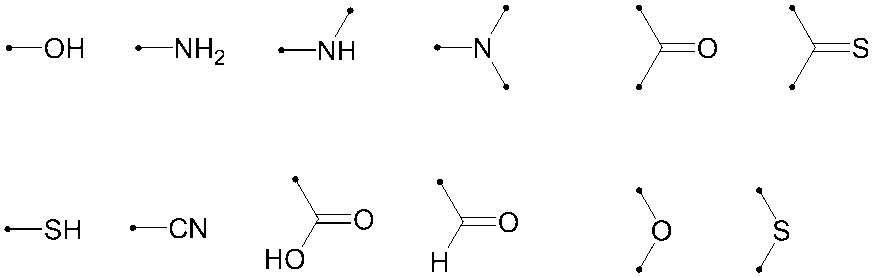


WK2は、メチン基、C-CH3、C-C2H5、窒素原子又は珪素原子を表し、
WK3は、炭素原子を表し、
X1~X5は、それぞれ独立して、水素原子、-OH基又はCH2=C(CH3)COO-を表し、
X1及びX2のうちの少なくとも1つは、-OH基を表し、
X3、X4及びX5のうちの少なくとも1つは、-OH基を表し、
Sp1、Sp2及びSp3は、それぞれ単結合又はスペーサー基を表す。


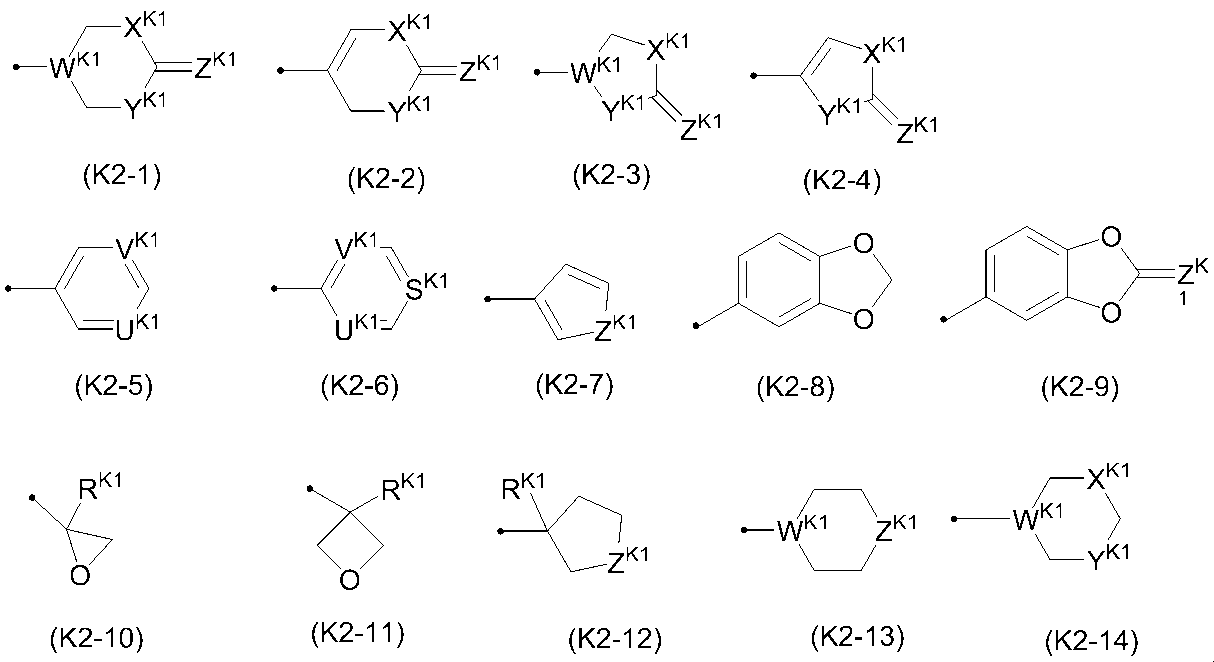
任意のメチレン基は、それぞれ独立して、炭素原子数1~5の直鎖又は分岐のアルキル基、炭素原子数1~5の直鎖又は分岐のアルキルオキシ基、又は炭素原子数1~5の直鎖又は分岐のペルフルオロアルキル基で置換されていてもよく、
WK1は、メチン基、C-CH3、C-C2H5又は窒素原子を表し、
XK1及びYK1は、それぞれ独立して、-CH2-、酸素原子又は硫黄原子を表し、
ZK1は、酸素原子又は硫黄原子を表す。
RK1は、水素原子、炭素原子数1~5の直鎖又は分岐のアルキル基、炭素原子数1~5の直鎖又は分岐のアルキルオキシ基、又は炭素原子数1~5の直鎖又は分岐のペルフルオロアルキル基を表す。
また、液晶組成物中への溶解性を重要視する場合、第2の親和性基としては、(K2-1)、(K2-9)及び(K2-13)が好ましい。さらに、これらのバランスを重要視する場合、第2の親和性基としては、(K2-1)及び(K2-3)がより好ましい。

これらの中でも、重合性基としては、式(P‐1)~式(P-3)で示される基が好ましく、式(P-1)及び式(P-3)で示される基がより好ましい。
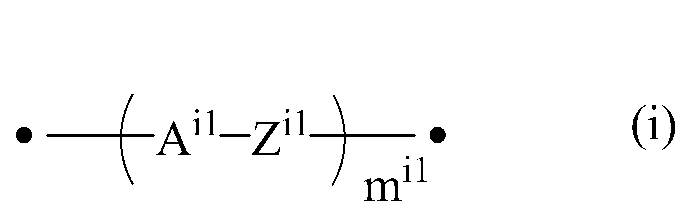
Ai1は、2価の6員環芳香族基、2価の6員環複素芳香族基、2価の6員環脂肪族基又は2価の6員環複素脂肪族基を表し、
これらの環構造中の水素原子は、ハロゲン原子、炭素原子数1~10の直鎖又は分岐のアルキル基、炭素原子数1~10の直鎖又は分岐のハロゲン化アルキル基、炭素原子数1~10の直鎖又は分岐のアルコキシ基又はPi1-Spi1-で置換されていてもよく、ここで、Pi1は、前記一般式(P-1)~(P-13)で表される群より選ばれる重合性基を表し、Spi1は、Zi1と同様の意味を表し、
Zi1は、単結合、-CH=CH-、-CF=CF-、-C≡C-、-COO-、-OCO-、-OCOO-、-OOCO-、-CF2O-、-OCF2-、-CH=CHCOO-、-OCOCH=CH-、-CH2-CH2COO-、-OCOCH2―CH2-、-CH=C(CH3)COO-、-OCOC(CH3)=CH-、-CH2-CH(CH3)COO-、-OCOCH(CH3)―CH2-、-OCH2CH2O-又は炭素原子数2~20のアルキレン基(ただし、アルキレン基中の1個又は隣接しない2個以上の-CH2-は-O-、-COO-又は-OCO-で置換されてもよい。)を表し、
mi1は、1~5の整数を表し、
mi1が2以上の場合、複数のAi1は、互いに同一であっても異なっていてもよい。


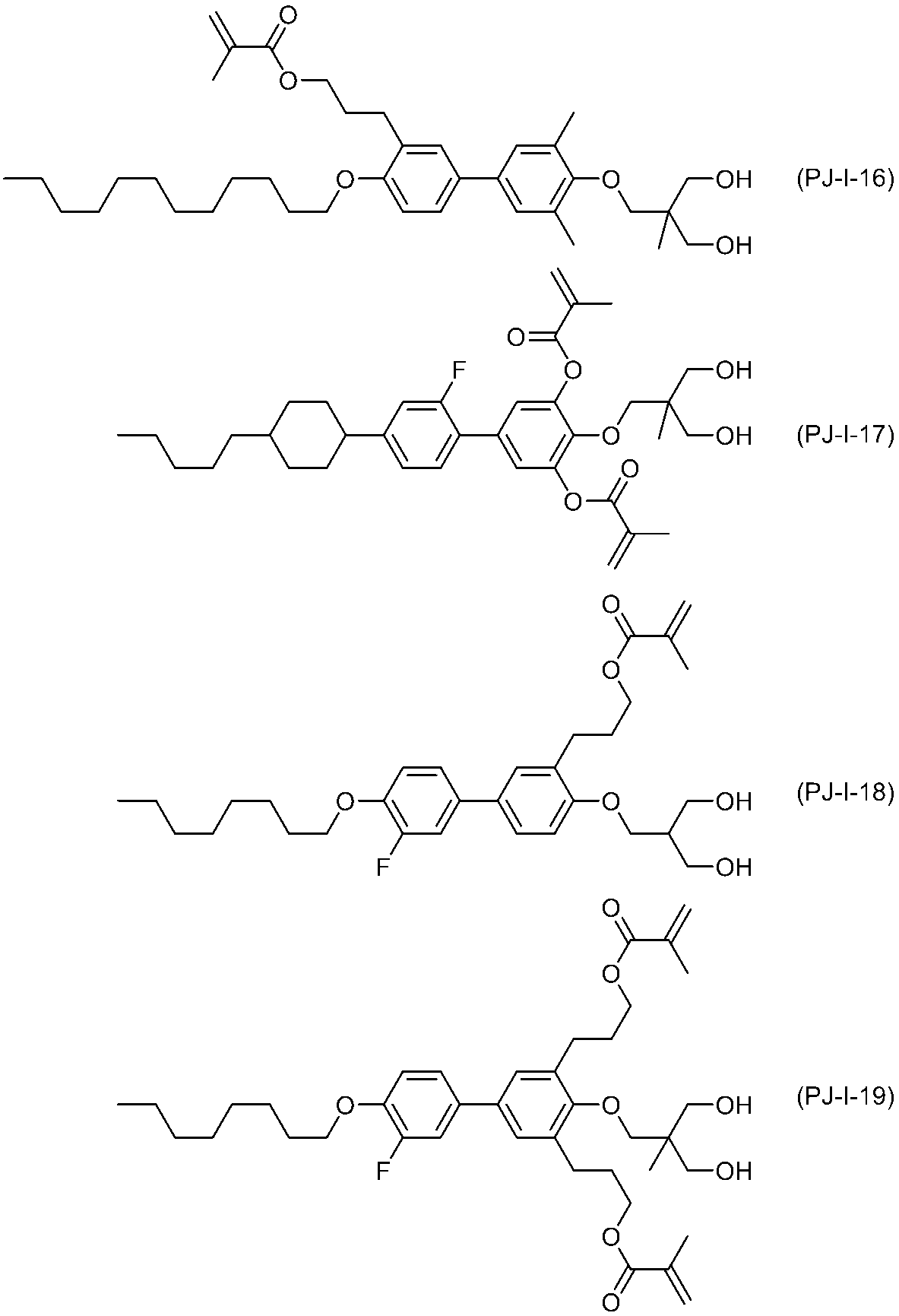


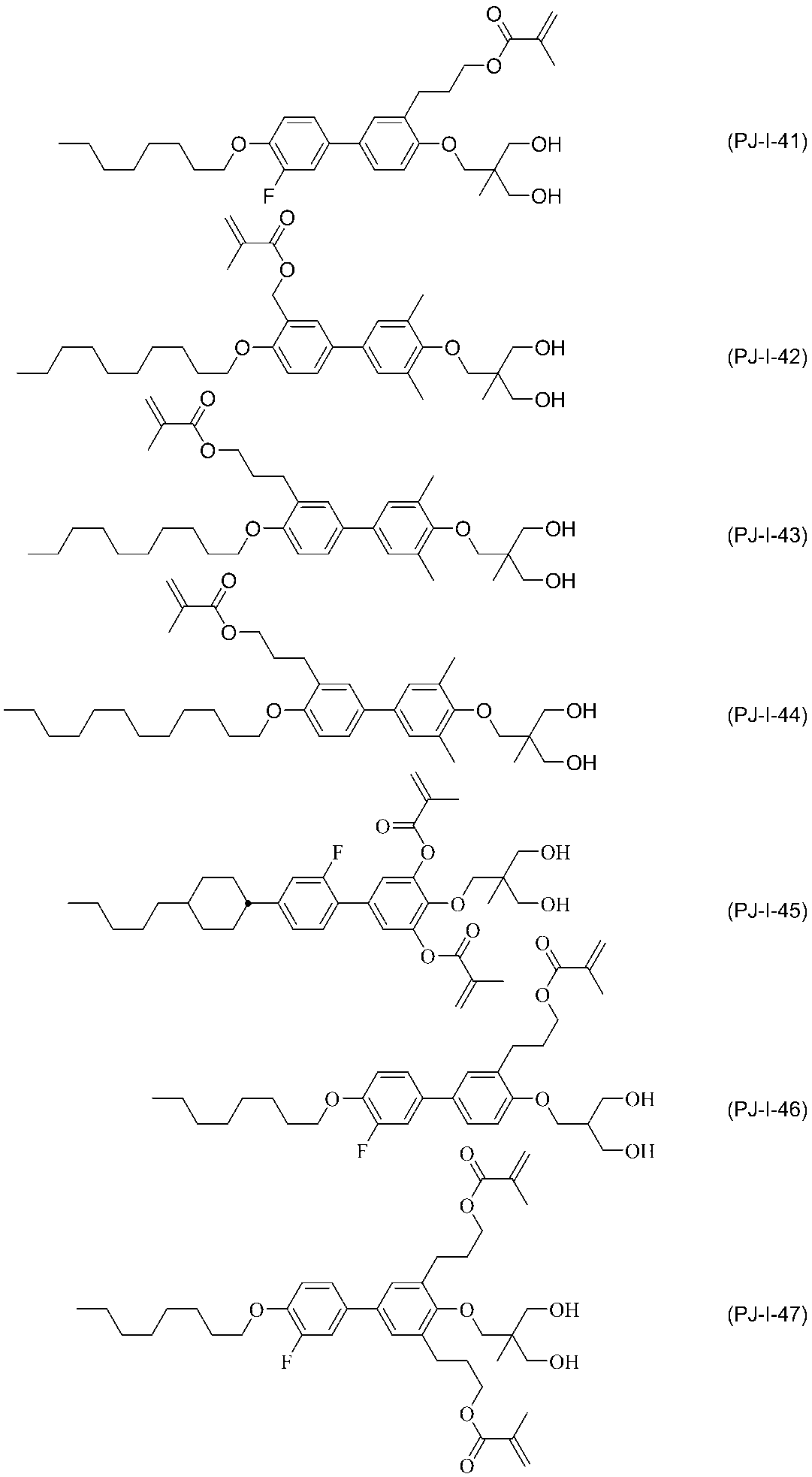


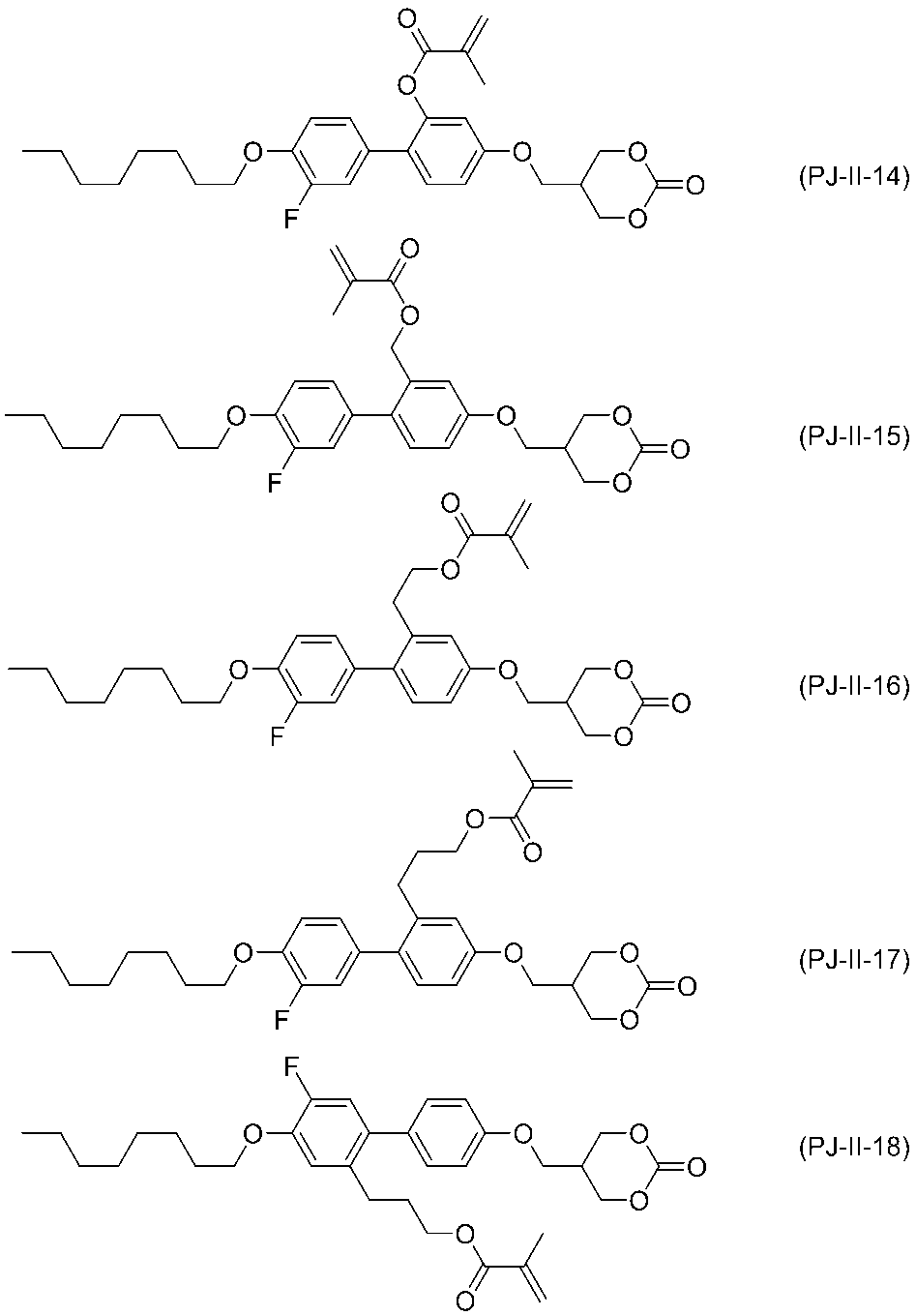
本発明の液晶組成物は、配向助剤(第1の化合物及び第2の化合物)と液晶分子とを含有し、誘電率異方性(Δε)が負である。
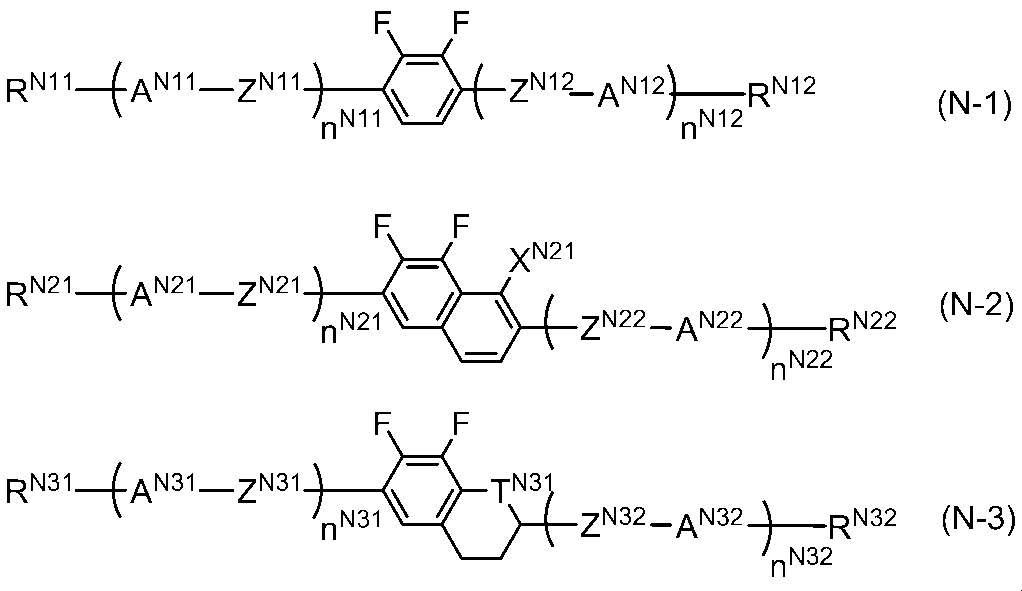
(a) 1,4-シクロヘキシレン基(ただし、この基中に存在する1個の-CH2-又は隣接していない2個以上の-CH2-は-O-に置換されてもよい。)、
(b) 1,4-フェニレン基(ただし、この基中に存在する1個の-CH=又は隣接していない2個以上の-CH=は-N=に置換されてもよい。)、
(c) ナフタレン-2,6-ジイル基、1,2,3,4-テトラヒドロナフタレン-2,6-ジイル基又はデカヒドロナフタレン-2,6-ジイル基(ただし、ナフタレン-2,6-ジイル基又は1,2,3,4-テトラヒドロナフタレン-2,6-ジイル基中に存在する1個の-CH=又は隣接していない2個以上の-CH=は-N=に置換されてもよい。)、及び
(d) 1,4-シクロヘキセニレン基
からなる群より選ばれる基を表し、
前記基(a)、基(b)、基(c)及び基(d)は、それぞれ独立して、シアノ基、フッ素原子又は塩素原子で置換されていてもよい。
XN21は、水素原子又はフッ素原子を表し、
TN31は、-CH2-又は酸素原子を表す。
AN11~AN32、ZN11~ZN32がそれぞれ複数存在する場合は、それらは互いに同一であっても異なっていてもよい。

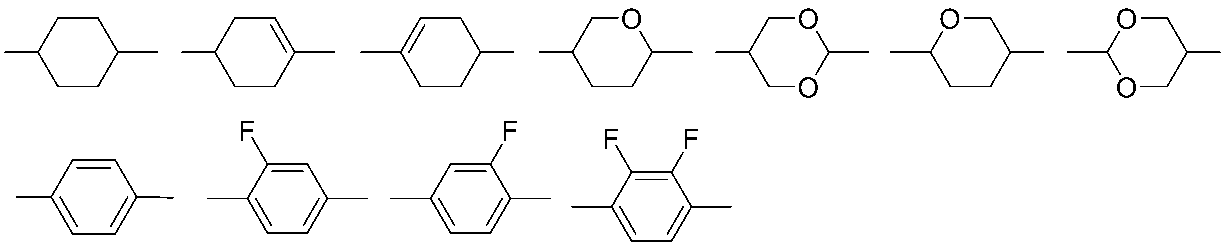
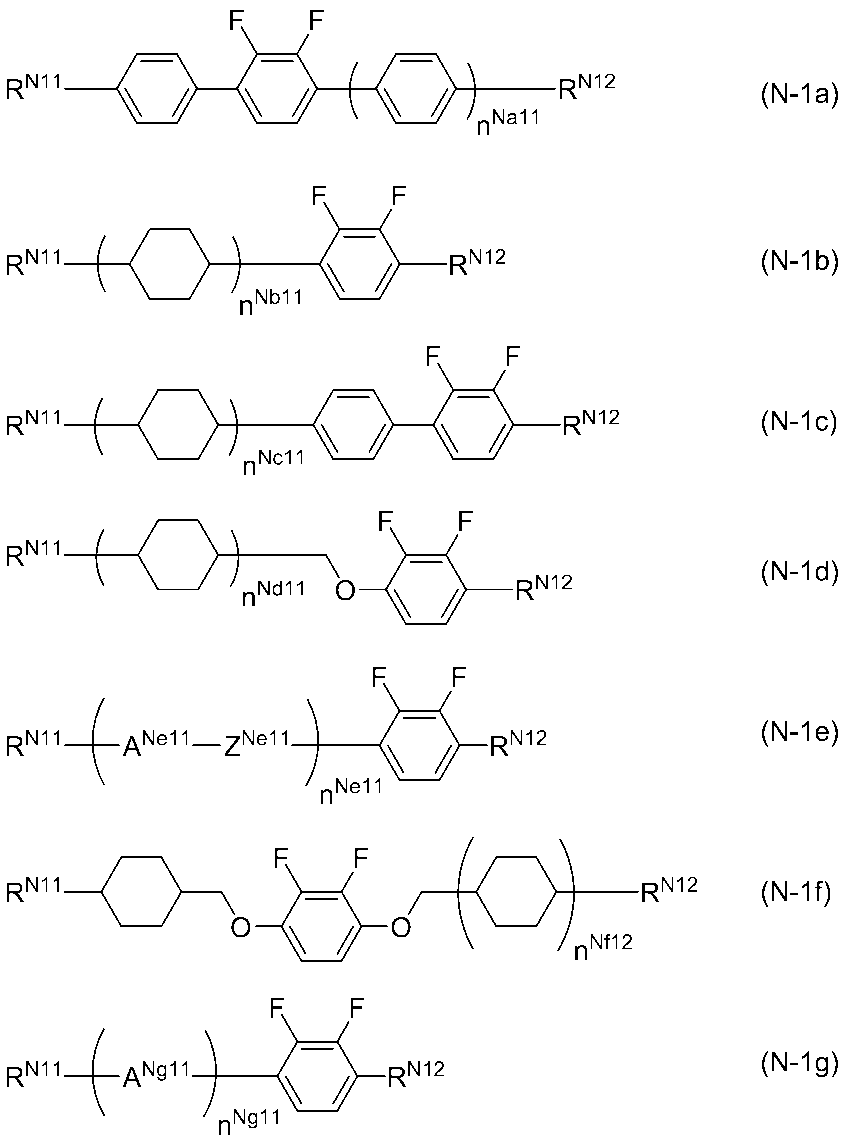
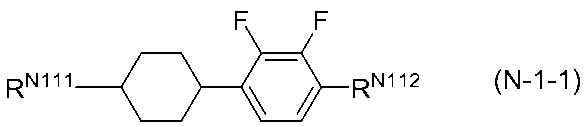

液晶組成物の総量に対しての式(N-1-1.1)~(N-1-1.22)で表される化合物(単独又は併用)の好ましい含有量の下限値は、5質量%以上であり、10質量%以上であり、13質量%以上であり、15質量%以上であり、17質量%以上であり、20質量%以上であり、23質量%以上であり、25質量%以上であり、27質量%以上であり、30質量%以上であり、33質量%以上であり、35質量%以上である。

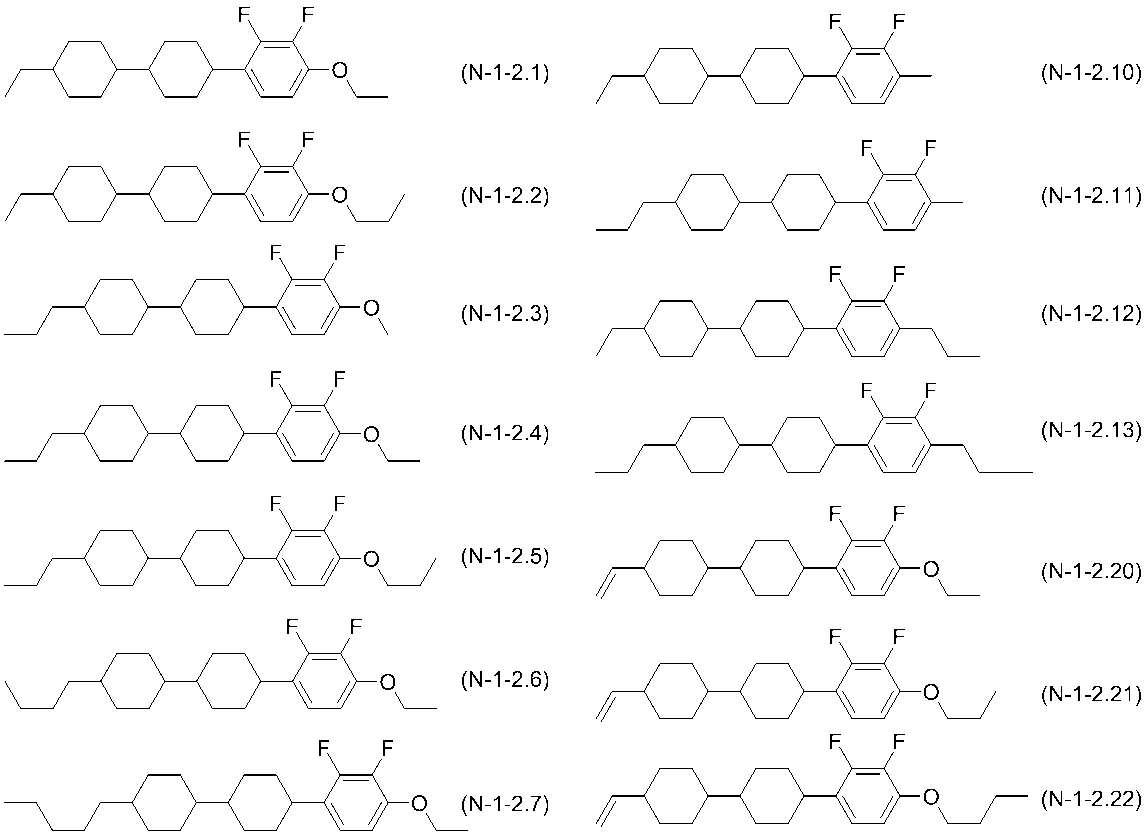

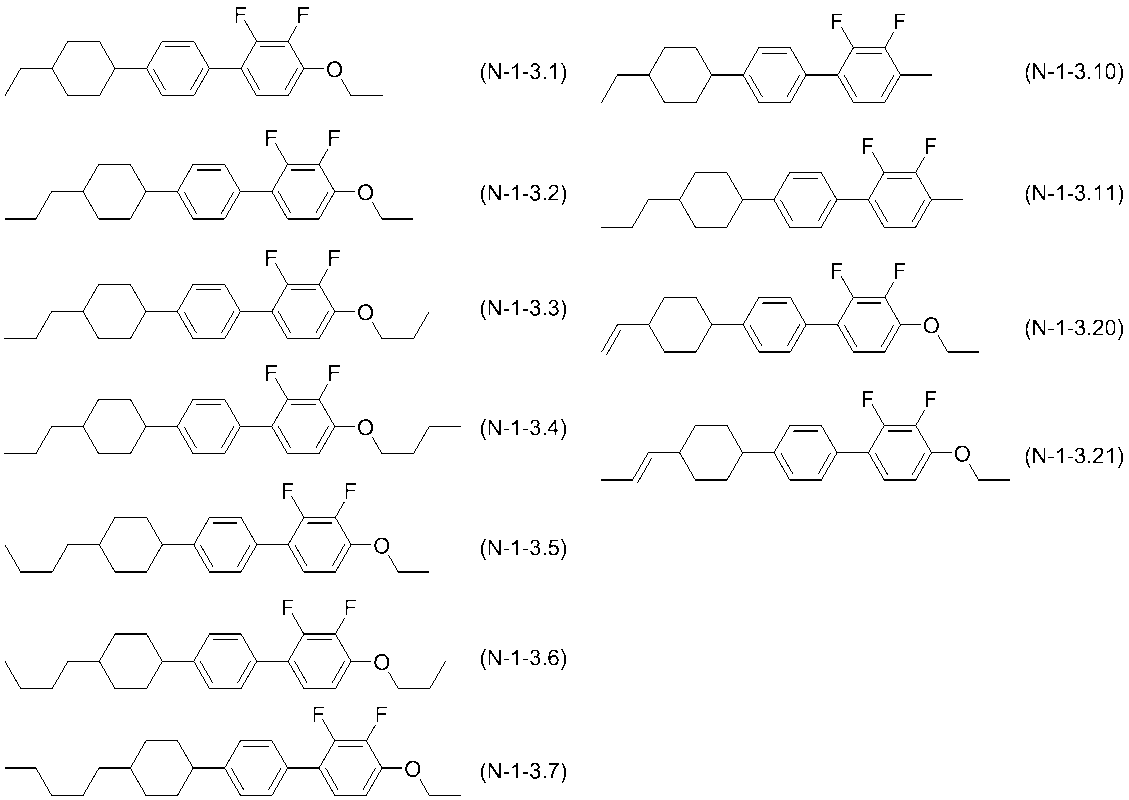
一方、その好ましい含有量の上限値は、35質量%以下であり、30質量%以下であり、28質量%以下であり、25質量%以下であり、23質量%以下であり、20質量%以下であり、18質量%以下であり、15質量%以下であり、13質量%以下である。

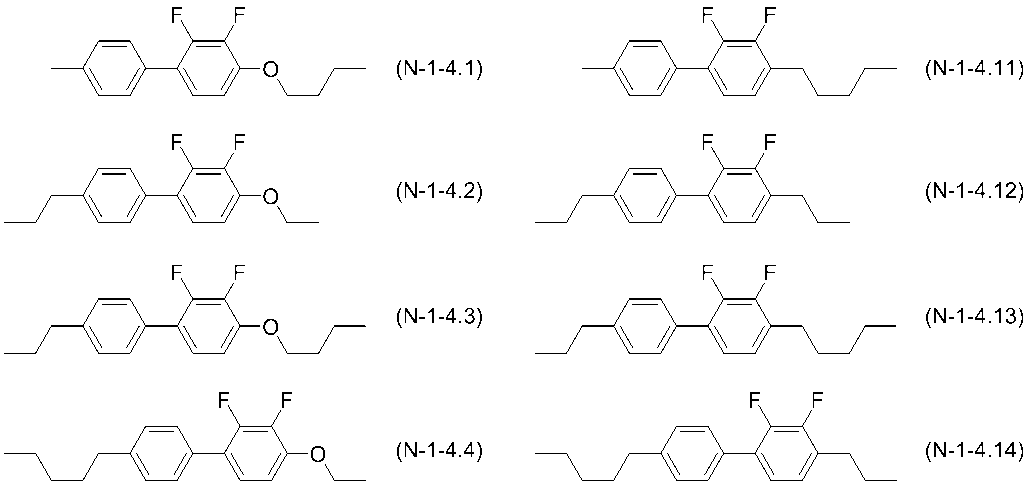


液晶組成物の総量に対しての式(N-1-5.1)、式(N-1-5.2)及び式(N-1-5.4)で表される化合物(単独又は併用)の好ましい含有量の下限値は、5質量%以上であり、8質量%以上であり、10質量%以上であり、13質量%以上であり、15質量%以上であり、17質量%以上であり、20質量%以上である。
一方、その好ましい含有量の上限値は、35質量%以下であり、33質量%以下であり、30質量%以下であり、28質量%以下であり、25質量%以下であり、23質量%以下であり、20質量%以下であり、18質量%以下であり、15質量%以下であり、13質量%以下である。


液晶組成物の総量に対しての式(N-1-10.1)及び式(N-1-10.2)で表される化合物(単独又は併用)の好ましい含有量の下限値は、5質量%以上であり、10質量%以上であり、13質量%以上であり、15質量%以上であり、17質量%以上であり、20質量%以上である。
一方、その好ましい含有量の上限値は、35質量%以下であり、30質量%以下であり、28質量%以下であり、25質量%以下であり、23質量%以下であり、20質量%以下であり、18質量%以下であり、15質量%以下であり、13質量%以下である。

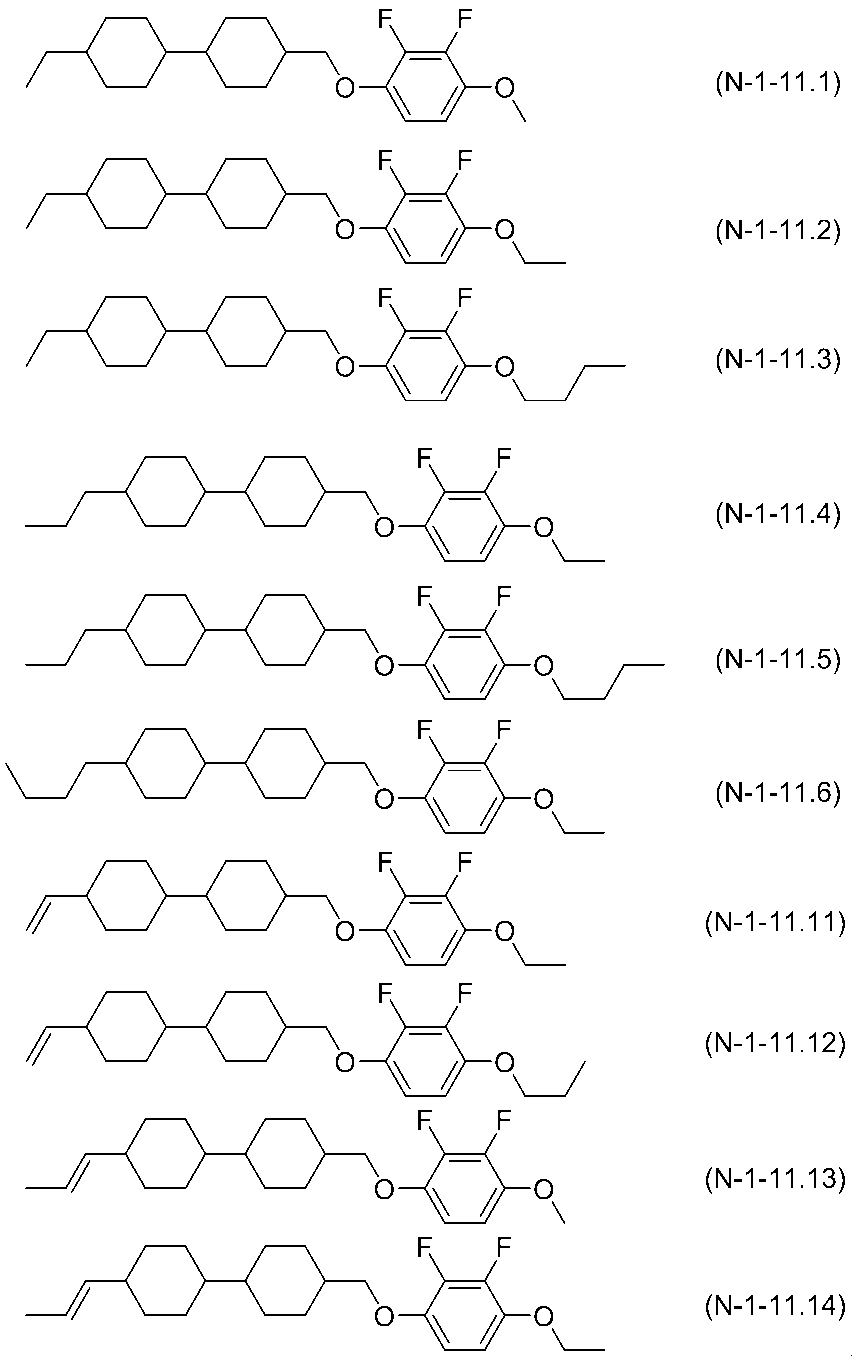





一方、その好ましい含有量の上限値は、35質量%以下であり、30質量%以下であり、28質量%以下であり、25質量%以下であり、23質量%以下であり、20質量%以下であり、18質量%以下であり、15質量%以下であり、13質量%以下である。





nL1は、0、1、2又は3を表す。
(a) 1,4-シクロヘキシレン基(ただし、この基中に存在する1個の-CH2-又は隣接していない2個以上の-CH2-は-O-に置換されてもよい。)、
(b) 1,4-フェニレン基(ただし、この基中に存在する1個の-CH=又は隣接していない2個以上の-CH=は-N=に置換されてもよい。)、及び
(c) ナフタレン-2,6-ジイル基、1,2,3,4-テトラヒドロナフタレン-2,6-ジイル基又はデカヒドロナフタレン-2,6-ジイル基(ただし、ナフタレン-2,6-ジイル基又は1,2,3,4-テトラヒドロナフタレン-2,6-ジイル基中に存在する1個の-CH=又は隣接していない2個以上の-CH=は-N=に置換されてもよい。)
からなる群より選ばれる基を表し、
前記基(a)、基(b)及び基(c)は、それぞれ独立して、シアノ基、フッ素原子又は塩素原子で置換されていてもよい。
nL1が2又は3であってAL2が複数存在する場合は、それらは互いに同一であっても異なっていてもよく、nL1が2又は3であってZL2が複数存在する場合は、それらは互いに同一であっても異なっていてもよいが、一般式(N-1)、(N-2)及び(N-3)で表される化合物を除く。

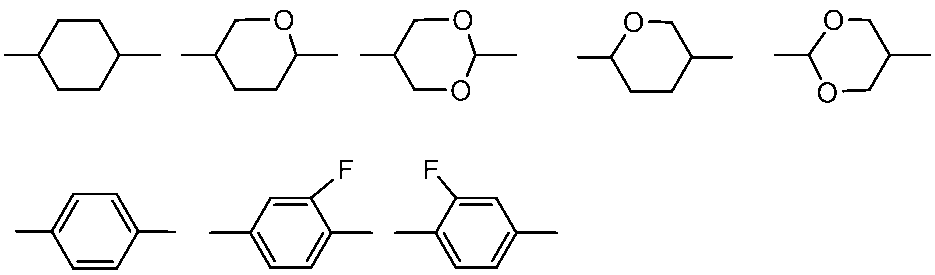




なお、液晶組成物中に含まれる式(L-1-2.3)及び式(L-1-2.4)で表される化合物の量は、低温での溶解度を良くするために30質量%以上にすることは好ましくない。


なお、液晶組成物中に含まれる式(L-1-3.3)、式(L-1-3.4)、式(L-1-3.11)及び式(L-1-3.12)で表される化合物の合計の量は、低温での溶解度を良くするために20%以上にすることは好ましくない。
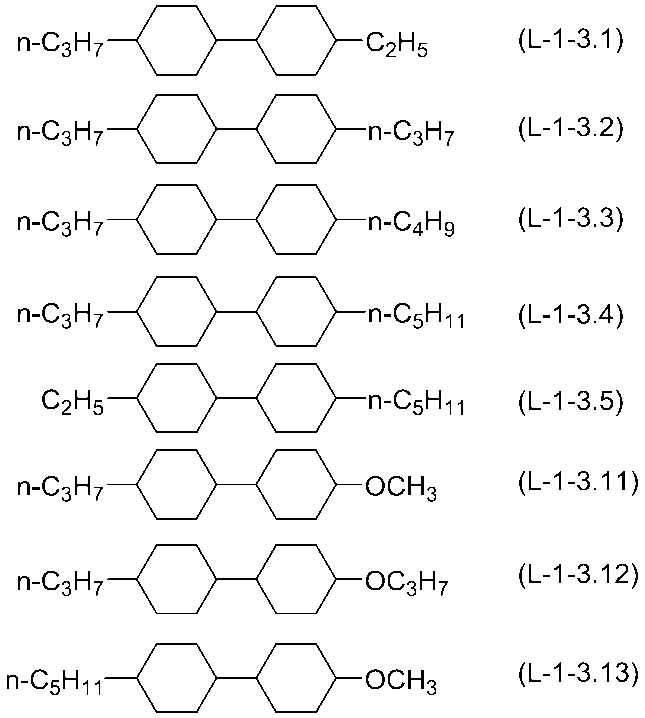

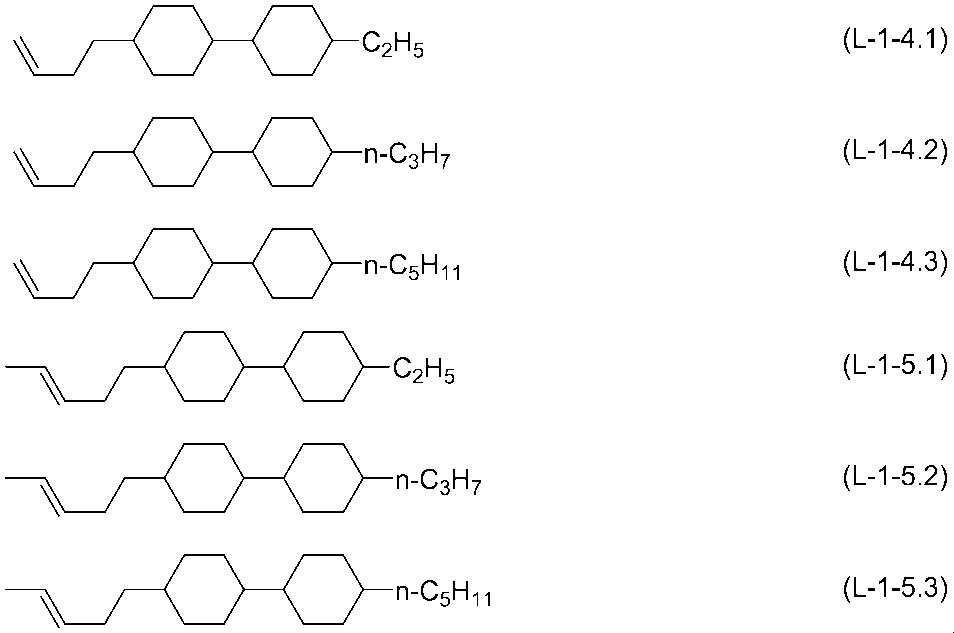
一方、その好ましい合計の含有量の上限値は、80質量%以下であり、70質量%以下であり、60質量%以下であり、50質量%以下であり、45質量%以下であり、40質量%以下であり、37質量%以下であり、35質量%以下であり、33質量%以下であり、30質量%以下であり、28質量%以下であり、25質量%以下であり、23質量%以下であり、20質量%以下である。




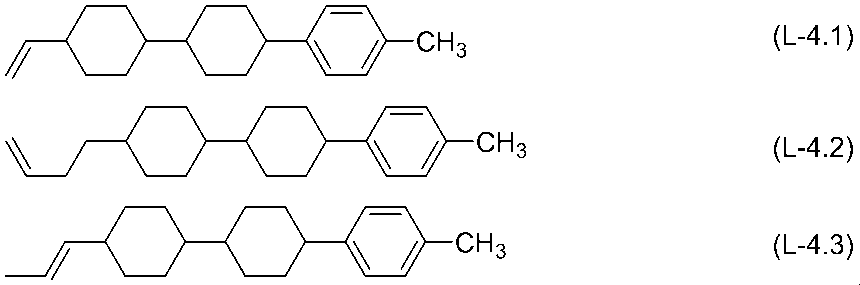
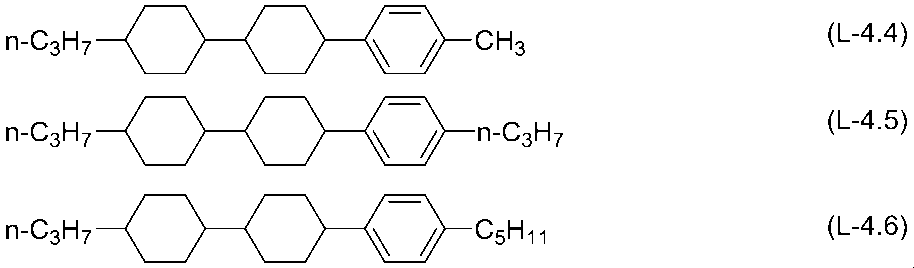
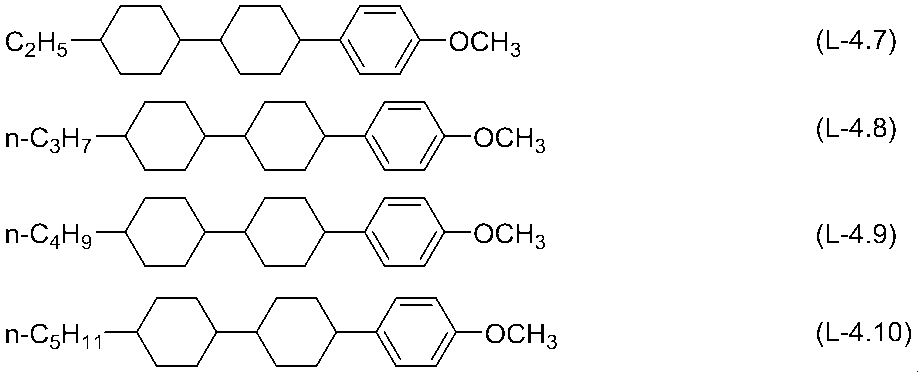


一方、その好ましい含有量の上限値は、20質量%以下であり、15質量%以下であり、13質量%以下であり、10質量%以下であり、9質量%以下である。

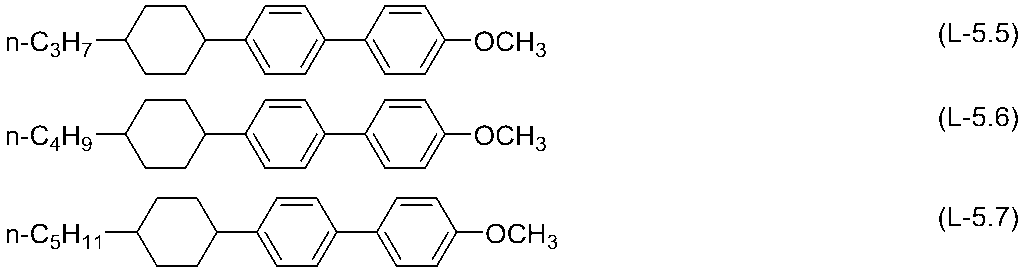
一方、その好ましい含有量の上限値は、20質量%以下であり、15質量%以下であり、13質量%以下であり、10質量%以下であり、9質量%以下である。


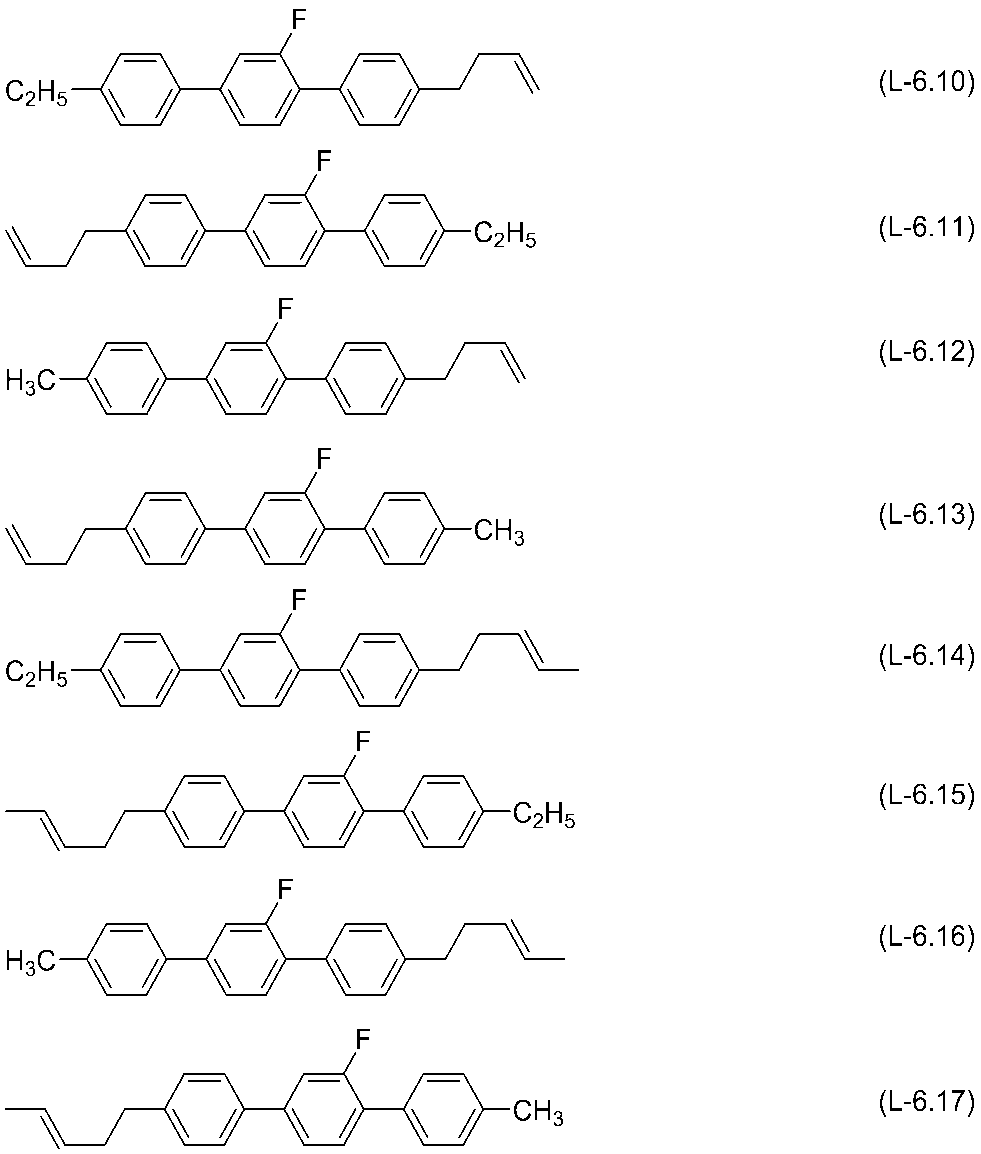
一方、その好ましい含有量の上限値は、20質量%以下であり、15質量%以下であり、13質量%以下であり、10質量%以下であり、9質量%以下である。

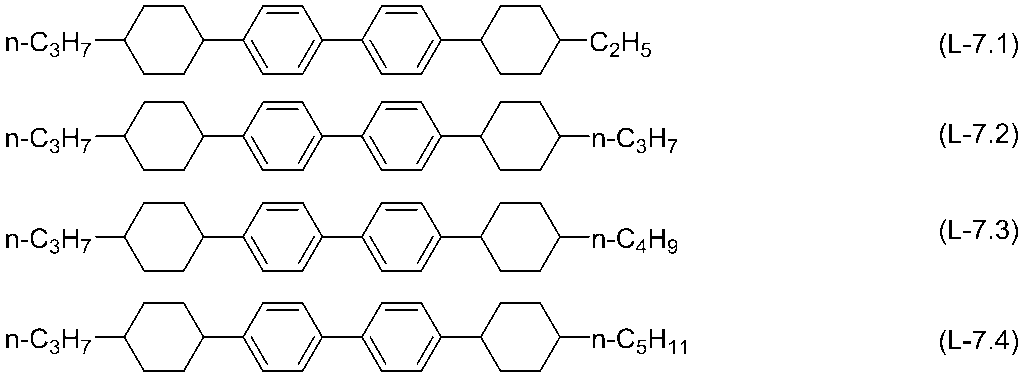
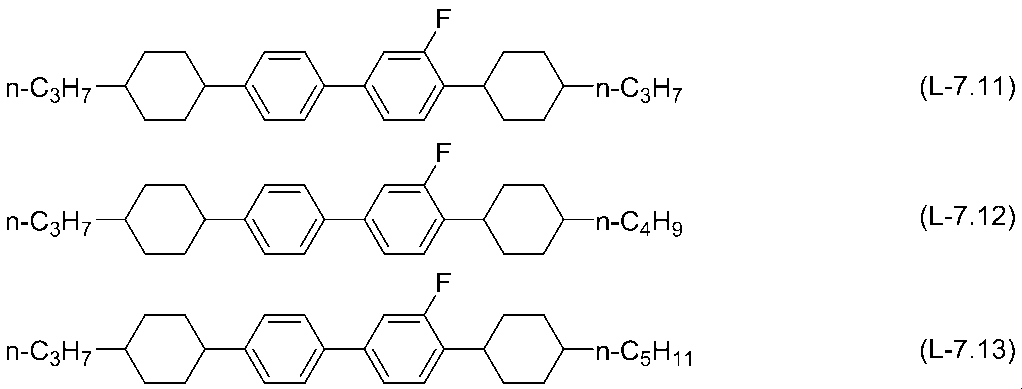
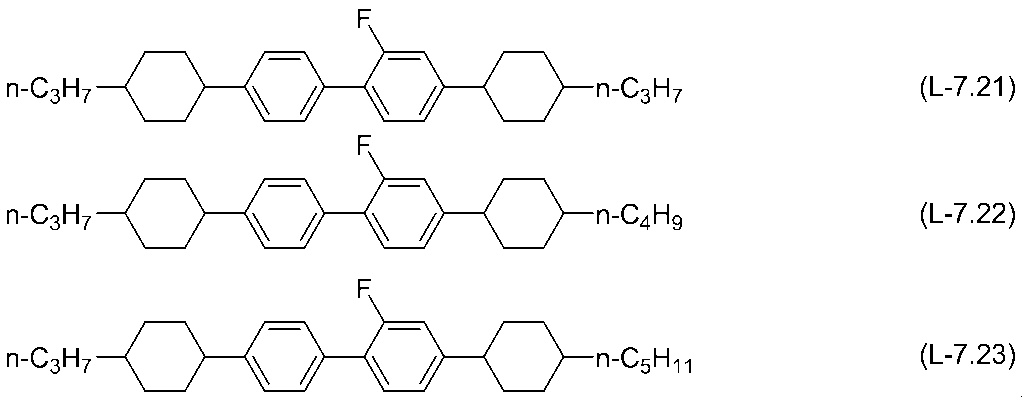

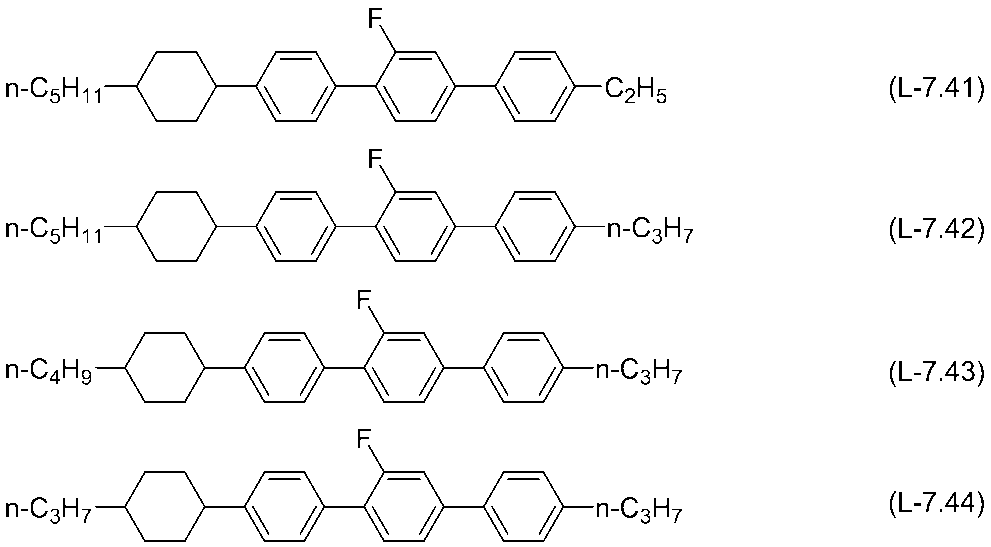


*でSpp1又はSpp2と結合し、
R2~R6は、それぞれ独立して、水素原子、炭素原子数1~5個のアルキル基又は炭素原子数1~5個のハロゲン化アルキル基を表し、
Wは、単結合、-O-又はメチレン基を表し、
Tは、単結合又は-COO-を表し、
p、t及びqは、それぞれ独立して、0、1又は2を表す。)
Lp1及びLp2は、それぞれ独立して、単結合、-O-、-S-、-CH2-、-OCH2-、-CH2O-、-CO-、-C2H4-、-COO-、-OCO-、-OCOOCH2-、-CH2OCOO-、-OCH2CH2O-、-CO-NRa-、-NRa-CO-、-SCH2-、-CH2S-、-CH=CRa-COO-、-CH=CRa-OCO-、-COO-CRa=CH-、-OCO-CRa=CH-、-COO-CRa=CH-COO-、-COO-CRa=CH-OCO-、-OCO-CRa=CH-COO-、-OCO-CRa=CH-OCO-、-(CH2)z-C(=O)-O-、-(CH2)z-O-(C=O)-、-O-(C=O)-(CH2)z-、-(C=O)-O-(CH2)z-、-CH2(CH3)C-C(=O)-O-、-CH2(CH3)C-O-(C=O)-、-O-(C=O)-C(CH3)CH2、-(C=O)-O-C(CH3)-CH2、-CH=CH-、-CF=CF-、-CF=CH-、-CH=CF-、-CF2-、-CF2O-、-OCF2-、-CF2CH2-、-CH2CF2-、-CF2CF2-又は-C≡C-(ただし、式中、Raは、それぞれ独立して水素原子又は炭素原子数1~4のアルキル基を表し、zは1~4の整数を表す。)を表す。


mp1及びmp5は、それぞれ独立して、1、2又は3を表し、
Zp1が複数存在する場合には、それらは互いに同一であっても異なっていてもよく、Rp1が複数存在する場合には、それらは互いに同一であっても異なっていてもよく、Rp2が複数存在する場合には、それらは互いに同一であっても異なっていてもよく、Spp1が複数存在する場合には、それらは互いに同一であっても異なっていてもよく、Spp2が複数存在する場合には、それらは互いに同一であっても異なっていてもよく、Lp1が複数存在する場合には、それらは互いに同一であっても異なっていてもよく、Mp2が複数存在する場合には、それらは互いに同一であっても異なっていてもよい。
なお、液晶組成物は、分子内に過酸(-CO-OO-)構造等の酸素原子同士が結合した構造を持つ化合物を含有しないことが好ましい。
本発明の液晶組成物は、液晶表示素子に適用される。以下、図1,2を適宜参照しながら、本実施形態に係る液晶表示素子の例を説明する。
この際、透明電極の膜厚は、10~200nmであってよい。また、電気的抵抗を低減するために、アモルファスのITO膜を焼成することにより多結晶のITO膜として透明電極を形成することもできる。
なお、重合性化合物を用いない場合、液晶層4は、第1の化合物及び第2の化合物の重合物を含むことになる。
Δn :20℃における屈折率異方性
η :20℃における粘度(mPa・s)
γ1 :20℃における回転粘性(mPa・s)
Δε :20℃における誘電率異方性
K33 :20℃における弾性定数K33(pN)
以下では、化合物の記載について、次の略号を用いる。
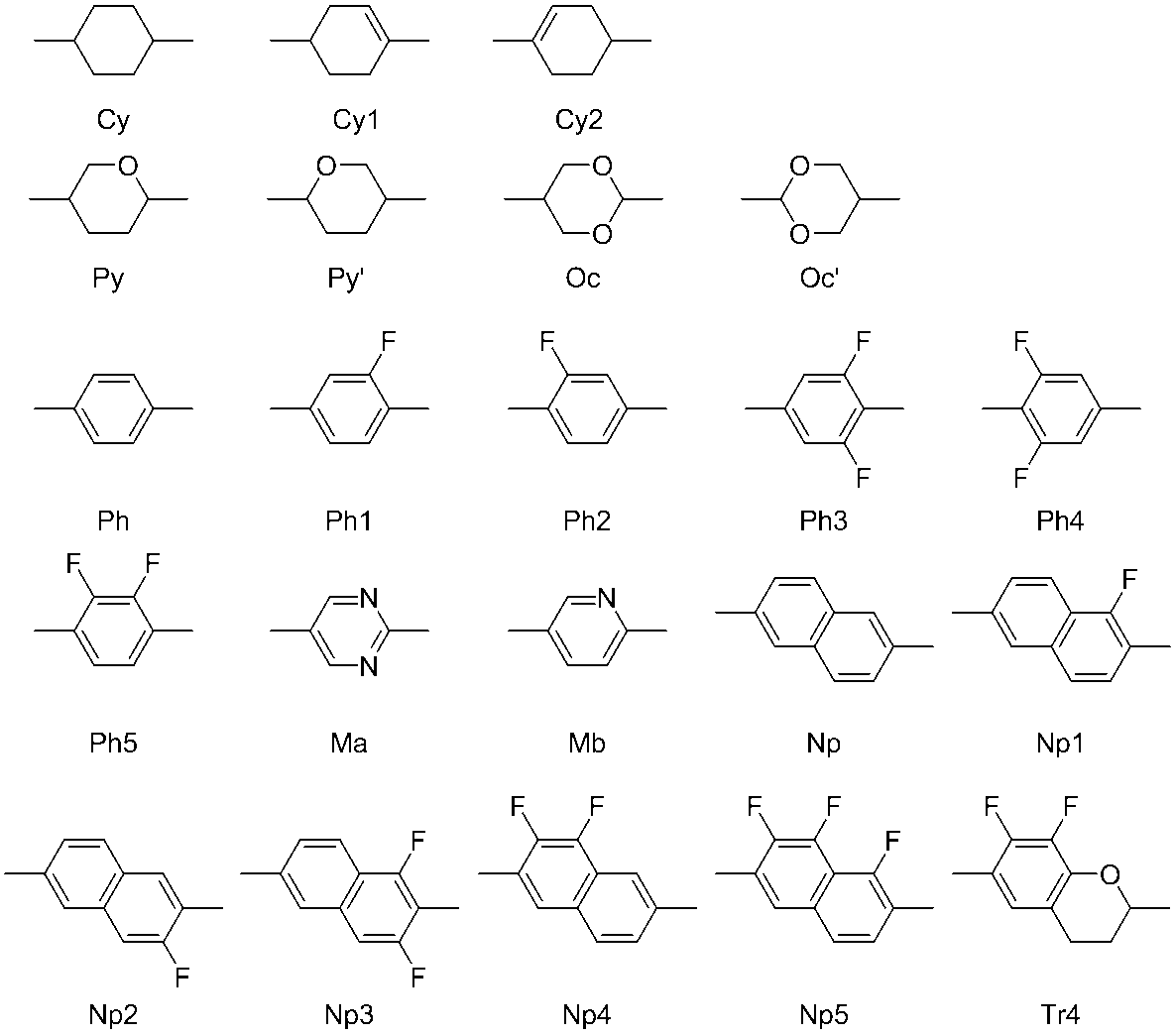
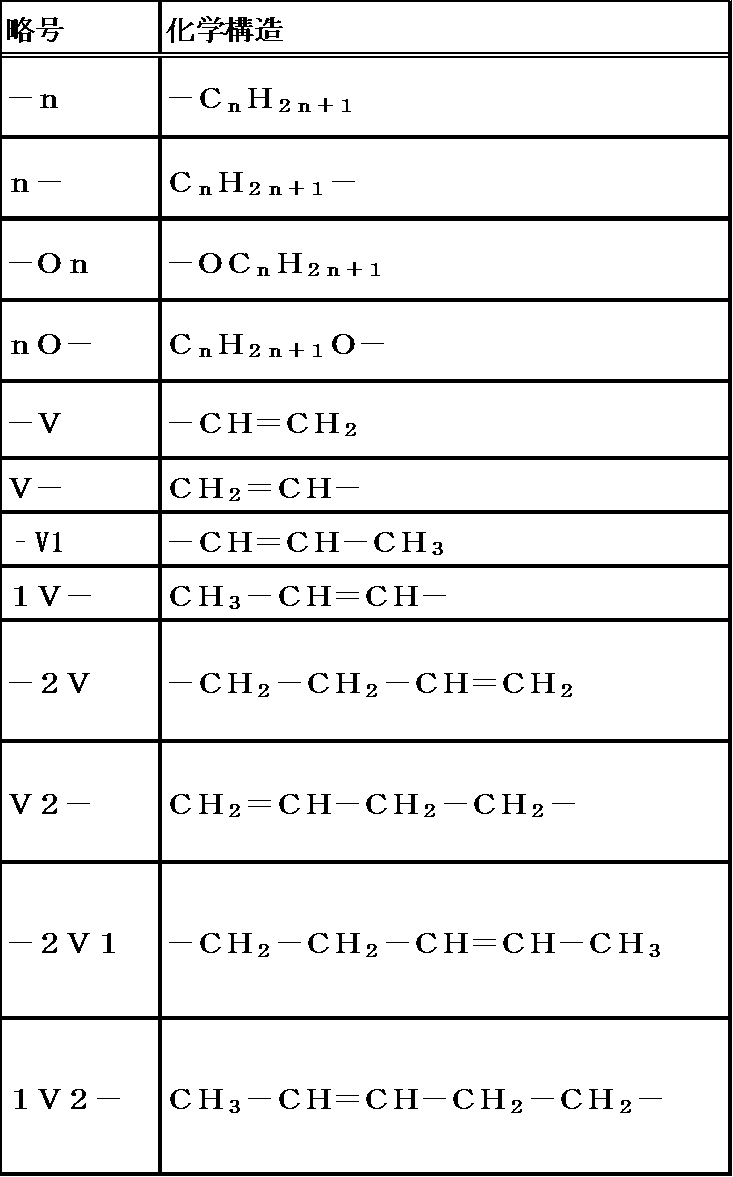
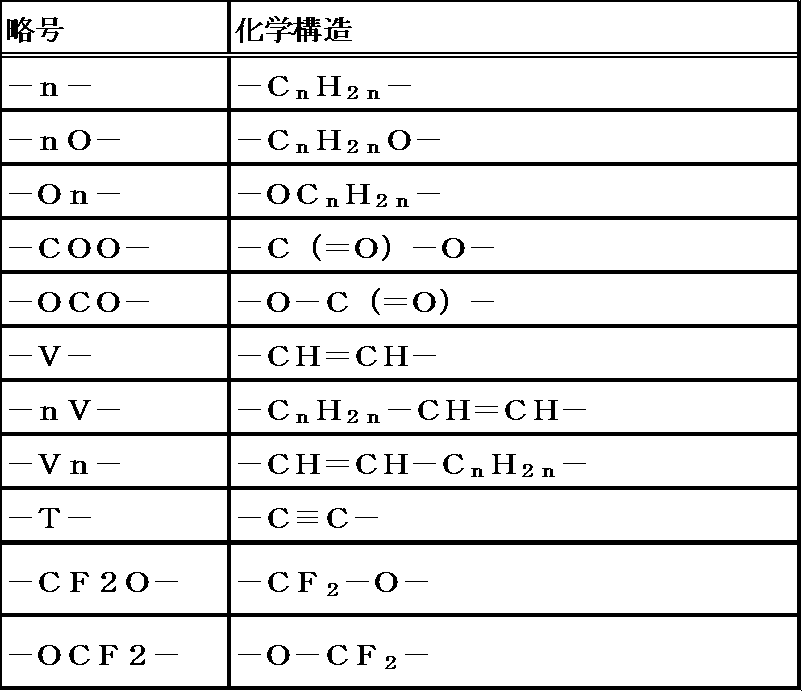
まず、下記表3に示す処方の混合物HLC-1を調製した。この混合物HLC-1 100重量%に、下記の重合性化合物(R-1-0)を0.3重量%添加し、加熱溶解することにより、液晶混合物LC-1を得た。
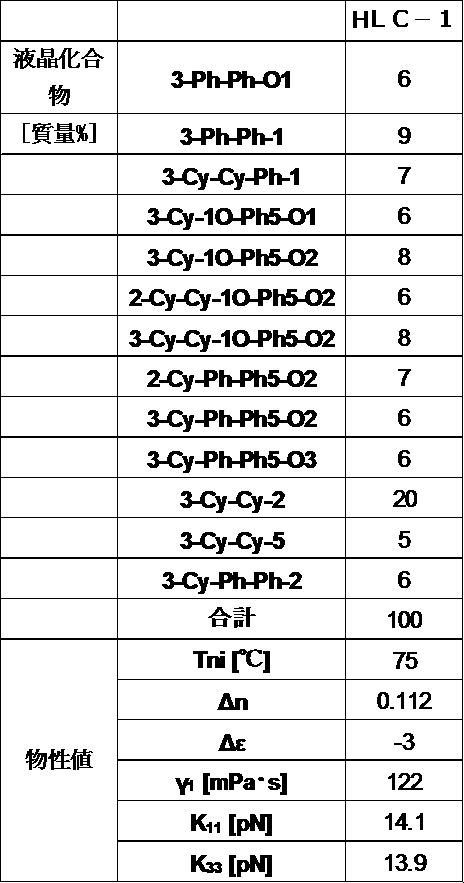

まず、下記表4に示す処方の混合物HLC-2~HLC-8を調製した。これらの混合物HLC-2~HLC-8それぞれ100重量%に、上記の重合性化合物(R-1-0)を0.3重量%添加し、加熱溶解することにより、液晶混合物LC-2~LC-8を得た。
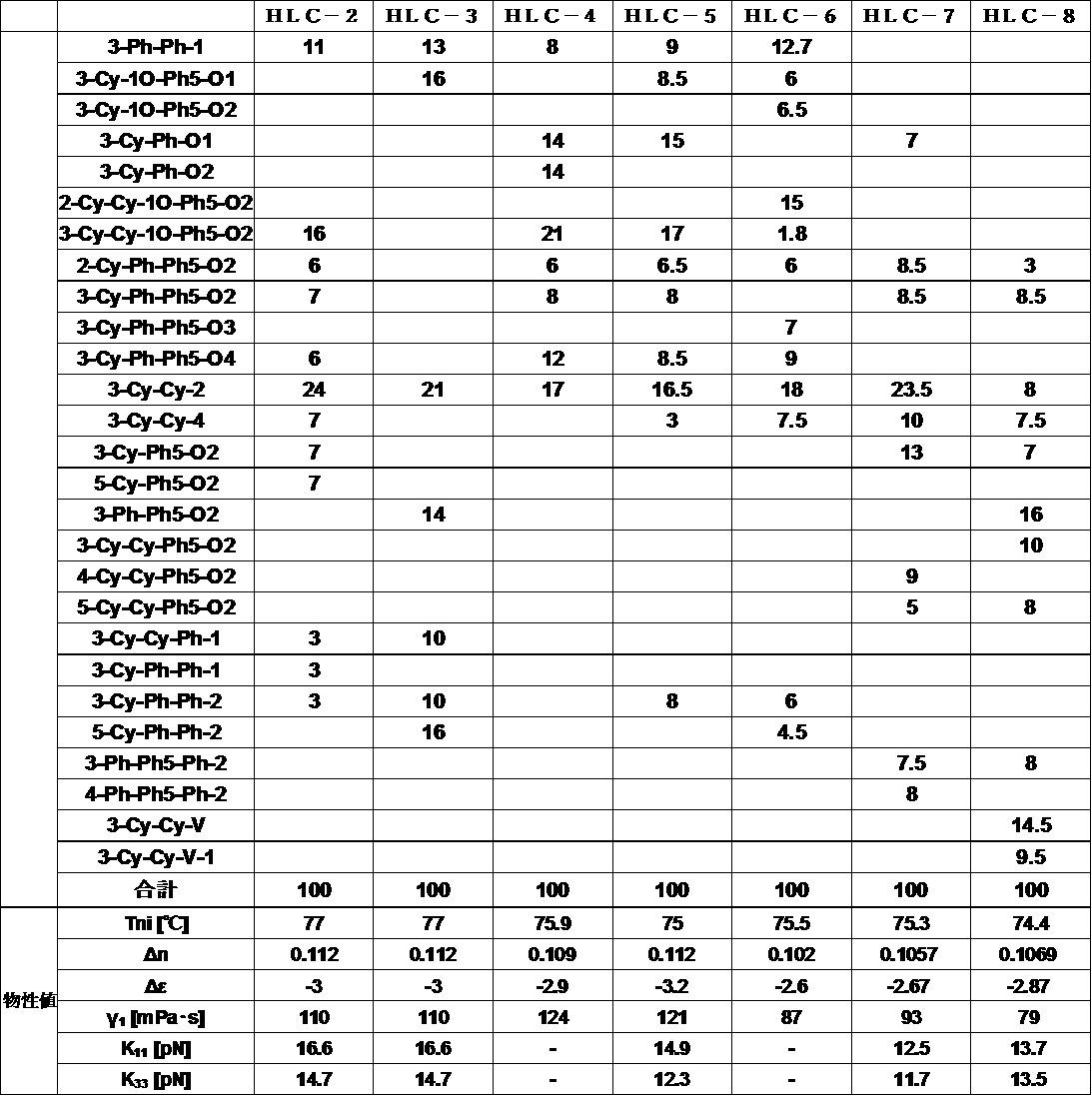
混合物HLC-1~HLC-8それぞれ100重量%に、上記の重合性化合物(R-1-0)を0.3重量%、下記の重合性化合物(R-1-1)を0.5重量%添加し、加熱溶解することにより、液晶混合物LC-9~LC-16を得た。

(実施例1)
液晶混合物LC-1 100重量%に対して、第1の化合物として化合物(PJ-I-1)を0.3重量%と、第2の化合物として化合物(PJ-II-1)を0.3重量%とを添加し、液晶組成物を調製した。
液晶混合物LC-1 100重量%に対して、化合物(PJ-I-1)を0.5重量%と、化合物(PJ-II-1)を0.5重量%とを添加し、液晶組成物を調製した。
液晶混合物LC-1 100重量%に対して、化合物(PJ-I-1)を0.5重量%と、化合物(PJ-II-1)を1.0重量%とを添加し、液晶組成物を調製した。
第1の化合物を化合物(PJ-I-1)から化合物(PJ-I-2)に変更したこと以外は、前記実施例1~3と同様にして液晶組成物を調製した。
第1の化合物を化合物(PJ-I-1)から化合物(PJ-I-3)に変更したこと以外は、前記実施例1~3と同様にして液晶組成物を調製した。
第1の化合物を化合物(PJ-I-1)から化合物(PJ-I-4)に変更したこと以外は、前記実施例1~3と同様にして液晶組成物を調製した。
第1の化合物を化合物(PJ-I-1)から化合物(PJ-I-5)に変更したこと以外は、前記実施例1~3と同様にして液晶組成物を調製した。
第2の化合物を化合物(PJ-II-1)から化合物(PJ-II-2)に変更したこと以外は、前記実施例7~9と同様にして液晶組成物を調製した。
第2の化合物を化合物(PJ-II-1)から化合物(PJ-II-3)に変更したこと以外は、前記実施例7~9と同様にして液晶組成物を調製した。
第2の化合物を化合物(PJ-II-1)から化合物(PJ-II-4)に変更したこと以外は、前記実施例7~9と同様にして液晶組成物を調製した。
第2の化合物を化合物(PJ-II-1)から化合物(PJ-II-2)に変更したこと以外は、前記実施例4~6と同様にして液晶組成物を調製した。
第2の化合物を化合物(PJ-II-1)から化合物(PJ-II-3)に変更したこと以外は、前記実施例4~6と同様にして液晶組成物を調製した。
第2の化合物を化合物(PJ-II-1)から化合物(PJ-II-4)に変更したこと以外は、前記実施例4~6と同様にして液晶組成物を調製した。
液晶組成物LC-1を液晶組成物LC-2~LC-8に変更したこと以外は、前記実施例23と同様にして液晶組成物を調製した。
化合物(PJ-I-1)及び化合物(PJ-II-1)を用いなかったこと以外は、前記実施例1と同様にして液晶組成物を調製した。
液晶混合物LC-1 100重量%に対して、下記の化合物Ref-1~Ref-3をそれぞれ1.0重量%添加したこと以外は、前記実施例1と同様にして液晶組成物を調製した。
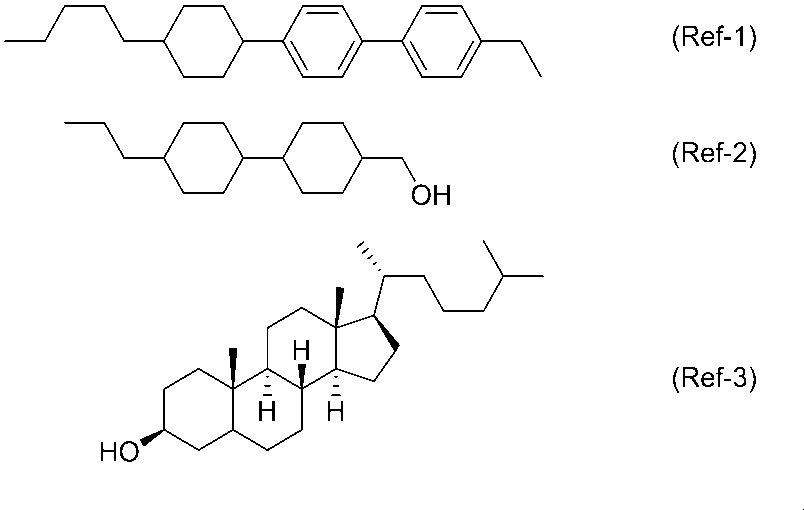
液晶混合物LC-1 100重量%に対して、上記の化合物(PJ-I-1)~(PJ-I-5)及び化合物(PJ-II-1)~(PJ-II-4)をそれぞれ1.0重量%添加したこと以外は、前記実施例1と同様にして液晶組成物を調製した。
液晶混合物LC-1~LC-8それぞれ100重量%に対して、上記の化合物(PJ-I-3)を1.0重量%添加したこと以外は、前記実施例1と同様にして液晶組成物を調製した。
実施例及び比較例の各液晶組成物について、以下の評価試験を行った。
液晶組成物をメンブレンフィルター(Agilent Technologies社製、PTFE 13mm-0.2μm)にてろ過を行い、真空減圧条件にて15分間静置し溶存空気の除去を行った。これをアセトンにて洗浄し十分に乾燥させたバイアル瓶に0.5g秤量し、-25℃の低温環境下に14日間静置した。その後、目視にて析出の有無を観察し、以下の4段階で判定した。
まず、透明共通電極層を有するが、配向膜を有さない第一の基板(共通電極基板)と、アクティブ素子により駆動される透明画素電極を含む画素電極層を有するが、配向膜を有さない第二の基板(画素電極基板)とを作製した。次に、第一の基板の外周縁部に沿ってシール材を配置し、第一の基板上であってシール材の内側に液晶組成物を滴下した。
B:ごく僅かに配向欠陥が有るも許容できるレベル
C:端部なども含め、配向欠陥が多く許容できないレベル
D:配向不良がかなり劣悪
まず、カラーフィルタ層を有するが、配向膜を有さない第一の基板(フィルタ基板)と、アクティブ素子により駆動される透明画素電極を含む画素電極層を有するが、配向膜を有さない第二の基板(画素電極基板)とを作製した。次に、第一の基板の外周縁部に沿ってシール材を配置し、第一の基板上であってシール材の内側に液晶組成物を滴下した。
B:ごく僅かに配向欠陥が有るも許容できるレベル
C:端部なども含め、配向欠陥が多く許容できないレベル
D:配向不良がかなり劣悪
まず、表面がパターン化された透明共通電極層部位とカラーフィルタ層部位の両方からなり、配向膜を有さない第一の基板(電極フィルタ基板)と、アクティブ素子により駆動される透明画素電極部位と画素電極層および、部分的にカラーフィルタ層部位を有するが、配向膜を有さない第二の基板(画素電極基板)とを作製した。次に、第一の基板の外周縁部に沿ってシール材を配置し、第一の基板上であってシール材の内側に液晶組成物を滴下した。
B:ごく僅かに配向欠陥が有るも許容できるレベル
C:端部なども含め、配向欠陥が多く許容できないレベル
D:配向不良がかなり劣悪
上記「3-2.垂直配向性の評価試験1」で使用した液晶セルに、10V、100Hzの矩形交流波を印加しながら、高圧水銀ランプを用いて、365nmにおける照度が100m/cm2であるUV光を200秒間照射した。その後、白表示の安定性を、10V、100Hzの矩形交流波を印加しながらセルに物理的な外力を加え、クロスニコルの状態で観察を行い、以下の4段階で評価した。
B:ごく僅かに配向欠陥が有るも許容できるレベル
C:端部なども含め、配向欠陥が多く許容できないレベル
D:配向不良がかなり劣悪
上記「3-5.プレチルト角形成の評価試験」にて使用したセルに、さらに、東芝ライテック社製のUV蛍光ランプを60分間照射した(313nmにおける照度1.7mW/cm2)後の、重合性化合物(R1-1-0)の残存量をHPLCにて定量し、残存モノマー量を決定した。モノマーの残存量に応じて、以下の4段階で評価した。
B:300ppm以上500ppm未満。
D:1500ppm以上
上記「3-5.プレチルト角形成の評価試験」にて使用したセルギャップ3.2μmのセルに、さらに、東芝ライテック社製のUV蛍光ランプを60分間照射した(313nmにおける照度1.7mW/cm2)。これにより得られたセルに対して、応答速度を測定した。応答速度は、6VにおけるVoffを、25℃の温度条件で、AUTRONIC-MELCHERS社のDMS703を用いて測定した。応答特性を以下の4段階で評価した。
B:5ms以上15ms未満
C:15ms以上25ms未満
D:25ms以上
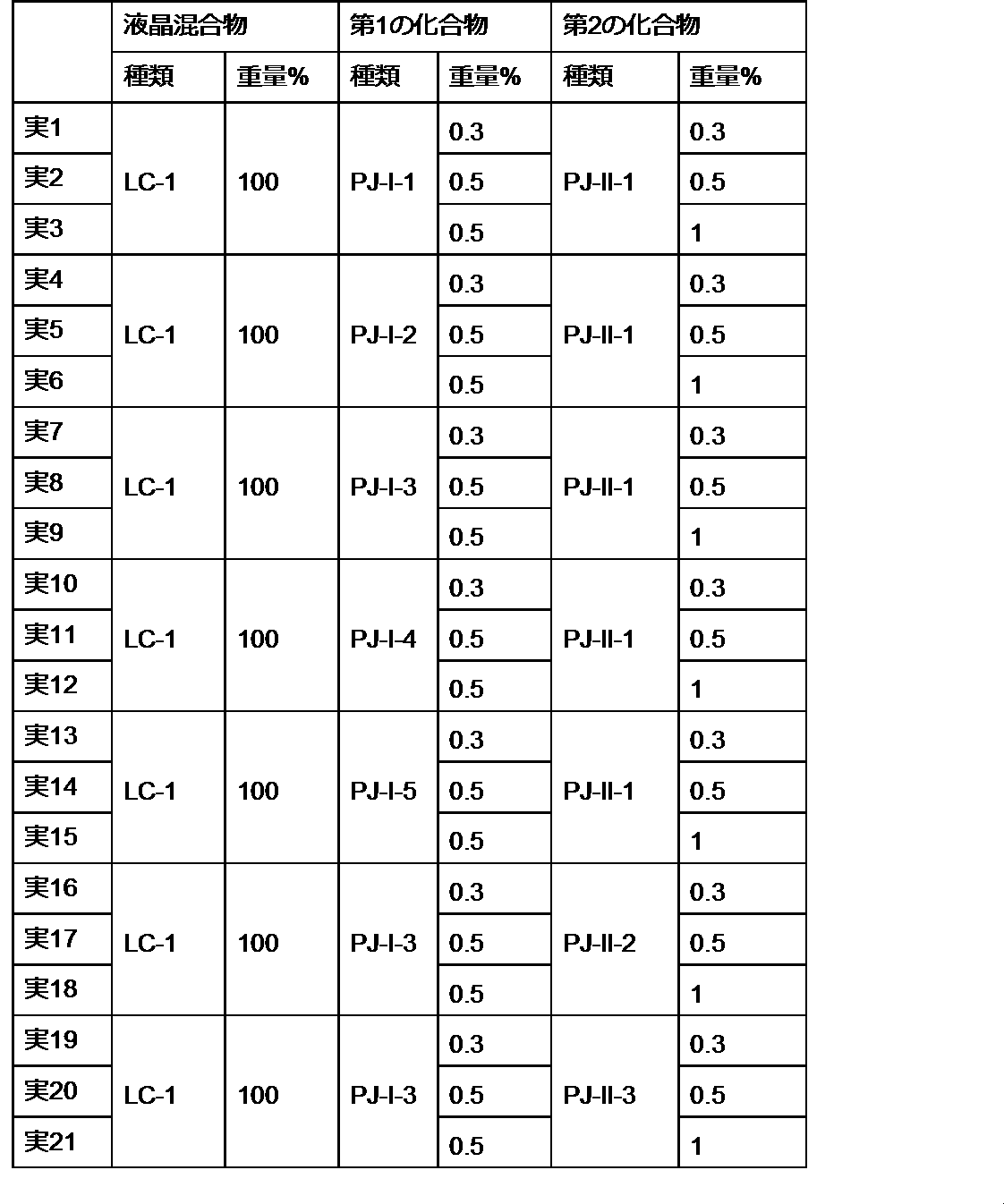

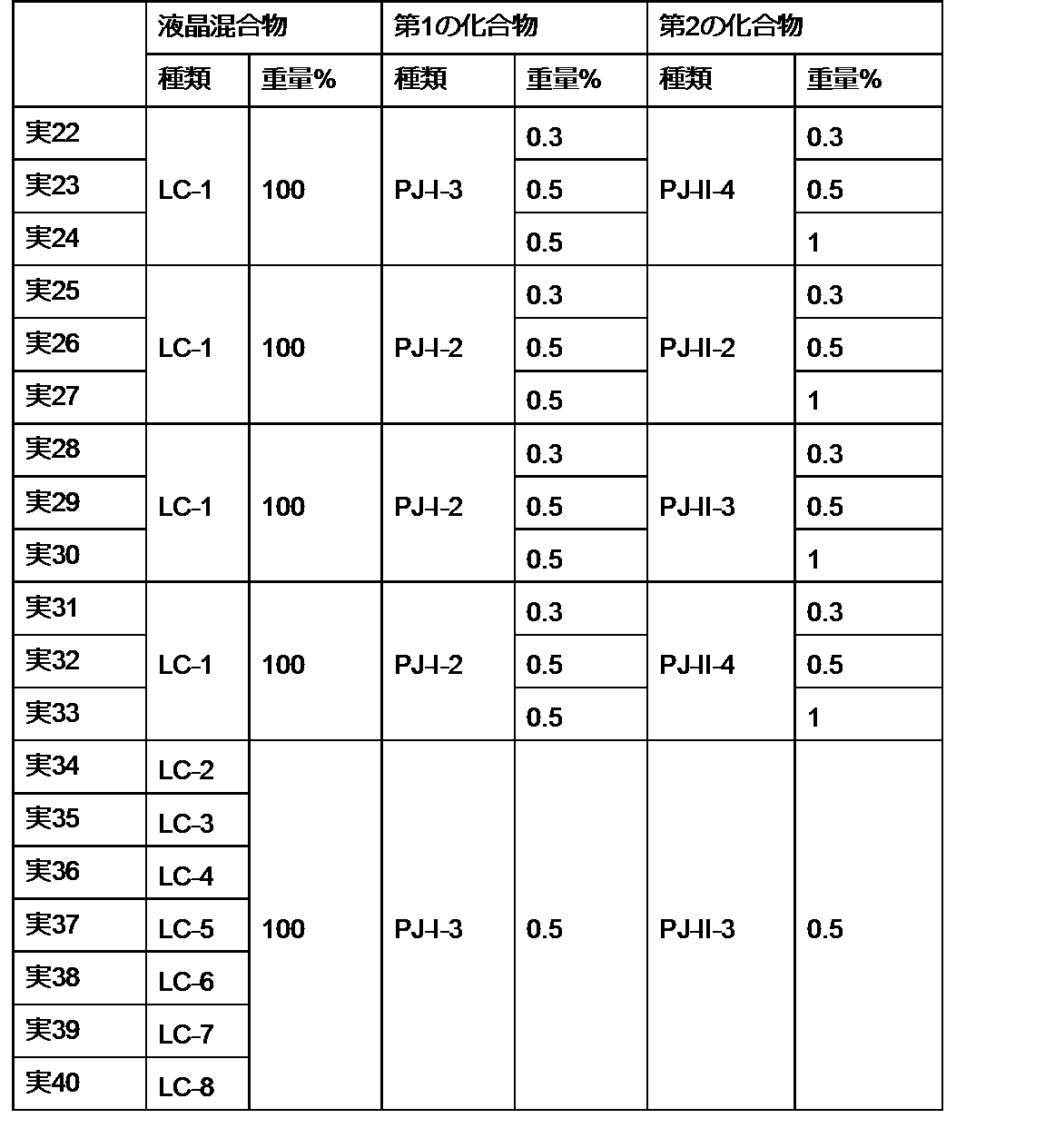

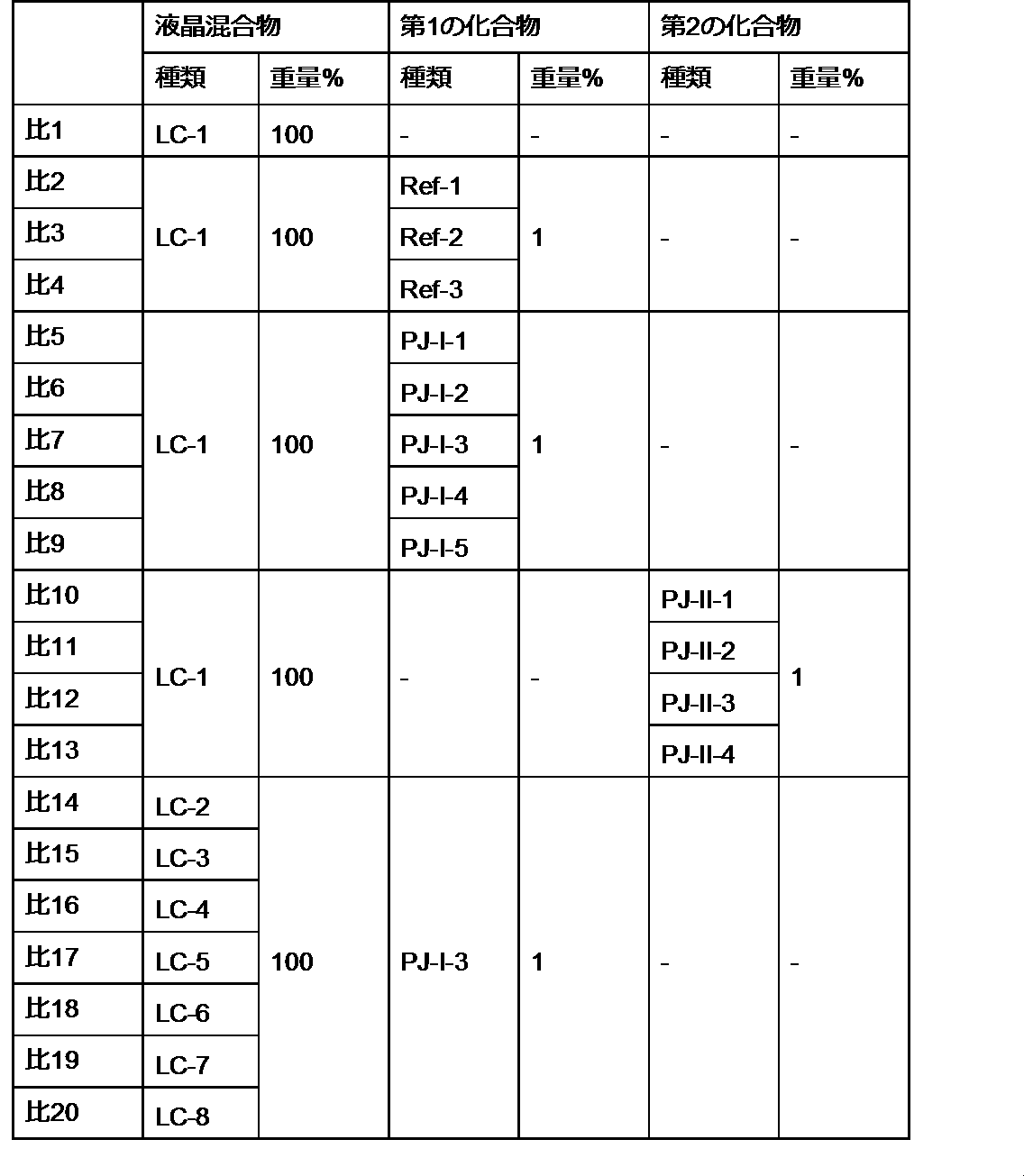
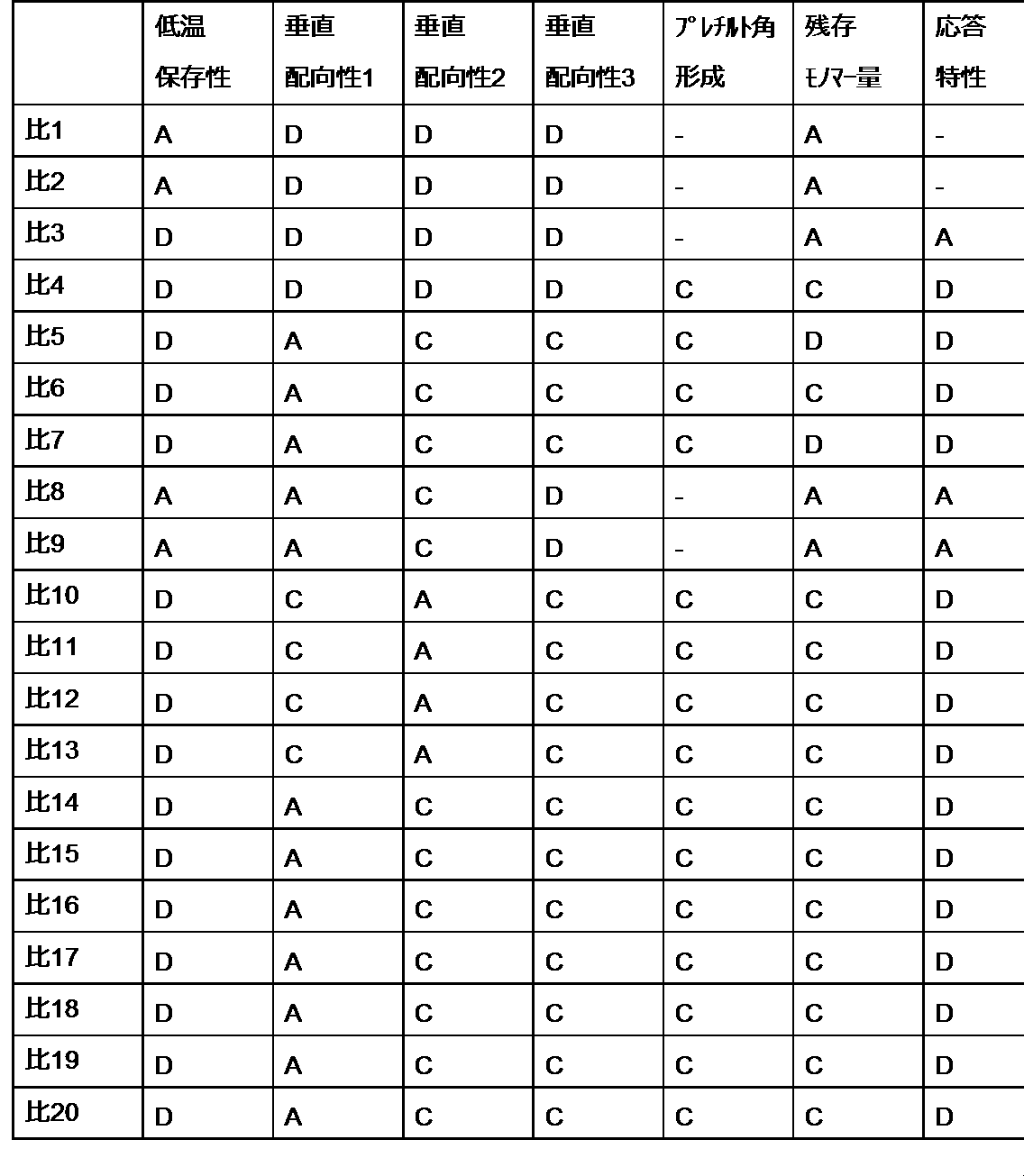
2 第一基板
3 第二基板
4 液晶層
5 画素電極層
6 共通電極層
7、8 偏光板
9 カラーフィルタ
11 ゲートバスライン
12 データバスライン
13 画素電極
14 Cz電極
15 ソース電極
16 ドレイン電極
17 コンタクトホール
Claims (21)
- 2つの基板間に液晶分子とともに配置され、前記液晶分子を自発的に配向させる配向助剤であって、
前記基板に対する親和性を有する少なくとも1つの第1の親和性基を含む第1の化合物と、
前記基板に対する親和性を有し、かつ前記第1の親和性基より極性が低い少なくとも1つの第2の親和性基を含む第2の化合物と、を含有することを特徴とする配向助剤。 - 前記第1の化合物及び前記第2の化合物は、それぞれ少なくとも1つの重合性基を含む請求項1に記載の配向助剤。
- 前記重合性基は、下記一般式(P-1)~(P-13)で表される群より選ばれる請求項2に記載の配向助剤。

- 前記第1の親和性基及び前記第2の親和性基は、それぞれ下記群より選ばれる基を含む請求項1~3のいずれか1項に記載の配向助剤。
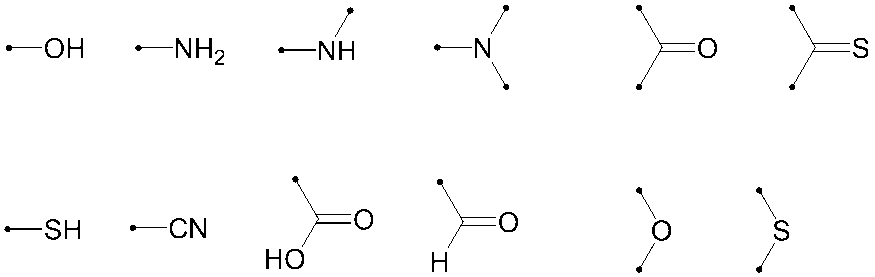
- 前記第1の親和性基は、下記一般式(K1-1)~(K1-3)で表される群:
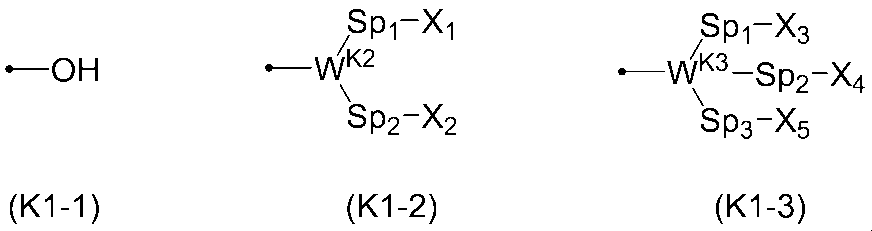
左端の黒点は結合手を表し、
WK2は、メチン基、C-CH3、C-C2H5、窒素原子又は珪素原子を表し、
WK3は、炭素原子を表し、
X1~X5は、それぞれ独立して、水素原子、-OH基又はCH2=C(CH3)COO-を表し、
X1及びX2のうちの少なくとも1つは、-OH基を表し、
X3、X4及びX5のうちの少なくとも1つは、-OH基を表し、
Sp1、Sp2及びSp3は、それぞれ単結合又はスペーサー基を表す。)
より選ばれ、
前記第2の親和性基は、下記一般式(K2-1)~(K2-14)で表される群:

左端の黒点は結合手を表し、
任意のメチレン基は、それぞれ独立して、炭素原子数1~5の直鎖又は分岐のアルキル基、炭素原子数1~5の直鎖又は分岐のアルキルオキシ基、又は炭素原子数1~5の直鎖又は分岐のペルフルオロアルキル基で置換されていてもよく、
WK1は、メチン基、C-CH3、C-C2H5又は窒素原子を表し、
XK1及びYK1は、それぞれ独立して、-CH2-、酸素原子又は硫黄原子を表し、
ZK1は、酸素原子又は硫黄原子を表し、
UK1、VK1及びSK1は、それぞれ独立して、メチン基又は窒素原子を表し(ただし、UK1がメチン基、VK1がメチン基、SK1が窒素原子の組み合わせは除く)、
RK1は、水素原子、炭素原子数1~5の直鎖又は分岐のアルキル基、炭素原子数1~5の直鎖又は分岐のアルキルオキシ基、又は炭素原子数1~5の直鎖又は分岐のペルフルオロアルキル基を表す。)
より選ばれる請求項4に記載の配向助剤。 - 前記第1の親和性基は、水酸基を含み、前記第2の親和性基は、エーテル基又はカーボネート基を含む請求項4又は5に記載の配向助剤。
- 前記第1の化合物及び前記第2の化合物は、それぞれメソゲン基を含み、
前記第1の親和性基、第2の親和性基及び前記重合性基は、それぞれ直接又はスペーサー基を介して前記メソゲン基に結合している請求項2~6のいずれか1項に記載の配向助剤。 - 前記第1の化合物及び前記第2の化合物は、それぞれ前記メソゲン基の前記第1の親和性基又は前記第2の親和性基と反対側に結合した末端基を含む請求項7に記載の配向助剤。
- 前記末端基は、炭素原子数1~40の直鎖又は分岐のアルキル基、炭素原子数1~40の直鎖又は分岐のハロゲン化アルキル基(ただし、アルキル基又はハロゲン化アルキル基中の-CH2-は、-CH=CH-、-C≡C-、-O-、-NH-、-COO-又は-OCO-で置換されてもよいが、-O-は連続にはならない。)又は直接又はスペーサー基を介して前記メソゲン基に結合している重合性基で表される請求項8に記載の配向助剤。
- 前記スペーサー基は、-CH=CH-、-CF=CF-、-C≡C-、-COO-、-OCO-、-OCOO-、-OOCO-、-CF2O-、-OCF2-、-CH=CHCOO-、-OCOCH=CH-、-CH2-CH2COO-、-OCOCH2-CH2-、-CH=C(CH3)COO-、-OCOC(CH3)=CH-、-CH2-CH(CH3)COO-、-OCOCH(CH3)-CH2-、-OCH2CH2O-又は炭素原子数1~20の分岐又は直鎖のアルキレン基(ただし、アルキレン基中の1個又は隣接しない2個以上の-CH2-は-O-、-COO-又は-OCO-で置換されてもよい。)である請求項5、7~9のいずれか1項に記載の配向助剤。
- 前記メソゲン基は、下記一般式(i):

左端の黒点及び右端の黒点は結合手を表し、
Ai1は、2価の6員環芳香族基、2価の6員環複素芳香族基、2価の6員環脂肪族基又は2価の6員環複素脂肪族基を表し、
これらの環構造中の水素原子は、ハロゲン原子、炭素原子数1~10の直鎖又は分岐のアルキル基、炭素原子数1~10の直鎖又は分岐のハロゲン化アルキル基、炭素原子数1~10の直鎖又は分岐のアルコキシ基又はPi1-Spi1-で置換されていてもよく、ここで、Pi1は、前記一般式(P-1)~(P-13)で表される群より選ばれる重合性基を表し、Spi1は、Zi1と同様の意味を表し、
Zi1は、単結合、-CH=CH-、-CF=CF-、-C≡C-、-COO-、-OCO-、-OCOO-、-OOCO-、-CF2O-、-OCF2-、-CH=CHCOO-、-OCOCH=CH-、-CH2-CH2COO-、-OCOCH2―CH2-、-CH=C(CH3)COO-、-OCOC(CH3)=CH-、-CH2-CH(CH3)COO-、-OCOCH(CH3)―CH2-、-OCH2CH2O-又は炭素原子数2~20のアルキレン基(ただし、アルキレン基中の1個又は隣接しない2個以上の-CH2-は-O-、-COO-又は-OCO-で置換されてもよい。)を表し、
mi1は、1~5の整数を表し、
mi1が2以上の場合、複数のAi1は、互いに同一であっても異なっていてもよい。)
で表される請求項7~10のいずれか1項に記載の配向助剤。 - 請求項1~11のいずれか1項に記載の配向助剤と、液晶分子とを含有し、誘電率異方性(Δε)が負であることを特徴とする液晶組成物。
- 前記液晶分子は、下記一般式(N-1)~(N-3)で表される群:
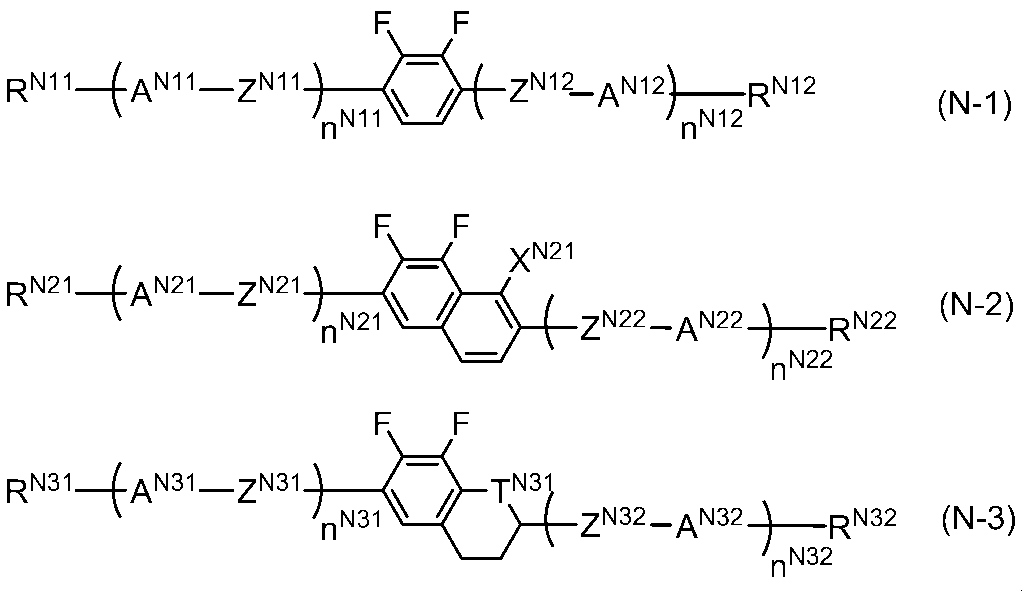
RN11、RN12、RN21、RN22、RN31及びRN32は、それぞれ独立して、炭素原子数1~8のアルキル基(ただし、アルキル基中の1個又は隣接していない2個以上の-CH2-は、それぞれ独立して、-CH=CH-、-C≡C-、-O-、-CO-、-COO-又は-OCO-によって置換されていてもよい。)を表し、
AN11、AN12、AN21、AN22、AN31及びAN32は、それぞれ独立して、
(a) 1,4-シクロヘキシレン基(ただし、この基中に存在する1個の-CH2-又は隣接していない2個以上の-CH2-は-O-に置換されてもよい。)、
(b) 1,4-フェニレン基(ただし、この基中に存在する1個の-CH=又は隣接していない2個以上の-CH=は-N=に置換されてもよい。)、
(c) ナフタレン-2,6-ジイル基、1,2,3,4-テトラヒドロナフタレン-2,6-ジイル基又はデカヒドロナフタレン-2,6-ジイル基(ただし、ナフタレン-2,6-ジイル基又は1,2,3,4-テトラヒドロナフタレン-2,6-ジイル基中に存在する1個の-CH=又は隣接していない2個以上の-CH=は-N=に置換されてもよい。)、及び
(d) 1,4-シクロヘキセニレン基
からなる群より選ばれる基を表し、
前記基(a)、基(b)、基(c)及び基(d)は、それぞれ独立して、シアノ基、フッ素原子又は塩素原子で置換されていてもよく、
ZN11、ZN12、ZN21、ZN22、ZN31及びZN32は、それぞれ独立して、単結合、-CH2CH2-、-(CH2)4-、-OCH2-、-CH2O-、-COO-、-OCO-、-OCF2-、-CF2O-、-CH=N-N=CH-、-CH=CH-、-CF=CF-又は-C≡C-を表し、
XN21は、水素原子又はフッ素原子を表し、
TN31は、-CH2-又は酸素原子を表し、
nN11、nN12、nN21、nN22、nN31及びnN32は、それぞれ独立して、0~3の整数を表すが、nN11+nN12、nN21+nN22及びnN31+nN32は、それぞれ独立して1、2又は3であり、
AN11~AN32、ZN11~ZN32がそれぞれ複数存在する場合は、それらは互いに同一であっても異なっていてもよい。)
から選ばれる化合物を含む請求項12に記載の液晶組成物。 - 前記液晶分子は、下記一般式(L)で表される化合物を含む請求項12又は13に記載の液晶組成物。

RL1及びRL2は、それぞれ独立して炭素原子数1~8のアルキル基(ただし、アルキル基中の1個又は隣接していない2個以上の-CH2-は、それぞれ独立して、-CH=CH-、-C≡C-、-O-、-CO-、-COO-又は-OCO-によって置換されていてもよい。)を表し、
nL1は、0、1、2又は3を表し、
AL1、AL2及びAL3は、それぞれ独立して、
(a) 1,4-シクロヘキシレン基(ただし、この基中に存在する1個の-CH2-又は隣接していない2個以上の-CH2-は-O-に置換されてもよい。)、
(b) 1,4-フェニレン基(ただし、この基中に存在する1個の-CH=又は隣接していない2個以上の-CH=は-N=に置換されてもよい。)、及び
(c) ナフタレン-2,6-ジイル基、1,2,3,4-テトラヒドロナフタレン-2,6-ジイル基又はデカヒドロナフタレン-2,6-ジイル基(ただし、ナフタレン-2,6-ジイル基又は1,2,3,4-テトラヒドロナフタレン-2,6-ジイル基中に存在する1個の-CH=又は隣接していない2個以上の-CH=は-N=に置換されてもよい。)
からなる群より選ばれる基を表し、
前記基(a)、基(b)及び基(c)は、それぞれ独立して、シアノ基、フッ素原子又は塩素原子で置換されていてもよく、
ZL1及びZL2は、それぞれ独立して、単結合、-CH2CH2-、-(CH2)4-、-OCH2-、-CH2O-、-COO-、-OCO-、-OCF2-、-CF2O-、-CH=N-N=CH-、-CH=CH-、-CF=CF-又は-C≡C-を表し、
nL1が2又は3であってAL2が複数存在する場合は、それらは互いに同一であっても異なっていてもよく、nL1が2又は3であってZL2が複数存在する場合は、それらは互いに同一であっても異なっていてもよいが、一般式(N-1)、(N-2)及び(N-3)で表される化合物を除く。) - 重合性化合物を更に含有する請求項12~14のいずれか1項に記載の液晶組成物。
- 前記重合性化合物は、下記一般式(P)で表される化合物の少なくとも1種を含む請求項15に記載の液晶組成物。

Zp1は、フッ素原子、シアノ基、水素原子、水素原子がハロゲン原子に置換されていてもよい炭素原子数1~15のアルキル基、水素原子がハロゲン原子に置換されていてもよい炭素原子数1~15のアルコキシ基、水素原子がハロゲン原子に置換されていてもよい炭素原子数1~15のアルケニル基、水素原子がハロゲン原子に置換されていてもよい炭素原子数1~15のアルケニルオキシ基又は-Spp2-Rp2を表し、
Rp1及びRp2は、それぞれ下記式(R-I)~式(R-IX):
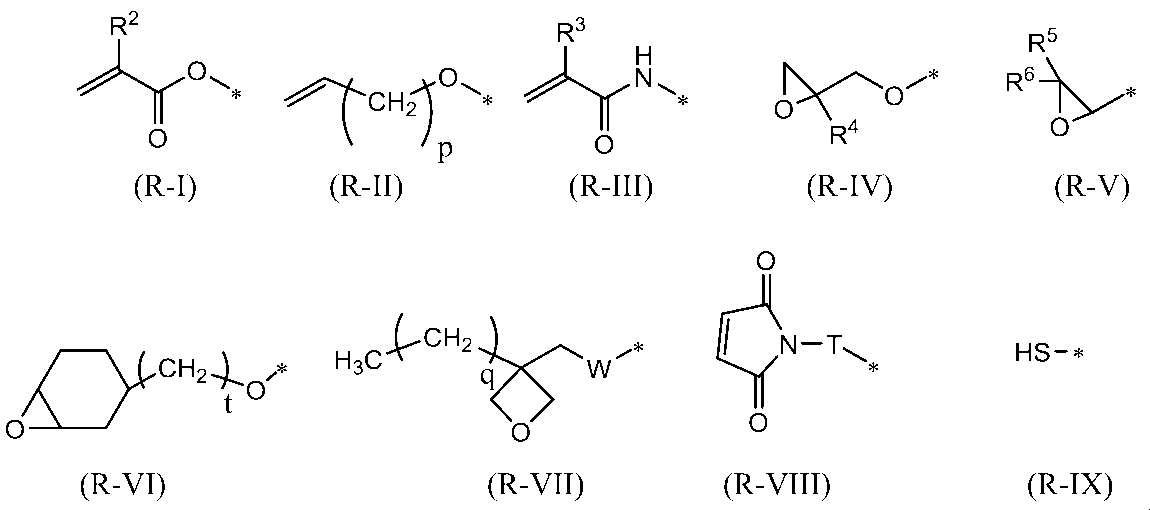
*でSpp1又はSpp2と結合し、
R2~R6は、それぞれ独立して、水素原子、炭素原子数1~5個のアルキル基又は炭素原子数1~5個のハロゲン化アルキル基を表し、
Wは、単結合、-O-又はメチレン基を表し、
Tは、単結合又は-COO-を表し、
p、t及びqは、それぞれ独立して、0、1又は2を表す。)
のいずれかを表し、
Spp1及びSpp2は、それぞれスペーサー基を表し、
Lp1及びLp2は、それぞれ独立して、単結合、-O-、-S-、-CH2-、-OCH2-、-CH2O-、-CO-、-C2H4-、-COO-、-OCO-、-OCOOCH2-、-CH2OCOO-、-OCH2CH2O-、-CO-NRa-、-NRa-CO-、-SCH2-、-CH2S-、-CH=CRa-COO-、-CH=CRa-OCO-、-COO-CRa=CH-、-OCO-CRa=CH-、-COO-CRa=CH-COO-、-COO-CRa=CH-OCO-、-OCO-CRa=CH-COO-、-OCO-CRa=CH-OCO-、-(CH2)z-C(=O)-O-、-(CH2)z-O-(C=O)-、-O-(C=O)-(CH2)z-、-(C=O)-O-(CH2)z-、-CH2(CH3)C-C(=O)-O-、-CH2(CH3)C-O-(C=O)-、-O-(C=O)-C(CH3)CH2、-(C=O)-O-C(CH3)-CH2、-CH=CH-、-CF=CF-、-CF=CH-、-CH=CF-、-CF2-、-CF2O-、-OCF2-、-CF2CH2-、-CH2CF2-、-CF2CF2-又は-C≡C-(ただし、式中、Raは、それぞれ独立して水素原子又は炭素原子数1~4のアルキル基を表し、zは1~4の整数を表す。)を表し、
Mp2は、1,4-フェニレン基、1,4-シクロヘキシレン基、アントラセン-2,6-ジイル基、フェナントレン-2,7-ジイル基、ピリジン-2,5-ジイル基、ピリミジン-2,5-ジイル基、ナフタレン-2,6-ジイル基、インダン-2,5-ジイル基、1,2,3,4-テトラヒドロナフタレン-2,6-ジイル基、1,3-ジオキサン-2,5-ジイル基又は単結合を表すが、Mp2は無置換であるか又は炭素原子数1~12のアルキル基、炭素原子数1~12のハロゲン化アルキル基、炭素原子数1~12のアルコキシ基、炭素原子数1~12のハロゲン化アルコキシ基、ハロゲン原子、シアノ基、ニトロ基若しくは-Rp1で置換されていてもよく、
Mp1は、下記式(i-11)~(ix-11):

のいずれかを表し、
Mp3は、下記式(i-13)~(ix-13):

のいずれかを表し、
mp2~mp4は、それぞれ独立して、0、1、2又は3を表し、
mp1及びmp5は、それぞれ独立して、1、2又は3を表し、
Zp1が複数存在する場合には、それらは互いに同一であっても異なっていてもよく、Rp1が複数存在する場合には、それらは互いに同一であっても異なっていてもよく、Rp2が複数存在する場合には、それらは互いに同一であっても異なっていてもよく、Spp1が複数存在する場合には、それらは互いに同一であっても異なっていてもよく、Spp2が複数存在する場合には、それらは互いに同一であっても異なっていてもよく、Lp1が複数存在する場合には、それらは互いに同一であっても異なっていてもよく、Mp2が複数存在する場合には、それらは互いに同一であっても異なっていてもよい。) - 2つの基板と、該2つの基板の間に設けられた請求項12~16のいずれか1項に記載の液晶組成物を含む液晶層と、を備えることを特徴とする液晶表示素子。
- 前記液晶層は、前記第1の化合物及び前記第2の化合物の重合物を含む請求項17に記載の液晶表示素子。
- アクティブマトリックス駆動用である請求項17又は18に記載の液晶表示素子。
- PSA型、PSVA型、VA型、IPS型、FFS型又はECB型である請求項17~19のいずれか1項に記載の液晶表示素子。
- 前記2つの基板のうちの少なくとも一方の基板は、配向膜を有さない請求項17~20のいずれか1項に記載の液晶表示素子。
Priority Applications (3)
| Application Number | Priority Date | Filing Date | Title |
|---|---|---|---|
| KR1020207004857A KR20200041880A (ko) | 2017-09-08 | 2018-08-23 | 배향 조제, 액정 조성물 및 액정 표시 소자 |
| CN201880051838.XA CN111183206B (zh) | 2017-09-08 | 2018-08-23 | 取向助剂、液晶组合物及液晶显示元件 |
| JP2019520158A JP6690782B2 (ja) | 2017-09-08 | 2018-08-23 | 配向助剤、液晶組成物及び液晶表示素子 |
Applications Claiming Priority (2)
| Application Number | Priority Date | Filing Date | Title |
|---|---|---|---|
| JP2017172883 | 2017-09-08 | ||
| JP2017-172883 | 2017-09-08 |
Publications (1)
| Publication Number | Publication Date |
|---|---|
| WO2019049673A1 true WO2019049673A1 (ja) | 2019-03-14 |
Family
ID=65634034
Family Applications (1)
| Application Number | Title | Priority Date | Filing Date |
|---|---|---|---|
| PCT/JP2018/031104 Ceased WO2019049673A1 (ja) | 2017-09-08 | 2018-08-23 | 配向助剤、液晶組成物及び液晶表示素子 |
Country Status (5)
| Country | Link |
|---|---|
| JP (1) | JP6690782B2 (ja) |
| KR (1) | KR20200041880A (ja) |
| CN (1) | CN111183206B (ja) |
| TW (1) | TW201920629A (ja) |
| WO (1) | WO2019049673A1 (ja) |
Cited By (7)
| Publication number | Priority date | Publication date | Assignee | Title |
|---|---|---|---|---|
| WO2019167640A1 (ja) * | 2018-03-01 | 2019-09-06 | Dic株式会社 | 重合性化合物並びにそれを使用した液晶組成物及び液晶表示素子 |
| WO2020008896A1 (ja) * | 2018-07-03 | 2020-01-09 | Dic株式会社 | 配向助剤、液晶組成物および液晶表示素子 |
| CN111948846A (zh) * | 2019-05-16 | 2020-11-17 | Dic株式会社 | 高分子分散型液晶元件和高分子分散型液晶元件用液晶组合物 |
| CN113444531A (zh) * | 2020-03-27 | 2021-09-28 | Dic株式会社 | 聚合性化合物、含有聚合性化合物的液晶组合物和使用其的液晶显示元件 |
| JP2022088816A (ja) * | 2020-12-03 | 2022-06-15 | Dic株式会社 | 重合性化合物、重合性化合物含有液晶組成物並びにこれを用いた液晶表示素子 |
| US11760934B2 (en) | 2017-11-17 | 2023-09-19 | Dic Corporation | Polymerizable compound, and liquid crystal composition and liquid crystal display element in which the compound is used |
| US11999892B2 (en) | 2020-03-27 | 2024-06-04 | Dic Corporation | Liquid crystal composition, liquid crystal display element and compound |
Families Citing this family (2)
| Publication number | Priority date | Publication date | Assignee | Title |
|---|---|---|---|---|
| WO2019124094A1 (ja) * | 2017-12-21 | 2019-06-27 | Dic株式会社 | 液晶組成物 |
| WO2019124093A1 (ja) * | 2017-12-21 | 2019-06-27 | Dic株式会社 | 液晶組成物 |
Citations (7)
| Publication number | Priority date | Publication date | Assignee | Title |
|---|---|---|---|---|
| JP2014513150A (ja) * | 2011-02-05 | 2014-05-29 | メルク パテント ゲゼルシャフト ミット ベシュレンクテル ハフツング | ホメオトロピック配向を有する液晶ディスプレイ |
| JP2015120907A (ja) * | 2013-12-16 | 2015-07-02 | メルク パテント ゲゼルシャフト ミット ベシュレンクテル ハフツングMerck Patent Gesellschaft mit beschraenkter Haftung | 液晶媒体 |
| JP2016501938A (ja) * | 2012-12-17 | 2016-01-21 | メルク パテント ゲゼルシャフト ミット ベシュレンクテル ハフツングMerck Patent Gesellschaft mit beschraenkter Haftung | 液晶ディスプレイ、およびホメオトロピック配列を有する液晶媒体 |
| WO2016015803A1 (de) * | 2014-07-28 | 2016-02-04 | Merck Patent Gmbh | Flüssigkristalline medien mit homöotroper ausrichtung |
| WO2017090614A1 (ja) * | 2015-11-24 | 2017-06-01 | 富士フイルム株式会社 | 赤外調光フィルムおよび窓 |
| WO2017199512A1 (ja) * | 2016-05-18 | 2017-11-23 | Jnc株式会社 | 液晶媒体をホモジニアス配向させる低分子極性化合物、およびそれを含有する液晶媒体 |
| JP2017208953A (ja) * | 2016-05-19 | 2017-11-24 | 住友電装株式会社 | Epb電線固定用ブラケットおよびワイヤハーネス |
Family Cites Families (11)
| Publication number | Priority date | Publication date | Assignee | Title |
|---|---|---|---|---|
| JPS58185579A (ja) * | 1982-04-26 | 1983-10-29 | Seiko Epson Corp | 液晶性エステル化合物 |
| JP3031701B2 (ja) * | 1990-11-27 | 2000-04-10 | チッソ株式会社 | ラクトン化合物および組成物 |
| DE102011108708A1 (de) * | 2010-09-25 | 2012-03-29 | Merck Patent Gmbh | Flüssigkristallanzeigen und flüssigkristalline Medien mit homöotroper Ausrichtung |
| CN103619993B (zh) | 2011-07-07 | 2016-10-12 | 默克专利股份有限公司 | 液晶介质 |
| KR101826643B1 (ko) * | 2014-09-05 | 2018-02-07 | 디아이씨 가부시끼가이샤 | 네마틱 액정 조성물 및 이것을 사용한 액정 표시 소자 |
| TW201730642A (zh) * | 2015-12-07 | 2017-09-01 | Dainippon Ink & Chemicals | 液晶顯示元件 |
| US10041001B2 (en) * | 2016-01-21 | 2018-08-07 | Samsung Display Co., Ltd. | Liquid crystal composition, liquid crystal display device including the same, and method of manufacturing liquid crystal display device |
| CN105542796A (zh) * | 2016-02-01 | 2016-05-04 | 深圳市华星光电技术有限公司 | 自取向液晶介质组合物及液晶显示面板 |
| TWI737834B (zh) * | 2016-10-26 | 2021-09-01 | 日商迪愛生股份有限公司 | 液晶組成物用自發配向助劑 |
| US11312906B2 (en) * | 2017-06-01 | 2022-04-26 | Dic Corporation | Polymerizable monomer, liquid crystal composition using polymerizable monomer, and liquid crystal display device |
| WO2019003935A1 (ja) * | 2017-06-29 | 2019-01-03 | Dic株式会社 | 液晶組成物及び液晶表示素子 |
-
2018
- 2018-08-23 WO PCT/JP2018/031104 patent/WO2019049673A1/ja not_active Ceased
- 2018-08-23 CN CN201880051838.XA patent/CN111183206B/zh active Active
- 2018-08-23 KR KR1020207004857A patent/KR20200041880A/ko not_active Withdrawn
- 2018-08-23 JP JP2019520158A patent/JP6690782B2/ja active Active
- 2018-08-24 TW TW107129535A patent/TW201920629A/zh unknown
Patent Citations (7)
| Publication number | Priority date | Publication date | Assignee | Title |
|---|---|---|---|---|
| JP2014513150A (ja) * | 2011-02-05 | 2014-05-29 | メルク パテント ゲゼルシャフト ミット ベシュレンクテル ハフツング | ホメオトロピック配向を有する液晶ディスプレイ |
| JP2016501938A (ja) * | 2012-12-17 | 2016-01-21 | メルク パテント ゲゼルシャフト ミット ベシュレンクテル ハフツングMerck Patent Gesellschaft mit beschraenkter Haftung | 液晶ディスプレイ、およびホメオトロピック配列を有する液晶媒体 |
| JP2015120907A (ja) * | 2013-12-16 | 2015-07-02 | メルク パテント ゲゼルシャフト ミット ベシュレンクテル ハフツングMerck Patent Gesellschaft mit beschraenkter Haftung | 液晶媒体 |
| WO2016015803A1 (de) * | 2014-07-28 | 2016-02-04 | Merck Patent Gmbh | Flüssigkristalline medien mit homöotroper ausrichtung |
| WO2017090614A1 (ja) * | 2015-11-24 | 2017-06-01 | 富士フイルム株式会社 | 赤外調光フィルムおよび窓 |
| WO2017199512A1 (ja) * | 2016-05-18 | 2017-11-23 | Jnc株式会社 | 液晶媒体をホモジニアス配向させる低分子極性化合物、およびそれを含有する液晶媒体 |
| JP2017208953A (ja) * | 2016-05-19 | 2017-11-24 | 住友電装株式会社 | Epb電線固定用ブラケットおよびワイヤハーネス |
Cited By (11)
| Publication number | Priority date | Publication date | Assignee | Title |
|---|---|---|---|---|
| US11760934B2 (en) | 2017-11-17 | 2023-09-19 | Dic Corporation | Polymerizable compound, and liquid crystal composition and liquid crystal display element in which the compound is used |
| WO2019167640A1 (ja) * | 2018-03-01 | 2019-09-06 | Dic株式会社 | 重合性化合物並びにそれを使用した液晶組成物及び液晶表示素子 |
| US11739270B2 (en) | 2018-03-01 | 2023-08-29 | Dic Corporation | Polymerizable compound as well as liquid crystal composition and liquid crystal display device each including polymerizable compound |
| WO2020008896A1 (ja) * | 2018-07-03 | 2020-01-09 | Dic株式会社 | 配向助剤、液晶組成物および液晶表示素子 |
| JPWO2020008896A1 (ja) * | 2018-07-03 | 2021-03-11 | Dic株式会社 | 配向助剤、液晶組成物および液晶表示素子 |
| CN111948846A (zh) * | 2019-05-16 | 2020-11-17 | Dic株式会社 | 高分子分散型液晶元件和高分子分散型液晶元件用液晶组合物 |
| CN111948846B (zh) * | 2019-05-16 | 2023-11-28 | Dic株式会社 | 高分子分散型液晶元件和高分子分散型液晶元件用液晶组合物 |
| CN113444531A (zh) * | 2020-03-27 | 2021-09-28 | Dic株式会社 | 聚合性化合物、含有聚合性化合物的液晶组合物和使用其的液晶显示元件 |
| US11999892B2 (en) | 2020-03-27 | 2024-06-04 | Dic Corporation | Liquid crystal composition, liquid crystal display element and compound |
| JP2022088816A (ja) * | 2020-12-03 | 2022-06-15 | Dic株式会社 | 重合性化合物、重合性化合物含有液晶組成物並びにこれを用いた液晶表示素子 |
| JP7742223B2 (ja) | 2020-12-03 | 2025-09-19 | 石家庄▲誠▼志永▲華顕▼示材料有限公司 | 重合性化合物、重合性化合物含有液晶組成物並びにこれを用いた液晶表示素子 |
Also Published As
| Publication number | Publication date |
|---|---|
| CN111183206B (zh) | 2023-08-25 |
| CN111183206A (zh) | 2020-05-19 |
| JP6690782B2 (ja) | 2020-04-28 |
| KR20200041880A (ko) | 2020-04-22 |
| TW201920629A (zh) | 2019-06-01 |
| JPWO2019049673A1 (ja) | 2019-11-07 |
Similar Documents
| Publication | Publication Date | Title |
|---|---|---|
| JP6690782B2 (ja) | 配向助剤、液晶組成物及び液晶表示素子 | |
| CN110651021B (zh) | 液晶组合物用自发取向助剂 | |
| JP7255495B2 (ja) | 液晶組成物 | |
| JP6547907B2 (ja) | 液晶組成物用自発配向助剤、該自発配向助剤に好適な化合物、液晶組成物、及び液晶表示素子 | |
| CN110967850B (zh) | 液晶显示元件的制造方法 | |
| JP6399261B1 (ja) | 液晶組成物用自発配向助剤 | |
| WO2019167640A1 (ja) | 重合性化合物並びにそれを使用した液晶組成物及び液晶表示素子 | |
| TWI802610B (zh) | 聚合性化合物、與使用其之液晶組成物及液晶顯示元件 | |
| JP7255496B2 (ja) | 液晶組成物 | |
| JP7088251B2 (ja) | 液晶組成物 | |
| TW202033748A (zh) | 液晶組成物 | |
| WO2020071135A1 (ja) | 配向助剤を使用した液晶組成物及び液晶表示素子、およびその製造方法 | |
| CN112437802B (zh) | 液晶组合物及液晶显示元件 | |
| CN112739800B (zh) | 取向助剂、液晶组合物及液晶显示元件 | |
| CN114829544B (zh) | 液晶组合物及液晶显示元件 | |
| TWI721763B (zh) | 液晶組成物及液晶顯示元件 | |
| JP7215151B2 (ja) | 液晶組成物、及びそれを用いた液晶表示素子 |
Legal Events
| Date | Code | Title | Description |
|---|---|---|---|
| ENP | Entry into the national phase |
Ref document number: 2019520158 Country of ref document: JP Kind code of ref document: A |
|
| 121 | Ep: the epo has been informed by wipo that ep was designated in this application |
Ref document number: 18854099 Country of ref document: EP Kind code of ref document: A1 |
|
| ENP | Entry into the national phase |
Ref document number: 20207004857 Country of ref document: KR Kind code of ref document: A |
|
| NENP | Non-entry into the national phase |
Ref country code: DE |
|
| 122 | Ep: pct application non-entry in european phase |
Ref document number: 18854099 Country of ref document: EP Kind code of ref document: A1 |