WO2019026551A1 - 廃棄物の質を推定する装置、システム、プログラム、方法、及びデータ構造 - Google Patents
廃棄物の質を推定する装置、システム、プログラム、方法、及びデータ構造 Download PDFInfo
- Publication number
- WO2019026551A1 WO2019026551A1 PCT/JP2018/025805 JP2018025805W WO2019026551A1 WO 2019026551 A1 WO2019026551 A1 WO 2019026551A1 JP 2018025805 W JP2018025805 W JP 2018025805W WO 2019026551 A1 WO2019026551 A1 WO 2019026551A1
- Authority
- WO
- WIPO (PCT)
- Prior art keywords
- waste
- quality
- pit
- data
- instruction
- Prior art date
- Legal status (The legal status is an assumption and is not a legal conclusion. Google has not performed a legal analysis and makes no representation as to the accuracy of the status listed.)
- Ceased
Links
Images


Classifications
-
- B—PERFORMING OPERATIONS; TRANSPORTING
- B09—DISPOSAL OF SOLID WASTE; RECLAMATION OF CONTAMINATED SOIL
- B09B—DISPOSAL OF SOLID WASTE NOT OTHERWISE PROVIDED FOR
- B09B3/00—Destroying solid waste or transforming solid waste into something useful or harmless
-
- B—PERFORMING OPERATIONS; TRANSPORTING
- B65—CONVEYING; PACKING; STORING; HANDLING THIN OR FILAMENTARY MATERIAL
- B65F—GATHERING OR REMOVAL OF DOMESTIC OR LIKE REFUSE
- B65F5/00—Gathering or removal of refuse otherwise than by receptacles or vehicles
-
- B—PERFORMING OPERATIONS; TRANSPORTING
- B65—CONVEYING; PACKING; STORING; HANDLING THIN OR FILAMENTARY MATERIAL
- B65G—TRANSPORT OR STORAGE DEVICES, e.g. CONVEYORS FOR LOADING OR TIPPING, SHOP CONVEYOR SYSTEMS OR PNEUMATIC TUBE CONVEYORS
- B65G5/00—Storing fluids in natural or artificial cavities or chambers in the earth
-
- F—MECHANICAL ENGINEERING; LIGHTING; HEATING; WEAPONS; BLASTING
- F23—COMBUSTION APPARATUS; COMBUSTION PROCESSES
- F23G—CREMATION FURNACES; CONSUMING WASTE PRODUCTS BY COMBUSTION
- F23G5/00—Incineration of waste; Incinerator constructions; Details, accessories or control therefor
- F23G5/44—Details; Accessories
-
- F—MECHANICAL ENGINEERING; LIGHTING; HEATING; WEAPONS; BLASTING
- F23—COMBUSTION APPARATUS; COMBUSTION PROCESSES
- F23G—CREMATION FURNACES; CONSUMING WASTE PRODUCTS BY COMBUSTION
- F23G5/00—Incineration of waste; Incinerator constructions; Details, accessories or control therefor
- F23G5/44—Details; Accessories
- F23G5/442—Waste feed arrangements
- F23G5/444—Waste feed arrangements for solid waste
-
- F—MECHANICAL ENGINEERING; LIGHTING; HEATING; WEAPONS; BLASTING
- F23—COMBUSTION APPARATUS; COMBUSTION PROCESSES
- F23G—CREMATION FURNACES; CONSUMING WASTE PRODUCTS BY COMBUSTION
- F23G5/00—Incineration of waste; Incinerator constructions; Details, accessories or control therefor
- F23G5/50—Control or safety arrangements
-
- G—PHYSICS
- G06—COMPUTING OR CALCULATING; COUNTING
- G06N—COMPUTING ARRANGEMENTS BASED ON SPECIFIC COMPUTATIONAL MODELS
- G06N20/00—Machine learning
-
- G—PHYSICS
- G06—COMPUTING OR CALCULATING; COUNTING
- G06V—IMAGE OR VIDEO RECOGNITION OR UNDERSTANDING
- G06V10/00—Arrangements for image or video recognition or understanding
- G06V10/10—Image acquisition
-
- F—MECHANICAL ENGINEERING; LIGHTING; HEATING; WEAPONS; BLASTING
- F23—COMBUSTION APPARATUS; COMBUSTION PROCESSES
- F23G—CREMATION FURNACES; CONSUMING WASTE PRODUCTS BY COMBUSTION
- F23G2900/00—Special features of, or arrangements for incinerators
- F23G2900/55—Controlling; Monitoring or measuring
- F23G2900/55011—Detecting the properties of waste to be incinerated, e.g. heating value, density
Definitions
- the present invention relates to an apparatus, system, program, and method for estimating waste quality in a waste treatment plant.
- wastes with various qualities such as household waste, large shredded waste, pruning branches, sludge, etc.
- the wastes with these various qualities are put into the incinerator together and incinerated in the incinerator.
- the quality of the waste input into the incinerator changes rapidly, the temperature inside the incinerator suddenly changes during incineration, or harmful gases and substances such as dioxin are generated, resulting in environmental problems. There is.
- Patent Document 1 general waste and foreign waste to be input to the waste pit are identified by color tone, and a crane is controlled to stir waste in the pit to achieve uniform waste quality.
- Patent Document 1 wastes having different qualities such as silk waste and plastics but having similar color tones are identified, and wastes having the same quality such as bedding but having a constant color tone are discarded. It was difficult to identify the quality of things.
- the present technology has been made in view of the above-described points, and even if wastes of different qualities but similar colors, or wastes of the same quality but different colors are mixed, the quality of wastes is estimated It is an object to provide an apparatus, a system, a program, and a method that can be performed.
- Mode 1 a model is created by the teacher data generation unit generating teacher data associated with an image obtained by imaging waste stored in the waste pit, and learning using the teacher data.
- Model construction unit to construct a new image data obtained by imaging waste stored in the waste pit into the model to obtain a value representing the quality of waste corresponding to the new image Providing an estimation unit.
- the estimation unit further divides a new image obtained by imaging the waste into a plurality of blocks, and for each block, the new image is generated.
- a value representing the quality of the corresponding waste is output, and an inference map in which the value representing the quality of the output waste is associated with each of the blocks is generated.
- Mode 3 in the apparatus according to mode 2, the apparatus further instructs, on the basis of the inference map, an instruction to a crane control apparatus that controls a crane, or a combustion that controls an incinerator.
- An instruction unit that generates at least one of the instructions to the control device is provided.
- the instruction to the crane control device is an instruction to move the waste in the waste pit to the crane, and the instruction to the combustion control device is , These instructions are necessary to burn the waste input into the incinerator.
- the teacher data has a value indicating the characteristic of the waste specified based on the operation history of the waste treatment plant and The waste is collected from at least one of a label in which the quality of waste is classified based on image data of waste in the waste pit.
- Mode 6 in the apparatus according to any one of modes 1 to 5, the value representing the quality of the waste is an index indicating the flammable of the waste.
- a teacher data generation unit that generates teacher data associated with an image obtained by imaging waste stored in a waste pit
- a model construction unit that constructs a model by learning using teacher data, and a new image obtained by imaging waste stored in a waste pit are divided into a plurality of blocks, and data of the new image for each block is divided.
- a system comprising: an instruction unit that generates at least one of an instruction to a crane control device that performs an operation or an instruction to a combustion control device that controls an incinerator.
- Mode 8 there is provided a method of estimating the quality of waste stored in the waste pit of the waste treatment plant, which is associated with the image obtained by imaging the waste stored in the waste pit.
- the step of generating the created teacher data, the step of constructing the model by learning using the teacher data, and data of a new image obtained by imaging the waste stored in the waste pit, into the model Obtaining a value representing the quality of waste corresponding to the new image.
- Mode 9 According to mode 9, a program for causing a processor provided in the waste disposal plant to execute the method described in mode 8 is provided.
- the device for controlling the operation of the waste treatment plant estimates the quality of waste corresponding to the image of the waste stored in the waste pit in the waste treatment plant.
- a data structure used for the processing wherein the data structure is a value representing the quality of waste generated from the operation history of the waste treatment plant and an image of waste corresponding to the value representing the quality of the waste And estimating the quality of waste corresponding to a new image of waste stored in the waste pit by learning using the teacher data. , Data structures are provided.
- FIG. 1 is a schematic view of a waste treatment plant according to an embodiment.
- BRIEF DESCRIPTION OF THE DRAWINGS It is a schematic block diagram of the waste treatment plant system which concerns on one Embodiment. It is a functional block diagram of the information processing apparatus of the waste treatment plant which concerns on one Embodiment. It is one structural example of an inference map which shows correspondence with output data and the position in a refuse pit. It is a flowchart which shows operation
- FIG. 1 shows a schematic view of a waste treatment plant according to one embodiment
- 1 is an incinerator for incinerating waste
- 2 is a waste heat boiler
- 3 is a pit for storing waste
- 4 is a hopper
- 5 is a crane for transferring waste from the pit 3 to the hopper 4
- 6 is an imaging device for imaging the surface of waste stored in the pit 3.
- reference numeral 21 denotes a platform, and waste collected from the platform 21 by the waste collection vehicle 22 is thrown into the waste pit 3.
- FIG. 2 shows a block diagram of a system 100 for controlling the operation of the waste treatment plant shown in FIG.
- the waste treatment plant system 100 estimates the value representing the quality of waste using the image data captured by the imaging device 6, and based on the value representing the estimated quality of waste, the waste treatment plant system A system configured to control operation.
- the waste treatment plant system 100 includes an information processing device 200, an imaging device 6 for imaging the inside of the waste pit 3 (shown in FIG. 1), a crane control device 110, and a combustion control device 120.
- the information processing device 200 is communicably connected to the imaging device 6, the crane control device 110, and the combustion control device 120 via a network such as a local LAN provided in the waste treatment plant, for example. ing.
- the information processing apparatus 200 may be configured by, for example, a personal computer, a workstation, a server apparatus, or may be configured by a portable computer such as a tablet terminal. Note that this configuration is an example, and the configuration to which the present invention can be applied is not limited to that shown in FIG. For example, two or more of the imaging device 6, the crane control device 110, the combustion control device 120, and the information processing device 200 may be provided.
- the imaging device 6 is a device that captures an image of the surface of the waste accumulated in the dust pit 3 and acquires image data in the pit 3.
- the imaging device 6 is, for example, an RGB camera that captures the shape and color image of waste, a near infrared camera that captures a near infrared image of waste, a 3D camera that captures a three-dimensional image of waste, or an RGB-D camera is there.
- the information processing apparatus 200 includes a processor 202, a memory 204, a communication interface 206, and a storage 208 as main components.
- the information processing device 200 generates teacher data to be given to the learning model based on the image data in the dust pit 3 transmitted from the imaging device 6. The details of the function executed in the information processing apparatus 200 will be described later with reference to FIG.
- the processor 202 is configured to read a program stored in the memory 204 and execute processing in accordance therewith. When the processor 202 executes a program stored in the memory 204, each function of processing to be described later is realized.
- the processor 202 is realized as a device such as a central processing unit (CPU), a micro processor unit (MPU), or a field-programmable gate array (FPGA).
- the memory 204 temporarily stores programs and data.
- the program is loaded from, for example, the storage 208.
- the data includes data input to the information processing device 200, data generated by the processor 202, and data loaded from the storage 208.
- the memory 204 is implemented as volatile memory such as random access memory (RAM).
- the data stored in the memory 204 includes waste image data taken by the imaging device 6, teacher data generated based on the waste image data, and the like.
- the communication interface 206 communicates signals between the imaging device 6, the crane control device 110, the combustion control device 120, and the information processing device 200.
- the communication interface 206 receives image data output from the imaging device 6.
- the communication interface 206 sends the instructions generated by the processor 202 to the crane controller 110 or the combustion controller 120.
- the storage 208 holds programs and data permanently.
- the storage 208 is realized, for example, as a non-volatile storage device such as a ROM (Read-Only Memory), a hard disk drive, a flash memory, and the like.
- the program stored in the storage 208 is, for example, a program for generating teacher data based on image data of a waste taken by the imaging device 6, and gives an instruction to the crane control device 110 or the combustion control device 120. Including programs.
- the operation history of the waste treatment plant is stored in time series.
- the operation history of the waste treatment plant comprises raw data measured by devices such as multiple sensors attached to the waste treatment plant, such as a temperature sensor that senses the temperature in the incinerator 1 (shown in FIG. 1). Including.
- the storage 208 further includes a database 209.
- the database 209 stores, for example, process data obtained based on the operation history of the waste treatment plant in time series. Process data may be stored in the memory 204.
- the crane control device 110 is a device that controls the operation of the crane 5 (shown in FIG. 1).
- the crane control device 110 causes the crane 5 to agitate waste in the waste pit 3 in accordance with an instruction transmitted from the information processing device 200, or the waste 4 in the waste pit 3 is hopper 4 (see FIG. 1). Shown).
- the waste in the waste pit 3 With the stirring of waste in the waste pit 3, a part of the waste loaded in a block in the waste pit 3 is grasped by the crane 5 and moved to another block in the waste pit 3 or the crane 5 It is to drop the waste grabbed in the same block again.
- the waste in the waste pit 3 can be homogeneously mixed by repeatedly agitating the waste. Thereby, the burning manner of the waste in the incinerator 1 can be made uniform.
- the combustion control device 120 is a device that performs combustion control of the incinerator 1 (shown in FIG. 1).
- the combustion control device 120 controls the combustion time and the combustion temperature in the incinerator 1 or controls the amount of air sent into the incinerator 1 in accordance with the instruction transmitted from the information processing device 200.
- FIG. 3 is a block diagram showing a functional configuration of the information processing apparatus 200 according to an embodiment of the present invention.
- the information processing apparatus 200 includes a teacher data generation unit 220, a model construction unit 230, an image acquisition unit 240, an estimation unit 250, and an instruction unit 260.
- the units 220 to 260 represent functions implemented by the processor 202 illustrated in FIG. 2 reading and executing the computer program in the memory 204.
- teacher data is generated from waste image data and the like included in the operation history of the waste treatment plant, and a plurality of sets of the image data of the waste and the teacher data are collected. Construct a learning model by machine learning. Then, image data of waste to be estimated is input to the constructed learning model, an output (inference result) is acquired, and an inference map is generated based on the output. Also, based on the inference map, instructions are given to the crane controller 110 (shown in FIG. 2) and the combustion controller 120 (shown in FIG. 2). The operations and the like of the respective units 220 to 260 will be described in detail below.
- the teacher data generation unit 220 generates teacher data to be given to the learning model.
- the teacher data generation unit 220 generates teacher data from the past or current operation history of the waste treatment plant stored in time series in a predetermined database 209 (shown in FIG. 2).
- a predetermined database 209 shown in FIG. 2.
- the teacher data generation unit 220 reads process data corresponding to image data of waste in the waste pit 3 from the database 209, and generates teacher data for learning from the process data.
- the image data of the waste in the waste pit 3 and the process data are associated, for example, at the time when these are acquired.
- the teacher data generated from the process data includes values representing waste quality.
- the value representing the quality of waste is an indicator of the inflammability of the waste or the inflammability.
- the process data includes data indicating the characteristics of waste collected based on the operation history of the waste treatment plant, and a label in which the worker classified the quality of waste based on the operation history of the waste treatment plant At least one is provided.
- Data indicating the characteristics of wastes are, for example, the weight (kg ⁇ m / s 2 ), density (kg / m 3 ), and the like of wastes introduced into pit 3 and included in the waste introduced into pit 3 Water content (kg) or calorific value (kJ / kg) generated when burning waste.
- the low weight, low density, low moisture content, and high calorific value indicate that the waste is easy to burn. In general, the lower the density, the more easily the waste is burned. Thus, wastes having the same volume but low weight are flammable. Since the volume of waste that can be grasped by the crane 5 is substantially the same, if the weight of the waste that the crane 5 grasps is measured, the burnability of the waste can be determined.
- data indicating characteristics of waste based on the past operation history of the waste treatment plant is recorded in advance.
- information on the monthly calorific value of the waste treatment plant over a predetermined period (for example, three years) in the past is stored in advance. Actual waste when waste shown in the image of the waste in the waste pit 3 is input to the waste pit 3 by referring to the history information of the calorific value for each month stored in the database 209 The calorific value of the object can be specified.
- the image data of the waste in the waste pit 3 corresponds to the data indicating the characteristics of the waste identified when the waste shown in the image of the waste is thrown into the waste pit 3 Will be attached.
- the teacher data generation unit 220 reshapes the data representing the characteristic of the identified waste, and generates teacher data representing the quality of the waste corresponding to the image data of the waste.
- the label that classifies the quality of waste is based on the data of the image of the past waste stored in the database 209, and the worker visually classifies the quality of the waste shown in the image It is identified. For example, when the worker determines that the waste shown in the image is composed of high-quality waste, it assigns the label "H", and when it is determined that it is composed of the reference waste, assigns the label "M” Assign the label "L” if it is judged to be composed of low quality waste.
- the assigned label is input to the information processing apparatus 200 via an input interface (not shown) and stored in the database 209.
- a label in which the quality of waste is visually classified by the worker is collected as teacher data.
- the teacher data generation unit 220 acquires process data corresponding to the image of the waste in the waste pit 3 from the operation history of the waste treatment plant, and generates teacher data from the process data.
- the teacher data generation unit 220 collects a plurality of sets of data of an image of waste and teacher data including a value representing the quality of waste corresponding to the image of the waste, and stores the set as learning data in the memory 204. Do.
- the teacher data generation unit 220 divides the image of the image data of the past waste stored in the database 209 into a plurality of blocks, and acquires, for each of the divided blocks, process data corresponding to the image. Teacher data may be generated from the acquired process data.
- the teacher data generation unit 220 assigns a block number to each of the divided blocks, and stores the value indicating the quality of the waste in the memory 204 together with the block number. Therefore, the teacher data generation unit 220 can generate a map of teacher data indicating how much the waste in which block in the pit 3 burns.
- the model construction unit 230 constructs a model (function) by machine learning the generated teacher data.
- the model is built to produce the correct output corresponding to the new input.
- the input x is image data of waste in the waste pit 3
- the output y is a value representing the quality of waste
- ⁇ is an internal parameter of this function.
- the model construction unit 230 adjusts the internal parameter ⁇ so as to obtain a correct output by giving a plurality of sets of the input x and the output y and performing machine learning.
- the input x given for machine learning is the image data of the waste in the waste pit 3 collected from the operation history of the waste processing plant, generated by the teacher data generation unit 220, and the output y is It is teacher data corresponding to the input x.
- the image of waste image data in the waste pit 3 given as the input x for machine learning shows waste having various shapes and various tones.
- the model construction unit 230 finds out the relationship between image data and teacher data by machine learning a plurality of sets of data of these various images and teacher data corresponding to the data of the various images, Adjust the model's internal parameter ⁇ .
- the algorithm used for learning includes at least one of linear regression, Boltzmann machine, neural network, support vector machine, Bayesian network, sparse regression, decision tree, statistical estimation using random forest, reinforcement learning, and deep learning There is one.
- the image acquisition unit 240 acquires image data of waste in the waste pit 3 to be input to the constructed model.
- the image acquisition unit 240 receives the image data of the waste in the waste pit 3 from the imaging device 6 periodically, or using a request to put the waste into the pit 3 of the crane 5 as a trigger, to the memory 204 Store.
- the estimation unit 250 acquires image data of new waste from the memory 204, inputs the image data of the new waste into the constructed model, and acquires output data.
- the output data is a value representing the quality of waste corresponding to the new image data, and is, for example, data representing the property of the waste.
- the estimation unit 250 may further generate an inference map indicating correspondence between the acquired output data and the position of the output data in the dust pit 3.
- the estimation unit 250 divides the new image acquired by the image acquisition unit 240 into a plurality of blocks, inputs each data of the new image divided into the plurality of blocks into a constructed model, Output data is obtained for each block.
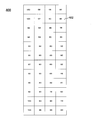
- FIG. 4 shows an example of an inference map 400 configured by dividing the surface of the dust pit 3 into a plurality of blocks 402. In the example of FIG. 4, the surface in the dust pit 3 is divided into 4 in the horizontal direction and 12 in the vertical direction, and the inference map 400 is composed of a total of 48 blocks 402.
- the estimation unit 250 can also generate an inference map three-dimensionally by using a map generated in the past.
- Output data is shown in each of the blocks 402 constituting the inference map 400 as an example.
- the output data is an index (no unit in FIG. 4) indicating the burnability of the waste.
- the output data described in each block 402 is not limited to that shown in FIG. 4, and other items such as weight (kg ⁇ m / s 2 ) of waste, density (kg / m 3 ), waste The amount of water (kg), the calorific value (kJ / kg) may be used, or any combination thereof may be used.
- the inference map 400 is updated / recorded every time there is a change in the image data acquired by the image acquisition unit 240 or every fixed period. Also, the inference map 400 may be visually displayed on a display (not shown).
- each block 402 constituting the inference map 400 may indicate not the output data itself but a value (label, flag, etc.) extracted based on the output data.
- each block 402 shows a label classified based on the size of the output data. As an example, if the output data is the moisture content of the waste, label “L (or low quality waste)” for those with large moisture content and label “M (or standard waste)” for those with average moisture content, Assign the label “H (or high quality waste)” to those with a small amount of water. Also, for example, each block 402 shows a flag obtained based on the size of the output data.
- the output data is a calorific value
- the flag "OK" the calorific value is less than a certain amount
- a flag "NG" is assigned.
- the value shown in each block 402 may be newly extracted from the plurality of output data.
- a waste corresponding to the new image data is generated using a model constructed to output the corresponding correct value (value representing the quality of the waste).
- value representing the quality of the waste value representing the quality of the waste.
- waste quality is estimated mechanically using a learning model, so waste quality can be estimated without a skilled worker, or until now It is possible to support the certainty of the judgment of the worker who was visually checking the quality of the thing. Furthermore, by performing additional learning and relearning periodically using new image data and corresponding process data, it is possible to cope with changes in waste quality over time.
- the inside of the waste pit 3 is divided into a plurality of blocks 402, and for each block 402, an inference map 400 is generated in which a value or the like representing the quality of waste is indicated.
- the worker or the information processing apparatus 200 can grasp what kind of quality the waste in the waste pit 3 has in each block 402 by referring to the inference map 400. Therefore, the positional distribution of waste quality can be grasped.
- the instruction unit 260 gives an instruction to the crane control device 110 (shown in FIG. 2) based on the inference map 400. More specifically, the instruction unit 260 instructs based on the inference map 400 to indicate which block in the waste pit 3 should be moved to which block, or which block in the waste pit 3 is discarded. An instruction indicating whether an object should be introduced into the incinerator 1 (shown in FIG. 1) is created and transmitted to the crane control device 110. The crane control device 110 controls the movement of waste in the waste pit 3 by the crane 5 in accordance with the instruction. The instruction unit 260 uses the values shown in the inference map 400 to make the quality of the waste in the pit 3 uniform or to be close to the quality of the waste introduced to the incinerator 1 last time. Direct the movement of waste.
- the instruction unit 260 gives an instruction to the combustion control device 120 (shown in FIG. 2) based on the inference map 400. More specifically, the instruction unit 260 uses the input information as to which block of waste in the inference map 400 has been input to the incinerator 1, and the value shown in the block, for example, output data. In step 1, an instruction necessary for the combustion of the input waste is prepared and transmitted to the combustion control device 120. The combustion control device 120 performs combustion control of the incinerator 1 so that the combustion temperature, the combustion time, and the air amount are suitable for the quality of the waste input to the incinerator 1 according to the instruction.
- the instruction unit 260 may be provided not in the information processing device 200 but in another device, for example, the crane control device 110 as an example.
- the inference map 400 generated by the information processing device 200 is transmitted to the crane control device 110, and the block in the inference map 400 on which the waste material in the inference map 400 is to be thrown into the incinerator 1
- An instruction is generated to control the operation of the crane 5.
- the crane control apparatus 110 produces
- the instruction unit 260 may be provided in both the crane control device 110 and the combustion control device 120 as an example.
- the inference map 400 generated by the information processing device 200 is transmitted to the crane control device 110, and the block in the inference map 400 on which the waste material in the inference map 400 is to be thrown into the incinerator 1
- An instruction is generated to control the operation of the crane 5.
- the combustion control device 120 receives the inference map 400 from the information processing device 200, and receives the block position information of the waste input to the incinerator 1 from the crane control device 110.
- the combustion control device 120 generates a control instruction of the incinerator 1 using the block position information of the waste input to the incinerator 1 of the waste and the value indicated in the block.
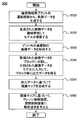
- FIG. 5 is a flow chart 500 illustrating the operation of the waste treatment plant system 100 according to one embodiment.
- step S510 the teacher data generation unit 220 loads the operation history of the waste treatment plant stored in the database 209 (shown in FIG. 2) into the memory 204 (shown in FIG. 2). Then, process data corresponding to the image data of the waste in the waste pit 3 is collected from the operation history of the waste processing plant loaded in the memory 204, and teacher data is generated based on the process data.
- step S520 the model constructing unit 230 performs supervised learning by using supervised data using image data of waste in the waste pit 3 and teacher data corresponding to the image data generated in step S510. Constructs a model in which the internal parameters of the function possessed by are adjusted.
- step S530 the image acquisition unit 240 acquires the image data of the waste in the dust pit 3 captured by the imaging device 6.
- step S540 the estimation unit 250 divides the image data of the waste in the waste pit 3 acquired by the image acquisition unit 240 into one or more blocks. Then, the estimation unit 250 inputs each of the divided image data into the model constructed in step S520, and obtains output data for each block.
- step S550 the estimation unit 250 generates the inference map 400 by associating values representing the quality of waste specified by the output data for each block acquired in step S540 with each block.
- step S560 the instruction unit 260 gives an operation instruction to the crane control device 110 or the combustion control device 120 based on the inference map 400 generated in step S550.
Landscapes
- Engineering & Computer Science (AREA)
- General Engineering & Computer Science (AREA)
- Mechanical Engineering (AREA)
- Environmental & Geological Engineering (AREA)
- Theoretical Computer Science (AREA)
- Software Systems (AREA)
- General Physics & Mathematics (AREA)
- Physics & Mathematics (AREA)
- Mathematical Physics (AREA)
- Computing Systems (AREA)
- Medical Informatics (AREA)
- Artificial Intelligence (AREA)
- Computer Vision & Pattern Recognition (AREA)
- Data Mining & Analysis (AREA)
- Evolutionary Computation (AREA)
- Multimedia (AREA)
- Geology (AREA)
- General Life Sciences & Earth Sciences (AREA)
- Life Sciences & Earth Sciences (AREA)
- Incineration Of Waste (AREA)
- Image Analysis (AREA)
- Refuse Collection And Transfer (AREA)
- Processing Of Solid Wastes (AREA)
- Control And Safety Of Cranes (AREA)
- Management, Administration, Business Operations System, And Electronic Commerce (AREA)
Priority Applications (9)
| Application Number | Priority Date | Filing Date | Title |
|---|---|---|---|
| EP18840599.7A EP3660397B1 (en) | 2017-07-31 | 2018-07-09 | Waste composition estimation device, system, program, method, and data structure |
| RU2020108193A RU2733556C1 (ru) | 2017-07-31 | 2018-07-09 | Устройство, система, запоминающее устройство, способ и структура данных для оценки состава отходов |
| SG11202000713RA SG11202000713RA (en) | 2017-07-31 | 2018-07-09 | Waste composition estimation device, system, program, method, and data structure |
| KR1020207005854A KR102169393B1 (ko) | 2017-07-31 | 2018-07-09 | 폐기물의 질을 추정하는 장치, 시스템, 프로그램, 방법, 및 데이터 구조 |
| ES18840599T ES2871982T3 (es) | 2017-07-31 | 2018-07-09 | Dispositivo, sistema, programa, procedimiento y estructura de datos de estimación de la composición de los desechos |
| MYPI2020000472A MY192327A (en) | 2017-07-31 | 2018-07-09 | Waste composition estimation device, system, program, method, and data structure |
| CN201880050228.8A CN111065859B (zh) | 2017-07-31 | 2018-07-09 | 推定废弃物的组成的装置、系统、程序及方法 |
| KR1020207029804A KR102382332B1 (ko) | 2017-07-31 | 2018-07-09 | 폐기물의 질을 추정하는 장치, 시스템, 프로그램, 방법, 및 데이터 구조 |
| PH12020500221A PH12020500221A1 (en) | 2017-07-31 | 2020-01-29 | Waste composition estimation device, system, program, method, and data structure |
Applications Claiming Priority (2)
| Application Number | Priority Date | Filing Date | Title |
|---|---|---|---|
| JP2017-148374 | 2017-07-31 | ||
| JP2017148374A JP6554148B2 (ja) | 2017-07-31 | 2017-07-31 | 廃棄物の質を推定する装置、システム、プログラム、方法、及びデータ構造 |
Publications (1)
| Publication Number | Publication Date |
|---|---|
| WO2019026551A1 true WO2019026551A1 (ja) | 2019-02-07 |
Family
ID=65232607
Family Applications (1)
| Application Number | Title | Priority Date | Filing Date |
|---|---|---|---|
| PCT/JP2018/025805 Ceased WO2019026551A1 (ja) | 2017-07-31 | 2018-07-09 | 廃棄物の質を推定する装置、システム、プログラム、方法、及びデータ構造 |
Country Status (10)
| Country | Link |
|---|---|
| EP (1) | EP3660397B1 (https=) |
| JP (5) | JP6554148B2 (https=) |
| KR (2) | KR102382332B1 (https=) |
| CN (1) | CN111065859B (https=) |
| ES (1) | ES2871982T3 (https=) |
| MY (1) | MY192327A (https=) |
| PH (1) | PH12020500221A1 (https=) |
| RU (1) | RU2733556C1 (https=) |
| SG (1) | SG11202000713RA (https=) |
| WO (1) | WO2019026551A1 (https=) |
Cited By (6)
| Publication number | Priority date | Publication date | Assignee | Title |
|---|---|---|---|---|
| WO2021201250A1 (ja) * | 2020-04-01 | 2021-10-07 | Jx金属株式会社 | 電子・電気機器部品屑の組成解析方法、電子・電気機器部品屑の処理方法、電子・電気機器部品屑の組成解析装置及び電子・電気機器部品屑の処理装置 |
| WO2021201251A1 (ja) * | 2020-04-01 | 2021-10-07 | Jx金属株式会社 | 電子・電気機器部品屑の組成解析方法、電子・電気機器部品屑の処理方法、電子・電気機器部品屑の組成解析装置及び電子・電気機器部品屑の処理装置 |
| WO2021235464A1 (ja) * | 2020-05-22 | 2021-11-25 | 荏原環境プラント株式会社 | 情報処理装置、情報処理プログラム、および情報処理方法 |
| WO2022224478A1 (ja) * | 2021-04-21 | 2022-10-27 | Jx金属株式会社 | 電気電子部品屑の処理方法及び電気電子部品屑の処理装置 |
| CN115424095A (zh) * | 2022-11-03 | 2022-12-02 | 湖北信通通信有限公司 | 基于废旧物资的质量分析方法及装置 |
| CN119025868A (zh) * | 2024-10-28 | 2024-11-26 | 克拉玛依顺通环保科技有限责任公司 | 一种沾油废弃物的破碎处理方法 |
Families Citing this family (22)
| Publication number | Priority date | Publication date | Assignee | Title |
|---|---|---|---|---|
| JP7308016B2 (ja) * | 2018-03-14 | 2023-07-13 | 川崎重工業株式会社 | ごみ質推定システム及び方法、並びに、ごみ貯蔵設備 |
| JP6554198B1 (ja) * | 2018-03-16 | 2019-07-31 | 株式会社タクマ | ごみ質の推定システムおよびそのごみ質の推定システムを用いたクレーン運転制御システム |
| JP6731680B2 (ja) * | 2018-08-23 | 2020-07-29 | 荏原環境プラント株式会社 | 情報処理装置、情報処理プログラム、および情報処理方法 |
| JP6603822B2 (ja) * | 2019-06-21 | 2019-11-06 | 株式会社タクマ | ごみ質の推定システムおよびそのごみ質の推定システムを用いたクレーン運転制御システム |
| JP7516025B2 (ja) * | 2019-09-18 | 2024-07-16 | 三機工業株式会社 | ごみクレーンの運転システムおよびこれを適用したごみ処理施設 |
| DE102020000980A1 (de) * | 2020-02-14 | 2021-08-19 | Martin GmbH für Umwelt- und Energietechnik | Verfahren zum Betreiben einer Feuerungsanlage |
| JP7486890B2 (ja) * | 2020-03-09 | 2024-05-20 | 三機工業株式会社 | ごみクレーンの運転システムおよびこれを適用したごみ処理施設 |
| JP7383539B2 (ja) * | 2020-03-19 | 2023-11-20 | 日立造船株式会社 | 制御システム、情報処理装置、および情報処理方法 |
| JP7311455B2 (ja) * | 2020-03-30 | 2023-07-19 | 株式会社コベルコE&M | スクラップ等級判定システム、スクラップ等級判定方法、推定装置、学習装置、学習済みモデルの生成方法、及びプログラム |
| JP7453872B2 (ja) * | 2020-07-29 | 2024-03-21 | 三菱重工業株式会社 | バイオガス製造システム及びバイオガス製造方法 |
| CN112132920B (zh) * | 2020-09-11 | 2023-10-31 | 上海交通大学 | 基于深度学习的放射性废物桶密度重建方法及系统 |
| JP7501432B2 (ja) * | 2021-04-08 | 2024-06-18 | Jfeエンジニアリング株式会社 | 廃棄物情報予測装置、焼却炉の燃焼制御装置、廃棄物情報予測方法、廃棄物情報予測モデルの学習方法および廃棄物情報予測モデルプログラム |
| JP7548109B2 (ja) * | 2021-04-08 | 2024-09-10 | Jfeエンジニアリング株式会社 | ごみ質予測装置、焼却炉の燃焼制御装置、ごみ質予測方法、ごみ質予測モデルの学習方法およびごみ質予測モデルプログラム |
| CN113651245B (zh) * | 2021-08-16 | 2023-07-21 | 合肥市春华起重机械有限公司 | 一种起重机承载力监测系统 |
| JP7613327B2 (ja) | 2021-09-22 | 2025-01-15 | Jfeエンジニアリング株式会社 | 情報処理装置、情報処理方法、プログラム、焼却管理システム、および焼却管理システムの運転方法 |
| CN114326624B (zh) * | 2021-12-28 | 2024-04-09 | 上海灏领科技集团有限公司 | 基于入炉前废弃物图像识别的园区内热解气化炉系统工艺 |
| JP2023161734A (ja) * | 2022-04-26 | 2023-11-08 | Jfeエンジニアリング株式会社 | 学習モデルの生成方法、学習モデル、情報処理装置、情報処理方法、プログラム、およびデータ拡張方法、ならびに状態推定装置および状態推定方法 |
| KR102584092B1 (ko) * | 2022-08-26 | 2023-10-05 | 주식회사 엔이씨파워 | 폐기물 종류 구분을 이용한 소각장 크레인 자동운전장치 및 그 자동운전방법 |
| KR102849083B1 (ko) * | 2022-09-30 | 2025-08-21 | 에스케이에코플랜트(주) | 소각로에 투입되는 폐기물의 발열정보를 예측하는 인공지능의 자동 레이블링 시스템 및 시스템의 동작 방법 |
| KR102849087B1 (ko) * | 2022-09-30 | 2025-08-21 | 에스케이에코플랜트(주) | 시계열 예측 모델을 이용한 소각로 제어 시스템 및 시스템의 동작 방법 |
| KR102566796B1 (ko) * | 2022-11-24 | 2023-08-11 | 김형선 | 소각로 온도 안정화를 위한 폐기물 시스템, 소각 장치 및 방법 |
| CN115861008A (zh) * | 2022-12-20 | 2023-03-28 | 上海山美环保装备股份有限公司 | 一种针对建筑垃圾工艺处理流程的智能监测与预警方法 |
Citations (5)
| Publication number | Priority date | Publication date | Assignee | Title |
|---|---|---|---|---|
| JPS5025120B1 (https=) | 1968-09-30 | 1975-08-21 | ||
| JPH07301413A (ja) * | 1994-04-29 | 1995-11-14 | Kawasaki Heavy Ind Ltd | ごみ焼却炉のごみ性状推定方法および推定装置 |
| JPH1038243A (ja) * | 1996-07-23 | 1998-02-13 | Kawasaki Heavy Ind Ltd | カラー画像を利用した燃焼判定・制御方法および判定・制御装置 |
| JP2011027349A (ja) * | 2009-07-27 | 2011-02-10 | Takuma Co Ltd | 燃焼炉に供給される燃焼対象物の処理システム、処理方法およびこれらを用いた燃焼炉の燃焼制御システム |
| JP2017109161A (ja) * | 2015-12-15 | 2017-06-22 | ウエノテックス株式会社 | 廃棄物選別システム及びその選別方法 |
Family Cites Families (14)
| Publication number | Priority date | Publication date | Assignee | Title |
|---|---|---|---|---|
| DE4344906C2 (de) * | 1993-12-29 | 1997-04-24 | Martin Umwelt & Energietech | Verfahren zum Regeln einzelner oder sämtlicher die Verbrennung auf einem Feuerungsrost beeinflussender Faktoren |
| DE19919222C1 (de) * | 1999-04-28 | 2001-01-11 | Orfeus Comb Engineering Gmbh | Verfahren zum Steuern der Verbrennung von Brennstoff mit variablem Heizwert |
| RU2238157C1 (ru) * | 2003-06-04 | 2004-10-20 | Мельников Геннадий Максимович | Способ обезвреживания и переработки твердых бытовых отходов |
| JP5025120B2 (ja) * | 2005-11-02 | 2012-09-12 | 株式会社日立プラントテクノロジー | ごみ処理工場用自動クレーンの制御装置による自動クレーンの運転方法 |
| JP5032414B2 (ja) * | 2008-08-05 | 2012-09-26 | 株式会社ブリヂストン | 防振装置 |
| DE102010031528B4 (de) * | 2010-07-19 | 2013-04-25 | Klaus Seeger | System zur Bestimmung eines Energiegehalts eines festen Brennstoffs und Verwendung des Systems |
| KR101480130B1 (ko) * | 2013-06-28 | 2015-01-07 | (주) 태종 엔이씨 | 열정산 및 설계프로그램과 운전원(Operater)의 운전형태 분석을 통한 소각시설과 고형 연료보일러의 진단과 제어 및 설비생애주기관리 시스템 및 방법 |
| CN103738856B (zh) * | 2013-12-31 | 2015-11-25 | 安徽海螺川崎工程有限公司 | 垃圾自动送料系统控制方法 |
| JP2015143139A (ja) * | 2014-01-31 | 2015-08-06 | 日立造船株式会社 | ごみピット内の攪拌状態検出装置及びごみピット内の攪拌状態検出方法 |
| CN105389795B (zh) * | 2015-10-13 | 2018-09-28 | 长沙中联重科环境产业有限公司 | 一种垃圾料位检测方法、装置及上料板机 |
| JP2017148374A (ja) * | 2016-02-26 | 2017-08-31 | 京セラ株式会社 | ジルコニア仮焼体およびジルコニア焼結体 |
| JP2017109197A (ja) | 2016-07-06 | 2017-06-22 | ウエノテックス株式会社 | 廃棄物選別システム及びその選別方法 |
| CN106292600B (zh) * | 2016-08-30 | 2018-09-28 | 北京京城环保股份有限公司 | 一种多远程垃圾坑数据采集、记录系统 |
| JP7025126B2 (ja) * | 2017-03-31 | 2022-02-24 | 日立造船株式会社 | 情報処理装置、情報処理方法、および情報処理プログラム |
-
2017
- 2017-07-31 JP JP2017148374A patent/JP6554148B2/ja active Active
-
2018
- 2018-07-09 RU RU2020108193A patent/RU2733556C1/ru active
- 2018-07-09 MY MYPI2020000472A patent/MY192327A/en unknown
- 2018-07-09 KR KR1020207029804A patent/KR102382332B1/ko active Active
- 2018-07-09 WO PCT/JP2018/025805 patent/WO2019026551A1/ja not_active Ceased
- 2018-07-09 SG SG11202000713RA patent/SG11202000713RA/en unknown
- 2018-07-09 CN CN201880050228.8A patent/CN111065859B/zh active Active
- 2018-07-09 EP EP18840599.7A patent/EP3660397B1/en not_active Revoked
- 2018-07-09 ES ES18840599T patent/ES2871982T3/es active Active
- 2018-07-09 KR KR1020207005854A patent/KR102169393B1/ko active Active
-
2019
- 2019-07-04 JP JP2019125374A patent/JP7311334B2/ja active Active
-
2020
- 2020-01-29 PH PH12020500221A patent/PH12020500221A1/en unknown
-
2022
- 2022-07-05 JP JP2022108352A patent/JP7539432B2/ja active Active
-
2024
- 2024-03-11 JP JP2024036511A patent/JP7703721B2/ja active Active
-
2025
- 2025-06-25 JP JP2025106933A patent/JP2025129204A/ja active Pending
Patent Citations (5)
| Publication number | Priority date | Publication date | Assignee | Title |
|---|---|---|---|---|
| JPS5025120B1 (https=) | 1968-09-30 | 1975-08-21 | ||
| JPH07301413A (ja) * | 1994-04-29 | 1995-11-14 | Kawasaki Heavy Ind Ltd | ごみ焼却炉のごみ性状推定方法および推定装置 |
| JPH1038243A (ja) * | 1996-07-23 | 1998-02-13 | Kawasaki Heavy Ind Ltd | カラー画像を利用した燃焼判定・制御方法および判定・制御装置 |
| JP2011027349A (ja) * | 2009-07-27 | 2011-02-10 | Takuma Co Ltd | 燃焼炉に供給される燃焼対象物の処理システム、処理方法およびこれらを用いた燃焼炉の燃焼制御システム |
| JP2017109161A (ja) * | 2015-12-15 | 2017-06-22 | ウエノテックス株式会社 | 廃棄物選別システム及びその選別方法 |
Non-Patent Citations (1)
| Title |
|---|
| See also references of EP3660397A4 |
Cited By (12)
| Publication number | Priority date | Publication date | Assignee | Title |
|---|---|---|---|---|
| WO2021201250A1 (ja) * | 2020-04-01 | 2021-10-07 | Jx金属株式会社 | 電子・電気機器部品屑の組成解析方法、電子・電気機器部品屑の処理方法、電子・電気機器部品屑の組成解析装置及び電子・電気機器部品屑の処理装置 |
| WO2021201251A1 (ja) * | 2020-04-01 | 2021-10-07 | Jx金属株式会社 | 電子・電気機器部品屑の組成解析方法、電子・電気機器部品屑の処理方法、電子・電気機器部品屑の組成解析装置及び電子・電気機器部品屑の処理装置 |
| JP2021159880A (ja) * | 2020-04-01 | 2021-10-11 | Jx金属株式会社 | 電子・電気機器部品屑の組成解析方法、電子・電気機器部品屑の処理方法、電子・電気機器部品屑の組成解析装置及び電子・電気機器部品屑の処理装置 |
| JP7301782B2 (ja) | 2020-04-01 | 2023-07-03 | Jx金属株式会社 | 電子・電気機器部品屑の組成解析方法、電子・電気機器部品屑の処理方法、電子・電気機器部品屑の組成解析装置及び電子・電気機器部品屑の処理装置 |
| WO2021235464A1 (ja) * | 2020-05-22 | 2021-11-25 | 荏原環境プラント株式会社 | 情報処理装置、情報処理プログラム、および情報処理方法 |
| JP2021183891A (ja) * | 2020-05-22 | 2021-12-02 | 荏原環境プラント株式会社 | 情報処理装置、情報処理プログラム、および情報処理方法 |
| JP7535874B2 (ja) | 2020-05-22 | 2024-08-19 | 荏原環境プラント株式会社 | 情報処理装置、情報処理プログラム、および情報処理方法 |
| WO2022224478A1 (ja) * | 2021-04-21 | 2022-10-27 | Jx金属株式会社 | 電気電子部品屑の処理方法及び電気電子部品屑の処理装置 |
| JP2022166727A (ja) * | 2021-04-21 | 2022-11-02 | Jx金属株式会社 | 電気電子部品屑の処理方法及び電気電子部品屑の処理装置 |
| JP7264936B2 (ja) | 2021-04-21 | 2023-04-25 | Jx金属株式会社 | 電気電子部品屑の処理方法及び電気電子部品屑の処理装置 |
| CN115424095A (zh) * | 2022-11-03 | 2022-12-02 | 湖北信通通信有限公司 | 基于废旧物资的质量分析方法及装置 |
| CN119025868A (zh) * | 2024-10-28 | 2024-11-26 | 克拉玛依顺通环保科技有限责任公司 | 一种沾油废弃物的破碎处理方法 |
Also Published As
| Publication number | Publication date |
|---|---|
| KR102382332B1 (ko) | 2022-04-08 |
| JP6554148B2 (ja) | 2019-07-31 |
| JP2025129204A (ja) | 2025-09-04 |
| JP2019207099A (ja) | 2019-12-05 |
| CN111065859A (zh) | 2020-04-24 |
| JP2024061802A (ja) | 2024-05-08 |
| CN111065859B (zh) | 2021-05-28 |
| EP3660397A1 (en) | 2020-06-03 |
| KR20200121920A (ko) | 2020-10-26 |
| JP2022132331A (ja) | 2022-09-08 |
| ES2871982T3 (es) | 2021-11-02 |
| JP7703721B2 (ja) | 2025-07-07 |
| PH12020500221A1 (en) | 2020-10-12 |
| JP7311334B2 (ja) | 2023-07-19 |
| JP2019027696A (ja) | 2019-02-21 |
| EP3660397A4 (en) | 2020-06-03 |
| JP7539432B2 (ja) | 2024-08-23 |
| RU2733556C1 (ru) | 2020-10-05 |
| EP3660397B1 (en) | 2021-04-21 |
| KR102169393B1 (ko) | 2020-10-23 |
| KR20200028029A (ko) | 2020-03-13 |
| SG11202000713RA (en) | 2020-02-27 |
| MY192327A (en) | 2022-08-17 |
Similar Documents
| Publication | Publication Date | Title |
|---|---|---|
| JP6554148B2 (ja) | 廃棄物の質を推定する装置、システム、プログラム、方法、及びデータ構造 | |
| JP6782203B2 (ja) | 発熱量推定方法、発熱量推定装置、及びごみ貯蔵設備 | |
| JP2022132331A5 (https=) | ||
| JP2019207099A5 (https=) | ||
| JP7310758B2 (ja) | 情報処理装置、情報処理方法、およびプログラム | |
| JP2021008991A (ja) | 自動燃焼制御方法および自動燃焼制御装置 | |
| JP7256016B2 (ja) | 予測モデル生成装置、予測モデル生成装置による予測モデル生成方法、及び予測装置 | |
| CN118786315A (zh) | 信息处理装置、信息处理方法以及信息处理程序 | |
| JP7390581B2 (ja) | 情報処理装置、情報処理方法、および情報処理プログラム | |
| CN116447603B (zh) | 一种垃圾焚烧给料方法、系统、终端及存储介质 | |
| CN117053205A (zh) | 一种基于低二噁英排放目标的生活垃圾焚烧工况控制系统 | |
| JP2021183891A5 (https=) | ||
| JP7613327B2 (ja) | 情報処理装置、情報処理方法、プログラム、焼却管理システム、および焼却管理システムの運転方法 | |
| JP7371535B2 (ja) | 自動運転制御装置、自動運転制御システム、自動運転制御方法、および廃棄物処理施設 | |
| JP6822913B2 (ja) | ガス化溶融炉プラントの空気量制御装置、空気量制御方法、及び空気流量特性モデル | |
| Schwark et al. | The application of image recognition methods to improve the performance of waste-to-energy plantsplants | |
| TW202403235A (zh) | 資訊處理裝置、資訊處理方法、及資訊處理程式 | |
| JP2026026719A (ja) | 情報処理装置および情報処理方法 | |
| JP2022168717A (ja) | 予測装置、予測方法、予測プログラム、施設制御装置、施設制御方法、および制御プログラム | |
| JP2025072138A (ja) | 情報処理装置、情報処理方法、およびプログラム | |
| CN121072334A (zh) | 基于混合优化设定的固废焚烧烟气含氧量控制方法及系统 |
Legal Events
| Date | Code | Title | Description |
|---|---|---|---|
| 121 | Ep: the epo has been informed by wipo that ep was designated in this application |
Ref document number: 18840599 Country of ref document: EP Kind code of ref document: A1 |
|
| NENP | Non-entry into the national phase |
Ref country code: DE |
|
| ENP | Entry into the national phase |
Ref document number: 20207005854 Country of ref document: KR Kind code of ref document: A |
|
| ENP | Entry into the national phase |
Ref document number: 2018840599 Country of ref document: EP Effective date: 20200302 |
|
| WWW | Wipo information: withdrawn in national office |
Ref document number: 2018840599 Country of ref document: EP |