WO2018198989A1 - 摺動部材用樹脂組成物および滑り軸受 - Google Patents
摺動部材用樹脂組成物および滑り軸受 Download PDFInfo
- Publication number
- WO2018198989A1 WO2018198989A1 PCT/JP2018/016371 JP2018016371W WO2018198989A1 WO 2018198989 A1 WO2018198989 A1 WO 2018198989A1 JP 2018016371 W JP2018016371 W JP 2018016371W WO 2018198989 A1 WO2018198989 A1 WO 2018198989A1
- Authority
- WO
- WIPO (PCT)
- Prior art keywords
- resin
- polyethylene
- mass
- resin composition
- aliphatic polyketone
- Prior art date
- Legal status (The legal status is an assumption and is not a legal conclusion. Google has not performed a legal analysis and makes no representation as to the accuracy of the status listed.)
- Ceased
Links
Images

Classifications
-
- C—CHEMISTRY; METALLURGY
- C08—ORGANIC MACROMOLECULAR COMPOUNDS; THEIR PREPARATION OR CHEMICAL WORKING-UP; COMPOSITIONS BASED THEREON
- C08K—Use of inorganic or non-macromolecular organic substances as compounding ingredients
- C08K5/00—Use of organic ingredients
- C08K5/04—Oxygen-containing compounds
-
- C—CHEMISTRY; METALLURGY
- C08—ORGANIC MACROMOLECULAR COMPOUNDS; THEIR PREPARATION OR CHEMICAL WORKING-UP; COMPOSITIONS BASED THEREON
- C08L—COMPOSITIONS OF MACROMOLECULAR COMPOUNDS
- C08L23/00—Compositions of homopolymers or copolymers of unsaturated aliphatic hydrocarbons having only one carbon-to-carbon double bond; Compositions of derivatives of such polymers
-
- C—CHEMISTRY; METALLURGY
- C08—ORGANIC MACROMOLECULAR COMPOUNDS; THEIR PREPARATION OR CHEMICAL WORKING-UP; COMPOSITIONS BASED THEREON
- C08L—COMPOSITIONS OF MACROMOLECULAR COMPOUNDS
- C08L73/00—Compositions of macromolecular compounds obtained by reactions forming a linkage containing oxygen or oxygen and carbon in the main chain, not provided for in groups C08L59/00 - C08L71/00; Compositions of derivatives of such polymers
-
- F—MECHANICAL ENGINEERING; LIGHTING; HEATING; WEAPONS; BLASTING
- F16—ENGINEERING ELEMENTS AND UNITS; GENERAL MEASURES FOR PRODUCING AND MAINTAINING EFFECTIVE FUNCTIONING OF MACHINES OR INSTALLATIONS; THERMAL INSULATION IN GENERAL
- F16C—SHAFTS; FLEXIBLE SHAFTS; ELEMENTS OR CRANKSHAFT MECHANISMS; ROTARY BODIES OTHER THAN GEARING ELEMENTS; BEARINGS
- F16C33/00—Parts of bearings; Special methods for making bearings or parts thereof
- F16C33/02—Parts of sliding-contact bearings
- F16C33/04—Brasses; Bushes; Linings
- F16C33/06—Sliding surface mainly made of metal
- F16C33/10—Construction relative to lubrication
-
- F—MECHANICAL ENGINEERING; LIGHTING; HEATING; WEAPONS; BLASTING
- F16—ENGINEERING ELEMENTS AND UNITS; GENERAL MEASURES FOR PRODUCING AND MAINTAINING EFFECTIVE FUNCTIONING OF MACHINES OR INSTALLATIONS; THERMAL INSULATION IN GENERAL
- F16C—SHAFTS; FLEXIBLE SHAFTS; ELEMENTS OR CRANKSHAFT MECHANISMS; ROTARY BODIES OTHER THAN GEARING ELEMENTS; BEARINGS
- F16C33/00—Parts of bearings; Special methods for making bearings or parts thereof
- F16C33/02—Parts of sliding-contact bearings
- F16C33/04—Brasses; Bushes; Linings
- F16C33/20—Sliding surface consisting mainly of plastics
Definitions
- the present invention relates to a resin composition for sliding members, and particularly to a resin composition for sliding members suitable for sliding bearings.
- Patent Document 1 discloses polyacetal resin, polyamide resin, polybutylene terephthalate resin, polyphenylene sulfide resin, polyetherimide resin, polyethersulfone resin, polycyanoaryl as resin compositions for sliding members suitable for sliding bearings.
- a filler selected from polytetrafluoroethylene resin, carbonate, copper powder, zinc powder, and copper oxide powder is added to a base resin selected from ether resin, polyether ketone resin, polyamideimide resin, and polyimide resin.
- a resin composition for a sliding member formed by doing so is disclosed.
- aliphatic polyketone resins which are inexpensive raw material monomers compared to other synthetic resins having equivalent heat resistance, have attracted attention.
- the aliphatic polyketone resin is excellent in heat resistance and chemical resistance, the aliphatic polyketone resin alone is not suitable as a resin composition for a sliding member because it has a high friction coefficient and a large amount of wear.
- the present invention has been made in view of the above circumstances, and its purpose is to make a slide using an aliphatic polyketone resin that is excellent in heat resistance and chemical resistance and is less expensive than other resin compositions for sliding members. It is providing the resin composition for moving members.
- the present inventor has found that sliding performance can be improved by blending an oily agent with an olefin-based resin such as polyethylene into an aliphatic polyketone resin.
- the oil-based agent preferably contains a higher fatty acid, a higher fatty acid ester, or a higher alcohol in the aliphatic polyketone resin.
- the oily agent blended in the aliphatic polyketone resin is aliphatic. Those having a boiling point higher than the molding temperature of the polyketone resin are used. For example, jojoba oil can be used.
- the oily agent by adding an oily agent to an aliphatic polyketone resin together with an olefinic resin, the oily agent is evenly dispersed in the aliphatic polyketone resin, and the sliding performance of the aliphatic polyketone resin can be improved. it can. Therefore, it is possible to provide a resin composition for a sliding member using an aliphatic polyketone resin which is excellent in heat resistance and chemical resistance and is less expensive than other resin compositions for sliding members.
- FIG. 1 is a diagram for explaining a sliding performance test of a test piece 1 made of a resin composition for a sliding member according to an embodiment of the present invention.
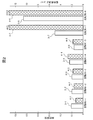
- FIG. 2 shows a sliding performance test in a room temperature environment performed on the test pieces 1-1 to 1-5 shown in Table 1 and Comparative Examples 1-7 and 1-8 under the conditions shown in Table 3. It is a figure which shows a measurement result.
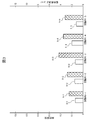
- FIG. 3 is a diagram showing a measurement result of a sliding performance test under a high temperature environment (120 ° C.) performed on the test pieces 1-1 to 1-5 shown in Table 1 under the conditions shown in Table 3. is there.
- the sliding member resin composition according to the present embodiment is formed of an aliphatic polyketone resin in which an oily agent and an olefinic resin are blended, and is used, for example, in a sliding bearing.
- the oily agent blended with the aliphatic polyketone resin is used to prevent the oily agent blended with the aliphatic polyketone resin from being vigorously vaporized and dissipated during the molding of the resin composition for the sliding member. Those having a boiling point higher than the molding temperature of the resin are used.
- Oiliness agents to be mixed with aliphatic polyketone resins include higher fatty acids (such as stearic acid), higher fatty acid esters (such as butyl stearate), higher alcohols (such as cetyl alcohol), amines (such as octadecylamine), and metal soaps (stearic acid).
- Lithium, etc.), phosphate esters (tricresyl phosphate, etc.) are preferably used, and those containing higher fatty acids, higher fatty acid esters, or higher alcohols are more preferred.
- jojoba oil can be used.
- the blending amount of the oily agent is preferably 1 to 6% by mass.
- the blending amount of the oily agent is less than 1% by mass, there is no significant difference in sliding performance as compared with the case of 100% by mass of the aliphatic polyketone resin. On the other hand, as the blending amount of the oily agent increases, the oily agent may not be evenly dispersed in the aliphatic polyketone resin.
- the present inventor separates the oily agent from the aliphatic polyketone resin by holding the oily agent in the olefinic resin by blending the olefinic resin having a high affinity with the oily agent together with the oily agent into the aliphatic polyketone resin. It has been found that it can be dispersed more evenly within the aliphatic polyketone resin.
- the olefin resin is preferably polyethylene, and the polyethylene may be high-density polyethylene, ultrahigh molecular weight polyethylene, or high-sliding special polyethylene, but high-density polyethylene is particularly preferable.
- an olefin resin having a structure in which hydrocarbon groups are polymerized can be expected to have an effect as a retaining agent for an oily agent as in the case of polyethylene.
- the blending amount of the olefin resin is preferably 0.5 to 15% by mass, and more preferably 1 to 10% by mass.
- the compounding quantity of an oiliness agent shall be less than 4 mass parts with respect to 1 mass part of olefin resin.
- the present inventor conducted various tests using a plate-shaped test piece 1 (dimensions: 30 mm long, 30 mm wide, 3 mm thick) made of the resin composition for sliding members according to the present embodiment.
- test pieces 1-1 to 1-5 having five kinds of blending ratios are prepared as test pieces 1, and three kinds of comparative examples 1-6 to 1 are used as comparative examples. 1-8 was prepared.
- These test pieces 1-1 to 1-5 and comparative examples 1-6 to 1-8 were produced by injection-molding pellets having the blending ratios shown in Table 1 into a plate shape. Specifically, the material is put into a biaxial vent type extrusion molding machine, melted and kneaded, and molded to produce a string-shaped molded product, and then the string-shaped molded product is cut to mix pellets. Produced. Then, this mixed pellet was put into a screw type injection molding machine to form a test piece 1.
- test piece 1 As a material of the test piece 1, “M330A (trade name)” manufactured by Hyosung is used for the aliphatic polyketone resin, and jojoba oil “jojoba golden (trade name)” imported from Mitsuba Trading Co., Ltd. is used for the oily agent.
- High-density polyethylene “Hi-Zex (registered trademark) 2100JP (trade name)” manufactured by Prime Polymer Co., Ltd. is used as the olefin resin, and “Bell Pearl (registered trademark) C2000 (trade name)” manufactured by Air Water Velpearl Co., Ltd. is used as the carbon particles.
- KTL620 (trade name)” manufactured by Kitamura Co., Ltd. was used as the PTFE (polytetrafluoroethylene) powder.
- the present inventor monitors the pressure-holding state in the pressure-holding process up to the 10th molding, and if the pressure inside the mold in the pressure-holding process is kept constant at the 10th molding, When moldability is judged as “good moldability” and the pressure inside the mold in the pressure holding process falls slightly in the second half, the moldability is judged as “moldable” and the pressure inside the mold in the pressure holding process When the pressure did not reach the target pressure from the beginning, the moldability was judged as “difficult to mold”.
- Table 2 shows the results of the formability confirmation test.
- the symbol “ ⁇ ” indicates “good moldability”
- the symbol “ ⁇ ” indicates “moldable”
- the symbol “ ⁇ ” indicates “difficult to mold”.
- FIG. 1 is a diagram for explaining a sliding performance test of a test piece 1 made of the resin composition for a sliding member according to the present embodiment.
- a cylindrical mating member 2 is placed on the sliding surface (surface) 10 of the test piece 1, and the load N in the direction of the axis O is set to the value of the test piece 1 under the conditions shown in Table 3 below.
- the mating member 2 was rotated in the rotation direction R around the axis O while the sliding surface 10 of the test piece 1 was pressed against the support target surface (end surface) 20 of the mating member 2. Then, the torque in the rotational direction R of the sliding member 2 at that time was detected by a load cell (not shown), and the friction coefficient between the sliding surface 10 and the support target surface 20 was measured from the detected torque.
- the wear scar depth (abrasion trace cross-sectional curve) at the arrow A of the sliding surface 10 was measured.
- the support target surface 20 of the counterpart material 2 was ground, then handler-wrapped with water-resistant abrasive paper # 400 and the like, and further washed with acetone.
- FIG. 2 shows the measurement results of the sliding performance test under the room temperature environment performed on the test pieces 1-1 to 1-5 and Comparative Examples 1-7 and 1-8 under the conditions shown in Table 3.
- FIG. 2 shows the measurement results of the sliding performance test under the room temperature environment performed on the test pieces 1-1 to 1-5 and Comparative Examples 1-7 and 1-8 under the conditions shown in Table 3.
- the vertical axis on the left indicates the friction coefficient
- the vertical axis on the right indicates the wear scar depth (the average value of the wear scar depth in the arrow A of the sliding surface 10).
- Graphs 3-1 to 3-5 show the measurement results of the friction coefficients of the test pieces 1-1 to 1-5
- graphs 3-7 and 3-8 show the results of Comparative Examples 1-7 and 1-8.
- the measurement results of the coefficient of friction are shown.
- Graphs 4-1 to 4-5 show the measurement results of the wear scar depths of the test pieces 1-1 to 1-5
- the graphs 4-7 and 4- 8 shows the measurement results of the wear scar depths of Comparative Examples 1-7 and 1-8.
- the friction coefficient of Comparative Example 1-8 containing 100% by mass of aliphatic polyketone resin is 0.54 (Graph 3-8).
- the friction coefficient of the test piece 1-1 containing 3% by mass of jojoba oil, 1% by mass of polyethylene and 1% by mass of carbon particles is 0.11 (graph 3-1), 4% by mass of jojoba oil, and 1% by mass of polyethylene.
- the friction coefficient of the test piece 1-2 containing 1% by weight and 1% by weight of carbon particles is 0.10 (graph 3-2), and the test piece containing 6% by weight of jojoba oil, 1% by weight of polyethylene, and 1% by weight of carbon particles.
- the friction coefficient of 1-3 is 0.10 (graph 3-3), and the friction coefficient of test piece 1-4 containing 6% by weight of jojoba oil, 2% by weight of polyethylene, and 1% by weight of carbon particles is 0.12. Yes (Graph 3-4), and the friction coefficient of the test piece 1-5 containing 3% by weight of jojoba oil and 1% by weight of polyethylene is 0.07 (Graph 3-5).
- the friction coefficient was much smaller than that of Comparative Example 1-8 using only aliphatic polyketone resin 100, and Comparative Example 1-7 containing 15% by mass of PTFE powder was used. It is sufficiently smaller than the friction coefficient 0.25 (Graph 3-7).
- test piece 1-1 and the test piece 1-5 are compared, they are common in that they contain 3% by weight of jojoba oil and 1% by weight of polyethylene.
- the test piece 1-1 has 1% by weight of carbon particles.
- the test piece 1-5 is different in that it does not contain carbon particles. Since there was no significant difference in the friction coefficient between the two, it was found that the blending of carbon particles did not affect the friction coefficient.
- the wear scar depth of Comparative Example 1-8 containing 100% by mass of the aliphatic polyketone resin is 229.5 ⁇ m (Graph 4-8).
- the wear scar depth of the test piece 1-1 containing 3% by mass of jojoba oil, 1% by mass of polyethylene and 1% by mass of carbon particles is 1.3 ⁇ m (graph 4-1), 4% by mass of jojoba oil, polyethylene
- the wear depth of the test piece 1-2 containing 1% by mass and 1% by mass of carbon particles is 1.6 ⁇ m (graph 4-2), 6% by mass of jojoba oil, 1% by mass of polyethylene, and 1% by mass of carbon particles.
- the wear scar depth of the test piece 1-3 is 1.8 ⁇ m (graph 4-3), and the wear trace of the test piece 1-4 containing 6% by weight of jojoba oil, 2% by weight of polyethylene, and 1% by weight of carbon particles.
- the depth is 2.7 ⁇ m (graph 4-4), and the wear scar depth of test piece 1-5 containing 3% by weight of jojoba oil and 1% by weight of polyethylene is 1.8 ⁇ m (graph 4). -5).
- the wear scar depth of any of the test pieces 1-1 to 1-5 was sufficiently smaller than the wear scar depth of Comparative Example 1-8 of 100% by mass of the aliphatic polyketone resin, and 15% by mass of PTFE powder was blended.
- Comparative Example 1-7 It is smaller than the wear scar depth of Comparative Example 1-7 of 42.5 ⁇ m (Graph 4-7).
- the test piece 1-1 and the test piece 1-5 are compared, they are common in that they contain 3% by weight of jojoba oil and 1% by weight of polyethylene.
- the test piece 1-1 has 1% by weight of carbon particles.
- the test piece 1-5 is different in that it does not contain carbon particles. Since there was no significant difference in the wear scar depth between the two, it was found that the blending of the carbon particles did not affect the wear scar depth.
- FIG. 3 is a diagram showing the measurement results of the sliding performance test under the high temperature environment (120 ° C.) performed on the test pieces 1-1 to 1-5 under the conditions shown in Table 3.
- the left vertical axis indicates the friction coefficient
- the right vertical axis indicates the wear scar depth (the average value of the wear scar depth in the arrow A of the sliding surface 10).
- Graphs 5-1 to 5-5 show the measurement results of the friction coefficients of the test pieces 1-1 to 1-5
- graphs 6-1 to 6-5 show the test pieces 1-1 to 1-5. The measurement result of the wear scar depth is shown.
- the friction coefficient of the test piece 1-1 containing 3% by mass of jojoba oil, 1% by mass of polyethylene, and 1% by mass of carbon particles is 0.07 (graph) 5-1)
- the friction coefficient of test piece 1-2 containing 4% by weight of jojoba oil, 1% by weight of polyethylene and 1% by weight of carbon particles is 0.08 (graph 5-2), 6% by weight of jojoba oil
- the friction coefficient of the test piece 1-3 containing 1% by mass of polyethylene and 1% by mass of carbon particles is 0.07 (graph 5-3), 6% by mass of jojoba oil, 2% by mass of polyethylene, and 1% by mass of carbon particles.
- the friction coefficient of the test piece 1-4 was 0.10 (graph 5-4), and the friction coefficient of the test piece 1-5 containing 3% by weight of jojoba oil and 1% by weight of polyethylene was 0.06. (Graph 5-5). All the test pieces 1-1 to 1-5 had a lower coefficient of friction under a room temperature environment, and good sliding characteristics were obtained under a high temperature environment. In addition, there was no significant difference in the coefficient of friction between the test piece 1-1 containing carbon particles and the test piece 1-5 common to the test piece 1-1 except that no carbon particles were added. It was found that the blending of the carbon particles does not affect the friction coefficient even in a high temperature environment.
- the wear scar depth of the test piece 1-1 containing 3% by mass of jojoba oil, 1% by mass of polyethylene and 1% by mass of carbon particles was 2.5 ⁇ m (graph 6-1), 4% by mass of jojoba oil, polyethylene
- the wear depth of the test piece 1-2 containing 1% by mass and 1% by mass of carbon particles is 2.8 ⁇ m (graph 6-2), 6% by mass of jojoba oil, 1% by mass of polyethylene, and 1% by mass of carbon particles.
- the wear scar depth of the test piece 1-3 is 4.3 ⁇ m (graph 6-3), and the wear trace of the test piece 1-4 containing 6% by weight of jojoba oil, 2% by weight of polyethylene, and 1% by weight of carbon particles.
- the depth is 3.5 ⁇ m (graph 6-4), and the wear scar depth of test piece 1-5 containing 3% by weight of jojoba oil and 1% by weight of polyethylene is 3.2 ⁇ m (graph 6). -5).
- the wear scar depth of any of the test pieces 1-1 to 1-5 is larger in a high temperature environment (120 ° C.) than in a room temperature environment, but sufficient wear resistance can be obtained even in a high temperature environment. I understood.
- the aliphatic polyketone resin is one in which a large number of ketones are linked, and a carbonyl group is arranged in the main chain as shown in Chemical Formula 1 below.
- the carbonyl group is polarized with carbon C and oxygen O charged to + and ⁇ , respectively.
- the aliphatic polyketone resin is considered to be a resin having polarity, and the surface of the aliphatic polyketone resin is considered to be in an active state that is easily bonded to other substances.
- Jojoba oil has a fatty acid ester shown in Chemical Formula 3 below.
- R 1 and R 2 in Chemical formula 3 represent a long-chain hydrocarbon group.
- Polyethylene is a polymer having a structure in which hydrocarbon groups are polymerized, as shown in Chemical Formula 4 below, and has a chemical structure similar to that of a fatty acid ester.
- an aliphatic polyketone resin containing an oily agent containing a higher fatty acid ester, a higher fatty acid, or a higher alcohol, and an olefin resin that functions as a retaining agent for the oily agent Since the sliding performance can be improved by using, an aliphatic polyketone resin that is excellent in heat resistance and chemical resistance and is less expensive than other sliding member resin compositions having equivalent heat resistance.
- the resin composition for sliding members using can be provided.
- the resin composition for sliding members of the present invention can be used for various sliding members. In particular, it is suitable for a sliding bearing.
Landscapes
- Chemical & Material Sciences (AREA)
- Engineering & Computer Science (AREA)
- General Engineering & Computer Science (AREA)
- Health & Medical Sciences (AREA)
- Chemical Kinetics & Catalysis (AREA)
- Medicinal Chemistry (AREA)
- Polymers & Plastics (AREA)
- Organic Chemistry (AREA)
- Mechanical Engineering (AREA)
- Compositions Of Macromolecular Compounds (AREA)
- Sliding-Contact Bearings (AREA)
Abstract
耐熱性および耐薬品性に優れ、かつ他の合成樹脂製の摺動部材用樹脂組成物に比べて安価な脂肪族ポリケトン樹脂を用いた摺動部材用樹脂組成物を提供する。グラフ3-1~3-4、4-1~4-4は、ホホバオイル、ポリエチレン、炭素粒子が配合された脂肪族ポリケトン樹脂の試験片1-1~1-4の摩擦係数、摩耗痕深さを示し、グラフ3-5、4-5は、ホホバオイル、ポリエチレン1が配合された試験片1-5の摩擦係数、摩耗痕深さを示し、グラフ3-7、4-7は、PTFE粉末が配合された脂肪族ポリケトン樹脂の比較例1-7の摩擦係数、摩耗痕深さを示し、そして、グラフ3-8、4-8は、脂肪族ポリケトン樹脂単体の比較例1-8の摩擦係数、摩耗痕深さを示す。これらの測定結果から、ホホバオイルおよびポリエチレンを配合した脂肪族ポリケトン樹脂を用いることにより、摺動性能を向上させることが期待できる。
Description
本発明は、摺動部材用樹脂組成物に関し、特に滑り軸受に好適な摺動部材用樹脂組成物に関する。
従来、摺動部材用樹脂組成物が知られている。例えば、特許文献1には、滑り軸受に好適な摺動部材用樹脂組成物として、ポリアセタール樹脂、ポリアミド樹脂、ポリブチレンテレフタレート樹脂、ポリフェニレンサルファイド樹脂、ポリエーテルイミド樹脂、ポリエーテルスルホン樹脂、ポリシアノアリールエーテル樹脂、ポリエーテルケトン樹脂、ポリアミドイミド樹脂、およびポリイミド樹脂から選択されるベース樹脂に、ポリテトラフルオロエチレン樹脂、炭酸塩、銅粉末、亜鉛粉末、および酸化銅粉末から選択される充填剤を配合することにより形成された摺動部材用樹脂組成物が開示されている。
近年、同等の耐熱性を有する他の合成樹脂と比べて原料のモノマーが安価な脂肪族ポリケトン樹脂が注目されている。しかしながら、脂肪族ポリケトン樹脂は、耐熱性および耐薬品性に優れているが、摩擦係数が高く、かつ摩耗量も多いため、脂肪族ポリケトン樹脂単体では摺動部材用樹脂組成物に適していない。
本発明は上記事情に鑑みてなされたものであり、その目的は、耐熱性および耐薬品性に優れ、かつ他の摺動部材用樹脂組成物に比べて安価な脂肪族ポリケトン樹脂を用いた摺動部材用樹脂組成物を提供することにある。
本発明者は、脂肪族ポリケトン樹脂に油性剤をポリエチレン等のオレフィン系樹脂とともに配合することにより、摺動性能を向上させることができることを見出した。ここで、油性剤は、脂肪族ポリケトン樹脂に、高級脂肪酸、高級脂肪酸エステル、あるいは高級アルコールを含むものであることが好ましい。また、摺動部材用樹脂組成物の成形時の高温状態で、脂肪族ポリケトン樹脂に配合された油性剤が激しく気化するのを防止するため、脂肪族ポリケトン樹脂に配合する油性剤は、脂肪族ポリケトン樹脂の成形温度より高い沸点を有するものを用いる。例えば、ホホバオイルを用いることができる。
本発明によれば、油性剤をオレフィン系樹脂とともに脂肪族ポリケトン樹脂に配合することにより、油性剤が脂肪族ポリケトン樹脂中に均等に分散し、脂肪族ポリケトン樹脂の摺動性能を向上させることができる。したがって、耐熱性および耐薬品性に優れ、かつ他の摺動部材用樹脂組成物に比べて安価な脂肪族ポリケトン樹脂を用いた摺動部材用樹脂組成物を提供できる。
以下に、本発明の一実施の形態について説明する。
本実施の形態に係る摺動部材用樹脂組成物は、油性剤およびオレフィン系樹脂が配合された脂肪族ポリケトン樹脂により形成されており、例えば滑り軸受に利用される。ここで、摺動部材用樹脂組成物の成形に際して脂肪族ポリケトン樹脂に配合された油性剤が激しく気化し、散逸するのを防止するため、脂肪族ポリケトン樹脂に配合する油性剤は、脂肪族ポリケトン樹脂の成形温度より高い沸点を有するものを用いる。
脂肪族ポリケトン樹脂に配合する油性剤としては、高級脂肪酸(ステアリン酸など)、高級脂肪酸エステル(ステアリン酸ブチルなど)、高級アルコール(セチルアルコールなど)、アミン(オクタデシルアミンなど)、金属石けん(ステアリン酸リチウムなど)、リン酸エステル(トリクレジルホスフェートなど)等が好ましく用いられ、高級脂肪酸、高級脂肪酸エステル、あるいは高級アルコールを含むものがより好ましく、例えばホホバオイルを用いることができる。また、油性剤の配合量は、1~6質量%とすることが好ましい。油性剤の配合量が1質量%未満である場合、脂肪族ポリケトン樹脂100質量%の場合に比べて、摺動性能に有意な差は生じない。一方、油性剤の配合量が大きくなるにつれて、油性剤が脂肪族ポリケトン樹脂中に均等に分散しない場合がある。
本発明者は、油性剤と親和性の高いオレフィン系樹脂を油性剤とともに脂肪族ポリケトン樹脂に配合することにより、油性剤をオレフィン系樹脂に保持させて、油性剤を脂肪族ポリケトン樹脂から分離させることなく、脂肪族ポリケトン樹脂内により均等に分散させることができることを見出した。
ここで、オレフィン系樹脂はポリエチレンであることが好ましく、さらにポリエチレンは、高密度ポリエチレン、超高分子量ポリエチレン、高摺動性特殊ポリエチレンでもよいが、特に高密度ポリエチレンが好ましい。また、ポリエチレンに限らず、炭化水素基が重合した構造を有するオレフィン系樹脂であれば、ポリエチレンと同様に、油性剤の保持剤としての効果が期待できる。また、オレフィン系樹脂の配合量は0.5~15質量%とすることが好ましく、1~10質量%とすることがより好ましい。また、オレフィン系樹脂1質量部に対して油性剤の配合量は4質量部以内とすることが好ましい。
本発明者は、本実施の形態に係る摺動部材用樹脂組成物からなるプレート状の試験片1(寸法:縦30mm、横30mm、厚さ3mm)を用いて各種試験を行った。
まず、以下の表1に示すように、試験片1として、5種類の配合比の試験片1-1~1-5を用意するとともに、その比較例として、3種類の比較例1-6~1-8を用意した。これらの試験片1-1~1-5および比較例1-6~1-8は、表1に示す配合比からなるペレットをプレート状に射出成形することにより作製した。具体的には、二軸ベント式押出成形機に材料を投入して溶融混練し、かつ成形して紐状の成形物を作製し、その後、この紐状の成形物を切断して混合ペレットを作製した。それから、この混合ペレットをスクリュー型射出成形機に投入して試験片1を成形した。

なお、試験片1の材料として、脂肪族ポリケトン樹脂に、Hyosung社製「M330A(商品名)」を用い、油性剤に、ミツバ貿易社輸入品のホホバオイル「ホホバゴールデン(商品名)」を用い、オレフィン系樹脂に、プライムポリマー社製高密度ポリエチレン「ハイゼックス(登録商標)2100JP(商品名)」を用い、炭素粒子に、エア・ウォーター・ベルパール社製「ベルパール(登録商標)C2000(商品名)」を用い、そして、PTFE(ポリテトラフルオロエチレン)粉末に、喜多村社製「KTL620(商品名)」を用いた。
[成形性確認試験]
本発明者は、試験片1-1~1-5および比較例1-6について、スクリュー型射出成形機による成形性の確認試験を、シリンダ温度を240度に設定して行った。スクリュー型射出成形機による射出成形において、シリンダ内の溶融樹脂(混合ペレット)を金型に射出充填する射出充填工程後に行われる保圧工程において、金型内圧力を一定に保つことができない場合、金型内に射出充填された溶融樹脂からホホバオイルが分離してシリンダ内に逆流し、溶融樹脂が金型内で所望の形状を維持できていないためと考えられる。そこで、本発明者は、保圧工程での保圧状態を成形回数10回目までモニタし、成形回数10回目において、保圧工程での金型内圧力が一定に保たれている場合は、成形性を「成形性良」と判断し、保圧工程での金型内圧力が後半に若干落ち込む場合は、成形性を「成形可能」と判断し、そして、保圧工程での金型内圧力が当初から目標の圧力に達していない場合は、成形性を「成形困難」と判断した。
本発明者は、試験片1-1~1-5および比較例1-6について、スクリュー型射出成形機による成形性の確認試験を、シリンダ温度を240度に設定して行った。スクリュー型射出成形機による射出成形において、シリンダ内の溶融樹脂(混合ペレット)を金型に射出充填する射出充填工程後に行われる保圧工程において、金型内圧力を一定に保つことができない場合、金型内に射出充填された溶融樹脂からホホバオイルが分離してシリンダ内に逆流し、溶融樹脂が金型内で所望の形状を維持できていないためと考えられる。そこで、本発明者は、保圧工程での保圧状態を成形回数10回目までモニタし、成形回数10回目において、保圧工程での金型内圧力が一定に保たれている場合は、成形性を「成形性良」と判断し、保圧工程での金型内圧力が後半に若干落ち込む場合は、成形性を「成形可能」と判断し、そして、保圧工程での金型内圧力が当初から目標の圧力に達していない場合は、成形性を「成形困難」と判断した。
以下の表2は、成形性確認試験の結果を示している。ここで、記号「◎」は「成形性良」を、記号「○」は「成形可能」を、そして、記号「×」は「成形困難」を示している。
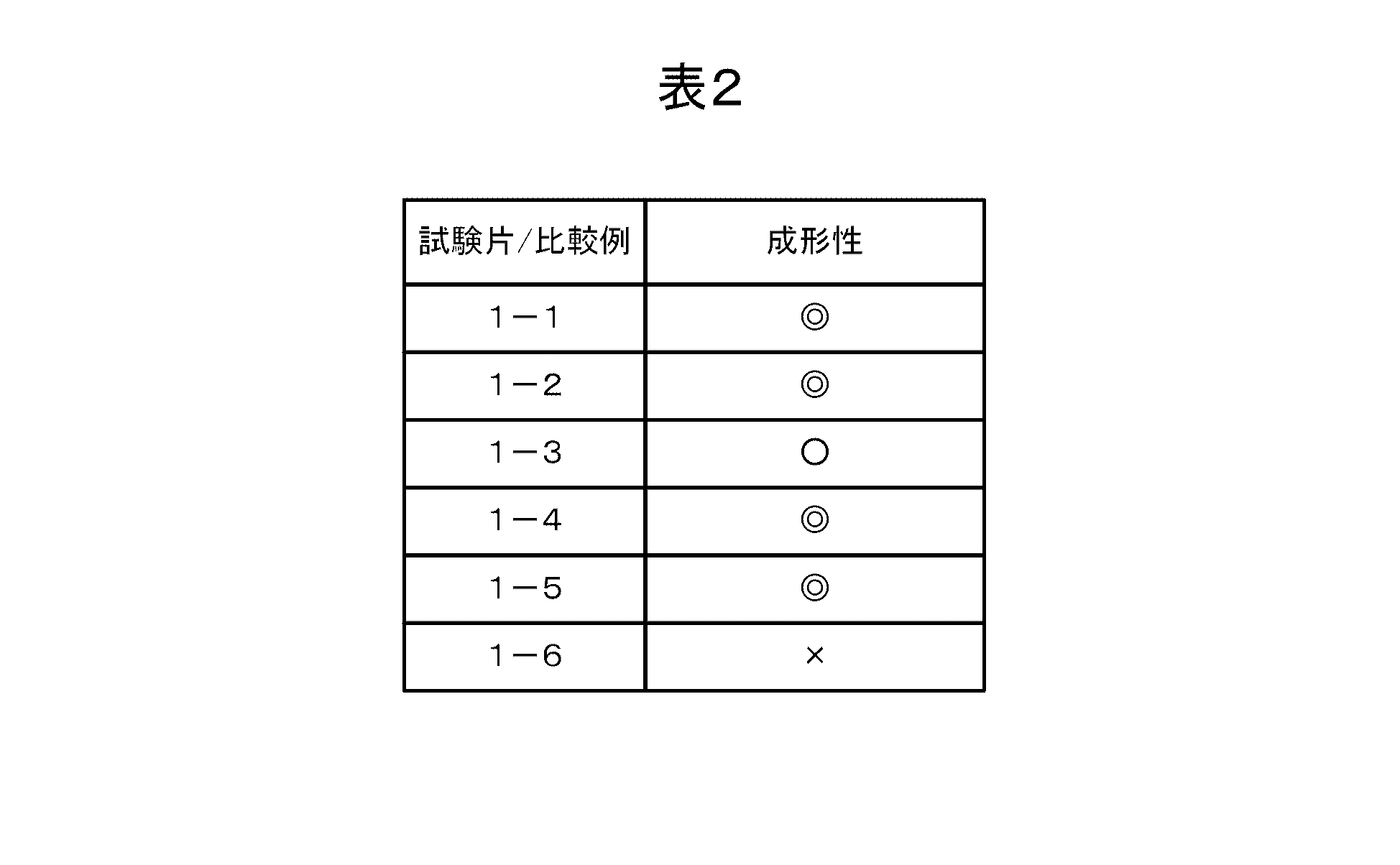
表2に示すように、ポリエチレン1質量%および炭素粒子1質量%の場合、ホホバオイル4質量%までは(試験片1-1、1-2)、成形回数10回目の保圧工程での金型内圧力が一定に保たれ、成形性は「成形性良」であるが、ホホバオイル6質量%では(試験片1-3)、成形回数10回目の保圧工程での金型内圧力が後半に若干落ち込み、成形性は「成形可能」であった。しかし、ホホバオイル質量6%において、炭素粒子1質量%はそのままにポリエチレン2質量%とすると(試験片1-4)、成形回数10回目の保圧工程での金型内圧力が一定に保たれ、成形性は「成形性良」であった。また、ホホバオイル3質量%およびポリエチレン1質量%の場合(試験片1-5)、成形回数10回目の保圧工程での金型内圧力が一定に保たれ、ホホバオイル3質量%、ポリエチレン1質量%および炭素粒子1質量%の場合(試験片1-1)と同様に、成形性は「成形性良」であった。また、ポリエチレンおよび炭素粒子を配合せずに、ホホバオイル3質量%を配合した場合(比較例1-6)、成形回数10回目の保圧工程での金型内圧力が当初から目標の圧力に達しておらず、成形性は「成形困難」であった。以上の結果、成形性の観点から、ホホバオイルとともにポリエチレンを配合すべきこと、ポリエチレン1質量部に対してホホバオイル4質量部以内とすることが好ましいこと、および、炭素粒子の有無による影響は無視できることが分かった。
[摺動性能試験]
本発明者は、試験片1-1~1-5および比較例1-7、1-8について摺動性能試験を行った。
本発明者は、試験片1-1~1-5および比較例1-7、1-8について摺動性能試験を行った。
図1は、本実施の形態に係る摺動部材用樹脂組成物からなる試験片1の摺動性能試験を説明するための図である。
図示するように、試験片1の摺動面(表面)10上に筒状の相手材2を載置し、以下の表3に示す条件において、軸心O方向の荷重Nを試験片1の裏面11に加えて、試験片1の摺動面10を相手部材2の支持対象面(端面)20に押し当てながら、軸心O回りの回転方向Rに相手材2を回転させた。そして、そのときの摺動部材2の回転方向Rにおけるトルクを、図示していないロードセルで検出し、この検出トルクから、摺動面10および支持対象面20間の摩擦係数を測定した。また、摩擦係数の測定後に、摺動面10の矢印Aにおける摩耗痕深さ(摩耗痕断面曲線)を測定した。なお、相手材2の支持対象面20は、研削加工した後、耐水研磨紙#400等でハンドラッピングし、さらにアセトンにて洗浄した。

図2は、表3に示す条件にて、試験片1-1~1-5および比較例1-7、1-8に対して行った室温環境下での摺動性能試験の測定結果を示す図である。
ここで、左側の縦軸は摩擦係数を示しており、右側の縦軸は摩耗痕深さ(摺動面10の矢印Aにおける摩耗痕深さの平均値)を示している。また、グラフ3-1~3-5は試験片1-1~1-5の摩擦係数の測定結果を示しており、グラフ3-7、3-8は比較例1-7、1-8の摩擦係数の測定結果を示しており、グラフ4-1~4-5は試験片1-1~1-5の摩耗痕深さの測定結果を示しており、そして、グラフ4-7、4-8は比較例1-7、1-8の摩耗痕深さの測定結果を示している。
図2に示すように、室温環境下において、脂肪族ポリケトン樹脂100質量%の比較例1-8の摩擦係数は0.54である(グラフ3-8)。一方、ホホバオイル3質量%、ポリエチレン1質量%、炭素粒子1質量%配合の試験片1-1の摩擦係数は0.11であり(グラフ3-1)、ホホバオイル4質量%、ポリエチレン1質量%、炭素粒子1質量%配合の試験片1-2の摩擦係数は0.10であり(グラフ3-2)、ホホバオイル6質量%、ポリエチレン1質量%、炭素粒子1質量%配合の試験片1-3の摩擦係数は0.10であり(グラフ3-3)、ホホバオイル6質量%、ポリエチレン2質量%、炭素粒子1質量%配合の試験片1-4の摩擦係数は0.12であり(グラフ3-4)、そして、ホホバオイル3質量%、ポリエチレン1質量%配合の試験片1-5の摩擦係数は0.07である(グラフ3-5)。いずれの試験片1-1~1-5も、脂肪族ポリケトン樹脂100のみの比較例1-8に比べて摩擦係数が圧倒的に小さく、PTFE粉末を15質量%配合した比較例1-7の摩擦係数0.25(グラフ3-7)と比べても十分に小さい。ここで、試験片1-1と試験片1-5とを比較すると、ともにホホバオイル3質量%、ポリエチレン1質量%配合である点で共通し、試験片1-1は炭素粒子を1質量%配合する一方、試験片1-5は炭素粒子を配合していない点で異なる。両者の摩擦係数に有意な差がなかったことから、炭素粒子の配合は摩擦係数に影響しないことが分かった。
また、脂肪族ポリケトン樹脂100質量%の比較例1-8の摩耗痕深さは229.5μmである(グラフ4-8)。一方、ホホバオイル3質量%、ポリエチレン1質量%、炭素粒子1質量%配合の試験片1-1の摩耗痕深さは1.3μmであり(グラフ4-1)、ホホバオイル4質量%、ポリエチレン1質量%、炭素粒子1質量%配合の試験片1-2の摩耗深さは1.6μmであり(グラフ4-2)、ホホバオイル6質量%、ポリエチレン1質量%、炭素粒子1質量%配合の試験片1-3の摩耗痕深さは1.8μmであり(グラフ4-3)、ホホバオイル6質量%、ポリエチレン2質量%、炭素粒子1質量%配合の試験片1-4の摩耗痕深さは2.7μmであり(グラフ4-4)であり、そして、ホホバオイル3質量%、ポリエチレン1質量%配合の試験片1-5の摩耗痕深さは1.8μmである(グラフ4-5)。いずれの試験片1-1~1-5の摩耗痕深さも、脂肪族ポリケトン樹脂100質量%の比較例1-8の摩耗痕深さに比べて十分に小さく、PTFE粉末を15質量%配合した比較例1-7の摩耗痕深さ42.5μm(グラフ4-7)と比べても小さい。ここで、試験片1-1と試験片1-5とを比較すると、ともにホホバオイル3質量%、ポリエチレン1質量%配合である点で共通し、試験片1-1は炭素粒子を1質量%配合する一方、試験片1-5は炭素粒子を配合していない点で異なる。両者の摩耗痕深さに有意な差がなかったことから、炭素粒子の配合は摩耗痕深さに影響しないことが分かった。
図3は、表3に示す条件にて、試験片1-1~1-5に対して行った高温環境下(120℃)での摺動性能試験の測定結果を示す図である。
ここで、図2と同様、左側の縦軸は摩擦係数を示しており、右側の縦軸は摩耗痕深さ(摺動面10の矢印Aにおける摩耗痕深さの平均値)を示している。また、グラフ5-1~5-5は試験片1-1~1-5の摩擦係数の測定結果を示しており、グラフ6-1~6-5は試験片1-1~1-5の摩耗痕深さの測定結果を示している。
図3に示すように、高温環境下(120℃)において、ホホバオイル3質量%、ポリエチレン1質量%、炭素粒子1質量%配合の試験片1-1の摩擦係数は0.07であり(グラフ5-1)、ホホバオイル4質量%、ポリエチレン1質量%、炭素粒子1質量%配合の試験片1-2の摩擦係数は0.08であり(グラフ5-2)、ホホバオイル6質量%、ポリエチレン1質量%、炭素粒子1質量%配合の試験片1-3の摩擦係数は0.07であり(グラフ5-3)、ホホバオイル6質量%、ポリエチレン2質量%、炭素粒子1質量%配合の試験片1-4の摩擦係数は0.10であり(グラフ5-4)であり、そして、ホホバオイル3質量%、ポリエチレン1質量%配合の試験片1-5の摩擦係数は0.06である(グラフ5-5)。いずれの試験片1-1~1-5も、室温環境下での摩擦係数より低く、高温環境下でも良好な摺動特性が得られた。また、炭素粒子を配合する試験片1-1と、炭素粒子を配合しない点を除き試験片1-1と共通する試験片1-5とで、摩擦係数に有意な差がなかったことから、高温環境下でも、炭素粒子の配合は摩擦係数に影響しないことが分かった。
また、ホホバオイル3質量%、ポリエチレン1質量%、炭素粒子1質量%配合の試験片1-1の摩耗痕深さは2.5μmであり(グラフ6-1)、ホホバオイル4質量%、ポリエチレン1質量%、炭素粒子1質量%配合の試験片1-2の摩耗深さは2.8μmであり(グラフ6-2)、ホホバオイル6質量%、ポリエチレン1質量%、炭素粒子1質量%配合の試験片1-3の摩耗痕深さは4.3μmであり(グラフ6-3)、ホホバオイル6質量%、ポリエチレン2質量%、炭素粒子1質量%配合の試験片1-4の摩耗痕深さは3.5μmであり(グラフ6-4)であり、そして、ホホバオイル3質量%、ポリエチレン1質量%配合の試験片1-5の摩耗痕深さは3.2μmである(グラフ6-5)。いずれの試験片1-1~1-5の摩耗痕深さも、室温環境下よりも高温環境下(120℃)の方が大きいが、高温環境下においても、十分な耐摩耗性が得られることが分かった。
上述の摺動性能試験結果から、脂肪族ポリケトン樹脂にホホバオイルおよびポリエチレンを配合することにより、室温環境下および高温環境下の両方において、脂肪族ポリケトン樹脂単体に対して摺動性能を飛躍的に向上させることができ、これにより、滑り軸受に利用できることが分かった。また、上述の成形性確認試験から、脂肪族ポリケトン樹脂にホホバオイルをポリエチレンとともに配合することにより、ポリエチレンを配合しない場合に比べて、成形性に優れ、射出成形による量産に適した摺動部材用樹脂組成物を実現できることが分かった。
これは以下の理由によると考えられる。すなわち、脂肪族ポリケトン樹脂は、ケトンが多数連結されたものであり、以下の化1に示すように、主鎖にカルボニル基が配置されている。

ここで、カルボニル基は、以下の化2に示すように、炭素Cおよび酸素Oがそれぞれ+、-に帯電して分極している。

このように、脂肪族ポリケトン樹脂は極性を持った樹脂と考えられ、脂肪族ポリケトン樹脂の表面は他の物質と結合しやすい活性な状態にあるものと考えられる。
ホホバオイルは、以下の化3に示す脂肪酸エステルを有する。化3のR1、R2は、長鎖の炭化水素基であることを示す。

高級脂肪酸エステルも炭素-酸素の結合を持ち、極性を有していると考えられる。このため、高級脂肪酸エステルを含むホホバオイルは、極性が高い脂肪族ポリケトン樹脂の表面に保持されて油性剤としての潤滑効果を発揮すると考えられる。また、同様に極性を有していると考えられる高級脂肪酸、高級アルコール等でも、同様の潤滑効果が期待できる。
ポリエチレンは、以下の化4に示すように、炭化水素基が重合した構造を有する高分子であり、脂肪酸エステルと類似の化学的構造を有する。

このため、脂肪族ポリケトン樹脂に高級脂肪酸エステルをポリエチレンとともに配合することにより、ポリエチレンが高級脂肪酸エステルと結合して、脂肪酸エステルの保持剤として機能し、これにより、より多くの脂肪酸エステルを脂肪族ポリケトン樹脂から分離させることなく脂肪族ポリケトン樹脂に配合することができたものと考えられる。
以上説明したように、本実施の形態によれば、高級脂肪酸エステル、高級脂肪酸、あるいは高級アルコールを含む油性剤と、油性剤の保持剤として機能するオレフィン系樹脂と、を配合した脂肪族ポリケトン樹脂を用いることにより、摺動性能を向上させることがきるので、耐熱性および耐薬品性に優れ、かつ同等の耐熱性を有する他の摺動部材用樹脂組成物に比べて安価な脂肪族ポリケトン樹脂を用いた摺動部材用樹脂組成物を提供できる。
本発明の摺動部材用樹脂組成物は、様々な摺動部材に用いることができる。特に、滑り軸受に好適である。
1:摺動部材用樹脂組成物からなるプレート状の試験片、 2:相手材、10:試験片1の摺動面(表面)、 11:摺動部材用樹脂組成物1の裏面、 20:相手材2の支持対象面(端面)
Claims (7)
- 脂肪族ポリケトン樹脂と、
油性剤と、
オレフィン系樹脂と、を含む
ことを特徴とする摺動部材用樹脂組成物。 - 請求項1に記載の摺動部材用樹脂組成物であって、
前記油性剤は、
高級脂肪酸、高級脂肪酸エステル、あるいは高級アルコールを含む
ことを特徴とする摺動部材用樹脂組成物。 - 請求項1または2に記載の摺動部材用樹脂組成物であって、
前記油性剤は、
前記脂肪族ポリケトンの成形温度より高い沸点を有する
ことを特徴とする摺動部材用樹脂組成物。 - 請求項1ないし3のいずれか一項に記載の摺動部材用樹脂組成物であって、
前記油性剤は、ホホバオイルである
ことを特徴とする摺動部材用樹脂組成物。 - 請求項1ないし4のいずれか一項に記載の摺動部材用樹脂組成物であって、
前記オレフィン系樹脂は、ポリエチレンである
ことを特徴とする摺動部材用樹脂組成物。 - 請求項1ないし5のいずれか一項に記載の摺動部材用樹脂組成物であって、
前記油性剤の配合量は、1~6質量%であり、
前記オレフィン系樹脂の配合量は、0.5~15質量%である
ことを特徴とする摺動部材用樹脂組成物。 - 請求項1ないし6のいずれか一項に記載の摺動部材用樹脂組成物で形成されていることを特徴とする滑り軸受。
Applications Claiming Priority (2)
| Application Number | Priority Date | Filing Date | Title |
|---|---|---|---|
| JP2017-090841 | 2017-04-28 | ||
| JP2017090841A JP6873532B2 (ja) | 2017-04-28 | 2017-04-28 | 摺動部材用樹脂組成物および滑り軸受 |
Publications (1)
| Publication Number | Publication Date |
|---|---|
| WO2018198989A1 true WO2018198989A1 (ja) | 2018-11-01 |
Family
ID=63919024
Family Applications (1)
| Application Number | Title | Priority Date | Filing Date |
|---|---|---|---|
| PCT/JP2018/016371 Ceased WO2018198989A1 (ja) | 2017-04-28 | 2018-04-20 | 摺動部材用樹脂組成物および滑り軸受 |
Country Status (2)
| Country | Link |
|---|---|
| JP (1) | JP6873532B2 (ja) |
| WO (1) | WO2018198989A1 (ja) |
Cited By (1)
| Publication number | Priority date | Publication date | Assignee | Title |
|---|---|---|---|---|
| JP2024519663A (ja) * | 2021-05-17 | 2024-05-21 | ジャビル インク | レーザ焼結用のポリケトン粉末 |
Citations (8)
| Publication number | Priority date | Publication date | Assignee | Title |
|---|---|---|---|---|
| JPS6038443A (ja) * | 1983-07-15 | 1985-02-28 | イー・アイ・デユポン・デ・エモアス・アンド・カンパニー | 発泡可能なポリマーブレンド |
| JPH11181081A (ja) * | 1997-12-24 | 1999-07-06 | Toray Ind Inc | ポリケトン樹脂からなる摺動部品 |
| JPH11302530A (ja) * | 1998-04-16 | 1999-11-02 | Otsuka Chem Co Ltd | 脂肪族ポリケトン樹脂組成物 |
| JP2001323116A (ja) * | 2000-05-17 | 2001-11-20 | Oiles Ind Co Ltd | 摺動部材用樹脂組成物および摺動部材 |
| JP2007131651A (ja) * | 2005-11-08 | 2007-05-31 | Asahi Kasei Chemicals Corp | 耐衝撃性ポリケトン樹脂組成物およびその成形体 |
| WO2016072641A1 (ko) * | 2014-11-07 | 2016-05-12 | (주) 효성 | 내마모성이 우수한 폴리케톤 수지 조성물 |
| JP2017066239A (ja) * | 2015-09-29 | 2017-04-06 | 住友電気工業株式会社 | 成形体及びその製造方法 |
| JP2017082179A (ja) * | 2015-10-30 | 2017-05-18 | オイレス工業株式会社 | 摺動材および滑り軸受 |
-
2017
- 2017-04-28 JP JP2017090841A patent/JP6873532B2/ja active Active
-
2018
- 2018-04-20 WO PCT/JP2018/016371 patent/WO2018198989A1/ja not_active Ceased
Patent Citations (8)
| Publication number | Priority date | Publication date | Assignee | Title |
|---|---|---|---|---|
| JPS6038443A (ja) * | 1983-07-15 | 1985-02-28 | イー・アイ・デユポン・デ・エモアス・アンド・カンパニー | 発泡可能なポリマーブレンド |
| JPH11181081A (ja) * | 1997-12-24 | 1999-07-06 | Toray Ind Inc | ポリケトン樹脂からなる摺動部品 |
| JPH11302530A (ja) * | 1998-04-16 | 1999-11-02 | Otsuka Chem Co Ltd | 脂肪族ポリケトン樹脂組成物 |
| JP2001323116A (ja) * | 2000-05-17 | 2001-11-20 | Oiles Ind Co Ltd | 摺動部材用樹脂組成物および摺動部材 |
| JP2007131651A (ja) * | 2005-11-08 | 2007-05-31 | Asahi Kasei Chemicals Corp | 耐衝撃性ポリケトン樹脂組成物およびその成形体 |
| WO2016072641A1 (ko) * | 2014-11-07 | 2016-05-12 | (주) 효성 | 내마모성이 우수한 폴리케톤 수지 조성물 |
| JP2017066239A (ja) * | 2015-09-29 | 2017-04-06 | 住友電気工業株式会社 | 成形体及びその製造方法 |
| JP2017082179A (ja) * | 2015-10-30 | 2017-05-18 | オイレス工業株式会社 | 摺動材および滑り軸受 |
Cited By (2)
| Publication number | Priority date | Publication date | Assignee | Title |
|---|---|---|---|---|
| JP2024519663A (ja) * | 2021-05-17 | 2024-05-21 | ジャビル インク | レーザ焼結用のポリケトン粉末 |
| JP7627818B2 (ja) | 2021-05-17 | 2025-02-07 | ルーマス ポリマーズ エルエルシー | レーザ焼結用のポリケトン粉末 |
Also Published As
| Publication number | Publication date |
|---|---|
| JP6873532B2 (ja) | 2021-05-19 |
| JP2018188530A (ja) | 2018-11-29 |
Similar Documents
| Publication | Publication Date | Title |
|---|---|---|
| US4041002A (en) | Thermoplastic resin composition | |
| US9583230B2 (en) | Electrically conductive polyethylene resin composition, electrically conductive polyethylene resin molding, sliding bearing, and sliding sheet | |
| CN1756799B (zh) | 包含聚苯醚和/或聚苯乙烯的具有改善的摩擦性能的组合物和改善聚苯醚和/或聚苯乙烯组合物的摩擦性能的方法 | |
| US3453208A (en) | Low friction bearings with improved wear properties | |
| JP4386633B2 (ja) | フッソ樹脂組成物 | |
| CN100335601C (zh) | 固体润滑剂和滑动件 | |
| CN104448825A (zh) | 一种聚苯硫醚复合材料及其制备方法 | |
| WO2018198989A1 (ja) | 摺動部材用樹脂組成物および滑り軸受 | |
| CN116323778A (zh) | 滑动部件用树脂组合物和滑动部件 | |
| JP6681696B2 (ja) | 摺動材および滑り軸受 | |
| JP2018193466A (ja) | 摺動部材用樹脂組成物および滑り軸受 | |
| CN1836006B (zh) | 滑动部件用树脂组合物和滑动部件 | |
| JP4517639B2 (ja) | 固体潤滑剤および摺動部材 | |
| JP6452075B2 (ja) | ポリカーボネート樹脂組成物、及び樹脂成形品 | |
| JPH07216190A (ja) | ポリアセタール樹脂組成物 | |
| JPH04234450A (ja) | ポリアセタール樹脂組成物および摺動部材 | |
| JP3149151B2 (ja) | 高摺動性ポリアセタール樹脂組成物 | |
| JP3716079B2 (ja) | ポリアセタール樹脂組成物 | |
| EP3967722B1 (en) | Polyacetal resin composition and sliding member | |
| JP4582828B2 (ja) | ポリアセタール樹脂組成物 | |
| JPH1129692A (ja) | ポリアセタール樹脂組成物 | |
| JP2898790B2 (ja) | アセタール樹脂製フェルトクラッチ用成形品 | |
| JP2003096265A (ja) | ポリアセタール樹脂組成物およびこれを成形してなる摺動部材 | |
| JPH07108951B2 (ja) | ポリフエニレンサルフアイド樹脂組成物 | |
| JPH07216189A (ja) | ポリアセタール樹脂組成物 |
Legal Events
| Date | Code | Title | Description |
|---|---|---|---|
| 121 | Ep: the epo has been informed by wipo that ep was designated in this application |
Ref document number: 18791148 Country of ref document: EP Kind code of ref document: A1 |
|
| NENP | Non-entry into the national phase |
Ref country code: DE |
|
| 122 | Ep: pct application non-entry in european phase |
Ref document number: 18791148 Country of ref document: EP Kind code of ref document: A1 |