WO2018163232A1 - 蛍光体粉末および蛍光体粉末を生産する方法 - Google Patents
蛍光体粉末および蛍光体粉末を生産する方法 Download PDFInfo
- Publication number
- WO2018163232A1 WO2018163232A1 PCT/JP2017/008716 JP2017008716W WO2018163232A1 WO 2018163232 A1 WO2018163232 A1 WO 2018163232A1 JP 2017008716 W JP2017008716 W JP 2017008716W WO 2018163232 A1 WO2018163232 A1 WO 2018163232A1
- Authority
- WO
- WIPO (PCT)
- Prior art keywords
- powder
- outer shell
- phosphor
- particles
- phosphor powder
- Prior art date
- Legal status (The legal status is an assumption and is not a legal conclusion. Google has not performed a legal analysis and makes no representation as to the accuracy of the status listed.)
- Ceased
Links
Images


Classifications
-
- C—CHEMISTRY; METALLURGY
- C09—DYES; PAINTS; POLISHES; NATURAL RESINS; ADHESIVES; COMPOSITIONS NOT OTHERWISE PROVIDED FOR; APPLICATIONS OF MATERIALS NOT OTHERWISE PROVIDED FOR
- C09K—MATERIALS FOR MISCELLANEOUS APPLICATIONS, NOT PROVIDED FOR ELSEWHERE
- C09K11/00—Luminescent materials, e.g. electroluminescent or chemiluminescent
- C09K11/08—Luminescent materials, e.g. electroluminescent or chemiluminescent containing inorganic luminescent materials
-
- C—CHEMISTRY; METALLURGY
- C09—DYES; PAINTS; POLISHES; NATURAL RESINS; ADHESIVES; COMPOSITIONS NOT OTHERWISE PROVIDED FOR; APPLICATIONS OF MATERIALS NOT OTHERWISE PROVIDED FOR
- C09K—MATERIALS FOR MISCELLANEOUS APPLICATIONS, NOT PROVIDED FOR ELSEWHERE
- C09K11/00—Luminescent materials, e.g. electroluminescent or chemiluminescent
- C09K11/08—Luminescent materials, e.g. electroluminescent or chemiluminescent containing inorganic luminescent materials
- C09K11/66—Luminescent materials, e.g. electroluminescent or chemiluminescent containing inorganic luminescent materials containing germanium, tin or lead
Definitions
- the present invention relates to a phosphor powder and a method for producing the phosphor powder.
- a phosphor powder made of BaSnO 3 and a modified product thereof is known as a material that emits infrared fluorescence when irradiated with ultraviolet excitation light.
- phosphor fine particles that are made of a perovskite oxide having a composition represented by the composition formula BaSnO 3 and convert light in the ultraviolet region into light in the infrared region are used for power generation of solar cells. Used to improve efficiency.
- UV light irradiation has a composition represented by the general formula Ba 1-x SnA x O 3 , wherein A is Li or Na, and x satisfies 0 ⁇ x ⁇ 0.4.
- the photoluminescent particles that emit infrared light are used for the security film.
- BaSnO 3 and its modified products are easily dissolved in dilute hydrochloric acid and other acids, and Ba is easily eluted from the phosphor powder composed of BaSnO 3 and its modified products.
- the elution of Ba from dilute hydrochloric acid or other acids from the phosphor powder is an obstacle to the use of the phosphor powder in products.
- the third part of the European Standard EN71 “Transition of Specified Elements”, which is a standard relating to “safety of toys”, has 8 types including Ba at 37 ° C. in consideration of the case where a child eats toys.
- the amount of elution with respect to dilute hydrochloric acid having a concentration of 0.07 mol / L of the heavy metal element is required to be 1000 mg / kg or less.
- the present invention is made to solve this problem.
- the problem to be solved by the present invention is to suppress the elution of Ba contained in phosphor powder composed of BaSnO 3 and its modified product into dilute hydrochloric acid and other acids.
- Each of the plurality of phosphor particles contained in the phosphor powder includes a core particle and an outer shell that covers the core particle.
- the core particle is made of a perovskite oxide and emits infrared fluorescence when irradiated with ultraviolet excitation light.
- the perovskite oxide is represented by the general formula ABO 3 and has a composition in which A is mainly Ba and B is mainly Sn.
- the outer shell is made of an inorganic compound.
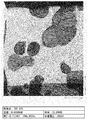
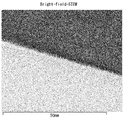
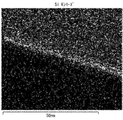
- FIG. 1 It is a schematic diagram which illustrates the fluorescent substance powder of 1st Embodiment. It is a flowchart which illustrates the procedure which produces the fluorescent substance powder of 1st Embodiment. It is a photograph which shows the result of the observation by the transmission electron microscope (TEM) of the fluorescent substance particle contained in the fluorescent substance powder of Example 2. It is a photograph which shows the result of the observation by TEM near the surface of the fluorescent substance particle contained in the fluorescent substance powder of Example 2. It is an element map which shows the result of the analysis by the energy dispersive X ray analysis (EDX) apparatus of the vicinity of the surface of the fluorescent substance particle contained in the fluorescent substance powder of Example 2.
- TEM transmission electron microscope
- EDX energy dispersive X ray analysis
- FIG. 1 is a schematic diagram which illustrates the phosphor powder of 1st Embodiment.
- the phosphor powder 1000 illustrated in FIG. 1 emits infrared fluorescence when irradiated with ultraviolet excitation light, and includes a large number of phosphor particles 1020.
- Each phosphor particle 1020 that is each of a large number of phosphor particles 1020 includes a core particle 1040 and an outer shell 1042.
- the core particle 1040 is made of a perovskite oxide represented by the general formula ABO 3 and having a composition in which A is mainly Ba and B is mainly Sn.
- the perovskite oxide desirably has a composition represented by the general formula Ba 1-x SnZn x O 3 , where x satisfies 0 ⁇ x ⁇ 0.2.
- the outer shell 1042 is made of an inorganic compound having acid resistance and ultraviolet transmittance, and covers the core particles 1040. Accordingly, when dilute hydrochloric acid or other acid comes into contact with each phosphor particle 1020, the acid is prevented from coming into contact with the core particle 1040, and Ba contained in the core particle 1040 is prevented from being eluted into the acid. .
- the outer shell 1042 is preferably made of silica (SiO 2 ), alumina (Al 2 O 3 ), or silica zirconia composite oxide (SiO 2 —ZrO 2 ).
- the outer shell 1042 may be made of an inorganic compound other than silica, alumina, or silica zirconia composite oxide.
- the internal quantum efficiency (IQE) of the phosphor powder 1000 is improved by about 10%.
- the first reason is presumed to be because the outer shell 1042 eliminates surface defects such as unpaired electron dangling bonds of the core particle 1040 that inhibits fluorescence emission.
- the second reason is that since the silica, alumina and silica zirconia composite oxide has a refractive index lower than the refractive index 2.1 of BaSnO 3 , reflection of ultraviolet rays on the surface of the phosphor particle 1020 is suppressed, and the core particle 1040 This is presumed to be due to an increase in the amount of UV absorption.
- silica has a refractive index of 1.4 which is lower than the refractive index of BaSnO 3 .
- Alumina has a refractive index 1.8 lower than the refractive index 2.1 of BaSnO 3 .
- the silica zirconia composite oxide has a refractive index of 1.4-2.1 lower than that of BaSnO 3 .
- the outer shell 1042 is preferably made of a silica zirconia composite oxide having alkali resistance higher than that of silica.
- the outer shell 1042 desirably has a thickness of 1.0 nm or more.
- outer shell 1042 has a thickness of 1.0 nm or more, elution of Ba from phosphor powder 1000 is effectively suppressed.
- FIG. 2 is a flowchart illustrating a procedure for producing the phosphor powder of the first embodiment.
- step S101 illustrated in FIG. 2 powder is prepared.
- Each of the plurality of particles contained in the prepared powder is a perovskite oxide represented by the general formula ABO 3 and having a composition in which element A is mainly Ba and element B is mainly Sn.
- the starting material powder is prepared, the prepared starting material powders are mixed with each other to prepare a mixed powder, and the prepared mixed powder is heat-treated.
- the starting material powders contained in the mixed powder react with each other during the heat treatment.
- Each of the starting material powders is an oxide of a constituent element other than oxygen constituting the perovskite oxide.
- the oxide of the constituent element may be replaced with a precursor that becomes an oxide of the constituent element during the heat treatment.
- the precursor is carbonate, nitrate, oxalate or the like.
- steps S102 to S104 subsequent to step S101 ceramic thin film coating is performed on each of the plurality of particles included in the prepared powder.
- each particle becomes the core particle 1040, and the phosphor particle 1020 having a structure in which the core particle 1040 is surrounded by the outer shell 1042 is obtained, and the phosphor powder 1000 including a large number of phosphor particles 1020 is obtained.
- a metal alkoxide solution is prepared.
- the prepared metal alkoxide solution is a silica alkoxide solution, for example, an ethanoltetraethoxysilane (Si (OC 2 H 5 ) 4 ) (TEOS) solution.
- the prepared metal alkoxide solution is an aluminum alkoxide solution, for example, an aluminum isopropoxide (Al [OCH (CH 3 ) 2 ] 3 ) solution.
- the prepared metal alkoxide solution is a silica alkoxide / zirconium alkoxide mixed solution, for example, TEOS / tetra-i-propoxyzirconium (Zr (Oi-C 3 H 7 ) 4 ) Mixed solution.
- step S103 the prepared powder is dispersed in the prepared metal alkoxide solution to prepare a dispersion. Dispersion is performed by stirring, ultrasonic treatment, or the like.
- step S104 the metal alkoxide contained in the metal alkoxide solution is hydrolyzed while the powder is dispersed in the metal alkoxide solution.
- a catalyst is added to the dispersion and the dispersion is heated.
- the hydrolyzate of metal alkoxide further undergoes polycondensation.
- an inorganic compound such as an oxide is generated, and each of a plurality of particles contained in the dispersed powder is coated with the generated inorganic compound, and a coated powder is obtained.
- step S105 post-treatment such as separation of unreacted metal alkoxide from the coated powder, annealing of the coated powder, etc. is performed as necessary to obtain phosphor powder 1000.
- the heat treatment strengthens the interatomic bonds in the outer shell 1042, further improves the acid resistance and alkali resistance of the outer shell 1042, and further suppresses the elution of Ba contained in the phosphor powder 1000.
- the thickness of the outer shell 1042 is the concentration of the metal alkoxide in the metal alkoxide solution, the amount of catalyst added to the dispersion, the temperature of the dispersion when hydrolyzing the metal alkoxide, and the dispersion when hydrolyzing the metal alkoxide. It is controlled by the time for heating.
- Comparative Example 1 In Comparative Example 1, powders of barium carbonate (BaCO 3 ), tin oxide (SnO 2 ), and zinc nitrate hexahydrate (Zn (NO 3 ) 2 .6H 2 O) as starting materials were mixed with barium (Ba) atoms. And a molar ratio of tin (Sn) atoms and zinc (Zn) atoms was 0.995: 1: 0.005, and the weighed powders were mixed and pulverized to obtain a mixed powder.
- barium carbonate BaCO 3
- tin oxide SnO 2
- Zn (NO 3 ) 2 .6H 2 O zinc nitrate hexahydrate
- Mixing and pulverization is performed by placing a weighed powder in a mortar and then adding an appropriate amount of ethanol to the mortar to obtain a paste-like material, and then stirring the paste-like material until the ethanol is volatilized and a dry mixed powder is obtained. went. Further, the obtained mixed powder was put in a high-purity alumina crucible and fired at 1300 ° C. in an air atmosphere to synthesize Ba 0.995 SnZn 0.005 O 3 powder. In Comparative Example 1, without a ceramic thin film coating with respect to the synthesized Ba 0.995 SnZn 0.005 O 3 powder, the synthesized Ba 0.995 SnZn 0.005 O 3 powder as the phosphor powder.
- Example 1 Ba 0.995 SnZn 0.005 O 3 powder was synthesized in the same manner as in Comparative Example 1.
- each phosphor particle has a structure in which the synthesized Ba 0.995 SnZn 0.005 O 3 powder is coated with silica and the outer shell made of silica is covered with the core particles. A powder was obtained.
- the synthesized Ba 0.995 SnZn 0.005 O 3 powder was dispersed in ethanol by ultrasonic treatment to obtain a dispersion in which the Ba 0.995 SnZn 0.005 O 3 powder was dispersed. Further, TEOS was added to the dispersion while stirring the dispersion with a magnetic stirrer. Thereby, the dispersion liquid in which the synthesized Ba 0.995 SnZn 0.005 O 3 powder was dispersed in the TEOS solution was obtained.
- a dilute nitric acid aqueous solution serving as a catalyst for hydrolysis is added to the dispersion, and a water bath is used so that the temperature of the dispersion is maintained at 60 ° C. for a certain time.
- the dispersion was heated. Thereby, TEOS hydrolyzed and the dispersion liquid in which the coated powder was dispersed was obtained.
- the process of separating unreacted TEOS from the coated powder was repeated three times.
- the supernatant liquid was removed, and after adding a solvent, the stirring process was performed over 5 minutes with the shaker.
- the rotational speed was set to 3000 rpm.
- the solvent was water or ethanol. Thereby, a dispersion liquid in which the coated powder was dispersed in a solvent was obtained.
- the obtained coated powder was not annealed. That is, the obtained coated powder was directly used as a phosphor powder.
- Example 2 Ba 0.995 SnZn 0.005 O 3 powder was synthesized as in Comparative Example 1.
- each phosphor particle has a structure in which the synthesized Ba 0.995 SnZn 0.005 O 3 powder is coated with silica and a core particle is coated on the outer shell made of silica. A powder was obtained.
- a coated powder was obtained in the same manner as in Example 1.
- the coated powder obtained was annealed. Thereby, a phosphor powder was obtained.
- the annealing was performed by heat-treating the obtained coated powder at 300 ° C.
- Example 3 Ba 0.995 SnZn 0.005 O 3 powder was synthesized as in Comparative Example 1.
- each phosphor particle has a structure in which the synthesized Ba 0.995 SnZn 0.005 O 3 powder is coated with alumina and an outer shell made of alumina is coated with core particles. A powder was obtained.
- the alumina coating was performed in the same manner as the silica coating of Example 2 except that aluminum isopropoxide was used instead of TEOS.
- Example 4 Ba 0.995 SnZn 0.005 O 3 powder was synthesized as in Comparative Example 1.
- the synthesized Ba 0.995 SnZn 0.005 O 3 powder was coated with silica zirconia composite oxide, and the outer shell made of silica zirconia composite oxide was coated with core particles.
- the phosphor powder which each phosphor particle has was obtained.
- the silica zirconia composite oxide coating was performed in the same manner as the silica coating of Example 2 except that a mixture of TEOS and tetra-i-propoxyzirconium was used instead of TEOS.
- the mixture is a mixture of TEOS and tetra-i-propoxyzirconium so that the molar ratio of Si atoms to Zr atoms is 1: 1.
- cation element M the cation element constituting the oxide that is the material of the outer shell.
- the range of the bulk density of the outer shell was estimated from the theoretical density of alumina 3.95 g / cm 3 and the relative density range 0.9-0.5 of amorphous alumina synthesized by the general sol-gel method. .
- the estimated bulk density range of the outer shell was 3.56-1.98 g / cm 3 .
- the thickness range of the outer shell was estimated from the estimated outer shell bulk density range 3.56-1.98 g / cm 3 and the calculated weight concentration of 0.07 wt%.
- the estimated outer shell thickness range was 1.14 to 2.05 ⁇ m.
- the particles contained in the Ba 0.995 SnZn 0.005 O 3 powder are spherical, the outer shell covers the whole of the particles without defects, and the thickness of the outer shell is It was assumed to be uniform.
- the theoretical density of the silica zirconia composite oxide is 3.94 g / cm 3 and the relative density range of the amorphous silica zirconia composite oxide synthesized by a general sol-gel method is 0.9 to 0.5.
- the range of bulk density was estimated.
- the estimated bulk density range of the outer shell was 3.55-1.97 g / cm 3 .
- the range of the outer shell thickness from the estimated outer shell bulk density range 3.55-1.97 g / cm 3 and the calculated weight concentrations Si: 0.04 wt% and Zr: 0.13 wt%. Estimated.
- the estimated outer shell thickness range was 1.25-2.24 ⁇ m.
- the particles contained in the Ba 0.995 SnZn 0.005 O 3 powder are spherical, the outer shell covers the whole of the particles without defects, and the thickness of the outer shell is It was assumed to be uniform.
- the molar ratio of Si atoms and Zr contained in the silica zirconia composite oxide was 1: 1.
- the molar ratio of Si atom to Zr is 1: 1 because the molar ratio (0.04 / 28.1) / (0.13 / 91.2) calculated from the weight concentration shown in Table 1 is 1. It is supported by being close to.
- Example 2 the phosphor particles contained in the phosphor powder were observed with a transmission electron microscope (TEM).
- TEM transmission electron microscope
- EDX energy dispersive X-ray analysis
- As the TEM a transmission electron microscope H-9000NAR manufactured by Hitachi, Ltd. was used.
- As the EDX apparatus EMAX Evolution manufactured by HORIBA, Ltd. was used.
- the sample to be observed was subjected to thinning by FIB method ( ⁇ -sampling method) as pretreatment.
- FIG. 3 is a photograph showing the result of observation by TEM of the phosphor particles contained in the phosphor powder of Example 2.
- FIG. 4 is a photograph showing the result of observation by TEM near the surface of the phosphor particles contained in the phosphor powder of Example 2.
- FIG. 5 is an element map showing the result of analysis by EDX in the vicinity of the surface of the phosphor particles contained in the phosphor powder of Example 2. The field of view of the element map of FIG. 5 is the same as the field of view of the photograph of FIG. The element map of FIG. 5 shows the distribution of Si.
- the phosphor particles contained in the phosphor powder of Example 2 have an outer shell having a thickness of 1.16 ⁇ 1.74 ⁇ m.
- the Ba elution amount of the phosphor powder of Example 2 is 1/100 or less of the Ba elution amount of the phosphor powder of Comparative Example 1. For this reason, as shown in Table 1, it is presumed that the phosphor particles contained in the phosphor powder of Example 2 have an outer shell having a thickness of 1 nm or more, and the outer shell completely covers the core particles without any defects. Presumed to be covered.
- the phosphor particles contained in the phosphor powders of Examples 1, 3 and 4 are also estimated to have an outer shell having a thickness of 1 nm or more as shown in Table 1, and the outer shell is a core particle. It is presumed that the whole is covered without defects.
- the Ba elution amount of Example 2 where annealing was performed was smaller than the Ba elution amount of Example 1 where annealing was not performed.
- the decrease in the amount of Ba elution by annealing is considered to be due to the strengthening of Si—O—Si bonds in the outer shell by annealing.
- IQE Improvement Rate IQE was measured for Comparative Example 1 and Examples 1-4.
- IQE was measured with a spectrofluorometer FP8600 manufactured by JASCO Corporation. In the measurement, a 60 mm ⁇ integrating sphere unit ISF834 and a 16 mm ⁇ fluorescent cell were used, the excitation light wavelength range was 350-380 nm, and the fluorescence measurement wavelength range was 750-1010 nm.
- Example 1-4 the IQE improvement rate relative to the IQE of Comparative Example 1 was calculated from the measured IQE. The results are shown in Table 2.
Landscapes
- Chemical & Material Sciences (AREA)
- Inorganic Chemistry (AREA)
- Engineering & Computer Science (AREA)
- Materials Engineering (AREA)
- Organic Chemistry (AREA)
- Luminescent Compositions (AREA)
Abstract
蛍光体粉末に含まれるBaの希塩酸その他の酸への溶出を抑制する。蛍光体粉末に含まれる複数の蛍光体粒子の各々は、芯粒子および芯粒子を被覆する外殻を備える。芯粒子は、ペロブスカイト型酸化物からなり、紫外線の励起光が照射された場合に赤外線の蛍光を発する。ペロブスカイト型酸化物は、一般式ABO3で表されAが主にBaからなりBが主にSnからなる組成を有する。
Description
本発明は、蛍光体粉末および蛍光体粉末を生産する方法に関する。
BaSnO3およびその変性物からなる蛍光体粉末は、紫外線の励起光が照射された場合に赤外線の蛍光を発する材料として知られている。
例えば、特許文献1に記載された技術においては、組成式BaSnO3で表される組成を有するペロブスカイト型酸化物からなり紫外線領域の光を赤外線領域の光に変換する蛍光体微粒子が太陽電池の発電効率の向上に用いられる。
特許文献2に記載された技術においては、一般式Ba1-xSnAxO3で表されAがLiまたはNaでありxが0<x<0.4を満たす組成を有しUV光の照射により赤外光を発光する光発光体粒子がセキュリティフィルムに用いられる。
BaSnO3およびその変性物は、希塩酸その他の酸に溶解しやすく、BaSnO3およびその変性物からなる蛍光体粉末からは、Baが溶出しやすい。当該蛍光体粉末から希塩酸その他の酸にBaが溶出しやすいことは、当該蛍光体粉末を製品に用いることに対する障害となる。
例えば、「玩具の安全性」に関する規格である欧州規格EN71の第3部「特定元素の移行」は、子供が玩具を食べた場合のことを考慮して、37℃におけるBaを含む8種類の重金属元素の0.07mol/Lの濃度を有する希塩酸に対する溶出量が1000mg/kg以下であることを求めている。
本発明は、この問題を解決するためになされる。本発明が解決しようとする課題は、BaSnO3およびその変性物からなる蛍光体粉末に含まれるBaの希塩酸その他の酸への溶出を抑制することである。
蛍光体粉末に含まれる複数の蛍光体粒子の各々は、芯粒子および芯粒子を被覆する外殻を備える。芯粒子は、ペロブスカイト型酸化物からなり、紫外線の励起光が照射された場合に赤外線の蛍光を発する。ペロブスカイト型酸化物は、一般式ABO3で表されAが主にBaからなりBが主にSnからなる組成を有する。外殻は、無機化合物からなる。
本発明によれば、BaSnO3およびその変性物からなる蛍光体粉末に含まれるBaの希塩酸その他の酸への溶出が抑制される。
この発明の目的、特徴、局面、および利点は、以下の詳細な説明と添付図面とによって、より明白となる。
1 第1実施形態
1.1 蛍光体粉末
図1は、第1実施形態の蛍光体粉末を図示する模式図である。
1.1 蛍光体粉末
図1は、第1実施形態の蛍光体粉末を図示する模式図である。
図1に図示される蛍光体粉末1000は、紫外線の励起光が照射された場合に赤外線の蛍光を発し、多数の蛍光体粒子1020を含む。多数の蛍光体粒子1020の各々である各蛍光体粒子1020は、芯粒子1040および外殻1042を備える。
芯粒子1040は、一般式ABO3で表されAが主にBaからなりBが主にSnからなる組成を有するペロブスカイト型酸化物からなる。ペロブスカイト型酸化物は、望ましくは一般式Ba1-xSnZnxO3で表されxが0≦x≦0.2を満たす組成を有する。
外殻1042は、耐酸性および紫外線透過性を有する無機化合物からなり、芯粒子1040を被覆する。これにより、希塩酸その他の酸が各蛍光体粒子1020に接触した場合に当該酸が芯粒子1040に接触することが抑制され、芯粒子1040に含まれるBaが当該酸に溶出することが抑制される。
外殻1042は、望ましくはシリカ(SiO2)、アルミナ(Al2O3)またはシリカジルコニア複合酸化物(SiO2-ZrO2)からなる。外殻1042がシリカ、アルミナまたはシリカジルコニア複合酸化物以外の無機化合物からなることも許される。
シリカ、アルミナまたはシリカジルコニア複合酸化物からなる外殻1042により芯粒子1040が被覆されることにより、蛍光体粉末1000の内部量子効率(IQE)が約10%向上する。その第1の理由は、蛍光の発光を阻害する芯粒子1040の不対電子ダングリングボンド等の表面欠陥が外殻1042により解消するためであると推測される。その第2の理由は、シリカ、アルミナおよびシリカジルコニア複合酸化物がBaSnO3の屈折率2.1より低い屈折率を有するため、蛍光体粒子1020の表面における紫外線の反射が抑制され、芯粒子1040の紫外線の吸収量が増加するためであると推測される。例えば、シリカは、BaSnO3の屈折率2.1より低い屈折率1.4を有する。アルミナは、BaSnO3の屈折率2.1より低い屈折率1.8を有する。シリカジルコニア複合酸化物は、BaSnO3の屈折率2.1より低い屈折率1.4-2.1を有する。
蛍光体粉末1000が酸およびアルカリの両方に接触する可能性がある場合は、外殻1042は、望ましくはシリカの耐アルカリ性より高い耐アルカリ性を有するシリカジルコニア複合酸化物からなる。
外殻1042は、望ましくは1.0nm以上の厚さを有する。外殻1042が1.0nm以上の厚さを有することにより、蛍光体粉末1000からのBaの溶出が効果的に抑制される。
1.2 蛍光体粉末の生産
図2は、第1実施形態の蛍光体粉末を生産する手順を図示するフローチャートである。
図2は、第1実施形態の蛍光体粉末を生産する手順を図示するフローチャートである。
図2に図示される工程S101においては、粉末が準備される。準備された粉末に含まれる複数の粒子の各々であるは、一般式ABO3で表され元素Aが主にBaからなり元素Bが主にSnからなる組成を有するペロブスカイト型酸化物である。
粉末の準備においては、出発原料の粉末が準備され、準備された出発原料の粉末が互いに混合されて混合粉末が準備され、準備された混合粉末が熱処理される。混合粉末に含まれる出発原料の粉末は、熱処理が行われている間に互いに反応する。出発原料の粉末の各々は、ペロブスカイト型酸化物を構成する酸素以外の構成元素の酸化物である。構成元素の酸化物が、熱処理が行われている間に構成元素の酸化物になる前駆体に置き換えられてもよい。前駆体は、炭酸塩、硝酸塩、シュウ酸塩等である。
工程S101に続く工程S102-S104においては、準備された粉末に含まれる複数の粒子の各々である各粒子にセラミック薄膜コーティングが行われる。これにより、各粒子が芯粒子1040になり、芯粒子1040が外殻1042に囲まれる構造を有する蛍光体粒子1020が得られ、多数の蛍光体粒子1020を含む蛍光体粉末1000が得られる。
工程S102においては、金属アルコキシド溶液が準備される。外殻1042がシリカからなる場合は、準備される金属アルコキシド溶液は、シリカアルコキシド溶液であり、例えばエタノールテトラエトキシシラン(Si(OC2H5)4)(TEOS)溶液である。外殻1042がアルミナからなる場合は、準備される金属アルコキシド溶液は、アルミニウムアルコキシド溶液であり、例えばアルミニウムイソプロポキシド(Al[OCH(CH3)2]3)溶液である。外殻1042がシリカジルコニア複合酸化物である場合は、準備される金属アルコキシド溶液は、シリカアルコキシド/ジルコニウムアルコキシド混合溶液であり、例えばTEOS/テトラ-i-プロポキシジルコニウム(Zr(O-i-C3H7)4)混合溶液である。
工程S103においては、準備された粉末が準備された金属アルコキシド溶液に分散させられて分散液が調製される。分散は、撹拌、超音波処理等により行われる。
工程S104においては、粉末が金属アルコキシド溶液に分散させられたまま金属アルコキシド溶液に含まれる金属アルコキシドが加水分解させられる。金属アルコキシドの加水分解においては、分散液に触媒が添加され、分散液が加熱される。金属アルコキシドの加水分解物は、さらに重縮合する。これにより、酸化物等の無機化合物が生成し、分散させられた粉末に含まれる複数の粒子の各々が生成した無機化合物により被覆され、コーティング済の粉末が得られる。
工程S105においては、コーティング済の粉末からの未反応の金属アルコキシドの分離、コーティング済の粉末のアニール等の後処理が必要に応じて行われ、蛍光体粉末1000が得られる。熱処理は、外殻1042中の原子間結合を強固にし、外殻1042の耐酸性および耐アルカリ性をさらに向上させ、蛍光体粉末1000に含まれるBaの溶出をさらに抑制する。
外殻1042の厚さは、金属アルコシキド溶液における金属アルコキシドの濃度、分散液に添加される触媒の量、金属アルコキシドを加水分解させる際の分散液の温度、金属アルコキシドを加水分解させる際の分散液を加熱する時間等により制御される。
1 比較例1
比較例1においては、出発原料である炭酸バリウム(BaCO3)、酸化スズ(SnO2)および硝酸亜鉛六水和物(Zn(NO3)2・6H2O)の粉末をバリウム(Ba)原子とスズ(Sn)原子と亜鉛(Zn)原子とのモル比が0.995:1:0.005になるように秤量し、秤量した粉末を混合および粉砕して混合粉末を得た。混合および粉砕は、秤量した粉末を乳鉢に入れた後に適量のエタノールをさらに乳鉢に入れてペースト状物を得、エタノールが揮発して乾燥した混合粉末が得られるまでペースト状物を擂ることにより行った。また、得た混合粉末を高純度アルミナるつぼに入れ大気雰囲気下において1300℃で焼成し、Ba0.995SnZn0.005O3粉末を合成した。比較例1においては、合成したBa0.995SnZn0.005O3粉末に対してセラミック薄膜コーティングを行わず、合成したBa0.995SnZn0.005O3粉末をそのまま蛍光体粉末とした。
比較例1においては、出発原料である炭酸バリウム(BaCO3)、酸化スズ(SnO2)および硝酸亜鉛六水和物(Zn(NO3)2・6H2O)の粉末をバリウム(Ba)原子とスズ(Sn)原子と亜鉛(Zn)原子とのモル比が0.995:1:0.005になるように秤量し、秤量した粉末を混合および粉砕して混合粉末を得た。混合および粉砕は、秤量した粉末を乳鉢に入れた後に適量のエタノールをさらに乳鉢に入れてペースト状物を得、エタノールが揮発して乾燥した混合粉末が得られるまでペースト状物を擂ることにより行った。また、得た混合粉末を高純度アルミナるつぼに入れ大気雰囲気下において1300℃で焼成し、Ba0.995SnZn0.005O3粉末を合成した。比較例1においては、合成したBa0.995SnZn0.005O3粉末に対してセラミック薄膜コーティングを行わず、合成したBa0.995SnZn0.005O3粉末をそのまま蛍光体粉末とした。
2 実施例1
実施例1においては、比較例1と同様にBa0.995SnZn0.005O3粉末を合成した。実施例1においては、合成したBa0.995SnZn0.005O3粉末に対してシリカのコーティングを行い、シリカからなる外殻に芯粒子が被覆された構造を各蛍光体粒子が有する蛍光体粉末を得た。
実施例1においては、比較例1と同様にBa0.995SnZn0.005O3粉末を合成した。実施例1においては、合成したBa0.995SnZn0.005O3粉末に対してシリカのコーティングを行い、シリカからなる外殻に芯粒子が被覆された構造を各蛍光体粒子が有する蛍光体粉末を得た。
シリカのコーティングにおいては、合成したBa0.995SnZn0.005O3粉末を超音波処理によりエタノールに分散させ、Ba0.995SnZn0.005O3粉末が分散した分散液を得た。また、当該分散液をマグネティックスターラーにより撹拌しながらTEOSを当該分散液に添加した。これにより、合成したBa0.995SnZn0.005O3粉末がTEOS溶液に分散した分散液を得た。
続いて、当該分散液をマグネティックスターラーにより撹拌しながら、加水分解の触媒となる希薄硝酸水溶液を分散液に添加し、一定の時間にわたって分散液の温度が60℃に維持されるようにウオーターバスにより当該分散液を加熱した。これにより、TEOSが加水分解し、コーティング済の粉末が分散した分散液を得た。
続いて、当該分散液を室温まで冷却した。これにより、冷却された分散液を得た。
続いて、コーティング済の粉末から未反応のTEOSを分離する処理を3回繰り返した。当該処理においては、10分間かけて遠心分離処理を行った後に上澄み液を除去し、溶媒を添加した後にシェイカーにより5分間かけて撹拌処理を行った。遠心分離処理においては、回転数を3000rpmとした。溶媒は、水またはエタノールとした。これにより、コーティング済の粉末が溶媒に分散した分散液を得た。
続いて、ロータリーエバポレーターを用いて真空脱気を行い溶剤を除去した。これにより、コーティング済の粉末を得た。
得たコーティング済の粉末に対しては、アニールを行わなかった。すなわち、得たコーティング済の粉末をそのまま蛍光体粉末とした。
3 実施例2
実施例2においては、比較例1と同様にBa0.995SnZn0.005O3粉末を合成した。実施例2においては、合成したBa0.995SnZn0.005O3粉末に対してシリカのコーティングを行い、シリカからなる外殻に芯粒子が被覆された構造を各蛍光体粒子が有する蛍光体粉末を得た。
実施例2においては、比較例1と同様にBa0.995SnZn0.005O3粉末を合成した。実施例2においては、合成したBa0.995SnZn0.005O3粉末に対してシリカのコーティングを行い、シリカからなる外殻に芯粒子が被覆された構造を各蛍光体粒子が有する蛍光体粉末を得た。
シリカのコーティングにおいては、実施例1と同様にコーティング済の粉末を得た。得たコーティング済の粉末に対しては、アニールを行った。これにより、蛍光体粉末を得た。アニールは、得たコーティング済の粉末を300℃で熱処理することにより行った。
4 実施例3
実施例3においては、比較例1と同様にBa0.995SnZn0.005O3粉末を合成した。実施例3においては、合成したBa0.995SnZn0.005O3粉末に対してアルミナのコーティングを行い、アルミナからなる外殻に芯粒子が被覆された構造を各蛍光体粒子が有する蛍光体粉末を得た。アルミナのコーティングは、TEOSに代えてアルミニウムイソプロポキシドを用いた点を除いては、実施例2のシリカのコーティングと同様に行った。
実施例3においては、比較例1と同様にBa0.995SnZn0.005O3粉末を合成した。実施例3においては、合成したBa0.995SnZn0.005O3粉末に対してアルミナのコーティングを行い、アルミナからなる外殻に芯粒子が被覆された構造を各蛍光体粒子が有する蛍光体粉末を得た。アルミナのコーティングは、TEOSに代えてアルミニウムイソプロポキシドを用いた点を除いては、実施例2のシリカのコーティングと同様に行った。
5 実施例4
実施例4においては、比較例1と同様にBa0.995SnZn0.005O3粉末を合成した。実施例4においては、合成したBa0.995SnZn0.005O3粉末に対してシリカジルコニア複合酸化物のコーティングを行い、シリカジルコニア複合酸化物からなる外殻に芯粒子が被覆された構造を各蛍光体粒子が有する蛍光体粉末を得た。シリカジルコニア複合酸化物のコーティングは、TEOSに代えてTEOSおよびテトラ-i-プロポキシジルコニウムの混合物を用いた点を除いては、実施例2のシリカのコーティングと同様に行った。当該混合物は、Si原子とZr原子とのモル比が1:1となるようにTEOSおよびテトラ-i-プロポキシジルコニウムを互いに混合したものである。
実施例4においては、比較例1と同様にBa0.995SnZn0.005O3粉末を合成した。実施例4においては、合成したBa0.995SnZn0.005O3粉末に対してシリカジルコニア複合酸化物のコーティングを行い、シリカジルコニア複合酸化物からなる外殻に芯粒子が被覆された構造を各蛍光体粒子が有する蛍光体粉末を得た。シリカジルコニア複合酸化物のコーティングは、TEOSに代えてTEOSおよびテトラ-i-プロポキシジルコニウムの混合物を用いた点を除いては、実施例2のシリカのコーティングと同様に行った。当該混合物は、Si原子とZr原子とのモル比が1:1となるようにTEOSおよびテトラ-i-プロポキシジルコニウムを互いに混合したものである。
6 外殻の厚さの推定
以下では、外殻の材質である酸化物を構成するカチオン元素をカチオン元素Mという。
以下では、外殻の材質である酸化物を構成するカチオン元素をカチオン元素Mという。
6.1 比表面積の測定
比較例1および実施例1-4について、合成したBa0.995SnZn0.005O3粉末の比表面積を測定した。比表面積は、株式会社マウンテック製の比表面積測定装置マックソーブhm1208により測定した。測定においては、吸着剤として窒素を用い、吸着温度は77kとした。測定された比表面積は、0.55m2/gであった。
比較例1および実施例1-4について、合成したBa0.995SnZn0.005O3粉末の比表面積を測定した。比表面積は、株式会社マウンテック製の比表面積測定装置マックソーブhm1208により測定した。測定においては、吸着剤として窒素を用い、吸着温度は77kとした。測定された比表面積は、0.55m2/gであった。
6.2 比表面積換算径の計算
BaSnO3の密度ρ=7.24g/cm3および測定された比表面積s=0.55m2/gから比表面積換算径6/ρsを計算した。計算された比表面積換算径は、1.5μmであった。
BaSnO3の密度ρ=7.24g/cm3および測定された比表面積s=0.55m2/gから比表面積換算径6/ρsを計算した。計算された比表面積換算径は、1.5μmであった。
6.3 重量濃度の測定
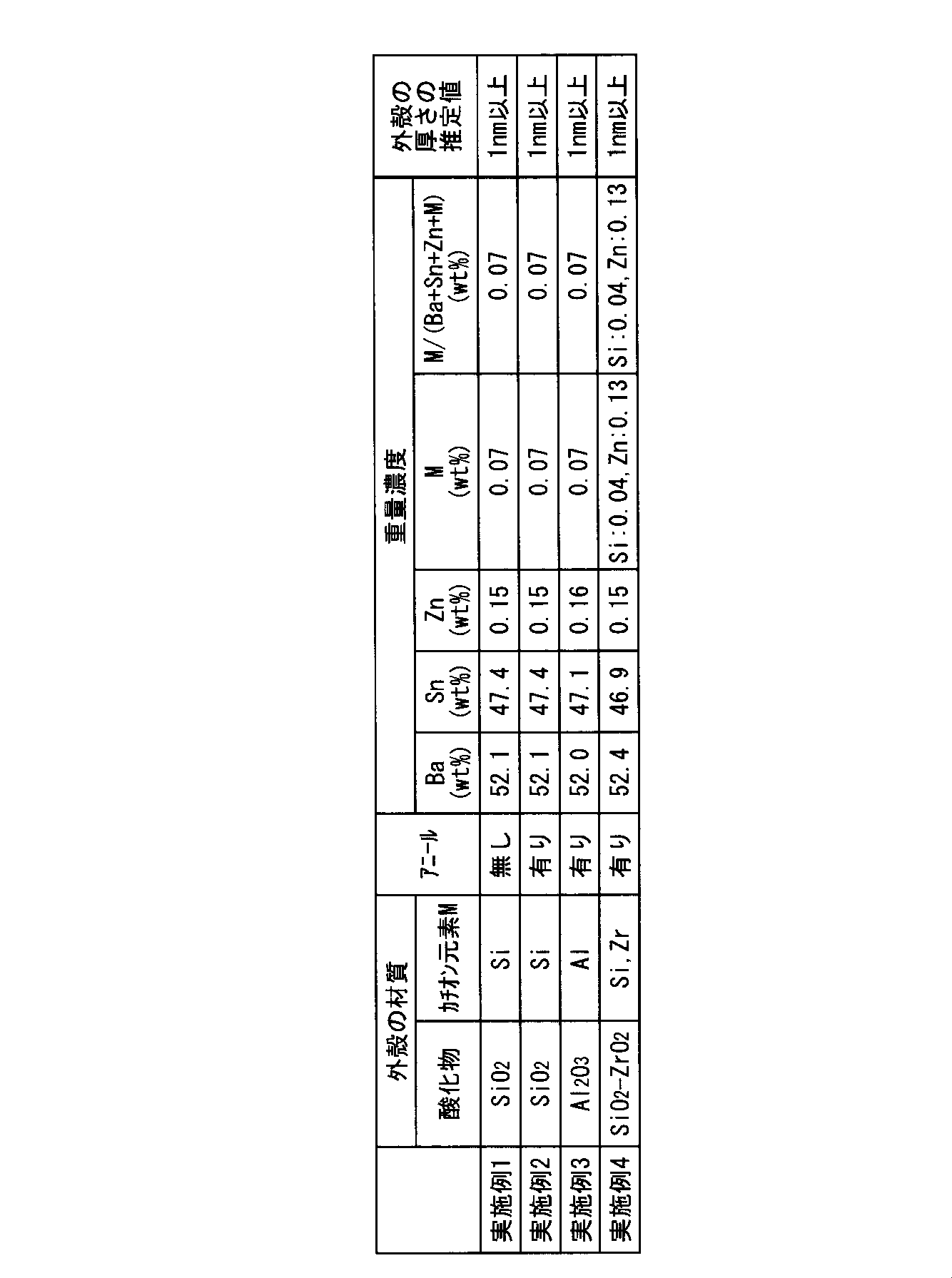
実施例1-4について、蛍光体粉末に含まれるカチオン元素Ba,Sn,ZaおよびMの重量濃度を測定した。重量濃度は、蛍光X線ノンスタンダードFP法により測定した。測定された重量濃度を表1に示す。
実施例1-4について、蛍光体粉末に含まれるカチオン元素Ba,Sn,ZaおよびMの重量濃度を測定した。重量濃度は、蛍光X線ノンスタンダードFP法により測定した。測定された重量濃度を表1に示す。
6.4 重量濃度の計算
実施例1-4について、測定されたカチオン元素Ba,Sn,ZaおよびMの重量濃度から蛍光体粉末に含まれるカチオン元素Ba,Sn,ZaおよびMの重量に対する外殻に含まれるカチオンMの重量の比である重量濃度M/(Ba+Sn+Zn+M)を計算した。計算された重量濃度M/(Ba+Sn+Zn+M)を表1に示す。
実施例1-4について、測定されたカチオン元素Ba,Sn,ZaおよびMの重量濃度から蛍光体粉末に含まれるカチオン元素Ba,Sn,ZaおよびMの重量に対する外殻に含まれるカチオンMの重量の比である重量濃度M/(Ba+Sn+Zn+M)を計算した。計算された重量濃度M/(Ba+Sn+Zn+M)を表1に示す。
6.5 重量濃度M/(Ba+Sn+Zn+M)からの外殻の厚さの推定
実施例1および2について、シリカの理論密度2.2g/cm3および一般的なゾルゲル法により合成されたアモルファスシリカの相対密度の範囲0.9-0.5から外殻のかさ密度の範囲を推定した。推定された外殻のかさ密度の範囲は、1.98-1.10g/cm3であった。また、推定された外殻のかさ密度の範囲1.98-1.10g/cm3および計算された重量濃度0.07wt%から外殻の厚さの範囲を推定した。推定された外殻の厚さの範囲は、1.15-2.07μmであった。外殻の厚さの推定においては、Ba0.995SnZn0.005O3粉末に含まれる粒子が球状であり、外殻が各粒子の全体を欠陥なく被覆しており、外殻の厚さが均一であると仮定した。
実施例1および2について、シリカの理論密度2.2g/cm3および一般的なゾルゲル法により合成されたアモルファスシリカの相対密度の範囲0.9-0.5から外殻のかさ密度の範囲を推定した。推定された外殻のかさ密度の範囲は、1.98-1.10g/cm3であった。また、推定された外殻のかさ密度の範囲1.98-1.10g/cm3および計算された重量濃度0.07wt%から外殻の厚さの範囲を推定した。推定された外殻の厚さの範囲は、1.15-2.07μmであった。外殻の厚さの推定においては、Ba0.995SnZn0.005O3粉末に含まれる粒子が球状であり、外殻が各粒子の全体を欠陥なく被覆しており、外殻の厚さが均一であると仮定した。
実施例3について、アルミナの理論密度3.95g/cm3および一般的なゾルゲル法により合成されたアモルファスアルミナの相対密度の範囲0.9-0.5から外殻のかさ密度の範囲を推定した。推定された外殻のかさ密度の範囲は、3.56-1.98g/cm3であった。また、推定された外殻のかさ密度の範囲3.56-1.98g/cm3および計算された重量濃度0.07wt%から外殻の厚さの範囲を推定した。推定された外殻の厚さの範囲は、1.14-2.05μmであった。外殻の厚さの推定においては、Ba0.995SnZn0.005O3粉末に含まれる粒子が球状であり、外殻が粒子の全体を欠陥なく被覆しており、外殻の厚さが均一であると仮定した。
実施例4について、シリカジルコニア複合酸化物の理論密度3.94g/cm3および一般的なゾルゲル法により合成されたアモルファスシリカジルコニア複合酸化物の相対密度の範囲0.9-0.5から外殻のかさ密度の範囲を推定した。推定された外殻のかさ密度の範囲は、3.55-1.97g/cm3であった。また、推定された外殻のかさ密度の範囲3.55-1.97g/cm3および計算された重量濃度Si:0.04wt%およびZr:0.13wt%から外殻の厚さの範囲を推定した。推定された外殻の厚さの範囲は、1.25-2.24μmであった。外殻の厚さの推定においては、Ba0.995SnZn0.005O3粉末に含まれる粒子が球状であり、外殻が粒子の全体を欠陥なく被覆しており、外殻の厚さが均一であると仮定した。また、シリカジルコニア複合酸化物に含まれるSi原子とZrのモル比は1:1であるとした。Si原子とZrのモル比が1:1であることは、表1に示される重量濃度から計算されるモル比(0.04/28.1)/(0.13/91。2)が1に近いことにより裏付けられる。
6.6 透過型電子顕微鏡による観察およびEDX装置による分析からの外殻の厚さの推定
実施例2について、蛍光体粉末に含まれる蛍光体粒子を透過型電子顕微鏡(TEM)により観察するとともに、TEMに取り付けられたエネルギー分散型X線分析(EDX)装置により当該蛍光体粒子中のSiの分布を分析した。TEMには、株式会社日立製作所製の透過型電子顕微鏡H-9000NARを用いた。EDX装置には、株式会社堀場製作所製のEMAX Evolutionを用いた。観察される試料には、前処理としてFIB法(μ-サンプリング法)による薄片化を施した。
実施例2について、蛍光体粉末に含まれる蛍光体粒子を透過型電子顕微鏡(TEM)により観察するとともに、TEMに取り付けられたエネルギー分散型X線分析(EDX)装置により当該蛍光体粒子中のSiの分布を分析した。TEMには、株式会社日立製作所製の透過型電子顕微鏡H-9000NARを用いた。EDX装置には、株式会社堀場製作所製のEMAX Evolutionを用いた。観察される試料には、前処理としてFIB法(μ-サンプリング法)による薄片化を施した。
図3は、実施例2の蛍光体粉末に含まれる蛍光体粒子のTEMによる観察の結果を示す写真である。図4は、実施例2の蛍光体粉末に含まれる蛍光体粒子の表面の付近のTEMによる観察の結果を示す写真である。図5は、実施例2の蛍光体粉末に含まれる蛍光体粒子の表面の付近のEDXによる分析の結果を示す元素マップである。図5の元素マップの視野は、図4の写真の視野と同じである。図5の元素マップは、Siの分布を示す。
図3、図4および図5からは、実施例2の蛍光体粉末に含まれる蛍光体粒子は、1.16-1.74μmの厚さを有する外殻を備えることが推定される。
TEMによる観察は、局所的な観察に過ぎないが、TEMによる観察およびEDX装置による分析からの外殻の厚さの推定結果は、重量濃度M/(Ba+Sn+Zn+M)からの外殻の厚さの推定結果を概ね一致する。また、後述するように、実施例2の蛍光体粉末のBa溶出量は、比較例1の蛍光体粉末のBa溶出量の1/100以下となっている。このため、表1に示されるように実施例2の蛍光体粉末に含まれる蛍光体粒子は1nm以上の厚さを有する外殻を備えると推定され、当該外殻は芯粒子の全体を欠陥なく被覆していると推定される。
同様に、実施例1,3および4の蛍光体粉末に含まれる蛍光体粒子も、表1に示されるように1nm以上の厚さを有する外殻を備えると推定され、当該外殻は芯粒子の全体を欠陥なく被覆していると推定される。
7 Ba溶出量の測定
比較例1および実施例1-4について、Ba溶出量を測定した。Ba溶出量は、先述の欧州規格EN71にしたがって測定した。その結果を表2に示す。
比較例1および実施例1-4について、Ba溶出量を測定した。Ba溶出量は、先述の欧州規格EN71にしたがって測定した。その結果を表2に示す。
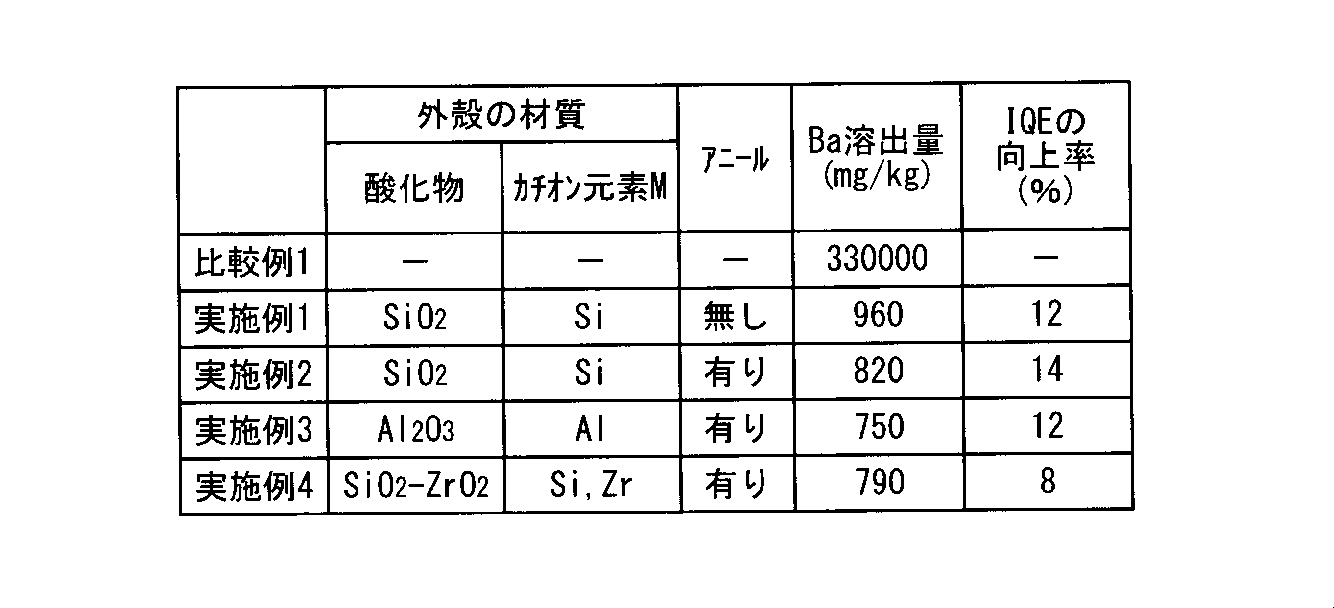
表2に示されるように、コーティングが行われなかった比較例1においては、Ba溶出量が330000mg/kgに達するのに対して、コーティングが行われた実施例1-4においては、Ba溶出量が1000mg/kg以下に収まっていた。
また、アニールが行われた実施例2のBa溶出量は、アニールが行われなかった実施例1のBa溶出量よりも少なかった。アニールによるBa溶出量の減少は、アニールにより外殻中のSi-O-Si結合が強固になったことによると考えられる。
8 IQEの向上率
比較例1および実施例1-4について、IQEを測定した。IQEは、日本分光株式会社製の分光蛍光光度計FP8600により測定した。測定においては、60mmφ積分球ユニットISF834および16mmφ蛍光セルを用い、励起光の波長範囲を350-380nmとし、蛍光の測定波長範囲を750-1010nmとした。
比較例1および実施例1-4について、IQEを測定した。IQEは、日本分光株式会社製の分光蛍光光度計FP8600により測定した。測定においては、60mmφ積分球ユニットISF834および16mmφ蛍光セルを用い、励起光の波長範囲を350-380nmとし、蛍光の測定波長範囲を750-1010nmとした。
また、実施例1-4について、測定したIQEから比較例1のIQEに対するIQEの向上率を計算した。その結果を表2に示す。
コーティングが行われた実施例1-4においては、コーティングが行われなかった比較例1と比較して、IQEが8-14%向上した。
この発明は詳細に説明されたが、上記した説明は、すべての局面において、例示であって、この発明がそれに限定されるものではない。例示されていない無数の変形例が、この発明の範囲から外れることなく想定され得るものと解される。
1000 蛍光体粉末
1020 蛍光体粒子
1040 芯粒子
1042 外殻
1020 蛍光体粒子
1040 芯粒子
1042 外殻
Claims (6)
- 複数の蛍光体粒子を含む蛍光体粉末であって、
前記複数の蛍光体粒子の各々が、
一般式ABO3で表されAが主にBaからなりBが主にSnからなる組成を有するペロブスカイト型酸化物からなり、紫外線の励起光が照射された場合に赤外線の蛍光を発する芯粒子と、
無機化合物からなり前記芯粒子を被覆する外殻と、
を備える蛍光体粉末。 - 前記無機化合物は、耐酸性および紫外線透過性を有する
請求項1の蛍光体粉末。 - 前記無機化合物は、シリカ、アルミナまたはシリカジルコニア複合酸化物である
請求項1または2の蛍光体粉末。 - 前記ペロブスカイト型酸化物は、一般式Ba1-xSnZnxO3で表されxが0≦x≦0.2を満たす組成を有する
請求項1から3までのいずれかの蛍光体粉末。 - 前記外殻は、1nm以上の膜厚を有する
請求項1から4までのいずれかの蛍光体粉末。 - 複数の粒子を含み前記複数の粒子の各々が一般式ABO3で表されAが主にBaからなりBが主にSnからなる組成を有するペロブスカイト型酸化物である粉末を準備する工程と、
金属アルコキシドを含む金属アルコキシド溶液を準備する工程と、
前記粉末を前記金属アルコキシド溶液に分散させる工程と、
前記粉末が前記金属アルコキシド溶液に分散させられたたまま前記金属アルコキシドを加水分解し無機化合物を生成し、前記無機化合物により前記複数の粒子の各々を被覆する工程と、
を備える請求項1から5までのいずれかの蛍光体粉末を生産する方法。
Priority Applications (2)
| Application Number | Priority Date | Filing Date | Title |
|---|---|---|---|
| PCT/JP2017/008716 WO2018163232A1 (ja) | 2017-03-06 | 2017-03-06 | 蛍光体粉末および蛍光体粉末を生産する方法 |
| JP2019503825A JPWO2018163232A1 (ja) | 2017-03-06 | 2017-03-06 | 蛍光体粉末および蛍光体粉末を生産する方法 |
Applications Claiming Priority (1)
| Application Number | Priority Date | Filing Date | Title |
|---|---|---|---|
| PCT/JP2017/008716 WO2018163232A1 (ja) | 2017-03-06 | 2017-03-06 | 蛍光体粉末および蛍光体粉末を生産する方法 |
Publications (1)
| Publication Number | Publication Date |
|---|---|
| WO2018163232A1 true WO2018163232A1 (ja) | 2018-09-13 |
Family
ID=63447381
Family Applications (1)
| Application Number | Title | Priority Date | Filing Date |
|---|---|---|---|
| PCT/JP2017/008716 Ceased WO2018163232A1 (ja) | 2017-03-06 | 2017-03-06 | 蛍光体粉末および蛍光体粉末を生産する方法 |
Country Status (2)
| Country | Link |
|---|---|
| JP (1) | JPWO2018163232A1 (ja) |
| WO (1) | WO2018163232A1 (ja) |
Cited By (2)
| Publication number | Priority date | Publication date | Assignee | Title |
|---|---|---|---|---|
| US11015070B2 (en) * | 2017-03-06 | 2021-05-25 | Ngk Insulators, Ltd. | Security ink pigment, security ink, printed matter, and method of producing security ink pigment |
| CN113121208A (zh) * | 2019-12-30 | 2021-07-16 | 深圳市绎立锐光科技开发有限公司 | 荧光陶瓷的制备方法及荧光陶瓷 |
Citations (6)
| Publication number | Priority date | Publication date | Assignee | Title |
|---|---|---|---|---|
| JPH1060428A (ja) * | 1996-08-20 | 1998-03-03 | Fuji Photo Film Co Ltd | 希土類付活弗化ハロゲン化バリウム系蛍光体粉末およびその製造法 |
| JP2007146102A (ja) * | 2005-11-07 | 2007-06-14 | Kyushu Institute Of Technology | 無機酸化物蛍光体 |
| JP2008111080A (ja) * | 2006-10-31 | 2008-05-15 | Mitsubishi Chemicals Corp | 蛍光体表面処理方法、蛍光体、蛍光体含有組成物、発光装置、画像表示装置、および照明装置 |
| JP2012251082A (ja) * | 2011-06-03 | 2012-12-20 | National Institute Of Advanced Industrial Science & Technology | 蛍光体微粒子、該蛍光体微粒子の製造方法、蛍光体薄膜及びelデバイス |
| JP2013212998A (ja) * | 2012-03-30 | 2013-10-17 | Sumitomo Chemical Co Ltd | 被覆無機粒子及びその製造方法 |
| WO2017022344A1 (ja) * | 2015-08-04 | 2017-02-09 | 日本碍子株式会社 | 蛍光体微粒子、蛍光体微粒子の製造方法、蛍光体薄膜、波長変換膜、波長変換デバイス及び太陽電池 |
-
2017
- 2017-03-06 WO PCT/JP2017/008716 patent/WO2018163232A1/ja not_active Ceased
- 2017-03-06 JP JP2019503825A patent/JPWO2018163232A1/ja active Pending
Patent Citations (6)
| Publication number | Priority date | Publication date | Assignee | Title |
|---|---|---|---|---|
| JPH1060428A (ja) * | 1996-08-20 | 1998-03-03 | Fuji Photo Film Co Ltd | 希土類付活弗化ハロゲン化バリウム系蛍光体粉末およびその製造法 |
| JP2007146102A (ja) * | 2005-11-07 | 2007-06-14 | Kyushu Institute Of Technology | 無機酸化物蛍光体 |
| JP2008111080A (ja) * | 2006-10-31 | 2008-05-15 | Mitsubishi Chemicals Corp | 蛍光体表面処理方法、蛍光体、蛍光体含有組成物、発光装置、画像表示装置、および照明装置 |
| JP2012251082A (ja) * | 2011-06-03 | 2012-12-20 | National Institute Of Advanced Industrial Science & Technology | 蛍光体微粒子、該蛍光体微粒子の製造方法、蛍光体薄膜及びelデバイス |
| JP2013212998A (ja) * | 2012-03-30 | 2013-10-17 | Sumitomo Chemical Co Ltd | 被覆無機粒子及びその製造方法 |
| WO2017022344A1 (ja) * | 2015-08-04 | 2017-02-09 | 日本碍子株式会社 | 蛍光体微粒子、蛍光体微粒子の製造方法、蛍光体薄膜、波長変換膜、波長変換デバイス及び太陽電池 |
Cited By (2)
| Publication number | Priority date | Publication date | Assignee | Title |
|---|---|---|---|---|
| US11015070B2 (en) * | 2017-03-06 | 2021-05-25 | Ngk Insulators, Ltd. | Security ink pigment, security ink, printed matter, and method of producing security ink pigment |
| CN113121208A (zh) * | 2019-12-30 | 2021-07-16 | 深圳市绎立锐光科技开发有限公司 | 荧光陶瓷的制备方法及荧光陶瓷 |
Also Published As
| Publication number | Publication date |
|---|---|
| JPWO2018163232A1 (ja) | 2019-12-26 |
Similar Documents
| Publication | Publication Date | Title |
|---|---|---|
| TW550239B (en) | Method of preparing high brightness, shorter persistence zinc orthosilicate phosphor | |
| Liu et al. | Tunable silica shell and its modification on photoluminescent properties of Y2O3: Eu3+@ SiO2 nanocomposites | |
| TW200813193A (en) | Core/shell phosphor precursors and phosphors | |
| JP2012056816A (ja) | コアシェル型無機酸化物微粒子の分散液、その製造方法および該分散液を含む塗料組成物 | |
| Qiu et al. | Tuning the size and shape of colloidal cerium oxide nanocrystals through lanthanide doping | |
| Chen et al. | Yolk–shell structured Bi 2 SiO 5: Yb 3+, Ln 3+(Ln= Er, Ho, Tm) upconversion nanophosphors for optical thermometry and solid-state lighting | |
| CN105623663B (zh) | 一种红色上转换发光纳米载体及制备方法 | |
| Yu et al. | Preparations and characterizations of γ-Ce 2 S 3@ SiO 2 pigments from precoated CeO 2 with improved thermal and acid stabilities | |
| KR101878846B1 (ko) | 높은 비표면적을 갖는 구상의 수산화 마그네슘 입자, 구상의 산화 마그네슘 입자 및 이들의 제조방법 | |
| Adimule et al. | MICROWAVE-ASSISTED SYNTHESIS OF Cr-DOPED Gd 2 O 3 NANOSTRUCTURES AND INVESTIGATION ON MORPHOLOGY, OPTICAL, AND PHOTOLUMINESCENCE PROPERTIES | |
| TW201615545A (zh) | 矽酸鎂懸浮液,其製造方法及其作為磷光體之用途 | |
| CN111499204A (zh) | 一种Ce3+掺杂硅酸盐闪烁玻璃及其制备方法和应用 | |
| CN110628431B (zh) | 一种具有蛋黄-蛋壳结构的正硅酸铋纳米发光材料及制备方法 | |
| Rafiaei et al. | Enhanced luminescence properties of phosphors coated by silica nano-layers: Study of reflection and emission | |
| Rafiaei et al. | Synthesis and luminescence properties of transparent YVO4: Eu3+ phosphors | |
| WO2018163232A1 (ja) | 蛍光体粉末および蛍光体粉末を生産する方法 | |
| JP2017088895A (ja) | 蛍光体微粒子、蛍光体微粒子の製造方法、蛍光体薄膜、波長変換膜、波長変換デバイス及び太陽電池 | |
| JPWO2018037914A1 (ja) | 蛍光体及びそれを含む樹脂組成物 | |
| JP2011089137A (ja) | 複合粒子 | |
| JP2008239461A (ja) | 金属酸化物微粒子分散物及びその製造方法 | |
| JP2003201106A (ja) | 金属酸化物系粒子の製造方法および金属酸化物膜の形成方法 | |
| JP2012201686A (ja) | 近赤外線吸収粒子およびその製造方法、ならびに分散液、樹脂組成物、近赤外線吸収塗膜を有する物品および近赤外線吸収物品 | |
| CN108840678A (zh) | 柠檬酸铈凝胶转化制备CeO2陶瓷微球的内凝胶方法 | |
| CN107603594A (zh) | 制备Y2Ti2O7@SiO2壳‑核结构上转换材料的方法 | |
| Fan et al. | Lower temperature synthesis of cerium-doped polycrystalline lutetium pyrosilicate powders by a novel sol-gel processing |
Legal Events
| Date | Code | Title | Description |
|---|---|---|---|
| 121 | Ep: the epo has been informed by wipo that ep was designated in this application |
Ref document number: 17899908 Country of ref document: EP Kind code of ref document: A1 |
|
| WWE | Wipo information: entry into national phase |
Ref document number: 2019503825 Country of ref document: JP |
|
| NENP | Non-entry into the national phase |
Ref country code: DE |
|
| 122 | Ep: pct application non-entry in european phase |
Ref document number: 17899908 Country of ref document: EP Kind code of ref document: A1 |