WO2018047484A1 - 光重合開始剤、重合性組成物、インクジェット記録方法、並びに、アシルホスフィンオキシド化合物 - Google Patents
光重合開始剤、重合性組成物、インクジェット記録方法、並びに、アシルホスフィンオキシド化合物 Download PDFInfo
- Publication number
- WO2018047484A1 WO2018047484A1 PCT/JP2017/026560 JP2017026560W WO2018047484A1 WO 2018047484 A1 WO2018047484 A1 WO 2018047484A1 JP 2017026560 W JP2017026560 W JP 2017026560W WO 2018047484 A1 WO2018047484 A1 WO 2018047484A1
- Authority
- WO
- WIPO (PCT)
- Prior art keywords
- group
- formula
- meth
- pigment
- carbon atoms
- Prior art date
- Legal status (The legal status is an assumption and is not a legal conclusion. Google has not performed a legal analysis and makes no representation as to the accuracy of the status listed.)
- Ceased
Links
Classifications
-
- C—CHEMISTRY; METALLURGY
- C07—ORGANIC CHEMISTRY
- C07F—ACYCLIC, CARBOCYCLIC OR HETEROCYCLIC COMPOUNDS CONTAINING ELEMENTS OTHER THAN CARBON, HYDROGEN, HALOGEN, OXYGEN, NITROGEN, SULFUR, SELENIUM OR TELLURIUM
- C07F9/00—Compounds containing elements of Groups 5 or 15 of the Periodic Table
- C07F9/02—Phosphorus compounds
- C07F9/28—Phosphorus compounds with one or more P—C bonds
- C07F9/50—Organo-phosphines
- C07F9/53—Organo-phosphine oxides; Organo-phosphine thioxides
- C07F9/5337—Phosphine oxides or thioxides containing the structure -C(=X)-P(=X) or NC-P(=X) (X = O, S, Se)
-
- C—CHEMISTRY; METALLURGY
- C08—ORGANIC MACROMOLECULAR COMPOUNDS; THEIR PREPARATION OR CHEMICAL WORKING-UP; COMPOSITIONS BASED THEREON
- C08F—MACROMOLECULAR COMPOUNDS OBTAINED BY REACTIONS ONLY INVOLVING CARBON-TO-CARBON UNSATURATED BONDS
- C08F2/00—Processes of polymerisation
- C08F2/46—Polymerisation initiated by wave energy or particle radiation
- C08F2/48—Polymerisation initiated by wave energy or particle radiation by ultraviolet or visible light
- C08F2/50—Polymerisation initiated by wave energy or particle radiation by ultraviolet or visible light with sensitising agents
-
- C—CHEMISTRY; METALLURGY
- C08—ORGANIC MACROMOLECULAR COMPOUNDS; THEIR PREPARATION OR CHEMICAL WORKING-UP; COMPOSITIONS BASED THEREON
- C08K—Use of inorganic or non-macromolecular organic substances as compounding ingredients
- C08K5/00—Use of organic ingredients
- C08K5/49—Phosphorus-containing compounds
- C08K5/51—Phosphorus bound to oxygen
- C08K5/53—Phosphorus bound to oxygen bound to oxygen and to carbon only
- C08K5/5317—Phosphonic compounds, e.g. R—P(:O)(OR')2
-
- C—CHEMISTRY; METALLURGY
- C08—ORGANIC MACROMOLECULAR COMPOUNDS; THEIR PREPARATION OR CHEMICAL WORKING-UP; COMPOSITIONS BASED THEREON
- C08K—Use of inorganic or non-macromolecular organic substances as compounding ingredients
- C08K5/00—Use of organic ingredients
- C08K5/49—Phosphorus-containing compounds
- C08K5/51—Phosphorus bound to oxygen
- C08K5/53—Phosphorus bound to oxygen bound to oxygen and to carbon only
- C08K5/5317—Phosphonic compounds, e.g. R—P(:O)(OR')2
- C08K5/5333—Esters of phosphonic acids
- C08K5/5353—Esters of phosphonic acids containing also nitrogen
-
- C—CHEMISTRY; METALLURGY
- C08—ORGANIC MACROMOLECULAR COMPOUNDS; THEIR PREPARATION OR CHEMICAL WORKING-UP; COMPOSITIONS BASED THEREON
- C08K—Use of inorganic or non-macromolecular organic substances as compounding ingredients
- C08K5/00—Use of organic ingredients
- C08K5/49—Phosphorus-containing compounds
- C08K5/51—Phosphorus bound to oxygen
- C08K5/53—Phosphorus bound to oxygen bound to oxygen and to carbon only
- C08K5/5397—Phosphine oxides
-
- C—CHEMISTRY; METALLURGY
- C09—DYES; PAINTS; POLISHES; NATURAL RESINS; ADHESIVES; COMPOSITIONS NOT OTHERWISE PROVIDED FOR; APPLICATIONS OF MATERIALS NOT OTHERWISE PROVIDED FOR
- C09D—COATING COMPOSITIONS, e.g. PAINTS, VARNISHES OR LACQUERS; FILLING PASTES; CHEMICAL PAINT OR INK REMOVERS; INKS; CORRECTING FLUIDS; WOODSTAINS; PASTES OR SOLIDS FOR COLOURING OR PRINTING; USE OF MATERIALS THEREFOR
- C09D11/00—Inks
- C09D11/02—Printing inks
- C09D11/10—Printing inks based on artificial resins
- C09D11/101—Inks specially adapted for printing processes involving curing by wave energy or particle radiation, e.g. with UV-curing following the printing
-
- C—CHEMISTRY; METALLURGY
- C09—DYES; PAINTS; POLISHES; NATURAL RESINS; ADHESIVES; COMPOSITIONS NOT OTHERWISE PROVIDED FOR; APPLICATIONS OF MATERIALS NOT OTHERWISE PROVIDED FOR
- C09D—COATING COMPOSITIONS, e.g. PAINTS, VARNISHES OR LACQUERS; FILLING PASTES; CHEMICAL PAINT OR INK REMOVERS; INKS; CORRECTING FLUIDS; WOODSTAINS; PASTES OR SOLIDS FOR COLOURING OR PRINTING; USE OF MATERIALS THEREFOR
- C09D11/00—Inks
- C09D11/30—Inkjet printing inks
- C09D11/38—Inkjet printing inks characterised by non-macromolecular additives other than solvents, pigments or dyes
Definitions
- the present disclosure relates to a photopolymerization initiator, a polymerizable composition, an inkjet recording method, and an acylphosphine oxide compound.
- a polymerizable compound and a polymerization initiator are usually used for the polymerizable composition.
- Acylphosphine oxide compounds are known as polymerization initiators, particularly photoinitiators that generate polymerization initiating species upon irradiation with active radiation such as ultraviolet rays.
- Examples of conventional acylphosphine oxide compounds include those described in Patent Documents 1 to 3.
- the problem to be solved by one embodiment of the present invention is to provide a photopolymerization initiator that has a small amount of migration (migration) from the obtained cured product and is excellent in curing sensitivity and inkjet dischargeability in the polymerizable composition. Further, another problem to be solved by other embodiments of the present invention is to provide a polymerizable composition containing the photopolymerization initiator and an ink jet recording method using the photopolymerization initiator. Another problem to be solved by still another embodiment of the present invention is to provide a novel acylphosphine oxide compound.
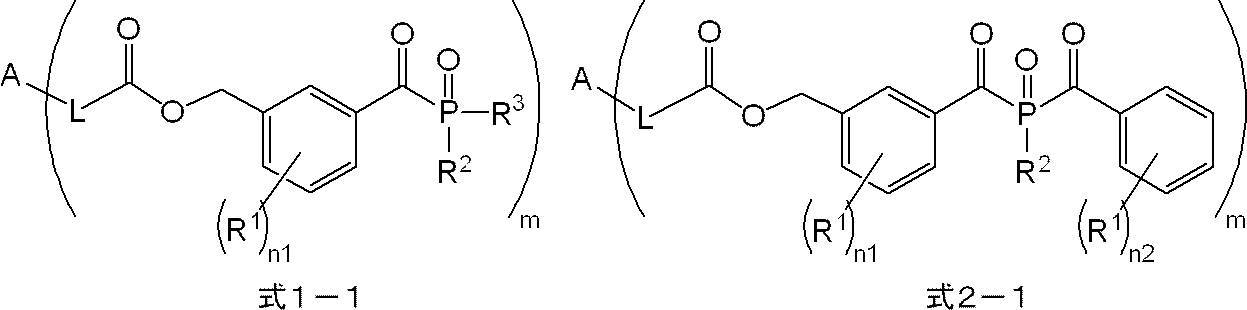
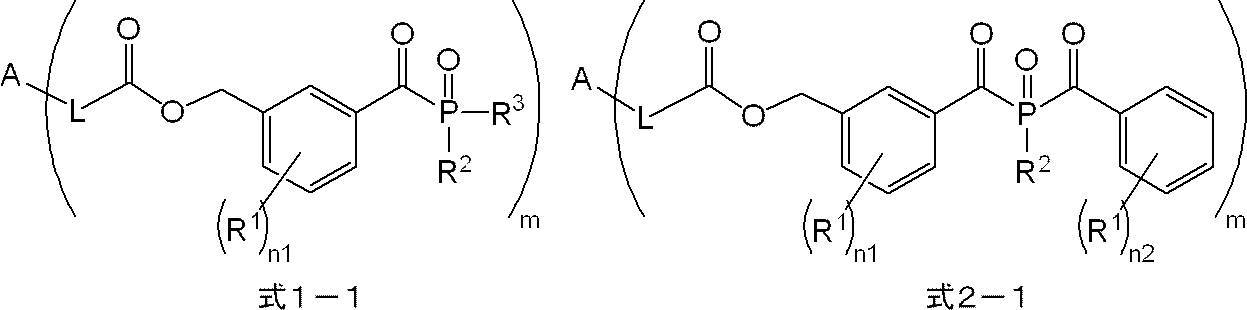
- a photopolymerization initiator which is an acylphosphine oxide compound represented by the following formula 1-1 or formula 2-1.
- A represents an m-valent group
- L independently represents a single bond or a divalent linking group
- R 1 each independently represents a carbon number of 1 to 8 represents an alkyl group, an aryl group having 6 to 20 carbon atoms, or an alkoxy group having 1 to 4 carbon atoms
- R 2 and R 3 each independently represents an alkyl group, an aryl group, or an alkoxy group
- m represents an integer of 3 or more
- n1 each independently represents an integer of 0 to 4
- n2 each independently represents an integer of 0 to 5.
- A is a carbon atom, a C1-C30 m-valent hydrocarbon group, or a C1-C30 monovalent or higher-valent hydrocarbon group, an oxygen atom, a nitrogen atom and sulfur.
- the photopolymerization initiator according to ⁇ 1> which is an m-valent group in which two or more structures selected from the group consisting of atoms are bonded.
- ⁇ 3> The photopolymerization initiator according to ⁇ 1> or ⁇ 2>, wherein A is an m-valent group having a ring structure, an m-valent hydrocarbon group having 1 to 3 carbon atoms, or a carbon atom. .
- A is an m-valent group having neither an amino bond, a thioether bond, nor a halogen atom
- L is a divalent group having neither an amino bond, a thioether bond, nor a halogen atom.
- A represents an m-valent group
- L independently represents a single bond or a divalent linking group
- R 2 and R 3 each independently represents an alkyl group
- R 11 to R 13 each independently represents an alkyl group having 1 to 8 carbon atoms, an aryl group having 6 to 20 carbon atoms, or an alkoxy group having 1 to 4 carbon atoms.
- M represents an integer of 3 or more.
- ⁇ 6> The photopolymerization initiator according to any one of ⁇ 1> to ⁇ 5>, wherein m is an integer of 3 to 5.
- ⁇ 7> The acylphosphine oxide compound, a photopolymerization initiator according to any one of the above ⁇ 1> to a compound having a C n symmetry ⁇ 6>.
- n represents an integer of 3 to 24.
- a polymerizable composition comprising the photopolymerization initiator according to any one of ⁇ 1> to ⁇ 7> and a polymerizable compound.
- An ink jet recording method comprising a curing step.
- A represents an m-valent group
- L independently represents a single bond or a divalent linking group
- R 1 each independently represents a carbon number of 1 to 8 represents an alkyl group, an aryl group having 6 to 20 carbon atoms, or an alkoxy group having 1 to 4 carbon atoms
- R 2 and R 3 each independently represents an alkyl group, an aryl group, or an alkoxy group
- m represents an integer of 3 or more
- n1 each independently represents an integer of 0 to 4
- n2 each independently represents an integer of 0 to 5.
- acylphosphine oxide compound according to ⁇ 10> wherein A is an m-valent group having a ring structure, an m-valent hydrocarbon group having 1 to 3 carbon atoms, or a carbon atom.
- A is an m-valent group having neither an amino bond, a thioether bond, nor a halogen atom
- the above L is a divalent group having neither an amino bond, a thioether bond, nor a halogen atom.
- A represents an m-valent group
- L independently represents a single bond or a divalent linking group
- R 2 and R 3 each independently represents an alkyl group
- R 11 to R 13 each independently represents an alkyl group having 1 to 8 carbon atoms, an aryl group having 6 to 20 carbon atoms, or an alkoxy group having 1 to 4 carbon atoms.
- M represents an integer of 3 or more.
- ⁇ 14> The acylphosphine oxide compound according to any one of ⁇ 10> to ⁇ 13>, wherein m is an integer of 3 to 5.
- m is an integer of 3 to 5.
- C n the ⁇ 10> ⁇ acylphosphine oxide compound as claimed in any one of ⁇ 14> to have symmetry.
- n represents an integer of 3 to 24.
- a photopolymerization initiator that has a small migration amount from the obtained cured product and is excellent in curing sensitivity and inkjet dischargeability in the polymerizable composition.
- the inkjet recording method using the polymeric composition containing the said photoinitiator and the said photoinitiator can be provided.
- a novel acylphosphine oxide compound can be provided.
- xx to yy represents a numerical range including xx and yy.
- (Meth) acrylate” and the like are synonymous with “acrylate and / or methacrylate” and the like.
- hydrocarbon groups such as an alkyl group, an aryl group, an alkylene group, and an arylene group in the present disclosure may have a branch or a ring structure.
- “mass%” and “wt%” are synonymous, and “part by mass” and “part by weight” are synonymous.
- a combination of two or more preferred embodiments is a more preferred embodiment.
- the weight average molecular weight (Mw) in the present disclosure is a gel permeation chromatography (GPC) using a column of TSKgel GMHxL, TSKgel G4000HxL, TSKgel G2000HxL (all trade names manufactured by Tosoh Corporation). ) The molecular weight was detected by an analyzer with a solvent THF (tetrahydrofuran) and a differential refractometer and converted using polystyrene as a standard substance.
- THF tetrahydrofuran
- the photopolymerization initiator according to the present disclosure is an acylphosphine oxide compound represented by the following formula 1-1 or formula 2-1 (hereinafter also referred to as “specific acylphosphine oxide compound”).
- A represents an m-valent group
- L independently represents a single bond or a divalent linking group
- R 1 each independently represents a carbon number of 1 to 8 represents an alkyl group, an aryl group having 6 to 20 carbon atoms, or an alkoxy group having 1 to 4 carbon atoms
- R 2 and R 3 each independently represents an alkyl group, an aryl group, or an alkoxy group
- m represents an integer of 3 or more
- n1 each independently represents an integer of 0 to 4
- n2 each independently represents an integer of 0 to 5.
- the acylphosphine oxide compound is decomposed by actinic radiation to generate a polymerization initiating species such as a radical.
- a polymerization initiating species such as a radical.
- the resonance of the generated radical is caused by having a carbonyloxymethyl structure at the meta position. It is estimated that stabilization is suppressed and curing sensitivity is excellent. Further, it is presumed that the mobility of the molecule is restricted by having a carbonyloxymethyl structure at the meta position, and the migration amount is suppressed.
- the photopolymerization initiator has a trivalent or higher polyvalent linking group at the center, and has a specific acylphosphine oxide structure at the end, thereby suppressing the migration amount and inkjet dischargeability. It is estimated that it is excellent.
- the storage stability of the ink composition is excellent. If it is a conventional photopolymerization initiator, it may be partly gelled, or the precipitation of components such as the photopolymerization initiator will be significant due to the interaction with other components in the ink composition, and the storage stability will be reduced.
- the photopolymerization initiator according to the present disclosure has a carbonyloxymethyl structure, a trivalent or higher polyvalent linking group at the center, and a specific acylphosphine oxide structure at the terminal, It is presumed to be excellent in compatibility with each component contained in the ink composition and excellent in storage stability.
- the present disclosure will be described in detail.
- R 1 in Formula 1-1 and Formula 2-1 is preferably each independently an alkyl group having 1 to 8 carbon atoms or an alkoxy group having 1 to 4 carbon atoms, and an alkyl group having 1 to 8 carbon atoms. Is more preferable, an alkyl group having 1 to 4 carbon atoms is still more preferable, and a methyl group is particularly preferable. It is excellent in the curing sensitivity in a polymerizable composition as it is the said aspect. Further, R 1 in Formula 1-1 and Formula 2-1 are preferably all the same group.
- R 2 and R 3 in Formula 1-1 and Formula 2-1 are each independently an alkyl group having 1 to 8 carbon atoms, an aryl group having 6 to 20 carbon atoms, or an alkoxy group having 1 to 4 carbon atoms. It is preferably an aryl group having 6 to 20 carbon atoms or an alkoxy group having 1 to 4 carbon atoms, more preferably an aryl group having 6 to 20 carbon atoms, and 6 to 12 carbon atoms. Of these, an aryl group is particularly preferred, and a phenyl group is most preferred. It is excellent in the curing sensitivity in a polymeric composition as it is the said aspect, and also a raw material can be obtained easily.
- M in Formula 1-1 and Formula 2-1 is preferably an integer of 3 or more, 24 or less, more preferably an integer of 3 or more and 10 or less, and still more preferably an integer of 3 or more and 8 or less.
- An integer of 3 to 6 is particularly preferable, and an integer of 3 to 5 is most preferable.
- N1 in Formula 1-1 and Formula 2-1 are each independently preferably an integer of 0 to 3, more preferably 2 or 3, and particularly preferably 3. It is excellent in the curing sensitivity in a polymeric composition as it is the said aspect, Furthermore, a raw material can be obtained easily.
- n1 in Formula 1-1 and Formula 2-1 are preferably all the same number.
- N2 in Formula 2-1 is each independently preferably an integer of 1 to 3, more preferably 2 or 3, and particularly preferably 3. It is excellent in the curing sensitivity in a polymeric composition as it is the said aspect, Furthermore, a raw material can be obtained easily. Moreover, it is preferable that n2 in Formula 2-1 are all the same number.
- a in Formula 1-1 and Formula 2-1 represents a carbon atom (tetravalent carbon atom) and a carbon number of 1 to 60 from the viewpoint of the migration amount from the obtained cured product and the storage stability of the ink composition.
- M having a structure selected from the group consisting of a hydrocarbon group having 1 to 60 carbon atoms and a monovalent or higher valent hydrocarbon group, an oxygen atom, a nitrogen atom and a sulfur atom.
- a valent group preferably a carbon atom, a hydrocarbon group having 1 to 20 carbon atoms and an m-valent hydrocarbon, or a hydrocarbon group having 1 to 20 carbon atoms and having one or more valences, an oxygen atom, a nitrogen atom And an m-valent group in which two or more structures selected from the group consisting of sulfur atoms are bonded, and is a carbon atom or an m-valent hydrocarbon group having 1 to 20 carbon atoms.
- the hydrocarbon group may be an aliphatic hydrocarbon group or an aromatic hydrocarbon group, and may be a group in which one or more aliphatic hydrocarbon groups and one or more aromatic hydrocarbon groups are combined. May be.
- the aliphatic hydrocarbon group may have an unsaturated bond. Moreover, the said hydrocarbon group may have a substituent further. Examples of the substituent include a halogen atom, an alkoxy group, an acyl group, an alkoxycarbonyl group, an amide group, and an acyloxy group.
- a in Formula 1-1 and Formula 2-1 is an m-valent group having a ring structure, m having 1 to 3 carbon atoms, from the viewpoint of the migration amount from the obtained cured product, curing sensitivity, and inkjet discharge properties.
- a valent hydrocarbon group preferably a carbon atom, an m-valent group having a ring structure, one hydrogen atom on a tetravalent carbon atom, a hydrocarbon group having 1 to 20 carbon atoms, a hydroxyl group, a nitro group or
- a trivalent hydrocarbon group having an amino group and a carbon atom are more preferable, and an m-valent aromatic hydrocarbon group and a carbon atom are particularly preferable.
- the m-valent aromatic hydrocarbon group may be a monocyclic aromatic hydrocarbon group, a condensed aromatic hydrocarbon group in which two or more rings are condensed, or a bicyclic ring that is not condensed.
- the above aromatic hydrocarbon group may be sufficient.
- A include the following groups. Note that the wavy line represents the coupling position with another structure such as L.
- R A represents a hydrogen atom, a hydrocarbon group having 1 to 20 carbon atoms, a hydroxyl group, a nitro group, or an amino group.
- L in Formula 1-1 and Formula 2-1 each independently represents a single bond, a divalent alkylene group, or a divalent alkylene group and an ether bond from the viewpoint of migration amount, curing sensitivity, and inkjet discharge property.
- a combination of the above is preferable, and a single bond, a divalent alkylene group having 1 to 8 carbon atoms, or a combination of two or more divalent alkylene groups having 1 to 8 carbon atoms and an ether bond has 1 to More preferred is 20 groups.
- L in Formula 1-1 and Formula 2-1 is preferably a group bonded to the ester bond in Formula 1-1 and Formula 2-1 by a carbon atom from the viewpoint of migration amount and curing sensitivity. Further, it is preferable that m Ls in Formula 1-1 and Formula 2-1 are all the same group (including a single bond).
- a in Formula 1-1 and Formula 2-1 is preferably an m-valent group having neither an amino bond (a divalent or trivalent nitrogen atom), a thioether bond, or a halogen atom.
- L in Formula 1-1 and Formula 2-1 is preferably a divalent linking group having no amino bond, thioether bond, or halogen atom.
- Particular acylphosphine oxide compound is preferably a compound having a C n symmetry.
- n represents an integer of 3 to 24. If it is the said aspect, there are few migration amounts from the hardened
- the compound having C n symmetry of the compound in the present disclosure is a conformational isomer in which a form after an inherent rotational C n operation is performed in a molecule and a form before the inherent rotational C n operation is performed. regardless, if one intends indistinguishable, it is assumed that a compound having a C n symmetry element.
- C n symmetry of a compound in the present disclosure is not intended to define to the symmetry of the exact three-dimensional structure such as conformers, for example, if the structure shown below, respectively, C 3 symmetry, It shall have a C 4 symmetry.
- each R represents a group having the same chemical structure.
- N in the C n symmetry is preferably an integer of 3 or more, 24 or less, more preferably an integer of 3 or more and 12 or less, and further preferably an integer of 3 or more and 6 or less. It is particularly preferred that Within the above range, the migration amount from the obtained cured product is smaller, the curing sensitivity in the polymerizable composition is better, and the ink jetting properties are more excellent.
- the specific acyl phosphine oxide compound is preferably an acyl phosphine oxide compound represented by the following formula 1-2 or formula 2-2 from the viewpoints of migration amount, curing sensitivity, and inkjet discharge properties.
- A represents an m-valent group
- L independently represents a single bond or a divalent linking group
- R 2 and R 3 each independently represents an alkyl group
- R 11 to R 13 each independently represents an alkyl group having 1 to 8 carbon atoms, an aryl group having 6 to 20 carbon atoms, or an alkoxy group having 1 to 4 carbon atoms.
- M represents an integer of 3 or more.
- a in Formula 1-2 and Formula 2-2, L, R 2, R 3 and, m is, A in the above formula 1-1 and Formula 2-1, L, R 2, R 3, and, and m It is synonymous and a preferable aspect is also the same.
- R 11 to R 13 in Formula 1-2 and Formula 2-2 are each independently preferably an alkyl group having 1 to 8 carbon atoms or an alkoxy group having 1 to 4 carbon atoms, and preferably 1 to 8 carbon atoms. More preferred is an alkyl group having 1 to 4 carbon atoms, and particularly preferred is a methyl group. It is excellent in the curing sensitivity in a polymerizable composition as it is the said aspect. Also, R 11 ⁇ R 13 in Formula 1-2 and Formula 2-2 are preferably all the same groups.
- the molecular weight or weight average molecular weight (Mw) of the specific acylphosphine oxide compound is preferably 500 or more, more preferably 500 to 10,000, from the viewpoints of migration amount, curing sensitivity, and inkjet discharge properties. More preferably, it is ⁇ 5,000.
- a compound having a molecular weight distribution is measured for the weight average molecular weight by the method described above, and a compound having no molecular weight distribution is to obtain a molecular weight from its elemental composition (composition formula).
- the specific acyl phosphine oxide compound is preferably an acyl phosphine oxide compound represented by Formula 1-1 from the viewpoint of migration amount, and from the viewpoint of curing sensitivity, the acyl phosphine oxide compound represented by Formula 2-1 is preferable. It is preferably a phosphine oxide compound, Although the preferable specific example of a specific acyl phosphine oxide compound is shown below, it is not limited to these.
- A-1 to A-6, A-8, A-10 to A-12, A-14, A-17, A-18, A-22, or A-23 are preferable.
- the method for producing the specific acylphosphine oxide compound is not particularly limited, but the basic condition is that the compound having a methyl halide group on the aromatic ring of the aromatic acyl group of the acylphosphine oxide structure and the polyfunctional carboxylic acid compound are subjected to basic conditions.
- Preferred is a method of reacting under esterification.
- the reaction temperature and reaction time in the esterification reaction are not particularly limited, and may be appropriately set according to the progress of the reaction.
- a solvent it is preferable to use a solvent.
- a polar organic solvent is mentioned preferably.
- a halogenated methyl ether compound is used in the presence of a Lewis acid with respect to the acylphosphine oxide compound.
- Lewis acids used include zinc compounds such as zinc chloride, zinc bromide and zinc acetate, aluminum compounds such as aluminum chloride, aluminum bromide and diethylaluminum chloride, iron compounds such as iron chloride and iron bromide, bismuth chloride (III ), Etc., boron trifluoride, boron trichloride, boron compounds such as tris (pentafluorophenyl) boron, titanium compounds such as titanium tetrachloride, zirconium compounds such as zirconium chloride, tin tetrachloride, tin trichloride, etc.
- Tin compounds indium compounds such as indium chloride, copper (II) trifluoromethanesulfonate, lanthanum (III) trifluoromethanesulfonate, zinc (II) trifluoromethanesulfonate, silver trifluoromethanesulfonate, ytterbium trifluoromethanesulfonate ( III) Trifluo Scandium (III), methanemethane sulfonate, hafnium (IV) trifluoromethanesulfonate, yttrium (III) trifluoromethanesulfonate, and the like, trifluoromethanesulfonic acid compounds that are stable in water or their hydrates are preferred, aluminum compounds, iron compounds Further, a tin compound or a zinc compound is more preferable, and an aluminum compound, an iron compound, or a zinc compound is particularly preferable. In the case of the said aspect, it is excellent in reactivity and compound stability, and also a raw
- the reaction temperature and reaction time in the Friedel-Crafts type reaction are not particularly limited, and may be appropriately set according to the progress of the reaction.
- a solvent it is preferable to use a solvent.
- a halogen-type solvent, an aliphatic hydrocarbon-type solvent, or nitrobenzene is mentioned.
- a halogen-based solvent is preferable, and dichloromethane is particularly preferable.
- purification is preferably performed by a known method such as column, thin layer chromatography (TLC), recrystallization, reprecipitation, or the like.
- the polymerizable composition according to the present disclosure includes the photopolymerization initiator according to the present disclosure and a polymerizable compound.
- the polymerizable composition according to the present disclosure is an ink composition curable by actinic radiation.
- Actinic radiation is radiation that can impart energy for generating an initial species in the polymerizable composition by irradiation, and includes ⁇ rays, ⁇ rays, X rays, ultraviolet rays, visible rays, electron rays, and the like. Of these, ultraviolet rays and electron beams are preferable from the viewpoint of curing sensitivity and device availability, and ultraviolet rays are more preferable.
- the polymerizable composition according to the present disclosure is an actinic radiation curable polymerizable composition, and is preferably an oily polymerizable composition.
- the polymerizable composition according to the present disclosure preferably contains as little water and volatile solvent as possible, and even if it contains, it is preferably 5% by mass or less based on the total mass of the polymerizable composition, It is more preferably 1% by mass or less, and further preferably 0.5% by mass or less.
- the polymerizable composition according to the present disclosure includes an ink composition, a resist, an image recording layer of a lithographic printing plate, a coating agent, a paint, an adhesive, an adhesive, a coating, a functional film, a film, an optical material, and a printing plate.
- inkjet ink composition an ink composition for ink jet recording
- the photopolymerization initiator according to the present disclosure may be used alone or in combination of two or more.
- the content of the photopolymerization initiator according to the present disclosure in the polymerizable composition according to the present disclosure is not particularly limited, but is 0.1 to 20% by mass with respect to the total mass of the polymerizable composition. It is preferably 1 to 15% by mass, more preferably 3 to 10% by mass, and particularly preferably 4 to 8% by mass. It is excellent in curability as it is the said range.
- the polymerizable composition according to the present disclosure includes a polymerizable compound.
- the polymerizable compound is not particularly limited as long as it is a compound that causes a polymerization reaction by being imparted with some energy and cures, and can be used regardless of the type of monomer, oligomer, or polymer.
- Various known polymerizable monomers known as radically polymerizable monomers that cause a polymerization reaction with an initiation species generated from the polymerization initiator are preferred.
- the polymerizable compound is preferably an ethylenically unsaturated compound.
- Polymerizable compounds can be used alone or in combination as a mixture for the purpose of adjusting reaction rate, cured film physical properties, composition physical properties, and the like.
- the polymerizable compound may be a monofunctional compound or a polyfunctional compound.
- the proportion of the monofunctional polymerizable compound is large, the cured product tends to be flexible, and when the proportion of the polyfunctional polymerizable compound is large, the curability tends to be excellent. Therefore, the ratio between the monofunctional polymerizable compound and the polyfunctional polymerizable compound is arbitrarily determined according to the application.
- the polymerizable compound various known radically polymerizable compounds that cause a polymerization reaction with an initiation species generated from a photoradical initiator can be preferably used.
- the radical polymerizable compound include (meth) acrylates, (meth) acrylamides, aromatic vinyls and the like.
- Examples of (meth) acrylates used as radically polymerizable compounds include monofunctional (meth) acrylate, bifunctional (meth) acrylate, trifunctional (meth) acrylate, tetrafunctional (meth) acrylate, and pentafunctional. (Meth) acrylate, hexafunctional (meth) acrylate, and the like.
- Examples of monofunctional (meth) acrylates include hexyl (meth) acrylate, 2-ethylhexyl (meth) acrylate, tert-octyl (meth) acrylate, isoamyl (meth) acrylate, decyl (meth) acrylate, and isodecyl (meth) acrylate.
- bifunctional (meth) acrylate examples include 1,6-hexanediol di (meth) acrylate, 1,10-decanediol di (meth) acrylate, neopentyl glycol di (meth) acrylate, and 2,4-dimethyl.
- trifunctional (meth) acrylates include trimethylolpropane tri (meth) acrylate, trimethylolethane tri (meth) acrylate, trimethylolpropane alkylene oxide-modified tri (meth) acrylate, and pentaerythritol tri (meth) acrylate.
- Examples of the tetrafunctional (meth) acrylate include pentaerythritol tetra (meth) acrylate, sorbitol tetra (meth) acrylate, ditrimethylolpropane tetra (meth) acrylate, dipentaerythritol tetra (meth) acrylate propionate, and ethoxylated penta Examples include erythritol tetra (meth) acrylate.
- Examples of pentafunctional (meth) acrylates include sorbitol penta (meth) acrylate and dipentaerythritol penta (meth) acrylate.
- hexafunctional (meth) acrylates examples include dipentaerythritol hexa (meth) acrylate, sorbitol hexa (meth) acrylate, phosphazene alkylene oxide modified hexa (meth) acrylate, and ⁇ -captolactone modified dipentaerythritol hexa. (Meth) acrylate etc. are mentioned.
- Examples of (meth) acrylamides used as radically polymerizable compounds include (meth) acrylamide, N-methyl (meth) acrylamide, N-ethyl (meth) acrylamide, N-propyl (meth) acrylamide, and Nn-. Butyl (meth) acrylamide, Nt-butyl (meth) acrylamide, N-butoxymethyl (meth) acrylamide, N-isopropyl (meth) acrylamide, N-methylol (meth) acrylamide, N, N-dimethyl (meth) acrylamide N, N-diethyl (meth) acrylamide, (meth) acryloylmorpholine, and the like.
- aromatic vinyl used as the radical polymerizable compound examples include styrene, dimethyl styrene, trimethyl styrene, isopropyl styrene, chloromethyl styrene, methoxy styrene, acetoxy styrene, chloro styrene, dichloro styrene, bromo styrene, methyl vinyl benzoate.
- radical polymerizable compound used in the present disclosure examples include vinyl esters (vinyl acetate, vinyl propionate, vinyl versatate, etc.), allyl esters (eg, allyl acetate), halogen-containing monomers (vinylidene chloride).
- Vinyl chloride vinyl ether (methyl vinyl ether, butyl vinyl ether, hexyl vinyl ether, methoxy vinyl ether, 2-ethylhexyl vinyl ether, methoxyethyl vinyl ether, cyclohexyl vinyl ether, chloroethyl vinyl ether, triethylene glycol divinyl ether, etc.), vinyl cyanide ((meta ) Acrylonitrile), olefins (ethylene, propylene, etc.), N-vinyl lactams (N-vinyl caprolactam, etc.) and the like.
- vinyl ether methyl vinyl ether, butyl vinyl ether, hexyl vinyl ether, methoxy vinyl ether, 2-ethylhexyl vinyl ether, methoxyethyl vinyl ether, cyclohexyl vinyl ether, chloroethyl vinyl ether, triethylene glycol divinyl ether, etc.
- vinyl cyanide ((meta
- a polymeric compound may be used individually by 1 type, or may use 2 or more types together. When using 2 or more types together, the combination of (meth) acrylate and vinyl ether is preferable from the viewpoint of curability.
- the polymerizable compound in the polymerizable composition according to the present disclosure preferably contains 1 to 40% by mass of vinyl ether, more preferably 2 to 30% by mass with respect to the total mass of (meth) acrylate. The content is preferably 8 to 25% by mass.
- the content of the polymerizable compound in the polymerizable composition according to the present disclosure is related to its use, but is preferably 10 to 95% by mass with respect to the total mass of the polymerizable composition from the viewpoint of curability, More preferably, it is 90% by mass.
- the polymerizable composition according to the present disclosure may contain a colorant when used in applications such as an ink composition.
- a colorant when used in applications such as an ink composition.
- the pigment and oil-soluble dye which were excellent in weather resistance and were rich in color reproducibility are preferable, and it can select and use arbitrarily from well-known coloring agents, such as a soluble dye.
- the colorant it is preferable to select a compound that does not function as a polymerization inhibitor from the viewpoint of not reducing the sensitivity of the curing reaction by actinic radiation.
- the pigment is not particularly limited and may be appropriately selected depending on the purpose. Examples thereof include known organic pigments and inorganic pigments. Resin particles dyed with dyes, commercially available pigment dispersions and surfaces Treated pigments (for example, pigments dispersed in an insoluble resin or the like using a dispersion medium, or those obtained by grafting a resin on the pigment surface) are also included. Examples of the pigment include, for example, “Spirit Dictionary” (2000), edited by Seijiro Ito. Herbst, K.M. Hunger “Industrial Organic Pigments”, JP-A No. 2002-12607, JP-A No. 2002-188025, JP-A No. 2003-26978, JP-A No. 2003-342503, and the like.
- organic pigment and inorganic pigment examples include yellow pigment, magenta pigment, blue, cyan pigment, green pigment, orange pigment, brown pigment, violet pigment, black pigment, white pigment, and the like.
- the yellow pigment is a pigment exhibiting a yellow color.
- I. Pigment Yellow 1 Flust Yellow G etc.
- C.I. I. Monoazo pigments such as CI Pigment Yellow 74; I. Pigment yellow 12 (disazo yellow, etc.), C.I. I. Pigment yellow 17, C.I. I. Pigment yellow 97, C.I. I. Pigment yellow 3, C.I. I. Pigment yellow 16, C.I. I. Pigment yellow 83, C.I. I. Pigment yellow 155, C.I. I. Disazo pigments such as CI Pigment Yellow 219; I. Non-benzidine azo pigments such as CI Pigment Yellow 180; I. Azo lake pigments such as C.I.
- Pigment Yellow 100 (eg Tartrazine Yellow Lake); I. Pigment yellow 95 (condensed azo yellow, etc.), C.I. I. Pigment yellow 93, C.I. I. Pigment yellow 94, C.I. I. Pigment yellow 128, C.I. I. Condensed azo pigments such as C.I. Pigment Yellow 166; I. Pigment Yellow 115 (quinoline yellow lake, etc.), etc., acidic dye lake pigments, C.I. I. Basic dye lake pigments such as C.I. Pigment Yellow 18 (such as thioflavine lake); I. Anthraquinone pigments such as C.I. Pigment Yellow 24 (Flavantron Yellow, etc.); I.
- Basic dye lake pigments such as C.I. Pigment Yellow 18 (such as thioflavine lake)
- Anthraquinone pigments such as C.I. Pigment Yellow 24 (Flavantron Yellow, etc.); I.
- Quinophthalone pigments such as C.I. Pigment Yellow 110 (e.g., Quinophthalone Yellow); I. Pigment yellow 139 (isoindoline yellow, etc.) and the like, isoindoline pigments such as C.I. I. Pyrazolone pigments such as C.I. Pigment Yellow 60 (Pyrazolone Yellow, etc.); I. Pigment yellow 120, C.I. I. Pigment yellow 154, C.I. I. Pigment yellow 167, C.I. I. Pigment yellow 151, C.I. I. Pigment yellow 175, C.I. I. Pigment yellow 180, C.I. I. Pigment yellow 181, C.I. I. Pigment yellow 185, C.I. I.
- An acetolone pigment such as C.I. Pigment Yellow 194; I. Pigment complex pigments such as CI Pigment Yellow 150, C.I. I. Nitroso pigments such as C.I. Pigment Yellow 153 (nickel nitroso yellow, etc.), C.I. I. And metal complex salt azomethine pigments such as CI Pigment Yellow 117 (copper azomethine yellow and the like).
- the magenta pigment is a pigment exhibiting red or magenta color.
- Monoazo pigments such as CI Pigment Red 3 (Toluidine Red, etc.); I. Pigment red 1, C.I. I. Pigment red 4, C.I. I. B-naphthol pigments such as C.I. Pigment Red 6; I. Disazo pigments such as CI Pigment Red 38 (Pyrazolone Red B, etc.); I. Pigment Red 53: 1 (Lake Red C, etc.) and C.I. I. Pigment Red 57: 1 (Brilliant Carmine 6B etc.), C.I. I. Pigment red 52: 1, C.I. I.
- Pigment Red 48 (B-oxynaphthoic acid lake, etc.) azo lake pigment, C.I. I. Pigment red 144, C.I. I. Pigment red 166, C.I. I. Pigment red 220, C.I. I. Pigment red 214, C.I. I. Pigment red 221, C.I. I. Condensed azo pigments such as C.I. Pigment Red 242 (condensed azo red and the like), C.I. I. Pigment Red 174 (Phloxine B lake, etc.), C.I. I. Pigment Red 172 (Erythrosin Lake, etc.) and other acidic dye lake pigments, C.I. I. Basic dye lake pigments such as C.I.
- Pigment Red 81 (Rhodamine 6G 'lake, etc.); I. Anthraquinone pigments such as C.I. Pigment Red 177 (eg, dianthraquinonyl red); I. Thioindigo pigments such as CI Pigment Red 88 (Thioindigo Bordeaux and the like), C.I. I. Perinone pigments such as CI Pigment Red 194 (perinone red, etc.); I. Pigment red 149, C.I. I. Pigment red 179, C.I. I. Pigment red 178, C.I. I. Pigment red 190, C.I. I. Pigment red 224, C.I. I.
- Perylene pigments such as CI Pigment Red 123; I. Pigment violet 19 (unsubstituted quinacridone), C.I. I. Pigment red 122, C.I. I. Pigment red 262, C.I. I. Pigment red 207, C.I. I. Quinacridone pigments such as CI Pigment Red 209; I. Pigment Red 180 (Isoindolinone Red 2BLT, etc.), etc., isoindolinone pigments, C.I. I. Alizarin lake pigments such as C.I. Pigment Red 83 (Mada Lake, etc.); I. Pigment red 171, C.I. I. Pigment red 175, C.I. I. Pigment red 176, C.I.
- I. Pigment red 185 C.I. I. Naphtholone pigments such as CI Pigment Red 208; I. Naphthol AS-based lake pigments such as CI Pigment Red 247; I. Pigment red 2, C.I. I. Pigment red 5, C.I. I. Pigment red 21, C.I. I. Pigment red 170, C.I. I. Pigment red 187, C.I. I. Pigment red 256, C.I. I. Pigment red 268, C.I. I. Naphthol AS pigments such as C.I. Pigment Red 269; I. Pigment red 254, C.I. I. Pigment red 255, C.I. I. Pigment red 264, C.I. I. And diketopyrrolopyrrole pigments such as CI Pigment Red 272.
- the cyan pigment is a pigment exhibiting blue or cyan color.
- Disazo pigments such as C.I. Pigment Blue 25 (dianisidine blue, etc.); I. Pigment blue 15, C.I. I. Pigment blue 15: 1, C.I. I. Pigment blue 15: 2, C.I. I. Pigment blue 15: 3, C.I. I. Pigment blue 15: 4, C.I. I. Pigment blue 15: 6, C.I. I. Pigment blue 15: 6, C.I. I. Phthalocyanine pigments such as C.I. Pigment Blue 16 (phthalocyanine blue, etc.); I. Acidic dye lake pigments such as C.I. Pigment Blue 24 (peacock blue lake, etc.); I. Basic dye lake pigments such as C.I.
- Pigment Blue 1 (such as Biclothia Pure Blue BO Lake); I. Anthraquinone pigments such as C.I. Pigment Blue 60 (Indantron Blue, etc.); I. And alkali blue pigments such as CI Pigment Blue 18 (Alkali Blue V-5: 1).
- the green pigment is a pigment exhibiting a green color.
- I. Pigment green 7 phthalocyanine green
- C.I. I. Phthalocyanine pigments such as C.I. Pigment Green 36 (phthalocyanine green);
- I. Pigment green 8 C.I. I.
- azo metal complex pigments such as CI Pigment Green 10.
- the orange pigment is a pigment exhibiting an orange color.
- I. Pigment Orange 66 Isoindoline Orange
- C.I. I. Anthraquinone pigments such as C.I. Pigment Orange 51 (dichloropyrantron orange); I. Pigment orange 2, C.I. I. Pigment orange 3, C.I. I.
- Pigment Orange 5 and the like ⁇ -naphthol pigments C.I. I. Pigment orange 4, C.I. I. Pigment orange 22, C.I. I. Pigment orange 24, C.I. I. Pigment orange 38, C.I. I. Naphthol AS pigments such as CI Pigment Orange 74; I. Pigment Orange 61 and other isoindolinone pigments, C.I. I. Perinone pigments such as CI Pigment Orange 43; I. Pigment orange 15, C.I. I. Disazo pigments such as CI Pigment Orange 16; I. Pigment orange 48, C.I. I. Quinacridone pigments such as CI Pigment Orange 49; I. Pigment orange 36, C.I. I.
- Pigment orange 62 C.I. I. Pigment orange 60, C.I. I. Pigment orange 64, C.I. I.
- An acetolone pigment such as C.I. Pigment Orange 72; I. Pigment orange 13, C.I. I. And pyrazolone pigments such as CI Pigment Orange 34.
- the brown pigment is a pigment exhibiting a brown color. I. Pigment brown 25, C.I. I. And naphthron pigments such as CI Pigment Brown 32.
- the violet pigment is a pigment exhibiting a purple color.
- Naphtholone pigments such as CI Pigment Violet 32, C.I. I. Perylene pigments such as CI Pigment Violet 29, C.I. I. Pigment violet 13, C.I. I. Pigment violet 17, C.I. I. Naphthol AS pigments such as CI Pigment Violet 50, C.I. I. Pigment violet 23, C.I. I. And dioxazine pigments such as CI Pigment
- the black pigment is a pigment exhibiting black color.
- carbon black such as MOGUL E, titanium black, C.I. I. Indazine pigments such as CI Pigment Black 1 (aniline black); I. Pigment black 31, C.I. I. And perylene pigments such as CI Pigment Black 32.
- white pigment include basic lead carbonate (2PbCO 3 Pb (OH) 2 , so-called silver white), zinc oxide (ZnO, so-called zinc white), titanium oxide (TiO 2 , so-called titanium white), And strontium titanate (SrTiO 3 , so-called titanium strontium white).
- the inorganic particles used for the white pigment may be a simple substance or, for example, oxides such as silicon, aluminum, zirconium and titanium, organometallic compounds, and composite particles with organic compounds.
- the titanium oxide has a lower specific gravity than other white pigments, a large refractive index, and is chemically and physically stable, so that it has a high hiding power and coloring power as a pigment, and further, an acid or alkali. Since it is excellent in durability against other environments, it is preferably used.
- another white pigment may be other than the above-described white pigment) may be used in combination.
- a dispersion apparatus such as a ball mill, a sand mill, an attritor, a roll mill, a jet mill, a homogenizer, a paint shaker, a kneader, an agitator, a Henschel mixer, a colloid mill, an ultrasonic homogenizer, a pearl mill, or a wet jet mill. It can be preferably used.
- a dispersant described later when the pigment is dispersed.
- a synergist corresponding to various pigments may be added as a dispersion aid, if necessary.
- the content of the dispersion aid in the ink composition is preferably 1 to 50 parts by mass with respect to 100 parts by mass of the pigment.
- the dispersion medium used when the pigment is dispersed in the polymerizable composition is not particularly limited and may be appropriately selected depending on the intended purpose.
- the polymerizable compound having a low molecular weight may be dispersed.
- a medium may be used, and a solvent may be used as a dispersion medium.
- the polymerizable composition according to the present disclosure is a radiation-curable polymerizable composition.
- the polymerizable composition since the polymerizable composition is cured after being applied on a recording medium, the polymerizable composition does not include the solvent and is solvent-free. It is preferable. This is because if the solvent remains in the cured product, the solvent resistance is deteriorated or a VOC (Volatile Organic Compound) problem of the remaining solvent occurs. For this reason, it is preferable to use the polymerizable compound as the dispersion medium, and to select a polymerizable compound having the lowest viscosity among them in terms of dispersion suitability and handling property of the polyme
- the average particle size of the pigment is not particularly limited and may be appropriately selected depending on the intended purpose. However, the finer the color, the better the color developability, so about 0.01 to 0.4 ⁇ m is preferable, and 0.02 to 0.2 ⁇ m is more preferable.
- the maximum particle size of the pigment is preferably 3 ⁇ m or less, more preferably 1 ⁇ m or less.
- the particle size of the pigment can be adjusted by selecting the pigment, dispersant, dispersion medium, dispersion conditions, filtration conditions, etc., and controlling the particle size of the pigment suppresses clogging of the head nozzle. In addition, ink storage stability, ink transparency and curing sensitivity can be maintained.
- the particle diameter of the pigment can be measured by a known measurement method. Specifically, it can be measured by a centrifugal sedimentation light transmission method, an X-ray transmission method, a laser diffraction scattering method, and a dynamic light scattering method.
- a coloring agent may be used individually by 1 type, or may use 2 or more types.
- the content of the colorant in the polymerizable composition is appropriately selected depending on the color and purpose of use, but is preferably 0.01 to 30% by mass with respect to the total mass of the polymerizable composition.
- the polymerizable composition according to the present disclosure can contain other polymerization initiators other than the photopolymerization initiator according to the present disclosure as needed, but it is preferable not to contain them.
- the other polymerization initiator include photopolymerization initiators other than the photopolymerization initiator according to the present disclosure, and thermal polymerization initiators, and are preferably polymerization initiators for radical polymerization or cationic polymerization.
- a polymerization initiator is particularly preferred.
- a polymerization initiator described in JP 2009-138172 A can be used.
- Another polymerization initiator may be used individually by 1 type, or may use 2 or more types.
- the total content of other polymerization initiators is preferably 10% by mass or less of the entire polymerizable composition, more preferably 5% by mass or less, and further preferably 1% by mass or less. It is particularly preferred not to. It is excellent in curability as it is the said range. Moreover, it is preferable that the total content of other polymerization initiators is smaller than the content of the photopolymerization initiator according to the present disclosure.
- the polymerizable composition according to the present disclosure may contain a dispersant.
- a dispersant is preferably contained in order to stably disperse the pigment in the ink composition.
- a polymer dispersant is preferable.
- the “polymer dispersant” in the present disclosure means a dispersant having a weight average molecular weight of 1,000 or more.
- Polymer dispersing agents include DISPERBYK-101, DISPERBYK-102, DISPERBYK-103, DISPERBYK-106, DISPERBYK-111, DISPERBYK-161, DISPERBYK-162, DISPERBYK-163, DISPERBYK-164, DISPERBYK-166, DISPERBYK-166, , DISPERBYK-168, DISPERBYK-170, DISPERBYK-171, DISPERBYK-174, DISPERBYK-182 (manufactured by BYK Chemie); EFKA 7462, EFKA 7500, EFKA 7570, EFKA 7575, EFKA 7580, EFKA 7701 (manufactured by Efka Additive); Disperse Aid 6, Disperse Aid 8, Disperse Aid 15, Disperse Aid 9100 (Sannopco) SP L 3000, 5000, 9000, 12000, 13
- the content of the dispersant in the polymerizable composition is appropriately selected depending on the purpose of use, but is preferably 0.05 to 15% by mass with respect to the total mass of the polymerizable composition.
- the polymerizable composition according to the present disclosure may contain a surfactant.
- the surfactant include those described in JP-A Nos. 62-173463 and 62-183457.
- anionic surfactants such as dialkylsulfosuccinates, alkylnaphthalenesulfonates, fatty acid salts, polyoxyethylene alkyl ethers, polyoxyethylene alkyl allyl ethers, acetylene glycols, polyoxyethylene / polyoxypropylene blocks
- Nonionic surfactants such as copolymers
- cationic surfactants such as alkylamine salts and quaternary ammonium salts.
- a fluorine-type surfactant for example, organic fluoro compound etc.
- silicone type surfactant for example, polysiloxane compound etc.
- the organic fluoro compound is preferably hydrophobic.
- examples of the organic fluoro compounds include fluorine surfactants, oily fluorine compounds (eg, fluorine oil) and solid fluorine compound resins (eg, tetrafluoroethylene resin). No. (columns 8 to 17) and those described in JP-A Nos. 62-135826.
- the polysiloxane compound is preferably a modified polysiloxane compound in which an organic group is introduced into a part of the methyl group of dimethylpolysiloxane.
- modification include polyether modification, methylstyrene modification, alcohol modification, alkyl modification, aralkyl modification, fatty acid ester modification, epoxy modification, amine modification, amino modification, mercapto modification, etc. is not. These modification methods may be used in combination. Of these, polyether-modified polysiloxane compounds are preferred from the viewpoint of improving ejection stability in inkjet.
- polyether-modified polysiloxane compound examples include, for example, SILWET L-7604, SILWET L-7607N, SILWET FZ-2104, SILWET FZ-2161 (manufactured by Nippon Unicar Co., Ltd.), BYK306, BYK307, BYK331, BYK333, BYK347. BYK348, etc.
- the content of the surfactant in the polymerizable composition according to the present disclosure is appropriately selected depending on the purpose of use, but is preferably 0.0001 to 1% by mass with respect to the total mass of the polymerizable composition.
- the polymerizable composition according to the present disclosure may contain a solvent.
- the solvent include ketone solvents such as acetone, methyl ethyl ketone, and diethyl ketone, alcohol solvents such as methanol, ethanol, 2-propanol, 1-propanol, 1-butanol, and tert-butanol, and chlorine such as chloroform and methylene chloride.
- Solvents aromatic solvents such as benzene and toluene, ester solvents such as ethyl acetate, butyl acetate and isopropyl acetate, ether solvents such as diethyl ether, tetrahydrofuran and dioxane, ethylene glycol monomethyl ether, ethylene glycol dimethyl ether and triprolylene
- examples include glycol ether solvents such as glycol monomethyl ether, cyclic ester solvents such as ⁇ -butyrolactone, amide solvents such as 2-methylpyrrolidone and 2-pyrrolidone. It is.
- the amount of the solvent is preferably 0.1 to 5% by mass relative to the total mass of the polymerizable composition, preferably 0.1 to 3 mass% is more preferable.
- a dispersion medium for various components such as pigments in the polymerizable composition a solvent may be added, or a polymerizable compound may be used as a dispersion medium without a solvent, but preferably without a solvent. .
- the polymerizable composition according to the present disclosure may contain a sensitizer.
- the sensitizer include polynuclear aromatics (eg, pyrene, perylene, triphenylene, 2-ethyl-9,10-dimethoxyanthracene, etc.), xanthenes (eg, fluorescein, eosin, erythrosine, rhodamine B, Rose Bengal etc.), cyanines (eg thiacarbocyanine, oxacarbocyanine etc.), merocyanines (eg merocyanine, carbomerocyanine etc.), thiazines (eg thionine, methylene blue, toluidine blue etc.), acridines (eg , Acridine orange, chloroflavin, acriflavine, etc.), anthraquinones (eg, anthraquinone, etc.), squaliums (eg
- thioxanthones are preferred as the sensitizer.
- examples of thioxanthones include diethyl thioxanthone (DETX), isopropyl thioxanthone (ITX), SP7010 (manufactured by LAMBSON), and the like.
- DETX diethyl thioxanthone
- IX isopropyl thioxanthone
- SP7010 manufactured by LAMBSON
- sensitizers described in International Publication No. 2013/146062 can also be used.
- the polymerizable composition according to the present disclosure may contain other additives depending on various uses.
- various known additives can be used.
- examples of other additives include alkali-soluble resins, co-sensitizers, ultraviolet absorbers, basic compounds, leveling additives, matting agents, waxes, polymerization inhibitors, antioxidants, and tackifiers. It can be included.
- the polymerizable composition When the polymerizable composition according to the present disclosure is used as an inkjet ink composition, the polymerizable composition has a viscosity of 0.5 to 0.5 at a temperature at the time of ejection in consideration of ejection properties from an inkjet nozzle. It is preferably 30 mPa ⁇ s, more preferably 0.5 to 20 mPa ⁇ s, and most preferably 1 to 15 mPa ⁇ s. It is preferable that the composition ratio is appropriately adjusted and determined so as to be within this range.
- the viscosity of the polymerizable composition at 25 ° C.
- room temperature is preferably 1 mPa ⁇ s or more and 200 mPa ⁇ s or less, more preferably 2 mPa ⁇ s or more and 50 mPa ⁇ s or less, and 2.5 mPa ⁇ s or less. More preferably, it is s or more and 30 mPa ⁇ s or less.
- the viscosity of the polymerizable composition at 25 ° C. is 200 mPa ⁇ s or less, delivery of the ink composition to an inkjet head or the like in the apparatus is easy.
- a value measured under the above temperature condition by VISCOMETER TV-22 (manufactured by Toki Sangyo Co., Ltd.) is used.
- the surface tension of the polymerizable composition is preferably 20 to 40 mN / m, and more preferably 23 to 35 mN / m.
- 20 mN / m or more is preferable from the viewpoint of bleeding and penetration, and 40 mN / m or less is preferable from the viewpoint of wettability.
- a value measured using an Automatic Surface Tensiometer CBVP-Z (manufactured by Kyowa Interface Science Co., Ltd.) at a liquid temperature of 25 ° C. is used.
- the polymerizable composition according to the present disclosure can be suitably used as an inkjet ink composition.
- the inkjet recording method according to the present disclosure is not particularly limited, but a step of discharging the polymerizable composition according to the present disclosure onto a recording medium (support, recording material, etc.) by the inkjet method, and the discharged polymerization It is preferable to include a step of irradiating the active composition with actinic radiation to cure the polymerizable composition.
- the inkjet recording method according to the present disclosure includes the two steps described above, whereby an image is formed from the polymerizable composition cured on the recording medium.
- the printed matter according to the present disclosure is a printed matter recorded by the polymerizable composition according to the present disclosure, and is preferably a printed matter recorded by the inkjet recording method according to the present disclosure.
- an ink jet recording apparatus described in detail below can be used.
- ⁇ Inkjet recording apparatus> There is no restriction
- the well-known inkjet recording device which can achieve the target resolution can be selected arbitrarily and can be used. That is, any known inkjet recording apparatus including a commercially available product can discharge the polymerizable composition onto a recording medium in the inkjet recording method according to the present disclosure.
- Examples of the ink jet recording apparatus that can be used in the present disclosure include an apparatus including an ink supply system, a temperature sensor, and an active energy ray source.
- the ink supply system includes, for example, an original tank containing the polymerizable composition according to the present disclosure, a supply pipe, an ink supply tank immediately before the inkjet head, a filter, and a piezo-type inkjet head.
- the piezo-type inkjet head preferably has a multi-size dot of 1 to 100 pl, more preferably 8 to 30 pl, preferably 320 ⁇ 320 to 4,000 ⁇ 4,000 dpi, more preferably 400 ⁇ 400 to 1,600 ⁇ . It can be driven so that it can discharge at a resolution of 1,600 dpi, more preferably 720 ⁇ 720 dpi.
- dpi (dot per inch) represents the number of dots per 2.54 cm.
- the polymerizable composition according to the present disclosure is preferably provided with a means for stabilizing the temperature of the polymerizable composition in the ink jet recording apparatus because the discharged polymerizable composition is preferably set at a constant temperature. It is preferable.
- the parts to be kept at a constant temperature are all the piping systems and members from the ink tank (intermediate tank if there is an intermediate tank) to the nozzle ejection surface. That is, heat insulation and heating can be performed from the ink supply tank to the inkjet head portion.
- the temperature control method is not particularly limited, but for example, it is preferable to provide a plurality of temperature sensors at each piping site and perform heating control according to the flow rate of the polymerizable composition and the environmental temperature.
- the temperature sensor can be provided near the ink supply tank and the nozzle of the inkjet head. Moreover, it is preferable that the head unit to be heated is thermally shielded or insulated so that the apparatus main body is not affected by the temperature from the outside air. In order to shorten the printer start-up time required for heating or to reduce the loss of heat energy, it is preferable to insulate from other parts and reduce the heat capacity of the entire heating unit.
- the control range of the temperature of the polymerizable composition during discharge is preferably set to ⁇ 5 ° C. of the set temperature, more preferably ⁇ 2 ° C. of the set temperature, and further preferably set temperature ⁇ 1 ° C.
- the polymerizable composition discharged onto the recording medium is cured by irradiation with actinic radiation.
- the polymerization initiator contained in the polymerizable composition according to the present disclosure is decomposed by irradiation with actinic radiation to generate a polymerization initiation species such as a radical, and the polymerization reaction of the polymerizable compound occurs in the function of the initiation species. This is because it is created and promoted.
- the sensitizer in the system absorbs actinic radiation to be in an excited state and contacts the polymerization initiator to decompose the polymerization initiator. It can be accelerated and a more sensitive curing reaction can be achieved.
- the actinic radiation used may be ⁇ rays, ⁇ rays, electron rays, X rays, ultraviolet rays, visible light, infrared rays, or the like.
- the peak wavelength of the actinic radiation depends on the absorption characteristics of the sensitizer, but is preferably, for example, 200 to 600 nm, more preferably 300 to 450 nm, still more preferably 320 to 420 nm,
- the energy ray is particularly preferably ultraviolet light having a peak wavelength in the range of 340 to 400 nm.
- the polymerization initiation system of the polymerizable composition according to the present disclosure has sufficient sensitivity even with a low output active energy ray. Therefore, it is appropriate that the exposure surface illuminance is preferably 10 to 4,000 mW / cm 2 , more preferably 20 to 2,500 mW / cm 2 .
- Mercury lamps, gas lasers, solid lasers, etc. are mainly used as active radiation sources, and mercury lamps and metal halide lamps are widely known as light sources used for curing UV photocurable ink jet ink compositions. ing.
- mercury-free is strongly desired, and replacement with a GaN-based semiconductor ultraviolet light-emitting device is very useful industrially and environmentally.
- LED (UV-LED) and LD (UV-LD) are small, have a long lifetime, high efficiency, and low cost, and are expected as light sources for photo-curing inkjet.
- a light emitting diode (LED) and a laser diode (LD) can be used as the active radiation source.
- an ultraviolet LED and an ultraviolet LD can be used.
- Nichia Corporation has introduced a purple LED whose main emission spectrum has a wavelength between 365 nm and 420 nm. If even shorter wavelengths are required, US Pat. No. 6,084,250 discloses an LED that can emit actinic radiation centered between 300 nm and 370 nm. Other ultraviolet LEDs are also available and can emit radiation in different ultraviolet bands.
- a particularly preferable active energy ray source in the present disclosure is a UV-LED, and a UV-LED having a peak wavelength of 340 to 400 nm is particularly preferable.
- the maximum illumination intensity on the LED recording medium is preferably 10 ⁇ 2,000mW / cm 2, more preferably 20 ⁇ 1,000mW / cm 2, is 50 ⁇ 800mW / cm 2 It is particularly preferred.
- the polymerizable composition according to the present disclosure is suitably irradiated with such actinic radiation, preferably for 0.01 to 120 seconds, more preferably for 0.1 to 90 seconds.
- Actinic radiation irradiation conditions and a basic irradiation method are disclosed in JP-A-60-132767.
- the light source is provided on both sides of the head unit including the polymerizable composition discharge device, and the head unit and the light source are scanned by a so-called shuttle method. Irradiation with actinic radiation is performed for a certain period of time (preferably 0.01 to 0.5 seconds, more preferably 0.01 to 0.3 seconds, still more preferably 0.01 to 0.15 seconds) after the ink composition has landed. ).
- 99/54415 pamphlet discloses a method using an optical fiber or a method of irradiating a recording unit with UV light by applying a collimated light source to a mirror surface provided on the side of the head unit as an irradiation method. Such a curing method can also be applied to the inkjet recording method according to the present disclosure.
- the polymerizable composition according to the present disclosure is preferably used as an ink set composed of a plurality of inkjet ink compositions.
- the order of the colored ink compositions to be ejected is not particularly limited, but is preferably applied to the recording medium from a colored ink composition having high brightness, and yellow, cyan,
- magenta and black it is preferable that yellow, cyan, magenta and black are applied on the recording medium in this order.
- white yellow, cyan, magenta, and black are applied onto the recording medium in this order.
- an ink set including at least a total of seven colors including yellow, light cyan, light magenta, cyan, magenta, black, and white ink compositions can be preferably used.
- the recording medium to which the polymerizable composition according to the present disclosure can be applied is not particularly limited, and various non-absorbent resin materials used for ordinary non-coated paper, coated paper, and so-called soft packaging, or the like.
- molded the film shape can be used.
- plastic films for example, PET (polyethylene terephthalate) film, OPS (biaxially stretched polystyrene) film, OPP (biaxially stretched polypropylene) film, ONy (biaxially stretched nylon) film, PVC (polyvinyl chloride) film, Examples include PE (polyethylene) film, TAC (cellulose triacetate) film, and the like.
- plastics that can be used as a recording medium material include polycarbonate, acrylic resin, ABS (acrylonitrile-butadiene-styrene copolymer), polyacetal, PVA (polyvinyl alcohol), and rubbers.
- Plastics and glasses can also be used as a recording medium.
- the polymerizable composition according to the present disclosure contains the polymerization initiator according to the present disclosure, it can be suitably used as a curable inkjet ink composition that can be cured by irradiation with actinic radiation. Further, since the curable composition according to the present disclosure can directly form a high-quality image on a non-absorbent recording medium based on digital data, it is also suitably used for producing a large-area printed material. The polymerizable composition according to the present disclosure can be cured even at a low exposure amount by containing the polymerization initiator according to the present disclosure.
- acylphosphine oxide compound The acylphosphine oxide compound according to the present disclosure is represented by the following formula 1-1 or formula 2-1.
- A represents an m-valent group
- L independently represents a single bond or a divalent linking group
- R 1 each independently represents a carbon number of 1 to 8 represents an alkyl group, an aryl group having 6 to 20 carbon atoms, or an alkoxy group having 1 to 4 carbon atoms
- R 2 and R 3 each independently represents an alkyl group, an aryl group, or an alkoxy group
- m represents an integer of 3 or more
- n1 each independently represents an integer of 0 to 4
- n2 each independently represents an integer of 0 to 5.
- acylphosphine oxide compound according to the present disclosure is preferably represented by the following formula 1-2 or formula 2-2.
- A represents an m-valent group
- L independently represents a single bond or a divalent linking group
- R 2 and R 3 each independently represents an alkyl group
- R 11 to R 13 each independently represents an alkyl group having 1 to 8 carbon atoms, an aryl group having 6 to 20 carbon atoms, or an alkoxy group having 1 to 4 carbon atoms.
- M represents an integer of 3 or more.
- Preferred embodiments of the acylphosphine oxide compound according to the present disclosure are the same as the preferred embodiments of the specific acylphosphine oxide compound described above as the photopolymerization initiator according to the present disclosure.
- the acylphosphine oxide compound according to the present disclosure can be suitably used as a photopolymerization initiator.
- the production method of the acylphosphine oxide compound according to the present disclosure is not particularly limited, and may be produced by a known production method, but the above-described production method of the specific acylphosphine oxide compound is preferably exemplified.
- Tetraacid the above tetravalent carboxylic acid compound, manufactured by Frontier Scientific, 1.92 parts by mass, 4.53 molar equivalent
- intermediate 1 (10.0 parts by mass, 22.7 molar equivalents)
- triethylamine NEt 3 , 4.53 parts by mass, 45.3 molar equivalents
- 23.6 parts by mass of acetonitrile MeCN
- the reaction solution was concentrated, and 89.7 parts by mass of ethyl acetate was added, dispersed and filtered, and then the filtrate was purified with a silica gel column (ethyl acetate) to give white working compound 1 (5.75 parts by mass, 68%).
- Example Compound 2 to Example Compound 5 (A-2 to A-5)
- hemimellitic acid trimesic acid, 1,3,5-benzenetriacetic acid, or 2,3,6,7,10,11-triphenylenehexacarboxylic acid is used to make 1 mole equivalent of carboxylic acid group
- Example Compound 2 to Example Compound 5 were synthesized in the same manner as Example Compound 1 except that 1.25 molar equivalent of Intermediate 1 was added.
- Example compound 6 was synthesized in the same manner as Example compound 1 except that IRGACURE (registered trademark) 819 (BASF) was used instead of TPO.
- IRGACURE registered trademark 819
- Example compound 7 was synthesized in the same manner as Example compound 1 except that glycol ether diamine tetraacetic acid was used instead of tetraacid.
- Example compound 8 was synthesized in the same manner as Example compound 1 except that 2-[(carboxymethyl) thio] butanedioic acid was used instead of tetraacid.
- Comparative compound 1 was synthesized with reference to Japanese Patent Application Laid-Open No. 2014-185319, and comparative compounds 2 and 3 were synthesized with reference to International Publication No. 2013/091521.
- Examples 1 to 7 and Comparative Examples 1 to 3 -Preparation method of ink composition (polymerizable composition)- 80 parts by mass of 3-methyl-1,5-pentanediol diacrylate (SR341, manufactured by Sartomer) as a polymerizable compound, 8 parts by mass of a compound described in Table 1 as a photopolymerization initiator, and SP7010 as a sensitizer 2 parts by mass of LAMBSON), 10 parts by mass of cyan mill base A, 0.1 part by mass of a surfactant (BYK307, silicone surfactant, BYK Chemie) was added and mixed and stirred. An ink composition was obtained. Cyan mill base A was prepared as follows.
- Cyan mill base A 300 parts by mass of Heliogen Blue D 7110 F (cyan pigment, manufactured by BASF), 620 parts by mass of SR9003 (PO-modified neopentyl glycol diacrylate, manufactured by Sartomer), and SOLPERSE (registered trademark) 32000 (dispersed by Noveon) Cyan mill base A was obtained by stirring and mixing 80 parts by mass of the agent. Cyan mill base A was prepared in a disperser motor mill M50 (manufactured by Eiger) and dispersed for 4 hours at a peripheral speed of 9 m / s using zirconia beads having a diameter of 0.65 mm.
- the ink supply system includes an original tank, supply piping, an ink supply tank immediately before the inkjet head, a filter, and a piezo-type inkjet head (diameter of the nozzle opening 25 ⁇ m). Further, in the ink supply system, heat insulation and heating were performed from the ink supply tank to the ink jet head portion. Temperature sensors were provided near the ink supply tank and the nozzles of the inkjet head, respectively, and temperature control was performed so that the nozzle portions were always 40 ° C. ⁇ 2 ° C.
- the piezo-type inkjet head was driven so that 1 to 10 pl (picoliter) of multi-sized dots could be ejected at a resolution of 4,800 ⁇ 4,800 dpi.
- UV light was condensed to an exposure surface illuminance of 700 mW / cm 2 , and the exposure system, main scanning speed, and ejection frequency were adjusted so that irradiation started 0.1 seconds after the ink composition landed on the recording medium. Further, the exposure time was variable, and exposure energy was irradiated.
- a HAN250NL high-cure mercury lamp manufactured by GS Yuasa Corporation
- dpi as used in this indication represents the number of dots per 2.54 cm.
- an ester film E5000 was used as a recording medium.
- the total amount of elution of the photopolymerization initiator (acylphosphine compound) and the decomposition product of the photopolymerization initiator from the printed matter contained in the mixed solution was quantified by high performance liquid chromatography (HPLC), and the following 5 steps were performed. evaluated.
- ⁇ Inkjet ejection properties (ejection properties)> The obtained ink composition was ejected with a piezo ink jet head QS-256 / 30 (manufactured by FUJIFILM DIMATIX) for 10 minutes at 256 nozzles, each droplet volume 30 pL, frequency 33 kHz, 25 ° C. Evaluation was performed. Evaluation was carried out according to the following 5 levels. A: No clogging B: 1 to 2 clogs C: 3 to 5 clogs D: 6 to 20 clogs E: 21 or more clogs
- A The amount of change in the photopolymerization initiator HPLC area percentage after storage for 3 months is less than 2% compared to the ink composition preparation time
- B The photopolymerization initiator HPLC area% is the ink composition preparation time The amount of change after storage for 3 months is 2% or more and less than 5%
- C The amount of change in the photopolymerization initiator after HPLC storage for 3 months is 5% compared to when the ink composition was prepared.
- % Less than 7%
- D The amount of change in the area% of the HPLC of the photopolymerization initiator after being stored for 3 months as compared with the preparation of the ink composition is 7% or more but less than 10%. 10% or more change in area% after storage for 3 months compared to when the ink composition was prepared
- Example 8 Ink compositions were prepared in the same manner as in Example 1 except that 3-methyl-1,5-pentanediol diacrylate and triethylene glycol divinyl ether were added as the polymerizable compound in the following mass parts. Went.
- Example 8 65 parts by mass of 3-methyl-1,5-pentanediol diacrylate and 15 parts by mass of triethylene glycol divinyl ether
- Example 9 75 parts by mass of 3-methyl-1,5-pentanediol diacrylate and triethylene 5 parts by weight of glycol divinyl ether
- Example 10 An ink composition was prepared and evaluated in the same manner as in Example 1 except that Example Compound 8 was used as a photopolymerization initiator.
- the acylphosphine compound represented by Formula 1-1 has a smaller migration amount
- the acylphosphine compound represented by Formula 2-1 has a curing sensitivity.
- A is an m-valent group having no amino bond, thioether bond, or halogen atom
- L is an amino bond
- the migration amount is smaller and the storage stability is more excellent.
- Examples 1, 8, and 9 when 3-methyl-1,5-pentanediol diacrylate and triethylene glycol divinyl ether are used in combination as the polymerizable compound, the curing sensitivity is more excellent.
Landscapes
- Chemical & Material Sciences (AREA)
- Organic Chemistry (AREA)
- Health & Medical Sciences (AREA)
- Chemical Kinetics & Catalysis (AREA)
- Medicinal Chemistry (AREA)
- Polymers & Plastics (AREA)
- Life Sciences & Earth Sciences (AREA)
- Materials Engineering (AREA)
- Engineering & Computer Science (AREA)
- Wood Science & Technology (AREA)
- Crystallography & Structural Chemistry (AREA)
- Biochemistry (AREA)
- General Health & Medical Sciences (AREA)
- Molecular Biology (AREA)
- Ink Jet Recording Methods And Recording Media Thereof (AREA)
- Inks, Pencil-Leads, Or Crayons (AREA)
- Polymerisation Methods In General (AREA)
- Ink Jet (AREA)
Abstract
Description
従来のアシルホスフィンオキシド化合物としては、特許文献1~3に記載された化合物が挙げられる。
また、本発明の更に他の一実施形態が解決しようとする他の課題は、新規なアシルホスフィンオキシド化合物を提供することである。
<1> 下記式1-1又は式2-1で表されるアシルホスフィンオキシド化合物である光重合開始剤。
<3> 上記Aが、環構造を有するm価の基、炭素数1~3のm価の炭化水素基、又は、炭素原子である上記<1>又は<2>に記載の光重合開始剤。
<4> 上記Aが、アミノ結合、チオエーテル結合、及び、ハロゲン原子のいずれも有しないm価の基であり、上記Lが、アミノ結合、チオエーテル結合、及び、ハロゲン原子のいずれも有しない2価の連結基、又は、単結合である上記<1>~<3>のいずれか1つに記載の光重合開始剤。
<5> 下記式1-2又は式2-2で表されるアシルホスフィンオキシド化合物である上記<1>~<4>のいずれか1つに記載の光重合開始剤。

<7> 上記アシルホスフィンオキシド化合物が、Cn対称性を有する化合物である上記<1>~<6>のいずれか1つに記載の光重合開始剤。ただし、nは3~24の整数を表す。
<8> 上記<1>~<7>のいずれか1つに記載の光重合開始剤、及び、重合性化合物を含む重合性組成物。
<9> 記録媒体上に、上記<8>に記載の重合性組成物をインクジェット法により吐出する工程、及び、吐出された重合性組成物に活性放射線を照射して、上記重合性組成物を硬化する工程を含むインクジェット記録方法。
<10> 下記式1-1又は式2-1で表されるアシルホスフィンオキシド化合物。
<12> 上記Aが、アミノ結合、チオエーテル結合、及び、ハロゲン原子のいずれも有しないm価の基であり、上記Lが、アミノ結合、チオエーテル結合、及び、ハロゲン原子のいずれも有しない2価の連結基、又は、単結合である上記<10>又は<11>に記載のアシルホスフィンオキシド化合物。
<13> 下記式1-2又は式2-2で表される上記<10>~<12>のいずれか1つに記載のアシルホスフィンオキシド化合物。

<15> Cn対称性を有する上記<10>~<14>のいずれか1つに記載のアシルホスフィンオキシド化合物。ただし、nは3~24の整数を表す。
また、本発明の他の実施形態によれば、上記光重合開始剤を含有する重合性組成物及び、上記光重合開始剤を使用するインクジェット記録方法を提供することができる。
更に、本発明の他の一実施形態によれば、新規なアシルホスフィンオキシド化合物を提供することができる。
なお、本明細書中、「xx~yy」の記載は、xx及びyyを含む数値範囲を表す。
「(メタ)アクリレート」等は、「アクリレート及び/又はメタクリレート」等と同義であり、以下同様とする。
本開示におけるアルキル基、アリール基、アルキレン基及びアリーレン基等の炭化水素基は、特に断りのない限り、分岐を有していても、環構造を有していてもよい。
また、本開示において、「質量%」と「重量%」とは同義であり、「質量部」と「重量部」とは同義である。
また、本開示において、2以上の好ましい態様の組み合わせは、より好ましい態様である。
また、本開示における重量平均分子量(Mw)は、特に断りのない限り、TSKgel GMHxL、TSKgel G4000HxL、TSKgel G2000HxL(何れも東ソー(株)製の商品名)のカラムを使用したゲルパーミエーションクロマトグラフィ(GPC)分析装置により、溶媒THF(テトラヒドロフラン)、示差屈折計により検出し、標準物質としてポリスチレンを用いて換算した分子量である。
以下、本開示を詳細に説明する。
本開示に係る光重合開始剤は、下記式1-1又は式2-1で表されるアシルホスフィンオキシド化合物(以下、「特定アシルホスフィンオキシド化合物」ともいう。)である。

本発明者らが詳細な検討を行った結果、式1-1又は式2-1で表されるアシルホスフィンオキシド化合物とすることにより、得られる硬化物からのマイグレーション量が少なく、重合性組成物における硬化感度及びインクジェット吐出性に優れる光重合開始剤が得られることを見出した。
詳細な機構は不明であるが、リン原子に結合する芳香族アシル基の芳香環において、上記アシル基中のカルボニル基が結合する位置に対し、オルト位やパラ位に置換すると、発生したラジカルの共鳴安定化効果に寄与し反応性が低下してしまうと考えられ、上記式1-1又は式2-1に示すように、メタ位にカルボニルオキシメチル構造を有することにより、発生したラジカルの共鳴安定化を抑制し、硬化感度に優れると推定している。
また、メタ位にカルボニルオキシメチル構造を有することにより分子の運動性が制限され、マイグレーション量が抑制されると推定される。
更に、分子量が大きいと高粘度に起因してインクジェット吐出性が悪化し、分子量が小さいと分子の膜中での運動性が増してマイグレーション量が増加してしまう。本開示に係る光重合開始剤のように、中心に3価以上の多価の連結基を有し、末端に特定のアシルホスフィンオキシド構造を有することにより、マイグレーション量を抑制し、かつインクジェット吐出性にも優れると推定される。
以下、本開示について、詳細に説明する。
また、式1-1及び式2-1におけるR1は、全て同じ基であることが好ましい。
式1-1及び式2-1におけるR2及びR3はそれぞれ独立に、炭素数1~8のアルキル基、炭素数6~20のアリール基、又は、炭素数1~4のアルコキシ基であることが好ましく、炭素数6~20のアリール基、又は、炭素数1~4のアルコキシ基であることがより好ましく、炭素数6~20のアリール基であることが更に好ましく、炭素数6~12のアリール基であることが特に好ましく、フェニル基であることが最も好ましい。上記態様であると、重合性組成物における硬化感度により優れ、更に、原料を容易に入手できる。
式1-1及び式2-1におけるn1はそれぞれ独立に、0~3の整数であることが好ましく、2又は3であることがより好ましく、3であることが特に好ましい。上記態様であると、重合性組成物における硬化感度に優れ、更に、原料を容易に入手できる。
また、式1-1及び式2-1におけるn1は、全て同じ数であることが好ましい。
式2-1におけるn2はそれぞれ独立に、1~3の整数であることが好ましく、2又は3であることがより好ましく、3であることが特に好ましい。上記態様であると、重合性組成物における硬化感度に優れ、更に、原料を容易に入手できる。
また、式2-1におけるn2は、全て同じ数であることが好ましい。
上記炭化水素基は、脂肪族炭化水素基であっても、芳香族炭化水素基であってもよく、1以上の脂肪族炭化水素基及び1以上の芳香族炭化水素基を組み合わせた基であってもよい。また、上記脂肪族炭化水素基は、不飽和結合を有していてもよい。
また、上記炭化水素基は、更に置換基を有していてもよい。置換基としては、ハロゲン原子、アルコキシ基、アシル基、アルコキシカルボニル基、アミド基、アシルオキシ基が挙げられる。
なお、m価の芳香族炭化水素基は、単環の芳香族炭化水素基であっても、2環以上が縮合した縮合環の芳香族炭化水素基であっても、縮合していない2環以上の芳香族炭化水素基であってもよい。


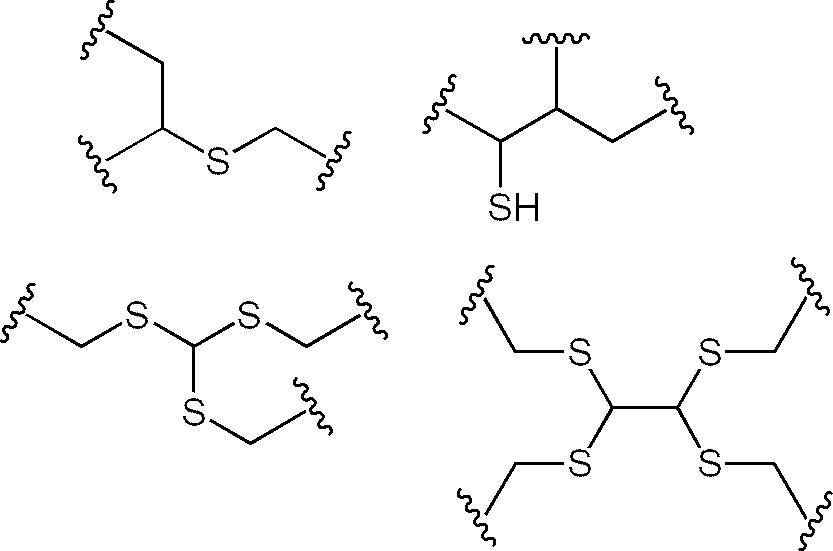
また、式1-1及び式2-1におけるLは、マイグレーション量及び硬化感度の観点から、式1-1及び式2-1におけるエステル結合と炭素原子により結合する基であることが好ましい。
更に、式1-1及び式2-1におけるm個のLは、全て同じ基(単結合も含む)であることが好ましい。
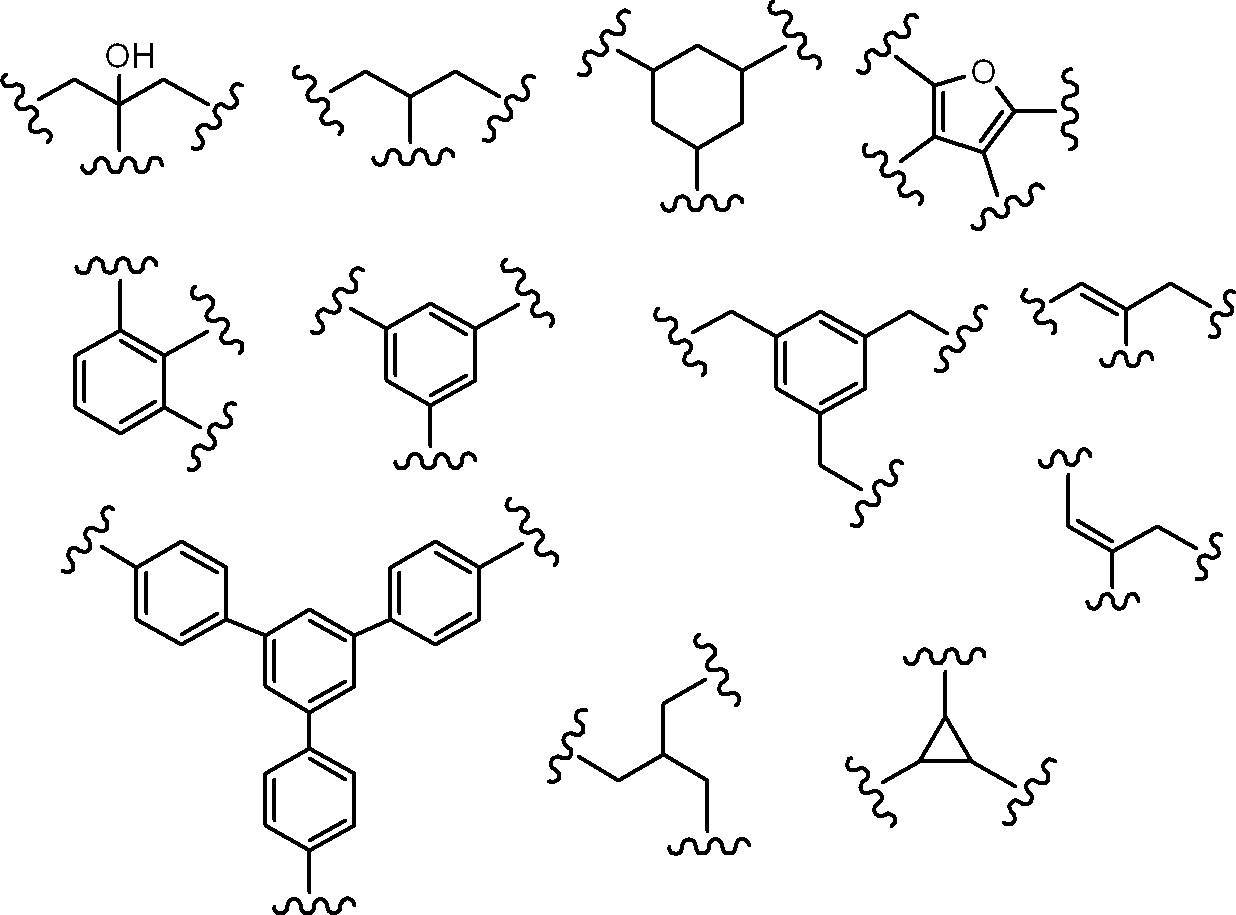
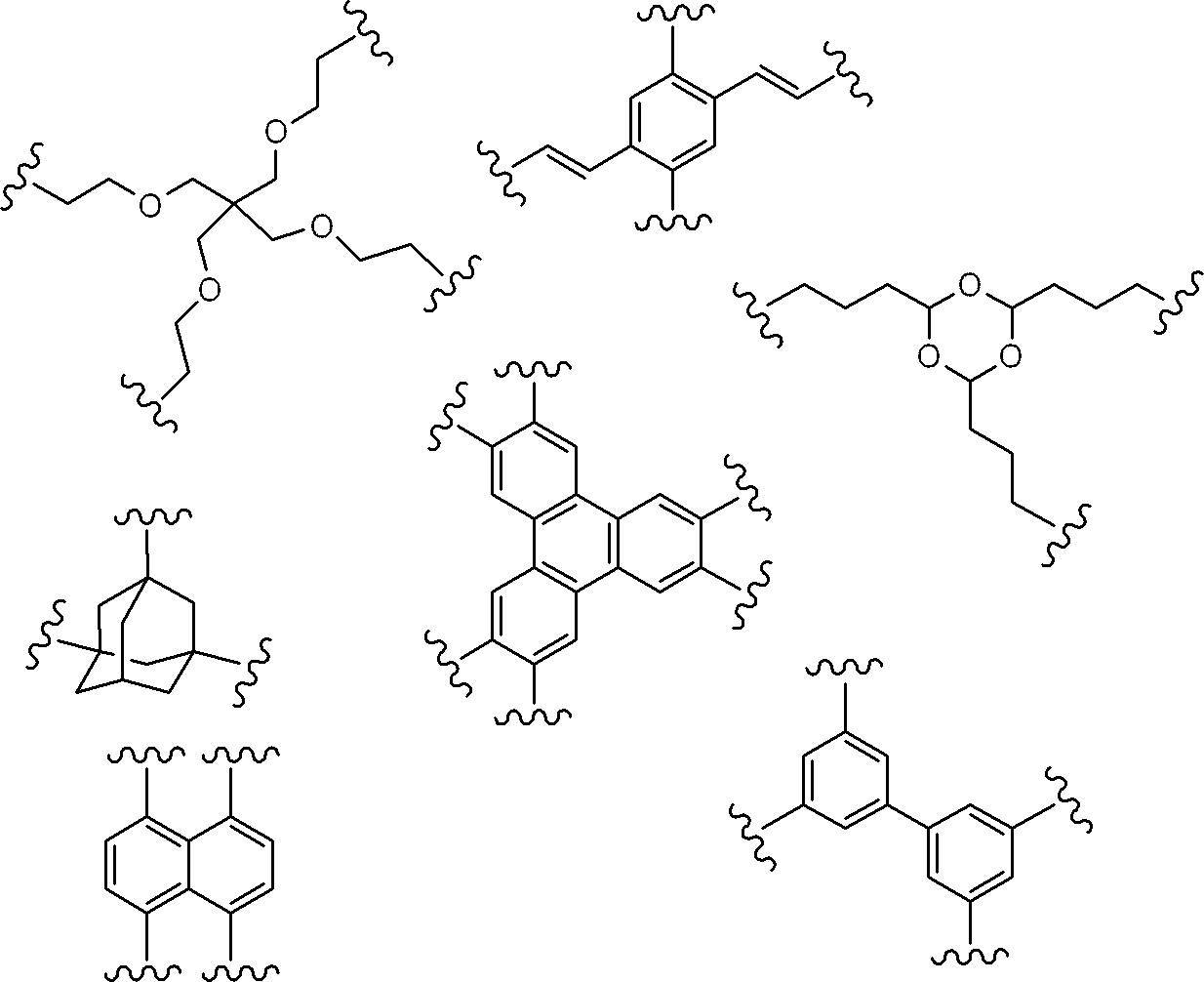


本開示における化合物のCn対称性を有する化合物とは、ある分子において、固有の回転Cn操作を実施した後に、その形が、固有の回転Cn操作実施前の形と、配座異性体に関係なく、区別がつかないものである場合に、Cn対称要素を有する化合物であるものとする。固有の回転は、角2π/n又は角360゜/nによって、分子を通過している軸に対しての単一の回転である。
また、本開示における化合物のCn対称性は、配座異性体等の厳密な立体構造の対称性まで規定するものではなく、例えば、下記に示す構造であれば、それぞれ、C3対称性、C4対称性を有するものとする。


また、式1-2及び式2-2におけるR11~R13は、全て同じ基であることが好ましい。
なお、本開示において、分子量分布を有する化合物は、重量平均分子量を上述した方法により測定するものとし、分子量分布のない化合物は、その元素組成(組成式)より分子量を求めるものとする。
特定アシルホスフィンオキシド化合物の好ましい具体例を下記に示すが、これらに限定されるものではない。
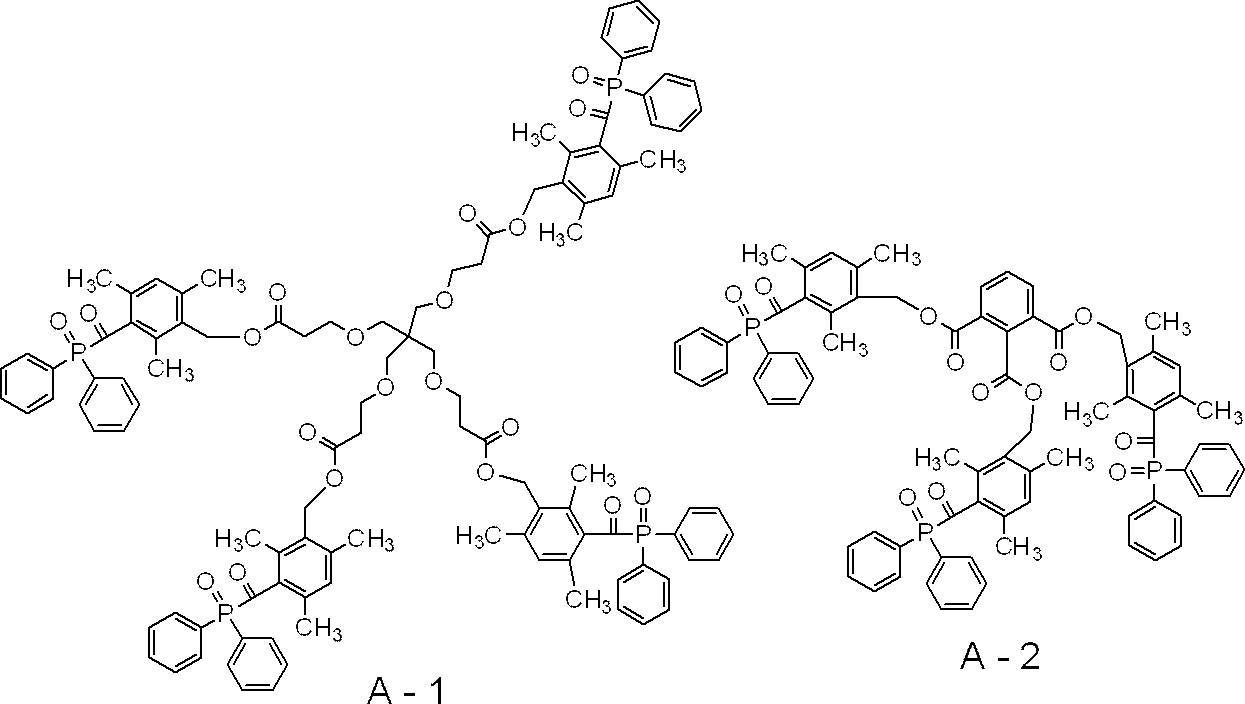
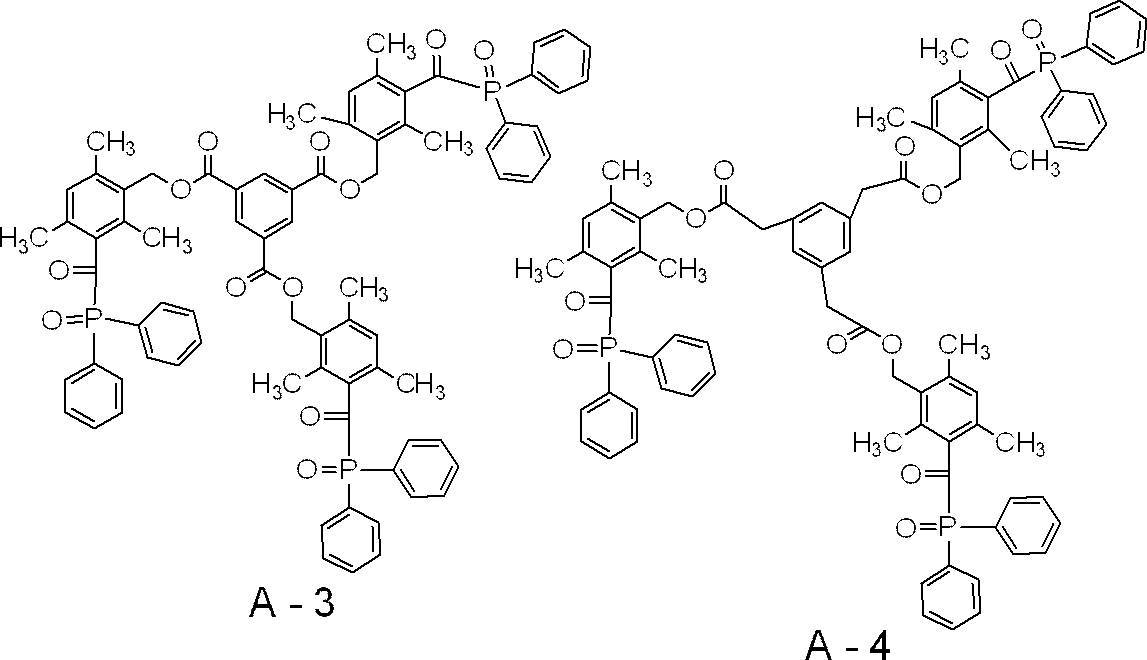
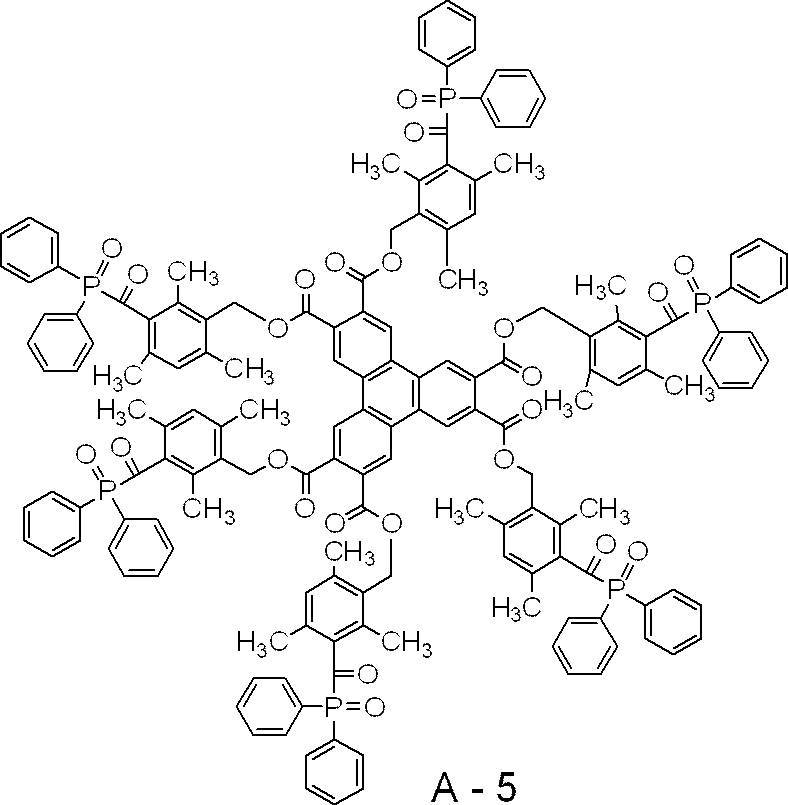
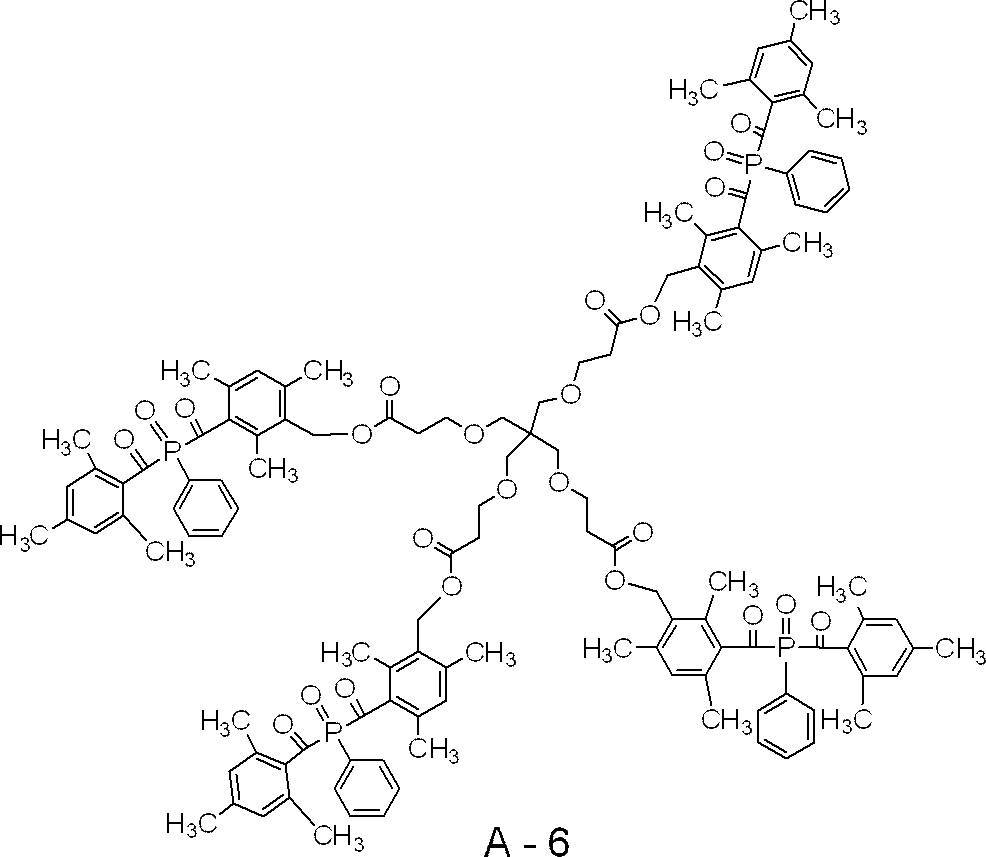

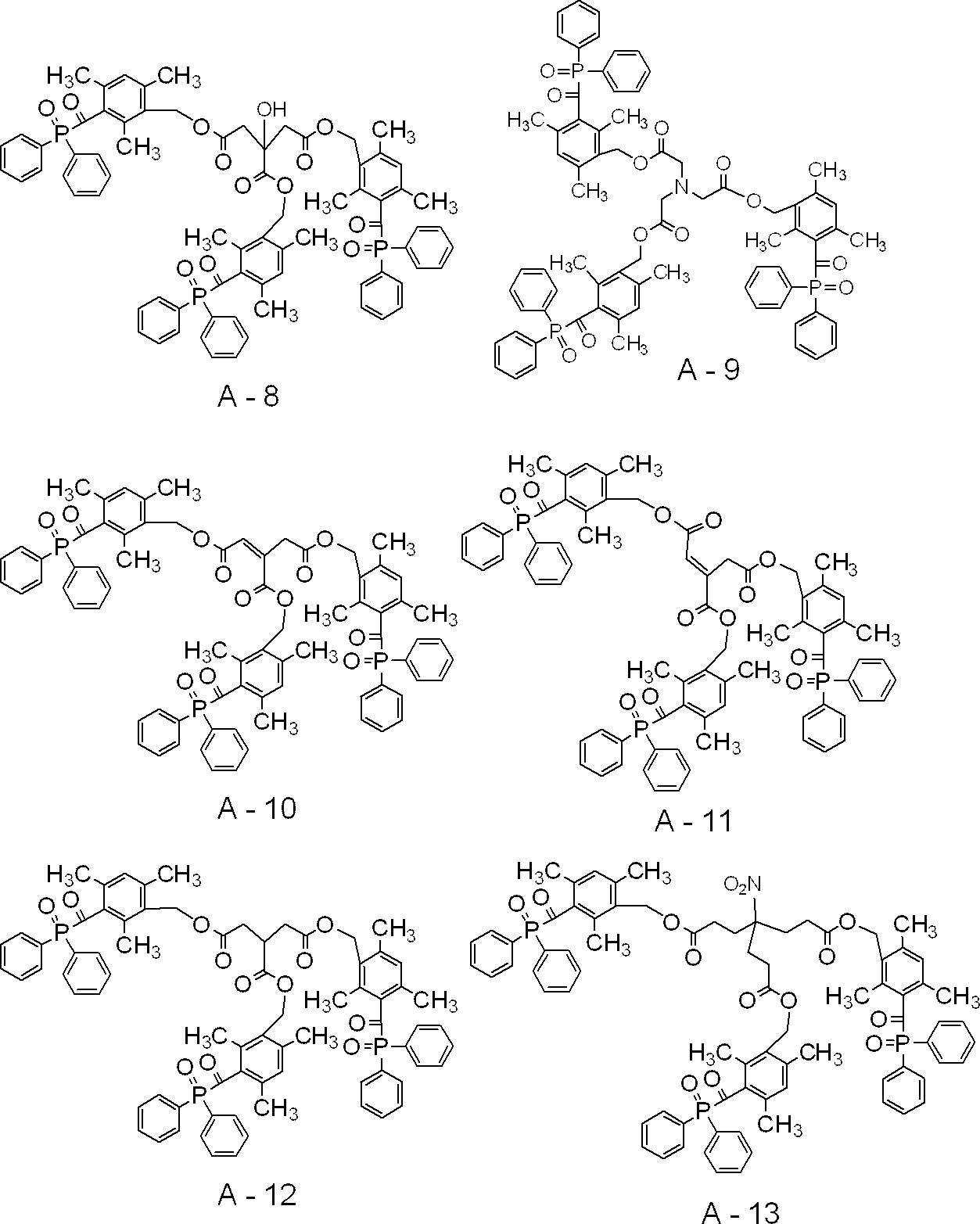
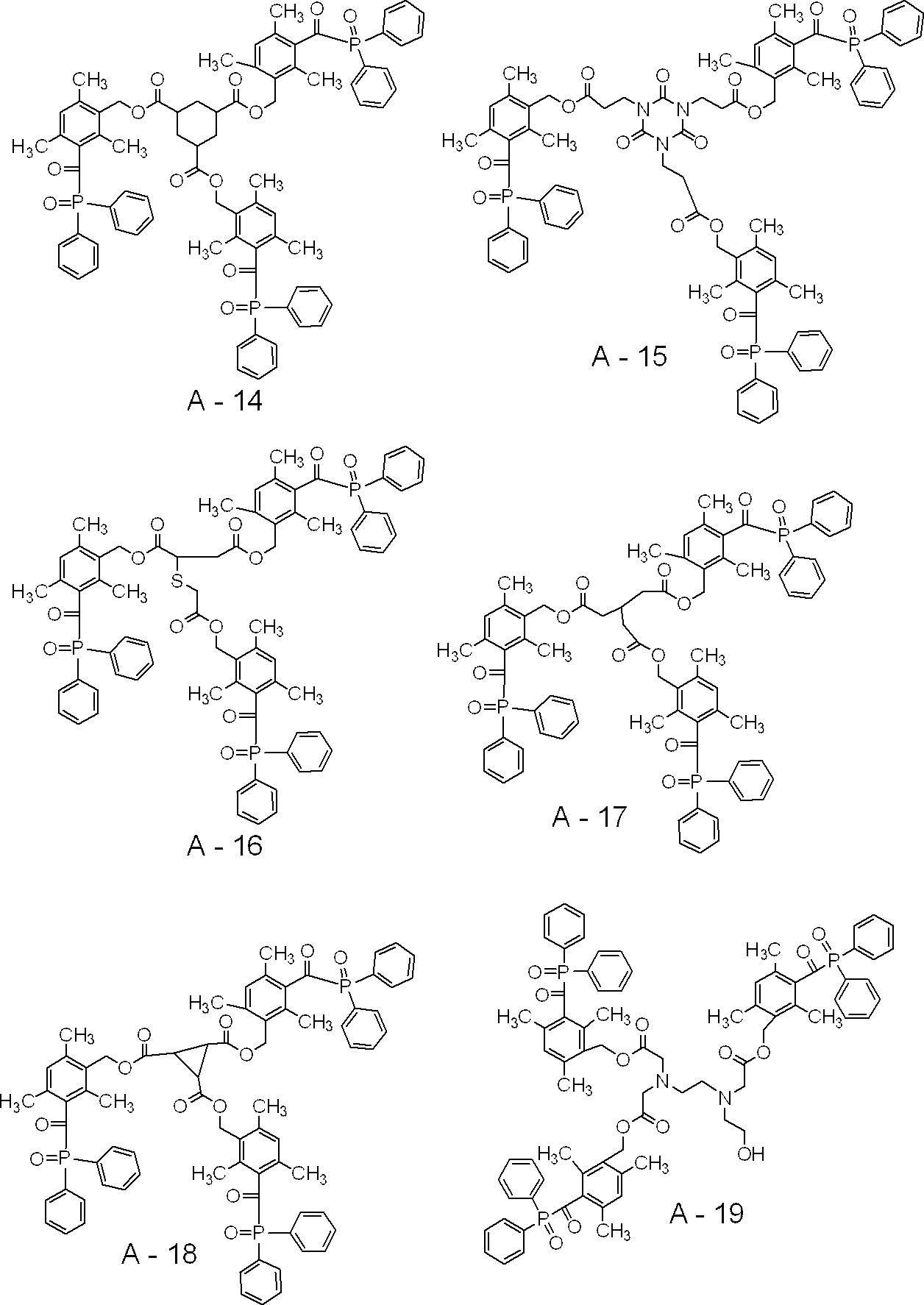

特定アシルホスフィンオキシド化合物の製造方法としては、特に制限はないが、アシルホスフィンオキサイド構造の芳香族アシル基の芳香環上にハロゲン化メチル基を有する化合物と、多官能カルボン酸化合物とを塩基性条件下で反応させエステル化する方法が好ましく挙げられる。
上記エステル化反応においては、溶媒を用いることが好ましい。溶媒としては、特に制限はないが、極性有機溶媒が好ましく挙げられる。
また、上記エステル化反応後、カラム、薄層クロマトグラフィ(TLC)、再結晶、再沈澱等の公知の方法により、精製を行うことが好ましい。
用いるルイス酸としては、塩化亜鉛、臭化亜鉛、酢酸亜鉛等の亜鉛化合物、塩化アルミニウム、臭化アルミニウム、塩化ジエチルアルミニウム等のアルミニウム化合物、塩化鉄、臭化鉄などの鉄化合物、塩化ビスマス(III)などのビスマス化合物、三フッ化ホウ素、三塩化ホウ素、トリス(ペンタフルオロフェニル)ホウ素等のホウ素化合物、四塩化チタン等のチタン化合物、塩化ジルコニウム等のジルコニウム化合物、四塩化スズ、三塩化スズ等のスズ化合物、塩化インジウムなどのインジウム化合物、トリフルオロメタンスルホン酸銅(II)、トリフルオロメタンスルホン酸ランタン(III)、トリフルオロメタンスルホン酸亜鉛(II)、トリフルオロメタンスルホン酸銀、トリフルオロメタンスルホン酸イッテルビウム(III)、トリフルオロメタンスルホン酸スカンジウム(III)、トリフルオロメタンスルホン酸ハフニウム(IV)、トリフルオロメタンスルホン酸イットリウム(III)等、水中で安定なトリフルオロメタンスルホン酸化合物又はこれらの水和物が好ましく、アルミニウム化合物、鉄化合物、スズ化合物、又は、亜鉛化合物が更に好ましく、アルミニウム化合物、鉄化合物、又は、亜鉛化合物が特に好ましい。上記態様の場合、反応性及び化合物安定性に優れ、更に原料を容易に入手できる。
上記Friedel-Crafts型の反応においては、溶媒を用いることが好ましい。溶媒としては、特に制限はないが、ハロゲン系溶媒、脂肪族炭化水素系溶媒、又は、ニトロベンゼンが挙げられる。中でも、ハロゲン系溶媒が好ましく、ジクロロメタンが特に好ましい。
また、上記Friedel-Crafts型の反応後、カラム、薄層クロマトグラフィ(TLC)、再結晶、再沈澱等の公知の方法により、精製を行うことが好ましい。
本開示に係る重合性組成物は、本開示に係る光重合開始剤、及び、重合性化合物を含む。
本開示に係る重合性組成物は、活性放射線により硬化可能なインク組成物である。「活性放射線」とは、その照射により重合性組成物中に開始種を発生させるエネルギーを付与できる放射線であり、α線、γ線、X線、紫外線、可視光線、電子線などを包含する。中でも、硬化感度及び装置の入手容易性の観点から紫外線及び電子線が好ましく、紫外線がより好ましい。
また、本開示に係る重合性組成物は、活性放射線硬化型の重合性組成物であり、油性重合性組成物であることが好ましい。本開示に係る重合性組成物は、水及び揮発性溶剤をできるだけ含有しないことが好ましく、含有していたとしても、重合性組成物の全質量に対し、5質量%以下であることが好ましく、1質量%以下であることがより好ましく、0.5質量%以下であることが更に好ましい。
また、本開示に係る重合性組成物は、インク組成物、レジスト、平版印刷版の画像記録層、コート剤、塗料、接着剤、粘着剤、コーティング、機能性膜、フィルム、光学材料、印刷版材料、半導体材料、記録材料、紙類添加剤、医療用材料、プラスチック、機能性ゲル、化粧品材料等、種々の用途に用いることができる。中でも、インク組成物として好適に用いることができ、インクジェット記録用インク組成物(「インクジェットインク組成物」ともいう。)としてより好適に用いることができる。
本開示に係る重合性組成物における本開示に係る光重合開始剤の含有量については、特に制限はないが、重合性組成物の全質量に対して、0.1~20質量%であることが好ましく、1~15質量%であることがより好ましく、3~10質量%であることが更に好ましく、4~8質量%であることが特に好ましい。上記範囲であると、硬化性に優れる。
本開示に係る重合性組成物は、重合性化合物を含む。
重合性化合物としては、何らかのエネルギー付与により重合反応を生起し、硬化する化合物であれば特に制限はなく、モノマー、オリゴマー、ポリマーの種を問わず使用することができるが、特に、所望により添加される重合開始剤から発生する開始種により重合反応を生起する、ラジカル重合性モノマーとして知られる各種公知の重合性のモノマーが好ましい。
また、重合性化合物は、エチレン性不飽和化合物であることが好ましい。
ラジカル重合性化合物としては、(メタ)アクリレート類、(メタ)アクリルアミド類、芳香族ビニル類等が挙げられる。
四官能の(メタ)アクリレートとしては、例えば、ペンタエリスリトールテトラ(メタ)アクリレート、ソルビトールテトラ(メタ)アクリレート、ジトリメチロールプロパンテトラ(メタ)アクリレート、プロピオン酸ジペンタエリスリトールテトラ(メタ)アクリレート、エトキシ化ペンタエリスリトールテトラ(メタ)アクリレート等が挙げられる。
五官能の(メタ)アクリレートとしては、例えば、ソルビトールペンタ(メタ)アクリレート、及び、ジペンタエリスリトールペンタ(メタ)アクリレートが挙げられる。
六官能の(メタ)アクリレートとしては、例えば、ジペンタエリスリトールヘキサ(メタ)アクリレート、ソルビトールヘキサ(メタ)アクリレート、フォスファゼンのアルキレンオキシド変性ヘキサ(メタ)アクリレート、及び、ε-カプトラクトン変性ジペンタエリスリトールヘキサ(メタ)アクリレート等が挙げられる。
更に具体的には、山下晋三編「架橋剤ハンドブック」(1981年、大成社);加藤清視編「UV・EB硬化ハンドブック(原料編)」(1985年、高分子刊行会);ラドテック研究会編「UV・EB硬化技術の応用と市場」79頁(1989年、(株)シーエムシー出版);滝山栄一郎著「ポリエステル樹脂ハンドブック」(1988年、日刊工業新聞社)等に記載の市販品又は業界で公知のラジカル重合性又は架橋性のモノマー、オリゴマー及びポリマーを用いることができる。
本開示に係る重合性組成物における重合性化合物の含有量は、その用途にも関連するが、硬化性の観点から、重合性組成物の全質量に対し、10~95質量%が好ましく、20~90質量%がより好ましい。
また、本開示に係る重合性組成物における本開示に係る光重合開始剤と重合性化合物との含有量比(質量比)は、光重合開始剤:重合性化合物=1:5~1:1,000であることが好ましく、1:7~1:200であることがより好ましく、1:10~1:100であることが更に好ましい。
本開示に係る重合性組成物は、インク組成物等の用途に用いる場合、着色剤を含んでいてもよい。
着色剤としては、特に制限はないが、耐候性に優れ、色再現性に富んだ顔料及び油溶性染料が好ましく、溶解性染料等の公知の着色剤から任意に選択して使用できる。着色剤は、活性放射線による硬化反応の感度を低下させないという観点から、重合禁止剤として機能しない化合物を選択することが好ましい。
上記オレンジ顔料は、オレンジ色を呈する顔料であり、例えば、C.I.ピグメントオレンジ66(イソインドリンオレンジ)等のイソインドリン系顔料、C.I.ピグメントオレンジ51(ジクロロピラントロンオレンジ)等のアントラキノン系顔料、C.I.ピグメントオレンジ2、C.I.ピグメントオレンジ3、C.I.ピグメントオレンジ5等のΒ-ナフトール顔料、C.I.ピグメントオレンジ4、C.I.ピグメントオレンジ22、C.I.ピグメントオレンジ24、C.I.ピグメントオレンジ38、C.I.ピグメントオレンジ74等のナフトールAS顔料、C.I.ピグメントオレンジ61等のイソインドリノン顔料、C.I.ピグメントオレンジ43等のペリノン顔料、C.I.ピグメントオレンジ15、C.I.ピグメントオレンジ16等のジスアゾ顔料、C.I.ピグメントオレンジ48、C.I.ピグメントオレンジ49等のキナクリドン顔料、C.I.ピグメントオレンジ36、C.I.ピグメントオレンジ62、C.I.ピグメントオレンジ60、C.I.ピグメントオレンジ64、C.I.ピグメントオレンジ72等のアセトロン顔料、C.I.ピグメントオレンジ13、C.I.ピグメントオレンジ34等のピラゾロン顔料などが挙げられる。
上記茶色顔料は、茶色を呈する顔料であり、例えば、C.I.ピグメントブラウン25、C.I.ピグメントブラウン32等のナフトロン顔料などが挙げられる。
上記バイオレット顔料は、紫色を呈する顔料であり、例えば、C.I.ピグメントバイオレット32等のナフトロン顔料、C.I.ピグメントバイオレット29等のペリレン顔料、C.I.ピグメントバイオレット13、C.I.ピグメントバイオレット17、C.I.ピグメントバイオレット50等のナフトールAS顔料、C.I.ピグメントバイオレット23、C.I.ピグメントバイオレット37等のジオキサジン顔料などが挙げられる。
上記白色顔料としては、例えば、塩基性炭酸鉛(2PbCO3Pb(OH)2、いわゆる、シルバーホワイト)、酸化亜鉛(ZnO、いわゆる、ジンクホワイト)、酸化チタン(TiO2、いわゆる、チタンホワイト)、チタン酸ストロンチウム(SrTiO3、いわゆる、チタンストロンチウムホワイト)などが挙げられる。白色顔料に使用される無機粒子は単体でもよいし、例えば、ケイ素、アルミニウム、ジルコニウム、チタン等の酸化物や有機金属化合物、有機化合物との複合粒子であってもよい。
中でも、上記酸化チタンは、他の白色顔料と比べて比重が小さく、屈折率が大きく化学的、物理的にも安定であるため、顔料としての隠蔽力や着色力が大きく、更に、酸やアルカリ、その他の環境に対する耐久性にも優れていることから、好適に使用される。なお、上記酸化チタンに加えて他の白色顔料(上述した白色顔料以外のものであってもよい。)を併用してもよい。
本開示においては、上記顔料の分散を行う際に、後述する分散剤を添加することが特に好ましい。
また、上記顔料の分散の際に、必要に応じて、分散助剤として、各種顔料に応じたシナージストを添加してもよい。上記分散助剤の上記インク組成物における含有量としては、上記顔料100質量部に対し、1~50質量部が好ましい。
なお、上記顔料の粒径は、公知の測定方法で測定することができる。具体的には遠心沈降光透過法、X線透過法、レーザー回折散乱法、動的光散乱法により測定することができる。
重合性組成物中における着色剤の含有量は、色及び使用目的により適宜選択されるが、重合性組成物全体の質量に対し、0.01~30質量%であることが好ましい。
本開示に係る重合性組成物は、必要に応じて、本開示に係る光重合開始剤以外のその他の重合開始剤を含有することができるが、含有しないことが好ましい。
上記その他の重合開始剤としては、本開示に係る光重合開始剤以外の光重合開始剤、及び、熱重合開始剤が挙げられ、ラジカル重合又はカチオン重合の重合開始剤であることが好ましく、ラジカル重合開始剤が特に好ましい。例えば、特開2009-138172号公報に記載の重合開始剤を用いることができる。
他の重合開始剤は、1種単独で使用しても、2種以上を使用してもよい。
他の重合開始剤の総含有量は、重合性組成物全体の10質量%以下であることが好ましく、5質量%以下であることがより好ましく、1質量%以下であることが更に好ましく、含まないことが特に好ましい。上記範囲であると、硬化性に優れる。
また、他の重合開始剤の総含有量は、本開示に係る光重合開始剤の含有量よりも少ないことが好ましい。
本開示に係る重合性組成物は、分散剤を含有していてもよい。特に顔料を使用する場合において、顔料をインク組成物中に安定に分散させるため、分散剤を含有することが好ましい。分散剤としては、高分子分散剤が好ましい。なお、本開示における「高分子分散剤」とは、重量平均分子量が1,000以上の分散剤を意味する。
重合性組成物中における分散剤の含有量は、使用目的により適宜選択されるが、重合性組成物全体の質量に対し、0.05~15質量%であることが好ましい。
本開示に係る重合性組成物は、界面活性剤を含有していてもよい。
界面活性剤としては、特開昭62-173463号、同62-183457号の各公報に記載されたものが挙げられる。例えば、ジアルキルスルホコハク酸塩類、アルキルナフタレンスルホン酸塩類、脂肪酸塩類等のアニオン性界面活性剤、ポリオキシエチレンアルキルエーテル類、ポリオキシエチレンアルキルアリルエーテル類、アセチレングリコール類、ポリオキシエチレン・ポリオキシプロピレンブロックコポリマー類等のノニオン性界面活性剤、アルキルアミン塩類、第四級アンモニウム塩類等のカチオン性界面活性剤が挙げられる。また、上記界面活性剤としてフッ素系界面活性剤(例えば、有機フルオロ化合物等)やシリコーン系界面活性剤(例えば、ポリシロキサン化合物等)を用いてもよい。上記有機フルオロ化合物は、疎水性であることが好ましい。上記有機フルオロ化合物としては、例えば、フッ素系界面活性剤、オイル状フッ素系化合物(例、フッ素油)及び固体状フッ素化合物樹脂(例、四フッ化エチレン樹脂)が含まれ、特公昭57-9053号(第8~17欄)、特開昭62-135826号の各公報に記載されたものが挙げられる。上記ポリシロキサン化合物としては、ジメチルポリシロキサンのメチル基の一部に有機基を導入した変性ポリシロキサン化合物であることが好ましい。変性の例として、ポリエーテル変性、メチルスチレン変性、アルコール変性、アルキル変性、アラルキル変性、脂肪酸エステル変性、エポキシ変性、アミン変性、アミノ変性、メルカプト変性などが挙げられるが、特にこれらに限定されるものではない。これらの変性の方法は組み合わせて用いられてもかまわない。また、中でもポリエーテル変性ポリシロキサン化合物がインクジェットにおける吐出安定性改良の観点で好ましい。ポリエーテル変性ポリシロキサン化合物の例としては、例えば、SILWET L-7604、SILWET L-7607N、SILWET FZ-2104、SILWET FZ-2161(日本ユニカー(株)製)、BYK306、BYK307、BYK331、BYK333、BYK347、BYK348等(BYK Chemie社製)、KF-351A、KF-352A、KF-353、KF-354L、KF-355A、KF-615A、KF-945、KF-640、KF-642、KF-643、KF-6020、X-22-6191、X-22-4515、KF-6011、KF-6012、KF-6015、KF-6017(信越化学工業(株)製)が挙げられる。
これらの中でも、シリコーン系界面活性剤が好ましく挙げられる。
本開示に係る重合性組成物中における界面活性剤の含有量は使用目的により適宜選択されるが、重合性組成物全体の質量に対し、0.0001~1質量%であることが好ましい。
本開示に係る重合性組成物は、溶剤を含有していてもよい。
溶剤としては、例えば、アセトン、メチルエチルケトン、ジエチルケトン等のケトン系溶剤、メタノール、エタノール、2-プロパノール、1-プロパノール、1-ブタノール、tert-ブタノール等のアルコール系溶剤、クロロホルム、塩化メチレン等の塩素系溶剤、ベンゼン、トルエン等の芳香族系溶剤、酢酸エチル、酢酸ブチル、酢酸イソプロピルなどのエステル系溶剤、ジエチルエーテル、テトラヒドロフラン、ジオキサン等のエーテル系溶剤、エチレングリコールモノメチルエーテル、エチレングリコールジメチルエーテル、トリプロリレングリコールモノメチルエーテル等のグリコールエーテル系溶剤、γ―ブチロラクトンのような環状エステル系溶剤、2-メチルピロリドン、2-ピロリドンのようなアミド系溶剤などが挙げられる。
この場合、耐溶剤性やVOCの問題が起こらない範囲での添加が有効であり、溶剤の量は重合性組成物の全質量に対し、0.1~5質量%が好ましく、0.1~3質量%がより好ましい。
重合性組成物において顔料などの諸成分の分散媒としては、溶剤を添加してもよく、また、無溶剤で、重合性化合物を分散媒として用いてもよいが、無溶剤であることが好ましい。
本開示に係る重合性組成物は、増感剤を含有していてもよい。
増感剤としては、例えば、多核芳香族類(例えば、ピレン、ペリレン、トリフェニレン、2-エチル-9,10-ジメトキシアントラセン等)、キサンテン類(例えば、フルオレッセイン、エオシン、エリスロシン、ローダミンB、ローズベンガル等)、シアニン類(例えば、チアカルボシアニン、オキサカルボシアニン等)、メロシアニン類(例えば、メロシアニン、カルボメロシアニン等)、チアジン類(例えば、チオニン、メチレンブルー、トルイジンブルー等)、アクリジン類(例えば、アクリジンオレンジ、クロロフラビン、アクリフラビン等)、アントラキノン類(例えば、アントラキノン等)、スクアリウム類(例えば、スクアリウム等)、クマリン類(例えば、7-ジエチルアミノ-4-メチルクマリン等)、チオキサントン類(例えば、イソプロピルチオキサントン等)、チオクロマノン類(例えば、チオクロマノン等)等が挙げられる。中でも増感剤としては、チオキサントン類が好ましい。チオキサントン類としては、ジエチルチオキサントン(DETX)、イソプロピルチオキサントン(ITX)、SP7010(LAMBSON社製)等が例示できる。その他、国際公開第2013/146062号に記載の増感剤も使用することができる。
本開示に係る重合性組成物には、各種用途に応じて、他の添加剤を含有していてもよい。
他の添加剤としては、種々の公知の添加剤を用いることができる。
他の添加剤としては、例えば、アルカリ可溶性樹脂、共増感剤、紫外線吸収剤、塩基性化合物、レベリング添加剤、マット剤、ワックス、重合禁止剤、酸化防止剤、及び、粘着付与剤などを含有させることができる。
なお、25℃(室温)での重合性組成物の粘度は、1mPa・s以上200mPa・s以下であることが好ましく、2mPa・s以上50mPa・s以下であることがより好ましく、2.5mPa・s以上30mPa・s以下であることが更に好ましい。室温での粘度を高く設定することにより、多孔質な記録媒体を用いた場合でも、記録媒体中への重合性組成物の浸透を防ぎ、未硬化モノマーの低減が可能となり、更にインク液滴着弾時のドット滲みを抑えることができ、その結果として画質が改善される。また、25℃での重合性組成物の粘度が200mPa・s以下であると、インク組成物の装置内におけるインクジェットヘッド等へのデリバリーが容易である。
なお、本開示における組成物の粘度は、VISCOMETER TV-22(東機産業(株)製)により上記温度条件下で測定した値を用いるものとする。
なお、本開示における組成物の表面張力は、Automatic Surface Tensiometer CBVP-Z(協和界面科学(株)製)を用い、液温25℃の条件下で測定された値を用いるものとする。
本開示に係る重合性組成物は、インクジェットインク組成物として好適に用いることができる。
本開示に係るインクジェット記録方法は、特に制限はないが、記録媒体(支持体、記録材料等)上に、本開示に係る重合性組成物をインクジェット法により吐出する工程、及び、吐出された重合性組成物に活性放射線を照射して、上記重合性組成物を硬化する工程を含むことが好ましい。本開示に係るインクジェット記録方法は、上記2つの工程を含むことにより、記録媒体上において硬化した重合性組成物により画像が形成される。
また、本開示に係る印刷物は、本開示に係る重合性組成物により記録された印刷物であり、本開示に係るインクジェット記録方法によって記録された印刷物であることが好ましい。
本開示に係るインクジェット記録方法には、以下に詳述するインクジェット記録装置を用いることができる。
本開示に係るインクジェット記録方法に用いることができるインクジェット記録装置としては、特に制限はなく、目的とする解像度を達成し得る公知のインクジェット記録装置を任意に選択して使用することができる。すなわち、市販品を含む公知のインクジェット記録装置であれば、いずれも、本開示に係るインクジェット記録方法における記録媒体への重合性組成物の吐出を実施することができる。
インク供給系は、例えば、本開示に係る重合性組成物を含む元タンク、供給配管、インクジェットヘッド直前のインク供給タンク、フィルター、ピエゾ型のインクジェットヘッドからなる。ピエゾ型のインクジェットヘッドは、好ましくは1~100pl、より好ましくは8~30plのマルチサイズドットを、好ましくは320×320~4,000×4,000dpi、より好ましくは400×400~1,600×1,600dpi、更に好ましくは720×720dpiの解像度で吐出できるよう駆動することができる。なお、本開示でいうdpi(dot per inch)とは、2.54cm当たりのドット数を表す。
温度コントロールの方法としては、特に制約はないが、例えば、温度センサーを各配管部位に複数設け、重合性組成物の流量、環境温度に応じた加熱制御をすることが好ましい。温度センサーは、インク供給タンク及びインクジェットヘッドのノズル付近に設けることができる。また、加熱するヘッドユニットは、装置本体を外気からの温度の影響を受けないよう、熱的に遮断若しくは断熱されていることが好ましい。加熱に要するプリンター立上げ時間を短縮するため、あるいは、熱エネルギーのロスを低減するために、他部位との断熱を行うと共に、加熱ユニット全体の熱容量を小さくすることが好ましい。
記録媒体上に吐出された重合性組成物は、活性放射線を照射することによって硬化する。これは、本開示に係る重合性組成物に含まれる重合開始剤が活性放射線の照射により分解して、ラジカルなどの重合開始種を発生し、その開始種の機能に重合性化合物の重合反応が、生起、促進されるためである。このとき、重合性組成物において重合開始剤と共に増感剤が存在すると、系中の増感剤が活性放射線を吸収して励起状態となり、重合開始剤と接触することによって重合開始剤の分解を促進させ、より高感度の硬化反応を達成させることができる。
また、発光ダイオード(LED)及びレーザーダイオード(LD)を活性放射線源として用いることが可能である。特に、紫外線源を要する場合、紫外LED及び紫外LDを使用することができる。例えば、日亜化学(株)は、主放出スペクトルが365nmと420nmとの間の波長を有する紫色LEDを上市している。更に一層短い波長が必要とされる場合、米国特許第6,084,250号明細書は、300nmと370nmとの間に中心付けされた活性放射線を放出し得るLEDを開示している。また、他の紫外LEDも、入手可能であり、異なる紫外線帯域の放射を照射することができる。本開示で特に好ましい活性エネルギー線源はUV-LEDであり、特に好ましくは340~400nmにピーク波長を有するUV-LEDである。
なお、LEDの記録媒体上での最高照度は、10~2,000mW/cm2であることが好ましく、20~1,000mW/cm2であることがより好ましく、50~800mW/cm2であることが特に好ましい。
活性放射線の照射条件並びに基本的な照射方法は、特開昭60-132767号公報に開示されている。具体的には、重合性組成物の吐出装置を含むヘッドユニットの両側に光源を設け、いわゆるシャトル方式でヘッドユニットと光源を走査することによって行われる。活性放射線の照射は、インク組成物の着弾後、一定時間(好ましくは0.01~0.5秒、より好ましくは0.01~0.3秒、更に好ましくは0.01~0.15秒)をおいて行われることになる。このようにインク組成物の着弾から照射までの時間を極短時間に制御することにより、記録媒体に着弾した重合性組成物が硬化前に滲むことを防止することが可能となる。また、多孔質な記録媒体に対しても光源の届かない深部まで重合性組成物が浸透する前に露光することができるため、未反応モノマーの残留を抑えることができるので好ましい。
更に、駆動を伴わない別光源によって硬化を完了させてもよい。国際公開第99/54415号パンフレットでは、照射方法として、光ファイバーを用いた方法やコリメートされた光源をヘッドユニット側面に設けた鏡面に当て、記録部へUV光を照射する方法が開示されており、このような硬化方法もまた、本開示に係るインクジェット記録方法に適用することができる。
本開示に係るインクジェット記録方法において、吐出する各着色インク組成物の順番は、特に限定されるわけではないが、明度の高い着色インク組成物から記録媒体に付与することが好ましく、イエロー、シアン、マゼンタ、ブラックを使用する場合には、イエロー、シアン、マゼンタ、ブラックの順で記録媒体上に付与することが好ましい。また、これにホワイトを加えて使用する場合にはホワイト、イエロー、シアン、マゼンタ、ブラックの順で記録媒体上に付与することが好ましい。更に、本開示はこれに限定されず、イエロー、ライトシアン、ライトマゼンタ、シアン、マゼンタ、ブラック、ホワイトのインク組成物との計7色が少なくとも含まれるインクセットを好ましく使用することもでき、その場合には、ホワイト、ライトシアン、ライトマゼンタ、イエロー、シアン、マゼンタ、ブラックの順で記録媒体上に付与することが好ましい。
本開示に係る重合性組成物を適用し得る記録媒体としては、特に制限はなく、通常の非コート紙、コート紙などの紙類、いわゆる軟包装に用いられる各種非吸収性樹脂材料あるいは、それをフィルム状に成形した樹脂フィルムを用いることができる。
各種プラスチックフィルムとしては、例えば、PET(ポリエチレンテレフタレート)フィルム、OPS(二軸延伸ポリスチレン)フィルム、OPP(二軸延伸ポリプロピレン)フィルム、ONy(二軸延伸ナイロン)フィルム、PVC(ポリ塩化ビニル)フィルム、PE(ポリエチレン)フィルム、TAC(セルローストリアセテート)フィルム等が挙げられる。
その他、記録媒体材料として使用し得るプラスチックとしては、ポリカーボネート、アクリル樹脂、ABS(アクリロニトリル-ブタジエン-スチレン共重合体)、ポリアセタール、PVA(ポリビニルアルコール)、ゴム類などが挙げられる。また、金属類や、ガラス類も記録媒体として使用可能である。
本開示に係る重合性組成物は、本開示に係る重合開始剤を含有することにより低露光量でも硬化し得る。このため、低露光強度の安価な光源を用いることによるシステムやランニングコストの削減、露光時間を短縮することによる印刷速度の向上に寄与するものと思われる。更に、露光後の硬化速度が速いことにより画像のにじみを抑制ができ、鮮明な画像を形成することができる。
本開示に係るアシルホスフィンオキシド化合物は、下記式1-1又は式2-1で表される。

本開示に係るアシルホスフィンオキシド化合物は、光重合開始剤として好適に用いることができる。
また、実施例で使用する実施化合物1~7はそれぞれ、上述したA-1~A-7であり、実施化合物8は、上述したA-16である。
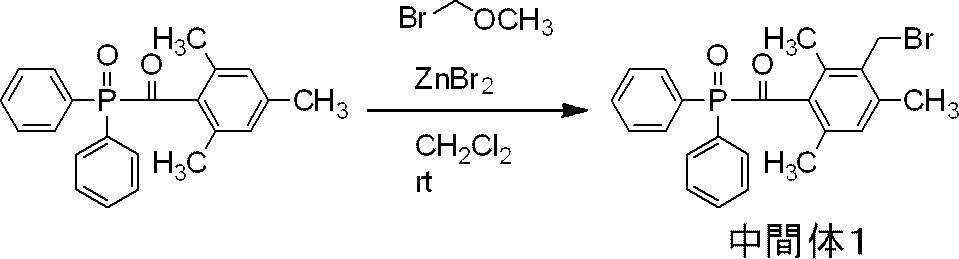
TPO(100質量部,287モル当量、チバ・ジャパン(株)製LUCIRIN(登録商標) TPO)に対してジクロロメタン(CH2Cl2)133質量部を加えて溶解させた後、臭化亜鉛(II)(ZnBr2,194質量部,432モル当量)を分割添加し、撹拌して溶解させた。その後、ブロモメチルメチルエーテル(43.05質量部,344モル当量)を滴下して室温(rt、10℃~35℃、以下同様)で10時間撹拌した。反応液を氷水中に徐々に滴下して反応を停止した後、ジクロロメタンで抽出、水で洗浄して硫酸マグネシウムで乾燥させた。次いで、これをろ別し、ろ液を濃縮した後にシリカゲルカラム(ヘキサン/酢酸エチル=40/60(体積比))で精製した。これをヘキサンで分散させて得た固体をろ過、ヘキサンで洗浄して白色の中間体1(110質量部,87%)を得た。
1H NMR (CDCl3, 400MHz) δ: 1.93 (3H, s), 2.09 (3H, s), 2.38 (3H, s), 4.46 (2H, s), 6.85 (1H, s), 7.48-7.61 (6H, m), 7.97-8.01 (4H, m).
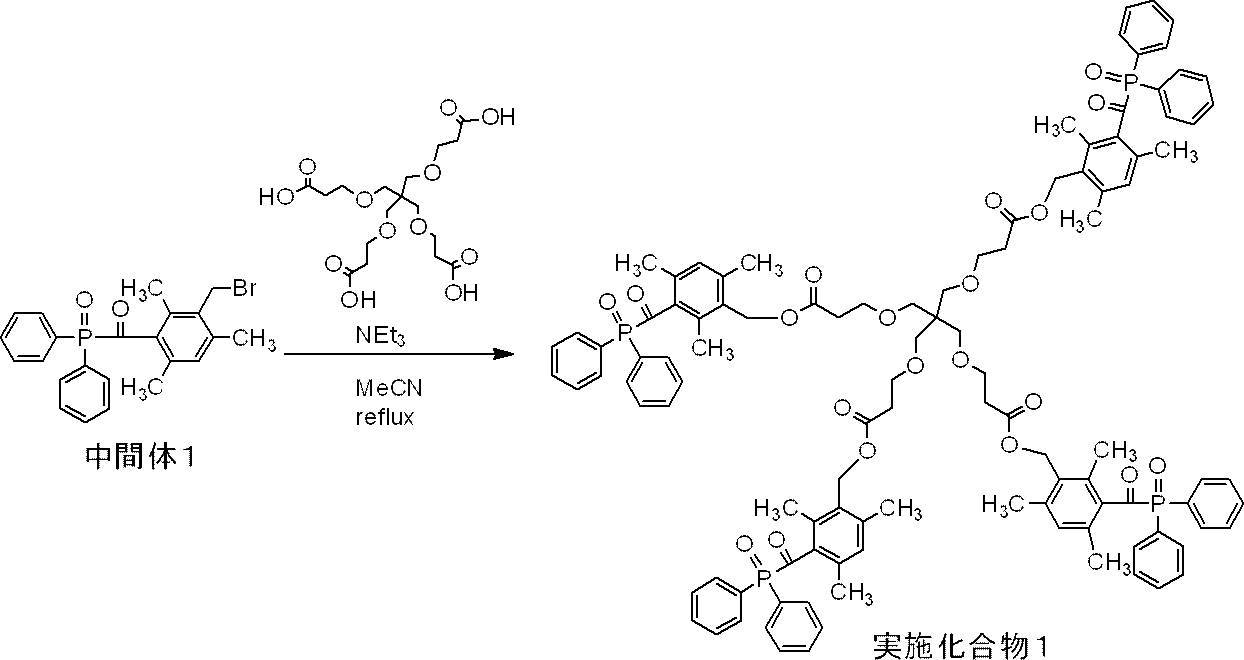
1H NMR (CDCl3, 400MHz) δ: 1.94 (12H, s), 2.05 (12H, s), 2.30 (12H, s), 2.46 (8H, J = 8.0Hz, t), 3.21 (8H, s), 3.52 (8H, J = 8.0 Hz, t), 5.09 (8H, s), 6.85 (4H, m), 7.48-7.59 (24H, m), 7.97-8.02 (16H, m).
テトラアシッドの代わりにヘミメリット酸、トリメシン酸、1,3,5-ベンゼン三酢酸、又は、2,3,6,7,10,11-トリフェニレンヘキサカルボン酸を用い、カルボン酸基1モル当量に対して1.25モル当量の中間体1を添加した以外は実施化合物1と同様にして実施化合物2~実施化合物5を合成した。
TPOの代わりにIRGACURE(登録商標) 819(BASF社)を用いた以外は実施化合物1と同様にして実施化合物6を合成した。
テトラアシッドの代わりにグリコールエーテルジアミン四酢酸を用いた以外は、実施化合物1と同様にして実施化合物7を合成した。
1H NMR (CDCl3, 400MHz) δ: 1.94 (12H, s), 2.02 (12H, s), 2.30 (12H, s), 2.87 (4H, J = 6.0Hz, t), 3.42 (4H, s), 3.51 (4H, J = 6.0 Hz, t), 3.53 (8H, s), 5.11 (8H, s), 6.85 (4H, m), 7.48-7.59 (24H, m), 7.97-8.02 (16H, m).
テトラアシッドの代わりに2-[(カルボキシメチル)チオ]ブタン二酸を用いた以外は、実施化合物1と同様にして実施化合物8を合成した。
比較化合物1は特開2014-185319号公報を参考にして、比較化合物2及び3は国際公開第2013/091521号を参考にして、それぞれ合成した。

-インク組成物(重合性組成物)の作製方法-
重合性化合物として3-メチル-1,5-ペンタンジオールジアクリレート(SR341、Sartomer社製)を80質量部、光重合開始剤として表1に記載の化合物を8質量部、増感剤としてSP7010(LAMBSON社製)を2質量部、シアンミルベースAを10質量部、界面活性剤(BYK307、シリコーン系界面活性剤、BYK Chemie社製)を0.1質量部加えて混合、撹拌することで、各インク組成物を得た。
また、シアンミルベースAは下記のようにして調製した。
Heliogen Blue D 7110 F(シアン顔料、BASF社製)を300質量部と、SR9003(PO変性ネオペンチルグリコールジアクリレート、Sartomer社製)を620質量部と、SOLSPERSE(登録商標)32000(Noveon社製分散剤)を80質量部とを撹拌混合し、シアンミルベースAを得た。なお、シアンミルベースAの調製は分散機モーターミルM50(アイガー社製)に入れて、直径0.65mmのジルコニアビーズを用い、周速9m/sで4時間分散を行った。
ピエゾ型インクジェットノズルを有するインクジェット記録装置及び上記で得られたインク組成物を用いて、記録媒体への記録を行った。インク供給系は、元タンク、供給配管、インクジェットヘッド直前のインク供給タンク、フィルター、ピエゾ型のインクジェットヘッド(ノズルの開口部の直径25μm)からなる。また、インク供給系において、インク供給タンクからインクジェットヘッド部分までを断熱及び加温を行った。温度センサーは、インク供給タンク及びインクジェットヘッドのノズル付近にそれぞれ設け、ノズル部分が常に40℃±2℃となるよう、温度制御を行った。ピエゾ型のインクジェットヘッドは、1~10pl(ピコリットル)のマルチサイズドットを4,800×4,800dpiの解像度で射出できるよう駆動した。着弾後はUV光を露光面照度700mW/cm2に集光し、記録媒体上にインク組成物が着弾した0.1秒後に照射が始まるよう露光系、主走査速度及び射出周波数を調整した。また、露光時間を可変とし、露光エネルギーを照射した。紫外線ランプには、HAN250NLハイキュア水銀ランプ((株)ジーエス・ユアサ コーポレーション製)を使用した。なお、本開示でいうdpiとは、2.54cm当たりのドット数を表す。記録媒体として、エステルフィルムE5000(膜厚125μm、東洋紡績(株)製)を用いた。
得られたインク組成物を使用し、上記インクジェット画像記録によって得られた平均膜厚が6μmのベタ画像を1平方デシメートルの大きさに切り取り、印刷表面に水:エタノール=20:80(質量比)混合液10mlを滴下し、印刷物をガラス密閉容器に入れて、混合液が揮発しないように40℃で10日間放置した。その後、混合液中に含まれる印刷物からの光重合開始剤(アシルホスフィン化合物)及び光重合開始剤の分解物の溶出量の合計量を高速液体クロマトグラフィ(HPLC)にて定量し、下記5段階により評価した。
A:10ppb未満
B:10ppb以上30ppb未満
C:30ppb以上100ppb未満
D:100ppb以上300ppb未満
E:300ppb以上
上記インクジェット記録方法に従い、平均膜厚が6μmのベタ画像の描画を行い、紫外線照射後の画像面において、粘着感の無くなる露光エネルギー量(mJ/cm2)を硬化感度と定義した。数値が小さいものほど高感度であることを表す。
また、硬化感度は以下の基準で評価した。
A+:500mJ/cm2未満
A:500mJ/cm2以上1,000mJ/cm2未満
B:1,000mJ/cm2以上1,500mJ/cm2未満
C:1,500mJ/cm2以上2,000mJ/cm2未満
D:2,000mJ/cm2以上2,500mJ/cm2未満
E:2,500mJ/cm2以上
得られたインク組成物をピエゾ型インクジェットヘッドQS-256/30(FUJIFILM DIMATIX製)でノズル256本、各吐出液滴量30pL、周波数33kHz、25℃で10分間吐出を行い、吐出後のノズル詰まり評価を行った。下記5段階により評価した。
A:詰まり無し
B:詰まり本数が1~2本
C:詰まり本数が3~5本
D:詰まり本数が6~20本
E:詰まり本数が21本以上
得られたインク組成物を室温(25℃)3ヶ月保存した後、0.4μmのフィルターでろ過した後のインク組成物中の光重合開始剤比率をHPLCの面積%で算出し、以下のように評価した。
A:光重合開始剤のHPLCの面積%がインク組成物作製時と比較して3ヶ月保存した後の変化量が2%未満
B:光重合開始剤のHPLCの面積%がインク組成物作製時と比較して3ヶ月保存した後の変化量が2%以上5%未満
C:光重合開始剤のHPLCの面積%がインク組成物作製時と比較して3ヶ月保存した後の変化量が5%以上7%未満
D:光重合開始剤のHPLCの面積%がインク組成物作製時と比較して3ヶ月保存した後の変化量が7%以上10%未満
E:光重合開始剤のHPLCの面積%がインク組成物作製時と比較して3ヶ月保存した後の変化量が10%以上
重合性化合物として、3-メチル-1,5-ペンタンジオールジアクリレート及びトリエチレングリコールジビニルエーテルを下記質量部添加した以外は、実施例1と同様にインク組成物をそれぞれ調製し、また、各評価を行った。
実施例8:3-メチル-1,5-ペンタンジオールジアクリレート65質量部及びトリエチレングリコールジビニルエーテル15質量部
実施例9:3-メチル-1,5-ペンタンジオールジアクリレート75質量部及びトリエチレングリコールジビニルエーテル5質量部
光重合開始剤として、実施化合物8を用いた以外は、実施例1と同様にインク組成物をそれぞれ調製し、また、各評価を行った。
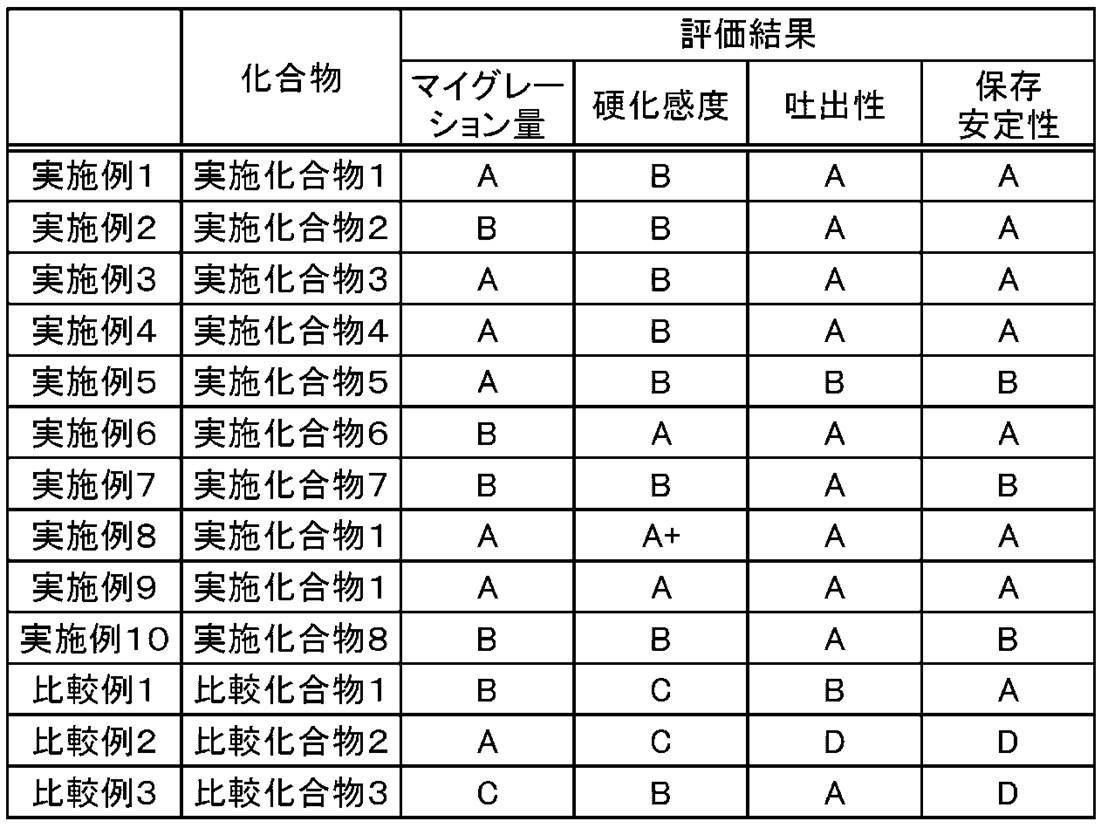
また、本開示に係る光重合開始剤を用いた場合、インク組成物としての保存安定性にも優れる。
また、実施例1~実施例4に示すように、C3対称性、C4対称性等のCn対称性を有するアシルホスフィン化合物を使用した場合、マイグレーション量がより少なくなる。
実施例1~実施例5に示すように、上記mが3以上5以下の整数であるアシルホスフィン化合物を使用した場合、吐出性及び保存安定性により優れる。
実施例1及び実施例6に示すように、式1-1で表されるアシルホスフィン化合物であると、マイグレーション量がより少なく、式2-1で表されるアシルホスフィン化合物であると、硬化感度により優れる。
実施例1、実施例7及び実施例10に示すように、上記Aが、アミノ結合、チオエーテル結合、及び、ハロゲン原子のいずれも有しないm価の基であり、かつ上記Lが、アミノ結合、チオエーテル結合、及び、ハロゲン原子のいずれも有しない2価の連結基、又は、単結合であると、マイグレーション量がより少なく、保存安定性により優れる。
実施例1、実施例8及び実施例9に示すように、重合性化合物として、3-メチル-1,5-ペンタンジオールジアクリレート及びトリエチレングリコールジビニルエーテルを併用した場合、硬化感度により優れる。
本明細書に記載された全ての文献、特許出願、及び、技術規格は、個々の文献、特許出願、及び、技術規格が参照により取り込まれることが具体的かつ個々に記された場合と同程度に、本明細書中に参照により取り込まれる。
Claims (15)
- 下記式1-1又は式2-1で表されるアシルホスフィンオキシド化合物である
光重合開始剤。

式1-1及び式2-1中、Aはm価の基を表し、Lはそれぞれ独立に、単結合、又は、2価の連結基を表し、R1はそれぞれ独立に、炭素数1~8のアルキル基、炭素数6~20のアリール基、又は、炭素数1~4のアルコキシ基を表し、R2及びR3はそれぞれ独立に、アルキル基、アリール基、又は、アルコキシ基を表し、mは3以上の整数を表し、n1はそれぞれ独立に、0~4の整数を表し、n2はそれぞれ独立に、0~5の整数を表す。 - 前記Aが、炭素原子、炭素数1~30でありかつm価の炭化水素基、又は、炭素数1~30でありかつ1価以上の炭化水素基、酸素原子、窒素原子及び硫黄原子よりなる群から選ばれた構造を2以上結合したm価の基である請求項1に記載の光重合開始剤。
- 前記Aが、環構造を有するm価の基、炭素数1~3のm価の炭化水素基、又は、炭素原子である請求項1又は請求項2に記載の光重合開始剤。
- 前記Aが、アミノ結合、チオエーテル結合、及び、ハロゲン原子のいずれも有しないm価の基であり、前記Lが、アミノ結合、チオエーテル結合、及び、ハロゲン原子のいずれも有しない2価の連結基、又は、単結合である請求項1~請求項3のいずれか1項に記載の光重合開始剤。
- 下記式1-2又は式2-2で表されるアシルホスフィンオキシド化合物である請求項1~請求項4のいずれか1項に記載の光重合開始剤。

式1-2及び式2-2中、Aはm価の基を表し、Lはそれぞれ独立に、単結合、又は、2価の連結基を表し、R2及びR3はそれぞれ独立に、アルキル基、アリール基、又は、アルコキシ基を表し、R11~R13はそれぞれ独立に、炭素数1~8のアルキル基、炭素数6~20のアリール基、又は、炭素数1~4のアルコキシ基を表し、mは3以上の整数を表す。 - 前記mが、3~5の整数である請求項1~請求項5のいずれか1項に記載の光重合開始剤。
- 前記アシルホスフィンオキシド化合物が、Cn対称性を有する化合物である請求項1~請求項6のいずれか1項に記載の光重合開始剤。ただし、nは3~24の整数を表す。
- 請求項1~請求項7のいずれか1項に記載の光重合開始剤、及び、
重合性化合物を含む
重合性組成物。 - 記録媒体上に、請求項8に記載の重合性組成物をインクジェット法により吐出する工程、及び、
吐出された重合性組成物に活性放射線を照射して、前記重合性組成物を硬化する工程を含む
インクジェット記録方法。 - 下記式1-1又は式2-1で表される
アシルホスフィンオキシド化合物。
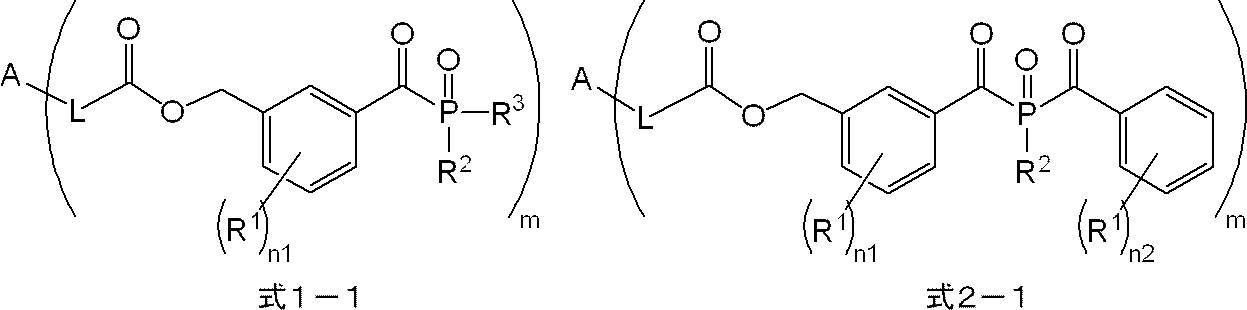
式1-1及び式2-1中、Aはm価の基を表し、Lはそれぞれ独立に、単結合、又は、2価の連結基を表し、R1はそれぞれ独立に、炭素数1~8のアルキル基、炭素数6~20のアリール基、又は、炭素数1~4のアルコキシ基を表し、R2及びR3はそれぞれ独立に、アルキル基、アリール基、又は、アルコキシ基を表し、mは3以上の整数を表し、n1はそれぞれ独立に、0~4の整数を表し、n2はそれぞれ独立に、0~5の整数を表す。 - 前記Aが、環構造を有するm価の基、炭素数1~3のm価の炭化水素基、又は、炭素原子である請求項10に記載のアシルホスフィンオキシド化合物。
- 前記Aが、アミノ結合、チオエーテル結合、及び、ハロゲン原子のいずれも有しないm価の基であり、前記Lが、アミノ結合、チオエーテル結合、及び、ハロゲン原子のいずれも有しない2価の連結基、又は、単結合である請求項10又は請求項11に記載のアシルホスフィンオキシド化合物。
- 下記式1-2又は式2-2で表される請求項10~請求項12のいずれか1項に記載のアシルホスフィンオキシド化合物。

式1-2及び式2-2中、Aはm価の基を表し、Lはそれぞれ独立に、単結合、又は、2価の連結基を表し、R2及びR3はそれぞれ独立に、アルキル基、アリール基、又は、アルコキシ基を表し、R11~R13はそれぞれ独立に、炭素数1~8のアルキル基、炭素数6~20のアリール基、又は、炭素数1~4のアルコキシ基を表し、mは3以上の整数を表す。 - 前記mが、3~5の整数である請求項10~請求項13のいずれか1項に記載のアシルホスフィンオキシド化合物。
- Cn対称性を有する請求項10~請求項14のいずれか1項に記載のアシルホスフィンオキシド化合物。ただし、nは3~24の整数を表す。
Priority Applications (4)
| Application Number | Priority Date | Filing Date | Title |
|---|---|---|---|
| JP2018538266A JP6671485B2 (ja) | 2016-09-07 | 2017-07-21 | 光重合開始剤、重合性組成物、インクジェット記録方法、並びに、アシルホスフィンオキシド化合物 |
| CN201780053228.9A CN109661409B (zh) | 2016-09-07 | 2017-07-21 | 光聚合引发剂、聚合性组合物、喷墨记录方法、以及酰基氧化膦化合物 |
| EP17848429.1A EP3511349B1 (en) | 2016-09-07 | 2017-07-21 | Photoinitiator, polymerizable composition, ink jet recording method, and acylphosphine oxide compound |
| US16/278,714 US10590264B2 (en) | 2016-09-07 | 2019-02-19 | Photopolymerization initiator, polymerizable composition, ink jet recording method, and acylphosphine oxide compound |
Applications Claiming Priority (2)
| Application Number | Priority Date | Filing Date | Title |
|---|---|---|---|
| JP2016174987 | 2016-09-07 | ||
| JP2016-174987 | 2016-09-07 |
Related Child Applications (1)
| Application Number | Title | Priority Date | Filing Date |
|---|---|---|---|
| US16/278,714 Continuation US10590264B2 (en) | 2016-09-07 | 2019-02-19 | Photopolymerization initiator, polymerizable composition, ink jet recording method, and acylphosphine oxide compound |
Publications (1)
| Publication Number | Publication Date |
|---|---|
| WO2018047484A1 true WO2018047484A1 (ja) | 2018-03-15 |
Family
ID=61561785
Family Applications (1)
| Application Number | Title | Priority Date | Filing Date |
|---|---|---|---|
| PCT/JP2017/026560 Ceased WO2018047484A1 (ja) | 2016-09-07 | 2017-07-21 | 光重合開始剤、重合性組成物、インクジェット記録方法、並びに、アシルホスフィンオキシド化合物 |
Country Status (5)
| Country | Link |
|---|---|
| US (1) | US10590264B2 (ja) |
| EP (1) | EP3511349B1 (ja) |
| JP (1) | JP6671485B2 (ja) |
| CN (1) | CN109661409B (ja) |
| WO (1) | WO2018047484A1 (ja) |
Cited By (4)
| Publication number | Priority date | Publication date | Assignee | Title |
|---|---|---|---|---|
| WO2020049378A1 (en) | 2018-09-07 | 2020-03-12 | Igm Resins Italia S.R.L. | Multifunctional bisacylphosphine oxide photoinitiators |
| WO2021095580A1 (ja) * | 2019-11-11 | 2021-05-20 | 富士フイルム株式会社 | 活性エネルギー線硬化型インク及び画像記録方法 |
| WO2024029176A1 (ja) | 2022-08-02 | 2024-02-08 | Kjケミカルズ株式会社 | 光硬化型インクジェット用インク組成物 |
| WO2024047976A1 (ja) | 2022-08-30 | 2024-03-07 | サカタインクス株式会社 | 光硬化型インクジェット用インク組成物 |
Families Citing this family (4)
| Publication number | Priority date | Publication date | Assignee | Title |
|---|---|---|---|---|
| JP6852739B2 (ja) * | 2017-10-10 | 2021-03-31 | Dic株式会社 | 化合物、光重合開始剤、光硬化性組成物、その硬化物、光硬化性インキ及び該インキを用いた印刷物 |
| CN110078761B (zh) * | 2019-04-30 | 2021-06-04 | 同济大学 | 含有酰基氧化膦-二苯乙烯硫鎓盐类化合物及其制备方法和应用 |
| EP4393720A1 (en) | 2022-12-30 | 2024-07-03 | Arkema France | Phosphine oxide-based photoinitiators |
| EP4570811A1 (en) | 2023-12-11 | 2025-06-18 | Arkema France | Polymerizable phosphine oxide-based photoinitiators |
Citations (8)
| Publication number | Priority date | Publication date | Assignee | Title |
|---|---|---|---|---|
| JPS5877890A (ja) * | 1981-08-24 | 1983-05-11 | バスフ アクチェン ゲゼルシャフト | アシルホスフィンオキシド、該化合物を光重合開始剤として含有する光重合可能体 |
| JPH05331217A (ja) * | 1992-05-29 | 1993-12-14 | Sekisui Chem Co Ltd | 光重合性組成物、重合物の製造方法ならびにその重合物 |
| JPH05345790A (ja) * | 1991-09-23 | 1993-12-27 | Ciba Geigy Ag | アルキルビスアシルホスフインオキシド |
| JPH0881481A (ja) * | 1994-09-02 | 1996-03-26 | Ciba Geigy Ag | アルコキシフェニル置換ビスアシルホスフィンオキシド |
| JPH10231340A (ja) * | 1996-12-20 | 1998-09-02 | Takeda Chem Ind Ltd | 光硬化性樹脂組成物およびその製造方法 |
| JPH1192537A (ja) * | 1997-09-17 | 1999-04-06 | Takeda Chem Ind Ltd | 光硬化性樹脂組成物およびその製造方法 |
| JPH11322818A (ja) * | 1998-05-14 | 1999-11-26 | Taiyo Ink Mfg Ltd | 光硬化性組成物 |
| WO2010008077A1 (ja) * | 2008-07-17 | 2010-01-21 | クラレメディカル株式会社 | Led光源に好適な重合性組成物 |
Family Cites Families (4)
| Publication number | Priority date | Publication date | Assignee | Title |
|---|---|---|---|---|
| US6075065A (en) | 1996-12-20 | 2000-06-13 | Takeda Chemical Industries, Ltd. | Photocurable resin composition and a method for producing the same |
| ATE424178T1 (de) | 2005-08-01 | 2009-03-15 | Ivoclar Vivadent Ag | Photopolymerisierbare dentalmaterialien mit bisacylphosphinoxiden als initiator |
| WO2013091521A1 (zh) | 2011-12-20 | 2013-06-27 | 深圳市有为化学技术有限公司 | 经由芳酰环系衍生的多官能团或聚合型酰基膦氧化合物 |
| JP6016768B2 (ja) * | 2013-02-21 | 2016-10-26 | 富士フイルム株式会社 | インク組成物、インクジェット記録方法、及び、高分子開始剤 |
-
2017
- 2017-07-21 CN CN201780053228.9A patent/CN109661409B/zh active Active
- 2017-07-21 WO PCT/JP2017/026560 patent/WO2018047484A1/ja not_active Ceased
- 2017-07-21 JP JP2018538266A patent/JP6671485B2/ja active Active
- 2017-07-21 EP EP17848429.1A patent/EP3511349B1/en active Active
-
2019
- 2019-02-19 US US16/278,714 patent/US10590264B2/en active Active
Patent Citations (8)
| Publication number | Priority date | Publication date | Assignee | Title |
|---|---|---|---|---|
| JPS5877890A (ja) * | 1981-08-24 | 1983-05-11 | バスフ アクチェン ゲゼルシャフト | アシルホスフィンオキシド、該化合物を光重合開始剤として含有する光重合可能体 |
| JPH05345790A (ja) * | 1991-09-23 | 1993-12-27 | Ciba Geigy Ag | アルキルビスアシルホスフインオキシド |
| JPH05331217A (ja) * | 1992-05-29 | 1993-12-14 | Sekisui Chem Co Ltd | 光重合性組成物、重合物の製造方法ならびにその重合物 |
| JPH0881481A (ja) * | 1994-09-02 | 1996-03-26 | Ciba Geigy Ag | アルコキシフェニル置換ビスアシルホスフィンオキシド |
| JPH10231340A (ja) * | 1996-12-20 | 1998-09-02 | Takeda Chem Ind Ltd | 光硬化性樹脂組成物およびその製造方法 |
| JPH1192537A (ja) * | 1997-09-17 | 1999-04-06 | Takeda Chem Ind Ltd | 光硬化性樹脂組成物およびその製造方法 |
| JPH11322818A (ja) * | 1998-05-14 | 1999-11-26 | Taiyo Ink Mfg Ltd | 光硬化性組成物 |
| WO2010008077A1 (ja) * | 2008-07-17 | 2010-01-21 | クラレメディカル株式会社 | Led光源に好適な重合性組成物 |
Non-Patent Citations (1)
| Title |
|---|
| See also references of EP3511349A4 * |
Cited By (7)
| Publication number | Priority date | Publication date | Assignee | Title |
|---|---|---|---|---|
| WO2020049378A1 (en) | 2018-09-07 | 2020-03-12 | Igm Resins Italia S.R.L. | Multifunctional bisacylphosphine oxide photoinitiators |
| WO2021095580A1 (ja) * | 2019-11-11 | 2021-05-20 | 富士フイルム株式会社 | 活性エネルギー線硬化型インク及び画像記録方法 |
| JPWO2021095580A1 (ja) * | 2019-11-11 | 2021-05-20 | ||
| US11926746B2 (en) | 2019-11-11 | 2024-03-12 | Fujifilm Corporation | Active energy ray-curable ink and image recording method |
| JP7455858B2 (ja) | 2019-11-11 | 2024-03-26 | 富士フイルム株式会社 | 活性エネルギー線硬化型インク及び画像記録方法 |
| WO2024029176A1 (ja) | 2022-08-02 | 2024-02-08 | Kjケミカルズ株式会社 | 光硬化型インクジェット用インク組成物 |
| WO2024047976A1 (ja) | 2022-08-30 | 2024-03-07 | サカタインクス株式会社 | 光硬化型インクジェット用インク組成物 |
Also Published As
| Publication number | Publication date |
|---|---|
| EP3511349A1 (en) | 2019-07-17 |
| CN109661409B (zh) | 2021-09-07 |
| EP3511349A4 (en) | 2019-09-18 |
| EP3511349B1 (en) | 2025-09-17 |
| US10590264B2 (en) | 2020-03-17 |
| US20190177508A1 (en) | 2019-06-13 |
| JP6671485B2 (ja) | 2020-03-25 |
| JPWO2018047484A1 (ja) | 2019-03-14 |
| CN109661409A (zh) | 2019-04-19 |
Similar Documents
| Publication | Publication Date | Title |
|---|---|---|
| JP6563028B2 (ja) | 光重合開始剤及びその製造方法、重合性組成物、インクジェット記録方法、並びに、アシルホスフィンオキシド化合物 | |
| JP6016768B2 (ja) | インク組成物、インクジェット記録方法、及び、高分子開始剤 | |
| CN104662107B (zh) | 油墨组合物、喷墨记录方法、印刷物、双酰基氧化膦化合物以及单酰基氧化膦化合物 | |
| JP6671485B2 (ja) | 光重合開始剤、重合性組成物、インクジェット記録方法、並びに、アシルホスフィンオキシド化合物 | |
| JP6246686B2 (ja) | インクジェット記録方法 | |
| JP5860787B2 (ja) | インク組成物、インクジェット記録方法、印刷物、及び、モノアシルホスフィンオキシド化合物 | |
| CN110325601B (zh) | 喷墨用液体组合物以及喷墨记录方法 | |
| WO2018061581A1 (ja) | インクジェット用液体組成物、及び、インクジェット記録方法 | |
| JP6832961B2 (ja) | ラミネート印刷物の製造方法、及び、ラミネート印刷物 | |
| WO2018142819A1 (ja) | インクジェット記録方法、及び、ラミネート印刷物の製造方法 | |
| JP5860786B2 (ja) | インク組成物、インクジェット記録方法、印刷物、及び、ビスアシルホスフィンオキシド化合物 | |
| JP6000208B2 (ja) | インクジェット記録方法 | |
| JP7298141B2 (ja) | 硬化型組成物、組成物収容容器、2次元又は3次元の像の形成方法及び形成装置、硬化物、構造体、並びに成形加工品 | |
| JP2019163382A (ja) | インク組成物、液体吐出装置用インク組成物、像形成装置、及び像形成方法 | |
| JP2016160333A (ja) | インクジェット記録用インク組成物、インクジェット記録方法、及び、印刷物 |
Legal Events
| Date | Code | Title | Description |
|---|---|---|---|
| ENP | Entry into the national phase |
Ref document number: 2018538266 Country of ref document: JP Kind code of ref document: A |
|
| 121 | Ep: the epo has been informed by wipo that ep was designated in this application |
Ref document number: 17848429 Country of ref document: EP Kind code of ref document: A1 |
|
| NENP | Non-entry into the national phase |
Ref country code: DE |
|
| ENP | Entry into the national phase |
Ref document number: 2017848429 Country of ref document: EP Effective date: 20190408 |
|
| WWG | Wipo information: grant in national office |
Ref document number: 2017848429 Country of ref document: EP |