WO2017209028A1 - 美白化粧料、及びそれに含まれるアルブミン系化合物の製造方法 - Google Patents
美白化粧料、及びそれに含まれるアルブミン系化合物の製造方法 Download PDFInfo
- Publication number
- WO2017209028A1 WO2017209028A1 PCT/JP2017/019852 JP2017019852W WO2017209028A1 WO 2017209028 A1 WO2017209028 A1 WO 2017209028A1 JP 2017019852 W JP2017019852 W JP 2017019852W WO 2017209028 A1 WO2017209028 A1 WO 2017209028A1
- Authority
- WO
- WIPO (PCT)
- Prior art keywords
- albumin
- compound
- sulfide
- derivative
- added
- Prior art date
- Legal status (The legal status is an assumption and is not a legal conclusion. Google has not performed a legal analysis and makes no representation as to the accuracy of the status listed.)
- Ceased
Links
Images


Classifications
-
- A—HUMAN NECESSITIES
- A61—MEDICAL OR VETERINARY SCIENCE; HYGIENE
- A61K—PREPARATIONS FOR MEDICAL, DENTAL OR TOILETRY PURPOSES
- A61K8/00—Cosmetics or similar toiletry preparations
- A61K8/18—Cosmetics or similar toiletry preparations characterised by the composition
- A61K8/30—Cosmetics or similar toiletry preparations characterised by the composition containing organic compounds
- A61K8/64—Proteins; Peptides; Derivatives or degradation products thereof
-
- A—HUMAN NECESSITIES
- A61—MEDICAL OR VETERINARY SCIENCE; HYGIENE
- A61Q—SPECIFIC USE OF COSMETICS OR SIMILAR TOILETRY PREPARATIONS
- A61Q19/00—Preparations for care of the skin
- A61Q19/02—Preparations for care of the skin for chemically bleaching or whitening the skin
-
- C—CHEMISTRY; METALLURGY
- C07—ORGANIC CHEMISTRY
- C07K—PEPTIDES
- C07K14/00—Peptides having more than 20 amino acids; Gastrins; Somatostatins; Melanotropins; Derivatives thereof
- C07K14/435—Peptides having more than 20 amino acids; Gastrins; Somatostatins; Melanotropins; Derivatives thereof from animals; from humans
- C07K14/76—Albumins
Definitions
- the present invention relates to a whitening cosmetic and a method for producing an albumin compound contained therein.
- a whitening skin external preparation is known as a whitening cosmetic (Patent Document 1).
- This skin whitening preparation for whitening contains, as an active ingredient, a protein nanoparticle that has been subjected to enzyme cross-linking treatment as necessary, and is encapsulated with a melanin production inhibitor such as glutathione.
- sodium sulfide is known to have a whitening effect by suppressing the production of melanin, and application of sodium sulfide to cosmetics is being studied.
- protein nanoparticles are used for the preparation of the active ingredient contained in the whitening skin external preparation described in Patent Document 1.
- the protein nanoparticles are prepared in a plurality of steps. In order to obtain an active ingredient, it is further necessary to encapsulate a protein nanoparticle with a melanin production inhibitor. Therefore, the preparation of the active ingredient contained in the whitening skin external preparation is complicated.
- the present invention has been made in view of the above problems, and an object of the present invention is to provide a whitening cosmetic composition having excellent stability of active ingredients. Moreover, the objective is to provide the method of manufacturing the active ingredient contained in whitening cosmetics by a simple process.
- the whitening cosmetic composition of the present invention contains an albumin compound.
- the albumin compound is obtained by adding a sulfur atom to albumin or an albumin derivative.
- the albumin compound has a plurality of sulfur atoms per site.
- the production method of the present invention is a method for producing an albumin compound.
- the albumin compound is contained in the whitening cosmetic.
- the production method of the present invention includes a step of adding a sulfide to albumin or an albumin derivative.
- the whitening cosmetic composition of the present invention not only has an excellent whitening effect, but also has excellent stability and safety of active ingredients, and has an odor suitable as a cosmetic composition. Moreover, the active ingredient contained in whitening cosmetics can be manufactured with a simple process by the manufacturing method of this invention.
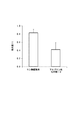
- Experiment 2 it is a bar graph which shows the light absorbency in wavelength 405nm of a cell lysate.
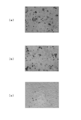
- (A), (b), and (c) are the optical micrographs of B16 mouse melanoma cells after culture in Test Example 2, respectively.
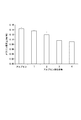
- it is a bar graph which shows the melanin production amount in the B16 mouse
- Test Example 4 it is a bar graph showing the fluorescence intensity of a measurement sample.
- the first embodiment relates to an albumin compound and a method for producing the same.
- the albumin compound is contained in whitening cosmetics as an active ingredient that imparts a melanin production inhibitory effect.
- sulfides such as sodium sulfide are known to have a whitening effect by suppressing the production of melanin, and are attracting attention as an active ingredient in whitening cosmetics.
- a solvent is usually used.
- the sulfide becomes hydrogen sulfide.
- hydrogen sulfide in the solution maintains the ability to suppress the production of melanin, it itself tends to disappear.
- About half of the hydrogen sulfide rapidly disappears as a gas in a solution having a physiological pH (preferable pH for cosmetics).
- Albumin compounds are albumin or albumin derivatives with sulfur atoms added, and have a plurality of sulfur atoms per site.
- the method for producing an albumin compound includes a step of adding a sulfide to albumin or an albumin derivative.
- Albumin or albumin derivatives are so-called components that act as carriers for sulfur atoms.
- albumin or albumin derivative is not particularly limited.
- Albumin may be either serum albumin or recombinant albumin. From the viewpoint of easy availability, serum albumin is suitably used as albumin.
- serum albumin include human serum albumin, bovine serum albumin, or chicken serum albumin. Particularly, human serum albumin is preferable because it has higher safety. In the case of gene recombination, dimer and multimerized albumin are also included.
- albumin derivatives obtained by chemically modifying albumin may be used. Albumin or an albumin derivative may be used alone or in combination of two or more.
- the molecular weight of albumin or albumin derivative is not particularly limited.
- serum albumin it is preferable to use those having 66000 or more and 66500 or less.
- the particle size is preferably about 100 nm.
- Sulfide The type of sulfide is not particularly limited.
- the sulfide include sodium sulfide and allyl sulfide (specifically diallyl sulfide or diallyl disulfide) represented by the general formula: Na 2 Sn (wherein n represents an integer of 1 to 6). ) Or sulfur (for example, sulfur represented by S 8 ).
- sodium sulfide is preferably used because it is easily available.
- sodium polysulfide (a compound in which n represents an integer of 2 to 6 in the above general formula) has a good addition reaction to albumin or an albumin derivative, and the sulfur atom is stable to albumin or an albumin derivative.
- Na 2 S 2 , Na 2 S 3 , or Na 2 S 4 is particularly preferred from the viewpoint of obtaining an albumin compound that exhibits higher stability and superior ability to suppress melanin production.
- One sulfide may be used alone, or two or more sulfides may be used in combination.
- the reaction between albumin or an albumin derivative and sulfide is an addition reaction.
- the reaction ratio of albumin or albumin derivative and sulfide is not particularly limited, but is preferably 0.1: 1 to 0.6: 1 in terms of molar concentration, More preferably, it is 2: 1 to 0.5: 1.
- the amount of albumin or albumin derivative is 0.1 molar or higher with respect to 1 mole of sulfide, unreacted sulfide can be easily removed.
- the substance amount of albumin or an albumin derivative is 0.6 mol or less with respect to 1 mol of sulfide, an albumin compound showing higher stability and more excellent ability to suppress melanin production can be obtained.
- a method of warming albumin or albumin derivative and sulfide or a method of shaking albumin or albumin derivative and sulfide can be employed.
- the method of warming albumin or albumin derivative and sulfide is preferable in that it does not require a special apparatus and allows the reaction to proceed more easily.
- albumin or albumin derivative and sulfide are added by adjusting the reaction temperature and reaction time in a buffer solution adjusted to pH by adding sulfide to albumin or albumin derivative. And react.
- buffer used in the heating method there are no particular restrictions on the type of buffer used in the heating method, and examples include phosphate buffer, Tris-HCl buffer, phthalate buffer, citrate buffer, succinate buffer, and acetate buffer. It is done.
- the pH of the buffer solution is preferably 7.0 or more and 7.8 or less, more preferably 7.2 or more and 7.6 or less, from the viewpoint that the reaction between albumin or an albumin derivative and sulfide is easily promoted. preferable.
- the reaction temperature between albumin or albumin derivative and sulfide is preferably 30 ° C. or higher and 50 ° C. or lower, and more preferably 32 ° C. or higher and 45 ° C. or lower.
- the reaction temperature is 30 ° C. or higher, the reaction between albumin or an albumin derivative and sulfide is easily promoted.
- the reaction temperature is 50 ° C. or lower, albumin or an albumin derivative does not have a possibility of degeneration such as deterioration or aggregation.
- the reaction time of albumin or albumin derivative and sulfide is preferably 4 hours or more and 10 hours or less from the viewpoint that the reaction between albumin or albumin derivative and sulfide is easily promoted. More preferably, it is 8 hours or less.
- the sulfide is added to albumin or albumin derivative, and the shaking speed and reaction time are adjusted in a buffer solution adjusted to pH to adjust the albumin or albumin derivative and sulfide. React.
- the type of the buffer solution is not particularly limited in the shaking method, and the buffer solution exemplified in the above heating method can be used.
- the pH of the buffer solution is preferably 7.0 or more and 7.8 or less, and more preferably 7.2 or more and 7.6 or less, as in the above-described heating method.
- the shaking speed of albumin or albumin derivative and sulfide is not particularly limited as long as the reaction between albumin or albumin derivative and sulfide is promoted, and is about 30 times / minute or more and about 180 times / minute or less. It is preferable to adjust.
- the reaction time of albumin or albumin derivative and sulfide is preferably 4 hours or more and 10 hours or less from the viewpoint that the reaction between albumin or albumin derivative and sulfide is easily promoted. More preferably, it is 8 hours or less.
- a general shaker For shaking of albumin or albumin derivative and sulfide, for example, a general shaker can be used, and thus, for example, it may be appropriately adjusted so as to achieve the above-mentioned shaking speed.
- albumin or an albumin derivative can be subjected to addition reaction with sulfide by the above-described heating method or shaking method.
- sulfide for example, an oxidizing substance (specifically, nitric oxide or hydrogen peroxide), or a metal
- an oxidizing substance specifically, nitric oxide or hydrogen peroxide
- a metal When sulfide is added to albumin or an albumin derivative in the presence of ions, the addition reaction is promoted and the reaction efficiency is improved.
- a metal ion may be used individually by 1 type, and may be used in combination of 2 or more type.
- divalent metal ions are preferable because they are more effective and easy to handle. Examples of the divalent metal ion include Fe 2+ , Mg 2+ , Ca 2+ , or Cu 2+ .
- the ratio of metal ion to sulfide is preferably 0.2: 1 to 2: 1 in terms of molar concentration ratio. More preferably, it is 5: 1 to 1.5: 1.
- the amount of the metal ion substance is 0.2 mol concentration or more with respect to 1 mol of sulfide, the effect of improving the reaction efficiency is sufficiently exhibited. If the amount of metal ions is 2 mol or less with respect to 1 mol of sulfide, there is no fear of inhibition of the addition reaction due to an oxidation reaction such as a typical Fenton reaction caused by excess metal ions.
- hot spring water when performing addition reaction in presence of a metal ion, for example, hot spring water can be used.
- Hot spring water generally contains a plurality of divalent metal ions as described above. Therefore, the hot spring water is appropriately selected according to the metal ion species contained, and for example, the use ratio of the hot spring water to the sulfide is adjusted so that the ratio of the metal ion and the sulfide is within the above-mentioned molar concentration ratio range. Is preferred.
- the hot spring water is appropriately selected according to the contained metal ion species, and the use ratio of the hot spring water to the sulfide is determined in consideration of the ratio of the sulfide to the metal ion, and then the pH adjusted buffer solution and hot spring are determined. Mix with water.
- the sulfide can be added to albumin or the albumin derivative in the presence of a metal ion.
- the gel is filtered (for example, by using gel filtration column chromatography) to remove unreacted sulfide and Can be obtained by purifying the albumin compound.
- albumin-based compound An albumin-based compound is obtained by adding a sulfur atom to albumin or an albumin derivative, and has a plurality of sulfur atoms per site.
- albumin or an albumin derivative itself has a cysteine-derived SH group, and when the SH group of cysteine is oxidized, it is a cysteine adduct covalently bonded by an SS bond.
- albumin or cysteine-added albumin having only an SH group and derivatives thereof do not exhibit a melanin production inhibitory action. Therefore, even if such albumin or albumin derivative is blended, it is not possible to obtain a whitening cosmetic that exhibits an excellent whitening effect.
- a sulfur atom is further added to a sulfur atom in the SH group and the SS bond in albumin or an albumin derivative to form, for example, an SSH group, an SSSH group, an SS—S—S bond, or the like.
- albumin or albumin derivatives when a sulfur atom is further added to the sulfur atom in this way, multiple sulfur atoms are supported by the carrier, suppressing melanin production that was not observed with albumin or albumin derivatives The effect is recognized.
- an albumin compound in which a sulfur atom is further added to a sulfur atom (hereinafter also referred to as polysulfur addition) maintains a stable state even at physiological pH.
- the albumin compound preferably has 2 or more and 6 or less sulfur atoms per site, more preferably 2 or more and 4 or less sulfur atoms per site. If no sulfur atom is added to albumin or an albumin derivative and only one sulfur atom is present per site in the albumin compound, as described above, the melanin production inhibitory action is not recognized. When the albumin compound has 6 or less sulfur atoms per site, the transfer reaction of sulfur atoms hardly occurs, and a sufficient melanin production inhibitory effect is imparted to the whitening cosmetics of albumin compounds. Is easy to apply. The presence or absence of the sulfur atom transfer reaction in the albumin compound is not clear in detail, but it may be caused by the environment (temperature, humidity, etc.) in which the albumin compound exists. Therefore, the number of sulfur atoms at one site of the albumin compound is preferably 6 or less as described above, but is not limited thereto.
- albumin or albumin derivatives the location and number of SH groups and SS bonds are specified. However, the position and number of polysulfur addition sites in albumin compounds are not specified. Although details are not clear, it is considered that the position and number of the polysulfur addition sites are appropriately changed according to the reaction conditions of the addition reaction. In addition, there may be a case where the position of the polysulfur addition site in the albumin compound changes with respect to the position of the SH group or SS bond in albumin or an albumin derivative.
- the number of sulfur atoms present at each polysulfur addition site may be the same or different at each site. That is, for example, the same number of sulfur atoms may be added to each SH group in albumin or an albumin derivative, and a different number of sulfur atoms may be added depending on each SH group.
- the detection of sulfur atoms (sulfen sulfur) in albumin compounds can be performed, for example, by the fluorescent probe method.
- a sulfurene sulfur compound is a general term for molecules containing sulfur sandwiched between sulfur atoms such as SS * -S and SS * -S * -S.
- a fluorescent probe for detecting sulfurene sulfur is used.
- the fluorescent probe for detecting sulfen sulfur a non-destructive fluorescent probe capable of detecting sulfen sulfur without destroying cells or tissues is preferable.
- Examples of such a nondestructive fluorescent probe for detecting sulfurene sulfur include SSP2 and SSP4.
- SSP2 and SSP4 have one molecule (SSP2) or two molecules (SSP4) of thiosalicylic acid having a nucleophilic functional group, and are composed of fluorescein which is a fluorescent dye.
- the albumin type compound which concerns on 1st embodiment, and its manufacturing method were demonstrated.
- the albumin compound obtained by the production method according to the first embodiment has an excellent melanin production inhibitory effect, stability and safety, and has an odor suitable as a cosmetic ingredient.
- the production method according to the first embodiment can produce such an albumin compound in a simple process.
- the second embodiment relates to a whitening cosmetic.
- the whitening cosmetic contains an albumin compound.
- the albumin compound is an albumin compound according to the first embodiment, has an excellent melanin production inhibitory effect, stability and safety, and has an odor suitable as a cosmetic ingredient.
- the albumin compound contained in the whitening cosmetic may be one type, or two or more different types may be used in combination as appropriate.
- the blending amount of the albumin compound in the whitening cosmetic composition can be appropriately adjusted according to the type (form) of the target whitening cosmetic composition and is not particularly limited.
- the blending amount of the albumin compound is, for example, preferably 0.1 parts by mass or more and 20 parts by mass or less, and 0.12 parts by mass or more and 0.3 parts by mass in terms of solid content with respect to 100 parts by mass of the whitening cosmetic. More preferably, it is at most part by mass.
- the blending amount of the albumin compound is 0.133 parts by mass or more, the whitening effect by the albumin compound is more sufficiently exhibited.
- additives generally used in cosmetics can be appropriately blended into the whitening cosmetic.
- additives include fats and oils, surfactants, moisturizers, whitening agents, pH adjusters, thickeners, preservatives, antioxidants, ultraviolet absorbers, pigments, detergents, emulsifiers, excipients, or A fragrance is mentioned.
- fats and oils examples include vegetable fats and oils (specifically, liquid paraffin, paraffin, cetanol, avocado oil, olive oil, jojoba oil, and coconut oil), animal fats and oils (specifically, beef fat, pork fat, horses). Fat, turtle oil, mink oil, perserine oil, or squalane), or synthetic fats and oils (specifically, methylpolysiloxane, behenyl alcohol, glyceryl tricaprycaprate, glyceryl trioctanoate, glycerin triisopalmitate, or silicone oil) Is mentioned.
- vegetable fats and oils specifically, liquid paraffin, paraffin, cetanol, avocado oil, olive oil, jojoba oil, and coconut oil
- animal fats and oils specifically, beef fat, pork fat, horses.
- synthetic fats and oils specifically, methylpolysiloxane, behenyl alcohol, glyceryl
- the surfactant examples include an anionic surfactant (specifically, sodium lauryl sulfate, triethanolamine lauryl sulfate, or diethanolamide lauric acid), a cationic surfactant (specifically, stearyl). Trimethylammonium chloride, cetyltrimethylammonium chloride, or benzalkonium chloride) or a nonionic surfactant (specifically, glyceryl monostearate, sorbitan monostearate, polyoxyethylene (20) sorbitan monostearate, Polyoxyethylene hydrogenated castor oil, sucrose ester, or fatty acid amide).
- an anionic surfactant specifically, sodium lauryl sulfate, triethanolamine lauryl sulfate, or diethanolamide lauric acid
- a cationic surfactant specifically, stearyl
- a nonionic surfactant specifically
- humectant for example, a synthetic humectant (specifically, glycerin, propylene glycol, 1,3-butylene glycol, pyrrolidone carboxylate soda, or pantotheine-S-sulfonate), or a natural humectant (specifically Include hyaluronic acid, collagen, elastin, placenta extract, royal jelly, microbial fermentation broth, chitin, chitosan, or pectin).
- a synthetic humectant specifically, glycerin, propylene glycol, 1,3-butylene glycol, pyrrolidone carboxylate soda, or pantotheine-S-sulfonate
- a natural humectant specifically Include hyaluronic acid, collagen, elastin, placenta extract, royal jelly, microbial fermentation broth, chitin, chitosan, or pectin.
- whitening agent examples include compounds other than albumin compounds such as kojic acid, ascorbic acid, or placenta extract.
- Examples of the pH adjuster include citric acid and sodium citrate.
- thickener examples include carboxymethylcellulose, hydroxymethylcellulose, hydroxyethylcellulose, carboxyvinyl polymer, polyvinyl alcohol, tragacanth gum, sodium alginate, or carrageenan.
- preservative examples include paraoxybenzoic acid ester (specifically, methylparaben, ethylparaben, propylparaben, or butylparaben), phenoxyethanol, ethanol, or dehydroacetic acid.
- paraoxybenzoic acid ester specifically, methylparaben, ethylparaben, propylparaben, or butylparaben
- phenoxyethanol specifically, methylparaben, ethylparaben, propylparaben, or butylparaben
- dehydroacetic acid examples include paraoxybenzoic acid ester (specifically, methylparaben, ethylparaben, propylparaben, or butylparaben), phenoxyethanol, ethanol, or dehydroacetic acid.
- antioxidants examples include vitamin E, butyloxytoluene (BHT), and butyloxyanizole (BHA).
- Examples of the ultraviolet absorber include urocanic acid, ethyl urocanate, oxybenzone, octyl salicylate, dihydroxybenzophenone, paraaminobenzoic acid, octylparadimethylaminobenzoate, and octyl methoxycinnamate.
- pigment examples include bengara, yellow iron oxide, black iron oxide, titanium oxide, nylon powder, sericite, mica, and talc.
- cleaning agent examples include sodium lauryl sulfate.
- Examples of the emulsifier include soybean lecithin oil.
- excipients examples include sodium sulfate.
- the blending amount of the additive can be appropriately adjusted according to the type (form) of the targeted whitening cosmetic, and is not particularly limited as long as the effect of the albumin compound is not hindered.
- the method of preparing the whitening cosmetic there is no particular limitation on the method of preparing the whitening cosmetic, and a general method of preparing the cosmetic can be adopted. For example, it may be determined appropriately according to the form described later.
- whitening cosmetics There are no particular restrictions on the form of whitening cosmetics. Considering the excellent whitening effect of whitening cosmetics, examples of whitening cosmetics include basic cosmetics (specifically, creams, emulsions, lotions, face wash, or packs) or makeup cosmetics (specifically Lipstick, powder foundation, or liquid foundation).
- basic cosmetics specifically, creams, emulsions, lotions, face wash, or packs
- makeup cosmetics specifically Lipstick, powder foundation, or liquid foundation.
- the whitening cosmetic according to the second embodiment has been described above.
- the whitening cosmetic according to the second embodiment includes an albumin compound having an melanin production inhibitory effect, stability and safety, and an odor suitable for cosmetics as an active ingredient.
- the whitening cosmetic composition according to the second embodiment suppresses the expression of stains, buckwheat and the like due to accumulation of melanin, improves dullness, and maintains white and beautiful skin.
- Production Example 1 (Production of albumin compound) Na 2 S (78 ⁇ g, 1 mM) was added to defatted human serum albumin (molecular weight: 66,500, 20 mg, 300 ⁇ M) in phosphate buffer (pH 7.4), and the mixture was heated to 37 ° C. and reacted for 7 hours. A sulfur atom was added to human serum albumin.
- the gel was filtered under the following conditions to remove unreacted sulfide to obtain the target albumin compound-1 (9.5 mg). [Gel filtration conditions] Mobile phase: Phosphate buffer flow rate: 10 mL / min Temperature: 25 ° C.
- Production Examples 2 to 4 (Production of albumin compound) Instead of Na 2 S (78 ⁇ g, 1 mM), Na 2 S 2 (110 ⁇ g, 1 mM, Production Example 2), Na 2 S 3 (142 ⁇ g, 1 mM, Production Example 3), or Na 2 S 4 (174 ⁇ g, 1 mM, In the same manner as in the production of albumin compound-1, except that production example 4) was used, albumin compound-2 (9.4 mg, production example 2), albumin compound-3 (9.5 mg, production example 3) ) Or albumin compound-4 (10.5 mg, Production Example 4).
- Test Example 1 (Detection of sulfen sulfur) Sulphen sulfur was detected by a fluorescent probe method. SSP2 (fluorescent dye: fluorescein) was used as a fluorescent probe for detecting sulfurene sulfur.
- albumin compounds -1 to 4 was added to a solution obtained by dissolving hexadecyltrimethylammonium bromide (1 mM) in a phosphate buffer (pH 7.4) so that the molar concentration was 20 ⁇ M. Prepared.
- This sample and a fluorescent indicator in which SSP2 (5 ⁇ M) was dissolved in dimethyl sulfoxide were reacted at room temperature (25 ° C.) for 10 minutes, and then a spectrofluorimeter (manufactured by JASCO Corporation, FP-8200) was used.
- the fluorescence intensity of the reaction product (excitation wavelength: 457 nm, fluorescence wavelength: 490 to 580 nm) was measured.
- the fluorescence intensity of each reaction product is shown below together with the fluorescence intensity of SSP2.
- albumin compounds -1 to 4 show a fluorescence intensity of about 2 to 7 times the fluorescence intensity of SSP2 due to the reaction with SSP2. Thus, it was confirmed that all of albumin compounds -1 to 4 have sulfurene sulfur in the molecule. Therefore, it can be seen that all of albumin compounds -1 to 4 are those obtained by adding a sulfur atom to human serum albumin and having a plurality of sulfur atoms per site. It can also be seen that all of albumin compounds -1 to 4 are stable at physiological pH.
- Test Example 2 (Confirmation of melanin production inhibitory effect) 2-1. Absorbance measurement and optical micrograph photography B16 mouse melanoma cells were seeded in a 24-well plate at 2.5 ⁇ 10 4 cells / well, and Dulbecco's modified Eagle medium (hereinafter referred to as DMEM (+)). Pre-culture was performed for 24 hours under the conditions of 37 ° C. and 5% CO 2 . Next, the precultured medium was replaced with DMEM (+) (albumin compound: 20 ⁇ M, tyrosine: 0.4 mM, NH 4 Cl: 10 mM) supplemented with albumin compound-2, and further at 37 ° C., 5% CO 2. The cells were cultured for 72 hours under the conditions of 2 .
- DMEM (+) albumin compound: 20 ⁇ M, tyrosine: 0.4 mM, NH 4 Cl: 10 mM
- the cultured B16 mouse melanoma cells adhering to the wells were washed with a phosphate buffer (pH 7.4), and then 200 ⁇ L of an aqueous sodium hydroxide solution (1N) was added. This was incubated at 60 ° C. for 1 hour to dissolve the cultured B16 mouse melanoma cells, and the cell lysate was collected.
- the absorbance of the cell lysate at a wavelength of 405 nm was measured using a spectrophotometer (Model 680 ⁇ plate reader, manufactured by Bio-Rad Co., Ltd.). The result is shown in FIG.
- 405 nm is an absorption wavelength of melanin.
- FIG. 1 is a bar graph showing the absorbance at a wavelength of 405 nm of a cell lysate cultured in DMEM (+) added with phosphate buffer and a cell lysate cultured in DMEM (+) added with albumin compound-2. It is.
- the vertical axis represents absorbance (no unit), and the smaller the absorbance, the less melanin production.
- the absorbance of albumin compound-2 at a wavelength of 405 nm is about 1 ⁇ 2 of the absorbance at a wavelength of 405 nm of a phosphate buffer as a control.
- FIG. 2 (a) is a SEM photograph of B16 mouse melanoma cells cultured in DMEM (+) to which a phosphate buffer is added
- FIG. 2 (b) is a diagram of DMEM (+) to which a commercially available whitening lotion is added.
- FIG. 2C is an SEM photograph of B16 mouse melanoma cells cultured in DMEM (+) supplemented with albumin compound-2. In the SEM photograph of FIG. 2, black spot-like spots are melanin production sites.
- albumin compounds having a sulfur atom added to albumin and having a plurality of sulfur atoms per site are extremely excellent in melanin production inhibitory effect.
- DMEM (+) to which an albumin compound was added
- a culture prepared with DMEM (+) to which defatted human serum albumin used in Production Examples 1 to 4 was added was prepared as a control.
- FIG. 3 is a bar graph showing the amount of melanin produced in B16 mouse melanoma cells after culture in each cell lysate.
- the vertical axis represents the amount of melanin production (mg) in the cell lysate (1 mL).
- albumin compounds -1 to 4 produced less melanin than control defatted human serum albumin. Thereby, it is understood that an albumin compound having a plurality of sulfur atoms per site is superior in melanin production inhibitory effect as compared with albumin.
- albumin compound-2, albumin compound-3, and albumin compound- 4 obtained by addition reaction of defatted human serum albumin with Na 2 S 2 , Na 2 S 3 , and Na 2 S 4 , respectively, produced melanin.
- the amount is very small.
- an albumin compound obtained by adding sodium polysulfide such as Na 2 S 2 , Na 2 S 3 , or Na 2 S 4 to albumin is more excellent in melanin production inhibitory effect. I understand that.
- Test Example 3 (Measurement of protein concentration) B16 mouse melanoma cells cultured by the same method as in “2-2. Measurement of melanin production amount” in Test Example 2 described above were washed twice or more with physiological saline, and water was absorbed from the wells as much as possible. After adding 200 ⁇ L of sodium hydroxide thereto, the cell extract was transferred to a microtube and incubated at 60 ° C. for 2 hours. The protein solution of the supernatant after incubation was collected in a new microtube and used as a sample.
- BSA bovine serum albumin
- the background absorbance at a wavelength of 540 nm was set to 0.00.
- the absorbance of each standard at a wavelength of 540 nm was measured to create a standard line.
- the protein concentration of each sample was determined using a standard standard line. The protein concentration of each sample is shown below.
- Test Example 4 (Confirmation of effects by metal ions) 4-1. Detection of Sulfen Sulfur First, measurement samples 1a and 2a were prepared. A measurement sample 1a was prepared by dissolving defatted human serum albumin (20 mg, 300 ⁇ M) in a mixed solution of a phosphate buffer (pH 7.4) and ferric chloride (Fe 3+ concentration: 1 mM). A measurement sample 2a was prepared by dissolving defatted human serum albumin (20 mg, 300 ⁇ M) in a mixed solution of a phosphate buffer and copper chloride (Cu 2+ concentration: 1 mM).
- measurement samples 1b and 2b were prepared.
- a mixture of phosphate buffer (pH 7.4) and ferric chloride (Fe 3+ concentration: 1 mM) Na 2 S (78 ⁇ g, 1 mM) was added to defatted human serum albumin (20 mg, 300 ⁇ M).
- the reaction was carried out for 7 hours after heating to 0 ° C. to add sulfur atoms to human serum albumin.
- the gel was filtered on the same conditions as manufacture example 1, the unreacted sulfide was removed, and the measurement sample 1b was prepared.
- a measurement sample 2b was prepared in the same manner as the measurement sample 1b except that it was used.
- FIG. 4 is a bar graph showing the fluorescence intensities of the measurement samples 1a and 2a and the measurement samples 1b and 2b.
- the vertical axis represents the fluorescence intensity (no unit).
- the fluorescence intensity of the measurement sample 1b is higher than the fluorescence intensity of the measurement sample 1a
- the fluorescence intensity of the measurement sample 2b is higher than the fluorescence intensity of the measurement sample 2a.
- the difference between the fluorescence intensity of the measurement sample 2b and the fluorescence intensity of the measurement sample 2a is much larger than the difference between the fluorescence intensity of the measurement sample 1b and the fluorescence intensity of the measurement sample 1a.
- B16 mouse melanoma cells were seeded in a 24-well plate at 2.5 ⁇ 10 4 cells / well and pre-cultured with DMEM (+) at 37 ° C. under 5% CO 2 for 24 hours.
- the precultured medium was replaced with DMEM (+) (albumin compound: 20 ⁇ M, tyrosine: 0.4 mM, NH 4 Cl: 10 mM) added with any of albumin compounds-2A to 2J, and 37 ° C., and 72 hours culture under the conditions of 5% CO 2.
- DMEM (+) to which any of albumin compounds -2A to 2J was added
- a culture cultured in DMEM (+) to which defatted human serum albumin used in Production Example 1 was added was prepared as a control. did.
- DMEM (+) to which any of albumin compounds -2A to 2J was added those cultured in DMEM (+) to which albumin compound -2 (produced without hot spring water) was added were also used. Prepared.
- the cell lysate was collected in the same manner as in “2-2. Measurement of melanin production” in Test Example 2 described above, and “2-1. Measurement of absorbance and photography of optical micrographs in Test Example 2” above.
- the absorbance at a wavelength of 405 nm of the cell lysate was measured using the same spectrophotometer as used in the above, and the amount of melanin produced in the cultured B16 mouse melanoma cells was calculated. The result is shown in FIG.
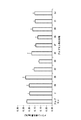
- FIG. 5 is a bar graph showing the amount of melanin produced in B16 mouse melanoma cells after culture in each cell lysate.
- the vertical axis represents the absorbance (450 nm) in the cell lysate (1 mg / mL).
- albumin compounds -2A to 2J albumin compounds -2C to 2E and 2F to 2J have a very small amount of melanin production compared to control defatted human serum albumin. Compared with albumin compound-2 produced without hot spring water, melanin production is very small. As a result, when sodium sulfide is reacted with human serum albumin in the presence of hot spring water containing various metal ions, a sulfur atom is added more sufficiently, and an albumin compound that is further excellent in melanin production suppression effect is obtained. I understand that.
- Test Example 5 (Confirmation of safety) First, a whitening cosmetic containing an albumin compound was formulated. Each component other than the following albumin compound was prepared so as to have the following blending amount (in terms of solid content), and then heated to 50 ° C. and stirred and mixed until a uniform state was obtained. After the mixture was cooled to room temperature (25 ° C.) and further mixed with an albumin compound, Cream A was obtained.
- Component Blending amount (parts by mass) Albumin compound-2 0.133 Emulsifying wax 5 Jojoba oil 15 Purified water remaining amount (total) 100
- Cream B was obtained in the same manner as Cream A, except that Albumin Compound-2D was added instead of Albumin Compound-2. Further, a control cream was obtained in the same manner as Cream A except that the above-mentioned albumin compound-2 was not blended.
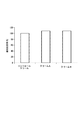
- FIG. 6 is a bar graph showing cell viability in each cream.
- the vertical axis represents the cell viability (%).
- a cell survival rate exceeds 50%, it is judged that there is no skin irritation.
- both the cream A and the cream B have a cell viability exceeding 50%, as in the control cream.
- both the albumin compound-2 produced without hot spring water and the albumin compound-2D produced in the presence of hot spring water have no skin irritation and are excellent in safety.
- albumin compound-2 and albumin compound-2D have no hydrogen sulfide odor and no inappropriate odor. Therefore, neither cream A containing albumin compound-2 nor cream B containing albumin compound-2D has an inappropriate odor.
- Test Example 6 Measurement of intracellular ROS and NO
- the fluorescence intensity based on intracellular reactive oxygen (ROS) and nitric oxide (NO) was measured using fluorescent reagents CM-H 2 DCF-DA and CM-H 2 DCF-DA.
- B16 mouse melanoma cells were seeded in a 96-well plate at 1 ⁇ 10 4 cells / well, and pre-cultured with DMEM (+) at 37 ° C. and 5% CO 2 for 24 hours.
- Fluorescent reagent CM-H 2 DCF-DA was added to the medium to a concentration of 5 ⁇ M, reacted at 37 ° C. for 30 minutes, and taken up into cells. After the reaction, the supernatant was removed, and then albumin compound-4 was added. A medium in which the same operation was performed was prepared as a sample to which phosphate buffer (pH 7.4) and defatted human serum albumin were added and used as a control. Each sample was irradiated with ultraviolet light having a wavelength of 254 nm for 10 minutes. Then, the excitation light of wavelength 485nm was irradiated and the fluorescence intensity of wavelength 535nm was measured.
- the fluorescent reagent DAF-FM-DA was added to the medium to a concentration of 10 ⁇ M, reacted at 37 ° C. for 30 minutes, and taken up into the cells to obtain a suspension sample for measuring nitric oxide (NO).
- the medium was replaced with albumin compound-4 solution.
- Samples substituted with phosphate buffer (pH 7.4) and defatted human serum albumin solution in the same medium were prepared and used as controls. These samples were irradiated with ultraviolet rays having a wavelength of 254 nm for 10 minutes. About the obtained sample, the excitation light of wavelength 485nm was irradiated, and the fluorescence intensity of wavelength 535nm was measured.
- FIG. 7 (a) and FIG. 7 (b) are bar graphs showing the average fluorescence intensity resulting from intracellular active oxygen and nitric oxide, respectively. It shows that there are few active oxygen (ROS) and nitric oxide (NO) contained in a cell, so that fluorescence intensity is small.
- ROS active oxygen
- NO nitric oxide
- FIG. 8 is a schematic diagram showing a mechanism for explaining the generation mechanism of melanin generation. Skin melanin is thought to occur as follows.
- tyrosine in the skin is converted to dopa through the oxidase tyrosinase.
- Dopa is further converted to dopaquinone by the action of tyrosinase.
- Dopaquinone is highly reactive, undergoes various reactions in the body, and finally produces stable melanin, which causes browning of the skin.
- tyrosinase is activated by intracellular reactive oxygen (ROS) and nitric oxide (NO). Although active oxygen and nitric oxide increase by ultraviolet rays, if active oxygen and nitric oxide can be reduced, it is considered that activation of tyrosinase can be suppressed and generation of melanin can be suppressed.
- ROS reactive oxygen
- NO nitric oxide
- the albumin compound to which sulfur atoms are added suppresses the generation of active oxygen and nitric oxide, thereby reducing the generation of melanin and whitening. It is thought that there is an effect.
- the whitening cosmetic according to the present invention can be suitably used as a basic cosmetic or a makeup cosmetic.
Landscapes
- Health & Medical Sciences (AREA)
- Life Sciences & Earth Sciences (AREA)
- Chemical & Material Sciences (AREA)
- General Health & Medical Sciences (AREA)
- Animal Behavior & Ethology (AREA)
- Veterinary Medicine (AREA)
- Public Health (AREA)
- Organic Chemistry (AREA)
- Dermatology (AREA)
- Genetics & Genomics (AREA)
- Medicinal Chemistry (AREA)
- Molecular Biology (AREA)
- Proteomics, Peptides & Aminoacids (AREA)
- Biophysics (AREA)
- Zoology (AREA)
- Toxicology (AREA)
- Biochemistry (AREA)
- Gastroenterology & Hepatology (AREA)
- Birds (AREA)
- Epidemiology (AREA)
- Cosmetics (AREA)
Abstract
美白化粧料は、アルブミン系化合物を含む。アルブミン系化合物は、アルブミンまたはアルブミン誘導体に硫黄原子が付加したものである。アルブミン系化合物は、1部位につき複数個の硫黄原子を有する。アルブミン系化合物の製造方法は、アルブミンまたはアルブミン誘導体に硫化物を付加反応させる工程を含む。アルブミン系化合物は、美白化粧料に含まれる。
Description
本発明は、美白化粧料、及びそれに含まれるアルブミン系化合物の製造方法に関する。
美白化粧品として、例えば、美白用皮膚外用剤が知られている(特許文献1)。この美白用皮膚外用剤は、必要に応じて酵素架橋処理を施したタンパク質ナノ粒子に、グルタチオン等のメラニン生成抑制剤を内包させたものを、有効成分として含む。
また、硫化ナトリウムは、メラニンの産生を抑制して美白効果を奏することが知られており、硫化ナトリウムの化粧品への応用が検討されている。
特許文献1に記載の美白用皮膚外用剤に含まれる有効成分の調製には、上述のとおり、タンパク質ナノ粒子が用いられる。このタンパク質ナノ粒子は、複数の工程にて調製される。有効成分を得るには、さらに、タンパク質ナノ粒子にメラニン生成抑制剤を内包させる必要がある。よって、美白用皮膚外用剤に含まれる有効成分の調製は煩雑である。
一方、硫化ナトリウム(Na2S)は、溶剤に溶解させて溶液の状態にすると、硫化水素(H2S)となり、生理的pHでは、その約半数が速やかに気体となって消失してしまう。したがって、硫黄原子の担体として有用な物質を見出し、安定した状態でメラニン産生抑制成分(有効成分)が含まれた化粧品を開発することが待ち望まれている。
本発明は上記課題に鑑みてなされたものであり、その目的は、有効成分の安定性に優れた美白化粧料を提供することである。また、その目的は、美白化粧料に含まれる有効成分を簡易な工程で製造する方法を提供することである。
本発明の美白化粧料は、アルブミン系化合物を含む。前記アルブミン系化合物は、アルブミンまたはアルブミン誘導体に硫黄原子が付加したものである。前記アルブミン系化合物は、1部位につき複数個の硫黄原子を有する。
本発明の製造方法は、アルブミン系化合物の製造方法である。前記アルブミン系化合物は、前記美白化粧料に含まれる。本発明の製造方法は、アルブミンまたはアルブミン誘導体に硫化物を付加反応させる工程を含む。
本発明の美白化粧料は、美白効果に優れるのは勿論のこと、有効成分の安定性及び安全性に優れ、化粧料として適した匂いを有する。また、本発明の製造方法により、美白化粧料に含まれる有効成分を簡易な工程で製造することができる。
以下、本発明の実施形態について詳細に説明する。本発明は、以下の実施形態に何ら限定されるものではなく、本発明の目的の範囲内で、適宜変更を加えて実施できる。なお、説明が重複する箇所については、適宜説明を省略する場合があるが、発明の要旨を限定するものではない。なお、有機化合物名の後に「系」を付けて、有機化合物及びその誘導体を包括的に総称する場合がある。
<第一実施形態:アルブミン系化合物及びその製造方法>
第一実施形態は、アルブミン系化合物及びその製造方法に関する。アルブミン系化合物は、メラニン産生抑制効果を付与する有効成分として、美白化粧料に含まれる。
第一実施形態は、アルブミン系化合物及びその製造方法に関する。アルブミン系化合物は、メラニン産生抑制効果を付与する有効成分として、美白化粧料に含まれる。
上述のとおり、硫化ナトリウム等の硫化物は、メラニンの産生を抑制して美白効果を奏することが知られており、美白化粧料の有効成分として注目されている。化粧料の調製には、通常、溶剤が使用されるが、硫化物を溶剤に溶解させた溶液中で、硫化物は硫化水素となる。溶液中の硫化水素は、メラニンの産生を抑制する能力を維持しているものの、それ自身が消失し易い。硫化水素は、生理的pH(化粧料の好適なpH)の溶液中では、その約半数が速やかに気体となって消失してしまう。
そこで、このように消失し易い硫化水素ではなく、安定した状態のアルブミン系化合物を調製し、有効成分として美白化粧料に配合することを検討した。
アルブミン系化合物は、アルブミンまたはアルブミン誘導体に硫黄原子が付加したものであり、1部位につき複数個の硫黄原子を有する。アルブミン系化合物の製造方法は、アルブミンまたはアルブミン誘導体に硫化物を付加反応させる工程を含む。
1.アルブミンまたはアルブミン誘導体
アルブミンまたはアルブミン誘導体は、いわゆる、硫黄原子の担体として作用する成分である。
アルブミンまたはアルブミン誘導体は、いわゆる、硫黄原子の担体として作用する成分である。
アルブミンまたはアルブミン誘導体の種類は、特に制限されない。アルブミンは、血清アルブミン及び遺伝子組換えアルブミンの何れであってもよい。入手が容易である点から、アルブミンとして、血清アルブミンが好適に用いられる。血清アルブミンとしては、例えば、ヒト血清アルブミン、ウシ血清アルブミン、又はニワトリ血清アルブミンが挙げられる。特にヒト血清アルブミンは、より高い安全性を有する点から好適である。また、遺伝子組換えの場合、二量体や多量体化したアルブミンも含まれる。また、アルブミンそのものだけでなく、アルブミンを化学的に修飾したアルブミン誘導体を用いてもよい。アルブミンまたはアルブミン誘導体は、1種を単独で用いてもよく、2種以上を組合せて用いてもよい。
アルブミンまたはアルブミン誘導体の分子量は、特に制限されない。例えば血清アルブミンの場合、66000以上66500以下のものを用いることが好ましい。多量体化の場合は、100nm程度の粒子サイズであることが好ましい。
2.硫化物
硫化物の種類は、特に制限されない。硫化物としては、例えば、一般式:Na2Sn(一般式中、nは1以上6以下の整数を表す)で表される硫化ナトリウム、硫化アリル(具体的には、ジアリルスルフィド又はジアリルジスルフィド)、若しくは硫黄(例えば、S8で表される硫黄)が挙げられる。入手が容易である点から、硫化物の中でも硫化ナトリウムが好適に用いられる。硫化ナトリウムの中でも、多硫化ナトリウム(上述の一般式中、nが2以上6以下の整数を表す化合物)は、アルブミンまたはアルブミン誘導体への付加反応が良好で、アルブミンまたはアルブミン誘導体に硫黄原子が安定して付加し易い点で好適である。より高い安定性及びより優れたメラニン産生抑制能力を示すアルブミン系化合物が得られる点から、多硫化ナトリウムの中でも、特にNa2S2、Na2S3、又はNa2S4が好適である。硫化物は、1種を単独で用いてもよく、2種以上を組合せて用いてもよい。
硫化物の種類は、特に制限されない。硫化物としては、例えば、一般式:Na2Sn(一般式中、nは1以上6以下の整数を表す)で表される硫化ナトリウム、硫化アリル(具体的には、ジアリルスルフィド又はジアリルジスルフィド)、若しくは硫黄(例えば、S8で表される硫黄)が挙げられる。入手が容易である点から、硫化物の中でも硫化ナトリウムが好適に用いられる。硫化ナトリウムの中でも、多硫化ナトリウム(上述の一般式中、nが2以上6以下の整数を表す化合物)は、アルブミンまたはアルブミン誘導体への付加反応が良好で、アルブミンまたはアルブミン誘導体に硫黄原子が安定して付加し易い点で好適である。より高い安定性及びより優れたメラニン産生抑制能力を示すアルブミン系化合物が得られる点から、多硫化ナトリウムの中でも、特にNa2S2、Na2S3、又はNa2S4が好適である。硫化物は、1種を単独で用いてもよく、2種以上を組合せて用いてもよい。
3.付加反応工程
アルブミンまたはアルブミン誘導体と硫化物との反応は、付加反応である。アルブミンまたはアルブミン誘導体と硫化物との反応比(アルブミンまたはアルブミン誘導体:硫化物)は、特に制限されないが、モル濃度比で、0.1:1~0.6:1であることが好ましく、0.2:1~0.5:1であることがさらに好ましい。硫化物1モル濃度に対して、アルブミンまたはアルブミン誘導体の物質量が0.1モル濃度以上であると、未反応の硫化物の除去を容易に行うことができる。硫化物1モル濃度に対して、アルブミンまたはアルブミン誘導体の物質量が0.6モル濃度以下であると、より高い安定性及びより優れたメラニン産生抑制能力を示すアルブミン系化合物が得られる。
アルブミンまたはアルブミン誘導体と硫化物との反応は、付加反応である。アルブミンまたはアルブミン誘導体と硫化物との反応比(アルブミンまたはアルブミン誘導体:硫化物)は、特に制限されないが、モル濃度比で、0.1:1~0.6:1であることが好ましく、0.2:1~0.5:1であることがさらに好ましい。硫化物1モル濃度に対して、アルブミンまたはアルブミン誘導体の物質量が0.1モル濃度以上であると、未反応の硫化物の除去を容易に行うことができる。硫化物1モル濃度に対して、アルブミンまたはアルブミン誘導体の物質量が0.6モル濃度以下であると、より高い安定性及びより優れたメラニン産生抑制能力を示すアルブミン系化合物が得られる。
アルブミンまたはアルブミン誘導体に硫化物を付加反応させるには、例えば、アルブミンもしくはアルブミン誘導体及び硫化物を加温する方法、または、アルブミンもしくはアルブミン誘導体及び硫化物を振盪する方法を採用することができる。特にアルブミンまたはアルブミン誘導体及び硫化物を加温する方法は、特別な装置を必要とせず、より簡易に反応を進行させることができる点で好適である。
アルブミンまたはアルブミン誘導体及び硫化物を加温する方法では、アルブミンまたはアルブミン誘導体に硫化物を加え、pHを調整した緩衝液中で、反応温度及び反応時間を調整して、アルブミンまたはアルブミン誘導体と硫化物とを反応させる。
加温する方法で、緩衝液の種類には特に制限がなく、例えば、リン酸緩衝液、トリス塩酸緩衝液、フタル酸緩衝液、クエン酸緩衝液、コハク酸緩衝液、又は酢酸緩衝液が挙げられる。アルブミンまたはアルブミン誘導体と硫化物との反応が促進され易い点から、緩衝液のpHは、7.0以上7.8以下であることが好ましく、7.2以上7.6以下であることがさらに好ましい。
加温する方法で、アルブミンまたはアルブミン誘導体と硫化物との反応温度は、30℃以上50℃以下であることが好ましく、32℃以上45℃以下であることがさらに好ましい。反応温度が30℃以上であると、アルブミンまたはアルブミン誘導体と硫化物との反応が促進され易い。反応温度が50℃以下であると、アルブミンまたはアルブミン誘導体が、劣化や凝集等の変性を起こす恐れがない。
加温する方法で、アルブミンまたはアルブミン誘導体と硫化物との反応時間は、アルブミンまたはアルブミン誘導体と硫化物との反応が促進され易い点から、4時間以上10時間以下であることが好ましく、5時間以上8時間以下であることがさらに好ましい。
アルブミンまたはアルブミン誘導体及び硫化物を振盪する方法では、アルブミンまたはアルブミン誘導体に硫化物を加え、pHを調整した緩衝液中で、振盪速度及び反応時間を調整して、アルブミンまたはアルブミン誘導体と硫化物とを反応させる。
振盪する方法で、緩衝液の種類には特に制限がなく、上述の加温する方法で例示された緩衝液を用いることができる。緩衝液のpHも、上述の加温する方法と同様に、7.0以上7.8以下であることが好ましく、7.2以上7.6以下であることがさらに好ましい。
振盪する方法で、アルブミンまたはアルブミン誘導体及び硫化物の振盪速度は、アルブミンまたはアルブミン誘導体と硫化物との反応が促進される限り特に制限はなく、30回/分程度以上180回/分程度以下に調整することが好ましい。
振盪する方法で、アルブミンまたはアルブミン誘導体と硫化物との反応時間は、アルブミンまたはアルブミン誘導体と硫化物との反応が促進され易い点から、4時間以上10時間以下であることが好ましく、5時間以上8時間以下であることがさらに好ましい。
なお、アルブミンまたはアルブミン誘導体及び硫化物の振盪には、例えば、一般的な振盪機を用いることができ、これにより、例えば上述の振盪速度となるように、適宜調整すればよい。
例えば上述の加温する方法又は振盪する方法により、アルブミンまたはアルブミン誘導体に硫化物を付加反応させることができるが、例えば、酸化物質(具体的には、一酸化窒素又は過酸化水素)、若しくは金属イオンの存在下において、アルブミンまたはアルブミン誘導体に硫化物を付加反応させると、付加反応が促進され、反応効率が向上する。
特に金属イオンの存在下において付加反応を行うことが、付加反応がより促進され、反応効率がさらに向上し、充分に硫黄原子が付加したアルブミン系化合物が得られ易い点から好適である。金属イオンの存在による反応効率の向上について、詳細は明らかではないが、おそらく、金属イオンが硫化物中の硫黄原子を引き付けることにより、アルブミンまたはアルブミン誘導体への硫黄原子の付加が促進されると考えられる。金属イオンは、1種を単独で用いてもよく、2種以上を組合せて用いてもよい。金属イオンの中でも、効果の発現がさらによく、取扱い易い点から、二価の金属イオンが好ましい。二価の金属イオンとしては、例えば、Fe2+、Mg2+、Ca2+、又はCu2+が挙げられる。
金属イオンの存在下において付加反応を行う場合、金属イオンと硫化物との割合(金属イオン:硫化物)が、モル濃度比で、0.2:1~2:1であることが好ましく、0.5:1~1.5:1であることがさらに好ましい。硫化物1モル濃度に対して、金属イオンの物質量が0.2モル濃度以上であると、反応効率の向上効果が充分に発現される。硫化物1モル濃度に対して、金属イオンの物質量が2モル濃度以下であると、過剰の金属イオンによる代表的なフェントン反応などによる酸化反応による付加反応阻害の恐れがない。
なお、金属イオンの存在下において付加反応を行う際には、例えば、温泉水を使用することができる。温泉水は、一般に、上述のごとき二価の金属イオンを複数種含むものである。よって、含まれる金属イオン種に応じて温泉水を適宜選択し、例えば金属イオンと硫化物との割合が上述のモル濃度比範囲となるように、硫化物に対する温泉水の使用割合を調整することが好ましい。すなわち、含まれる金属イオン種に応じて温泉水を適宜選択し、硫化物と金属イオンとの割合を考慮して硫化物に対する温泉水の使用割合を決定した後、pHを調整した緩衝液と温泉水とを混合する。この混合液中で、アルブミンまたはアルブミン誘導体に硫化物を加えることにより、金属イオンの存在下において、アルブミンまたはアルブミン誘導体に硫化物を付加反応させることができる。
4.その他の工程
アルブミンまたはアルブミン誘導体と硫化物との反応の終了を確認した後に、ゲルを濾過することにより(例えばゲル濾過カラムクロマトグラフィーを用いることにより)、未反応の硫化物を除去して、目的とするアルブミン系化合物を精製して得ることができる。
アルブミンまたはアルブミン誘導体と硫化物との反応の終了を確認した後に、ゲルを濾過することにより(例えばゲル濾過カラムクロマトグラフィーを用いることにより)、未反応の硫化物を除去して、目的とするアルブミン系化合物を精製して得ることができる。
5.アルブミン系化合物
アルブミン系化合物は、アルブミンまたはアルブミン誘導体に硫黄原子が付加したものであり、1部位につき複数個の硫黄原子を有する。
アルブミン系化合物は、アルブミンまたはアルブミン誘導体に硫黄原子が付加したものであり、1部位につき複数個の硫黄原子を有する。
元来アルブミンまたはアルブミン誘導体は、それ自身がシステイン由来のSH基を有し、システインのSH基が酸化された場合は、S-S結合で共有結合されたシステイン付加体となっている。しかし、SH基を有するだけのアルブミンやシステイン付加アルブミンおよびその誘導体のみでは、メラニン産生抑制作用を呈さない。よって、このようなアルブミンまたはアルブミン誘導体を配合しても、優れた美白効果を奏する美白化粧料を得ることはできない。
アルブミン系化合物は、アルブミンまたはアルブミン誘導体中のSH基及びS-S結合において、硫黄原子にさらに硫黄原子が付加して、例えば、SSH基、SSSH基、S-S-S結合等が形成されたものである。詳細は明らかではないが、アルブミンまたはアルブミン誘導体において、このように硫黄原子にさらに硫黄原子が付加されると、複数の硫黄原子が担体により担持され、アルブミンまたはアルブミン誘導体では認められなかったメラニン産生抑制作用が認められる。そして、硫黄原子にさらに硫黄原子が付加している(以下、多硫黄付加ともいう)アルブミン系化合物は、硫化物とは異なり、生理的pHでも安定した状態が維持される。
アルブミン系化合物は、1部位につき2個以上6個以下の硫黄原子を有することが好ましく、1部位につき2個以上4個以下の硫黄原子を有することがさらに好ましい。アルブミンまたはアルブミン誘導体に硫黄原子が付加せず、アルブミン系化合物において、1部位につき1個の硫黄原子しか存在しないと、上述のとおり、メラニン産生抑制作用が認められない。アルブミン系化合物が、1部位につき6個以下の硫黄原子を有する場合には、硫黄原子の転移反応が起こることがほとんどなく、充分なメラニン産生抑制作用が付与され、アルブミン系化合物の美白化粧料への適用が容易である。なお、アルブミン系化合物における硫黄原子の転移反応の有無は、詳細は明らかでないが、アルブミン系化合物が存在する環境(温度、湿度等)に起因する場合もあると考えられる。よって、アルブミン系化合物の1部位における硫黄原子の数は、上述のごとく6個以下が好ましいが、これに限定されるものではない。
アルブミンまたはアルブミン誘導体において、SH基やS-S結合の存在位置及び存在数は、特定されている。しかしながら、アルブミン系化合物において、多硫黄付加部位の存在位置及び存在数は、特定されるものではない。詳細は明らかでないが、多硫黄付加部位の存在位置及び存在数は、付加反応の反応条件に応じて適宜変化すると考えられる。また、アルブミン系化合物における多硫黄付加部位の存在位置が、アルブミンまたはアルブミン誘導体におけるSH基やS-S結合の存在位置に対して変化を起こしている場合も考えられる。
アルブミン系化合物において、各多硫黄付加部位に存在する硫黄原子の数は、各部位で同じであってもよく、異なっていてもよい。すなわち、例えばアルブミンまたはアルブミン誘導体中のSH基各々に、同じ数の硫黄原子が付加していてもよく、SH基各々に応じて、異なる数の硫黄原子が付加していてもよい。
アルブミン系化合物中の硫黄原子(サルフェン硫黄)の検出は、例えば、蛍光プローブ法にて行うことができる。
サルフェン硫黄(Sulfane sulfur)化合物とは、一般に、S-S*-S、S-S*-S*-S等の硫黄原子に挟まれた硫黄を含む分子の総称であり、サルフェン硫黄の検出には、サルフェン硫黄検出用蛍光プローブが用いられる。サルフェン硫黄検出用蛍光プローブとしては、細胞や組織を破壊せずにサルフェン硫黄を検出することが可能な、非破壊的な蛍光プローブが好ましい。このような非破壊的なサルフェン硫黄検出用蛍光プローブとしては、例えば、SSP2又はSSP4が挙げられる。SSP2及びSSP4は、求核性官能基を有するチオサリチル酸を1分子(SSP2)または2分子(SSP4)有し、蛍光色素であるフルオレセインから構成されている。蛍光色素のフェノール性水酸基がチオサリチル酸で保護された状態では、SSP2及びSSP4は、ほとんど蛍光を発しないが、チオサリチル酸がサルフェン硫黄と反応すると、反応物は、速やかな分子内環化反応によって、3H-1,2-ベンゾジチオール-3-オンを脱離し、蛍光体を生成する。よって、この蛍光体に基づく蛍光強度を測定し、SSP2又はSSP4の蛍光強度と比較することにより、サルフェン硫黄を検出することができる。
以上、第一実施形態に係るアルブミン系化合物及びその製造方法を説明した。第一実施形態に係る製造方法によって得られるアルブミン系化合物は、メラニン産生抑制効果、安定性及び安全性に優れ、化粧料の成分として適した匂いを有する。第一実施形態に係る製造方法は、このようなアルブミン系化合物を、簡易な工程で製造することができる。
<第二実施形態:美白化粧料>
第二実施形態は、美白化粧料に関する。美白化粧料は、アルブミン系化合物を含む。アルブミン系化合物は、第一実施形態に係るアルブミン系化合物であり、メラニン産生抑制効果、安定性及び安全性に優れ、化粧料の成分として適した匂いを有する。
第二実施形態は、美白化粧料に関する。美白化粧料は、アルブミン系化合物を含む。アルブミン系化合物は、第一実施形態に係るアルブミン系化合物であり、メラニン産生抑制効果、安定性及び安全性に優れ、化粧料の成分として適した匂いを有する。
美白化粧料に含まれるアルブミン系化合物は、1種であってもよく、異なる2種以上が適宜併用されていてもよい。
美白化粧料におけるアルブミン系化合物の配合量は、目的とする美白化粧料の種類(形態)等に応じて適宜調整することができ、特に制限はない。アルブミン系化合物の配合量は、例えば、美白化粧料100質量部に対して、固形分換算で、0.1質量部以上20質量部以下であることが好ましく、0.12質量部以上0.3質量部以下であることがさらに好ましい。アルブミン系化合物の配合量が0.133質量部以上の場合は、アルブミン系化合物による美白効果がより充分に発現される。
美白化粧料には、アルブミン系化合物の他に、例えば一般に化粧料に用いられる添加剤を適宜配合することができる。添加剤としては、例えば、油脂、界面活性剤、保湿剤、美白剤、pH調整剤、増粘剤、防腐剤、酸化防止剤、紫外線吸収剤、顔料、洗浄剤、乳化剤、賦形剤、又は香料が挙げられる。
油脂としては、例えば、植物性油脂(具体的には、流動パラフィン、パラフィン、セタノール、アボカド油、オリーブ油、ホホバ油、又はヤシ油)、動物性油脂(具体的には、牛脂、豚脂、馬脂、タートル油、ミンク油、パーセリン油、又はスクワラン)、若しくは合成油脂(具体的には、メチルポリシロキサン、ベヘニルアルコール、トリカプリルカプリン酸グリセリル、トリオクタン酸グリセリル、トリイソパルミチン酸グリセリン、又はシリコーンオイル)が挙げられる。
界面活性剤としては、例えば、陰イオン性界面活性剤(具体的には、ラウリル硫酸ナトリウム、ラウリル硫酸トリエタノールアミン、又はラウリン酸ジエタノールアミド)、陽イオン性界面活性剤(具体的には、ステアリルトリメチルアンモニウムクロライド、セチルトリメチルアンモニウムクロライド、又は塩化ベンザルコニウム)、若しくは非イオン性界面活性剤(具体的には、グリセリルモノステアレート、ソルビタンモノステアレート、ポリオキシエチレン(20)ソルビタンモノステアレート、ポリオキシエチレン硬化ヒマシ油、ショ糖エステル、又は脂肪酸アミド)が挙げられる。
保湿剤としては、例えば、合成保湿剤(具体的には、グリセリン、プロピレングリコール、1,3-ブチレングリコール、ピロリドンカルボン酸ソーダ、又はパントテテイン-S-スルホン酸塩)、若しくは天然保湿剤(具体的には、ヒアルロン酸、コラーゲン、エラスチン、胎盤抽出液、ローヤルゼリー、微生物発酵液、キチン、キトサン、又はペクチン)が挙げられる。
美白剤としては、アルブミン系化合物以外の化合物が例示され、例えば、コウジ酸、アスコルビン酸、又は胎盤抽出液が挙げられる。
pH調整剤としては、例えば、クエン酸、又はクエン酸ナトリウムが挙げられる。
増粘剤としては、例えば、カルボキシメチルセルロース、ヒドロキシメチルセルロース、ヒドロキシエチルセルロース、カルボキシビニルポリマー、ポリビニルアルコール、トラガントガム、アルギン酸ナトリウム、又はカラギーナンが挙げられる。
防腐剤としては、例えば、パラオキシ安息香酸エステル(具体的には、メチルパラベン、エチルパラベン、プロピルパラベン、又はブチルパラベン)、フェノキシエタノール、エタノール、若しくはデヒドロ酢酸が挙げられる。
酸化防止剤としては、例えば、ビタミンE、ブチルオキシトルエン(BHT)、又はブチルオキシアニゾール(BHA)が挙げられる。
紫外線吸収剤としては、例えば、ウロカニン酸、ウロカニン酸エチル、オキシベンゾン、サリチル酸オクチル、ジヒドロキシベンゾフェノン、パラアミノ安息香酸、パラジメチルアミノ安息香酸オクチル、又はメトキシケイ皮酸オクチルが挙げられる。
顔料としては、例えば、ベンガラ、黄酸化鉄、黒酸化鉄、酸化チタン、ナイロンパウダー、セリサイト、マイカ、又はタルクが挙げられる。
洗浄剤としては、例えば、ラウリル硫酸ナトリウムが挙げられる。
乳化剤としては、例えば、大豆レシチン油が挙げられる。
賦形剤としては、例えば、硫酸ナトリウムが挙げられる。
添加剤の配合量は、目的とする美白化粧料の種類(形態)等に応じて適宜調整することができ、アルブミン系化合物による効果を阻害しない限り、特に制限されるものではない。
美白化粧料の調製方法には特に制限がなく、一般的な化粧料の調製方法を採用することができ、例えば、後述する形態に応じて適宜決定すればよい。
美白化粧料の形態には特に制限がない。美白化粧料の優れた美白効果を考慮すると、美白化粧料の形態としては、例えば、基礎化粧品(具体的には、クリーム、乳液、ローション、洗顔料、又はパック)、若しくはメイクアップ化粧品(具体的には、口紅、パウダーファンデーション、又はリキッドファンデーション)が挙げられる。
以上、第二実施形態に係る美白化粧料を説明した。第二実施形態に係る美白化粧料は、メラニン産生抑制効果、安定性及び安全性に優れ、化粧料に適した匂いを有するアルブミン系化合物を有効成分として含んでいる。第二実施形態に係る美白化粧料により、メラニンの蓄積によるシミ、ソバカス等の発現が抑制され、くすみが改善されて白く美しい肌が維持される。
以下、実施例を用いて本発明をさらに具体的に説明する。なお、本発明は実施例の範囲に何ら限定されるものではない。
製造例1(アルブミン系化合物の製造)
リン酸緩衝液(pH7.4)中、脱脂ヒト血清アルブミン(分子量:66,500、20mg、300μM)にNa2S(78μg、1mM)を加え、37℃に加温して7時間反応させて、ヒト血清アルブミンに硫黄原子を付加させた。付加反応後の生成物について、以下の条件にてゲルを濾過して未反応の硫化物を除去し、目的とするアルブミン系化合物-1(9.5mg)を得た。
[ゲル濾過の条件]
移動相: リン酸緩衝液
流速 : 10mL/分
温度 : 25℃
リン酸緩衝液(pH7.4)中、脱脂ヒト血清アルブミン(分子量:66,500、20mg、300μM)にNa2S(78μg、1mM)を加え、37℃に加温して7時間反応させて、ヒト血清アルブミンに硫黄原子を付加させた。付加反応後の生成物について、以下の条件にてゲルを濾過して未反応の硫化物を除去し、目的とするアルブミン系化合物-1(9.5mg)を得た。
[ゲル濾過の条件]
移動相: リン酸緩衝液
流速 : 10mL/分
温度 : 25℃
製造例2~4(アルブミン系化合物の製造)
Na2S(78μg、1mM)に代えて、Na2S2(110μg、1mM、製造例2)、Na2S3(142μg、1mM、製造例3)、又はNa2S4(174μg、1mM、製造例4)を用いた以外は、アルブミン系化合物-1の製造と同様にして、アルブミン系化合物-2(9.4mg、製造例2)、アルブミン系化合物-3(9.5mg、製造例3)、又はアルブミン系化合物-4(10.5mg、製造例4)を得た。
Na2S(78μg、1mM)に代えて、Na2S2(110μg、1mM、製造例2)、Na2S3(142μg、1mM、製造例3)、又はNa2S4(174μg、1mM、製造例4)を用いた以外は、アルブミン系化合物-1の製造と同様にして、アルブミン系化合物-2(9.4mg、製造例2)、アルブミン系化合物-3(9.5mg、製造例3)、又はアルブミン系化合物-4(10.5mg、製造例4)を得た。
試験例1(サルフェン硫黄の検出)
蛍光プローブ法によりサルフェン硫黄(Sulfane sulfur)の検出を行った。サルフェン硫黄検出用蛍光プローブとしてSSP2(蛍光色素:フルオレセイン)を用いた。
蛍光プローブ法によりサルフェン硫黄(Sulfane sulfur)の検出を行った。サルフェン硫黄検出用蛍光プローブとしてSSP2(蛍光色素:フルオレセイン)を用いた。
リン酸緩衝液(pH7.4)にヘキサデシルトリメチルアンモニウムブロマイド(1mM)を溶解させた溶液に、モル濃度が20μMとなるように、アルブミン系化合物-1~4の何れかを加えて、試料を調製した。この試料と、ジメチルスルホキシドにSSP2(5μM)を溶解させた蛍光指示薬とを、室温(25℃)で10分間反応させた後、分光蛍光光度計(日本分光株式会社製、FP-8200)を用いて反応物の蛍光強度(励起波長:457nm、蛍光波長:490~580nm)を測定した。SSP2の蛍光強度と併せて、各反応物の蛍光強度を以下に示す。
蛍光強度(単位なし)
SSP2 512
反応物1(アルブミン系化合物-1) 1135
反応物2(アルブミン系化合物-2) 1219
反応物3(アルブミン系化合物-3) 1534
反応物4(アルブミン系化合物-4) 3380
SSP2 512
反応物1(アルブミン系化合物-1) 1135
反応物2(アルブミン系化合物-2) 1219
反応物3(アルブミン系化合物-3) 1534
反応物4(アルブミン系化合物-4) 3380
上述のとおり、アルブミン系化合物-1~4の試料は何れも、SSP2との反応により、SSP2の蛍光強度の約2~7倍の蛍光強度を示している。このように、アルブミン系化合物-1~4は何れも、分子内にサルフェン硫黄を有していることが確認された。よって、アルブミン系化合物-1~4は何れも、ヒト血清アルブミンに硫黄原子が付加したものであり、1部位につき複数個の硫黄原子を有するものであることが分かる。また、アルブミン系化合物-1~4は何れも、生理的pHで安定した状態であることが分かる。
試験例2(メラニン産生抑制効果の確認)
2-1.吸光度の測定及び光学顕微鏡写真の撮影
B16マウスメラノーマ細胞を、2.5×10⁴セル/ウェルとなるように、24ウェルプレートに播種し、ダルベッコ改変イーグル培地(以下、DMEM(+)という)で37℃、5%CO2の条件下において24時間プレ培養した。次いで、プレ培養した培地を、アルブミン系化合物-2を添加したDMEM(+)(アルブミン系化合物:20μM、チロシン:0.4mM、NH4Cl:10mM)と交換し、さらに37℃、5%CO2の条件下において72時間培養した。
2-1.吸光度の測定及び光学顕微鏡写真の撮影
B16マウスメラノーマ細胞を、2.5×10⁴セル/ウェルとなるように、24ウェルプレートに播種し、ダルベッコ改変イーグル培地(以下、DMEM(+)という)で37℃、5%CO2の条件下において24時間プレ培養した。次いで、プレ培養した培地を、アルブミン系化合物-2を添加したDMEM(+)(アルブミン系化合物:20μM、チロシン:0.4mM、NH4Cl:10mM)と交換し、さらに37℃、5%CO2の条件下において72時間培養した。
なお、アルブミン系化合物-2を添加したDMEM(+)に代えて、リン酸緩衝液(pH7.4)を添加したDMEM(+)にて培養したもの、及び市販の美白化粧水(アルブチン:終濃度1.10mM、アスコルビン酸:591μM)を添加したDMEM(+)にて培養したものを、コントロールとして用意した。
次いで、ウェルに接着している培養後のB16マウスメラノーマ細胞を、リン酸緩衝液(pH7.4)で洗浄した後、水酸化ナトリウム水溶液(1N)を200μLずつ加えた。これを60℃で1時間インキュベートして、培養後のB16マウスメラノーマ細胞を溶解させ、細胞溶解液を回収した。分光光度計(バイオラッド株式会社製、モデル680μプレートリーダー)を用いて、細胞溶解液の波長405nmにおける吸光度を測定した。その結果を図1に示す。なお、405nmはメラニンの吸収波長である。また、オールインワン蛍光顕微鏡(株式会社キーエンス製、BZ-X700、以下、蛍光顕微鏡という)を用いて培養後のB16マウスメラノーマ細胞(400倍)を撮影した。その結果を図2に示す。
図1は、リン酸緩衝液を添加したDMEM(+)にて培養した細胞溶解液及びアルブミン系化合物-2を添加したDMEM(+)にて培養した細胞溶解液の波長405nmにおける吸光度を示す棒グラフである。図1において、縦軸は吸光度(単位なし)を表し、吸光度が小さいほど、メラニンの産生が少ない。
図1のとおり、アルブミン系化合物-2の波長405nmにおける吸光度は、コントロールであるリン酸緩衝液の波長405nmにおける吸光度の約1/2である。
図2(a)は、リン酸緩衝液を添加したDMEM(+)にて培養したB16マウスメラノーマ細胞のSEM写真、図2(b)は、市販の美白化粧水を添加したDMEM(+)にて培養したB16マウスメラノーマ細胞のSEM写真、及び図2(c)は、アルブミン系化合物-2を添加したDMEM(+)にて培養したB16マウスメラノーマ細胞のSEM写真である。図2のSEM写真において、黒色の斑点様の箇所が、メラニンの産生部位である。
図2のとおり、市販の美白化粧水を用いた場合、リン酸緩衝液を用いた場合よりは、メラニンの産生が少ない。しかし、アルブミン系化合物-2を用いると、メラニンの産生は殆ど認められず、リン酸緩衝液と比較してメラニンの産生が著しく抑制されているのは勿論のこと、市販の美白化粧水と比較しても、メラニンの産生が著しく抑制されている。
よって、図1及び図2より、アルブミンに硫黄原子が付加したものであり、1部位につき複数個の硫黄原子を有するアルブミン系化合物は、メラニン産生抑制効果に極めて優れることが分かる。
2-2.メラニン産生量の測定
B16マウスメラノーマ細胞を、2.5×10⁴セル/ウェルとなるように、24ウェルプレートに播種し、DMEM(+)で37℃、5%CO2の条件下において24時間プレ培養した。次いで、プレ培養した培地を、アルブミン系化合物-1~4の何れかを添加したDMEM(+)(アルブミン系化合物:20μM、チロシン:0.4mM、NH4Cl:10mM)と交換し、さらに37℃、5%CO2の条件下において72時間培養した。
B16マウスメラノーマ細胞を、2.5×10⁴セル/ウェルとなるように、24ウェルプレートに播種し、DMEM(+)で37℃、5%CO2の条件下において24時間プレ培養した。次いで、プレ培養した培地を、アルブミン系化合物-1~4の何れかを添加したDMEM(+)(アルブミン系化合物:20μM、チロシン:0.4mM、NH4Cl:10mM)と交換し、さらに37℃、5%CO2の条件下において72時間培養した。
なお、アルブミン系化合物を添加したDMEM(+)に代えて、製造例1~4で用いた脱脂ヒト血清アルブミンを添加したDMEM(+)にて培養したものを、コントロールとして用意した。
次いで、ウェルに接着している培養後のB16マウスメラノーマ細胞を、リン酸緩衝液(pH7.4)で洗浄した後、水酸化ナトリウム水溶液(1N)を200μLずつ加えた。これを60℃で1時間インキュベートして、培養後のB16マウスメラノーマ細胞を溶解させ、細胞溶解液を回収した。上述の「2-1.吸光度の測定及び光学顕微鏡写真の撮影」で用いたものと同じ分光光度計を用いて、細胞溶解液の波長405nmにおける吸光度を測定して、培養後のB16マウスメラノーマ細胞内のメラニン産生量を算出した。その結果を図3に示す。
図3は、各細胞溶解液における培養後のB16マウスメラノーマ細胞内のメラニン産生量を示す棒グラフである。図3において、縦軸は、細胞溶解液(1mL)中のメラニン産生量(mg)を表す。
図3のとおり、アルブミン系化合物-1~4は何れも、コントロールの脱脂ヒト血清アルブミンと比較して、メラニン産生量が少ない。これにより、アルブミンに硫黄原子が付加したものであり、1部位につき複数個の硫黄原子を有するアルブミン系化合物は、アルブミンと比較して、メラニン産生抑制効果に優れることが分かる。
特に、脱脂ヒト血清アルブミンにNa2S2、Na2S3、及びNa2S4をそれぞれ付加反応させたアルブミン系化合物-2、アルブミン系化合物-3、及びアルブミン系化合物-4は、メラニン産生量が非常に少ない。これにより、硫化物の中でも、特にNa2S2、Na2S3、又はNa2S4といった多硫化ナトリウムを、アルブミンに付加反応させて得られるアルブミン系化合物は、メラニン産生抑制効果にさらに優れることが分かる。
試験例3(タンパク質濃度の測定)
上述の試験例2の「2-2.メラニン産生量の測定」と同様の方法にて培養したB16マウスメラノーマ細胞を、生理食塩水で2回以上洗浄し、ウェルからできる限り水分を吸い取った。これに水酸化ナトリウム200μLを加えた後、細胞抽出液をマイクロチューブに移して、60℃で2時間インキュベートした。インキュベート後の上清のタンパク質溶液を新しいマイクロチューブに回収し、これを試料とした。
上述の試験例2の「2-2.メラニン産生量の測定」と同様の方法にて培養したB16マウスメラノーマ細胞を、生理食塩水で2回以上洗浄し、ウェルからできる限り水分を吸い取った。これに水酸化ナトリウム200μLを加えた後、細胞抽出液をマイクロチューブに移して、60℃で2時間インキュベートした。インキュベート後の上清のタンパク質溶液を新しいマイクロチューブに回収し、これを試料とした。
また、スタンダードとしてBSA(ウシ血清アルブミン)標準タンパク質溶液(タンパク質濃度:1mg/mL、0.5mg/mL、0.25mg/mL、又は0.125mg/mL)を準備した。
試験管に、各試料10μL、各スタンダード10μL、又はバックグラウンド10μLを取り、各々タンパク質定量試薬(ビシンコニン酸試薬)100μLを加えてよく撹拌し、37℃で30分間加温した。試験管内の溶液の温度が室温(25℃)まで下がったことを確認した後、上述の試験例2の「2-1.吸光度の測定及び光学顕微鏡写真の撮影」で用いたものと同じ分光光度計を用いて吸光度を測定した。
波長540nmにおけるバックグラウンドの吸光度を0.00に設定した。次いで、波長540nmにおける各スタンダードの吸光度を測定して、標準直線を作成した。波長540nmにおける各試料の吸光度を測定した後、スタンダードの標準直線を用いて、各試料のタンパク質濃度を求めた。各試料のタンパク質濃度を以下に示す。
タンパク質濃度(mg/mL)
コントロール(ヒト血清アルブミン) 0.81
試料1(アルブミン系化合物-1) 0.84
試料2(アルブミン系化合物-2) 0.88
試料3(アルブミン系化合物-3) 0.97
試料4(アルブミン系化合物-4) 0.95
コントロール(ヒト血清アルブミン) 0.81
試料1(アルブミン系化合物-1) 0.84
試料2(アルブミン系化合物-2) 0.88
試料3(アルブミン系化合物-3) 0.97
試料4(アルブミン系化合物-4) 0.95
試験例4(金属イオンによる効果の確認)
4-1.サルフェン硫黄の検出
まず、測定試料1a及び2aを調製した。リン酸緩衝液(pH7.4)と塩化第二鉄(Fe3+濃度:1mM)との混合液に、脱脂ヒト血清アルブミン(20mg、300μM)を溶解させて測定試料1aを調製した。リン酸緩衝液と塩化銅(Cu2+濃度:1mM)との混合液に、脱脂ヒト血清アルブミン(20mg、300μM)を溶解させて測定試料2aを調製した。
4-1.サルフェン硫黄の検出
まず、測定試料1a及び2aを調製した。リン酸緩衝液(pH7.4)と塩化第二鉄(Fe3+濃度:1mM)との混合液に、脱脂ヒト血清アルブミン(20mg、300μM)を溶解させて測定試料1aを調製した。リン酸緩衝液と塩化銅(Cu2+濃度:1mM)との混合液に、脱脂ヒト血清アルブミン(20mg、300μM)を溶解させて測定試料2aを調製した。
次いで、測定試料1b及び2bを調製した。リン酸緩衝液(pH7.4)と塩化第二鉄(Fe3+濃度:1mM)との混合液中、脱脂ヒト血清アルブミン(20mg、300μM)にNa2S(78μg、1mM)を加え、37℃に加温して7時間反応させて、ヒト血清アルブミンに硫黄原子を付加させた。付加反応後の生成物について、製造例1と同じ条件にてゲルを濾過して未反応の硫化物を除去し、測定試料1bを調製した。リン酸緩衝液(pH7.4)と塩化第二鉄(Fe3+濃度:1mM)との混合液に代えて、リン酸緩衝液と塩化銅(Cu2+濃度:1mM)との混合液を用いたほかは、測定試料1bと同様にして、測定試料2bを調製した。
測定試料1a及び2a、並びに測定試料1b及び2bについて、上述の試験例1と同様の蛍光プローブ法によりサルフェン硫黄の検出を行った。
すなわち、測定試料と、ジメチルスルホキシドにSSP2(5μM)を溶解させた蛍光指示薬とを、室温(25℃)で10分間反応させた後、分光蛍光光度計を用いて反応物の蛍光強度を測定した。その結果を図4に示す。
図4は、測定試料1a及び2a、並びに測定試料1b及び2bの蛍光強度を示す棒グラフである。図4において、縦軸は蛍光強度(単位なし)を表す。
図4のとおり、測定試料1aの蛍光強度よりも測定試料1bの蛍光強度の方が高く、測定試料2aの蛍光強度よりも測定試料2bの蛍光強度の方が高い。これにより、金属イオンの存在下においてヒト血清アルブミンに硫化ナトリウムを反応させると、ヒト血清アルブミンへの硫黄原子の付加反応が促進されることが分かる。
また、測定試料1bの蛍光強度と測定試料1aの蛍光強度との差よりも、測定試料2bの蛍光強度と測定試料2aの蛍光強度との差の方がはるかに大きい。これにより、特に、三価のFe3+を存在させるよりも、二価のCu2+を存在させた方が、ヒト血清アルブミンへの硫黄原子の付加反応が促進され易いことが分かる。
4-2.メラニン産生量の測定
リン酸緩衝液(pH7.4)に、後述の表1及び表2に示すpH及び成分の温泉水-1~10を66.7質量%の割合で混合させた混合溶液中、脱脂ヒト血清アルブミン(20mg、300μM)にNa2S2(110μg、1mM)を加え、37℃に加温して7時間反応させて、ヒト血清アルブミンに硫黄原子を付加させた。付加反応後の生成物について、製造例1と同じ条件にてゲルを濾過して未反応の硫化物を除去し、アルブミン系化合物-2A~2J(10~18mg)を得た。なお、表1及び表2中、ラドン以外の各成分の量は、温泉水1kgあたりの含有量(mg)であり、ラドンの量は、温泉水1kgあたりの含有量(×10-10Ci)である。
リン酸緩衝液(pH7.4)に、後述の表1及び表2に示すpH及び成分の温泉水-1~10を66.7質量%の割合で混合させた混合溶液中、脱脂ヒト血清アルブミン(20mg、300μM)にNa2S2(110μg、1mM)を加え、37℃に加温して7時間反応させて、ヒト血清アルブミンに硫黄原子を付加させた。付加反応後の生成物について、製造例1と同じ条件にてゲルを濾過して未反応の硫化物を除去し、アルブミン系化合物-2A~2J(10~18mg)を得た。なお、表1及び表2中、ラドン以外の各成分の量は、温泉水1kgあたりの含有量(mg)であり、ラドンの量は、温泉水1kgあたりの含有量(×10-10Ci)である。

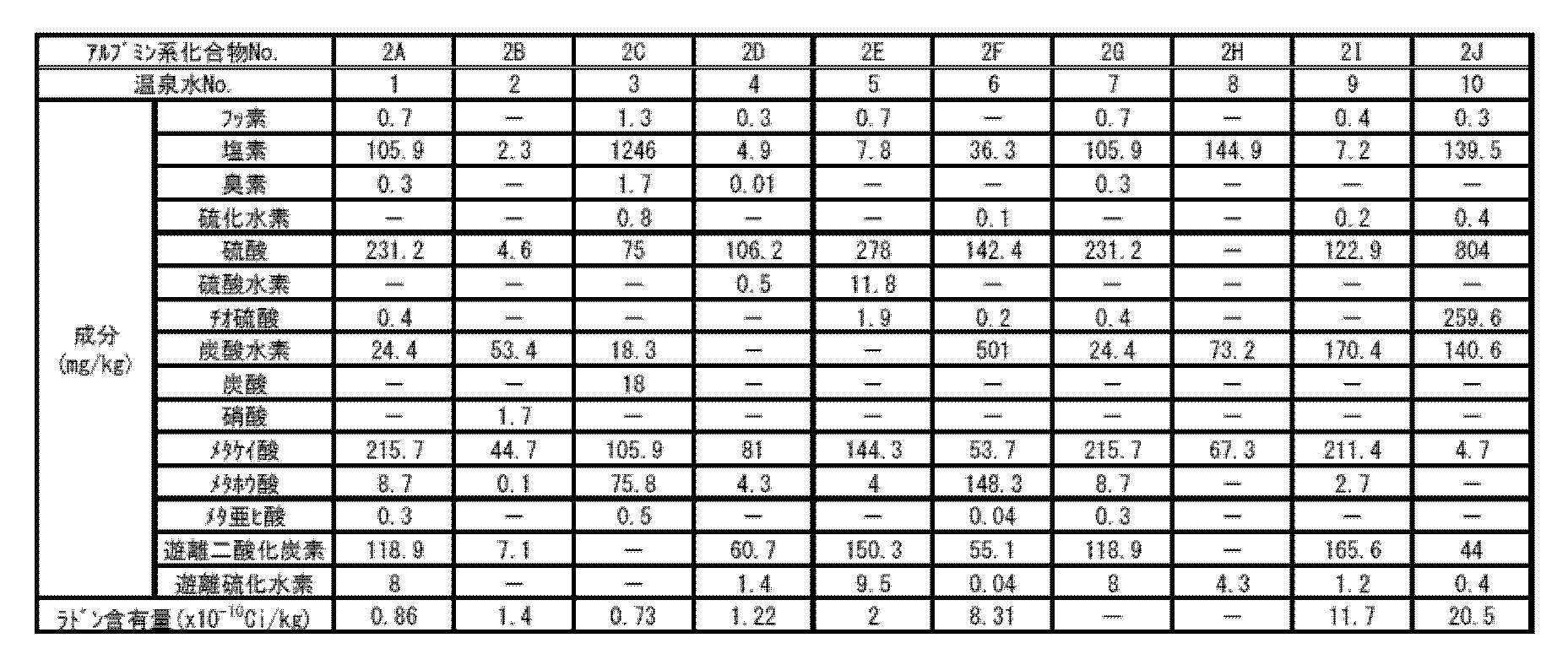
B16マウスメラノーマ細胞を、2.5×10⁴セル/ウェルとなるように、24ウェルプレートに播種し、DMEM(+)で37℃、5%CO2の条件下において24時間プレ培養した。次いで、プレ培養した培地を、アルブミン系化合物-2A~2Jの何れかを添加したDMEM(+)(アルブミン系化合物:20μM、チロシン:0.4mM、NH4Cl:10mM)と交換し、さらに37℃、5%CO2の条件下において72時間培養した。
なお、アルブミン系化合物-2A~2Jの何れかを添加したDMEM(+)に代えて、製造例1で用いた脱脂ヒト血清アルブミンを添加したDMEM(+)にて培養したものを、コントロールとして用意した。また、アルブミン系化合物-2A~2Jの何れかを添加したDMEM(+)に代えて、アルブミン系化合物-2(温泉水なしで製造)を添加したDMEM(+)にて培養したものも併せて用意した。
次いで、上述の試験例2の「2-2.メラニン産生量の測定」と同様にして細胞溶解液を回収し、上述の試験例2の「2-1.吸光度の測定及び光学顕微鏡写真の撮影」で用いたものと同じ分光光度計を用いて、細胞溶解液の波長405nmにおける吸光度を測定して、培養後のB16マウスメラノーマ細胞内のメラニン産生量を算出した。その結果を図5に示す。
図5は、各細胞溶解液における培養後のB16マウスメラノーマ細胞内のメラニン産生量を示す棒グラフである。図5において、縦軸は、細胞溶解液(1mg/mL)中の吸光度(450nm)を表す。
図5のとおり、アルブミン系化合物-2A~2Jの中でも、アルブミン系化合物-2C~2E及び2F~2Jは、コントロールの脱脂ヒト血清アルブミンと比較して、メラニン産生量が非常に少ないのは勿論のこと、温泉水なしで製造したアルブミン系化合物-2と比較しても、メラニン産生量が非常に少ない。これにより、各種金属イオンを含む温泉水の存在下においてヒト血清アルブミンに硫化ナトリウムを反応させると、より充分に硫黄原子が付加しており、メラニン産生抑制効果にさらに優れたアルブミン系化合物が得られることが分かる。
試験例5(安全性の確認)
まず、アルブミン系化合物を配合した美白化粧料を処方した。以下のアルブミン系化合物以外の各成分を以下の配合量(固形分換算)となるように調製した後、50℃に加温し、均一な状態となるまで撹拌混合した。混合物を室温(25℃)まで冷却し更にアルブミン系化合物を混合したのち、クリームAを得た。
まず、アルブミン系化合物を配合した美白化粧料を処方した。以下のアルブミン系化合物以外の各成分を以下の配合量(固形分換算)となるように調製した後、50℃に加温し、均一な状態となるまで撹拌混合した。混合物を室温(25℃)まで冷却し更にアルブミン系化合物を混合したのち、クリームAを得た。
成分 配合量(質量部)
アルブミン系化合物-2 0.133
乳化ワックス 5
オホバ油 15
精製水 残量
(合計) 100
アルブミン系化合物-2 0.133
乳化ワックス 5
オホバ油 15
精製水 残量
(合計) 100
また、上述のアルブミン系化合物-2に代えて、アルブミン系化合物-2Dを配合したほかは、クリームAと同様にして、クリームBを得た。さらに、上述のアルブミン系化合物-2を配合しなかったほかは、クリームAと同様にして、コントロールクリームを得た。
経済協力開発機構が示すガイドライン(化学物質の試験に関するOECDガイドライン)TG439「in vitro皮膚刺激性:再構築ヒト表皮試験法」に記載の方法に準拠して、クリームA、クリームB及びコントロールクリームの安全性を、3次元培養皮膚細胞の生存率にて評価した。その結果を図6に示す。
図6は、各クリームにおける細胞生存率を示す棒グラフである。図6において、縦軸は細胞生存率(%)を表す。なお、細胞生存率が50%を超える場合、皮膚刺激性がないと判断される。
図6のとおり、クリームA及びクリームBは何れも、コントロールクリームと同様に、細胞生存率が50%を超えている。これにより、温泉水なしで製造したアルブミン系化合物-2及び温泉水の存在下において製造したアルブミン系化合物-2Dは何れも、皮膚刺激性がなく、安全性に優れたものであることが分かる。
なお、アルブミン系化合物-2及びアルブミン系化合物-2Dは何れも、硫化水素臭を有さず不適切な匂いを持たない。よって、アルブミン系化合物-2を配合したクリームA及びアルブミン系化合物-2Dを配合したクリームBは何れも、不適切な匂いを持たない。
試験例6(細胞内ROS及びNOの測定)
蛍光試薬CM-H2DCF-DA、CM-H2DCF-DAを用いて細胞内活性酸素(ROS)及び一酸化窒素(NO)に基づく蛍光強度を測定した。
蛍光試薬CM-H2DCF-DA、CM-H2DCF-DAを用いて細胞内活性酸素(ROS)及び一酸化窒素(NO)に基づく蛍光強度を測定した。
B16マウスメラノーマ細胞を、1×10⁴セル/ウェルとなるように、96ウェルプレートに播種し、DMEM(+)で37℃、5%CO2の条件下において24時間プレ培養した。
培地に蛍光試薬CM-H2DCF-DAを濃度5μMまで添加し、37℃で30分反応させて細胞内に取り込ませた。反応後、上清を除去したのち、アルブミン系化合物-4を添加した。同様の作業を行った培地をリン酸緩衝液(pH7.4)及び脱脂ヒト血清アルブミンを添加したサンプルとして用意し、コントロールとした。それぞれのサンプルに波長254nmの紫外線を10分間照射した。その後、波長485nmの励起光を照射し、波長535nmの蛍光強度を測定した。
また、培地に蛍光試薬DAF-FM-DAを濃度10μMまで添加し、37℃で30分反応させて細胞内に取り込ませ、一酸化窒素(NO)測定用の懸濁液サンプルとした。反応後、培地をアルブミン系化合物-4溶液に置換した。同様の培地においてリン酸緩衝液(pH7.4)及び脱脂ヒト血清アルブミン溶液で置換したサンプルを用意し、コントロールとした。これらのサンプルに波長254nmの紫外線を10分照射した。得られたサンプルについて、波長485nmの励起光を照射し、波長535nmの蛍光強度を測定した。
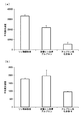
図7(a)および図7(b)は、それぞれ、細胞内活性酸素および一酸化窒素に起因する平均蛍光強度を示す棒グラフである。蛍光強度が少ないほど、細胞内に含まれる活性酸素(ROS)及び一酸化窒素(NO)が少ないことを示す。
図7(a)に示すように、脱脂ヒト血清アルブミンを用いた場合でもリン酸緩衝液を用いた場合よりは、活性酸素に基づく蛍光強度が減少した。しかし、アルブミン系化合物-4を用いると活性酸素に基づく蛍光強度が大きく減少しており、リン酸緩衝液を添加した場合と比較して活性酸素が著しく減少されているのは勿論のこと、脱脂ヒト血清アルブミンを添加した場合と比較しても、活性酸素が減少していることが分かる。
また、図7(b)に示すように、脱脂ヒト血清アルブミンを用いた場合は、リン酸緩衝液を用いた場合よりも、一酸化窒素に基づく蛍光強度は増大した。しかし、アルブミン系化合物-4を用いると、一酸化窒素に基づく蛍光強度は大きく減少しており、リン酸緩衝液及び脱脂ヒト血清アルブミンを添加した場合と比較して一酸化窒素が大きく減少していることが分かる。
図8は、メラニン発生の発生メカニズムを説明するためのメカニズムを示す模式図である。皮膚のメラニンは以下のように発生すると考えられている。
まず、皮膚内のチロシンは、酸化酵素チロシナーゼを介して、ドーパに変換される。ドーパはさらにチロシナーゼの働きにより、ドーパキノンに変化する。ドーパキノンは反応性が高く、体内の諸反応を経て、最終的には安定構造メラニンを生成し、メラニンが皮膚の褐色化の原因となる。
チロシナーゼは細胞内の活性酸素(ROS)及び一酸化窒素(NO)により活性化されることが知られている。活性酸素及び一酸化窒素は紫外線によって増大するが、活性酸素及び一酸化窒素を低減できれば、チロシナーゼの活性化を抑制でき、メラニンの発生を抑制できると考えられる。
図7(a)及び図7(b)に示したように、硫黄原子の付加されたアルブミン系化合物は活性酸素及び一酸化窒素の発生を抑制し、その結果、メラニンの発生を低減させて美白効果を奏するものと考えられる。
本発明に係る美白化粧料は、基礎化粧品又はメイクアップ化粧品として好適に使用できる。
Claims (11)
- アルブミン系化合物を含み、
前記アルブミン系化合物は、アルブミンまたはアルブミン誘導体に硫黄原子が付加したものであり、
前記アルブミン系化合物は、1部位につき複数個の硫黄原子を有する、美白化粧料。 - 前記アルブミン系化合物は、1部位につき2個以上6個以下の硫黄原子を有する、請求項1に記載の美白化粧料。
- 前記アルブミンは、血清アルブミンである、請求項1又は2に記載の美白化粧料。
- アルブミン系化合物の製造方法であって、
前記アルブミン系化合物は、請求項1に記載の美白化粧料に含まれるものであり、
アルブミンまたはアルブミン誘導体に硫化物を付加反応させる工程を含む、アルブミン系化合物の製造方法。 - 前記アルブミンは、血清アルブミンである、請求項4に記載の製造方法。
- 前記硫化物は、多硫化ナトリウムである、請求項4又は5に記載の製造方法。
- 前記多硫化ナトリウムは、Na2S2、Na2S3、又はNa2S4である、請求項6に記載の製造方法。
- 加温して、前記アルブミンまたは前記アルブミン誘導体に前記硫化物を付加反応させる、請求項4~7の何れか一項に記載の製造方法。
- 金属イオンの存在下において、前記アルブミンまたは前記アルブミン誘導体に前記硫化物を付加反応させる、請求項4~8の何れか一項に記載の製造方法。
- 前記金属イオンは、二価の金属イオンである、請求項9に記載の製造方法。
- 前記金属イオンは、温泉成分由来である、請求項9または10に記載の製造方法。
Priority Applications (1)
| Application Number | Priority Date | Filing Date | Title |
|---|---|---|---|
| JP2018520885A JPWO2017209028A1 (ja) | 2016-05-31 | 2017-05-29 | 美白化粧料、及びそれに含まれるアルブミン系化合物の製造方法 |
Applications Claiming Priority (2)
| Application Number | Priority Date | Filing Date | Title |
|---|---|---|---|
| JP2016-108824 | 2016-05-31 | ||
| JP2016108824 | 2016-05-31 |
Publications (1)
| Publication Number | Publication Date |
|---|---|
| WO2017209028A1 true WO2017209028A1 (ja) | 2017-12-07 |
Family
ID=60477421
Family Applications (1)
| Application Number | Title | Priority Date | Filing Date |
|---|---|---|---|
| PCT/JP2017/019852 Ceased WO2017209028A1 (ja) | 2016-05-31 | 2017-05-29 | 美白化粧料、及びそれに含まれるアルブミン系化合物の製造方法 |
Country Status (3)
| Country | Link |
|---|---|
| JP (1) | JPWO2017209028A1 (ja) |
| TW (1) | TWI666029B (ja) |
| WO (1) | WO2017209028A1 (ja) |
Citations (3)
| Publication number | Priority date | Publication date | Assignee | Title |
|---|---|---|---|---|
| JP2002326918A (ja) * | 2001-05-01 | 2002-11-15 | Dhc Co | 美白化粧料 |
| US20080318864A1 (en) * | 2007-06-25 | 2008-12-25 | Fred Hutchinson Cancer Research Center | Methods and compositions regarding polychalcogenide compositions |
| WO2009136568A1 (ja) * | 2008-05-08 | 2009-11-12 | 味の素株式会社 | タンパク質のリフォールディング方法 |
-
2017
- 2017-05-29 WO PCT/JP2017/019852 patent/WO2017209028A1/ja not_active Ceased
- 2017-05-29 JP JP2018520885A patent/JPWO2017209028A1/ja active Pending
- 2017-05-31 TW TW106117965A patent/TWI666029B/zh not_active IP Right Cessation
Patent Citations (3)
| Publication number | Priority date | Publication date | Assignee | Title |
|---|---|---|---|---|
| JP2002326918A (ja) * | 2001-05-01 | 2002-11-15 | Dhc Co | 美白化粧料 |
| US20080318864A1 (en) * | 2007-06-25 | 2008-12-25 | Fred Hutchinson Cancer Research Center | Methods and compositions regarding polychalcogenide compositions |
| WO2009136568A1 (ja) * | 2008-05-08 | 2009-11-12 | 味の素株式会社 | タンパク質のリフォールディング方法 |
Non-Patent Citations (3)
| Title |
|---|
| CAVALLINI DORIANO ET AL.: "Interaction of proteins with sulfide", EUR.J. BIOCHEM., vol. 14, 1970, pages 169 - 174, XP055443511 * |
| IDA TOMOAKI ET AL.: "Reactive cysteine persulfides and S-polythiolation regulate oxidative stress and redox signaling", PNAS, vol. 111, no. 21, 2014, pages 7606 - 7011, XP055443522 * |
| SHIBATA AKITOMO ET AL.: "Human serum albumin hydropersulfide is a potent reactive oxygen species scavenger in oxidative stress conditions such as chronic kidney disease", BIOCHEMICAL AND BIOPHYSICAL RESEARCH COMMUNICATIONS, vol. 479, September 2016 (2016-09-01), pages 578 - 583, XP029757245 * |
Also Published As
| Publication number | Publication date |
|---|---|
| TW201742617A (zh) | 2017-12-16 |
| TWI666029B (zh) | 2019-07-21 |
| JPWO2017209028A1 (ja) | 2019-04-11 |
Similar Documents
| Publication | Publication Date | Title |
|---|---|---|
| JP5265887B2 (ja) | 白髪を処理するためのエラグ酸の使用 | |
| EP1626702A2 (en) | Whitening and antioxidative cosmetic composition containing resveratrol and method for preparing the same | |
| WO2008025755A1 (de) | Verwendung von n-haltigen heterozyklen in dermokosmetika | |
| JPS61155302A (ja) | 色白化粧料 | |
| JP7311915B2 (ja) | ヒアルロン酸ナノ粒子を合成する方法及びその方法で製造されたヒアルロン酸ナノ粒子 | |
| JP4831849B2 (ja) | 活性酸素消去剤およびその用途 | |
| JP2005120023A (ja) | 皮膚外用剤 | |
| JP5669436B2 (ja) | 組成物 | |
| JPH11255639A (ja) | チロシナーゼ活性阻害剤及び化粧料 | |
| WO2005055962A1 (ja) | 皮膚外用剤 | |
| JP2011241164A5 (ja) | ||
| WO2015151366A1 (ja) | 組成物、皮膚外用剤、化粧料、及び飲食品 | |
| JP4244093B2 (ja) | 美白化粧料 | |
| JP5937786B2 (ja) | Iii型コラーゲンを含有する海洋生物由来コラーゲンおよびその誘導体 | |
| JP2012001519A (ja) | 組成物 | |
| JP2004323815A (ja) | 抗酸化組成物 | |
| JP2000212061A (ja) | 美白化粧料 | |
| TW201023909A (en) | Melanin formation inhibitor and preparation for external application | |
| WO2017209028A1 (ja) | 美白化粧料、及びそれに含まれるアルブミン系化合物の製造方法 | |
| JP6957289B2 (ja) | 美白化粧料組成物 | |
| JP2011241166A (ja) | 組成物 | |
| JP2007008847A (ja) | 化粧料 | |
| JP6170314B2 (ja) | フウ抽出物を含む抗酸化剤 | |
| JP4076477B2 (ja) | 皮膚外用剤 | |
| JP2004010505A (ja) | 化粧料 |
Legal Events
| Date | Code | Title | Description |
|---|---|---|---|
| ENP | Entry into the national phase |
Ref document number: 2018520885 Country of ref document: JP Kind code of ref document: A |
|
| 121 | Ep: the epo has been informed by wipo that ep was designated in this application |
Ref document number: 17806583 Country of ref document: EP Kind code of ref document: A1 |
|
| NENP | Non-entry into the national phase |
Ref country code: DE |
|
| 122 | Ep: pct application non-entry in european phase |
Ref document number: 17806583 Country of ref document: EP Kind code of ref document: A1 |