WO2017195372A1 - オーステナイト系ステンレス鋼 - Google Patents
オーステナイト系ステンレス鋼 Download PDFInfo
- Publication number
- WO2017195372A1 WO2017195372A1 PCT/JP2016/064386 JP2016064386W WO2017195372A1 WO 2017195372 A1 WO2017195372 A1 WO 2017195372A1 JP 2016064386 W JP2016064386 W JP 2016064386W WO 2017195372 A1 WO2017195372 A1 WO 2017195372A1
- Authority
- WO
- WIPO (PCT)
- Prior art keywords
- inclusions
- less
- content
- inclusion
- corrosion
- Prior art date
- Legal status (The legal status is an assumption and is not a legal conclusion. Google has not performed a legal analysis and makes no representation as to the accuracy of the status listed.)
- Ceased
Links
Images


Classifications
-
- C—CHEMISTRY; METALLURGY
- C22—METALLURGY; FERROUS OR NON-FERROUS ALLOYS; TREATMENT OF ALLOYS OR NON-FERROUS METALS
- C22C—ALLOYS
- C22C38/00—Ferrous alloys, e.g. steel alloys
-
- C—CHEMISTRY; METALLURGY
- C22—METALLURGY; FERROUS OR NON-FERROUS ALLOYS; TREATMENT OF ALLOYS OR NON-FERROUS METALS
- C22C—ALLOYS
- C22C38/00—Ferrous alloys, e.g. steel alloys
- C22C38/18—Ferrous alloys, e.g. steel alloys containing chromium
- C22C38/40—Ferrous alloys, e.g. steel alloys containing chromium with nickel
- C22C38/58—Ferrous alloys, e.g. steel alloys containing chromium with nickel with more than 1.5% by weight of manganese
Definitions
- the present invention relates to an austenitic stainless steel, and more particularly to an austenitic stainless steel suitable for use in a high-temperature, high-concentration nitric acid environment.
- Stainless steel forms a stable passive film in nitric acid and exhibits excellent corrosion resistance.
- high-temperature and high-concentration nitric acid having a temperature of 60 to 90 ° C. and a concentration of 98% by mass, for example, is extremely oxidizable, and general stainless steel causes transpassive corrosion. Due to the overpassive corrosion, the overall corrosion associated with the elution of Cr 2 O 3 forming the passive film proceeds.
- Patent Documents 1 and 2 As a material having corrosion resistance in this kind of environment, there is a high-Si austenitic stainless steel disclosed by Patent Documents 1 and 2. These high-Si austenitic stainless steels exhibit excellent nitric acid corrosion resistance due to the formation of a silicate (SiO 2 ) film in the overpassive region.
- Patent Document 3 the chemical composition is limited to Al: 0.05% or less and O: 0.003% or less, and soaking and / or soaking for a long time at 1100 to 1250 ° C.
- a technique for improving hot workability has been proposed by performing hot rolling after eliminating the intermetallic compound by performing the above.
- Patent Document 4 discloses sol. In order to prevent the formation of oxides that impair the processing flow corrosion resistance. It is disclosed that the amount of Al is specified.
- Patent Document 5 discloses an invention in which inclusions become a starting point of corrosion, and therefore the inclusions are finely dispersed to improve corrosion resistance.
- Patent Document 6 discloses an invention for preventing pitting corrosion by controlling the composition of inclusions to agglomerate the cluster shape and make it water-insoluble. Furthermore, Patent Document 7 discloses an austenitic stainless steel excellent in nitric acid resistance, in which the area ratio of alumina inclusions that are B-based inclusions is limited to a predetermined value or less.
- inclusions are limited only by the total amount, and are not limited by type, and cannot be considered sufficient.
- the invention described in Patent Document 4 does not examine inclusions generated in molten steel, and there is no description regarding corrosion resistance deterioration caused by inclusions.
- the amount of inclusions such as Al 2 O 3 and sol. Since it is not directly related to the amount of Al, sol. The problem caused by inclusions cannot be sufficiently prevented by merely specifying the amount of Al.
- Patent Document 5 merely attempts to finely disperse MnS by the regulation of S and the regulation of hot rolling conditions, and does not disclose anything about alumina inclusions. Further, the inclusion disclosed in Patent Document 6 inhibits the formation of a silicate film necessary for ensuring corrosion resistance at high temperature and high concentration nitrification. Therefore, the inclusions themselves can be the starting point of corrosion.
- Patent Document 7 In the invention described in Patent Document 7, the nitric acid resistance has been greatly improved by limiting the area ratio of the B-based inclusions. However, Patent Document 7 does not specifically examine C-based inclusions in which alumina inclusions are combined with other inclusions. Further, since an expensive Fe—Si alloy having an Al content of about 0.1% is used, there is still room for improvement from the viewpoint of economy.
- An object of the present invention is to solve the above-mentioned problems, to further stabilize the acid resistance of high-Si austenitic stainless steel, and to provide austenitic stainless steel that is excellent in economy and has good corrosion resistance.
- JIS G 0555 (2003) Annex 1 “Microscopic Test Method for Non-Metallic Inclusions by Point Calculation Method” (hereinafter simply referred to as JIS G 0555 (2003)) refers to steel non-metallic inclusions. Microscopic testing methods are specified. In general, the types of inclusions are classified into A-type inclusions, B-type inclusions, and C-type inclusions.
- a type inclusions is obtained by viscous deformation by processing such as hot rolling, is subdivided and A 1 based sulfide, in the A 2 based silicate such as SiO 2.
- the B-based inclusions are in a granular form discontinuously arranged in the processing direction, and oxide-based B 1 systems such as alumina that do not form composite inclusions, and carbonitride-based inclusions. It is subdivided into the B 2 system.
- the C-based inclusions are composite inclusions in which CaO or alumina irregularly dispersed without viscous deformation and other inclusions are combined.
- B 1 -based inclusions such as alumina are produced by oxidation of Al contained in the molten steel because they are contained as impurities in the raw material or mixed from the furnace wall. Since alumina has a high melting point, it does not melt during the molten steel refining process and exists as a solid. Alumina has a trigonal crystal structure and is inferior in consistency with a ⁇ phase matrix having a cubic crystal structure. Therefore, in the prior art, the alumina / matrix interface becomes a starting point of corrosion and the corrosion resistance deteriorates.
- alumina is adsorbed and aggregated at the time of collision between particles during the molten steel treatment, and grows in a cluster shape.
- the shape of the alumina may change when it is combined with other inclusions.
- alumina may form composite inclusions with NbC and SiO 2 . Since NbC and SiO 2 have higher compatibility with the ⁇ -phase matrix than alumina, these interfaces do not become corrosion starting points.
- the present invention has been completed on the basis of the above findings, and the gist thereof is the following austenitic stainless steel.
- the chemical composition is mass%, C: 0.04% or less, Si: 2.5-7.0%, Mn: 10.0% or less, P: 0.03% or less, S: 0.03% or less, N: 0.035% or less, sol. Al: 0.030% or less, Cr: 7.0 to 20.0%, Ni: 10.0-22.0%, Nb: 0.05 to 0.70%, Balance: Fe and impurities,
- the total amount of B 1 inclusions and C inclusions measured by the method described in JIS G 0555 (2003) Annex 1 “Microscopic test method for non-metallic inclusions by point calculation” was 0.030, respectively.
- the C-based inclusion includes a composite inclusion of Al 2 O 3 and an inclusion containing Si and Nb, The austenitic stainless steel whose total content of Nb and Si contained in the said composite inclusion is 18.0 at% or more.
- the high Si austenitic stainless steel according to the present invention exhibits stabilized acid resistance and is excellent in corrosion resistance in a high temperature and high concentration nitric acid environment. Therefore, this stainless steel is suitable as a constituent material for a nitric acid production plant, and can also be used for other applications that require acid resistance.
- nitric acid resistant stainless steel can be provided which is more excellent in reliability and economy than the high Si austenitic stainless steel disclosed in Patent Document 7.
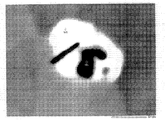
- FIG. 1 is an explanatory diagram showing an example of an SEM image of a C-based inclusion before the nitric acid resistance test.
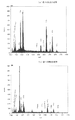
- FIG. 2 is a graph showing an example of the EDX analysis result of the C-based inclusion before the nitric acid resistance test, and FIG. 2A shows the analysis result of the white inclusion in the SEM image shown in FIG. (B) shows the analysis result of the black inclusion in the SEM image shown in FIG.
- FIG. 3 is a graph showing the relationship between the area ratio of B 1 inclusions and the total content of Si and Nb in inclusions containing Al 2 O 3 .
- FIG. 4 is a graph showing the relationship between the area ratio of C-based inclusions and the total content of Si and Nb in inclusions containing Al 2 O 3 .
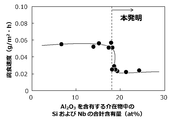
- FIG. 5 is a graph showing the relationship between the corrosion rate and the total content of Si and Nb in inclusions containing Al 2 O 3 .
- C 0.04% or less C is an element that increases the strength of steel, but causes Cr carbide to form at the grain boundaries in the heat-affected zone of the weld, causing sensitization (increased sensitivity to intergranular corrosion). It is an element that degrades corrosion resistance. Therefore, the C content is 0.04% or less.
- the C content is preferably 0.03% or less, more preferably 0.02% or less. In addition, when obtaining said effect, it is preferable that C content shall be 0.01% or more.
- Si 2.5-7.0% Si in steel is used as a deoxidizing agent or a reducing agent for slag, and there is Si (sol. Si) in solid solution and Si (insol. Si) existing as inclusions. Si described below is sol. Si is meant. Insol. Although Si exists as an A-based inclusion, it does not serve as a starting point for occurrence of corrosion, so the amount is not particularly specified in the present invention.
- Si is an element having an effect of improving the corrosion resistance in concentrated nitric acid.
- the Si content is set to 2.5% or more.
- the Si content is set to 2.5 to 7.0%.
- the Si content is preferably 2.7% or more, and more preferably 2.8% or more.
- Si content becomes like this. Preferably it is 6.8% or less, More preferably, it is 6.6%.
- Mn 10.0% or less Mn is an austenite phase stabilizing element and also acts as a deoxidizer. However, if the Mn content exceeds 10.0%, the corrosion resistance is lowered, hot cracking during welding, and further the workability is lowered. Therefore, the Mn content is 10.0% or less.
- the Mn content is preferably 5.0% or less, and more preferably 2.0% or less. In order to surely obtain the above effect of Mn, the Mn content is preferably 0.5% or more, and more preferably 1.0% or more.
- S 0.03% or less Both P and S are elements that deteriorate corrosion resistance and weldability. S is an element that is particularly harmful to hot workability. Therefore, the content of those elements is preferably as low as possible, and the harmfulness of these elements appears remarkably when the content exceeds 0.03%. Therefore, the P content is 0.03% or less, and the S content is 0.03% or less.
- N 0.035% or less Since N has a high affinity with Nb and inhibits the fixation of C by this element, N is preferably as low as possible. If the N content exceeds 0.035%, its harmfulness becomes remarkable. Therefore, the N content is 0.035% or less.
- the N content is preferably 0.020% or less, and more preferably 0.015% or less.
- sol. Al 0.030% or less Al in steel is contained in ferrosilicon used as a reducing agent, and Al (sol. Al) dissolved in the material and Al (insole. Al).
- Insol. Al exists as B-type or C-type inclusions, and the amount and composition of such inclusions are defined as described later.
- Al reacts with dissolved oxygen in the molten steel to produce Al 2 O 3 .
- Al 2 O 3 is also generated when Al reduces the SiO 2 inclusions in the molten steel or the oxide in the slag.
- the Al 2 O 3 inclusions exposed on the surface layer are insoluble in water, become defects in the silicate film necessary for exhibiting corrosion resistance in nitric acid, and cause corrosion from the inclusions. In addition, it causes nozzle clogging during casting, poor appearance, and the occurrence of cracks that become crack starting points and corrosion starting points. Therefore, in the present invention, the amount and composition of B 1 -based and C-based inclusions whose main component is Al 2 O 3 inclusions are regulated to a certain level or less. Therefore, sol. Al content shall be 0.030% or less. sol. The Al content is preferably 0.020% or less.
- Cr 7.0-20.0%
- Cr is a basic element for ensuring the corrosion resistance of stainless steel. If the Cr content is less than 7.0%, sufficient corrosion resistance cannot be obtained. On the other hand, when the Cr content is excessive, a two-phase structure in which a large amount of ferrite is precipitated due to the coexistence of Si and Nb is formed, resulting in a decrease in workability and impact resistance. Therefore, the Cr content is 7.0 to 20.0%.
- the Cr content is preferably 10.0% or more, and more preferably 15.0% or more.
- Ni 10.0-22.0%
- Ni is a stabilizing element of the austenite phase and has an effect of increasing the zero ductility temperature. If the Ni content is less than 10.0%, it is not sufficient to obtain an austenite single phase. On the other hand, excessive addition of Ni only increases the cost, and a sufficient austenite single phase is obtained at 22.0% or less. Therefore, the Ni content is 10.0-22.0%.
- the Ni content is preferably 11.0% or more, and more preferably 12.0% or more. Further, the Ni content is preferably 18.0% or less, and more preferably 14.0% or less.
- Nb 0.05 to 0.70%
- Nb has an effect of fixing C and suppressing a decrease in corrosion resistance due to sensitization, and is an element that is particularly effective in suppressing sensitization of the weld heat affected zone. Furthermore, when C is fixed and becomes NbC, it is combined with Al 2 O 3 to suppress dissolution of inclusion starting points. However, when the Nb content exceeds 0.70%, workability and corrosion resistance are deteriorated. Therefore, the Nb content is 0.05 to 0.70%.
- impurity refers to an acceptable level within a range in which the effects of the present application can be exhibited, and examples thereof include Ca, Mg, Mo, and Cu.
- B 1 inclusions and C inclusions defined in the present invention are both measured according to the method described in JIS G 0555 (2003). In addition, the amount (%) of inclusions is area%. In the measurement, 60 visual fields are measured according to the method defined in the above standard, and the average value is calculated as the amount of inclusions.
- B 1 inclusions Total amount of B 1 inclusions: 0.030% or less
- most of the B 1 inclusions are alumina (Al 2 O 3 ). It is.
- the Al 2 O 3 inclusions exposed on the surface layer of the steel material are insoluble in water, can prevent the formation of a silicate film that exhibits corrosion resistance in nitric acid, and can serve as a starting point for corrosion.
- Al 2 O 3 inclusions in the molten steel cause nozzle clogging and hinder the casting operation.
- the inclusions remaining in the slab become wrinkles due to rolling and are not only visually bad, but also become a starting point of cracking during processing or use, so a step of removing wrinkles is required. Therefore, in order to improve these, the amount of B 1 inclusions is made 0.030% or less. This amount is preferably 0.025% or less.
- C-based inclusions Total amount of C-based inclusions: 0.30% or less
- SiO 2 —Al 2 O 3 —NbC composite inclusions Things exist.
- Al 2 in the C-based inclusions is determined.
- O 3 dissolution is also suppressed.
- the composite inclusion is harder than Al 2 O 3 and is not deformed by rolling. Therefore, when the amount is too large, flaw generation during hot rolling is promoted. Therefore, the amount of C-based inclusions is set to 0.30% or less. This amount is more preferably 0.20% or less.
- the total content of Si and Nb in the composite inclusion 18.0 at% or more
- inclusions such as alumina and NbC and SiO 2 are included.
- the crystallization behavior is changed, and alumina that was conventionally a B-based inclusion becomes a C-based inclusion.
- the total content of Si and Nb in the composite inclusion obtained by combining this alumina with inclusions such as NbC and SiO 2 is less than 18.0 at%, the inclusion itself is contained in 98% nitric acid. Corrosion start point and corrosion resistance deteriorates. Therefore, in the present invention, the total content of Si and Nb in the composite inclusion is 18.0 at% or more.
- the C-based inclusions in the present invention are mainly composed of Fe, Si, Mn, Cr, Ni, Al, and Nb. Therefore, the content (at%) of each element in the inclusion means the ratio in the atomic ratio of each element when the total of these elements is 100 at%.
- Al 2 O 3 in the molten steel is mixed with Al from the furnace wall or the like in the presence of dissolved oxygen, or an Fe—Si alloy containing Al as an impurity is added.
- Al is mixed with Al from the furnace wall or the like in the presence of dissolved oxygen, or an Fe—Si alloy containing Al as an impurity is added.
- Al when Al is present in molten steel in the presence of an oxide generated from an element that is less oxidizable than Al, Al reduces it as shown in the formula (2), and Al 2 O 3 Produces. 2Al + 3M x O ⁇ 3xM + Al 2 O 3 (2)
- scrap and alloy are melted in an electric furnace. Thereafter, as a refining process, decarburization is first performed in an AOD (argon oxygen decarburization) furnace and then in a VOD (vacuum oxygen decarburization) furnace.
- AOD argon oxygen decarburization
- VOD vacuum oxygen decarburization
- chromium oxidizes and migrates into the slag as Cr 2 O 3 . Since chromium is an expensive element, it is reduced to molten steel using a reducing agent after the treatment is completed. In general, reduction is performed using Al or Fe—Si alloy as a reducing agent. However, in the case of the present invention, it is necessary to limit the addition of Al in order to suppress the formation of alumina inclusions that degrade the corrosion resistance in high-temperature high-concentration nitric acid. Therefore, in the AOD, reduction is performed using only the Fe—Si alloy without using Al.
- the Fe—Si alloy used here does not need to be a low Al expensive alloy, and may be an inexpensive Fe—Si alloy mixed with about 1% Al.
- the reduced slag contains alumina caused by impurities mixed in from the furnace wall. If the alumina in the slag is reduced by the Fe—Si alloy and contained as Al in the steel, the SiO 2 inclusions are reduced and a large amount of Al 2 O 3 inclusions are generated. In order to avoid this, the alumina in the slag is physically excluded from the system by carefully carrying out the removal after completion of the reduction with AOD.
- the generated slag is removed to a state where the surface layer of the bare metal is exposed to about 70%, and the slag of about 30% of the bare metal surface is left. This is to prevent yield deterioration due to loss of bullion discharged out of the system along with removal.
- Thorough removal is performed until the face appears on the surface.
- COD in the molten steel is removed out of the system as CO gas using oxygen gas to further remove C out of the system by VOD.
- the system is evacuated and decarburized while reducing the partial pressure of CO gas by reducing the pressure and suppressing oxidation of chromium.
- an Fe—Si alloy is introduced for the purpose of adding Si to a predetermined value. . In this case as well, it is not necessary to use a low Al Fe—Si alloy.
- the final component and the molten steel temperature are adjusted in the ladle (final component adjustment step).
- the Fe—Si alloy is charged again in order to adjust to the desired component value.
- a small amount of alumina remaining in the slag was reduced by the Fe—Si alloy and dissolved as Al in the steel, and then this Al was reoxidized by reducing inclusions such as SiO 2 or slag. As a result, formation of Al 2 O 3 inclusions occurs.
- Al 2 O 3 —SiO 2 —NbC having a large total content of Si and Nb is formed by adjusting the ratio of Al to Si or Nb. That is, by adding an Fe—Si alloy containing about 1% Al in the molten steel, the reaction of the formula (3) is advanced to temporarily form Al 2 O 3 in the molten steel. Since a high affinity for oxygen element, combines with oxygen in Al 2 O 3 to form the Al 2 O 3 -SiO 2 composite inclusions. By the same mechanism, Nb in the molten steel also forms Al 2 O 3 —SiO 2 —NbO x composite inclusions. Since Nb is an element having a much stronger affinity with C than oxygen, it eventually becomes Al 2 O 3 —SiO 2 —NbC, and the adverse effects of Al 2 O 3 can be reduced.
- FIG. 1 and FIG. 2 are examples of the results of analysis by SEM-EDS of inclusions in steel produced by the method described in the present invention.
- SiO 2 —NbC showing white is formed so as to surround Al 2 O 3 inclusions showing black at the time of observation, and the area of the Al 2 O 3 and base material interface is reduced.
- the area ratio of B 1 inclusions which is a cause of deterioration of corrosion resistance, can be reduced, and the C inclusions can be made harmless.
- the area ratio of the B 1 inclusions decreases rapidly. Corrosion resistance is also dramatically improved.
- the shape of the Al 2 O 3 —SiO 2 —NbC inclusion is massive and is detected as a C-based inclusion. Further, unlike Al 2 O 3 , the corrosion resistance is not deteriorated. However, as described above, if it is hard, if the area ratio is too large, wrinkles occur frequently during hot rolling.
- the timing of adding the Nb raw material into the molten steel is important.
- NbO and NbC has a molecular weight substantially equal to that of Al 2 O 3, flotation rate into slag of the same order as the Al 2 O 3. Therefore, in the final component adjustment step, the interval between the time when the Fe-Si alloy containing Al is introduced and the time when the Nb raw material is introduced is adjusted to an appropriate time so that the composite inclusions are sufficiently formed. It is desirable that the time be 200 to 600 s.
- the content of Al is 0.030% or less
- the area ratio of B 1 inclusions is 0.030% or less
- the area ratio of C inclusions is 0.30% or less
- the C inclusion is SiO. It becomes possible to make the total content of Si and Nb in the 2- Al 2 O 3 —NbC composite inclusions 18.0 at% or more.
- the austenitic stainless steel which concerns on this invention which has the acid resistance stable in high temperature and high concentration nitric acid which was not obtained until now, and favorable corrosion resistance is provided.
- Table 1 shows the compositions of the steels according to the examples of the present invention and the comparative examples prepared by the above-described manufacturing methods
- Table 2 shows the manufacturing conditions.
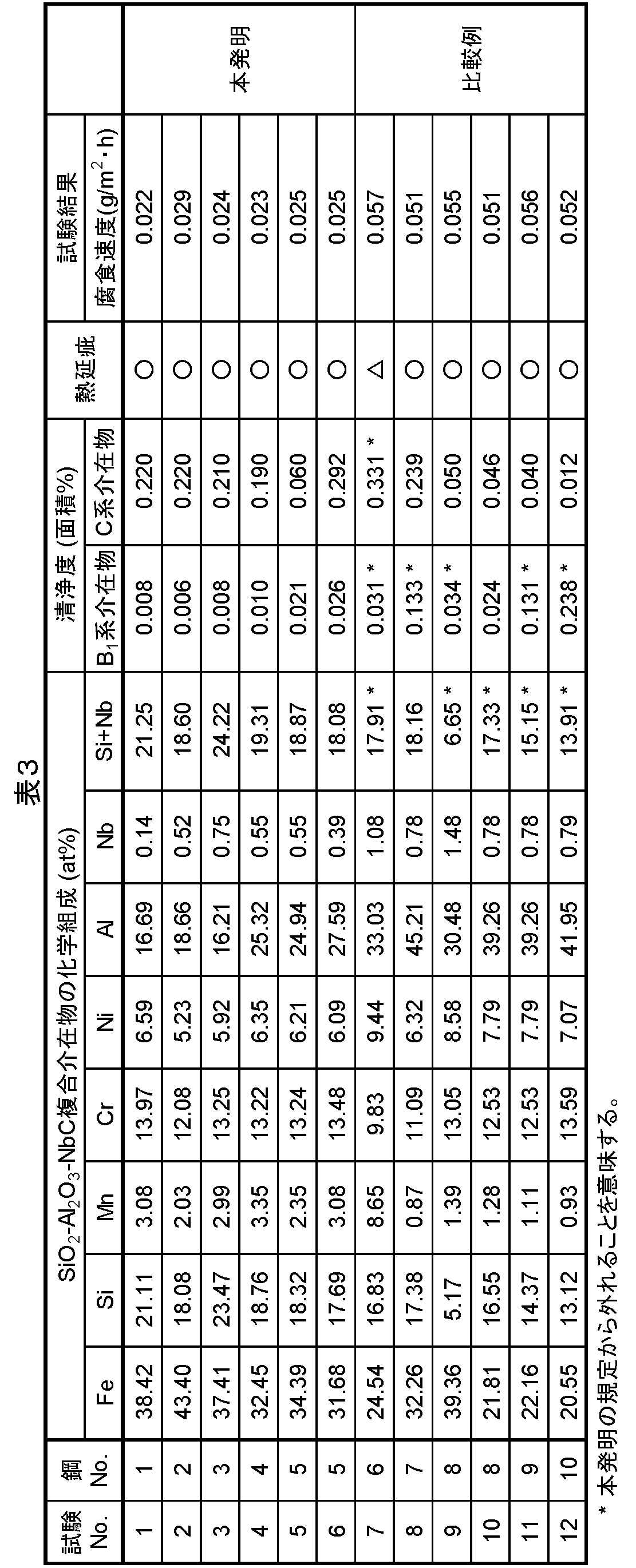
- Table 3 shows the cleanliness of each material, the chemical composition of C-based inclusions, the degree of hot rolling, and the corrosion rate. The cleanliness was investigated according to JIS G 0555 (2003).
- the content (at%) of the metal element is an average value obtained by arbitrarily analyzing 10 or more points by SEM-EDX. As described above, the content (at%) of each element in the inclusion is the atomic ratio of each element when the total of Fe, Si, Mn, Cr, Ni, Al, and Nb is 100 at%. It is a ratio.
- the degree of hot rolling is " ⁇ " when the spot-like wrinkle and the heddle are less than 1% in terms of the area ratio by visual observation, and " ⁇ " when the area ratio is less than 5% and less than 5%.
- FIG. 1 An example of an SEM image of these C-based inclusions is shown in FIG. 1, and the results of EDX analysis of the inclusions are shown in FIGS. 2 (a) and 2 (b).
- 2A shows the analysis result of white inclusions in the SEM image shown in FIG. 1
- FIG. 2B shows the analysis result of black inclusions in the SEM image shown in FIG.
- Al 2 O 3 inclusions are distributed in parallel to the rolling direction and are classified as B 1 -based inclusions.
- B 1 -based inclusions As shown in FIGS. 1 and 2, when a white inclusion containing a large amount of Si and Nb and a composite inclusion are formed, a massive C-based inclusion containing Al as a main constituent metal element and containing a large amount of Si and Nb It becomes.
- Test No. which is an example of the present invention.
- 1 to 6 satisfy the specified range of the present invention regarding the area ratio of B 1 inclusions, the area ratio of C inclusions, and the total content of Si and Nb in inclusions containing Al 2 O 3 is doing. As a result, the corrosion rate is low and the corrosion resistance is significantly improved.
- Test No. which is a comparative example.
- the area ratio of B 1 inclusions, the area ratio of C inclusions, and the total content of Si and Nb in inclusions containing Al 2 O 3 are outside the specified range of the present invention. Therefore, the corrosion rate was more than twice that of the present invention example, and not only the corrosion resistance was inferior, but also hot rolling was recognized.
- Test No. In No. 8 the area ratio of B 1 inclusions is outside the specified range of the present invention. For this reason, the corrosion rate is twice or more that of the present invention, resulting in poor corrosion resistance.
- the high Si austenitic stainless steel according to the present invention exhibits stabilized acid resistance and is excellent in corrosion resistance in a high temperature and high concentration nitric acid environment. Therefore, this stainless steel is suitable as a constituent material for a nitric acid production plant, and can also be used for other applications that require acid resistance.
Landscapes
- Chemical & Material Sciences (AREA)
- Engineering & Computer Science (AREA)
- Materials Engineering (AREA)
- Mechanical Engineering (AREA)
- Metallurgy (AREA)
- Organic Chemistry (AREA)
- Treatment Of Steel In Its Molten State (AREA)
Abstract
化学組成が、質量%で、C:0.04%以下、Si:2.5~7.0%、Mn:10.0%以下、P:0.03%以下、S:0.03%以下、N:0.035%以下、sol.Al:0.030%以下、Cr:7.0~20.0%、Ni:10.0~22.0%、Nb:0.05~0.70%、残部:Feおよび不純物であり、JIS G 0555(2003)に記載された方法により測定したB1系介在物およびC系介在物の合計量が、それぞれ、0.030面積%以下および0.30面積%以下であり、前記C系介在物は、Al2O3と、SiおよびNbを含む介在物との複合介在物を含み、前記複合介在物中に含まれるNbおよびSiの合計含有量が18.0at%以上である、オーステナイト系ステンレス鋼。
Description
本発明は、オーステナイト系ステンレス鋼に係り、特に、高温、高濃度の硝酸環境中で使用するのに適したオーステナイト系ステンレス鋼に関する。
ステンレス鋼は、硝酸中で安定な不働態皮膜を形成し、優れた耐食性を発揮する。しかし、例えば、温度が60~90℃で、かつ濃度が98質量%といった、高温、高濃度の硝酸は、極めて酸化性が強く、一般のステンレス鋼では過不働態腐食を生じる。過不働態腐食により、不働態皮膜を形成するCr2O3の溶出に伴う全面腐食が進行する。
この種の環境で耐食性を有する材料として、特許文献1および2により開示された高Siオーステナイト系ステンレス鋼がある。これらの高Siオーステナイト系ステンレス鋼は、過不働態領域において、シリケート(SiO2)皮膜が形成されることにより優れた硝酸耐食性を示す。
しかし、耐酸性については、大きな問題とはなっていないものの、腐食が過度に進行する場合があり、その原因等は不明な点が多く、解決を図る必要があった。また、高Siオーステナイト系ステンレス鋼では、Si含有量が高いことから、鋼中に多くの介在物または金属間化合物が形成され、熱間加工性を低下させる原因となっていた。
この問題を解決するために、特許文献3では、化学組成をAl:0.05%以下およびO:0.003%以下に制限するとともに、1100~1250℃で長時間のソーキングおよび/または均熱を実施して金属間化合物を消滅させてから熱間圧延を行うことによって、熱間加工性を改善する技術が提案されている。
また、特許文献4には、加工フロー耐食性を損なう酸化物の生成を防ぐために、sol.Al量を規定することが開示されている。特許文献5には、介在物が腐食の起点となるため、介在物を微細分散させて耐食性を向上させる発明が開示されている。
特許文献6には、介在物の組成を制御することによって、クラスター形状を塊状化させ、非水溶性とすることにより孔食を防ぐ発明が開示されている。さらに、特許文献7には、B系介在物となるアルミナ介在物の面積率を所定の値以下に制限した、耐硝酸性に優れたオーステナイト系ステンレス鋼が開示されている。
特許文献3では、介在物はトータル量で制限しているのみであり、種類別については制限しておらず、検討が十分とはいえない。また、特許文献4に記載の発明は、溶鋼中に生成する介在物について検討したものではなく、介在物起因の耐食性劣化に関する記載は全くない。一般的に、Al2O3等の介在物量とsol.Al量とは直接関係しないために、sol.Al量を規定するだけでは、介在物起因の問題は十分に防止できない。
さらに、特許文献5は、Sの規制と熱間圧延条件の規制とにより、MnSの微細分散を図っているだけであり、アルミナ介在物等については何も開示していない。また、特許文献6で開示される介在物は、高温高濃度硝酸化では耐食性確保に必要なシリケート皮膜の形成を阻害する。そのため、介在物自身も腐食の起点となり得る。
そして、特許文献7に記載される発明においては、B系介在物の面積率を制限することによって、耐硝酸性を大幅に改善することに成功している。しかしながら、特許文献7では、アルミナ介在物が他の介在物と複合化したC系介在物に関しては、具体的には検討がなされていない。また、Al含有量が0.1%程度である高価なFe-Si合金を使用するため、経済性の観点から改善の余地が残されている。
本発明は、上記の課題を解決し、高Siオーステナイト系ステンレス鋼の耐酸性をさらに安定化させ、経済性に優れるとともに耐腐食性が良好なオーステナイト系ステンレス鋼を提供することを目的とする。
本発明者らは、オーステナイト鋼の耐酸性を低コストで向上させる方法について検討した結果、以下の知見を得るに至った。
高温、高濃度の硝酸中では、よく知られているように、鋼表面は過不働態腐食となり、不働態皮膜のCr2O3が溶出し、母材の溶出が起こる。鋼中にSiを含有させることによって、鋼表面に再析出し、シリケート皮膜(SiO2)を形成することにより硝酸耐食性が示される。
この時、鋼中にAl2O3のように、圧延加工により変形しに難い介在物(後述するB1系介在物)が存在すると、介在物と母相との界面が腐食起点となり、腐食が進行してしまう場合がある。
ここで、JIS G 0555(2003)付属書1「点算法による非金属介在物の顕微鏡試験方法」(以下、単にJIS G 0555(2003)に記載の方法という)には、鋼の非金属介在物の顕微鏡試験方法が規定されている。一般的に介在物の種類は、A系介在物、B系介在物およびC系介在物に分類される。
A系介在物は、熱間圧延のような加工によって粘性変形したものであり、硫化物のA1系と、SiO2などのケイ酸塩のA2系とに細分化される。また、B系介在物は、加工方向に集団をなして不連続に並んだ粒状のものであり、複合介在物を形成していないアルミナなど酸化物系のB1系と、炭窒化物系のB2系とに細分化される。さらに、C系介在物は、粘性変形せずに不規則に分散したCaOまたはアルミナと他の介在物が複合化した複合介在物などである。
アルミナのようなB1系介在物は、原料に不純物として含まれたり、炉壁から混入したりする等の理由で、溶鋼中に含まれるAlの酸化により生成する。アルミナは、融点が高いため、溶鋼精錬処理中も融解することなく、固体で存在する。また、アルミナは三方晶系の結晶構造を持ち、立方晶系の結晶構造を持つγ相マトリックスとの整合性に劣る。そのため、従来技術ではアルミナ/マトリックス界面が腐食起点となり耐食性が劣化する。
従来、鋼中のアルミナを低減するために、精錬過程でのAlの添加量を極力低減することが行われてきた。しかしながら、そのためには不純物としてのAl含有量が低い高価な原料を用いる必要があり、コストを上げる原因となっている。
ここで、アルミナは、溶鋼処理中に粒子同士の衝突時に互いに吸着して凝集し、クラスター状で成長するが、他の介在物と複合化することで、その形状は変化する場合がある。具体的には、アルミナは、NbCおよびSiO2と複合介在物を形成する場合がある。NbCおよびSiO2は、アルミナに比べてγ相マトリックスとの整合性が高いため、これらの界面が腐食起点になることはない。
それだけでなく、アルミナ周囲をNbCおよびSiO2により取り囲んで保護することによって、これら複合介在物とγ相マトリックスとの界面も腐食起点とならなくなる。すなわち、NbCおよびSiO2によって複合化することによって、アルミナによる弊害を軽減することが可能になる。
したがって、高温高濃度硝酸中の耐食性を低コストで向上させるためには、アルミナのようなB1系介在物の量を低減するだけでなく、アルミナを複合化させて、NbC-Al2O3-SiO2のようなSiおよびNbを所定量以上含有するC系介在物として形成させるのが有効である。
本発明は、上記の知見に基づいて完成されたものであり、下記のオーステナイト系ステンレス鋼を要旨とする。
(1)化学組成が、質量%で、
C:0.04%以下、
Si:2.5~7.0%、
Mn:10.0%以下、
P:0.03%以下、
S:0.03%以下、
N:0.035%以下、
sol.Al:0.030%以下、
Cr:7.0~20.0%、
Ni:10.0~22.0%、
Nb:0.05~0.70%、
残部:Feおよび不純物であり、
JIS G 0555(2003)付随書1「点算法による非金属介在物の顕微鏡試験方法」に記載された方法により測定したB1系介在物およびC系介在物の合計量が、それぞれ、0.030面積%以下および0.30面積%以下であり、
前記C系介在物は、Al2O3と、SiおよびNbを含む介在物との複合介在物を含み、
前記複合介在物中に含まれるNbおよびSiの合計含有量が18.0at%以上である、オーステナイト系ステンレス鋼。
C:0.04%以下、
Si:2.5~7.0%、
Mn:10.0%以下、
P:0.03%以下、
S:0.03%以下、
N:0.035%以下、
sol.Al:0.030%以下、
Cr:7.0~20.0%、
Ni:10.0~22.0%、
Nb:0.05~0.70%、
残部:Feおよび不純物であり、
JIS G 0555(2003)付随書1「点算法による非金属介在物の顕微鏡試験方法」に記載された方法により測定したB1系介在物およびC系介在物の合計量が、それぞれ、0.030面積%以下および0.30面積%以下であり、
前記C系介在物は、Al2O3と、SiおよびNbを含む介在物との複合介在物を含み、
前記複合介在物中に含まれるNbおよびSiの合計含有量が18.0at%以上である、オーステナイト系ステンレス鋼。
本発明に係る高Siオーステナイト系ステンレス鋼は、安定化した耐酸性を示し、高温、高濃度の硝酸環境中での耐腐食性に優れている。したがって、このステンレス鋼は硝酸製造プラントの構成素材として好適であり、さらに、耐酸性を求められる他の用途にも使用できる。
このように、本発明により、例えば特許文献7により開示された高Siオーステナイト系ステンレス鋼よりもさらに信頼性と経済性とに優れた耐硝酸性ステンレス鋼を提供できる。
以下、本発明に係るオーステナイト系ステンレス鋼について、添付図面も参照しながらより詳しく説明する。
1.化学組成
各元素の限定理由は下記のとおりである。なお、以下の説明において含有量についての「%」は、「質量%」を意味する。
各元素の限定理由は下記のとおりである。なお、以下の説明において含有量についての「%」は、「質量%」を意味する。
C:0.04%以下
Cは、鋼の強度を高める元素ではあるが、溶接部の熱影響部において粒界にCr炭化物を形成させ、鋭敏化(粒界腐食の感受性増大)の原因となるなど、耐食性を劣化させる元素である。したがって、C含有量は0.04%以下とする。C含有量は、好ましくは0.03%以下であり、より好ましくは0.02%以下である。なお、上記の効果を得たい場合は、C含有量は0.01%以上とするのが好ましい。
Cは、鋼の強度を高める元素ではあるが、溶接部の熱影響部において粒界にCr炭化物を形成させ、鋭敏化(粒界腐食の感受性増大)の原因となるなど、耐食性を劣化させる元素である。したがって、C含有量は0.04%以下とする。C含有量は、好ましくは0.03%以下であり、より好ましくは0.02%以下である。なお、上記の効果を得たい場合は、C含有量は0.01%以上とするのが好ましい。
Si:2.5~7.0%
鋼中でのSiは、脱酸剤やスラグの還元剤として用いられ、固溶しているSi(sol.Si)と介在物として存在するSi(insol.Si)とが存在する。以下に記載するSiはsol.Siを意味する。なお、insol.SiはA系介在物として存在するが、腐食発生の起点とならないため、本発明ではその量を特に規定しない。
鋼中でのSiは、脱酸剤やスラグの還元剤として用いられ、固溶しているSi(sol.Si)と介在物として存在するSi(insol.Si)とが存在する。以下に記載するSiはsol.Siを意味する。なお、insol.SiはA系介在物として存在するが、腐食発生の起点とならないため、本発明ではその量を特に規定しない。
Siは、濃硝酸中での耐食性を高める効果を有する元素である。硝酸中での耐食性を確保するシリケート皮膜を形成するために、Si含有量は2.5%以上とする。一方、Siを過剰に含有させるとステンレス鋼のゼロ延性温度が低下し、熱間圧延を困難にして操業阻害を生じるとともに、コストアップになるだけでなく、溶接性の低下も招く。したがって、Si含有量は2.5~7.0%とする。Si含有量は、好ましくは2.7%以上であり、より好ましくは2.8%以上である。また、Si含有量は、好ましくは6.8%以下であり、より好ましくは6.6%である。
Mn:10.0%以下
Mnは、オーステナイト相安定化元素であり、脱酸剤としても作用する。しかしながら、Mn含有量が10.0%を超えると耐食性の低下、溶接時の高温割れ、さらには加工性の低下を招く。したがって、Mn含有量は10.0%以下とする。Mn含有量は、5.0%以下であることが好ましく、2.0%以下であることがより好ましい。Mnの上記の効果を確実に得るためには、Mn含有量は、0.5%以上であることが好ましく、1.0%以上であることがより好ましい。
Mnは、オーステナイト相安定化元素であり、脱酸剤としても作用する。しかしながら、Mn含有量が10.0%を超えると耐食性の低下、溶接時の高温割れ、さらには加工性の低下を招く。したがって、Mn含有量は10.0%以下とする。Mn含有量は、5.0%以下であることが好ましく、2.0%以下であることがより好ましい。Mnの上記の効果を確実に得るためには、Mn含有量は、0.5%以上であることが好ましく、1.0%以上であることがより好ましい。
P:0.03%以下
S:0.03%以下
PおよびSは、ともに、耐食性および溶接性を劣化させる元素である。また、Sについては、特に熱間加工性に有害な元素である。そのため、それらの元素の含有量は低いほどよく、いずれも0.03%を超えるとその有害性は顕著に現れる。そこで、P含有量は0.03%以下、S含有量は0.03%以下とする。
S:0.03%以下
PおよびSは、ともに、耐食性および溶接性を劣化させる元素である。また、Sについては、特に熱間加工性に有害な元素である。そのため、それらの元素の含有量は低いほどよく、いずれも0.03%を超えるとその有害性は顕著に現れる。そこで、P含有量は0.03%以下、S含有量は0.03%以下とする。
N:0.035%以下
Nは、Nbとの親和力が高く、この元素によるCの固定を阻害するので、できるだけ低い方が好ましい。N含有量が0.035%を超えるとその有害性が顕著に現れる。そこで、N含有量は0.035%以下とする。N含有量は、0.020%以下であることが好ましく、0.015%以下であることがより好ましい。
Nは、Nbとの親和力が高く、この元素によるCの固定を阻害するので、できるだけ低い方が好ましい。N含有量が0.035%を超えるとその有害性が顕著に現れる。そこで、N含有量は0.035%以下とする。N含有量は、0.020%以下であることが好ましく、0.015%以下であることがより好ましい。
sol.Al:0.030%以下
鋼中でのAlは、還元剤として用いるフェロシリコンに含まれ、素材中には固溶しているAl(sol.Al)と、介在物として存在するAl(insol.Al)とが存在する。本発明では、sol.Alおよびinsol.Alのどちらも重要である。なお、insol.Alは、B系またはC系介在物として存在するものであり、このような介在物については、量と組成とを後述するとおり規定する。
鋼中でのAlは、還元剤として用いるフェロシリコンに含まれ、素材中には固溶しているAl(sol.Al)と、介在物として存在するAl(insol.Al)とが存在する。本発明では、sol.Alおよびinsol.Alのどちらも重要である。なお、insol.Alは、B系またはC系介在物として存在するものであり、このような介在物については、量と組成とを後述するとおり規定する。
Alは、溶鋼中の溶存酸素と反応してAl2O3を生成する。それ以外に、溶鋼中のSiO2介在物またはスラグ中の酸化物をAlが還元することでもAl2O3が生成する。表層に露出したAl2O3介在物は、非水溶性であり、硝酸中での耐食性発揮に必要なシリケート皮膜の欠陥となり、介在物を起点とした腐食発生の原因となる。それ以外にも、鋳込み中のノズル閉塞、外観不良、ならびに割れ起点および腐食起点となるへげ疵の発生原因となる。したがって、本発明では、Al2O3介在物が主成分であるB1系およびC系介在物の量と組成を一定以下に規制する。そのために、sol.Al含有量を0.030%以下とする。sol.Al含有量は、好ましくは0.020%以下である。
Cr:7.0~20.0%
Crは、ステンレス鋼の耐食性を確保するための基本元素である。Cr含有量が7.0%未満では十分な耐食性を得られない。一方、Cr含有量が過剰になると、SiおよびNbの共存により多量のフェライトが析出した二相組織となって、加工性および耐衝撃性の低下を招く。したがって、Cr含有量は7.0~20.0%とする。Cr含有量は、10.0%以上であることが好ましく、15.0%以上であることがより好ましい。
Crは、ステンレス鋼の耐食性を確保するための基本元素である。Cr含有量が7.0%未満では十分な耐食性を得られない。一方、Cr含有量が過剰になると、SiおよびNbの共存により多量のフェライトが析出した二相組織となって、加工性および耐衝撃性の低下を招く。したがって、Cr含有量は7.0~20.0%とする。Cr含有量は、10.0%以上であることが好ましく、15.0%以上であることがより好ましい。
Ni:10.0~22.0%
Niは、オーステナイト相の安定化元素であり、ゼロ延性温度を高める効果もある。Ni含有量が10.0%未満では、オーステナイト単相とするには不十分である。一方、Niの過剰添加は、コストアップを招くだけであり、22.0%以下で十分にオーステナイト単相となる。したがって、Ni含有量は10.0~22.0%とする。Ni含有量は11.0%以上であることが好ましく、12.0%以上であることがより好ましい。また、Ni含有量は18.0%以下であることが好ましく、14.0%以下であることがより好ましい。
Niは、オーステナイト相の安定化元素であり、ゼロ延性温度を高める効果もある。Ni含有量が10.0%未満では、オーステナイト単相とするには不十分である。一方、Niの過剰添加は、コストアップを招くだけであり、22.0%以下で十分にオーステナイト単相となる。したがって、Ni含有量は10.0~22.0%とする。Ni含有量は11.0%以上であることが好ましく、12.0%以上であることがより好ましい。また、Ni含有量は18.0%以下であることが好ましく、14.0%以下であることがより好ましい。
Nb:0.05~0.70%
Nbは、Cを固定して鋭敏化による耐食性の低下を抑制する効果があり、特に溶接熱影響部の鋭敏化抑制にも有効な元素である。さらに、Cを固定してNbCとなった場合、Al2O3と複合化して介在物起点の溶解を抑制する。しかしながら、Nb含有量が0.70%を超えると、加工性および耐食性を劣化させる。したがって、Nb含有量は0.05~0.70%とする。
Nbは、Cを固定して鋭敏化による耐食性の低下を抑制する効果があり、特に溶接熱影響部の鋭敏化抑制にも有効な元素である。さらに、Cを固定してNbCとなった場合、Al2O3と複合化して介在物起点の溶解を抑制する。しかしながら、Nb含有量が0.70%を超えると、加工性および耐食性を劣化させる。したがって、Nb含有量は0.05~0.70%とする。
鋼の化学組成において、上記元素以外の残部はFeおよび不純物である。ここでいう不純物とは、本願の効果を発揮できる範囲で許容されるレベルの物をいい、例えば、Ca、Mg、Mo、Cu等が例示される。
2.介在物
本発明において規定するB1系介在物、C系介在物の量は、いずれも、上述のJIS G 0555(2003)に記載の方法にしたがって測定した量である。また、介在物の量(%)はいずれも面積%である。測定は、上記規格に規定された方法に従い、60視野測定して、その平均値を介在物量として算出する。
本発明において規定するB1系介在物、C系介在物の量は、いずれも、上述のJIS G 0555(2003)に記載の方法にしたがって測定した量である。また、介在物の量(%)はいずれも面積%である。測定は、上記規格に規定された方法に従い、60視野測定して、その平均値を介在物量として算出する。
(2-1)B1系介在物
B1系介在物の合計量:0.030%以下
本発明に係るオーステナイト系ステンレス鋼の場合、B1系介在物はほとんどがアルミナ(Al2O3)である。鋼材の表層に露出したAl2O3介在物は、非水溶性であり、硝酸中で耐食性を発揮するシリケート皮膜の生成を阻み、腐食起点となり得る。それ以外にも、溶鋼中のAl2O3系介在物は、ノズル閉塞を引き起こし、鋳込み作業の阻害の原因となる。また、鋳片中に残存した介在物は、圧延により疵となり、見た目に悪いだけでなく、加工中または使用中に割れの起点となるために、疵除去の工程が必要となってくる。したがって、これらを改善するためには、B1系介在物の量を0.030%以下とする。この量は好ましくは0.025%以下である。
B1系介在物の合計量:0.030%以下
本発明に係るオーステナイト系ステンレス鋼の場合、B1系介在物はほとんどがアルミナ(Al2O3)である。鋼材の表層に露出したAl2O3介在物は、非水溶性であり、硝酸中で耐食性を発揮するシリケート皮膜の生成を阻み、腐食起点となり得る。それ以外にも、溶鋼中のAl2O3系介在物は、ノズル閉塞を引き起こし、鋳込み作業の阻害の原因となる。また、鋳片中に残存した介在物は、圧延により疵となり、見た目に悪いだけでなく、加工中または使用中に割れの起点となるために、疵除去の工程が必要となってくる。したがって、これらを改善するためには、B1系介在物の量を0.030%以下とする。この量は好ましくは0.025%以下である。
(2-2)C系介在物
C系介在物の合計量:0.30%以下
本発明におけるC系介在物としては、CaO介在物に加えて、SiO2-Al2O3-NbC複合介在物が存在する。本発明では、C系介在物として検出されるSiO2-Al2O3-NbC複合介在物の金属元素中のSiおよびNbの合計含有量を規定することによって、C系介在物中のAl2O3の溶解も抑制する。上記複合介在物はAl2O3に比べて硬質であり圧延により変形しないため、その量が多すぎると熱間圧延時の疵発生を助長する。そのため、C系介在物の量は0.30%以下とする。この量はより好ましくは0.20%以下である。
C系介在物の合計量:0.30%以下
本発明におけるC系介在物としては、CaO介在物に加えて、SiO2-Al2O3-NbC複合介在物が存在する。本発明では、C系介在物として検出されるSiO2-Al2O3-NbC複合介在物の金属元素中のSiおよびNbの合計含有量を規定することによって、C系介在物中のAl2O3の溶解も抑制する。上記複合介在物はAl2O3に比べて硬質であり圧延により変形しないため、その量が多すぎると熱間圧延時の疵発生を助長する。そのため、C系介在物の量は0.30%以下とする。この量はより好ましくは0.20%以下である。
複合介在物中のSiおよびNbの合計含有量:18.0at%以上
本発明に係るオーステナイト系ステンレス鋼の場合、後述する実施例で示すように、アルミナとNbCおよびSiO2などの介在物とを複合化させることで、晶出挙動が変化し、従来はB系介在物であったアルミナがC系介在物となる。このアルミナとNbCおよびSiO2などの介在物とが複合化させた複合介在物中のSiおよびNbの合計含有量が18.0at%未満と少ない場合には、98%硝酸中で介在物自身が腐食起点となり、耐食性を劣化させる。したがって、本発明では、前記複合介在物中のSiおよびNbの合計含有量を18.0at%以上とする。
本発明に係るオーステナイト系ステンレス鋼の場合、後述する実施例で示すように、アルミナとNbCおよびSiO2などの介在物とを複合化させることで、晶出挙動が変化し、従来はB系介在物であったアルミナがC系介在物となる。このアルミナとNbCおよびSiO2などの介在物とが複合化させた複合介在物中のSiおよびNbの合計含有量が18.0at%未満と少ない場合には、98%硝酸中で介在物自身が腐食起点となり、耐食性を劣化させる。したがって、本発明では、前記複合介在物中のSiおよびNbの合計含有量を18.0at%以上とする。
なお、本発明におけるC系介在物は、主にFe、Si、Mn、Cr、Ni、AlおよびNbによって構成される。そのため、介在物中の各元素の含有量(at%)は、これらの元素の合計を100at%とした場合における各元素の原子比における割合を意味する。
3.製造方法
本発明に係るオーステナイト系ステンレス鋼を確実に製造することができる方法を以下に説明する。ただし、上記の化学組成および介在物により特定される本発明に係るステンレス鋼を製造することができる限り、他の製造方法を採用することも可能である。
本発明に係るオーステナイト系ステンレス鋼を確実に製造することができる方法を以下に説明する。ただし、上記の化学組成および介在物により特定される本発明に係るステンレス鋼を製造することができる限り、他の製造方法を採用することも可能である。
溶鋼中のAl2O3は、(1)式に示すように、溶存酸素が存在する状態において、炉壁等からAlが混入するか、不純物としてAlを含有するFe-Si合金を添加することにより生成する。
2Al+3O → Al2O3 ・・・ (1)
2Al+3O → Al2O3 ・・・ (1)
また、Alに比べて酸化性の弱い元素から生成された酸化物が存在する状態でAlが溶鋼中に存在する場合、(2)式に示すようにAlがそれを還元してAl2O3が生成する。
2Al+3MxO → 3xM+Al2O3 ・・・ (2)
2Al+3MxO → 3xM+Al2O3 ・・・ (2)
高Si鋼の場合、大量にFe-Si合金を投入することにより溶鋼中にSiO2介在物が大量に生成する。その際、Alが溶鋼中に存在すると、(3)式に示す反応が起こる。
4Al+3SiO2 → 3Si+2Al2O3 ・・・ (3)
4Al+3SiO2 → 3Si+2Al2O3 ・・・ (3)
そこで、高Si鋼では、Al量を規定することにより、上記(3)式の反応によるAl2O3介在物の生成を抑える。しかし、この手法と介在物浮上分離処理とを行うことでAl2O3介在物の素材中残存量をある程度抑えることは可能であるが、求められる耐食性を得るためには、高価な低AlのFe-Siを使用する必要がある。一方、安価なFe-Siを使用する場合にはAl量の制限を十分に行えないため、Al2O3介在物を、Al2O3を含む複合介在物として無害化し、Al2O3介在物の量を制限する必要がある。
上記(3)式の反応によるAl2O3介在物の生成を抑える従来の手法としては、脱酸に用いるAlの添加量を規制または無添加とするだけでなく、Si源として使用するFe-Si合金などにもAlが含まれているため、Al含有量の少ない合金を選択して使用する必要があった。しかしながら、本発明では生成したAl2O3介在物をSiO2、NbCと複合化させて無害化するので、Al含有量が1%程度のFe-Si合金を使用することができ、従来の手法よりも経済的に優位である。
本発明に係る高Siオーステナイト系ステンレス鋼を製造する際の鋼精錬段階における操業上望ましい条件を以下に示す。
まず、電気炉においてスクラップや合金の溶解を行う。その後、精錬工程として、最初にAOD(argon oxygen decarburization)炉、次にVOD(vacuumm oxygen decarburization)炉で脱炭処理する。
AODによる脱炭では、酸素ガスを用いて溶鋼中のCをCOガスとして系外除去する。その際、同時にクロムの酸化も進行するが、アルゴンガスを混合してCOガスの分圧を下げることにより、クロムの酸化を抑えつつ脱炭を行う。
それでも一部のクロムは酸化し、スラグ中へCr2O3として移行する。クロムは高価な元素であるため、処理終了後、還元剤を用いて溶鋼へ還元する。一般に還元剤として、AlまたはFe-Si合金を用いて還元させている。しかし、本発明の場合、高温高濃度硝酸中の耐食性を劣化させるアルミナ介在物の生成を抑制するために、Alの添加を制限する必要がある。そこでAODにおいて、還元時にはAlを用いずFe-Si合金のみを用いて還元を実施する。
ここで用いるFe-Si合金は、低Alの高価な合金である必要はなく、Alが1%程混入している安価なFe-Si合金であってもよい。
さらに、還元後のスラグには炉壁等から混入した不純物が原因のアルミナが含まれている。このスラグ中のアルミナがFe-Si合金により還元されて鋼中にAlとして含まれると、SiO2系介在物等を還元してAl2O3系介在物を多量に生成してしまう。このことを避けるため、AODでの還元終了後に除滓を入念に行うことにより、スラグ中のアルミナを物理的に系外に除外する。
Fe-Si合金による還元後、通常の操業では、発生スラグを地金表層が7割程度顔を出す状態まで除滓し、地金表層3割程度のスラグを残す。これは、除滓とともに系外へ排出される地金のロスによる歩留り悪化を防止するためである。しかし、本発明では、スラグ中のアルミナが溶鋼へAlとして還元され、これがSiO2系介在物と反応してAl2O3系介在物を生成してしまうことを避けるため、地金が9割以上表層に顔を出すまで除滓を徹底して行う。
その後、VODにより、さらにCを系外除去するため酸素ガスを用いて溶鋼中のCをCOガスとして系外除去する。系の真空引きを行い、圧力を低減させることでCOガスの分圧を下げてクロムの酸化を抑えつつ脱炭を行う。その後、スラグ中に浮上分離されたクロム酸化物の還元を兼ねながら、高温高濃度硝酸中での耐食性を確保するために、所定値までSiを添加する目的で、Fe-Si合金の投入を行う。この際も同様に、低AlのFe-Si合金中を用いる必要はない。
VOD処理後、取鍋内にて最終成分と溶鋼温度との調整を行う(最終成分調整工程)。この取鍋精錬時に、所望の成分値に調整するために、Fe-Si合金を再度投入する。その時、スラグ中に少ないながらも残存していたアルミナが、Fe-Si合金により還元されて鋼中にAlとして溶存した後、このAlがSiO2等の介在物またはスラグを還元することにより再酸化されてAl2O3介在物の生成が起こる。
それを防ぐため、シュノーケルを用いて滓切りを実施し、投入中のFe-Si合金がスラグに直接触れないような処置を行う。溶鋼に比べて、Fe-Si合金中のSi濃度は10倍以上高く、Siによる還元性が高い。溶鋼中における2.5~7.0%程度のSiでは還元されないスラグ中のAl2O3レベルでも、Siを数10%含有するFe-Si合金では還元してしまう。還元されたAlは、スラグまたは介在物により再酸化され、有害なAl2O3系介在物を生成させてしまう。したがって、この再酸化を防止するには、Fe-Si合金投入時にスラグとの直接な接触を避けることが有効である。
その後、CC(連続鋳造設備)にて鋳造する。取鍋精錬の終了後から鋳込み開始までの時間を長くすることによるB1系およびC系介在物の浮上促進、鋳込み速度の低減または電磁攪拌の活用により、介在物の凝集粗大化等による浮上分離を促進することが、B1系およびC系介在物の低減に効果的である。C系介在物であるAl2O3-SiO2-NbOxよりもB1系介在物であるAl2O3の方が軽いため、B1系介在物よりもC系介在物の方が鋼中に残存しやすい。本発明ではC系介在物に新規改良を加えている。
本発明においては、AlとSiまたはNbとの比を調整することで、SiおよびNbの合計含有量が大きいAl2O3-SiO2-NbCを形成させている。すなわち、溶鋼中にAlを1%程度含有するFe-Si合金を添加することで(3)式の反応を進め、一時的に溶鋼中にAl2O3を形成するが、Siは前述のとおり酸素との親和性の高い元素であるため、Al2O3中の酸素と結合しAl2O3-SiO2複合介在物を形成する。同様の機構により、溶鋼中のNbもAl2O3-SiO2-NbOx複合介在物を形成する。Nbは酸素よりもCとの親和性が著しく強い元素であるので、最終的にAl2O3-SiO2-NbCとなり、Al2O3の弊害を低減することが可能となる。
図1および図2は、本発明に記載する方法で製造した鋼中の介在物をSEM-EDSで分析した結果の一例である。観察時に黒色を示すAl2O3介在物を取り囲むように白色を示すSiO2-NbCが形成し、Al2O3と母材界面の面積を減少させている。
このようなSiおよびNbを含む複合介在物を形成させることで、耐食性を劣化させる原因であるB1系介在物の面積率を低下させ、併せてC系介在物を無害化することができる。複合介在物の形成が十分になされ、Al2O3を含有する介在物中のSiおよびNbの合計含有量が18.0at%以上となると、B1系介在物の面積率は急激に減少し、耐食性も劇的に向上する。
Al2O3-SiO2-NbC介在物の形状は塊状であり、C系介在物として検出される。また、Al2O3とは異なり耐食性を劣化させることはないが、上述のように、硬質であるため面積率が多すぎると熱延時に疵が多発する原因となる。
このような複合介在物を得るためには、溶鋼中へのNb原料添加のタイミングが重要である。NbOおよびNbCはAl2O3と同程度の分子量を持ち、スラグへの浮上分離速度もAl2O3と同程度である。そのため、最終成分調整工程において、複合介在物が十分に形成されるように、Alを含有するFe-Si合金を投入する時間と、Nb原料を投入する時間との間隔は適切な時間に調整することが望ましく、200~600sとすることが望ましい。
この製造方法によって、sol.Alの含有量を0.030%以下、B1系介在物の面積率を0.030%以下、C系介在物の面積率を0.30%以下とするとともに、C系介在物であるSiO2-Al2O3-NbC複合介在物中のSiおよびNbの合計含有量を18.0at%以上にすることが可能になる。そして、これまでには得られなかった、高温、高濃度硝酸中で安定した耐酸性と良好な耐腐食性を有する本発明に係るオーステナイト系ステンレス鋼が提供される。
以下、実施例によって本発明をより具体的に説明するが、本発明はこれらの実施例に限定されるものではない。
以上の製法で作製した本発明例および比較例に係る鋼の組成を表1に示し、製造条件を表2に示す。溶解原料の添加量を調整することで化学組成を、Fe-Si合金の投入とNb原料の投入との間隔を変化させることでB1系介在物の面積率、C系介在物の面積率、Al2O3を含有する介在物の化学組成をそれぞれ調整した。


これらの素材に熱間圧延(1150℃)および焼鈍(1130℃×10min)を施し、伸展材を作製し、そこから、清浄度の調査用、介在物のSEM観察用、および耐硝酸性試験用の試験片を切り出し、それぞれ試験に供した。
各素材の清浄度、C系介在物の化学組成、熱延疵の程度、および腐食速度を表3に示す。清浄度はJIS G 0555(2003)に準じて調査した。介在物の組成は、金属元素の含有量(at%)は、SEM-EDXにより任意に10点以上分析した平均値である。なお、上述のように、介在物中の各元素の含有量(at%)は、Fe、Si、Mn、Cr、Ni、AlおよびNbの合計を100at%とした場合における各元素の原子比における割合である。
熱延疵の程度は、目視観察して点状疵およびへげ疵が面積比で1%未満である場合を「○」、1%以上5%未満である場合を「△」、5%以上である場合を「×」として評価した。耐硝酸性試験は、N=2、60℃、98%硝酸水溶液中にて、24h浸漬する条件にて行い、腐食減量から腐食速度を算出することによって、耐硝酸性の評価を行った。
これらのC系介在物のSEM像の一例を図1に示すとともに、介在物のEDX分析結果を図2(a)および図2(b)に示す。図2(a)は図1に示すSEM像における白色介在物の分析結果を示し、図2(b)は図1に示すSEM像における黒色介在物の分析結果を示す。
図2(a)および(b)に示す介在物のEDX分析結果から、図1のSEM像に示すように、黒色を示すAl2O3を包み込むように白色を示すNbCおよびSiO2と複合介在物を形成していることが分かる。
通常、Al2O3介在物は、圧延方向に平行に分布し、B1系介在物として分類される。しかしながら、図1および2に示すように、SiおよびNbを多く含む白色の介在物と複合介在物を形成すると、Alを主な構成金属元素とし、SiおよびNbを多く含む塊状のC系介在物となる。
このようなB1系介在物の割合、C系介在物の割合、C系介在物中のSiおよびNbの合計量、腐食速度の間には密接な関係がある。
図3~5に、Al2O3を含有する介在物中のSiおよびNbの合計含有量と、B1系介在物の面積率、C系介在物の面積率および腐食速度との関係をそれぞれ示す。表3および図3~5から分かるように、Al2O3を含有する介在物中のSiおよびNbの合計含有量が18.0at%を超えると耐食性に悪影響をもたらすB1系介在物の面積率が急激に減少する。
一方、Al2O3を含有する介在物中のSiおよびNbの合計含有量が18.0at%を超えるとC系介在物の面積率は急激に増加する。その結果、腐食速度が大幅に低下し、耐食性は劇的に向上する。これはC系介在物自身の腐食挙動と対応しており、複合介在物中のAl2O3はSiO2およびNbCに取り囲まれ保護されているため腐食起点とならず、耐硝酸性試験後も残存している。そのため腐食速度は小さい。これに対し、比較例ではAl2O3は溶解してしまい、腐食速度が大きくなる。
本発明例である試験No.1~6は、B1系介在物の面積率、C系介在物の面積率、ならびにAl2O3を含有する介在物中のSiおよびNbの合計含有量について、本発明の規定範囲を満足している。その結果、腐食速度が低く耐食性は著しく改善されている。
比較例である試験No.7は、B1系介在物の面積率、C系介在物の面積率、ならびにAl2O3を含有する介在物中のSiおよびNbの合計含有量が本発明の規定範囲外である。そのため、腐食速度が本発明例の2倍以上となり耐食性に劣るだけでなく、熱延疵も認められた。
また、試験No.8は、B1系介在物の面積率が本発明の規定範囲外である。そのため、腐食速度が本発明の2倍以上となり、耐食性に劣る結果となった。
さらに、試験No.9、11および12は、B1系介在物の面積率ならびにAl2O3を含有する介在物中のSiおよびNbの合計含有量が本発明の規定範囲外である。そのため、腐食速度が本発明の2倍以上となり、耐食性に劣る結果となった。
そして、試験No.10は、Al2O3を含有する介在物中のSiおよびNbの合計含有量が本発明の範囲外である。そのため、腐食速度が本発明の2倍以上となり、耐食性に劣る結果となった。
本発明に係る高Siオーステナイト系ステンレス鋼は、安定化した耐酸性を示し、高温、高濃度の硝酸環境中での耐腐食性に優れている。したがって、このステンレス鋼は硝酸製造プラントの構成素材として好適であり、さらに、耐酸性を求められる他の用途にも使用できる。
Claims (1)
- 化学組成が、質量%で、
C:0.04%以下、
Si:2.5~7.0%、
Mn:10.0%以下、
P:0.03%以下、
S:0.03%以下、
N:0.035%以下、
sol.Al:0.030%以下、
Cr:7.0~20.0%、
Ni:10.0~22.0%、
Nb:0.05~0.70%、
残部:Feおよび不純物であり、
JIS G 0555(2003)付随書1「点算法による非金属介在物の顕微鏡試験方法」に記載された方法により測定したB1系介在物およびC系介在物の合計量が、それぞれ、0.030面積%以下および0.30面積%以下であり、
前記C系介在物は、Al2O3と、SiおよびNbを含む介在物との複合介在物を含み、
前記複合介在物中に含まれるNbおよびSiの合計含有量が18.0at%以上である、オーステナイト系ステンレス鋼。
Priority Applications (2)
| Application Number | Priority Date | Filing Date | Title |
|---|---|---|---|
| PCT/JP2016/064386 WO2017195372A1 (ja) | 2016-05-13 | 2016-05-13 | オーステナイト系ステンレス鋼 |
| JP2017557150A JP6288397B1 (ja) | 2016-05-13 | 2016-05-13 | オーステナイト系ステンレス鋼 |
Applications Claiming Priority (1)
| Application Number | Priority Date | Filing Date | Title |
|---|---|---|---|
| PCT/JP2016/064386 WO2017195372A1 (ja) | 2016-05-13 | 2016-05-13 | オーステナイト系ステンレス鋼 |
Publications (1)
| Publication Number | Publication Date |
|---|---|
| WO2017195372A1 true WO2017195372A1 (ja) | 2017-11-16 |
Family
ID=60267916
Family Applications (1)
| Application Number | Title | Priority Date | Filing Date |
|---|---|---|---|
| PCT/JP2016/064386 Ceased WO2017195372A1 (ja) | 2016-05-13 | 2016-05-13 | オーステナイト系ステンレス鋼 |
Country Status (2)
| Country | Link |
|---|---|
| JP (1) | JP6288397B1 (ja) |
| WO (1) | WO2017195372A1 (ja) |
Cited By (1)
| Publication number | Priority date | Publication date | Assignee | Title |
|---|---|---|---|---|
| JPWO2024096114A1 (ja) * | 2022-11-04 | 2024-05-10 |
Citations (4)
| Publication number | Priority date | Publication date | Assignee | Title |
|---|---|---|---|---|
| JPH05287460A (ja) * | 1992-04-10 | 1993-11-02 | Nkk Corp | 耐硝酸腐食特性に優れたオーステナイトステンレス鋼 |
| JPH08144020A (ja) * | 1994-11-24 | 1996-06-04 | Sumitomo Metal Ind Ltd | オ−ステナイト系ステンレス鋼 |
| WO2013018629A1 (ja) * | 2011-07-29 | 2013-02-07 | 新日鐵住金株式会社 | 高Siオーステナイト系ステンレス鋼の製造方法 |
| JP2016079481A (ja) * | 2014-10-20 | 2016-05-16 | 新日鐵住金株式会社 | 複合非金属介在物を含有する高Siオーステナイト系ステンレス鋼 |
-
2016
- 2016-05-13 WO PCT/JP2016/064386 patent/WO2017195372A1/ja not_active Ceased
- 2016-05-13 JP JP2017557150A patent/JP6288397B1/ja active Active
Patent Citations (4)
| Publication number | Priority date | Publication date | Assignee | Title |
|---|---|---|---|---|
| JPH05287460A (ja) * | 1992-04-10 | 1993-11-02 | Nkk Corp | 耐硝酸腐食特性に優れたオーステナイトステンレス鋼 |
| JPH08144020A (ja) * | 1994-11-24 | 1996-06-04 | Sumitomo Metal Ind Ltd | オ−ステナイト系ステンレス鋼 |
| WO2013018629A1 (ja) * | 2011-07-29 | 2013-02-07 | 新日鐵住金株式会社 | 高Siオーステナイト系ステンレス鋼の製造方法 |
| JP2016079481A (ja) * | 2014-10-20 | 2016-05-16 | 新日鐵住金株式会社 | 複合非金属介在物を含有する高Siオーステナイト系ステンレス鋼 |
Cited By (1)
| Publication number | Priority date | Publication date | Assignee | Title |
|---|---|---|---|---|
| JPWO2024096114A1 (ja) * | 2022-11-04 | 2024-05-10 |
Also Published As
| Publication number | Publication date |
|---|---|
| JP6288397B1 (ja) | 2018-03-07 |
| JPWO2017195372A1 (ja) | 2018-05-24 |
Similar Documents
| Publication | Publication Date | Title |
|---|---|---|
| KR101256268B1 (ko) | 오스테나이트계 스테인리스강 | |
| KR102569355B1 (ko) | 내용접 고온 균열성이 우수한 고Ni 합금 | |
| CN112218965A (zh) | 渣点产生抑制能力优异的不锈钢材和焊接结构构件及其制造方法 | |
| WO2022210651A1 (ja) | 二相ステンレス鋼線材および二相ステンレス鋼線 | |
| JP7187606B2 (ja) | 耐溶接高温割れ性に優れた高Ni合金 | |
| JP6842257B2 (ja) | Fe−Ni−Cr−Mo合金とその製造方法 | |
| JP7187605B2 (ja) | 耐溶接高温割れ性に優れた高Ni合金 | |
| JP6999475B2 (ja) | 製造性に優れた高Si含有のオーステナイト系ステンレス鋼 | |
| JP5212581B1 (ja) | 高Siオーステナイト系ステンレス鋼の製造方法 | |
| JP7187604B2 (ja) | 耐溶接高温割れ性に優れた高Ni合金 | |
| CN118804989A (zh) | 耐焊接高温裂纹性优异的高Ni合金厚钢板及其制造方法 | |
| JP6288397B1 (ja) | オーステナイト系ステンレス鋼 | |
| CN116391055A (zh) | 高耐腐蚀奥氏体系不锈钢及其制造方法 | |
| JP3025406B2 (ja) | 被削性に優れたフェライト系およびマルテンサイト系ステンレス鋼 | |
| JP6341053B2 (ja) | 複合非金属介在物を含有する高Siオーステナイト系ステンレス鋼 | |
| JP2024103154A (ja) | ステンレス鋼 | |
| CN101268208A (zh) | 切削加工性优异的低碳硫易切削钢 | |
| JP2002173721A (ja) | 機械構造物用Ni基合金 | |
| JP6662174B2 (ja) | 厚鋼板 | |
| JP6086036B2 (ja) | 溶接熱影響部靱性に優れた厚板鋼材とその溶製方法 | |
| JP3535026B2 (ja) | 介在物性欠陥の少ない薄鋼板用鋳片およびその製造方法 | |
| JP2007177259A (ja) | 原子力用オーステナイト系ステンレス鋼およびその製造方法 | |
| JP2001011528A (ja) | 耐水素誘起割れ性に優れた鋼の溶製法 | |
| JP6941003B2 (ja) | Fe−Ni−Cr−Mo合金およびその製造方法 | |
| TW202132588A (zh) | 肥粒鐵系不鏽鋼 |
Legal Events
| Date | Code | Title | Description |
|---|---|---|---|
| ENP | Entry into the national phase |
Ref document number: 2017557150 Country of ref document: JP Kind code of ref document: A |
|
| NENP | Non-entry into the national phase |
Ref country code: DE |
|
| 121 | Ep: the epo has been informed by wipo that ep was designated in this application |
Ref document number: 16901720 Country of ref document: EP Kind code of ref document: A1 |
|
| 122 | Ep: pct application non-entry in european phase |
Ref document number: 16901720 Country of ref document: EP Kind code of ref document: A1 |