WO2017164436A1 - 고형암 환자의 항암제 치료 반응성 예측용 마커 - Google Patents
고형암 환자의 항암제 치료 반응성 예측용 마커 Download PDFInfo
- Publication number
- WO2017164436A1 WO2017164436A1 PCT/KR2016/002896 KR2016002896W WO2017164436A1 WO 2017164436 A1 WO2017164436 A1 WO 2017164436A1 KR 2016002896 W KR2016002896 W KR 2016002896W WO 2017164436 A1 WO2017164436 A1 WO 2017164436A1
- Authority
- WO
- WIPO (PCT)
- Prior art keywords
- cancer
- patient
- kinase
- pi3kβ
- phosphoinositide
- Prior art date
- Legal status (The legal status is an assumption and is not a legal conclusion. Google has not performed a legal analysis and makes no representation as to the accuracy of the status listed.)
- Ceased
Links
Images





Classifications
-
- C—CHEMISTRY; METALLURGY
- C12—BIOCHEMISTRY; BEER; SPIRITS; WINE; VINEGAR; MICROBIOLOGY; ENZYMOLOGY; MUTATION OR GENETIC ENGINEERING
- C12Q—MEASURING OR TESTING PROCESSES INVOLVING ENZYMES, NUCLEIC ACIDS OR MICROORGANISMS; COMPOSITIONS OR TEST PAPERS THEREFOR; PROCESSES OF PREPARING SUCH COMPOSITIONS; CONDITION-RESPONSIVE CONTROL IN MICROBIOLOGICAL OR ENZYMOLOGICAL PROCESSES
- C12Q1/00—Measuring or testing processes involving enzymes, nucleic acids or microorganisms; Compositions therefor; Processes of preparing such compositions
- C12Q1/68—Measuring or testing processes involving enzymes, nucleic acids or microorganisms; Compositions therefor; Processes of preparing such compositions involving nucleic acids
- C12Q1/6876—Nucleic acid products used in the analysis of nucleic acids, e.g. primers or probes
- C12Q1/6883—Nucleic acid products used in the analysis of nucleic acids, e.g. primers or probes for diseases caused by alterations of genetic material
- C12Q1/6886—Nucleic acid products used in the analysis of nucleic acids, e.g. primers or probes for diseases caused by alterations of genetic material for cancer
-
- C—CHEMISTRY; METALLURGY
- C12—BIOCHEMISTRY; BEER; SPIRITS; WINE; VINEGAR; MICROBIOLOGY; ENZYMOLOGY; MUTATION OR GENETIC ENGINEERING
- C12Q—MEASURING OR TESTING PROCESSES INVOLVING ENZYMES, NUCLEIC ACIDS OR MICROORGANISMS; COMPOSITIONS OR TEST PAPERS THEREFOR; PROCESSES OF PREPARING SUCH COMPOSITIONS; CONDITION-RESPONSIVE CONTROL IN MICROBIOLOGICAL OR ENZYMOLOGICAL PROCESSES
- C12Q1/00—Measuring or testing processes involving enzymes, nucleic acids or microorganisms; Compositions therefor; Processes of preparing such compositions
- C12Q1/68—Measuring or testing processes involving enzymes, nucleic acids or microorganisms; Compositions therefor; Processes of preparing such compositions involving nucleic acids
- C12Q1/6813—Hybridisation assays
- C12Q1/6827—Hybridisation assays for detection of mutation or polymorphism
-
- G—PHYSICS
- G01—MEASURING; TESTING
- G01N—INVESTIGATING OR ANALYSING MATERIALS BY DETERMINING THEIR CHEMICAL OR PHYSICAL PROPERTIES
- G01N33/00—Investigating or analysing materials by specific methods not covered by groups G01N1/00 - G01N31/00
- G01N33/48—Biological material, e.g. blood, urine; Haemocytometers
- G01N33/50—Chemical analysis of biological material, e.g. blood, urine; Testing involving biospecific ligand binding methods; Immunological testing
- G01N33/53—Immunoassay; Biospecific binding assay; Materials therefor
- G01N33/575—Immunoassay; Biospecific binding assay; Materials therefor for cancer
-
- G—PHYSICS
- G01—MEASURING; TESTING
- G01N—INVESTIGATING OR ANALYSING MATERIALS BY DETERMINING THEIR CHEMICAL OR PHYSICAL PROPERTIES
- G01N33/00—Investigating or analysing materials by specific methods not covered by groups G01N1/00 - G01N31/00
- G01N33/48—Biological material, e.g. blood, urine; Haemocytometers
- G01N33/50—Chemical analysis of biological material, e.g. blood, urine; Testing involving biospecific ligand binding methods; Immunological testing
- G01N33/53—Immunoassay; Biospecific binding assay; Materials therefor
- G01N33/575—Immunoassay; Biospecific binding assay; Materials therefor for cancer
- G01N33/5753—Immunoassay; Biospecific binding assay; Materials therefor for cancer of the stomach or small intestine
-
- G—PHYSICS
- G16—INFORMATION AND COMMUNICATION TECHNOLOGY [ICT] SPECIALLY ADAPTED FOR SPECIFIC APPLICATION FIELDS
- G16H—HEALTHCARE INFORMATICS, i.e. INFORMATION AND COMMUNICATION TECHNOLOGY [ICT] SPECIALLY ADAPTED FOR THE HANDLING OR PROCESSING OF MEDICAL OR HEALTHCARE DATA
- G16H10/00—ICT specially adapted for the handling or processing of patient-related medical or healthcare data
- G16H10/40—ICT specially adapted for the handling or processing of patient-related medical or healthcare data for data related to laboratory analysis, e.g. patient specimen analysis
-
- G—PHYSICS
- G16—INFORMATION AND COMMUNICATION TECHNOLOGY [ICT] SPECIALLY ADAPTED FOR SPECIFIC APPLICATION FIELDS
- G16H—HEALTHCARE INFORMATICS, i.e. INFORMATION AND COMMUNICATION TECHNOLOGY [ICT] SPECIALLY ADAPTED FOR THE HANDLING OR PROCESSING OF MEDICAL OR HEALTHCARE DATA
- G16H20/00—ICT specially adapted for therapies or health-improving plans, e.g. for handling prescriptions, for steering therapy or for monitoring patient compliance
- G16H20/10—ICT specially adapted for therapies or health-improving plans, e.g. for handling prescriptions, for steering therapy or for monitoring patient compliance relating to drugs or medications, e.g. for ensuring correct administration to patients
-
- G—PHYSICS
- G16—INFORMATION AND COMMUNICATION TECHNOLOGY [ICT] SPECIALLY ADAPTED FOR SPECIFIC APPLICATION FIELDS
- G16H—HEALTHCARE INFORMATICS, i.e. INFORMATION AND COMMUNICATION TECHNOLOGY [ICT] SPECIALLY ADAPTED FOR THE HANDLING OR PROCESSING OF MEDICAL OR HEALTHCARE DATA
- G16H50/00—ICT specially adapted for medical diagnosis, medical simulation or medical data mining; ICT specially adapted for detecting, monitoring or modelling epidemics or pandemics
- G16H50/20—ICT specially adapted for medical diagnosis, medical simulation or medical data mining; ICT specially adapted for detecting, monitoring or modelling epidemics or pandemics for computer-aided diagnosis, e.g. based on medical expert systems
-
- G—PHYSICS
- G16—INFORMATION AND COMMUNICATION TECHNOLOGY [ICT] SPECIALLY ADAPTED FOR SPECIFIC APPLICATION FIELDS
- G16H—HEALTHCARE INFORMATICS, i.e. INFORMATION AND COMMUNICATION TECHNOLOGY [ICT] SPECIALLY ADAPTED FOR THE HANDLING OR PROCESSING OF MEDICAL OR HEALTHCARE DATA
- G16H50/00—ICT specially adapted for medical diagnosis, medical simulation or medical data mining; ICT specially adapted for detecting, monitoring or modelling epidemics or pandemics
- G16H50/30—ICT specially adapted for medical diagnosis, medical simulation or medical data mining; ICT specially adapted for detecting, monitoring or modelling epidemics or pandemics for calculating health indices; for individual health risk assessment
-
- C—CHEMISTRY; METALLURGY
- C12—BIOCHEMISTRY; BEER; SPIRITS; WINE; VINEGAR; MICROBIOLOGY; ENZYMOLOGY; MUTATION OR GENETIC ENGINEERING
- C12Q—MEASURING OR TESTING PROCESSES INVOLVING ENZYMES, NUCLEIC ACIDS OR MICROORGANISMS; COMPOSITIONS OR TEST PAPERS THEREFOR; PROCESSES OF PREPARING SUCH COMPOSITIONS; CONDITION-RESPONSIVE CONTROL IN MICROBIOLOGICAL OR ENZYMOLOGICAL PROCESSES
- C12Q2525/00—Reactions involving modified oligonucleotides, nucleic acids, or nucleotides
- C12Q2525/10—Modifications characterised by
- C12Q2525/205—Aptamer
-
- C—CHEMISTRY; METALLURGY
- C12—BIOCHEMISTRY; BEER; SPIRITS; WINE; VINEGAR; MICROBIOLOGY; ENZYMOLOGY; MUTATION OR GENETIC ENGINEERING
- C12Q—MEASURING OR TESTING PROCESSES INVOLVING ENZYMES, NUCLEIC ACIDS OR MICROORGANISMS; COMPOSITIONS OR TEST PAPERS THEREFOR; PROCESSES OF PREPARING SUCH COMPOSITIONS; CONDITION-RESPONSIVE CONTROL IN MICROBIOLOGICAL OR ENZYMOLOGICAL PROCESSES
- C12Q2600/00—Oligonucleotides characterized by their use
- C12Q2600/106—Pharmacogenomics, i.e. genetic variability in individual responses to drugs and drug metabolism
-
- C—CHEMISTRY; METALLURGY
- C12—BIOCHEMISTRY; BEER; SPIRITS; WINE; VINEGAR; MICROBIOLOGY; ENZYMOLOGY; MUTATION OR GENETIC ENGINEERING
- C12Q—MEASURING OR TESTING PROCESSES INVOLVING ENZYMES, NUCLEIC ACIDS OR MICROORGANISMS; COMPOSITIONS OR TEST PAPERS THEREFOR; PROCESSES OF PREPARING SUCH COMPOSITIONS; CONDITION-RESPONSIVE CONTROL IN MICROBIOLOGICAL OR ENZYMOLOGICAL PROCESSES
- C12Q2600/00—Oligonucleotides characterized by their use
- C12Q2600/136—Screening for pharmacological compounds
-
- C—CHEMISTRY; METALLURGY
- C12—BIOCHEMISTRY; BEER; SPIRITS; WINE; VINEGAR; MICROBIOLOGY; ENZYMOLOGY; MUTATION OR GENETIC ENGINEERING
- C12Q—MEASURING OR TESTING PROCESSES INVOLVING ENZYMES, NUCLEIC ACIDS OR MICROORGANISMS; COMPOSITIONS OR TEST PAPERS THEREFOR; PROCESSES OF PREPARING SUCH COMPOSITIONS; CONDITION-RESPONSIVE CONTROL IN MICROBIOLOGICAL OR ENZYMOLOGICAL PROCESSES
- C12Q2600/00—Oligonucleotides characterized by their use
- C12Q2600/156—Polymorphic or mutational markers
-
- G—PHYSICS
- G01—MEASURING; TESTING
- G01N—INVESTIGATING OR ANALYSING MATERIALS BY DETERMINING THEIR CHEMICAL OR PHYSICAL PROPERTIES
- G01N2333/00—Assays involving biological materials from specific organisms or of a specific nature
- G01N2333/90—Enzymes; Proenzymes
- G01N2333/91—Transferases (2.)
- G01N2333/912—Transferases (2.) transferring phosphorus containing groups, e.g. kinases (2.7)
-
- G—PHYSICS
- G01—MEASURING; TESTING
- G01N—INVESTIGATING OR ANALYSING MATERIALS BY DETERMINING THEIR CHEMICAL OR PHYSICAL PROPERTIES
- G01N2800/00—Detection or diagnosis of diseases
- G01N2800/52—Predicting or monitoring the response to treatment, e.g. for selection of therapy based on assay results in personalised medicine; Prognosis
Definitions
- the present invention relates to a marker for predicting treatment responsiveness to an anticancer agent in a solid cancer patient, and more particularly, to a method for identifying the SNP of the PIK3R1 gene and providing information for determining whether a PI3K ⁇ inhibitor is treated.
- Gastric cancer is particularly high in Asia and is the leading cause of cancer-related deaths (Ferlay J, Shin HR, Bray F, Forman D, Mathers C, Parkin DM.Estimates of worldwide burden of cancer in 2008: GLOBOCAN 2008.
- Int J Cancer 2010; 127: 2893917 In Korea, 16.2% of cancer patients (20.3% of male cancer patients and 11.2% of female cancer patients) are estimated to be gastric cancer patients.
- the annual age-standardized incidence of gastric cancer is 61.2 / 100,000 for men and 23.9 / 100,000 for women (Jung, KW, Park S, Kong HJ, Won YJ, Boo YK, Shin HR, et al. Statistics in Korea: Incidence, Mortality and Survival in 2006-2007. J Korean Med Sci 2010; 25: 1113-21).
- phosphatidylinositol-4,5-biphosphate 3-phosphatase Phosphatidylinositol-4,5-bisphosphate 3-kinase, PI3K
- PI3K phosphatidylinositol-4,5-bisphosphate 3-kinase
- PI3K is an enzyme that converts phosphatidylinositol 4,5-bisphosphate to phosphatidylinositol 3,4,5-trisphosphate (PI (3,4,5) P3), an active signaling intermediate.
- PI (3,4,5) P3 activates pyruvate dehydrogenase kinase isozyme 1 (PDK1), which in turn activates Akt.
- PI3K consists of two subunits, p110 and p85, each with multiple subtypes. Focusing on one subunit, p110, it has two subtypes, PIK3CA and PIK3CB, showing unusually redundant functions.
- PTEN phosphatase and tensin homolog deleted on chromosome 10
- PTEN is a negative regulator of PI3K that dephosphorylates PI (3,4,5) P3 and inhibits the PI3K signaling pathway.
- Activation of the PI3K signaling pathway is known to result from elevated levels of higher receptor tyrosine kinase (RTK) signals, such as mutations in PI3KCA (phosphoinositide-3-kinase, catalytic, alpha polypeptide) or lack of PTEN.
- RTK receptor tyrosine kinase
- RTK activation of PI3K modifies cells, causes dependence on PIK3CA, and deficiency of PTEN is also known to increase underlying Akt and PI3K activity, but it is known to act primarily through PI3KCB. From a reducing point of PI3K signaling, PI3K activates PDK1 and Akt and modifies cells.
- inhibitors that specifically act on PI3K beta-isoform are known to have effects with moderate cytotoxicity in cancer patients who do not express PTEN protein. Recently, it has been reported that inhibiting the activity of PI3K beta-isoform in animal models that do not express PTEN can effectively inhibit cancer development (Jia S et al., Nature.Vol. 454, pp776-9, 2008). Wee S et al., PNAS.Vl. 105, pp13057-62. 2008; Torbett NE et al., Biochem J. Vol. 415. pp97-110. 2008; Jing Ni et al., Cancer Discovery.Vol. 5 pp 425-33.2012).
- GSK2636771 One of the inhibitors specific to PI3K beta-isoform, GSK2636771, is a very fast phosphatidylinositol 4,5-bisphosphate 3-kinase catalytic subunit beta isoform (GSK2636771).
- Compounds that selectively potently inhibit PI3K ⁇ ) can be found, and the substitution of Benzimidazole in this compound led to potent PI3K ⁇ inhibition, which was found to be a leader in this group of compounds (Rivero, RA et al. 103rd Annu Meet). Am Assoc Cancer Res (AACR) (March 31-April 4, Chicago) 2012, Abst 2913).
- PI3K ⁇ inhibition has been shown to inhibit tumor formation in phosphatidylinositol-3,4,5-trisphosphate 3-phosphatase and dual-specificity protein phosphatase PTEN (PTEN) -deficient tumors.
- GSK-2636771 has been shown to inhibit RAC serine / Inhibition of phosphorylation of threonine-protein kinase (Akt), which has been reported to have dose-dependent results in mouse models of xenograft human PTEN-deficient tumor cells (Hardwicke, MA et al. 243rd ACS Natl Meet (March 25) -29, San Diego) 2012, Abst MEDI 21).
- GSK-2636771 was reported to have EC50 effective concentrations of 36 and 72 nM, respectively, against PTEN-deficient cells, PC-3 (human prostate cancer cells) and HCC70 (human breast duct carcinoma) cells.
- the PI3K ⁇ inhibitor did not raise glucose and insulin levels, and a single dose of GSK-2636771 reduced Akt phosphorylation (Ser473) in a mouse model of PC-3 cell xenografts.
- the present inventors have made diligent efforts to develop a method capable of confirming the reactivity of an inhibitor specifically acting on the PI3K beta-isoform.
- SNP rs3730089
- the effect of the specifically acting inhibitor is excellent, and the present invention was completed.
- An object of the present invention is to provide a method for providing information for predicting the treatment responsiveness to anticancer drugs in patients with solid cancer.
- Another object of the present invention is to provide a primer and / or probe composition for predicting the reactivity of an anticancer agent in a solid cancer patient and a kit for predicting the reactivity for an anticancer agent in a solid cancer patient comprising the same.
- Another object of the present invention is to provide a method for screening a patient-specific solid cancer treatment.
- the present invention relates to an anticancer agent of a solid cancer patient comprising the step of identifying a SNP (NCBI refSNP ID: rs3730089) located at the 21st base of the sequence represented by SEQ ID NO: 1 in the PIK3R1 gene in a sample. It provides a method of providing information for predicting the responsiveness to the reaction.
- a SNP NCBI refSNP ID: rs3730089
- the present invention can also identify a polynucleotide consisting of 10 or more consecutive bases comprising the 21st base of the sequence represented by SEQ ID NO: 1 (NCBI refSNP ID: rs3730089) in the PIK3R1 gene, or a complementary polynucleotide thereof.
- a primer composition for predicting reactivity to an anticancer agent in a solid cancer patient is also identified.
- the present invention also specifically relates to polynucleotides or complementary polynucleotides consisting of 10 or more consecutive bases comprising the 21st base of the sequence represented by SEQ ID NO: 1 (NCBI refSNP ID: rs3730089) in the PIK3R1 gene.
- a probe composition for predicting reactivity of an anticancer agent in a hybrid cancer patient to hybridize is provided.
- the present invention also includes the steps of (a) identifying a SNP (NCBI refSNP ID: rs3730089) located at the 21st base of the sequence represented by SEQ ID NO: 1 in the PIK3R1 gene in a sample; And (b) if present in the SNP, phosphoinositide 3-kinase beta (phosphoinositide 3-kinase ⁇ , PI3K ⁇ ) inhibitors provide a patient-specific solid cancer drug selection method comprising the step of selecting a patient for treatment of solid cancer.
- a SNP NCBI refSNP ID: rs3730089
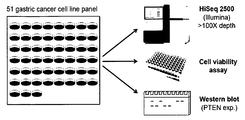
- Figure 1 is a schematic diagram showing the overall flow of the experiment for predicting the anticancer drug reactivity with the SNP discovered in the present invention.
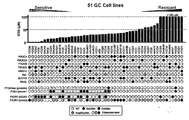
- Figure 2 summarizes the whole exome sequencing results of detecting the degree of mutation of PI3K related genes for 51 gastric cancer cell lines used in the present invention.
- Figure 3 is a graph summarizing the association between gene reactivity and responsiveness to PI3K ⁇ inhibitors for 51 gastric cancer cell lines used in the present invention.
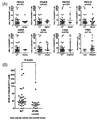
- Figure 4 (A) is a result of statistical analysis of the association between the PI3K ⁇ inhibitor reactivity and PI3K-related gene mutations, (B) is a result of statistically analyzing the M326I mutation of PIK3R1 and PI3K ⁇ inhibitor in the gene to be.
- FIG. 5 is a result of analyzing the reactivity and statistical significance of the PI3K ⁇ inhibitor according to the presence or absence of PI3K-related gene mutations by volcano graph.
- FIG. 6 shows the results of analyzing the relationship between heterozygosity of M326I mutation of PIK3R1 and reactivity to PI3K ⁇ inhibitor.
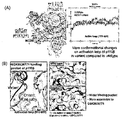
- FIG. 7 shows the results of protein three-dimensional structural analysis of how M326I mutation of PIK3R1 changes the structure of PIK3R1 to increase the reactivity to PI3K ⁇ inhibitors.
- 7B is a three-dimensional model that analyzes how the site of GSK2636771 binding to wild-type and mutant PIK3R1 occurs.
- FIG. 9 is a conceptual diagram of a method for selecting a patient-specific solid cancer treatment agent of the present invention.
- 10 is a result showing that the SNP of the present invention can measure the reactivity to PI3K ⁇ inhibitors in various solid cancers as well as gastric cancer.
- the mutation information of the PI3K-related genes are identified through whole exome sequencing in various gastric cancer cell lines, and the reactivity of the PI3K ⁇ inhibitors of each cell line is confirmed through a cell viability assay.
- the present invention provides an anticancer agent for a solid cancer patient comprising identifying a SNP (NCBI refSNP ID: rs3730089) located at the 21st base of the sequence represented by SEQ ID NO: 1 in the PIK3R1 gene in a sample.
- SNP NCBI refSNP ID: rs3730089
- SEQ ID NO: 1 The NCBI refSNP ID for the SNP in SEQ ID NO: 1 indicates the sequence of the SNP and its position. Those skilled in the art can easily identify the position and sequence of the SNP using the number. It will be apparent to those skilled in the art that the specific sequence corresponding to the refSNP ID of the SNP registered in the NCBI may be slightly changed depending on the results of the subsequent gene studies, and such altered sequences are also included within the scope of the present invention.
- Identification of the genotype of the SNP of the present invention sequencing analysis, sequencing analysis using an automatic sequencing analyzer, pyrosequencing, hybridization by microarray, PCR-RELP method (restriction fragment length polymorphism), PCR-SSCP method ( single strand conformation polymorphism), PCR-SSO (specific sequence oligonucleotide), PCR-SSO and dot hybridization combined ASO (allele specific oligonucleotide) hybridization, TaqMan-PCR, MALDI-TOF / MS, RCA ( rolling circle amplification), high resolution melting (HRM) method, primer extension method, Southern blot hybridization method, dot hybridization method and the like.
- PCR-RELP method restriction fragment length polymorphism
- PCR-SSCP method single strand conformation polymorphism
- PCR-SSO specific sequence oligonucleotide
- PCR-SSO and dot hybridization combined ASO allele specific oligonucleotide hybridization
- results of the SNP polymorphism can be statistically processed using statistical analysis methods commonly used in the art, for example, Student's t-test and Chi-square test (Chi- continuous variables, categorical variables, and odds ratios obtained through square test, linear regression line analysis, and multiple logistic regression analysis. Can be analyzed using variables such as% confidence interval.
- the term "prediction" means that the patient responds favorably or unfavorably to a therapy, such as chemotherapy, to treat the patient, eg, surgical removal of certain therapeutic agents, and / or primary tumors, and / or cancer. Survival and / or likelihood after treatment with chemotherapy for a certain period of time without relapse.
- a therapy such as chemotherapy
- the predictive methods of the present invention can be used clinically for treatment decisions by selecting the most appropriate mode of treatment for patients with solid cancer.
- the predictive methods of the present invention determine whether a patient preferentially responds to a treatment regimen, such as, for example, a treatment regimen, including administration of a given therapeutic agent or combination, surgical intervention, chemotherapy, etc. It is possible to predict whether long term survival is possible.
- the present invention provides a method for identifying a polynucleotide or a complementary polynucleotide consisting of 10 or more consecutive bases including the 21st base of the sequence represented by SEQ ID NO: 1 (NCBI refSNP ID: rs3730089) in the PIK3R1 gene.
- the present invention relates to a primer composition for predicting the reactivity of an anticancer agent in a solid cancer patient.
- the appropriate length of the primer may vary depending on the purpose of use, but may generally consist of 15 to 30 bases.
- the primer sequence need not be completely complementary to the template, but should be sufficiently complementary to hybridize with the template.
- the primer may hybridize to a DNA sequence including a polymorphic site to amplify a DNA fragment comprising a polymorphic site.
- the primer of the present invention can be used in diagnostic kits or prediction methods for detecting alleles and predicting responsiveness to anticancer agents in solid cancer patients.
- the present invention provides a polynucleotide or a complementary polynucleotide consisting of 10 or more consecutive bases comprising the 21st base of the sequence represented by SEQ ID NO: 1 (NCBI refSNP ID: rs3730089) in the PIK3R1 gene;
- the present invention relates to a probe composition for predicting reactivity to an anticancer agent of a specific hybridizing cancer patient.
- the probe may be allele-specific, which means to hybridize specifically to each allele. That is, it means hybridizing to specifically distinguish bases of the polymorphic sites present in the polymorphic sequence.
- hybridization is usually carried out under stringent conditions, for example salt concentrations of 1 M or less and temperatures of 25 ° C. or higher.
- stringent conditions for example salt concentrations of 1 M or less and temperatures of 25 ° C. or higher.
- 5XSSPE 750 mM NaCl, 50 mM Na Phosphate, 5 mM EDTA, pH 7.4
- 25-30 ° C. may be suitable for allele specific probe hybridization.
- the probe means a hybridization probe, and means an oligonucleotide capable of sequence-specific binding to the complementary strand of a nucleic acid.
- the allele-specific probe of the present invention may have a polymorphic site among nucleic acid fragments derived from two individuals of the same species, but may hybridize to a DNA fragment derived from one individual but not to a fragment derived from another individual. In this case, hybridization conditions should be strict enough to hybridize to only one of the alleles, as the hybridization conditions show a significant difference in hybridization strength between alleles.
- the central region is preferably aligned with the polymorphic region of the polymorphic sequence. This can lead to good hybridization differences between different allelic forms.
- the probe of the present invention can be used in diagnostic kits or prediction methods for detecting alleles and predicting responsiveness to anticancer agents in solid cancer patients.
- the present invention also includes an antibody or aptamer that specifically binds to a polypeptide encoded by a polynucleotide comprising the 21st base of the sequence represented by SEQ ID NO: 1 (NCBI refSNP ID: rs3730089) in the PIK3R1 gene.
- the present invention relates to a composition for predicting reactivity to an anticancer agent in a solid cancer patient.
- the present invention relates to a kit for predicting reactivity to an anticancer agent in a solid cancer patient comprising any one of the above compositions of the present invention.
- the kit may include the polynucleotide, the antibody and the aptamer of the present invention, as well as one or more other component compositions, solutions or devices suitable for the analysis method.
- the kit of the present invention may be a kit comprising the necessary elements necessary to perform PCR, test tubes or other suitable containers, reaction buffers (variable pH and magnesium concentrations), deoxynucleotides (dNTPs), Enzymes such as Taq-polymerase and reverse transcriptase, DNase, RNAse inhibitors, DEPC-water, sterile water, and the like.
- the kit of the present invention may be a kit for predicting lung cancer prognosis including essential elements necessary for performing a DNA chip, and the DNA chip kit may be attached with a polynucleotide, primer or probe specific for the SNP.
- the substrate may comprise a nucleic acid corresponding to the quantitative control gene or fragment thereof.
- the anticancer agent may be used without limitation as long as it is a medicament capable of inhibiting solid cancer, preferably, it may be a phosphoinositide 3-kinase ⁇ (PI3K ⁇ ) inhibitor, more preferably May be selected from the group consisting of GSK2636771, SAR260301, TGX-221, AZD5482, and KIN-193.
- PI3K ⁇ phosphoinositide 3-kinase ⁇
- the solid cancer is selected from the group consisting of gastric cancer, liver cancer, glioblastoma, ovarian cancer, colon cancer, head and neck cancer, bladder cancer, renal cell cancer, breast cancer, metastatic cancer, prostate cancer, pancreatic cancer, melanoma and lung cancer It may be characterized by, but is not limited thereto.
- the present invention provides a method for preparing a SNP (NCBI refSNP ID: rs3730089) located at a 21st base of a sequence represented by SEQ ID NO: 1 in a PIK3R1 gene in a sample; And (b) screening for phosphoinositide 3-kinase beta (PI3K ⁇ ) inhibitors when present with SNPs as patient-specific solid cancer therapeutics.
- a SNP NCBI refSNP ID: rs3730089
- step (a) may be characterized in that it further comprises the step of measuring the expression level of the PTEN protein.
- the expression level of the PTEN protein of the present invention can determine the amount of protein using an antibody that specifically binds to the protein of the gene.
- Analytical methods for measuring protein levels using antibodies include Western blot, Enzyme Linked Immunosorbent Assay (ELISA), Radioimmunoassay (RIA), Radioimmunodiffusion, Rocket immunoelectrophoresis, and tissue immunostaining. , Immunoprecipitation analysis, complement fixation analysis, FACS, protein chip, etc., but is not limited thereto.
- the gene expression level of PTEN can be analyzed by measuring the amount of mRNA, mRNA expression level is DNA chip, reverse transcription PCR (Reverse transcription-PCR, RT-PCR), competitive RT-PCR (Competitive RT- PCR, Real-time PCR, RNase protection assay (RPA), Northern blotting (Northern blotting), etc., but are not limited thereto.
- step (a) (a) variation of phosphatidylinositol 4,5-biphosphate 3-kinase catalyst subunit alpha (Phosphatidylinositol 4,5-bisphosphate 3-kinase catalytic subunit alpha, PIK3CA) in the sample Confirming; And (b) if a mutation is present, selecting the phosphoinositide 3-kinase alpha (PI3K ⁇ ) inhibitor as a patient-specific solid cancer treatment.
- PI3K ⁇ phosphoinositide 3-kinase alpha
- the mutation of PIK3CA may be selected from the group consisting of P140R, I381M, E453K, E542K, E545K and H1047R in PIK3CA represented by the amino acid sequence of SEQ ID NO: 2, but is not limited thereto.
- the mutation of PIK3CA can be confirmed by a method using an antibody specific to each mutation or by sequencing, PCR, and the like.
- the phosphoinositide 3-kinase alpha (PI3K ⁇ ) inhibitors are HS-173, Alpelisib (BYL719), CH5132799, Gedatolisib (PF-05212384, PKI-587), PIK-75 , A66 and YM201636 may be selected from the group consisting of, but is not limited thereto.
- the samples can be used as long as the genetic sample derived from the patient, the genetic sample may be DNA or RNA, meaning that derived from the patient is separated from the patient's blood, tissue samples, feces, urine and sputum, etc. Means a genetic sample.
- the method of isolating genomic DNA from a patient to obtain a genetic sample of the present invention can be accomplished through methods known in the art. For example, it can be done by directly purifying DNA from tissue, blood or cells, or by specifically amplifying and isolating specific regions using amplification methods such as PCR.
- DNA means not only DNA but also cDNA synthesized from mRNA.
- Obtaining nucleic acids from a subject may use, for example, PCR amplification, ligase chain reaction (LCR), transcription amplification, self-sustaining sequence replication, and nucleic acid based sequence amplification (NASBA).
- Sequencing analysis is a way to decipher the entire DNA of living things.
- High throughput sequencing is a method of deciphering all DNA sequences that make up more than 90% of the genome, including the region encoding the protein.
- the mass produced genome sequence provides only the sequence information consisting of the four bases of A-T-G-C and the information indicating the quality of the bases. It is possible to grasp the position of the gene and the structure of the gene from the sequence information of the nucleotide sequence.
- a large base sequence fragments a very long DNA molecule into a read, connects nucleotide sequences of short fragment sequences to overlapping sites, and then uses a bioinformatics technique to determine the gene location. .
- a sequencing method of detecting gene structure and mutations by comparing a large number of fragment sequences of a specific organism with established human genome reference sequences was applied.
- Whole exome sequnecing is one of the target sequencing methods for analyzing a part of a specific genome and sequencing the exon region encoding a protein.
- GDNA was extracted to analyze WES of 51 gastric cancer cell lines, and QC for gDNA was Agilent, 2200 TapeStation System. Sample purification was performed using the Agencourt AMPure XP kit. The library for running WES used Agilent's SureSelect Library Prep Kit. Agilent's SureSelect Automated Hybridization Kit was used to capture the whole exome of the human genome, and sequencing was performed with 150bp paired end running using Illumina's HiSeq 2500. The analysis for each variation was analyzed with Varscan2.3.5.
- Reactivity to PI3K ⁇ inhibitors was performed on gastric cancer cell lines.
- Cell viability was measured by MTT assay after exposure to 51 gastric cancer cell lines for 72 hours after treatment with PI3K ⁇ inhibitor at various concentrations ranging from 0.001 to 100 uM.
- the measured cell viability was calculated using the CalcuSyn Version 2.0 (Biosoft) program to calculate the IC50 (inhibitory concentration 50).
- the calculated IC50 values were sorted in a low order and compared with mutations in PI3K related genes (FIG. 3). According to the variation of the PI3K-related genes, the average of the IC50 values for the PI3K ⁇ inhibitors between the two groups was compared (FIG. 4).
- the volcano plot was confirmed with reference to data published by the Sanger Institute (FIG. 5).
- the PIK3R1 M326I mutation was found to be statistically significant and responsive to PI3K ⁇ inhibitors.
- Example 6 Relationship between PIK3R1 M326I mutations and PI3K ⁇ inhibitors in various types of cancer patients
- the method for identifying the SNP of the PIK3R1 gene according to the present invention can predict with high accuracy whether a specific anticancer agent will work effectively or not for a solid cancer patient, and select a small group that is effective for chemotherapy of a specific anticancer agent, It can be useful in determining the treatment of patients with solid cancer.
Landscapes
- Health & Medical Sciences (AREA)
- Engineering & Computer Science (AREA)
- Life Sciences & Earth Sciences (AREA)
- Chemical & Material Sciences (AREA)
- Immunology (AREA)
- General Health & Medical Sciences (AREA)
- Pathology (AREA)
- Organic Chemistry (AREA)
- Molecular Biology (AREA)
- Biomedical Technology (AREA)
- Proteomics, Peptides & Aminoacids (AREA)
- Analytical Chemistry (AREA)
- Medical Informatics (AREA)
- Public Health (AREA)
- Wood Science & Technology (AREA)
- Zoology (AREA)
- Biotechnology (AREA)
- Biochemistry (AREA)
- Physics & Mathematics (AREA)
- Microbiology (AREA)
- Urology & Nephrology (AREA)
- Hematology (AREA)
- Genetics & Genomics (AREA)
- Epidemiology (AREA)
- Primary Health Care (AREA)
- Bioinformatics & Cheminformatics (AREA)
- Medicinal Chemistry (AREA)
- Biophysics (AREA)
- General Engineering & Computer Science (AREA)
- Food Science & Technology (AREA)
- General Physics & Mathematics (AREA)
- Cell Biology (AREA)
- Oncology (AREA)
- Hospice & Palliative Care (AREA)
- Databases & Information Systems (AREA)
- Data Mining & Analysis (AREA)
- Measuring Or Testing Involving Enzymes Or Micro-Organisms (AREA)
- Medicines That Contain Protein Lipid Enzymes And Other Medicines (AREA)
- Medicines Containing Plant Substances (AREA)
- Investigating Or Analysing Biological Materials (AREA)
Abstract
Description


Claims (19)
- 시료에서 PIK3R1 유전자 중의 서열번호 1로 표시되는 서열의 21번째의 염기에 위치하는 SNP(NCBI refSNP ID: rs3730089)를 확인하는 단계를 포함하는 고형암 환자의 항암제에 대한 반응성을 예측하기 위한 정보를 제공하는 방법.
- 제1항에 있어서, 상기 항암제는 포스포이노시타이드 3-카이네이즈 베타(phosphoinositide 3-kinase β, PI3Kβ) 억제제인 것을 특징으로 하는 방법.
- 제2항에 있어서, 상기 포스포이노시타이드 3-카이네이즈 베타(phosphoinositide 3-kinase β, PI3Kβ) 억제제는 GSK2636771, SAR260301, TGX-221, AZD5482 및 KIN-193으로 구성된 군에서 선택되는 것을 특징으로 하는 방법.
- 제1항에 있어서, 상기 고형암은 위암, 간암, 교세포종, 난소암, 대장암, 두경부암, 방광암, 신장세포암, 유방암, 전이암, 전립선암, 췌장암, 흑색종 및 폐암으로 구성된 군에서 선택되는 것을 특징으로 하는 방법.
- PIK3R1 유전자 중의 서열번호 1로 표시되는 서열의 21번째의 염기를 포함하는 10개 이상의 연속 염기로 구성되는 폴리뉴클레오타이드 또는 그의 상보적 폴리뉴클레오타이드를 확인할 수 있는 고형암 환자의 항암제에 대한 반응성 예측용 프라이머 조성물.
- PIK3R1 유전자 중의 서열번호 1로 표시되는 서열의 21번째의 염기를 포함하는 10개 이상의 연속 염기로 구성되는 폴리뉴클레오타이드 또는 그의 상보적 폴리뉴클레오타이드와 특이적으로 혼성화하는 고형암 환자의 항암제에 대한 반응성 예측용 프로브 조성물.
- 제1항의 SNP(NCBI refSNP ID: rs3730089)를 포함하는 폴리뉴클레오타이드에 의해 코딩되는 폴리펩타이드와 특이적으로 결합하는 항체 또는 압타머를 포함하는 고형암 환자의 항암제에 대한 반응성 예측용 조성물.
- 제5항 내지 제7항 중 어느 한 항에 있어서, 상기 항암제는 포스포이노시타이드 3-카이네이즈 베타(phosphoinositide 3-kinase β, PI3Kβ) 억제제인 것을 특징으로 하는 조성물.
- 제8항에 있어서, 상기 포스포이노시타이드 3-카이네이즈 베타(phosphoinositide 3-kinase β, PI3Kβ) 억제제는 GSK2636771, TGX-221, AZD5482 및 KIN-193으로 구성된 군에서 선택되는 것을 특징으로 하는 조성물.
- 제5항의 프라이머, 제6항의 프로브, 또는 제7항의 항체 또는 압타머를 포함하는 고형암 환자의 항암제에 대한 반응성 예측용 키트.
- 다음의 단계를 포함하는 환자 맞춤형 고형암 치료제 선별방법:(a) 시료에서 PIK3R1 유전자 중의 서열번호 1로 표시되는 서열의 21번째의 염기에 위치하는 SNP(NCBI refSNP ID: rs3730089)를 확인하는 단계; 및(b) SNP가 존재할 경우, 포스포이노시타이드 3-카이네이즈 베타(phosphoinositide 3-kinase β, PI3Kβ) 억제제를 환자 맞춤형 고형암 치료제로 선별하는 단계.
- 제11항에 있어서, 상기 포스포이노시타이드 3-카이네이즈 베타(phosphoinositide 3-kinase β, PI3Kβ) 억제제는 GSK2636771, TGX-221, AZD5482 및 KIN-193으로 구성된 군에서 선택되는 것을 특징으로 하는 방법.
- 제11항에 있어서, 상기 (a) 단계 이후에 PTEN 단백질의 발현 수준을 측정하는 단계를 추가로 포함하는 것을 특징으로 하는 방법.
- 제11항에 있어서, 상기 (a) 단계 이전에 하기의 단계를 추가로 수행하는 것을 특징으로 하는 방법:(a) 시료에서 포스파티딜이노시톨 4,5-바이포스페이트 3-카이네이즈 촉매 서브유닛 알파(Phosphatidylinositol 4,5-bisphosphate 3-kinase catalytic subunit alpha, PIK3CA)의 변이를 확인하는 단계; 및(b) 변이가 존재하면, 포스포이노시타이드 3-카이네이즈 알파(phosphoinositide 3-kinase α, PI3Kα) 억제제를 환자 맞춤형 고형암 치료제로 선별하는 단계.
- 제14항에 있어서, 상기 PIK3CA의 변이는 서열번호 2의 아미노산 서열로 표시되는 PIK3CA에서, P140R, I381M, E453K, E542K, E545K 및 H1047R로 구성된 군에서 선택되는 것을 특징으로 하는 방법.
- 제14항에 있어서, 상기 포스포이노시타이드 3-카이네이즈 알파(phosphoinositide 3-kinase α, PI3Kα) 억제제는 HS-173, Alpelisib(BYL719), CH5132799, Gedatolisib (PF-05212384, PKI-587), PIK-75, A66 및 YM201636으로 구성된 군에서 선택되는 것을 특징으로 하는 방법.
- 제11항에 있어서, 상기 고형암은 위암, 간암, 교세포종, 난소암, 대장암, 두경부암, 방광암, 신장세포암, 유방암, 전이암, 전립선암, 췌장암, 흑색종 및 폐암으로 구성된 군에서 선택되는 것을 특징으로 하는 방법.
- 제1항에 있어서, 상기 시료는 환자로부터 유래한 유전자 시료인 것을 특징으로 하는 방법.
- 제11항에 있어서, 상기 시료는 환자로부터 유래한 유전자 시료인 것을 특징으로 하는 방법.
Priority Applications (6)
| Application Number | Priority Date | Filing Date | Title |
|---|---|---|---|
| BR112018069195A BR112018069195A2 (pt) | 2016-03-22 | 2016-03-23 | método, composição e kit para prever a responsividade de um paciente com câncer sólido a um agente anticancerígeno e método para triar agente terapêutico específico do paciente para tratamento de câncer sólido |
| SG11201808253YA SG11201808253YA (en) | 2016-03-22 | 2016-03-23 | Marker for predicting treatment response to anti-cancer agent in solid cancer patients |
| US16/087,561 US20190100806A1 (en) | 2016-03-22 | 2016-03-23 | Marker for predicting treatment response to anti-cancer agent in solid cancer patients |
| CA3018493A CA3018493A1 (en) | 2016-03-22 | 2016-03-23 | Marker for predicting treatment response to anti-cancer agent in solid cancer patients |
| AU2016398669A AU2016398669A1 (en) | 2016-03-22 | 2016-03-23 | Marker for predicting treatment response to anti-cancer agent in solid cancer patients |
| CONC2018/0011200A CO2018011200A2 (es) | 2016-03-22 | 2018-10-19 | Marcador para predecir la respuesta al tratamiento del agente anticancerígeno en pacientes con cáncer |
Applications Claiming Priority (2)
| Application Number | Priority Date | Filing Date | Title |
|---|---|---|---|
| KR10-2016-0033813 | 2016-03-22 | ||
| KR1020160033813A KR101806294B1 (ko) | 2016-03-22 | 2016-03-22 | 고형암 환자의 항암제 치료 반응성 예측용 마커 |
Publications (1)
| Publication Number | Publication Date |
|---|---|
| WO2017164436A1 true WO2017164436A1 (ko) | 2017-09-28 |
Family
ID=59900432
Family Applications (1)
| Application Number | Title | Priority Date | Filing Date |
|---|---|---|---|
| PCT/KR2016/002896 Ceased WO2017164436A1 (ko) | 2016-03-22 | 2016-03-23 | 고형암 환자의 항암제 치료 반응성 예측용 마커 |
Country Status (9)
| Country | Link |
|---|---|
| US (1) | US20190100806A1 (ko) |
| KR (1) | KR101806294B1 (ko) |
| AU (1) | AU2016398669A1 (ko) |
| BR (1) | BR112018069195A2 (ko) |
| CA (1) | CA3018493A1 (ko) |
| CL (1) | CL2018002686A1 (ko) |
| CO (1) | CO2018011200A2 (ko) |
| SG (1) | SG11201808253YA (ko) |
| WO (1) | WO2017164436A1 (ko) |
Cited By (1)
| Publication number | Priority date | Publication date | Assignee | Title |
|---|---|---|---|---|
| CN112695114A (zh) * | 2020-12-25 | 2021-04-23 | 华智生物技术有限公司 | 一种用于检测抗稻瘟病Pik基因的SNP分子标记及其应用 |
Families Citing this family (1)
| Publication number | Priority date | Publication date | Assignee | Title |
|---|---|---|---|---|
| KR20230144401A (ko) | 2022-04-07 | 2023-10-16 | 한국화학연구원 | 암 환자에 대한 vrk1 저해제의 감수성 예측용 바이오마커 및 이의 용도 |
Citations (2)
| Publication number | Priority date | Publication date | Assignee | Title |
|---|---|---|---|---|
| KR20070032074A (ko) * | 2004-07-23 | 2007-03-20 | 아스트라제네카 아베 | Erbb 수용체 약제에 대한 종양의 반응성을 예측하는방법 |
| WO2013171777A2 (en) * | 2012-05-16 | 2013-11-21 | Saverio Alberti | Use of trop-2 as predictive marker of response to anti-tumor therapy based on inhibitors of cd9, akt and molecules of the tetraspanin signalling network |
-
2016
- 2016-03-22 KR KR1020160033813A patent/KR101806294B1/ko active Active
- 2016-03-23 US US16/087,561 patent/US20190100806A1/en not_active Abandoned
- 2016-03-23 BR BR112018069195A patent/BR112018069195A2/pt not_active Application Discontinuation
- 2016-03-23 SG SG11201808253YA patent/SG11201808253YA/en unknown
- 2016-03-23 CA CA3018493A patent/CA3018493A1/en not_active Abandoned
- 2016-03-23 AU AU2016398669A patent/AU2016398669A1/en not_active Abandoned
- 2016-03-23 WO PCT/KR2016/002896 patent/WO2017164436A1/ko not_active Ceased
-
2018
- 2018-09-21 CL CL2018002686A patent/CL2018002686A1/es unknown
- 2018-10-19 CO CONC2018/0011200A patent/CO2018011200A2/es unknown
Patent Citations (2)
| Publication number | Priority date | Publication date | Assignee | Title |
|---|---|---|---|---|
| KR20070032074A (ko) * | 2004-07-23 | 2007-03-20 | 아스트라제네카 아베 | Erbb 수용체 약제에 대한 종양의 반응성을 예측하는방법 |
| WO2013171777A2 (en) * | 2012-05-16 | 2013-11-21 | Saverio Alberti | Use of trop-2 as predictive marker of response to anti-tumor therapy based on inhibitors of cd9, akt and molecules of the tetraspanin signalling network |
Non-Patent Citations (5)
Cited By (2)
| Publication number | Priority date | Publication date | Assignee | Title |
|---|---|---|---|---|
| CN112695114A (zh) * | 2020-12-25 | 2021-04-23 | 华智生物技术有限公司 | 一种用于检测抗稻瘟病Pik基因的SNP分子标记及其应用 |
| CN112695114B (zh) * | 2020-12-25 | 2022-05-20 | 华智生物技术有限公司 | 一种用于检测抗稻瘟病Pik基因的SNP分子标记及其应用 |
Also Published As
| Publication number | Publication date |
|---|---|
| US20190100806A1 (en) | 2019-04-04 |
| CO2018011200A2 (es) | 2019-02-08 |
| SG11201808253YA (en) | 2018-10-30 |
| BR112018069195A2 (pt) | 2019-04-09 |
| KR101806294B1 (ko) | 2017-12-07 |
| KR20170109787A (ko) | 2017-10-10 |
| CA3018493A1 (en) | 2017-09-28 |
| AU2016398669A1 (en) | 2018-10-18 |
| CL2018002686A1 (es) | 2019-05-03 |
Similar Documents
| Publication | Publication Date | Title |
|---|---|---|
| US8685647B2 (en) | SNP markers associated with polycystic ovary syndrome | |
| EA017815B1 (ru) | Биомаркеры для прогнозирования чувствительности или отсутствия чувствительности к анти-фно агентам | |
| AU2017318669B2 (en) | Methods and composition for the prediction of the activity of enzastaurin | |
| WO2020209590A1 (ko) | 신경교종의 진단 또는 예후 예측용 조성물 및 이에 관한 정보를 제공하는 방법 | |
| KR101359851B1 (ko) | 간세포암종의 예후 진단용 단일 염기 다형성 | |
| CN104152556B (zh) | 一种判断曲妥珠单抗辅助治疗乳腺癌疗效的试剂盒及应用 | |
| WO2017164436A1 (ko) | 고형암 환자의 항암제 치료 반응성 예측용 마커 | |
| CN110468206A (zh) | 一种与手足综合症相关的snp标志物及其应用 | |
| WO2015111852A1 (ko) | Nudt15 유전자 내의 단일염기다형성 마커를 포함하는 티오퓨린 유도 백혈구 감소증 발병 위험 예측용 조성물 | |
| KR101793775B1 (ko) | 비흡연자 폐암 발병 위험성 예측용 마커 및 그에 의한 폐암 발병 위험성을 예측하는 방법 | |
| US9863002B2 (en) | Genetic determinants of prostate cancer risk | |
| WO2008128233A1 (en) | Methods and compositions concerning the vegfr-2 gene (kinase domain receptor, kdr) | |
| CN104411824B (zh) | 与多囊卵巢综合征相关的snp标记 | |
| JP2014501496A (ja) | 消化管間質腫瘍における臨床転帰のシグネチャーおよび消化管間質腫瘍の治療の方法 | |
| KR101492710B1 (ko) | Fgf23 유전자를 이용한 전립선암 진단용 마커 및 이를 이용한 전립선암 예측 및 진단 방법 | |
| US20260015669A1 (en) | Compositions and methods for detecting and treating tumors and/or cancers associated with braf and/or map2k1 variants | |
| WO2010141362A1 (en) | Compositions and methods for diagnosing the occurrence or likelihood of occurrence of testicular germ cell cancer | |
| WO2025058147A1 (ko) | 다유전자 위험 점수 분석에 의한 한국인 특이적 고위험 개방각 녹내장 발병 위험도 판별방법 | |
| WO2024248577A1 (ko) | 단일염기다형성에 의한 한국인 특이적 정상안압 녹내장 발병 위험도 판별방법 | |
| WO2025058485A1 (ko) | 아포지질단백질 e 유전자 다형성 분석에 의한 한국인 특이적 정상안압 녹내장 발병 위험도 판별방법 | |
| US20230313312A1 (en) | Methods for early detection of breast cancer | |
| CN106119398B (zh) | 预测乳腺癌患者对吡咯替尼治疗反应性的生物标记物 | |
| WO2011118967A2 (ko) | 간세포암종의 예후 진단용 단일 염기 다형성 | |
| KR20230036926A (ko) | 비타민 d 결핍증 진단용 단일염기다형성 및 이의 용도 | |
| KR20120124507A (ko) | 만성 골수성 백혈병 위험도를 예측하는 방법 및 이를 이용한 진단키트 |
Legal Events
| Date | Code | Title | Description |
|---|---|---|---|
| ENP | Entry into the national phase |
Ref document number: 3018493 Country of ref document: CA |
|
| WWE | Wipo information: entry into national phase |
Ref document number: MX/A/2018/011563 Country of ref document: MX |
|
| NENP | Non-entry into the national phase |
Ref country code: DE |
|
| WWE | Wipo information: entry into national phase |
Ref document number: 11201808253Y Country of ref document: SG |
|
| REG | Reference to national code |
Ref country code: BR Ref legal event code: B01A Ref document number: 112018069195 Country of ref document: BR |
|
| ENP | Entry into the national phase |
Ref document number: 2016398669 Country of ref document: AU Date of ref document: 20160323 Kind code of ref document: A |
|
| 121 | Ep: the epo has been informed by wipo that ep was designated in this application |
Ref document number: 16895564 Country of ref document: EP Kind code of ref document: A1 |
|
| REG | Reference to national code |
Ref country code: BR Ref legal event code: B01E Ref document number: 112018069195 Country of ref document: BR Free format text: FAVOR EFETUAR, EM ATE 60 (SESSENTA) DIAS, O PAGAMENTO DE GRU SOB O CODIGO 260 PARA A REGULARIZACAO DO PEDIDO, CONFORME ART 2O 1O DA RESOLUCAO 187/2017 E NOTA DE ESCLARECIMENTO PUBLICADA NA RPI 2421 DE 30/05/2017, UMA VEZ QUE A PETICAO NO 870180149520 DE 08/11/2018 APRESENTA DOCUMENTOS REFERENTES A QUATRO SERVICOS DIVERSOS (NOMEACAO DE PROCURADOR ATRAVES DA APRESENTACAO DA PROCURACAO, TRADUCAO DO PEDIDO ORIGINALMENTE DEPOSITADO, APRESENTACAO DE DOCUMENTO DE CESSAO E OUTOS DOCUMENTOS) TENDO SIDO PAGA SOMENTE UMA RETRIBUICAO. DEVERAO SER PAGAS MAIS 3 (TRES) GRU SOB O CODIGO 260 E A GRU 207, REFERENTE A RESPOSTA DESTA EXIGENCIA. |
|
| ENP | Entry into the national phase |
Ref document number: 112018069195 Country of ref document: BR Kind code of ref document: A2 Effective date: 20180920 |
|
| 122 | Ep: pct application non-entry in european phase |
Ref document number: 16895564 Country of ref document: EP Kind code of ref document: A1 |