WO2017159569A1 - 更新方法および更新装置 - Google Patents
更新方法および更新装置 Download PDFInfo
- Publication number
- WO2017159569A1 WO2017159569A1 PCT/JP2017/009766 JP2017009766W WO2017159569A1 WO 2017159569 A1 WO2017159569 A1 WO 2017159569A1 JP 2017009766 W JP2017009766 W JP 2017009766W WO 2017159569 A1 WO2017159569 A1 WO 2017159569A1
- Authority
- WO
- WIPO (PCT)
- Prior art keywords
- content
- list
- contents
- update
- library
- Prior art date
- Legal status (The legal status is an assumption and is not a legal conclusion. Google has not performed a legal analysis and makes no representation as to the accuracy of the status listed.)
- Ceased
Links
Images



Classifications
-
- G—PHYSICS
- G06—COMPUTING OR CALCULATING; COUNTING
- G06F—ELECTRIC DIGITAL DATA PROCESSING
- G06F16/00—Information retrieval; Database structures therefor; File system structures therefor
- G06F16/60—Information retrieval; Database structures therefor; File system structures therefor of audio data
- G06F16/63—Querying
- G06F16/635—Filtering based on additional data, e.g. user or group profiles
- G06F16/637—Administration of user profiles, e.g. generation, initialization, adaptation or distribution
-
- G—PHYSICS
- G06—COMPUTING OR CALCULATING; COUNTING
- G06F—ELECTRIC DIGITAL DATA PROCESSING
- G06F16/00—Information retrieval; Database structures therefor; File system structures therefor
- G06F16/60—Information retrieval; Database structures therefor; File system structures therefor of audio data
- G06F16/63—Querying
- G06F16/638—Presentation of query results
- G06F16/639—Presentation of query results using playlists
-
- G—PHYSICS
- G06—COMPUTING OR CALCULATING; COUNTING
- G06F—ELECTRIC DIGITAL DATA PROCESSING
- G06F16/00—Information retrieval; Database structures therefor; File system structures therefor
- G06F16/60—Information retrieval; Database structures therefor; File system structures therefor of audio data
- G06F16/65—Clustering; Classification
-
- G—PHYSICS
- G06—COMPUTING OR CALCULATING; COUNTING
- G06F—ELECTRIC DIGITAL DATA PROCESSING
- G06F3/00—Input arrangements for transferring data to be processed into a form capable of being handled by the computer; Output arrangements for transferring data from processing unit to output unit, e.g. interface arrangements
- G06F3/01—Input arrangements or combined input and output arrangements for interaction between user and computer
- G06F3/048—Interaction techniques based on graphical user interfaces [GUI]
- G06F3/0481—Interaction techniques based on graphical user interfaces [GUI] based on specific properties of the displayed interaction object or a metaphor-based environment, e.g. interaction with desktop elements like windows or icons, or assisted by a cursor's changing behaviour or appearance
- G06F3/0482—Interaction with lists of selectable items, e.g. menus
Definitions
- the present invention relates to a technology for updating a content list.
- This application claims priority based on Japanese Patent Application No. 2016-055045 for which it applied to Japan on March 18, 2016, and uses the content here.
- Playback devices that play back content such as music data are known. With the increase in storage capacity and the development of cloud technology, this type of playback device can play back a huge number of contents.
- a list of contents selected by the user (a so-called play list) may be used. The user creates his / her favorite content list from the reproducible content. The playback device plays back the content registered in this list.
- Patent Document 1 describes a technique for automatically creating a playlist suitable for a user's preference.
- Patent Document 1 In the technology described in Patent Document 1, there is a problem that the content included in the list is fixed unless the user edits the list once created.
- the present invention provides a technique for updating a list of contents according to the contents of the list.
- An update method acquires a list of a plurality of contents selected from a library including a plurality of contents, selects a first content to be deleted from the list from the list, Based on the contents of the list, the second content to be replaced with the first content is selected from the library, and the first content is replaced with the second content in the list.
- the update apparatus acquires a list of a plurality of contents selected from a library including a plurality of contents, and selects a first content to be deleted from the list from the list.
- the content list can be updated based on the contents of the list.
- FIG. 3 is a flowchart illustrating an operation according to an embodiment of the playback device shown in FIG. 1. It is a figure which illustrates the reproduction history in a play list in an embodiment. It is a figure which illustrates the attribute of the content in embodiment. It is a figure which illustrates the clustering of the content in embodiment. It is a figure which shows the reproducing
- FIG. 1 is a diagram illustrating a functional configuration of a playback apparatus 1 according to an embodiment.
- the playback device 1 plays back content included in a list of content selected by the user from the content group (hereinafter referred to as “playlist”).
- the reproduction apparatus 1 includes a storage unit (storage unit) 11, a selection unit (selection unit, first selection unit) 12, a selection unit (selection unit, second selection unit) 13, an exchange unit (exchange unit) 14, and a reproduction unit. (Reproducing means) 15 is provided.
- the playlist may be automatically created based on a predetermined condition from the content group.
- the predetermined condition may be, for example, a condition that ten pieces of content having a specific attribute are selected.
- the storage unit 11 stores various data.
- the storage unit 11 stores a library of contents.
- the content library refers to a set of a plurality of contents stored in a data format that can be played back by the playback device 1.
- Content refers to music data or video data files.
- the storage unit 11 further stores a playlist.
- a playlist is a list of contents selected by a user from a library of contents.
- the selection unit 12 selects content to be deleted (hereinafter referred to as “deleted content”, an example of first content) from the playlist.
- the selection unit 13 selects content to be replaced with the content to be deleted (hereinafter referred to as “additional content”, an example of second content) from the library based on the content of the playlist.
- the replacement unit 14 replaces the deleted content and the additional content in the playlist stored in the storage unit 11.
- the playlist (list) is updated by exchanging the deleted content and the additional content.
- the playback unit 15 plays back the content included in the playlist one by one.
- the order of reproducing the contents is, for example, random (so-called shuffle reproduction).
- the playlist includes information indicating the playback order, and the playback unit 15 may play back the content according to this order.
- FIG. 2 is a diagram illustrating a hardware configuration of the playback device 1.
- the playback device 1 is a computer device such as a smartphone.
- the playback device 1 includes a CPU 101, a memory 102, a storage 103, an input unit 104, an output unit 105, and a communication IF 106.
- the CPU 101 is a control device that controls other components of the playback device 1.
- the memory 102 is a volatile storage device that functions as a work space when the CPU 101 executes a program.
- the storage 103 is a non-volatile storage device that stores various data and programs.
- the input unit 104 is an input device that receives an instruction or information input from a user, and includes, for example, at least one of a touch sensor, a button, and a microphone.
- the output unit 105 is an output device that outputs information to the outside, and includes, for example, at least one of a display and a speaker.
- the communication IF 106 is an interface for communicating with another device, for example, a server device (not shown) on the network.
- the storage 103 stores a program for causing the computer device to function as the playback device 1 (hereinafter referred to as “playback program”).
- the function shown in FIG. 1 is implemented by the CPU 101 executing this reproduction program.
- the memory 102 and the storage 103 are an example of the storage unit 11.
- the CPU 101 executing this program is an example of the selection unit 12, the selection unit 13, the switching unit 14, and the reproduction unit 15.
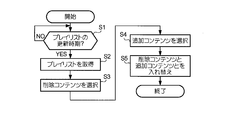
- FIG. 3 is a flowchart illustrating an operation according to an embodiment of the playback device 1.
- This flow relates to a content list update method in the playback apparatus 1.
- This flow is started, for example, when the user gives an instruction to start the playback program.
- the playlist is created in advance by the user. That is, the user manually specifies the content to be included in the playlist and creates the playlist.
- This playlist is stored in the storage unit 11.
- step S1 the selection unit 12 determines whether it is time to update the playlist.
- the playlist update time is, for example, when the playlist is explicitly instructed by the user, when a predetermined time has elapsed since the previous update, or when the playlist content has been played once.
- the selection unit 12 waits until the playlist update time comes.
- the selection unit 12 moves the process to step S2.
- step S2 the selection unit 12 acquires a playlist from the storage unit 11.
- step S3 the selection unit 12 selects the deleted content from the playlist. In this example, the selection unit 12 selects the deleted content based on the reproduction history in the playlist.
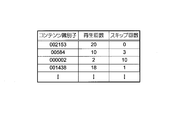
- FIG. 4 is a diagram illustrating a reproduction history in the playlist.
- the reproduction history data is stored in the storage unit 11.
- the reproduction history includes a content identifier, the number of reproductions, and the number of skips.
- the number of times of reproduction indicates the number of times the corresponding content has been reproduced from the beginning to the end.
- the skip count indicates the number of times the user has input an instruction to skip (or fast forward) playback during playback of the corresponding content and the next content has been played back.
- the playback unit 15 manages the playback of content.
- the playback unit 15 rewrites the table of FIG. 4 according to the content playback status or user instruction input.
- the reproduction unit 15 adds “1” to the “number of skips” corresponding to the content.
- the playback unit 15 subtracts “1” from the “skip count” corresponding to the content, and adds “1” to the “play count”.
- the selection unit 12 selects a content whose reproduction history satisfies a predetermined condition from the playlist as the deleted content.
- This condition is that the skip count is the largest.
- This condition may be a condition that the ratio of the skip count to the playback count is the highest.
- This condition may be a condition that the number of times of reproduction is the smallest.
- This condition may be a condition that the ratio of the number of reproductions to the number of skips is the lowest.
- step S4 the selection unit 13 selects additional content.
- the selection unit 13 selects content similar to the deleted content among the content included in the library as additional content. The determination as to whether the contents are similar is made based on the attributes of the contents.
- FIG. 5 is a diagram illustrating content attributes.
- the content attributes include a content identifier, key, tempo, tone color, song name, artist name, and cluster name. At least some of these attributes (eg, song title and artist name) are provided by the content provider. Some of the attributes (for example, key, tempo, timbre, and cluster name) are given by the playback apparatus 1 analyzing content data (in this example, sound data indicating music). These data may be added to the content data as metadata, or may be stored separately from the content file in the form of a table.
- Key is information indicating the musical tonality (key) of the music, for example, C major and A minor.
- the tempo is information indicating the speed of the beat of the music, for example, BPM (BeatsBPer Minute).
- the tone color is information indicating the tone color of the performance sound of the music, and is, for example, MFCC (Mel-FrequencyequCepstrum Coefficients).
- the song name is information indicating the title given to the song.
- the artist name is information indicating the performer, composer, songwriter, or conductor of the song.
- the cluster name is information for specifying a cluster when the content included in the library is clustered (grouped) for each content having similar attributes. It can be said that two contents having the same cluster name are similar to each other.
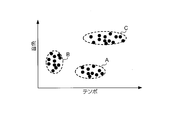
- FIG. 6 is a diagram illustrating content clustering.
- each content is plotted in an n-dimensional space (hereinafter referred to as “attribute space”).
- attribute space n-dimensional space
- K-means minimum mean variance
- shortest distance method shortest distance method
- the selection unit 13 selects additional content from contents included in the library that belong to the same cluster as the deleted content and are not currently included in the playlist. When there are a plurality of contents satisfying this condition, the selection unit 13 selects, for example, the content having the shortest distance from the deleted content in the attribute space as the additional content. Or the selection part 13 may select the content used as an additional content at random from the content whose distance with the deletion content in an attribute space is below a threshold value.
- step S5 the replacement unit 14 replaces the deleted content and the additional content in the playlist. That is, the replacement unit 14 deletes the deleted content from the playlist and adds additional content to the playlist.
- the replacement unit 14 ends the flow of FIG.
- Some of steps S1 to S5 shown in FIG. 3 may be omitted.
- the processing in steps S2 to S5 may be executed by omitting the processing in step S1.
- the content included in the playlist is automatically replaced according to the playback history. If the content included in the playlist is fixed, the user may get bored with the playlist, but this is suppressed according to the present embodiment. Further, since the additional content is selected according to the attribute of the deleted content, the uniformity and concept of the playlist itself are maintained. For example, in a playlist in which only hard rock music is collected, hard rock music is selected as additional content, and the concept of the playlist itself can be maintained.
- the single device has all the functions of FIG. 1, but the functions of FIG. 1 may be separately implemented in the client device and the server device.
- the storage unit 11, the selection unit 12, the selection unit 13, and the replacement unit 14 may be mounted on the server device, and the playback unit 15 may be mounted on the client device.
- the content library and the playlist may be stored in different storage units.
- the storage unit of the server device may store a library of contents
- the storage unit of the client device may store a playlist.
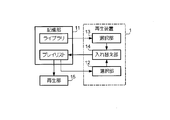
- the playback device 1 includes a selection unit 12, a selection unit 13, and a replacement unit 14, and the storage unit 11 and the playback unit 15 are provided outside the playback device 1. Also good.
- Attribute of content is not limited to the attribute exemplified in the embodiment.
- the content attributes may include, for example, information such as rating, lyrics, composer name, songwriter name, album name, date released, country announced, etc.
- the hardware configuration of the playback device 1 is not limited to the configuration illustrated in FIG.
- the playback device 1 may have any hardware configuration as long as it has a necessary function.
- the playback device 1 may be a computer device other than a smartphone, such as a portable music player, a tablet terminal, or a desktop computer.
- the program executed by the CPU 101 of the playback apparatus 1 may be provided by a storage medium such as an optical disk, a magnetic disk, or a semiconductor memory, or may be downloaded via a communication line such as the Internet. Also, this program need not comprise all the steps of FIG. For example, this program may include only step S1, step S3 and step S4.
- the update method acquires a list of a plurality of contents selected from a library including a plurality of contents, selects a first content to be deleted from the list from the list, Based on the content of the list, the second content to be replaced with the first content is selected, and the first content is replaced with the second content in the list.
- the list of the plurality of contents selected from the library may be a list of the plurality of contents selected by the user from the library.
- the second content may be selected from one or more contents similar to the first content among a plurality of contents included in the library.
- the one or more contents similar to the first content may be one or more contents belonging to the same cluster as the first content.
- the first content may be selected according to a reproduction history of each of the plurality of contents in the list.
- the updating method may further include determining whether it is time to update the list. If it is determined that it is time to update the list, the list may be acquired.
- the contents of the list may include an attribute of the first content.
- the update device acquires a list of a plurality of contents selected from a library including a plurality of contents, and selects a first content to be deleted from the list from the list; A second selection unit that selects a second content to be replaced with the first content based on the contents of the list, and a replacement unit that replaces the first content with the second content in the list.
- the list of the plurality of contents selected from the library may be a list of the plurality of contents selected by the user from the library.
- the second selection unit may select the second content from one or more contents similar to the first content among a plurality of contents included in the library.
- the one or more contents similar to the first content may be one or more contents belonging to the same cluster as the first content.
- the second selection unit may select the first content according to a reproduction history of each of the plurality of contents in the list.
- the first selection unit may determine whether it is time to update the list.
- the first selection unit may acquire the list when it is determined that it is time to update the list.
- the contents of the list may include an attribute of the first content.
- the present invention may be applied to an update method and an update device.
Landscapes
- Engineering & Computer Science (AREA)
- Theoretical Computer Science (AREA)
- General Engineering & Computer Science (AREA)
- Physics & Mathematics (AREA)
- General Physics & Mathematics (AREA)
- Multimedia (AREA)
- Data Mining & Analysis (AREA)
- Databases & Information Systems (AREA)
- Human Computer Interaction (AREA)
- Information Retrieval, Db Structures And Fs Structures Therefor (AREA)
- User Interface Of Digital Computer (AREA)
- Management Or Editing Of Information On Record Carriers (AREA)
Abstract
更新方法は、複数のコンテンツを含むライブラリの中から選択された複数のコンテンツの一覧を取得し、前記一覧の中から、前記一覧から削除する第1コンテンツを選択し、前記ライブラリの中から、前記一覧の内容に基づいて、前記第1コンテンツと入れ替える第2コンテンツを選択し、前記一覧において前記第1コンテンツを前記第2コンテンツと入れ替えることを有する。
Description
本発明は、コンテンツの一覧を更新する技術に関する。
本願は、2016年3月18日に日本国に出願された特願2016-055045号に基づいて優先権を主張し、その内容をここに援用する。
本願は、2016年3月18日に日本国に出願された特願2016-055045号に基づいて優先権を主張し、その内容をここに援用する。
楽曲データ等のコンテンツを再生する再生装置が知られている。ストレージの大容量化やクラウド技術の発達に伴い、この種の再生装置においては膨大な数のコンテンツを再生することが可能である。コンテンツの再生においては、ユーザにより選択されたコンテンツの一覧(いわゆるプレイリスト)が用いられることがある。ユーザは再生可能なコンテンツの中から自分の好みのコンテンツの一覧を作成する。再生装置は、この一覧に登録されたコンテンツを再生する。例えば特許文献1には、ユーザの好みに適したプレイリストを自動的に作成する技術が記載されている。
特許文献1に記載の技術においては、一旦作成された一覧をユーザが編集しない限りその一覧に含まれるコンテンツは固定されているという問題があった。
本発明は、コンテンツの一覧を、その一覧の内容に応じて更新する技術を提供する。
本発明の実施態様に係る更新方法は、複数のコンテンツを含むライブラリの中から選択された複数のコンテンツの一覧を取得し、前記一覧の中から、前記一覧から削除する第1コンテンツを選択し、前記ライブラリの中から、前記一覧の内容に基づいて、前記第1コンテンツと入れ替える第2コンテンツを選択し、前記一覧において前記第1コンテンツを前記第2コンテンツと入れ替えることを有する。
本発明の実施態様に係る更新装置は、複数のコンテンツを含むライブラリの中から選択された複数のコンテンツの一覧を取得し、前記一覧から削除する第1コンテンツを前記一覧の中から選択する第1選択部と、前記ライブラリの中から、前記一覧の内容に基づいて、前記第1コンテンツと入れ替える第2コンテンツを選択する第2選択部と、前記一覧において前記第1コンテンツを前記第2コンテンツと入れ替える入れ替え部とを備える。
本発明によれば、コンテンツの一覧を、その一覧の内容に基づいて更新することができる。
1.構成
図1は、一実施形態に係る再生装置1の機能構成を例示する図である。再生装置1は、コンテンツ群の中からユーザにより選択されたコンテンツの一覧(以下「プレイリスト」という)に含まれるコンテンツを再生する。再生装置1は、記憶部(記憶手段)11、選択部(選択手段、第1選択部)12、選択部(選択手段、第2選択部)13、入れ替え部(入れ替え手段)14、および再生部(再生手段)15を有する。プレイリストとは、コンテンツ群の中から所定の条件に基づいて、自動で作成されてもよい。所定の条件とは、例えば、特定の属性のコンテンツを10個選択するという条件であってもよい。
図1は、一実施形態に係る再生装置1の機能構成を例示する図である。再生装置1は、コンテンツ群の中からユーザにより選択されたコンテンツの一覧(以下「プレイリスト」という)に含まれるコンテンツを再生する。再生装置1は、記憶部(記憶手段)11、選択部(選択手段、第1選択部)12、選択部(選択手段、第2選択部)13、入れ替え部(入れ替え手段)14、および再生部(再生手段)15を有する。プレイリストとは、コンテンツ群の中から所定の条件に基づいて、自動で作成されてもよい。所定の条件とは、例えば、特定の属性のコンテンツを10個選択するという条件であってもよい。
記憶部11は、各種のデータを記憶する。この例で、記憶部11は、コンテンツのライブラリを記憶する。コンテンツのライブラリとは、再生装置1で再生可能なデータ形式で記憶された複数のコンテンツの集合をいう。コンテンツとは、楽曲データまたは動画データのファイルをいう。記憶部11は、さらにプレイリストを記憶する。プレイリストとは、コンテンツのライブラリの中からユーザにより選択されたコンテンツの一覧をいう。
選択部12は、プレイリストの中から削除するコンテンツ(以下「削除コンテンツ」という。第1コンテンツの一例)を選択する。選択部13は、ライブラリの中から、削除対象コンテンツと入れ替えるコンテンツ(以下「追加コンテンツ」という。第2コンテンツの一例)を、プレイリストの内容に基づいて選択する。入れ替え部14は、記憶部11に記憶されているプレイリストにおいて、削除コンテンツと追加コンテンツとを入れ替える。削除コンテンツと追加コンテンツとを入れ替えることにより、プレイリスト(一覧)が更新される。
再生部15は、プレイリストに含まれるコンテンツを1つずつ再生する。コンテンツを再生する順番は、例えばランダム(いわゆるシャッフル再生)である。あるいは、プレイリストは再生順序を示す情報を含んでおり、再生部15はこの順序に従ってコンテンツを再生してもよい。
図2は、再生装置1のハードウェア構成を例示する図である。再生装置1は、コンピュータ装置、例えばスマートフォンである。再生装置1は、CPU101、メモリー102、ストレージ103、入力部104、出力部105、通信IF106を有する。CPU101は、再生装置1の他の構成要素を制御する制御装置である。メモリー102は、CPU101がプログラムを実行する際のワークスペースとして機能する揮発性の記憶装置である。ストレージ103は、各種のデータおよびプログラムを記憶した不揮発性の記憶装置である。入力部104は、ユーザから命令または情報の入力を受け付ける入力装置であり、例えば、タッチセンサー、ボタン、およびマイクロフォンの少なくとも1つを含む。出力部105は、外部に情報を出力する出力装置であり、例えば、ディスプレイおよびスピーカーの少なくとも1つを含む。通信IF106は、他の装置、例えばネットワーク上のサーバ装置(図示略)と通信するためのインターフェースである。
この例で、ストレージ103は、コンピュータ装置を再生装置1として機能させるためのプログラム(以下「再生プログラム」という)を記憶している。CPU101がこの再生プログラムを実行することにより、図1に示した機能が実装される。メモリー102およびストレージ103は、記憶部11の一例である。このプログラムを実行しているCPU101は、選択部12、選択部13、入れ替え部14、および再生部15の一例である。
2.動作
図3は、再生装置1の一実施形態に係る動作を例示するフローチャートである。このフローは、再生装置1におけるコンテンツの一覧の更新方法に係る。このフローは、例えば、ユーザが再生プログラムの起動を指示したことを契機として開始される。この例で、プレイリストはユーザによりあらかじめ作成されている。すなわち、ユーザは、プレイリストに含めるコンテンツを手動で指定し、プレイリストを作成する。このプレイリストは、記憶部11に記憶されている。
図3は、再生装置1の一実施形態に係る動作を例示するフローチャートである。このフローは、再生装置1におけるコンテンツの一覧の更新方法に係る。このフローは、例えば、ユーザが再生プログラムの起動を指示したことを契機として開始される。この例で、プレイリストはユーザによりあらかじめ作成されている。すなわち、ユーザは、プレイリストに含めるコンテンツを手動で指定し、プレイリストを作成する。このプレイリストは、記憶部11に記憶されている。
ステップS1において、選択部12は、プレイリストの更新時期になったか判断する。プレイリストの更新時期は、例えば、ユーザによりプレイリストの更新が明示的に指示されたとき、前回の更新から所定の時間が経過したとき、またはプレイリストのコンテンツの再生が1周したときである。まだプレイリストの更新時期になっていないと判断された場合(S1:NO)、選択部12は、プレイリストの更新時期になるまで待機する。プレイリストの更新時期になったと判断された場合(S1:YES)、選択部12は、処理をステップS2に移行する。
ステップS2において、選択部12は、記憶部11からプレイリストを取得する。ステップS3において、選択部12は、プレイリストの中から削除コンテンツを選択する。この例で、選択部12は、プレイリストにおける再生履歴に基づいて削除コンテンツを選択する。
図4は、プレイリストにおける再生履歴を例示する図である。再生履歴のデータは、記憶部11に記憶されている。再生履歴は、コンテンツの識別子、再生回数、およびスキップ回数を含んでいる。再生回数は、対応するコンテンツが最初から最後まで再生された回数を示す。スキップ回数は、対応するコンテンツの再生途中で再生をスキップ(または早送り)する指示をユーザが入力して次のコンテンツが再生された回数を示す。再生部15はコンテンツの再生を管理している。再生部15はコンテンツの再生状況またはユーザの指示入力に応じて、図4の表を書き替える。例えば、再生部15は、あるコンテンツの再生が開始されると、そのコンテンツに対応する「スキップ回数」に「1」を加算する。そのコンテンツが最後まで再生されると、再生部15は、そのコンテンツに対応する「スキップ回数」から「1」を減算し、「再生回数」に「1」を加算する。
選択部12は、プレイリストの中から、再生履歴が所定の条件を満たすコンテンツを削除コンテンツとして選択する。この条件は、スキップ回数が最も多いという条件である。この条件は、再生回数に対するスキップ回数の割合が最も高いという条件であってもよい。この条件は、再生回数が最も少ないという条件であってもよい。この条件は、スキップ回数に対する再生回数の割合が最も低いという条件であってもよい。
再び図3を参照する。ステップS4において、選択部13は、追加コンテンツを選択する。この例で、選択部13は、ライブラリに含まれるコンテンツのうち削除コンテンツに類似したコンテンツを追加コンテンツとして選択する。コンテンツが類似しているか否かの判断は、コンテンツの属性に基づいて行われる。
図5は、コンテンツの属性を例示する図である。ここでは、コンテンツが楽曲データである例を用いて説明する。この例で、コンテンツの属性は、コンテンツの識別子、調、テンポ、音色、曲名、アーティスト名、およびクラスタ名を含む。これらの属性の少なくとも一部(例えば、曲名およびアーティスト名)は、コンテンツの提供者により与えられる。属性の一部(例えば、調、テンポ、音色、およびクラスタ名)は、コンテンツのデータ(この例では楽曲を示す音データ)を再生装置1が解析することにより与えられる。これらのデータはメタデータとしてコンテンツのデータに付加されてもよいし、テーブルの形式でコンテンツのファイルとは別途記憶されていてもよい。
調は、その楽曲の音楽的な調性(キー)を示す情報であり、例えばハ長調、イ短調などである。テンポは、その楽曲の拍の速さを示す情報であり、例えばBPM(Beats Per Minute)である。音色は、その楽曲の演奏音の音色を示す情報であり、例えばMFCC(Mel-Frequency Cepstrum Coefficients、メル周波数ケプストラム係数)である。曲名は、その楽曲に与えられたタイトルを示す情報である。アーティスト名は、その楽曲の演者、作曲者、作詞者、または指揮者を示す情報である。クラスタ名は、ライブラリに含まれるコンテンツをその属性が類似したコンテンツごとにクラスタリング(グループ分け)したときのクラスタを特定する情報である。同じクラスタ名を有する2つのコンテンツは互いに類似していると言える。
図6は、コンテンツのクラスタリングを例示する図である。n種類の属性に基づいてクラスタリングする場合、各コンテンツはn次元空間(以下「属性空間」という)にプロットされる。これらのプロットは、K平均法、最小平均分散法、または最短距離法など周知の手法によりクラスタリングされる。ここでは図面を簡単にするため、コンテンツが2種類の属性(音色とテンポ)を用いてクラスタリングされる例を示す。複数のコンテンツは、クラスタA、クラスタB、およびクラスタCの3つのクラスタのいずれかに分類される。
選択部13は、ライブラリに含まれるコンテンツのうち、削除コンテンツと同じクラスタに属し、かつ現時点でプレイリストに含まれていないコンテンツの中から、追加コンテンツを選択する。この条件を満たすコンテンツが複数ある場合、選択部13は、例えば属性空間における削除コンテンツとの距離が最も短いコンテンツを追加コンテンツとして選択する。あるいは、選択部13は、属性空間における削除コンテンツとの距離がしきい値以下であるコンテンツの中から追加コンテンツとなるコンテンツをランダムに選択してもよい。
再び図3を参照する。ステップS5において、入れ替え部14は、プレイリストにおいて削除コンテンツと追加コンテンツとを入れ替える。すなわち、入れ替え部14は、プレイリストから削除コンテンツを削除し、プレイリストに追加コンテンツを追加する。コンテンツの入れ替えが完了すると、入れ替え部14は図3のフローを終了する。図3に示すステップS1~S5のうちの一部を省略してもよい。例えば、ステップS1の処理を省略して、ステップS2~S5の処理を実行してもよい。
本実施形態によれば、再生履歴に応じてプレイリストに含まれるコンテンツが自動的に入れ替えられる。プレイリストに含まれるコンテンツが固定されているとユーザはそのプレイリストに飽きてしまうことがあるが、本実施形態によればこれが抑制される。また、追加コンテンツは削除コンテンツの属性に応じて選択されるので、プレイリスト自体の統一性やコンセプトは維持される。例えば、ハードロック調の楽曲ばかりを集めたプレイリストにおいては、ハードロック調の楽曲が追加コンテンツとして選択され、プレイリスト自体のコンセプトを維持することができる。
3.変形例
本発明は上述の実施形態に限定されるものではなく、種々の変形実施が可能である。以下、変形例をいくつか説明する。以下の変形例のうち2つ以上のものが組み合わせて用いられてもよい。
本発明は上述の実施形態に限定されるものではなく、種々の変形実施が可能である。以下、変形例をいくつか説明する。以下の変形例のうち2つ以上のものが組み合わせて用いられてもよい。
実施形態の例では単一の装置が図1の機能をすべて有していたが、図1の機能は、クライアント装置およびサーバ装置に分けて実装されていてもよい。例えば、記憶部11、選択部12、選択部13、および入れ替え部14がサーバ装置に実装され、再生部15がクライアント装置に実装されてもよい。また、コンテンツのライブラリとプレイリストとは、異なる記憶部に記憶されてもよい。例えば、サーバ装置の記憶部がコンテンツのライブラリを、クライアント装置の記憶部がプレイリストを、それぞれ記憶してもよい。別の構成として、図7に示すように、再生装置1が、選択部12、選択部13、および入れ替え部14を備え、記憶部11および再生部15が再生装置1の外部に設けられていてもよい。
コンテンツの属性は実施形態で例示した属性に限定されない。コンテンツの属性は、例えば、レーティング、歌詞、作曲者名、作詞者名、アルバム名、発表された年代、発表された国等の情報を含んでいてもよい。
再生装置1のハードウェア構成は図2で例示した構成に限定されない。必要な機能を有する構成であれば、再生装置1はどのようなハードウェア構成を有していてもよい。再生装置1は、携帯音楽プレーヤー、タブレット端末、デスクトップコンピュータ等、スマートフォン以外のコンピュータ装置であってもよい。
再生装置1のCPU101等により実行されるプログラムは、光ディスク、磁気ディスク、半導体メモリーなどの記憶媒体により提供されてもよいし、インターネット等の通信回線を介してダウンロードされてもよい。また、このプログラムは、図3のすべてのステップを備える必要はない。例えば、このプログラムは、ステップS1、ステップS3およびステップS4のみを備えていてもよい。
実施形態に係る更新方法は、複数のコンテンツを含むライブラリの中から選択された複数のコンテンツの一覧を取得し、前記一覧の中から、前記一覧から削除する第1コンテンツを選択し、前記ライブラリの中から、前記一覧の内容に基づいて、前記第1コンテンツと入れ替える第2コンテンツを選択し、前記一覧において前記第1コンテンツを前記第2コンテンツと入れ替えることを有する。前記ライブラリの中から選択された複数のコンテンツの一覧は、前記ライブラリの中からユーザにより選択された複数のコンテンツの一覧であってもよい。前記第2コンテンツは、前記ライブラリに含まれる複数のコンテンツのうち、前記第1コンテンツと類似している一以上のコンテンツの中から選択されてもよい。前記第1コンテンツと類似している一以上のコンテンツは、前記第1コンテンツと同じクラスタに属する一以上のコンテンツであってもよい。前記第1コンテンツは、前記一覧における複数のコンテンツ各々の再生履歴に応じて選択されてもよい。更新方法は、前記一覧を更新する時期であるか判断することをさらに含んでもよい。前記一覧を更新する時期であると判断された場合、前記一覧が取得されてもよい。前記一覧の内容は、前記第1コンテンツの属性を含んでもよい。
実施形態に係る更新装置は、複数のコンテンツを含むライブラリの中から選択された複数のコンテンツの一覧を取得し、前記一覧から削除する第1コンテンツを前記一覧の中から選択する第1選択部と、前記ライブラリの中から、前記一覧の内容に基づいて、前記第1コンテンツと入れ替える第2コンテンツを選択する第2選択部と、前記一覧において前記第1コンテンツを前記第2コンテンツと入れ替える入れ替え部とを備える。前記ライブラリの中から選択された複数のコンテンツの一覧は、前記ライブラリの中からユーザにより選択された複数のコンテンツの一覧であってもよい。前記第2選択部は、前記ライブラリに含まれる複数のコンテンツのうち、前記第1コンテンツと類似している一以上のコンテンツの中から前記第2コンテンツを選択してもよい。前記第1コンテンツと類似している一以上のコンテンツは、前記第1コンテンツと同じクラスタに属する一以上のコンテンツであってもよい。前記第2選択部は、前記一覧における複数のコンテンツ各々の再生履歴に応じて前記第1コンテンツを選択してもよい。前記第1選択部は、前記一覧を更新する時期であるか判断してもよい。前記第1選択部は、前記一覧を更新する時期であると判断された場合、前記一覧を取得してもよい。前記一覧の内容は、前記第1コンテンツの属性を含んでもよい。
本発明は、更新方法および更新装置に適用してもよい。
1…再生装置
11…記憶部
12…選択部
13…選択部
14…入れ替え部
15…再生部
101…CPU
102…メモリー
103…ストレージ
104…入力部
105…出力部
106…通信IF
11…記憶部
12…選択部
13…選択部
14…入れ替え部
15…再生部
101…CPU
102…メモリー
103…ストレージ
104…入力部
105…出力部
106…通信IF
Claims (14)
- 複数のコンテンツを含むライブラリの中から選択された複数のコンテンツの一覧を取得し、
前記一覧の中から、前記一覧から削除する第1コンテンツを選択し、
前記ライブラリの中から、前記一覧の内容に基づいて、前記第1コンテンツと入れ替える第2コンテンツを選択し、
前記一覧において前記第1コンテンツを前記第2コンテンツと入れ替える
ことを有する更新方法。 - 前記ライブラリの中から選択された複数のコンテンツの一覧は、前記ライブラリの中からユーザにより選択された複数のコンテンツの一覧である
請求項1に記載の更新方法。 - 前記第2コンテンツは、前記ライブラリに含まれる複数のコンテンツのうち、前記第1コンテンツと類似している一以上のコンテンツの中から選択される
請求項1または2に記載の更新方法。 - 前記第1コンテンツと類似している一以上のコンテンツは、前記第1コンテンツと同じクラスタに属する一以上のコンテンツである
請求項3に記載の更新方法。 - 前記第1コンテンツは、前記一覧における複数のコンテンツ各々の再生履歴に応じて選択される
請求項1から4のいずれか一項に記載の更新方法。 - 前記一覧を更新する時期であるか判断することをさらに含み、
前記一覧を更新する時期であると判断された場合、前記一覧が取得される
請求項1から5のいずれか一項に記載の更新方法。 - 前記一覧の内容は、前記第1コンテンツの属性を含む
請求項1から6のいずれか一項に記載の更新方法。 - 複数のコンテンツを含むライブラリの中から選択された複数のコンテンツの一覧を取得し、前記一覧から削除する第1コンテンツを前記一覧の中から選択する第1選択部と、
前記ライブラリの中から、前記一覧の内容に基づいて、前記第1コンテンツと入れ替える第2コンテンツを選択する第2選択部と、
前記一覧において前記第1コンテンツを前記第2コンテンツと入れ替える入れ替え部と
を備える更新装置。 - 前記ライブラリの中から選択された複数のコンテンツの一覧は、前記ライブラリの中からユーザにより選択された複数のコンテンツの一覧である
請求項8に記載の更新装置。 - 前記第2選択部は、前記ライブラリに含まれる複数のコンテンツのうち、前記第1コンテンツと類似している一以上のコンテンツの中から前記第2コンテンツを選択する
請求項8または9に記載の更新装置。 - 前記第1コンテンツと類似している一以上のコンテンツは、前記第1コンテンツと同じクラスタに属する一以上のコンテンツである
請求項10に記載の更新装置。 - 前記第2選択部は、前記一覧における複数のコンテンツ各々の再生履歴に応じて前記第1コンテンツを選択する
請求項8から11のいずれか一項に記載の更新装置。 - 前記第1選択部は、前記一覧を更新する時期であるか判断し、
前記第1選択部は、前記一覧を更新する時期であると判断された場合、前記一覧を取得する
請求項8から12のいずれか一項に記載の更新装置。 - 前記一覧の内容は、前記第1コンテンツの属性を含む
請求項8から13のいずれか一項に記載の更新装置。
Priority Applications (1)
| Application Number | Priority Date | Filing Date | Title |
|---|---|---|---|
| US16/086,055 US10963509B2 (en) | 2016-03-18 | 2017-03-10 | Update method and update apparatus |
Applications Claiming Priority (2)
| Application Number | Priority Date | Filing Date | Title |
|---|---|---|---|
| JP2016-055045 | 2016-03-18 | ||
| JP2016055045A JP6733240B2 (ja) | 2016-03-18 | 2016-03-18 | コンテンツの一覧の更新方法 |
Publications (1)
| Publication Number | Publication Date |
|---|---|
| WO2017159569A1 true WO2017159569A1 (ja) | 2017-09-21 |
Family
ID=59851913
Family Applications (1)
| Application Number | Title | Priority Date | Filing Date |
|---|---|---|---|
| PCT/JP2017/009766 Ceased WO2017159569A1 (ja) | 2016-03-18 | 2017-03-10 | 更新方法および更新装置 |
Country Status (3)
| Country | Link |
|---|---|
| US (1) | US10963509B2 (ja) |
| JP (1) | JP6733240B2 (ja) |
| WO (1) | WO2017159569A1 (ja) |
Families Citing this family (2)
| Publication number | Priority date | Publication date | Assignee | Title |
|---|---|---|---|---|
| WO2019164041A1 (ko) * | 2018-02-26 | 2019-08-29 | 라인플러스 주식회사 | 플레이리스트 구성에 기반하여 곡 재생 길이를 예측하는 방법 및 시스템 |
| KR102534080B1 (ko) * | 2020-10-22 | 2023-05-19 | 엔에이치엔애드 (주) | 네트워크를 통해 사용자 단말기에 제공되는 플레이리스트를 관리하는 네트워크 서버 및 방법 |
Citations (5)
| Publication number | Priority date | Publication date | Assignee | Title |
|---|---|---|---|---|
| JP2006243854A (ja) * | 2005-03-01 | 2006-09-14 | Fujitsu Ten Ltd | 楽曲再生装置、楽曲再生方法及びプログラム |
| JP2006268100A (ja) * | 2005-03-22 | 2006-10-05 | Nippon Telegr & Teleph Corp <Ntt> | プレイリスト生成装置、プレイリスト生成方法、プログラムおよび記録媒体 |
| JP2007102981A (ja) * | 2005-10-07 | 2007-04-19 | Olympus Imaging Corp | 情報管理装置、情報管理システム、情報管理プログラム、情報管理方法及び端末装置 |
| JP2007172138A (ja) * | 2005-12-20 | 2007-07-05 | Sony Corp | コンテンツ再生装置、リスト修正装置、コンテンツ再生方法及びリスト修正方法 |
| JP2008059383A (ja) * | 2006-08-31 | 2008-03-13 | Toshiba Corp | コンテンツ提示装置及びコンピュータプログラム |
Family Cites Families (16)
| Publication number | Priority date | Publication date | Assignee | Title |
|---|---|---|---|---|
| JP2003030964A (ja) * | 2001-07-11 | 2003-01-31 | Sony Corp | 再生装置および編集装置 |
| JP2003178088A (ja) | 2001-12-07 | 2003-06-27 | Sharp Corp | プレイリスト作成装置およびプレイリスト作成方法、情報再生装置、並びに、プログラム記録媒体 |
| EP1489765A3 (en) * | 2003-06-17 | 2005-12-14 | Matsuhita Electric Industrial Co., Ltd. | Music selection apparatus and music delivery system |
| JP3931179B2 (ja) * | 2004-03-24 | 2007-06-13 | シャープ株式会社 | コンテンツ再生装置 |
| JP4423550B2 (ja) * | 2004-05-19 | 2010-03-03 | ソニー株式会社 | 情報処理装置、コンテンツタイトル表示方法及びコンテンツタイトル表示プログラム |
| US9277157B2 (en) * | 2004-09-01 | 2016-03-01 | Gravidi, Inc. | Interactive marketing system |
| US9219634B1 (en) * | 2005-02-16 | 2015-12-22 | Creative Technology Ltd. | System and method for searching, storing, and rendering digital media content using virtual broadcast channels |
| US7890520B2 (en) * | 2005-08-01 | 2011-02-15 | Sony Corporation | Processing apparatus and associated methodology for content table generation and transfer |
| JP2007041917A (ja) * | 2005-08-04 | 2007-02-15 | Yamaha Corp | コンテンツ配信システム、コンテンツ再生装置、コンテンツ提供サーバ、及びそれらに用いるプログラム |
| JP2007157243A (ja) * | 2005-12-06 | 2007-06-21 | Hitachi Ltd | 情報再生装置および情報再生プログラム |
| JP4577412B2 (ja) * | 2008-06-20 | 2010-11-10 | ソニー株式会社 | 情報処理装置、情報処理方法、情報処理プログラム |
| JP5589571B2 (ja) * | 2010-06-07 | 2014-09-17 | ソニー株式会社 | 情報処理装置、情報処理方法およびプログラム |
| JP2013210721A (ja) * | 2012-03-30 | 2013-10-10 | Sony Corp | 情報処理装置及びプログラム |
| US20140195675A1 (en) * | 2013-01-09 | 2014-07-10 | Giga Entertainment Media Inc. | Simultaneous Content Data Streaming And Interaction System |
| US9633020B2 (en) * | 2013-05-27 | 2017-04-25 | Tencent Technology (Shenzhen) Company Limited | Method and device for playing media synchronously |
| US20150193196A1 (en) * | 2014-01-06 | 2015-07-09 | Alpine Electronics of Silicon Valley, Inc. | Intensity-based music analysis, organization, and user interface for audio reproduction devices |
-
2016
- 2016-03-18 JP JP2016055045A patent/JP6733240B2/ja active Active
-
2017
- 2017-03-10 WO PCT/JP2017/009766 patent/WO2017159569A1/ja not_active Ceased
- 2017-03-10 US US16/086,055 patent/US10963509B2/en active Active
Patent Citations (5)
| Publication number | Priority date | Publication date | Assignee | Title |
|---|---|---|---|---|
| JP2006243854A (ja) * | 2005-03-01 | 2006-09-14 | Fujitsu Ten Ltd | 楽曲再生装置、楽曲再生方法及びプログラム |
| JP2006268100A (ja) * | 2005-03-22 | 2006-10-05 | Nippon Telegr & Teleph Corp <Ntt> | プレイリスト生成装置、プレイリスト生成方法、プログラムおよび記録媒体 |
| JP2007102981A (ja) * | 2005-10-07 | 2007-04-19 | Olympus Imaging Corp | 情報管理装置、情報管理システム、情報管理プログラム、情報管理方法及び端末装置 |
| JP2007172138A (ja) * | 2005-12-20 | 2007-07-05 | Sony Corp | コンテンツ再生装置、リスト修正装置、コンテンツ再生方法及びリスト修正方法 |
| JP2008059383A (ja) * | 2006-08-31 | 2008-03-13 | Toshiba Corp | コンテンツ提示装置及びコンピュータプログラム |
Also Published As
| Publication number | Publication date |
|---|---|
| JP2017168034A (ja) | 2017-09-21 |
| JP6733240B2 (ja) | 2020-07-29 |
| US10963509B2 (en) | 2021-03-30 |
| US20200293572A1 (en) | 2020-09-17 |
Similar Documents
| Publication | Publication Date | Title |
|---|---|---|
| US6933432B2 (en) | Media player with “DJ” mode | |
| KR100898713B1 (ko) | 미디어 컨텐츠의 재생 목록 생성 방법 및 장치, 미디어컨텐츠의 재생 방법 및 장치 | |
| JP2019133181A (ja) | オーディオ・ファイルを生成するためのシステム及び方法 | |
| JP2008287125A (ja) | コンテンツの表示方法、コンテンツの表示装置、記録媒体、およびサーバ装置 | |
| US11762901B2 (en) | User consumption behavior analysis and composer interface | |
| KR101963753B1 (ko) | 음악의 분절별 동영상 재생 방법 및 장치 | |
| CN100545936C (zh) | 再现装置、再现控制方法以及程序 | |
| JP5652952B2 (ja) | オーディオ装置、ビデオ装置およびコンピュータプログラム | |
| CN102163220B (zh) | 歌曲过渡元数据 | |
| JP2008071397A (ja) | オーディオ装置 | |
| JP6733240B2 (ja) | コンテンツの一覧の更新方法 | |
| CN1848287B (zh) | 再现方法、再现设备及记录介质 | |
| JP4760877B2 (ja) | 再生装置及び再生プログラム | |
| JP6648586B2 (ja) | 楽曲編集装置 | |
| CN120476441A (zh) | 用于编写音频输出文件的用户界面设备、方法和计算机程序 | |
| WO2020054064A1 (ja) | 楽曲編集システム、及び楽曲編集方法 | |
| JP2007287256A (ja) | プレイリスト検索装置およびプレイリスト検索方法 | |
| JP2010198713A (ja) | オーディオ再生装置 | |
| JP6037642B2 (ja) | 楽曲再生装置 | |
| JP5755456B2 (ja) | プレイリスト編集装置、プレイリスト編集方法、プレイリスト編集プログラムおよびプレイリスト編集プログラムを格納した記録媒体 | |
| JP2008204506A (ja) | コンテンツリスト生成装置 | |
| JP2011175180A (ja) | カラオケ予約装置 | |
| Miller | The ultimate digital music guide | |
| JP5570794B2 (ja) | オーディオ再生装置 | |
| JP2012113554A (ja) | コンテンツ再生装置及びコンテンツ再生システム |
Legal Events
| Date | Code | Title | Description |
|---|---|---|---|
| NENP | Non-entry into the national phase |
Ref country code: DE |
|
| 121 | Ep: the epo has been informed by wipo that ep was designated in this application |
Ref document number: 17766569 Country of ref document: EP Kind code of ref document: A1 |
|
| 122 | Ep: pct application non-entry in european phase |
Ref document number: 17766569 Country of ref document: EP Kind code of ref document: A1 |