WO2016208518A1 - レジスト下層膜形成用組成物、レジスト下層膜及びパターニングされた基板の製造方法 - Google Patents
レジスト下層膜形成用組成物、レジスト下層膜及びパターニングされた基板の製造方法 Download PDFInfo
- Publication number
- WO2016208518A1 WO2016208518A1 PCT/JP2016/068191 JP2016068191W WO2016208518A1 WO 2016208518 A1 WO2016208518 A1 WO 2016208518A1 JP 2016068191 W JP2016068191 W JP 2016068191W WO 2016208518 A1 WO2016208518 A1 WO 2016208518A1
- Authority
- WO
- WIPO (PCT)
- Prior art keywords
- underlayer film
- group
- resist underlayer
- compound
- resin
- Prior art date
- Legal status (The legal status is an assumption and is not a legal conclusion. Google has not performed a legal analysis and makes no representation as to the accuracy of the status listed.)
- Ceased
Links
Classifications
-
- G—PHYSICS
- G03—PHOTOGRAPHY; CINEMATOGRAPHY; ANALOGOUS TECHNIQUES USING WAVES OTHER THAN OPTICAL WAVES; ELECTROGRAPHY; HOLOGRAPHY
- G03F—PHOTOMECHANICAL PRODUCTION OF TEXTURED OR PATTERNED SURFACES, e.g. FOR PRINTING, FOR PROCESSING OF SEMICONDUCTOR DEVICES; MATERIALS THEREFOR; ORIGINALS THEREFOR; APPARATUS SPECIALLY ADAPTED THEREFOR
- G03F7/00—Photomechanical, e.g. photolithographic, production of textured or patterned surfaces, e.g. printing surfaces; Materials therefor, e.g. comprising photoresists; Apparatus specially adapted therefor
- G03F7/004—Photosensitive materials
- G03F7/09—Photosensitive materials characterised by structural details, e.g. supports, auxiliary layers
- G03F7/11—Photosensitive materials characterised by structural details, e.g. supports, auxiliary layers having cover layers or intermediate layers, e.g. subbing layers
-
- G—PHYSICS
- G03—PHOTOGRAPHY; CINEMATOGRAPHY; ANALOGOUS TECHNIQUES USING WAVES OTHER THAN OPTICAL WAVES; ELECTROGRAPHY; HOLOGRAPHY
- G03F—PHOTOMECHANICAL PRODUCTION OF TEXTURED OR PATTERNED SURFACES, e.g. FOR PRINTING, FOR PROCESSING OF SEMICONDUCTOR DEVICES; MATERIALS THEREFOR; ORIGINALS THEREFOR; APPARATUS SPECIALLY ADAPTED THEREFOR
- G03F7/00—Photomechanical, e.g. photolithographic, production of textured or patterned surfaces, e.g. printing surfaces; Materials therefor, e.g. comprising photoresists; Apparatus specially adapted therefor
- G03F7/26—Processing photosensitive materials; Apparatus therefor
-
- H—ELECTRICITY
- H10—SEMICONDUCTOR DEVICES; ELECTRIC SOLID-STATE DEVICES NOT OTHERWISE PROVIDED FOR
- H10P—GENERIC PROCESSES OR APPARATUS FOR THE MANUFACTURE OR TREATMENT OF DEVICES COVERED BY CLASS H10
- H10P76/00—Manufacture or treatment of masks on semiconductor bodies, e.g. by lithography or photolithography
Definitions
- the present invention relates to a resist underlayer film forming composition, a resist underlayer film, and a method for producing a patterned substrate.
- a multilayer resist process is used to obtain a high degree of integration.
- a resist underlayer film forming composition is applied to one side of a substrate to form a resist underlayer film, and a resist composition is applied to the opposite side of the resist underlayer film from the substrate.
- a resist film is formed.
- the resist film is exposed through a mask pattern or the like, and developed with a developer to form a resist pattern.
- the resist underlayer film is dry-etched using the resist pattern as a mask, and the substrate is further etched using the obtained resist underlayer film pattern as a mask, thereby forming a desired pattern on the substrate and obtaining a patterned substrate. Can do.
- the composition for forming a resist underlayer film is required to sufficiently fill these trenches and to form a resist underlayer film having high flatness.
- the resist underlayer film forming composition is required to be able to be applied uniformly on the substrate, and is particularly formed when an intermediate layer such as a silicon-containing film is formed on the resist underlayer film in a multilayer resist process.
- the resist underlayer film is required to be able to uniformly apply a polysiloxane composition or the like on the surface thereof and to be excellent in surface coatability.
- the present invention has been made based on the circumstances as described above, and its object is to provide a resist underlayer film forming composition capable of forming a resist underlayer film having excellent flatness and surface coatability, a resist underlayer film, and patterning. Another object of the present invention is to provide a method for manufacturing a substrate.
- the invention made to solve the above problems includes a first compound represented by the following formula (1-1) or the following formula (1-2) (hereinafter also referred to as “[A] compound”), and the above [ A] Composition for forming a resist underlayer film comprising a second compound having an aromatic ring other than the compound (hereinafter also referred to as “[B] compound”) and a solvent (hereinafter also referred to as “[C] solvent”). It is.
- R 41 and R 42 are each independently a hydrogen atom or a fluorinated alkyl group.
- R 51 and R 52 are each independently 1 to 20 carbon atoms.
- Z is a divalent linking group, a and b are each independently an integer of 1 to 100.
- R 41 , R 42 , R 51 and R 52 are each In a plurality of cases, the plurality of R 41 may be the same or different, the plurality of R 42 may be the same or different, the plurality of R 51 may be the same or different, and the plurality of R 52 may be the same. May be different.
- L 1 is a divalent linking group.
- R 1 ′ is a hydrogen atom, a fluorinated alkyl group, or a group represented by the following Formula (1-2-R).
- A is a hydroxy group, a fluorinated alkoxy group or a group represented by the following formula (1-2-A), and f is an integer of 1 to 100.
- R 81 represents a hydrogen atom or a fluorinated alkyl group.
- * 1 ′ represents a site bonded to the oxygen atom farthest from A in the formula (1-2).
- L 2 is a divalent linking group containing no fluorine atom.
- R 1 ′′ is a hydrogen atom or a fluorinated alkyl group.
- A is the above formula.
- Another invention made to solve the above problems is a resist underlayer film formed from the resist underlayer film forming composition.
- Still another invention made in order to solve the above-mentioned problems is the step of coating the resist underlayer film forming composition on one surface side of the substrate, and the resist underlayer film formed by the coating step.
- a method for producing a patterned substrate comprising: a step of forming a resist pattern on the side opposite to the substrate; and a step of etching using the resist pattern as a mask.
- the “hydrocarbon group” includes a chain hydrocarbon group, an alicyclic hydrocarbon group, and an aromatic hydrocarbon group.
- the “hydrocarbon group” may be a saturated hydrocarbon group or an unsaturated hydrocarbon group.
- the “chain hydrocarbon group” refers to a hydrocarbon group that does not include a cyclic structure but includes only a chain structure, and includes both a linear hydrocarbon group and a branched hydrocarbon group.
- alicyclic hydrocarbon group refers to a hydrocarbon group that includes only an alicyclic structure as a ring structure and does not include an aromatic ring structure, and includes a monocyclic alicyclic hydrocarbon group and a polycyclic alicyclic group. Includes both hydrocarbon groups.
- “Aromatic hydrocarbon group” refers to a hydrocarbon group containing an aromatic ring structure as a ring structure. However, it is not necessary to be composed only of an aromatic ring structure, and a part thereof may include a chain structure or an alicyclic structure. “Number of ring members” means the number of atoms constituting the ring of an aromatic ring structure, aromatic heterocyclic structure, alicyclic structure and aliphatic heterocyclic structure. In the case of a polycyclic ring structure, this polycyclic ring The number of atoms to be played.
- the composition for forming a resist underlayer film of the present invention it is possible to form a resist underlayer film having excellent flatness and excellent surface coatability. Since the resist underlayer film of the present invention is formed from the resist underlayer film forming composition, it is excellent in flatness and surface coating property. According to the method for producing a patterned substrate of the present invention, a substrate having an excellent pattern shape can be obtained by using the resist underlayer film. Therefore, these can be suitably used for manufacturing semiconductor devices and the like that are expected to be further miniaturized in the future.
- the resist underlayer film forming composition contains a [A] compound, a [B] compound, and a [C] solvent.
- the resist underlayer film forming composition may contain a [D] acid generator and / or [E] cross-linking agent as a suitable component, and other optional components as long as the effects of the present invention are not impaired. May be contained.
- the composition for forming a resist underlayer film includes a [A] compound, a [B] compound, and a [C] solvent, thereby forming a resist underlayer film having excellent flatness and excellent surface coating properties. it can.
- the reason why the composition for forming a resist underlayer film has the above-described configuration provides the above effect is not necessarily clear, it can be inferred as follows, for example. That is, it is considered that the [A] compound has a hydroxy group and has the specific structure, whereby the affinity between the [B] compound having an aromatic ring and the substrate can be increased.
- the resist underlayer film forming composition can be sufficiently embedded even on a substrate having a trench or the like, so that the resist underlayer film has excellent flatness.
- the formed resist underlayer film has a hydroxy group and [A] compound having the specific structure, and therefore has excellent surface coatability. Therefore, in the multilayer resist process, it becomes easy to form an intermediate layer by applying a polysiloxane composition or the like on the resist underlayer film.
- the compound [A] is a compound represented by the following formula (1-1) or the following formula (1-2) (hereinafter, a compound represented by the following formula (1-1) is also referred to as “[A1] compound”).
- the compound represented by the following formula (1-2) is also referred to as “[A2] compound”).
- R 41 and R 42 are each independently a hydrogen atom or a fluorinated alkyl group.
- R 51 and R 52 are each independently a monovalent hydrocarbon group having 1 to 20 carbon atoms.
- Z is a divalent linking group.
- a and b are each independently an integer of 1 to 100.
- the carbon number of the fluorinated alkyl group represented by R 41 and R 42 is, for example, 1 to 20, and preferably 1 to 10.
- the fluorinated alkyl group include a fluoromethyl group, a difluoromethyl group, a trifluoromethyl group, a difluoroethyl group, a trifluoroethyl group, a trifluoropropyl group, a pentafluoropropyl group, a pentafluorobutyl group, a heptafluorobutyl group, Nonafluoropentyl group etc. are mentioned.
- R 41 and R 42 are preferably a fluorinated alkyl group, more preferably a fluorinated alkyl group having 1 to 5 carbon atoms, and a perfluoroalkylmethyl group from the viewpoint of further improving the flatness and surface coatability of the resist underlayer film.
- a fluorinated alkyl group more preferably a fluorinated alkyl group having 1 to 5 carbon atoms, and a perfluoroalkylmethyl group from the viewpoint of further improving the flatness and surface coatability of the resist underlayer film.
- a pentafluoropropyl group is particularly preferable.
- Examples of the monovalent hydrocarbon group having 1 to 20 carbon atoms represented by R 51 and R 52 include monovalent chain hydrocarbon groups having 1 to 20 carbon atoms and monovalent fats having 3 to 20 carbon atoms. Examples thereof include a cyclic hydrocarbon group and a monovalent aromatic hydrocarbon group having 6 to 20 carbon atoms.
- Examples of the monovalent chain hydrocarbon group having 1 to 20 carbon atoms include methyl group, ethyl group, n-propyl group, i-propyl group, n-butyl group, i-butyl group, sec-butyl group, t -An alkyl group such as a butyl group; An alkenyl group such as an ethenyl group, a propenyl group, a butenyl group; Examples thereof include alkynyl groups such as ethynyl group, propynyl group and butynyl group.
- Examples of the monovalent alicyclic hydrocarbon group having 3 to 20 carbon atoms include cycloalkyl groups such as a cyclopropyl group, a cyclobutyl group, a cyclopentyl group, a cyclohexyl group, and a cyclooctyl group; A cycloalkenyl group such as a cyclobutenyl group, a cyclopentenyl group, a cyclohexenyl group; Examples thereof include a bridged ring hydrocarbon group such as a norbornyl group, an adamantyl group, a norbornenyl group, a tricyclodecenyl group, and a tetracyclododecenyl group.
- Examples of the monovalent aromatic hydrocarbon group having 6 to 20 carbon atoms include aryl groups such as a phenyl group, a tolyl group, a xylyl group, a naphthyl group, and an anthryl group; Aralkyl groups such as benzyl group, phenethyl group, cumyl group, naphthylmethyl group; Examples include ethenylbenzyl group and ethynylbenzyl group.
- a chain hydrocarbon group is preferable, an alkyl group is more preferable, and a methyl group and an ethyl group are further preferable from the viewpoint of further improving the flatness and surface coatability of the resist underlayer film.
- Examples of the divalent linking group represented by Z include a divalent organic group having 1 to 50 carbon atoms. “Organic group” refers to a group containing at least one carbon atom.
- Examples of the divalent organic group having 1 to 50 carbon atoms include a divalent hydrocarbon group having 1 to 50 carbon atoms and a divalent heteroatom-containing group between one or more carbons of the hydrocarbon group. And a group obtained by substituting a part or all of the hydrogen atoms of the group (a), the hydrocarbon group and the group (a) with a monovalent heteroatom-containing group.
- R ′ is a hydrogen atom or a monovalent hydrocarbon group having 1 to 20 carbon atoms.
- Examples of the monovalent heteroatom-containing group include a chlorine atom, a bromine atom, an iodine atom, a hydroxy group, a carboxy group, a cyano group, an amino group, and a sulfanyl group.
- Z is preferably free of fluorine atoms from the viewpoint of further improving the flatness and surface coatability of the resist underlayer film.
- Z is preferably an organic group containing no fluorine atom having 1 to 20 carbon atoms, more preferably a hydrocarbon group having 1 to 20 carbon atoms, still more preferably a hydrocarbon group having 1 to 10 carbon atoms, and 1 to 1 carbon atoms.
- Ten alkanediyl groups are particularly preferred, with ethanediyl and neopentanediyl groups being even more preferred.
- a and b 1 is preferable.
- 40 is preferable, 30 is more preferable, 20 is further preferable, 10 is particularly preferable, and 8 is more particularly preferable.
- the lower limit of a + b is preferably 1.
- 150 is preferable, 40 is more preferable, 30 is more preferable, 20 is particularly preferable, 10 is further particularly preferable, and 8 is most preferable.
- the compound preferably has an oxyalkylene unit other than the oxyethylene unit.
- the oxyalkylene unit is preferably a substituted or unsubstituted oxypropylene unit.
- the compound [A1] has such an oxyalkylene unit, whereby the flatness and surface coatability of the resist underlayer film can be further improved.
- x1 and y1 are each independently an integer of 1 to 6.
- x2 and y2 are each independently an integer of 1 to 20.
- x3 is an integer of 1-8.
- z3 is an integer of 1 to 20.
- the lower limit of x1 + y1 is preferably 3, more preferably 4, and even more preferably 5.
- the lower limit of x2 + y2 is preferably 5, more preferably 10, and even more preferably 15.
- the upper limit of x2 + y2 is preferably 35, more preferably 30, and even more preferably 25.
- L 1 is a divalent linking group.
- R 1 ′ is a hydrogen atom, a fluorinated alkyl group, or a group represented by the following formula (1-2-R).
- A is a hydroxy group, a fluorinated alkoxy group or a group represented by the following formula (1-2-A).
- f is an integer of 1 to 100.
- R 81 represents a hydrogen atom or a fluorinated alkyl group.
- * 1 ′ represents a site bonded to the oxygen atom farthest from A in the above formula (1-2).
- L 2 is a divalent linking group.
- R 1 ′′ is a hydrogen atom or a fluorinated alkyl group.
- * A represents a site bonded to the carbon atom in —CH 2 C (OH) CH 2 — that is farthest from R 1 ′ in the above formula (1-2).
- Examples of the divalent linking group of L 1 in the above formula (1-2) and L 2 in the above formula (1-2-A) are those exemplified as the divalent linking group of Z in the above formula (1-1). And the like groups.
- L 1 and L 2 preferably contain no fluorine atom from the viewpoint of further improving the flatness and surface coatability of the resist underlayer film.
- L 1 and L 2 are preferably a divalent group represented by the following formula (1 ′), a divalent aromatic hydrocarbon group and a divalent group containing a carbon-carbon triple bond.
- R 2 to R 7 are each independently a hydrogen atom, a hydroxy group, a halogen atom, or a monovalent organic group having 1 to 6 carbon atoms.
- n is an integer of 0-4. ** is an oxygen atom which 'R 1 side of the oxygen atom or the formula (1-2-A)' R 1 of the oxygen atoms L 1 in the formula (1-2) binds "binds The binding site is indicated.
- divalent aromatic hydrocarbon group examples include a group obtained by removing two hydrogen atoms from an aromatic hydrocarbon having 6 to 20 carbon atoms.
- alkanediylarenediylalkanediyl groups are preferred, and methanediylbenzenediylmethanediyl groups are more preferred.
- Examples of the divalent group containing a carbon-carbon triple bond include a group obtained by removing two hydrogen atoms from a compound containing a carbon-carbon triple bond having 2 to 20 carbon atoms.
- an alkanediyloxyalkynediyloxyalkanediyl group is preferable, and an ethanediyloxybutynediyloxyethanediyl group is more preferable.
- Examples of the fluorinated alkyl group represented by R 1 ′ include groups similar to those exemplified as the same groups for R 41 and R 42 described above. Among these, from the viewpoint of further improving the flatness and surface coatability of the resist underlayer film, a fluorinated alkyl group having 1 to 5 carbon atoms is preferable, a perfluoroalkyl group having 1 to 5 carbon atoms is more preferable, and pentafluoro A propyl group is more preferred.
- the number of carbon atoms of the fluorinated alkoxy group represented by A is, for example, 1 to 20, and preferably 1 to 10.
- the fluorinated alkoxy group include a fluoromethoxy group, a difluoromethoxy group, a trifluoromethoxy group, a trifluoroethoxy group, a pentafluoroethoxy group, a heptafluoropropoxy group, a nonafluorobutoxy group, and an undecafluoropentyloxy group. It is done.
- a pentafluoropropoxy group is preferable from the viewpoint of further improving the flatness and surface coatability of the resist underlayer film.
- R 81 in the above formula (1-2-R) is preferably a hydrogen atom or a pentafluoropropyl group from the viewpoint of further improving the flatness and surface coatability of the resist underlayer film.
- R 1 ′′ in the above formula (1-2-A) is preferably a hydrogen atom or a pentafluoropropyl group from the viewpoint of further improving the flatness and surface coatability of the resist underlayer film.
- the lower limit of f in the above formula (1-2) is preferably 2, more preferably 3, and even more preferably 4.
- 80 is preferable, 50 is more preferable, and 30 is more preferable.
- the compound preferably has an oxyalkylene unit other than the oxyethylene unit.
- the oxyalkylene unit is preferably a substituted or unsubstituted oxypropylene unit.
- Suitable [A2] compounds include compounds represented by the following formulas (s-2-1) to (s-2-7).
- * s1 represents a site bonded to the oxygen atom farthest from A s1 in the above formula (s-2-1).
- * As1 represents a site bonded to the carbon atom farthest from R s1 in the above formula (s-2-1).
- * s2 indicates a site that binds to an oxygen atom which is farthest from the A s2 in the above formula (s-2-2).
- * As2 represents a site bonded to the carbon atom farthest from R s2 in the above formula (s-2-2).
- * s3 shows a site that binds to an oxygen atom which is farthest from the A s3 in the above formula (s-2-3).
- * As3 represents a site bonded to the carbon atom farthest from R s3 in the above formula (s-2-3).
- * s4 indicates a site bonded to the oxygen atom which is farthest from the A s4 in the above formula (s-2-4).
- * As4 represents a site bonded to the carbon atom farthest from R s4 in the above formula (s-2-4).
- * s6 represents a site bonded to the oxygen atom farthest from A s6 in the above formula (s-2-6).
- * As6 represents a site bonded to the carbon atom farthest from R s6 in the above formula (s-2-6).
- * s7 represents a site bonded to the oxygen atom farthest from A s7 in the above formula (s-2-7).
- * As7 represents a site bonded to the carbon atom farthest from R s7 in the above formula (s-2-7).
- the [A] compound is preferably the [A1] compound.
- the compound [A] may be synthesized according to a known method, or a commercially available product may be used.
- the compound [A1] can be obtained by using, for example, a diol that gives Z and an oxetane compound.
- the compound [A2] can be synthesized, for example, by reacting a diol that gives L 1 with ethylene glycol diglycidyl ether in the presence of an acid catalyst such as paratoluenesulfonic acid.
- an acid catalyst such as paratoluenesulfonic acid.
- a fluorinating agent such as 2,2,3,3,3-pentafluoropropyl tosylate and a solvent such as tetrahydrofuran in the presence of a strong base such as t-butoxy potassium are added to the compound thus synthesized.
- Fluorine atoms can be introduced by reacting in.
- the lower limit of the HLB value of the [A] compound is preferably 2, more preferably 4, more preferably 6, and particularly preferably 8.
- the upper limit of the HLB value is preferably 19, more preferably 17, more preferably 15, and particularly preferably 13.
- the lower limit of the molecular weight of the [A] compound is preferably 100, more preferably 200, and even more preferably 300.
- the upper limit of the molecular weight is preferably 20,000, more preferably 10,000, and further preferably 5,000.
- the molecular weight of the [A] compound is, for example, a polystyrene-equivalent weight average molecular weight (Mw) by gel permeation chromatography (GPC).
- the weight average molecular weight (Mw) and the number average molecular weight (Mn) are GPC columns (two "G2000HXL", one "G3000HXL” and one “G4000HXL” from Tosoh Corporation), and the flow rate: It is measured by gel permeation chromatography (GPC) using monodisperse polystyrene as a standard under the analysis conditions of 1.0 mL / min, elution solvent: tetrahydrofuran, column temperature: 40 ° C.
- the lower limit of the content of the [A] compound with respect to 100 parts by mass of the [B] compound is preferably 0.01 parts by mass, more preferably 0.02 parts by mass, further preferably 0.05 parts by mass, and 0.1 parts by mass. Part is particularly preferred.
- the upper limit of the content is preferably 10 parts by mass, more preferably 5 parts by mass, further preferably 3 parts by mass, and particularly preferably 1.5 parts by mass.
- a compound can be used individually by 1 type or in combination of 2 or more types.
- the [B] compound is a compound having an aromatic ring other than the [A] compound.
- any compound having an aromatic ring can be used without any particular limitation.
- a compound can be used individually by 1 type or in combination of 2 or more types.
- aromatic ring examples include aromatic carbocycles such as a benzene ring, naphthalene ring, anthracene ring, indene ring, pyrene ring, fluorenylidene biphenyl ring, and fluorenylidene binaphthalene ring;
- aromatic heterocycle such as a furan ring, a pyrrole ring, a thiophene ring, a phosphorol ring, a pyrazole ring, an oxazole ring, an isoxazole ring, a thiazole ring, a pyridine ring, a pyrazine ring, a pyrimidine ring, a pyridazine ring, and a triazine ring.
- aromatic carbocycles are preferred.
- Examples of the compound include resins having an aromatic ring in the main chain, resins such as a resin having no aromatic ring in the main chain and having an aromatic ring in the side chain; and containing an aromatic ring having a molecular weight of 100 to 3,000 Compounds and the like.
- “resin” refers to a compound having two or more structural units.
- “Aromatic ring-containing compound” refers to a compound having one structural unit.
- the “main chain” refers to the longest chain composed of atoms in the resin.
- the “side chain” means a chain other than the longest chain composed of atoms in the resin.
- Examples of the resin include polycondensation compounds and compounds obtained by reactions other than polycondensation.
- the resin examples include novolak resin, resol resin, styrene resin, acenaphthylene resin, indene resin, polyarylene resin, triazine resin, calixarene resin, fullerene resin and the like.
- the novolac resin is a resin obtained by reacting a phenolic compound with an aldehyde or a divinyl compound using an acidic catalyst. A plurality of phenolic compounds and aldehydes or divinyl compounds may be mixed and reacted.
- phenolic compound examples include phenol, cresol, xylenol, resorcinol, bisphenol A, p-tert-butylphenol, p-octylphenol, 9,9-bis (4-hydroxyphenyl) fluorene, 9,9-bis (4-hydroxy).
- Phenols such as phenyl) fluorene; naphthols such as ⁇ -naphthol, ⁇ -naphthol, 1,5-dihydroxynaphthalene, 2,7-dihydroxynaphthalene, 9,9-bis (6-hydroxynaphthyl) fluorene; 9- Antrols such as Antrol; Examples include pyrenols such as 1-hydroxypyrene and 2-hydroxypyrene.
- aldehydes examples include aldehydes such as formaldehyde, benzaldehyde, 1-naphthaldehyde, 2-naphthaldehyde, 1-formylpyrene; Examples include aldehyde sources such as paraformaldehyde and trioxane.
- divinyl compounds examples include divinylbenzene, dicyclopentadiene, tetrahydroindene, 4-vinylcyclohexene, 5-vinylnoborn-2-ene, divinylpyrene, limonene, and 5-vinylnorbornadiene.
- the novolak resin examples include a resin having a structural unit derived from dihydroxynaphthalene and formaldehyde, a resin having a structural unit derived from fluorene bisphenol and formaldehyde, a resin having a structural unit derived from fluorene bisnaphthol and formaldehyde, hydroxypyrene, and formaldehyde A resin having a structural unit derived from the above, a resin having a structural unit derived from a phenol compound and formylpyrene, a group in which some or all of the hydrogen atoms of the phenolic hydroxyl group of these resins are substituted with a propargyl group, etc. .
- the resole resin is a resin obtained by reacting a phenolic compound with aldehydes using an alkaline catalyst.
- the styrene resin is a resin having a structural unit derived from a compound having an aromatic ring and a polymerizable carbon-carbon double bond.
- the styrene resin may have a structural unit derived from an acrylic monomer, vinyl ether or the like in addition to the above structural unit.
- styrene resin examples include polystyrene, polyvinyl naphthalene, polyhydroxystyrene, polyphenyl (meth) acrylate, and a combination of these.
- the acenaphthylene resin is a resin having a structural unit derived from a compound having an acenaphthylene skeleton.
- An indene resin is a resin having a structural unit derived from a compound having an indene skeleton.
- a polyarylene resin is a resin having a structural unit derived from a compound containing an arylene skeleton.
- the arylene skeleton include a phenylene skeleton, a naphthylene skeleton, and a biphenylene skeleton.
- polyarylene resin examples include polyarylene ether, polyarylene sulfide, polyarylene ether sulfone, polyarylene ether ketone, a resin having a structural unit containing a biphenylene skeleton and a structural unit derived from a compound containing an acenaphthylene skeleton. .
- the polyarylene resin is preferably a resin having a biphenyl skeleton from the viewpoint of further improving the flatness and surface coatability of the resist underlayer film, and includes a structural unit containing a biphenylene skeleton and a structural unit derived from a compound containing an acenaphthylene skeleton.
- the resin having is more preferable.
- the triazine resin is a resin having a structural unit derived from a compound having a triazine skeleton.
- Examples of the compound having a triazine skeleton include melamine compounds and cyanuric acid compounds.
- the Mw of the [B] compound is preferably more than 2,000, and 3,000 The above is more preferable, and 5,000 or more is more preferable. Moreover, as said Mw, 100,000 or less are preferable, 50,000 or less are more preferable, and 30,000 or less are further more preferable.
- the lower limit of Mw / Mn of the [B] compound is usually 1 and preferably 1.1.
- the upper limit of the Mw / Mn is preferably 5, more preferably 3, and even more preferably 2.
- the calixarene resin is a cyclic oligomer in which a plurality of aromatic rings to which a hydroxy group is bonded are bonded via a hydrocarbon group, or a part or all of hydrogen atoms of the hydroxy group, aromatic ring and hydrocarbon group are substituted. It is a thing.
- the lower limit of the molecular weight of the calixarene resin is preferably 500, more preferably 700, and even more preferably 1,000 from the viewpoint of further improving the flatness of the resist underlayer film.
- the upper limit of the molecular weight is preferably 5,000, more preferably 3,000, and further preferably 1,500.
- aromatic ring-containing compound examples include a compound having a fluorene bisphenol skeleton, a compound having a spiroindene skeleton, a compound having a torquesen skeleton, and a compound having a triphenylbenzene skeleton.
- the lower limit of the molecular weight of the aromatic ring-containing compound is preferably 300, more preferably 400, even more preferably 500, and particularly preferably 600.
- the upper limit of the molecular weight is preferably 2,500, more preferably 2,000, and further preferably 1,500.
- the lower limit of the content of the compound is preferably 80% by mass and more preferably 85% by mass with respect to the total (total solid content) of components other than the solvent [C] in the resist underlayer film forming composition.
- a compound can be used individually by 1 type or in combination of 2 or more types.
- [[B] Compound Synthesis Method] The compound [B] may be synthesized according to a known method, or a commercially available product may be used.
- the solvent is not particularly limited as long as it can dissolve or disperse the [A] compound, the [B] compound, and optional components contained as necessary.
- a solvent can be used individually by 1 type or in combination of 2 or more types.
- solvents examples include alcohol solvents, ketone solvents, amide solvents, ether solvents, ester solvents, and the like.
- a solvent can be used individually by 1 type or in combination of 2 or more types.
- ether solvents, ketone solvents and ester solvents are preferred, polyhydric alcohol partial ether solvents, polyhydric alcohol partial ether acetate solvents, cyclic ketone solvents and carboxylic ester solvents are more preferred. More preferred are propylene glycol monomethyl ether, propylene glycol monomethyl ether acetate, cyclohexanone and ethyl lactate.
- the acid generator is a component that generates an acid by the action of heat or light and promotes crosslinking of the [B] compound.
- the acid generator is a component that generates an acid by the action of heat or light and promotes crosslinking of the [B] compound.
- the composition for forming a resist underlayer film contains a [D] acid generator, the crosslinking reaction of the [B] compound is promoted, and the hardness of the resist underlayer film to be formed can be increased.
- An acid generator can be used individually by 1 type or in combination of 2 or more types.
- Examples of the acid generator include onium salt compounds and N-sulfonyloxyimide compounds.
- onium salt compounds include sulfonium salts such as triphenylsulfonium trifluoromethanesulfonate and triphenylsulfonium nonafluoro-n-butanesulfonate; Tetrahydro such as 1- (4-n-butoxynaphthalen-1-yl) tetrahydrothiophenium trifluoromethanesulfonate, 1- (4-n-butoxynaphthalen-1-yl) tetrahydrothiophenium nonafluoro-n-butanesulfonate Thiophenium salt; Iodonium such as diphenyliodonium trifluoromethanesulfonate, diphenyliodonium nonafluoro-n-butanesulfonate, bis (4-t-butylphenyl) iodonium trifluoromethanesulfonate, bis (4-t-butylphenyl) iodonium nonafluoro
- N-sulfonyloxyimide compounds include N- (trifluoromethanesulfonyloxy) bicyclo [2.2.1] hept-5-ene-2,3-dicarboximide, N- (nonafluoro-n-butanesulfonyloxy). ) Bicyclo [2.2.1] hept-5-ene-2,3-dicarboximide and the like.
- the [D] acid generator is preferably an onium salt compound, more preferably an iodonium salt or an ammonium salt, and bis (4-t-butylphenyl) iodonium nonafluoro-n-butanesulfonate or triethylammonium nona. More preferred is fluoro-n-butanesulfonate.
- the lower limit of the content of the [D] acid generator is 0.1 part by mass with respect to 100 parts by mass of the [B] compound. Is preferable, 0.5 mass part is more preferable, and 1 mass part is further more preferable. As an upper limit of the said content, 20 mass parts is preferable, 15 mass parts is more preferable, and 10 mass parts is further more preferable. [D] By making content of an acid generator into the said range, the crosslinking reaction of a [B] compound can be accelerated
- crosslinking agent examples include polyfunctional (meth) acrylate compounds such as trimethylolpropane tri (meth) acrylate and pentaerythritol tri (meth) acrylate; Epoxy compounds such as novolac type epoxy resin and bisphenol type epoxy resin; 2-hydroxymethyl-4,6-dimethylphenol, 4,4 ′-(1- (4- (1- (4-hydroxy-3,5-bis (methoxymethyl) phenyl) -1-methylethyl) phenyl) Hydroxymethyl group-substituted phenolic compounds such as ethylidene) bis (2,6-bis (methoxymethyl) phenol); Alkoxyalkyl group-containing phenolic compounds such as methoxymethyl group-containing phenolic compounds and ethoxymethyl group-containing phenolic compounds; (Poly) methylolated melamine, Examples thereof include compounds having an alkoxyalkylated amino group such as (poly) methylol glycoluril.
- methoxymethyl group-containing phenol compounds and compounds having alkoxyalkylated amino groups are preferred, and 4,4 ′-(1- (4- (1- (4-hydroxy- 3,5-bis (methoxymethyl) phenyl) -1-methylethyl) phenyl) ethylidene) bis (2,6-bis (methoxymethyl) phenol) and 1,3,4,6-tetra (methoxymethyl) glycoluril Is more preferable.
- the lower limit of the content of the [E] crosslinking agent is preferably 0.1 parts by mass with respect to 100 parts by mass of the [B] compound. 0.5 parts by mass is more preferable, 1 part by mass is further preferable, and 3 parts by mass is particularly preferable. As an upper limit of the said content, 100 mass parts is preferable, 50 mass parts is more preferable, 30 mass parts is further more preferable, 20 mass parts is especially preferable. [E] By making content of a crosslinking agent into the said range, the crosslinking reaction of a [B] compound can be caused more effectively.
- the resist underlayer film forming composition may contain, as other optional components, for example, a surfactant (except for those corresponding to the [A] compound), an adhesion aid, and the like.
- composition for forming a resist underlayer film can further improve the coating property on a substrate by containing a surfactant.
- surfactants can be used singly or in combination of two or more.
- surfactant examples include polyoxyethylene lauryl ether, polyoxyethylene stearyl ether, polyoxyethylene oleyl ether, polyoxyethylene-n-octylphenyl ether, polyoxyethylene-n-nonylphenyl ether, polyethylene glycol dilaurate, polyethylene Nonionic surfactants such as glycol distearate are listed.
- the lower limit of the surfactant content is preferably 0.01 parts by mass with respect to 100 parts by mass of the [B] compound, 0.05 Part by mass is more preferable, and 0.1 part by mass is even more preferable.
- the said content 10 mass parts is preferable, 5 mass parts is more preferable, and 1 mass part is further more preferable.
- the adhesion assistant is a component that improves the adhesion between the resist underlayer film and the substrate as the foundation.
- the adhesion assistant can be used singly or in combination of two or more.
- trimethoxysilylbenzoic acid ⁇ -methacryloxypropyltrimethoxysilane, vinyltriacetoxysilane, vinyltrimethoxysilane, ⁇ -isocyanatopropyltriethoxysilane, ⁇ -glycidoxypropyltrimethoxysilane, ⁇ - ( 3,4-epoxycyclohexyl) ethyltrimethoxysilane, 1,3,5-N-tris (trimethoxysilylpropyl) isocyanurate and the like.
- the lower limit of the content of the adhesion assistant is preferably 0.01 parts by mass with respect to 100 parts by mass of the [B] compound, 0.05 Part by mass is more preferable, and 0.1 part by mass is even more preferable.
- the lower limit of the content 10 mass parts is preferable, 10 mass parts is more preferable, and 5 mass parts is further more preferable.
- the [A] compound, the [B] compound, the [C] solvent, and an optional component as necessary are mixed in a predetermined ratio, and the obtained mixture is preferably adjusted to 0.00. It can be prepared by filtering with a membrane filter of about 1 ⁇ m.
- the lower limit of the solid content concentration of the resist underlayer film forming composition is preferably 0.1% by mass, more preferably 1% by mass, further preferably 2% by mass, and particularly preferably 4% by mass.
- the upper limit of the solid content concentration is preferably 50% by mass, more preferably 30% by mass, further preferably 20% by mass, and particularly preferably 10% by mass.
- the lower limit of the static contact angle with pure water of the resist underlayer film formed from the resist underlayer film forming composition is preferably 50 °, more preferably 55 °, and further preferably 60 °.
- the upper limit of the static contact angle is preferably 75 °, more preferably 73 °.
- the method for producing a patterned substrate of the present invention comprises a step of applying the resist underlayer film forming composition on one surface side of the substrate (hereinafter also referred to as “coating step”), and the above-described coating step.
- a step of forming a resist pattern on the opposite side of the formed resist underlayer film from the substrate hereinafter also referred to as “resist pattern forming step”
- etching etching
- the method for producing a patterned substrate further includes a step of forming a silicon-containing film on the opposite side of the resist underlayer film formed by the coating step from the substrate after the coating step, In the pattern forming step, a resist pattern may be formed on the surface of the silicon-containing film opposite to the substrate.
- the resist underlayer film forming composition described above since the resist underlayer film forming composition described above is used, a resist underlayer film having excellent flatness and surface coatability can be formed. Moreover, the board
- the resist underlayer film forming composition is applied to one surface side of the substrate. Thereby, a resist underlayer film is formed.
- the formation of the resist underlayer film is usually performed by applying the resist underlayer film forming composition to one surface side of the substrate to form a coating film and heating the coating film.
- the substrate examples include a silicon wafer, a wafer coated with aluminum, and a SiO 2 substrate.
- substrate etc. is not specifically limited, For example, it can implement by appropriate methods, such as spin coating, cast coating, and roll coating.
- the coating film is usually heated in the air.
- heating temperature 150 ° C is preferred, 180 ° C is more preferred, and 200 ° C is still more preferred.
- 500 degreeC is preferable, 380 degreeC is more preferable, 300 degreeC is further more preferable.
- heating temperature is less than the said minimum, oxidation bridge
- crosslinking does not fully advance and there exists a possibility that a characteristic required as a resist underlayer film may not be expressed.
- heating time 15 seconds are preferred, 30 seconds are more preferred, and 45 seconds are still more preferred.
- the upper limit of the heating time is preferably 1,200 seconds, more preferably 600 seconds, and even more preferably 300 seconds.
- the coating film Before heating the coating film at a temperature of 150 ° C. or more and 500 ° C. or less, it may be preheated at a temperature of 60 ° C. or more and 250 ° C. or less. As a minimum of heating time in preliminary heating, 10 seconds are preferred and 30 seconds are more preferred. The upper limit of the heating time is preferably 300 seconds, and more preferably 180 seconds.
- the coating film is heated to form a resist underlayer film.
- the resist underlayer film forming composition contains a radiation-sensitive acid generator.
- the radiation used for this exposure includes electromagnetic waves such as visible light, ultraviolet light, far ultraviolet light, X-rays and ⁇ rays, and particle beams such as electron beams, molecular beams and ion beams, depending on the type of the radiation-sensitive acid generator. It is selected appropriately.
- the lower limit of the average thickness of the resist underlayer film to be formed is preferably 0.05 ⁇ m, more preferably 0.1 ⁇ m.
- the upper limit of the average thickness is preferably 5 ⁇ m, more preferably 3 ⁇ m, and even more preferably 2 ⁇ m.
- the resist underlayer film may further include a step of forming an intermediate layer (intermediate film) on the surface opposite to the substrate.
- This intermediate layer is a layer provided with the above functions in order to further supplement the functions of the resist underlayer film and / or the resist film or provide functions that these resist layers do not have in resist pattern formation.
- the antireflection film is formed as an intermediate layer, the antireflection function of the resist underlayer film can be further supplemented.
- This intermediate layer can be formed of, for example, an inorganic oxide.
- an inorganic oxide "NFC SOG01”, “NFC SOG04”, “NFC SOG080” (above, JSR company) etc. are mentioned as a commercial item, for example.
- polysiloxane, titanium oxide, alumina oxide, tungsten oxide, or the like formed by a CVD method can be used.
- the method for forming the intermediate layer is not particularly limited, and for example, a coating method or a CVD method can be used. Among these, a coating method is preferable. When the coating method is used, the intermediate layer can be formed continuously after forming the resist underlayer film. As a method for forming the intermediate layer, it is preferable to heat after applying the polysiloxane composition.
- the average thickness of the intermediate layer is appropriately selected according to the function required for the intermediate layer, but the lower limit of the average thickness of the intermediate layer is preferably 10 nm, and more preferably 20 nm.
- the upper limit of the average thickness is preferably 3,000 nm, and more preferably 300 nm.
- resist pattern formation process In this step, a resist pattern is formed on the surface opposite to the substrate of the resist underlayer film formed by the coating step.
- Examples of the method for performing this step include a method using a resist composition.
- the resist film is volatilized by volatilizing the solvent in the coating film. Form.
- the resist composition examples include a positive or negative chemically amplified resist composition containing a radiation-sensitive acid generator, a positive resist composition comprising an alkali-soluble resin and a quinonediazide-based photosensitizer, and an alkali-soluble resin.
- examples thereof include a negative resist composition composed of a crosslinking agent.
- a commercially available resist composition can be used as it is.
- the coating method of the resist composition is not particularly limited, and examples thereof include a spin coating method.
- the pre-baking temperature is appropriately adjusted according to the type of resist composition used.
- the formed resist film is exposed by selective radiation irradiation.
- electromagnetic waves such as visible rays, ultraviolet rays, far ultraviolet rays, X-rays, ⁇ rays, etc., depending on the type of the radiation-sensitive acid generator used in the resist composition; It is appropriately selected from particle beams such as ion beams.
- KrF excimer laser light (248 nm), ArF excimer laser light (193 nm), F 2 excimer laser light (wavelength 157 nm), Kr 2 excimer laser light (wavelength 147 nm), ArKr excimer laser light (Wavelength 134 nm) and extreme ultraviolet rays (wavelength 13.5 nm, etc., EUV) are more preferable, and KrF excimer laser light, ArF excimer laser light, and EUV are more preferable.
- post-baking After exposure, post-baking can be performed to improve resolution, pattern profile, developability, and the like.
- the post-baking temperature is appropriately adjusted according to the type of resist composition used.
- the exposed resist film is developed with a developer to form a resist pattern.
- This development may be alkali development or organic solvent development.
- the developer include alkaline aqueous solutions such as sodium hydroxide, potassium hydroxide, ammonia, triethylamine, and tetramethylammonium hydroxide in the case of alkali development.
- An appropriate amount of a surfactant or the like can also be added to these alkaline aqueous solutions.
- examples of the developer include various organic solvents exemplified as the above-mentioned [C] solvent.
- a method for performing this resist pattern forming step in addition to the method using the resist composition described above, a method using a nanoimprint method, a method using a self-assembled composition, and the like can also be used.
- etching is performed using the resist pattern as a mask.
- etching is sequentially performed in the order of the resist underlayer film and the substrate.
- etching is sequentially performed in the order of the intermediate layer, the resist underlayer film, and the substrate.
- the etching method include dry etching and wet etching. Among these, dry etching is preferable from the viewpoint of improving the shape of the substrate pattern. For this dry etching, for example, gas plasma such as oxygen plasma is used. After the etching, a substrate having a predetermined pattern is obtained.
- the resist underlayer film of the present invention is formed from the resist underlayer film forming composition. Since the resist underlayer film is formed from the resist underlayer film forming composition described above, it is excellent in flatness and surface coatability.
- Mw and Mn [A] Mw and Mn of the compound were measured using a Tosoh GPC column (two “G2000HXL” and one “G3000HXL”), flow rate: 1.0 mL / min, elution solvent: tetrahydrofuran, column temperature: 40 ° C. Under analysis conditions, measurement was performed by a gel permeation chromatograph (detector: differential refractometer) using monodisperse polystyrene as a standard.
- composition for forming resist underlayer film ⁇ Preparation of composition for forming resist underlayer film>
- [A] compound, [B] compound, [C] solvent, [D] acid generator and [E] crosslinking agent used for the preparation of the resist underlayer film forming composition are shown below.
- A-1 Compound represented by the following formula (A-1)
- A-2 Compound represented by the following formula (A-2)
- A-3 Compound represented by the following formula (A-3)
- A- 4 Compound represented by the following formula (A-4)
- A-5 Compound represented by the following formula (A-5)
- A-6 Compound represented by the following formula (A-6)
- A-7 The compound represented by the following formula (A-7)
- A-8 The compound represented by the following formula (A-8)
- A-9 The compound represented by the following formula (A-9)
- a-1 The following formula Compound represented by (a-1) a-2: Compound represented by the following formula (a-2) (2,4,7,9-tetramethyl-5-decyne-4,7-diol-dipoly Oxyethylene ether (Takesurf K-465 from Takemoto Yushi Co.)
- a-3 Compound represented by the following formula (a-3) a-4: Compound represented by the following formula (a-4)
- B-1 resin represented by the following formula (B-1)
- B-2 resin having a structural unit represented by the following formula (B-2)
- B-3 represented by the following formula (B-3)
- Resin B-4 Resin having a structural unit represented by the following formula (B-4)
- B-5 Resin having a structural unit represented by the following formula (B-5)
- B-6 Formula (B) Resin represented by -6)
- B-7 Compound represented by the following formula (B-7)
- B-8 Resin represented by the following formula (B-8)
- B-9 Formula (B-9)
- B-10 resin represented by the following formula (B-10)
- B-11 resin having a structural unit represented by the following formula (B-11)
- B-12 resin represented by the following formula (B ⁇ 12)
- Compound B-13 Compound represented by the following formula (B-13)
- B-14 Resin having a structural unit represented by the following formula (B-14)
- B-15 ( Resin B-16 having a structural unit represented by -15): resin represented by the following formula (B
- D-1 Bis (4-t-butylphenyl) iodonium nonafluoro-n-butanesulfonate (compound represented by the following formula (D-1))
- Example 1 [A] 0.08 parts by mass of (A-1) compound and (B-1) 9.92 parts by mass of [B] compound, [C] 90 parts of (C-1) as solvent Dissolved in the part. This solution was filtered through a membrane filter having a pore size of 0.1 ⁇ m to prepare a resist underlayer film forming composition of Example 1.
- Examples 2 to 26 and Comparative Examples 1 to 5 Except having used each component of the kind and content shown in the following Table 2 and Table 3, it operated similarly to Example 1 and prepared each resist underlayer film forming composition. “-” In Tables 2 and 3 indicates that the corresponding component was not used.
- the prepared resist underlayer film forming composition was applied onto a silicon wafer as a substrate by a spin coating method. Thereafter, baking was performed (baked) at 250 ° C. for 60 seconds in an air atmosphere to form a resist underlayer film having an average thickness of 200 nm. The surface of the silicon wafer on which the resist underlayer film was formed was observed visually and using an optical microscope. The coating property to the substrate was evaluated as “A” when the resist underlayer film could be formed without abnormality, and as “B” when defects such as pinholes and striations occurred.
- the wafer stage position in the contact angle measuring device was adjusted, and the wafer on which the resist underlayer film was formed was set on the adjusted stage.
- water was injected into the needle, and the position of the needle was finely adjusted to an initial position where water droplets could be formed on the set wafer.
- water was discharged from the needle at a rate of 9.8 ⁇ L / min to form a 6.5 ⁇ L water droplet on the wafer, and the needle was pulled out from the water droplet.
- the static contact angle was continuously measured 10 times at the same point over 4 seconds from 2 seconds after the formation of water droplets. This operation was performed three times at different water droplet formation sites, and the measured values at a total of 30 points were averaged to obtain a static contact angle value.
- a resist underlayer film was formed in the same manner as in the evaluation of applicability to the substrate.
- a polysiloxane composition (“NFC SOG080" manufactured by JSR Corporation) as an intermediate film forming composition was applied to the surface of the resist underlayer film by a spin coating method, followed by baking at 250 ° C for 60 seconds in an air atmosphere ( The film consisting of the resist underlayer film and the intermediate layer was observed visually and using an optical microscope.In the surface coating property, defects such as pinholes and striations were observed. The case where the resist underlayer film and the intermediate layer could be formed without any abnormality was evaluated as “A”, and the case where defects such as pinholes and striations were observed was evaluated as “B”.
- the resist underlayer film formed from the resist underlayer film forming composition of the examples satisfies general characteristics such as application properties to the substrate, and has flatness and surface coating. Excellent in both properties.
- the resist underlayer film formed from the composition for forming a resist underlayer film of the comparative example was insufficient in flatness, surface coating property, and the like.
- a resist underlayer film having excellent flatness and excellent surface coating properties can be formed. Since the resist underlayer film of the present invention is formed from the resist underlayer film forming composition, it is excellent in flatness and surface coating property. According to the method for producing a patterned substrate of the present invention, a substrate having an excellent pattern shape can be obtained by using the resist underlayer film. Therefore, these can be suitably used for manufacturing semiconductor devices and the like that are expected to be further miniaturized in the future.
Landscapes
- Physics & Mathematics (AREA)
- General Physics & Mathematics (AREA)
- Engineering & Computer Science (AREA)
- Architecture (AREA)
- Structural Engineering (AREA)
- Materials For Photolithography (AREA)
Abstract
本発明は、下記式(1-1)又は下記式(1-2)で表される第1化合物と、上記第1化合物以外の芳香環を有する第2化合物と、溶媒とを含有するレジスト下層膜形成用組成物である。下記式(1-1)中、R41及びR42は、水素原子又はフッ素化アルキル基である。R51及びR52は、炭素数1~20の1価の炭化水素基である。Zは、フッ素原子を含まない2価の連結基である。下記式(1-2)中、L1は、フッ素原子を含まない2価の連結基である。R1'は、水素原子、フッ素化アルキル基又は下記式(1-2-R)で表される基である。Aは、ヒドロキシ基、フッ素化アルコキシ基又は下記式(1-2-A)で表される基である。下記式(1-2-R)中、R81は、水素原子又はフッ素化アルキル基である。下記式(1-2-A)中、L2は、フッ素原子を含まない2価の連結基である。R1''は、水素原子又はフッ素化アルキル基である。
Description
本発明は、レジスト下層膜形成用組成物、レジスト下層膜及びパターニングされた基板の製造方法に関する。
半導体デバイスの製造にあっては、高い集積度を得るために多層レジストプロセスが用いられている。このプロセスでは、まず基板の一方の面側にレジスト下層膜形成用組成物を塗布してレジスト下層膜を形成し、このレジスト下層膜の基板とは反対の面側にレジスト組成物を塗布してレジスト膜を形成する。次に、マスクパターン等を介してこのレジスト膜を露光し、現像液で現像することによりレジストパターンを形成する。次いで、このレジストパターンをマスクとしてレジスト下層膜をドライエッチングし、得られたレジスト下層膜パターンをマスクとしてさらに基板をエッチングすることで、基板に所望のパターンを形成し、パターニングされた基板を得ることができる。
最近では、複数種のトレンチ、特に互いに異なるアスペクト比を有するトレンチを有する基板にパターンを形成する場合が増えてきている。この場合、レジスト下層膜形成用組成物には、これらのトレンチを十分に埋め込んだものであると共に、高い平坦性を有するレジスト下層膜を形成できることが要求される。
また、レジスト下層膜形成用組成物には、基板上に均一に塗布できることが求められると共に、特に多層レジストプロセスにおいてレジスト下層膜上にシリコン含有膜等の中間層を形成する場合には、形成されるレジスト下層膜は、その表面にポリシロキサン組成物等を均一に塗布でき、表面塗布性に優れることも求められる。
これらの要求に対し、レジスト下層膜形成用組成物に含有される重合体等の構造や含まれる官能基について種々の検討が行われている(特開2004-177668号公報参照)。しかし、上記従来のレジスト下層膜形成用組成物では、これらの要求を十分満たすことはできていない。
本発明は、以上のような事情に基づいてなされたものであり、その目的は、平坦性及び表面塗布性に優れるレジスト下層膜を形成できるレジスト下層膜形成用組成物、レジスト下層膜並びにパターニングされた基板の製造方法を提供することにある。
上記課題を解決するためになされた発明は、下記式(1-1)又は下記式(1-2)で表される第1化合物(以下、「[A]化合物」ともいう)と、上記[A]化合物以外の芳香環を有する第2化合物(以下、「[B]化合物」ともいう)と、溶媒(以下、「[C]溶媒」ともいう)とを含有するレジスト下層膜形成用組成物である。

(式(1-1)中、R41及びR42は、それぞれ独立して、水素原子又はフッ素化アルキル基である。R51及びR52は、それぞれ独立して、炭素数1~20の1価の炭化水素基である。Zは、2価の連結基である。a及びbは、それぞれ独立して、1~100の整数である。R41、R42、R51及びR52がそれぞれ複数の場合、複数のR41は同一でも異なっていてもよく、複数のR42は同一でも異なっていてもよく、複数のR51は同一でも異なっていてもよく、複数のR52は同一でも異なっていてもよい。)

(式(1-2)中、L1は、2価の連結基である。R1’は、水素原子、フッ素化アルキル基又は下記式(1-2-R)で表される基である。Aは、ヒドロキシ基、フッ素化アルコキシ基又は下記式(1-2-A)で表される基である。fは、1~100の整数である。)
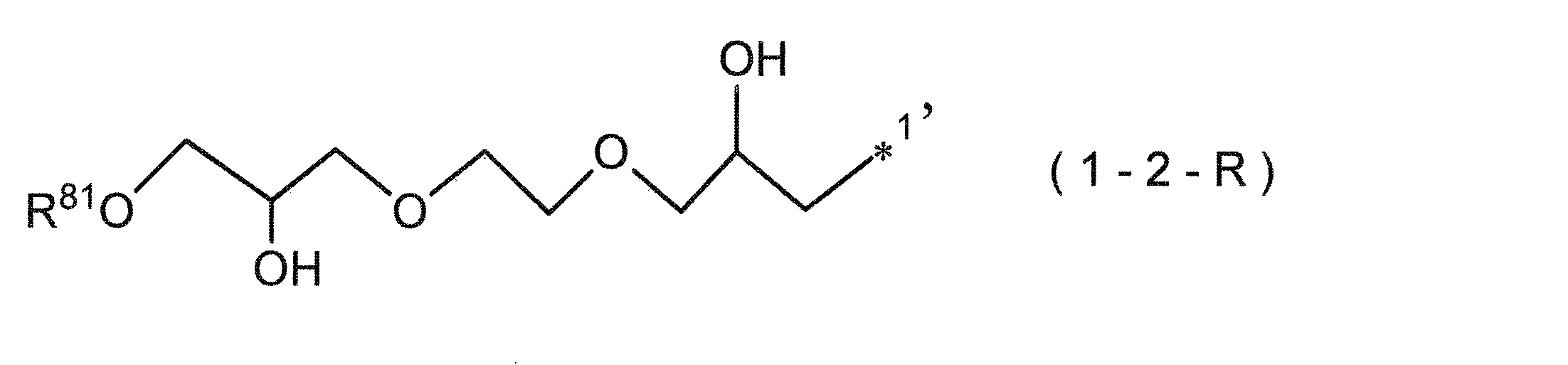
(式(1-2-R)中、R81は、水素原子又はフッ素化アルキル基である。*1’は上記式(1-2)においてAから最も離れている酸素原子に結合する部位を示す。)

(式(1-2-A)中、L2は、フッ素原子を含まない2価の連結基である。R1’’は、水素原子又はフッ素化アルキル基である。*Aは、上記式(1-2)においてR1’から最も離れている-CH2C(OH)CH2-中の炭素原子に結合する部位を示す。)
上記課題を解決するためになされた別の発明は、当該レジスト下層膜形成用組成物から形成されるレジスト下層膜である。
上記課題を解決するためになされたさらに別の発明は、基板の一方の面側に当該レジスト下層膜形成用組成物を塗工する工程と、上記塗工工程により形成されたレジスト下層膜の上記基板とは反対の面側にレジストパターンを形成する工程と、上記レジストパターンをマスクとしてエッチングする工程とを備えるパターニングされた基板の製造方法である。
ここで、「炭化水素基」とは、鎖状炭化水素基、脂環式炭化水素基及び芳香族炭化水素基が含まれる。この「炭化水素基」は、飽和炭化水素基でも不飽和炭化水素基でもよい。「鎖状炭化水素基」とは、環状構造を含まず、鎖状構造のみで構成された炭化水素基をいい、直鎖状炭化水素基及び分岐状炭化水素基の両方を含む。「脂環式炭化水素基」とは、環構造としては脂環構造のみを含み、芳香環構造を含まない炭化水素基をいい、単環の脂環式炭化水素基及び多環の脂環式炭化水素基の両方を含む。但し、脂環構造のみで構成されている必要はなく、その一部に鎖状構造を含んでいてもよい。「芳香族炭化水素基」とは、環構造として芳香環構造を含む炭化水素基をいう。但し、芳香環構造のみで構成されている必要はなく、その一部に鎖状構造や脂環構造を含んでいてもよい。「環員数」とは、芳香環構造、芳香族複素環構造、脂環構造及び脂肪族複素環構造の環を構成する原子数をいい、多環の環構造の場合は、この多環を構成する原子数をいう。
本発明のレジスト下層膜形成用組成物によれば、平坦性に優れ、かつ表面塗布性に優れるレジスト下層膜を形成することができる。本発明のレジスト下層膜は、当該レジスト下層膜形成用組成物から形成されるので、平坦性及び表面塗布性に優れる。本発明のパターニングされた基板の製造方法によれば、当該レジスト下層膜を用いることにより、優れたパターン形状を有する基板を得ることができる。従って、これらは、今後さらに微細化が進行すると予想される半導体デバイスの製造等に好適に用いることができる。
<レジスト下層膜形成用組成物>
当該レジスト下層膜形成用組成物は、[A]化合物と、[B]化合物と、[C]溶媒とを含有する。当該レジスト下層膜形成用組成物は、好適成分として、[D]酸発生剤及び/又は[E]架橋剤を含有していてもよく、本発明の効果を損なわない範囲において、その他の任意成分を含有していてもよい。
当該レジスト下層膜形成用組成物は、[A]化合物と、[B]化合物と、[C]溶媒とを含有する。当該レジスト下層膜形成用組成物は、好適成分として、[D]酸発生剤及び/又は[E]架橋剤を含有していてもよく、本発明の効果を損なわない範囲において、その他の任意成分を含有していてもよい。
当該レジスト下層膜形成用組成物は、[A]化合物と[B]化合物と[C]溶媒とを含有することで、平坦性に優れ、かつ表面塗布性に優れるレジスト下層膜を形成することができる。当該レジスト下層膜形成用組成物が上記構成を備えることで上記効果を奏する理由については必ずしも明確ではないが、例えば以下のように推察することができる。すなわち、[A]化合物は、ヒドロキシ基を有し、かつ上記特定構造を有していることで、芳香環を有する[B]化合物と基板との親和性を高めることができると考えられる。その結果、多層レジストプロセスにおいて、当該レジスト下層膜形成用組成物はトレンチ等を有する基板であっても十分に埋め込むことができるので、レジスト下層膜は平坦性に優れたものとなる。また、形成されたレジスト下層膜は、ヒドロキシ基を有し、かつ上記特定構造を有する[A]化合物を含んでいるので表面塗布性に優れるものとなる。従って、多層レジストプロセスにおいて、特にレジスト下層膜上にポリシロキサン組成物等を塗布して中間層を形成することが容易になる。以下、各成分について説明する。
<[A]化合物>
[A]化合物は、下記式(1-1)又は下記式(1-2)で表される化合物(以下、下記式(1-1)で表される化合物を「[A1]化合物」ともいい、下記式(1-2)で表される化合物を「[A2]化合物」ともいう)である。
[A]化合物は、下記式(1-1)又は下記式(1-2)で表される化合物(以下、下記式(1-1)で表される化合物を「[A1]化合物」ともいい、下記式(1-2)で表される化合物を「[A2]化合物」ともいう)である。
[[A1]化合物]
[A1]化合物は、下記式(1-1)で表される化合物である。
[A1]化合物は、下記式(1-1)で表される化合物である。

上記式(1-1)中、R41及びR42は、それぞれ独立して、水素原子又はフッ素化アルキル基である。R51及びR52は、それぞれ独立して、炭素数1~20の1価の炭化水素基である。Zは、2価の連結基である。a及びbは、それぞれ独立して、1~100の整数である。R41、R42、R51及びR52がそれぞれ複数の場合、複数のR41は同一でも異なっていてもよく、複数のR42は同一でも異なっていてもよく、複数のR51は同一でも異なっていてもよく、複数のR52は同一でも異なっていてもよい。
R41及びR42で表されるフッ素化アルキル基の炭素数としては、例えば1~20であり、1~10が好ましい。フッ素化アルキル基としては、例えばフルオロメチル基、ジフルオロメチル基、トリフルオロメチル基、ジフルオロエチル基、トリフルオロエチル基、トリフルオロプロピル基、ペンタフルオロプロピル基、ペンタフルオロブチル基、ヘプタフルオロブチル基、ノナフルオロペンチル基等が挙げられる。
R41及びR42としては、レジスト下層膜の平坦性及び表面塗布性をより高める観点から、フッ素化アルキル基が好ましく、炭素数1~5のフッ素化アルキル基がより好ましく、パーフルオロアルキルメチル基がさらに好ましく、ペンタフルオロプロピル基が特に好ましい。
R51及びR52で表される炭素数1~20の1価の炭化水素基としては、例えば炭素数1~20の1価の鎖状炭化水素基、炭素数3~20の1価の脂環式炭化水素基、炭素数6~20の1価の芳香族炭化水素基等が挙げられる。
炭素数1~20の1価の鎖状炭化水素基としては、例えば
メチル基、エチル基、n-プロピル基、i-プロピル基、n-ブチル基、i-ブチル基、sec-ブチル基、t-ブチル基等のアルキル基;
エテニル基、プロペニル基、ブテニル基等のアルケニル基;
エチニル基、プロピニル基、ブチニル基等のアルキニル基などが挙げられる。
メチル基、エチル基、n-プロピル基、i-プロピル基、n-ブチル基、i-ブチル基、sec-ブチル基、t-ブチル基等のアルキル基;
エテニル基、プロペニル基、ブテニル基等のアルケニル基;
エチニル基、プロピニル基、ブチニル基等のアルキニル基などが挙げられる。
炭素数3~20の1価の脂環式炭化水素基としては、例えば
シクロプロピル基、シクロブチル基、シクロペンチル基、シクロヘキシル基、シクロオクチル基等のシクロアルキル基;
シクロブテニル基、シクロペンテニル基、シクロヘキセニル基等のシクロアルケニル基;
ノルボルニル基、アダマンチル基、ノルボルネニル基、トリシクロデセニル基、テトラシクロドデセニル基等の橋かけ環炭化水素基などが挙げられる。
シクロプロピル基、シクロブチル基、シクロペンチル基、シクロヘキシル基、シクロオクチル基等のシクロアルキル基;
シクロブテニル基、シクロペンテニル基、シクロヘキセニル基等のシクロアルケニル基;
ノルボルニル基、アダマンチル基、ノルボルネニル基、トリシクロデセニル基、テトラシクロドデセニル基等の橋かけ環炭化水素基などが挙げられる。
炭素数6~20の1価の芳香族炭化水素基としては、例えば
フェニル基、トリル基、キシリル基、ナフチル基、アントリル基等のアリール基;
ベンジル基、フェネチル基、クミル基、ナフチルメチル基等のアラルキル基;
エテニルベンジル基、エチニルベンジル基などが挙げられる。
フェニル基、トリル基、キシリル基、ナフチル基、アントリル基等のアリール基;
ベンジル基、フェネチル基、クミル基、ナフチルメチル基等のアラルキル基;
エテニルベンジル基、エチニルベンジル基などが挙げられる。
R51及びR52としては、レジスト下層膜の平坦性及び表面塗布性をより高める観点から、鎖状炭化水素基が好ましく、アルキル基がより好ましく、メチル基及びエチル基がさらに好ましい。
Zで表される2価の連結基としては、例えば、炭素数1~50の2価の有機基等が挙げられる。「有機基」とは、少なくとも1個の炭素原子を含む基をいう。
炭素数1~50の2価の有機基としては、例えば炭素数1~50の2価の炭化水素基、この炭化水素基の1又は複数の炭素-炭素間に2価のヘテロ原子含有基を含む基(a)、上記炭化水素基及び基(a)が有する水素原子の一部又は全部を1価のヘテロ原子含有基で置換した基等が挙げられる。
2価のヘテロ原子含有基としては、例えば-O-、-CO-、-S-、-CS-、-SO2-、-NR’-、これらのうちの2つ以上を組み合わせた基等が挙げられる。R’は、水素原子又は炭素数1~20の1価の炭化水素基である。
1価のヘテロ原子含有基としては、例えば塩素原子、臭素原子、ヨウ素原子、ヒドロキシ基、カルボキシ基、シアノ基、アミノ基、スルファニル基などが挙げられる。
Zとしては、レジスト下層膜の平坦性及び表面塗布性をより高める観点から、フッ素原子を含まないことが好ましい。
Zとしては、炭素数1~20のフッ素原子を含まない有機基が好ましく、炭素数1~20の炭化水素基がより好ましく、炭素数1~10の炭化水素基がさらに好ましく、炭素数1~10のアルカンジイル基が特に好ましく、エタンジイル基及びネオペンタンジイル基がさらに特に好ましい。
a及びbの下限としては、1が好ましい。a及びbの上限としては、40が好ましく、30がより好ましく、20がさらに好ましく、10が特に好ましく、8がさらに特に好ましい。a+bの下限としては、1が好ましい。a+bの上限としては、150が好ましく、40がより好ましく、30がさらに好ましく、20が特に好ましく、10がさらに特に好ましく、8が最も好ましい。
[A1]化合物は、オキシエチレン単位以外のオキシアルキレン単位を有することが好ましい。上記オキシアルキレン単位としては、置換又は非置換のオキシプロピレン単位が好ましい。[A1]化合物は、このようなオキシアルキレン単位を有することで、レジスト下層膜の平坦性及び表面塗布性をより高めることができる。
[A1]化合物の好適な具体例として、例えば下記式(s-1-1)~(s-1-3)で表される化合物等が挙げられる。

上記式(s-1-1)中、x1及びy1は、それぞれ独立して、1~6の整数である。
上記式(s-1-2)中、x2及びy2は、それぞれ独立して、1~20の整数である。
上記式(s-1-3)中、x3は、1~8の整数である。z3は、1~20の整数である。
上記式(s-1-1)におけるx1+y1の下限としては、3が好ましく、4がより好ましく、5がさらに好ましい。x1+y1の上限としては、10が好ましく、8がより好ましく、7がさらに好ましい。
上記式(s-1-2)におけるx2+y2の下限としては、5が好ましく、10がより好ましく、15がさらに好ましい。x2+y2の上限としては、35が好ましく、30がより好ましく、25がさらに好ましい。
[[A2]化合物]
[A2]化合物は、下記式(1-2)で表される化合物である。
[A2]化合物は、下記式(1-2)で表される化合物である。

上記式(1-2)中、L1は、2価の連結基である。R1’は、水素原子、フッ素化アルキル基又は下記式(1-2-R)で表される基である。Aは、ヒドロキシ基、フッ素化アルコキシ基又は下記式(1-2-A)で表される基である。fは、1~100の整数である。

上記式(1-2-R)中、R81は、水素原子又はフッ素化アルキル基である。*1’は上記式(1-2)においてAから最も離れている酸素原子に結合する部位を示す。

上記式(1-2-A)中、L2は、2価の連結基である。R1’’は、水素原子又はフッ素化アルキル基である。*Aは、上記式(1-2)においてR1’から最も離れている-CH2C(OH)CH2-中の炭素原子に結合する部位を示す。
上記式(1-2)のL1及び上記式(1-2-A)のL2の2価の連結基としては上記式(1-1)におけるZの2価の連結基として例示したものと同様の基等が挙げられる。
L1及びL2としては、レジスト下層膜の平坦性及び表面塗布性をより高める観点から、フッ素原子を含まないことが好ましい。
L1及びL2としては、下記式(1’)で表される2価の基、2価の芳香族炭化水素基及び炭素-炭素三重結合を含む2価の基が好ましい。
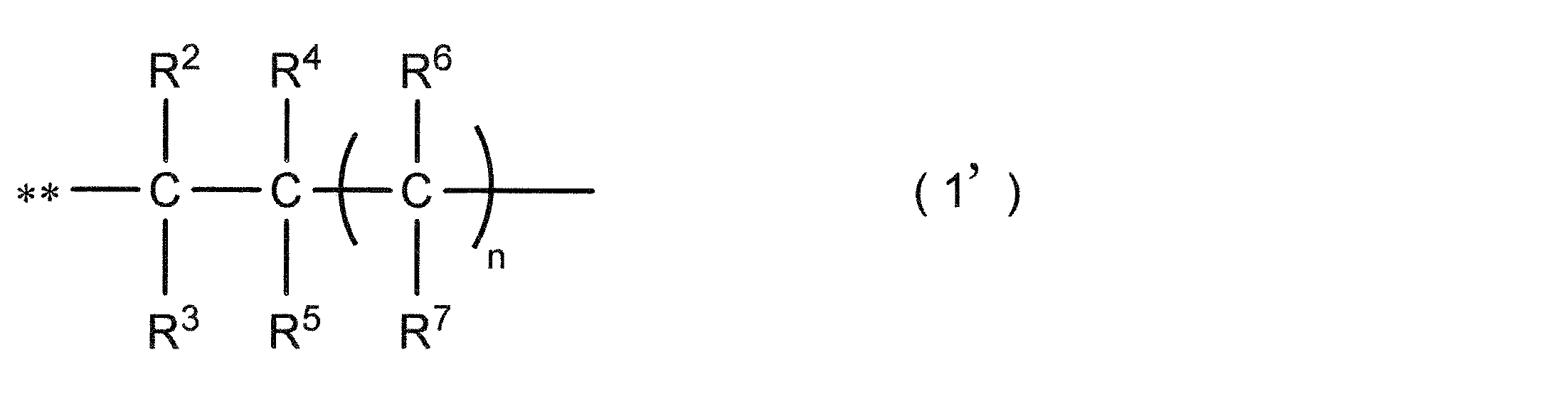
上記式(1’)中、R2~R7は、それぞれ独立して、水素原子、ヒドロキシ基、ハロゲン原子又は炭素数1~6の1価の有機基である。nは、0~4の整数である。**は、上記式(1-2)のL1が結合する酸素原子のうちのR1’側の酸素原子又は上記式(1-2-A)のR1’’が結合する酸素原子と結合する部位を示す。
2価の芳香族炭化水素基としては、例えば炭素数6~20の芳香族炭化水素から2個の水素原子を除いた基等が挙げられる。これらの中で、アルカンジイルアレーンジイルアルカンジイル基が好ましく、メタンジイルベンゼンジイルメタンジイル基がより好ましい。
炭素-炭素三重結合を含む2価の基としては、例えば炭素数2~20の炭素-炭素三重結合を含む化合物から2個の水素原子を除いた基等が挙げられる。これらの中で、アルカンジイルオキシアルキンジイルオキシアルカンジイル基が好ましく、エタンジイルオキシブチンジイルオキシエタンジイル基がより好ましい。
R1’で表されるフッ素化アルキル基としては、例えば上記R41及びR42の同じ基として例示したものと同様の基等が挙げられる。これらの中で、レジスト下層膜の平坦性及び表面塗布性をより高める観点から、炭素数1~5のフッ素化アルキル基が好ましく、炭素数1~5のパーフルオロアルキル基がより好ましく、ペンタフルオロプロピル基がさらに好ましい。
Aで表されるフッ素化アルコキシ基の炭素数としては、例えば1~20であり、1~10が好ましい。フッ素化アルコキシ基としては、例えばフルオロメトキシ基、ジフルオロメトキシ基、トリフルオロメトキシ基、トリフルオロエトキシ基、ペンタフルオロエトキシ基、ヘプタフルオロプロポキシ基、ノナフルオロブトキシ基、ウンデカフルオロペンチルオキシ基等が挙げられる。これらの中で、レジスト下層膜の平坦性及び表面塗布性をより高める観点から、ペンタフルオロプロポキシ基が好ましい。
上記式(1-2-R)におけるR81としては、レジスト下層膜の平坦性及び表面塗布性をより高める観点から、水素原子及びペンタフルオロプロピル基が好ましい。
上記式(1-2-A)におけるR1’’としては、レジスト下層膜の平坦性及び表面塗布性をより高める観点から、水素原子及びペンタフルオロプロピル基が好ましい。
上記式(1-2)におけるfの下限としては、2が好ましく、3がより好ましく、4がさらに好ましい。fの上限としては、80が好ましく、50がより好ましく、30がさらに好ましい。
[A2]化合物は、オキシエチレン単位以外のオキシアルキレン単位を有することが好ましい。上記オキシアルキレン単位としては、置換又は非置換のオキシプロピレン単位が好ましい。[A2]化合物は、このようなオキシアルキレン単位を有することで、レジスト下層膜の平坦性及び表面塗布性をより高めることができる。
[A2]化合物の好適な具体例として、例えば下記式(s-2-1)~(s-2-7)で表される化合物等が挙げられる。

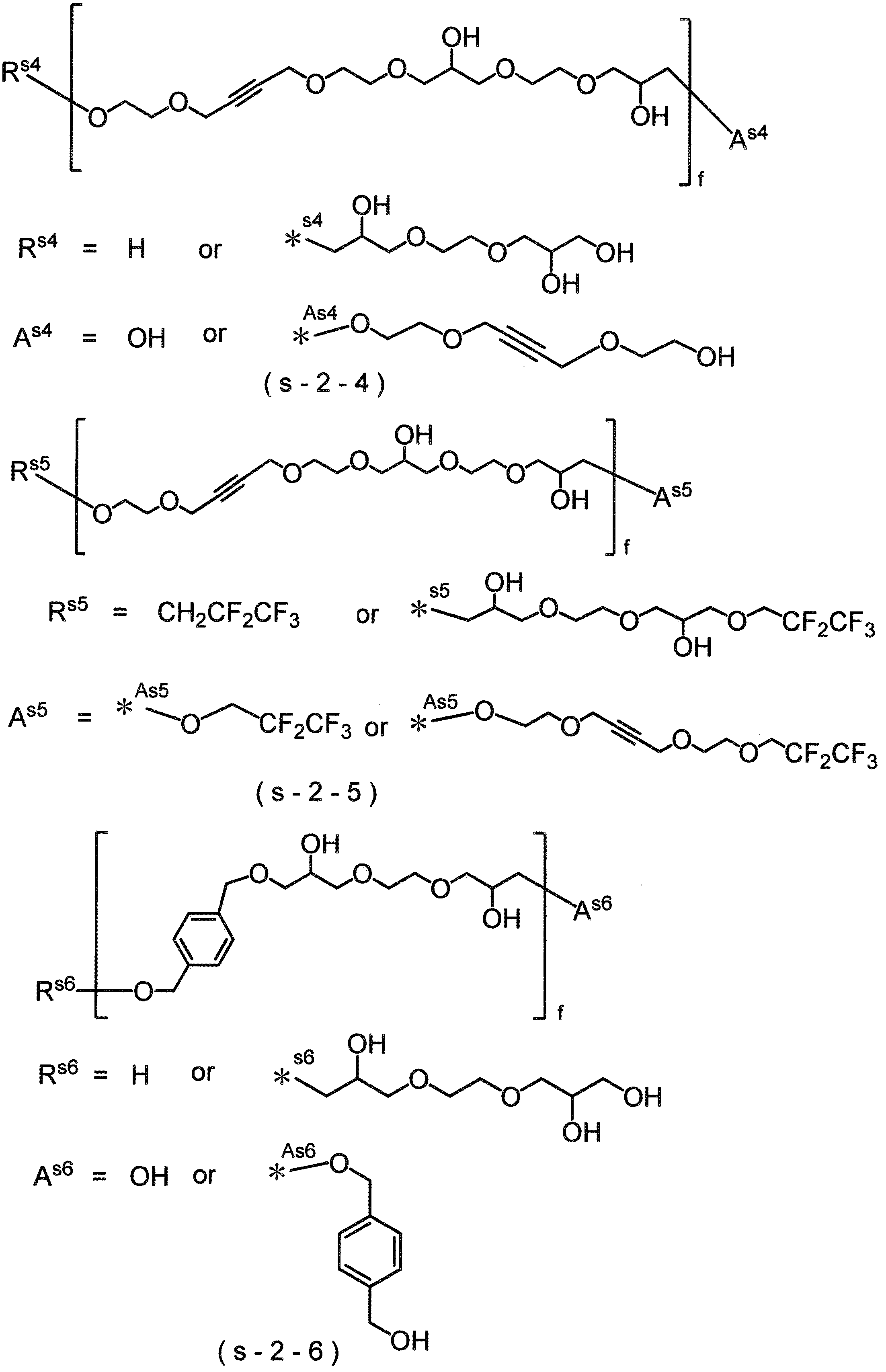
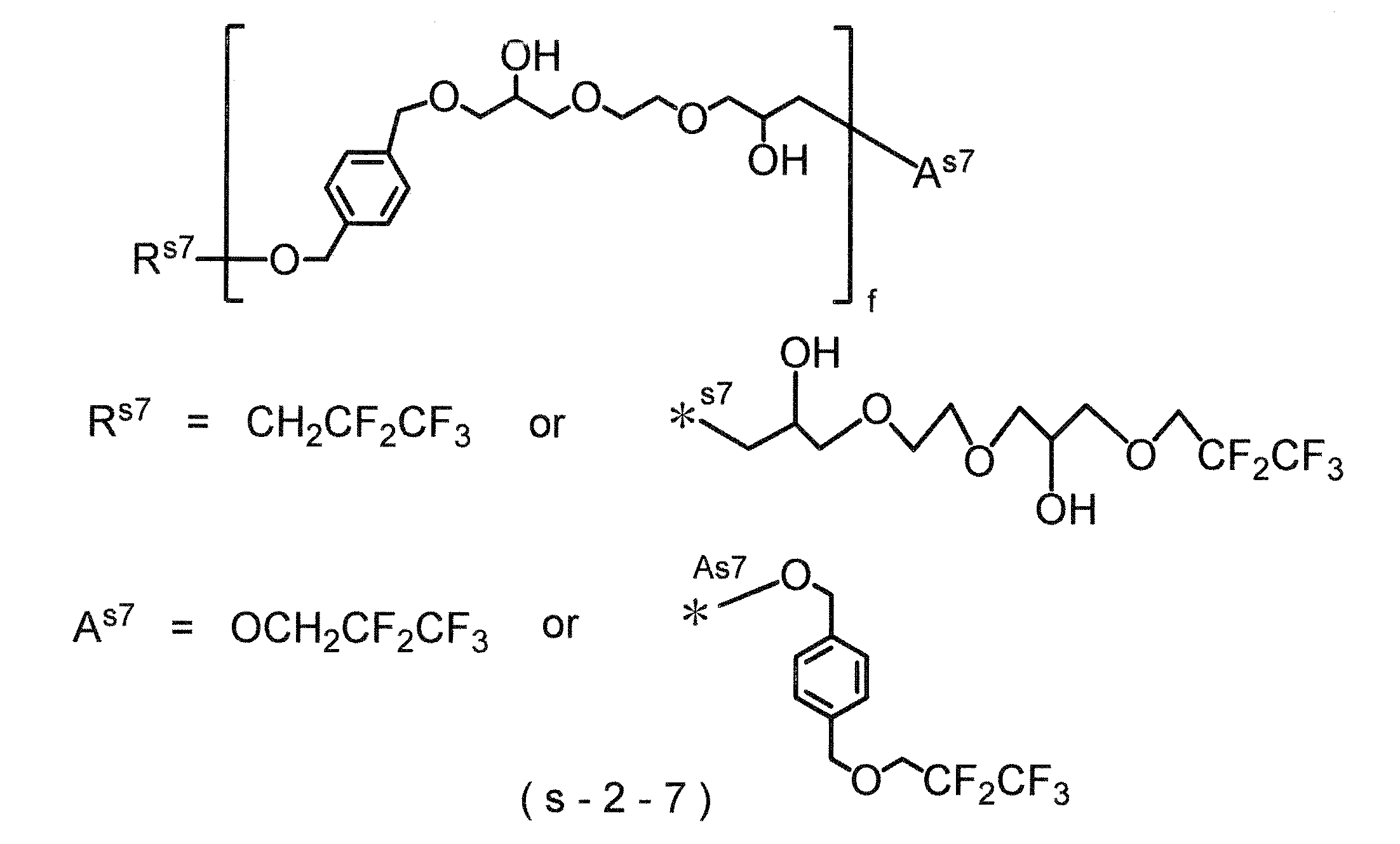
上記式(s-2-1)~(s-2-7)中、fは、上記式(1-2)と同義である。
上記式(s-2-1)中、*s1は、上記式(s-2-1)においてAs1から最も離れている酸素原子に結合する部位を示す。*As1は、上記式(s-2-1)においてRs1から最も離れている炭素原子に結合する部位を示す。
上記式(s-2-2)中、*s2は、上記式(s-2-2)においてAs2から最も離れている酸素原子に結合する部位を示す。*As2は、上記式(s-2-2)においてRs2から最も離れている炭素原子に結合する部位を示す。
上記式(s-2-3)中、*s3は、上記式(s-2-3)においてAs3から最も離れている酸素原子に結合する部位を示す。*As3は、上記式(s-2-3)においてRs3から最も離れている炭素原子に結合する部位を示す。
上記式(s-2-4)中、*s4は、上記式(s-2-4)においてAs4から最も離れている酸素原子に結合する部位を示す。*As4は、上記式(s-2-4)においてRs4から最も離れている炭素原子に結合する部位を示す。
上記式(s-2-5)中、*s5は、上記式(s-2-5)においてAs5から最も離れている酸素原子に結合する部位を示す。*As5は、上記式(s-2-5)においてRs5から最も離れている炭素原子に結合する部位を示す。
上記式(s-2-6)中、*s6は、上記式(s-2-6)においてAs6から最も離れている酸素原子に結合する部位を示す。*As6は、上記式(s-2-6)においてRs6から最も離れている炭素原子に結合する部位を示す。
上記式(s-2-7)中、*s7は、上記式(s-2-7)においてAs7から最も離れている酸素原子に結合する部位を示す。*As7は、上記式(s-2-7)においてRs7から最も離れている炭素原子に結合する部位を示す。
[A]化合物としては、[A1]化合物が好ましい。
[[A]化合物の合成方法]
[A]化合物は、公知の方法に従って合成してもよく、商業的に入手可能な市販品を用いてもよい。
[A]化合物は、公知の方法に従って合成してもよく、商業的に入手可能な市販品を用いてもよい。
[A1]化合物は、例えばZを与えるジオールと、オキセタン化合物とを用いることにより得られる。[A2]化合物は、例えばL1を与えるジオールと、エチレングリコールジグリシジルエーテルとを、パラトルエンスルホン酸等の酸触媒の存在下で反応させることにより合成することができる。また、このように合成された化合物に対し、2,2,3,3,3-ペンタフルオロプロピルトシラート等のフッ素化剤を、t-ブトキシカリウム等の強塩基の存在下、テトラヒドロフラン等の溶媒中で反応させることにより、フッ素原子を導入することができる。
[A]化合物のHLB値の下限としては、2が好ましく、4がより好ましく、6がさらに好ましく、8が特に好ましい。上記HLB値の上限としては、19が好ましく、17がより好ましく、15がさらに好ましく、13が特に好ましい。[A]化合物のHLB値を上記範囲とすることで、レジスト下層膜の平坦性及び表面塗布性をより向上させることができる。「HLB値」とは、化合物の親水性-親油性のバランス(Hydrophilic-Lypophilic-Balance)を示す指標である。
[A]化合物の分子量の下限としては、100が好ましく、200がより好ましく、300がさらに好ましい。上記分子量の上限としては、20,000が好ましく、10,000がより好ましく、5,000がさらに好ましい。[A]化合物の分子量を上記範囲とすることで、レジスト下層膜の平坦性及び表面塗布性をより向上させることができる。[A]化合物が重合体等であって分子量分布を有する場合、[A]化合物の分子量は、例えばゲルパーミエーションクロマトグラフィー(GPC)によるポリスチレン換算重量平均分子量(Mw)である。
[A]化合物が分子量分布を有する場合、[A]化合物のGPCによるポリスチレン換算数平均分子量(Mn)に対するMwの比(Mw/Mn)の下限としては、通常1であり、1.1が好ましい。上記Mw/Mnの上限としては、5が好ましく、3がより好ましく、2がさらに好ましく、1.5が特に好ましい。
本明細書において、重量平均分子量(Mw)及び数平均分子量(Mn)は、GPCカラム(東ソー社の「G2000HXL」2本、「G3000HXL」1本及び「G4000HXL」1本)を使用し、流量:1.0mL/分、溶出溶媒:テトラヒドロフラン、カラム温度:40℃の分析条件で、単分散ポリスチレンを標準とするゲルパーミエーションクロマトグラフィー(GPC)により測定したものである。
[A]化合物の[B]化合物100質量部に対する含有量の下限としては、0.01質量部が好ましく、0.02質量部がより好ましく、0.05質量部がさらに好ましく、0.1質量部が特に好ましい。上記含有量の上限としては、10質量部が好ましく、5質量部がより好ましく、3質量部がさらに好ましく、1.5質量部が特に好ましい。[A]化合物の含有量を上記範囲とすることで、レジスト下層膜の平坦性及び表面塗布性をより向上させることができる。[A]化合物は、1種単独で又は2種以上を組み合わせて用いることができる。
<[B]化合物>
[B]化合物は、[A]化合物以外の芳香環を有する化合物である。[B]化合物としては、芳香環を有するものであれば特に限定されず用いることができる。[B]化合物は1種単独で又は2種以上を組み合わせて用いることができる。
[B]化合物は、[A]化合物以外の芳香環を有する化合物である。[B]化合物としては、芳香環を有するものであれば特に限定されず用いることができる。[B]化合物は1種単独で又は2種以上を組み合わせて用いることができる。
上記芳香環としては、例えば
ベンゼン環、ナフタレン環、アントラセン環、インデン環、ピレン環、フルオレニリデンビフェニル環、フルオレニリデンビナフタレン環等の芳香族炭素環;
フラン環、ピロール環、チオフェン環、ホスホール環、ピラゾール環、オキサゾール環、イソオキサゾール環、チアゾール環、ピリジン環、ピラジン環、ピリミジン環、ピリダジン環、トリアジン環等の芳香族複素環などが挙げられる。これらの中で、芳香族炭素環が好ましい。
ベンゼン環、ナフタレン環、アントラセン環、インデン環、ピレン環、フルオレニリデンビフェニル環、フルオレニリデンビナフタレン環等の芳香族炭素環;
フラン環、ピロール環、チオフェン環、ホスホール環、ピラゾール環、オキサゾール環、イソオキサゾール環、チアゾール環、ピリジン環、ピラジン環、ピリミジン環、ピリダジン環、トリアジン環等の芳香族複素環などが挙げられる。これらの中で、芳香族炭素環が好ましい。
[B]化合物としては、例えば主鎖に芳香環を有する樹脂、主鎖に芳香環を有さず側鎖に芳香環を有する樹脂などの樹脂;分子量が100以上3,000以下の芳香環含有化合物等が挙げられる。
ここで、「樹脂」とは、構造単位を2つ以上有する化合物をいう。「芳香環含有化合物」とは、構造単位を1つ有する化合物をいう。「主鎖」とは、樹脂における原子により構成される鎖のうち最も長いものをいう。「側鎖」とは、樹脂における原子により構成される鎖のうち最も長いもの以外をいう。
樹脂としては、例えば重縮合化合物、重縮合以外の反応により得られる化合物等が挙げられる。
樹脂としては、例えばノボラック樹脂、レゾール樹脂、スチレン樹脂、アセナフチレン樹脂、インデン樹脂、ポリアリーレン樹脂、トリアジン樹脂、カリックスアレーン樹脂、フラーレン樹脂等が挙げられる。
(ノボラック樹脂)
ノボラック樹脂は、フェノール性化合物と、アルデヒド類又はジビニル化合物等とを酸性触媒を用いて反応させて得られる樹脂である。複数のフェノール性化合物と、アルデヒド類又はジビニル化合物等を混合して反応させてもよい。
ノボラック樹脂は、フェノール性化合物と、アルデヒド類又はジビニル化合物等とを酸性触媒を用いて反応させて得られる樹脂である。複数のフェノール性化合物と、アルデヒド類又はジビニル化合物等を混合して反応させてもよい。
フェノール性化合物としては、例えば
フェノール、クレゾール、キシレノール、レゾルシノール、ビスフェノールA、p-tert-ブチルフェノール、p-オクチルフェノール、9,9-ビス(4-ヒドロキシフェニル)フルオレン、9,9-ビス(4-ヒドロキシフェニル)フルオレン等のフェノール類;
α-ナフトール、β-ナフトール、1,5-ジヒドロキシナフタレン、2,7-ジヒドロキシナフタレン、9,9-ビス(6-ヒドロキシナフチル)フルオレン等のナフトール類;
9-アントロール等のアントロール類;
1-ヒドロキシピレン、2-ヒドロキシピレン等のピレノール類などが挙げられる。
フェノール、クレゾール、キシレノール、レゾルシノール、ビスフェノールA、p-tert-ブチルフェノール、p-オクチルフェノール、9,9-ビス(4-ヒドロキシフェニル)フルオレン、9,9-ビス(4-ヒドロキシフェニル)フルオレン等のフェノール類;
α-ナフトール、β-ナフトール、1,5-ジヒドロキシナフタレン、2,7-ジヒドロキシナフタレン、9,9-ビス(6-ヒドロキシナフチル)フルオレン等のナフトール類;
9-アントロール等のアントロール類;
1-ヒドロキシピレン、2-ヒドロキシピレン等のピレノール類などが挙げられる。
アルデヒド類としては、例えば
ホルムアルデヒド、ベンズアルデヒド、1-ナフトアルデヒド、2-ナフトアルデヒド、1-ホルミルピレン等のアルデヒド;
パラホルムアルデヒド、トリオキサン等のアルデヒド源などが挙げられる。
ホルムアルデヒド、ベンズアルデヒド、1-ナフトアルデヒド、2-ナフトアルデヒド、1-ホルミルピレン等のアルデヒド;
パラホルムアルデヒド、トリオキサン等のアルデヒド源などが挙げられる。
ジビニル化合物類としては、例えばジビニルベンゼン、ジシクロペンタジエン、テトラヒドロインデン、4-ビニルシクロヘキセン、5-ビニルノボルナ-2-エン、ジビニルピレン、リモネン、5-ビニルノルボルナジエン等が挙げられる。
ノボラック樹脂としては、例えばジヒドロキシナフタレン及びホルムアルデヒドに由来する構造単位を有する樹脂、フルオレンビスフェノール及びホルムアルデヒドに由来する構造単位を有する樹脂、フルオレンビスナフトール及びホルムアルデヒドに由来する構造単位を有する樹脂、ヒドロキシピレン及びホルムアルデヒドに由来する構造単位を有する樹脂、フェノール化合物及びホルミルピレンに由来する構造単位を有する樹脂、これらの樹脂のフェノール性水酸基の水素原子の一部又は全部をプロパルギル基等で置換した基などが挙げられる。
(レゾール樹脂)
レゾール樹脂は、フェノール性化合物と、アルデヒド類とをアルカリ性触媒を用いて反応させて得られる樹脂である。
レゾール樹脂は、フェノール性化合物と、アルデヒド類とをアルカリ性触媒を用いて反応させて得られる樹脂である。
(スチレン樹脂)
スチレン樹脂は、芳香環及び重合性炭素-炭素二重結合を有する化合物に由来する構造単位を有する樹脂である。スチレン樹脂は、上記構造単位以外にも、アクリル系単量体、ビニルエーテル類等に由来する構造単位を有していてもよい。
スチレン樹脂は、芳香環及び重合性炭素-炭素二重結合を有する化合物に由来する構造単位を有する樹脂である。スチレン樹脂は、上記構造単位以外にも、アクリル系単量体、ビニルエーテル類等に由来する構造単位を有していてもよい。
スチレン樹脂としては、例えばポリスチレン、ポリビニルナフタレン、ポリヒドロキシスチレン、ポリフェニル(メタ)アクリレート、これらを組み合わせた樹脂等が挙げられる。
(アセナフチレン樹脂)
アセナフチレン樹脂は、アセナフチレン骨格を有する化合物に由来する構造単位を有する樹脂である。
アセナフチレン樹脂は、アセナフチレン骨格を有する化合物に由来する構造単位を有する樹脂である。
アセナフチレン樹脂としては、レジスト下層膜の平坦性及び表面塗布性をより高める観点から、アセナフチレンとヒドロキシメチルアセナフチレンとの共重合体が好ましい。
(インデン樹脂)
インデン樹脂は、インデン骨格を有する化合物に由来する構造単位を有する樹脂である。
インデン樹脂は、インデン骨格を有する化合物に由来する構造単位を有する樹脂である。
(ポリアリーレン樹脂)
ポリアリーレン樹脂は、アリーレン骨格を含む化合物に由来する構造単位を有する樹脂である。アリーレン骨格としては、例えばフェニレン骨格、ナフチレン骨格、ビフェニレン骨格等が挙げられる。
ポリアリーレン樹脂は、アリーレン骨格を含む化合物に由来する構造単位を有する樹脂である。アリーレン骨格としては、例えばフェニレン骨格、ナフチレン骨格、ビフェニレン骨格等が挙げられる。
ポリアリーレン樹脂としては、例えばポリアリーレンエーテル、ポリアリーレンスルフィド、ポリアリーレンエーテルスルホン、ポリアリーレンエーテルケトン、ビフェニレン骨格を含む構造単位とアセナフチレン骨格を含む化合物に由来する構造単位とを有する樹脂等が挙げられる。
ポリアリーレン樹脂としては、レジスト下層膜の平坦性及び表面塗布性をより向上させる観点から、ビフェニル骨格を有する樹脂が好ましく、ビフェニレン骨格を含む構造単位とアセナフチレン骨格を含む化合物に由来する構造単位とを有する樹脂がさらに好ましい。
(トリアジン樹脂)
トリアジン樹脂は、トリアジン骨格を有する化合物に由来する構造単位を有する樹脂である。
トリアジン樹脂は、トリアジン骨格を有する化合物に由来する構造単位を有する樹脂である。
トリアジン骨格を有する化合物としては、例えばメラミン化合物、シアヌル酸化合物等が挙げられる。
[B]化合物がノボラック樹脂、レゾール樹脂、スチレン樹脂、アセナフチレン樹脂、インデン樹脂、ポリアリーレン樹脂又はトリアジン樹脂の場合、[B]化合物のMwとしては、2,000を超えることが好ましく、3,000以上がより好ましく、5,000以上がさらに好ましい。また、上記Mwとしては、100,000以下が好ましく、50,000以下がより好ましく、30,000以下がさらに好ましい。
[B]化合物のMw/Mnの下限としては、通常1であり、1.1が好ましい。上記Mw/Mnの上限としては、5が好ましく、3がより好ましく、2がさらに好ましい。
[B]化合物のMw及びMw/Mnを上記範囲とすることで、レジスト下層膜の平坦性及び表面塗布性をより高めることができる。
(カリックスアレーン樹脂)
カリックスアレーン樹脂は、ヒドロキシ基が結合する芳香環が炭化水素基を介して複数個環状に結合した環状オリゴマー又はこのヒドロキシ基、芳香環及び炭化水素基が有する水素原子の一部若しくは全部が置換されたものである。
カリックスアレーン樹脂は、ヒドロキシ基が結合する芳香環が炭化水素基を介して複数個環状に結合した環状オリゴマー又はこのヒドロキシ基、芳香環及び炭化水素基が有する水素原子の一部若しくは全部が置換されたものである。
カリックスアレーン樹脂としては、例えばフェノール、ナフトール等のフェノール化合物とホルムアルデヒドとから形成される環状4~12量体、フェノール、ナフトール等フェノール化合物とベンズアルデヒド化合物とから形成される環状4~12量体、これらの環状体が有するフェノール性水酸基の水素原子をプロパルギル基等で置換した樹脂等が挙げられる。
カリックスアレーン樹脂の分子量の下限としては、レジスト下層膜の平坦性をより向上させる観点から、500が好ましく、700がより好ましく、1,000がさらに好ましい。上記分子量の上限としては、5,000が好ましく、3,000がより好ましく、1,500がさらに好ましい。
(分子量が100以上3,000以下の芳香環含有化合物)
芳香環含有化合物は、芳香環を有し、かつ分子量が100以上3,000以下の化合物である。芳香環含有化合物が分子量分布を有する場合、芳香環含有化合物の分子量は、例えばゲルパーミエーションクロマトグラフィー(GPC)によるポリスチレン換算重量平均分子量(Mw)である。
芳香環含有化合物は、芳香環を有し、かつ分子量が100以上3,000以下の化合物である。芳香環含有化合物が分子量分布を有する場合、芳香環含有化合物の分子量は、例えばゲルパーミエーションクロマトグラフィー(GPC)によるポリスチレン換算重量平均分子量(Mw)である。
芳香環含有化合物としては、例えばフルオレンビスフェノール骨格を有する化合物、スピロインデン骨格を有する化合物、トルクセン骨格を有する化合物、トリフェニルベンゼン骨格を有する化合物等が挙げられる。
芳香環含有化合物の分子量の下限としては、300が好ましく、400がより好ましく、500がさらに好ましく、600が特に好ましい。上記分子量の上限としては、2,500が好ましく、2,000がより好ましく、1,500がさらに好ましい。芳香環含有化合物の分子量を上記範囲とすることでレジスト下層膜の平坦性をさらに高めることができる。
[B]化合物の含有量の下限としては、当該レジスト下層膜形成用組成物の[C]溶媒以外の成分の総和(全固形分)に対して、80質量%が好ましく、85質量%がより好ましく、90質量%がさらに好ましく、95質量%が特に好ましい。[B]化合物は、1種単独で又は2種以上を組み合わせて用いることができる。
[[B]化合物の合成方法]
[B]化合物は、公知の方法に従って合成してもよく、商業的に入手可能な市販品を用いてもよい。
[B]化合物は、公知の方法に従って合成してもよく、商業的に入手可能な市販品を用いてもよい。
<[C]溶媒>
[C]溶媒は、[A]化合物、[B]化合物及び必要に応じて含有される任意成分を溶解又は分散することができれば特に限定されない。[C]溶媒は、1種単独で又は2種以上を組み合わせて用いることができる。
[C]溶媒は、[A]化合物、[B]化合物及び必要に応じて含有される任意成分を溶解又は分散することができれば特に限定されない。[C]溶媒は、1種単独で又は2種以上を組み合わせて用いることができる。
[C]溶媒としては、例えばアルコール系溶媒、ケトン系溶媒、アミド系溶媒、エーテル系溶媒、エステル系溶媒等が挙げられる。[C]溶媒は、1種単独で又は2種以上を組み合わせて用いることができる。
これらの中で、エーテル系溶媒、ケトン系溶媒及びエステル系溶媒が好ましく、多価アルコール部分エーテル系溶媒、多価アルコール部分エーテルアセテート系溶媒、環状ケトン系溶媒及びカルボン酸エステル系溶媒がより好ましく、プロピレングリコールモノメチルエーテル、プロピレングリコールモノメチルエーテルアセテート、シクロヘキサノン及び乳酸エチルがさらに好ましい。
<[D]酸発生剤>
[D]酸発生剤は、熱や光の作用により酸を発生し、[B]化合物の架橋を促進する成分である。当該レジスト下層膜形成用組成物が[D]酸発生剤を含有することで[B]化合物の架橋反応が促進され、形成されるレジスト下層膜の硬度を高めることができる。[D]酸発生剤は、1種単独で又は2種以上を組み合わせて用いることができる。
[D]酸発生剤は、熱や光の作用により酸を発生し、[B]化合物の架橋を促進する成分である。当該レジスト下層膜形成用組成物が[D]酸発生剤を含有することで[B]化合物の架橋反応が促進され、形成されるレジスト下層膜の硬度を高めることができる。[D]酸発生剤は、1種単独で又は2種以上を組み合わせて用いることができる。
[D]酸発生剤としては、例えばオニウム塩化合物、N-スルホニルオキシイミド化合物等が挙げられる。
オニウム塩化合物としては、例えば
トリフェニルスルホニウムトリフルオロメタンスルホネート、トリフェニルスルホニウムノナフルオロ-n-ブタンスルホネート等のスルホニウム塩;
1-(4-n-ブトキシナフタレン-1-イル)テトラヒドロチオフェニウムトリフルオロメタンスルホネート、1-(4-n-ブトキシナフタレン-1-イル)テトラヒドロチオフェニウムノナフルオロ-n-ブタンスルホネート等のテトラヒドロチオフェニウム塩;
ジフェニルヨードニウムトリフルオロメタンスルホネート、ジフェニルヨードニウムノナフルオロ-n-ブタンスルホネート、ビス(4-t-ブチルフェニル)ヨードニウムトリフルオロメタンスルホネート、ビス(4-t-ブチルフェニル)ヨードニウムノナフルオロ-n-ブタンスルホネート等のヨードニウム塩;
トリエチルアンモニウムノナフルオロ-n-ブタンスルホネート、トリエチルアンモニウム1,1,3,3,3-ペンタフルオロ-2-(ピバロイルオキシ)プロパンスルホネート等のアンモニウム塩などが挙げられる。
トリフェニルスルホニウムトリフルオロメタンスルホネート、トリフェニルスルホニウムノナフルオロ-n-ブタンスルホネート等のスルホニウム塩;
1-(4-n-ブトキシナフタレン-1-イル)テトラヒドロチオフェニウムトリフルオロメタンスルホネート、1-(4-n-ブトキシナフタレン-1-イル)テトラヒドロチオフェニウムノナフルオロ-n-ブタンスルホネート等のテトラヒドロチオフェニウム塩;
ジフェニルヨードニウムトリフルオロメタンスルホネート、ジフェニルヨードニウムノナフルオロ-n-ブタンスルホネート、ビス(4-t-ブチルフェニル)ヨードニウムトリフルオロメタンスルホネート、ビス(4-t-ブチルフェニル)ヨードニウムノナフルオロ-n-ブタンスルホネート等のヨードニウム塩;
トリエチルアンモニウムノナフルオロ-n-ブタンスルホネート、トリエチルアンモニウム1,1,3,3,3-ペンタフルオロ-2-(ピバロイルオキシ)プロパンスルホネート等のアンモニウム塩などが挙げられる。
N-スルホニルオキシイミド化合物としては、例えばN-(トリフルオロメタンスルホニルオキシ)ビシクロ[2.2.1]ヘプト-5-エン-2,3-ジカルボキシイミド、N-(ノナフルオロ-n-ブタンスルホニルオキシ)ビシクロ[2.2.1]ヘプト-5-エン-2,3-ジカルボキシイミド等が挙げられる。
これらの中で、[D]酸発生剤としては、オニウム塩化合物が好ましく、ヨードニウム塩及びアンモニウム塩がより好ましく、ビス(4-t-ブチルフェニル)ヨードニウムノナフルオロ-n-ブタンスルホネート及びトリエチルアンモニウムノナフルオロ-n-ブタンスルホネートがさらに好ましい。
当該レジスト下層膜形成用組成物が[D]酸発生剤を含有する場合、[D]酸発生剤の含有量の下限としては、[B]化合物100質量部に対して、0.1質量部が好ましく、0.5質量部がより好ましく、1質量部がさらに好ましい。上記含有量の上限としては、20質量部が好ましく、15質量部がより好ましく、10質量部がさらに好ましい。[D]酸発生剤の含有量を上記範囲とすることで、[B]化合物の架橋反応をより効果的に促進させることができる。
<[E]架橋剤>
[E]架橋剤は、熱や酸の作用により、[B]化合物等の成分同士の架橋結合を形成する成分である。当該レジスト下層膜形成用組成物は、[B]化合物が分子間結合形成基を有している場合もあるが、さらに[E]架橋剤を含有することで、レジスト下層膜の硬度を高めることができる。[E]架橋剤は、1種単独で又は2種以上を組み合わせて用いることができる。
[E]架橋剤は、熱や酸の作用により、[B]化合物等の成分同士の架橋結合を形成する成分である。当該レジスト下層膜形成用組成物は、[B]化合物が分子間結合形成基を有している場合もあるが、さらに[E]架橋剤を含有することで、レジスト下層膜の硬度を高めることができる。[E]架橋剤は、1種単独で又は2種以上を組み合わせて用いることができる。
[E]架橋剤としては、例えば
トリメチロールプロパントリ(メタ)アクリレート、ペンタエリスリトールトリ(メタ)アクリレート等の多官能(メタ)アクリレート化合物;
ノボラック型エポキシ樹脂、ビスフェノール型エポキシ樹脂等のエポキシ化合物;
2-ヒドロキシメチル-4,6-ジメチルフェノール、4,4’-(1-(4-(1-(4-ヒドロキシ-3,5-ビス(メトキシメチル)フェニル)-1-メチルエチル)フェニル)エチリデン)ビス(2,6-ビス(メトキシメチル)フェノール)等のヒドロキシメチル基置換フェノール化合物;
メトキシメチル基含有フェノール化合物、エトキシメチル基含有フェノール化合物等のアルコキシアルキル基含有フェノール化合物;
(ポリ)メチロール化メラミン、
(ポリ)メチロール化グリコールウリル等のアルコキシアルキル化されたアミノ基を有する化合物などが挙げられる。
トリメチロールプロパントリ(メタ)アクリレート、ペンタエリスリトールトリ(メタ)アクリレート等の多官能(メタ)アクリレート化合物;
ノボラック型エポキシ樹脂、ビスフェノール型エポキシ樹脂等のエポキシ化合物;
2-ヒドロキシメチル-4,6-ジメチルフェノール、4,4’-(1-(4-(1-(4-ヒドロキシ-3,5-ビス(メトキシメチル)フェニル)-1-メチルエチル)フェニル)エチリデン)ビス(2,6-ビス(メトキシメチル)フェノール)等のヒドロキシメチル基置換フェノール化合物;
メトキシメチル基含有フェノール化合物、エトキシメチル基含有フェノール化合物等のアルコキシアルキル基含有フェノール化合物;
(ポリ)メチロール化メラミン、
(ポリ)メチロール化グリコールウリル等のアルコキシアルキル化されたアミノ基を有する化合物などが挙げられる。
これらの[E]架橋剤の中で、メトキシメチル基含有フェノール化合物及びアルコキシアルキル化されたアミノ基を有する化合物が好ましく、4,4’-(1-(4-(1-(4-ヒドロキシ-3,5-ビス(メトキシメチル)フェニル)-1-メチルエチル)フェニル)エチリデン)ビス(2,6-ビス(メトキシメチル)フェノール)及び1,3,4,6-テトラ(メトキシメチル)グリコールウリルがより好ましい。
当該レジスト下層膜形成用組成物が[E]架橋剤を含有する場合、[E]架橋剤の含有量の下限としては、[B]化合物100質量部に対して、0.1質量部が好ましく、0.5質量部がより好ましく、1質量部がさらに好ましく、3質量部が特に好ましい。上記含有量の上限としては、100質量部が好ましく、50質量部がより好ましく、30質量部がさらに好ましく、20質量部が特に好ましい。[E]架橋剤の含有量を上記範囲とすることで、[B]化合物の架橋反応をより効果的に起こさせることができる。
<その他の任意成分>
当該レジスト下層膜形成用組成物は、その他の任意成分として、例えば界面活性剤(但し、[A]化合物に該当するものを除く)、密着助剤等を含有することができる。
当該レジスト下層膜形成用組成物は、その他の任意成分として、例えば界面活性剤(但し、[A]化合物に該当するものを除く)、密着助剤等を含有することができる。
[界面活性剤]
当該レジスト下層膜形成用組成物は、界面活性剤を含有することで、基板への塗布性等をより高めることができる。その他の界面活性剤は、1種単独で又は2種以上を組み合わせて用いることができる。
当該レジスト下層膜形成用組成物は、界面活性剤を含有することで、基板への塗布性等をより高めることができる。その他の界面活性剤は、1種単独で又は2種以上を組み合わせて用いることができる。
界面活性剤としては、例えばポリオキシエチレンラウリルエーテル、ポリオキシエチレンステアリルエーテル、ポリオキシエチレンオレイルエーテル、ポリオキシエチレン-n-オクチルフェニルエーテル、ポリオキシエチレン-n-ノニルフェニルエーテル、ポリエチレングリコールジラウレート、ポリエチレングリコールジステアレート等のノニオン系界面活性剤などが挙げられる。
当該レジスト下層膜形成用組成物が界面活性剤を含有する場合、界面活性剤の含有量の下限としては、[B]化合物100質量部に対して、0.01質量部が好ましく、0.05質量部がより好ましく、0.1質量部がさらに好ましい。上記含有量の上限としては、10質量部が好ましく、5質量部がより好ましく、1質量部がさらに好ましい。
[密着助剤]
密着助剤は、レジスト下層膜と下地としての基板との密着性を向上させる成分である。密着助剤は、1種単独で又は2種以上を組み合わせて用いることができる。
密着助剤は、レジスト下層膜と下地としての基板との密着性を向上させる成分である。密着助剤は、1種単独で又は2種以上を組み合わせて用いることができる。
密着助剤としては、官能性シランカップリング剤が好ましく、例えばカルボキシ基、(メタ)アクリロイル基、ビニル基、イソシアネート基、エポキシ基などの反応性置換基を有するシランカップリング剤が挙げられ、具体的にはトリメトキシシリル安息香酸、γ-メタクリロキシプロピルトリメトキシシラン、ビニルトリアセトキシシラン、ビニルトリメトキシシラン、γ-イソシアナートプロピルトリエトキシシラン、γ-グリシドキシプロピルトリメトキシシラン、β-(3,4-エポキシシクロヘキシル)エチルトリメトキシシラン、1,3,5-N-トリス(トリメトキシシリルプロピル)イソシアヌレート等が挙げられる。
当該レジスト下層膜形成用組成物が密着助剤を含有する場合、密着助剤の含有量の下限としては、[B]化合物100質量部に対して、0.01質量部が好ましく、0.05質量部がより好ましく、0.1質量部がさらに好ましい。上記含有量の上限としては、10質量部が好ましく、10質量部がより好ましく、5質量部がさらに好ましい。
<レジスト下層膜形成用組成物の調製方法>
当該レジスト下層膜形成用組成物は、[A]化合物と[B]化合物と[C]溶媒と、必要に応じて任意成分とを所定の割合で混合し、好ましくは得られた混合物を0.1μm程度のメンブランフィルター等でろ過することにより調製できる。当該レジスト下層膜形成用組成物の固形分濃度の下限としては、0.1質量%が好ましく、1質量%がより好ましく、2質量%がさらに好ましく、4質量%が特に好ましい。上記固形分濃度の上限としては、50質量%が好ましく、30質量%がより好ましく、20質量%がさらに好ましく、10質量%が特に好ましい。
当該レジスト下層膜形成用組成物は、[A]化合物と[B]化合物と[C]溶媒と、必要に応じて任意成分とを所定の割合で混合し、好ましくは得られた混合物を0.1μm程度のメンブランフィルター等でろ過することにより調製できる。当該レジスト下層膜形成用組成物の固形分濃度の下限としては、0.1質量%が好ましく、1質量%がより好ましく、2質量%がさらに好ましく、4質量%が特に好ましい。上記固形分濃度の上限としては、50質量%が好ましく、30質量%がより好ましく、20質量%がさらに好ましく、10質量%が特に好ましい。
当該レジスト下層膜形成用組成物により形成されるレジスト下層膜の純水との静的接触角の下限としては、50°が好ましく、55°がより好ましく、60°がさらに好ましい。上記静的接触角の上限としては、75°が好ましく、73°がより好ましい。上記静的接触角を上記範囲とすることで、当該レジスト下層膜形成用組成物の親水性がより適度に高くなり、レジスト下層膜の表面塗布性が高くなる傾向がある。
<パターニングされた基板の製造方法>
本発明のパターニングされた基板の製造方法は、基板の一方の面側に当該レジスト下層膜形成用組成物を塗工する工程(以下、「塗工工程」ともいう)と、上記塗工工程により形成されたレジスト下層膜の上記基板とは反対の面側にレジストパターンを形成する工程(以下、「レジストパターン形成工程」ともいう)と、上記レジストパターンをマスクとしてエッチングする工程(以下、「エッチング工程」ともいう)とを備える。
本発明のパターニングされた基板の製造方法は、基板の一方の面側に当該レジスト下層膜形成用組成物を塗工する工程(以下、「塗工工程」ともいう)と、上記塗工工程により形成されたレジスト下層膜の上記基板とは反対の面側にレジストパターンを形成する工程(以下、「レジストパターン形成工程」ともいう)と、上記レジストパターンをマスクとしてエッチングする工程(以下、「エッチング工程」ともいう)とを備える。
当該パターニングされた基板の製造方法は、上記塗工工程後に、上記塗工工程により形成されたレジスト下層膜の上記基板とは反対の面側にシリコン含有膜を形成する工程をさらに備え、上記レジストパターン形成工程において、レジストパターンを上記シリコン含有膜の上記基板とは反対の面側に形成してもよい。
当該パターニングされた基板の製造方法によれば、上述の当該レジスト下層膜形成用組成物を用いるので、平坦性及び表面塗布性に優れるレジスト下層膜を形成することができる。また、この優れたレジスト下層膜を用いることにより、優れたパターン形状を有する基板を得ることができる。
[塗工工程]
本工程では、基板の一方の面側に当該レジスト下層膜形成用組成物を塗工する。これによりレジスト下層膜を形成する。このレジスト下層膜の形成は、通常、当該レジスト下層膜形成用組成物を基板の一方の面側に塗布して塗膜を形成し、この塗膜を加熱することにより行われる。
本工程では、基板の一方の面側に当該レジスト下層膜形成用組成物を塗工する。これによりレジスト下層膜を形成する。このレジスト下層膜の形成は、通常、当該レジスト下層膜形成用組成物を基板の一方の面側に塗布して塗膜を形成し、この塗膜を加熱することにより行われる。
基板としては、例えばシリコンウエハ、アルミニウムで被覆したウエハ、SiO2基板等が挙げられる。また、基板等への当該レジスト下層膜形成用組成物の塗布方法は特に限定されず、例えば回転塗布、流延塗布、ロール塗布等の適宜の方法で実施することができる。
塗膜の加熱は、通常、大気下で行われる。加熱温度の下限としては、150℃が好ましく、180℃がより好ましく、200℃がさらに好ましい。加熱温度の上限としては、500℃が好ましく、380℃がより好ましく、300℃がさらに好ましい。加熱温度が上記下限に満たない場合、酸化架橋が十分に進行せず、レジスト下層膜として必要な特性が発現しないおそれがある。加熱時間の下限としては、15秒が好ましく、30秒がより好ましく、45秒がさらに好ましい。加熱時間の上限としては、1,200秒が好ましく、600秒がより好ましく、300秒がさらに好ましい。
塗膜を150℃以上500℃以下の温度で加熱する前に、60℃以上250℃以下の温度で予備加熱しておいてもよい。予備加熱における加熱時間の下限としては、10秒が好ましく、30秒がより好ましい。上記加熱時間の上限としては、300秒が好ましく、180秒がより好ましい。
なお、当該レジスト下層膜形成方法においては、通常、上記塗膜を加熱してレジスト下層膜を形成するが、当該レジスト下層膜形成用組成物が感放射線性酸発生剤を含有する場合にあっては、露光と加熱とを組み合わせることにより塗膜を硬化させてレジスト下層膜を形成することもできる。この露光に用いられる放射線としては、感放射線性酸発生剤の種類に応じ、可視光線、紫外線、遠紫外線、X線、γ線等の電磁波;電子線、分子線、イオンビーム等の粒子線から適宜選択される。
形成されるレジスト下層膜の平均厚みの下限としては、0.05μmが好ましく、0.1μmがより好ましい。上記平均厚みの上限としては、5μmが好ましく、3μmがより好ましく、2μmがさらに好ましい。
このレジスト下層膜形成工程の後に、必要に応じて、上記レジスト下層膜の基板とは反対の面側に中間層(中間膜)を形成する工程をさらに有していてもよい。この中間層は、レジストパターン形成において、レジスト下層膜及び/又はレジスト膜が有する機能をさらに補ったり、これらが有していない機能を与えたりするために上記機能が付与された層のことである。例えば反射防止膜は、中間層として形成した場合、レジスト下層膜の反射防止機能をさらに補うことができる。
この中間層は例えば無機酸化物により形成することができる。上記無機酸化物としては、市販品として、例えば「NFC SOG01」、「NFC SOG04」、「NFC SOG080」(以上、JSR社)等が挙げられる。また、CVD法により形成されるポリシロキサン、酸化チタン、酸化アルミナ、酸化タングステン等を用いることができる。
中間層の形成方法は特に限定されないが、例えば塗布法やCVD法等を用いることができる。これらの中でも、塗布法が好ましい。塗布法を用いた場合、レジスト下層膜を形成後、中間層を連続して形成することができる。中間層の形成方法としては、ポリシロキサン組成物を塗布した後、加熱することが好ましい。中間層の平均厚みは、中間層に求められる機能に応じて適宜選択されるが、中間層の平均厚みの下限としては、10nmが好ましく、20nmがより好ましい。上記平均厚みの上限としては、3,000nmが好ましく、300nmがより好ましい。
[レジストパターン形成工程]
本工程では上記塗工工程により形成されたレジスト下層膜の基板とは反対の面側にレジストパターンを形成する。この工程を行う方法としては、例えばレジスト組成物を用いる方法等が挙げられる。
本工程では上記塗工工程により形成されたレジスト下層膜の基板とは反対の面側にレジストパターンを形成する。この工程を行う方法としては、例えばレジスト組成物を用いる方法等が挙げられる。
レジスト組成物を用いる方法では、具体的には、得られるレジスト膜が所定の厚みとなるようにレジスト組成物を塗布した後、プレベークすることによって塗膜中の溶媒を揮発させることにより、レジスト膜を形成する。
レジスト組成物としては、例えば感放射線性酸発生剤を含有するポジ型又はネガ型の化学増幅型レジスト組成物、アルカリ可溶性樹脂とキノンジアジド系感光剤とからなるポジ型レジスト組成物、アルカリ可溶性樹脂と架橋剤とからなるネガ型レジスト組成物等が挙げられる。この工程では、市販のレジスト組成物をそのまま使用することができる。
レジスト組成物の塗布方法としては特に限定されず、例えばスピンコート法等が挙げられる。また、プレベークの温度としては、使用されるレジスト組成物の種類等に応じて適宜調整される。
次に、選択的な放射線照射により上記形成されたレジスト膜を露光する。露光に用いられる放射線としては、レジスト組成物に使用される感放射線性酸発生剤の種類に応じて、可視光線、紫外線、遠紫外線、X線、γ線等の電磁波;電子線、分子線、イオンビーム等の粒子線から適切に選択される。これらの中で、遠紫外線が好ましく、KrFエキシマレーザー光(248nm)、ArFエキシマレーザー光(193nm)、F2エキシマレーザー光(波長157nm)、Kr2エキシマレーザー光(波長147nm)、ArKrエキシマレーザー光(波長134nm)及び極端紫外線(波長13.5nm等、EUV)がより好ましく、KrFエキシマレーザー光、ArFエキシマレーザー光及びEUVがさらに好ましい。
露光後、解像度、パターンプロファイル、現像性等を向上させるためポストベークを行うことができる。このポストベークの温度としては、使用されるレジスト組成物の種類等に応じて適宜調整される。
次に、上記露光されたレジスト膜を現像液で現像してレジストパターンを形成する。この現像は、アルカリ現像であっても有機溶媒現像であってもよい。現像液としては、アルカリ現像の場合、例えば水酸化ナトリウム、水酸化カリウム、アンモニア、トリエチルアミン、テトラメチルアンモニウムヒドロキシド等のアルカリ性水溶液が挙げられる。これらのアルカリ性水溶液には、界面活性剤などを適量添加することもできる。また、有機溶媒現像の場合、現像液としては、例えば上述の[C]溶媒として例示した種々の有機溶媒等が挙げられる。
現像液での現像後、洗浄し、乾燥することによって、所定のレジストパターンが形成される。
本レジストパターン形成工程を行う方法として、上述のレジスト組成物を用いる方法以外にも、ナノインプリント法を用いる方法、自己組織化組成物を用いる方法等も用いることができる。
[基板パターン形成工程]
本工程では、上記レジストパターンをマスクとしてエッチングする。上記中間層を有さない場合はレジスト下層膜、基板の順に順次エッチングを行う。上記中間層を有する場合は中間層、レジスト下層膜、基板の順に順次エッチングを行う。このエッチングの方法としては、ドライエッチング、ウエットエッチング等が挙げられる。これらの中で、基板パターンの形状をより優れたものとする観点から、ドライエッチングが好ましい。このドライエッチングには、例えば酸素プラズマ等のガスプラズマなどが用いられる。上記エッチングの後、所定のパターンを有する基板が得られる。
本工程では、上記レジストパターンをマスクとしてエッチングする。上記中間層を有さない場合はレジスト下層膜、基板の順に順次エッチングを行う。上記中間層を有する場合は中間層、レジスト下層膜、基板の順に順次エッチングを行う。このエッチングの方法としては、ドライエッチング、ウエットエッチング等が挙げられる。これらの中で、基板パターンの形状をより優れたものとする観点から、ドライエッチングが好ましい。このドライエッチングには、例えば酸素プラズマ等のガスプラズマなどが用いられる。上記エッチングの後、所定のパターンを有する基板が得られる。
<レジスト下層膜>
本発明のレジスト下層膜は、当該レジスト下層膜形成用組成物から形成される。当該レジスト下層膜は、上述の当該レジスト下層膜形成用組成物から形成されるので、平坦性及び表面塗布性に優れている。
本発明のレジスト下層膜は、当該レジスト下層膜形成用組成物から形成される。当該レジスト下層膜は、上述の当該レジスト下層膜形成用組成物から形成されるので、平坦性及び表面塗布性に優れている。
以下、本発明を実施例によりさらに具体的に説明するが、本発明はこれらの実施例に限定されるものではない。各種物性値の測定方法を以下に示す。
[Mw及びMn]
[A]化合物のMw及びMnは、東ソー社のGPCカラム(「G2000HXL」2本及び「G3000HXL」1本)を用い、流量:1.0mL/分、溶出溶媒:テトラヒドロフラン、カラム温度:40℃の分析条件で、単分散ポリスチレンを標準とするゲルパーミエーションクロマトグラフ(検出器:示差屈折計)により測定した。
[A]化合物のMw及びMnは、東ソー社のGPCカラム(「G2000HXL」2本及び「G3000HXL」1本)を用い、流量:1.0mL/分、溶出溶媒:テトラヒドロフラン、カラム温度:40℃の分析条件で、単分散ポリスチレンを標準とするゲルパーミエーションクロマトグラフ(検出器:示差屈折計)により測定した。
<[A]化合物の合成>
[合成例1]
コンデンサー、温度計及び撹拌装置を備えた反応装置に、ジオールとしてのエチレングリコール100質量部及びジエポキシ化合物としてのエチレングリコールジグリシジルエーテル100質量部を仕込み、パラトルエンスルホン酸1水和物を1質量部添加し、60℃に昇温して6時間反応させた。反応溶液に水を加えて洗浄し、下記式(A-3)で表される化合物(A-3)を得た。化合物(A-3)にプロピレングリコールモノメチルエーテルアセテートを加え、化合物(A-3)の濃度が20質量%となるよう調整した。得られた化合物(A-3)のMwは1,100であり、Mw/Mnは1.3であった。
[合成例1]
コンデンサー、温度計及び撹拌装置を備えた反応装置に、ジオールとしてのエチレングリコール100質量部及びジエポキシ化合物としてのエチレングリコールジグリシジルエーテル100質量部を仕込み、パラトルエンスルホン酸1水和物を1質量部添加し、60℃に昇温して6時間反応させた。反応溶液に水を加えて洗浄し、下記式(A-3)で表される化合物(A-3)を得た。化合物(A-3)にプロピレングリコールモノメチルエーテルアセテートを加え、化合物(A-3)の濃度が20質量%となるよう調整した。得られた化合物(A-3)のMwは1,100であり、Mw/Mnは1.3であった。
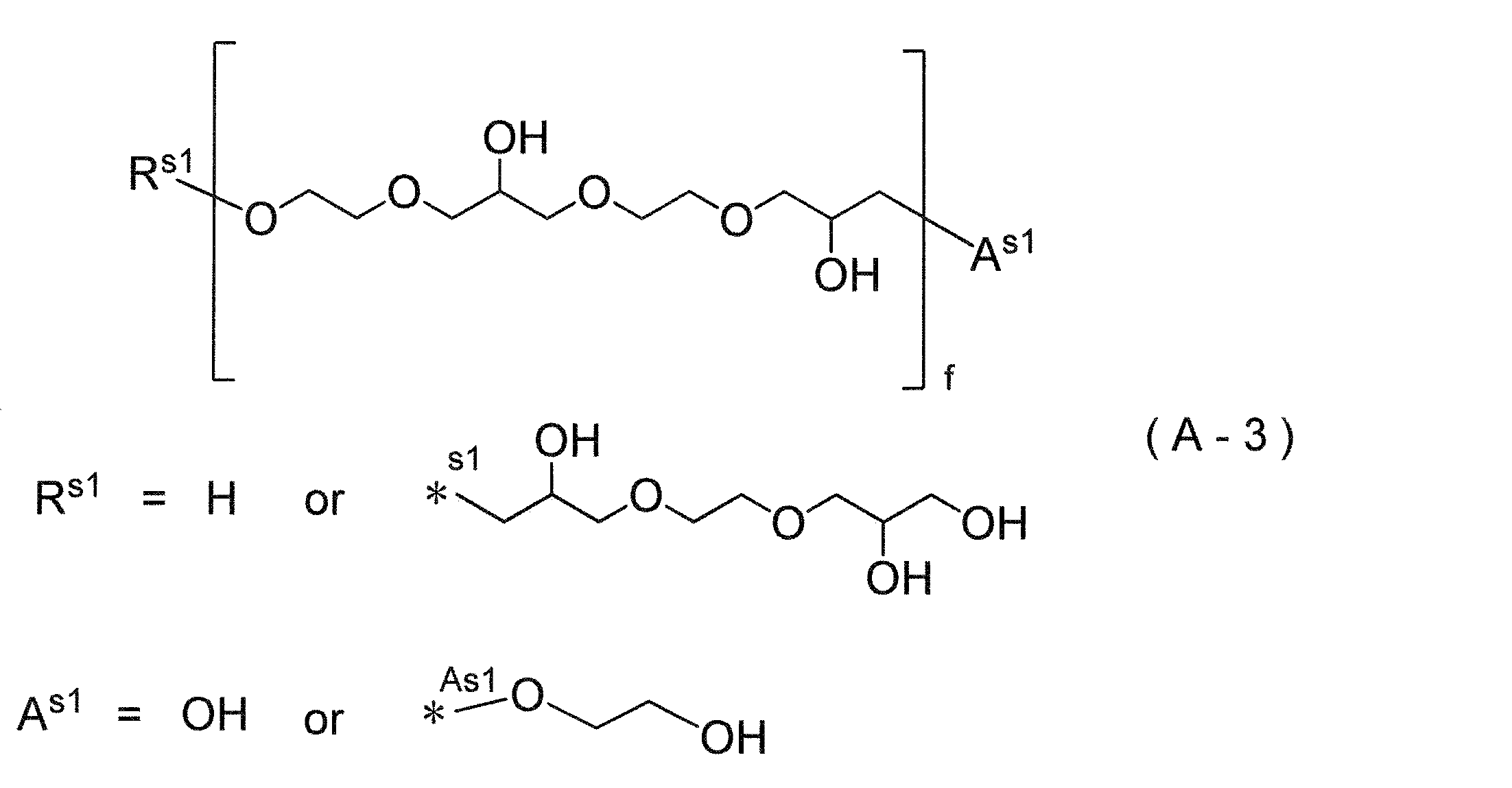
[合成例2]
コンデンサー、温度計及び撹拌装置を備えた反応装置に、合成例1で得られた化合物(A-3)100質量部、テトラヒドロフラン200質量部、t-ブトキシカリウム250質量部及びフッ素化剤としての2,2,3,3,3-ペンタフルオロプロピルトシラート250質量部を添加した。添加後60℃に昇温して5時間反応させた。反応溶液に10質量%塩酸を加えて反応をクエンチし、酢酸エチルで抽出し、下記式(A-4)で表される化合物を得た。得られた化合物(A-4)のMwは1,300であり、Mw/Mnは1.3であった。
コンデンサー、温度計及び撹拌装置を備えた反応装置に、合成例1で得られた化合物(A-3)100質量部、テトラヒドロフラン200質量部、t-ブトキシカリウム250質量部及びフッ素化剤としての2,2,3,3,3-ペンタフルオロプロピルトシラート250質量部を添加した。添加後60℃に昇温して5時間反応させた。反応溶液に10質量%塩酸を加えて反応をクエンチし、酢酸エチルで抽出し、下記式(A-4)で表される化合物を得た。得られた化合物(A-4)のMwは1,300であり、Mw/Mnは1.3であった。

[合成例3~7]
下記表1に示すジオール、ジエポキシ化合物及びフッ素化剤を合成例1及び合成例2と同じモル数使用した以外は、合成例1及び合成例2と同様の操作を行うことによって、下記式(A-5)~(A-9)で表される化合物を合成した。
下記表1に示すジオール、ジエポキシ化合物及びフッ素化剤を合成例1及び合成例2と同じモル数使用した以外は、合成例1及び合成例2と同様の操作を行うことによって、下記式(A-5)~(A-9)で表される化合物を合成した。
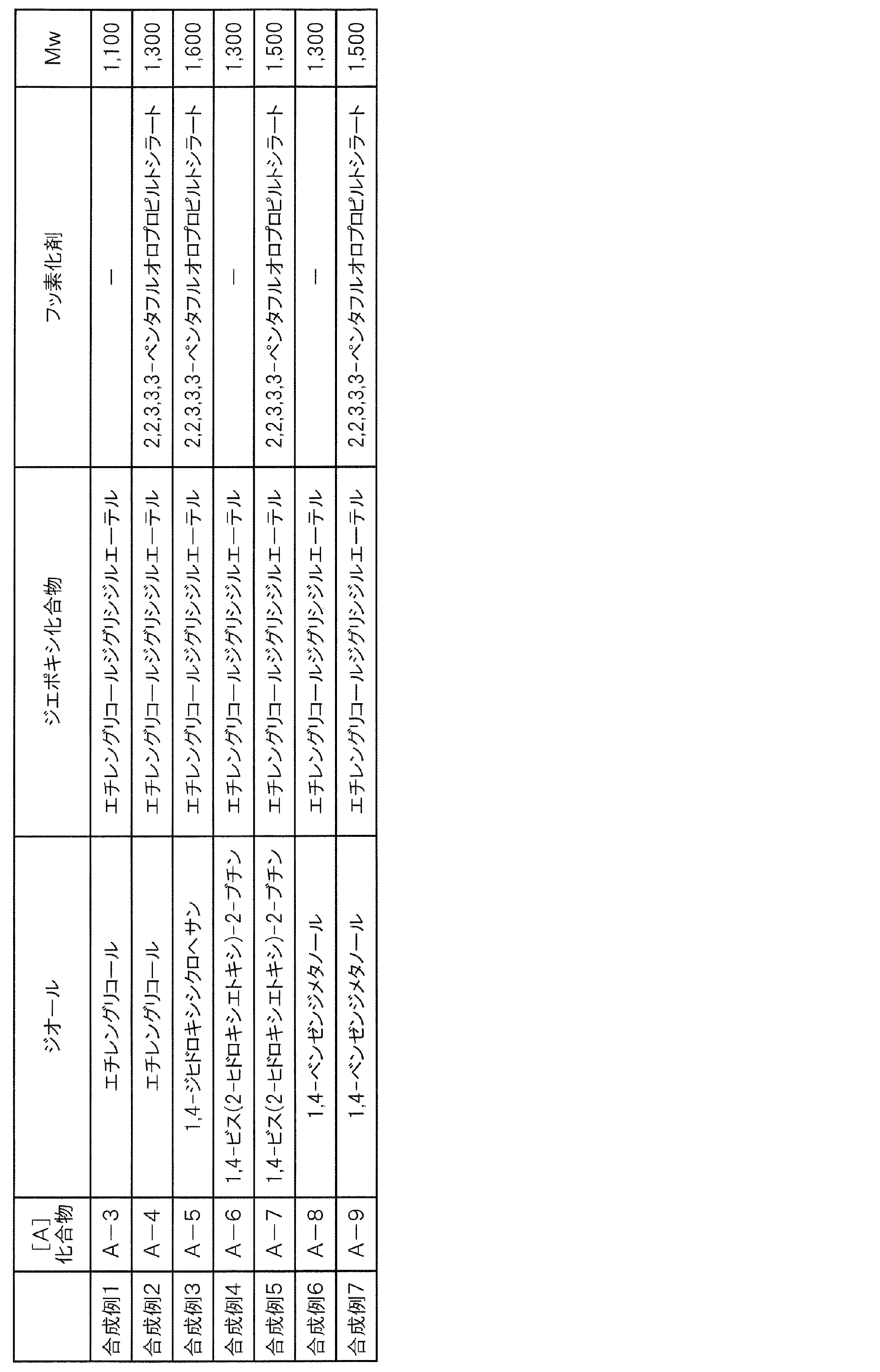
<レジスト下層膜形成用組成物の調製>
レジスト下層膜形成用組成物の調製に用いた[A]化合物、[B]化合物、[C]溶媒、[D]酸発生剤及び[E]架橋剤を以下に示す。
レジスト下層膜形成用組成物の調製に用いた[A]化合物、[B]化合物、[C]溶媒、[D]酸発生剤及び[E]架橋剤を以下に示す。
([A]化合物)
A-1:下記式(A-1)で表される化合物
A-2:下記式(A-2)で表される化合物
A-3:下記式(A-3)で表される化合物
A-4:下記式(A-4)で表される化合物
A-5:下記式(A-5)で表される化合物
A-6:下記式(A-6)で表される化合物
A-7:下記式(A-7)で表される化合物
A-8:下記式(A-8)で表される化合物
A-9:下記式(A-9)で表される化合物
a-1:下記式(a-1)で表される化合物
a-2:下記式(a-2)で表される化合物(2,4,7,9-テトラメチル-5-デシン-4,7-ジオール-ジポリオキシエチレンエーテル(竹本油脂社の「タケサーフK-465」)
a-3:下記式(a-3)で表される化合物
a-4:下記式(a-4)で表される化合物
A-1:下記式(A-1)で表される化合物
A-2:下記式(A-2)で表される化合物
A-3:下記式(A-3)で表される化合物
A-4:下記式(A-4)で表される化合物
A-5:下記式(A-5)で表される化合物
A-6:下記式(A-6)で表される化合物
A-7:下記式(A-7)で表される化合物
A-8:下記式(A-8)で表される化合物
A-9:下記式(A-9)で表される化合物
a-1:下記式(a-1)で表される化合物
a-2:下記式(a-2)で表される化合物(2,4,7,9-テトラメチル-5-デシン-4,7-ジオール-ジポリオキシエチレンエーテル(竹本油脂社の「タケサーフK-465」)
a-3:下記式(a-3)で表される化合物
a-4:下記式(a-4)で表される化合物

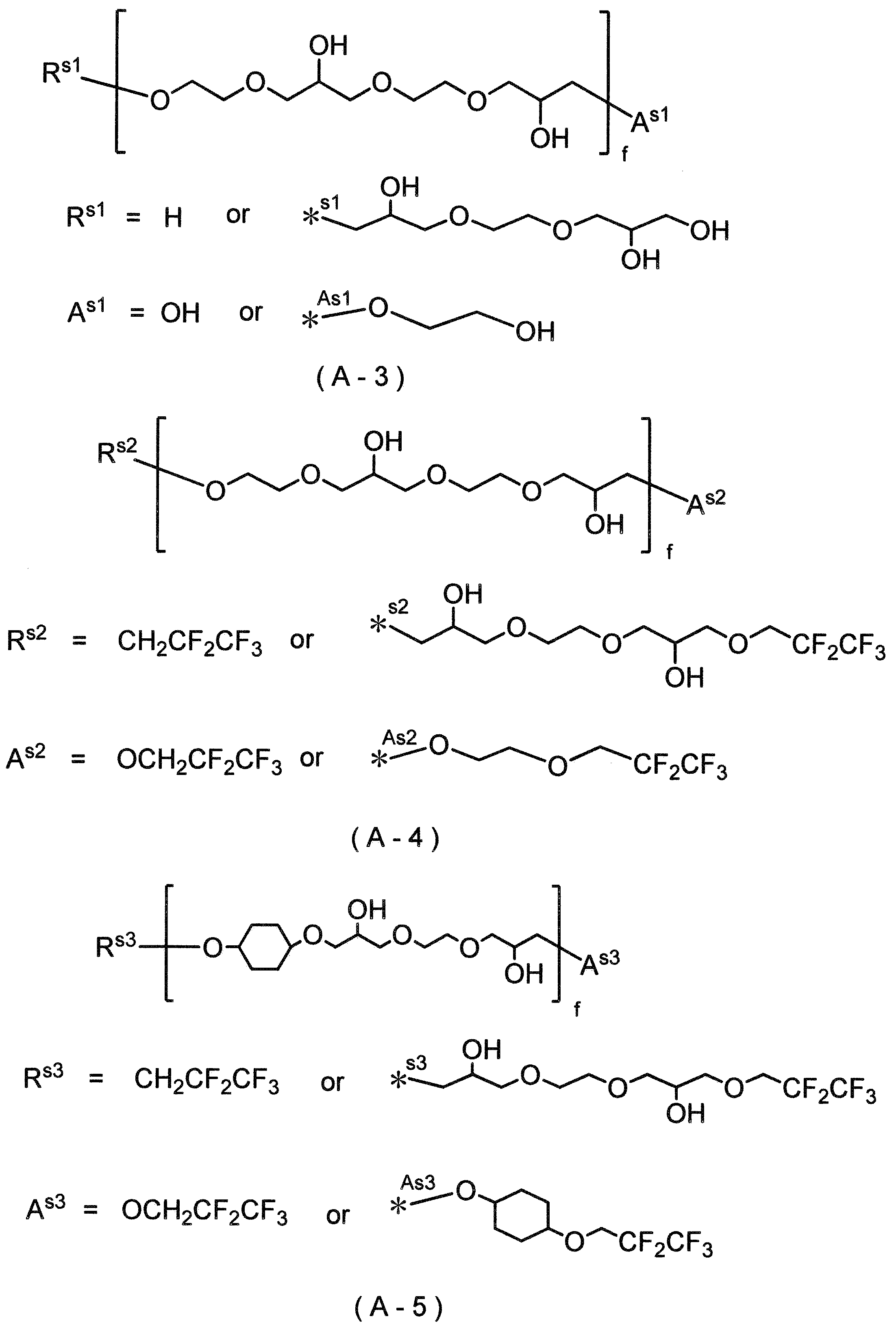
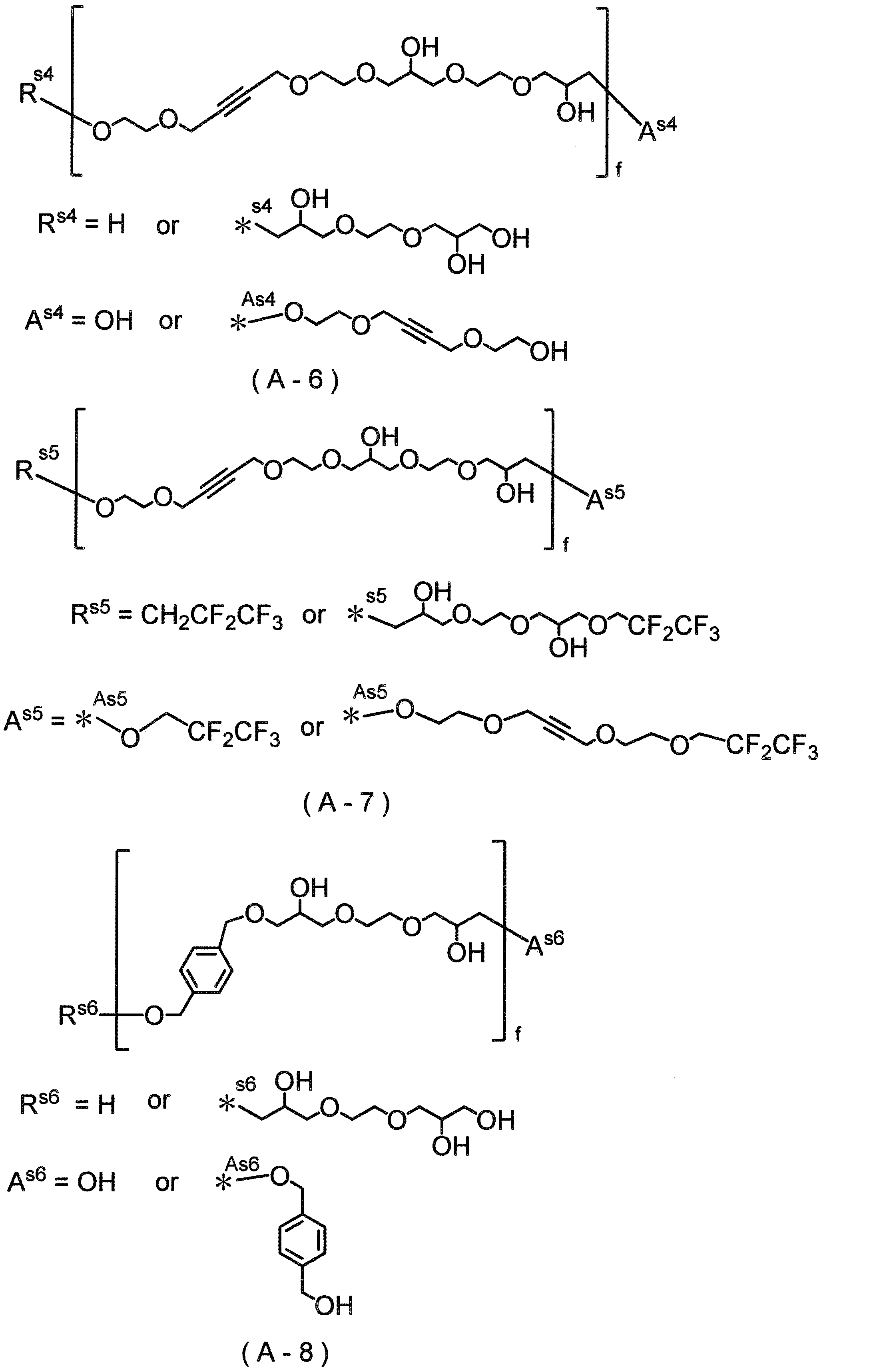

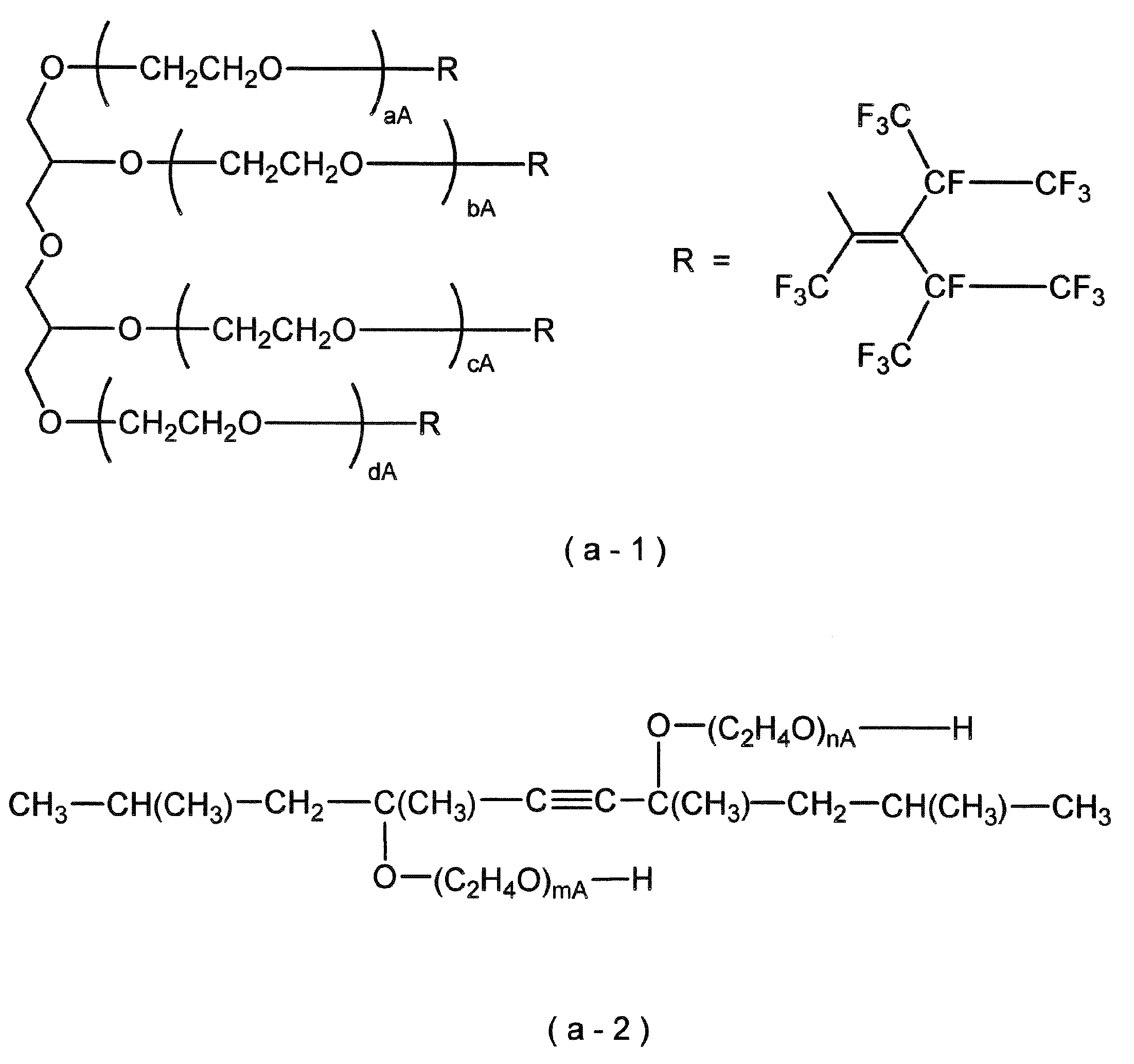
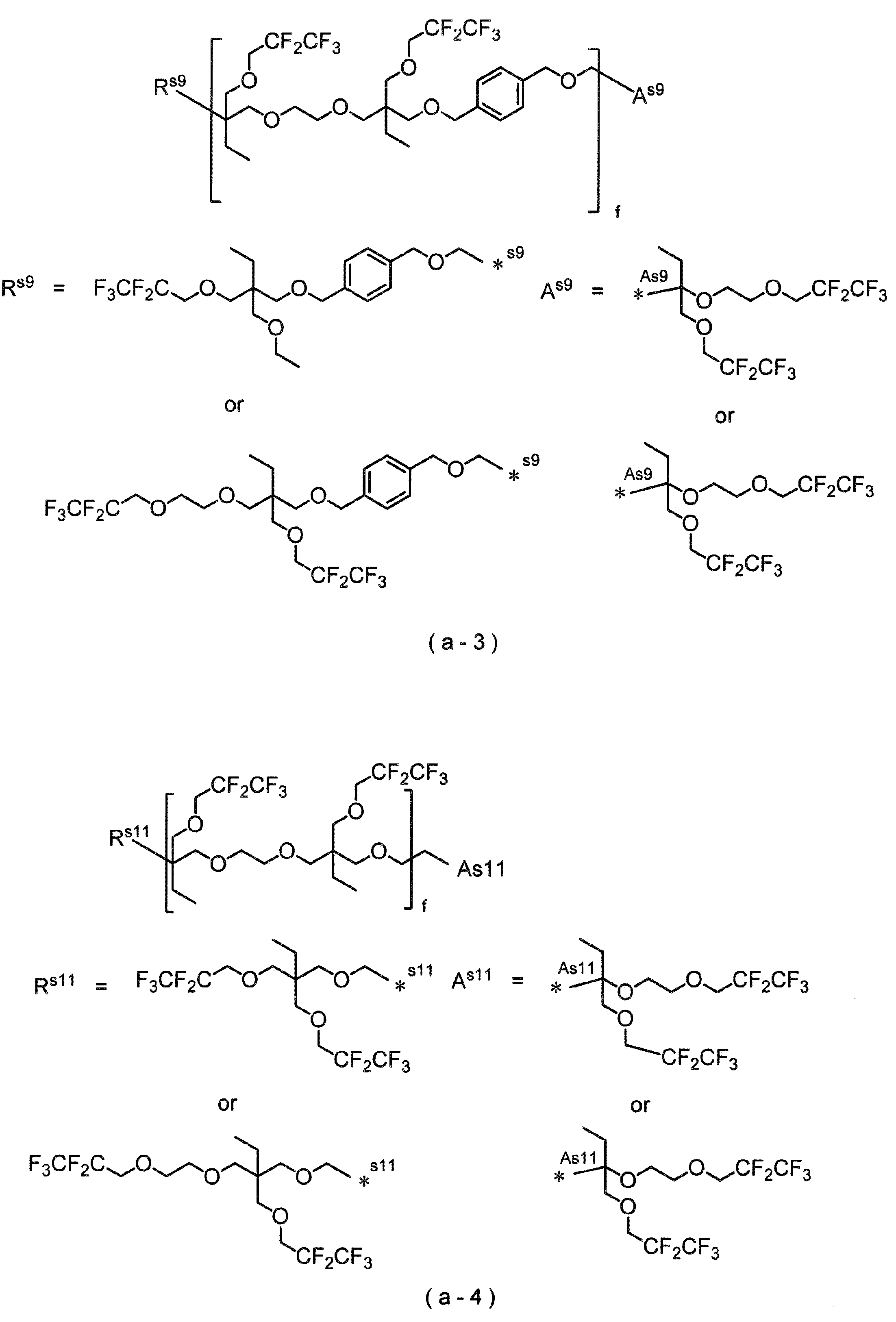
([B]化合物)
B-1:下記式(B-1)で表される樹脂
B-2:下記式(B-2)で表される構造単位を有する樹脂
B-3:下記式(B-3)で表される樹脂
B-4:下記式(B-4)で表される構造単位を有する樹脂
B-5:下記式(B-5)で表される構造単位を有する樹脂
B-6:下記式(B-6)で表される樹脂
B-7:下記式(B-7)で表される化合物
B-8:下記式(B-8)で表される樹脂
B-9:下記式(B-9)で表される樹脂
B-10:下記式(B-10)で表される樹脂
B-11:下記式(B-11)で表される構造単位を有する樹脂
B-12:下記式(B-12)で表される化合物
B-13:下記式(B-13)で表される化合物
B-14:下記式(B-14)で表される構造単位を有する樹脂
B-15:下記式(B-15)で表される構造単位を有する樹脂
B-16:下記式(B-16)で表される樹脂
B-1:下記式(B-1)で表される樹脂
B-2:下記式(B-2)で表される構造単位を有する樹脂
B-3:下記式(B-3)で表される樹脂
B-4:下記式(B-4)で表される構造単位を有する樹脂
B-5:下記式(B-5)で表される構造単位を有する樹脂
B-6:下記式(B-6)で表される樹脂
B-7:下記式(B-7)で表される化合物
B-8:下記式(B-8)で表される樹脂
B-9:下記式(B-9)で表される樹脂
B-10:下記式(B-10)で表される樹脂
B-11:下記式(B-11)で表される構造単位を有する樹脂
B-12:下記式(B-12)で表される化合物
B-13:下記式(B-13)で表される化合物
B-14:下記式(B-14)で表される構造単位を有する樹脂
B-15:下記式(B-15)で表される構造単位を有する樹脂
B-16:下記式(B-16)で表される樹脂

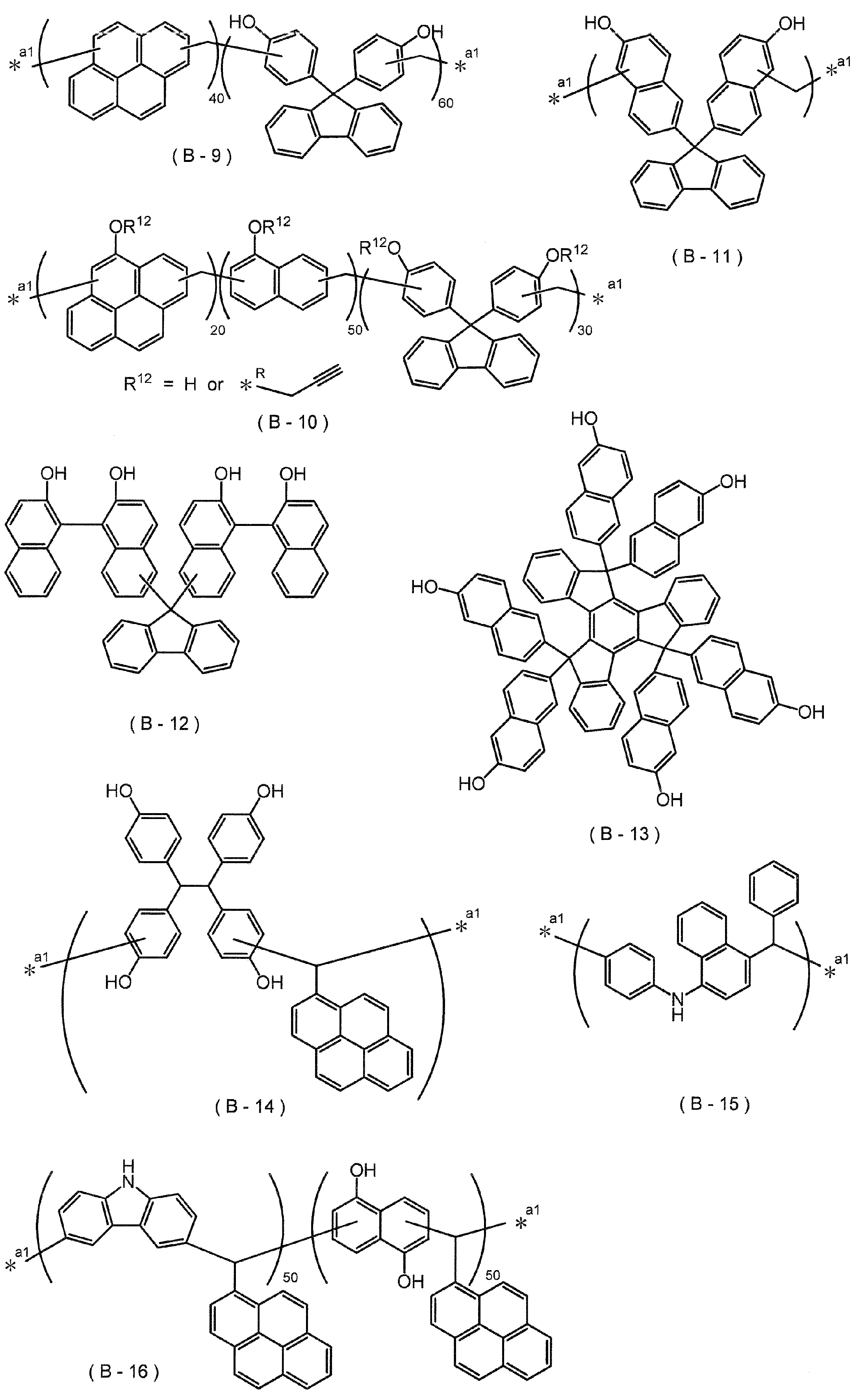
([C]溶媒)
C-1:酢酸プロピレングリコールモノメチルエーテル
C-2:シクロヘキサノン
C-3:乳酸エチル
C-4:プロピレングリコールモノメチルエーテル
C-1:酢酸プロピレングリコールモノメチルエーテル
C-2:シクロヘキサノン
C-3:乳酸エチル
C-4:プロピレングリコールモノメチルエーテル
([D]酸発生剤)
D-1:ビス(4-t-ブチルフェニル)ヨードニウムノナフルオロ-n-ブタンスルホネート(下記式(D-1)で表される化合物)
D-1:ビス(4-t-ブチルフェニル)ヨードニウムノナフルオロ-n-ブタンスルホネート(下記式(D-1)で表される化合物)

([E]架橋剤)
E-1:4,4’-(1-(4-(1-(4-ヒドロキシ-3,5-ビス(メトキシメチル)フェニル)-1-メチルエチル)フェニル)エチリデン)ビス(2,6-ビス(メトキシメチル)フェノール)(下記式(E-1)で表される化合物)
E-1:4,4’-(1-(4-(1-(4-ヒドロキシ-3,5-ビス(メトキシメチル)フェニル)-1-メチルエチル)フェニル)エチリデン)ビス(2,6-ビス(メトキシメチル)フェノール)(下記式(E-1)で表される化合物)

[実施例1]
[A]化合物としての(A-1)0.08質量部と、[B]化合物としての(B-1)9.92質量部とを、[C]溶媒としての(C-1)90質量部に溶解した。この溶液を孔径0.1μmのメンブランフィルターでろ過して、実施例1のレジスト下層膜形成組成物を調製した。
[A]化合物としての(A-1)0.08質量部と、[B]化合物としての(B-1)9.92質量部とを、[C]溶媒としての(C-1)90質量部に溶解した。この溶液を孔径0.1μmのメンブランフィルターでろ過して、実施例1のレジスト下層膜形成組成物を調製した。
[実施例2~26及び比較例1~5]
下記表2及び表3に示す種類及び含有量の各成分を用いた以外は、実施例1と同様に操作して、各レジスト下層膜形成組成物を調製した。表2及び表3中の「-」は該当する成分を使用しなかったことを示す。
下記表2及び表3に示す種類及び含有量の各成分を用いた以外は、実施例1と同様に操作して、各レジスト下層膜形成組成物を調製した。表2及び表3中の「-」は該当する成分を使用しなかったことを示す。
<評価>
上記調製したレジスト下層膜形成用組成物について、下記項目について下記方法により評価した。評価結果を下記表2及び表3に合わせて示す。なお、レジスト下層膜における平均厚みの測定は、分光エリプソメータ(J.A.WOOLLAM社の「M2000D」)を用いて行った。
上記調製したレジスト下層膜形成用組成物について、下記項目について下記方法により評価した。評価結果を下記表2及び表3に合わせて示す。なお、レジスト下層膜における平均厚みの測定は、分光エリプソメータ(J.A.WOOLLAM社の「M2000D」)を用いて行った。
[基板への塗布性]
上記調製したレジスト下層膜形成用組成物を、基板としてのシリコンウエハ上にスピンコート法により塗布した。その後、大気雰囲気下にて250℃で60秒間焼成(ベーク)し、平均厚み200nmのレジスト下層膜を形成した。このレジスト下層膜が形成されたシリコンウエハの表面を、目視及び光学顕微鏡を用いて観察した。基板への塗布性は、異常なくレジスト下層膜が形成できた場合は「A」と、ピンホールやストリエーション等の不具合を生じた場合を「B」と評価した。
上記調製したレジスト下層膜形成用組成物を、基板としてのシリコンウエハ上にスピンコート法により塗布した。その後、大気雰囲気下にて250℃で60秒間焼成(ベーク)し、平均厚み200nmのレジスト下層膜を形成した。このレジスト下層膜が形成されたシリコンウエハの表面を、目視及び光学顕微鏡を用いて観察した。基板への塗布性は、異常なくレジスト下層膜が形成できた場合は「A」と、ピンホールやストリエーション等の不具合を生じた場合を「B」と評価した。
[平坦性]
平坦性の評価には、45nmの線幅で深さ200nmのライン及び45nmのスペースを有するパターン部分と、パターンがない非加工部分とを有するSiO2基板を用いた。この基板上に上記調製したレジスト下層膜形成用組成物をスピンコート法により塗布した。スピンコートの回転速度は、上記「基板への塗布性」において、平均厚み200nmのレジスト下層膜を形成する場合と同じとした。次いで、大気雰囲気下にて250℃で60秒間焼成(ベーク)した。このレジスト下層膜で被覆された上記SiO2基板の断面形状を走査型電子顕微鏡(日立ハイテクノロジーズ社の「S-4800」)にて観察し、パターン部分に被覆されたレジスト下層膜の又は非加工部分に被覆された下層膜の厚みの最大値と最小値の差(ΔFT)を平坦性の指標とした。平坦性は、このΔFTが15nm未満の場合は「A」(非常に良好)と、15nm以上25nm未満の場合は「B」(良好)、25nm以上35nm未満の場合は「C」(不良)、35nm以上の場合は「D」(非常に不良)と評価した。
平坦性の評価には、45nmの線幅で深さ200nmのライン及び45nmのスペースを有するパターン部分と、パターンがない非加工部分とを有するSiO2基板を用いた。この基板上に上記調製したレジスト下層膜形成用組成物をスピンコート法により塗布した。スピンコートの回転速度は、上記「基板への塗布性」において、平均厚み200nmのレジスト下層膜を形成する場合と同じとした。次いで、大気雰囲気下にて250℃で60秒間焼成(ベーク)した。このレジスト下層膜で被覆された上記SiO2基板の断面形状を走査型電子顕微鏡(日立ハイテクノロジーズ社の「S-4800」)にて観察し、パターン部分に被覆されたレジスト下層膜の又は非加工部分に被覆された下層膜の厚みの最大値と最小値の差(ΔFT)を平坦性の指標とした。平坦性は、このΔFTが15nm未満の場合は「A」(非常に良好)と、15nm以上25nm未満の場合は「B」(良好)、25nm以上35nm未満の場合は「C」(不良)、35nm以上の場合は「D」(非常に不良)と評価した。
[静的接触角(°)]
基板としての8インチシリコンウエハ上に、上記調製した各レジスト下層膜形成用組成物をスピンコート法により塗布し、ホットプレート上において250℃で60秒間焼成(ベーク)し、平均厚み200nmのレジスト下層膜を形成した。その後、接触角測定装置(KRUS社の「DSA-10」)を使用し、室温:23℃、湿度:45%、常圧の環境下で、次の手順により速やかに静的接触角を測定した。
基板としての8インチシリコンウエハ上に、上記調製した各レジスト下層膜形成用組成物をスピンコート法により塗布し、ホットプレート上において250℃で60秒間焼成(ベーク)し、平均厚み200nmのレジスト下層膜を形成した。その後、接触角測定装置(KRUS社の「DSA-10」)を使用し、室温:23℃、湿度:45%、常圧の環境下で、次の手順により速やかに静的接触角を測定した。
接触角測定装置におけるウエハステージ位置を調整し、この調整したステージ上に上記レジスト下層膜を形成したウエハをセットした。次に、針に水を注入し、上記セットしたウエハ上に水滴を形成可能な初期位置に上記針の位置を微調整した。その後、この針から9.8μL/分の速度で水を排出させて上記ウエハ上に6.5μLの水滴を形成し、この水滴から針を引き抜いた。次いで、水滴を形成してから2秒後より4秒間かけて同じポイントで10回静的接触角を連続測定した。この操作を異なる水滴形成場所で3回行い、計30点の測定値を平均して静的接触角の値とした。
[表面塗布性]
上記基板への塗布性の評価と同様にして、レジスト下層膜を形成した。このレジスト下層膜の表面に、中間膜形成組成物としてのポリシロキサン組成物(JSR社の「NFC SOG080)をスピンコート法により塗布した。次に、大気雰囲気下にて250℃で60秒間焼成(ベーク)し、中間膜を形成した。このレジスト下層膜及び中間層の2層からなる膜を目視及び光学顕微鏡を用いて観察した。表面塗布性は、ピンホールやストリエーション等の不具合が観察されず異常なくレジスト下層膜及び中間層が形成できた場合を「A」、ピンホールやストリエーション等の不具合が観察された場合を「B」と評価した。
上記基板への塗布性の評価と同様にして、レジスト下層膜を形成した。このレジスト下層膜の表面に、中間膜形成組成物としてのポリシロキサン組成物(JSR社の「NFC SOG080)をスピンコート法により塗布した。次に、大気雰囲気下にて250℃で60秒間焼成(ベーク)し、中間膜を形成した。このレジスト下層膜及び中間層の2層からなる膜を目視及び光学顕微鏡を用いて観察した。表面塗布性は、ピンホールやストリエーション等の不具合が観察されず異常なくレジスト下層膜及び中間層が形成できた場合を「A」、ピンホールやストリエーション等の不具合が観察された場合を「B」と評価した。
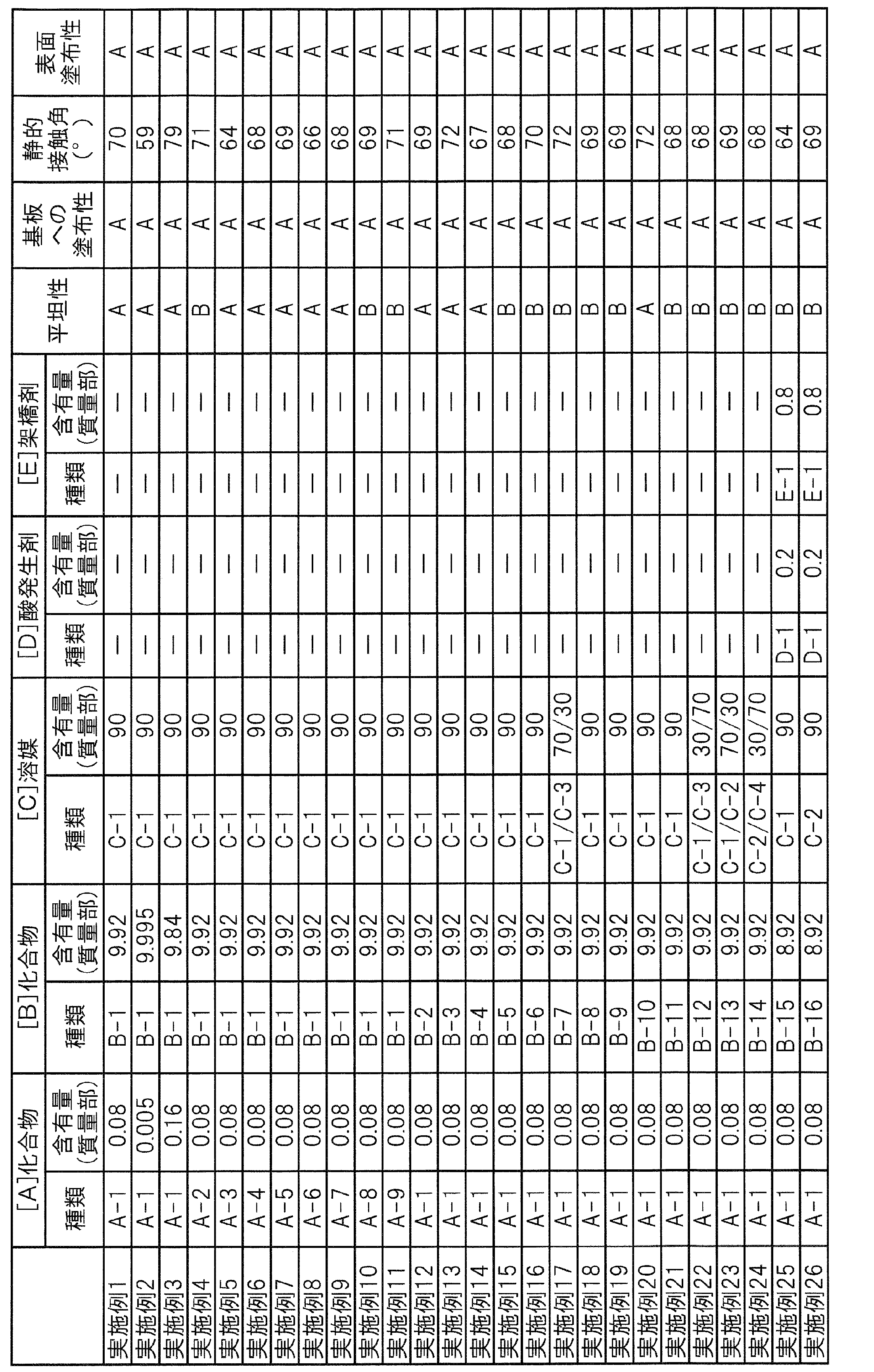
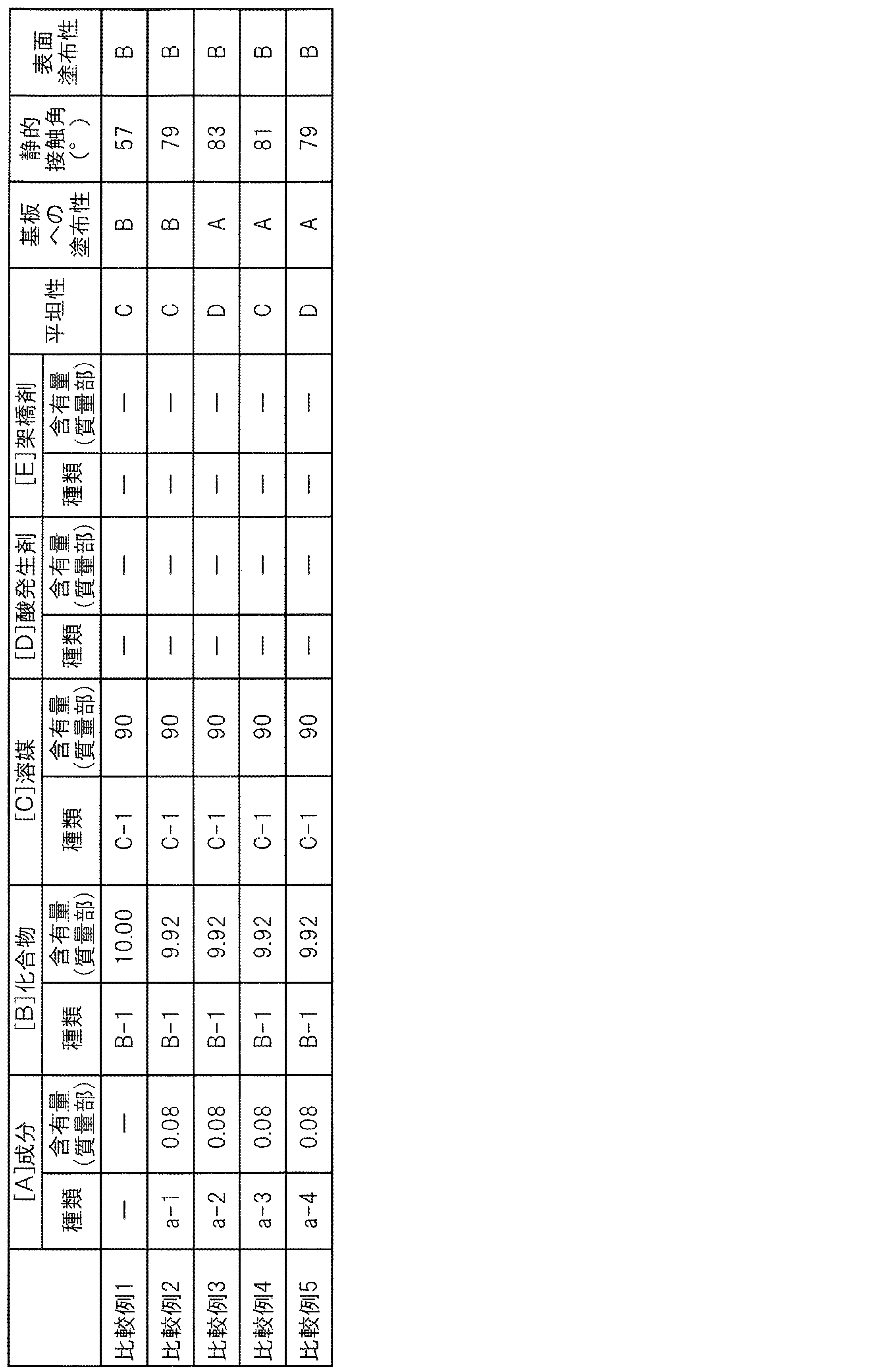
表2及び表3の結果から明らかなように、実施例のレジスト下層膜形成用組成物から形成されるレジスト下層膜は、基板への塗布性等の一般特性を満たすと共に、平坦性及び表面塗布性に共に優れる。これに対して、比較例のレジスト下層膜形成用組成物から形成されるレジスト下層膜は、平坦性、表面塗布性等が不十分であった。
本発明のレジスト下層膜形成用組成物によれば、平坦性に優れ、かつ表面塗布性に優れるレジスト下層膜を形成することができる。本発明のレジスト下層膜は、当該レジスト下層膜形成用組成物から形成されるので、平坦性及び表面塗布性に優れる。本発明のパターニングされた基板の製造方法によれば、当該レジスト下層膜を用いることにより、優れたパターン形状を有する基板を得ることができる。従って、これらは、今後さらに微細化が進行すると予想される半導体デバイスの製造等に好適に用いることができる。
Claims (6)
- 下記式(1-1)又は下記式(1-2)で表される第1化合物と、
上記第1化合物以外の芳香環を有する第2化合物と、
溶媒と
を含有するレジスト下層膜形成用組成物。

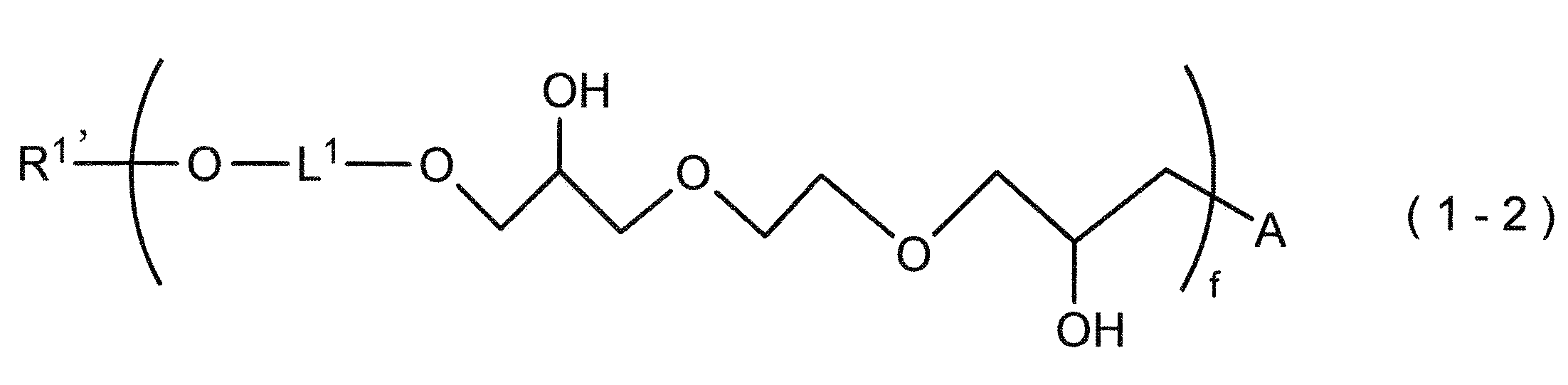
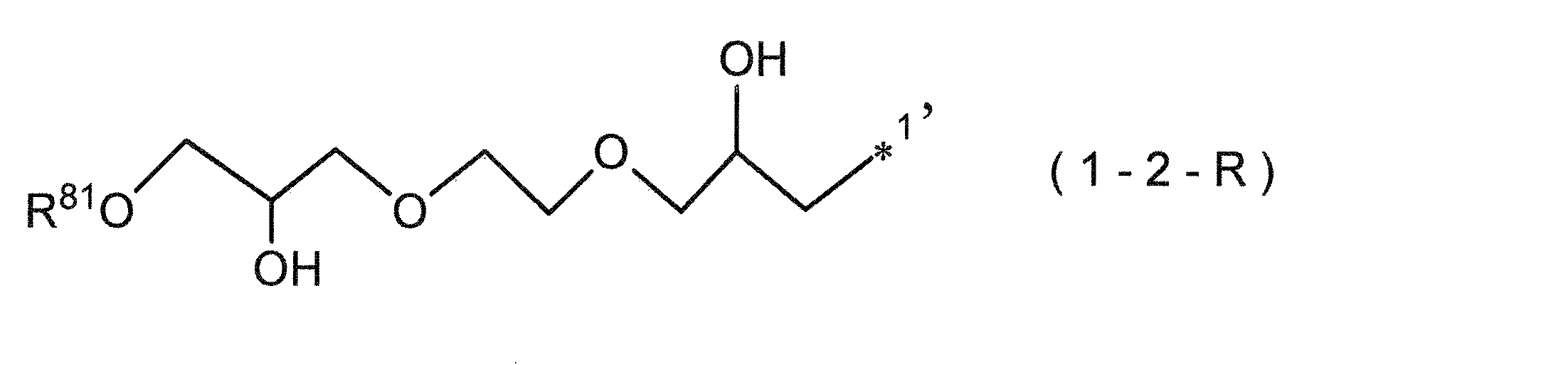

- 上記第2化合物がノボラック樹脂、レゾール樹脂、スチレン樹脂、アセナフチレン樹脂、インデン樹脂、ポリアリーレン樹脂、トリアジン樹脂、カリックスアレーン樹脂、フラーレン樹脂、分子量が100以上3,000以下の芳香環含有化合物又はこれらの組み合わせである請求項1に記載のレジスト下層膜形成用組成物。
- 上記第1化合物の上記第2化合物100質量部に対する含有量が、0.01質量部以上10質量部以下である請求項1又は請求項2に記載のレジスト下層膜形成用組成物。
- 請求項1、請求項2又は請求項3に記載のレジスト下層膜形成用組成物から形成されるレジスト下層膜。
- 基板の一方の面側に請求項1、請求項2又は請求項3に記載のレジスト下層膜形成用組成物を塗工する工程と、
上記塗工工程により形成されたレジスト下層膜の上記基板とは反対の面側にレジストパターンを形成する工程と、
上記レジストパターンをマスクとしてエッチングする工程と
を備えるパターニングされた基板の製造方法。 - 上記塗工工程後に、
上記塗工工程により形成されたレジスト下層膜の上記基板とは反対の面側にシリコン含有膜を形成する工程
をさらに備え、
上記レジストパターン形成工程において、
レジストパターンを上記シリコン含有膜の上記基板とは反対の面側に形成する請求項5に記載のパターニングされた基板の製造方法。
Applications Claiming Priority (2)
| Application Number | Priority Date | Filing Date | Title |
|---|---|---|---|
| JP2015-125183 | 2015-06-22 | ||
| JP2015125183 | 2015-06-22 |
Publications (1)
| Publication Number | Publication Date |
|---|---|
| WO2016208518A1 true WO2016208518A1 (ja) | 2016-12-29 |
Family
ID=57585584
Family Applications (1)
| Application Number | Title | Priority Date | Filing Date |
|---|---|---|---|
| PCT/JP2016/068191 Ceased WO2016208518A1 (ja) | 2015-06-22 | 2016-06-17 | レジスト下層膜形成用組成物、レジスト下層膜及びパターニングされた基板の製造方法 |
Country Status (2)
| Country | Link |
|---|---|
| TW (1) | TW201704335A (ja) |
| WO (1) | WO2016208518A1 (ja) |
Cited By (4)
| Publication number | Priority date | Publication date | Assignee | Title |
|---|---|---|---|---|
| JP2018145367A (ja) * | 2017-03-09 | 2018-09-20 | 東ソー株式会社 | ポリアリーレンスルフィド組成物 |
| WO2018186310A1 (ja) * | 2017-04-03 | 2018-10-11 | 日産化学株式会社 | 光架橋基を有するポリエーテル樹脂を含む段差基板被覆組成物 |
| JP2021113972A (ja) * | 2020-01-17 | 2021-08-05 | 三星エスディアイ株式会社Samsung SDI Co., Ltd. | レジスト下層膜用組成物およびこれを用いたパターン形成方法 |
| CN116426170A (zh) * | 2022-01-04 | 2023-07-14 | 新应材股份有限公司 | 树脂组成物、抗蚀刻层以及蚀刻方法 |
Families Citing this family (1)
| Publication number | Priority date | Publication date | Assignee | Title |
|---|---|---|---|---|
| JP7698607B2 (ja) * | 2022-06-10 | 2025-06-25 | 信越化学工業株式会社 | レジスト下層膜材料、パターン形成方法、及びレジスト下層膜形成方法 |
Citations (14)
| Publication number | Priority date | Publication date | Assignee | Title |
|---|---|---|---|---|
| JP2002006506A (ja) * | 2000-06-22 | 2002-01-09 | Hitachi Chem Co Ltd | アンダーコート樹脂組成物及びこれを用いたレジスト像の製造法 |
| JP2003535352A (ja) * | 1998-12-20 | 2003-11-25 | アライドシグナル・インコーポレイテツド | 高温安定性を備えたノボラックポリマー平坦化フィルム |
| JP2003345027A (ja) * | 2002-05-24 | 2003-12-03 | Nissan Chem Ind Ltd | リソグラフィー用反射防止膜形成組成物 |
| WO2008026468A1 (fr) * | 2006-08-28 | 2008-03-06 | Nissan Chemical Industries, Ltd. | Composition servant à créer une sous-couche de réserve et contenant un additif liquide |
| JP2009251130A (ja) * | 2008-04-02 | 2009-10-29 | Jsr Corp | レジスト下層膜形成用組成物及びそれを用いたデュアルダマシン構造の形成方法 |
| WO2009141924A1 (ja) * | 2008-05-23 | 2009-11-26 | 三菱化学株式会社 | 着色硬化性樹脂組成物、カラーフィルタ、液晶表示装置及び有機elディスプレイ |
| JP2010107957A (ja) * | 2008-10-01 | 2010-05-13 | Tokyo Ohka Kogyo Co Ltd | 感光性樹脂組成物、カラーフィルター、及び液晶表示ディスプレイ |
| JP2010113209A (ja) * | 2008-11-07 | 2010-05-20 | Shin-Etsu Chemical Co Ltd | 熱酸発生剤を含有するレジスト下層材料、レジスト下層膜形成基板及びパターン形成方法 |
| JP2013033227A (ja) * | 2011-06-30 | 2013-02-14 | Fujifilm Corp | パターン形成方法、積層レジストパターン、有機溶剤現像用の積層膜、レジスト組成物、電子デバイスの製造方法及び電子デバイス |
| JP2013097002A (ja) * | 2011-10-27 | 2013-05-20 | Fujifilm Corp | パターン形成方法、積層レジストパターン、有機溶剤現像用の積層膜、レジスト組成物、電子デバイスの製造方法及び電子デバイス |
| JP2013253227A (ja) * | 2012-05-08 | 2013-12-19 | Shin-Etsu Chemical Co Ltd | 有機膜材料、これを用いた有機膜形成方法及びパターン形成方法、並びに熱分解性重合体 |
| JP2015129937A (ja) * | 2013-12-27 | 2015-07-16 | ローム・アンド・ハース・エレクトロニック・マテリアルズ・コリア・リミテッド | ナノリソグラフィのための有機底部反射防止コーティング組成物 |
| WO2015122296A1 (ja) * | 2014-02-12 | 2015-08-20 | 日産化学工業株式会社 | フッ素含有界面活性剤を含む膜形成組成物 |
| JP2016028416A (ja) * | 2014-07-04 | 2016-02-25 | ローム アンド ハース エレクトロニック マテリアルズ エルエルシーRohm and Haas Electronic Materials LLC | ギャップ充填方法 |
-
2016
- 2016-06-17 WO PCT/JP2016/068191 patent/WO2016208518A1/ja not_active Ceased
- 2016-06-21 TW TW105119354A patent/TW201704335A/zh unknown
Patent Citations (14)
| Publication number | Priority date | Publication date | Assignee | Title |
|---|---|---|---|---|
| JP2003535352A (ja) * | 1998-12-20 | 2003-11-25 | アライドシグナル・インコーポレイテツド | 高温安定性を備えたノボラックポリマー平坦化フィルム |
| JP2002006506A (ja) * | 2000-06-22 | 2002-01-09 | Hitachi Chem Co Ltd | アンダーコート樹脂組成物及びこれを用いたレジスト像の製造法 |
| JP2003345027A (ja) * | 2002-05-24 | 2003-12-03 | Nissan Chem Ind Ltd | リソグラフィー用反射防止膜形成組成物 |
| WO2008026468A1 (fr) * | 2006-08-28 | 2008-03-06 | Nissan Chemical Industries, Ltd. | Composition servant à créer une sous-couche de réserve et contenant un additif liquide |
| JP2009251130A (ja) * | 2008-04-02 | 2009-10-29 | Jsr Corp | レジスト下層膜形成用組成物及びそれを用いたデュアルダマシン構造の形成方法 |
| WO2009141924A1 (ja) * | 2008-05-23 | 2009-11-26 | 三菱化学株式会社 | 着色硬化性樹脂組成物、カラーフィルタ、液晶表示装置及び有機elディスプレイ |
| JP2010107957A (ja) * | 2008-10-01 | 2010-05-13 | Tokyo Ohka Kogyo Co Ltd | 感光性樹脂組成物、カラーフィルター、及び液晶表示ディスプレイ |
| JP2010113209A (ja) * | 2008-11-07 | 2010-05-20 | Shin-Etsu Chemical Co Ltd | 熱酸発生剤を含有するレジスト下層材料、レジスト下層膜形成基板及びパターン形成方法 |
| JP2013033227A (ja) * | 2011-06-30 | 2013-02-14 | Fujifilm Corp | パターン形成方法、積層レジストパターン、有機溶剤現像用の積層膜、レジスト組成物、電子デバイスの製造方法及び電子デバイス |
| JP2013097002A (ja) * | 2011-10-27 | 2013-05-20 | Fujifilm Corp | パターン形成方法、積層レジストパターン、有機溶剤現像用の積層膜、レジスト組成物、電子デバイスの製造方法及び電子デバイス |
| JP2013253227A (ja) * | 2012-05-08 | 2013-12-19 | Shin-Etsu Chemical Co Ltd | 有機膜材料、これを用いた有機膜形成方法及びパターン形成方法、並びに熱分解性重合体 |
| JP2015129937A (ja) * | 2013-12-27 | 2015-07-16 | ローム・アンド・ハース・エレクトロニック・マテリアルズ・コリア・リミテッド | ナノリソグラフィのための有機底部反射防止コーティング組成物 |
| WO2015122296A1 (ja) * | 2014-02-12 | 2015-08-20 | 日産化学工業株式会社 | フッ素含有界面活性剤を含む膜形成組成物 |
| JP2016028416A (ja) * | 2014-07-04 | 2016-02-25 | ローム アンド ハース エレクトロニック マテリアルズ エルエルシーRohm and Haas Electronic Materials LLC | ギャップ充填方法 |
Cited By (9)
| Publication number | Priority date | Publication date | Assignee | Title |
|---|---|---|---|---|
| JP2018145367A (ja) * | 2017-03-09 | 2018-09-20 | 東ソー株式会社 | ポリアリーレンスルフィド組成物 |
| WO2018186310A1 (ja) * | 2017-04-03 | 2018-10-11 | 日産化学株式会社 | 光架橋基を有するポリエーテル樹脂を含む段差基板被覆組成物 |
| KR20190131543A (ko) * | 2017-04-03 | 2019-11-26 | 닛산 가가쿠 가부시키가이샤 | 광가교기를 갖는 폴리에테르수지를 포함하는 단차기판 피복조성물 |
| US10871712B2 (en) | 2017-04-03 | 2020-12-22 | Nissan Chemical Corporation | Stepped substrate-coating composition containing polyether resin having photocrosslinkable group |
| KR102455502B1 (ko) | 2017-04-03 | 2022-10-17 | 닛산 가가쿠 가부시키가이샤 | 광가교기를 갖는 폴리에테르수지를 포함하는 단차기판 피복조성물 |
| JP2021113972A (ja) * | 2020-01-17 | 2021-08-05 | 三星エスディアイ株式会社Samsung SDI Co., Ltd. | レジスト下層膜用組成物およびこれを用いたパターン形成方法 |
| JP7017653B2 (ja) | 2020-01-17 | 2022-02-08 | 三星エスディアイ株式会社 | レジスト下層膜用組成物およびこれを用いたパターン形成方法 |
| US11987561B2 (en) | 2020-01-17 | 2024-05-21 | Samsung Sdi Co., Ltd. | Resist underlayer composition, and method of forming patterns using the composition |
| CN116426170A (zh) * | 2022-01-04 | 2023-07-14 | 新应材股份有限公司 | 树脂组成物、抗蚀刻层以及蚀刻方法 |
Also Published As
| Publication number | Publication date |
|---|---|
| TW201704335A (zh) | 2017-02-01 |
Similar Documents
| Publication | Publication Date | Title |
|---|---|---|
| TWI830827B (zh) | 抗蝕劑底層膜形成用組成物、抗蝕劑底層膜及抗蝕劑圖案形成方法 | |
| JP6711104B2 (ja) | レジスト下層膜形成方法及びパターン形成方法 | |
| KR101411737B1 (ko) | 패턴 형성 방법 및 레지스트 하층막 형성용 조성물 | |
| JP6015114B2 (ja) | 近赤外光吸収膜形成材料及び近赤外光吸収膜を有する積層膜 | |
| TWI765910B (zh) | 抗蝕劑底層膜形成用組成物、抗蝕劑底層膜及其形成方法以及圖案化基板的製造方法 | |
| JP7196389B2 (ja) | 半導体用レジスト下層膜形成組成物、レジスト下層膜、レジスト下層膜の形成方法及びパターニング基板の製造方法 | |
| JP6907522B2 (ja) | レジスト下層膜形成用組成物及びその製造方法、レジスト下層膜並びにパターニングされた基板の製造方法 | |
| US11320739B2 (en) | Composition for resist underlayer film formation, resist underlayer film and method for producing patterned substrate | |
| JP2020056889A (ja) | レジスト下層膜形成用組成物、レジスト下層膜及びレジストパターン形成方法 | |
| JP6160068B2 (ja) | レジスト下層膜形成用樹脂組成物、レジスト下層膜、その形成方法及びパターン形成方法 | |
| KR102260111B1 (ko) | 막 형성용 조성물, 레지스트 하층막 및 그의 형성 방법, 및 패턴 형성 방법 | |
| TW201704335A (zh) | 抗蝕劑下層膜形成用組成物、抗蝕劑下層膜及圖案化基板的製造方法 | |
| JPWO2017208796A1 (ja) | 膜形成用組成物、膜、レジスト下層膜の形成方法、パターニングされた基板の製造方法及び化合物 | |
| US12572075B2 (en) | Composition, method of forming resist underlayer film, and method of forming resist pattern | |
| JP6281490B2 (ja) | レジスト下層膜形成用樹脂組成物、レジスト下層膜及びその形成方法、並びにパターン形成方法 | |
| JP2010107790A (ja) | レジスト下層膜形成用組成物及びパターン形成方法 |
Legal Events
| Date | Code | Title | Description |
|---|---|---|---|
| 121 | Ep: the epo has been informed by wipo that ep was designated in this application |
Ref document number: 16814289 Country of ref document: EP Kind code of ref document: A1 |
|
| NENP | Non-entry into the national phase |
Ref country code: DE |
|
| 122 | Ep: pct application non-entry in european phase |
Ref document number: 16814289 Country of ref document: EP Kind code of ref document: A1 |
|
| NENP | Non-entry into the national phase |
Ref country code: JP |