WO2016199823A1 - 二次電池用非水電解液及びそれを備えた二次電池 - Google Patents
二次電池用非水電解液及びそれを備えた二次電池 Download PDFInfo
- Publication number
- WO2016199823A1 WO2016199823A1 PCT/JP2016/067110 JP2016067110W WO2016199823A1 WO 2016199823 A1 WO2016199823 A1 WO 2016199823A1 JP 2016067110 W JP2016067110 W JP 2016067110W WO 2016199823 A1 WO2016199823 A1 WO 2016199823A1
- Authority
- WO
- WIPO (PCT)
- Prior art keywords
- group
- carbon atoms
- halogen atom
- unsaturated bond
- secondary battery
- Prior art date
- Legal status (The legal status is an assumption and is not a legal conclusion. Google has not performed a legal analysis and makes no representation as to the accuracy of the status listed.)
- Ceased
Links
Images

Classifications
-
- H—ELECTRICITY
- H01—ELECTRIC ELEMENTS
- H01M—PROCESSES OR MEANS, e.g. BATTERIES, FOR THE DIRECT CONVERSION OF CHEMICAL ENERGY INTO ELECTRICAL ENERGY
- H01M10/00—Secondary cells; Manufacture thereof
- H01M10/05—Accumulators with non-aqueous electrolyte
- H01M10/056—Accumulators with non-aqueous electrolyte characterised by the materials used as electrolytes, e.g. mixed inorganic/organic electrolytes
- H01M10/0564—Accumulators with non-aqueous electrolyte characterised by the materials used as electrolytes, e.g. mixed inorganic/organic electrolytes the electrolyte being constituted of organic materials only
- H01M10/0566—Liquid materials
- H01M10/0567—Liquid materials characterised by the additives
-
- H—ELECTRICITY
- H01—ELECTRIC ELEMENTS
- H01M—PROCESSES OR MEANS, e.g. BATTERIES, FOR THE DIRECT CONVERSION OF CHEMICAL ENERGY INTO ELECTRICAL ENERGY
- H01M10/00—Secondary cells; Manufacture thereof
- H01M10/05—Accumulators with non-aqueous electrolyte
- H01M10/052—Li-accumulators
- H01M10/0525—Rocking-chair batteries, i.e. batteries with lithium insertion or intercalation in both electrodes; Lithium-ion batteries
-
- H—ELECTRICITY
- H01—ELECTRIC ELEMENTS
- H01M—PROCESSES OR MEANS, e.g. BATTERIES, FOR THE DIRECT CONVERSION OF CHEMICAL ENERGY INTO ELECTRICAL ENERGY
- H01M10/00—Secondary cells; Manufacture thereof
- H01M10/05—Accumulators with non-aqueous electrolyte
- H01M10/056—Accumulators with non-aqueous electrolyte characterised by the materials used as electrolytes, e.g. mixed inorganic/organic electrolytes
- H01M10/0564—Accumulators with non-aqueous electrolyte characterised by the materials used as electrolytes, e.g. mixed inorganic/organic electrolytes the electrolyte being constituted of organic materials only
- H01M10/0566—Liquid materials
- H01M10/0568—Liquid materials characterised by the solutes
-
- H—ELECTRICITY
- H01—ELECTRIC ELEMENTS
- H01M—PROCESSES OR MEANS, e.g. BATTERIES, FOR THE DIRECT CONVERSION OF CHEMICAL ENERGY INTO ELECTRICAL ENERGY
- H01M10/00—Secondary cells; Manufacture thereof
- H01M10/05—Accumulators with non-aqueous electrolyte
- H01M10/056—Accumulators with non-aqueous electrolyte characterised by the materials used as electrolytes, e.g. mixed inorganic/organic electrolytes
- H01M10/0564—Accumulators with non-aqueous electrolyte characterised by the materials used as electrolytes, e.g. mixed inorganic/organic electrolytes the electrolyte being constituted of organic materials only
- H01M10/0566—Liquid materials
- H01M10/0569—Liquid materials characterised by the solvents
-
- H—ELECTRICITY
- H01—ELECTRIC ELEMENTS
- H01M—PROCESSES OR MEANS, e.g. BATTERIES, FOR THE DIRECT CONVERSION OF CHEMICAL ENERGY INTO ELECTRICAL ENERGY
- H01M10/00—Secondary cells; Manufacture thereof
- H01M10/05—Accumulators with non-aqueous electrolyte
- H01M10/052—Li-accumulators
-
- H—ELECTRICITY
- H01—ELECTRIC ELEMENTS
- H01M—PROCESSES OR MEANS, e.g. BATTERIES, FOR THE DIRECT CONVERSION OF CHEMICAL ENERGY INTO ELECTRICAL ENERGY
- H01M2300/00—Electrolytes
- H01M2300/0017—Non-aqueous electrolytes
- H01M2300/0025—Organic electrolyte
- H01M2300/0028—Organic electrolyte characterised by the solvent
- H01M2300/0037—Mixture of solvents
-
- Y—GENERAL TAGGING OF NEW TECHNOLOGICAL DEVELOPMENTS; GENERAL TAGGING OF CROSS-SECTIONAL TECHNOLOGIES SPANNING OVER SEVERAL SECTIONS OF THE IPC; TECHNICAL SUBJECTS COVERED BY FORMER USPC CROSS-REFERENCE ART COLLECTIONS [XRACs] AND DIGESTS
- Y02—TECHNOLOGIES OR APPLICATIONS FOR MITIGATION OR ADAPTATION AGAINST CLIMATE CHANGE
- Y02E—REDUCTION OF GREENHOUSE GAS [GHG] EMISSIONS, RELATED TO ENERGY GENERATION, TRANSMISSION OR DISTRIBUTION
- Y02E60/00—Enabling technologies; Technologies with a potential or indirect contribution to GHG emissions mitigation
- Y02E60/10—Energy storage using batteries
Definitions
- the present invention relates to a non-aqueous electrolyte for a secondary battery and a secondary battery provided with the same, with less deterioration in charge / discharge characteristics after storage and increase in internal resistance under a temperature load environment.
- a conventional general lithium secondary battery uses a material capable of reversibly inserting Li ions into a positive electrode active material and a negative electrode active material.
- a compound such as LiNiO 2 , LiCoO 2 , LiMn 2 O 4 , or LiFePO 4 is used for the positive electrode active material.
- the negative electrode active material lithium metal, an alloy thereof, a carbon material, a graphite material, or the like is used.
- an electrolytic solution used for a lithium secondary battery a solution obtained by dissolving an electrolyte such as LiPF 6 or LiBF 4 in a mixed solvent such as ethylene carbonate, diethyl carbonate, or propylene carbonate is used.
- Patent Document 1 In response to such problems, many attempts have been reported to improve the storage characteristics of secondary batteries in a temperature load environment. For example, in Patent Document 1 below, it is proposed to add difluorophosphate, and according to Patent Document 1, the high-temperature cycle characteristics and input / output characteristics are improved. However, just adding difluorophosphate causes problems such as an increase in internal resistance.
- Patent Document 2 listed below can suppress an increase in the initial negative electrode resistance of a lithium secondary battery by using a non-aqueous electrolyte containing difluorophosphate and an oxalatoborate type compound as additives. ing. However, since the positive electrode resistance is high and the negative electrode resistance is not sufficiently suppressed, further improvement is required.
- the present invention has been made in view of the above-mentioned problems, and its object is to provide a non-aqueous electrolyte for a secondary battery with little reduction in charge / discharge characteristics after storage and increase in internal resistance under a temperature load environment, and the same. Another object is to provide a secondary battery.
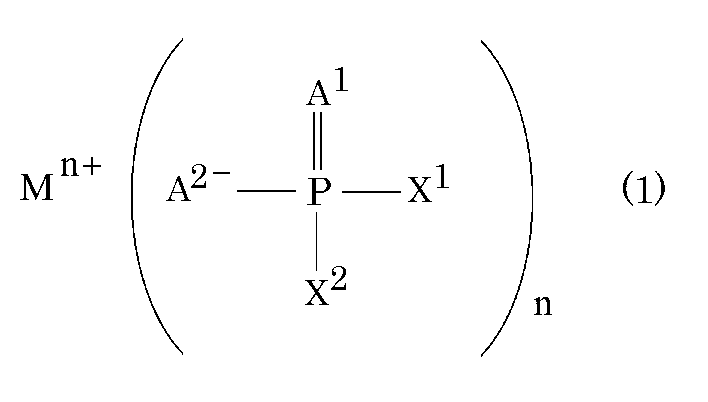
- the non-aqueous electrolyte for a secondary battery of the present invention is a non-aqueous electrolyte for a secondary battery used for a secondary battery in order to solve the above-described problems, and includes the following components (A) and (B): It is characterized by including.
- M n + represents an alkali metal ion, an alkaline earth metal ion, an aluminum ion, a transition metal ion, or an onium ion.
- a 1 and A 2 are each independently an oxygen atom, a sulfur atom, or selenium.
- X 1 and X 2 each independently represents a halogen atom, an alkyl group having 1 to 20 carbon atoms, or a range having 1 to 20 carbon atoms, and is a halogen atom, heteroatom or And represents an alkyl group having at least one of a saturated bond, or X 1 and X 2 are the alkyl group having 1 to 20 carbon atoms, or the range of 1 to 20 carbon atoms, An alkyl group having at least one of an atom, a heteroatom, and an unsaturated bond, and bonded to each other to form a cyclic structure, where n represents a valence. )
- M n + represents an alkali metal ion, an alkaline earth metal ion, an aluminum ion, a transition metal ion, or an onium ion.
- X 3 to X 8 each independently represent a halogen atom or a carbon number of 1;
- an alkylthio group having at least one selected from the group consisting of at least one selected from X 3 to X 8 is —OOC—Y—COO—, —OOC—Y—O— or —O;
- Y is a hydrocarbon group having 0 to 20 carbon atoms, or a carbon group having 0 to 20 carbon atoms, a halogen atom, a hetero atom Represents a hydrocarbon group having at least one of an unsaturated bond or a cyclic structure, wherein n represents a valence.
- a 3 represents an oxygen atom, a sulfur atom or a selenium atom.
- X 9 to X 11 each independently represents a hydrogen atom, a halogen atom, an alkyl group having 1 to 20 carbon atoms, or 1 carbon atom.
- An alkoxy group having at least one of a halogen atom, a heteroatom and an unsaturated bond, or a carbon atom having a range of 1 to 20 and being a halogen atom, heteroatom or unsaturated Represents an alkylthio group having at least any one of bonds, or at least one combination selected from X 9 to X 11 is a group having 1 to 20 carbon atoms
- X 12 to X 14 each independently represents a halogen atom, an alkyl group having 1 to 20 carbon atoms, an alkoxy group having 1 to 20 carbon atoms, an alkylthio group having 1 to 20 carbon atoms, An alkyl group having at least one of a halogen atom, a heteroatom or an unsaturated bond in the range of 1 to 20, a carbon number in the range of 1 to 20 and a halogen atom, a heteroatom or an unsaturated bond Or an alkylthio group having at least one of a halogen atom, a heteroatom, and an unsaturated bond having 1 to 20 carbon atoms, or at least one of the above, or X 12 ⁇ X at least one combination selected at any one of 14, an alkyl group having 1 to 20 carbon atoms, an alkoxy group having 1 to 20 carbon atoms, 1 or 2 carbon atoms An alkylthio group having a carbon number in the range of 1 to 20 and having at
- M n + represents an alkali metal ion, an alkaline earth metal ion, an aluminum ion, a transition metal ion, or an onium ion.
- R 1 and R 2 independently has 1 to 20 carbon atoms.
- a hydrocarbon group or a hydrocarbon group having 1 to 20 carbon atoms and having at least one of a halogen atom, a heteroatom and an unsaturated bond, or R 1 and R 2 are The hydrocarbon group having 1 to 20 carbon atoms or the hydrocarbon group having 1 to 20 carbon atoms and having at least one of a halogen atom, a hetero atom and an unsaturated bond And bonded to each other to form a cyclic structure, where n represents a valence.
- component (C) boron complex salt represented by the following general formula (6), boric acid ester, acid anhydride, cyclic carbonate having an unsaturated bond, cyclic carbonate having a halogen atom, cyclic sulfonic acid ester and the following general formula (7) and at least one compound selected from the group consisting of amines having an acetoacetyl group
- M n + represents an alkali metal ion, an alkaline earth metal ion, an aluminum ion, a transition metal ion or an onium ion.
- X 15 to X 18 each independently represent a halogen atom, a carbon number of 1 to An alkyl group having 20 carbon atoms, an alkoxy group having 1 to 20 carbon atoms, an alkyl group having 1 to 20 carbon atoms and having at least one of a halogen atom, a hetero atom and an unsaturated bond, or the number of carbon atoms Represents an alkoxy group having at least any one of a halogen atom, a hetero atom and an unsaturated bond, within the range of 1 to 20.
- X 15 to X 18 are at least one selected arbitrarily Two combinations form a cyclic structure of —OOC—Z—COO—, —OOC—Z—O— or —O—Z—O—, in which case the Z is Represents a hydrocarbon group having 1 to 20 carbon atoms, or a hydrocarbon group having at least one of a halogen atom, a hetero atom, an unsaturated bond, or a cyclic structure in the range of 1 to 20 carbon atoms.
- N represents a valence.
- R 3 and R 4 are each independently a hydrocarbon group having 1 to 20 carbon atoms, or a range of 1 to 20 carbon atoms, which is a halogen atom, heteroatom or unsaturated bond
- the amount of the component (A) added is 0.05% by mass to 5% by mass with respect to the total mass of the non-aqueous electrolyte for secondary battery, and the component (B) is added.
- the amount is preferably 0.05% by mass to 5% by mass with respect to the total mass of the non-aqueous electrolyte for secondary battery.
- the amount of the component (C) added is preferably 0.05% by mass to 5% by mass with respect to the total mass of the non-aqueous electrolyte for secondary battery.
- the phosphorus compound represented by the general formula (1) is preferably lithium difluorophosphate or sodium difluorophosphate.
- the phosphorus compound represented by the general formula (2) is lithium difluorobisoxalate phosphate, sodium difluorobisoxalate phosphate, lithium tetrafluorooxalate phosphate or sodium tetrafluorooxalate phosphate. It is preferable.
- the phosphorus compound represented by the general formula (3) is trimethyl phosphate, triethyl phosphate, tris (2,2,2-trifluoroethyl phosphate) or bis (2,2,2). 2-trifluoroethyl) phosphonic acid is preferred.
- the phosphorus compound represented by the general formula (4) is preferably trimethylphosphine or methyldiphenylphosphine.
- the phosphoric acid diester salt represented by the general formula (5) is preferably lithium diethyl phosphate or lithium bis (2,2,2-trifluoroethyl) phosphate.
- the boron complex salt represented by the general formula (6) is lithium bis [1,2′-benziolate (2) —O, O ′] borate, lithium bissalicylate borate or lithium.
- Bis (oxalato) borate and lithium tetrafluoroborate are preferred.
- the borate ester is preferably trimethyl borate.
- the acid anhydride is maleic anhydride.
- the cyclic carbonate having an unsaturated bond is preferably vinylene carbonate.
- the cyclic carbonate having a halogen atom is preferably fluoroethylene carbonate.
- the cyclic sulfonate ester is preferably 1,3-propane sultone.
- the amine having an acetoacetyl group represented by the general formula (3) is preferably N, N-dimethylacetoacetamide.
- the secondary battery of the present invention is characterized by comprising at least the non-aqueous electrolyte for secondary battery described above, a positive electrode and a negative electrode.
- the non-aqueous electrolyte for a secondary battery includes at least one phosphorus compound (component (A)) represented by any one of the general formulas (1) to (4) and the general
- at least one phosphoric diester salt (component (B)) represented by the formula (5) By adding at least one phosphoric diester salt (component (B)) represented by the formula (5), a secondary battery equipped with the same can be charged even if stored for a long time in a high temperature environment. A reduction in discharge characteristics can be suppressed, and an increase in internal resistance can also be suppressed.
- a film is formed on the surface of the electrode active material by the addition of the component (A) and the component (B), and this is due to the effects such as the thermal stability and film quality of the film. It is estimated that
- non-aqueous electrolyte for secondary battery The non-aqueous electrolyte for a secondary battery according to the present embodiment (hereinafter referred to as “non-aqueous electrolyte”) is composed of an organic solvent (non-aqueous solvent) in which an electrolyte is dissolved, components (A) and components described later. (B) is added as an additive.
- a film is formed on the surface of the electrode active material by adding the component (A) and the component (B) to the non-aqueous electrolyte, and the properties of the film, that is, thermal stability. It is considered that the storage characteristics of the secondary battery in a high temperature environment (for example, 40 ° C. to 60 ° C.) can be improved due to the effects such as the film quality and the like.
- the component (A) is contained in at least one kind in the non-aqueous electrolyte, and specifically is a phosphorus compound represented by any one of the following general formulas (1) to (4).
- M n + represents an alkali metal ion, an alkaline earth metal ion, an aluminum ion, a transition metal ion, or an onium ion.
- the alkali metal ion is not particularly limited and includes lithium ion, sodium ion, potassium ion, rubidium ion, cesium ion and the like. These can be used alone or in combination of two or more.
- alkaline earth metal ions examples include magnesium ions, calcium ions, strontium ions, barium ions and the like. These can be used alone or in combination of two or more.
- the transition metal ions are not particularly limited, and examples thereof include manganese ions, cobalt ions, nickel ions, chromium ions, copper ions, molybdenum ions, tungsten ions, vanadium ions, and the like. These can be used alone or in combination of two or more.
- onium ions examples include ammonium ions (NH 4+ ), primary ammonium ions, secondary ammonium ions, tertiary ammonium ions, quaternary ammonium ions, quaternary phosphonium ions, sulfonium ions, and the like.
- the primary ammonium ion is not particularly limited, and examples thereof include methylammonium ion, ethylammonium ion, propylammonium ion, and isopropylammonium ion. These can be used alone or in combination of two or more.
- the secondary ammonium ion is not particularly limited, and for example, dimethylammonium ion, diethylammonium ion, dipropylammonium ion, dibutylammonium ion, ethylmethylammonium ion, methylpropylammonium ion, methylbutylammonium ion, propylbutylammonium Ion, diisopropylammonium ion and the like. These can be used alone or in combination of two or more.
- the tertiary ammonium ion is not particularly limited.
- the quaternary ammonium forming the quaternary ammonium ion is not particularly limited, and examples thereof include aliphatic quaternary ammoniums, imidazoliums, pyridiniums, pyrazoliums, and pyridaziniums. These can be used alone or in combination of two or more.
- the aliphatic quaternary ammoniums are not particularly limited, and examples thereof include tetraethylammonium, tetrapropylammonium, tetraisopropylammonium, trimethylethylammonium, dimethyldiethylammonium, methyltriethylammonium, trimethylpropylammonium, trimethylisopropylammonium, tetra Butylammonium, trimethylbutylammonium, trimethylpentylammonium, trimethylhexylammonium, 1-ethyl-1-methyl-pyrrolidinium, 1-butyl-1-methylpyrrolidinium, 1-ethyl-1-methyl-piperidinium, 1-butyl- Examples include 1-methylpiperidinium. These can be used alone or in combination of two or more.
- the imidazoliums are not particularly limited. For example, 1.3 dimethyl-imidazolium, 1-ethyl-3-methylimidazolium, 1-n-propyl-3-methylimidazolium, 1-n-butyl-3 -Methylimidazolium, 1-n-hexyl-3-methylimidazolium and the like. These can be used alone or in combination of two or more.
- the pyridiniums are not particularly limited, and examples thereof include 1-methylpyridinium, 1-ethylpyridinium, 1-n-propylpyridinium and the like. These can be used alone or in combination of two or more.
- the pyrazoliums are not particularly limited. For example, 1,2-dimethylpyrazolium, 1-methyl-2-ethylpyrazolium, 1-propyl-2-methylpyrazolium, 1-methyl-2-butyl Pyrazolium, 1-methylpyrazolium, 3-methylpyrazolium, 4-methylpyrazolium, 4-iodopyrazolium, 4-bromopyrazolium, 4-iodo3-methylpyrazolium, 4 -Bromo-3-methylpyrazolium, 3-trifluoromethylpyrazolium. These can be used alone or in combination of two or more.
- the pyridaziniums are not particularly limited, and for example, 1-methylpyridazinium, 1-ethylpyridazinium, 1-propylpyridazinium, 1-butylpyridazinium, 3-methylpyridazinium Ni, 4-methylpyridazinium, 3-methoxypyridazinium, 3,6-dichloropyridazinium, 3,6-dichloro-4-methylpyridazinium, 3-chloro-6-methylpyri Examples include dazinium and 3-chloro-6-methoxypyridazinium. These can be used alone or in combination of two or more.
- the quaternary phosphonium forming the quaternary phosphonium ion is not particularly limited, and examples thereof include benzyltriphenylphosphonium, tetraethylphosphonium, and tetraphenylphosphonium. These can be used alone or in combination of two or more.
- the sulfonium ion is not particularly limited, and examples thereof include trimethylsulfonium, triphenylsulfonium, triethylsulfonium, and the like. These can be used alone or in combination of two or more.
- lithium ions lithium ions, sodium ions, and tetraalkylammonium ions are preferable from the viewpoint of availability.
- a 1 and A 2 each independently represent an oxygen atom, a sulfur atom or a selenium atom.
- X 1 and X 2 are each independently a halogen atom, an alkyl group, or an alkyl group having at least one of a halogen atom, a hetero atom and an unsaturated bond ( Hereinafter, it is referred to as an “alkyl group having a halogen atom”.
- the carbon number of the alkyl group and the alkyl group having a halogen atom or the like is in the range of 1 to 20, preferably 1 to 10, and more preferably 1 to 4.
- the number of unsaturated bonds is preferably in the range of 1 to 10, more preferably in the range of 1 to 5, and particularly preferably in the range of 1 to 3.
- the halogen atom represents iodine, bromine, chlorine, or fluorine.
- alkyl group or the alkyl group having a halogen atom include chains such as a methyl group, an ethyl group, a propyl group, a butyl group, an isopropyl group, a pentyl group, a hexyl group, a heptyl group, and an octyl group.
- Examples thereof include a naphthyl group such as a halogenphenyl group, a 1-naphthyl group, a 2-naphthyl group, and a 3-amino-2-naphthyl group.
- a naphthyl group such as a halogenphenyl group, a 1-naphthyl group, a 2-naphthyl group, and a 3-amino-2-naphthyl group.
- the halogen atom means a fluorine, chlorine, bromine or iodine atom.
- the said hetero atom means atoms, such as oxygen, nitrogen, or sulfur.
- part or all of the hydrogen in the alkyl group may be substituted with any of these halogen atoms and / or heteroatoms.
- X 1 and X 2 may be a group in which either the alkyl group or an alkyl group having a halogen atom or the like is bonded to each other to form a cyclic structure.
- the alkyl group or the alkyl group having a halogen atom or the like in X 1 and X 2 is, for example, methylene group, ethylene group, propylene group, butylene group, pentylene group, hexylene group, heptylene group, octylene group, nonylene group.
- Linear alkylene group such as iodomethylene group, diiodomethylene group, bromomethylene group, dibromomethylene group, fluoromethylene group, difluoromethylene group, iodoethylene group, 1,1-diiodoethylene group, 1,2-di Iodoethylene group, triiodoethylene group, tetraiodoethylene group, chloroethylene group, 1,1-dichloroethylene group, 1,2-dichloroethylene group, trichloroethylene group, tetrachloroethylene group, fluoroethylene group, 1,1-difluoroethylene group, 1,2-difluoroethylene group Halogen-containing linear alkylene groups such as trifluoroethylene group and tetrafluoroethylene group, cyclic hydrocarbon groups such as cyclohexylene group, phenylene group, benzylene group, naphthylene group, anthracylene group, naphthacylene group, pentasilene group and
- X 1 and X 2 may be the same or different from each other in the functional group group exemplified above.
- the functional group group illustrated above is only an illustration, and is not limited to these.
- n a valence.
- M is a monovalent cation
- n 1, when it is a divalent cation
- n 2
- n 3
- Specific examples of the phosphorus compound represented by the general formula (1) include, for example, lithium difluorophosphate and sodium difluorophosphate which are easily available.
- each of X 3 to X 8 is independently at least one of a halogen atom, an alkyl group, an alkoxy group, an alkylthio group, a halogen atom, a hetero atom, or an unsaturated bond.
- An alkyl group having at least one of a halogen atom, a hetero atom or an unsaturated bond hereinafter referred to as an “alkoxy group having a halogen atom”).
- an alkylthio group having at least one of a halogen atom, a heteroatom or an unsaturated bond hereinafter referred to as “alkylthio group having a halogen atom”).
- the alkyl group, alkoxy group, alkylthio group, alkyl group having a halogen atom and the like, the alkoxy group having a halogen atom and the like, and the alkylthio group having a halogen atom and the like have a carbon number in the range of 1 to 20, preferably 1 to 10 More preferably, it is 1 to 4. Further, the number of unsaturated bonds is preferably in the range of 1 to 10, more preferably in the range of 1 to 5, and particularly preferably in the range of 1 to 3.
- the halogen atom and the hetero atom are the same as described in the general formula (1).
- the alkyl group having a halogen atom or the like, the alkoxy group having a halogen atom or the like, and the alkylthio group having a halogen atom or the like the halogen atom or the heteroatom is such that a part or all of hydrogen in these functional groups It may be substituted with any of the halogen atoms and / or heteroatoms.
- X 3 to X 8 include a chain alkyl group such as a methyl group, an ethyl group, a propyl group, a butyl group, an isopropyl group, a pentyl group, a hexyl group, a heptyl group, and an octyl group, and a cyclopentyl group.
- Cycloalkyl group such as cyclohexyl group, iodomethyl group, bromomethyl group, chloromethyl group, fluoromethyl group, diiodomethyl group, dibromomethyl group, dichloromethyl group, difluoromethyl group, triiodomethyl group, tribromomethyl group, trichloromethyl Group, trifluoromethyl group, 2-iodoethyl group, 2-bromoethyl group, 2-chloroethyl group, 2-fluoroethyl group, 1,2-diiodoethyl group, 1,2-dibromoethyl group, 1,2-dichloroethyl group 1,2-difluoroethyl group, 2,2-diiodoethyl group, 2,2-dibu Moethyl group, 2,2-dichloroethyl group, 2,2-difluoroethyl group, 2,2,2-tribromoethyl
- Cyclic alkoxy groups such as xy group, cyclopentoxy group, cyclohexoxy group, 2-iodoethoxy group, 2-bromoethoxy group, 2-chloroethoxy group, 2-fluoroethoxy group, 1,2-diiodoethoxy group, 1,2-dibromoethoxy group, 1,2-dichloroethoxy group, 1,2-difluoroethoxy group, 2,2-diiodoethoxy group, 2,2-dibromoethoxy group, 2,2-dichloroethoxy group, 2 , 2-difluoroethoxy group, 2,2,2-tribromoethoxy group, 2,2,2-trichloroethoxy group, 2,2,2-trifluoroethoxy group, hexafluoro-2-propoxy group, etc.
- X 3 to X 8 are any combination of any one of the cyclic structures of —OOC—Y—COO—, —OOC—Y—O—, and —O—Y—O—. May be formed.
- the cyclic structures may be the same or different from each other.
- Y is a hydrocarbon group having 0 to 20 carbon atoms or a range of 0 to 20 carbon atoms and having at least one of a halogen atom, a hetero atom, an unsaturated bond, or a cyclic structure. Represents a hydrocarbon group.
- the number of unsaturated bonds is preferably in the range of 1 to 10, more preferably in the range of 1 to 5, and particularly preferably in the range of 1 to 3.
- the Y is not particularly limited, and specifically, for example, a linear alkylene group such as a methylene group, an ethylene group, a propylene group, a butylene group, a pentylene group, a hexylene group, a heptylene group, an octylene group, and a nonylene group; Methylene group, diiodomethylene group, bromomethylene group, dibromomethylene group, fluoromethylene group, difluoromethylene group, iodoethylene group, 1,1-diiodoethylene group, 1,2-diiodoethylene group, triiodoethylene group Tetraiodoethylene group, chloroethylene group, 1,1-dichloroethylene group, 1,2-dichloroethylene group, trichloroethylene group, tetrachloroethylene group, fluoroethylene group, 1,1-difluoroethylene group, 1,2-difluoroethylene group, Trifluoroethylene group,
- —OOC—Y—COO— is —OOC—COO—, which represents an oxalate group.
- Y is a 1,2-phenylene group
- —O—Y—O— represents a benzenediolate group
- —O—Y—COO— represents a salicylate group.
- Examples of the phosphorus compound represented by the general formula (2) include lithium difluorobisoxalate phosphate, sodium difluorobisoxalate phosphate, lithium tetrafluorooxalate phosphate, and sodium tetrafluorooxalate phosphate, which are easily available. Etc.
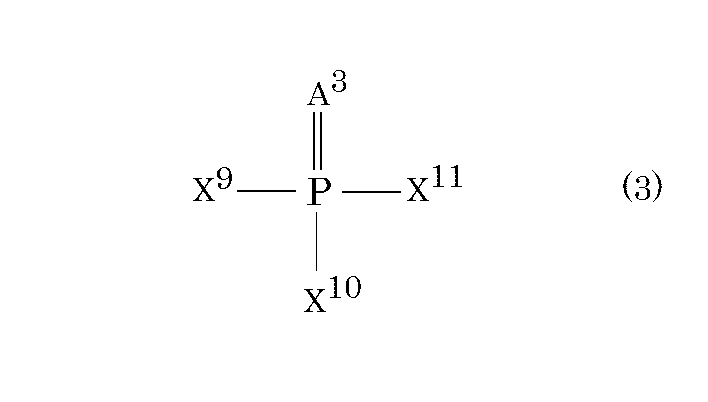
- a 3 represents an oxygen atom, a sulfur atom or a selenium atom.
- X 9 to X 11 are each independently an alkyl group having at least one of a hydrogen atom, a halogen atom, an alkyl group, an alkoxy group, an alkylthio group, a halogen atom, a hetero atom, or an unsaturated bond (hereinafter referred to as the following).
- Alkyl group having a halogen atom an alkoxy group having at least one of a halogen atom, a hetero atom or an unsaturated bond (hereinafter referred to as “an alkoxy group having a halogen atom”), or a halogen
- an alkoxy group having a halogen atom an alkoxy group having a halogen atom
- an alkoxy group having a halogen atom an alkoxy group having a halogen atom
- alkylthio group having a halogen atom an alkylthio group having at least one of an atom, a heteroatom and an unsaturated bond
- the alkyl group, alkoxy group, alkylthio group, alkyl group having a halogen atom and the like, the alkoxy group having a halogen atom and the like, and the alkylthio group having a halogen atom and the like have a carbon number in the range of 1 to 20, preferably 1 to 10 More preferably, it is 1 to 4. Further, the number of unsaturated bonds is preferably in the range of 1 to 10, more preferably in the range of 1 to 5, and particularly preferably in the range of 1 to 3.
- X 9 to X 11 are not particularly limited. Specifically, for example, chain alkyl such as methyl group, ethyl group, propyl group, butyl group, isopropyl group, pentyl group, hexyl group, heptyl group, octyl group, etc.
- cyclic alkyl group such as cyclopentyl group, cyclohexyl group, iodomethyl group, bromomethyl group, chloromethyl group, fluoromethyl group, diiodomethyl group, dibromomethyl group, dichloromethyl group, difluoromethyl group, triiodomethyl group, tribromomethyl Group, trichloromethyl group, trifluoromethyl group, 2-iodoethyl group, 2-bromoethyl group, 2-chloroethyl group, 2-fluoroethyl group, 1,2-diiodoethyl group, 1,2-dibromoethyl group, 1,2 -Dichloroethyl group, 1,2-difluoroethyl group, 2,2-diiodoethyl 2,2-dibromoethyl group, 2,2-dichloroethyl group, 2,2-difluoroethyl group,
- Halogen-containing phenyl group methoxy group, ethoxy group, propoxy group, butoxy group, pentoxy group, hexoxy Chain alkoxy groups such as groups, cyclic alkoxy groups such as cyclopentoxy groups, cyclohexoxy groups, 2-iodoethoxy groups, 2-bromoethoxy groups, 2-chloroethoxy groups, 2-fluoroethoxy groups, 1,2- Diiodoethoxy group, 1,2-dibromoethoxy group, 1,2-dichloroethoxy group, 1,2-difluoroethoxy group, 2,2-diiodoethoxy group, 2,2-dibromoethoxy group, 2,2- Dichloroethoxy group, 2,2-difluoroethoxy group, 2,2,2-tribromoethoxy group, 2,2,2-trichloroethoxy group, 2,2,2-trifluoroethoxy group, hexafluoro-2-propoxy Chain-containing halogen
- X 9 to X 11 may be an alkyl group, an alkoxy group, an alkylthio group, an alkyl group having a halogen atom, an alkoxy group having a halogen atom or the like, a halogen atom, etc. Any of the alkylthio groups having the above may be bonded to each other to form a cyclic structure.
- the alkyl group in X 9 to X 11 is, for example, a linear alkylene group such as a methylene group, an ethylene group, a propylene group, a butylene group, a pentylene group, a hexylene group, a heptylene group, an octylene group, and a nonylene group.
- a linear alkylene group such as a methylene group, an ethylene group, a propylene group, a butylene group, a pentylene group, a hexylene group, a heptylene group, an octylene group, and a nonylene group.
- Iodomethylene group diiodomethylene group, bromomethylene group, dibromomethylene group, fluoromethylene group, difluoromethylene group, iodoethylene group, 1,1-diiodoethylene group, 1,2-diiodoethylene group, triiodo Ethylene group, tetraiodoethylene group, chloroethylene group, 1,1-dichloroethylene group, 1,2-dichloroethylene group, trichloroethylene group, tetrachloroethylene group, fluoroethylene group, 1,1-difluoroethylene group, 1,2-difluoroethylene Group, trifluoroethylene group, Halogen-containing linear alkylene groups such as lafluoroethylene groups, cyclic hydrocarbon groups such as cyclohexylene groups, phenylene groups, benzylene groups, naphthylene groups, anthracylene groups, naphthacylene groups, pentasilene groups, and some or all of them It
- the halogen atom and the hetero atom are the same as described in the general formula (1). Further, in the alkyl group having a halogen atom or the like, the alkoxy group having a halogen atom or the like, and the alkylthio group having a halogen atom or the like, the halogen atom or the heteroatom is such that a part or all of hydrogens in these functional groups are these. It may be substituted with any of the halogen atoms and / or heteroatoms.
- phosphorus compound represented by the general formula (3) include, for example, trimethyl phosphate, triethyl phosphate, tris (2,2,2-trifluoroethyl) phosphate, bis (2), which are easily available. , 2,2-trifluoroethyl) phosphonic acid and the like.
- X 12 to X 14 each independently represents an alkyl group having at least one of a hydrogen atom, a halogen atom, an alkyl group, an alkoxy group, an alkylthio group, a halogen atom, a hetero atom, or an unsaturated bond (hereinafter referred to as the following).
- Alkyl group having a halogen atom an alkoxy group having at least one of a halogen atom, a hetero atom or an unsaturated bond (hereinafter referred to as “an alkoxy group having a halogen atom”), or a halogen
- an alkoxy group having a halogen atom an alkoxy group having a halogen atom
- an alkoxy group having a halogen atom an alkoxy group having a halogen atom
- alkylthio group having a halogen atom an alkylthio group having at least one of an atom, a heteroatom and an unsaturated bond
- the alkyl group, alkoxy group, alkylthio group, alkyl group having a halogen atom and the like, the alkoxy group having a halogen atom and the like, and the alkylthio group having a halogen atom and the like have a carbon number in the range of 1 to 20, preferably 1 to 10 More preferably, it is 1 to 4. Further, the number of unsaturated bonds is preferably in the range of 1 to 10, more preferably in the range of 1 to 5, and particularly preferably in the range of 1 to 3.
- X 12 to X 14 are not particularly limited. Specifically, for example, chain alkyl such as methyl group, ethyl group, propyl group, butyl group, isopropyl group, pentyl group, hexyl group, heptyl group, octyl group, etc.
- cyclic alkyl group such as cyclopentyl group, cyclohexyl group, iodomethyl group, bromomethyl group, chloromethyl group, fluoromethyl group, diiodomethyl group, dibromomethyl group, dichloromethyl group, difluoromethyl group, triiodomethyl group, tribromomethyl Group, trichloromethyl group, trifluoromethyl group, 2-iodoethyl group, 2-bromoethyl group, 2-chloroethyl group, 2-fluoroethyl group, 1,2-diiodoethyl group, 1,2-dibromoethyl group, 1,2 -Dichloroethyl group, 1,2-difluoroethyl group, 2,2-diiodoethyl Group, 2,2-dibromoethyl group, 2,2-dichloroethyl group, 2,2-difluoroethyl
- Halogen-containing phenyl group methoxy group, ethoxy group, propoxy group, butoxy group, pentoxy group, hexoxy Chain alkoxy groups such as thio group, cyclic alkoxy groups such as cyclopentoxy group, cyclohexoxy group, 2-iodoethoxy group, 2-bromoethoxy group, 2-chloroethoxy group, 2-fluoroethoxy group, 1,2 -Diiodoethoxy group, 1,2-dibromoethoxy group, 1,2-dichloroethoxy group, 1,2-difluoroethoxy group, 2,2-diiodoethoxy group, 2,2-dibromoethoxy group, 2,2 -Dichloroethoxy group, 2,2-difluoroethoxy group, 2,2,2-tribromoethoxy group, 2,2,2-trifluoroethoxy group, hexafluoro-2
- X 12 to X 14 may be an alkyl group, an alkoxy group, an alkylthio group, an alkyl group having a halogen atom, an alkoxy group having a halogen atom or the like, a halogen atom, etc. Any of the alkylthio groups possessed may be bonded to each other to form a cyclic structure.
- the alkyl group or the like in X 12 to X 14 is, for example, a linear alkylene group such as a methylene group, an ethylene group, a propylene group, a butylene group, a pentylene group, a hexylene group, a heptylene group, an octylene group, or a nonylene group.
- phosphorus compound represented by the general formula (4) examples include trimethylphosphine and methyldiphenylphosphine which are easily available.
- the amount of component (A) added is preferably in the range of 0.05% by mass to 5% by mass, and in the range of 0.1% by mass to 3% by mass with respect to the total mass of the non-aqueous electrolyte. More preferably, it is more preferably in the range of 0.5% by mass to 2% by mass.
- the addition amount 0.05% by mass or more cycle characteristics of the secondary battery in a high temperature environment can be further improved.
- the said addition amount 5 mass% or less it can suppress that the solubility with respect to the nonaqueous electrolyte solvent of the electrolyte in a nonaqueous electrolyte solution falls.
- the component (A) only needs to contain at least one phosphorus compound in the nonaqueous electrolytic solution.
- the number of types of component (A) to be contained is preferably 5 or less, more preferably 3 or less, and particularly preferably 2 or less.
- Component (B) is contained in at least one kind in the nonaqueous electrolytic solution, and specifically, is a phosphoric diester salt represented by the following general formula (5).
- the M n + and the valence n are the same as those described in the general formula (1).
- each of R 1 and R 2 independently represents a hydrocarbon group, or a hydrocarbon group having at least one of a halogen atom, a hetero atom, and an unsaturated bond (hereinafter referred to as a “hydrocarbon group”).
- hydrocarbon group having a halogen atom or the like has 1 to 20 carbon atoms, preferably 1 to 10 carbon atoms, and more preferably 1 to 4 carbon atoms.
- the hydrocarbon group having a halogen atom or the like has 1 to 20 carbon atoms, preferably 1 to 10 carbon atoms, more preferably 1 to 4 carbon atoms.
- the number of unsaturated bonds is preferably in the range of 1 to 10, more preferably in the range of 1 to 5, and particularly preferably in the range of 1 to 3.
- hydrocarbon group or the hydrocarbon group having a halogen atom include a methyl group, an ethyl group, a propyl group, a butyl group, an isopropyl group, a pentyl group, a hexyl group, a heptyl group, an octyl group, and the like.
- a cyclic alkyl group such as cyclopentyl group, cyclohexyl group, 2-iodoethyl group, 2-bromoethyl group, 2-chloroethyl group, 2-fluoroethyl group, 1,2-diiodoethyl group, 1,2-dibromo Ethyl group, 1,2-dichloroethyl group, 1,2-difluoroethyl group, 2,2-diiodoethyl group, 2,2-dibromoethyl group, 2,2-dichloroethyl group, 2,2-difluoroethyl group, 2,2,2-tribromoethyl group, 2,2,2-trifluoroethyl group, hexafluoro Chain halogen-containing alkyl groups such as 2-propyl group, cyclic halogen-containing alkyl groups such as 2-propyl group, cyclic halogen-containing alkyl
- Examples thereof include a naphthyl group such as a halogenphenyl group, a 1-naphthyl group, a 2-naphthyl group, and a 3-amino-2-naphthyl group.
- a naphthyl group such as a halogenphenyl group, a 1-naphthyl group, a 2-naphthyl group, and a 3-amino-2-naphthyl group.
- the halogen atom means a fluorine, chlorine, bromine or iodine atom.
- the said hetero atom means atoms, such as oxygen, nitrogen, or sulfur.
- the halogen atom and heteroatom may be such that part or all of the hydrogen in the hydrocarbon group is substituted with any of these halogen atoms and / or heteroatoms. Good.
- R 1 and R 2 may be the same or different from each other in the functional group group exemplified above. Moreover, the functional group group illustrated above is only an illustration, and is not limited to these.
- R 1 and R 2 are either the hydrocarbon group or a hydrocarbon group having a halogen atom or the like, and may be bonded to each other to form a cyclic structure.
- specific examples of the hydrocarbon group or the hydrocarbon group having a halogen atom include a methylene group, an ethylene group, a propylene group, a butylene group, a pentylene group, a hexylene group, a heptylene group, an octylene group, and a nonylene group.
- Linear alkylene group such as iodomethylene group, diiodomethylene group, bromomethylene group, dibromomethylene group, fluoromethylene group, difluoromethylene group, iodoethylene group, 1,1-diiodoethylene group, 1,2-di Iodoethylene group, triiodoethylene group, tetraiodoethylene group, chloroethylene group, 1,1-dichloroethylene group, 1,2-dichloroethylene group, trichloroethylene group, tetrachloroethylene group, fluoroethylene group, 1,1-difluoroethylene group, 1,2-difluoroethylene group, triflu
- a halogen-containing linear alkylene group such as a loethylene group and a tetrafluoroethylene group, a cyclohexylene group, a phenylene group, a benzylene group, a naphthylene group, an anthracylene group, a naphthacy
- phosphorus compound represented by the general formula (5) include, for example, lithium diethyl phosphate and lithium bis (2,2,2-trifluoroethyl) phosphate that are easily available.
- the amount of component (B) added is preferably in the range of 0.05% by mass to 5% by mass, and in the range of 0.1% by mass to 3% by mass with respect to the total mass of the non-aqueous electrolyte. More preferably, it is more preferably in the range of 0.5% by mass to 2% by mass.
- the addition amount 0.05% by mass or more cycle characteristics of the secondary battery in a high temperature environment can be further improved.
- the said addition amount 5 mass% or less it can suppress that the solubility with respect to the nonaqueous electrolyte solvent of the electrolyte in a nonaqueous electrolyte solution falls.
- At least one kind of the component (B) may be contained in the nonaqueous electrolytic solution, but the number of kinds of the component (B) to be contained is preferably 5 The number is not more than one, more preferably not more than three, and particularly preferably not more than two. By making the type of the component (B) 5 or less, it is possible to suppress complication of processes in the production of the non-aqueous electrolyte.
- the nonaqueous electrolytic solution of the present embodiment may further contain at least one of the following components (C).
- the component (C) includes a boron complex salt, a boric acid ester, an acid anhydride, a cyclic carbonate having an unsaturated bond, a cyclic carbonate having a halogen atom, a cyclic sulfonic acid ester, and an amine having an acetoacetyl group. It is at least one compound selected.
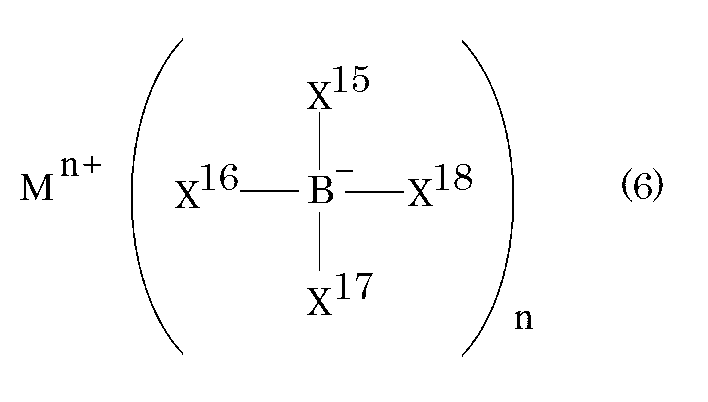
- the boron complex salt is specifically a compound represented by the following general formula (6).
- X 15 to X 18 are each independent and have at least one of a halogen atom, an alkyl group, an alkoxy group, a halogen atom, a hetero atom, or an unsaturated bond.
- An alkyl group hereinafter referred to as “an alkyl group having a halogen atom”
- an alkoxy group having at least one of a halogen atom, a hetero atom and an unsaturated bond hereinafter, “an alkoxy group having a halogen atom”.
- one or a combination of two selected arbitrarily represents a ring structure of —OOC—Z—COO—, —O—Z—O—, or —OOC—Z—O—.
- Z is a hydrocarbon group having 0 to 20, preferably 0 to 10, more preferably 0 to 5 carbon atoms, or 0 to 20, preferably 0 to 10, more preferably 0 to 10 carbon atoms.
- 5 represents a hydrocarbon group having a hetero atom, an unsaturated bond, or a cyclic structure.
- each Z is different. It may be.
- a hetero atom means an oxygen atom, a nitrogen atom, or a sulfur atom.
- the Z is not particularly limited, and specific examples include, for example, a linear alkylene group such as a methylene group, an ethylene group, a propylene group, a butylene group, a pentylene group, a hexylene group, a heptylene group, an octylene group, and a nonylene group; Methylene group, diiodomethylene group, bromomethylene group, dibromomethylene group, fluoromethylene group, difluoromethylene group, iodoethylene group, 1,1-diiodoethylene group, 1,2-diiodoethylene group, triiodoethylene group Tetraiodoethylene group, chloroethylene group, 1,1-dichloroethylene group, 1,2-dichloroethylene group, trichloroethylene group, tetrachloroethylene group, fluoroethylene group, 1,1-difluoroethylene group, 1,2-difluoroethylene group, Trifluoroethylene group
- —OOC—Z—COO— is —OOC—COO—, which represents an oxalate group.
- Z is a 1,2-phenylene group
- —O—Z—O— represents a benzenediolate group
- —O—Z—COO— represents a salicylate group.
- X 15 to X 18 are each independently an alkyl group having at least one of a halogen atom, an alkyl group, an alkoxy group, a halogen atom, a hetero atom and an unsaturated bond (hereinafter referred to as “halogen atom and the like”). Or an alkoxy group having at least one of a halogen atom, a heteroatom and an unsaturated bond (hereinafter referred to as “an alkoxy group having a halogen atom”).
- the alkyl group, alkoxy group, alkyl group having a halogen atom and the like and the alkoxy group having a halogen atom and the like have a carbon number in the range of 0 to 20, preferably 0 to 10, more preferably 0 to 5.
- the number of unsaturated bonds is preferably in the range of 1 to 10, more preferably in the range of 1 to 5, and particularly preferably in the range of 1 to 3.
- the halogen atom and the hetero atom are the same as described in the general formula (1). Further, in the alkyl group having a halogen atom or the like and the alkoxy group having a halogen atom or the like, the halogen atom and the hetero atom are such that a part or all of hydrogen in the functional group is a halogen atom and / or a hetero atom. It may be substituted with any of the above.
- X 15 to X 18 are not particularly limited. Specifically, for example, chain alkyl such as methyl group, ethyl group, propyl group, butyl group, isopropyl group, pentyl group, hexyl group, heptyl group, octyl group, etc.
- cyclic alkyl group such as cyclopentyl group, cyclohexyl group, iodomethyl group, bromomethyl group, chloromethyl group, fluoromethyl group, diiodomethyl group, dibromomethyl group, dichloromethyl group, difluoromethyl group, triiodomethyl group, tribromomethyl Group, trichloromethyl group, trifluoromethyl group, 2-iodoethyl group, 2-bromoethyl group, 2-chloroethyl group, 2-fluoroethyl group, 1,2-diiodoethyl group, 1,2-dibromoethyl group, 1,2 -Dichloroethyl group, 1,2-difluoroethyl group, 2,2-diiodoethyl Group, 2,2-dibromoethyl group, 2,2-dichloroethyl group, 2,2-difluoroethyl
- Halogen-containing phenyl group methoxy group, ethoxy group, propoxy group, butoxy group, pentoxy group, hexoxy Chain alkoxy groups such as thio group, cyclic alkoxy groups such as cyclopentoxy group, cyclohexoxy group, 2-iodoethoxy group, 2-bromoethoxy group, 2-chloroethoxy group, 2-fluoroethoxy group, 1,2 -Diiodoethoxy group, 1,2-dibromoethoxy group, 1,2-dichloroethoxy group, 1,2-difluoroethoxy group, 2,2-diiodoethoxy group, 2,2-dibromoethoxy group, 2,2 -Dichloroethoxy group, 2,2-difluoroethoxy group, 2,2,2-tribromoethoxy group, 2,2,2-trifluoroethoxy group, hexafluoro-2
- boron complex salt represented by the general formula (6) include, for example, lithium bis [1,2′-benziolate (2) -O, O ′] borate, lithium bissali Examples include tyrato borate, lithium bis (oxalato) borate, lithium tetrafluoroborate and the like.
- the boric acid ester in the component (C) is not particularly limited as long as it does not impair the characteristics of the nonaqueous electrolytic solution of the present embodiment and the secondary battery using the nonaqueous electrolytic solution.
- Examples include tris (4-iodophenyl) acid, tris (4-bromophenyl) borate, tris (4-chlorophenyl) borate, tris (4-fluorophenyl) borate, diethylmethylborate,
- the acid anhydride in the component (C) is not particularly limited as long as it does not impair the characteristics of the nonaqueous electrolytic solution of the present embodiment and the secondary battery using the nonaqueous electrolytic solution.
- the cyclic carbonate having an unsaturated bond in the component (C) is not particularly limited as long as it does not impair the characteristics of the nonaqueous electrolytic solution of the present embodiment and the secondary battery using the nonaqueous electrolytic solution.
- the number of unsaturated bonds is preferably 1 to 10, more preferably 1 to 5, and particularly preferably 1 to 3.
- Specific examples of the cyclic carbonate having an unsaturated bond include vinylene carbonate, iodovinylene carbonate, bromovinylene carbonate, chlorovinylene carbonate, fluorovinylene carbonate, 1,2-diiodovinylene carbonate, 1,2-dibromo.
- the cyclic carbonate having a halogen atom in the component (C) is not particularly limited as long as it does not impair the characteristics of the nonaqueous electrolytic solution of the present embodiment and the secondary battery using the nonaqueous electrolytic solution.
- the halogen atom means a fluorine atom, a chlorine atom, a bromine atom or an iodine atom.
- the cyclic sulfonate ester in the component (C) is not particularly limited as long as it does not impair the characteristics of the nonaqueous electrolytic solution of the present embodiment and the secondary battery using the same.
- Specific examples include 1,3-propane sultone, 2,4-butane sultone, 1,4-butane sultone, ethylene sulfite, and the like.
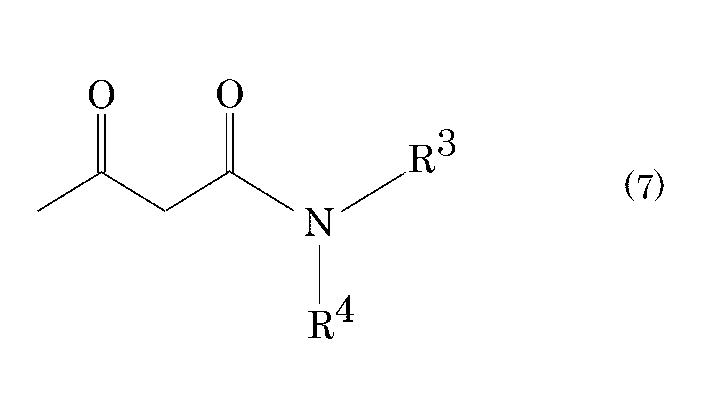
- the amine having an acetoacetyl group in the component (C) is specifically a compound represented by the following general formula (7).
- R 3 and R 4 are each independently a hydrocarbon group having 1 to 20 carbon atoms, preferably 1 to 10 carbon atoms, more preferably 1 to 5 carbon atoms, or 1 to 20 carbon atoms, preferably 1 to 10 carbon atoms. More preferably, it is in the range of 1 to 5, and represents a halogen atom, a hetero atom or a hydrocarbon group having an unsaturated bond (hereinafter referred to as “hydrocarbon group having a halogen atom or the like”).
- the halogen atom means a fluorine atom, a chlorine atom, a bromine atom or an iodine atom.
- a hetero atom means an oxygen atom, a nitrogen atom, or a sulfur atom.
- the halogen atom and heteroatom are such that a part or all of the hydrogen in the hydrocarbon group is substituted with any of these halogen atoms and / or heteroatoms. Also good.
- R 3 and R 4 include a chain alkyl group such as a methyl group, an ethyl group, a propyl group, a butyl group, an isopropyl group, a pentyl group, a hexyl group, a heptyl group, and an octyl group, and a cyclopentyl group.
- cyclic alkyl group such as cyclohexyl group, 2-iodoethyl group, 2-bromoethyl group, 2-chloroethyl group, 2-fluoroethyl group, 1,2-diiodoethyl group, 1,2-dibromoethyl group, 1,2- Dichloroethyl group, 1,2-difluoroethyl group, 2,2-diiodoethyl group, 2,2-dibromoethyl group, 2,2-dichloroethyl group, 2,2-difluoroethyl group, 2,2,2-tri Chain-containing halogens such as bromoethyl group, 2,2,2-trichloroethyl group, 2,2,2-trifluoroethyl group, hexafluoro-2-propyl group
- a cyclic halogen-containing alkyl group such as an alkyl group, 2-iodocyclohex
- amines having an acetoacetyl group represented by the general formula (7) include N, N-dimethylacetoacetamide, which is easily available.
- the amount of component (C) added is preferably in the range of 0.05% by mass to 5% by mass, and in the range of 0.1% by mass to 3% by mass with respect to the total mass of the non-aqueous electrolyte. More preferably, it is particularly preferably in the range of 0.5% by mass to 2% by mass.
- the addition amount 0.05% by mass or more the effect as an additive, that is, the formation of a stable film on the electrode surface is made possible.
- the said addition amount 5 mass% or less it can suppress that the solubility with respect to the nonaqueous electrolyte solvent of the electrolyte in a nonaqueous electrolyte solution falls.
- At least one kind of the component (C) may be contained in the nonaqueous electrolytic solution, but the number of kinds of compounds such as a boron complex salt to be contained is preferably Is 5 or less, more preferably 3 or less, and particularly preferably 2 or less.
- ⁇ Electrolyte> A conventionally well-known thing can be employ
- a lithium salt is used for a lithium ion battery
- a sodium salt is used for a sodium ion battery. Therefore, what is necessary is just to select the kind of electrolyte suitably according to the kind of secondary battery.
- fluorine-containing anions include, for example, BF 4 ⁇ , PF 6 ⁇ , BF 3 CF 3 ⁇ , BF 3 C 2 F 5 ⁇ , CF 3 SO 3 ⁇ , C 2 F 5 SO 3 ⁇ , C 3 F 7 SO 3 ⁇ , C 4 F 9 SO 3 ⁇ , N (SO 2 F) 2 ⁇ , N (CF 3 SO 2 ) 2 ⁇ , N (C 2 F 5 SO 2 ) 2 ⁇ , N (CF 3 SO 2 ) (CF 3 CO) ⁇ , N (CF 3 SO 2 ) (C 2 F 5 SO 2 ) ⁇ , C (CF 3 SO 2 ) 3 — and the like.
- BF 4 ⁇ , PF 6 ⁇ , and N (CF 3 SO 2 ) 2 ⁇ are preferable from the viewpoint of improving the safety and stability of the non-aqueous electrolyte, electrical conductivity, and cycle characteristics.
- BF 4 ⁇ and PF 6 ⁇ are particularly preferable.
- the concentration of the electrolyte with respect to the organic solvent is not particularly limited, and is usually 0.1 to 2M, preferably 0.15 to 1.8M, more preferably 0.2 to 1.5M, particularly preferably 0.3 to. 1.2M.
- concentration 0.1 M or more it is possible to prevent the electrical conductivity of the non-aqueous electrolyte from becoming insufficient.
- concentration 2M or less it is possible to suppress a decrease in electrical conductivity due to an increase in the viscosity of the non-aqueous electrolyte and to prevent a secondary battery performance from being deteriorated.
- the organic solvent (nonaqueous solvent) used in the nonaqueous electrolytic solution is not particularly limited.
- a cyclic carbonate, a chain carbonate, a phosphate ester, a cyclic ether, a chain ether, a lactone compound, a chain examples thereof include esters, nitrile compounds, amide compounds, and sulfone compounds.
- carbonates are preferred from the point of being generally used as an organic solvent for a lithium secondary battery.
- the cyclic carbonate is not particularly limited, and examples thereof include ethylene carbonate, propylene carbonate, butylene carbonate, and the like. Among these, cyclic carbonates such as ethylene carbonate and propylene carbonate are preferable from the viewpoint of improving the charging efficiency of the lithium secondary battery.
- the chain carbonate is not particularly limited, and examples thereof include dimethyl carbonate, ethyl methyl carbonate, and diethyl carbonate. Among these, dimethyl carbonate and ethyl methyl carbonate are preferable from the viewpoint of improving the charging efficiency of the lithium secondary battery.
- the phosphate ester is not particularly limited, and examples thereof include trimethyl phosphate, triethyl phosphate, ethyldimethyl phosphate, and diethylmethyl phosphate.
- the cyclic ether is not particularly limited, and examples thereof include tetrahydrofuran and 2-methyltetrahydrofuran.
- the chain ether is not particularly limited, and examples thereof include dimethoxyethane.
- the lactone compound is not particularly limited, and examples thereof include ⁇ -butyrolactone.
- the chain ester is not particularly limited, and examples thereof include methyl propionate, methyl acetate, ethyl acetate, and methyl formate.
- the nitrile compound is not particularly limited, and examples thereof include acetonitrile.
- the amide compound is not particularly limited, and examples thereof include dimethylformamide.
- the sulfone compound is not particularly limited, and examples thereof include sulfolane and methyl sulfolane.
- numerator with the fluorine can be used suitably.
- These organic solvents may be used alone or in combination of two or more.
- organic solvent it is preferable to use a carbonate ester from the viewpoint of availability and performance.
- the nonaqueous electrolytic solution of the present embodiment includes, for example, at least one component (A) represented by the general formula (1) after adding the electrolyte salt to the organic solvent (nonaqueous solvent). ) Is added. Further, one or more components (B) are added. Further, when the component (C) is further contained, it is added after the addition of the component (B).
- each component is not particularly limited.
- the organic solvent, the salt of the electrolyte, and the components (A) to (C) it is preferable to use those having as little impurities as possible by purifying in advance within a range not reducing the production efficiency.
- those addition orders can be set suitably as needed.
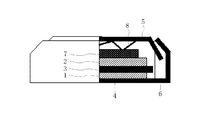
- FIG. 1 is a schematic cross-sectional view showing an outline of a lithium ion secondary battery provided with the non-aqueous electrolyte.
- the lithium ion secondary battery according to the present embodiment has a positive electrode 1, a separator 3, a negative electrode 2, an internal space formed by a positive electrode can 4 and a negative electrode can 5, from the positive electrode can 4 side. It has a structure in which a laminated body laminated in the order of the spacers 7 is accommodated. By interposing a spring 8 between the negative electrode can 5 and the spacer 7, the positive electrode 1 and the negative electrode 2 are appropriately pressed and fixed.
- the nonaqueous electrolytic solution containing the components (A) to (C) of this embodiment is impregnated between the positive electrode 1, the separator 3, and the negative electrode 2.
- the gasket 6 is interposed between the positive electrode can 4 and the negative electrode can 5
- the positive electrode can 4 and the negative electrode can 5 are sandwiched to bond them together, and the laminate is sealed.
- the material of the positive electrode active material layer in the positive electrode 1 is not particularly limited, and examples thereof include a transition metal compound having a structure capable of diffusing lithium ions, or an oxide of the transition metal compound and lithium.
- a transition metal compound having a structure capable of diffusing lithium ions or an oxide of the transition metal compound and lithium.
- LiCoO 2, LiNiO 2, LiMn 2 O 4, Li 2 MnO 3 + LiMeO 2 (Me Mn, Co, Ni) solid solution
- oxides such as LiFeF
- the positive electrode 1 is formed by press molding the positive electrode active materials listed above together with known conductive aids and binders, or the positive electrode active material together with known conductive aids and binders and organic solvents such as pyrrolidone. It can be obtained by applying a paste obtained by mixing to a current collector such as an aluminum foil and then drying.
- the material of the negative electrode active material layer in the negative electrode 2 is not particularly limited as long as it is a material that can occlude and release lithium.
- a conductive polymer such as polyacetylene, or Li—
- Examples thereof include carbon materials such as Co—Ni-based materials, natural graphite, artificial graphite, boronated graphite, fluorinated graphite, mesocarbon microbeads, pitch-based carbon fiber graphitized materials, carbon nanotubes, hard carbon, and fullerene.
- the negative electrode 2 may be a foil or powder of the electrode material.
- copper paste is formed by pressure molding with a known conductive aid and binder, or mixed with pyrrolidone and other organic solvents together with a known conductive aid and binder. It can be obtained by coating a current collector such as a foil and then drying.
- a separator 3 is usually interposed between the positive electrode 1 and the negative electrode 2 in order to prevent a short circuit.
- the material and shape of the separator 3 are not particularly limited, it is preferable that the above-described non-aqueous electrolyte is easy to pass through, is an insulator, and is a chemically stable material. Examples thereof include microporous films and sheets made of various polymer materials. Specific examples of the polymer material include polyolefin polymers such as nylon (registered trademark), nitrocellulose, polyacrylonitrile, polyvinylidene fluoride, polyethylene, and polypropylene. From the viewpoints of electrochemical stability and chemical stability, polyolefin polymers are preferred.
- the optimum working voltage of the lithium ion secondary battery of the present embodiment varies depending on the combination of the positive electrode 1 and the negative electrode 2, and can usually be used within the range of 2.4 to 4.6V.
- the shape of the lithium ion secondary battery of the present embodiment is not particularly limited, but examples thereof include a cylindrical type, a square type, and a laminated type in addition to the coin type cell shown in FIG.
- the secondary battery according to the present embodiment can exhibit excellent cycle characteristics even in a high temperature environment, and the non-aqueous electrolyte of the present embodiment is suitable for, for example, a lithium ion secondary battery. Can be used.
- the lithium ion secondary battery shown in FIG. 1 is an example of one embodiment of the secondary battery of the present invention, and the secondary battery of the present invention is not limited to this.
- EC ethylene carbonate
- DMC dimethyl carbonate
- lithium difluorophosphate was mixed with the mixed solvent after addition of LiPF 6 so that the addition concentration was 0.5 mass% and lithium diethyl phosphate was 0.5 mass%. This prepared the non-aqueous electrolyte which concerns on a present Example.
- Example 2 lithium bis (oxalato) borate was further added to the mixed solvent after the addition of LiPF 6 after the addition of lithium difluorophosphate and lithium diethyl phosphate.
- the addition concentration of lithium bis (oxalato) borate was 0.5% by mass.
- Example 2 was carried out similarly to Example 1, and prepared the non-aqueous electrolyte based on a present Example.
- Example 3 In this example, trimethyl borate was further mixed with the mixed solvent after addition of LiPF 6 in Example 1 so that the addition concentration was 0.5 mass%. Other than that was carried out similarly to Example 1, and prepared the non-aqueous electrolyte based on a present Example.
- Example 4 vinylene carbonate was further mixed with the mixed solvent after addition of LiPF 6 in Example 1 so that the addition concentration was 0.5 mass%. Other than that was carried out similarly to Example 1, and prepared the non-aqueous electrolyte based on a present Example.
- Example 5 fluoroethylene carbonate was further mixed with the mixed solvent after addition of LiPF 6 in Example 1 so that the addition concentration was 0.5 mass%. Other than that was carried out similarly to Example 1, and prepared the non-aqueous electrolyte based on a present Example.
- Example 6 1,3-propane sultone was further mixed with the mixed solvent after addition of LiPF 6 in Example 1 so that the addition concentration was 0.5 mass%. Other than that was carried out similarly to Example 1, and prepared the non-aqueous electrolyte based on a present Example.
- Example 7 N, N-dimethylacetoacetamide was further mixed with the mixed solvent after addition of LiPF 6 in Example 1 so that the addition concentration was 0.5 mass%. Other than that was carried out similarly to Example 1, and prepared the non-aqueous electrolyte based on a present Example.
- Example 8 lithium difluorobisoxalate phosphate was mixed instead of lithium difluorophosphate in Example 2 so that the addition concentration was 0.5 mass%. Other than that was carried out similarly to Example 2, and prepared the non-aqueous electrolyte which concerns on a present Example.
- Example 9 In this example, trimethyl phosphate was mixed in place of lithium difluorophosphate in Example 2 so that the addition concentration was 0.5 mass%. Other than that was carried out similarly to Example 2, and prepared the non-aqueous electrolyte which concerns on a present Example.
- Example 10 In this example, the addition concentration of lithium difluorophosphate in Example 2 was changed to 2.5 mass%, and the addition concentration of lithium diethylphosphate was changed to 5.0 mass%. Other than that was carried out similarly to Example 2, and prepared the non-aqueous electrolyte which concerns on a present Example.
- Example 11 In this example, the addition concentration of lithium difluorophosphate in Example 2 was changed to 0.05 mass%, and the addition concentration of lithium diethyl phosphate was changed to 0.05 mass%. Other than that was carried out similarly to Example 2, and prepared the non-aqueous electrolyte which concerns on a present Example.
- Example 12 In this example, the addition concentration of lithium bis (oxalato) borate in Example 2 was changed to 0.05% by weight. Other than that was carried out similarly to Example 2, and prepared the non-aqueous electrolyte which concerns on a present Example.
- Example 13 In this example, the addition concentration of lithium bis (oxalato) borate in Example 2 was changed to 2.5% by weight. Other than that was carried out similarly to Example 2, and prepared the non-aqueous electrolyte which concerns on a present Example.
- Example 14 maleic anhydride was further mixed with the mixed solvent after addition of LiPF 6 in Example 2 so that the addition concentration was 0.5% by mass. Other than that was carried out similarly to Example 2, and prepared the non-aqueous electrolyte which concerns on a present Example.
- Example 15 In this example, the addition concentration of lithium difluorophosphate in Example 2 was changed to 0.2% by mass. Further, lithium difluorobisoxalate phosphate is further mixed with the mixed solvent after addition of LiPF 6 so that the addition concentration is 0.05% by mass, and maleic anhydride is added at a concentration of 0.5% by weight. Mixed in the same manner. Other than that was carried out similarly to Example 2, and prepared the non-aqueous electrolyte which concerns on a present Example.
- Comparative Example 1 In this comparative example, the same procedure as in Example 1 was performed, except that lithium diethyl phosphate of Example 1 was not added and lithium difluorophosphate was mixed so that the addition concentration was 1.0% by mass. Thus, a nonaqueous electrolytic solution according to this comparative example was prepared.
- Example 2 lithium diethyl phosphate of Example 1 was not mixed, but lithium difluorophosphate was mixed so that the addition concentration was 1.0 mass% and lithium oxalate borate was 0.5 mass%.
- a nonaqueous electrolytic solution according to this comparative example was prepared in the same manner as in Example 1 except that.
- Comparative Example 4 a nonaqueous electrolytic solution according to this comparative example was prepared in the same manner as in Example 8 except that lithium diethyl phosphate of Example 8 was not mixed.
- Example 5 Comparative Example 5
- the nonaqueous electrolysis according to this comparative example was performed in the same manner as in Example 15 except that lithium diethyl phosphate, lithium bis (oxalato) borate and maleic anhydride of Example 15 were not mixed. A liquid was prepared.
- Example 6 a nonaqueous electrolytic solution according to this comparative example was prepared in the same manner as in Example 15 except that lithium diester lithium phosphate and maleic anhydride of Example 15 were not mixed.
- a stainless support rod 11 for the working electrode, a stainless support rod 12 for the reference electrode, and a stainless support rod 13 for the counter electrode are fixed through a Teflon lid 14 and are made of glass containing a non-aqueous electrolyte 16. At the same time as attaching a Teflon lid to the container 15, the working electrode 17, the reference electrode 18, and the counter electrode 19 were simultaneously immersed in the non-aqueous electrolyte 16.
- the temperature inside the glass container 15 was adjusted by inserting the glass container 15 into the aluminum block 10 whose temperature was controllable.
- PGSTAT302N manufactured by Metrohm Autolab was used, and cyclic voltammetry measurement and AC impedance measurement were performed.
- the assembly from the evaluation cell to the measurement were all performed in an argon glove box with a dew point of ⁇ 70 ° C. or less.
- the non-aqueous electrolyte was kept at 25 ° C., and the cyclic voltammetry was measured between the immersion potential and 4500 mV at an insertion speed of 0.5 mV / sec. It was.
- the discharge capacity at the fifth cycle when the nonaqueous electrolyte solution of Comparative Example 1 is used is set to 100, and the discharge capacity at the fifth cycle when each nonaqueous electrolyte solution of each Example and each Comparative Example is used is 100.
- the ratio is shown in Table 1.
- LiNi 1/3 Co 1/3 Mn 1/3 O 2 (manufactured by Piotrek Co., Ltd.) cut to a diameter of 9 mm ⁇ was used for the positive electrode, a polyethylene separator was used for the separator, and a diameter of 10 mm ⁇ was cut for the negative electrode.
- a natural graphite sheet (manufactured by Piotrek Co., Ltd.) was used.
- a positive electrode, a separator, and a negative electrode were laminated in this order to form a laminate, impregnated with the nonaqueous electrolyte prepared in each example or comparative example, and then the laminate was sealed to prepare coin cells. All the coin cells were assembled in an argon glove box having a dew point of ⁇ 70 ° C. or lower.
- the produced coin cell is a constant current having a charge end voltage of 4.2 V, a discharge end voltage of 3.0 V, and 0.2 C (the current value for charging or discharging the rated capacity in one hour is 1 C) in a thermostatic chamber at 25 ° C.
- the battery was charged and discharged for 5 cycles by the constant voltage method.
Landscapes
- Chemical & Material Sciences (AREA)
- Engineering & Computer Science (AREA)
- Manufacturing & Machinery (AREA)
- Chemical Kinetics & Catalysis (AREA)
- Electrochemistry (AREA)
- General Chemical & Material Sciences (AREA)
- Physics & Mathematics (AREA)
- Condensed Matter Physics & Semiconductors (AREA)
- General Physics & Mathematics (AREA)
- Inorganic Chemistry (AREA)
- Materials Engineering (AREA)
- Secondary Cells (AREA)
Abstract
温度負荷環境下で保存後の充放電特性の低下と内部抵抗の上昇が少ない二次電池用非水電解液及びそれを備えた二次電池を提供する。二次電池に用いられる二次電池用非水電解液であって、一般式(1)~(4)の何れかで表される、少なくとも1種のリン化合物である成分(A)と、一般式(5)で表される、少なくとも1種のリン酸ジエステル塩である成分(B)とを含むことを特徴とする。
Description
本発明は、温度負荷環境下で保存後の充放電特性の低下と内部抵抗の上昇が少ない二次電池用非水電解液及びそれを備えた二次電池に関するものである。
近年、リチウム二次電池を始めとする二次電池の応用分野は、携帯電話やパソコン、デジタルカメラ等の電子機器から車載への用途拡大に伴い、出力密度やエネルギー密度の向上ならびに容量損失の抑制等、さらなる高性能化が進められている。車載用途では使用環境温度が高温側、低温側ともに従来以上の耐久性が求められている。特に高温環境については、セルが大型化されると、使用環境のみならず自己発熱によって定常的に比較的高い温度にさらされることになり、高温耐久性の向上は非常に重要である。更に、高温環境下で保存すると、電極や電解液、電解質の劣化に伴いセルの内部抵抗が上昇し、低温環境下での内部抵抗に起因するエネルギーロスが著しくなる。
従来の一般的なリチウム二次電池には、正極活物質及び負極活物質にLiイオンを可逆的に挿入できる材料が用いられている。例えば、正極活物質には、LiNiO2、LiCoO2、LiMn2O4、又はLiFePO4等の化合物が使用されている。また、負極活物質には、リチウム金属、その合金、炭素材料、又は黒鉛材料等が使用されている。更に、リチウム二次電池に用いられる電解液には、エチレンカーボネート、ジエチルカーボネート、プロピレンカーボネート等の混合溶媒にLiPF6、LiBF4等の電解質を溶解させたものが使用されている。
電極活物質と電解液の界面では、リチウムイオン伝導性はあるが電子導電性のない安定な皮膜(Solid Electrolyte Interface)が形成されるという解釈が一般的になされている。電極活物質へのリチウムイオンの挿入脱離過程は可逆性に優れているが、高温環境下で充放電を繰り返すと、その安定界面に亀裂や溶解・分解が生じ、充放電特性が低下したり、インピーダンスが増加したりする傾向がある。
こうした問題点に対し、温度負荷環境下に於ける二次電池の保存特性を改善する試みが数多く報告されている。例えば、下記特許文献1ではジフルオロリン酸塩を添加することが提案されており、当該特許文献1によれば、高温サイクル特性と入出力特性の向上が図られるとしている。しかしながら、ジフルオロリン酸塩を添加するだけでは、内部抵抗の上昇等が問題となる。
また、下記特許文献2には、ジフルオロリン酸塩とオキサラトボレート型化合物を添加剤として含有する非水電解液を用いることによって、リチウム二次電池の初期の負極抵抗の上昇が抑制可能とされている。しかしながら、正極抵抗が高く、また、負極抵抗も十分に抑制されているとはいえないことから、更なる改善が求められている。
本発明は前記問題点に鑑みなされたものであり、その目的は、温度負荷環境下で保存後の充放電特性の低下と内部抵抗の上昇が少ない二次電池用非水電解液及びそれを備えた二次電池を提供することにある。
本発明の二次電池用非水電解液は、前記の課題を解決する為に、二次電池に用いられる二次電池用非水電解液であって、下記成分(A)及び成分(B)を含むことを特徴とする。
成分(A):下記一般式(1)~(4)の何れかで表される、少なくとも1種のリン化合物;
成分(B):下記一般式(5)で表される、少なくとも1種のリン酸ジエステル塩
成分(A):下記一般式(1)~(4)の何れかで表される、少なくとも1種のリン化合物;
成分(B):下記一般式(5)で表される、少なくとも1種のリン酸ジエステル塩




前記構成に於いては、さらに少なくとも1種の下記成分(C)を含んでいてもよい。
成分(C):下記一般式(6)で表されるホウ素錯体塩、ホウ酸エステル、酸無水物、不飽和結合を有する環状カーボネート、ハロゲン原子を有する環状カーボネート、環状スルホン酸エステル及び下記一般式(7)で表され、かつ、アセトアセチル基を有するアミン類からなる群より選ばれる少なくとも1種の化合物
成分(C):下記一般式(6)で表されるホウ素錯体塩、ホウ酸エステル、酸無水物、不飽和結合を有する環状カーボネート、ハロゲン原子を有する環状カーボネート、環状スルホン酸エステル及び下記一般式(7)で表され、かつ、アセトアセチル基を有するアミン類からなる群より選ばれる少なくとも1種の化合物
前記構成に於いて、前記成分(A)の添加量は、前記二次電池用非水電解液の全質量に対し、0.05質量%~5質量%であり、前記成分(B)の添加量は、前記二次電池用非水電解液の全質量に対し、0.05質量%~5質量%であることが好ましい。
また、前記構成に於いて、前記成分(C)の添加量は、前記二次電池用非水電解液の全質量に対し、0.05質量%~5質量%であることが好ましい。
前記の構成に於いては、前記一般式(1)で表されるリン化合物がジフルオロリン酸リチウム又はジフルオロリン酸ナトリウムであることが好ましい。
前記の構成に於いては、前記一般式(2)で表されるリン化合物がリチウムジフルオロビスオキサレートホスフェート、ナトリウムジフルオロビスオキサレートホスフェート、リチウムテトラフルオロオキサレートホスフェート又はナトリウムテトラフルオロオキサレートホスフェートであることが好ましい。
前記の構成に於いては、前記一般式(3)で表されるリン化合物がリン酸トリメチル、リン酸トリエチル、リン酸トリス(2,2,2-トリフルオロエチル)又はビス(2,2,2-トリフルオロエチル)ホスホン酸であることが好ましい。
前記の構成に於いては、前記一般式(4)で表されるリン化合物がトリメチルホスフィン又はメチルジフェニルホスフィンであることが好ましい。
前記の構成に於いては、前記一般式(5)で表されるリン酸ジエステル塩が、ジエチルリン酸リチウム又はビス(2,2,2-トリフルオロエチル)リン酸リチウムであることが好ましい。
前記の構成に於いては、前記一般式(6)で表されるホウ素錯体塩がリチウムビス[1,2’-ベンジオラート(2)-O,O’]ボレート、リチウムビスサリチラートボレート又はリチウムビス(オキサラト)ボレート、リチウムテトラフルオロボレートであることが好ましい。
前記の構成に於いては、前記ホウ酸エステルがホウ酸トリメチルであることが好ましい。
前記の構成に於いては、前記酸無水物が無水マレイン酸であることが好ましい。
前記の構成に於いては、前記不飽和結合を有する環状カーボネートがビニレンカーボネートであることが好ましい。
前記の構成に於いては、前記ハロゲン原子を有する環状カーボネートがフルオロエチレンカーボネートであることが好ましい。
前記の構成に於いては、前記環状スルホン酸エステルが1,3-プロパンスルトンであることが好ましい。
前記の構成に於いては、前記一般式(3)で表されるアセトアセチル基を有するアミン類がN,N-ジメチルアセトアセトアミドであることが好ましい。
また、本発明の二次電池は、前記の課題を解決する為に、前記に記載の二次電池用非水電解液、正極及び負極を少なくとも備えたものであることを特徴とする。
本発明によれば、二次電池用非水電解液に、前記一般式(1)~(4)の何れかで表される、少なくとも1種のリン化合物(成分(A))と、前記一般式(5)で表される、少なくとも1種のリン酸ジエステル塩(成分(B))とを添加することにより、これを備えた二次電池を高温環境下で長期間保管しても、充放電特性の低下を抑制できると共に、内部抵抗の上昇も抑制することができる。そのメカニズムについては明らかではないが、前記成分(A)及び成分(B)の添加により電極活物質の表面に皮膜が形成され、この皮膜が備えている熱安定性や膜質等の効能に起因しているものと推定される。
(二次電池用非水電解液)
本実施の形態に係る二次電池用非水電解液(以下、「非水電解液」という。)は、電解質を溶解させた有機溶媒(非水溶媒)に、後述の成分(A)及び成分(B)を添加剤として添加したものである。
本実施の形態に係る二次電池用非水電解液(以下、「非水電解液」という。)は、電解質を溶解させた有機溶媒(非水溶媒)に、後述の成分(A)及び成分(B)を添加剤として添加したものである。
初期の充電の際に非水電解液の分解という不可逆反応が、電極と非水電解液の界面で生じる。電極活物質、非水電解液中の非水溶媒や電解質及び添加剤の種類、充放電条件に応じて形成される皮膜の性質、例えば熱安定性やイオン伝導性、モフォロジー、緻密さ等の性質は大きく変化すると考えられる。本実施の形態に於いても、非水電解液に成分(A)及び成分(B)を添加することで、電極活物質の表面に皮膜が形成され、この皮膜の性質、即ち、熱安定性や膜質等の効能に起因して、二次電池の高温環境下(例えば、40℃~60℃)での保存特性の改善が図られると考えられる。
<成分(A)>
前記成分(A)は、非水電解液中に少なくとも1種含まれており、具体的には、下記一般式(1)~(4)の何れかで表されるリン化合物である。
前記成分(A)は、非水電解液中に少なくとも1種含まれており、具体的には、下記一般式(1)~(4)の何れかで表されるリン化合物である。
先ず、下記一般式(1)で表されるリン化合物について説明する。
前記一般式(1)に於いて、前記Mn+はアルカリ金属イオン、アルカリ土類金属イオン、アルミニウムイオン、遷移金属イオン又はオニウムイオンを表す。
前記アルカリ金属イオンとしては特に限定されず、リチウムイオン、ナトリウムイオン、カリウムイオン、ルビジウムイオン、セシウムイオン等が挙げられる。これらは一種単独で、又は二種以上を併用することができる。
前記アルカリ土類金属イオンとしては、マグネシウムイオン、カルシウムイオン、ストロンチウムイオン、バリウムイオン等が挙げられる。これらは一種単独で、又は二種以上を併用することができる。
前記遷移金属イオンとしては特に限定されず、例えば、マンガンイオン、コバルトイオン、ニッケルイオン、クロムイオン、銅イオン、モリブデンイオン、タングステンイオン、バナジウムイオン等が挙げられる。これらは一種単独で、又は二種以上を併用することができる。
前記オニウムイオンとしては、アンモニウムイオン(NH4+)、第1級アンモニウムイオン、第2級アンモニウムイオン、第3級アンモニウムイオン、第4級アンモニウムイオン、第4級ホスホニウムイオン、スルホニウムイオン等が挙げられる。
前記第1級アンモニウムイオンとしては特に限定されず、例えば、メチルアンモニウムイオン、エチルアンモニウムイオン、プロピルアンモニウムイオン、イソプロピルアンモニウムイオン等が挙げられる。これらは一種単独で、又は二種以上を併用することができる。
前記第2級アンモニウムイオンとしては特に限定されず、例えば、ジメチルアンモニウムイオン、ジエチルアンモニウムイオン、ジプロピルアンモニウムイオン、ジブチルアンモニウムイオン、エチルメチルアンモニウムイオン、メチルプロピルアンモニウムイオン、メチルブチルアンモニウムイオン、プロピルブチルアンモニウムイオン、ジイソプロピルアンモニウムイオン等が挙げられる。これらは一種単独で、又は二種以上を併用することができる。
前記第3級アンモニウムイオンとしては特に限定されず、例えば、トリメチルアンモニウムイオン、トリエチルアンモニウムイオン、トリプロピルアンモニウムイオン、トリブチルアンモニウムイオン、エチルジメチルアンモニウムイオン、ジエチルメチルアンモニウムイオン、トリイソプロピルアンモニウムイオン、ジメチルイソプロピルアンモニウムイオン、ジエチルイソプロピルアンモニウムイオン、ジメチルプロピルアンモニウムイオン、ブチルジメチルアンモニウムイオン、1-メチルピロリジニウムイオン、1-エチルピロリジニウムイオン、1-プロピルピロリジニウムイオン、1-ブチルプロピルピロリジニウムイオン、1-メチルイミダゾリウムイオン、1-エチルイミダゾリウムイオン、1-プロピルイミダゾリウムイオン、1-ブチルイミダゾリウムイオン、ピラゾリウムイオン、1-メチルピラゾリウムイオン、1-エチルピラゾリウムイオン、1-プロピルピラゾリウムイオン、1-ブチルピラゾリウムイオン、ピリジニウムイオン等が挙げられる。これらは一種単独で、又は二種以上を併用することができる。
前記第4級アンモニウムイオンをなす第4級アンモニウムとしては特に限定されず、例えば、脂肪族4級アンモニウム類、イミダゾリウム類、ピリジニウム類、ピラゾリウム類、ピリダジニウム類等が挙げられる。これらは一種単独で、又は二種以上を併用することができる。
更に、前記脂肪族4級アンモニウム類としては特に限定されず、例えば、テトラエチルアンモニウム、テトラプロピルアンモニウム、テトライソプロピルアンモニウム、トリメチルエチルアンモニウム、ジメチルジエチルアンモニウム、メチルトリエチルアンモニウム、トリメチルプロピルアンモニウム、トリメチルイソプロピルアンモニウム、テトラブチルアンモニウム、トリメチルブチルアンモニウム、トリメチルペンチルアンモニウム、トリメチルヘキシルアンモニウム、1-エチル-1-メチル-ピロリジニウム、1-ブチル-1-メチルピロリジニウム、1-エチル-1-メチル-ピペリジニウム、1-ブチル-1-メチルピペリジニウム等が挙げられる。これらは一種単独で、又は二種以上を併用することができる。
前記イミダゾリウム類としては特に限定されず、例えば、1.3ジメチル-イミダゾリウム、1-エチル-3-メチルイミダゾリウム、1-n-プロピル-3-メチルイミダゾリウム、1-n-ブチル-3-メチルイミダゾリウム、1-n-ヘキシル-3-メチルイミダゾリウム等が挙げられる。これらは一種単独で、又は二種以上を併用することができる。
前記ピリジニウム類としては特に限定されず、例えば、1-メチルピリジニウム、1-エチルピリジニウム、1-n-プロピルピリジニウム等が挙げられる。これらは一種単独で、又は二種以上を併用することができる。
前記ピラゾリウム類としては特に限定されず、例えば、1,2-ジメチルピラゾリウム、1-メチル-2-エチルピラゾリウム、1-プロピル-2-メチルピラゾリウム、1-メチル-2-ブチルピラゾリウム、1-メチルピラゾリウム、3-メチルピラゾリウム、4-メチルピラゾリウム、4-ヨードピラゾリウム、4-ブロモピラゾリウム、4-ヨードー3-メチルピラゾリウム、4-ブロモ-3-メチルピラゾリウム、3-トリフルオロメチルピラゾリウムが挙げられる。これらは一種単独で、又は二種以上を併用することができる。
前記ピリダジニウム類としては特に限定されず、例えば、1-メチルピリダジニウム、1-エチルピリダジニウム、1-プロピルピリダジニウム、1-ブチルピリダジニウム、3-メチルピリダジニウム、4-メチルピリダジニウム、3-メトキシピリダジニウム、3,6-ジクロロピリダジニウム、3,6-ジクロ-4-メチルピリダジニウム、3-クロロ-6-メチルピリダジニウム、3-クロロ-6-メトキシピリダジニウムが挙げられる。これらは一種単独で、又は二種以上を併用することができる。
前記第4級ホスホニウムイオンをなす第4級ホスホニウムとしては特に限定されず、例えば、ベンジルトリフェニルホスホニウム、テトラエチルホスホニウム、テトラフェニルホスホニウム等が挙げられる。これらは一種単独で、又は二種以上を併用することができる。
前記スルホニウムイオンとしては特に限定されず、例えば、トリメチルスルホニウム、トリフェニルスルホニウム、トリエチルスルホニウム等が挙げられる。これらは一種単独で、又は二種以上を併用することができる。
前記Mn+の例示として列挙したもののうち、入手の容易さの観点からは、リチウムイオン、ナトリウムイオン、テトラアルキルアンモニウムイオンが好ましい。
前記A1及びA2は、それぞれ独立して、酸素原子、硫黄原子又はセレン原子を表す。
前記一般式(1)に於いて、前記X1及びX2は、それぞれ独立して、ハロゲン原子、アルキル基、又はハロゲン原子、ヘテロ原子若しくは不飽和結合の少なくとも何れか一つを有するアルキル基(以下、「ハロゲン原子等を有するアルキル基」という。)を表す。アルキル基、及びハロゲン原子等を有するアルキル基の炭素数は1~20の範囲であり、好ましくは1~10、より好ましくは1~4である。また、前記不飽和結合の数は1~10の範囲が好ましく、1~5の範囲がより好ましく、1~3の範囲が特に好ましい。
前記ハロゲン原子としては、ヨウ素、臭素、塩素、フッ素を表す。
前記アルキル基又はハロゲン原子等を有するアルキル基としては、具体的には、例えば、メチル基、エチル基、プロピル基、ブチル基、イソプロピル基、ペンチル基、ヘキシル基、ヘプチル基、オクチル基等の鎖状アルキル基、シクロペンチル基、シクロヘキシル基等の環状アルキル基、2-ヨードエチル基、2-ブロモエチル基、2-クロロエチル基、2-フルオロエチル基、1,2-ジヨードエチル基、1,2-ジブロモエチル基、1,2-ジクロロエチル基、1,2-ジフルオロエチル基、2,2-ジヨードエチル基、2,2-ジブロモエチル基、2,2-ジクロロエチル基、2,2-ジフルオロエチル基、2,2,2-トリブロモエチル基、2,2,2-トリクロロエチル基、2,2,2-トリフルオロエチル基、ヘキサフルオロー2-プロピル基等の鎖状含ハロゲンアルキル基、2-ヨードシクロヘキシル基、2-ブロモシクロヘキシル基、2-クロロシクロヘキシル基、2-フルオロシクロヘキシル基等の環状含ハロゲンアルキル基、2-プロペニル基、イソプロペニル基、2-ブテニル基、3-ブテニル基等の鎖状アルケニル基、2-シクロペンテニル基、2-シクロヘキセニル基、3-シクロヘキセニル基等の環状アルケニル基、2-プロピニル基、1-ブチニル基、2-ブチニル基、3-ブチニル基、1-ペンチニル基、2-ペンチニル基、3-ペンチニル基、4-ペンチニル基等の鎖状アルキニル基、フェニル基、3-メトキシフェニル基、4-メトキシフェニル基、3,5-ジメトキシフェニル基、4-フェノキシフェニル基等のフェニル基、2-ヨードフェニル基、2-ブロモフェニル基、2-クロロフェニル基、2-フルオロフェニル基、3-ヨードフェニル基、3-ブロモフェニル基、3-クロロフェニル基、3-フルオロフェニル基、4-ヨードフェニル基、4-ブロモフェニル基、4-クロロフェニル基、4-フルオロフェニル基、3,5-ジヨードフェニル基、3,5-ジブロモフェニル基、3,5-ジクロロフェニル基、3,5-ジフルオロフェニル基等の含ハロゲンフェニル基、1-ナフチル基、2-ナフチル基、3-アミノ-2-ナフチル基等のナフチル基等が挙げられる。
尚、前記ハロゲン原子とは、フッ素、塩素、臭素又はヨウ素の原子を意味する。また、前記ヘテロ原子とは、酸素、窒素又は硫黄等の原子を意味する。前記ハロゲン原子等を有するアルキル基において、前記ハロゲン原子及びヘテロ原子は、当該アルキル基中の水素の一部又は全部がこれらのハロゲン原子及び/又はヘテロ原子の何れかで置換されていてもよい。
また、前記X1とX2は、前記アルキル基、又はハロゲン原子等を有するアルキル基の何れかが、相互に結合して環状構造を形成するものであってもよい。この場合、前記X1とX2におけるアルキル基又はハロゲン原子等を有するアルキル基は、例えば、メチレン基、エチレン基、プロピレン基、ブチレン基、ペンチレン基、ヘキシレン基、ヘプチレン基、オクチレン基、ノニレン基等の直鎖アルキレン基、ヨードメチレン基、ジヨードメチレン基、ブロモメチレン基、ジブロモメチレン基、フルオロメチレン基、ジフルオロメチレン基、ヨードエチレン基、1,1-ジヨードエチレン基、1,2-ジヨードエチレン基、トリヨードエチレン基、テトラヨードエチレン基、クロロエチレン基、1,1-ジクロロエチレン基、1,2-ジクロロエチレン基、トリクロロエチレン基、テトラクロロエチレン基、フルオロエチレン基、1,1-ジフルオロエチレン基、1,2-ジフルオロエチレン基、トリフルオロエチレン基、テトラフルオロエチレン基等の含ハロゲン直鎖アルキレン基、シクロヘキシレン基、フェニレン基、ベンジレン基、ナフチレン基、アントラシレン基、ナフタシレン基、ペンタシレン基のような環状炭化水素基及びその一部又は全部をハロゲン原子等に置き換えたものとなる。
前記X1とX2は、前記に例示した官能基群に於いて、同種でもよく相互に異なっていてもよい。また前記に例示した官能基群は単なる例示に過ぎず、これらに限定されるものではない。
尚、前記一般式(1)に於いて、前記nは価数を表す。例えば、前記Mが1価のカチオンである場合はn=1であり、2価のカチオンである場合はn=2であり、3価のカチオンである場合はn=3である。
前記一般式(1)で表されるリン化合物の具体例としては、例えば、入手が容易なジフルオロリン酸リチウムやジフルオロリン酸ナトリウム等が挙げられる。
次に、下記一般式(2)で表されるリン化合物について説明する。但し、前記一般式(1)で表されるリン化合物において説明したものと同一のものについては、その説明を省略する。

前記一般式(2)に於いて、前記Mn+及び価数n、前記一般式(1)で述べたのと同様である。
前記一般式(2)に於いて、前記X3~X8は、それぞれ独立して、ハロゲン原子、アルキル基、アルコキシ基、アルキルチオ基、ハロゲン原子、ヘテロ原子若しくは不飽和結合の少なくとも何れか一つを有するアルキル基(以下、「ハロゲン原子等を有するアルキル基」という。)、ハロゲン原子、ヘテロ原子若しくは不飽和結合の少なくとも何れか一つを有するアルコキシ基(以下、「ハロゲン原子等を有するアルコキシ基」という。)、又はハロゲン原子、ヘテロ原子若しくは不飽和結合の少なくとも何れか一つを有するアルキルチオ基(以下、「ハロゲン原子等を有するアルキルチオ基」という。)を表す。前記アルキル基、アルコキシ基、アルキルチオ基、ハロゲン原子等を有するアルキル基、ハロゲン原子等を有するアルコキシ基及びハロゲン原子等を有するアルキルチオ基の炭素数は1~20の範囲であり、好ましくは1~10、より好ましくは1~4である。また、不飽和結合の数は1~10の範囲が好ましく、1~5の範囲がより好ましく、1~3の範囲が特に好ましい。
前記ハロゲン原子及びヘテロ原子は、前記一般式(1)で述べたのと同様である。また、前記ハロゲン原子等を有するアルキル基、ハロゲン原子等を有するアルコキシ基及びハロゲン原子等を有するアルキルチオ基において、前記ハロゲン原子及びヘテロ原子は、これらの官能基中の水素の一部又は全部がこれらのハロゲン原子及び/又はヘテロ原子の何れかで置換されていてもよい。
前記X3~X8は、具体的には、例えば、メチル基、エチル基、プロピル基、ブチル基、イソプロピル基、ペンチル基、ヘキシル基、ヘプチル基、オクチル基等の鎖状アルキル基、シクロペンチル基、シクロヘキシル基等の環状アルキル基、ヨードメチル基、ブロモメチル基、クロロメチル基、フルオロメチル基、ジヨードメチル基、ジブロモメチル基、ジクロロメチル基、ジフルオロメチル基、トリヨードメチル基、トリブロモメチル基、トリクロロメチル基、トリフルオロメチル基、2-ヨードエチル基、2-ブロモエチル基、2-クロロエチル基、2-フルオロエチル基、1,2-ジヨードエチル基、1,2-ジブロモエチル基、1,2-ジクロロエチル基、1,2-ジフルオロエチル基、2,2-ジヨードエチル基、2,2-ジブロモエチル基、2,2-ジクロロエチル基、2,2-ジフルオロエチル基、2,2,2-トリブロモエチル基、2,2,2-トリクロロエチル基、2,2,2-トリフルオロエチル基、ヘキサフルオロ-2-プロピル基等の鎖状含ハロゲンアルキル基、2-ヨードシクロヘキシル基、2-ブロモシクロヘキシル基、2-クロロシクロヘキシル基、2-フルオロシクロヘキシル基等の環状含ハロゲンアルキル基、2-プロペニル基、イソプロペニル基、2-ブテニル基、3-ブテニル基等の鎖状アルケニル基、2-シクロペンテニル基、2-シクロヘキセニル基、3-シクロヘキセニル基等の環状アルケニル基、2-プロピニル基、1-ブチニル基、2-ブチニル基、3-ブチニル基、1-ペンチニル基、2-ペンチニル基、3-ペンチニル基、4-ペンチニル基等の鎖状アルキニル基、フェニル基、3-メトキシフェニル基、4-メトキシフェニル基、3,5-ジメトキシフェニル基、4-フェノキシフェニル基等のフェニル基、2-ヨードフェニル基、2-ブロモフェニル基、2-クロロフェニル基、2-フルオロフェニル基、3-ヨードフェニル基、3-ブロモフェニル基、3-クロロフェニル基、3-フルオロフェニル基、4-ヨードフェニル基、4-ブロモフェニル基、4-クロロフェニル基、4-フルオロフェニル基、3,5-ジヨードフェニル基、3,5-ジブロモフェニル基、3,5-ジクロロフェニル基、3,5-ジフルオロフェニル基等の含ハロゲンフェニル基、メトキシ基、エトキシ基、プロポキシ基、ブトキシ基、ペントキシ基、ヘキソキシ基等の鎖状アルコキシ基、シクロペントキシ基、シクロヘキソキシ基等の環状アルコキシ基、2-ヨードエトキシ基、2-ブロモエトキシ基、2-クロロエトキシ基、2-フルオロエトキシ基、1,2-ジヨードエトキシ基、1,2-ジブロモエトキシ基、1,2-ジクロロエトキシ基、1,2-ジフルオロエトキシ基、2,2-ジヨードエトキシ基、2,2-ジブロモエトキシ基、2,2-ジクロロエトキシ基、2,2-ジフルオロエトキシ基、2,2,2-トリブロモエトキシ基、2,2,2-トリクロロエトキシ基、2,2,2-トリフルオロエトキシ基、ヘキサフルオロ-2-プロポキシ基等の鎖状含ハロゲンアルコキシ基、2-ヨードシクロヘキソキシ基、2-ブロモシクロヘキソキシ基、2-クロロシクロヘキソキシ基、2-フルオロシクロヘキソキシ基等の環状含ハロゲンアルコキシ基、2-プロペノキシ基、イソプロペノキシ基、2-ブテノキシ基、3-ブテノキシ基等の鎖状アルケニルアルコキシ基、2-シクロペンテノキシ基、2-シクロヘキセノキシ基、3-シクロヘキセノキシ基等の環状アルケニルアルコキシ基、2-プロピノキシ基、1-ブチノキシ基、2-ブチノキシ基、3-ブチノキシ基、1-ペンチノキシ基、2-ペンチノキシ基、3-ペンチノキシ基、4-ペンチノキシ基等の鎖状アルキニルアルコキシ基、フェノキシ基、3-メチルフェノキシ基、4-メチルフェノキシ基、3,5-ジメチルフェノキシ基等のフェノキシ基、2-ヨードフェノキシ基、2-ブロモフェノキシ基、2-クロロフェノキシ基、2-フルオロフェノキシ基、3-ヨードフェノキシ基、3-ブロモフェノキシ基、3-クロロフェノキシ基、3-フルオロフェノキシ基、4-ヨードフェノキシ基、4-ブロモフェノキシ基、4-クロロフェノキシ基、4-フルオロフェノキシ基、3,5-ジヨードフェノキシ基、3,5-ジブロモフェノキシ基、3,5-ジクロロフェノキシ基、3,5-ジフルオロフェノキシ基等の含ハロゲンフェノキシ基、メチルチオ基、エチルチオ基、プロピルチオ基、ブチルチオ基、イソプロピルチオ基、ペンチルチオ基、ヘキシルチオ基等のアルキルチオ基等が挙げられる。
また、前記X3~X8は、任意に選択される少なくとも1つの組合せが、-OOC-Y-COO-、-OOC-Y-O-又は-O-Y-O-の環状構造の何れかを形成していてもよい。前記X3~X8が2以上の環状構造を形成する場合、当該環状構造は相互に同一でもよく、異なっていてもよい。また、前記Yは、炭素数が0~20の炭化水素基、又は炭素数が0~20の範囲であって、ハロゲン原子、ヘテロ原子、不飽和結合若しくは環状構造の少なくとも何れか1つを有する炭化水素基を表す。また、不飽和結合の数は1~10の範囲が好ましく、1~5の範囲がより好ましく、1~3の範囲が特に好ましい。
前記Yとしては特に限定されず、具体的には、例えば、メチレン基、エチレン基、プロピレン基、ブチレン基、ペンチレン基、ヘキシレン基、ヘプチレン基、オクチレン基、ノニレン基等の直鎖アルキレン基、ヨードメチレン基、ジヨードメチレン基、ブロモメチレン基、ジブロモメチレン基、フルオロメチレン基、ジフルオロメチレン基、ヨードエチレン基、1,1-ジヨードエチレン基、1,2-ジヨードエチレン基、トリヨードエチレン基、テトラヨードエチレン基、クロロエチレン基、1,1-ジクロロエチレン基、1,2-ジクロロエチレン基、トリクロロエチレン基、テトラクロロエチレン基、フルオロエチレン基、1,1-ジフルオロエチレン基、1,2-ジフルオロエチレン基、トリフルオロエチレン基、テトラフルオロエチレン基等の含ハロゲン直鎖アルキレン基、シクロヘキシレン基、フェニレン基、ベンジレン基、ナフチレン基、アントラシレン基、ナフタシレン基、ペンタシレン基のような環状炭化水素基及びその一部又は全部をハロゲンに置き換えたもの等が挙げられる。
例えばYの炭素数が0の場合、-OOC-Y-COO-は-OOC-COO-であり、オキサレート基を表す。また、前記Yが1,2-フェニレン基である場合、-O-Y-O-はベンゼンジオラート基を表し、-O-Y-COO-はサリチラート基を表す。
尚、前記一般式(2)で表されるリン化合物としては、例えば、入手が容易なリチウムジフルオロビスオキサレートホスフェート、ナトリウムジフルオロビスオキサレートホスフェート、リチウムテトラフルオロオキサレートホスフェート、ナトリウムテトラフルオロオキサレートホスフェート等が挙げられる。
次に、下記一般式(3)で表されるリン化合物について説明する。但し、前記一般式(1)及び(2)で表されるリン化合物において説明したものと同一のものについては、その説明を省略する。
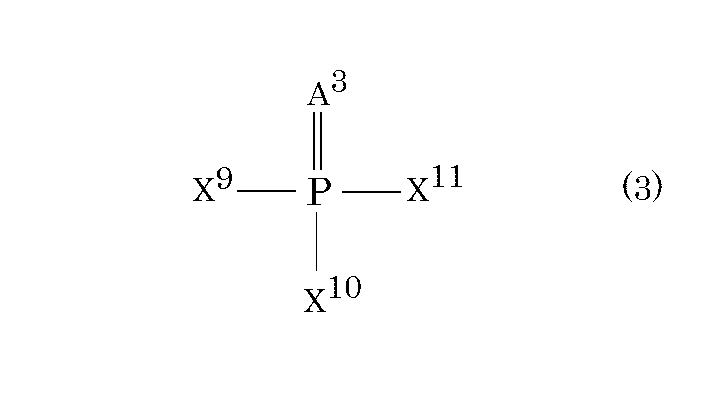
前記A3は酸素原子、硫黄原子又はセレン原子を表す。
前記X9~X11は、それぞれ独立して、水素原子、ハロゲン原子、アルキル基、アルコキシ基、アルキルチオ基、ハロゲン原子、ヘテロ原子又は不飽和結合の少なくとも何れか一つを有するアルキル基(以下、「ハロゲン原子等を有するアルキル基」という。)、ハロゲン原子、ヘテロ原子又は不飽和結合の少なくとも何れか一つを有するアルコキシ基(以下、「ハロゲン原子等を有するアルコキシ基」という。)、又はハロゲン原子、ヘテロ原子又は不飽和結合の少なくとも何れか一つを有するアルキルチオ基(以下、「ハロゲン原子等を有するアルキルチオ基」という。)を表す。前記アルキル基、アルコキシ基、アルキルチオ基、ハロゲン原子等を有するアルキル基、ハロゲン原子等を有するアルコキシ基及びハロゲン原子等を有するアルキルチオ基の炭素数は1~20の範囲であり、好ましくは1~10、より好ましくは1~4である。また、不飽和結合の数は1~10の範囲が好ましく、1~5の範囲がより好ましく、1~3の範囲が特に好ましい。
前記X9~X11は特に限定されず、具体的には、例えば、メチル基、エチル基、プロピル基、ブチル基、イソプロピル基、ペンチル基、ヘキシル基、ヘプチル基、オクチル基等の鎖状アルキル基、シクロペンチル基、シクロヘキシル基等の環状アルキル基、ヨードメチル基、ブロモメチル基、クロロメチル基、フルオロメチル基、ジヨードメチル基、ジブロモメチル基、ジクロロメチル基、ジフルオロメチル基、トリヨードメチル基、トリブロモメチル基、トリクロロメチル基、トリフルオロメチル基、2-ヨードエチル基、2-ブロモエチル基、2-クロロエチル基、2-フルオロエチル基、1,2-ジヨードエチル基、1,2-ジブロモエチル基、1,2-ジクロロエチル基、1,2-ジフルオロエチル基、2,2-ジヨードエチル基、2,2-ジブロモエチル基、2,2-ジクロロエチル基、2,2-ジフルオロエチル基、2,2,2-トリブロモエチル基、2,2,2-トリクロロエチル基、2,2,2-トリフルオロエチル基、ヘキサフルオロ-2-プロピル基等の鎖状含ハロゲンアルキル基、2-ヨードシクロヘキシル基、2-ブロモシクロヘキシル基、2-クロロシクロヘキシル基、2-フルオロシクロヘキシル基等の環状含ハロゲンアルキル基、2-プロペニル基、イソプロペニル基、2-ブテニル基、3-ブテニル基等の鎖状アルケニル基、2-シクロペンテニル基、2-シクロヘキセニル基、3-シクロヘキセニル基等の環状アルケニル基、2-プロピニル基、1-ブチニル基、2-ブチニル基、3-ブチニル基、1-ペンチニル基、2-ペンチニル基、3-ペンチニル基、4-ペンチニル基等の鎖状アルキニル基、フェニル基、3-メトキシフェニル基、4-メトキシフェニル基、3,5-ジメトキシフェニル基、4-フェノキシフェニル基等のフェニル基、2-ヨードフェニル基、2-ブロモフェニル基、2-クロロフェニル基、2-フルオロフェニル基、3-ヨードフェニル基、3-ブロモフェニル基、3-クロロフェニル基、3-フルオロフェニル基、4-ヨードフェニル基、4-ブロモフェニル基、4-クロロフェニル基、4-フルオロフェニル基、3,5-ジヨードフェニル基、3,5-ジブロモフェニル基、3,5-ジクロロフェニル基、3,5-ジフルオロフェニル基等の含ハロゲンフェニル基、メトキシ基、エトキシ基、プロポキシ基、ブトキシ基、ペントキシ基、ヘキソキシ基等の鎖状アルコキシ基、シクロペントキシ基、シクロヘキソキシ基等の環状アルコキシ基、2-ヨードエトキシ基、2-ブロモエトキシ基、2-クロロエトキシ基、2-フルオロエトキシ基、1,2-ジヨードエトキシ基、1,2-ジブロモエトキシ基、1,2-ジクロロエトキシ基、1,2-ジフルオロエトキシ基、2,2-ジヨードエトキシ基、2,2-ジブロモエトキシ基、2,2-ジクロロエトキシ基、2,2-ジフルオロエトキシ基、2,2,2-トリブロモエトキシ基、2,2,2-トリクロロエトキシ基、2,2,2-トリフルオロエトキシ基、ヘキサフルオロ-2-プロポキシ基等の鎖状含ハロゲンアルキル基、2-ヨードシクロヘキソキシ基、2-ブロモシクロヘキソキシ基、2-クロロシクロヘキソキシ基、2-フルオロシクロヘキソキシ基等の環状含ハロゲンアルキル基、2-プロペキシ基、イソプロペキシ基、2-ブテキシ基、3-ブテキシ基等の鎖状アルケニルアルコキシ基、2-シクロペンテキシ基、2-シクロヘキセキシ基、3-シクロヘキセキシ基等の環状アルケニルアルコキシ基、2-プロピキシ基、1-ブチキシ基、2-ブチキシ基、3-ブチキシ基、1-ペンチキシ基、2-ペンチキシ基、3-ペンチキシ基、4-ペンチキシ基等の鎖状アルキニルアルコキシ基、フェノキシ基、3-メトキシ基、フェノキシ基、4-メトキシ基、フェノキシ基、3,5-ジメトキシ基、フノキシ基等のフェノキシ基、2-ヨードフェノキシ基、2-ブロモフェノキシ基、2-クロロフェノキシ基、2-フルオロフェノキシ基、3-ヨードフェノキシ基、3-ブロモフェノキシ基、3-クロロフェノキシ基、3-フルオロフェノキシ基、4-ヨードフェノキシ基、4-ブロモフェノキシ基、4-クロロフェノキシ基、4-フルオロフェノキシ基、3,5-ジヨードフェノキシ基、3,5-ジブロフェノキシ基、3,5-ジクロロフェノキシ基、3,5-ジフルオロフェノキシ基等の含ハロゲンフェノキシ基、メチルチオ基、エチルチオ基、プロピルチオ基、ブチルチオ基、イソプロピルチオ基、ペンチルチオ基、ヘキシルチオ基等のアルキルチオ基等が挙げられる。
また、前記X9~X11は、任意に選択される少なくとも1つの組合せにより、前記アルキル基、アルコキシ基、アルキルチオ基、ハロゲン原子等を有するアルキル基、ハロゲン原子等を有するアルコキシ基又はハロゲン原子等を有するアルキルチオ基の何れかが、相互に結合して環状構造を形成するものであってもよい。この場合、前記X9~X11における前記アルキル基等が、例えば、メチレン基、エチレン基、プロピレン基、ブチレン基、ペンチレン基、ヘキシレン基、ヘプチレン基、オクチレン基、ノニレン基等の直鎖アルキレン基、ヨードメチレン基、ジヨードメチレン基、ブロモメチレン基、ジブロモメチレン基、フルオロメチレン基、ジフルオロメチレン基、ヨードエチレン基、1,1-ジヨードエチレン基、1,2-ジヨードエチレン基、トリヨードエチレン基、テトラヨードエチレン基、クロロエチレン基、1,1-ジクロロエチレン基、1,2-ジクロロエチレン基、トリクロロエチレン基、テトラクロロエチレン基、フルオロエチレン基、1,1-ジフルオロエチレン基、1,2-ジフルオロエチレン基、トリフルオロエチレン基、テトラフルオロエチレン基等の含ハロゲン直鎖アルキレン基、シクロヘキシレン基、フェニレン基、ベンジレン基、ナフチレン基、アントラシレン基、ナフタシレン基、ペンタシレン基のような環状炭化水素基及びその一部又は全部をハロゲン原子等に置き換えたものとなる。
前記ハロゲン原子及びヘテロ原子は、前記一般式(1)で述べたのと同様である。また、前記ハロゲン原子等を有するアルキル基、ハロゲン原子等を有するアルコキシ基及びハロゲン原子等を有するアルキルチオ基において、前記ハロゲン原子及びヘテロ原子は、それらの官能基中の水素の一部又は全部がこれらのハロゲン原子及び/又はヘテロ原子の何れかで置換されていてもよい。
前記一般式(3)で表されるリン化合物の具体例としては、例えば、入手が容易なリン酸トリメチル、リン酸トリエチルやリン酸トリス(2,2,2-トリフルオロエチル)、ビス(2,2,2-トリフルオロエチル)ホスホン酸等が挙げられる。
次に、下記一般式(4)で表されるリン化合物について説明する。但し、前記一般式(1)~(3)で表されるリン化合物において説明したものと同一のものについては、その説明を省略する。
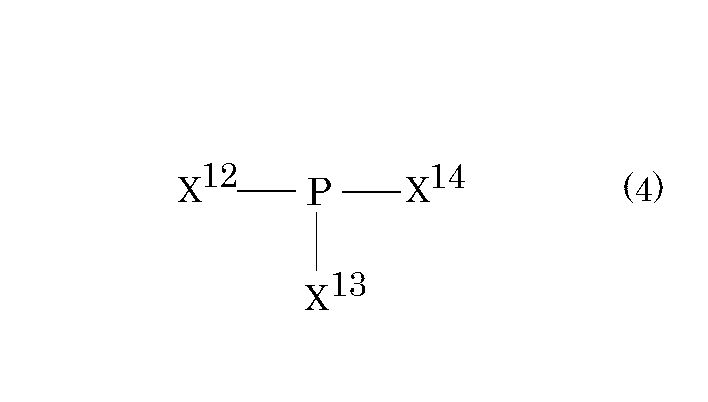
前記X12~X14は、それぞれ独立して、水素原子、ハロゲン原子、アルキル基、アルコキシ基、アルキルチオ基、ハロゲン原子、ヘテロ原子又は不飽和結合の少なくとも何れか一つを有するアルキル基(以下、「ハロゲン原子等を有するアルキル基」という。)、ハロゲン原子、ヘテロ原子又は不飽和結合の少なくとも何れか一つを有するアルコキシ基(以下、「ハロゲン原子等を有するアルコキシ基」という。)、又はハロゲン原子、ヘテロ原子又は不飽和結合の少なくとも何れか一つを有するアルキルチオ基(以下、「ハロゲン原子等を有するアルキルチオ基」という。)を表す。前記アルキル基、アルコキシ基、アルキルチオ基、ハロゲン原子等を有するアルキル基、ハロゲン原子等を有するアルコキシ基及びハロゲン原子等を有するアルキルチオ基の炭素数は1~20の範囲であり、好ましくは1~10、より好ましくは1~4である。また、不飽和結合の数は1~10の範囲が好ましく、1~5の範囲がより好ましく、1~3の範囲が特に好ましい。
前記X12~X14は特に限定されず、具体的には、例えば、メチル基、エチル基、プロピル基、ブチル基、イソプロピル基、ペンチル基、ヘキシル基、ヘプチル基、オクチル基等の鎖状アルキル基、シクロペンチル基、シクロヘキシル基等の環状アルキル基、ヨードメチル基、ブロモメチル基、クロロメチル基、フルオロメチル基、ジヨードメチル基、ジブロモメチル基、ジクロロメチル基、ジフルオロメチル基、トリヨードメチル基、トリブロモメチル基、トリクロロメチル基、トリフルオロメチル基、2-ヨードエチル基、2-ブロモエチル基、2-クロロエチル基、2-フルオロエチル基、1,2-ジヨードエチル基、1,2-ジブロモエチル基、1,2-ジクロロエチル基、1,2-ジフルオロエチル基、2,2-ジヨードエチル基、2,2-ジブロモエチル基、2,2-ジクロロエチル基、2,2-ジフルオロエチル基、2,2,2-トリブロモエチル基、2,2,2-トリクロロエチル基、2,2,2-トリフルオロエチル基、ヘキサフルオロ-2-プロピル基等の鎖状含ハロゲンアルキル基、2-ヨードシクロヘキシル基、2-ブロモシクロヘキシル基、2-クロロシクロヘキシル基、2-フルオロシクロヘキシル基等の環状含ハロゲンアルキル基、2-プロペニル基、イソプロペニル基、2-ブテニル基、3-ブテニル基等の鎖状アルケニル基、2-シクロペンテニル基、2-シクロヘキセニル基、3-シクロヘキセニル基等の環状アルケニル基、2-プロピニル基、1-ブチニル基、2-ブチニル基、3-ブチニル基、1-ペンチニル基、2-ペンチニル基、3-ペンチニル基、4-ペンチニル基等の鎖状アルキニル基、フェニル基、3-メトキシフェニル基、4-メトキシフェニル基、3,5-ジメトキシフェニル基、4-フェノキシフェニル基等のフェニル基、2-ヨードフェニル基、2-ブロモフェニル基、2-クロロフェニル基、2-フルオロフェニル基、3-ヨードフェニル基、3-ブロモフェニル基、3-クロロフェニル基、3-フルオロフェニル基、4-ヨードフェニル基、4-ブロモフェニル基、4-クロロフェニル基、4-フルオロフェニル基、3,5-ジヨードフェニル基、3,5-ジブロモフェニル基、3,5-ジクロロフェニル基、3,5-ジフルオロフェニル基等の含ハロゲンフェニル基、メトキシ基、エトキシ基、プロポキシ基、ブトキシ基、ペントキシ基、ヘキソキシ基等の鎖状アルコキシ基、シクロペントキシ基、シクロヘキソキシ基等の環状アルコキシ基、2-ヨードエトキシ基、2-ブロモエトキシ基、2-クロロエトキシ基、2-フルオロエトキシ基、1,2-ジヨードエトキシ基、1,2-ジブロモエトキシ基、1,2-ジクロロエトキシ基、1,2-ジフルオロエトキシ基、2,2-ジヨードエトキシ基、2,2-ジブロモエトキシ基、2,2-ジクロロエトキシ基、2,2-ジフルオロエトキシ基、2,2,2-トリブロモエトキシ基、2,2,2-トリクロロエトキシ基、2,2,2-トリフルオロエトキシ基、ヘキサフルオロ-2-プロポキシ基等の鎖状含ハロゲンアルキル基、2-ヨードシクロヘキソキシ基、2-ブロモシクロヘキソキシ基、2-クロロシクロヘキソキシ基、2-フルオロシクロヘキソキシ基等の環状含ハロゲンアルキル基、2-プロペキシ基、イソプロペキシ基、2-ブテキシ基、3-ブテキシ基等の鎖状アルケニルアルコキシ基、2-シクロペンテキシ基、2-シクロヘキセキシ基、3-シクロヘキセキシ基等の環状アルケニルアルコキシ基、2-プロピキシ基、1-ブチキシ基、2-ブチキシ基、3-ブチキシ基、1-ペンチキシ基、2-ペンチキシ基、3-ペンチキシ基、4-ペンチキシ基等の鎖状アルキニルアルコキシ基、フェノキシ基、3-メトキシ基、フェノキシ基、4-メトキシ基、フェノキシ基、3,5-ジメトキシ基、フノキシ基等のフェノキシ基、2-ヨードフェノキシ基、2-ブロモフェノキシ基、2-クロロフェノキシ基、2-フルオロフェノキシ基、3-ヨードフェノキシ基、3-ブロモフェノキシ基、3-クロロフェノキシ基、3-フルオロフェノキシ基、4-ヨードフェノキシ基、4-ブロモフェノキシ基、4-クロロフェノキシ基、4-フルオロフェノキシ基、3,5-ジヨードフェノキシ基、3,5-ジブロフェノキシ基、3,5-ジクロロフェノキシ基、3,5-ジフルオロフェノキシ基等の含ハロゲンフェノキシ基、メチルチオ基、エチルチオ基、プロピルチオ基、ブチルチオ基、イソプロピルチオ基、ペンチルチオ基、ヘキシルチオ基等のアルキルチオ基等が挙げられる。
また、前記X12~X14は、任意に選択される1つの組合せにより、前記アルキル基、アルコキシ基、アルキルチオ基、ハロゲン原子等を有するアルキル基、ハロゲン原子等を有するアルコキシ基又はハロゲン原子等を有するアルキルチオ基の何れかが、相互に結合して環状構造を形成するものであってもよい。この場合、前記X12~X14における前記アルキル基等が、例えば、メチレン基、エチレン基、プロピレン基、ブチレン基、ペンチレン基、ヘキシレン基、ヘプチレン基、オクチレン基、ノニレン基等の直鎖アルキレン基、ヨードメチレン基、ジヨードメチレン基、ブロモメチレン基、ジブロモメチレン基、フルオロメチレン基、ジフルオロメチレン基、ヨードエチレン基、1,1-ジヨードエチレン基、1,2-ジヨードエチレン基、トリヨードエチレン基、テトラヨードエチレン基、クロロエチレン基、1,1-ジクロロエチレン基、1,2-ジクロロエチレン基、トリクロロエチレン基、テトラクロロエチレン基、フルオロエチレン基、1,1-ジフルオロエチレン基、1,2-ジフルオロエチレン基、トリフルオロエチレン基、テトラフルオロエチレン基等の含ハロゲン直鎖アルキレン基、シクロヘキシレン基、フェニレン基、ベンジレン基、ナフチレン基、アントラシレン基、ナフタシレン基、ペンタシレン基のような環状炭化水素基及びその一部又は全部をハロゲン原子等に置き換えたものとなる。
前記一般式(4)で表されるリン化合物の具体例としては、例えば、入手が容易なトリメチルホスフィンやメチルジフェニルホスフィン等が挙げられる。
前記成分(A)の添加量は、非水電解液の全質量に対し0.05質量%~5質量%の範囲内であることが好ましく、0.1質量%~3質量%の範囲内であることがより好ましく、0.5質量%~2質量%の範囲内であることが更に好ましい。前記添加量を0.05質量%以上にすることにより、二次電池の高温環境下でのサイクル特性を一層改善することができる。その一方、前記添加量を5質量%以下にすることにより、非水電解液中の電解質の非水電解液溶媒に対する溶解性が低下するのを抑制することができる。
また、本実施の形態に於いて、成分(A)は、少なくとも1種類のリン化合物が非水電解液中に含まれていればよい。但し、含有させる成分(A)の種類の数は5種類以下であることが好ましく、より好ましくは3種類以下、特に好ましくは2種類以下である。前記成分(A)の種類を5種類以下にすることにより、非水電解液の製造の際に於ける工程の複雑化を抑制することができる。
<成分(B)>
前記成分(B)は、非水電解液中に少なくとも1種含まれており、具体的には、下記一般式(5)で表されるリン酸ジエステル塩である。
前記成分(B)は、非水電解液中に少なくとも1種含まれており、具体的には、下記一般式(5)で表されるリン酸ジエステル塩である。
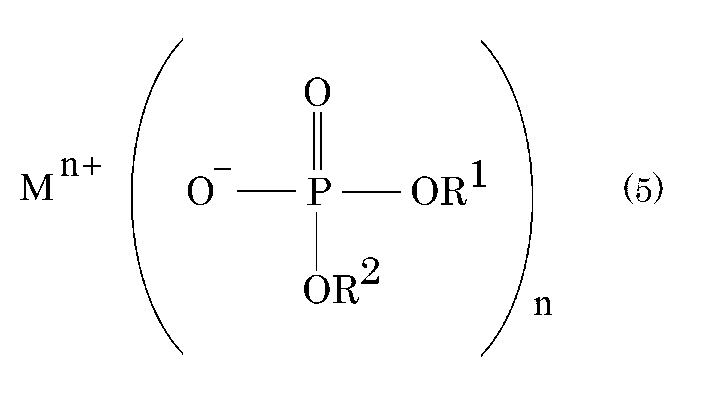
前記一般式(5)に於いて、前記Mn+及び価数n、前記一般式(1)で述べたのと同様である。
前記一般式(5)に於いて、前記R1及びR2は、それぞれ独立して、炭化水素基、又はハロゲン原子、ヘテロ原子又は不飽和結合の少なくとも何れか1つを有する炭化水素基(以下、「ハロゲン原子等を有する炭化水素基」という。)を表す。前記炭化水素基の炭素数は1~20であり、好ましくは1~10、より好ましくは1~4である。また、ハロゲン原子等を有する炭化水素基の炭素数は1~20であり、好ましくは1~10、より好ましくは1~4である。また、不飽和結合の数は1~10の範囲が好ましく、1~5の範囲がより好ましく、1~3の範囲が特に好ましい。
前記炭化水素基又はハロゲン原子等を有する炭化水素基としては、具体的には、例えば、メチル基、エチル基、プロピル基、ブチル基、イソプロピル基、ペンチル基、ヘキシル基、ヘプチル基、オクチル基等の鎖状アルキル基、シクロペンチル基、シクロヘキシル基等の環状アルキル基、2-ヨードエチル基、2-ブロモエチル基、2-クロロエチル基、2-フルオロエチル基、1,2-ジヨードエチル基、1,2-ジブロモエチル基、1,2-ジクロロエチル基、1,2-ジフルオロエチル基、2,2-ジヨードエチル基、2,2-ジブロモエチル基、2,2-ジクロロエチル基、2,2-ジフルオロエチル基、2,2,2-トリブロモエチル基、2,2,2-トリクロロエチル基、2,2,2-トリフルオロエチル基、ヘキサフルオロー2-プロピル基等の鎖状含ハロゲンアルキル基、2-ヨードシクロヘキシル基、2-ブロモシクロヘキシル基、2-クロロシクロヘキシル基、2-フルオロシクロヘキシル基等の環状含ハロゲンアルキル基、2-プロペニル基、イソプロペニル基、2-ブテニル基、3-ブテニル基等の鎖状アルケニル基、2-シクロペンテニル基、2-シクロヘキセニル基、3-シクロヘキセニル基等の環状アルケニル基、2-プロピニル基、1-ブチニル基、2-ブチニル基、3-ブチニル基、1-ペンチニル基、2-ペンチニル基、3-ペンチニル基、4-ペンチニル基等の鎖状アルキニル基、フェニル基、3-メトキシフェニル基、4-メトキシフェニル基、3,5-ジメトキシフェニル基、4-フェノキシフェニル基等のフェニル基、2-ヨードフェニル基、2-ブロモフェニル基、2-クロロフェニル基、2-フルオロフェニル基、3-ヨードフェニル基、3-ブロモフェニル基、3-クロロフェニル基、3-フルオロフェニル基、4-ヨードフェニル基、4-ブロモフェニル基、4-クロロフェニル基、4-フルオロフェニル基、3,5-ジヨードフェニル基、3,5-ジブロモフェニル基、3,5-ジクロロフェニル基、3,5-ジフルオロフェニル基等の含ハロゲンフェニル基、1-ナフチル基、2-ナフチル基、3-アミノ-2-ナフチル基等のナフチル基等が挙げられる。
尚、前記ハロゲン原子とは、フッ素、塩素、臭素又はヨウ素の原子を意味する。また、前記ヘテロ原子とは、酸素、窒素又は硫黄等の原子を意味する。前記ハロゲン原子等を有する炭化水素基において、前記ハロゲン原子及びヘテロ原子は、前記炭化水素基中の水素の一部又は全部がこれらのハロゲン原子及び/又はヘテロ原子の何れかで置換されていてもよい。
前記R1とR2は、前記に例示した官能基群に於いて、同種でもよく相互に異なっていてもよい。また前記に例示した官能基群は単なる例示に過ぎず、これらに限定されるものではない。
更に、前記R1とR2は、前記炭化水素基、又は前記ハロゲン原子等を有する炭化水素基の何れかであって、相互に結合して環状構造を形成していてもよい。この場合、前記炭化水素基又はハロゲン原子等を有する炭化水素基としては、具体的には、メチレン基、エチレン基、プロピレン基、ブチレン基、ペンチレン基、ヘキシレン基、ヘプチレン基、オクチレン基、ノニレン基等の直鎖アルキレン基、ヨードメチレン基、ジヨードメチレン基、ブロモメチレン基、ジブロモメチレン基、フルオロメチレン基、ジフルオロメチレン基、ヨードエチレン基、1,1-ジヨードエチレン基、1,2-ジヨードエチレン基、トリヨードエチレン基、テトラヨードエチレン基、クロロエチレン基、1,1-ジクロロエチレン基、1,2-ジクロロエチレン基、トリクロロエチレン基、テトラクロロエチレン基、フルオロエチレン基、1,1-ジフルオロエチレン基、1,2-ジフルオロエチレン基、トリフルオロエチレン基、テトラフルオロエチレン基等の含ハロゲン直鎖アルキレン基、シクロヘキシレン基、フェニレン基、ベンジレン基、ナフチレン基、アントラシレン基、ナフタシレン基、ペンタシレン基のような環状炭化水素基及びその一部又は全部をハロゲン原子等に置き換えたもの等が挙げられる。
前記一般式(5)で表されるリン化合物の具体例としては、例えば、入手が容易なジエチルリン酸リチウム、ビス(2,2,2-トリフルオロエチル)リン酸リチウム等が挙げられる。
前記成分(B)の添加量は、非水電解液の全質量に対し0.05質量%~5質量%の範囲内であることが好ましく、0.1質量%~3質量%の範囲内であることがより好ましく、0.5質量%~2質量%の範囲内であることが更に好ましい。前記添加量を0.05質量%以上にすることにより、二次電池の高温環境下でのサイクル特性を一層改善することができる。その一方、前記添加量を5質量%以下にすることにより、非水電解液中の電解質の非水電解液溶媒に対する溶解性が低下するのを抑制することができる。
また、本実施の形態に於いて、前記成分(B)は、少なくとも1種類が非水電解液中に含まれていればよいが、含有させる成分(B)の種類の数は、好ましくは5種類以下であり、より好ましくは3種類以下であり、特に好ましくは2種類以下である。前記成分(B)の種類を5種類以下にすることにより、非水電解液の製造の際に於ける工程の複雑化を抑制することができる。
<成分(C)>
本実施の形態の非水電解液においては、さらに少なくとも1種の下記成分(C)を含んでいてもよい。
本実施の形態の非水電解液においては、さらに少なくとも1種の下記成分(C)を含んでいてもよい。
前記成分(C)は、ホウ素錯体塩、ホウ酸エステル、酸無水物、不飽和結合を有する環状カーボネート、ハロゲン原子を有する環状カーボネート、環状スルホン酸エステル及びアセトアセチル基を有するアミン類からなる群より選ばれる少なくとも1種の化合物である。
前記ホウ素錯体塩は、具体的には、下記一般式(6)で表される化合物である。

前記一般式(6)に於いて、前記Mn+及び価数n、前記一般式(1)で述べたのと同様である。
前記一般式(6)に於いて、前記X15~X18は、それぞれ独立しており、ハロゲン原子、アルキル基、アルコキシ基、ハロゲン原子、ヘテロ原子又は不飽和結合の少なくとも何れか1つを有するアルキル基(以下、「ハロゲン原子等を有するアルキル基」という。)、又はハロゲン原子、ヘテロ原子又は不飽和結合の少なくとも何れか1つを有するアルコキシ基(以下、「ハロゲン原子等を有するアルコキシ基」という。)を表す。または、任意に選択される1又は2つの組合せが、-OOC-Z-COO-、-O-Z-O-又は-OOC-Z-O-の環状構造を形成したものを表す。その場合の前記Zは、炭素数が0~20、好ましくは0~10、より好ましくは0~5の炭化水素基、又は炭素数が0~20、好ましくは0~10、より好ましくは0~5の範囲であって、ヘテロ原子、不飽和結合若しくは環状構造を有する炭化水素基を表す。前記X15~X18が前記-OOC-Z-COO-、-O-Z-O-、-OOC-Z-O-の環状構造の何れか1つを2組み有する場合、それぞれのZは異なっていてもよい。尚、ヘテロ原子とは、酸素原子、窒素原子又は硫黄原子を意味する。
前記Zとしては特に限定されず、具体的には、例えば、メチレン基、エチレン基、プロピレン基、ブチレン基、ペンチレン基、ヘキシレン基、ヘプチレン基、オクチレン基、ノニレン基等の直鎖アルキレン基、ヨードメチレン基、ジヨードメチレン基、ブロモメチレン基、ジブロモメチレン基、フルオロメチレン基、ジフルオロメチレン基、ヨードエチレン基、1,1-ジヨードエチレン基、1,2-ジヨードエチレン基、トリヨードエチレン基、テトラヨードエチレン基、クロロエチレン基、1,1-ジクロロエチレン基、1,2-ジクロロエチレン基、トリクロロエチレン基、テトラクロロエチレン基、フルオロエチレン基、1,1-ジフルオロエチレン基、1,2-ジフルオロエチレン基、トリフルオロエチレン基、テトラフルオロエチレン基等の含ハロゲン直鎖アルキレン基、シクロヘキシレン基、フェニレン基、ベンジレン基、ナフチレン基、アントラシレン基、ナフタシレン基、ペンタシレン基のような環状炭化水素基及びその一部又は全部をハロゲンに置き換えたもの等が挙げられる。
更に、前記Zの炭素数が0の場合、-OOC-Z-COO-は-OOC-COO-であり、オキサレート基を表す。また、前記Zが1,2-フェニレン基である場合、-O-Z-O-はベンゼンジオラート基を表し、-O-Z-COO-はサリチラート基を表す。
また、前記X15~X18は、それぞれ独立して、ハロゲン原子、アルキル基、アルコキシ基、ハロゲン原子、ヘテロ原子又は不飽和結合の少なくとも何れか1つを有するアルキル基(以下、「ハロゲン原子等を有するアルキル基」という。)、又はハロゲン原子、ヘテロ原子又は不飽和結合の少なくとも何れか1つを有するアルコキシ基(以下、「ハロゲン原子等を有するアルコキシ基」という。)を表す。前記アルキル基、アルコキシ基、ハロゲン原子等を有するアルキル基及びハロゲン原子等を有するアルコキシ基の炭素数は0~20の範囲であり、好ましくは0~10、より好ましくは0~5である。また、不飽和結合の数は1~10の範囲が好ましく、1~5の範囲がより好ましく、1~3の範囲が特に好ましい
前記ハロゲン原子及びヘテロ原子は、前記一般式(1)で述べたのと同様である。また、前記ハロゲン原子等を有するアルキル基及びハロゲン原子等を有するアルコキシ基において、前記ハロゲン原子及びヘテロ原子は、それらの官能基中の水素の一部又は全部がこれらのハロゲン原子及び/又はヘテロ原子の何れかで置換されていてもよい。
前記X15~X18は特に限定されず、具体的には、例えば、メチル基、エチル基、プロピル基、ブチル基、イソプロピル基、ペンチル基、ヘキシル基、ヘプチル基、オクチル基等の鎖状アルキル基、シクロペンチル基、シクロヘキシル基等の環状アルキル基、ヨードメチル基、ブロモメチル基、クロロメチル基、フルオロメチル基、ジヨードメチル基、ジブロモメチル基、ジクロロメチル基、ジフルオロメチル基、トリヨードメチル基、トリブロモメチル基、トリクロロメチル基、トリフルオロメチル基、2-ヨードエチル基、2-ブロモエチル基、2-クロロエチル基、2-フルオロエチル基、1,2-ジヨードエチル基、1,2-ジブロモエチル基、1,2-ジクロロエチル基、1,2-ジフルオロエチル基、2,2-ジヨードエチル基、2,2-ジブロモエチル基、2,2-ジクロロエチル基、2,2-ジフルオロエチル基、2,2,2-トリブロモエチル基、2,2,2-トリクロロエチル基、2,2,2-トリフルオロエチル基、ヘキサフルオロ-2-プロピル基等の鎖状含ハロゲンアルキル基、2-ヨードシクロヘキシル基、2-ブロモシクロヘキシル基、2-クロロシクロヘキシル基、2-フルオロシクロヘキシル基等の環状含ハロゲンアルキル基、2-プロペニル基、イソプロペニル基、2-ブテニル基、3-ブテニル基等の鎖状アルケニル基、2-シクロペンテニル基、2-シクロヘキセニル基、3-シクロヘキセニル基等の環状アルケニル基、2-プロピニル基、1-ブチニル基、2-ブチニル基、3-ブチニル基、1-ペンチニル基、2-ペンチニル基、3-ペンチニル基、4-ペンチニル基等の鎖状アルキニル基、フェニル基、3-メトキシフェニル基、4-メトキシフェニル基、3,5-ジメトキシフェニル基、4-フェノキシフェニル基等のフェニル基、2-ヨードフェニル基、2-ブロモフェニル基、2-クロロフェニル基、2-フルオロフェニル基、3-ヨードフェニル基、3-ブロモフェニル基、3-クロロフェニル基、3-フルオロフェニル基、4-ヨードフェニル基、4-ブロモフェニル基、4-クロロフェニル基、4-フルオロフェニル基、3,5-ジヨードフェニル基、3,5-ジブロモフェニル基、3,5-ジクロロフェニル基、3,5-ジフルオロフェニル基等の含ハロゲンフェニル基、メトキシ基、エトキシ基、プロポキシ基、ブトキシ基、ペントキシ基、ヘキソキシ基等の鎖状アルコキシ基、シクロペントキシ基、シクロヘキソキシ基等の環状アルコキシ基、2-ヨードエトキシ基、2-ブロモエトキシ基、2-クロロエトキシ基、2-フルオロエトキシ基、1,2-ジヨードエトキシ基、1,2-ジブロモエトキシ基、1,2-ジクロロエトキシ基、1,2-ジフルオロエトキシ基、2,2-ジヨードエトキシ基、2,2-ジブロモエトキシ基、2,2-ジクロロエトキシ基、2,2-ジフルオロエトキシ基、2,2,2-トリブロモエトキシ基、2,2,2-トリクロロエトキシ基、2,2,2-トリフルオロエトキシ基、ヘキサフルオロ-2-プロポキシ基等の鎖状含ハロゲンアルキル基、2-ヨードシクロヘキソキシ基、2-ブロモシクロヘキソキシ基、2-クロロシクロヘキソキシ基、2-フルオロシクロヘキソキシ基等の環状含ハロゲンアルキル基、2-プロペキシ基、イソプロペキシ基、2-ブテキシ基、3-ブテキシ基等の鎖状アルケニルアルコキシ基、2-シクロペンテキシ基、2-シクロヘキセキシ基、3-シクロヘキセキシ基等の環状アルケニルアルコキシ基、2-プロピキシ基、1-ブチキシ基、2-ブチキシ基、3-ブチキシ基、1-ペンチキシ基、2-ペンチキシ基、3-ペンチキシ基、4-ペンチキシ基等の鎖状アルキニルアルコキシ基、フェノキシ基、3-メトキシ基、フェノキシ基、4-メトキシ基、フェノキシ基、3,5-ジメトキシ基、フノキシ基等のフェノキシ基、2-ヨードフェノキシ基、2-ブロモフェノキシ基、2-クロロフェノキシ基、2-フルオロフェノキシ基、3-ヨードフェノキシ基、3-ブロモフェノキシ基、3-クロロフェノキシ基、3-フルオロフェノキシ基、4-ヨードフェノキシ基、4-ブロモフェノキシ基、4-クロロフェノキシ基、4-フルオロフェノキシ基、3,5-ジヨードフェノキシ基、3,5-ジブロフェノキシ基、3,5-ジクロロフェノキシ基、3,5-ジフルオロフェノキシ基等の含ハロゲンフェノキシ基等が挙げられる。
尚、前記一般式(6)で表されるホウ素錯体塩の具体的としては、例えば、入手が容易なリチウムビス[1,2’-ベンジオラート(2)-O,O’]ボレート、リチウムビスサリチラートボレート、リチウムビス(オキサラト)ボレート、リチウムテトラフルオロボレート等が挙げられる。
前記成分(C)に於けるホウ酸エステルとしては、本実施の形態の非水電解液及びそれを用いた二次電池の特性を損なうものでない限り、特に限定されない。具体的には、例えば、ホウ酸トリメチル、ホウ酸トリエチル、ホウ酸トリイソプロピル、ホウ酸トリブチル、ホウ酸トリペンチル、ホウ酸トリヘキシル、ホウ酸トリへプチル、ホウ酸トリフェニル、2ホウ酸トリス(2,2,2-ヨードエチル)、ホウ酸トリス(2,2,2-トリブロモエチル)、ホウ酸トリス(2,2,2-トリクロロエチル)ホウ酸トリス(2,2,2-トリフルオロエチル)ホウ酸トリス(4-ヨードフェニル)、ホウ酸トリス(4-ブロモフェニル)、ホウ酸トリス(4-クロロフェニル)、ホウ酸トリス(4-フルオロフェニル)、ホウ酸ジエチルメチル、ホウ酸エチルジメチル等が挙げられる。これらは一種単独で、又は二種以上を併用することができる。
前記成分(C)に於ける酸無水物としては、本実施の形態の非水電解液及びそれを用いた二次電池の特性を損なうものでない限り、特に限定されない。具体的には、例えば、酢酸無水物、プロピオン酸無水物、酪酸無水物、吉草酸無水物、ヘキサン酸無水物、へプタン酸無水物、オクタン酸無水物、ノナン酸無水物、デカン酸無水物、エイコサン酸無水物、ドコサン酸無水物、安息香酸無水物、4-メトキシ安息香酸無水物、ジフェニル酢酸無水物、クロトン酸無水物、シクロヘキサンカルボン酸無水物、エライジン酸無水物、イソ酪酸無水物、イソ吉草酸無水物、ラウリン酸無水物、リノール酸無水物、ミリスチン酸無水物、アンゲリカ酸無水物、クロロジフルオロ酢酸無水物、トリクロロ酢酸無水物、ジフルオロ酢酸無水物、トリフルオロ酢酸無水物、4-トリフルオロメチル安息香酸無水物等の直鎖カルボン酸無水物、フタル酸無水物、3-アセトアミドフタル酸無水物、4,4’-カルボニルジフタル酸無水物、4,4’-ビフタル酸無水物、3-ヨードフタル酸無水物、3-ブロモフタル酸無水物、3-クロロフタル酸無水物、3-フルオロフタル酸無水物、4-ヨードフタル酸無水物、4-ブロモフタル酸無水物、4-クロロフタル酸無水物、4-クロロフタル酸無水物、4,5-ジヨードフタル酸無水物、4,5-ジブロモフタル酸無水物、4,5-ジクロロフタル酸無水物、4,5-ジフルオロフタル酸無水物、4,4’-スルホニルジフタル酸無水物、3-ニトロフタル酸無水物、4-ニトロフタル酸無水物、exo-3,6-エポキシヘキサヒドロフタル酸無水物、exo-3,6-エポキシ-1,2,3,6-テトラヒドロフタル酸無水物、テトラヨードフタル酸無水物、テトラクロロフタル酸無水物、テトラフルオロフタル酸無水物、4-tert-ブチルフタル酸無水物、4-エチニルフタル酸無水物、4,4’-(ヘキサフルオロイソプロピリデン)ジフタル酸無水物、コハク酸無水物、(R)-(+)-2-アセトキシコハク酸無水物、(S)-(-)-2-アセトキシコハク酸無水物、2-ブテン-1-イルコハク酸無水物、ブチルコハク酸無水物、デシルコハク酸無水物、2,3-ジメチルコハク酸無水物、2-ドデセン-1-イルコハク酸無水物、ドデシルコハク酸無水物、オクタデセニコハク酸無水物、(2,7-オクタジエン-1-イル)コハク酸無水物、n-オクチルコハク酸無水物、ヘキサデシルコハク酸無水物、マレイン酸無水物、2,3-ビス(2,4,5-トリメチル-3-チエニル)マレイン酸無水物、2-(-2-カルボキシエチル)-3-メチル-マレイン酸無水物、2,3-ジメチルマレイン酸無水物、2,3-ジフェニルマレイン酸無水物、フェニルマレイン酸無水物、4-ペンテン-1,2-ジカルボン酸無水物、2,3-アントラセンジカルボン酸無水物、ビシクロ[2,2,2]オクト-5-エン-2,3-ジカルボン酸無水物、4-ブロモ-1,8-ナフタレンジカルボン酸無水物、(±)-trans-1,2-シクロヘキサンジカルボン酸無水物、cis-4-シクロヘキセン-1,2-ジカルボン酸無水物、2,5-ジブロモ-3,4-チオフェンジカルボン酸無水物、5,6-ジヒドロ-1,4-ジチイン-2,3-ジカルボン酸無水物、2,2’-ビフェニルジカルボン酸無水物、4-メチルシクロヘキサン-1,2-ジカルボン酸無水物、3-メチル-4-シクロヘキセン-1,2-ジカルボン酸無水物、4-メチル-4-シクロヘキセン-1,2-ジカルボン酸無水物、2,3-ナフタレンジカルボン酸無水物、3,4-チオフェンジカルボン酸無水物、1,8-ナフタレンジカルボン酸無水物、5-ノルボネン-2,3-ジカルボン酸無水物、1,2-シクロプロパンジカルボン酸無水物、グルタル酸無水物、3,3-ペンタメチレングルタル酸無水物、2,2-ジメチルグルタル酸無水物、3,3-ジメチルグルタル酸無水物、3-メチルグルタル酸無水物、2-フタルイミドグルタル酸無水物、3,3-テトラメチレングルタル酸無水物、N-メチルイサト酸無水物、4-ヨードイサト酸無水物、4-ブロモイサト酸無水物、4-クロロイサト酸無水物、4-フルオロイサト酸無水物、5-ヨードイサト酸無水物、5-ブロモイサト酸無水物、5-クロロイサト酸無水物、5-フルオロイサト酸無水物、イタコン酸無水物、カロン酸無水物、シトラコン酸無水物、ジグリコール酸無水物、1,2-ナフタル酸無水物、ピロメリット酸無水物、ヘット酸無水物、2,2,3,3,4,4-ヘキサフルオロペンタン二酸無水物等の環状カルボンサン無水物、トリフルオロメタンスルホン酸無水物、p-トルエンスルホン酸無水物等の直鎖スルホン酸無水物、2-スルホ安息香酸無水物、テトラヨード-O-スルホ安息香酸無水物、テトラブロモ-O-スルホ安息香酸無水物、テトラクロロ-O-スルホ安息香酸無水物、テトラフルオロ-O-スルホ安息香酸無水物等の環状スルホン酸無水物、ジフェニルホスフィン酸等の鎖状ホスフィン酸無水物、1-プロパンホスホン酸無水物等の環状ホスホン酸無水物、3.4-ジヨードフェニルボロン酸無水物、3,4-ジブロモフェニルボロン酸無水物、3,4-ジクロロフェニルボロン酸無水物、3,4-ジフルオロフェニルボロン酸無水物、4-ヨードフェニルボロン酸無水物、4-ブロモフェニルボロン酸無水物、4-クロロフェニルボロン酸無水物、4-フルオロフェニルボロン酸無水物、(m-ターフェニルボロン酸無水物、3,4,5-トリヨードフェニルボロン酸無水物、3,4,5-トリブロモフェニルボロン酸無水物、3,4,5-トリクロロフェニルボロン酸無水物、3,4,5-トリフルオロフェニルボロン酸無水物等が挙げられる。
前記成分(C)に於ける不飽和結合を有する環状カーボネートとしては、本実施の形態の非水電解液及びそれを用いた二次電池の特性を損なうものでない限り、特に限定されない。不飽和結合の数は1~10が好ましく、1~5がより好ましく、1~3が特に好ましい。不飽和結合を有する環状カーボネートとしては、具体的には、例えば、ビニレンカーボネート、ヨードビニレンカーボネート、ブロモビニレンカーボネート、クロロビニレンカーボネート、フルオロビニレンカーボネート、1,2-ジヨードビニレンカーボネート、1,2-ジブロモビニレンカーボネート、1,2-ジクロロビニレンカーボネート、1,2-ジフルオロビニレンカーボネート、メチルビニレンカーボネート、ヨードメチルビニレンカーボネート、ブロモメチルビニレンカーボネート、クロロメチルビニレンカーボネート、フルオロメチルビニレンカーボネート、ジクロロメチルビニレンカーボネート、ジブロモメチルビニレンカーボネート、ジクロロメチルビニレンカーボネート、ジフルオロメチルビニレンカーボネート、トリヨードメチルビニレンカーボネート、トリブロモメチルビニレンカーボネート、トリクロロメチルビニレンカーボネート、トリフルオロメチルビニレンカーボネート、エチルビニレンカーボネート、プロピルビニレンカーボネート、ブチルビニレンカーボネート、ジメチルビニレンカーボネート、ジエチルビニレンカーボネート、ジプロピルビニレンカーボネート、ビニルエチレンカーボネート等が挙げられる。
前記成分(C)に於けるハロゲン原子を有する環状カーボネートとしては、本実施の形態の非水電解液及びそれを用いた二次電池の特性を損なうものでない限り、特に限定されない。具体的には、例えば、ヨードエチレンカーボネート、ブロモエチレンカーボネート、クロロエチレンカーボネート、フルオロエチレンカーボネート、1,2-ジヨードエチレンカーボネート、1,2-ジブロモエチレンカーボネート、1,2-ジクロロエチレンカーボネート、1,2-ジフルオロエチレンカーボネート等が挙げられる。尚、ハロゲン原子とは、フッ素原子、塩素原子、臭素原子又はヨウ素原子を意味する。
前記成分(C)に於ける環状スルホン酸エステルとしては、本実施の形態の非水電解液及びそれを用いた二次電池の特性を損なうものでない限り、特に限定されない。具体的には、例えば、1,3-プロパンスルトン、2,4-ブタンスルトン、1,4-ブタンスルトン、エチレンサルファイト等が挙げられる。
前記成分(C)に於けるアセトアセチル基を有するアミン類は、具体的には、下記一般式(7)で表される化合物である。
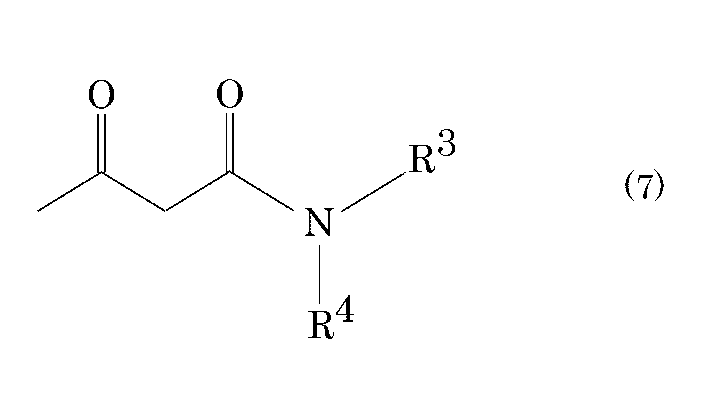
前記R3及びR4は、それぞれ独立して、炭素数が1~20、好ましくは1~10、より好ましくは1~5の炭化水素基、又は炭素数が1~20、好ましくは1~10、より好ましくは1~5の範囲であって、ハロゲン原子、ヘテロ原子若しくは不飽和結合を有する炭化水素基(以下、「ハロゲン原子等を有する炭化水素基」という。)を表す。
ここで、前記ハロゲン原子とは、フッ素原子、塩素原子、臭素原子又はヨウ素原子を意味する。また、ヘテロ原子とは、酸素原子、窒素原子又は硫黄原子を意味する。また、前記ハロゲン原子等を有する炭化水素基において、前記ハロゲン原子及びヘテロ原子は、炭化水素基中の水素の一部又は全部がこれらのハロゲン原子及び/又はヘテロ原子の何れかで置換されていてもよい。
前記R3及びR4としては、具体的には、例えば、メチル基、エチル基、プロピル基、ブチル基、イソプロピル基、ペンチル基、ヘキシル基、ヘプチル基、オクチル基等の鎖状アルキル基、シクロペンチル基、シクロヘキシル基等の環状アルキル基、2-ヨードエチル基、2-ブロモエチル基、2-クロロエチル基、2-フルオロエチル基、1,2-ジヨードエチル基、1,2-ジブロモエチル基、1,2-ジクロロエチル基、1,2-ジフルオロエチル基、2,2-ジヨードエチル基、2,2-ジブロモエチル基、2,2-ジクロロエチル基、2,2-ジフルオロエチル基、2,2,2-トリブロモエチル基、2,2,2-トリクロロエチル基、2,2,2-トリフルオロエチル基、ヘキサフルオロー2-プロピル基等の鎖状含ハロゲンアルキル基、2-ヨードシクロヘキシル基、2-ブロモシクロヘキシル基、2-クロロシクロヘキシル基、2-フルオロシクロヘキシル基等の環状含ハロゲンアルキル基、2-プロペニル基、イソプロペニル基、2-ブテニル基、3-ブテニル基等の鎖状アルケニル基、2-シクロペンテニル基、2-シクロヘキセニル基、3-シクロヘキセニル基等の環状アルケニル基、2-プロピニル基、1-ブチニル基、2-ブチニル基、3-ブチニル基、1-ペンチニル基、2-ペンチニル基、3-ペンチニル基、4-ペンチニル基等の鎖状アルキニル基、フェニル基、3-メトキシフェニル基、4-メトキシフェニル基、3,5-ジメトキシフェニル基、4-フェノキシフェニル基等のフェニル基、2-ヨードフェニル基、2-ブロモフェニル基、2-クロロフェニル基、2-フルオロフェニル基、3-ヨードフェニル基、3-ブロモフェニル基、3-クロロフェニル基、3-フルオロフェニル基、4-ヨードフェニル基、4-ブロモフェニル基、4-クロロフェニル基、4-フルオロフェニル基、3,5-ジヨードフェニル基、3,5-ジブロモフェニル基、3,5-ジクロロフェニル基、3,5-ジフルオロフェニル基等の含ハロゲンフェニル基、1-ナフチル基、2-ナフチル基、3-アミノ-2-ナフチル基等のナフチル基等が挙げられる。
尚、前記一般式(7)で表されるアセトアセチル基を有するアミン類の具体的としては、例えば、入手が容易なN,N-ジメチルアセトアセトアミド等が挙げられる。
前記成分(C)の添加量は、非水電解液の全質量に対し0.05質量%~5質量%の範囲内であることが好ましく、0.1質量%~3質量%の範囲内であることがより好ましく、0.5質量%~2質量%の範囲内であることが特に好ましい。前記添加量を0.05質量%以上にすることにより、添加剤としての効果、即ち、電極表面に安定した皮膜の形成を可能にする。その一方、前記添加量を5質量%以下にすることにより、非水電解液中の電解質の非水電解液溶媒に対する溶解性が低下するのを抑制することができる。
また、本実施の形態に於いて、前記成分(C)は、少なくとも1種類が非水電解液中に含まれていればよいが、含有させるホウ素錯体塩等の化合物の種類の数は、好ましくは5種類以下であり、より好ましくは3種類以下であり、特に好ましくは2種類以下である。前記成分(C)の種類を低減することにより、非水電解液の製造の際に於ける工程の複雑化を抑制することができる。
<電解質>
前記電解質としては、従来公知のものを採用することができる。例えば、リチウムイオン電池用の場合はリチウム塩が用いられ、ナトリウムイオン電池用の場合はナトリウム塩が用いられる。従って、二次電池の種類に応じて電解質の種類は適宜選択すればよい。
前記電解質としては、従来公知のものを採用することができる。例えば、リチウムイオン電池用の場合はリチウム塩が用いられ、ナトリウムイオン電池用の場合はナトリウム塩が用いられる。従って、二次電池の種類に応じて電解質の種類は適宜選択すればよい。
また、前記電解質としては、フッ素を含有するアニオンを含有するものが好ましい。その様なフッ素含有のアニオンの具体例としては、例えばBF4
-、PF6
-、BF3CF3
-、BF3C2F5
-、CF3SO3
-、C2F5SO3
-、C3F7SO3
-、C4F9SO3
-、N(SO2F)2
-、N(CF3SO2)2
-、N(C2F5SO2)2
-、N(CF3SO2)(CF3CO)-、N(CF3SO2)(C2F5SO2)-、C(CF3SO2)3
-等が挙げられる。これらは一種単独で、又は二種以上を併用することができる。フッ素含有アニオンのうち、非水電解液の安全性・安定性、電気伝導率やサイクル特性の向上の観点からは、BF4
-、PF6
-、N(CF3SO2)2
-が好ましく、BF4
-、PF6
-が特に好ましい。
前記電解質の前記有機溶媒に対する濃度は特に限定されず、通常は0.1~2M、好ましくは0.15~1.8M、より好ましくは0.2~1.5M、特に好ましくは0.3~1.2Mである。濃度を0.1M以上にすることにより、非水電解液の電気伝導率が不十分となるのを防止することができる。その一方、濃度を2M以下にすることにより、非水電解液の粘度上昇により電気伝導率が低下するのを抑制し、二次電池性能が低下するのを防止することができる。
<有機溶媒>
前記非水電解液に用いられる前記有機溶媒(非水溶媒)としては特に限定されず、例えば、環状炭酸エステル、鎖状炭酸エステル、リン酸エステル、環状エーテル、鎖状エーテル、ラクトン化合物、鎖状エステル、ニトリル化合物、アミド化合物、スルホン化合物等が挙げられる。これらの有機溶媒のうち、リチウム二次電池用有機溶媒として一般的に使用される点からは、炭酸エステルが好ましい。
前記非水電解液に用いられる前記有機溶媒(非水溶媒)としては特に限定されず、例えば、環状炭酸エステル、鎖状炭酸エステル、リン酸エステル、環状エーテル、鎖状エーテル、ラクトン化合物、鎖状エステル、ニトリル化合物、アミド化合物、スルホン化合物等が挙げられる。これらの有機溶媒のうち、リチウム二次電池用有機溶媒として一般的に使用される点からは、炭酸エステルが好ましい。
前記環状炭酸エステルとしては特に限定されず、例えば、エチレンカーボネート、プロピレンカーボネート、ブチレンカーボネート等が挙げられる。これらのうち、リチウム二次電池の充電効率を向上させる点からは、エチレンカーボネート、プロピレンカーボネート等の環状カーボネートが好ましい。前記鎖状炭酸エステルとしては特に限定されず、例えば、ジメチルカーボネート、エチルメチルカーボネート、ジエチルカーボネート等が挙げられる。これらのうち、リチウム二次電池の充電効率を向上させる点からは、ジメチルカーボネート、エチルメチルカーボネートが好ましい。前記リン酸エステルとしては特に限定されず、例えば、リン酸トリメチル、リン酸トリエチル、リン酸エチルジメチル、リン酸ジエチルメチル等が挙げられる。前記環状エーテルとしては特に限定されず、例えば、テトラヒドロフラン、2-メチルテトラヒドロフラン等が挙げられる。前記鎖状エーテルとしては特に限定されず、例えば、ジメトキシエタン等が挙げられる。前記ラクトン化合物としては特に限定されず、例えば、γ-ブチロラクトン等が挙げられる。前記鎖状エステルとしては特に限定されず、例えば、メチルプロピオネート、メチルアセテート、エチルアセテート、メチルホルメート等が挙げられる。前記ニトリル化合物としては特に限定されず、例えば、アセトニトリル等が挙げられる。前記アミド化合物としては特に限定されず、例えば、ジメチルホルムアミド等が挙げられる。前記スルホン化合物としては特に限定されず、例えば、スルホラン、メチルスルホラン等が挙げられる。また、前記有機溶媒分子中に含まれる炭化水素基の水素を少なくとも一部フッ素で置換したものも好適に用いることができる。これらの有機溶媒は一種単独で又は二種以上を混合して用いてもよい。
また、前記有機溶媒としては、入手の容易さや性能の観点から、炭酸エステルを用いるのが好ましい。
<非水電解液の製造>
本実施の形態の非水電解液は、例えば、前記の有機溶媒(非水溶媒)に前記電解質の塩を加えた後に、前記一般式(1)で表される、少なくとも1種類の成分(A)を添加する。更に、成分(B)を一種類以上添加する。また、さらに前記成分(C)を含有させる場合には、前記成分(B)の添加後に添加する。
本実施の形態の非水電解液は、例えば、前記の有機溶媒(非水溶媒)に前記電解質の塩を加えた後に、前記一般式(1)で表される、少なくとも1種類の成分(A)を添加する。更に、成分(B)を一種類以上添加する。また、さらに前記成分(C)を含有させる場合には、前記成分(B)の添加後に添加する。
但し、各成分の添加の順序については特に限定されない。この際、前記有機溶媒や電解質の塩、及び成分(A)~成分(C)としては、製造効率を低下させない範囲内で予め精製等して、不純物が極力少ないものを用いることが好ましい。尚、前記成分(A)及び成分(C)を複数種用いる場合、それらの添加の順序は適宜必要に応じて設定することができる。
<その他>
本実施の形態に係る非水電解液には、従来公知のその他の添加剤が添加されていてもよい。
本実施の形態に係る非水電解液には、従来公知のその他の添加剤が添加されていてもよい。
(二次電池)
次に、本実施の形態の二次電池として、リチウムイオン二次電池を例にして以下に説明する。図1は、前記非水電解液を備えたリチウムイオン二次電池の概略を示す断面模式図である。
次に、本実施の形態の二次電池として、リチウムイオン二次電池を例にして以下に説明する。図1は、前記非水電解液を備えたリチウムイオン二次電池の概略を示す断面模式図である。
本実施の形態に係るリチウムイオン二次電池は、図1に示すように、正極缶4と負極缶5とで形成される内部空間に、正極缶4側から正極1、セパレータ3、負極2、スペーサー7の順に積層された積層体が収納された構造を有している。負極缶5とスペーサー7との間にスプリング8を介在させることによって、正極1と負極2を適度に圧着固定している。
本実施の形態の成分(A)~成分(C)を含有する非水電解液は、正極1、セパレータ3及び負極2の間に含浸されている。正極缶4及び負極缶5の間にガスケット6を介在させた状態で、正極缶4及び負極缶5を挟持させることによって両者を結合し、前記積層体を密閉状態にしている。
前記正極1に於ける正極活物質層の材料としては特に限定されず、例えば、リチウムイオンが拡散可能な構造を持つ遷移金属化合物、又はその遷移金属化合物とリチウムの酸化物が挙げられる。具体的には、LiCoO2、LiNiO2、LiMn2O4、Li2MnO3+LiMeO2(Me=Mn、Co、Ni)固溶体、LiFePO4、LiCoPO4、LiMnPO4、Li2FePO4F、LiNixCoyMnzO2(0≦x≦1、0≦y≦1、0≦z≦1、x+y+z=1)、LiNixCoyAlzO2(0≦x≦1、0≦y≦1、0≦z≦1、x+y+z=1)、LiFeF3、TiO2、V2O5、MoO3等の酸化物、TiS2、FeS等の硫化物、あるいはポリアセチレン、ポリパラフェニレン、ポリアニリン、及びポリピロール等の導電性高分子、活性炭、ラジカルを発生するポリマー、カーボン材料等が使用される。
正極1は、前記に列挙した正極活物質を、公知の導電助剤や結着剤と共に加圧成型することにより、又は正極活物質を公知の導電助剤や結着剤と共にピロリドン等の有機溶剤に混合し、ペースト状にしたものをアルミニウム箔等の集電体に塗工後、乾燥することにより得ることができる。
前記負極2に於ける負極活物質層の材料としては、リチウムを吸蔵、放出することが可能な材料であれば特に限定されず、例えば、金属複合酸化物、例えば、LixFe2O3(0≦x≦1)、LixWO2(0≦x≦1)、SnxMe1
1-xMe2
yOz(Me1=Mn、Fe、Pb、Geであり、Me2=Al、B、P、Si、周期律表の1、2又は3族元素、ハロゲンであり、0<x≦1、1≦y≦3、1≦z≦8)を用いることができる。更に、リチウム金属、リチウム合金、ケイ素やケイ素系合金、スズ系合金、金属酸化物、例えばSnO、SnO2、SiOx(0<x<2)、PbO、PbO2、Pb2O3、Pb3O4、Sb2O3、Sb2O4、Sb2O5、GeO、GeO2、Bi2O3、Bi2O4、又はBi2O5、導電性重合体、例えばポリアセチレン、又はLi-Co-Ni系材料、天然黒鉛、人造黒鉛、ホウ素化黒鉛、フッ化黒鉛、メソカーボンマイクロビーズ、ピッチ系炭素繊維黒鉛化物又はカーボンナノチューブ、ハードカーボン、フラーレン等の炭素材料等が挙げられる。
負極2は、前記電極材料の箔状のものや粉末状のものを使用できる。粉末状の場合は、公知の導電助剤及び結着剤と共に加圧成型することにより、又は公知の導電助剤及び結着剤と共にピロリドン等の有機溶剤に混合し、ペースト状にしたものを銅箔等の集電体に塗工後、乾燥することにより得ることができる。
本実施の形態に係るリチウムイオン二次電池には、正極1と負極2の短絡を防止するために、両者の間に通常、セパレータ3が介在される。セパレータ3の材質や形状は特に制限されないが、上述の非水電解液が通過しやすく、絶縁体で、化学的に安定な材質であるものが好ましい。例えば、各種の高分子材料からなる微多孔性のフィルム、シート等が挙げられる。高分子材料の具体例としては、ナイロン(登録商標)、ニトロセルロース、ポリアクリロニトリル、ポリフッ化ビニリデン、ポリエチレン、ポリプロピレン等のポリオレフィン系高分子が用いられる。電気化学的な安定性・化学的安定性の観点からは、ポリオレフィン系高分子が好ましい。
本実施の形態のリチウムイオン二次電池の最適な使用電圧は、正極1と負極2の組み合わせによって異なり、通常は、2.4~4.6Vの範囲内で使用可能である。
本実施の形態のリチウムイオン二次電池の形状については特に制限はないが、図1に示すコイン型セルの他に、例えば、円筒型、角型、ラミネート型等が挙げられる。
本実施の形態に係る二次電池であると、高温環境下に於いても優れたサイクル特性を示すことができ、本実施の形態の非水電解液は、例えばリチウムイオン二次電池に好適に用いることができる。但し、図1に示すリチウムイオン二次電池は、本発明の二次電池の一態様を例示的に示したものであり、本発明の二次電池はこれに限定されるものではない。
以下に、この発明の好適な実施例を例示的に詳しく説明する。但し、この実施例に記載されている材料や配合量等は、特に限定的な記載がない限りは、この発明の範囲をそれらのみに限定するものではない。
(実施例1)
<非水電解液の作製>
露点が-70℃以下のアルゴン雰囲気ドライボックス内で、エチレンカーボネート(EC)及びジメチルカーボネート(DMC)からなる混合溶媒(体積比率でEC:DMC=1:1、キシダ化学株式会社製、リチウムバッテリーグレード)に対し、LiPF6の濃度が1.0モル/リットルとなる様に調製した。
<非水電解液の作製>
露点が-70℃以下のアルゴン雰囲気ドライボックス内で、エチレンカーボネート(EC)及びジメチルカーボネート(DMC)からなる混合溶媒(体積比率でEC:DMC=1:1、キシダ化学株式会社製、リチウムバッテリーグレード)に対し、LiPF6の濃度が1.0モル/リットルとなる様に調製した。
次に、LiPF6添加後の前記混合溶媒に、ジフルオロリン酸リチウムを添加濃度が0.5質量%、ジエチルリン酸リチウムを添加濃度が0.5質量%となる様に混合した。これにより、本実施例に係る非水電解液を調製した。
(実施例2)
本実施例に於いては、LiPF6添加後の前記混合溶媒に対し、ジフルオロリン酸リチウム及びジエチルリン酸リチウムの添加後に、さらにリチウムビス(オキサラト)ボレートを添加した。また、リチウムビス(オキサラト)ボレートの添加濃度は、0.5質量%とした。それ以外は、実施例1と同様にして、本実施例に係る非水電解液を調製した。
本実施例に於いては、LiPF6添加後の前記混合溶媒に対し、ジフルオロリン酸リチウム及びジエチルリン酸リチウムの添加後に、さらにリチウムビス(オキサラト)ボレートを添加した。また、リチウムビス(オキサラト)ボレートの添加濃度は、0.5質量%とした。それ以外は、実施例1と同様にして、本実施例に係る非水電解液を調製した。
(実施例3)
本実施例においては、実施例1におけるLiPF6添加後の前記混合溶媒に対し、さらにホウ酸トリメチルを添加濃度が0.5質量%となる様に混合した。それ以外は、実施例1と同様にして、本実施例に係る非水電解液を調製した。
本実施例においては、実施例1におけるLiPF6添加後の前記混合溶媒に対し、さらにホウ酸トリメチルを添加濃度が0.5質量%となる様に混合した。それ以外は、実施例1と同様にして、本実施例に係る非水電解液を調製した。
(実施例4)
本実施例においては、実施例1におけるLiPF6添加後の前記混合溶媒に対し、さらにビニレンカーボネートを添加濃度が0.5質量%となる様に混合した。それ以外は、実施例1と同様にして、本実施例に係る非水電解液を調製した。
本実施例においては、実施例1におけるLiPF6添加後の前記混合溶媒に対し、さらにビニレンカーボネートを添加濃度が0.5質量%となる様に混合した。それ以外は、実施例1と同様にして、本実施例に係る非水電解液を調製した。
(実施例5)
本実施例においては、実施例1におけるLiPF6添加後の前記混合溶媒に対し、さらにフルオロエチレンカーボネートを添加濃度が0.5質量%となる様に混合した。それ以外は、実施例1と同様にして、本実施例に係る非水電解液を調製した。
本実施例においては、実施例1におけるLiPF6添加後の前記混合溶媒に対し、さらにフルオロエチレンカーボネートを添加濃度が0.5質量%となる様に混合した。それ以外は、実施例1と同様にして、本実施例に係る非水電解液を調製した。
(実施例6)
本実施例においては、実施例1におけるLiPF6添加後の前記混合溶媒に対し、さらに1,3-プロパンスルトンを添加濃度が0.5質量%となる様に混合した。それ以外は、実施例1と同様にして、本実施例に係る非水電解液を調製した。
本実施例においては、実施例1におけるLiPF6添加後の前記混合溶媒に対し、さらに1,3-プロパンスルトンを添加濃度が0.5質量%となる様に混合した。それ以外は、実施例1と同様にして、本実施例に係る非水電解液を調製した。
(実施例7)
本実施例においては、実施例1におけるLiPF6添加後の前記混合溶媒に対し、さらにN,N-ジメチルアセトアセトアミドを添加濃度が0.5質量%となる様に混合した。それ以外は、実施例1と同様にして、本実施例に係る非水電解液を調製した。
本実施例においては、実施例1におけるLiPF6添加後の前記混合溶媒に対し、さらにN,N-ジメチルアセトアセトアミドを添加濃度が0.5質量%となる様に混合した。それ以外は、実施例1と同様にして、本実施例に係る非水電解液を調製した。
(実施例8)
本実施例においては、実施例2におけるジフルオロリン酸リチウムに代えて、リチウムジフルオロビスオキサレートホスフェートを添加濃度が0.5質量%となる様に混合した。それ以外は、実施例2と同様にして、本実施例に係る非水電解液を調製した。
本実施例においては、実施例2におけるジフルオロリン酸リチウムに代えて、リチウムジフルオロビスオキサレートホスフェートを添加濃度が0.5質量%となる様に混合した。それ以外は、実施例2と同様にして、本実施例に係る非水電解液を調製した。
(実施例9)
本実施例においては、実施例2におけるジフルオロリン酸リチウムに代えて、リン酸トリメチルを添加濃度が0.5質量%となる様に混合した。それ以外は、実施例2と同様にして、本実施例に係る非水電解液を調製した。
本実施例においては、実施例2におけるジフルオロリン酸リチウムに代えて、リン酸トリメチルを添加濃度が0.5質量%となる様に混合した。それ以外は、実施例2と同様にして、本実施例に係る非水電解液を調製した。
(実施例10)
本実施例においては、実施例2におけるジフルオロリン酸リチウムの添加濃度を2.5質量%に変更し、ジエチルリン酸リチウムの添加濃度を5.0質量%に変更した。それ以外は、実施例2と同様にして、本実施例に係る非水電解液を調製した。
本実施例においては、実施例2におけるジフルオロリン酸リチウムの添加濃度を2.5質量%に変更し、ジエチルリン酸リチウムの添加濃度を5.0質量%に変更した。それ以外は、実施例2と同様にして、本実施例に係る非水電解液を調製した。
(実施例11)
本実施例においては、実施例2におけるジフルオロリン酸リチウムの添加濃度を0.05質量%に変更し、ジエチルリン酸リチウムの添加濃度を0.05質量%に変更した。それ以外は、実施例2と同様にして、本実施例に係る非水電解液を調製した。
本実施例においては、実施例2におけるジフルオロリン酸リチウムの添加濃度を0.05質量%に変更し、ジエチルリン酸リチウムの添加濃度を0.05質量%に変更した。それ以外は、実施例2と同様にして、本実施例に係る非水電解液を調製した。
(実施例12)
本実施例においては、実施例2におけるリチウムビス(オキサラト)ボレートの添加濃度を0.05重量%に変更した。それ以外は、実施例2と同様にして、本実施例に係る非水電解液を調製した。
本実施例においては、実施例2におけるリチウムビス(オキサラト)ボレートの添加濃度を0.05重量%に変更した。それ以外は、実施例2と同様にして、本実施例に係る非水電解液を調製した。
(実施例13)
本実施例においては、実施例2におけるリチウムビス(オキサラト)ボレートの添加濃度を2.5重量%に変更した。それ以外は、実施例2と同様にして、本実施例に係る非水電解液を調製した。
本実施例においては、実施例2におけるリチウムビス(オキサラト)ボレートの添加濃度を2.5重量%に変更した。それ以外は、実施例2と同様にして、本実施例に係る非水電解液を調製した。
(実施例14)
本実施例に於いては、実施例2におけるLiPF6添加後の前記混合溶媒に対し、さらに無水マレイン酸を添加濃度が0.5質量%となる様に混合した。それ以外は、実施例2と同様にして、本実施例に係る非水電解液を調製した。
本実施例に於いては、実施例2におけるLiPF6添加後の前記混合溶媒に対し、さらに無水マレイン酸を添加濃度が0.5質量%となる様に混合した。それ以外は、実施例2と同様にして、本実施例に係る非水電解液を調製した。
(実施例15)
本実施例においては、実施例2におけるジフルオロリン酸リチウムの添加濃度を0.2質量%に変更した。また、LiPF6添加後の前記混合溶媒に対し、さらにリチウムジフルオロビスオキサレートホスフェートを添加濃度が0.05質量%になる様に混合し、無水マレイン酸を添加濃度が0.5重量%となる様に混合した。それ以外は、実施例2と同様にして、本実施例に係る非水電解液を調製した。
本実施例においては、実施例2におけるジフルオロリン酸リチウムの添加濃度を0.2質量%に変更した。また、LiPF6添加後の前記混合溶媒に対し、さらにリチウムジフルオロビスオキサレートホスフェートを添加濃度が0.05質量%になる様に混合し、無水マレイン酸を添加濃度が0.5重量%となる様に混合した。それ以外は、実施例2と同様にして、本実施例に係る非水電解液を調製した。
(比較例1)
本比較例に於いては、実施例1のジエチルリン酸リチウムを添加せず、ジフルオロリン酸リチウムを添加濃度が1.0質量%となる様に混合したこと以外は、実施例1と同様にして、本比較例に係る非水電解液を調製した。
本比較例に於いては、実施例1のジエチルリン酸リチウムを添加せず、ジフルオロリン酸リチウムを添加濃度が1.0質量%となる様に混合したこと以外は、実施例1と同様にして、本比較例に係る非水電解液を調製した。
(比較例2)
本比較例に於いては、実施例1のジエチルリン酸リチウムを混合せず、ジフルオロリン酸リチウムを添加濃度が1.0質量%、リチウムオキサラトボレートを0.5質量%となる様に混合したこと以外は、実施例1と同様にして、本比較例に係る非水電解液を調製した。
本比較例に於いては、実施例1のジエチルリン酸リチウムを混合せず、ジフルオロリン酸リチウムを添加濃度が1.0質量%、リチウムオキサラトボレートを0.5質量%となる様に混合したこと以外は、実施例1と同様にして、本比較例に係る非水電解液を調製した。
(比較例3)
本比較例においては、実施例2のジエチルリン酸リチウムを混合せず、ジフルオロリン酸リチウムを添加濃度が1.0重量%、無水マレイン酸を0.5重量%となる様に混合したこと以外は、実施例2と同様にして、本比較例に係る非水電解液を調製した。
本比較例においては、実施例2のジエチルリン酸リチウムを混合せず、ジフルオロリン酸リチウムを添加濃度が1.0重量%、無水マレイン酸を0.5重量%となる様に混合したこと以外は、実施例2と同様にして、本比較例に係る非水電解液を調製した。
(比較例4)
本比較例においては、実施例8のジエチルリン酸リチウムを混合しなかったこと以外は、実施例8と同様にして、本比較例に係る非水電解液を調製した。
本比較例においては、実施例8のジエチルリン酸リチウムを混合しなかったこと以外は、実施例8と同様にして、本比較例に係る非水電解液を調製した。
(比較例5)
本比較例においては、実施例15のジエチルリン酸リチウム、リチウムビス(オキサラト)ボレート及び無水マレイン酸を混合しなかったこと以外は、実施例15と同様にして、本比較例に係る非水電解液を調製した。
本比較例においては、実施例15のジエチルリン酸リチウム、リチウムビス(オキサラト)ボレート及び無水マレイン酸を混合しなかったこと以外は、実施例15と同様にして、本比較例に係る非水電解液を調製した。
(比較例6)
本比較例においては、実施例15のリン酸ジエステルリチウム及び無水マレイン酸を混合しなかったこと以外は、実施例15と同様にして、本比較例に係る非水電解液を調製した。
本比較例においては、実施例15のリン酸ジエステルリチウム及び無水マレイン酸を混合しなかったこと以外は、実施例15と同様にして、本比較例に係る非水電解液を調製した。
(電気化学特性の評価)
続いて、各実施例及び比較例の非水電解液の電気化学特性の評価を行った。当該評価においては、図2に示す3電極式の評価セルを用いた。同図に示す評価セルにおけるテフロン(登録商標)製蓋14を備えたガラス製容器15には、各実施例及び比較例で得られた非水電解液を満たした。作用極17は作用極用のステンレス製支持棒11、参照極18は参照極用のステンレス製支持棒12、対極19は対極用のステンレス製支持棒13によって支持させた。
続いて、各実施例及び比較例の非水電解液の電気化学特性の評価を行った。当該評価においては、図2に示す3電極式の評価セルを用いた。同図に示す評価セルにおけるテフロン(登録商標)製蓋14を備えたガラス製容器15には、各実施例及び比較例で得られた非水電解液を満たした。作用極17は作用極用のステンレス製支持棒11、参照極18は参照極用のステンレス製支持棒12、対極19は対極用のステンレス製支持棒13によって支持させた。
<リチウムイオン電池の正極材料評価> 作用極7として、LiNiCoMnO2(パイオトレック株式会社製)を1cm角に切り出したものを用いた。また、参照極18および対極19としては、リチウム箔を用いた。
作用極用のステンレス製支持棒11、参照極用のステンレス製支持棒12および対極用のステンレス製支持棒13は、テフロン製蓋14を介して固定し、非水電解液16をいれたガラス製容器15にテフロン製蓋をとりつけると同時に、当該非水電解液16に作用極17、参照極18、対極19をそれぞれ同時に浸漬させた。
また、ガラス製容器15を、温度制御可能なアルミニウム製ブロック10の内部に嵌挿することにより、当該ガラス製容器15の内部の温度を調整した。
電気化学測定装置としてはメトロームオートラボ社製PGSTAT302Nを使用し、サイクリックボルタンメトリ測定および交流インピーダンス測定を実施した。尚、評価セルの組み立てから測定までは、全て露点-70℃以下のアルゴングローブボックス内で行った。
<リチウムイオン電池の正極放電容量の評価> 非水電解液を25℃に恒温し、浸漬電位から4500mVの間を0.5mV/秒の挿引速度にて前記のサイクリックボルタンメトリ測定を行った。比較例1の非水電解液を用いたときの5サイクル目の放電容量を100として、各実施例及び各比較例の各非水電解液を用いたときの5サイクル目に於ける放電容量の比率を表1に示す。

<リチウムイオン電池の正極内部抵抗の評価> 続いて、非水電解液を60℃に恒温し、4200mVの定電位にて5時間保持した。その後、交流インピーダンス測定により電極の内部抵抗を比較評価した。60℃5時間後に於ける比較例1の非水電解液を用いたときの抵抗を100として、各実施例及び各比較例の各非水電解液を用いたときの抵抗の比率を表2に示す。

(サイクル特性の評価)
<コインセルの作製>
図1に示すようなコイン型のリチウム二次電池を作製し、各実施例及び比較例の非水電解液の電気化学特性を評価した。
<コインセルの作製>
図1に示すようなコイン型のリチウム二次電池を作製し、各実施例及び比較例の非水電解液の電気化学特性を評価した。
即ち、正極に、直径9mmφに切り出したLiNi1/3Co1/3Mn1/3O2(パイオトレック株式会社製)を用い、セパレータにポリエチレン製セパレータを用い、負極に、直径10mmφに切り出した天然黒鉛シート(パイオトレック株式会社製)を用いた。さらに、正極、セパレータ及び負極の順に積層して積層体とし、各実施例又は比較例で調製した非水電解液を含浸させた後、当該積層体を密閉して、コインセルをそれぞれ作製した。コインセルの組み立ては、全て露点-70℃以下のアルゴングローブボックス内で行った。
<慣らし充放電>
作製したコインセルは、25℃の恒温槽内で充電終止電圧4.2V、放電終止電圧3.0V、0.2C(定格容量を1時間で充電もしくは放電する電流値を1Cとする)の定電流定電圧法にて5サイクル充放電した。
作製したコインセルは、25℃の恒温槽内で充電終止電圧4.2V、放電終止電圧3.0V、0.2C(定格容量を1時間で充電もしくは放電する電流値を1Cとする)の定電流定電圧法にて5サイクル充放電した。
<高温保存特性の評価>
慣らし充放電の終了したコインセルを、25℃の環境下で、0.2Cの電流値で4.2Vまで充電させたのち、60℃の恒温槽内で18日間保持した。18日経過後、コインセルを25℃の恒温槽へ移し替え、充電終止電圧4.2V、放電終止電圧3.0V、0.2Cの定電流定電圧法にて2サイクル充放電した。2サイクル目の放電容量を比較評価した。下記表3及び表4に、比較例3を100としたときの、実施例1~15および比較例3~6の放電容量の比率を示す。
慣らし充放電の終了したコインセルを、25℃の環境下で、0.2Cの電流値で4.2Vまで充電させたのち、60℃の恒温槽内で18日間保持した。18日経過後、コインセルを25℃の恒温槽へ移し替え、充電終止電圧4.2V、放電終止電圧3.0V、0.2Cの定電流定電圧法にて2サイクル充放電した。2サイクル目の放電容量を比較評価した。下記表3及び表4に、比較例3を100としたときの、実施例1~15および比較例3~6の放電容量の比率を示す。

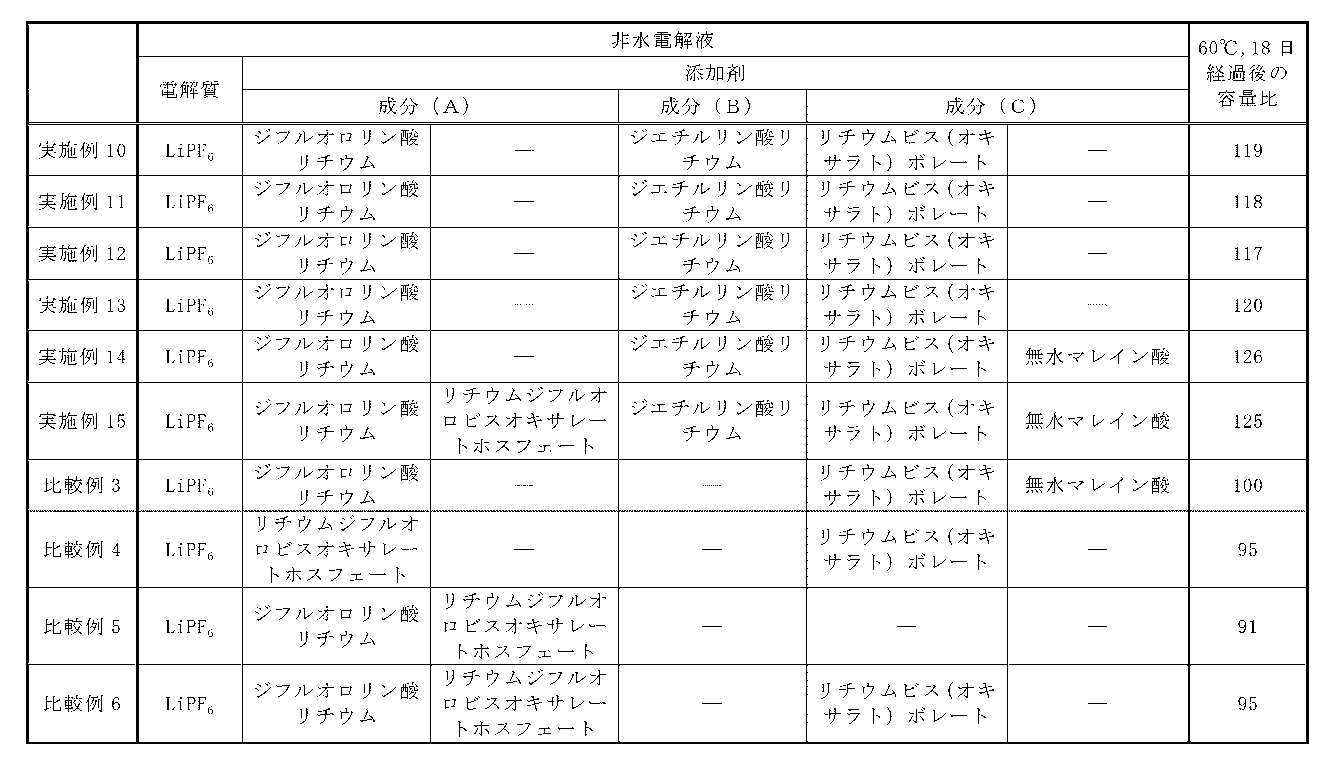
前記表3及び表4から明らかなように、実施例1~15の非水電解液を用いたコインセルでは、比較例3~6に比べ、60℃の高温環境下で18日間経過後であっても、容量が高く、高温保存特性に優れていることが確認された。
1 正極
2 負極
3 セパレータ
4 正極缶
5 負極缶
6 ガスケット
7 スペーサー
8 スプリング
10 アルミニウム製ブロック
11 作用極用のステンレス製支持棒
12 参照極用のステンレス製支持棒
13 対極用のステンレス製支持棒
14 テフロン製蓋
15 ガラス製容器
16 非水電解液
17 作用極
18 参照極
19 対極
2 負極
3 セパレータ
4 正極缶
5 負極缶
6 ガスケット
7 スペーサー
8 スプリング
10 アルミニウム製ブロック
11 作用極用のステンレス製支持棒
12 参照極用のステンレス製支持棒
13 対極用のステンレス製支持棒
14 テフロン製蓋
15 ガラス製容器
16 非水電解液
17 作用極
18 参照極
19 対極
Claims (17)
- 二次電池に用いられる二次電池用非水電解液であって、下記成分(A)及び成分(B)を含む二次電池用非水電解液。
成分(A):下記一般式(1)~(4)の何れかで表される、少なくとも1種のリン化合物;
成分(B):下記一般式(5)で表される、少なくとも1種のリン酸ジエステル塩
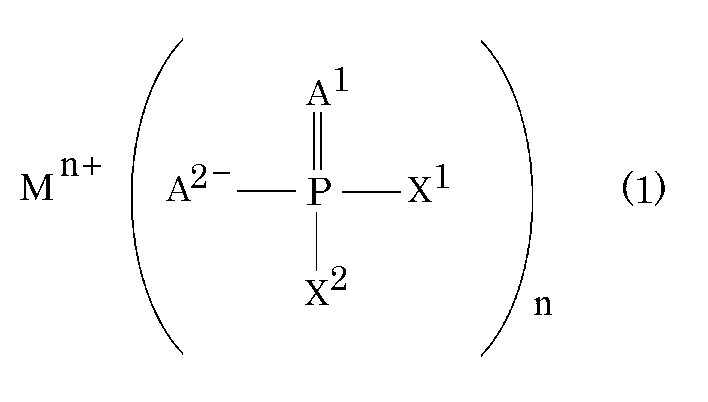

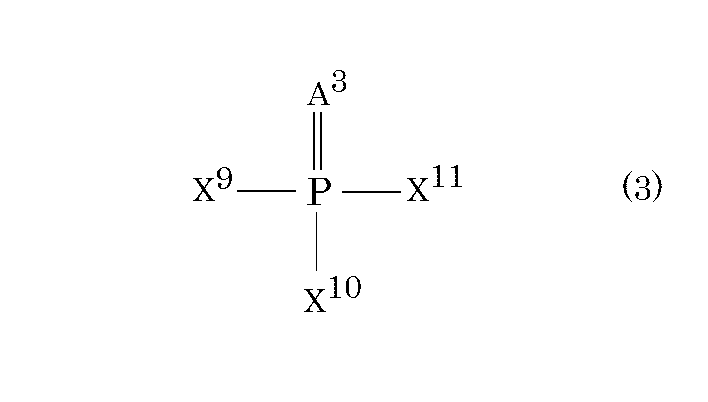

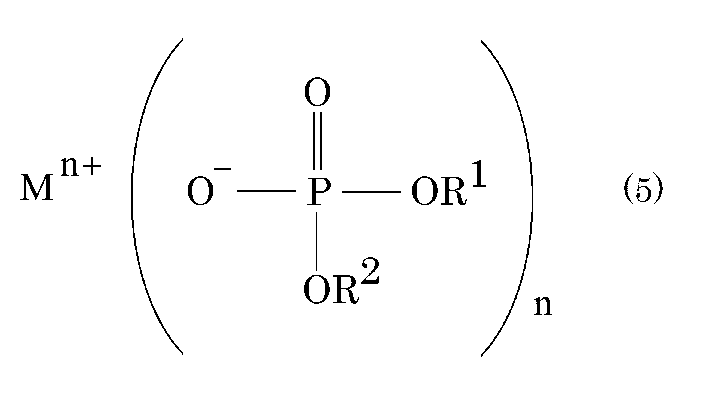
- さらに少なくとも1種の下記成分(C)を含む請求項1に記載の二次電池用非水電解液。
成分(C):下記一般式(6)で表されるホウ素錯体塩、ホウ酸エステル、酸無水物、不飽和結合を有する環状カーボネート、ハロゲン原子を有する環状カーボネート、環状スルホン酸エステル及び下記一般式(7)で表され、かつ、アセトアセチル基を有するアミン類からなる群より選ばれる少なくとも1種の化合物

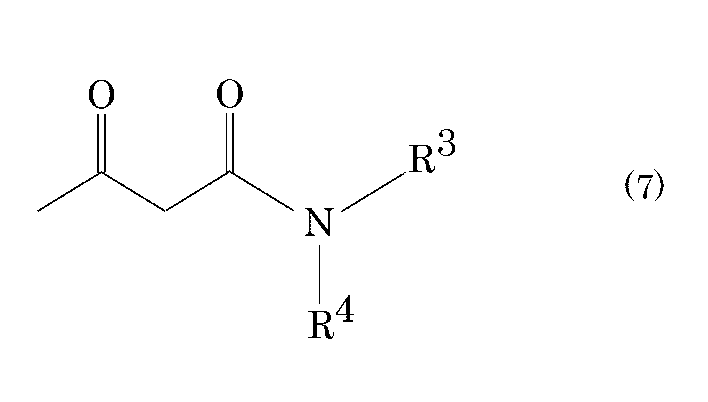
- 前記成分(A)の添加量は、前記二次電池用非水電解液の全質量に対し、0.05質量%~5質量%であり、
前記成分(B)の添加量は、前記二次電池用非水電解液の全質量に対し、0.05質量%~5質量%である請求項1又は2に記載の二次電池用非水電解液。 - 前記成分(C)の添加量は、前記二次電池用非水電解液の全質量に対し、0.05質量%~5質量%である請求項2に記載の二次電池用非水電解液。
- 前記一般式(1)で表されるリン化合物がジフルオロリン酸リチウム又はジフルオロリン酸ナトリウムである請求項1~4の何れか1項に記載の二次電池用非水電解液。
- 前記一般式(2)で表されるリン化合物がリチウムジフルオロビスオキサレートホスフェート、ナトリウムジフルオロビスオキサレートホスフェート、リチウムテトラフルオロオキサレートホスフェート又はナトリウムテトラフルオロオキサレートホスフェートである請求項1~5の何れか1項に記載の二次電池用非水電解液。
- 前記一般式(3)で表されるリン化合物がリン酸トリメチル、リン酸トリエチル、リン酸トリス(2,2,2-トリフルオロエチル)又はビス(2,2,2-トリフルオロエチル)ホスホン酸である請求項1~6の何れか1項に記載の二次電池用非水電解液。
- 前記一般式(4)で表されるリン化合物がトリメチルホスフィン又はメチルジフェニルホスフィンである請求項1~7の何れか1項に記載の二次電池用非水電解液。
- 前記一般式(5)で表されるリン酸ジエステル塩が、ジエチルリン酸リチウム又はビス(2,2,2-トリフルオロエチル)リン酸リチウムである請求項1~8の何れか1項に記載の二次電池用非水電解液。
- 前記一般式(6)で表されるホウ素錯体塩がリチウムビス[1,2’-ベンジオラート(2)-O,O’]ボレート、リチウムビスサリチラートボレート又はリチウムビス(オキサラト)ボレート、リチウムテトラフルオロボレートである請求項2又は4に記載の二次電池用非水電解液。
- 前記ホウ酸エステルがホウ酸トリメチルである請求項2、4又は10に記載の二次電池用非水電解液。
- 前記酸無水物が無水マレイン酸である請求項2、4、10又は11に記載の二次電池用非水電解液。
- 前記不飽和結合を有する環状カーボネートがビニレンカーボネートである請求項2、4、10~12の何れか1項に記載の二次電池用非水電解液。
- 前記ハロゲン原子を有する環状カーボネートがフルオロエチレンカーボネートである請求項2、4、10~13の何れか1項に記載の二次電池用非水電解液。
- 前記環状スルホン酸エステルが1,3-プロパンスルトンである請求項2、4、10~14の何れか1項に記載の二次電池用非水電解液。
- 前記一般式(3)で表されるアセトアセチル基を有するアミン類がN,N-ジメチルアセトアセトアミドである請求項2、4、10~15の何れか1項に記載の二次電池用非水電解液。
- 請求項1~16の何れか1項に記載の二次電池用非水電解液、正極及び負極を少なくとも備えた二次電池。
Priority Applications (4)
| Application Number | Priority Date | Filing Date | Title |
|---|---|---|---|
| US15/735,155 US20180301756A1 (en) | 2015-06-09 | 2016-06-08 | Nonaqueous electrolyte solution for secondary batteries and secondary battery provided with same |
| KR1020187000259A KR20180016486A (ko) | 2015-06-09 | 2016-06-08 | 이차 전지용 비수 전해액 및 그것을 구비한 이차 전지 |
| EP16807529.9A EP3309890A1 (en) | 2015-06-09 | 2016-06-08 | Nonaqueous electrolyte solution for secondary batteries and secondary battery provided with same |
| CN201680033409.0A CN107615555A (zh) | 2015-06-09 | 2016-06-08 | 二次电池用非水电解液和具备其的二次电池 |
Applications Claiming Priority (2)
| Application Number | Priority Date | Filing Date | Title |
|---|---|---|---|
| JP2015-116787 | 2015-06-09 | ||
| JP2015116787 | 2015-06-09 |
Publications (1)
| Publication Number | Publication Date |
|---|---|
| WO2016199823A1 true WO2016199823A1 (ja) | 2016-12-15 |
Family
ID=57503387
Family Applications (1)
| Application Number | Title | Priority Date | Filing Date |
|---|---|---|---|
| PCT/JP2016/067110 Ceased WO2016199823A1 (ja) | 2015-06-09 | 2016-06-08 | 二次電池用非水電解液及びそれを備えた二次電池 |
Country Status (6)
| Country | Link |
|---|---|
| US (1) | US20180301756A1 (ja) |
| EP (1) | EP3309890A1 (ja) |
| JP (1) | JP6941335B2 (ja) |
| KR (1) | KR20180016486A (ja) |
| CN (1) | CN107615555A (ja) |
| WO (1) | WO2016199823A1 (ja) |
Cited By (4)
| Publication number | Priority date | Publication date | Assignee | Title |
|---|---|---|---|---|
| CN109994780A (zh) * | 2017-12-29 | 2019-07-09 | 宁德时代新能源科技股份有限公司 | 电解液及锂离子电池 |
| CN110444810A (zh) * | 2018-05-04 | 2019-11-12 | 宁德时代新能源科技股份有限公司 | 电解液及二次电池 |
| EP3657589A4 (en) * | 2017-07-21 | 2020-07-22 | Samsung SDI Co., Ltd | ELECTROLYTE FOR SECONDARY LITHIUM BATTERY AND SECONDARY LITHIUM BATTERY INCLUDING LEDIT ELECTROLYTE |
| WO2024070147A1 (ja) | 2022-09-28 | 2024-04-04 | パナソニックIpマネジメント株式会社 | 二次電池用正極、その製造方法及び二次電池 |
Families Citing this family (31)
| Publication number | Priority date | Publication date | Assignee | Title |
|---|---|---|---|---|
| CN109075382B (zh) * | 2016-03-03 | 2021-02-09 | 国轩高科美国研究院 | 作为电解质组合物的甲基膦酰氧基甲烷 |
| CA3019132A1 (en) | 2016-04-01 | 2017-10-05 | NOHMs Technologies, Inc. | Modified ionic liquids containing phosphorus |
| JP6784324B2 (ja) * | 2017-04-04 | 2020-11-11 | ダイキン工業株式会社 | 電解液、電気化学デバイス、リチウムイオン二次電池及びモジュール |
| WO2019018432A1 (en) | 2017-07-17 | 2019-01-24 | NOHMs Technologies, Inc. | ELECTROLYTES CONTAINING PHOSPHORUS |
| KR102459623B1 (ko) | 2017-12-27 | 2022-10-28 | 삼성전자주식회사 | 유기전해액 및 이를 포함하는 리튬전지 |
| WO2019164164A1 (ko) * | 2018-02-23 | 2019-08-29 | 에스케이이노베이션 주식회사 | 리튬 이차전지 전해액 및 이를 포함하는 리튬 이차전지 |
| US11757135B2 (en) * | 2018-02-23 | 2023-09-12 | Sk On Co., Ltd. | Electrolytic solution for lithium secondary battery, and lithium secondary battery comprising same |
| KR102094263B1 (ko) * | 2018-02-23 | 2020-03-30 | 에스케이이노베이션 주식회사 | 리튬 이차전지 전해액 및 이를 포함하는 리튬 이차전지 |
| KR102476864B1 (ko) * | 2018-03-27 | 2022-12-12 | 미쯔비시 케미컬 주식회사 | 비수계 전해액 및 그것을 사용한 축전 디바이스 |
| KR102343230B1 (ko) * | 2018-04-23 | 2021-12-23 | 삼성에스디아이 주식회사 | 리튬 이차 전지 |
| JP7224787B2 (ja) * | 2018-06-11 | 2023-02-20 | エルジー エナジー ソリューション リミテッド | 特定添加剤を含んだ二次電池用非水系電解質及びこれを用いた二次電池 |
| KR102531434B1 (ko) * | 2018-06-12 | 2023-05-12 | 에스케이온 주식회사 | 리튬 이차전지 |
| CN109065952A (zh) * | 2018-08-07 | 2018-12-21 | 常州大学 | 一种高压功能电解液及其制备方法 |
| CN109301326B (zh) | 2018-09-21 | 2020-11-27 | 宁德新能源科技有限公司 | 一种电解液及电化学装置 |
| CN112448029B (zh) * | 2019-08-28 | 2022-06-14 | 珠海冠宇电池股份有限公司 | 一种锂二次电池用电解液和包括该电解液的锂二次电池 |
| JP7265714B2 (ja) * | 2020-02-13 | 2023-04-27 | トヨタ自動車株式会社 | 非水系二次電池の非水電解液 |
| CN111342134B (zh) * | 2020-03-13 | 2022-09-13 | 河南电池研究院有限公司 | 一种宽温域锂离子电池非水电解液及其制备方法 |
| JP2021166244A (ja) * | 2020-04-07 | 2021-10-14 | 太陽誘電株式会社 | 電気化学デバイス用電解液および電気化学デバイス |
| EP4134994A4 (en) * | 2020-05-22 | 2025-05-21 | Daikin Industries, Ltd. | Electrolyte solution, electrochemical device, lithium ion secondary battery and module |
| CN112259791A (zh) * | 2020-10-27 | 2021-01-22 | 惠州亿纬锂能股份有限公司 | 一种非水电解液及其制备方法和锂离子电池 |
| CN112510260B (zh) * | 2020-11-27 | 2022-11-04 | 珠海市赛纬电子材料股份有限公司 | 电解液添加剂、非水电解液和锂离子电池 |
| CN113036220B (zh) * | 2021-03-05 | 2022-12-30 | 星恒电源股份有限公司 | 一种兼具低阻抗和长循环性能的非水电解液及钠离子电池 |
| CN113991177A (zh) * | 2021-10-25 | 2022-01-28 | 天津市捷威动力工业有限公司 | 一种钠离子电池非水电解液及其应用 |
| CN114188606B (zh) * | 2021-12-10 | 2023-04-21 | 傲普(上海)新能源有限公司 | 一种电解液及其应用 |
| KR20230087715A (ko) | 2021-12-10 | 2023-06-19 | 에스케이온 주식회사 | 신규한 보론 함유 화합물 및 이를 포함하는 이차전지용 전해액 첨가제 |
| JP2023136131A (ja) * | 2022-03-16 | 2023-09-29 | 三井化学株式会社 | リチウム二次電池用非水電解液、リチウム二次電池前駆体、リチウム二次電池、及びリチウム二次電池の製造方法 |
| CN114709478A (zh) * | 2022-03-30 | 2022-07-05 | 厦门大学 | 含Se=P双键有机化合物在制备二次电池电解液中的应用 |
| CN117096433A (zh) * | 2022-05-12 | 2023-11-21 | 珠海冠宇电池股份有限公司 | 一种电解液及包括该电解液的电池 |
| CN117063321B (zh) | 2022-06-07 | 2026-04-03 | 宁德时代新能源科技股份有限公司 | 非水电解液、其制备方法、以及包含其的二次电池及用电装置 |
| CN118472394B (zh) * | 2024-07-11 | 2024-10-29 | 深圳欣界能源科技有限公司 | 电解液及二次电池 |
| CN120527483B (zh) * | 2025-07-23 | 2025-10-14 | 江西师范大学 | 一种锌离子电池电解液、锌离子电池及其制备方法 |
Citations (9)
| Publication number | Priority date | Publication date | Assignee | Title |
|---|---|---|---|---|
| JPH08138733A (ja) * | 1994-11-07 | 1996-05-31 | Mitsui Petrochem Ind Ltd | 非水電解液 |
| JPH08321313A (ja) * | 1995-05-24 | 1996-12-03 | Sanyo Electric Co Ltd | 非水電解液電池 |
| JPH1167270A (ja) * | 1997-08-21 | 1999-03-09 | Sanyo Electric Co Ltd | 非水系電解液二次電池 |
| JP2007165125A (ja) * | 2005-12-14 | 2007-06-28 | Central Glass Co Ltd | 非水電解液電池用電解液及び非水電解液電池 |
| WO2010092815A1 (ja) * | 2009-02-13 | 2010-08-19 | パナソニック株式会社 | 非水電解質二次電池用負極及び非水電解質二次電池 |
| WO2013002186A1 (ja) * | 2011-06-27 | 2013-01-03 | 三洋化成工業株式会社 | 電極保護膜形成剤、電極、電解液、リチウム二次電池、リチウムイオンキャパシタ、及び、電極保護膜の形成方法 |
| WO2014128940A1 (ja) * | 2013-02-22 | 2014-08-28 | 旭硝子株式会社 | 二次電池用非水電解液およびリチウムイオン二次電池 |
| JP2015022952A (ja) * | 2013-07-22 | 2015-02-02 | 日立化成株式会社 | リチウムイオン二次電池用電解液、リチウムイオン二次電池用電解液の製造方法、その電解液を用いたリチウムイオン二次電池、およびリチウムイオン二次電池を用いた電源装置 |
| JP2015099660A (ja) * | 2013-11-18 | 2015-05-28 | 旭化成株式会社 | 非水電解液及び当該非水電解液を用いたリチウムイオン二次電池 |
Family Cites Families (5)
| Publication number | Priority date | Publication date | Assignee | Title |
|---|---|---|---|---|
| US20090142663A1 (en) * | 2005-07-21 | 2009-06-04 | Takashi Takeuchi | Nonaqueous electrolyte secondary battery and method of producing the same |
| CN102273000A (zh) * | 2009-01-06 | 2011-12-07 | 株式会社村田制作所 | 非水电解液二次电池 |
| EP2571089A4 (en) * | 2010-05-12 | 2017-03-15 | Mitsubishi Chemical Corporation | Non-aqueous electrolytic solution, and non-aqueous electrolyte secondary battery |
| JP2014022332A (ja) * | 2012-07-23 | 2014-02-03 | Asahi Kasei Corp | 非水蓄電デバイス用電解液 |
| JP2014022333A (ja) * | 2012-07-23 | 2014-02-03 | Asahi Kasei Corp | 非水蓄電デバイス用電解液 |
-
2016
- 2016-06-08 CN CN201680033409.0A patent/CN107615555A/zh active Pending
- 2016-06-08 WO PCT/JP2016/067110 patent/WO2016199823A1/ja not_active Ceased
- 2016-06-08 JP JP2016114390A patent/JP6941335B2/ja active Active
- 2016-06-08 KR KR1020187000259A patent/KR20180016486A/ko not_active Withdrawn
- 2016-06-08 EP EP16807529.9A patent/EP3309890A1/en not_active Withdrawn
- 2016-06-08 US US15/735,155 patent/US20180301756A1/en not_active Abandoned
Patent Citations (9)
| Publication number | Priority date | Publication date | Assignee | Title |
|---|---|---|---|---|
| JPH08138733A (ja) * | 1994-11-07 | 1996-05-31 | Mitsui Petrochem Ind Ltd | 非水電解液 |
| JPH08321313A (ja) * | 1995-05-24 | 1996-12-03 | Sanyo Electric Co Ltd | 非水電解液電池 |
| JPH1167270A (ja) * | 1997-08-21 | 1999-03-09 | Sanyo Electric Co Ltd | 非水系電解液二次電池 |
| JP2007165125A (ja) * | 2005-12-14 | 2007-06-28 | Central Glass Co Ltd | 非水電解液電池用電解液及び非水電解液電池 |
| WO2010092815A1 (ja) * | 2009-02-13 | 2010-08-19 | パナソニック株式会社 | 非水電解質二次電池用負極及び非水電解質二次電池 |
| WO2013002186A1 (ja) * | 2011-06-27 | 2013-01-03 | 三洋化成工業株式会社 | 電極保護膜形成剤、電極、電解液、リチウム二次電池、リチウムイオンキャパシタ、及び、電極保護膜の形成方法 |
| WO2014128940A1 (ja) * | 2013-02-22 | 2014-08-28 | 旭硝子株式会社 | 二次電池用非水電解液およびリチウムイオン二次電池 |
| JP2015022952A (ja) * | 2013-07-22 | 2015-02-02 | 日立化成株式会社 | リチウムイオン二次電池用電解液、リチウムイオン二次電池用電解液の製造方法、その電解液を用いたリチウムイオン二次電池、およびリチウムイオン二次電池を用いた電源装置 |
| JP2015099660A (ja) * | 2013-11-18 | 2015-05-28 | 旭化成株式会社 | 非水電解液及び当該非水電解液を用いたリチウムイオン二次電池 |
Non-Patent Citations (1)
| Title |
|---|
| DENCHI HANDBOOK, 10 February 2010 (2010-02-10), pages 533 - 546, XP009502954 * |
Cited By (6)
| Publication number | Priority date | Publication date | Assignee | Title |
|---|---|---|---|---|
| EP3657589A4 (en) * | 2017-07-21 | 2020-07-22 | Samsung SDI Co., Ltd | ELECTROLYTE FOR SECONDARY LITHIUM BATTERY AND SECONDARY LITHIUM BATTERY INCLUDING LEDIT ELECTROLYTE |
| US11539075B2 (en) | 2017-07-21 | 2022-12-27 | Samsung Sdi Co., Ltd. | Electrolyte for lithium secondary battery, and lithium secondary battery comprising same |
| CN109994780A (zh) * | 2017-12-29 | 2019-07-09 | 宁德时代新能源科技股份有限公司 | 电解液及锂离子电池 |
| CN110444810A (zh) * | 2018-05-04 | 2019-11-12 | 宁德时代新能源科技股份有限公司 | 电解液及二次电池 |
| WO2024070147A1 (ja) | 2022-09-28 | 2024-04-04 | パナソニックIpマネジメント株式会社 | 二次電池用正極、その製造方法及び二次電池 |
| EP4597632A4 (en) * | 2022-09-28 | 2026-04-01 | Panasonic Ip Man Co Ltd | POSITIVE ELECTRODE FOR SECONDARY BATTERY, ITS PRODUCTION PROCESS AND SECONDARY BATTERY |
Also Published As
| Publication number | Publication date |
|---|---|
| US20180301756A1 (en) | 2018-10-18 |
| KR20180016486A (ko) | 2018-02-14 |
| JP2017004947A (ja) | 2017-01-05 |
| JP6941335B2 (ja) | 2021-09-29 |
| EP3309890A1 (en) | 2018-04-18 |
| CN107615555A (zh) | 2018-01-19 |
Similar Documents
| Publication | Publication Date | Title |
|---|---|---|
| JP6989169B2 (ja) | 二次電池用非水電解液及びそれを備えた二次電池 | |
| JP6941335B2 (ja) | 二次電池用非水電解液及びそれを備えた二次電池 | |
| JP6780938B2 (ja) | 二次電池用非水電解液及びそれを備えた二次電池 | |
| JP6607842B2 (ja) | 二次電池用非水電解液及びそれを備えた二次電池 | |
| JP6781548B2 (ja) | 二次電池用非水電解液及びそれを備えた二次電池 | |
| JP7138903B2 (ja) | 二次電池用非水電解液、その製造方法及びそれを備えた二次電池 | |
| WO2025120994A1 (ja) | 二次電池用非水電解液及びそれを備えた二次電池 |
Legal Events
| Date | Code | Title | Description |
|---|---|---|---|
| 121 | Ep: the epo has been informed by wipo that ep was designated in this application |
Ref document number: 16807529 Country of ref document: EP Kind code of ref document: A1 |
|
| WWE | Wipo information: entry into national phase |
Ref document number: 15735155 Country of ref document: US |
|
| NENP | Non-entry into the national phase |
Ref country code: DE |
|
| ENP | Entry into the national phase |
Ref document number: 20187000259 Country of ref document: KR Kind code of ref document: A |