WO2016129371A1 - ゲーム装置及びプログラム - Google Patents
ゲーム装置及びプログラム Download PDFInfo
- Publication number
- WO2016129371A1 WO2016129371A1 PCT/JP2016/052012 JP2016052012W WO2016129371A1 WO 2016129371 A1 WO2016129371 A1 WO 2016129371A1 JP 2016052012 W JP2016052012 W JP 2016052012W WO 2016129371 A1 WO2016129371 A1 WO 2016129371A1
- Authority
- WO
- WIPO (PCT)
- Prior art keywords
- game
- unit
- skill
- reward
- value
- Prior art date
- Legal status (The legal status is an assumption and is not a legal conclusion. Google has not performed a legal analysis and makes no representation as to the accuracy of the status listed.)
- Ceased
Links
Images

















Classifications
-
- A—HUMAN NECESSITIES
- A63—SPORTS; GAMES; AMUSEMENTS
- A63F—CARD, BOARD, OR ROULETTE GAMES; INDOOR GAMES USING SMALL MOVING PLAYING BODIES; VIDEO GAMES; GAMES NOT OTHERWISE PROVIDED FOR
- A63F13/00—Video games, i.e. games using an electronically generated display having two or more dimensions
- A63F13/40—Processing input control signals of video game devices, e.g. signals generated by the player or derived from the environment
- A63F13/44—Processing input control signals of video game devices, e.g. signals generated by the player or derived from the environment involving timing of operations, e.g. performing an action within a time slot
-
- A—HUMAN NECESSITIES
- A63—SPORTS; GAMES; AMUSEMENTS
- A63F—CARD, BOARD, OR ROULETTE GAMES; INDOOR GAMES USING SMALL MOVING PLAYING BODIES; VIDEO GAMES; GAMES NOT OTHERWISE PROVIDED FOR
- A63F13/00—Video games, i.e. games using an electronically generated display having two or more dimensions
- A63F13/20—Input arrangements for video game devices
- A63F13/21—Input arrangements for video game devices characterised by their sensors, purposes or types
- A63F13/214—Input arrangements for video game devices characterised by their sensors, purposes or types for locating contacts on a surface, e.g. floor mats or touch pads
- A63F13/2145—Input arrangements for video game devices characterised by their sensors, purposes or types for locating contacts on a surface, e.g. floor mats or touch pads the surface being also a display device, e.g. touch screens
-
- A—HUMAN NECESSITIES
- A63—SPORTS; GAMES; AMUSEMENTS
- A63F—CARD, BOARD, OR ROULETTE GAMES; INDOOR GAMES USING SMALL MOVING PLAYING BODIES; VIDEO GAMES; GAMES NOT OTHERWISE PROVIDED FOR
- A63F13/00—Video games, i.e. games using an electronically generated display having two or more dimensions
- A63F13/25—Output arrangements for video game devices
-
- A—HUMAN NECESSITIES
- A63—SPORTS; GAMES; AMUSEMENTS
- A63F—CARD, BOARD, OR ROULETTE GAMES; INDOOR GAMES USING SMALL MOVING PLAYING BODIES; VIDEO GAMES; GAMES NOT OTHERWISE PROVIDED FOR
- A63F13/00—Video games, i.e. games using an electronically generated display having two or more dimensions
- A63F13/40—Processing input control signals of video game devices, e.g. signals generated by the player or derived from the environment
- A63F13/42—Processing input control signals of video game devices, e.g. signals generated by the player or derived from the environment by mapping the input signals into game commands, e.g. mapping the displacement of a stylus on a touch screen to the steering angle of a virtual vehicle
- A63F13/426—Processing input control signals of video game devices, e.g. signals generated by the player or derived from the environment by mapping the input signals into game commands, e.g. mapping the displacement of a stylus on a touch screen to the steering angle of a virtual vehicle involving on-screen location information, e.g. screen coordinates of an area at which the player is aiming with a light gun
-
- A—HUMAN NECESSITIES
- A63—SPORTS; GAMES; AMUSEMENTS
- A63F—CARD, BOARD, OR ROULETTE GAMES; INDOOR GAMES USING SMALL MOVING PLAYING BODIES; VIDEO GAMES; GAMES NOT OTHERWISE PROVIDED FOR
- A63F13/00—Video games, i.e. games using an electronically generated display having two or more dimensions
- A63F13/60—Generating or modifying game content before or while executing the game program, e.g. authoring tools specially adapted for game development or game-integrated level editor
- A63F13/69—Generating or modifying game content before or while executing the game program, e.g. authoring tools specially adapted for game development or game-integrated level editor by enabling or updating specific game elements, e.g. unlocking hidden features, items, levels or versions
-
- A—HUMAN NECESSITIES
- A63—SPORTS; GAMES; AMUSEMENTS
- A63F—CARD, BOARD, OR ROULETTE GAMES; INDOOR GAMES USING SMALL MOVING PLAYING BODIES; VIDEO GAMES; GAMES NOT OTHERWISE PROVIDED FOR
- A63F13/00—Video games, i.e. games using an electronically generated display having two or more dimensions
- A63F13/80—Special adaptations for executing a specific game genre or game mode
- A63F13/837—Shooting of targets
-
- G—PHYSICS
- G07—CHECKING-DEVICES
- G07F—COIN-FREED OR LIKE APPARATUS
- G07F17/00—Coin-freed apparatus for hiring articles; Coin-freed facilities or services
- G07F17/32—Coin-freed apparatus for hiring articles; Coin-freed facilities or services for games, toys, sports, or amusements
- G07F17/3202—Hardware aspects of a gaming system, e.g. components, construction, architecture thereof
- G07F17/3204—Player-machine interfaces
- G07F17/3209—Input means, e.g. buttons, touch screen
-
- G—PHYSICS
- G07—CHECKING-DEVICES
- G07F—COIN-FREED OR LIKE APPARATUS
- G07F17/00—Coin-freed apparatus for hiring articles; Coin-freed facilities or services
- G07F17/32—Coin-freed apparatus for hiring articles; Coin-freed facilities or services for games, toys, sports, or amusements
- G07F17/3202—Hardware aspects of a gaming system, e.g. components, construction, architecture thereof
- G07F17/3204—Player-machine interfaces
- G07F17/3211—Display means
-
- G—PHYSICS
- G07—CHECKING-DEVICES
- G07F—COIN-FREED OR LIKE APPARATUS
- G07F17/00—Coin-freed apparatus for hiring articles; Coin-freed facilities or services
- G07F17/32—Coin-freed apparatus for hiring articles; Coin-freed facilities or services for games, toys, sports, or amusements
- G07F17/3244—Payment aspects of a gaming system, e.g. payment schemes, setting payout ratio, bonus or consolation prizes
- G07F17/3246—Payment aspects of a gaming system, e.g. payment schemes, setting payout ratio, bonus or consolation prizes involving coins and/or banknotes
-
- G—PHYSICS
- G07—CHECKING-DEVICES
- G07F—COIN-FREED OR LIKE APPARATUS
- G07F17/00—Coin-freed apparatus for hiring articles; Coin-freed facilities or services
- G07F17/32—Coin-freed apparatus for hiring articles; Coin-freed facilities or services for games, toys, sports, or amusements
- G07F17/326—Game play aspects of gaming systems
- G07F17/3267—Game outcomes which determine the course of the subsequent game, e.g. double or quits, free games, higher payouts, different new games
-
- G—PHYSICS
- G07—CHECKING-DEVICES
- G07F—COIN-FREED OR LIKE APPARATUS
- G07F17/00—Coin-freed apparatus for hiring articles; Coin-freed facilities or services
- G07F17/32—Coin-freed apparatus for hiring articles; Coin-freed facilities or services for games, toys, sports, or amusements
- G07F17/326—Game play aspects of gaming systems
- G07F17/3269—Timing aspects of game play, e.g. blocking/halting the operation of a gaming machine
-
- A—HUMAN NECESSITIES
- A63—SPORTS; GAMES; AMUSEMENTS
- A63F—CARD, BOARD, OR ROULETTE GAMES; INDOOR GAMES USING SMALL MOVING PLAYING BODIES; VIDEO GAMES; GAMES NOT OTHERWISE PROVIDED FOR
- A63F13/00—Video games, i.e. games using an electronically generated display having two or more dimensions
- A63F13/70—Game security or game management aspects
- A63F13/79—Game security or game management aspects involving player-related data, e.g. identities, accounts, preferences or play histories
- A63F13/792—Game security or game management aspects involving player-related data, e.g. identities, accounts, preferences or play histories for payment purposes, e.g. monthly subscriptions
-
- A—HUMAN NECESSITIES
- A63—SPORTS; GAMES; AMUSEMENTS
- A63F—CARD, BOARD, OR ROULETTE GAMES; INDOOR GAMES USING SMALL MOVING PLAYING BODIES; VIDEO GAMES; GAMES NOT OTHERWISE PROVIDED FOR
- A63F13/00—Video games, i.e. games using an electronically generated display having two or more dimensions
- A63F13/70—Game security or game management aspects
- A63F13/79—Game security or game management aspects involving player-related data, e.g. identities, accounts, preferences or play histories
- A63F13/798—Game security or game management aspects involving player-related data, e.g. identities, accounts, preferences or play histories for assessing skills or for ranking players, e.g. for generating a hall of fame
Definitions
- the present invention relates to a game device and a program.
- Some aspects of the present invention have an object to provide a game device and a program capable of suppressing a low-skilled player from consuming a lot of game value as compared to a high-skilled player. .
- Another object of the game apparatus is to provide a game apparatus and a program that can achieve the effects described in the embodiments described later.
- One aspect of the present invention is a game operation receiving unit that receives one or more game operations, and a skill evaluation unit that determines whether or not one or more game operations received by the game operation receiving unit satisfy a predetermined skill level And a game value consumption unit that consumes a game value when the skill evaluation unit determines that one or more game operations received by the game operation reception unit satisfy the predetermined skill level. is there.
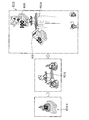
- the 1st figure which shows the game screen of the 1st game which concerns on the 1st Embodiment of this invention.
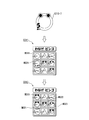
- the figure which shows an example of the hardware constitutions of the game device which concerns on the embodiment.
- the 2nd figure which shows the game screen of the timing game which concerns on the same embodiment.
- the 3rd figure which shows the game screen of the timing game which concerns on the embodiment.
- FIG. 3 is a diagram for explaining a game object according to the embodiment and an operation on the game object.
- FIG 4 is a diagram for explaining a game object according to the embodiment and an operation on the game object.
- the flowchart which shows an example of the flow of the sequence process by the game device concerning the embodiment.
- the game device 10 is a device that executes a game that can be progressed by consuming credits (game value) held by the player.
- the game executed by the game apparatus 10 is a so-called timing game in which the skill of the game operation is evaluated based on the timing at which the player performs the game operation will be described.
- the player can accumulate credits by inserting medals M into the game apparatus 10, and can advance the timing game by consuming the credits.
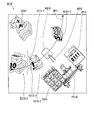
- FIG. 1 is a diagram showing a game screen G110 of a game executed by the game apparatus 10 according to the first embodiment of the present invention.
- the game apparatus 10 includes a touch panel 12 and displays a game screen of a timing game.
- the game screen G110 shown in FIG. 1 three game objects IO10-1, IO10-2, IO10-3, and a player object PO10 are displayed.
- the game object PO10 is a game object whose position is specified based on the game operation of the player.
- a game object is referred to as a player object.
- a case where the game apparatus 10 moves the player object PO10 along the motion path AR10 according to a game operation that is, a case where the game apparatus 10 returns to the initial position after moving upward from the initial position by a predetermined distance will be described.
- the game objects IO10-1, IO10-2, and IO10-3 are game objects that instruct the player when to perform a game operation.
- such a game object is referred to as an instruction object.
- the game apparatus 10 instructs the timing of the game operation by moving the instruction objects IO10-1, IO10-2, and IO10-3 along the movement route AR11 passing through the predetermined region RG10.
- the case will be described.
- the instruction objects IO10-1, IO10-2, and IO10-3 they may be expressed as instruction objects IO.
- the game apparatus 10 consumes a predetermined amount of credit when the game operation of the player satisfies a predetermined skill condition. In addition, the game apparatus 10 determines a reward for the game operation when the game operation of the player satisfies a predetermined skill level. On the other hand, when the game operation of the player does not satisfy the predetermined skill condition, the predetermined amount of credit is not consumed.
- the skill condition is a condition used as an index when evaluating the skill of the game operation of the player.
- the game operation is an operation for making the game progress.
- the skill condition according to the present embodiment is that the difference (distance) between the position of the pointing object and the position specified based on the game operation of the player is a value within a predetermined range. More specifically, the skill condition according to the present embodiment is, for example, performing a game operation so that the player object PO10 reaches the region RG10 at a timing when the instruction object IO reaches the region RG10.
- the game apparatus 10 does not consume a predetermined amount of credit when the predetermined skill condition is not satisfied. Therefore, the game apparatus 10 according to the present embodiment does not consume a predetermined amount of credit and does not determine a reward when the skill of game operation is low. Further, when the skill of the game operation is high, a predetermined amount of credit is consumed and a reward is determined. Thereby, the game apparatus 10 can suppress that the player with a low skill consumes more credits than the player with a high skill.
- FIG. 2 is a diagram illustrating an example of a hardware configuration of the game device according to the present embodiment.
- the game apparatus 10 includes four units 11-1, 11-2, 11-3, 11-4, and a touch panel 12 shared by the four units 11-1, 11-2, 11-3, 11-4. Is provided.
- the touch panel 12 has a substantially rectangular flat plate shape, and the display area is installed so as to face the upper surface.
- the height from the installation surface on which the game apparatus 10 is installed to the upper surface of the touch panel 12 is, for example, a height corresponding to the waist of the boy who stands up. In this way, by placing the touch panel 12 at a lower position, the player can widely look around the game screen without being limited by its height or the like.
- the four units 11-1, 11-2, 11-3, 11-4 are provided, for example, at positions corresponding to the four corners of the touch panel 12, and are viewed in this order when viewed from above. Arranged in the direction of rotation.
- the units 11-1, 11-2, 11-3, and 11-4 are collectively referred to as a unit 11.
- a line segment connecting the midpoint of one side between the units 11-1 and 11-2 and the midpoint of one side between the units 11-3 and 11-4 is defined as L11.
- a line segment connecting the midpoint of one side between the units 11-1 and 11-4 and the midpoint of one side between the units 11-2 and 11-3 is defined as L12.
- the player stands at a position corresponding to each unit 11 (hereinafter referred to as “play position”), and performs a game operation while facing the touch panel 12 side.
- the touch panel 12 can switch and display both the game screen of the timing game progressing for each unit 11 and the game screen of the timing game progressing simultaneously in the plurality of units 11.
- the game mode in which the timing game progresses for each unit 11 is referred to as an individual play mode.
- a game mode in which a timing game progresses simultaneously in a plurality of units is referred to as a cooperative play mode.
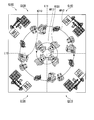
- FIG. 3 is a diagram showing an example of a game screen display in the individual play mode.
- the touch panel 12 divides the display area into four by line segments L11 and L12 connecting the midpoints of the opposite sides and assigns them to each unit 11. Thereby, the touch panel 12 can display the game screens G110, G120, G130, and G140 for each unit 11.
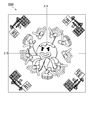
- FIG. 4 is a diagram illustrating an example of a game screen display in the cooperative play mode.
- the touch panel 12 in the cooperative play mode, can also display the game screen common to all the units 11 by integrating the entire display area.
- the game screens may be displayed as being continuously connected between the adjacent units 11 as in the game screen G100 illustrated in FIG. Thereby, the game apparatus 10 can provide a timing game in a so-called cooperative play mode that proceeds simultaneously in the plurality of units 11.
- the units 11-1, 11-2, 11-3, and 11-4 have the same hardware configuration.
- the unit 11 is provided at a position corresponding to the corner of the game screen G110 on the touch panel 12.
- the unit 11 includes a drum 13, an operation button 15, a speaker 16, a medal payout unit 17, and a medal insertion unit 18.
- the drum 13 has a structure in which a film is stretched on a cylindrical body. This film forms the batting surface of the drum 13, and the player performs a game operation by hitting (striking) the film of the drum 13 so as to play the drum using a pair of sticks 14, hands, and the like.
- an impact sensor for detecting an impact given to the hitting surface is provided, and a game operation on the hitting surface by the player can be accepted. Further, this impact sensor can detect and distinguish, for example, at least the impact applied to the left area of the hitting surface as viewed from the player and the impact applied to the right area.
- the detection mechanism of the impact sensor may be arbitrary.
- the game operation for the drum 13 is referred to as a “striking operation”.
- the impact sensor another sensor that detects a physical quantity may be used.
- a contact sensor may be used as another example of the sensor.
- the height from the installation surface where the game apparatus 10 is installed to the hitting surface of the drum 13 is substantially the same as the height from the installation surface to the upper surface of the touch panel 12.
- each player who performs a game operation at each play position operates the game while checking the presence of other players, each player's situation, facial expression, etc. without being blocked by the touch panel 12, the drum 13 or the like. can do.
- the tapping surface of the drum 13 is gradually inclined downward toward the outside from the touch panel 12 so as to face the player performing the game operation.
- each player who performs the game operation easily hits the tapping surface of the drum 13 without being restricted by the height or the like as compared with the case where the tapping surface of the drum 13 is provided so as to face the player. Can do. Therefore, it is possible to provide a game apparatus 10 that has excellent operability and allows players of various heights to perform game operations.
- An operation button 15 is provided on the right side of the drum 13 as viewed from the player who operates the unit 11-1.
- the operation button 15 is a push button and accepts a player's operation. By pressing the operation button 15, the player can use items acquired in the timing game, select a game mode, or the like, for example.
- a speaker 16 is provided closer to the touch panel 12 than the operation buttons 15. The speaker 16 reproduces timing game music, sound effects, sounds, and the like.
- the medal payout unit 17 is a member for paying out the medal M acquired by the player by playing the timing game.
- the medal insertion unit 18 is a member for inserting medals consumed as credits in the timing game.
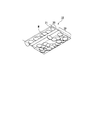
- FIG. 5 is an enlarged view of the medal insertion unit 18 of the game device according to the present embodiment.
- the medal insertion unit 18 is provided outside the touch panel 12 and on the side opposite to the operation buttons 15 and the speaker 16 with the drum 13 interposed therebetween (the left side of the drum 13 as viewed from the player who operates the unit 11-1). It has been.
- the medal insertion unit 18 includes a medal storage unit 19, a medal placement groove 20, and a medal insertion port 21.
- the medal accommodating portion 19 has a rectangular shape in plan view having a longitudinal direction in the direction along the line segment L11, and is formed to be recessed downward. In the medal accommodating part 19, a plurality of medals M are accommodated.
- the medal arrangement groove 20 is provided on the opposite side to the drum 13 with respect to the medal accommodating part 19 (on the left side of the medal accommodating part 19 when viewed from the player who operates the unit 11-1).
- the medal placement groove 20 extends along the line segment L11. Both end surfaces of the medal arrangement groove 20 are flat and are arranged along the vertical direction.
- the medal arrangement groove 20 has a semicircular shape in a cross-sectional view.
- the radius of curvature of the inner surface of the medal placement groove 20 is substantially the same as or slightly larger than the radius of the medal M. Further, the radius of curvature of the inner surface of the medal placement groove 20 is larger than the radius of the rod 14.
- a medal slot 21 is formed at the end of the medal arrangement groove 20 on the touch panel 12 side.
- the medal insertion slot 21 is a slit that communicates the inside and outside of the medal arrangement groove 20 and is formed along the end face of the medal arrangement groove 20 on the touch panel 12 side.
- the width of the medal slot 21 is sufficiently wider than the thickness of the medal M.
- the inner side surface on the medal arrangement groove 20 side is preferably an inclined surface that gradually inclines upward toward the medal arrangement groove 20. As a result, the player can easily move the required number of medals M in the medal container 19 to the medal arrangement groove 20 by operating the stick 14 at the tip of the stick 14.
- the player inserts the medal M into the game apparatus 10 as follows. First, the player operates the stick 14 to move a predetermined number of medals M in the medal receiving portion 19 to the medal placement groove 20 at the tip of the stick 14. Next, the player operates the stick 14 to move toward the touch panel 12 while sliding the tip of the stick 14 on the inner peripheral surface of the medal placement groove 20. Then, the plurality of medals M in the medal placement groove 20 stand up in the medal placement groove 20 and move toward the end face on the touch panel 12 side of the medal placement groove 20 in a state of overlapping each other.
- the medal M that hits the end face of the medal arrangement groove 20 on the touch panel 12 side is inserted into the game apparatus 10 through the medal insertion slot 21.
- the player can insert the medals M into the game apparatus 10 one after another through the medal insertion slot 21 by operating the stick 14.
- the length of the medal placement groove 20 is preferably 50% or more of the length of the rod 14, for example.
- the player can move the tip of the stick 14 along the medal placement groove 20 with the stick 14 fully tilted, so that the plurality of medals M can easily stand up in the medal placement groove 20.
- the medal M can be inserted from the medal insertion slot 21.
- a game screen G110 shown in FIG. 1 is an example of a game screen of a timing game that progresses in the unit 11-1.
- the game screen IO100 displays a player object PO10, a credit display object CR10, an instruction object IO20, and a bingo game sheet G310. .
- the player object PO10 indicates that a game operation has been performed by the player by changing its position in accordance with the hitting operation by the player.
- a case where only one player object PO10 is displayed will be described, but a plurality of player objects PO10 may be displayed.
- the player object PO10 corresponding to the hit operation to the left area of the drum 13 and the player object PO10 corresponding to the hit operation to the right area of the drum 13 may be displayed.
- the player object PO10 is displayed in the vicinity of the four corners of the touch panel 12 close to the operation position of the player who plays the game in each unit 11. Thereby, the player can confirm the change in the position of the player object PO10 that moves based on his / her hitting operation at a position close to himself / herself.
- the instruction object IO has an area indicating a reward that can be acquired by lottery while instructing the timing of the player's tapping operation by moving along the movement route AR11.
- the lottery is executed with a hitting operation that satisfies a predetermined skill condition as a trigger. That is, when the hit operation satisfies a predetermined skill condition, credits are consumed and a lottery is executed.
- the reward corresponding to the instruction object IO can be acquired by winning the lottery. For example, in the reward display area IO11-1 of the instruction object IO10-1 shown in FIG.
- the reward is, for example, a predetermined amount of credit, an item that can be used in a timing game, an item corresponding to a mass of a bingo game described later, a right to receive a secondary lottery, a right to play an additional game, and the like.
- a reward addition of a game object having a high expectation value or addition of a game period may be performed.
- the game reward may be different depending on the type of the instruction object IO, for example, or may be constant regardless of the type of the instruction object IO.
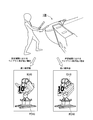
- FIG. 6 is a diagram for explaining the progress of the timing game according to the present embodiment.
- the game apparatus 10 changes the display from the game screen G111 to the game screen G112. Specifically, the pointing object IO10-4 is moved according to the passage of time, and the player object PO10 is moved according to the hitting operation.
- the instruction object IO10-4 is displayed on the upper side of the player object PO10 (that is, from the center of the display surface of the touch panel 12).
- a distance D12 between the reference position P10 of the player object PO10 (a position where the movement path of the player object PO10 and the movement path of the instruction object IO10-4 intersect) and the center position P20 of the instruction object IO10-4 is a predetermined value.
- the value is within the range, that is, when a predetermined skill condition is satisfied, a predetermined amount of credit is consumed.
- a lottery is also performed. When winning in this lottery, the player can obtain a credit corresponding to the medal M of “10 performances” represented by the instruction object IO10-4.
- the instruction object IO10-4 is displayed so as to be broken.
- the instruction object IO10-4 may be displayed so as to be partially broken. In addition to the lottery, a lottery may be performed as to whether or not a part of the instruction object IO10-4 is broken. In addition, when the distance between the player object PO10 and the instruction object IO10-4 is not a value within a predetermined range like a distance D11 shown in the game screen G111, a predetermined amount of credit is not consumed and the instruction object IO10-4 indicates There is no lottery to determine whether or not to give a credit reward to the player.
- the normal instruction object is an instruction object that instructs the timing of performing a hitting operation in a normal time (non-special game mode) in the timing game, and is, for example, an instruction object IO10 shown in FIG.
- the special instruction object is an instruction object for instructing a timing for performing a hit operation when a predetermined game mode is entered in the timing game, for example, an instruction object IO20 shown in FIG.
- the special instruction object is associated with a reward having a higher value than the normal instruction object.
- the special instruction object may be associated with a credit that is 10 times or more of the credit paid out when the normal instruction object is won.
- the hitting operation for acquiring the reward represented by the special instruction object can be performed only when a predetermined game mode is achieved in the timing game.
- the special instruction object may be displayed even when the predetermined game mode is not set. Thereby, since the player can confirm the reward with high value linked
- the display position on the game screen is different between the normal instruction object and the special instruction object.
- the normal pointing object IO10 appears, moves, and disappears on the circular orbit AR12.
- the special instruction object IO20 appears, moves, and disappears on a circular orbit AR13 that shares the center with the circular orbit AR12 at a position closer to the center of the touch panel 12 than the normal instruction object IO10.
- the player of each unit 11 confirms not only the screen assigned to his / her unit 11 but also the adjacent units 11. It is possible to confirm the pointing object that will move to its own screen area in the future.
- the instruction object may be movable only within each unit 11.
- the game apparatus 10 may transfer the result of the hitting operation on the pointing object. Specifically, the pointing object displayed in a partially broken state by the hitting operation in the previous unit 11 may be taken over to the next unit 11 as it is. As a result, the game apparatus 10 appears at least on the display as if the pointing object is partially broken, so that the player can have a sense of expectation that a reward can be obtained in a little more time, and the motivation to play can be improved. . Further, in the cooperative play mode in which a plurality of units 11 cooperate and aim to acquire rewards from a specific pointing object, the unit 11 is displayed as if it is approaching the acquisition of rewards little by little by the tapping operation in each unit 11. Therefore, it is possible to enhance the sense of unity between players in the cooperative play mode.
- FIG. 7 is a diagram for explaining the operation of the special instruction object according to the present embodiment.
- the player can make the player object PO10 collide with the special instruction object when the specific item represented by the instruction object IO10-5 shown in FIG. 7 is acquired.
- the game mode may be referred to as a special game mode.
- the special game mode is entered, the symbol of the player object PO10 changes. Further, when the hit operation is performed in this state, as shown in the game screen G113, the player object PO10 jumps up more than usual. As a result, the player object PO10 can collide with the special instruction object IO20.
- the drums 13 are arranged at the four corners of the touch panel 12.
- each unit 11 the distance from the player object PO10 displayed near the drum 13 to the pointing object is constant, and the movement distance of the player object PO10 is set as follows. There is no need to change each unit 11. That is, by arranging the drums 13 at the four corners of the touch panel 12, the same operational feeling can be realized in any unit 11.
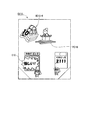
- FIG. 8 is a diagram for explaining output of skill evaluation by the game apparatus 10 according to the present embodiment.
- a skill evaluation object E10 representing a skill evaluation result for the hitting operation is displayed on the game screen G114.
- the evaluation of the skill of the game operation of the player may be displayed as character information such as numbers (scores) and symbols, or may be displayed as graphic information such as gauges and graphs.
- the skill evaluation may be output by voice output or light production.
- the display content of the skill evaluation object E10 differs depending on, for example, whether a predetermined skill condition is satisfied or not. In the example shown in FIG.
- the credit display object CR10 is a game object representing the amount of credit held by the player.
- the amount of credit held by the player increases due to the insertion of a medal M by the player, acquisition of credit as a reward for playing the timing game, and the like.
- the amount of credit held by the player is reduced by paying out the medal M to the player or by consuming the credit when the player's hitting operation satisfies a predetermined skill condition.
- the bingo game sheet G310 is a game object used when a bingo game is advanced.
- FIG. 9 is a diagram for explaining the progress of the bingo game in the game apparatus 10 according to the present embodiment.
- the bingo game sheet G311 shown in FIG. When the bingo item is acquired from the instruction object, the game apparatus 10 validates each square of the bingo game sheet corresponding to the bingo item.
- the instruction object IO10-7 shown in FIG. 9 corresponds to the cells MS11 and MS21 of the bingo game sheet G311.
- the game apparatus 10 activates the mass MS11 and the mass MS21.
- the game apparatus 10 gives the player a predetermined amount when one of the vertical and horizontal diagonal rows becomes valid, as in the cells MS21, MS22, and MS23 shown in the bingo game sheet G312, that is, when a so-called bingo is established. Pay out rewards such as credits.
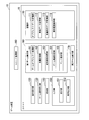
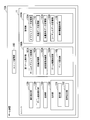
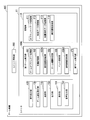
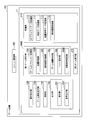
- FIG. 10 is a diagram illustrating a functional configuration of the game apparatus 10 according to the present embodiment.
- the game apparatus 10 includes a storage unit 110, an operation reception unit 120, a game medium reception unit 130, a return unit 140, an output unit 150, a first game execution unit 160, a second game execution unit 170, and a unit.
- a management unit 180 the storage unit 110, the operation reception unit 120, the game medium reception unit 130, the return unit 140, the output unit 150, the first game execution unit 160, and the second game execution unit 170 are unit 11. Provided for each.
- the unit management unit 180 controls the operation of each unit 11 provided in the game apparatus 10, for example. Specifically, the unit management unit 180 controls each unit 11 by, for example, allocating the display area of the touch panel 12 for each unit 11 or integrating the display areas allocated for each unit 11.
- the storage unit 110 includes, for example, a ROM (Read Only Memory), a RAM (Random Access Memory), and the like.
- the storage unit 110 may include an HDD (Hard Disc Drive), an EEPROM (Electrically Erasable Programmable Read Only Memory), a flash memory, and the like.
- the storage unit 110 stores various programs to be executed by a CPU (Central Processing Unit, not shown) included in the game apparatus 10, results of processing executed by the CPU, and the like.
- the first game execution unit 160, the second game execution unit 170, and the unit management unit 180 execute a game program and a control program stored in the storage unit 110 by a CPU included in the game apparatus 10. Operate.
- the storage unit 110 includes an object data storage unit 111 that stores object data, a music data storage unit 112 that stores music data, a skill condition data storage unit 113 that stores skill condition data, and a game operation history.
- An operation history holding unit 116 for holding a certain operation history. In the operation history, for example, the timing at which the game operation is performed and the evaluation of the skill of the game operation are described in association with each other.
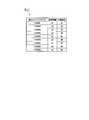
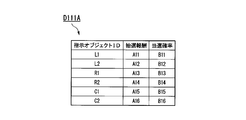
- the object data is data representing the correspondence between the reward for each instruction object and the lottery content related to the acquisition of the reward.
- object data will be described.
- FIG. 11 is a diagram illustrating an example of object data according to the present embodiment.
- the object data D111 is configured by associating an instruction object ID (instruction object ID) with lottery reward information (lottery reward) and winning probability information (winning probability).
- the instruction object ID (Identifier) is unique identification information for identifying the instruction object.
- the instruction object ID may be identification information unique to each instruction object, or may be identification information unique to the type of the instruction object.
- the type of instruction object refers to, for example, classification of the instruction object based on an arbitrary criterion such as a design of the instruction object and a reward corresponding to the instruction object.
- the lottery reward information is information representing a reward corresponding to the instruction object. In the lottery reward information, for example, one or more combinations of the amount of credits to be paid out or identification information unique to the item are described.
- the content of the reward represented by the lottery reward information is displayed, for example, in the reward display area of the instruction object.
- the winning probability information is information representing a winning probability of a lottery performed when the player's hitting operation satisfies a predetermined skill condition.
- the winning probability information for example, a numerical value from 0 [%] to 100 [%] is described.
- the object data D111 describes a reward determination method corresponding to the instruction object.
- the reward determination method refers to a method for determining whether or not to pay a reward, the content of the reward, one or more combinations of the amount of reward, and the like.
- the game apparatus 10 executes a lottery to determine whether or not to pay a reward corresponding to the instruction object with a winning probability determined for each instruction object. I can't.
- the object data may describe the winning probability of the lottery for determining the amount and content of the reward corresponding to the instruction object, or any reward determining method such as a reward payout condition by a method other than the lottery May be described.
- the game apparatus 10 refers to information (for example, winning probability information) representing a lottery determination method associated with the instruction object ID in the object data, and determines a reward by a method determined by the information. Can change the way rewards are determined.
- the skill condition data is data representing a skill condition that defines a standard for evaluating the skill of the player's tapping operation.
- the skill condition the difference between the reference position of the player object (the position where the movement path of the pointing object and the movement path of the player object intersect) and the position of the pointing object is within a predetermined range. It is determined to be a value. In this case, for example, the value of the reference distance is described in the skill condition data. Then, it is determined that the skill condition is satisfied when the player object moves to the reference position by the hitting operation of the player and the distance between the player object and the pointing object is within the reference distance.
- the operation reception unit 120 includes a touch sensor of the touch panel 12, an impact sensor of the drum 13, and a button sensor of the operation buttons 15.
- the operation reception unit 120 detects a player's game operation on the touch panel 12, the drum 13, and the operation buttons 15. This game operation includes a tapping operation on the drum 13.
- the operation reception unit 120 outputs game operation information representing the detected game operation to the first game execution unit 160. However, the operation reception unit 120 does not output the game operation information when the credit held by the player is below a predetermined amount. As described above, the operation reception unit 120 may receive a game operation when credits necessary for the progress of the game are accumulated in the timing game.
- the operation accepting unit 120 accepts a game operation regardless of the amount of credit held by the player.
- the first game executing unit 160 receives the game operation information from the operation accepting unit 120. You may make it not accept.
- the operation reception part 120 may receive operation which represents not only game operation but arbitrary instructions by a player.
- a region of the operation reception unit 120 that detects a game operation such as a right region, a left region, and a touch position on the touch panel 12 of the hit surface of the drum 13, may be referred to as an operation reception region.
- the game media reception unit 130 includes a medal insertion unit 18.
- the game medium reception unit 130 detects the insertion of the medal M into the medal insertion unit 18.
- the game medium reception unit 130 outputs the detected insertion information of the medal M to the first game execution unit 160.
- the first game execution unit 160 adds credits based on the input information from the game medium reception unit 130.
- the return unit 140 includes a medal payout unit 17. When the return unit 140 obtains payout information instructing the payout of a predetermined amount of medals M from the first game execution unit 160, the return unit 140 pays out the indicated amount of medals M to the medal payout unit 17.
- the output unit 150 outputs information about the game executed by the game apparatus 10.
- the output unit 150 includes a display unit 151 and an audio output unit 132.
- the display unit 151 includes a display device of the touch panel 12. This display device includes, for example, a liquid crystal display, an organic EL (Electro-Luminescence) display, or the like.
- the display unit 151 displays the game screens of the timing game and the bingo game based on the image data acquired from the first game execution unit 160 or the second game execution unit 170.
- the audio output unit 132 includes the speaker 16.
- the audio output unit 132 reproduces music, sound effects, and audio of the game based on audio data acquired from the first game execution unit 160 or the second game execution unit 170.
- the first game execution unit 160 executes a timing game.
- the first game execution unit 160 includes a game object processing unit 161, a skill evaluation unit 162, a game value consumption unit 163, a game reward determination unit 164, and a bet setting unit 165.
- the game object processing unit 161 controls the arrangement of various game objects on the game screen and the change in effect. Specifically, the game object processing unit 161 periodically displays, for example, various instruction objects one by one at a predetermined display start position on the game screen, based on the appearance probability predetermined for each instruction object. Then, the game object processing unit 161 moves the instruction object at a predetermined speed along a predetermined movement path toward a predetermined display end position on the game screen.
- the game object processing unit 161 deletes the instruction object from the game screen.
- the display start position and the display end position are the same position and are the predetermined positions on the moving path of the pointing object described above. That is, in this embodiment, the pointing object disappears when it goes around the circular path and returns to the original position.
- the game object processing unit 161 changes the display of the player object and the instruction object in accordance with a game operation such as a hitting operation, for example.
- the game object processing unit 161 arranges, for example, a skill evaluation object representing a determination result of the skill of the game operation by the skill evaluation unit 162 on the game screen.
- the game object processing unit 161 outputs image data representing the game screen to the display unit 151 and causes the display unit 151 to display the game screen.
- the skill evaluation unit 162 evaluates the skill of the game operation of the player based on whether or not a predetermined skill condition is satisfied.
- the evaluation of the game operation regarding the instruction object by the skill evaluation unit 162 will be described.
- the skill evaluation first, the skill evaluation unit 162 acquires game operation information representing a game operation from the operation reception unit 120. Next, the skill evaluation unit 162 acquires the center coordinates of each instruction object when the player object moves to the movement path of the instruction object. Next, the skill evaluation unit 162 calculates the difference between the center coordinates of each pointing object and the reference position coordinates of the player object, and specifies the pointing object located closest to the reference position.
- the skill evaluation unit 162 determines whether or not the distance to the pointing object having the shortest distance from the reference position among the pointing objects is within a predetermined distance. When the distance from the reference position to the pointing object is within a predetermined distance, the skill evaluation unit 162 determines that the game operation satisfies the skill condition, and assigns the game operation with respect to the pointing object. When the distance from the reference position to the pointing object is outside the predetermined range, the skill evaluation unit 162 determines that the game operation does not satisfy the predetermined skill condition. The skill evaluation unit 162 outputs the determination result to the game object processing unit 161, the game value consumption unit 163, and the game reward determination unit 164.
- the assignment of the game operation to the normal instruction object located between the special instruction object and the player object is changed from the first processing type described below to the third processing type.
- the skill evaluation unit 162 may assign game operations according to any of the first processing type to the third processing type. The first processing type to the third processing type will be described with reference to FIG.
- the game object processing unit 161 moves the player object PO10 so as to pass through the instruction object IO10 and displays it so as to approach or collide with the special instruction object IO20.
- the skill evaluation unit 162 determines whether or not the game operation satisfies the skill condition with respect to the special instruction object IO20. Specifically, the distance between the special reference position of the player object PO10 (the point at which the movement path of the special instruction object IO20 and the movement path of the player object PO10 in the special game mode intersect) and the special instruction object IO20 is within a predetermined range. Judge whether or not. On the other hand, the skill evaluation unit 162 does not determine whether the game operation satisfies the skill condition for the normal instruction object IO10.
- the game operation when a game operation is accepted in the special game mode, the game operation is also assigned to the instruction object positioned between the special instruction object and the player object.
- the game object processing unit 161 displays the player object PO10 so as to approach or collide with the special instruction object IO20, and the normal instruction object IO10 is displayed on the movement path. If it exists, it is displayed so as to collide with the normal pointing object IO10 and penetrate or change the route.
- the skill evaluation unit 162 assigns a game operation with respect to the collided normal instruction object IO10, and also determines whether the game operation satisfies the skill condition with respect to the special instruction object IO20.
- the player object PO10 moves to the movement path of the special instruction object IO20.
- the skill evaluation unit 162 determines whether or not the game operation satisfies the skill condition with respect to the special instruction object IO20.
- the game operation when a game operation is received in the special game mode, the game operation is assigned to the special instruction object only when the normal instruction object does not exist between the special instruction object and the player object.
- the game object processing unit 161 when a game operation is performed from the player, the game object processing unit 161 causes a collision with the normal pointing object IO10 when the player object PO10 is moved (between the reference position of the player object PO10 and the normal pointing object IO10).
- the distance is within a predetermined range
- the game operation is assigned to the instruction object, and the skill condition is satisfied with respect to the special instruction object IO20. It is not determined whether or not.
- the skill evaluation unit 162 determines whether the game operation satisfies the predetermined skill condition with respect to the special instruction object IO20.
- the game operation is assigned to the special instruction object IO20.
- the skill evaluation unit 162 may evaluate the skill using not only individual game operations but also a plurality of game operations or game operations performed within a predetermined period as one set. For example, the skill evaluation unit 162 may count the number of times that a predetermined number of game operations satisfy the skill condition, and may evaluate the skill based on the ratio of game operations that satisfy the skill condition.
- the bet setting unit 165 sets a bet amount according to a predetermined bet amount specifying operation by the player.
- the bet amount is a unit amount of credits consumed per operation.
- the bet amount specifying operation may be an arbitrary operation, for example, a button operation, a screen touch operation, a bar meeting operation, or the like.
- the game apparatus 10 may be able to set the bet amount for each operation reception area or instruction object by a bet amount designation operation by the player.
- a value of 0 or more is set as the bet amount.
- setting a value larger than 0 as the bet amount may be referred to as “betting”.
- setting 0 as the bet amount may be referred to as “no betting”.
- the game object processing unit 161 may not display the instruction object that has not been bet on the game screen. Further, for example, when a game object is displayed for each operation reception area, the game object processing unit 161 may not display a game object corresponding to the operation reception area that has not been bet.
- the bet setting unit 165 may set different types of betting methods according to a predetermined betting method designation operation by the player.
- the betting method include a normal bet and a side bet.
- a normal bet is a bet method in which only a normal game reward may be awarded.
- a side bet is a betting method in which a special game reward different from a normal game reward may be awarded.
- the special game reward include a free game, a bonus game with a high expected value, a high fixed value reward, a progressive reward accumulated by betting of a plurality of players, and the like.
- the bet amount specifying operation may be an arbitrary operation, for example, a button operation, a screen touch operation, a bar meeting operation, or the like.
- the game apparatus 10 consumes a predetermined amount of credit based on the betting method designated by the player when the game operation of the player satisfies a predetermined skill condition.
- a specific type of betting method for example, a side bet
- specification of another type of betting method for example, a normal bet may or may not be required.
- the gaming value consumption unit 163 consumes a predetermined amount of credit when the skill evaluation unit 162 determines that the game operation satisfies a predetermined skill condition.
- the predetermined amount is, for example, an amount calculated using the bet amount value set by the bet setting unit 165.
- the predetermined amount may be uniquely determined by the bet amount, or may be calculated using a predetermined value for the instruction object to be operated or the operated operation reception area.
- the predetermined amount is a bet amount set by the bet setting unit 165 will be described.
- the game value consumption unit 163 does not consume a predetermined amount of credit when the skill evaluation unit 162 determines that the game operation does not satisfy the predetermined skill condition.
- the game value consumption unit 163 may consume a smaller amount of credit than the amount of credit consumed when a predetermined skill condition is satisfied. For example, when the predetermined skill condition is not satisfied, the gaming value consumption unit 163 consumes half of the credits consumed when the predetermined skill condition is satisfied or does not consume any credit. Like that. As a result, the game apparatus 10 consumes little or no credit when the skill of the game operation of the player is low, so that a player with a low skill suppresses consuming too much game value. be able to.
- the game value consumption unit 163 does not consume credits when the bet amount is set to 0, that is, when a bet is not made, even if a game operation that satisfies a predetermined skill level is performed. Specifically, for example, when a bet is placed only on the left area of the two operation reception areas of the left area and the right area of the drum 13, the game value consumption unit 163 performs a game operation on the right area. Even if it is broken, it does not consume credits. In addition, the game value consumption unit 163 does not consume the game value even if, for example, a game operation is performed on an instruction object that has not been bet.
- the game reward determination unit 164 determines a reward for the game operation when the skill evaluation unit 162 determines that the game operation satisfies a predetermined skill condition.
- determining the reward includes determining whether or not to pay out the reward and determining the content of the reward.
- the game reward determination unit 164 reads the object data D111 of the instruction object corresponding to the game operation from the object data storage unit 111.
- the game reward determination unit 164 refers to the winning probability information of the object data D111 and executes a lottery to win with the referenced probability.
- the game reward determination unit 164 pays out the reward represented by the lottery reward information to the player.
- the game reward determination unit 164 notifies the game object processing unit 161 of the processing result. Further, when the reward is an item for bingo corresponding to the square of the bingo game, the reward is notified to the second game execution unit 170. In addition, when the lottery is lost, the game object processing unit 161 does not perform any particular processing.
- the second game execution unit 170 executes a bingo game.
- the second game execution unit 170 validates the cell corresponding to the reward notified from the game reward determination unit 164 of the first game execution unit 160. When all the cells in a line in the bingo game sheet become valid, that is, when a so-called bingo is established, the second game execution unit 170 pays out a reward corresponding to the bingo to the player.
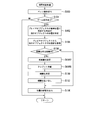
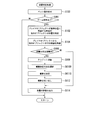
- FIG. 12 is a flowchart illustrating an example of a credit consumption determination process performed by the game apparatus 10 according to the present embodiment.
- the first game execution unit 160 receives a bet operation by the player via the operation reception unit 120. Thereafter, the first game execution unit 160 proceeds to step S101.
- the first game executing unit 160 determines whether or not the operation receiving unit 120 has received a game operation (for example, a hitting operation) from the player. Specifically, the first game execution unit 160 waits for operation information output from the operation reception unit 120, and acquires the operation information to identify the timing at which the game operation is performed.
- step S101 YES
- the first game execution unit 160 advances the process to step S102.
- the 1st game execution part 160 returns a process to step S100.
- Step S ⁇ b> 102 The first game execution unit 160 specifies the position of each instruction object at the time when the player object moves to the height of the movement path of the instruction object based on the timing information when the game operation is performed. Thereafter, the first game execution unit 160 proceeds to step S104.
- Step S104 The first game executing unit 160 obtains a distance between the position of the pointing object and the reference position of the player object (a position where the moving path of the pointing object and the moving path of the player object intersect). Thereafter, the first game execution unit 160 proceeds to step S106.
- Step S106 The first game execution unit 160 determines whether or not the distance from the reference position of the player object to the pointing object is shorter than the predetermined distance. That is, the first game execution unit 160 determines whether or not the difference between the reference position of the player object and the pointing object is a value within a predetermined distance (whether or not a predetermined skill condition is satisfied). If the value is within the predetermined distance (step S106; YES), the first game executing unit 160 advances the process to step S108. If the value is not within the predetermined distance (step S106; NO), the first game executing unit 160 advances the process to step S114. (Step S108) The first game execution unit 160 consumes the credit of the amount betted in Step S100. Thereafter, the first game execution unit 160 proceeds to step S110.
- Step S110 The first game executing unit 160 refers to the object data D111 of the instruction object corresponding to the game operation, and determines by lottery whether or not to pay out the reward. Thereafter, the first game execution unit 160 proceeds to step S112.
- Step S112 When paying out the reward, the first game executing unit 160 pays out the reward determined by the process of step S110. Thereafter, the first game execution unit 160 proceeds to step S114. Further, even when the reward is not paid out, such as when the lottery is lost, the first game executing unit 160 advances the process to step S114.
- Step S114 The first game execution unit 160 causes the display unit 151 to display a skill evaluation result based on the determination process of step S116. Thereafter, the first game execution unit 160 returns the process to step S100.
- the process of step S108 mentioned above and S110 and S112 may be performed by changing order.
- the lottery reward and the attribute of the winning probability are associated with the attribute of each instruction object ID in the object data.
- the present invention is not limited to this.
- the attribute of the required number of wins and the attribute of the operation credit amount may be associated with each other. That is, depending on the type of the pointing object, a plurality of winnings may be required to obtain a lottery reward. The information on the required number of winnings can be understood by the player from the design of the pointing object.
- the operation credit amount may be different depending on the type of the pointing object. In this case, the sum or product of the operation credit amount and the bet amount may be used as the consumption credit amount.
- the game apparatus 10 includes the operation accepting unit 120 that accepts one or more game operations (for example, a hitting operation) of the player, and one or more players accepted by the operation accepting unit 120.
- a game value consumption unit 163 that consumes a predetermined amount of game value (for example, credit) when a game operation (for example, hitting operation) satisfies a predetermined skill condition;
- the game apparatus 10 consumes the game value after evaluating the skill of the game operation. Therefore, the game apparatus 10 can change the consumption amount of the game value according to the skill of the game operation.
- game device 10 can reduce the amount of game value consumed, for example about game operation which does not participate in determination of remuneration. That is, since the game apparatus 10 can suppress fluctuations in the amount of game value consumed according to the skill of the player, the payout rate can be easily adjusted.
- the game value consumption unit 163 does not consume a predetermined amount of game value when the game operation does not satisfy the predetermined skill condition, or is less than the game value consumed when the skill evaluation unit (162) determines.
- the play value of may be consumed.
- the game apparatus 10 can reduce the amount of game value consumed by a player with a low skill.
- the operation accepting unit 120 accepts a game operation when the game value consuming unit 163 stores a predetermined amount of game value. Thereby, the game apparatus 10 can be configured not to accept a game operation when the player does not have a sufficient gaming value.
- an output unit 150 (an example of a skill evaluation output unit) that outputs an evaluation of the skill of the game operation based on the game operation of the player received by the operation reception unit 120 is further provided. Even when the predetermined skill condition is not satisfied, the skill evaluation is output. Thereby, the game apparatus 10 can improve the skill of the player because the player can notify the skill of the game operation even when the predetermined skill condition is not satisfied.
- the game reward determination unit 164 determines a reward for the game operation when the game operation of the player received by the operation reception unit 120 satisfies a predetermined skill condition. Thereby, since the game apparatus 10 determines a reward as a predetermined amount of game value is consumed, it is possible to appropriately maintain a balance between the consumption of the game value and the payout of the reward.
- the game reward determination unit 164 determines a reward for the game operation when a predetermined amount of game value is consumed by the game value consumption unit 163 when the game operation satisfies a predetermined skill condition. Thereby, since the game apparatus 10 determines a reward in exchange for consumption of a predetermined amount of game value, it is possible to appropriately maintain a balance between the consumption of game value and the payout of reward.
- the game reward determination part 164 determines the reward with respect to game operation by lottery. Therefore, since the game apparatus 10 can obtain a reward with higher value than a player with a high skill even if it is a player with a low skill, it can raise the willingness of a player with a low skill to play.
- the game reward determination unit 164 determines whether or not to pay out the game value as a reward for the game operation and / or the amount of game value to be paid out as a reward for the game operation by lottery. Therefore, since the game apparatus 10 may obtain more game value than a player with a high skill even if it is a player with a low skill, it can heighten the willingness of a player with a low skill to play.
- the game apparatus 10 further includes a display unit 151 (an example of a display unit) that displays a game object (for example, an instruction object) that moves within the screen.
- a display unit 151 an example of a display unit
- the game reward determination unit 164 changes the reward determination method according to the type of game object corresponding to the game operation. Thereby, since the game apparatus 10 can change the determination method of a reward for every instruction
- the game apparatus 10 further includes a display unit 151 (an example of a display unit) that displays a game object that moves within the screen.
- the predetermined skill condition is, for example, a position of a game object (for example, an instruction object) and a position (for example, a position of the player object) specified based on the game operation of the player received by the operation receiving unit 120. ) Is a value within a predetermined range.
- the game device 10 determines whether or not the skill condition is satisfied based on the positional relationship between the position of the player object and the instruction object, for example. Therefore, the game apparatus 10 can visually instruct the timing for performing the operation.
- the game apparatus 10 further includes a display unit 151 (an example of a display unit) that displays a game object (for example, an instruction object) that moves within the screen, and there are a plurality of types of game objects.
- a display unit 151 an example of a display unit
- the unit 163 gives a predetermined amount of game value according to the type of game object corresponding to the game operation. Consume as value.
- the game device 10 can change the consumption amount of game value for every instruction
- the game program according to the present embodiment includes a first step (S100) in which a game operation of a player is received by the game device 10 (an example of a computer), and the game operation of the player received in the first step is a predetermined skill condition.
- the game apparatus 10 that executes the game program consumes the game value after evaluating the skill of the game operation. Therefore, the game apparatus 10 can change the consumption amount of the game value according to the skill of the game operation.
- the game apparatus 10 further includes an operation accepting unit 120 that accepts a bet operation for designating the amount of game value, and the game value consumption unit 163 has a game value specified by the bet operation accepted by the operation accepting unit 120.
- the amount is used to determine the amount of gaming value to consume.
- the game apparatus 10 enables the player to specify the amount of game value consumption. Therefore, for example, a player who is not familiar with the game operation can play with a small bet amount. Accordingly, the game apparatus 10 can maintain the player's willingness to play the game regardless of the level of the game operation skill.
- the game apparatus 10 further includes an operation reception unit 120 (an example of a bet operation reception unit) that receives a bet operation that specifies an amount of game value.
- the operation reception unit 120 serving as a game operation reception unit includes a plurality of different types.
- the game operation for at least one of the game objects can be accepted, and the operation accepting unit 120 as the bet operation accepting unit can accept an operation for designating the amount of game value consumed for each type of game object
- the game value consumption unit 163 is a game object that is a target of the game operation received by the operation reception unit 120 as the game operation reception unit by the bet operation received by the operation reception unit 120 as the bet operation reception unit.
- the amount of game value to be consumed is determined using the value of the amount of game value specified for.
- the game apparatus 10 enables the player to specify the amount of game value consumption for each type of game object. Therefore, for example, the player can specify a large bet amount for a game object that is easy to operate, or can specify a small bet amount for a game object that is difficult to operate. Therefore, the game apparatus 10 can maintain the player's willingness to play the game.
- the operation accepting unit 120 as a game operation accepting unit can accept one or more game operations to two or more operation accepting regions, and the operation accepting unit 120 as a bet operation accepting unit An operation for designating the amount of game value consumed for each of the two or more operation reception areas can be received, and the game value consumption unit 163 receives the bet operation received by the operation reception unit 120 as a bet operation reception unit,
- the amount of game value to be consumed is determined using the value of the amount of game value designated for the operation reception area that has received one or more game operations in the operation reception unit 120 as the game operation reception unit.
- the game device 10 enables the player to specify the amount of game value consumption for each operation reception area.
- the player can specify a large bet amount for an operation reception area that is easy to operate, or can specify a small bet amount for an operation reception area that is difficult to operate. Therefore, the game apparatus 10 can maintain the player's willingness to play the game.
- the game apparatus 10 further includes an operation accepting unit 120 (an example of a bet operation accepting unit) that accepts a bet operation that specifies an amount of game value, and the game operation accepted by the operation accepting unit 120 as a game operation accepting unit. Further includes a game reward determination unit 164 that determines at least one of the amount and type of reward for the game operation when the predetermined skill condition is satisfied, and the bet operation corresponds to at least one of the amount and type of reward The game reward determination unit 164 determines at least one of the amount and type of the reward for the bet operation based on the bet operation received by the operation reception unit 120. Thereby, the game apparatus 10 can designate a plurality of types of betting methods. Therefore, the player can specify the betting method strategically, for example. Therefore, the game apparatus 10 can maintain the player's willingness to play the game.
- an operation accepting unit 120 an example of a bet operation accepting unit
- the game apparatus 10A has the same hardware configuration as the game apparatus 10 according to the first embodiment, and executes a timing game. However, the content of the timing game to be executed is different between the game device 10 and the game device 10A.
- the game apparatus 10 determines whether to consume credits based on a predetermined skill condition regarding the difference between the position of the pointing object and the position of the player object, whereas the game apparatus 10A The difference is that it is determined whether or not credits are consumed based on a predetermined skill condition regarding the difference between the timing at which the pointing object reaches a predetermined position and the timing of the hitting operation by the player.
- FIG. 14 is a diagram showing a game screen of the timing game according to the present embodiment.
- the hitting operation is performed at the timing when the pointing object reaches a predetermined position, and the skill of the hitting operation is evaluated according to the time difference between the specified timing and the timing of the hitting operation. It is a so-called music game.
- a credit display object CR50 representing the amount of credit held by the player
- three lanes L51, L52, L53, and an instruction object IO50 are displayed on the game screen G500 of the timing game. Yes.
- Lanes L51, L52, and L53 represent movement paths of the instruction object IO50 that instructs the timing of the player's tapping operation.
- the left lane L51 corresponds to a tapping operation to the left area of the operation reception area of the drum 13
- the right lane L52 corresponds to a tapping operation to the right area of the operation reception area.
- the center lane L53 corresponds to a hit operation to either the left region or the right region of the operation reception region of the drum 13.
- the instruction object IO50 appears from the upper end of the game screen G500 as the music progresses, and moves in the direction indicated by the arrow AR50 along any of the lanes L51, L52, and L53. Then, the player performs a hitting operation on the operation reception area of the drum 13 corresponding to each lane at the timing when the instruction object IO50 reaches the determination line JL50.
- the game device 10A consumes a predetermined amount of credits held by the player and determines a reward to be paid out to the player.
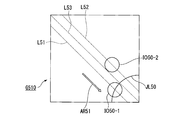
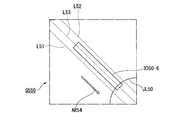
- FIGS. 15 to 18 are diagrams for explaining the pointing object and the operation on the game object according to the present embodiment, respectively.
- the single operation object is an instruction object corresponding to a single hit operation such as hitting the drum 13 once.
- the single operation object is displayed as a circular image, and designates the timing at which the center point of the circle reaches the determination line JL50 as the timing for performing the hit operation.
- the continuous operation object is an instruction object corresponding to one or more hitting operations such as hitting the drum 13 repeatedly.
- the continuous operation object is displayed as a rectangular image, and designates a period in which a part of the rectangle overlaps the determination line JL50 as a timing for performing the hit operation.
- the single operation object IO50-1 moves in the direction of the arrow AR51 in the left lane L51.
- the single operation object IO50-1 instructs the player to strike the left area of the operation reception area of the drum 13 at the timing when the center position of the single operation object IO50-1 reaches the determination line JL50.
- the single operation object IO50-2 is moving in the direction of the arrow AR51 in the right lane L52. That is, the single operation object IO50-2 instructs the player to strike the right region of the operation reception area of the drum 13 at the timing when the center position of the single operation object IO50-2 reaches the determination line JL50. .
- the continuous operation object IO50-3 moves in the direction of the arrow AR52 in the left lane L51. That is, the continuous operation object IO50-3 is the operation reception area of the drum 13 during the period from when the front end of the continuous operation object IO50-3 reaches the determination line JL50 to when the rear end passes through the determination line JL50. The player is instructed to continue hitting the left area.
- the continuous operation object IO50-4 moves in the direction of the arrow AR52 in the right lane L52.
- the continuous operation object IO50-4 is in the operation receiving area of the drum 13 during a period from when the front end of the continuous operation object IO50-4 reaches the determination line JL50 until the rear end passes through the determination line JL50. The player is instructed to continue hitting the right area.
- the single operation object IO50-5 is moving in the direction of the arrow AR53 in the center lane L53. That is, the single operation object IO50-5 hits at least one of the left region and the right region in the operation reception region of the drum 13 at the timing when the center position of the single operation object IO50-5 reaches the determination line JL50. Is instructed to the player.
- the continuous operation object IO50-6 moves in the direction of the arrow AR54 in the center lane L53. That is, this continuous operation object IO50-6 is the operation reception area of the drum 13 during the period from when the front end of the continuous operation object IO50-6 reaches the determination line JL50 to when the rear end passes through the determination line JL50. The player is instructed to continue hitting at least one of the left region and the right region.
- the operation reception area indicated by each lane is not limited to the one described above.
- the center lane L53 may correspond to simultaneous operation of both the left and right areas of the operation reception area of the drum 13. Further, each lane may instruct a press operation of the operation button 15 or a touch operation on an instruction object or a lane on the touch panel 12.
- FIG. 19 is a diagram showing a functional configuration of the game apparatus 10A according to the present embodiment.
- 10 A of game devices are each provided with the memory
- the storage unit 110A includes an object data storage unit 111A and a skill condition data storage unit 113A instead of the object data storage unit 111 and the skill condition data storage unit 113 provided in the storage unit 110.
- the storage unit 110A further includes a sequence data storage unit 114A.
- FIG. 20 is a diagram illustrating an example of object data according to the present embodiment.
- the object data D111A is configured such that lottery reward information (lottery reward) and winning probability information (winning probability) are associated with an instruction object ID (instruction object ID). It is also possible to associate an operation credit amount with each instruction object ID.
- the instruction object ID according to the present embodiment is identification information unique to the instruction object, like the instruction object according to the first embodiment.
- the instruction object ID according to the present embodiment is different from the first embodiment in that the instruction object ID includes information on the lane displaying the instruction object.
- the value of the instruction object ID is configured by combining the position of the lane on the game screen and the identification number. Specifically, in the object data D111A, the instruction objects whose instruction object IDs are “L1” and “L2” are displayed in the left lane L51. In addition, instruction objects whose instruction object IDs are “R1” and “R2” are displayed in the right lane L52.
- the instruction objects whose instruction object IDs are “C1” and “C2” are displayed in the center lane L53. It is not always necessary to include lane information in the instruction object ID, and an attribute indicating lane information may be included in the object data D111A separately from the instruction object ID.
- the skill condition data storage unit 113A stores skill condition data in the same manner as the skill condition data storage unit 113.
- the skill condition data is different from that in the first embodiment.
- a skill condition it is determined that a difference between an operation timing at which a hit operation is accepted and an instruction timing indicated by the instruction object is a value within a predetermined range.
- the skill condition data describes a reference for a deviation time between the operation timing and the instruction timing.
- this reference value may describe a different value for every lane, every instruction
- 10 A of game devices can change the difficulty level of hit operation for every lane, every instruction
- the sequence data storage unit 114A stores sequence data.
- the sequence data includes a condition definition portion and an operation sequence portion.
- information for designating different game execution conditions for each music is described, such as music tempo, beat, track, and information for designating sound effects that should be generated when the designated object is operated.
- the condition definition portion may be provided only at the beginning of the sequence data, or the condition definition portion may be added at an appropriate position in the middle of the operation sequence portion. As a result, it is possible to realize processing such as changing the tempo in a song and changing the allocation of sound effects.
- FIG. 21 is a diagram illustrating an example of an operation sequence portion of sequence data according to the present embodiment.
- the operation sequence portion of the sequence data D113A includes operation end instruction timing information (“operation end instruction timing” in FIG. 21) in operation start instruction timing information (“operation start instruction timing” in FIG. 21).
- an instruction object ID (“instruction object ID” in FIG. 21) are associated with each other.
- the operation start instruction timing information is information representing the start timing of the tapping operation.
- the operation end instruction timing information is information representing the end timing of continuous hitting operations. In the case of a single operation object, only operation start instruction timing information is described, and operation end instruction timing information is not described.
- the operation start instruction timing information and the operation end instruction timing information are described using, for example, values indicating the bar number in the music, the number of beats, and the time in the beat.
- the time in a beat is the elapsed time from the beginning of one beat, and the number of units from the beginning of the beat when the time length of one beat is equally divided into n unit times (hereinafter this unit number is It may be called a frame).
- the operation timing is designated as “01, 2, 025”. Described. Note that the operation start instruction timing and the operation end instruction timing need not be described using the beat as a reference, and may be described using other units such as seconds.
- the operation start instruction timing information “t1” is not associated with the end start instruction timing information, and “L1” is associated with the instruction object ID. That is, the record in the row of the operation start instruction timing “t1” indicates that the single operation object having the instruction object ID “L1” instructs the timing “t1” as the operation timing.
- the operation start instruction timing information “t5” is associated with “t6” as the end start instruction timing information and “L2” as the instruction object ID. That is, the record in the row of the operation start instruction timing “t5” indicates that the continuous operation object having the instruction object ID “L2” instructs the period from the timing “t5” to “t6” as the operation timing.
- the 160 A of 1st game execution parts replace with the game object process part 161, the skill evaluation part 162, the game value consumption part 163, and the game reward determination part 164 with which the 1st game execution part 160 is provided, and the game object process part 161A and skill evaluation A unit 162A, a game value consumption unit 163A, and a game reward determination unit 164A are provided. Similar to the game object processing unit 161, the game object processing unit 161A controls the arrangement of various game objects on the game screen and the change in production. However, the game object processing unit 161A is different from the first embodiment in that the display of the instruction object is controlled based on the sequence data. Here, the display control of the pointing object by the game object processing unit 161A, so-called sequence processing will be described.
- the game object processing unit 161A acquires the current time on the music. For example, the game object processing unit 161 ⁇ / b> A starts timing with the internal clock of the game apparatus 10 ⁇ / b> A with reference to the playback start time of the music, and acquires the current time from the value of the internal clock.
- the game object processing unit 161A includes, in the display range, at least a part of the timing represented by the operation start instruction timing information or the period represented by the operation start instruction timing information and the operation end instruction timing information in the sequence data. Sequence data included in the corresponding period is acquired.
- the display range is, for example, a time range corresponding to two measures of music from the current time to the future.
- the game object processing unit 161A calculates the coordinates in the game screen of all the instruction objects displayed in each lane. Specifically, first, the game object processing unit 161A determines in which lane each instruction object should be placed. Then, the game object processing unit 161 determines the position of each instruction object from the determination line in the time axis direction (that is, the movement direction of the instruction object) according to the time difference between the instruction timing of each instruction object and the current time. . Thereby, the game object processing unit 161A can acquire the coordinates of each instruction object necessary for arranging each instruction object on each lane along the time axis. Then, the game object processing unit 161A arranges the instruction object on the game screen based on the acquired coordinates of each instruction object.
- the skill evaluation unit 162A evaluates the skill of the player's tapping operation based on whether or not a predetermined skill condition is satisfied.
- the skill conditions are different from those in the first embodiment.
- the skill evaluation by the skill evaluation unit 162A will be described.
- the skill evaluation unit 162A first, the skill evaluation unit 162 acquires game operation information representing a hitting operation from the operation reception unit 120. Next, the skill evaluation unit 162A determines, based on the game operation information, the operation reception area where the operation is performed and the operation timing (the time on the music).
- the skill evaluation unit 162A identifies the instruction timing for the operation reception area where the operation is performed, among the instruction timings of the instruction object described in the sequence data. Next, the skill evaluation unit 162A extracts an instruction timing closest to the operation timing from the specified instruction timings, and acquires a shift time between the extracted instruction timing and the operation timing.
- the skill evaluation unit 162A determines an evaluation for the player's operation based on the acquired deviation time. Specifically, the skill evaluation unit 162A determines whether or not the acquired deviation time is smaller than the reference value described in the skill condition data. When the deviation time is smaller than the reference value, the skill evaluation unit 162A determines that the tapping operation satisfies the skill condition. If the deviation time is not smaller than the reference value, the skill evaluation unit 162A determines that the tapping operation does not satisfy the skill condition. The skill evaluation unit 162A outputs the determination result to the game object processing unit 161A, the game value consumption unit 163A, and the game reward determination unit 164A. Note that the skill evaluation unit 162A may not output the determination result to the game reward determination unit 164A. In this case, for example, the game value consumption unit 163A outputs to the game reward determination unit 164A information indicating that the game value consumption unit 163A has consumed a predetermined amount of game value.
- the skill evaluation unit 162A determines the reference values corresponding to the lane, instruction object, and music corresponding to the hit operation to be evaluated. Is read from the skill condition data and compared with the deviation time. Thereby, the skill evaluation unit 162A can evaluate the skill of the hitting operation on a different basis for each lane, each instruction object, and each music. For example, the lane corresponds to the operation reception area of the drum 13. Therefore, the skill evaluation unit 162A changes the skill condition depending on which of the operation reception areas has received the tapping operation by comparing the reference value and the shift time that are different for each lane, and for each operation reception area. You can change the difficulty level of the tapping operation.
- the game value consumption unit 163A consumes credits based on the determination result of the skill of the tapping operation by the skill evaluation unit 162A.
- the game reward determination unit 164A determines a reward based on the determination result of the skill of the tapping operation by the skill evaluation unit 162A.
- FIG. 22 is a flowchart illustrating an example of the flow of consumption determination processing by the game device 10A according to the present embodiment.
- the processes in steps S100, S101, and S108 to S114 are the same as the processes shown in FIG. (Step S1102)
- the first game execution unit 160A specifies an instruction object whose instruction timing is closest to the timing at which the game operation is performed among the instruction objects. Thereafter, the first game execution unit 160A advances the process to step S1104.
- Step S1104 The first game executing unit 160A acquires a time difference between the instruction timing indicated by the specified instruction object and the operation timing. Thereafter, the first game execution unit 160A advances the process to step S1106.
- Step S1106 The first game executing unit 160A determines whether or not the skill condition is satisfied by determining whether or not the acquired deviation time is within a predetermined time. When the shift time is within the predetermined time (step S1106; YES), the first game execution unit 160A advances the process to step S108. When the shift time is not within the predetermined time (step S1106; NO), the first game executing unit 160A advances the process to step S114.
- FIG. 23 is a flowchart illustrating an example of a flow of sequence processing performed by the game device 10A according to the present embodiment.
- the first game execution unit 160A acquires the current time. Thereafter, the first game execution unit 160A advances the process to step S122.
- 160A of 1st game execution parts acquire the sequence data within a display range. Thereafter, the first game execution unit 160A advances the process to step S124.
- 160 A of 1st game execution parts compute the coordinate of the position which arrange
- Step S126 160A of 1st game execution parts produce
- the credit consumption may be changed according to which operation reception area receives an operation from the player. For example, a relatively large amount of credit may be consumed when the left region receives an operation from the player, and a relatively small amount of credit may be consumed when the right region receives an operation from the player. Further, a predetermined amount of credit may not be consumed when an operation area different from the operation area specified by the pointing object is operated. Further, the reward determination method may be changed depending on which of the two or more operation reception areas receives the operation from the player.
- the game apparatus 10 ⁇ / b> A has the operation accepting unit 120 that accepts a player's game operation (for example, a tapping operation), and the player's game operation (for example, the beating) that is accepted by the operation accepting unit 120.
- the game value consumption unit 163A consumes a predetermined amount of game value (for example, credit) when the operation) satisfies a predetermined skill condition. Thereby, the game apparatus 10A consumes the game value after evaluating the skill of the game operation. Therefore, the game apparatus 10A can change the consumption amount of the game value according to the skill of the game operation.
- the game apparatus 10A further includes a display unit 151 that displays a game object (for example, an instruction object) that moves within the screen.
- the predetermined skill condition is that the game object has reached a predetermined position.
- the difference between the timing and the operation timing of the player received by the operation receiving unit 120 is a value within a predetermined range. That is, 10 A of game devices can determine whether the skill condition was satisfy
- the operation reception unit 120 receives a player's game operation to two or more operation reception regions
- the game value consumption unit 163A (an example of the game value consumption unit) receives any of the two or more operation reception regions from the player.
- the predetermined skill condition is changed depending on whether the operation is accepted.
- the game apparatus 10 ⁇ / b> A changes the determination criteria as to whether or not to consume the game value for each operation reception area such as the left area and the right area of the tapping surface of the drum 13 and consumes the game value. Can be diversified.
- the operation accepting unit 120 accepts a player's game operation to two or more operation accepting regions
- the game reward determining unit 164A (an example of the game reward determining unit) receives any of the two or more operation accepting regions from the player.
- the reward determination method is changed depending on whether the operation is accepted.
- the game apparatus 10A can change the determination method of the reward for the hit operation for each operation reception area such as the left area and the right area of the drum 13, and thus the form of paying out the game value can be diversified. it can.
- FIG. 24 is a diagram showing an outline of the game apparatus 10B according to the present embodiment.
- the game apparatus 10B according to the present embodiment has the same hardware configuration as the game apparatus 10 according to the first embodiment, and executes a timing game.
- the game apparatus 10 ⁇ / b> B has an amount of credit consumed in a predetermined period (hereinafter referred to as “consumed credit”) and a credit paid out as a reward in the predetermined period (hereinafter referred to as “reward credit”).
- the game device 10B When the ratio of the reward credit amount to the consumed credit amount in a predetermined period is lower than a predetermined reference value, that is, when the payout rate is lower than the reference value, the game device 10B Increase the probability of winning and reward value when winning the lottery.
- the ratio of the reward credit amount to the consumed credit amount in the predetermined period is higher than the predetermined reference value, that is, when the payout rate is higher than the reference value, the game device 10B wins in the reward lottery Reduce the probability and reward value if you win the lottery.
- game device 10B can adjust the future payout rate based on the past payout rate, it can suppress that the payout rate is extremely biased from a predetermined reference value.
- FIG. 25 is a diagram showing a functional configuration of the game apparatus 10B according to the present embodiment.
- the game device 10B includes a storage unit 110B and a first game execution unit 160B instead of the storage unit 110 and the first game execution unit 160 included in the game device 10 according to the first embodiment.
- the storage unit 110B includes an object data storage unit 111B instead of the object data storage unit 111 included in the storage unit 110 according to the first embodiment.
- the storage unit 110B further includes a play data storage unit 115B. Similar to the object data storage unit 111, the object data storage unit 111B stores object data.
- the object data storage unit 111 is different in that it stores two or more object data having different expected values of rewards to be paid out to the player.
- object data having a relatively high reward expectation value is associated with a numerical range with a relatively low payout rate, and a reward expectation value is relatively with respect to a numerical range with a relatively high payout rate.
- a reward expectation value is relatively with respect to a numerical range with a relatively high payout rate.
- each object data ID is associated with a low-value lottery reward or a low winning probability.
- a lottery reward with a high value or a high number of winnings is associated. Yes.
- object data with a low expected reward value a reward with a relatively low expected value is associated with each indicated object.
- object data with a high expected reward value a reward with a relatively high expected value is associated with each indicated object.
- the play data storage unit 115B stores play data representing consumption credit amount and reward credit amount.
- a consumed credit amount and a reward credit amount are described in association with time information, for example.
- game device 10B can acquire the consumption credit amount and the reward credit amount in an arbitrary period by referring to the play data.
- the description format of the play data may be arbitrary as long as the consumed credit amount and the reward credit amount in the predetermined period can be acquired.
- the play data may describe the sum of consumption credit amount and reward credit amount for each predetermined period.
- the first game execution unit 160B includes a game value consumption unit 163B and a game reward determination unit 164B in place of the game value consumption unit 163 and the game reward determination unit 164 included in the first game execution unit 160.
- the first game execution unit 160B further includes a game value information acquisition unit 165B.
- the game value information acquisition unit 165B receives a game value information acquisition request from the game reward determination unit 164B
- the game value information acquisition unit 165B refers to the player data stored in the play data storage unit 115B.
- the game value information acquisition unit 165B acquires the consumption credit amount in a predetermined period and the reward credit amount in the period based on the referenced player data.
- game value information acquisition part 165B outputs the game value information showing the acquired consumption credit amount and reward credit amount to game reward determination part 164B.
- the predetermined period is, for example, a period from a predetermined time before to the present.
- the length of the predetermined period may be any length such as 1 hour, 3 hours, or 1 day.
- the length of the predetermined period is short, it is easy to keep the payout rate in each play constant regardless of the timing of play.
- the length of the predetermined period is long, it is easy to change the payout rate in each play depending on the timing of play while maintaining the payout rate in the long term.
- the game value consumption unit 163B consumes credits when the hit operation received from the player satisfies a predetermined skill level.
- the game value consumption unit 163B is different from the game value consumption unit 163 according to the first embodiment in that the consumed credit is described in the play data in association with the date / time information.
- the game reward determination unit 164B determines a reward when the hit operation received from the player satisfies a predetermined skill condition, similarly to the game reward determination unit 164 according to the first embodiment. However, the game reward determination unit 164B is different from the game reward determination unit 164 according to the first embodiment in that the determination method of the reward is changed based on the game value information.
- the game reward determination unit 164B issues a game value information acquisition request to the game value information acquisition unit 165B and acquires the game value information. .
- the game reward determination unit 164B acquires the payout rate based on the consumption credit amount and the reward credit amount in a predetermined period represented by the game value information acquired from the game value information acquisition unit 165B.
- the payout rate can be acquired, for example, by dividing the reward credit amount by the consumed credit amount.
- the game reward determination unit 164B specifies one object data from two or more object data stored in the object data storage unit 111 according to the acquired payout rate.
- the game reward determination unit 164B extracts object data for the pointing object to which the hitting operation is assigned from the identified object data.
- the game reward determination unit 164B determines a reward based on the extracted object data.
- game reward determination part 164B can change the determination method of reward according to the payout rate in a predetermined period. Then, when paying out credit as a reward, the game reward determining unit 164B describes the credit amount to be paid out in play data in association with the date and time.
- the payout rate information for a predetermined period is an example of game value information, and is not limited thereto.
- a difference value between a reward credit amount and a consumption credit amount for a predetermined period may be calculated from game value information, and the reward determination method may be changed using the difference value.
- one object data is specified according to the payout rate from two or more object data when determining a reward.
- the present invention is not limited to this.
- the reward may be determined by multiplying the reference object data by a coefficient corresponding to the payout rate.
- the payout rate is relatively low, the payout rate is relatively high by multiplying a relatively high coefficient value (for example, 1.2) by a lottery reward value or a winning probability value.
- a relatively low coefficient value for example, 0.8
- FIG. 26 is a flowchart illustrating an example of a flow of reward determination method selection processing according to the present embodiment.
- the process shown in FIG. 26 corresponds to the process of step S110 shown in FIG. (Step S130)
- the first game execution unit 160B refers to the play data stored in the play data storage unit 115B, and represents game value information indicating the amount of credit consumed during the predetermined period and the amount of reward credit during the predetermined period. To get. Thereafter, the first game execution unit 160B advances the process to step S132.
- the first game execution unit 160B selects a reward determination method based on the acquired game value information. Specifically, the first game execution unit 160B calculates the payout rate for the predetermined period based on the consumed credit amount for the predetermined period represented by the game value information and the game value information for the predetermined period. Next, the first game execution unit 160B specifies object data corresponding to the calculated payout rate. Next, the first game execution unit 160B extracts object data for the pointing object to which the hitting operation is assigned from the identified object data. And the 1st game execution part 160B performs lottery based on the extracted object data, and pays out a lottery reward in the case of winning. Thereafter, the first game execution unit 160B ends the process shown in FIG.
- the game apparatus 10B acquires game value information indicating the amount of game value consumed in a predetermined period and the amount of game value paid out in the predetermined period.
- An information acquisition unit is further provided, and the game reward determination unit changes a reward determination method based on the game value information.
- the game apparatus 10B can change the content of the reward, the winning probability, etc. according to the amount of game value consumed in the predetermined period or the amount of game value paid out. The player can be rewarded in such a way that the payout amount is not largely biased.
- the game apparatus 10C has the same hardware configuration as the game apparatus 10 according to the first embodiment, and executes a timing game. However, the game apparatus 10D is different from the game apparatus 10 in that the credit is consumed even when the game operation does not satisfy the skill evaluation, and the consumed credit is returned later. The above is an overview of the game apparatus 10C.
- FIG. 27 is a diagram illustrating a functional configuration of a game device according to the fourth embodiment.
- the game device 10 ⁇ / b> C includes a first game execution unit 160 ⁇ / b> C instead of the first game execution unit 160 included in the game device 10.
- the first game execution unit 160C includes a game value consumption unit 163C instead of the game value consumption unit 163 included in the first game execution unit 160.
- the first game execution unit 160C further includes a game value collection unit 166C in addition to the various configurations included in the first game execution unit 160.
- the gaming value collection unit 166C collects a predetermined amount of credit when the operation receiving unit 120 receives a predetermined game operation.
- the predetermined game operation is, for example, a game operation that consumes credits such as a hitting operation.
- the gaming value collection unit 166C may collect a predetermined amount of credit only when a predetermined skill condition is not satisfied. Further, the gaming value collection unit 166C may collect all or a part of a predetermined amount of credits.
- the gaming value collection unit 166C returns the medals M corresponding to all or part of the collected credits via the return unit 140 at a predetermined timing. In this case, the upper limit of the amount of credits returned is, for example, the amount of credits consumed.
- the game value consumption unit 163C consumes a predetermined amount of credit regardless of whether or not the game operation satisfies the skill condition.
- the timing of consuming credits may be before accepting a game operation or after accepting a game operation.
- the return unit 140 may return the credit in a mode other than the medal M.
- the return unit 140 may give an arbitrary reward such as an item or a free game instead of returning the credit.
- the first game execution unit 160 and the second game execution unit 170 may function as a return game execution unit that executes a game that rewards all or part of the collected game value.
- the return unit 140 may give an arbitrary reward such as an item or a free game based on the number of times that the game operation does not satisfy the skill condition.
- the case where the return unit 140 returns according to the collection of credits by the game value collection unit 166C has been described. May be returned.
- the gaming value collection unit 165C may not collect credits.
- the game device 10C may not include the game value collection unit 165C.
- the return unit 140 may give more credits than credits collected or consumed. The above is the description of the configuration of the game apparatus 10C.
- FIG. 28 is a flowchart illustrating an example of a flow of consumption determination processing by the game device 10C according to the present embodiment.
- the processes in steps S100 to S114 are the same as the processes shown in FIG.
- a case will be described in which, when the skill condition is not satisfied, a consumed amount of credit is collected and a medal M corresponding to the total amount of collected credit is returned.
- Step S3108 If the decision result in the step S106 is NO, the first game executing unit 160C consumes the credit of the amount betted in the step S100. Thereafter, the first game execution unit 160C advances the process to step S3110. (Step S3110) The first game execution unit 160C collects the amount of credits consumed in Step S3108. Thereafter, the first game execution unit 160C advances the process to step S3112.
- Step S3112 The first game execution unit 160C returns the amount of medals M corresponding to the credits collected in Step S3110. Thereafter, the first game execution unit 160C advances the process to step S114.
- the process of step S3112 may be executed at a predetermined timing, for example, when credits of a predetermined reference amount or more are collected, or when credits are collected a predetermined number of times or more. The above is the description of the operation of the game apparatus 10C.
- the game apparatus 10 ⁇ / b> C is configured to play a game before or after receiving an operation reception unit 120 (an example of a game operation reception unit) that receives one or more game operations and the operation reception unit 120.
- the game value consumption unit 163C that consumes value
- the skill evaluation unit 162 that determines whether or not one or more game operations received by the operation reception unit 120 satisfy a predetermined skill condition
- the operation reception unit 120 A return unit 140 that returns all or part of the game value consumed by the game value consumption unit 163 when the skill evaluation unit 162 determines that one or more game operations do not satisfy a predetermined skill condition. .
- the game device 10C can easily adjust the payout rate while maintaining the player's willingness to play the game.
- the game device 10C includes an operation receiving unit 120 that receives a game operation, a game value consumption unit 163C that consumes a game value before or after receiving one or more game operations at the operation receiving unit 120, and an operation receiving unit 120.
- the skill evaluation unit 162 that determines whether or not one or more game operations received in the step satisfies a predetermined skill condition, and the skill if the one or more game operations received in the operation reception unit 120 do not satisfy the predetermined skill condition
- the first game execution unit 160 or the second game execution unit 170 return game execution
- the game apparatus 10C gives a reward to the game value consumed for the game operation that does not satisfy the skill condition. Therefore, the game apparatus 10 ⁇ / b> C can easily obtain a reward even if the player has a low game operation skill. Accordingly, the game device 10C can easily adjust the payout rate while maintaining the player's willingness to play the game.
- first game execution unit 160 or second game execution unit 170 receives a plurality of game operations at the game operation reception unit, and then sets a predetermined skill condition.
- a game is executed with a reward of a different amount of game value depending on the number of game operations that are not satisfied.
- the game apparatus 10 ⁇ / b> C can vary the expected value of the amount of game value given as a reward according to the number of game operations in which the game operation does not satisfy the skill condition. Therefore, even a player with low game operation skill can easily obtain a reward. Accordingly, the game device 10C can easily adjust the payout rate while maintaining the player's willingness to play the game.
- first game execution unit 160 or second game execution unit 170 receives a plurality of game operations at operation reception unit 120, and then sets a predetermined skill condition. A game with different rewards is executed according to the number of game operations that are not satisfied.
- the game apparatus 10 ⁇ / b> C can vary the expected value of reward according to the number of game operations in which the game operation does not satisfy the skill condition. Therefore, even a player with low game operation skill may get good rewards. Accordingly, the game device 10C can easily adjust the payout rate while maintaining the player's willingness to play the game.
- the game device 10D has the same hardware configuration as the game device 10 according to the first embodiment, and executes a timing game. However, the game apparatus 10D is different from the game apparatus 10 in that the consumption amount of credit can be changed or selected.
- the game device 10D changes the credit consumption according to the play time of the game. Specifically, the game apparatus 10 ⁇ / b> D does not consume credits immediately after the game starts when the game operation performed by the player does not satisfy the skill condition. On the other hand, the game apparatus 10D consumes credits when time has elapsed since the start of the game even if the game operation performed by the player does not satisfy the skill condition. To do.
- the credit consumption may be gradually increased according to the game play time. When the play time reaches a predetermined time, the credit consumption is set to a predetermined amount such as a bet amount, for example.
- a predetermined amount such as a bet amount
- FIG. 29 is a diagram illustrating a functional configuration of a game device according to the fifth embodiment.
- the game device 10D includes a first game execution unit 160D instead of the first game execution unit 160 included in the game device 10.
- the first game execution unit 160D includes a game value consumption unit 163D instead of the game value consumption unit 163 included in the first game execution unit 160.
- the first game execution unit 160D further includes a game value consumption setting unit 167D in addition to the various configurations included in the first game execution unit 160.
- the gaming value consumption setting unit 167D sets a reduction amount of credits consumed when the game operation does not satisfy the skill condition.
- “setting” includes determining, changing, selecting, and the like.
- the reduction amount may be determined by a ratio of 0 to 100%, for example.
- a case will be described in which a plurality of reduction amounts are determined in advance, and the game value consumption amount setting unit 167D selects one of the plurality of reduction amounts in setting the reduction amount. .
- the reduction amount may be set when the game is not progressing, or may be performed while the game is in progress.
- the reduction amount may be set for each game object or may be set for each operation reception area.
- the game value consumption setting unit 167D increases the degree of credit consumption reduction when the play time is relatively short (for example, immediately after the start of the game). Then, the game value consumption setting unit 167D reduces the extent to which the credit consumption is reduced when the play time is relatively long (for example, close to the end of the game). In addition, the game value consumption setting unit 167D may reduce the credit consumption only when a predetermined reduction condition is satisfied, for example.
- the predetermined reduction condition includes, for example, a bonus period in a game, a grace period immediately after the start of the game, use of a predetermined item, a predetermined game mode, etc. is there.
- the gaming value consumption setting unit 167D may set a reduction amount of credits consumed based on, for example, the number of times that a game operation has been performed, the number of times that a skill condition has been satisfied, and the like. In this case, for example, the amount of reduction is set to decrease as the number of times that the game operation is performed or the number of times that the skill condition is satisfied increases.
- the bonus period or the grace period immediately after the start of the game is an example of a predetermined period that starts with a predetermined event as a trigger.
- the predetermined event is a player's operation or the like for starting the bonus period.
- the predetermined event is a game start operation or the like.
- the game start operation includes an operation for causing the game apparatus 10D to authenticate the player, a game operation performed for the first time after the player is authenticated, and the like.
- the game value consumption unit 163D calculates the amount of credit to be consumed based on the bet amount set by the bet setting unit 165 and the credit reduction amount set by the game value consumption amount setting unit 167D. Then, the calculated amount of credit is consumed.
- the above is the description of the configuration of the game apparatus 10D.
- FIG. 30 is a flowchart illustrating an example of a flow of consumption determination processing by the game device 10D according to the present embodiment.
- the processes in steps S100 to S106 and S110 to S114 are the same as the processes shown in FIG.
- a case will be described in which a credit consumption reduction amount is set based on play time.
- information that associates the reduction amount with the play time is stored in the storage unit 110 in advance.
- Step S4107 If the decision result in the step S106 is NO, the first game executing unit 160D sets a credit consumption amount. At this time, the first game execution unit 160D refers to an internal timer and acquires information on play time. In addition, the first game execution unit 160D acquires information on a reduction amount corresponding to the play time from the storage unit 110. And 1st game execution part 160D sets the acquired reduction amount to the reduction amount of the credit consumed about the game operation received by step S101. Thereafter, the first game execution unit 160D advances the process to step S4108.
- Step S4108 The first game execution unit 160D calculates an amount obtained by subtracting the credit corresponding to the reduction amount set in Step S4107 from the credit corresponding to the amount betted in Step S100. Then, the first game execution unit 160D consumes the calculated amount of credit. Thereafter, the first game execution unit 160D advances the process to step S110. Note that the process of step S4108 may be executed at an arbitrary timing. The above is the description of the operation of the game device 10D.
- the game value consumption unit 163D determines the amount of game value to be consumed using information indicating the progress of the game. Thereby, game device 10D can change the amount of game value consumption according to the progress of a game. Therefore, for example, when the skill of the player is low, a relatively small amount of game value may be consumed, and when the player's skill is high, a relatively large amount of game value may be consumed. it can. Therefore, the game apparatus 10D can maintain the player's willingness to play the game. In addition, since the game apparatus 10 can keep the game value consumption constant regardless of the skill of the player, the payout rate can be easily adjusted.
- the game value consumption unit 163D reduces the amount of game value to be consumed when it is determined that a predetermined game condition (reduction condition) is established using information indicating the progress of the game. Thereby, the game apparatus 10 can reduce the consumption amount of game value when a predetermined game condition is satisfied. Therefore, the game apparatus 10 can motivate the player to play so that a predetermined game condition is satisfied, and the player's willingness to play the game can be maintained.
- a predetermined game condition reduction condition
- the game value consumption unit 163D reduces the amount of game value to be consumed when it is determined that the game value consumption unit 163D is within a predetermined period starting with a predetermined event as a trigger. Thereby, game device 10D can reduce the consumption of game value within a predetermined period. Therefore, the game apparatus 10D can provide a period during which the game value is not consumed at the start of the game, for example, so that the player can continue to be willing to play the game.
- the game device 10E according to the present embodiment has the same hardware configuration as the game device 10 according to the first embodiment, and executes a timing game. However, the game apparatus 10E is different from the game apparatus 10 in that the skill condition can be changed or selected.
- the game apparatus 10 ⁇ / b> C can keep the game progress speed constant while maintaining the player's willingness to play the game.
- the game device 10E changes the skill condition according to the play time of the game.
- the skill condition is that the difference (distance) between the position of the pointing object and the position specified based on the game operation of the player is equal to or less than a predetermined reference value.
- the game device 10C sets the predetermined reference value to a relatively large value immediately after the game is started.
- the game device 10C sets the predetermined reference value to a relatively small value when time has elapsed since the start of the game.
- the predetermined reference value may be gradually reduced according to the play time of the game. This completes the description of the outline of the game apparatus 10E.
- FIG. 31 is a diagram illustrating a functional configuration of a game device according to the sixth embodiment.
- the game device 10E includes a first game execution unit 160E instead of the first game execution unit 160 included in the game device 10.
- the first game execution unit 160E includes a skill evaluation unit 162E instead of the skill evaluation unit 162 included in the first game execution unit 160.
- the first game execution unit 160E further includes a skill condition setting unit 168E in addition to the various configurations included in the first game execution unit 160.
- the skill condition setting unit 168E sets the skill condition based on the play time, for example.
- a case will be described in which a plurality of skill conditions are determined in advance, and the skill condition setting unit 168E selects one of the plurality of skill conditions in setting the skill conditions.
- the skill condition setting may be performed when the game is not in progress or may be performed while the game is in progress. Also, the skill condition may be set for each game object or for each operation reception area.
- the skill condition setting unit 168E sets a skill condition that is relatively easy to achieve, and when the play time is relatively long (for example, If it is close to the end of the game), skill conditions that are relatively difficult to achieve are set.
- the skill condition setting unit 168E may change the skill condition only when, for example, a predetermined skill change condition is satisfied.
- the predetermined skill change condition includes, for example, a bonus period in the game, use of a predetermined item, a predetermined game mode, and the like.
- the skill condition setting unit 168E may set a skill condition that is relatively easy to achieve in the bonus period.
- the skill condition may be set based on information other than the play time.
- the skill condition includes, for example, the number of instruction objects displayed on the game screen, the amount of credit consumed for the game operation, the number of times the game operation is performed, the number of times the skill condition is satisfied, It may be set based on a skill condition selection operation or the like.
- the skill condition setting unit 168E is relatively easy to achieve, for example, when the number of instruction objects is relatively large.
- skill conditions that are relatively difficult to achieve are set.
- the skill condition setting unit 168E when the skill condition is set based on the amount of credit consumed for the game operation, the skill condition setting unit 168E, for example, when the amount of credit consumed for the game operation is relatively large Sets a skill condition that is relatively easy to achieve, and sets a skill condition that is relatively difficult to achieve when the amount of credit consumed for the game operation is relatively small.
- the skill condition setting unit 168E refers to the operation history held in the operation history holding unit 116. Then, the skill condition setting unit 168E sets the skill condition according to, for example, the number of game operations performed within a predetermined period or the number of times the skill conditions are satisfied by those game operations. Skill conditions that will be difficult to achieve as the number increases are set.
- the skill condition setting unit 168E sets a skill condition corresponding to the skill condition selection operation received by the operation receiving unit 120.
- the skill evaluation unit 162E evaluates the game operation using the skill condition set by the skill condition setting unit 168E. The above is the description of the configuration of the game apparatus 10E.
- FIG. 32 is a flowchart illustrating an example of a flow of consumption determination processing by the game device 10E according to the present embodiment.
- the processes in steps S100 to S104 and S108 to S114 are the same as the processes shown in FIG.
- the skill condition is set based on the play time.
- information that associates the skill condition with the play time is stored in the storage unit 110 in advance.
- a reference value of a distance referred to in the skill evaluation is defined.
- Step S5105 After the process of step S104, the first game execution unit 160E sets a skill condition. At this time, the 1st game execution part 160E acquires the information of play time with reference to an internal timer. In addition, the first game execution unit 160 ⁇ / b> E acquires the skill condition information corresponding to the play time from the storage unit 110. Then, the first game execution unit 160E sets the acquired skill condition as the skill condition used for the evaluation of the game operation received in step S101. Thereafter, the first game execution unit 160E advances the process to step S5106.
- Step S5106 The first game executing unit 160E determines whether or not the distance from the reference position of the player object to the pointing object is shorter than the predetermined distance.
- the value of the predetermined distance is a reference value of the distance defined in the skill condition acquired in step S5105. If the value is within the predetermined distance (step S5106; YES), the first game executing unit 160 advances the process to step S108. If the value is not within the predetermined distance (step S5106; NO), the first game execution unit 160E advances the process to step S114.
- the process of step S5105 may be executed at an arbitrary timing. For example, when the skill condition is set based on the skill condition selection operation, the process of step S5105 may be performed before S100. In this case, the first game executing unit 160E accepts a skill condition selection operation in the process of step S5105, and sets a skill condition based on the accepted skill condition selection operation. The above is the description of the operation of the game device 10D.
- the game apparatus 10E further includes a skill condition setting unit 168E that changes a predetermined skill condition, and the skill evaluation unit 162E has received the operation reception unit 120 (an example of a game operation reception unit). It is determined whether one or more game operations satisfy the skill condition changed by the skill condition setting unit 168E. Thereby, game device 10E can change skill conditions. Therefore, the game apparatus 10E can switch the skill condition according to, for example, the play time, the skill of the player, the game situation, and the like. Therefore, the game apparatus 10E can reset the skill condition suitable for each player, for example, and can maintain the player's willingness to play the game.
- the skill condition setting unit 168E changes a predetermined skill condition using information indicating the progress of the game.
- game device 10E can change skill conditions according to the progress of a game. Therefore, the game apparatus 10E sets, for example, a skill condition that is relatively easy to achieve when the skill of the player is low, or a skill condition that is relatively difficult to achieve when the skill of the player is high. Can be set. Therefore, the game apparatus 10E can maintain the willingness of the player to play the game.
- the game device 10E can keep the frequency at which the skill condition is achieved, regardless of the skill of the player, and can easily adjust the payout rate.
- the skill condition setting unit 168E changes the predetermined skill condition according to the type of the game object. Thereby, since game device 10E changes skill conditions according to the kind of game object, it can change the difficulty of operation for every kind of game object. Therefore, the game apparatus 10E can improve the interest of the game.
- the game apparatus 10E further includes an operation accepting unit 120 (an example of a setting operation accepting unit) that accepts a skill condition selecting operation related to a predetermined skill condition, and the skill condition setting unit 168E is an operation accepting unit serving as a setting operation accepting unit.
- a predetermined skill condition is set based on the skill condition selection operation received at 120.
- the game apparatus 10E can select a skill condition by the player. Therefore, for example, a player who is not accustomed to the game operation can play under a skill condition that is relatively easy to achieve. Therefore, the game apparatus 10E can maintain the willingness of the player to play the game.
- the game apparatus 10E further includes an operation history holding unit 116 that holds a history of game operations received by the operation receiving unit 120 serving as a game operation receiving unit, and the skill condition setting unit 168E is an operation history holding unit 116.
- a predetermined skill condition is set using a history of one or more held game operations.
- the game apparatus 10E further includes an operation history holding unit 116 that holds a history of game operations received by the operation receiving unit 120 serving as a game operation receiving unit, and the skill condition setting unit 168E uses a history of game operations.
- the predetermined skill condition is set in a state where the game is not in progress, or is changed while the game is in progress.
- the game apparatus 10E further includes an operation history holding unit 116 that holds a history of game operations received by the operation receiving unit 120 serving as a game operation receiving unit, and the skill condition setting unit 168E uses a history of game operations. Then, one skill condition is selected from a plurality of predetermined skill conditions. Thereby, game device 10E sets skill conditions from the history of game operation. Accordingly, the game apparatus 10E can easily adjust the payout rate by setting appropriate skill conditions for each player, for example.
- the operation receiving unit 120 (an example of a game operation receiving unit) can receive a plurality of game operations as one group, and the skill evaluation unit 162E can receive a plurality of game operations received as a group. It is determined whether or not a predetermined skill condition is satisfied, and the game value consumption unit 163 consumes the game value when the skill evaluation unit 162E determines that a plurality of game operations received as a group satisfy the predetermined skill condition. Thereby, game device 10E evaluates skill from a plurality of game operations. Therefore, the game apparatus 10E can evaluate the skill of the player with higher accuracy than when the skill is evaluated from one game operation.
- the game device 10F has the same hardware configuration as the game device 10 according to the first embodiment, and executes a timing game. However, the game device 10F differs from the game device 10 in that the reward determination method for the game operation can be changed or selected.
- the game apparatus 10 ⁇ / b> F can determine a reward for the game operation using any one of three types of methods: a random reward determination method, a skill-dependent reward determination method, and a hybrid reward determination method.
- the random reward determination method is a reward determination method based on random selection.
- the random reward determination method is a method of randomly selecting one reward from a plurality of rewards having different amounts and types. Random selection may or may not be won and not like lottery.
- An example of the game based on the random reward determination method is a chance game. In a chance game, the randomness determines the outcome of all games that are determined over the course of a continuous play.
- the skill-dependent reward determination method is a reward determination method based on the result of skill evaluation.
- the skill-dependent reward determination method is a method of giving a reward according to the skill condition to a game operation that satisfies the skill condition.
- An example of a game based on the skill-dependent reward determination method is a skill game. In a skill game, the player's skill, rather than chance (chance), has a dominant influence on the game result determined over continued play.
- the hybrid reward determination method is a reward determination method based on the result of skill evaluation and the result of random selection.
- the hybrid reward determination method is a reward determination method that combines a random reward determination method and a skill-dependent reward determination method.
- An example of a game based on the hybrid reward determination method is a hybrid game.
- a hybrid game a combination of a player's skill and contingency affects a game result determined during continued play.
- a plurality of hybrid reward determination methods in which the weight of the result of skill evaluation at the time of determining the reward and the random selection may be used may be used.
- the game apparatus 10F can execute two or more reward determination methods among the three types of reward determination methods of a random reward determination method, a skill-dependent reward determination method, and a hybrid reward determination method. Then, the game apparatus 10F sets, changes, selects, or switches the reward determination method based on various conditions.
- the game apparatus 10F determines a reward using one of the three types of reward determination methods of a random reward determination method, a skill-dependent reward determination method, and a hybrid reward determination method. explain. The above is an overview of the game apparatus 10F.
- FIG. 33 is a diagram illustrating a functional configuration of a game device according to the seventh embodiment.
- the game device 10F includes a first game execution unit 160F instead of the first game execution unit 160 included in the game device 10.
- the first game execution unit 160F includes a game reward determination unit 164F instead of the game reward determination unit 164 included in the first game execution unit 160.
- the first game execution unit 160F further includes a reward determination method setting unit 169F in addition to the various configurations included in the first game execution unit 160.
- the reward determination method setting unit 169F selects a reward determination method based on a determination method designation operation by the player.
- the determination method designation operation is an operation for designating a reward determination method.
- the reward determination method designation operation may be performed for each play of the game, or may be performed for each game object, for each operation reception area, or the like.
- the reward determination method setting unit 169F may select a reward determination method based on, for example, skill evaluation of the game operation. In this case, when the skill evaluation of the game operation is high, the reward determination method setting unit 169F selects a reward determination method having a large skill distribution (weight) in determining the reward. On the other hand, when the skill evaluation of the game operation is high, the reward determination method setting unit 169F selects a reward determination method having a large random selection distribution (weight) in determining the reward.
- the game reward determination unit 164F determines a reward for the game operation by the reward determination method selected by the reward determination method setting unit 169F.
- a reward determination method is determined for each operation reception area.
- the game reward determination unit 164F performs a lottery to determine a reward, for example. Then, the game reward determination unit 164F gives the determined reward.
- the game reward determination unit 164F determines, for example, whether or not the game operation satisfies the skill condition. Judge and evaluate the skill of game operation. Then, the game reward determination unit 164F gives a better reward to a game operation with a high skill (for example, satisfying a difficult skill condition).
- the game reward determination unit 164F evaluates the skill of the game operation. Then, a reward is determined based on the evaluated skill and the lottery. For example, the game reward determination unit 164F determines the amount of credit to be given as a reward by calculating the product of a base value determined by lottery and a multiplication value (multiplier) based on the number of consecutive successful operations. Here, the number of consecutive successful operations is the number of times that operations that satisfy the skill condition are continuously performed. In another example, the amount of credit to be given as a reward is determined by calculating a product of a base value based on the operation timing evaluation and a magnification value based on the lottery.
- the reward determination method may be determined in advance for each game object and each operation reception area. For example, in the example shown in FIG. 15, for the single operation object IO50-1, the reward is determined by the skill-dependent reward determination method based on the timing when the game operation is performed, and for the single operation object IO50-2, based on the lottery. The reward may be determined by a random reward determination method.
- the above is the description of the configuration of the game apparatus 10F.
- FIG. 34 is a flowchart showing an example of the flow of consumption determination processing by the game apparatus 10F according to the present embodiment.
- the processes in steps S100 to S108 and S112 to S114 are the same as those shown in FIG.
- a case where a reward determination method is defined for each operation reception area will be described.
- information that associates the operation reception area with the reward determination method is stored in the storage unit 110 in advance.
- Step S6109 After the process of step S108, the first game execution unit 160F specifies an operation reception area in which a game operation is received in step S101. In addition, the first game execution unit 160F acquires information on the reward determination method corresponding to the identified operation reception area from the storage unit 110. And the 1st game execution part 160F sets the reward determination method with respect to the game operation received by step S101 based on the information of the acquired reward determination method. Thereafter, the first game executing unit 160F advances the process to step S6110. (Step S6110) First game executing unit 160F determines a reward by the reward determination method set in step S6109. Thereafter, the first game execution unit 160 proceeds to step S112. Note that the process of step S6109 may be executed at an arbitrary timing.
- the process of step S6109 may be executed before the process of step S100.
- the first game executing unit 160F accepts a determination method designation operation in the process of step S6109, and selects a reward determination method based on the accepted determination method designation operation.
- the above is the description of the operation of the game apparatus 10F.
- the game apparatus 10 ⁇ / b> F has one game device 10 ⁇ / b> F when the skill evaluation unit 162 determines that one or more game operations received by the operation reception unit 120 as a game operation reception unit satisfy a predetermined skill level. It further includes a game reward determination unit 164F that determines a reward for the above game operation using a reward determination method based on one or more of the result of determination by the skill evaluation unit 162 and the result of random selection (for example, lottery).
- game device 10F reflects the result of skill evaluation and the result of random selection in the reward, or reflects the determination result of the skill and the result of the lottery in the reward. Therefore, the game device 10F can improve the interest of the game as compared with the case where the reward is determined solely based on the skill alone or the reward is determined solely based on the contingency.
- the game apparatus 10F uses information indicating the progress of the game to reward the game operation. It further includes a game reward determination unit 164F that selects one reward determination method from among a plurality of different reward determination methods. Thereby, the game device 10F sets a reward determination method according to the progress of the game. Therefore, for a player with a low game operation skill, a reward may be determined by a highly contingent method, or for a player with a high game operation skill, a reward may be determined by a low contingency method. it can. Therefore, the game apparatus 10F can maintain the player's willingness to play the game.
- the game device 10F includes a game reward determination unit 164F, a first reward determination method (for example, a hybrid reward determination method) based on the determination result by the skill evaluation unit 162 and the lottery result, and a lottery result based on the lottery result.
- a plurality of reward determination methods including at least a two reward determination method (for example, a random reward determination method) and a third reward determination method (for example, a skill-dependent reward determination method) based on a result of determination by the skill evaluation unit 162 Then, one reward determination method is selected to determine a reward for one or more game operations.
- the game device 10 ⁇ / b> F determines a reward by any one of the first reward determination method, the second reward determination method, and the third reward determination method. Therefore, for example, the player's willingness to play the game can be maintained regardless of the skill of the player.
- the game apparatus 10F further includes an operation reception unit 120 (an example of a determination method reception unit) that receives a determination method specifying operation for specifying a reward determination method for determining a reward for one or more game operations, and the game reward determination unit 164F Is a reward determination method specified by the determination method specifying operation received by the operation reception unit 120 as the determination method reception unit, and determines a reward for one or more game operations.
- an operation reception unit 120 an example of a determination method reception unit
- the game reward determination unit 164F Is a reward determination method specified by the determination method specifying operation received by the operation reception unit 120 as the determination method reception unit, and determines a reward for one or more game operations.
- game device 10F enables a player to specify a reward determination method. Therefore, for example, the player can specify a reward determination method in accordance with his / her game operation skill. Therefore, the game apparatus 10
- the game device 10G according to the present embodiment has the same hardware configuration as the game device 10 according to the first embodiment, and executes a timing game. However, the game apparatus 10G is different from the game apparatus 10 in that the game mode is switched based on the skill of game operation.
- FIG. 35 is a diagram illustrating a functional configuration of a game device according to the seventh embodiment.
- the game device 10G includes a first game execution unit 160G instead of the game device 10.
- the first game execution unit 160G further includes a mode switching unit 1611G in addition to the various configurations included in the first game execution unit 160.
- the mode switching unit 1611G switches the game mode based on the skill evaluation. For example, when the skill evaluation of the game operation performed in the special game mode is low, the mode switching unit 1611G switches the game mode from the special game mode to the normal game mode. Further, for example, the mode switching unit 1611G switches to a game mode in which the number of instruction objects displayed on the game screen is relatively large when the skill evaluation is high, and is displayed on the game screen when the skill evaluation is low. The game mode is switched to a relatively small number of instruction objects.
- play in a certain game mode may be limited by skill evaluation.
- the game apparatus 10 when the game operation does not satisfy the predetermined skill condition, the credit consumption is reduced, so that it is possible to suppress a decrease in the willingness to play by a player with a low skill.
- the mode switching unit 1611G restricts the play in a specific game mode, so that the player can be given a motivation to play better. Therefore, the game device 10G can improve the skill of the player and increase the progress speed of the game while suppressing a decrease in the willingness to play by the low-skilled player.
- the unit manager 180 may switch from one game to another. The above is the description of the configuration of the game apparatus 10G.
- FIG. 36 is a flowchart illustrating an example of a flow of consumption determination processing by the game device 10G according to the present embodiment.
- the processes in steps S100 to S114 are the same as the processes shown in FIG.
- Step S6108 When the determination result of Step S106 is NO, the first game execution unit 160G determines whether or not to switch the game mode. Specifically, it is determined whether or not the game mode being switched to is different from the game mode being executed.
- the first game executing unit 160G advances the process to step S6110.
- the game mode is not switched (step S6108; NO)
- the first game execution unit 160G advances the process to step S114.
- Step S6110 First game execution unit 160G switches the game mode. Thereafter, the first game execution unit 160G advances the process to step S114. Although the case where the game mode is switched has been described here, the game itself may be switched. In this case, in the process of step S6108, the unit manager 180 determines whether to switch the game. In step S6110, the unit management unit 180 switches the game. The above is the description of the operation of the game apparatus 10G.
- game device 10G further includes first game execution unit 160G (an example of a game progress control unit) that controls the progress of the game, and first game execution unit 160G serves as a game operation reception unit.
- first game execution unit 160G an example of a game progress control unit
- first game execution unit 160G serves as a game operation reception unit.
- the skill evaluation unit 162 determines that the game operation received by the operation reception unit 120 does not satisfy the predetermined skill condition, the game in progress is changed.
- the game apparatus 10G further includes a mode switching unit 1611F that switches between a plurality of modes in one game, and if the game operation received by the operation reception unit 120 does not satisfy a predetermined skill condition, the skill evaluation unit 162 When the determination is made, the mode switching unit 1611F performs switching between a plurality of modes.
- the game apparatus 10G further includes a unit management unit 180 that switches between a plurality of games, and when the skill evaluation unit 162 determines that the game operation received by the operation reception unit 120 does not satisfy a predetermined skill condition.
- the unit management unit 180 switches between a plurality of games.
- the game device 10G restricts or interrupts the progress of the game when the game operation of the player does not satisfy the skill condition. Therefore, the game apparatus 10G can motivate the player to improve the skill of the game operation, and can keep the player's willingness to play the game.
- the present invention is not limited to the game types described in the above-described embodiments, and can be applied to other types of games.
- the present invention is also applied to a capture game, a shooting game, a sports game, a slot game, a competition game, a placement game, a battle game, a quiz game, a memory game, and a card game.
- the capture game is, for example, a game that captures a target object displayed as a target.
- a shooting game is, for example, a game in which a target object is shot down.
- a sports game is a game that simulates a sport such as hitting a target object with a bat, a racket, or the like.
- the slot game is a game in which a reward is awarded based on a combination of symbols that are stopped and displayed by performing an operation of stopping a plurality of rotating reels.
- a competitive game for example, a placement game, for example, a battle game, for example, a quiz game, for example, a memory game, for example, a card game, for example, a competitive game, for example, a specific game, etc.
- the placement game is, for example, a game that requests an operation for adjusting the position and inclination of a plurality of objects (blocks and the like).
- a battle game is a game in which, for example, an attack or defense is performed to compete for victory or defeat with an opponent.
- the quiz game is, for example, a game that asks for knowledge ability, calculation ability, figure grasping ability, and the like.
- the memory game is, for example, a game in which the stored content is tested for information temporarily presented to the player.
- the card game is a game that requires a strategy such as selection of cards.
- a predetermined skill condition in addition to the conditions for determining the accuracy of the operation timing and operation position of a single operation, the accuracy of the operation timing and operation position of a plurality of consecutively performed operations Conditions (timing game, shooting game, slot game, etc.), conditions for determining the speed of a predetermined game operation and a short time until a predetermined game result is obtained (shooting game, racing game, etc.) , Placement games, etc.), conditions for judging the correctness of input / selected information (quiz games, memory games, etc.), conditions for judging the accuracy of strategies (card games, etc.), etc. Good.
- the present invention may be applied to a game that targets a physical object.
- a game in which a physical object is moved to a predetermined position using an arm member or the like may be used.
- the predetermined skill condition is set. If it is not satisfied, the consumption of the game value may be exempted or partially reduced.
- it may be a pusher game in which medals or the like are thrown in a predetermined area on the field (for example, an area in front of the pusher table). In this case, when a medal or the like is not inserted into a predetermined area on the field (for example, a determination is made based on detection by the camera), the consumption of the game value may be exempted or partially reduced. .
- the present invention is not limited to a game in which credit is consumed for each game operation, and game value is consumed by dividing the period from the start of the game until a predetermined end condition is satisfied (one play). It may be applied to games that are played. In the case of such a game, a predetermined amount of game value (for example, 100 credits) is consumed only when it is determined that the game operation satisfies a predetermined skill condition at the end of the game, and the game operation is performed according to the predetermined skill condition. When the above condition is not satisfied, it is possible to prevent the player's willingness to play the game by reducing the consumption amount of the game value or not consuming it at all.
- a predetermined amount of game value for example, 100 credits
- the processing executed by the game devices 10, 10A to 10G described in the above-described embodiments may be appropriately changed according to the content of the game.
- the skill of the game operation of the player is evaluated at predetermined time intervals (for example, every 20 seconds).
- the game device 10G continues the game based on the continued music data.
- the game apparatus 10G interrupts the song and switches to another game mode.
- the traveling course is divided into a plurality of sections, and the skill of the game operation is evaluated based on the rank in each section. And when it determines with satisfy
- a bonus credit, item, etc.
- the skill evaluation may be performed for a set of a plurality of game operations. For example, when a shooting game is executed in the game apparatus 10, the skill of the player is evaluated based on a hit rate for each predetermined number of shots. When it is determined that the skill of the player does not satisfy the predetermined skill condition, the credit consumption is reduced or the credit is not consumed for the shooting. For an instruction object that requires a plurality of game operations (for example, IO50-3 in FIG. 16), the skill is evaluated based on one or more game operations performed for the instruction object within a predetermined period. May be. Further, the game apparatuses 10, 10A to 10G may output the skill evaluation based on the skill evaluation performed on the set of game operations.
- FIG. 37 is a diagram illustrating an example of the pointing object according to the modification.
- the determination line JL51 is a circle centered on a predetermined center point P51.
- the pointing object IO51 appears so as to spring out from the predetermined center point P51, and increases its diameter with the passage of time (directions of arrows 55-1, 55-2, 55-3, 55-4). ) Circular object.
- the instruction object IO51 instructs the timing overlapping with the determination line JL51 as the operation timing.
- the pointing object may be an object that indicates timing by changing the shape of the pointing object.
- the game apparatuses 10, 10A, and 10B may accept insertion of money of bills and coins, and record money data in the internal storage unit.
- a medium such as a card or a ticket recorded as a print code, or a medium associated with a medium ID and money data may be received by a medium management server.
- banknotes and coins may be discharged, a card in which money data is recorded in the internal storage unit, and money data are recorded as print codes.
- a medium such as a ticket or a medium associated with the medium ID and money data may be discharged by the medium management server.
- Such game devices 10, 10A, 10B are used in, for example, a casino.
- payout of credits that have not been consumed may be performed in an arbitrary manner.
- the game value collection unit 166C of the game device 10C temporarily stocks the medals M inserted into the medal insertion unit 18, and if the hit operation is not satisfied, the medals M that have not been consumed are used as medals. It may be delivered to the payout unit 17 and returned to the player.
- the game value collection unit 166C consumes a predetermined amount of credit at the time of shooting and does not hit the target, The credit is determined as a return target credit and collected. Then, the return unit 140 returns all or part of the return target credit to the player at a predetermined timing.
- the credit return amount may be determined by, for example, an internal lottery. In this case, you may determine the ratio returned by lottery, for example.
- the credit may be returned at a timing when it is determined that each game operation does not satisfy the predetermined skill condition, or may be performed after a plurality of game operations or a predetermined period (interval) is completed. In this case, the game apparatuses 10, 10A to 10G may return all or a part of the return target credits accumulated (collected) between the last return and the next return timing.
- the game devices 10, 10A to 10G may collect a credit that is consumed without satisfying a predetermined skill condition as a collection target credit while consuming a predetermined amount of credit according to a game operation. Then, the game devices 10, 10A to 10G may give a reward based on the collection target credit. At this time, as a reward, a free game or bonus game may be added, or points or items in a game different from credit may be provided. For example, when a shooting game is executed in the game device 10, if a predetermined amount of credit is consumed at the time of shooting and the target is not hit, the consumed credit is determined as a collection target credit and collected. To do.
- the game apparatus 10 executes the bonus game based on the accumulation amount of the collection target credits at a predetermined timing.
- the bonus game may be a free game that does not require credit consumption, or may be a game that can be played by consuming the credits to be collected. Further, the expected reward value of the bonus game may be set so as to increase as the accumulated amount of the credits to be collected increases.
- the credit consumption and the reward determination are described as being performed in conjunction with each other, but the present invention is not limited to this.
- the credit consumption and the reward determination may be executed in advance when a predetermined skill condition is satisfied, or may be executed independently.
- the game devices 10, 10A to 10G may generate, as a bonus object, a game object that consumes less credit than usual or a game object that does not consume credit when a game operation is performed.
- the game devices 10, 10A to 10G may give a reward in the same manner as a normal game object.
- the game devices 10, 10A to 10G may execute a bonus game (free game) when a predetermined condition is satisfied. During the bonus game period, the amount of credit consumption may be reduced or no credit may be consumed for all game objects to be game-operated.
- the game operation may be performed in an arbitrary manner. Specifically, for example, in the drum 13, a hitting operation of hitting the scissors on the hitting surface of the drum 13 may be detected as a hitting operation different from the hitting operation of hitting the vicinity of the center of the hitting surface. Further, for example, in the game devices 10, 10 B to 10 G, an operation for touching the player object PO 10 displayed on the touch panel 12 may be handled in the same manner as a tapping operation for tapping the drum 13. Further, for example, in the game device 10A, an operation of touching the instruction object IO50 or the determination line JL50 may be handled in the same manner as a tapping operation of tapping the drum 13.
- FIG. 38 is a diagram illustrating an example of a betting operation according to a modification.
- the player strikes a pair of bars 14 with each other. This operation increases, for example, the unit amount of credit to be consumed (so-called bet amount). If a hitting operation is performed in this state, instead of increasing the amount of credits consumed at one time, the contents of the reward, the winning probability, etc. are increased, and a lottery with a high expected value is performed.
- the game apparatuses 10, 10 ⁇ / b> A, and 10 ⁇ / b> B may accept an operation performed by an arbitrary operation method as the above-described arbitrary game operation, bet operation, or the like, or accept an arbitrary operation not described above. Also good.
- the skill condition may be determined in a plurality of stages.
- a plurality of reference distances may be defined in the skill condition data according to the first and third embodiments.
- the distance between the player object and the pointing object satisfies a closer distance range among the plurality of reference distances, more lots of credit are consumed and a lottery with a high expected value is performed.
- a lottery with a lower expected value is performed by consuming less credit.
- a plurality of skill conditions may be determined for each difficulty level, and credit consumption and reward may be determined according to the skill of the tapping operation.
- the game devices 10, 10A to 10G may give an additional reward or an opportunity to acquire an additional reward when a maximum bet is made.
- maximum bet means that the maximum bet amount is designated for all betable targets (all game objects, all operation reception areas, etc.).
- the game devices 10, 10 A to 10 G have a bonus object that consumes a relatively small amount of credit or a credit object (consumption amount is 0) indicating object (bonus object) ) May be generated.
- a game operation that satisfies a predetermined skill condition is performed on such a bonus object, a game reward is determined in the same manner as a normal instruction object.
- the game devices 10, 10A to 10G generate a bonus game (free game) according to the progress of the game, and reduce the credit consumption for all the instruction objects that are game operation targets in the bonus game, Credits may not be consumed.
- processing as game devices 10, 10A to 10G may be performed.
- “loading and executing a program recorded on a recording medium into a computer system” includes installing the program in the computer system.
- the “computer system” here includes an OS and hardware such as peripheral devices.
- the “computer system” may include a plurality of computer devices connected via a network including a communication line such as the Internet, WAN, LAN, and dedicated line.
- the “computer-readable recording medium” refers to a storage device such as a flexible medium, a magneto-optical disk, a portable medium such as a ROM or a CD-ROM, and a hard disk incorporated in a computer system.
- the recording medium storing the program may be a non-transitory recording medium such as a CD-ROM.
- the recording medium also includes a recording medium provided inside or outside that is accessible from the distribution server in order to distribute the program.
- the code of the program stored in the recording medium of the distribution server may be different from the code of the program that can be executed by the terminal device. That is, the format stored in the distribution server is not limited as long as it can be downloaded from the distribution server and installed in a form that can be executed by the terminal device.
- the program may be divided into a plurality of parts, downloaded at different timings, and combined in the terminal device, or the distribution server that distributes each of the divided programs may be different.
- the “computer-readable recording medium” holds a program for a certain period of time, such as a volatile memory (RAM) inside a computer system that becomes a server or a client when the program is transmitted via a network.
- the program may be for realizing a part of the functions described above.
- achieve the function mentioned above in combination with the program already recorded on the computer system, and what is called a difference file (difference program) may be sufficient.
- the game device (10, 10A to 10G) includes a game operation reception unit (120, S100) that receives one or more game operations (for example, a tapping operation) of the player, and the game A skill evaluation unit (162, 162A, 162E, S106, S1106, S5106) for determining whether or not one or more game operations received by the operation reception unit (120, S101) satisfy a predetermined skill condition;
- the skill evaluation unit (162, 162A, S106, S1106) determines that one or more game operations received by the operation reception unit (120, S100) satisfy a predetermined skill condition, a game value (for example, credit)
- a gaming value consumption unit (163, 163A, 163B, 163C, S108, S3108) a gaming value consumption unit (163, 163A, 163B, 163C, S108, S3108).
- the game device consumes the game value after determining whether or not the game operation satisfies the skill condition. Therefore, since the game device can change the consumption amount of the game value according to the skill of the game operation, it is possible to suppress a player with a low skill from consuming an excessive amount of game value. Thereby, since the game device can suppress the fluctuation
- the game device (10, 10A to 10G) according to Supplementary Note 1 includes a bet operation acceptance unit (120, S100) that accepts a bet operation that specifies the amount of game value.
- the game value consumption unit (163, 163A, 163B, 163C, 163D, S108, S3108, S4108) includes the game value specified by the bet operation received by the bet operation reception unit (120, S100). The amount is used to determine the amount of gaming value to consume.
- the game device determines the amount of game value to be consumed using the specified amount of game value. Therefore, the player can adjust the amount of game value consumed. Therefore, the game device can suppress a player with low skill from consuming an excessive amount of game value.
- the game device (10, 10A to 10G) according to Supplementary Note 1 further includes a bet operation acceptance unit (120, S100) that accepts a bet operation that specifies an amount of game value.
- the game operation reception unit can receive one or more game operations on at least one of a plurality of different types of game objects, and the bet operation reception unit is consumed for each type of the game object.
- the game value consumption unit (163, 163A, 163B, 163C, 163D, S108, S3108, S4108) can accept the bet operation received by the bet operation accepting unit.
- the one or more game operation targets received by the game operation reception unit (120, S101) That game using the amount of value of game value specified for the object, to determine the amount of game value consumed.
- the game device determines the amount of game value consumed for each game object. Therefore, the player can select a game object to be operated in consideration of the amount of game value consumed. Therefore, the game device can suppress a player with low skill from consuming an excessive amount of game value.
- the game device (10, 10A to 10G) according to Supplementary Note 1 further includes a bet operation acceptance unit (120, S100) that accepts a bet operation that specifies an amount of game value.
- the game operation reception unit (120, S101) can receive one or more game operations to two or more operation reception regions, and the bet operation reception unit is consumed for each of the two or more operation reception regions.
- the game value consumption unit (163, 163A, 163B, 163C, 163D, S108, S3108, S4108) can accept the bet accepted by the bet operation accepting unit.
- the game device determines the amount of game value consumed for each operation reception area. Therefore, the player can select an operation reception area to be operated in view of the amount of game value consumed. Therefore, the game device can suppress a player with low skill from consuming an excessive amount of game value.
- the game device (10, 10A to 10G) according to Supplementary Note 1 further includes a bet operation acceptance unit (120, S100) that accepts a bet operation that specifies an amount of game value. And a game reward determination unit that determines at least one of the amount and type of reward for the game operation when the game operation received by the game operation reception unit (120, S101) satisfies the predetermined skill level.
- the bet operation accepting unit is capable of accepting an operation for designating at least one of the amount and type of reward
- the game reward determining unit is Based on the bet operation received at the bet operation reception unit, at least one of the amount and type of reward for the bet operation is A constant.
- the game device determines the amount and type of reward according to the specified amount of game value. Therefore, the player can specify the amount of game value in view of the amount and type of reward. Therefore, the game device can improve the interest of the game.
- the game value consumption unit (163D, S4108) of the game apparatus (10D) uses the information indicating the progress of the game to consume the game value. Determine the amount of.
- the game device can adjust the amount of game value consumed according to the progress of the game. Therefore, the game device can suppress a player with low skill from consuming an excessive amount of game value.
- the game value consumption unit (163D, S4108) of the game device (10D) uses information indicating the progress of the game to determine a predetermined game condition. If it is determined that the game value is established, the amount of game value consumed is reduced.
- the game device reduces the amount of game value consumed when a predetermined game condition is satisfied. Therefore, for example, the game apparatus can suppress a player with a low skill from consuming an excessive amount of game value by using a game condition that is easily satisfied by a player with a low skill.
- the gaming value consumption unit (163D, S4108) of the game device (10D) according to Supplementary Note 1 is within a predetermined period starting with a predetermined event as a trigger. If it is determined, the amount of game value consumed is reduced.
- the game device reduces the amount of game value consumed within a predetermined period. Therefore, the game device can suppress the player from consuming an excessive amount of game value in a period immediately after the start of the game, for example.
- the game device (10E) according to supplementary note 1 further includes a skill condition setting unit (168E, S5105) for changing the predetermined skill condition, and the skill evaluation unit ( 162E, S5106) determines whether one or more game operations received by the game operation receiving unit satisfy the skill conditions changed by the skill condition setting unit.
- the game device changes the predetermined skill condition. Therefore, the game apparatus can adjust the difficulty level of the skill condition.
- the game apparatus (10E) uses a skill condition setting unit (168E, S5105) that changes the predetermined skill condition using information indicating the progress of the game. ).
- the game device changes the predetermined skill condition according to the progress of the game.
- the game device can easily adjust the payout rate by changing the skill condition to a difficult one according to the progress of the game, thereby increasing the probability that a player with high skill will fail to operate.
- the skill condition setting unit (168E, S5105) of the game apparatus (10E) according to Supplementary Note 9 changes the predetermined skill condition according to the type of the game object. .
- the game device since the game device changes the skill condition according to the type of the game object, the player can grasp the difficulty level of the game operation from the type of the game object. Therefore, the game device can suppress a player with low skill from consuming an excessive amount of game value.
- the game apparatus (10E) according to additional remark 9 further includes a setting operation reception unit (120, S101) for receiving a setting operation related to the predetermined skill condition, and the skill condition
- the setting unit (168E, S5105) sets the predetermined skill condition based on the setting operation received by the setting operation receiving unit.
- the game apparatus can set the skill condition by the player. Therefore, the player can set a skill condition according to his skill. Therefore, the game device can suppress a player with low skill from consuming an excessive amount of game value.
- the game device (10E) holds an operation history that holds a history of one or more game operations received by the game operation reception unit (120, S101).
- a holding unit (116) is further included, and the skill condition setting unit (168E, S5105) sets the predetermined skill condition using one or more game operation histories held by the operation history holding unit.
- the game device sets the skill condition from the history of game operations. Therefore, the game apparatus can accurately grasp the skill of the player from the game operations performed in the past, and can use a skill condition suitable for each player. Therefore, the game apparatus can set a skill condition suitable for easily adjusting the payout rate by averaging the probability of success or failure of the game operation regardless of the skill of the player.
- the game device (10E) includes an operation history holding unit (which holds a history of game operations received by the game operation reception unit (120, S101)). 116), and the skill condition setting unit (168E, S5105) uses the game operation history to set the predetermined skill condition to a state where the game is not progressing or a state where the game is ongoing Set or change with.
- the game apparatus (10E) includes an operation history holding unit that holds a history of game operations received by the game operation reception unit (120, S101). 116), and the skill condition setting unit (168E, S5105) uses the game operation history to select the predetermined skill condition and one skill condition from the plurality of predetermined skill conditions. To do.
- the game operation accepting unit (120, S101) of the game apparatus (10E) according to Supplementary Note 9 can accept a plurality of game operations as one group,
- the skill evaluation unit (162E, S5106) determines whether or not a plurality of game operations received as the group satisfy the predetermined skill condition, and the game value consumption unit (163, S108) receives the group as the group.
- the game value is consumed when the skill evaluation unit determines that a plurality of game operations satisfy the predetermined skill condition.
- the game device evaluates the skill from a plurality of game operations. Therefore, the game device can accurately grasp the skill of the player and use skill conditions suitable for each player. Therefore, the game device can easily adjust the payout rate by averaging the probability of success or failure of the game operation regardless of the skill of the player.
- one or more game operations received by the game operation reception unit (120, S101) satisfy the predetermined skill condition.
- the skill evaluation unit (162, S106) determines that the condition is satisfied, the reward for the one or more game operations is based on one or more of the determination result by the skill evaluation unit and the result of random selection. It further includes a game reward determination unit (164F, S6110) that is determined using the determination method.
- the game reward determination unit (164F, S6110) of the game device (10F) according to supplementary note 18 includes the result of the determination by the skill evaluation unit (162, S106).
- a plurality of reward determinations including at least a first reward determination method based on a lottery result, a second reward determination method based on a lottery result, and a third reward determination method based on the determination result by the skill evaluation unit
- One reward determination method is selected from the methods to determine a reward for the one or more game operations.
- the game device can reflect the skill and randomness of the game operation in the determination of the reward. Therefore, the game device can reduce the influence of the skill of the player in acquiring the reward while improving the interest of the game.
- the game device (10F) is a determination method reception unit (120 that receives a determination method specifying operation for specifying a reward determination method for determining a reward for the game operation. , S6109), and the game reward determination unit (164F, S6110) is a reward determination method specified by the determination method specifying operation received by the determination method reception unit (120, S6109), and is for the game operation. Determine the reward.
- the game device can select a reward determination method. Therefore, the player can adjust the degree of the influence of the skill in determining the reward in consideration of his / her skill. Therefore, the game device can suppress a player with low skill from consuming an excessive amount of game value.
- the game device (10G) according to supplementary note 1 further includes a game progress control unit (160G) for controlling the progress of the game, wherein the game progress control unit When the skill evaluation unit (162, S106) determines that the game operation received by the operation reception unit does not satisfy the predetermined skill condition, the progress of the game is changed.
- a game progress control unit 160G
- the game device can give the player a motivation to continue the ongoing game.
- FIG. 21 Another aspect of the present invention further includes a mode switching unit (1611G, S6110) for switching between a plurality of modes in one game in the game device (10G) according to supplementary note 1, wherein the mode switching is performed.
- the unit (1611G, S6110) Switch between multiple modes.
- the game device (10G) according to Supplementary Note 1 further includes a unit management unit (180, S6110) for switching between a plurality of games, and the unit management unit (180, In step S6110, when the skill evaluation unit determines that the game operation received in the game operation reception unit (120, S101) does not satisfy the predetermined skill condition, switching between the plurality of games is performed.
- the game device (10D to 10F) according to Supplementary Note 1 includes a game condition control unit (167D, 168E, 169F, S4107, S5105, S6109) that controls the game conditions. Further, the game condition control unit includes the skill evaluation unit (162, 162E, S106, S5106) when the game operation received by the game operation reception unit (120, S101) does not satisfy the predetermined skill condition. If so, the game conditions are changed.
- the game device (10C) performs one or more game operations in the game operation reception unit (120, S101) that receives one or more game operations and the game operation reception unit.
- a game value consumption unit (163C, S3108) that consumes a game value before or after the reception, and a skill evaluation unit that determines whether one or more game operations received by the game operation reception unit satisfy a predetermined skill condition. (162, S106) and the game consumed by the game value consumption unit when the skill evaluation unit determines that one or more game operations received by the game operation reception unit does not satisfy a predetermined skill condition
- a return unit (140, S3112) for returning all or part of the value.
- the game device returns all or part of the consumed gaming value. Therefore, even if the player consumes a large amount of game value, the player can recover the consumed game value. Therefore, the game device can easily adjust the payout rate.
- the game apparatus (10C) includes a game operation receiving unit (120, S101) that receives a game operation and before receiving one or more game operations at the game operation receiving unit or A game value consumption unit (163C, S3108) that consumes a game value later, and a skill evaluation unit (162, 162) that determines whether one or more game operations received by the game operation reception unit satisfy a predetermined skill condition. S106) and the game value consumed by the game value consumption unit when the skill evaluation unit determines that one or more game operations received by the game operation reception unit does not satisfy a predetermined skill condition. Or a return game execution unit (160C, 170) that executes a game with a part as a reward.
- a game operation receiving unit 120, S101
- a game value consumption unit (163C, S3108) that consumes a game value later
- a skill evaluation unit (162, 162) that determines whether one or more game operations received by the game operation reception unit satisfy a predetermined skill condition.
- S106 and the game value consumed by the game value consumption unit when
- the game device executes a game that rewards all or part of the consumed game value. Therefore, the player can obtain an opportunity to recover the consumed game value. Therefore, the game device can easily adjust the payout rate.
- the return game execution unit (160C, 170) includes a plurality of game operation reception units (120, S101). After accepting the game operation, a game is executed with a reward of a different amount of game value depending on the number of game operations that did not satisfy the predetermined skill condition.
- the game device rewards a large amount of game value when the skill is low, and rewards a small amount of game value when the skill is high.
- the game device can reduce the influence of the skill in the acquisition of the reward, and can easily adjust the payout rate.
- the return game execution unit (160C, 170) includes a plurality of game operation reception units (120, S101). After accepting the game operation, a game with different rewards is executed according to the number of game operations that did not satisfy the predetermined skill condition.
- the game device has a relatively good reward when the skill is low and a relatively poor reward when the skill is high. Thereby, the game device can reduce the influence of the skill in acquiring the reward, and can give a motivation to continue playing even if the player has a low skill.
- the other aspect of this invention is the 1st step which receives one or more game operation in a computer, and whether 1 or more game operation received in the said 1st step satisfy
Landscapes
- Engineering & Computer Science (AREA)
- Multimedia (AREA)
- Physics & Mathematics (AREA)
- General Physics & Mathematics (AREA)
- Human Computer Interaction (AREA)
- User Interface Of Digital Computer (AREA)
Abstract
ゲーム装置は、一以上のゲーム操作を受け付けるゲーム操作受付部と、前記ゲーム操作受付部にて受け付けた一以上のゲーム操作が所定の技量条件を満たすか否かを判定する技量評価部と、前記ゲーム操作受付部にて受け付けた一以上のゲーム操作が所定の技量条件を満たす場合に所定量の遊技価値を消費する遊技価値消費部と、を含む。
Description
本発明は、ゲーム装置及びプログラムに関する。
従来、プレイヤに操作タイミングを指示し、指示した操作タイミングとプレイヤによる実際の操作タイミングとの時間差に応じてプレイヤのゲーム操作の技量(ゲームスキル)を評価するゲームが存在する(例えば、特許文献1)。また、プレイヤが保有する遊技価値(例えば、クレジット)を消費することによりゲームを進行させ、ゲーム結果に応じてプレイヤに遊技価値を払い出すようなゲーム機が存在する。
このような遊技価値を増減させるようなゲーム機においては、ゲームスキルをゲーム結果に反映させにくい。例えば、ゲームスキルをゲーム結果に反映させると、技量の低いプレイヤは、ゲームの進行に応じて、技量の高いプレイヤよりも多くの遊技価値を消費してしまうことになり、技量の低いプレイヤはゲームのプレイを避けてしまうことが想定される。
本発明のいくつかの態様は、技量の低いプレイヤが技量の高いプレイヤと比較して多くの遊技価値を消費することを抑制することができるゲーム装置及びプログラムを提供することを目的の一つとする。
また、本発明の他の態様のゲーム装置は、後述する実施形態に記載した作用効果を奏することを可能にするゲーム装置及びプログラムを提供することを目的の一つとする。
本発明の一態様は、一以上のゲーム操作を受け付けるゲーム操作受付部と、前記ゲーム操作受付部にて受け付けた一以上のゲーム操作が所定の技量条件を満たすか否かを判定する技量評価部と、前記ゲーム操作受付部にて受け付けた一以上のゲーム操作が前記所定の技量条件を満たすと前記技量評価部が判定した場合に遊技価値を消費する遊技価値消費部と、を含むゲーム装置である。
また、本発明の一態様は、コンピュータに、一以上のゲーム操作を受け付ける第1ステップと、前記第1ステップにおいて受け付けた一以上のゲーム操作が所定の技量条件を満たすか否かを判定する第2ステップと、前記第1ステップにおいて受け付けた一以上のゲーム操作が所定の技量条件を満たすと前記第2ステップで判定した場合に、遊技価値を消費する第3ステップと、を少なくとも実行させるためのプログラムである。
以下、本発明の一実施形態について、図面を参照して説明する。
[第1の実施形態]
本発明の第1の実施形態について説明する。
〔ゲーム装置10の概要〕
まず、本実施形態に係るゲーム装置10の概要について説明する。
ゲーム装置10は、プレイヤが保有するクレジット(遊技価値)を消費することにより進行可能なゲームを実行する装置である。ここでは、一例として、ゲーム装置10が実行するゲームとは、プレイヤがゲーム操作を行ったタイミングに基づいて、該ゲーム操作の技量を評価する、いわゆるタイミングゲームである場合について説明する。また、本実施形態では、一例として、プレイヤは、メダルMをゲーム装置10に投入することによりクレジットを蓄積し、該クレジットを消費することによりタイミングゲームを進行させることができる。
[第1の実施形態]
本発明の第1の実施形態について説明する。
〔ゲーム装置10の概要〕
まず、本実施形態に係るゲーム装置10の概要について説明する。
ゲーム装置10は、プレイヤが保有するクレジット(遊技価値)を消費することにより進行可能なゲームを実行する装置である。ここでは、一例として、ゲーム装置10が実行するゲームとは、プレイヤがゲーム操作を行ったタイミングに基づいて、該ゲーム操作の技量を評価する、いわゆるタイミングゲームである場合について説明する。また、本実施形態では、一例として、プレイヤは、メダルMをゲーム装置10に投入することによりクレジットを蓄積し、該クレジットを消費することによりタイミングゲームを進行させることができる。
図1は、本発明の第1の実施形態に係るゲーム装置10が実行するゲームのゲーム画面G110を示す図である。
本実施形態に係るゲーム装置10は、後述するようにタッチパネル12を備え、タイミングゲームのゲーム画面を表示する。図1に示すゲーム画面G110には、3つのゲームオブジェクトIO10-1、IO10-2、IO10-3と、プレイヤオブジェクトPO10とが表示されている。
本実施形態に係るゲーム装置10は、後述するようにタッチパネル12を備え、タイミングゲームのゲーム画面を表示する。図1に示すゲーム画面G110には、3つのゲームオブジェクトIO10-1、IO10-2、IO10-3と、プレイヤオブジェクトPO10とが表示されている。
ゲームオブジェクトPO10は、プレイヤのゲーム操作に基づいて位置が指定されるゲームオブジェクトである。以下では、このようなゲームオブジェクトをプレイヤオブジェクトと称する。ここでは、一例として、ゲーム装置10がプレイヤオブジェクトPO10を、ゲーム操作に応じて動作経路AR10に沿って移動させる場合、すなわち、初期位置から上方へ所定距離移動させた後に初期位置に戻す場合について説明する。
ゲームオブジェクトIO10-1、IO10-2、IO10-3は、それぞれ、プレイヤに対して、ゲーム操作を行うタイミングを指示するゲームオブジェクトである。以下では、このようなゲームオブジェクトを指示オブジェクトと称する。ここでは、一例として、ゲーム装置10が、指示オブジェクトIO10-1、IO10-2、IO10-3を、所定の領域RG10を通る移動経路AR11に沿って移動させることにより、ゲーム操作のタイミングを指示する場合について説明する。なお、以下において各指示オブジェクトIO10-1、IO10-2、IO10-3を区別する必要のない場合は、指示オブジェクトIOと表すことがある。
ゲームオブジェクトIO10-1、IO10-2、IO10-3は、それぞれ、プレイヤに対して、ゲーム操作を行うタイミングを指示するゲームオブジェクトである。以下では、このようなゲームオブジェクトを指示オブジェクトと称する。ここでは、一例として、ゲーム装置10が、指示オブジェクトIO10-1、IO10-2、IO10-3を、所定の領域RG10を通る移動経路AR11に沿って移動させることにより、ゲーム操作のタイミングを指示する場合について説明する。なお、以下において各指示オブジェクトIO10-1、IO10-2、IO10-3を区別する必要のない場合は、指示オブジェクトIOと表すことがある。
ゲーム装置10は、プレイヤのゲーム操作が所定の技量条件を満たす場合、所定量のクレジットを消費する。また、ゲーム装置10は、プレイヤのゲーム操作が所定の技量条件を満たす場合にゲーム操作に対する報酬を決定する。一方、プレイヤのゲーム操作が所定の技量条件を満たさない場合、上記所定量のクレジットは消費しない。
ここで、技量条件とは、プレイヤのゲーム操作の技量を評価する際の指標とする条件である。また、ゲーム操作とは、ゲームを進行させるための操作である。本実施形態に係る技量条件とは、指示オブジェクトの位置とプレイヤのゲーム操作に基づいて指定される位置との差(距離)が所定の範囲内の値であることである。より具体的には、本実施形態に係る技量条件とは、一例として、指示オブジェクトIOが領域RG10に到達するタイミングでプレイヤオブジェクトPO10が領域RG10に到達するようにゲーム操作を行うことである。
ここで、技量条件とは、プレイヤのゲーム操作の技量を評価する際の指標とする条件である。また、ゲーム操作とは、ゲームを進行させるための操作である。本実施形態に係る技量条件とは、指示オブジェクトの位置とプレイヤのゲーム操作に基づいて指定される位置との差(距離)が所定の範囲内の値であることである。より具体的には、本実施形態に係る技量条件とは、一例として、指示オブジェクトIOが領域RG10に到達するタイミングでプレイヤオブジェクトPO10が領域RG10に到達するようにゲーム操作を行うことである。
以上説明したように、本実施形態に係るゲーム装置10は、所定の技量条件を満たさない場合には、所定量のクレジットを消費しない。従って、本実施形態に係るゲーム装置10は、ゲーム操作の技量が低い場合には、所定量のクレジットを消費せず、且つ、報酬を決定しない。また、ゲーム操作の技量が高い場合には、所定量のクレジットを消費して、且つ、報酬を決定する。これにより、ゲーム装置10は、技量の低いプレイヤが技量の高いプレイヤよりも多くのクレジットを消費してしまうことを抑制することができる。
〔ゲーム装置10のハードウェア構成〕
次に、ゲーム装置10のハードウェア構成について説明する。
図2は、本実施形態に係るゲーム装置のハードウェア構成の一例を示す図である。
ゲーム装置10は、4つのユニット11-1、11-2、11-3、11-4と、該4つのユニット11-1、11-2、11-3、11-4に共有のタッチパネル12とを備える。タッチパネル12は、略矩形の平板状の形状を有し、その表示領域が、上面を向くように設置されている。ゲーム装置10が設置された設置面からタッチパネル12の上面までの高さは、例えば起立した少年の腰部に対応する高さとなっている。このように、タッチパネル12を低めの位置に設置することで、プレイヤは、その身長等に制限されることなくゲーム画面を広く見渡すことができる。
次に、ゲーム装置10のハードウェア構成について説明する。
図2は、本実施形態に係るゲーム装置のハードウェア構成の一例を示す図である。
ゲーム装置10は、4つのユニット11-1、11-2、11-3、11-4と、該4つのユニット11-1、11-2、11-3、11-4に共有のタッチパネル12とを備える。タッチパネル12は、略矩形の平板状の形状を有し、その表示領域が、上面を向くように設置されている。ゲーム装置10が設置された設置面からタッチパネル12の上面までの高さは、例えば起立した少年の腰部に対応する高さとなっている。このように、タッチパネル12を低めの位置に設置することで、プレイヤは、その身長等に制限されることなくゲーム画面を広く見渡すことができる。
4つのユニット11-1、11-2、11-3、11-4は、例えば、タッチパネル12の4つの角部に対応する位置にそれぞれ設けられており、上方から見たときに、この順に時計回り方向に配置される。以下では、ユニット11-1、11-2、11-3、11-4を、ユニット11と総称する。また、図3に示すように、ユニット11-1、11-2間の一辺の中点と、ユニット11-3、11-4間の一辺の中点とを結ぶ線分をL11と定義する。また、ユニット11-1、11-4間の一辺の中点と、ユニット11-2、11-3間の一辺の中点とを結ぶ線分をL12と定義する。
プレイヤは、ユニット11ごとに対応した位置(以下、「プレイ位置」と称する。)に立ち、タッチパネル12側に面した状態でゲーム操作を行う。
プレイヤは、ユニット11ごとに対応した位置(以下、「プレイ位置」と称する。)に立ち、タッチパネル12側に面した状態でゲーム操作を行う。
タッチパネル12は、ユニット11ごとに進行するタイミングゲームのゲーム画面と、複数のユニット11において同時に進行するタイミングゲームのゲーム画面との両方を切替えて表示することができる。以下では、ユニット11ごとにタイミングゲームが進行するゲームモードを、個別プレイモードと称する。また、複数のユニットにおいてタイミングゲームが同時に進行するゲームモードを、協力プレイモードと称する。
図3は、個別プレイモードにおけるゲーム画面の表示の一例を示す図である。
図3に示すゲーム画面G100のように、個別プレイモードでは、タッチパネル12は、その表示領域を、対辺の中点を結ぶ線分L11、L12により4分割して各ユニット11に割当てる。これにより、タッチパネル12は、ユニット11ごとのゲーム画面G110、G120、G130、G140を表示することができる。
図3は、個別プレイモードにおけるゲーム画面の表示の一例を示す図である。
図3に示すゲーム画面G100のように、個別プレイモードでは、タッチパネル12は、その表示領域を、対辺の中点を結ぶ線分L11、L12により4分割して各ユニット11に割当てる。これにより、タッチパネル12は、ユニット11ごとのゲーム画面G110、G120、G130、G140を表示することができる。
図4は、協力プレイモードにおけるゲーム画面の表示の一例を示す図である。
図4に示すゲーム画面G200のように、協力プレイモードでは、タッチパネル12は、その表示領域の全体を統合して、全ユニット11に共通のゲーム画面を表示することもできる。また、協力プレイモードでは、図3に示すゲーム画面G100のように、隣接するユニット11間において、ゲーム画面が連続的に接続されているように表示されてもよい。これにより、ゲーム装置10は、複数のユニット11において同時に進行する、いわゆる協力プレイモードのタイミングゲームを提供することができる。
図4に示すゲーム画面G200のように、協力プレイモードでは、タッチパネル12は、その表示領域の全体を統合して、全ユニット11に共通のゲーム画面を表示することもできる。また、協力プレイモードでは、図3に示すゲーム画面G100のように、隣接するユニット11間において、ゲーム画面が連続的に接続されているように表示されてもよい。これにより、ゲーム装置10は、複数のユニット11において同時に進行する、いわゆる協力プレイモードのタイミングゲームを提供することができる。
次に、ユニット11のハードウェア構成について説明する。
ユニット11-1、11-2、11-3、11-4は、同様のハードウェア構成を備える。ユニット11は、タッチパネル12におけるゲーム画面G110の角部に対応する位置に設けられている。ユニット11は、太鼓13と、操作ボタン15と、スピーカ16と、メダル払出部17と、メダル投入部18とを備える。
ユニット11-1、11-2、11-3、11-4は、同様のハードウェア構成を備える。ユニット11は、タッチパネル12におけるゲーム画面G110の角部に対応する位置に設けられている。ユニット11は、太鼓13と、操作ボタン15と、スピーカ16と、メダル払出部17と、メダル投入部18とを備える。
太鼓13は、筒状の胴部に膜を張った構造を有する。この膜は、太鼓13の打面を形成し、プレイヤは、一対の棒14や手等を用いて、太鼓の演奏をするように太鼓13の膜を叩く(打つ)ことでゲーム操作を行う。太鼓13の打面の裏側には、打面に与えられた衝撃を検出する衝撃センサが設けられており、プレイヤによる打面へのゲーム操作を受け付けることができる。また、この衝撃センサは、例えば、少なくともプレイヤから見て打面の左側領域に与えられた衝撃と、右側領域に与えられた衝撃とを、それぞれ区別して検出することができる。衝撃センサの検出機構は、任意であってよい。ここでは、一例として、衝撃センサとして複数の押しボタンを打面の裏側に設け、打面への衝撃により押下された押しボタンの位置によりプレイヤによって叩かれた領域を特定可能である場合について説明する。以下では、太鼓13に対するゲーム操作を「叩き操作」と称する。なお、衝撃センサに代え、物理量を検出する他のセンサを使用してもよい。他のセンサの例として接触センサを使用してもよい。
ゲーム装置10が設置された設置面から太鼓13の打面までの高さは、設置面からタッチパネル12の上面までの高さと略同一となっている。これにより、各プレイ位置にてゲーム操作を行う各プレイヤは、タッチパネル12や太鼓13等に視界を遮られることなく、他のプレイヤの存在や、各プレイヤの状況、表情等を確認しながらゲーム操作することができる。
また、太鼓13の打面は、上方に面するとともに、ゲーム操作を行うプレイヤ側に面するように、タッチパネル12から外側に向かうに従い下方に漸次傾斜している。これにより、ゲーム操作を行う各プレイヤは、太鼓13の打面がプレイヤと対向するように設けられた場合と比較して、身長等に制限されることなく容易に太鼓13の打面を叩くことができる。従って、操作性に優れるとともに、様々な身長のプレイヤがゲーム操作可能なゲーム装置10とすることができる。
また、太鼓13の打面は、上方に面するとともに、ゲーム操作を行うプレイヤ側に面するように、タッチパネル12から外側に向かうに従い下方に漸次傾斜している。これにより、ゲーム操作を行う各プレイヤは、太鼓13の打面がプレイヤと対向するように設けられた場合と比較して、身長等に制限されることなく容易に太鼓13の打面を叩くことができる。従って、操作性に優れるとともに、様々な身長のプレイヤがゲーム操作可能なゲーム装置10とすることができる。
ユニット11-1をゲーム操作するプレイヤから見て太鼓13の右側には、操作ボタン15が設けられている。操作ボタン15とは、押しボタンであり、プレイヤの操作を受け付ける。プレイヤは、操作ボタン15を押下することにより、例えば、タイミングゲームにおいて獲得したアイテム等を使用することや、ゲームモードの選択等を行うことができる。
操作ボタン15よりもタッチパネル12側には、スピーカ16が設けられている。スピーカ16は、タイミングゲームの楽曲や、効果音、音声等を再生する。
メダル払出部17は、プレイヤがタイミングゲームのプレイによって獲得したメダルMを払い出すための部材である。
操作ボタン15よりもタッチパネル12側には、スピーカ16が設けられている。スピーカ16は、タイミングゲームの楽曲や、効果音、音声等を再生する。
メダル払出部17は、プレイヤがタイミングゲームのプレイによって獲得したメダルMを払い出すための部材である。
メダル投入部18は、タイミングゲームにおいてクレジットとして消費されるメダルを投入するための部材である。ここで、メダル投入部18の構造について説明する。
図5は、本実施形態に係るゲーム装置のメダル投入部18の拡大図である。
メダル投入部18は、タッチパネル12よりも外側であって、太鼓13を挟んで操作ボタン15及びスピーカ16とは反対側(ユニット11-1をゲーム操作するプレイヤから見て太鼓13の左側)に設けられている。図5に示すように、メダル投入部18は、メダル収容部19と、メダル配置溝20と、メダル投入口21と、を有している。
メダル収容部19は、線分L11に沿う方向に長手方向を有する平面視長方形状をしており、下方に凹み形成されている。メダル収容部19には、複数枚のメダルMが収容される。
図5は、本実施形態に係るゲーム装置のメダル投入部18の拡大図である。
メダル投入部18は、タッチパネル12よりも外側であって、太鼓13を挟んで操作ボタン15及びスピーカ16とは反対側(ユニット11-1をゲーム操作するプレイヤから見て太鼓13の左側)に設けられている。図5に示すように、メダル投入部18は、メダル収容部19と、メダル配置溝20と、メダル投入口21と、を有している。
メダル収容部19は、線分L11に沿う方向に長手方向を有する平面視長方形状をしており、下方に凹み形成されている。メダル収容部19には、複数枚のメダルMが収容される。
メダル配置溝20は、メダル収容部19を挟んで太鼓13とは反対側(ユニット11-1をゲーム操作するプレイヤから見てメダル収容部19の左側)に設けられている。メダル配置溝20は、線分L11に沿うように延在している。メダル配置溝20の両端面は平面となっており、鉛直方向に沿うように配置されている。
メダル配置溝20は、断面視で半円形状となっている。メダル配置溝20の内面の曲率半径は、メダルMの半径と略同一かわずかに大きくなっている。また、メダル配置溝20の内面の曲率半径は、棒14の半径よりも大きくなっている。これにより、プレイヤは、棒14の先端をメダル配置溝20の内周面に摺接させつつ、メダル配置溝20に沿うように移動させることができる。
メダル配置溝20は、断面視で半円形状となっている。メダル配置溝20の内面の曲率半径は、メダルMの半径と略同一かわずかに大きくなっている。また、メダル配置溝20の内面の曲率半径は、棒14の半径よりも大きくなっている。これにより、プレイヤは、棒14の先端をメダル配置溝20の内周面に摺接させつつ、メダル配置溝20に沿うように移動させることができる。
メダル配置溝20のタッチパネル12側の端部には、メダル投入口21が形成されている。メダル投入口21は、メダル配置溝20の内外を連通するスリットであって、メダル配置溝20のタッチパネル12側の端面に沿うように形成されている。メダル投入口21の幅は、メダルMの厚みよりも十分に広くなっている。
ここで、メダル収容部19の内側面のうち、メダル配置溝20側の内側面は、メダル配置溝20に向かうに従い上方に漸次傾斜する傾斜面となっているのが好ましい。これにより、プレイヤは、棒14を操作し、棒14の先端でメダル収容部19内のメダルMのうち必要枚数をメダル配置溝20に容易に移動させることができる。
ここで、メダル収容部19の内側面のうち、メダル配置溝20側の内側面は、メダル配置溝20に向かうに従い上方に漸次傾斜する傾斜面となっているのが好ましい。これにより、プレイヤは、棒14を操作し、棒14の先端でメダル収容部19内のメダルMのうち必要枚数をメダル配置溝20に容易に移動させることができる。
上述のように構成されたメダル投入部18について、プレイヤは、次のようにメダルMをゲーム装置10に対して投入する。
まず、プレイヤは、棒14を操作して、棒14の先端でメダル収容部19内のメダルMをメダル配置溝20に所定枚数移動させる。
次いで、プレイヤは、棒14を操作して、棒14の先端をメダル配置溝20の内周面に摺動させつつ、タッチパネル12側に向かって移動する。すると、メダル配置溝20内の複数のメダルMは、メダル配置溝20内で起立するとともに、互いに重なった状態でメダル配置溝20のタッチパネル12側の端面に向かって移動する。これにより、複数のメダルMのうち、メダル配置溝20のタッチパネル12側の端面に突き当たったメダルMは、メダル投入口21を通じてゲーム装置10に投入される。このように、プレイヤは、棒14を操作することにより、メダル投入口21を通じて次々にメダルMをゲーム装置10に投入することができる。なお、メダル配置溝20の長さは、例えば棒14の長さの50%以上が好ましい。これにより、プレイヤは、棒14を十分に倒した状態で棒14の先端をメダル配置溝20に沿うように移動させることができるので、複数のメダルMをメダル配置溝20内で容易に起立させて、メダル投入口21からメダルMを投入できる。
まず、プレイヤは、棒14を操作して、棒14の先端でメダル収容部19内のメダルMをメダル配置溝20に所定枚数移動させる。
次いで、プレイヤは、棒14を操作して、棒14の先端をメダル配置溝20の内周面に摺動させつつ、タッチパネル12側に向かって移動する。すると、メダル配置溝20内の複数のメダルMは、メダル配置溝20内で起立するとともに、互いに重なった状態でメダル配置溝20のタッチパネル12側の端面に向かって移動する。これにより、複数のメダルMのうち、メダル配置溝20のタッチパネル12側の端面に突き当たったメダルMは、メダル投入口21を通じてゲーム装置10に投入される。このように、プレイヤは、棒14を操作することにより、メダル投入口21を通じて次々にメダルMをゲーム装置10に投入することができる。なお、メダル配置溝20の長さは、例えば棒14の長さの50%以上が好ましい。これにより、プレイヤは、棒14を十分に倒した状態で棒14の先端をメダル配置溝20に沿うように移動させることができるので、複数のメダルMをメダル配置溝20内で容易に起立させて、メダル投入口21からメダルMを投入できる。
〔ゲームの概要〕
次に、図1及び図6から図9を参照して、ゲーム装置10が実行するゲームの概要について説明する。
まず、本実施形態に係るタイミングゲームのゲーム画面について説明する。図1に示すゲーム画面G110は、ユニット11-1において、進行するタイミングゲームのゲーム画面の一例である。ゲーム画面IO100には、上述した指示オブジェクトIO10-1、IO10-2、IO10-3の他に、プレイヤオブジェクトPO10と、クレジット表示オブジェクトCR10と、指示オブジェクトIO20と、ビンゴゲームシートG310が表示されている。
次に、図1及び図6から図9を参照して、ゲーム装置10が実行するゲームの概要について説明する。
まず、本実施形態に係るタイミングゲームのゲーム画面について説明する。図1に示すゲーム画面G110は、ユニット11-1において、進行するタイミングゲームのゲーム画面の一例である。ゲーム画面IO100には、上述した指示オブジェクトIO10-1、IO10-2、IO10-3の他に、プレイヤオブジェクトPO10と、クレジット表示オブジェクトCR10と、指示オブジェクトIO20と、ビンゴゲームシートG310が表示されている。
プレイヤオブジェクトPO10は、プレイヤによる叩き操作に応じてその位置を変えることにより、プレイヤによりゲーム操作が行われたことを表す。ここでは、一例として、プレイヤオブジェクトPO10を1つしか表示しない場合について説明するが、プレイヤオブジェクトPO10は、複数表示されてもよい。例えば、太鼓13の左側領域への叩き操作に対応するプレイヤオブジェクトPO10と、太鼓13の右側領域への叩き操作に対応するプレイヤオブジェクトPO10と、が表示されてもよい。
本実施形態では、プレイヤオブジェクトPO10は、一例として、各ユニット11においてゲームをプレイするプレイヤの操作位置に近い、タッチパネル12の4つの角部近傍に表示される。これにより、プレイヤは、自身の叩き操作に基づいて移動するプレイヤオブジェクトPO10の位置の変化を、自身に近い位置で確認することができる。
本実施形態では、プレイヤオブジェクトPO10は、一例として、各ユニット11においてゲームをプレイするプレイヤの操作位置に近い、タッチパネル12の4つの角部近傍に表示される。これにより、プレイヤは、自身の叩き操作に基づいて移動するプレイヤオブジェクトPO10の位置の変化を、自身に近い位置で確認することができる。
指示オブジェクトIOは、移動経路AR11に沿った移動によりプレイヤの叩き操作のタイミングを指示するとともに、抽選により獲得可能な報酬を表す領域を有する。ここで、抽選は、所定の技量条件を満たす叩き操作をトリガーとして実行される。つまり、叩き操作が所定の技量条件を満たす場合、クレジットが消費されるとともに、抽選が実行される。指示オブジェクトIOに対応する報酬は、抽選に当選することにより獲得可能である。例えば、図1に示す指示オブジェクトIO10-1の報酬表示領域IO11-1には、「10まい」の文字とが表示されている。報酬は、例えば、所定量のクレジット、タイミングゲームにおいて利用可能なアイテム、後述するビンゴゲームのマスに対応するアイテム、二次抽選を受ける権利、追加ゲームをプレイする権利等である。また、報酬として、期待値の高いゲームオブジェクトの追加やゲーム期間の追加などが行われてもよい。ゲームの報酬は、例えば、指示オブジェクトIOの種類に応じて異なっていてもよいし、指示オブジェクトIOの種類に関わらず一定であってもよい。
ここで、タイミングゲームにおけるプレイヤの叩き操作と、指示オブジェクトが表示する報酬の獲得との関係について具体的に説明する。
図6は、本実施形態に係るタイミングゲームの進行を説明するための図である。
図6に示す例では、ゲーム装置10は、ゲーム画面G111からゲーム画面G112へと表示を遷移させている。具体的には、時間経過に応じて指示オブジェクトIO10-4を移動させ、叩き操作に応じてプレイヤオブジェクトPO10を移動させている。また、ゲーム画面G111、G112において、指示オブジェクトIO10-4は、プレイヤオブジェクトPO10の上側(すなわち、タッチパネル12の表示面の中央より)に表示されている。
図6は、本実施形態に係るタイミングゲームの進行を説明するための図である。
図6に示す例では、ゲーム装置10は、ゲーム画面G111からゲーム画面G112へと表示を遷移させている。具体的には、時間経過に応じて指示オブジェクトIO10-4を移動させ、叩き操作に応じてプレイヤオブジェクトPO10を移動させている。また、ゲーム画面G111、G112において、指示オブジェクトIO10-4は、プレイヤオブジェクトPO10の上側(すなわち、タッチパネル12の表示面の中央より)に表示されている。
指示オブジェクトIO10-4がプレイヤオブジェクトPO10の上部を通過するときにプレイヤが太鼓13を叩くと、プレイヤオブジェクトPO10が跳ね上がるように移動する。そして、プレイヤオブジェクトPO10が、指示オブジェクトIO10-4に接近する。このとき、プレイヤオブジェクトPO10の基準位置P10(プレイヤオブジェクトPO10の移動経路と指示オブジェクトIO10-4の移動経路が交差する位置)と指示オブジェクトIO10-4の中心位置P20との間の距離D12が所定の範囲内の値である場合、すなわち所定の技量条件が満たされる場合、所定量のクレジットが消費される。また、所定の技量条件が満たされる場合は、抽選も行われる。この抽選において当選すると、プレイヤは、指示オブジェクトIO10-4が表す「10まい」のメダルMに相当するクレジットを獲得することができる。また、上記抽選において当選した場合、指示オブジェクトIO10-4が壊れるように表示する。
なお、上記抽選において当選しなかった場合には、「10まい」のメダルMに相当するクレジットは払い出されず、単に所定量のクレジットが消費されるのみである。ただし、上記抽選において当選しなかった場合にも、指示オブジェクトIO10-4の一部が壊れるように表示してもよい。指示オブジェクトIO10-4の一部を壊すか否かについて上記抽選とは別に抽選を行ってもよい。また、ゲーム画面G111に示す距離D11のようにプレイヤオブジェクトPO10と指示オブジェクトIO10-4との距離が所定範囲内の値でない場合は、所定量のクレジットは消費されず、指示オブジェクトIO10-4が示すクレジット報酬をプレイヤに与えるか否かの抽選も行われない。
次に、本実施形態に係る指示オブジェクトの種類について説明する。
本実施形態において指示オブジェクトには、通常指示オブジェクトとスペシャル指示オブジェクトとの2つの種類がある。
通常指示オブジェクトとは、タイミングゲームにおいて通常時(非特別ゲームモード時)に叩き操作を行うタイミングを指示する指示オブジェクトであり、例えば、図3に示す指示オブジェクトIO10である。
本実施形態において指示オブジェクトには、通常指示オブジェクトとスペシャル指示オブジェクトとの2つの種類がある。
通常指示オブジェクトとは、タイミングゲームにおいて通常時(非特別ゲームモード時)に叩き操作を行うタイミングを指示する指示オブジェクトであり、例えば、図3に示す指示オブジェクトIO10である。
スペシャル指示オブジェクトとは、タイミングゲームにおいて所定のゲームモードになった場合に、叩き操作を行うタイミングを指示する指示オブジェクトであり、例えば、図3に示す指示オブジェクトIO20である。スペシャル指示オブジェクトには、通常指示オブジェクトよりも価値の高い報酬が関連付けられている。具体的には、スペシャル指示オブジェクトには、通常指示オブジェクトに当選した場合に払い出されるクレジットの10倍以上のクレジットが関連付けられていてもよい。スペシャル指示オブジェクトが表す報酬を獲得するための叩き操作は、タイミングゲームにおいて所定のゲームモードが達成された場合にのみ行うことができる。そして、スペシャル指示オブジェクトは、該所定のゲームモードでない場合にも表示されてよい。これにより、プレイヤは、スペシャル指示オブジェクトに関連付けられている価値の高い報酬を確認できるため、ゲーム装置10は、プレイヤがゲームをプレイする意欲を高めることができる。
図3に示すゲーム画面G100の例において、通常指示オブジェクトとスペシャル指示オブジェクトとでは、ゲーム画面における表示位置が異なっている。具体的には、通常指示オブジェクトIO10は、円軌道AR12上で出現、移動、消滅する。また、スペシャル指示オブジェクトIO20は、通常指示オブジェクトIO10よりもタッチパネル12の中心に近い位置で、円軌道AR12と中心を共有する円軌道AR13上で出現、移動、消滅する。このように、隣接するユニット11において、各種指示オブジェクトを連続的に移動させることにより、各ユニット11のプレイヤは、自身のユニット11に割当てられている画面だけでなく、隣接するユニット11を確認して将来自身の画面領域に移動してくる指示オブジェクトを確認することができる。ただし、指示オブジェクトは各ユニット11内でのみ移動可能であってもよい。
ここで、ゲーム装置10は、指示オブジェクトをユニット11間で移動させる場合には、指示オブジェクトに対する叩き操作の結果を引き継いで移動させてもよい。具体的には、その前のユニット11での叩き操作により、一部が壊れた状態で表示される指示オブジェクトは、そのままの表示で次のユニット11に引き継がれてもよい。これにより、ゲーム装置10は、少なくとも表示上は指示オブジェクトが一部壊れたように見せるので、プレイヤにあと少しで報酬が獲得できるという期待感を抱かせ、プレイへの意欲を向上させることができる。また、複数のユニット11で協力し、特定の指示オブジェクトから報酬の獲得を狙うような協力プレイモードでは、各ユニット11での叩き操作により、少しずつ報酬の獲得に近づいているように表示されるため、協力プレイモードにおけるプレイヤ同士の一体感を高めることができる。
スペシャル指示オブジェクトを操作可能にするためのゲームモードについて説明する。
図7は、本実施形態に係るスペシャル指示オブジェクトの操作を説明するための図である。
例えば、プレイヤは、図7に示す指示オブジェクトIO10-5が表す特定のアイテムを獲得した場合に、スペシャル指示オブジェクトに対してプレイヤオブジェクトPO10を衝突させることができるようになる。当該ゲームモードになることを、以下において特別ゲームモードということがある。特別ゲームモードになると、プレイヤオブジェクトPO10の図柄が変化する。さらに、この状態で叩き操作を行うと、ゲーム画面G113に示すように、プレイヤオブジェクトPO10の跳ね上がりが通常よりも大きくなる。これにより、プレイヤオブジェクトPO10は、スペシャル指示オブジェクトIO20に衝突可能になる。なお、本実施形態では、太鼓13は、タッチパネル12の4つの角部に配置されている。そのため、タッチパネル12の表示領域が長方形の形状であったとしても、各ユニット11において、太鼓13近傍に表示されるプレイヤオブジェクトPO10から指示オブジェクトまでの距離は一定であり、プレイヤオブジェクトPO10の移動距離をユニット11ごとに変更する必要がない。つまり、太鼓13をタッチパネル12の4つの角部に配置することで、いずれのユニット11においても同様の操作感を実現することができる。
図7は、本実施形態に係るスペシャル指示オブジェクトの操作を説明するための図である。
例えば、プレイヤは、図7に示す指示オブジェクトIO10-5が表す特定のアイテムを獲得した場合に、スペシャル指示オブジェクトに対してプレイヤオブジェクトPO10を衝突させることができるようになる。当該ゲームモードになることを、以下において特別ゲームモードということがある。特別ゲームモードになると、プレイヤオブジェクトPO10の図柄が変化する。さらに、この状態で叩き操作を行うと、ゲーム画面G113に示すように、プレイヤオブジェクトPO10の跳ね上がりが通常よりも大きくなる。これにより、プレイヤオブジェクトPO10は、スペシャル指示オブジェクトIO20に衝突可能になる。なお、本実施形態では、太鼓13は、タッチパネル12の4つの角部に配置されている。そのため、タッチパネル12の表示領域が長方形の形状であったとしても、各ユニット11において、太鼓13近傍に表示されるプレイヤオブジェクトPO10から指示オブジェクトまでの距離は一定であり、プレイヤオブジェクトPO10の移動距離をユニット11ごとに変更する必要がない。つまり、太鼓13をタッチパネル12の4つの角部に配置することで、いずれのユニット11においても同様の操作感を実現することができる。
また、ゲーム装置10は、プレイヤが太鼓13に対する叩き操作を行ったときに、その叩き操作に対する技量の評価を出力する。
図8は、本実施形態に係るゲーム装置10による技量評価の出力を説明するための図である。
図8に示す例において、ゲーム画面G114には、叩き操作に対する技量の評価結果を表す技量評価オブジェクトE10が表示されている。プレイヤのゲーム操作の技量の評価は、数字(スコア)、記号などの文字情報として表示されてもよいし、ゲージやグラフなどの図形情報としても表示されてもよい。また、音声出力や光演出などによって技量の評価を出力してもよい。
技量評価オブジェクトE10の表示内容は、例えば、所定の技量条件を満たしている場合と満たしていない場合とで異なる。図8に示す例では、叩き操作を行ったにも関わらず、プレイヤオブジェクトPO10が指示オブジェクトIO10-6に衝突しなかったため、該叩き操作について良いタイミングの操作ではないことを示す評価が出力されている。これに対して、例えば、叩き操作によりプレイヤオブジェクトPO10が指示オブジェクトIO10-6に衝突する場合には、叩き操作のタイミングについて良いタイミングの操作であることを示す評価を出力する。このように、ゲーム装置10は、所定の技量条件が満たされているか否かに関わらず技量の評価を出力する。これにより、プレイヤは、自身の叩き操作が適切なタイミングで行われたか否かを判断することができる。その結果、技量条件を満たすような叩き操作が増えるため、ゲーム装置10は、プレイヤに効率よくゲームをプレイさせることができる。
図8は、本実施形態に係るゲーム装置10による技量評価の出力を説明するための図である。
図8に示す例において、ゲーム画面G114には、叩き操作に対する技量の評価結果を表す技量評価オブジェクトE10が表示されている。プレイヤのゲーム操作の技量の評価は、数字(スコア)、記号などの文字情報として表示されてもよいし、ゲージやグラフなどの図形情報としても表示されてもよい。また、音声出力や光演出などによって技量の評価を出力してもよい。
技量評価オブジェクトE10の表示内容は、例えば、所定の技量条件を満たしている場合と満たしていない場合とで異なる。図8に示す例では、叩き操作を行ったにも関わらず、プレイヤオブジェクトPO10が指示オブジェクトIO10-6に衝突しなかったため、該叩き操作について良いタイミングの操作ではないことを示す評価が出力されている。これに対して、例えば、叩き操作によりプレイヤオブジェクトPO10が指示オブジェクトIO10-6に衝突する場合には、叩き操作のタイミングについて良いタイミングの操作であることを示す評価を出力する。このように、ゲーム装置10は、所定の技量条件が満たされているか否かに関わらず技量の評価を出力する。これにより、プレイヤは、自身の叩き操作が適切なタイミングで行われたか否かを判断することができる。その結果、技量条件を満たすような叩き操作が増えるため、ゲーム装置10は、プレイヤに効率よくゲームをプレイさせることができる。
クレジット表示オブジェクトCR10は、プレイヤが保有するクレジットの量を表すゲームオブジェクトである。プレイヤが保有するクレジットの量は、プレイヤによるメダルMの投入やタイミングゲームのプレイによる報酬としてのクレジットの獲得等により増加する。これに対して、プレイヤが保有するクレジットの量は、プレイヤへのメダルMの払い出しや、プレイヤの叩き操作が所定の技量条件を満たしたことによってクレジットが消費されること等により減少する。
ビンゴゲームシートG310は、ビンゴゲームを進行させる際に利用されるゲームオブジェクトである。
ここで、ビンゴゲームについて説明する。
図9は、本実施形態に係るゲーム装置10におけるビンゴゲームの進行を説明するための図である。
図9に示すビンゴゲームシートG311は、縦3横3の計9マスを有する。ゲーム装置10は、指示オブジェクトからビンゴ用アイテムが獲得された場合に、該ビンゴ用アイテムに対応するビンゴゲームシートの各マスを有効にする。具体的には、図9に示す指示オブジェクトIO10-7は、ビンゴゲームシートG311のマスMS11、マスMS21に対応する。プレイヤが指示オブジェクトIO10-7に関連付けられているビンゴ用アイテムを獲得した場合、ゲーム装置10は、マスMS11、マスMS21を有効にする。ゲーム装置10は、ビンゴゲームシートG312に示すマスMS21、MS22、MS23のように、縦横斜めのいずれかの列が有効になった場合、すなわち、いわゆるビンゴが成立した場合に、プレイヤに所定量のクレジット等の報酬を払い出す。
ここで、ビンゴゲームについて説明する。
図9は、本実施形態に係るゲーム装置10におけるビンゴゲームの進行を説明するための図である。
図9に示すビンゴゲームシートG311は、縦3横3の計9マスを有する。ゲーム装置10は、指示オブジェクトからビンゴ用アイテムが獲得された場合に、該ビンゴ用アイテムに対応するビンゴゲームシートの各マスを有効にする。具体的には、図9に示す指示オブジェクトIO10-7は、ビンゴゲームシートG311のマスMS11、マスMS21に対応する。プレイヤが指示オブジェクトIO10-7に関連付けられているビンゴ用アイテムを獲得した場合、ゲーム装置10は、マスMS11、マスMS21を有効にする。ゲーム装置10は、ビンゴゲームシートG312に示すマスMS21、MS22、MS23のように、縦横斜めのいずれかの列が有効になった場合、すなわち、いわゆるビンゴが成立した場合に、プレイヤに所定量のクレジット等の報酬を払い出す。
〔ゲーム装置10の機能的構成〕
次に、ゲーム装置10の機能的構成について説明する。
図10は、本実施形態に係るゲーム装置10の機能的構成を示す図である。
ゲーム装置10は、記憶部110と、操作受付部120と、ゲーム媒体受付部130と、返却部140と、出力部150と、第1ゲーム実行部160と、第2ゲーム実行部170と、ユニット管理部180と、を備える。このうち、記憶部110と、操作受付部120と、ゲーム媒体受付部130と、返却部140と、出力部150と、第1ゲーム実行部160と、第2ゲーム実行部170とは、ユニット11ごとに設けられる。
次に、ゲーム装置10の機能的構成について説明する。
図10は、本実施形態に係るゲーム装置10の機能的構成を示す図である。
ゲーム装置10は、記憶部110と、操作受付部120と、ゲーム媒体受付部130と、返却部140と、出力部150と、第1ゲーム実行部160と、第2ゲーム実行部170と、ユニット管理部180と、を備える。このうち、記憶部110と、操作受付部120と、ゲーム媒体受付部130と、返却部140と、出力部150と、第1ゲーム実行部160と、第2ゲーム実行部170とは、ユニット11ごとに設けられる。
ユニット管理部180は、例えば、ゲーム装置10が備える各ユニット11の動作を制御する。具体的には、ユニット管理部180は、例えば、タッチパネル12の表示領域をユニット11ごとに割当てたり、ユニット11ごとに割当てられた表示領域を統合したりして各ユニット11を制御する。
記憶部110は、例えば、ROM(Read Only Memory)、RAM(Random Access Memory)等を備える。また、記憶部110は、HDD(Hard Disc Drive)、EEPROM(Electrically Erasable Programmable Read Only Memory)、フラッシュメモリ等を備えてもよい。記憶部110は、ゲーム装置10が備えるCPU(Central Processing Unit、不図示)が実行するための各種プログラムやCPUが実行した処理の結果などを記憶する。第1ゲーム実行部160と、第2ゲーム実行部170と、ユニット管理部180とは、例えば、ゲーム装置10が備えるCPUが記憶部110に記憶されているゲームプログラム、制御プログラムを実行することにより動作する。
また、記憶部110は、オブジェクトデータを記憶するオブジェクトデータ記憶部111と、楽曲データを記憶する楽曲データ記憶部112と、技量条件データを記憶する技量条件データ記憶部113と、ゲーム操作の履歴である操作履歴を保持する操作履歴保持部116と、を備える。操作履歴には、例えば、ゲーム操作が行われたタイミングと、ゲーム操作の技量の評価とが対応付けられて記述される。
オブジェクトデータとは、指示オブジェクトごとの報酬と、該報酬の獲得に係る抽選内容との対応関係を表すデータである。ここで、オブジェクトデータの例について説明する。
オブジェクトデータとは、指示オブジェクトごとの報酬と、該報酬の獲得に係る抽選内容との対応関係を表すデータである。ここで、オブジェクトデータの例について説明する。
図11は、本実施形態に係るオブジェクトデータの一例を示す図である。
図11に示す例において、オブジェクトデータD111は、指示オブジェクトID(指示オブジェクトID)に、抽選報酬情報(抽選報酬)と、当選確率情報(当選確率)が関連付けられて構成されている。
指示オブジェクトID(Identifier)とは、指示オブジェクトを識別するための固有の識別情報である。なお、指示オブジェクトIDとは、一つ一つの指示オブジェクトに固有の識別情報であってもよいし、指示オブジェクトの種類に固有の識別情報であってもよい。ここで、指示オブジェクトの種類とは、例えば、指示オブジェクトの図柄、指示オブジェクトに対応する報酬等の任意の基準による指示オブジェクトの分類をいう。
抽選報酬情報とは、指示オブジェクトに対応する報酬を表す情報である。抽選報酬情報には、例えば、払い出すクレジットの量、又は、アイテムに固有の識別情報のうちの一以上の組み合わせが記述される。抽選報酬情報が表す報酬の内容は、例えば、指示オブジェクトの報酬表示領域に表示される。
図11に示す例において、オブジェクトデータD111は、指示オブジェクトID(指示オブジェクトID)に、抽選報酬情報(抽選報酬)と、当選確率情報(当選確率)が関連付けられて構成されている。
指示オブジェクトID(Identifier)とは、指示オブジェクトを識別するための固有の識別情報である。なお、指示オブジェクトIDとは、一つ一つの指示オブジェクトに固有の識別情報であってもよいし、指示オブジェクトの種類に固有の識別情報であってもよい。ここで、指示オブジェクトの種類とは、例えば、指示オブジェクトの図柄、指示オブジェクトに対応する報酬等の任意の基準による指示オブジェクトの分類をいう。
抽選報酬情報とは、指示オブジェクトに対応する報酬を表す情報である。抽選報酬情報には、例えば、払い出すクレジットの量、又は、アイテムに固有の識別情報のうちの一以上の組み合わせが記述される。抽選報酬情報が表す報酬の内容は、例えば、指示オブジェクトの報酬表示領域に表示される。
当選確率情報とは、プレイヤの叩き操作が所定の技量条件を満たす場合に行われる抽選の当選確率を表す情報である。当選確率情報には、例えば、0[%]から100[%]までの数値が記述される。
つまり、オブジェクトデータD111には、指示オブジェクトに対応する報酬決定方法が記述されている。ここで、報酬決定方法とは、報酬を払い出すか否か、報酬の内容、報酬の量の一つ以上の組み合わせ等を決定するための方法をいう。本実施形態では、報酬決定方法の一例として、ゲーム装置10は、指示オブジェクトに対応する報酬を払い出すか否かの抽選を指示オブジェクトごとに定められた当選確率で実行するが、これには限られない。例えば、オブジェクトデータには、指示オブジェクトに対応する報酬の量や内容を決定するための抽選の当選確率が記述されてもよいし、抽選以外の方法による報酬の払い出し条件等の任意の報酬決定方法が記述されてもよい。ゲーム装置10は、オブジェクトデータにおいて指示オブジェクトIDに対応付けられている抽選決定方法を表す情報(例えば、当選確率情報)を参照し、該情報が定める方法で報酬を決定するため、指示オブジェクトに応じて報酬の決定方法を変化させることができる。
つまり、オブジェクトデータD111には、指示オブジェクトに対応する報酬決定方法が記述されている。ここで、報酬決定方法とは、報酬を払い出すか否か、報酬の内容、報酬の量の一つ以上の組み合わせ等を決定するための方法をいう。本実施形態では、報酬決定方法の一例として、ゲーム装置10は、指示オブジェクトに対応する報酬を払い出すか否かの抽選を指示オブジェクトごとに定められた当選確率で実行するが、これには限られない。例えば、オブジェクトデータには、指示オブジェクトに対応する報酬の量や内容を決定するための抽選の当選確率が記述されてもよいし、抽選以外の方法による報酬の払い出し条件等の任意の報酬決定方法が記述されてもよい。ゲーム装置10は、オブジェクトデータにおいて指示オブジェクトIDに対応付けられている抽選決定方法を表す情報(例えば、当選確率情報)を参照し、該情報が定める方法で報酬を決定するため、指示オブジェクトに応じて報酬の決定方法を変化させることができる。
技量条件データとは、プレイヤの叩き操作の技量を評価するための基準を定める技量条件を表すデータである。本実施形態では、上述したように、技量条件として、プレイヤオブジェクトの基準位置(指示オブジェクトの移動経路とプレイヤオブジェクトの移動経路が交差する位置)と指示オブジェクトの位置との差が所定の範囲内の値であることが定められている。この場合、技量条件データには、例えば、基準距離の値が記述されている。そして、プレイヤの叩き操作により、プレイヤオブジェクトが基準位置まで移動し、プレイヤオブジェクトと指示オブジェクトとの間の距離が、該基準距離内である場合に技量条件が満たされたと判定される。
操作受付部120は、タッチパネル12のタッチセンサ、太鼓13の衝撃センサ、操作ボタン15のボタンセンサを備える。操作受付部120は、タッチパネル12、太鼓13、操作ボタン15に対するプレイヤのゲーム操作を検出する。このゲーム操作には、太鼓13に対する叩き操作が含まれる。操作受付部120は、検出したゲーム操作を表すゲーム操作情報を第1ゲーム実行部160に出力する。ただし、操作受付部120は、プレイヤが保有するクレジットが所定量を下回っている場合には、ゲーム操作情報を出力しない。このように、操作受付部120は、タイミングゲームにおいて、ゲームの進行に必要なクレジットが蓄積されている場合に、ゲーム操作を受け付けるようにしてもよい。また、操作受付部120ではプレイヤが保有するクレジットの量に関係なくゲーム操作を受け付け、クレジットが所定量を下回っている場合には第1ゲーム実行部160が操作受付部120からのゲーム操作情報を受け付けないようにしてもよい。また、操作受付部120は、ゲーム操作に限らず、プレイヤによる任意の指示を表す操作を受け付けてもよい。なお、本実施形態では、太鼓13の打面の右側領域、左側領域、タッチパネル12におけるタッチ位置等、ゲーム操作を検出する操作受付部120の領域を操作受付領域と称することある。
ゲーム媒体受付部130は、メダル投入部18を備える。ゲーム媒体受付部130は、メダル投入部18へのメダルMの投入を検出する。ゲーム媒体受付部130は、検出したメダルMの投入情報を、第1ゲーム実行部160に出力する。第1ゲーム実行部160は、ゲーム媒体受付部130からの投入情報に基づいてクレジットを加算する。
返却部140は、メダル払出部17を備える。返却部140は、第1ゲーム実行部160から所定量のメダルMの払い出しを指示する払出情報を取得すると、指示された量のメダルMをメダル払出部17に払い出す。
返却部140は、メダル払出部17を備える。返却部140は、第1ゲーム実行部160から所定量のメダルMの払い出しを指示する払出情報を取得すると、指示された量のメダルMをメダル払出部17に払い出す。
出力部150は、ゲーム装置10が実行するゲームについての情報を出力する。出力部150は、表示部151と、音声出力部132と、を備える。
表示部151は、タッチパネル12の表示装置を備える。この表示装置は、例えば、液晶ディスプレイや有機EL(Electro-Luminescence)ディスプレイ等により構成される。表示部151は、第1ゲーム実行部160又は第2ゲーム実行部170から取得する画像データに基づいて、タイミングゲーム及びビンゴゲームのゲーム画面を表示する。
音声出力部132は、スピーカ16を備える。音声出力部132は、第1ゲーム実行部160又は第2ゲーム実行部170から取得する音声データに基づいて、ゲームの楽曲や効果音、音声の再生を行う。
表示部151は、タッチパネル12の表示装置を備える。この表示装置は、例えば、液晶ディスプレイや有機EL(Electro-Luminescence)ディスプレイ等により構成される。表示部151は、第1ゲーム実行部160又は第2ゲーム実行部170から取得する画像データに基づいて、タイミングゲーム及びビンゴゲームのゲーム画面を表示する。
音声出力部132は、スピーカ16を備える。音声出力部132は、第1ゲーム実行部160又は第2ゲーム実行部170から取得する音声データに基づいて、ゲームの楽曲や効果音、音声の再生を行う。
第1ゲーム実行部160は、タイミングゲームを実行する。第1ゲーム実行部160は、ゲームオブジェクト処理部161と、技量評価部162と、遊技価値消費部163と、ゲーム報酬決定部164と、ベット設定部165と、を備える。
ゲームオブジェクト処理部161は、各種ゲームオブジェクトのゲーム画面における配置と、演出の変化とを制御する。具体的には、ゲームオブジェクト処理部161は、例えば、指示オブジェクトごとに予め定められた出現確率に基づいて、各種指示オブジェクトをゲーム画面の所定の表示開始位置に1つずつ定期的に表示する。そして、ゲームオブジェクト処理部161は、該指示オブジェクトを、ゲーム画面の所定の表示終了位置に向けた所定の移動経路に沿って、所定の速さで移動させる。この過程で、指示オブジェクトに対応する報酬を払い出した場合、又は、指示オブジェクトが表示終了位置まで移動した場合、ゲームオブジェクト処理部161は、該指示オブジェクトをゲーム画面から消去する。なお、本実施形態では、一例として、表示開始位置と表示終了位置とが、同一の位置であり、上述した指示オブジェクトの移動経路上における所定の位置である場合について説明する。つまり、本実施形態では、指示オブジェクトは、円軌道を周回して、元の位置に戻ったときに消滅する。
ゲームオブジェクト処理部161は、各種ゲームオブジェクトのゲーム画面における配置と、演出の変化とを制御する。具体的には、ゲームオブジェクト処理部161は、例えば、指示オブジェクトごとに予め定められた出現確率に基づいて、各種指示オブジェクトをゲーム画面の所定の表示開始位置に1つずつ定期的に表示する。そして、ゲームオブジェクト処理部161は、該指示オブジェクトを、ゲーム画面の所定の表示終了位置に向けた所定の移動経路に沿って、所定の速さで移動させる。この過程で、指示オブジェクトに対応する報酬を払い出した場合、又は、指示オブジェクトが表示終了位置まで移動した場合、ゲームオブジェクト処理部161は、該指示オブジェクトをゲーム画面から消去する。なお、本実施形態では、一例として、表示開始位置と表示終了位置とが、同一の位置であり、上述した指示オブジェクトの移動経路上における所定の位置である場合について説明する。つまり、本実施形態では、指示オブジェクトは、円軌道を周回して、元の位置に戻ったときに消滅する。
また、ゲームオブジェクト処理部161は、例えば、叩き操作等のゲーム操作に応じて、プレイヤオブジェクトや指示オブジェクトの表示を変化させる。また、ゲームオブジェクト処理部161は、例えば、技量評価部162によるゲーム操作の技量の判定結果を表す技量評価オブジェクトをゲーム画面に配置する。ゲームオブジェクト処理部161は、ゲーム画面を表す画像データを表示部151に出力し、表示部151にゲーム画面を表示させる。
技量評価部162は、所定の技量条件を満たすか否かに基づいて、プレイヤのゲーム操作の技量を評価する。ここで、技量評価部162による指示オブジェクトに関するゲーム操作の評価について説明する。
技量の評価において、まず、技量評価部162は、操作受付部120からゲーム操作を表すゲーム操作情報を取得する。次に、技量評価部162は、プレイヤオブジェクトが指示オブジェクトの移動経路まで移動した時点における各指示オブジェクトの中心座標を取得する。次に、技量評価部162は、各指示オブジェクトの中心座標とプレイヤオブジェクトの基準位置座標との差を算出し、基準位置の最も近くに位置する指示オブジェクトを特定する。次に、技量評価部162は、指示オブジェクトのうち、基準位置からの距離が最も短い指示オブジェクトまでの距離が、所定距離以内であるか否かを判定する。基準位置から指示オブジェクトまでの距離が所定距離以内である場合、技量評価部162は、ゲーム操作が技量条件を満たすと判定し、該指示オブジェクトに関してゲーム操作を割当てる。また、基準位置から指示オブジェクトまでの距離が所定範囲外である場合、技量評価部162は、ゲーム操作が所定の技量条件を満たさないと判定する。技量評価部162は、判定結果をゲームオブジェクト処理部161と、遊技価値消費部163と、ゲーム報酬決定部164とに出力する。なお、ゲーム報酬決定部164に対して判定結果を出力する必要は必ずしもなく、遊技価値消費部163にて所定量の遊技価値が消費されたことを示す情報を遊技価値消費部163からゲーム報酬決定部164に出力してもよい。以上の処理は、ゲーム操作を受け付けるたびに実行される。
技量の評価において、まず、技量評価部162は、操作受付部120からゲーム操作を表すゲーム操作情報を取得する。次に、技量評価部162は、プレイヤオブジェクトが指示オブジェクトの移動経路まで移動した時点における各指示オブジェクトの中心座標を取得する。次に、技量評価部162は、各指示オブジェクトの中心座標とプレイヤオブジェクトの基準位置座標との差を算出し、基準位置の最も近くに位置する指示オブジェクトを特定する。次に、技量評価部162は、指示オブジェクトのうち、基準位置からの距離が最も短い指示オブジェクトまでの距離が、所定距離以内であるか否かを判定する。基準位置から指示オブジェクトまでの距離が所定距離以内である場合、技量評価部162は、ゲーム操作が技量条件を満たすと判定し、該指示オブジェクトに関してゲーム操作を割当てる。また、基準位置から指示オブジェクトまでの距離が所定範囲外である場合、技量評価部162は、ゲーム操作が所定の技量条件を満たさないと判定する。技量評価部162は、判定結果をゲームオブジェクト処理部161と、遊技価値消費部163と、ゲーム報酬決定部164とに出力する。なお、ゲーム報酬決定部164に対して判定結果を出力する必要は必ずしもなく、遊技価値消費部163にて所定量の遊技価値が消費されたことを示す情報を遊技価値消費部163からゲーム報酬決定部164に出力してもよい。以上の処理は、ゲーム操作を受け付けるたびに実行される。
ここで、特別ゲームモードにおいてゲーム操作を受け付ける場合、スペシャル指示オブジェクトとプレイヤオブジェクトとの間に位置する通常指示オブジェクトへのゲーム操作の割当てについては、以下で説明する第1の処理種別から第3の処理種別までの3つの処理種別がある。技量評価部162は、第1の処理種別から第3の処理種別のいずれによりゲーム操作の割当てを行ってもよい。第1の処理種別から第3の処理種別を、図7を参照して説明する。
第1の処理種別では、特別ゲームモードにおいてゲーム操作を受け付ける場合に、通常指示オブジェクトにはゲーム操作を割当てない。この場合、プレイヤからのゲーム操作が行われると、ゲームオブジェクト処理部161は、プレイヤオブジェクトPO10を、指示オブジェクトIO10をすり抜けるように移動させ、スペシャル指示オブジェクトIO20に接近、又は衝突するように表示する。このとき、技量評価部162は、スペシャル指示オブジェクトIO20に関して、ゲーム操作が技量条件を満たすか否かの判定を行う。具体的には、プレイヤオブジェクトPO10の特別基準位置(スペシャル指示オブジェクトIO20の移動経路と特別ゲームモードのプレイヤオブジェクトPO10の移動経路が交差する点)とスペシャル指示オブジェクトIO20の距離が所定範囲内であるか否か判定する。これに対して、技量評価部162は、通常指示オブジェクトIO10に対して、ゲーム操作が技量条件を満たすか否かの判定を行わない。
第2の処理種別では、特別ゲームモードにおいてゲーム操作を受け付ける場合に、スペシャル指示オブジェクトとプレイヤオブジェクトとの間に位置する指示オブジェクトに対してもゲーム操作を割当てる。この場合、プレイヤからのゲーム操作が行われると、ゲームオブジェクト処理部161は、プレイヤオブジェクトPO10をスペシャル指示オブジェクトIO20に接近、又は衝突するように表示するとともに、その移動経路上に通常指示オブジェクトIO10が存在する場合には、該通常指示オブジェクトIO10に衝突して貫通、又は、経路変更するように表示する。このとき、技量評価部162は、衝突した通常指示オブジェクトIO10に関してゲーム操作を割当てるとともに、スペシャル指示オブジェクトIO20に関してもゲーム操作が技量条件を満たすか否かの判定を行う。また、プレイヤオブジェクトPO10の移動経路上に通常指示オブジェクトIO10が存在しない場合には、プレイヤオブジェクトPO10はスペシャル指示オブジェクトIO20の移動経路まで移動する。このとき、技量評価部162は、スペシャル指示オブジェクトIO20に対して、ゲーム操作が技量条件を満たすか否かの判定を行う。
第3の処理種別では、特別ゲームモードにおいてゲーム操作を受け付ける場合に、スペシャル指示オブジェクトとプレイヤオブジェクトとの間に通常指示オブジェクトが存在しない場合にのみスペシャル指示オブジェクトに対してゲーム操作を割当てる。この場合に、プレイヤからのゲーム操作が行われると、ゲームオブジェクト処理部161は、プレイヤオブジェクトPO10を移動させると通常指示オブジェクトIO10に衝突する場合(プレイヤオブジェクトPO10の基準位置と通常指示オブジェクトIO10との距離が所定範囲内である場合)、すなわち、ゲーム操作が通常指示オブジェクトIO10に関して所定の技量条件を満たす場合には、該指示オブジェクトにゲーム操作を割当て、スペシャル指示オブジェクトIO20に関しては、技量条件を満たすか否かの判定を行わない。これに対して、プレイヤオブジェクトPO10を移動させても指示オブジェクトIO10に衝突しない場合(プレイヤオブジェクトPO10の基準位置と通常指示オブジェクトIO10との距離が所定範囲内でない場合)、すなわち、ゲーム操作が通常指示オブジェクトに対して所定の技量条件を満たさない場合、技量評価部162は、スペシャル指示オブジェクトIO20に関して、ゲーム操作が所定の技量条件を満たすか否かの判定を行う。そして、スペシャル指示オブジェクトIO20に関してゲーム操作が所定の技量条件を満たす場合には、スペシャル指示オブジェクトIO20に関してゲーム操作を割当てる。
なお、技量評価部162は、個々のゲーム操作だけでなく、複数のゲーム操作や、所定の期間内に行われたゲーム操作を1つのセットとして技量を評価してもよい。技量評価部162は、例えば、所定回数のゲーム操作が技量条件を満たした回数をカウントし、技量条件を満たしたゲーム操作の割合に基づいて技量を評価してもよい。
ベット設定部165は、プレイヤによる所定のベット量指定操作に応じてベット量を設定する。ベット量とは、1操作当たりに消費されるクレジットの単位量である。ベット量指定操作は、任意の操作であってよく、例えば、ボタン操作、画面タッチ操作、棒の打ち合わせ操作等である。また、ゲーム装置10は、ベット量を、プレイヤによるベット量指定操作により、操作受付領域や指示オブジェクトごとに設定可能としてもよい。ベット量としては、0以上の値が設定される。以下では、ベット量として、0より大きい値を設定することを、「ベットする」と称する場合がある。また、ベット量として、0を設定することを、「ベットしない」と称する場合がある。なお、ゲームオブジェクト処理部161は、ベットされなかった指示オブジェクトをゲーム画面に表示しなくてもよい。また、ゲームオブジェクト処理部161は、例えば、操作受付領域ごとにゲームオブジェクトが表示される場合には、ベットされなかった操作受付領域に対応するゲームオブジェクトを表示しないようにしてもよい。
また、ベット設定部165は、プレイヤによる所定のベット方法指定操作に応じて異なる種類のベット方法を設定してもよい。ベット方法には、例えば、通常ベットと、サイドベットとがある。通常ベットとは、通常のゲーム報酬のみ付与される可能性のあるベット方法である。サイドベットとは、通常のゲーム報酬とは異なる特別なゲーム報酬が付与される可能性のあるベット方法である。特別なゲーム報酬としては、フリーゲーム、期待値の高いボーナスゲーム、高額の固定値報酬、複数のプレイヤのベットにより蓄積されるプログレッシブ報酬等が挙げられる。ベット量指定操作は、任意の操作であってよく、例えば、ボタン操作、画面タッチ操作、棒の打ち合わせ操作等である。ゲーム装置10は、プレイヤのゲーム操作が所定の技量条件を満たす場合に、プレイヤによって指定されたベット方法に基づいて所定量のクレジットを消費する。
なお、特定の種類のベット方法(例えば、サイドベット)を指定するためには、他の種類のベット方法(例えば、通常ベット)の指定を必須としてもよいし、必須としなくてもよい。
なお、特定の種類のベット方法(例えば、サイドベット)を指定するためには、他の種類のベット方法(例えば、通常ベット)の指定を必須としてもよいし、必須としなくてもよい。
遊技価値消費部163は、技量評価部162によりゲーム操作が所定の技量条件を満たすと判定された場合に、所定量のクレジットを消費する。ここで、所定量とは、例えば、ベット設定部165が設定したベット量の値を用いて算出される量である。所定量は、ベット量により一意に定められてもよいし、操作対象の指示オブジェクトや、操作された操作受付領域に対して予め定められた値を用いて算出されてもよい。以下では、一例として、所定量とは、ベット設定部165が設定したベット量である場合について説明する。
また、遊技価値消費部163は、技量評価部162によりゲーム操作が所定の技量条件を満たさないと判定された場合には、所定量のクレジットを消費しない。このとき、遊技価値消費部163は、所定の技量条件が満たされた場合に消費されるクレジットの量よりも少ない量のクレジットを消費するようにしてもよい。例えば、遊技価値消費部163は、所定の技量条件が満たされない場合には、所定の技量条件が満たされた場合に消費されるクレジットの半分のクレジットを消費するようにしたり、クレジットを全く消費しないようにする。これにより、ゲーム装置10は、プレイヤのゲーム操作の技量が低い場合には、クレジットを全く、又は、少ししか消費しないため、技量の低いプレイヤが極端に多くの遊技価値を消費することを抑制することができる。
また、遊技価値消費部163は、ベット量が0とされた場合、すなわち、ベットされなかった場合は、所定の技量条件を満たすゲーム操作が行われた場合であっても、クレジットを消費しない。具体的には、例えば、太鼓13の左側領域と右側領域との2つの操作受付領域のうち、左側領域にのみベットが行われた場合、遊技価値消費部163は、右側領域に対するゲーム操作が行われたとしても、クレジットを消費しない。また、遊技価値消費部163は、例えば、ベットされなかった指示オブジェクトについて、ゲーム操作が行われたとしても、遊技価値を消費しない。
ゲーム報酬決定部164は、技量評価部162によってゲーム操作が所定の技量条件を満たすと判定された場合に、ゲーム操作に対する報酬を決定する。ここで、報酬を決定するとは、報酬を払い出すか否かを決定すること、報酬の内容を決定することを含む。ゲーム報酬決定部164は、技量評価部162によりゲーム操作が所定の技量条件を満たすと判定された場合に、該ゲーム操作に対応する指示オブジェクトのオブジェクトデータD111をオブジェクトデータ記憶部111から読み出す。次に、ゲーム報酬決定部164は、該オブジェクトデータD111の当選確率情報を参照し、参照した確率で当選する抽選を実行する。抽選に当選した場合、ゲーム報酬決定部164は、抽選報酬情報が表す報酬をプレイヤに払い出す。そして、ゲーム報酬決定部164は、処理結果をゲームオブジェクト処理部161に通知する。また、報酬がビンゴゲームのマスに対応するビンゴ用アイテムである場合、該報酬を第2ゲーム実行部170に通知する。また、抽選に落選した場合は、ゲームオブジェクト処理部161は、特に処理を行わない。
第2ゲーム実行部170は、ビンゴゲームを実行する。第2ゲーム実行部170は、第1ゲーム実行部160のゲーム報酬決定部164から通知された報酬に対応するマスを有効にする。そして、ビンゴゲームシートにおいて、一列に並ぶマスが全て有効になった場合、すなわち、いわゆるビンゴが成立した場合、第2ゲーム実行部170は、該ビンゴに応じた報酬をプレイヤに払い出す。
〔ゲーム装置10の動作〕
次に、ゲーム装置10の動作について説明する。
図12は、本実施形態に係るゲーム装置10によるクレジットの消費判定処理の流れの一例を示すフローチャートである。
(ステップS100)第1ゲーム実行部160は、操作受付部120を介して、プレイヤによるベット操作を受け付ける。その後、第1ゲーム実行部160は、ステップS101に処理を進める。
(ステップS101)第1ゲーム実行部160は、操作受付部120がプレイヤからゲーム操作(例えば、叩き操作)を受け付けたか否かを判定する。具体的には、第1ゲーム実行部160は、操作受付部120から出力される操作情報を待ち受け、該操作情報を取得することで、ゲーム操作が行われたタイミングを特定する。ゲーム操作がある場合(ステップS101;YES)、第1ゲーム実行部160は、ステップS102に処理を進める。ゲーム操作がない場合(ステップS101;NO)、第1ゲーム実行部160は、ステップS100に処理を戻す。
次に、ゲーム装置10の動作について説明する。
図12は、本実施形態に係るゲーム装置10によるクレジットの消費判定処理の流れの一例を示すフローチャートである。
(ステップS100)第1ゲーム実行部160は、操作受付部120を介して、プレイヤによるベット操作を受け付ける。その後、第1ゲーム実行部160は、ステップS101に処理を進める。
(ステップS101)第1ゲーム実行部160は、操作受付部120がプレイヤからゲーム操作(例えば、叩き操作)を受け付けたか否かを判定する。具体的には、第1ゲーム実行部160は、操作受付部120から出力される操作情報を待ち受け、該操作情報を取得することで、ゲーム操作が行われたタイミングを特定する。ゲーム操作がある場合(ステップS101;YES)、第1ゲーム実行部160は、ステップS102に処理を進める。ゲーム操作がない場合(ステップS101;NO)、第1ゲーム実行部160は、ステップS100に処理を戻す。
(ステップS102)第1ゲーム実行部160は、ゲーム操作が行われたタイミングの情報に基づいてプレイヤオブジェクトが指示オブジェクトの移動経路の高さまで移動する時点における各指示オブジェクトの位置を特定する。その後、第1ゲーム実行部160は、ステップS104に処理を進める。
(ステップS104)第1ゲーム実行部160は、指示オブジェクトの位置とプレイヤオブジェクトの基準位置(指示オブジェクトの移動経路とプレイヤオブジェクトの移動経路が交差する位置)との間の距離を取得する。その後、第1ゲーム実行部160は、ステップS106に処理を進める。
(ステップS104)第1ゲーム実行部160は、指示オブジェクトの位置とプレイヤオブジェクトの基準位置(指示オブジェクトの移動経路とプレイヤオブジェクトの移動経路が交差する位置)との間の距離を取得する。その後、第1ゲーム実行部160は、ステップS106に処理を進める。
(ステップS106)第1ゲーム実行部160は、プレイヤオブジェクトの基準位置から指示オブジェクトまでの距離が、所定距離に比して短いか否かを判定する。つまり、第1ゲーム実行部160は、プレイヤオブジェクトの基準位置と指示オブジェクトとの位置の差が所定距離内の値であるか否か、(所定の技量条件を満たすか否か)を判定する。所定距離内の値である場合(ステップS106;YES)、第1ゲーム実行部160は、ステップS108に処理を進める。また、所定距離内の値ではない場合(ステップS106;NO)、第1ゲーム実行部160は、ステップS114に処理を進める。
(ステップS108)第1ゲーム実行部160は、ステップS100においてベットされた量のクレジットを消費する。その後、第1ゲーム実行部160は、ステップS110に処理を進める。
(ステップS108)第1ゲーム実行部160は、ステップS100においてベットされた量のクレジットを消費する。その後、第1ゲーム実行部160は、ステップS110に処理を進める。
(ステップS110)第1ゲーム実行部160は、ゲーム操作に対応する指示オブジェクトのオブジェクトデータD111を参照し、報酬を払い出すか否かを抽選により決定する。その後、第1ゲーム実行部160は、ステップS112に処理を進める。
(ステップS112)第1ゲーム実行部160は、報酬を払い出す場合には、ステップS110の処理により決定した報酬を払い出す。その後、第1ゲーム実行部160は、ステップS114に処理を進める。また、抽選が落選した場合など、報酬を払い出さない場合にも、第1ゲーム実行部160は、ステップS114に処理を進める。
(ステップS114)第1ゲーム実行部160は、ステップS116の判定処理に基づく技量の評価結果を表示部151に表示させる。その後、第1ゲーム実行部160は、ステップS100に処理を戻す。
なお、上述したステップS108と、S110及びS112との処理は、順序を入れ替えて実行されてもよい。
(ステップS112)第1ゲーム実行部160は、報酬を払い出す場合には、ステップS110の処理により決定した報酬を払い出す。その後、第1ゲーム実行部160は、ステップS114に処理を進める。また、抽選が落選した場合など、報酬を払い出さない場合にも、第1ゲーム実行部160は、ステップS114に処理を進める。
(ステップS114)第1ゲーム実行部160は、ステップS116の判定処理に基づく技量の評価結果を表示部151に表示させる。その後、第1ゲーム実行部160は、ステップS100に処理を戻す。
なお、上述したステップS108と、S110及びS112との処理は、順序を入れ替えて実行されてもよい。
なお、上記の実施形態では、オブジェクトデータにおいて、各指示オブジェクトIDの属性に対して、抽選報酬と当選確率の属性を関連付ける場合について説明したが、これには限られない。例えば、図13のオブジェクトデータD112に示すように、必要当選回数の属性と操作クレジット量の属性とが関連付けられてもよい。つまり、指示オブジェクトの種類によっては抽選報酬を得るために複数回の当選が必要となるようにしてもよい。必要当選回数の情報は、指示オブジェクトの図柄等によってプレイヤが把握できるようにすることが可能である。また、指示オブジェクトの種類に応じて操作クレジット量が異なるようにしてもよい。この場合、操作クレジット量とベット量との和や積を、消費クレジット量としてもよい。
〔第1の実施形態のまとめ〕
以上説明してきたように、本実施形態によるゲーム装置10は、プレイヤの一以上のゲーム操作(例えば、叩き操作)を受け付ける操作受付部120と、操作受付部120にて受け付けたプレイヤの一以上のゲーム操作(例えば、叩き操作)が所定の技量条件を満たす場合に所定量の遊技価値(例えば、クレジット)を消費する遊技価値消費部163と、を有する。
これにより、ゲーム装置10は、ゲーム操作の技量を評価してから遊技価値を消費する。従って、ゲーム装置10は、ゲーム操作の技量に応じて遊技価値の消費量を変化させることができる。また、これにより、ゲーム装置10は、例えば、報酬の決定に関与しないゲーム操作について、消費される遊技価値の量を低減することができる。つまり、ゲーム装置10は、プレイヤの技量に応じた遊技価値の消費量の変動を抑制することができるため、ペイアウト率を容易に調整することができる。
以上説明してきたように、本実施形態によるゲーム装置10は、プレイヤの一以上のゲーム操作(例えば、叩き操作)を受け付ける操作受付部120と、操作受付部120にて受け付けたプレイヤの一以上のゲーム操作(例えば、叩き操作)が所定の技量条件を満たす場合に所定量の遊技価値(例えば、クレジット)を消費する遊技価値消費部163と、を有する。
これにより、ゲーム装置10は、ゲーム操作の技量を評価してから遊技価値を消費する。従って、ゲーム装置10は、ゲーム操作の技量に応じて遊技価値の消費量を変化させることができる。また、これにより、ゲーム装置10は、例えば、報酬の決定に関与しないゲーム操作について、消費される遊技価値の量を低減することができる。つまり、ゲーム装置10は、プレイヤの技量に応じた遊技価値の消費量の変動を抑制することができるため、ペイアウト率を容易に調整することができる。
また、遊技価値消費部163は、ゲーム操作が所定の技量条件を満たさない場合に、所定量の遊技価値を消費しない又は技量評価部(162)が判定した場合に消費する遊戯価値よりも少ない量の遊戯価値を消費してもよい。
これにより、ゲーム装置10は、技量が低いプレイヤが消費する遊技価値の量を低減することができる。
これにより、ゲーム装置10は、技量が低いプレイヤが消費する遊技価値の量を低減することができる。
また、操作受付部120は、遊技価値消費部163が所定量の遊技価値が蓄積されている場合に、ゲーム操作を受け付ける。
これにより、ゲーム装置10は、プレイヤが十分な遊技価値を保有していない場合には、ゲーム操作を受け付けないようにすることができる。
これにより、ゲーム装置10は、プレイヤが十分な遊技価値を保有していない場合には、ゲーム操作を受け付けないようにすることができる。
また、操作受付部120にて受け付けたプレイヤのゲーム操作に基づいて該ゲーム操作の技量の評価を出力する出力部150(技量評価出力部の一例)、をさらに備え、出力部150は、ゲーム操作が所定の技量条件を満たさない場合にも技量の評価を出力する。
これにより、ゲーム装置10は、所定の技量条件を満たさない場合にもプレイヤはゲーム操作の技量を通知することができるため、プレイヤの技量を向上させることができる。
これにより、ゲーム装置10は、所定の技量条件を満たさない場合にもプレイヤはゲーム操作の技量を通知することができるため、プレイヤの技量を向上させることができる。
また、ゲーム報酬決定部164は、操作受付部120にて受け付けたプレイヤのゲーム操作が所定の技量条件を満たす場合にゲーム操作に対する報酬を決定する。
これにより、ゲーム装置10は、所定量の遊技価値が消費されるのにあわせて報酬を決定するため、遊技価値の消費と報酬の払い出しとのバランスを適切に維持することができる。
これにより、ゲーム装置10は、所定量の遊技価値が消費されるのにあわせて報酬を決定するため、遊技価値の消費と報酬の払い出しとのバランスを適切に維持することができる。
また、ゲーム報酬決定部164は、ゲーム操作が所定の技量条件を満たすことで遊技価値消費部163にて所定量の遊技価値が消費された場合に、ゲーム操作に対する報酬を決定する。
これにより、ゲーム装置10は、所定量の遊技価値の消費と引き換えに報酬を決定するため、遊技価値の消費と報酬の払い出しとのバランスを適切に維持することができる。
これにより、ゲーム装置10は、所定量の遊技価値の消費と引き換えに報酬を決定するため、遊技価値の消費と報酬の払い出しとのバランスを適切に維持することができる。
また、ゲーム報酬決定部164は、ゲーム操作に対する報酬を抽選によって決定する。
これにより、ゲーム装置10は、技量の低いプレイヤであっても技量の高いプレイヤよりも価値の高い報酬を得られる可能性があるため、技量の低いプレイヤのプレイ意欲を高めることができる。
これにより、ゲーム装置10は、技量の低いプレイヤであっても技量の高いプレイヤよりも価値の高い報酬を得られる可能性があるため、技量の低いプレイヤのプレイ意欲を高めることができる。
また、ゲーム報酬決定部164は、ゲーム操作に対する報酬として、遊技価値を払い出すか否か又は/及びゲーム操作に対する報酬として払い出す遊技価値の量を抽選によって決定する。
これにより、ゲーム装置10は、技量の低いプレイヤであっても技量の高いプレイヤよりも多くの遊技価値を得られる可能性があるため、技量の低いプレイヤのプレイ意欲を高めることができる。
これにより、ゲーム装置10は、技量の低いプレイヤであっても技量の高いプレイヤよりも多くの遊技価値を得られる可能性があるため、技量の低いプレイヤのプレイ意欲を高めることができる。
また、ゲーム装置10は、画面内を移動するゲームオブジェクト(例えば、指示オブジェクト)を表示する表示部151(表示部の一例)をさらに備えている。ここで、ゲームオブジェクトには、複数の種類がある。ゲーム報酬決定部164は、ゲーム操作受付部にて受け付けたプレイヤのゲーム操作が所定の技量条件を満たす場合に、該ゲーム操作に対応するゲームオブジェクトの種類に応じて報酬の決定方法を変化させる。
これにより、ゲーム装置10は、指示オブジェクトごとに報酬の決定方法を変更することができるため、ゲームの興趣を向上させることができる。
これにより、ゲーム装置10は、指示オブジェクトごとに報酬の決定方法を変更することができるため、ゲームの興趣を向上させることができる。
また、ゲーム装置10は、画面内を移動するゲームオブジェクトを表示する表示部151(表示部の一例)をさらに備えている。ここで、所定の技量条件とは、例えば、ゲームオブジェクト(例えば、指示オブジェクト)の位置と、操作受付部120にて受け付けたプレイヤのゲーム操作に基づいて指定される位置(例えば、プレイヤオブジェクトの位置)の差が所定範囲内の値であることである。
これにより、ゲーム装置10は、例えば、プレイヤオブジェクトの位置と指示オブジェクトとの位置関係に基づいて、技量条件が満たされたか否かを判定する。従って、ゲーム装置10は、操作を行うべきタイミングを視覚的に指示することができる。
これにより、ゲーム装置10は、例えば、プレイヤオブジェクトの位置と指示オブジェクトとの位置関係に基づいて、技量条件が満たされたか否かを判定する。従って、ゲーム装置10は、操作を行うべきタイミングを視覚的に指示することができる。
また、ゲーム装置10は、画面内を移動するゲームオブジェクト(例えば、指示オブジェクト)を表示する表示部151(表示部の一例)をさらに備え、ゲームオブジェクトには、複数の種類があり、遊技価値消費部163は、操作受付部120にて受け付けたプレイヤのゲーム操作が所定の技量条件を満たす場合に、該ゲーム操作に対応するゲームオブジェクトの種類に応じて異なる量の遊技価値を、所定量の遊技価値として消費する。
これにより、ゲーム装置10は、指示オブジェクトごとに遊技価値の消費量を変更することができるため、ゲームの興趣を向上させることができる。
これにより、ゲーム装置10は、指示オブジェクトごとに遊技価値の消費量を変更することができるため、ゲームの興趣を向上させることができる。
また、本実施形態に係るゲームプログラムは、ゲーム装置10(コンピュータの一例)に、プレイヤのゲーム操作を受け付ける第1ステップ(S100)と、第1ステップにおいて受け付けたプレイヤのゲーム操作が所定の技量条件を満たす場合に所定量の遊技価値を消費する第2ステップ(S108)と、を実行させるためのプログラムである。
これにより、ゲームプログラムを実行するゲーム装置10は、ゲーム操作の技量を評価してから遊技価値を消費する。従って、ゲーム装置10は、ゲーム操作の技量に応じて遊技価値の消費量を変化させることができる。
これにより、ゲームプログラムを実行するゲーム装置10は、ゲーム操作の技量を評価してから遊技価値を消費する。従って、ゲーム装置10は、ゲーム操作の技量に応じて遊技価値の消費量を変化させることができる。
また、ゲーム装置10は、遊技価値の量を指定するベット操作を受け付ける操作受付部120をさらに含み、遊技価値消費部163は、操作受付部120にて受け付けたベット操作により指定された遊技価値の量を用いて、消費する遊技価値の量を決定する。
これにより、ゲーム装置10は、プレイヤにより遊技価値の消費量を指定可能とする。そのため、例えば、ゲーム操作に慣れていないプレイヤは、少ないベット量でプレイすることができる。従って、ゲーム装置10は、ゲーム操作の技量の高低に関わらず、プレイヤがゲームをプレイする意欲を持続させることができる。
これにより、ゲーム装置10は、プレイヤにより遊技価値の消費量を指定可能とする。そのため、例えば、ゲーム操作に慣れていないプレイヤは、少ないベット量でプレイすることができる。従って、ゲーム装置10は、ゲーム操作の技量の高低に関わらず、プレイヤがゲームをプレイする意欲を持続させることができる。
また、ゲーム装置10は、遊技価値の量を指定するベット操作を受け付ける操作受付部120(ベット操作受付部の一例)をさらに含み、ゲーム操作受付部としての操作受付部120は、複数の異なる種類のゲームオブジェクトのうちの少なくとも一つに対するゲーム操作を受け付け可能であり、ベット操作受付部としての操作受付部120は、ゲームオブジェクトの種類ごとに消費される遊技価値の量を指定する操作を受け付け可能であり、遊技価値消費部163は、ベット操作受付部としての操作受付部120にて受け付けたベット操作により、ゲーム操作受付部としての操作受付部120にて受け付けたゲーム操作の対象となるゲームオブジェクトに対して指定された遊技価値の量の値を用いて、消費する遊技価値の量を決定する。
これにより、ゲーム装置10は、プレイヤによりゲームオブジェクトの種類ごとに遊技価値の消費量を指定可能とする。そのため、プレイヤは、例えば、操作しやすいゲームオブジェクトに対して、多いベット量を指定したり、操作しにくいゲームオブジェクトに対して少ないベット量を指定したりすることができる。従って、ゲーム装置10は、プレイヤがゲームをプレイする意欲を持続させることができる。
これにより、ゲーム装置10は、プレイヤによりゲームオブジェクトの種類ごとに遊技価値の消費量を指定可能とする。そのため、プレイヤは、例えば、操作しやすいゲームオブジェクトに対して、多いベット量を指定したり、操作しにくいゲームオブジェクトに対して少ないベット量を指定したりすることができる。従って、ゲーム装置10は、プレイヤがゲームをプレイする意欲を持続させることができる。
また、ゲーム装置10において、ゲーム操作受付部としての操作受付部120は、二以上の操作受付領域への一以上のゲーム操作を受け付け可能であり、ベット操作受付部としての操作受付部120は、二以上の操作受付領域ごとに消費される遊技価値の量を指定する操作を受け付け可能であり、遊技価値消費部163は、ベット操作受付部としての操作受付部120にて受け付けたベット操作により、ゲーム操作受付部としての操作受付部120にて一以上のゲーム操作を受け付けた操作受付領域に対して指定された遊技価値の量の値を用いて、消費する遊技価値の量を決定する。
これにより、ゲーム装置10は、プレイヤにより操作受付領域ごとに遊技価値の消費量を指定可能とする。そのため、プレイヤは、例えば、操作しやすい操作受付領域に対して、多いベット量を指定したり、操作しにくい操作受付領域に対して少ないベット量を指定したりすることができる。従って、ゲーム装置10は、プレイヤがゲームをプレイする意欲を持続させることができる。
これにより、ゲーム装置10は、プレイヤにより操作受付領域ごとに遊技価値の消費量を指定可能とする。そのため、プレイヤは、例えば、操作しやすい操作受付領域に対して、多いベット量を指定したり、操作しにくい操作受付領域に対して少ないベット量を指定したりすることができる。従って、ゲーム装置10は、プレイヤがゲームをプレイする意欲を持続させることができる。
また、ゲーム装置10は、遊技価値の量を指定するベット操作を受け付ける操作受付部120(ベット操作受付部の一例)をさらに含み、ゲーム操作受付部としての操作受付部120にて受け付けたゲーム操作が所定の技量条件を満たす場合に、ゲーム操作に対する報酬の量及び種類の少なくとも一つを決定するゲーム報酬決定部164をさらに含み、ベット操作には、報酬の量及び種類の少なくとも一つに対応する複数の種類があり、ゲーム報酬決定部164は、操作受付部120にて受け付けたベット操作に基づいて、ベット操作に対する報酬の量及び種類の少なくとも一つを決定する。
これにより、ゲーム装置10は、複数種類のベット方法を指定可能とする。そのため、プレイヤは、例えば、戦略的にベット方法を指定することができる。従って、ゲーム装置10は、プレイヤがゲームをプレイする意欲を持続させることができる。
これにより、ゲーム装置10は、複数種類のベット方法を指定可能とする。そのため、プレイヤは、例えば、戦略的にベット方法を指定することができる。従って、ゲーム装置10は、プレイヤがゲームをプレイする意欲を持続させることができる。
[第2の実施形態]
〔ゲーム装置10Aの概要〕
本発明の第2の実施形態について説明する。以下では、上述した実施形態と同様の構成については、同様の符号を付し、説明を援用する。
本実施形態に係るゲーム装置10Aは、第1の実施形態に係るゲーム装置10と同様のハードウェア構成を備え、タイミングゲームを実行する。ただし、ゲーム装置10とゲーム装置10Aとでは、実行されるタイミングゲームの内容が異なっている。具体的には、ゲーム装置10は、指示オブジェクトの位置とプレイヤオブジェクトの位置との差についての所定の技量条件に基づいて、クレジットを消費するか否かを判定したのに対し、ゲーム装置10Aは、指示オブジェクトが所定の位置に到達したタイミングとプレイヤによる叩き操作のタイミングとの差についての所定の技量条件に基づいて、クレジットを消費するか否かを判定する点が異なる。
〔ゲーム装置10Aの概要〕
本発明の第2の実施形態について説明する。以下では、上述した実施形態と同様の構成については、同様の符号を付し、説明を援用する。
本実施形態に係るゲーム装置10Aは、第1の実施形態に係るゲーム装置10と同様のハードウェア構成を備え、タイミングゲームを実行する。ただし、ゲーム装置10とゲーム装置10Aとでは、実行されるタイミングゲームの内容が異なっている。具体的には、ゲーム装置10は、指示オブジェクトの位置とプレイヤオブジェクトの位置との差についての所定の技量条件に基づいて、クレジットを消費するか否かを判定したのに対し、ゲーム装置10Aは、指示オブジェクトが所定の位置に到達したタイミングとプレイヤによる叩き操作のタイミングとの差についての所定の技量条件に基づいて、クレジットを消費するか否かを判定する点が異なる。
図14は、本実施形態に係るタイミングゲームのゲーム画面を示す図である。
本実施形態に係るタイミングゲームは、指示オブジェクトが所定の位置に到達するタイミングで叩き操作を行わせ、指示されたタイミングと叩き操作のタイミングとのずれ時間に応じて叩き操作の技量が評価される、いわゆる音楽ゲームである。図14に示す例において、タイミングゲームのゲーム画面G500には、プレイヤが保有するクレジットの量を表すクレジット表示オブジェクトCR50と、3本のレーンL51、L52、L53と、指示オブジェクトIO50とが表示されている。レーンL51、L52、L53は、プレイヤの叩き操作のタイミングを指示する指示オブジェクトIO50の移動経路を表す。また、左のレーンL51は、太鼓13の操作受付領域のうちの左側領域への叩き操作に対応し、右のレーンL52は、該操作受付領域のうちの右側領域への叩き操作に対応する。中央のレーンL53は、太鼓13の操作受付領域のうちの左側領域と右側領域といずれか一方への叩き操作に対応する。
本実施形態に係るタイミングゲームは、指示オブジェクトが所定の位置に到達するタイミングで叩き操作を行わせ、指示されたタイミングと叩き操作のタイミングとのずれ時間に応じて叩き操作の技量が評価される、いわゆる音楽ゲームである。図14に示す例において、タイミングゲームのゲーム画面G500には、プレイヤが保有するクレジットの量を表すクレジット表示オブジェクトCR50と、3本のレーンL51、L52、L53と、指示オブジェクトIO50とが表示されている。レーンL51、L52、L53は、プレイヤの叩き操作のタイミングを指示する指示オブジェクトIO50の移動経路を表す。また、左のレーンL51は、太鼓13の操作受付領域のうちの左側領域への叩き操作に対応し、右のレーンL52は、該操作受付領域のうちの右側領域への叩き操作に対応する。中央のレーンL53は、太鼓13の操作受付領域のうちの左側領域と右側領域といずれか一方への叩き操作に対応する。
指示オブジェクトIO50は、楽曲の進行に合わせてゲーム画面G500の上端から出現し、レーンL51、L52、L53のいずれかに沿って、矢印AR50が示す方向に移動する。そして、プレイヤは、指示オブジェクトIO50が判定ラインJL50に到達したタイミングで、各レーンに対応する太鼓13の操作受付領域に対する叩き操作を行う。ゲーム装置10Aは、該叩き操作が所定の技量条件を満たす場合、プレイヤが保有するクレジットを所定量消費して、プレイヤに払い出す報酬を決定する。
次に、本実施形態に係る指示オブジェクトの種類について説明する。
図15~図18は、それぞれ、本実施形態に係る指示オブジェクトと、該ゲームオブジェクトに対する操作とを説明するための図である。
本実施形態に係る指示オブジェクトには、該指示オブジェクトが指示する叩き操作に応じて、単発操作オブジェクトと、連続操作オブジェクトとの2つの種類がある。
図15~図18は、それぞれ、本実施形態に係る指示オブジェクトと、該ゲームオブジェクトに対する操作とを説明するための図である。
本実施形態に係る指示オブジェクトには、該指示オブジェクトが指示する叩き操作に応じて、単発操作オブジェクトと、連続操作オブジェクトとの2つの種類がある。
単発操作オブジェクトとは、太鼓13を一回叩く等、一回の叩き操作に対応する指示オブジェクトである。本実施形態において、単発操作オブジェクトは、円形の画像として表示され、円の中心点が判定ラインJL50に到達したタイミングを叩き操作を行うタイミングとして指示する。
連続操作オブジェクトとは、太鼓13を連打する等、一回以上の叩き操作に対応する指示オブジェクトである。本実施形態において、連続操作オブジェクトは、矩形の画像として表示され、矩形の一部が判定ラインJL50に重なっている期間を、叩き操作を行うタイミングとして指示する。
連続操作オブジェクトとは、太鼓13を連打する等、一回以上の叩き操作に対応する指示オブジェクトである。本実施形態において、連続操作オブジェクトは、矩形の画像として表示され、矩形の一部が判定ラインJL50に重なっている期間を、叩き操作を行うタイミングとして指示する。
具体的には、図15に示すゲーム画面G510において、単発操作オブジェクトIO50-1が左側のレーンL51を矢印AR51の方向に移動している。つまり、この単発操作オブジェクトIO50-1は、単発操作オブジェクトIO50-1の中心位置が判定ラインJL50に到達したタイミングで、太鼓13の操作受付領域のうち左側領域を叩くことをプレイヤに指示している。また、単発操作オブジェクトIO50-2が右側のレーンL52を矢印AR51の方向に移動している。つまり、この単発操作オブジェクトIO50-2は、単発操作オブジェクトIO50-2の中心位置が判定ラインJL50に到達したタイミングで、太鼓13の操作受付領域のうち右側領域を叩くことをプレイヤに指示している。
また、図16に示すゲーム画面G520において、連続操作オブジェクトIO50-3が左側のレーンL51を矢印AR52の方向に移動している。つまり、この連続操作オブジェクトIO50-3は、連続操作オブジェクトIO50-3の前端部が判定ラインJL50に到達したときから、後端部が判定ラインJL50を抜けるときまでの期間、太鼓13の操作受付領域のうち左側領域を叩き続けることをプレイヤに指示している。また、連続操作オブジェクトIO50-4が右側のレーンL52を矢印AR52の方向に移動している。つまり、この連続操作オブジェクトIO50-4は、連続操作オブジェクトIO50-4の前端部が判定ラインJL50に到達したときから、後端部が判定ラインJL50を抜けるまでの期間、太鼓13の操作受付領域のうち右側領域を叩き続けることをプレイヤに指示している。
また、図17に示すゲーム画面G530において、単発操作オブジェクトIO50-5が中央のレーンL53を矢印AR53の方向に移動している。つまり、この単発操作オブジェクトIO50-5は、単発操作オブジェクトIO50-5の中心位置が判定ラインJL50に到達したタイミングで、太鼓13の操作受付領域のうち左側領域又は右側領域の少なくともいずれかを叩くことをプレイヤに指示している。
また、図18に示すゲーム画面G540において、連続操作オブジェクトIO50-6が中央のレーンL53を矢印AR54の方向に移動している。つまり、この連続操作オブジェクトIO50-6は、連続操作オブジェクトIO50-6の前端部が判定ラインJL50に到達したときから、後端部が判定ラインJL50を抜けるときまでの期間、太鼓13の操作受付領域のうち左側領域又は右側領域の少なくともいずれかを叩き続けることをプレイヤに指示している。
なお、各レーンが指示する操作受付領域は、上述したものに限られない。例えば、中央のレーンL53には、太鼓13の操作受付領域の左側領域と右側領域との両方の同時操作に対応してもよい。また、各レーンは、操作ボタン15の押下や、タッチパネル12における指示オブジェクト又はレーン等へのタッチ操作を指示してもよい。
なお、各レーンが指示する操作受付領域は、上述したものに限られない。例えば、中央のレーンL53には、太鼓13の操作受付領域の左側領域と右側領域との両方の同時操作に対応してもよい。また、各レーンは、操作ボタン15の押下や、タッチパネル12における指示オブジェクト又はレーン等へのタッチ操作を指示してもよい。
〔ゲーム装置10Aの機能的構成〕
次に、ゲーム装置10Aの機能的構成について説明する。
図19は、本実施形態に係るゲーム装置10Aの機能的構成を示す図である。
ゲーム装置10Aは、ゲーム装置10が備える記憶部110と第1ゲーム実行部160に代えて、記憶部110Aと第1ゲーム実行部160Aをそれぞれ備える。
記憶部110Aは、記憶部110が備えるオブジェクトデータ記憶部111と技量条件データ記憶部113に代えて、オブジェクトデータ記憶部111Aと技量条件データ記憶部113Aをそれぞれ備える。また、記憶部110Aは、シーケンスデータ記憶部114Aをさらに備える。
次に、ゲーム装置10Aの機能的構成について説明する。
図19は、本実施形態に係るゲーム装置10Aの機能的構成を示す図である。
ゲーム装置10Aは、ゲーム装置10が備える記憶部110と第1ゲーム実行部160に代えて、記憶部110Aと第1ゲーム実行部160Aをそれぞれ備える。
記憶部110Aは、記憶部110が備えるオブジェクトデータ記憶部111と技量条件データ記憶部113に代えて、オブジェクトデータ記憶部111Aと技量条件データ記憶部113Aをそれぞれ備える。また、記憶部110Aは、シーケンスデータ記憶部114Aをさらに備える。
オブジェクトデータ記憶部111Aは、オブジェクトデータ記憶部111と同様にオブジェクトデータを記憶する。ただし、本実施形態では、オブジェクトデータの態様が第1の実施形態とは異なる。
図20は、本実施形態に係るオブジェクトデータの一例を示す図である。
図20に示す例において、オブジェクトデータD111Aは、指示オブジェクトID(指示オブジェクトID)に、抽選報酬情報(抽選報酬)と、当選確率情報(当選確率)が関連付けられて構成されている。なお、各指示オブジェクトIDに対してそれぞれ操作クレジット量を関連付けることも可能である。
図20は、本実施形態に係るオブジェクトデータの一例を示す図である。
図20に示す例において、オブジェクトデータD111Aは、指示オブジェクトID(指示オブジェクトID)に、抽選報酬情報(抽選報酬)と、当選確率情報(当選確率)が関連付けられて構成されている。なお、各指示オブジェクトIDに対してそれぞれ操作クレジット量を関連付けることも可能である。
また、本実施形態に係る指示オブジェクトIDは、第1の実施形態に係る指示オブジェクトと同様に、指示オブジェクトに固有の識別情報である。ただし、本実施形態に係る指示オブジェクトIDは、指示オブジェクトを表示するレーンの情報を含む点が第1の実施形態とは異なる。
例えば、指示オブジェクトIDの値は、ゲーム画面におけるレーンの位置と、識別番号とが組み合わされて構成される。具体的には、オブジェクトデータD111Aにおいて、指示オブジェクトIDが「L1」、「L2」である指示オブジェクトは、左側のレーンL51に表示される。また、指示オブジェクトIDが「R1」、「R2」である指示オブジェクトは、右側のレーンL52に表示される。また、指示オブジェクトIDが「C1」、「C2」である指示オブジェクトは、中央のレーンL53に表示される。
なお、必ずしも指示オブジェクトIDにレーンの情報を含める必要はなく、指示オブジェクトIDとは別にレーンの情報を示す属性をオブジェクトデータD111Aに含めてもよい。
例えば、指示オブジェクトIDの値は、ゲーム画面におけるレーンの位置と、識別番号とが組み合わされて構成される。具体的には、オブジェクトデータD111Aにおいて、指示オブジェクトIDが「L1」、「L2」である指示オブジェクトは、左側のレーンL51に表示される。また、指示オブジェクトIDが「R1」、「R2」である指示オブジェクトは、右側のレーンL52に表示される。また、指示オブジェクトIDが「C1」、「C2」である指示オブジェクトは、中央のレーンL53に表示される。
なお、必ずしも指示オブジェクトIDにレーンの情報を含める必要はなく、指示オブジェクトIDとは別にレーンの情報を示す属性をオブジェクトデータD111Aに含めてもよい。
技量条件データ記憶部113Aは、技量条件データ記憶部113と同様に技量条件データを記憶する。ただし、本実施形態では、技量条件データの態様が第1の実施形態とは異なる。本実施形態では、技量条件として、叩き操作を受け付けた操作タイミングと、指示オブジェクトが示す指示タイミングとの差が所定の範囲の値であることが定められている。この場合、技量条件データには、操作タイミングと指示タイミングとのずれ時間の基準が記述される。なお、この基準値は、レーンごと、指示オブジェクトごと、楽曲ごとに異なる値が記述されていてもよい。これにより、ゲーム装置10Aは、レーンごと、指示オブジェクトごと、楽曲ごとに叩き操作の難易度を変更することができる。
シーケンスデータ記憶部114Aは、シーケンスデータを記憶する。シーケンスデータは、条件定義部分と、操作シーケンス部分と、を含んでいる。条件定義部分には、音楽のテンポ、ビート、トラック、また、指示オブジェクトを操作したときにそれぞれ発生させるべき効果音を指定する情報等、楽曲ごとに異なるゲームの実行条件を指定する情報が記述される。なお、条件定義部分は、シーケンスデータの先頭のみに設けてもよいし、操作シーケンス部分の途中の適宜の位置にも条件定義部分が追加されてよい。これにより、曲中のテンポの変更、効果音の割当ての変更といった処理を実現することができる。
一方、操作シーケンス部分には、各指示オブジェクトに対する操作をすべき時期が記述される。すなわち、操作シーケンス部分は、楽曲中において操作が行われるべき指示タイミングを記述した複数のレコードの集合として構成されている。
図21は、本実施形態に係るシーケンスデータの操作シーケンス部分の一例を示す図である。
図21に示す例において、シーケンスデータD113Aの操作シーケンス部分は、操作開始指示タイミング情報(図21における「操作開始指示タイミング」)に、操作終了指示タイミング情報(図21における「操作終了指示タイミング」)と、指示オブジェクトID(図21における「指示オブジェクトID」)とが関連付けられて構成されている。
図21は、本実施形態に係るシーケンスデータの操作シーケンス部分の一例を示す図である。
図21に示す例において、シーケンスデータD113Aの操作シーケンス部分は、操作開始指示タイミング情報(図21における「操作開始指示タイミング」)に、操作終了指示タイミング情報(図21における「操作終了指示タイミング」)と、指示オブジェクトID(図21における「指示オブジェクトID」)とが関連付けられて構成されている。
操作開始指示タイミング情報は、叩き操作の開始タイミングを表す情報である。
操作終了指示タイミング情報は、連続的な叩き操作の終了タイミングを表す情報である。単発操作オブジェクトの場合は、操作開始指示タイミング情報のみが記述され、操作終了指示タイミング情報は記述されない。
操作開始指示タイミング情報及び操作終了指示タイミング情報は、例えば、楽曲中の小節番号、拍数、及び拍中の時刻を示す値を用いて記述される。拍中の時刻は、一拍の先頭からの経過時間であり、一拍の時間長をn個の単位時間に等分したときのその拍の先頭からの単位数(以下で、この単位数をフレームと呼ぶ場合がある)で表現される。例えば、n=100で、楽曲の一小節目の二拍目で、且つ、その拍の先頭から1/4だけ経過した時刻を操作タイミングとして指定する場合には、「01,2,025」と記述される。なお、操作開始指示タイミングや操作終了指示タイミングに関して、拍を基準として記述する必要はなく、秒など他の単位を用いて記述してもよい。
操作終了指示タイミング情報は、連続的な叩き操作の終了タイミングを表す情報である。単発操作オブジェクトの場合は、操作開始指示タイミング情報のみが記述され、操作終了指示タイミング情報は記述されない。
操作開始指示タイミング情報及び操作終了指示タイミング情報は、例えば、楽曲中の小節番号、拍数、及び拍中の時刻を示す値を用いて記述される。拍中の時刻は、一拍の先頭からの経過時間であり、一拍の時間長をn個の単位時間に等分したときのその拍の先頭からの単位数(以下で、この単位数をフレームと呼ぶ場合がある)で表現される。例えば、n=100で、楽曲の一小節目の二拍目で、且つ、その拍の先頭から1/4だけ経過した時刻を操作タイミングとして指定する場合には、「01,2,025」と記述される。なお、操作開始指示タイミングや操作終了指示タイミングに関して、拍を基準として記述する必要はなく、秒など他の単位を用いて記述してもよい。
図21に示す例において、操作開始指示タイミング情報「t1」には、終了開始指示タイミング情報が関連付けられておらず、指示オブジェクトIDとして「L1」が関連付けられている。つまり、操作開始指示タイミング「t1」の行のレコードは、指示オブジェクトIDが「L1」である単発操作オブジェクトが、タイミング「t1」を操作タイミングとして指示することを表す。また、図21に示す例において、操作開始指示タイミング情報「t5」には、終了開始指示タイミング情報として「t6」が、指示オブジェクトIDとして「L2」が、それぞれ関連付けられている。つまり、操作開始指示タイミング「t5」の行のレコードは、指示オブジェクトIDが「L2」である連続操作オブジェクトが、タイミング「t5」から「t6」までの期間を操作タイミングとして指示することを表す。
第1ゲーム実行部160Aは、第1ゲーム実行部160が備えるゲームオブジェクト処理部161と技量評価部162と遊技価値消費部163とゲーム報酬決定部164に代えて、ゲームオブジェクト処理部161Aと技量評価部162Aと遊技価値消費部163Aとゲーム報酬決定部164Aを、それぞれ備える。
ゲームオブジェクト処理部161Aは、ゲームオブジェクト処理部161と同様に、各種ゲームオブジェクトのゲーム画面における配置と、演出の変化とを制御する。ただし、ゲームオブジェクト処理部161Aは、シーケンスデータに基づいて、指示オブジェクトの表示を制御する点が第1の実施形態とは異なる。ここで、ゲームオブジェクト処理部161Aによる指示オブジェクトの表示の制御、いわゆるシーケンス処理について説明する。
ゲームオブジェクト処理部161Aは、ゲームオブジェクト処理部161と同様に、各種ゲームオブジェクトのゲーム画面における配置と、演出の変化とを制御する。ただし、ゲームオブジェクト処理部161Aは、シーケンスデータに基づいて、指示オブジェクトの表示を制御する点が第1の実施形態とは異なる。ここで、ゲームオブジェクト処理部161Aによる指示オブジェクトの表示の制御、いわゆるシーケンス処理について説明する。
まず、ゲームオブジェクト処理部161Aは、楽曲上の現在時刻を取得する。ゲームオブジェクト処理部161Aは、例えば、楽曲の再生開始時点を基準としてゲーム装置10Aの内部クロックにて計時を開始し、その内部クロックの値から現在時刻を取得する。次に、ゲームオブジェクト処理部161Aは、シーケンスデータのうち、操作開始指示タイミング情報が表すタイミング、又は、操作開始指示タイミング情報と操作終了指示タイミング情報とが表す期間の少なくとも一部が、表示範囲に相当する期間に含まれるシーケンスデータを取得する。ここで、表示範囲とは、例えば、現在時刻から将来に向かって楽曲の2小節相当の時間範囲である。
次に、ゲームオブジェクト処理部161Aは、各レーンに表示する全ての指示オブジェクトのゲーム画面内における座標を演算する。具体的には、まず、ゲームオブジェクト処理部161Aは、各指示オブジェクトを各レーンのいずれに配置すべきかを判別する。そして、ゲームオブジェクト処理部161は、各指示オブジェクトの指示タイミングと現在時刻との時間差に応じて、各指示オブジェクトの時間軸方向(つまり、指示オブジェクトの移動方向)における判定ラインからの位置を判別する。これにより、ゲームオブジェクト処理部161Aは、各指示オブジェクトを各レーン上において時間軸に沿って配置するために必要な、各指示オブジェクトの座標を取得することができる。そして、ゲームオブジェクト処理部161Aは、取得した各指示オブジェクトの座標に基づいて、ゲーム画面に指示オブジェクトを配置する。
技量評価部162Aは、技量評価部162と同様に、所定の技量条件を満たすか否かに基づいて、プレイヤの叩き操作の技量を評価する。ただし、上述したように、本実施形態では、技量条件が第1の実施形態とは異なる。ここで、技量評価部162Aによる技量の評価について説明する。
技量評価部162Aは、まず、技量評価部162は、操作受付部120から叩き操作を表すゲーム操作情報を取得する。次に、技量評価部162Aは、ゲーム操作情報に基づいて、操作が行われた操作受付領域と、操作タイミング(楽曲上の時刻)とを判別する。次に、技量評価部162Aは、シーケンスデータに記述された指示オブジェクトの指示タイミングのうち、操作が行われた操作受付領域についての指示タイミングを特定する。次に、技量評価部162Aは、特定した指示タイミングのうち、操作タイミングに最も近い指示タイミングを抽出し、抽出した指示タイミングと操作タイミングとの間のずれ時間を取得する。
技量評価部162Aは、まず、技量評価部162は、操作受付部120から叩き操作を表すゲーム操作情報を取得する。次に、技量評価部162Aは、ゲーム操作情報に基づいて、操作が行われた操作受付領域と、操作タイミング(楽曲上の時刻)とを判別する。次に、技量評価部162Aは、シーケンスデータに記述された指示オブジェクトの指示タイミングのうち、操作が行われた操作受付領域についての指示タイミングを特定する。次に、技量評価部162Aは、特定した指示タイミングのうち、操作タイミングに最も近い指示タイミングを抽出し、抽出した指示タイミングと操作タイミングとの間のずれ時間を取得する。
次に、技量評価部162Aは、取得したずれ時間に基づいてプレイヤの操作に対する評価を決定する。具体的には、技量評価部162Aは、取得したずれ時間が技量条件データに記述された基準値に比して小さいか否かを判定する。ずれ時間が基準値に比して小さい場合、技量評価部162Aは、叩き操作が技量条件を満たすと判定する。また、ずれ時間が基準値に比して小さくない場合、技量評価部162Aは、叩き操作が技量条件を満たさないと判定する。技量評価部162Aは、判定結果をゲームオブジェクト処理部161Aと、遊技価値消費部163Aと、ゲーム報酬決定部164Aとに出力する。なお、技量評価部162Aは、ゲーム報酬決定部164Aに対して判定結果を出力しなくてもよい。この場合は、例えば、遊技価値消費部163Aが所定量の遊技価値を消費したことを示す情報を、遊技価値消費部163Aがゲーム報酬決定部164Aに出力する。
なお、技量条件データにおいてレーンごと、指示オブジェクトごと、楽曲ごとに異なる基準値が記述されている場合、技量評価部162Aは、評価する叩き操作に対応するレーン、指示オブジェクト、楽曲に対応する基準値を技量条件データから読み出して、ずれ時間と比較する。これにより、技量評価部162Aは、レーンごと、指示オブジェクトごと、楽曲ごとに異なる基準で叩き操作の技量を評価することができる。例えば、レーンは、太鼓13の操作受付領域に対応している。従って、技量評価部162Aは、レーンごとに異なる基準値とずれ時間とを比較することにより、操作受付領域のうちのいずれが叩き操作を受け付けたかに応じて技量条件を変化させ、操作受付領域ごとに叩き操作の難易度を変更することができる。
遊技価値消費部163Aは、遊技価値消費部163と同様に、技量評価部162Aによる叩き操作の技量の判定結果に基づいて、クレジットを消費する。
ゲーム報酬決定部164Aは、ゲーム報酬決定部164と同様に、技量評価部162Aによる叩き操作の技量の判定結果に基づいて、報酬を決定する。
ゲーム報酬決定部164Aは、ゲーム報酬決定部164と同様に、技量評価部162Aによる叩き操作の技量の判定結果に基づいて、報酬を決定する。
〔ゲーム装置10Aの動作〕
次に、ゲーム装置10Aの動作について説明する。
図22は、本実施形態に係るゲーム装置10Aによる消費判定処理の流れの一例を示すフローチャートである。
図22に示す処理のうち、ステップS100、S101、S108~S114の処理は、図12に示す処理と同様であるため、説明を省略する。
(ステップS1102)ステップS101の判定処理がYESの場合、第1ゲーム実行部160Aは、指示オブジェクトのうち、その指示タイミングが、ゲーム操作が行われたタイミングに最も近い指示オブジェクトを特定する。その後、第1ゲーム実行部160Aは、ステップS1104に処理を進める。
次に、ゲーム装置10Aの動作について説明する。
図22は、本実施形態に係るゲーム装置10Aによる消費判定処理の流れの一例を示すフローチャートである。
図22に示す処理のうち、ステップS100、S101、S108~S114の処理は、図12に示す処理と同様であるため、説明を省略する。
(ステップS1102)ステップS101の判定処理がYESの場合、第1ゲーム実行部160Aは、指示オブジェクトのうち、その指示タイミングが、ゲーム操作が行われたタイミングに最も近い指示オブジェクトを特定する。その後、第1ゲーム実行部160Aは、ステップS1104に処理を進める。
(ステップS1104)第1ゲーム実行部160Aは、特定した指示オブジェクトが示す指示タイミングと、操作タイミングとのずれ時間を取得する。その後、第1ゲーム実行部160Aは、ステップS1106に処理を進める。
(ステップS1106)第1ゲーム実行部160Aは、取得したずれ時間が所定時間以内であるか否かを判定することにより、技量条件が満たされているか否かを判定する。ずれ時間が所定時間以内である場合(ステップS1106;YES)、第1ゲーム実行部160Aは、ステップS108に処理を進める。ずれ時間が所定時間以内ではない場合(ステップS1106;NO)、第1ゲーム実行部160Aは、ステップS114に処理を進める。
(ステップS1106)第1ゲーム実行部160Aは、取得したずれ時間が所定時間以内であるか否かを判定することにより、技量条件が満たされているか否かを判定する。ずれ時間が所定時間以内である場合(ステップS1106;YES)、第1ゲーム実行部160Aは、ステップS108に処理を進める。ずれ時間が所定時間以内ではない場合(ステップS1106;NO)、第1ゲーム実行部160Aは、ステップS114に処理を進める。
図23は、本実施形態に係るゲーム装置10Aによるシーケンス処理の流れの一例を示すフローチャートである。
(ステップS120)第1ゲーム実行部160Aは、現在時刻を取得する。その後、第1ゲーム実行部160Aは、ステップS122に処理を進める。
(ステップS122)第1ゲーム実行部160Aは、表示範囲内のシーケンスデータを取得する。その後、第1ゲーム実行部160Aは、ステップS124に処理を進める。
(ステップS124)第1ゲーム実行部160Aは、取得したシーケンスデータに基づいて、ゲーム画面において、指示オブジェクトを配置する位置の座標を演算する。その後、第1ゲーム実行部160Aは、ステップS126に処理を進める。
(ステップS120)第1ゲーム実行部160Aは、現在時刻を取得する。その後、第1ゲーム実行部160Aは、ステップS122に処理を進める。
(ステップS122)第1ゲーム実行部160Aは、表示範囲内のシーケンスデータを取得する。その後、第1ゲーム実行部160Aは、ステップS124に処理を進める。
(ステップS124)第1ゲーム実行部160Aは、取得したシーケンスデータに基づいて、ゲーム画面において、指示オブジェクトを配置する位置の座標を演算する。その後、第1ゲーム実行部160Aは、ステップS126に処理を進める。
(ステップS126)第1ゲーム実行部160Aは、演算した座標に基づいて指示オブジェクトを配置したゲーム画面の画像データを生成する。その後、第1ゲーム実行部160Aは、ステップS128に処理を進める。
(ステップS128)第1ゲーム実行部160Aは、生成した画像データを表示部151に出力し、タッチパネル12にゲーム画面を表示させる。その後、第1ゲーム実行部160Aは、ステップS120に処理を戻す。
(ステップS128)第1ゲーム実行部160Aは、生成した画像データを表示部151に出力し、タッチパネル12にゲーム画面を表示させる。その後、第1ゲーム実行部160Aは、ステップS120に処理を戻す。
本実施形態では、二以上の操作受付領域が設けられているが、いずれの操作受付領域がプレイヤから操作を受け付けたかに応じてクレジットの消費量を変更してもよい。例えば、左側領域がプレイヤから操作を受け付けた場合は相対的に多いクレジットを消費し、右側領域がプレイヤから操作を受け付けた場合は相対的に少ないクレジットを消費してもよい。また、指示オブジェクトが指定する操作領域と異なる操作領域を操作した場合には所定量のクレジットを消費しないようにしてもよい。
また、二以上の操作受付領域のうちいずれがプレイヤから操作を受け付けたかに応じて報酬の決定方法を変化させてもよい。具体的には、例えば、左側領域がプレイヤから操作を受け付けた場合は当選確率が相対的に低いが報酬の価値が相対的に高い抽選を実行し、右側領域がプレイヤから操作を受け付けた場合は当選確率が相対的に高いが報酬の価値が相対的に低い抽選を実行してもよい。
また、二以上の操作受付領域のうちいずれがプレイヤから操作を受け付けたかに応じて報酬の決定方法を変化させてもよい。具体的には、例えば、左側領域がプレイヤから操作を受け付けた場合は当選確率が相対的に低いが報酬の価値が相対的に高い抽選を実行し、右側領域がプレイヤから操作を受け付けた場合は当選確率が相対的に高いが報酬の価値が相対的に低い抽選を実行してもよい。
〔第2の実施形態のまとめ〕
以上説明してきたように、本実施形態によるゲーム装置10Aは、プレイヤのゲーム操作(例えば、叩き操作)を受け付ける操作受付部120と、操作受付部120にて受け付けたプレイヤのゲーム操作(例えば、叩き操作)が所定の技量条件を満たす場合に所定量の遊技価値(例えば、クレジット)を消費する遊技価値消費部163Aを有する。
これにより、ゲーム装置10Aは、ゲーム操作の技量を評価してから遊技価値を消費する。従って、ゲーム装置10Aは、ゲーム操作の技量に応じて遊技価値の消費量を変化させることができる。
以上説明してきたように、本実施形態によるゲーム装置10Aは、プレイヤのゲーム操作(例えば、叩き操作)を受け付ける操作受付部120と、操作受付部120にて受け付けたプレイヤのゲーム操作(例えば、叩き操作)が所定の技量条件を満たす場合に所定量の遊技価値(例えば、クレジット)を消費する遊技価値消費部163Aを有する。
これにより、ゲーム装置10Aは、ゲーム操作の技量を評価してから遊技価値を消費する。従って、ゲーム装置10Aは、ゲーム操作の技量に応じて遊技価値の消費量を変化させることができる。
また、本実施形態によるゲーム装置10Aは、画面内を移動するゲームオブジェクト(例えば、指示オブジェクト)を表示する表示部151をさらに備え、所定の技量条件とは、ゲームオブジェクトが所定の位置に到達したタイミングと操作受付部120にて受け付けたプレイヤの操作タイミングとの差が所定範囲内の値であることである。
つまり、ゲーム装置10Aは、指示オブジェクトが示す指示タイミングと、ゲーム操作の操作タイミングとの時間差に基づいて、技量条件が満たされたか否かを判定することができる。
つまり、ゲーム装置10Aは、指示オブジェクトが示す指示タイミングと、ゲーム操作の操作タイミングとの時間差に基づいて、技量条件が満たされたか否かを判定することができる。
また、操作受付部120は、二以上の操作受付領域へのプレイヤのゲーム操作を受け付け、遊技価値消費部163A(遊技価値消費部の一例)は、二以上の操作受付領域のうちいずれがプレイヤから操作を受け付けたかに応じて所定の技量条件を変化させる。
これにより、ゲーム装置10Aは、例えば、太鼓13の打面の左側領域、右側領域等の操作受付領域ごとに遊技価値を消費するか否かの判定基準を異ならせ、遊技価値を消費する形態を多様化することができる。
これにより、ゲーム装置10Aは、例えば、太鼓13の打面の左側領域、右側領域等の操作受付領域ごとに遊技価値を消費するか否かの判定基準を異ならせ、遊技価値を消費する形態を多様化することができる。
また、操作受付部120は、二以上の操作受付領域へのプレイヤのゲーム操作を受け付け、ゲーム報酬決定部164A(ゲーム報酬決定部の一例)は、二以上の操作受付領域のうちいずれがプレイヤから操作を受け付けたかに応じて報酬の決定方法を変化させる。
これにより、ゲーム装置10Aは、太鼓13の左側領域、右側領域等の操作受付領域ごとに叩き操作の報酬の決定方法を変更することができるため、遊技価値を払出す形態を多様化することができる。
これにより、ゲーム装置10Aは、太鼓13の左側領域、右側領域等の操作受付領域ごとに叩き操作の報酬の決定方法を変更することができるため、遊技価値を払出す形態を多様化することができる。
[第3の実施形態]
〔ゲーム装置10Bの概要〕
本発明の第3の実施形態について説明する。以下では、上述した実施形態と同様の構成については、同様の符号を付し、説明を援用する。
図24は、本実施形態に係るゲーム装置10Bの概要を示す図である。
本実施形態に係るゲーム装置10Bは、第1の実施形態に係るゲーム装置10と同様のハードウェア構成を備え、タイミングゲームを実行する。ただし、ゲーム装置10Bは、所定期間において消費したクレジット(以下、「消費クレジット」と称する。)の量と、該所定期間において報酬として払い出されたクレジット(以下、「報酬クレジット」と称する。)の量と、に応じて報酬の決定方法を変化させる点で、第1の実施形態に係るゲーム装置10とは異なる。具体的には、例えば、ゲーム装置10Bは、所定期間における消費クレジット量に対する報酬クレジット量の比が所定の基準値よりも低い場合、すなわちペイアウト率が基準値よりも低い場合には、報酬の抽選における当選確率や、抽選に当選した場合の報酬の価値を高める。これに対して、ゲーム装置10Bは、所定期間における消費クレジット量に対する報酬クレジット量の比が所定の基準値よりも高い場合、すなわちペイアウト率が基準値よりも高い場合には、報酬の抽選における当選確率や、抽選に当選した場合の報酬の価値を低減する。これにより、ゲーム装置10Bは、過去のペイアウト率に基づいて未来のペイアウト率を調整することができるため、ペイアウト率が所定の基準値から極端に偏ることを抑制することができる。
〔ゲーム装置10Bの概要〕
本発明の第3の実施形態について説明する。以下では、上述した実施形態と同様の構成については、同様の符号を付し、説明を援用する。
図24は、本実施形態に係るゲーム装置10Bの概要を示す図である。
本実施形態に係るゲーム装置10Bは、第1の実施形態に係るゲーム装置10と同様のハードウェア構成を備え、タイミングゲームを実行する。ただし、ゲーム装置10Bは、所定期間において消費したクレジット(以下、「消費クレジット」と称する。)の量と、該所定期間において報酬として払い出されたクレジット(以下、「報酬クレジット」と称する。)の量と、に応じて報酬の決定方法を変化させる点で、第1の実施形態に係るゲーム装置10とは異なる。具体的には、例えば、ゲーム装置10Bは、所定期間における消費クレジット量に対する報酬クレジット量の比が所定の基準値よりも低い場合、すなわちペイアウト率が基準値よりも低い場合には、報酬の抽選における当選確率や、抽選に当選した場合の報酬の価値を高める。これに対して、ゲーム装置10Bは、所定期間における消費クレジット量に対する報酬クレジット量の比が所定の基準値よりも高い場合、すなわちペイアウト率が基準値よりも高い場合には、報酬の抽選における当選確率や、抽選に当選した場合の報酬の価値を低減する。これにより、ゲーム装置10Bは、過去のペイアウト率に基づいて未来のペイアウト率を調整することができるため、ペイアウト率が所定の基準値から極端に偏ることを抑制することができる。
〔ゲーム装置10Bの機能的構成〕
次に、ゲーム装置10Bの機能的構成について説明する。
図25は、本実施形態に係るゲーム装置10Bの機能的構成を示す図である。
ゲーム装置10Bは、第1の実施形態に係るゲーム装置10が備える記憶部110と第1ゲーム実行部160に代えて、記憶部110Bと第1ゲーム実行部160Bを備える。
記憶部110Bは、第1の実施形態に係る記憶部110が備えるオブジェクトデータ記憶部111に代えて、オブジェクトデータ記憶部111Bを備える。また、記憶部110Bは、プレイデータ記憶部115Bをさらに備える。
オブジェクトデータ記憶部111Bは、オブジェクトデータ記憶部111と同様にオブジェクトデータを記憶する。ただし、本実施形態では、オブジェクトデータ記憶部111は、プレイヤに対して払出される報酬の期待値が異なる二以上のオブジェクトデータを記憶する点で異なる。ここで、相対的に低いペイアウト率の数値範囲に対しては相対的に報酬期待値の高いオブジェクトデータが関連付けられ、相対的に高いペイアウト率の数値範囲に対しては相対的に報酬期待値の低いオブジェクトデータが関連付けられている。以下、一例として、報酬期待値の低いオブジェクトデータと、報酬期待値の高いオブジェクトデータとの違いを説明する。
次に、ゲーム装置10Bの機能的構成について説明する。
図25は、本実施形態に係るゲーム装置10Bの機能的構成を示す図である。
ゲーム装置10Bは、第1の実施形態に係るゲーム装置10が備える記憶部110と第1ゲーム実行部160に代えて、記憶部110Bと第1ゲーム実行部160Bを備える。
記憶部110Bは、第1の実施形態に係る記憶部110が備えるオブジェクトデータ記憶部111に代えて、オブジェクトデータ記憶部111Bを備える。また、記憶部110Bは、プレイデータ記憶部115Bをさらに備える。
オブジェクトデータ記憶部111Bは、オブジェクトデータ記憶部111と同様にオブジェクトデータを記憶する。ただし、本実施形態では、オブジェクトデータ記憶部111は、プレイヤに対して払出される報酬の期待値が異なる二以上のオブジェクトデータを記憶する点で異なる。ここで、相対的に低いペイアウト率の数値範囲に対しては相対的に報酬期待値の高いオブジェクトデータが関連付けられ、相対的に高いペイアウト率の数値範囲に対しては相対的に報酬期待値の低いオブジェクトデータが関連付けられている。以下、一例として、報酬期待値の低いオブジェクトデータと、報酬期待値の高いオブジェクトデータとの違いを説明する。
報酬期待値が低いオブジェクトデータの場合、各オブジェクトデータIDには、価値の低い抽選報酬や低い当選確率等が関連付けられている。これに対して、報酬期待値が高いオブジェクトデータの場合、報酬期待値が低いオブジェクトデータに含まれるのと同じオブジェクトデータIDであっても、価値の高い抽選報酬や高い当選回数等が関連付けられている。このように、報酬期待値の低いオブジェクトデータでは、各指示オブジェクトに対して、相対的に期待値の低い報酬が関連付けられている。これに対して、報酬期待値の高いオブジェクトデータでは、各指示オブジェクトに対して、相対的に期待値の高い報酬が関連付けられている。
プレイデータ記憶部115Bは、消費クレジット量と報酬クレジット量とを表すプレイデータを記憶する。プレイデータには、消費クレジット量と報酬クレジット量とが、例えば、時間情報に関連付けられて記述されている。これにより、ゲーム装置10Bは、プレイデータを参照することで、任意の期間における消費クレジット量と、報酬クレジット量とを取得することができる。なお、所定期間における消費クレジット量と、報酬クレジット量とを取得可能であれば、プレイデータの記述形式は任意であってよい。例えば、プレイデータには消費クレジット量と報酬クレジット量との所定期間ごとの総計が記述されていてもよい。
第1ゲーム実行部160Bは、第1ゲーム実行部160が備える遊技価値消費部163とゲーム報酬決定部164に代えて、遊技価値消費部163Bとゲーム報酬決定部164Bを、それぞれ備える。また、第1ゲーム実行部160Bは、遊技価値情報取得部165Bをさらに備える。
遊技価値情報取得部165Bは、ゲーム報酬決定部164Bから遊技価値情報取得要求を受け付けると、プレイデータ記憶部115Bに記憶されているプレイヤデータを参照する。次に、遊技価値情報取得部165Bは、参照したプレイヤデータに基づいて、所定期間における消費クレジット量と、該期間における報酬クレジット量とを取得する。そして、遊技価値情報取得部165Bは、取得した消費クレジット量と報酬クレジット量とを表す遊技価値情報を、ゲーム報酬決定部164Bに出力する。
遊技価値情報取得部165Bは、ゲーム報酬決定部164Bから遊技価値情報取得要求を受け付けると、プレイデータ記憶部115Bに記憶されているプレイヤデータを参照する。次に、遊技価値情報取得部165Bは、参照したプレイヤデータに基づいて、所定期間における消費クレジット量と、該期間における報酬クレジット量とを取得する。そして、遊技価値情報取得部165Bは、取得した消費クレジット量と報酬クレジット量とを表す遊技価値情報を、ゲーム報酬決定部164Bに出力する。
ここで、所定期間とは、例えば、所定時間前から現在までの間の期間である。所定期間の長さは、1時間、3時間、1日等の任意の長さであってよい。所定期間の長さが短い場合は、プレイのタイミングに依らず、各プレイにおけるペイアウト率を一定に維持しやすい。所定期間の長さが長い場合は、長期的にはペイアウト率を維持しつつ、プレイのタイミングによって各プレイにおけるペイアウト率を変動させやすい。
遊技価値消費部163Bは、第1の実施形態に係る遊技価値消費部163と同様に、プレイヤから受け付けた叩き操作が所定の技量条件を満たす場合に、クレジットを消費する。ただし、遊技価値消費部163Bは、消費したクレジットを日時情報に関連付けてプレイデータに記述する点が第1の実施形態に係る遊技価値消費部163とは異なる。
ゲーム報酬決定部164Bは、第1の実施形態に係るゲーム報酬決定部164と同様に、プレイヤから受け付けた叩き操作が所定の技量条件を満たす場合に報酬を決定する。ただし、ゲーム報酬決定部164Bは、遊技価値情報に基づいて報酬の決定方法を変化させる点が第1の実施形態に係るゲーム報酬決定部164とは異なる。ゲーム報酬決定部164Bは、技量評価部162により叩き操作が所定の技量条件を満たすと判定された場合、遊技価値情報取得部165Bに対して遊技価値情報取得要求を行い、遊技価値情報を取得する。
次に、ゲーム報酬決定部164Bは、遊技価値情報取得部165Bから取得した遊技価値情報が表す所定期間における消費クレジット量と報酬クレジット量とに基づいてペイアウト率を取得する。ペイアウト率は、例えば、報酬クレジット量を消費クレジット量で除算することにより取得できる。次に、ゲーム報酬決定部164Bは、取得したペイアウト率に応じてオブジェクトデータ記憶部111に記憶された二以上のオブジェクトデータのうちから一のオブジェクトデータを特定する。次に、ゲーム報酬決定部164Bは、特定したオブジェクトデータから、叩き操作が割当てられた指示オブジェクトについてのオブジェクトデータを抽出する。次に、ゲーム報酬決定部164Bは、抽出したオブジェクトデータに基づいて、報酬を決定する。これにより、ゲーム報酬決定部164Bは、所定期間におけるペイアウト率に応じて報酬の決定方法を変更することができる。そして、ゲーム報酬決定部164Bは、報酬としてクレジットを払い出す場合、払い出すクレジット量を日時に関連付けてプレイデータに記述する。
なお、所定期間のペイアウト率の情報は遊技価値情報の一例であり、これに限られるものではない。例えば、遊技価値情報から、所定期間の報酬クレジット量と消費クレジット量の差分値を算出し、当該差分値を利用して報酬の決定方法を変化させてもよい。また、上記では報酬を決定する際に二以上のオブジェクトデータから一のオブジェクトデータをペイアウト率に応じて特定しているがこれに限られない。例えば、基準となるオブジェクトデータに対してペイアウト率に応じた係数を掛け合わせて報酬を決定してもよい。具体的には、ペイアウト率が相対的に低い場合には、相対的に高い係数値(例えば、1.2)を抽選報酬の値や当選確率の値に掛け合わせ、ペイアウト率が相対的に高い場合には、相対的に低い係数値(例えば、0.8)を抽選報酬の値や当選確率の値に掛け合わせる。
〔ゲーム装置10Bの動作〕
次に、ゲーム装置10Bの動作について説明する。
図26は、本実施形態に係る報酬決定方法選択処理の流れの一例を示すフローチャートである。
図26に示す処理は、図12に示すステップS110の処理に対応する。
(ステップS130)第1ゲーム実行部160Bは、プレイデータ記憶部115Bに記憶されているプレイデータを参照して、所定期間における消費クレジット量と、該所定期間における報酬クレジット量とを表す遊技価値情報を取得する。その後、第1ゲーム実行部160Bは、ステップS132に処理を進める。
次に、ゲーム装置10Bの動作について説明する。
図26は、本実施形態に係る報酬決定方法選択処理の流れの一例を示すフローチャートである。
図26に示す処理は、図12に示すステップS110の処理に対応する。
(ステップS130)第1ゲーム実行部160Bは、プレイデータ記憶部115Bに記憶されているプレイデータを参照して、所定期間における消費クレジット量と、該所定期間における報酬クレジット量とを表す遊技価値情報を取得する。その後、第1ゲーム実行部160Bは、ステップS132に処理を進める。
(ステップS132)第1ゲーム実行部160Bは、取得した遊技価値情報に基づいて、報酬決定方法を選択する。具体的には、第1ゲーム実行部160Bは、遊技価値情報が表す所定期間の消費クレジット量と該所定期間における遊技価値情報とに基づいて、該所定期間おけるペイアウト率を算出する。次に、第1ゲーム実行部160Bは、算出したペイアウト率に対応するオブジェクトデータを特定する。次に、第1ゲーム実行部160Bは、特定したオブジェクトデータのうち、叩き操作が割当てられた指示オブジェクトについてのオブジェクトデータを抽出する。そして、第1ゲーム実行部160Bは、抽出したオブジェクトデータに基づいて抽選を行い、当選の場合には、抽選報酬を払い出す。その後、第1ゲーム実行部160Bは、図26に示す処理を終了する。
〔第3の実施形態のまとめ〕
以上説明してきたように、本実施形態によるゲーム装置10Bは、所定期間において消費された遊技価値の量と、該所定期間において払い出された遊技価値の量を示す遊技価値情報を取得する遊技価値情報取得部をさらに有し、ゲーム報酬決定部は、遊技価値情報に基づいて報酬の決定方法を変化させる。
これにより、ゲーム装置10Bは、所定期間において消費された遊技価値の量や払い出された遊技価値の量に応じて報酬の内容や当選確率等を変化させることができるため、遊技価値の消費量や払出量が大きく偏らない形でプレイヤに報酬を付与することができる。
以上説明してきたように、本実施形態によるゲーム装置10Bは、所定期間において消費された遊技価値の量と、該所定期間において払い出された遊技価値の量を示す遊技価値情報を取得する遊技価値情報取得部をさらに有し、ゲーム報酬決定部は、遊技価値情報に基づいて報酬の決定方法を変化させる。
これにより、ゲーム装置10Bは、所定期間において消費された遊技価値の量や払い出された遊技価値の量に応じて報酬の内容や当選確率等を変化させることができるため、遊技価値の消費量や払出量が大きく偏らない形でプレイヤに報酬を付与することができる。
[第4の実施形態]
〔ゲーム装置10Cの概要〕
本発明の第4の実施形態について説明する。以下では、上述した実施形態と同様の構成については、同様の符号を付し、説明を援用する。
本実施形態に係るゲーム装置10Cは、第1の実施形態に係るゲーム装置10と同様のハードウェア構成を備え、タイミングゲームを実行する。ただし、ゲーム装置10Dは、ゲーム操作が技量評価を満たさない場合にもクレジットを消費し、消費した分のクレジットを後に返却する点で、ゲーム装置10とは異なる。
以上が、ゲーム装置10Cの概要についての説明である。
〔ゲーム装置10Cの概要〕
本発明の第4の実施形態について説明する。以下では、上述した実施形態と同様の構成については、同様の符号を付し、説明を援用する。
本実施形態に係るゲーム装置10Cは、第1の実施形態に係るゲーム装置10と同様のハードウェア構成を備え、タイミングゲームを実行する。ただし、ゲーム装置10Dは、ゲーム操作が技量評価を満たさない場合にもクレジットを消費し、消費した分のクレジットを後に返却する点で、ゲーム装置10とは異なる。
以上が、ゲーム装置10Cの概要についての説明である。
〔ゲーム装置10Cの機能的構成〕
図27は、第4の実施形態に係るゲーム装置の機能的構成を示す図である。
ゲーム装置10Cは、ゲーム装置10が備える第1ゲーム実行部160に代えて、第1ゲーム実行部160Cを備える。
第1ゲーム実行部160Cは、第1ゲーム実行部160が備える遊技価値消費部163に代えて、遊技価値消費部163Cを備える。また、第1ゲーム実行部160Cは、第1ゲーム実行部160が備える各種構成に加えて、遊技価値回収部166Cをさらに備える。
図27は、第4の実施形態に係るゲーム装置の機能的構成を示す図である。
ゲーム装置10Cは、ゲーム装置10が備える第1ゲーム実行部160に代えて、第1ゲーム実行部160Cを備える。
第1ゲーム実行部160Cは、第1ゲーム実行部160が備える遊技価値消費部163に代えて、遊技価値消費部163Cを備える。また、第1ゲーム実行部160Cは、第1ゲーム実行部160が備える各種構成に加えて、遊技価値回収部166Cをさらに備える。
遊技価値回収部166Cは、操作受付部120が所定のゲーム操作を受け付けた場合に、所定量のクレジットを回収する。ここで、所定のゲーム操作とは、例えば、叩き操作等のクレジットを消費するゲーム操作である。また、例えば、遊技価値回収部166Cは、所定の技量条件を満たさなかった場合にのみ、所定量のクレジットを回収してもよい。また、遊技価値回収部166Cは、所定量のクレジットの全部を回収してもよいし、一部を回収してもよい。遊技価値回収部166Cは、回収したクレジットの全部又は一部に相当するメダルMを、所定のタイミングで、返却部140を介して返却する。この場合、返却されるクレジットの量の上限は、例えば、消費されたクレジットの量である。
遊技価値消費部163Cは、操作受付部120がゲーム操作を受け付けた場合に、ゲーム操作が技量条件を満たすか否かに関わらず、所定量のクレジットを消費する。クレジットを消費するタイミングは、ゲーム操作を受け付ける前であってもよいし、ゲーム操作を受け付けた後であってもよい。
なお、返却部140は、メダルM以外の態様でクレジットを返却してもよい。返却部140は、例えば、クレジットの返却に代えて、アイテムやフリーゲーム等の任意の報酬を与えてもよい。例えば、第1ゲーム実行部160や第2ゲーム実行部170が、回収された遊技価値の全部又は一部を報酬とするゲームを実行する返却ゲーム実行部として機能してよい。また、返却部140は、ゲーム操作が技量条件を満たさなかった回数に基づいて、アイテムやフリーゲーム等の任意の報酬を与えてもよい。
なお、ここでは、一例として、返却部140は、遊技価値回収部166Cによるクレジットの回収に応じて返却を行う場合について説明したが、返却部140は、遊技価値消費部163Cによるクレジットの消費に応じて返却を行ってもよい。この場合、遊技価値回収部165Cは、クレジットを回収しなくてもよい。つまり、ゲーム装置10Cは、遊技価値回収部165Cを備えなくてもよい。また、返却部140は、回収又は消費されたクレジットよりも多くのクレジットを与えてもよい。
以上が、ゲーム装置10Cの構成についての説明である。
なお、ここでは、一例として、返却部140は、遊技価値回収部166Cによるクレジットの回収に応じて返却を行う場合について説明したが、返却部140は、遊技価値消費部163Cによるクレジットの消費に応じて返却を行ってもよい。この場合、遊技価値回収部165Cは、クレジットを回収しなくてもよい。つまり、ゲーム装置10Cは、遊技価値回収部165Cを備えなくてもよい。また、返却部140は、回収又は消費されたクレジットよりも多くのクレジットを与えてもよい。
以上が、ゲーム装置10Cの構成についての説明である。
〔ゲーム装置10Cの動作〕
次に、ゲーム装置10Cの動作について説明する。
図28は、本実施形態に係るゲーム装置10Cによる消費判定処理の流れの一例を示すフローチャートである。
図28に示す処理のうち、ステップS100~S114の処理は、図12に示す処理と同様であるため、説明を省略する。また、ここでは、一例として、技量条件が満たされない場合に、消費された量のクレジットを回収し、回収したクレジットの全量に対応するメダルMを返却する場合について説明する。
次に、ゲーム装置10Cの動作について説明する。
図28は、本実施形態に係るゲーム装置10Cによる消費判定処理の流れの一例を示すフローチャートである。
図28に示す処理のうち、ステップS100~S114の処理は、図12に示す処理と同様であるため、説明を省略する。また、ここでは、一例として、技量条件が満たされない場合に、消費された量のクレジットを回収し、回収したクレジットの全量に対応するメダルMを返却する場合について説明する。
(ステップS3108)ステップS106の判定結果がNOである場合、第1ゲーム実行部160Cは、ステップS100においてベットされた量のクレジットを消費する。その後、第1ゲーム実行部160Cは、ステップS3110に処理を進める。
(ステップS3110)第1ゲーム実行部160Cは、ステップS3108において消費された量のクレジットを回収する。その後、第1ゲーム実行部160Cは、ステップS3112に処理を進める。
(ステップS3110)第1ゲーム実行部160Cは、ステップS3108において消費された量のクレジットを回収する。その後、第1ゲーム実行部160Cは、ステップS3112に処理を進める。
(ステップS3112)第1ゲーム実行部160Cは、ステップS3110において回収したクレジットに対応する量のメダルMを返却する。その後、第1ゲーム実行部160Cは、ステップS114に処理を進める。
なお、ステップS3112の処理は、例えば、所定の基準量以上のクレジットを回収した場合や、クレジットを所定回数以上回収した場合等の所定のタイミングで実行されるようにしてもよい。
以上が、ゲーム装置10Cの動作についての説明である。
なお、ステップS3112の処理は、例えば、所定の基準量以上のクレジットを回収した場合や、クレジットを所定回数以上回収した場合等の所定のタイミングで実行されるようにしてもよい。
以上が、ゲーム装置10Cの動作についての説明である。
〔第4の実施形態のまとめ〕
以上説明したように、ゲーム装置10Cは、一以上のゲーム操作を受け付ける操作受付部120(ゲーム操作受付部の一例)と、操作受付部120にて一以上のゲーム操作を受け付ける前又は後において遊技価値を消費する遊技価値消費部163Cと、操作受付部120にて受け付けた一以上のゲーム操作が所定の技量条件を満たすか否か判定する技量評価部162と、操作受付部120にて受け付けた一以上のゲーム操作が所定の技量条件を満たさないと技量評価部162が判定した場合に、遊技価値消費部163で消費された遊技価値の全部又は一部を返却する返却部140と、を含む。
これにより、ゲーム装置10Cは、技量条件を満たさなかったゲーム操作について消費した遊技価値の全部又は一部を返却する。そのため、ゲーム操作の技量の低いプレイヤが報酬を得られずに、遊技価値の消費量が増加してしまうことを防ぐことができる。従って、ゲーム装置10Cは、プレイヤがゲームをプレイする意欲を持続させつつ、ペイアウト率を容易に調整することができる。
以上説明したように、ゲーム装置10Cは、一以上のゲーム操作を受け付ける操作受付部120(ゲーム操作受付部の一例)と、操作受付部120にて一以上のゲーム操作を受け付ける前又は後において遊技価値を消費する遊技価値消費部163Cと、操作受付部120にて受け付けた一以上のゲーム操作が所定の技量条件を満たすか否か判定する技量評価部162と、操作受付部120にて受け付けた一以上のゲーム操作が所定の技量条件を満たさないと技量評価部162が判定した場合に、遊技価値消費部163で消費された遊技価値の全部又は一部を返却する返却部140と、を含む。
これにより、ゲーム装置10Cは、技量条件を満たさなかったゲーム操作について消費した遊技価値の全部又は一部を返却する。そのため、ゲーム操作の技量の低いプレイヤが報酬を得られずに、遊技価値の消費量が増加してしまうことを防ぐことができる。従って、ゲーム装置10Cは、プレイヤがゲームをプレイする意欲を持続させつつ、ペイアウト率を容易に調整することができる。
また、ゲーム装置10Cは、ゲーム操作を受け付ける操作受付部120と、操作受付部120にて一以上のゲーム操作を受け付ける前又は後において遊技価値を消費する遊技価値消費部163Cと、操作受付部120にて受け付けた一以上のゲーム操作が所定の技量条件を満たすか否か判定する技量評価部162と、操作受付部120にて受け付けた一以上のゲーム操作が所定の技量条件を満たさないと技量評価部162が判定した場合に、遊技価値消費部163Cで消費された遊技価値の全部又は一部を報酬とするゲームを実行する第1ゲーム実行部160又は第2ゲーム実行部170(返却ゲーム実行部の一例)と、を含む。
これにより、ゲーム装置10Cは、技量条件を満たさなかったゲーム操作について消費した遊技価値に対して、報酬を与える。そのため、ゲーム装置10Cは、ゲーム操作の技量の低いプレイヤであっても、報酬を得やすくすることができる。従って、ゲーム装置10Cは、プレイヤがゲームをプレイする意欲を持続させつつ、ペイアウト率を容易に調整することができる。
これにより、ゲーム装置10Cは、技量条件を満たさなかったゲーム操作について消費した遊技価値に対して、報酬を与える。そのため、ゲーム装置10Cは、ゲーム操作の技量の低いプレイヤであっても、報酬を得やすくすることができる。従って、ゲーム装置10Cは、プレイヤがゲームをプレイする意欲を持続させつつ、ペイアウト率を容易に調整することができる。
また、ゲーム装置10Cにおいて、第1ゲーム実行部160又は第2ゲーム実行部170(返却ゲーム実行部の一例)は、ゲーム操作受付部にて複数のゲーム操作を受け付けた後に、所定の技量条件を満たさなかったゲーム操作の数に応じて異なる量の遊技価値を報酬とするゲームを実行する。
これにより、ゲーム装置10Cは、ゲーム操作が技量条件を満たさなかったゲーム操作の数に応じて、報酬として与える遊技価値の量の期待値を異ならせることができる。そのため、ゲーム操作の技量の低いプレイヤであっても、報酬を得やすくすることができる。従って、ゲーム装置10Cは、プレイヤがゲームをプレイする意欲を持続させつつ、ペイアウト率を容易に調整することができる。
これにより、ゲーム装置10Cは、ゲーム操作が技量条件を満たさなかったゲーム操作の数に応じて、報酬として与える遊技価値の量の期待値を異ならせることができる。そのため、ゲーム操作の技量の低いプレイヤであっても、報酬を得やすくすることができる。従って、ゲーム装置10Cは、プレイヤがゲームをプレイする意欲を持続させつつ、ペイアウト率を容易に調整することができる。
また、ゲーム装置10Cにおいて、第1ゲーム実行部160又は第2ゲーム実行部170(返却ゲーム実行部の一例)は、操作受付部120にて複数のゲーム操作を受け付けた後に、所定の技量条件を満たさなかったゲーム操作の数に応じて報酬が異なるゲームを実行する。
これにより、ゲーム装置10Cは、ゲーム操作が技量条件を満たさなかったゲーム操作の数に応じて、報酬の期待値を異ならせることができる。そのため、ゲーム操作の技量の低いプレイヤであっても、良い報酬が得られる可能性がある。従って、ゲーム装置10Cは、プレイヤがゲームをプレイする意欲を持続させつつ、ペイアウト率を容易に調整することができる。
これにより、ゲーム装置10Cは、ゲーム操作が技量条件を満たさなかったゲーム操作の数に応じて、報酬の期待値を異ならせることができる。そのため、ゲーム操作の技量の低いプレイヤであっても、良い報酬が得られる可能性がある。従って、ゲーム装置10Cは、プレイヤがゲームをプレイする意欲を持続させつつ、ペイアウト率を容易に調整することができる。
[第5の実施形態]
〔ゲーム装置10Dの概要〕
本発明の第5の実施形態について説明する。以下では、上述した実施形態と同様の構成については、同様の符号を付し、説明を援用する。
本実施形態に係るゲーム装置10Dは、第1の実施形態に係るゲーム装置10と同様のハードウェア構成を備え、タイミングゲームを実行する。ただし、ゲーム装置10Dは、クレジットの消費量を、変更したり、選択したりすることができる点で、ゲーム装置10とは異なる。
〔ゲーム装置10Dの概要〕
本発明の第5の実施形態について説明する。以下では、上述した実施形態と同様の構成については、同様の符号を付し、説明を援用する。
本実施形態に係るゲーム装置10Dは、第1の実施形態に係るゲーム装置10と同様のハードウェア構成を備え、タイミングゲームを実行する。ただし、ゲーム装置10Dは、クレジットの消費量を、変更したり、選択したりすることができる点で、ゲーム装置10とは異なる。
ここで、クレジットの消費量を変更したり、選択したりすることができるようにすることの背景の1つについて説明する。
例えば、ゲームの開始直後は、プレイヤがゲーム操作に慣れていないため、ゲーム操作に失敗することが多いことが想定される。これに対して、ゲームの開始からある程度時間が経過すると、プレイヤがゲーム操作に熟練してくるため、ゲーム操作に失敗することが少なくなることが想定される。そのため、プレイヤがゲームの操作に慣れるまでは、ゲーム操作に失敗した場合であっても、クレジットを消費しにくくなるようにし、プレイヤがゲームの操作に慣れたところで、ゲーム操作に失敗した場合にクレジットを消費するようにすることが考えられる。これにより、ゲーム装置10Dは、プレイヤがゲームをプレイする意欲を持続させつつ、より多くのクレジットを消費させることができる。
例えば、ゲームの開始直後は、プレイヤがゲーム操作に慣れていないため、ゲーム操作に失敗することが多いことが想定される。これに対して、ゲームの開始からある程度時間が経過すると、プレイヤがゲーム操作に熟練してくるため、ゲーム操作に失敗することが少なくなることが想定される。そのため、プレイヤがゲームの操作に慣れるまでは、ゲーム操作に失敗した場合であっても、クレジットを消費しにくくなるようにし、プレイヤがゲームの操作に慣れたところで、ゲーム操作に失敗した場合にクレジットを消費するようにすることが考えられる。これにより、ゲーム装置10Dは、プレイヤがゲームをプレイする意欲を持続させつつ、より多くのクレジットを消費させることができる。
そこで、ゲーム装置10Dは、例えば、クレジットの消費量をゲームのプレイ時間に応じて変更する。具体的には、ゲーム装置10Dは、プレイヤにより行われたゲーム操作が技量条件を満たしていない場合、ゲームの開始直後は、クレジットを消費しないようにする。これに対して、ゲーム装置10Dは、プレイヤにより行われたゲーム操作が技量条件を満たしていない場合であっても、ゲームの開始から時間が経過している場合には、クレジットを消費するようにする。クレジットの消費量は、ゲームのプレイ時間に応じて徐々に増加させてもよい。そして、プレイ時間が所定時間に達した時点で、クレジットの消費量が、例えば、ベット量等の所定量になるようにする。以下では、一例として、ゲーム装置10Dが消費されるクレジットの低減量を変更する場合について説明するが、ゲーム装置10Dは、クレジットの消費量自体を直接的に変更してもよい。
以上が、ゲーム装置10Dの概要についての説明である。
以上が、ゲーム装置10Dの概要についての説明である。
〔ゲーム装置10Dの機能的構成〕
図29は、第5の実施形態に係るゲーム装置の機能的構成を示す図である。
ゲーム装置10Dは、ゲーム装置10が備える第1ゲーム実行部160に代えて、第1ゲーム実行部160Dを備える。
第1ゲーム実行部160Dは、第1ゲーム実行部160が備える遊技価値消費部163に代えて、遊技価値消費部163Dを備える。また、第1ゲーム実行部160Dは、第1ゲーム実行部160が備える各種構成に加えて、遊技価値消費量設定部167Dをさらに備える。
図29は、第5の実施形態に係るゲーム装置の機能的構成を示す図である。
ゲーム装置10Dは、ゲーム装置10が備える第1ゲーム実行部160に代えて、第1ゲーム実行部160Dを備える。
第1ゲーム実行部160Dは、第1ゲーム実行部160が備える遊技価値消費部163に代えて、遊技価値消費部163Dを備える。また、第1ゲーム実行部160Dは、第1ゲーム実行部160が備える各種構成に加えて、遊技価値消費量設定部167Dをさらに備える。
遊技価値消費量設定部167Dは、ゲーム操作が技量条件を満たさなかった場合に消費されるクレジットの低減量を設定する。ここでいう「設定する」とは、決定すること、変更すること、選択すること等が含まれる。低減量は、例えば、0~100%の割合により定められてよい。ここでは、一例として、予め複数の低減量が定められており、遊技価値消費量設定部167Dは、低減量の設定において、これらの複数の低減量の中から1つを選択する場合について説明する。低減量の設定は、ゲームが進行していないときに行われてもよいし、ゲームの進行中に行われてもよい。また、低減量の設定は、ゲームオブジェクトごとに行われてもよいし、操作受付領域ごとに行われてもよい。
遊技価値消費量設定部167Dは、例えば、プレイ時間が相対的に短い場合(例えば、ゲームの開始直後)には、クレジットの消費量の低減の程度が大きくなるようにする。そして、遊技価値消費量設定部167Dは、プレイ時間が相対的に長い場合(例えば、ゲームの終盤に近いとき)には、クレジットの消費量が低減される程度が小さくなるようにする。また、遊技価値消費量設定部167Dは、例えば、所定の低減条件を満たす場合にのみ、クレジットの消費量を低減してもよい。
ここで、所定の低減条件とは、例えば、ゲームにおいて、ボーナス期間であること、ゲームの開始直後の猶予期間内であること、所定のアイテムを使用すること、所定のゲームモードであること等である。また、遊技価値消費量設定部167Dは、例えば、ゲーム操作が行われた回数、技量条件が満たされた回数等に基づいて、消費されるクレジットの低減量を設定してもよい。この場合は、例えば、ゲーム操作が行われた回数や、技量条件が満たされた回数が多い程、低減量が低下するように設定する。なお、上記のボーナス期間やゲーム開始直後の猶予期間は、所定のイベントをトリガーとして開始する所定の期間の一例である。ボーナス期間の場合、所定のイベントとは、ボーナス期間を開始させるプレイヤの操作等である。また、ゲーム開始直後の猶予期間の場合、所定のイベントとは、ゲームの開始操作等である。ゲームの開始操作とは、ゲーム装置10Dにプレイヤを認証させる操作、プレイヤの認証後に初めて行うゲーム操作等である。
遊技価値消費部163Dは、ベット設定部165が設定したベット量と、遊技価値消費量設定部167Dが設定したクレジットの低減量とに基づいて、消費するクレジットの量を算出する。そして、算出した量のクレジットを消費する。
以上が、ゲーム装置10Dの構成についての説明である。
以上が、ゲーム装置10Dの構成についての説明である。
〔ゲーム装置10Dの動作〕
次に、ゲーム装置10Dの動作について説明する。
図30は、本実施形態に係るゲーム装置10Dによる消費判定処理の流れの一例を示すフローチャートである。
図30に示す処理のうち、ステップS100~S106、S110~S114の処理は、図12に示す処理と同様であるため、説明を省略する。また、ここでは、一例として、クレジットの消費量の低減量を、プレイ時間に基づいて設定する場合について説明する。この場合は、例えば、低減量とプレイ時間とを対応付ける情報が予め記憶部110に記憶されている。
次に、ゲーム装置10Dの動作について説明する。
図30は、本実施形態に係るゲーム装置10Dによる消費判定処理の流れの一例を示すフローチャートである。
図30に示す処理のうち、ステップS100~S106、S110~S114の処理は、図12に示す処理と同様であるため、説明を省略する。また、ここでは、一例として、クレジットの消費量の低減量を、プレイ時間に基づいて設定する場合について説明する。この場合は、例えば、低減量とプレイ時間とを対応付ける情報が予め記憶部110に記憶されている。
(ステップS4107)ステップS106の判定結果がNOである場合、第1ゲーム実行部160Dは、クレジットの消費量を設定する。このとき、第1ゲーム実行部160Dは、内部のタイマを参照し、プレイ時間の情報を取得する。また、第1ゲーム実行部160Dは、プレイ時間に対応する低減量の情報を記憶部110から取得する。そして、第1ゲーム実行部160Dは、取得した低減量を、ステップS101で受け付けたゲーム操作について消費するクレジットの低減量に設定する。その後、第1ゲーム実行部160Dは、ステップS4108に処理を進める。
(ステップS4108)第1ゲーム実行部160Dは、ステップS100においてベットされた量のクレジットから、ステップS4107において設定した低減量の分のクレジットを差し引いた量を算出する。そして、第1ゲーム実行部160Dは、算出した量のクレジットを消費する。その後、第1ゲーム実行部160Dは、ステップS110に処理を進める。
なお、ステップS4108の処理は、任意のタイミングで実行されてよい。
以上が、ゲーム装置10Dの動作についての説明である。
なお、ステップS4108の処理は、任意のタイミングで実行されてよい。
以上が、ゲーム装置10Dの動作についての説明である。
〔第5の実施形態のまとめ〕
以上説明してきたように、ゲーム装置10Dにおいて、遊技価値消費部163Dは、ゲームの進行状況を示す情報を用いて、消費する遊技価値の量を決定する。
これにより、ゲーム装置10Dは、ゲームの進行状況に応じて遊技価値の消費量を変更することができる。そのため、例えば、プレイヤの技量が低い場合には、相対的に少ない量の遊技価値を消費したり、プレイヤの技量が高い場合には、相対的に多い量の遊技価値を消費したりすることができる。従って、ゲーム装置10Dは、プレイヤがゲームをプレイする意欲を持続させることができる。また、ゲーム装置10は、プレイヤの技量に関わらず遊技価値の消費量を一定に保つことができるため、ペイアウト率を容易に調整することができる。
以上説明してきたように、ゲーム装置10Dにおいて、遊技価値消費部163Dは、ゲームの進行状況を示す情報を用いて、消費する遊技価値の量を決定する。
これにより、ゲーム装置10Dは、ゲームの進行状況に応じて遊技価値の消費量を変更することができる。そのため、例えば、プレイヤの技量が低い場合には、相対的に少ない量の遊技価値を消費したり、プレイヤの技量が高い場合には、相対的に多い量の遊技価値を消費したりすることができる。従って、ゲーム装置10Dは、プレイヤがゲームをプレイする意欲を持続させることができる。また、ゲーム装置10は、プレイヤの技量に関わらず遊技価値の消費量を一定に保つことができるため、ペイアウト率を容易に調整することができる。
また、ゲーム装置10Dにおいて、遊技価値消費部163Dは、ゲームの進行状況を示す情報を用いて所定のゲーム条件(低減条件)が成立すると判定した場合に、消費する遊技価値の量を低減する。
これにより、ゲーム装置10は、所定のゲーム条件が成立した場合に遊技価値の消費量を低減することができる。そのため、ゲーム装置10は、プレイヤに対して、所定のゲーム条件が成立するようにプレイさせる動機付けを行い、プレイヤがゲームをプレイする意欲を持続させることができる。
これにより、ゲーム装置10は、所定のゲーム条件が成立した場合に遊技価値の消費量を低減することができる。そのため、ゲーム装置10は、プレイヤに対して、所定のゲーム条件が成立するようにプレイさせる動機付けを行い、プレイヤがゲームをプレイする意欲を持続させることができる。
また、ゲーム装置10Dにおいて、遊技価値消費部163Dは、所定のイベントをトリガーとして開始する所定の期間内にあると判定した場合に、消費する遊技価値の量を低減する。
これにより、ゲーム装置10Dは、所定の期間内において遊技価値の消費量を低減することができる。そのため、ゲーム装置10Dは、例えば、ゲーム開始時等において、遊技価値が消費されない期間を設けることができるため、プレイヤがゲームをプレイする意欲を持続させることができる。
これにより、ゲーム装置10Dは、所定の期間内において遊技価値の消費量を低減することができる。そのため、ゲーム装置10Dは、例えば、ゲーム開始時等において、遊技価値が消費されない期間を設けることができるため、プレイヤがゲームをプレイする意欲を持続させることができる。
[第6の実施形態]
〔ゲーム装置の概要〕
本発明の第6の実施形態について説明する。以下では、上述した実施形態と同様の構成については、同様の符号を付し、説明を援用する。
本実施形態に係るゲーム装置10Eは、第1の実施形態に係るゲーム装置10と同様のハードウェア構成を備え、タイミングゲームを実行する。ただし、ゲーム装置10Eは、技量条件を、変更したり、選択したりすることができる点で、ゲーム装置10とは異なる。
〔ゲーム装置の概要〕
本発明の第6の実施形態について説明する。以下では、上述した実施形態と同様の構成については、同様の符号を付し、説明を援用する。
本実施形態に係るゲーム装置10Eは、第1の実施形態に係るゲーム装置10と同様のハードウェア構成を備え、タイミングゲームを実行する。ただし、ゲーム装置10Eは、技量条件を、変更したり、選択したりすることができる点で、ゲーム装置10とは異なる。
ここで、技量条件を変更したり、選択したりすることができるようにすることの背景の1つについて説明する。
例えば、ゲームの開始直後は、プレイヤがゲーム操作に慣れていないため、ゲーム操作に失敗することが多いことが想定される。これに対して、ゲームの開始からある程度時間が経過すると、プレイヤがゲーム操作に熟練してくるため、ゲーム操作に失敗することが少なくなることが想定される。そのため、プレイヤがゲームの操作に慣れるまでは、技量条件を相対的に達成が容易な条件とし、プレイヤがゲームの操作に慣れたところで、技量条件を相対的に達成が困難な条件とすることが考えられる。これにより、ゲーム装置10Cは、プレイヤがゲームをプレイする意欲を持続させつつ、ゲームの進行速度を一定にすることができる。
例えば、ゲームの開始直後は、プレイヤがゲーム操作に慣れていないため、ゲーム操作に失敗することが多いことが想定される。これに対して、ゲームの開始からある程度時間が経過すると、プレイヤがゲーム操作に熟練してくるため、ゲーム操作に失敗することが少なくなることが想定される。そのため、プレイヤがゲームの操作に慣れるまでは、技量条件を相対的に達成が容易な条件とし、プレイヤがゲームの操作に慣れたところで、技量条件を相対的に達成が困難な条件とすることが考えられる。これにより、ゲーム装置10Cは、プレイヤがゲームをプレイする意欲を持続させつつ、ゲームの進行速度を一定にすることができる。
そこで、ゲーム装置10Eは、例えば、技量条件をゲームのプレイ時間に応じて変更する。ここでは、一例として、技量条件が、指示オブジェクトの位置とプレイヤのゲーム操作に基づいて指定される位置との差(距離)が所定の基準値以下であることとする場合について説明する。この場合、ゲーム装置10Cは、ゲームの開始直後は、所定の基準値を相対的に大きな値に設定する。これに対して、ゲーム装置10Cは、ゲームの開始から時間が経過している場合には、所定の基準値を相対的に小さな値に設定する。所定の基準値は、ゲームのプレイ時間に応じて徐々に小さくしてもよい。
以上が、ゲーム装置10Eの概要についての説明である。
以上が、ゲーム装置10Eの概要についての説明である。
〔ゲーム装置10Eの機能的構成〕
図31は、第6の実施形態に係るゲーム装置の機能的構成を示す図である。
ゲーム装置10Eは、ゲーム装置10が備える第1ゲーム実行部160に代えて、第1ゲーム実行部160Eを備える。
第1ゲーム実行部160Eは、第1ゲーム実行部160が備える技量評価部162に代えて、技量評価部162Eを備える。また、第1ゲーム実行部160Eは、第1ゲーム実行部160が備える各種構成に加えて、技量条件設定部168Eをさらに備える。
図31は、第6の実施形態に係るゲーム装置の機能的構成を示す図である。
ゲーム装置10Eは、ゲーム装置10が備える第1ゲーム実行部160に代えて、第1ゲーム実行部160Eを備える。
第1ゲーム実行部160Eは、第1ゲーム実行部160が備える技量評価部162に代えて、技量評価部162Eを備える。また、第1ゲーム実行部160Eは、第1ゲーム実行部160が備える各種構成に加えて、技量条件設定部168Eをさらに備える。
技量条件設定部168Eは、例えばプレイ時間に基づいて、技量条件を設定する。ここでは、一例として、予め複数の技量条件が定められており、技量条件設定部168Eは、技量条件の設定において、これらの複数の技量条件の中から1つを選択する場合について説明する。技量条件の設定は、ゲームが進行していないときに行われてもよいし、ゲームの進行中に行われてもよい。また、技量条件の設定は、ゲームオブジェクトごとに行われてもよいし、操作受付領域ごとに行われてもよい。
技量条件設定部168Eは、例えば、プレイ時間が相対的に短い場合(例えば、ゲームの開始直後)は、相対的に達成が容易な技量条件を設定し、プレイ時間が相対的に長い場合(例えば、ゲームの終盤に近いとき)場合は、相対的に達成が困難な技量条件を設定する。
また、技量条件設定部168Eは、例えば、所定の技量変更条件を満たす場合にのみ技量条件を変更してもよい。ここで、所定の技量変更条件とは、例えば、ゲームにおいて、ボーナス期間であること、所定のアイテムを使用すること、所定のゲームモードであること等である。技量条件設定部168Eは、例えば、ボーナス期間である場合に相対的に達成が容易な技量条件を設定してもよい。
また、技量条件設定部168Eは、例えば、所定の技量変更条件を満たす場合にのみ技量条件を変更してもよい。ここで、所定の技量変更条件とは、例えば、ゲームにおいて、ボーナス期間であること、所定のアイテムを使用すること、所定のゲームモードであること等である。技量条件設定部168Eは、例えば、ボーナス期間である場合に相対的に達成が容易な技量条件を設定してもよい。
なお、技量条件は、プレイ時間以外の情報に基づいて設定されてもよい。例えば、技量条件は、例えば、ゲーム画面に表示されている指示オブジェクトの数、ゲーム操作に対して消費されるクレジットの量、ゲーム操作が行われた回数、技量条件が満たされた回数、プレイヤによる技量条件選択操作等に基づいて設定されてもよい。ゲーム画面に表示されている指示オブジェクトの数に基づいて技量条件を設定する場合、技量条件設定部168Eは、例えば、指示オブジェクトの数が相対的に多い場合には、相対的に達成が容易な技量条件を設定し、指示オブジェクトの数が相対的に少ない場合には、相対的に達成が困難な技量条件を設定する。また、ゲーム操作に対して消費されるクレジットの量に基づいて技量条件を設定する場合、技量条件設定部168Eは、例えば、ゲーム操作に対して消費されるクレジットの量が相対的に多い場合には、相対的に達成が容易な技量条件を設定し、ゲーム操作に対して消費されるクレジットの量が相対的に少ない場合には、相対的に達成が困難な技量条件を設定する。
また、ゲーム操作が行われた回数、技量条件が満たされた回数等に基づいて技量条件を設定する場合、技量条件設定部168Eは、操作履歴保持部116に保持された操作履歴を参照する。そして、技量条件設定部168Eは、例えば、所定の期間内に行われたゲーム操作の回数や、それらのゲーム操作により技量条件が満たされた回数に応じて技量条件を設定する。が多い程、達成が困難になるような技量条件を設定する。また、プレイヤによる技量条件選択操作に基づいて技量条件を設定する場合、技量条件設定部168Eは、操作受付部120が受け付けた技量条件選択操作に対応する技量条件を設定する。
技量評価部162Eは、技量条件設定部168Eが設定した技量条件を用いて、ゲーム操作を評価する。
以上が、ゲーム装置10Eの構成についての説明である。
技量評価部162Eは、技量条件設定部168Eが設定した技量条件を用いて、ゲーム操作を評価する。
以上が、ゲーム装置10Eの構成についての説明である。
〔ゲーム装置10Eの動作〕
次に、ゲーム装置10Eの動作について説明する。
図32は、本実施形態に係るゲーム装置10Eによる消費判定処理の流れの一例を示すフローチャートである。
図32に示す処理のうち、ステップS100~S104、S108~S114の処理は、図12に示す処理と同様であるため、説明を省略する。また、ここでは、一例として、技量条件を、プレイ時間に基づいて設定する場合について説明する。この場合は、例えば、技量条件とプレイ時間とを対応付ける情報が予め記憶部110に記憶されている。また、技量条件には、例えば、技量の評価において参照される距離の基準値が定められている。
次に、ゲーム装置10Eの動作について説明する。
図32は、本実施形態に係るゲーム装置10Eによる消費判定処理の流れの一例を示すフローチャートである。
図32に示す処理のうち、ステップS100~S104、S108~S114の処理は、図12に示す処理と同様であるため、説明を省略する。また、ここでは、一例として、技量条件を、プレイ時間に基づいて設定する場合について説明する。この場合は、例えば、技量条件とプレイ時間とを対応付ける情報が予め記憶部110に記憶されている。また、技量条件には、例えば、技量の評価において参照される距離の基準値が定められている。
(ステップS5105)ステップS104の処理の後、第1ゲーム実行部160Eは技量条件を設定する。このとき、第1ゲーム実行部160Eは、内部のタイマを参照し、プレイ時間の情報を取得する。また、第1ゲーム実行部160Eは、プレイ時間に対応する技量条件の情報を記憶部110から取得する。そして、第1ゲーム実行部160Eは、取得した技量条件を、ステップS101で受け付けたゲーム操作の評価に用いる技量条件に設定する。その後、第1ゲーム実行部160Eは、ステップS5106に処理を進める。
(ステップS5106)第1ゲーム実行部160Eは、プレイヤオブジェクトの基準位置から指示オブジェクトまでの距離が、所定距離に比して短いか否かを判定する。ここで、所定距離の値は、ステップS5105で取得した技量条件において定められている距離の基準値である。所定距離内の値である場合(ステップS5106;YES)、第1ゲーム実行部160は、ステップS108に処理を進める。また、所定距離内の値ではない場合(ステップS5106;NO)、第1ゲーム実行部160Eは、ステップS114に処理を進める。
なお、ステップS5105の処理は、任意のタイミングで実行されてよい。例えば、技量条件選択操作に基づいて技量条件を設定する場合、ステップS5105の処理は、S100の前に行われてもよい。また、この場合、第1ゲーム実行部160Eは、ステップS5105の処理において、技量条件選択操作を受け付け、受け付けた技量条件選択操作に基づいて技量条件を設定する。
以上が、ゲーム装置10Dの動作についての説明である。
なお、ステップS5105の処理は、任意のタイミングで実行されてよい。例えば、技量条件選択操作に基づいて技量条件を設定する場合、ステップS5105の処理は、S100の前に行われてもよい。また、この場合、第1ゲーム実行部160Eは、ステップS5105の処理において、技量条件選択操作を受け付け、受け付けた技量条件選択操作に基づいて技量条件を設定する。
以上が、ゲーム装置10Dの動作についての説明である。
〔第6の実施形態のまとめ〕
以上説明してきたように、ゲーム装置10Eは、所定の技量条件を変更する技量条件設定部168Eをさらに含み、技量評価部162Eは、操作受付部120(ゲーム操作受付部の一例)にて受け付けた一以上のゲーム操作が、技量条件設定部168Eが変更した技量条件を満たすか否かを判定する。
これにより、ゲーム装置10Eは、技量条件を変更することができる。そのため、ゲーム装置10Eは、例えば、プレイ時間やプレイヤの技量、ゲームの状況等に応じて技量条件を切り替えることができる。従って、ゲーム装置10Eは、例えば、プレイヤごとに適した技量条件を再設定し、プレイヤがゲームをプレイする意欲を持続させることができる。
以上説明してきたように、ゲーム装置10Eは、所定の技量条件を変更する技量条件設定部168Eをさらに含み、技量評価部162Eは、操作受付部120(ゲーム操作受付部の一例)にて受け付けた一以上のゲーム操作が、技量条件設定部168Eが変更した技量条件を満たすか否かを判定する。
これにより、ゲーム装置10Eは、技量条件を変更することができる。そのため、ゲーム装置10Eは、例えば、プレイ時間やプレイヤの技量、ゲームの状況等に応じて技量条件を切り替えることができる。従って、ゲーム装置10Eは、例えば、プレイヤごとに適した技量条件を再設定し、プレイヤがゲームをプレイする意欲を持続させることができる。
また、ゲーム装置10Eは、技量条件設定部168Eは、ゲームの進行状況を示す情報を用いて所定の技量条件を変更する。
これにより、ゲーム装置10Eは、ゲームの進行状況に応じて技量条件を変更することができる。そのため、ゲーム装置10Eは、例えば、プレイヤの技量が低い場合には、相対的に達成が容易な技量条件を設定したり、プレイヤの技量が高い場合には、相対的に達成が困難な技量条件を設定したりすることができる。従って、ゲーム装置10Eは、プレイヤがゲームをプレイする意欲を持続させることができる。また、ゲーム装置10Eは、プレイヤの技量に関わらず、技量条件が達成される頻度を一定に保つことができるため、ペイアウト率を容易に調整することができる。
これにより、ゲーム装置10Eは、ゲームの進行状況に応じて技量条件を変更することができる。そのため、ゲーム装置10Eは、例えば、プレイヤの技量が低い場合には、相対的に達成が容易な技量条件を設定したり、プレイヤの技量が高い場合には、相対的に達成が困難な技量条件を設定したりすることができる。従って、ゲーム装置10Eは、プレイヤがゲームをプレイする意欲を持続させることができる。また、ゲーム装置10Eは、プレイヤの技量に関わらず、技量条件が達成される頻度を一定に保つことができるため、ペイアウト率を容易に調整することができる。
また、ゲーム装置10Eにおいて、技量条件設定部168Eは、ゲームオブジェクトの種類に応じて前記所定の技量条件を変更する。
これにより、ゲーム装置10Eは、ゲームオブジェクトの種類に応じて技量条件を変更するため、ゲームオブジェクトの種類ごとに操作の難易度を変更することができる。従って、ゲーム装置10Eは、ゲームの興趣を向上させることができる。
これにより、ゲーム装置10Eは、ゲームオブジェクトの種類に応じて技量条件を変更するため、ゲームオブジェクトの種類ごとに操作の難易度を変更することができる。従って、ゲーム装置10Eは、ゲームの興趣を向上させることができる。
また、ゲーム装置10Eは、所定の技量条件に関する技量条件選択操作を受け付ける操作受付部120(設定操作受付部の一例)をさらに含み、技量条件設定部168Eは、設定操作受付部としての操作受付部120にて受け付けた技量条件選択操作に基づいて所定の技量条件を設定する。
これにより、ゲーム装置10Eは、プレイヤにより技量条件を選択可能とすることができる。そのため、例えば、ゲーム操作に慣れていないプレイヤは、相対的に達成が容易な技量条件のもとでプレイすることができる。従って、ゲーム装置10Eは、プレイヤがゲームをプレイする意欲を持続させることができる。
これにより、ゲーム装置10Eは、プレイヤにより技量条件を選択可能とすることができる。そのため、例えば、ゲーム操作に慣れていないプレイヤは、相対的に達成が容易な技量条件のもとでプレイすることができる。従って、ゲーム装置10Eは、プレイヤがゲームをプレイする意欲を持続させることができる。
また、ゲーム装置10Eは、ゲーム操作受付部としての操作受付部120にて受け付けたゲーム操作の履歴を保持する操作履歴保持部116をさらに含み、技量条件設定部168Eは、操作履歴保持部116で保持する一以上のゲーム操作の履歴を用いて、所定の技量条件を設定する。
また、ゲーム装置10Eは、ゲーム操作受付部としての操作受付部120にて受け付けたゲーム操作の履歴を保持する操作履歴保持部116をさらに含み、技量条件設定部168Eは、ゲーム操作の履歴を用いて、所定の技量条件を、ゲームの進行していない状態で設定したり、ゲームの進行中に変更したりする。
また、ゲーム装置10Eは、ゲーム操作受付部としての操作受付部120にて受け付けたゲーム操作の履歴を保持する操作履歴保持部116をさらに含み、技量条件設定部168Eは、ゲーム操作の履歴を用いて、所定の技量条件を、複数の所定の技量条件の中から1つの技量条件を選択する。
これにより、ゲーム装置10Eは、ゲーム操作の履歴から技量条件を設定する。従って、ゲーム装置10Eは、例えば、プレイヤごとに適切な技量条件を設定し、ペイアウト率を容易に調整することができる。
また、ゲーム装置10Eは、ゲーム操作受付部としての操作受付部120にて受け付けたゲーム操作の履歴を保持する操作履歴保持部116をさらに含み、技量条件設定部168Eは、ゲーム操作の履歴を用いて、所定の技量条件を、ゲームの進行していない状態で設定したり、ゲームの進行中に変更したりする。
また、ゲーム装置10Eは、ゲーム操作受付部としての操作受付部120にて受け付けたゲーム操作の履歴を保持する操作履歴保持部116をさらに含み、技量条件設定部168Eは、ゲーム操作の履歴を用いて、所定の技量条件を、複数の所定の技量条件の中から1つの技量条件を選択する。
これにより、ゲーム装置10Eは、ゲーム操作の履歴から技量条件を設定する。従って、ゲーム装置10Eは、例えば、プレイヤごとに適切な技量条件を設定し、ペイアウト率を容易に調整することができる。
また、ゲーム装置10Eにおいて、操作受付部120(ゲーム操作受付部の一例)は、複数のゲーム操作を1つのグループとして受け付け可能であり、技量評価部162Eは、グループとして受け付けた複数のゲーム操作が所定の技量条件を満たすか否か判定し、遊技価値消費部163は、グループとして受け付けた複数のゲーム操作が所定の技量条件を満たすと技量評価部162Eが判定した場合に遊技価値を消費する。
これにより、ゲーム装置10Eは、複数回のゲーム操作から技量を評価する。従って、ゲーム装置10Eは、1回のゲーム操作から技量を評価する場合に比して、精度良くプレイヤの技量を評価することができる。
これにより、ゲーム装置10Eは、複数回のゲーム操作から技量を評価する。従って、ゲーム装置10Eは、1回のゲーム操作から技量を評価する場合に比して、精度良くプレイヤの技量を評価することができる。
[第7の実施形態]
〔ゲーム装置10Fの概要〕
本発明の第7の実施形態について説明する。以下では、上述した実施形態と同様の構成については、同様の符号を付し、説明を援用する。
本実施形態に係るゲーム装置10Fは、第1の実施形態に係るゲーム装置10と同様のハードウェア構成を備え、タイミングゲームを実行する。ただし、ゲーム装置10Fは、ゲーム操作に対する報酬の決定方法を、変更したり、選択したりすることができる点で、ゲーム装置10とは異なる。
〔ゲーム装置10Fの概要〕
本発明の第7の実施形態について説明する。以下では、上述した実施形態と同様の構成については、同様の符号を付し、説明を援用する。
本実施形態に係るゲーム装置10Fは、第1の実施形態に係るゲーム装置10と同様のハードウェア構成を備え、タイミングゲームを実行する。ただし、ゲーム装置10Fは、ゲーム操作に対する報酬の決定方法を、変更したり、選択したりすることができる点で、ゲーム装置10とは異なる。
ここで、ゲーム装置10Fが利用可能な報酬の決定方法について説明する。
ゲーム装置10Fは、ランダム報酬決定方法と、技量依存報酬決定方法と、ハイブリッド報酬決定方法と、の3種類の方法のいずれかを用いて、ゲーム操作に対する報酬を決定することができる。
ゲーム装置10Fは、ランダム報酬決定方法と、技量依存報酬決定方法と、ハイブリッド報酬決定方法と、の3種類の方法のいずれかを用いて、ゲーム操作に対する報酬を決定することができる。
ランダム報酬決定方法とは、ランダム選択(random selection)に基づく報酬の決定方法である。具体的には、ランダム報酬決定方法とは、量や種類が異なる複数の報酬の中から、ランダムに1つの報酬を選択して与える方法である。ランダム選択には、抽選のように当選と不当選があってもよいし、なくてもよい。ランダム報酬決定方法によるゲームには、例えば、チャンスゲームがある。チャンスゲームでは、継続したプレイの間に渡って決定される全てのゲームの結果をランダム性が決める。
技量依存報酬決定方法とは、技量評価の結果に基づく報酬の決定方法である。具体的には、技量依存報酬決定方法とは、技量条件を満たすゲーム操作に対して、技量条件に応じた報酬を与える方法である。技量依存報酬決定方法によるゲームには、例えば、スキルゲームがある。スキルゲームでは、偶然性(チャンス)よりもプレイヤのスキルが、継続したプレイの間に渡って決定されるゲーム結果に支配的な影響を与える。
ハイブリッド報酬決定方法とは、技量評価の結果とランダム選択の結果とに基づく報酬の決定方法である。つまり、ハイブリッド報酬決定方法とは、ランダム報酬決定方法と、技量依存報酬決定方法とを組み合わせた報酬の決定方法である。ハイブリッド報酬決定方法によるゲームには、例えば、ハイブリッドゲームがある。ハイブリッドゲームでは、継続したプレイの間に渡って決定されるゲームの結果にプレイヤのスキルと偶然性とのコンビネーションが影響を与える。ハイブリッド報酬決定方法の場合は、報酬の決定時における技量評価の結果とランダム選択との重み付けが異なる複数のハイブリッド報酬決定方法が用いられてもよい。
ゲーム装置10Fは、ランダム報酬決定方法と、技量依存報酬決定方法と、ハイブリッド報酬決定方法と、の3種類の報酬決定方法のうち、2つ以上の報酬決定方法を実行可能である。そして、ゲーム装置10Fは、各種条件に基づいて、報酬決定方法を設定したり、変更したり、選択したり、切替えたりする。以下では、一例として、ゲーム装置10Fがランダム報酬決定方法と、技量依存報酬決定方法と、ハイブリッド報酬決定方法と、の3種類の報酬決定方法のいずれか1つを用いて報酬を決定する場合について説明する。
以上が、ゲーム装置10Fの概要についての説明である。
以上が、ゲーム装置10Fの概要についての説明である。
〔ゲーム装置10Fの機能的構成〕
図33は、第7の実施形態に係るゲーム装置の機能的構成を示す図である。
ゲーム装置10Fは、ゲーム装置10が備える第1ゲーム実行部160に代えて、第1ゲーム実行部160Fを備える。
第1ゲーム実行部160Fは、第1ゲーム実行部160が備えるゲーム報酬決定部164に代えて、ゲーム報酬決定部164Fを備える。また、第1ゲーム実行部160Fは、第1ゲーム実行部160が備える各種構成に加えて、報酬決定方法設定部169Fをさらに備える。
図33は、第7の実施形態に係るゲーム装置の機能的構成を示す図である。
ゲーム装置10Fは、ゲーム装置10が備える第1ゲーム実行部160に代えて、第1ゲーム実行部160Fを備える。
第1ゲーム実行部160Fは、第1ゲーム実行部160が備えるゲーム報酬決定部164に代えて、ゲーム報酬決定部164Fを備える。また、第1ゲーム実行部160Fは、第1ゲーム実行部160が備える各種構成に加えて、報酬決定方法設定部169Fをさらに備える。
報酬決定方法設定部169Fは、プレイヤによる決定方法指定操作に基づいて報酬決定方法を選択する。決定方法指定操作とは、報酬決定方法を指定する操作である。報酬決定方法指定操作は、ゲームの各プレイについて行われてもよいし、ゲームオブジェクトごと、操作受付領域ごと等で行われてもよい。また、報酬決定方法設定部169Fは、例えば、ゲーム操作の技量評価に基づいて報酬決定方法を選択してもよい。この場合、報酬決定方法設定部169Fは、ゲーム操作の技量評価が高い場合に、報酬の決定における技量の配分(重み)が大きい報酬決定方法を選択する。これに対して、報酬決定方法設定部169Fは、ゲーム操作の技量評価が高い場合に、報酬の決定におけるランダム選択の配分(重み)が大きい報酬決定方法を選択する。
ゲーム報酬決定部164Fは、報酬決定方法設定部169Fが選択した報酬決定方法で、ゲーム操作に対する報酬を決定する。ここでは、一例として、操作受付領域ごとに報酬決定方法が定められている場合について説明する。この場合、ランダム報酬決定方法に対応付けられている操作受付領域(例えば、チャンスボタン)にゲーム操作が行われると、ゲーム報酬決定部164Fは、例えば、抽選を行い、報酬を決定する。そして、ゲーム報酬決定部164Fは、決定した報酬を与える。また、技量依存報酬決定方法に対応付けられている操作受付領域(例えば、スキルボタン)にゲーム操作が行われると、ゲーム報酬決定部164Fは、例えば、ゲーム操作が技量条件を満たすか否かを判定し、ゲーム操作の技量を評価する。そして、ゲーム報酬決定部164Fは、技量が高い(例えば、困難な技量条件を満たす)ゲーム操作に対してより良い報酬を与える。
また、ハイブリッド報酬決定方法に対応付けられている操作受付領域(例えば、ハイブリッドボタン)にゲーム操作が行われると、ゲーム報酬決定部164Fは、ゲーム操作の技量を評価する。そして、評価した技量と、抽選とに基づいて報酬を決定する。例えば、ゲーム報酬決定部164Fは、抽選により決定したベース値と、連続成功操作回数に基づく倍率値(マルチプライア)との積を算出することにより、報酬として与えるクレジットの量を決定する。ここで、連続成功操作回数とは、技量条件を満たす操作が連続して行われた回数である。また、別の例では、操作タイミングの評価に基づくベース値と抽選に基づく倍率値との積を算出することにより、報酬として与えるクレジットの量を決定する。
なお、報酬決定方法は、ゲームオブジェクトごと、操作受付領域ごとに予め定められていてもよい。例えば、図15に示す例では、単発操作オブジェクトIO50-1に関してはゲーム操作が行われたタイミングに基づいてスキル依存報酬決定方法により報酬を決定し、単発操作オブジェクトIO50-2に関しては抽選に基づいてランダム報酬決定方法により報酬を決定してもよい。
以上が、ゲーム装置10Fの構成についての説明である。
以上が、ゲーム装置10Fの構成についての説明である。
〔ゲーム装置10Fの動作〕
次に、ゲーム装置10Fの動作について説明する。
図34は、本実施形態に係るゲーム装置10Fによる消費判定処理の流れの一例を示すフローチャートである。
図34に示す処理のうち、ステップS100~S108、S112~S114の処理は、図12に示す処理と同様であるため、説明を省略する。また、ここでは、一例として、操作受付領域ごとに報酬決定方法が定められている場合について説明する。この場合は、例えば、操作受付領域と報酬決定方法とを対応付ける情報が予め記憶部110に記憶されている。
次に、ゲーム装置10Fの動作について説明する。
図34は、本実施形態に係るゲーム装置10Fによる消費判定処理の流れの一例を示すフローチャートである。
図34に示す処理のうち、ステップS100~S108、S112~S114の処理は、図12に示す処理と同様であるため、説明を省略する。また、ここでは、一例として、操作受付領域ごとに報酬決定方法が定められている場合について説明する。この場合は、例えば、操作受付領域と報酬決定方法とを対応付ける情報が予め記憶部110に記憶されている。
(ステップS6109)ステップS108の処理の後、第1ゲーム実行部160Fは、ステップS101において、ゲーム操作を受け付けた操作受付領域を特定する。また、第1ゲーム実行部160Fは、特定した操作受付領域に対応する報酬決定方法の情報を記憶部110から取得する。そして、第1ゲーム実行部160Fは、取得した報酬決定方法の情報に基づいて、ステップS101で受け付けたゲーム操作に対する報酬決定方法を設定する。その後、第1ゲーム実行部160Fは、ステップS6110に処理を進める。
(ステップS6110)第1ゲーム実行部160Fは、ステップS6109において設定した報酬決定方法により報酬を決定する。その後、第1ゲーム実行部160は、ステップS112に処理を進める。
なお、ステップS6109の処理は、任意のタイミングで実行されてよい。例えば、プレイヤによる決定方法指定操作に基づいて報酬決定方法を選択する場合には、ステップS6109の処理は、ステップS100の処理の前に実行されてもよい。また、この場合、第1ゲーム実行部160Fは、ステップS6109の処理において、決定方法指定操作を受け付け、受け付けた決定方法指定操作に基づいて報酬決定方法を選択する。
以上が、ゲーム装置10Fの動作についての説明である。
(ステップS6110)第1ゲーム実行部160Fは、ステップS6109において設定した報酬決定方法により報酬を決定する。その後、第1ゲーム実行部160は、ステップS112に処理を進める。
なお、ステップS6109の処理は、任意のタイミングで実行されてよい。例えば、プレイヤによる決定方法指定操作に基づいて報酬決定方法を選択する場合には、ステップS6109の処理は、ステップS100の処理の前に実行されてもよい。また、この場合、第1ゲーム実行部160Fは、ステップS6109の処理において、決定方法指定操作を受け付け、受け付けた決定方法指定操作に基づいて報酬決定方法を選択する。
以上が、ゲーム装置10Fの動作についての説明である。
〔第7の実施形態のまとめ〕
以上説明してきたように、ゲーム装置10Fは、ゲーム操作受付部としての操作受付部120にて受け付けた一以上のゲーム操作が所定の技量条件を満たすと技量評価部162が判定した場合に、一以上のゲーム操作に対する報酬を、技量評価部162による判定の結果とランダム選択(例えば抽選)の結果のいずれか一以上に基づいた報酬決定方法を用いて決定するゲーム報酬決定部164Fをさらに含む。
これにより、ゲーム装置10Fは、技量評価の結果とランダム選択の結果とを、報酬に反映させたり、技量の判定結果と抽選の結果とを、報酬に反映させたりする。従って、ゲーム装置10Fは、単に技量のみに基づいて報酬を決定したり、単に偶然性のみに基づいて報酬を決定したりする場合に比して、ゲームの興趣を向上させることができる。
以上説明してきたように、ゲーム装置10Fは、ゲーム操作受付部としての操作受付部120にて受け付けた一以上のゲーム操作が所定の技量条件を満たすと技量評価部162が判定した場合に、一以上のゲーム操作に対する報酬を、技量評価部162による判定の結果とランダム選択(例えば抽選)の結果のいずれか一以上に基づいた報酬決定方法を用いて決定するゲーム報酬決定部164Fをさらに含む。
これにより、ゲーム装置10Fは、技量評価の結果とランダム選択の結果とを、報酬に反映させたり、技量の判定結果と抽選の結果とを、報酬に反映させたりする。従って、ゲーム装置10Fは、単に技量のみに基づいて報酬を決定したり、単に偶然性のみに基づいて報酬を決定したりする場合に比して、ゲームの興趣を向上させることができる。
また、ゲーム装置10Fは、操作受付部120にて受け付けたゲーム操作が所定の技量条件を満たすと技量評価部162が判定した場合に、ゲームの進行状況を示す情報を用いて、ゲーム操作に対する報酬を決定する複数の異なる報酬決定方法の中から1つの報酬決定方法を選択するゲーム報酬決定部164Fをさらに含む。
これにより、ゲーム装置10Fは、ゲームの進行状況に応じて報酬の決定方法を設定する。そのため、ゲーム操作の技量が低いプレイヤに対しては、偶然性の高い方法で報酬を決定したり、ゲーム操作の技量が高いプレイヤに対しては、偶然性の低い方法で報酬を決定したりすることができる。従って、ゲーム装置10Fは、プレイヤがゲームをプレイする意欲を持続させることができる。
これにより、ゲーム装置10Fは、ゲームの進行状況に応じて報酬の決定方法を設定する。そのため、ゲーム操作の技量が低いプレイヤに対しては、偶然性の高い方法で報酬を決定したり、ゲーム操作の技量が高いプレイヤに対しては、偶然性の低い方法で報酬を決定したりすることができる。従って、ゲーム装置10Fは、プレイヤがゲームをプレイする意欲を持続させることができる。
また、ゲーム装置10Fは、ゲーム報酬決定部164Fは、技量評価部162による判定の結果と抽選の結果とに基づく第1報酬決定方法(例えば、ハイブリッド報酬決定方法)と、抽選の結果に基づく第2報酬決定方法(例えば、ランダム報酬決定方法)と、技量評価部162による判定の結果に基づく第3報酬決定方法(例えば、技量依存報酬決定方法)と、を少なくとも含む複数の報酬決定方法の中から、1つの報酬決定方法を選択して一以上のゲーム操作に対する報酬を決定する。
これにより、ゲーム装置10Fは、第1報酬決定方法、第2報酬決定方法と、第3報酬決定方法との中のいずれかの報酬決定方法により、報酬を決定する。従って、例えば、プレイヤの技量に関わらず、プレイヤがゲームをプレイする意欲を持続させることができる。
これにより、ゲーム装置10Fは、第1報酬決定方法、第2報酬決定方法と、第3報酬決定方法との中のいずれかの報酬決定方法により、報酬を決定する。従って、例えば、プレイヤの技量に関わらず、プレイヤがゲームをプレイする意欲を持続させることができる。
また、ゲーム装置10Fにおいて、一以上のゲーム操作に対する報酬を決定する報酬決定方法を指定する決定方法指定操作を受け付ける操作受付部120(決定方法受付部の一例)をさらに含み、ゲーム報酬決定部164Fは、決定方法受付部としての操作受付部120にて受け付けた決定方法指定操作により指定された報酬決定方法で、一以上のゲーム操作に対する報酬を決定する。
これにより、ゲーム装置10Fは、プレイヤにより報酬決定方法を指定可能とする。そのため、プレイヤは、例えば、自分のゲーム操作の技量に合わせた報酬決定方法を指定することができる。従って、ゲーム装置10Fは、プレイヤがゲームをプレイする意欲を持続させることができる。
これにより、ゲーム装置10Fは、プレイヤにより報酬決定方法を指定可能とする。そのため、プレイヤは、例えば、自分のゲーム操作の技量に合わせた報酬決定方法を指定することができる。従って、ゲーム装置10Fは、プレイヤがゲームをプレイする意欲を持続させることができる。
[第8の実施形態]
〔ゲーム装置の概要〕
本発明の第8の実施形態について説明する。以下では、上述した実施形態と同様の構成については、同様の符号を付し、説明を援用する。
本実施形態に係るゲーム装置10Gは、第1の実施形態に係るゲーム装置10と同様のハードウェア構成を備え、タイミングゲームを実行する。ただし、ゲーム装置10Gは、ゲーム操作の技量に基づいてゲームモードを切替える点で、ゲーム装置10とは異なる。
〔ゲーム装置の概要〕
本発明の第8の実施形態について説明する。以下では、上述した実施形態と同様の構成については、同様の符号を付し、説明を援用する。
本実施形態に係るゲーム装置10Gは、第1の実施形態に係るゲーム装置10と同様のハードウェア構成を備え、タイミングゲームを実行する。ただし、ゲーム装置10Gは、ゲーム操作の技量に基づいてゲームモードを切替える点で、ゲーム装置10とは異なる。
〔ゲーム装置10Gの機能的構成〕
図35は、第7の実施形態に係るゲーム装置の機能的構成を示す図である。
ゲーム装置10Gは、ゲーム装置10が備えるに代えて、第1ゲーム実行部160Gを備える。
第1ゲーム実行部160Gは、第1ゲーム実行部160が備える各種構成に加えて、モード切替部1611Gをさらに備える。
図35は、第7の実施形態に係るゲーム装置の機能的構成を示す図である。
ゲーム装置10Gは、ゲーム装置10が備えるに代えて、第1ゲーム実行部160Gを備える。
第1ゲーム実行部160Gは、第1ゲーム実行部160が備える各種構成に加えて、モード切替部1611Gをさらに備える。
モード切替部1611Gは、技量評価に基づいてゲームモードを切替える。例えば、特別ゲームモードにおいて行われたゲーム操作の技量評価が低い場合、モード切替部1611Gは、特別ゲームモードから通常のゲームモードへとゲームモードを切替える。また、例えば、モード切替部1611Gは、技量評価が高い場合にはゲーム画面に表示される指示オブジェクトの数が相対的に多いゲームモードに切替え、技量評価が低い場合にはゲーム画面に表示される指示オブジェクトの数が相対的に少ないゲームモードに切替える。
このように、或るゲームモードでのプレイを、技量評価により制限してもよい。上述したようにゲーム装置10において、ゲーム操作が所定の技量条件を満たさない場合には、クレジットの消費量は低減されるため、技量の低いプレイヤのプレイする意欲の減退を抑制することができる。しかしながら、この場合、プレイヤの技量が低い場合は、ゲームの進行速度が遅くなってしまう可能性がある。ここで、モード切替部1611Gは、プレイヤの技量が低い場合には、特定のゲームモードでのプレイを制限するため、プレイヤに、さらに上手にプレイしようとする動機を与えることができる。従って、ゲーム装置10Gは、技量の低いプレイヤのプレイする意欲の減退を抑制しつつ、プレイヤの技量の向上を図り、ゲームの進捗速度を速めることができる。
なお、ここでは、1つのゲームの中で、或るゲームモードから別のゲームモードへと切替える場合について説明したが、ゲーム自体を切替えてもよい。この場合は、ユニット管理部180が、或るゲームから別のゲームへと切替えてもよい。
以上が、ゲーム装置10Gの構成についての説明である。
なお、ここでは、1つのゲームの中で、或るゲームモードから別のゲームモードへと切替える場合について説明したが、ゲーム自体を切替えてもよい。この場合は、ユニット管理部180が、或るゲームから別のゲームへと切替えてもよい。
以上が、ゲーム装置10Gの構成についての説明である。
〔ゲーム装置10Gの動作〕
次に、ゲーム装置10Gの動作について説明する。
図36は、本実施形態に係るゲーム装置10Gによる消費判定処理の流れの一例を示すフローチャートである。
図36に示す処理のうち、ステップS100~S114の処理は、図12に示す処理と同様であるため、説明を省略する。また、ここでは、一例として、ゲーム操作の技量評価が低い場合にゲームモードを切替える場合について説明する。
(ステップS6108)ステップS106の判定結果がNOである場合、第1ゲーム実行部160Gは、ゲームモードを切替えるか否かを判定する。具体的には、切替先のゲームモードと、実行中のゲームモードが異なるか否かを判定する。ゲームモードを切替える場合(ステップS6108;YES)、第1ゲーム実行部160Gは、ステップS6110に処理を進める。ゲームモードを切替えない場合(ステップS6108;NO)、第1ゲーム実行部160Gは、ステップS114に処理を進める。
次に、ゲーム装置10Gの動作について説明する。
図36は、本実施形態に係るゲーム装置10Gによる消費判定処理の流れの一例を示すフローチャートである。
図36に示す処理のうち、ステップS100~S114の処理は、図12に示す処理と同様であるため、説明を省略する。また、ここでは、一例として、ゲーム操作の技量評価が低い場合にゲームモードを切替える場合について説明する。
(ステップS6108)ステップS106の判定結果がNOである場合、第1ゲーム実行部160Gは、ゲームモードを切替えるか否かを判定する。具体的には、切替先のゲームモードと、実行中のゲームモードが異なるか否かを判定する。ゲームモードを切替える場合(ステップS6108;YES)、第1ゲーム実行部160Gは、ステップS6110に処理を進める。ゲームモードを切替えない場合(ステップS6108;NO)、第1ゲーム実行部160Gは、ステップS114に処理を進める。
(ステップS6110)第1ゲーム実行部160Gは、ゲームモードを切替える。その後、第1ゲーム実行部160Gは、ステップS114に処理を進める。
なお、ここでは、ゲームモードを切替える場合について説明したが、ゲーム自体を切替えてもよい。この場合は、ステップS6108の処理において、ユニット管理部180がゲームを切替えるか否かを判定する。そして、ステップS6110の処理において、ユニット管理部180がゲームを切替える。
以上が、ゲーム装置10Gの動作についての説明である。
なお、ここでは、ゲームモードを切替える場合について説明したが、ゲーム自体を切替えてもよい。この場合は、ステップS6108の処理において、ユニット管理部180がゲームを切替えるか否かを判定する。そして、ステップS6110の処理において、ユニット管理部180がゲームを切替える。
以上が、ゲーム装置10Gの動作についての説明である。
〔第8の実施形態のまとめ〕
以上説明してきたように、ゲーム装置10Gは、ゲームの進行を制御する第1ゲーム実行部160G(ゲーム進行制御部の一例)をさらに含み、第1ゲーム実行部160Gは、ゲーム操作受付部としての操作受付部120にて受け付けたゲーム操作が所定の技量条件を満たさないと技量評価部162が判定した場合に、進行中のゲームを変更する。例えば、ゲーム装置10Gは、1つのゲームにおける複数モード間の切替えを行うモード切替部1611Fをさらに含み、操作受付部120にて受け付けたゲーム操作が所定の技量条件を満たさないと技量評価部162が判定した場合に、モード切替部1611Fは、複数モード間の切替えを行う。
また、ゲーム装置10Gは、複数ゲーム間の切替えを行うユニット管理部180をさらに含み、操作受付部120にて受け付けたゲーム操作が所定の技量条件を満たさないと技量評価部162が判定した場合に、ユニット管理部180は、複数ゲーム間の切替えを行う。
これにより、ゲーム装置10Gは、プレイヤのゲーム操作が技量条件を満たさない場合には、ゲームの進行を制限したり、中断したりする。従って、ゲーム装置10Gは、プレイヤに対して、ゲーム操作の技量を向上させる動機付けを行い、プレイヤがゲームをプレイする意欲を持続させることができる。
以上説明してきたように、ゲーム装置10Gは、ゲームの進行を制御する第1ゲーム実行部160G(ゲーム進行制御部の一例)をさらに含み、第1ゲーム実行部160Gは、ゲーム操作受付部としての操作受付部120にて受け付けたゲーム操作が所定の技量条件を満たさないと技量評価部162が判定した場合に、進行中のゲームを変更する。例えば、ゲーム装置10Gは、1つのゲームにおける複数モード間の切替えを行うモード切替部1611Fをさらに含み、操作受付部120にて受け付けたゲーム操作が所定の技量条件を満たさないと技量評価部162が判定した場合に、モード切替部1611Fは、複数モード間の切替えを行う。
また、ゲーム装置10Gは、複数ゲーム間の切替えを行うユニット管理部180をさらに含み、操作受付部120にて受け付けたゲーム操作が所定の技量条件を満たさないと技量評価部162が判定した場合に、ユニット管理部180は、複数ゲーム間の切替えを行う。
これにより、ゲーム装置10Gは、プレイヤのゲーム操作が技量条件を満たさない場合には、ゲームの進行を制限したり、中断したりする。従って、ゲーム装置10Gは、プレイヤに対して、ゲーム操作の技量を向上させる動機付けを行い、プレイヤがゲームをプレイする意欲を持続させることができる。
[変形例]
以上、この発明の実施形態について図面を参照して詳述してきたが、具体的な構成は上述の実施形態に限られるものではなく、この発明の要旨を逸脱しない範囲の設計等も含まれる。例えば、上述の第1~8の実施形態において説明した各構成は、任意に組み合わせることができる。
以上、この発明の実施形態について図面を参照して詳述してきたが、具体的な構成は上述の実施形態に限られるものではなく、この発明の要旨を逸脱しない範囲の設計等も含まれる。例えば、上述の第1~8の実施形態において説明した各構成は、任意に組み合わせることができる。
また、本発明は、上述した実施形態で説明したゲームの種類に限定されるものではなく、他の種類のゲームについても適用することが可能である。例えば、本発明は、捕獲ゲーム、シューティングゲーム、スポーツゲーム、スロットゲーム、競争ゲーム、配置ゲーム、バトルゲーム、クイズゲーム、記憶力ゲーム、カードゲームにも適用される。
捕獲ゲームとは、例えば、ターゲットとして表示される標的オブジェクトを捕まえるゲームである。シューティングゲームとは、例えば、標的オブジェクトを撃ち落とすゲームである。スポーツゲームとは、標的オブジェクトをバットやラケット等で打つ等のスポーツを模したゲームである。スロットゲームとは、例えば、複数の回転リールをそれぞれ停止させる操作を行って停止表示されたシンボルの組み合わせに基づいて報酬を付与するゲームである。競争ゲームとは、例えば、配置ゲームとは、例えば、バトルゲームとは、例えば、クイズゲームとは、例えば、記憶力ゲームとは、例えば、カードゲームとは、例えば、競争ゲームとは、例えば、特定の競争物(車、馬等)を操作して順位を競うゲームである。配置ゲームとは、例えば、複数の対象物(ブロック等)の位置や傾きを調整する操作を要求するゲームである。バトルゲームとは、例えば、攻撃や防御を行って相手との勝敗を競うゲームである。クイズゲームとは、例えば、知識力や計算力、図形把握力等を問うようなゲームである。記憶力ゲームとは、例えば、プレイヤに対して一時的に提示された情報等について記憶内容を試すゲームである。カードゲームとは、例えば、カードの取捨選択等の戦略性が要求されるゲームである。
これらのゲームの場合、所定の技量条件として、単一操作の操作タイミングや操作位置の正確性を判断するための条件の他に、連続して行われる複数操作の操作タイミングや操作位置の正確性を判断するための条件(タイミングゲーム、シューティングゲーム、スロットゲーム等)、所定のゲーム操作の速さや所定のゲーム結果が得られるまでの時間の短さを判断するための条件(シューティングゲーム、レースゲーム、配置ゲーム等)、入力・選択される情報の正誤性を判断するための条件(クイズゲーム、記憶力ゲーム等)、戦略の的確性を判断するための条件(カードゲーム等)等が採用されてよい。
また、本発明は、物理的なオブジェクトをターゲットとするゲームに適用されてもよい。例えば、物理的なオブジェクトをアーム部材等を利用して所定の位置まで移動させるようなゲームであってもよい。この場合、アーム部材等が物理的なオブジェクトに対して所定範囲内にまで近づかなかった場合(例えば、カメラによる検知やアーム部材の移動量等に基づいて判断する。)には所定の技量条件を満たさないとして、遊技価値の消費を免除又は一部減額するようにしてもよい。また、メダル等をフィールド上の所定の領域(例えば、プッシャーテーブルの手前領域)を狙って投入するプッシャーゲームであってもよい。この場合、メダル等がフィールド上の所定の領域に投入されなかった場合(例えば、カメラによる検知に基づいて判断する。)には、遊技価値の消費を免除又は一部減額するようにしてもよい。
また、本発明は、各ゲーム操作に対してクレジットの消費が行われるようなゲームだけでなく、ゲーム開始から所定の終了条件が成立するまでの期間を一区切り(1プレイ)として遊技価値の消費が行われるようなゲームに適用されてもよい。このようなゲームの場合、ゲームの終了時点においてゲーム操作が所定の技量条件を満たすと判断された場合にのみ所定量の遊技価値(例えば、100クレジット)を消費し、ゲーム操作が所定の技量条件を満たさない場合に、遊技価値の消費量を低減したり、全く消費しなかったりすることによって、プレイヤのゲームをプレイする意欲の減退を防止することができる。
また、上述した実施形態に記載のゲーム装置10、10A~10Gが実行する処理は、ゲームの内容に合わせて適宜変更されてよい。例えば、ゲーム装置10Gにおいて、音楽ゲームを実行する場合、所定の時間間隔ごと(例えば20秒ごと)にプレイヤのゲーム操作の技量を評価する。そして、所定の技量条件を満たすと判定された場合、ゲーム装置10Gは、続きの曲データに基づいてゲームを継続する。これに対して、プレイヤのゲーム操作が所定の技量条件を満たしていないと判定された場合、ゲーム装置10Gは、曲を中断し、別のゲームモードに切替える。また、ゲーム装置10Gにおいて、レーシングゲームを実行する場合は、例えば、走行コースを複数の区間に区分し、各区間における順位に基づいてゲーム操作の技量を評価する。そして、所定の技量条件を満たすと判定された場合、ゲーム装置10Gは、続きの走行区間におけるゲームを継続する。これに対して、プレイヤのゲーム操作が所定の技量条件を満たしていないと判定された場合、ゲーム装置10Gは、レースを中断し、別のゲームモードに切替える。
なお、特定の曲や特定のコースを最後までプレイした場合にはボーナス(クレジット、アイテム等)を付与したり、称号を付与したりしてもよい。
なお、特定の曲や特定のコースを最後までプレイした場合にはボーナス(クレジット、アイテム等)を付与したり、称号を付与したりしてもよい。
また、上述した実施形態では、技量の評価を、1回ごとのゲーム操作について行う場合について説明したが、技量の評価は、複数回数のゲーム操作のセットについて行われてもよい。例えば、ゲーム装置10において、シューティングゲームを実行する場合、所定回数の射撃ごとの命中率に基づいて、プレイヤの技量を評価する。そして、プレイヤの技量が所定の技量条件を満たさないと判定された場合は、その射撃については、クレジットの消費を低減したり、クレジットを消費しないようにする。また、複数回数のゲーム操作を要求するような指示オブジェクト(例えば、図16のIO50-3等)については、その指示オブジェクトについて所定期間内に行われた一以上のゲーム操作に基づいて技量を評価してもよい。また、ゲーム装置10、10A~10Gは、ゲーム操作のセットに対して行われた技量の評価に基づいて技量の評価を出力してもよい。
なお、指示オブジェクトの形状、図柄は、上述したものに限られない。また、指示オブジェクトによるタイミングの指示方法も上述したものに限られない。ここで、指示オブジェクトのタイミングの指示方法の変形例について説明する。
図37は、変形例に係る指示オブジェクトの一例を示す図である。
図37に示す例において、判定ラインJL51は、所定の中心点P51を中心とする円である。また、指示オブジェクトIO51は、所定の中心点P51から湧き出すようにして出現し、時間経過に応じてその径を増加させる(矢印55-1、55-2、55-3、55-4の方向)円形のオブジェクトである。指示オブジェクトIO51は、判定ラインJL51と重なるタイミングを操作タイミングとして指示する。このように、指示オブジェクトは、その形状を変化させることにより、タイミングを指示するオブジェクトであってもよい。
図37は、変形例に係る指示オブジェクトの一例を示す図である。
図37に示す例において、判定ラインJL51は、所定の中心点P51を中心とする円である。また、指示オブジェクトIO51は、所定の中心点P51から湧き出すようにして出現し、時間経過に応じてその径を増加させる(矢印55-1、55-2、55-3、55-4の方向)円形のオブジェクトである。指示オブジェクトIO51は、判定ラインJL51と重なるタイミングを操作タイミングとして指示する。このように、指示オブジェクトは、その形状を変化させることにより、タイミングを指示するオブジェクトであってもよい。
また、上述した各実施形態において、ゲーム装置10、10A、10Bは、メダルMの投入を受け付ける代わりに、紙幣や硬貨の金銭の投入を受け付けてもよいし、金銭のデータを内部記憶部に記録したカードや印刷コードとして記録したチケット等の媒体や、媒体管理サーバにて媒体IDと金銭のデータが関連付けられる媒体の投入を受け付けてもよい。また、ゲーム装置10、10A、10BからメダルMを払出す代わりに、紙幣や硬貨を排出してもよいし、金銭のデータを内部記憶部に記録したカード、金銭のデータを印刷コードとして記録したチケット等の媒体、媒体管理サーバにて媒体IDと金銭のデータが関連付けられる媒体等を排出してもよい。このようなゲーム装置10、10A、10Bは、例えばカジノにおいて利用される。
また、上述した各実施形態において、消費されなかったクレジットの払い出しは、任意の態様で行われてよい。例えば、ゲーム装置10Cの遊技価値回収部166Cは、メダル投入部18に投入されたメダルMを一時的にストックしておき、叩き操作が満たされない場合には、消費されなかったメダルMをそのままメダル払出部17に受け渡してプレイヤに返却してもよい。また、例えば、ゲーム装置10Cにおいて、シューティンゲームを実行する場合、遊技価値回収部166Cは、射撃の際に所定量のクレジットを消費しつつ、標的に当たらなかった場合には、消費した分のクレジットを、返却対象クレジットとして判別し、回収する。そして、返却部140は、所定のタイミングにおいて返却対象クレジットの全部又は一部をプレイヤに返却する。
なお、クレジットの返却量は、例えば、内部抽選によって決定されてもよい。この場合、例えば、抽選で返却する割合を決定してもよい。クレジットの返却は、各ゲーム操作が所定の技量条件を満たさないと判断されたタイミングで行われてもよいし、複数のゲーム操作や所定期間(インターバル)が終了した後に行われてもよい。この場合、ゲーム装置10、10A~10Gは、前回、返却を行ってから、次回の返却のタイミングまでの間に蓄積(回収)された返却対象クレジットの全部又は一部を返却してもよい。
また、ゲーム装置10、10A~10Gは、ゲーム操作に応じて所定量のクレジットを消費しつつ、所定の技量条件を満たさずに消費したクレジットを、回収対象クレジットとして回収してもよい。そして、ゲーム装置10、10A~10Gは、回収対象クレジットに基づいて、報酬を与えてもよい。このとき、報酬として、フリーゲームやボーナスゲームの追加、クレジットとは異なるゲーム内のポイントやアイテムの提供等を行ってもよい。例えば、ゲーム装置10において、シューティングゲームを実行する場合、射撃の際に所定量のクレジットを消費しつつ、標的に当たらなかった場合には、消費した分のクレジットを回収対象クレジットとして判別し、回収する。そして、ゲーム装置10は、所定のタイミングにおいて、回収対象クレジットの蓄積量に基づいてボーナスゲームを実行する。ボーナスゲームは、クレジットの消費を必要としないフリーゲームとしてもよいし、回収対象クレジットを消費してプレイ可能なゲームとしてもよい。また、ボーナスゲームの報酬期待値は、回収対象クレジットの蓄積量が多い程、高くなるように設定されてもよい。
また、上述した各実施形態において、クレジットの消費と報酬の決定とは、連動して行われる処理であるとして説明したが、これには限られない。クレジットの消費と、報酬の決定とは、所定の技量条件が満たされた場合に、いずれかが先行して実行されてもよいし、それぞれが独立して実行されてもよい。
また、上述した実施形態では、一例として、ゲーム操作が所定の技量条件を満たす場合に、プレイヤにより指定されたベット量のクレジットが消費される場合について説明したが、これには限られない。例えば、ゲーム装置10、10A~10Gは、ゲーム操作が行われた場合に、通常よりも少ないクレジットが消費されるゲームオブジェクトや、クレジットが消費されないゲームオブジェクトを、ボーナスオブジェクトとして生成してもよい。このボーナスオブジェクトに対して、所定の技量条件を満たすゲーム操作が行われた場合、ゲーム装置10、10A~10Gは、通常のゲームオブジェクトと同様に、報酬を付与してよい。
また、例えば、ゲーム装置10、10A~10Gは、所定の条件が満たされた場合に、ボーナスゲーム(フリーゲーム)を実行してもよい。そして、このボーナスゲームの期間中は、ゲーム操作の対象となる全てのゲームオブジェクトについて、クレジットの消費量を低減したり、クレジットを消費しないようにしてもよい。
また、例えば、ゲーム装置10、10A~10Gは、所定の条件が満たされた場合に、ボーナスゲーム(フリーゲーム)を実行してもよい。そして、このボーナスゲームの期間中は、ゲーム操作の対象となる全てのゲームオブジェクトについて、クレジットの消費量を低減したり、クレジットを消費しないようにしてもよい。
また、上述した各実施形態において、ゲーム操作は、任意の態様で行われてもよい。具体的には、例えば、太鼓13において、太鼓13の打面の淵を叩く叩き操作を、打面の中心近傍を叩く叩き操作とは別の叩き操作として検出してもよい。また、例えば、ゲーム装置10、10B~10Gにおいて、タッチパネル12に表示されたプレイヤオブジェクトPO10をタッチする操作を、太鼓13を叩く叩き操作と同様に扱ってもよい。また、例えば、ゲーム装置10Aにおいて、指示オブジェクトIO50や判定ラインJL50をタッチする操作を、太鼓13を叩く叩き操作と同様に扱ってもよい。
また、ここで、ゲーム操作の変形例を説明する。
図38は、変形例に係るベット操作の一例を示す図である。
図38に示す変形例のベット操作において、プレイヤは、一対の棒14を互いに打ち合わせる。この操作は、例えば、消費するクレジットの単位量(いわゆるベット量)を増加させる。この状態で、叩き操作を行うと、一回に消費されるクレジット量が増加する代わりに、報酬の内容や当選確率等が高くなり、期待値の高い抽選が行われる。このように、ゲーム装置10、10A、10Bは、任意の操作方法により行われた操作を上述した任意のゲーム操作、ベット操作等として受け付けてもよいし、上述していない任意の操作を受け付けてもよい。
図38は、変形例に係るベット操作の一例を示す図である。
図38に示す変形例のベット操作において、プレイヤは、一対の棒14を互いに打ち合わせる。この操作は、例えば、消費するクレジットの単位量(いわゆるベット量)を増加させる。この状態で、叩き操作を行うと、一回に消費されるクレジット量が増加する代わりに、報酬の内容や当選確率等が高くなり、期待値の高い抽選が行われる。このように、ゲーム装置10、10A、10Bは、任意の操作方法により行われた操作を上述した任意のゲーム操作、ベット操作等として受け付けてもよいし、上述していない任意の操作を受け付けてもよい。
また、上述した実施形態において、技量条件は、複数の段階で定められてよい。例えば、第1、第3の実施形態に係る技量条件データには、複数の基準距離が定められてよい。この場合、例えば、プレイヤオブジェクトと指示オブジェクトとの距離が、複数の基準距離のうちのより近い距離範囲を満たす場合に、より多くのクレジットを消費して、期待値の高い抽選を行う。これに対して、プレイヤオブジェクトと指示オブジェクトとの距離が、複数の基準距離のうちのより遠い距離範囲を満たす場合に、より少ないクレジットを消費して、期待値の低い抽選を行う。このように、技量条件を難易度別に複数定め、叩き操作の技量に応じたクレジットの消費、報酬の決定を行ってもよい。
また、上述した実施形態において、ゲーム装置10、10A~10Gは、マックスベットが行われた場合には、追加的な報酬を与えたり、追加的な報酬が取得する機会を与えたりしてよい。ここで、マックスベットとは、ベット可能な対象の全て(ゲームオブジェクト全て、操作受付領域全て等)に対して最大のベット量が指定することである。
また、ゲーム装置10、10A~10Gは、ゲーム操作が技量条件を満たした場合に、相対的に少ない量しかクレジットを消費しないボーナスオブジェクトやクレジットを消費しない(消費量が0)指示オブジェクト(ボーナスオブジェクト)を発生させてもよい。このようなボーナスオブジェクトに対して所定の技量条件を満たすゲーム操作が行われた場合は、通常の指示オブジェクトと同様に、ゲーム報酬を決定する。なお、ゲーム装置10、10A~10Gは、ゲーム進行に応じてボーナスゲーム(フリーゲーム)を発生させ、ボーナスゲームにおいてゲーム操作の対象となる全ての指示オブジェクトについて、クレジットの消費量を低減したり、クレジットを消費しないとしてもよい。
また、上述のゲーム装置10、10A~10Gの機能を実現するためのプログラムをコンピュータ読み取り可能な記録媒体に記録して、この記録媒体に記録されたプログラムをコンピュータシステムに読み込ませ、実行することによりゲーム装置10、10A~10Gとしての処理を行ってもよい。ここで、「記録媒体に記録されたプログラムをコンピュータシステムに読み込ませ、実行する」とは、コンピュータシステムにプログラムをインストールすることを含む。ここでいう「コンピュータシステム」とは、OSや周辺機器等のハードウェアを含むものとする。また、「コンピュータシステム」は、インターネットやWAN、LAN、専用回線等の通信回線を含むネットワークを介して接続された複数のコンピュータ装置を含んでもよい。また、「コンピュータ読み取り可能な記録媒体」とは、フレキシブルディスク、光磁気ディスク、ROM、CD-ROM等の可搬媒体、コンピュータシステムに内蔵されるハードディスク等の記憶装置のことをいう。このように、プログラムを記憶した記録媒体は、CD-ROM等の非一過性の記録媒体であってもよい。また、記録媒体には、当該プログラムを配信するために配信サーバからアクセス可能な内部または外部に設けられた記録媒体も含まれる。配信サーバの記録媒体に記憶されるプログラムのコードは、端末装置で実行可能な形式のプログラムのコードと異なるものでもよい。すなわち、配信サーバからダウンロードされて端末装置で実行可能な形でインストールができるものであれば、配信サーバで記憶される形式は問わない。なお、プログラムを複数に分割し、それぞれ異なるタイミングでダウンロードした後に端末装置で合体される構成や、分割されたプログラムのそれぞれを配信する配信サーバが異なっていてもよい。さらに「コンピュータ読み取り可能な記録媒体」とは、ネットワークを介してプログラムが送信された場合のサーバやクライアントとなるコンピュータシステム内部の揮発性メモリ(RAM)のように、一定時間プログラムを保持しているものも含むものとする。また、上記プログラムは、上述した機能の一部を実現するためのものであってもよい。さらに、上述した機能をコンピュータシステムに既に記録されているプログラムとの組み合わせで実現できるもの、いわゆる差分ファイル(差分プログラム)であってもよい。
以上の記載から本発明は例えば以下のように把握される。なお、本発明の理解を容易にするために添付図面の参照符号を便宜的に括弧書きにて付記するが、それにより本発明が図示の態様に限定されるものではない。
(付記1)本発明の一態様において、ゲーム装置(10、10A~10G)は、プレイヤの一以上のゲーム操作(例えば、叩き操作)を受け付けるゲーム操作受付部(120、S100)と、前記ゲーム操作受付部(120、S101)にて受け付けた一以上のゲーム操作が所定の技量条件を満たすか否かを判定する技量評価部(162、162A、162E、S106、S1106、S5106)と、前記ゲーム操作受付部(120、S100)にて受け付けた一以上のゲーム操作が所定の技量条件を満たすと前記技量評価部(162、162A、S106、S1106)が判定した場合に遊技価値(例えば、クレジット)を消費する遊技価値消費部(163、163A、163B、163C、S108、S3108)と、を含む。
上記構成によれば、ゲーム装置は、ゲーム操作が技量条件を満たすか否かを判定してから遊技価値を消費する。従って、ゲーム装置は、ゲーム操作の技量に応じて遊技価値の消費量を変化させることができるため、技量の低いプレイヤが極端に多くの遊技価値を消費することを抑制することができる。これにより、ゲーム装置は、プレイヤの技量に応じた遊技価値の消費量の変動を抑制することができるため、ペイアウト率を容易に調整することができる。
(付記2)本発明の他の態様において、付記1に記載のゲーム装置(10、10A~10G)は、前記遊技価値の量を指定するベット操作を受け付けるベット操作受付部(120、S100)をさらに含み、前記遊技価値消費部(163、163A、163B、163C、163D、S108、S3108、S4108)は、前記ベット操作受付部(120、S100)にて受け付けたベット操作により指定された遊技価値の量を用いて、消費する遊技価値の量を決定する。
上記構成によれば、ゲーム装置は、指定された遊技価値の量を用いて、消費する遊技価値の量を決定する。従って、プレイヤは、消費する遊技価値の量を調整することができる。そのため、ゲーム装置は、技量の低いプレイヤが極端に多くの遊技価値を消費することを抑制することができる。
(付記3)本発明の他の態様において、付記1に記載のゲーム装置(10、10A~10G)は、遊技価値の量を指定するベット操作を受け付けるベット操作受付部(120、S100)をさらに含み、前記ゲーム操作受付部は、複数の異なる種類のゲームオブジェクトのうちの少なくとも一つに対する一以上のゲーム操作を受け付け可能であり、前記ベット操作受付部は、前記ゲームオブジェクトの種類ごとに消費される遊技価値の量を指定する操作を受け付け可能であり、前記遊技価値消費部(163、163A、163B、163C、163D、S108、S3108、S4108)は、前記ベット操作受付部にて受け付けたベット操作により、前記ゲーム操作受付部(120、S101)にて受け付けた一以上のゲーム操作の対象となるゲームオブジェクトに対して指定された遊技価値の量の値を用いて、消費する遊技価値の量を決定する。
上記構成によれば、ゲーム装置は、ゲームオブジェクトごとに消費する遊技価値の量を決定する。従って、プレイヤは、消費する遊技価値の量を鑑みて操作対象とするゲームオブジェクトを選択することができる。そのため、ゲーム装置は、技量の低いプレイヤが極端に多くの遊技価値を消費することを抑制することができる。
(付記4)本発明の他の態様において、付記1に記載のゲーム装置(10、10A~10G)は、遊技価値の量を指定するベット操作を受け付けるベット操作受付部(120、S100)をさらに含み、前記ゲーム操作受付部(120、S101)は、二以上の操作受付領域への一以上のゲーム操作を受け付け可能であり、前記ベット操作受付部は、前記二以上の操作受付領域ごとに消費される遊技価値の量を指定する操作を受け付け可能であり、前記遊技価値消費部(163、163A、163B、163C、163D、S108、S3108、S4108)は、前記ベット操作受付部にて受け付けたベット操作により、前記ゲーム操作受付部にて一以上のゲーム操作を受け付けた前記操作受付領域に対して指定された遊技価値の量の値を用いて、消費する遊技価値の量を決定する。
上記構成によれば、ゲーム装置は、操作受付領域ごとに消費する遊技価値の量を決定する。従って、プレイヤは、消費する遊技価値の量を鑑みて操作する操作受付領域を選択することができる。そのため、ゲーム装置は、技量の低いプレイヤが極端に多くの遊技価値を消費することを抑制することができる。
(付記5)本発明の他の態様において、付記1に記載のゲーム装置(10、10A~10G)は、遊技価値の量を指定するベット操作を受け付けるベット操作受付部(120、S100)をさらに含み、前記ゲーム操作受付部(120、S101)にて受け付けたゲーム操作が前記所定の技量条件を満たす場合に、前記ゲーム操作に対する報酬の量及び種類の少なくとも一つを決定するゲーム報酬決定部(164、164A、164B、164F、S110、S6110)をさらに含み、前記ベット操作受付部は、報酬の量及び種類の少なくとも一つを指定する操作を受け付け可能であり、前記ゲーム報酬決定部は、前記ベット操作受付部にて受け付けたベット操作に基づいて、前記ベット操作に対する報酬の量及び種類の少なくとも一つを決定する。
上記構成によれば、ゲーム装置は、指定された遊技価値の量に応じて報酬の量や種類を決定する。従って、プレイヤは、報酬の量や種類を鑑みて遊技価値の量を指定することができる。そのため、ゲーム装置は、ゲームの興趣を向上させることができる。
(付記6)本発明の他の態様において、付記1に記載のゲーム装置(10D)の前記遊技価値消費部(163D、S4108)は、ゲームの進行状況を示す情報を用いて、消費する遊技価値の量を決定する。
上記構成によれば、ゲーム装置は、ゲームの進行状況に応じて消費する遊技価値の量を調整することができる。そのため、ゲーム装置は、技量の低いプレイヤが極端に多くの遊技価値を消費することを抑制することができる。
(付記7)本発明の他の態様において、付記6に記載のゲーム装置(10D)の前記遊技価値消費部(163D、S4108)は、ゲームの進行状況を示す情報を用いて所定のゲーム条件が成立すると判定した場合に、消費する遊技価値の量を低減する。
上記構成によれば、ゲーム装置は、所定のゲーム条件が成立する場合に、消費する遊技価値の量を低減する。従って、ゲーム装置は、例えば、技量の低いプレイヤが満たしやすいゲーム条件を用いることにより、技量の低いプレイヤが極端に多くの遊技価値を消費することを抑制することができる。
(付記8)本発明の他の態様において、付記1に記載のゲーム装置(10D)の前記遊技価値消費部(163D、S4108)は、所定のイベントをトリガーとして開始する所定の期間内にあると判定した場合に、消費する遊技価値の量を低減する。
上記構成によれば、ゲーム装置は、所定期間内において、消費される遊技価値の量を低減する。従って、ゲーム装置は、例えば、ゲームの開始直後の期間等において、プレイヤが極端に多くの遊技価値を消費することを抑制することができる。
(付記9)本発明の他の態様において、付記1に記載のゲーム装置(10E)は、前記所定の技量条件を変更する技量条件設定部(168E、S5105)をさらに含み、前記技量評価部(162E、S5106)は、前記ゲーム操作受付部にて受け付けた一以上のゲーム操作が、前記技量条件設定部が変更した技量条件を満たすか否かを判定する。
上記構成によれば、ゲーム装置は、所定の技量条件を変更する。従って、ゲーム装置は、技量条件の難易度を調整することができる。
(付記10)本発明の他の態様において、付記9に記載のゲーム装置(10E)は、ゲームの進行状況を示す情報を用いて前記所定の技量条件を変更する技量条件設定部(168E、S5105)をさらに含む。
上記構成によれば、ゲーム装置は、ゲームの進行状況に応じて所定の技量条件を変更する。例えば、ゲーム装置は、ゲームの進行に応じて技量条件を難しいものに変更することにより、技量の高いプレイヤが操作に失敗する確率を増大させ、ペイアウト率を容易に調整することができる。
(付記11)本発明の他の態様において、付記9に記載のゲーム装置(10E)の前記技量条件設定部(168E、S5105)は、ゲームオブジェクトの種類に応じて前記所定の技量条件を変更する。
上記構成によれば、ゲーム装置は、ゲームオブジェクトの種類ごとに応じて技量条件を変更するため、プレイヤは、ゲームオブジェクトの種類からゲーム操作の難易度を把握することができる。従って、ゲーム装置は、技量の低いプレイヤが極端に多くの遊技価値を消費することを抑制することができる。
(付記12)本発明の他の態様において、付記9に記載のゲーム装置(10E)は、前記所定の技量条件に関する設定操作を受け付ける設定操作受付部(120、S101)をさらに含み、前記技量条件設定部(168E、S5105)は、前記設定操作受付部にて受け付けた設定操作に基づいて前記所定の技量条件を設定する。
上記構成によれば、ゲーム装置は、プレイヤにより技量条件を設定可能とする。従って、プレイヤは、自身の技量に応じた技量条件を設定することができる。そのため、ゲーム装置は、技量の低いプレイヤが極端に多くの遊技価値を消費することを抑制することができる。
(付記13)本発明の他の態様において、付記9に記載のゲーム装置(10E)は、前記ゲーム操作受付部(120、S101)にて受け付けた一以上のゲーム操作の履歴を保持する操作履歴保持部(116)をさらに含み、前記技量条件設定部(168E、S5105)は、前記操作履歴保持部で保持する一以上のゲーム操作の履歴を用いて前記所定の技量条件を設定する。
上記構成によれば、ゲーム装置は、ゲーム操作の履歴から技量条件を設定する。従って、ゲーム装置は、過去に行われたゲーム操作からプレイヤの技量を正確に把握し、プレイヤごとに適した技量条件を用いることができる。そのため、ゲーム装置は、プレイヤの技量によらずゲーム操作に成功または失敗する確率を平均化し、ペイアウト率を容易に調整することができるに適した技量条件を設定することができる。
(付記14)本発明の他の態様において、付記9に記載のゲーム装置(10E)は、前記ゲーム操作受付部(120、S101)にて受け付けたゲーム操作の履歴を保持する操作履歴保持部(116)をさらに含み、前記技量条件設定部(168E、S5105)は、前記ゲーム操作の履歴を用いて、前記所定の技量条件を、ゲームが進行していない状態、又は、ゲームが進行中の状態で設定、又は、変更する。
(付記15)本発明の他の態様において、付記9に記載のゲーム装置(10E)は、前記ゲーム操作受付部(120、S101)にて受け付けたゲーム操作の履歴を保持する操作履歴保持部(116)をさらに含み、前記技量条件設定部(168E、S5105)は、前記ゲーム操作の履歴を用いて、前記所定の技量条件を、複数の前記所定の技量条件の中から1つの技量条件を選択する。
(付記16)本発明の他の態様において、付記9に記載のゲーム装置(10E)の前記ゲーム操作受付部(120、S101)は、複数のゲーム操作を1つのグループとして受け付け可能であり、前記技量評価部(162E、S5106)は、前記グループとして受け付けた複数のゲーム操作が前記所定の技量条件を満たすか否か判定し、前記遊技価値消費部(163、S108)は、前記グループとして受け付けた複数のゲーム操作が前記所定の技量条件を満たすと前記技量評価部が判定した場合に遊技価値を消費する。
上記構成によれば、ゲーム装置は、複数のゲーム操作から技量を評価する。従って、ゲーム装置は、プレイヤの技量を正確に把握し、プレイヤごとに適した技量条件を用いることができる。そのため、ゲーム装置は、プレイヤの技量によらずゲーム操作に成功または失敗する確率を平均化し、ペイアウト率を容易に調整することができる。
(付記17)本発明の他の態様において、付記1に記載のゲーム装置(10F)は、前記ゲーム操作受付部(120、S101)にて受け付けた一以上のゲーム操作が前記所定の技量条件を満たすと前記技量評価部(162、S106)が判定した場合に、前記一以上のゲーム操作に対する報酬を、前記技量評価部による前記判定の結果とランダム選択の結果のいずれか一以上に基づいた報酬決定方法を用いて決定するゲーム報酬決定部(164F、S6110)をさらに含む。
(付記18)本発明の他の態様において、付記18に記載のゲーム装置(10F)の前記ゲーム報酬決定部(164F、S6110)は、前記技量評価部(162、S106)による前記判定の結果と抽選の結果とに基づく第1報酬決定方法と、抽選の結果に基づく第2報酬決定方法と、前記技量評価部による前記判定の結果に基づく第3報酬決定方法と、を少なくとも含む複数の報酬決定方法の中から、1つの報酬決定方法を選択して前記一以上のゲーム操作に対する報酬を決定する。
上記構成によれば、ゲーム装置は、ゲーム操作の技量とランダム性とを報酬の決定に反映させることができる。従って、ゲーム装置は、ゲームの興趣を向上させつつ、報酬の獲得におけるプレイヤの技量の影響を低減させることができる。
(付記19)本発明の他の態様において、付記18に記載のゲーム装置(10F)は、前記ゲーム操作に対する報酬を決定する報酬決定方法を指定する決定方法指定操作を受け付ける決定方法受付部(120、S6109)をさらに含み、前記ゲーム報酬決定部(164F、S6110)は、前記決定方法受付部(120、S6109)にて受け付けた決定方法指定操作により指定された報酬決定方法で、前記ゲーム操作に対する報酬を決定する。
上記構成によれば、ゲーム装置は、報酬決定方法を選択可能にする。従って、プレイヤは、自身の技量を鑑みて、報酬の決定における技量の影響の度合いを調整することができる。そのため、ゲーム装置は、技量の低いプレイヤが極端に多くの遊技価値を消費することを抑制することができる。
(付記20)本発明の他の態様において、付記1に記載のゲーム装置(10G)は、ゲームの進行を制御するゲーム進行制御部(160G)をさらに含み、前記ゲーム進行制御部は、前記ゲーム操作受付部にて受け付けたゲーム操作が前記所定の技量条件を満たさないと前記技量評価部(162、S106)が判定した場合に、前記ゲームの進行を変更する。
上記構成によれば、ゲーム装置は、プレイヤに進行中のゲームを続けるための動機を与えることができる。
(付記21)本発明の他の態様は、付記1に記載のゲーム装置(10G)において、1つのゲームにおける複数モード間の切替えを行うモード切替部(1611G、S6110)をさらに含み、前記モード切替部(1611G、S6110)は、前記ゲーム操作受付部(120、S101)にて受け付けたゲーム操作が前記所定の技量条件を満たさないと前記技量評価部(162、S106)が判定した場合に、前記複数モード間の切替えを行う。
(付記22)本発明の他の態様において、付記1に記載のゲーム装置(10G)は、複数ゲーム間の切替えを行うユニット管理部(180、S6110)をさらに含み、前記ユニット管理部(180、S6110)は、前記ゲーム操作受付部(120、S101)にて受け付けたゲーム操作が前記所定の技量条件を満たさないと前記技量評価部が判定した場合に、前記複数ゲーム間の切替えを行う。
(付記23)本発明の他の態様において、付記1に記載のゲーム装置(10D~10F)は、ゲームの条件を制御するゲーム条件制御部(167D、168E、169F、S4107、S5105、S6109)をさらに含み、前記ゲーム条件制御部は、前記ゲーム操作受付部(120、S101)にて受け付けたゲーム操作が前記所定の技量条件を満たさないと前記技量評価部(162、162E、S106、S5106)が判定した場合に、前記ゲームの条件を変更する。
(付記24)本発明の他の態様において、ゲーム装置(10C)は、一以上のゲーム操作を受け付けるゲーム操作受付部(120、S101)と、前記ゲーム操作受付部にて一以上のゲーム操作を受け付ける前又は後において遊技価値を消費する遊技価値消費部(163C、S3108)と、前記ゲーム操作受付部にて受け付けた一以上のゲーム操作が所定の技量条件を満たすか否か判定する技量評価部(162、S106)と、前記ゲーム操作受付部にて受け付けた一以上のゲーム操作が所定の技量条件を満たさないと前記技量評価部が判定した場合に、前記遊技価値消費部で消費された遊技価値の全部又は一部を返却する返却部(140、S3112)と、を含む。
上記構成によれば、ゲーム装置は、消費された遊技価値の全部又は一部を返却する。従って、プレイヤは、多くの遊技価値を消費した場合であっても、消費した遊技価値を取り戻すことができる。そのため、ゲーム装置は、ペイアウト率を容易に調整することができる。
(付記25)本発明の他の態様において、ゲーム装置(10C)は、ゲーム操作を受け付けるゲーム操作受付部(120、S101)と、前記ゲーム操作受付部にて一以上のゲーム操作を受け付ける前又は後において遊技価値を消費する遊技価値消費部(163C、S3108)と、前記ゲーム操作受付部にて受け付けた一以上のゲーム操作が所定の技量条件を満たすか否か判定する技量評価部(162、S106)と、前記ゲーム操作受付部にて受け付けた一以上のゲーム操作が所定の技量条件を満たさないと前記技量評価部が判定した場合に、前記遊技価値消費部で消費された遊技価値の全部又は一部を報酬とするゲームを実行する返却ゲーム実行部(160C、170)と、を含む。
上記構成によれば、ゲーム装置は、消費された遊技価値の全部又は一部を報酬とするゲームを実行する。従って、プレイヤは、消費した遊技価値を取り戻す機会を得ることができる。そのため、ゲーム装置は、ペイアウト率を容易に調整することができる。
(付記26)本発明の他の態様は、付記25に記載のゲーム装置(10C)において、前記返却ゲーム実行部(160C、170)は、前記ゲーム操作受付部(120、S101)にて複数のゲーム操作を受け付けた後に、前記所定の技量条件を満たさなかったゲーム操作の数に応じて異なる量の遊技価値を報酬とするゲームを実行する。
上記構成によれば、ゲーム装置は、例えば、技量が低い場合に多量の遊技価値を報酬とし、技量が高い場合に少量の遊技価値を報酬とする。これにより、ゲーム装置は、報酬の獲得における技量の影響を低減し、ペイアウト率を容易に調整することができる。
(付記27)本発明の他の態様は、付記25に記載のゲーム装置(10C)において、前記返却ゲーム実行部(160C、170)は、前記ゲーム操作受付部(120、S101)にて複数のゲーム操作を受け付けた後に、前記所定の技量条件を満たさなかったゲーム操作の数に応じて報酬が異なるゲームを実行する。
上記構成によれば、ゲーム装置は、例えば、技量が低い場合に相対的に良い報酬とし、技量が高い場合に相対的に良くない報酬とする。これにより、ゲーム装置は、報酬の獲得における技量の影響を低減し、技量が低いプレイヤであってもプレイを続ける動機を与えることができる。
(付記28)本発明の他の態様は、コンピュータに、一以上のゲーム操作を受け付ける第1ステップと、前記第1ステップにおいて受け付けた一以上のゲーム操作が所定の技量条件を満たすか否かを判定する第2ステップと、前記第1ステップにおいて受け付けた一以上のゲーム操作が所定の技量条件を満たすと前記第2ステップで判定した場合に、遊技価値を消費する第3ステップと、を少なくとも実行させるためのプログラムである。
Claims (19)
- 一以上のゲーム操作を受け付けるゲーム操作受付部と、
前記ゲーム操作受付部にて受け付けた一以上のゲーム操作が所定の技量条件を満たすか否かを判定する技量評価部と、
前記ゲーム操作受付部にて受け付けた一以上のゲーム操作が前記所定の技量条件を満たすと前記技量評価部が判定した場合に遊技価値を消費する遊技価値消費部と、
を含むゲーム装置。 - 遊技価値の量を指定するベット操作を受け付けるベット操作受付部をさらに含み、
前記ゲーム操作受付部は、複数の異なる種類のゲームオブジェクトのうちの少なくとも一つに対する一以上のゲーム操作を受け付け可能であり、
前記ベット操作受付部は、前記ゲームオブジェクトの種類ごとに消費される遊技価値の量を指定する操作を受け付け可能であり、
前記遊技価値消費部は、前記ベット操作受付部にて受け付けたベット操作により、前記ゲーム操作受付部にて受け付けた一以上のゲーム操作の対象となるゲームオブジェクトに対して指定された遊技価値の量の値を用いて、消費する遊技価値の量を決定する
請求項1に記載のゲーム装置。 - 遊技価値の量を指定するベット操作を受け付けるベット操作受付部をさらに含み、
前記ゲーム操作受付部は、二以上の操作受付領域への一以上のゲーム操作を受け付け可能であり、
前記ベット操作受付部は、前記二以上の操作受付領域ごとに消費される遊技価値の量を指定する操作を受け付け可能であり、
前記遊技価値消費部は、前記ベット操作受付部にて受け付けたベット操作により、前記ゲーム操作受付部にて一以上のゲーム操作を受け付けた前記操作受付領域に対して指定された遊技価値の量の値を用いて、消費する遊技価値の量を決定する
請求項1に記載のゲーム装置。 - 前記遊技価値消費部は、ゲームの進行状況を示す情報を用いて、消費する遊技価値の量を決定する
請求項1に記載のゲーム装置。 - 前記遊技価値消費部は、ゲームの進行状況を示す情報を用いて所定のゲーム条件が成立すると判定した場合に、消費する遊技価値の量を低減する
請求項4に記載のゲーム装置。 - 前記所定の技量条件を変更する技量条件設定部をさらに含み、
前記技量評価部は、前記ゲーム操作受付部にて受け付けた一以上のゲーム操作が、前記技量条件設定部が変更した技量条件を満たすか否かを判定する
請求項1に記載のゲーム装置。 - 前記技量条件設定部は、ゲームの進行状況を示す情報を用いて前記所定の技量条件を変更する
請求項6に記載のゲーム装置。 - 前記技量条件設定部は、ゲームオブジェクトの種類に応じて前記所定の技量条件を変更する
請求項6に記載のゲーム装置。 - 前記所定の技量条件に関する設定操作を受け付ける設定操作受付部をさらに含み、
前記技量条件設定部は、前記設定操作受付部にて受け付けた設定操作に基づいて前記所定の技量条件を設定する
請求項6に記載のゲーム装置。 - 前記ゲーム操作受付部にて受け付けた一以上のゲーム操作の履歴を保持する操作履歴保持部をさらに含み、
前記技量条件設定部は、前記操作履歴保持部で保持する一以上のゲーム操作の履歴を用いて前記所定の技量条件を設定する
請求項6に記載のゲーム装置。 - 前記ゲーム操作受付部は、複数のゲーム操作を1つのグループとして受け付け可能であり、
前記技量評価部は、前記グループとして受け付けた複数のゲーム操作が前記所定の技量条件を満たすか否か判定し、
前記遊技価値消費部は、前記グループとして受け付けた複数のゲーム操作が前記所定の技量条件を満たすと前記技量評価部が判定した場合に遊技価値を消費する
請求項1に記載のゲーム装置。 - 前記ゲーム操作受付部にて受け付けた一以上のゲーム操作が前記所定の技量条件を満たすと前記技量評価部が判定した場合に、前記一以上のゲーム操作に対する報酬を、前記技量評価部による前記判定の結果とランダム選択の結果のいずれか一以上に基づいた報酬決定方法を用いて決定するゲーム報酬決定部
をさらに含む請求項1に記載のゲーム装置。 - 前記ゲーム報酬決定部は、
前記技量評価部による前記判定の結果と抽選の結果とに基づく第1報酬決定方法と、抽選の結果に基づく第2報酬決定方法と、前記技量評価部による前記判定の結果に基づく第3報酬決定方法と、を少なくとも含む複数の報酬決定方法の中から、1つの報酬決定方法を選択して前記一以上のゲーム操作に対する報酬を決定する
請求項12に記載のゲーム装置。 - 前記一以上のゲーム操作に対する報酬を決定する報酬決定方法を指定する決定方法指定操作を受け付ける決定方法受付部をさらに含み、
前記ゲーム報酬決定部は、前記決定方法受付部にて受け付けた決定方法指定操作により指定された報酬決定方法で、前記一以上のゲーム操作に対する報酬を決定する
請求項12に記載のゲーム装置。 - 一以上のゲーム操作を受け付けるゲーム操作受付部と、
前記ゲーム操作受付部にて一以上のゲーム操作を受け付ける前又は後において遊技価値を消費する遊技価値消費部と、
前記ゲーム操作受付部にて受け付けた一以上のゲーム操作が所定の技量条件を満たすか否か判定する技量評価部と、
前記ゲーム操作受付部にて受け付けた一以上のゲーム操作が所定の技量条件を満たさないと前記技量評価部が判定した場合に、前記遊技価値消費部で消費された遊技価値の全部又は一部を返却する返却部と、
を含むゲーム装置。 - ゲーム操作を受け付けるゲーム操作受付部と、
前記ゲーム操作受付部にて一以上のゲーム操作を受け付ける前又は後において遊技価値を消費する遊技価値消費部と、
前記ゲーム操作受付部にて受け付けた一以上のゲーム操作が所定の技量条件を満たすか否か判定する技量評価部と、
前記ゲーム操作受付部にて受け付けた一以上のゲーム操作が所定の技量条件を満たさないと前記技量評価部が判定した場合に、前記遊技価値消費部で消費された遊技価値の全部又は一部を報酬とするゲームを実行する返却ゲーム実行部と、
を含むゲーム装置。 - 前記返却ゲーム実行部は、前記ゲーム操作受付部にて複数のゲーム操作を受け付けた後に、前記所定の技量条件を満たさなかったゲーム操作の数に応じて異なる量の遊技価値を報酬とするゲームを実行する
請求項16に記載のゲーム装置。 - 前記返却ゲーム実行部は、前記ゲーム操作受付部にて複数のゲーム操作を受け付けた後に、前記所定の技量条件を満たさなかったゲーム操作の数に応じて報酬が異なるゲームを実行する
請求項16に記載のゲーム装置。 - コンピュータに、
一以上のゲーム操作を受け付ける第1ステップと、
前記第1ステップにおいて受け付けた一以上のゲーム操作が所定の技量条件を満たすか否かを判定する第2ステップと、
前記第1ステップにおいて受け付けた一以上のゲーム操作が所定の技量条件を満たすと前記第2ステップで判定した場合に、遊技価値を消費する第3ステップと、
を少なくとも実行させるためのプログラム。
Priority Applications (2)
| Application Number | Priority Date | Filing Date | Title |
|---|---|---|---|
| JP2016574709A JP6338706B2 (ja) | 2015-02-10 | 2016-01-25 | ゲーム装置及びプログラム |
| US15/671,297 US10478725B2 (en) | 2015-02-10 | 2017-08-08 | Game machine and program |
Applications Claiming Priority (2)
| Application Number | Priority Date | Filing Date | Title |
|---|---|---|---|
| JP2015024137 | 2015-02-10 | ||
| JP2015-024137 | 2015-10-29 |
Related Child Applications (1)
| Application Number | Title | Priority Date | Filing Date |
|---|---|---|---|
| US15/671,297 Continuation-In-Part US10478725B2 (en) | 2015-02-10 | 2017-08-08 | Game machine and program |
Publications (1)
| Publication Number | Publication Date |
|---|---|
| WO2016129371A1 true WO2016129371A1 (ja) | 2016-08-18 |
Family
ID=56615095
Family Applications (2)
| Application Number | Title | Priority Date | Filing Date |
|---|---|---|---|
| PCT/JP2015/084023 Ceased WO2016129171A1 (ja) | 2015-02-10 | 2015-12-03 | ゲーム装置及びプログラム |
| PCT/JP2016/052012 Ceased WO2016129371A1 (ja) | 2015-02-10 | 2016-01-25 | ゲーム装置及びプログラム |
Family Applications Before (1)
| Application Number | Title | Priority Date | Filing Date |
|---|---|---|---|
| PCT/JP2015/084023 Ceased WO2016129171A1 (ja) | 2015-02-10 | 2015-12-03 | ゲーム装置及びプログラム |
Country Status (3)
| Country | Link |
|---|---|
| US (2) | US10478725B2 (ja) |
| JP (5) | JP6727495B2 (ja) |
| WO (2) | WO2016129171A1 (ja) |
Cited By (2)
| Publication number | Priority date | Publication date | Assignee | Title |
|---|---|---|---|---|
| JP2020116130A (ja) * | 2019-01-23 | 2020-08-06 | 株式会社コナミアミューズメント | ゲームシステム、それに用いるコンピュータプログラム、及び制御方法 |
| JP2022186683A (ja) * | 2021-06-04 | 2022-12-15 | 株式会社コナミアミューズメント | ゲームシステム、それに用いるコンピュータプログラム、及び制御方法 |
Families Citing this family (3)
| Publication number | Priority date | Publication date | Assignee | Title |
|---|---|---|---|---|
| JP6664748B2 (ja) * | 2018-07-12 | 2020-03-13 | 株式会社コナミデジタルエンタテインメント | ゲーム制御装置、ゲームシステム、及びプログラム |
| JP7456282B2 (ja) * | 2020-05-22 | 2024-03-27 | 株式会社セガ | 情報処理装置及びプログラム |
| US20240378495A1 (en) | 2023-05-10 | 2024-11-14 | Sierra Artificial Neural Networks | Systems and methods for slot machine game development utilizing animation-based artificial intelligence game design systems |
Citations (5)
| Publication number | Priority date | Publication date | Assignee | Title |
|---|---|---|---|---|
| JPH06304333A (ja) * | 1993-04-21 | 1994-11-01 | Namco Ltd | 業務用ビデオゲーム装置 |
| JPH10156039A (ja) * | 1996-12-02 | 1998-06-16 | Namco Ltd | ゲーム装置及び情報記憶媒体 |
| JP2005085162A (ja) * | 2003-09-10 | 2005-03-31 | Sega Corp | ゲーム機用決済システム及び此れに使用される情報記憶媒体 |
| JP2013154022A (ja) * | 2012-01-31 | 2013-08-15 | Namco Bandai Games Inc | ゲームシステム、プログラム及び情報記憶媒体 |
| JP2013223543A (ja) * | 2012-04-19 | 2013-10-31 | Konami Digital Entertainment Co Ltd | ゲーム装置、ゲームシステム、ゲーム装置の制御方法、ゲームシステムの制御方法、及びプログラム |
Family Cites Families (10)
| Publication number | Priority date | Publication date | Assignee | Title |
|---|---|---|---|---|
| JP3442184B2 (ja) * | 1995-02-28 | 2003-09-02 | 株式会社ナムコ | 3次元ゲーム装置及びその制御方法 |
| US20040048644A1 (en) * | 2002-09-06 | 2004-03-11 | Peter Gerrard | Gaming device having a progressive award funded through skill, strategy or risk gaming event |
| JP3788791B2 (ja) * | 2003-04-23 | 2006-06-21 | 株式会社ハル研究所 | ゲーム装置およびゲームプログラム |
| JP3686906B2 (ja) * | 2003-07-30 | 2005-08-24 | コナミ株式会社 | 音楽ゲームプログラム及び音楽ゲーム装置 |
| WO2007119660A1 (ja) * | 2006-04-05 | 2007-10-25 | Kabushiki Kaisha Sega Doing Business As Sega Corporation | メダルゲーム装置 |
| JP5088824B2 (ja) * | 2008-05-12 | 2012-12-05 | 株式会社タイトー | メダルプッシャーゲーム機 |
| JP4951688B2 (ja) | 2010-03-15 | 2012-06-13 | 株式会社コナミデジタルエンタテインメント | ゲームシステム及びそのコンピュータプログラム並びにゲームシステムの制御方法 |
| JP5701541B2 (ja) * | 2010-08-25 | 2015-04-15 | 株式会社カプコン | ゲーム装置、当該ゲーム装置を実現するためのゲームプログラム |
| US20140274304A1 (en) * | 2013-03-13 | 2014-09-18 | Ignite Game Technologies, Inc. | Method and apparatus for evaluation of skill level progression and matching of participants in a multi-media interactive environment |
| JP5436715B1 (ja) * | 2013-07-26 | 2014-03-05 | 株式会社 ディー・エヌ・エー | ピンボールゲーム用のプログラム、サーバ、及び方法 |
-
2015
- 2015-12-03 WO PCT/JP2015/084023 patent/WO2016129171A1/ja not_active Ceased
- 2015-12-03 JP JP2016574631A patent/JP6727495B2/ja active Active
-
2016
- 2016-01-25 JP JP2016574709A patent/JP6338706B2/ja active Active
- 2016-01-25 WO PCT/JP2016/052012 patent/WO2016129371A1/ja not_active Ceased
-
2017
- 2017-08-08 US US15/671,297 patent/US10478725B2/en active Active
- 2017-08-09 US US15/672,524 patent/US10478726B2/en active Active
-
2018
- 2018-04-27 JP JP2018086696A patent/JP6782421B2/ja active Active
- 2018-09-21 JP JP2018177538A patent/JP6748854B2/ja active Active
-
2020
- 2020-09-29 JP JP2020163722A patent/JP7199102B2/ja active Active
Patent Citations (5)
| Publication number | Priority date | Publication date | Assignee | Title |
|---|---|---|---|---|
| JPH06304333A (ja) * | 1993-04-21 | 1994-11-01 | Namco Ltd | 業務用ビデオゲーム装置 |
| JPH10156039A (ja) * | 1996-12-02 | 1998-06-16 | Namco Ltd | ゲーム装置及び情報記憶媒体 |
| JP2005085162A (ja) * | 2003-09-10 | 2005-03-31 | Sega Corp | ゲーム機用決済システム及び此れに使用される情報記憶媒体 |
| JP2013154022A (ja) * | 2012-01-31 | 2013-08-15 | Namco Bandai Games Inc | ゲームシステム、プログラム及び情報記憶媒体 |
| JP2013223543A (ja) * | 2012-04-19 | 2013-10-31 | Konami Digital Entertainment Co Ltd | ゲーム装置、ゲームシステム、ゲーム装置の制御方法、ゲームシステムの制御方法、及びプログラム |
Non-Patent Citations (2)
| Title |
|---|
| NINTENDO KOSHIKI GUIDEBOOK CHO SOJU MEKA MG, 1 November 2006 (2006-11-01), pages 152 * |
| PLAYSTATION 2 ARMORED CORE 2 ANOTHER AGE KOSHIKI GUIDEBOOK, 10 June 2001 (2001-06-10), pages 180 * |
Cited By (3)
| Publication number | Priority date | Publication date | Assignee | Title |
|---|---|---|---|---|
| JP2020116130A (ja) * | 2019-01-23 | 2020-08-06 | 株式会社コナミアミューズメント | ゲームシステム、それに用いるコンピュータプログラム、及び制御方法 |
| JP2022186683A (ja) * | 2021-06-04 | 2022-12-15 | 株式会社コナミアミューズメント | ゲームシステム、それに用いるコンピュータプログラム、及び制御方法 |
| JP7734424B2 (ja) | 2021-06-04 | 2025-09-05 | 株式会社コナミアミューズメント | ゲームシステム、それに用いるコンピュータプログラム、及び制御方法 |
Also Published As
| Publication number | Publication date |
|---|---|
| JP6727495B2 (ja) | 2020-07-22 |
| JP6782421B2 (ja) | 2020-11-11 |
| US10478725B2 (en) | 2019-11-19 |
| JPWO2016129171A1 (ja) | 2017-04-27 |
| JPWO2016129371A1 (ja) | 2017-04-27 |
| WO2016129171A1 (ja) | 2016-08-18 |
| JP2019005623A (ja) | 2019-01-17 |
| JP7199102B2 (ja) | 2023-01-05 |
| US20170337777A1 (en) | 2017-11-23 |
| JP6748854B2 (ja) | 2020-09-02 |
| JP6338706B2 (ja) | 2018-06-06 |
| US10478726B2 (en) | 2019-11-19 |
| JP2021000518A (ja) | 2021-01-07 |
| JP2018138198A (ja) | 2018-09-06 |
| US20170333791A1 (en) | 2017-11-23 |
Similar Documents
| Publication | Publication Date | Title |
|---|---|---|
| JP7199102B2 (ja) | ゲーム装置及びプログラム | |
| US9865138B2 (en) | Video game gaming system | |
| KR101131311B1 (ko) | 게임 시스템 및 게임 실행 관리 방법 | |
| US8070607B2 (en) | Competition game system and game apparatus | |
| JP5941152B2 (ja) | 強化されたゲームプレイ環境のための1対1プレイおよびトーナメントプレイ | |
| JP5485330B2 (ja) | ビデオゲーム処理装置、およびビデオゲーム処理プログラム | |
| US20040048659A1 (en) | Gaming device and method | |
| TW201328753A (zh) | 遊戲系統 | |
| US8684805B2 (en) | Game apparatus, game control method and game control program | |
| JP5297938B2 (ja) | ゲーム装置、ゲームシステム及びプログラム | |
| US20190096193A1 (en) | Gaming system and methods of operating gaming machines to provide skill-based wagering games to players | |
| JP2008023164A (ja) | ゲーム装置 | |
| US6708977B2 (en) | Premium arcade game machine and the gaming method thereof | |
| TWI673092B (zh) | 遊戲系統及其之電腦程式 | |
| WO2024201084A1 (en) | Cue sports game system and method | |
| JP3923503B2 (ja) | ゲームシステム及びゲームシステムの制御方法 | |
| JP2023171917A (ja) | プログラム、及び、ゲーム装置 | |
| US20210016173A1 (en) | Game machine | |
| JP2016168279A (ja) | ゲーム機、それに用いられる制御方法、及びコンピュータプログラム | |
| CA2688845A1 (en) | Multi-round game having a progressive jackpot | |
| JP2023039263A (ja) | 遊技機 | |
| HK1108850A (en) | Match game system and game device |
Legal Events
| Date | Code | Title | Description |
|---|---|---|---|
| 121 | Ep: the epo has been informed by wipo that ep was designated in this application |
Ref document number: 16749016 Country of ref document: EP Kind code of ref document: A1 |
|
| ENP | Entry into the national phase |
Ref document number: 2016574709 Country of ref document: JP Kind code of ref document: A |
|
| NENP | Non-entry into the national phase |
Ref country code: DE |
|
| 122 | Ep: pct application non-entry in european phase |
Ref document number: 16749016 Country of ref document: EP Kind code of ref document: A1 |