WO2016125581A1 - 複合微粒子及び分散液並びにそれらの製造方法及び用途 - Google Patents
複合微粒子及び分散液並びにそれらの製造方法及び用途 Download PDFInfo
- Publication number
- WO2016125581A1 WO2016125581A1 PCT/JP2016/051398 JP2016051398W WO2016125581A1 WO 2016125581 A1 WO2016125581 A1 WO 2016125581A1 JP 2016051398 W JP2016051398 W JP 2016051398W WO 2016125581 A1 WO2016125581 A1 WO 2016125581A1
- Authority
- WO
- WIPO (PCT)
- Prior art keywords
- group
- fine particles
- acid
- polymer
- dispersion
- Prior art date
- Legal status (The legal status is an assumption and is not a legal conclusion. Google has not performed a legal analysis and makes no representation as to the accuracy of the status listed.)
- Ceased
Links
Images




Classifications
-
- B—PERFORMING OPERATIONS; TRANSPORTING
- B22—CASTING; POWDER METALLURGY
- B22F—WORKING METALLIC POWDER; MANUFACTURE OF ARTICLES FROM METALLIC POWDER; MAKING METALLIC POWDER; APPARATUS OR DEVICES SPECIALLY ADAPTED FOR METALLIC POWDER
- B22F1/00—Metallic powder; Treatment of metallic powder, e.g. to facilitate working or to improve properties
- B22F1/10—Metallic powder containing lubricating or binding agents; Metallic powder containing organic material
- B22F1/102—Metallic powder coated with organic material
-
- B—PERFORMING OPERATIONS; TRANSPORTING
- B22—CASTING; POWDER METALLURGY
- B22F—WORKING METALLIC POWDER; MANUFACTURE OF ARTICLES FROM METALLIC POWDER; MAKING METALLIC POWDER; APPARATUS OR DEVICES SPECIALLY ADAPTED FOR METALLIC POWDER
- B22F1/00—Metallic powder; Treatment of metallic powder, e.g. to facilitate working or to improve properties
-
- B—PERFORMING OPERATIONS; TRANSPORTING
- B22—CASTING; POWDER METALLURGY
- B22F—WORKING METALLIC POWDER; MANUFACTURE OF ARTICLES FROM METALLIC POWDER; MAKING METALLIC POWDER; APPARATUS OR DEVICES SPECIALLY ADAPTED FOR METALLIC POWDER
- B22F9/00—Making metallic powder or suspensions thereof
-
- B—PERFORMING OPERATIONS; TRANSPORTING
- B22—CASTING; POWDER METALLURGY
- B22F—WORKING METALLIC POWDER; MANUFACTURE OF ARTICLES FROM METALLIC POWDER; MAKING METALLIC POWDER; APPARATUS OR DEVICES SPECIALLY ADAPTED FOR METALLIC POWDER
- B22F9/00—Making metallic powder or suspensions thereof
- B22F9/16—Making metallic powder or suspensions thereof using chemical processes
- B22F9/18—Making metallic powder or suspensions thereof using chemical processes with reduction of metal compounds
- B22F9/24—Making metallic powder or suspensions thereof using chemical processes with reduction of metal compounds starting from liquid metal compounds, e.g. solutions
-
- H—ELECTRICITY
- H01—ELECTRIC ELEMENTS
- H01B—CABLES; CONDUCTORS; INSULATORS; SELECTION OF MATERIALS FOR THEIR CONDUCTIVE, INSULATING OR DIELECTRIC PROPERTIES
- H01B1/00—Conductors or conductive bodies characterised by the conductive materials; Selection of materials as conductors
-
- H—ELECTRICITY
- H01—ELECTRIC ELEMENTS
- H01B—CABLES; CONDUCTORS; INSULATORS; SELECTION OF MATERIALS FOR THEIR CONDUCTIVE, INSULATING OR DIELECTRIC PROPERTIES
- H01B1/00—Conductors or conductive bodies characterised by the conductive materials; Selection of materials as conductors
- H01B1/20—Conductive material dispersed in non-conductive organic material
- H01B1/22—Conductive material dispersed in non-conductive organic material the conductive material comprising metals or alloys
-
- H—ELECTRICITY
- H01—ELECTRIC ELEMENTS
- H01B—CABLES; CONDUCTORS; INSULATORS; SELECTION OF MATERIALS FOR THEIR CONDUCTIVE, INSULATING OR DIELECTRIC PROPERTIES
- H01B13/00—Apparatus or processes specially adapted for manufacturing conductors or cables
-
- H—ELECTRICITY
- H01—ELECTRIC ELEMENTS
- H01B—CABLES; CONDUCTORS; INSULATORS; SELECTION OF MATERIALS FOR THEIR CONDUCTIVE, INSULATING OR DIELECTRIC PROPERTIES
- H01B5/00—Non-insulated conductors or conductive bodies characterised by their form
-
- H—ELECTRICITY
- H01—ELECTRIC ELEMENTS
- H01B—CABLES; CONDUCTORS; INSULATORS; SELECTION OF MATERIALS FOR THEIR CONDUCTIVE, INSULATING OR DIELECTRIC PROPERTIES
- H01B5/00—Non-insulated conductors or conductive bodies characterised by their form
- H01B5/14—Non-insulated conductors or conductive bodies characterised by their form comprising conductive layers or films on insulating-supports
-
- H—ELECTRICITY
- H05—ELECTRIC TECHNIQUES NOT OTHERWISE PROVIDED FOR
- H05K—PRINTED CIRCUITS; CASINGS OR CONSTRUCTIONAL DETAILS OF ELECTRIC APPARATUS; MANUFACTURE OF ASSEMBLAGES OF ELECTRICAL COMPONENTS
- H05K1/00—Printed circuits
- H05K1/02—Details
- H05K1/09—Use of materials for the conductive, e.g. metallic pattern
Definitions
- the present invention relates to composite fine particles useful for the formation of fine wiring (or wiring patterns) and the like, and dispersions (or pastes) containing the composite fine particles, and production methods and uses thereof (ink, coating film, fired film, wiring substrate, Electronic devices).
- Patent Document 1 discloses copper composed of copper fine particles having a particle diameter of 100 nm or less coated with a water-soluble polymer and hydroxycarboxylic acid, and hydroxycarboxylic acid, polyhydric alcohol and / or polar solvent. Fine particle dispersions have been proposed. This document describes that the dispersion liquid is formed and then baked at 250 to 300 ° C.
- Patent Document 2 discloses a method for producing copper nanoparticles in which a reducing agent is added to a solution containing an organic acid copper salt and a monoamine having 8 to 16 carbon atoms to form and grow a copper metal nucleus. Is disclosed. This document describes that the conductive composition containing the obtained copper nanoparticles is applied to a substrate and heat-treated at 50 ° C. or higher and lower than 500 ° C. to form a coating layer.
- Patent Document 3 discloses a method of producing copper nanoparticles by adding a reducing agent after dissolving a copper source in a solvent containing citric acid to produce copper ions. Yes.
- a copper test piece is bonded under heating conditions of 400 ° C. using the oxidation-resistant copper nanoparticles obtained by the above method.
- the base material is limited to hard inorganic materials such as glass and ceramics.
- the heat resistance is low such as polyethylene terephthalate (PET), and wiring is performed on the base material formed of a flexible resin. It becomes difficult to form a pattern.
- Patent Document 4 discloses a fired paste composition containing a resin having an acyclic acetal structural unit, a powder, and a solvent.
- various inorganic particles and organic particles are exemplified as the powder.
- glass fine particles having an average particle diameter of 2 ⁇ m, silver powder, carbon nanotubes having a particle diameter of 40 to 70 nm, crosslinked organic particles, average particles Alumina fine particles having a diameter of 1 ⁇ m and magnesia are used.
- the paste composition is heated to 1500 ° C. and sintered.
- a resin having an acetal structure is blended in the composition as a binder resin, and the particle size of the metal powder is not described.
- Japanese Patent No. 4978844 (Claim 1, Paragraph [0039], Example) Japanese Patent No. 5063003 (Claim 1, paragraph [0023]) Japanese Patent No. 5227828 (Claim 1, Example) Japanese Patent No. 5403740 (Claim 1, paragraphs [0002] [0003] [0044] [0045], Example)
- an object of the present invention is to provide composite microparticles that can be sintered at a low temperature, a dispersion (or paste) containing the composite microparticles, and a method and application thereof (ink, coating film, fired film, wiring board, electronic device, etc.) Is to provide.
- Another object of the present invention is to provide composite fine particles capable of being sintered at a low temperature of 200 ° C. or lower and having excellent stability by suppressing oxidation and aggregation despite containing a nano-sized metal. It is to provide a dispersion liquid containing them and a production method and use thereof.
- Still another object of the present invention is to provide composite fine particles capable of forming a high-density conductor such as a fine wiring pattern on a flexible resin substrate, a dispersion containing the composite fine particles, and a production method and use thereof. There is.
- Another object of the present invention is to provide composite fine particles having excellent solubility in an organic solvent, a dispersion containing the composite fine particles, and a production method and use thereof.
- the present inventors have found that the surface of the metal fine particles can be sintered at a low temperature by coating with the acid-decomposable polymer, thereby completing the present invention.
- the composite fine particles of the present invention include metal fine particles and a protective layer that covers at least a part of the surface of the metal fine particles and includes an acid-decomposable polymer.
- the composite fine particles may have an average particle size of 3000 nm or less.
- the metal fine particles may be copper fine particles.
- the acid-decomposable polymer may have an acetal bond.
- the acid-decomposable polymer includes a polymer having a repeating unit represented by the following formula (1), a polymer having a repeating unit represented by the following formula (2), and a repeating unit represented by the following formula (3). It may be a polymer or a polymer having two types of repeating units represented by the following formulas (4a) and (4b).
- R 1 to R 3 are the same or different and each represents a hydrogen atom, a halogen atom, a hydroxy group, a hydroperoxy group, an amino group, a mercapto group (or thiol group), a sulfo group or an organic group, And two or more of R 1 to R 3 may be bonded to each other to form a ring, and R 4 represents a halogen atom, a hydroxy group, a hydroperoxy group, an amino group, a mercapto group, a sulfo group or an organic group.
- ring Z may have a substituent and represents a saturated heterocycle containing an oxygen atom as a heteroatom, and ring Z may be the same saturated heterocycle, It may be a combination of different saturated heterocycles
- a 1 represents a hydrocarbon group which may have a substituent, or —A 2 — (OA 3 ) n — group (wherein A 2 and A 3 are the same or different, respectively) And n represents an integer of 1 or more.
- a 4 represents a hydrocarbon group which may have a substituent, or —A 6 — (OA 7 ) m — group (wherein A 6 and A 7 are the same or different, respectively) A hydrocarbon group which may have a substituent, and m is an integer of 1 or more)
- a 5 represents a hydrocarbon group which may have a substituent, or —A 8 — (OA 9 ) k — group (wherein A 8 and A 9 are the same or different, And k is an integer of 1 or more) A 4 and A 5 are different groups].
- the present invention also includes a method for producing the composite fine particle, which includes a coating step of covering at least a part of the surface of the metal fine particle with an acid-decomposable polymer.
- a coating step of covering at least a part of the surface of the metal fine particle with an acid-decomposable polymer.
- at least one raw material metal compound selected from the group consisting of metal oxides, metal salts and metal halides may be reduced in the presence of an acid-decomposable polymer.
- the raw material metal compound may be at least one selected from the group consisting of copper oxide, copper sulfate, copper formate, copper acetate, and copper chloride.
- hydrazine may be used as a reducing agent.
- the present invention includes a dispersion containing the composite fine particles and a dispersion medium.
- the dispersion medium may be an organic solvent.
- the dispersion of the present invention may further contain an acidic compound and / or an acid generator.
- the dispersion of the present invention may further contain a reducing agent.
- the dispersion of the present invention may be a conductive ink or a conductive paste.
- the present invention also includes a method for producing the dispersion, which includes a dispersion step of dispersion treatment under pressure.
- the present invention includes a method for producing a coating film including a coating step of coating the dispersion on a substrate.
- the present invention also includes a method for producing a fired film including a firing step in which the coating film is heated and fired.
- the firing temperature may be 200 ° C. or lower, and the firing may be performed in an inert gas atmosphere.
- the obtained fired film may have an electrical resistivity of 0.5 ⁇ / ⁇ or less.
- the present invention also includes a method of using this fired film as a wiring board.
- the surface of the metal fine particles is coated with an acid-decomposable polymer which has excellent protective ability and can be easily removed, it can be sintered at a low temperature.
- oxidation and aggregation are suppressed and the stability is excellent, and sintering can be performed at a low temperature of 200 ° C. or lower.
- the metal fine particles have a nanometer size and a high-concentration dispersion liquid (ink or paste) can be prepared, a high-density conductor such as a fine wiring pattern can be formed on a flexible resin substrate.
- the acid-decomposable polymer having excellent solubility in an organic solvent, in particular, having a repeating unit represented by the formula (3) or two kinds of repeating units represented by the formulas (4a) and (4b).
- the composite fine particles can be dissolved in various organic solvents.
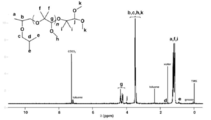
- FIG. 1 is a chart of the 1 H-NMR spectrum of the polymer obtained in Synthesis Example 1 of the polymer of the example.
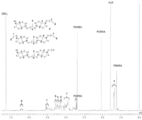
- FIG. 2 is a chart of 1 H-NMR spectrum of the polymer obtained in Synthesis Example 2 of the polymer of Example.
- FIG. 3 is a chart of 1 H-NMR spectrum of the polymer obtained in Synthesis Example 3 of the polymer of Example.
- FIG. 4 shows the measurement results of TG-DTA of the polymer obtained in Synthesis Example 3 of the polymer of Example.
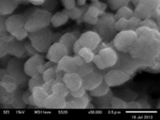
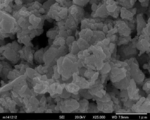
- FIG. 5 is a scanning electron microscope (SEM) photograph (50000 times) of the composite fine particles obtained in Synthesis Example 1 of composite fine particles of Example.
- SEM scanning electron microscope
- FIG. 6 is a scanning electron microscope (SEM) photograph (50000 times) of the composite fine particles obtained in Synthesis Example 2 of composite fine particles of Example.
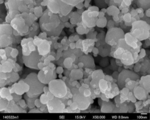
- FIG. 7 is a scanning electron microscope (SEM) photograph (25000 times) of the composite fine particles obtained in Synthesis Example 3 of the composite fine particles of Example.
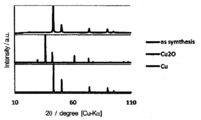
- FIG. 8 is an X-ray diffraction chart of the composite fine particles obtained in Synthesis Example 3 of the composite fine particles of Example.
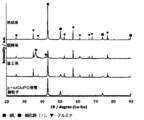
- FIG. 9 is an X-ray diffraction chart of the coating film and the fired film obtained in Example 1.
- FIG. 10 is an X-ray diffraction chart of the coating film and the fired film obtained in Example 2.
- FIG. 11 is an X-ray diffraction chart of the coating film and the fired film obtained in Example 3.
- the composite fine particles of the present invention include metal fine particles and a protective layer covering at least a part of the surface of the metal fine particles.
- Metal fine particles examples of the metal constituting the metal fine particle include transition metals (for example, periodic table Group 4A metals such as titanium and zirconium; periodic table Group 5A metals such as vanadium and niobium; periodic table Group 6A such as molybdenum and tungsten).
- Metal Periodic Table Group 7A metal such as manganese; Periodic Table Group 8 metal such as iron, nickel, cobalt, ruthenium, rhodium, palladium, rhenium, iridium, platinum; Periodic Table Group 1B such as copper, silver, gold, etc.
- Periodic Table Group 2B metal eg, zinc, cadmium, etc.
- Periodic Table Group 3B metal eg, aluminum, gallium, indium, etc.
- Periodic Table Group 4B metal eg, germanium, tin, lead
- periodic table Group 5B metals for example, antimony, bismuth, etc.
- the metal fine particles may be fine particles formed of these alloys, or a combination of a plurality of types of metal fine particles.
- fine metal particles fine particles formed of a group 1B metal of the periodic table such as copper, silver, and gold are preferable from the viewpoint of excellent conductivity, and migration is unlikely to occur. Particulates are particularly preferred.
- the shape of the metal fine particles is not particularly limited, and examples thereof include a spherical shape, an ellipsoidal shape, a polygonal shape (polygonal pyramid shape, a rectangular parallelepiped shape, a rectangular parallelepiped shape, etc.), a plate shape, a rod shape, and an indefinite shape.
- a spherical shape an ellipsoidal shape, a polygonal shape (polygonal pyramid shape, a rectangular parallelepiped shape, a rectangular parallelepiped shape, etc.), a plate shape, a rod shape, and an indefinite shape.
- an isotropic shape such as a substantially spherical shape is preferable from the viewpoint of excellent dispersibility.
- the metal fine particles may have an average particle size (number average primary particle size) of 3000 nm or less.
- the average particle size of the metal fine particles is preferably a nanometer size, for example, about 1 to 1000 nm, preferably about 10 to 500 nm (for example, 20 to 400 nm), more preferably about 30 to 300 nm (particularly about 50 to 200 nm). If the particle size of the metal fine particles is too large, the firing temperature for sintering becomes high, and it may be difficult to form a fine wiring pattern. On the other hand, if it is too small, the preparation becomes difficult and the specific surface area increases, so that it becomes easy to oxidize and redispersion in a paste or ink may be difficult. Furthermore, it may be difficult to improve the conductivity due to these complex factors.
- the average particle diameter of the metal fine particles can be measured by a method such as image analysis using a scanning electron microscope (SEM).
- the protective layer contains an acid-decomposable polymer having a property of being easily decomposed by an acid. Although this acid-decomposable polymer is decomposed by heat at a predetermined temperature in the absence of an acid, the decomposability is further improved in the presence of an acid.
- the acid-decomposable polymer having such properties may be any polymer that can lower the firing temperature for sintering the metal fine particles. For example, a polymer having an ester bond, a carbonate bond, a urethane bond, an acetal bond, etc. For example). Among these polymers, a polymer having an acetal bond is preferable from the viewpoint of excellent acid decomposability.
- the acid-decomposable polymer having an acetal bond includes a polymer [polymer (1)] having a repeating unit represented by the formula (1), a polymer [polymer (2) having a repeating unit represented by the formula (2). ], A polymer having a repeating unit represented by the formula (3) [polymer (3)], or a polymer having two repeating units represented by the formulas (4a) and (4b) [polymer (4) ].
- examples of the halogen atom include a fluorine atom, a chlorine atom, a bromine atom, and an iodine atom.
- the organic group in R 1 to R 4 is not particularly limited as long as it contains a carbon atom, and examples thereof include a hydrocarbon group, alkoxy group, alkenyloxy group, aryloxy group which may have a substituent.
- hydrocarbon group examples include an aliphatic hydrocarbon group, an alicyclic hydrocarbon group, an aromatic hydrocarbon group, and a group in which two or more of these are bonded.
- Examples of the aliphatic hydrocarbon group include an alkyl group, an alkenyl group, and an alkynyl group.
- Examples of the alkyl group include C 1-20 alkyl groups such as methyl group, ethyl group, propyl group, isopropyl group, butyl group, hexyl group, octyl group, isooctyl group, decyl group, and dodecyl group (preferably C 1-1 10 alkyl group, more preferably C 1-4 alkyl group).
- alkenyl group examples include C 2-20 alkenyl groups such as vinyl group, allyl group, methallyl group, 1-propenyl group, isopropenyl group, butenyl group, pentenyl group, hexenyl group (preferably C 2-10 alkenyl group). And more preferably a C 2-4 alkenyl group).
- alkynyl group examples include C 2-20 alkynyl groups such as ethynyl group and propynyl group (preferably C 2-10 alkynyl group, more preferably C 2-4 alkynyl group).
- Examples of the alicyclic hydrocarbon group include a C 3-12 cycloalkyl group (particularly a C 5-8 cycloalkyl group) such as a cyclopropyl group, a cyclobutyl group, a cyclopentyl group, a cyclohexyl group, and a cyclododecyl group; a cyclohexenyl group And C 3-12 cycloalkenyl groups such as C 4-15 bridged cyclic hydrocarbon groups such as bicycloheptanyl group and bicycloheptenyl group.
- a C 3-12 cycloalkyl group such as a cyclopropyl group, a cyclobutyl group, a cyclopentyl group, a cyclohexyl group, and a cyclododecyl group
- C 3-12 cycloalkenyl groups such as C 4-15 bridged cyclic hydrocarbon groups such as bicycloh
- aromatic hydrocarbon group examples include C 6-14 aryl groups (particularly C 6-10 aryl groups) such as a phenyl group and a naphthyl group.
- examples of the hydrocarbon group include a group in which an aliphatic hydrocarbon group such as a cyclohexylmethyl group or a methylcyclohexyl group is bonded to an alicyclic hydrocarbon group; a C 7-18 aralkyl such as a benzyl group or a phenethyl group.
- Groups (especially C 7-10 aralkyl groups), C 6-10 aryl-C 2-6 alkenyl groups such as cinnamyl groups, C 1-4 alkyl substituted aryl groups such as tolyl groups, C 2-4 such as styryl groups And a group in which an aliphatic hydrocarbon group such as an alkenyl-substituted aryl group and an aromatic hydrocarbon group are bonded.
- alkoxy group examples include C 1-10 alkoxy groups such as methoxy group, ethoxy group, propoxy group, isopropyloxy group, butoxy group, isobutyloxy group (preferably C 1-6 alkoxy group, more preferably C 1- 1 4 alkoxy group).
- alkenyloxy group examples include a C 2-10 alkenyloxy group such as an allyloxy group (preferably a C 2-6 alkenyloxy group, more preferably a C 2-4 alkenyloxy group).
- aryloxy group examples include a C 6-20 aryloxy group (particularly a C 6-14 aryloxy group) such as a phenoxy group, a tolyloxy group, and a naphthyloxy group.
- the aryloxy group may have a substituent such as a C 1-4 alkyl group, a C 2-4 alkenyl group, a halogen atom, or a C 1-4 alkoxy group on the aromatic ring.
- aralkyloxy group include a C 6-20 aralkyloxy group such as a benzyloxy group and a phenethyloxy group (particularly a C 7-18 aralkyloxy group).
- acyl group examples include C 1-20 acyl groups such as acetyl group, propionyl group, (meth) acryloyl group, and benzoyl group (particularly, C 1-12 acyl group).
- acyloxy group examples include C 1-20 acyloxy groups such as acetyloxy group, propionyloxy group, (meth) acryloyloxy group, and benzoyloxy group (particularly, C 1-12 acyloxy group).
- alkylthio group examples include a C 1-6 alkylthio group such as a methylthio group and an ethylthio group (particularly a C 1-4 alkylthio group).
- alkenylthio group examples include a C 2-6 alkenylthio group such as an allylthio group (particularly a C 2-4 alkenylthio group).
- arylthio group examples include 6-20 arylthio groups (particularly C 6-14 arylthio groups) such as a phenylthio group, a tolylthio group, and a naphthylthio group.
- the arylthio group may have a substituent such as a C 1-4 alkyl group, a C 2-4 alkenyl group, a halogen atom, or a C 1-4 alkoxy group on the aromatic ring.
- aralkylthio group examples include a C 6-20 aralkylthio group (particularly a C 7-18 aralkylthio group) such as a benzylthio group and a phenethylthio group.
- alkoxycarbonyl group examples include C 1-10 alkoxycarbonyl groups such as a methoxycarbonyl group, an ethoxycarbonyl group, a propoxycarbonyl group, and a butoxycarbonyl group (particularly a C 1-6 alkoxy-carbonyl group).
- aryloxycarbonyl group examples include a C 6-20 aryloxy-carbonyl group such as a phenoxycarbonyl group, a tolyloxycarbonyl group, and a naphthyloxycarbonyl group (particularly a C 6-14 aryloxy-carbonyl group).
- aralkyloxycarbonyl group examples include a C 6-20 aralkyloxy-carbonyl group (particularly a C 7-18 aralkyloxy-carbonyl group) such as a benzyloxycarbonyl group.
- Examples of the epoxy-containing group include a glycidyl group and a glycidyloxy group.
- Examples of the oxetanyl-containing group include a C 1-10 alkyl-oxetanyloxy group such as an ethyl oxetanyloxy group.
- substituted amino group examples include mono- or dialkylamino groups (particularly mono- or di-C 1-6 alkylamino groups) such as methylamino group, ethylamino group, dimethylamino group, and diethylamino group, acetylamino group, and propionylamino.
- acylamino groups such as benzoylamino group (particularly C 1-11 acylamino group).
- the organic group may have a substituent.
- substituents include the above-mentioned groups such as a halogen atom (for example, fluorine), an oxo group, a hydroxy group, and a hydroperoxy group.
- the substituent may be a group in which two or more substituents are bonded via a C 1-6 alkylene group.
- R 1 to R 3 may be bonded to each other to form a ring, but is usually a monovalent group.
- R 1 and R 2 a linear or branched C 1-6 alkyl group is preferable, and a C 1-3 alkyl group (particularly a methyl group) such as a methyl group is particularly preferable.
- R 3 is preferably a hydrogen atom or a linear or branched C 1-6 alkyl group, particularly preferably a hydrogen atom.
- R 4 is an exemplified monovalent group, preferably a linear or branched C 1-6 alkyl group, particularly preferably a C 1-3 alkyl group such as a methyl group (particularly a methyl group). .
- Polymer (1) having a repeating unit represented by formula (1) is a monomer comprising an oxirane compound that is a monomer for forming the repeating unit represented by formula (1). It is obtained by cationic polymerization of the body.
- the structure of the polymer (1) is not particularly limited, and may be any structure such as a linear type, a branched type, and a star type.
- the polymer (1) may be a homopolymer or a copolymer.
- the copolymer may be a copolymer in which a plurality of (two or more) repeating units represented by the formula (1) are combined, and the repeating unit represented by the formula (1) and other copolymerization properties. It may be a copolymer with a repeating unit formed of a monomer (another cationically polymerizable monomer). Furthermore, the copolymer may be a random copolymer or a block copolymer.
- Examples of other copolymerizable monomers include vinyl ether compounds, cyclic ether compounds, benzaldehyde compounds, ⁇ -olefin compounds, chain conjugated diene compounds, olefinic hydrocarbons having a ring structure of five or more members, and cyclopentadiene. Examples thereof include a compound, a cyclic olefin compound, a cyclic conjugated diene compound, a heterocyclic ring-containing vinyl compound, a silane compound having an ethylenically unsaturated bond, and a lactone compound. These monomers can be used alone or in combination of two or more. Specifically, these other copolymerizable monomers may be other copolymerizable monomers described in, for example, JP2013-237755A.
- the proportion of the repeating unit represented by the formula (1) may be 50 mol% or more (for example, 70 to 100 mol%), for example, 80 mol% or more (for example, 80 to 100 mol%). ), Preferably 90 mol% or more (for example, 90 to 100 mol%), more preferably 95 mol% or more (particularly 99 mol% or more). If the ratio of the repeating unit (1) is too small, the treatment of the residue after decomposing the polymer with an acid may be complicated.
- the terminal structure of the polymer (1) is not particularly limited.
- the terminal structure is composed of an atomic group derived from a starting species of a cationic polymerization reaction (for example, a hydrogen halide adduct of vinyl ether), derived from a polymerization terminator.
- Examples include terminal structures composed of atomic groups.
- the terminal group of the polymer (1) may be a hydroxyl group formed when the polymerization reaction starts from protons due to impurities in the system, transfer reaction, or the like.
- the number average molecular weight (Mn) of the polymer (1) may be, for example, 2000 or more in terms of polystyrene when measured by the GPC method (gel permeation chromatography method), for example, 2000 to 100,000, preferably 2500. It is about 50,000, more preferably about 3,000 to 15,000. If the number average molecular weight is too small, the protective ability against metal fine particles may be reduced, and the heat resistance and mechanical strength of the polymer before decomposition may be insufficient. On the other hand, if it is too large, the productivity of the polymer may decrease, or the solubility may be insufficient and handling may be difficult.
- the molecular weight distribution [weight average molecular weight (Mw) / number average molecular weight (Mn)] of the polymer (1) is, for example, 1.3 or less (for example, 1.0 to 1.3), preferably 1.25 or less (for example, 1 0.02 to 1.25), more preferably about 1.2 or less (for example, 1.05 to 1.20). If the molecular weight distribution is too large, the particle size distribution of the composite fine particles may increase, or the heat resistance and mechanical strength of the polymer before decomposition may be insufficient.
- the molecular weight distribution of the polymer can also be calculated in terms of polystyrene by, for example, the GPC method.
- Polymer (1) can be produced by conventional cationic polymerization, and can be produced, for example, by the production method described in JP2013-237755A.
- the ring Z may be a saturated heterocycle containing an oxygen atom as a hetero atom.
- the saturated heterocycle may be a saturated monocyclic heterocycle (heteromonocycle) or a saturated condensed heterocycle.
- saturated heteromonocycle examples include oxacyclobutane, tetrahydrofuran (oxacyclopentane), tetrahydropyran (oxacyclohexane), oxacycloheptane, oxacyclooctane, and the like. Of these, tetrahydrofuran and tetrahydropyran (particularly tetrahydrofuran) are preferred.
- the number of condensed condensed heterocyclic rings may be two or more, and may be three or more (for example, 3 to 4 rings). It is a formula.
- the number of saturated condensed heterocycles (total number of condensed rings) is, for example, about 6 to 20 members, preferably 7 to 15 members, more preferably 8 to 12 members (particularly 8 to 10 members).
- the number of oxygen atoms contained in the saturated condensed heterocycle may be 2 or more, for example, 2 to 6, preferably 2 to 4, and more preferably about 2 to 3. Two or more oxygen atoms may be contained in the same ring, but usually one or more (for example, 1 to 2, particularly 1) is contained in each ring.
- Examples of the basic skeleton of the saturated condensed heterocycle include the saturated heteromonocyclic ring.
- saturated heteromonocycles tetrahydrofuran and tetrahydropyran (particularly tetrahydrofuran) are preferred.
- the condensed ring is composed of a combination of these rings, and may be a combination of the same ring or a combination of different rings.
- a saturated condensed heterocycle is preferable as the ring Z from the viewpoint of adhesion and the like.
- Examples of the substituent contained in the ring Z include an organic group exemplified in the formula (1), a substituent of the organic group exemplified in the formula (1), and the like.
- Such a repeating unit (2) may be a repeating unit represented by the following formula (2a).
- R 5 to R 12 represent a hydrogen atom or a substituent
- R 5 to R 12 may be a single group selected from these substituents and a hydrogen atom, or may be a group in which two or more kinds are combined.
- R 5 to R 12 a C 1-4 alkyl group such as a hydrogen atom or a methyl group is preferable, and a hydrogen atom is particularly preferable, from the viewpoint of ease of production and availability of raw materials.
- the polymer (2) [the polymer (2) having a repeating unit represented by the formula (2)] includes a reaction between a divinyl ether having an oxygen-containing saturated heterocyclic skeleton and a diol having an oxygen-containing saturated heterocyclic skeleton, It can be obtained by polymerization of hydroxy vinyl ether having an oxygen saturated heterocyclic skeleton.
- the structure of the polymer (2) is not particularly limited, and may be any structure such as a linear type, a branched type, and a star type.
- the polymer (2) may be a homopolymer or a copolymer.
- the copolymer is a repeating unit represented by the formula (2), wherein the ring Z is a combination of different saturated heterocycles, for example, a combination of different saturated heteromonocycles, a combination of different saturated condensed heterocycles, saturation It may be a copolymer such as a combination of a heteromonocycle and a saturated condensed heterocycle. That is, in the formula (2), the rings Z may be the same saturated heterocycle or a combination of different saturated heterocycles.
- the copolymer is a copolymer of the repeating unit represented by the formula (2) and a unit formed of another copolymerizable monomer (another divinyl ether and / or another diol). It may be. Furthermore, the copolymer may be a random copolymer or a block copolymer.
- the proportion of the repeating unit represented by the formula (2) may be 50 mol% or more (for example, 70 to 100 mol%), for example, 80 mol% or more (for example, 80 to 100 mol%). ), Preferably 90 mol% or more (for example, 90 to 100 mol%), more preferably 95 mol% or more (particularly 99 mol% or more). If the ratio of the repeating unit (2) is too small, the treatment of the residue after decomposing the polymer with an acid may be complicated.
- the terminal group of the polymer (2) is either a vinyl ether group or a hydroxyl group, and may be either alone or a combination of both groups.
- the polymer of the present invention since the polymer of the present invention has a hydroxyl group and / or a vinyl group at the terminal, it is possible to impart adhesion to a substrate formed of an inorganic material or the like by the hydroxyl group, or to perform other polymerization by the vinyl group. It is also possible to obtain a resin having an acid-decomposable crosslinked structure by polymerizing with a functional group.
- the weight average molecular weight (Mw) of the polymer (2) may be, for example, 1000 or more in terms of polystyrene when measured by the GPC method, for example, 1000 to 100,000, preferably 2000 to 50000, more preferably 3000 to It may be about 30000 (particularly 4000 to 10,000).
- the polymer (2) has a high molecular weight despite having an oxygen-containing saturated heterocycle. If the weight average molecular weight is too small, the protective ability against metal fine particles may be reduced, and the heat resistance and mechanical strength of the polymer before decomposition may be insufficient. On the other hand, if it is too large, the productivity of the polymer may decrease, or the solubility may be insufficient and handling may be difficult.
- the molecular weight distribution (Mw / Mn) of the polymer (2) is, for example, about 1 to 5, preferably about 1.1 to 3, more preferably about 1.2 to 2.8 (especially 1.5 to 2.5). May be. If the molecular weight distribution is too large, the particle size distribution of the composite fine particles may increase, or the heat resistance and mechanical strength of the polymer before decomposition may be insufficient.
- the molecular weight distribution of the polymer can also be calculated in terms of polystyrene by, for example, the GPC method.
- the polymer (2) is a production method including a reaction step in which a divinyl ether represented by the following formula (5) and a diol represented by the following formula (6) are reacted, and a hydroxy represented by the following formula (7). It is a polymer obtained by a production method including a reaction step of polymerizing vinyl ether.
- ring Z may have a substituent and represents a saturated heterocycle containing an oxygen atom as a heteroatom, and ring Z may be the same saturated heterocycle, and are different. It may be a combination of the above saturated heterocycles).
- the divinyl ether (5) may be any divinyl ether having the ring Z exemplified in the repeating unit (2) as a basic skeleton, and represented by the following formula (5a) (particularly, Divinyl ether having a substituent exemplified in the repeating unit (2a) is preferable.
- the diol (6) may be a diol having the ring Z exemplified in the repeating unit (2) as a basic skeleton, and may be a diol represented by the following formula (6a) (particularly the repeating unit (2a)). Diols having a substituted group are preferred.
- the hydroxy vinyl ether (7) may be any hydroxy vinyl ether having the ring Z exemplified in the repeating unit (2) as a basic skeleton.
- the hydroxy vinyl ether represented by the following formula (7a) (especially the repeating unit (2a) is preferred.
- R 5 to R 12 represent a hydrogen atom or a substituent
- a copolymerizable monomer may be added in addition to divinyl ether (5) and diol (6), or hydroxy vinyl ether (7).
- copolymerizable monomers include other divinyl ethers (for example, butylene divinyl ether, cyclohexane divinyl ether, diethylene glycol divinyl ether, triethylene glycol divinyl ether, 2,2-norbornane dimethanol divinyl ether, etc.), other diols ( For example, ethylene glycol, propylene glycol, tetramethylene glycol, diethylene glycol, triethylene glycol, cyclohexanedimethanol, bisphenol A, etc., other hydroxy vinyl ethers (eg, hydroxybutyl vinyl ether, hydroxycyclohexyl vinyl ether, diethylene glycol monovinyl ether, triethylene glycol mono Vinyl ether, 2,2-norbornane dimethanol monovinyli Ether and the like)
- the reaction may be performed in the presence of a catalyst.
- a catalyst a conventional catalyst can be used, but an acid catalyst is preferable from the viewpoint of high reaction acceleration.
- the acid catalyst may be a strong acid such as hydrochloric acid, sulfuric acid or p-toluenesulfonic acid, but acetic acid, phosphoric acid, arenesulfonic acid (for example, A weak acid such as a salt of a base such as toluenesulfonic acid) and a base (for example, a weak base such as pyridine) is preferable, and toluene such as pyridinium paratoluenesulfonate is excellent in terms of excellent balance between stability and reactivity of the polymer. Sulfonate is preferred.
- the ratio of the catalyst is, for example, 0.1 to 20 moles, preferably 0.3 to 15 moles with respect to 100 moles of the total moles of polymerization components (for example, the total moles of divinyl ether (5) and diol (6)). Mol, more preferably about 0.5 to 10 mol (especially 1 to 5 mol). If the ratio of the catalyst is too small, the reactivity decreases, and if it is too large, the physical properties of the polymer may be adversely affected.
- the reaction may be performed in a solvent, and the solvent is not particularly limited as long as it is a non-reactive solvent with respect to the divinyl ether and diol.
- the solvent is not particularly limited as long as it is a non-reactive solvent with respect to the divinyl ether and diol.
- hydrocarbons toluene, xylene, etc.
- halogenated solvents Methylene chloride, chloroform, etc.
- ethers dialkyl ethers, such as diethyl ether, cyclic ethers, such as tetrahydrofuran
- ketones acetone, methyl ethyl ketone, etc.
- esters methyl acetate, ethyl acetate, butyl acetate, etc.
- Cellosolve acetates C 1-4 alkyl cellosolve acetate such as ethyl cellosolve acetate, propylene glycol mono C 1-4 alkyl ether
- solvents can be used alone or in combination of two or more.
- cellosolve acetates for example, propylene glycol mono C 1-4 alkyl ether acetate such as propylene glycol monomethyl ether acetate
- propylene glycol monomethyl ether acetate for example, propylene glycol monomethyl ether acetate
- the amount of the solvent used is, for example, 10 to 1000 parts by weight, preferably 50 to 500 parts by weight, more preferably 100 parts by weight with respect to 100 parts by weight of the total amount of polymerization components (for example, the total amount of divinyl ether (3) and diol (4)). May be about 100 to 300 parts by weight (particularly 150 to 200 parts by weight).
- the reaction may be performed by adding a conventional additive such as a polymerization accelerator or a polymerization inhibitor. Furthermore, moisture may be contained in the reaction system, and the reaction may be performed in the presence of moisture inevitably contained from raw materials.
- the reaction can proceed without excessive heating or cooling, and the reaction temperature is, for example, 0 to 60 ° C., preferably 10 to 50 ° C., more preferably 20 to 45 ° C. (especially 30 to 30 ° C.). About 40 ° C.).
- the reaction time may be, for example, 30 minutes to 48 hours, usually 1 to 36 hours, preferably about 2 to 24 hours.
- the reaction may be performed in an inert atmosphere (for example, an atmosphere of nitrogen, helium, argon, or the like).
- the polymer obtained through the reaction step may be further subjected to a separation and purification step.
- separation and purification may be performed by a conventional separation and purification treatment such as filtration, concentration, reprecipitation, extraction, crystallization (recrystallization, etc.).
- an acid catalyst when used, it may be neutralized with an alkali by a conventional method.
- examples of the hydrocarbon group of A 1 to A 9 include, for example, an aliphatic hydrocarbon group, an alicyclic hydrocarbon group, Aromatic hydrocarbon groups and groups in which two or more of these are bonded are exemplified.
- Examples of the aliphatic hydrocarbon group include an alkylene group, an alkenylene group, and an alkynylene group.
- Examples of the alkylene group include C 1 such as methylene group, ethylene group, propylene group, trimethylene group, butylene group, tetramethylene group, hexamethylene group, isohexylene group, octamethylene group, isooctylene group, decamethylene group, and dodecamethylene group.
- a -20 alkylene group is a -20 alkylene group.
- alkenylene group examples include C 2-20 alkenylene groups such as vinylene group, arylene group, metalrylene group, 1-propenylene group, isopropenylene group, butenylene group, pentenylene group, hexenylene group and the like.
- alkynylene group examples include C 2-20 alkynylene groups such as ethynylene group and propynylene group.
- Examples of the alicyclic hydrocarbon group include C 3-12 cycloalkyl groups such as cyclopropylene group, cyclobutylene group, cyclopentylene group, cyclohexylene group, cyclododecane-diyl group (especially C 5-8 cycloalkyl group). Group); C 3-12 cycloalkenylene group such as cyclohexenylene group; C 4-15 bridged cyclic hydrocarbon group such as bicycloheptanylene group and bicycloheptenylene group.
- aromatic hydrocarbon group examples include C 6-14 arylene groups such as a phenylene group and a naphthylene group.
- the hydrocarbon group may be, for example, a group in which two or more selected from an aliphatic hydrocarbon group, an alicyclic hydrocarbon group, and an aromatic hydrocarbon group are bonded.
- the group in which an aliphatic hydrocarbon group and an alicyclic hydrocarbon group are bonded include, for example, a cyclohexylenemethylene group, a methylcyclohexylene group, a dicyclohexylmethane-4,4′-diyl group, and a dicyclohexylpropane-4,4.
- Examples include a '-diyl group.
- Examples of the group in which an aliphatic hydrocarbon group and an aromatic hydrocarbon group are bonded include a tolylene group, a xylylene group, a diphenylmethane-4,4′-diyl group, and a diphenylpropane-4,4′-diyl group. It is done.
- substituent of these hydrocarbon groups include the substituent of the organic group exemplified in the above formula (1).
- n, m and k are each an integer of 1 or more, preferably 1 to 10, more preferably 1 to 5 (particularly 1 to 3). .
- an alkylene group having 3 or more carbon atoms eg, a C 3-10 alkylene group
- a tri to octamethylene group particularly, a tri to hexamethylene group
- the A 1 , A 4, and A 5 skeletons do not include a saturated heterocycle containing an oxygen atom as a hetero atom.
- Polymers (3) and (4) are obtained by reacting a divinyl ether having an A 1 skeleton with a diol having an A 1 skeleton, a divinyl ether having an A 4 or A 5 skeleton, and a diol having an A 5 or A 4 skeleton. It can be obtained by reaction, polymerization of hydroxy vinyl ether having A 1 skeleton or the like.
- the structures of the polymers (3) and (4) are not particularly limited, and may be any structure such as a linear type, a branched type, and a star type.
- the polymer (3) may be a homopolymer or a unit formed with another copolymerizable monomer (formed with a monomer other than the monomer capable of forming the repeating unit (3)). Unit).
- the copolymer may be a random copolymer or a block copolymer.
- the polymer (4) is a copolymer containing the repeating units (4a) and (4b), but in the same manner as the polymer (3), units (repeating units) formed from other copolymerizable monomers.
- (4a) and a copolymer containing (4b) may be sufficient as the copolymer containing a monomer other than the monomer which can form.
- the copolymer may be a random copolymer or a block copolymer.
- the other copolymerizable monomers in the polymers (3) and (4) also do not contain a saturated heterocycle containing an oxygen atom as a hetero atom.
- the ratio of the repeating unit represented by the formula (3) or the two repeating units represented by the formulas (4a) and (4b) is 50 mol% or more (for example, 70 to 100 mol%), for example 80 mol% or more (for example 80 to 100 mol%), preferably 90 mol% or more (for example 90 to 100 mol%), more preferably 95 mol% or more (particularly 99 mol% or more). If the ratio of the repeating unit is too small, the treatment of the residue after decomposing the polymer with an acid may be complicated.
- a 1 may be a tri to hexamethylene group, preferably a tetra to pentamethylene group, and more preferably a tetramethylene group.
- the end groups of the polymers (3) and (4) are either a vinyl ether group or a hydroxyl group, and either of them may be used alone or a combination of both groups.
- the polymers (3) and (4) since the polymers (3) and (4) have a hydroxyl group and / or a vinyl group at the terminal, the polymer (3) and (4) can have adhesion to a substrate formed of an inorganic material or the like by the hydroxyl group, It is also possible to obtain a resin having an acid-decomposable crosslinked structure by polymerizing with other polymerizable groups.
- the weight average molecular weight (Mw) of each of the polymers (3) and (4) may be 1000 or more in terms of polystyrene when measured by the GPC method, for example, 1000 to 100,000, preferably 2000 to 50000, Preferably, it may be about 3000 to 30000 (particularly 4000 to 10,000). If the weight average molecular weight is too small, the protective ability against metal fine particles may be reduced, and the heat resistance and mechanical strength of the polymer before decomposition may be insufficient. On the other hand, if it is too large, the productivity of the polymer may decrease, or the solubility may be insufficient and handling may be difficult.
- the molecular weight distribution (Mw / Mn) of the polymers (3) and (4) is, for example, 1 to 5, preferably 1.1 to 3, more preferably 1.2 to 2.8 (especially 1.5 to 2). .5) may be sufficient. If the molecular weight distribution is too large, the heat resistance and mechanical strength of the polymer before decomposition may be insufficient.
- the molecular weight distribution of the polymer can also be calculated in terms of polystyrene by, for example, the GPC method.
- the polymers (3) and (4) are produced by a production method including a reaction step of reacting a corresponding divinyl ether and a corresponding diol, a production method including a reaction step of polymerizing a corresponding hydroxyvinyl ether, and the like. can get.
- Examples of the divinyl ether having an A 1 , A 4 or A 5 skeleton in the reaction step include butylene divinyl ether, cyclohexane divinyl ether, diethylene glycol divinyl ether, triethylene glycol divinyl ether, 2,2-norbornane dimethanol divinyl ether, and the like. Is mentioned.
- Examples of the diol having an A 1 , A 4 or A 5 skeleton include tetramethylene glycol, diethylene glycol, triethylene glycol, cyclohexane dimethanol, and bisphenol A.
- hydroxy vinyl ether having A 1 , A 4 or A 5 skeleton examples include hydroxybutyl vinyl ether, hydroxycyclohexyl vinyl ether, diethylene glycol monovinyl ether, triethylene glycol monovinyl ether, 2,2-norbornane dimethanol monovinyl ether, and the like.
- an alternating polymer of the corresponding divinyl ether and the corresponding diol is preferable.
- the reaction may be performed in the presence of a catalyst.
- a catalyst a conventional catalyst can be used, but an acid catalyst is preferable from the viewpoint of high reaction acceleration.
- an acid catalyst the acid catalyst used with the manufacturing method of a polymer (2) can be utilized, and it can be used in the ratio similar to the manufacturing method of a polymer (2).
- the reaction may be carried out in a solvent, and as the solvent, a solvent used in the production method of the polymer (2) can be used, and it can be used in the same amount as used in the production method of the polymer (2).
- addition of additives, reaction temperature and time, and separation and purification steps of the obtained polymer are the same as in the method for producing the polymer (2).
- the protective layer only needs to contain an acid-decomposable polymer, and may contain other components, for example, a catalyst, a solvent mixed in the production process, a reducing agent, and a conventional additive.
- the ratio of the reducing agent is, for example, about 10% by weight or less (for example, 0.001 to 10% by weight), preferably about 5% by weight or less, and more preferably about 1% by weight or less with respect to the entire protective layer.
- the ratio of the reducing agent is, for example, about 10% by weight or less (for example, 0.001 to 10% by weight), preferably about 5% by weight or less, and more preferably about 1% by weight or less with respect to the entire protective layer.
- additives examples include other polymers (binders), stabilizers (antioxidants, UV absorbers, etc.), metal corrosion inhibitors, surfactants or dispersants, water-soluble polymers, waxes, dispersion stability Agents, thickeners or viscosity modifiers, humectants, thixotropic agents, leveling agents, antifoaming agents, fillers and the like may be included.
- the ratio of the other components may be, for example, 50% by weight or less with respect to the entire protective layer, for example, about 0.01 to 10% by weight (particularly 0.1 to 5% by weight).
- the protective layer only needs to cover at least a part of the surface of the metal fine particles, and the coverage of the surface of the metal fine particles may be 10% or more, for example, 30% or more, preferably 50% or more, more preferably May be 80% or more (particularly 90% or more), and may cover the entire surface of the metal fine particles. If the coverage of the protective layer is too low, the metal fine particles are likely to be oxidized or aggregated, and the stability of the metal fine particles may be reduced.
- the composite fine particles of the present invention may have an average particle size (number average primary particle size) of 3000 nm or less.
- the average particle diameter of the composite fine particles is preferably nanometer size, for example, about 1 to 1000 nm, preferably about 10 to 500 nm (for example, 20 to 400 nm), more preferably about 30 to 300 nm (particularly about 50 to 200 nm). If the particle size of the composite fine particles is too large, the firing temperature for sintering becomes high, and it may be difficult to form a fine wiring pattern.
- the average particle diameter of the composite fine particles can be measured by measuring an arbitrary 100 to 300 particle diameters based on the SEM photograph and calculating the average value.
- the composite fine particles of the present invention can be obtained by a production method including a coating step of covering at least a part of the surface of metal fine particles with an acid-decomposable polymer.
- the method of coating the metal fine particles with the acid-decomposable polymer is not particularly limited, but usually a method of reducing the raw metal compound in the presence of the acid-decomposable polymer is used.
- raw metal compounds include metal oxides, metal salts, and metal halides. These raw metal compounds can be used alone or in combination of two or more.
- the raw metal compound can be selected according to the type of metal fine particles.
- Metal halides include metal chlorides, metal bromides, metal iodides, and the like.
- Metal salts include metal inorganic acid salts (sulfates, nitrates, carbonates, hydrochlorides, phosphates, etc.), metal organic acid salts (formates, acetates, lactates, etc.) and the like.
- the metal salt may be a hydrate.
- the copper oxide includes copper oxide (I) (cuprous oxide) and copper oxide (II) (cupric oxide).
- Copper halides include copper chloride (I) (cuprous chloride), copper chloride (II) (cupric chloride), copper bromide (I) (cuprous bromide), copper bromide (II) (Cupric bromide) and the like are included.
- Metal salts include copper sulfate, copper nitrate, copper formate, copper acetate, and the like. Among these, at least one selected from the group consisting of copper oxide, copper sulfate, copper formate, copper acetate, and copper chloride is preferable.
- the ratio of the acid-decomposable polymer at the time of synthesis can be selected from a range of about 1 to 500 parts by weight (particularly 3 to 400 parts by weight) with respect to 100 parts by weight of the starting metal compound.
- the ratio of the acid-decomposable polymer is, for example, 5 to 400 parts by weight, preferably 10 to 250 parts by weight with respect to 100 parts by weight of the starting metal compound. Part, more preferably about 15 to 200 parts by weight.
- the ratio of the acid-decomposable polymer is, for example, 3 to 30 parts by weight, preferably 5 to 20 parts by weight with respect to 100 parts by weight of the starting metal compound. More preferably, it is about 6 to 10 parts by weight. If the ratio of the acid-decomposable polymer is too small, the stability of the metal fine particles may be reduced or coarse particles may be generated. If the ratio is too large, very fine particles are generated and a composite having a desired particle size is formed. Particles may not be obtained or sintering at low temperatures may be difficult.
- the reducing agent examples include conventional reducing agents such as sodium borohydrides, lithium aluminum hydride, hypophosphorous acid or salts thereof, boranes, formalin, hydrazine, amines, alcohols, and carboxyl groups having a phenolic hydroxyl group. An acid etc. can be illustrated. These reducing agents can be used alone or in combination of two or more. Of these reducing agents, sodium borohydride, hydrazine, tertiary amine, ethylene glycol, tannic acid and the like are widely used, and hydrazine is preferred. Hydrazine may be a hydrate.
- the ratio of the reducing agent can be selected from a range of, for example, about 0.1 to 50 mol (particularly 0.2 to 40 mol) with respect to 1 mol of the starting metal compound.
- the ratio of the reducing agent is, for example, about 0.5 to 30 mol, preferably about 1 to 30 mol, and more preferably about 3 to 10 mol.
- the ratio of the reducing agent is, for example, 0.2 to 30 mol, preferably 0.3 to 10 mol, more preferably about 0.5 to 5 mol. It is. If the ratio of the reducing agent is too small, the reduction of metal ions may be insufficient. If the ratio is too large, the particle size becomes small, and composite particles having a desired particle size cannot be obtained, or purification after the reaction is performed. May take time.
- the reduction reaction using a reducing agent may be performed at normal temperature, but may be heated from the viewpoint of promoting the reduction reaction.
- the heating temperature may be, for example, about 40 to 80 ° C., preferably 45 to 70 ° C., more preferably about 50 to 60 ° C.
- the reaction time may be, for example, 10 minutes to 20 hours, usually 30 minutes to 10 hours, preferably about 1 to 5 hours.
- the reduction reaction may be performed under stirring.
- the reduction reaction may be performed in the presence of a solvent.
- the solvent can be selected according to the type of the starting metal compound and the reducing agent, such as water, alcohols such as ethanol and isopropanol, ketones such as acetone, cyclic ethers such as dioxane and tetrahydrofuran, and amides such as dimethylacetamide. Etc. These solvents can be used alone or in combination of two or more. Of these solvents, cyclic ethers such as water and tetrahydrofuran are widely used.
- the proportion of the solvent is, for example, about 10 to 5000 parts by weight, preferably about 30 to 4000 parts by weight, and more preferably about 50 to 3000 parts by weight with respect to 100 parts by weight of the starting metal compound.
- the pH is adjusted using an acid (an inorganic acid such as hydrochloric acid, sulfuric acid, nitric acid, phosphoric acid, an organic acid such as acetic acid) or an alkali (an inorganic base such as sodium hydroxide or ammonia) in a conventional manner. May be.
- an acid an inorganic acid such as hydrochloric acid, sulfuric acid, nitric acid, phosphoric acid, an organic acid such as acetic acid
- an alkali an inorganic base such as sodium hydroxide or ammonia
- the composite fine particles obtained in the coating step may use the dispersion after completion of the reduction reaction as it is for ink or the like, but the dispersion is usually subjected to a separation and purification step.
- the separation and purification step the produced composite fine particles are separated from the solvent by a conventional method (for example, filtration treatment such as centrifugation, membrane filter, ultrafiltration, etc.), and then the separated composite fine particles are washed and dried. You may refine
- the dispersion of the present invention only needs to contain the composite fine particles and the dispersion medium.
- the dispersion may be a dispersion obtained in the coating step. It is obtained by dispersing the composite fine particles obtained through the above in a dispersion medium.
- the dispersion medium can be selected according to the type of the composite fine particles and may be water, but an organic solvent is preferable from the viewpoint that high concentration of the composite fine particles can be dispersed.
- composite fine particles particularly composite fine particles coated with a protective layer containing the polymer (3) or (4)
- organic solvent examples include alcohol solvents (for example, alkanols such as methanol, ethanol, isopropanol and butanol; aliphatic polyhydric alcohols such as ethylene glycol and glycerin; alicyclics such as cyclohexanol, terpineol and dihydroterpineol.
- alcohol solvents for example, alkanols such as methanol, ethanol, isopropanol and butanol
- aliphatic polyhydric alcohols such as ethylene glycol and glycerin
- alicyclics such as cyclohexanol, terpineol and dihydroterpineol.
- ester solvents eg, acetates such as ethyl acetate, butyl acetate, propylene glycol monomethyl ether monoacetate
- ketone solvents eg, chain ketones such as acetone; cyclic ketones such as cyclohexanone
- Ether solvents for example, chain ethers such as propylene glycol monomethyl ether and diethylene glycol dimethyl ether; cyclic ethers such as dioxane and tetrahydrofuran
- Aromatic solvents for example, aromatic hydrocarbons such as toluene and xylene
- halogen solvents for example, haloalkanes such as dichloromethane and chloroform
- nitrile solvents for example, acetonitrile, benzonitrile, etc.
- nitro solvents for example, nitrobenzene etc.
- These dispersion media can be used alone or in combination of two or more.
- a dispersion medium may be selected according to the type of the protective layer.
- the dispersion medium may be a C 1-4 alkanol such as methanol, a cyclic ether such as tetrahydrofuran, an ethyl acetate or the like.
- Acetic acid C 1-3 alkyl ester may be used.
- the dispersion medium may be an alicyclic alcohol such as terpineol, a cyclic ether such as tetrahydrofuran, or an acetic acid C 1-3 alkyl ester such as ethyl acetate.
- the dispersion medium is a C 1-4 alkanol such as methanol, an alicyclic alcohol such as terpineol, a cyclic ether such as tetrahydrofuran, or a C 1 -acetate such as ethyl acetate. It may be a trialkyl ester.
- the ratio of the dispersion medium is, for example, about 10 to 1000 parts by weight, preferably 30 to 500 parts by weight, and more preferably 50 to 400 parts by weight (particularly 80 to 300 parts by weight) with respect to 100 parts by weight of the composite fine particles. If the proportion of the dispersion medium is too large, cracks and the like are likely to occur during drying after coating, and it may be difficult to form a highly conductive sintered film, and if it is too small, the coating properties of the dispersion will be reduced. There is a risk of doing.
- the dispersion of the present invention may further contain an acidic compound and / or an acid generator as a decomposition aid for the acid-decomposable polymer in order to improve sintering at a low temperature.
- Acidic compounds include inorganic acids, organic acids and the like.
- the inorganic acid include hydrochloric acid, sulfuric acid, nitric acid, phosphoric acid, boric acid and the like.
- the organic acid include aliphatic monocarboxylic acids such as formic acid, acetic acid, propionic acid, butyric acid, caprylic acid and stearic acid; aliphatics such as oxalic acid, malonic acid, succinic acid, glutaric acid, adipic acid and maleic acid
- dicarboxylic acids alicyclic carboxylic acids such as naphthenic acid
- hydroxycarboxylic acids such as glycolic acid, lactic acid, tartaric acid, malic acid, and citric acid
- arene sulfonic acids such as toluenesulfonic acid.
- These inorganic acids and organic acids may be metal salts (for example, alkali metal salts such as sodium, alkaline earth metal salts such as calcium, and periodic table group 14 metal salts such as tin).
- alkali metal salts such as sodium
- alkaline earth metal salts such as calcium
- periodic table group 14 metal salts such as tin
- These acidic compounds can be used alone or in combination of two or more.
- C 1-4 aliphatic monocarboxylic acids (particularly formic acid) such as formic acid are preferred because they do not inhibit the sinterability at low temperatures and are excellent in the decomposability of the acid-decomposable polymer.
- the acid generator examples include conventional acid generators such as sulfonium salts (sulphonium ions and anions), iodonium salts (iodonium ions and anions), selenium salts (selenium ions and anions), Ammonium salts (salts of ammonium ions and anions), phosphonium salts (salts of phosphonium ions and anions), salts of transition metal complex ions and anions, allene-ion complexes, aluminum chelates, boron trifluoride amine complexes, etc. Can be mentioned. These acid generators can be used alone or in combination of two or more. Of these acid generators, sulfonium salts are preferred because of their high acidity.
- sulfonium salt examples include triphenylsulfonium salt, tri-p-tolylsulfonium salt, tri-o-tolylsulfonium salt, tris (4-methoxyphenyl) sulfonium salt, 1-naphthyldiphenylsulfonium salt, and 2-naphthyldiphenylsulfonium salt.
- Triarylsulfonium salts such as 4- (p-tolylthio) phenyldi- (p-phenyl) sulfonium salt; diphenylphenacylsulfonium salt, diphenyl-4-nitrophenacylsulfonium salt, diphenylbenzyl Sulfonium salts, diaryl sulfonium salts such as diphenyl methyl sulfonium salts; phenylmethyl benzyl sulfonium salt, 4-hydroxyphenyl-methyl benzyl sulfonium salt, such as mono
- anion (counter ion) for forming a salt with the sulfonium ion (cation) examples include SbF 6 ⁇ , PF 6 ⁇ , BF 4 ⁇ , fluorinated alkyl fluorophosphate ion [(CF 3 CF 2 ) 3 PF 3- , (CF 3 CF 2 CF 2 ) 3 PF 3- etc.], (C 6 F 5 ) 4 B ⁇ , (C 6 F 5 ) 4 Ga ⁇ , sulfonate anion (trifluoromethanesulfonate anion, pentafluoro Ethanesulfonate anion, nonafluorobutanesulfonate anion, methanesulfonate anion, benzenesulfonate anion, p-toluenesulfonate anion, etc.), (CF 3 SO 2 ) 3 C ⁇ , (CF 3 SO 2 ) 2 N ⁇ , Perhalogenate i
- the acid generator may be a thermal acid generator or a photoacid generator.
- thermal acid generators such as “Sun-Aid SI-60L”, “Sun-Aid SI-60S”, “Sun-Aid SI-80L”, “Sun-Aid” manufactured by Sanshin Chemical Industry Co., Ltd. "SI-100L”, “Sun-Aid SI-110L”, ADEKA “SP-66", “SP-77”, etc. can be used.
- Commercially available products can also be used as the photoacid generator, for example, “HS-1”, “HS-1A”, “HS-1P”, “HS-1N”, “HS-1TF” manufactured by San Apro Co., Ltd.
- HS-1NF HS-1NF
- HHS-1MS HS-1CS
- H-1PC HS-1PC
- LW-S1 LW-S1
- LW-S1NF K1-S
- CPI CPI-100P
- CPI300PG CPI300PG
- the decomposition aid may be selected according to the type of the acid-decomposable polymer contained in the protective layer.
- an acid generator may be used, and the polymer (2 ), An acidic compound may be used.
- an acid generator is preferable from the viewpoint that the low-temperature sinterability can be easily improved, and a thermal acid generator is particularly preferable from the viewpoint that heat of the firing step can be used.
- the proportion of the decomposition aid is, for example, from 0.01 to 100 parts by weight, preferably from 0.03 to 80 parts by weight, and more preferably from 0. About 05 to 50 parts by weight.
- the ratio of the decomposition aid is, for example, 0.01 to 100 parts by weight with respect to 100 parts by weight of the composite fine particles.
- the amount is about 10 parts by weight, preferably about 0.03 to 5 parts by weight, more preferably about 0.05 to 3 parts by weight (particularly 0.08 to 2 parts by weight).
- the proportion of the decomposition aid (particularly acidic compound) is, for example, 1 to 100 parts by weight, preferably 5 to 80 parts by weight with respect to 100 parts by weight of the composite fine particles. More preferably, it is about 10 to 50 parts by weight (particularly 20 to 40 parts by weight).
- the ratio of the decomposition aid (particularly acidic compound) is, for example, about 1 to 30% by weight, preferably about 3 to 20% by weight, and more preferably about 5 to 15% by weight with respect to the entire dispersion (ink). .
- the decomposition aid may remain after sintering and the conductivity may be lowered, or the stability of the dispersion may be lowered. If too small, the low temperature sinterability is lowered. In addition, there is a possibility that the conductivity is lowered due to insufficient decomposition of the acid-decomposable polymer.
- the dispersion of the present invention may contain a conventional additive added to the conductive paste or the conductive ink depending on the application.
- the conventional additive include a colorant (such as a dye / pigment), a hue improver, a dye fixing agent, and a gloss imparting agent in addition to the conventional additives exemplified in the section of the protective layer.
- the proportion of conventional additives may be 50% by weight or less with respect to the total dispersion, for example, about 0.01 to 10% by weight (particularly 0.1 to 5% by weight).
- the dispersion process may be a dispersion process in which the dispersion process is performed under pressure.
- the pressure in the dispersing step may be 10 MPa or more, for example, about 30 to 500 MPa, preferably about 50 to 300 MPa, more preferably about 80 to 200 MPa (particularly 100 to 180 MPa).
- Such dispersion under pressure may be dispersed using an ultrahigh pressure disperser. If the pressure is too low, it may be difficult to prepare a uniform dispersion with a high concentration. Dispersion treatment under pressure is particularly effective when the acid-decomposable polymer is the polymer (1) or (2).
- a stirring process such as a stirring process using a rotation / revolution stirrer
- an ultrasonic process for example, an ultrasonic process of about 10 to 100 kHz
- the coating film of this invention is obtained through the application
- the base material may be an inorganic material or an organic material.
- inorganic materials include glasses (soda glass, borosilicate glass, crown glass, barium-containing glass, strontium-containing glass, boron-containing glass, low alkali glass, alkali-free glass, crystallized transparent glass, silica glass, and quartz glass.
- metal oxides alumina, sapphire, zirconia, titania, yttrium oxide, indium oxide-tin oxide composite oxide (ITO), fluorine-doped tin oxide (FTO), etc.
- organic materials include polymethyl methacrylate resin, polypropylene resin, cyclic polyolefin resin, styrene resin, vinyl chloride resin, polyester resin [polyalkylene arylate resin (polyethylene terephthalate, etc.), polyarylate. And other resins such as polyamide resins, polycarbonate resins, polysulfone resins, polyethersulfone resins, polyimide resins, cellulose derivatives, and fluororesins.
- the average thickness of the substrate is, for example, about 0.001 to 10 mm, preferably about 0.01 to 5 mm, and more preferably about 0.05 to 3 mm.
- a coating method As a coating method, a conventional method can be used.
- a pattern such as a wiring pattern on a wiring board
- a coating film for example, a screen printing method, an ink jet printing method, an intaglio printing method (for example, a gravure printing method, etc.) ), Offset printing method, intaglio offset printing method (for example, gravure offset printing method), relief printing method, flexographic printing method, reverse printing, and the like can be used.
- the average thickness of the coating film may be, for example, about 0.5 to 100 ⁇ m (eg 1 to 20 ⁇ m), preferably 1 to 80 ⁇ m (eg 3 to 10 ⁇ m), more preferably about 5 to 50 ⁇ m (particularly 10 to 40 ⁇ m).
- the average line width of the coating film is, for example, 0.5 to 30 ⁇ m, preferably 1 to 20 ⁇ m, more preferably 2 to 10 ⁇ m (particularly 3 to 3 ⁇ m). It may be about 8 ⁇ m).
- a dispersion (paste or ink) containing nanometer-sized metal fine particles at a high concentration can be prepared, a fine wiring pattern can be easily formed.
- the fired film of the present invention is obtained through a firing process in which the obtained coating film is heated and fired.
- the heating temperature may exceed 200 ° C., but when the dispersion contains a decomposition aid, sintering at a low temperature is possible and may be 200 ° C. or less, for example, 60 to 200. It is about 80 to 180 ° C. (eg 100 to 175 ° C.), more preferably about 120 to 170 ° C. (especially 130 to 160 ° C.).
- the acid-decomposable polymer is polymer (3) or (4) and the dispersion contains a decomposition aid (particularly an acid generator)
- sintering at a lower temperature is possible, and the heating temperature is 120.
- the temperature may be not higher than 60 ° C., for example, 60 to 120 ° C., preferably 80 to 110 ° C., and more preferably about 90 to 105 ° C.
- the firing time is, for example, about 10 minutes to 10 hours, preferably 15 minutes to 8 hours, more preferably 20 minutes to 6 hours (particularly 30 minutes to 5 hours) depending on the firing temperature and the like. .
- the firing step may be performed in an active gas atmosphere containing oxygen such as air, but is preferably fired in an inert gas atmosphere such as hydrogen, nitrogen, or argon from the viewpoint that oxidation of metal fine particles can be suppressed.
- the inert gas may be a combination of two or more inert gases containing hydrogen.
- the present invention it becomes possible to sinter at a low temperature by decomposing the acid-decomposable polymer.
- the dispersion contains a thermal acid generator, an acid is generated by heating in the baking step, and the acid-decomposable polymer is decomposed.
- the polymer may be degraded.
- a polymer decomposition step for decomposing the acid-decomposable polymer may be separately provided as a pre-step of the baking step depending on the presence or type of the acid-decomposable polymer.
- a polymer decomposition step of heating at, for example, 35 to 100 ° C., preferably 40 to 80 ° C., more preferably about 45 to 60 ° C. may be provided.
- a polymer decomposing step for decomposing the acid-decomposable polymer may be separately provided as a pre-step of the baking step.
- the heating temperature in the polymer decomposition step is, for example, about 40 to 200 ° C., preferably 50 to 180 ° C., more preferably about 70 to 150 ° C.
- a polymer decomposition step for generating acid by irradiating visible light or ultraviolet light may be provided.
- the coating film that has undergone the coating step may be irradiated with light and then subjected to a baking step.
- the polymer decomposition step may be a step of irradiating light simultaneously with the baking in the baking step.
- an acid may be generated by irradiating ultraviolet rays or visible light at the stage of the dispersion, and thereafter, it may be subjected to a coating step and a baking step.
- the light source for light irradiation a conventional light source can be used. In the case of ultraviolet rays, ultrahigh to low pressure mercury lamps, LEDs, xenon lamps and the like can be mentioned.
- the fired film of the present invention is excellent in conductivity and may have an electrical resistivity of 0.5 ⁇ / ⁇ or less, for example, 0.01 to 0.5 ⁇ / ⁇ , preferably 0.02 to 0.3 ⁇ . / ⁇ , more preferably about 0.03 to 0.1 ⁇ / ⁇ .
- the fired film of the present invention may have a specific resistivity of 1 ⁇ 10 ⁇ 5 ⁇ ⁇ cm or less, for example, 1 ⁇ 10 ⁇ 9 to 1 ⁇ 10 ⁇ 6 ⁇ ⁇ cm, preferably 1 ⁇ 10 ⁇ It is about 8 to 3 ⁇ 10 ⁇ 6 ⁇ ⁇ cm, more preferably about 5 ⁇ 10 ⁇ 8 to 2 ⁇ 10 ⁇ 6 ⁇ ⁇ cm.
- the weight average molecular weight (Mw) and number average molecular weight (Mn) of the polymers obtained in Synthesis Examples 2 and 3 were connected to three columns (“TSKgel-superHZM-M” manufactured by Tosoh Corporation) to transfer tetrahydrofuran.
- the phase was obtained in terms of polystyrene using a high-speed gel permeation column chromatography apparatus (“HLC-8220GPC” manufactured by Tosoh Corporation) equipped with an RI8020 detector at a flow rate of 0.6 mL / min at 40 ° C.
- TG-DTA was measured under the following conditions using a differential thermothermal gravimetric simultaneous measurement apparatus (“TG-DTA6200” manufactured by SII Nanotechnology Co., Ltd.).
- X-ray diffraction (XRD) of composite fine particles, coating film and fired film [X-ray diffraction (XRD) of composite fine particles, coating film and fired film] Using a desktop X-ray diffractometer (“MiniFlex II” manufactured by Rigaku Corporation), a start angle of 10 °, an end angle of 110.005 °, a sampling width of 0.015 °, a scan speed of 10.0 ° per minute, and a voltage of 30 kV , Measured at a current of 15 mA.
- XRD X-ray diffraction
- Polymer synthesis example 1 Synthesis of Polymer for Protective Layer (p-MOMPO)] Under a dry nitrogen atmosphere, 3.1 mL of purified toluene, 0.25 mL of purified heptane, 0.4 mL of tetrahydrofuran (THF), and 0.28 mL of 2-methoxy-1-methylpropylene oxide are added to the container 1 so as to be uniform. Was stirred.
- the containers are all glass containers equipped with three-way stopcocks, and heated for 10 minutes using an industrial blaster that emits hot air at about 400 ° C. in a dry nitrogen atmosphere. The one from which adsorbed water was removed as much as possible was used.
- the conversion rate of the monomer (2-methoxy-1-methylpropylene oxide) in the polymerization was 89% (polymerization time: 4 hours). Moreover, the weight average molecular weight (Mw) of the obtained polymer was 5300, and molecular weight distribution (Mw / Mn) was 1.30.
- FIG. 1 shows a chart of 1 H-NMR spectrum of the obtained polymer.
- FIG. 1 shows to which proton of the polymer the 1 H-NMR spectrum peak belongs.
- the integration ratio [g: (b, c, h, k): (g, proton peak of b, c, h, and k, proton peak of a, f, and i] a, f, i)] was 1: 3: 6.
- the NMR data of the obtained polymer are shown below.
- Polymer synthesis example 2 [Synthesis of protective layer polymer (p-ISB)] Add 5 g of isosorbide (manufactured by Tokyo Chemical Industry Co., Ltd.) and 0.43 g of pyridinium p-toluenesulfonate (manufactured by Tokyo Chemical Industry Co., Ltd.) to 20 g of propylene glycol monomethyl ether acetate (manufactured by Daicel Co., Ltd.) and add 30 g or less. Then, 6.78 g of isosorbide divinyl ether (manufactured by Daicel Corporation) was added dropwise. After dropping, the mixture was stirred at 40 ° C. for 4 hours.
- p-ISB protective layer polymer
- the polymer had a weight average molecular weight Mw of 5200 and a molecular weight distribution (Mw / Mn) of 2.2.
- Mw / Mn molecular weight distribution
- Polymer synthesis example 3 [Synthesis of protective layer polymer (p-BDO)] 1,7-butanediol (manufactured by Tokyo Chemical Industry Co., Ltd.) and 1.59 g of pyridinium paratoluenesulfonate (manufactured by Tokyo Chemical Industry Co., Ltd.) were added to molecular sieves (manufactured by Wako Pure Chemical Industries, Ltd.). 4A 1/16 ") was added to 265 g of propylene glycol monomethyl ether acetate (Daicel Co., Ltd.) dehydrated, and 100.2 g of 1,4-butanediol divinyl ether (Sigma Aldrich) was added dropwise at 40 ° C.
- p-BDO protective layer polymer
- Synthesis example 1 of composite fine particles [Synthesis of copper particles coated with p-MOMPO] After dissolving 1.2802 g of the p-MOMPO obtained in Polymer Synthesis Example 1 in 20 mL of a tetrahydrofuran solution containing 0.4 M ammonia at room temperature, copper (II) oxide (“N-130 manufactured by Nisshin Chemco Co., Ltd.) was dissolved. ] 0.8094 g was added and heated to 60 ° C. with stirring, and 24 mL of a tetrahydrofuran solution containing 1M hydrazine was added while stirring. Foaming from the reaction solution was confirmed 12 minutes after the addition. After completion of foaming, the reaction was continued at 60 ° C.
- the produced particles are filtered through a filter having a diameter of 0.2 ⁇ m, and the filtered particles are washed with tetrahydrofuran and water and vacuum dried at room temperature to obtain copper fine particles (composite fine particles) 0 coated with p-MOMPO. .5 g was obtained.
- the composite fine particles were observed with an SEM (50000 times) and the particle diameter was measured. As a result, the median diameter was 123.8 nm.
- the measurement result of SEM is shown in FIG.
- Synthesis example 2 of composite fine particles [Synthesis of copper particles coated with p-ISB] 3.3 g of p-ISB obtained in Synthesis Example 2 of the polymer and 12.5 g of copper (II) sulfate pentahydrate were added to 10 mL of distilled water, and stirred at 50 ° C. for 1 hour to dissolve. 12.5 mL of hydrazine monohydrate was added to this mixed solution, and the mixture was reacted at 50 ° C. for 3 hours. Distilled water was added to the reaction solution, centrifuged for 5 minutes at 5000 rpm, washed twice by decantation, further added with ethanol, centrifuged for 5 minutes at 5000 rpm, and washed twice by decantation.
- the obtained particles were dried at room temperature under a nitrogen atmosphere to obtain 3.2 g of copper fine particles (composite fine particles) coated with p-ISB.
- the composite fine particles were observed with an SEM (50000 times) and the particle diameter was measured. As a result, the median diameter was 90 nm.
- the measurement result of SEM is shown in FIG.
- Synthesis example 3 of composite fine particles [Synthesis of copper particles coated with p-BDO] After dissolving 1.67 g of p-BDO obtained in Polymer Synthesis Example 3 in 500 mL of tetrahydrofuran at room temperature, 20 g of copper (II) oxide (“N-130” manufactured by Nisshin Chemco Co., Ltd.) was added and stirred. While heating to 50 ° C., 12.5 mL of hydrazine monohydrate was added to this mixed solution, and the mixture was stirred at 50 ° C. for 3 hours to be reacted. Distilled water was added to the reaction solution, and centrifugal sedimentation was performed at 5000 rpm for 5 minutes.
- copper (II) oxide (“N-130” manufactured by Nisshin Chemco Co., Ltd.
- Example 1 Manufacture and baking evaluation of copper ink
- Copper fine particles (composite fine particles) coated with p-MOMPO were sieved with a 60-mesh sieve, and the composite fine particles that passed through the sieve were pulverized in a mortar.
- 50 ml of methanol was added to 0.1260 g of the composite fine particles, and the mixture was stirred for 8 minutes with a mixer (“Spinky / Revolution Hybrid-Mixer” manufactured by Shinkey Co., Ltd.), then irradiated with 40 kHz ultrasonic waves for 10 minutes, and a 400 mesh filter. And filtered.
- Example 2 After adding 3.0 g of copper fine particles (composite fine particles) coated with p-ISB and 7.0 g of ⁇ -terpineol to 30 mL of methanol, 32 minutes with a mixer (“Spinning / Revolving Hybrid-Mixer” manufactured by Sinky Corp.) Stir. After stirring, using an ultra-high pressure disperser (“Starburst” manufactured by Sugino Machine Co., Ltd.), dispersion treatment was performed 5 times at an injection pressure of 150 MPa to obtain a dispersion of composite fine particles. The dispersion was concentrated under reduced pressure to remove methanol, and 0.13 mL of formic acid was added to 1.4 mL of the concentrated solution to obtain a copper ink.
- a mixer Spinning / Revolving Hybrid-Mixer” manufactured by Sinky Corp.
- This copper ink was applied to an alumina plate with a doctor blade with a film thickness of 40 ⁇ m, desorbed at 60 ° C. under nitrogen for 2 hours, and then baked at 150 ° C. under 3% hydrogen mixed nitrogen for 2 hours.
- the electrical resistivity of the coating film after baking was 0.3036 ⁇ / ⁇ .
- X-ray diffraction (XRD) of the composite fine particles, the coating film after coating, and the fired film were measured. The measurement result of XRD is shown in FIG.
- Example 3 A copper ink was obtained in the same manner as in Example 1 except that the acid generator was not added in Example 1. This copper ink was applied to an alumina plate with a doctor blade with a film thickness of 20 ⁇ m, desorbed at 200 ° C. under air for 4 hours, and then baked at 200 ° C. under 3% hydrogen mixed nitrogen for 2 hours. The electrical resistivity of the coating film after firing was 0.071 ⁇ / ⁇ .
- X-ray diffraction (XRD) of the composite fine particles, the coating film after coating, the coating film after removal of the solvent and the fired film were measured. The measurement result of XRD is shown in FIG.
- Example 4 Evaluation of conductivity by hot pressing of copper particles
- 1 g of the composite fine particles obtained in Synthesis Example 3 of the composite fine particles and 10 mg of an acid generator (“SI-100” manufactured by Sanshin Chemical Industry Co., Ltd.) are mixed, and the temperature shown in Table 2 is kept under air at 100 MPa for 30 minutes. Hot pressing ( ⁇ 13 mm) was performed.
- 1 g of the composite fine particles obtained in Synthesis Example 3 of composite fine particles were hot-pressed ( ⁇ 13 mm) at 100 MPa for 30 minutes under air at each temperature shown in Table 2.
- Table 2 shows the film thickness and specific resistivity of the obtained copper film.
- the composite fine particles of the present invention can be used as conductive inks or conductive pastes for the formation of various conductors.
- the metal fine particles are nanometer-sized and high-concentration inks or pastes can be prepared, the fine particles to be densified. It can be effectively used for forming a wiring pattern. Therefore, the composite fine particles of the present invention are preferably used for a transparent wiring board on which a fine wiring pattern is formed, and an electronic device equipped with this wiring board.
Landscapes
- Chemical & Material Sciences (AREA)
- Engineering & Computer Science (AREA)
- Physics & Mathematics (AREA)
- General Chemical & Material Sciences (AREA)
- Dispersion Chemistry (AREA)
- Spectroscopy & Molecular Physics (AREA)
- Chemical Kinetics & Catalysis (AREA)
- Microelectronics & Electronic Packaging (AREA)
- Manufacturing & Machinery (AREA)
- Conductive Materials (AREA)
- Non-Insulated Conductors (AREA)
- Manufacture Of Metal Powder And Suspensions Thereof (AREA)
- Powder Metallurgy (AREA)
Abstract
金属微粒子の少なくとも一部の表面を酸分解性ポリマーを含む保護層で被覆し、複合微粒子を調製する。得られた複合微粒子は低温で焼結できる。前記複合微粒子の平均粒径が3000nm以下であってもよい。前記金属微粒子は銅微粒子であってもよい。前記酸分解性ポリマーはアセタール結合を有していてもよい。この分散液に、さらに酸性化合物及び/又は酸発生剤を添加して導電インク又は導電ペーストを調製し、200℃以下で焼成することにより配線基板を作製してもよい。
Description
本発明は、微細配線(又は配線パターン)などの形成に有用な複合微粒子及びこの複合微粒子を含む分散液(又はペースト)並びにそれらの製造方法及び用途(インク、塗膜、焼成膜、配線基板、電子装置など)に関する。
従来から、電子基板などにおいて、微細な金属配線パターンを得るために、金属微粒子を含む分散液を用いて、印刷によって配線パターンを形成する方法が研究されている。この金属微粒子を製造し、その分散液を得るためには、金属微粒子の酸化と凝集を防ぐ必要がある。そのため、金属微粒子を被覆する保護剤が必要である。金属微粒子の中でも、銅微粒子は、導電性が高く、安価であるとともに、マイグレーション(金属の滲み出しによる短絡)が起こり難いため、近年、注目されているが、酸化され易く、高抵抗化し易いという欠点を有している。そのため、銅微粒子の酸化や凝集を防ぐために、各種の保護剤で被覆した銅微粒子が提案されている。
特許第4978844号公報(特許文献1)には、水溶性高分子及びヒドロキシカルボン酸により被覆された粒径100nm以下の銅微粒子と、ヒドロキシカルボン酸、多価アルコール及び/又は極性溶媒とからなる銅微粒子分散液が提案されている。この文献には、前記分散液を成膜した後、250~300℃で焼成することが記載されている。
特許第5063003号公報(特許文献2)には、有機酸銅塩と炭素数8~16のモノアミンとを含む溶液に還元剤を添加し、銅金属核を形成し成長させる銅ナノ粒子の製造方法が開示されている。この文献には、得られた銅ナノ粒子を含む導電性組成物を基板に塗布して50℃以上500℃未満で熱処理して被覆層を形成することが記載されている。
特許第5227828号公報(特許文献3)には、クエン酸を含む溶媒に銅源を溶解させて銅イオンを生成させた後、還元剤を添加して銅ナノ粒子を製造する方法が開示されている。この文献には、前記方法で得られた耐酸化性銅ナノ粒子を用いて、400℃の加熱条件で銅試験片を接合している。
しかし、これらの文献の銅微粒子では、銅に対する保護能を向上させるために、高分子量化合物や、極性の高い化合物を保護剤として用いている。そのため、これらの銅微粒子で配線パターンを形成する場合、保護剤を消失除去するために高温で熱分解させる必要がある。熱分解温度が高温になると、基材がガラスやセラミックなどの硬質な無機材料に限定され、例えば、ポリエチレンテレフタレート(PET)などの耐熱性が低く、柔軟な樹脂で形成された基材上で配線パターンを形成するのが困難となる。
なお、特許第5403740号公報(特許文献4)には、非環状アセタール構造単位を有する樹脂、粉体及び溶剤を含有する焼成ペースト組成物が開示されている。この文献には、前記粉体として、各種の無機粒子及び有機粒子が例示され、実施例では、平均粒径2μmのガラス微粒子、銀粉、粒径40~70nmのカーボンナノチューブ、架橋有機粒子、平均粒径1μmのアルミナ微粒子、マグネシアが使用されている。さらに、実施例では、ペースト組成物を1500℃まで昇温して焼結している。
しかし、この文献では、アセタール構造を有する樹脂は、バインダー樹脂として組成物に配合されており、金属粉の粒径も記載されていない。
従って、本発明の目的は、低温で焼結できる複合微粒子及びこの複合微粒子を含む分散液(又はペースト)並びにそれらの製造方法及び用途(インク、塗膜、焼成膜、配線基板、電子装置など)を提供することにある。
本発明の他の目的は、ナノサイズの金属を含んでいるにも拘わらず、酸化や凝集が抑制されて安定性に優れるとともに、200℃以下の低温で焼結できる複合微粒子及びこの複合微粒子を含む分散液並びにそれらの製造方法及び用途を提供することにある。
本発明のさらに他の目的は、フレキシブルな樹脂基板の上に、微細配線パターンなどの高密度な導電体を形成できる複合微粒子及びこの複合微粒子を含む分散液並びにそれらの製造方法及び用途を提供することにある。
本発明の別の目的は、有機溶媒に対する溶解性に優れる複合微粒子及びこの複合微粒子を含む分散液並びにそれらの製造方法及び用途を提供することにある。
本発明者らは、前記課題を達成するため鋭意検討の結果、金属微粒子の表面を酸分解性ポリマーで被覆することにより、低温で焼結できることを見出し、本発明を完成した。
すなわち、本発明の複合微粒子は、金属微粒子と、この金属微粒子の少なくとも一部の表面を被覆し、かつ酸分解性ポリマーを含む保護層とを含む。前記複合微粒子の平均粒径は3000nm以下であってもよい。前記金属微粒子は銅微粒子であってもよい。前記酸分解性ポリマーはアセタール結合を有していてもよい。前記酸分解性ポリマーは、下記式(1)で表される繰り返し単位を有するポリマー、下記式(2)で表される繰り返し単位を有するポリマー、下記式(3)で表される繰り返し単位を有するポリマー、又は下記式(4a)及び(4b)で表される二種の繰り返し単位を有するポリマーであってもよい。
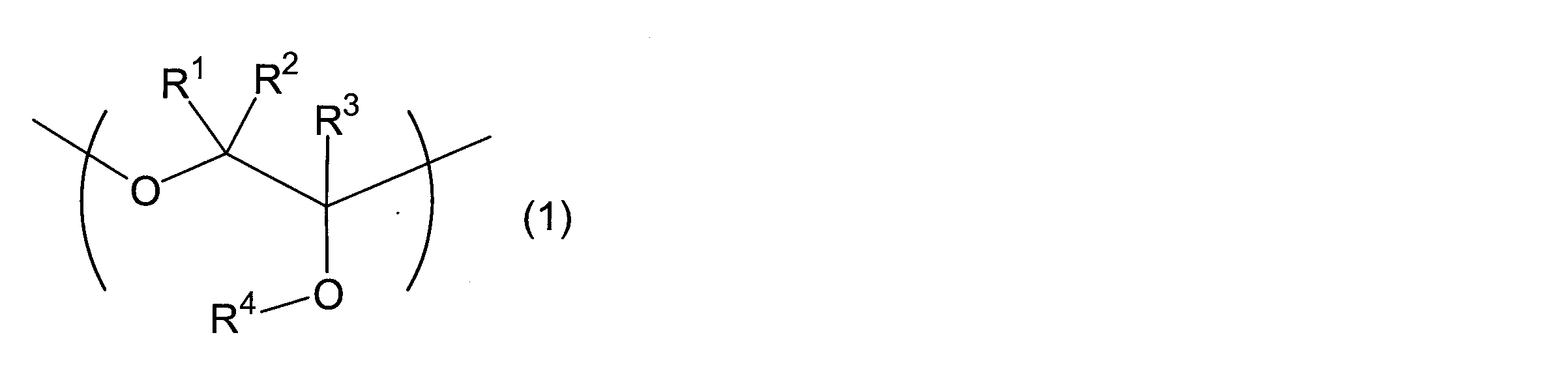
(式中、R1~R3は、それぞれ同一又は異なって、水素原子、ハロゲン原子、ヒドロキシ基、ヒドロパーオキシ基、アミノ基、メルカプト基(又はチオール基)、スルホ基又は有機基を示し、かつR1~R3の2以上が互いに結合して環を形成してもよく、R4は、ハロゲン原子、ヒドロキシ基、ヒドロパーオキシ基、アミノ基、メルカプト基、スルホ基又は有機基を示す)

(式中、環Zは、置換基を有していてもよく、かつヘテロ原子として酸素原子を含む飽和ヘテロ環を示し、かつ環Zは、同一の前記飽和へテロ環であってもよく、異なる前記飽和ヘテロ環の組み合わせであってもよい)

[式中、A1は、置換基を有していてもよい炭化水素基、又は-A2-(O-A3)n-基(式中、A2及びA3は、それぞれ同一又は異なって、置換基を有していてもよい炭化水素基を示す)を示し、nは1以上の整数である]
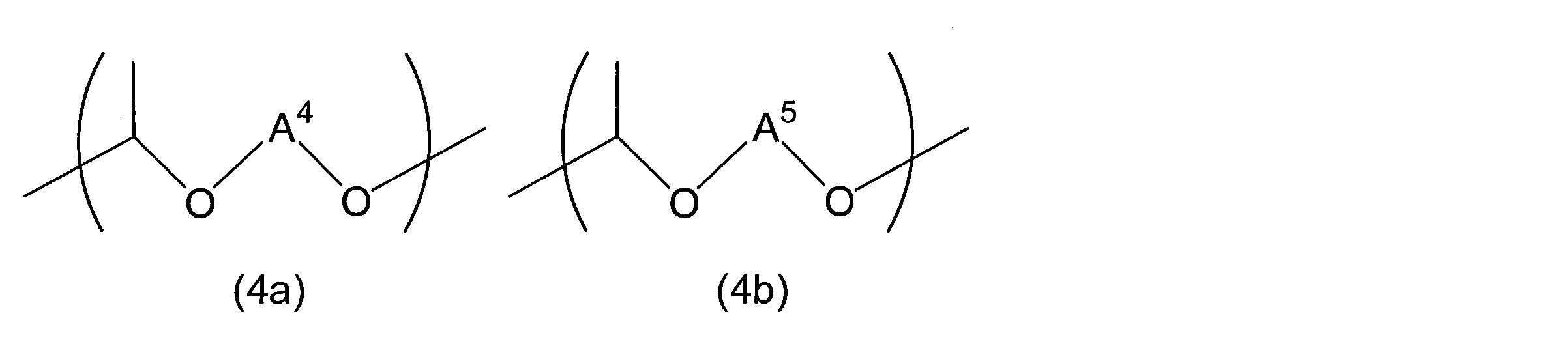
[式中、A4は、置換基を有していてもよい炭化水素基、又は-A6-(O-A7)m-基(式中、A6及びA7は、それぞれ同一又は異なって、置換基を有していてもよい炭化水素基を示し、mは1以上の整数である)を示し、
A5は、置換基を有していてもよい炭化水素基、又は-A8-(O-A9)k-基(式中、A8及びA9は、それぞれ同一又は異なって、置換基を有していてもよい炭化水素基を示し、kは、1以上の整数である)を示し、
A4及びA5は異なる基である]。
A5は、置換基を有していてもよい炭化水素基、又は-A8-(O-A9)k-基(式中、A8及びA9は、それぞれ同一又は異なって、置換基を有していてもよい炭化水素基を示し、kは、1以上の整数である)を示し、
A4及びA5は異なる基である]。
本発明には、酸分解性ポリマーで金属微粒子の少なくとも一部の表面を被覆する被覆工程を含む前記複合微粒子の製造方法も含まれる。前記被覆工程において、酸分解性ポリマーの存在下で、金属酸化物、金属塩及び金属ハロゲン化物からなる群より選択された少なくとも1種の原料金属化合物を還元してもよい。前記原料金属化合物は、酸化銅、硫酸銅、ギ酸銅、酢酸銅及び塩化銅からなる群より選択された少なくとも1種であってもよい。前記被覆工程において、還元剤としてヒドラジンを用いてもよい。
本発明には、前記複合微粒子及び分散媒を含む分散液も含まれる。前記分散媒は有機溶媒であってもよい。本発明の分散液は、さらに酸性化合物及び/又は酸発生剤を含んでいてもよい。本発明の分散液は、さらに還元剤を含んでいてもよい。本発明の分散液は、導電インク又は導電ペーストであってもよい。
本発明には、加圧下で分散処理する分散工程を含む前記分散液の製造方法も含まれる。
本発明には、基材の上に前記分散液を塗布する塗布工程を含む塗膜の製造方法も含まれる。
本発明には、前記塗膜を加熱して焼成する焼成工程を含む焼成膜の製造方法も含まれる。この方法において、焼成温度は200℃以下であってもよく、不活性ガス雰囲気下で焼成してもよい。得られた焼成膜の電気抵抗率は0.5Ω/□以下であってもよい。本発明には、この焼成膜を配線基板として使用する方法も含まれる。
本発明では、金属微粒子の表面が、保護能に優れ、かつ容易に除去できる酸分解性ポリマーで被覆されているため、低温で焼結できる。また、ナノサイズの金属を含んでいるにも拘わらず、酸化や凝集が抑制されて安定性に優れるとともに、200℃以下の低温で焼結できる。また、金属微粒子がナノメータサイズであり、高濃度の分散液(インク又はペースト)も調製できるため、フレキシブルな樹脂基板の上に、微細配線パターンなどの高密度な導電体を形成できる。さらに、有機溶媒に対する溶解性に優れ、特に、前記式(3)で表される繰り返し単位、又は前記式(4a)及び(4b)で表される二種の繰り返し単位を有する酸分解性ポリマーを含む複合微粒子は、各種の有機溶媒に溶解できる。
本発明の複合微粒子は、金属微粒子と、この金属微粒子の少なくとも一部の表面を被覆する保護層とを含む。
[金属微粒子]
金属微粒子を構成する金属としては、例えば、遷移金属(例えば、チタン、ジルコニウムなどの周期表第4A族金属;バナジウム、ニオブなどの周期表第5A族金属;モリブデン、タングステンなどの周期表第6A族金属;マンガンなどの周期表第7A族金属;鉄、ニッケル、コバルト、ルテニウム、ロジウム、パラジウム、レニウム、イリジウム、白金などの周期表第8族金属;銅、銀、金などの周期表第1B族金属など)、周期表第2B族金属(例えば、亜鉛、カドミウムなど)、周期表第3B族金属(例えば、アルミニウム、ガリウム、インジウムなど)、周期表第4B族金属(例えば、ゲルマニウム、スズ、鉛など)、周期表第5B族金属(例えば、アンチモン、ビスマスなど)などが挙げられる。金属微粒子は、これらの合金で形成された微粒子あってもよく、複数種の金属微粒子の組み合わせであってもよい。
金属微粒子を構成する金属としては、例えば、遷移金属(例えば、チタン、ジルコニウムなどの周期表第4A族金属;バナジウム、ニオブなどの周期表第5A族金属;モリブデン、タングステンなどの周期表第6A族金属;マンガンなどの周期表第7A族金属;鉄、ニッケル、コバルト、ルテニウム、ロジウム、パラジウム、レニウム、イリジウム、白金などの周期表第8族金属;銅、銀、金などの周期表第1B族金属など)、周期表第2B族金属(例えば、亜鉛、カドミウムなど)、周期表第3B族金属(例えば、アルミニウム、ガリウム、インジウムなど)、周期表第4B族金属(例えば、ゲルマニウム、スズ、鉛など)、周期表第5B族金属(例えば、アンチモン、ビスマスなど)などが挙げられる。金属微粒子は、これらの合金で形成された微粒子あってもよく、複数種の金属微粒子の組み合わせであってもよい。
これらの金属微粒子のうち、導電性に優れる点から、銅、銀、金などの周期表第1B族金属単体で形成された微粒子が好ましく、マイグレーションが起こり難く、経済性にも優れる点から、銅微粒子が特に好ましい。
金属微粒子の形状としては、特に限定されず、球状、楕円体状、多角体形(多角錘状、正方体状、直方体状など)、板状、棒状、不定形状などが挙げられる。これらのうち、分散性などに優れる点から、略球状などの等方形状が好ましい。
金属微粒子は、平均粒径(数平均一次粒径)が3000nm以下であってもよい。特に、金属微粒子の平均粒径は、ナノメータサイズが好ましく、例えば1~1000nm、好ましくは10~500nm(例えば20~400nm)、さらに好ましくは30~300nm(特に50~200nm)程度である。金属微粒子の粒径が大きすぎると、焼結させるための焼成温度が高くなり、微細配線パターンの形成も困難となる虞がある。一方、小さすぎると、調製が困難となる上に、比表面積が増大するため、酸化し易くなるとともに、ペーストやインクなどへの再分散も困難となる虞がある。さらに、これらの複合的な要因により導電性を向上させるのも困難となる虞がある。
本発明では、金属微粒子の平均粒径は、走査型電子顕微鏡(SEM)による画像解析などの方法で測定できる。
[保護層]
保護層は、酸によって容易に分解する特性を有する酸分解性ポリマーを含んでいる。この酸分解性ポリマーは、酸の非存在下で所定温度の熱によっても分解するが、酸の存在下で更に分解性が向上される。このような特性を有する酸分解性ポリマーは、金属微粒子を焼結するための焼成温度を低下できるポリマーであればよく、例えば、エステル結合、カーボネート結合、ウレタン結合、アセタール結合などを有するポリマー(重合体)などが挙げられる。これらのポリマーのうち、酸分解性に優れる点から、アセタール結合を有するポリマーが好ましい。特に、重合体の主鎖を構成する繰り返し単位としてアセタール結合(アセタール構造)を有すると、酸と反応させることにより容易に分解できる。このようなアセタール構造は、熱、光、還元剤などの酸以外の通常の刺激(粒子合成条件における条件)に対しては安定であるため、保護層を形成する重合体は、酸の非存在下において高い安定性を有する。アセタール結合を有する酸分解性ポリマーは、前記式(1)で表される繰り返し単位を有するポリマー[ポリマー(1)]、前記式(2)で表される繰り返し単位を有するポリマー[ポリマー(2)]、前記式(3)で表される繰り返し単位を有するポリマー[ポリマー(3)]、又は前記式(4a)及び(4b)で表される二種の繰り返し単位を有するポリマー[ポリマー(4)]であってもよい。
保護層は、酸によって容易に分解する特性を有する酸分解性ポリマーを含んでいる。この酸分解性ポリマーは、酸の非存在下で所定温度の熱によっても分解するが、酸の存在下で更に分解性が向上される。このような特性を有する酸分解性ポリマーは、金属微粒子を焼結するための焼成温度を低下できるポリマーであればよく、例えば、エステル結合、カーボネート結合、ウレタン結合、アセタール結合などを有するポリマー(重合体)などが挙げられる。これらのポリマーのうち、酸分解性に優れる点から、アセタール結合を有するポリマーが好ましい。特に、重合体の主鎖を構成する繰り返し単位としてアセタール結合(アセタール構造)を有すると、酸と反応させることにより容易に分解できる。このようなアセタール構造は、熱、光、還元剤などの酸以外の通常の刺激(粒子合成条件における条件)に対しては安定であるため、保護層を形成する重合体は、酸の非存在下において高い安定性を有する。アセタール結合を有する酸分解性ポリマーは、前記式(1)で表される繰り返し単位を有するポリマー[ポリマー(1)]、前記式(2)で表される繰り返し単位を有するポリマー[ポリマー(2)]、前記式(3)で表される繰り返し単位を有するポリマー[ポリマー(3)]、又は前記式(4a)及び(4b)で表される二種の繰り返し単位を有するポリマー[ポリマー(4)]であってもよい。
(ポリマー(1))
前記式(1)のR1~R4において、ハロゲン原子としては、例えば、フッ素原子、塩素原子、臭素原子、ヨウ素原子などが挙げられる。
前記式(1)のR1~R4において、ハロゲン原子としては、例えば、フッ素原子、塩素原子、臭素原子、ヨウ素原子などが挙げられる。
R1~R4における有機基としては、炭素原子を含む基であればよく、特に限定されないが、例えば、置換基を有していてもよい炭化水素基、アルコキシ基、アルケニルオキシ基、アリールオキシ基、アラルキルオキシ基、アシル基、アシルオキシ基、アルキルチオ基、アルケニルチオ基、アリールチオ基、アラルキルチオ基、カルボキシル基、アルコキシカルボニル基、アリールオキシカルボニル基、アラルキルオキシカルボニル基、エポキシ基、エポキシ含有基、オキセタニル基、オキセタニル含有基、シアノ基、イソシアナート基、カルバモイル基、イソチオシアナート基、置換アミノ基などが挙げられる。
炭化水素基としては、例えば、脂肪族炭化水素基、脂環式炭化水素基、芳香族炭化水素基、これらの2以上が結合した基などが挙げられる。
脂肪族炭化水素基としては、例えば、アルキル基、アルケニル基、アルキニル基が挙げられる。アルキル基としては、例えば、メチル基、エチル基、プロピル基、イソプロピル基、ブチル基、ヘキシル基、オクチル基、イソオクチル基、デシル基、ドデシル基などのC1-20アルキル基(好ましくはC1-10アルキル基、さらに好ましくはC1-4アルキル基)などが挙げられる。アルケニル基としては、例えば、ビニル基、アリル基、メタリル基、1-プロペニル基、イソプロペニル基、ブテニル基、ペンテニル基、ヘキセニル基などのC2-20アルケニル基(好ましくはC2-10アルケニル基、さらに好ましくはC2-4アルケニル基)などが挙げられる。アルキニル基としては、例えば、エチニル基、プロピニル基などのC2-20アルキニル基(好ましくはC2-10アルキニル基、さらに好ましくはC2-4アルキニル基)などが挙げられる。
脂環式炭化水素基としては、例えば、シクロプロピル基、シクロブチル基、シクロペンチル基、シクロヘキシル基、シクロドデシル基などのC3-12シクロアルキル基(特にC5-8シクロアルキル基);シクロヘキセニル基などのC3-12シクロアルケニル基;ビシクロヘプタニル基、ビシクロヘプテニル基などのC4-15架橋環式炭化水素基などが挙げられる。
芳香族炭化水素基としては、例えば、フェニル基、ナフチル基などのC6-14アリール基(特にC6-10アリール基)などが挙げられる。
さらに、炭化水素基としては、例えば、シクロへキシルメチル基、メチルシクロヘキシル基などの脂肪族炭化水素基と脂環式炭化水素基とが結合した基;ベンジル基、フェネチル基などのC7-18アラルキル基(特に、C7-10アラルキル基)、シンナミル基などのC6-10アリール-C2-6アルケニル基、トリル基などのC1-4アルキル置換アリール基、スチリル基などのC2-4アルケニル置換アリール基などの脂肪族炭化水素基と芳香族炭化水素基とが結合した基などが挙げられる。
アルコキシ基としては、例えば、メトキシ基、エトキシ基、プロポキシ基、イソプロピルオキシ基、ブトキシ基、イソブチルオキシ基などのC1-10アルコキシ基(好ましくはC1-6アルコキシ基、さらに好ましくはC1-4アルコキシ基)などが挙げられる。アルケニルオキシ基としては、例えば、アリルオキシ基などのC2-10アルケニルオキシ基(好ましくはC2-6アルケニルオキシ基、さらに好ましくはC2-4アルケニルオキシ基)が挙げられる。アリールオキシ基としては、例えば、フェノキシ基、トリルオキシ基、ナフチルオキシ基などのC6-20アリールオキシ基(特にC6-14アリールオキシ基)などが挙げられる。なお、アリールオキシ基は、芳香環にC1-4アルキル基、C2-4アルケニル基、ハロゲン原子、C1-4アルコキシ基などの置換基を有していてもよい。アラルキルオキシ基としては、例えば、ベンジルオキシ基、フェネチルオキシ基などのC6-20アラルキルオキシ基(特にC7-18アラルキルオキシ基)などが挙げられる。
アシル基としては、例えば、アセチル基、プロピオニル基、(メタ)アクリロイル基、ベンゾイル基などのC1-20アシル基(特にはC1-12アシル基)などが挙げられる。アシルオキシ基としては、例えば、アセチルオキシ基、プロピオニルオキシ基、(メタ)アクリロイルオキシ基、ベンゾイルオキシ基などのC1-20アシルオキシ基(特にはC1-12アシルオキシ基)などが挙げられる。
アルキルチオ基としては、例えば、メチルチオ基、エチルチオ基などのC1-6アルキルチオ基(特にC1-4アルキルチオ基)などが挙げられる。アルケニルチオ基としては、例えば、アリルチオ基などのC2-6アルケニルチオ基(特にC2-4アルケニルチオ基)などが挙げられる。アリールチオ基としては、例えば、フェニルチオ基、トリルチオ基、ナフチルチオ基などの6-20アリールチオ基(特にC6-14アリールチオ基)などが挙げられる。なお、アリールチオ基は、芳香環にC1-4アルキル基、C2-4アルケニル基、ハロゲン原子、C1-4アルコキシ基などの置換基を有していてもよい。アラルキルチオ基としては、例えば、ベンジルチオ基、フェネチルチオ基などのC6-20アラルキルチオ基(特にC7-18アラルキルチオ基)などが挙げられる。
アルコキシカルボニル基としては、例えば、メトキシカルボニル基、エトキシカルボニル基、プロポキシカルボニル基、ブトキシカルボニル基などのC1-10アルコキシカルボニル基(特にC1-6アルコキシ-カルボニル基)などが挙げられる。アリールオキシカルボニル基としては、例えば、フェノキシカルボニル基、トリルオキシカルボニル基、ナフチルオキシカルボニル基などのC6-20アリールオキシ-カルボニル基(特にC6-14アリールオキシ-カルボニル基)などが挙げられる。アラルキルオキシカルボニル基としては、例えば、ベンジルオキシカルボニル基などのC6-20アラルキルオキシ-カルボニル基(特にC7-18アラルキルオキシ-カルボニル基)などが挙げられる。
エポキシ含有基としては、例えば、グリシジル基、グリシジルオキシ基などが挙げられる。オキセタニル含有基としては、例えば、エチルオキセタニルオキシ基などのC1-10アルキル-オキセタニルオキシ基などが挙げられる。
置換アミノ基としては、例えば、メチルアミノ基、エチルアミノ基、ジメチルアミノ基、ジエチルアミノ基などのモノ又はジアルキルアミノ基(特にモノ又はジ-C1-6アルキルアミノ基)、アセチルアミノ基、プロピオニルアミノ基、ベンゾイルアミノ基などのアシルアミノ基(特にC1-11アシルアミノ基)などが挙げられる。
有機基(特に炭化水素基)は、置換基を有していてもよく、置換基としては、前述の基、例えば、ハロゲン原子(例えば、フッ素など)、オキソ基、ヒドロキシ基、ヒドロパーオキシ基、カルボニル基、カルボキシル基、アルコキシ基、アルケニルオキシ基、アリールオキシ基、アラルキルオキシ基、アシル基、アシルオキシ基、メルカプト基、アルキルチオ基、アルケニルチオ基、アラルキルチオ基、アルコキシカルボニル基、アリールオキシカルボニル基、アラルキルオキシカルボニル基、エポキシ基、エポキシ含有基、オキタセニル基、オキタセニル含有基、シアノ基、イソシナート基、カルバモイル基、イソチオシナート基などが挙げられる。置換基は、2以上の置換基がC1-6アルキレン基を介して結合した基であってもよい。
式(1)において、R1~R3は、2以上が互いに結合して環を形成していてもよいが、通常、1価の基であることが多い。R1及びR2としては、直鎖又は分岐鎖状のC1-6アルキル基が好ましく、メチル基などのC1-3アルキル基(特にメチル基)が特に好ましい。R3としては、水素原子、直鎖又は分岐鎖状のC1-6アルキル基が好ましく、水素原子が特に好ましい。一方、R4は、例示された1価の基であり、直鎖又は分岐鎖状のC1-6アルキル基が好ましく、メチル基などのC1-3アルキル基(特にメチル基)が特に好ましい。
ポリマー(1)[式(1)で表される繰り返し単位を有するポリマー(1)]は、式(1)で表される繰り返し単位を形成するための単量体であるオキシラン化合物を含む単量体をカチオン重合して得られる。ポリマー(1)の構造は、特に限定されず、直鎖型、分岐鎖型、星型などのいずれの構造であってもよい。
ポリマー(1)は、単独重合体であってもよく、共重合体であってもよい。共重合体は、式(1)で表される繰り返し単位を複数種(二種以上)組み合わせた共重合体であってもよく、式(1)で表される繰り返し単位と他の共重合性単量体(他のカチオン重合性を有する単量体)で形成された繰り返し単位との共重合体であってもよい。さらに、共重合体は、ランダム共重合体であってもよく、ブロック共重合体であってもよい。
他の共重合性単量体としては、例えば、ビニルエーテル化合物、環状エーテル化合物、ベンズアルデヒド化合物、α-オレフィン化合物、鎖状共役ジエン化合物、五員環以上の環構造を有するオレフィン系炭化水素、シクロペンタジエン化合物、環状オレフィン化合物、環状共役ジエン化合物、複素環含有ビニル化合物、エチレン性不飽和結合を有するシラン化合物、ラクトン化合物などが挙げられる。これらの単量体は、単独で又は二種以上組み合わせて使用できる。具体的には、これら他の共重合性単量体は、例えば、特開2013-237755号公報に記載の他の共重合性単量体であってもよい。
ポリマー(1)において、式(1)で表される繰り返し単位の割合は50モル%以上(例えば70~100モル%)であってもよく、例えば、80モル%以上(例えば80~100モル%)、好ましくは90モル%以上(例えば90~100モル%)、さらに好ましくは95モル%以上(特に99モル%以上)であってもよい。繰り返し単位(1)の割合が少なすぎると、酸により重合体を分解した後の残渣の処理が煩雑となる虞がある。
ポリマー(1)の末端構造は、特に限定されないが、例えば、カチオン重合反応の開始種(例えば、ビニルエーテルのハロゲン化水素付加体など)由来の原子団により構成される末端構造、重合停止剤由来の原子団により構成される末端構造などが挙げられる。また、ポリマー(1)の末端基は、系中の不純物、移動反応等により重合反応がプロトンから開始した場合に形成されるヒドロキシ基などであってもよい。
ポリマー(1)の数平均分子量(Mn)は、例えば、GPC法(ゲルパーミエーションクロマトグラフィー法)により測定したとき、ポリスチレン換算で、2000以上であってもよく、例えば2000~100000、好ましくは2500~50000、さらに好ましくは3000~15000程度である。数平均分子量が小さすぎると、金属微粒子に対する保護能が低下したり、分解前の重合体の耐熱性や機械強度が不十分となる虞がある。一方、大きすぎると、重合体の生産性が低下したり、溶解性が不十分となって取り扱いが困難となる虞がある。
ポリマー(1)の分子量分布[重量平均分子量(Mw)/数平均分子量(Mn)]は、例えば、1.3以下(例えば1.0~1.3)、好ましくは1.25以下(例えば1.02~1.25)、さらに好ましくは1.2以下(例えば1.05~1.20)程度である。分子量分布が大きすぎると、複合微粒子の粒子径の分布が大きくなったり、分解前の重合体の耐熱性や機械強度が不十分となる虞がある。なお、重合体の分子量分布も、例えば、GPC法により、ポリスチレン換算で算出できる。
ポリマー(1)は、慣用のカチオン重合で製造でき、例えば、特開2013-237755号公報に記載の製造方法で製造できる。
(ポリマー(2))
前記式(2)において、環Zは、ヘテロ原子として酸素原子を含む飽和ヘテロ環であればよい。飽和ヘテロ環は飽和単環式ヘテロ環(ヘテロ単環)であってもよく、飽和縮合ヘテロ環であってもよい。
前記式(2)において、環Zは、ヘテロ原子として酸素原子を含む飽和ヘテロ環であればよい。飽和ヘテロ環は飽和単環式ヘテロ環(ヘテロ単環)であってもよく、飽和縮合ヘテロ環であってもよい。
飽和ヘテロ単環としては、例えば、オキサシクロブタン、テトラヒドロフラン(オキサシクロペンタン)、テトラヒドロピラン(オキサシクロヘキサン)、オキサシクロヘプタン、オキサシクロオクタンなどが挙げられる。これらのうち、テトラヒドロフラン、テトラヒドロピラン(特に、テトラヒドロフラン)が好ましい。
飽和縮合ヘテロ環の縮合数(縮合している環の数)は、2環式以上であればよく、3環式以上(例えば3~4環式)であってもよいが、通常、2環式である。飽和縮合ヘテロ環の員数(縮合環全体の員数)は、例えば6~20員環、好ましくは7~15員環、さらに好ましくは8~12員環(特に8~10員環)程度である。飽和縮合ヘテロ環に含まれる酸素原子の数は、2個以上であればよく、例えば2~6個、好ましくは2~4個、さらに好ましくは2~3個程度である。2個以上の酸素原子は、同一の環に含まれていてもよいが、通常、各環に1個以上(例えば1~2個、特に1個)含まれている。
飽和縮合ヘテロ環の基本骨格(縮合環を構成する各環の構造)は、例えば、前記飽和ヘテロ単環などが挙げられる。前記飽和ヘテロ単環のうち、テトラヒドロフラン、テトラヒドロピラン(特にテトラヒドロフラン)が好ましい。縮合環は、これらの環の組み合わせで構成され、同一の環の組み合わせであってもよく、異なる環の組み合わせであってもよい。
これらの飽和ヘテロ環のうち、密着性などの点から、環Zとしては、飽和縮合ヘテロ環が好ましい。
環Zに含まれる置換基としては、例えば、前記式(1)で例示された有機基、前記式(1)で例示された有機基の置換基などが挙げられる。
このような繰り返し単位(2)は、下記式(2a)で表される繰り返し単位であってもよい。

(式中、R5~R12は、水素原子又は置換基を示す)。
前記式(2a)において、R5~R12は、これらの置換基及び水素原子から選択された単一の基であってもよく、二種以上を組み合わせた基であってもよい。R5~R12としては、製造のし易さや原料の入手のしやすさなどの点から、水素原子、メチル基などのC1-4アルキル基が好ましく、水素原子が特に好ましい。
ポリマー(2)[式(2)で表される繰り返し単位を有するポリマー(2)]は、含酸素飽和ヘテロ環骨格を有するジビニルエーテルと含酸素飽和ヘテロ環骨格を有するジオールとの反応や、含酸素飽和ヘテロ環骨格を有するヒドロキシビニルエーテルの重合などにより得られる。ポリマー(2)の構造は、特に限定されず、直鎖型、分岐鎖型、星型などのいずれの構造であってもよい。
ポリマー(2)は、単独重合体であってもよく、共重合体であってもよい。共重合体は、前記式(2)で表される繰り返し単位において、環Zが、異なる飽和ヘテロ環の組み合わせ、例えば、異なる飽和ヘテロ単環同士の組み合わせ、異なる飽和縮合ヘテロ環同士の組み合わせ、飽和ヘテロ単環と飽和縮合ヘテロ環との組み合わせなどの共重合体であってもよい。すなわち、前記式(2)において、環Zは、同一の前記飽和ヘテロ環であってもよく、異なる前記飽和ヘテロ環の組み合わせであってもよい。さらに、共重合体は、前記式(2)で表される繰り返し単位と、他の共重合性単量体(他のジビニルエーテル及び/又は他のジオール)で形成された単位との共重合体であってもよい。さらに、共重合体は、ランダム共重合体であってもよく、ブロック共重合体であってもよい。
ポリマー(2)において、前記式(2)で表される繰り返し単位の割合は50モル%以上(例えば70~100モル%)であってもよく、例えば80モル%以上(例えば80~100モル%)、好ましくは90モル%以上(例えば90~100モル%)、さらに好ましくは95モル%以上(特に99モル%以上)であってもよい。繰り返し単位(2)の割合が少なすぎると、酸により重合体を分解した後の残渣の処理が煩雑となる虞がある。
ポリマー(2)の末端基は、ビニルエーテル基、ヒドロキシル基のいずれかであり、いずれか単独であってもよく、両基の組み合わせであってもよい。このように、本発明の重合体は、末端にヒドロキシル基及び/又はビニル基を有するため、ヒドロキシル基により無機材料などで形成された基材に対する密着性を付与したり、ビニル基により他の重合性基と重合させて酸分解性の架橋構造を有する樹脂を得ることもできる。
ポリマー(2)の重量平均分子量(Mw)は、例えば、GPC法により測定したとき、ポリスチレン換算で、1000以上であってもよく、例えば1000~100000、好ましくは2000~50000、さらに好ましくは3000~30000(特に4000~10000)程度であってもよい。ポリマー(2)は、含酸素飽和ヘテロ環を有しているにも拘わらず、高分子量である。重量平均分子量が小さすぎると、金属微粒子に対する保護能が低下したり、分解前の重合体の耐熱性や機械強度が不十分となる虞がある。一方、大きすぎると、重合体の生産性が低下したり、溶解性が不十分となって取り扱いが困難となる虞がある。
ポリマー(2)の分子量分布(Mw/Mn)は、例えば1~5、好ましくは1.1~3、さらに好ましくは1.2~2.8(特に1.5~2.5)程度であってもよい。分子量分布が大きすぎると、複合微粒子の粒径分布が大きくなったり、分解前の重合体の耐熱性や機械強度が不十分となる虞がある。なお、重合体の分子量分布も、例えば、GPC法により、ポリスチレン換算で算出できる。
ポリマー(2)は、下記式(5)で表されるジビニルエーテルと下記式(6)で表されるジオールとを反応させる反応工程を含む製造方法や、下記式(7)で表されるヒドロキシビニルエーテルを重合させる反応工程を含む製造方法などにより得られる重合体である。
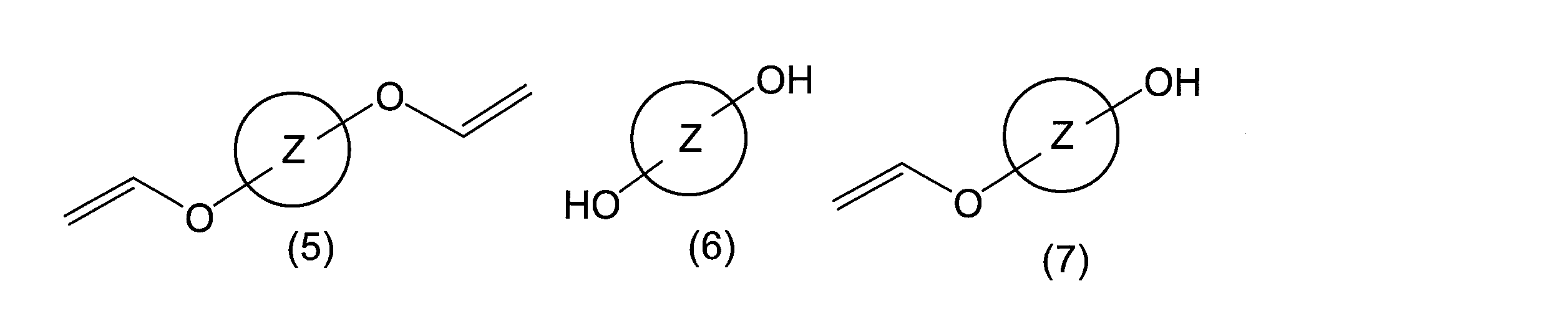
(式中、環Zは、置換基を有していてもよく、かつヘテロ原子として酸素原子を含む飽和ヘテロ環を示し、かつ環Zは、同一の前記飽和ヘテロ環であってもよく、異なる前記飽和ヘテロ環の組み合わせであってもよい)。
反応工程において、ジビニルエーテル(5)としては、前記繰り返し単位(2)で例示された環Zを基本骨格とするジビニルエーテルであればよく、下記式(5a)で表されるジビニルエーテル(特に前記繰り返し単位(2a)で例示された置換基を有するジビニルエーテル)が好ましい。ジオール(6)としても、前記繰り返し単位(2)で例示された環Zを基本骨格とするジオールであればよく、下記式(6a)で表されるジオール(特に前記繰り返し単位(2a)で例示された置換基を有するジオール)が好ましい。ヒドロキシビニルエーテル(7)としても、前記繰り返し単位(2)で例示された環Zを基本骨格とするヒドロキシビニルエーテルであればよく、下記式(7a)で表されるヒドロキシビニルエーテル(特に前記繰り返し単位(2a)で例示された置換基を有するヒドロキシビニルエーテル)が好ましい。
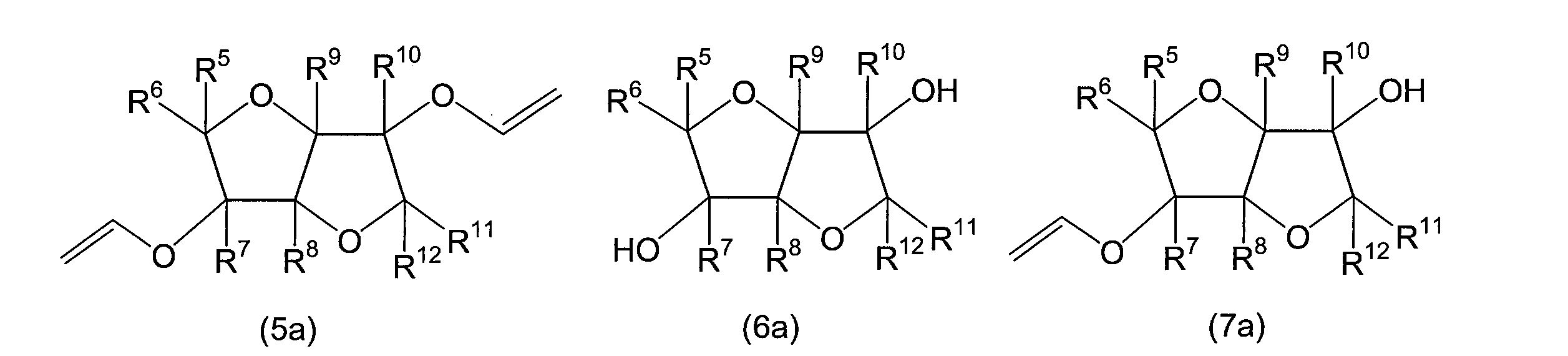
(式中、R5~R12は、水素原子又は置換基を示す)。
反応工程では、ジビニルエーテル(5)及びジオール(6)、又はヒドロキシビニルエーテル(7)に加えて、共重合性単量体を加えてもよい。共重合性単量体としては、他のジビニルエーテル(例えば、ブチレンジビニルエーテル、シクロヘキサンジビニルエーテル、ジエチレングリコールジビニルエーテル、トリエチレングリコールジビニルエーテル、2,2-ノルボルナンジメタノールジビニルエーテルなど)、他のジオール(例えば、エチレングリコール、プロピレングリコール、テトラメチレングリコール、ジエチレングリコール、トリエチレングリコール、シクロヘキサンジメタノール、ビスフェノールAなど)、他のヒドロキシビニルエーテル(例えば、ヒドロキシブチルビニルエーテル、ヒドロキシシクロヘキシルビニルエーテル、ジエチレングリコールモノビニルエーテル、トリエチレングリコールモノビニルエーテル、2,2-ノルボルナンジメタノールモノビニルエーテルなど)などが挙げられる。
これらのうち、ジビニルエーテル(5)とジオール(6)との交互重合体が好ましい。
ジビニルエーテル(5)とジオール(6)との割合(モル比)は、前者/後者=10/1~1/10程度の範囲から選択できるが、重合性の点から、例えば2/1~1/2、好ましくは1.5/1~1/1.5、さらに好ましくは1.2/1~1/1.2(特に1.1/1~1/1.1)程度であってもよく、通常、略等モルである。
反応は触媒の存在下で行ってもよい。触媒としては、慣用の触媒を利用できるが、反応促進性が高い点から、酸触媒が好ましい。酸触媒としては、例えば、塩酸、硫酸、p-トルエンスルホン酸などの強酸であってもよいが、生成する重合体の安定性も保持できる点から、酢酸、リン酸、アレーンスルホン酸(例えば、トルエンスルホン酸など)と塩基(例えば、ピリジンなどの弱塩基など)との塩などの弱酸が好ましく、重合体の安定性と反応性とのバランスに優れる点から、パラトルエンスルホン酸ピリジニウムなどのトルエンスルホン酸塩が好ましい。
触媒の割合は、重合成分の総モル数(例えば、ジビニルエーテル(5)及びジオール(6)の総モル数)100モルに対して、例えば0.1~20モル、好ましくは0.3~15モル、さらに好ましくは0.5~10モル(特に1~5モル)程度である。触媒の割合が少なすぎると、反応性が低下し、多すぎると、重合体の物性に悪影響を及ぼす虞がある。
反応は溶媒中で行ってもよく、溶媒としては、前記ジビニルエーテル及びジオールに対して非反応性の溶媒であれば特に限定されず、例えば、炭化水素類(トルエン、キシレンなど)、ハロゲン系溶媒(塩化メチレン、クロロホルムなど)、エーテル類(ジエチルエーテルなどのジアルキルエーテル、テトラヒドロフランなどの環状エーテル類など)、ケトン類(アセトン、メチルエチルケトンなど)、エステル類(酢酸メチル、酢酸エチル、酢酸ブチルなど)、セロソルブアセテート類(エチルセロソルブアセテートなどのC1-4アルキルセロソルブアセテート、プロピレングリコールモノメチルエーテルアセテートなどのプロピレングリコールモノC1-4アルキルエーテルアセテートなど)などが挙げられる。これらの溶媒は単独で又は二種以上組み合わせて使用できる。これらの溶媒のうち、セロソルブアセテート類(例えば、プロピレングリコールモノメチルエーテルアセテートなどのプロピレングリコールモノC1-4アルキルエーテルアセテートなど)が汎用される。
溶媒の使用量は、重合成分の総量(例えば、ジビニルエーテル(3)及びジオール(4)の総量)100重量部に対して、例えば10~1000重量部、好ましくは50~500重量部、さらに好ましくは100~300重量部(特に150~200重量部)程度であってもよい。
反応は、慣用の添加剤、例えば、重合促進剤、重合禁止剤などを添加して行ってもよい。さらに、反応系に水分が含まれていてもよく、原料などに由来して不可避に含有する水分存在下で反応を行ってもよい。
反応工程では、過度の加熱や冷却をすることなく、反応を進行させることができ、反応温度は、例えば0~60℃、好ましくは10~50℃、さらに好ましくは20~45℃(特に30~40℃)程度であってもよい。
反応時間は、例えば30分~48時間、通常1~36時間、好ましくは2~24時間程度であってもよい。なお、反応は、不活性雰囲気(例えば、窒素、ヘリウム、アルゴンなどの雰囲気)下で行ってもよい。
反応工程を経て得られた重合体は、さらに分離精製工程に供してもよい。分離精製工程では、慣用の分離精製処理、例えば、濾過、濃縮、再沈殿、抽出、晶析(再結晶など)などの手段より分離精製してもよい。さらに、酸触媒を用いた場合は、慣用の方法でアルカリにより中和してもよい。
(ポリマー(3)及び(4))
前記式(3)、(4a)及び(4b)において、A1~A9(A1~A9骨格)の炭化水素基としては、例えば、脂肪族炭化水素基、脂環式炭化水素基、芳香族炭化水素基、これらの2種以上が結合した基が挙げられる。
前記式(3)、(4a)及び(4b)において、A1~A9(A1~A9骨格)の炭化水素基としては、例えば、脂肪族炭化水素基、脂環式炭化水素基、芳香族炭化水素基、これらの2種以上が結合した基が挙げられる。
脂肪族炭化水素基としては、例えば、アルキレン基、アルケニレン基、アルキニレン基が挙げられる。アルキレン基としては、例えば、メチレン基、エチレン基、プロピレン基、トリメチレン基、ブチレン基、テトラメチレン基、ヘキサメチレン基、イソヘキシレン基、オクタメチレン基、イソオクチレン基、デカメチレン基、ドデカメチレン基などのC1-20アルキレン基などが挙げられる。アルケニレン基としては、例えば、ビニレン基、アリレン基、メタリレン基、1-プロペニレン基、イソプロペニレン基、ブテニレン基、ペンテニレン基、ヘキセニレン基などのC2-20アルケニレン基などが挙げられる。アルキニレン基としては、例えば、エチニレン基、プロピニレン基などのC2-20アルキニレン基などが挙げられる。
脂環式炭化水素基としては、例えば、シクロプロピレン基、シクロブチレン基、シクロペンチレン基、シクロヘキシレン基、シクロドデカン-ジイル基などのC3-12シクロアルキル基(特にC5-8シクロアルキル基);シクロヘキセニレン基などのC3-12シクロアルケニレン基;ビシクロヘプタニレン基、ビシクロヘプテニレン基などのC4-15架橋環式炭化水素基などが挙げられる。
芳香族炭化水素基としては、例えば、フェニレン基、ナフチレン基などのC6-14アリーレン基などが挙げられる。
さらに、炭化水素基としては、例えば、脂肪族炭化水素基、脂環式炭化水素基及び芳香族炭化水素基から選択される二種以上を結合した基であってもよい。脂肪族炭化水素基と脂環式炭化水素基とが結合した基としては、例えば、シクロへキシレンメチレン基、メチルシクロヘキシレン基、ジシクロヘキシルメタン-4,4’-ジイル基、ジシクロヘキシルプロパン-4,4’-ジイル基などが挙げられる。脂肪族炭化水素基と芳香族炭化水素基とが結合した基としては、例えば、トリレン基、キシリレン基、ジフェニルメタン-4,4’-ジイル基、ジフェニルプロパン-4,4’-ジイル基などが挙げられる。
これらの炭化水素基の置換基としては、例えば、前記式(1)で例示された有機基の置換基などが挙げられる。
式(3)、(4a)及び(4b)において、n,m及びkは、それぞれ1以上の整数であり、好ましくは1~10、さらに好ましくは1~5(特に1~3)程度である。
これらの基のうち、A1~A9としては、炭素数3以上のアルキレン基(例えばC3-10アルキレン基)が好ましく、トリ乃至オクタメチレン基(特にトリ乃至ヘキサメチレン基)が特に好ましい。
なお、本発明では、式(3)、(4a)及び(4b)において、A1、A4及びA5骨格は、ヘテロ原子として酸素原子を含む飽和ヘテロ環を含まない。
ポリマー(3)及び(4)は、A1骨格を有するジビニルエーテルとA1骨格を有するジオールとの反応、A4又はA5骨格を有するジビニルエーテルとA5又はA4骨格を有するジオールとの反応、A1骨格を有するヒドロキシビニルエーテルの重合などにより得られる。ポリマー(3)及び(4)の構造は、特に限定されず、直鎖型、分岐鎖型、星型などのいずれの構造であってもよい。
ポリマー(3)は、単独重合体であってもよく、他の共重合性単量体で形成された単位(繰り返し単位(3)を形成可能な単量体以外の単量体で形成された単位)との共重合体であってもよい。共重合体は、ランダム共重合体であってもよく、ブロック共重合体であってもよい。
ポリマー(4)は、繰り返し単位(4a)と(4b)とを含む共重合体であるが、ポリマー(3)と同様に、さらに他の共重合性単量体で形成された単位(繰り返し単位(4a)及び(4b)を形成可能な単量体以外の単量体で形成された単位)を含む共重合体であってもよい。共重合体は、ランダム共重合体であってもよく、ブロック共重合体であってもよい。
本発明では、ポリマー(3)及び(4)における他の共重合性単量体も、ヘテロ原子として酸素原子を含む飽和ヘテロ環を含まない。
ポリマー(3)及び(4)において、式(3)で表される繰り返し単位、又は式(4a)及び(4b)で表される二種の繰り返し単位の割合は、それぞれ50モル%以上(例えば70~100モル%)であってもよく、例えば80モル%以上(例えば80~100モル%)、好ましくは90モル%以上(例えば90~100モル%)、さらに好ましくは95モル%以上(特に99モル%以上)であってもよい。前記繰り返し単位の割合が少なすぎると、酸により重合体を分解した後の残渣の処理が煩雑となる虞がある。
ポリマー(3)及び(4)のうち、ポリマー鎖において均質な分解性を有する点から、式(3)で表される繰り返し単位を有するポリマー(特にホモポリマー)が好ましい。ポリマー(3)において、A1は、トリ乃至ヘキサメチレン基であってもよく、好ましくはテトラ乃至ペンタメチレン基、さらに好ましくはテトラメチレン基であってもよい。
ポリマー(3)及び(4)の末端基は、ビニルエーテル基、ヒドロキシル基のいずれかであり、いずれか単独であってもよく、両基の組み合わせであってもよい。このように、ポリマー(3)及び(4)は、末端にヒドロキシル基及び/又はビニル基を有するため、ヒドロキシル基により無機材料などで形成された基材に対する密着性を付与したり、ビニル基により他の重合性基と重合させて酸分解性の架橋構造を有する樹脂を得ることもできる。
ポリマー(3)及び(4)の重量平均分子量(Mw)は、それぞれ、GPC法により測定したとき、ポリスチレン換算で、1000以上であってもよく、例えば1000~100000、好ましくは2000~50000、さらに好ましくは3000~30000(特に4000~10000)程度であってもよい。重量平均分子量が小さすぎると、金属微粒子に対する保護能が低下したり、分解前の重合体の耐熱性や機械強度が不十分となる虞がある。一方、大きすぎると、重合体の生産性が低下したり、溶解性が不十分となって取り扱いが困難となる虞がある。
ポリマー(3)及び(4)の分子量分布(Mw/Mn)は、それぞれ、例えば1~5、好ましくは1.1~3、さらに好ましくは1.2~2.8(特に1.5~2.5)程度であってもよい。分子量分布が大きすぎると、分解前の重合体の耐熱性や機械強度が不十分となる虞がある。なお、重合体の分子量分布も、例えば、GPC法により、ポリスチレン換算で算出できる。
ポリマー(3)及び(4)は、前述のように、対応するジビニルエーテルと対応するジオールとを反応させる反応工程を含む製造方法や、対応するヒドロキシビニルエーテルを重合させる反応工程を含む製造方法などにより得られる。
反応工程において、A1、A4又はA5骨格を有するジビニルエーテルとしては、例えば、ブチレンジビニルエーテル、シクロヘキサンジビニルエーテル、ジエチレングリコールジビニルエーテル、トリエチレングリコールジビニルエーテル、2,2-ノルボルナンジメタノールジビニルエーテルなどが挙げられる。A1、A4又はA5骨格を有するジオールとしては、例えば、テトラメチレングリコール、ジエチレングリコール、トリエチレングリコール、シクロヘキサンジメタノール、ビスフェノールAなどが挙げられる。A1、A4又はA5骨格を有するヒドロキシビニルエーテルとしては、例えば、ヒドロキシブチルビニルエーテル、ヒドロキシシクロヘキシルビニルエーテル、ジエチレングリコールモノビニルエーテル、トリエチレングリコールモノビニルエーテル、2,2-ノルボルナンジメタノールモノビニルエーテルなどが挙げられる。
これらのうち、対応するジビニルエーテルと対応するジオールとの交互重合体が好ましい。前記ジビニルエーテルと前記ジオールとの割合(モル比)は、前者/後者=10/1~1/10程度の範囲から選択できるが、重合性の点から、例えば2/1~1/2、好ましくは1.5/1~1/1.5、さらに好ましくは1.2/1~1/1.2(特に1.1/1~1/1.1)程度であってもよく、通常、略等モルである。
反応は触媒の存在下で行ってもよい。触媒としては、慣用の触媒を利用できるが、反応促進性が高い点から、酸触媒が好ましい。酸触媒としては、ポリマー(2)の製造方法で用いる酸触媒を利用でき、ポリマー(2)の製造方法と同様の割合で使用できる。
反応は溶媒中で行ってもよく、溶媒としては、ポリマー(2)の製造方法で用いる溶媒を利用でき、ポリマー(2)の製造方法と同様の使用量で使用できる。
さらに、添加剤の添加、反応温度及び時間、得られた重合体の分離精製工程についても、ポリマー(2)の製造方法と同様である。
(保護層の特性)
保護層は、酸分解性ポリマーを含んでいればよく、他の成分、例えば、製造工程で混入する触媒や溶媒、還元剤の他、慣用の添加剤を含んでいてもよい。
保護層は、酸分解性ポリマーを含んでいればよく、他の成分、例えば、製造工程で混入する触媒や溶媒、還元剤の他、慣用の添加剤を含んでいてもよい。
還元剤の割合は、保護層全体に対して、例えば10重量%以下(例えば0.001~10重量%)、好ましくは5重量%以下、さらに好ましくは1重量%以下程度である。還元剤の割合が多すぎると、焼成後の導電性が低下する虞がある。
慣用の添加剤としては、例えば、他のポリマー(バインダー)、安定剤(酸化防止剤、紫外線吸収剤など)、金属腐食防止剤、界面活性剤又は分散剤、水溶性高分子、ワックス、分散安定化剤、増粘剤又は粘度調整剤、保湿剤、チクソトロピー性賦与剤、レベリング剤、消泡剤、充填剤などが含まれていてもよい。他の成分の割合は、例えば、保護層全体に対して50重量%以下であってもよく、例えば0.01~10重量%(特に0.1~5重量%)程度である。
保護層は、金属微粒子の少なくとも一部の表面を被覆していればよく、金属微粒子の表面に対する被覆率は10%以上であってもよく、例えば30%以上、好ましくは50%以上、さらに好ましくは80%以上(特に90%以上)であってもよく、金属微粒子の全表面を被覆していてもよい。保護層の被覆率が低すぎると、金属微粒子が酸化又は凝集し易くなり、金属微粒子の安定性が低下する虞がある。
[複合微粒子の特性及び製造方法]
本発明の複合微粒子は、平均粒径(数平均一次粒径)が3000nm以下であってもよい。特に、複合微粒子の平均粒径は、ナノメータサイズが好ましく、例えば1~1000nm、好ましくは10~500nm(例えば20~400nm)、さらに好ましくは30~300nm(特に50~200nm)程度である。複合微粒子の粒径が大きすぎると、焼結させるための焼成温度が高くなり、微細配線パターンの形成も困難となる虞がある。一方、小さすぎると、調製が困難となる上に、比表面積が増大するため、酸化し易くなるとともに、ペーストやインクなどへの再分散も困難となる。さらに、これらの複合的な要因により導電性を向上させるのも困難となる虞がある。
本発明の複合微粒子は、平均粒径(数平均一次粒径)が3000nm以下であってもよい。特に、複合微粒子の平均粒径は、ナノメータサイズが好ましく、例えば1~1000nm、好ましくは10~500nm(例えば20~400nm)、さらに好ましくは30~300nm(特に50~200nm)程度である。複合微粒子の粒径が大きすぎると、焼結させるための焼成温度が高くなり、微細配線パターンの形成も困難となる虞がある。一方、小さすぎると、調製が困難となる上に、比表面積が増大するため、酸化し易くなるとともに、ペーストやインクなどへの再分散も困難となる。さらに、これらの複合的な要因により導電性を向上させるのも困難となる虞がある。
本発明では、複合微粒子の平均粒径は、SEM写真に基づいて、任意の100~300個の粒径を測定し、平均値を算出する方法で測定できる。
本発明の複合微粒子は、酸分解性ポリマーで金属微粒子の少なくとも一部の表面を被覆する被覆工程を含む製造方法により得られる。
前記被覆工程において、酸分解性ポリマーで金属微粒子を被覆する方法は、特に限定されないが、通常、酸分解性ポリマーの存在下で、原料金属化合物を還元する方法が利用される。
原料金属化合物としては、金属酸化物、金属塩、金属ハロゲン化物などが挙げられる。これらの原料金属化合物は、単独で又は二種以上組み合わせて使用できる。
原料金属化合物は、金属微粒子の種類に応じて選択できる。金属ハロゲン化物には、金属塩化物、金属臭化物、金属ヨウ化物などが含まれる。金属塩には、金属無機酸塩(硫酸塩、硝酸塩、炭酸塩、塩酸塩、リン酸塩など)、金属有機酸塩(ギ酸塩、酢酸塩、乳酸塩など)などが含まれる。金属塩は水和物であってもよい。
金属微粒子が銅微粒子である場合、酸化銅には、酸化銅(I)(酸化第一銅)、酸化銅(II)(酸化第二銅)が含まれる。ハロゲン化銅には、塩化銅(I)(塩化第一銅)、塩化銅(II)(塩化第二銅)、臭化銅(I)(臭化第一銅)、臭化銅(II)(臭化第二銅)などが含まれる。金属塩には、硫酸銅、硝酸銅、ギ酸銅、酢酸銅などが含まれる。これらのうち、酸化銅、硫酸銅、ギ酸銅、酢酸銅及び塩化銅からなる群より選択された少なくとも1種が好ましい。
合成時における酸分解性ポリマーの割合は、原料金属化合物100重量部に対して1~500重量部(特に3~400重量部)程度の範囲から選択できる。特に、酸分解性ポリマーがポリマー(1)又は(2)である場合、酸分解性ポリマーの割合は、原料金属化合物100重量部に対して、例えば5~400重量部、好ましくは10~250重量部、さらに好ましくは15~200重量部程度である。酸分解性ポリマーがポリマー(3)又は(4)である場合、酸分解性ポリマーの割合は、原料金属化合物100重量部に対して、例えば3~30重量部、好ましくは5~20重量部、さらに好ましくは6~10重量部程度である。酸分解性ポリマーの割合が小さすぎると、金属微粒子の安定性が低下したり、粗大粒子が生成する虞があり、大きすぎると、非常に微細な粒子が生成し、所望の粒子径を有する複合粒子が得られなくなったり、低温での焼結が困難となる虞がある。
還元剤としては、慣用の還元剤、例えば、水素化ホウ素ナトリウム類、水素化アルミニウムリチウム、次亜リン酸又はその塩、ボラン類、ホルマリン、ヒドラジン、アミン類、アルコール類、フェノール性水酸基を有するカルボン酸などが例示できる。これらの還元剤は、単独で又は二種以上組み合わせて使用できる。これらの還元剤のうち、水素化ホウ素ナトリウム、ヒドラジン、第3級アミン、エチレングリコール、タンニン酸などが汎用され、ヒドラジンが好ましい。ヒドラジンは水和物であってもよい。
還元剤の割合は、原料金属化合物1モルに対して、例えば0.1~50モル(特に0.2~40モル)程度の範囲から選択できる。特に、酸分解性ポリマーがポリマー(1)又は(2)である場合、還元剤の割合は、例えば0.5~30モル、好ましくは1~30モル、さらに好ましくは3~10モル程度である。酸分解性ポリマーがポリマー(3)又は(4)である場合、還元剤の割合は、例えば0.2~30モル、好ましくは0.3~10モル、さらに好ましくは0.5~5モル程度である。還元剤の割合が少なすぎると、金属イオンの還元が不十分となる虞があり、多すぎると、粒子径が小さくなり、所望の粒子径を有する複合粒子が得られなくなったり、反応後の精製に時間を要する虞がある。
還元剤を用いた還元反応は、常温であってもよいが、還元反応を促進できる点から、加熱してもよい。加熱する場合、加熱温度は、例えば40~80℃、好ましくは45~70℃、さらに好ましくは50~60℃程度であってもよい。反応時間は、例えば10分~20時間、通常30分~10時間、好ましくは1~5時間程度であってもよい。還元反応は攪拌下で行ってもよい。
還元反応は、溶媒の存在下で行ってもよい。溶媒は、原料金属化合物及び還元剤の種類に応じて選択でき、例えば、水、エタノールやイソプロパノールなどのアルコール類、アセトンなどのケトン類、ジオキサンやテトラヒドロフランなどの環状エーテル類、ジメチルアセトアミドなどのアミド類などが挙げられる。これらの溶媒は、単独で又は二種以上組み合わせて使用できる。これらの溶媒のうち、水、テトラヒドロフランなどの環状エーテル類が汎用される。溶媒の割合は、原料金属化合物100重量部に対して、例えば10~5000重量部、好ましくは30~4000重量部、さらに好ましくは50~3000重量部程度である。
還元反応では、慣用の方法で、酸(塩酸、硫酸、硝酸、リン酸などの無機酸、酢酸などの有機酸)、アルカリ(水酸化ナトリウム、アンモニアなどの無機塩基など)を用いてpHを調整してもよい。
被覆工程で得られた複合微粒子は、還元反応終了後の分散液をそのままインクなどに利用してもよいが、前記分散液は、通常、分離精製工程に供される。分離精製工程では、生成した複合微粒子を、慣用の方法(例えば、遠心分離、メンブレンフィルタ、限外ろ過などのろ過処理など)で溶媒から分離した後、分離された複合微粒子を洗浄及び乾燥することにより精製してもよい。
[分散液]
本発明の分散液は、前記複合微粒子及び分散媒を含んでいればよく、前述のように、被覆工程で得られた分散液であってもよいが、通常、目的に応じて、分離精製工程を経て得られた複合微粒子を分散媒中に分散させることにより得られる。
本発明の分散液は、前記複合微粒子及び分散媒を含んでいればよく、前述のように、被覆工程で得られた分散液であってもよいが、通常、目的に応じて、分離精製工程を経て得られた複合微粒子を分散媒中に分散させることにより得られる。
分散媒は、複合微粒子の種類に応じて選択でき、水であってもよいが、高濃度の複合微粒子を分散できる点から、有機溶媒が好ましい。本発明では、複合微粒子(特にポリマー(3)又は(4)を含む保護層で被覆された複合微粒子)は、溶媒溶解性に優れるため、種々の有機溶媒に分散可能である。分散液が複合微粒子を高濃度で含むことができると、緻密な焼成膜を形成し易いため、分散液は、導電ペーストや導電インクとして利用し易い。
有機溶媒としては、例えば、アルコール系溶媒(例えば、メタノール、エタノール、イソプロパノール、ブタノールなどのアルカノール類;エチレングリコール、グリセリンなどの脂肪族多価アルコール類;シクロヘキサノール、テルピネオール、ジヒドロテルピネオールなどの脂環族アルコール類など)、エステル系溶媒(例えば、酢酸エチル、酢酸ブチル、プロピレングリコールモノメチルエーテルモノアセテートなどの酢酸エステル類)、ケトン系溶媒(例えば、アセトンなどの鎖状ケトン類;シクロヘキサノンなどの環状ケトン類)、エーテル系溶媒(例えば、プロピレングリコールモノメチルエーテル、ジエチレングリコールジメチルエーテルなどの鎖状エーテル類;ジオキサン、テトラヒドロフランなどの環状エーテル類)、芳香族系溶媒(例えば、トルエン、キシレンなどの芳香族炭化水素類)、ハロゲン系溶媒(例えば、ジクロロメタン、クロロホルムなどのハロアルカン類)、ニトリル系溶媒(例えば、アセトニトリル、ベンゾニトリルなど)、ニトロ系溶媒(例えば、ニトロベンゼンなど)などが挙げられる。これらの分散媒は、単独で又は二種以上組み合わせて使用できる。
これらの分散媒のうち、アルコール系溶媒、エステル系溶媒、環状エーテル系溶媒が汎用される。保護層の種類に応じて分散媒を選択してもよく、保護層がポリマー(1)を含む場合、分散媒は、メタノールなどのC1-4アルカノール、テトラヒドロフランなどの環状エーテル、酢酸エチルなどの酢酸C1-3アルキルエステルなどであってもよい。保護層がポリマー(2)を含む場合、分散媒は、テルピネオールなどの脂環族アルコール、テトラヒドロフランなどの環状エーテル、酢酸エチルなどの酢酸C1-3アルキルエステルなどであってもよい。保護層がポリマー(3)又は(4)を含む場合、分散媒は、メタノールなどのC1-4アルカノール、テルピネオールなどの脂環族アルコール、テトラヒドロフランなどの環状エーテル、酢酸エチルなどの酢酸C1-3アルキルエステルであってもよい。
分散媒の割合は、複合微粒子100重量部に対して、例えば10~1000重量部、好ましくは30~500重量部、さらに好ましくは50~400重量部(特に80~300重量部)程度である。分散媒の割合が多すぎると、塗布後の乾燥においてクラックなどが生じ易くなり、導電性の高い焼結膜を形成するのが困難となる虞があり、少なすぎると、分散液の塗布性が低下する虞がある。
本発明の分散液は、低温での焼結を向上させるため、酸分解性ポリマーの分解助剤として、酸性化合物及び/又は酸発生剤をさらに含んでいてもよい。
酸性化合物には、無機酸、有機酸などが含まれる。無機酸としては、例えば、塩酸、硫酸、硝酸、リン酸、ホウ酸などが挙げられる。有機酸としては、例えば、ギ酸、酢酸、プロピオン酸、酪酸、カプリル酸、ステアリン酸などの脂肪族モノカルボン酸;シュウ酸、マロン酸、コハク酸、グルタル酸、アジピン酸、マレイン酸などの脂肪族ジカルボン酸;ナフテン酸などの脂環族カルボン酸;グリコール酸、乳酸、酒石酸、リンゴ酸、クエン酸などのヒドロキシカルボン酸;トルエンスルホン酸などのアレーンスルホン酸などが挙げられる。これらの無機酸及び有機酸は、金属塩(例えば、ナトリウムなどのアルカリ金属塩、カルシウムなどのアルカリ土類金属塩、スズなどの周期表14族金属塩など)であってもよい。これらの酸性化合物は、単独で又は二種以上組み合わせて使用できる。これらの酸性化合物のうち、低温での焼結性を阻害せず、酸分解性ポリマーの分解性にも優れる点から、ギ酸などのC1-4脂肪族モノカルボン酸(特にギ酸)が好ましい。
酸発生剤としては、慣用の酸発生剤、例えば、スルホニウム塩(スルホニウムイオンとアニオンとの塩)、ヨードニウム塩(ヨードニウムイオンとアニオンとの塩)、セレニウム塩(セレニウムイオンとアニオンとの塩)、アンモニウム塩(アンモニウムイオンとアニオンとの塩)、ホスホニウム塩(ホスホニウムイオンとアニオンとの塩)、遷移金属錯体イオンとアニオンとの塩、アレン-イオン錯体、アルミニウムキレート、三フッ化ホウ素アミン錯体などが挙げられる。これらの酸発生剤は、単独で又は二種以上組み合わせて使用できる。これらの酸発生剤のうち、酸性度が高い点から、スルホニウム塩が好ましい。
スルホニウム塩としては、例えば、トリフェニルスルホニウム塩、トリ-p-トリルスルホニウム塩、トリ-o-トリルスルホニウム塩、トリス(4-メトキシフェニル)スルホニウム塩、1-ナフチルジフェニルスルホニウム塩、2-ナフチルジフェニルスルホニウム塩、トリス(4-フルオロフェニル)スルホニウム塩、トリ-1-ナフチルスルホニウム塩、トリ-2-ナフチルスルホニウム塩、トリス(4-ヒドロキシフェニル)スルホニウム塩、ジフェニル[4-(フェニルチオ)フェニル]スルホニウム塩、4-(p-トリルチオ)フェニルジ-(p-フェニル)スルホニウム塩などのトリアリールスルホニウム塩;ジフェニルフェナシルスルホニウム塩、ジフェニル4-ニトロフェナシルスルホニウム塩、ジフェニルベンジルスルホニウム塩、ジフェニルメチルスルホニウム塩などのジアリールスルホニウム塩;フェニルメチルベンジルスルホニウム塩、4-ヒドロキシフェニルメチルベンジルスルホニウム塩、4-メトキシフェニルメチルベンジルスルホニウム塩などのモノアリールスルホニウム塩などが挙げられる。
スルホニウムイオン(カチオン)と塩を形成するためのアニオン(対イオン)としては、例えば、SbF6-、PF6-、BF4-、フッ化アルキルフルオロリン酸イオン[(CF3CF2)3PF3-、(CF3CF2CF2)3PF3-など]、(C6F5)4B-、(C6F5)4Ga-、スルホン酸アニオン(トリフルオロメタンスルホン酸アニオン、ペンタフルオロエタンスルホン酸アニオン、ノナフルオロブタンスルホン酸アニオン、メタンスルホン酸アニオン、ベンゼンスルホン酸アニオン、p-トルエンスルホン酸アニオンなど)、(CF3SO2)3C-、(CF3SO2)2N-、過ハロゲン酸イオン、ハロゲン化スルホン酸イオン、硫酸イオン、炭酸イオン、アルミン酸イオン、ヘキサフルオロビスマス酸イオン、カルボン酸イオン、アリールホウ酸イオン、チオシアン酸イオン、硝酸イオンなどが挙げられる。これらのアニオンのうち、PF6-などのリンのフッ化物イオンが好ましい。
酸発生剤は、熱酸発生剤であってもよく、光酸発生剤であってもよい。これらのうち、熱酸発生剤としては、市販品を利用でき、例えば、三新化学工業(株)製「サンエイドSI-60L」、「サンエイドSI-60S」、「サンエイドSI-80L」、「サンエイドSI-100L」、「サンエイドSI-110L」や、(株)ADEKA製「SP-66」、「SP-77」などを利用できる。光酸発生剤としても、市販品を利用でき、例えば、サンアプロ(株)製「HS-1」、「HS-1A」、「HS-1P」、「HS-1N」、「HS-1TF」、「HS-1NF」、「HS-1MS」、「HS-1CS」、「HS-1PC」、「LW-S1」、「LW-S1」、「LW-S1NF」、「K1-S」、「CPI-101A」、「CPI-100P」、「CPI300PG」などを利用できる。
分解助剤は、保護層に含まれる酸分解性ポリマーの種類に応じて選択してもよく、ポリマー(1)、(3)及び(4)では酸発生剤を用いてもよく、ポリマー(2)では酸性化合物を用いてもよい。これらのうち、簡便に低温焼結性を向上できる点から、酸発生剤が好ましく、焼成工程の熱を利用できる点から、熱酸発生剤が特に好ましい。
分解助剤(酸性化合物及び/又は酸発生剤)の割合は、複合微粒子100重量部に対して、例えば0.01~100重量部、好ましくは0.03~80重量部、さらに好ましくは0.05~50重量部程度である。
特に、酸分解性ポリマーがポリマー(1)、(3)又は(4)である場合、分解助剤(特に酸発生剤)の割合は、複合微粒子100重量部に対して、例えば0.01~10重量部、好ましくは0.03~5重量部、さらに好ましくは0.05~3重量部(特に0.08~2重量部)程度である。
一方、酸分解性ポリマーがポリマー(2)である場合、分解助剤(特に酸性化合物)の割合は、複合微粒子100重量部に対して、例えば1~100重量部、好ましくは5~80重量部、さらに好ましくは10~50重量部(特に20~40重量部)程度である。また、分解助剤(特に酸性化合物)の割合は、分散液(インク)全体に対して、例えば1~30重量%、好ましくは3~20重量%、さらに好ましくは5~15重量%程度である。
分解助剤の割合が多すぎると、焼結後に分解助剤が残存して導電性が低下したり、分散液の安定性が低下する虞があり、少なすぎると、低温焼結性が低下したり、酸分解性ポリマーの分解不足により導電性が低下する虞がある。
本発明の分散液は、用途に応じて、導電ペーストや導電インクに添加される慣用の添加剤を含んでいてもよい。慣用の添加剤としては、保護層の項で例示された慣用の添加剤の他、着色剤(染顔料など)、色相改良剤、染料定着剤、光沢付与剤などが挙げられる。慣用の添加剤の割合は、分散液全体に対して50重量%以下であってもよく、例えば0.01~10重量%(特に0.1~5重量%)程度である。
本発明の分散液は、分離精製工程を経て得られた複合微粒子を分散媒中に分散処理する分散工程を経て得る場合、前記分散工程は、加圧下で分散処理する分散工程であってもよい。前記分散工程における圧力は10MPa以上であってもよく、例えば30~500MPa、好ましくは50~300MPa、さらに好ましくは80~200MPa(特に100~180MPa)程度である。このような加圧下での分散は、超高圧分散機を用いて分散処理してもよい。圧力が低すぎると、高濃度で均一な分散液を調製するのが困難となる虞がある。加圧下での分散処理は、酸分解性ポリマーがポリマー(1)又は(2)である場合、特に有効である。
さらに、加圧下の分散処理の前処理として、攪拌処理(自転/公転攪拌機を用いた攪拌処理など)及び/又は超音波処理(例えば10~100kHz程度の超音波処理)を行ってもよい。
[塗膜及び焼成膜並びにそれらの製造方法]
本発明の塗膜は、基材の上に前記分散液を塗布する塗布工程を経て得られる。基材は、無機材料であってもよく、有機材料であってもよい。無機材料としては、例えば、ガラス類(ソーダガラス、ホウケイ酸ガラス、クラウンガラス、バリウム含有ガラス、ストロンチウム含有ガラス、ホウ素含有ガラス、低アルカリガラス、無アルカリガラス、結晶化透明ガラス、シリカガラス、石英ガラス、耐熱ガラスなど)、金属酸化物(アルミナ、サファイア、ジルコニア、チタニア、酸化イットリウム、酸化インジウム-酸化錫系複合酸化物(ITO)、フッ素ドープ酸化錫(FTO)など)などが挙げられる。有機材料としては、例えば、ポリメタクリル酸メチル系樹脂、ポリプロピレン系樹脂、環状ポリオレフィン系樹脂、スチレン系樹脂、塩化ビニル系樹脂、ポリエステル系樹脂[ポリアルキレンアリレート系樹脂(ポリエチレンテレタフタレートなど)、ポリアリレート系樹脂や液晶ポリマーを含む]、ポリアミド系樹脂、ポリカーボネート系樹脂、ポリスルホン系樹脂、ポリエーテルスルホン系樹脂、ポリイミド系樹脂、セルロース誘導体、フッ素樹脂などが挙げられる。特に、低温焼結可能であるため、ポリエチレンテレタフタレート(PET)などの耐熱性の低い樹脂基材であっても焼成できる。基材の平均厚みは、例えば0.001~10mm、好ましくは0.01~5mm、さらに好ましくは0.05~3mm程度である。
本発明の塗膜は、基材の上に前記分散液を塗布する塗布工程を経て得られる。基材は、無機材料であってもよく、有機材料であってもよい。無機材料としては、例えば、ガラス類(ソーダガラス、ホウケイ酸ガラス、クラウンガラス、バリウム含有ガラス、ストロンチウム含有ガラス、ホウ素含有ガラス、低アルカリガラス、無アルカリガラス、結晶化透明ガラス、シリカガラス、石英ガラス、耐熱ガラスなど)、金属酸化物(アルミナ、サファイア、ジルコニア、チタニア、酸化イットリウム、酸化インジウム-酸化錫系複合酸化物(ITO)、フッ素ドープ酸化錫(FTO)など)などが挙げられる。有機材料としては、例えば、ポリメタクリル酸メチル系樹脂、ポリプロピレン系樹脂、環状ポリオレフィン系樹脂、スチレン系樹脂、塩化ビニル系樹脂、ポリエステル系樹脂[ポリアルキレンアリレート系樹脂(ポリエチレンテレタフタレートなど)、ポリアリレート系樹脂や液晶ポリマーを含む]、ポリアミド系樹脂、ポリカーボネート系樹脂、ポリスルホン系樹脂、ポリエーテルスルホン系樹脂、ポリイミド系樹脂、セルロース誘導体、フッ素樹脂などが挙げられる。特に、低温焼結可能であるため、ポリエチレンテレタフタレート(PET)などの耐熱性の低い樹脂基材であっても焼成できる。基材の平均厚みは、例えば0.001~10mm、好ましくは0.01~5mm、さらに好ましくは0.05~3mm程度である。
塗布方法としては、慣用の方法を利用できるが、塗膜でパターン(配線基板における配線パターンなど)を形成する場合、例えば、スクリーン印刷法、インクジェット印刷法、凹版印刷法(例えば、グラビア印刷法など)、オフセット印刷法、凹版オフセット印刷法(例えば、グラビアオフセット印刷法など)、凸版印刷法、フレキソ印刷法、反転印刷などを利用できる。
塗膜の平均厚みは、例えば0.5~100μm(例えば1~20μm)、好ましくは1~80μm(例えば3~10μm)、さらに好ましくは5~50μm(特に10~40μm)程度であってもよい。塗膜が微細配線をパターン化した塗膜である場合、塗膜(配線パターン)の平均線幅は、例えば0.5~30μm、好ましくは1~20μm、さらに好ましくは2~10μm(特に3~8μm)程度であってもよい。本発明では、ナノメータサイズの金属微粒子を高濃度で含む分散液(ペースト又はインク)を調製できるため、微細な配線パターンも容易に形成できる。
本発明の焼成膜は、得られた塗膜を加熱して焼成する焼成工程を経て得られる。焼成工程において、加熱温度は、200℃を超えてもよいが、分散液が分解助剤を含む場合、低温での焼結が可能であり、200℃以下であってもよく、例えば60~200℃、好ましくは80~180℃(例えば100~175℃)、さらに好ましくは120~170℃(特に130~160℃)程度である。さらに、酸分解性ポリマーがポリマー(3)又は(4)であり、かつ分散液が分解助剤(特に酸発生剤)を含む場合、より低温での焼結が可能であり、加熱温度は120℃以下であってもよく、例えば60~120℃、好ましくは80~110℃、さらに好ましくは90~105℃程度であってもよい。
焼成時間(加熱時間)は、焼成温度などに応じて、例えば、10分~10時間、好ましくは15分~8時間、さらに好ましくは20分~6時間(特に30分~5時間)程度である。
焼成工程は、空気などの酸素を含む活性ガス雰囲気下であってもよいが、金属微粒子の酸化を抑制できる点から、水素、窒素、アルゴンなどの不活性ガス雰囲気下で焼成するのが好ましい。不活性ガスは、水素を含む二種以上の不活性ガスの組み合わせであってもよく、例えば、水素と窒素とを、水素/窒素=0.1/99.9~20/80、好ましくは0.5/99.5~10/90、さらに好ましくは1/99~5/95程度の体積割合で混合した混合ガスであってもよい。
本発明では、酸分解性ポリマーが分解することにより低温での焼結が可能となり、例えば、分散液が熱酸発生剤を含む場合、前記焼成工程における加熱により酸を発生させて、酸分解性ポリマーを分解してもよい。
一方、酸分解性ポリマーの有無や種類に応じて、前記焼成工程の前工程として、酸分解性ポリマーを分解するためのポリマー分解工程を別途設けてもよい。例えば、分散液が酸性化合物を含む場合、例えば35~100℃、好ましくは40~80℃、さらに好ましくは45~60℃程度で加熱するポリマー分解工程を設けてもよい。
なお、酸分解性ポリマーが熱酸発生剤である場合も、前記焼成工程の前工程として、酸分解性ポリマーを分解するためのポリマー分解工程を別途設けてもよい。ポリマー分解工程における加熱温度は、例えば40~200℃、好ましくは50~180℃、さらに好ましくは70~150℃程度である。
分散液が光酸発生剤を含む場合、可視光線や紫外線などを光照射して酸を発生させるポリマー分解工程を設けてもよい。このポリマー分解工程は、前記塗布工程を経た塗膜に光照射した後、焼成工程に供してもよい。また、前記ポリマー分解工程は、焼成工程において、焼成と同時に光照射する工程であってもよい。さらに、前記ポリマー分解工程は、塗布工程の前に、分散液の段階で紫外線や可視光を照射し酸を発生させてもよく、その後、塗布工程及び焼成工程に供してもよい。光照射の光源としては、慣用の光源を利用でき、紫外線の場合、超高圧から低圧水銀ランプやLED、キセノンランプなどが挙げられる。
本発明の焼成膜は、導電性に優れており、電気抵抗率が0.5Ω/□以下であってもよく、例えば0.01~0.5Ω/□、好ましくは0.02~0.3Ω/□、さらに好ましくは0.03~0.1Ω/□程度である。
また、本発明の焼成膜は、比抵抗率が1×10⁻⁵Ω・cm以下であってもよく、例えば1×10⁻⁹~1×10⁻⁶Ω・cm、好ましくは1×10⁻⁸~3×10⁻⁶Ω・cm、さらに好ましくは5×10⁻⁸~2×10⁻⁶Ω・cm程度である。
以下に、実施例に基づいて本発明をより詳細に説明するが、本発明はこれらの実施例によって限定されるものではない。実施例及び比較例で得られたポリマー、塗膜及び焼成膜を以下の項目で評価した。
[ポリマーの分子量]
合成例1で得られたポリマーの重量平均分子量(Mw)及び数平均分子量(Mn)は、カラム(東ソー(株)製「TSKgel MultiporeHXL-M」)を3本連結し、クロロホルムを移動相とし、40℃、流速1.0mL/分で、RI-8020ディテクターを備えた高速ゲルパーミエーションカラムクロマトグラフィー(東ソー(株)製「HLC-8220GPC」)を用いて、ポリスチレン換算で求めた。
合成例1で得られたポリマーの重量平均分子量(Mw)及び数平均分子量(Mn)は、カラム(東ソー(株)製「TSKgel MultiporeHXL-M」)を3本連結し、クロロホルムを移動相とし、40℃、流速1.0mL/分で、RI-8020ディテクターを備えた高速ゲルパーミエーションカラムクロマトグラフィー(東ソー(株)製「HLC-8220GPC」)を用いて、ポリスチレン換算で求めた。
合成例2及び3で得られたポリマーの重量平均分子量(Mw)及び数平均分子量(Mn)は、カラム(東ソー(株)製「TSKgel-superHZM-M」)を3本連結し、テトラヒドロフランを移動相として、40℃、流速0.6mL/分で、RI8020ディテクターを備えた高速ゲルパーミエーションカラムクロマトグラフィー装置(東ソー(株)製「HLC-8220GPC」)を用いて、ポリスチレン換算で求めた。
[ポリマーのNMR]
1H-NMRは、核磁気共鳴装置(日本電子(株)製「JNM-ECA500」)を用いて、測定溶媒:重水素化クロロホルム、周波数:500MHzの条件で測定した。
1H-NMRは、核磁気共鳴装置(日本電子(株)製「JNM-ECA500」)を用いて、測定溶媒:重水素化クロロホルム、周波数:500MHzの条件で測定した。
[ポリマーの溶解性]
ポリマーに濃度が20重量%となるよう溶媒を加え、室温で攪拌した後、目視で溶解状態を観察し、以下の基準で評価した。
ポリマーに濃度が20重量%となるよう溶媒を加え、室温で攪拌した後、目視で溶解状態を観察し、以下の基準で評価した。
○:濁りがない
×:濁りがある。
×:濁りがある。
[ポリマーのTG-DTA]
TG-DTAは、示差熱熱重量同時測定装置(エスアイアイ・ナノテクノロジー(株)製「TG-DTA6200」)を用いて、以下の条件で測定した。
TG-DTAは、示差熱熱重量同時測定装置(エスアイアイ・ナノテクノロジー(株)製「TG-DTA6200」)を用いて、以下の条件で測定した。
<測定条件>
雰囲気:N2300mL/min
温度範囲:30~550℃
昇温速度:5℃/min
サンプルパン:Al。
雰囲気:N2300mL/min
温度範囲:30~550℃
昇温速度:5℃/min
サンプルパン:Al。
[焼成膜の電気抵抗率及び比抵抗率]
抵抗率計(三菱化学アナリテック(株)製「ロレスタGP MCP-T610」)を用いて、4探針法により6点計測し、平均値を算出した。
抵抗率計(三菱化学アナリテック(株)製「ロレスタGP MCP-T610」)を用いて、4探針法により6点計測し、平均値を算出した。
[複合微粒子、塗膜及び焼成膜のX線回折(XRD)]
デスクトップX線回折装置((株)リガク製「MiniFlex II」)を用いて、開始角度10°、終了角度110.005°、サンプリング幅0.015°、スキャンスピード毎分10.0°、電圧30kV、電流15mAで測定した。
デスクトップX線回折装置((株)リガク製「MiniFlex II」)を用いて、開始角度10°、終了角度110.005°、サンプリング幅0.015°、スキャンスピード毎分10.0°、電圧30kV、電流15mAで測定した。
重合体の合成例1
[保護層用重合体(p-MOMPO)の合成]
乾燥窒素雰囲気下、精製したトルエン3.1mL、精製したヘプタン0.25mL、テトラヒドロフラン(THF)0.4mL、及び2-メトキシ-1-メチルプロピレンオキシド0.28mLを容器1に加え、均一になるように攪拌した。
[保護層用重合体(p-MOMPO)の合成]
乾燥窒素雰囲気下、精製したトルエン3.1mL、精製したヘプタン0.25mL、テトラヒドロフラン(THF)0.4mL、及び2-メトキシ-1-メチルプロピレンオキシド0.28mLを容器1に加え、均一になるように攪拌した。
次いで、別の容器2に、精製したトルエン4.1mL、及び1.06Mのイソブトキシエチルクロライド(IBVE-HCl)のヘキサン溶液0.2mLを加え、均一になるように攪拌した。得られた溶液のうち0.5mLを容器1に添加した。
さらに、別の容器3に、精製したトルエン3mL、200mMに調製した塩化ガリウム(GaCl3)のヘキサン溶液1mLを加え、均一になるように攪拌し、0℃に冷却した。得られた溶液のうち0.5mLを、0℃に冷却した容器1中の溶液に加え、均一に攪拌して重合を開始し、4時間攪拌を継続した(重合温度は0℃に保持した)。
なお、容器(容器1、容器2、容器3)は、全て、三方活栓を取り付けたガラス容器であり、乾燥窒素雰囲気下、約400℃の熱風を出す工業用ブラスターを用いて10分間加熱して、吸着水を極力除去したものを用いた。
重合開始時の各成分の濃度を以下に示す。
[2-メトキシ-1-メチルプロピレンオキシド]=0.5M
[IBVE-HCl]=5mM
[GaCl3]=5mM
[THF]=1M。
[IBVE-HCl]=5mM
[GaCl3]=5mM
[THF]=1M。
その後(4時間の攪拌後)、アンモニア水を約1%含むメタノールを3mL添加して、重合を停止させた。重合を停止した混合物(溶液)については、ジクロロメタン約20mLで希釈した後、水で洗浄して触媒残渣を除去し、その後、溶媒等を蒸発させることにより、生成物(重合体)を回収した。
前記重合における単量体(2-メトキシ-1-メチルプロピレンオキシド)の転化率は89%であった(重合時間:4時間)。また、得られた重合体の重量平均分子量(Mw)は5300であり、分子量分布(Mw/Mn)は1.30であった。
得られた重合体の1H-NMRスペクトルを測定したところ、主鎖にアセタール構造を有する重合体(開環重合体)が生成していることが確認された。図1に、得られた重合体の1H-NMRスペクトルのチャートを示す。1H-NMRスペクトルのピークが重合体のどのプロトンに帰属されるかについて図1に示す。図1において、gのプロトンのピーク、b、c、h、及びkのプロトンのピーク、a、f、及びiのプロトンのピークの積分比[g:(b, c,h,k):(a,f,i)]は、1:3:6であった。得られた重合体のNMRデータを以下に示す。
(NMRデータ)
1H-NMR(CDCl3):δ(ppm)4.4-4.2(m)、4.1-3.9(m)、3.7-3.3(m)、1.9-1.7(m)、1.4-1.1(m)、1.0-0.8(m)。
1H-NMR(CDCl3):δ(ppm)4.4-4.2(m)、4.1-3.9(m)、3.7-3.3(m)、1.9-1.7(m)、1.4-1.1(m)、1.0-0.8(m)。
重合体の合成例2
[保護層用重合体(p-ISB)の合成]
イソソルバイド(東京化成工業(株)製)5g及びピリジニウムパラトルエンスルホナート(東京化成工業(株)製)0.43gを、プロピレングリコールモノメチルエーテルアセテート((株)ダイセル製)20gに加え、30℃以下でイソソルバイドジビニルエーテル((株)ダイセル製)6.78gを滴下した。滴下後40℃で4時間攪拌した。反応開始時はイソソルバイドの未溶解分が存在していたが、反応終了時にはイソソルバイドの未溶解分は消失していた。反応終了後、5重量%炭酸水素ナトリム水溶液及び水で洗浄し、有機層を減圧濃縮することで重合体7gを得た。この重合体の重量平均分子量Mwは5200であり、分子量分布(Mw/Mn)は2.2であった。得られた重合体のNMRデータを以下に示し、NMRチャートを図2に示す。
[保護層用重合体(p-ISB)の合成]
イソソルバイド(東京化成工業(株)製)5g及びピリジニウムパラトルエンスルホナート(東京化成工業(株)製)0.43gを、プロピレングリコールモノメチルエーテルアセテート((株)ダイセル製)20gに加え、30℃以下でイソソルバイドジビニルエーテル((株)ダイセル製)6.78gを滴下した。滴下後40℃で4時間攪拌した。反応開始時はイソソルバイドの未溶解分が存在していたが、反応終了時にはイソソルバイドの未溶解分は消失していた。反応終了後、5重量%炭酸水素ナトリム水溶液及び水で洗浄し、有機層を減圧濃縮することで重合体7gを得た。この重合体の重量平均分子量Mwは5200であり、分子量分布(Mw/Mn)は2.2であった。得られた重合体のNMRデータを以下に示し、NMRチャートを図2に示す。
(NMRデータ)
1H-NMR(CDCl3):δ(ppm)1.334-1.344(d)、1.386-1.397(d)、3.858-4.006(m)4.029-4.063(m)、4.232-4.352(m)、4.410-4.419(m)、4.526-4.567(m)、5.045-5.091(m)、6.352-6.487(m)。
1H-NMR(CDCl3):δ(ppm)1.334-1.344(d)、1.386-1.397(d)、3.858-4.006(m)4.029-4.063(m)、4.232-4.352(m)、4.410-4.419(m)、4.526-4.567(m)、5.045-5.091(m)、6.352-6.487(m)。
さらに、得られた重合体10mgをテトラヒドロフラン4.5gに溶解した後、1N塩酸0.5gを加えて50℃で30分間加温した。塩酸処理物の重量平均分子量Mwを測定したところ、重量体のピークが消失していた。一方、得られた重合体10mgをテトラヒドロフラン5gに溶解し50℃で30分間加温して重量平均分子量Mwを測定したところ、重量体のピークに変化は確認されなかった。
重合体の合成例3
[保護層用重合体(p-BDO)の合成]
1,4-ブタンジオール(東京化成工業(株)製)57.2g及びピリジニウムパラトルエンスルホナート(東京化成工業(株)製)1.59gを、モレキュラーシーブ(和光純薬工業(株)製「4A 1/16」)で脱水したプロピレングリコールモノメチルエーテルアセテート((株)ダイセル製)265gに加え攪拌した後、40℃で1,4-ブタンジオールジビニルエーテル(シグマアルドリッチ社製)100.2gを滴下した。滴下後、40℃で2時間攪拌した。反応終了後、ブチルアミン5gを添加し反応をクエンチした。次いで、酢酸エチルを加えた後、水で洗浄し有機層を減圧濃縮することで重合体(ポリマー)を72%の収率で得た。この重合体の重量平均分子量Mwは9000であり、分子量分布(Mw/Mn)は2.1であった。得られた重合体のNMRデータを以下に示し、NMRチャートを図3に示す。
[保護層用重合体(p-BDO)の合成]
1,4-ブタンジオール(東京化成工業(株)製)57.2g及びピリジニウムパラトルエンスルホナート(東京化成工業(株)製)1.59gを、モレキュラーシーブ(和光純薬工業(株)製「4A 1/16」)で脱水したプロピレングリコールモノメチルエーテルアセテート((株)ダイセル製)265gに加え攪拌した後、40℃で1,4-ブタンジオールジビニルエーテル(シグマアルドリッチ社製)100.2gを滴下した。滴下後、40℃で2時間攪拌した。反応終了後、ブチルアミン5gを添加し反応をクエンチした。次いで、酢酸エチルを加えた後、水で洗浄し有機層を減圧濃縮することで重合体(ポリマー)を72%の収率で得た。この重合体の重量平均分子量Mwは9000であり、分子量分布(Mw/Mn)は2.1であった。得られた重合体のNMRデータを以下に示し、NMRチャートを図3に示す。
(NMRデータ)
1H-NMR(CDCl3):δ(ppm)1.285-1.295(d)、1.617-1.633(m)、3.387-3.457(m)、3.554-3.629(m)、4.651-4.683(q)、6.441-6.482(dd)。
1H-NMR(CDCl3):δ(ppm)1.285-1.295(d)、1.617-1.633(m)、3.387-3.457(m)、3.554-3.629(m)、4.651-4.683(q)、6.441-6.482(dd)。
また、得られた重合体0.4gをテトラヒドロフラン1.1gに溶解した後、5N塩酸0.3gを加えて室温で30分攪拌した。塩酸処理物の重量平均分子量Mwを測定したところ、重合体のピークが消失していた。一方、得られた重合体0.4gをテトラヒドロフラン1.1gに溶解して室温で30分攪拌して重量平均分子量Mwを測定したところ、重合体のピークのピーク変化は確認されなかった。
さらに、得られた重合体のTG-DTAの測定結果を図4に示し、溶解性を評価した結果を表1に示す。
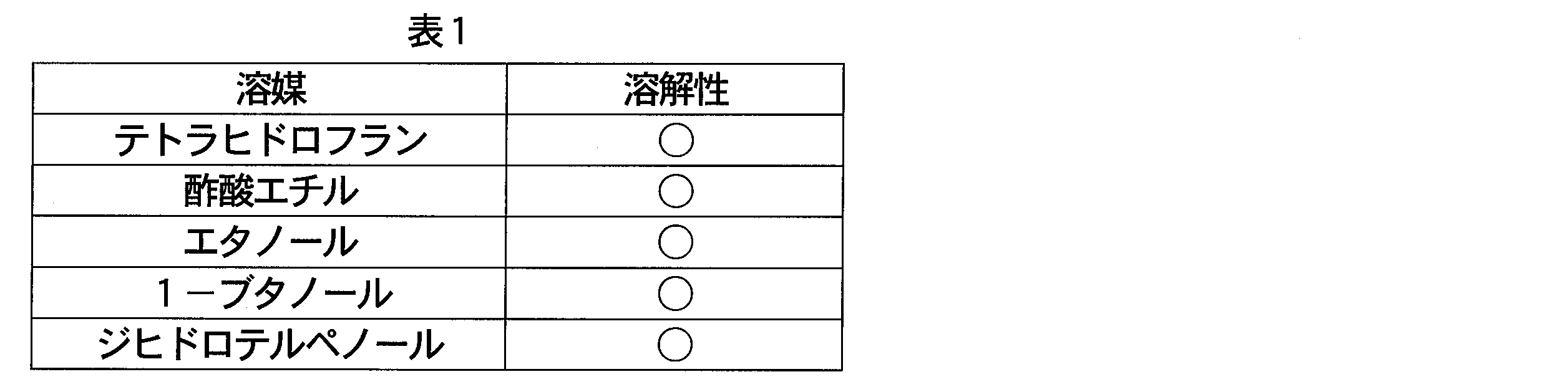
複合微粒子の合成例1
[p-MOMPOで被覆された銅粒子の合成]
0.4Mのアンモニアを含むテトラヒドロフラン溶液20mLに重合体の合成例1で得られたp-MOMPOを1.2802g室温で溶解した後、酸化銅(II)(日進ケムコ(株)製「N-130」)0.8094gを加えて攪拌しながら60℃まで加熱し、攪拌した状態で1Mのヒドラジンを含むテトラヒドロフラン溶液24mLを添加した。添加12分後に反応液からの発泡が確認された。発泡終了後60℃で2時間反応を継続した。反応終了後、生成した粒子を口径0.2μmのフィルターでろ過し、ろ過した粒子をテトラヒドロフラン、水で洗浄、室温で真空乾燥することで、p-MOMPOで被覆された銅微粒子(複合微粒子)0.5gを得た。この複合微粒子をSEM(50000倍)で観察し、粒径を測定したところ、メディアン径123.8nmであった。SEMの測定結果を図5に示す。
[p-MOMPOで被覆された銅粒子の合成]
0.4Mのアンモニアを含むテトラヒドロフラン溶液20mLに重合体の合成例1で得られたp-MOMPOを1.2802g室温で溶解した後、酸化銅(II)(日進ケムコ(株)製「N-130」)0.8094gを加えて攪拌しながら60℃まで加熱し、攪拌した状態で1Mのヒドラジンを含むテトラヒドロフラン溶液24mLを添加した。添加12分後に反応液からの発泡が確認された。発泡終了後60℃で2時間反応を継続した。反応終了後、生成した粒子を口径0.2μmのフィルターでろ過し、ろ過した粒子をテトラヒドロフラン、水で洗浄、室温で真空乾燥することで、p-MOMPOで被覆された銅微粒子(複合微粒子)0.5gを得た。この複合微粒子をSEM(50000倍)で観察し、粒径を測定したところ、メディアン径123.8nmであった。SEMの測定結果を図5に示す。
複合微粒子の合成例2
[p-ISBで被覆された銅粒子の合成]
重合体の合成例2で得られたp-ISB3.3gと硫酸銅(II)5水和物12.5gを蒸留水10mLに添加し、50℃で1時間攪拌し、溶解させた。この混合液にヒドラジン1水和物12.5mLを加え50℃で3時間攪拌し反応させた。反応液に蒸留水を添加し、5000rpmで5分間遠心沈降し、デカンテーションで2回洗浄した後、さらにエタノールを添加し、5000rpmで5分間遠心沈降し、デカンテーションで2回洗浄した。得られた粒子を窒素雰囲気下室温で乾燥し、p-ISBで被覆された銅微粒子(複合微粒子)3.2gを得た。この複合微粒子をSEM(50000倍)で観察し、粒径を測定したところ、メディアン径90nmであった。SEMの測定結果を図6に示す。
[p-ISBで被覆された銅粒子の合成]
重合体の合成例2で得られたp-ISB3.3gと硫酸銅(II)5水和物12.5gを蒸留水10mLに添加し、50℃で1時間攪拌し、溶解させた。この混合液にヒドラジン1水和物12.5mLを加え50℃で3時間攪拌し反応させた。反応液に蒸留水を添加し、5000rpmで5分間遠心沈降し、デカンテーションで2回洗浄した後、さらにエタノールを添加し、5000rpmで5分間遠心沈降し、デカンテーションで2回洗浄した。得られた粒子を窒素雰囲気下室温で乾燥し、p-ISBで被覆された銅微粒子(複合微粒子)3.2gを得た。この複合微粒子をSEM(50000倍)で観察し、粒径を測定したところ、メディアン径90nmであった。SEMの測定結果を図6に示す。
複合微粒子の合成例3
[p-BDOで被覆された銅粒子の合成]
テトラヒドロフラン500mLに、重合体の合成例3で得られたp-BDOを1.67g室温で溶解した後、酸化銅(II)(日進ケムコ(株)製「N-130」)を20g加えて攪拌しながら50℃まで加熱し、この混合液にヒドラジン1水和物12.5mLを加え50℃で3時間攪拌し反応させた。反応液に蒸留水加え5000rpmで5分間遠心沈降を行い、デカンテーションで2回洗浄を行った後、さらにエタノールを添加し、5000rpmで5分間遠心沈降し、デカンテーションで2回洗浄した。得られた銅粒子を窒素雰囲気下室温で乾燥することで、p-BDOで被覆された銅微粒子(複合微粒子)16.02gを得た。この複合微粒子をSEM(25000倍)で観察し粒径を測定したところ、メディアン径150.9nmであった。SEMの測定結果を図7に示す。また、複合微粒子のX線回折(XRD)を測定した。XRDの測定結果を図8に示す。
[p-BDOで被覆された銅粒子の合成]
テトラヒドロフラン500mLに、重合体の合成例3で得られたp-BDOを1.67g室温で溶解した後、酸化銅(II)(日進ケムコ(株)製「N-130」)を20g加えて攪拌しながら50℃まで加熱し、この混合液にヒドラジン1水和物12.5mLを加え50℃で3時間攪拌し反応させた。反応液に蒸留水加え5000rpmで5分間遠心沈降を行い、デカンテーションで2回洗浄を行った後、さらにエタノールを添加し、5000rpmで5分間遠心沈降し、デカンテーションで2回洗浄した。得られた銅粒子を窒素雰囲気下室温で乾燥することで、p-BDOで被覆された銅微粒子(複合微粒子)16.02gを得た。この複合微粒子をSEM(25000倍)で観察し粒径を測定したところ、メディアン径150.9nmであった。SEMの測定結果を図7に示す。また、複合微粒子のX線回折(XRD)を測定した。XRDの測定結果を図8に示す。
実施例1
(銅インクの製造と焼成評価)
p-MOMPOで被覆された銅微粒子(複合微粒子)を60メッシュの篩にて篩分けし、篩を通過した複合微粒子について乳鉢で粉砕した。この複合微粒子0.1260gにメタノール50mLを添加してミキサー((株)シンキー製「自転/公転Hybrid-Mixer」)で8分間攪拌した後、40kHzの超音波を10分照射し、400メッシュのフィルターでろ過した。超高圧分散機((株)スギノマシン製「スターバースト」)を用いて、ろ液を、噴射圧150MPaで5回、100MPaで10回分散処理し、複合微粒子の分散液を得た。この分散液をメタノール含量が50重量%になるまで減圧下でメタノールを除去した後、酸発生剤(三新化学工業(株)製「SI-110L」)を複合微粒子に対して0.1重量%添加し、銅インクを得た。この銅インクをアルミナ板にドクターブレードを用いて20μmの膜厚で塗布し、150℃、3%水素混合窒素下で4時間焼成を行った。焼成後の塗膜の表面抵抗は0.232Ω/□であった。複合微粒子、塗工後の塗膜及び焼成膜のX線回折(XRD)を測定した。XRDの測定結果を図9に示す。
(銅インクの製造と焼成評価)
p-MOMPOで被覆された銅微粒子(複合微粒子)を60メッシュの篩にて篩分けし、篩を通過した複合微粒子について乳鉢で粉砕した。この複合微粒子0.1260gにメタノール50mLを添加してミキサー((株)シンキー製「自転/公転Hybrid-Mixer」)で8分間攪拌した後、40kHzの超音波を10分照射し、400メッシュのフィルターでろ過した。超高圧分散機((株)スギノマシン製「スターバースト」)を用いて、ろ液を、噴射圧150MPaで5回、100MPaで10回分散処理し、複合微粒子の分散液を得た。この分散液をメタノール含量が50重量%になるまで減圧下でメタノールを除去した後、酸発生剤(三新化学工業(株)製「SI-110L」)を複合微粒子に対して0.1重量%添加し、銅インクを得た。この銅インクをアルミナ板にドクターブレードを用いて20μmの膜厚で塗布し、150℃、3%水素混合窒素下で4時間焼成を行った。焼成後の塗膜の表面抵抗は0.232Ω/□であった。複合微粒子、塗工後の塗膜及び焼成膜のX線回折(XRD)を測定した。XRDの測定結果を図9に示す。
実施例2
p-ISBで被覆された銅微粒子(複合微粒子)3.0g及びα-テルピネオール7.0gをメタノール30mLに添加した後、ミキサー((株)シンキー製「自転/公転Hybrid-Mixer」)で32分間攪拌した。攪拌後、超高圧分散機((株)スギノマシン製「スターバースト」)を用いて、噴射圧150MPaで5回分散処理し、複合微粒子の分散液を得た。この分散液を減圧下で濃縮し、メタノールを除去した後、この濃縮液1.4mLにギ酸0.13mLを添加し、銅インクを得た。この銅インクをアルミナ板にドクターブレードを用いて40μmの膜厚で塗布し、60℃、窒素下で2時間脱媒した後150℃、3%水素混合窒素下で2時間焼成した。焼成後の塗膜の電気抵抗率は0.3036Ω/□であった。複合微粒子、塗工後の塗膜及び焼成膜のX線回折(XRD)を測定した。XRDの測定結果を図10に示す。
p-ISBで被覆された銅微粒子(複合微粒子)3.0g及びα-テルピネオール7.0gをメタノール30mLに添加した後、ミキサー((株)シンキー製「自転/公転Hybrid-Mixer」)で32分間攪拌した。攪拌後、超高圧分散機((株)スギノマシン製「スターバースト」)を用いて、噴射圧150MPaで5回分散処理し、複合微粒子の分散液を得た。この分散液を減圧下で濃縮し、メタノールを除去した後、この濃縮液1.4mLにギ酸0.13mLを添加し、銅インクを得た。この銅インクをアルミナ板にドクターブレードを用いて40μmの膜厚で塗布し、60℃、窒素下で2時間脱媒した後150℃、3%水素混合窒素下で2時間焼成した。焼成後の塗膜の電気抵抗率は0.3036Ω/□であった。複合微粒子、塗工後の塗膜及び焼成膜のX線回折(XRD)を測定した。XRDの測定結果を図10に示す。
実施例3
実施例1で酸発生剤を添加しなかった以外は実施例1と同様に銅インクを得た。この銅インクをアルミナ板にドクターブレードを用いて20μmの膜厚で塗布し、200℃、空気下で4時間脱媒したのち、200℃、3%水素混合窒素下で2時間焼成した。焼成後の塗膜の電気抵抗率は0.071Ω/□であった。複合微粒子、塗工後の塗膜、脱媒後の塗膜及び焼成膜のX線回折(XRD)を測定した。XRDの測定結果を図11に示す。
実施例1で酸発生剤を添加しなかった以外は実施例1と同様に銅インクを得た。この銅インクをアルミナ板にドクターブレードを用いて20μmの膜厚で塗布し、200℃、空気下で4時間脱媒したのち、200℃、3%水素混合窒素下で2時間焼成した。焼成後の塗膜の電気抵抗率は0.071Ω/□であった。複合微粒子、塗工後の塗膜、脱媒後の塗膜及び焼成膜のX線回折(XRD)を測定した。XRDの測定結果を図11に示す。
実施例4
(銅粒子のホットプレスによる導電性評価)
複合微粒子の合成例3で得られた複合微粒子1gと酸発生剤(三新化学工業(株)製「SI-100」)10mgを混合し、表2の温度毎に空気下、100MPaで30分間ホットプレス(φ13mm)を実施した。一方、複合微粒子の合成例3で得られた複合微粒子1gを、表2の温度毎に空気下、100MPaで30分間ホットプレス(φ13mm)を実施した。得られた銅膜の膜厚及び比抵抗率を表2に示す。
(銅粒子のホットプレスによる導電性評価)
複合微粒子の合成例3で得られた複合微粒子1gと酸発生剤(三新化学工業(株)製「SI-100」)10mgを混合し、表2の温度毎に空気下、100MPaで30分間ホットプレス(φ13mm)を実施した。一方、複合微粒子の合成例3で得られた複合微粒子1gを、表2の温度毎に空気下、100MPaで30分間ホットプレス(φ13mm)を実施した。得られた銅膜の膜厚及び比抵抗率を表2に示す。
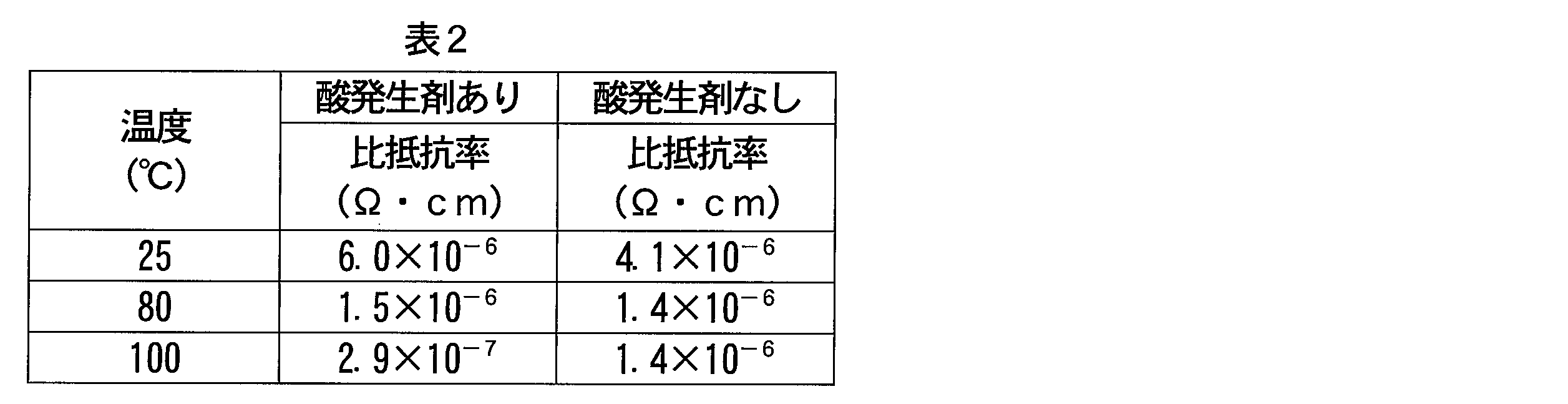
表2の結果から明らかなように、室温(25℃)での加圧(100MPa)により10-6Ω・cm程度を示した。酸発生剤の存在・非存在に関わらず80℃、100MPaではそれぞれ1.5×10⁻⁶及び1.4×10⁻⁶Ω・cmまで減少し、さらに酸発生剤Aの存在下では100℃、100MPaの加熱・加圧により、2.9×10⁻⁷Ω・cmまで減少した。この現象は100℃で酸発生剤から酸が発生し、ポリマーが分解されたためであると推定できる。
本発明の複合微粒子は、導電インク又は導電ペーストとして、各種の導電体の形成に利用できるが、金属微粒子がナノメータサイズであり、高濃度のインク又はペーストも調製できるため、高密度化される微細配線パターンの形成に有効に利用できる。そのため、本発明の複合微粒子は、微細配線パターンが形成された透明配線基板、この配線基板を備えた電子装置に利用するのが好ましい。
Claims (19)
- 金属微粒子と、この金属微粒子の少なくとも一部の表面を被覆し、かつ酸分解性ポリマーを含む保護層とを含む複合微粒子。
- 平均粒径が3000nm以下である請求項1記載の複合微粒子。
- 金属微粒子が銅微粒子である請求項1又は2記載の複合微粒子。
- 酸分解性ポリマーがアセタール結合を有する請求項1~3のいずれかに記載の複合微粒子。
- 酸分解性ポリマーが、下記式(1)で表される繰り返し単位、下記式(2)で表される繰り返し単位、下記式(3)で表される繰り返し単位、又は下記式(4a)及び(4b)で表される二種の繰り返し単位を有する請求項1~4のいずれかに記載の複合微粒子。




A5は、置換基を有していてもよい炭化水素基、-A8-(O-A9)k-基(式中、A8及びA9は、それぞれ同一又は異なって、置換基を有していてもよい炭化水素基を示し、kは、1以上の整数である)を示し、
A4及びA5は異なる基である] - 酸分解性ポリマーで金属微粒子の少なくとも一部の表面を被覆する被覆工程を含む請求項1~5のいずれかに記載の複合微粒子の製造方法。
- 被覆工程において、酸分解性ポリマーの存在下で、金属酸化物、金属塩及び金属ハロゲン化物からなる群より選択された少なくとも1種の原料金属化合物を還元する請求項6記載の製造方法。
- 原料金属化合物が、酸化銅、硫酸銅、ギ酸銅、酢酸銅及び塩化銅からなる群より選択された少なくとも1種であり、還元剤としてヒドラジンを用いる請求項7記載の製造方法。
- 請求項1~5のいずれかに記載の複合微粒子及び分散媒を含む分散液。
- 分散媒が有機溶媒である請求項9記載の分散液。
- さらに酸性化合物及び/又は酸発生剤を含む請求項9又は10記載の分散液。
- さらに還元剤を含む請求項9~11のいずれかに記載の分散液。
- 導電インク又は導電ペーストである請求項9~12のいずれかに記載の分散液。
- 加圧下で分散処理する分散工程を含む請求項9~13のいずれかに記載の分散液の製造方法。
- 基材の上に請求項9~13のいずれかに記載の分散液を塗布する塗布工程を含む塗膜の製造方法。
- 請求項15記載の方法で得られた塗膜を加熱して焼成する焼成工程を含む焼成膜の製造方法。
- 焼成温度が200℃以下であり、不活性ガス雰囲気下で焼成する請求項16記載の製造方法。
- 得られた焼成膜の電気抵抗率が0.5Ω/□以下である請求項16又は17記載の製造方法。
- 請求項16~18のいずれかに記載の製造方法で得られた焼成膜を配線基板として使用する方法。
Priority Applications (1)
| Application Number | Priority Date | Filing Date | Title |
|---|---|---|---|
| JP2016573266A JP6661128B2 (ja) | 2015-02-06 | 2016-01-19 | 複合微粒子及び分散液並びにそれらの製造方法及び用途 |
Applications Claiming Priority (2)
| Application Number | Priority Date | Filing Date | Title |
|---|---|---|---|
| JP2015022690 | 2015-02-06 | ||
| JP2015-022690 | 2015-02-06 |
Publications (1)
| Publication Number | Publication Date |
|---|---|
| WO2016125581A1 true WO2016125581A1 (ja) | 2016-08-11 |
Family
ID=56563932
Family Applications (1)
| Application Number | Title | Priority Date | Filing Date |
|---|---|---|---|
| PCT/JP2016/051398 Ceased WO2016125581A1 (ja) | 2015-02-06 | 2016-01-19 | 複合微粒子及び分散液並びにそれらの製造方法及び用途 |
Country Status (3)
| Country | Link |
|---|---|
| JP (1) | JP6661128B2 (ja) |
| TW (1) | TWI695389B (ja) |
| WO (1) | WO2016125581A1 (ja) |
Cited By (6)
| Publication number | Priority date | Publication date | Assignee | Title |
|---|---|---|---|---|
| JP2019007032A (ja) * | 2017-06-20 | 2019-01-17 | 住友金属鉱山株式会社 | ニッケルペースト及びその製造方法、並びにニッケル有機スラリーの製造方法 |
| WO2022045252A1 (ja) * | 2020-08-28 | 2022-03-03 | 国立大学法人北海道大学 | 酸化物含有銅微粒子およびその製造方法、ならびにそれを用いた焼結体の製造方法 |
| WO2023013572A1 (ja) * | 2021-08-03 | 2023-02-09 | 三菱マテリアル株式会社 | 金属インク、金属インクの製造方法、及び金属層の製造方法 |
| JPWO2023140300A1 (ja) * | 2022-01-19 | 2023-07-27 | ||
| CN116851770A (zh) * | 2023-07-23 | 2023-10-10 | 长江师范学院 | 一种利用水溶性碱性柱[5]芳烃合成金纳米粒子的方法 |
| JP2024101723A (ja) * | 2023-01-18 | 2024-07-30 | 信越化学工業株式会社 | 導電性材料組成物、導電膜、および導電膜の形成方法 |
Citations (1)
| Publication number | Priority date | Publication date | Assignee | Title |
|---|---|---|---|---|
| JP2013112888A (ja) * | 2011-11-30 | 2013-06-10 | Seiko Epson Corp | 射出成形用組成物の製造方法および射出成形用組成物 |
Family Cites Families (5)
| Publication number | Priority date | Publication date | Assignee | Title |
|---|---|---|---|---|
| JP5741785B2 (ja) * | 2009-07-16 | 2015-07-01 | 日産化学工業株式会社 | アミノ官能基又はイミノ官能基を末端に有する高分岐ポリマーからなる金属微粒子分散剤 |
| TWI520990B (zh) * | 2011-01-26 | 2016-02-11 | 丸善石油化學股份有限公司 | Metal nano particle composite and its manufacturing method |
| JP6008519B2 (ja) * | 2012-03-08 | 2016-10-19 | 国立大学法人東京工業大学 | 金属ナノ粒子及びその製造方法並びに導電性インク |
| EP2907602B1 (en) * | 2012-10-12 | 2019-07-31 | Bando Chemical Industries, Ltd. | Dispersion-liquid bonding composition |
| JP2016167471A (ja) * | 2013-07-09 | 2016-09-15 | 株式会社ダイセル | 銀ナノ粒子を用いた半導体装置及びその製造方法 |
-
2016
- 2016-01-19 WO PCT/JP2016/051398 patent/WO2016125581A1/ja not_active Ceased
- 2016-01-19 JP JP2016573266A patent/JP6661128B2/ja active Active
- 2016-02-04 TW TW105103669A patent/TWI695389B/zh not_active IP Right Cessation
Patent Citations (1)
| Publication number | Priority date | Publication date | Assignee | Title |
|---|---|---|---|---|
| JP2013112888A (ja) * | 2011-11-30 | 2013-06-10 | Seiko Epson Corp | 射出成形用組成物の製造方法および射出成形用組成物 |
Cited By (16)
| Publication number | Priority date | Publication date | Assignee | Title |
|---|---|---|---|---|
| JP7091611B2 (ja) | 2017-06-20 | 2022-06-28 | 住友金属鉱山株式会社 | ニッケルペースト及びその製造方法、並びにニッケル有機スラリーの製造方法 |
| JP2019007032A (ja) * | 2017-06-20 | 2019-01-17 | 住友金属鉱山株式会社 | ニッケルペースト及びその製造方法、並びにニッケル有機スラリーの製造方法 |
| JP7507511B2 (ja) | 2020-08-28 | 2024-06-28 | 国立大学法人北海道大学 | 酸化物含有銅微粒子およびその製造方法、ならびにそれを用いた焼結体の製造方法 |
| WO2022045252A1 (ja) * | 2020-08-28 | 2022-03-03 | 国立大学法人北海道大学 | 酸化物含有銅微粒子およびその製造方法、ならびにそれを用いた焼結体の製造方法 |
| JPWO2022045252A1 (ja) * | 2020-08-28 | 2022-03-03 | ||
| CN115461173A (zh) * | 2020-08-28 | 2022-12-09 | 国立大学法人北海道大学 | 含氧化物的铜微粒及其制造方法、以及使用该含氧化物的铜微粒的烧结体的制造方法 |
| JP7517615B2 (ja) | 2021-08-03 | 2024-07-17 | 三菱マテリアル株式会社 | 金属インク、金属インクの製造方法、及び金属層の製造方法 |
| JPWO2023013572A1 (ja) * | 2021-08-03 | 2023-02-09 | ||
| WO2023013572A1 (ja) * | 2021-08-03 | 2023-02-09 | 三菱マテリアル株式会社 | 金属インク、金属インクの製造方法、及び金属層の製造方法 |
| JPWO2023140300A1 (ja) * | 2022-01-19 | 2023-07-27 | ||
| WO2023140300A1 (ja) * | 2022-01-19 | 2023-07-27 | 三菱マテリアル株式会社 | 金属インク、金属インクの製造方法、金属層の製造方法、及び金属層 |
| JP7464202B2 (ja) | 2022-01-19 | 2024-04-09 | 三菱マテリアル株式会社 | 金属インク、金属インクの製造方法、金属層の製造方法、及び金属層 |
| EP4467262A4 (en) * | 2022-01-19 | 2026-01-07 | Mitsubishi Materials Corp | Metallic ink, metallic ink production process, metallic coating production process, and metallic coating |
| JP2024101723A (ja) * | 2023-01-18 | 2024-07-30 | 信越化学工業株式会社 | 導電性材料組成物、導電膜、および導電膜の形成方法 |
| JP7839118B2 (ja) | 2023-01-18 | 2026-04-01 | 信越化学工業株式会社 | 導電性材料組成物、および導電膜の形成方法 |
| CN116851770A (zh) * | 2023-07-23 | 2023-10-10 | 长江师范学院 | 一种利用水溶性碱性柱[5]芳烃合成金纳米粒子的方法 |
Also Published As
| Publication number | Publication date |
|---|---|
| TW201631607A (zh) | 2016-09-01 |
| JPWO2016125581A1 (ja) | 2017-11-16 |
| TWI695389B (zh) | 2020-06-01 |
| JP6661128B2 (ja) | 2020-03-11 |
Similar Documents
| Publication | Publication Date | Title |
|---|---|---|
| JP6661128B2 (ja) | 複合微粒子及び分散液並びにそれらの製造方法及び用途 | |
| JP6321566B2 (ja) | 銀ナノワイヤの製造方法並びに銀ナノワイヤおよびそれを用いたインク | |
| JP5712635B2 (ja) | 銀含有組成物 | |
| KR100895192B1 (ko) | 도전배선 형성용 페이스트에 사용되는 유기 은 착화합물 | |
| WO2008038976A1 (en) | Organic silver complex compound used in paste for conductive pattern forming | |
| JP2013194290A (ja) | 銅ナノワイヤーの製造方法 | |
| JP2013139589A (ja) | 銀微粒子及びその製造法並びに該銀微粒子を含有する導電性ペースト、導電性膜及び電子デバイス | |
| KR100702595B1 (ko) | 금속 나노 입자 및 이의 제조방법 | |
| JP5773148B2 (ja) | 銀微粒子並びに該銀微粒子を含有する導電性ペースト、導電性膜及び電子デバイス | |
| KR101630533B1 (ko) | 고분산성의 환원된 그래핀 옥사이드 기반 금속 나노입자 분산액의 제조방법 및 이를 이용한 환원된 그래핀 옥사이드 기반 금속 나노입자 필름 | |
| TWI638056B (zh) | 製造銀粒子的方法及使用該方法製造的銀粒子 | |
| CN104471652B (zh) | 含银组合物及银成分形成基材 | |
| WO2015129781A1 (ja) | 金属ナノワイヤー形成用組成物、金属ナノワイヤー及びその製造方法 | |
| KR20110059714A (ko) | 복합나노입자 및 그 제조방법 | |
| JP2012176859A (ja) | インジウム錫酸化物粒子及びその製造方法 | |
| KR101281713B1 (ko) | 전자빔 조사를 이용한 인쇄전자용 은-구리 합금 나노입자의 제조방법 | |
| TWI314590B (en) | Composition for forming silicon.aluminum film, and method for forming silicon.aluminum film | |
| KR101538673B1 (ko) | 균일한 크기의 나노판 Dy2O3 나노입자를 제조하는 방법 | |
| JP2016210721A (ja) | 保護剤及びその使用方法、低温蒸散性組成物並びに金属粒子の処理剤 | |
| JP2012181988A (ja) | 導電性ペースト | |
| TW201118049A (en) | Methods of making glass-crystalline particles including a glass component and a crystalline component | |
| TWI648409B (zh) | Method for producing nickel particles | |
| JP2020164931A (ja) | 銀パラジウム合金粉末およびその利用 | |
| WO2019103535A1 (ko) | 고분자 그래프트 그래핀 및 이의 제조 방법 | |
| JP2007095509A (ja) | 導電性ペースト |
Legal Events
| Date | Code | Title | Description |
|---|---|---|---|
| 121 | Ep: the epo has been informed by wipo that ep was designated in this application |
Ref document number: 16746412 Country of ref document: EP Kind code of ref document: A1 |
|
| ENP | Entry into the national phase |
Ref document number: 2016573266 Country of ref document: JP Kind code of ref document: A |
|
| NENP | Non-entry into the national phase |
Ref country code: DE |
|
| 122 | Ep: pct application non-entry in european phase |
Ref document number: 16746412 Country of ref document: EP Kind code of ref document: A1 |