WO2016110732A1 - 目標経路生成装置および走行制御装置 - Google Patents
目標経路生成装置および走行制御装置 Download PDFInfo
- Publication number
- WO2016110732A1 WO2016110732A1 PCT/IB2015/001080 IB2015001080W WO2016110732A1 WO 2016110732 A1 WO2016110732 A1 WO 2016110732A1 IB 2015001080 W IB2015001080 W IB 2015001080W WO 2016110732 A1 WO2016110732 A1 WO 2016110732A1
- Authority
- WO
- WIPO (PCT)
- Prior art keywords
- target route
- lane change
- vehicle
- obstacle
- route generation
- Prior art date
- Legal status (The legal status is an assumption and is not a legal conclusion. Google has not performed a legal analysis and makes no representation as to the accuracy of the status listed.)
- Ceased
Links
Images



Classifications
-
- B—PERFORMING OPERATIONS; TRANSPORTING
- B60—VEHICLES IN GENERAL
- B60R—VEHICLES, VEHICLE FITTINGS, OR VEHICLE PARTS, NOT OTHERWISE PROVIDED FOR
- B60R21/00—Arrangements or fittings on vehicles for protecting or preventing injuries to occupants or pedestrians in case of accidents or other traffic risks
-
- B—PERFORMING OPERATIONS; TRANSPORTING
- B60—VEHICLES IN GENERAL
- B60W—CONJOINT CONTROL OF VEHICLE SUB-UNITS OF DIFFERENT TYPE OR DIFFERENT FUNCTION; CONTROL SYSTEMS SPECIALLY ADAPTED FOR HYBRID VEHICLES; ROAD VEHICLE DRIVE CONTROL SYSTEMS FOR PURPOSES NOT RELATED TO THE CONTROL OF A PARTICULAR SUB-UNIT
- B60W30/00—Purposes of road vehicle drive control systems not related to the control of a particular sub-unit, e.g. of systems using conjoint control of vehicle sub-units
- B60W30/08—Active safety systems predicting or avoiding probable or impending collision or attempting to minimise its consequences
-
- B—PERFORMING OPERATIONS; TRANSPORTING
- B60—VEHICLES IN GENERAL
- B60W—CONJOINT CONTROL OF VEHICLE SUB-UNITS OF DIFFERENT TYPE OR DIFFERENT FUNCTION; CONTROL SYSTEMS SPECIALLY ADAPTED FOR HYBRID VEHICLES; ROAD VEHICLE DRIVE CONTROL SYSTEMS FOR PURPOSES NOT RELATED TO THE CONTROL OF A PARTICULAR SUB-UNIT
- B60W30/00—Purposes of road vehicle drive control systems not related to the control of a particular sub-unit, e.g. of systems using conjoint control of vehicle sub-units
- B60W30/10—Path keeping
-
- B—PERFORMING OPERATIONS; TRANSPORTING
- B62—LAND VEHICLES FOR TRAVELLING OTHERWISE THAN ON RAILS
- B62D—MOTOR VEHICLES; TRAILERS
- B62D6/00—Arrangements for automatically controlling steering depending on driving conditions sensed and responded to, e.g. control circuits
-
- G—PHYSICS
- G08—SIGNALLING
- G08G—TRAFFIC CONTROL SYSTEMS
- G08G1/00—Traffic control systems for road vehicles
- G08G1/16—Anti-collision systems
Definitions
- the present invention relates to a target route generation device and a travel control device. More specifically, the present invention relates to a target route generation device that generates a target route for controlling travel of a vehicle and a travel control device that includes the target route generation device.
- the target course change trajectory generating device described in Patent Literature 1 includes a generation unit that generates a target course change trajectory when the vehicle performs a course change such as a lane change.
- the automatic traveling of the vehicle is controlled so as to travel along the target course change locus generated by the generating means.
- an object of the present invention is to provide a target route generation device that suppresses a sense of discomfort given to a user when a vehicle that is traveling automatically changes lanes.
- the target route generation device includes a map information acquisition unit, a lane change determination unit, an obstacle determination unit, and a target route generation unit.
- the map information acquisition unit acquires map information.
- the lane change determination unit determines whether there is a lane change portion based on the map information.
- the obstacle determination unit determines whether there is an obstacle near the lane change part.
- the target route generation unit is configured so that the vehicle traveling at the lane change portion when it is determined that there is an obstacle is different from the vehicle traveling at the lane change portion when it is determined that there is no obstacle. Generate a target route.
- a target route generation device that suppresses a sense of discomfort given to a user when a vehicle that is traveling automatically changes lanes.
- FIG. 1 is a block diagram illustrating a configuration of a travel control device according to the first embodiment.
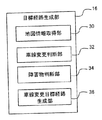
- FIG. 2 is a block diagram illustrating a configuration of the target route generation unit in the first embodiment.
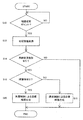
- FIG. 3 is a flowchart showing a target route generation process for a lane change point in the first embodiment.
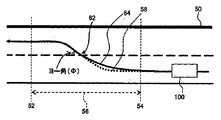
- FIG. 4 is a diagram illustrating a road layout of a lane change portion and a target locus of a vehicle in the first embodiment.
- FIG. 5 is a diagram illustrating a road layout of a lane change portion and a target trajectory of a vehicle in a third modification of the first embodiment.
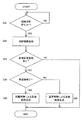
- FIG. 6 is a flowchart showing a target route generation process for a lane change point in the second embodiment.
- FIG. 7 is a diagram illustrating a road layout of a lane change point and a target locus of a vehicle in the second embodiment.
- FIG. 1 is a block diagram illustrating a configuration of a travel control device according to the first embodiment.
- the travel control device 10 is a device mounted on a vehicle and is a device that controls automatic travel of the vehicle.
- the traveling control device 10 is electrically connected to a radar 20, a camera 22, a traveling state sensor 24, a navigation system 26, an actuator 28, and the like.
- the travel control device 10 may be connected to other known configurations, for example, a communication unit for performing vehicle-to-vehicle communication.
- the radar 20 detects the presence, position and speed of vehicles, motorcycles, bicycles, pedestrians, and the like around the host vehicle, and the relative speed with respect to the host vehicle.
- the radar 20 includes, for example, a laser radar and a millimeter wave radar. Further, the radar 20 outputs the detected data to the travel control device 10.
- a well-known radar may be used as appropriate, and therefore a detailed description of the configuration is omitted.
- the camera 22 is attached to the front or side of the host vehicle, for example, and takes an image around the host vehicle. For example, the camera 22 images a road segment line or an obstacle on the route.
- the camera 22 includes an image sensor such as a CCD (Charge Coupled Device) or a CMOS (Complementary Metal-Oxide Semiconductor).
- the camera 22 outputs the captured image signal to the travel control device 10.
- a well-known camera may be used as appropriate, and thus a detailed description of the configuration is omitted.
- the traveling state sensor 24 detects the traveling state of the host vehicle (for example, vehicle speed, acceleration, yaw angle, etc.).
- the traveling state sensor 24 includes, for example, a wheel speed sensor provided on each wheel of the host vehicle, and detects the traveling state of the host vehicle such as the vehicle speed by measuring the wheel speed.
- the traveling state sensor 24 outputs the detected traveling state of the host vehicle to the traveling control device 10.
- a well-known vehicle speed sensor, acceleration sensor, yaw angle sensor, or the like may be used, and thus a detailed description of the configuration is omitted.
- the navigation system 26 receives a GPS signal from a GPS (Global Positioning System) satellite.
- the navigation system 26 also includes a gyroscope that detects the magnitude of the rotational motion applied to the vehicle, an acceleration sensor that detects the travel distance of the vehicle from three-axis acceleration, and a geomagnetic sensor that detects the traveling direction of the vehicle from the geomagnetism. Etc. may be provided.
- the navigation system 26 stores map information stored in a large-capacity storage medium such as a CD-ROM (Compact Disc Read-Only Memory), DVD-ROM (Digital Versatile Disc), or HDD (Hard Disk Drive). .
- the map information includes, for example, lane number information, road outer lines existing at both ends of the road, lane center lines such as lane center lines in multiple lanes, road surface display information such as stop lines, pedestrian crossings and road surface marks, and road information.
- Road shape information such as curve curvature and road width is included.
- the map information includes travelable area information that indicates a range in which the vehicle can travel in advance according to the road shape, and obstacle information such as guardrails, walls, curbs, and buildings.
- map information includes general or expressway information, intersection information such as intersection location and shape, feature information such as signals and signs, road conditions such as parking areas, traffic jams, road construction and lane restrictions. It is.
- the navigation system 26 detects the position of the host vehicle and the direction with respect to the road based on the GPS signal from the GPS satellite and the map information.
- the navigation system 26 searches for a route (direction) from the departure point to the destination according to the input of the departure point (or current position) and the destination, and uses the searched route and the position information of the own vehicle. To guide you to the destination.
- the navigation system 26 includes the route to the searched destination in the map information and outputs it to the travel control device 10. Since a known navigation system may be used as the navigation system 26, a description of a more detailed configuration is omitted.
- Actuator 28 includes a steering actuator that is an electric actuator that applies assist torque to the steering wheel.
- a steering angle of the steering that is, an arbitrary turning angle is given to the wheel to perform a steering operation of the vehicle.
- the actuator 28 includes a brake actuator for generating a braking force on the wheel to perform a braking operation of the host vehicle and an accelerator pedal actuator for applying a pedal reaction force to the accelerator pedal. Since a known actuator may be used as the actuator 28, a description of a more detailed configuration is omitted.
- the travel control device 10 is, for example, a ROM (Read Only Memory) in which a program for controlling the driving force of the host vehicle is stored, and an operation circuit that functions as the travel control device 10 by executing the program stored in the ROM.
- CPU Central Processing Unit
- RAM Random Access Memory
- storage unit such as a hard disk.
- the traveling control device 10 includes an operation control unit 12, an object state detection unit 14, and a target route generation unit 16 as a target route generation device.
- the driving control unit 12 performs driving control (running control) of the host vehicle by controlling the actuator 28 based on the target route generated by the target route generating unit 16 described later. Specifically, the operation control unit 12 obtains engine, brake and steering control amounts necessary to follow the target route generated by the target route generation unit 16 and outputs these control amounts to the actuator 28.
- the object state detection unit 14 detects the position and moving body speed of an object existing around the host vehicle based on data from the radar 20.
- the object state detection unit 14 includes an image processor, performs predetermined image processing on the image signal captured by the camera 22, and detects a road state around the host vehicle.
- the target route generation unit 16 acquires map information from the navigation system 26 and generates a target route from the departure point to the destination.
- the target route generated by the target route generation unit 16 includes a vehicle travel locus along the route to the destination, vehicle behavior information (for example, vehicle speed, acceleration, steering angle), and the like.
- vehicle behavior information for example, vehicle speed, acceleration, steering angle
- the target route generation unit 16 divides the route from the departure place to the destination into a plurality of sections for each predetermined distance, acquires map information including the course from the navigation system 26 for each section, and determines the target route. Generate and update.
- the target route generation unit 16 sets a route update point before the end point of each section, and calculates and generates a target route for the next section at the route update point.
- the method of setting sections and how to set route update points are not limited to the above. For example, it is not necessary to divide all sections at the same distance, and the division method may be changed as necessary.
- the target route generation unit 16 calculates the target locus (travel locus) of the vehicle and the behavior of the vehicle so that the vehicle basically travels in the center of the travelable area acquired from the map information. To generate a target route.
- the generation of the target route that passes through the center of the travelable area reduces the calculation burden related to the generation of the target route.
- the travelable region is, for example, region information set in advance so as to secure a predetermined margin from both ends of the lane or a division line as a range in which the vehicle can travel in consideration of the vehicle width and road shape of the vehicle. It is.
- the predetermined margin may be a fixed value or may be changed as necessary.
- the vehicle when an obstacle to be avoided is detected for the travel of the vehicle, the vehicle may be changed so as to have an avoidance margin larger than a normal margin.
- the range in which the vehicle can travel is described as an example in which a travelable region is acquired from map information.
- the present invention is not limited to this example.
- boundary line information indicating the boundary of the range in which the vehicle can travel may be included in the map information, and the boundary line information may be acquired from the map information.
- the target route generation unit 16 realizes automatic traveling of the vehicle that matches the user's psychology, so that the vehicle that is traveling automatically needs to change lanes (hereinafter referred to as lane changing portions). Determine if there are obstacles. Then, the target route generation unit 16 generates the target route so that the traveling of the vehicle at the lane change portion when there is an obstacle is different from the traveling of the vehicle at the lane change portion when it is determined that there is no obstacle. .
- the configuration of the target route generation unit 16 will be described with reference to FIG.
- FIG. 2 is a block diagram illustrating a configuration of the target route generation unit in the first embodiment.
- the target route generation unit 16 as a target route generation device includes a map information acquisition unit 30, a lane change determination unit 32, an obstacle determination unit 34, and a lane change target route generation unit 36 as a target route generation unit.
- the map information acquisition unit 30 acquires map information.
- the lane change determination unit 32 determines whether there is a lane change part based on the map information.
- the obstacle determination unit 34 determines whether there is an obstacle near the lane change part.
- the lane change target route generation unit 36 is configured so that the vehicle traveling at the lane change portion when it is determined that there is an obstacle is different from the vehicle traveling at the lane change portion when it is determined that there is no obstacle. Generate a target route for the vehicle.
- the map information acquisition unit 30 acquires map information from the navigation system 26 when generating the target route.
- the lane change determination unit 32 determines whether or not there is a lane change part based on the acquired map information.
- the obstacle determination unit 34 determines whether there is an obstacle near the lane change part based on the acquired map information.
- Obstacles include, for example, curbs, walls and buildings.
- the obstacle may include a parking area and a road construction area.
- the lane change target route generation unit 36 is configured so that the vehicle traveling at the lane change portion when it is determined that there is an obstacle is different from the vehicle traveling at the lane change portion when it is determined that there is no obstacle. Generate a target route.
- the lane change target route generation unit 36 of the first embodiment performs angle control of the vehicle at the lane change location according to the presence or absence of an obstacle, and generates a target route that reflects the angle control.
- the angle of the vehicle is an angle in the traveling direction of the vehicle with respect to the lane before the lane change. More specifically, it is an angle between a lane marking that separates lanes and a center line in the front-rear direction of the vehicle at a lane change point.
- this angle is referred to as a yaw angle ( ⁇ ) (see FIG. 4).
- the lane change target route generation unit 36 When it is determined that there is an obstacle, the lane change target route generation unit 36 performs angle control so that the yaw angle is reduced compared to the case where it is determined that there is no obstacle, and the yaw angle after the angle control Calculate and generate a target route that reflects.
- FIG. 3 is a flowchart showing a target route generation process for a lane change point in the first embodiment.
- FIG. 4 is a diagram illustrating a road layout of a lane change portion and a target locus of a vehicle in the first embodiment.
- the map information acquired when generating the target route includes the right lane (upper lane in FIG. 4) from the left lane (lower lane in FIG. 4) that is the straight lane before lane change to the right lane after the lane change. )
- this lane change will be described as an example that arises from the fact that the left lane in which the vehicle 100 currently travels automatically is connected to an intersection ahead, and a route to turn right at that intersection is searched.
- the map information includes information indicating that the road surface display information includes a division line L1 between the left lane and the right lane, and the road outside line L2 opposite to the division line L1 of the left lane is a white line. Yes.
- the map information includes obstacle information having a curb 50 on the road side of the right lane and travelable area information in which a margin M1 of the same size is set for the left lane and the right lane.
- the road layout of FIG. 4 is only an example, and the lane change portion is not limited to this example.
- the lane may be curved.
- FIG. 4 shows an example in which curbstones 50 as obstacles are continuously provided before and after the lane change place, but the present invention is not limited to this example, and at least the obstacle is located at the lane change place. If there is.
- step S10 the target route generation unit 16 determines whether or not the vehicle 100 that is automatically traveling has passed the route update point based on the GPS signal from the navigation system 26 and the map information.
- the vehicle 100 equipped with the traveling control device 10 has passed the route update point.
- the target route generation unit 16 performs the process of step S10 until it is determined that the vehicle 100 has reached the route update point. repeat.
- the map information acquisition unit 30 acquires the map information of the next section from the navigation system 26 in step S12.
- the lane change determination unit 32 refers to the map information and determines whether there is a lane change point in the next section. In this example, as the course of the vehicle, the left lane in which the vehicle 100 currently automatically travels is connected to the intersection in the next section, and the course to turn right at the intersection is searched. Therefore, the lane change determination unit 32 determines that there is a lane change point a certain distance before the intersection in the traveling direction of the vehicle 100, for example. At this time, the lane change determination unit 32 refers to the map information and specifies the lane change completion position 52 where the lane change must be completed.
- the lane change determination unit 32 specifies the lane change completion position 52 so as to avoid the lane change prohibition section set before the intersection in the traveling direction of the vehicle 100. Furthermore, the lane change determination unit 32 specifies a point a predetermined distance before the lane change completion position 52 as the lane change start position 54. Then, the lane change determination unit 32 specifies a lane change section 56 between the lane change start position 54 and the lane change completion position 52 as a lane change place.
- the lane change completion position 52, the lane change start position 54, and the lane change section 56 may be specified in advance by map information.
- step S14 If it is determined in step S14 that there is no lane change portion (NO in step S14), the target route generation unit 16 ends the target route generation processing for the lane change portion.
- step S16 the obstacle determination unit 34 determines whether there is an obstacle near the lane change part based on the map information. Judging. More specifically, the obstacle determination unit 34 determines whether there is an obstacle in the lane change section 56 and on the side of the right lane after the lane change. In the first embodiment, as described above, the map information includes the curb 50 on the road side of the right lane. Therefore, the obstacle determination unit 34 determines that there is an obstacle in step S16.
- step S18 the lane change target route generation unit 36 executes generation of the target route at the lane change portion by normal control (step S18).
- the lane change target route generation unit 36 creates a virtual travel area that connects the travel area of the left lane before the lane change area and the travel area of the right lane after the lane change in the lane change section 58.
- a target route 58 is created so that the vehicle 100 travels in the center of the virtual travel area.
- the lane change target route generation unit 36 performs target route generation by angle control (step S20). For example, the lane change target route generation unit 36 generates the target route 60 that reflects the yaw angle ⁇ that is reduced compared to the yaw angle of the target route for normal control in step S18. As an example, the lane change target route generation unit 36 first calculates the yaw angle in the normal control, further reduces the calculated yaw angle, and then calculates the target route 60 that reflects the reduced yaw angle ⁇ . May be generated.
- the control for reducing the yaw angle ⁇ is not limited to this example as long as the target path 60 reflecting the yaw angle ⁇ reduced from the yaw angle by the normal control can be generated.
- the yaw angle ⁇ of the target locus of the target path 60 generated by the angle control is reduced compared to the yaw angle of the target locus of the target path 58 by the normal control.
- the target trajectory of the target route 60 reflecting the angle control is generated so that the length of the trajectory in the lane change section 56 is shorter than the target trajectory of the target route 58 by the normal control.
- the intersection of the division line L1 and the target locus is the symmetry point 62
- the target locus from the lane change start position 54 to the symmetry point 62 and the lane change from the symmetry point 62 are changed.
- the target locus up to the completion position 52 is generated so as to be point-symmetric.
- the target path is such that the curvature indicating the degree of curvature of the target path is the same between the target path between the lane change start position 54 and the symmetry point 62 and the target path from the symmetry point 62 to the lane change completion position 52. 60 is provided.
- the lane change of the vehicle 100 that suddenly heads toward the curb 50 is not generated, and therefore, the uncomfortable feeling given to the user can be reduced.
- the angle of the vehicle in the traveling direction with respect to the curb stone 50 increases, and the automatic traveling of the vehicle 100 is controlled so as to approach the obstacle rapidly.
- such an automatic traveling of the vehicle does not match the user's psychology of not wanting to approach the curb 50 as much as possible in order to avoid the risk of contact or collision with the curb 50, and may give the user a sense of incongruity. There is sex.
- the travel control device 10 having the target route generation unit 16 and the target route generation unit 16 according to the first embodiment, when there is a lane change part (lane change section 56), a plurality of lanes at the lane change part are classified.
- a target path 60 in which the angle (yaw angle ⁇ ) of the vehicle 100 with respect to the lane marking L1 is controlled is generated.
- the obstacle determination unit 34 determines whether there is an obstacle in the vicinity of the lane change portion, and determines that there is no curb 50 if there is the curb 50 as an obstacle in the vicinity of the lane change portion.
- the target route 60 in which the angle (yaw angle ⁇ ) of the vehicle 100 with respect to the lane marking L1 is reduced is generated.
- the target route 60 reflecting the yaw angle ⁇ reduced by the angle control by the lane change target route generation unit 36 is generated. Therefore, when the vehicle that is running automatically changes lanes, it is possible to realize a gradual lane change with respect to an obstacle, thereby suppressing a sense of discomfort given to the user.
- the target route generator 16 that has generated the target route corresponding to the lane change part connects the generated target route to the areas before and after the lane change part, thereby obtaining the entire next section. Complete the generation of the target route. Then, the operation control unit 12 controls traveling of the vehicle 100 based on the generated target route.
- modifications of the first embodiment will be described.
- the lane change target route generation unit 36 further determines the angle (yaw angle ⁇ ) of the vehicle 100 with respect to the lane marking L1 according to the speed set for the target route in the lane change section 56. ) May be controlled. For example, when the speed set for the target route in the lane change section 56 is fast, the yaw angle ⁇ is controlled to be further reduced as compared with the case where the speed set for the target route in the lane change section 56 is slow. Also good.
- the lane change target route generation unit 36 determines the angle when the vehicle speed set for the target route in the lane change section 56 is equal to or lower than the predetermined speed. It is not necessary to perform control. For example, if the lane change target route generation unit 36 determines that there is an obstacle and the speed of the target route in the set lane change section 56 is 20 (km / h) or less, in step S20 The angle control may not be performed. In this case, the lane change target route generation unit 36 may perform target route generation by normal control performed in step S18, for example.
- the target locus from the lane change start position 54 to the symmetry point 62 and the target locus from the symmetry point 62 to the lane change completion position 52 are generated so as to be point symmetric. It had been. However, it is not limited to this example. For example, if the target route reflects a yaw angle that is reduced compared to the yaw angle for generating the target route by normal control, the target locus from the lane change start position 54 to the symmetry point 62 and the lane from the symmetry point 62 to the lane The target route may be generated such that the target locus to the change completion position 52 is asymmetric with respect to the target locus.
- FIG. 5 illustrates a target locus of the target route of the vehicle in the third modification.
- FIG. 5 is a diagram illustrating a road layout of a lane change portion and a target locus of a vehicle in the third modification. Since the road layout is the same as the road layout of FIG.
- the target trajectory of the target route 64 shown in FIG. 5 reflects the target trajectory from the lane change start position 54 to the symmetry point 62 while reflecting the yaw angle reduced compared to the yaw angle of the target route 58 by the normal control.
- the target locus from the symmetry point 62 to the lane change completion position 52 is asymmetric with respect to the point.
- the target route 64 is generated such that the curvature of the target locus from the symmetric point 62 to the lane change completion position 52 is larger than the curvature of the target locus from the lane change start position 54 to the symmetry point 62. Yes.
- the vehicle 100 starts to change lanes gently from the lane change start position 54, and after passing the symmetry point 62 (partition line L1), the vehicle 100 can be quickly moved to the center of the travelable region. Travel control is performed so as to head. Therefore, the lane change can be completed in a shorter time than the above example.
- the lane change target route generation unit 36 performs the left lane travelable area before the lane change area and the right lane travelable area after the lane change.
- a target route is created in which the vehicle 100 travels in the center of the virtual travel region of the virtual travel region connecting the two.
- the normal control is not limited to this example.
- a target route with a smaller yaw angle of the vehicle may be generated as compared with a target route passing through the center of the virtual travel area.
- a target route that reflects a yaw angle that is reduced compared to the yaw angle of the target route of the normal control according to the modification 4 is generated. Is done.
- Modification 5 In the above example, the control for reducing the yaw angle by the angle control more than the yaw angle by the normal control has been described. However, as another example, for example, in order to avoid the risk of contact or collision with an obstacle, the maximum allowable yaw angle at the lane change point is set by referring to the road shape of the map information or the set vehicle speed. Also good. When it is determined that there is an obstacle, control may be performed such that the yaw angle by angle control is reduced as compared with the maximum allowable yaw angle.
- Second embodiment By generating a target route having a yaw angle that is lower than the maximum allowable yaw angle set in this way, it is possible to realize a gradual lane change with respect to obstacles when a vehicle that is running automatically changes lanes. Therefore, the uncomfortable feeling given to the user can be suppressed.
- FIG. 6 is a flowchart showing a process for generating a target route for a lane change point in the second embodiment.
- FIG. 7 is a diagram illustrating a road layout of a lane change point and a target locus of a vehicle in the second embodiment.
- the lane change target route generation unit 36 controls the distance between the boundary that defines the travelable region of the vehicle and the obstacle instead of generating the target route that reflects the angle control of the vehicle.
- route differs from 1st Embodiment.
- symbol is attached
- the lane change target route generation unit 36 of the second embodiment when there is an obstacle in the vicinity of the lane change part, the position of the boundary near the obstacle among the boundaries that define the range in which the vehicle can travel in the lane after the lane change. Is controlled to move away from obstacles.
- the lane change target route generation unit 36 generates a target route according to the boundary position after control.
- the lane change target route generation unit 36 can travel with a wider margin in the vehicle width direction (direction perpendicular to the front-rear direction in the traveling direction of the vehicle) between the obstacle and the boundary of the travelable range. Control to reduce the width of the region.
- step S30 to step S36 is the same as the processing flow from step S10 to step S16 of the first embodiment.
- step S36 If it is determined in step S36 that there is no obstacle (NO in step S36), the target route generation unit 16 executes the generation of the target route at the lane change portion by normal control (step S38).
- the lane change target route generation unit 36 creates a virtual travel region that smoothly connects the travelable region of the left lane before the lane change region and the travelable region of the right lane after the lane change. Then, a target route is created so that the vehicle 100 travels in the center of the virtual travel region. Specifically, in normal control, the lane change target route generation unit 36 does not move the position of the boundary L3 of the travelable area acquired from the map information.
- the boundary L3 defines the width of the travelable area set in the right lane and is the boundary closer to the curbstone 50. That is, in the normal control, no change is made to the margin M1 between the curbstone 50 and the boundary L3 and the distance in the vehicle width direction of the travelable area.
- step S40 the lane change target route generation unit 36 performs target route generation by distance control (step S40). More specifically, the lane change target route generation unit 36 moves the position of the boundary L3 set in the map information to a position further away from the curb 50, for example, after the distance control of the boundary L4 shown in FIG. The boundary of That is, the margin M1 set in the map information is changed to a larger margin M2, and the distance in the vehicle width direction of the travelable area is shortened.
- the lane change target route generation unit 36 creates a virtual travel region that connects the travelable region of the left lane before the lane change region and the travelable region of the right lane after the lane change changed by the distance control, A target route 66 is created so that the vehicle 100 travels in the center of the virtual travel region.
- the lane change target route generation unit 36 determines the range in which the vehicle can travel at the lane change point (lane change section 56).
- the distance (margin) between the virtual travel area shown and the curb 50 as an obstacle is controlled, and the target route 66 is generated based on the controlled distance (margin M2). More specifically, when there is a lane change location, it is determined whether there is an obstacle near the lane change location, and when there is an obstacle (curbstone 50) near the lane change location, The target route 66 is generated by changing the margin M1 when it is determined that the margin M1 is not larger to the margin M2 that is larger. Therefore, when the vehicle that is running automatically changes lanes, it is possible to realize a gradual lane change with respect to an obstacle, thereby suppressing a sense of discomfort given to the user. 3.
- an obstacle detection method for generating a target route is different from that in the first embodiment. That is, the obstacle determination unit 34 does not determine whether there is an obstacle based on the map information, but determines whether there is an obstacle by acquiring the detected surrounding information of the vehicle. Since the other configuration is the same as that of the first embodiment, the same reference numeral is given to the same configuration, and redundant description is omitted.
- an obstacle is detected using the radar 20 and the camera 22 instead of the map information stored in the navigation system 26.
- the object state detection unit 14 uses the data detected by the radar 20 and an image of the surroundings of the host vehicle captured by the camera 22 and the like to detect the position of an object existing around the host vehicle as the surrounding information of the vehicle. Is detected.
- the obstacle determination unit 34 determines whether there is an obstacle near the lane change point based on the route from the departure point to the destination searched by the navigation system 26 and the object detected by the object state detection unit 14. To do.
- a physical obstacle may be detected using information received by inter-vehicle communication.
- a vehicle-to-vehicle communication device that communicates vehicle information including vehicle positions and operation states between vehicles may be mounted on the vehicles.
- the object state detection part 14 may detect the parked vehicle as surrounding information of a vehicle, for example.
- the obstacle determination unit 34 uses the course from the departure point to the destination searched by the navigation system 26 and the parked vehicle information detected by the object state detection unit 14 so that the parked vehicle is in the lane. It may be determined whether the physical obstacle is in the vicinity of the changed portion. 4).
- the target route generation unit 16 generates and updates the target route when the host vehicle reaches the route update point, but is not limited to this example.
- a target route from the current location to the destination may be generated when the user inputs the destination.
- the target route generation unit 16 has basically been described with an example in which the target route is generated so that the vehicle travels in the center of the travelable area acquired from the map information.
- the target route does not necessarily have to be in the center of the travelable region, and as long as both ends of the vehicle in the vehicle width direction do not exceed the travelable region, the target route is generated at a position different from the center of the travelable region. May be.
- a target route may be provided closer to the inside of the curve than the center of the travelable area.
- the generation of the target route of the present application can also be used when complete autonomous traveling control is not performed or when autonomous traveling control is not performed at all.
- the target route generated by the target route generation unit 16 may be simply notified to the driver, or the driving condition for achieving the generated target route may be notified to the user.
- driving assistance that supports driving of the user (driver) is performed.
- driving assistance can also be performed by performing only acceleration / deceleration or performing only steering by the traveling control device 10.
- the above-described embodiment can be applied to travel according to any of the traffic regulations that prescribe the right-hand traffic of the vehicle and the traffic laws that prescribe the left-hand traffic of the vehicle.
Landscapes
- Engineering & Computer Science (AREA)
- Mechanical Engineering (AREA)
- Transportation (AREA)
- Automation & Control Theory (AREA)
- Chemical & Material Sciences (AREA)
- Combustion & Propulsion (AREA)
- Physics & Mathematics (AREA)
- General Physics & Mathematics (AREA)
- Traffic Control Systems (AREA)
- Control Of Driving Devices And Active Controlling Of Vehicle (AREA)
Abstract
目標経路生成装置(16)は、地図情報取得部(30)と、車線変更判断部(32)と、障害物判断部(34)と、目標経路生成部(36)と、を備える。地図情報取得部(30)は、地図情報を取得する。車線変更判断部(32)は、地図情報に基づき車線変更箇所(56)があるかどうか判断する。障害物判断部(34)は、車線変更箇所(56)があると判断した場合、車線変更箇所(56)の付近に障害物(50)があるかどうかを判断する。目標経路生成部(36)は、障害物(50)があると判断された場合の車線変更箇所(56)の車両(100)の走行が、障害物(50)がないと判断された場合の車線変更箇所(56)の車両(100)の走行とは異なるように、車両(100)の目標経路(60,64,66)を生成する。
Description
本発明は、目標経路生成装置および走行制御装置に関する。より具体的には、車両の走行を制御する目標経路を生成する目標経路生成装置および目標経路生成装置を備える走行制御装置に関する。
従来より、自動運転制御を実現するための車両走行制御装置として、車両の目標進路変更軌跡生成装置を備えた装置が知られている。例えば、特許文献1に記載された目標進路変更軌跡生成装置は、車両が車線変更などの進路変更を行う際の目標進路変更軌跡を生成する生成手段を備えている。車両の自動走行は、生成手段によって生成された目標進路変更軌跡に沿って走行するように制御される。
目標進路変更軌跡を生成するに際し、車線変更中の車両の進路を急激に変化させる目標進路変更軌跡が生成されると、ユーザにとって予期せぬ挙動変化が車両に与えられ、ユーザが乗り心地に違和感を感じる可能性がある。
本発明は、上記課題を解決するため、自動走行中の車両が車線変更する際にユーザに与える違和感を抑制する目標経路生成装置を提供することを目的とする。
本発明は、上記課題を解決するため、自動走行中の車両が車線変更する際にユーザに与える違和感を抑制する目標経路生成装置を提供することを目的とする。
本発明のひとつの態様としての目標経路生成装置は、地図情報取得部と、車線変更判断部と、障害物判断部と、目標経路生成部と、を備える。地図情報取得部は、地図情報を取得する。車線変更判断部は、地図情報に基づき車線変更箇所があるかどうか判断する。障害物判断部は、車線変更箇所があると判断した場合、車線変更箇所の付近に障害物があるかどうかを判断する。目標経路生成部は、障害物があると判断された場合の車線変更箇所の車両の走行が、障害物がないと判断された場合の車線変更箇所の車両の走行とは異なるように、車両の目標経路を生成する。
本発明では、自動走行中の車両が車線変更する際にユーザに与える違和感を抑制する目標経路生成装置を提供することができる。
以下、本発明の実施の形態を、図面に示す実施例に基づき詳細に説明する。
1.第1実施形態
1.第1実施形態
図1を参照して、第1実施形態に係る走行制御装置10の構成を説明する。図1は、第1実施形態における走行制御装置の構成を示すブロック図である。走行制御装置10は、車両に搭載される装置であって、車両の自動走行を制御する装置である。
図1に示されるように、走行制御装置10には、レーダ20、カメラ22、走行状態センサ24、ナビゲーションシステム26およびアクチュエータ28などが電気的に接続されている。走行制御装置10は、その他適宜周知の構成、例えば、車車間通信を行うための通信部などと接続されていてもよい。
レーダ20は、自車両周辺の車両、バイク、自転車、歩行者などの存在、位置、速度およびこれらの自車両に対する相対速度を検出する。レーダ20は、例えばレーザレーダやミリ波レーダなどを有する。また、レーダ20は、検出したデータを走行制御装置10に出力する。レーダ20としては、適宜周知のレーダを用いてもよいため、より詳細な構成についての説明は省略する。
カメラ22は、例えば、自車両の前方や側方に取り付けられており、自車両の周囲における画像を撮像する。例えば、カメラ22は、進路上の道路区間線や障害物を撮像する。カメラ22は、例えば、CCD(Charge Coupled Device)やCMOS(Complementary Metal−Oxide Semiconductor)などの撮像素子を有する。カメラ22は、撮像した画像信号を走行制御装置10に出力する。カメラ18としては、適宜周知のカメラを用いてもよいため、より詳細な構成についての説明は省略する
走行状態センサ24は、自車両の走行状態(例えば、車速、加速度、ヨー角など)を検出する。走行状態センサ24は、例えば、自車両の各車輪に設けられた車輪速センサを有し、車輪速を計測することにより車速など自車両の走行状態を検出する。走行状態センサ24は、検出した自車両の走行状態を走行制御装置10に出力する。走行状態センサ24としては、周知の車速センサ、加速度センサおよびヨー角センサなどを用いてもよいため、より詳細な構成についての説明は省略する。
ナビゲーションシステム26は、GPS(Global Positioning System)衛星からのGPS信号を受信する。また、ナビゲーションシステム26は、車両に加えられる回転運動の大きさを検出するジャイロスコープ、3軸方向の加速度などから車両の走行距離を検出する加速度センサ、地磁気から車両の進行方向を検出する地磁気センサなどを備えていてもよい。ナビゲーションシステム26は、CD−ROM(Compact Disc Read−Only Memory)、DVD−ROM(Digital Versatile Disc)、またはHDD(Hard Disk Drive)などの大容量記憶媒体に記憶された地図情報を記憶している。地図情報には、例えば、車線数情報、道路の両端に存在する道路外側線および複数車線における車線中心線などの区分線、停止線、横断歩道および路面マークなとの路面表示情報、並びに道路のカーブ曲率および道路幅などの道路形状情報が含まれる。また、地図情報には、道路形状に応じて予め設定され車両が走行可能な範囲を示す走行可能領域情報、およびガードレール、壁、縁石および建物なとの障害物情報が含まれる。さらに、地図情報には、一般または高速道路情報、交差点の場所や形状などの交差点情報、信号および標識なとの地物情報、駐車領域、渋滞、道路工事および車線規制などの道路状況情報が含まれている。ナビゲーションシステム26は、GPS衛星からのGPS信号と地図情報とに基づいて、自車両の位置や道路に対する向きなどを検出する。ナビゲーションシステム26は、出発地(あるいは現在位置)と目的地との入力に応じて、出発地から目的地までの進路(道順)を検索し、検索された進路と自車両の位置情報とを用いて目的地までの進路誘導を行う。ナビゲーションシステム26は、検索された目的地までの進路を地図情報に含めて走行制御装置10に出力する。ナビゲーションシステム26としては、周知のナビゲーションシステムを用いてもよいため、より詳細な構成についての説明は省略する。
アクチュエータ28は、ハンドルにアシストトルクを付与する電動アクチュエータであるステアリングアクチュエータを含む。走行制御装置10によってステアリングアクチュエータが制御されることにより、ステアリングの回転角、すなわち車輪に任意の転舵角を付与させて車両の操舵動作を行う。アクチュエータ28は、ステアリングアクチュエータの他に、車輪に制動力を発生させて自車両の制動動作を行うためのブレーキアクチュエータおよびペダル反力をアクセルペダルに付与するアクセルペダルアクチュエータを含む。アクチュエータ28としては、周知のアクチュエータを用いてもよいため、より詳細な構成についての説明は省略する。
走行制御装置10は、例えば、自車両の駆動力を制御するプログラムが格納されたROM(Read Only Memory)、ROMに格納されたプログラムを実行することで、走行制御装置10として機能する動作回路としてのCPU(Central Proccesing Unit)、アクセス可能な記憶装置として機能するRAM(Random Access Memory)およびハードディスクなどの記憶手段を含むコンピュータである。
走行制御装置10は、運転制御部12と、物体状態検出部14と、目標経路生成装置としての目標経路生成部16とを含む。
運転制御部12は、後述する目標経路生成部16によって生成された目標経路に基づきアクチュエータ28を制御することによって、自車両の運転制御(走行制御)を行う。具体的に運転制御部12は、目標経路生成部16によって生成された目標経路に追従するために必要なエンジン、ブレーキおよびステアリングの制御量を求め、これらの制御量をアクチュエータ28に出力する。
物体状態検出部14は、レーダ20からのデータに基づいて、自車両周辺に存在する物体の位置および移動体速度を検出する。また、物体状態検出部14は、画像プロセッサを備えており、カメラ22で撮像される画像信号に対して所定の画像処理を実施し、自車両周辺の道路状態を検出する。
目標経路生成部16は、ナビゲーションシステム26から地図情報を取得し、出発地から目的地までの目標経路を生成する。目標経路生成部16によって生成された目標経路には、目的地までの進路に沿った車両の走行軌跡および車両の挙動情報(例えば、車速、加速度、操舵角)などが含まれる。目標経路生成部16は、例えば出発地から目的地までの進路を所定の距離毎に複数の区間に区切り、その区間ごとに、ナビゲーションシステム26から進路を含む地図情報を取得して、目標経路を生成および更新する。例えば、目標経路生成部16は、各区間の終点の手前に経路更新ポイントを設定し、経路更新ポイントにて次の区間の目標経路を演算して生成する。もらろん、区間の区切り方および経路更新ポイントの設定方法は上記に限定されない。例えば、区間はすべて同じ距離に区切る必要はなく、必要に応じて区切り方を変えてもよい。
目標経路生成部16は、目標経路を生成する際、基本的には地図情報より取得した走行可能領域の中心を車両が走行するように、車両の目標軌跡(走行軌跡)および車両の挙動を演算して目標経路を生成する。走行可能領域の中心を通る目標経路の生成は、目標経路の生成に係る演算負担を軽減する。走行可能領域とは、例えば車両の車両幅および道路形状を考慮して、車両が走行可能な範囲として、車線の両端部または区分線などから所定のマージンを確保するように予め設定された領域情報である。所定のマージンは固定値であってもよく、また必要に応じて変更されてもよい。例えば車両の走行に対して回避すべき障害物が検出された場合には、通常のマージンよりも大きい回避マージンとなるように変更されてもよい。なお、第1実施形態では、車両が走行可能な範囲として、走行可能領域を地図情報から取得する例に挙げて説明するが、この例には限定されない。例えば、車両が走行可能な範囲として、車両が走行可能な範囲の境界を示す境界線情報が地図情報に含まれていて、境界線情報が地図情報から取得されてもよい。
ところで、車両が自動走行する際、交差点進入前などにおいて車線変更を行わなければならない箇所の発生が想定される。また、車線変更後の車線に障害物がある場合には、障害物への接触または衝突のリスクを回避するために、できるだけ障害物に近づかないように車線変更を行いたいという心理がユーザに働くことが予想される。
そこで第1実施形態の目標経路生成部16は、ユーザの心理に合致した車両の自動走行を実現するため、自動走行中の車両が車線変更を行わなければならない箇所(以下、車線変更箇所)に障害物があるかどうかを判断する。そして目標経路生成部16は、障害物がある場合の車線変更箇所の車両の走行が、障害物がないと判断された場合の車線変更箇所の車両の走行とは異なるように目標経路を生成する。
図2を参照して、目標経路生成部16の構成について説明する。図2は、第1実施形態における目標経路生成部の構成を示すブロック図である。目標経路生成装置としての目標経路生成部16は、地図情報取得部30と、車線変更判断部32と、障害物判断部34と、目標経路生成部としての車線変更目標経路生成部36と、を有する。地図情報取得部30は、地図情報を取得する。車線変更判断部32は、地図情報に基づき車線変更箇所があるかどうか判断する。障害物判断部34は、車線変更箇所があると判断した場合、車線変更箇所の付近に障害物があるかどうかを判断する。車線変更目標経路生成部36は、障害物があると判断された場合の車線変更箇所の車両の走行が、障害物がないと判断された場合の車線変更箇所の車両の走行とは異なるように、車両の目標経路を生成する。
具体的に、第1実施形態において、地図情報取得部30は、目標経路を生成するに際しナビゲーションシステム26から地図情報を取得する。車線変更判断部32は、取得した地図情報に基づき車線変更箇所があるかどうかを判断する。車線変更箇所がある場合には、障害物判断部34は、取得した地図情報に基づき、車線変更箇所付近に障害物があるかどうかを判断する。障害物には、例えば縁石、壁および建物などが含まれる。また、障害物には、駐車領域および道路工事領域などが含まれてもよい。車線変更目標経路生成部36は、障害物があると判断された場合の車線変更箇所の車両の走行が、障害物がないと判断された場合の車線変更箇所の車両の走行とは異なるように目標経路を生成する。第1実施形態の車線変更目標経路生成部36は、障害物の有無に応じて車線変更箇所における車両の角度制御を行い、角度制御を反映させた目標経路を生成する。ここで車両の角度とは、車線変更前の車線に対する車両の進行方向の角度である。より具体的には、車線変更箇所における、車線間を区分する区分線と車両の前後方向の中心線との角度である。以下、この角度をヨー角(Φ)という(図4参照)。車線変更目標経路生成部36は、障害物があると判断された場合は、障害物がないと判断された場合と比べてヨー角が低減するように角度制御を行い、角度制御後のヨー角が反映された目標経路を演算し生成する。
以下、図3および図4を参照して、第1実施形態における、目標経路生成部16による車線変更箇所の目標経路の生成処理について説明する。図3は、第1実施形態における車線変更箇所の目標経路の生成処理を示すフローチャートである。図4は、第1実施形態における車線変更箇所の道路レイアウトおよび車両の目標軌跡を示す図である。
以下では、目標経路を生成する際に取得した地図情報に、車線変更前の直線車線である左車線(図4の下車線)から車線変更後の直線車線である右車線(図4の上車線)への車線変更箇所が含まれている例を挙げて説明する。また、この車線変更は、車両100が現在自動走行する左車線が前方で交差点につながっていて、その交差点にて右折する進路が検索されていることから生じる例として説明する。また、この地図情報には、路面表示情報として左車線と右車線の間には区分線L1があり、左車線の区分線L1とは反対の道路外側線L2は白線である情報が含まれている。さらに地図情報には、右車線の路側に縁石50がある障害物情報と、左車線および右車線に対して同じ大きさのマージンM1が設定された走行可能領域情報とが含まれている。もちろん、図4の道路レイアウトは一例にすぎず、車線変更箇所はこの例には限定されない。例えば車線はカーブしていてもよい。また、図4では、車線変更箇所およびその前後において障害物としての縁石50が連続して設けられている例が示されているが、この例には限定されず、少なくとも車線変更箇所に障害物があればよい。
まず、目標経路生成部16は、ステップS10において、ナビゲーションシステム26からのGPS信号と地図情報とに基づいて、自動走行中の車両100が経路更新ポイントを通過したかどうかを判定する。ここでは、走行制御装置10を搭載した車両100が経路更新ポイントを通過したと想定する。車両100が経路更新ポイントに到達していないと判断した場合には(ステップS10でNO)、目標経路生成部16は、車両100が経路更新ポイントに到達したと判断するまで、ステップS10の処理を繰り返す。
車両100が経路更新ポイントを通過したと判断した場合(ステップS10でYES)、地図情報取得部30は、ステップS12において、次の区間の地図情報をナビゲーションシステム26から取得する。
ステップS12において地図情報が取得されると、ステップS14において、車線変更判断部32は、地図情報を参照して、次の区間に車線変更箇所があるかどうかを判断する。この例では、車両の進路として、車両100が現在自動走行する左車線が次の区分にて交差点につながっていて、その交差点にて右折する進路が検索されている。そこで、車線変更判断部32は、例えば車両100の進行方向に向かってその交差点より一定の距離手前に車線変更箇所があると判断する。この際、車線変更判断部32は、地図情報を参照して、車線変更を完了しなければならない車線変更完了位置52を特定する。例えば、車線変更判断部32は、車両100の進行方向に向かって交差点手前に設定された車線変更禁止区間を避けるように車線変更完了位置52を特定する。さらに、車線変更判断部32は、車線変更完了位置52よりさらに所定の距離手前の地点を車線変更開始位置54として特定する。そして、車線変更判断部32は、車線変更開始位置54と車線変更完了位置52との間の車線変更区間56を車線変更箇所として特定する。なお、車線変更完了位置52、車線変更開始位置54および車線変更区間56は、地図情報にて予め特定されていてもよい。
ステップS14において、車線変更箇所がないと判断された場合は(ステップS14でNO)、目標経路生成部16は、車線変更箇所の目標経路の生成処理を終了する。
一方、ステップS14において車線変更箇所があると判断された場合は(ステップS14でYES)、ステップS16において、障害物判断部34は、地図情報に基づき、車線変更箇所付近に障害物があるかどうかを判断する。より具体的には、障害物判断部34は、車線変更区間56であって、車線変更後の右車線の側路に障害物があるかどうかを判断する。第1実施形態では、前述のとおり、右車線の路側には縁石50があることが地図情報に含まれている。よって、障害物判断部34は、ステップS16において障害物があると判断する。
ステップS16において障害物がないと判断された場合(ステップS16でNO)、車線変更目標経路生成部36は、車線変更箇所における目標経路の生成を通常制御により実行する(ステップS18)。通常制御の一例として、車線変更目標経路生成部36は、車線変更領域の前の左車線の走行可能領域と車線変更後の右車線の走行可能領域を車線変更区画58内においてつなげる仮想走行領域を作成し、その仮想走行領域の中心を車両100が走行するような目標経路58を作成する。
一方、ステップS16において障害物があると判断された場合(ステップS16でYES)、車線変更目標経路生成部36は、角度制御による目標経路生成を実行する(ステップS20)。例えば、車線変更目標経路生成部36は、ステップS18による通常制御の目標経路のヨー角に比べて低減されたヨー角Φを反映した目標経路60を生成する。一例として、車線変更目標経路生成部36は、まず通常制御におけるヨー角を演算し、演算したヨー角をより低減させた上で、低減されたヨー角Φを反映するような目標経路60を演算し生成してもよい。しかし、通常制御によるヨー角より低減されたヨー角Φが反映された目標経路60を生成できれば、ヨー角Φの低減する制御はこの例には限定されない。
図4に示されるとおり、角度制御によって生成された目標経路60の目標軌跡のヨー角Φは、通常制御による目標経路58の目標軌跡のヨー角に比べて低減されている。また、通常制御による目標経路58の目標軌跡に比べて、角度制御を反映した目標経路60の目標軌跡は、車線変更区間56内における軌跡の長さがより短くなるように生成されている。さらに、区分線L1と目標軌跡の交差点を対称点62とした場合、角度制御により生成された目標経路60では、車線変更開始位置54から対称点62までの目標軌跡と、対称点62から車線変更完了位置52までの目標軌跡とが点対称となるように生成されている。すなわち、目標軌跡の曲がり具合を示す曲率が、車線変更開始位置54から対称点62の間の目標軌跡と、対称点62から車線変更完了位置52までの目標軌跡とでは同じになるように目標経路60は設けられている。
図4に示される目標経路60を生成することにより、縁石50へ急激に向かうような車両100の車線変更を発生させず、よってユーザに与える違和感を低減することができる。目標経路に対してより大きいヨー角が反映されると、縁石50に対する車両の進行方向の角度は大きくなり、障害物に急激に近づくように車両100の自動走行が制御される。しかし、このような車両の自動走行は、縁石50への接触または衝突のリスクを回避するために、できるだけ縁石50には近づきたくないというユーザの心理には合致せず、ユーザに違和感を与える可能性がある。
しかし、第1実施形態による目標経路生成部16および目標経路生成部16を有する走行制御装置10では、車線変更箇所(車線変更区間56)がある場合には、車線変更箇所の複数の車線を区分する区分線L1に対する車両100の角度(ヨー角Φ)を制御した目標経路60を生成する。より具体的には、障害物判断部34が車線変更箇所付近に障害物があるかどうかを判断し、車線変更箇所付近に障害物としての縁石50がある場合には、縁石50がないと判断された場合と比べて区分線L1に対する車両100の角度(ヨー角Φ)を低減させた目標経路60を生成する。つまり、車線変更目標経路生成部36による角度制御によって低減されたヨー角Φが反映された目標経路60が生成される。従って、自動走行中の車両が車線変更する場合において、障害物に対して緩やかな車線変更を実現でき、よってユーザに与える違和感を抑制することができる。
なお、車線変更箇所に対応する目標経路を生成した目標経路生成郎16は、生成した目標経路を車線変更箇所の前後の領域に対して生成した目標経路をつなぎ合わせることにより、次の区間全体の目標経路の生成を完了する。そして、運転制御部12は、生成された目標経路に基づき車両100の走行を制御する。
以下、第1実施形態の変形例を説明する。
以下、第1実施形態の変形例を説明する。
(1)変形例1
車線変更目標経路生成部36は、ステップS16において障害物があると判断された場合、さらに車線変更区間56の目標経路に設定される速度に応じて区分線L1に対する車両100の角度(ヨー角Φ)の制御を行ってもよい。例えば、車線変更区間56の目標経路に設定される速度が速い場合は、車線変更区間56の目標経路に設定される速度が遅い場合に比べて、ヨー角Φをさらに低減するように制御してもよい。このように、車線変更区間56に設定される車両の速度に応じてヨー角Φを制御した目標経路を生成することにより、障害物に対して緩やかな車線変更を実現でき、よってユーザに与える違和感を抑制することができる。
車線変更目標経路生成部36は、ステップS16において障害物があると判断された場合、さらに車線変更区間56の目標経路に設定される速度に応じて区分線L1に対する車両100の角度(ヨー角Φ)の制御を行ってもよい。例えば、車線変更区間56の目標経路に設定される速度が速い場合は、車線変更区間56の目標経路に設定される速度が遅い場合に比べて、ヨー角Φをさらに低減するように制御してもよい。このように、車線変更区間56に設定される車両の速度に応じてヨー角Φを制御した目標経路を生成することにより、障害物に対して緩やかな車線変更を実現でき、よってユーザに与える違和感を抑制することができる。
(2)変形例2
車線変更目標経路生成部36は、ステップS16において障害物があると判断された場合であっても、車線変更区間56の目標経路に設定される車両の速度が所定の速度以下の場合は、角度制御を行わなくてもよい。例えば、車線変更目標経路生成部36は、障害物があると判断された場合において、設定された車線変更区間56の目標経路の速度が20(km/h)以下の場合には、ステップS20において角度制御を行わなくてもよい。この場合、車線変更目標経路生成部36は、例えばステップS18において行われる通常制御による目標経路生成を行ってもよい。
車線変更目標経路生成部36は、ステップS16において障害物があると判断された場合であっても、車線変更区間56の目標経路に設定される車両の速度が所定の速度以下の場合は、角度制御を行わなくてもよい。例えば、車線変更目標経路生成部36は、障害物があると判断された場合において、設定された車線変更区間56の目標経路の速度が20(km/h)以下の場合には、ステップS20において角度制御を行わなくてもよい。この場合、車線変更目標経路生成部36は、例えばステップS18において行われる通常制御による目標経路生成を行ってもよい。
(3)変形例3
上記の例にて生成された目標経路60では、車線変更開始位置54から対称点62までの目標軌跡と、対称点62から車線変更完了位置52までの目標軌跡とは点対称となるように生成されていた。しかしこの例には限定されない。例えば、通常制御による目標経路生成のヨー角と比較して低減されたヨー角が反映された目標経路であれば、車線変更開始位置54から対称点62までの目標軌跡と、対称点62から車線変更完了位置52までの目標軌跡とが非点対称となるように目標経路が生成されてもよい。
上記の例にて生成された目標経路60では、車線変更開始位置54から対称点62までの目標軌跡と、対称点62から車線変更完了位置52までの目標軌跡とは点対称となるように生成されていた。しかしこの例には限定されない。例えば、通常制御による目標経路生成のヨー角と比較して低減されたヨー角が反映された目標経路であれば、車線変更開始位置54から対称点62までの目標軌跡と、対称点62から車線変更完了位置52までの目標軌跡とが非点対称となるように目標経路が生成されてもよい。
図5に変形例3における車両の目標経路の目標軌跡を例示する。図5は、変形例3における車線変更箇所の道路レイアウトおよび車両の目標軌跡を示す図である。道路レイアウトは図4の道路レイアウトと同じであるので説明を省略する。図5に示される目標経路64の目標軌跡は、通常制御による目標経路58のヨー角に比べて低減されたヨー角が反映されながら、さらに車線変更開始位置54から対称点62までの目標軌跡と、対称点62から車線変更完了位置52までの目標軌跡とが非点対称となっている。具体的には、車線変更開始位置54から対称点62までの目標軌跡の曲率より、対称点62から車線変更完了位置52までの目標軌跡の曲率がより大きくなるように目標経路64が生成されている。このような目標経路64を生成することにより、車両100は車線変更開始位置54からゆるやかに車線変更を開始し、対称点62(区分線L1)を越えた後はより素早く走行可能領域の中心に向かうように走行制御される。よって、上記の例より、より短時間で車線変更を完了させることができる。
(4)変形例4
上記の例では、通常制御(図3のステップS18)の一例として、車線変更目標経路生成部36は、車線変更領域の前の左車線の走行可能領域と車線変更後の右車線の走行可能領域をつなげる仮想走行領域の仮想走行領域の中心を車両100が走行するような目標経路を作成する例を挙げて説明した。しかし、通常制御としてはこの例には限定されない。例えば、通常制御としては、仮想走行領域の中心を通る目標経路に比べて、より車両のヨー角が小さい目標経路が生成されてもよい。
上記の例では、通常制御(図3のステップS18)の一例として、車線変更目標経路生成部36は、車線変更領域の前の左車線の走行可能領域と車線変更後の右車線の走行可能領域をつなげる仮想走行領域の仮想走行領域の中心を車両100が走行するような目標経路を作成する例を挙げて説明した。しかし、通常制御としてはこの例には限定されない。例えば、通常制御としては、仮想走行領域の中心を通る目標経路に比べて、より車両のヨー角が小さい目標経路が生成されてもよい。
ただし、この場合も、角度制御による目標経路生成処理(図3のステップS20)では、変形例4による通常制御の目標経路のヨー角に比べて低減されたヨー角が反映された目標経路が生成される。
(5)変形例5
上記の例では、角度制御によるヨー角を通常制御によるヨー角よりも低減させる制御について説明した。しかし他の例として、例えば、障害物への接触または衝突のリスクを回避するために、地図情報の道路形状や設定された車速などを参照して車線変更箇所における最大許容ヨー角を設定してもよい。そして、障害物があると判断された場合には、最大許容ヨー角と比較して、角度制御によるヨー角が低減されるような制御を行ってもよい。このように設定された最大許容ヨー角より低減されたヨー角を有する目標経路を生成することにより、自動走行中の車両が車線変更する場合において、障害物に対して緩やかな車線変更を実現でき、よってユーザに与える違和感を抑制することができる。
2.第2実施形態
上記の例では、角度制御によるヨー角を通常制御によるヨー角よりも低減させる制御について説明した。しかし他の例として、例えば、障害物への接触または衝突のリスクを回避するために、地図情報の道路形状や設定された車速などを参照して車線変更箇所における最大許容ヨー角を設定してもよい。そして、障害物があると判断された場合には、最大許容ヨー角と比較して、角度制御によるヨー角が低減されるような制御を行ってもよい。このように設定された最大許容ヨー角より低減されたヨー角を有する目標経路を生成することにより、自動走行中の車両が車線変更する場合において、障害物に対して緩やかな車線変更を実現でき、よってユーザに与える違和感を抑制することができる。
2.第2実施形態
次に、図6および図7を参照して、第2実施形態に係る走行制御装置10を説明する。図6は、第2実施形態における車線変更箇所の目標経路の生成処理を示すフローチャートである。図7は、第2実施形態における車線変更箇所の道路レイアウトおよび車両の目標軌跡を示す図である。第2実施形態では、車線変更目標経路生成部36が車両の角度制御を反映した目標経路の生成を行う代わりに、車両の走行可能領域を定義する境界と障害物との距離を制御することによって目標経路の生成を行う点が第1実施形態と異なる。なお、第1実施形態と同じ構成には同じ符号を付し、重複する説明は省略する。
第2実施形態の車線変更目標経路生成部36は、車線変更箇所付近に障害物がある場合、車線変更後の車線において車両が走行可能な範囲を定義する境界のうち障害物に近い境界の位置をより障害物から離すように制御する。そして車線変更目標経路生成部36は、制御後の境界の位置に応じた目標経路を生成する。言い換えると、車線変更目標経路生成部36は、障害物と走行可能な範囲の境界との間の車幅方向(車両の進行方向における前後方向と直交する方向)のマージンをより広くしながら走行可能領域の幅を狭くする制御を行う。
以下、第2実施形態における、目標経路生成部16による車線変更箇所の目標経路の生成処理について具体的に説明する。ステップS30からステップS36までの処理フローは、第1実施形態のステップS10からS16の処理フローと同じである。
ステップS36において障害物がないと判断された場合(ステップS36でNO)、目標経路生成部16は、車線変更箇所における目標経路の生成を通常制御により実行する(ステップS38)。車線変更目標経路生成部36は、第1実施形態と同様に、車線変更領域の前の左車線の走行可能領域と車線変更後の右車線の走行可能領域を滑らかにつなげる仮想走行領域を作成し、その仮想走行領域の中心を車両100が走行するような目標経路を作成する。具体的に通常制御では、車線変更目標経路生成部36は、地図情報から取得した走行可能領域の境界L3の位置を動かさない。境界L3とは、右車線に設定された走行可能領域の幅を定義し、縁石50により近い側の境界である。つまり、通常制御では、縁石50と境界L3の間マージンM1および走行可能領域の車幅方向の距離に対して何ら変更を加えない。
一方、ステップS36において障害物があると判断された場合(ステップS36でYES)、車線変更目標経路生成部36は、距離制御による目標経路生成を行う(ステップS40)。より具体的には、車線変更目標経路生成部36は、地図情報にて設定された境界L3の位置を、より縁石50から離れる位置まで移動させ、例えば図7に示される境界L4を距離制御後の境界とする。すなわち、地図情報にて設定されたマージンM1をより大きくしたマージンM2へと変更し、走行可能領域の車幅方向の距離を短くする。そして、車線変更目標経路生成部36は、車線変更領域の前の左車線の走行可能領域と、距離制御によって変更された車線変更後の右車線の走行可能領域をつなげる仮想走行領域を作成し、その仮想走行領域の中心を車両100が走行するような目標経路66を作成する。
第2実施形態による目標経路生成部16および目標経路生成部16を有する走行制御装置10では、車線変更目標経路生成部36は、車線変更箇所(車線変更区間56)における車両の走行可能な範囲を示す仮想走行領域と障害物としての縁石50との距離(マージン)を制御し、制御した距離(マージンM2)に基づき目標経路66を生成する。より具体的には、車線変更箇所がある場合には、車線変更箇所付近に障害物があるかどうかを判断し、車線変更箇所付近に障害物(縁石50)がある場合には、障害物がないと判断された場合のマージンM1をより大きくしたマージンM2へと変更することにより目標経路66が生成される。従って、自動走行中の車両が車線変更する場合において、障害物に対して緩やかな車線変更を実現でき、よってユーザに与える違和感を抑制することができる。
3.第3実施形態
3.第3実施形態
次に第3実施形態に係る走行制御装置10を説明する。第3実施形態では、目標経路を生成する際の障害物の検出方法が第1実施形態とは異なる。すなわち、障害物判断部34は地図情報に基づき障害物があるかどうかを判断するのではなく、検出された車両の周囲情報を取得して障害物があるかどうかを判断する。それ以外の構成については第1実施形態と同じであるため、同じ構成については同じ符号を付し、重複する説明は省略する。
第3実施形態では、ナヒゲーションシステム26に記憶された地図情報の代わりに、レーダ20およびカメラ22を利用して障害物を検出する。具体的には、物体状態検出部14は、レーダ20によって検出されたデータおよびカメラ22が撮像した自車両の周囲の画像などを用いて、車両の周囲情報として自車両周辺に存在する物体の位置を検出する。そして障害物判断部34は、ナビゲーションシステム26が検索した出発地から目的地までの進路と物体状態検出部14によって検出された物体とに基づき、車線変更箇所付近に障害物があるかどうかを判断する。
さらに、ナビゲーションシステム26に記憶された地図情報の代わりに、車車間通信によって受信した情報を用いて物理的障害物を検出してもよい。例えば、車両間にて車両の位置や動作状態を含む車両情報を通信する車車間通信装置を車両に搭載しておいてもよい。そして、車車間通信装置による車両情報に基づき、物体状態検出部14は、車両の周囲情報として例えば駐車中の車両を検出してもよい。そして障害物判断部34は、ナビゲーションシステム26が検索した出発地から目的地までの進路と、物体状態検出部14によって検出された駐車中の車両情報とを利用して、駐車中の車両が車線変更箇所付近にある物理的障害物であるかどうかを判断してもよい。
4.その他の実施形態
4.その他の実施形態
(1)上記では、第1実施形態から第3実施形態を異なる実施形態として説明した。しかし、二以上の実施形態を様々に組み合わせて実施してもよい。
(2)上記の実施形態では、目標経路生成部16は、自車両が経路更新ポイントに到達した際に目標経路の生成および更新を行うが、この例には限定されない。例えば、ユーザが目的地を入力した段階で現在地から目的地までの目標経路の生成が行われてもよい。
(3)上記の実施形態では、目標経路生成部16は、基本的に、地図情報より取得した走行可能領域の中心を車両が走行するように目標経路を生成する例を挙げて説明した。しかし、目標経路は必ずしも走行可能領域の中央にある必要はなく、車両の車幅方向の両端部が走行可能領域を超えない限りは、走行可能領域の中央とは異なる位置に目標経路を生成してもよい。例えば、カーブ路に対し、走行可能領域の中央よりカーブの内側寄りに目標経路を設けてもよい。
(4)本願の目標経路の生成は、完全な自律走行制御を行わない場合、あるいは自律走行制御を全く行わない場合にも用いることができる。例えば、目標経路生成部16によって生成した目標経路は、単にドライバに報知されてもよいし、生成した目標経路を達成するための走行条件をユーザに報知してもよい。これらの場合、自律走行制御に代えて、ユーザ(ドライバ)の運転を支援する運転支援を行うこととなる。また、完全な自律走行制御を行わなくとも、走行制御装置10によって加減速のみを行ったり、操舵のみを行ったりして運転支援を行うこともできる。
(5)上記の実施形態は、車両の右側通行を既定する交通法規および車両の左側通行を既定する交通法規のいずれの交通法規による走行に対しても適用可能である。
以上、本発明の目標経路生成装置および車線変更目標経路生成部を有する走行制御装置について詳細に説明したが、本発明は上記実施形態に限定されるものではない。また、本発明の主旨を逸脱しない範囲において、種々の改良や変更をしてもよいのはもちろんである。
10 走行制御装置
12 運転制御部
14 物体状態検出部
16 目標経路生成部(目標経路生成装置)
30 地図情報取得部
32 車線変更判断部
34 障害物判断部
36 車線変更目標経路生成部(目標経路生成部)
12 運転制御部
14 物体状態検出部
16 目標経路生成部(目標経路生成装置)
30 地図情報取得部
32 車線変更判断部
34 障害物判断部
36 車線変更目標経路生成部(目標経路生成部)
Claims (15)
- 地図情報を取得する地図情報取得部と、
前記地図情報に基づき車線変更箇所があるかどうか判断する車線変更判断部と、
前記車線変更箇所があると判断した場合、前記車線変更箇所の付近に障害物があるかどうかを判断する障害物判断部と、
前記障害物があると判断された場合の前記車線変更箇所の車両の走行が、前記障害物がないと判断された場合の前記車線変更箇所の前記車両の走行とは異なるように、前記車両の目標経路を生成する目標経路生成部と、
を備える目標経路生成装置。 - 前記目標経路生成部は、前記車線変更箇所の複数の車線を区分する区分線に対する前記車両の角度を制御した前記目標経路を生成する、請求項1に記載の目標経路生成装置。
- 前記目標経路生成部は、前記障害物があると判断された場合、前記障害物がないと判断された場合と比べて前記区分線に対する前記車両の角度を低減させた前記目標経路を生成する、請求項2に記載の目標経路生成装置。
- 前記目標経路生成部は、前記車線変更箇所における前記車両の速度をさらに設定し、
前記目標経路生成部は、前記障害物があると判断された場合、前記車線変更箇所に設定した前記車両の速度に応じて前記区分線に対する前記車両の角度の制御した前記目標経路を生成する、請求項2または請求項3に記載の目標経路生成装置。 - 前記目標経路生成部は、前記車線変更箇所に設定した前記車両の速度が速い場合には、前記区分線に対する前記車両の角度を低減させる、請求項4に記載の目標経路生成装置。
- 前記目標経路生成部によって生成された前記目標経路の軌跡において、前記軌跡と前記区分線との交差点から前記車線変更箇所の開始位置までの間の前記軌跡と、前記交差点と前記車線変更箇所の完了位置までの間の前記軌跡とは、前記交差点に対して点対称である、請求項3に記載の目標経路生成装置。
- 前記目標経路生成部によって生成された前記目標経路の軌跡において、前記軌跡と前記区分線との交差点から前記車線変更箇所の開始位置までの間の前記軌跡と、前記交差点と前記車線変更箇所の完了位置までの間の前記軌跡とは、前記交差点に対して非点対称である、請求項3に記載の目標経路生成装置。
- 前記目標経路生成部は、前記障害物があると判断された場合には、前記障害物がないと判断された場合に生成される通常目標経路の前記区分線に対する角度を演算し、演算された前記角度より低減された前記車両の角度を有する前記目標経路を生成する、請求項3に記載の目標経路生成装置。
- 前記目標経路生成部は、前記地図情報に基づき前記車線変更箇所における前記区分線に対する前記車両の最大許容角度を設定し、
前記障害物があると判断された場合には、前記最大許容角度より低減された前記車両の角度を有する前記目標経路を生成する、請求項3に記載の目標経路生成装置。 - 前記地図情報は、前記車両が前記車線変更箇所において走行可能な範囲を示す情報を含み、
前記目標経路生成部は、前記範囲と前記障害物との距離を制御し、制御した前記距離に基づき前記目標経路を生成する、請求項1に記載の目標経路生成装置。 - 前記目標経路生成部は、前記障害物があると判断された場合、前記障害物がないと判断された場合と比べて前記距離が大きくなるように変更する、請求項10に記載の目標経路生成装置。
- 前記地図情報は前記障害物に関する情報を含み、
前記障害物判断部は、前記地図情報に基づき前記車線変更箇所の付近に前記障害物があるかどうかを判断する、請求項1から請求項11のいずれかに記載の目標経路生成装置。 - 前記障害物判断部は、検出された前記車両の周囲情報を取得し前記車線変更箇所の付近に前記障害物があるかどうかを判断する、請求項1から請求項12のいずれかに記載の目標経路生成装置。
- 請求項1から請求項13のいずれかに記載の目標経路生成装置と、
前記目標経路生成装置によって生成された前記目標経路に基づき前記車両の運転制御を行う運転制御部と、
を備えることを特徴とする走行制御装置。 - 前記車両の周囲情報を検出する物体情報検出部をさらに備え、
前記障害物判断部は、前記物体情報検出部によって検出された前記車両の周囲情報を取得し、前記車線変更箇所の付近に前記障害物があるかどうかを判断する、請求項14に記載の走行制御装置。
Applications Claiming Priority (2)
| Application Number | Priority Date | Filing Date | Title |
|---|---|---|---|
| US201562099633P | 2015-01-05 | 2015-01-05 | |
| US62/099,633 | 2015-01-05 |
Publications (1)
| Publication Number | Publication Date |
|---|---|
| WO2016110732A1 true WO2016110732A1 (ja) | 2016-07-14 |
Family
ID=56355563
Family Applications (1)
| Application Number | Title | Priority Date | Filing Date |
|---|---|---|---|
| PCT/IB2015/001080 Ceased WO2016110732A1 (ja) | 2015-01-05 | 2015-06-30 | 目標経路生成装置および走行制御装置 |
Country Status (1)
| Country | Link |
|---|---|
| WO (1) | WO2016110732A1 (ja) |
Cited By (9)
| Publication number | Priority date | Publication date | Assignee | Title |
|---|---|---|---|---|
| WO2019093046A1 (ja) * | 2017-11-09 | 2019-05-16 | 日立オートモティブシステムズ株式会社 | 車両運動制御装置、その方法、そのプログラム、及びそのシステム、並びに、目標軌道生成装置、その方法、そのプログラム、及びそのシステム |
| CN110398955A (zh) * | 2018-04-25 | 2019-11-01 | 李国刚 | 智能工厂内移动目标的移动方法及在公路上移动的方法 |
| CN111886168A (zh) * | 2018-03-26 | 2020-11-03 | 三菱电机株式会社 | 路径生成装置、路径生成方法以及行驶控制装置 |
| CN111886639A (zh) * | 2018-03-23 | 2020-11-03 | 松下知识产权经营株式会社 | 车辆及自动驾驶控制装置 |
| US11163310B2 (en) * | 2016-12-15 | 2021-11-02 | Hitachi Automotive Systems, Ltd. | Vehicle control device |
| CN114185337A (zh) * | 2020-09-15 | 2022-03-15 | 郑州宇通客车股份有限公司 | 一种车辆、车辆预碰撞检测方法及装置 |
| CN116009533A (zh) * | 2022-12-05 | 2023-04-25 | 柳州五菱新能源汽车有限公司 | 一种无人驾驶车辆路径切换方法、装置、系统和介质 |
| US20230331231A1 (en) * | 2022-04-19 | 2023-10-19 | Aptiv Technologies Limited | Dynamically Calculating Lane Change Trajectories |
| US12128900B2 (en) | 2021-03-22 | 2024-10-29 | Toyota Jidosha Kabushiki Kaisha | Vehicle controller, and method and computer program for controlling vehicle |
Citations (6)
| Publication number | Priority date | Publication date | Assignee | Title |
|---|---|---|---|---|
| JPH1031799A (ja) * | 1996-07-15 | 1998-02-03 | Toyota Motor Corp | 自動走行制御装置 |
| JP2002178787A (ja) * | 2000-12-13 | 2002-06-26 | Honda Motor Co Ltd | オートクルーズ装置 |
| JP2008149855A (ja) * | 2006-12-15 | 2008-07-03 | Toyota Motor Corp | 車両の目標進路変更軌跡生成装置 |
| JP2010163164A (ja) * | 2010-02-19 | 2010-07-29 | Hitachi Automotive Systems Ltd | 走行支援装置 |
| JP2011121501A (ja) * | 2009-12-11 | 2011-06-23 | Toyota Motor Corp | 車両制御装置 |
| JP2014035559A (ja) * | 2012-08-07 | 2014-02-24 | Nissan Motor Co Ltd | 車両用発進支援装置及び車間用発進支援方法 |
-
2015
- 2015-06-30 WO PCT/IB2015/001080 patent/WO2016110732A1/ja not_active Ceased
Patent Citations (6)
| Publication number | Priority date | Publication date | Assignee | Title |
|---|---|---|---|---|
| JPH1031799A (ja) * | 1996-07-15 | 1998-02-03 | Toyota Motor Corp | 自動走行制御装置 |
| JP2002178787A (ja) * | 2000-12-13 | 2002-06-26 | Honda Motor Co Ltd | オートクルーズ装置 |
| JP2008149855A (ja) * | 2006-12-15 | 2008-07-03 | Toyota Motor Corp | 車両の目標進路変更軌跡生成装置 |
| JP2011121501A (ja) * | 2009-12-11 | 2011-06-23 | Toyota Motor Corp | 車両制御装置 |
| JP2010163164A (ja) * | 2010-02-19 | 2010-07-29 | Hitachi Automotive Systems Ltd | 走行支援装置 |
| JP2014035559A (ja) * | 2012-08-07 | 2014-02-24 | Nissan Motor Co Ltd | 車両用発進支援装置及び車間用発進支援方法 |
Cited By (16)
| Publication number | Priority date | Publication date | Assignee | Title |
|---|---|---|---|---|
| US11163310B2 (en) * | 2016-12-15 | 2021-11-02 | Hitachi Automotive Systems, Ltd. | Vehicle control device |
| JP2019085048A (ja) * | 2017-11-09 | 2019-06-06 | 日立オートモティブシステムズ株式会社 | 車両運動制御装置、その方法、そのプログラム、及びそのシステム、並びに、目標軌道生成装置、その方法、そのプログラム、及びそのシステム |
| US11731631B2 (en) | 2017-11-09 | 2023-08-22 | Hitachi Astemo, Ltd. | Vehicle movement control device, method, program, and system, and target trajectory generating device, method, program, and system |
| WO2019093046A1 (ja) * | 2017-11-09 | 2019-05-16 | 日立オートモティブシステムズ株式会社 | 車両運動制御装置、その方法、そのプログラム、及びそのシステム、並びに、目標軌道生成装置、その方法、そのプログラム、及びそのシステム |
| US11492010B2 (en) | 2018-03-23 | 2022-11-08 | Panasonic Intellectual Property Management Co., Ltd. | Vehicle and self-driving control device |
| CN111886639A (zh) * | 2018-03-23 | 2020-11-03 | 松下知识产权经营株式会社 | 车辆及自动驾驶控制装置 |
| CN111886168B (zh) * | 2018-03-26 | 2023-04-07 | 三菱电机株式会社 | 路径生成装置、路径生成方法以及行驶控制装置 |
| CN111886168A (zh) * | 2018-03-26 | 2020-11-03 | 三菱电机株式会社 | 路径生成装置、路径生成方法以及行驶控制装置 |
| CN110398955A (zh) * | 2018-04-25 | 2019-11-01 | 李国刚 | 智能工厂内移动目标的移动方法及在公路上移动的方法 |
| CN114185337A (zh) * | 2020-09-15 | 2022-03-15 | 郑州宇通客车股份有限公司 | 一种车辆、车辆预碰撞检测方法及装置 |
| CN114185337B (zh) * | 2020-09-15 | 2023-08-04 | 宇通客车股份有限公司 | 一种车辆、车辆预碰撞检测方法及装置 |
| US12128900B2 (en) | 2021-03-22 | 2024-10-29 | Toyota Jidosha Kabushiki Kaisha | Vehicle controller, and method and computer program for controlling vehicle |
| US20230331231A1 (en) * | 2022-04-19 | 2023-10-19 | Aptiv Technologies Limited | Dynamically Calculating Lane Change Trajectories |
| US12252127B2 (en) * | 2022-04-19 | 2025-03-18 | Aptiv Technologies AG | Dynamically calculating lane change trajectories |
| CN116009533A (zh) * | 2022-12-05 | 2023-04-25 | 柳州五菱新能源汽车有限公司 | 一种无人驾驶车辆路径切换方法、装置、系统和介质 |
| CN116009533B (zh) * | 2022-12-05 | 2026-04-03 | 柳州五菱新能源汽车有限公司 | 一种无人驾驶车辆路径切换方法、装置、系统和介质 |
Similar Documents
| Publication | Publication Date | Title |
|---|---|---|
| JP6447639B2 (ja) | 目標経路生成装置および走行制御装置 | |
| CN110053619B (zh) | 车辆控制装置 | |
| JP6365390B2 (ja) | 車線変更支援装置 | |
| JP6137212B2 (ja) | 運転支援装置 | |
| JP6315107B2 (ja) | 目標経路生成装置および走行制御装置 | |
| JP6323572B2 (ja) | 目標車速生成装置および走行制御装置 | |
| JP5426427B2 (ja) | 走行支援装置 | |
| JP7115184B2 (ja) | 自動運転システム | |
| JPWO2019106788A1 (ja) | 車両制御装置、車両、及び車両制御方法 | |
| JP2018138404A (ja) | 車両運転支援システム及び方法 | |
| CN111565981A (zh) | 车辆控制装置 | |
| WO2019077669A1 (ja) | 車両制御装置 | |
| JP6607526B2 (ja) | 車両運転支援システム及び方法 | |
| JP6562387B2 (ja) | 車両運転支援システム及び方法 | |
| JP6376521B2 (ja) | 車両制御装置 | |
| JP6288305B2 (ja) | 目標車速生成装置および走行制御装置 | |
| JP2017073059A (ja) | 車線変更支援装置 | |
| JP7138132B2 (ja) | 制御装置及び車両 | |
| JP7826768B2 (ja) | 運転支援方法及び運転支援装置 | |
| JP7826816B2 (ja) | 運転支援方法及び運転支援装置 | |
| JP7532242B2 (ja) | 走行支援方法および走行支援装置 |
Legal Events
| Date | Code | Title | Description |
|---|---|---|---|
| 121 | Ep: the epo has been informed by wipo that ep was designated in this application |
Ref document number: 15876735 Country of ref document: EP Kind code of ref document: A1 |
|
| DPE1 | Request for preliminary examination filed after expiration of 19th month from priority date (pct application filed from 20040101) | ||
| NENP | Non-entry into the national phase |
Ref country code: DE |
|
| NENP | Non-entry into the national phase |
Ref country code: JP |
|
| 122 | Ep: pct application non-entry in european phase |
Ref document number: 15876735 Country of ref document: EP Kind code of ref document: A1 |