WO2016103898A1 - 農業ハウス用フィルムおよび農業ハウス - Google Patents
農業ハウス用フィルムおよび農業ハウス Download PDFInfo
- Publication number
- WO2016103898A1 WO2016103898A1 PCT/JP2015/080215 JP2015080215W WO2016103898A1 WO 2016103898 A1 WO2016103898 A1 WO 2016103898A1 JP 2015080215 W JP2015080215 W JP 2015080215W WO 2016103898 A1 WO2016103898 A1 WO 2016103898A1
- Authority
- WO
- WIPO (PCT)
- Prior art keywords
- film
- agricultural house
- house
- agricultural
- cellulose acylate
- Prior art date
- Legal status (The legal status is an assumption and is not a legal conclusion. Google has not performed a legal analysis and makes no representation as to the accuracy of the status listed.)
- Ceased
Links
Images




Classifications
-
- A—HUMAN NECESSITIES
- A01—AGRICULTURE; FORESTRY; ANIMAL HUSBANDRY; HUNTING; TRAPPING; FISHING
- A01G—HORTICULTURE; CULTIVATION OF VEGETABLES, FLOWERS, RICE, FRUIT, VINES, HOPS OR SEAWEED; FORESTRY; WATERING
- A01G9/00—Cultivation in receptacles, forcing-frames or greenhouses; Edging for beds, lawn or the like
- A01G9/14—Greenhouses
- A01G9/1438—Covering materials therefor; Materials for protective coverings used for soil and plants, e.g. films, canopies, tunnels or cloches
-
- A—HUMAN NECESSITIES
- A01—AGRICULTURE; FORESTRY; ANIMAL HUSBANDRY; HUNTING; TRAPPING; FISHING
- A01G—HORTICULTURE; CULTIVATION OF VEGETABLES, FLOWERS, RICE, FRUIT, VINES, HOPS OR SEAWEED; FORESTRY; WATERING
- A01G13/00—Protection of plants
- A01G13/20—Protective coverings for plants
-
- A—HUMAN NECESSITIES
- A01—AGRICULTURE; FORESTRY; ANIMAL HUSBANDRY; HUNTING; TRAPPING; FISHING
- A01G—HORTICULTURE; CULTIVATION OF VEGETABLES, FLOWERS, RICE, FRUIT, VINES, HOPS OR SEAWEED; FORESTRY; WATERING
- A01G7/00—Botany in general
- A01G7/02—Treatment of plants with carbon dioxide
-
- A—HUMAN NECESSITIES
- A01—AGRICULTURE; FORESTRY; ANIMAL HUSBANDRY; HUNTING; TRAPPING; FISHING
- A01G—HORTICULTURE; CULTIVATION OF VEGETABLES, FLOWERS, RICE, FRUIT, VINES, HOPS OR SEAWEED; FORESTRY; WATERING
- A01G9/00—Cultivation in receptacles, forcing-frames or greenhouses; Edging for beds, lawn or the like
- A01G9/14—Greenhouses
- A01G9/1407—Greenhouses of flexible synthetic material
-
- A—HUMAN NECESSITIES
- A01—AGRICULTURE; FORESTRY; ANIMAL HUSBANDRY; HUNTING; TRAPPING; FISHING
- A01G—HORTICULTURE; CULTIVATION OF VEGETABLES, FLOWERS, RICE, FRUIT, VINES, HOPS OR SEAWEED; FORESTRY; WATERING
- A01G9/00—Cultivation in receptacles, forcing-frames or greenhouses; Edging for beds, lawn or the like
- A01G9/18—Greenhouses for treating plants with carbon dioxide or the like
-
- A—HUMAN NECESSITIES
- A01—AGRICULTURE; FORESTRY; ANIMAL HUSBANDRY; HUNTING; TRAPPING; FISHING
- A01G—HORTICULTURE; CULTIVATION OF VEGETABLES, FLOWERS, RICE, FRUIT, VINES, HOPS OR SEAWEED; FORESTRY; WATERING
- A01G9/00—Cultivation in receptacles, forcing-frames or greenhouses; Edging for beds, lawn or the like
- A01G9/24—Devices or systems for heating, ventilating, regulating temperature, illuminating, or watering, in greenhouses, forcing-frames, or the like
-
- C—CHEMISTRY; METALLURGY
- C08—ORGANIC MACROMOLECULAR COMPOUNDS; THEIR PREPARATION OR CHEMICAL WORKING-UP; COMPOSITIONS BASED THEREON
- C08J—WORKING-UP; GENERAL PROCESSES OF COMPOUNDING; AFTER-TREATMENT NOT COVERED BY SUBCLASSES C08B, C08C, C08F, C08G or C08H
- C08J5/00—Manufacture of articles or shaped materials containing macromolecular substances
- C08J5/18—Manufacture of films or sheets
-
- C—CHEMISTRY; METALLURGY
- C08—ORGANIC MACROMOLECULAR COMPOUNDS; THEIR PREPARATION OR CHEMICAL WORKING-UP; COMPOSITIONS BASED THEREON
- C08K—Use of inorganic or non-macromolecular organic substances as compounding ingredients
- C08K9/00—Use of pretreated ingredients
- C08K9/12—Adsorbed ingredients, e.g. ingredients on carriers
-
- C—CHEMISTRY; METALLURGY
- C08—ORGANIC MACROMOLECULAR COMPOUNDS; THEIR PREPARATION OR CHEMICAL WORKING-UP; COMPOSITIONS BASED THEREON
- C08L—COMPOSITIONS OF MACROMOLECULAR COMPOUNDS
- C08L1/00—Compositions of cellulose, modified cellulose or cellulose derivatives
- C08L1/02—Cellulose; Modified cellulose
-
- C—CHEMISTRY; METALLURGY
- C08—ORGANIC MACROMOLECULAR COMPOUNDS; THEIR PREPARATION OR CHEMICAL WORKING-UP; COMPOSITIONS BASED THEREON
- C08L—COMPOSITIONS OF MACROMOLECULAR COMPOUNDS
- C08L1/00—Compositions of cellulose, modified cellulose or cellulose derivatives
- C08L1/08—Cellulose derivatives
- C08L1/10—Esters of organic acids, i.e. acylates
-
- C—CHEMISTRY; METALLURGY
- C08—ORGANIC MACROMOLECULAR COMPOUNDS; THEIR PREPARATION OR CHEMICAL WORKING-UP; COMPOSITIONS BASED THEREON
- C08L—COMPOSITIONS OF MACROMOLECULAR COMPOUNDS
- C08L1/00—Compositions of cellulose, modified cellulose or cellulose derivatives
- C08L1/08—Cellulose derivatives
- C08L1/10—Esters of organic acids, i.e. acylates
- C08L1/12—Cellulose acetate
-
- A—HUMAN NECESSITIES
- A01—AGRICULTURE; FORESTRY; ANIMAL HUSBANDRY; HUNTING; TRAPPING; FISHING
- A01G—HORTICULTURE; CULTIVATION OF VEGETABLES, FLOWERS, RICE, FRUIT, VINES, HOPS OR SEAWEED; FORESTRY; WATERING
- A01G9/00—Cultivation in receptacles, forcing-frames or greenhouses; Edging for beds, lawn or the like
- A01G9/14—Greenhouses
- A01G9/1407—Greenhouses of flexible synthetic material
- A01G9/1415—Greenhouses of flexible synthetic material with double or multiple walls
-
- A—HUMAN NECESSITIES
- A01—AGRICULTURE; FORESTRY; ANIMAL HUSBANDRY; HUNTING; TRAPPING; FISHING
- A01G—HORTICULTURE; CULTIVATION OF VEGETABLES, FLOWERS, RICE, FRUIT, VINES, HOPS OR SEAWEED; FORESTRY; WATERING
- A01G9/00—Cultivation in receptacles, forcing-frames or greenhouses; Edging for beds, lawn or the like
- A01G9/24—Devices or systems for heating, ventilating, regulating temperature, illuminating, or watering, in greenhouses, forcing-frames, or the like
- A01G9/246—Air-conditioning systems
-
- C—CHEMISTRY; METALLURGY
- C08—ORGANIC MACROMOLECULAR COMPOUNDS; THEIR PREPARATION OR CHEMICAL WORKING-UP; COMPOSITIONS BASED THEREON
- C08J—WORKING-UP; GENERAL PROCESSES OF COMPOUNDING; AFTER-TREATMENT NOT COVERED BY SUBCLASSES C08B, C08C, C08F, C08G or C08H
- C08J2301/00—Characterised by the use of cellulose, modified cellulose or cellulose derivatives
- C08J2301/08—Cellulose derivatives
- C08J2301/10—Esters of organic acids
-
- C—CHEMISTRY; METALLURGY
- C08—ORGANIC MACROMOLECULAR COMPOUNDS; THEIR PREPARATION OR CHEMICAL WORKING-UP; COMPOSITIONS BASED THEREON
- C08J—WORKING-UP; GENERAL PROCESSES OF COMPOUNDING; AFTER-TREATMENT NOT COVERED BY SUBCLASSES C08B, C08C, C08F, C08G or C08H
- C08J2301/00—Characterised by the use of cellulose, modified cellulose or cellulose derivatives
- C08J2301/08—Cellulose derivatives
- C08J2301/10—Esters of organic acids
- C08J2301/12—Cellulose acetate
-
- Y—GENERAL TAGGING OF NEW TECHNOLOGICAL DEVELOPMENTS; GENERAL TAGGING OF CROSS-SECTIONAL TECHNOLOGIES SPANNING OVER SEVERAL SECTIONS OF THE IPC; TECHNICAL SUBJECTS COVERED BY FORMER USPC CROSS-REFERENCE ART COLLECTIONS [XRACs] AND DIGESTS
- Y02—TECHNOLOGIES OR APPLICATIONS FOR MITIGATION OR ADAPTATION AGAINST CLIMATE CHANGE
- Y02A—TECHNOLOGIES FOR ADAPTATION TO CLIMATE CHANGE
- Y02A40/00—Adaptation technologies in agriculture, forestry, livestock or agroalimentary production
- Y02A40/10—Adaptation technologies in agriculture, forestry, livestock or agroalimentary production in agriculture
- Y02A40/25—Greenhouse technology, e.g. cooling systems therefor
-
- Y—GENERAL TAGGING OF NEW TECHNOLOGICAL DEVELOPMENTS; GENERAL TAGGING OF CROSS-SECTIONAL TECHNOLOGIES SPANNING OVER SEVERAL SECTIONS OF THE IPC; TECHNICAL SUBJECTS COVERED BY FORMER USPC CROSS-REFERENCE ART COLLECTIONS [XRACs] AND DIGESTS
- Y02—TECHNOLOGIES OR APPLICATIONS FOR MITIGATION OR ADAPTATION AGAINST CLIMATE CHANGE
- Y02P—CLIMATE CHANGE MITIGATION TECHNOLOGIES IN THE PRODUCTION OR PROCESSING OF GOODS
- Y02P60/00—Technologies relating to agriculture, livestock or agroalimentary industries
- Y02P60/14—Measures for saving energy, e.g. in green houses
Definitions
- the present invention relates to an agricultural house film and an agricultural house.
- Agricultural houses using transparent films made mainly of vinyl chloride, polyethylene, polyethylene-vinyl acetate copolymer, polyethylene terephthalate (PET), polyethylene-tetrafluoroethylene copolymer, etc. It is known that the inside of a house becomes a high temperature of 40 ° C or more due to sunlight heat from sunlight, and it is known that the heat insulation effect in the house is not sufficient only by sunlight heat in winter. It has been.
- the air in the house is cooled by an air conditioner, or water droplets (fine mist) are scattered in the house using a fine mist cooling device (for example, a mist fan, mist cooler, etc.)
- a fine mist cooling device for example, a mist fan, mist cooler, etc.
- a method of cooling by the heat of vaporization is known (see, for example, Patent Document 1).
- a method is known in which, during winter sunshine, heat is supplied from a heat source such as a heater into the house to suppress a decrease in temperature.
- Patent Document 1 states that “a heat pump indoor unit is installed in a house such as a greenhouse or a greenhouse, and a heat pump outdoor unit is installed outside the house.
- a circulation fan is installed in the vicinity of the discharge port, and warm air or cold air sent by this circulation fan is sent to the circulation fan and another circulation fan provided in the longitudinal direction.
- warm air or cold air discharged from the discharge port and internal air staying in the vicinity of the discharge port a flow of warm air or cold air in a longitudinal direction and a substantially horizontal direction of the house and a wide range of warm air or cold air
- the house cooling / heating method is aimed at ensuring flow and expanding the warm air or cold air evenly throughout the house ([Claim 8]).
- Patent Document 2 states that “the upper chamber (21) on the ceiling side and the upper chamber (21) on the ceiling side are separated by a partition material (6) that can be vertically ventilated in a house body (1) that is covered with a transparent covering material (2).
- the upper chamber (21) is divided into two upper and lower chambers, and the insect-proof net (3) is stretched on the side surface (11) of the lower chamber (22), and the upper chamber (21) is finely fogged.
- the air-cooling device (7) has a fine fog cooling and has an exhaust fan (5) for discharging the air in the upper chamber (21) to the outside of the house, and the air in the upper chamber (21) is exhausted to the exhaust fan. By forcibly exhausting in (5), the air in the lower chamber (22) is sucked into the upper chamber (21) and then outside air is introduced into the lower chamber (22) through the insect net (3).
- the plant cultivation greenhouse is characterized in that it is configured as described above. ]).
- Patent Document 3 states that “at least two synthetic resin sheets that are arranged so as to cover the entire side surface of an agricultural house are fused in a horizontal direction at predetermined intervals in the vertical direction.
- each heat-sink portion of the synthetic resin sheet is provided with a plurality of drainage portions communicating with the respective air flow paths at a predetermined interval in the horizontal direction.
- Sheet ”([Claim 1]) the outer synthetic resin sheet is a non-permeable sheet, and the inner synthetic resin sheet has a large number of micropores.
- seat is described ([Claim 3] [Claim 4]).
- films for agricultural houses are generally made mainly of vinyl chloride, polyethylene, polyethylene-vinyl acetate copolymer, polyethylene terephthalate (PET), polyethylene-tetrafluoroethylene copolymer and the like.
- Agricultural houses made of such materials have low moisture permeability (moisture permeability), so water vapor from the soil adheres to the film inner surface to form water droplets, resulting in a decrease in film transparency, Furthermore, there is a known problem that water drops fall off and cause plant damage (see, for example, Patent Documents 4 and 5).
- H10-228867 discloses a multi-layer substrate film including both outermost layers including a thermoplastic resin and an intermediate layer including a hydrophilic resin, and at least one of the outermost surfaces of the base film is hydrophilic.
- An agricultural laminated film characterized by having a plurality of fine holes obtained by drilling with a needle having an adhesive coating layer and having spinous processes ” has been proposed.
- the inventors of the present invention have examined ventilation in the house for cooling and heating.
- ventilation when ventilation is performed, the efficiency of cooling and heating decreases, but from the viewpoint of efficiency of cooling and heating, cooling and heating are performed without performing ventilation.
- CO 2 carbon dioxide
- the present inventors have clarified that the same problem occurs when growing without ventilation from the viewpoint of preventing the invasion of pests. Therefore, in the first aspect of the present invention, it is an object to provide a film for an agricultural house that can maintain the CO 2 concentration necessary for photosynthesis of plants without ventilation, and an agricultural house using the film.
- first problem it is an object to provide a film for an agricultural house that can maintain the CO 2 concentration necessary for photosynthesis of plants without ventilation, and an agricultural house using the film.
- the agricultural house which performs fine fog cooling (cooling) described in patent document 2 etc. is the humidity in the house which rose by spraying. Since it is necessary to ventilate from the viewpoint of lowering the temperature, it has been clarified that there is a trouble of alternately performing fine fog cooling and ventilation, and that there is a problem that pest damage flows in with ventilation. Therefore, in the second aspect of the present invention, it is an object to provide an agricultural house that does not require ventilation means and can suppress inflow of pests and insects (hereinafter abbreviated as “second problem”).
- the present inventors examined conventionally known agricultural house films described in Patent Documents 4 to 6 and the like, and when the drip-proof property is increased, the workability may be inferior. It was revealed that it was difficult to achieve both. Then, in the 4th aspect of this invention, let it be a subject (henceforth a "4th subject") to provide the film for agricultural houses excellent in both drip-proof property and workability.
- the present inventors have found that the cellulose acylate resin is contained, the water content is 25 ° C., the equilibrium water content is 4 to 8% at a relative humidity of 80%, and the thickness is Has found that the use of a cellulose film having a thickness of 60 to 200 ⁇ m can maintain the CO 2 concentration required for plant photosynthesis without ventilation, and has completed the first aspect of the present invention. That is, it discovered that the said 1st subject could be achieved with the following structures.
- a film for an agricultural house which is a cellulose film having an equilibrium water content of 4 to 8% and a thickness of 60 to 200 ⁇ m at 25 ° C. and a relative humidity of 80%.
- the moisture permeability is 600 g / m 2 / 24h or more, agricultural house film according to [1] or [2].
- [5] It has a housing and a film, The film is spread on the housing to form a space partitioned from the outside, An agricultural house, wherein the film is a film for an agricultural house according to any one of [1] to [4].
- the agricultural house according to [5] which does not have ventilation means for discharging the air in the space to the outside.
- the present inventors have made intensive studies to achieve the above second object, contains a cellulose acylate resin is a moisture permeability 600 g / m 2 / 24h or more, the film having a thickness of 80 ⁇ 200 [mu] m It was found that by using the house to constitute a house, it is possible to suppress the inflow of pests without requiring ventilation means, and the second aspect of the present invention was completed. That is, it has been found that the second problem can be achieved by the following configuration.
- [1] It has a housing and a film, The film is spread on the housing to form a space partitioned from the outside, Film, contains a cellulose acylate resin is a moisture permeability 600g / m 2 / 24h or more, a cellulose film having a thickness of 80 ⁇ 200 [mu] m, An agricultural house having a spraying device for spraying atomized water into the space.
- a spraying device for spraying atomized water into the space.
- the agricultural house according to [1] or [2] which does not have ventilation means for discharging the air in the space to the outside.
- the present inventors have made intensive studies to achieve the above third object, containing the cellulose acylate resin, moisture permeability using cellulose film is 600g / m 2 / 24h or more as lining films, lining It has been found that by providing a ventilation means for ventilating the air existing in the gap between the film and the outer film, condensation inside the inner film can be suppressed and the light transmittance can be increased. Three aspects were completed. That is, it has been found that the third problem can be achieved by the following configuration.
- At least a part of the outer film is provided with ventilation means, Ventilation means is a moisture permeability of more than 500g / m 2 / 24h films, agricultural house according to [1].
- Ventilation means contains a cellulose acylate resin, moisture permeability is a cellulose film described above 600 g / m 2 / 24h, agricultural house according to [2].
- the present inventors have used a film containing a cellulose acylate resin and having a moisture permeability and an elastic modulus exhibiting predetermined values. It was found that the workability was good, and the fourth aspect of the present invention was completed. That is, it has been found that the fourth problem can be achieved by the following configuration.
- [1] containing a cellulose acylate resin, And a moisture permeability 600g / m 2 / 24h or more, and the elastic modulus is less than 3.0 GPa, agricultural house films.
- a plasticizer containing a polyether ester and / or a polyether The film for agricultural houses according to [1], wherein the content of the plasticizer is 10 to 70 parts by mass with respect to 100 parts by mass of the cellulose acylate resin.
- [3] The film for an agricultural house according to [1] or [2], wherein the cellulose acylate resin has an acetyl group substitution degree of 2.5 to 3.0.
- R 1 represents a divalent aliphatic hydrocarbon group having 2 to 10 carbon atoms
- R 2 independently represents a divalent aliphatic hydrocarbon group having 2 to 6 carbon atoms
- R 2 Each 3 independently represents a hydrogen atom, an alkyl group having 1 to 20 carbon atoms, an aryl group having 6 to 20 carbon atoms, or an acyl group having 2 to 20 carbon atoms.
- n independently represents an integer of 1 to 20, and p represents an integer of 1 to 15.
- a plurality of R 1 , R 2 and n contained in the repeating unit may be the same or different.
- R 4 represents a divalent aliphatic hydrocarbon group having 2 to 6 carbon atoms
- R 5 and R 6 each independently represent a hydrogen atom, an alkyl group having 1 to 20 carbon atoms, or a carbon number of 6
- m represents an integer of 1 to 20.
- a plurality of R 4 contained in the repeating unit may be the same or different.
- R 7 represents a hydrogen atom or a methyl group
- q represents an integer of 1 to 10.
- a plurality of R 7 contained in the repeating unit may be the same or different.
- R 5 is an aryl group having 6 to 20 carbon atoms or a (meth) acryloyl group.
- the first aspect of the present invention it is possible to provide a film for an agricultural house that can maintain the CO 2 concentration necessary for photosynthesis of plants without ventilation, and an agricultural house using the film.
- the third aspect of the present invention it is possible to provide an agricultural house that suppresses condensation inside the lining film and has a high light transmittance.
- the fourth aspect of the present invention it is possible to provide a film for an agricultural house that is excellent in both drip-proofness and workability.
- FIG. 1 is a schematic perspective view showing an example of the appearance of an agricultural house according to the first and second aspects of the present invention.
- FIG. 2 is a schematic cross-sectional view showing an example of the inside of an agricultural house according to the second aspect of the present invention.
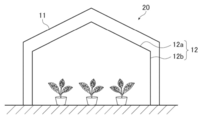
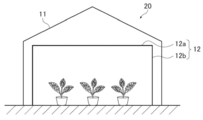
- FIG. 3 is a schematic partially cutaway perspective view showing an example of the appearance of an agricultural house according to the third aspect of the present invention.
- FIG. 4 is a schematic cross-sectional view showing an example of the inside of an agricultural house according to the third aspect of the present invention.
- FIG. 5 is a schematic cross-sectional view showing an example of the inside of an agricultural house according to the third aspect of the present invention.
- FIG. 6 is a schematic cross-sectional view showing an example of the interior of an agricultural house according to the third aspect of the present invention.
- FIG. 7 shows the carbon dioxide concentration in the house and outside (outside air) when the fine fog cooling device is operated in the agricultural house produced in Example 2-1 and Comparative Example 2-1 of the second aspect of the present invention. It
- a numerical range expressed using “to” means a range including numerical values described before and after “to” as a lower limit value and an upper limit value.
- the film for an agricultural house according to the first aspect of the present invention is a cellulose film containing a cellulose acylate resin, having an equilibrium water content of 4 to 8% at 25 ° C. and a relative humidity of 80%, and a thickness of 60 to 200 ⁇ m. is there.
- the equilibrium moisture content at 25 ° C. and 80% relative humidity is the mass suitable for measurement after conditioning the film to be measured (sample) for 24 hours or more in an environment of 25 ° C. and 80% relative humidity.
- a cellulose film containing a cellulose acylate resin having an equilibrium water content of 4 to 8% at 25 ° C. and a relative humidity of 80%, and a thickness of 60 to 200 ⁇ m is used.
- the CO 2 concentration necessary for plant photosynthesis can be maintained without ventilation.
- the reason for the effect is not clear in detail, but the present inventors presume as follows.
- there are two known methods for allowing a substance to permeate through the film namely physical diffusion and carrier transport.
- the cellulose film takes in CO 2 from the outside using water as a medium. It is considered that the CO 2 concentration could be maintained by transportation.
- the agricultural house film according to the first aspect of the present invention has a higher affinity with water than a general agricultural house film (for example, vinyl chloride, polyethylene terephthalate (PET), etc.). Equilibrium moisture content can be achieved.
- strength fall by the water content seen by films (for example, polyvinyl alcohol (PVA) etc.) with higher hydrophilic property was not seen by the film for agricultural houses which concerns on the 1st aspect of this invention. Therefore, when the inside of the house is in a hot and humid environment, the cellulose film contains water, and CO 2 outside the house is absorbed or dissolved in the water in the cellulose film, so that CO 2 can be taken into the house. It is done.
- the agricultural house film according to the first aspect of the present invention is considered to be able to take in CO 2 from outside the house, but when the CO 2 permeability of the cellulose film is actually measured, It was confirmed that the CO 2 permeability at 25 ° C. and 80% relative humidity was 1.0 ⁇ 10 ⁇ 6 (cm 3 / (s ⁇ cm 2 ⁇ cmHg)) or more, simulating the growth environment. That is, the agricultural house film according to the first aspect of the present invention contains a cellulose acylate resin, and has a CO 2 permeability of 1.0 ⁇ 10 ⁇ 6 (cm 3 / (s) at 25 ° C. and a relative humidity of 80%. It can be said that it is a film for an agricultural house that is equal to or higher than cm 2 ⁇ cmHg)).
- the CO 2 permeability of a general film is measured according to dry film conditions, that is, the “differential pressure method” described in JIS K 6275-1. Specifically, carbon dioxide gas is supplied to the surface (supply side) of the sample at a pressure of 800 kPa, and the back surface (permeation side) is depressurized to 3 Pa with a vacuum pump. Next, the vacuum pump is stopped and the pressure change on the permeate side is recorded and calculated by the delay time method according to JIS K 6275-1. The measurement temperature is 40 ° C., and the sample evaluation area is 3.14 cm 2 .
- CO 2 permeability of the agricultural house film according to the first aspect of the present invention wet film condition, i.e., 25 ° C. simulating the development environment in the agricultural house, CO 2 transmission at 80% relative humidity
- the degree is a value measured by the following method. First, a skeleton of 25 cm ⁇ 33 cm ⁇ 33 cm was assembled using a stainless steel frame, and each film was attached to the entire surface (six sides) to produce a small house specimen. Next, the house specimen was conditioned for 24 hours or more in an environment of room temperature 25 ° C. and relative humidity 80%, and then a CO 2 concentration meter (TR-76UI, manufactured by T & D) was installed inside, and CO 2 gas was supplied.
- TR-76UI manufactured by T & D
- the inside of the house test body was made into the sealing state using the adhesive tape. Next, it was placed in an environment of 25 ° C. and a relative humidity of 80%, and the surface (film) of the house specimen was kept wet by flowing water, and the CO 2 gas concentration transition in that environment was 24 hours. Recorded. From the result of recording the decrease in the internal CO 2 gas concentration for 24 hours, the CO 2 gas concentration decrease rate was obtained, and the decrease rate was compared with the fitting by the theoretical value, and the wet film condition (25 ° C. relative humidity 80% ) As the CO 2 permeability coefficient.
- the amount of CO 2 permeation (ie, CO 2 permeability) T per unit time was calculated according to the following formula, and the theoretical change in CO 2 concentration with respect to elapsed time was plotted.
- the value of the CO 2 permeability coefficient was fitted with the actual measurement value by assuming that the gas moves under the first pressure difference condition for 1 second.
- T (CO 2 permeability) (CO 2 permeability coefficient ⁇ film surface area ⁇ pressure difference) / film thickness
- the cellulose acylate resin contained in the agricultural house film according to the first aspect of the present invention is not particularly limited, and is a conventionally known aliphatic acyl group having 2 to 22 carbon atoms (for example, acetyl group, propionyl group, butyryl).
- the cellulose acylate resin is preferably contained in an amount of 60 to 90% by mass, preferably 65 to 80% by mass, based on the total mass of the cellulose film, from the viewpoint of maintaining moisture permeability described later. More preferred.
- the raw material cellulose of the cellulose acylate resin examples include cotton linter, kenaf, wood pulp (hardwood pulp, softwood pulp) and the like. These may be used alone or in combination of two or more. Good.
- the raw material cellulose is preferably cotton linter and / or wood pulp.
- the cotton linter and / or wood pulp preferably contains 80% or more of ⁇ -cellulose.
- the mixing ratio is preferably 5/95 to 95/5.
- the cellulose acylate constituting the cellulose acylate resin is a carboxylic acid ester of cellulose, for example, preferably a lower carboxylic acid ester of cellulose.
- Specific examples of the cellulose acylate include cellulose acetate, cellulose acetate propionate, cellulose acetate butyrate, cellulose acetate stearate, and cellulose acetate benzoate.
- cellulose acetate is preferable, and specifically, triacetyl cellulose (TAC) is more preferable.
- Such cellulose acylate is produced by a combination of an activation process (pretreatment process), an acylation process (acetylation process in the case of acetyl), an aging process, a precipitation process, a purification process, a drying process, and a pulverization process. It is preferred that The raw material cotton of cellulose acylate and the synthesis method are also described in detail on pages 7 to 12 of the Japan Society for Invention and Technology (Publication No. 2001-1745, published on March 15, 2001, Japan Institute of Invention). ing.
- the viscosity average degree of polymerization (DP) of the cellulose acylate is preferably 200 to 700.
- the ratio (Mw / Mn) of the weight average molecular weight (Mw) to the number average molecular weight (Mn) of the cellulose acylate is preferably 1.0 to 5.0, and preferably 1.0 to 4.0. More preferably, it is 1.5 to 3.0.
- the viscosity average polymerization degree refers to an average molecular weight according to a viscosity method (ASTM D2857), and the weight average molecular weight and the number average molecular weight refer to molecular weights measured by a gel permeation chromatography (GPC) method, respectively.
- the amount of residual acetic acid or the residual amount of carboxylic acid having 3 to 22 carbon atoms is preferably 0.5% by mass or less.
- the cellulose acylate preferably contains 1 ppb to 10,000 ppm of at least one of alkali metals and / or alkaline earth metals.
- the cellulose acylate preferably has an acetone extraction amount at 25 ° C. of 15% by mass or less.
- the cellulose acylate preferably contains an acid or partially esterified product having an acid dissociation index of 1.93 to 4.5, or a salt thereof.
- the moisture content of a cellulose acylate is 2 mass% or less.
- the yellowness index of cellulose acylate is preferably 0.1 to 10.
- the haze of the cellulose acylate is preferably 0.05 to 5%. Moreover, it is preferable that the light transmittance of a cellulose acylate is 80% or more, and it is more preferable that it is 85% or more.
- the Tg of cellulose acylate is preferably 80 to 200 ° C. Further, the crystallization heat generation amount of cellulose acylate is preferably 2 to 20 J / g.
- the cellulose acylate satisfies the following formulas (1) and (2) in terms of the degree of substitution of cellulose with a hydroxyl group.
- Formulas (1) and (2) in terms of the degree of substitution of cellulose with a hydroxyl group.
- SA represents the degree of substitution of the acetyl group substituting the hydrogen atom of the cellulose hydroxyl group
- SB is other than the acetyl group substituting the hydrogen atom of the hydroxyl group of cellulose.
- the said Formula (2) is represented by following formula (3) from the reason for which the workability of the film for agricultural houses which concerns on the 1st aspect of this invention obtained becomes favorable, and an equilibrium moisture content is. It is more preferable to be expressed by the following formula (4) for the reason that the CO 2 concentration can be maintained at the same level as the concentration outside the house.
- the agricultural house film according to the first aspect of the present invention may contain additives such as a plasticizer, a matting agent, a deterioration preventing agent, and an ultraviolet absorber depending on the use environment.
- a plasticizer include an ester plasticizer including a polyether ester represented by the following formula (A) and an ether plasticizer including a polyether represented by the following formula (B). It is mentioned in.
- R 1 represents a divalent aliphatic hydrocarbon group having 2 to 10 carbon atoms
- R 2 independently represents a divalent aliphatic hydrocarbon group having 2 to 6 carbon atoms
- R 3 each independently represents a hydrogen atom, an alkyl group having 1 to 20 carbon atoms, an aryl group having 6 to 20 carbon atoms, or an acyl group having 2 to 20 carbon atoms.
- n independently represents an integer of 1 to 20
- p represents an integer of 1 to 15.
- a plurality of R 1 , R 2 and n contained in the repeating unit may be the same or different.
- R 4 represents a divalent aliphatic hydrocarbon group having 2 to 6 carbon atoms
- R 5 and R 6 each independently represent a hydrogen atom, an alkyl group having 1 to 20 carbon atoms
- It represents a group represented by the following formula (b) in which an aryl group having 6 to 20 carbon atoms, an acyl group having 2 to 20 carbon atoms, a (meth) acryloyl group, or a (meth) acryloyl group is polymerized.
- m represents an integer of 1 to 20.
- the plurality of R 4 contained in the repeating unit may be the same or different.
- (meth) acryloyl group means an acryloyl group (CH 2 ⁇ CHCO—) or a methacryloyl group (CH 2 ⁇ C (CH 3 ) CO—).
- * represents an oxygen atom bonded to R 5 or R 6 in the formula (B)
- R 7 represents a hydrogen atom or a methyl group
- q represents an integer of 1 to 10.
- a plurality of R 7 contained in the repeating unit may be the same or different.
- the content when the plasticizer is contained, is preferably 10 to 70 parts by mass, and 20 to 60 parts by mass with respect to 100 parts by mass of the cellulose acylate resin. More preferably, it is 30 to 60 parts by mass, still more preferably 40 to 60 parts by mass.
- the matting agent either organic or inorganic fine particles can be used.
- the deterioration inhibitor include hindered amine light stabilizers, antioxidants, peroxide decomposers, radical inhibitors, metal deactivators, acid scavengers, amines, and the like.
- an ultraviolet absorber what can express ultraviolet absorptivity can be expressed and any well-known thing can be used, for example, a benzotriazole type
- the equilibrium moisture content of the agricultural house film according to the first aspect of the present invention is 4 to 8%, and it is preferably 5 to 8% because it is easy to maintain the CO 2 concentration.
- the film for agricultural house according to the first aspect of the present invention has a thickness of 60 ⁇ m to 200 ⁇ m, preferably 80 ⁇ m to 150 ⁇ m, more preferably 80 ⁇ m to 120 ⁇ m, for good processability. preferable.
- the film for agricultural houses may be a single layer structure or a laminated structure, it is preferable that it is a single layer structure.
- the light transmittance of the film for an agricultural house according to the first aspect of the present invention is preferably 80% or more for reasons such as promoting photosynthesis of plants in the house and suitably maintaining the temperature in the house, It is more preferably 85% or more, and still more preferably 90% or more.
- the light transmittance is a transmittance averaged over a wavelength range (400 to 700 nm) effective for photosynthesis, measured using a spectrophotometer (manufactured by Jusco Engineering: V-560).
- the moisture permeability of the film for agricultural houses according to the first aspect of the present invention is an effect that suppresses the occurrence of dew condensation in the agricultural house, and the effect that the relative humidity in the house in the fine fog is reduced and the fine fog cooling effect can be maintained. from the viewpoint of, preferably at 600g / m 2 / 24h or more, more preferably 800g / m 2 / 24h or more, more preferably 1000g / m 2 / 24h or more.
- the moisture permeability is 24 hours under the conditions of a temperature of 40 ° C. and a relative humidity of 90% according to the method described in “Moisture permeability test method of moisture-proof packaging material (cup method)” of JIS Z 0208: 1976. It refers to the amount of water vapor passing through (g / m 2 / 24h) .
- the production method for producing the agricultural house film according to the first aspect of the present invention is not particularly limited.
- a dope (cellulose acylate solution) obtained by dissolving cellulose acylate in an organic solvent is cast from a casting die to a casing.
- a solution casting that is cast on an endless belt or drum that rotates inside hereinafter collectively referred to as “support”), stripped from the support, and dried to form a film.
- organic solvents that dissolve cellulose acylate include hydrocarbon solvents such as benzene and toluene; halogenated hydrocarbon solvents such as methylene chloride and chlorobenzene; alcohol solvents such as methanol, ethanol, and diethylene glycol; acetone and the like Ketone solvents; ester solvents such as methyl acetate, ethyl acetate, and propyl acetate; ether solvents such as tetrahydrofuran and methyl cellosolve; and the like. These may be used alone or in combination of two or more. May be.
- a halogenated hydrocarbon solvent having 1 to 7 carbon atoms it is preferable to use a halogenated hydrocarbon solvent having 1 to 7 carbon atoms, and it is more preferable to use methylene chloride.
- alcohols having 1 to 5 carbon atoms are preferably used in combination from the viewpoints of solubility of cellulose acylate, peelability from the support, mechanical strength of the film, and the like.
- the alcohol content is preferably 2 to 25% by mass, more preferably 5 to 20% by mass, based on the entire solvent.
- Specific examples of the alcohol include methanol, ethanol, n-propanol, isopropanol, n-butanol, and the like, and methanol, ethanol, n-butanol, or a mixture thereof is preferably used.
- the cellulose acylate solution is prepared by first mixing cellulose acylate and an organic solvent, dissolving the cellulose acylate at ⁇ 10 to 55 ° C., and adding a mixture of the dissolved portion, the undissolved portion and the organic solvent to 0 to A preparation method in which the cellulose acylate is completely dissolved in a solvent by heating to 97 ° C. is preferable.
- the prepared cellulose acylate solution may be concentrated if necessary, but the cellulose acylate preferably has a concentration of 5 to 40% by mass.
- the cellulose acylate solution preferably has a viscosity at 40 ° C. of 10 to 3000 Pa ⁇ s.
- the cellulose acylate and the organic solvent are mixed, it is preferable to use particles in which 90% by mass or more of the cellulose acylate is 0.1 to 4 mm.
- the cellulose acylate solution is preferably filtered at a temperature of 0 to 200 ° C. before casting.
- the average pore size of the filtration filter is preferably 100 ⁇ m or less, and the filtration flow rate is preferably 50 liters / hr or more.
- the solution temperature is preferably ⁇ 10 to 57 ° C., and the temperature of the step is preferably kept at ⁇ 10 to 57 ° C.
- the support on which the cellulose acylate solution is cast preferably has a surface temperature of ⁇ 20 to 40 ° C.
- the temperature of the drying air during stripping is preferably 20 to 250 ° C. Moreover, it is preferable that the undried film for agricultural houses at the time of drying is hold
- Agricultural house film produced by such solution casting is preferably stretched at least 0.5 to 300% during or after uniaxial casting.
- the casting speed is preferably 1 to 200 m / min.
- the film for agricultural houses has a film winding form of at least 100 m in the longitudinal direction and 60 cm or more in the width direction.
- the method for producing the above-described cellulose acylate film is not particularly limited, and a known method other than the above-described method can be adopted as appropriate.
- a known method other than the above-described method can be adopted as appropriate.
- JIII Journal of Technical Disclosure Publication No. 2001-1745.
- the method described on pages 12 to 30 of the Japan Society for Invention and Innovation (issued on March 15, 2001) can be appropriately employed.
- the agricultural house which concerns on the 1st aspect of this invention is a farm house which has a housing and a film, and the space partitioned from the outside is formed when a film is extended by a housing.
- FIG. 1 is a schematic perspective view showing an example of the appearance of an agricultural house according to the first aspect of the present invention.
- the agricultural house 10 has a film 1 spread on a housing 2.
- the agricultural house 10 is entirely covered with a film 1 spread on a housing 2, and is illustrated in FIG. 4 of Patent Document 1 (Japanese Patent Laid-Open No. 2010-17093). Does not have an exhaust fan.
- Patent Document 1 Japanese Patent Laid-Open No. 2010-17093
- the housing and film which comprise the agricultural house which concerns on the 1st aspect of this invention are explained in full detail.
- the frame which the agricultural house which concerns on the 1st aspect of this invention has is not specifically limited,
- the aggregate for example, steel materials, a steel pipe, etc.
- a conventionally well-known vinyl house etc. can be used.
- the film It is the film which the agricultural house which concerns on the 1st aspect of this invention has, the film extended on the said housing, and is the film for agricultural houses which concerns on the 1st aspect of this invention mentioned above.
- the agricultural house according to the first aspect of the present invention does not require active ventilation means (for example, a ventilation fan provided on the ceiling or side surface of the house), improves the efficiency of air conditioning and heating, and causes pest damage.
- active ventilation means for example, a ventilation fan provided on the ceiling or side surface of the house
- the ventilation means does not include an entrance / exit for workers engaged in the work in the agricultural house.
- the entrance / exit also has, for example, a double door or the like to allow external air to flow. It is preferable not to enter directly into the space in the house.
- the agricultural house which concerns on the 2nd aspect of this invention is a farm house which has the housing and the film, and the space partitioned off from the outside is formed when the film is extended by the housing.
- the film contains a cellulose acylate resin is a moisture permeability 600g / m 2 / 24h or more, a cellulose film having a thickness of 80 ⁇ 200 [mu] m.
- the agricultural house which concerns on the 2nd aspect of this invention has the spraying apparatus which sprays the atomized water in space.
- FIG. 1 is a schematic perspective view showing an example of the appearance of an agricultural house according to the second aspect of the present invention
- FIG. 2 is a schematic view showing an example of the interior of the agricultural house according to the second aspect of the present invention.
- FIG. 1 the agricultural house 10 has a film 1 spread on a housing 2, and has a spray device 3 and a water supply tank 4 for spraying atomized water in the space of the house.
- the agricultural house 10 is entirely covered with a film 1 stretched on a housing 2, and is shown in FIG. 1 of Patent Document 2 (Japanese Patent Laid-Open No. 2014-198035).
- the illustrated intake fan and exhaust fan are not provided.
- the above-described configuration in particular, contains a cellulose acylate resin is a moisture permeability 600 g / m 2 / 24h or more, by using a film having a thickness of 80 ⁇ 200 [mu] m House
- a cellulose acylate resin is a moisture permeability 600 g / m 2 / 24h or more, by using a film having a thickness of 80 ⁇ 200 [mu] m House
- the frame which the agricultural house which concerns on the 2nd aspect of this invention has is not specifically limited,
- the aggregate for example, steel materials, a steel pipe, etc.
- a conventionally well-known vinyl house etc. can be used.
- the film of the agricultural house according to the second aspect of the present invention (hereinafter, also referred to as “the film for an agricultural house according to the second aspect”) is a film that is stretched on the above-mentioned casing, and contains a cellulose acylate resin. , and the moisture permeability 600g / m 2 / 24h or more, a cellulose film having a thickness of 80 ⁇ 200 [mu] m.
- moisture permeability is synonymous with what was demonstrated in the film for agricultural houses which concerns on the 1st aspect of this invention.
- the cellulose acylate resin contained in the agricultural house film according to the second aspect is not particularly limited, and examples thereof include the same cellulose acylate resin as contained in the agricultural house film according to the first aspect of the present invention.
- the film for agricultural houses which concerns on a 2nd aspect may contain additives, such as a plasticizer, a mat agent, a degradation inhibitor, and an ultraviolet absorber, according to use environment.
- additives such as a plasticizer, a mat agent, a degradation inhibitor, and an ultraviolet absorber
- the film for an agricultural house according to the second embodiment has a thickness of 80 ⁇ m to 200 ⁇ m, and is preferably 80 ⁇ m to 150 ⁇ m, more preferably 80 ⁇ m to 120 ⁇ m, for good processability.
- the film for agricultural houses which concerns on a 2nd aspect may be a single layer structure or a laminated structure, it is preferable that it is a single layer structure.
- the manufacturing method which manufactures the film for agricultural houses which concerns on a 2nd aspect is not specifically limited, For example, the thing similar to what was demonstrated in the film for agricultural houses which concerns on the 1st aspect of this invention is mentioned.
- the spraying apparatus which the agricultural house which concerns on the 2nd aspect of this invention has is an apparatus which sprays the atomized water in the space of a house.
- the spraying device is preferably a fine mist cooling device that cools the space by spraying atomized water into the space of the house.
- the spraying apparatus includes an apparatus used for supplying water to plants in the house.
- the fine fog cooling device is also called a fine fog cooling fan.
- a known device such as a mist fan or a mist cooler can be used.
- the fine mist cooling device specifically, for example, as described in Japanese Patent Application Laid-Open No. 2010-068740, the growth of a crop composed of a fan that blows air and a spray means that sends a fine mist to the fan is described. Water is sprayed into the space by using an air atomization type nozzle that atomizes a liquid using pressurized air described in Japanese Patent Application Laid-Open No. 2000-157068. And the like ".
- the water supply tank 2 is installed in an agricultural house.
- only means for spraying atomized water into the space of the house for example, a blower fan or a nozzle
- the spraying amount of the spraying device is 5 to 30 g / m for the reason that a sufficient cooling effect can be obtained even during summer days and the occurrence of condensation can be further suppressed.
- 2 ⁇ min is preferable, and 10 to 20 g / m 2 ⁇ min is more preferable.
- the agricultural house which concerns on the 2nd aspect of this invention has the film for agricultural houses which concerns on the 2nd aspect mentioned above, it does not require a ventilation means and can suppress the inflow of a pest. Therefore, the agricultural house according to the second aspect of the present invention does not need to be provided with positive ventilation means (for example, a ventilation fan provided on the ceiling or side of the house), but can further suppress the inflow of pests and insects. In addition, it is preferable not to have a ventilation means because the environment necessary for plant growth can be easily adjusted.
- the ventilation means does not include an entrance / exit for workers engaged in the work in the agricultural house. However, the entrance / exit also has, for example, a double door or the like to allow external air to flow.
- the agricultural house which concerns on the 2nd aspect of this invention maintains the carbon dioxide density
- the agricultural house according to the third aspect of the present invention includes an outer film that forms a space partitioned from the outside, an inner film that is provided inside the outer film so as to have a gap, and a gap. Ventilation means for ventilating at least part of the air present and the outside air.
- a part of the outer film may be provided with ventilation means, or the entire outer film may be provided with ventilation means.
- the lining film in the agricultural house which concerns on the 3rd aspect of this invention is a film comprised at least one part by the cellulose film which contains a cellulose acylate resin and a water vapor transmission rate is 600 g / m ⁇ 2 > / 24h or more. is there.
- FIG. 3 is a schematic partially cutaway perspective view showing an example of the appearance of an agricultural house according to the third aspect of the present invention
- FIGS. 4 to 6 are schematic views showing an example of the interior of the agricultural house of the present invention.
- the agricultural house 20 has an outer film 11 and an inner film 12 (reference numeral 12a: roof portion, reference numeral 12b: wall surface portion). Further, as shown in FIG. 3, it is preferable that the outer film 11 is in a state of being stretched by a casing 13.
- the agricultural film 20 shown in FIGS. 3 to 5 shows a mode in which the outer film 11 is at least partially used as a ventilation means.
- the ventilation fan 14 comprised by may be provided.
- the above-described configuration in particular, contains a cellulose acylate resin, moisture permeability using cellulose film is 600g / m 2 / 24h or more as lining films, lining film and the outer
- a ventilation means for ventilating the air present in the gap with the tension film dew condensation inside the liner film can be suppressed and the light transmittance of the agricultural house can be increased.
- the reason for the effect is not clear in detail, but the present inventors presume as follows. First, in the sheet having air permeability described in Patent Document 3 (Japanese Patent Application Laid-Open No. 2011-10590), the moisture permeability is increased due to the presence of the pores.
- the inclusion of the cellulose acylate resin increases the hydrophilicity, thereby improving the hygroscopicity of the lining film, and the moisture permeability is 600 g / m 2 /.
- the in-plane distribution of moisture permeability in the lining film is substantially eliminated, and it is possible to suppress the occurrence of condensation itself or to efficiently eliminate the condensation once generated. It is considered that the light transmittance of the agricultural house can be increased.
- the lining film of the agricultural house according to the third aspect of the present invention is a film provided so as to have a gap with the lining film inside the lining film described later, and at least a part thereof contains a cellulose acylate resin. and moisture permeability is a film composed of a cellulose film or 600g / m 2 / 24h.
- moisture permeability is synonymous with what was demonstrated in the film for agricultural houses which concerns on the 1st aspect of this invention.
- the cellulose acylate resin contained in the cellulose film is not particularly limited, and examples thereof include those similar to the cellulose acylate resin contained in the agricultural house film according to the first aspect of the present invention.
- the cellulose film may contain additives such as a plasticizer, a matting agent, a deterioration preventing agent, and an ultraviolet absorber depending on the use environment. As these additives, the same thing as what was demonstrated in the film for agricultural houses which concerns on the 1st aspect of this invention is mentioned.
- the manufacturing method which manufactures a cellulose film is not specifically limited, For example, the thing similar to what was demonstrated in the film for agricultural houses which concerns on the 1st aspect of this invention is mentioned.
- the roof portion of the lining film is composed of the above-described cellulose film for the reason of preventing plant growth failure due to dripping of condensation, and the roof portion and the wall surface of the lining film. It is more preferable that all the parts are composed of the cellulose film described above.
- the roof portion of the lining film refers to the upper portion of the space in which plants are grown, that is, the portion positioned in the vertical direction with respect to the soil or the like on which the plants are placed, and is represented by reference numeral 12a in FIGS. The part to be done.
- the wall surface portion of the lining film refers to a side portion of a space in which a plant is grown, that is, a portion positioned in a horizontal direction with respect to soil on which the plant is placed, and is represented by reference numeral 12b in FIGS. The part to be done.
- the thickness of the lining film is preferably 60 ⁇ m to 200 ⁇ m, more preferably 80 ⁇ m to 150 ⁇ m, and even more preferably 80 ⁇ m to 120 ⁇ m, because the processability is good.
- the lining film may have a single layer structure or a laminated structure, but preferably has a single layer structure.
- the outer film which the agricultural house which concerns on the 3rd aspect of this invention has is a film which forms the space partitioned off from the outside.
- the outer film is not particularly limited, and examples of the constituent material thereof include polyethylene terephthalate, polybutylene terephthalate, polycarbonate, polyethylene, acrylic resin, polyvinyl chloride, polyvinyl alcohol, cellulose acylate resin, and fluorine-containing resin. .
- At least a part of the outer film is provided with a ventilation means described later for maintaining moisture permeability and further suppressing the occurrence of condensation, and the ventilation means has a moisture permeability of 500 g / A film of m 2 / 24h or more is preferable.
- “at least a part of the outer film is provided with a ventilation means described later” means that at least a part of the outer film has at least a part of the air existing in the gap between the outer film and the outer film and the outside. In this case, there is no ventilation means (for example, the ventilation fan 14 shown in FIG. 6) configured separately from the outer film. Also good.
- all the outer film has a ventilation means described later means that the entire outer film ventilates at least part of the air existing in the gap between the outer film and the inner film and the external air.
- the outer film and the ventilation means are constituted by the same member.
- the above-described moisture permeability is not less than 500g / m 2 / 24h films, for example, agricultural films and described in JP 2007-089493, cellulose films described as lining films described above. Among these, there is no intrusion of water droplets due to rainfall, and the reasons light transmittance becomes higher, contains a cellulose acylate resin, and even a cellulose film moisture permeability 600g / m 2 / 24h or more preferable.
- the ventilation means which the agricultural house which concerns on the 3rd aspect of this invention has is a means which ventilates at least one part of the air which exists in the clearance gap between the outer_lining
- the ventilation means is configured as an aspect provided in at least a part of the above-described outer film, that is, a film having a moisture permeability of 500 g / m 2 / 24h or more, or a separate body from the outer film.
- the member for example, a ventilation fan, a vent hole, etc.
- the agricultural house which concerns on the 3rd aspect of this invention may have the housing
- a housing is not specifically limited,
- the aggregate for example, steel materials, a steel pipe, etc.
- used in a conventionally well-known greenhouse etc. can be used.
- the method for installing the above-described lining film on the inside of the above-described outer-film is not particularly limited.
- the agricultural house is used.
- the lining film is preferably installed on a curtain rail or the like so as to be movable, from the viewpoint of being able to be installed at nighttime or early morning hours when the outside air temperature decreases.
- the gap between the above-mentioned outer film and the outer film when installing the inner film need not be constant. For example, as shown in FIG. 5, only the roof of the inner film may be installed horizontally. Good.
- the cellulose acylate resin contains a plasticizer comprising a polyether ester and / or polyether as an optional component, moisture permeability 600 g / m 2 / 24h or more
- a film for an agricultural house having an elastic modulus of less than 3.0 GPa refers to a film covering a hut's housing (steel pipe) called a so-called plastic house (green house), and is a multi-film for agriculture, that is, prevention of dryness of fields (surface), weeds. It is a film that is different from the film that covers the soil surface for restraining and the like.
- moisture permeability is synonymous with what was demonstrated in the film for agricultural houses which concerns on the 1st aspect of this invention.
- the elastic modulus is a sample having a length in the measurement direction of 150 mm and a width of 15 mm. A total of eight samples are prepared by changing the direction of cutting in the measurement direction by 45 degrees, and the average value of the elastic modulus calculated for each sample. Say. Further, the elastic modulus of each sample was calculated by using a tensile tester “Strograph” manufactured by A & D, immediately after leaving each sample in an environment of 25 ° C. and 60% relative humidity for 24 hours. In a% atmosphere, the length between the chucks was 100 mm and the tensile speed was 200 mm / min, the stress at the time of 0.1% elongation and 0.5% elongation was measured, and the elastic modulus was calculated from the inclination.
- a cellulose acylate resin is a moisture permeability 600g / m 2 / 24h or more, and, by using a film modulus of elasticity is less than 3.0 GPa, drip-proofness In addition, both processability is good.
- the cellulose acylate resin and the predetermined plasticizer will be described in detail.
- the cellulose acylate resin contained in the agricultural house film according to the fourth aspect of the present invention is not particularly limited, and is the same as the cellulose acylate resin contained in the agricultural house film according to the first aspect of the present invention. Can be mentioned.
- ⁇ Plasticizer> When the film for agricultural houses which concerns on the 4th aspect of this invention becomes the drip-proof property and workability of the film for agricultural houses which concerns on the 4th aspect of this invention obtained, and the inside of a house became a high humidity environment
- a polyether ester and / or a plasticizer containing a polyether because it is possible to prevent condensation.
- the plasticizer may contain a polyether ester and a plasticizer component other than the polyether, or may be a plasticizer composed only of the polyether ester and / or the polyether. This is presumably because the addition of the plasticizer not only reduced the elastic modulus of the film, but also improved the moisture content of the film, making it easier to take in water vapor in the house.
- polyether ester As polyether ester, the polyether ester represented by a following formula (A) is mentioned suitably, for example.
- R 1 represents a divalent aliphatic hydrocarbon group having 2 to 10 carbon atoms
- R 2 independently represents a divalent aliphatic hydrocarbon group having 2 to 6 carbon atoms
- R 3 each independently represents a hydrogen atom, an alkyl group having 1 to 20 carbon atoms, an aryl group having 6 to 20 carbon atoms, or an acyl group having 2 to 20 carbon atoms.
- n independently represents an integer of 1 to 20
- p represents an integer of 1 to 15.
- a plurality of R 1 , R 2 and n contained in the repeating unit may be the same or different.
- the divalent aliphatic hydrocarbon group having 2 to 10 carbon atoms in R 1 in the above formula (A) may be saturated or unsaturated, and may be a divalent chain or cyclic aliphatic carbonization. Any of a hydrogen group (for example, a cycloalkylene group etc.) may be sufficient. Further, when it is a divalent chain aliphatic hydrocarbon group, it may be linear or branched.
- Preferred examples include ethylene, trimethylene, tetramethylene, pentamethylene, Hexamethylene, heptamethylene, octamethylene, nonamethylene, decamethylene, propylene, 1,2-dimethylethylene, 1-methyltrimethylene, 2-methyltrimethylene, 2-methyltetramethylene, 2,2-dimethyltrimethylene, 1, Examples include 2-cyclopentylene, 1,3-cyclopentylene, 1,2-cyclohexylene, 1,3-cyclohexylene, 1,4-cyclohexylene and the like.
- the carbon number of the divalent aliphatic hydrocarbon group is preferably 2 to 6 for the reason that the elastic modulus of the film is further reduced and the processability is better, and the plastic film is obtained from the resulting agricultural house film. From the viewpoint of reducing the ratio of the agent eluting with water or the like (hereinafter simply referred to as “elution rate”), it is more preferably 4 to 6.
- the divalent aliphatic hydrocarbon group having 2 to 6 carbon atoms in R 2 in the above formula (A) is preferably a divalent chain aliphatic hydrocarbon group, May be branched.
- the divalent aliphatic hydrocarbon group preferably has 2 to 4 carbon atoms, more preferably 2 or 3, and still more preferably 2.
- the divalent aliphatic hydrocarbon group having 2 to 6 carbon atoms is preferably a chain alkylene group.
- Preferred examples include ethylene, trimethylene, tetramethylene, pentamethylene, hexamethylene, propylene, 1- Examples include methyltrimethylene, 2-methyltrimethylene, 1,2-dimethylethylene, and 1-ethylethylene.
- ethylene, trimethylene, propylene, tetramethylene and 1-ethylethylene are more preferable, ethylene, trimethylene, propylene and tetramethylene are more preferable, and ethylene or propylene is most preferable.
- R 3 in the above formula (A) represents a hydrogen atom, an alkyl group having 1 to 20 carbon atoms, an aryl group having 6 to 20 carbon atoms, or an acyl group having 2 to 20 carbon atoms, as described above.
- the alkyl group having 1 to 20 carbon atoms in R 3 may be either a chain or a ring, and when it is a chain aliphatic group, it may be linear or branched. It may be present and may have a substituent.
- the number of carbon atoms is preferably 1 to 12, more preferably 1 to 8, still more preferably 1 to 4, and most preferably 1 or 2.
- the aryl group having 6 to 20 carbon atoms in R 3 may have a substituent, and the carbon number thereof is preferably 6 to 15, more preferably 6 to 10, and more preferably 6 to More preferably, it is 8.
- the acyl group having 2 to 20 carbon atoms in R 3 may be an aliphatic acyl group or an aromatic acyl group, and these may have a substituent.
- the number of carbon atoms is preferably 2 to 18, more preferably 2 to 8, and further preferably 2 to 4.
- the number of carbon atoms is preferably 7 to 18, more preferably 7 to 12, further preferably 7 to 10, and most preferably 7 or 8. .
- R 3 is preferably any one of a hydrogen atom, an alkyl group having 1 to 20 carbon atoms and an aryl group having 6 to 20 carbon atoms, and is a hydrogen atom or an alkyl group having 1 to 20 carbon atoms. More preferably, it is more preferably an alkyl group having 1 to 20 carbon atoms for the reason that the elastic modulus of the film is further reduced and the processability is better.
- N in the formula (A) represents an integer of 1 to 20, preferably an integer of 1 to 15, more preferably an integer of 1 to 10, and further preferably an integer of 1 to 6.
- An integer of 2 to 6 is preferable, an integer of 2 to 4 is most preferable.
- p in the above formula (A) represents an integer of 1 to 15, and is preferably an integer of 1 to 10 from the viewpoint of further reducing the elastic modulus of the film, and is an integer of 1 to 5. Is more preferable, an integer of 1 to 3 is more preferable, and an integer of 1 to 2 is particularly preferable.
- p in the above formula (A) is preferably an integer of 2 to 15, more preferably an integer of 2 to 10, from the viewpoint of reducing the elution rate of the plasticizer.
- the method for preparing the polyether ester described above is not particularly limited, and when R 3 in the above formula (A) is a hydrogen atom, for example, heat generated by a polyesterification reaction or transesterification reaction between a diol and a dicarboxylic acid by a conventional method. It can be easily synthesized by a melt condensation method or an interfacial condensation method between acid chlorides of these acids and glycols. Polycondensation esters are described in detail in Koichi Murai, “Plasticizers, Theory and Applications” (Sai Shobo Co., Ltd., first edition published on March 1, 1973). It can also be used.
- dicarboxylic acid examples include oxalic acid, malonic acid, succinic acid, maleic acid, fumaric acid, glutaric acid, adipic acid, pimelic acid, suberic acid, and 1,4-cyclohexanedicarboxylic acid.
- succinic acid, glutaric acid, adipic acid, and 1,4-cyclohexanedicarboxylic acid are more preferable. More preferred are succinic acid, glutaric acid, and adipic acid in which the aliphatic group has 2 to 4 carbon atoms.
- R 3 in the above formula (A) is an alkyl group having 1 to 20 carbon atoms, an aryl group having 6 to 20 carbon atoms or an acyl group having 2 to 20 carbon atoms, it is represented by the following formula (a)
- the compound represented by the above formula (A) can be synthesized from the compound and the dicarboxylic acid described above by the conventional method described above.
- R ⁇ 2 >, R ⁇ 3 > and n are the same as the definition in the said formula (A), and their preferable range is also the same.
- p in the said Formula (A) will be set to 1.
- R 3 in the above formula (A) is an acyl group having 2 to 20 carbon atoms
- R 3 in the above formula (A) is an acyl group having 2 to 20 carbon atoms
- the introduction of the terminal acyl group is, for example, a method of dehydrating condensation with an alcohol using a carboxylic acid, a method of acylating an alcohol with a carboxylic acid anhydride or a carboxylic acid halide, or using a carboxylic acid ester. It can be introduced by a method of transesterification.
- polyether ester represented by the above formula (A) specifically, for example, R 1 , R 2 and R 3 in the above formula (A), and n and p are those represented by Table 1 below. Examples include ether esters.
- polyether As a polyether, the polyether represented by a following formula (B) is mentioned suitably, for example.
- R 4 represents a divalent aliphatic hydrocarbon group having 2 to 6 carbon atoms
- R 5 and R 6 are each independently a hydrogen atom, an alkyl group having 1 to 20 carbon atoms
- It represents a group represented by the following formula (b) in which a 6-20 aryl group, an acyl group having 2-20 carbon atoms, a (meth) acryloyl group, or a (meth) acryloyl group is polymerized.
- m represents an integer of 1 to 20.
- the plurality of R 4 contained in the repeating unit may be the same or different.
- (meth) acryloyl group means an acryloyl group (CH 2 ⁇ CHCO—) or a methacryloyl group (CH 2 ⁇ C (CH 3 ) CO—).
- * represents an oxygen atom bonded to R 5 or R 6 in the formula (B)
- R 7 represents a hydrogen atom or a methyl group
- q represents an integer of 1 to 10.
- a plurality of R 7 contained in the repeating unit may be the same or different.
- Examples of the divalent aliphatic hydrocarbon group having 2 to 6 carbon atoms in R 4 in the above formula (B) include those similar to R 2 in the above formula (A).
- R 5 and R 6 in the above formula (B) are as described above, a hydrogen atom, an alkyl group having 1 to 20 carbon atoms, an aryl group having 6 to 20 carbon atoms, an acyl group having 2 to 20 carbon atoms, A (meth) acryloyl group or a group represented by the above formula (b) in which a (meth) acryloyl group is polymerized is represented by the above formula (b) in which a (meth) acryloyl group and a (meth) acryloyl group are polymerized.
- Examples of the functional group other than the group to be used include those similar to R 3 in the above formula (A).
- R 5 is an aryl group having 6 to 20 carbon atoms (especially phenyl group) because the space in the fiber of the cellulose acylate resin is widened and the moisture permeability of the film for an agricultural house to be obtained can be further increased. Or a (meth) acryloyl group. Further, the hydrophilic impart to the cellulose acylate resin, because that can be a higher moisture permeability of the agricultural house films obtained, preferably R 6 is a hydrogen atom.
- M in the formula (B) represents an integer of 1 to 20, preferably an integer of 1 to 15, more preferably an integer of 1 to 10, and an integer of 1 to 6. Is more preferable, an integer of 2 to 6 is particularly preferable, and an integer of 2 to 4 is most preferable.
- polyether represented by the formula (B) examples include polyethylene glycol, polypropylene glycol, and polytetramethylene glycol.
- polyether represented by the said Formula (B) as shown in the synthesis example of the Example mentioned later, at least one part is ethylene oxide with respect to (meth) acrylate etc. which have phenols and a hydroxyl group.
- examples include polyethers obtained by repeating a ring-opening addition reaction of a certain alkylene oxide (for example, ethylene oxide, propylene oxide, etc.) one or more times.
- the content is preferably 10 to 70 parts by mass, and 20 to 60 parts by mass with respect to 100 parts by mass of the cellulose acylate resin. More preferably, it is 30 to 60 parts by mass, still more preferably 40 to 60 parts by mass.
- the film for agricultural houses which concerns on the 4th aspect of this invention may contain additives, such as a deterioration inhibitor and a ultraviolet absorber, according to use environment.
- a deterioration inhibitor include hindered amine light stabilizers, antioxidants, peroxide decomposers, radical inhibitors, metal deactivators, acid scavengers, amines, and the like.
- an ultraviolet absorber what can express ultraviolet absorptivity can be expressed and any well-known thing can be used, for example, a benzotriazole type
- an anti-degradation agent or ultraviolet light inhibitor is added, it is preferably contained in a cellulose acylate solution (dope) described later in an amount of 0.01 to 10% by mass.
- the film for agricultural houses which concerns on the 4th aspect of this invention may contain the mat agent according to use environment.
- the matting agent either organic or inorganic fine particles can be used.
- the fine particles include silicon dioxide, titanium dioxide, aluminum oxide, zirconium oxide, calcium carbonate, talc, clay, calcined kaolin, calcined calcium silicate, hydrated calcium silicate, aluminum silicate, magnesium silicate and calcium phosphate. .
- These fine particles usually form secondary particles having an average particle size of 0.1 to 3.0 ⁇ m, and these fine particles exist in the film as aggregates of primary particles, and 0.1 to 3.0 ⁇ m on the film surface. An unevenness of 3.0 ⁇ m is formed.
- the secondary average particle size is preferably 0.2 ⁇ m to 1.5 ⁇ m, more preferably 0.4 ⁇ m to 1.2 ⁇ m, and most preferably 0.6 ⁇ m to 1.1 ⁇ m.
- the particles in the film were observed with a scanning electron microscope, and the diameter of a circle circumscribing the particles was defined as the particle size.
- 200 particles were observed at different locations, and the average value was taken as the average particle size.
- the preferred addition amount of the fine particles is preferably 1 ppm to 5000 ppm, more preferably 5 ppm to 1000 ppm, and still more preferably 10 ppm to 500 ppm by mass ratio with respect to cellulose acylate.
- Fine particles containing silicon are preferable because haze can be controlled, and silicon dioxide is particularly preferable.
- the fine particles of silicon dioxide preferably have a primary average particle size of 25 nm or less and an apparent specific gravity of 30 g / liter or more. From the viewpoint of reducing the haze of the film, it is more preferable that the average primary particle size is as small as 5 to 20 nm.
- the apparent specific gravity is preferably 90 to 200 g / liter or more, and more preferably 100 to 200 g / liter or more. A larger apparent specific gravity is preferable because a high-concentration dispersion can be produced, and haze and aggregates are improved.
- fine particles of silicon dioxide for example, commercially available products such as Aerosil NX90S, R972, R972V, R974, R812, 200, 200V, 300, R202, OX50, TT600 (above, Nippon Aerosil Co., Ltd.) can be used.
- Zirconium oxide fine particles are commercially available, for example, under the trade names Aerosil R976 and R811 (manufactured by Nippon Aerosil Co., Ltd.), and can be used.
- Aerosil 200V and Aerosil R972V are fine particles of silicon dioxide having a primary average particle size of 20 nm or less and an apparent specific gravity of 70 g / liter or more, while keeping the haze of the film for agricultural houses low, This is particularly preferable because the effect of reducing the friction coefficient is great.
- the agricultural house film according to the fourth aspect of the present invention may have a single layer structure or a laminated structure, but preferably has a single layer structure.
- the thickness of the agricultural house film is preferably 60 ⁇ m to 200 ⁇ m, more preferably 60 ⁇ m to 150 ⁇ m, from the reason that the workability of the agricultural house film according to the fourth aspect of the present invention is improved. Is more preferably 80 ⁇ m to 120 ⁇ m.
- the manufacturing method which manufactures the film for agricultural houses which concerns on the 4th aspect of this invention is not specifically limited, For example, the thing similar to what was demonstrated in the film for agricultural houses which concerns on the 1st aspect of this invention is mentioned.
- the timing of blending the plasticizer is not particularly limited as long as it is added at the time of forming the cellulose acylate film. Further, it may be added at the time of synthesis of cellulose acylate [for example, the precipitation step described above] or may be mixed with cellulose acylate during dope preparation as shown in the examples described later.
- Polyetherester was synthesized by polyesterification of succinic acid and triethylene glycol by a hot melt condensation method.
- Polyether ester was synthesized by adding to adipic acid such that the charging ratio of monoethylene glycol and tetraethylene glycol (mono / tetra) was 70/30, and polyesterifying by a hot melt condensation method.
- Example 1-1 Preparation of dope> The following composition was put into a mixing tank and stirred to dissolve each component to prepare a cellulose acetate solution.
- Cellulose acylate 100 parts by mass (acetyl group substitution degree: 2.86, viscosity average polymerization degree: 320)
- Silica particle dispersion (average particle size 16 nm) 1.3 parts by mass “AEROSIL R972”, manufactured by Nippon Aerosil Co., Ltd. ⁇ 635 methylene chloride / methanol 125 parts by mass ⁇ ⁇
- a film having a film width of 1.5 m, a winding length of 2000 m, and a film thickness of 120 ⁇ m (referred to as “cellulosic (non-plastic)” in Table 2 below) was produced by winding up into a roll.
- the residual solvent amount at the time of winding was 0.3%.
- Example 1-2 Except for using a dope prepared by adding 60 parts by mass of plasticizer A to the dope prepared in Example 1-1, a film width of 1.5 m, a winding length of 2000 m, A film having a thickness of 120 ⁇ m (referred to as “cellulose (plasticizer A)” in Table 2 below) was prepared.
- Example 1-3 A film width of 1.5 m, a winding length of 2000 m, and a roll length of 2000 m were obtained in the same manner as in Example 1-1, except that a dope prepared by adding 60 parts by mass of plasticizer B to the dope prepared in Example 1-1 was used. A film having a thickness of 120 ⁇ m (referred to as “cellulose-based (plasticizer B)” in Table 2 below) was prepared.
- Example 1-4 In the dope prepared in Example 1-1, “cellulose acylate (degree of acetyl group substitution: 2.86, viscosity average degree of polymerization: 320)” was changed to “cellulose acylate (degree of acetyl group substitution: 2.40, viscosity average).
- a film having a film width of 1.5 m, a winding length of 2000 m, and a film thickness of 120 ⁇ m in the following Table 2, “cellulose-based (none)” except that the polymerization degree was changed to “320”. (Plastic) ”).
- Example 1-5 In the dope prepared in Example 1-1, “cellulose acylate (acetyl group substitution degree: 2.86, viscosity average polymerization degree: 320)” was changed to “cellulose acylate (acetyl group substitution degree: 2.95, viscosity average). A film having a film width of 1.5 m, a winding length of 2000 m, and a film thickness of 120 ⁇ m (in the following Table 2, “cellulose-based (none)” except that the polymerization degree was changed to “320”. (Plastic) ”).
- Example 1-1 A film width of 1.5 m, a winding length of 2000 m, and a winding length of 2000 m were obtained in the same manner as in Example 1-1, except that a dope prepared by adding 15 parts by mass of plasticizer C to the dope prepared in Example 1-1 was used. A film having a thickness of 120 ⁇ m (referred to as “cellulosic (plasticizer C)” in Table 2 below) was prepared.
- ⁇ Equilibrium moisture content> A 500 mg sample was taken from each film, conditioned for 24 hours in an environment with a relative humidity of 80%, and the moisture content was measured using a Karl Fischer moisture meter (AQ-2200, manufactured by Hiranuma Sangyo Co., Ltd.).
- ⁇ Light transmittance> For each film, the transmittance in a wavelength region (400 to 700 nm) effective for photosynthesis was measured using a spectrophotometer (manufactured by Jusco Engineering: V-560), and the average value was calculated.
- ⁇ CO 2 permeability coefficient> (1) Dry film conditions Each film was conditioned at 25 ° C. and a relative humidity of 55% for 24 hours or more, and then measured at a sample evaluation area of 3.14 cm 2 and a measurement temperature of 40 ° C. Carbon dioxide gas was supplied to the surface (supply side) of the sample at a pressure of 800 kPa, and the back surface (permeation side) was depressurized to 3 Pa with a vacuum pump. Next, the vacuum pump was stopped, the pressure change on the permeation side was recorded, and the permeation coefficient was calculated by the delay time method according to JIS K 6275-1. (2) Wet film conditions For each film, the CO 2 permeability coefficient under the wet film conditions (environment at room temperature of 25 ° C. and relative humidity of 80%) was measured by the measurement method described above.
- CO 2 permeability (wet film conditions)> The CO 2 permeability was calculated from the following formula using the CO 2 permeability coefficient (unit: 1 ⁇ 10 ⁇ 10 cm 3 ⁇ cm / (s ⁇ cm 2 ⁇ cmHg)) measured under wet film conditions.
- T (CO 2 permeability) (CO 2 permeability coefficient ⁇ film surface area ⁇ pressure difference) / film thickness
- the CO 2 concentration ratio is 80% or more in all cases. It was found that the necessary CO 2 concentration could be maintained. In particular, in comparison with Examples 1-1, 1-4, and 1-5, Example 1-4 in which the degree of substitution of acetyl groups is in the range of 2.2 to 2.6 has a high equilibrium water content. The CO 2 concentration ratio was 100%, and it was found that the same CO 2 concentration as that outside the house could be maintained.
- the cellulose film 1 having a film width of 1.5 m, a winding length of 2000 m, and a film thickness of 100 ⁇ m was obtained by winding up into a roll.
- the residual solvent amount at the time of winding was 0.3%.
- Examples 2-1 to 2-3 and Comparative Examples 2-1 to 2-2 ⁇ Production of agricultural house> At Miyadai, Minamiashigara City, a 6m x 9m x (height) 4m frame was built, and the film shown in Table 5 below was spread on the frame to produce an agricultural house. Further, a fine fog cooling device (Air Cool AC4543, manufactured by Furuta Electric Co., Ltd.) was suspended and fixed on the ceiling of the produced agricultural house. In addition, a thermometer was installed at a position 1.5 m from the center ground in the agricultural house where the temperature and humidity meter was manufactured, and a water meter for measuring the spray amount was installed just before the water inlet of the fine fog cooling device.
- Air Cool AC4543 manufactured by Furuta Electric Co., Ltd.
- Comparative Example 2-3 Between 7:00 and 17:00, the film on the side of the house (9m ⁇ 1.5m) was rolled up on both sides and ventilated under the same conditions as in Comparative Example 1 except that it was ventilated and grown. . In addition, although the insect mesh was attached to the opening where the film was rolled up, insect damage caused by tobacco whiteflies, leafhoppers, etc. was observed on the growing tomatoes.
- Comparative Example 2-3 it is an amount spray the same amount due to fogging cooling, and the moisture permeability 600g / m 2 / 24h or more, a thickness of 80 ⁇ It was found that an agricultural house using a 200 ⁇ m cellulose film can reduce the temperature and relative humidity in the house and suppress the occurrence of condensation in fine fog. On the other hand, in Comparative Example 2-3 where ventilation was performed in order to suppress condensation during fine fog cooling and to reduce humidity, as described above, growing tomatoes were found to be insect-damaged by tobacco whitefly, leaf fly, etc. It was.
- a cellulose acylate resin is a moisture permeability 600g / m 2 / 24h or more, agricultural house thickness using the cellulose film of 80 ⁇ 200 [mu] m does not require ventilation means, the pest It was found that the inflow can be suppressed.
- Example 2-1 For the agricultural house produced in the same manner as in Example 2-1 and Comparative Example 2-1, the carbon dioxide concentration in the house and the carbon dioxide concentration in the outside air from July 20 to July 25, 2014 were measured. The result is shown in FIG.
- the operating condition of the fine fog cooling device was 10 hours from 7:00 to 17:00, and the spray amount was 14 g / m 2 ⁇ min. From the results shown in FIG. 7, it was found that the agricultural house produced in Example 2-1 can maintain the same carbon dioxide concentration as that of the outside air even during the day when the plants photosynthesis.
- agricultural houses that contain cellulose acylate resin, have a water vapor transmission rate of 600 g / m 2 / 24h or more, and use a cellulose film with a thickness of 80 to 200 ⁇ m do not require ventilation means and suppress the inflow of diseases and pests. It was found that not only can the carbon dioxide concentration be maintained at the same level as the outside air.
- Triacetyl Cellulose (TAC) Film ⁇ Preparation of dope> The following composition was put into a mixing tank and stirred to dissolve each component to prepare a cellulose acetate solution.
- Cellulose acylate 100 parts by mass (acetyl group substitution degree: 2.86, viscosity average polymerization degree: 320)
- Silica particle dispersion average particle size 16 nm
- AEROSIL R972 Silica particle dispersion (average particle size 16 nm) “AEROSIL R972”, manufactured by Nippon Aerosil Co., Ltd. 1.3 parts by mass, 635 parts by weight of methylene chloride, 1.3 parts by weight of methanol ⁇ ⁇
- a TAC film having a film width of 1.5 m, a winding length of 2000 m, and a film thickness of 100 ⁇ m was obtained by winding up into a roll.
- the residual solvent amount at the time of winding was 0.3%.
- Porous polyolefin (porous PO) film The product name “Comfort Air Drying” manufactured by Mitsubishi Plastics Agridream was used as the pore PO film.
- Examples 3-1 to 3-5 and Comparative Examples 3-1 to 3-4 and Reference Examples 1 to 2 ⁇ Production of agricultural house> At Miyadai, Minamiashigara City, a framework of 6.0 m x 9.0 m x 4.0 m (height) was built, and an outer film shown in Table 6 below was spread on the frame to produce an agricultural house. Next, a 5.8 m x 8.8 m x 3.8 m (height) framework was built inside the produced agricultural house, and the lining film shown in Table 6 below was spread on the housing to produce an agricultural house. .
- the mode described as “TAC / fluorine-based” as the lining film uses a TAC film for the roof portion of the lining film and a fluorine-based film for the wall surface portion of the lining film. Indicates that a film was used. In Reference Examples 1 and 2, an agricultural house in which only the outer film was spread was used without using the inner film.
- ⁇ Light transmittance> For each film, the transmittance in the visible light region of 400 to 700 nm was measured using a spectrophotometer (manufactured by Jusco Engineering: V-560), and the average value was calculated. And the value which multiplied the average transmittance
- Polyester was synthesized by succinic acid and tetraethylene glycol being polyesterified by a hot melt condensation method.
- Plasticizer K used in Example 4-11
- Glutaric acid and triethylene glycol were polyesterified by a hot melt condensation method to synthesize a polyether ester.
- Plasticizer L-used in Example 4-12 Adipic acid and 1,2-propylene glycol were polyesterified by a hot melt condensation method to synthesize a polyether ester.
- Plasticizer M used in Example 4-13
- Adipic acid and tri (1,2-propylene glycol) were polyesterified by a hot melt condensation method to synthesize a polyether ester.
- Polyethers were synthesized by sequential ring-opening addition of ethylene oxide to phenol twice.
- Polyether S-used in Example 4-19 Polyether was synthesized as shown in the following scheme by sequentially ring-opening addition of ethylene oxide twice to hydroxyethyl methacrylate.
- Polyether T—used in Example 4-20 Polyether was synthesized by sequential ring-opening addition of propylene oxide to hydroxyethyl methacrylate eight times.
- Polyether T—used in Example 4-20 Polyether was synthesized by sequential ring-opening addition of propylene oxide to hydroxyethyl methacrylate eight times.
- a film for an agricultural house having a film width of 1.5 m, a winding length of 2000 m, and a film thickness of 80 ⁇ m was obtained by winding up into a roll.
- the residual solvent amount at the time of winding was 0.3%.
- Example 4-1 A film for an agricultural house was produced in the same manner as in Example 4-1, except that the plasticizer A was not blended.
- Example 4-2 As in Example 4-1, except that instead of the plasticizer A, a dope containing 15 parts by mass of triphenyl phosphate (TPP) and biphenyl diphenyl phosphate (BDP) in a total mass ratio of 2: 1 was used.
- TPP triphenyl phosphate
- BDP biphenyl diphenyl phosphate
- ⁇ Elastic modulus> A total of eight samples were prepared for each of the produced agricultural house films, with the length in the measurement direction being 150 mm and the width being 15 mm, with the orientation cut out in the measurement direction being changed by 45 degrees. Next, immediately after each sample was left in an environment of 25 ° C. and a relative humidity of 60% for 24 hours, an A & D tensile tester “Strograph” was used, and the length between chucks was 100 mm in an atmosphere of 25 ° C. and a relative humidity of 60%.
- the film was stretched at a tensile speed of 200 mm / min, the stress at the time of 0.1% elongation and 0.5% elongation was measured, the elastic modulus was calculated from the inclination, and the average value of these was calculated as the elastic modulus.
- ⁇ Elution rate> For each agricultural house film produced in Examples 4-5, 4-8 and 4-17 to 4-26, the mass change before and after being immersed in water for 16 hours was measured, and the ratio of the mass eluted in water was determined. The elution rate was calculated. Specifically, the mass (mass before immersion) after drying each produced film for agricultural house under reduced pressure conditions at 40 ° C. for 8 hours was measured, and then each film for agricultural house was placed in 15 ° C. water. After soaking for 16 hours, the mass (mass after soaking) after drying at 40 ° C. for 8 hours under the same reduced pressure condition was measured. Subsequently, the elution rate was calculated from the following formula (I).
- Dissolution rate [(mass before immersion ⁇ mass after immersion) / mass before immersion] ⁇ 100 (I)
- TAC triacetyl cellulose
- a cellulose acylate resin is a moisture permeability 600g / m 2 / 24h or more, and the film is the elastic modulus is less than 3.0GPa are all drip and workability is good (Examples 4-1 to 4-26).
- the terminal R 3 was an alkyl group. It was found that the drip-proof property and workability were better.
- the plasticizer content is 30 to 60 parts by mass with respect to 100 parts by mass of the cellulose acylate resin, the drip-proof property and processability are improved. It turned out to be better.
- Example 4-5 from comparison between Example 4-5 and Examples 4-21 and 4-22, it was found that the higher the degree of polymerization of the plasticizer, the lower the elution rate. Further, in contrast to Examples 4-23 to 4-26, when the degree of polymerization of the plasticizer is the same, a plasticizer using adipic acid having a large number of carbon atoms in the dicarboxylic acid for synthesis may have a low elution degree. I understood.
Landscapes
- Chemical & Material Sciences (AREA)
- Life Sciences & Earth Sciences (AREA)
- Chemical Kinetics & Catalysis (AREA)
- Health & Medical Sciences (AREA)
- Medicinal Chemistry (AREA)
- Polymers & Plastics (AREA)
- Organic Chemistry (AREA)
- Environmental Sciences (AREA)
- Engineering & Computer Science (AREA)
- Materials Engineering (AREA)
- Manufacturing & Machinery (AREA)
- Soil Sciences (AREA)
- Biodiversity & Conservation Biology (AREA)
- Botany (AREA)
- Ecology (AREA)
- Forests & Forestry (AREA)
- General Health & Medical Sciences (AREA)
- Toxicology (AREA)
- Manufacture Of Macromolecular Shaped Articles (AREA)
- Greenhouses (AREA)
- Protection Of Plants (AREA)
Abstract
本発明は、換気を行わなくても植物の光合成に必要なCO2濃度を維持することができる農業ハウス用フィルムおよびそれを用いた農業ハウスを提供すること課題とする。本発明の農業ハウス用フィルムは、セルロースアシレート樹脂を含有し、25℃、相対湿度80%における平衡含水率が4~8%であり、厚みが60~200μmのセルロースフィルムである、農業ハウス用フィルムである。
Description
本発明は、農業ハウス用フィルムおよび農業ハウスに関する。
塩化ビニル、ポリエチレン、ポリエチレン-酢酸ビニル共重合体、ポリエチレンテレフタレート(PET)、ポリエチレン-テトラフルオロエチレン共重合体などを主原料とする透明フィルムを用いた農業ハウスは、夏季の日照時などには、日光による日射熱でハウス内が40℃以上の高温になることが知られており、また、冬季の日照時などには、日光による日射熱のみではハウス内の保温効果が十分ではないことが知られている。
そのため、夏季の日照時においては、ハウス内の空気をエアコンで冷却する方法や、細霧冷却装置(例えば、ミストファン、ミストクーラーなど)を用いてハウス内に水滴(細霧)を飛散させ、その気化熱により冷却する方法などが知られている(例えば、特許文献1参照)。
また、冬季の日照時においては、ヒータ等の熱源から熱をハウス内に供給して温度の低下を抑える方法などが知られている。
また、冬季の日照時においては、ヒータ等の熱源から熱をハウス内に供給して温度の低下を抑える方法などが知られている。
例えば、特許文献1には、「温室、ビニールハウス等のハウス内に、ヒートポンプの室内機を設置し、前記ハウス外に、ヒートポンプの室外機を設置したハウスの冷暖房装置において、このヒートポンプの室内機の吐出口の近傍に、循環扇を設置し、この循環扇で送る暖気又は冷気を、前記循環扇と、長手方向に設けた他の循環扇に送り、この循環扇と他の循環扇とで、前記吐出口から排出される暖気又は冷気と、吐出口の近傍に滞留する内気をミキシングしながら、前記ハウスの長手方向と略水平方向に暖気又は冷気の流れと、広域的な暖気又は冷気の流れを確保し、ハウス全体へ均等に前記暖気又は冷気が拡充することを目的としたハウスの冷暖房方法。」が記載されている([請求項8])。
また、細霧冷却装置を用いる方法としては、水滴の気化により、ハウス内が高湿状態となるため、ハウス内の空気を換気する換気手段を用いることが一般的である。例えば、特許文献2には、「上部を透明な被覆材(2)で被覆してなるハウス本体(1)内を上下に通気可能な区画材(6)により天井側の上部室(21)と栽培室となる下部室(22)との上下2室に区画し、上記下部室(22)の側面(11)に防虫ネット(3)を張設し、上記上部室(21)内を細霧冷房装置(7)により細霧冷房し、上記上部室(21)内の空気をハウス外に排出する排気フアン(5)を有しているとともに、上記上部室(21)内の空気を排気フアン(5)で強制排気することで、上記下部室(22)内の空気が上記上部室(21)内に吸引され続いて上記下部室(22)内に外気が上記防虫ネット(3)を通して導入されるように構成している、ことを特徴とする植物栽培温室。」が記載されている([請求項1])。
一方、冬場の低温を防ぐために、フィルムを二重にした二重構造の農業ハウスが知られている。
例えば、特許文献3には、「農業用ハウスの側面全体を覆うように配置され、少なくとも二枚の合成樹脂シートを、上下方向へ所定の間隔をおいた個所にて水平方向へ融着して複数の空気流路部が形成された保温シートにおいて、合成樹脂シートの各融着個所には、それぞれの空気流路に連通する複数の排水部を水平方向へ所要の間隔をおいて設けた保温シート。」が記載されており([請求項1])、また、外側に位置する合成樹脂シートが非透気性のシートであり、かつ、内側に位置する合成樹脂シートが多数の微小細孔が形成された透気性のシートである態様が記載されている([請求項3][請求項4])。
例えば、特許文献3には、「農業用ハウスの側面全体を覆うように配置され、少なくとも二枚の合成樹脂シートを、上下方向へ所定の間隔をおいた個所にて水平方向へ融着して複数の空気流路部が形成された保温シートにおいて、合成樹脂シートの各融着個所には、それぞれの空気流路に連通する複数の排水部を水平方向へ所要の間隔をおいて設けた保温シート。」が記載されており([請求項1])、また、外側に位置する合成樹脂シートが非透気性のシートであり、かつ、内側に位置する合成樹脂シートが多数の微小細孔が形成された透気性のシートである態様が記載されている([請求項3][請求項4])。
また、農業ハウス用フィルムは、一般的に、塩化ビニル、ポリエチレン、ポリエチレン-酢酸ビニル共重合体、ポリエチレンテレフタレート(PET)、ポリエチレン-テトラフルオロエチレン共重合体などを主原料としている。
このような材料で作製された農業ハウスは、透湿性(透湿度)が低いため、土中からの水蒸気がフィルム内面に付着して水滴を形成し、その結果、フィルムの透明性が低下し、更には水滴がボタ落ちし、植物障害を引き起こす問題が知られている(例えば、特許文献4および5等参照)。
このような問題に対して、例えば、特許文献6では、「熱可塑性樹脂を含む両最外層及び親水性樹脂を含む中間層とを含む多層構成の基体フィルムと、その少なくとも片面の最表面に親水性塗膜層を有し、棘状突起を有するニードルにより孔空け加工を行い得られた微細孔を複数有することを特徴とする農業用積層フィルム。」が提案されている。
このような材料で作製された農業ハウスは、透湿性(透湿度)が低いため、土中からの水蒸気がフィルム内面に付着して水滴を形成し、その結果、フィルムの透明性が低下し、更には水滴がボタ落ちし、植物障害を引き起こす問題が知られている(例えば、特許文献4および5等参照)。
このような問題に対して、例えば、特許文献6では、「熱可塑性樹脂を含む両最外層及び親水性樹脂を含む中間層とを含む多層構成の基体フィルムと、その少なくとも片面の最表面に親水性塗膜層を有し、棘状突起を有するニードルにより孔空け加工を行い得られた微細孔を複数有することを特徴とする農業用積層フィルム。」が提案されている。
本発明者らは、ハウス内の冷暖房の際の換気について検討したところ、換気を行うと冷暖房の効率が落ちることは勿論であるが、冷暖房の効率化の観点から換気を行わずに冷暖房を行うと、日照時の植物の光合成によりハウス内の二酸化炭素(CO2)が消費されてしまい、植物の光合成に必要なCO2濃度が不足してしまうという問題があることを明らかにした。
また、本発明者らは、同様の問題が、病害虫の侵入を防止する観点から換気を行わずに生育させる際にも生じることを明らかとした。
そこで、本発明の第1態様においては、換気を行わなくても植物の光合成に必要なCO2濃度を維持することができる農業ハウス用フィルムおよびそれを用いた農業ハウスを提供することを課題(以下、「第1課題」と略す。)とする。
また、本発明者らは、同様の問題が、病害虫の侵入を防止する観点から換気を行わずに生育させる際にも生じることを明らかとした。
そこで、本発明の第1態様においては、換気を行わなくても植物の光合成に必要なCO2濃度を維持することができる農業ハウス用フィルムおよびそれを用いた農業ハウスを提供することを課題(以下、「第1課題」と略す。)とする。
一方、本発明者らは、噴霧装置によりハウス内を冷却する方法について検討したところ、特許文献2などに記載された細霧冷房(冷却)を行う農業ハウスは、噴霧により上昇したハウス内の湿度を下げる観点から換気を行う必要があるため、細霧冷却と換気とを交互の行う煩わしさがあり、また、換気に伴い病虫害が流入してしまう問題があることを明らかにした。
そこで、本発明の第2態様においては、換気手段を必要とせず、病虫害の流入を抑制することができる農業ハウスを提供することを課題(以下、「第2課題」と略す。)とする。
そこで、本発明の第2態様においては、換気手段を必要とせず、病虫害の流入を抑制することができる農業ハウスを提供することを課題(以下、「第2課題」と略す。)とする。
一方、本発明者らは、特許文献3に記載せれた保温シートについて検討したところ、内側に位置する合成樹脂シート(内張りフィルム)として、微小細孔が形成された透気性を有するシートを用いた場合には、温度差に起因して発生するシート内側(農業ハウスの内部側)の結露の防止効果は十分ではなく、また、光線透過率も低くなり、植物の生育や農業ハウス内の保温効果が阻害される可能性があることが分かった。
そこで、本発明の第3態様においては、内張りフィルムの内側の結露を抑制し、かつ、光線透過率の高い農業ハウスを提供することを課題(以下、「第3課題」と略す。)とする。
そこで、本発明の第3態様においては、内張りフィルムの内側の結露を抑制し、かつ、光線透過率の高い農業ハウスを提供することを課題(以下、「第3課題」と略す。)とする。
一方、本発明者らは、特許文献4~6等に記載された従来公知の農業ハウス用フィルムについて検討したところ、防滴性を高めると加工性に劣る場合があり、これらの性能を高いレベルで両立することが困難であることを明らかにした。
そこで、本発明の第4態様においては、防滴性および加工性のいずれにも優れた農業ハウス用フィルムを提供することを課題(以下、「第4課題」と略す。)とする。
そこで、本発明の第4態様においては、防滴性および加工性のいずれにも優れた農業ハウス用フィルムを提供することを課題(以下、「第4課題」と略す。)とする。
本発明者らは、上記第1課題を達成すべく鋭意検討した結果、セルロースアシレート樹脂を含有し、含水率が25℃、相対湿度80%における平衡含水率が4~8%であり、厚みが60~200μmのセルロースフィルムを用いることにより、換気を行わなくても植物の光合成に必要なCO2濃度を維持することができることを見出し、本発明の第1態様を完成させた。
すなわち、以下の構成により上記第1課題を達成することができることを見出した。
すなわち、以下の構成により上記第1課題を達成することができることを見出した。
[1] セルロースアシレート樹脂を含有し、
25℃、相対湿度80%における平衡含水率が4~8%であり、厚みが60~200μmのセルロースフィルムである、農業ハウス用フィルム。
[2] 光線透過率が80%以上である、[1]に記載の農業ハウス用フィルム。
[3] 透湿度が600g/m2/24h以上である、[1]または[2]に記載の農業ハウス用フィルム。
[4] セルロースアシレート樹脂のアセチル基置換度が2.5~3.0である、[1]~[3]のいずれかに記載の農業ハウス用フィルム。
[5] 躯体と、フィルムとを有し、
フィルムが、躯体に展張されることにより外部から仕切られた空間を形成し、
フィルムが、[1]~[4]のいずれかに記載の農業ハウス用フィルムである、農業ハウス。
[6] 空間内の空気を外部に排出する換気手段を有さない、[5]に記載の農業ハウス。
25℃、相対湿度80%における平衡含水率が4~8%であり、厚みが60~200μmのセルロースフィルムである、農業ハウス用フィルム。
[2] 光線透過率が80%以上である、[1]に記載の農業ハウス用フィルム。
[3] 透湿度が600g/m2/24h以上である、[1]または[2]に記載の農業ハウス用フィルム。
[4] セルロースアシレート樹脂のアセチル基置換度が2.5~3.0である、[1]~[3]のいずれかに記載の農業ハウス用フィルム。
[5] 躯体と、フィルムとを有し、
フィルムが、躯体に展張されることにより外部から仕切られた空間を形成し、
フィルムが、[1]~[4]のいずれかに記載の農業ハウス用フィルムである、農業ハウス。
[6] 空間内の空気を外部に排出する換気手段を有さない、[5]に記載の農業ハウス。
また、本発明者らは、上記第2課題を達成すべく鋭意検討した結果、セルロースアシレート樹脂を含有し、透湿度が600g/m2/24h以上であり、厚みが80~200μmのフィルムを用いてハウスを構成することにより、換気手段を必要とせず、病虫害の流入を抑制することができることを見出し、本発明の第2態様を完成させた。
すなわち、以下の構成により上記第2課題を達成することができることを見出した。
すなわち、以下の構成により上記第2課題を達成することができることを見出した。
[1] 躯体と、フィルムとを有し、
フィルムが、躯体に展張されることにより外部から仕切られた空間を形成し、
フィルムが、セルロースアシレート樹脂を含有し、透湿度が600g/m2/24h以上であり、厚みが80~200μmのセルロースフィルムであり、
霧化した水を空間内に噴霧する噴霧装置を有する、農業ハウス。
[2] 噴霧装置が、霧化した水を空間内に噴霧することにより空間を冷却する細霧冷却装置である、[1]に記載の農業ハウス。
[3] 空間内の空気を外部に排出する換気手段を有さない、[1]または[2]に記載の農業ハウス。
[4] セルロースアシレート樹脂のアセチル基置換度が2.5~3.0である、[1]~[3]のいずれかに記載の農業ハウス。
フィルムが、躯体に展張されることにより外部から仕切られた空間を形成し、
フィルムが、セルロースアシレート樹脂を含有し、透湿度が600g/m2/24h以上であり、厚みが80~200μmのセルロースフィルムであり、
霧化した水を空間内に噴霧する噴霧装置を有する、農業ハウス。
[2] 噴霧装置が、霧化した水を空間内に噴霧することにより空間を冷却する細霧冷却装置である、[1]に記載の農業ハウス。
[3] 空間内の空気を外部に排出する換気手段を有さない、[1]または[2]に記載の農業ハウス。
[4] セルロースアシレート樹脂のアセチル基置換度が2.5~3.0である、[1]~[3]のいずれかに記載の農業ハウス。
また、本発明者らは、上記第3課題を達成すべく鋭意検討した結果、セルロースアシレート樹脂を含有し、透湿度が600g/m2/24h以上であるセルロースフィルムを内張りフィルムとして用い、内張りフィルムと外張りフィルムとの隙間に存在する空気を換気する換気手段を設けることにより、内張りフィルムの内側の結露を抑制し、かつ、光線透過率を高くすることができることを見出し、本発明の第3態様を完成させた。
すなわち、以下の構成により上記第3課題を達成することができることを見出した。
すなわち、以下の構成により上記第3課題を達成することができることを見出した。
[1] 外部から仕切られた空間を形成する外張りフィルムと、外張りフィルムの内側に、外張りフィルムと隙間を有するように設けられる内張りフィルムと、隙間に存在する空気の少なくとも一部と外部の空気とを換気する換気手段と、を有し、
内張りフィルムの少なくとも一部が、セルロースアシレート樹脂を含有し、透湿度が600g/m2/24h以上のセルロースフィルムで構成されている、農業ハウス。
[2] 外張りフィルムの少なくとも一部が、換気手段を備え、
換気手段が、透湿度が500g/m2/24h以上のフィルムである、[1]に記載の農業ハウス。
[3] 換気手段が、セルロースアシレート樹脂を含有し、透湿度が600g/m2/24h以上のセルロースフィルムである、[2]に記載の農業ハウス。
[4] 内張りフィルムの屋根部が、セルロースフィルムで構成されている、[1]~[3]のいずれかに記載の農業ハウス。
内張りフィルムの少なくとも一部が、セルロースアシレート樹脂を含有し、透湿度が600g/m2/24h以上のセルロースフィルムで構成されている、農業ハウス。
[2] 外張りフィルムの少なくとも一部が、換気手段を備え、
換気手段が、透湿度が500g/m2/24h以上のフィルムである、[1]に記載の農業ハウス。
[3] 換気手段が、セルロースアシレート樹脂を含有し、透湿度が600g/m2/24h以上のセルロースフィルムである、[2]に記載の農業ハウス。
[4] 内張りフィルムの屋根部が、セルロースフィルムで構成されている、[1]~[3]のいずれかに記載の農業ハウス。
また、本発明者らは、上記第4課題を達成すべく鋭意検討した結果、セルロースアシレート樹脂を含有し、透湿度および弾性率が所定の値を示すフィルムを用いることにより、防滴性および加工性がいずれも良好となることを見出し、本発明の第4態様を完成させた。
すなわち、以下の構成により上記第4課題を達成することができることを見出した。
すなわち、以下の構成により上記第4課題を達成することができることを見出した。
[1] セルロースアシレート樹脂を含有し、
透湿度が600g/m2/24h以上であり、かつ、弾性率が3.0GPa未満である、農業ハウス用フィルム。
[2] 更に、ポリエーテルエステルおよび/またはポリエーテルを含む可塑剤を含有し、
可塑剤の含有量が、セルロースアシレート樹脂100質量部に対して10~70質量部である、[1]に記載の農業ハウス用フィルム。
[3] セルロースアシレート樹脂のアセチル基置換度が2.5~3.0である、[1]または[2]に記載の農業ハウス用フィルム。
[4] 可塑剤が、下記式(A)で表されるポリエーテルエステルを含む、[2]または[3]に記載の農業ハウス用フィルム。

式(A)中、R1は炭素数2~10の2価の脂肪族炭化水素基を表し、R2はそれぞれ独立に炭素数2~6の2価の脂肪族炭化水素基を表し、R3はそれぞれ独立に水素原子、炭素数1~20のアルキル基、炭素数6~20のアリール基、または、炭素数2~20のアシル基を表す。nはそれぞれ独立に1~20の整数を表し、pは1~15の整数を表す。繰り返し単位に含まれる複数のR1、R2およびnは、それぞれ同一であっても異なっていてもよい。
[5] 式(A)中、R3が炭素数1~20のアルキル基である、[4]に記載の農業ハウス用フィルム。
[6] 可塑剤が、下記式(B)で表されるポリエーテルを含む、[2]または[3]に記載の農業ハウス用フィルム。
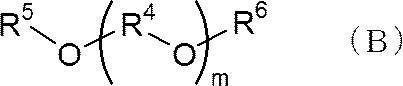
式(B)中、R4は炭素数2~6の2価の脂肪族炭化水素基を表し、R5およびR6はそれぞれ独立に水素原子、炭素数1~20のアルキル基、炭素数6~20のアリール基、炭素数2~20のアシル基、(メタ)アクリロイル基、または、(メタ)アクリロイル基が重合した下記式(b)で表される基を表す。mは1~20の整数を表す。繰り返し単位に含まれる複数のR4はそれぞれ同一であっても異なっていてもよい。

式(b)中、*は式(B)におけるR5またはR6と結合する酸素原子を表し、R7は水素原子またはメチル基を表し、qは1~10の整数を表す。繰り返し単位に含まれる複数のR7は、それぞれ同一であっても異なっていてもよい。
[7] 式(B)中、R5が炭素数6~20のアリール基または(メタ)アクリロイル基である、[6]に記載の農業ハウス用フィルム。
[8] 厚みが60μm~200μmである、[1]~[7]のいずれかに記載の農業ハウス用フィルム。
透湿度が600g/m2/24h以上であり、かつ、弾性率が3.0GPa未満である、農業ハウス用フィルム。
[2] 更に、ポリエーテルエステルおよび/またはポリエーテルを含む可塑剤を含有し、
可塑剤の含有量が、セルロースアシレート樹脂100質量部に対して10~70質量部である、[1]に記載の農業ハウス用フィルム。
[3] セルロースアシレート樹脂のアセチル基置換度が2.5~3.0である、[1]または[2]に記載の農業ハウス用フィルム。
[4] 可塑剤が、下記式(A)で表されるポリエーテルエステルを含む、[2]または[3]に記載の農業ハウス用フィルム。
式(A)中、R1は炭素数2~10の2価の脂肪族炭化水素基を表し、R2はそれぞれ独立に炭素数2~6の2価の脂肪族炭化水素基を表し、R3はそれぞれ独立に水素原子、炭素数1~20のアルキル基、炭素数6~20のアリール基、または、炭素数2~20のアシル基を表す。nはそれぞれ独立に1~20の整数を表し、pは1~15の整数を表す。繰り返し単位に含まれる複数のR1、R2およびnは、それぞれ同一であっても異なっていてもよい。
[5] 式(A)中、R3が炭素数1~20のアルキル基である、[4]に記載の農業ハウス用フィルム。
[6] 可塑剤が、下記式(B)で表されるポリエーテルを含む、[2]または[3]に記載の農業ハウス用フィルム。
式(B)中、R4は炭素数2~6の2価の脂肪族炭化水素基を表し、R5およびR6はそれぞれ独立に水素原子、炭素数1~20のアルキル基、炭素数6~20のアリール基、炭素数2~20のアシル基、(メタ)アクリロイル基、または、(メタ)アクリロイル基が重合した下記式(b)で表される基を表す。mは1~20の整数を表す。繰り返し単位に含まれる複数のR4はそれぞれ同一であっても異なっていてもよい。
式(b)中、*は式(B)におけるR5またはR6と結合する酸素原子を表し、R7は水素原子またはメチル基を表し、qは1~10の整数を表す。繰り返し単位に含まれる複数のR7は、それぞれ同一であっても異なっていてもよい。
[7] 式(B)中、R5が炭素数6~20のアリール基または(メタ)アクリロイル基である、[6]に記載の農業ハウス用フィルム。
[8] 厚みが60μm~200μmである、[1]~[7]のいずれかに記載の農業ハウス用フィルム。
本発明の第1態様によれば、換気を行わなくても植物の光合成に必要なCO2濃度を維持することができる農業ハウス用フィルムおよびそれを用いた農業ハウスを提供することができる。
本発明の第2態様によれば、換気手段を必要とせず、病虫害の流入を抑制することができる農業ハウスを提供することができる。
本発明の第3態様によれば、内張りフィルムの内側の結露を抑制し、かつ、光線透過率の高い農業ハウスを提供することができる。
本発明の第4態様によれば、防滴性および加工性のいずれにも優れた農業ハウス用フィルムを提供することができる。
以下、本発明の第1態様~第4態様について詳細に説明する。
以下に記載する構成要件の説明は、本発明の代表的な実施態様に基づいてなされることがあるが、本発明はそのような実施態様に限定されるものではない。
なお、本明細書において、「~」を用いて表される数値範囲は、「~」の前後に記載される数値を下限値および上限値として含む範囲を意味する。
以下に記載する構成要件の説明は、本発明の代表的な実施態様に基づいてなされることがあるが、本発明はそのような実施態様に限定されるものではない。
なお、本明細書において、「~」を用いて表される数値範囲は、「~」の前後に記載される数値を下限値および上限値として含む範囲を意味する。
[農業ハウス用フィルム(第1態様)]
本発明の第1態様に係る農業ハウス用フィルムは、セルロースアシレート樹脂を含有し、25℃、相対湿度80%における平衡含水率が4~8%であり、厚みが60~200μmのセルロースフィルムである。
ここで、25℃、相対湿度80%における平衡含水率とは、測定対象(サンプル)となるフィルムを25℃、相対湿度80%の環境下で24時間以上調湿した後に、測定に適した質量(500mg)をフィルムからサンプリングし、水分量をカールフィッシャー水分計(AQ-2200、平沼産業社製)を用いて測定し、測定した水分量(mg)をサンプル質量(500mg)で除して算出した値をいう。
本発明の第1態様に係る農業ハウス用フィルムは、セルロースアシレート樹脂を含有し、25℃、相対湿度80%における平衡含水率が4~8%であり、厚みが60~200μmのセルロースフィルムである。
ここで、25℃、相対湿度80%における平衡含水率とは、測定対象(サンプル)となるフィルムを25℃、相対湿度80%の環境下で24時間以上調湿した後に、測定に適した質量(500mg)をフィルムからサンプリングし、水分量をカールフィッシャー水分計(AQ-2200、平沼産業社製)を用いて測定し、測定した水分量(mg)をサンプル質量(500mg)で除して算出した値をいう。
本発明の第1態様においては、上述した通り、セルロースアシレート樹脂を含有し、25℃、相対湿度80%における平衡含水率が4~8%であり、厚みが60~200μmのセルロースフィルムを用いることにより、換気を行わなくても植物の光合成に必要なCO2濃度を維持することができる。
このような効果を奏する理由は詳細には明らかではないが、本発明者らは以下のように推測している。
一般的に、フィルム内を物質が透過する方法は、物理拡散とキャリヤ輸送との2種類が知られているが、本発明においては、上記セルロースフィルムが水を媒体としてCO2を外部から取り込むキャリア輸送により、CO2濃度を維持することができたと考えられる。
すなわち、本発明の第1態様に係る農業ハウス用フィルムは、一般的な農業ハウス用のフィルム(例えば、塩化ビニル、ポリエチレンテレフタレート(PET)など)よりも水との親和性が高いため、上述した平衡含水率を達成することができる。なお、より親水性が高いフィルム(例えば、ポリビニルアルコール(PVA)など)でみられる含水による強度低下は、本発明の第1態様に係る農業ハウス用フィルムでは見られなかった。
そのため、ハウス内が高温多湿の環境となると、上記セルロースフィルムが水を含み、セルロースフィルム中の水にハウス外のCO2が吸着ないし溶解することにより、ハウス内にCO2を取り込むことできたと考えられる。
このような効果を奏する理由は詳細には明らかではないが、本発明者らは以下のように推測している。
一般的に、フィルム内を物質が透過する方法は、物理拡散とキャリヤ輸送との2種類が知られているが、本発明においては、上記セルロースフィルムが水を媒体としてCO2を外部から取り込むキャリア輸送により、CO2濃度を維持することができたと考えられる。
すなわち、本発明の第1態様に係る農業ハウス用フィルムは、一般的な農業ハウス用のフィルム(例えば、塩化ビニル、ポリエチレンテレフタレート(PET)など)よりも水との親和性が高いため、上述した平衡含水率を達成することができる。なお、より親水性が高いフィルム(例えば、ポリビニルアルコール(PVA)など)でみられる含水による強度低下は、本発明の第1態様に係る農業ハウス用フィルムでは見られなかった。
そのため、ハウス内が高温多湿の環境となると、上記セルロースフィルムが水を含み、セルロースフィルム中の水にハウス外のCO2が吸着ないし溶解することにより、ハウス内にCO2を取り込むことできたと考えられる。
本発明の第1態様に係る農業ハウス用フィルムは、上述した通り、CO2をハウス外から取り込むことができると考えられるが、実際に上記セルロースフィルムのCO2透過度を測定すると、農業ハウスでの育成環境を模擬した、25℃、相対湿度80%におけるCO2透過度が1.0×10⁻⁶(cm3/(s・cm2・cmHg))以上であることが確認できた。
すなわち、本発明の第1態様に係る農業ハウス用フィルムは、セルロースアシレート樹脂を含有し、25℃、相対湿度80%におけるCO2透過度が1.0×10⁻⁶(cm3/(s・cm2・cmHg))以上となる、農業ハウス用フィルムともいえる。
すなわち、本発明の第1態様に係る農業ハウス用フィルムは、セルロースアシレート樹脂を含有し、25℃、相対湿度80%におけるCO2透過度が1.0×10⁻⁶(cm3/(s・cm2・cmHg))以上となる、農業ハウス用フィルムともいえる。
ここで、一般的なフィルムのCO2透過度は、乾膜条件、すなわち、JIS K 6275-1に記載の「差圧法」に準じて測定される。
具体的には、サンプルの表面(供給側)に炭酸ガスを圧力800kPaで供給し、裏面(透過側)を3Paまで真空ポンプで減圧する。次に真空ポンプを止めて透過側の圧力変化を記録し、JIS K 6275-1に従って遅れ時間法により算出する。測定温度は40℃、サンプル評価面積は3.14cm2で測定する。
具体的には、サンプルの表面(供給側)に炭酸ガスを圧力800kPaで供給し、裏面(透過側)を3Paまで真空ポンプで減圧する。次に真空ポンプを止めて透過側の圧力変化を記録し、JIS K 6275-1に従って遅れ時間法により算出する。測定温度は40℃、サンプル評価面積は3.14cm2で測定する。
これに対し、本発明の第1態様に係る農業ハウス用フィルムのCO2透過度は、湿膜条件、すなわち、農業ハウス内の育成環境を模擬した25℃、相対湿度80%でのCO2透過度を以下の方法により測定した値をいう。
まず、ステンレス製の骨組みを用いて、25cm×33cm×33cmの骨格を組み上げ、全面(6面)に各フィルムを貼り付け、小型のハウス試験体を作製した。
次いで、ハウス試験体を室温25℃、相対湿度80%の環境下で24時間以上調湿し、その後、内部にCO2濃度計(TR-76UI、T&D社製)を設置し、CO2ガスを10000ppmとなるまで吹き込み、粘着テープを用いてハウス試験体の内部を密閉状態とした。
次いで、25℃、相対湿度80%の環境下に設置し、ハウス試験体の表面(フィルム)を流水下に置くことで常時濡れた状態とし、その環境下でのCO2ガス濃度推移を24時間記録した。
内部のCO2ガス濃度の低下について24時間記録した結果から、CO2ガス濃度の低下速度を求め、その低下速度について理論値によるフィッティングとの比較を行い、湿膜条件(25℃相対湿度80%)でのCO2透過係数とした。
フィッティングは下記式によって単位時間当たりのCO2透過量(すなわち、CO2透過度)Tを計算し、経過時間に対する理論的なCO2濃度変化をプロットした。
CO2濃度は、1秒間は最初の圧力差条件で気体が移動すると仮定することによりCO2透過係数の値を実際の測定値とフィッティングした。
T(CO2透過度)=(CO2透過係数 ×フィルム表面積× 圧力差)/フィルム厚み
まず、ステンレス製の骨組みを用いて、25cm×33cm×33cmの骨格を組み上げ、全面(6面)に各フィルムを貼り付け、小型のハウス試験体を作製した。
次いで、ハウス試験体を室温25℃、相対湿度80%の環境下で24時間以上調湿し、その後、内部にCO2濃度計(TR-76UI、T&D社製)を設置し、CO2ガスを10000ppmとなるまで吹き込み、粘着テープを用いてハウス試験体の内部を密閉状態とした。
次いで、25℃、相対湿度80%の環境下に設置し、ハウス試験体の表面(フィルム)を流水下に置くことで常時濡れた状態とし、その環境下でのCO2ガス濃度推移を24時間記録した。
内部のCO2ガス濃度の低下について24時間記録した結果から、CO2ガス濃度の低下速度を求め、その低下速度について理論値によるフィッティングとの比較を行い、湿膜条件(25℃相対湿度80%)でのCO2透過係数とした。
フィッティングは下記式によって単位時間当たりのCO2透過量(すなわち、CO2透過度)Tを計算し、経過時間に対する理論的なCO2濃度変化をプロットした。
CO2濃度は、1秒間は最初の圧力差条件で気体が移動すると仮定することによりCO2透過係数の値を実際の測定値とフィッティングした。
T(CO2透過度)=(CO2透過係数 ×フィルム表面積× 圧力差)/フィルム厚み
<セルロースアシレート樹脂>
本発明の第1態様に係る農業ハウス用フィルムが含有するセルロースアシレート樹脂は、特に限定されず、従来公知の、炭素数2~22の脂肪族アシル基(例えば、アセチル基、プロピオニル基、ブチリル基、ペンタノイル基など)を含むセルロースアシレート樹脂;無置換の芳香族アシル基を少なくとも1種を含むセルロースアシレート樹脂;等を用いることができる。
なお、セルロースアシレート樹脂は、後述する透湿度を保持する観点から、セルロースフィルムの総質量に対して60~90質量%含有しているのが好ましく、65~80質量%含有しているのがより好ましい。
本発明の第1態様に係る農業ハウス用フィルムが含有するセルロースアシレート樹脂は、特に限定されず、従来公知の、炭素数2~22の脂肪族アシル基(例えば、アセチル基、プロピオニル基、ブチリル基、ペンタノイル基など)を含むセルロースアシレート樹脂;無置換の芳香族アシル基を少なくとも1種を含むセルロースアシレート樹脂;等を用いることができる。
なお、セルロースアシレート樹脂は、後述する透湿度を保持する観点から、セルロースフィルムの総質量に対して60~90質量%含有しているのが好ましく、65~80質量%含有しているのがより好ましい。
セルロースアシレート樹脂の原料セルロースとしては、例えば、綿花リンター、ケナフ、木材パルプ(広葉樹パルプ、針葉樹パルプ)等が挙げられ、これらを1種単独で用いてもよく、2種以上を併用してもよい。
これらのうち、原料セルロースとしては、綿花リンターおよび/または木材パルプであることが好ましい。
また、綿花リンターおよび/または木材パルプは、α-セルロースを80%以上含有することが好ましい。
更に、綿花リンターおよび/または木材パルプは、マンノース/キシロース=0.35/1~3.0/1(モル比)であることが好ましく、その総含有量が0.01~5モル%であることが好ましい。
なお、綿花リンターと木材パルプとを併用する場合の混合比は5/95~95/5であることが好ましい。
これらのうち、原料セルロースとしては、綿花リンターおよび/または木材パルプであることが好ましい。
また、綿花リンターおよび/または木材パルプは、α-セルロースを80%以上含有することが好ましい。
更に、綿花リンターおよび/または木材パルプは、マンノース/キシロース=0.35/1~3.0/1(モル比)であることが好ましく、その総含有量が0.01~5モル%であることが好ましい。
なお、綿花リンターと木材パルプとを併用する場合の混合比は5/95~95/5であることが好ましい。
セルロースアシレート樹脂を構成するセルロースアシレートとは、セルロースのカルボン酸エステルのことであり、例えば、セルロースの低級カルボン酸エステルであるのが好ましい。
セルロースアシレートとしては、具体的には、例えば、セルロースアセテート、セルロースアセテートプロピオネート、セルロースアセテートブチレート、セルロースアセテートステアレート、セルロースアセテートベンゾエート等が挙げられる。
これらのうち、セルロースアセテートであるのが好ましく、具体的には、トリアセチルセルロース(TAC)であるのがより好ましい。
セルロースアシレートとしては、具体的には、例えば、セルロースアセテート、セルロースアセテートプロピオネート、セルロースアセテートブチレート、セルロースアセテートステアレート、セルロースアセテートベンゾエート等が挙げられる。
これらのうち、セルロースアセテートであるのが好ましく、具体的には、トリアセチルセルロース(TAC)であるのがより好ましい。
このようなセルロースアシレートは、活性化工程(前処理工程)、アシル化工程(アセチルの場合は酢化工程)、熟成工程、沈殿工程、精製工程、乾燥工程、粉砕工程の中の組み合わせによって製造されたことが好ましい。
なお、セルロースアシレートの原料綿や合成方法については、発明協会公開技報(公技番号2001-1745、2001年3月15日発行、発明協会)の7頁ないし12頁にも詳細に記載されている。
なお、セルロースアシレートの原料綿や合成方法については、発明協会公開技報(公技番号2001-1745、2001年3月15日発行、発明協会)の7頁ないし12頁にも詳細に記載されている。
また、セルロースアシレートの粘度平均重合度(DP)が200~700であることが好ましい。
また、セルロースアシレートの重量平均分子量(Mw)と数平均分子量(Mn)との比(Mw/Mn)が1.0~5.0であるのが好ましく、1.0~4.0であるのがより好ましく、1.5~3.0であるのが更に好ましい。
ここで、粘度平均重合度は、粘度法(ASTM D2857)による平均分子量をいい、重量平均分子量および数平均分子量は、それぞれ、ゲルパーミエーションクロマトグラフィー(GPC)法により測定される分子量をいう。
また、セルロースアシレートの重量平均分子量(Mw)と数平均分子量(Mn)との比(Mw/Mn)が1.0~5.0であるのが好ましく、1.0~4.0であるのがより好ましく、1.5~3.0であるのが更に好ましい。
ここで、粘度平均重合度は、粘度法(ASTM D2857)による平均分子量をいい、重量平均分子量および数平均分子量は、それぞれ、ゲルパーミエーションクロマトグラフィー(GPC)法により測定される分子量をいう。
また、セルロースアシレートは、残存酢酸量または炭素数3~22のカルボン酸の残存量が0.5質量%以下であることが好ましい。
また、セルロースアシレートは、アルカリ金属および/またはアルカリ土類金属の少なくとも一種を1ppb~10000ppm含有していることが好ましい。
また、セルロースアシレートは、25℃でのアセトン抽出量が15質量%以下であることが好ましい。
また、セルロースアシレートは、酸解離指数1.93~4.5の酸もしくは部分エステル化物、またはこれらの塩を含有することが好ましい。
また、セルロースアシレートの含水率が2質量%以下であることが好ましい。
また、セルロースアシレートのイエローネスインデックスが0.1~10であることが好ましい。
また、セルロースアシレートのイエローネスインデックスが0.1~10であることが好ましい。
また、セルロースアシレートのヘイズが0.05~5%であることが好ましい。
また、セルロースアシレートの光線透過率が80%以上であることが好ましく、85%以上であることがより好ましい。
また、セルロースアシレートの光線透過率が80%以上であることが好ましく、85%以上であることがより好ましい。
また、セルロースアシレートのTgが80~200℃であることが好ましい。
また、セルロースアシレートの結晶化発熱量が2~20J/gであることが好ましい。
また、セルロースアシレートの結晶化発熱量が2~20J/gであることが好ましい。
本発明の第1態様においては、セルロースアシレートは、セルロースの水酸基への置換度が、下記式(1)および(2)を満足するものが好ましい。
2.0≦SA+SB≦3.0 ・・・式(1)
0≦SA≦3.0 ・・・式(2)
ここで、式中、「SA」は、セルロースの水酸基の水素原子を置換しているアセチル基の置換度を表し、「SB」は、セルロースの水酸基の水素原子を置換している、アセチル基以外のアシル基の置換度を表す。
また、上記式(2)は、得られる本発明の第1態様に係る農業ハウス用フィルムの加工性がより良好となる理由から下記式(3)で表されるのが好ましく、平衡含水率が高くなり、CO2濃度をハウス外の濃度と同等程度に維持できる理由から下記式(4)で表されるのがより好ましい。
2.0≦SA≦3.0 ・・・式(3)
2.2≦SA≦2.6 ・・・式(4)
2.0≦SA+SB≦3.0 ・・・式(1)
0≦SA≦3.0 ・・・式(2)
ここで、式中、「SA」は、セルロースの水酸基の水素原子を置換しているアセチル基の置換度を表し、「SB」は、セルロースの水酸基の水素原子を置換している、アセチル基以外のアシル基の置換度を表す。
また、上記式(2)は、得られる本発明の第1態様に係る農業ハウス用フィルムの加工性がより良好となる理由から下記式(3)で表されるのが好ましく、平衡含水率が高くなり、CO2濃度をハウス外の濃度と同等程度に維持できる理由から下記式(4)で表されるのがより好ましい。
2.0≦SA≦3.0 ・・・式(3)
2.2≦SA≦2.6 ・・・式(4)
<添加剤>
本発明の第1態様に係る農業ハウス用フィルムは、使用環境に応じて、可塑剤、マット剤、劣化防止剤、紫外線吸収剤等の添加剤を含有していてもよい。
可塑剤としては、具体的には、例えば、下記式(A)で表されるポリエーテルエステルを含むエステル系可塑剤、下記式(B)で表されるポリエーテルを含むエーテル系可塑剤が好適に挙げられる。

上記式(A)中、R1は炭素数2~10の2価の脂肪族炭化水素基を表し、R2はそれぞれ独立に炭素数2~6の2価の脂肪族炭化水素基を表し、R3はそれぞれ独立に水素原子、炭素数1~20のアルキル基、炭素数6~20のアリール基、または、炭素数2~20のアシル基を表す。nはそれぞれ独立に1~20の整数を表し、pは1~15の整数を表す。なお、繰り返し単位に含まれる複数のR1、R2およびnは、それぞれ同一であっても異なっていてもよい。
また、上記式(B)中、R4は炭素数2~6の2価の脂肪族炭化水素基を表し、R5およびR6はそれぞれ独立に水素原子、炭素数1~20のアルキル基、炭素数6~20のアリール基、炭素数2~20のアシル基、(メタ)アクリロイル基、または、(メタ)アクリロイル基が重合した下記式(b)で表される基を表す。mは1~20の整数を表す。なお、繰り返し単位に含まれる複数のR4はそれぞれ同一であっても異なっていてもよい。
ここで、本明細書においては、「(メタ)アクリロイル基」とは、アクリロイル基(CH2=CHCO-)またはメタクリロイル基(CH2=C(CH3)CO-)を意味するものとする。
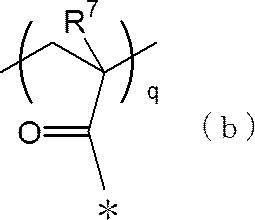
上記式(b)中、*は上記式(B)におけるR5またはR6と結合する酸素原子を表し、R7は水素原子またはメチル基を表し、qは1~10の整数を表す。繰り返し単位に含まれる複数のR7は、それぞれ同一であっても異なっていてもよい。
本発明の第1態様に係る農業ハウス用フィルムは、使用環境に応じて、可塑剤、マット剤、劣化防止剤、紫外線吸収剤等の添加剤を含有していてもよい。
可塑剤としては、具体的には、例えば、下記式(A)で表されるポリエーテルエステルを含むエステル系可塑剤、下記式(B)で表されるポリエーテルを含むエーテル系可塑剤が好適に挙げられる。
上記式(A)中、R1は炭素数2~10の2価の脂肪族炭化水素基を表し、R2はそれぞれ独立に炭素数2~6の2価の脂肪族炭化水素基を表し、R3はそれぞれ独立に水素原子、炭素数1~20のアルキル基、炭素数6~20のアリール基、または、炭素数2~20のアシル基を表す。nはそれぞれ独立に1~20の整数を表し、pは1~15の整数を表す。なお、繰り返し単位に含まれる複数のR1、R2およびnは、それぞれ同一であっても異なっていてもよい。
また、上記式(B)中、R4は炭素数2~6の2価の脂肪族炭化水素基を表し、R5およびR6はそれぞれ独立に水素原子、炭素数1~20のアルキル基、炭素数6~20のアリール基、炭素数2~20のアシル基、(メタ)アクリロイル基、または、(メタ)アクリロイル基が重合した下記式(b)で表される基を表す。mは1~20の整数を表す。なお、繰り返し単位に含まれる複数のR4はそれぞれ同一であっても異なっていてもよい。
ここで、本明細書においては、「(メタ)アクリロイル基」とは、アクリロイル基(CH2=CHCO-)またはメタクリロイル基(CH2=C(CH3)CO-)を意味するものとする。
上記式(b)中、*は上記式(B)におけるR5またはR6と結合する酸素原子を表し、R7は水素原子またはメチル基を表し、qは1~10の整数を表す。繰り返し単位に含まれる複数のR7は、それぞれ同一であっても異なっていてもよい。
本発明の第1態様においては、可塑剤を含有する場合の含有量は、セルロースアシレート樹脂100質量部に対して10~70質量部であるのが好ましく、20~60質量部であるのがより好ましく、30~60質量部であるのが更に好ましく、40~60質量部であるのが特に好ましい。
また、マット剤としては、有機または無機微粒子のいずれも使用することができる。
また、劣化防止剤としては、具体的には、例えば、ヒンダードアミン系光安定剤、酸化防止剤、過酸化物分解剤、ラジカル禁止剤、金属不活性化剤、酸捕獲剤、アミン等が挙げられる。
また、紫外線吸収剤としては、紫外線吸収性を発現できるもので、公知のものがいずれも使用でき、例えば、ベンゾトリアゾール系やヒドロキシフェニルトリアジン系の紫外線吸収剤が好適に挙げられる。
このような添加剤を添加する場合、後述するセルロースアシレート溶液(ドープ)中に含有させるのが好ましい。
また、劣化防止剤としては、具体的には、例えば、ヒンダードアミン系光安定剤、酸化防止剤、過酸化物分解剤、ラジカル禁止剤、金属不活性化剤、酸捕獲剤、アミン等が挙げられる。
また、紫外線吸収剤としては、紫外線吸収性を発現できるもので、公知のものがいずれも使用でき、例えば、ベンゾトリアゾール系やヒドロキシフェニルトリアジン系の紫外線吸収剤が好適に挙げられる。
このような添加剤を添加する場合、後述するセルロースアシレート溶液(ドープ)中に含有させるのが好ましい。
本発明の第1態様に係る農業ハウス用フィルムの平衡含水率が4~8%であり、CO2濃度を維持しやすくなる理由から、5~8%であるのが好ましい。
また、本発明の第1態様に係る農業ハウス用フィルムの厚みは、60μm~200μmであり、加工性が良好となる理由から、80μm~150μmであるのが好ましく、80μm~120μmであるのがより好ましい。
なお、農業ハウス用フィルムは、単層構造であっても積層構造であってもよいが、単層構造であるのが好ましい。
また、本発明の第1態様に係る農業ハウス用フィルムの厚みは、60μm~200μmであり、加工性が良好となる理由から、80μm~150μmであるのが好ましく、80μm~120μmであるのがより好ましい。
なお、農業ハウス用フィルムは、単層構造であっても積層構造であってもよいが、単層構造であるのが好ましい。
本発明の第1態様に係る農業ハウス用フィルムの光線透過率は、ハウス内の植物の光合成を促進し、ハウス内の温度を好適に保つ等の理由から、80%以上であるのが好ましく、85%以上であるのがより好ましく、90%以上であるのが更に好ましい。
ここで、光線透過率は、分光光度計(ジャスコエンジニアリング製:V-560)を用いて測定を行い、光合成に有効な波長域(400~700nm)について平均した透過率をいう。
ここで、光線透過率は、分光光度計(ジャスコエンジニアリング製:V-560)を用いて測定を行い、光合成に有効な波長域(400~700nm)について平均した透過率をいう。
また、本発明の第1態様に係る農業ハウス用フィルムの透湿度は、農業ハウスの結露発生を抑制する効果や、細霧中のハウス内の相対湿度を低減し、細霧冷却効果を維持できる効果などの観点から、600g/m2/24h以上であるのが好ましく、800g/m2/24h以上であるのがより好ましく、1000g/m2/24h以上であるのが更に好ましい。
ここで、透湿度とは、JIS Z 0208:1976の「防湿包装材料の透湿度試験方法(カップ法)」に記載された手法に従い、温度40℃、相対湿度90%の条件下で24時間に通過した水蒸気の量(g/m2/24h)をいう。
ここで、透湿度とは、JIS Z 0208:1976の「防湿包装材料の透湿度試験方法(カップ法)」に記載された手法に従い、温度40℃、相対湿度90%の条件下で24時間に通過した水蒸気の量(g/m2/24h)をいう。
<農業ハウス用フィルムの製造方法>
本発明の第1態様に係る農業ハウス用フィルムを製造する製造方法は特に限定されず、例えば、セルロースアシレートを有機溶剤に溶解させたドープ(セルロースアシレート溶液)を、流延ダイから、ケーシング内で回転するエンドレスベルトまたはドラムからなる支持体(以下、これらをまとめて「支持体」と略す。)上に流延し、支持体から剥ぎ取り、更に乾燥させてフィルムを形成する溶液製膜方法等が挙げられる。
本発明の第1態様に係る農業ハウス用フィルムを製造する製造方法は特に限定されず、例えば、セルロースアシレートを有機溶剤に溶解させたドープ(セルロースアシレート溶液)を、流延ダイから、ケーシング内で回転するエンドレスベルトまたはドラムからなる支持体(以下、これらをまとめて「支持体」と略す。)上に流延し、支持体から剥ぎ取り、更に乾燥させてフィルムを形成する溶液製膜方法等が挙げられる。
(有機溶媒)
セルロースアシレートを溶解する有機溶剤としては、例えば、ベンゼン、トルエンなどの炭化水素系溶媒;メチレンクロライド、クロロベンゼンなどのハロゲン化炭化水素系溶媒;メタノール、エタノール、ジエチレングリコールなどのアルコール系溶媒;アセトンなどのケトン系溶媒;酢酸メチル、酢酸エチル、酢酸プロピルなどのエステル系溶媒;テトラヒドロフラン、メチルセロソルブなどのエーテル系溶媒;等が挙げられ、これらを1種単独で用いてもよく、2種以上を併用してもよい。
セルロースアシレートを溶解する有機溶剤としては、例えば、ベンゼン、トルエンなどの炭化水素系溶媒;メチレンクロライド、クロロベンゼンなどのハロゲン化炭化水素系溶媒;メタノール、エタノール、ジエチレングリコールなどのアルコール系溶媒;アセトンなどのケトン系溶媒;酢酸メチル、酢酸エチル、酢酸プロピルなどのエステル系溶媒;テトラヒドロフラン、メチルセロソルブなどのエーテル系溶媒;等が挙げられ、これらを1種単独で用いてもよく、2種以上を併用してもよい。
これらのうち、炭素原子数1~7のハロゲン化炭化水素系溶媒を用いるのが好ましく、メチレンクロライドを用いるのがより好ましい。
また、セルロースアシレートの溶解性、支持体からの剥ぎ取り性、フィルムの機械強度等の観点から、メチレンクロライドの他に、炭素原子数1~5のアルコールを併用することが好ましい。アルコールの含有量は、溶剤全体に対し2~25質量%が好ましく、5~20質量%がより好ましい。アルコールの具体例としては、メタノール、エタノール、n-プロパノール、イソプロパノール、n-ブタノール等が挙げられ、メタノール、エタノール、n-ブタノール、あるいはこれらの混合物が好ましく用いられる。
また、セルロースアシレートの溶解性、支持体からの剥ぎ取り性、フィルムの機械強度等の観点から、メチレンクロライドの他に、炭素原子数1~5のアルコールを併用することが好ましい。アルコールの含有量は、溶剤全体に対し2~25質量%が好ましく、5~20質量%がより好ましい。アルコールの具体例としては、メタノール、エタノール、n-プロパノール、イソプロパノール、n-ブタノール等が挙げられ、メタノール、エタノール、n-ブタノール、あるいはこれらの混合物が好ましく用いられる。
(セルロースアシレート溶液の調製)
セルロースアシレート溶液の調製方法は、まず、セルロースアシレートと有機溶媒とを混合し、-10~55℃でセルロースアシレートを溶解し、その溶解部、未溶解部および有機溶媒の混合物を0~97℃に加温して溶媒中にセルロースアシレートを完全に溶解させる調製方法であることが好ましい。
ここで、調製されるセルロースアシレート溶液は、必要に応じて濃縮してもよいが、セルロースアシレートが5~40質量%の濃度であることが好ましい。また、セルロースアシレート溶液は、40℃での粘度が10~3000Pa・sであることが好ましい。
セルロースアシレート溶液の調製方法は、まず、セルロースアシレートと有機溶媒とを混合し、-10~55℃でセルロースアシレートを溶解し、その溶解部、未溶解部および有機溶媒の混合物を0~97℃に加温して溶媒中にセルロースアシレートを完全に溶解させる調製方法であることが好ましい。
ここで、調製されるセルロースアシレート溶液は、必要に応じて濃縮してもよいが、セルロースアシレートが5~40質量%の濃度であることが好ましい。また、セルロースアシレート溶液は、40℃での粘度が10~3000Pa・sであることが好ましい。
また、セルロースアシレートと有機溶媒とを混合する際に、セルロースアシレートの90質量%以上が0.1~4mmの粒子を使用することが好ましい。
また、セルロースアシレート溶液は、流延する前に、0~200℃の温度でろ過するのが好ましい。
ここで、ろ過フィルターの平均孔径が100μm以下であることが好ましく、また、ろ過流量が50リットル/hr以上であることが好ましい。
ここで、ろ過フィルターの平均孔径が100μm以下であることが好ましく、また、ろ過流量が50リットル/hr以上であることが好ましい。
(流延)
セルロースアシレート溶液を流延する工程は、その溶液温度が-10~57℃であることが好ましく、その工程の温度が-10~57℃で保温されていることが好ましい。
また、セルロースアシレート溶液を流延する支持体が、-20~40℃の表面温度を有していることが好ましい。
セルロースアシレート溶液を流延する工程は、その溶液温度が-10~57℃であることが好ましく、その工程の温度が-10~57℃で保温されていることが好ましい。
また、セルロースアシレート溶液を流延する支持体が、-20~40℃の表面温度を有していることが好ましい。
(剥ぎ取り)
流延後の剥ぎ取りは、剥ぎ取り時の乾燥風の温度が20~250℃であることが好ましい。また、乾燥時の未乾燥の農業ハウス用フィルムが、テンターで保持されることが好ましい。
流延後の剥ぎ取りは、剥ぎ取り時の乾燥風の温度が20~250℃であることが好ましい。また、乾燥時の未乾燥の農業ハウス用フィルムが、テンターで保持されることが好ましい。
このような溶液製膜で作製される農業ハウス用フィルムは、少なくとも一軸流延中あるいは流延後に0.5~300%延伸されることが好ましい。また、流延時の速度が1~200m/分であることが好ましい。
また、農業ハウス用フィルムは、フィルムの巻き取り姿が、長手方向に少なくとも100m以上であり、かつ幅方向が60cm以上であることが好ましい。
また、農業ハウス用フィルムは、フィルムの巻き取り姿が、長手方向に少なくとも100m以上であり、かつ幅方向が60cm以上であることが好ましい。
本発明においては、上述したセルロースアシレートフィルムの製造方法は特に制限されず、上述した方法以外の公知の方法を適宜採用することができ、例えば、発明協会公開技報(公技番号2001-1745、2001年3月15日発行、発明協会)の12頁ないし30頁に記載された方法等を適宜採用することができる。
[農業ハウス(第1態様)]
本発明の第1態様に係る農業ハウスは、躯体と、フィルムとを有し、フィルムが躯体に展張されることにより外部から仕切られた空間が形成される農業ハウスである。
本発明の第1態様に係る農業ハウスは、躯体と、フィルムとを有し、フィルムが躯体に展張されることにより外部から仕切られた空間が形成される農業ハウスである。
図1は、本発明の第1態様に係る農業ハウスの外観の一例を示す模式的な斜視図である。
図1に示すように、農業ハウス10は、躯体2に展張されたフィルム1を有する。
また、図1に示すように、農業ハウス10は、躯体2に展張されたフィルム1により全面が覆われており、特許文献1(特開2010-17093号公報)の図4等に図示される排気扇を有していない。
以下に、本発明の第1態様に係る農業ハウスを構成する躯体およびフィルムについて詳述する。
図1に示すように、農業ハウス10は、躯体2に展張されたフィルム1を有する。
また、図1に示すように、農業ハウス10は、躯体2に展張されたフィルム1により全面が覆われており、特許文献1(特開2010-17093号公報)の図4等に図示される排気扇を有していない。
以下に、本発明の第1態様に係る農業ハウスを構成する躯体およびフィルムについて詳述する。
〔躯体〕
本発明の第1態様に係る農業ハウスが有する躯体は特に限定されず、従来公知のビニールハウスなどで用いられる骨材(例えば、鋼材、鋼管など)を用いることができる。
本発明の第1態様に係る農業ハウスが有する躯体は特に限定されず、従来公知のビニールハウスなどで用いられる骨材(例えば、鋼材、鋼管など)を用いることができる。
〔フィルム〕
本発明の第1態様に係る農業ハウスが有するフィルム、上記躯体に展張されるフィルムであり、上述した本発明の第1態様に係る農業ハウス用フィルムである。
本発明の第1態様に係る農業ハウスが有するフィルム、上記躯体に展張されるフィルムであり、上述した本発明の第1態様に係る農業ハウス用フィルムである。
本発明の第1態様に係る農業ハウスは、上述した本発明の第1態様に係る農業ハウス用フィルムを有しているため、換気を行わなくても植物の光合成に必要なCO2濃度を維持することができる。
そのため、本発明の第1態様に係る農業ハウスは、積極的な換気手段(例えば、ハウスの天井や側面に設けられる換気ファンなど)を設ける必要がなく、冷暖房の効率が良くなり、また、病虫害の流入を抑制することができるという効果を有する。
なお、本発明においては、換気手段には、農業ハウス内で作業に従事する作業員のための出入口が含まれないが、この出入口についても、例えば、二重扉などにして、外部の空気がハウス内の空間に直接入り込まないようにするのが好ましい。
そのため、本発明の第1態様に係る農業ハウスは、積極的な換気手段(例えば、ハウスの天井や側面に設けられる換気ファンなど)を設ける必要がなく、冷暖房の効率が良くなり、また、病虫害の流入を抑制することができるという効果を有する。
なお、本発明においては、換気手段には、農業ハウス内で作業に従事する作業員のための出入口が含まれないが、この出入口についても、例えば、二重扉などにして、外部の空気がハウス内の空間に直接入り込まないようにするのが好ましい。
[農業ハウス(第2態様)]
本発明の第2態様に係る農業ハウスは、躯体と、フィルムとを有し、フィルムが躯体に展張されることにより外部から仕切られた空間が形成される農業ハウスである。
上記フィルムは、セルロースアシレート樹脂を含有し、透湿度が600g/m2/24h以上であり、厚みが80~200μmのセルロースフィルムである。
また、本発明の第2態様に係る農業ハウスは、霧化した水を空間内に噴霧する噴霧装置を有する。
本発明の第2態様に係る農業ハウスは、躯体と、フィルムとを有し、フィルムが躯体に展張されることにより外部から仕切られた空間が形成される農業ハウスである。
上記フィルムは、セルロースアシレート樹脂を含有し、透湿度が600g/m2/24h以上であり、厚みが80~200μmのセルロースフィルムである。
また、本発明の第2態様に係る農業ハウスは、霧化した水を空間内に噴霧する噴霧装置を有する。
図1は、本発明の第2態様に係る農業ハウスの外観の一例を示す模式的な斜視図であり、図2は、本発明の第2態様に係る農業ハウスの内部の一例を示す模式的な断面図である。
図1および図2に示すように、農業ハウス10は、躯体2に展張されたフィルム1を有し、ハウスの空間内に霧化した水を噴霧する噴霧装置3および給水タンク4を有する。
また、図1および図2に示すように、農業ハウス10は、躯体2に展張されたフィルム1により全面が覆われており、特許文献2(特開2014-198035号公報)の図1等に図示される吸気ファンや排気ファンを有していない。
図1および図2に示すように、農業ハウス10は、躯体2に展張されたフィルム1を有し、ハウスの空間内に霧化した水を噴霧する噴霧装置3および給水タンク4を有する。
また、図1および図2に示すように、農業ハウス10は、躯体2に展張されたフィルム1により全面が覆われており、特許文献2(特開2014-198035号公報)の図1等に図示される吸気ファンや排気ファンを有していない。
本発明の第2態様に係る農業ハウスは、上述した構成、特に、セルロースアシレート樹脂を含有し、透湿度が600g/m2/24h以上であり、厚みが80~200μmのフィルムを用いてハウスを構成することにより、噴霧装置による冷却を利用した場合であっても、換気手段を必要とせず、病虫害の流入を抑制することができる。
このような効果を奏する理由は詳細には明らかではないが、上記フィルムの透湿度および厚みが上述した数値範囲内であることにより、噴霧装置により噴霧された水の少なくとも一部が、フィルムを通して外部に徐々に透過し、農業ハウス内の湿度が低下するためと考えられる。
以下に、本発明の第2態様に係る農業ハウスを構成する躯体、フィルムおよび噴霧装置について詳述する。
このような効果を奏する理由は詳細には明らかではないが、上記フィルムの透湿度および厚みが上述した数値範囲内であることにより、噴霧装置により噴霧された水の少なくとも一部が、フィルムを通して外部に徐々に透過し、農業ハウス内の湿度が低下するためと考えられる。
以下に、本発明の第2態様に係る農業ハウスを構成する躯体、フィルムおよび噴霧装置について詳述する。
〔躯体〕
本発明の第2態様に係る農業ハウスが有する躯体は特に限定されず、従来公知のビニールハウスなどで用いられる骨材(例えば、鋼材、鋼管など)を用いることができる。
本発明の第2態様に係る農業ハウスが有する躯体は特に限定されず、従来公知のビニールハウスなどで用いられる骨材(例えば、鋼材、鋼管など)を用いることができる。
〔フィルム〕
本発明の第2態様に係る農業ハウスが有するフィルム(以下、「第2態様に係る農業ハウス用フィルム」ともいう。)は、上記躯体に展張されるフィルムであり、セルロースアシレート樹脂を含有し、透湿度が600g/m2/24h以上であり、厚みが80~200μmのセルロースフィルムである。
本発明の第2態様に係る農業ハウスが有するフィルム(以下、「第2態様に係る農業ハウス用フィルム」ともいう。)は、上記躯体に展張されるフィルムであり、セルロースアシレート樹脂を含有し、透湿度が600g/m2/24h以上であり、厚みが80~200μmのセルロースフィルムである。
ここで、透湿度とは、本発明の第1態様に係る農業ハウス用フィルムにおいて説明したものと同義である。
<セルロースアシレート樹脂>
第2態様に係る農業ハウス用フィルムが含有するセルロースアシレート樹脂は、特に限定されず、本発明の第1態様に係る農業ハウス用フィルムが含有するセルロースアシレート樹脂と同様のものが挙げられる。
第2態様に係る農業ハウス用フィルムが含有するセルロースアシレート樹脂は、特に限定されず、本発明の第1態様に係る農業ハウス用フィルムが含有するセルロースアシレート樹脂と同様のものが挙げられる。
<添加剤>
第2態様に係る農業ハウス用フィルムは、使用環境に応じて、可塑剤、マット剤、劣化防止剤、紫外線吸収剤等の添加剤を含有していてもよい。
これらの添加剤としては、本発明の第1態様に係る農業ハウス用フィルムにおいて説明したものと同様のものが挙げられる。
第2態様に係る農業ハウス用フィルムは、使用環境に応じて、可塑剤、マット剤、劣化防止剤、紫外線吸収剤等の添加剤を含有していてもよい。
これらの添加剤としては、本発明の第1態様に係る農業ハウス用フィルムにおいて説明したものと同様のものが挙げられる。
第2態様に係る農業ハウス用フィルムの厚みは、80μm~200μmであり、加工性が良好となる理由から、80μm~150μmであるのが好ましく、80μm~120μmであるのがより好ましい。
なお、第2態様に係る農業ハウス用フィルムは、単層構造であっても積層構造であってもよいが、単層構造であるのが好ましい。
なお、第2態様に係る農業ハウス用フィルムは、単層構造であっても積層構造であってもよいが、単層構造であるのが好ましい。
<農業ハウス用フィルムの製造方法>
第2態様に係る農業ハウス用フィルムを製造する製造方法は特に限定されず、例えば、本発明の第1態様に係る農業ハウス用フィルムにおいて説明したものと同様のものが挙げられる。
第2態様に係る農業ハウス用フィルムを製造する製造方法は特に限定されず、例えば、本発明の第1態様に係る農業ハウス用フィルムにおいて説明したものと同様のものが挙げられる。
〔噴霧装置〕
本発明の第2態様に係る農業ハウスが有する噴霧装置は、霧化した水をハウスの空間内に噴霧する装置である。
噴霧装置としては、以下に詳述するように、霧化した水をハウスの空間内に噴霧することにより空間を冷却する細霧冷却装置であるのが好ましい。なお、噴霧装置は、後述する細霧冷却装置の他、ハウス内の植物への給水に利用する装置などが挙げられる。
本発明の第2態様に係る農業ハウスが有する噴霧装置は、霧化した水をハウスの空間内に噴霧する装置である。
噴霧装置としては、以下に詳述するように、霧化した水をハウスの空間内に噴霧することにより空間を冷却する細霧冷却装置であるのが好ましい。なお、噴霧装置は、後述する細霧冷却装置の他、ハウス内の植物への給水に利用する装置などが挙げられる。
<細霧冷却装置>
細霧冷却装置は、細霧冷房ファンとも呼ばれるものであり、例えば、ミストファン、ミストクーラーなど公知の装置を用いることができる。
また、細霧冷却装置としては、具体的には、例えば、特開2010-068740号公報に記載された「送風するファンと、このファンに細霧を送る噴霧手段とで構成した農作物の生育を制御する細霧冷却装置」や、特開2000-157068号公報に記載された、「加圧空気を使用して液体を霧化する空気霧化型のノズルを使用して空間内に水を噴霧することができる装置」などが挙げられる。
なお、図2においては、給水タンク2が農業ハウス内に設置されているが、本発明においては、霧化した水をハウスの空間内に噴霧する手段(例えば、送風ファンやノズル)のみが農業ハウス内に設置されていればよい。
細霧冷却装置は、細霧冷房ファンとも呼ばれるものであり、例えば、ミストファン、ミストクーラーなど公知の装置を用いることができる。
また、細霧冷却装置としては、具体的には、例えば、特開2010-068740号公報に記載された「送風するファンと、このファンに細霧を送る噴霧手段とで構成した農作物の生育を制御する細霧冷却装置」や、特開2000-157068号公報に記載された、「加圧空気を使用して液体を霧化する空気霧化型のノズルを使用して空間内に水を噴霧することができる装置」などが挙げられる。
なお、図2においては、給水タンク2が農業ハウス内に設置されているが、本発明においては、霧化した水をハウスの空間内に噴霧する手段(例えば、送風ファンやノズル)のみが農業ハウス内に設置されていればよい。
<噴霧量>
本発明の第2態様においては、噴霧装置の噴霧量は、夏場の日中においても十分な冷却効果が得られ、また、結露の発生をより抑制することができる理由から、5~30g/m2・分であるのが好ましく、10~20g/m2・分であるのがより好ましい。
本発明の第2態様においては、噴霧装置の噴霧量は、夏場の日中においても十分な冷却効果が得られ、また、結露の発生をより抑制することができる理由から、5~30g/m2・分であるのが好ましく、10~20g/m2・分であるのがより好ましい。
本発明の第2態様に係る農業ハウスは、上述した第2態様に係る農業ハウス用フィルムを有しているため、換気手段を必要とせず、病虫害の流入を抑制することができる。
そのため、本発明の第2態様に係る農業ハウスは、積極的な換気手段(例えば、ハウスの天井や側面に設けられる換気ファンなど)を設ける必要がないが、病虫害の流入をより抑制することができ、また、植物の生育に必要な環境を調整しやすくなる理由から、換気手段を有していないのが好ましい。なお、本発明においては、換気手段には、農業ハウス内で作業に従事する作業員のための出入口が含まれないが、この出入口についても、例えば、二重扉などにして、外部の空気がハウス内の空間に直接入り込まないようにするのが好ましい。
また、本発明の第2態様に係る農業ハウスは、上述した農業ハウス用フィルムを有していることにより、後述する図7においても示す通り、ハウス内の二酸化炭素濃度を外気と同等に維持することができるため、植物の光合成に必要な二酸化炭素を外部から吹き込むなどの作業が不要となる。
そのため、本発明の第2態様に係る農業ハウスは、積極的な換気手段(例えば、ハウスの天井や側面に設けられる換気ファンなど)を設ける必要がないが、病虫害の流入をより抑制することができ、また、植物の生育に必要な環境を調整しやすくなる理由から、換気手段を有していないのが好ましい。なお、本発明においては、換気手段には、農業ハウス内で作業に従事する作業員のための出入口が含まれないが、この出入口についても、例えば、二重扉などにして、外部の空気がハウス内の空間に直接入り込まないようにするのが好ましい。
また、本発明の第2態様に係る農業ハウスは、上述した農業ハウス用フィルムを有していることにより、後述する図7においても示す通り、ハウス内の二酸化炭素濃度を外気と同等に維持することができるため、植物の光合成に必要な二酸化炭素を外部から吹き込むなどの作業が不要となる。
[農業ハウス(第3態様)]
本発明の第3態様に係る農業ハウスは、外部から仕切られた空間を形成する外張りフィルムと、外張りフィルムの内側に、外張りフィルムと隙間を有するように設けられる内張りフィルムと、隙間に存在する空気の少なくとも一部と外部の空気とを換気する換気手段と、を有する。なお、本発明においては、後述するように、外張りフィルムの一部が換気手段を備えていてもよく、外張りフィルムの全部が換気手段を備えていてもよい。
また、本発明の第3態様に係る農業ハウスにおける内張りフィルムは、その少なくとも一部が、セルロースアシレート樹脂を含有し、透湿度が600g/m2/24h以上のセルロースフィルムで構成されるフィルムである。
本発明の第3態様に係る農業ハウスは、外部から仕切られた空間を形成する外張りフィルムと、外張りフィルムの内側に、外張りフィルムと隙間を有するように設けられる内張りフィルムと、隙間に存在する空気の少なくとも一部と外部の空気とを換気する換気手段と、を有する。なお、本発明においては、後述するように、外張りフィルムの一部が換気手段を備えていてもよく、外張りフィルムの全部が換気手段を備えていてもよい。
また、本発明の第3態様に係る農業ハウスにおける内張りフィルムは、その少なくとも一部が、セルロースアシレート樹脂を含有し、透湿度が600g/m2/24h以上のセルロースフィルムで構成されるフィルムである。
図3は、本発明の第3態様に係る農業ハウスの外観の一例を示す模式的な一部欠き斜視図であり、図4~図6は、本発明の農業ハウスの内部の一例を示す模式的な断面図である。
図3~図6に示すように、農業ハウス20は、外張りフィルム11と内張りフィルム12(符号12a:屋根部、符号12b:壁面部)とを有する。
また、図3に示すように、外張りフィルム11は、躯体13によって展張された態様であるのが好ましい。
また、図3~図5に示す農業フィルム20は、外張りフィルム11が少なくとも一部が換気手段を兼ねた態様を示しているが、図6に示すように、外張りフィルム11とは別体で構成される換気扇14を設けていてもよい。
図3~図6に示すように、農業ハウス20は、外張りフィルム11と内張りフィルム12(符号12a:屋根部、符号12b:壁面部)とを有する。
また、図3に示すように、外張りフィルム11は、躯体13によって展張された態様であるのが好ましい。
また、図3~図5に示す農業フィルム20は、外張りフィルム11が少なくとも一部が換気手段を兼ねた態様を示しているが、図6に示すように、外張りフィルム11とは別体で構成される換気扇14を設けていてもよい。
本発明の第3態様に係る農業ハウスは、上述した構成、特に、セルロースアシレート樹脂を含有し、透湿度が600g/m2/24h以上であるセルロースフィルムを内張りフィルムとして用い、内張りフィルムと外張りフィルムとの隙間に存在する空気を換気する換気手段を設けることにより、内張りフィルムの内側の結露を抑制し、かつ、農業ハウスの光線透過率を高くすることができる。
このような効果を奏する理由は詳細には明らかではないが、本発明者らは以下のように推測している。
まず、特許文献3(特開2011-10590号公報)に記載された微小細孔が形成された透気性を有するシートでは、細孔の存在によって透湿度を上げているため、農業ハウス内の湿度を低減させる効果を有しているが、一度結露が発生してしまうと、結露が細孔を塞ぎ、透湿性を阻害すると考えられ、また、この結露や細孔自体の存在により、光線透過率が低くなったと考えられる。
これに対し、本発明の第3態様においては、セルロースアシレート樹脂を含有していることにより、親水性が高くなるため内張りフィルムの吸湿性が向上し、また、透湿度が600g/m2/24h以上であることにより、内張りフィルムにおける透湿度の面内分布が実質的になくなり、結露の発生自体を抑制または一度発生した結露を効率的に解消することができるため、内張りフィルムの内側の結露を抑制し、かつ、農業ハウスの光線透過率を高くすることができると考えられる。
このような効果を奏する理由は詳細には明らかではないが、本発明者らは以下のように推測している。
まず、特許文献3(特開2011-10590号公報)に記載された微小細孔が形成された透気性を有するシートでは、細孔の存在によって透湿度を上げているため、農業ハウス内の湿度を低減させる効果を有しているが、一度結露が発生してしまうと、結露が細孔を塞ぎ、透湿性を阻害すると考えられ、また、この結露や細孔自体の存在により、光線透過率が低くなったと考えられる。
これに対し、本発明の第3態様においては、セルロースアシレート樹脂を含有していることにより、親水性が高くなるため内張りフィルムの吸湿性が向上し、また、透湿度が600g/m2/24h以上であることにより、内張りフィルムにおける透湿度の面内分布が実質的になくなり、結露の発生自体を抑制または一度発生した結露を効率的に解消することができるため、内張りフィルムの内側の結露を抑制し、かつ、農業ハウスの光線透過率を高くすることができると考えられる。
以下に、本発明の第3態様に係る農業ハウスを構成する内張りフィルム、外張りフィルムおよび換気手段などについて詳述する。
〔内張りフィルム〕
本発明の第3態様に係る農業ハウスが有する内張りフィルムは、後述する外張りフィルムの内側に外張りフィルムと隙間を有するように設けられるフィルムであり、少なくとも一部が、セルロースアシレート樹脂を含有し、透湿度が600g/m2/24h以上のセルロースフィルムで構成されるフィルムである。
ここで、透湿度とは、本発明の第1態様に係る農業ハウス用フィルムにおいて説明したものと同義である。
本発明の第3態様に係る農業ハウスが有する内張りフィルムは、後述する外張りフィルムの内側に外張りフィルムと隙間を有するように設けられるフィルムであり、少なくとも一部が、セルロースアシレート樹脂を含有し、透湿度が600g/m2/24h以上のセルロースフィルムで構成されるフィルムである。
ここで、透湿度とは、本発明の第1態様に係る農業ハウス用フィルムにおいて説明したものと同義である。
<セルロースアシレート樹脂>
セルロースフィルムが含有するセルロースアシレート樹脂は、特に限定されず、本発明の第1態様に係る農業ハウス用フィルムが含有するセルロースアシレート樹脂と同様のものが挙げられる。
セルロースフィルムが含有するセルロースアシレート樹脂は、特に限定されず、本発明の第1態様に係る農業ハウス用フィルムが含有するセルロースアシレート樹脂と同様のものが挙げられる。
<添加剤>
セルロースフィルムは、使用環境に応じて、可塑剤、マット剤、劣化防止剤、紫外線吸収剤等の添加剤を含有していてもよい。
これらの添加剤としては、本発明の第1態様に係る農業ハウス用フィルムにおいて説明したものと同様のものが挙げられる。
セルロースフィルムは、使用環境に応じて、可塑剤、マット剤、劣化防止剤、紫外線吸収剤等の添加剤を含有していてもよい。
これらの添加剤としては、本発明の第1態様に係る農業ハウス用フィルムにおいて説明したものと同様のものが挙げられる。
<セルロースフィルムの製造方法>
セルロースフィルムを製造する製造方法は特に限定されず、例えば、本発明の第1態様に係る農業ハウス用フィルムにおいて説明したものと同様のものが挙げられる。
セルロースフィルムを製造する製造方法は特に限定されず、例えば、本発明の第1態様に係る農業ハウス用フィルムにおいて説明したものと同様のものが挙げられる。
本発明の第3態様においては、結露の滴下に伴う植物の生育不良を防ぐ理由から、内張りフィルムの屋根部が、上述したセルロースフィルムで構成されているのが好ましく、内張りフィルムの屋根部および壁面部がいずれも上述したセルロースフィルムで構成されているのがより好ましい。
ここで、内張りフィルムの屋根部とは、植物を生育させる空間の上部、すなわち植物が置かれた土壌等に対して垂直方向に位置する部分をいい、図3~図6においては符号12aで表される部分をいう。
また、内張りフィルムの壁面部とは、植物を生育させる空間の側部、すなわち植物が置かれた土壌等に対して水平方向に位置する部分をいい、図3~図6においては符号12bで表される部分をいう。
ここで、内張りフィルムの屋根部とは、植物を生育させる空間の上部、すなわち植物が置かれた土壌等に対して垂直方向に位置する部分をいい、図3~図6においては符号12aで表される部分をいう。
また、内張りフィルムの壁面部とは、植物を生育させる空間の側部、すなわち植物が置かれた土壌等に対して水平方向に位置する部分をいい、図3~図6においては符号12bで表される部分をいう。
また、内張りフィルムの厚みは、加工性が良好となる理由から、60μm~200μmであるのが好ましく、80μm~150μmであるのがより好ましく、80μm~120μmであるのが更に好ましい。
なお、内張りフィルムは、単層構造であっても積層構造であってもよいが、単層構造であるのが好ましい。
なお、内張りフィルムは、単層構造であっても積層構造であってもよいが、単層構造であるのが好ましい。
〔外張りフィルム〕
本発明の第3態様に係る農業ハウスが有する外張りフィルムは、外部から仕切られた空間を形成するフィルムである。
本発明の第3態様に係る農業ハウスが有する外張りフィルムは、外部から仕切られた空間を形成するフィルムである。
外張りフィルムは特に限定されず、その構成材料としては、例えば、ポリエチレンテレフタレート、ポリブチレンテレフタレート、ポリカーボネート、ポリエチレン、アクリル樹脂、ポリ塩化ビニル、ポリビニルアルコール、セルロースアシレート樹脂、含フッ素樹脂等が挙げられる。
本発明の第3態様においては、透湿性を保ち、結露の発生をより抑制できる理由から、外張りフィルムの少なくとも一部が、後述する換気手段を備え、その換気手段が、透湿度が500g/m2/24h以上のフィルムであることが好ましい。
ここで、「外張りフィルムの少なくとも一部が後述する換気手段を備える」とは、外張りフィルムの少なくとも一部が、外張りフィルムと内張りフィルムとの隙間に存在する空気の少なくとも一部と外部の空気とを換気する機能を有していることをいい、この場合においては、外張りフィルムと別体で構成される換気手段(例えば、図6に示す換気扇14など)を有していなくてもよい。
なお、「外張りフィルムの全部が後述する換気手段を備える」とは、外張りフィルムの全部が、外張りフィルムと内張りフィルムとの隙間に存在する空気の少なくとも一部と外部の空気とを換気する機能を有していることをいい、この場合においては、外張りフィルムと換気手段とは同一部材によって構成されていることになる。
ここで、「外張りフィルムの少なくとも一部が後述する換気手段を備える」とは、外張りフィルムの少なくとも一部が、外張りフィルムと内張りフィルムとの隙間に存在する空気の少なくとも一部と外部の空気とを換気する機能を有していることをいい、この場合においては、外張りフィルムと別体で構成される換気手段(例えば、図6に示す換気扇14など)を有していなくてもよい。
なお、「外張りフィルムの全部が後述する換気手段を備える」とは、外張りフィルムの全部が、外張りフィルムと内張りフィルムとの隙間に存在する空気の少なくとも一部と外部の空気とを換気する機能を有していることをいい、この場合においては、外張りフィルムと換気手段とは同一部材によって構成されていることになる。
上述した透湿度が500g/m2/24h以上のフィルムとしては、例えば、特開2007-089493号公報に記載された農業用フィルムや、上述した内張りフィルムとして記載したセルロースフィルム等が挙げられる。
これらのうち、降雨に伴う水滴の侵入がなく、また、光線透過率がより高くなる理由から、セルロースアシレート樹脂を含有し、透湿度が600g/m2/24h以上のセルロースフィルムであるのが好ましい。
これらのうち、降雨に伴う水滴の侵入がなく、また、光線透過率がより高くなる理由から、セルロースアシレート樹脂を含有し、透湿度が600g/m2/24h以上のセルロースフィルムであるのが好ましい。
〔換気手段〕
本発明の第3態様に係る農業ハウスが有する換気手段は、上述した外張りフィルムと内張りフィルムとの隙間に存在する空気の少なくとも一部と外部の空気とを換気する手段である。
ここで、換気手段としては、上述した通り、上述した外張りフィルムの少なくとも一部が備える態様、すなわち、透湿度が500g/m2/24h以上のフィルムや、外張りフィルムと別体で構成される部材(例えば、換気扇、通気孔など)等が挙げられる。
本発明の第3態様に係る農業ハウスが有する換気手段は、上述した外張りフィルムと内張りフィルムとの隙間に存在する空気の少なくとも一部と外部の空気とを換気する手段である。
ここで、換気手段としては、上述した通り、上述した外張りフィルムの少なくとも一部が備える態様、すなわち、透湿度が500g/m2/24h以上のフィルムや、外張りフィルムと別体で構成される部材(例えば、換気扇、通気孔など)等が挙げられる。
〔躯体〕
本発明の第3態様に係る農業ハウスは、上述した外張りフィルムおよび内張りフィルム(特に、外張りフィルム)を展張する躯体を有していてもよい。
ここで、躯体は特に限定されず、従来公知のビニールハウスなどで用いられる骨材(例えば、鋼材、鋼管など)を用いることができる。
本発明の第3態様に係る農業ハウスは、上述した外張りフィルムおよび内張りフィルム(特に、外張りフィルム)を展張する躯体を有していてもよい。
ここで、躯体は特に限定されず、従来公知のビニールハウスなどで用いられる骨材(例えば、鋼材、鋼管など)を用いることができる。
本発明の第3態様においては、上述した内張りフィルムを上述した外張りフィルムの内側に設置する方法は特に限定されないが、例えば、外張りフィルムおよび躯体を用いて農業ハウスを作製した後に、農業ハウスの空間内に内張りフィルムおよび躯体を用いて小型の農業ハウスを作製する方法;外張りフィルムおよび躯体を用いて農業ハウスを作製した後に、農業ハウスの屋根部と壁面部との境界付近にカーテンレールやワイヤーを設置し、これらに内側フィルムを設置する方法;などが挙げられる。
また、内張りフィルムは、外部の気温が下がる夜間や早朝の時間帯に設置することを可能とする観点から、カーテンレール等に設置し、可動式とするのが好ましい。
また、内張りフィルムを設置する際の上述した外張りフィルムとの隙間は一定である必要はなく、例えば、図5に示すように、内張りフィルムの屋根部のみが水平となるように設置してもよい。
また、内張りフィルムは、外部の気温が下がる夜間や早朝の時間帯に設置することを可能とする観点から、カーテンレール等に設置し、可動式とするのが好ましい。
また、内張りフィルムを設置する際の上述した外張りフィルムとの隙間は一定である必要はなく、例えば、図5に示すように、内張りフィルムの屋根部のみが水平となるように設置してもよい。
[農業ハウス用フィルム(第4態様)]
本発明の第4態様に係る農業ハウス用フィルムは、セルロースアシレート樹脂、および、任意成分としてポリエーテルエステルおよび/またはポリエーテルを含む可塑剤を含有し、透湿度が600g/m2/24h以上であり、かつ、弾性率が3.0GPa未満である、農業ハウス用のフィルムである。
ここで、農業ハウス用フィルムとは、いわゆるビニールハウス(グリーンハウス)と呼ばれる小屋の躯体(鋼管)を被覆するフィルムのことをいい、農業用マルチフィルム、すなわち、畑(地表)の乾燥防止、雑草抑制などのために土壌表面を被覆するフィルムとは異なるフィルムである。
本発明の第4態様に係る農業ハウス用フィルムは、セルロースアシレート樹脂、および、任意成分としてポリエーテルエステルおよび/またはポリエーテルを含む可塑剤を含有し、透湿度が600g/m2/24h以上であり、かつ、弾性率が3.0GPa未満である、農業ハウス用のフィルムである。
ここで、農業ハウス用フィルムとは、いわゆるビニールハウス(グリーンハウス)と呼ばれる小屋の躯体(鋼管)を被覆するフィルムのことをいい、農業用マルチフィルム、すなわち、畑(地表)の乾燥防止、雑草抑制などのために土壌表面を被覆するフィルムとは異なるフィルムである。
また、透湿度とは、本発明の第1態様に係る農業ハウス用フィルムにおいて説明したものと同義である。
また、弾性率は、測定方向の長さが150mm、幅が15mmの試料を、測定方向の切り出す方位を45度ずつ変化させて合計8個用意し、各試料について算出される弾性率の平均値をいう。また、各試料における弾性率の算出は、各試料を25℃、相対湿度60%の環境に24時間放置した直後、A&D社製の引張試験機“ストログラフ”を用い、25℃、相対湿度60%雰囲気中、チャック間長さ100mm、引張速度200mm/分で延伸させ、0.1%伸び時と0.5%伸び時の応力を測定し、その傾きから弾性率を算出した。
本発明の第4態様においては、セルロースアシレート樹脂を含有し、透湿度が600g/m2/24h以上であり、かつ、弾性率が3.0GPa未満であるフィルムを用いることにより、防滴性および加工性がいずれも良好となる。
以下に、セルロースアシレート樹脂および所定の可塑剤について詳述する。
以下に、セルロースアシレート樹脂および所定の可塑剤について詳述する。
<セルロースアシレート樹脂>
本発明の第4態様に係る農業ハウス用フィルムが含有するセルロースアシレート樹脂は、特に限定されず、本発明の第1態様に係る農業ハウス用フィルムが含有するセルロースアシレート樹脂と同様のものが挙げられる。
本発明の第4態様に係る農業ハウス用フィルムが含有するセルロースアシレート樹脂は、特に限定されず、本発明の第1態様に係る農業ハウス用フィルムが含有するセルロースアシレート樹脂と同様のものが挙げられる。
<可塑剤>
本発明の第4態様に係る農業ハウス用フィルムは、得られる本発明の第4態様に係る農業ハウス用フィルムの防滴性および加工性がより良好となり、ハウス内が高湿度環境になった時でも結露を防止することができる理由から、ポリエーテルエステルおよび/またはポリエーテルを含む可塑剤を含有するのが好ましい。なお、可塑剤は、ポリエーテルエステルおよびポリエーテル以外の可塑剤成分を含んでいてもよく、ポリエーテルエステルおよび/またはポリエーテルのみからなる可塑剤であってもよい。
これは、可塑剤の添加により、フィルムの弾性率がより低減しただけでなく、フィルムの含水率が向上し、ハウス内の水蒸気を取り込み易くなったためと考えられる。
本発明の第4態様に係る農業ハウス用フィルムは、得られる本発明の第4態様に係る農業ハウス用フィルムの防滴性および加工性がより良好となり、ハウス内が高湿度環境になった時でも結露を防止することができる理由から、ポリエーテルエステルおよび/またはポリエーテルを含む可塑剤を含有するのが好ましい。なお、可塑剤は、ポリエーテルエステルおよびポリエーテル以外の可塑剤成分を含んでいてもよく、ポリエーテルエステルおよび/またはポリエーテルのみからなる可塑剤であってもよい。
これは、可塑剤の添加により、フィルムの弾性率がより低減しただけでなく、フィルムの含水率が向上し、ハウス内の水蒸気を取り込み易くなったためと考えられる。
(ポリエーテルエステル)
ポリエーテルエステルとしては、例えば、下記式(A)で表されるポリエーテルエステルが好適に挙げられる。

ポリエーテルエステルとしては、例えば、下記式(A)で表されるポリエーテルエステルが好適に挙げられる。
上記式(A)中、R1は炭素数2~10の2価の脂肪族炭化水素基を表し、R2はそれぞれ独立に炭素数2~6の2価の脂肪族炭化水素基を表し、R3はそれぞれ独立に水素原子、炭素数1~20のアルキル基、炭素数6~20のアリール基、または、炭素数2~20のアシル基を表す。nはそれぞれ独立に1~20の整数を表し、pは1~15の整数を表す。
なお、繰り返し単位に含まれる複数のR1、R2およびnは、それぞれ同一であっても異なっていてもよい。
なお、繰り返し単位に含まれる複数のR1、R2およびnは、それぞれ同一であっても異なっていてもよい。
上記式(A)中のR1における2価の炭素数2~10の脂肪族炭化水素基は、飽和であっても不飽和であってもよく、2価の鎖状もしくは環状の脂肪族炭化水素基(例えばシクロアルキレン基など)のいずれであってもよい。
また、2価の鎖状の脂肪族炭化水素基である場合は、直鎖状であっても、分枝状であってもよく、好ましい例としては、エチレン、トリメチレン、テトラメチレン、ペンタメチレン、ヘキサメチレン、ヘプタメチレン、オクタメチレン、ノナメチレン、デカメチレン、プロピレン、1,2-ジメチルエチレン、1-メチルトリメチレン、2-メチルトリメチレン、2-メチルテトラメチレン、2,2-ジメチルトリメチレン、1,2-シクロペンチレン、1,3-シクロペンチレン、1,2-シクロヘキシレン、1,3-シクロへキシレン、1,4-シクロへキシレンなどが挙げられる。
また、2価の脂肪族炭化水素基の炭素数は、フィルムの弾性率がより低減し、加工性がより良好となる理由から2~6であるのが好ましく、得られる農業ハウス用フィルムから可塑剤が水等により溶出する割合(以下、単に「溶出率」という。)が低減する観点から、4~6であるのがより好ましい。
また、2価の鎖状の脂肪族炭化水素基である場合は、直鎖状であっても、分枝状であってもよく、好ましい例としては、エチレン、トリメチレン、テトラメチレン、ペンタメチレン、ヘキサメチレン、ヘプタメチレン、オクタメチレン、ノナメチレン、デカメチレン、プロピレン、1,2-ジメチルエチレン、1-メチルトリメチレン、2-メチルトリメチレン、2-メチルテトラメチレン、2,2-ジメチルトリメチレン、1,2-シクロペンチレン、1,3-シクロペンチレン、1,2-シクロヘキシレン、1,3-シクロへキシレン、1,4-シクロへキシレンなどが挙げられる。
また、2価の脂肪族炭化水素基の炭素数は、フィルムの弾性率がより低減し、加工性がより良好となる理由から2~6であるのが好ましく、得られる農業ハウス用フィルムから可塑剤が水等により溶出する割合(以下、単に「溶出率」という。)が低減する観点から、4~6であるのがより好ましい。
上記式(A)中のR2における炭素数2~6の2価の脂肪族炭化水素基は、2価の鎖状の脂肪族炭化水素基であることが好ましく、直鎖状であっても、分枝状であってもよい。
また、2価の脂肪族炭化水素基の炭素数は2~4が好ましく、2または3がより好ましく、2であることがさらに好ましい。
炭素数2~6の2価の脂肪族炭化水素基としては、鎖状のアルキレン基であることが好ましく、好ましい例としては、エチレン、トリメチレン、テトラメチレン、ペンタメチレン、ヘキサメチレン、プロピレン、1-メチルトリメチレン、2-メチルトリメチレン、1,2-ジメチルエチレン、1-エチルエチレンが挙げられる。中でも、エチレン、トリメチレン、プロピレン、テトラメチレン、1-エチルエチレンがより好ましく、エチレン、トリメチレン、プロピレン、テトラメチレンがさらに好ましく、エチレンまたはプロピレンが最も好ましい。
また、2価の脂肪族炭化水素基の炭素数は2~4が好ましく、2または3がより好ましく、2であることがさらに好ましい。
炭素数2~6の2価の脂肪族炭化水素基としては、鎖状のアルキレン基であることが好ましく、好ましい例としては、エチレン、トリメチレン、テトラメチレン、ペンタメチレン、ヘキサメチレン、プロピレン、1-メチルトリメチレン、2-メチルトリメチレン、1,2-ジメチルエチレン、1-エチルエチレンが挙げられる。中でも、エチレン、トリメチレン、プロピレン、テトラメチレン、1-エチルエチレンがより好ましく、エチレン、トリメチレン、プロピレン、テトラメチレンがさらに好ましく、エチレンまたはプロピレンが最も好ましい。
上記式(A)中のR3は、上述した通り、水素原子、炭素数1~20のアルキル基、炭素数6~20のアリール基、または、炭素数2~20のアシル基を表す。
ここで、R3における炭素数1~20のアルキル基は、鎖状もしくは環状のいずれであってもよく、鎖状の脂肪族基である場合は、直鎖状であっても分枝状であってもよく、置換基を有していてもよい。その炭素数は1~12であることが好ましく、1~8であることがより好ましく、1~4であることがさらに好ましく、1または2であることがもっとも好ましい。
また、R3における炭素数6~20のアリール基は、置換基を有していてもよく、その炭素数は6~15であることが好ましく、6~10であることがより好ましく、6~8であることがさらに好ましい。
また、R3における炭素数2~20のアシル基は、脂肪族アシル基でも芳香族アシル基であってもよく、これらは置換基を有していてもよい。脂肪族アシル基である場合、炭素数は2~18であることが好ましく、2~8であることがより好ましく、2~4であることがさらに好ましい。芳香族アシル基である場合は、炭素数は7~18であることが好ましく、7~12であることがより好ましく、7~10であることがさらに好ましく、7または8であることがもっとも好ましい。
ここで、R3における炭素数1~20のアルキル基は、鎖状もしくは環状のいずれであってもよく、鎖状の脂肪族基である場合は、直鎖状であっても分枝状であってもよく、置換基を有していてもよい。その炭素数は1~12であることが好ましく、1~8であることがより好ましく、1~4であることがさらに好ましく、1または2であることがもっとも好ましい。
また、R3における炭素数6~20のアリール基は、置換基を有していてもよく、その炭素数は6~15であることが好ましく、6~10であることがより好ましく、6~8であることがさらに好ましい。
また、R3における炭素数2~20のアシル基は、脂肪族アシル基でも芳香族アシル基であってもよく、これらは置換基を有していてもよい。脂肪族アシル基である場合、炭素数は2~18であることが好ましく、2~8であることがより好ましく、2~4であることがさらに好ましい。芳香族アシル基である場合は、炭素数は7~18であることが好ましく、7~12であることがより好ましく、7~10であることがさらに好ましく、7または8であることがもっとも好ましい。
本発明においては、R3は、水素原子、炭素数1~20のアルキル基および炭素数6~20のアリール基のいずれかであることが好ましく、水素原子または炭素数1~20のアルキル基であることがより好ましく、フィルムの弾性率がより低減し、加工性がより良好となる理由から、炭素数1~20のアルキル基であるのが更に好ましい。
上記式(A)中のnは1~20の整数を表し、1~15の整数であることが好ましく、1~10の整数であることがより好ましく、1~6の整数であることが更に好ましく、2~6の整数であることが特に好ましく、2~4の整数であることが最も好ましい。
同様に、上記式(A)中のpは1~15の整数を表し、フィルムの弾性率がより低減する観点から、1~10の整数であることが好ましく、1~5の整数であることがより好ましく、1~3の整数であることが更に好ましく、1~2の整数であることが特に好ましい。なお、上記式(A)中のpは、可塑剤の溶出率が低減する観点から、2~15の整数であることが好ましく、2~10の整数であることがより好ましい。
同様に、上記式(A)中のpは1~15の整数を表し、フィルムの弾性率がより低減する観点から、1~10の整数であることが好ましく、1~5の整数であることがより好ましく、1~3の整数であることが更に好ましく、1~2の整数であることが特に好ましい。なお、上記式(A)中のpは、可塑剤の溶出率が低減する観点から、2~15の整数であることが好ましく、2~10の整数であることがより好ましい。
(ポリエーテルエステルの調製方法)
上述したポリエーテルエステルの調製方法は特に限定されず、上記式(A)中のR3が水素原子の場合は、例えば、常法によりジオールとジカルボン酸とのポリエステル化反応もしくはエステル交換反応による熱溶融縮合法、または、これら酸の酸クロライドとグリコール類との界面縮合法によって容易に合成できる。
なお、重縮合エステルは、村井孝一編者「可塑剤 その理論と応用」(株式会社幸書房,昭和48年3月1日初版第1版発行)に詳細な記載があり、記載されている化合物を使用することもできる。
また、ジカルボン酸としては、具体的には、例えば、シュウ酸、マロン酸、コハク酸、マレイン酸、フマル酸、グルタル酸、アジピン酸、ピメリン酸、スベリン酸、1,4-シクロヘキサンジカルボン酸などを挙げることができる。この中ではコハク酸、グルタル酸、アジピン酸、1,4-シクロヘキサンジカルボン酸がより好ましく。肪族基の炭素数が2~4であるコハク酸、グルタル酸、アジピン酸がさらに好ましい。
上述したポリエーテルエステルの調製方法は特に限定されず、上記式(A)中のR3が水素原子の場合は、例えば、常法によりジオールとジカルボン酸とのポリエステル化反応もしくはエステル交換反応による熱溶融縮合法、または、これら酸の酸クロライドとグリコール類との界面縮合法によって容易に合成できる。
なお、重縮合エステルは、村井孝一編者「可塑剤 その理論と応用」(株式会社幸書房,昭和48年3月1日初版第1版発行)に詳細な記載があり、記載されている化合物を使用することもできる。
また、ジカルボン酸としては、具体的には、例えば、シュウ酸、マロン酸、コハク酸、マレイン酸、フマル酸、グルタル酸、アジピン酸、ピメリン酸、スベリン酸、1,4-シクロヘキサンジカルボン酸などを挙げることができる。この中ではコハク酸、グルタル酸、アジピン酸、1,4-シクロヘキサンジカルボン酸がより好ましく。肪族基の炭素数が2~4であるコハク酸、グルタル酸、アジピン酸がさらに好ましい。
また、上記式(A)中のR3が炭素数1~20のアルキル基、炭素数6~20のアリール基または炭素数2~20アシル基の場合は、下記式(a)で表される化合物と上述したジカルボン酸から上述した常法により上記式(A)で表される化合物を合成することができる。
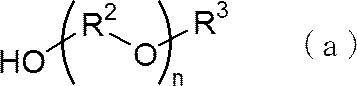
上記式(a)中、R2、R3およびnは上記式(A)中の定義と同じであり、好ましい範囲も同じである。なお、上述したジカルボン酸と上記式(a)で表される化合物からポリエーテルエステルを調製する場合は、上記式(A)中のpが1となる。
また、上記式(A)中のR3が炭素数2~20アシル基の場合は、上述した調製方法の他に、R3が水素原子であるポリエーテルエステルを上述した方法により調製した後に、アシル基を導入することによって調製することもできる。
ここで、末端のアシル基の導入は、例えば、カルボン酸を用いてアルコールと脱水縮合させる方法、カルボン酸無水物或いはカルボン酸ハロゲン化物を用いてとアルコールをアシル化する方法、カルボン酸エステルを用いてエステル交換させる方法等により、導入することができる。
ここで、末端のアシル基の導入は、例えば、カルボン酸を用いてアルコールと脱水縮合させる方法、カルボン酸無水物或いはカルボン酸ハロゲン化物を用いてとアルコールをアシル化する方法、カルボン酸エステルを用いてエステル交換させる方法等により、導入することができる。
上記式(A)で表されるポリエーテルエステルとしては、具体的には、例えば、上記式(A)中のR1、R2およびR3ならびにnおよびpが下記表1に記載されるポリエーテルエステルが挙げられる。

(ポリエーテル)
ポリエーテルとしては、例えば、下記式(B)で表されるポリエーテルが好適に挙げられる。

ポリエーテルとしては、例えば、下記式(B)で表されるポリエーテルが好適に挙げられる。
上記式(B)中、R4は炭素数2~6の2価の脂肪族炭化水素基を表し、R5およびR6はそれぞれ独立に水素原子、炭素数1~20のアルキル基、炭素数6~20のアリール基、炭素数2~20のアシル基、(メタ)アクリロイル基、または、(メタ)アクリロイル基が重合した下記式(b)で表される基を表す。mは1~20の整数を表す。
なお、繰り返し単位に含まれる複数のR4はそれぞれ同一であっても異なっていてもよい。
ここで、本明細書においては、「(メタ)アクリロイル基」とは、アクリロイル基(CH2=CHCO-)またはメタクリロイル基(CH2=C(CH3)CO-)を意味するものとする。
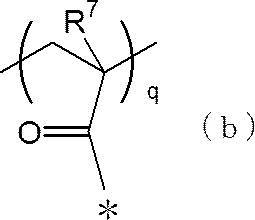
上記式(b)中、*は上記式(B)におけるR5またはR6と結合する酸素原子を表し、R7は水素原子またはメチル基を表し、qは1~10の整数を表す。繰り返し単位に含まれる複数のR7は、それぞれ同一であっても異なっていてもよい。
なお、繰り返し単位に含まれる複数のR4はそれぞれ同一であっても異なっていてもよい。
ここで、本明細書においては、「(メタ)アクリロイル基」とは、アクリロイル基(CH2=CHCO-)またはメタクリロイル基(CH2=C(CH3)CO-)を意味するものとする。
上記式(b)中、*は上記式(B)におけるR5またはR6と結合する酸素原子を表し、R7は水素原子またはメチル基を表し、qは1~10の整数を表す。繰り返し単位に含まれる複数のR7は、それぞれ同一であっても異なっていてもよい。
上記式(B)中のR4における炭素数2~6の2価の脂肪族炭化水素基は、上記式(A)中のR2と同様のものが挙げられる。
また、上記式(B)中のR5およびR6は、上述した通り、水素原子、炭素数1~20のアルキル基、炭素数6~20のアリール基、炭素数2~20のアシル基、(メタ)アクリロイル基、または、(メタ)アクリロイル基が重合した上記式(b)で表される基を表し、(メタ)アクリロイル基および(メタ)アクリロイル基が重合した上記式(b)で表される基以外の官能基については、上記式(A)中のR3と同様のものが挙げられる。
これらのうち、セルロースアシレート樹脂の繊維内空間が広がり、得られる農業ハウス用フィルムの透湿度をより高くすることができる理由から、R5が炭素数6~20のアリール基(特にフェニル基)、または、(メタ)アクリロイル基であるのが好ましい。
また、セルロースアシレート樹脂に親水性を付与し、得られる農業ハウス用フィルムの透湿度をより高くすることができる理由から、R6が水素原子であるのが好ましい。
これらのうち、セルロースアシレート樹脂の繊維内空間が広がり、得られる農業ハウス用フィルムの透湿度をより高くすることができる理由から、R5が炭素数6~20のアリール基(特にフェニル基)、または、(メタ)アクリロイル基であるのが好ましい。
また、セルロースアシレート樹脂に親水性を付与し、得られる農業ハウス用フィルムの透湿度をより高くすることができる理由から、R6が水素原子であるのが好ましい。
また、上記式(B)中のmは1~20の整数を表し、1~15の整数であることが好ましく、1~10の整数であることがより好ましく、1~6の整数であることが更に好ましく、2~6の整数であることが特に好ましく、2~4の整数であることが最も好ましい。
上記式(B)で表されるポリエーテルとしては、具体的には、例えば、ポリエチレングリコール、ポリプロピレングリコール、ポリテトラメチレングリコール等が挙げられる。
また、上記式(B)で表される他のポリエーテルとしては、後述する実施例の合成例に示す通り、フェノール類や水酸基を有する(メタ)アクリレートなどに対して、少なくとも一部がエチレンオキシドであるアルキレンオキシド(例えば、エチレンオキシド、酸化プロピレンなど)を開環付加させる反応を1回以上繰り返すことによって得られるポリエーテルが挙げられる。
また、上記式(B)で表される他のポリエーテルとしては、後述する実施例の合成例に示す通り、フェノール類や水酸基を有する(メタ)アクリレートなどに対して、少なくとも一部がエチレンオキシドであるアルキレンオキシド(例えば、エチレンオキシド、酸化プロピレンなど)を開環付加させる反応を1回以上繰り返すことによって得られるポリエーテルが挙げられる。
本発明の第4態様においては、可塑剤を含有する場合の含有量が、セルロースアシレート樹脂100質量部に対して10~70質量部であるのが好ましく、20~60質量部であるのがより好ましく、30~60質量部であるのが更に好ましく、40~60質量部であるのが特に好ましい。
<添加剤>
本発明の第4態様に係る農業ハウス用フィルムは、使用環境に応じて、劣化防止剤や紫外線吸収剤等の添加剤を含有していてもよい。
劣化防止剤としては、具体的には、例えば、ヒンダードアミン系光安定剤、酸化防止剤、過酸化物分解剤、ラジカル禁止剤、金属不活性化剤、酸捕獲剤、アミン等が挙げられる。
また、紫外線吸収剤としては、紫外線吸収性を発現できるもので、公知のものがいずれも使用でき、例えば、ベンゾトリアゾール系やヒドロキシフェニルトリアジン系の紫外線吸収剤が好適に挙げられる。
このような劣化防止剤や紫外線防止剤を添加する場合、後述するセルロースアシレート溶液(ドープ)中に、0.01~10質量%含有させるのが好ましい。
本発明の第4態様に係る農業ハウス用フィルムは、使用環境に応じて、劣化防止剤や紫外線吸収剤等の添加剤を含有していてもよい。
劣化防止剤としては、具体的には、例えば、ヒンダードアミン系光安定剤、酸化防止剤、過酸化物分解剤、ラジカル禁止剤、金属不活性化剤、酸捕獲剤、アミン等が挙げられる。
また、紫外線吸収剤としては、紫外線吸収性を発現できるもので、公知のものがいずれも使用でき、例えば、ベンゾトリアゾール系やヒドロキシフェニルトリアジン系の紫外線吸収剤が好適に挙げられる。
このような劣化防止剤や紫外線防止剤を添加する場合、後述するセルロースアシレート溶液(ドープ)中に、0.01~10質量%含有させるのが好ましい。
<マット剤>
本発明の第4態様に係る農業ハウス用フィルムは、使用環境に応じて、マット剤を含有していてもよい。
マット剤としては、有機または無機微粒子のいずれも使用することができる。
微粒子としては、二酸化珪素、二酸化チタン、酸化アルミニウム、酸化ジルコニウム、炭酸カルシウム、タルク、クレイ、焼成カオリン、焼成珪酸カルシウム、水和ケイ酸カルシウム、ケイ酸アルミニウム、ケイ酸マグネシウムおよびリン酸カルシウムを挙げることができる。
これらの微粒子は、通常平均粒子サイズが0.1~3.0μmの2次粒子を形成し、これらの微粒子はフィルム中では、1次粒子の凝集体として存在し、フィルム表面に0.1~3.0μmの凹凸を形成させる。2次平均粒子サイズは0.2μm~1.5μmが好ましく、0.4μm~1.2μmがさらに好ましく、0.6μm~1.1μmが最も好ましい。1次、2次粒子サイズはフィルム中の粒子を走査型電子顕微鏡で観察し、粒子に外接する円の直径をもって粒子サイズとした。また、場所を変えて粒子200個を観察し、その平均値をもって平均粒子サイズとした。
本発明の第4態様に係る農業ハウス用フィルムは、使用環境に応じて、マット剤を含有していてもよい。
マット剤としては、有機または無機微粒子のいずれも使用することができる。
微粒子としては、二酸化珪素、二酸化チタン、酸化アルミニウム、酸化ジルコニウム、炭酸カルシウム、タルク、クレイ、焼成カオリン、焼成珪酸カルシウム、水和ケイ酸カルシウム、ケイ酸アルミニウム、ケイ酸マグネシウムおよびリン酸カルシウムを挙げることができる。
これらの微粒子は、通常平均粒子サイズが0.1~3.0μmの2次粒子を形成し、これらの微粒子はフィルム中では、1次粒子の凝集体として存在し、フィルム表面に0.1~3.0μmの凹凸を形成させる。2次平均粒子サイズは0.2μm~1.5μmが好ましく、0.4μm~1.2μmがさらに好ましく、0.6μm~1.1μmが最も好ましい。1次、2次粒子サイズはフィルム中の粒子を走査型電子顕微鏡で観察し、粒子に外接する円の直径をもって粒子サイズとした。また、場所を変えて粒子200個を観察し、その平均値をもって平均粒子サイズとした。
微粒子の好ましい添加量はセルロースアシレートに対し質量比で1ppm~5000ppmが好ましく、より好ましくは5ppm~1000ppm、さらに好ましくは10ppm~500ppmである。
微粒子はケイ素を含むものがヘイズを制御できることから好ましく、特に、二酸化珪素が好ましい。二酸化珪素の微粒子は、1次平均粒子サイズが25nm以下であり、かつ見かけ比重が30g/リットル以上であるものが好ましい。フィルムのヘイズを下げる観点では、1次粒子の平均径が5~20nmと小さいものがより好ましい。見かけ比重は90~200g/リットル以上が好ましく、100~200g/リットル以上がさらに好ましい。見かけ比重が大きい程、高濃度の分散液を作ることが可能になり、ヘイズ、凝集物が良化するため好ましい。
二酸化珪素の微粒子は、例えば、アエロジルNX90S、R972、R972V、R974、R812、200、200V、300、R202、OX50、TT600(以上、日本アエロジル(株)製)などの市販品を使用することができる。酸化ジルコニウムの微粒子は、例えば、アエロジルR976およびR811(以上、日本アエロジル(株)製)の商品名で市販されており、使用することができる。
これらの中でもアエロジル200V、アエロジルR972Vが1次平均粒子サイズが20nm以下であり、かつ見かけ比重が70g/リットル以上である二酸化珪素の微粒子であることから、農業ハウス用フィルムのヘイズを低く保ちながら、摩擦係数を下げる効果が大きいため特に好ましい。
これらの中でもアエロジル200V、アエロジルR972Vが1次平均粒子サイズが20nm以下であり、かつ見かけ比重が70g/リットル以上である二酸化珪素の微粒子であることから、農業ハウス用フィルムのヘイズを低く保ちながら、摩擦係数を下げる効果が大きいため特に好ましい。
本発明の第4態様に係る農業ハウス用フィルムは、単層構造であっても積層構造であってもよいが、単層構造であるのが好ましい。
また、農業ハウス用フィルムの厚みは、得られる本発明の第4態様に係る農業ハウス用フィルムの加工性がより良好となる理由から、60μm~200μmであるのが好ましく、60μm~150μmであるのがより好ましく、80μm~120μmであるのが更に好ましい。
また、農業ハウス用フィルムの厚みは、得られる本発明の第4態様に係る農業ハウス用フィルムの加工性がより良好となる理由から、60μm~200μmであるのが好ましく、60μm~150μmであるのがより好ましく、80μm~120μmであるのが更に好ましい。
<農業ハウス用フィルムの製造方法>
本発明の第4態様に係る農業ハウス用フィルムを製造する製造方法は特に限定されず、例えば、本発明の第1態様に係る農業ハウス用フィルムにおいて説明したものと同様のものが挙げられる。
また、本発明の第4態様に係る農業ハウス用フィルムが可塑剤を含有する場合、可塑剤を配合するタイミングは、セルロースアシレートをフィルム形成する時点で添加されていれば特に限定されず、例えば、セルロースアシレートの合成時点〔例えば、上述した沈殿工程など〕で添加してもよいし、後述する実施例に示す通りドープ調製時にセルロースアシレートと混合してもよい。
本発明の第4態様に係る農業ハウス用フィルムを製造する製造方法は特に限定されず、例えば、本発明の第1態様に係る農業ハウス用フィルムにおいて説明したものと同様のものが挙げられる。
また、本発明の第4態様に係る農業ハウス用フィルムが可塑剤を含有する場合、可塑剤を配合するタイミングは、セルロースアシレートをフィルム形成する時点で添加されていれば特に限定されず、例えば、セルロースアシレートの合成時点〔例えば、上述した沈殿工程など〕で添加してもよいし、後述する実施例に示す通りドープ調製時にセルロースアシレートと混合してもよい。
[第1態様]
以下に実施例に基づいて本発明の第1態様をさらに詳細に説明する。以下の実施例に示す材料、使用量、割合、処理内容、処理手順等は、本発明の趣旨を逸脱しない限り適宜変更することができる。したがって、本発明の範囲は以下に示す実施例により限定的に解釈されるべきものではない。
以下に実施例に基づいて本発明の第1態様をさらに詳細に説明する。以下の実施例に示す材料、使用量、割合、処理内容、処理手順等は、本発明の趣旨を逸脱しない限り適宜変更することができる。したがって、本発明の範囲は以下に示す実施例により限定的に解釈されるべきものではない。
<可塑剤の合成>
以下に示す方法により、実施例1-2および1-3ならびに比較例1-1で使用するエステル系可塑剤A~Cとして、ポリエーテルエステルを合成した。なお、合成した各ポリエーテルエステルについて、上記式(A)中の重合数(n)、重合数(p)および末端(R3)を下記表1に示す。
以下に示す方法により、実施例1-2および1-3ならびに比較例1-1で使用するエステル系可塑剤A~Cとして、ポリエーテルエステルを合成した。なお、合成した各ポリエーテルエステルについて、上記式(A)中の重合数(n)、重合数(p)および末端(R3)を下記表1に示す。
(可塑剤A-実施例1-2で使用)
コハク酸とトリエチレングリコールとを熱溶融縮合法によりポリエステル化させ、ポリエーテルエステルを合成した。
コハク酸とトリエチレングリコールとを熱溶融縮合法によりポリエステル化させ、ポリエーテルエステルを合成した。
(可塑剤B-実施例1-3で使用)
アジピン酸に対して、モノエチレングリコールおよびテトラエチレングリコールの仕込み比(モノ/テトラ)が70/30となるように添加し、熱溶融縮合法によりポリエステル化させ、ポリエーテルエステルを合成した。
アジピン酸に対して、モノエチレングリコールおよびテトラエチレングリコールの仕込み比(モノ/テトラ)が70/30となるように添加し、熱溶融縮合法によりポリエステル化させ、ポリエーテルエステルを合成した。
(可塑剤C-比較例1-1で使用)
アジピン酸とモノエチレングリコールとを熱溶融縮合法によりポリエステル化させ、ポリエーテルエステルを合成した。
アジピン酸とモノエチレングリコールとを熱溶融縮合法によりポリエステル化させ、ポリエーテルエステルを合成した。
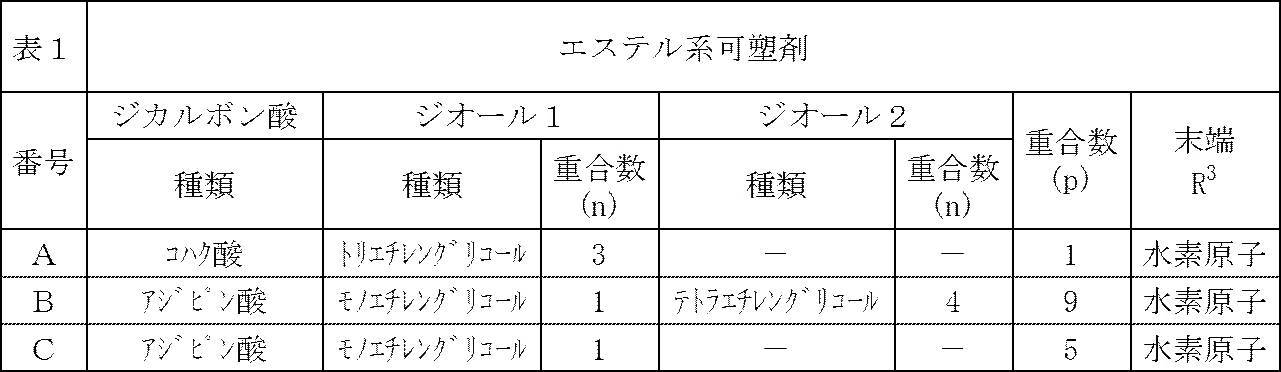
〔実施例1-1〕
<ドープの調製>
下記の組成物をミキシングタンクに投入し攪拌して、各成分を溶解し、セルロースアセテート溶液を調製した。
―――――――――――――――――――――――――――――――――
・セルロースアシレート 100質量部
(アセチル基置換度:2.86,粘度平均重合度:320)
・シリカ粒子分散液(平均粒径16nm) 1.3質量部
“AEROSIL R972”、日本アエロジル(株)製
・メチレンクロライド 635質量部
・メタノール 125質量部
―――――――――――――――――――――――――――――――――
<ドープの調製>
下記の組成物をミキシングタンクに投入し攪拌して、各成分を溶解し、セルロースアセテート溶液を調製した。
―――――――――――――――――――――――――――――――――
・セルロースアシレート 100質量部
(アセチル基置換度:2.86,粘度平均重合度:320)
・シリカ粒子分散液(平均粒径16nm) 1.3質量部
“AEROSIL R972”、日本アエロジル(株)製
・メチレンクロライド 635質量部
・メタノール 125質量部
―――――――――――――――――――――――――――――――――
<フィルムの形成>
30℃に温度調整されたドープを用いて、乾燥後膜厚が120μmとなるようにエンドレスステンレスベルト(支持体)上に均一に流延した。
流延後、ただちにベルト上のドープ膜(ウエブ)に100℃の温風をあてて乾燥させた後、流延から120秒後に、剥離張力150N/mで剥離し、多数のロールで搬送張力100N/mで搬送させながら乾燥させた。剥離部のエンドレスステンレスベルトの温度は10℃とした。剥離時の残留溶媒量は100質量%であった。
80℃に設定された第1乾燥ゾーンを5分間搬送させた後、さらに120℃に設定された第2乾燥ゾーンで10分間搬送させて、乾燥を行った。乾燥後、ロール状に巻き取ることで、フィルム幅1.5m、巻長2000m、膜厚120μmのフィルム(下記表2中においては「セルロース系(無可塑)」と表記する。)を作製した。なお、巻き取り時の残留溶媒量は0.3%であった。
30℃に温度調整されたドープを用いて、乾燥後膜厚が120μmとなるようにエンドレスステンレスベルト(支持体)上に均一に流延した。
流延後、ただちにベルト上のドープ膜(ウエブ)に100℃の温風をあてて乾燥させた後、流延から120秒後に、剥離張力150N/mで剥離し、多数のロールで搬送張力100N/mで搬送させながら乾燥させた。剥離部のエンドレスステンレスベルトの温度は10℃とした。剥離時の残留溶媒量は100質量%であった。
80℃に設定された第1乾燥ゾーンを5分間搬送させた後、さらに120℃に設定された第2乾燥ゾーンで10分間搬送させて、乾燥を行った。乾燥後、ロール状に巻き取ることで、フィルム幅1.5m、巻長2000m、膜厚120μmのフィルム(下記表2中においては「セルロース系(無可塑)」と表記する。)を作製した。なお、巻き取り時の残留溶媒量は0.3%であった。
〔実施例1-2〕
実施例1-1で調製したドープに対して更に可塑剤Aを60質量部配合したドープを用いた以外は、実施例1-1と同様の方法により、フィルム幅1.5m、巻長2000m、膜厚120μmのフィルム(下記表2中においては「セルロース系(可塑剤A)」と表記する。)を作製した。
実施例1-1で調製したドープに対して更に可塑剤Aを60質量部配合したドープを用いた以外は、実施例1-1と同様の方法により、フィルム幅1.5m、巻長2000m、膜厚120μmのフィルム(下記表2中においては「セルロース系(可塑剤A)」と表記する。)を作製した。
〔実施例1-3〕
実施例1-1で調製したドープに対して更に可塑剤Bを60質量部配合したドープを用いた以外は、実施例1-1と同様の方法により、フィルム幅1.5m、巻長2000m、膜厚120μmのフィルム(下記表2中においては「セルロース系(可塑剤B)」と表記する。)を作製した。
実施例1-1で調製したドープに対して更に可塑剤Bを60質量部配合したドープを用いた以外は、実施例1-1と同様の方法により、フィルム幅1.5m、巻長2000m、膜厚120μmのフィルム(下記表2中においては「セルロース系(可塑剤B)」と表記する。)を作製した。
〔実施例1-4〕
実施例1-1で調製したドープ中、「セルロースアシレート(アセチル基置換度:2.86,粘度平均重合度:320)」を「セルロースアシレート(アセチル基置換度:2.40,粘度平均重合度:320)」に変更した以外は、実施例1-1と同様の方法により、フィルム幅1.5m、巻長2000m、膜厚120μmのフィルム(下記表2中においては「セルロース系(無可塑)」と表記する。)を作製した。
実施例1-1で調製したドープ中、「セルロースアシレート(アセチル基置換度:2.86,粘度平均重合度:320)」を「セルロースアシレート(アセチル基置換度:2.40,粘度平均重合度:320)」に変更した以外は、実施例1-1と同様の方法により、フィルム幅1.5m、巻長2000m、膜厚120μmのフィルム(下記表2中においては「セルロース系(無可塑)」と表記する。)を作製した。
〔実施例1-5〕
実施例1-1で調製したドープ中、「セルロースアシレート(アセチル基置換度:2.86,粘度平均重合度:320)」を「セルロースアシレート(アセチル基置換度:2.95,粘度平均重合度:320)」に変更した以外は、実施例1-1と同様の方法により、フィルム幅1.5m、巻長2000m、膜厚120μmのフィルム(下記表2中においては「セルロース系(無可塑)」と表記する。)を作製した。
実施例1-1で調製したドープ中、「セルロースアシレート(アセチル基置換度:2.86,粘度平均重合度:320)」を「セルロースアシレート(アセチル基置換度:2.95,粘度平均重合度:320)」に変更した以外は、実施例1-1と同様の方法により、フィルム幅1.5m、巻長2000m、膜厚120μmのフィルム(下記表2中においては「セルロース系(無可塑)」と表記する。)を作製した。
〔比較例1-1〕
実施例1-1で調製したドープに対して更に可塑剤Cを15質量部配合したドープを用いた以外は、実施例1-1と同様の方法により、フィルム幅1.5m、巻長2000m、膜厚120μmのフィルム(下記表2中においては「セルロース系(可塑剤C)」と表記する。)を作製した。
実施例1-1で調製したドープに対して更に可塑剤Cを15質量部配合したドープを用いた以外は、実施例1-1と同様の方法により、フィルム幅1.5m、巻長2000m、膜厚120μmのフィルム(下記表2中においては「セルロース系(可塑剤C)」と表記する。)を作製した。
〔比較例1-2〕
AGCグリーンテック社製の製品名「エフクリーン(登録商標)自然光流滴」をフッ素系フィルムとして用いた。
AGCグリーンテック社製の製品名「エフクリーン(登録商標)自然光流滴」をフッ素系フィルムとして用いた。
〔比較例1-3〕
三菱樹脂アグリドリーム社製の製品名「ノービエースみらい」を塩化ビニル系フィルムとして用いた。
三菱樹脂アグリドリーム社製の製品名「ノービエースみらい」を塩化ビニル系フィルムとして用いた。
作製または市販品を使用した各フィルムの透湿度、平衡含水率および光線透過率ならびにCO2透過係数およびCO2透過度について、以下に示す方法により測定ないし評価した。これらの結果を下記表2に示す。
<透湿度>
各フィルムについて、JIS Z 0208:1976の「防湿包装材料の透湿度試験方法(カップ法)」に記載された手法に従い、温度40℃、相対湿度90%の条件下で24時間に通過した水蒸気の量(g/m2/24h)を測定した。
各フィルムについて、JIS Z 0208:1976の「防湿包装材料の透湿度試験方法(カップ法)」に記載された手法に従い、温度40℃、相対湿度90%の条件下で24時間に通過した水蒸気の量(g/m2/24h)を測定した。
<平衡含水率>
各フィルムから500mgのサンプルを採取し、相対湿度80%の環境下で24時間調湿した後に、水分量をカールフィッシャー水分計(AQ-2200、平沼産業社製)を用いて測定した。
各フィルムから500mgのサンプルを採取し、相対湿度80%の環境下で24時間調湿した後に、水分量をカールフィッシャー水分計(AQ-2200、平沼産業社製)を用いて測定した。
<光線透過率>
各フィルムについて、分光光度計(ジャスコエンジニアリング製:V-560)を用いて、光合成に有効な波長域(400~700nm)の透過率を測定し、その平均値を算出した。
各フィルムについて、分光光度計(ジャスコエンジニアリング製:V-560)を用いて、光合成に有効な波長域(400~700nm)の透過率を測定し、その平均値を算出した。
<CO2透過係数>
(1)乾膜条件
各フィルムについて、25℃、相対湿度55%の環境下で24時間以上調湿した後に、サンプル評価面積3.14cm2、測定温度は40℃にて測定した。サンプルの表面(供給側)に炭酸ガスを圧力800kPaで供給し、裏面(透過側)を3Paまで真空ポンプで減圧した。次に真空ポンプを止めて透過側の圧力変化を記録し、JIS K 6275-1に従って、遅れ時間法により透過係数を算出した。
(2)湿膜条件
各フィルムについて、上述した測定方法により、湿膜条件(室温25℃、相対湿度80%の環境)でのCO2透過係数を測定した。
(1)乾膜条件
各フィルムについて、25℃、相対湿度55%の環境下で24時間以上調湿した後に、サンプル評価面積3.14cm2、測定温度は40℃にて測定した。サンプルの表面(供給側)に炭酸ガスを圧力800kPaで供給し、裏面(透過側)を3Paまで真空ポンプで減圧した。次に真空ポンプを止めて透過側の圧力変化を記録し、JIS K 6275-1に従って、遅れ時間法により透過係数を算出した。
(2)湿膜条件
各フィルムについて、上述した測定方法により、湿膜条件(室温25℃、相対湿度80%の環境)でのCO2透過係数を測定した。
<CO2透過度(湿膜条件)>
CO2透過度は、湿膜条件で測定したCO2透過係数(単位:1×10⁻¹⁰cm3・cm/(s・cm2・cmHg))を用いて下記式から算出した。
T(CO2透過度)=(CO2透過係数 ×フィルム表面積× 圧力差)/フィルム厚み
CO2透過度は、湿膜条件で測定したCO2透過係数(単位:1×10⁻¹⁰cm3・cm/(s・cm2・cmHg))を用いて下記式から算出した。
T(CO2透過度)=(CO2透過係数 ×フィルム表面積× 圧力差)/フィルム厚み

表2に示す結果から、セルロースアシレート樹脂を含有するフィルムであっても、25℃、相対湿度80%における平衡含水率が4%未満であると、CO2透過度が低くなることが分かった(比較例1-1)。
また、セルロースアシレート樹脂を含有しないフッ素系フィルムまたは塩化ビニル系フィルムを用いた場合には、平衡含水率が極めて低く、湿膜時のCO2透過係数およびCO2透過度が低くなることが分かった(比較例1-2~1-3)。
これに対し、セルロースアシレート樹脂を含有し、25℃、相対湿度80%における平衡含水率が4~8%のフィルムを用いた場合には、いずれも湿膜時のCO2透過係数およびCO2透過度が高くなることが分かった(実施例1-1~1-5)。
また、実施例1-1~1-5および比較例1-1の対比から、セルロースアシレートのアセチル基の置換度や可塑剤の種類により、平衡含水率やCO2透過係数を調整できることが分かり、特に、実施例1-1、1-4および1-5の対比から、アセチル基の置換度が2.2~2.6の範囲内にある実施例1-4は、平衡含水率が高くなり、湿膜時のCO2透過係数およびCO2透過度がより高くなることが分かった。
また、セルロースアシレート樹脂を含有しないフッ素系フィルムまたは塩化ビニル系フィルムを用いた場合には、平衡含水率が極めて低く、湿膜時のCO2透過係数およびCO2透過度が低くなることが分かった(比較例1-2~1-3)。
これに対し、セルロースアシレート樹脂を含有し、25℃、相対湿度80%における平衡含水率が4~8%のフィルムを用いた場合には、いずれも湿膜時のCO2透過係数およびCO2透過度が高くなることが分かった(実施例1-1~1-5)。
また、実施例1-1~1-5および比較例1-1の対比から、セルロースアシレートのアセチル基の置換度や可塑剤の種類により、平衡含水率やCO2透過係数を調整できることが分かり、特に、実施例1-1、1-4および1-5の対比から、アセチル基の置換度が2.2~2.6の範囲内にある実施例1-4は、平衡含水率が高くなり、湿膜時のCO2透過係数およびCO2透過度がより高くなることが分かった。
〔農業ハウスの作製〕
南足柄市宮台にて、6m×9m×(高さ)4mの骨組みを建て、実施例1-1~1-5および比較例1-1~1-3で作製ないし使用した下記表3に示すフィルムを躯体に展張することにより、農業ハウスを作製した。
また、温湿度計およびCO2濃度計を作製した農業ハウス内の中央の地上から1.5mの位置に設置した。
作製した農業ハウスについて、2014年10月の晴天時の昼間(13時)にハウス内とハウス外のCO2濃度を測定し、また、ハウス内の温度および湿度も測定した。これらの結果を下記表3に示す。なお、ハウス外の温度は17度であり、相対湿度は89%であった。
南足柄市宮台にて、6m×9m×(高さ)4mの骨組みを建て、実施例1-1~1-5および比較例1-1~1-3で作製ないし使用した下記表3に示すフィルムを躯体に展張することにより、農業ハウスを作製した。
また、温湿度計およびCO2濃度計を作製した農業ハウス内の中央の地上から1.5mの位置に設置した。
作製した農業ハウスについて、2014年10月の晴天時の昼間(13時)にハウス内とハウス外のCO2濃度を測定し、また、ハウス内の温度および湿度も測定した。これらの結果を下記表3に示す。なお、ハウス外の温度は17度であり、相対湿度は89%であった。
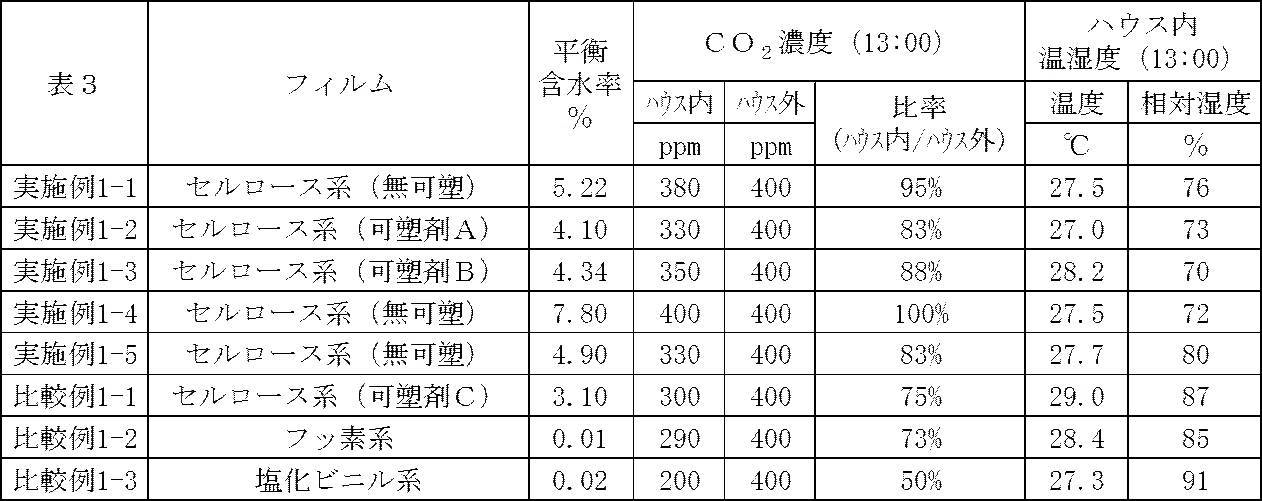
表3に示す結果から、セルロースアシレート樹脂を含有するフィルムであっても、25℃、相対湿度80%における平衡含水率が4%未満であると、ハウス内とハウス外のCO2濃度の比率(ハウス内/ハウス外)〔以下、本段落において「CO2濃度比率」と略す。〕が低くなることが分かった(比較例1-1)。
また、セルロースアシレート樹脂を含有しないフッ素系フィルムまたは塩化ビニル系フィルムを用いた場合には、平衡含水率が極めて低く、CO2濃度比率が低くなることが分かった(比較例1-2~1-3)。
これに対し、セルロースアシレート樹脂を含有し、25℃、相対湿度80%における平衡含水率が4~8%のフィルムを用いた場合には、いずれもCO2濃度比率が80%以上となり、光合成に必要なCO2濃度を維持できていることが分かった。
特に、実施例1-1、1-4および1-5の対比から、アセチル基の置換度が2.2~2.6の範囲内にある実施例1-4は、平衡含水率が高くなり、CO2濃度比率が100%となり、ハウス外と同じCO2濃度を維持できていることが分かった。
また、セルロースアシレート樹脂を含有しないフッ素系フィルムまたは塩化ビニル系フィルムを用いた場合には、平衡含水率が極めて低く、CO2濃度比率が低くなることが分かった(比較例1-2~1-3)。
これに対し、セルロースアシレート樹脂を含有し、25℃、相対湿度80%における平衡含水率が4~8%のフィルムを用いた場合には、いずれもCO2濃度比率が80%以上となり、光合成に必要なCO2濃度を維持できていることが分かった。
特に、実施例1-1、1-4および1-5の対比から、アセチル基の置換度が2.2~2.6の範囲内にある実施例1-4は、平衡含水率が高くなり、CO2濃度比率が100%となり、ハウス外と同じCO2濃度を維持できていることが分かった。
〔植物の生育〕
実施例1-1および比較例1-2~1-3で作製ないし使用したフィルムを用いた農業ハウス内で、2014年9月~11月に大玉トマト(ミソラ)、中玉トマト(フルティカ)、ミニトマト(ファブリーサクラ)の3種を生育した。生育が安定した1ヶ月間に収穫されたトマトの収穫量を比較した。
生育の結果(収穫量)を下記表4に示す。
実施例1-1および比較例1-2~1-3で作製ないし使用したフィルムを用いた農業ハウス内で、2014年9月~11月に大玉トマト(ミソラ)、中玉トマト(フルティカ)、ミニトマト(ファブリーサクラ)の3種を生育した。生育が安定した1ヶ月間に収穫されたトマトの収穫量を比較した。
生育の結果(収穫量)を下記表4に示す。
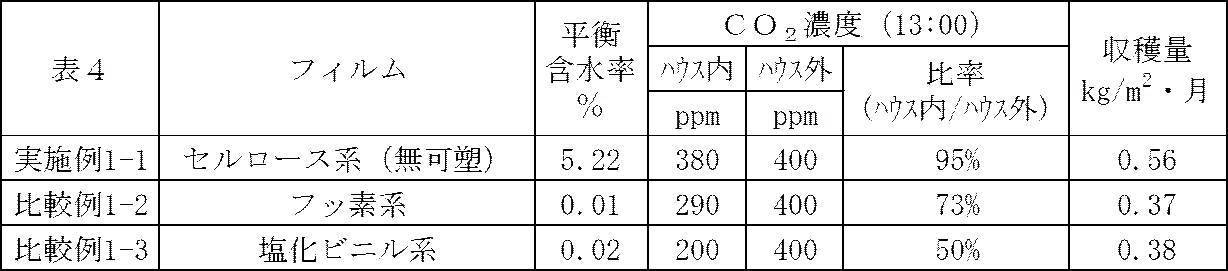
表4に示す結果から、セルロースアシレート樹脂を含有し、25℃、相対湿度80%における平衡含水率が4~8%であり、厚みが60~200μmのセルロースフィルムを用いた農業ハウスは、CO2濃度を維持することができるため、フッ素系フィルムや塩化ビニル系フィルムを用いた農業ハウスよりも収穫量が多くなることが分かった。
[第2態様]
以下に実施例に基づいて本発明の第2態様をさらに詳細に説明する。以下の実施例に示す材料、使用量、割合、処理内容、処理手順等は、本発明の趣旨を逸脱しない限り適宜変更することができる。したがって、本発明の範囲は以下に示す実施例により限定的に解釈されるべきものではない。
以下に実施例に基づいて本発明の第2態様をさらに詳細に説明する。以下の実施例に示す材料、使用量、割合、処理内容、処理手順等は、本発明の趣旨を逸脱しない限り適宜変更することができる。したがって、本発明の範囲は以下に示す実施例により限定的に解釈されるべきものではない。
[フィルム1の作製]
<ドープの調製>
下記の組成物をミキシングタンクに投入し攪拌して、各成分を溶解し、セルロースアセテート溶液を調製した。
―――――――――――――――――――――――――――――――――
・セルロースアシレート 100質量部
(アセチル基置換度:2.86,粘度平均重合度:320)
・シリカ粒子分散液(平均粒径16nm)
“AEROSIL R972”、日本アエロジル(株)製 1.3質量部
・メチレンクロライド 635質量部
・メタノール 1.3質量部
―――――――――――――――――――――――――――――――――
<ドープの調製>
下記の組成物をミキシングタンクに投入し攪拌して、各成分を溶解し、セルロースアセテート溶液を調製した。
―――――――――――――――――――――――――――――――――
・セルロースアシレート 100質量部
(アセチル基置換度:2.86,粘度平均重合度:320)
・シリカ粒子分散液(平均粒径16nm)
“AEROSIL R972”、日本アエロジル(株)製 1.3質量部
・メチレンクロライド 635質量部
・メタノール 1.3質量部
―――――――――――――――――――――――――――――――――
<フィルム1の形成>
30℃に温度調整されたドープを用いて、乾燥後膜厚が100μmとなるようにエンドレスステンレスベルト(支持体)上に均一に流延した。
流延後、ただちにベルト上のドープ膜(ウエブ)に100℃の温風をあてて乾燥させた後、流延から120秒後に、剥離張力150N/mで剥離し、多数のロールで搬送張力100N/mで搬送させながら乾燥させた。剥離部のエンドレスステンレスベルトの温度は10℃とした。剥離時の残留溶媒量は100質量%であった。
80℃に設定された第1乾燥ゾーンを5分間搬送させた後、さらに120℃に設定された第2乾燥ゾーンで10分間搬送させて、乾燥を行った。乾燥後、ロール状に巻き取ることで、フィルム幅1.5m、巻長2000m、膜厚100μmのセルロース系フィルム1を得た。なお、巻き取り時の残留溶媒量は0.3%であった。
30℃に温度調整されたドープを用いて、乾燥後膜厚が100μmとなるようにエンドレスステンレスベルト(支持体)上に均一に流延した。
流延後、ただちにベルト上のドープ膜(ウエブ)に100℃の温風をあてて乾燥させた後、流延から120秒後に、剥離張力150N/mで剥離し、多数のロールで搬送張力100N/mで搬送させながら乾燥させた。剥離部のエンドレスステンレスベルトの温度は10℃とした。剥離時の残留溶媒量は100質量%であった。
80℃に設定された第1乾燥ゾーンを5分間搬送させた後、さらに120℃に設定された第2乾燥ゾーンで10分間搬送させて、乾燥を行った。乾燥後、ロール状に巻き取ることで、フィルム幅1.5m、巻長2000m、膜厚100μmのセルロース系フィルム1を得た。なお、巻き取り時の残留溶媒量は0.3%であった。
[フィルム2の作製]
乾燥後膜厚が120μmとなるようにエンドレスステンレスベルト(支持体)上に均一に流延した以外は、フィルム1と同様の方法により、フィルム幅1.5m、巻長2000m、膜厚120μmのセルロース系フィルム2を得た。
乾燥後膜厚が120μmとなるようにエンドレスステンレスベルト(支持体)上に均一に流延した以外は、フィルム1と同様の方法により、フィルム幅1.5m、巻長2000m、膜厚120μmのセルロース系フィルム2を得た。
[フィルム3]
AGCグリーンテック社製の製品名「エフクリーン(登録商標)自然光流滴」をフッ素系フィルム3として用いた。
AGCグリーンテック社製の製品名「エフクリーン(登録商標)自然光流滴」をフッ素系フィルム3として用いた。
作製または市販品を使用した各フィルムの透湿度および光線透過率について、以下に示す方法により測定ないし評価した。これらの結果を下記表5に示す。
<透湿度>
各フィルムについて、JIS Z 0208:1976の「防湿包装材料の透湿度試験方法(カップ法)」に記載された手法に従い、温度40℃、相対湿度90%の条件下で24時間に通過した水蒸気の量(g/m2/24h)を測定した。
各フィルムについて、JIS Z 0208:1976の「防湿包装材料の透湿度試験方法(カップ法)」に記載された手法に従い、温度40℃、相対湿度90%の条件下で24時間に通過した水蒸気の量(g/m2/24h)を測定した。
<光線透過率>
各フィルムについて、分光光度計(ジャスコエンジニアリング製:V-560)を用いて、555nmの光の透過率を測定した。
各フィルムについて、分光光度計(ジャスコエンジニアリング製:V-560)を用いて、555nmの光の透過率を測定した。
[実施例2-1~2-3および比較例2-1~2-2]
<農業ハウスの作製>
南足柄市宮台にて、6m×9m×(高さ)4mの骨組みを建て、下記表5に示すフィルムを躯体に展張することにより、農業ハウスを作製した。
また、作製した農業ハウス内の天井に、細霧冷却装置(エアクールAC4543、フルタ電気社製)を吊り下げて固定した。
また、温湿度計を作製した農業ハウス内の中央の地上から1.5mの位置に取り付け、噴霧量を測定する水量計を細霧冷却装置の入水口の直前に設置した。
<農業ハウスの作製>
南足柄市宮台にて、6m×9m×(高さ)4mの骨組みを建て、下記表5に示すフィルムを躯体に展張することにより、農業ハウスを作製した。
また、作製した農業ハウス内の天井に、細霧冷却装置(エアクールAC4543、フルタ電気社製)を吊り下げて固定した。
また、温湿度計を作製した農業ハウス内の中央の地上から1.5mの位置に取り付け、噴霧量を測定する水量計を細霧冷却装置の入水口の直前に設置した。
<植物の生育>
2014年7月に、作製した農業ハウス内で、大玉トマト(ミソラ)38株、中玉トマト(フルティカ)35株、ミニトマト(ファブリーサクラ)70株を生育した。
2014年7月の晴天時の正午(12時)に、下記表5に示す細霧噴霧量となるように細霧冷却装置を稼働させ、2時間経過した14時のハウス内の温度、相対湿度、結露の有無を確認した。また、14時のハウス外の温度および相対湿度を下記表5に示す。
なお、実施例2-1~2-3および比較例2-1~2-2においては、細霧冷却は稼働時に換気を行わずに実施し、後述する比較例2-3においては換気を行って実施した。
2014年7月に、作製した農業ハウス内で、大玉トマト(ミソラ)38株、中玉トマト(フルティカ)35株、ミニトマト(ファブリーサクラ)70株を生育した。
2014年7月の晴天時の正午(12時)に、下記表5に示す細霧噴霧量となるように細霧冷却装置を稼働させ、2時間経過した14時のハウス内の温度、相対湿度、結露の有無を確認した。また、14時のハウス外の温度および相対湿度を下記表5に示す。
なお、実施例2-1~2-3および比較例2-1~2-2においては、細霧冷却は稼働時に換気を行わずに実施し、後述する比較例2-3においては換気を行って実施した。
[比較例2-3]
7:00~17:00の間、ハウス側面のフィルム(9m×1.5m)を両側とも巻き上げ、換気を行った以外は、比較例1と同様の条件で、細霧冷却を行い、生育した。
なお、フィルムを巻き上げた開口部には、防虫用メッシュを装着したが、生育中のトマトにはタバココナジラミやハモグリバエなどによる虫害が認められた。
7:00~17:00の間、ハウス側面のフィルム(9m×1.5m)を両側とも巻き上げ、換気を行った以外は、比較例1と同様の条件で、細霧冷却を行い、生育した。
なお、フィルムを巻き上げた開口部には、防虫用メッシュを装着したが、生育中のトマトにはタバココナジラミやハモグリバエなどによる虫害が認められた。

表5に示すように、実施例2-1および2-2と比較例2-1との対比から、細霧冷却による噴霧量が同じ量であっても、セルロースアシレート樹脂を含有し、透湿度が600g/m2/24h以上であり、厚みが80~200μmのセルロースフィルムを用いた農業ハウスは、ハウス内の温度および相対湿度を低くすることができ、細霧中の結露の発生を抑制できることが分かった。
同様に、実施例2-3と比較例2-2との対比から、細霧冷却による噴霧量が同じ量であっても、透湿度が600g/m2/24h以上であり、厚みが80~200μmのセルロースフィルムを用いた農業ハウスは、ハウス内の温度および相対湿度を低くすることができ、細霧中の結露の発生を抑制できることが分かった。
一方、細霧冷却中の結露を抑制し、湿度を低下させるために換気を行った比較例2-3では、上述したように、生育中のトマトにはタバココナジラミやハモグリバエなどによる虫害が認められた。
以上の結果から、セルロースアシレート樹脂を含有し、透湿度が600g/m2/24h以上であり、厚みが80~200μmのセルロースフィルムを用いた農業ハウスは、換気手段を必要とせず、病虫害の流入を抑制することができることが分かった。
同様に、実施例2-3と比較例2-2との対比から、細霧冷却による噴霧量が同じ量であっても、透湿度が600g/m2/24h以上であり、厚みが80~200μmのセルロースフィルムを用いた農業ハウスは、ハウス内の温度および相対湿度を低くすることができ、細霧中の結露の発生を抑制できることが分かった。
一方、細霧冷却中の結露を抑制し、湿度を低下させるために換気を行った比較例2-3では、上述したように、生育中のトマトにはタバココナジラミやハモグリバエなどによる虫害が認められた。
以上の結果から、セルロースアシレート樹脂を含有し、透湿度が600g/m2/24h以上であり、厚みが80~200μmのセルロースフィルムを用いた農業ハウスは、換気手段を必要とせず、病虫害の流入を抑制することができることが分かった。
また、実施例2-1および2-2ならびに比較例2-1で作製した農業ハウスについて、細霧冷却を施さない夜間から早朝までの結露の有無を観察した。
その結果、比較例2-1で作製した農業ハウスについては結露が生じることが確認できたが、実施例2-1および2-2で作製した農業ハウスについては結露が生じないことが確認できた。
そのため、セルロースアシレート樹脂を含有し、透湿度が600g/m2/24h以上であり、厚みが80~200μmのセルロースフィルムを用いた農業ハウスは、換気手段を必要とせず、病虫害の流入を抑制できるだけでなく、細霧冷却を施さない時間帯についても有用であることが分かった。
その結果、比較例2-1で作製した農業ハウスについては結露が生じることが確認できたが、実施例2-1および2-2で作製した農業ハウスについては結露が生じないことが確認できた。
そのため、セルロースアシレート樹脂を含有し、透湿度が600g/m2/24h以上であり、厚みが80~200μmのセルロースフィルムを用いた農業ハウスは、換気手段を必要とせず、病虫害の流入を抑制できるだけでなく、細霧冷却を施さない時間帯についても有用であることが分かった。
実施例2-1および比較例2-1と同様に作製した農業ハウスについて、2014年7月20日から7月25日までのハウス内の二酸化炭素濃度と外気の二酸化炭素濃度を測定した。その結果を図7に示す。なお、細霧冷却装置の稼働条件は、7時から17時までの10時間とし、噴霧量は14g/m2・分で行った。
図7に示す結果から、実施例2-1で作製した農業ハウスは、植物が光合成する日中においても外気と同程度の二酸化炭素濃度が保持できることが分かった。
そのため、セルロースアシレート樹脂を含有し、透湿度が600g/m2/24h以上であり、厚みが80~200μmのセルロースフィルムを用いた農業ハウスは、換気手段を必要とせず、病虫害の流入を抑制できるだけでなく、二酸化炭素濃度を外気と同程度に維持できるという効果を有することが分かった。
図7に示す結果から、実施例2-1で作製した農業ハウスは、植物が光合成する日中においても外気と同程度の二酸化炭素濃度が保持できることが分かった。
そのため、セルロースアシレート樹脂を含有し、透湿度が600g/m2/24h以上であり、厚みが80~200μmのセルロースフィルムを用いた農業ハウスは、換気手段を必要とせず、病虫害の流入を抑制できるだけでなく、二酸化炭素濃度を外気と同程度に維持できるという効果を有することが分かった。
[第3態様]
以下に実施例に基づいて本発明の第3態様をさらに詳細に説明する。以下の実施例に示す材料、使用量、割合、処理内容、処理手順等は、本発明の趣旨を逸脱しない限り適宜変更することができる。したがって、本発明の範囲は以下に示す実施例により限定的に解釈されるべきものではない。
以下に実施例に基づいて本発明の第3態様をさらに詳細に説明する。以下の実施例に示す材料、使用量、割合、処理内容、処理手順等は、本発明の趣旨を逸脱しない限り適宜変更することができる。したがって、本発明の範囲は以下に示す実施例により限定的に解釈されるべきものではない。
[トリアセチルセルロース(TAC)フィルムの作製]
<ドープの調製>
下記の組成物をミキシングタンクに投入し攪拌して、各成分を溶解し、セルロースアセテート溶液を調製した。
―――――――――――――――――――――――――――――――――
・セルロースアシレート 100質量部
(アセチル基置換度:2.86,粘度平均重合度:320)
・シリカ粒子分散液(平均粒径16nm)
“AEROSIL R972”、日本アエロジル(株)製 1.3質量部
・メチレンクロライド 635質量部
・メタノール 1.3質量部
―――――――――――――――――――――――――――――――――
<ドープの調製>
下記の組成物をミキシングタンクに投入し攪拌して、各成分を溶解し、セルロースアセテート溶液を調製した。
―――――――――――――――――――――――――――――――――
・セルロースアシレート 100質量部
(アセチル基置換度:2.86,粘度平均重合度:320)
・シリカ粒子分散液(平均粒径16nm)
“AEROSIL R972”、日本アエロジル(株)製 1.3質量部
・メチレンクロライド 635質量部
・メタノール 1.3質量部
―――――――――――――――――――――――――――――――――
<TACフィルムの形成>
30℃に温度調整されたドープを用いて、乾燥後膜厚が100μmとなるようにエンドレスステンレスベルト(支持体)上に均一に流延した。
流延後、ただちにベルト上のドープ膜(ウエブ)に100℃の温風をあてて乾燥させた後、流延から120秒後に、剥離張力150N/mで剥離し、多数のロールで搬送張力100N/mで搬送させながら乾燥させた。剥離部のエンドレスステンレスベルトの温度は10℃とした。剥離時の残留溶媒量は100質量%であった。
80℃に設定された第1乾燥ゾーンを5分間搬送させた後、さらに120℃に設定された第2乾燥ゾーンで10分間搬送させて、乾燥を行った。乾燥後、ロール状に巻き取ることで、フィルム幅1.5m、巻長2000m、膜厚100μmのTACフィルムを得た。なお、巻き取り時の残留溶媒量は0.3%であった。
30℃に温度調整されたドープを用いて、乾燥後膜厚が100μmとなるようにエンドレスステンレスベルト(支持体)上に均一に流延した。
流延後、ただちにベルト上のドープ膜(ウエブ)に100℃の温風をあてて乾燥させた後、流延から120秒後に、剥離張力150N/mで剥離し、多数のロールで搬送張力100N/mで搬送させながら乾燥させた。剥離部のエンドレスステンレスベルトの温度は10℃とした。剥離時の残留溶媒量は100質量%であった。
80℃に設定された第1乾燥ゾーンを5分間搬送させた後、さらに120℃に設定された第2乾燥ゾーンで10分間搬送させて、乾燥を行った。乾燥後、ロール状に巻き取ることで、フィルム幅1.5m、巻長2000m、膜厚100μmのTACフィルムを得た。なお、巻き取り時の残留溶媒量は0.3%であった。
[フッ素系フィルム]
AGCグリーンテック社製の製品名「エフクリーン(登録商標)自然光流滴」をフッ素系フィルムとして用いた。
AGCグリーンテック社製の製品名「エフクリーン(登録商標)自然光流滴」をフッ素系フィルムとして用いた。
[細孔ポリオレフィン(細孔PO)フィルム]
三菱樹脂アグリドリーム社製の製品名「快適空乾」を細孔POフィルムとして用いた。
三菱樹脂アグリドリーム社製の製品名「快適空乾」を細孔POフィルムとして用いた。
[実施例3-1~3-5および比較例3-1~3-4ならびに参考例1~2]
<農業ハウスの作製>
南足柄市宮台にて、6.0m×9.0m×4.0m(高さ)の骨組みを建て、下記表6に示す外張りフィルムを躯体に展張することにより、農業ハウスを作製した。
次いで、作製した農業ハウスの内部に、5.8m×8.8m×3.8m(高さ)の骨組みを建て、下記表6に示す内張りフィルムを躯体に展張することにより、農業ハウスを作製した。
なお、下記表6中、内張りフィルムとして「TAC/フッ素系」と記載されている態様は、下記表6に示す通り、内張りフィルムの屋根部にTACフィルムを用い、内張りフィルムの壁面部にフッ素系フィルムを用いたことを表す。
また、参考例1および2は、内張りフィルムを用いず、外張りフィルムのみ展張した農業ハウスを用いた。
<農業ハウスの作製>
南足柄市宮台にて、6.0m×9.0m×4.0m(高さ)の骨組みを建て、下記表6に示す外張りフィルムを躯体に展張することにより、農業ハウスを作製した。
次いで、作製した農業ハウスの内部に、5.8m×8.8m×3.8m(高さ)の骨組みを建て、下記表6に示す内張りフィルムを躯体に展張することにより、農業ハウスを作製した。
なお、下記表6中、内張りフィルムとして「TAC/フッ素系」と記載されている態様は、下記表6に示す通り、内張りフィルムの屋根部にTACフィルムを用い、内張りフィルムの壁面部にフッ素系フィルムを用いたことを表す。
また、参考例1および2は、内張りフィルムを用いず、外張りフィルムのみ展張した農業ハウスを用いた。
作製した農業ハウスについて、内張りフィルムおよび外張りフィルムの透湿度ならびに光線透過率について、以下に示す方法により測定ないし評価した。これらの結果を下記表6に示す。
また、作製した農業ハウスについて、2014年11月の晴天日の朝8時の時点で、内張りフィルムの内側に結露が生じているか否かを目視により確認し、同日の日没後の18時の時点で、農業ハウス内の温度および相対湿度を測定した。これらの結果も下記表6に示す。
また、作製した農業ハウスについて、2014年11月の晴天日の朝8時の時点で、内張りフィルムの内側に結露が生じているか否かを目視により確認し、同日の日没後の18時の時点で、農業ハウス内の温度および相対湿度を測定した。これらの結果も下記表6に示す。
<透湿度>
各フィルムについて、JIS Z 0208:1976の「防湿包装材料の透湿度試験方法(カップ法)」に記載された手法に従い、温度40℃、相対湿度90%の条件下で24時間に通過した水蒸気の量(g/m2/24h)を測定した。
なお、下記表6中、実施例3-3および3-5については、内張りフィルムの屋根部に用いたTACフィルムの透湿度を示す。
各フィルムについて、JIS Z 0208:1976の「防湿包装材料の透湿度試験方法(カップ法)」に記載された手法に従い、温度40℃、相対湿度90%の条件下で24時間に通過した水蒸気の量(g/m2/24h)を測定した。
なお、下記表6中、実施例3-3および3-5については、内張りフィルムの屋根部に用いたTACフィルムの透湿度を示す。
<光線透過率>
各フィルムについて、分光光度計(ジャスコエンジニアリング製:V-560)を用いて、400~700nmの可視光領域の透過率を測定し、その平均値を算出した。
そして、内張りフィルムおよび外張りフィルムの平均透過率を乗じた値が、80%以上であるものを農業ハウスの光線透過率が高いものとして「A」と評価し、60%以上80%未満であるものを農業ハウスの光線透過率がやや低いものとして「B」と評価し、60%未満であるものを農業ハウスの光線透過率が低いものとして「C」と評価した。
各フィルムについて、分光光度計(ジャスコエンジニアリング製:V-560)を用いて、400~700nmの可視光領域の透過率を測定し、その平均値を算出した。
そして、内張りフィルムおよび外張りフィルムの平均透過率を乗じた値が、80%以上であるものを農業ハウスの光線透過率が高いものとして「A」と評価し、60%以上80%未満であるものを農業ハウスの光線透過率がやや低いものとして「B」と評価し、60%未満であるものを農業ハウスの光線透過率が低いものとして「C」と評価した。

表6に示すように、内張りフィルムとしてフッ素系フィルムを用いた場合には、換気手段の有無を問わず、結露が発生し、また、光線透過率も低くなることが分かった(比較例3-3-1および2)。
また、内張りフィルムとして透湿度が600g/m2/24h以上のTACフィルムを用いた場合であっても、換気手段を有していないと、結露の発生を抑制できないことが分かった(比較例3-3)。
また、特許文献3(特開2011-10590号公報)を想定し、内張りフィルムとして細孔POフィルムを用いた場合には、換気手段を有していても、結露が発生し、また、光線透過率も低くなることが分かった(比較例3-4)。
また、内張りフィルムとして透湿度が600g/m2/24h以上のTACフィルムを用いた場合であっても、換気手段を有していないと、結露の発生を抑制できないことが分かった(比較例3-3)。
また、特許文献3(特開2011-10590号公報)を想定し、内張りフィルムとして細孔POフィルムを用いた場合には、換気手段を有していても、結露が発生し、また、光線透過率も低くなることが分かった(比較例3-4)。
一方、内張りフィルムの少なくとも一部に透湿度が600g/m2/24h以上のTACフィルムを用い、換気手段を有する場合は、内張りフィルムの内側の結露を抑制し、かつ、光線透過率が高くなることが分かった(実施例3-3-1~5)。
特に、外張りフィルムにもTACフィルムを用いた実施例3-1~3-3は、外張りフィルム自体が換気手段を兼ねているため、換気扇の有無を問わず、ハウス内の相対湿度を低くできることが分かった。
特に、外張りフィルムにもTACフィルムを用いた実施例3-1~3-3は、外張りフィルム自体が換気手段を兼ねているため、換気扇の有無を問わず、ハウス内の相対湿度を低くできることが分かった。
[第4態様]
以下に実施例に基づいて本発明の第4態様をさらに詳細に説明する。以下の実施例に示す材料、使用量、割合、処理内容、処理手順等は、本発明の趣旨を逸脱しない限り適宜変更することができる。したがって、本発明の範囲は以下に示す実施例により限定的に解釈されるべきものではない。
以下に実施例に基づいて本発明の第4態様をさらに詳細に説明する。以下の実施例に示す材料、使用量、割合、処理内容、処理手順等は、本発明の趣旨を逸脱しない限り適宜変更することができる。したがって、本発明の範囲は以下に示す実施例により限定的に解釈されるべきものではない。
<可塑剤の合成>
以下に示す方法により、実施例4-1~4-26で使用する可塑剤として、ポリエーテルエステルおよびポリエーテルを合成した。なお、合成した各ポリエーテルエステルについて、上記式(A)中の重合数(n)、重合数(p)および末端(R3)を下記表7および表8に示し、合成した各ポリエーテルについて、上記式(B)中の重合数(m)、末端(R5)および末端(R6)を下記表7および表8に示す。
(可塑剤A-実施例4-1で使用)
アジピン酸とモノエチレングリコールとを熱溶融縮合法によりポリエステル化させ、ポリエーテルエステルを合成した。
(可塑剤B-実施例4-2で使用)
アジピン酸とジエチレングリコールとを熱溶融縮合法によりポリエステル化させ、ポリエーテルエステルを合成した。
(可塑剤C-実施例4-3で使用)
アジピン酸とトリエチレングリコールとを熱溶融縮合法によりポリエステル化させ、ポリエーテルエステルを合成した。
(可塑剤D-実施例4-4で使用)
アジピン酸とテトラエチレングリコールとを熱溶融縮合法によりポリエステル化させ、ポリエーテルエステルを合成した。
(可塑剤E-実施例4-5で使用)
アジピン酸とトリエチレングリコールとを熱溶融縮合法によりポリエステル化させ、ポリエーテルエステルを合成した。
(可塑剤F-実施例4-6で使用)
アジピン酸とトリエチレングリコールとを熱溶融縮合法によりポリエステル化させ、ポリエーテルエステルを合成した。
(可塑剤G-実施例4-7で使用)
アジピン酸とトリエチレングリコールとを熱溶融縮合法によりポリエステル化させ、ポリエーテルエステルを合成した。
(可塑剤H-実施例4-8で使用)
コハク酸とトリエチレングリコールとを熱溶融縮合法によりポリエステル化させ、ポリエーテルエステルを合成した。
(可塑剤I-実施例4-9で使用)
コハク酸とテトラエチレングリコールとを熱溶融縮合法によりポリエステル化させ、ポリエーテルエステルを合成した。
(可塑剤J-実施例4-10で使用)
コハク酸とテトラエチレングリコールとを熱溶融縮合法によりポリエステル化させ、ポリエーテルエステルを合成した。
(可塑剤K-実施例4-11で使用)
グルタル酸とトリエチレングリコールとを熱溶融縮合法によりポリエステル化させ、ポリエーテルエステルを合成した。
(可塑剤L-実施例4-12で使用)
アジピン酸と1,2-プロピレングリコールとを熱溶融縮合法によりポリエステル化させ、ポリエーテルエステルを合成した。
(可塑剤M-実施例4-13で使用)
アジピン酸とトリ(1,2-プロピレングリコール)とを熱溶融縮合法によりポリエステル化させ、ポリエーテルエステルを合成した。
(可塑剤N-実施例4-14で使用)
アジピン酸と1,2-ブチレングリコールとを熱溶融縮合法によりポリエステル化させ、ポリエーテルエステルを合成した。
(可塑剤O-実施例4-15で使用)
アジピン酸とモノエチレングリコールとを熱溶融縮合法によりポリエステル化させ、ポリエーテルエステルを合成した。
(可塑剤P-実施例4-16で使用)
アジピン酸とモノエチレングリコールとを熱溶融縮合法によりポリエステル化させ、ポリエーテルエステルを合成した。
(可塑剤Q-実施例4-17で使用)
フェノールに対してエチレンオキシドを逐次的に3回開環付加させることにより、下記スキームに示すように、ポリエーテルを合成した。
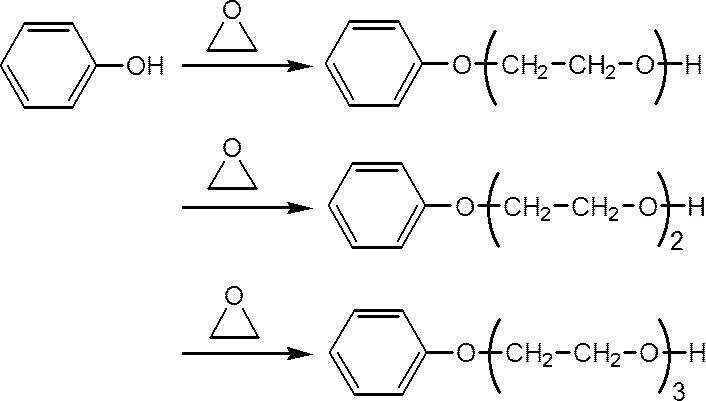
(可塑剤R-実施例4-18で使用)
フェノールに対してエチレンオキシドを逐次的に2回開環付加させることにより、ポリエーテルを合成した。
(可塑剤S-実施例4-19で使用)
ヒドロキシエチルメタクリレートに対してエチレンオキシドを逐次的に2回開環付加させることにより、下記スキームに示すように、ポリエーテルを合成した。

(可塑剤T-実施例4-20で使用)
ヒドロキシエチルメタクリレートに対して酸化プロピレンを逐次的に8回開環付加させることにより、ポリエーテルを合成した。
(可塑剤T-実施例4-20で使用)
ヒドロキシエチルメタクリレートに対して酸化プロピレンを逐次的に8回開環付加させることにより、ポリエーテルを合成した。
(可塑剤U-実施例4-21で使用)
アジピン酸とトリエチレングリコールとを熱溶融縮合法によりポリエステル化させ、ポリエーテルエステルを合成した。
(可塑剤V-実施例4-22で使用)
アジピン酸とジエチレングリコールとを熱溶融縮合法によりポリエステル化させ、ポリエーテルエステルを合成した。
(可塑剤W-実施例4-23で使用)
コハク酸とモノエチレングリコールおよびテトラエチレングリコールとを熱溶融縮合法によりポリエステル化させ、ポリエーテルエステルを合成した。
(可塑剤X-実施例4-24で使用)
アジピン酸とモノエチレングリコールおよびテトラエチレングリコールとを熱溶融縮合法によりポリエステル化させ、ポリエーテルエステルを合成した。
(可塑剤Y-実施例4-25で使用)
アジピン酸と1,2-プロピレングリコールおよびテトラエチレングリコールとを熱溶融縮合法によりポリエステル化させ、ポリエーテルエステルを合成した。
(可塑剤Z-実施例4-26で使用)
アジピン酸と1,3-ブタンジオールおよびテトラエチレングリコールとを熱溶融縮合法によりポリエステル化させ、ポリエーテルエステルを合成した。
以下に示す方法により、実施例4-1~4-26で使用する可塑剤として、ポリエーテルエステルおよびポリエーテルを合成した。なお、合成した各ポリエーテルエステルについて、上記式(A)中の重合数(n)、重合数(p)および末端(R3)を下記表7および表8に示し、合成した各ポリエーテルについて、上記式(B)中の重合数(m)、末端(R5)および末端(R6)を下記表7および表8に示す。
(可塑剤A-実施例4-1で使用)
アジピン酸とモノエチレングリコールとを熱溶融縮合法によりポリエステル化させ、ポリエーテルエステルを合成した。
(可塑剤B-実施例4-2で使用)
アジピン酸とジエチレングリコールとを熱溶融縮合法によりポリエステル化させ、ポリエーテルエステルを合成した。
(可塑剤C-実施例4-3で使用)
アジピン酸とトリエチレングリコールとを熱溶融縮合法によりポリエステル化させ、ポリエーテルエステルを合成した。
(可塑剤D-実施例4-4で使用)
アジピン酸とテトラエチレングリコールとを熱溶融縮合法によりポリエステル化させ、ポリエーテルエステルを合成した。
(可塑剤E-実施例4-5で使用)
アジピン酸とトリエチレングリコールとを熱溶融縮合法によりポリエステル化させ、ポリエーテルエステルを合成した。
(可塑剤F-実施例4-6で使用)
アジピン酸とトリエチレングリコールとを熱溶融縮合法によりポリエステル化させ、ポリエーテルエステルを合成した。
(可塑剤G-実施例4-7で使用)
アジピン酸とトリエチレングリコールとを熱溶融縮合法によりポリエステル化させ、ポリエーテルエステルを合成した。
(可塑剤H-実施例4-8で使用)
コハク酸とトリエチレングリコールとを熱溶融縮合法によりポリエステル化させ、ポリエーテルエステルを合成した。
(可塑剤I-実施例4-9で使用)
コハク酸とテトラエチレングリコールとを熱溶融縮合法によりポリエステル化させ、ポリエーテルエステルを合成した。
(可塑剤J-実施例4-10で使用)
コハク酸とテトラエチレングリコールとを熱溶融縮合法によりポリエステル化させ、ポリエーテルエステルを合成した。
(可塑剤K-実施例4-11で使用)
グルタル酸とトリエチレングリコールとを熱溶融縮合法によりポリエステル化させ、ポリエーテルエステルを合成した。
(可塑剤L-実施例4-12で使用)
アジピン酸と1,2-プロピレングリコールとを熱溶融縮合法によりポリエステル化させ、ポリエーテルエステルを合成した。
(可塑剤M-実施例4-13で使用)
アジピン酸とトリ(1,2-プロピレングリコール)とを熱溶融縮合法によりポリエステル化させ、ポリエーテルエステルを合成した。
(可塑剤N-実施例4-14で使用)
アジピン酸と1,2-ブチレングリコールとを熱溶融縮合法によりポリエステル化させ、ポリエーテルエステルを合成した。
(可塑剤O-実施例4-15で使用)
アジピン酸とモノエチレングリコールとを熱溶融縮合法によりポリエステル化させ、ポリエーテルエステルを合成した。
(可塑剤P-実施例4-16で使用)
アジピン酸とモノエチレングリコールとを熱溶融縮合法によりポリエステル化させ、ポリエーテルエステルを合成した。
(可塑剤Q-実施例4-17で使用)
フェノールに対してエチレンオキシドを逐次的に3回開環付加させることにより、下記スキームに示すように、ポリエーテルを合成した。
(可塑剤R-実施例4-18で使用)
フェノールに対してエチレンオキシドを逐次的に2回開環付加させることにより、ポリエーテルを合成した。
(可塑剤S-実施例4-19で使用)
ヒドロキシエチルメタクリレートに対してエチレンオキシドを逐次的に2回開環付加させることにより、下記スキームに示すように、ポリエーテルを合成した。
(可塑剤T-実施例4-20で使用)
ヒドロキシエチルメタクリレートに対して酸化プロピレンを逐次的に8回開環付加させることにより、ポリエーテルを合成した。
(可塑剤T-実施例4-20で使用)
ヒドロキシエチルメタクリレートに対して酸化プロピレンを逐次的に8回開環付加させることにより、ポリエーテルを合成した。
(可塑剤U-実施例4-21で使用)
アジピン酸とトリエチレングリコールとを熱溶融縮合法によりポリエステル化させ、ポリエーテルエステルを合成した。
(可塑剤V-実施例4-22で使用)
アジピン酸とジエチレングリコールとを熱溶融縮合法によりポリエステル化させ、ポリエーテルエステルを合成した。
(可塑剤W-実施例4-23で使用)
コハク酸とモノエチレングリコールおよびテトラエチレングリコールとを熱溶融縮合法によりポリエステル化させ、ポリエーテルエステルを合成した。
(可塑剤X-実施例4-24で使用)
アジピン酸とモノエチレングリコールおよびテトラエチレングリコールとを熱溶融縮合法によりポリエステル化させ、ポリエーテルエステルを合成した。
(可塑剤Y-実施例4-25で使用)
アジピン酸と1,2-プロピレングリコールおよびテトラエチレングリコールとを熱溶融縮合法によりポリエステル化させ、ポリエーテルエステルを合成した。
(可塑剤Z-実施例4-26で使用)
アジピン酸と1,3-ブタンジオールおよびテトラエチレングリコールとを熱溶融縮合法によりポリエステル化させ、ポリエーテルエステルを合成した。
[実施例4-1~4-26]
<ドープの調製>
下記の組成物をミキシングタンクに投入し攪拌して、各成分を溶解し、セルロースアセテート溶液を調製した。
―――――――――――――――――――――――――――――――――
・セルロースアシレート 100質量部
(アセチル基置換度:2.86,粘度平均重合度:320)
・下記表7および8に示す可塑剤 各表に示す質量部
・シリカ粒子分散液(平均粒径16nm)
“AEROSIL R972”、日本アエロジル(株)製 1.3質量部
・メチレンクロライド 635質量部
・メタノール 1.3質量部
―――――――――――――――――――――――――――――――――
<ドープの調製>
下記の組成物をミキシングタンクに投入し攪拌して、各成分を溶解し、セルロースアセテート溶液を調製した。
―――――――――――――――――――――――――――――――――
・セルロースアシレート 100質量部
(アセチル基置換度:2.86,粘度平均重合度:320)
・下記表7および8に示す可塑剤 各表に示す質量部
・シリカ粒子分散液(平均粒径16nm)
“AEROSIL R972”、日本アエロジル(株)製 1.3質量部
・メチレンクロライド 635質量部
・メタノール 1.3質量部
―――――――――――――――――――――――――――――――――
<フィルムの作製>
30℃に温度調整された各ドープを用いて、乾燥後膜厚が100μmとなるようにエンドレスステンレスベルト(支持体)上に均一に流延した。
流延後、ただちにベルト上のドープ膜(ウエブ)に100℃の温風をあてて乾燥させた後、流延から120秒後に、剥離張力150N/mで剥離し、多数のロールで搬送張力100N/mで搬送させながら乾燥させた。剥離部のエンドレスステンレスベルトの温度は10℃とした。剥離時の残留溶媒量は100質量%であった。
80℃に設定された第1乾燥ゾーンを5分間搬送させた後、さらに120℃に設定された第2乾燥ゾーンで10分間搬送させて、乾燥を行った。乾燥後、ロール状に巻き取る事で、フィルム幅1.5m、巻長2000m、膜厚80μmの農業ハウス用フィルムを得た。なお、巻き取り時の残留溶媒量は0.3%であった。
30℃に温度調整された各ドープを用いて、乾燥後膜厚が100μmとなるようにエンドレスステンレスベルト(支持体)上に均一に流延した。
流延後、ただちにベルト上のドープ膜(ウエブ)に100℃の温風をあてて乾燥させた後、流延から120秒後に、剥離張力150N/mで剥離し、多数のロールで搬送張力100N/mで搬送させながら乾燥させた。剥離部のエンドレスステンレスベルトの温度は10℃とした。剥離時の残留溶媒量は100質量%であった。
80℃に設定された第1乾燥ゾーンを5分間搬送させた後、さらに120℃に設定された第2乾燥ゾーンで10分間搬送させて、乾燥を行った。乾燥後、ロール状に巻き取る事で、フィルム幅1.5m、巻長2000m、膜厚80μmの農業ハウス用フィルムを得た。なお、巻き取り時の残留溶媒量は0.3%であった。
[比較例4-1]
可塑剤Aを配合しなかった以外は、実施例4-1と同様の方法により農業ハウス用フィルムを作製した。
可塑剤Aを配合しなかった以外は、実施例4-1と同様の方法により農業ハウス用フィルムを作製した。
[比較例4-2]
可塑剤Aに代えて、トリフェニルホスフェート(TPP)およびビフェニルジフェニルホスフェート(BDP)を2:1の質量比で合計して15質量部配合したドープを用いた以外は、実施例4-1と同様の方法により農業ハウス用フィルムを作製した。
可塑剤Aに代えて、トリフェニルホスフェート(TPP)およびビフェニルジフェニルホスフェート(BDP)を2:1の質量比で合計して15質量部配合したドープを用いた以外は、実施例4-1と同様の方法により農業ハウス用フィルムを作製した。
[比較例4-3]
PETフィルムとして、三菱樹脂アグリドリーム社製の製品名「シクスライトクリーン」を農業ハウス用フィルムとして用いた。
PETフィルムとして、三菱樹脂アグリドリーム社製の製品名「シクスライトクリーン」を農業ハウス用フィルムとして用いた。
[比較例4-4]
塩ビフィルムとして、三菱樹脂アグリドリーム社製の製品名「ノービエースみらい」を農業ハウス用フィルムとして用いた。
塩ビフィルムとして、三菱樹脂アグリドリーム社製の製品名「ノービエースみらい」を農業ハウス用フィルムとして用いた。
[比較例4-5]
POフィルムとして、シーアイ化成社製の製品名「スカイコート5」を農業ハウス用フィルムとして用いた。
POフィルムとして、シーアイ化成社製の製品名「スカイコート5」を農業ハウス用フィルムとして用いた。
[比較例4-6]
フッ素系フィルムとして、AGCグリーンテック社製の製品名「エフクリーン自然光流滴」を農業ハウス用フィルムとして用いた。
フッ素系フィルムとして、AGCグリーンテック社製の製品名「エフクリーン自然光流滴」を農業ハウス用フィルムとして用いた。
作製または市販品を使用した各農業ハウス用フィルムの透湿度、弾性率、伸張率、光透過度、防滴性および加工性について、以下に示す方法により測定ないし評価した。これらの結果を下記表7および表8に示す。
また、実施例4-5、4-8および4-17~4-26で作製した各農業ハウス用フィルムについては、以下に示す方法に溶出率を測定した。この結果を下記表8に示す。
また、実施例4-5、4-8および4-17~4-26で作製した各農業ハウス用フィルムについては、以下に示す方法に溶出率を測定した。この結果を下記表8に示す。
<透湿度>
作製した各農業ハウス用フィルムについて、JIS Z 0208:1976の「防湿包装材料の透湿度試験方法(カップ法)」に記載された手法に従い、温度40℃、相対湿度90%の条件下で24時間に通過した水蒸気の量(g/m2/24h)を測定した。
作製した各農業ハウス用フィルムについて、JIS Z 0208:1976の「防湿包装材料の透湿度試験方法(カップ法)」に記載された手法に従い、温度40℃、相対湿度90%の条件下で24時間に通過した水蒸気の量(g/m2/24h)を測定した。
<弾性率>
作製した各農業ハウス用フィルムを測定方向の長さが150mm、幅が15mmの試料を、測定方向の切り出す方位を45度ずつ変化させて合計8個用意した。
次いで、各試料を25℃、相対湿度60%の環境に24時間放置した直後、A&D社製の引張試験機“ストログラフ”を用い、25℃、相対湿度60%雰囲気中、チャック間長さ100mm、引張速度200mm/分で延伸させ、0.1%伸び時と0.5%伸び時の応力を測定し、その傾きから弾性率を算出し、これらの平均値を弾性率として算出した。
作製した各農業ハウス用フィルムを測定方向の長さが150mm、幅が15mmの試料を、測定方向の切り出す方位を45度ずつ変化させて合計8個用意した。
次いで、各試料を25℃、相対湿度60%の環境に24時間放置した直後、A&D社製の引張試験機“ストログラフ”を用い、25℃、相対湿度60%雰囲気中、チャック間長さ100mm、引張速度200mm/分で延伸させ、0.1%伸び時と0.5%伸び時の応力を測定し、その傾きから弾性率を算出し、これらの平均値を弾性率として算出した。
<伸張率>
弾性率を算出した各試料を25℃、相対湿度60%の環境に24時間放置した直後、A&D社製の引張試験機“ストログラフ”を用い、25℃、相対湿度60%雰囲気中、チャック間長さ100mm、引張速度200mm/分で延伸させ、試料が破断した時の伸びひずみ量から伸張率を算出し、これらの平均値を伸長率として平均値を算出した。
弾性率を算出した各試料を25℃、相対湿度60%の環境に24時間放置した直後、A&D社製の引張試験機“ストログラフ”を用い、25℃、相対湿度60%雰囲気中、チャック間長さ100mm、引張速度200mm/分で延伸させ、試料が破断した時の伸びひずみ量から伸張率を算出し、これらの平均値を伸長率として平均値を算出した。
<光透過度>
作製した各農業ハウス用フィルムについて、分光光度計(ジャスコエンジニアリング製:V-560)を用いて、400~700nmの可視光領域の透過率を測定し、その平均値を算出した。
測定の結果、平均透過率が90%以上であったものを「A」と評価し、80%以上90%未満であったものを「B」と評価し、80%未満であったものを「C」と評価した。
作製した各農業ハウス用フィルムについて、分光光度計(ジャスコエンジニアリング製:V-560)を用いて、400~700nmの可視光領域の透過率を測定し、その平均値を算出した。
測定の結果、平均透過率が90%以上であったものを「A」と評価し、80%以上90%未満であったものを「B」と評価し、80%未満であったものを「C」と評価した。
<防滴性>
40℃の湯浴を作製した各農業ハウス用フィルムで密閉し、25℃に冷却することで強制的に結露を発生させた後、結露の消失時間を観察した。
結露の消失時間が3時間未満であったものを「A」と評価し、3時間以上5時間未満であったものを「B」と評価し、5時間以上12時間未満であったものを「C」と評価し、12時間以上であったもの「D」と評価した。
40℃の湯浴を作製した各農業ハウス用フィルムで密閉し、25℃に冷却することで強制的に結露を発生させた後、結露の消失時間を観察した。
結露の消失時間が3時間未満であったものを「A」と評価し、3時間以上5時間未満であったものを「B」と評価し、5時間以上12時間未満であったものを「C」と評価し、12時間以上であったもの「D」と評価した。
<加工性>
作製した各農業ハウス用フィルムを用いて農業用ハウスを設置し、その際の各フィルムにおける破断状況を観察した。
破断しなかったものを「A」と評価し、1~2箇所に小さな破断が確認できたが実用上問題がないものを「B」と評価し、大きな破断が確認できたものを「C」と評価した。
作製した各農業ハウス用フィルムを用いて農業用ハウスを設置し、その際の各フィルムにおける破断状況を観察した。
破断しなかったものを「A」と評価し、1~2箇所に小さな破断が確認できたが実用上問題がないものを「B」と評価し、大きな破断が確認できたものを「C」と評価した。
<溶出率>
実施例4-5、4-8および4-17~4-26で作製した各農業ハウス用フィルムについて、水中に16時間浸漬させた前後の質量変化を測定し、水に溶出した質量の割合を溶出率として算出した。
具体的には、作製した各農業ハウス用フィルムを減圧条件下で40℃、8時間乾燥させた後の質量(浸漬前質量)を測定し、次いで、各農業ハウス用フィルムを15℃の水中に16時間浸漬させた後に、同様の減圧条件下で40℃、8時間乾燥させた後の質量(浸漬後質量)を測定した。
次いで、下記式(I)から、溶出率を算出した。
溶出率=〔(浸漬前質量-浸漬後質量)/浸漬前質量〕×100 ・・・(I)
なお、トリアセチルセルロース(TAC)100質量部に対して可塑剤を60質量部添加しており、可塑剤の含有割合は37.5質量%となるため、溶出率が36%となる実施例5においては、可塑剤の大部分が溶出していることを示す。
実施例4-5、4-8および4-17~4-26で作製した各農業ハウス用フィルムについて、水中に16時間浸漬させた前後の質量変化を測定し、水に溶出した質量の割合を溶出率として算出した。
具体的には、作製した各農業ハウス用フィルムを減圧条件下で40℃、8時間乾燥させた後の質量(浸漬前質量)を測定し、次いで、各農業ハウス用フィルムを15℃の水中に16時間浸漬させた後に、同様の減圧条件下で40℃、8時間乾燥させた後の質量(浸漬後質量)を測定した。
次いで、下記式(I)から、溶出率を算出した。
溶出率=〔(浸漬前質量-浸漬後質量)/浸漬前質量〕×100 ・・・(I)
なお、トリアセチルセルロース(TAC)100質量部に対して可塑剤を60質量部添加しており、可塑剤の含有割合は37.5質量%となるため、溶出率が36%となる実施例5においては、可塑剤の大部分が溶出していることを示す。

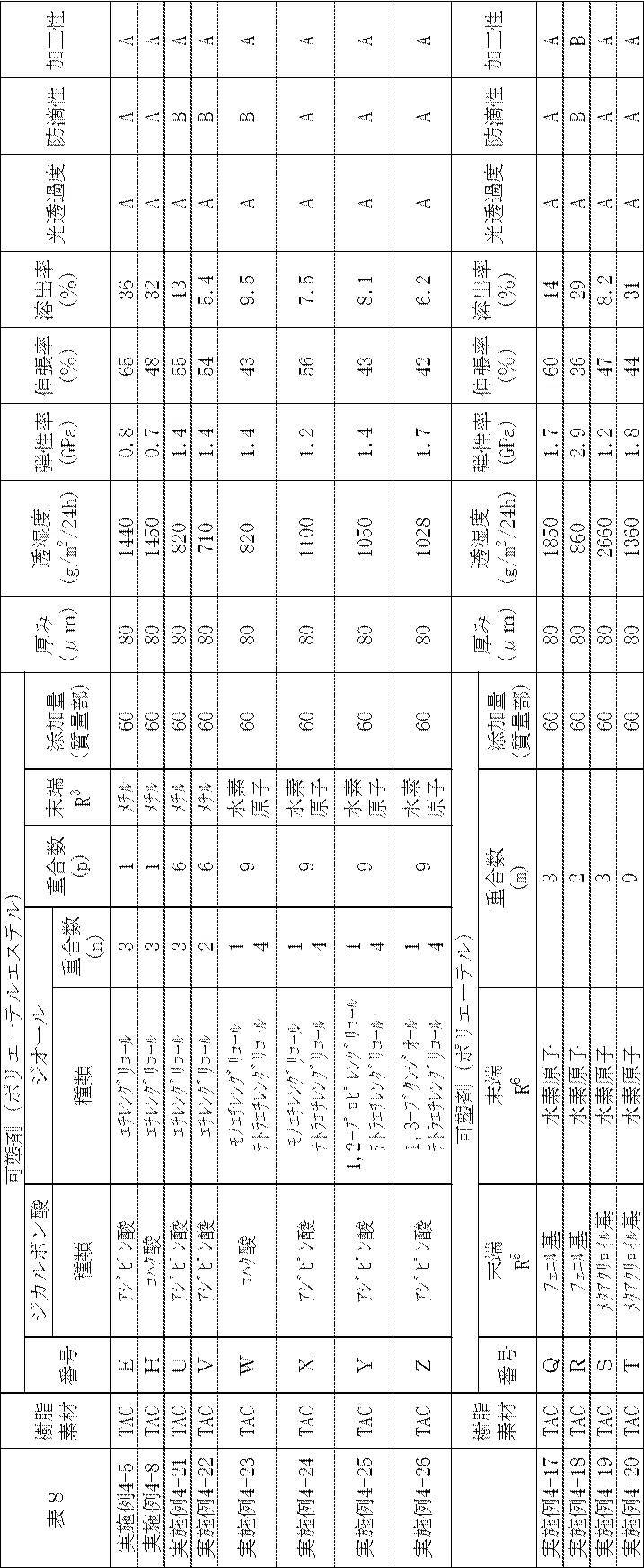
以上の結果から、セルロースアシレート樹脂を含有していても、透湿度が600g/m2/24h以上であっても弾性率が3.0GPa以上となるフィルムは、加工性に劣ることが分かった(比較例4-1)。
同様に、セルロースアシレート樹脂を含有していても、透湿度が600g/m2/24h未満であり、かつ、弾性率が3.0GPa以上となるフィルムは、加工性がいずれも劣ることが分かった(比較例4-2)。
一方、セルロースアシレート樹脂以外の樹脂を用いたフィルムは、いずれも透湿度が低く、防滴性に劣ることが分かった(比較例4-3~4-6)。
同様に、セルロースアシレート樹脂を含有していても、透湿度が600g/m2/24h未満であり、かつ、弾性率が3.0GPa以上となるフィルムは、加工性がいずれも劣ることが分かった(比較例4-2)。
一方、セルロースアシレート樹脂以外の樹脂を用いたフィルムは、いずれも透湿度が低く、防滴性に劣ることが分かった(比較例4-3~4-6)。
これに対し、セルロースアシレート樹脂を含有し、透湿度が600g/m2/24h以上であり、かつ、弾性率が3.0GPa未満であるフィルムは、いずれも防滴性および加工性が良好となることが分かった(実施例4-1~4-26)。
特に、実施例4-3と実施例4-6との対比から、可塑剤として上記式(A)で表されるポリエーテルエステルを用いた場合に、末端のR3がアルキル基であると、防滴性および加工性がより良好となることが分かった。
また、実施例4-9と実施例4-10との対比から、可塑剤の含有量がセルロースアシレート樹脂100質量部に対して30~60質量部であると、防滴性および加工性がより良好となることが分かった。
また、実施例4-5と実施例4-21および4-22との対比から、可塑剤の重合度が高い方が溶出率が低くなることが分かった。
また、実施例4-23~4-26を対比すると、可塑剤の重合度が同じ場合は、ジカルボン酸の炭素数が多いアジピン酸を合成に用いた可塑剤が、溶出度が低くなることが分かった。
特に、実施例4-3と実施例4-6との対比から、可塑剤として上記式(A)で表されるポリエーテルエステルを用いた場合に、末端のR3がアルキル基であると、防滴性および加工性がより良好となることが分かった。
また、実施例4-9と実施例4-10との対比から、可塑剤の含有量がセルロースアシレート樹脂100質量部に対して30~60質量部であると、防滴性および加工性がより良好となることが分かった。
また、実施例4-5と実施例4-21および4-22との対比から、可塑剤の重合度が高い方が溶出率が低くなることが分かった。
また、実施例4-23~4-26を対比すると、可塑剤の重合度が同じ場合は、ジカルボン酸の炭素数が多いアジピン酸を合成に用いた可塑剤が、溶出度が低くなることが分かった。
1 フィルム
2 躯体
10 農業ハウス
11 外張りフィルム
12 内張りフィルム
12a 内張りフィルムの屋根部
12b 内張りフィルムの壁面部
13 躯体
14 換気扇
20 農業ハウス
2 躯体
10 農業ハウス
11 外張りフィルム
12 内張りフィルム
12a 内張りフィルムの屋根部
12b 内張りフィルムの壁面部
13 躯体
14 換気扇
20 農業ハウス
Claims (6)
- セルロースアシレート樹脂を含有し、
25℃、相対湿度80%における平衡含水率が4~8%であり、厚みが60~200μmのセルロースフィルムである、農業ハウス用フィルム。 - 光線透過率が80%以上である、請求項1に記載の農業ハウス用フィルム。
- 透湿度が600g/m2/24h以上である、請求項1または2に記載の農業ハウス用フィルム。
- 前記セルロースアシレート樹脂のアセチル基置換度が2.5~3.0である、請求項1~3のいずれか1項に記載の農業ハウス用フィルム。
- 躯体と、フィルムとを有し、
前記フィルムが、前記躯体に展張されることにより外部から仕切られた空間を形成し、
前記フィルムが、請求項1~4のいずれか1項に記載の農業ハウス用フィルムである、農業ハウス。 - 前記空間内の空気を外部に排出する換気手段を有さない、請求項5に記載の農業ハウス。
Priority Applications (6)
| Application Number | Priority Date | Filing Date | Title |
|---|---|---|---|
| KR1020177017053A KR102000096B1 (ko) | 2014-12-26 | 2015-10-27 | 농업 하우스용 필름 및 농업 하우스 |
| KR1020197019863A KR102072480B1 (ko) | 2014-12-26 | 2015-10-27 | 농업 하우스 |
| CN201580071037.6A CN107105618B (zh) | 2014-12-26 | 2015-10-27 | 农业大棚用薄膜及农业大棚 |
| CN202011595647.5A CN112655433B (zh) | 2014-12-26 | 2015-10-27 | 农业大棚 |
| US15/628,131 US10595472B2 (en) | 2014-12-26 | 2017-06-20 | Film for agricultural greenhouse and agricultural greenhouse |
| US16/784,596 US20200170196A1 (en) | 2014-12-26 | 2020-02-07 | Film for agricultural greenhouse and agricultural greenhouse |
Applications Claiming Priority (6)
| Application Number | Priority Date | Filing Date | Title |
|---|---|---|---|
| JP2014265310A JP6316183B2 (ja) | 2014-12-26 | 2014-12-26 | 農業ハウス |
| JP2014-265310 | 2014-12-26 | ||
| JP2015067332A JP6316234B2 (ja) | 2015-03-27 | 2015-03-27 | 農業ハウス |
| JP2015067456A JP6316235B2 (ja) | 2015-03-27 | 2015-03-27 | 農業ハウス用フィルムおよび農業ハウス |
| JP2015-067332 | 2015-03-27 | ||
| JP2015-067456 | 2015-03-27 |
Related Child Applications (1)
| Application Number | Title | Priority Date | Filing Date |
|---|---|---|---|
| US15/628,131 Continuation US10595472B2 (en) | 2014-12-26 | 2017-06-20 | Film for agricultural greenhouse and agricultural greenhouse |
Publications (1)
| Publication Number | Publication Date |
|---|---|
| WO2016103898A1 true WO2016103898A1 (ja) | 2016-06-30 |
Family
ID=56149934
Family Applications (1)
| Application Number | Title | Priority Date | Filing Date |
|---|---|---|---|
| PCT/JP2015/080215 Ceased WO2016103898A1 (ja) | 2014-12-26 | 2015-10-27 | 農業ハウス用フィルムおよび農業ハウス |
Country Status (4)
| Country | Link |
|---|---|
| US (2) | US10595472B2 (ja) |
| KR (2) | KR102072480B1 (ja) |
| CN (2) | CN112655433B (ja) |
| WO (1) | WO2016103898A1 (ja) |
Cited By (4)
| Publication number | Priority date | Publication date | Assignee | Title |
|---|---|---|---|---|
| WO2018231484A1 (en) * | 2017-06-14 | 2018-12-20 | Grow Solutions Tech Llc | System and method for pressurizing a grow pod |
| JPWO2021131270A1 (ja) * | 2019-12-27 | 2021-07-01 | ||
| US20240147918A1 (en) * | 2021-03-15 | 2024-05-09 | W. L. Gore & Associates, Inc. | Controlled environment agriculture system |
| WO2024204404A1 (ja) | 2023-03-29 | 2024-10-03 | 富士フイルム株式会社 | セルロースアシレートフイルム |
Families Citing this family (11)
| Publication number | Priority date | Publication date | Assignee | Title |
|---|---|---|---|---|
| DE102016109519A1 (de) * | 2016-05-24 | 2017-11-30 | Osram Gmbh | Eindeckungsteil für ein Gewächshaus, Gewächshaus und Verwendung einer Schicht für ein Eindeckungsteil |
| JP7008223B2 (ja) * | 2017-12-22 | 2022-01-25 | パナソニックIpマネジメント株式会社 | 薬剤散布方法 |
| JP6945656B2 (ja) * | 2017-12-27 | 2021-10-06 | 富士フイルム株式会社 | 農産容器 |
| WO2020004331A1 (ja) * | 2018-06-26 | 2020-01-02 | 富士フイルム株式会社 | 農産資材、農産資材ロール及び農業ハウス |
| KR102302273B1 (ko) * | 2019-06-14 | 2021-09-16 | 박기철 | 식물재배시스템 |
| WO2021131745A1 (ja) * | 2019-12-25 | 2021-07-01 | 富士フイルム株式会社 | 農業用採光部材及び農産用箱体 |
| CN111373965B (zh) * | 2020-04-09 | 2021-09-24 | 镇江巨杰新材料技术研发中心(有限合伙) | 一种生物制药石斛种植凉荫装置 |
| US20220053444A1 (en) * | 2020-08-13 | 2022-02-17 | Alibaba Group Holding Limited | Network Communication Method and Apparatus |
| US20260053100A1 (en) * | 2020-10-15 | 2026-02-26 | Carlos BISHOP | Atrium Hybrid Greenhouse |
| EP4302592B1 (de) * | 2022-07-05 | 2025-03-05 | Jungheinrich Aktiengesellschaft | Gewächshausanordnung |
| CN117654216B (zh) * | 2024-02-01 | 2024-04-23 | 四川凌耘建科技有限公司 | 一种三甘醇脱水装置及脱水工艺 |
Citations (3)
| Publication number | Priority date | Publication date | Assignee | Title |
|---|---|---|---|---|
| JP2000043200A (ja) * | 1998-07-27 | 2000-02-15 | Oji Paper Co Ltd | 生分解性多層成形品 |
| JP2007228828A (ja) * | 2006-02-28 | 2007-09-13 | Sumitomo Chemical Co Ltd | 農業用シート |
| JP2009225708A (ja) * | 2008-03-21 | 2009-10-08 | Furukawa Electric Co Ltd:The | 生分解性栽培用光反射シート |
Family Cites Families (38)
| Publication number | Priority date | Publication date | Assignee | Title |
|---|---|---|---|---|
| US1580287A (en) * | 1924-03-20 | 1926-04-13 | Cello Products Inc | Glass surstitute |
| JPH01320161A (ja) | 1988-06-20 | 1989-12-26 | Toray Ind Inc | 複合ポリエステルフィルム |
| IL98486A (en) | 1991-06-13 | 1995-12-08 | Constab Polymer Chemie Gmbh | Plastic sheeting preventing water droplet formation on its surface |
| JPH06279756A (ja) | 1993-03-26 | 1994-10-04 | Mitsubishi Corp | 光透過性、防滴性にすぐれた被覆用フィルムの製造方法 |
| JP3444545B2 (ja) * | 1993-11-18 | 2003-09-08 | 株式会社セクト化学 | 農作物栽培用ハウス |
| JPH1095860A (ja) | 1996-09-26 | 1998-04-14 | Oji Paper Co Ltd | 生分解性と透湿性を有するフィルム及び複合紙 |
| JP3687348B2 (ja) | 1998-05-28 | 2005-08-24 | 旭硝子株式会社 | 農業用被覆資材 |
| JP4179523B2 (ja) | 1999-04-02 | 2008-11-12 | シーアイ化成株式会社 | 農業用多層フィルム |
| US7595311B2 (en) * | 2002-05-24 | 2009-09-29 | Exelixis, Inc. | Azepinoindole derivatives as pharmaceutical agents |
| JP2004033065A (ja) * | 2002-07-01 | 2004-02-05 | Toto Kogyo Co Ltd | エアハウス |
| AU2003284499A1 (en) * | 2003-06-23 | 2005-01-04 | Asahi Glass Green-Tech Co., Ltd. | Transparent resin film roof and building using the same |
| JP2005307142A (ja) * | 2004-03-25 | 2005-11-04 | Fuji Photo Film Co Ltd | セルロースアシレートフィルム、偏光板保護フィルム、偏光板および液晶表示装置 |
| KR20060043733A (ko) * | 2004-03-31 | 2006-05-15 | 엠케이브이 플라테크 가부시키가이샤 | 농업용 필름 |
| CN100572427C (zh) * | 2004-04-26 | 2009-12-23 | 富士胶片株式会社 | 纤维素酰化物薄膜和纤维素酰化物颗粒的制造方法 |
| KR100480006B1 (ko) * | 2004-05-10 | 2005-03-31 | 바이오에어텍(주) | 에어하우스 |
| US20080020217A1 (en) * | 2004-06-21 | 2008-01-24 | Takashi Makinoshima | Colorless Transparent Polyimide Composite Film and Method for Producing Same |
| JP4833644B2 (ja) * | 2005-11-22 | 2011-12-07 | 富士フイルム株式会社 | 熱可塑性樹脂フィルムの製造方法 |
| KR100622455B1 (ko) * | 2006-03-17 | 2006-09-12 | 권광용 | 무지주 다층 비닐하우스의 환기장치 |
| CN100535099C (zh) * | 2006-03-29 | 2009-09-02 | 张长青 | 生物光合反应堆生产微藻的装置及工艺 |
| JP2008020532A (ja) * | 2006-07-11 | 2008-01-31 | Fujifilm Corp | 光学機能性シート及び表示装置 |
| FR2919646B1 (fr) * | 2007-08-01 | 2009-09-11 | Ferrari S Tissage & Enduct Sa | Paroi souple a doubles peaux et dispositif de maintien sous tension d'une paroi souple a doubles peaux |
| JP2009039056A (ja) | 2007-08-10 | 2009-02-26 | Mkv Platech Co Ltd | 農業用フィルム |
| US20090146346A1 (en) * | 2007-12-05 | 2009-06-11 | Fujifilm Corporation | Apparatus for manufacturing thermoplastic resin film, and method for manufacturing thermoplastic resin film |
| JP5173476B2 (ja) * | 2007-12-05 | 2013-04-03 | 富士フイルム株式会社 | 熱可塑性樹脂フィルムの製造装置 |
| DE202008001537U1 (de) * | 2008-02-01 | 2009-06-10 | Krecké, Edmond D., Dipl.-Ing. | Niedrigenergiegebäude, insbesondere Treibhaus oder Stallung |
| JP2010017093A (ja) | 2008-07-08 | 2010-01-28 | Fulta Electric Machinery Co Ltd | ハウスの冷暖房装置又は冷暖房方法。 |
| JP5367324B2 (ja) * | 2008-07-25 | 2013-12-11 | 株式会社ダイセル | 硬化性共重合体及び硬化性樹脂組成物 |
| JP2011010590A (ja) | 2009-07-01 | 2011-01-20 | Kasajin Kk | 農業用ハウスに使用する保温シート |
| JP5384314B2 (ja) | 2009-12-18 | 2014-01-08 | 富士フイルム株式会社 | セルロースアシレートフィルム、偏光板及び液晶表示装置 |
| EP2338327A1 (en) * | 2009-12-22 | 2011-06-29 | Korea Institute of Geoscience & Mineral Resources | Water curtain cultivation system capable of geological circulation of groundwater and artificial recharge of rainwater |
| JP2013139541A (ja) | 2011-03-29 | 2013-07-18 | Fujifilm Corp | セルロースアシレートフィルム、その製造方法、偏光板および液晶表示装置 |
| JP5731605B2 (ja) * | 2012-09-24 | 2015-06-10 | 富士フイルム株式会社 | セルロースアシレートフィルム、それを用いた偏光板および液晶表示装置 |
| JP5887259B2 (ja) * | 2012-12-11 | 2016-03-16 | 富士フイルム株式会社 | 屋外用表示装置 |
| DE102012112935A1 (de) * | 2012-12-21 | 2014-06-26 | JOPE Beteiligungs GmbH | Tragluftdach |
| JP6128920B2 (ja) | 2013-03-12 | 2017-05-17 | 徳寿工業株式会社 | 植物栽培温室 |
| JP6086629B2 (ja) * | 2013-04-15 | 2017-03-01 | 富士フイルム株式会社 | 光学フィルム、光学フィルムの製造方法、偏光板、及び画像表示装置 |
| KR101377464B1 (ko) * | 2013-07-02 | 2014-03-25 | 김문영 | 에어하우스 |
| KR101539175B1 (ko) * | 2014-06-12 | 2015-07-24 | 오준상 | 에어하우스 |
-
2015
- 2015-10-27 KR KR1020197019863A patent/KR102072480B1/ko active Active
- 2015-10-27 CN CN202011595647.5A patent/CN112655433B/zh active Active
- 2015-10-27 CN CN201580071037.6A patent/CN107105618B/zh active Active
- 2015-10-27 WO PCT/JP2015/080215 patent/WO2016103898A1/ja not_active Ceased
- 2015-10-27 KR KR1020177017053A patent/KR102000096B1/ko active Active
-
2017
- 2017-06-20 US US15/628,131 patent/US10595472B2/en active Active
-
2020
- 2020-02-07 US US16/784,596 patent/US20200170196A1/en not_active Abandoned
Patent Citations (3)
| Publication number | Priority date | Publication date | Assignee | Title |
|---|---|---|---|---|
| JP2000043200A (ja) * | 1998-07-27 | 2000-02-15 | Oji Paper Co Ltd | 生分解性多層成形品 |
| JP2007228828A (ja) * | 2006-02-28 | 2007-09-13 | Sumitomo Chemical Co Ltd | 農業用シート |
| JP2009225708A (ja) * | 2008-03-21 | 2009-10-08 | Furukawa Electric Co Ltd:The | 生分解性栽培用光反射シート |
Cited By (9)
| Publication number | Priority date | Publication date | Assignee | Title |
|---|---|---|---|---|
| WO2018231484A1 (en) * | 2017-06-14 | 2018-12-20 | Grow Solutions Tech Llc | System and method for pressurizing a grow pod |
| US11026373B2 (en) | 2017-06-14 | 2021-06-08 | Grow Solutions Tech Llc | Systems and methods for pressurizing an assembly line grow pod |
| JPWO2021131270A1 (ja) * | 2019-12-27 | 2021-07-01 | ||
| WO2021131270A1 (ja) * | 2019-12-27 | 2021-07-01 | 富士フイルム株式会社 | 積層シート、積層シートロール、農業資材及び積層シートの使用方法 |
| JP7235898B2 (ja) | 2019-12-27 | 2023-03-08 | 富士フイルム株式会社 | 積層シートロール、農業資材及び積層シートの使用方法 |
| EP4082788A4 (en) * | 2019-12-27 | 2023-05-10 | FUJIFILM Corporation | MULTI-LAYER FILM, MULTI-LAYER FILM ROLL, AGRICULTURAL MATERIAL AND USE OF A MULTI-LAYER FILM |
| US20240147918A1 (en) * | 2021-03-15 | 2024-05-09 | W. L. Gore & Associates, Inc. | Controlled environment agriculture system |
| WO2024204404A1 (ja) | 2023-03-29 | 2024-10-03 | 富士フイルム株式会社 | セルロースアシレートフイルム |
| EP4692185A1 (en) | 2023-03-29 | 2026-02-11 | FUJIFILM Corporation | Cellulose acylate film |
Also Published As
| Publication number | Publication date |
|---|---|
| CN107105618B (zh) | 2021-01-22 |
| CN107105618A (zh) | 2017-08-29 |
| CN112655433B (zh) | 2023-01-06 |
| KR20170092587A (ko) | 2017-08-11 |
| KR20190085172A (ko) | 2019-07-17 |
| US10595472B2 (en) | 2020-03-24 |
| US20200170196A1 (en) | 2020-06-04 |
| KR102000096B1 (ko) | 2019-07-15 |
| KR102072480B1 (ko) | 2020-02-03 |
| CN112655433A (zh) | 2021-04-16 |
| US20170280637A1 (en) | 2017-10-05 |
Similar Documents
| Publication | Publication Date | Title |
|---|---|---|
| KR102000096B1 (ko) | 농업 하우스용 필름 및 농업 하우스 | |
| JP6285384B2 (ja) | 農業ハウス用フィルム | |
| EP1559743B1 (en) | Infra-red radiation absorption articles and method of manufacturing thereof | |
| JP6316234B2 (ja) | 農業ハウス | |
| US10479872B2 (en) | Antifogging film | |
| CN102574375A (zh) | 用于聚碳酸酯上的漆的两种三嗪紫外吸收剂的组合 | |
| JP6503203B2 (ja) | 近赤外線による生体組織の損傷を防止する方法 | |
| JP3612136B2 (ja) | ポリオレフィン系樹脂組成物および積層フィルム | |
| JP6316235B2 (ja) | 農業ハウス用フィルムおよび農業ハウス | |
| CN118755241A (zh) | 一种高阻隔全生物降解果蔬保鲜膜及其制备方法及保鲜袋 | |
| US20030224113A1 (en) | Solution film-forming method, cellulose ester film, protective film and polarizing plate | |
| JP3395938B2 (ja) | 被覆膜を有するポリカーボネート成形物 | |
| JP6316183B2 (ja) | 農業ハウス | |
| CN114845545A (zh) | 农用采光部件及农产用箱体 | |
| US10654252B2 (en) | Multi-layer anti-fog compositions and processes for making same | |
| CN1476382A (zh) | 可热塑性模塑的聚碳酸酯复合材料,其生产工艺,其用途,和阻燃性聚碳酸酯模塑品 | |
| CN1923893B (zh) | 包含聚碳酸酯和新紫外线吸收剂的组合物 | |
| JP3619322B2 (ja) | ポリオレフィン系樹脂被覆フィルム | |
| US11614229B2 (en) | Water vapor insulation system | |
| JP6745831B2 (ja) | 農業用透明フィルム | |
| JP2012070662A (ja) | 農業用フィルム | |
| CN214354611U (zh) | 一种全封闭高密度纤维板 | |
| WO2006083127A1 (en) | Heat insulating material using scrapped diapers | |
| WO2017047425A1 (ja) | 防曇フィルム | |
| JP2020078909A (ja) | フィルム及びフィルムの製造方法 |
Legal Events
| Date | Code | Title | Description |
|---|---|---|---|
| 121 | Ep: the epo has been informed by wipo that ep was designated in this application |
Ref document number: 15872467 Country of ref document: EP Kind code of ref document: A1 |
|
| ENP | Entry into the national phase |
Ref document number: 20177017053 Country of ref document: KR Kind code of ref document: A |
|
| NENP | Non-entry into the national phase |
Ref country code: DE |
|
| 122 | Ep: pct application non-entry in european phase |
Ref document number: 15872467 Country of ref document: EP Kind code of ref document: A1 |