WO2016084637A1 - 車両制御装置及び車両制御方法 - Google Patents
車両制御装置及び車両制御方法 Download PDFInfo
- Publication number
- WO2016084637A1 WO2016084637A1 PCT/JP2015/082075 JP2015082075W WO2016084637A1 WO 2016084637 A1 WO2016084637 A1 WO 2016084637A1 JP 2015082075 W JP2015082075 W JP 2015082075W WO 2016084637 A1 WO2016084637 A1 WO 2016084637A1
- Authority
- WO
- WIPO (PCT)
- Prior art keywords
- vehicle
- lane
- probability
- width
- vehicle control
- Prior art date
- Legal status (The legal status is an assumption and is not a legal conclusion. Google has not performed a legal analysis and makes no representation as to the accuracy of the status listed.)
- Ceased
Links
Images


Classifications
-
- B—PERFORMING OPERATIONS; TRANSPORTING
- B60—VEHICLES IN GENERAL
- B60W—CONJOINT CONTROL OF VEHICLE SUB-UNITS OF DIFFERENT TYPE OR DIFFERENT FUNCTION; CONTROL SYSTEMS SPECIALLY ADAPTED FOR HYBRID VEHICLES; ROAD VEHICLE DRIVE CONTROL SYSTEMS FOR PURPOSES NOT RELATED TO THE CONTROL OF A PARTICULAR SUB-UNIT
- B60W40/00—Estimation or calculation of non-directly measurable driving parameters for road vehicle drive control systems not related to the control of a particular sub unit, e.g. by using mathematical models
- B60W40/02—Estimation or calculation of non-directly measurable driving parameters for road vehicle drive control systems not related to the control of a particular sub unit, e.g. by using mathematical models related to ambient conditions
- B60W40/04—Traffic conditions
-
- B—PERFORMING OPERATIONS; TRANSPORTING
- B60—VEHICLES IN GENERAL
- B60R—VEHICLES, VEHICLE FITTINGS, OR VEHICLE PARTS, NOT OTHERWISE PROVIDED FOR
- B60R21/00—Arrangements or fittings on vehicles for protecting or preventing injuries to occupants or pedestrians in case of accidents or other traffic risks
-
- B—PERFORMING OPERATIONS; TRANSPORTING
- B60—VEHICLES IN GENERAL
- B60W—CONJOINT CONTROL OF VEHICLE SUB-UNITS OF DIFFERENT TYPE OR DIFFERENT FUNCTION; CONTROL SYSTEMS SPECIALLY ADAPTED FOR HYBRID VEHICLES; ROAD VEHICLE DRIVE CONTROL SYSTEMS FOR PURPOSES NOT RELATED TO THE CONTROL OF A PARTICULAR SUB-UNIT
- B60W30/00—Purposes of road vehicle drive control systems not related to the control of a particular sub-unit, e.g. of systems using conjoint control of vehicle sub-units
- B60W30/14—Adaptive cruise control
- B60W30/16—Control of distance between vehicles, e.g. keeping a distance to preceding vehicle
-
- B—PERFORMING OPERATIONS; TRANSPORTING
- B60—VEHICLES IN GENERAL
- B60W—CONJOINT CONTROL OF VEHICLE SUB-UNITS OF DIFFERENT TYPE OR DIFFERENT FUNCTION; CONTROL SYSTEMS SPECIALLY ADAPTED FOR HYBRID VEHICLES; ROAD VEHICLE DRIVE CONTROL SYSTEMS FOR PURPOSES NOT RELATED TO THE CONTROL OF A PARTICULAR SUB-UNIT
- B60W2420/00—Indexing codes relating to the type of sensors based on the principle of their operation
- B60W2420/40—Photo, light or radio wave sensitive means, e.g. infrared sensors
- B60W2420/403—Image sensing, e.g. optical camera
-
- B—PERFORMING OPERATIONS; TRANSPORTING
- B60—VEHICLES IN GENERAL
- B60W—CONJOINT CONTROL OF VEHICLE SUB-UNITS OF DIFFERENT TYPE OR DIFFERENT FUNCTION; CONTROL SYSTEMS SPECIALLY ADAPTED FOR HYBRID VEHICLES; ROAD VEHICLE DRIVE CONTROL SYSTEMS FOR PURPOSES NOT RELATED TO THE CONTROL OF A PARTICULAR SUB-UNIT
- B60W2420/00—Indexing codes relating to the type of sensors based on the principle of their operation
- B60W2420/40—Photo, light or radio wave sensitive means, e.g. infrared sensors
- B60W2420/408—Radar; Laser, e.g. lidar
-
- B—PERFORMING OPERATIONS; TRANSPORTING
- B60—VEHICLES IN GENERAL
- B60W—CONJOINT CONTROL OF VEHICLE SUB-UNITS OF DIFFERENT TYPE OR DIFFERENT FUNCTION; CONTROL SYSTEMS SPECIALLY ADAPTED FOR HYBRID VEHICLES; ROAD VEHICLE DRIVE CONTROL SYSTEMS FOR PURPOSES NOT RELATED TO THE CONTROL OF A PARTICULAR SUB-UNIT
- B60W2554/00—Input parameters relating to objects
- B60W2554/80—Spatial relation or speed relative to objects
- B60W2554/801—Lateral distance
-
- B—PERFORMING OPERATIONS; TRANSPORTING
- B60—VEHICLES IN GENERAL
- B60W—CONJOINT CONTROL OF VEHICLE SUB-UNITS OF DIFFERENT TYPE OR DIFFERENT FUNCTION; CONTROL SYSTEMS SPECIALLY ADAPTED FOR HYBRID VEHICLES; ROAD VEHICLE DRIVE CONTROL SYSTEMS FOR PURPOSES NOT RELATED TO THE CONTROL OF A PARTICULAR SUB-UNIT
- B60W30/00—Purposes of road vehicle drive control systems not related to the control of a particular sub-unit, e.g. of systems using conjoint control of vehicle sub-units
- B60W30/08—Active safety systems predicting or avoiding probable or impending collision or attempting to minimise its consequences
- B60W30/095—Predicting travel path or likelihood of collision
-
- G—PHYSICS
- G08—SIGNALLING
- G08G—TRAFFIC CONTROL SYSTEMS
- G08G1/00—Traffic control systems for road vehicles
- G08G1/16—Anti-collision systems
- G08G1/167—Driving aids for lane monitoring, lane changing, e.g. blind spot detection
Definitions
- the present disclosure relates to a vehicle control technology that is mounted on a vehicle or the like and detects other vehicles existing in front of the vehicle.
- a millimeter wave or the like is transmitted as an exploration wave at regular intervals over a predetermined angle around the vehicle, and the position of the other vehicle is detected by receiving the reflected wave, and the own vehicle follows the detected other vehicle.
- a vehicle control apparatus that performs the above.
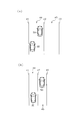
- FIG. 9A shows the positional relationship when the lane width is wide and the host vehicle 30 and the other vehicle 50 travel in the same lane.
- FIG. 9B shows the positional relationship when the lane width is narrow and the other vehicle 50 travels in the adjacent lane 45 of the own lane 44 where the host vehicle 30 is traveling.
- the host vehicle 30 is traveling on the own lane 44 between the first traveling lane line 41 and the second traveling lane line 42, and the other vehicle 50 is also traveling on the own lane 44. ing. At this time, the own vehicle 30 performs follow-up control with the other vehicle 50 as the preceding vehicle.
- the host vehicle 30 is traveling on the host lane 44 between the first travel lane line 41 and the second travel lane line 42, and the other vehicle 50 is in the second travel lane.
- the vehicle travels in the adjacent lane 45 between the line 42 and the third travel lane 43.
- the relative position in the lateral direction between the host vehicle 30 and the other vehicle 50 is close to the example shown in FIG.
- follow-up control may be performed in which the other vehicle 50 traveling in the adjacent lane 45 is the preceding vehicle.
- This disclosure is intended to provide a vehicle control technology that can suppress erroneous detection of other vehicles that are not on the course of the host vehicle.
- the present disclosure is a vehicle control device that is mounted on a host vehicle and controls the host vehicle in accordance with the position of another vehicle existing in front of the host vehicle, in a lateral direction that is a direction orthogonal to the course of the host vehicle.
- Setting means for setting whether or not the other vehicle is located on the course of the own vehicle according to the relative position of the other vehicle with respect to the own vehicle, and the other vehicle is located on the course of the own vehicle by the parameter.
- Determination means for determining whether or not, an acquisition means for acquiring a lane width that is a width of a lane in which the host vehicle travels, an adjustment means that changes a correspondence relationship between a relative position and a parameter based on the lane width; Is provided.
- the host vehicle can determine whether the other vehicle is positioned on the course of the host vehicle based on the relative position of the other vehicle in the lateral direction that is a direction orthogonal to the course of the host vehicle.
- the relative position of the other vehicle with respect to the parameter is associated with a parameter indicating whether the other vehicle is located on the course of the own vehicle. For this reason, in the vehicle control device of the present disclosure, it is possible to determine whether or not the other vehicle is located on the course of the own vehicle based on the parameter associated with the relative position of the other vehicle.
- the vehicle control device of the present disclosure determines whether another vehicle traveling in a lane (adjacent lane) adjacent to the lane in which the host vehicle is traveling (adjacent lane) is selected as the preceding vehicle.
- the lane width is acquired with the above configuration, and the relative position of the other vehicle with respect to the own vehicle and whether the other vehicle is positioned on the course of the own vehicle based on the acquired lane width.
- the correspondence relationship with the parameter indicating is changed.
- FIG. 1 is an overall configuration diagram of the vehicle control device.
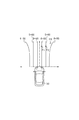
- FIG. 2 is a diagram showing a probability map.
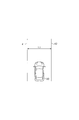
- FIG. 3 is a diagram illustrating the relationship among the host vehicle, the white line, and the lane width.
- FIG. 4 is a diagram showing a corrected probability map.
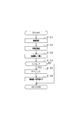
- FIG. 5 is a flowchart showing the processing according to the first embodiment.
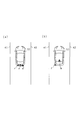
- FIG. 6A is a diagram showing a fusion state
- FIG. 6B is a diagram showing a state that is not a fusion state.
- FIG. 7 is a flowchart showing processing according to the second embodiment.
- FIG. 8 is a time chart when the processing according to the second embodiment is executed.
- FIG. 9 is a diagram showing a conventional example.
- a vehicle control device including an object detection device is mounted on a vehicle and has an ACC (Adaptive Cruise Control) function.
- the vehicle control device causes the host vehicle to follow the vehicle so that the distance between the other vehicle detected by the object detection device and the host vehicle becomes a target value of the inter-vehicle distance according to the vehicle speed. Further, the vehicle control device performs control so that the vehicle speed set as the target value is obtained when no other vehicle is detected.
- ACC Adaptive Cruise Control
- the vehicle control device includes a radar device 11, an image acquisition device 12, an inter-vehicle control ECU 13, an engine ECU 14, and a brake ECU 15.
- the inter-vehicle control ECU 13 functions as an object detection device using information acquired from the radar device 11 and the image acquisition device 12, and controls the inter-vehicle distance in cooperation with the engine ECU 14 and the brake ECU 15. To do.
- the radar device 11 and the image acquisition device 12 and the ECUs 13 to 15 are connected to each other via a vehicle-mounted network so that they can communicate with each other.
- An ACC switch 16 is connected to the inter-vehicle control ECU 13.
- a transmission 17, a throttle motor 18, and a throttle sensor 19 are connected to the engine ECU 14.
- a vehicle speed sensor 20 and a brake ACT (actuator) 21 are connected to the brake ECU 15.
- Each of these devices is connected by a dedicated line such as serial communication.
- the radar device 11, the image acquisition device 12, and the ECUs 13 to 15 are information processing devices equipped with a microcomputer, a wire harness interface, and the like.
- the microcomputer includes a CPU, a ROM, a RAM, an I / O port, a CAN communication device, and the like.
- the radar device 11 detects the distance, relative speed, and relative position for each of the other vehicles, and provides the detection result to the inter-vehicle control ECU 13.
- the image acquisition device 12 includes an imaging unit that captures an image of an object or the like, acquires a captured image around the host vehicle, performs predetermined processing, and provides the processing result to the inter-vehicle control ECU 13.
- the inter-vehicle control ECU 13 sends to the engine ECU 14 and the brake ECU 15 an acceleration instruction value for instructing the acceleration of the host vehicle based on the information on the other vehicle transmitted from the radar device 11 and the image acquisition device 12, the current vehicle speed, the acceleration, and the like. Send.
- ACC switch 16 accepts driver's operation for ACC.
- the inter-vehicle control ECU 13 transmits an acceleration instruction value to the engine ECU 14 and the brake ECU 15.
- the driver's operation for ACC includes, for example, ON / OFF of ACC, switching between a mode for keeping the inter-vehicle distance constant and a mode for keeping the vehicle speed constant, an indication value of the vehicle speed, and the like.
- the engine ECU 14 controls the throttle motor 18 while monitoring the throttle opening detected by the throttle sensor 19. For example, the engine ECU 14 determines the throttle opening based on the acceleration instruction value received from the inter-vehicle control ECU 13 and the current vehicle speed based on table data in which the throttle opening is associated with the vehicle speed and the acceleration instruction value. Further, the engine ECU 14 determines whether or not it is necessary to change gear positions (necessity) based on the vehicle speed and the throttle opening, and if necessary, instructs the transmission 17 to change gear positions.
- the brake ECU 15 brakes the host vehicle by controlling the opening / closing and opening of the valve of the brake ACT21.
- the brake ACT 21 controls the acceleration (or deceleration) of the host vehicle by increasing, maintaining, or reducing the wheel cylinder pressure of each wheel by the pressure generated by the pump in the working fluid (for example, oil).
- the brake ECU 15 brakes the host vehicle according to the acceleration instruction value transmitted by the inter-vehicle control ECU 13.
- the radar device 11 is, for example, a radar device that uses a millimeter-wave band high-frequency signal as a transmission wave.
- the radar device 11 detects a position of an object within the detection range by setting a region within a predetermined detection angle in front of the host vehicle as a detection range.
- the radar apparatus 11 includes a transmission / reception unit 11a that transmits a survey wave and receives a reflected wave by a plurality of antennas, and a distance calculation unit 11b that calculates a distance between the host vehicle and another vehicle.
- a relative speed calculation unit 11c that calculates a relative speed between the host vehicle and the other vehicle
- an orientation calculation unit 11d that calculates an orientation of the other vehicle with respect to the host vehicle are provided.
- the distance calculation unit 11b calculates the distance between the host vehicle and the other vehicle based on the transmission time of the exploration wave and the reception time of the reflected wave.
- the relative speed calculation unit 11c calculates the relative speed based on the frequency of the reflected wave reflected by the other vehicle (frequency changed by the Doppler effect).
- the direction calculation unit 11d calculates the direction of the other vehicle based on the phase difference of the reflected waves received by the plurality of antennas.
- the radar device 11 can specify the relative position of the other vehicle with respect to the host vehicle if the position and orientation of the other vehicle can be calculated.
- the radar apparatus 11 transmits the exploration wave to the other vehicle and receives the reflected wave from the other vehicle at predetermined intervals.
- the radar device 11 performs calculation of the reflection position, which is the position where the exploration wave is reflected, and calculation of the relative speed between the host vehicle and the other vehicle at predetermined intervals. As a result, the radar apparatus 11 transmits information including at least the reflection position (position based on the reflected wave) to the inter-vehicle control ECU 13 as the first detection information.
- the image acquisition device 12 includes an imaging unit 12a (imaging means), and the imaging unit 12a is a monocular imaging device, such as a CCD camera, a CMOS image sensor, or a near infrared camera.
- the imaging unit 12a is attached at a predetermined height in the center in the vehicle width direction of the vehicle, and an area (detection range by the radar device 11) that extends in a range of a predetermined angle toward the front of the vehicle from an overhead viewpoint.
- the image processing unit 12b extracts feature points (feature points indicating the presence of other vehicles) in the image captured by the imaging unit 12a. Specifically, the image processing unit 12b extracts edge points based on the luminance information of the image, and performs Hough transform on the extracted edge points.
- the image acquisition device 12 captures an image and extracts feature points at each control cycle that is the same as or different from that of the radar device 11. As a result, the image acquisition device 12 transmits information including at least a feature point extraction result (a position based on the captured image of the detection range) to the inter-vehicle control ECU 13 as second detection information.
- the inter-vehicle control ECU 13 uses the own lane probability S as a parameter for determining whether there is another vehicle in the lane (own lane) in which the own vehicle is traveling for each of the other vehicles present in front of the own vehicle. Is used.
- the own lane probability S will be described with reference to FIG.
- the other vehicle travels over the predetermined range on the virtual plane (virtual coordinate space) located in front of the own vehicle 30.
- a probability map which is a determination area for determining whether or not the object is positioned above, is set. This probability map is set within a detectable range of the radar apparatus 11.
- the own lane probability S is associated with the position (coordinates) on the probability map.
- the inter-vehicle control ECU 13 obtains the own lane probability S of the other vehicle with respect to the own vehicle 30 by mapping the relative position of the other vehicle with respect to the own vehicle 30 to the position on the coordinate space in the probability map.
- the own lane probabilities S of probability values 30 to 90 are associated with each other in a virtual coordinate space indicating the relative position of the other vehicle in front of the own vehicle 30.
- the value is set to gradually decrease as the distance from the position increases in the horizontal direction.
- the inter-vehicle control ECU 13 functions as a setting unit that sets a parameter indicating the relative position of the other vehicle with respect to the host vehicle 30 in the lateral direction orthogonal to the course of the host vehicle 30.
- the own lane probability S on the probability map is set such that the value gradually decreases from the course of the host vehicle 30 toward the lateral direction orthogonal to the course of the host vehicle 30. Furthermore, the own lane probability S is set such that the range of the corresponding position is partially enlarged as the distance from the own vehicle 30 increases. The reason for performing these settings is that the error in the position of the object detected by the radar apparatus 11 increases as the distance from the host vehicle 30 increases.
- the inter-vehicle control ECU 13 calculates the threshold Th that is a predetermined value and the calculated own vehicle probability. The value with the lane probability S is compared.
- the inter-vehicle control ECU 13 selects the other vehicle detected by the radar device 11 as the preceding vehicle used for the follow-up control of the own vehicle 30 when the value of the own lane probability S is equal to or greater than the threshold Th. .
- the inter-vehicle control ECU 13 has already selected the other vehicle detected by the radar device 11 as the preceding vehicle used for the follow-up control of the own vehicle 30 when the own lane probability S is a value less than the threshold Th. Cancel the selection of the vehicle.
- the own lane probability S is set in a plurality of stages so as to be, for example, one step.
- Each stage has a predetermined width in the horizontal direction (hereinafter referred to as “region width”). That is, the own lane probability S is set in a stepwise manner in association with a predetermined region width in the horizontal direction on the virtual coordinate space indicating the relative position of the other vehicle in front of the own vehicle 30. When the position of the other vehicle is included in the area width, the own lane probability S of the area width is associated.
- the reference value of each area width (hereinafter referred to as “reference width”) is determined in advance based on a general lane width of a road, for example, an expressway, on which follow-up control with respect to the preceding vehicle is assumed to be performed. .
- the host lane probability S is 90.
- the host lane probability S is 60.
- the host lane probability S is approximately 40.
- the threshold Th is set as 50
- the other vehicle at the position P1 or the position P2 is selected as the preceding vehicle because the own lane probability S is equal to or higher than the threshold Th (S ⁇ 50).
- the other vehicle at the position P3 is not selected as the preceding vehicle because the own lane probability S is less than the threshold Th (S ⁇ 50) (if the vehicle is selected as the preceding vehicle, the selection is canceled).
- the own lane probability S is a threshold value. It is set to be equal to or greater than Th. That is, the threshold Th is set so that the range in which the own lane probability S is equal to or greater than the threshold Th is within the lane width, and the range in which the own lane probability S is less than the threshold Th is outside the lane width.
- the specific probability value of the own lane probability S is shown in the probability map of FIG. 2, this is merely an example. That is, the probability map is such that the other vehicle is selected as the preceding vehicle as the lateral relative position of the other vehicle with respect to the own vehicle 30 moves toward a position near the course of the own vehicle 30 (near the center of the own lane).
- the own lane probability S may be set.
- the other vehicle when it is determined whether another vehicle should be selected as a preceding vehicle using the probability map shown in FIG. 2 on a road having a narrower lane width than expected, the other vehicle is a lane in which the host vehicle 30 is traveling.
- the vehicle is selected as the preceding vehicle even though the vehicle is traveling in a lane (adjacent lane) adjacent to (own lane).
- the width of the own lane is such that the own lane probability S falls within the range of 60 or more
- the lane probability S may be greater than or equal to a threshold Th (S ⁇ 50). That is, when the position of the other vehicle is detected at the position P2 in FIG.
- the own lane probability S is 60 even though the detected other vehicle is traveling in the adjacent lane, and the other vehicle is traveling in the adjacent lane.
- the vehicle is selected as the preceding vehicle.
- the follow-up control for the other vehicle traveling in the adjacent lane is performed, and the accuracy of the vehicle control is lowered.
- the probability map is corrected according to the lane width. Specifically, feature points are extracted based on luminance information of an image (road image) captured by the imaging unit 12a, and a white line (traveling division line) drawn on the road ahead of the host vehicle 30 is recognized. . At this time, as shown in FIG. 3, when both the left white line 41 and the right white line 42 are detected in the lane in which the host vehicle 30 is traveling (the own lane), between the left white line 41 and the right white line 42. A lane width L1 that is a distance of is calculated.
- the lane width L1 may be obtained by, for example, obtaining the lane width value at a plurality of locations, and using the average value of the plurality of width values as the value of the lane width L1, or the lane width L1 at a predetermined distance from the host vehicle 30.
- the width value may be used as the value of the lane width L1.
- the correction of the probability map using the lane width L1 is performed by reducing the area width of each area associated with the own lane probability S in the probability map in the lateral direction orthogonal to the course of the own vehicle 30. Is called. By doing this, even if the relative position of the other vehicle with respect to the own vehicle 30 is the same, the own lane probability S using the corrected probability map is smaller than the own lane probability S using the corrected probability map. Takes a value. As a result, when the corrected probability map is used, even if the relative position of the other vehicle with respect to the host vehicle 30 is the same, it is difficult for the other vehicle to be selected as the preceding vehicle.
- FIG. 4 shows an example of a probability map corrected by using the lane width L1.
- the area width of the own lane probability S in the probability map is reduced in the lateral direction orthogonal to the course of the own vehicle 30.
- the own lane probability S is approximately 75 at the position P1
- the own lane probability S is approximately 40 at the position P2. Therefore, when another vehicle is detected at the position P2, the own lane probability S is less than the threshold Th (S ⁇ 50), and the detected other vehicle is not selected as the preceding vehicle.
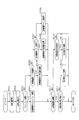
- FIG. 5 is a flowchart showing a process executed by the inter-vehicle control ECU 13 according to the present embodiment. The process of FIG. 5 is repeatedly executed at a predetermined control cycle.
- the inter-vehicle control ECU 13 first acquires an image (road image) captured by the imaging unit 12a (S101), extracts feature points of a white line (traveling line) from the luminance information of the image, and the like. Is recognized (S102). When recognizing the white line, the inter-vehicle control ECU 13 calculates a lane width L1 which is the width between the left white line 41 and the right white line 42 (S103). At this time, the inter-vehicle control ECU 13 functions as an acquisition unit that acquires the lane width L1 of the lane (own lane) in which the host vehicle 30 is traveling.
- the lane width L1 may be obtained, for example, by obtaining lane width values at a plurality of locations, and using an average value of the plurality of width values as the value of the lane width L1, or being separated from the host vehicle 30 by a predetermined distance.
- the width value of the position lane may be used as the value of the lane width L1.
- the processing of S101 and S102 may be executed by the image processing unit 12b of the image acquisition device 12.
- the inter-vehicle control ECU 13 determines whether or not the calculated lane width L1 is equal to or smaller than the reference width L (S104).
- the reference width L is a value determined in advance based on a general lane width such as a road on which the follow-up control for the preceding vehicle is assumed, for example, an expressway.
- the inter-vehicle control ECU 13 determines that the lane width L1 is larger than the reference width L (S104: NO), the series of processing ends. On the other hand, when determining that the lane width L1 is equal to or less than the reference width L (S104: YES), the inter-vehicle control ECU 13 calculates a correction coefficient K used when correcting the area width of the own lane probability S in the probability map (S105). .
- the correction coefficient K is calculated by dividing the lane width L1 by the reference width L.
- the inter-vehicle control ECU 13 calculates the corrected area width by multiplying the calculated correction coefficient K by the reference value of each area width of the own lane probability S, and corrects the area width of the own lane probability S in the probability map. (S106). Thereafter, the inter-vehicle distance control ECU 13 ends the series of processes.
- the inter-vehicle control ECU 13 functions as an adjusting unit that adjusts the area width of the own lane probability S in the probability map based on the lane width L1. That is, the inter-vehicle control ECU 13 changes the correspondence relationship between the relative position of the other vehicle with respect to the host vehicle 30 and the parameter indicating whether the other vehicle is located on the course of the host vehicle 30 based on the lane width L1. It functions as an adjustment means.
- the inter-vehicle control ECU 13 executes the processing shown in the flowchart of FIG. 5, and then based on the corrected probability map and the relative position of the other vehicle with respect to the own vehicle 30, the own lane of the other vehicle with respect to the own vehicle 30. Probability S is calculated. Then, the inter-vehicle control ECU 13 performs a determination process as to whether or not the calculated own lane probability S is greater than or equal to the threshold Th. The inter-vehicle control ECU 13 performs processing of selecting another vehicle as a preceding vehicle or excluding it as a selection target based on the determination result. Thus, the inter-vehicle control ECU 13 functions as a determination unit that determines whether or not another vehicle is positioned on the course of the host vehicle 30 based on the set parameters.
- the vehicle control device has the following effects due to the above configuration.
- the vehicle control device it is possible to determine whether or not the other vehicle is positioned on the course of the host vehicle 30 based on the relative position of the other vehicle in the lateral direction that is a direction orthogonal to the course of the host vehicle 30.
- the relative position of the other vehicle with respect to the own vehicle 30 and the parameter indicating whether the other vehicle is located on the course of the own vehicle 30 are associated with each other. More specifically, in the vehicle control device according to the present embodiment, the relative position of the other vehicle with respect to the own vehicle 30 and the own lane probability that is a parameter indicating whether the other vehicle is located on the course of the own vehicle 30.
- a probability map in which S is associated is used.
- the own lane probability S is set in a plurality of stages, and the set own lane probability S includes a lateral direction that is orthogonal to the course of the host vehicle 30 in each stage.
- the region width is as follows. Therefore, in the present embodiment, by mapping the relative position of the other vehicle to the own vehicle 30 in the coordinate space on the probability map, the own lane probability S can be associated with the position of the other vehicle. Thereby, in the vehicle control apparatus which concerns on this embodiment, it can determine whether the other vehicle is a preceding vehicle located on the course of the own vehicle 30 by the own lane probability S matched with the position of the other vehicle. .
- the vehicle control device In this time, on a road whose lane width is narrower than expected, there is a possibility that another vehicle traveling in a lane (adjacent lane) adjacent to the lane in which the host vehicle 30 is traveling (adjacent lane) may be selected as the preceding vehicle.
- the lane width L1 is acquired, and the area width of each own lane probability S in the probability map is changed based on the lane width L1 and the reference width L. That is, in the vehicle control device according to the present embodiment, based on the lane width L1, the relative position of the other vehicle with respect to the own vehicle 30 and the parameter indicating whether the other vehicle is located on the course of the own vehicle 30 The correspondence is changed.
- the vehicle control device it is possible to suppress the determination that another vehicle traveling in the adjacent lane exists on the course of the host vehicle 30 when the lane width L1 is narrow. That is, in the vehicle control device according to the present embodiment, erroneous detection of other vehicles that are not located on the course of the host vehicle 30 can be suppressed.
- Second Embodiment The overall configuration of the vehicle control device according to this embodiment is the same as that of the vehicle control device according to the first embodiment, and the control executed by the inter-vehicle control ECU 13 is partially different.
- position information of other vehicles is acquired by the radar device 11 (first position detection means) and the image acquisition device 12 (second position detection means).
- the radar apparatus 11 calculates the position of the other vehicle by receiving the reflected wave from the other vehicle.
- the image acquisition device 12 calculates the position of the other vehicle by acquiring feature points of an image obtained by imaging the other vehicle.
- the reflection position (first position) calculated by the radar apparatus 11 is calculated based on the transmission / reception time of the radar wave. Therefore, the radar device 11 can accurately calculate the position of the other vehicle.
- the reflected wave reflected at the center of the rear part of the other vehicle may be used for position calculation, or the reflected wave reflected by a part other than the rear part of the other vehicle (left and right ends, etc.) is received. Sometimes. As a result, in the radar apparatus 11, a deviation occurs in the calculated position.
- the image acquisition device 12 can accurately determine whether or not another vehicle exists by extracting feature points of the captured image.
- the imaging unit 12a is attached at a predetermined height, and the other vehicle is imaged from the overhead view point at the attachment position, and the feature points of the other vehicle are extracted based on the captured image. Yes. Therefore, in the image acquisition device 12, even if the position of the feature point of the captured image is corrected based on the mounting position of the imaging unit 12a, a deviation from the actual position may occur. Therefore, the image acquisition device 12 can accurately determine the presence or absence of the other vehicle, but the image position (second position) that is the position of the other vehicle calculated based on the feature point of the captured image and the actual position. May cause deviation.
- the value indicating the deviation between the reflection position calculated by the radar device 11 and the image position calculated by the image acquisition device 12 (hereinafter referred to as “deviation amount”) is small, another vehicle may exist at that position. High nature. In the present embodiment, such a state where the amount of deviation is small is referred to as a fusion state. That is, the state in which the position of the other vehicle can be accurately acquired by the radar device 11 and the image acquisition device 12 is referred to as a fusion state.
- the position obtained based on the reflection position and the image position at that time is set as the fusion position, and the fusion probability is obtained using the fusion position and the probability map.
- the fusion probability is obtained by the same means (method) as the own lane probability S described in the first embodiment.
- the millimeter wave probability is obtained using the reflection position and the probability map at that time.
- the millimeter wave probability is obtained by the same means (method) as the own lane probability S described in the first embodiment.
- FIG. 6A shows an example of the reflection position P and the image position Q of the other vehicle 50 in the fusion state
- FIG. 6B shows the other vehicle 50 in the fusion state.
- An example of the reflection position P and the image position Q is shown.
- the fusion position F is calculated based on the reflection position P and the image position Q
- the fusion probability is calculated based on the calculated fusion position F and the set probability map. calculate.
- the vehicle control apparatus calculates the millimeter wave probability based on the reflection position P and the probability map.
- FIG. 7 is a flowchart showing a series of processes in the inter-vehicle control ECU 13 according to the present embodiment. The process of FIG. 7 is repeatedly executed at a predetermined control cycle.
- the inter-vehicle control ECU 13 first acquires information on the reflection position P from the radar device 11 (S201), and acquires information on the image position Q from the image acquisition device 12 (S202). The inter-vehicle control ECU 13 determines whether or not it is in the fusion state based on the determination result of whether or not the deviation between the acquired reflection position P and the image position Q is less than a predetermined distance (the deviation amount is less than a predetermined value). (S203). When the inter-vehicle control ECU 13 determines that the vehicle is in the fusion state (S203: YES: when the deviation amount is less than a predetermined value), the fusion probability is set as the own lane probability S (S204). At this time, the inter-vehicle control ECU 13 calculates the fusion position F based on the reflection position P and the image position Q, and calculates the fusion probability based on the calculated fusion position F and the set probability map.
- the inter-vehicle control ECU 13 determines that the vehicle is not in the fusion state (S203: NO: when the deviation amount is a predetermined value or more)
- the inter-vehicle control ECU 13 acquires the own lane probability S and the millimeter wave probability one control cycle before, It is determined whether or not the own lane probability S is larger than the millimeter wave probability one control cycle before (S205).
- the millimeter wave probability is calculated based on the reflection position P and the probability map when not in the fusion state.
- the inter-vehicle control ECU 13 determines that the own lane probability S is larger than the millimeter wave probability (S205: YES), and subtracts a predetermined value from the own lane probability S, thereby bringing the own lane probability S closer to the millimeter wave probability ( S206). On the other hand, when determining that the own lane probability S is equal to or less than the millimeter wave probability (S205: NO), the inter-vehicle control ECU 13 determines whether the own lane probability S is a value smaller than the millimeter wave probability (S207).
- the inter-vehicle control ECU 13 When determining that the own lane probability S is smaller than the millimeter wave probability (S207: YES), the inter-vehicle control ECU 13 adds the predetermined value to the own lane probability S, thereby bringing the own lane probability S closer to the millimeter wave probability. (S208). On the other hand, when determining that the own lane probability S is the same value as the millimeter wave probability (S207: NO), the inter-vehicle control ECU 13 sets the millimeter wave probability as the own lane probability S (S209). Thus, in the present embodiment, the own lane probability S is gradually changed from the fusion probability to the value of the millimeter wave probability by the processing of S205 to S209.
- the own lane probability S when the own lane probability S after the subtraction is smaller than the millimeter wave probability, the own lane probability S is set as the millimeter wave probability.
- the own lane probability S after the addition when the own lane probability S after the addition is larger than the millimeter wave probability, the own lane probability is set as the millimeter wave probability.
- the inter-vehicle control ECU 13 compares the calculated own lane probability S with the threshold Th and determines whether or not the own lane probability S is equal to or greater than the threshold Th (S210). When it is determined that the calculated own lane probability S is equal to or greater than the threshold Th (S210: YES), the inter-vehicle control ECU 13 determines whether or not the target vehicle has already been selected as a preceding vehicle (S211). When determining that the target vehicle is a vehicle that has already been selected as the preceding vehicle (S211: YES), the inter-vehicle control ECU 13 ends the series of processes.
- the inter-vehicle control ECU 13 selects the target vehicle as the preceding vehicle, and ends the series of processes (S212).
- the inter-vehicle control ECU 13 determines whether the target vehicle is already selected as a preceding vehicle (S213).
- the inter-vehicle control ECU 13 excludes the target vehicle from the preceding vehicle and ends the series of processes (S214).
- the inter-vehicle control ECU 13 determines that the target vehicle is not the vehicle selected as the preceding vehicle (S213: NO), the series of processing ends. In this way, the inter-vehicle control ECU 13 executes the processes of S203 to S209, and based on at least one of the reflection position P and the image position Q according to the amount of deviation between the reflection position P and the image position Q, It functions as parameter acquisition means for acquiring the value of the own lane probability S.
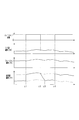
- FIG. 8 is a time chart showing changes in the own lane probability S when the processing shown in the flowchart is executed.
- FIG. 8 shows a case where the fusion position F is closer to the front position of the host vehicle 30 than the millimeter wave position, and the fusion probability is higher than the millimeter wave probability.
- the initial state is not the fusion state, and in the subsequent state transition, the fusion state is indicated by “1”, and the non-fusion state (a state that is not the fusion state) is indicated by “0”.
- the fusion probability and the millimeter wave probability are respectively shown by broken lines.
- the deviation amount between the reflection position P and the image position Q is small, and it is determined that the state is a fusion state.
- the value of the own lane probability S changes from the value of the millimeter wave probability to the value of the fusion probability.
- the amount of divergence between the reflection position P and the image position Q increases, and it is determined that the fusion state is not established (non-fusion state).
- the value of the own lane probability S gradually changes from the fusion probability value to the millimeter wave probability value.
- the gradual change from the fusion probability value to the millimeter wave probability value continues until time t3 when the value of the own lane probability S becomes the millimeter wave probability value.
- the fusion state is determined again.
- the value of the own lane probability S changes from the value of the millimeter wave probability to the value of the fusion probability.
- FIG. 8 shows an example in which the fusion probability is higher than the millimeter wave probability
- the same control is performed even when the fusion probability is lower than the millimeter wave probability.
- the reason why the same control can be performed is that when the reflection position P is closer to the front position of the host vehicle 30 than the fusion position F, the millimeter wave probability calculated based on the reflection position P is higher than the fusion probability. Because.
- the following vehicle control device can be configured.
- the vehicle control device is a device that is mounted on the host vehicle 30 and controls the host vehicle 30 according to the position of the other vehicle 50 existing in front of the host vehicle 30.
- the vehicle control apparatus includes a radar apparatus 11 that functions as first position detection means.
- the radar apparatus 11 receives the reflected wave from the other vehicle 50 by transmitting the exploration wave, and sets the position based on the reflected wave to a reflection position P (first position) that is a relative position of the other vehicle 50 with respect to the own vehicle 30. Get as.
- the vehicle control device includes an image acquisition device 12 that functions as second position detection means.
- the image acquisition device 12 images the other vehicle 50 by the imaging unit 12a (imaging means), and sets the position based on the captured image to an image position Q (second position) that is a relative position of the other vehicle 50 with respect to the host vehicle 30.
- the vehicle control apparatus includes an inter-vehicle control ECU 13 that functions as a setting unit, a parameter acquisition unit, and a determination unit.
- the inter-vehicle control ECU 13 functions as a setting unit to set the own lane probability S corresponding to a parameter indicating the relative position of the other vehicle 50 with respect to the own vehicle 30 in the lateral direction that is a direction orthogonal to the course of the own vehicle 30. To do.
- the inter-vehicle control ECU 13 functions as parameter acquisition means, and acquires the own lane probability S based on the reflection position P and the image position Q when the deviation amount between the reflection position P and the image position Q is less than a predetermined value. . Further, the inter-vehicle control ECU 13 obtains the own lane probability S based on the reflection position P when the deviation amount between the reflection position P and the image position Q is a predetermined value or more. The inter-vehicle control ECU 13 functions as a determination unit, and determines whether or not the other vehicle 50 is located on the course of the own vehicle 30 based on the acquired own lane probability S.
- the inter-vehicle control ECU 13 acquires the own lane probability S for each predetermined control cycle. Then, the inter-vehicle distance control ECU 13 acquires the own lane probability S as follows. When the amount of divergence between the reflection position P and the image position Q changes from a state greater than or equal to a predetermined value to a state less than the predetermined value, the own lane probability S is acquired based on the first position and the second position. .
- the reflection position is calculated from the value of the own lane probability S acquired one control period before.
- a value approaching the value of the millimeter wave probability based on P by a predetermined value is acquired as the own lane probability S.
- the vehicle control device has the following effects due to the above configuration.
- the radar device 11 can calculate the position with high accuracy. Further, the image acquisition device 12 can accurately determine the presence or absence of a vehicle. In the fusion state in which the reflection position P and the image position Q acquired from each of the radar apparatus 11 and the image acquisition apparatus 12 having such characteristics are located in the vicinity, the reflection position P and the image position Q The possibility that the same vehicle is detected is high. Therefore, in the vehicle control device according to the present embodiment, the fusion position F is calculated based on the reflection position P and the image position Q, and the other vehicle 50 is calculated based on the calculated fusion position F and the set probability map. Can be accurately determined whether or not the vehicle is located on the course of the host vehicle 30.
- the reflection position P when it is not a fusion state in which the reflection position P and the image position Q are separated (in a non-fusion state), the reflection position P may be the same as the position where the other vehicle 50 exists. Therefore, in the vehicle control device according to the present embodiment, it is possible to determine whether or not the other vehicle 50 is located on the course of the host vehicle 30 based on the reflection position P and the probability map.
- the reflection position P and the image position Q are located in the vicinity, and the position of the other vehicle 50 can be detected with high accuracy. Therefore, in the vehicle control device according to the present embodiment, when the transition from the non-fusion state to the fusion state is performed, the other vehicle 50 is positioned on the course of the own vehicle 30 by immediately setting the own lane probability S as the fusion probability. The accuracy of determining whether or not can be improved. On the other hand, when the transition is made from the fusion state to the non-fusion state, the reflection position P is displaced. Thereby, the transition to the fusion state may occur again.
- the vehicle control device when the transition is made from the fusion state to the non-fusion state, the value of the own lane probability S is gradually changed so as to approach the value of the millimeter wave probability. It is possible to suppress a situation in which selection and cancellation of the preceding vehicle frequently occur.
- the region width of the own lane probability S in the probability map is corrected (the processing in S104 to S106), but the present invention is not limited to this.
- the correction of the area width of the own lane probability S in the probability map is, for example, by calculating the correction coefficient K by dividing the lane width L1 by the reference width L even when the lane width L1 is larger than the reference width L.
- the correction may be performed based on the calculated correction coefficient K. That is, the process of S104 shown in the flowchart of FIG. 5 may be omitted.
- the region width of all the lane probabilities S in the probability map is corrected.
- the correction of the area width of the own lane probability S in the probability map may be performed, for example, by correcting only a part of the area width.
- the other vehicle 50 located near the course of the host vehicle 30 should be selected as the preceding vehicle. Therefore, the area width of the own lane probability S in the probability map may not be corrected for an area in the vicinity of the course of the own vehicle 30, for example, an area within the range of the own vehicle 30.
- the acquisition method of the correction coefficient K in the first embodiment is not limited to the configuration in which the lane width L1 is divided by the reference width L.
- the correction coefficient K is obtained by associating the correction coefficient K with the lane width L1 in advance using, for example, a data table or the like, and acquiring the associated correction coefficient K according to the calculated lane width L1. It is good.
- the lane width L1 is calculated by recognizing the white line, but the present invention is not limited to this.
- the calculation of the lane width L1 may be a configuration in which the road shape is recognized based on travel lane lines other than the white line, and the lane width L1 is calculated from the recognition result.
- the lane width L1 is calculated by recognizing a road shape based on a structure (stationary object) on the road provided along a lane such as a guard rail or a median strip, and calculating the lane width L1 from the recognition result. It is good.
- the flowcharts shown in the first embodiment and the second embodiment are merely examples of processing executed by the inter-vehicle control ECU 13. Therefore, it is possible to change the execution order of the processes or to change some of the processing contents.
Landscapes
- Engineering & Computer Science (AREA)
- Mechanical Engineering (AREA)
- Automation & Control Theory (AREA)
- Transportation (AREA)
- Physics & Mathematics (AREA)
- Mathematical Physics (AREA)
- Traffic Control Systems (AREA)
Priority Applications (1)
| Application Number | Priority Date | Filing Date | Title |
|---|---|---|---|
| US15/529,905 US10427689B2 (en) | 2014-11-28 | 2015-11-16 | Vehicle control apparatus |
Applications Claiming Priority (2)
| Application Number | Priority Date | Filing Date | Title |
|---|---|---|---|
| JP2014-242234 | 2014-11-28 | ||
| JP2014242234A JP6313198B2 (ja) | 2014-11-28 | 2014-11-28 | 車両制御装置 |
Publications (1)
| Publication Number | Publication Date |
|---|---|
| WO2016084637A1 true WO2016084637A1 (ja) | 2016-06-02 |
Family
ID=56074205
Family Applications (1)
| Application Number | Title | Priority Date | Filing Date |
|---|---|---|---|
| PCT/JP2015/082075 Ceased WO2016084637A1 (ja) | 2014-11-28 | 2015-11-16 | 車両制御装置及び車両制御方法 |
Country Status (3)
| Country | Link |
|---|---|
| US (1) | US10427689B2 (enExample) |
| JP (1) | JP6313198B2 (enExample) |
| WO (1) | WO2016084637A1 (enExample) |
Families Citing this family (27)
| Publication number | Priority date | Publication date | Assignee | Title |
|---|---|---|---|---|
| JP6363516B2 (ja) * | 2015-01-21 | 2018-07-25 | 株式会社デンソー | 車両の走行制御装置 |
| MY190807A (en) * | 2015-07-28 | 2022-05-12 | Nissan Motor | Method for controlling travel control device, and travel control device |
| DE102016208846B4 (de) * | 2016-05-23 | 2020-03-12 | Continental Teves Ag & Co. Ohg | Kommunikationssystem für ein Fahrzeug |
| JP6589760B2 (ja) | 2016-07-07 | 2019-10-16 | 株式会社デンソー | 車両制御装置 |
| JP6669059B2 (ja) | 2016-12-27 | 2020-03-18 | トヨタ自動車株式会社 | 位置算出装置 |
| JP2019003234A (ja) * | 2017-06-09 | 2019-01-10 | トヨタ自動車株式会社 | 運転支援装置 |
| JP2019099034A (ja) * | 2017-12-06 | 2019-06-24 | ロベルト・ボッシュ・ゲゼルシャフト・ミト・ベシュレンクテル・ハフツングRobert Bosch Gmbh | モータサイクルの挙動を制御する制御装置及び制御方法 |
| JP2019099033A (ja) * | 2017-12-06 | 2019-06-24 | ロベルト・ボッシュ・ゲゼルシャフト・ミト・ベシュレンクテル・ハフツングRobert Bosch Gmbh | モータサイクルの挙動を制御する制御装置及び制御方法 |
| US10255528B1 (en) * | 2017-12-06 | 2019-04-09 | Lytx, Inc. | Sensor fusion for lane departure behavior detection |
| US11034359B2 (en) * | 2018-11-29 | 2021-06-15 | Dr. Ing. H.C. F. Porsche Aktiengesellschaft | Control device for a vehicle |
| JPWO2020161512A1 (enExample) * | 2019-02-07 | 2020-08-13 | ||
| JP7176478B2 (ja) | 2019-06-14 | 2022-11-22 | トヨタ自動車株式会社 | 画像認識装置 |
| JP7131508B2 (ja) | 2019-08-21 | 2022-09-06 | トヨタ自動車株式会社 | レーダ装置 |
| CN114435389B (zh) * | 2020-11-02 | 2024-01-30 | 上海汽车集团股份有限公司 | 一种车辆控制方法、装置及车辆 |
| JP7600971B2 (ja) | 2021-12-03 | 2024-12-17 | トヨタ自動車株式会社 | 車載通知装置 |
| JP7567771B2 (ja) * | 2021-12-27 | 2024-10-16 | トヨタ自動車株式会社 | 自動車 |
| JP7626102B2 (ja) | 2022-06-20 | 2025-02-04 | トヨタ自動車株式会社 | 運転支援装置 |
| JP2024016501A (ja) | 2022-07-26 | 2024-02-07 | トヨタ自動車株式会社 | 車載カメラ遮蔽状態判定装置 |
| JP7694515B2 (ja) | 2022-09-14 | 2025-06-18 | トヨタ自動車株式会社 | 画像処理装置および画像処理方法 |
| JP7750206B2 (ja) | 2022-10-19 | 2025-10-07 | トヨタ自動車株式会社 | 車室内状態認識装置 |
| JP7722336B2 (ja) | 2022-11-11 | 2025-08-13 | トヨタ自動車株式会社 | 運転支援装置 |
| JP7694539B2 (ja) | 2022-11-15 | 2025-06-18 | トヨタ自動車株式会社 | 車載カメラの光軸位置調整方法及び光軸位置調整具 |
| JP7697450B2 (ja) | 2022-11-24 | 2025-06-24 | トヨタ自動車株式会社 | 消失点探索装置 |
| JP7690943B2 (ja) | 2022-11-24 | 2025-06-11 | トヨタ自動車株式会社 | 報知装置 |
| US20240192019A1 (en) * | 2022-12-09 | 2024-06-13 | Woven By Toyota, Inc. | System and method for generating a semantic map for a road |
| JP2024171863A (ja) * | 2023-05-30 | 2024-12-12 | トヨタ自動車株式会社 | 自走搬送システム |
| US12422278B2 (en) * | 2024-01-30 | 2025-09-23 | Toyota Jidosha Kabushiki Kaisha | Point clustering based on roadways |
Citations (3)
| Publication number | Priority date | Publication date | Assignee | Title |
|---|---|---|---|---|
| JP2000235699A (ja) * | 1999-02-15 | 2000-08-29 | Denso Corp | 車間距離制御装置 |
| JP2004199512A (ja) * | 2002-12-19 | 2004-07-15 | Denso Corp | 車間距離制御装置 |
| JP2012234373A (ja) * | 2011-05-02 | 2012-11-29 | Mitsubishi Motors Corp | 運転支援装置 |
Family Cites Families (5)
| Publication number | Priority date | Publication date | Assignee | Title |
|---|---|---|---|---|
| DE19804944C2 (de) | 1998-02-07 | 2000-04-20 | Volkswagen Ag | Verfahren zur automatischen Abstandsregelung von Kraftfahrzeugen |
| EP1714108A4 (en) * | 2003-12-24 | 2010-01-13 | Automotive Systems Lab | ROAD curvature ESTIMATES SYSTEM |
| JP4595833B2 (ja) * | 2006-02-24 | 2010-12-08 | トヨタ自動車株式会社 | 物体検出装置 |
| US8316527B2 (en) | 2008-04-01 | 2012-11-27 | Western Digital (Fremont), Llc | Method for providing at least one magnetoresistive device |
| WO2014068668A1 (ja) * | 2012-10-30 | 2014-05-08 | トヨタ自動車株式会社 | 衝突回避支援装置及び衝突回避支援方法 |
-
2014
- 2014-11-28 JP JP2014242234A patent/JP6313198B2/ja active Active
-
2015
- 2015-11-16 WO PCT/JP2015/082075 patent/WO2016084637A1/ja not_active Ceased
- 2015-11-16 US US15/529,905 patent/US10427689B2/en active Active
Patent Citations (3)
| Publication number | Priority date | Publication date | Assignee | Title |
|---|---|---|---|---|
| JP2000235699A (ja) * | 1999-02-15 | 2000-08-29 | Denso Corp | 車間距離制御装置 |
| JP2004199512A (ja) * | 2002-12-19 | 2004-07-15 | Denso Corp | 車間距離制御装置 |
| JP2012234373A (ja) * | 2011-05-02 | 2012-11-29 | Mitsubishi Motors Corp | 運転支援装置 |
Also Published As
| Publication number | Publication date |
|---|---|
| JP6313198B2 (ja) | 2018-04-18 |
| JP2016103223A (ja) | 2016-06-02 |
| US20170327123A1 (en) | 2017-11-16 |
| US10427689B2 (en) | 2019-10-01 |
Similar Documents
| Publication | Publication Date | Title |
|---|---|---|
| JP6313198B2 (ja) | 車両制御装置 | |
| US11127300B2 (en) | Vehicle recognition device and vehicle recognition method | |
| CN107004366B (zh) | 车辆控制装置以及车辆控制方法 | |
| JP6363519B2 (ja) | 車両制御装置 | |
| US10384681B2 (en) | Vehicle cruise control device and cruise control method | |
| US10217024B2 (en) | Object detection apparatus | |
| JP6303956B2 (ja) | 軸ずれ量推定装置 | |
| CN109562788B (zh) | 行驶控制装置 | |
| US10871565B2 (en) | Object detection apparatus and object detection method | |
| JP6354659B2 (ja) | 走行支援装置 | |
| US10380893B2 (en) | Object detection apparatus | |
| JP2017054296A (ja) | 走行支援装置及び走行支援方法 | |
| JP6367697B2 (ja) | 物体検知装置 | |
| WO2016031919A1 (ja) | 軸ずれ診断装置 | |
| JP7071154B2 (ja) | 道路境界検出装置 | |
| JP2006298254A (ja) | 走行支援装置 | |
| JP6543117B2 (ja) | 車両の運転支援装置 | |
| JP2017037465A (ja) | 情報送信装置 |
Legal Events
| Date | Code | Title | Description |
|---|---|---|---|
| 121 | Ep: the epo has been informed by wipo that ep was designated in this application |
Ref document number: 15863786 Country of ref document: EP Kind code of ref document: A1 |
|
| WWE | Wipo information: entry into national phase |
Ref document number: 15529905 Country of ref document: US |
|
| NENP | Non-entry into the national phase |
Ref country code: DE |
|
| 122 | Ep: pct application non-entry in european phase |
Ref document number: 15863786 Country of ref document: EP Kind code of ref document: A1 |