WO2015159587A1 - ゴムラテックス、ゴムラテックス組成物及び成形品 - Google Patents
ゴムラテックス、ゴムラテックス組成物及び成形品 Download PDFInfo
- Publication number
- WO2015159587A1 WO2015159587A1 PCT/JP2015/055269 JP2015055269W WO2015159587A1 WO 2015159587 A1 WO2015159587 A1 WO 2015159587A1 JP 2015055269 W JP2015055269 W JP 2015055269W WO 2015159587 A1 WO2015159587 A1 WO 2015159587A1
- Authority
- WO
- WIPO (PCT)
- Prior art keywords
- rubber latex
- mass
- vinyl monomer
- carboxyl group
- copolymer
- Prior art date
- Legal status (The legal status is an assumption and is not a legal conclusion. Google has not performed a legal analysis and makes no representation as to the accuracy of the status listed.)
- Ceased
Links
Classifications
-
- C—CHEMISTRY; METALLURGY
- C08—ORGANIC MACROMOLECULAR COMPOUNDS; THEIR PREPARATION OR CHEMICAL WORKING-UP; COMPOSITIONS BASED THEREON
- C08F—MACROMOLECULAR COMPOUNDS OBTAINED BY REACTIONS ONLY INVOLVING CARBON-TO-CARBON UNSATURATED BONDS
- C08F236/00—Copolymers of compounds having one or more unsaturated aliphatic radicals, at least one having two or more carbon-to-carbon double bonds
- C08F236/02—Copolymers of compounds having one or more unsaturated aliphatic radicals, at least one having two or more carbon-to-carbon double bonds the radical having only two carbon-to-carbon double bonds
- C08F236/04—Copolymers of compounds having one or more unsaturated aliphatic radicals, at least one having two or more carbon-to-carbon double bonds the radical having only two carbon-to-carbon double bonds conjugated
- C08F236/14—Copolymers of compounds having one or more unsaturated aliphatic radicals, at least one having two or more carbon-to-carbon double bonds the radical having only two carbon-to-carbon double bonds conjugated containing elements other than carbon and hydrogen
- C08F236/16—Copolymers of compounds having one or more unsaturated aliphatic radicals, at least one having two or more carbon-to-carbon double bonds the radical having only two carbon-to-carbon double bonds conjugated containing elements other than carbon and hydrogen containing halogen
- C08F236/18—Copolymers of compounds having one or more unsaturated aliphatic radicals, at least one having two or more carbon-to-carbon double bonds the radical having only two carbon-to-carbon double bonds conjugated containing elements other than carbon and hydrogen containing halogen containing chlorine
-
- C—CHEMISTRY; METALLURGY
- C08—ORGANIC MACROMOLECULAR COMPOUNDS; THEIR PREPARATION OR CHEMICAL WORKING-UP; COMPOSITIONS BASED THEREON
- C08K—Use of inorganic or non-macromolecular organic substances as compounding ingredients
- C08K5/00—Use of organic ingredients
- C08K5/04—Oxygen-containing compounds
- C08K5/09—Carboxylic acids; Metal salts thereof; Anhydrides thereof
-
- C—CHEMISTRY; METALLURGY
- C08—ORGANIC MACROMOLECULAR COMPOUNDS; THEIR PREPARATION OR CHEMICAL WORKING-UP; COMPOSITIONS BASED THEREON
- C08L—COMPOSITIONS OF MACROMOLECULAR COMPOUNDS
- C08L13/00—Compositions of rubbers containing carboxyl groups
- C08L13/02—Latex
Definitions
- This technology relates to rubber latex containing polychloroprene.
- the present invention also relates to a rubber latex composition using the rubber latex and a molded product using the rubber latex composition.
- Rubber latex containing polychloroprene is used as a material for molded articles such as gloves and sheets because a flexible and well-stretched film is obtained.
- a technique for controlling the structure by adjusting the polymerization temperature and polymerization rate when producing polychloroprene a technique for controlling the structure by adjusting the polymerization temperature and polymerization rate when producing polychloroprene, Technology for copolymerization of 2,3-dichloro-1,3-butadiene to lower the crystallization rate of the copolymer, and technology for adjusting the crosslinking component of the copolymer (insoluble matter in organic solvents such as tetrahydrofuran and toluene) are known (see Patent Documents 1 to 3).
- the above-mentioned conventional technology can form a uniform film as long as a molded product having a film thickness of 0.1 mm or more is produced, and can produce a molded product having sufficient mechanical strength and flexibility. .
- the film may be perforated due to insufficient mechanical strength.
- a molded article is produced using a rubber latex known as a water-based adhesive material, an effect of improving mechanical strength can be obtained by ion crosslinking between zinc oxide added as a compounding agent and a carboxyl group. Therefore, it can be expected that the molded product will be thin.
- the rubber latex as the material of the water-based adhesive cannot be used as a material of a molded product because the viscosity increases in an alkaline environment and the film cannot be formed.
- the present technology intends to provide a rubber latex having good viscosity stability in an alkaline environment.
- the present technology intends to provide a rubber latex composition using the rubber latex and a molded product using the rubber latex composition that can maintain the mechanical strength even when the film is thinned.
- the rubber latex according to the present technology is a rubber latex containing a copolymer of chloroprene and a carboxyl group-containing vinyl monomer, and is derived from the carboxyl group-containing vinyl monomer in 100% by mass of the copolymer. 0.1 to 2.0% by mass of a free carboxyl group-containing vinyl monomer having a binding unit of 0.5 to 3.5% by mass and not bound to the copolymer in 100% by mass of the rubber latex. It is a rubber latex having a pH of 8-14.
- the emulsifier used in the production of the copolymer may contain an anionic emulsifier, and the polymerization rate of the copolymer may be in the range of 70 to 99.9%.
- the rubber latex composition according to the present technology includes 100 parts by mass of the solid content of the rubber latex, 1 to 10 parts by mass of a metal oxide, and 0.1 to 3 parts by mass of sulfur.
- the molded product according to the present technology is obtained by molding the rubber latex composition.
- This technology provides rubber latex with good viscosity stability in an alkaline environment.
- a rubber latex composition using the rubber latex and a molded article using the rubber latex composition that can maintain the mechanical strength even when the film is thinned are obtained.
- the rubber latex according to the embodiment of the present technology includes (1) a copolymer of chloroprene and (2) a carboxyl group-containing vinyl monomer, and (3) a free carboxyl group-containing vinyl monomer.
- Chloroprene is 2-chloro-1,3-butadiene, which is copolymerized with a carboxyl group-containing vinyl monomer described later to form a copolymer contained in rubber latex.
- carboxyl group-containing vinyl monomer improves the mechanical strength of the film of the molded article and prevents the increase in viscosity when the pH of the rubber latex is adjusted to 8-14. Copolymerized with chloroprene.
- the carboxyl group-containing vinyl monomer is copolymerizable with chloroprene and includes acrylic acid, methacrylic acid, fumaric acid, maleic acid, crotonic acid, and citraconic acid. These can be used alone or in combination of two or more. Among these, methacrylic acid, maleic acid, and crotonic acid are preferably used alone or in combination of two or more. Since the storage stability of the rubber latex is further improved, it is more preferable to use methacrylic acid alone.
- the copolymer has a binding unit of 0.5 to 3.5% by mass derived from a carboxyl group-containing vinyl monomer in 100% by mass.
- the binding amount of the carboxyl group-containing vinyl monomer is less than 0.5% by mass, the solid content of the rubber latex may be aggregated and separated during pH adjustment.
- the binding amount of the carboxyl group-containing vinyl monomer exceeds 3.5% by mass, the elongation at break becomes insufficient in the mechanical strength of the molded product.
- the amount of bond units derived from the carboxyl group-containing vinyl monomer is more preferably 0.8 to 2.5% by mass.
- the ratio of these monomers may be adjusted when chloroprene and the carboxyl group-containing vinyl monomer are copolymerized.
- the proportion of the carboxyl group-containing vinyl monomer charged to the reactor is preferably 0.5 to 10 parts by mass, and 1.0 to 6.0 parts by mass in 100 parts by mass of the total monomers. More preferably, it is a part.
- the method for charging chloroprene and carboxyl group-containing monomer into the reactor is not particularly limited. All monomers may be charged all at once in the initial stage, or some monomers may be added in portions during polymerization.
- the rubber latex is lyophilized to form a dry product, which is dissolved in benzene, and methanol is added to remove the rubber component. Precipitation is performed, and the deposited rubber content may be measured by 1 H-NMR.
- the rubber latex is freeze-dried to obtain a dry product, which is dissolved in an ethanol-toluene mixed solution to recover a rubber component (insoluble matter).
- the recovered rubber component is measured with a pyrolysis gas chromatograph mass spectrometer. Also good.
- the rubber latex is 0.1 to 2.0% by mass of a free carboxyl group-containing vinyl monomer that is not bonded to the copolymer in 100% by mass of the rubber latex. It is what has. When the content of the free carboxyl group-containing vinyl monomer is less than 0.1% by mass, the viscosity increases when the pH of the rubber latex is adjusted to 8 to 14, and handling such as filtration with a filter or filling into a container is possible. It becomes difficult. If the content of the free carboxyl group-containing vinyl monomer exceeds 2.0% by mass, the solid content of the rubber latex may be aggregated and separated during pH adjustment.
- the content of the free carboxyl group-containing vinyl monomer is more preferably 0.2 to 1.0% by mass.
- the solid content of the rubber latex is all components obtained by removing volatile components such as water from the rubber latex, and a copolymer of chloroprene and a carboxyl group-containing vinyl monomer, and various kinds of components added during emulsion polymerization. It contains the nonvolatile content of the additive.
- the charge amount and polymerization rate of the carboxyl group-containing vinyl monomer when copolymerized with chloroprene may be adjusted.
- the rubber latex In order to measure the content of the free carboxyl group-containing vinyl monomer, the rubber latex is diluted with pure water and then centrifuged, and the free carboxyl group-containing vinyl monomer in the resulting supernatant is subjected to liquid chromatography. And the amount of free carboxyl group-containing vinyl monomer in the rubber latex may be converted based on the measured value.
- the pH of the rubber latex is adjusted to 8-14. If the pH of the rubber latex is less than 8, the stability of the rubber latex itself during long-term storage becomes low, and solid content may settle during storage.
- the pH of the rubber latex is adjusted by adding a pH adjuster to the rubber latex after completion of emulsion polymerization.
- pH adjusters include potassium pyrosulfite, potassium sulfite, potassium hydrogen sulfite, potassium phosphate, potassium hydrogen phosphate, sodium pyrosulfite, sodium sulfite, sodium hydrogen sulfite, sodium phosphate, sodium hydrogen phosphate, potassium hydroxide, sodium hydroxide, There is ammonia.
- the pH adjuster may be used alone or in combination of two or more. In particular, potassium hydroxide or sodium hydroxide is preferable because the pH can be adjusted efficiently with a small addition amount.
- chloroprene and carboxyl group-containing vinyl monomer are emulsion copolymerized in the presence of water, emulsifier, initiator and chain transfer agent, and after reaching the predetermined polymerization rate, the polymerization is stopped.
- An agent may be added to terminate the polymerization reaction, remove unreacted monomers, and adjust the pH and solid content concentration.
- the solid content concentration is a mass ratio of non-volatile components contained in the rubber latex, and can be calculated from the mass before and after drying when the rubber latex is dried.
- the ratio of the monomer and water during the emulsion polymerization is preferably 75 to 200 parts by mass, more preferably 80 to 150 parts by mass with respect to 100 parts by mass of the total monomers.
- a polymerization temperature stably by making the ratio of the water with respect to 100 mass parts of total monomers into 75 mass parts or more, and it becomes industrial of rubber latex by making it into 200 mass parts or less.
- Productivity can be improved.
- the polymerization temperature is not particularly limited, but it is preferably 5 to 50 ° C. in order to perform the polymerization reaction smoothly.
- the copolymer contained in the rubber latex according to the present technology is preferably obtained by copolymerizing chloroprene and a carboxyl group-containing vinyl monomer in the presence of an emulsifier. It is more preferable to use an anionic emulsifier as the emulsifier. In order to improve storage stability and low-temperature stability, an anionic emulsifier and a nonionic emulsifier may be used in combination. These emulsifiers may be used alone or in combination of two or more.
- anionic emulsifier examples include carboxylic acid type and sulfuric acid ester type.
- alkali metal salts of rosin acid alkali metal salts of alkyl sulfuric acid, alkali metal salts of alkyl polyoxyethylene sulfuric acid, alkali metal salts of alkyl aryl sulfuric acid And the like, sulfuric acid group-containing alkali metal salts such as alkylbenzene sulfonic acid, and sulfonic acid group-containing alkali metal salts such as a condensate of sodium naphthalene sulfonate and formaldehyde.
- anionic emulsifiers Although it does not specifically limit as an alkali metal salt in these anionic emulsifiers, A sodium salt and potassium salt are preferable. These anionic emulsifiers can be used alone or in combination of two or more. As the anionic emulsifier, one or more sulfonic acid alkali metal salts are preferably used, and one or more benzenesulfonic acid alkali metal salts are more preferably used. By using a benzenesulfonic acid type emulsifier, the stability during emulsion polymerization can be further improved.
- anionic emulsifiers include dialkylsulfosuccinic acid alkali metal salts, alkane sulfonic acid alkali metal salts, alpha olefin sulfonic acid alkali metal salts, linear alkyl benzene sulfonic acid alkali metal salts, and alkyl (branched) benzene sulfonic acid alkali metals. Salt, alkali metal naphthalenesulfonate formaldehyde condensate, and alkali metal alkylnaphthalenesulfonate.
- nonionic emulsifier examples include polyvinyl alcohol or a copolymer thereof (for example, a copolymer with acrylamide), polyvinyl ether or a copolymer thereof (for example, a copolymer with maleic acid), polyoxyethylene alkyl ether. , Polyoxyethylene alkylphenols, sorbitan fatty acid esters and polyoxyethylene acyl esters. These can be used alone or in combination of two or more. Among these, it is preferable to use polyvinyl alcohol and polyoxyethylene alkyl ether alone or in combination of two or more, and it is more preferable to use polyvinyl alcohol or polyoxyethylene lauryl ether alone.
- the amount of the emulsifier used for the emulsion polymerization is preferably 0.5 to 5 parts by mass, more preferably 1 to 3 parts by mass with respect to 100 parts by mass of all monomers.
- the stability of a polymerization liquid can be improved more by making the preparation amount of an emulsifier 0.5 mass parts or more with respect to 100 mass parts of all the monomers.
- molding a rubber latex composition becomes more favorable because the preparation amount of an emulsifier shall be 5 mass parts or less with respect to 100 mass parts of all the monomers.
- the initiator those usually used for emulsion polymerization of chloroprene can be used. Specifically, there are persulfates such as potassium persulfate and organic peroxides such as tertiary butyl hydroperoxide.
- chain transfer agent those usually used for emulsion polymerization of chloroprene can be used.
- alkyl mercaptans such as n-dodecyl mercaptan and tertiary-dodecyl mercaptan
- dialkylxanthogen disulfides such as diisopropylxanthogen disulfide and diethylxanthogen disulfide
- iodoform alkyl mercaptans such as n-dodecyl mercaptan and tertiary-dodecyl mercaptan
- dialkylxanthogen disulfides such as diisopropylxanthogen disulfide and diethylxanthogen disulfide
- iodoform iodoform
- polymerization terminator those usually used for emulsion polymerization of chloroprene can be used. Specific examples include 2,6-tertiarybutyl-4-methylphenol, phenothiazine, and hydroxyamine.
- the polymerization rate of the copolymer is preferably 65 to 99.9%, and more preferably 70 to 99.9%.
- the polymerization rate of the copolymer is preferably 65% or more, more preferably 70% or more from the viewpoint of the stability of the rubber latex at the time of pH adjustment, and preferably 99.9% from the viewpoint of industrial feasibility. Below, more preferably 99% or less.
- the removal of the unreacted monomer (demonomer) may be performed by a known method such as heating under reduced pressure.
- rubber latex may be copolymerized with other monomers that can be copolymerized with chloroprene and carboxyl group-containing monomers as long as the effects of the present technology are not impaired. it can.
- Such copolymerizable monomers include 2,3-dichloro-1,3-butadiene, 1-chloro-1,3-butadiene, sulfur, methacrylic esters, acrylic esters, 1-chloro There are butadiene, butadiene, isoprene, ethylene, styrene, and acrylonitrile. These may be used alone or in combination of two or more.
- a freezing stabilizer In the rubber latex, a freezing stabilizer, an emulsion stabilizer, a viscosity modifier, an antioxidant, a preservative, and the like can be optionally added to the rubber latex as long as the effects of the present technology are not impaired.
- a rubber latex composition according to an embodiment of the present technology includes 100 parts by mass of the solid content of the rubber latex, 1 to 10 parts by mass of a metal oxide, and 0.1 to 3 parts by mass of sulfur. By adding (4) metal oxide and (5) sulfur to the rubber latex, a rubber latex composition can be obtained.
- the rubber latex composition can be used as a material for a molded article having a low film modulus and excellent mechanical properties such as strength and elongation.
- the metal oxide improves the mechanical strength of the film of the molded article using the rubber latex composition.
- the metal oxide include zinc oxide and magnesium oxide. These may be used alone or in combination of two or more as required.
- the addition amount of the metal oxide is preferably 1 to 10 parts by weight, more preferably 1.5 to 5 parts by weight, per 100 parts by weight of the solid content of the rubber latex. By making the addition amount of the metal oxide 1 part by mass or more per 100 parts by mass of the solid content of the rubber latex, the tensile strength is further improved out of the mechanical strength of the film of the molded article, and it is 10 parts by mass or less. Thus, the elongation becomes better in the mechanical strength of the film of the molded article.
- Sulfur Sulfur improves the productivity of the molded product by adjusting the vulcanization speed of the rubber latex composition.
- the amount of sulfur added is preferably 0.1 to 3 parts by mass, more preferably 0.3 to 1.5 parts by mass, per 100 parts by mass of the solid content of the rubber latex. By making it in this range, the productivity of the molded product is further improved, and the dispersibility of the rubber latex composition is further improved.
- the rubber latex composition of the present embodiment as additives other than metal oxides and sulfur, vulcanization accelerators, antioxidants, fillers, plasticizers, pigments, and colorants as long as the effects of the present technology are not impaired. , Wetting agents, antifoaming agents and the like can be added.
- vulcanization accelerators antioxidants, fillers, plasticizers, pigments, and colorants as long as the effects of the present technology are not impaired.
- Wetting agents, antifoaming agents and the like can be added.
- those that are insoluble in water or destabilize the colloidal state of the rubber latex composition may be added after preparing their aqueous dispersions in advance.
- the molded article according to the embodiment of the present technology is obtained by molding the rubber latex composition according to the embodiment.
- the rubber latex composition can be formed into a molded product by dip molding as it is, or by freeze-drying the rubber latex composition to obtain a solid chloroprene rubber, followed by extrusion molding, blow molding, injection molding or the like.
- Examples of molded products obtained by immersion molding include medical gloves and inspection gloves.
- a rubber latex composition using the rubber latex of the present technology is a molded product excellent in mechanical properties and wearing feeling such as high strength but low modulus and easy elongation. This molded product can also be reduced in cost by thinning.
- Example 1 The rubber latex of Example 1 has 1.5% by mass of bond units derived from methacrylic acid as a carboxyl group-containing vinyl monomer in 100% by mass of the copolymer contained in the rubber latex. Have a free carboxyl group-containing vinyl monomer of 0.3% by mass and a pH of 10.5. The rubber latex of Example 1 had good viscosity stability in an alkaline environment. A rubber latex composition using this rubber latex yielded a molded product that could retain its mechanical strength even when it was thinned.
- the rubber latex production method and evaluation method, rubber latex composition and molded product production method, and molded product evaluation method of Example 1 were performed as shown below.
- ⁇ PH> The pH of the rubber latex was measured using a pH meter F-22 manufactured by Horiba, Ltd. after adjusting the temperature of the rubber latex to 20 ° C.
- the polymerization rate of the copolymer in the rubber latex was calculated by the following formula.
- the total charge refers to the charge of all materials charged into the reactor, such as water, chloroprene and carboxyl group-containing vinyl monomer, emulsifier and initiator.
- the evaporation residue is a non-volatile component excluding the copolymer contained in the rubber latex, and is derived from the emulsifier and the initiator.
- the total monomer means all monomers charged into the reactor in addition to chloroprene and a carboxyl group-containing vinyl monomer.
- ⁇ Viscosity stability under alkaline environment The rubber latex was adjusted to 25 ° C., and the viscosity at 30 rpm was measured with a Brookfield viscometer. A sample having a viscosity of less than 500 mPa ⁇ s was evaluated as ⁇ , and a sample having a viscosity of 500 or more was evaluated as ⁇ .
- ⁇ Storage stability> The rubber latex was allowed to stand in a sealed state at 23 ° C. for 8 weeks, and the pH change of the rubber latex was measured. The magnitude of the decrease in pH is a measure for judging storage stability. A sample in which the decrease in pH was suppressed to less than 0.5 was evaluated as “good” (good storage stability) because there was no possibility of formation of aggregates or precipitation of components. A drop in pH of 0.5 or more, or a product in which coagulation or a coagulated product was apparently generated was evaluated as x because of insufficient storage stability.
- a ceramic cylinder with an outer diameter of 50 mm heated to 50 ° C. in a dryer is immersed in a coagulation liquid in which 70 parts by mass of water and 30 parts by mass of calcium nitrate tetrahydrate are mixed for 30 seconds, and again in the dryer at 50 ° C. And dried for 2 minutes.
- the treated ceramic cylinder was dipped in the rubber latex composition produced by the above method for 4 minutes and then washed with running water for 1 minute.
- the washed ceramic pottery cylinder was dried in an atmosphere of 23 ° C. for 1 day, and the film formed on the surface was peeled off from the pottery cylinder to obtain an unvulcanized film.
- the obtained unvulcanized film was heat-treated in a dryer at 120 ° C. for 30 minutes to obtain a molded product.
- the thin film was evaluated by measuring the thickness of the vulcanized film using a test piece thickness meter (SDA-12, manufactured by Kobunshi Keiki Co., Ltd.) and visually observing the presence or absence of pinholes or tears.
- a film having a film thickness of less than 0.1 mm and having no pinholes or tearing was rated as “ ⁇ ”, a film having a film thickness of less than 0.1 mm and having a pinhole or tearing, or a film having a thickness of 0.1 mm or more as “x”.
- X Normal physical properties were not measured for the samples for evaluation.
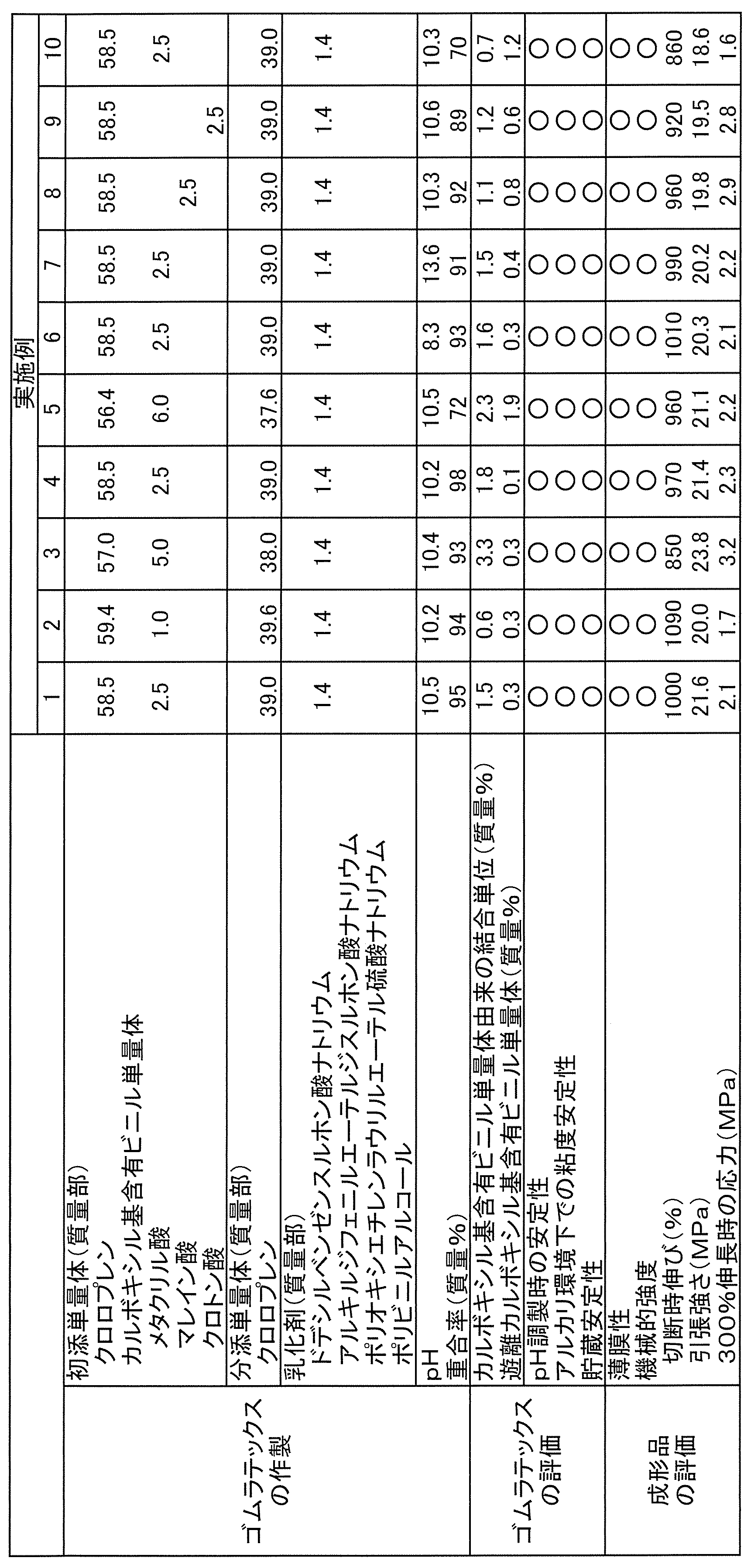
- Table 1 shows the information regarding the production of the rubber latex of Example 1 and the evaluation results of the rubber latex and the molded product.
- Example 2 to 14 Comparative Examples 1 to 5
- the initial charge amount and addition amount of chloroprene used in preparing the rubber latex, the type and amount of the carboxyl group-containing vinyl monomer, the type and amount of the emulsifier, A rubber latex, a rubber latex composition, and a molded product were prepared in the same manner as in Example 1 except that the pH and the polymerization rate were changed as described in Table 1 or Table 2, and evaluated in the same manner as in Example 1. The evaluation results are shown in Table 1 or Table 2.
- sodium alkyldiphenyl ether disulfonate is Perex SS-H (purity 50%) manufactured by Kao Corporation.
- Sodium polyoxyethylene lauryl ether sulfate is LATEMUL E-150 (purity 33%) manufactured by Kao Corporation.
- Polyvinyl alcohol is Nichigo G polymer (degree of saponification 89 mol%) manufactured by Nippon Synthetic Chemical Industry Co., Ltd. “Perex”, “Latemul” and “Nichigo G-Polymer” are registered trademarks.
- the rubber latex of Examples 1 to 14 had good viscosity stability in an alkaline environment, and the molded product was excellent in mechanical strength even when it was thinned.
- a rubber latex having good viscosity stability in an alkaline environment can be obtained, and a molded product obtained by molding a rubber latex composition containing the rubber latex can be a thin film. It was suggested that the mechanical strength can be maintained.
- molded products according to the present technology were produced and evaluated according to the following procedure.
- the rubber latex compositions of Examples 1 to 14 were made into a solid chloroprene rubber by a known freeze-drying method, and the resulting chloroprene rubber was blow-molded to obtain a film having a thickness of 0.05 mm. The obtained film was able to maintain the mechanical strength even when it was thinned like the molded product.
Landscapes
- Chemical & Material Sciences (AREA)
- Health & Medical Sciences (AREA)
- Chemical Kinetics & Catalysis (AREA)
- Medicinal Chemistry (AREA)
- Polymers & Plastics (AREA)
- Organic Chemistry (AREA)
- Compositions Of Macromolecular Compounds (AREA)
- Addition Polymer Or Copolymer, Post-Treatments, Or Chemical Modifications (AREA)
- Processes Of Treating Macromolecular Substances (AREA)
Abstract
アルカリ環境下での粘度安定性が良好なゴムラテックス、及び前記ゴムラテックスを用いたゴムラテックス組成物、並びに薄膜化してもその機械的強度を保持できる、前記ゴムラテックス組成物を用いた成形品を提供する。 クロロプレンとカルボキシル基含有ビニル単量体との共重合体を含むゴムラテックスであって、前記共重合体100質量%中に前記カルボキシル基含有ビニル単量体に由来する結合単位0.5~3.5質量%を有し、前記ゴムラテックス100質量%中に前記共重合体と結合していない遊離カルボキシル基含有ビニル単量体0.1~2.0質量%を有し、pHが8~14であるゴムラテックスとする。
Description
本技術は、ポリクロロプレンを含むゴムラテックスに関する。また、前記ゴムラテックスを用いたゴムラテックス組成物及び前記ゴムラテックス組成物を用いた成形品に関する。
ポリクロロプレンを含むゴムラテックスは柔軟でよく伸びる皮膜が得られるため、手袋やシートのような成形品の材料として利用されている。前記皮膜の柔軟性や機械的特性、ゴムラテックス自体の貯蔵安定性を改良する方法としては、ポリクロロプレンを製造する際の重合温度や重合率を調整してその構造を制御する技術や、クロロプレンに2,3-ジクロロ-1,3-ブタジエンを共重合させて共重合体の結晶化速度を低くする技術、共重合体の架橋成分(テトラヒドロフランやトルエン等の有機溶剤に対する不溶分)を調整する技術等が知られている(特許文献1~3参照)。
上述の従来技術は、膜厚が0.1mm以上の成形品を製造するのであれば均一な成膜が可能であり、十分な機械的強度と柔軟性を有する成形品の製造が可能であった。しかしながら、膜厚が薄い成形品を製造しようとすると、機械的強度が不十分であるために皮膜に穴が開いてしまうことがあった。
ここで、水系接着剤の材料として知られているゴムラテックスを用いて成形品を製造すれば、配合剤として添加されている酸化亜鉛とカルボキシル基のイオン架橋による機械的強度の向上効果が得られるため成形品の薄膜化が期待できる。
しかしながら、前記水系接着剤の材料としてのゴムラテックスは、アルカリ環境下では粘度が上昇して製膜できなくなってしまうため、成形品の材料とすることはできなかった。
そこで、本技術は、アルカリ環境下での粘度安定性が良好なゴムラテックスを提供しようとするものである。また、本技術は、前記ゴムラテックスを用いたゴムラテックス組成物及び薄膜化してもその機械的強度を保持できる、前記ゴムラテックス組成物を用いた成形品を提供しようとするものである。
本技術に係るゴムラテックスは、クロロプレンとカルボキシル基含有ビニル単量体との共重合体を含むゴムラテックスであって、前記共重合体100質量%中に前記カルボキシル基含有ビニル単量体に由来する結合単位0.5~3.5質量%を有し、前記ゴムラテックス100質量%中に前記共重合体と結合していない遊離カルボキシル基含有ビニル単量体0.1~2.0質量%を有し、pHが8~14であるゴムラテックスである。
前記共重合体を製造する際に用いる乳化剤は、アニオン性乳化剤を含むものであってもよく、前記共重合体の重合率は70~99.9%の範囲であってもよい。
本技術に係るゴムラテックス組成物は、前記ゴムラテックスの固形分100質量部と、金属酸化物1~10質量部と、硫黄0.1~3質量部と、を含む。
本技術に係る成形品は、前記ゴムラテックス組成物を成形したものである。
本技術に係るゴムラテックス組成物は、前記ゴムラテックスの固形分100質量部と、金属酸化物1~10質量部と、硫黄0.1~3質量部と、を含む。
本技術に係る成形品は、前記ゴムラテックス組成物を成形したものである。
本技術により、アルカリ環境下での粘度安定性が良好なゴムラテックスが得られる。また、本技術により、前記ゴムラテックスを用いたゴムラテックス組成物及び薄膜化してもその機械的強度を保持できる、前記ゴムラテックス組成物を用いた成形品が得られる。
以下、本技術を実施するための形態について、詳細に説明する。なお、本技術は、以下に説明する実施形態に限定されるものではない。
[ゴムラテックス]
本技術の実施形態に係るゴムラテックスは、(1)クロロプレンと(2)カルボキシル基含有ビニル単量体との共重合体と、(3)遊離カルボキシル基含有ビニル単量体を含むものである。
本技術の実施形態に係るゴムラテックスは、(1)クロロプレンと(2)カルボキシル基含有ビニル単量体との共重合体と、(3)遊離カルボキシル基含有ビニル単量体を含むものである。
(1)クロロプレン
クロロプレンは、2-クロロ-1,3-ブタジエンであり、後述するカルボキシル基含有ビニル単量体と共重合してゴムラテックスに含まれる共重合体を形成するものである。
クロロプレンは、2-クロロ-1,3-ブタジエンであり、後述するカルボキシル基含有ビニル単量体と共重合してゴムラテックスに含まれる共重合体を形成するものである。
(2)カルボキシル基含有ビニル単量体
カルボキシル基含有ビニル単量体は、成形品の皮膜の機械的強度を向上させ、ゴムラテックスのpHを8~14に調整した際に粘度上昇を防ぐために前記クロロプレンと共重合させるものである。
カルボキシル基含有ビニル単量体は、成形品の皮膜の機械的強度を向上させ、ゴムラテックスのpHを8~14に調整した際に粘度上昇を防ぐために前記クロロプレンと共重合させるものである。
カルボキシル基含有ビニル単量体としては、クロロプレンと共重合可能なものであり、アクリル酸、メタクリル酸、フマル酸、マレイン酸、クロトン酸、シトラコン酸がある。これらは単独で又は2種以上を組み合わせて用いることができる。これらの中でも、メタクリル酸、マレイン酸、クロトン酸を単独で又は2種以上組み合わせて用いることが好ましい。ゴムラテックスの貯蔵安定性がさらに向上することから、メタクリル酸を単独で用いることがより好ましい。
前記共重合体は、その100質量%中にカルボキシル基含有ビニル単量体に由来する結合単位0.5~3.5質量%を有するものである。カルボキシル基含有ビニル単量体の結合量が0.5質量%未満の場合、pH調整時にゴムラテックスの固形分が凝集して分離してしまうことがある。カルボキシル基含有ビニル単量体の結合量が3.5質量%を超えると、成形品の機械的強度のうち切断時伸びが不十分となる。前記カルボキシル基含有ビニル単量体に由来する結合単位の量は0.8~2.5質量%であればさらに好ましい。この範囲に調整することによって、機械的強度がより優れる成形品が得られ、ゴムラテックスのpHを8~14に調整した際に粘度上昇をより効果的に防ぐことができる。
前記カルボキシル基含有ビニル単量体に由来する結合単位の量を調整するには、クロロプレンとカルボキシル基含有ビニル単量体を共重合させる際に、これら単量体の比率を調整すれば良い。
反応器へ仕込むカルボキシル基含有ビニル単量体の割合は、具体的には、単量体合計100質量部中、0.5~10質量部であることが好ましく、1.0~6.0質量部であることがより好ましい。この範囲にすることによって、共重合体中のカルボキシル基含有単量体に由来する結合単位の量を上述の範囲に調整できる。クロロプレンとカルボキシル基含有単量体の反応器への仕込み方法は特に制限されるものではない。全単量体を初期に一括で仕込んでも良いし、一部の単量体を重合途中で分割添加しても良い。
共重合体中のカルボキシル基含有ビニル単量体に由来する結合単位の量を定量するには、ゴムラテックスを凍結乾燥させて乾燥体とし、これをベンゼンに溶解させ、メタノールを加えてゴム分を析出させ、析出したゴム分を1H-NMRで測定すれば良い。また、ゴムラテックスを凍結乾燥させて乾燥体とし、これをエタノール-トルエン混合溶液に溶解させてゴム分(不溶物)を回収し、回収したゴム分を熱分解ガスクロマトグラフ質量分析計で測定しても良い。
(3)遊離カルボキシル基含有ビニル単量体
前記ゴムラテックスは、前記ゴムラテックス100質量%中に前記共重合体と結合していない遊離カルボキシル基含有ビニル単量体0.1~2.0質量%を有するものである。遊離カルボキシル基含有ビニル単量体の含有量が0.1質量%未満の場合、ゴムラテックスのpHを8~14に調節した時に粘度上昇して、フィルターによる濾過やコンテナへの充填等の取り扱いが困難になる。遊離カルボキシル基含有ビニル単量体の含有量が2.0質量%を超えると、pH調整時にゴムラテックスの固形分が凝集して分離してしまうことがある。前記遊離カルボキシル基含有ビニル単量体の含有量は0.2~1.0質量%であればさらに好ましい。この範囲に調整することによって、ゴムラテックスの取り扱いがさらに良くなる。
ここで、ゴムラテックスの固形分とは、ゴムラテックスから水等の揮発分を取り除いた全ての成分であり、クロロプレンとカルボキシル基含有ビニル単量体との共重合体や、乳化重合時に添加した各種添加物の不揮発分を含むものである。
前記ゴムラテックスは、前記ゴムラテックス100質量%中に前記共重合体と結合していない遊離カルボキシル基含有ビニル単量体0.1~2.0質量%を有するものである。遊離カルボキシル基含有ビニル単量体の含有量が0.1質量%未満の場合、ゴムラテックスのpHを8~14に調節した時に粘度上昇して、フィルターによる濾過やコンテナへの充填等の取り扱いが困難になる。遊離カルボキシル基含有ビニル単量体の含有量が2.0質量%を超えると、pH調整時にゴムラテックスの固形分が凝集して分離してしまうことがある。前記遊離カルボキシル基含有ビニル単量体の含有量は0.2~1.0質量%であればさらに好ましい。この範囲に調整することによって、ゴムラテックスの取り扱いがさらに良くなる。
ここで、ゴムラテックスの固形分とは、ゴムラテックスから水等の揮発分を取り除いた全ての成分であり、クロロプレンとカルボキシル基含有ビニル単量体との共重合体や、乳化重合時に添加した各種添加物の不揮発分を含むものである。
前記遊離カルボキシル基含有ビニル単量体の含有量を調整するには、クロロプレンと共重合させる際のカルボキシル基含有ビニル単量体の仕込み量と重合率を調整すれば良い。
前記遊離カルボキシル基含有ビニル単量体の含有量を測定するには、ゴムラテックスを純水で希釈した後に遠心分離し、得られた上澄み液中の遊離カルボキシル基含有ビニル単量体を液体クロマトグラフィーで定量分析し、測定値をもとにゴムラテックス中の遊離カルボキシル基含有ビニル単量体量を換算すれば良い。
前記ゴムラテックスのpHは8~14に調整する。ゴムラテックスのpHが8未満では、ゴムラテックス自体の長期貯蔵時の安定性が低くなり、貯蔵中に固形分が沈降する場合がある。
前記ゴムラテックスのpHを調整するには、乳化重合終了後のゴムラテックスに、pH調整剤を添加して行う。pH調整剤としては、ピロ亜硫酸カリウム、亜硫酸カリウム、亜硫酸水素カリウム、燐酸カリウム、燐酸水素カリウム、ピロ亜硫酸ナトリウム、亜硫酸ナトリウム、亜硫酸水素ナトリウム、燐酸ナトリウム、燐酸水素ナトリウム、水酸化カリウム、水酸化ナトリウム、アンモニアがある。pH調整剤は、これら単体だけでなく2種以上のものを併用しても良い。特に、水酸化カリウム又は水酸化ナトリウムは、少ない添加量で効率良くpHを調節できるため好ましい。
ゴムラテックスを製造するには、クロロプレンとカルボキシル基含有ビニル単量体とを、水、乳化剤、開始剤、連鎖移動剤の存在下で乳化共重合させ、所定の重合率に達した後、重合停止剤を添加して重合反応を終了させ、未反応単量体を取り除き、pH及び固形分の濃度を調節すれば良い。
ここで、固形分の濃度とは、ゴムラテックスに含まれる不揮発分の質量比率であり、ゴムラテックスを乾燥させた際の、乾燥前後の質量より算出できる。
ここで、固形分の濃度とは、ゴムラテックスに含まれる不揮発分の質量比率であり、ゴムラテックスを乾燥させた際の、乾燥前後の質量より算出できる。
乳化重合時の単量体と水の割合は、単量体合計100質量部に対して、水75~200質量部であることが好ましく、80~150質量部であることがより好ましい。このように、単量体合計100質量部に対する水の割合を、75質量部以上とすることで重合温度を安定に制御することが可能となり、200質量部以下とすることでゴムラテックスの工業的な生産性を高めることが可能となる。
重合温度は特に限定されるものではないが、重合反応を円滑におこなうために、5~50℃とすることが好ましい。
上述したように、本技術に係るゴムラテックスに含まれる前記共重合体は、クロロプレンとカルボキシル基含有ビニル単量体とを乳化剤の存在下で共重合させて得られるものであることが好ましい。前記乳化剤として、アニオン性乳化剤を用いることがより好ましい。貯蔵安定性や低温安定性を改善させるために、アニオン性乳化剤とノニオン性乳化剤を組み合わせて使用しても良い。これらの乳化剤は単体だけでなく2種以上のものを併用しても良い。
アニオン性乳化剤としては、カルボン酸型及び硫酸エステル型等があり、例えば、ロジン酸のアルカリ金属塩類、アルキル硫酸のアルカリ金属塩、アルキルポリオキシエチレン硫酸のアルカリ金属塩、アルキルアリール硫酸のアルカリ金属塩等の硫酸基含有アルカリ金属塩類、アルキルベンゼンスルホン酸のアルカリ金属塩、及びナフタリンスルホン酸ナトリウムとホルムアルデヒドの縮合物等のスルホン酸基含有アルカリ金属塩類がある。これらのアニオン性乳化剤におけるアルカリ金属塩としては、特に限定されないが、ナトリウム塩、カリウム塩が好ましい。これらのアニオン性乳化剤は、1種又は2種以上を用いることができる。
アニオン性乳化剤としては、スルホン酸アルカリ金属塩を1種又は2種以上用いることが好ましく、ベンゼンスルホン酸アルカリ金属塩を1種又は2種以上用いることがより好ましい。ベンゼンスルホン酸型乳化剤を用いることで、乳化重合時の安定性をさらに向上させることができる。
アニオン性乳化剤としては、スルホン酸アルカリ金属塩を1種又は2種以上用いることが好ましく、ベンゼンスルホン酸アルカリ金属塩を1種又は2種以上用いることがより好ましい。ベンゼンスルホン酸型乳化剤を用いることで、乳化重合時の安定性をさらに向上させることができる。
アニオン性乳化剤として具体的には、ジアルキルスルホコハク酸アルカリ金属塩、アルカンスルホン酸アルカリ金属塩、アルファオレフィンスルホン酸アルカリ金属塩、直鎖アルキルベンゼンスルホン酸アルカリ金属塩、アルキル(分岐型)ベンゼンスルホン酸アルカリ金属塩、ナフタレンスルホン酸アルカリ金属塩ホルムアルデヒド縮合物、アルキルナフタレンスルホン酸アルカリ金属塩がある。
ノニオン性乳化剤として具体的には、ポリビニルアルコール又はその共重合体(例えばアクリルアミドとの共重合体)、ポリビニルエーテル又はその共重合体(例えば、マレイン酸との共重合体)、ポリオキシエチレンアルキルエーテル、ポリオキシエチレンアルキルフェノール、ソルビタン脂肪酸エステル及びポリオキシエチレンアシルエステルがある。これらは単独で又は2種以上を組み合わせて用いることができる。
これらの中でも、ポリビニルアルコール、ポリオキシエチレンアルキルエーテルを単独で又は2種以上組み合わせて用いることが好ましく、ポリビニルアルコール又はポリオキシエチレンラウリルエーテルを単独で用いることがより好ましい。
これらの中でも、ポリビニルアルコール、ポリオキシエチレンアルキルエーテルを単独で又は2種以上組み合わせて用いることが好ましく、ポリビニルアルコール又はポリオキシエチレンラウリルエーテルを単独で用いることがより好ましい。
乳化重合に使用される乳化剤の仕込み量は、全単量体100質量部に対して、0.5~5質量部であることが好ましく、1~3質量部の範囲が更に好ましい。このように、乳化剤の仕込み量を、全単量体100質量部に対して0.5質量部以上とすることで、重合液の安定性をより高めることができる。また、乳化剤の仕込み量を、全単量体100質量部に対して5質量部以下とすることで、ゴムラテックス組成物を成形する際の成膜性がより良好となる。
開始剤は、通常クロロプレンの乳化重合に使用されるものが使用できる。具体的には、過硫酸カリウム等の過硫酸塩や第3-ブチルヒドロパーオキサイド等の有機過酸化物がある。
連鎖移動剤は、通常クロロプレンの乳化重合に使用されるものが使用できる。具体的には、n-ドデシルメルカプタンやターシャリー-ドデシルメルカプタン等のアルキルメルカプタン類、ジイソプロピルキサントゲンジスルフィドやジエチルキサントゲンジスルフィド等のジアルキルキサントゲンジスルフィド類、ヨードホルムがある。
重合停止剤は、通常クロロプレンの乳化重合に使用されるものが使用できる。具体的には、2,6-ターシャリーブチル-4-メチルフェノール、フェノチアジン、ヒドロキシアミンがある。
前記共重合体の重合率は、65~99.9%であることが好ましく、70~99.9%であることがより好ましい。共重合体の重合率は、pH調整時におけるゴムラテックスの安定性の観点から好ましくは65%以上、より好ましくは70%以上であり、工業的な実現可能性の観点から好ましくは99.9%以下、より好ましくは99%以下である。
未反応単量体の除去(脱モノマー)は、減圧加熱等の公知の方法によって行えば良い。
ゴムラテックスには、クロロプレンとカルボキシル基含有単量体に加え、本技術の効果を阻害しない範囲で、クロロプレン及びカルボキシル基含有単量体と共重合可能な他の単量体を共重合させることもできる。このような共重合可能な単量体としては、2,3-ジクロロ-1,3-ブタジエン、1-クロロ-1,3-ブタジエン、硫黄、メタクリル酸エステル類、アクリル酸エステル類、1-クロロブタジエン、ブタジエン、イソプレン、エチレン、スチレン、アクリロニトリルがある。これらは単独で使用しても良く、2種以上を併用しても良い。
ゴムラテックスには、重合終了後に凍結安定剤、乳化安定剤、粘度調整剤、酸化防止剤、防腐剤等を、本技術の効果を阻害しない範囲で任意に添加することができる。
[ゴムラテックス組成物]
本技術の実施形態に係るゴムラテックス組成物は、前記ゴムラテックスの固形分100質量部と、金属酸化物1~10質量部と、硫黄0.1~3質量部とを含む。
前記ゴムラテックスに(4)金属酸化物と(5)硫黄を添加することで、ゴムラテックス組成物とすることができる。ゴムラテックス組成物は、皮膜のモジュラスが低く、強度や伸び等の機械的特性に優れた成形品の材料とすることができる。
本技術の実施形態に係るゴムラテックス組成物は、前記ゴムラテックスの固形分100質量部と、金属酸化物1~10質量部と、硫黄0.1~3質量部とを含む。
前記ゴムラテックスに(4)金属酸化物と(5)硫黄を添加することで、ゴムラテックス組成物とすることができる。ゴムラテックス組成物は、皮膜のモジュラスが低く、強度や伸び等の機械的特性に優れた成形品の材料とすることができる。
(4)金属酸化物
金属酸化物は、ゴムラテックス組成物を用いた成形品の皮膜の機械的強度を向上させるものである。金属酸化物としては、酸化亜鉛や酸化マグネシウムがある。これらは単独で、又は必要に応じて2種以上を組み合わせて用いることができる。金属酸化物の添加量は、ゴムラテックスの固形分100質量部あたり、1~10質量部が好ましく、1.5~5質量部が更に好ましい。金属酸化物の添加量を、ゴムラテックスの固形分100質量部あたり1質量部以上とすることで成形品の皮膜の機械的強度のうち引張強さがより向上し、10質量部以下とすることで成形品の皮膜の機械的強度のうち伸びがより良好となる。
金属酸化物は、ゴムラテックス組成物を用いた成形品の皮膜の機械的強度を向上させるものである。金属酸化物としては、酸化亜鉛や酸化マグネシウムがある。これらは単独で、又は必要に応じて2種以上を組み合わせて用いることができる。金属酸化物の添加量は、ゴムラテックスの固形分100質量部あたり、1~10質量部が好ましく、1.5~5質量部が更に好ましい。金属酸化物の添加量を、ゴムラテックスの固形分100質量部あたり1質量部以上とすることで成形品の皮膜の機械的強度のうち引張強さがより向上し、10質量部以下とすることで成形品の皮膜の機械的強度のうち伸びがより良好となる。
(5)硫黄
硫黄は、ゴムラテックス組成物の加硫速度を調整して成形品の生産性を向上させるものである。硫黄の添加量は、ゴムラテックスの固形分100質量部あたり、0.1~3質量部が好ましく、0.3~1.5質量部が更に好ましい。この範囲にすることによって、成形品の生産性がより向上し、また、ゴムラテックス組成物の分散性がより良好となる。
硫黄は、ゴムラテックス組成物の加硫速度を調整して成形品の生産性を向上させるものである。硫黄の添加量は、ゴムラテックスの固形分100質量部あたり、0.1~3質量部が好ましく、0.3~1.5質量部が更に好ましい。この範囲にすることによって、成形品の生産性がより向上し、また、ゴムラテックス組成物の分散性がより良好となる。
本実施形態のゴムラテックス組成物には、金属酸化物、硫黄以外の添加剤として、本技術の効果を阻害しない範囲で加硫促進剤、酸化防止剤、充填剤、可塑剤、顔料、着色剤、湿潤剤、消泡剤等を添加することができる。ゴムラテックス組成物に用いる添加剤のうち、水に不溶であったり、ゴムラテックス組成物のコロイド状態を不安定化させるものは、予めそれらの水系分散体を作製してから添加すると良い。
[成形品]
本技術に係る実施形態の成形品は、前記実施形態に係るゴムラテックス組成物を成形することにより得られる。
ゴムラテックス組成物はそのまま浸漬成形をしたり、前記ゴムラテックス組成物を凍結乾燥して固形のクロロプレンゴムとした後に押出成形、ブロー成形、射出成形などをすることにより成形品とすることができる。浸漬成形によって得られる成形品としては、医療用手袋や検査用手袋等がある。本技術のゴムラテックスを用いたゴムラテックス組成物は、高強度でありながらモジュラスが低く伸び易い等、機械的特性や装着感に優れた成形品となる。この成形品は、薄肉化によるコストダウンも可能なものである。
本技術に係る実施形態の成形品は、前記実施形態に係るゴムラテックス組成物を成形することにより得られる。
ゴムラテックス組成物はそのまま浸漬成形をしたり、前記ゴムラテックス組成物を凍結乾燥して固形のクロロプレンゴムとした後に押出成形、ブロー成形、射出成形などをすることにより成形品とすることができる。浸漬成形によって得られる成形品としては、医療用手袋や検査用手袋等がある。本技術のゴムラテックスを用いたゴムラテックス組成物は、高強度でありながらモジュラスが低く伸び易い等、機械的特性や装着感に優れた成形品となる。この成形品は、薄肉化によるコストダウンも可能なものである。
以下、実施例及び比較例を挙げて、本技術による効果について具体的に説明する。
(実施例1)
実施例1のゴムラテックスは、ゴムラテックスに含まれる共重合体100質量%中にカルボキシル基含有ビニル単量体としてのメタクリル酸に由来する結合単位1.5質量%を有し、前記ゴムラテックス中に遊離カルボキシル基含有ビニル単量体0.3質量%を有し、pHが10.5のものである。実施例1のゴムラテックスは、アルカリ環境下での粘度安定性が良好であった。このゴムラテックスを用いたゴムラテックス組成物により、薄膜化をしてもその機械的強度を保持できる成形品が得られた。
実施例1のゴムラテックスは、ゴムラテックスに含まれる共重合体100質量%中にカルボキシル基含有ビニル単量体としてのメタクリル酸に由来する結合単位1.5質量%を有し、前記ゴムラテックス中に遊離カルボキシル基含有ビニル単量体0.3質量%を有し、pHが10.5のものである。実施例1のゴムラテックスは、アルカリ環境下での粘度安定性が良好であった。このゴムラテックスを用いたゴムラテックス組成物により、薄膜化をしてもその機械的強度を保持できる成形品が得られた。
実施例1のゴムラテックスの作製方法と評価方法、ゴムラテックス組成物及び成形品の作製方法、成形品の評価方法は以下に示したとおりに行った。
(ゴムラテックスの作製)
内容量10リットルの反応器に、窒素気流下で水85質量部、ドデシルベンゼンスルホン酸ナトリウム(花王社製:ネオペレックスG-65(純度65%))1.4質量部、ナフタレンスルホン酸ホルマリン縮合物ナトリウム塩(花王社製:デモールN)1.2質量部、亜硫酸水素ナトリウム0.4質量部と水酸化ナトリウム0.2質量部を投入して溶解後、攪拌しながらクロロプレン58.5質量部、カルボキシル基含有ビニル単量体としてのメタクリル酸2.5質量部、及びn-ドデシルメルカプタン0.4質量部を加えた。過硫酸カリウムを開始剤として用い、窒素雰囲気下45℃で重合を開始し、重合率が40%に達したところでクロロプレン39.0質量部を重合率が80%となるまで均等に添加した。その後、重合率が95%に達したところでフェノチアジン0.02質量部を含んだ乳濁液を加えて重合を停止した。水酸化カリウム水溶液を用いて重合液のpHを10.5に調整した後、減圧下で未反応単量体を除去してゴムラテックスを得た。更に水を加えてゴムラテックスの固形分の濃度が45質量%になるように調整した。ゴムラテックスの固形分の濃度は、ゴムラテックス2gを110℃の熱風乾燥機で3時間乾燥させた際の、乾燥前後の質量変化より算出した。
内容量10リットルの反応器に、窒素気流下で水85質量部、ドデシルベンゼンスルホン酸ナトリウム(花王社製:ネオペレックスG-65(純度65%))1.4質量部、ナフタレンスルホン酸ホルマリン縮合物ナトリウム塩(花王社製:デモールN)1.2質量部、亜硫酸水素ナトリウム0.4質量部と水酸化ナトリウム0.2質量部を投入して溶解後、攪拌しながらクロロプレン58.5質量部、カルボキシル基含有ビニル単量体としてのメタクリル酸2.5質量部、及びn-ドデシルメルカプタン0.4質量部を加えた。過硫酸カリウムを開始剤として用い、窒素雰囲気下45℃で重合を開始し、重合率が40%に達したところでクロロプレン39.0質量部を重合率が80%となるまで均等に添加した。その後、重合率が95%に達したところでフェノチアジン0.02質量部を含んだ乳濁液を加えて重合を停止した。水酸化カリウム水溶液を用いて重合液のpHを10.5に調整した後、減圧下で未反応単量体を除去してゴムラテックスを得た。更に水を加えてゴムラテックスの固形分の濃度が45質量%になるように調整した。ゴムラテックスの固形分の濃度は、ゴムラテックス2gを110℃の熱風乾燥機で3時間乾燥させた際の、乾燥前後の質量変化より算出した。
<pH>
ゴムラテックスのpHは、ゴムラテックスの温度を20℃に調整した後、堀場製作所社製pHメーターF-22型を用いて測定した。
ゴムラテックスのpHは、ゴムラテックスの温度を20℃に調整した後、堀場製作所社製pHメーターF-22型を用いて測定した。
<重合率>
ゴムラテックス中の共重合体の重合率は以下の式により算出した。式中、総仕込み量とは、水、クロロプレンとカルボキシル基含有ビニル単量体、乳化剤や開始剤等、反応器に仕込んだ全ての材料の仕込み量をいう。蒸発残分とは、ゴムラテックスに含まれる共重合体を除いた不揮発成分であり、前記乳化剤や前記開始剤などに由来するものである。全単量体とは、クロロプレンとカルボキシル基含有ビニル単量体の他、反応器に仕込んだ全ての単量体をいう。
ゴムラテックス中の共重合体の重合率は以下の式により算出した。式中、総仕込み量とは、水、クロロプレンとカルボキシル基含有ビニル単量体、乳化剤や開始剤等、反応器に仕込んだ全ての材料の仕込み量をいう。蒸発残分とは、ゴムラテックスに含まれる共重合体を除いた不揮発成分であり、前記乳化剤や前記開始剤などに由来するものである。全単量体とは、クロロプレンとカルボキシル基含有ビニル単量体の他、反応器に仕込んだ全ての単量体をいう。

(ゴムラテックスの評価)
<カルボキシル基含有ビニル単量体由来の結合単位>
ゴムラテックスを-60℃で24時間凍結した後に凍結乾燥を行い乾燥物を得た。得られた乾燥物を2mm角に切断してエタノール-トルエン混合溶液に浸して1時間撹拌した。前記溶液中の不溶物(ゴム分)を回収して乾燥させ、熱分解ガスクロマトグラフ質量分析計を用いて測定、定量した。
<カルボキシル基含有ビニル単量体由来の結合単位>
ゴムラテックスを-60℃で24時間凍結した後に凍結乾燥を行い乾燥物を得た。得られた乾燥物を2mm角に切断してエタノール-トルエン混合溶液に浸して1時間撹拌した。前記溶液中の不溶物(ゴム分)を回収して乾燥させ、熱分解ガスクロマトグラフ質量分析計を用いて測定、定量した。
<遊離カルボキシル基含有ビニル単量体>
ゴムラテックスを純水で200倍に希釈した後に遠心分離して、得られた上澄み液中の遊離カルボキシル基含有ビニル単量体25μLを液体クロマトグラフィーで定量分析した。測定値をもとに、ゴムラテックス中の遊離カルボキシル基含有ビニル単量体量を検量線を用いて換算した。
ゴムラテックスを純水で200倍に希釈した後に遠心分離して、得られた上澄み液中の遊離カルボキシル基含有ビニル単量体25μLを液体クロマトグラフィーで定量分析した。測定値をもとに、ゴムラテックス中の遊離カルボキシル基含有ビニル単量体量を検量線を用いて換算した。
<pH調整時の安定性>
フェノチアジンを含んだ乳濁液を加えて重合を停止したゴムラテックスに対して、水酸化カリウム水溶液を用いて重合液のpHを10.5に調整した後に177μmのステンレス金網を通して凝集物が析出しているかどうかを目視確認した。凝集物が生成していない場合を○(即ちpH調整時の安定性は良好)とした。明らかに凝固又は凝集物が発生したものは×とした。×と評価されたものはアルカリ環境下での粘度安定性及び貯蔵安定性の評価は行わず、また、ゴムラテックス組成物及び成形品の作成も行わなかった。
フェノチアジンを含んだ乳濁液を加えて重合を停止したゴムラテックスに対して、水酸化カリウム水溶液を用いて重合液のpHを10.5に調整した後に177μmのステンレス金網を通して凝集物が析出しているかどうかを目視確認した。凝集物が生成していない場合を○(即ちpH調整時の安定性は良好)とした。明らかに凝固又は凝集物が発生したものは×とした。×と評価されたものはアルカリ環境下での粘度安定性及び貯蔵安定性の評価は行わず、また、ゴムラテックス組成物及び成形品の作成も行わなかった。
<アルカリ環境下での粘度安定性>
ゴムラテックスを25℃に調整し、ブルックフィールド粘度計により30rpmでの粘度を測定した。粘度500mPa・s未満のものを○、粘度500以上のものを×とした。
ゴムラテックスを25℃に調整し、ブルックフィールド粘度計により30rpmでの粘度を測定した。粘度500mPa・s未満のものを○、粘度500以上のものを×とした。
<貯蔵安定性>
ゴムラテックスを密閉状態23℃の雰囲気下で8週間放置し、前記ゴムラテックスのpH変化を測定した。pHの低下の大きさは貯蔵安定性を判断する目安となる。pHの低下が0.5未満に抑えられたものは、凝集物が生成したり成分沈降が発生する可能性がないため○(貯蔵安定性は良好)とした。pHの低下が0.5以上であったり、明らかに凝固又は凝固物が発生したものは貯蔵安定性が不十分であるため×とした。
ゴムラテックスを密閉状態23℃の雰囲気下で8週間放置し、前記ゴムラテックスのpH変化を測定した。pHの低下の大きさは貯蔵安定性を判断する目安となる。pHの低下が0.5未満に抑えられたものは、凝集物が生成したり成分沈降が発生する可能性がないため○(貯蔵安定性は良好)とした。pHの低下が0.5以上であったり、明らかに凝固又は凝固物が発生したものは貯蔵安定性が不十分であるため×とした。
(ゴムラテックス組成物の作製)
上述の方法で作製したゴムラテックスの固形分100質量部、硫黄0.5質量部、2種酸化亜鉛2質量部、ジ-n-ブチル-ジチオカルバミン酸亜鉛(大内新興化学工業株式会社製:ノクセラーBZ)0.5質量部、酸化チタン1.5質量部、ラウリル硫酸ナトリウム(花王株式会社製:エマール10)0.2質量部を添加した後、水を加えて、固形分の濃度を30%に調整してゴムラテックス組成物を得た。ゴムラテックス組成物の固形分の濃度は、ゴムラテックス組成物2gを110℃の熱風乾燥機で3時間乾燥させた際の、乾燥前後の質量変化より算出した。
上述の方法で作製したゴムラテックスの固形分100質量部、硫黄0.5質量部、2種酸化亜鉛2質量部、ジ-n-ブチル-ジチオカルバミン酸亜鉛(大内新興化学工業株式会社製:ノクセラーBZ)0.5質量部、酸化チタン1.5質量部、ラウリル硫酸ナトリウム(花王株式会社製:エマール10)0.2質量部を添加した後、水を加えて、固形分の濃度を30%に調整してゴムラテックス組成物を得た。ゴムラテックス組成物の固形分の濃度は、ゴムラテックス組成物2gを110℃の熱風乾燥機で3時間乾燥させた際の、乾燥前後の質量変化より算出した。
(成形品の作製)
乾燥機内で50℃に加熱した外径50mmの陶器製の円筒を、水70質量部と硝酸カルシウム四水和物30質量部を混合した凝固液に30秒間浸して取り出し、再度50℃の乾燥機内で2分間乾燥させた。前記処理をした陶器製の円筒を上述の方法で作製したゴムラテックス組成物に4分間浸した後、流水で1分間洗浄した。前記洗浄処理をした陶器製の円筒を23℃の雰囲気下で1日乾燥させ、表面に形成した皮膜を陶器製の円筒から剥離して未加硫フィルムを得た。得られた未加硫フィルムを120℃の乾燥機内で30分で熱処理して成形品とした。
乾燥機内で50℃に加熱した外径50mmの陶器製の円筒を、水70質量部と硝酸カルシウム四水和物30質量部を混合した凝固液に30秒間浸して取り出し、再度50℃の乾燥機内で2分間乾燥させた。前記処理をした陶器製の円筒を上述の方法で作製したゴムラテックス組成物に4分間浸した後、流水で1分間洗浄した。前記洗浄処理をした陶器製の円筒を23℃の雰囲気下で1日乾燥させ、表面に形成した皮膜を陶器製の円筒から剥離して未加硫フィルムを得た。得られた未加硫フィルムを120℃の乾燥機内で30分で熱処理して成形品とした。
(成形品の評価)
<薄膜性>
薄膜性の評価は、試験片測厚器(SDA-12型、高分子計器株式会社製)を用いて加硫フィルムの厚みを測定するとともに、ピンホールや破れ等の有無を目視で観察した。フィルム厚が0.1mm未満でピンホールや破れ等が無かったものを○、0.1mm未満でもピンホールや破れ等があったものや、0.1mm以上のものを×とした。×評価のサンプルについては常態物性の測定は行わなかった。
<薄膜性>
薄膜性の評価は、試験片測厚器(SDA-12型、高分子計器株式会社製)を用いて加硫フィルムの厚みを測定するとともに、ピンホールや破れ等の有無を目視で観察した。フィルム厚が0.1mm未満でピンホールや破れ等が無かったものを○、0.1mm未満でもピンホールや破れ等があったものや、0.1mm以上のものを×とした。×評価のサンプルについては常態物性の測定は行わなかった。
<機械的強度>
機械的強度の評価は、成形品の切断時伸び、引張強さ及び300%伸張時の応力を、JIS-K6251に準拠して測定した。切断時伸びが800%以上、引張強さが18MPa以上、300%伸張時の応力が3.5MPa以下のものを合格(○)とした。
機械的強度の評価は、成形品の切断時伸び、引張強さ及び300%伸張時の応力を、JIS-K6251に準拠して測定した。切断時伸びが800%以上、引張強さが18MPa以上、300%伸張時の応力が3.5MPa以下のものを合格(○)とした。
以上の実施例1のゴムラテックスの作製に関する情報、並びにゴムラテックス及び成形品の評価結果を表1に示した。
(実施例2~14、比較例1~5)
実施例2~14及び比較例1~5では、ゴムラテックスを作製する際に用いたクロロプレンの初期仕込み量と分添量、カルボキシル基含有ビニル単量体の種類と量、乳化剤の種類と量、pH及び重合率を表1又は表2に記載したとおり変更した以外は、実施例1と同様の方法でゴムラテックス、ゴムラテックス組成物及び成形品を作製し、実施例1と同様に評価した。評価結果を表1又は表2に示した。
実施例2~14及び比較例1~5では、ゴムラテックスを作製する際に用いたクロロプレンの初期仕込み量と分添量、カルボキシル基含有ビニル単量体の種類と量、乳化剤の種類と量、pH及び重合率を表1又は表2に記載したとおり変更した以外は、実施例1と同様の方法でゴムラテックス、ゴムラテックス組成物及び成形品を作製し、実施例1と同様に評価した。評価結果を表1又は表2に示した。
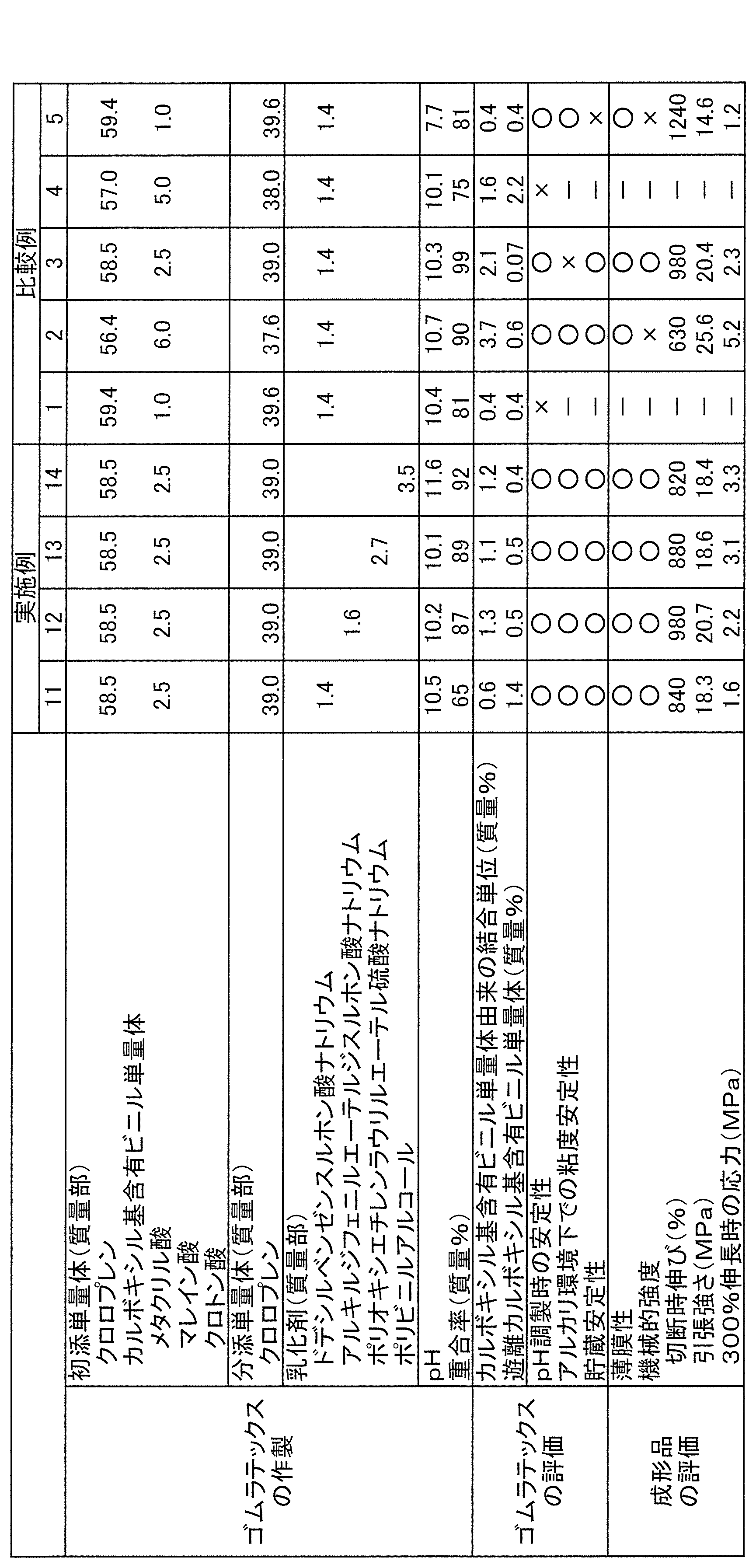
表1及び表2において、アルキルジフェニルエーテルジスルホン酸ナトリウムは、花王社製のペレックスSS-H(純度50%)である。ポリオキシエチレンラウリルエーテル硫酸ナトリウムは、花王社製のラテムルE-150(純度33%)である。ポリビニルアルコールは、日本合成化学工業株式会社製のニチゴーGポリマー(ケン化度89モル%)である。「ペレックス」、「ラテムル」及び「ニチゴーGポリマー」は登録商標である。
上記表1及び表2に示すように、実施例1~14のゴムラテックスは、アルカリ環境下での粘度安定性が良好であり、成形品は、薄膜化しても機械的強度に優れていた。
一方、比較例1のゴムラテックスは、pH調製時に凝集物が析出した。これは、カルボキシル基含有ビニル単量体に由来する結合単位が共重合体中に0.5質量%未満であったためと考えられる。また、比較例2のゴムラテックスは、成形品の切断時伸びが不十分であった。これは、カルボキシル基含有ビニル単量体に由来する結合単位が共重合体中に3.5質量%を超えていたためと考えられる。
比較例3のゴムラテックスは、アルカリ環境下で粘度が上昇した。これは、遊離カルボキシル基含有ビニル単量体の量が共重合体中0.1質量%未満であったためと考えられる。また、比較例4のゴムラテックスは、pH調製時に凝集物が析出した。これは、遊離カルボキシル基含有ビニル単量体の量が共重合体中2.0質量%を超えていたためと考えられる。さらに比較例5のゴムラテックスは、長期貯蔵時の安定性が低く、また、引張強さが劣っていた。これは、ゴムラテックスのpHが8未満であったためと考えられる。
比較例3のゴムラテックスは、アルカリ環境下で粘度が上昇した。これは、遊離カルボキシル基含有ビニル単量体の量が共重合体中0.1質量%未満であったためと考えられる。また、比較例4のゴムラテックスは、pH調製時に凝集物が析出した。これは、遊離カルボキシル基含有ビニル単量体の量が共重合体中2.0質量%を超えていたためと考えられる。さらに比較例5のゴムラテックスは、長期貯蔵時の安定性が低く、また、引張強さが劣っていた。これは、ゴムラテックスのpHが8未満であったためと考えられる。
このように、本技術によれば、アルカリ環境下での粘度安定性が良好なゴムラテックスが得られ、また、そのゴムラテックスを含むゴムラテックス組成物を成形して得られた成形品は薄膜でも機械的強度を保持することができることが示唆された。
さらに、上述した実施例に加え、以下に示す手順で本技術に係る成形品を作製し、評価を行なった。
前記実施例1~14のゴムラテックス組成物を公知の凍結乾燥法によって固形のクロロプレンゴムとし、得られたクロロプレンゴムをブロー成形して厚さ0.05mmのフィルムを得た。得られたフィルムは、前記成形品と同様に薄膜化しても機械的強度を保持できるものであった。
前記実施例1~14のゴムラテックス組成物を公知の凍結乾燥法によって固形のクロロプレンゴムとし、得られたクロロプレンゴムをブロー成形して厚さ0.05mmのフィルムを得た。得られたフィルムは、前記成形品と同様に薄膜化しても機械的強度を保持できるものであった。
Claims (5)
- クロロプレンとカルボキシル基含有ビニル単量体との共重合体を含むゴムラテックスであって、
前記共重合体100質量%中に前記カルボキシル基含有ビニル単量体に由来する結合単位0.5~3.5質量%を有し、
前記ゴムラテックス100質量%中に前記共重合体と結合していない遊離カルボキシル基含有ビニル単量体0.1~2.0質量%を有し、
pHが8~14であるゴムラテックス。 - 前記共重合体を製造する際に用いる乳化剤がアニオン性乳化剤を含むものである請求項1記載のゴムラテックス。
- 前記共重合体の重合率が70~99.9%である請求項1又は2記載のゴムラテックス。
- 請求項1~3のいずれか一項記載のゴムラテックスの固形分100質量部と、
金属酸化物1~10質量部と、
硫黄0.1~3質量部と、
を含むゴムラテックス組成物。 - 請求項4記載のゴムラテックス組成物を成形した成形品。
Priority Applications (2)
| Application Number | Priority Date | Filing Date | Title |
|---|---|---|---|
| CN201580020397.3A CN106232645A (zh) | 2014-04-18 | 2015-02-24 | 橡胶胶乳、橡胶胶乳组合物及成形品 |
| JP2016513660A JP6490670B2 (ja) | 2014-04-18 | 2015-02-24 | ゴムラテックス、ゴムラテックス組成物及び成形品 |
Applications Claiming Priority (2)
| Application Number | Priority Date | Filing Date | Title |
|---|---|---|---|
| JP2014086188 | 2014-04-18 | ||
| JP2014-086188 | 2014-04-18 |
Publications (1)
| Publication Number | Publication Date |
|---|---|
| WO2015159587A1 true WO2015159587A1 (ja) | 2015-10-22 |
Family
ID=54323805
Family Applications (1)
| Application Number | Title | Priority Date | Filing Date |
|---|---|---|---|
| PCT/JP2015/055269 Ceased WO2015159587A1 (ja) | 2014-04-18 | 2015-02-24 | ゴムラテックス、ゴムラテックス組成物及び成形品 |
Country Status (3)
| Country | Link |
|---|---|
| JP (1) | JP6490670B2 (ja) |
| CN (1) | CN106232645A (ja) |
| WO (1) | WO2015159587A1 (ja) |
Cited By (2)
| Publication number | Priority date | Publication date | Assignee | Title |
|---|---|---|---|---|
| JP2018111772A (ja) * | 2017-01-11 | 2018-07-19 | 東ソー株式会社 | クロロプレンラテックス組成物 |
| EP3904403A4 (en) * | 2018-12-27 | 2022-10-12 | Showa Denko K.K. | PROCESS FOR THE PRODUCTION OF CHLOROPRENE POLYMER LATEX |
Citations (9)
| Publication number | Priority date | Publication date | Assignee | Title |
|---|---|---|---|---|
| JP2001011201A (ja) * | 1999-07-01 | 2001-01-16 | Denki Kagaku Kogyo Kk | クロロプレン共重合体と金属との加硫接着体 |
| JP2002053703A (ja) * | 2000-08-08 | 2002-02-19 | Denki Kagaku Kogyo Kk | ポリクロロプレンラテックス組成物およびその製造方法、それを用いた接着剤組成物 |
| JP2007191710A (ja) * | 2005-12-22 | 2007-08-02 | Showa Denko Kk | クロロプレン系共重合体ラテックス、製造方法及びその用途 |
| JP2007332206A (ja) * | 2006-06-13 | 2007-12-27 | Denki Kagaku Kogyo Kk | クロロプレン系重合体ラテックス及びその用途 |
| JP2008195887A (ja) * | 2007-02-15 | 2008-08-28 | Tosoh Corp | クロロプレン系共重合体ラテックス、その製造方法及びその用途 |
| JP2010106072A (ja) * | 2008-10-28 | 2010-05-13 | Tosoh Corp | クロロプレンラテックス及びその製造法 |
| JP2012040767A (ja) * | 2010-08-19 | 2012-03-01 | Denki Kagaku Kogyo Kk | 積層体 |
| JP2012180437A (ja) * | 2011-03-01 | 2012-09-20 | Denki Kagaku Kogyo Kk | ポリクロロプレンラテックス組成物 |
| JP2013159741A (ja) * | 2012-02-07 | 2013-08-19 | Denki Kagaku Kogyo Kk | ラテックス組成物、該組成物の製造方法及び水系接着剤組成物 |
Family Cites Families (3)
| Publication number | Priority date | Publication date | Assignee | Title |
|---|---|---|---|---|
| JP2817962B2 (ja) * | 1989-08-18 | 1998-10-30 | 電気化学工業株式会社 | クロロプレン系防振ゴム |
| JPH093423A (ja) * | 1995-06-21 | 1997-01-07 | Tosoh Corp | 接着剤用ポリクロロプレンラテックス、その製造方法及びそれを用いた接着剤組成物 |
| JP2013028773A (ja) * | 2011-07-29 | 2013-02-07 | Denki Kagaku Kogyo Kk | ポリクロロプレンラテックス及びその製造方法、並びに水系接着剤 |
-
2015
- 2015-02-24 WO PCT/JP2015/055269 patent/WO2015159587A1/ja not_active Ceased
- 2015-02-24 CN CN201580020397.3A patent/CN106232645A/zh active Pending
- 2015-02-24 JP JP2016513660A patent/JP6490670B2/ja active Active
Patent Citations (9)
| Publication number | Priority date | Publication date | Assignee | Title |
|---|---|---|---|---|
| JP2001011201A (ja) * | 1999-07-01 | 2001-01-16 | Denki Kagaku Kogyo Kk | クロロプレン共重合体と金属との加硫接着体 |
| JP2002053703A (ja) * | 2000-08-08 | 2002-02-19 | Denki Kagaku Kogyo Kk | ポリクロロプレンラテックス組成物およびその製造方法、それを用いた接着剤組成物 |
| JP2007191710A (ja) * | 2005-12-22 | 2007-08-02 | Showa Denko Kk | クロロプレン系共重合体ラテックス、製造方法及びその用途 |
| JP2007332206A (ja) * | 2006-06-13 | 2007-12-27 | Denki Kagaku Kogyo Kk | クロロプレン系重合体ラテックス及びその用途 |
| JP2008195887A (ja) * | 2007-02-15 | 2008-08-28 | Tosoh Corp | クロロプレン系共重合体ラテックス、その製造方法及びその用途 |
| JP2010106072A (ja) * | 2008-10-28 | 2010-05-13 | Tosoh Corp | クロロプレンラテックス及びその製造法 |
| JP2012040767A (ja) * | 2010-08-19 | 2012-03-01 | Denki Kagaku Kogyo Kk | 積層体 |
| JP2012180437A (ja) * | 2011-03-01 | 2012-09-20 | Denki Kagaku Kogyo Kk | ポリクロロプレンラテックス組成物 |
| JP2013159741A (ja) * | 2012-02-07 | 2013-08-19 | Denki Kagaku Kogyo Kk | ラテックス組成物、該組成物の製造方法及び水系接着剤組成物 |
Cited By (3)
| Publication number | Priority date | Publication date | Assignee | Title |
|---|---|---|---|---|
| JP2018111772A (ja) * | 2017-01-11 | 2018-07-19 | 東ソー株式会社 | クロロプレンラテックス組成物 |
| JP7024183B2 (ja) | 2017-01-11 | 2022-02-24 | 東ソー株式会社 | クロロプレンラテックス組成物 |
| EP3904403A4 (en) * | 2018-12-27 | 2022-10-12 | Showa Denko K.K. | PROCESS FOR THE PRODUCTION OF CHLOROPRENE POLYMER LATEX |
Also Published As
| Publication number | Publication date |
|---|---|
| JP6490670B2 (ja) | 2019-03-27 |
| CN106232645A (zh) | 2016-12-14 |
| JPWO2015159587A1 (ja) | 2017-04-13 |
Similar Documents
| Publication | Publication Date | Title |
|---|---|---|
| JP6041650B2 (ja) | ポリクロロプレンラテックス、ポリクロロプレンラテックス組成物及び浸漬成形製品 | |
| CN103459444B (zh) | 聚氯丁二烯胶乳、橡胶组合物及浸渍成型品 | |
| JP2019143002A (ja) | クロロプレン重合体ラテックスとその製造方法 | |
| CN104144954B (zh) | 聚氯丁二烯胶乳、聚氯丁二烯胶乳组合物以及成型品 | |
| JP6833675B2 (ja) | ゴム用組成物及びその用途 | |
| WO2013015043A1 (ja) | ポリクロロプレンラテックス組成物及び浸漬成形品 | |
| JP7535654B2 (ja) | クロロプレン重合体及びその製造方法、クロロプレン重合体組成物、並びに、浸漬成形体 | |
| JP6970687B2 (ja) | キサントゲン変性クロロプレンゴム及びそのゴム組成物、並びにその加硫成形体 | |
| CN102471543A (zh) | 聚氯丁二烯胶乳组合物及其制造方法以及成型体 | |
| CN113840850B (zh) | 氯丁二烯共聚物胶乳及其制造方法、硫化物、以及浸渍成型体及其制造方法 | |
| CN104053716A (zh) | 用于浸渍成型的胶乳组合物 | |
| JP2025022956A (ja) | クロロプレン重合体組成物、浸漬成形体及びこれらの製造方法 | |
| JP6490670B2 (ja) | ゴムラテックス、ゴムラテックス組成物及び成形品 | |
| CN106132998B (zh) | 聚氯丁二烯胶乳、聚氯丁二烯胶乳组合物以及浸渍成形体 | |
| WO2016133193A1 (ja) | ゴムラテックス、ゴムラテックス組成物及び浸漬成形製品 | |
| JP2009108195A (ja) | 加硫ゴム製造用クロロプレンポリマーラテックス組成物及びその製造方法 | |
| JP6891717B2 (ja) | ラテックス組成物 | |
| JP7633419B2 (ja) | 重合体ラテックス組成物、浸漬成形体、及び、重合体ラテックス組成物の製造方法 | |
| US11427701B2 (en) | Chloroprene copolymer latex composition and molded product thereof | |
| JP2023128257A (ja) | クロロプレン系重合体ラテックス、浸漬成形体、クロロプレン系重合体ラテックスの製造方法 | |
| JP2008195886A (ja) | クロロプレンラテックス、その製造方法及びその用途 |
Legal Events
| Date | Code | Title | Description |
|---|---|---|---|
| 121 | Ep: the epo has been informed by wipo that ep was designated in this application |
Ref document number: 15780380 Country of ref document: EP Kind code of ref document: A1 |
|
| ENP | Entry into the national phase |
Ref document number: 2016513660 Country of ref document: JP Kind code of ref document: A |
|
| NENP | Non-entry into the national phase |
Ref country code: DE |
|
| 122 | Ep: pct application non-entry in european phase |
Ref document number: 15780380 Country of ref document: EP Kind code of ref document: A1 |