WO2015146307A1 - 有機溶媒溶液中の金属除去方法 - Google Patents
有機溶媒溶液中の金属除去方法 Download PDFInfo
- Publication number
- WO2015146307A1 WO2015146307A1 PCT/JP2015/053281 JP2015053281W WO2015146307A1 WO 2015146307 A1 WO2015146307 A1 WO 2015146307A1 JP 2015053281 W JP2015053281 W JP 2015053281W WO 2015146307 A1 WO2015146307 A1 WO 2015146307A1
- Authority
- WO
- WIPO (PCT)
- Prior art keywords
- general formula
- metal
- polymer
- organic solvent
- solvent solution
- Prior art date
- Legal status (The legal status is an assumption and is not a legal conclusion. Google has not performed a legal analysis and makes no representation as to the accuracy of the status listed.)
- Ceased
Links
- 0 *C(*)COC(*)N Chemical compound *C(*)COC(*)N 0.000 description 2
Classifications
-
- B—PERFORMING OPERATIONS; TRANSPORTING
- B01—PHYSICAL OR CHEMICAL PROCESSES OR APPARATUS IN GENERAL
- B01D—SEPARATION
- B01D61/00—Processes of separation using semi-permeable membranes, e.g. dialysis, osmosis or ultrafiltration; Apparatus, accessories or auxiliary operations specially adapted therefor
- B01D61/14—Ultrafiltration; Microfiltration
-
- B—PERFORMING OPERATIONS; TRANSPORTING
- B01—PHYSICAL OR CHEMICAL PROCESSES OR APPARATUS IN GENERAL
- B01J—CHEMICAL OR PHYSICAL PROCESSES, e.g. CATALYSIS OR COLLOID CHEMISTRY; THEIR RELEVANT APPARATUS
- B01J31/00—Catalysts comprising hydrides, coordination complexes or organic compounds
- B01J31/40—Regeneration or reactivation
- B01J31/4015—Regeneration or reactivation of catalysts containing metals
- B01J31/4023—Regeneration or reactivation of catalysts containing metals containing iron group metals, noble metals or copper
-
- B—PERFORMING OPERATIONS; TRANSPORTING
- B01—PHYSICAL OR CHEMICAL PROCESSES OR APPARATUS IN GENERAL
- B01J—CHEMICAL OR PHYSICAL PROCESSES, e.g. CATALYSIS OR COLLOID CHEMISTRY; THEIR RELEVANT APPARATUS
- B01J31/00—Catalysts comprising hydrides, coordination complexes or organic compounds
- B01J31/40—Regeneration or reactivation
- B01J31/4015—Regeneration or reactivation of catalysts containing metals
- B01J31/4061—Regeneration or reactivation of catalysts containing metals involving membrane separation
-
- B—PERFORMING OPERATIONS; TRANSPORTING
- B01—PHYSICAL OR CHEMICAL PROCESSES OR APPARATUS IN GENERAL
- B01J—CHEMICAL OR PHYSICAL PROCESSES, e.g. CATALYSIS OR COLLOID CHEMISTRY; THEIR RELEVANT APPARATUS
- B01J38/00—Regeneration or reactivation of catalysts, in general
-
- B—PERFORMING OPERATIONS; TRANSPORTING
- B01—PHYSICAL OR CHEMICAL PROCESSES OR APPARATUS IN GENERAL
- B01D—SEPARATION
- B01D2311/00—Details relating to membrane separation process operations and control
- B01D2311/04—Specific process operations in the feed stream; Feed pretreatment
-
- B—PERFORMING OPERATIONS; TRANSPORTING
- B01—PHYSICAL OR CHEMICAL PROCESSES OR APPARATUS IN GENERAL
- B01D—SEPARATION
- B01D2311/00—Details relating to membrane separation process operations and control
- B01D2311/12—Addition of chemical agents
-
- B—PERFORMING OPERATIONS; TRANSPORTING
- B01—PHYSICAL OR CHEMICAL PROCESSES OR APPARATUS IN GENERAL
- B01J—CHEMICAL OR PHYSICAL PROCESSES, e.g. CATALYSIS OR COLLOID CHEMISTRY; THEIR RELEVANT APPARATUS
- B01J38/00—Regeneration or reactivation of catalysts, in general
- B01J38/48—Liquid treating or treating in liquid phase, e.g. dissolved or suspended
- B01J38/68—Liquid treating or treating in liquid phase, e.g. dissolved or suspended including substantial dissolution or chemical precipitation of a catalyst component in the ultimate reconstitution of the catalyst
-
- B—PERFORMING OPERATIONS; TRANSPORTING
- B01—PHYSICAL OR CHEMICAL PROCESSES OR APPARATUS IN GENERAL
- B01J—CHEMICAL OR PHYSICAL PROCESSES, e.g. CATALYSIS OR COLLOID CHEMISTRY; THEIR RELEVANT APPARATUS
- B01J38/00—Regeneration or reactivation of catalysts, in general
- B01J38/72—Regeneration or reactivation of catalysts, in general including segregation of diverse particles
Definitions
- the present invention relates to a method for removing a metal from an organic solvent solution.
- metal catalysts are often used as catalysts for chemical reactions.
- the metal catalyst used in the chemical reaction is separated and removed from the target reaction product after the reaction.
- the amount of residual metal is strictly regulated, and it is required to reduce the contamination of the metal catalyst into the pharmaceutical compound obtained by the organic synthesis reaction as much as possible.
- organic materials used for electronic devices such as organic EL elements are required to have high purity in order to increase electrical characteristics and the life of the elements, and the metal catalyst used in the synthesis of the organic materials reacts after the reaction. It is required to remove as much as possible from the solution.
- Patent Document 1 describes a method in which a metal-containing solution is brought into contact with a scavenger carrier, and the scavenger carrier is bonded to a metal in the solution to remove the metal in the solution.
- Patent Document 2 discloses a method for separating metal ions from an aqueous solution, wherein a metal complex is formed by contacting a metal ion with a water-soluble polymer having a specific group that binds to the metal ions, and membrane separation means. Is described.
- the scavenger carrier used in the method described in Patent Document 1 is insoluble in the metal-containing solution. Therefore, the contact efficiency (collision frequency) with the metal in the solution is low, and there is a limitation in improving the metal removal efficiency.
- the method described in Patent Document 2 is not applicable to an organic solvent system used in the synthesis of an organic compound because the metal-containing solution is an aqueous solution.
- An object of the present invention is to provide a method for efficiently removing a metal from an organic solvent solution containing the metal.
- the present inventor has intensively studied in view of the above problems. As a result, when a polymer whose SP value (solubility parameter) has a specific relationship with the SP value of the organic solvent is dissolved in the organic solvent solution containing the metal, the complex of the metal and the polymer becomes highly efficient. It was found that the metal can be removed from the organic solvent solution with high efficiency by separating and removing the complex formed by membrane separation treatment. The present invention has been completed based on these findings.
- a method for removing a metal from an organic solvent solution comprising dissolving a polymer in an organic solvent solution containing a metal to form a complex of the metal and the polymer, and separating and removing the complex by membrane separation treatment.
- the absolute value of the difference between the SP value of the organic solvent and the SP value of the polymer is 2.5 or less.
- the metal is at least one selected from the group consisting of aluminum, silver, gold, cadmium, chromium, cobalt, copper, iron, mercury, nickel, osmium, lead, palladium, platinum, rhodium, ruthenium, tin, vanadium, and zinc.
- the organic solvent solution containing a metal is a reaction solution containing a reaction product of a catalytic reaction performed in the presence of a metal catalyst, and the metal to be removed is a metal of the metal catalyst.
- the polymer includes a structural unit having at least one of partial structures represented by the following formulas (1) to (8).
- a 1 represents O, S or NR
- a 2 represents O, S, NH or N— *.
- a 1 and A 2 are not both O.
- G 1 represents C (R) 2 , NR, O or S.
- a 3 represents O, S or NR
- G 2 represents C- * or N.
- G 3 represents C (R) 2 , NH, N- *, O or S.
- G 4 represents C (R) 2 , NR, O or S.
- a 9 represents O, S or NR
- a 10 represents N- *, S or O.
- a 11 represents O, S or NR
- a 15 represents O, S, or NR
- a 16 represents S- *, O- *, or NR- *.
- L 1 represents CR or N.
- G 5 represents C (R) 2 , O, S or NR.
- R represents a hydrogen atom or a substituent.
- * And y show a connection part, x shows a hydrogen atom or a connection part.
- a 1 and G 1 are the same meaning as A 1 and G 1 in the general formula (1).
- Z 1 represents a heterocyclic ring.
- a 3 and A 4 are each synonymous with A 3 and A 4 in the general formula (2).
- Z 2 represents a ring structure.
- a 5 and G 3 are, respectively synonymous with A 5 and G 3 in the general formula (3).
- a 6a represents NR, N, S or O.
- L 1 has the same meaning as L 1 in the general formula (8).
- Z 3 represents a heterocyclic ring.
- a 9 has the same meaning as A 9 in the general formula (5).
- Z 5 represents a heterocyclic ring.
- a 11 has the same meaning as A 11 in the general formula (6).
- Z 6 represents a heterocyclic ring.
- a 12a represents NR, S or O.
- L 1 has the same meaning as L 1 in the general formula (8).
- a 13 and A 14 are the same meaning to A 13 and A 14 in the general formula (7).
- Z 7 represents a ring structure.
- a 15, G 5 and L 1 are the same meaning as A 15, G 5 and L 1 in the general formula (8).
- a 16a represents S, O, or NR.
- Z 8 represents a heterocyclic ring.
- R represents a hydrogen atom or a substituent
- x 1 represents a linking site.
- the polymer contains a (meth) acrylic acid ester component as a monomer component, and the alcohol part of the (meth) acrylic acid ester is represented by any one of the above (1a) to (3a) and (5a) to (8a).
- the method according to [5] which has a partial structure.
- a 15, A 16a, G 5 and L 1 are A 15, A 16a, respectively, in the general formula (8a), and G 5 and L 1 synonymous.
- R 1 represents a hydrogen atom or methyl.
- L 2 represents O, S or NR.
- L 3 represents a divalent linking group.
- Z 8a represents a heterocyclic ring.
- substituents when there are a plurality of substituents, linking groups, and the like (hereinafter referred to as substituents) indicated by specific symbols, or when a plurality of substituents are specified simultaneously or alternatively, It means that a substituent etc. may mutually be same or different. The same applies to the definition of the number of substituents and the like. Further, when there are repetitions of a plurality of partial structures represented by the same indication in the formula, each partial structure or each repeating unit may be the same or different. Further, unless otherwise specified, when a plurality of substituents and the like are adjacent (particularly adjacent), they may be connected to each other or condensed to form a ring.
- the term “compound” (including polymer) is used to mean not only the compound itself but also its salt and its ion. In addition, it means that a part of the structure is changed as long as the desired effect is achieved.
- a substituent that does not clearly indicate substitution or non-substitution may further have a substituent as long as the target effect is not impaired. Meaning. This is also synonymous for compounds that do not specify substitution / non-substitution.
- a numerical range expressed using “to” means a range including numerical values described before and after “to” as a lower limit value and an upper limit value.
- a metal can be separated and removed from an organic solvent solution containing metal with excellent efficiency.
- the metal removal method of the present invention involves dissolving a specific polymer in an organic solvent solution containing a metal to form a complex of metal and polymer, and this complex. Is a method of removing metal from an organic solvent solution by separating and removing the film by membrane separation treatment.
- the present invention will be described in detail.
- the metal to be removed in the organic solvent solution is dissolved in the organic solvent solution, and usually forms a complex and is dissolved in the organic solvent. That is, in the present invention, “metal” is meant to include those present in the form of metal complexes. Examples of the metal contained in the organic solvent solution include aluminum, silver, gold, cadmium, chromium, cobalt, copper, iron, mercury, nickel, osmium, lead, palladium, platinum, rhodium, ruthenium, tin, vanadium and zinc.
- the metal removal efficiency is further increased.
- the method of this invention is excellent in the removal efficiency of palladium and copper.
- organic solvent that constitutes the organic solvent solution containing the metal
- ester organic solvents such as methyl acetate, ethyl acetate, and butyl acetate, acetone, methyl ethyl ketone, methyl isobutyl ketone, diacetone alcohol, and cyclopentanone.
- Aliphatic ketones such as cyclohexanone, ether organic solvents such as ethylene glycol dimethyl ether, dibutyl ether, tetrahydrofuran, methylcyclopentyl ether, dioxane, N-methylpyrrolidone, 2-pyrrolidone, dimethylformamide, dimethylimidazolidinone, dimethylacetamide, etc.
- Amide organic solvents hydrocarbon organic solvents such as toluene and hexane, methanol, ethanol, propanol, isopropanol, butanol, t-butyl alcohol, amylal Alcoholic organic solvents such as ethylene glycol, diethylene glycol, triethylene glycol, propylene glycol, dipropylene glycol, diol organic solvents such as 1,3-propanediol, nitrile solvents such as acetonitrile, dichloromethane, trichloroethylene, etc. Mention may be made of halogenated solvents. Moreover, you may use together 2 or more types of the said organic solvent.
- the SP value of the organic solvent constituting the organic solvent solution containing the metal has a specific relationship with the SP value of the polymer that forms a complex with the metal, as will be described later.
- a reaction solution (including a solution after completion of the reaction) containing a reaction product of a catalytic reaction performed in the presence of a metal catalyst
- the metal to be removed is the metal of the metal catalyst (including a mode of removing the metal catalyst itself).
- the catalytic reaction using a metal catalyst include Suzuki-Miyaura coupling reaction, Heck reaction, Buchwald-Hartwig reaction, Stille coupling reaction, Negishi coupling reaction, and presence of palladium and copper catalysts in the presence of a palladium catalyst.
- the removed metal or metal catalyst can be reused as a metal catalyst in other reactions.
- the still coupling reaction is a reaction using an organotin compound as a raw material
- the Negishi coupling reaction is a reaction using an organozinc compound as a raw material.
- a raw material containing these metals is used.
- the aspect which removes and the aspect which removes the metal originating in the raw material containing these metals are also contained.
- the metal concentration in the organic solvent solution containing metal is not particularly limited, but is preferably 0.01 to 10,000 ppm (mass basis), and more preferably 0.1 to 1000 ppm.
- the organic solvent solution containing a metal may contain other insoluble components as long as the metal is dissolved in the form of a complex or the like.
- the polymer used in the present invention dissolves in an organic solvent solution containing a metal, thereby interacting with the metal to form a complex with the metal.
- the absolute value of the difference between the SP value of the polymer used in the present invention and the SP value of the organic solvent constituting the metal-containing organic solvent solution is 2.5 or less.
- the unit of SP value is (cal / cm 3 ) 1/2 .
- the SP value of the polymer is “paint research” No. 152 p41 (2010). A detailed method is shown below.
- -Calculation method of polymer SP value- A polymer (0.4 g) is dissolved in tetrahydrofuran (hereinafter referred to as THF) to prepare a 10 mL solution. Divide this solution into two portions of 5 mL, add hexane dropwise on one side, drop water on the other, and add each until the solution becomes cloudy. When the solution becomes turbid, the addition is terminated, and the SP value ( ⁇ ) is calculated according to the following formula.
- the absolute value of the difference between the SP value of the polymer used in the present invention and the SP value of the organic solvent constituting the organic solvent solution containing the metal is 2.0 from the viewpoint of the complex formation efficiency (metal removal efficiency).
- the following is preferable, 1.8 or less is more preferable, and 1.5 or less is more preferable.
- the metal is a metal complex
- the form of the polymer / metal complex there is no particular limitation on the form of the polymer / metal complex.
- it may be a complex of a polymer and a metal complex, or may be an embodiment in which a polymer is coordinated to a metal by a ligand exchange reaction. That is, the polymer may enclose a metal or metal complex to form a complex, or the polymer may chelate the metal of the metal complex to form a complex.
- a form in which the polymer and the metal complex are bonded or adsorbed to each other by some interaction is also included in the aspect of the complex in the present invention.
- the polymer used in the present invention preferably contains at least one structural unit (repeating unit) having at least one of partial structures represented by the following general formulas (1) to (8).
- a polymer including a structural unit having the following partial structure has a strong interaction property with a metal and easily forms a complex with the metal.
- the partial structures of the following general formulas (1) to (8) coordinate to the metal as bidentate ligands (A 1 to A 16 as coordinating atoms) to form a chelate complex It is possible to do.
- the partial structures of the following general formulas (1) to (8) are preferably incorporated into side groups (pendant groups) of the polymer.
- the side group is a group branched from the main chain of the polymer (linked as a substituent of an atom constituting the main chain).
- the chain consisting of carbon atoms forming the ethylenically unsaturated bond is the main chain, and the other part Is a side group.
- a 1 represents O, S or NR, and O or S is preferable.
- R represents a hydrogen atom or a substituent.
- an alkyl group preferably an alkyl group having 1 to 10 carbon atoms, more preferably an alkyl group having 1 to 5 carbon atoms, still more preferably ethyl or methyl
- an aryl group preferably having 6 to 20 carbon atoms, more An aryl group having 6 to 15 carbon atoms, more preferably 6 to 12 carbon atoms, and more preferably phenyl
- R is more preferably a hydrogen atom.
- substituents “R” in the description of the general formulas are synonymous with the substituent R in A 1 described above, and the preferred forms are also the same.
- a 2 represents O, S, NH or N— *, preferably S or N— *. * Indicates a linking site.
- “*” in the description of each general formula represents a linking site (preferably a linking site for incorporation into a side group of a polymer).
- a 1 and A 2 are not both O.
- G 1 represents C (R) 2 , NR, O or S.
- G 1 is preferably NH, O or S.
- x represents a hydrogen atom or a linking site.
- a 3 represents O, S, or NR, and O or S is preferable.
- G 2 represents C— * or N, preferably C— *.
- x represents a hydrogen atom or a linking site (preferably a linking site for incorporation into a side group of the polymer).
- a 5 represents an O, S or NR, O or S is preferred.
- G 3 represents C (R) 2 , NH, N— *, O or S, and G 3 is preferably NH, O or S.
- x is synonymous with x in the general formula (1).
- y represents a linking site (preferably a linking site for incorporation into a side group of the polymer).
- G 4 represents C (R) 2 , NR, O or S.
- G 4 is preferably C (R) 2 .
- x is synonymous with x in the general formula (1).
- a 9 represents O, S or NR, and O or S is preferable.
- a 10 represents N- *, S or O, and N- * is preferred.
- x is synonymous with x in the general formula (1).
- a 11 represents O, S or NR, and O or S is preferable.
- x is synonymous with x in the general formula (1).
- y is synonymous with y in the general formula (3).
- x is synonymous with x in the general formula (1).
- a 15 represents O, S or NR, and O or S is preferable.
- a 16 represents S- *, O- *, or NR- *.
- L 1 represents CR or N, preferably CR.
- G 5 represents C (R) 2 , O, S or NR, and among them, C (R) 2 is preferable.
- x is synonymous with x in the general formula (1).
- the polymer used in the present invention includes at least one structural unit having at least one partial structure represented by the formulas (1), (3), (5), (6) and (8). It is preferable to include, and it is more preferable to include at least one structural unit having a partial structure represented by the following formula (8).
- the polymer used in the present invention is preferably composed of the following structural unit Q (repeating unit Q).
- R p as a substituent is represented by the above general formulas (1) to ( It is preferable that at least 1 type of the structural unit represented by each formula of 8) is included.
- R 1 represents a hydrogen atom or methyl.
- the total content of the partial structures represented by the formulas (1) to (8) in the polymer of the present invention is preferably 0.1 to 3.0 mmol / g. More preferably, it is 5 to 2.0 mmol / g.
- the polymer of the present invention comprises the above structural unit Q
- at least one kind of partial structure represented by each of the above general formulas (1) to (8) occupying the molar amount of all the structural units Q in the polymer.
- the proportion of the molar amount of the structural unit Q having in the substituent R p is preferably 0.5 to 60 mol%, and more preferably 3 to 40 mol%.
- the polymer used in the present invention more preferably contains at least one structural unit having at least one of the partial structures represented by the following general formulas (1a) to (3a) and (5a) to (8a). It is preferable.
- General formula (1a) represents the preferable form of the partial structure of General formula (1).
- a 1 and G 1 have the same meanings as A 1 and G 1 in General Formula (1), respectively, and preferred forms are also the same.
- x 1 represents a linking site (preferably a linking site for incorporation into a side group of the polymer).
- Z 1 represents a heterocyclic ring.
- Z 1 may be a heterocyclic monocycle or a condensed heterocyclic ring.
- Z 1 is also preferably an aromatic heterocyclic ring.
- Z 1 is a heteromonocyclic ring, a 5-membered ring or a 6-membered ring is preferable. And a ring and a triazole ring.
- Z 1 is a condensed heterocyclic ring
- Z 1 may contain an oxygen atom or a sulfur atom in the ring atom.
- Z 1 may include a linking site for incorporation into a polymer (preferably in a polymer side group (pendant group)).
- General formula (2a) represents the preferable form of the partial structure of General formula (2).
- a 3 and A 4 are respectively synonymous with A 3 and A 4 in the general formula (2), a preferred form also the same.
- x 1 is the same meaning as x 1 in the general formula (1a).
- Z 2 represents a ring structure.
- Z 2 may be a hydrocarbon ring or a heterocyclic ring. Further, it may be a single ring or a condensed polycyclic structure.
- Z 2 is also preferably an aromatic ring.
- Z 2 is more preferably a hydrocarbon ring, more preferably an aromatic hydrocarbon ring, and further preferably a benzene ring.
- Z 2 is the case of heterocyclic, heterocyclic structures described as exemplary or preferred embodiments above Z 1 can be mentioned.
- Z 2 may include a linking site for incorporation into the polymer (preferably in the polymer side group).
- General formula (3a) represents the preferable form of the partial structure of General formula (3).
- a 5 and G 3 are, have the same meanings as A 5 and G 3 in the general formula (3), a preferred form also the same.
- x 1 is the same meaning as x 1 in the general formula (1a).
- a 6a represents NR, N, S or O.
- a 6a is preferably NR, N or S.
- L 1 represents N or CR.
- Z 3 represents a heterocyclic ring.
- Z 3 may be a heterocyclic monocycle or a condensed heterocyclic ring.
- Z 3 is also preferably an aromatic heterocyclic ring.
- Z 3 is a heteromonocyclic ring
- a 5-membered ring or a 6-membered ring is preferable.
- Z 3 is a condensed heterocyclic ring, a form in which a benzene ring is condensed to a 5-membered or 6-membered heterocyclic ring is preferable.
- Z 3 may include a linking site for incorporation into the polymer (preferably in the polymer side group).
- General formula (5a) represents the preferable form of the partial structure of General formula (5).
- a 9 has the same meaning as A 9 in the general formula (5), the same also preferable.
- x 1 is the same meaning as x 1 in the general formula (1a).
- Z 5 represents a heterocycle, and preferably a heteromonocycle.
- Z 5 is preferably an aromatic heterocyclic ring. When Z 5 is a heteromonocyclic ring, a 5-membered ring or a 6-membered ring is preferable. And a ring and a triazole ring.
- Z 5 also preferably contains two or more nitrogen atoms as ring constituent atoms.
- Z 5 may include a linking site for incorporation into the polymer (preferably in the polymer side group).
- General formula (6a) represents the preferable form of the partial structure of General formula (6).
- a 11 has the same meaning as A 11 in the general formula (6), the same also preferable.
- x 1 is the same meaning as x 1 in the general formula (1a).
- a 12a represents NR, S or O, NR or S is preferable, and S is more preferable.
- L 1 has the same meaning as L 1 in the general formula (3a).
- Z 6 represents a heterocycle, preferably a heteromonocycle.
- Z 6 is also preferably an aromatic heterocycle. When Z 6 is a heteromonocyclic ring, a 5-membered ring or a 6-membered ring is preferable.
- Z 6 preferably contains two or more nitrogen atoms as ring-constituting atoms.
- Z 6 is preferably a thienyl group.
- Z 6 may include a linking site for incorporation into the polymer (preferably in the polymer side group).
- General formula (7a) represents the preferable form of the partial structure of General formula (7).
- a 13 and A 14 are the same meaning to A 13 and A 14 in the general formula (7).
- a 13 and A 14 are preferably NH- * or S- *.
- Z 7 represents a ring structure.
- Z 7 may be a hydrocarbon ring or a heterocyclic ring.
- Z 7 is preferably an aromatic ring.
- Z 7 may be a single ring or a condensed polycyclic structure.
- Z 7 is more preferably a hydrocarbon ring, more preferably an aromatic hydrocarbon ring, and further preferably a benzene ring.
- Z 2 is heterocyclic, the structure of the heterocyclic ring exemplified above Z 1 can be mentioned.
- Z 7 may include a linking site for incorporation into the polymer (preferably in the polymer side group).
- General formula (8a) represents the preferable form of the partial structure of General formula (8).
- a 15, G 5 and L 1 are respectively synonymous with A 15, G 5 and L 1 in the general formula (8), a preferred form also the same.
- x 1 is the same meaning as x 1 in the general formula (1a).
- a 16a represents S, O, or NR.
- R is synonymous with R in the general formula (1), and the preferred form is also the same.
- a 16a is more preferably S or NH.
- Z 8 represents a heterocyclic ring.
- Z 8 may be a heterocyclic monocyclic ring or a condensed heterocyclic ring.
- Z 8 is a heteromonocyclic ring, a 5-membered ring or a 6-membered ring is preferable. And a ring and a triazole ring.
- Z 8 is a condensed heterocyclic ring, a form in which a benzene ring is condensed to a 5-membered or 6-membered heterocyclic ring is preferable.
- Z 8 is preferably not an aromatic heterocycle (in the case of a condensed heterocycle, Z 8 is not an aromatic heterocycle means that at least the ring containing L 1 and A 16a is not an aromatic ring. That is, the ring fused to the ring containing L 1 and A 16a may be an aromatic ring.
- Z 8 may include a linking site for incorporation into the polymer (preferably in the polymer side group).
- the polymer used in the method of the present invention comprises at least a structural unit having at least one of the partial structures represented by the formulas (1a), (3a), (5a), (6a) and (8a). It is preferable to include 1 type, and it is more preferable to include a structural unit having a partial structure represented by the following formula (8a).
- the contents of the partial structures represented by the formulas (1a) to (3a) and (5a) to (8a) are 0.1 to 3.0 mmol / g in total. It is preferably 0.5 to 2.0 mmol / g.
- the polymer of the present invention is composed of the structural unit Q, it is represented by the formulas (1a) to (3a) and (5a) to (8a) that occupy the molar amount of all the structural units Q in the polymer.
- the ratio of the molar amount of the structural unit Q having at least one of the partial structures to be substituted in the substituent R p is preferably 0.5 to 60 mol%, more preferably 3 to 40 mol%. .
- the polymer used in the present invention contains a (meth) acrylic acid ester component as a monomer component, and the alcohol part of the (meth) acrylic acid ester is represented by the general formulas (1) to (8) or (1a) to (3a). And a partial structure represented by any one of (5a) to (8a).
- the aspect which has the said partial structure in an alcohol part includes the aspect which contains the carbonyl group of the said ester bond of (meth) acrylic acid ester in a part of said partial structure.
- the polymer used in the present invention includes a structural unit (repeating unit) represented by the following general formula (P).
- a 15, A 16a, G 5 and L 1 are A 15 in the general formula (8a), respectively, A 16a, and G 5 and L 1 synonymous a preferred form also the same.
- R 1 represents a hydrogen atom or methyl.
- L 2 represents O, S or NR, and O is more preferable.
- L 3 represents a divalent linking group. L 3 is preferably-[(CRR) m -L 2 ] n- . m is an integer of 1 to 6, more preferably an integer of 2 to 4. n is an integer of 1 to 6, more preferably an integer of 1 to 3.
- L 2 has the same meaning as L 2 in Formula (P) preferred form is the same.
- Z 8a represents a heterocyclic ring.
- Z 8a may be a heterocyclic monocyclic ring or a condensed heterocyclic ring.
- Z 8a is a heteromonocyclic ring, a 5-membered ring or a 6-membered ring is preferable.
- Z 8a is a condensed heterocyclic ring, a form in which a benzene ring is condensed to a 5-membered or 6-membered heterocyclic ring is preferable.
- Z 8a is preferably not an aromatic heterocycle (Z 8a is not an aromatic heterocycle, in the case of a condensed heterocycle, it means that at least the ring containing L 1 and A 16a is not an aromatic ring. That is, the ring fused to the ring containing L 1 and A 16a may be an aromatic ring).
- the content of the structural unit represented by the general formula (P) is preferably 0.1 to 3.0 mmol / g, and preferably 0.5 to 2.0 mmol / g. Is more preferable.
- the proportion of the molar amount of the structural unit represented by the general formula (P) in the molar amount of all the structural units Q in the polymer is 0.5 to 60 mol% is preferable, and 3 to 40 mol% is more preferable.
- the polymer used in the present invention has a number average molecular weight of preferably 7000 or more, more preferably 10,000 to 100,000, and still more preferably 10,000 to 50,000, in order to more reliably perform separation by membrane separation treatment.
- the number average molecular weight is determined by gel permeation chromatography (GPC) using polystyrene as a standard substance.
- the polymer used in the present invention may be a homopolymer or a copolymer, but is preferably a copolymer.
- the copolymer may be a random copolymer or a block copolymer, but a random copolymer is preferred.
- the polymer used in the present invention is a copolymer comprising the structural unit Q, it is represented by the general formulas (1) to (8) or (1a) to (3a) and (5a) to (8a).
- the polymer used in the present invention is a copolymer comprising the structural unit Q
- it is represented by the general formulas (1) to (8) or (1a) to (3a) and (5a) to (8a).
- the content of the following structural unit in the polymer is appropriately adjusted so that the polymer has a desired SP value.
- R 1, L 2 and L 3 are respectively synonymous with R 1, L 2 and L 3 in the general formula (P), a preferred form also the same.
- R 2 represents a hydrogen atom or a substituent. When R 2 is a substituent, it is preferably an alkyl group having 1 to 10 carbon atoms or an aryl group having 6 to 20 carbon atoms (preferably phenyl). R 2 is more preferably an alkyl group having 1 to 5 carbon atoms, still more preferably ethyl or methyl.
- the method for dissolving the polymer that forms a complex with the metal in the organic solvent solution is not particularly limited.
- the temperature at which the polymer is dissolved in the organic solvent solution is not particularly limited, and the polymer is usually dissolved at a temperature of the organic solvent solution of 10 to 90 ° C., preferably 20 to 60 ° C.
- the dissolution is preferably performed with stirring.
- the temperature for forming the complex is not particularly limited, but is usually 10 to 90 ° C., preferably 20 to 60 ° C.
- the time for forming the complex is not particularly limited and is appropriately adjusted so as to achieve the desired metal removal rate, but is usually 1 to 24 hours.
- the complex is preferably formed while stirring the organic solvent solution. Although the formed complex may be dissolved in the organic solvent solution or may be insolubilized and precipitated, it is preferable that the complex is dissolved in the organic solvent solution from the viewpoint of ease of membrane separation treatment.
- the total molar amount of the partial structure represented by any one of the general formulas (1) to (8) in the organic solvent solution is the molar amount of the metal in the organic solvent solution. 1 to 50 times, preferably 2 to 30 times.
- the concentration of the polymer in the organic solvent solution is preferably 0.01 to 3% by mass.
- membrane separation treatment In the method of the present invention, the metal / polymer complex is separated and removed by membrane separation treatment.
- the membrane used for the membrane separation treatment preferably has a blocking rate of the polymer used of 98% or more, more preferably 99 to 100%. This blocking rate is the blocking rate under the membrane separation processing conditions employed in carrying out the method of the present invention, and is obtained by the following equation.
- Rejection rate (%) 100 ⁇ ⁇ 1- [Polymer concentration in permeate (% by mass) / Polymer concentration in organic solvent solution before membrane separation treatment (% by mass)] ⁇
- a membrane having a fractional molecular weight capable of permeating a target substance other than a polymer for example, a reaction product of a catalytic reaction
- the membrane permeability of the target substance is preferably 70 to 100%, more preferably 80 to 100%, and still more preferably 90 to 100%.
- the transmittance (%) is obtained by “100 ⁇ blocking rate (%)”.
- the material of the film is not particularly limited and may be an organic film or an inorganic film, but an inorganic film is preferable from the viewpoint of heat resistance and chemical resistance, and a ceramic film is more preferable.
- the material of the ceramic film include alumina, titania, silica, zirconia and the like.
- a ceramic film made of silicon carbide or silicon nitride can also be used.
- a film made of a plurality of materials may be used.
- the polymer In the membrane separation process, the polymer is difficult to permeate the membrane, so the polymer-metal complex and other solution components (low molecular weight components such as organic solvents and reaction products) can be separated. The metal can be removed from.
- the membrane used for the membrane separation treatment is preferably in the form of a membrane module.
- the membrane module is preferably a monolith type or a spiral type from the viewpoint of pressure resistance.
- the membrane separation treatment is preferably a cross-flow membrane filtration treatment using a membrane module.
- the number of membrane modules may be one, or a plurality of membrane modules may be arranged in series or in parallel.
- the filtration pressure at the time of carrying out the membrane separation treatment is not particularly limited as long as it is below the maximum working pressure of the membrane module to be used, but it is preferably carried out within the range of 0.1 to 1.0 MPa, More preferably, the pressure is set to ⁇ 0.7 MPa.
- the flow rate during the membrane separation treatment is not particularly limited, but it is preferable that the membrane surface linear velocity in each membrane module is set within a range of 0.3 to 4 m / s.
- the temperature of the membrane separation treatment is appropriately adjusted according to the membrane material to be used, the reaction product and the like to be purified. Usually, it is carried out at a temperature of 10 to 90 ° C., preferably 20 to 60 ° C.
- the membrane separation treatment can also be performed using a commercially available membrane separation apparatus.
- INSIDE DisRAM registered trademark, manufactured by TAMI
- TAMI TAMI
- the number average molecular weight of this polymer was 36000, and the solid content of the toluene solution was 35.4% by mass.
- concentration of the following repeating unit (c) is 2.0 mmol / g.
- NMP 1-methyl-2-pyrrolidinone
- the solid was filtered off, washed twice with 500 g of methanol, and then dried to obtain a random polymer B powder comprising the following repeating units.
- the number average molecular weight of the polymer B was 34200.
- concentration of the following repeating unit (d) is 0.5 mmol / g.
- the solid was filtered off and washed twice with 500 mL of methanol, and then NMP was added and stirred until it was completely dissolved to obtain an NMP solution of random polymer C consisting of the following repeating units.
- the number average molecular weight of the polymer C was 30400, and the solid content of the NMP solution of the polymer C was 13.2% by mass.
- the calculated value of the concentration of the following repeating unit (e) is 0.5 mmol / g.
- the solid was filtered off, washed twice with 700 mL of methanol, and then dried to obtain random polymer D consisting of the following repeating units.
- the number average molecular weight of the polymer D was 25300.
- the calculated value of the concentration of the following repeating unit (f) is 1.0 mmol / g.
- the solid was filtered off, washed twice with 700 mL of methanol, and then dried to obtain polymer E composed of the following repeating units.
- the number average molecular weight of the polymer E was 18400.
- concentration of the following repeating unit (h) is 1.0 mmol / g.
- the reaction solution was allowed to cool to room temperature, and 83.3 g of PGMEA was added thereto to obtain a random polymer PGMEA solution composed of the following repeating units.
- 100 g of the polymer PGMEA solution obtained was put into 500 g of methanol to precipitate a solid.
- the solid was filtered off and washed twice with 500 g of methanol, and then toluene was added so that the total amount became 100 g and stirred until complete dissolution to obtain a THF solution of the polymer.
- the number average molecular weight of this polymer was 24300, and the solid content of the THF solution was 35.0% by mass.
- a Pd-containing reaction solution obtained as a result of the Buchwald-Hartwig reaction was prepared by the following method.
- P-trifluoromethylbromobenzene (7.50 g), benzylamine (3.93 g) and toluene (100 mL) were introduced into a nitrogen-substituted three-necked flask and stirred, and while flowing nitrogen into the flask, (R)-(+)-BINAP (228 mg), Pd 2 (dba) 3 153 mg and sodium-t-butoxide 4.48 g were added in this order and heated to 80 ° C.
- the solution was stirred for 2 hours while maintaining at 80 ° C.
- the reaction solution was allowed to cool and then filtered through Celite to remove insolubles.
- the oil phase was extracted by adding 50 mL of toluene and 100 mL of distilled water to the filtrate.
- the oil phase was washed with 100 mL of 10% saline and NMP was added so that the total amount was 400 mL to prepare a Pd-containing reaction solution.
- the Pd concentration of this Pd-containing reaction solution was measured with an ICP emission spectrometer (ICPS-8100, manufactured by Shimadzu Corporation), and found to be 67.6 ppm (mass basis, the same applies hereinafter).
- Preparation Example 2 In Preparation Example 1, a Pd-containing reaction solution was prepared in the same manner as Preparation Example 1 except that THF was added instead of NMP added so that the total amount was 400 mL. It was 74 ppm when Pd density
- Example 1 To 100 g of the Pd-containing reaction solution obtained in Preparation Example 1, 0.648 g of the toluene solution of polymer A obtained in Synthesis Example 1 (solid content: 19.3% by mass) was added and stirred at room temperature for 2 hours. Thereafter, this liquid was subjected to a membrane separation process using a membrane separation apparatus (INSIDE DisRAM TM manufactured by TAMI), and a liquid that permeated through a ceramic membrane having a molecular weight cut off of 5000 was collected. The residual Pd concentration in the permeate was measured with an ICP emission spectrometer. The conditions for the membrane separation treatment are shown below. (Membrane separation treatment conditions) -Membrane surface velocity: 0.5 m / s-Transmembrane differential pressure: 0.3 MPa-Temperature: 25 ° C
- Example 2 In Example 1, the residual Pd concentration in the permeate was the same as in Example 1 except that 0.501 g of polymer B synthesized in Synthesis Example 2 was added instead of the toluene solution of Polymer A obtained in Synthesis Example 1. was measured with an ICP emission spectrometer.
- Example 3 In Example 1, in place of the toluene solution of polymer A obtained in Synthesis Example 1, except that 3.80 g of NMP solution of polymer C synthesized in Synthesis Example 3 (solid content: 13.2% by mass) was added. In the same manner as in Example 1, the residual Pd concentration of the permeate was measured with an ICP emission spectrometer.
- Example 4 In Example 1, the residual Pd concentration in the permeate was the same as in Example 1 except that 0.251 g of polymer D synthesized in Synthesis Example 4 was added instead of the toluene solution of Polymer A obtained in Synthesis Example 1. was measured with an ICP emission spectrometer.
- Example 5 In Example 1, instead of the toluene solution of polymer A obtained in Synthesis Example 1, the residual Pd concentration in the permeate was the same as Example 1 except that 0.251 g of Polymer E synthesized in Synthesis Example 5 was added. Was measured with an ICP emission spectrometer.
- Example 6 In Example 1, in place of the Pd-containing reaction solution obtained in Preparation Example 1, 100 g of the Pd-containing reaction solution obtained in Preparation Example 2 was added, and the remaining Pd in the permeate was the same as in Example 1. The concentration was measured with an ICP emission spectrometer.
- Example 7 In Example 3, in place of the Pd-containing reaction solution obtained in Preparation Example 1, 100 g of the Pd-containing reaction solution obtained in Preparation Example 2 was added, and the remaining Pd in the permeate was the same as in Example 3. The concentration was measured with an ICP emission spectrometer.
- Example 8 In Example 4, instead of the Pd-containing reaction solution obtained in Preparation Example 1, 100 g of the Pd-containing reaction solution obtained in Preparation Example 2 was added, and the remaining Pd in the permeate was the same as in Example 4. The concentration was measured with an ICP emission spectrometer.
- Example 1 In Example 1, instead of the toluene solution of Polymer A obtained in Synthesis Example 1, 0.504 g of the THF solution of Polymer F synthesized in Comparative Synthesis Example 1 (solid content 24.8% by mass) was added. In the same manner as in Example 1, the residual Pd concentration in the permeate was measured with an ICP emission spectrometer.
- Example 2 In Example 2, in place of the Pd-containing reaction solution obtained in Preparation Example 1, 100 g of the Pd-containing reaction solution obtained in Preparation Example 2 was added, and the remaining Pd in the permeate was the same as in Example 2. The concentration was measured with an ICP emission spectrometer.
- Example 9 In Example 1, the residual Pd concentration in the permeate was changed to ICP in the same manner as in Example 1 except that the stirring time after adding the toluene solution of polymer A obtained in Synthesis Example 1 was changed from 2 hours to 18 hours. Measured with an emission spectrometer.
- Example 10 THF was added to 29 mg of copper (II) acetate to make a total volume of 100 mL, and the mixture was stirred and dissolved at room temperature.
- this copper acetate solution 0.944 g of the polymer B synthesized in Synthesis Example 2 was added and stirred at room temperature for 2 hours. Thereafter, this liquid was subjected to a membrane separation treatment in the same manner as in Example 1, and a liquid that permeated through a ceramic membrane having a fractional molecular weight of 5000 was collected. The residual Cu concentration of the solution and the permeate before adding polymer B was measured with an ICP emission spectrometer.
- Example 11 In Example 10, instead of the polymer B synthesized in Synthesis Example 2, the residual Pd concentration in the permeate was determined by ICP emission in the same manner as in Example 1 except that 0.470 g of the polymer E synthesized in Synthesis Example 5 was added. Measured with a spectroscope.
- Comparative Examples 1 and 2 in which the difference between the SP value of the polymer and the SP value of the organic solvent is larger than that defined in the present invention and beads (insoluble) that are commercially available metal scavengers were used.
- Comparative Example 3 the palladium removal efficiency was extremely inferior.
- Examples 1 to 8 in which the difference between the SP value of the polymer and the SP value of the organic solvent was within the range defined by the present invention, all showed high palladium removal rates.
- Example 9 it can be seen from the results of Example 9 that almost all the metals in the solution can be separated and removed by increasing the complex formation time. The above tendency was similarly recognized when copper was used as the metal.
- the method of the present invention is excellent in the separation and removal efficiency of the metal in the organic solvent solution.
Landscapes
- Chemical & Material Sciences (AREA)
- Engineering & Computer Science (AREA)
- Chemical Kinetics & Catalysis (AREA)
- Materials Engineering (AREA)
- Organic Chemistry (AREA)
- Water Supply & Treatment (AREA)
- Separation Using Semi-Permeable Membranes (AREA)
- Addition Polymer Or Copolymer, Post-Treatments, Or Chemical Modifications (AREA)
- Manufacture And Refinement Of Metals (AREA)
Abstract
有機溶媒溶液中の金属除去方法は、金属を含有する有機溶媒溶液中にポリマーを溶解して金属とポリマーとの複合体を形成させ、複合体を膜分離処理により分離、除去することを含み、有機溶媒のSP値とポリマーのSP値との差の絶対値が2.5以下である。
Description
本発明は、有機溶媒溶液中の金属除去方法に関する。
有機合成化学においては化学反応の触媒として金属触媒が多用される。化学反応に用いた金属触媒は、反応後には目的の反応生成物から分離除去される。例えば医薬品では、残留金属の量が厳しく規制されており、有機合成反応により得られた医薬化合物への金属触媒の混入はできる限り低減することが求められる。また、例えば有機EL素子等の電子デバイスに用いる有機材料も、電気特性や素子の長寿命化のために高純度なものが必要とされ、有機材料の合成に用いた金属触媒は、反応後に反応溶液からできる限り除去することが求められる。
金属を含有する溶液から金属を分離、除去する技術がいくつか知られている。例えば特許文献1には、金属含有溶液をスカベンジャー担体と接触させ、スカベンジャー担体を溶液中の金属と結合させて溶液中の金属を除去する方法が記載されている。また、特許文献2には、金属イオンを水溶液から分離する方法であって、金属イオンに結合する特定の基を有する水溶性ポリマーと金属イオンとを接触させて金属錯体を形成し、膜分離手段により処理する方法が記載されている。
しかし、上記特許文献1に記載の方法で用いられるスカベンジャー担体は金属含有溶液に対して不溶である。したがって、溶液中の金属との接触効率(衝突頻度)が低く、金属除去効率の向上には制約がある。
また、上記特許文献2に記載の方法は、金属含有溶液が水溶液であり、有機化合物の合成において使用される有機溶媒系に適用できるものではない。
また、上記特許文献2に記載の方法は、金属含有溶液が水溶液であり、有機化合物の合成において使用される有機溶媒系に適用できるものではない。
本発明は、金属を含有する有機溶媒溶液から、金属を高効率に除去する方法を提供することを課題とする。
本発明者は上記課題に鑑み鋭意検討を重ねた。その結果、金属を含有する有機溶媒溶液中に、そのSP値(溶解性パラメータ)が有機溶媒のSP値と特定の関係にあるポリマーを溶解させると、金属とポリマーとの複合体が高効率に形成され、膜分離処理により複合体を分離、除去することで、有機溶媒溶液中から金属を高い効率で除去できることを見い出した。本発明はこれらの知見に基づき完成されるに至ったものである。
本発明の上記課題は以下の手段により達成された。
〔1〕
金属を含有する有機溶媒溶液中にポリマーを溶解して金属とポリマーとの複合体を形成させ、この複合体を膜分離処理により分離、除去することを含む有機溶媒溶液中の金属除去方法であって、上記有機溶媒のSP値と上記ポリマーのSP値との差の絶対値が2.5以下である、方法。
〔2〕
上記金属が、アルミニウム、銀、金、カドミウム、クロム、コバルト、銅、鉄、水銀、ニッケル、オスミウム、鉛、パラジウム、プラチナ、ロジウム、ルテニウム、スズ、バナジウム及び亜鉛からなる群から選ばれる少なくとも1種の金属である、〔1〕に記載の方法。
〔3〕
金属を含有する有機溶媒溶液が、金属触媒の存在下で行う触媒反応の反応生成物を含む反応溶液であり、除去対象となる金属が金属触媒の金属である、〔1〕又は〔2〕に記載の方法。
〔4〕
上記ポリマーが、下記一般式(1)~(8)の各式で表される部分構造の少なくとも1種を有する構造単位を含む、〔1〕~〔3〕のいずれかに記載の方法。
〔1〕
金属を含有する有機溶媒溶液中にポリマーを溶解して金属とポリマーとの複合体を形成させ、この複合体を膜分離処理により分離、除去することを含む有機溶媒溶液中の金属除去方法であって、上記有機溶媒のSP値と上記ポリマーのSP値との差の絶対値が2.5以下である、方法。
〔2〕
上記金属が、アルミニウム、銀、金、カドミウム、クロム、コバルト、銅、鉄、水銀、ニッケル、オスミウム、鉛、パラジウム、プラチナ、ロジウム、ルテニウム、スズ、バナジウム及び亜鉛からなる群から選ばれる少なくとも1種の金属である、〔1〕に記載の方法。
〔3〕
金属を含有する有機溶媒溶液が、金属触媒の存在下で行う触媒反応の反応生成物を含む反応溶液であり、除去対象となる金属が金属触媒の金属である、〔1〕又は〔2〕に記載の方法。
〔4〕
上記ポリマーが、下記一般式(1)~(8)の各式で表される部分構造の少なくとも1種を有する構造単位を含む、〔1〕~〔3〕のいずれかに記載の方法。
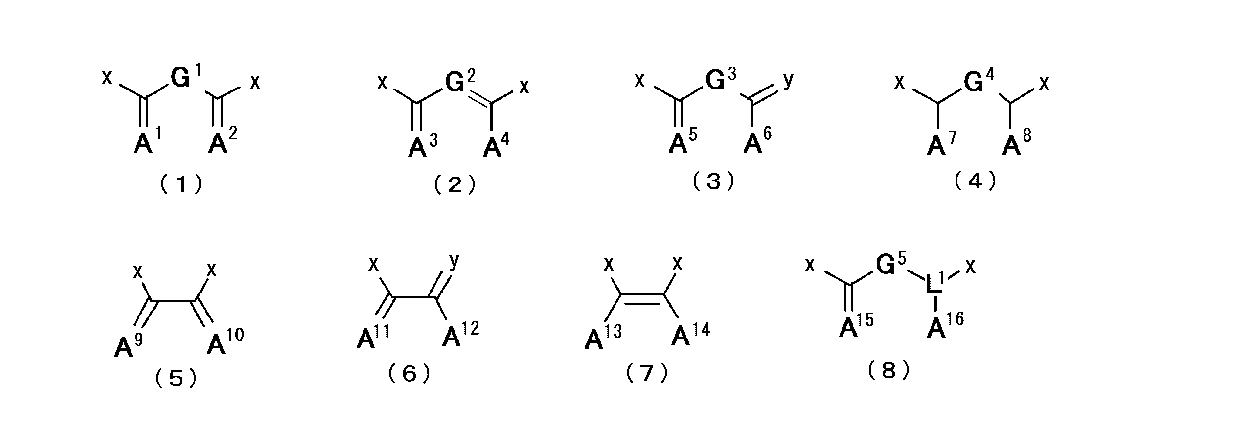
一般式(1)中、A1はO、S又はNRを示し、A2はO、S、NH又はN-*を示す。A1及びA2が共にOであることはない。G1はC(R)2、NR、O又はSを示す。
一般式(2)中、A3はO、S又はNRを示し、A4はSH、S-*、OH、O-*、NH2、NR-*又はN=*を示す。G2はC-*又はNを示す。
一般式(3)中、A5はO、S又はNRを示し、A6はSH、S-*、OH、O-*、NH2、NR-*又はN=*を示す。G3はC(R)2、NH、N-*、O又はSを示す。
一般式(4)中、A7及びA8はSH、S-*、OH、O-*、NH2、NR-*又はN=*を示す。G4はC(R)2、NR、O又はSを示す。
一般式(5)中、A9はO、S又はNRを示し、A10はN-*、S又はOを示す。
一般式(6)中、A11はO、S又はNRを示し、A12はSH、S-*、OH、O-*、NH2、NR-*又はN=*を示す。
一般式(7)中、A13及びA14はSH、S-*、OH、O-*、NH2、NR-*又はN=*を示す。
一般式(8)中、A15はO、S又はNRを示し、A16はS-*、O-*、又はNR-*を示す。L1はCR又はNを示す。G5はC(R)2、O、S又はNRを示す。
上記一般式(1)~(8)において、Rは水素原子又は置換基を示す。*及びyは連結部位を示し、xは水素原子又は連結部位を示す。
〔5〕
上記ポリマーが下記一般式(1a)~(3a)及び(5a)~(8a)の各式で表される部分構造の少なくとも1種を有する構造単位を含む、〔1〕~〔4〕のいずれかに記載の方法。
一般式(2)中、A3はO、S又はNRを示し、A4はSH、S-*、OH、O-*、NH2、NR-*又はN=*を示す。G2はC-*又はNを示す。
一般式(3)中、A5はO、S又はNRを示し、A6はSH、S-*、OH、O-*、NH2、NR-*又はN=*を示す。G3はC(R)2、NH、N-*、O又はSを示す。
一般式(4)中、A7及びA8はSH、S-*、OH、O-*、NH2、NR-*又はN=*を示す。G4はC(R)2、NR、O又はSを示す。
一般式(5)中、A9はO、S又はNRを示し、A10はN-*、S又はOを示す。
一般式(6)中、A11はO、S又はNRを示し、A12はSH、S-*、OH、O-*、NH2、NR-*又はN=*を示す。
一般式(7)中、A13及びA14はSH、S-*、OH、O-*、NH2、NR-*又はN=*を示す。
一般式(8)中、A15はO、S又はNRを示し、A16はS-*、O-*、又はNR-*を示す。L1はCR又はNを示す。G5はC(R)2、O、S又はNRを示す。
上記一般式(1)~(8)において、Rは水素原子又は置換基を示す。*及びyは連結部位を示し、xは水素原子又は連結部位を示す。
〔5〕
上記ポリマーが下記一般式(1a)~(3a)及び(5a)~(8a)の各式で表される部分構造の少なくとも1種を有する構造単位を含む、〔1〕~〔4〕のいずれかに記載の方法。
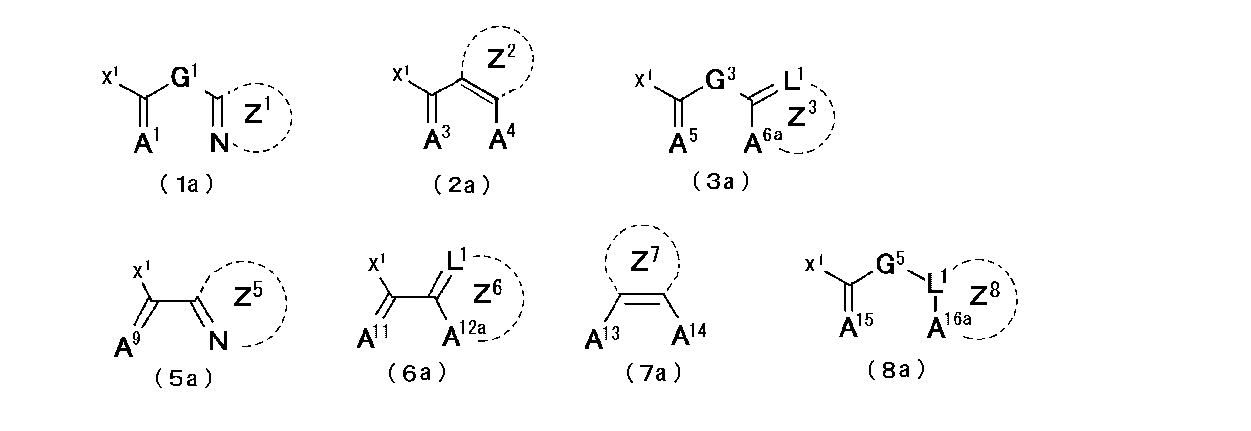
一般式(1a)中、A1及びG1は、それぞれ一般式(1)におけるA1及びG1と同義である。Z1は複素環を示す。
一般式(2a)中、A3及びA4は、それぞれ一般式(2)におけるA3及びA4と同義である。Z2は環構造を示す。
一般式(3a)中、A5及びG3は、それぞれ一般式(3)におけるA5及びG3と同義である。A6aはNR、N、S又はOを示す。L1は上記一般式(8)におけるL1と同義である。Z3は複素環を示す。
一般式(5a)中、A9は一般式(5)におけるA9と同義である。Z5は複素環を示す。
一般式(6a)中、A11は一般式(6)におけるA11と同義である。Z6は複素環を示す。A12aはNR、S又はOを示す。L1は上記一般式(8)におけるL1と同義である。
一般式(7a)中、A13及びA14は、それぞれ一般式(7)におけるA13及びA14と同義である。Z7は環構造を示す。
一般式(8a)中、A15、G5及びL1は、それぞれ一般式(8)におけるA15、G5及びL1と同義である。A16aはS、O、又はNRを示す。Z8は複素環を示す。
上記(1a)~(3a)及び(5a)~(8a)において、Rは水素原子又は置換基を示し、x1は連結部位を示す。
〔6〕
上記ポリマーがモノマー成分として(メタ)アクリル酸エステル成分を含有し、この(メタ)アクリル酸エステルのアルコール部が上記(1a)~(3a)及び(5a)~(8a)のいずれかで表される部分構造を有する、〔5〕に記載の方法。
〔7〕
上記ポリマーが下記一般式(P)で表される構造単位を含む、〔1〕~〔6〕のいずれかに記載の方法。
一般式(2a)中、A3及びA4は、それぞれ一般式(2)におけるA3及びA4と同義である。Z2は環構造を示す。
一般式(3a)中、A5及びG3は、それぞれ一般式(3)におけるA5及びG3と同義である。A6aはNR、N、S又はOを示す。L1は上記一般式(8)におけるL1と同義である。Z3は複素環を示す。
一般式(5a)中、A9は一般式(5)におけるA9と同義である。Z5は複素環を示す。
一般式(6a)中、A11は一般式(6)におけるA11と同義である。Z6は複素環を示す。A12aはNR、S又はOを示す。L1は上記一般式(8)におけるL1と同義である。
一般式(7a)中、A13及びA14は、それぞれ一般式(7)におけるA13及びA14と同義である。Z7は環構造を示す。
一般式(8a)中、A15、G5及びL1は、それぞれ一般式(8)におけるA15、G5及びL1と同義である。A16aはS、O、又はNRを示す。Z8は複素環を示す。
上記(1a)~(3a)及び(5a)~(8a)において、Rは水素原子又は置換基を示し、x1は連結部位を示す。
〔6〕
上記ポリマーがモノマー成分として(メタ)アクリル酸エステル成分を含有し、この(メタ)アクリル酸エステルのアルコール部が上記(1a)~(3a)及び(5a)~(8a)のいずれかで表される部分構造を有する、〔5〕に記載の方法。
〔7〕
上記ポリマーが下記一般式(P)で表される構造単位を含む、〔1〕~〔6〕のいずれかに記載の方法。
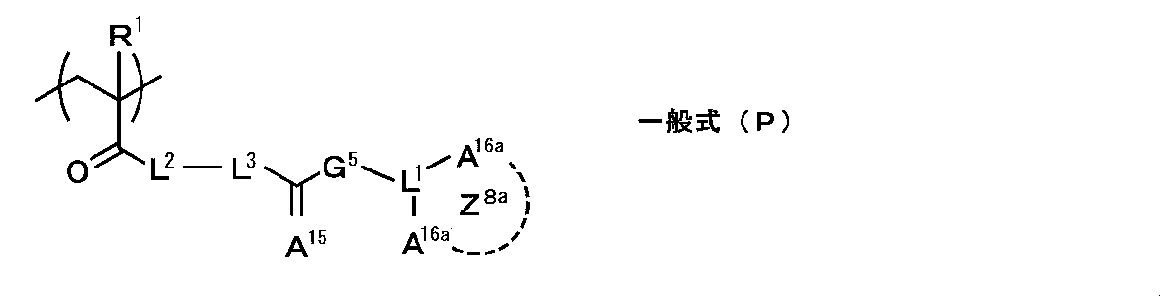
一般式(P)中、A15、A16a、G5及びL1は、それぞれ一般式(8a)におけるA15、A16a、G5及びL1と同義である。R1は水素原子又はメチルを示す。L2はO、S又はNRを示す。L3は2価の連結基を示す。Z8aは複素環を示す。
〔8〕
膜分離処理に用いる膜が無機膜である、〔1〕~〔7〕のいずれかに記載の方法。
〔8〕
膜分離処理に用いる膜が無機膜である、〔1〕~〔7〕のいずれかに記載の方法。
本明細書において、特定の符号で表示された置換基や連結基等(以下、置換基等という)が複数あるとき、あるいは複数の置換基等を同時もしくは択一的に規定するときには、それぞれの置換基等は互いに同一でも異なっていてもよいことを意味する。このことは、置換基等の数の規定についても同様である。また、式中に同一の表示で表された複数の部分構造の繰り返しがある場合は、各部分構造または各繰り返し単位は同一でも異なっていてもよい。また、特に断らない限り、複数の置換基等が近接(特に隣接)するときにはそれらが互いに連結したり縮環したりして環を形成していてもよい意味である。
本明細書において化合物(ポリマーを含む)の表示については、化合物そのもののほか、その塩、そのイオンを含む意味に用いる。また、目的の効果を奏する範囲で、構造の一部を変化させたものを含む意味である。
本明細書において置換・無置換を明記していない置換基(連結基及び環構造についても同様)については、目的の効果を損なわない範囲で、その基にさらに置換基を有していてもよい意味である。これは置換・無置換を明記していない化合物についても同義である。
本明細書において「~」を用いて表される数値範囲は、「~」の前後に記載される数値を下限値および上限値として含む範囲を意味する。
本発明の金属除去方法によれば、金属を含有する有機溶媒溶液から金属を優れた効率で分離、除去することができる。
本発明の金属除去方法(以下、単に「本発明の方法」ともいう。)は、金属を含有する有機溶媒溶液に特定のポリマーを溶解して金属とポリマーの複合体を形成させ、この複合体を膜分離処理により分離除去することで有機溶媒溶液中から金属を除去する方法である。
以下、本発明について詳細に説明する。
以下、本発明について詳細に説明する。
[金属を含有する有機溶媒溶液]
本発明において、有機溶媒溶液中の除去対象となる金属は、有機溶媒溶液中に溶解しており、通常は錯体を形成して有機溶媒中に溶解している。すなわち、本発明において「金属」は金属錯体の形態で存在するものを含む意味である。有機溶媒溶液中に含まれる金属として、例えば、アルミニウム、銀、金、カドミウム、クロム、コバルト、銅、鉄、水銀、ニッケル、オスミウム、鉛、パラジウム、プラチナ、ロジウム、ルテニウム、スズ、バナジウム及び亜鉛からなる群から選ばれる金属が挙げられる。本発明の方法は、有機溶媒溶液中にパラジウム、銅、ニッケル、スズ及び亜鉛から選ばれる金属が含まれる場合に金属除去効率がより高まる。なかでも本発明の方法は、パラジウム及び銅の除去効率に優れる。
本発明において、有機溶媒溶液中の除去対象となる金属は、有機溶媒溶液中に溶解しており、通常は錯体を形成して有機溶媒中に溶解している。すなわち、本発明において「金属」は金属錯体の形態で存在するものを含む意味である。有機溶媒溶液中に含まれる金属として、例えば、アルミニウム、銀、金、カドミウム、クロム、コバルト、銅、鉄、水銀、ニッケル、オスミウム、鉛、パラジウム、プラチナ、ロジウム、ルテニウム、スズ、バナジウム及び亜鉛からなる群から選ばれる金属が挙げられる。本発明の方法は、有機溶媒溶液中にパラジウム、銅、ニッケル、スズ及び亜鉛から選ばれる金属が含まれる場合に金属除去効率がより高まる。なかでも本発明の方法は、パラジウム及び銅の除去効率に優れる。
金属を含有する有機溶媒溶液を構成する有機溶媒に特に制限はなく、例えば、酢酸メチル、酢酸エチル、酢酸ブチル等のエステル系有機溶媒、アセトン、メチルエチルケトン、メチルイソブチルケトン、ジアセトンアルコール、シクロペンタノン、シクロヘキサノン等の脂肪族ケトン、エチレングリコールジメチルエーテル、ジブチルエーテル、テトラヒドロフラン、メチルシクロペンチルエーテル、ジオキサン等のエーテル系有機溶媒、N-メチルピロリドン、2-ピロリドン、ジメチルホルムアミド、ジメチルイミダゾリジノン、ジメチルアセトアミド等のアミド系有機溶媒、トルエン、ヘキサン等の炭化水素系有機溶媒、メタノール、エタノール、プロパノール、イソプロパノール、ブタノール、t-ブチルアルコール、アミルアルコール等のアルコール性有機溶媒、エチレングリコール、ジエチレングリコール、トリエチレングリコール、プロピレングリコール、ジプロピレングリコール、1,3-プロパンジオール等のジオール系有機溶媒、アセトニトリル等のニトリル系溶媒、ジクロロメタン、トリクロロエチレン等のハロゲン系溶媒を挙げることができる。また、上記有機溶媒の2種以上を併用してもよい。
金属を含有する有機溶媒溶液を構成する有機溶媒のSP値は、後述するように金属と複合体を形成するポリマーのSP値と特定の関係を有する。
金属を含有する有機溶媒溶液として、金属触媒の存在下で行う触媒反応の反応生成物を含む反応溶液(反応終了後の溶液を含む)を好適に用いることができる。この場合、除去対象となる金属は金属触媒の金属である(金属触媒そのものを除去する態様を含む)。金属触媒を用いた触媒反応としては、例えば、パラジウム触媒の存在下で行う鈴木・宮浦カップリング反応、Heck反応、Buchwald-Hartwig反応、Stilleカップリング反応、根岸カップリング反応、パラジウムおよび銅触媒の存在下で行う薗頭カップリング反応、銅触媒の存在下で行うウルマン反応、ニッケル触媒の存在下で行う熊田・玉尾・コリューカップリング反応を挙げることができる。
除去された金属または金属触媒は、他の反応における金属触媒として再利用することができる。なお、上記stilleカップリング反応は原料として有機スズ化合物を用いる反応であり、上記根岸カップリング反応は原料として有機亜鉛化合物を用いる反応であり、本発明の方法には、これらの金属を含む原料を除去する態様や、これらの金属を含む原料に由来する金属を除去する態様も含まれる。
除去された金属または金属触媒は、他の反応における金属触媒として再利用することができる。なお、上記stilleカップリング反応は原料として有機スズ化合物を用いる反応であり、上記根岸カップリング反応は原料として有機亜鉛化合物を用いる反応であり、本発明の方法には、これらの金属を含む原料を除去する態様や、これらの金属を含む原料に由来する金属を除去する態様も含まれる。
金属を含有する有機溶媒溶液中の金属濃度に特に制限はないが、0.01~10000ppm(質量基準)であることが好ましく、0.1~1000ppmであることがより好ましい。
金属を含有する有機溶媒溶液は、金属が錯体等の形態で溶解していれば、他に不溶性成分を含んでいてもよい。
金属を含有する有機溶媒溶液は、金属が錯体等の形態で溶解していれば、他に不溶性成分を含んでいてもよい。
[ポリマー]
本発明に用いるポリマーは、金属を含有する有機溶媒溶液中に溶解することで、金属と相互作用し、金属と複合体を形成する。本発明に用いるポリマーのSP値と、金属を含有する有機溶媒溶液を構成する有機溶媒のSP値との差の絶対値は2.5以下である。両者のSP値の差の絶対値を2.5以下とすることで、ポリマーが金属と相互作用しやすくなり、ポリマーと金属の複合体が形成されやすくなる。この理由は定かではないが、ポリマーのSP値と有機溶媒のSP値の差の絶対値を2.5以下として両者のSP値を近づけることで、ポリマーが有機溶媒溶液中で膨潤してポリマー鎖が広がった構造をとり、金属と相互作用しやすくなると推定される。逆に、ポリマーのSP値と有機溶媒のSP値の差の絶対値が2.5より大きい場合は、ポリマーが有機溶媒溶液中で凝集構造をとりやすくなり、金属と相互作用しにくくなると推定される。
溶媒のSP値は、Polymer Handbook(Third Edition)第VII章 Solubility Parameter Valuesに記載があり、その値を本発明におけるSP値とする。本発明においてSP値の単位は(cal/cm3)1/2である。
また、ポリマーのSP値は「塗料の研究」No.152 p41(2010)に記載の方法に準じて算出される。詳細な方法を以下に示す。
-ポリマーのSP値の算出方法-
ポリマー0.4gをテトラヒドロフラン(以下THFと表す)に溶解して10mLの溶液を調製する。この溶液を5mLずつ2つに分け、一方にヘキサンを滴下し、他方に水を滴下し、溶液に濁りが見られるまでそれぞれを添加する。溶液に濁りが見られたところで添加を終了し、以下の式に従ってSP値(δ)を算出する。
本発明に用いるポリマーは、金属を含有する有機溶媒溶液中に溶解することで、金属と相互作用し、金属と複合体を形成する。本発明に用いるポリマーのSP値と、金属を含有する有機溶媒溶液を構成する有機溶媒のSP値との差の絶対値は2.5以下である。両者のSP値の差の絶対値を2.5以下とすることで、ポリマーが金属と相互作用しやすくなり、ポリマーと金属の複合体が形成されやすくなる。この理由は定かではないが、ポリマーのSP値と有機溶媒のSP値の差の絶対値を2.5以下として両者のSP値を近づけることで、ポリマーが有機溶媒溶液中で膨潤してポリマー鎖が広がった構造をとり、金属と相互作用しやすくなると推定される。逆に、ポリマーのSP値と有機溶媒のSP値の差の絶対値が2.5より大きい場合は、ポリマーが有機溶媒溶液中で凝集構造をとりやすくなり、金属と相互作用しにくくなると推定される。
溶媒のSP値は、Polymer Handbook(Third Edition)第VII章 Solubility Parameter Valuesに記載があり、その値を本発明におけるSP値とする。本発明においてSP値の単位は(cal/cm3)1/2である。
また、ポリマーのSP値は「塗料の研究」No.152 p41(2010)に記載の方法に準じて算出される。詳細な方法を以下に示す。
-ポリマーのSP値の算出方法-
ポリマー0.4gをテトラヒドロフラン(以下THFと表す)に溶解して10mLの溶液を調製する。この溶液を5mLずつ2つに分け、一方にヘキサンを滴下し、他方に水を滴下し、溶液に濁りが見られるまでそれぞれを添加する。溶液に濁りが見られたところで添加を終了し、以下の式に従ってSP値(δ)を算出する。

本発明に用いるポリマーのSP値と、金属を含有する有機溶媒溶液を構成する有機溶媒のSP値との差の絶対値は、複合体の形成効率(金属除去効率)の観点から、2.0以下が好ましく、1.8以下がより好ましく、1.5以下がさらに好ましい。
金属が金属錯体である場合、ポリマーと金属との複合体の形態に特に制限はない。例えば、ポリマーと金属錯体との複合体であってもよいし、配位子交換反応によりポリマーが金属に配位した態様であってもよい。すなわち、ポリマーが金属あるいは金属錯体を包み込んで複合体を形成していてもよいし、ポリマーが金属錯体の金属をキレートして複合体を形成していてもよい。また、ポリマーと金属錯体とが何等かの相互作用により互いに結合あるいは吸着した形態も本発明における複合体の態様に含まれる。
金属が金属錯体である場合、ポリマーと金属との複合体の形態に特に制限はない。例えば、ポリマーと金属錯体との複合体であってもよいし、配位子交換反応によりポリマーが金属に配位した態様であってもよい。すなわち、ポリマーが金属あるいは金属錯体を包み込んで複合体を形成していてもよいし、ポリマーが金属錯体の金属をキレートして複合体を形成していてもよい。また、ポリマーと金属錯体とが何等かの相互作用により互いに結合あるいは吸着した形態も本発明における複合体の態様に含まれる。
本発明に用いるポリマーは、下記一般式(1)~(8)の各式で表される部分構造の少なくとも1種を有する構造単位(繰り返し単位)を少なくとも1種含むことが好ましい。下記部分構造を有する構造単位を含むポリマーは、金属との相互作用性が強く、金属と安定的に複合体を形成しやすい。このメカニズムは定かではないが、下記一般式(1)~(8)の部分構造が2座配位子として(A1~A16を配位原子として)金属に配位し、キレート錯体を形成することなどが考えられる。
下記一般式(1)~(8)の部分構造はポリマーの側基(ペンダント基)に組み込まれていることが好ましい。側基とは、ポリマーの主鎖から分岐した(主鎖を構成する原子の置換基として連結した)基である。例えば、エチレン性不飽和結合(炭素-炭素二重結合)の重合反応により得られるポリマーの場合、エチレン性不飽和結合を形成していた炭素原子からなる鎖が主鎖であり、それ以外の部分は側基である。
下記一般式(1)~(8)の部分構造はポリマーの側基(ペンダント基)に組み込まれていることが好ましい。側基とは、ポリマーの主鎖から分岐した(主鎖を構成する原子の置換基として連結した)基である。例えば、エチレン性不飽和結合(炭素-炭素二重結合)の重合反応により得られるポリマーの場合、エチレン性不飽和結合を形成していた炭素原子からなる鎖が主鎖であり、それ以外の部分は側基である。
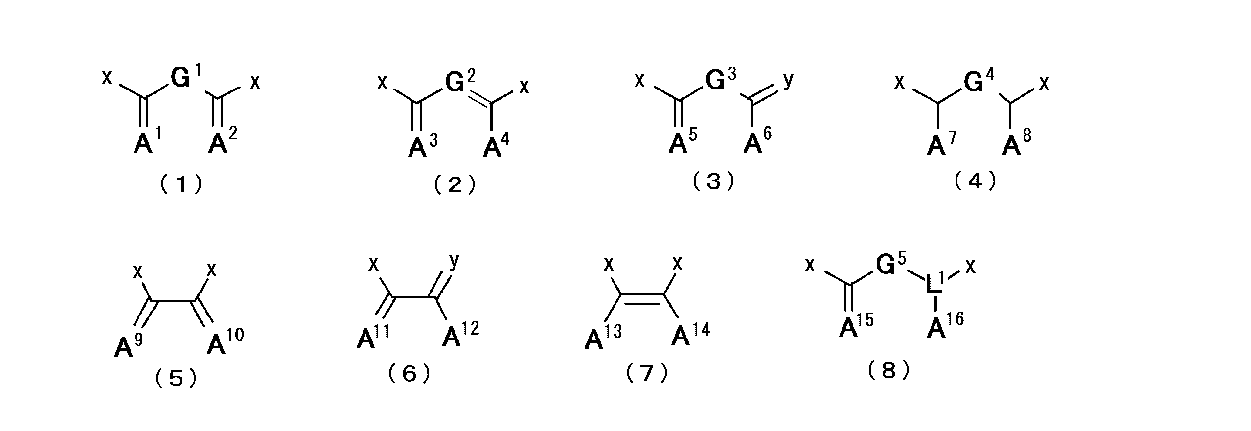
一般式(1)中、A1はO、S又はNRを示し、O又はSが好ましい。Rは水素原子又は置換基を示す。この置換基としては、アルキル基(好ましくは炭素数1~10、より好ましくは炭素数1~5のアルキル基、さらに好ましくはエチル又はメチル)、又はアリール基(好ましくは炭素数6~20、より好ましくは炭素数6~15、さらに好ましくは炭素数6~12のアリール基、さらに好ましくはフェニル)が好ましい。Rはより好ましくは水素原子である。
本明細書において各一般式の説明における置換基「R」は、すべて上記A1における置換基Rと同義であり、好ましい形態も同じである。
A2はO、S、NH又はN-*を示し、S又はN-*が好ましい。*は連結部位を示す。
本明細書において各一般式の説明における「*」はいずれも連結部位(ポリマーの好ましくは側基に組み込まれるための連結部位)を示す。
A1及びA2が共にOであることはない。
G1はC(R)2、NR、O又はSを示す。G1はNH、O又はSが好ましい。
xは水素原子又は連結部位を示す。
本明細書において各一般式の説明における置換基「R」は、すべて上記A1における置換基Rと同義であり、好ましい形態も同じである。
A2はO、S、NH又はN-*を示し、S又はN-*が好ましい。*は連結部位を示す。
本明細書において各一般式の説明における「*」はいずれも連結部位(ポリマーの好ましくは側基に組み込まれるための連結部位)を示す。
A1及びA2が共にOであることはない。
G1はC(R)2、NR、O又はSを示す。G1はNH、O又はSが好ましい。
xは水素原子又は連結部位を示す。
一般式(2)中、A3はO、S、NRを示し、O又はSが好ましい。
A4はSH、S-*、OH、O-*、NH2、NR-*又はN=*を示し、S-*又はO-*が好ましい。
G2はC-*又はNを示し、C-*が好ましい。
xは水素原子又は連結部位(ポリマーの好ましくは側基に組み込まれるための連結部位)を示す。
A4はSH、S-*、OH、O-*、NH2、NR-*又はN=*を示し、S-*又はO-*が好ましい。
G2はC-*又はNを示し、C-*が好ましい。
xは水素原子又は連結部位(ポリマーの好ましくは側基に組み込まれるための連結部位)を示す。
一般式(3)中、A5はO、S又はNRを示し、O又はSが好ましい。
A6はSH、S-*、OH、O-*、NH2、NR-*又はN=*を示し、NR-*、S-*、O-*が好ましい。
G3はC(R)2、NH、N-*、O又はSを示し、G3はNH、O又はSが好ましい。
xは一般式(1)におけるxと同義である。
yは連結部位(ポリマーの好ましくは側基に組み込まれるための連結部位)を示す。
A6はSH、S-*、OH、O-*、NH2、NR-*又はN=*を示し、NR-*、S-*、O-*が好ましい。
G3はC(R)2、NH、N-*、O又はSを示し、G3はNH、O又はSが好ましい。
xは一般式(1)におけるxと同義である。
yは連結部位(ポリマーの好ましくは側基に組み込まれるための連結部位)を示す。
一般式(4)中、A7及びA8はSH、S-*、OH、O-*、NH2、NR-*又はN=*を示す。
G4はC(R)2、NR、O又はSを示す。G4はC(R)2が好ましい。
xは一般式(1)におけるxと同義である。
G4はC(R)2、NR、O又はSを示す。G4はC(R)2が好ましい。
xは一般式(1)におけるxと同義である。
一般式(5)中、A9はO、S又はNRを示し、O又はSが好ましい。
A10はN-*、S又はOを示し、N-*が好ましい。
xは一般式(1)におけるxと同義である。
A10はN-*、S又はOを示し、N-*が好ましい。
xは一般式(1)におけるxと同義である。
一般式(6)中、A11はO、S又はNRを示し、O又はSが好ましい。
A12はSH、S-*、OH、O-*、NH2、NR-*又はN=*を示す。
xは一般式(1)におけるxと同義である。
yは一般式(3)におけるyと同義である。
A12はSH、S-*、OH、O-*、NH2、NR-*又はN=*を示す。
xは一般式(1)におけるxと同義である。
yは一般式(3)におけるyと同義である。
一般式(7)中、A13及びA14はSH、S-*、OH、O-*、NH2、NR-*又はN=*を示し、S-*、NR-*が好ましい。
xは一般式(1)におけるxと同義である。
xは一般式(1)におけるxと同義である。
一般式(8)中、A15はO、S又はNRを示し、O又はSが好ましい。
A16はS-*、O-*、又はNR-*を示す。
L1はCR又はNを示し、CRが好ましい。
G5はC(R)2、O、S又はNRを示し、なかでもC(R)2が好ましい。
xは一般式(1)におけるxと同義である。
A16はS-*、O-*、又はNR-*を示す。
L1はCR又はNを示し、CRが好ましい。
G5はC(R)2、O、S又はNRを示し、なかでもC(R)2が好ましい。
xは一般式(1)におけるxと同義である。
本発明に用いるポリマーは、上記一般式(1)、(3)、(5)、(6)及び(8)の各式で表される部分構造の少なくとも1種を有する構造単位を少なくとも1種含むことが好ましく、下記式(8)で表される部分構造を有する構造単位を少なくとも1種含むことがより好ましい。
本発明に用いるポリマーは下記構造単位Q(繰り返し単位Q)からなることが好ましく、ポリマー中の下記構造単位Qの一部又は全部において、置換基であるRpが上記一般式(1)~(8)の各式で表される構造単位の少なくとも1種を含むことが好ましい。下記構造中、R1は水素原子又はメチルを示す。

本発明のポリマー中の、上記一般式(1)~(8)の各式で表される部分構造の含有量は合計で、0.1~3.0mmol/gであることが好ましく、0.5~2.0mmol/gであることがより好ましい。
本発明のポリマーが上記構造単位Qからなる場合、ポリマー中の全ての構造単位Qのモル量に占める、上記一般式(1)~(8)の各式で表される部分構造の少なくとも1種を置換基Rp中に有する構造単位Qのモル量の割合は、0.5~60モル%であることが好ましく、3~40モル%であることがより好ましい。
本発明のポリマーが上記構造単位Qからなる場合、ポリマー中の全ての構造単位Qのモル量に占める、上記一般式(1)~(8)の各式で表される部分構造の少なくとも1種を置換基Rp中に有する構造単位Qのモル量の割合は、0.5~60モル%であることが好ましく、3~40モル%であることがより好ましい。
本発明に用いるポリマーは、より好ましくは下記一般式(1a)~(3a)及び(5a)~(8a)の各式で表される部分構造の少なくとも1種を有する構造単位を少なくとも1種含むことが好ましい。
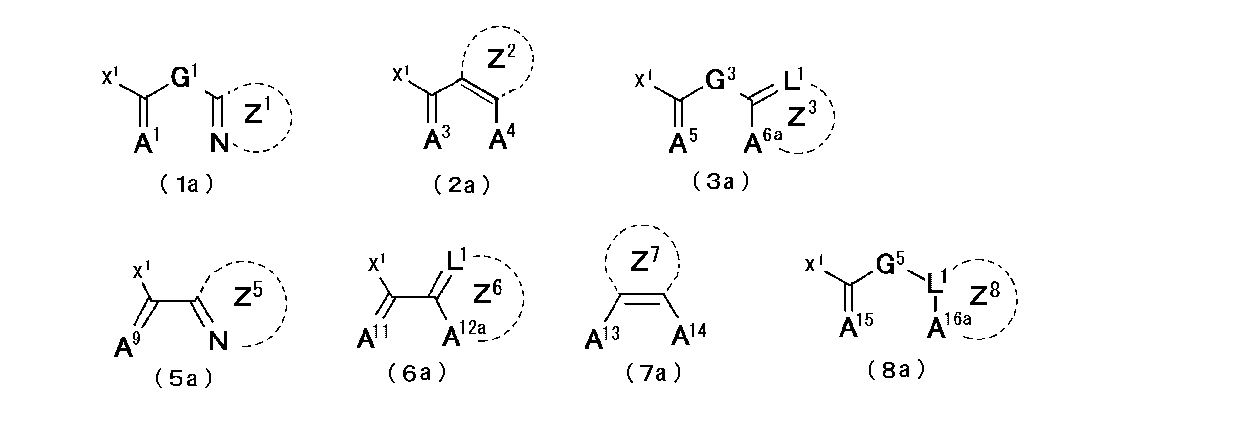
一般式(1a)は一般式(1)の部分構造の好ましい形態を表す。一般式(1a)中、A1及びG1は、それぞれ一般式(1)におけるA1及びG1と同義であり、好ましい形態も同じである。
x1は連結部位(ポリマーの好ましくは側基に組み込まれるための連結部位)を示す。
Z1は複素環を示す。Z1は複素単環であってもよいし、縮合複素環であってもよい。Z1は芳香族複素環であることも好ましい。Z1が複素単環の場合、5員環又は6員環が好ましく、例えば、ピリジン環、ピリミジン環、ピラジン環、トリアジン環、オキサゾール環、イミダゾール環、チアゾール環、ピラゾール環、イソチアゾール環、チアジアゾール環、トリアゾール環が挙げられる。Z1が縮合複素環の場合、5員環又は6員環の複素環にベンゼン環が縮合した形態が好ましい。Z1は環構成原子に酸素原子又は硫黄原子を含んでもよい。Z1はポリマー中(好ましくはポリマー側基(ペンダント基)中)に組み込まれるための連結部位を含んでもよい。
x1は連結部位(ポリマーの好ましくは側基に組み込まれるための連結部位)を示す。
Z1は複素環を示す。Z1は複素単環であってもよいし、縮合複素環であってもよい。Z1は芳香族複素環であることも好ましい。Z1が複素単環の場合、5員環又は6員環が好ましく、例えば、ピリジン環、ピリミジン環、ピラジン環、トリアジン環、オキサゾール環、イミダゾール環、チアゾール環、ピラゾール環、イソチアゾール環、チアジアゾール環、トリアゾール環が挙げられる。Z1が縮合複素環の場合、5員環又は6員環の複素環にベンゼン環が縮合した形態が好ましい。Z1は環構成原子に酸素原子又は硫黄原子を含んでもよい。Z1はポリマー中(好ましくはポリマー側基(ペンダント基)中)に組み込まれるための連結部位を含んでもよい。
一般式(2a)は一般式(2)の部分構造の好ましい形態を表す。一般式(2a)中、A3及びA4は、それぞれ一般式(2)におけるA3及びA4と同義であり、好ましい形態も同じである。
x1は一般式(1a)におけるx1と同義である。
Z2は環構造を示す。Z2は炭化水素環でも複素環でもよい。また、単環であっても縮合多環構造であってもよい。Z2は芳香環であることも好ましい。Z2はより好ましくは炭化水素環であり、より好ましくは芳香族炭化水素環であり、ベンゼン環がさらに好ましい。また、Z2が複素環の場合、上記Z1で例示あるいは好ましい形態として記載した複素環構造が挙げられる。Z2はポリマー中(好ましくはポリマー側基中)に組み込まれるための連結部位を含んでもよい。
x1は一般式(1a)におけるx1と同義である。
Z2は環構造を示す。Z2は炭化水素環でも複素環でもよい。また、単環であっても縮合多環構造であってもよい。Z2は芳香環であることも好ましい。Z2はより好ましくは炭化水素環であり、より好ましくは芳香族炭化水素環であり、ベンゼン環がさらに好ましい。また、Z2が複素環の場合、上記Z1で例示あるいは好ましい形態として記載した複素環構造が挙げられる。Z2はポリマー中(好ましくはポリマー側基中)に組み込まれるための連結部位を含んでもよい。
一般式(3a)は一般式(3)の部分構造の好ましい形態を表す。一般式(3a)中、A5及びG3は、それぞれ一般式(3)におけるA5及びG3と同義であり、好ましい形態も同じである。
x1は一般式(1a)におけるx1と同義である。
A6aはNR、N、S又はOを示す。A6aは、NR、N又はSが好ましい。
L1はN又はCRを示す。
Z3は複素環を示す。Z3は複素単環であってもよいし、縮合複素環であってもよい。Z3は芳香族複素環であることも好ましい。Z3が複素単環の場合、5員環又は6員環が好ましく、例えば、ピリジン環、ピリミジン環、ピラジン環、トリアジン環、オキサゾール環、イミダゾール環、チアゾール環、ピラゾール環、イソチアゾール環、チアジアゾール環、トリアゾール環が挙げられる。Z3が縮合複素環の場合、5員環又は6員環の複素環にベンゼン環が縮合した形態が好ましい。Z3はポリマー中(好ましくはポリマー側基中)に組み込まれるための連結部位を含んでもよい。
x1は一般式(1a)におけるx1と同義である。
A6aはNR、N、S又はOを示す。A6aは、NR、N又はSが好ましい。
L1はN又はCRを示す。
Z3は複素環を示す。Z3は複素単環であってもよいし、縮合複素環であってもよい。Z3は芳香族複素環であることも好ましい。Z3が複素単環の場合、5員環又は6員環が好ましく、例えば、ピリジン環、ピリミジン環、ピラジン環、トリアジン環、オキサゾール環、イミダゾール環、チアゾール環、ピラゾール環、イソチアゾール環、チアジアゾール環、トリアゾール環が挙げられる。Z3が縮合複素環の場合、5員環又は6員環の複素環にベンゼン環が縮合した形態が好ましい。Z3はポリマー中(好ましくはポリマー側基中)に組み込まれるための連結部位を含んでもよい。
一般式(5a)は一般式(5)の部分構造の好ましい形態を表す。一般式(5a)中、A9は一般式(5)におけるA9と同義であり、好ましい形態も同じである。
x1は一般式(1a)におけるx1と同義である。
Z5は複素環を示し、複素単環が好ましい。また、Z5は芳香族複素環であることも好ましい。Z5が複素単環の場合、5員環又は6員環が好ましく、例えば、ピリジン環、ピリミジン環、ピラジン環、トリアジン環、オキサゾール環、イミダゾール環、チアゾール環、ピラゾール環、イソチアゾール環、チアジアゾール環、トリアゾール環が挙げられる。また、Z5は環構成原子として窒素原子を2つ以上含むことも好ましい。Z5はポリマー中(好ましくはポリマー側基中)に組み込まれるための連結部位を含んでもよい。
x1は一般式(1a)におけるx1と同義である。
Z5は複素環を示し、複素単環が好ましい。また、Z5は芳香族複素環であることも好ましい。Z5が複素単環の場合、5員環又は6員環が好ましく、例えば、ピリジン環、ピリミジン環、ピラジン環、トリアジン環、オキサゾール環、イミダゾール環、チアゾール環、ピラゾール環、イソチアゾール環、チアジアゾール環、トリアゾール環が挙げられる。また、Z5は環構成原子として窒素原子を2つ以上含むことも好ましい。Z5はポリマー中(好ましくはポリマー側基中)に組み込まれるための連結部位を含んでもよい。
一般式(6a)は一般式(6)の部分構造の好ましい形態を表す。一般式(6a)中、A11は一般式(6)におけるA11と同義であり、好ましい形態も同じである。
x1は一般式(1a)におけるx1と同義である。
A12aはNR、S又はOを示し、NR又はSが好ましく、Sがさらに好ましい。L1は一般式(3a)におけるL1と同義である。
Z6は複素環を示し、複素単環が好ましい。また、Z6は芳香族複素環であることも好ましい。Z6が複素単環の場合、5員環又は6員環が好ましく、例えば、ピリジン環、ピリミジン環、ピラジン環、トリアジン環、オキサゾール環、イミダゾール環、チアゾール環、ピラゾール環、イソチアゾール環、チアジアゾール環、トリアゾール環が挙げられる。また、Z6は環構成原子として窒素原子を2つ以上含むことも好ましい。また、Z6はチエニル基であることも好ましい。Z6はポリマー中(好ましくはポリマー側基中)に組み込まれるための連結部位を含んでもよい。
x1は一般式(1a)におけるx1と同義である。
A12aはNR、S又はOを示し、NR又はSが好ましく、Sがさらに好ましい。L1は一般式(3a)におけるL1と同義である。
Z6は複素環を示し、複素単環が好ましい。また、Z6は芳香族複素環であることも好ましい。Z6が複素単環の場合、5員環又は6員環が好ましく、例えば、ピリジン環、ピリミジン環、ピラジン環、トリアジン環、オキサゾール環、イミダゾール環、チアゾール環、ピラゾール環、イソチアゾール環、チアジアゾール環、トリアゾール環が挙げられる。また、Z6は環構成原子として窒素原子を2つ以上含むことも好ましい。また、Z6はチエニル基であることも好ましい。Z6はポリマー中(好ましくはポリマー側基中)に組み込まれるための連結部位を含んでもよい。
一般式(7a)は一般式(7)の部分構造の好ましい形態を表す。一般式(7a)中、A13及びA14は、それぞれ一般式(7)におけるA13及びA14と同義である。A13及びA14はNH-*又はS-*が好ましい。
Z7は環構造を示す。Z7は炭化水素環でも複素環でもよい。Z7は芳香環であることが好ましい。また、Z7は単環であっても縮合多環構造であってもよい。Z7はより好ましくは炭化水素環であり、芳香族炭化水素環であることがさらに好ましく、ベンゼン環がさらに好ましい。Z2が複素環の場合、上記Z1で例示した複素環の構造が挙げられる。Z7はポリマー中(好ましくはポリマー側基中)に組み込まれるための連結部位を含んでもよい。
Z7は環構造を示す。Z7は炭化水素環でも複素環でもよい。Z7は芳香環であることが好ましい。また、Z7は単環であっても縮合多環構造であってもよい。Z7はより好ましくは炭化水素環であり、芳香族炭化水素環であることがさらに好ましく、ベンゼン環がさらに好ましい。Z2が複素環の場合、上記Z1で例示した複素環の構造が挙げられる。Z7はポリマー中(好ましくはポリマー側基中)に組み込まれるための連結部位を含んでもよい。
一般式(8a)は一般式(8)の部分構造の好ましい形態を表す。一般式(8a)中、A15、G5及びL1は、それぞれ一般式(8)におけるA15、G5及びL1と同義であり、好ましい形態も同じである。
x1は一般式(1a)におけるx1と同義である。
A16aはS、O、又はNRを示す。Rは一般式(1)におけるRと同義であり、好ましい形態も同じである。A16aはS又はNHがより好ましい。
Z8は複素環を示す。Z8は複素単環であってもよいし、縮合複素環であってもよい。Z8が複素単環の場合、5員環又は6員環が好ましく、例えば、ピリジン環、ピリミジン環、ピラジン環、トリアジン環、オキサゾール環、イミダゾール環、チアゾール環、ピラゾール環、イソチアゾール環、チアジアゾール環、トリアゾール環が挙げられる。Z8が縮合複素環の場合、5員環又は6員環の複素環にベンゼン環が縮合した形態が好ましい。Z8が芳香族複素環ではないことが好ましい(Z8が芳香族複素環ではないとは、縮合複素環の場合は、少なくとも、L1とA16aを含む環が芳香環でないことを意味する。すなわち、L1とA16aを含む環に対して縮合する環は芳香環であってもよい。)。Z8はポリマー中(好ましくはポリマー側基中)に組み込まれるための連結部位を含んでもよい。
x1は一般式(1a)におけるx1と同義である。
A16aはS、O、又はNRを示す。Rは一般式(1)におけるRと同義であり、好ましい形態も同じである。A16aはS又はNHがより好ましい。
Z8は複素環を示す。Z8は複素単環であってもよいし、縮合複素環であってもよい。Z8が複素単環の場合、5員環又は6員環が好ましく、例えば、ピリジン環、ピリミジン環、ピラジン環、トリアジン環、オキサゾール環、イミダゾール環、チアゾール環、ピラゾール環、イソチアゾール環、チアジアゾール環、トリアゾール環が挙げられる。Z8が縮合複素環の場合、5員環又は6員環の複素環にベンゼン環が縮合した形態が好ましい。Z8が芳香族複素環ではないことが好ましい(Z8が芳香族複素環ではないとは、縮合複素環の場合は、少なくとも、L1とA16aを含む環が芳香環でないことを意味する。すなわち、L1とA16aを含む環に対して縮合する環は芳香環であってもよい。)。Z8はポリマー中(好ましくはポリマー側基中)に組み込まれるための連結部位を含んでもよい。
本発明の方法に用いるポリマーは、上記一般式(1a)、(3a)、(5a)、(6a)及び(8a)の各式で表される部分構造の少なくとも1種を有する構造単位を少なくとも1種含むことが好ましく、下記式(8a)で表される部分構造を有する構造単位を含むことがより好ましい。
本発明のポリマー中、上記一般式(1a)~(3a)及び(5a)~(8a)の各式で表される部分構造の含有量は合計で、0.1~3.0mmol/gであることが好ましく、0.5~2.0mmol/gであることがより好ましい。
本発明のポリマーが上記構造単位Qからなる場合、ポリマー中の全ての構造単位Qのモル量に占める、上記一般式(1a)~(3a)及び(5a)~(8a)の各式で表される部分構造の少なくとも1種を置換基Rp中に有する構造単位Qのモル量の割合は、0.5~60モル%であることが好ましく、3~40モル%であることがより好ましい。
本発明のポリマーが上記構造単位Qからなる場合、ポリマー中の全ての構造単位Qのモル量に占める、上記一般式(1a)~(3a)及び(5a)~(8a)の各式で表される部分構造の少なくとも1種を置換基Rp中に有する構造単位Qのモル量の割合は、0.5~60モル%であることが好ましく、3~40モル%であることがより好ましい。
本発明に用いるポリマーは、モノマー成分として(メタ)アクリル酸エステル成分を含有し、この(メタ)アクリル酸エステルのアルコール部が上記一般式(1)~(8)あるいは(1a)~(3a)及び(5a)~(8a)のいずれかで表される部分構造を有することが好ましい。ここで、アルコール部に上記部分構造を有する態様には、(メタ)アクリル酸エステルの当該エステル結合のカルボニル基を上記部分構造の一部に含む態様が含まれる。
さらに好ましくは、本発明に用いるポリマーは下記一般式(P)で表される構造単位(繰り返し単位)を含む。
さらに好ましくは、本発明に用いるポリマーは下記一般式(P)で表される構造単位(繰り返し単位)を含む。

一般式(P)中、A15、A16a、G5及びL1は、それぞれ一般式(8a)におけるA15、A16a、G5及びL1と同義であり、好ましい形態も同じである。
R1は水素原子又はメチルを示す。L2はO、S又はNRを示し、Oがより好ましい。
L3は2価の連結基を示す。L3は好ましくは-[(CRR)m-L2]n-である。mは1~6の整数であり、より好ましくは2~4の整数である。nは1~6の整数であり、より好ましくは1~3の整数である。L2は、一般式(P)におけるL2と同義であり好ましい形態も同じである。
より好ましくは、L2がOで、且つ、L3が-[(CH2)m-O]n-である(mとnは、一般式(P)におけるm及びnと同義)。
Z8aは複素環を示す。Z8aは複素単環であってもよいし、縮合複素環であってもよい。Z8aが複素単環の場合、5員環又は6員環が好ましく、例えば、ピリジン環、ピリミジン環、ピラジン環、トリアジン環、オキサゾール環、イミダゾール環、チアゾール環、ピラゾール環、イソチアゾール環、チアジアゾール環、トリアゾール環が挙げられる。Z8aが縮合複素環の場合、5員環又は6員環の複素環にベンゼン環が縮合した形態が好ましい。Z8aは芳香族複素環ではないことが好ましい(Z8aが芳香族複素環ではないとは、縮合複素環の場合は、少なくとも、L1とA16aを含む環が芳香環でないことを意味する。すなわち、L1とA16aを含む環に対して縮合する環は芳香環であってもよい)。
R1は水素原子又はメチルを示す。L2はO、S又はNRを示し、Oがより好ましい。
L3は2価の連結基を示す。L3は好ましくは-[(CRR)m-L2]n-である。mは1~6の整数であり、より好ましくは2~4の整数である。nは1~6の整数であり、より好ましくは1~3の整数である。L2は、一般式(P)におけるL2と同義であり好ましい形態も同じである。
より好ましくは、L2がOで、且つ、L3が-[(CH2)m-O]n-である(mとnは、一般式(P)におけるm及びnと同義)。
Z8aは複素環を示す。Z8aは複素単環であってもよいし、縮合複素環であってもよい。Z8aが複素単環の場合、5員環又は6員環が好ましく、例えば、ピリジン環、ピリミジン環、ピラジン環、トリアジン環、オキサゾール環、イミダゾール環、チアゾール環、ピラゾール環、イソチアゾール環、チアジアゾール環、トリアゾール環が挙げられる。Z8aが縮合複素環の場合、5員環又は6員環の複素環にベンゼン環が縮合した形態が好ましい。Z8aは芳香族複素環ではないことが好ましい(Z8aが芳香族複素環ではないとは、縮合複素環の場合は、少なくとも、L1とA16aを含む環が芳香環でないことを意味する。すなわち、L1とA16aを含む環に対して縮合する環は芳香環であってもよい)。
本発明のポリマー中、上記一般式(P)で表される構造単位の含有量が、0.1~3.0mmol/gであることが好ましく、0.5~2.0mmol/gであることがより好ましい。
本発明のポリマーが上記構造単位Qからなる場合、ポリマー中の全ての構造単位Qのモル量に占める、上記一般式(P)で表される構造単位のモル量の割合は、0.5~60モル%であることが好ましく、3~40モル%であることがより好ましい。
本発明のポリマーが上記構造単位Qからなる場合、ポリマー中の全ての構造単位Qのモル量に占める、上記一般式(P)で表される構造単位のモル量の割合は、0.5~60モル%であることが好ましく、3~40モル%であることがより好ましい。
以下、本発明に用いうるポリマーが有する構造単位の好ましい構造を以下に示すが、本発明はこれらに限定されるものではない。また、下記ではポリマーの構造単位と上記部分構造の一般式との対応も示す。

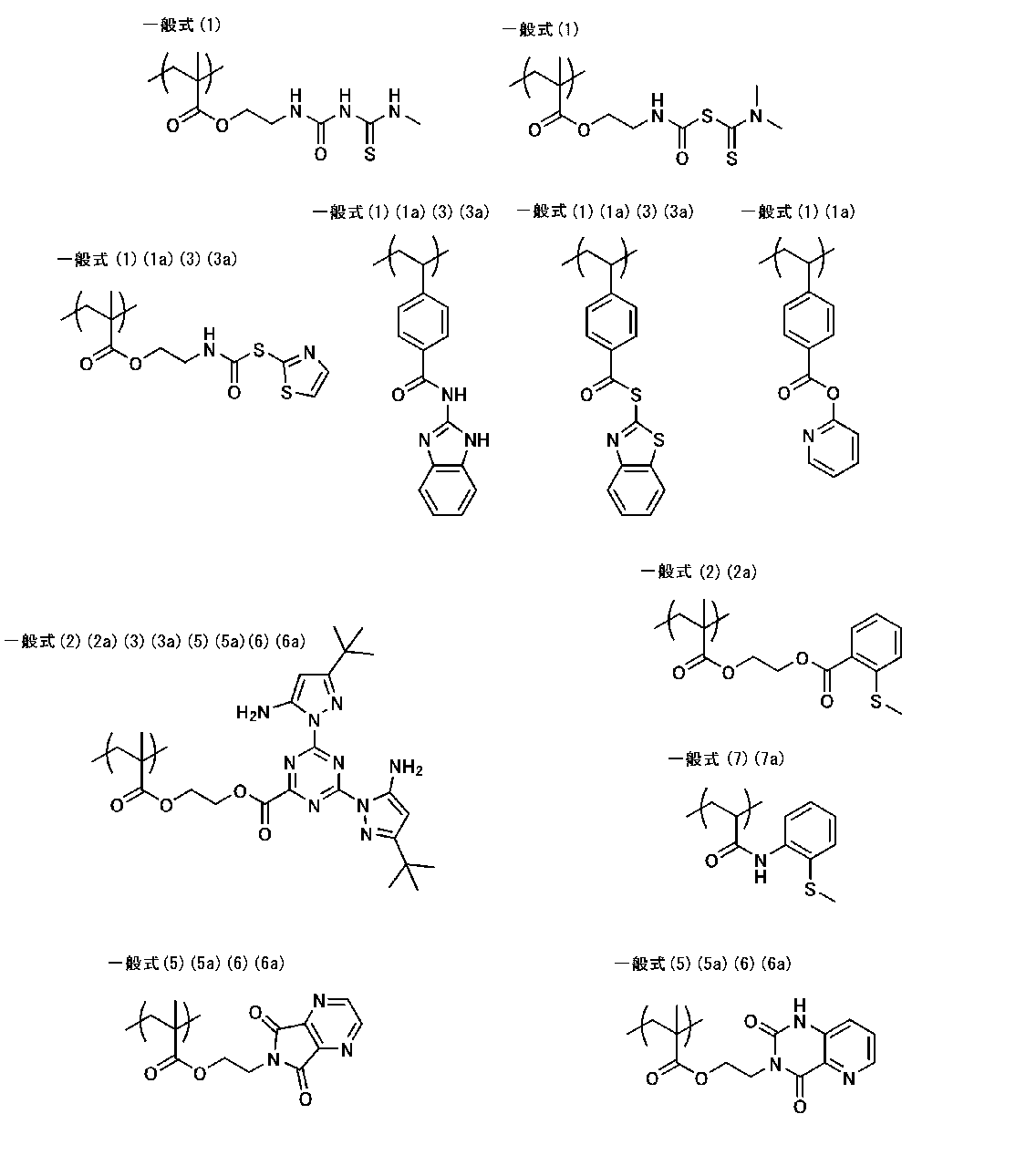
本発明に用いるポリマーは、膜分離処理による分離をより確実に行うために、数平均分子量は7000以上が好ましく、10000~100000がより好ましく、10000~50000がさらに好ましい。本明細書において数平均分子量は、ポリスチレンを標準物質としたゲルパーミエーションクロマトグラフィー法(GPC)により求められる。
本発明に用いるポリマーは単独重合体であっても共重合体であってもよいが、共重合体であることが好ましい。共重合体はランダム共重合体であってもブロック共重合体であってもよいが、ランダム共重合体が好ましい。
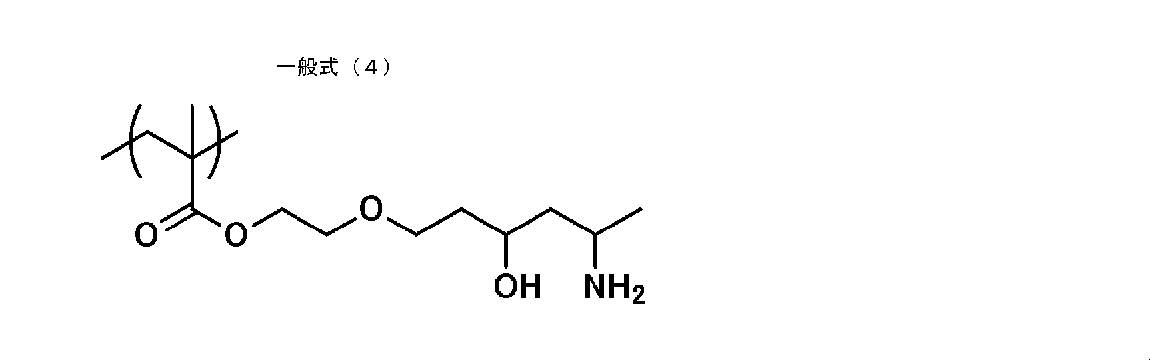
本発明に用いるポリマーが上記構造単位Qからなる共重合体である場合、一般式(1)~(8)あるいは(1a)~(3a)及び(5a)~(8a)の各式で表される部分構造の少なくとも1種を置換基Rp中に有する構造単位Qの1種又は2種以上に加えて、さらに、下記構造単位の少なくとも1種を含むことも好ましい。ポリマー中への下記構造単位の含有量は、ポリマーが所望のSP値となるように適宜に調整される。
本発明に用いるポリマーは単独重合体であっても共重合体であってもよいが、共重合体であることが好ましい。共重合体はランダム共重合体であってもブロック共重合体であってもよいが、ランダム共重合体が好ましい。
本発明に用いるポリマーが上記構造単位Qからなる共重合体である場合、一般式(1)~(8)あるいは(1a)~(3a)及び(5a)~(8a)の各式で表される部分構造の少なくとも1種を置換基Rp中に有する構造単位Qの1種又は2種以上に加えて、さらに、下記構造単位の少なくとも1種を含むことも好ましい。ポリマー中への下記構造単位の含有量は、ポリマーが所望のSP値となるように適宜に調整される。

上記式中、R1、L2及びL3は、それぞれ一般式(P)におけるR1、L2及びL3と同義であり、好ましい形態も同じである。R2は水素原子又は置換基を示す。R2は置換基である場合、炭素数1~10のアルキル基又は炭素数6~20のアリール基(好ましくはフェニル)が好ましい。R2はより好ましくは炭素数1~5のアルキル基であり、さらに好ましくはエチル又はメチルである。
[有機溶媒溶液中へのポリマーの溶解]
金属と複合体を形成するポリマーの有機溶媒溶液中への溶解方法は特に制限されない。有機溶媒溶液中にポリマーを溶解する温度に特に制限はなく、通常は有機溶媒溶液の温度を10~90℃、好ましくは20~60℃としてポリマーを溶解させる。溶解は撹拌しながら行うことが好ましい。
有機溶媒溶液中にポリマーを溶解することで、ポリマーが金属と相互作用し、複合体を形成する。複合体を形成させるための温度に特に制限はないが、通常は10~90℃、好ましくは20~60℃の温度下で行われる。複合体を形成させるための時間も特に制限はなく、目的の金属除去率となるように適宜に調整されるが、通常は1~24時間とする。複合体は有機溶媒溶液を撹拌しながら形成させることが好ましい。形成された複合体は有機溶媒溶液に溶けていても不溶化して析出してもよいが、膜分離処理の簡便さの観点で、複合体が有機溶媒溶液に溶けていることが好ましい。
ポリマーとして一般式(1)~(8)の各式で表される部分構造の少なくとも1種を有するポリマーを用いる場合、あるいは一般式(1a)~(3a)及び(5a)~(8a)の各式で表される部分構造の少なくとも1種を有するポリマーを用いる場合には、有機溶媒溶液中における一般式(1)~(8)のいずれかの式で表される部分構造の合計モル量、あるいは有機溶媒溶液中における一般式(1a)~(3a)及び(5a)~(8a)のいずれかの式で表される部分構造の合計モル量を、有機溶媒溶液中の金属のモル量の1~50倍とすることが好ましく、2~30倍とすることが好ましい。有機溶媒溶液中のポリマーの濃度は0.01~3質量%とすることが好ましい。
金属と複合体を形成するポリマーの有機溶媒溶液中への溶解方法は特に制限されない。有機溶媒溶液中にポリマーを溶解する温度に特に制限はなく、通常は有機溶媒溶液の温度を10~90℃、好ましくは20~60℃としてポリマーを溶解させる。溶解は撹拌しながら行うことが好ましい。
有機溶媒溶液中にポリマーを溶解することで、ポリマーが金属と相互作用し、複合体を形成する。複合体を形成させるための温度に特に制限はないが、通常は10~90℃、好ましくは20~60℃の温度下で行われる。複合体を形成させるための時間も特に制限はなく、目的の金属除去率となるように適宜に調整されるが、通常は1~24時間とする。複合体は有機溶媒溶液を撹拌しながら形成させることが好ましい。形成された複合体は有機溶媒溶液に溶けていても不溶化して析出してもよいが、膜分離処理の簡便さの観点で、複合体が有機溶媒溶液に溶けていることが好ましい。
ポリマーとして一般式(1)~(8)の各式で表される部分構造の少なくとも1種を有するポリマーを用いる場合、あるいは一般式(1a)~(3a)及び(5a)~(8a)の各式で表される部分構造の少なくとも1種を有するポリマーを用いる場合には、有機溶媒溶液中における一般式(1)~(8)のいずれかの式で表される部分構造の合計モル量、あるいは有機溶媒溶液中における一般式(1a)~(3a)及び(5a)~(8a)のいずれかの式で表される部分構造の合計モル量を、有機溶媒溶液中の金属のモル量の1~50倍とすることが好ましく、2~30倍とすることが好ましい。有機溶媒溶液中のポリマーの濃度は0.01~3質量%とすることが好ましい。
[膜分離処理]
本発明の方法では、金属とポリマーの複合体は膜分離処理により分離、除去される。膜分離処理に用いる膜は、使用したポリマーの阻止率が98%以上であることが好ましく、99~100%であることがより好ましい。この阻止率は、本発明の方法の実施に際して採用される膜分離処理条件における阻止率であり下記式で求められる。
阻止率(%)=100×{1-[透過液中のポリマー濃度(質量%)/膜分離処理前の有機溶媒溶液中のポリマー濃度(質量%)]}
また、膜分離処理に用いる膜として、ポリマー以外の目的物質(例えば触媒反応の反応生成物)が透過できる分画分子量の膜を用いる。目的物質の膜透過率は70~100%が好ましく、80~100%がより好ましく、90~100%がさらに好ましい。透過率(%)は「100-阻止率(%)」で求められる。膜の材質に特に制限はなく、有機膜であっても無機膜であってもよいが、耐熱性、耐薬品性の観点から無機膜を用いるのが好ましく、セラミック膜を用いるのがより好ましい。セラミック膜の材質としては、アルミナ、チタニア、シリカ、ジルコニアなどが挙げられる。また、炭化ケイ素や窒化ケイ素からなるセラミック膜を用いることもできる。また、複数の材料で構成される膜を用いてもよい。膜分離処理において、ポリマーは膜を透過しにくいため、ポリマーと金属の複合体と、その他の溶液成分(有機溶媒、反応生成物等の低分子量成分)とを分離することができ、有機溶媒溶液から金属を除去することができる。
本発明の方法では、金属とポリマーの複合体は膜分離処理により分離、除去される。膜分離処理に用いる膜は、使用したポリマーの阻止率が98%以上であることが好ましく、99~100%であることがより好ましい。この阻止率は、本発明の方法の実施に際して採用される膜分離処理条件における阻止率であり下記式で求められる。
阻止率(%)=100×{1-[透過液中のポリマー濃度(質量%)/膜分離処理前の有機溶媒溶液中のポリマー濃度(質量%)]}
また、膜分離処理に用いる膜として、ポリマー以外の目的物質(例えば触媒反応の反応生成物)が透過できる分画分子量の膜を用いる。目的物質の膜透過率は70~100%が好ましく、80~100%がより好ましく、90~100%がさらに好ましい。透過率(%)は「100-阻止率(%)」で求められる。膜の材質に特に制限はなく、有機膜であっても無機膜であってもよいが、耐熱性、耐薬品性の観点から無機膜を用いるのが好ましく、セラミック膜を用いるのがより好ましい。セラミック膜の材質としては、アルミナ、チタニア、シリカ、ジルコニアなどが挙げられる。また、炭化ケイ素や窒化ケイ素からなるセラミック膜を用いることもできる。また、複数の材料で構成される膜を用いてもよい。膜分離処理において、ポリマーは膜を透過しにくいため、ポリマーと金属の複合体と、その他の溶液成分(有機溶媒、反応生成物等の低分子量成分)とを分離することができ、有機溶媒溶液から金属を除去することができる。
本発明に方法において、膜分離処理に用いる膜は膜モジュールの形態であることが好ましい。膜モジュールは、耐圧性の観点からモノリス型又はスパイラル型であることが好ましい。
本発明の方法において、膜分離処理は、膜モジュールを用いたクロスフロー方式の膜ろ過処理であることが好ましい。クロスフロー方式の膜ろ過処理において、膜モジュールは1つであってもよいし、複数の膜モジュールを直列あるいは並列に配置して用いることもできる。
膜分離処理を実施する際のろ過圧は、使用する膜モジュールの最高使用圧力以下であれば特に制限は無いが、0.1~1.0MPaの範囲内として実施することが好ましく、0.3~0.7MPaとすることが更に好ましい。
また、膜分離処理の際の流速に特に制限はないが、各膜モジュールにおける膜面線速度を0.3~4m/sの範囲内として実施することが好ましい。
本発明の方法において、膜分離処理は、膜モジュールを用いたクロスフロー方式の膜ろ過処理であることが好ましい。クロスフロー方式の膜ろ過処理において、膜モジュールは1つであってもよいし、複数の膜モジュールを直列あるいは並列に配置して用いることもできる。
膜分離処理を実施する際のろ過圧は、使用する膜モジュールの最高使用圧力以下であれば特に制限は無いが、0.1~1.0MPaの範囲内として実施することが好ましく、0.3~0.7MPaとすることが更に好ましい。
また、膜分離処理の際の流速に特に制限はないが、各膜モジュールにおける膜面線速度を0.3~4m/sの範囲内として実施することが好ましい。
膜分離処理の温度は、使用する膜素材や反応生成物等の精製対象によって適宜に調節されるが。通常は10~90℃、好ましくは20~60℃の温度下で行われる。
膜分離処理は、市販の膜分離装置を用いて行うこともできる。例えば、INSIDE DisRAM(登録商標、TAMI社製)等を用いることができる。
以下に実施例に基づき本発明を更に詳細に説明するが、本発明はこれらの実施例により限定されるものではない。
[合成例1]
(1)
2-アセトアセトキシエチルメタクリレート51.3g、メタクリル酸メチル68.7g、及びプロピレングリコールモノメチルエーテルアセテート(以下、「PGMEA」と表す。)130gを、窒素置換した三口フラスコに導入し、攪拌機(新東科学(株):スリーワンモータ)にて攪拌し、窒素をフラスコ内に流しながら加熱して75℃まで昇温した。これにジメチル-2,2’-アゾビス(2-メチルプロピオネート)(和光純薬(株)製V-601)を1.58g加え、75℃にて4時間加熱攪拌を行った。4時間後、さらにV-601を0.32g加え、80℃に昇温して更に4時間攪拌した。反応液を室温まで放冷し、そこへPGMEA83.3gを加えて下記繰り返し単位からなるランダムポリマーのPGMEA溶液を得た。
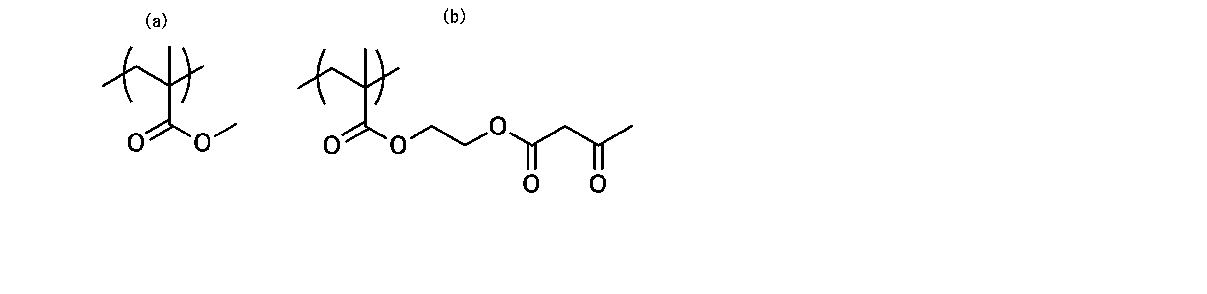
得られたポリマーのPGMEA溶液100gを500gのメタノールに投入して固体を析出させた。固体をろ別して500gのメタノールで2回洗浄した後、全量が100gとなるようトルエンを加えて完溶するまで攪拌して、ポリマーのトルエン溶液を得た。このポリマーの数平均分子量は36000であり、トルエン溶液の固形分は35.4質量%であった。下記繰り返し単位(a)と(b)のモル比は(a):(b)=74:26である。
(1)
2-アセトアセトキシエチルメタクリレート51.3g、メタクリル酸メチル68.7g、及びプロピレングリコールモノメチルエーテルアセテート(以下、「PGMEA」と表す。)130gを、窒素置換した三口フラスコに導入し、攪拌機(新東科学(株):スリーワンモータ)にて攪拌し、窒素をフラスコ内に流しながら加熱して75℃まで昇温した。これにジメチル-2,2’-アゾビス(2-メチルプロピオネート)(和光純薬(株)製V-601)を1.58g加え、75℃にて4時間加熱攪拌を行った。4時間後、さらにV-601を0.32g加え、80℃に昇温して更に4時間攪拌した。反応液を室温まで放冷し、そこへPGMEA83.3gを加えて下記繰り返し単位からなるランダムポリマーのPGMEA溶液を得た。
得られたポリマーのPGMEA溶液100gを500gのメタノールに投入して固体を析出させた。固体をろ別して500gのメタノールで2回洗浄した後、全量が100gとなるようトルエンを加えて完溶するまで攪拌して、ポリマーのトルエン溶液を得た。このポリマーの数平均分子量は36000であり、トルエン溶液の固形分は35.4質量%であった。下記繰り返し単位(a)と(b)のモル比は(a):(b)=74:26である。
(2)
上記ポリマーのトルエン溶液15.6g、o-アミノチオフェノール1.25g、及びp-トルエンスルホン酸19mgを窒素雰囲気下75℃に加熱した。反応で生成する水を留去しながら同温度で2時間反応させた後、トルエン16.9gを添加して室温まで放冷し、下記繰り返し単位からなるランダムポリマーAのトルエン溶液を得た。ポリマーAの数平均分子量は41300、ポリマーAのトルエン溶液の固形分は19.3質量%であった。また、下記繰り返し単位(c)の濃度の計算値は2.0mmol/gである。下記繰り返し単位(a)、(b)および(c)のモル比は、(a):(b):(c)=74:2:24である。
上記ポリマーのトルエン溶液15.6g、o-アミノチオフェノール1.25g、及びp-トルエンスルホン酸19mgを窒素雰囲気下75℃に加熱した。反応で生成する水を留去しながら同温度で2時間反応させた後、トルエン16.9gを添加して室温まで放冷し、下記繰り返し単位からなるランダムポリマーAのトルエン溶液を得た。ポリマーAの数平均分子量は41300、ポリマーAのトルエン溶液の固形分は19.3質量%であった。また、下記繰り返し単位(c)の濃度の計算値は2.0mmol/gである。下記繰り返し単位(a)、(b)および(c)のモル比は、(a):(b):(c)=74:2:24である。

[合成例2]
(1)
2-アミノピリミジン14.3gをピリジン45gに溶解させ、50℃に加熱した。これに2-メタクリロイルオキシエチルイソシアネート25.6gを滴下し、50℃でさらに8時間加熱攪拌を行った。この反応液を蒸留水400gに攪拌しながら注ぐことにより析出物を得た。得られた析出物を濾別、洗浄することで、下記構造のモノマー27.9gを得た。
1H-NMR同定データ(化学シフト値)の結果は以下の通りである。
1H-NMR(300MHz,CDCl3):1.97(3H,t)、3.71(2H,q)、4.33(2H,t)、5.60(1H,t)、6.17(1H,m)、6.92(1H,t)、8.53(2H,d)、8.65(1H,d br)、9.28(1H,t br)
(1)
2-アミノピリミジン14.3gをピリジン45gに溶解させ、50℃に加熱した。これに2-メタクリロイルオキシエチルイソシアネート25.6gを滴下し、50℃でさらに8時間加熱攪拌を行った。この反応液を蒸留水400gに攪拌しながら注ぐことにより析出物を得た。得られた析出物を濾別、洗浄することで、下記構造のモノマー27.9gを得た。
1H-NMR同定データ(化学シフト値)の結果は以下の通りである。
1H-NMR(300MHz,CDCl3):1.97(3H,t)、3.71(2H,q)、4.33(2H,t)、5.60(1H,t)、6.17(1H,m)、6.92(1H,t)、8.53(2H,d)、8.65(1H,d br)、9.28(1H,t br)

(2)
上記モノマー6.3g、メタクリル酸メチル43.8g、及び1-メチル-2-ピロリジノン(以下、「NMP」と表す。)93gを、窒素置換した三口フラスコに導入し、攪拌機にて攪拌し、窒素をフラスコ内に流しながら加熱して75℃まで昇温した。これにV-601を0.79g加え、75℃にて2時間加熱攪拌を行った。2時間後、さらにV-601を0.16g加え、80℃に昇温して更に3時間攪拌した。反応液を室温まで放冷し、700mLの蒸留水に投入して固体を析出させた。固体をろ別して500gのメタノールで2回洗浄した後、乾燥して下記繰り返し単位からなるランダムポリマーBの粉末を得た。ポリマーBの数平均分子量は34200であった。また、下記繰り返し単位(d)の濃度の計算値は0.5mmol/gである。下記繰り返し単位(a)と(d)のモル比は、(a):(d)=95:5である。
上記モノマー6.3g、メタクリル酸メチル43.8g、及び1-メチル-2-ピロリジノン(以下、「NMP」と表す。)93gを、窒素置換した三口フラスコに導入し、攪拌機にて攪拌し、窒素をフラスコ内に流しながら加熱して75℃まで昇温した。これにV-601を0.79g加え、75℃にて2時間加熱攪拌を行った。2時間後、さらにV-601を0.16g加え、80℃に昇温して更に3時間攪拌した。反応液を室温まで放冷し、700mLの蒸留水に投入して固体を析出させた。固体をろ別して500gのメタノールで2回洗浄した後、乾燥して下記繰り返し単位からなるランダムポリマーBの粉末を得た。ポリマーBの数平均分子量は34200であった。また、下記繰り返し単位(d)の濃度の計算値は0.5mmol/gである。下記繰り返し単位(a)と(d)のモル比は、(a):(d)=95:5である。

[合成例3]
(1)
2-アミノベンゾチアゾール12.0gをピリジン24gに溶解させ、50℃に加熱した。これに2-メタクリロイルオキシエチルイソシアネート13.7gを滴下し、50℃でさらに3時間加熱攪拌を行った。この反応液を蒸留水200gに攪拌しながら注ぐことにより析出物を得た。得られた析出物を濾別、洗浄することで、下記構造のモノマーを24.7g得た。
1H-NMR同定データ(化学シフト値)の結果は以下の通りである。
1H-NMR(300MHz,CDCl3):1.96(3H,s)、3.73(2H,q)、4.36(2H,t)、5.60(1H,t)、6.18(1H,s)、7.26(1H,dt)、7.40(1H,dt)、7.72(2H,t)、8.09(1H,s br)、10.63(1H,s br)
(1)
2-アミノベンゾチアゾール12.0gをピリジン24gに溶解させ、50℃に加熱した。これに2-メタクリロイルオキシエチルイソシアネート13.7gを滴下し、50℃でさらに3時間加熱攪拌を行った。この反応液を蒸留水200gに攪拌しながら注ぐことにより析出物を得た。得られた析出物を濾別、洗浄することで、下記構造のモノマーを24.7g得た。
1H-NMR同定データ(化学シフト値)の結果は以下の通りである。
1H-NMR(300MHz,CDCl3):1.96(3H,s)、3.73(2H,q)、4.36(2H,t)、5.60(1H,t)、6.18(1H,s)、7.26(1H,dt)、7.40(1H,dt)、7.72(2H,t)、8.09(1H,s br)、10.63(1H,s br)

(2)
上記モノマー7.7g、メタクリル酸メチル42.6g、及びNMP93gを、窒素置換した三口フラスコに導入し、攪拌機にて攪拌し、窒素をフラスコ内に流しながら加熱して75℃まで昇温した。これにV-601を0.77g加え、75℃にて2時間加熱攪拌を行った。2時間後、さらにV-601を0.15g加え、80℃に昇温して更に3時間攪拌した。反応液を室温まで放冷し、700mLのメタノールに投入して固体を析出させた。固体をろ別して500mLのメタノールで2回洗浄した後、NMPを加えて完溶するまで攪拌して、下記繰り返し単位からなるランダムポリマーCのNMP溶液を得た。ポリマーCの数平均分子量は30400であり、ポリマーCのNMP溶液の固形分は13.2質量%であった。また、下記繰り返し単位(e)の濃度の計算値は0.5mmol/gである。下記繰り返し単位(a)と(e)のモル比は、(a):(e)=94:6である。
上記モノマー7.7g、メタクリル酸メチル42.6g、及びNMP93gを、窒素置換した三口フラスコに導入し、攪拌機にて攪拌し、窒素をフラスコ内に流しながら加熱して75℃まで昇温した。これにV-601を0.77g加え、75℃にて2時間加熱攪拌を行った。2時間後、さらにV-601を0.15g加え、80℃に昇温して更に3時間攪拌した。反応液を室温まで放冷し、700mLのメタノールに投入して固体を析出させた。固体をろ別して500mLのメタノールで2回洗浄した後、NMPを加えて完溶するまで攪拌して、下記繰り返し単位からなるランダムポリマーCのNMP溶液を得た。ポリマーCの数平均分子量は30400であり、ポリマーCのNMP溶液の固形分は13.2質量%であった。また、下記繰り返し単位(e)の濃度の計算値は0.5mmol/gである。下記繰り返し単位(a)と(e)のモル比は、(a):(e)=94:6である。
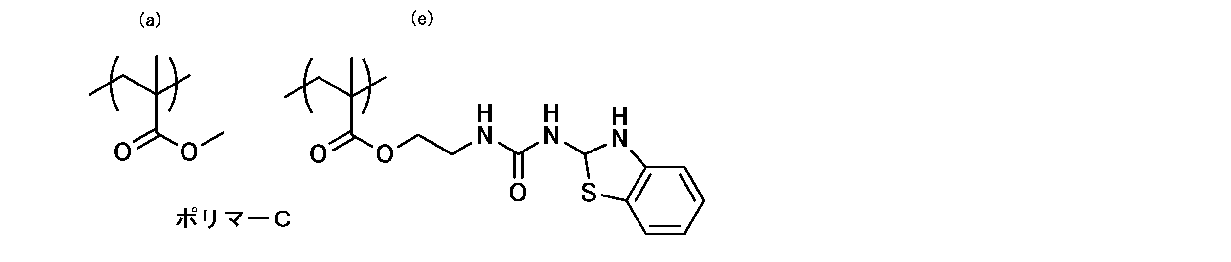
[合成例4]
(1)
ヒドロキシエチルメタクリレート17.8g、トリエチルアミン15.1gをTHF177gに加えて氷冷した。これにチエニルクロリド20gを滴下した後、室温に戻して9時間攪拌した。9時間後、生成した白色固体をろ別し、ろ液に酢酸エチル100mL、蒸留水100mLを加えて油相を抽出した。抽出した油相は、1%塩酸水溶液100mL、5%炭酸水素ナトリウム水溶液100mL、10%食塩水100mLで洗浄して、硫酸マグネシウムで乾燥後、溶媒を減圧留去して下記構造のモノマーを32.2g得た。
1H-NMR同定データ(化学シフト値)の結果は以下の通りである。
1H-NMR(300MHz,CDCl3):1.95(3H,s)、4.45-4.48(2H,m)、4.54-4.56(2H,m)、5.59(1H,m)、6.15(1H,m)、7.11(1H,dd)、7.58(1H,dd)、7.82(1H,dd)
(1)
ヒドロキシエチルメタクリレート17.8g、トリエチルアミン15.1gをTHF177gに加えて氷冷した。これにチエニルクロリド20gを滴下した後、室温に戻して9時間攪拌した。9時間後、生成した白色固体をろ別し、ろ液に酢酸エチル100mL、蒸留水100mLを加えて油相を抽出した。抽出した油相は、1%塩酸水溶液100mL、5%炭酸水素ナトリウム水溶液100mL、10%食塩水100mLで洗浄して、硫酸マグネシウムで乾燥後、溶媒を減圧留去して下記構造のモノマーを32.2g得た。
1H-NMR同定データ(化学シフト値)の結果は以下の通りである。
1H-NMR(300MHz,CDCl3):1.95(3H,s)、4.45-4.48(2H,m)、4.54-4.56(2H,m)、5.59(1H,m)、6.15(1H,m)、7.11(1H,dd)、7.58(1H,dd)、7.82(1H,dd)

(2)
上記モノマー12.0g、メタクリル酸メチル38.0g、及びNMP93gを、窒素置換した三口フラスコに導入し、攪拌機にて攪拌し、窒素をフラスコ内に流しながら加熱して75℃まで昇温した。これにV-601を0.73g加え、75℃にて2時間加熱攪拌を行った。2時間後、さらにV-601を0.15g加え、80℃に昇温して更に3時間攪拌した。反応液を室温まで放冷し、700mLのメタノールに投入して固体を析出させた。固体をろ別して700mLのメタノールで2回洗浄した後、乾燥し、下記繰り返し単位からなるランダムポリマーDを得た。ポリマーDの数平均分子量は25300であった。また、下記繰り返し単位(f)の濃度の計算値は1.0mmol/gである。下記繰り返し単位(a)と(f)のモル比は、(a):(f)=88:12である。
上記モノマー12.0g、メタクリル酸メチル38.0g、及びNMP93gを、窒素置換した三口フラスコに導入し、攪拌機にて攪拌し、窒素をフラスコ内に流しながら加熱して75℃まで昇温した。これにV-601を0.73g加え、75℃にて2時間加熱攪拌を行った。2時間後、さらにV-601を0.15g加え、80℃に昇温して更に3時間攪拌した。反応液を室温まで放冷し、700mLのメタノールに投入して固体を析出させた。固体をろ別して700mLのメタノールで2回洗浄した後、乾燥し、下記繰り返し単位からなるランダムポリマーDを得た。ポリマーDの数平均分子量は25300であった。また、下記繰り返し単位(f)の濃度の計算値は1.0mmol/gである。下記繰り返し単位(a)と(f)のモル比は、(a):(f)=88:12である。
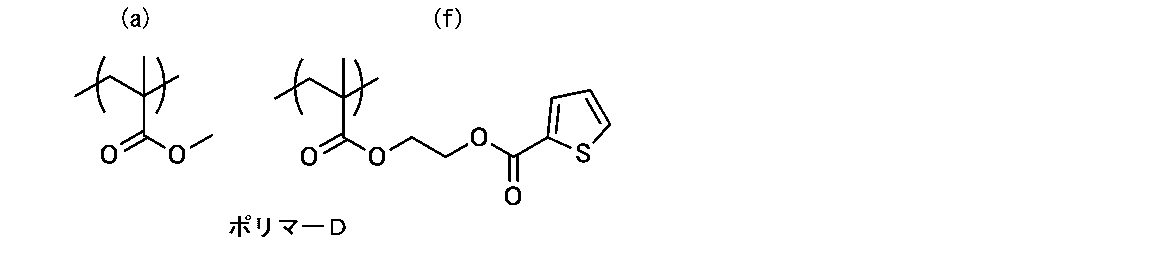
[合成例5]
(1)
p-クロロメチルスチレン22.9g、o-チオアニシジン20.9g、トリエチルアミン30.4g及びトルエン300mLを加え、100℃に加熱した。溶液を100℃に維持したまま2日間攪拌したのち、反応液を室温まで冷却して生成した白色固体をろ別した。ろ液にn-ブチルジメチルアミン4.56gを加えて、再度100℃で3時間加熱した。3時間後、加熱後のろ液を室温まで冷却して生成した白色固体をろ別した。ろ液に蒸留水300mLを加えて油相を抽出した。抽出した油相は、1%塩酸水溶液240mL、5%炭酸水素ナトリウム水溶液300mL、10%食塩水300mLで洗浄して、硫酸マグネシウムで乾燥後、溶媒を減圧留去して下記構造のモノマーを24.4g得た。
(1)
p-クロロメチルスチレン22.9g、o-チオアニシジン20.9g、トリエチルアミン30.4g及びトルエン300mLを加え、100℃に加熱した。溶液を100℃に維持したまま2日間攪拌したのち、反応液を室温まで冷却して生成した白色固体をろ別した。ろ液にn-ブチルジメチルアミン4.56gを加えて、再度100℃で3時間加熱した。3時間後、加熱後のろ液を室温まで冷却して生成した白色固体をろ別した。ろ液に蒸留水300mLを加えて油相を抽出した。抽出した油相は、1%塩酸水溶液240mL、5%炭酸水素ナトリウム水溶液300mL、10%食塩水300mLで洗浄して、硫酸マグネシウムで乾燥後、溶媒を減圧留去して下記構造のモノマーを24.4g得た。
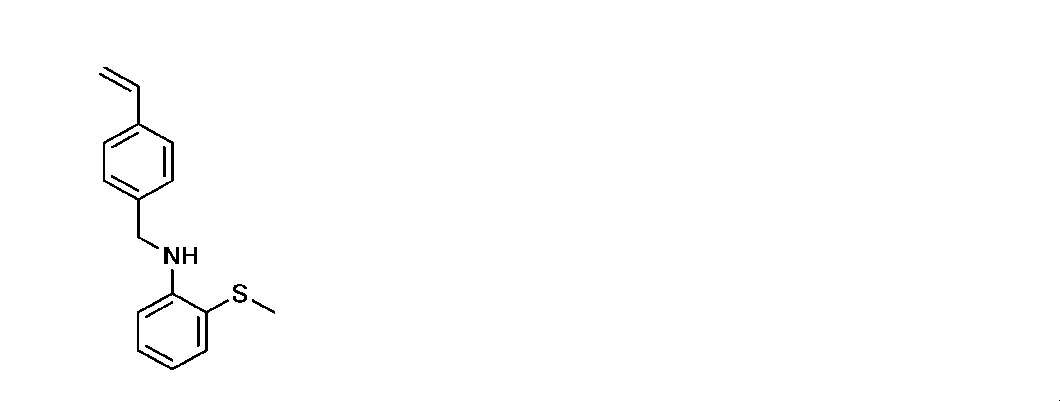
(2)
上記モノマー12.8g、スチレン37.2g、及びNMP93gを、窒素置換した三口フラスコに導入し、攪拌機にて攪拌し、窒素をフラスコ内に流しながら加熱して75℃まで昇温した。これにV-601を0.70g加え、75℃にて2時間加熱攪拌を行った。2時間後、さらにV-601を0.14g加え、80℃に昇温して更に3時間攪拌した。反応液を室温まで放冷し700mLのメタノールに投入して固体を析出させた。固体をろ別して700mLのメタノールで2回洗浄した後、乾燥し、下記繰り返し単位からなるポリマーEを得た。ポリマーEの数平均分子量は18400であった。また、下記繰り返し単位(h)の濃度の計算値は1.0mmol/gである。下記繰り返し単位(g)と(h)のモル比は、(g):(h)=88:12である。
上記モノマー12.8g、スチレン37.2g、及びNMP93gを、窒素置換した三口フラスコに導入し、攪拌機にて攪拌し、窒素をフラスコ内に流しながら加熱して75℃まで昇温した。これにV-601を0.70g加え、75℃にて2時間加熱攪拌を行った。2時間後、さらにV-601を0.14g加え、80℃に昇温して更に3時間攪拌した。反応液を室温まで放冷し700mLのメタノールに投入して固体を析出させた。固体をろ別して700mLのメタノールで2回洗浄した後、乾燥し、下記繰り返し単位からなるポリマーEを得た。ポリマーEの数平均分子量は18400であった。また、下記繰り返し単位(h)の濃度の計算値は1.0mmol/gである。下記繰り返し単位(g)と(h)のモル比は、(g):(h)=88:12である。

[比較合成例1]
(1)
2-アセトアセトキシエチルメタクリレート51.4g、スチレン68.6g、及びPGMEA130gを、窒素置換した三口フラスコに導入し、攪拌機にて攪拌し、窒素をフラスコ内に流しながら加熱して75℃まで昇温した。これにV-601を1.54g加え、75℃にて4時間加熱攪拌を行った。4時間後、さらにV-601を0.31g加え、80℃に昇温して更に4時間攪拌した。反応液を室温まで放冷し、そこにPGMEA83.3gを加えて下記繰り返し単位からなるランダムポリマーのPGMEA溶液を得た。
得られたポリマーのPGMEA溶液100gを500gのメタノールに投入して固体を析出させた。固体をろ別して500gのメタノールで2回洗浄した後、全量が100gとなるようトルエンを加えて完溶するまで攪拌してポリマーのTHF溶液を得た。このポリマーの数平均分子量は24300であり、THF溶液の固形分は35.0質量%であった。下記繰り返し単位(g)と(b)のモル比は、(g):(b)=73:27である。
(1)
2-アセトアセトキシエチルメタクリレート51.4g、スチレン68.6g、及びPGMEA130gを、窒素置換した三口フラスコに導入し、攪拌機にて攪拌し、窒素をフラスコ内に流しながら加熱して75℃まで昇温した。これにV-601を1.54g加え、75℃にて4時間加熱攪拌を行った。4時間後、さらにV-601を0.31g加え、80℃に昇温して更に4時間攪拌した。反応液を室温まで放冷し、そこにPGMEA83.3gを加えて下記繰り返し単位からなるランダムポリマーのPGMEA溶液を得た。
得られたポリマーのPGMEA溶液100gを500gのメタノールに投入して固体を析出させた。固体をろ別して500gのメタノールで2回洗浄した後、全量が100gとなるようトルエンを加えて完溶するまで攪拌してポリマーのTHF溶液を得た。このポリマーの数平均分子量は24300であり、THF溶液の固形分は35.0質量%であった。下記繰り返し単位(g)と(b)のモル比は、(g):(b)=73:27である。
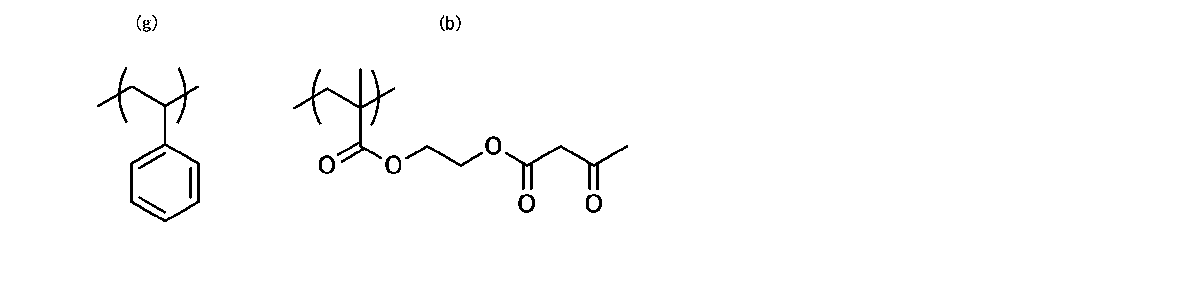
(2)
上記で得られたポリマーのTHF溶液14.3g、1-(3-アミノプロピル)イミダゾール1.25gを窒素雰囲気下45℃に加熱し、45℃に維持したまま2時間攪拌した。反応液にTHF15.6gを添加して室温まで放冷し、下記繰り返し単位からなるランダムポリマーFのTHF溶液を得た。ポリマーFの数平均分子量は30000であり、ポリマーFのTHF溶液の固形分は24.8質量%であった。また、下記繰り返し単位(i)の濃度の計算値は2.0mmol/gである。下記繰り返し単位(g)、(b)および(i)のモル比は、(g):(b):(i)=73:2:25である。
上記で得られたポリマーのTHF溶液14.3g、1-(3-アミノプロピル)イミダゾール1.25gを窒素雰囲気下45℃に加熱し、45℃に維持したまま2時間攪拌した。反応液にTHF15.6gを添加して室温まで放冷し、下記繰り返し単位からなるランダムポリマーFのTHF溶液を得た。ポリマーFの数平均分子量は30000であり、ポリマーFのTHF溶液の固形分は24.8質量%であった。また、下記繰り返し単位(i)の濃度の計算値は2.0mmol/gである。下記繰り返し単位(g)、(b)および(i)のモル比は、(g):(b):(i)=73:2:25である。
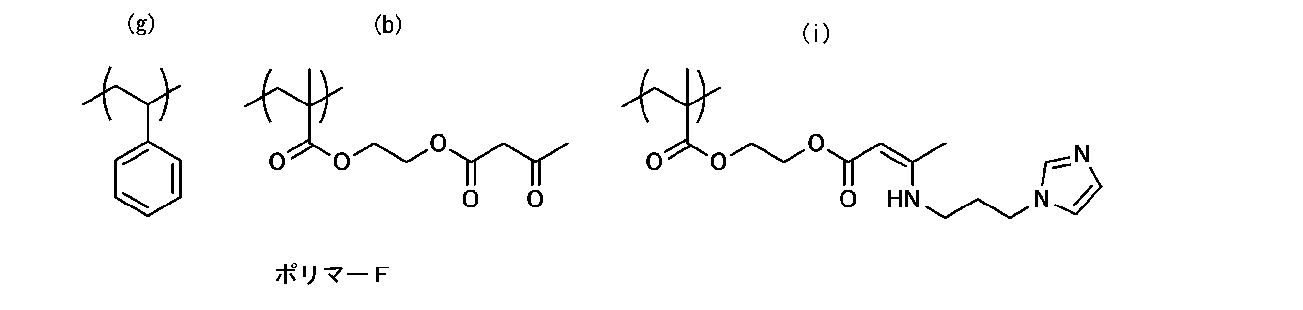
[調製例1]
以下の方法にて、Buchwald-Hartwig反応の結果得られるPd含有反応液を調製した。
p-トリフルオロメチルブロモベンゼン7.50g、ベンジルアミン3.93g及びトルエン100mLを窒素置換した三口フラスコに導入して攪拌し、窒素をフラスコ内に流しながら(R)-(+)-BINAP228mg、Pd2(dba)3153mg、ナトリウム-t-ブトキシド4.48gをこの順に加えて80℃に加熱した。溶液を80℃に維持したまま2時間攪拌した。反応液を放冷後、セライトろ過することにより不溶分を除去した。ろ液にトルエン50mL、蒸留水100mLを加えて油相を抽出した。油相は10%食塩水100mLで洗浄し、全量が400mLとなるようにNMPを加えてPd含有反応液を調製した。このPd含有反応液のPd濃度をICP発光分光器(島津製作所製ICPS-8100)にて測定したところ、67.6ppm(質量基準、以下同様)であった。
以下の方法にて、Buchwald-Hartwig反応の結果得られるPd含有反応液を調製した。
p-トリフルオロメチルブロモベンゼン7.50g、ベンジルアミン3.93g及びトルエン100mLを窒素置換した三口フラスコに導入して攪拌し、窒素をフラスコ内に流しながら(R)-(+)-BINAP228mg、Pd2(dba)3153mg、ナトリウム-t-ブトキシド4.48gをこの順に加えて80℃に加熱した。溶液を80℃に維持したまま2時間攪拌した。反応液を放冷後、セライトろ過することにより不溶分を除去した。ろ液にトルエン50mL、蒸留水100mLを加えて油相を抽出した。油相は10%食塩水100mLで洗浄し、全量が400mLとなるようにNMPを加えてPd含有反応液を調製した。このPd含有反応液のPd濃度をICP発光分光器(島津製作所製ICPS-8100)にて測定したところ、67.6ppm(質量基準、以下同様)であった。
[調製例2]
調製例1において、全量が400mLとなるように加えるNMPの代わりに、THFを加えたこと以外は調製例1と同様にしてPd含有反応液を調製した。Pd含有反応液のPd濃度をICP発光分光器にて測定したところ、74ppmであった。
調製例1において、全量が400mLとなるように加えるNMPの代わりに、THFを加えたこと以外は調製例1と同様にしてPd含有反応液を調製した。Pd含有反応液のPd濃度をICP発光分光器にて測定したところ、74ppmであった。
[実施例1]
調製例1で得られたPd含有反応液100gの中に、合成例1で得たポリマーAのトルエン溶液(固形分19.3質量%)を0.648g加えて室温で2時間攪拌した。その後、この液を膜分離装置(TAMI社製INSIDE DisRAMTM)を用いた膜分離処理に付し、分画分子量5000のセラミック膜を透過する液を回収した。透過液の残存Pd濃度をICP発光分光器にて測定した。膜分離処理の条件を以下に示す。
(膜分離処理条件)
-膜面線速度:0.5m/s-膜間差圧:0.3MPa-温度:25℃
調製例1で得られたPd含有反応液100gの中に、合成例1で得たポリマーAのトルエン溶液(固形分19.3質量%)を0.648g加えて室温で2時間攪拌した。その後、この液を膜分離装置(TAMI社製INSIDE DisRAMTM)を用いた膜分離処理に付し、分画分子量5000のセラミック膜を透過する液を回収した。透過液の残存Pd濃度をICP発光分光器にて測定した。膜分離処理の条件を以下に示す。
(膜分離処理条件)
-膜面線速度:0.5m/s-膜間差圧:0.3MPa-温度:25℃
[実施例2]
実施例1において、合成例1で得たポリマーAのトルエン溶液の代わりに、合成例2で合成したポリマーBを0.501g加えたこと以外は実施例1と同様にして透過液の残存Pd濃度をICP発光分光器にて測定した。
実施例1において、合成例1で得たポリマーAのトルエン溶液の代わりに、合成例2で合成したポリマーBを0.501g加えたこと以外は実施例1と同様にして透過液の残存Pd濃度をICP発光分光器にて測定した。
[実施例3]
実施例1において、合成例1で得たポリマーAのトルエン溶液の代わりに、合成例3で合成したポリマーCのNMP溶液(固形分13.2質量%)を3.80g加えたこと以外は実施例1と同様にして透過液の残存Pd濃度をICP発光分光器にて測定した。
実施例1において、合成例1で得たポリマーAのトルエン溶液の代わりに、合成例3で合成したポリマーCのNMP溶液(固形分13.2質量%)を3.80g加えたこと以外は実施例1と同様にして透過液の残存Pd濃度をICP発光分光器にて測定した。
[実施例4]
実施例1において、合成例1で得たポリマーAのトルエン溶液の代わりに、合成例4で合成したポリマーDを0.251g加えたこと以外は実施例1と同様にして透過液の残存Pd濃度をICP発光分光器にて測定した。
実施例1において、合成例1で得たポリマーAのトルエン溶液の代わりに、合成例4で合成したポリマーDを0.251g加えたこと以外は実施例1と同様にして透過液の残存Pd濃度をICP発光分光器にて測定した。
[実施例5]
実施例1において、合成例1で得たポリマーAのトルエン溶液の代わりに、合成例5で合成したポリマーEを0.251g加えたこと以外は実施例1と同様にして透過液の残存Pd濃度をICP発光分光器にて測定した。
実施例1において、合成例1で得たポリマーAのトルエン溶液の代わりに、合成例5で合成したポリマーEを0.251g加えたこと以外は実施例1と同様にして透過液の残存Pd濃度をICP発光分光器にて測定した。
[実施例6]
実施例1において、調製例1で得られたPd含有反応液の代わりに、調製例2で得られたPd含有反応液100gを加えたこと以外は実施例1と同様にして透過液の残存Pd濃度をICP発光分光器にて測定した。
実施例1において、調製例1で得られたPd含有反応液の代わりに、調製例2で得られたPd含有反応液100gを加えたこと以外は実施例1と同様にして透過液の残存Pd濃度をICP発光分光器にて測定した。
[実施例7]
実施例3において、調製例1で得られたPd含有反応液の代わりに、調製例2で得られたPd含有反応液100gを加えたこと以外は実施例3と同様にして透過液の残存Pd濃度をICP発光分光器にて測定した。
実施例3において、調製例1で得られたPd含有反応液の代わりに、調製例2で得られたPd含有反応液100gを加えたこと以外は実施例3と同様にして透過液の残存Pd濃度をICP発光分光器にて測定した。
[実施例8]
実施例4において、調製例1で得られたPd含有反応液の代わりに、調製例2で得られたPd含有反応液100gを加えたこと以外は実施例4と同様にして透過液の残存Pd濃度をICP発光分光器にて測定した。
実施例4において、調製例1で得られたPd含有反応液の代わりに、調製例2で得られたPd含有反応液100gを加えたこと以外は実施例4と同様にして透過液の残存Pd濃度をICP発光分光器にて測定した。
[比較例1]
実施例1において、合成例1で得たポリマーAのトルエン溶液の代わりに、比較合成例1で合成したポリマーFのTHF溶液(固形分24.8質量%)を0.504g加えたこと以外は実施例1と同様にして透過液の残存Pd濃度をICP発光分光器にて測定した。
実施例1において、合成例1で得たポリマーAのトルエン溶液の代わりに、比較合成例1で合成したポリマーFのTHF溶液(固形分24.8質量%)を0.504g加えたこと以外は実施例1と同様にして透過液の残存Pd濃度をICP発光分光器にて測定した。
[比較例2]
実施例2において、調製例1で得られたPd含有反応液の代わりに、調製例2で得られたPd含有反応液100gを加えたこと以外は実施例2と同様にして透過液の残存Pd濃度をICP発光分光器にて測定した。
実施例2において、調製例1で得られたPd含有反応液の代わりに、調製例2で得られたPd含有反応液100gを加えたこと以外は実施例2と同様にして透過液の残存Pd濃度をICP発光分光器にて測定した。
[比較例3]
調製例1で得られたPd含有反応液100gの中に、市販の金属捕捉剤であるQuadraPureTMEDA(市販ビーズ) 0.143gを加えて室温で2時間攪拌した。その後、金属捕捉剤をろ過で除去して実施例1と同様にしてろ液の残存Pd濃度をICP発光分光器で測定した。
調製例1で得られたPd含有反応液100gの中に、市販の金属捕捉剤であるQuadraPureTMEDA(市販ビーズ) 0.143gを加えて室温で2時間攪拌した。その後、金属捕捉剤をろ過で除去して実施例1と同様にしてろ液の残存Pd濃度をICP発光分光器で測定した。
[実施例9]
実施例1において、合成例1で得たポリマーAのトルエン溶液を加えた後に攪拌した時間を2時間から18時間に変えたこと以外は実施例1と同様にして透過液の残存Pd濃度をICP発光分光器にて測定した。
実施例1において、合成例1で得たポリマーAのトルエン溶液を加えた後に攪拌した時間を2時間から18時間に変えたこと以外は実施例1と同様にして透過液の残存Pd濃度をICP発光分光器にて測定した。
[実施例10]
酢酸銅(II)29mgに、THFを加えて全量を100mLとし、室温にて攪拌して溶解させた。この酢酸銅溶液の中に合成例2で合成したポリマーBを0.944g加えて室温で2時間攪拌した。その後、この液を実施例1と同様にして膜分離処理に付し、分画分子量5000のセラミック膜を透過する液を回収した。ポリマーBを添加する前の溶液および透過液の残存Cu濃度をICP発光分光器にて測定した。
酢酸銅(II)29mgに、THFを加えて全量を100mLとし、室温にて攪拌して溶解させた。この酢酸銅溶液の中に合成例2で合成したポリマーBを0.944g加えて室温で2時間攪拌した。その後、この液を実施例1と同様にして膜分離処理に付し、分画分子量5000のセラミック膜を透過する液を回収した。ポリマーBを添加する前の溶液および透過液の残存Cu濃度をICP発光分光器にて測定した。
[実施例11]
実施例10において、合成例2で合成したポリマーBの代わりに、合成例5で合成したポリマーEを0.470g加えたこと以外は実施例1と同様にして透過液の残存Pd濃度をICP発光分光器にて測定した。
実施例10において、合成例2で合成したポリマーBの代わりに、合成例5で合成したポリマーEを0.470g加えたこと以外は実施例1と同様にして透過液の残存Pd濃度をICP発光分光器にて測定した。
[比較例4]
酢酸銅(II)29mgに、NMPを加えて全量を100mLとし、室温にて攪拌して溶解させた。この酢酸銅溶液の中に実施例10と同様にして合成例5で合成したポリマーEを0.944g加えて室温で2時間攪拌した。その後、この液を実施例10と同様にして膜分離処理に付し、分画分子量5000のセラミック膜を透過する液を回収した。ポリマーEを添加する前の溶液および透過液の残存Cu濃度をICP発光分光器にて測定した。
酢酸銅(II)29mgに、NMPを加えて全量を100mLとし、室温にて攪拌して溶解させた。この酢酸銅溶液の中に実施例10と同様にして合成例5で合成したポリマーEを0.944g加えて室温で2時間攪拌した。その後、この液を実施例10と同様にして膜分離処理に付し、分画分子量5000のセラミック膜を透過する液を回収した。ポリマーEを添加する前の溶液および透過液の残存Cu濃度をICP発光分光器にて測定した。
なお、上記各実施例及び比較例はすべて、有機溶媒溶液中の金属のモル量と、有機溶媒溶液中の、ポリマーが有する一般式(1)~(8)(一般式(1a)~(3a)及び(5a)~(8a))の各式で表される部分構造のモル量の比を、金属:部分構造=1:3としており、金属に対してポリマーを十分量溶解している。
結果を下表に示す。下記表1中、金属除去率(質量%)は下記式により求めた。
金属除去率(質量%)
=100-[100×(透過液中の金属濃度)/(ポリマー溶解前の金属濃度)]
結果を下表に示す。下記表1中、金属除去率(質量%)は下記式により求めた。
金属除去率(質量%)
=100-[100×(透過液中の金属濃度)/(ポリマー溶解前の金属濃度)]
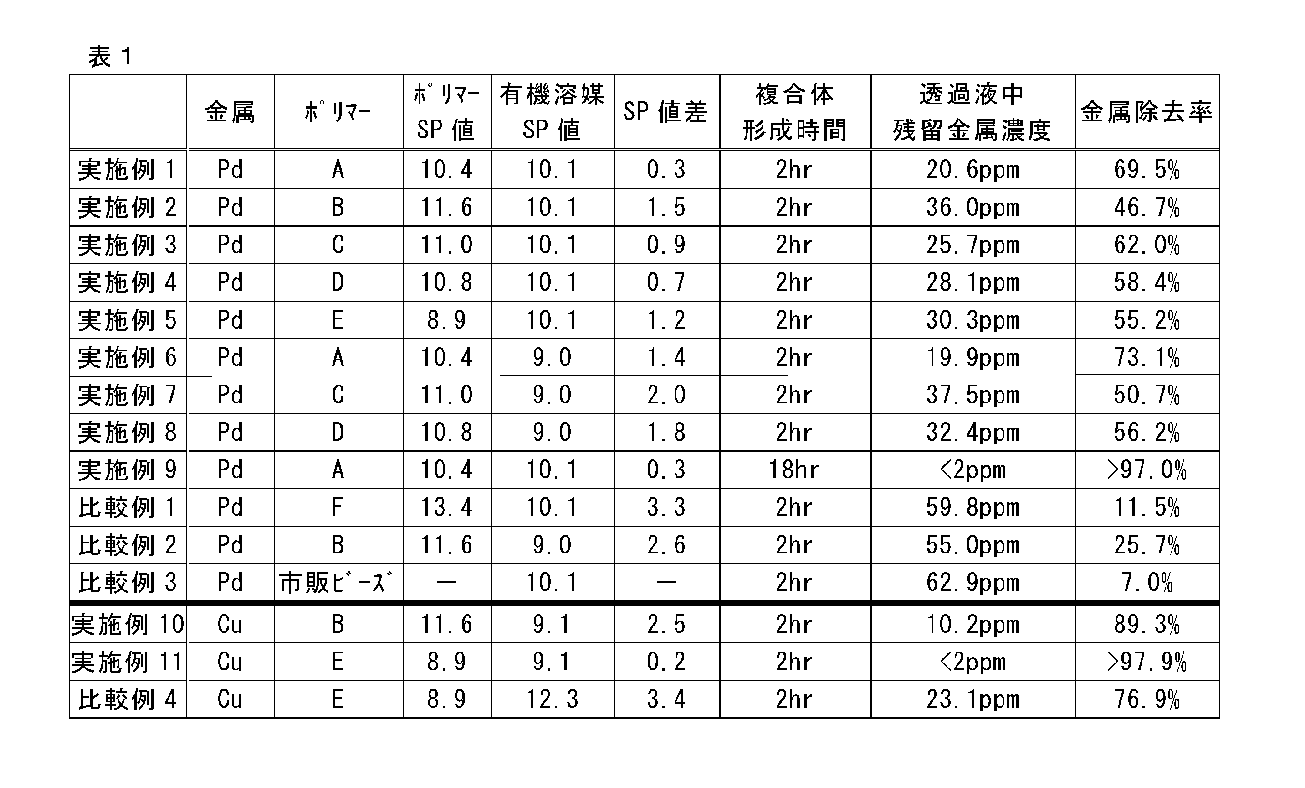
表1に示されるように、ポリマーのSP値と有機溶媒のSP値との差が本発明で規定するよりも大きい比較例1、2及び市販の金属捕捉剤であるビーズ(不溶性)を用いた比較例3では、パラジウムの除去効率が著しく劣る結果となった。これに対しポリマーのSP値と有機溶媒のSP値との差を本発明で規定する範囲内とした実施例1~8では、いずれも高いパラジウム除去率を示した。また、実施例9の結果から、複合体形成時間を長くすることで、溶液中の金属をほぼすべて分離除去できることもわかる。
上記の傾向は金属として銅を用いた場合にも同様に認められた。すなわち、ポリマーのSP値と有機溶媒のSP値との差が本発明で規定するよりも大きい比較例4に比べて、SP値の差が本発明で規定する範囲内にある実施例10及び11において、銅の分離除去効率が大きく向上することがわかった。
上記の傾向は金属として銅を用いた場合にも同様に認められた。すなわち、ポリマーのSP値と有機溶媒のSP値との差が本発明で規定するよりも大きい比較例4に比べて、SP値の差が本発明で規定する範囲内にある実施例10及び11において、銅の分離除去効率が大きく向上することがわかった。
上記の結果から、本発明の方法が、有機溶媒溶液中の金属の分離、除去効率に優れることがわかる。
Claims (8)
- 金属を含有する有機溶媒溶液中にポリマーを溶解して該金属と該ポリマーとの複合体を形成させ、該複合体を膜分離処理により分離、除去することを含む有機溶媒溶液中の金属除去方法であって、前記有機溶媒のSP値と前記ポリマーのSP値との差の絶対値が2.5以下である、有機溶媒溶液中の金属除去方法。
- 前記金属が、アルミニウム、銀、金、カドミウム、クロム、コバルト、銅、鉄、水銀、ニッケル、オスミウム、鉛、パラジウム、プラチナ、ロジウム、ルテニウム、スズ、バナジウム及び亜鉛からなる群から選ばれる少なくとも1種の金属である、請求項1に記載の有機溶媒溶液中の金属除去方法。
- 前記の金属を含有する有機溶媒溶液が、金属触媒の存在下で行う触媒反応の反応生成物を含む反応溶液であり、除去対象となる前記金属が前記金属触媒の金属である、請求項1又は2に記載の有機溶媒溶液中の金属除去方法。
- 前記ポリマーが、下記一般式(1)~(8)の各式で表される部分構造の少なくとも1種を有する構造単位を含む、請求項1~3のいずれか1項に記載の有機溶媒溶液中の金属除去方法。

一般式(2)中、A3はO、S又はNRを示し、A4はSH、S-*、OH、O-*、NH2、NR-*又はN=*を示す。G2はC-*又はNを示す。
一般式(3)中、A5はO、S又はNRを示し、A6はSH、S-*、OH、O-*、NH2、NR-*又はN=*を示す。G3はC(R)2、NH、N-*、O又はSを示す。
一般式(4)中、A7及びA8はSH、S-*、OH、O-*、NH2、NR-*又はN=*を示す。G4はC(R)2、NR、O又はSを示す。
一般式(5)中、A9はO、S又はNRを示し、A10はN-*、S又はOを示す。
一般式(6)中、A11はO、S又はNRを示し、A12はSH、S-*、OH、O-*、NH2、NR-*又はN=*を示す。
一般式(7)中、A13及びA14はSH、S-*、OH、O-*、NH2、NR-*又はN=*を示す。
一般式(8)中、A15はO、S又はNRを示し、A16はS-*、O-*、又はNR-*を示す。L1はCR又はNを示す。G5はC(R)2、O、S又はNRを示す。
上記一般式(1)~(8)において、Rは水素原子又は置換基を示す。*及びyは連結部位を示し、xは水素原子又は連結部位を示す。 - 前記ポリマーが下記一般式(1a)~(3a)及び(5a)~(8a)の各式で表される部分構造の少なくとも1種を有する構造単位を含む、請求項1~4のいずれか1項に記載の有機溶媒溶液中の金属除去方法。

一般式(2a)中、A3及びA4は、それぞれ一般式(2)におけるA3及びA4と同義である。Z2は環構造を示す。
一般式(3a)中、A5及びG3は、それぞれ一般式(3)におけるA5及びG3と同義である。A6aはNR、N、S又はOを示す。L1は上記一般式(8)におけるL1と同義である。Z3は複素環を示す。
一般式(5a)中、A9は一般式(5)におけるA9と同義である。Z5は複素環を示す。
一般式(6a)中、A11は一般式(6)におけるA11と同義である。Z6は複素環を示す。A12aはNR、S又はOを示す。L1は上記一般式(8)におけるL1と同義である。
一般式(7a)中、A13及びA14は、それぞれ一般式(7)におけるA13及びA14と同義である。Z7は環構造を示す。
一般式(8a)中、A15、G5及びL1は、それぞれ一般式(8)におけるA15、G5及びL1と同義である。A16aはS、O、又はNRを示す。Z8は複素環を示す。
上記(1a)~(3a)及び(5a)~(8a)において、Rは水素原子又は置換基を示し、x1は連結部位を示す。 - 前記ポリマーがモノマー成分として(メタ)アクリル酸エステル成分を含有し、該メタアクリル酸エステルのアルコール部が前記(1a)~(3a)及び(5a)~(8a)のいずれかで表される部分構造を有する、請求項5に記載の有機溶媒溶液中の金属除去方法。
- 前記ポリマーが下記一般式(P)で表される構造単位を含む、請求項1~6のいずれか1項に記載の有機溶媒溶液中の金属除去方法。

- 前記膜分離処理に用いる膜が無機膜である、請求項1~7のいずれか1項に記載の有機溶媒溶液中の金属除去方法。
Applications Claiming Priority (2)
| Application Number | Priority Date | Filing Date | Title |
|---|---|---|---|
| JP2014064180A JP6182096B2 (ja) | 2014-03-26 | 2014-03-26 | 有機溶媒溶液中の金属除去方法 |
| JP2014-064180 | 2014-03-26 |
Publications (1)
| Publication Number | Publication Date |
|---|---|
| WO2015146307A1 true WO2015146307A1 (ja) | 2015-10-01 |
Family
ID=54194846
Family Applications (1)
| Application Number | Title | Priority Date | Filing Date |
|---|---|---|---|
| PCT/JP2015/053281 Ceased WO2015146307A1 (ja) | 2014-03-26 | 2015-02-05 | 有機溶媒溶液中の金属除去方法 |
Country Status (2)
| Country | Link |
|---|---|
| JP (1) | JP6182096B2 (ja) |
| WO (1) | WO2015146307A1 (ja) |
Cited By (2)
| Publication number | Priority date | Publication date | Assignee | Title |
|---|---|---|---|---|
| KR20200098569A (ko) | 2017-12-25 | 2020-08-20 | 닛산 가가쿠 가부시키가이샤 | 용액 중의 금속불순물을 제거하는 금속제거제 및 금속제거방법 |
| KR20200115355A (ko) | 2019-03-28 | 2020-10-07 | 닛산 가가쿠 가부시키가이샤 | 에폭시수지 중의 금속불순물을 제거하는 금속흡착제 및 금속제거방법 |
Families Citing this family (1)
| Publication number | Priority date | Publication date | Assignee | Title |
|---|---|---|---|---|
| KR101963284B1 (ko) * | 2017-02-15 | 2019-03-28 | 삼성전기주식회사 | 커패시터 부품 및 그 제조방법 |
Citations (3)
| Publication number | Priority date | Publication date | Assignee | Title |
|---|---|---|---|---|
| DE2303081A1 (de) * | 1973-01-23 | 1974-07-25 | Ernst Prof Dr Bayer | Verfahren zur anreicherung und abtrennung von metallionen an loeslichen polymeren |
| JPH03112A (ja) * | 1989-05-08 | 1991-01-07 | Dow Chem Co:The | 多価金属の水溶性ポリマーキレートおよび膜分離装置を使用してガス流からNOxおよびSOxを除去する方法 |
| US5766478A (en) * | 1995-05-30 | 1998-06-16 | The Regents Of The University Of California, Office Of Technology Transfer | Water-soluble polymers for recovery of metal ions from aqueous streams |
-
2014
- 2014-03-26 JP JP2014064180A patent/JP6182096B2/ja not_active Expired - Fee Related
-
2015
- 2015-02-05 WO PCT/JP2015/053281 patent/WO2015146307A1/ja not_active Ceased
Patent Citations (3)
| Publication number | Priority date | Publication date | Assignee | Title |
|---|---|---|---|---|
| DE2303081A1 (de) * | 1973-01-23 | 1974-07-25 | Ernst Prof Dr Bayer | Verfahren zur anreicherung und abtrennung von metallionen an loeslichen polymeren |
| JPH03112A (ja) * | 1989-05-08 | 1991-01-07 | Dow Chem Co:The | 多価金属の水溶性ポリマーキレートおよび膜分離装置を使用してガス流からNOxおよびSOxを除去する方法 |
| US5766478A (en) * | 1995-05-30 | 1998-06-16 | The Regents Of The University Of California, Office Of Technology Transfer | Water-soluble polymers for recovery of metal ions from aqueous streams |
Cited By (2)
| Publication number | Priority date | Publication date | Assignee | Title |
|---|---|---|---|---|
| KR20200098569A (ko) | 2017-12-25 | 2020-08-20 | 닛산 가가쿠 가부시키가이샤 | 용액 중의 금속불순물을 제거하는 금속제거제 및 금속제거방법 |
| KR20200115355A (ko) | 2019-03-28 | 2020-10-07 | 닛산 가가쿠 가부시키가이샤 | 에폭시수지 중의 금속불순물을 제거하는 금속흡착제 및 금속제거방법 |
Also Published As
| Publication number | Publication date |
|---|---|
| JP6182096B2 (ja) | 2017-08-16 |
| JP2015182071A (ja) | 2015-10-22 |
Similar Documents
| Publication | Publication Date | Title |
|---|---|---|
| EP2255877B1 (en) | Method for preparation of ruthenium-based metathesis catalysts with chelating alkylidene ligands | |
| JP6182096B2 (ja) | 有機溶媒溶液中の金属除去方法 | |
| KR102366890B1 (ko) | 철 착물의 제조 방법 및 철 착물을 사용한 에스테르 화합물의 제조 방법 | |
| CN109776293A (zh) | 一种以炔酮制备1,3-二酮类化合物的方法 | |
| CN105209435B (zh) | 包含吡啶或吡嗪的化合物 | |
| CN101657434B (zh) | 以铁络合物为催化剂的聚合物的制造方法 | |
| CN116514707B (zh) | 一种手性芳基(2-吡啶基)苯甲酰基甲基肼衍生物的制备方法 | |
| CN103480418A (zh) | 在联萘酚合成工艺中的手性催化剂 | |
| JP6157592B2 (ja) | ジケトナト−ロジウム(i)−カルボニル錯体を調製するためのプロセス | |
| CN113135959B (zh) | 一种含氟多孔有机笼化合物及其制备方法和应用 | |
| JP5223193B2 (ja) | ポリカルボシラン及びその製造方法並びに絶縁性材料 | |
| CN113891878A (zh) | 用于制备钌络合物的方法 | |
| Mosteiro et al. | Nucleophilic addition of 1, 3-dicarbonyl compounds as a route to functionalized cyclopalladated complexes with chelated 1, 1-bis (diphenylphosphino) ethene | |
| JP6670164B2 (ja) | ビスホスフィン−ビピリジン配位子含有共役ポリマー及びその製造方法 | |
| CN103554094B (zh) | 一种制备2,2’-联吡啶-4,4’-(5-己基-2-噻吩)的方法 | |
| CN112625015B (zh) | 一种2-(1,3-二氢-2-异苯并呋喃)-1-苯乙酮化合物的制备方法 | |
| JP5081146B2 (ja) | 原子移動ラジカルカップリング反応を用いる1,2−フェニルエタン系化合物の製造方法 | |
| JP4193631B2 (ja) | β−ジケトナト銅錯体の製造方法 | |
| RU2611438C1 (ru) | Способ получения металлоорганических каркасных соединений с октакарбоксифталоцианинатами металлов в качестве основной структурной единицы | |
| JP6562351B2 (ja) | ポリマーの製造方法およびニトロシルルテニウム錯体の使用 | |
| JP2006335660A (ja) | トリフェニルアミン系化合物の精製方法およびトリフェニルアミン系化合物 | |
| Mannsperger | New hybrid guanidine-quinoline copper complexes and their use in atom transfer radical polymerization | |
| RU2645680C1 (ru) | Дихлорид ди(фенилацетонитрил) палладия и способ его получения | |
| CN116102434A (zh) | 一种新型含芳烃底座的三胺配体和中间体及其制备方法 | |
| JP2007023166A (ja) | ポリフェニレンオキシド類の製造方法 |
Legal Events
| Date | Code | Title | Description |
|---|---|---|---|
| 121 | Ep: the epo has been informed by wipo that ep was designated in this application |
Ref document number: 15768947 Country of ref document: EP Kind code of ref document: A1 |
|
| NENP | Non-entry into the national phase |
Ref country code: DE |
|
| 122 | Ep: pct application non-entry in european phase |
Ref document number: 15768947 Country of ref document: EP Kind code of ref document: A1 |