WO2015146201A1 - 楽譜表示・演奏プログラム及び楽譜表示・演奏装置 - Google Patents
楽譜表示・演奏プログラム及び楽譜表示・演奏装置 Download PDFInfo
- Publication number
- WO2015146201A1 WO2015146201A1 PCT/JP2015/050023 JP2015050023W WO2015146201A1 WO 2015146201 A1 WO2015146201 A1 WO 2015146201A1 JP 2015050023 W JP2015050023 W JP 2015050023W WO 2015146201 A1 WO2015146201 A1 WO 2015146201A1
- Authority
- WO
- WIPO (PCT)
- Prior art keywords
- performance
- measure
- sequence
- score
- musical score
- Prior art date
- Legal status (The legal status is an assumption and is not a legal conclusion. Google has not performed a legal analysis and makes no representation as to the accuracy of the status listed.)
- Ceased
Links
Images


Classifications
-
- G—PHYSICS
- G10—MUSICAL INSTRUMENTS; ACOUSTICS
- G10H—ELECTROPHONIC MUSICAL INSTRUMENTS; INSTRUMENTS IN WHICH THE TONES ARE GENERATED BY ELECTROMECHANICAL MEANS OR ELECTRONIC GENERATORS, OR IN WHICH THE TONES ARE SYNTHESISED FROM A DATA STORE
- G10H1/00—Details of electrophonic musical instruments
- G10H1/0033—Recording/reproducing or transmission of music for electrophonic musical instruments
-
- G—PHYSICS
- G10—MUSICAL INSTRUMENTS; ACOUSTICS
- G10G—REPRESENTATION OF MUSIC; RECORDING MUSIC IN NOTATION FORM; ACCESSORIES FOR MUSIC OR MUSICAL INSTRUMENTS NOT OTHERWISE PROVIDED FOR, e.g. SUPPORTS
- G10G1/00—Means for the representation of music
-
- G—PHYSICS
- G10—MUSICAL INSTRUMENTS; ACOUSTICS
- G10H—ELECTROPHONIC MUSICAL INSTRUMENTS; INSTRUMENTS IN WHICH THE TONES ARE GENERATED BY ELECTROMECHANICAL MEANS OR ELECTRONIC GENERATORS, OR IN WHICH THE TONES ARE SYNTHESISED FROM A DATA STORE
- G10H1/00—Details of electrophonic musical instruments
-
- G—PHYSICS
- G10—MUSICAL INSTRUMENTS; ACOUSTICS
- G10H—ELECTROPHONIC MUSICAL INSTRUMENTS; INSTRUMENTS IN WHICH THE TONES ARE GENERATED BY ELECTROMECHANICAL MEANS OR ELECTRONIC GENERATORS, OR IN WHICH THE TONES ARE SYNTHESISED FROM A DATA STORE
- G10H1/00—Details of electrophonic musical instruments
- G10H1/0008—Associated control or indicating means
-
- G—PHYSICS
- G10—MUSICAL INSTRUMENTS; ACOUSTICS
- G10H—ELECTROPHONIC MUSICAL INSTRUMENTS; INSTRUMENTS IN WHICH THE TONES ARE GENERATED BY ELECTROMECHANICAL MEANS OR ELECTRONIC GENERATORS, OR IN WHICH THE TONES ARE SYNTHESISED FROM A DATA STORE
- G10H2220/00—Input/output interfacing specifically adapted for electrophonic musical tools or instruments
- G10H2220/005—Non-interactive screen display of musical or status data
- G10H2220/015—Musical staff, tablature or score displays, e.g. for score reading during a performance
-
- G—PHYSICS
- G10—MUSICAL INSTRUMENTS; ACOUSTICS
- G10H—ELECTROPHONIC MUSICAL INSTRUMENTS; INSTRUMENTS IN WHICH THE TONES ARE GENERATED BY ELECTROMECHANICAL MEANS OR ELECTRONIC GENERATORS, OR IN WHICH THE TONES ARE SYNTHESISED FROM A DATA STORE
- G10H2220/00—Input/output interfacing specifically adapted for electrophonic musical tools or instruments
- G10H2220/091—Graphical user interface [GUI] specifically adapted for electrophonic musical instruments, e.g. interactive musical displays, musical instrument icons or menus; Details of user interactions therewith
- G10H2220/096—Graphical user interface [GUI] specifically adapted for electrophonic musical instruments, e.g. interactive musical displays, musical instrument icons or menus; Details of user interactions therewith using a touch screen
-
- G—PHYSICS
- G10—MUSICAL INSTRUMENTS; ACOUSTICS
- G10H—ELECTROPHONIC MUSICAL INSTRUMENTS; INSTRUMENTS IN WHICH THE TONES ARE GENERATED BY ELECTROMECHANICAL MEANS OR ELECTRONIC GENERATORS, OR IN WHICH THE TONES ARE SYNTHESISED FROM A DATA STORE
- G10H2220/00—Input/output interfacing specifically adapted for electrophonic musical tools or instruments
- G10H2220/091—Graphical user interface [GUI] specifically adapted for electrophonic musical instruments, e.g. interactive musical displays, musical instrument icons or menus; Details of user interactions therewith
- G10H2220/101—Graphical user interface [GUI] specifically adapted for electrophonic musical instruments, e.g. interactive musical displays, musical instrument icons or menus; Details of user interactions therewith for graphical creation, edition or control of musical data or parameters
- G10H2220/121—Graphical user interface [GUI] specifically adapted for electrophonic musical instruments, e.g. interactive musical displays, musical instrument icons or menus; Details of user interactions therewith for graphical creation, edition or control of musical data or parameters for graphical editing of a musical score, staff or tablature
-
- G—PHYSICS
- G10—MUSICAL INSTRUMENTS; ACOUSTICS
- G10H—ELECTROPHONIC MUSICAL INSTRUMENTS; INSTRUMENTS IN WHICH THE TONES ARE GENERATED BY ELECTROMECHANICAL MEANS OR ELECTRONIC GENERATORS, OR IN WHICH THE TONES ARE SYNTHESISED FROM A DATA STORE
- G10H2240/00—Data organisation or data communication aspects, specifically adapted for electrophonic musical tools or instruments
- G10H2240/325—Synchronizing two or more audio tracks or files according to musical features or musical timings
Definitions
- the present invention relates to a score display / performance program, which is installed in a computer to construct a score display / performance device, and each performance which is the start point and end point of an arbitrary performance section designated when performing the performance of the displayed score.
- the present invention relates to a score display / performance program for determining a sequence measure and a score display / performance device storing the program.
- a music score editing device or music score editing software that uses a computer to create and edit music scores on the screen is known. According to this, it is possible to create and edit a score by operating on the screen, display the created score on the screen, automatically play it with the internal sound source of the PC or an external sound source, or output the score as a printed matter. Can be.
- score maker (trade name of Kawai Gakki Seisakusho Co., Ltd.) is known as a score editing software for creating and editing a score by operating on a screen using a computer.
- Patent Document 1 displays each part's staff score and other music information in a multi-level format on each page of the score, and selects various music symbols and fonts on the score to edit or edit them.
- a music information display editing apparatus capable of changing and updating the results is described. According to this apparatus, it is possible to display a repetition symbol and a bar line for instructing the order and repetition of performance as well as notes and rests, and perform in the order according to the performance order and repetition instruction. Yes.
- the performance order (performance sequence) of each measure A to P in the score 60 in which C (Da Capo) 62 (return to the beginning of the score and end with Fine) is described is A, B, C, D, E, F, G, H, A, B, C, D, E, F, G, H, I, J, K, L, M, N, O, P, A, B, C, D, E, F, G, H measure order.
- the third measure C is a performance start sequence measure that is the starting point of the performance range
- the performance is performed in the order of “C, D, E, F, G, H”
- the second measure C If the measure C is a start sequence measure, “C, D, E, F, G, H, I, J, K, L, M, N, O, P, A, B, C, D
- the first measure C is a performance start sequence measure, “C, D, E, F, G, H, A, B, C”
- the first played bar following the bar H is different between “I” (for the second bar C) and “A” (for the first bar C). Therefore, there is a problem that it is difficult to specify that the performance is performed in the order of the performance sequence in the score from the measure in the middle of the repetition.
- the present invention has been proposed in view of the above circumstances, and in a score displayed by a score display / performance device, a score display / performance program and a score display / score display / score display-
- the object is to provide a performance program device.
- a score that makes it easy to set the performance sequence measures at the start and end of the second and subsequent repeated measures as the performance start sequence measure and performance end sequence measure. It is an object of the present invention to provide a display / performance program and a score display / performance program device.
- the invention of claim 1 is a program for causing an information terminal equipped with a touch panel to display musical score data and perform performance of performance sequence data corresponding thereto.
- the invention of claim 2 is the musical score display / performance program of claim 1,
- a performance sequence bar corresponding to the bar area is detected when performing the performance. It is characterized by executing a function for determining a performance end sequence measure as an end point.
- the invention of claim 3 is the musical score display / performance program of claim 1, When the movement of the touch position by the tracing operation is detected, the movement of the touch position in the right direction is detected.
- the invention of claim 4 is the musical score display / performance program of claim 3, Executes the function of determining the performance sequence measure corresponding to the bar area as the performance end sequence measure when performing the performance when detecting the movement of the touch position in the left direction on any bar area of the score data It is characterized by letting.
- the invention of claim 5 is the musical score display / performance program of claim 3, With respect to musical score data that plays the same measure multiple times, when the movement of the touch position in the right direction is further detected on the measure corresponding to the performance start sequence measure that has already been determined by the detection of the touch position, A feature is that a function for determining a corresponding performance sequence measure for the second and subsequent times as a performance start sequence measure is executed.
- the invention of claim 6 is the musical score display / performance program of claim 4, For musical score data that plays the same measure a plurality of times, when the movement of the touch position in the left direction is further detected on the measure corresponding to the performance end sequence measure that has already been determined by the detection of the touch position, It is characterized in that a function for determining a corresponding performance sequence measure for the second and subsequent times as a performance end sequence measure is executed.
- the invention of claim 7 is the musical score display / performance program of claim 3,
- the computer is caused to execute a function of determining a performance sequence start bar as a performance start sequence bar.
- the invention of claim 8 is the musical score display / performance program of claim 4,
- the computer is caused to execute a function of determining the last bar of the performance sequence as the performance end sequence bar.
- the invention of claim 9 is the musical score display / performance program of claim 5, Performing a process of displaying on the touch panel a performance start symbol and a performance number indicating the number of performances of the performance sequence measure corresponding to the measure region in the vicinity of the measure region corresponding to the performance start sequence measure. It is characterized by.
- the invention of claim 10 is the musical score display / performance program of claim 6, Causing the touch panel to display a performance end symbol and a performance number indicating the number of performances of the performance sequence measure corresponding to the measure area in the vicinity of the measure area corresponding to the performance end sequence measure; It is characterized by.
- the invention of claim 11 is a musical score display / performance device, A score data storage unit for storing score data; A performance sequence data recording unit for recording the performance order of all performance sequence measures for the score data; A touch panel that displays the score data and that allows selection of measures in the score data; When the movement of the touch position in the right direction is detected on an arbitrary bar area of the score data, the performance sequence bar corresponding to the bar area is determined to be a performance start sequence bar as a starting point when performing the performance, and Start / end measure setting that determines the performance sequence measure corresponding to the measure area as the end point of the performance sequence when the movement of the touch position in the left direction is detected on any measure area of the score data And It is characterized by having.
- the performance sequence bar corresponding to the bar area is set as the performance start sequence bar, thereby providing another setting means. It is possible to directly specify the starting measure on the score only by the difference in the touch movement trajectory.
- the performance sequence bar corresponding to the bar area is set as the performance end sequence bar, thereby providing another setting means. It is possible to directly specify the performance range on the musical score only by the difference in the touch movement trajectory.
- the performance start sequence measure when the movement of the touch position in the right direction is detected, it is set by a tracing operation that allows the user to intuitively recognize that the performance start position is specified. can do.
- the performance end sequence measure is set when the movement of the touch position in the left direction is detected, so that the user can intuitively set the performance end position by tracing operation. can do.
- the second time corresponding to the measure is detected. Since subsequent performance sequence measures are determined as performance start sequence measures, the second and subsequent performance sequence measures can be easily set as performance start sequence measures in a score played by repeating the same measure multiple times. .
- the second time corresponding to the measure is detected. Since subsequent performance sequence measures are determined as performance end sequence measures, the second and subsequent performance sequence measures can be easily set as performance end sequence measures in a score played by repeating the same measure multiple times. .
- the performance start sequence measure is set as the performance start sequence measure, so that the start measure is displayed on the screen.
- the first measure of the score can be designated as the performance start measure with a simple operation without switching the display range.
- the musical score is displayed so that the last bar is displayed on the screen by setting the last performance bar as a performance end sequence bar.
- the last measure of the score can be designated as the end measure of the music by a simple operation without switching the display range.
- the ninth aspect of the present invention by displaying the performance start symbol and the performance number on the touch panel, it is possible to easily grasp how many times the repeated portion of the same measure is the performance start measure.
- the performance sequence bar corresponding to the bar area is set as the performance start sequence bar, and the touch position in the left direction on the bar area is determined.
- the performance sequence measure corresponding to the measure area is set as the performance end sequence measure, so that a musical score display / performance device capable of intuitively specifying the performance range can be obtained with a simple operation.
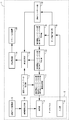
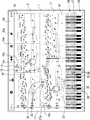
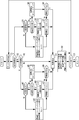
- FIG. 1 It is a block diagram which shows the structure of the score display and performance apparatus which concerns on one Embodiment of this invention. It is explanatory drawing of the screen displayed on a touchscreen by the musical score display and performance program of this invention. It is a flowchart figure which shows the process sequence of the image preparation by the score display / performance program of this invention. It is a figure which shows the example of the score by which the same measure is repeatedly performed. It is a performance sequence table
- a musical score display / performance device displays a musical score display / performance program for a known tablet terminal having a CPU, ROM, RAM, hard disk, etc., in order to display musical score data and perform performance sequence data corresponding thereto.
- the tablet-type terminal includes a touch panel having a display unit capable of displaying a score, an input unit for inputting a touch operation, and a sound output device such as a speaker for reproducing sound.
- the CPU of the score display / performance device executes various processes in accordance with an installed predetermined control program (score display / performance program) to control the score display / performance device as a whole.
- a score display / performance device is, for example, a digital piano sound source connected to a digital piano, displaying score data recorded in the device, and transmitting performance data corresponding to the score data to the digital piano side.
- the user plays a digital piano while viewing the score displayed on the score display / performance device, and the result is input to the device side, and the score data displayed on the device side is displayed.
- the performance state is confirmed (evaluated) by the user by comparing with corresponding model performance data.
- a touch panel 2 included in a score display / performance device (tablet terminal) 1 includes a display unit 3 that can display a score and an input unit 4 that detects a touch operation in the display unit 3.
- the score display / performance device 1 also generates a score image corresponding to the score data, and a score data storage unit 5 for recording score data (image data) to be displayed on the display unit 3 in order to display the score on the touch panel 2.
- a musical score image generation unit 6 is provided.
- the score image generation unit 6 generates a score image from the score data in the score data storage unit 5 and displays it as a score on the touch panel 2 (FIG. 2) of the tablet terminal 1. For example, when the musical score 60 shown in FIG. 4 is displayed, a part (two bars) of the musical score is displayed on the display unit 3, but the musical score is displayed by a touch operation (swipe operation) in the vertical (vertical) direction by the user. The display position can be scrolled up and down.
- the upper and lower stages are alternately switched to display the score paragraph as the performance progresses. That is, when the upper bar is being played, the next played paragraph is displayed in the lower stage, and when the lower bar is being played, the next played paragraph is displayed in the upper stage.
- the musical score display / performance device 1 stores performance sequence data (musical data) corresponding to musical score data (image data) in order to display performance start sequence measures and performance end sequence measures on the touch panel 2.
- a touch operation detection unit 8 that detects a touch operation on the touch panel 2
- a start / end measure setting unit 9 that selects a performance start sequence measure and a performance end sequence measure by the touch operation, and a set performance start sequence measure
- a performance start sequence measure and performance end sequence measure storage unit 10 for storing the performance end sequence measure, and a performance sequence measure image generation unit 11.
- the performance sequence data recorded in the performance sequence data storage unit 7 may be stored from an external MIDI device via a MIDI interface (not shown) of the tablet terminal.
- the input unit 4 of the touch panel 2 is connected to the touch operation detection unit 8 and detects a touch operation by the user on the display unit 3 of the touch panel 2.
- the touch operation detection unit 8 detects a contact mode in which the user's finger touches the screen of the display unit 3 from the contact state information input from the input unit 4.
- the touch mode includes at least the movement of the touch position (swiping operation such as swipe, drag, and flick) by sliding the finger to the right or left while touching the screen of the display unit 3. That is, when the movement of the touch position in the right direction (by a desired tracing operation) is detected on an arbitrary bar area of the musical score data, the performance sequence bar corresponding to the bar area is started as a starting point for performance execution. Determined as a sequence bar, and corresponds to the bar area when detecting movement of the touch position to the left (by another desired drag operation that can be distinguished from the touch position by the drag operation) on any bar area of the score data The performance sequence measure to be performed is determined as the performance end sequence measure which is the end point of performance execution.
- the performance sequence measure corresponding to the measure area can be set as the performance start sequence measure or the performance end sequence measure, so that the touch movement can be performed without preparing another setting means.
- a performance start measure and performance end measure can be specified directly on the score only by the difference in trajectory.
- the performance start sequence measure is specified when the movement of the touch position in the right direction is detected, and the performance end sequence measure is specified when the movement of the touch position in the left direction is detected. It is possible to perform a tracing operation by recognizing that the position or performance end position is designated.
- the performance sequence start measure in the score is determined as the performance start sequence measure, and when the movement of the touch position in the left direction is detected outside the measure area 17, the performance is performed.
- the last measure of the sequence is determined as the end sequence bar. Therefore, it is possible to easily set the performance sequence first measure in the performance start sequence measure or the performance sequence last measure in the performance end sequence measure without displaying the corresponding musical score.
- This touch operation is incorporated in advance in the OS of the tablet-type terminal, and taps (operations in which the finger touches the screen once within a predetermined time) and double taps (two fingers are displayed on the screen within the predetermined time). Twice contact operation), drag (operation to move while the finger is in contact with the screen), pinch (operation where two fingers are in contact with the screen at the same time, and the two touching positions move toward or away from each other) , Swipe (operation to slide the finger while touching the screen), flick (operation that moves the finger touching the screen to move quickly away from the screen)
- the score table / performance program may include a process for uniquely detecting a touch position movement operation such as swiping in the vertical and horizontal directions.
- the bar position in the score is specified based on the position information (for example, coordinate information) received from the input unit 4.
- the position information for example, coordinate information
- the present invention is not limited to this, and the measure may be specified based on the touch operation end position information.
- the performance sequence data storage unit 7 stores performance data of all performance sequence measures, the corresponding bar area (position coordinates) on the score, the performance order of the performance sequence measures, and the like.
- the start / end measure setting unit 9 is a performance start sequence measure in the score displayed on the display unit 3 from the touch position detected by the touch operation detection unit 8 and the measure position information stored in the performance sequence data storage unit 7. Determine the end of sequence bar.
- the performance start sequence measure is a measure that is a starting point when the musical score displayed on the display unit 3 is played.
- the performance end sequence measure is a final measure when the musical score displayed on the display unit 3 is played.
- performance is performed in the performance range starting from the performance start sequence measure and ending at the performance end sequence.
- the performance start sequence measure and the performance end sequence measure are determined, on the touch panel 2 shown in FIG. 2, the performance section is located in the vicinity of the measure region 16s and the measure region 16e corresponding to the performance start sequence measure and the performance end sequence measure.
- the performance start symbols 18 and 19 indicating the start position and the performance end symbols 21 and 22 indicating the end position of the performance section are displayed.
- the performance start symbol 18 is composed of “S”, which is an acronym for START
- the performance start symbol 19 is composed of an isosceles triangle having a vertex on the right side.
- the performance end symbol 21 is composed of “E” which is an initial of END
- the performance end symbol 22 is configured by an isosceles triangle having a vertex on the left side.
- the performance end sequence measure cannot be set forward of the performance start sequence measure or the performance start sequence measure cannot be set behind the performance end sequence measure.
- the performance order is detected from the data in the performance sequence data storage unit 7, and the performance order in the performance sequence measure shown in FIG. Is displayed or pronounced on the display unit 3 to indicate that the setting is impossible.
- the performance start sequence measure and performance end sequence measure storage unit 10 records the performance start sequence measure and performance end sequence measure determined by the start / end measure setting unit 9.
- the performance sequence bar image generation unit 11 performs the above-mentioned data stored in the performance sequence data recording unit 7 and the performance start sequence bar and performance end sequence bar recorded in the performance start sequence bar and performance end sequence bar storage unit 10. Then, an image to be displayed on the display unit 3 as a performance start sequence measure and a performance end sequence measure is generated.
- performance start symbols 18 and 19, performance end symbols 21, and 21 that respectively indicate the performance start sequence measure and the performance end sequence measure generated by the performance sequence measure image generation unit 11, as shown in FIG. 22, images of performance numbers 19a and 22a and performance sequence measure numbers 20 and 23 are displayed.
- the touch operation detection unit 8 is connected to the performance control unit 12, and the performance control unit 12 gives an instruction to execute a desired performance. That is, by performing touch operations on icons such as a performance start 24a and performance stop 24b in the performance control display section 24 of the touch panel 2 shown in FIG. Processing such as music playback according to the response is performed.
- the tone generation unit 13 generates a tone based on the data of the performance start sequence measure and the performance end sequence measure from the performance sequence data storage unit 7, the performance start sequence measure and the performance end sequence measure storage unit 10, and sends it to the music reproduction unit 14. Output.
- the musical sound reproducing unit 14 includes a sound source for reproducing the musical sound built in the tablet terminal, and outputs a musical sound signal to the sound output device 15 to reproduce the sound.
- the performance sequence measure (performance start sequence measure or performance end sequence) set to start or end.
- the performance sequence bar FIG. 5
- the performance start sequence measure and the performance end sequence are already determined by the touch operation, when the second rightward movement of the touch position is detected on the measure area 16s corresponding to the performance start sequence measure.
- the second performance sequence measure corresponding to the measure is determined as the performance start sequence measure.
- the second performance sequence measure when the third touch position movement in the right direction is detected on the measure area 16s corresponding to the performance start sequence measure, The third performance sequence measure corresponding to the measure is determined as the performance start sequence measure.
- the number of performances of the measure is 3, and when the fourth touch operation is detected, the number of times cannot be counted any more, so the first performance sequence measure corresponding to the measure is set as the performance start sequence measure. decide.
- the measure is detected in a situation where a performance end sequence has already been determined by a touch operation.
- the second performance sequence measure corresponding to is determined as a performance end sequence measure.
- the third performance sequence measure corresponding to the measure is determined as the performance end sequence measure.
- the first performance sequence measure corresponding to the measure is set as the performance end sequence measure. decide.
- a performance start symbol 18 and a performance number 19a indicating the number of times of the performance sequence bar corresponding to the bar area 16s are displayed as the performance start symbol (right side). Isosceles triangles having vertices at (19).
- the performance number 19a is the number of performances of the measure corresponding to the performance start sequence measure with the performance number (3 times in the case of measure E in this example) of the measure 60 (FIG. 4) corresponding to the performance start sequence measure as the denominator. Is displayed as a fraction with the numerator being the number of performances (1 to 3 times in the case of measure E in this example).
- a performance sequence measure number 20 indicating the number of the performance sequence measure (FIG. 5) from the beginning of the score 60 is displayed at the lower left in the measure area 16s corresponding to the performance start sequence measure.
- the performance sequence measure number 20 is displayed as a fraction with the total number of performance sequence measures in the score 60 (32 in the case of the score 60 in this example) as the denominator and the performance start sequence measure number as the numerator.
- a performance end symbol 21 and a performance number 22a indicating the number of performances of the performance sequence measure corresponding to the measure region 16e are played at the upper right in the measure region 16e corresponding to the performance end sequence measure.
- An end symbol (an isosceles triangle having a vertex on the left side) 22 is displayed.
- the performance number 22a is the number of performances in the musical score 60 (FIG. 4) of the measure corresponding to the performance end sequence measure (3 times in the case of measure G in this example), and the number of times of the measure corresponding to the performance end sequence measure. Is displayed as a fraction with the numerator as the number of performances (1 to 3 times in the case of measure G in this example).
- a performance sequence measure number 23 indicating the number of the performance sequence measure (FIG. 5) from the beginning of the score 60 is displayed at the lower right in the measure area 16e corresponding to the performance end sequence measure.
- the performance sequence measure number 23 is displayed as a fraction with the total number of performance sequence measures in the score 60 (32 in the case of the score 60 in this example) as the denominator and the performance end sequence measure number as the numerator.
- the performance start symbols 18 and 19 of the performance start sequence bar and the performance sequence bar number 20 are located at the upper left and right positions within the bar area 16s, and the performance end symbols 21 and 22 of the performance end sequence bar and the performance sequence bar number 23 are within the bar area 16e. The reason why the symbols are displayed at the upper and lower positions on the right side is to prevent the symbols and number display from overlapping when the performance start measure and the performance end measure are the same measure.
- performance start symbols 18 and 19 are displayed in the bar area 16s, and are set as performance start sequence bars.
- the performance number 19a is displayed as "1/3" and the performance sequence bar number 20 is displayed as "5/32".
- measure E measure region 16 s
- performance end symbols 21 and 22 are displayed in the bar area 16e, and are set to the performance end sequence bar.
- the performance number 22a is displayed as "3/3”
- the performance sequence bar number 23 is displayed as "29/32".
- measure G (measure region 16e) of the determined performance end sequence is the measure No. 29 in the performance order in the score 60 of FIG. 4 and is the third performance of measure G. Yes. Accordingly, when the performance is started by touching the performance start 24a of the performance control display unit 24 in this state, "E, F, G, H, A, B, C, D, E, F, G, H, I” , J, K, L, M, N, O, P, A, B, C, D, E, F, G ".
- the number of times in the score 60 is increased. It is possible to visually grasp whether it corresponds to the measure of the performance sequence measure (in the case of FIG. 2, the performance start sequence measure is the first and the performance end sequence measure is the third).
- the touch panel 2 is provided with a performance timing information display unit in which performance timing information of each note shown in the score 60 is displayed at a position below the score.
- the performance timing information display section is composed of a keyboard display section 25, a timing display section 26 having the vertical direction as a time axis, and a pronunciation reference line 27.
- the timing display section 26 displays the pitch of each note of the score 60.
- a rectangular pronunciation mark 28 is displayed above the corresponding keyboard display section 25.
- the keyboard display unit 25 is composed of an image of a piano keyboard, and a desired sound corresponding to the keyboard position is generated by touching the corresponding keyboard.
- the timing display section 26 has a time axis in the vertical direction, and can display a sound mark 28 for approximately one measure.
- the sound generation mark 28 includes information on the length of the note (a long note has a longer vertical direction in the rectangle), moves from the top to the bottom of the timing display unit 26 in synchronization with the performance, and generates a sound generation reference line. Pronunciation at the timing of passing 27.
- the sounding mark 28 displayed on the performance timing information display section starts from the selected performance sequence measure when the performance start display icon 24a of the performance control display section 24 is selected in a state where the performance performance measure is selected. Displayed in sync with the performance.
- the performance timing of performance sequence data for each performance time can be confirmed on the score displayed on the touch panel 2 in the case of a score that plays the same measure multiple times.
- the touch operation detection unit 8 detects the touch operation
- the performance sequence measure image generation unit 11 performs the performance start sequence measure and the performance end sequence measure.
- a procedure for generating images of performance start symbols 18 and 19, performance end symbols 21 and 22, performance numbers 19 a and 22 a, and performance sequence measure numbers 20 and 23 corresponding to the above will be described with reference to the flowchart of FIG. 3.
- the touch operation detection unit 8 detects a user's touch operation performed at the input unit 4 (step 31). Next, it is determined whether the touch operation is a right movement of the touch position (step 32). If the touch operation is a rightward movement of the touch position, it is determined whether or not the touch operation is within each bar area in the score displayed on the touch panel 2 (step 33). If the touch operation is outside the measure area, the performance start sequence measure is set to the first performance sequence measure in the score (step 34), and then the performance count is set to "1" (step 37).
- the performance start sequence measure is updated (step 36), and the performance time is set to "1" (step 37).
- the performance start sequence measure is a performance sequence measure that is played the first time with respect to a measure that is repeated in the score 60.
- step 38 the performance times are counted up (step 38), and it is determined whether or not there is a performance time (step 39).
- the performance time is set to “1” (Ste 37).
- step 37 and when step 39 is Y the musical score image generated by the musical score image generating unit 6 is drawn (step 51).
- the performance start sequence measure is a performance sequence measure that is performed the second time for a measure that is repeatedly performed in the score 60.
- step 42 If the touch operation in step 32 is not a rightward movement of the touch position, it is determined whether or not the touch operation is a leftward movement of the touch position (step 42). If the touch operation in step 42 is a leftward movement of the touch position, it is determined whether or not the touch operation is within each bar area in the score displayed on the touch panel 2 (step 43). If the touch operation is outside the measure area, the performance end sequence measure is set as the last performance sequence measure in the score (step 44), and then the performance time is set to "1" (step 47).
- the performance end sequence measure is updated (step 46), and the performance time is set to "1" (step 47).
- the performance end sequence measure is a performance sequence measure that is played the first time with respect to a measure that is repeatedly performed in the score 60.
- step 48 the number of performances is counted up (step 48), and it is determined whether there is already a performance number (step 49). If there is no performance time, the performance time is set to “1” (step 47).
- step 47 and when step 49 is Y the musical score image generated by the musical score image generating unit 6 is drawn (step 51). For example, when the number of performances counted up in step 38 is “2”, the performance start sequence measure is a performance sequence measure that is performed the second time for a measure that is repeatedly performed in the score 60.
- step 42 if the touch operation is not a leftward movement, the score image generated by the score image generation unit 6 is drawn (step 51).
- Drawing of the performance start symbol 18, performance end symbol 21, performance numbers 19a and 22a and performance sequence measure numbers 20 and 23 is executed (step 52).
- the performance start symbols 18, 19 and the performance end symbols 21, 22, the performance numbers 19a, 22a and the performance sequence measure numbers 20, 23 generated by the performance sequence measure image generation unit 11 are drawn to display the touch panel 2. It is displayed on part 3 (step 52).
- step 53 It is determined whether or not the application is terminated (step 53). If it is not terminated, the process returns to step 31 to continue the process.
- the performance sequence measure corresponding to the measure area is set as the performance start sequence measure, and the measure area is displayed.
- the performance range corresponding to the measure area is set as the performance end sequence measure, so that the performance range can be specified intuitively with a simple operation.
- the second and subsequent times corresponding to the measure are detected. Since the performance sequence measure is determined as the performance start sequence measure or the performance end sequence measure, in the musical score 60 that is performed by repeating the same measure multiple times, the performance sequence measures (measures having multiple performance times) for the second and subsequent times are also included. It is possible to easily set a performance start sequence measure or a performance end sequence measure that grasps the performance order.
- the performance times in the performance start sequence measure or the performance end sequence measure can be set with a simple touch operation. Further, the number of performances of the start bar and the end bar in the performance range can be confirmed on the score displayed on the touch panel 2.
- the performance start may be designated by swiping downward and the performance end may be designated by swiping upward.
- the start of performance may be specified using “()” for opening the parenthesis and “” for closing the end of the performance.
- designating with a gesture it may be possible to designate the start and end of performance by performing a touch operation so that the characters “s” and “e” are drawn in a single stroke on the bar area.
Landscapes
- Physics & Mathematics (AREA)
- Engineering & Computer Science (AREA)
- Acoustics & Sound (AREA)
- Multimedia (AREA)
- Auxiliary Devices For Music (AREA)
- Electrophonic Musical Instruments (AREA)
Priority Applications (1)
| Application Number | Priority Date | Filing Date | Title |
|---|---|---|---|
| US14/915,456 US9640161B2 (en) | 2014-03-24 | 2015-01-05 | Musical score displaying and performing program, and musical score displaying and performing device |
Applications Claiming Priority (2)
| Application Number | Priority Date | Filing Date | Title |
|---|---|---|---|
| JP2014059890A JP6432966B2 (ja) | 2014-03-24 | 2014-03-24 | 楽譜表示・演奏プログラム及び楽譜表示・演奏装置 |
| JP2014-059890 | 2014-03-24 |
Publications (1)
| Publication Number | Publication Date |
|---|---|
| WO2015146201A1 true WO2015146201A1 (ja) | 2015-10-01 |
Family
ID=54194745
Family Applications (1)
| Application Number | Title | Priority Date | Filing Date |
|---|---|---|---|
| PCT/JP2015/050023 Ceased WO2015146201A1 (ja) | 2014-03-24 | 2015-01-05 | 楽譜表示・演奏プログラム及び楽譜表示・演奏装置 |
Country Status (3)
| Country | Link |
|---|---|
| US (1) | US9640161B2 (enExample) |
| JP (1) | JP6432966B2 (enExample) |
| WO (1) | WO2015146201A1 (enExample) |
Families Citing this family (3)
| Publication number | Priority date | Publication date | Assignee | Title |
|---|---|---|---|---|
| JP6950180B2 (ja) * | 2016-12-26 | 2021-10-13 | カシオ計算機株式会社 | 楽音データ処理方法及び楽音データ処理装置 |
| JP6823514B2 (ja) * | 2017-03-21 | 2021-02-03 | 株式会社河合楽器製作所 | 楽譜表示・演奏プログラム及び楽譜表示・演奏装置 |
| CN108846140A (zh) * | 2018-07-11 | 2018-11-20 | 江苏满运软件科技有限公司 | 一种数据图的显示方法及系统 |
Citations (4)
| Publication number | Priority date | Publication date | Assignee | Title |
|---|---|---|---|---|
| JP2004341079A (ja) * | 2003-05-14 | 2004-12-02 | Kawai Musical Instr Mfg Co Ltd | 表示楽譜演奏用区間指定装置及び表示楽譜指定区間演奏装置 |
| JP2006039326A (ja) * | 2004-07-28 | 2006-02-09 | Yamaha Corp | 自動演奏データ特性変更装置及びそのプログラム |
| JP2013200455A (ja) * | 2012-03-26 | 2013-10-03 | Mitsubishi Denki Information Technology Corp | 演奏練習支援システム |
| JP2015026069A (ja) * | 2013-06-17 | 2015-02-05 | ヤマハ株式会社 | 表示コンテンツに対応付けてオーディオを記録する表示記録方法を実現するためのプログラム、当該表示記録方法および表示記録装置 |
Family Cites Families (15)
| Publication number | Priority date | Publication date | Assignee | Title |
|---|---|---|---|---|
| US3460425A (en) * | 1966-04-04 | 1969-08-12 | Paul Edwin Kiepe | Electrically operated musical device |
| US3562394A (en) * | 1969-02-18 | 1971-02-09 | Paul Edwin Kiepe | Electronic musical instrument with finger-depressable note heads on musical score |
| US4288537A (en) * | 1980-01-14 | 1981-09-08 | Mattel, Inc. | Electronic game |
| JPH09114453A (ja) | 1995-09-28 | 1997-05-02 | Kawai Musical Instr Mfg Co Ltd | 音楽情報の表示編集装置及び同表示編集演奏装置 |
| BE1010409A6 (fr) * | 1996-07-08 | 1998-07-07 | Continental Photo | Dispositif et procede d'interpretation d'une oeuvre musicale a partir de la partition. |
| US7098392B2 (en) * | 1996-07-10 | 2006-08-29 | Sitrick David H | Electronic image visualization system and communication methodologies |
| US7074999B2 (en) * | 1996-07-10 | 2006-07-11 | Sitrick David H | Electronic image visualization system and management and communication methodologies |
| JP4062931B2 (ja) * | 2002-02-18 | 2008-03-19 | ヤマハ株式会社 | 楽譜型情報処理装置、その制御方法およびプログラム |
| US7663044B2 (en) * | 2002-09-04 | 2010-02-16 | Kabushiki Kaisha Kawai Gakki Seisakusho | Musical performance self-training apparatus |
| TWI229845B (en) * | 2003-10-15 | 2005-03-21 | Sunplus Technology Co Ltd | Electronic musical score apparatus |
| US7906720B2 (en) * | 2009-05-05 | 2011-03-15 | At&T Intellectual Property I, Lp | Method and system for presenting a musical instrument |
| JP5589432B2 (ja) * | 2010-02-23 | 2014-09-17 | ヤマハ株式会社 | 発音制御装置及びプログラム |
| CN102682752B (zh) * | 2011-03-07 | 2014-11-05 | 卡西欧计算机株式会社 | 乐谱信息生成装置及其方法、乐音生成控制装置及其方法 |
| JP2012215630A (ja) * | 2011-03-31 | 2012-11-08 | Kawai Musical Instr Mfg Co Ltd | 楽譜演奏装置及び楽譜演奏プログラム |
| JP5920266B2 (ja) * | 2013-03-25 | 2016-05-18 | カシオ計算機株式会社 | 楽譜演奏装置、楽譜演奏方法及びプログラム |
-
2014
- 2014-03-24 JP JP2014059890A patent/JP6432966B2/ja not_active Expired - Fee Related
-
2015
- 2015-01-05 US US14/915,456 patent/US9640161B2/en not_active Expired - Fee Related
- 2015-01-05 WO PCT/JP2015/050023 patent/WO2015146201A1/ja not_active Ceased
Patent Citations (4)
| Publication number | Priority date | Publication date | Assignee | Title |
|---|---|---|---|---|
| JP2004341079A (ja) * | 2003-05-14 | 2004-12-02 | Kawai Musical Instr Mfg Co Ltd | 表示楽譜演奏用区間指定装置及び表示楽譜指定区間演奏装置 |
| JP2006039326A (ja) * | 2004-07-28 | 2006-02-09 | Yamaha Corp | 自動演奏データ特性変更装置及びそのプログラム |
| JP2013200455A (ja) * | 2012-03-26 | 2013-10-03 | Mitsubishi Denki Information Technology Corp | 演奏練習支援システム |
| JP2015026069A (ja) * | 2013-06-17 | 2015-02-05 | ヤマハ株式会社 | 表示コンテンツに対応付けてオーディオを記録する表示記録方法を実現するためのプログラム、当該表示記録方法および表示記録装置 |
Also Published As
| Publication number | Publication date |
|---|---|
| JP6432966B2 (ja) | 2018-12-05 |
| US9640161B2 (en) | 2017-05-02 |
| US20160300554A1 (en) | 2016-10-13 |
| JP2015184420A (ja) | 2015-10-22 |
Similar Documents
| Publication | Publication Date | Title |
|---|---|---|
| US8536437B2 (en) | Musical score playing device and musical score playing program | |
| JP5890968B2 (ja) | ゲーム装置、ゲームプログラム | |
| JP6123066B2 (ja) | ゲーム装置及びゲームプログラム | |
| JP2014012138A (ja) | 音楽ゲームを進める方法、装置およびプログラム | |
| WO2016158213A1 (ja) | ゲーム装置及びゲームプログラム | |
| JP6432966B2 (ja) | 楽譜表示・演奏プログラム及び楽譜表示・演奏装置 | |
| US20140047970A1 (en) | Portable piano keyboard computer | |
| JP2016182245A (ja) | ゲーム装置及びプログラム | |
| JP5932905B2 (ja) | プログラム、及びゲームシステム | |
| JP6823514B2 (ja) | 楽譜表示・演奏プログラム及び楽譜表示・演奏装置 | |
| JP7107720B2 (ja) | 運指表示プログラム | |
| JP5935815B2 (ja) | 音声合成装置およびプログラム | |
| JP2015184419A (ja) | 楽譜表示・演奏プログラム及び楽譜表示・演奏装置 | |
| JP6590782B2 (ja) | ゲーム装置、プログラム | |
| US11986732B2 (en) | Non-transitory storage medium having information processing program stored therein, information processing apparatus, and information processing method | |
| JP6149917B2 (ja) | 音声合成装置および音声合成方法 | |
| JP5597825B2 (ja) | プログラム、情報記憶媒体、ゲームシステム、及び入力指示装置 | |
| JP5773956B2 (ja) | 楽曲演奏装置、楽曲演奏制御方法及びプログラム | |
| JP5742303B2 (ja) | 楽音生成制御装置および楽音生成制御プログラム | |
| JP2006136380A (ja) | プログラム、情報記憶媒体及びゲーム装置 | |
| JP6782491B2 (ja) | 楽音発生装置、楽音発生方法およびプログラム | |
| JP6387382B2 (ja) | ゲーム装置、プログラム | |
| JP2018101047A (ja) | 楽譜表示プログラム | |
| JP6328286B2 (ja) | ゲーム装置及びゲームプログラム | |
| JP6045660B2 (ja) | ゲーム装置、ゲームプログラム |
Legal Events
| Date | Code | Title | Description |
|---|---|---|---|
| 121 | Ep: the epo has been informed by wipo that ep was designated in this application |
Ref document number: 15768929 Country of ref document: EP Kind code of ref document: A1 |
|
| WWE | Wipo information: entry into national phase |
Ref document number: 14915456 Country of ref document: US |
|
| NENP | Non-entry into the national phase |
Ref country code: DE |
|
| 122 | Ep: pct application non-entry in european phase |
Ref document number: 15768929 Country of ref document: EP Kind code of ref document: A1 |