WO2015099169A1 - フルクトースが付加された糖質の製造方法 - Google Patents
フルクトースが付加された糖質の製造方法 Download PDFInfo
- Publication number
- WO2015099169A1 WO2015099169A1 PCT/JP2014/084685 JP2014084685W WO2015099169A1 WO 2015099169 A1 WO2015099169 A1 WO 2015099169A1 JP 2014084685 W JP2014084685 W JP 2014084685W WO 2015099169 A1 WO2015099169 A1 WO 2015099169A1
- Authority
- WO
- WIPO (PCT)
- Prior art keywords
- amino acid
- acid sequence
- fructofuranosidase
- seq
- polypeptide
- Prior art date
- Legal status (The legal status is an assumption and is not a legal conclusion. Google has not performed a legal analysis and makes no representation as to the accuracy of the status listed.)
- Ceased
Links
Images

Classifications
-
- C—CHEMISTRY; METALLURGY
- C12—BIOCHEMISTRY; BEER; SPIRITS; WINE; VINEGAR; MICROBIOLOGY; ENZYMOLOGY; MUTATION OR GENETIC ENGINEERING
- C12P—FERMENTATION OR ENZYME-USING PROCESSES TO SYNTHESISE A DESIRED CHEMICAL COMPOUND OR COMPOSITION OR TO SEPARATE OPTICAL ISOMERS FROM A RACEMIC MIXTURE
- C12P19/00—Preparation of compounds containing saccharide radicals
- C12P19/02—Monosaccharides
-
- C—CHEMISTRY; METALLURGY
- C12—BIOCHEMISTRY; BEER; SPIRITS; WINE; VINEGAR; MICROBIOLOGY; ENZYMOLOGY; MUTATION OR GENETIC ENGINEERING
- C12N—MICROORGANISMS OR ENZYMES; COMPOSITIONS THEREOF; PROPAGATING, PRESERVING, OR MAINTAINING MICROORGANISMS; MUTATION OR GENETIC ENGINEERING; CULTURE MEDIA
- C12N15/00—Mutation or genetic engineering; DNA or RNA concerning genetic engineering, vectors, e.g. plasmids, or their isolation, preparation or purification; Use of hosts therefor
- C12N15/09—Recombinant DNA-technology
- C12N15/63—Introduction of foreign genetic material using vectors; Vectors; Use of hosts therefor; Regulation of expression
- C12N15/70—Vectors or expression systems specially adapted for E. coli
-
- C—CHEMISTRY; METALLURGY
- C12—BIOCHEMISTRY; BEER; SPIRITS; WINE; VINEGAR; MICROBIOLOGY; ENZYMOLOGY; MUTATION OR GENETIC ENGINEERING
- C12N—MICROORGANISMS OR ENZYMES; COMPOSITIONS THEREOF; PROPAGATING, PRESERVING, OR MAINTAINING MICROORGANISMS; MUTATION OR GENETIC ENGINEERING; CULTURE MEDIA
- C12N9/00—Enzymes; Proenzymes; Compositions thereof; Processes for preparing, activating, inhibiting, separating or purifying enzymes
- C12N9/14—Hydrolases (3)
- C12N9/24—Hydrolases (3) acting on glycosyl compounds (3.2)
- C12N9/2402—Hydrolases (3) acting on glycosyl compounds (3.2) hydrolysing O- and S- glycosyl compounds (3.2.1)
- C12N9/2405—Glucanases
- C12N9/2408—Glucanases acting on alpha -1,4-glucosidic bonds
- C12N9/2431—Beta-fructofuranosidase (3.2.1.26), i.e. invertase
-
- C—CHEMISTRY; METALLURGY
- C12—BIOCHEMISTRY; BEER; SPIRITS; WINE; VINEGAR; MICROBIOLOGY; ENZYMOLOGY; MUTATION OR GENETIC ENGINEERING
- C12P—FERMENTATION OR ENZYME-USING PROCESSES TO SYNTHESISE A DESIRED CHEMICAL COMPOUND OR COMPOSITION OR TO SEPARATE OPTICAL ISOMERS FROM A RACEMIC MIXTURE
- C12P19/00—Preparation of compounds containing saccharide radicals
- C12P19/14—Preparation of compounds containing saccharide radicals produced by the action of a carbohydrase (EC 3.2.x), e.g. by alpha-amylase, e.g. by cellulase, hemicellulase
-
- C—CHEMISTRY; METALLURGY
- C12—BIOCHEMISTRY; BEER; SPIRITS; WINE; VINEGAR; MICROBIOLOGY; ENZYMOLOGY; MUTATION OR GENETIC ENGINEERING
- C12P—FERMENTATION OR ENZYME-USING PROCESSES TO SYNTHESISE A DESIRED CHEMICAL COMPOUND OR COMPOSITION OR TO SEPARATE OPTICAL ISOMERS FROM A RACEMIC MIXTURE
- C12P21/00—Preparation of peptides or proteins
-
- C—CHEMISTRY; METALLURGY
- C12—BIOCHEMISTRY; BEER; SPIRITS; WINE; VINEGAR; MICROBIOLOGY; ENZYMOLOGY; MUTATION OR GENETIC ENGINEERING
- C12Y—ENZYMES
- C12Y302/00—Hydrolases acting on glycosyl compounds, i.e. glycosylases (3.2)
- C12Y302/01—Glycosidases, i.e. enzymes hydrolysing O- and S-glycosyl compounds (3.2.1)
- C12Y302/01026—Beta-fructofuranosidase (3.2.1.26), i.e. invertase
-
- C—CHEMISTRY; METALLURGY
- C07—ORGANIC CHEMISTRY
- C07K—PEPTIDES
- C07K2319/00—Fusion polypeptide
- C07K2319/01—Fusion polypeptide containing a localisation/targetting motif
Definitions
- the present invention relates to a method for producing a carbohydrate to which fructose has been added, and in particular, a production method capable of efficiently producing a carbohydrate to which fructose has been added by ⁇ -fructofuranosidase, and to be used for the production method.
- the present invention relates to an Escherichia coli capable of producing lysate, a composition and a polypeptide, and a carbohydrate added with fructose produced by the production method.
- ⁇ -fructofuranosidase is an enzyme that recognizes and hydrolyzes sugar fructose containing fructose residues at its ends.
- Some ⁇ -fructofuranosidases have an activity of transferring fructose generated by hydrolysis to a receptor substrate. That is, a fructose-added saccharide can be produced by transferring fructose to a saccharide or a substance other than a saccharide by ⁇ -fructofuranosidase having the activity.
- Patent Document 1 As a method for producing a carbohydrate to which fructose is added by ⁇ -fructofuranosidase, for example, a method in which a sugar substrate is brought into contact with a Koji fungus mycelium-immobilized carrier that holds ⁇ -fructofuranosidase (patent) Document 1) and a method using levansucrase or extracellular invertase derived from Zymomonas sp. Mobilis (Patent Document 2) are respectively disclosed.
- Patent Document 1 is a method for producing oligosaccharides by immobilizing mycelia of Aspergillus oryzae having inherent ⁇ -fructofuranosidase on a carrier such as diatomaceous earth or perlite. It is not easy to produce oligosaccharides simply and efficiently using a sidase. This is because, in this method, when oligosaccharide is produced by introducing exogenous ⁇ -fructofuranosidase, it is necessary to delete the activity of Koji fungus endogenous ⁇ -fructofuranosidase in advance for accurate evaluation. This is because it is not easy to handle.
- Patent Document 2 is also a method for producing a fructose glycoside using ⁇ -fructofuranosidase derived from Zymomonas sp. Mobilis, regardless of the origin of ⁇ -fructofuranosidase. Is not a method that can be manufactured.
- the present invention has been made to solve such problems, and since it does not inherently have ⁇ -fructofuranosidase, it is easy to evaluate the activity of the introduced ⁇ -fructofuranosidase, and By expressing exogenous ⁇ -fructofuranosidase in E. coli that is easy to handle such as transformation and culture, it is possible to efficiently and easily add fructose-added carbohydrates regardless of the origin of ⁇ -fructofuranosidase. It is an object to provide a production method that can be produced, E. coli that can be used in the production method, a composition and a polypeptide, and a carbohydrate to which fructose produced by the production method is added.
- a method for producing a carbohydrate to which fructose is added according to the present invention includes E. coli in which the nucleic acids of the following (a) and (b) are expressed as one polypeptide, and killed bacteria of the expressed E. coli A polypeptide obtained from the composition or the expressed Escherichia coli and comprising the amino acid sequence encoded by the nucleic acid of (b) below is contacted with a carbohydrate containing a fructose residue at the end and a receptor substrate.
- A a nucleic acid encoding an amino acid sequence having 45% or more identity with either the amino acid sequence of the PgsA protein shown in SEQ ID NO: 6 or the amino acid sequence of the CapA protein shown in SEQ ID NO: 34, (b) A nucleic acid encoding the amino acid sequence of ⁇ -fructofuranosidase.
- the Escherichia coli according to the present invention allows E. coli containing the following nucleic acids (a) and (b) to be expressed as one polypeptide or the following nucleic acids (a) and (b) as a single polypeptide.
- a nucleic acid encoding the amino acid sequence of ⁇ -fructofuranosidase A nucleic acid encoding the amino acid sequence of ⁇ -fructofuranosidase.
- the composition according to the present invention is a composition comprising killed Escherichia coli cells wherein the nucleic acids of the following (a) and (b) are expressed as one polypeptide; (a) PgsA shown in SEQ ID NO: 6 A nucleic acid encoding an amino acid sequence having 45% or more identity with either the amino acid sequence of the protein or the amino acid sequence of CapA protein shown in SEQ ID NO: 34, and (b) a nucleic acid encoding the amino acid sequence of ⁇ -fructofuranosidase.
- a polypeptide according to the present invention is a polypeptide obtained from Escherichia coli in which the following nucleic acids (a) and (b) are expressed as one polypeptide, and is encoded by the nucleic acid (b) below.
- B a nucleic acid encoding the amino acid sequence of ⁇ -fructofuranosidase.
- the fructose-added saccharide according to the present invention is a saccharide to which fructose is added, produced by the production method according to (1).
- a carbohydrate to which fructose is added According to the method for producing a carbohydrate to which fructose is added according to the present invention, or Escherichia coli, a composition or a polypeptide which can be used in the production method, ⁇ -fructofuranosidase derived from various organisms is used, A carbohydrate to which fructose is added can be easily and efficiently produced.
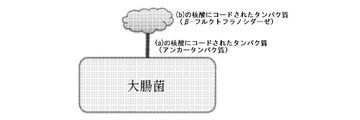
- FIG. 1 is a diagram schematically showing an embodiment of “Escherichia coli expressing nucleic acids (a) and (b) as one polypeptide” according to the present invention.
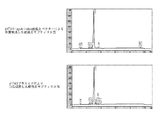
- 3 is an HPLC chart showing a sugar composition in a reaction solution obtained by bringing a 45% sucrose solution into contact with recombinant Subtilis transformed with a pHT43-pgsA-indica recombinant vector or a pHT43 plasmid.
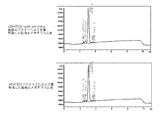
- reaction solutions (sample reaction solutions) obtained by bringing hydroquinone as an acceptor substrate and sucrose as a donor substrate into contact with recombinant E. coli transformed with the pCDF-pgsA-indica recombinant vector and various control reaction solutions (control) 3 is an HPLC chart showing the composition of substances in reaction solutions No. 1 to 3).
- “carbohydrate” includes not only compounds represented by C n (H 2 O) m but also aldehydes and ketone derivatives of polyhydric alcohols, derivatives and condensates closely related to them. That is, the “carbohydrate” according to the present invention includes monosaccharides, oligosaccharides and polysaccharides, complex lipids in which these are covalently bonded to proteins and lipids, alcohols, phenols and saponins on the reducing groups of monosaccharides and oligosaccharides. And glycosides linked with aglycones such as pigments (Iwanami Biological Encyclopedia 4th Edition; published by Iwanami Shoten, 2005). Further, the “sugar” according to the present invention may be used interchangeably with “sugar” or “carbohydrate”.
- fructose-added carbohydrate refers to a compound containing one or more fructose residues as a constituent.
- specific examples of the “saccharide with fructose added” according to the present invention include, for example, a disaccharide formed by binding fructose and a monosaccharide other than fructose, and an oligo containing fructose residues such as nystose or kestose.
- examples include sugars and polysaccharides containing fructose residues, sugar alcohols containing fructose residues, and glycosides formed by binding fructose and a substance other than sugar (aglycone).
- oligosaccharide refers to a saccharide formed by binding about 3 to a dozen monosaccharides, and is used interchangeably with “oligosaccharide” or “sucrose”.
- glycoside generally refers to an organic compound in which sugar and a substance other than sugar (aglycone) are combined (encyclopedia Mypedia; Hitachi Solutions Business, May 2010). This refers to a compound in which an acetal or hemiketal hydroxy group is substituted with an atom or reactive group of a substance other than sugar (Biochemical Dictionary 4th edition; published by Tokyo Chemical Dojinsha, December 2007).
- the glycoside according to the present invention may be naturally occurring or artificially synthesized, and includes O-glycosides, N-glycosides, S-glycosides, and C-glycosides.
- the method for producing a carbohydrate added with fructose includes: A) Escherichia coli expressing the following nucleic acids (a) and (b) as one polypeptide, (A) an amino acid sequence having 45% or more identity with either the amino acid sequence of the PgsA protein shown in SEQ ID NO: 6 or the amino acid sequence of the CapA protein shown in SEQ ID NO: 34 (hereinafter sometimes referred to as “predetermined amino acid sequence”) .) A nucleic acid encoding (B) a nucleic acid encoding the amino acid sequence of ⁇ -fructofuranosidase, B) A composition comprising killed Escherichia coli wherein the nucleic acid of (a) and (b) is expressed as one polypeptide, C) A polypeptide obtained from Escherichia coli in which the nucleic acids of (a) and (b) are expressed as one polypeptide, and a polypeptide comprising the amino acid sequence encoded by the nucleic
- FIG. 1 schematically shows an embodiment of A) “Escherichia coli expressing nucleic acids (a) and (b) as a single polypeptide”.
- a protein consisting of a predetermined amino acid sequence encoded by the nucleic acid (a)
- the present inventors consider that the ⁇ -fructofuranosidase portion encoded by the nucleic acid (b) is expressed on the cell surface of E. coli by binding to the E. coli cell membrane.
- nucleic acid refers to a compound in which a plurality of nucleotides are linked by a phosphodiester bond, and may be deoxyribonucleic acid (DNA) or ribonucleic acid (RNA).
- polypeptide refers to a compound in which a plurality of amino acids are bonded by peptide bonds, and may be used interchangeably with a protein regardless of the sequence length.
- the nucleic acids of (a) and (b) are expressed as one polypeptide
- An amino acid sequence is expressed as a single polypeptide.
- the amino acid sequence encoded by the nucleic acid (a) and the amino acid sequence encoded by the nucleic acid (b) are not limited, and either may be on the amino-terminal side, The terminal side may be sufficient.
- the single polypeptide may consist only of the amino acid sequence encoded by the nucleic acid of (a) and the amino acid sequence encoded by the nucleic acid of (b), and the amino acid encoded by the nucleic acid of (a)
- One or more other amino acids may be inserted or added between the sequence and the amino acid sequence encoded by the nucleic acid (b) or at the amino terminus and / or carboxyl terminus of the amino acid sequence.
- A "Amino acid sequence (predetermined amino acid sequence) having 45% or more identity with either the amino acid sequence of PgsA protein shown in SEQ ID NO: 6 or the amino acid sequence of CapA protein shown in SEQ ID NO: 34” is: The amino acid sequence of an anchor protein (hereinafter sometimes simply referred to as “anchor protein”) for expressing ⁇ -fructofuranosidase consisting of the amino acid sequence encoded by the nucleic acid (1) on the cell surface of E. coli.
- anchor protein an anchor protein derived from Bacillus subtilis
- CapA protein shown in SEQ ID NO: 34 is an anchor protein derived from Bacillus megaterium DSM319 strain.
- a protein having a predetermined amino acid sequence can be used as an anchor protein for expressing ⁇ -fructofuranosidase on the cell surface of E. coli.
- the identity between a predetermined amino acid sequence and other amino acid sequences can be confirmed according to a conventional method.
- FASTA http://www.genome.JP/tools/fasta/
- BLAST Basic local alignment search tool
- PSI-BLAST Position-Specific Iterated BLAST
- identity indicates coincidence and is used interchangeably with “identity”.
- the predetermined amino acid sequence has one or more amino acids deleted in the amino acid sequence of SEQ ID NO: 6 or SEQ ID NO: 34 within a range in which the identity with the amino acid sequence of SEQ ID NO: 6 or SEQ ID NO: 34 does not become less than 45%, It can be obtained by substitution, insertion or addition. Further, according to a conventional method, from an amino acid sequence database such as ProteinProInformation Resource (PIR), SWISS-PROT, TrEMBL, Protein Research Foundation (PRF), GenPept (NCBI Protein database), FASTA (http: // www.
- PIR ProteinProInformation Resource
- SWISS-PROT SWISS-PROT
- TrEMBL Protein Research Foundation
- PRF Protein Research Foundation
- GenPept NCBI Protein database
- FASTA http: // www.
- amino acid sequence of SEQ ID NO: 6 or SEQ ID NO: 34 one or more amino acids are deleted so long as the identity with the amino acid sequence of SEQ ID NO: 6 or SEQ ID NO: 34 does not become less than 45%.
- the number of amino acids to be deleted, substituted, inserted or added is, for example, 1 to 200, 1 to 180, 1 to 160, 1 to 140, 1 to 120, 1 to 100, 1 to 80, preferably 1 to 60, more preferably 1 to 50, still more preferably 1 to 40, and still more preferably 1 to 30.
- the predetermined amino acid sequence may be derived from any organism such as bacteria, yeast, mold, and plant.
- the amino acid sequence having 45% or more identity with the amino acid sequence of the PgsA protein shown in SEQ ID NO: 6 includes, for example, the amino acid sequence of the anchor protein derived from Bacillus equiensis (National Center for Biotechnology Information (NCBI) WP_0244714260.1; 96% identity), the amino acid sequence of an anchor protein derived from Bacillus atrophaeus (NCBI WP — 033266671.1; 86% identity), the amino acid sequence of an anchor protein derived from Bacillus siamensis (NCBI WP — 0169373733.1; 78% identity) , Anchor tongue from Bacillus lu sonorensis And the like; (identity 66% NCBI WP_006639316.1) the amino acid sequence of click quality.
- the amino acid sequence having 45% or more identity with the amino acid sequence of CapA protein shown in SEQ ID NO: 34 is, for example, the amino acid sequence of an anchor protein derived from Bacillus flexus (NCBI WP — 025908233.1; 73%), amino acid sequence of an anchor protein derived from Bacillus anthracis (NCBI WP_001253153.1; 53% identity), amino acid sequence of an anchor protein derived from Bacillus cereus (NCBI WP_001996162.1; 53% identity), anchor protein derived from Bacillus endophyticus Amino acid sequence (NCBI WP — 01933935.1; identity 52%), Bacillus amino acid sequence of thuringiensis-derived anchor protein (NCBI WP_00117000049.1; identity 51%), amino acid sequence of Bacillus megaterium-derived anchor protein (NCBI WP_013082091.1; identity 51%), amino acid sequence of Bacillus licenifomis-derived anchor protein
- the “ ⁇ -fructofuranosidase” recognizes fructose of a carbohydrate containing fructose residues at the terminal and hydrolyzes it, and transfers the fructose generated by hydrolysis to an acceptor substrate. It is an enzyme having fructose transfer activity.
- the “ ⁇ -fructofuranosidase” according to the present invention may be a wild-type ⁇ -fructofuranosidase derived from an organism such as yeast, mold, plant, etc. It may be ⁇ -fructofuranosidase consisting of an amino acid sequence in which one or two or more amino acid mutations are introduced into the amino acid sequence.
- ⁇ -fructofuranosidase is “fructosyltransferase”, “saccharase”, “ ⁇ -D-fructofuranosidase”, “invertase”, “invertase” or “invertin”. May be used interchangeably.
- the “receptor substrate” refers to a substance to which fructose can be added upon the transfer of fructose due to the fructose transfer activity of ⁇ -fructofuranosidase.
- the “donor substrate” refers to a substance capable of donating fructose to the acceptor substrate by hydrolysis of fructose by the fructose hydrolyzing activity of ⁇ -fructofuranosidase.
- a carbohydrate containing a fructose residue at the terminal refers to a donor substrate.
- specific examples of the “carbohydrate containing fructose residues at the ends” according to the present invention include, for example, disaccharides containing fructose residues at the ends such as sucrose and oligosaccharides containing fructose residues at the ends such as kestose, In addition to polysaccharides containing fructose residues at the ends, sugar alcohols containing fructose residues at the ends and glycosides containing fructose residues at the ends can be mentioned.
- the “receptor substrate” according to the present invention may be a saccharide such as a monosaccharide, disaccharide, oligosaccharide, or glycoside, as shown in Examples 6 (1) and (2) described later. It may be a substance other than carbohydrate such as hydroquinone.
- a receptor substrate is a monosaccharide
- a disaccharide is produced
- a receptor substrate is a disaccharide or an oligosaccharide
- an oligosaccharide is produced.
- the receptor substrate is a substance other than sugar, a glycoside can be produced.
- the “saccharide containing fructose residues at the terminal” and the “acceptor substrate” may be the same substance or different substances. May be.
- amino acid sequence of ⁇ -fructofuranosidase include, for example, Beijerinckia indica subsp.
- the amino acid sequence of ⁇ -fructofuranosidase derived from indicaNBRC3744 (SEQ ID NO: 2), the amino acid sequence of ⁇ -fructofuranosidase derived from Burkholderia phymatum STM815 (GenBank: ACC751099.1; SEQ ID NO: 18), Aspergillus kawachii ⁇ -Oflu4 ⁇
- examples thereof include an amino acid sequence of cetofuranosidase (GenBank: GAA88101.1; SEQ ID NO: 22).
- a nucleic acid encoding the predetermined amino acid sequence of (a) above or the amino acid sequence of ⁇ -fructofuranosidase of (b) above (hereinafter collectively referred to as “amino acid sequence according to the present invention”).
- PCR polymerase chain reaction
- nucleic acid sequence is specified according to a known genetic code indicating the correspondence between codons and amino acids, and then synthesized using various commercially available nucleic acid synthesizers. You can also.
- the "Escherichia coli” according to the present invention may be any strain as long as the nucleic acids (a) and (b) can be expressed as one polypeptide.
- “Escherichia coli in which a nucleic acid of (a) and (b) is expressed as one polypeptide” is expressed according to a conventional method so that the nucleic acid of (a) and (b) is expressed as a single polypeptide. It can be obtained by introducing the designed nucleic acid into E. coli. As such a method, the method shown in Example 1 (2) and Example 1 (5) described later can be given, for example. That is, first, a recombinant vector is obtained by inserting the nucleic acids (a) and (b) between the promoter sequence and terminator sequence of one vector.
- the nucleic acid of (a) and (b) is 1 in the E. coli introduced with the recombinant vector. It can be expressed as a polypeptide. Subsequently, the obtained recombinant vector is introduced into E. coli and cultured for a certain period of time, whereby E. coli in which the nucleic acids (a) and (b) are expressed as one polypeptide can be obtained.
- composition containing killed Escherichia coli cells in which the nucleic acid of (a) and (b) is expressed as a single polypeptide is described in (a) and (b).
- the form is not limited, and may be, for example, powder or liquid.
- the composition of B) can be obtained, for example, by lysis, sterilization or sterilization of E. coli expressing the nucleic acid of (a) and (b) according to the present invention as one polypeptide.
- Escherichia coli include lysis method, sterilization method or sterilization method generally used for bacteria.
- Escherichia coli is suspended in a hypertonic solution. Examples thereof include a method of turbidity and a method of crushing, grinding, freezing and thawing, sonication or heat treatment of Escherichia coli.
- the composition of B) described above includes salt precipitation, solvent precipitation, dialysis, ultrafiltration as long as it contains a component corresponding to killed Escherichia coli expressing the nucleic acid of (a) and (b) as one polypeptide.
- amino acid sequence may be a polypeptide consisting only of the amino acid sequence encoded by the nucleic acid of (b) above, and 1 or 2 at the amino terminus and / or carboxyl terminus of the amino acid sequence encoded by the nucleic acid of (b) above. It may be a polypeptide having an amino acid sequence to which a plurality of amino acids are added.
- the polypeptide (C) can be obtained, for example, by extracting or purifying the polypeptide from E. coli in which the nucleic acids (a) and (b) are expressed as one polypeptide according to a conventional method.
- Methods for extracting or purifying polypeptides include, for example, crushing, grinding, suspension in buffer, freeze-thawing, sonication, centrifugation, heat treatment, salt precipitation, solvent precipitation, dialysis, ultrafiltration, gel Examples thereof include filtration, SDS-polyacrylamide gel electrophoresis, ion exchange chromatography, affinity chromatography, hydrophobic chromatography, reverse phase chromatography, and isoelectric focusing.
- Escherichia coli in which the nucleic acids (a) and (b) are expressed as one polypeptide may be obtained as it is as the polypeptide C) according to the present invention. That is, the polypeptide of C) may be in a state bound to the cell membrane of Escherichia coli in which the nucleic acids of (a) and (b) are expressed as one polypeptide, and is not bound to the cell membrane of the E. coli. It may be.
- a method of bringing a carbohydrate containing a fructose residue at the terminal and a receptor substrate into contact with any of the above A) to C) is, for example, Examples include a method in which any one of A) to C) is added to a solution containing a sugar containing a fructose residue at the end and a receptor substrate, and left standing or shaken at 20 ° C. to 60 ° C. for a certain period of time. .
- the method for producing a fructose-added saccharide according to the present invention may have other steps as long as the characteristics of the present invention are not impaired. For example, separation of a fructose-added saccharide by chromatography. You may have a process, crystallization processes, such as sucrose, a drying process, a washing process, a filtration process, a sterilization process, a process of adding a food additive.
- Escherichia coli according to the present invention is an Escherichia coli containing the following nucleic acids of (a) and (b) that can be expressed as one polypeptide, or Escherichia coli expressing the following nucleic acids of (a) and (b) as one polypeptide. is there; (A) a nucleic acid encoding an amino acid sequence (predetermined amino acid sequence) having 45% or more identity with either the amino acid sequence of PgsA protein shown in SEQ ID NO: 6 or the amino acid sequence of CapA protein shown in SEQ ID NO: 34; (B) a nucleic acid encoding the amino acid sequence of ⁇ -fructofuranosidase.
- A a nucleic acid encoding an amino acid sequence (predetermined amino acid sequence) having 45% or more identity with either the amino acid sequence of PgsA protein shown in SEQ ID NO: 6 or the amino acid sequence of CapA protein shown in SEQ ID NO: 34
- B a nucleic acid en
- Escherichia coli containing the nucleic acids (a) and (b) so that they can be expressed as one polypeptide includes the nucleic acids (a) and (b) that can be expressed as one polypeptide. It refers to E. coli that has not yet expressed the nucleic acids (a) and (b) as a single polypeptide.
- the "E. coli containing the nucleic acids (a) and (b) as one polypeptide” according to the present invention is the above-mentioned "the nucleic acids (a) and (b) according to the present invention are one polypeptide.
- “Escherichia coli containing the nucleic acids (a) and (b) that can be expressed as one polypeptide” can be obtained by culturing without applying an inducer. it can.
- Examples of such an expression-inducible promoter sequence include a promoter sequence of an alcohol dehydrogenase gene (inducing factor: alcohol, Waring RB et al., Gene, 79, 119-130, 1989), ⁇ - Promoter sequence of amylase gene (inducible factor; starch, maltose, etc. Tada S. et al., Mol. Gene.
- the nucleic acid of (a) and (b) can be expressed as a single polypeptide by culturing without providing the factors necessary for repressor dissociation.
- operator sequences include lac operator sequences (factors necessary for repressor dissociation; lactose and isopropyl- ⁇ -D-galactopyranoside (IPTG)).
- the present invention also provides a composition.
- the composition according to the present invention is a composition comprising killed Escherichia coli wherein the nucleic acids of (a) and (b) are expressed as one polypeptide.
- the present invention also provides a polypeptide.
- the polypeptide according to the present invention is a polypeptide obtained from Escherichia coli in which the nucleic acids (a) and (b) are expressed as one polypeptide, and the amino acid sequence encoded by the nucleic acid (b) A polypeptide comprising
- the description of the same or corresponding configuration as the above-described method for producing a carbohydrate to which fructose according to the present invention is added is omitted.
- B. Indica ⁇ -fructofuranosidase expression system
- a DNA encoding the amino acid sequence of ⁇ -fructofuranosidase derived from Indica was amplified and sequenced according to a conventional method to determine the full-length base sequence.
- B. The full-length base sequence of DNA encoding the amino acid sequence of ⁇ -fructofuranosidase derived from Indica is represented by SEQ ID NO: 1 and B.
- the amino acid sequence of ⁇ -fructofuranosidase derived from Indica is shown in SEQ ID NO: 2, respectively.
- the signal sequence of ⁇ -fructofuranosidase was predicted using SignalP4.1 server (http://www.cbs.dtu.dk/services/SignalP/).
- the signal sequence corresponds to positions 1 to 28.
- DNA encoding the amino acid sequence of ⁇ -fructofuranosidase derived from Indica was amplified and digested with restriction enzymes BamHI and XhoI according to a conventional method to obtain DNA fragment 2.
- DNA Ligation Kit Kit Ver. 2.1 (Takara Bio) was used to insert DNA fragment 1 and DNA fragment 2 into the NdeI site and XhoI site of the pCDFDuet-1 plasmid (Merck) according to the attached instructions, and this was inserted into pCDF-pgsA-indica. A recombinant vector was obtained.
- the pCDF-pgsA-indica recombinant vector was digested with restriction enzymes NdeI and XhoI according to a conventional method and then purified by electrophoresis to obtain PgsA protein and DNA encoding the amino acid sequence of Indica-derived ⁇ -fructofuranosidase so that it could be expressed as a polypeptide of 1 was obtained, and this was designated as DNA fragment 3.
- the pET42a (+) plasmid (Merck) digested with NdeI and XhoI in the same manner was added to Ligation high Ver. 2 (Toyobo Co., Ltd.) was used to insert DNA fragment 3, which was used as a pET-pgsA-indica recombinant vector.
- DNA fragment 7 DNA fragment 7.
- B. In-Fusion HD Cloning Kit (Takara Bio Inc.) was used so that Indica-derived ⁇ -fructofuranosidase and glutathione-S-transferase (GST) contained in the pET42a (+) plasmid were expressed as one polypeptide.
- GST is a soluble protein, and it has been reported that the solubility of the target protein is improved by expressing GST and the target protein as a fusion protein.
- the plate was cultured overnight at 37 ° C., then a recombinant E. coli clone was picked up and inoculated into 1 mL of M9 SEED medium, and cultured with shaking at 30 ° C. and 220 rpm for 20 hours. Subsequently, 10 ⁇ L of the culture broth was inoculated into 2 mL of M9 ⁇ ⁇ Main medium and cultured with shaking at 25 ° C. and 220 rpm for 24 hours.
- the composition of M9 SEED medium and M9 Main medium is shown below.
- Antibiotics in M9 SEED medium and M9 Main medium are streptomycin (final concentration 50 ⁇ g / mL) for pCDF-pgsA-indica recombinant vector and pCDF-indica recombinant vector, and pET-pgsA -Kanamycin (final concentration 30 ⁇ g / mL) was used for E. coli transformed with indica recombinant vector, pET-indica recombinant vector and pET-GST-indica recombinant vector, respectively.
- M9 SEED medium total 100 mL; water 72 mL, 5 ⁇ M9 salt 20 mL, 20% casamino acid 5 mL, 20% D-glucose 2 mL, 2 mg / mL thymine 1 mL, 50 mM CaCl 2 0.2 mL, 2.5 M MgCl 2 40 ⁇ L, 100 mg / mL FeSO 4 28 ⁇ L, antibiotic
- M9 Main medium (total 100 mL); water 67 mL, 5 ⁇ M9 salt 20 mL, 20% casamino acid 5 mL, 2 mg / mL thymine 1 mL, 50 mM CaCl 2 0.2 mL, 100 mg / mL FeSO 4 28 ⁇ L, Overnight Expression Automation 1 N.E .; Merck) Sol. 12 mL, O.I. N. E. Sol. 2 5 mL, O.D. N. E. Sol. 3 100 ⁇ L, antibiotics
- Example 2 Examination of effect of cell surface expression system (1) Enzyme reaction 2 mL of the recombinant Escherichia coli culture solution of Example 1 (5) is prepared, and then the culture solution is centrifuged at 12000 rpm at 4 ° C. for 5 minutes. Thus, the recombinant Escherichia coli was recovered and the wet weight of the cells was measured. Moreover, 0.04M sodium phosphate buffer (pH 7.0) containing 30 (w / w)% sucrose was prepared, and this was used as a 30% sucrose solution. Add 350 ⁇ L of 30% sucrose solution to 2 mL of the recombinant E. coli culture solution and suspend it, and shake it at 30 ° C.
- pH 7.0 sodium phosphate buffer
- the HPLC sample is subjected to HPLC under the following conditions, and the ratio of each sugar (monosaccharide: fructose and glucose, disaccharide: sucrose, oligosaccharide of trisaccharide or higher; kestose, nystose, etc.) contained in the reaction solution is determined. confirmed.
- the ratio of each sugar was calculated as an area percentage as the ratio of the area of each peak to the total area of all detected peaks.
- the mass of sucrose used in the enzyme reaction (118.65 mg; the mass of sucrose contained in 350 ⁇ L of the sucrose solution) is multiplied by the area percentage of the oligosaccharide of trisaccharide or higher to obtain the amount of oligosaccharide of trisaccharide or higher.
- the oligosaccharide production amount was divided by the cell weight, and the oligosaccharide production amount per cell weight was calculated as a percentage, and this was used as the oligosaccharide production rate.
- sucrose consumption was calculated by multiplying the mass of sucrose (118.65 mg) used in the enzyme reaction by a value obtained by subtracting the area percentage of sucrose from 100%. Moreover, the sucrose consumption was divided
- the oligosaccharide production rate was 11.9%, whereas with the pCDF-pgsA-indica recombinant vector
- the reaction solution of E. coli was 78.6%, and the oligosaccharide production rate was 6.6 times or more.
- the reaction solution of E. coli transformed with the pET-indica recombinant vector and the pET-GST-indica recombinant vector the oligosaccharide production rates were 27.1% and 11.3%,
- the reaction solution of E. coli transformed with the pET-pgsA-indica recombinant vector was 116.4%, and the oligosaccharide production rates were 4.2 times or more and 10.3 times or more, respectively.
- ⁇ -fructofuranosidase belonging to Burkholderia phymatum STM815 (hereinafter referred to as “Burk”) belonging to the same family 68 as Indica-derived ⁇ -fructofuranosidase, and Aspergillus kawachii IFO4303 (hereinafter referred to as “Kawaichi”) ) ⁇ -fructofuranosidase.
- PCR conditions for DNA amplification encoding the amino acid sequence of Burk-derived ⁇ -fructofuranosidase >> Template: Burk genomic DNA Forward primer; 5′-AAACTAAAATCTAAAAGATCTCAGACTGCAACGCCAGGCTTCCCCCG-3 ′ (SEQ ID NO: 19) Reverse primer; 5'-GGTTTCTTTACCAGACTCGAGTTACTGGCTGTTGCCGCCCCTGCCCGTTTCC-3 '(SEQ ID NO: 20) Enzyme for PCR; KOD-Plus- (Toyobo) Reaction conditions: 94 cycles for 15 seconds, 58 ° C for 20 seconds and 68 ° C for 2 minutes for 21 cycles.
- DNA fragment 10 and DNA fragment 11 were ligated according to the attached instruction manual, and this was used as a pCDF-pgsA-kawachii recombinant vector.
- Example 3 pCDF-pgsA-burk recombinant vector of [2-1], pCDF-pgsA- of Example 3 (2) [2-2]
- the Kawachii recombinant vector, the pCDF-burk recombinant vector of this Example 3 (3) [3-1] and the pCDF-kawachii recombinant vector of this Example 3 (3) [3-2] were prepared in Example 1 ( The recombinant Escherichia coli obtained by introducing into E. coli by the method described in 5) was cultured.
- Example 2 (5) Measurement of enzyme reaction and oligosaccharide amount Using the recombinant E. coli culture solution of Example 3 (4), the enzyme reaction of ⁇ -fructofuranosidase was carried out by the method described in Example 2 (1). went. Then, the ratio of each saccharide
- a search was performed using the Basic Local Alignment Search Tool (BLAST), and the following (A) and (A) anchor proteins were extracted and examined: (A) CapA protein of Bacillus megaterium DSM319 strain having 45% identity with the amino acid sequence of PgsA protein, (A) Protein of Brevibacillus brevis NBRC100599 strain (geninfo identifier (GI) number 226313341) having 32% identity with the amino acid sequence of PgsA protein and 36% identity with the amino acid sequence of CapA protein; hereinafter referred to as “brev protein” ").
- BLAST Basic Local Alignment Search Tool
- CapA protein PCR was performed using the pCDF-pgsA-indica recombinant vector of Example 1 (2) as a template under the following conditions to obtain a pgsA protein. Does not contain encoding DNA, but A DNA encoding the amino acid sequence of Indica-derived ⁇ -fructofuranosidase was amplified and used as DNA fragment 16. Subsequently, using the In-Fusion HD Cloning Kit (Takara Bio Inc.), the DNA fragment 14 and the DNA fragment 16 of Example 4 (1) [1-1] were linked according to the attached instruction, pCDF-capA_opti-indica recombinant vector was used.
- DNA not containing DNA encoding PgsA protein is amplified. This was designated as DNA fragment 17.
- DNA fragment 15 and the DNA fragment 17 of Example 4 (1) [1-2] were linked according to the attached instruction, pCDF-brev-indica recombinant vector was used.
- the oligosaccharide production rate was 6.6 times or more when the pCDF-pgsA-indica recombinant vector was used, and the pCDF-capA_opti-indica recombinant vector was larger by 26.2 times or more when using pCDF-brev-indica, and was about 0.08 times smaller when using pCDF-brev-indica recombinant vector.
- an anchor protein consisting of an amino acid sequence having 45% or more identity with either the amino acid sequence of PgsA protein or the amino acid sequence of CapA protein and ⁇ -fructofuranosidase are expressed as one polypeptide.
- fructose-added carbohydrates can be produced efficiently.
- Example 5 Examination of host An anchor protein to be expressed on the cell surface and ⁇ -fructofuranosidase are expressed as one polypeptide to efficiently produce a carbohydrate to which fructose is added. We examined whether the effect of being able to be achieved regardless of the type of host. Specifically, the case where Bacillus subtilis from which PgsA protein was derived and Bacillus megaterium from which CapA protein was derived was examined.
- primers of SEQ ID NO: 47 and SEQ ID NO: 48 were designed based on the base sequence of pHT43 plasmid (MoBiTec), which is a secretory expression vector for Bacillus b subtilis, and PCR was performed under the following conditions to obtain the pHT43 plasmid DNA was amplified and used as DNA fragment 19.
- MoBiTec pHT43 plasmid
- pHT43 plasmid (MoBiTec) Forward primer; 5′-GTCGACGTCCCCGGGGCAGCCCCGCCTAATG-3 ′ (SEQ ID NO: 47) Reverse primer; 5'-TGATCCCTTCCTCCTTTAATTGGGAATTGTT-3 '(SEQ ID NO: 48) Enzyme for PCR; KOD-Plus-Neo (Toyobo) Reaction conditions: 25 cycles of 95 ° C. for 20 seconds, 68 ° C. for 5 minutes and 68 ° C. for 5 minutes.
- DNA fragment 18 and DNA fragment 19 were ligated using In-Fusion HD HD Cloning Kit (Takara Bio Inc.) according to the attached instructions, and this was used as a pHT43-pgsA-indica recombinant vector.
- the cells were washed four times with ice-cooled Solution A (0.5M sorbitol, 0.5M mannitol, 0.5M trehalose, 10% glycerol). ⁇ 4> Subsequently, the cells were suspended in an appropriate amount of Solution A, then dispensed in 60 ⁇ L aliquots and stored at ⁇ 80 ° C., which were used as electroporation cells. ⁇ 5> Dissolve the cells for electroporation in ice, add an appropriate amount of pHT43-pgsA-indica recombinant vector as a sample, and pHT43 plasmid (MoBiTec) as a control, and cool on ice.
- Solution A 0.5M sorbitol, 0.5M mannitol, 0.5M trehalose, 10% glycerol.
- the reaction solution of recombinant subtilis transformed with the pHT43-pgsA-indica recombinant vector and the reaction solution of recombinant subtilis transformed with the pHT43 plasmid (control) are almost the same. It is an HPLC chart of the same shape, and in either case, almost no generation of oligosaccharides or glucose or fructose more than trisaccharide was confirmed. From this result, in Bacillus u subtilis, when an anchor protein to be expressed on the cell surface and ⁇ -fructofuranosidase are expressed as one polypeptide, a carbohydrate with fructose added efficiently can be produced. It became clear that it was not possible.
- ⁇ CapA protein and B Conditions for PCR for DNA amplification encoding the amino acid sequence of ⁇ -fructofuranosidase derived from Indica >> Template: pCDF-capA_opti-indica recombination vector forward primer of Example 4 (1); 5′-AGGGGGGAAATGACAAATGAAAGAAAAAAAAAACTGAACTTCC-3 ′ (SEQ ID NO: 49) Reverse primer; 5'-ACTAGTTTGGACATTTTACTGGCCGTTCGTGACACCATGG-3 '(SEQ ID NO: 50) Enzyme for PCR; KOD-Plus-Neo (Toyobo) Reaction conditions: 94 cycles for 15 seconds, 58 ° C for 20 seconds, and 68 ° C for 3 minutes for 21 cycles.
- KOD-Plus-Neo (Toyobo) Reaction conditions 94 cycles for 15 seconds, 58 ° C for 20 seconds, and 68 ° C for 3 minutes for 21 cycles.
- PCR Conditions for DNA Amplification of pWH1520 Plasmid >> Template: pWH1520 plasmid (MoBiTec) Forward primer; 5′-ATGGTCCAAAACTAGTACACTAATAAAATATAAT-3 ′ (SEQ ID NO: 51) Reverse primer; 5'-TTGTCATTTCCCCCTTTGATTTAAGTGAAC-3 '(SEQ ID NO: 52) Enzyme for PCR; KOD-Plus-Neo (Toyobo) Reaction conditions: 35 cycles of 94 ° C for 15 seconds and 68 ° C for 9 minutes.
- DNA fragment 20 and DNA fragment 21 were ligated according to the attached instruction manual, and this was used as a pWH1520-capA_opti-indica recombination vector.
- the protoplast method was performed using Bacillus megaterium Protoplast (Mobitec) according to the attached instructions.
- the obtained recombinant megaterium was added to 1 mL of LB medium containing tetracycline having a final concentration of 10 ⁇ g / mL, and after 6 hours of swirling culture at 30 ° C. and 220 rpm, xylose was adjusted to a final concentration of 0.5 (w / w)%.
- the mixture was added to the medium and swirled for 18 hours under the same conditions, and this was used as a recombinant megaterium culture solution.
- Example 5 (2) [2-2] Confirmation of enzyme reaction and sugar composition
- the recombinant Megathelium culture solution of Example 5 (2) [2-2] was prepared by the method described in Example 5 (1) [1-4]. After performing the enzyme reaction, the sugar composition of the reaction solution was confirmed. The result is shown in FIG.
- the reaction chart of the recombinant megaterium transformed with the pWH1520-capA_opti-indica recombinant vector and the reaction solution of the recombinant megaterium transformed with the pWH1520 plasmid have an HPLC chart having almost the same shape.
- the generation of oligosaccharides or glucose or fructose higher than trisaccharide was hardly confirmed. From this result, in Bacillus megaterium, when an anchor protein to be expressed on the cell surface and ⁇ -fructofuranosidase are expressed as one polypeptide, a carbohydrate with fructose added efficiently can be produced. It became clear that it was not possible.
- Example 5 (1) [1-4] and (2) [2-3], the PgsA protein is derived from Bacillus subtilis, and the CapA protein is derived from Bacillus megaterium.
- an anchor protein for expression on the cell surface and ⁇ -fructofuranosidase are expressed as a single polypeptide using as a host, fructose-added carbohydrate cannot be produced efficiently. Became clear.
- a yeast that has been frequently used for protein expression conventionally has an endogenous ⁇ -fructofuranosidase (http://www.mfc.co.JP/product/kouus/invertase/).
- endogenous ⁇ -fructofuranosidase http://www.mfc.co.JP/product/kouus/invertase/.
- Escherichia coli is used as a host in a method for producing a carbohydrate to which fructose is added by a microorganism in which an anchor protein to be expressed on the cell surface and ⁇ -fructofuranosidase are expressed as one polypeptide. It became clear that it was optimal.
- a substrate solution No. having the composition shown in Table 4 was prepared. 1-5 were prepared. As a solvent for the substrate solution, 0.04M sodium phosphate buffer (pH 7.0) was used. Substrate solution no. 200 ⁇ L each of 1 to 5 was added and suspended, and this was shaken at 40 ° C. and 200 rpm for 1 hour to carry out an enzyme reaction of ⁇ -fructofuranosidase to obtain a reaction solution. Substrate solution No. The reaction solutions obtained by adding 1 to 5 were designated as reaction solutions No. 1 to 5.
- the reaction solution No. It was confirmed that any of 1 to 5 contained oligosaccharides derived from the receptor substrate. That is, the reaction solution No. In 1-5, fructose residues are transferred to D (+)-xylose, L (+)-arabinose, melibiose, lactose monohydrate and ⁇ -methyl-D (+)-glucoside to produce oligosaccharides It became clear. From these results, it was shown that the carbohydrate can be a receptor substrate for ⁇ -fructofuranosidase expressed in E. coli as a single polypeptide by being fused with an anchor protein for expression on the cell surface.
- Control solution no. 1 500 ⁇ L of 50 mM acetate buffer (pH 6.0) was added to 10 mg of wet cells.
- Control solution no. 2 Substrate solution only (no wet cells).
- Control solution no. 3 500 ⁇ L of 50 mM acetate buffer (pH 6.0) containing sucrose having a final concentration of 1 M was added to 10 mg of wet cells.
- substances other than carbohydrates can also serve as receptor substrates for ⁇ -fructofuranosidase expressed in E. coli as a single polypeptide by fusion with an anchor protein for expression on the cell surface. Indicated.
- Example 6 (1) [1-2] and (2) [2-2] it was fused with an anchor protein for expression on the cell surface and expressed in E. coli as one polypeptide. It has been shown that ⁇ -fructofuranosidase can be used to produce a carbohydrate with fructose added using a carbohydrate or a substance other than a carbohydrate as an acceptor substrate.
Landscapes
- Chemical & Material Sciences (AREA)
- Organic Chemistry (AREA)
- Life Sciences & Earth Sciences (AREA)
- Engineering & Computer Science (AREA)
- Health & Medical Sciences (AREA)
- Wood Science & Technology (AREA)
- Zoology (AREA)
- Genetics & Genomics (AREA)
- Bioinformatics & Cheminformatics (AREA)
- General Engineering & Computer Science (AREA)
- General Health & Medical Sciences (AREA)
- Biochemistry (AREA)
- Biotechnology (AREA)
- Microbiology (AREA)
- Chemical Kinetics & Catalysis (AREA)
- General Chemical & Material Sciences (AREA)
- Biomedical Technology (AREA)
- Molecular Biology (AREA)
- Medicinal Chemistry (AREA)
- Physics & Mathematics (AREA)
- Biophysics (AREA)
- Plant Pathology (AREA)
- Micro-Organisms Or Cultivation Processes Thereof (AREA)
- Enzymes And Modification Thereof (AREA)
- Preparation Of Compounds By Using Micro-Organisms (AREA)
Priority Applications (3)
| Application Number | Priority Date | Filing Date | Title |
|---|---|---|---|
| EP14874014.5A EP3106517A4 (en) | 2013-12-27 | 2014-12-26 | Method for manufacturing sugar having fructose added thereto |
| US15/107,819 US9725748B2 (en) | 2013-12-27 | 2014-12-26 | Method for producing fructose-added carbohydrate |
| CN201480071249.XA CN105849263A (zh) | 2013-12-27 | 2014-12-26 | 附加有果糖的糖质的制造方法 |
Applications Claiming Priority (4)
| Application Number | Priority Date | Filing Date | Title |
|---|---|---|---|
| JP2013273402 | 2013-12-27 | ||
| JP2013-273402 | 2013-12-27 | ||
| JP2014-158037 | 2014-08-01 | ||
| JP2014158037A JP5882415B2 (ja) | 2013-12-27 | 2014-08-01 | フルクトースが付加された糖質の製造方法 |
Publications (1)
| Publication Number | Publication Date |
|---|---|
| WO2015099169A1 true WO2015099169A1 (ja) | 2015-07-02 |
Family
ID=53479007
Family Applications (1)
| Application Number | Title | Priority Date | Filing Date |
|---|---|---|---|
| PCT/JP2014/084685 Ceased WO2015099169A1 (ja) | 2013-12-27 | 2014-12-26 | フルクトースが付加された糖質の製造方法 |
Country Status (5)
| Country | Link |
|---|---|
| US (1) | US9725748B2 (cg-RX-API-DMAC7.html) |
| EP (1) | EP3106517A4 (cg-RX-API-DMAC7.html) |
| JP (1) | JP5882415B2 (cg-RX-API-DMAC7.html) |
| CN (1) | CN105849263A (cg-RX-API-DMAC7.html) |
| WO (1) | WO2015099169A1 (cg-RX-API-DMAC7.html) |
Cited By (2)
| Publication number | Priority date | Publication date | Assignee | Title |
|---|---|---|---|---|
| KR20180068022A (ko) * | 2016-12-13 | 2018-06-21 | 현대자동차주식회사 | 스테레오 카메라 영상 실시간 자동 캘리브레이션 장치, 그를 포함한 시스템 및 그 방법 |
| KR102310958B1 (ko) * | 2020-08-20 | 2021-10-12 | (주)아고스비전 | 광시야각의 스테레오 카메라 장치 및 이를 이용한 깊이 영상 처리 방법 |
Citations (8)
| Publication number | Priority date | Publication date | Assignee | Title |
|---|---|---|---|---|
| JPH0847394A (ja) * | 1993-12-23 | 1996-02-20 | Centro De Ing Genetica Y Biotecnol | フルクトシルトランスフェラーゼ酵素、その製造方法、及び該酵素をコードするdna |
| JPH10504182A (ja) * | 1994-06-06 | 1998-04-28 | ヘキスト シェリング アグレボ ゲーエムベーハー | 細胞外における多糖の合成と同時に細胞内におけるポリヒドロキシアルカノエートの合成を行うことができる微生物およびそれを作出するための方法 |
| JP2004222573A (ja) * | 2003-01-22 | 2004-08-12 | Japan Science & Technology Agency | フルクタン−フルクタン−6G−β−D−フルクトシルトランスフェラーゼ遺伝子 |
| JP3628336B2 (ja) | 1996-03-11 | 2005-03-09 | 明治製菓株式会社 | β―フルクトフラノシダーゼおよびその遺伝子、β―フルクトフラノシダーゼ遺伝子の単離法、β―フルクトフラノシダーゼの産生系、並びにβ―フルクトフラノシダーゼ変異体 |
| JP2005312426A (ja) * | 2004-03-31 | 2005-11-10 | Bioleaders Japan:Kk | タンパク質を表層提示する大腸菌 |
| JP2006067958A (ja) | 2004-09-06 | 2006-03-16 | Daiso Co Ltd | フルクトース配糖体の製造方法 |
| JP2009207364A (ja) * | 2008-02-29 | 2009-09-17 | National Agriculture & Food Research Organization | 植物由来高重合度フルクタン合成スクロース:フルクタン−6−フルクトシルトランスフェラーゼ遺伝子 |
| JP2013252056A (ja) | 2011-08-19 | 2013-12-19 | Nihon Univ | コウジ菌菌糸固定化担体を用いるオリゴ糖の製造方法 |
Family Cites Families (1)
| Publication number | Priority date | Publication date | Assignee | Title |
|---|---|---|---|---|
| CN1154720C (zh) * | 1997-09-10 | 2004-06-23 | 明治制果株式会社 | β-呋喃果糖苷酶及其基因 |
-
2014
- 2014-08-01 JP JP2014158037A patent/JP5882415B2/ja active Active
- 2014-12-26 EP EP14874014.5A patent/EP3106517A4/en not_active Withdrawn
- 2014-12-26 CN CN201480071249.XA patent/CN105849263A/zh active Pending
- 2014-12-26 US US15/107,819 patent/US9725748B2/en not_active Expired - Fee Related
- 2014-12-26 WO PCT/JP2014/084685 patent/WO2015099169A1/ja not_active Ceased
Patent Citations (8)
| Publication number | Priority date | Publication date | Assignee | Title |
|---|---|---|---|---|
| JPH0847394A (ja) * | 1993-12-23 | 1996-02-20 | Centro De Ing Genetica Y Biotecnol | フルクトシルトランスフェラーゼ酵素、その製造方法、及び該酵素をコードするdna |
| JPH10504182A (ja) * | 1994-06-06 | 1998-04-28 | ヘキスト シェリング アグレボ ゲーエムベーハー | 細胞外における多糖の合成と同時に細胞内におけるポリヒドロキシアルカノエートの合成を行うことができる微生物およびそれを作出するための方法 |
| JP3628336B2 (ja) | 1996-03-11 | 2005-03-09 | 明治製菓株式会社 | β―フルクトフラノシダーゼおよびその遺伝子、β―フルクトフラノシダーゼ遺伝子の単離法、β―フルクトフラノシダーゼの産生系、並びにβ―フルクトフラノシダーゼ変異体 |
| JP2004222573A (ja) * | 2003-01-22 | 2004-08-12 | Japan Science & Technology Agency | フルクタン−フルクタン−6G−β−D−フルクトシルトランスフェラーゼ遺伝子 |
| JP2005312426A (ja) * | 2004-03-31 | 2005-11-10 | Bioleaders Japan:Kk | タンパク質を表層提示する大腸菌 |
| JP2006067958A (ja) | 2004-09-06 | 2006-03-16 | Daiso Co Ltd | フルクトース配糖体の製造方法 |
| JP2009207364A (ja) * | 2008-02-29 | 2009-09-17 | National Agriculture & Food Research Organization | 植物由来高重合度フルクタン合成スクロース:フルクタン−6−フルクトシルトランスフェラーゼ遺伝子 |
| JP2013252056A (ja) | 2011-08-19 | 2013-12-19 | Nihon Univ | コウジ菌菌糸固定化担体を用いるオリゴ糖の製造方法 |
Non-Patent Citations (8)
| Title |
|---|
| "Dictionary of Biochemistry, 4th ed.", December 2007, TOKYO KAGAKU DOJIN CO LTD. |
| "Encyclopedia MyPedia", May 2010, HITACHI SOLUTIONS CREATE, LTD. |
| "Iwanami Biological Dictionary, 4th ed.", 2005, IWANAMI SHOTEN |
| NARITA, J. ET AL.: "Display of active enzymes on the cell surface of Escherichia coli using PgsA anchor protein and their application to bioconversion", APPL MICROBIOL BIOTECHNOL, vol. 70, no. 5, 1 May 2006 (2006-05-01), pages 564 - 572, XP019332147, DOI: 10.1007/S00253-005-0111-X * |
| See also references of EP3106517A4 * |
| SHOJI JY ET AL., FEMS MICROBIOL. LETT., vol. 244, 2005, pages 41 - 46 |
| TADA S. ET AL., MOL. GEN. GENET., vol. 229, 1991, pages 301 - 306 |
| WARING RB ET AL., GENE, vol. 79, 1989, pages 119 - 130 |
Cited By (3)
| Publication number | Priority date | Publication date | Assignee | Title |
|---|---|---|---|---|
| KR20180068022A (ko) * | 2016-12-13 | 2018-06-21 | 현대자동차주식회사 | 스테레오 카메라 영상 실시간 자동 캘리브레이션 장치, 그를 포함한 시스템 및 그 방법 |
| KR102371594B1 (ko) | 2016-12-13 | 2022-03-07 | 현대자동차주식회사 | 스테레오 카메라 영상 실시간 자동 캘리브레이션 장치, 그를 포함한 시스템 및 그 방법 |
| KR102310958B1 (ko) * | 2020-08-20 | 2021-10-12 | (주)아고스비전 | 광시야각의 스테레오 카메라 장치 및 이를 이용한 깊이 영상 처리 방법 |
Also Published As
| Publication number | Publication date |
|---|---|
| US20160319316A1 (en) | 2016-11-03 |
| EP3106517A1 (en) | 2016-12-21 |
| EP3106517A4 (en) | 2017-07-05 |
| CN105849263A (zh) | 2016-08-10 |
| US9725748B2 (en) | 2017-08-08 |
| JP5882415B2 (ja) | 2016-03-09 |
| JP2015142549A (ja) | 2015-08-06 |
Similar Documents
| Publication | Publication Date | Title |
|---|---|---|
| KR102897437B1 (ko) | 시알릴트랜스퍼라제 및 시알릴화 올리고당류 생산에서의 그의 용도 | |
| KR102943876B1 (ko) | 3-푸코실락토스 및 락토스 전환 α-1,3-푸코실트란스퍼라제 효소를 제조하는 방법 | |
| CN110114469A (zh) | 唾液酸化化合物的体内合成 | |
| JP2016528925A (ja) | D−プシコース 3−エピメラーゼの改良された変異体およびその使用 | |
| KR20220035247A (ko) | 숙주 세포에서 푸코실락토스의 제조 | |
| CN112342178B (zh) | 重组微生物、其制备方法及在生产塔格糖中的应用 | |
| JP2022544267A (ja) | 酵母でのオリゴ糖産生の改善 | |
| CN105647844B (zh) | 一种利用木糖生产乙醇酸的重组菌及其构建方法与应用 | |
| Jiang et al. | One-step bioprocess of inulin to product inulo-oligosaccharides using Bacillus subtilis secreting an extracellular endo-inulinase | |
| JP6068671B2 (ja) | 改良型β−フルクトフラノシダーゼ | |
| JP5882415B2 (ja) | フルクトースが付加された糖質の製造方法 | |
| JP6023392B2 (ja) | 改良型β−フルクトフラノシダーゼ | |
| WO2019035482A1 (ja) | エピメリ化活性を有するタンパク質 | |
| CN104673814A (zh) | 一种来自于阴沟肠杆菌的l-苏氨酸醛缩酶及其应用 | |
| KR102336516B1 (ko) | 변이형 2-데옥시-실로-이노소스 합성효소 | |
| RU2447151C1 (ru) | ПЛАЗМИДА 40Ph, ОПРЕДЕЛЯЮЩАЯ СИНТЕЗ ЩЕЛОЧНОЙ ФОСФАТАЗЫ CmAP, ШТАММ E.coli rosetta(DE3)/40Ph - ПРОДУЦЕНТ ХИМЕРНОГО БЕЛКА, ВКЛЮЧАЮЩЕГО АМИНОКИСЛОТНУЮ ПОСЛЕДОВАТЕЛЬНОСТЬ РЕКОМБИНАНТНОЙ ЩЕЛОЧНОЙ ФОСФАТАЗЫ CmAP, И СПОСОБ ЕЕ ПОЛУЧЕНИЯ | |
| TW201726916A (zh) | 新型多磷酸依存性葡萄糖激酶與使用其製備葡萄糖-6-磷酸的方法 | |
| CN102695793A (zh) | 具有改进的产品特异性的蔗糖变位酶 | |
| RU2822039C2 (ru) | Сиалилтрансферазы и их применение в получении сиалированных олигосахаридов | |
| KR101388460B1 (ko) | 동애등에 장 내 미생물 유래의 신규 베타-글루코시다제 | |
| CN107189995A (zh) | 纤维素酶及其编码基因、重组载体和应用 | |
| HK40021260B (en) | Sialyltransferases and their use in producing sialylated oligosaccharides | |
| HK40021260A (en) | Sialyltransferases and their use in producing sialylated oligosaccharides | |
| Maischberger et al. | Cloning and expression of β-galactosidase genes from Lactobacillus reuteri in Escherichia coli and the production of prebiotic galacto-oligosaccharides | |
| Riboldi et al. | Evaluation of secretive perfomance for different heterologous protein production in Zygosaccharomyces bailii GAS1 null mutant |
Legal Events
| Date | Code | Title | Description |
|---|---|---|---|
| 121 | Ep: the epo has been informed by wipo that ep was designated in this application |
Ref document number: 14874014 Country of ref document: EP Kind code of ref document: A1 |
|
| WWE | Wipo information: entry into national phase |
Ref document number: 15107819 Country of ref document: US |
|
| NENP | Non-entry into the national phase |
Ref country code: DE |
|
| REEP | Request for entry into the european phase |
Ref document number: 2014874014 Country of ref document: EP |
|
| WWE | Wipo information: entry into national phase |
Ref document number: 2014874014 Country of ref document: EP |