WO2015087984A1 - 複合粒子の製造方法、複合粒子及び分散体 - Google Patents
複合粒子の製造方法、複合粒子及び分散体 Download PDFInfo
- Publication number
- WO2015087984A1 WO2015087984A1 PCT/JP2014/082895 JP2014082895W WO2015087984A1 WO 2015087984 A1 WO2015087984 A1 WO 2015087984A1 JP 2014082895 W JP2014082895 W JP 2014082895W WO 2015087984 A1 WO2015087984 A1 WO 2015087984A1
- Authority
- WO
- WIPO (PCT)
- Prior art keywords
- particles
- monomer
- raw material
- solid raw
- acid
- Prior art date
- Legal status (The legal status is an assumption and is not a legal conclusion. Google has not performed a legal analysis and makes no representation as to the accuracy of the status listed.)
- Ceased
Links
Images

Classifications
-
- C—CHEMISTRY; METALLURGY
- C08—ORGANIC MACROMOLECULAR COMPOUNDS; THEIR PREPARATION OR CHEMICAL WORKING-UP; COMPOSITIONS BASED THEREON
- C08F—MACROMOLECULAR COMPOUNDS OBTAINED BY REACTIONS ONLY INVOLVING CARBON-TO-CARBON UNSATURATED BONDS
- C08F2/00—Processes of polymerisation
- C08F2/44—Polymerisation in the presence of compounding ingredients, e.g. plasticisers, dyestuffs, fillers
-
- C—CHEMISTRY; METALLURGY
- C09—DYES; PAINTS; POLISHES; NATURAL RESINS; ADHESIVES; COMPOSITIONS NOT OTHERWISE PROVIDED FOR; APPLICATIONS OF MATERIALS NOT OTHERWISE PROVIDED FOR
- C09D—COATING COMPOSITIONS, e.g. PAINTS, VARNISHES OR LACQUERS; FILLING PASTES; CHEMICAL PAINT OR INK REMOVERS; INKS; CORRECTING FLUIDS; WOODSTAINS; PASTES OR SOLIDS FOR COLOURING OR PRINTING; USE OF MATERIALS THEREFOR
- C09D4/00—Coating compositions, e.g. paints, varnishes or lacquers, based on organic non-macromolecular compounds having at least one polymerisable carbon-to-carbon unsaturated bond ; Coating compositions, based on monomers of macromolecular compounds of groups C09D183/00 - C09D183/16
Definitions
- the present invention relates to a method for producing composite particles, composite particles and a dispersion.
- a coating method using emulsion polymerization can form a film on the surface of the emulsion, and thus is widely used as a coating method for organic polymers.
- this coating method can be applied only to a solution, a film on solid particles is used. Not applicable to formation.
- a method of coating solid particles a method of spray coating a coating material onto a powder is also known.
- a coating method in which a coating substance having a reactive group that reacts with solid particles is added has been studied. However, it takes time to prepare, and only molecules existing in the vicinity of the solid surface can react. Since it is a reversible reaction, a component that is not bonded to the solid particles in principle is generated, so that the coating component has dropped off.
- an object of the present invention is to provide a method for producing composite particles having excellent adhesion between a coating material and a solid material.
- the present invention relates to a method for producing composite particles (C) comprising a mixture (X) comprising a solid raw material (B), a compressive fluid (F) and a coating material (A) as constituent components, the solid raw material comprising It is a manufacturing method of the composite particle (C) including the process of crushing (B), and the process of coat
- the compressible fluid (F) used in the present invention may be methane, ethylene, chlorofluorocarbon alternative, etc., but is preferably carbon dioxide from the viewpoint of safety and ease of handling, and more preferably liquid carbon dioxide, Subcritical carbon dioxide or supercritical carbon dioxide is preferred.
- a compressive fluid means the fluid compressed by the pressure more than normal pressure at normal temperature.
- the pressure of the compressive fluid (F) is preferably 2 MPa or more, more preferably 3 MPa or more, and further preferably 4 MPa or more. The higher the pressure, the more the compressive fluid (F) penetrates into the solid raw material (B), and the solid raw material becomes easier to grind.
- the weight fraction of the compressive fluid (F) in the total of the compressive fluid and other substances is preferably 70% by weight or more, more preferably 80% by weight or more, and particularly preferably 90% by weight or more.
- the volume ratio of the solid raw material (B) and the compressive fluid (F) in the mixture (X) may be any ratio as long as the mixture (X) is at the target temperature and pressure.
- the volume ratio of the compressive fluid to the mixture is such that the mixture (X) / compressible fluid (F) is 0.25 or more, more preferably 0.5 or more, and particularly preferably 0.7 or more.
- the coating material (A) contains an organic substance (a1) and / or an inorganic substance (a2).
- the organic substance (a1) include a (co) polymer having the monomer (a11) as a constituent monomer.
- examples of the inorganic substance (a2) include the inorganic substances and precursors (a′0) described below.
- the coating substance (A) may be a composite material of the organic substance (a1) and the inorganic substance (a2), and the monomer (a11) may be an inorganic substance-containing monomer containing the inorganic substance (a2). .
- Aliphatic hydrocarbon having a polymerizable double bond Chain hydrocarbon having a polymerizable double bond: Alkene (for example, ethylene, propylene, butene, isobutylene, pentene, heptene, diisobutylene, octene, dodecene, octadecene, etc.); Alkadiene having 4 to 30 carbon atoms (for example, butadiene, isoprene) 1,4-pentadiene, 1,5-hexadiene, 1,7-octadiene, etc.).
- Cyclic hydrocarbons having a polymerizable double bond mono- or dicycloalkene (such as cyclohexene, vinylcyclohexene and ethylidenebicycloheptene) and mono- or dicycloalkadiene [such as (di) cyclopentadiene].
- mono- or dicycloalkene such as cyclohexene, vinylcyclohexene and ethylidenebicycloheptene
- mono- or dicycloalkadiene such as (di) cyclopentadiene
- Aromatic hydrocarbon having a polymerizable double bond Styrene; Hydrocarbyl (alkyl, cycloalkyl, aralkyl and / or alkenyl having 1 to 30 carbon atoms) substitution product of styrene (for example, ⁇ -methylstyrene, vinyltoluene, 2,4-dimethylstyrene, ethylstyrene, isopropylstyrene, Butyl styrene, phenyl styrene, cyclohexyl styrene, benzyl styrene, crotyl benzene, divinyl benzene, divinyl toluene, divinyl xylene, and trivinyl benzene); and vinyl naphthalene.
- styrene for example, ⁇ -methylstyrene, vinyltoluene, 2,4-dimethyl
- (A11-3) Monomer having carboxyl group and polymerizable double bond Unsaturated monocarboxylic acid ⁇ eg (meth) acrylic acid ["(meth) acryl” means acrylic or methacrylic. ], Crotonic acid, isocrotonic acid, cinnamic acid and the like ⁇ ; unsaturated dicarboxylic acid (anhydride) [for example, (anhydrous) maleic acid, fumaric acid, itaconic acid, (anhydrous) citraconic acid and mesaconic acid, etc.]; unsaturated dicarboxylic acid Monoalkyl esters (for example, maleic acid monomethyl ester, maleic acid monodecyl ester, fumaric acid monoethyl ester, itaconic acid monobutyl ester and citraconic acid monodecyl ester).
- unsaturated dicarboxylic acid anhydride
- unsaturated dicarboxylic acid Monoalkyl esters for example, maleic acid monomethyl
- a salt of a monomer having a carboxyl group and a polymerizable double bond (A11-3) Alkali metal salts (such as sodium salts and potassium salts), alkaline earth metal salts (such as calcium salts and magnesium salts), ammonium salts and amines of monomers having a carboxyl group and a polymerizable double bond Salt etc.
- Alkali metal salts such as sodium salts and potassium salts
- alkaline earth metal salts such as calcium salts and magnesium salts
- Ammonium salt or amine salt of a monomer having a carboxyl group and a polymerizable double bond (A11-3) a primary amine salt of a monomer having a carboxyl group and a polymerizable double bond (such as ethylamine salt, butylamine salt and octylamine salt), secondary amine (such as diethylamine salt and dibutylamine salt), Tertiary amine (such as triethylamine salt and tributylamine salt), quaternary ammonium salt (such as tetraethylammonium salt, triethyllaurylammonium salt, tetrabutylammonium salt and tributyllaurylammonium salt), more specifically ammonium acrylate, methacrylic acid 2- (4-morpholinyl) ethyl and the like.
- a primary amine salt of a monomer having a carboxyl group and a polymerizable double bond such as
- (A11-4-2) Monomer alkali metal or alkaline earth metal having a carboxyl group and a polymerizable double bond: Sodium acrylate, sodium methacrylate, monosodium maleate, disodium maleate, potassium acrylate, potassium methacrylate, monopotassium maleate, lithium acrylate, cesium acrylate, calcium acrylate, and aluminum acrylate.
- Alkene sulfonic acid eg vinyl sulfonic acid, (meth) allyl sulfonic acid and methyl vinyl sulfonic acid
- styrene sulfonic acid and its alkyl derivatives eg ⁇ -methyl styrene sulfonic acid etc .
- sulfo (hydroxy) alkyl- (meth) acrylate) Formula example, sulfopropyl (meth) acrylate, 2-hydroxy-3- (meth) acryloxypropylsulfonic acid, 2- (meth) acryloyloxyethanesulfonic acid, 3- (meth) acryloyloxy-2-hydroxypropanesulfonic acid, etc.
- Oxyalkylene may be used alone or in combination. When used together, the addition type may be random addition or block addition.
- the salt include those exemplified as the salt constituting the salt of the monomer (a11-4) having a carboxyl group and a polymerizable double bond.
- R 1 is an alkylene group having 2 to 4 carbon atoms, and when there are a plurality of R 1 s , one or two or more types may be used, R 2 and R 3 are each independently an alkyl group having 1 to 15 carbon atoms; m and n are each independently a number of 1 to 50; Ar is a benzene ring; 4 represents an alkyl group having 1 to 15 carbon atoms which may be substituted with a fluorine atom.
- (A11-6) Monomer having phosphono group and polymerizable double bond and salt thereof: (Meth) acryloyloxyalkyl phosphoric acid monoesters (such as 2-hydroxyethyl (meth) acryloyl phosphate and phenyl-2-acryloyloxyethyl phosphate), (meth) acryloyloxyalkylphosphonic acids (such as 2-acryloyloxyethylphosphone) Acid etc.). More specifically, 2- (methacryloyloxy) ethyl phosphate and the like.
- the salt include (a11-4) exemplified as a salt constituting a monomer having a carboxyl group and a polymerizable double bond.
- (A11-7) Monomer having hydroxyl group and polymerizable double bond: Hydroxystyrene, N-methylol (meth) acrylamide, hydroxyethyl (meth) acrylate, hydroxypropyl (meth) acrylate, polyethylene glycol mono (meth) acrylate, (meth) allyl alcohol, crotyl alcohol, isocrotyl alcohol, 1- Buten-3-ol, 2-buten-1-ol, 2-butene-1,4-diol, propargyl alcohol, 2-hydroxyethylpropenyl ether and sucrose allyl ether.
- Nitrogen-containing monomer having a polymerizable double bond (A11-8-1) Monomer having amino group and polymerizable double bond: Aminoethyl (meth) acrylate, dimethylaminoethyl (meth) acrylate, diethylaminoethyl (meth) acrylate, t-butylaminoethyl methacrylate, N-aminoethyl (meth) acrylamide, (meth) allylamine, morpholinoethyl (meth) acrylate, 4-vinylpyridine, 2-vinylpyridine, crotylamine, N, N-dimethylaminostyrene, methyl- ⁇ -acetaminoacrylate, vinylimidazole, N-vinylpyrrole, N-vinylthiopyrrolidone, N-arylphenylenediamine, aminocarbazole Aminothiazole, aminoindole, amino
- (A11-8-2) Monomer having amide group and polymerizable double bond: (Meth) acrylamide, N-methyl (meth) acrylamide, N-butyl acrylamide, diacetone acrylamide, N-methylol (meth) acrylamide, N, N′-methylene-bis (meth) acrylamide, cinnamic amide, N, N -Dimethylacrylamide, N, N-dibenzylacrylamide, methacrylformamide, N-methyl-N-vinylacetamide, N-vinylpyrrolidone and the like.
- (A11-8-3) Monomer having a nitrile group and a polymerizable double bond: (Meth) acrylonitrile, cyanostyrene, cyanoacrylate and the like. (A11-8-4) Monomer having nitro group and polymerizable double bond: Nitrostyrene etc.
- A11-10 Monomer having lactone group and polymerizable double bond: ⁇ -butyrolactone (meth) acrylate, caprolactone-modified dipentaerythritol hexa (meth) acrylate, and the like.
- (A11-12) Monomer having halogen element and polymerizable double bond Vinyl chloride, vinyl bromide, vinylidene chloride, allyl chloride, chlorostyrene, bromostyrene, dichlorostyrene, chloromethylstyrene, tetrafluorostyrene, chloroprene and the like.
- methoxypolyethylene glycol methacrylate a reaction product of methyl methacrylate and 2- (perfluorohexyl) ethyl methacrylate, and the like.
- Ether having a polymerizable double bond Vinyl methyl ether, vinyl ethyl ether, vinyl propyl ether, vinyl butyl ether, vinyl-2-ethylhexyl ether, vinyl phenyl ether, vinyl-2-methoxyethyl ether, methoxybutadiene, vinyl-2-butoxyethyl ether, 3,4-dihydro -1,2-pyran, 2-butoxy-2′-vinyloxydiethyl ether, acetoxystyrene, phenoxystyrene, and the like.
- Ketone having a polymerizable double bond Vinyl methyl ketone, vinyl ethyl ketone and vinyl phenyl ketone.
- Sulfur-containing compound having a polymerizable double bond Divinyl sulfide, p-vinyl diphenyl sulfide, vinyl ethyl sulfide, vinyl ethyl sulfone, divinyl sulfone, divinyl sulfoxide and the like.
- Mono- and polyepoxides include aromatic epoxy compounds, heterocyclic epoxy compounds, alicyclic epoxy compounds, and aliphatic epoxy compounds.
- aromatic polyepoxy compounds include glycidyl ethers and glycidyl ethers of polyhydric phenols, glycidyl aromatic polyamines, and glycidylates of aminophenols. More specifically, polyethylene glycol diglycidyl ether.
- chain aliphatic monoamines include methylamine, etheramine, ethylamine, dimethylamine, trimethylamine, and triethanolamine.
- chain aliphatic diamines alkylene diamines (ethylene diamine, propylene diamine, trimethylene diamine, tetramethylene diamine, hexamethylene diamine, etc.) and polyalkylene polyamines [diethylene triamine, iminobispropylamine, bis (hexamethylene) triamine, triethylenetetramine , Tetraethylenepentamine and pentaethylenehexamine, etc.].
- Cycloaliphatic monoamines such as cyclohexylamine.
- Cycloaliphatic polyamines include alicyclic diamines ⁇ 1,3-diaminocyclohexane, isophorone diamine, mensen diamine, 4,4′-methylenedicyclohexanediamine (hydrogenated methylenedianiline) and 3,9-bis (3- Aminopropyl) -2,4,8,10-tetraoxaspiro [5,5] undecane and the like ⁇ and heterocyclic diamines [piperazine, N-aminoethylpiperazine, 1,4-diaminoethylpiperazine, and 1,4- Bis (2-amino-2-methylpropyl) piperazine and the like] and the like.
- aromatic monoamines unsubstituted aromatic monoamines, 4- (3-aminoethyl) pyridine, alkyl groups (alkyl groups having 1 to 4 carbon atoms such as methyl, ethyl, n- or isopropyl and butyl groups).
- Aromatic monoamines etc. include unsubstituted aromatic diamines, and aromatic diamines having an alkyl group (an alkyl group having 1 to 4 carbon atoms such as a methyl group, an ethyl group, an n- or isopropyl group, and a butyl group).
- An unsubstituted aromatic monoamine such as aniline.
- aromatic diamines 1,2-, 1,3- or 1,4-phenylenediamine, 2,4′- or 4,4′-diphenylmethanediamine, diaminodiphenylsulfone, benzidine, thiodianiline, bis (3, 4-diaminophenyl) sulfone, 2,6-diaminopyridine, m-aminobenzylamine, naphthylenediamine, and mixtures thereof.
- aromatic monoamines having an alkyl group methyl group, ethyl group, n- or alkyl group having 1 to 4 carbon atoms such as isopropyl group and butyl group
- toluidine ethylaniline, isopropylaniline, tert-butylaniline, tert- Pentylaniline and the like.
- aromatic diamines having alkyl groups alkyl groups having 1 to 4 carbon atoms such as methyl, ethyl, n- or isopropyl and butyl groups
- 2,4- or 2,6-tolylenediamine crude tri Rangeamine, diethyltolylenediamine, 4,4'-diamino-3,3'-dimethyldiphenylmethane, 4,4'-bis (o-toluidine), dianisidine, diaminoditolylsulfone, 1,3-dimethyl-2, 4-diaminobenzene, 1,3-diethyl-2,4-diaminobenzene, 1,3-dimethyl-2,6-diaminobenzene, 1,4-diethyl-2,5-diaminobenzene, 1,4-diisopropyl- 2,5-diaminobenzene, 1,4-dibutyl-2,5-diaminobenzen
- Monoisocyanates include aromatic monoisocyanates, aliphatic monoisocyanates, and modified products of these monoisocyanates (urethane groups, carbodiimide groups, allophanate groups, urea groups, burette groups, uretdione groups, uretoimine groups, isocyanurate groups, and oxazolidone groups. Containing modified products, etc.) and mixtures of two or more thereof.
- diisocyanates aromatic diisocyanates, aliphatic diisocyanates, modified products of these diisocyanates (urethane groups, carbodiimide groups, allophanate groups, urea groups, burette groups, uretdione groups, uretoimine groups, isocyanurate groups, oxazolidone group-containing modified products, etc. ) And a mixture of two or more thereof.
- Aromatic diisocyanates include 1,3- or 1,4-phenylene diisocyanate, 2,4- or 2,6-tolylene diisocyanate (TDI), crude TDI, m- or p-xylylene diisocyanate (XDI), ⁇ , ⁇ , ⁇ ′, ⁇ ′-tetramethylxylylene diisocyanate (TMXDI), 2,4′- or 4,4′-diphenylmethane diisocyanate (MDI), crude MDI ⁇ crude diaminophenylmethane [formaldehyde and aromatic amine (aniline) Or a condensation product with the mixture and a mixture thereof.
- TDI 1,3- or 1,4-phenylene diisocyanate
- XDI m- or p-xylylene diisocyanate
- TMXDI ⁇ , ⁇ , ⁇ ′, ⁇ ′-tetramethylxylylene diisocyanate
- aliphatic diisocyanates examples include chain aliphatic diisocyanates and cyclic aliphatic diisocyanates such as isophorone diisocyanate.
- chain aliphatic diisocyanates ethylene diisocyanate, tetramethylene diisocyanate, hexamethylene diisocyanate (HDI), dodecamethylene diisocyanate, 2,2,4-trimethylhexamethylene diisocyanate, lysine diisocyanate, 2,6-diisocyanatomethylcaproate, Bis (2-isocyanatoethyl) fumarate, bis (2-isocyanatoethyl) carbonate, 2-isocyanatoethyl-2,6-diisocyanatohexanoate, and mixtures thereof.
- isophorone diisocyanate (IPDI), dicyclohexylmethane-4,4′-diisocyanate (hydrogenated MDI), cyclohexylene diisocyanate, methylcyclohexylene diisocyanate (hydrogenated TDI), bis (2-isocyanatoethyl)- 4-cyclohexene-1,2-dicarboxylate, 2,5- or 2,6-norbornane diisocyanate and mixtures thereof.
- IPDI isophorone diisocyanate
- MDI dicyclohexylmethane-4,4′-diisocyanate
- cyclohexylene diisocyanate cyclohexylene diisocyanate
- TDI methylcyclohexylene diisocyanate
- bis (2-isocyanatoethyl)- 4-cyclohexene-1,2-dicarboxylate 2,5- or 2,6-norbornane
- a modified product of diisocyanate a modified product containing a urethane group, a carbodiimide group, an allophanate group, a urea group, a burette group, a uretdione group, a uretoimine group, an isocyanurate group and / or an oxazolidone group is used.
- Carboxylic acid examples include alkane dicarboxylic acids having 4 to 32 carbon atoms; alkene dicarboxylic acids having 4 to 32 carbon atoms; branched alkene carboxylic acids having 8 to 40 carbon atoms; branched alkane carboxylic acids having 12 to 40 carbon atoms; ⁇ 20 aromatic carboxylic acids and the like.
- dicarboxylic acid examples include alkane dicarboxylic acids having 4 to 32 carbon atoms (for example, succinic acid, adipic acid, sebacic acid, azelaic acid, dodecanedicarboxylic acid, and octadecanedicarboxylic acid); alkenedicarboxylic acids having 4 to 32 carbon atoms (for example, maleic acid) , Fumaric acid, citraconic acid, mesaconic acid, etc.); branched alkenedicarboxylic acid having 8 to 40 carbon atoms [eg, dimer acid, alkenyl succinic acid (such as dodecenyl succinic acid, pentadecenyl succinic acid, and octadecenyl succinic acid)] Branched alkane dicarboxylic acids having 12 to 40 carbon atoms [eg alkyl succinic acid (decyl succinic acid, dodecyl succinic
- Silane coupling agents having substituents such as alkoxysilane, vinyl group, epoxy group, styryl group, (meth) acryloyl group, amino group, isocyanurate group, ureido machine, mercapto group, sulfide group, isocyanate group, carboxyl group.
- silane coupling agent examples include trimethoxysilylbenzoic acid, ⁇ -methacryloxypropyltrimethoxysilane, vinyltriacetoxysilane, vinyltrimethoxysilane, ⁇ -glycidoxypropyltrimethoxysilane, ⁇ - ( 3,4-epoxycyclohexyl) ethyltrimethoxysilane, trifluoropropyltrimethoxysilane and the like.
- a functional group (a12) in a side chain and / or a polymerization terminal.
- the functional group to be introduced is not particularly limited, but for example, fluorescent site, enzyme affinity site, sugar chain site, polymerizable functional group, chain transfer group, acidic group, basic group, hydroxyl group, hydrophobic group, hydrophilicity Group, halogen group and the like.
- the organic substance (a1) is a (co) polymer having the monomer (a11) as a constituent monomer
- the monomer (a11) is polymerized inside the permeation layer of the solid raw material (B) described later. Even if the (co) polymer is started, after the polymerization is started from the outside of the solid raw material (B), the (co) polymer is polymerized with the monomer (a11) inside the particle in the middle of polymerization or at the terminal. But it doesn't matter.
- Examples of the inorganic substance (a2) include the inorganic substances and precursors (a′0) described below, and two or more kinds may be used in combination.
- Examples of inorganic substances include silicone, platinum (Pt), ruthenium (Ru), rhodium (Rh), palladium (Pd), osmium (Os), iridium (Ir), gold (Au), silver (Ag), and the like. Etc. Although there is no restriction
- metal salt or complex that is, as the noble metal salt, halide such as chloride, bromide, iodide, hydroxide, sulfide, sulfate, nitrate, potassium complex oxide, ammonium complex oxide And composite oxides such as sodium composite oxide are preferably used.
- halide such as chloride, bromide, iodide, hydroxide, sulfide, sulfate, nitrate, potassium complex oxide, ammonium complex oxide And composite oxides such as sodium composite oxide are preferably used.
- an ammine complex, a cyano complex, a halogeno complex, a hydroxy complex, or the like is preferably used.
- dimethyldichlorosilane as an example of the inorganic substance, and platinum chloride hexahydrate (H 2 [PtCl 6 ] ⁇ 6H 2 O), platinum (IV) chloride, platinum ( II) bromide, platinum (II) sulfide, potassium tetrachloroplatinate (II), ammonium tetrachloroplatinate (II), sodium tetrachloroplatinate (IV) hexahydrate, platinum (II) hexafluoroacetylacetate Nato complex, platinum (II) acetylacetonate complex, etc. are mentioned.
- Examples of the inorganic substance-containing monomer include a metal salt of 2- (methacryloyloxy) ethyl phosphate and a metal salt of allyl sulfonic acid. More specifically, there may be mentioned a reaction product of 2- (methacryloyloxy) ethyl phosphate, sodium hydroxide and ruthenium (III) chloride.
- solid raw material (B) used in the present invention examples include thermoplastic resins, engineering plastics, silicone resins, fluororesins, solid carbon materials, organic pigments, inorganic pigments, dyes that do not dissolve in solvents, fillers, pharmaceuticals, initiators, catalysts. , Ultraviolet absorbers, semiconductors, etc., when forming a mixture with the compressible fluid (F), it penetrates into the compressible fluid (F) or a mixture with a solvent if necessary, or penetrates into the surface of the solid raw material (B) If it does, it is not limited to these, It is preferable that it is a solid raw material (B) in which amorphous, a polycrystal, a porous body, or a defect
- the shape of the solid raw material (B) is not particularly limited, and examples thereof include a granular shape, a porous shape, a plate shape, and a fibrous shape.
- thermoplastic resin is not particularly limited.
- the vinyl resin is a polymer obtained by homopolymerizing or copolymerizing vinyl monomers.
- the vinyl monomer include the following (1) to (10).
- Aromatic vinyl hydrocarbons Styrene and its hydrocarbyl (alkyl, cycloalkyl, aralkyl and / or alkenyl) substitutes, such as ⁇ -methylstyrene, 2,4-dimethylstyrene, and the like; and vinyl naphthalene.
- Carboxyl group-containing vinyl monomer and its salt Unsaturated monocarboxylic acid, unsaturated dicarboxylic acid having 3 to 30 carbon atoms and anhydride and monoalkyl (carbon number 1 to 24) ester thereof such as (meth) acrylic acid, (anhydrous) maleic acid, monoalkyl maleate Carboxyl group-containing vinyl monomers such as esters, fumaric acid, fumaric acid monoalkyl esters, crotonic acid, itaconic acid, itaconic acid monoalkyl esters, itaconic acid glycol monoether, citraconic acid, citraconic acid monoalkyl esters, cinnamic acid; Metal salt.
- Unsaturated monocarboxylic acid unsaturated dicarboxylic acid having 3 to 30 carbon atoms and anhydride and monoalkyl (carbon number 1 to 24) ester thereof such as (meth) acrylic acid, (anhydrous) maleic acid, monoalkyl maleate
- Sulfone group-containing vinyl monomer, vinyl sulfate monoester product and salts thereof Alkene sulfonic acids having 2 to 14 carbon atoms such as vinyl sulfonic acid; and alkyl derivatives having 2 to 24 carbon atoms such as ⁇ -methylstyrene sulfonic acid; sulfo (hydroxy) alkyl- (meth) acrylate or (meth) acrylamide , For example, sulfopropyl (meth) acrylate, and sulfuric acid ester or sulfonic acid group-containing vinyl monomers; and salts thereof.
- Phosphoric acid group-containing vinyl monomer and salt thereof (Meth) acryloyloxyalkyl (C1 to C24) phosphoric acid monoesters such as 2-hydroxyethyl (meth) acryloyl phosphate, phenyl-2-acryloyloxyethyl phosphate, (meth) acryloyloxyalkyl (1 to 24 carbon atoms) Phosphonic acids, such as 2-acryloyloxyethylphosphonic acid; and their salts.
- phosphoric acid monoesters such as 2-hydroxyethyl (meth) acryloyl phosphate, phenyl-2-acryloyloxyethyl phosphate, (meth) acryloyloxyalkyl (1 to 24 carbon atoms)
- Phosphonic acids such as 2-acryloyloxyethylphosphonic acid; and their salts.
- Examples of the salts (organic acid salts) of (2) to (4) above include alkali metal salts (sodium salt, potassium salt, etc.), alkaline earth metal salts (calcium salt, magnesium salt, etc.), ammonium salts, and the like. , Amine salts or quaternary ammonium salts.
- Hydroxyl group-containing vinyl monomer Hydroxystyrene, N-methylol (meth) acrylamide, hydroxyethyl (meth) acrylate, hydroxypropyl (meth) acrylate, polyethylene glycol mono (meth) acrylate, (meth) allyl alcohol, crotyl alcohol, isocrotyl alcohol, 1- Buten-3-ol, 2-buten-1-ol, 2-butene-1,4-diol, propargyl alcohol, 2-hydroxyethylpropenyl ether, sucrose allyl ether, and the like.
- Nitrogen-containing vinyl monomer (6-1) Amino group-containing vinyl monomer: aminoethyl (meth) acrylate and the like.
- Amide group-containing vinyl monomers (meth) acrylamide, N-methyl (meth) acrylamide and the like.
- Nitrile group-containing vinyl monomers (meth) acrylonitrile, cyanostyrene, cyanoacrylate and the like.
- Quaternary ammonium cationic group-containing vinyl monomers tertiary amines such as dimethylaminoethyl (meth) acrylate, diethylaminoethyl (meth) acrylate, dimethylaminoethyl (meth) acrylamide, diethylaminoethyl (meth) acrylamide, diallylamine and the like Quaternized products of group-containing vinyl monomers (quaternized using a quaternizing agent such as methyl chloride, dimethyl sulfate, benzyl chloride, dimethyl carbonate). (6-5) Nitro group-containing vinyl monomer: nitrostyrene and the like.
- Epoxy group-containing vinyl monomer Glycidyl (meth) acrylate, tetrahydrofurfuryl (meth) acrylate, p-vinylphenylphenyl oxide and the like.
- Halogen element-containing vinyl monomer Vinyl chloride, vinyl bromide, vinylidene chloride, allyl chloride, chlorostyrene, bromostyrene, dichlorostyrene, chloromethylstyrene, tetrafluorostyrene, chloroprene and the like.
- Vinyl esters, vinyl (thio) ethers, vinyl ketones, vinyl sulfones (9-1) Vinyl esters such as vinyl acetate, vinyl butyrate, vinyl propionate, vinyl butyrate, diallyl phthalate, diallyl adipate, isopropenyl acetate, vinyl methacrylate, methyl 4-vinyl benzoate, cyclohexyl methacrylate, benzyl methacrylate, phenyl ( (Meth) acrylate, vinyl methoxyacetate, vinyl benzoate, ethyl ⁇ -ethoxy acrylate, alkyl (meth) acrylate having 1 to 50 carbon atoms [methyl (meth) acrylate, ethyl (meth) acrylate, propyl (meth) acrylate , Butyl (meth) acrylate, 2-ethylhexyl (meth) acrylate, dodecyl (meth) acrylate, hexa
- vinyl monomer copolymer examples include polymers obtained by copolymerizing any of the above monomers (1) to (10) at an arbitrary ratio.
- styrene- (meth) acrylate copolymer styrene -Butadiene copolymer, (meth) acrylic acid-acrylic ester copolymer, styrene-acrylonitrile copolymer, styrene-maleic anhydride copolymer, styrene- (meth) acrylic acid copolymer, styrene- (meta ) Acrylic acid, divinylbenzene copolymer, styrene-styrenesulfonic acid- (meth) acrylic acid ester copolymer, and the like.
- polyester resin examples include polycondensates of polyols and polycarboxylic acids (including acid anhydrides and lower alkyl esters thereof).
- examples of the polyol include a diol (11) and a trivalent or higher valent polyol (12)
- examples of the polycarboxylic acid include a dicarboxylic acid (13) and a trivalent or higher valent polycarboxylic acid (14). It is done.
- the reaction ratio of the polyol and the polycarboxylic acid is preferably 2/1 to 1/1, more preferably 1.5 / 1, as an equivalent ratio [OH] / [COOH] of the hydroxyl group [OH] and the carboxyl group [COOH]. Is 1/1/1, particularly preferably 1.3 / 1 to 1.02 / 1.
- Diol (11) includes alkylene glycol (ethylene glycol, 1,2-propylene glycol, 1,3-propylene glycol, 1,4-butanediol, 1,6-hexanediol, octanediol, decanediol, dodecanediol, Tetradecanediol, neopentyl glycol, 2,2-diethyl-1,3-propanediol, etc.); alkylene ether glycol (diethylene glycol, triethylene glycol, dipropylene glycol, polyethylene glycol, polypropylene glycol, polytetramethylene ether glycol, etc.); Alicyclic diols (1,4-cyclohexanedimethanol, hydrogenated bisphenol A, etc.); bisphenols (bisphenol A, bisphenol F, bisphenol) S) etc .; alkylene oxide (ethylene oxide, propylene oxide, butylene oxide, etc.) adduct of the
- alkylene glycols having 2 to 12 carbon atoms and alkylene oxide adducts of bisphenols preferred are alkylene glycols having 2 to 12 carbon atoms and alkylene oxide adducts of bisphenols, and particularly preferred are alkylene oxide adducts of bisphenols and alkylene glycols having 2 to 12 carbon atoms. It is a combined use.
- Examples of the trivalent or higher polyol (12) include polyhydric aliphatic alcohols having a valence of 3 to 8 or higher (glycerin, trimethylolethane, trimethylolpropane, pentaerythritol, sorbitol, etc.); trisphenols (Tris) Phenol PA, etc.); novolak resins (phenol novolak, cresol novolac, etc.); alkylene oxide adducts of the above trisphenols; alkylene oxide adducts of the above novolac resins, acrylic polyols [hydroxyethyl (meth) acrylate and other vinyl monomers Copolymer, etc.].
- Dicarboxylic acids (13) include alkylene dicarboxylic acids (succinic acid, adipic acid, sebacic acid, dodecenyl succinic acid, azelaic acid, sebacic acid, dodecanedicarboxylic acid, octadecanedicarboxylic acid, etc.); alkenylene dicarboxylic acids (maleic acid, fumaric acid, etc.) Branched alkylene dicarboxylic acid having 8 or more carbon atoms [dimer acid, alkenyl succinic acid (dodecenyl succinic acid, pentadecenyl succinic acid, octadecenyl succinic acid, etc.), alkyl succinic acid (decyl succinic acid, dodecyl succinic acid, octadecyl] Succinic acid and the like]]; aromatic dicarboxylic acids (phthalic acid, isophthalic acid,
- polycarboxylic acid (14) having a valence of 3 or more (3 to 6 or more) examples include aromatic polycarboxylic acids (trimellitic acid, pyromellitic acid, etc.) having 9 to 20 carbon atoms. .
- dicarboxylic acid (13) or the polycarboxylic acid (14) having a valence of 3 or more acid anhydrides or lower alkyl esters (methyl ester, ethyl ester, isopropyl ester, etc.) described above may be used. .
- polyurethane resin examples include polyisocyanate (15) and active hydrogen group-containing compound ⁇ water, polyol [the diol (11) and polyol (12) having a valence of 3 or more], dicarboxylic acid (13), trivalent or more. And polyaddition products with polyvalent carboxylic acid (14), polyamine (16), polythiol (17), etc. ⁇ .
- polyisocyanate (15) examples include aromatic polyisocyanates having 6 to 20 carbon atoms (excluding carbon in the NCO group, the same shall apply hereinafter), aliphatic polyisocyanates having 2 to 18 carbon atoms, and alicyclic rings having 4 to 15 carbon atoms.
- aromatic polyisocyanate having 6 to 20 carbon atoms include 1,3- or 1,4-phenylene diisocyanate, 2,4- or 2,6-tolylene diisocyanate (TDI), 2,4′-.
- TDI 2,4- or 2,6-tolylene diisocyanate
- MDI 4,4′-diphenylmethane diisocyanate
- aliphatic polyisocyanate having 2 to 18 carbon atoms include ethylene diisocyanate, tetramethylene diisocyanate, hexamethylene diisocyanate (HDI) and the like.
- alicyclic polyisocyanate having 4 to 15 carbon atoms include isophorone diisocyanate (IPDI), dicyclohexylmethane-4,4′-diisocyanate (hydrogenated MDI), cyclohexylene diisocyanate, methylcyclohexylene diisocyanate (hydrogenated). TDI) and the like.
- IPDI isophorone diisocyanate
- MDI dicyclohexylmethane-4,4′-diisocyanate
- TDI cyclohexylene diisocyanate
- TDI methylcyclohexylene diisocyanate
- C2-C15 araliphatic polyisocyanate include m- or p-xylylene diisocyanate (XDI), ⁇ , ⁇ , ⁇ ', ⁇ '-tetramethylxylylene diisocyanate (TMXDI), and the like. Can be mentioned.
- modified polyisocyanate examples include urethane group, carbodiimide group, allophanate group, urea group, burette group, uretdione group, uretoimine group, isocyanurate group, and oxazolidone group-containing modified product.
- modified MDI urethane-modified MDI, carbodiimide-modified MDI, trihydrocarbyl phosphate-modified MDI, etc.
- modified polyisocyanates such as urethane-modified TDI, and mixtures of two or more thereof (for example, modified MDI and urethane-modified TDI). (Combined use with an isocyanate-containing prepolymer)] is included.
- aromatic polyisocyanates having 6 to 15 carbon atoms
- aliphatic polyisocyanates having 4 to 12 carbon atoms
- alicyclic polyisocyanates having 4 to 15 carbon atoms
- TDI TDI
- MDI MDI
- HDI hydrogenated MDI
- IPDI IPDI
- Aliphatic polyamines (C2 to C18): [1] Aliphatic polyamine ⁇ C2-C6 alkylene diamine (ethylenediamine, tetramethylenediamine, hexamethylenediamine, etc.), polyalkylene (C2-C6) polyamine [diethylenetriamine, etc.] ⁇ . [2] These alkyl (C1 to C4) or hydroxyalkyl (C2 to C4) substitutes [dialkyl (C1 to C3) aminopropylamine and the like].
- Alicyclic or heterocyclic-containing aliphatic polyamine [3,9-bis (3-aminopropyl) -2,4,8,10-tetraoxaspiro [5,5] undecane and the like].
- Aromatic ring-containing aliphatic amines (C8 to C15) (xylylenediamine, tetrachloro-p-xylylenediamine, etc.).
- Aromatic polyamines (C6-C20): [1] Unsubstituted aromatic polyamine [1,2-, 1,3- or 1,4-phenylenediamine, etc .; nucleus-substituted alkyl group (C1-C4 alkyl such as methyl, ethyl, n- or i-propyl, butyl, etc.) Aromatic polyamines having a group), such as 2,4- or 2,6-tolylenediamine, etc.], and mixtures of these isomers in various proportions.
- An aromatic polyamine [methylene bis-o-chloroaniline, etc.] having a nucleus-substituted electron withdrawing group (halogen such as Cl, Br, I, F; alkoxy group such as methoxy, ethoxy; nitro group, etc.).
- Aromatic polyamine having a secondary amino group [a part or all of —NH 2 of the aromatic polyamine of the above (4) to (6) is —NH—R ′ (R ′ is a lower group such as methyl, ethyl, etc.] Substituted with an alkyl group)], for example, [4,4′-di (methylamino) diphenylmethane, 1-methyl-2-methylamino-4-aminobenzene, etc.].
- Heterocyclic polyamines (C4 to C15): Piperazine, N-aminoethylpiperazine, 1,4-diaminoethylpiperazine, 1,4bis (2-amino-2-methylpropyl) piperazine, and the like.
- Polyamide polyamine low molecular weight polyamide polyamine obtained by condensation of dicarboxylic acid (such as dimer acid) and excess (more than 2 moles per mole of acid) polyamine (such as alkylene diamine, polyalkylene polyamine).
- Polyether polyamine hydride of cyanoethylated polyether polyol (polyalkylene glycol and the like).
- polythiol (17) examples include ethylenedithiol, 1,4-butanedithiol, 1,6-hexanedithiol, and the like.
- Examples of the epoxy resin include a ring-opening polymer of polyepoxide (18), polyepoxide (18) and active hydrogen group-containing compound ⁇ water, polyol [the diol (11) and a polyol having a valence of 3 or more valence] (12)], dicarboxylic acid Acid (13), polyaddition product of polycarboxylic acid (14), polyamine (16), polythiol (17), etc. having a valence of 3 or more, or polyepoxide (18) and dicarboxylic acid (13) or trivalent
- Examples include cured products of polycarboxylic acids (14) having the above valence with acid anhydrides.
- the polyepoxide (18) is not particularly limited as long as it has two or more epoxy groups in the molecule.
- the preferred polyepoxide (18) is one having 2 to 6 epoxy groups in the molecule from the viewpoint of the mechanical properties of the cured product.
- the epoxy equivalent of the polyepoxide (18) (molecular weight per epoxy group) is preferably 65 to 1000, more preferably 90 to 500. When the epoxy equivalent is 1000 or less, the crosslinked structure becomes dense and the physical properties such as water resistance, chemical resistance and mechanical strength of the cured product are improved. On the other hand, those having an epoxy equivalent of 65 or more are synthesized. Easy.
- polyepoxide (18) examples include aromatic polyepoxy compounds, heterocyclic polyepoxy compounds, alicyclic polyepoxy compounds, and aliphatic polyepoxy compounds.
- aromatic polyepoxy compounds include glycidyl ethers and glycidyl ethers of polyhydric phenols, glycidyl aromatic polyamines, and glycidylated products of aminophenols.
- examples of the glycidyl ether of polyhydric phenol examples include bisphenol F diglycidyl ether and bisphenol A diglycidyl ether.
- Examples of the glycidyl ester of polyhydric phenol include diglycidyl phthalate, diglycidyl isophthalate, and diglycidyl terephthalate.
- Examples of the glycidyl aromatic polyamine include N, N-diglycidylaniline, N, N, N ′, N′-tetraglycidylxylylenediamine, N, N, N ′, N′-tetraglycidyldiphenylmethanediamine and the like.
- aromatic polyepoxy compound triglycidyl ether of p-aminophenol, tolylene diisocyanate or diglycidyl urethane compound obtained by addition reaction of diphenylmethane diisocyanate and glycidol, polyol in the two reactants
- glycidyl group-containing polyurethane (pre) polymers obtained by reaction
- diglycidyl ethers of bisphenol A alkylene oxide (ethylene oxide or propylene oxide) adducts examples of the heterocyclic polyepoxy compound include trisglycidylmelamine.
- the alicyclic polyepoxy compound include vinylcyclohexene dioxide.
- the alicyclic polyepoxy compound also includes a nuclear hydrogenated product of the aromatic polyepoxide compound.
- the aliphatic polyepoxy compound include polyglycidyl ethers of polyhydric aliphatic alcohols, polyglycidyl esters of polyhydric fatty acids, and glycidyl aliphatic amines.
- polyglycidyl ethers of polyhydric aliphatic alcohols include ethylene glycol diglycidyl ether and propylene glycol diglycidyl ether.
- polyglycidyl ester of polyvalent fatty acid examples include diglycidyl oxalate, diglycidyl malate, diglycidyl succinate, diglycidyl glutarate, diglycidyl adipate, diglycidyl pimelate and the like.
- examples of the glycidyl aliphatic amine include N, N, N ′, N′-tetraglycidylhexamethylenediamine.
- the aliphatic polyepoxy compound includes a (co) polymer of diglycidyl ether and glycidyl (meth) acrylate. Of these, preferred are aliphatic polyepoxy compounds and aromatic polyepoxy compounds. Two or more polyepoxides may be used in combination.
- the engineering plastic is not particularly limited.
- the silicone resin is not particularly limited, and examples thereof include silanes, silicone rubbers, and silicates.
- the fluororesin is not particularly limited.
- polytetrafluoroethylene PTFE
- tetrafluoroethylene-perfluoroalkyl vinyl ether copolymer PFA
- tetrafluoroethylene-hexafluoropropylene copolymer FEP
- tetra Fluoroethylene-ethylene copolymer ETFE
- PVDF polyvinylidene fluoride
- PCTFE polychlorotrifluoroethylene
- E / CTFE chlorotrifluoroethylene-ethylene copolymer
- PVF polyvinyl fluoride
- Examples include perfluoro cyclic polymers.
- solid carbon material examples include activated carbon, carbon black, acetylene black, ketjen black, hard carbon, soft carbon, carbon fiber, fullerene, nanotube, graphene, graphite, diamond and the like.
- inorganic pigments include carbon black, titanium oxide, zinc white, zinc oxide, tripone, iron oxide, aluminum oxide, silicon dioxide, kaolinite, montmorillonite, talc, barium sulfate, calcium carbonate, silica, alumina, cadmium red, Bengara, molybdenum red, chrome vermilion, molybdate orange, yellow lead, chrome yellow, cadmium yellow, yellow iron oxide, titanium yellow, chromium oxide, pyridian, cobalt green, titanium cobalt green, cobalt chrome green, ultramarine blue, ultramarine blue , Bitumen, cobalt blue, cerulean blue, manganese violet, cobalt violet, mica and the like.
- organic pigments examples include azo, azomethine, polyazo, phthalocyanine, quinacridone, anthraquinone, indigo, thioindigo, quinophthalone, benzimidazolone, isoindoline, and isoindolinone pigments. Is mentioned. Specifically, pigment blue is mentioned.
- Examples of the dye that does not dissolve in the solvent include azo, anthraquinone, indigo, phthalocyanine, carbonyl, quinoneimine, methine, quinoline, and nitro.
- the filler is not particularly limited, and examples thereof include a reinforcing filler, a gas barrier filler, a lighter filler, a conductive filler, a magnetizing filler, a thermally conductive filler, a piezoelectric filler, a vibration damping filler, a sound insulating filler, a sliding filler.
- reinforcing fillers examples include wollastonite, potassium titanate, zonotlite, gypsum fiber, aluminum borate, MOS, aramid fiber, various fibers, carbon fiber (carbon fiber), glass fiber (glass fiber), talc, mica , Montmorillonite, glass flakes, and polyoxybenzoyl whiskers.
- gas barrier filler examples include synthetic mica and clay.
- lighter filler examples include silica balloons, glass balloons, and shirasu balloons.
- Examples of the conductive filler include carbon black, graphite, carbon fiber, metal powder, metal fiber, and metal foil.
- magnetizing filler examples include neodymium, ferrite, magnetic iron oxide, samakoba (Sm—Co), and Nd—Fe—B.
- thermally conductive filler examples include boron nitride, aluminum nitride, graphene, iron, and alumina.
- Examples of the piezoelectric filler include barium titanate, lead zirconate titanate, and polyvinylidene fluoride.
- vibration-damping filler examples include mica, graphite, potassium titanate, zonotlite, carbon fiber, and ferrite.
- Examples of the sound insulating filler include iron powder, lead powder, and barium sulfate.
- slidable filler examples include graphite, hexagonal BN, molybdenum sulfide, tetrafluoroethylene powder, and talc.
- heat insulating filler examples include glass balloons and shirasu balloons.
- electromagnetic wave absorbing filler examples include ferrite, graphite, charcoal powder, CMC, CNT, and PZT.
- Examples of the light scattering filler include titanium oxide, glass beads, calcium carbonate, aluminum powder, and mica.
- Examples of the flame retardant filler include antimony oxide, aluminum hydroxide, magnesium hydroxide, zinc borate, red phosphorus, zinc carbonate, hydrotalcite, dosonite, and melamine.
- Examples of the high refractive filler include titanium oxide, cerium oxide, and zirconium oxide.
- heat ray radiating filler examples include magnesium oxide, hydrotalcite, MOS, alumina, and charcoal powder.
- Examples of the radiation absorbing filler include lead powder, barium sulfate, and tungsten.
- Examples of the ultraviolet absorbing filler include titanium oxide, zinc oxide, and iron oxide.
- Examples of the hygroscopic filler include calcium oxide, magnesium oxide, and silica gel.
- Examples of the deodorizing filler include zeolite and activated clay.
- anti-blocking filler examples include silica, calcium carbonate, talc, and polytetrafluoroethylene.
- oil absorbing filler examples include diatomaceous calcium carbonate and diatomaceous zonotrite.
- water-absorbing filler examples include calcium oxide, magnesium oxide, silica gel, polypinyl alcohol, and polyacrylic acid (salt).
- the particles (P) obtained by pulverizing the solid raw material (B) preferably have the property that the compressible fluid (F) can penetrate into the surface, and are amorphous, polycrystalline, deficient or porous. It is more preferable that In the composite particles (C), an osmotic layer in which the coating substance (A) has penetrated from the surface of the particles (P) to the inside is formed.
- the lower limit of the thickness of the permeation layer is preferably 1% or more of the volume average particle diameter of the particles (P) or 1 nm or more, More preferably 5% or more of the volume average particle diameter or 3 nm or more and less than 100% of the volume average particle diameter, and most preferably 8% or more of the volume average particle diameter or 5 nm or more and 100% of the volume average particle diameter. Is less than.
- the upper limit of the thickness of the permeation layer is preferably less than 100% of the volume average particle diameter of the particles (P), more preferably 70% or less of the volume average particle diameter. More preferably 50% or less of the volume average particle size, most preferably 30% or less.
- the volume average particle diameter and the existence range of the coating substance (A) contained in the permeation layer can be measured with an atomic force microscope or a scanning transmission electron microscope.
- the thickness of the permeation layer is calculated by (composite particle (C) particle size) ⁇ ⁇ (thickness of coating material layer) + (solid raw material (B) not containing coating material (A)) ⁇ . However, the thickness of the coating material layer includes zero.
- the volume average particle diameter of the particles (P) obtained by pulverizing the solid raw material (B) is preferably 0.01 ⁇ m or more and less than 100 ⁇ m, more preferably 0.01 ⁇ m or more and less than 10 ⁇ m, particularly preferably 0.01 ⁇ m or more and less than 6 ⁇ m. It is.
- (F) / (B) is preferably 0.01 or more and 100 or less, more preferably 0.02 or more and 50 or less, and further preferably 0. 0.02 to 25. Further, from the viewpoint of productivity, it is particularly preferably 0.02 or more and 5 or less.
- the coating material (A) is infiltrated into the solid raw material (B) in a compressive fluid (F) or, if necessary, containing a solvent to form an osmotic layer, and the coating material (A ) Monomer (a11) (or precursor (a0)) in a compressive fluid (F) or optionally containing a solvent, and forming a permeation layer by reacting after permeation or simultaneously. It is done.
- the mixture (X) is composed of at least a solid raw material, a compressive fluid (F), and a coating material (A), and if the solid raw material exists as a solid in the mixture, other physical property values, for example,
- a medium (M) such as a solvent may be used in combination.
- carbon dioxide is used as the compressive fluid (F)
- gases include inert gases such as nitrogen, helium, argon, and air.
- the weight fraction of carbon dioxide in the total of carbon dioxide and gas is preferably 70% by weight or more, more preferably 80% by weight or more, and particularly preferably 90% by weight or more.
- the medium (M) in the present invention is not particularly limited, and is a liquid at ordinary temperature and pressure, such as a ketone solvent (acetone, methyl ethyl ketone, etc.), an ether solvent (tetrahydrofuran, diethyl ether, ethylene glycol monoalkyl ether, propylene glycol).
- a ketone solvent acetone, methyl ethyl ketone, etc.
- an ether solvent tetrahydrofuran, diethyl ether, ethylene glycol monoalkyl ether, propylene glycol.
- the initiator (D) used in the present invention is not particularly limited as long as it is soluble in the mixture with the compressive fluid (F) or the medium (M), and examples thereof include the following compounds.
- Examples of the photopolymerization initiator (D-1) include acetophenone derivatives, acylphosphine oxide derivatives, titanocene derivatives, and the like, and combinations thereof.
- Examples of acetophenone derivatives include 1-hydroxycyclohexyl phenyl ketone, 2-hydroxy-2-methyl-1-phenylpropan-1-one, benzoin, benzoin methyl ether, benzoin ethyl ether, benzoin propyl ether, acetophenone, 2,2 -Dimethoxy-2-phenylacetophenone, 2,2-diethoxyacetophenone, benzyldimethyl ketal, 2-hydroxy-2-methylpropiophenone, 4-isopropyl-2-hydroxy-2-methylpropiophenone, 2-methyl- 1- (4- (methylthio) phenyl) -2-morpholino-1-propanone, dimethylbenzyl ketal, methylbenzoyl formate, 2-benzyl
- acylphosphine oxide derivative examples include 2,4,6, -trimethylbenzoyl-diphenyl-phosphine oxide and bis (2,4,6-trimethylbenzoyl) -phenylphosphine oxide.
- titanocene derivative examples include bis ( ⁇ 5-2,4-cyclopentadien-1-yl) -bis (2,6-difluoro-3- (1H-pyrrol-1-yl) -phenyl) titanium.
- thermal polymerization initiator (D-2) examples include azo polymerization initiators (for example, azobisisobutyronitrile, azobisvaleronitrile, and azobiscyanovaleric acid), and organic peroxide polymerization initiators [for example, benzoyl parper Oxide, di-t-butyl peroxide, t-butyl peroxybenzoate, 2,2-bis (4,4-di-t-butylperoxycyclohexyl) propane] and the like.
- azo polymerization initiators for example, azobisisobutyronitrile, azobisvaleronitrile, and azobiscyanovaleric acid
- organic peroxide polymerization initiators for example, benzoyl parper Oxide, di-t-butyl peroxide, t-butyl peroxybenzoate, 2,2-bis (4,4-di-t-butylperoxycyclohexyl) propane
- Examples of the acid generator (D-3) include onium salt thermal acid generators, sulfonium salt photoacid generators, iodonium salt photoacid generators, diazosulfonic acid photoacid generators, and triphenylsulfonium photoacid generators. Examples include generators.
- Examples of the base generator (D-4) include guanidinium derivatives, imidazole derivatives, piperidine derivatives, carbamate derivatives and the like.
- Examples of the oxidizable initiator (D-5) include potassium persulfate and sodium perchlorate.
- Examples of the reducing initiator (D-6) include riboflavin and ascorbic acid.
- Examples of the acidic initiator (D-7) include hydrochloric acid and phosphotungstic acid.
- Examples of the basic initiator (D-8) include sodium hydroxide and pyridine.
- Examples of the hydrolyzable initiator (D-9) include water.
- the coating substance (A) may be a mixture obtained by mixing a plurality of different types. Thereby, multiple types of surface treatment according to the objective can be performed to the particle
- an additive in the production method of the present invention, together with the solid raw material (B), if necessary, an additive [dispersant, leveling agent, plasticizer, antistatic agent, charge control agent, ultraviolet absorber, An antiblocking agent, a heat resistance stabilizer, a flame retardant, a filler, etc.) may be used.
- the dispersing agent is not particularly limited, and a known one can be used.
- the addition amount of the dispersion stabilizer is preferably 0.01 to 100% by weight, more preferably 0.02 to 50% by weight, particularly preferably 0.03 to 30% by weight based on the weight of the solid raw material from the viewpoint of dispersion stability. % By weight.
- the preferred weight average molecular weight range of the dispersion stabilizer is from 100 to 100,000, more preferably from 200 to 50,000, particularly preferably from 500 to 30,000. Within this range, the dispersion stabilizing effect is improved.
- the composite particle including the step of expanding the volume of the mixture (X) and covering the particle (P) with the coating substance (A) when the solid raw material (B) is crushed into particles (P). It is a manufacturing method of (C).
- the mixture (X) containing the solid raw material (B) coated with the coating material (A) is expanded in volume, the solid raw material (B) is crushed, and the particles (P) are formed by the coating material (A). It is a manufacturing method of the composite particle (C) including the process of manufacturing the coated composite particle (C).
- the solid raw material (B) and the compressible fluid (F) are mixed, the compressive fluid (F) is infiltrated into the solid raw material (B), and this is volume-expanded to obtain a solid raw material (B ) Can be pulverized and crushed, and fine particles can be obtained quickly and with less power.
- Examples of the method for obtaining the composite particles (C) include the following methods [1] to [14].
- [1] Particle (P) or solid raw material (B) and monomer (a11) are mixed with compressible fluid (F), monomer (a11) is dissolved in compressible fluid (F), The body (a11) is infiltrated into the particles (P) or the solid raw material (B) and subjected to a polymerization reaction, whereby the particles (P) or the solid raw material (B) have the monomer (a11) as a constituent monomer (
- the composite particles (C) coated with the coating substance (A) containing the organic substance (a1) that is a co-polymer are formed, and the compressive fluid (F) is removed to obtain the composite particles.
- Particle (P) or solid raw material (B), monomer (a11) and medium (M) are mixed with compressive fluid (F), and monomer is added to particle (P) or solid raw material (B).
- compressive fluid (F) By allowing (a11) to permeate and undergo a polymerization reaction, the particles (P) or the solid raw material (B) contains an organic substance (a1) that is a (co) polymer having the monomer (a11) as a constituent monomer.
- the composite particles (C2) coated with the coating material (A) can be formed, and then the compressive fluid (F) and, if necessary, the medium (M) can be removed to obtain composite particles.
- Particle (P) or solid raw material (B) and monomer (a11) are mixed with compressible fluid (F), monomer (a11) is dissolved in compressible fluid (F), The body (a11) is infiltrated into the particles (P) or the solid raw material (B), and then the compressive fluid (F) is removed and subjected to a polymerization reaction, whereby the particles (P) or the solid raw material (B) are (a11).
- the composite particles (C) coated with the coating material (A) containing the organic substance (a1) which is a (co) polymer having a monomer as a constituent monomer can be formed to obtain composite particles.
- Particle (P) or solid raw material (B) and monomer (a11) are mixed in compressible fluid (F), monomer (a11) is dissolved, and monomer (a11) is dispersed into particles.
- (P) or the solid raw material (B) is infiltrated, and after mixing the medium (M), the compressive fluid (F) is then removed and subjected to a polymerization reaction, whereby the particles (P) or the solid raw material (B) are obtained.
- Composite particles (C) coated with a coating substance (A) containing an organic substance (a1) which is a (co) polymer having a monomer (a11) as a constituent monomer can be formed to obtain composite particles. .
- Particle (P) or solid raw material (B) and initiator (D) are mixed with compressible fluid (F), initiator (D) is dissolved in mixture (X), and initiator (D) is added. Infiltrate the particles (P) or the solid raw material (B), remove the unpermeated initiator (D), dissolve the monomer (a11) in the compressible fluid (F), and then add the monomer (a11 ) Is infiltrated into the particles (P) or the solid raw material (B) and subjected to a polymerization reaction, so that the particles (P) or the solid raw material (B) have the monomer (a11) as a constituent monomer.
- Particle (P) or solid raw material (B) and initiator (D) are mixed with compressible fluid (F), initiator (D) is dissolved in mixture (X), and initiator (D) is added. Infiltrate the particles (P) or the solid raw material (B), remove the unpermeated initiator (D), dissolve the monomer (a11) and the medium (M) in the compressible fluid (F), The monomer (a11) is infiltrated into the particles (P) or the solid raw material (B) and subjected to a polymerization reaction, whereby the particles (P) or the solid raw material (B) are converted into the monomer (a11) as a constituent monomer.
- composite particles (C) coated with the coating material (A) containing the organic material (a1) which is the (co) polymer to be formed are formed, and then the compressive fluid (F) and, if necessary, the medium (M) are removed. By doing so, composite particles can be obtained.
- Particle (P) or solid raw material (B) and initiator (D) are mixed with compressible fluid (F), initiator (D) is dissolved in mixture (X), and initiator (D) is added.
- Particle (P) or solid raw material (B) and initiator (D) are mixed with compressible fluid (F), initiator (D) is dissolved in mixture (X), and initiator (D) is added. Infiltrate the particles (P) or the solid raw material (B), remove the unpermeated initiator (D), dissolve the monomer (a11) in the compressible fluid (F), and then add the monomer (a11 ) Is infiltrated into the particles (P) or the solid raw material (B), and after mixing the medium (M), the compressive fluid (F) is then removed, the monomer (a11) is polymerized, and if necessary, the medium By removing (M), the particle (P) or the solid raw material (B) is a coating substance (A1) containing an organic substance (a1) which is a (co) polymer having the monomer (a11) as a constituent monomer.
- Coated composite particles (C) can be formed to obtain composite particles.
- Particle (P) or solid raw material (B) and organic substance (a1) are mixed in compressive fluid (F), organic substance (a1) is dissolved, and organic substance (a1) is converted into particles (P) or solid raw material.
- compressive fluid (F ) By infiltrating into (B), composite particles (C) in which the particles (P) or the solid raw material (B) are coated with the coating material (A) containing the organic matter (a1) are formed, and then the compressive fluid (F ) Can be removed to obtain composite particles.
- the organic substance (a1) and the medium (M) are dissolved in the compressible fluid (F) in which the particles (P) or the solid raw material (B) are dispersed, and the organic substance (a1) is dissolved in the particles (P) or By infiltrating the solid raw material (B), the composite particles (C) in which the particles (P) or the solid raw material (B) are coated with the coating material (A) containing the organic substance (a1) are formed, and then the compressive fluid Composite particles can be obtained by removing (F) and, if necessary, the medium (M).
- Particle (P) or solid raw material (B), organic substance (a1) having functional group (a12) and medium (M) are mixed with compressible fluid (F), and organic substance (a1) is mixed with particle (P).
- organic substance (a1) is mixed with particle (P).
- composite particles (C) in which the particles (P) or the solid raw material (B) are coated with the coating material (A) containing the organic substance (a1) are formed, and then compressed.
- the composite particles can be obtained by removing the fluid (F) and, if necessary, the medium (M).
- Particle (P) or solid raw material (B) and inorganic substance (a2) precursor (a′0) are mixed with compressive fluid (F), and (a′0) is mixed with particles (P) or solid raw material.
- compressive fluid (F) By infiltrating and reacting with (B), the composite particles (C) in which the particles (P) or the solid raw material (B) are coated with the coating material (A) containing the inorganic substance (a2) are formed, and then compressed.
- the composite particles can be formed by removing the fluid (F).
- the particles (P) or the solid raw material (B) and the initiator (D) are mixed with carbon dioxide in a supercritical state, and the initiator (D) is infiltrated into the particles (P) or the solid raw material (B).
- the unpermeated initiator (D) is removed, the monomer (a11) and the inorganic substance (a2) are dissolved or dispersed in the compressive fluid (F), and the monomer (a11) is dispersed in the particles (P) or Infiltrate the solid raw material (B), mix the medium (M), then remove the compressive fluid (F), polymerize the monomer (a11), and remove the medium (M) as necessary.
- the coated composite particles (C) can be formed to obtain composite particles.
- the production method is preferably [1] to [9] and [12] to [13], more preferably [5] to [9] and [12] to [13] from the viewpoints of particle physical properties and equipment costs. More preferred are [5] and [8], [9], [12], and particularly preferred are [9] and [12].
- a known method can be used as the polymerization method, and there is no particular limitation.
- thermal polymerization polymerization that irradiates active energy rays such as ultraviolet rays or electron beams, polymerization using microwaves, oxidizing agent or reducing agent
- Polymerization using an acid or polymerization using an acid or a base can be used.
- the step of removing carbon dioxide in a liquid or supercritical state from the mixture (X) or the composite particles (C) it is preferable to depressurize the carbon dioxide in the kettle or to simultaneously take out the contents and carbon dioxide in the kettle, From the viewpoint of alleviating the aggregation of the contents, from the viewpoint of a large amount of pressure change in the unit time of carbon dioxide coexisting with the contents, decompress the carbon dioxide in the kettle or take out the contents and carbon dioxide in the kettle at the same time. It is more preferable.
- the mixture of the mixture (X) and liquid or supercritical carbon dioxide can be produced by a batch-type mixing method, a continuous-type mixing method, or the like, but is a line-blending (in-line mixing) method that is a continuous-type mixing method. However, it is particularly preferable from the viewpoints of improvement in productivity, constant quality, and reduction in manufacturing space.
- a mixer such as a pressure vessel is cited.
- a mixer portion of the apparatus There is no limitation on the length and diameter of the mixer portion of the apparatus and the number of mixing apparatuses (elements), but it must be able to withstand the pressure and temperature at which carbon dioxide becomes liquid or supercritical. It is preferable that a nozzle for taking out the mixture (X) is provided at the outlet of the apparatus used for the batch mixing method.
- apparatuses used for the line blending method include static inline mixers such as static mixers, inline mixers, lamond super mixers, and sulzer mixers, and stirring inline mixers such as vibrator mixers and turbo mixers. It is done. There is no limitation on the length and diameter of the mixer portion of the apparatus and the number of mixing apparatuses (elements), but it must be able to withstand the pressure and temperature at which carbon dioxide is in a liquid or supercritical state.
- the outlet of the apparatus used for the line blending method is preferably provided with a nozzle for taking out the mixture (X), similar to the pressure vessel.
- FIG. 1 is a flowchart of an experimental apparatus used for producing composite particles (C) in the mixing method by line blending in the present invention.
- a compressive fluid is introduced from the carbon dioxide cylinder B1 into the apparatus (static mixer M1) that performs line blending through the carbon dioxide pump P2. It is preferable to adjust the pressure and temperature so that carbon dioxide is in a liquid or supercritical state, and then introduce the mixture (X) from the dissolution tank T1 into the liquid or supercritical carbon dioxide through the solution pump P1.
- the temperature at which line blending is performed is the same as in the case of mixing using the above-described pressure vessel.
- the residence time in the apparatus is not particularly limited as long as the mixing is sufficiently performed, but is preferably 0.1 to 1800 seconds.
- the mixture (X) after the line blend is decompressed and expanded to atmospheric pressure, and the compressible fluid is vaporized and removed, so that the dispersoid becomes a polymerizable monomer. A dispersion liquid dispersed therein is obtained.
- a particle dispersion can be obtained by further dispersing the composite particles (C) obtained by the above-described particle production method in a resin and / or a solvent.
- Resin and solvent are not particularly limited, and known ones can be used, and additives as necessary can be added.
- Example 1 In a pressure-resistant reaction vessel equipped with a stirring bar, a take-out nozzle and a thermometer, 0.5 part of 2,2′-azobis (2,4-dimethylvaleronitrile) as an initiator and 100 parts of PTFE particles having a particle size of 300 nm was charged to 80% of the volume of the reaction pressure vessel, sealed, and the air inside was replaced with carbon dioxide, and then 5 parts of monomer (a-1) was charged into the reaction pressure vessel. Supply carbon dioxide and stir at 7 MPa and 40 ° C. for 1 hour to infiltrate the PTFE particles with the initiator and the monomer.
- the particles (C-1) coated with the coating material (A-1) containing the polymer of the monomer (a-1) are removed by taking out the contents containing carbon dioxide from the takeout nozzle while maintaining Created.
- the particle size was 303 nm.
- the penetration layer was 15 nm from the particle surface.
- Example 2 In a pressure-resistant reaction vessel equipped with a stirring bar, a take-out nozzle and a thermometer, 0.5 part of 2,2′-azobis (2,4-dimethylvaleronitrile) as an initiator and 100 parts of PTFE particles having a particle size of 300 nm are used.
- a pressure-resistant reaction vessel equipped with a stirring bar, a take-out nozzle and a thermometer 0.5 part of 2,2′-azobis (2,4-dimethylvaleronitrile) as an initiator and 100 parts of PTFE particles having a particle size of 300 nm are used.
- carbon dioxide was supplied while being sealed and stirred, and stirred at 7 MPa and 40 ° C. for 1 hour, so that the PTFE particles were infiltrated with the initiator.
- Carbon dioxide was flowed at 7 MPa to remove excess initiator that did not penetrate the PTFE particles.
- the monomer (a-1) is put into a pressure vessel for reaction, and stirred for 1 hour.
- the monomer is infiltrated into PTFE particles, heated to 80 ° C. and stirred for 2 hours.
- the particle size was 305 nm.
- the penetration layer was 15 nm from the particle surface.
- Example 3 In a pressure-resistant reaction vessel equipped with a stirring bar, a take-out nozzle and a thermometer, 0.5 part of 2,2′-azobis (2,4-dimethylvaleronitrile) as an initiator and 100 parts of PTFE particles having a particle size of 300 nm are used.
- a pressure-resistant reaction vessel equipped with a stirring bar, a take-out nozzle and a thermometer 0.5 part of 2,2′-azobis (2,4-dimethylvaleronitrile) as an initiator and 100 parts of PTFE particles having a particle size of 300 nm are used.
- carbon dioxide was supplied while being sealed and stirred, and stirred at 7 MPa and 40 ° C. for 1 hour, so that the PTFE particles were infiltrated with the initiator.
- Carbon dioxide was allowed to flow at 7 MPa, excess initiator not permeating the PTFE particles was removed, and the content containing carbon dioxide was taken out from the takeout nozzle while maintaining the pressure in the pressure vessel for reaction.
- 100 parts of the PTFE particles and 5 parts of the monomer (a-1) are put into a pressure vessel for reaction, sealed, and after replacing the air with carbon dioxide, carbon dioxide is supplied while stirring, and 1 at 7 MPa at 40 ° C. The mixture was stirred for a period of time to allow the monomer to permeate the particles, and the pressure was reduced to atmospheric pressure.
- Particles coated with a coating substance (A-3) containing a polymer of monomer (a-1) by adding 80 parts of ethyl acetate, raising the temperature to 80 ° C., stirring for 2 hours and removing the solvent ( C-3) was prepared.
- the particle size was 310 nm.
- the penetration layer was 17 nm from the particle surface.
- Example 4 In a pressure-resistant reaction vessel equipped with a stir bar, a take-out nozzle and a thermometer, 0.5 part of 2,2′-azobis (2,4-dimethylvaleronitrile) as an initiator and a particle having a primary particle size of 150 nm 100 parts of organic pigment pigment blue 15: 3 having a diameter of 10 ⁇ m was charged to 80% of the volume of the pressure vessel for reaction, and the organic pigment particles were infiltrated with the initiator. Carbon dioxide was flowed at 7 MPa to remove excess initiator not penetrating the organic pigment particles, and the content containing carbon dioxide was taken out from the takeout nozzle while maintaining the pressure in the reaction pressure vessel.
- Example 5 In a pressure-resistant reaction vessel equipped with a stir bar, a take-out nozzle and a thermometer, 0.5 part of 2,2′-azobis (2,4-dimethylvaleronitrile) as an initiator and a particle having a primary particle size of 150 nm 100 parts of organic pigment Pigment Blue 15: 3 having a diameter of 10 ⁇ m was charged to 80% of the volume of the pressure vessel for reaction, and carbon dioxide was supplied while stirring tightly and stirred at 7 MPa and 40 ° C. for 1 hour. The initiator was infiltrated into the particles.
- Carbon dioxide was flowed at 7 MPa to remove excess initiator not penetrating the organic pigment particles, and the content containing carbon dioxide was taken out from the takeout nozzle while maintaining the pressure in the reaction pressure vessel.
- 100 parts of the organic pigment particles and 5 parts of 2- (4-morpholinyl) ethyl methacrylate as a monomer (a-5) were put into a pressure vessel for reaction. After sealing and replacing the inside air with carbon dioxide, the monomer was infiltrated into particles stirred at 7 MPa and 40 ° C. for 1 hour, and then polymerized by stirring at 80 ° C. and 12 MPa for 2 hours to obtain a pressure resistance for reaction.
- Particles (C-5) coated with the coating material (A-5) containing the polymer of the monomer (a-5) by removing the content containing carbon dioxide from the take-out nozzle while maintaining the pressure in the container -5) was created.
- the particle size was 160 nm.
- the penetration layer was 5 nm.
- Example 6 In a pressure-resistant reaction vessel equipped with a stirring bar and a take-out nozzle thermometer, 0.5 part of 2,2′-azobis (2,4-dimethylvaleronitrile) as an initiator and 100 parts of PTFE particles having a particle size of 300 nm were added. Then, it was charged up to 80% of the volume of the pressure vessel for reaction, and carbon dioxide was supplied while being sealed and stirred, and stirred at 7 MPa and 40 ° C. for 1 hour to infiltrate the PTFE particles with the initiator.
- 2,2′-azobis (2,4-dimethylvaleronitrile) as an initiator and 100 parts of PTFE particles having a particle size of 300 nm were added. Then, it was charged up to 80% of the volume of the pressure vessel for reaction, and carbon dioxide was supplied while being sealed and stirred, and stirred at 7 MPa and 40 ° C. for 1 hour to infiltrate the PTFE particles with the initiator.
- Carbon dioxide was allowed to flow at 7 MPa, excess initiator not permeating the PTFE particles was removed, and the content containing carbon dioxide was taken out from the takeout nozzle while maintaining the pressure in the pressure vessel for reaction.
- 100 parts of the PTFE particles, 5 parts of the inorganic substance-containing monomer (b-6), and 5 parts of 2- (methacryloyloxy) ethyl phosphate as the monomer (a-6) are put into a pressure-resistant vessel for reaction and sealed. Then, carbon dioxide was supplied while stirring after replacing the air with carbon dioxide, and the mixture was stirred at 7 MPa and 40 ° C. for 1 hour to allow the monomer to permeate the particles, and the pressure was reduced to atmospheric pressure.
- Example 7 In a pressure-resistant reaction vessel equipped with a stirrer, a take-out nozzle and a thermometer, 10 parts of organic matter (a-7), 100 parts of organic pigment Pigment Blue 15: 3 having a primary particle diameter of 150 nm and THF 200, The part was charged up to 80% of the volume of the pressure vessel for reaction, sealed, and the inside air was replaced with carbon dioxide, then carbon dioxide was supplied and stirred at 15 MPa at 70 ° C.
- Particles (C-7) coated with a coating material (A-7) containing a polymer of organic matter (a-7) by taking out the contents containing carbon dioxide from the takeout nozzle while maintaining the pressure in the pressure vessel for reaction (C -7) was created.
- the particle size was 158 nm.
- the penetration layer was 15 nm from the particle surface.
- Example 8 In a pressure-resistant reaction vessel equipped with a stirrer and a take-out nozzle thermometer, 0.5 parts of 2,2′-azobis (2,4-dimethylvaleronitrile) as an initiator and 100 parts of CNT particles having a particle size of 340 nm were added. Then, 80% of the volume of the pressure vessel for reaction was charged, carbon dioxide was supplied while being sealed and stirred, and stirred at 7 MPa and 40 ° C. for 1 hour to infiltrate the CNT particles with the initiator.
- Carbon dioxide was flowed at 7 MPa, excess initiator that did not permeate the CNT particles was removed, and the content containing carbon dioxide was taken out from the takeout nozzle while maintaining the pressure in the pressure vessel for reaction.
- 100 parts of the CNT particles and 5 parts of benzyl methacrylate as a monomer (a-8) were put into a pressure vessel for reaction, sealed, and after replacing the air with carbon dioxide, carbon dioxide was supplied while stirring, 7 MPa, The mixture was stirred at 40 ° C. for 1 hour, the monomer was infiltrated into the particles, and the pressure was reduced to atmospheric pressure.
- Example 9 In a pressure-resistant reaction vessel equipped with a stirring bar and a take-out nozzle thermometer, 0.5 part of 2,2′-azobis (2,4-dimethylvaleronitrile) as an initiator and 100 parts of hard carbon particles having a particle size of 5000 nm are used.
- a pressure-resistant reaction vessel equipped with a stirring bar and a take-out nozzle thermometer
- 2,4-dimethylvaleronitrile 0.5 part of 2,2′-azobis (2,4-dimethylvaleronitrile) as an initiator and 100 parts of hard carbon particles having a particle size of 5000 nm are used.
- carbon dioxide was supplied while being sealed and stirred, and stirred at 7 MPa and 40 ° C. for 1 hour to infiltrate the hard carbon particles with the initiator.
- Carbon dioxide was flowed at 7 MPa, excess initiator that did not penetrate into the hard carbon particles was removed, and the content containing carbon dioxide was taken out from the takeout nozzle while maintaining the pressure in
- D50 primary volume average particle diameter
- D50 volume average particle diameter
- Pigment particles (C-10) coated with a coating material (A-10) containing polymers of monomers (a-10-1) and (a-10-2) were prepared.
- the particle size was 92 nm.
- the particle size permeation layer was 7 nm.
- D50 volume average particle diameter
- D50 primary volume average particle diameter
- Pigment particles (C-11) coated with a coating material (A-11) containing polymers of monomers (a-11-1) and (a-11-2) were prepared.
- the particle size was 92 nm.
- the penetration layer was 5 nm.
- Example 12 In a pressure-resistant reaction vessel equipped with a stirring bar, a take-out nozzle and a thermometer, 1 part of water as an initiator, 5 parts of trifluoropropyltrimethoxysilane as a monomer (a-12), primary volume average particle diameter ( D50) 100 parts of titanium oxide having a thickness of 200 nm was charged to 80% of the volume of the pressure vessel for reaction, sealed, and the air inside was replaced with carbon dioxide. After stirring, the content containing carbon dioxide was taken out from the takeout nozzle while maintaining the pressure in the pressure vessel for reaction. Pigment particles (C-12) coated with a coating material (A-12) containing monomer (a-12) were prepared. The particle size was 205 nm. The penetration layer was 4 nm.
- Example 13 In a pressure-resistant reaction vessel equipped with a stirring bar, a take-out nozzle and a thermometer, 1 part of water as an initiator, 5 parts of trifluoropropyltrimethoxysilane as a monomer (a-12), primary volume average particle diameter ( 100 parts of montmorillonite having a D50) of 200 nm is charged to 80% of the volume of the pressure vessel for reaction, sealed, and the inside air is replaced with carbon dioxide. Then, carbon dioxide is supplied and stirred at 12 MPa, 90 ° C. for 5 hours After that, the content containing carbon dioxide was taken out from the take-out nozzle while maintaining the pressure in the pressure vessel for reaction. Montmorillonite (C-13) coated with the coating material (A-13) containing the monomer (a-12) was prepared. The particle size was 203 nm. The penetration layer was 4 nm.
- ⁇ Comparative Example 3 100 parts of organic pigment Pigment Blue 15: 3 having a primary particle diameter of 150 nm and a particle size of 5 parts of monomer (a-5) and 100 parts of ethyl acetate are crushed with a sand grinder for 12 hours. Obtained.
- a reaction pressure vessel equipped with a stir bar, take-out nozzle and thermometer 205 parts of dispersion and 0.5 part of 2,2′-azobis (2,4-dimethylvaleronitrile) as an initiator are introduced, air Was replaced with carbon dioxide, and the mixture was stirred at a temperature of 80 ° C. for 2 hours for polymerization. Thereafter, ethyl acetate was decompressed at 80 ° C.
- ⁇ Comparative Example 7> In a pressure-resistant reaction vessel equipped with a stir bar, a take-out nozzle and a thermometer, 0.5 part of 2,2′-azobis (2,4-dimethylvaleronitrile) as an initiator and 100 parts of CNT particles having a particle size of 340 nm are used. Is charged to 80% of the volume of the pressure vessel for reaction, 5 parts of monomer (a-8) and 400 parts of ethyl acetate are put into the pressure vessel for reaction, and the inside air is replaced with carbon dioxide. The mixture was heated to 80 ° C. and polymerized by stirring for 2 hours. Thereafter, ethyl acetate was reduced in pressure at 80 ° C.
- a reaction pressure vessel equipped with a stir bar, take-out nozzle and thermometer 205 parts of dispersion and 0.5 part of 2,2′-azobis (2,4-dimethylvaleronitrile) as an initiator are introduced, air Was replaced with carbon dioxide, and the mixture was stirred at a temperature of 80 ° C. for 2 hours for polymerization. Thereafter, ethyl acetate was reduced in pressure at 80 ° C.
- particles (C′-8) were prepared. Mixing with ethyl acetate to measure particle size, the particles were agglomerated and the particle size was 560 nm. The penetration layer was 0 nm.
- ⁇ Comparative Example 9 100 parts of organic pigment Pigment Blue 15: 3 having a primary volume average particle diameter (D50) of 90 nm and a particle diameter of 10 ⁇ m was pulverized with a sand grinder for 12 hours to obtain a dispersion.
- a pressure-resistant reaction vessel equipped with a stirring bar, a take-out nozzle and a thermometer, 0.3 parts of dispersion and monomer (a-10-1), 1.8 parts of monomer (a-10-2) Were stirred and reacted at 100 ° C. for 3 hours. Thereafter, acetone was decompressed at 50 ° C. and 6 torr for 10 hours to remove the solvent, and pigment particles (C′-9) were prepared.
- the particles are agglomerated and the particle size is 17000 nm.
- the penetration layer was 0 nm.
- ⁇ Comparative Example 10 100 parts of organic pigment Pigment Blue 15: 3 having a primary volume average particle diameter (D50) of 90 nm and a particle diameter of 10 ⁇ m was pulverized for 12 hours with a sand grinder to obtain a dispersion.
- a pressure-resistant reaction vessel equipped with a stirring bar, a take-out nozzle and a thermometer 1.3 parts of isophorone diisocyanate as a dispersion and monomer (a-11-1) and (a-11-1) as monomer
- acetone was decompressed at 50 ° C. and 6 torr for 10 hours to remove the solvent, and pigment particles (C′-10) were prepared.
- pigment particles C′-10 were prepared.
- To measure the particle size it was mixed with tetrahydrofuran, but the particles were agglomerated and the particle size was 580 nm.
- the penetration layer was 0 nm.
- ⁇ Comparative Example 11 100 parts of titanium oxide having a primary volume average particle size (D50) of 200 nm and 380 parts of water were crushed with a sand grinder for 12 hours to obtain a dispersion.
- a pressure-resistant reaction vessel equipped with a stir bar, take-out nozzle and thermometer 5 parts of trifluoropropyltrimethoxysilane as a dispersion and monomer (a-12) were charged and stirred at 90 ° C. for 5 hours to react. I let you. Thereafter, water was reduced in pressure at 120 ° C. and 6 torr for 10 hours to remove the solvent, and pigment particles (C′-11) were prepared. To measure the particle size, it was mixed with tetrahydrofuran, but the particles were agglomerated and the particle size was 920 nm. The penetration layer was 0 nm.
- ⁇ Comparative Example 12 100 parts of montmorillonite having a primary volume average particle size (D50) of 200 nm and 380 parts of water were crushed with a sand grinder for 12 hours to obtain a dispersion.
- D50 primary volume average particle size
- a-12 trifluoropropyltrimethoxysilane as a dispersion and monomer
- the dispersion stability test was evaluated by the following evaluation method. The results are shown in Tables 1 and 2.
- Dispersion liquids (S-1) to (S-13) and comparative (S′-1) to (S′-12) were added to a PP threaded test tube (tube diameter: 12 mm, height: 120 mm, manufactured by ASONE Corporation). Each was charged with 5 g and dispersed by treating with ultrasonic waves for 3 minutes, and the appearance of the dispersion after standing at 40 ° C. for 6 hours was evaluated.
- ⁇ Sedimentation of particles after test is observed, but change in particle size before and after test is less than 10%.
- X Settling of particles after the test was observed, and the change in the particle size before and after the test was 10% or more.
- the dispersion liquids (S-1) to (S-13) and comparative (S-13) and comparative Add 5g each of S'-1) to (S'-12), shake for 24 hours with TAITEC desktop small shaker in vitro shaker wave SIslim, and shake from the appearance of the dispersion after standing at 40 ° C for 6 hours
- the dispersion stability under was evaluated.
- Dispersion stability under shaking ⁇ : No settling of particles was observed after the test, and the change in particle size before and after the test was less than 10%.
- ⁇ Sedimentation of particles after test is observed, but change in particle size before and after test is less than 10%.
- X Settling of particles after the test was observed, and the change in the particle size before and after the test was 10% or more.
- the coating material is infiltrated into the solid raw material, so that it can be integrated with the coating material on the surface of the particles. Excellent particles can be obtained. Since the solid surface is coated with a coating substance, in the presence of an organic solvent, a dispersant can be selected appropriately regardless of the polarity of the dispersoid, and the dispersion has excellent dispersion stability or redispersibility of particles. A liquid etc. can be provided. In addition, by using a substance having a reactive functional group as a coating substance, it is possible to form a particle complex in which a coating substance on the particle surface coated with the coating substance is reacted with an organic molecule.
- T1 Dissolution tank (maximum operating pressure 20 MPa, maximum operating temperature 200 ° C., with stirrer)
- T2 pressure tank B1: carbon dioxide cylinder
- P1 solution pump
- P2 carbon dioxide pump
- M1 static mixer (pressure vessel for reaction)
- V1 Valve
Landscapes
- Chemical & Material Sciences (AREA)
- Organic Chemistry (AREA)
- Health & Medical Sciences (AREA)
- Materials Engineering (AREA)
- Wood Science & Technology (AREA)
- Engineering & Computer Science (AREA)
- Life Sciences & Earth Sciences (AREA)
- Chemical Kinetics & Catalysis (AREA)
- Medicinal Chemistry (AREA)
- Polymers & Plastics (AREA)
- Processes Of Treating Macromolecular Substances (AREA)
- Polymerisation Methods In General (AREA)
- Graft Or Block Polymers (AREA)
- Polyurethanes Or Polyureas (AREA)
- Epoxy Resins (AREA)
Abstract
本発明の目的は、被覆物質と固体原料の接着性に優れた複合粒子の製造法を提供することであって、本発明の複合粒子(C)の製造方法は、固体原料(B)と圧縮性流体(F)と被覆物質(A)とを構成成分とする混合物(X)を用いてなる複合粒子(C)の製造方法であって、固体原料(B)を解砕する工程と被覆物質(A)を用いて被覆する工程を含むことを特徴とする。
Description
本発明は、複合粒子の製造方法、複合粒子及び分散体に関するものである。
従来、乳化重合を利用した被覆法はエマルションの表面で皮膜を形成できるため、有機高分子の被覆法として広く利用されているが、この被覆方法は溶液にしか適用できないため、固体粒子への皮膜形成には適用できない。また、固体粒子を被覆する方法として、被覆材料を粉体へスプレーコートする方法も知られているが、被覆材料の溶融液もしくは溶液を噴霧する必要があるため100μm未満の粒子の被覆には適用できない。そこで、固体粒子と反応する反応性基を持つ被覆物質を添加する被覆法も検討されているが、作成に時間がかかる上に、固体表面近傍に存在する分子しか反応できず、また反応自体も可逆反応であるため、原理的に固体粒子と結合していない成分が発生するので、皮膜成分の脱落が発生していた。(特許文献1)
本発明は、上記従来技術の問題点を解決することを目的とする。すなわち、本発明は、被覆物質と固体原料の接着性に優れた複合粒子の製造方法を提供することを目的とする。
本発明者らは、前記目的を達成するために鋭意研究を重ねた結果、以下のことを見出した。本発明は、固体原料(B)と圧縮性流体(F)と被覆物質(A)とを構成成分とする混合物(X)を用いてなる複合粒子(C)の製造方法であって、固体原料(B)を解砕する工程と被覆物質(A)を用いて被覆する工程を含む複合粒子(C)の製造方法である。
本発明により、被覆物質と固体原料の接着性に優れ、脱落成分が発生しにくい複合粒子の製造方法を提供することができる。
以下に本発明を詳述する。
本発明に用いられる圧縮性流体(F)は、メタン、エチレン、代替フロン等でもよいが、安全性や取り扱いの容易さ等の点から、好ましくは二酸化炭素であり、更に好ましくは液体二酸化炭素、亜臨界二酸化炭素又は超臨界二酸化炭素が好ましい。なお、圧縮性流体とは、常温で常圧以上の圧力により圧縮されている流体のことを意味する。
混合物(X)において、圧縮性流体(F)の圧力は2MPa以上であることが好ましく、より好ましくは3MPa以上、さらに好ましくは4MPa以上である。圧力が高いほど圧縮性流体(F)が固体原料(B)に浸透して、固体原料を粉砕しやすくなる。
本発明に用いられる圧縮性流体(F)は、メタン、エチレン、代替フロン等でもよいが、安全性や取り扱いの容易さ等の点から、好ましくは二酸化炭素であり、更に好ましくは液体二酸化炭素、亜臨界二酸化炭素又は超臨界二酸化炭素が好ましい。なお、圧縮性流体とは、常温で常圧以上の圧力により圧縮されている流体のことを意味する。
混合物(X)において、圧縮性流体(F)の圧力は2MPa以上であることが好ましく、より好ましくは3MPa以上、さらに好ましくは4MPa以上である。圧力が高いほど圧縮性流体(F)が固体原料(B)に浸透して、固体原料を粉砕しやすくなる。
圧縮性流体と他の物質の合計中の圧縮性流体(F)の重量分率は、好ましくは70重量%以上、更に好ましくは80重量%以上、特に好ましくは90重量%以上である。
混合物(X)における固体原料(B)と圧縮性流体(F)の体積比率は、混合物(X)が目的の温度、圧力であれば、いかなる比率であっても構わない。
圧縮性流体と混合物との体積割合は、混合物(X)/圧縮性流体(F)が0.25以上、より好ましくは0.5以上、特に好ましくは0.7以上である。
圧縮性流体と混合物との体積割合は、混合物(X)/圧縮性流体(F)が0.25以上、より好ましくは0.5以上、特に好ましくは0.7以上である。
本発明において、液体二酸化炭素とは、二酸化炭素の温度軸と圧力軸とで表す相図上において、二酸化炭素の三重点(温度=-57℃、圧力0.5MPa)と二酸化炭素の臨界点(温度=31℃、圧力=7.4MPa)を通る気液境界線、臨界温度の等温線、及び固液境界線に囲まれた部分の温度・圧力条件である二酸化炭素を表し、超臨界二酸化炭素とは、臨界温度以上の温度・圧力条件である二酸化炭素を表す(ただし、圧力は、2成分以上の混合ガスの場合、全圧を表す)。
媒体の溶解性、不活性性及び拡散性の観点から、例えば超臨界二酸化炭素、亜臨界二酸化炭素、又は液体二酸化炭素等が挙げられる。
媒体の溶解性、不活性性及び拡散性の観点から、例えば超臨界二酸化炭素、亜臨界二酸化炭素、又は液体二酸化炭素等が挙げられる。
被覆物質(A)は、有機物(a1)及び/又無機物(a2)を含む。
有機物(a1)としては、単量体(a11)を構成単量体とする(共)重合体等が挙げられる。
無機物(a2)としては、下記に記載の無機物及びその前駆体(a’0)等が挙げられる。
また、被覆物質(A)は有機物(a1)と無機物(a2)との複合物質であってもよく、単量体(a11)が無機物(a2)を含む無機物含有単量体であってもよい。
有機物(a1)としては、単量体(a11)を構成単量体とする(共)重合体等が挙げられる。
無機物(a2)としては、下記に記載の無機物及びその前駆体(a’0)等が挙げられる。
また、被覆物質(A)は有機物(a1)と無機物(a2)との複合物質であってもよく、単量体(a11)が無機物(a2)を含む無機物含有単量体であってもよい。
単量体(a11)としては、特に制限はないが、例えば以下の例が挙げられ、二種類以上併用しても良い。
(a11-1)重合性二重結合を有する脂肪族炭化水素:
重合性二重結合を有する鎖状炭化水素:アルケン(例えばエチレン、プロピレン、ブテン、イソブチレン、ペンテン、ヘプテン、ジイソブチレン、オクテン、ドデセン及びオクタデセン等);炭素数4~30のアルカジエン(例えばブタジエン、イソプレン、1,4-ペンタジエン、1,5-ヘキサジエン及び1,7-オクタジエン等)。
重合性二重結合を有する環状炭化水素:モノ又はジシクロアルケン(例えばシクロヘキセン、ビニルシクロヘキセン及びエチリデンビシクロヘプテン等)及びモノ又はジシクロアルカジエン[例えば(ジ)シクロペンタジエン等]等。
(a11-1)重合性二重結合を有する脂肪族炭化水素:
重合性二重結合を有する鎖状炭化水素:アルケン(例えばエチレン、プロピレン、ブテン、イソブチレン、ペンテン、ヘプテン、ジイソブチレン、オクテン、ドデセン及びオクタデセン等);炭素数4~30のアルカジエン(例えばブタジエン、イソプレン、1,4-ペンタジエン、1,5-ヘキサジエン及び1,7-オクタジエン等)。
重合性二重結合を有する環状炭化水素:モノ又はジシクロアルケン(例えばシクロヘキセン、ビニルシクロヘキセン及びエチリデンビシクロヘプテン等)及びモノ又はジシクロアルカジエン[例えば(ジ)シクロペンタジエン等]等。
(a11-2)重合性二重結合を有する芳香族炭化水素:
スチレン;スチレンのハイドロカルビル(炭素数1~30のアルキル、シクロアルキル、アラルキル及び/又はアルケニル)置換体(例えばα-メチルスチレン、ビニルトルエン、2,4-ジメチルスチレン、エチルスチレン、イソプロピルスチレン、ブチルスチレン、フェニルスチレン、シクロヘキシルスチレン、ベンジルスチレン、クロチルベンゼン、ジビニルベンゼン、ジビニルトルエン、ジビニルキシレン及びトリビニルベンゼン等);及びビニルナフタレン等。
スチレン;スチレンのハイドロカルビル(炭素数1~30のアルキル、シクロアルキル、アラルキル及び/又はアルケニル)置換体(例えばα-メチルスチレン、ビニルトルエン、2,4-ジメチルスチレン、エチルスチレン、イソプロピルスチレン、ブチルスチレン、フェニルスチレン、シクロヘキシルスチレン、ベンジルスチレン、クロチルベンゼン、ジビニルベンゼン、ジビニルトルエン、ジビニルキシレン及びトリビニルベンゼン等);及びビニルナフタレン等。
(a11-3)カルボキシル基と重合性二重結合を有する単量体:
不飽和モノカルボン酸{例えば(メタ)アクリル酸[「(メタ)アクリル」は、アクリル又はメタクリルを意味する。]、クロトン酸、イソクロトン酸及び桂皮酸等};不飽和ジカルボン酸(無水物)[例えば(無水)マレイン酸、フマル酸、イタコン酸、(無水)シトラコン酸及びメサコン酸等];不飽和ジカルボン酸のモノアルキルエステル(例えばマレイン酸モノメチルエステル、マレイン酸モノデシルエステル、フマル酸モノエチルエステル、イタコン酸モノブチルエステル及びシトラコン酸モノデシルエステル等)等。
不飽和モノカルボン酸{例えば(メタ)アクリル酸[「(メタ)アクリル」は、アクリル又はメタクリルを意味する。]、クロトン酸、イソクロトン酸及び桂皮酸等};不飽和ジカルボン酸(無水物)[例えば(無水)マレイン酸、フマル酸、イタコン酸、(無水)シトラコン酸及びメサコン酸等];不飽和ジカルボン酸のモノアルキルエステル(例えばマレイン酸モノメチルエステル、マレイン酸モノデシルエステル、フマル酸モノエチルエステル、イタコン酸モノブチルエステル及びシトラコン酸モノデシルエステル等)等。
(a11-4)カルボキシル基と重合性二重結合を有する単量体の塩:
上記(a11-3)カルボキシル基と重合性二重結合を有する単量体のアルカリ金属塩(ナトリウム塩及びカリウム塩等)、アルカリ土類金属塩(カルシウム塩及びマグネシウム塩等)、アンモニウム塩及びアミン塩等。
上記(a11-3)カルボキシル基と重合性二重結合を有する単量体のアルカリ金属塩(ナトリウム塩及びカリウム塩等)、アルカリ土類金属塩(カルシウム塩及びマグネシウム塩等)、アンモニウム塩及びアミン塩等。
(a11-4-1)カルボキシル基と重合性二重結合を有する単量体のアンモニウム塩又はアミン塩:
上記(a11-3)カルボキシル基と重合性二重結合を有する単量体の1級アミン塩(エチルアミン塩、ブチルアミン塩及びオクチルアミン塩等)、2級アミン(ジエチルアミン塩及びジブチルアミン塩等)、3級アミン(トリエチルアミン塩及びトリブチルアミン塩等)、4級アンモニウム塩(テトラエチルアンモニウム塩、トリエチルラウリルアンモニウム塩、テトラブチルアンモニウム塩及びトリブチルラウリルアンモニウム塩等)、より具体的にはアクリル酸アンモニウム、メタクリル酸2-(4-モルホリニル)エチル等。
上記(a11-3)カルボキシル基と重合性二重結合を有する単量体の1級アミン塩(エチルアミン塩、ブチルアミン塩及びオクチルアミン塩等)、2級アミン(ジエチルアミン塩及びジブチルアミン塩等)、3級アミン(トリエチルアミン塩及びトリブチルアミン塩等)、4級アンモニウム塩(テトラエチルアンモニウム塩、トリエチルラウリルアンモニウム塩、テトラブチルアンモニウム塩及びトリブチルラウリルアンモニウム塩等)、より具体的にはアクリル酸アンモニウム、メタクリル酸2-(4-モルホリニル)エチル等。
(a11-4-2)カルボキシル基と重合性二重結合を有する単量体のアルカリ金属又はアルカリ土類金属:
アクリル酸ナトリウム、メタクリル酸ナトリウム、マレイン酸モノナトリウム、マレイン酸ジナトリウム、アクリル酸カリウム、メタクリル酸カリウム、マレイン酸モノカリウム、アクリル酸リチウム、アクリル酸セシウム、アクリル酸カルシウム及びアクリル酸アルミニウム等。
アクリル酸ナトリウム、メタクリル酸ナトリウム、マレイン酸モノナトリウム、マレイン酸ジナトリウム、アクリル酸カリウム、メタクリル酸カリウム、マレイン酸モノカリウム、アクリル酸リチウム、アクリル酸セシウム、アクリル酸カルシウム及びアクリル酸アルミニウム等。
(a11-5)スルホ基と重合性二重結合を有する単量体及びこれらの塩:
アルケンスルホン酸(例えばビニルスルホン酸、(メタ)アリルスルホン酸及びメチルビニルスルホン酸等);スチレンスルホン酸及びこのアルキル誘導体(例えばα-メチルスチレンスルホン酸等;スルホ(ヒドロキシ)アルキル-(メタ)アクリレート(例えばスルホプロピル(メタ)アクリレート、2-ヒドロキシ-3-(メタ)アクリロキシプロピルスルホン酸、2-(メタ)アクリロイルオキシエタンスルホン酸及び3-(メタ)アクリロイルオキシ-2-ヒドロキシプロパンスルホン酸等);スルホ(ヒドロキシ)アルキル(メタ)アクリルアミド[例えば2-(メタ)アクリロイルアミノ-2,2-ジメチルエタンスルホン酸、2-(メタ)アクリルアミド-2-メチルプロパンスルホン酸及び3-(メタ)アクリルアミド-2-ヒドロキシプロパンスルホン酸等];アルキルアリルスルホコハク酸(例えばプロピルアリルスルホコハク酸、ブチルアリルスルホコハク酸、2-エチルヘキシル-アリルスルホコハク酸等);ポリ[n(重合度。以下同様。)=2~30]オキシアルキレン(オキシエチレン、オキシプロピレン及びオキシブチレン等。オキシアルキレンは単独又は併用でもよく、併用する場合、付加形式はランダム付加でもブロック付加でもよい。)モノ(メタ)アクリレートの硫酸エステル[例えばポリ(n=5~15)オキシエチレンモノメタクリレート硫酸エステル及びポリ(n=5~15)オキシプロピレンモノメタクリレート硫酸エステル等];下記一般式(1)~(3)で表される化合物;及びこれらの塩等。
なお、塩としては、(a11-4)カルボキシル基と重合性二重結合を有する単量体の塩を構成する塩として例示したものが挙げられる。
アルケンスルホン酸(例えばビニルスルホン酸、(メタ)アリルスルホン酸及びメチルビニルスルホン酸等);スチレンスルホン酸及びこのアルキル誘導体(例えばα-メチルスチレンスルホン酸等;スルホ(ヒドロキシ)アルキル-(メタ)アクリレート(例えばスルホプロピル(メタ)アクリレート、2-ヒドロキシ-3-(メタ)アクリロキシプロピルスルホン酸、2-(メタ)アクリロイルオキシエタンスルホン酸及び3-(メタ)アクリロイルオキシ-2-ヒドロキシプロパンスルホン酸等);スルホ(ヒドロキシ)アルキル(メタ)アクリルアミド[例えば2-(メタ)アクリロイルアミノ-2,2-ジメチルエタンスルホン酸、2-(メタ)アクリルアミド-2-メチルプロパンスルホン酸及び3-(メタ)アクリルアミド-2-ヒドロキシプロパンスルホン酸等];アルキルアリルスルホコハク酸(例えばプロピルアリルスルホコハク酸、ブチルアリルスルホコハク酸、2-エチルヘキシル-アリルスルホコハク酸等);ポリ[n(重合度。以下同様。)=2~30]オキシアルキレン(オキシエチレン、オキシプロピレン及びオキシブチレン等。オキシアルキレンは単独又は併用でもよく、併用する場合、付加形式はランダム付加でもブロック付加でもよい。)モノ(メタ)アクリレートの硫酸エステル[例えばポリ(n=5~15)オキシエチレンモノメタクリレート硫酸エステル及びポリ(n=5~15)オキシプロピレンモノメタクリレート硫酸エステル等];下記一般式(1)~(3)で表される化合物;及びこれらの塩等。
なお、塩としては、(a11-4)カルボキシル基と重合性二重結合を有する単量体の塩を構成する塩として例示したものが挙げられる。



なお、一般式(1)~(3)中、R1は炭素数2~4のアルキレン基であり、R1が複数ある場合、1種でも2種以上でもよく、2種以上を併用した場合は、結合形式はランダムでもブロックでもよい;R2及びR3は、それぞれ独立に炭素数1~15のアルキル基;m及びnは、それぞれ独立に1~50の数;Arはベンゼン環;R4は、フッ素原子で置換されていてもよい炭素数1~15のアルキル基を示す。
(a11-6)ホスホノ基と重合性二重結合を有する単量体及びその塩:
(メタ)アクリロイルオキシアルキルリン酸モノエステル(例えば2-ヒドロキシエチル(メタ)アクリロイルホスフェート及びフェニル-2-アクリロイロキシエチルホスフェート等)、(メタ)アクリロイルオキシアルキルホスホン酸(例えば2-アクリロイルオキシエチルホスホン酸等)。より具体的には、りん酸2-(メタクリロイルオキシ)エチル等。
なお、塩としては、(a11-4)カルボキシル基と重合性二重結合を有する単量体を構成する塩として例示したもの挙げられる。
(メタ)アクリロイルオキシアルキルリン酸モノエステル(例えば2-ヒドロキシエチル(メタ)アクリロイルホスフェート及びフェニル-2-アクリロイロキシエチルホスフェート等)、(メタ)アクリロイルオキシアルキルホスホン酸(例えば2-アクリロイルオキシエチルホスホン酸等)。より具体的には、りん酸2-(メタクリロイルオキシ)エチル等。
なお、塩としては、(a11-4)カルボキシル基と重合性二重結合を有する単量体を構成する塩として例示したもの挙げられる。
(a11-7)ヒドロキシル基と重合性二重結合を有する単量体:
ヒドロキシスチレン、N-メチロール(メタ)アクリルアミド、ヒドロキシエチル(メタ)アクリレート、ヒドロキシプロピル(メタ)アクリレート、ポリエチレングリコールモノ(メタ)アクリレート、(メタ)アリルアルコール、クロチルアルコール、イソクロチルアルコール、1-ブテン-3-オール、2-ブテン-1-オール、2-ブテン-1,4-ジオール、プロパルギルアルコール、2-ヒドロキシエチルプロペニルエーテル及び蔗糖アリルエーテル等。
ヒドロキシスチレン、N-メチロール(メタ)アクリルアミド、ヒドロキシエチル(メタ)アクリレート、ヒドロキシプロピル(メタ)アクリレート、ポリエチレングリコールモノ(メタ)アクリレート、(メタ)アリルアルコール、クロチルアルコール、イソクロチルアルコール、1-ブテン-3-オール、2-ブテン-1-オール、2-ブテン-1,4-ジオール、プロパルギルアルコール、2-ヒドロキシエチルプロペニルエーテル及び蔗糖アリルエーテル等。
(a11-8)重合性二重結合を有する含窒素単量体:
(a11-8-1)アミノ基と重合性二重結合を有する単量体:
アミノエチル(メタ)アクリレート、ジメチルアミノエチル(メタ)アクリレート、ジエチルアミノエチル(メタ)アクリレート、t-ブチルアミノエチルメタクリレート、N-アミノエチル(メタ)アクリルアミド、(メタ)アリルアミン、モルホリノエチル(メタ)アクリレート、4-ビニルピリジン、2-ビニルピリジン、クロチルアミン、N,N-ジメチルアミノスチレン、メチル-α-アセトアミノアクリレート、ビニルイミダゾール、N-ビニルピロール、N-ビニルチオピロリドン、N-アリールフェニレンジアミン、アミノカルバゾール、アミノチアゾール、アミノインドール、アミノピロール、アミノイミダゾール、アミノメルカプトチアゾール及びこれらの塩等。
(a11-8-2)アミド基と重合性二重結合を有する単量体:
(メタ)アクリルアミド、N-メチル(メタ)アクリルアミド、N-ブチルアクリルアミド、ジアセトンアクリルアミド、N-メチロール(メタ)アクリルアミド、N,N’-メチレン-ビス(メタ)アクリルアミド、桂皮酸アミド、N,N-ジメチルアクリルアミド、N,N-ジベンジルアクリルアミド、メタクリルホルムアミド、N-メチル-N-ビニルアセトアミド及びN-ビニルピロリドン等。
(a11-8-3)ニトリル基と重合性二重結合を有する単量体:
(メタ)アクリロニトリル、シアノスチレン及びシアノアクリレート等。
(a11-8-4)ニトロ基と重合性二重結合を有する単量体:
ニトロスチレン等。
(a11-8-1)アミノ基と重合性二重結合を有する単量体:
アミノエチル(メタ)アクリレート、ジメチルアミノエチル(メタ)アクリレート、ジエチルアミノエチル(メタ)アクリレート、t-ブチルアミノエチルメタクリレート、N-アミノエチル(メタ)アクリルアミド、(メタ)アリルアミン、モルホリノエチル(メタ)アクリレート、4-ビニルピリジン、2-ビニルピリジン、クロチルアミン、N,N-ジメチルアミノスチレン、メチル-α-アセトアミノアクリレート、ビニルイミダゾール、N-ビニルピロール、N-ビニルチオピロリドン、N-アリールフェニレンジアミン、アミノカルバゾール、アミノチアゾール、アミノインドール、アミノピロール、アミノイミダゾール、アミノメルカプトチアゾール及びこれらの塩等。
(a11-8-2)アミド基と重合性二重結合を有する単量体:
(メタ)アクリルアミド、N-メチル(メタ)アクリルアミド、N-ブチルアクリルアミド、ジアセトンアクリルアミド、N-メチロール(メタ)アクリルアミド、N,N’-メチレン-ビス(メタ)アクリルアミド、桂皮酸アミド、N,N-ジメチルアクリルアミド、N,N-ジベンジルアクリルアミド、メタクリルホルムアミド、N-メチル-N-ビニルアセトアミド及びN-ビニルピロリドン等。
(a11-8-3)ニトリル基と重合性二重結合を有する単量体:
(メタ)アクリロニトリル、シアノスチレン及びシアノアクリレート等。
(a11-8-4)ニトロ基と重合性二重結合を有する単量体:
ニトロスチレン等。
(a11-9)ラクタム基と重合性二重結合を有する単量体:
N-ビニルカプロラクタム等。
N-ビニルカプロラクタム等。
(a11-10)ラクトン基と重合性二重結合を有する単量体:
γ-ブチロラクトン(メタ)アクリレート、カプロラクトン変性ジペンタエリスリトールヘキサ(メタ)アクリレート等。
γ-ブチロラクトン(メタ)アクリレート、カプロラクトン変性ジペンタエリスリトールヘキサ(メタ)アクリレート等。
(a11-11)エポキシ基と重合性二重結合を有する単量体:
グリシジル(メタ)アクリレート及びp-ビニルフェニルフェニルオキサイド等。
グリシジル(メタ)アクリレート及びp-ビニルフェニルフェニルオキサイド等。
(a11-12)ハロゲン元素と重合性二重結合を有する単量体:
塩化ビニル、臭化ビニル、塩化ビニリデン、アリルクロライド、クロロスチレン、ブロムスチレン、ジクロロスチレン、クロロメチルスチレン、テトラフルオロスチレン及びクロロプレン等。
塩化ビニル、臭化ビニル、塩化ビニリデン、アリルクロライド、クロロスチレン、ブロムスチレン、ジクロロスチレン、クロロメチルスチレン、テトラフルオロスチレン及びクロロプレン等。
(a11-13)重合性二重結合を有するエステル、重合性二重結合を有するエーテル、重合性二重結合を有するケトン及び重合性二重結合を有する含硫黄化合物:
(a11-13-1)重合性二重結合を有するエステル:
酢酸ビニル、プロピオン酸ビニル、酪酸ビニル、ジアリルフタレート、ジアリルアジペート、イソプロペニルアセテート、ビニルメタクリレート、メチル-4-ビニルベンゾエート、シクロヘキシルメタクリレート、ベンジルメタクリレート(メタクリル酸ベンジル)、フェニル(メタ)アクリレート、ビニルメトキシアセテート、ビニルベンゾエート、エチル-α-エトキシアクリレート、炭素数1~50のアルキル基を有するアルキル(メタ)アクリレート[メチル(メタ)アクリレート(メタクリル酸メチル)、エチル(メタ)アクリレート、プロピル(メタ)アクリレート、ブチル(メタ)アクリレート、2-エチルヘキシル(メタ)アクリレート、ドデシル(メタ)アクリレート、ヘキサデシル(メタ)アクリレート、ヘプタデシル(メタ)アクリレート及びエイコシル(メタ)アクリレート等]、ジアルキルフマレート(2個のアルキル基は、炭素数2~8の直鎖、分枝鎖又は脂環式の基である)、ジアルキルマレエート(2個のアルキル基は、炭素数2~8の直鎖、分枝鎖又は脂環式の基である)、ポリ(メタ)アリロキシアルカン類(ジアリロキシエタン、トリアリロキシエタン、テトラアリロキシエタン、テトラアリロキシプロパン、テトラアリロキシブタン及びテトラメタアリロキシエタン等)等、ポリアルキレングリコール鎖と重合性二重結合を有する単量体[ポリエチレングリコール[Mn=300]モノ(メタ)アクリレート、ポリプロピレングリコール(Mn=500)モノアクリレート、メチルアルコールEO10モル付加物(メタ)アクリレート及びラウリルアルコールEO30モル付加物(メタ)アクリレート等]、ポリ(メタ)アクリレート類[多価アルコール類のポリ(メタ)アクリレート:エチレングリコールジ(メタ)アクリレート、プロピレングリコールジ(メタ)アクリレート、ネオペンチルグリコールジ(メタ)アクリレート、トリメチロールプロパントリ(メタ)アクリレート及びポリエチレングリコールジ(メタ)アクリレート、ペンタエリスリトールテトラ(メタ)アクリレート、ジペンタエリスリトールペンタ(メタ)アクリレート、ジペンタエリスリトールヘキサ(メタ)アクリレート等]等。より具体的には、メトキシポリエチレングリコールメタクリレート、メタクリル酸メチルと2-(パーフルオロヘキシル)エチルメタクリレートとの反応物等。
(a11-13-2)重合性二重結合を有するエーテル:
ビニルメチルエーテル、ビニルエチルエーテル、ビニルプロピルエーテル、ビニルブチルエーテル、ビニル-2-エチルヘキシルエーテル、ビニルフェニルエーテル、ビニル-2-メトキシエチルエーテル、メトキシブタジエン、ビニル-2-ブトキシエチルエーテル、3,4-ジヒドロ-1,2-ピラン、2-ブトキシ-2’-ビニロキシジエチルエーテル、アセトキシスチレン及びフェノキシスチレン等。
(a11-14-3)重合性二重結合を有するケトン:
ビニルメチルケトン、ビニルエチルケトン及びビニルフェニルケトン等。
(a11-14-4)重合性二重結合を有する含硫黄化合物:
ジビニルサルファイド、p-ビニルジフェニルサルファイド、ビニルエチルサルファイド、ビニルエチルスルホン、ジビニルスルホン及びジビニルスルホキサイド等。
(a11-13-1)重合性二重結合を有するエステル:
酢酸ビニル、プロピオン酸ビニル、酪酸ビニル、ジアリルフタレート、ジアリルアジペート、イソプロペニルアセテート、ビニルメタクリレート、メチル-4-ビニルベンゾエート、シクロヘキシルメタクリレート、ベンジルメタクリレート(メタクリル酸ベンジル)、フェニル(メタ)アクリレート、ビニルメトキシアセテート、ビニルベンゾエート、エチル-α-エトキシアクリレート、炭素数1~50のアルキル基を有するアルキル(メタ)アクリレート[メチル(メタ)アクリレート(メタクリル酸メチル)、エチル(メタ)アクリレート、プロピル(メタ)アクリレート、ブチル(メタ)アクリレート、2-エチルヘキシル(メタ)アクリレート、ドデシル(メタ)アクリレート、ヘキサデシル(メタ)アクリレート、ヘプタデシル(メタ)アクリレート及びエイコシル(メタ)アクリレート等]、ジアルキルフマレート(2個のアルキル基は、炭素数2~8の直鎖、分枝鎖又は脂環式の基である)、ジアルキルマレエート(2個のアルキル基は、炭素数2~8の直鎖、分枝鎖又は脂環式の基である)、ポリ(メタ)アリロキシアルカン類(ジアリロキシエタン、トリアリロキシエタン、テトラアリロキシエタン、テトラアリロキシプロパン、テトラアリロキシブタン及びテトラメタアリロキシエタン等)等、ポリアルキレングリコール鎖と重合性二重結合を有する単量体[ポリエチレングリコール[Mn=300]モノ(メタ)アクリレート、ポリプロピレングリコール(Mn=500)モノアクリレート、メチルアルコールEO10モル付加物(メタ)アクリレート及びラウリルアルコールEO30モル付加物(メタ)アクリレート等]、ポリ(メタ)アクリレート類[多価アルコール類のポリ(メタ)アクリレート:エチレングリコールジ(メタ)アクリレート、プロピレングリコールジ(メタ)アクリレート、ネオペンチルグリコールジ(メタ)アクリレート、トリメチロールプロパントリ(メタ)アクリレート及びポリエチレングリコールジ(メタ)アクリレート、ペンタエリスリトールテトラ(メタ)アクリレート、ジペンタエリスリトールペンタ(メタ)アクリレート、ジペンタエリスリトールヘキサ(メタ)アクリレート等]等。より具体的には、メトキシポリエチレングリコールメタクリレート、メタクリル酸メチルと2-(パーフルオロヘキシル)エチルメタクリレートとの反応物等。
(a11-13-2)重合性二重結合を有するエーテル:
ビニルメチルエーテル、ビニルエチルエーテル、ビニルプロピルエーテル、ビニルブチルエーテル、ビニル-2-エチルヘキシルエーテル、ビニルフェニルエーテル、ビニル-2-メトキシエチルエーテル、メトキシブタジエン、ビニル-2-ブトキシエチルエーテル、3,4-ジヒドロ-1,2-ピラン、2-ブトキシ-2’-ビニロキシジエチルエーテル、アセトキシスチレン及びフェノキシスチレン等。
(a11-14-3)重合性二重結合を有するケトン:
ビニルメチルケトン、ビニルエチルケトン及びビニルフェニルケトン等。
(a11-14-4)重合性二重結合を有する含硫黄化合物:
ジビニルサルファイド、p-ビニルジフェニルサルファイド、ビニルエチルサルファイド、ビニルエチルスルホン、ジビニルスルホン及びジビニルスルホキサイド等。
(a11-15)イソシアネート基又はブロックイソシアネート基と重合性二重結合を有する単量体:
2-イソシアナトエチルメタクリレート、2-イソシアナトエチルアクリラート、メタクリル酸2-(O-[1’-メチルプロピリデンアミノ]カルボキシアミノ)エチル、2-[(3,5-ジメチルピラゾリル)カルボニルアミノ]エチルメタクリレート、1,1-(ビスアクリロイルオキシメチル)エチルイソシアネート等。
2-イソシアナトエチルメタクリレート、2-イソシアナトエチルアクリラート、メタクリル酸2-(O-[1’-メチルプロピリデンアミノ]カルボキシアミノ)エチル、2-[(3,5-ジメチルピラゾリル)カルボニルアミノ]エチルメタクリレート、1,1-(ビスアクリロイルオキシメチル)エチルイソシアネート等。
(a11-16)エポキシ基を有する単量体:
モノ及びポリエポキシドとして、芳香族系エポキシ化合物、複素環系エポキシ化合物、脂環族系エポキシ化合物及び脂肪族系エポキシ化合物等。
芳香族系ポリエポキシ化合物として、多価フェノール類のグリシジルエーテル体及びグリシジルエステル体、グリシジル芳香族ポリアミン並びにアミノフェノールのグリシジル化物等。より具体的には、ポリエチレングリコールジグリシジルエーテル。
モノ及びポリエポキシドとして、芳香族系エポキシ化合物、複素環系エポキシ化合物、脂環族系エポキシ化合物及び脂肪族系エポキシ化合物等。
芳香族系ポリエポキシ化合物として、多価フェノール類のグリシジルエーテル体及びグリシジルエステル体、グリシジル芳香族ポリアミン並びにアミノフェノールのグリシジル化物等。より具体的には、ポリエチレングリコールジグリシジルエーテル。
(a11-17)アミノ基を有する単量体:
鎖状脂肪族モノアミンとして、メチルアミン、エーテルアミン、エチルアミン、ジメチルアミン、トリメチルアミン、トリエタノールアミン等。
鎖状脂肪族ジアミンとして、アルキレンジアミン(エチレンジアミン、プロピレンジアミン、トリメチレンジアミン、テトラメチレンジアミン及びヘキサメチレンジアミン等)及びポリアルキレンポリアミン[ジエチレントリアミン、イミノビスプロピルアミン、ビス(ヘキサメチレン)トリアミン、トリエチレンテトラミン、テトラエチレンペンタミン及びペンタエチレンヘキサミン等]等。
環状脂肪族モノアミンとして、シクロヘキシルアミン等。
環状脂肪族ポリアミンとして、脂環式ジアミン{1,3-ジアミノシクロヘキサン、イソホロンジアミン、メンセンジアミン、4,4’-メチレンジシクロヘキサンジアミン(水添メチレンジアニリン)及び3,9-ビス(3-アミノプロピル)-2,4,8,10-テトラオキサスピロ[5,5]ウンデカン等}及び複素環式ジアミン[ピペラジン、N-アミノエチルピペラジン、1,4-ジアミノエチルピペラジン、及び1,4-ビス(2-アミノ-2-メチルプロピル)ピペラジン等]等。
芳香族モノアミンとして、非置換芳香族モノアミン、4-(3-アミノエチル)ピリジン、アルキル基(メチル基、エチル基、n-又はイソプロピル基及びブチル基等の炭素数1~4のアルキル基)を有する芳香族モノアミン等。
芳香族ジアミンとして、非置換芳香族ジアミン、アルキル基(メチル基、エチル基、n-又はイソプロピル基及びブチル基等の炭素数1~4のアルキル基)を有する芳香族ジアミン等。
非置換芳香族モノアミンとして、アニリン等。
非置換芳香族ジアミンとして、1,2-、1,3-又は1,4-フェニレンジアミン、2,4’-又は4,4’-ジフェニルメタンジアミン、ジアミノジフェニルスルホン、ベンジジン、チオジアニリン、ビス(3,4-ジアミノフェニル)スルホン、2,6-ジアミノピリジン、m-アミノベンジルアミン、ナフチレンジアミン及びこれらの混合物等。
アルキル基(メチル基、エチル基、n-又はイソプロピル基及びブチル基等の炭素数1~4のアルキル基)を有する芳香族モノアミンとして、トルイジン、エチルアニリン、イソプロピルアニリン、tert-ブチルアニリン、tert-ペンチルアニリン等。
アルキル基(メチル基、エチル基、n-又はイソプロピル基及びブチル基等の炭素数1~4のアルキル基)を有する芳香族ジアミンとして、2,4-又は2,6-トリレンジアミン、クルードトリレンジアミン、ジエチルトリレンジアミン、4,4’-ジアミノ-3,3’-ジメチルジフェニルメタン、4,4’-ビス(o-トルイジン)、ジアニシジン、ジアミノジトリルスルホン、1,3-ジメチル-2,4-ジアミノベンゼン、1,3-ジエチル-2,4-ジアミノベンゼン、1,3-ジメチル-2,6-ジアミノベンゼン、1,4-ジエチル-2,5-ジアミノベンゼン、1,4-ジイソプロピル-2,5-ジアミノベンゼン、1,4-ジブチル-2,5-ジアミノベンゼン、2,4-ジアミノメシチレン、1,3,5-トリエチル-2,4-ジアミノベンゼン、1,3,5-トリイソプロピル-2,4-ジアミノベンゼン、1-メチル-3,5-ジエチル-2,4-ジアミノベンゼン、1-メチル-3,5-ジエチル-2,6-ジアミノベンゼン、2,3-ジメチル-1,4-ジアミノナフタレン、2,6-ジメチル-1,5-ジアミノナフタレン、2,6-ジイソプロピル-1,5-ジアミノナフタレン、2,6-ジブチル-1,5-ジアミノナフタレン、3,3’,5,5’-テトラメチルベンジジン、3,3’,5,5’-テトライソプロピルベンジジン、3,3’,5,5’-テトラメチル-4,4’-ジアミノジフェニルメタン、3,3’,5,5’-テトラエチル-4,4’-ジアミノジフェニルメタン、3,3’,5,5’-テトライソプロピル-4,4’-ジアミノジフェニルメタン、3,3’,5,5’-テトラブチル-4,4’-ジアミノジフェニルメタン、3,5-ジエチル-3’-メチル-2’,4-ジアミノジフェニルメタン、3,5-ジイソプロピル-3’-メチル-2’,4-ジアミノジフェニルメタン、3,3’-ジエチル-2,2’-ジアミノジフェニルメタン、4,4’-ジアミノ-3,3’-ジメチルジフェニルメタン、3,3’,5,5’-テトラエチル-4,4’-ジアミノベンゾフェノン、3,3’,5,5’-テトライソプロピル-4,4’-ジアミノベンゾフェノン、3,3’,5,5’-テトラエチル-4,4’-ジアミノジフェニルエーテル、3,3’,5,5’-テトライソプロピル-4,4’-ジアミノジフェニルスルホン及びこれらの混合物等。
鎖状脂肪族モノアミンとして、メチルアミン、エーテルアミン、エチルアミン、ジメチルアミン、トリメチルアミン、トリエタノールアミン等。
鎖状脂肪族ジアミンとして、アルキレンジアミン(エチレンジアミン、プロピレンジアミン、トリメチレンジアミン、テトラメチレンジアミン及びヘキサメチレンジアミン等)及びポリアルキレンポリアミン[ジエチレントリアミン、イミノビスプロピルアミン、ビス(ヘキサメチレン)トリアミン、トリエチレンテトラミン、テトラエチレンペンタミン及びペンタエチレンヘキサミン等]等。
環状脂肪族モノアミンとして、シクロヘキシルアミン等。
環状脂肪族ポリアミンとして、脂環式ジアミン{1,3-ジアミノシクロヘキサン、イソホロンジアミン、メンセンジアミン、4,4’-メチレンジシクロヘキサンジアミン(水添メチレンジアニリン)及び3,9-ビス(3-アミノプロピル)-2,4,8,10-テトラオキサスピロ[5,5]ウンデカン等}及び複素環式ジアミン[ピペラジン、N-アミノエチルピペラジン、1,4-ジアミノエチルピペラジン、及び1,4-ビス(2-アミノ-2-メチルプロピル)ピペラジン等]等。
芳香族モノアミンとして、非置換芳香族モノアミン、4-(3-アミノエチル)ピリジン、アルキル基(メチル基、エチル基、n-又はイソプロピル基及びブチル基等の炭素数1~4のアルキル基)を有する芳香族モノアミン等。
芳香族ジアミンとして、非置換芳香族ジアミン、アルキル基(メチル基、エチル基、n-又はイソプロピル基及びブチル基等の炭素数1~4のアルキル基)を有する芳香族ジアミン等。
非置換芳香族モノアミンとして、アニリン等。
非置換芳香族ジアミンとして、1,2-、1,3-又は1,4-フェニレンジアミン、2,4’-又は4,4’-ジフェニルメタンジアミン、ジアミノジフェニルスルホン、ベンジジン、チオジアニリン、ビス(3,4-ジアミノフェニル)スルホン、2,6-ジアミノピリジン、m-アミノベンジルアミン、ナフチレンジアミン及びこれらの混合物等。
アルキル基(メチル基、エチル基、n-又はイソプロピル基及びブチル基等の炭素数1~4のアルキル基)を有する芳香族モノアミンとして、トルイジン、エチルアニリン、イソプロピルアニリン、tert-ブチルアニリン、tert-ペンチルアニリン等。
アルキル基(メチル基、エチル基、n-又はイソプロピル基及びブチル基等の炭素数1~4のアルキル基)を有する芳香族ジアミンとして、2,4-又は2,6-トリレンジアミン、クルードトリレンジアミン、ジエチルトリレンジアミン、4,4’-ジアミノ-3,3’-ジメチルジフェニルメタン、4,4’-ビス(o-トルイジン)、ジアニシジン、ジアミノジトリルスルホン、1,3-ジメチル-2,4-ジアミノベンゼン、1,3-ジエチル-2,4-ジアミノベンゼン、1,3-ジメチル-2,6-ジアミノベンゼン、1,4-ジエチル-2,5-ジアミノベンゼン、1,4-ジイソプロピル-2,5-ジアミノベンゼン、1,4-ジブチル-2,5-ジアミノベンゼン、2,4-ジアミノメシチレン、1,3,5-トリエチル-2,4-ジアミノベンゼン、1,3,5-トリイソプロピル-2,4-ジアミノベンゼン、1-メチル-3,5-ジエチル-2,4-ジアミノベンゼン、1-メチル-3,5-ジエチル-2,6-ジアミノベンゼン、2,3-ジメチル-1,4-ジアミノナフタレン、2,6-ジメチル-1,5-ジアミノナフタレン、2,6-ジイソプロピル-1,5-ジアミノナフタレン、2,6-ジブチル-1,5-ジアミノナフタレン、3,3’,5,5’-テトラメチルベンジジン、3,3’,5,5’-テトライソプロピルベンジジン、3,3’,5,5’-テトラメチル-4,4’-ジアミノジフェニルメタン、3,3’,5,5’-テトラエチル-4,4’-ジアミノジフェニルメタン、3,3’,5,5’-テトライソプロピル-4,4’-ジアミノジフェニルメタン、3,3’,5,5’-テトラブチル-4,4’-ジアミノジフェニルメタン、3,5-ジエチル-3’-メチル-2’,4-ジアミノジフェニルメタン、3,5-ジイソプロピル-3’-メチル-2’,4-ジアミノジフェニルメタン、3,3’-ジエチル-2,2’-ジアミノジフェニルメタン、4,4’-ジアミノ-3,3’-ジメチルジフェニルメタン、3,3’,5,5’-テトラエチル-4,4’-ジアミノベンゾフェノン、3,3’,5,5’-テトライソプロピル-4,4’-ジアミノベンゾフェノン、3,3’,5,5’-テトラエチル-4,4’-ジアミノジフェニルエーテル、3,3’,5,5’-テトライソプロピル-4,4’-ジアミノジフェニルスルホン及びこれらの混合物等。
(a11-18)イソシアネート基を有する単量体:
モノイソシアネートとして、芳香族モノイソシアネート、脂肪族モノイソシアネート、これらのモノイソシアネートの変性物(ウレタン基、カルボジイミド基、アロファネート基、ウレア基、ビューレット基、ウレトジオン基、ウレトイミン基、イソシアヌレート基及びオキサゾリドン基含有変性物等)及びこれらの2種以上の混合物等。
ジイソシアネートとして、芳香族ジイソシアネート、脂肪族ジイソシアネート、これらのジイソシアネートの変性物(ウレタン基、カルボジイミド基、アロファネート基、ウレア基、ビューレット基、ウレトジオン基、ウレトイミン基、イソシアヌレート基及びオキサゾリドン基含有変性物等)及びこれらの2種以上の混合物等。
芳香族ジイソシアネートとして、1,3-又は1,4-フェニレンジイソシアネート、2,4-又は2,6-トリレンジイソシアネート(TDI)、粗製TDI、m-又はp-キシリレンジイソシアネート(XDI)、α,α,α’,α’-テトラメチルキシリレンジイソシアネート(TMXDI)、2,4’-又は4,4’-ジフェニルメタンジイソシアネート(MDI)、粗製MDI{粗製ジアミノフェニルメタン[ホルムアルデヒドと芳香族アミン(アニリン)又はその混合物との縮合生成物及びこれらの混合物等。
脂肪族ジイソシアネートとして、鎖状脂肪族ジイソシアネート並びにジイソシアン酸イソホロン等の環状脂肪族ジイソシアネート等。
鎖状脂肪族ジイソシアネートとして、エチレンジイソシアネート、テトラメチレンジイソシアネート、ヘキサメチレンジイソシアネート(HDI)、ドデカメチレンジイソシアネート、2,2,4-トリメチルヘキサメチレンジイソシアネート、リジンジイソシアネート、2,6-ジイソシアナトメチルカプロエート、ビス(2-イソシアナトエチル)フマレート、ビス(2-イソシアナトエチル)カーボネート、2-イソシアナトエチル-2,6-ジイソシアナトヘキサノエート及びこれらの混合物等。
環状脂肪族ジイソシアネートとして、イソホロンジイソシアネート(IPDI)、ジシクロヘキシルメタン-4,4’-ジイソシアネート(水添MDI)、シクロヘキシレンジイソシアネート、メチルシクロヘキシレンジイソシアネート(水添TDI)、ビス(2-イソシアナトエチル)-4-シクロヘキセン-1,2-ジカルボキシレート、2,5-又は2,6-ノルボルナンジイソシアネート及びこれらの混合物等。
ジイソシアネートの変性物として、ウレタン基、カルボジイミド基、アロファネート基、ウレア基、ビューレット基、ウレトジオン基、ウレトイミン基、イソシアヌレート基及び/又はオキサゾリドン基を含有する変性物等が用いられ、変性MDI(ウレタン変性MDI、カルボジイミド変性MDI及びトリヒドロカルビルホスフェート変性MDI等)、ウレタン変性TDI及びこれらの混合物[例えば変性MDIとウレタン変性TDI(イソシアネート含有プレポリマー)との混合物]等。
モノイソシアネートとして、芳香族モノイソシアネート、脂肪族モノイソシアネート、これらのモノイソシアネートの変性物(ウレタン基、カルボジイミド基、アロファネート基、ウレア基、ビューレット基、ウレトジオン基、ウレトイミン基、イソシアヌレート基及びオキサゾリドン基含有変性物等)及びこれらの2種以上の混合物等。
ジイソシアネートとして、芳香族ジイソシアネート、脂肪族ジイソシアネート、これらのジイソシアネートの変性物(ウレタン基、カルボジイミド基、アロファネート基、ウレア基、ビューレット基、ウレトジオン基、ウレトイミン基、イソシアヌレート基及びオキサゾリドン基含有変性物等)及びこれらの2種以上の混合物等。
芳香族ジイソシアネートとして、1,3-又は1,4-フェニレンジイソシアネート、2,4-又は2,6-トリレンジイソシアネート(TDI)、粗製TDI、m-又はp-キシリレンジイソシアネート(XDI)、α,α,α’,α’-テトラメチルキシリレンジイソシアネート(TMXDI)、2,4’-又は4,4’-ジフェニルメタンジイソシアネート(MDI)、粗製MDI{粗製ジアミノフェニルメタン[ホルムアルデヒドと芳香族アミン(アニリン)又はその混合物との縮合生成物及びこれらの混合物等。
脂肪族ジイソシアネートとして、鎖状脂肪族ジイソシアネート並びにジイソシアン酸イソホロン等の環状脂肪族ジイソシアネート等。
鎖状脂肪族ジイソシアネートとして、エチレンジイソシアネート、テトラメチレンジイソシアネート、ヘキサメチレンジイソシアネート(HDI)、ドデカメチレンジイソシアネート、2,2,4-トリメチルヘキサメチレンジイソシアネート、リジンジイソシアネート、2,6-ジイソシアナトメチルカプロエート、ビス(2-イソシアナトエチル)フマレート、ビス(2-イソシアナトエチル)カーボネート、2-イソシアナトエチル-2,6-ジイソシアナトヘキサノエート及びこれらの混合物等。
環状脂肪族ジイソシアネートとして、イソホロンジイソシアネート(IPDI)、ジシクロヘキシルメタン-4,4’-ジイソシアネート(水添MDI)、シクロヘキシレンジイソシアネート、メチルシクロヘキシレンジイソシアネート(水添TDI)、ビス(2-イソシアナトエチル)-4-シクロヘキセン-1,2-ジカルボキシレート、2,5-又は2,6-ノルボルナンジイソシアネート及びこれらの混合物等。
ジイソシアネートの変性物として、ウレタン基、カルボジイミド基、アロファネート基、ウレア基、ビューレット基、ウレトジオン基、ウレトイミン基、イソシアヌレート基及び/又はオキサゾリドン基を含有する変性物等が用いられ、変性MDI(ウレタン変性MDI、カルボジイミド変性MDI及びトリヒドロカルビルホスフェート変性MDI等)、ウレタン変性TDI及びこれらの混合物[例えば変性MDIとウレタン変性TDI(イソシアネート含有プレポリマー)との混合物]等。
(a11-19)ジオール:
炭素数2~30のアルキレングリコール(例えばエチレングリコール、1,2-プロピレングリコール、1,3-プロピレングリコール、1,4-ブタンジオール、1,6-ヘキサンジオール、オクタンジオール、デカンジオール、ドデカンジオール、テトラデカンジオール、ネオペンチルグリコール及び2,2-ジエチル-1,3-プロパンジオール等);数平均分子量(以下Mnと略記する)=106~10,000のアルキレンエーテルグリコール(例えばジエチレングリコール、トリエチレングリコール、ジプロピレングリコール、ポリエチレングリコール、ポリプロピレングリコール及びポリテトラメチレンエーテルグリコール等);炭素数6~24の脂環式ジオール(例えば1,4-シクロヘキサンジメタノール及び水素添加ビスフェノールA等);Mn=100~10,000の前記脂環式ジオールのアルキレンオキサイド(以下AOと略記する)付加物(付加モル数2~100)[例えば1,4-シクロヘキサンジメタノールのエチレンオキサイド(以下EOと略記する)10モル付加物等];炭素数15~30のビスフェノール類(ビスフェノールA、ビスフェノールF及びビスフェノールS等)又は炭素数12~24のポリフェノール(例えばカテコール、ハイドロキノン及びレゾルシン等)のAO[EO、プロピレンオキサイド(以下POと略記する)及びブチレンオキサイド(以下BOと略記する)等]付加物(付加モル数2~100)(例えばビスフェノールA・EO2~4モル付加物及びビスフェノールA・PO2~4モル付加物等);重量平均分子量(以下Mwと略記する)=100~5,000のポリラクトンジオール(例えばポリ-ε-カプロラクトンジオール等);Mw=1,000~20,000のポリブタジエンジオール等。
炭素数2~30のアルキレングリコール(例えばエチレングリコール、1,2-プロピレングリコール、1,3-プロピレングリコール、1,4-ブタンジオール、1,6-ヘキサンジオール、オクタンジオール、デカンジオール、ドデカンジオール、テトラデカンジオール、ネオペンチルグリコール及び2,2-ジエチル-1,3-プロパンジオール等);数平均分子量(以下Mnと略記する)=106~10,000のアルキレンエーテルグリコール(例えばジエチレングリコール、トリエチレングリコール、ジプロピレングリコール、ポリエチレングリコール、ポリプロピレングリコール及びポリテトラメチレンエーテルグリコール等);炭素数6~24の脂環式ジオール(例えば1,4-シクロヘキサンジメタノール及び水素添加ビスフェノールA等);Mn=100~10,000の前記脂環式ジオールのアルキレンオキサイド(以下AOと略記する)付加物(付加モル数2~100)[例えば1,4-シクロヘキサンジメタノールのエチレンオキサイド(以下EOと略記する)10モル付加物等];炭素数15~30のビスフェノール類(ビスフェノールA、ビスフェノールF及びビスフェノールS等)又は炭素数12~24のポリフェノール(例えばカテコール、ハイドロキノン及びレゾルシン等)のAO[EO、プロピレンオキサイド(以下POと略記する)及びブチレンオキサイド(以下BOと略記する)等]付加物(付加モル数2~100)(例えばビスフェノールA・EO2~4モル付加物及びビスフェノールA・PO2~4モル付加物等);重量平均分子量(以下Mwと略記する)=100~5,000のポリラクトンジオール(例えばポリ-ε-カプロラクトンジオール等);Mw=1,000~20,000のポリブタジエンジオール等。
(a11-20)カルボン酸:
モノカルボン酸として、炭素数4~32のアルカンジカルボン酸;炭素数4~32のアルケンジカルボン酸;炭素数8~40の分岐アルケンカルボン酸;炭素数12~40の分岐アルカンカルボン酸;炭素数8~20の芳香族カルボン酸等。
ジカルボン酸として、炭素数4~32のアルカンジカルボン酸(例えばコハク酸、アジピン酸、セバシン酸、アゼライン酸、ドデカンジカルボン酸及びオクタデカンジカルボン酸等);炭素数4~32のアルケンジカルボン酸(例えばマレイン酸、フマル酸、シトラコン酸及びメサコン酸等);炭素数8~40の分岐アルケンジカルボン酸[例えばダイマー酸、アルケニルコハク酸(ドデセニルコハク酸、ペンタデセニルコハク酸及びオクタデセニルコハク酸等)];炭素数12~40の分岐アルカンジカルボン酸[例えばアルキルコハク酸(デシルコハク酸、ドデシルコハク酸及びオクタデシルコハク酸等)];炭素数8~20の芳香族ジカルボン酸(例えばフタル酸、イソフタル酸、テレフタル酸及びナフタレンジカルボン酸等)等。
モノカルボン酸として、炭素数4~32のアルカンジカルボン酸;炭素数4~32のアルケンジカルボン酸;炭素数8~40の分岐アルケンカルボン酸;炭素数12~40の分岐アルカンカルボン酸;炭素数8~20の芳香族カルボン酸等。
ジカルボン酸として、炭素数4~32のアルカンジカルボン酸(例えばコハク酸、アジピン酸、セバシン酸、アゼライン酸、ドデカンジカルボン酸及びオクタデカンジカルボン酸等);炭素数4~32のアルケンジカルボン酸(例えばマレイン酸、フマル酸、シトラコン酸及びメサコン酸等);炭素数8~40の分岐アルケンジカルボン酸[例えばダイマー酸、アルケニルコハク酸(ドデセニルコハク酸、ペンタデセニルコハク酸及びオクタデセニルコハク酸等)];炭素数12~40の分岐アルカンジカルボン酸[例えばアルキルコハク酸(デシルコハク酸、ドデシルコハク酸及びオクタデシルコハク酸等)];炭素数8~20の芳香族ジカルボン酸(例えばフタル酸、イソフタル酸、テレフタル酸及びナフタレンジカルボン酸等)等。
(a11-21)シラン:
アルコキシシラン、ビニル基、エポキシ基、スチリル基、(メタ)アクリロイル基、アミノ基、イソシアヌレート基、ウレイド機、メルカプト基、スルフィド基、イソシアネート基、カルボキシル基等の置換基を有するシランカップリング剤。
また、シランカップリング剤の具体例としては、トリメトキシシリル安息香酸、γ-メタクリロキシプロピルトリメトキシシラン、ビニルトリアセトキシシラン、ビニルトリメトキシシラン、γ-グリシドキシプロピルトリメトキシシラン、β-(3,4-エポキシシクロヘキシル)エチルトリメトキシシラン、トリフルオロプロピルトリメトキシシラン等。
アルコキシシラン、ビニル基、エポキシ基、スチリル基、(メタ)アクリロイル基、アミノ基、イソシアヌレート基、ウレイド機、メルカプト基、スルフィド基、イソシアネート基、カルボキシル基等の置換基を有するシランカップリング剤。
また、シランカップリング剤の具体例としては、トリメトキシシリル安息香酸、γ-メタクリロキシプロピルトリメトキシシラン、ビニルトリアセトキシシラン、ビニルトリメトキシシラン、γ-グリシドキシプロピルトリメトキシシラン、β-(3,4-エポキシシクロヘキシル)エチルトリメトキシシラン、トリフルオロプロピルトリメトキシシラン等。
(a11-22)ラクタム:
ε‐カプロラクタム等。
ε‐カプロラクタム等。
有機物(a1)としては、側鎖及び/又は重合末端に官能基(a12)を有してもよい。導入する官能基に特に制限はないが、例えば、蛍光性部位、酵素アフィニティー部位、糖鎖部位、重合性官能基、連鎖移動性基、酸性基、塩基性基、水酸基、疎水性基、親水性基、ハロゲン基等が挙げられる。
有機物(a1)が単量体(a11)を構成単量体とする(共)重合体である場合には、後述する固体原料(B)の浸透層内部で単量体(a11)の重合が開始された(共)重合体であっても、固体原料(B)の外部から重合が開始された後、重合途中もしくは末端で粒子内部の単量体(a11)と重合した(共)重合体でもかまわない。
無機物(a2)としては、下記に記載の無機物及びその前駆体(a’0)等が挙げられ、二種類以上併用しても良い。
無機物としては、シリコーン、白金(Pt)、ルテニウム(Ru)、ロジウム(Rh)、パラジウム(Pd)、オスミウム(Os)、イリジウム(Ir)、金(Au)、銀(Ag)等及びこれらの化合物等が挙げられる。
前駆体(a’0)としては、特に制限はないが、ケイ石還元体、白金塩、ルテニウム塩、ロジウム塩、パラジウム塩、オスミウム塩、イリジウム塩、金塩、銀塩等の金属塩及びシリコーン、白金(Pt)、ルテニウム(Ru)、ロジウム(Rh)、パラジウム(Pd)、オスミウム(Os)、イリジウム(Ir)、金(Au)、銀(Ag)等の錯体、化合物又は合金等が用いられてもよい。
前記金属の塩又は錯体としては、すなわち、前記貴金属の塩として、塩化物、臭化物、ヨウ化物等のハロゲン化物や、水酸化物、硫化物、硫酸塩、硝酸塩、カリウム複合酸化物、アンモニウム複合酸化物、ナトリウム複合酸化物等の複合酸化物等が好適に用いられる。前記金属の錯体として、アンミン錯体、シアノ錯体、ハロゲノ錯体、ヒドロキシ錯体等が好適に用いられる。例えば、前記無機物の例としてはジメチルジクロロシラン、前記金属として白金を用いる態様においては、塩化白金六水和物(H2[PtCl6]・6H2O)、白金(IV)塩化物、白金(II)臭化物、白金(II)硫化物、テトラクロロ白金(II)酸カリウム、テトラクロロ白金(II)酸アンモニウム、テトラクロロ白金(IV)酸ナトリウム六水和物、白金(II)ヘキサフルオロアセチルアセトナト錯体、白金(II)アセチルアセトナト錯体等が挙げられる。
無機物としては、シリコーン、白金(Pt)、ルテニウム(Ru)、ロジウム(Rh)、パラジウム(Pd)、オスミウム(Os)、イリジウム(Ir)、金(Au)、銀(Ag)等及びこれらの化合物等が挙げられる。
前駆体(a’0)としては、特に制限はないが、ケイ石還元体、白金塩、ルテニウム塩、ロジウム塩、パラジウム塩、オスミウム塩、イリジウム塩、金塩、銀塩等の金属塩及びシリコーン、白金(Pt)、ルテニウム(Ru)、ロジウム(Rh)、パラジウム(Pd)、オスミウム(Os)、イリジウム(Ir)、金(Au)、銀(Ag)等の錯体、化合物又は合金等が用いられてもよい。
前記金属の塩又は錯体としては、すなわち、前記貴金属の塩として、塩化物、臭化物、ヨウ化物等のハロゲン化物や、水酸化物、硫化物、硫酸塩、硝酸塩、カリウム複合酸化物、アンモニウム複合酸化物、ナトリウム複合酸化物等の複合酸化物等が好適に用いられる。前記金属の錯体として、アンミン錯体、シアノ錯体、ハロゲノ錯体、ヒドロキシ錯体等が好適に用いられる。例えば、前記無機物の例としてはジメチルジクロロシラン、前記金属として白金を用いる態様においては、塩化白金六水和物(H2[PtCl6]・6H2O)、白金(IV)塩化物、白金(II)臭化物、白金(II)硫化物、テトラクロロ白金(II)酸カリウム、テトラクロロ白金(II)酸アンモニウム、テトラクロロ白金(IV)酸ナトリウム六水和物、白金(II)ヘキサフルオロアセチルアセトナト錯体、白金(II)アセチルアセトナト錯体等が挙げられる。
無機物含有単量体としては、りん酸2-(メタクリロイルオキシ)エチルの金属塩やアリルスルホン酸の金属塩等が挙げられる。より具体的には、りん酸2-(メタクリロイルオキシ)エチルと、水酸化ナトリウムと、塩化ルテニウム(III)との反応物等が挙げられる。
本発明に用いられる固体原料(B)としては、熱可塑性樹脂、エンジニアリングプラスチック、シリコーン樹脂、フッ素樹脂、固体炭素材料、有機顔料、無機顔料、溶剤に溶解しない染料、フィラー、医薬、開始剤、触媒、紫外線吸収剤、半導体等が挙げられ、圧縮性流体(F)との混合物を形成した際に、圧縮性流体(F)又は必要により溶媒との混合物に浸透又は固体原料(B)表層へ浸透するものであれば、これらに限定されず、非晶性、多結晶、多孔質体又は欠損が存在する固体原料(B)であることが好ましい。
また、固体原料(B)の形状としては、特に制限はないが、例えば粒状、多孔質状、板状、又は繊維状が挙げられる。
熱可塑性樹脂としては、特に制限はないが、例えばビニル樹脂、ポリウレタン樹脂、エポキシ樹脂、ポリエステル樹脂、又は該熱可塑性樹脂を微架橋した樹脂、又は熱可塑性樹脂を海成分、硬化樹脂を島成分とするポリマーブレンドが挙げられ、2種以上を併用してもよい。
ビニル樹脂は、ビニルモノマーを単独重合又は共重合したポリマーである。ビニルモノマーとしては、下記(1)~(10)が挙げられる。
(1)ビニル炭化水素:
(1-1)脂肪族ビニル炭化水素:アルケン類、例えばエチレン、プロピレン、前記以外のα-オレフィン等;アルカジエン類、例えばブタジエン、イソプレン、1,4-ペンタジエン、1,6-ヘキサジエン、1,7-オクタジエン。
(1-2)脂環式ビニル炭化水素:モノ-もしくはジ-シクロアルケン及びアルカジエン類、例えば(ジ)シクロペンタジエン等;テルペン類、例えばピネン等。
(1-3)芳香族ビニル炭化水素:スチレン及びそのハイドロカルビル(アルキル、シクロアルキル、アラルキル及び/又はアルケニル)置換体、例えばα-メチルスチレン、2,4-ジメチルスチレン等;及びビニルナフタレン。
(2)カルボキシル基含有ビニルモノマー及びその塩:
炭素数3~30の不飽和モノカルボン酸、不飽和ジカルボン酸ならびにその無水物及びそのモノアルキル(炭素数1~24)エステル、例えば(メタ)アクリル酸、(無水)マレイン酸、マレイン酸モノアルキルエステル、フマル酸、フマル酸モノアルキルエステル、クロトン酸、イタコン酸、イタコン酸モノアルキルエステル、イタコン酸グリコールモノエーテル、シトラコン酸、シトラコン酸モノアルキルエステル、桂皮酸等のカルボキシル基含有ビニルモノマー;及びこれらの金属塩。
(3)スルホン基含有ビニルモノマー、ビニル硫酸モノエステル化物及びこれらの塩:
炭素数2~14のアルケンスルホン酸、例えばビニルスルホン酸;及びその炭素数2~24のアルキル誘導体、例えばα-メチルスチレンスルホン酸等;スルホ(ヒドロキシ)アルキル-(メタ)アクリレートもしくは(メタ)アクリルアミド、例えば、スルホプロピル(メタ)アクリレート、及び硫酸エステルもしくはスルホン酸基含有ビニルモノマー;ならびこれらの塩等。
(4)燐酸基含有ビニルモノマー及びその塩:
(メタ)アクリロイルオキシアルキル(C1~C24)燐酸モノエステル、例えば、2-ヒドロキシエチル(メタ)アクリロイルホスフェート、フェニル-2-アクリロイロキシエチルホスフェート、(メタ)アクリロイルオキシアルキル(炭素数1~24)ホスホン酸類、例えば2-アクリロイルオキシエチルホスホン酸;及びこれらの塩。なお、上記(2)~(4)の塩(有機酸の塩)としては、例えばアルカリ金属塩(ナトリウム塩、カリウム塩等)、アルカリ土類金属塩(カルシウム塩、マグネシウム塩等)、アンモニウム塩、アミン塩もしくは4級アンモニウム塩が挙げられる。
(5)ヒドロキシル基含有ビニルモノマー:
ヒドロキシスチレン、N-メチロール(メタ)アクリルアミド、ヒドロキシエチル(メタ)アクリレート、ヒドロキシプロピル(メタ)アクリレート、ポリエチレングリコールモノ(メタ)アクリレート、(メタ)アリルアルコール、クロチルアルコール、イソクロチルアルコール、1-ブテン-3-オール、2-ブテン-1-オール、2-ブテン-1,4-ジオール、プロパルギルアルコール、2-ヒドロキシエチルプロペニルエーテル、蔗糖アリルエーテル等。
(6)含窒素ビニルモノマー:
(6-1)アミノ基含有ビニルモノマー:アミノエチル(メタ)アクリレート等。
(6-2)アミド基含有ビニルモノマー:(メタ)アクリルアミド、N-メチル(メタ)アクリルアミド等。
(6-3)ニトリル基含有ビニルモノマー:(メタ)アクリロニトリル、シアノスチレン、シアノアクリレート等。
(6-4)4級アンモニウムカチオン基含有ビニルモノマー:ジメチルアミノエチル(メタ)アクリレート、ジエチルアミノエチル(メタ)アクリレート、ジメチルアミノエチル(メタ)アクリルアミド、ジエチルアミノエチル(メタ)アクリルアミド、ジアリルアミン等の3級アミン基含有ビニルモノマーの4級化物(メチルクロライド、ジメチル硫酸、ベンジルクロライド、ジメチルカーボネート等の4級化剤を用いて4級化したもの)等。
(6-5)ニトロ基含有ビニルモノマー:ニトロスチレン等。
(7)エポキシ基含有ビニルモノマー:
グリシジル(メタ)アクリレート、テトラヒドロフルフリル(メタ)アクリレート、p-ビニルフェニルフェニルオキサイド等。
(8)ハロゲン元素含有ビニルモノマー:
塩化ビニル、臭化ビニル、塩化ビニリデン、アリルクロライド、クロルスチレン、ブロムスチレン、ジクロルスチレン、クロロメチルスチレン、テトラフルオロスチレン、クロロプレン等。
(9)ビニルエステル、ビニル(チオ)エーテル、ビニルケトン、ビニルスルホン類:
(9-1)ビニルエステル、例えば酢酸ビニル、ビニルブチレート、プロピオン酸ビニル、酪酸ビニル、ジアリルフタレート、ジアリルアジペート、イソプロペニルアセテート、ビニルメタクリレート、メチル4-ビニルベンゾエート、シクロヘキシルメタクリレート、ベンジルメタクリレート、フェニル(メタ)アクリレート、ビニルメトキシアセテート、ビニルベンゾエート、エチルα-エトキシアクリレート、炭素数1~50のアルキル基を有するアルキル(メタ)アクリレート[メチル(メタ)アクリレート、エチル(メタ)アクリレート、プロピル(メタ)アクリレート、ブチル(メタ)アクリレート、2-エチルヘキシル(メタ)アクリレート、ドデシル(メタ)アクリレート、ヘキサデシル(メタ)アクリレート、ヘプタデシル(メタ)アクリレート、オクタデシル(メタ)アクリレート、エイコシル(メタ)アクリレート、ベヘニル(メタ)アクリレート等]、ジアルキルフマレート(2個のアルキル基は、炭素数2~8の、直鎖、分枝鎖もしくは脂環式の基である)、ジアルキルマレエート(2個のアルキル基は、炭素数2~8の、直鎖、分枝鎖もしくは脂環式の基である)、ポリ(メタ)アリロキシアルカン類[ジアリロキシエタン、トリアリロキシエタン、テトラアリロキシエタン、テトラアリロキシプロパン、テトラアリロキシブタン、テトラメタアリロキシエタン等]等、ポリアルキレングリコール鎖を有するビニルモノマー[ポリエチレングリコール(分子量300)モノ(メタ)アクリレート、ポリプロピレングリコール(分子量500)モノアクリレート、メチルアルコールエチレンオキサイド10モル付加物(メタ)アクリレート、ラウリルアルコールエチレンオキサイド30モル付加物(メタ)アクリレート等]、ポリ(メタ)アクリレート類[多価アルコール類のポリ(メタ)アクリレート:エチレングリコールジ(メタ)アクリレート、プロピレングリコールジ(メタ)アクリレート、ネオペンチルグリコールジ(メタ)アクリレート、トリメチロールプロパントリ(メタ)アクリレート、ポリエチレングリコールジ(メタ)アクリレート等]等。
(9-2)ビニル(チオ)エーテル、例えばビニルメチルエーテル等。
(9-3)ビニルケトン、例えばビニルメチルケトン等。
(10)その他のビニルモノマー:
テトラフルオロエチレン、フルオロアクリレート、イソシアナトエチル(メタ)アクリレート、m-イソプロペニル-α,α-ジメチルベンジルイソシアネート等。
(1)ビニル炭化水素:
(1-1)脂肪族ビニル炭化水素:アルケン類、例えばエチレン、プロピレン、前記以外のα-オレフィン等;アルカジエン類、例えばブタジエン、イソプレン、1,4-ペンタジエン、1,6-ヘキサジエン、1,7-オクタジエン。
(1-2)脂環式ビニル炭化水素:モノ-もしくはジ-シクロアルケン及びアルカジエン類、例えば(ジ)シクロペンタジエン等;テルペン類、例えばピネン等。
(1-3)芳香族ビニル炭化水素:スチレン及びそのハイドロカルビル(アルキル、シクロアルキル、アラルキル及び/又はアルケニル)置換体、例えばα-メチルスチレン、2,4-ジメチルスチレン等;及びビニルナフタレン。
(2)カルボキシル基含有ビニルモノマー及びその塩:
炭素数3~30の不飽和モノカルボン酸、不飽和ジカルボン酸ならびにその無水物及びそのモノアルキル(炭素数1~24)エステル、例えば(メタ)アクリル酸、(無水)マレイン酸、マレイン酸モノアルキルエステル、フマル酸、フマル酸モノアルキルエステル、クロトン酸、イタコン酸、イタコン酸モノアルキルエステル、イタコン酸グリコールモノエーテル、シトラコン酸、シトラコン酸モノアルキルエステル、桂皮酸等のカルボキシル基含有ビニルモノマー;及びこれらの金属塩。
(3)スルホン基含有ビニルモノマー、ビニル硫酸モノエステル化物及びこれらの塩:
炭素数2~14のアルケンスルホン酸、例えばビニルスルホン酸;及びその炭素数2~24のアルキル誘導体、例えばα-メチルスチレンスルホン酸等;スルホ(ヒドロキシ)アルキル-(メタ)アクリレートもしくは(メタ)アクリルアミド、例えば、スルホプロピル(メタ)アクリレート、及び硫酸エステルもしくはスルホン酸基含有ビニルモノマー;ならびこれらの塩等。
(4)燐酸基含有ビニルモノマー及びその塩:
(メタ)アクリロイルオキシアルキル(C1~C24)燐酸モノエステル、例えば、2-ヒドロキシエチル(メタ)アクリロイルホスフェート、フェニル-2-アクリロイロキシエチルホスフェート、(メタ)アクリロイルオキシアルキル(炭素数1~24)ホスホン酸類、例えば2-アクリロイルオキシエチルホスホン酸;及びこれらの塩。なお、上記(2)~(4)の塩(有機酸の塩)としては、例えばアルカリ金属塩(ナトリウム塩、カリウム塩等)、アルカリ土類金属塩(カルシウム塩、マグネシウム塩等)、アンモニウム塩、アミン塩もしくは4級アンモニウム塩が挙げられる。
(5)ヒドロキシル基含有ビニルモノマー:
ヒドロキシスチレン、N-メチロール(メタ)アクリルアミド、ヒドロキシエチル(メタ)アクリレート、ヒドロキシプロピル(メタ)アクリレート、ポリエチレングリコールモノ(メタ)アクリレート、(メタ)アリルアルコール、クロチルアルコール、イソクロチルアルコール、1-ブテン-3-オール、2-ブテン-1-オール、2-ブテン-1,4-ジオール、プロパルギルアルコール、2-ヒドロキシエチルプロペニルエーテル、蔗糖アリルエーテル等。
(6)含窒素ビニルモノマー:
(6-1)アミノ基含有ビニルモノマー:アミノエチル(メタ)アクリレート等。
(6-2)アミド基含有ビニルモノマー:(メタ)アクリルアミド、N-メチル(メタ)アクリルアミド等。
(6-3)ニトリル基含有ビニルモノマー:(メタ)アクリロニトリル、シアノスチレン、シアノアクリレート等。
(6-4)4級アンモニウムカチオン基含有ビニルモノマー:ジメチルアミノエチル(メタ)アクリレート、ジエチルアミノエチル(メタ)アクリレート、ジメチルアミノエチル(メタ)アクリルアミド、ジエチルアミノエチル(メタ)アクリルアミド、ジアリルアミン等の3級アミン基含有ビニルモノマーの4級化物(メチルクロライド、ジメチル硫酸、ベンジルクロライド、ジメチルカーボネート等の4級化剤を用いて4級化したもの)等。
(6-5)ニトロ基含有ビニルモノマー:ニトロスチレン等。
(7)エポキシ基含有ビニルモノマー:
グリシジル(メタ)アクリレート、テトラヒドロフルフリル(メタ)アクリレート、p-ビニルフェニルフェニルオキサイド等。
(8)ハロゲン元素含有ビニルモノマー:
塩化ビニル、臭化ビニル、塩化ビニリデン、アリルクロライド、クロルスチレン、ブロムスチレン、ジクロルスチレン、クロロメチルスチレン、テトラフルオロスチレン、クロロプレン等。
(9)ビニルエステル、ビニル(チオ)エーテル、ビニルケトン、ビニルスルホン類:
(9-1)ビニルエステル、例えば酢酸ビニル、ビニルブチレート、プロピオン酸ビニル、酪酸ビニル、ジアリルフタレート、ジアリルアジペート、イソプロペニルアセテート、ビニルメタクリレート、メチル4-ビニルベンゾエート、シクロヘキシルメタクリレート、ベンジルメタクリレート、フェニル(メタ)アクリレート、ビニルメトキシアセテート、ビニルベンゾエート、エチルα-エトキシアクリレート、炭素数1~50のアルキル基を有するアルキル(メタ)アクリレート[メチル(メタ)アクリレート、エチル(メタ)アクリレート、プロピル(メタ)アクリレート、ブチル(メタ)アクリレート、2-エチルヘキシル(メタ)アクリレート、ドデシル(メタ)アクリレート、ヘキサデシル(メタ)アクリレート、ヘプタデシル(メタ)アクリレート、オクタデシル(メタ)アクリレート、エイコシル(メタ)アクリレート、ベヘニル(メタ)アクリレート等]、ジアルキルフマレート(2個のアルキル基は、炭素数2~8の、直鎖、分枝鎖もしくは脂環式の基である)、ジアルキルマレエート(2個のアルキル基は、炭素数2~8の、直鎖、分枝鎖もしくは脂環式の基である)、ポリ(メタ)アリロキシアルカン類[ジアリロキシエタン、トリアリロキシエタン、テトラアリロキシエタン、テトラアリロキシプロパン、テトラアリロキシブタン、テトラメタアリロキシエタン等]等、ポリアルキレングリコール鎖を有するビニルモノマー[ポリエチレングリコール(分子量300)モノ(メタ)アクリレート、ポリプロピレングリコール(分子量500)モノアクリレート、メチルアルコールエチレンオキサイド10モル付加物(メタ)アクリレート、ラウリルアルコールエチレンオキサイド30モル付加物(メタ)アクリレート等]、ポリ(メタ)アクリレート類[多価アルコール類のポリ(メタ)アクリレート:エチレングリコールジ(メタ)アクリレート、プロピレングリコールジ(メタ)アクリレート、ネオペンチルグリコールジ(メタ)アクリレート、トリメチロールプロパントリ(メタ)アクリレート、ポリエチレングリコールジ(メタ)アクリレート等]等。
(9-2)ビニル(チオ)エーテル、例えばビニルメチルエーテル等。
(9-3)ビニルケトン、例えばビニルメチルケトン等。
(10)その他のビニルモノマー:
テトラフルオロエチレン、フルオロアクリレート、イソシアナトエチル(メタ)アクリレート、m-イソプロペニル-α,α-ジメチルベンジルイソシアネート等。
ビニルモノマーの共重合体としては、上記(1)~(10)の任意のモノマー同士を任意の割合で共重合したポリマーが挙げられるが、例えばスチレン-(メタ)アクリル酸エステル共重合体、スチレン-ブタジエン共重合体、(メタ)アクリル酸-アクリル酸エステル共重合体、スチレン-アクリロニトリル共重合体、スチレン-無水マレイン酸共重合体、スチレン-(メタ)アクリル酸共重合体、スチレン-(メタ)アクリル酸、ジビニルベンゼン共重合体、スチレン-スチレンスルホン酸-(メタ)アクリル酸エステル共重合体等が挙げられる。
ポリエステル樹脂としては、ポリオールと、ポリカルボン酸(その酸無水物、その低級アルキルエステルを含む)との重縮合物等が挙げられる。ポリオールとしてはジオール(11)及び3価以上の価数のポリオール(12)が挙げられ、ポリカルボン酸としては、ジカルボン酸(13)及び3価以上の価数のポリカルボン酸(14)が挙げられる。
ポリオールとポリカルボン酸の反応比率は、水酸基[OH]とカルボキシル基[COOH]の当量比[OH]/[COOH]として、好ましくは2/1~1/1、更に好ましくは1.5/1~1/1、とくに好ましくは1.3/1~1.02/1である。
ポリオールとポリカルボン酸の反応比率は、水酸基[OH]とカルボキシル基[COOH]の当量比[OH]/[COOH]として、好ましくは2/1~1/1、更に好ましくは1.5/1~1/1、とくに好ましくは1.3/1~1.02/1である。
ジオール(11)としては、アルキレングリコール(エチレングリコール、1,2-プロピレングリコール、1,3-プロピレングリコール、1,4-ブタンジオール、1,6-ヘキサンジオール、オクタンジオール、デカンジオール、ドデカンジオール、テトラデカンジオール、ネオペンチルグリコール、2,2-ジエチル-1,3-プロパンジオール等);アルキレンエーテルグリコール(ジエチレングリコール、トリエチレングリコール、ジプロピレングリコール、ポリエチレングリコール、ポリプロピレングリコール、ポリテトラメチレンエーテルグリコール等);脂環式ジオール(1,4-シクロヘキサンジメタノール、水素添加ビスフェノールA等);ビスフェノール類(ビスフェノールA、ビスフェノールF、ビスフェノールS等);上記脂環式ジオールのアルキレンオキサイド(エチレンオキサイド、プロピレンオキサイド、ブチレンオキサイド等)付加物;上記ビスフェノール類のアルキレンオキサイド(エチレンオキサイド、プロピレンオキサイド、ブチレンオキサイド等)付加物;その他、ポリラクトンジオール(ポリε-カプロラクトンジオール等)、ポリブタジエンジオール等が挙げられる。これらのうち好ましいものは、炭素数2~12のアルキレングリコール及びビスフェノール類のアルキレンオキサイド付加物であり、特に好ましいものはビスフェノール類のアルキレンオキサイド付加物、及びこれと炭素数2~12のアルキレングリコールとの併用である。
3価以上のポリオール(12)としては、3~8価又はそれ以上の価数の多価脂肪族アルコール(グリセリン、トリメチロールエタン、トリメチロールプロパン、ペンタエリスリトール、ソルビトール等);トリスフェノール類(トリスフェノールPA等);ノボラック樹脂(フェノールノボラック、クレゾールノボラック等);上記トリスフェノール類のアルキレンオキサイド付加物;上記ノボラック樹脂のアルキレンオキサイド付加物、アクリルポリオール[ヒドロキシエチル(メタ)アクリレートと他のビニルモノマーの共重合物等]等が挙げられる。
ジカルボン酸(13)としては、アルキレンジカルボン酸(コハク酸、アジピン酸、セバシン酸、ドデセニルコハク酸、アゼライン酸、セバシン酸、ドデカンジカルボン酸、オクタデカンジカルボン酸等);アルケニレンジカルボン酸(マレイン酸、フマール酸等);炭素数8以上の分岐アルキレンジカルボン酸[ダイマー酸、アルケニルコハク酸(ドデセニルコハク酸、ペンタデセニルコハク酸、オクタデセニルコハク酸等)、アルキルコハク酸(デシルコハク酸、ドデシルコハク酸、オクタデシルコハク酸等)];芳香族ジカルボン酸(フタル酸、イソフタル酸、テレフタル酸、ナフタレンジカルボン酸等)等が挙げられる。これらのうち好ましいものは、炭素数4~20のアルケニレンジカルボン酸及び炭素数8~20の芳香族ジカルボン酸である。
3価以上(3~6価又はそれ以上)の価数のポリカルボン酸(14)としては、炭素数9~20の芳香族ポリカルボン酸(トリメリット酸、ピロメリット酸等)等が挙げられる。
なお、ジカルボン酸(13)又は3価以上の価数のポリカルボン酸(14)としては、上述のものの酸無水物又は低級アルキルエステル(メチルエステル、エチルエステル、イソプロピルエステル等)を用いてもよい。
ポリウレタン樹脂としては、ポリイソシアネート(15)と活性水素基含有化合物{水、ポリオール[前記ジオール(11)及び3価以上の価数のポリオール(12)]、ジカルボン酸(13)、3価以上の価数のポリカルボン酸(14)、ポリアミン(16)、ポリチオール(17)等}との重付加物等が挙げられる。
ポリイソシアネート(15)としては、炭素数(NCO基中の炭素を除く、以下同様)6~20の芳香族ポリイソシアネート、炭素数2~18の脂肪族ポリイソシアネート、炭素数4~15の脂環式ポリイソシアネート、炭素数8~15の芳香脂肪族ポリイソシアネート及びこれらのポリイソシアネートの変性物(ウレタン基、カルボジイミド基、アロファネート基、ウレア基、ビューレット基、ウレトジオン基、ウレトイミン基、イソシアヌレート基、オキサゾリドン基含有変性物等)及びこれらの2種以上の混合物が挙げられる。
上記炭素数6~20の芳香族ポリイソシアネートの具体例としては、1,3-又は1,4-フェニレンジイソシアネート、2,4-又は2,6-トリレンジイソシアネート(TDI)、2,4’-又は4,4’-ジフェニルメタンジイソシアネート(MDI)等が挙げられる。
上記炭素数2~18の脂肪族ポリイソシアネートの具体例としては、エチレンジイソシアネート、テトラメチレンジイソシアネート、ヘキサメチレンジイソシアネート(HDI)等が挙げられる。
上記炭素数4~15の脂環式ポリイソシアネートの具体例としては、イソホロンジイソシアネート(IPDI)、ジシクロヘキシルメタン-4,4’-ジイソシアネート(水添MDI)、シクロヘキシレンジイソシアネート、メチルシクロヘキシレンジイソシアネート(水添TDI)等が挙げられる。
上記炭素数2~15の芳香脂肪族ポリイソシアネートの具体例としては、m-又はp-キシリレンジイソシアネート(XDI)、α,α,α’,α’-テトラメチルキシリレンジイソシアネート(TMXDI)等が挙げられる。
また、上記ポリイソシアネートの変性物には、ウレタン基、カルボジイミド基、アロファネート基、ウレア基、ビューレット基、ウレトジオン基、ウレトイミン基、イソシアヌレート基、オキサゾリドン基含有変性物等が挙げられる。具体的には、変性MDI(ウレタン変性MDI、カルボジイミド変性MDI、トリヒドロカルビルホスフェート変性MDI等)、ウレタン変性TDI等のポリイソシアネートの変性物及びこれらの2種以上の混合物[例えば変性MDIとウレタン変性TDI(イソシアネート含有プレポリマー)との併用]が含まれる。
これらのうちで好ましいものは炭素数6~15の芳香族ポリイソシアネート、炭素数4~12の脂肪族ポリイソシアネート、及び炭素数4~15の脂環式ポリイソシアネートであり、とくに好ましいものはTDI、MDI、HDI、水添MDI、及びIPDIである。
上記炭素数6~20の芳香族ポリイソシアネートの具体例としては、1,3-又は1,4-フェニレンジイソシアネート、2,4-又は2,6-トリレンジイソシアネート(TDI)、2,4’-又は4,4’-ジフェニルメタンジイソシアネート(MDI)等が挙げられる。
上記炭素数2~18の脂肪族ポリイソシアネートの具体例としては、エチレンジイソシアネート、テトラメチレンジイソシアネート、ヘキサメチレンジイソシアネート(HDI)等が挙げられる。
上記炭素数4~15の脂環式ポリイソシアネートの具体例としては、イソホロンジイソシアネート(IPDI)、ジシクロヘキシルメタン-4,4’-ジイソシアネート(水添MDI)、シクロヘキシレンジイソシアネート、メチルシクロヘキシレンジイソシアネート(水添TDI)等が挙げられる。
上記炭素数2~15の芳香脂肪族ポリイソシアネートの具体例としては、m-又はp-キシリレンジイソシアネート(XDI)、α,α,α’,α’-テトラメチルキシリレンジイソシアネート(TMXDI)等が挙げられる。
また、上記ポリイソシアネートの変性物には、ウレタン基、カルボジイミド基、アロファネート基、ウレア基、ビューレット基、ウレトジオン基、ウレトイミン基、イソシアヌレート基、オキサゾリドン基含有変性物等が挙げられる。具体的には、変性MDI(ウレタン変性MDI、カルボジイミド変性MDI、トリヒドロカルビルホスフェート変性MDI等)、ウレタン変性TDI等のポリイソシアネートの変性物及びこれらの2種以上の混合物[例えば変性MDIとウレタン変性TDI(イソシアネート含有プレポリマー)との併用]が含まれる。
これらのうちで好ましいものは炭素数6~15の芳香族ポリイソシアネート、炭素数4~12の脂肪族ポリイソシアネート、及び炭素数4~15の脂環式ポリイソシアネートであり、とくに好ましいものはTDI、MDI、HDI、水添MDI、及びIPDIである。
ポリアミン(16)の例としては、下記のものが挙げられる。
脂肪族ポリアミン類(C2~C18):
〔1〕脂肪族ポリアミン{C2~C6アルキレンジアミン(エチレンジアミン、テトラメチレンジアミン、及びヘキサメチレンジアミン等)、ポリアルキレン(C2~C6)ポリアミン〔ジエチレントリアミン等〕}。
〔2〕これらのアルキル(C1~C4)又はヒドロキシアルキル(C2~C4)置換体〔ジアルキル(C1~C3)アミノプロピルアミン等〕。
〔3〕脂環又は複素環含有脂肪族ポリアミン〔3,9-ビス(3-アミノプロピル)-2,4,8,10-テトラオキサスピロ[5,5]ウンデカン等〕。
〔4〕芳香環含有脂肪族アミン類(C8~C15)(キシリレンジアミン、テトラクロル-p-キシリレンジアミン等)。
脂環式ポリアミン(C4~C15):
1,3-ジアミノシクロヘキサン、イソホロンジアミン、メンセンジアミン、4,4’-メチレンジシクロヘキサンジアミン(水添メチレンジアニリン)等。
芳香族ポリアミン類(C6~C20):
〔1〕非置換芳香族ポリアミン〔1,2-、1,3-又は1,4-フェニレンジアミン等;核置換アルキル基(メチル、エチル、n-又はi-プロピル、ブチル等のC1~C4アルキル基)を有する芳香族ポリアミン、例えば2,4-又は2,6-トリレンジアミン等〕、及びこれらの異性体の種々の割合の混合物。
〔2〕核置換電子吸引基(Cl、Br、I、F等のハロゲン;メトキシ、エトキシ等のアルコキシ基;ニトロ基等)を有する芳香族ポリアミン〔メチレンビス-o-クロロアニリン等〕。
〔3〕2級アミノ基を有する芳香族ポリアミン〔上記(4)~(6)の芳香族ポリアミンの-NH2の一部又は全部が-NH-R’(R’はメチル、エチル等の低級アルキル基)で置換したもの〕、例えば〔4,4’-ジ(メチルアミノ)ジフェニルメタン、1-メチル-2-メチルアミノ-4-アミノベンゼン等〕。
複素環式ポリアミン(C4~C15):
ピペラジン、N-アミノエチルピペラジン、1,4-ジアミノエチルピペラジン、1,4ビス(2-アミノ-2-メチルプロピル)ピペラジン等。
ポリアミドポリアミン:ジカルボン酸(ダイマー酸等)と過剰の(酸1モル当り2モル以上の)ポリアミン類(上記アルキレンジアミン、ポリアルキレンポリアミン等)との縮合により得られる低分子量ポリアミドポリアミン等。
ポリエーテルポリアミン:ポリエーテルポリオール(ポリアルキレングリコール等)のシアノエチル化物の水素化物等。
脂肪族ポリアミン類(C2~C18):
〔1〕脂肪族ポリアミン{C2~C6アルキレンジアミン(エチレンジアミン、テトラメチレンジアミン、及びヘキサメチレンジアミン等)、ポリアルキレン(C2~C6)ポリアミン〔ジエチレントリアミン等〕}。
〔2〕これらのアルキル(C1~C4)又はヒドロキシアルキル(C2~C4)置換体〔ジアルキル(C1~C3)アミノプロピルアミン等〕。
〔3〕脂環又は複素環含有脂肪族ポリアミン〔3,9-ビス(3-アミノプロピル)-2,4,8,10-テトラオキサスピロ[5,5]ウンデカン等〕。
〔4〕芳香環含有脂肪族アミン類(C8~C15)(キシリレンジアミン、テトラクロル-p-キシリレンジアミン等)。
脂環式ポリアミン(C4~C15):
1,3-ジアミノシクロヘキサン、イソホロンジアミン、メンセンジアミン、4,4’-メチレンジシクロヘキサンジアミン(水添メチレンジアニリン)等。
芳香族ポリアミン類(C6~C20):
〔1〕非置換芳香族ポリアミン〔1,2-、1,3-又は1,4-フェニレンジアミン等;核置換アルキル基(メチル、エチル、n-又はi-プロピル、ブチル等のC1~C4アルキル基)を有する芳香族ポリアミン、例えば2,4-又は2,6-トリレンジアミン等〕、及びこれらの異性体の種々の割合の混合物。
〔2〕核置換電子吸引基(Cl、Br、I、F等のハロゲン;メトキシ、エトキシ等のアルコキシ基;ニトロ基等)を有する芳香族ポリアミン〔メチレンビス-o-クロロアニリン等〕。
〔3〕2級アミノ基を有する芳香族ポリアミン〔上記(4)~(6)の芳香族ポリアミンの-NH2の一部又は全部が-NH-R’(R’はメチル、エチル等の低級アルキル基)で置換したもの〕、例えば〔4,4’-ジ(メチルアミノ)ジフェニルメタン、1-メチル-2-メチルアミノ-4-アミノベンゼン等〕。
複素環式ポリアミン(C4~C15):
ピペラジン、N-アミノエチルピペラジン、1,4-ジアミノエチルピペラジン、1,4ビス(2-アミノ-2-メチルプロピル)ピペラジン等。
ポリアミドポリアミン:ジカルボン酸(ダイマー酸等)と過剰の(酸1モル当り2モル以上の)ポリアミン類(上記アルキレンジアミン、ポリアルキレンポリアミン等)との縮合により得られる低分子量ポリアミドポリアミン等。
ポリエーテルポリアミン:ポリエーテルポリオール(ポリアルキレングリコール等)のシアノエチル化物の水素化物等。
ポリチオール(17)としては、エチレンジチオール、1,4-ブタンジチオール、1,6-ヘキサンジチオール等が挙げられる。
エポキシ樹脂としては、ポリエポキシド(18)の開環重合物、ポリエポキシド(18)と活性水素基含有化合物{水、ポリオール[前記ジオール(11)及び3価以上の価数のポリオール(12)]、ジカルボン酸(13)、3価以上の価数のポリカルボン酸(14)、ポリアミン(16)、ポリチオール(17)等}との重付加物、又はポリエポキシド(18)とジカルボン酸(13)又は3価以上の価数のポリカルボン酸(14)の酸無水物との硬化物等が挙げられる。
ポリエポキシド(18)としては、分子中に2個以上のエポキシ基を有していれば、特に限定されない。ポリエポキシド(18)として好ましいものは、硬化物の機械的性質の観点から分子中にエポキシ基を2~6個有するものである。ポリエポキシド(18)のエポキシ当量(エポキシ基1個当たりの分子量)は、好ましくは65~1000であり、更に好ましくは90~500である。エポキシ当量が1000以下であると、架橋構造が密になり硬化物の耐水性、耐薬品性、機械的強度等の物性が向上し、一方、エポキシ当量が65以上のものは、合成するのが容易である。
ポリエポキシド(18)の例としては、芳香族系ポリエポキシ化合物、複素環系ポリエポキシ化合物、脂環族系ポリエポキシ化合物あるいは脂肪族系ポリエポキシ化合物が挙げられる。芳香族系ポリエポキシ化合物としては、多価フェノール類のグリシジルエーテル体及びグリシジルエステル体、グリシジル芳香族ポリアミン、並びに、アミノフェノールのグリシジル化物等が挙げられる。多価フェノールのグリシジルエーテル体としては、ビスフェノールFジグリシジルエーテル、ビスフェノールAジグリシジルエーテル等が挙げられる。多価フェノールのグリシジルエステル体としては、フタル酸ジグリシジルエステル、イソフタル酸ジグリシジルエステル、テレフタル酸ジグリシジルエステル等が挙げられる。グリシジル芳香族ポリアミンとしては、N,N-ジグリシジルアニリン、N,N,N’,N’-テトラグリシジルキシリレンジアミン、N,N,N’,N’-テトラグリシジルジフェニルメタンジアミン等が挙げられる。更に、本発明において前記芳香族系ポリエポキシ化合物として、p-アミノフェノールのトリグリシジルエーテル、トリレンジイソシアネート又はジフェニルメタンジイソシアネートとグリシドールとの付加反応によって得られるジグリシジルウレタン化合物、前記2反応物にポリオールも反応させて得られるグリシジル基含有ポリウレタン(プレ)ポリマー、及びビスフェノールAのアルキレンオキシド(エチレンオキシド又はプロピレンオキシド)付加物のジグリシジルエーテル体も含む。複素環系ポリエポキシ化合物としては、トリスグリシジルメラミンが挙げられる。脂環族系ポリエポキシ化合物としては、ビニルシクロヘキセンジオキシド等が挙げられる。また、脂環族系ポリエポキシ化合物としては、前記芳香族系ポリエポキシド化合物の核水添化物も含む。脂肪族系ポリエポキシ化合物としては、多価脂肪族アルコールのポリグリシジルエーテル体、多価脂肪酸のポリグリシジルエステル体、及びグリシジル脂肪族アミンが挙げられる。多価脂肪族アルコールのポリグリシジルエーテル体としては、エチレングリコールジグリシジルエーテル、プロピレングリコールジグリシジルエーテル等が挙げられる。多価脂肪酸のポリグリシジルエステル体としては、ジグリシジルオキサレート、ジグリシジルマレート、ジグリシジルスクシネート、ジグリシジルグルタレート、ジグリシジルアジペート、ジグリシジルピメレート等が挙げられる。グリシジル脂肪族アミンとしては、N,N,N’,N’-テトラグリシジルヘキサメチレンジアミンが挙げられる。また、本発明において脂肪族系ポリエポキシ化合物としては、ジグリシジルエーテル、グリシジル(メタ)アクリレートの(共)重合体も含む。これらのうち、好ましいのは、脂肪族系ポリエポキシ化合物及び芳香族系ポリエポキシ化合物である。ポリエポキシドは、2種以上併用しても差し支えない。
エンジニアリングプラスチックとしては、特に制限はないが、例えばポリアセタール、ナイロン、ポリカーボネート、変性ポリフェニレンオキシド、ポリブチレンテレフタレート、超高分子量ポリエチレン、メチルペンテンポリマー、ビニルアルコール共重合体、ポリスルフォン、ポリフェニレンスルフィド、ポリエーテルスルフォン、ポリアリレート、ポリアミドイミド、ポリイミド、ポリエーテルエーテルケトン、ポリエーテルイミド、芳香族ポリアミド等が挙げられる。
シリコーン樹脂としては、特に制限はないが、例えばシラン類、シリコーンゴム、シリケート等が挙げられる。
フッ素樹脂としては、特に制限はないが、例えばポリテトラフルオロエチレン(PTFE)、テトラフルオロエチレン-パーフルオロアルキルビニルエーテル共重合体(PFA)、テトラフルオロエチレン-ヘキサフルオロプロピレン共重合体(FEP)、テトラフルオロエチレン-エチレン共重合体(ETFE)、ポリビニリデンフルオライド(PVDF)、ポリクロロトリフルオロエチレン(PCTFE)、クロロトリフルオロエチレン-エチレン共重合体(E/CTFE)、ポリビニルフルオライド(PVF)、パーフロロ環状重合体等が挙げられる。
固体炭素材料として活性炭、カーボンブラック、アセチレンブラック、ケッチェンブラック、ハードカーボン、ソフトカーボン、カーボンファイバー、フラーレン、ナノチューブ、グラフェン、グラファイト、ダイヤモンド等が挙げられる。
無機顔料としては、例えば、カーボンブラック、酸化チタン、亜鉛華、酸化亜鉛、トリポン、酸化鉄、酸化アルミニウム、二酸化ケイ素、カオリナイト、モンモリロナイト、タルク、硫酸バリウム、炭酸カルシウム、シリカ、アルミナ、カドミウムレッド、べんがら、モリブデンレッド、クロムバーミリオン、モリブデートオレンジ、黄鉛、クロムイエロー、カドミウムイエロー、黄色酸化鉄、チタンイエロー、酸化クロム、ピリジアン、コバルトグリーン、チタンコバルトグリーン、コバルトクロムグリーン、群青、ウルトラマリンブルー、紺青、コバルトブルー、セルリアンブルー、マンガンバイオレット、コバルトバイオレット、マイカ等が挙げられる。
有機顔料としては、例えば、アゾ系、アゾメチン系、ポリアゾ系、フタロシアニン系、キナクリドン系、アンスラキノン系、インジゴ系、チオインジゴ系、キノフタロン系、ベンツイミダゾロン系、イソインドリン系、イソインドリノン系顔料等が挙げられる。具体的には、ピグメントブルーが挙げられる。
溶剤に溶解しない染料としては、例えば、アゾ系、アントラキノン系、インジゴ系、フタロシアニン系、カルボニル系、キノンイミン系、メチン系、キノリン系、ニトロ系等が挙げられる。
フィラーとしては、特に制限はないが、例えば、補強用フィラー、ガスバリアフィラー、軽量化フィラー、導電性フィラー、磁性付与フィラー、熱伝導性フィラー、圧電性フィラー、制振性フィラー、遮音性フィラー、摺動性フィラー、断熱性フィラー、電磁波吸収フィラー、光散乱性フィラー、難燃性フィラー、高屈折フィラー、熱線輻射性フィラー、放射線吸収フィラー、紫外線吸収フィラー、吸湿性フィラー、脱臭性フィラー、アンチブロッキングフィラー、吸油フィラー、及び吸水フィラー等が挙げられる。引き裂き強度や耐熱性に優れた様々な機能性フィラー分散樹脂等に用いることができる。
補強用フィラーとしては、例えば、ウォラストナイト、チタン酸カリウム、ゾノトライト、石膏繊維、アルミボレート、MOS、アラミド繊維、各種ファイバー系、カーボンファイバー(炭素繊維)、グラスファイバー(ガラス繊維)、タルク、マイカ、モンモリロナイト、ガラスフレーク、及びポリオキシベンゾイルウイスカー等が挙げられる。
ガスバリアフィラーとしては、例えば、合成マイカ系、及びクレー等が挙げられる。
軽量化フィラーとしては、例えば、シリカバルーン、ガラスバルーン、及びシラスバルーン等が挙げられる。
導電性フィラーとしては、例えば、カーボンブラック、黒鉛、炭素繊維、金属粉、金属繊維、及び金属箔等が挙げられる。
磁性付与フィラーとしては、例えば、ネオジウム、フェライト系、磁性酸化鉄、サマコバ(Sm-Co)、及びNd-Fe-B等が挙げられる。
熱伝導性フィラーとしては、例えば、窒化ホウ素、窒化アルミニウム、グラフェン、鉄、及びアルミナ等が挙げられる。
圧電性フィラーとしては、例えば、チタン酸バリウム、チタン酸ジルコン酸鉛、及びポリフッ化ビニリデン等が挙げられる。
制振性フィラーとしては、例えば、マイカ、黒鉛、チタン酸カリウム、ゾノトライト、炭素繊維、及びフェライト等が挙げられる。
遮音性フィラーとしては、例えば、鉄粉、鉛粉、及び硫酸バリウム等が挙げられる。
摺動性フィラーとしては、例えば、黒鉛、六方晶BN、硫化モリブデン、テトラフルオロエチレン粉、及びタルク等が挙げられる。
断熱性フィラーとしては、例えば、ガラスバルーン、及びシラスバルーン等が挙げられる。
電磁波吸収フィラーとしては、例えば、フェライト、黒鉛、木炭粉、CMC、CNT、及びPZT等が挙げられる。
光散乱性フィラーとしては、例えば、酸化チタン、ガラスビーズ、炭酸カルシウム、アルミ粉、及びマイカ等が挙げられる。
難燃性フィラーとしては、例えば、酸化アンチモン、水酸化アルミニウム、水酸化マグネシウム、硼酸亜鉛、赤燐、炭酸亜鉛、ハイドロタルサイト、ドーソナイト、及びメラミン等が挙げられる。
高屈折フィラーとしては、例えば、酸化チタン、酸化セリウム、及び酸化ジルコニウム等が挙げられる。
熱線輻射性フィラーとしては、例えば、酸化マグネシウム、ハイドロタルサイト、MOS、アルミナ、及び木炭粉末等が挙げられる。
放射線吸収フィラーとしては、例えば、鉛粉、硫酸バリウム、及びタングステン等が挙げられる。
紫外線吸収フィラーとしては、例えば、酸化チタン、酸化亜鉛、及び酸化鉄等が挙げられる。
吸湿性フィラーとしては、例えば、酸化カルシウム、酸化マグネシウム、及びシリカゲル等が挙げられる。
脱臭性フィラーとしては、例えば、ゼオライト、及び活性白土等が挙げられる。
アンチブロッキングフィラーとしては、例えば、シリカ、炭酸カルシウム、タルク、及びポリテトラフルオロエチレン等が挙げられる。
吸油フィラーとしては、例えば、毬藻状炭酸カルシウム、及び毬藻状ゾノトライト等が挙げられる。
吸水性フィラーとしては、例えば、酸化カルシウム、酸化マグネシウム、シリカゲル、ポリピニルアルコール、及びポリアクリル酸(塩)等が挙げられる。
本発明において固体原料(B)が解砕されてなる粒子(P)は、圧縮性流体(F)が表面へ浸透できる性質を有することが好ましく、非結晶性、多結晶性、欠損又は多孔質であることがより好ましい。複合粒子(C)では、粒子(P)の表面から内側に被覆物質(A)が浸透した浸透層が形成される。圧縮性流体(F)が浸透できれば特に制限はないが、被覆物質の密着性の観点から浸透層の厚みの下限は、好ましくは粒子(P)の体積平均粒径の1%以上又は1nm以上、更に好ましくは体積平均粒径の5%以上又は3nm以上、かつ体積平均粒径の100%未満であり、最も好ましくは体積平均粒径の8%以上又は5nm以上、かつ体積平均粒径の100%未満である。固体原料(B)の物性の観点から、浸透層の厚みの上限は、好ましくは、粒子(P)の体積平均粒径の100%未満であり、より好ましくは体積平均粒径の70%以下であり、更に好ましくは体積平均粒径の50%以下であり、最も好ましくは30%以下である。
なお、体積平均粒子径及び浸透層に含まれる被覆物質(A)の存在範囲は粒子を原子間力顕微鏡又は走査透過型電子顕微鏡で測定できる。浸透層の厚みの算出方法としては、(複合粒子(C)の粒径)-{(被覆物質の層の厚み)+(被覆物質(A)を含まない固体原料(B))}とする。ただし、被覆物質の層の厚みは0を含むものである。
なお、体積平均粒子径及び浸透層に含まれる被覆物質(A)の存在範囲は粒子を原子間力顕微鏡又は走査透過型電子顕微鏡で測定できる。浸透層の厚みの算出方法としては、(複合粒子(C)の粒径)-{(被覆物質の層の厚み)+(被覆物質(A)を含まない固体原料(B))}とする。ただし、被覆物質の層の厚みは0を含むものである。
固体原料(B)が解砕されてなる粒子(P)の体積平均粒径は、好ましくは0.01μm以上100μm未満、更に好ましくは0.01μm以上10μm未満、特に好ましくは0.01μm以上6μm未満である。
固体原料(B)と圧縮性流体(F)の混合比としては、(F)/(B)が、好ましくは0.01以上100以下、より好ましくは0.02以上50以下、更に好ましくは0.02以上25以下である。また生産性の観点から、特に好ましくは0.02以上5以下である。
浸透層形成の方法としては、固体原料(B)に被覆物質(A)を圧縮性流体(F)、又は必要により溶剤を含む中で浸透させ、浸透層を形成すること、及び被覆物質(A)の単量体(a11)(又は前駆体(a0))を圧縮性流体(F)、又は必要により溶剤を含む中で浸透させ、浸透後又は同時に反応させるによって浸透層を形成することが挙げられる。
本発明において混合物(X)は、少なくとも固体原料と圧縮性流体(F)と被覆物質(A)とから構成され、固体原料が混合物中で固体として存在しているならば、他に例えば物性値(粘度、拡散係数、誘電率、溶解度、界面張力)を調製するために溶媒等の媒体(M)が併用されてもかまわない。また、圧縮性流体(F)として二酸化炭素を用いる場合には、圧縮性流体(F)における二酸化炭素の純度は高いほうが望ましいが、一部気体が混入していてもかまわない。
気体としては、窒素、ヘリウム、アルゴン、空気等の不活性気体等が挙げられる。二酸化炭素と気体の合計中の二酸化炭素の重量分率は、好ましくは70重量%以上、更に好ましくは80重量%以上、とくに好ましくは90重量%以上である。
本発明における媒体(M)としては、特に制限はないが、常温常圧で液体であり、例えばケトン溶剤(アセトン、メチルエチルケトン等)、エーテル溶剤(テトラヒドロフラン、ジエチルエーテル、エチレングリコールモノアルキルエーテル、プロピレングリコールモノアルキルエーテル、環状エーテル等)、エステル溶剤(酢酸エステル、ピルビン酸エステル、2-ヒドロキシイソ酪酸エステル、乳酸エステル等)、アミド溶剤(ジメチルホルムアミド等)、アルコール溶剤(メタノール、エタノール、イソプロパノール、フッ素含有アルコール等)、芳香族炭化水素溶剤(トルエン、キシレン等)、及び脂肪族炭化水素溶剤(オクタン、デカン等)、重合性溶剤(アクリル酸、ネオペンチルグリコールジグリシジルエーテル等)水、及びこれらの混合物、並びに低分子化合物溶解液、及び高分子化合物溶解液等が挙げられる。
本発明で用いる開始剤(D)としては、圧縮性流体(F)又は媒体(M)との混合物に可溶であれば特に制限はないが、以下の化合物等が挙げられる。
開始剤(D):
光重合開始剤(D-1)としては、アセトフェノン誘導体、アシルフォスフィンオキサイド誘導体、チタノセン誘導体等、及びこれらの併用が挙げられる。
アセトフェノン誘導体としては、例えば、1-ヒドロキシシクロヘキシルフェニルケトン、2-ヒドロキシ-2-メチル-1-フェニルプロパン-1-オン、ベンゾイン、ベンゾインメチルエーテル、ベンゾインエチルエーテル、ベンゾインプロピルエーテル、アセトフェノン、2,2-ジメトキシ-2-フェニルアセトフェノン、2,2-ジエトキシアセトフェノン、ベンジルジメチルケタール、2-ヒドロキシ-2-メチルプロピオフェノン、4-イソプロピル-2-ヒドロキシ-2-メチルプロピオフェノン、2-メチル-1-(4-(メチルチオ)フェニル)-2-モルフォリノ-1-プロパノン、ジメチルベンジルケタール、メチルベンゾイルフォーメート、2-ベンジル-2-ジメチルアミノ-1-(4-モルフォリノフェニル)-ブタン-1-オンが挙げられる。
アシルフォスフィンオキサイド誘導体としては、例えば、2,4,6,-トリメチルベンゾイル-ジフェニル-フォスフィンオキサイド、ビス(2,4,6-トリメチルベンゾイル)-フェニルフォスフィンオキサイドが挙げられる。
チタノセン誘導体としては、例えば、ビス(η5-2,4-シクロペンタジエン-1-イル)-ビス(2,6ージフルオロー3-(1H-ピロール-1-イル)-フェニル)チタニウムが挙げられる。
熱重合開始剤(D-2)としては、アゾ系重合開始剤(例えばアゾビスイソブチロニトリル、アゾビスバレロニトリル、及びアゾビスシアノ吉草酸)、及び有機過酸化物系重合開始剤〔例えばベンゾイルパーオキサイド、ジ-t-ブチルパーオキサイド、t-ブチルパーオキシベンゾエート、2、2-ビス(4,4-ジ-t-ブチルパーオキシシクロヘキシル)プロパン〕等が挙げられる。
酸発生剤(D-3)としては、オニウム塩系熱酸発生剤、スルホニウム塩系光酸発生剤、ヨードニウム塩系光酸発生剤、ジアゾスルホン酸系光酸発生剤、トリフェニルスルホニウム系光酸発生剤等が挙げられる。
塩基発生剤(D-4)としては、グアニジウム誘導体、イミダゾール誘導体、ピペリジン誘導体、カーバメート誘導体等が挙げられる。
酸化性開始剤(D-5)としては、過硫酸カリウム、過塩素酸ナトリウム等が挙げられる。
還元性開始剤(D-6)としては、リボフラビン、アスコルビン酸等が挙げられる。
酸性開始剤(D-7)としては、塩酸、リンタングステン酸等が挙げられる。
塩基性開始剤(D-8)としては、水酸化ナトリウム、ピリジン等が挙げられる。
加水分解性開始剤(D-9)としては、水等が挙げられる。
光重合開始剤(D-1)としては、アセトフェノン誘導体、アシルフォスフィンオキサイド誘導体、チタノセン誘導体等、及びこれらの併用が挙げられる。
アセトフェノン誘導体としては、例えば、1-ヒドロキシシクロヘキシルフェニルケトン、2-ヒドロキシ-2-メチル-1-フェニルプロパン-1-オン、ベンゾイン、ベンゾインメチルエーテル、ベンゾインエチルエーテル、ベンゾインプロピルエーテル、アセトフェノン、2,2-ジメトキシ-2-フェニルアセトフェノン、2,2-ジエトキシアセトフェノン、ベンジルジメチルケタール、2-ヒドロキシ-2-メチルプロピオフェノン、4-イソプロピル-2-ヒドロキシ-2-メチルプロピオフェノン、2-メチル-1-(4-(メチルチオ)フェニル)-2-モルフォリノ-1-プロパノン、ジメチルベンジルケタール、メチルベンゾイルフォーメート、2-ベンジル-2-ジメチルアミノ-1-(4-モルフォリノフェニル)-ブタン-1-オンが挙げられる。
アシルフォスフィンオキサイド誘導体としては、例えば、2,4,6,-トリメチルベンゾイル-ジフェニル-フォスフィンオキサイド、ビス(2,4,6-トリメチルベンゾイル)-フェニルフォスフィンオキサイドが挙げられる。
チタノセン誘導体としては、例えば、ビス(η5-2,4-シクロペンタジエン-1-イル)-ビス(2,6ージフルオロー3-(1H-ピロール-1-イル)-フェニル)チタニウムが挙げられる。
熱重合開始剤(D-2)としては、アゾ系重合開始剤(例えばアゾビスイソブチロニトリル、アゾビスバレロニトリル、及びアゾビスシアノ吉草酸)、及び有機過酸化物系重合開始剤〔例えばベンゾイルパーオキサイド、ジ-t-ブチルパーオキサイド、t-ブチルパーオキシベンゾエート、2、2-ビス(4,4-ジ-t-ブチルパーオキシシクロヘキシル)プロパン〕等が挙げられる。
酸発生剤(D-3)としては、オニウム塩系熱酸発生剤、スルホニウム塩系光酸発生剤、ヨードニウム塩系光酸発生剤、ジアゾスルホン酸系光酸発生剤、トリフェニルスルホニウム系光酸発生剤等が挙げられる。
塩基発生剤(D-4)としては、グアニジウム誘導体、イミダゾール誘導体、ピペリジン誘導体、カーバメート誘導体等が挙げられる。
酸化性開始剤(D-5)としては、過硫酸カリウム、過塩素酸ナトリウム等が挙げられる。
還元性開始剤(D-6)としては、リボフラビン、アスコルビン酸等が挙げられる。
酸性開始剤(D-7)としては、塩酸、リンタングステン酸等が挙げられる。
塩基性開始剤(D-8)としては、水酸化ナトリウム、ピリジン等が挙げられる。
加水分解性開始剤(D-9)としては、水等が挙げられる。
なお、上記被覆物質(A)は、複数の異なる種類を混合してなる混合物であってもよい。これにより、各被覆物質(A)を適宜選択することで目的に応じた表面処理を複数種類、粒子表面に施すことができる。したがって、例えば、目的に応じた官能基を複数種類、粒子表面に導入することができる。
本発明の製造方法において、固体原料(B)と共に、必要により、本発明の効果を阻害しない範囲で添加剤〔分散剤、レベリング剤、可塑剤、帯電防止剤、荷電制御剤、紫外線吸収剤、ブロッキング防止剤、耐熱安定剤、難燃剤、充填剤等〕を用いても差し支えない。
分散剤としては特に限定はなく、公知のものを使用することができる。分散安定剤の添加量は、分散安定性の観点から、固体原料の重量に対し0.01~100重量%が好ましく、更に好ましくは0.02~50重量%、特に好ましくは0.03~30重量%である。分散安定剤の好ましい重量平均分子量の範囲は100~10万であり、更に好ましくは200~5万、特に好ましくは500~3万である。この範囲内にすると、分散安定効果が向上する。
本発明において、以下の製造方法のいずれかであることが好ましい。
(1)前記混合物(X)を体積膨張すると共に、固体原料(B)を解砕して粒子(P)とする際に粒子(P)を被覆物質(A)によって被覆する工程を含む複合粒子(C)の製造方法である。
(2)前記混合物(X)を体積膨張させ、固体原料(B)が解砕されてなる粒子(P)を、被覆物質(A)を用いて被覆する工程を含む複合粒子(C)の製造方法である。
(3)被覆物質(A)によって被覆された固体原料(B)を含む前記混合物(X)を体積膨張させ、固体原料(B)を解砕し、粒子(P)が被覆物質(A)によって被覆された複合粒子(C)を製造する工程を含む複合粒子(C)の製造方法である。
(1)前記混合物(X)を体積膨張すると共に、固体原料(B)を解砕して粒子(P)とする際に粒子(P)を被覆物質(A)によって被覆する工程を含む複合粒子(C)の製造方法である。
(2)前記混合物(X)を体積膨張させ、固体原料(B)が解砕されてなる粒子(P)を、被覆物質(A)を用いて被覆する工程を含む複合粒子(C)の製造方法である。
(3)被覆物質(A)によって被覆された固体原料(B)を含む前記混合物(X)を体積膨張させ、固体原料(B)を解砕し、粒子(P)が被覆物質(A)によって被覆された複合粒子(C)を製造する工程を含む複合粒子(C)の製造方法である。
これらの方法では、固体原料(B)と圧縮性流体(F)を混合し、圧縮性流体(F)を固体原料(B)内部に浸透させ、これを体積膨張する事で、固体原料(B)を粉砕、解砕し、迅速かつ少ない動力で、微細化された粒子を得ることができる。
複合粒子(C)を得る方法としては、次の〔1〕~〔14〕の方法等が挙げられる。
〔1〕粒子(P)又は固体原料(B)と単量体(a11)を圧縮性流体(F)と混合し、単量体(a11)を圧縮性流体(F)に溶解させ、単量体(a11)を粒子(P)又は固体原料(B)に浸透させ、重合反応させることにより、粒子(P)又は固体原料(B)が単量体(a11)を構成単量体とする(共)重合体である有機物(a1)を含む被覆物質(A)により被覆された複合粒子(C)を形成させ、圧縮性流体(F)を除去することにより複合粒子を得ることができる。
〔2〕粒子(P)又は固体原料(B)、単量体(a11)及び媒体(M)を圧縮性流体(F)と混合し、粒子(P)又は固体原料(B)に単量体(a11)を浸透させ、重合反応させることにより、粒子(P)又は固体原料(B)が単量体(a11)を構成単量体とする(共)重合体である有機物(a1)を含む被覆物質(A)により被覆された複合粒子(C2)を形成させ、次いで圧縮性流体(F)と必要により媒体(M)を除去することにより複合粒子を得ることができる。
〔3〕粒子(P)又は固体原料(B)と単量体(a11)を圧縮性流体(F)と混合し、単量体(a11)を圧縮性流体(F)に溶解させ、単量体(a11)を粒子(P)又は固体原料(B)に浸透させ、次いで圧縮性流体(F)を除去し、重合反応させることにより、粒子(P)又は固体原料(B)が(a11)を構成単量体とする(共)重合体である有機物(a1)を含む被覆物質(A)により被覆された複合粒子(C)を形成させ、複合粒子を得ることができる。
〔4〕粒子(P)又は固体原料(B)と単量体(a11)を圧縮性流体(F)中に混合し、単量体(a11)を溶解させ、単量体(a11)を粒子(P)又は固体原料(B)に浸透させ、媒体(M)を混合後、次いで圧縮性流体(F)を除去し、重合反応させることにより、粒子(P)又は固体原料(B)が単量体(a11)を構成単量体とする(共)重合体である有機物(a1)を含む被覆物質(A)により被覆された複合粒子(C)を形成させ、複合粒子を得ることができる。
〔5〕粒子(P)又は固体原料(B)と開始剤(D)を圧縮性流体(F)と混合し、開始剤(D)を混合物(X)に溶解させ、開始剤(D)を粒子(P)又は固体原料(B)に浸透させ、浸透されていない開始剤(D)を除去し、圧縮性流体(F)中に単量体(a11)を溶解させ、単量体(a11)を粒子(P)又は固体原料(B)に浸透させ、重合反応させることにより、粒子(P)又は固体原料(B)が単量体(a11)を構成単量体とする(共)重合体である有機物(a1)を含む被覆物質(A)により被覆された複合粒子(C)を形成させ、次いで圧縮性流体(F)を除去することにより得ることができる。
〔6〕粒子(P)又は固体原料(B)と開始剤(D)を圧縮性流体(F)と混合し、開始剤(D)を混合物(X)と溶解させ、開始剤(D)を粒子(P)又は固体原料(B)に浸透させ、浸透されていない開始剤(D)を除去し、圧縮性流体(F)中に単量体(a11)を溶解させ、単量体(a11)を粒子(P)又は固体原料(B)に浸透させ、次いで圧縮性流体(F)を除去、重合反応させることにより、粒子(P)又は固体原料(B)が単量体(a11)を構成単量体とする(共)重合体である有機物(a1)を含む被覆物質(A)により被覆された複合粒子(C)を形成させ、複合粒子を得ることができる。
〔7〕粒子(P)又は固体原料(B)と開始剤(D)を圧縮性流体(F)と混合し、開始剤(D)を混合物(X)に溶解させ、開始剤(D)を粒子(P)又は固体原料(B)に浸透させ、浸透されていない開始剤(D)を除去し、圧縮性流体(F)中に単量体(a11)及び媒体(M)を溶解させ、単量体(a11)を粒子(P)又は固体原料(B)に浸透させ、重合反応させることにより、粒子(P)又は固体原料(B)が単量体(a11)を構成単量体とする(共)重合体である有機物(a1)を含む被覆物質(A)により被覆された複合粒子(C)を形成させ、次いで圧縮性流体(F)及び必要に応じて媒体(M)を除去することにより複合粒子を得ることができる。
〔8〕粒子(P)又は固体原料(B)と開始剤(D)を圧縮性流体(F)と混合し、開始剤(D)を混合物(X)に溶解させ、開始剤(D)を粒子(P)又は固体原料(B)に浸透させ、浸透されていない開始剤(D)を除去し、圧縮性流体(F)中に単量体(a11)及び媒体(M)を溶解させ、単量体(a11)を粒子(P)又は固体原料(B)に浸透させ、次いで圧縮性流体(F)を除去、単量体(a11)を重合反応させ、必要に応じて媒体(M)を除去することにより、粒子(P)又は固体原料(B)が(a11)を構成単量体とする(共)重合体である有機物(a1)を含む被覆物質(A)により被覆された複合粒子(C)を形成させ、複合粒子を得ることができる。
〔9〕粒子(P)又は固体原料(B)と開始剤(D)を圧縮性流体(F)と混合し、開始剤(D)を混合物(X)に溶解させ、開始剤(D)を粒子(P)又は固体原料(B)に浸透させ、浸透されていない開始剤(D)を除去し、圧縮性流体(F)中に単量体(a11)を溶解させ、単量体(a11)を粒子(P)又は固体原料(B)に浸透させ、媒体(M)を混合後、次いで圧縮性流体(F)を除去、単量体(a11)を重合反応させ、必要に応じて媒体(M)を除去することにより、粒子(P)又は固体原料(B)が単量体(a11)を構成単量体とする(共)重合体である有機物(a1)を含む被覆物質(A)により被覆された複合粒子(C)を形成させ、複合粒子を得ることができる。
〔10〕粒子(P)又は固体原料(B)と有機物(a1)を圧縮性流体(F)中に混合し、有機物(a1)を溶解させ、有機物(a1)を粒子(P)又は固体原料(B)に浸透させることにより、粒子(P)又は固体原料(B)が有機物(a1)を含む被覆物質(A)により被覆された複合粒子(C)を形成させ、次いで圧縮性流体(F)を除去することにより複合粒子を得ることができる。
〔11〕粒子(P)又は固体原料(B)が分散された、圧縮性流体(F)中に、有機物(a1)及び媒体(M)を溶解させ、有機物(a1)を粒子(P)又は固体原料(B)に浸透させることにより、粒子(P)又は固体原料(B)が有機物(a1)を含む被覆物質(A)により被覆された複合粒子(C)を形成させ、次いで圧縮性流体(F)及び必要に応じて媒体(M)を除去することにより複合粒子を得ることができる。
〔12〕粒子(P)又は固体原料(B)、官能基(a12)を有する有機物(a1)及び媒体(M)を圧縮性流体(F)と混合し、有機物(a1)を粒子(P)又は固体原料(B)に浸透させることにより、粒子(P)又は固体原料(B)が有機物(a1)を含む被覆物質(A)により被覆された複合粒子(C)を形成させ、次いで圧縮性流体(F)及び必要に応じて媒体(M)を除去することにより複合粒子を得ることができる。
〔13〕粒子(P)又は固体原料(B)と無機物(a2)の前駆体(a’0)を圧縮性流体(F)と混合し、(a’0)を粒子(P)又は固体原料(B)に浸透させ、反応させることにより、粒子(P)又は固体原料(B)が無機物(a2)を含む被覆物質(A)により被覆された複合粒子(C)を形成させ、次いで圧縮性流体(F)を除去することにより複合粒子をことができる。
〔14〕粒子(P)又は固体原料(B)と開始剤(D)を超臨界状態の二酸化炭素と混合し、開始剤(D)を粒子(P)又は固体原料(B)に浸透させ、浸透されていない開始剤(D)を除去し、圧縮性流体(F)中に単量体(a11)及び無機物(a2)を溶解又は分散させ、単量体(a11)を粒子(P)又は固体原料(B)に浸透させ、媒体(M)を混合後、次いで圧縮性流体(F)を除去、単量体(a11)を重合反応させ、必要に応じて媒体(M)を除去することにより、粒子(P)又は固体原料(B)が単量体(a11)を構成単量体とする(共)重合体である有機物(a1)及び無機物(a2)を含む被覆物質(A)により被覆された複合粒子(C)を形成させ、複合粒子を得ることができる。
〔1〕粒子(P)又は固体原料(B)と単量体(a11)を圧縮性流体(F)と混合し、単量体(a11)を圧縮性流体(F)に溶解させ、単量体(a11)を粒子(P)又は固体原料(B)に浸透させ、重合反応させることにより、粒子(P)又は固体原料(B)が単量体(a11)を構成単量体とする(共)重合体である有機物(a1)を含む被覆物質(A)により被覆された複合粒子(C)を形成させ、圧縮性流体(F)を除去することにより複合粒子を得ることができる。
〔2〕粒子(P)又は固体原料(B)、単量体(a11)及び媒体(M)を圧縮性流体(F)と混合し、粒子(P)又は固体原料(B)に単量体(a11)を浸透させ、重合反応させることにより、粒子(P)又は固体原料(B)が単量体(a11)を構成単量体とする(共)重合体である有機物(a1)を含む被覆物質(A)により被覆された複合粒子(C2)を形成させ、次いで圧縮性流体(F)と必要により媒体(M)を除去することにより複合粒子を得ることができる。
〔3〕粒子(P)又は固体原料(B)と単量体(a11)を圧縮性流体(F)と混合し、単量体(a11)を圧縮性流体(F)に溶解させ、単量体(a11)を粒子(P)又は固体原料(B)に浸透させ、次いで圧縮性流体(F)を除去し、重合反応させることにより、粒子(P)又は固体原料(B)が(a11)を構成単量体とする(共)重合体である有機物(a1)を含む被覆物質(A)により被覆された複合粒子(C)を形成させ、複合粒子を得ることができる。
〔4〕粒子(P)又は固体原料(B)と単量体(a11)を圧縮性流体(F)中に混合し、単量体(a11)を溶解させ、単量体(a11)を粒子(P)又は固体原料(B)に浸透させ、媒体(M)を混合後、次いで圧縮性流体(F)を除去し、重合反応させることにより、粒子(P)又は固体原料(B)が単量体(a11)を構成単量体とする(共)重合体である有機物(a1)を含む被覆物質(A)により被覆された複合粒子(C)を形成させ、複合粒子を得ることができる。
〔5〕粒子(P)又は固体原料(B)と開始剤(D)を圧縮性流体(F)と混合し、開始剤(D)を混合物(X)に溶解させ、開始剤(D)を粒子(P)又は固体原料(B)に浸透させ、浸透されていない開始剤(D)を除去し、圧縮性流体(F)中に単量体(a11)を溶解させ、単量体(a11)を粒子(P)又は固体原料(B)に浸透させ、重合反応させることにより、粒子(P)又は固体原料(B)が単量体(a11)を構成単量体とする(共)重合体である有機物(a1)を含む被覆物質(A)により被覆された複合粒子(C)を形成させ、次いで圧縮性流体(F)を除去することにより得ることができる。
〔6〕粒子(P)又は固体原料(B)と開始剤(D)を圧縮性流体(F)と混合し、開始剤(D)を混合物(X)と溶解させ、開始剤(D)を粒子(P)又は固体原料(B)に浸透させ、浸透されていない開始剤(D)を除去し、圧縮性流体(F)中に単量体(a11)を溶解させ、単量体(a11)を粒子(P)又は固体原料(B)に浸透させ、次いで圧縮性流体(F)を除去、重合反応させることにより、粒子(P)又は固体原料(B)が単量体(a11)を構成単量体とする(共)重合体である有機物(a1)を含む被覆物質(A)により被覆された複合粒子(C)を形成させ、複合粒子を得ることができる。
〔7〕粒子(P)又は固体原料(B)と開始剤(D)を圧縮性流体(F)と混合し、開始剤(D)を混合物(X)に溶解させ、開始剤(D)を粒子(P)又は固体原料(B)に浸透させ、浸透されていない開始剤(D)を除去し、圧縮性流体(F)中に単量体(a11)及び媒体(M)を溶解させ、単量体(a11)を粒子(P)又は固体原料(B)に浸透させ、重合反応させることにより、粒子(P)又は固体原料(B)が単量体(a11)を構成単量体とする(共)重合体である有機物(a1)を含む被覆物質(A)により被覆された複合粒子(C)を形成させ、次いで圧縮性流体(F)及び必要に応じて媒体(M)を除去することにより複合粒子を得ることができる。
〔8〕粒子(P)又は固体原料(B)と開始剤(D)を圧縮性流体(F)と混合し、開始剤(D)を混合物(X)に溶解させ、開始剤(D)を粒子(P)又は固体原料(B)に浸透させ、浸透されていない開始剤(D)を除去し、圧縮性流体(F)中に単量体(a11)及び媒体(M)を溶解させ、単量体(a11)を粒子(P)又は固体原料(B)に浸透させ、次いで圧縮性流体(F)を除去、単量体(a11)を重合反応させ、必要に応じて媒体(M)を除去することにより、粒子(P)又は固体原料(B)が(a11)を構成単量体とする(共)重合体である有機物(a1)を含む被覆物質(A)により被覆された複合粒子(C)を形成させ、複合粒子を得ることができる。
〔9〕粒子(P)又は固体原料(B)と開始剤(D)を圧縮性流体(F)と混合し、開始剤(D)を混合物(X)に溶解させ、開始剤(D)を粒子(P)又は固体原料(B)に浸透させ、浸透されていない開始剤(D)を除去し、圧縮性流体(F)中に単量体(a11)を溶解させ、単量体(a11)を粒子(P)又は固体原料(B)に浸透させ、媒体(M)を混合後、次いで圧縮性流体(F)を除去、単量体(a11)を重合反応させ、必要に応じて媒体(M)を除去することにより、粒子(P)又は固体原料(B)が単量体(a11)を構成単量体とする(共)重合体である有機物(a1)を含む被覆物質(A)により被覆された複合粒子(C)を形成させ、複合粒子を得ることができる。
〔10〕粒子(P)又は固体原料(B)と有機物(a1)を圧縮性流体(F)中に混合し、有機物(a1)を溶解させ、有機物(a1)を粒子(P)又は固体原料(B)に浸透させることにより、粒子(P)又は固体原料(B)が有機物(a1)を含む被覆物質(A)により被覆された複合粒子(C)を形成させ、次いで圧縮性流体(F)を除去することにより複合粒子を得ることができる。
〔11〕粒子(P)又は固体原料(B)が分散された、圧縮性流体(F)中に、有機物(a1)及び媒体(M)を溶解させ、有機物(a1)を粒子(P)又は固体原料(B)に浸透させることにより、粒子(P)又は固体原料(B)が有機物(a1)を含む被覆物質(A)により被覆された複合粒子(C)を形成させ、次いで圧縮性流体(F)及び必要に応じて媒体(M)を除去することにより複合粒子を得ることができる。
〔12〕粒子(P)又は固体原料(B)、官能基(a12)を有する有機物(a1)及び媒体(M)を圧縮性流体(F)と混合し、有機物(a1)を粒子(P)又は固体原料(B)に浸透させることにより、粒子(P)又は固体原料(B)が有機物(a1)を含む被覆物質(A)により被覆された複合粒子(C)を形成させ、次いで圧縮性流体(F)及び必要に応じて媒体(M)を除去することにより複合粒子を得ることができる。
〔13〕粒子(P)又は固体原料(B)と無機物(a2)の前駆体(a’0)を圧縮性流体(F)と混合し、(a’0)を粒子(P)又は固体原料(B)に浸透させ、反応させることにより、粒子(P)又は固体原料(B)が無機物(a2)を含む被覆物質(A)により被覆された複合粒子(C)を形成させ、次いで圧縮性流体(F)を除去することにより複合粒子をことができる。
〔14〕粒子(P)又は固体原料(B)と開始剤(D)を超臨界状態の二酸化炭素と混合し、開始剤(D)を粒子(P)又は固体原料(B)に浸透させ、浸透されていない開始剤(D)を除去し、圧縮性流体(F)中に単量体(a11)及び無機物(a2)を溶解又は分散させ、単量体(a11)を粒子(P)又は固体原料(B)に浸透させ、媒体(M)を混合後、次いで圧縮性流体(F)を除去、単量体(a11)を重合反応させ、必要に応じて媒体(M)を除去することにより、粒子(P)又は固体原料(B)が単量体(a11)を構成単量体とする(共)重合体である有機物(a1)及び無機物(a2)を含む被覆物質(A)により被覆された複合粒子(C)を形成させ、複合粒子を得ることができる。
製造方法としては粒子の物性の観点及び設備コストの観点から〔1〕~〔9〕及び〔12〕~〔13〕が好ましく、より好ましくは〔5〕~〔9〕及び〔12〕~〔13〕、更に好ましくは〔5〕及び〔8〕、〔9〕、〔12〕特に好ましくは〔9〕及び〔12〕である。
重合方法としては公知の方法を利用でき、特に制限はないが、例えば熱重合、紫外線又は電子線等を照射する活性エネルギー線を照射する重合、マイクロ波等を利用した重合、酸化剤又は還元剤を利用した重合、酸又は塩基を利用した重合等が利用できる。
混合物(X)もしくは複合粒子(C)から液状又は超臨界状態の二酸化炭素を除去する工程において、釜内の二酸化炭素を減圧すること又は釜内の内容物と二酸化炭素を同時に取出すことが好ましく、内容物の凝集を緩和する観点より、内容物と共存する二酸化炭素の単位時間内における圧力変化量が多いこと観点から、釜内の二酸化炭素を減圧又は釜内の内容物と二酸化炭素を同時に取り出すことがより好ましい。
混合物(X)と液状又は超臨界状態の二酸化炭素の混合は、バッチ式混合方式と連続式混合方式等で製造することが可能であるが、連続式混合方式であるラインブレンド(インライン混合)方法が、生産性の向上、品質の一定化、製造スペースの縮小化等の面から特に好ましい。
バッチ式混合方式に用いる装置の具体例として、耐圧釜のような混合機が挙げられる。装置のミキサー部分の長さ及び配管径、ミキシング装置(エレメント)数に何ら限定はないが、二酸化炭素が液状又は超臨界状態となる圧力及び温度に耐え得るものでなければならない。
バッチ式混合方式に用いる装置の出口には、混合物(X)取り出し用のノズルを備えているのが好ましい。
バッチ式混合方式に用いる装置の出口には、混合物(X)取り出し用のノズルを備えているのが好ましい。
ラインブレンド方法に用いる装置の具体例として、スタティックミキサー、インラインミキサー、ラモンドスーパーミキサー、スルザーミキサーのような静止型インライン混合機や、バイブミキサー、ターボミキサーのような撹拌型インライン混合機等が挙げられる。装置のミキサー部分の長さ及び配管径、ミキシング装置(エレメント)数に何ら限定はないが、二酸化炭素が液状又は超臨界状態となる圧力及び温度となるように耐え得るものでなければならない。
ラインブレンド方法に用いる装置の出口には、耐圧容器と同様の、混合物(X)取り出し用のノズルを備えているのが好ましい。
ラインブレンド方法に用いる装置の出口には、耐圧容器と同様の、混合物(X)取り出し用のノズルを備えているのが好ましい。
このようなラインブレンド方法に用いる装置について図面を用いて説明する。
図1は、本発明における、ラインブレンドによる混合方法での複合粒子(C)の作成に用いる実験装置のフローチャートである。
混合物(X)と液状又は超臨界状態の二酸化炭素の混合方法としては、まず、圧縮性流体を、二酸化炭素ボンベB1から二酸化炭素ポンプP2を通じてラインブレンドを行う装置内(スタティックミキサーM1)に導入し、二酸化炭素が液状又は超臨界状態となる圧力及び温度となるよう調整し、次いで混合物(X)を溶解槽T1から溶液ポンプP1を通じて液状又は超臨界状態の二酸化炭素に導入するのが好ましい。
ラインブレンドを行う温度は、前記の耐圧容器を用いて混合する場合と同様である。また、装置内の滞留時間は、混合が充分行われるのであれば特に限定されないが、0.1~1800秒が好ましい。
次に、耐圧受け槽T2に通じるバルブV1を開くことによりラインブレンド後の混合物(X)を大気圧まで減圧膨張させ、圧縮性流体を気化させて除くことで、分散質が重合性単量体中に分散された分散液が得られる。
図1は、本発明における、ラインブレンドによる混合方法での複合粒子(C)の作成に用いる実験装置のフローチャートである。
混合物(X)と液状又は超臨界状態の二酸化炭素の混合方法としては、まず、圧縮性流体を、二酸化炭素ボンベB1から二酸化炭素ポンプP2を通じてラインブレンドを行う装置内(スタティックミキサーM1)に導入し、二酸化炭素が液状又は超臨界状態となる圧力及び温度となるよう調整し、次いで混合物(X)を溶解槽T1から溶液ポンプP1を通じて液状又は超臨界状態の二酸化炭素に導入するのが好ましい。
ラインブレンドを行う温度は、前記の耐圧容器を用いて混合する場合と同様である。また、装置内の滞留時間は、混合が充分行われるのであれば特に限定されないが、0.1~1800秒が好ましい。
次に、耐圧受け槽T2に通じるバルブV1を開くことによりラインブレンド後の混合物(X)を大気圧まで減圧膨張させ、圧縮性流体を気化させて除くことで、分散質が重合性単量体中に分散された分散液が得られる。
上記の粒子の製造方法で得られた複合粒子(C)を、更に樹脂及び/又は溶媒に分散させることにより粒子分散体を得ることができる。
樹脂及び溶媒としては特に限定はなく、公知のものを使用することができ、必要に応じた添加剤を添加することができる。
以下実施例により本発明を更に説明するが、本発明はこれに限定するものではない。
以下の記載において「部」は重量部を示す。
以下の記載において「部」は重量部を示す。
<製造例1>[単量体(a-1)の調整]
ビーカー内に、メタクリル酸メチル10部と2-(パーフルオロヘキシル)エチルメタクリレート10部をマグネチックスターラーで撹拌し、単量体(a-1)を調製した。
ビーカー内に、メタクリル酸メチル10部と2-(パーフルオロヘキシル)エチルメタクリレート10部をマグネチックスターラーで撹拌し、単量体(a-1)を調製した。
<製造例2>[単量体(a-4)の調整]
ビーカー内に、アクリル酸20部、NaOH7.8部、水200部を氷浴で冷却しながらマグスチックスターラーで撹拌し、単量体(a-4)を調製した。
ビーカー内に、アクリル酸20部、NaOH7.8部、水200部を氷浴で冷却しながらマグスチックスターラーで撹拌し、単量体(a-4)を調製した。
<製造例3>[無機物含有単量体(b-6)の調整]
ビーカー内に、りん酸2-(メタクリロイルオキシ)エチル21部、水酸化ナトリウム4部、水100部を氷浴で冷却しながらマグネチックスターラーで撹拌し、塩化ルテニウム(III)20部を混合し、逆相カラムで精製後に脱水することで、無機物含有単量体(b-6)を調整した。
ビーカー内に、りん酸2-(メタクリロイルオキシ)エチル21部、水酸化ナトリウム4部、水100部を氷浴で冷却しながらマグネチックスターラーで撹拌し、塩化ルテニウム(III)20部を混合し、逆相カラムで精製後に脱水することで、無機物含有単量体(b-6)を調整した。
<製造例4>[有機物(a-7)の調整]
冷却管、撹拌機及び窒素導入管の付いた反応槽中に、テレフタル酸265部、ビスフェノールAのPO付加物:ニューポールBP-2P(三洋化成工業製:PO2モル付加物)765部、重合触媒としてチタニウムジイソプロポキシビストリエタノールアミネート3部を入れ、210℃で窒素気流下に生成する水を留去しながら5時間反応させた後、5~20mmHgの減圧下に反応させ、酸価が2以下になるまで反応させた。次いで、無水トリメリット酸25部を加え、常圧下で1時間反応させた後、ポリエステル(酸価:1、水酸基価:79)を取出した。反応相中に、このポリエステル140部とジイソシアン酸イソホロン44部を窒素下80℃で24時間反応させた後、4-(3-アミノエチル)ピリジン13部を80℃、0.5時間反応させ、取出し、有機物(a-7)を調整した。
冷却管、撹拌機及び窒素導入管の付いた反応槽中に、テレフタル酸265部、ビスフェノールAのPO付加物:ニューポールBP-2P(三洋化成工業製:PO2モル付加物)765部、重合触媒としてチタニウムジイソプロポキシビストリエタノールアミネート3部を入れ、210℃で窒素気流下に生成する水を留去しながら5時間反応させた後、5~20mmHgの減圧下に反応させ、酸価が2以下になるまで反応させた。次いで、無水トリメリット酸25部を加え、常圧下で1時間反応させた後、ポリエステル(酸価:1、水酸基価:79)を取出した。反応相中に、このポリエステル140部とジイソシアン酸イソホロン44部を窒素下80℃で24時間反応させた後、4-(3-アミノエチル)ピリジン13部を80℃、0.5時間反応させ、取出し、有機物(a-7)を調整した。
<実施例1>
撹拌棒、取り出し用ノズル及び温度計を備えた反応用耐圧容器に、開始剤として2,2’-アゾビス(2,4-ジメチルヴァレロニトリル)0.5部、粒径300nmのPTFE粒子100部を、反応用耐圧容器の容積の80%まで仕込み、密閉して内部の空気を二酸化炭素で置換後、単量体(a-1)5部を反応用耐圧容器へ投入した。二酸化炭素を供給して7MPa、40℃で1時間撹拌しPTFE粒子に開始剤及び単量体を浸透させた後、80℃に昇温、2時間撹拌させ重合し、反応用耐圧容器内の圧力を維持しつつ、取り出し用ノズルより二酸化炭素を含む内容物を取出すことにより、単量体(a-1)の重合体を含む被覆物質(A-1)が被覆した粒子(C-1)を作成した。粒径は303nmであった。浸透層は粒子表面から15nmであった。
撹拌棒、取り出し用ノズル及び温度計を備えた反応用耐圧容器に、開始剤として2,2’-アゾビス(2,4-ジメチルヴァレロニトリル)0.5部、粒径300nmのPTFE粒子100部を、反応用耐圧容器の容積の80%まで仕込み、密閉して内部の空気を二酸化炭素で置換後、単量体(a-1)5部を反応用耐圧容器へ投入した。二酸化炭素を供給して7MPa、40℃で1時間撹拌しPTFE粒子に開始剤及び単量体を浸透させた後、80℃に昇温、2時間撹拌させ重合し、反応用耐圧容器内の圧力を維持しつつ、取り出し用ノズルより二酸化炭素を含む内容物を取出すことにより、単量体(a-1)の重合体を含む被覆物質(A-1)が被覆した粒子(C-1)を作成した。粒径は303nmであった。浸透層は粒子表面から15nmであった。
<実施例2>
撹拌棒、取り出し用ノズル及び温度計を備えた反応用耐圧容器に、開始剤として2,2’-アゾビス(2,4-ジメチルヴァレロニトリル)0.5部、粒径300nmのPTFE粒子100部を、反応用耐圧容器の容積の80%まで仕込み、密閉して撹拌しながら二酸化炭素を供給し7MPa、40℃で1時間撹拌し、PTFE粒子に開始剤を浸透させた。7MPaで二酸化炭素をフローし、PTFE粒子に浸透していない余剰の開始剤を取り除いた。単量体(a-1)5部を反応用耐圧容器に投入し、1時間撹拌し、PTFE粒子に単量体を浸透させ、80℃に昇温、2時間撹拌させ、反応用耐圧容器内の圧力を維持しつつ、取り出し用ノズルより二酸化炭素を含む内容物を取出すことにより、単量体(a-1)の重合体を含む被覆物質(A-2)が被覆した粒子(C-2)を作成した。粒径は305nmであった。浸透層は粒子表面から15nmであった。
撹拌棒、取り出し用ノズル及び温度計を備えた反応用耐圧容器に、開始剤として2,2’-アゾビス(2,4-ジメチルヴァレロニトリル)0.5部、粒径300nmのPTFE粒子100部を、反応用耐圧容器の容積の80%まで仕込み、密閉して撹拌しながら二酸化炭素を供給し7MPa、40℃で1時間撹拌し、PTFE粒子に開始剤を浸透させた。7MPaで二酸化炭素をフローし、PTFE粒子に浸透していない余剰の開始剤を取り除いた。単量体(a-1)5部を反応用耐圧容器に投入し、1時間撹拌し、PTFE粒子に単量体を浸透させ、80℃に昇温、2時間撹拌させ、反応用耐圧容器内の圧力を維持しつつ、取り出し用ノズルより二酸化炭素を含む内容物を取出すことにより、単量体(a-1)の重合体を含む被覆物質(A-2)が被覆した粒子(C-2)を作成した。粒径は305nmであった。浸透層は粒子表面から15nmであった。
<実施例3>
撹拌棒、取り出し用ノズル及び温度計を備えた反応用耐圧容器に、開始剤として2,2’-アゾビス(2,4-ジメチルヴァレロニトリル)0.5部、粒径300nmのPTFE粒子100部を、反応用耐圧容器の容積の80%まで仕込み、密閉して撹拌しながら二酸化炭素を供給し7MPa、40℃で1時間撹拌し、PTFE粒子に開始剤を浸透させた。7MPaで二酸化炭素をフローし、PTFE粒子に浸透していない余剰の開始剤を取り除き、反応用耐圧容器内の圧力を維持しつつ、取り出し用ノズルより二酸化炭素を含む内容物を取出した。前記PTFE粒子100部、単量体(a-1)5部を反応用耐圧容器に投入し、密閉して空気を二酸化炭素で置換後に撹拌しながら二酸化炭素を供給し、7MPa、40℃で1時間撹拌し粒子に単量体を浸透させ、大気圧に減圧した。酢酸エチル80部を投入して80℃に昇温、2時間撹拌し、溶媒を除去することにより単量体(a-1)の重合体を含む被覆物質(A-3)が被覆した粒子(C-3)を作成した。粒径は310nmであった。浸透層は粒子表面から17nmであった。
撹拌棒、取り出し用ノズル及び温度計を備えた反応用耐圧容器に、開始剤として2,2’-アゾビス(2,4-ジメチルヴァレロニトリル)0.5部、粒径300nmのPTFE粒子100部を、反応用耐圧容器の容積の80%まで仕込み、密閉して撹拌しながら二酸化炭素を供給し7MPa、40℃で1時間撹拌し、PTFE粒子に開始剤を浸透させた。7MPaで二酸化炭素をフローし、PTFE粒子に浸透していない余剰の開始剤を取り除き、反応用耐圧容器内の圧力を維持しつつ、取り出し用ノズルより二酸化炭素を含む内容物を取出した。前記PTFE粒子100部、単量体(a-1)5部を反応用耐圧容器に投入し、密閉して空気を二酸化炭素で置換後に撹拌しながら二酸化炭素を供給し、7MPa、40℃で1時間撹拌し粒子に単量体を浸透させ、大気圧に減圧した。酢酸エチル80部を投入して80℃に昇温、2時間撹拌し、溶媒を除去することにより単量体(a-1)の重合体を含む被覆物質(A-3)が被覆した粒子(C-3)を作成した。粒径は310nmであった。浸透層は粒子表面から17nmであった。
<実施例4>
撹拌棒、取り出し用ノズル及び温度計を備えた反応用耐圧容器に、開始剤として2,2’-アゾビス(2,4-ジメチルヴァレロニトリル)0.5部、1次粒径150nmである粒径10μmの有機顔料ピグメントブルー15:3を100部を、反応用耐圧容器の容積の80%まで仕込み、有機顔料粒子に開始剤を浸透させた。7MPaで二酸化炭素をフローし、有機顔料粒子に浸透していない余剰の開始剤を取り除き、反応用耐圧容器内の圧力を維持しつつ、取り出し用ノズルより二酸化炭素を含む内容物を取出した。前記有機顔料100部と単量体(a-4)100部を反応用耐圧容器に投入し密閉して内部の空気を二酸化炭素で置換後、7MPa、40℃で1時間撹拌し粒子に単量体を浸透させた後、80℃、12MPaで2時間撹拌することで重合させ、反応用耐圧容器内の圧力を維持しつつ、取り出し用ノズルより二酸化炭素を含む内容物を取出し、溶媒を除去することにより、単量体(a-4)の重合体を含む被覆物質(A-4)が被覆した粒子(C-4)を作成した。粒径は160nmであった。浸透層は5nmであった。
撹拌棒、取り出し用ノズル及び温度計を備えた反応用耐圧容器に、開始剤として2,2’-アゾビス(2,4-ジメチルヴァレロニトリル)0.5部、1次粒径150nmである粒径10μmの有機顔料ピグメントブルー15:3を100部を、反応用耐圧容器の容積の80%まで仕込み、有機顔料粒子に開始剤を浸透させた。7MPaで二酸化炭素をフローし、有機顔料粒子に浸透していない余剰の開始剤を取り除き、反応用耐圧容器内の圧力を維持しつつ、取り出し用ノズルより二酸化炭素を含む内容物を取出した。前記有機顔料100部と単量体(a-4)100部を反応用耐圧容器に投入し密閉して内部の空気を二酸化炭素で置換後、7MPa、40℃で1時間撹拌し粒子に単量体を浸透させた後、80℃、12MPaで2時間撹拌することで重合させ、反応用耐圧容器内の圧力を維持しつつ、取り出し用ノズルより二酸化炭素を含む内容物を取出し、溶媒を除去することにより、単量体(a-4)の重合体を含む被覆物質(A-4)が被覆した粒子(C-4)を作成した。粒径は160nmであった。浸透層は5nmであった。
<実施例5>
撹拌棒、取り出し用ノズル及び温度計を備えた反応用耐圧容器に、開始剤として2,2’-アゾビス(2,4-ジメチルヴァレロニトリル)0.5部、1次粒径150nmである粒径10μmの有機顔料ピグメントブルー15:3を100部を、反応用耐圧容器の容積の80%まで仕込み、密閉して撹拌しながら二酸化炭素を供給し7MPa、40℃で1時間撹拌し、有機顔料粒子に開始剤を浸透させた。7MPaで二酸化炭素をフローし、有機顔料粒子に浸透していない余剰の開始剤を取り除き、反応用耐圧容器内の圧力を維持しつつ、取り出し用ノズルより二酸化炭素を含む内容物を取出した。前記有機顔料粒子100部と単量体(a-5)としてメタクリル酸2-(4-モルホリニル)エチル5部を反応用耐圧容器に投入した。密閉して内部の空気を二酸化炭素で置換後、7MPa、40℃で1時間撹拌した粒子に単量体を浸透させた後、80℃、12MPaで2時間撹拌することで重合させ、反応用耐圧容器内の圧力を維持しつつ、取り出し用ノズルより二酸化炭素を含む内容物を取出すことにより、単量体(a-5)の重合体を含む被覆物質(A-5)が被覆した粒子(C-5)を作成した。粒径は160nmであった。浸透層は5nmであった。
撹拌棒、取り出し用ノズル及び温度計を備えた反応用耐圧容器に、開始剤として2,2’-アゾビス(2,4-ジメチルヴァレロニトリル)0.5部、1次粒径150nmである粒径10μmの有機顔料ピグメントブルー15:3を100部を、反応用耐圧容器の容積の80%まで仕込み、密閉して撹拌しながら二酸化炭素を供給し7MPa、40℃で1時間撹拌し、有機顔料粒子に開始剤を浸透させた。7MPaで二酸化炭素をフローし、有機顔料粒子に浸透していない余剰の開始剤を取り除き、反応用耐圧容器内の圧力を維持しつつ、取り出し用ノズルより二酸化炭素を含む内容物を取出した。前記有機顔料粒子100部と単量体(a-5)としてメタクリル酸2-(4-モルホリニル)エチル5部を反応用耐圧容器に投入した。密閉して内部の空気を二酸化炭素で置換後、7MPa、40℃で1時間撹拌した粒子に単量体を浸透させた後、80℃、12MPaで2時間撹拌することで重合させ、反応用耐圧容器内の圧力を維持しつつ、取り出し用ノズルより二酸化炭素を含む内容物を取出すことにより、単量体(a-5)の重合体を含む被覆物質(A-5)が被覆した粒子(C-5)を作成した。粒径は160nmであった。浸透層は5nmであった。
<実施例6>
撹拌棒、取り出し用ノズル温度計を備えた反応用耐圧容器に、開始剤として2,2’-アゾビス(2,4-ジメチルヴァレロニトリル)0.5部、粒径300nmのPTFE粒子100部を、反応用耐圧容器の容積の80%まで仕込み、密閉して撹拌しながら二酸化炭素を供給し7MPa、40℃で1時間撹拌し、PTFE粒子に開始剤を浸透させた。7MPaで二酸化炭素をフローし、PTFE粒子に浸透していない余剰の開始剤を取り除き、反応用耐圧容器内の圧力を維持しつつ、取り出し用ノズルより二酸化炭素を含む内容物を取出した。前記PTFE粒子100部、無機物含有単量体(b-6)5部、単量体(a-6)としてりん酸2-(メタクリロイルオキシ)エチル5部を反応用耐圧容器に投入し、密閉して空気を二酸化炭素で置換後に撹拌しながら二酸化炭素を供給し、7MPa、40℃で1時間撹拌し粒子に単量体を浸透させ、大気圧に減圧した。酢酸エチル80部を反応用耐圧容器に投入し、80℃に昇温、2時間撹拌し、溶媒を除去することにより単量体(a-6)の重合体を含む被覆物質(A-6)が被覆した粒子(C-6)を作成した。粒径は310nmであった。浸透層は粒子表面から15nmであった。
撹拌棒、取り出し用ノズル温度計を備えた反応用耐圧容器に、開始剤として2,2’-アゾビス(2,4-ジメチルヴァレロニトリル)0.5部、粒径300nmのPTFE粒子100部を、反応用耐圧容器の容積の80%まで仕込み、密閉して撹拌しながら二酸化炭素を供給し7MPa、40℃で1時間撹拌し、PTFE粒子に開始剤を浸透させた。7MPaで二酸化炭素をフローし、PTFE粒子に浸透していない余剰の開始剤を取り除き、反応用耐圧容器内の圧力を維持しつつ、取り出し用ノズルより二酸化炭素を含む内容物を取出した。前記PTFE粒子100部、無機物含有単量体(b-6)5部、単量体(a-6)としてりん酸2-(メタクリロイルオキシ)エチル5部を反応用耐圧容器に投入し、密閉して空気を二酸化炭素で置換後に撹拌しながら二酸化炭素を供給し、7MPa、40℃で1時間撹拌し粒子に単量体を浸透させ、大気圧に減圧した。酢酸エチル80部を反応用耐圧容器に投入し、80℃に昇温、2時間撹拌し、溶媒を除去することにより単量体(a-6)の重合体を含む被覆物質(A-6)が被覆した粒子(C-6)を作成した。粒径は310nmであった。浸透層は粒子表面から15nmであった。
<実施例7>
撹拌棒、取り出し用ノズル及び温度計を備えた反応用耐圧容器に、有機物(a-7)10部、1次粒径150nmである粒径10μmの有機顔料ピグメントブルー15:3を100部、THF200部を、反応用耐圧容器の容積の80%まで仕込み、密閉して内部の空気を二酸化炭素で置換後、二酸化炭素を供給して15MPa、70℃で1時間撹拌し有機物を浸透させた後、反応用耐圧容器内の圧力を維持しつつ、取り出し用ノズルより二酸化炭素を含む内容物を取出すことにより有機物(a-7)の重合体を含む被覆物質(A-7)が被覆した粒子(C-7)を作成した。粒径は158nmであった。浸透層は粒子表面から15nmであった。
撹拌棒、取り出し用ノズル及び温度計を備えた反応用耐圧容器に、有機物(a-7)10部、1次粒径150nmである粒径10μmの有機顔料ピグメントブルー15:3を100部、THF200部を、反応用耐圧容器の容積の80%まで仕込み、密閉して内部の空気を二酸化炭素で置換後、二酸化炭素を供給して15MPa、70℃で1時間撹拌し有機物を浸透させた後、反応用耐圧容器内の圧力を維持しつつ、取り出し用ノズルより二酸化炭素を含む内容物を取出すことにより有機物(a-7)の重合体を含む被覆物質(A-7)が被覆した粒子(C-7)を作成した。粒径は158nmであった。浸透層は粒子表面から15nmであった。
<実施例8>
撹拌棒、取り出し用ノズル温度計を備えた反応用耐圧容器に、開始剤として2,2’-アゾビス(2,4-ジメチルヴァレロニトリル)0.5部、粒径340nmのCNT粒子100部を、反応用耐圧容器の容積の80%まで仕込み、密閉して撹拌しながら二酸化炭素を供給し7MPa、40℃で1時間撹拌し、CNT粒子に開始剤を浸透させた。7MPaで二酸化炭素をフローし、CNT粒子に浸透していない余剰の開始剤を取り除き、反応用耐圧容器内の圧力を維持しつつ、取り出し用ノズルより二酸化炭素を含む内容物を取出した。前記CNT粒子100部、単量体(a-8)としてメタクリル酸ベンジル5部を反応用耐圧容器に投入し、密閉して空気を二酸化炭素で置換後に撹拌しながら二酸化炭素を供給し、7MPa、40℃で1時間撹拌し、粒子に単量体を浸透させ、大気圧に減圧した。酢酸エチル80部を反応用耐圧容器に投入し、80℃に昇温、2時間撹拌し、溶媒を除去することにより単量体(a-8)の重合体を含む被覆物質(A-8)が被覆した粒子(C-8)を作成した。粒径は350nmであった。浸透層は粒子表面から17nmであった。
撹拌棒、取り出し用ノズル温度計を備えた反応用耐圧容器に、開始剤として2,2’-アゾビス(2,4-ジメチルヴァレロニトリル)0.5部、粒径340nmのCNT粒子100部を、反応用耐圧容器の容積の80%まで仕込み、密閉して撹拌しながら二酸化炭素を供給し7MPa、40℃で1時間撹拌し、CNT粒子に開始剤を浸透させた。7MPaで二酸化炭素をフローし、CNT粒子に浸透していない余剰の開始剤を取り除き、反応用耐圧容器内の圧力を維持しつつ、取り出し用ノズルより二酸化炭素を含む内容物を取出した。前記CNT粒子100部、単量体(a-8)としてメタクリル酸ベンジル5部を反応用耐圧容器に投入し、密閉して空気を二酸化炭素で置換後に撹拌しながら二酸化炭素を供給し、7MPa、40℃で1時間撹拌し、粒子に単量体を浸透させ、大気圧に減圧した。酢酸エチル80部を反応用耐圧容器に投入し、80℃に昇温、2時間撹拌し、溶媒を除去することにより単量体(a-8)の重合体を含む被覆物質(A-8)が被覆した粒子(C-8)を作成した。粒径は350nmであった。浸透層は粒子表面から17nmであった。
<実施例9>
撹拌棒、取り出し用ノズル温度計を備えた反応用耐圧容器に、開始剤として2,2’-アゾビス(2,4-ジメチルヴァレロニトリル)0.5部、粒径5000nmのハードカーボン粒子100部を、反応用耐圧容器の容積の80%まで仕込み、密閉して撹拌しながら二酸化炭素を供給し7MPa、40℃で1時間撹拌し、ハードカーボン粒子に開始剤を浸透させた。7MPaで二酸化炭素をフローし、ハードカーボン粒子に浸透していない余剰の開始剤を取り除き、反応用耐圧容器内の圧力を維持しつつ、取り出し用ノズルより二酸化炭素を含む内容物を取出した。前記ハードカーボン粒子100部、単量体(a-9)としてメトキシポリエチレングリコールメタクリレート(日立化成株式会社製 FA-400M)5部を反応用耐圧容器に投入し、密閉して空気を二酸化炭素で置換後に撹拌しながら二酸化炭素を供給し、7MPa、40℃で1時間撹拌し、粒子に単量体を浸透させ、大気圧に減圧した。酢酸エチル80部を反応用耐圧容器に投入し、80℃に昇温、2時間撹拌し、溶媒を除去することにより単量体(a-9)の重合体を含む被覆物質(A-9)が被覆した粒子(C-9)を作成した。粒径は5000nmであった。浸透層は粒子表面から17nmであった。
撹拌棒、取り出し用ノズル温度計を備えた反応用耐圧容器に、開始剤として2,2’-アゾビス(2,4-ジメチルヴァレロニトリル)0.5部、粒径5000nmのハードカーボン粒子100部を、反応用耐圧容器の容積の80%まで仕込み、密閉して撹拌しながら二酸化炭素を供給し7MPa、40℃で1時間撹拌し、ハードカーボン粒子に開始剤を浸透させた。7MPaで二酸化炭素をフローし、ハードカーボン粒子に浸透していない余剰の開始剤を取り除き、反応用耐圧容器内の圧力を維持しつつ、取り出し用ノズルより二酸化炭素を含む内容物を取出した。前記ハードカーボン粒子100部、単量体(a-9)としてメトキシポリエチレングリコールメタクリレート(日立化成株式会社製 FA-400M)5部を反応用耐圧容器に投入し、密閉して空気を二酸化炭素で置換後に撹拌しながら二酸化炭素を供給し、7MPa、40℃で1時間撹拌し、粒子に単量体を浸透させ、大気圧に減圧した。酢酸エチル80部を反応用耐圧容器に投入し、80℃に昇温、2時間撹拌し、溶媒を除去することにより単量体(a-9)の重合体を含む被覆物質(A-9)が被覆した粒子(C-9)を作成した。粒径は5000nmであった。浸透層は粒子表面から17nmであった。
<実施例10>
撹拌棒、取り出し用ノズル及び温度計を備えた反応用耐圧容器に、開始剤且つ単量体(a―10-1)として2,6-ジアミノピリジン0.3部、単量体(a-10-2)としてポリエチレングリコールジグリシジルエーテル(数平均分子量=600)1.8部、1次体積平均粒径(D50)が90nmである体積平均粒径(D50)10μmの有機顔料ピグメントブルー15:3を100部を反応用耐圧容器の容積の80%まで仕込み、密閉して内部の空気を二酸化炭素で置換した後、二酸化炭素を供給して、12MPa、100℃で3時間撹拌した後、反応用耐圧容器内の圧力を維持しつつ、取り出し用ノズルより二酸化炭素を含む内容物を取出した。単量体(a-10-1)及び(a-10-2)の重合体を含む被覆物質(A-10)が被覆した顔料粒子(C-10)を作成した。粒径は92nmであった。粒径浸透層は7nmであった。
撹拌棒、取り出し用ノズル及び温度計を備えた反応用耐圧容器に、開始剤且つ単量体(a―10-1)として2,6-ジアミノピリジン0.3部、単量体(a-10-2)としてポリエチレングリコールジグリシジルエーテル(数平均分子量=600)1.8部、1次体積平均粒径(D50)が90nmである体積平均粒径(D50)10μmの有機顔料ピグメントブルー15:3を100部を反応用耐圧容器の容積の80%まで仕込み、密閉して内部の空気を二酸化炭素で置換した後、二酸化炭素を供給して、12MPa、100℃で3時間撹拌した後、反応用耐圧容器内の圧力を維持しつつ、取り出し用ノズルより二酸化炭素を含む内容物を取出した。単量体(a-10-1)及び(a-10-2)の重合体を含む被覆物質(A-10)が被覆した顔料粒子(C-10)を作成した。粒径は92nmであった。粒径浸透層は7nmであった。
<実施例11>
撹拌棒、取り出し用ノズル及び温度計を備えた反応用耐圧容器に、開始剤且つ単量体(a-11-1)としてイソホロンジイソシアネート1.3部、単量体(a-11-2)としてポリエチレングリコール(数平均分子量=500)0.6部、1次体積平均粒径(D50)が90nmである体積平均粒径(D50)10μmの有機顔料ピグメントブルー15:3を100部を反応用耐圧容器の容積の80%まで仕込み、密閉して内部の空気を二酸化炭素で置換した後、二酸化炭素を供給して、12MPa、90℃で5時間撹拌した後、反応用耐圧容器内の圧力を維持しつつ、取り出し用ノズルより二酸化炭素を含む内容物を取出した。単量体(a-11-1)及び(a-11-2)の重合体を含む被覆物質(A-11)が被覆した顔料粒子(C-11)を作成した。粒径は92nmであった。浸透層は5nmであった。
撹拌棒、取り出し用ノズル及び温度計を備えた反応用耐圧容器に、開始剤且つ単量体(a-11-1)としてイソホロンジイソシアネート1.3部、単量体(a-11-2)としてポリエチレングリコール(数平均分子量=500)0.6部、1次体積平均粒径(D50)が90nmである体積平均粒径(D50)10μmの有機顔料ピグメントブルー15:3を100部を反応用耐圧容器の容積の80%まで仕込み、密閉して内部の空気を二酸化炭素で置換した後、二酸化炭素を供給して、12MPa、90℃で5時間撹拌した後、反応用耐圧容器内の圧力を維持しつつ、取り出し用ノズルより二酸化炭素を含む内容物を取出した。単量体(a-11-1)及び(a-11-2)の重合体を含む被覆物質(A-11)が被覆した顔料粒子(C-11)を作成した。粒径は92nmであった。浸透層は5nmであった。
<実施例12>
撹拌棒、取り出し用ノズル及び温度計を備えた反応用耐圧容器に、開始剤として水1部、単量体(a-12)としてトリフルオロプロピルトリメトキシシラン5部、1次体積平均粒径(D50)が200nmの酸化チタン100部を反応用耐圧容器の容積の80%まで仕込み、密閉して内部の空気を二酸化炭素で置換した後、二酸化炭素を供給して、12MPa、90℃で5時間撹拌した後、反応用耐圧容器内の圧力を維持しつつ、取り出し用ノズルより二酸化炭素を含む内容物を取出した。単量体(a-12)を含む被覆物質(A-12)が被覆した顔料粒子(C-12)を作成した。粒径は205nmであった。浸透層は4nmであった。
撹拌棒、取り出し用ノズル及び温度計を備えた反応用耐圧容器に、開始剤として水1部、単量体(a-12)としてトリフルオロプロピルトリメトキシシラン5部、1次体積平均粒径(D50)が200nmの酸化チタン100部を反応用耐圧容器の容積の80%まで仕込み、密閉して内部の空気を二酸化炭素で置換した後、二酸化炭素を供給して、12MPa、90℃で5時間撹拌した後、反応用耐圧容器内の圧力を維持しつつ、取り出し用ノズルより二酸化炭素を含む内容物を取出した。単量体(a-12)を含む被覆物質(A-12)が被覆した顔料粒子(C-12)を作成した。粒径は205nmであった。浸透層は4nmであった。
<実施例13>
撹拌棒、取り出し用ノズル及び温度計を備えた反応用耐圧容器に、開始剤として水1部、単量体(a-12)としてトリフルオロプロピルトリメトキシシラン5部、1次体積平均粒径(D50)が200nmのモンモリロナイト 100部を反応用耐圧容器の容積の80%まで仕込み、密閉して内部の空気を二酸化炭素で置換した後、二酸化炭素を供給して、12MPa、90℃で5時間撹拌した後、反応用耐圧容器内の圧力を維持しつつ、取り出し用ノズルより二酸化炭素を含む内容物を取出した。単量体(a-12)を含む被覆物質(A-13)が被覆したモンモリロナイト(C-13)を作成した。粒径は203nmであった。浸透層は4nmであった。
撹拌棒、取り出し用ノズル及び温度計を備えた反応用耐圧容器に、開始剤として水1部、単量体(a-12)としてトリフルオロプロピルトリメトキシシラン5部、1次体積平均粒径(D50)が200nmのモンモリロナイト 100部を反応用耐圧容器の容積の80%まで仕込み、密閉して内部の空気を二酸化炭素で置換した後、二酸化炭素を供給して、12MPa、90℃で5時間撹拌した後、反応用耐圧容器内の圧力を維持しつつ、取り出し用ノズルより二酸化炭素を含む内容物を取出した。単量体(a-12)を含む被覆物質(A-13)が被覆したモンモリロナイト(C-13)を作成した。粒径は203nmであった。浸透層は4nmであった。
<比較例1>
撹拌棒、取り出し用ノズル及び温度計を備えた反応用耐圧容器に、開始剤として2,2’-アゾビス(2,4-ジメチルヴァレロニトリル)0.5部、粒径300nmのPTFE粒子100部を、反応用耐圧容器の容積の80%まで仕込み、被覆物質単量体(a-1)5部、トルエン400部を反応用耐圧容器に投入し、密閉して内部の空気を二酸化炭素で置換後、80℃に昇温し、2時間撹拌して重合させた。その後トルエンを80℃、6torr、にて10時間減圧し溶媒を除去して粒子(C’-1)を作成した。粒径を測定するためにテトラヒドロフランと混合したが、粒子が凝集しており、粒径は980nmであった。浸透層は0nmであった。
撹拌棒、取り出し用ノズル及び温度計を備えた反応用耐圧容器に、開始剤として2,2’-アゾビス(2,4-ジメチルヴァレロニトリル)0.5部、粒径300nmのPTFE粒子100部を、反応用耐圧容器の容積の80%まで仕込み、被覆物質単量体(a-1)5部、トルエン400部を反応用耐圧容器に投入し、密閉して内部の空気を二酸化炭素で置換後、80℃に昇温し、2時間撹拌して重合させた。その後トルエンを80℃、6torr、にて10時間減圧し溶媒を除去して粒子(C’-1)を作成した。粒径を測定するためにテトラヒドロフランと混合したが、粒子が凝集しており、粒径は980nmであった。浸透層は0nmであった。
<比較例2>
1次粒径150nmである粒径10μmの有機顔料ピグメントブルー15:3を100部と単量体(a-4)20部をサンドグラインダーで12時間解砕し、分散液を得た。撹拌棒、取り出し用ノズル及び温度計をセットした反応用耐圧容器に、分散液と開始剤として2,2’-アゾビス(2,4-ジメチルヴァレロニトリル)0.5部、トルエン400部を導入、空気を二酸化炭素で置換後、80℃に昇温で2時間撹拌して重合させた。その後トルエンを80℃、6torr、にて10時間減圧し溶媒を除去して粒子(C’-2)を作成した。粒径を測定するために水と混合したが、粒子が凝集しており、粒径は600nmであった。浸透層は0nmであった。
1次粒径150nmである粒径10μmの有機顔料ピグメントブルー15:3を100部と単量体(a-4)20部をサンドグラインダーで12時間解砕し、分散液を得た。撹拌棒、取り出し用ノズル及び温度計をセットした反応用耐圧容器に、分散液と開始剤として2,2’-アゾビス(2,4-ジメチルヴァレロニトリル)0.5部、トルエン400部を導入、空気を二酸化炭素で置換後、80℃に昇温で2時間撹拌して重合させた。その後トルエンを80℃、6torr、にて10時間減圧し溶媒を除去して粒子(C’-2)を作成した。粒径を測定するために水と混合したが、粒子が凝集しており、粒径は600nmであった。浸透層は0nmであった。
<比較例3>
1次粒径150nmである粒径10μmの有機顔料ピグメントブルー15:3を100部と単量体(a-5)5部、酢酸エチル100部をサンドグラインダーで12時間解砕し、分散液を得た。撹拌棒、取り出し用ノズル及び温度計をセットした反応用耐圧容器に、分散液205部と開始剤として2,2’-アゾビス(2,4-ジメチルヴァレロニトリル)0.5部を導入、空気を二酸化炭素で置換後、80℃に昇温で2時間撹拌して重合させた。その後酢酸エチルを80℃、6torr、にて10時間減圧し溶媒を除去して粒子(C’-3)を作成した。粒径を測定するために酢酸エチルと混合したが、粒子が凝集しており、粒径は540nmであった。浸透層は0nmであった。
1次粒径150nmである粒径10μmの有機顔料ピグメントブルー15:3を100部と単量体(a-5)5部、酢酸エチル100部をサンドグラインダーで12時間解砕し、分散液を得た。撹拌棒、取り出し用ノズル及び温度計をセットした反応用耐圧容器に、分散液205部と開始剤として2,2’-アゾビス(2,4-ジメチルヴァレロニトリル)0.5部を導入、空気を二酸化炭素で置換後、80℃に昇温で2時間撹拌して重合させた。その後酢酸エチルを80℃、6torr、にて10時間減圧し溶媒を除去して粒子(C’-3)を作成した。粒径を測定するために酢酸エチルと混合したが、粒子が凝集しており、粒径は540nmであった。浸透層は0nmであった。
<比較例4>
撹拌棒、取り出し用ノズル及び温度計を備えた反応用耐圧容器に、開始剤として2,2’-アゾビス(2,4-ジメチルヴァレロニトリル)0.5部、粒径300nmのPTFE粒子100部を、反応用耐圧容器の容積の80%まで仕込み、無機物含有単量体(b-6)5部、単量体(a-6)5部、酢酸エチル400部を反応用耐圧容器に投入し、密閉して内部の空気を二酸化炭素で置換後、80℃に昇温し、2時間撹拌して重合させた。その後酢酸エチルを80℃、6torr、にて10時間減圧し溶媒を除去して粒子(C’-4)を作成した。粒径を測定するためにテトラヒドロフランと混合したが、粒子が凝集しており、粒径は870nmであった。浸透層は0nmであった。
撹拌棒、取り出し用ノズル及び温度計を備えた反応用耐圧容器に、開始剤として2,2’-アゾビス(2,4-ジメチルヴァレロニトリル)0.5部、粒径300nmのPTFE粒子100部を、反応用耐圧容器の容積の80%まで仕込み、無機物含有単量体(b-6)5部、単量体(a-6)5部、酢酸エチル400部を反応用耐圧容器に投入し、密閉して内部の空気を二酸化炭素で置換後、80℃に昇温し、2時間撹拌して重合させた。その後酢酸エチルを80℃、6torr、にて10時間減圧し溶媒を除去して粒子(C’-4)を作成した。粒径を測定するためにテトラヒドロフランと混合したが、粒子が凝集しており、粒径は870nmであった。浸透層は0nmであった。
<比較例5>
1次粒径150nmである粒径10μmの有機顔料ピグメントブルー15:3を100部と有機物(a-7)10部、酢酸エチル100部をサンドグラインダーで12時間解砕し、分散液を得た。その後酢酸エチルを80℃、6torr、にて10時間減圧し溶媒を除去して粒子(C’-5)を作成した。粒径を測定するためにテトラヒドロフランと混合したが、粒子が凝集しており、粒径は670nmであった。浸透層は0nmであった。
1次粒径150nmである粒径10μmの有機顔料ピグメントブルー15:3を100部と有機物(a-7)10部、酢酸エチル100部をサンドグラインダーで12時間解砕し、分散液を得た。その後酢酸エチルを80℃、6torr、にて10時間減圧し溶媒を除去して粒子(C’-5)を作成した。粒径を測定するためにテトラヒドロフランと混合したが、粒子が凝集しており、粒径は670nmであった。浸透層は0nmであった。
<比較例6>
撹拌棒、取り出し用ノズル及び温度計を備えた反応用耐圧容器に、開始剤として2,2’-アゾビス(2,4-ジメチルヴァレロニトリル)0.5部、粒径340nmのCNT粒子100部を、反応用耐圧容器の容積の80%まで仕込み、単量体(a-8)5部、酢酸エチル400部を反応用耐圧容器に投入し、密閉して内部の空気を二酸化炭素で置換後、80℃に昇温し、2時間撹拌して重合させた。その後酢酸エチルを80℃、6torr、にて10時間減圧し溶媒を除去して粒子(C’-6)を作成した。粒径を測定するためにテトラヒドロフランと混合したが、粒子が凝集しており、粒径は890nmであった。浸透層は0nmであった。
撹拌棒、取り出し用ノズル及び温度計を備えた反応用耐圧容器に、開始剤として2,2’-アゾビス(2,4-ジメチルヴァレロニトリル)0.5部、粒径340nmのCNT粒子100部を、反応用耐圧容器の容積の80%まで仕込み、単量体(a-8)5部、酢酸エチル400部を反応用耐圧容器に投入し、密閉して内部の空気を二酸化炭素で置換後、80℃に昇温し、2時間撹拌して重合させた。その後酢酸エチルを80℃、6torr、にて10時間減圧し溶媒を除去して粒子(C’-6)を作成した。粒径を測定するためにテトラヒドロフランと混合したが、粒子が凝集しており、粒径は890nmであった。浸透層は0nmであった。
<比較例7>
撹拌棒、取り出し用ノズル及び温度計を備えた反応用耐圧容器に、開始剤として2,2’-アゾビス(2,4-ジメチルヴァレロニトリル)0.5部、粒径340nmのCNT粒子100部を、反応用耐圧容器の容積の80%まで仕込み、単量体(a-8)5部、酢酸エチル400部を反応用耐圧容器に投入し、密閉して内部の空気を二酸化炭素で置換後、80℃に昇温し、2時間撹拌して重合させた。その後酢酸エチルを80℃、6torr、にて10時間減圧し溶媒を除去して粒子(C’-7)を作成した。粒径を測定するためにテトラヒドロフランと混合したが、粒子が凝集しており、粒径は890nmであった。浸透層は0nmであった。
撹拌棒、取り出し用ノズル及び温度計を備えた反応用耐圧容器に、開始剤として2,2’-アゾビス(2,4-ジメチルヴァレロニトリル)0.5部、粒径340nmのCNT粒子100部を、反応用耐圧容器の容積の80%まで仕込み、単量体(a-8)5部、酢酸エチル400部を反応用耐圧容器に投入し、密閉して内部の空気を二酸化炭素で置換後、80℃に昇温し、2時間撹拌して重合させた。その後酢酸エチルを80℃、6torr、にて10時間減圧し溶媒を除去して粒子(C’-7)を作成した。粒径を測定するためにテトラヒドロフランと混合したが、粒子が凝集しており、粒径は890nmであった。浸透層は0nmであった。
<比較例8>
粒径450nmのハードカーボン粒子100部と単量体(a-9)5部、酢酸エチル100部をサンドグラインダーで12時間解砕し、分散液を得た。撹拌棒、取り出し用ノズル及び温度計をセットした反応用耐圧容器に、分散液205部と開始剤として2,2’-アゾビス(2,4-ジメチルヴァレロニトリル)0.5部を導入、空気を二酸化炭素で置換後、80℃に昇温で2時間撹拌して重合させた。その後酢酸エチルを80℃、6torr、にて10時間減圧し溶媒を除去して粒子(C’-8)を作成した。粒径を測定するために酢酸エチルと混合したが、粒子が凝集しており、粒径は560nmであった。浸透層は0nmであった。
粒径450nmのハードカーボン粒子100部と単量体(a-9)5部、酢酸エチル100部をサンドグラインダーで12時間解砕し、分散液を得た。撹拌棒、取り出し用ノズル及び温度計をセットした反応用耐圧容器に、分散液205部と開始剤として2,2’-アゾビス(2,4-ジメチルヴァレロニトリル)0.5部を導入、空気を二酸化炭素で置換後、80℃に昇温で2時間撹拌して重合させた。その後酢酸エチルを80℃、6torr、にて10時間減圧し溶媒を除去して粒子(C’-8)を作成した。粒径を測定するために酢酸エチルと混合したが、粒子が凝集しており、粒径は560nmであった。浸透層は0nmであった。
<比較例9>
1次体積平均粒径(D50)が90nmである粒径10μmの有機顔料ピグメントブルー15:3を100部、アセトン380部をサンドグラインダーで12時間解砕し、分散液を得た。撹拌棒、取り出し用ノズル及び温度計をセットした反応用耐圧容器に、分散液と単量体(a-10-1)0.3部、単量体(a-10-2)1.8部を仕込み、100℃で3時間撹拌して反応させた。その後アセトンを50℃、6torr、にて10時間減圧し溶媒を除去して顔料粒子(C’-9)を作成した。粒径を測定するためにテトラヒドロフランと混合したが、粒子が凝集しており、粒径は17000nmである。浸透層は0nmであった。
1次体積平均粒径(D50)が90nmである粒径10μmの有機顔料ピグメントブルー15:3を100部、アセトン380部をサンドグラインダーで12時間解砕し、分散液を得た。撹拌棒、取り出し用ノズル及び温度計をセットした反応用耐圧容器に、分散液と単量体(a-10-1)0.3部、単量体(a-10-2)1.8部を仕込み、100℃で3時間撹拌して反応させた。その後アセトンを50℃、6torr、にて10時間減圧し溶媒を除去して顔料粒子(C’-9)を作成した。粒径を測定するためにテトラヒドロフランと混合したが、粒子が凝集しており、粒径は17000nmである。浸透層は0nmであった。
<比較例10>
1次体積平均粒径(D50)が90nmである粒径10μmの有機顔料ピグメントブルー15:3を100部とアセトン380部をサンドグラインダーで12時間解砕し、分散液を得た。撹拌棒、取り出し用ノズル及び温度計をセットした反応用耐圧容器に、分散液と単量体(a-11-1)としてイソホロンジイソシアネート1.3部、単量体として(a-11-1)としてポリエチレングリコール(数平均分子量=500)0.6部を仕込み、90℃で5時間撹拌して反応させた。その後アセトンを50℃、6torr、にて10時間減圧し溶媒を除去して顔料粒子(C’-10)を作成した。粒径を測定するためにテトラヒドロフランと混合したが、粒子が凝集しており、粒径は580nmであった。浸透層は0nmであった。
1次体積平均粒径(D50)が90nmである粒径10μmの有機顔料ピグメントブルー15:3を100部とアセトン380部をサンドグラインダーで12時間解砕し、分散液を得た。撹拌棒、取り出し用ノズル及び温度計をセットした反応用耐圧容器に、分散液と単量体(a-11-1)としてイソホロンジイソシアネート1.3部、単量体として(a-11-1)としてポリエチレングリコール(数平均分子量=500)0.6部を仕込み、90℃で5時間撹拌して反応させた。その後アセトンを50℃、6torr、にて10時間減圧し溶媒を除去して顔料粒子(C’-10)を作成した。粒径を測定するためにテトラヒドロフランと混合したが、粒子が凝集しており、粒径は580nmであった。浸透層は0nmであった。
<比較例11>
1次体積平均粒径(D50)が200nmの酸化チタン100部と、水380部をサンドグラインダーで12時間解砕し、分散液を得た。撹拌棒、取り出し用ノズル及び温度計をセットした反応用耐圧容器に、分散液と単量体(a-12)としてトリフルオロプロピルトリメトキシシラン5部を仕込み、90℃で5時間撹拌して反応させた。その後水を120℃、6torr、にて10時間減圧し溶媒を除去して顔料粒子(C’-11)を作成した。粒径を測定するためにテトラヒドロフランと混合したが、粒子が凝集しており、粒径は920nmであった。浸透層は0nmであった。
1次体積平均粒径(D50)が200nmの酸化チタン100部と、水380部をサンドグラインダーで12時間解砕し、分散液を得た。撹拌棒、取り出し用ノズル及び温度計をセットした反応用耐圧容器に、分散液と単量体(a-12)としてトリフルオロプロピルトリメトキシシラン5部を仕込み、90℃で5時間撹拌して反応させた。その後水を120℃、6torr、にて10時間減圧し溶媒を除去して顔料粒子(C’-11)を作成した。粒径を測定するためにテトラヒドロフランと混合したが、粒子が凝集しており、粒径は920nmであった。浸透層は0nmであった。
<比較例12>
1次体積平均粒径(D50)が200nmのモンモリロナイト100部と、水380部をサンドグラインダーで12時間解砕し、分散液を得た。撹拌棒、取り出し用ノズル及び温度計をセットした反応用耐圧容器に、分散液と単量体(a-12)としてトリフルオロプロピルトリメトキシシラン5部を仕込み、90℃で5時間撹拌して反応させた。その後水を120℃、6torr、にて10時間減圧し溶媒を除去してモンモリロナイト(C’-12)を作成した。粒径を測定するためにテトラヒドロフランと混合したが、粒子が凝集しており、粒径は970nmであった。浸透層は0nmであった。
1次体積平均粒径(D50)が200nmのモンモリロナイト100部と、水380部をサンドグラインダーで12時間解砕し、分散液を得た。撹拌棒、取り出し用ノズル及び温度計をセットした反応用耐圧容器に、分散液と単量体(a-12)としてトリフルオロプロピルトリメトキシシラン5部を仕込み、90℃で5時間撹拌して反応させた。その後水を120℃、6torr、にて10時間減圧し溶媒を除去してモンモリロナイト(C’-12)を作成した。粒径を測定するためにテトラヒドロフランと混合したが、粒子が凝集しており、粒径は970nmであった。浸透層は0nmであった。
分散安定性試験を下記の評価方法で評価した。結果を表1~表2に示す。
<分散安定性試験>
粒子(C-1)~(C-3)、(C-6)~(C-13)及び比較の粒子(C’-1)、(C’-4)~(C’-12)それぞれ1部をテトラヒドロフラン20部に超音波で3分処理することで分散させ、また、粒子(C-4)及び比較粒子(C’-2)それぞれ1部を水20部に超音波で3分処理することで分散させ、また、粒子(C-5)及び比較粒子(C’-3)それぞれ1部をメタクリル酸2-(4-モルホリニル)エチル20部に超音波で3分処理することで分散させることで、分散液(S-1)~(S-13)及び比較の粒子(S’-1)~(S’-12)を作成した。PPネジ口試験管[管直径12mm,高さ120mm アズワン(株)製]に分散液(S-1)~(S-13)及び比較の(S’-1)~(S’-12)をそれぞれ5g仕込み、超音波で3分処理することで分散させ、40℃で6時間静置後の分散液の外観を評価し、粒子径を堀場製作所製粒子径測定装置LB-550で測定した。
分散安定性試験結果
○:試験後粒子の沈降が見られず、試験前後の粒子径の変化が10%未満。
△:試験後粒子の沈降が見られるが、試験前後の粒子径の変化が10%未満。
×:試験後粒子の沈降が見られ、試験前後の粒子径の変化が10%以上。
粒子(C-1)~(C-3)、(C-6)~(C-13)及び比較の粒子(C’-1)、(C’-4)~(C’-12)それぞれ1部をテトラヒドロフラン20部に超音波で3分処理することで分散させ、また、粒子(C-4)及び比較粒子(C’-2)それぞれ1部を水20部に超音波で3分処理することで分散させ、また、粒子(C-5)及び比較粒子(C’-3)それぞれ1部をメタクリル酸2-(4-モルホリニル)エチル20部に超音波で3分処理することで分散させることで、分散液(S-1)~(S-13)及び比較の粒子(S’-1)~(S’-12)を作成した。PPネジ口試験管[管直径12mm,高さ120mm アズワン(株)製]に分散液(S-1)~(S-13)及び比較の(S’-1)~(S’-12)をそれぞれ5g仕込み、超音波で3分処理することで分散させ、40℃で6時間静置後の分散液の外観を評価し、粒子径を堀場製作所製粒子径測定装置LB-550で測定した。
分散安定性試験結果
○:試験後粒子の沈降が見られず、試験前後の粒子径の変化が10%未満。
△:試験後粒子の沈降が見られるが、試験前後の粒子径の変化が10%未満。
×:試験後粒子の沈降が見られ、試験前後の粒子径の変化が10%以上。
また、密着性の効果をより明確にするため、PPネジ口試験管[管直径12mm,高さ120mm アズワン(株)製]に分散液(S-1)~(S-13)及び比較の(S’-1)~(S’-12)をそれぞれ5g仕込み、TAITEC製卓上小型振とう機invitro shaker wave SIslimで24時間振とうさせ、40℃で6時間静置後の分散液の外観から振とう下の分散安定性を評価した。
振とう下の分散安定性
○:試験後粒子の沈降が見られず、試験前後の粒子径の変化が10%未満。
△:試験後粒子の沈降が見られるが、試験前後の粒子径の変化が10%未満。
×:試験後粒子の沈降が見られ、試験前後の粒子径の変化が10%以上。
振とう下の分散安定性
○:試験後粒子の沈降が見られず、試験前後の粒子径の変化が10%未満。
△:試験後粒子の沈降が見られるが、試験前後の粒子径の変化が10%未満。
×:試験後粒子の沈降が見られ、試験前後の粒子径の変化が10%以上。
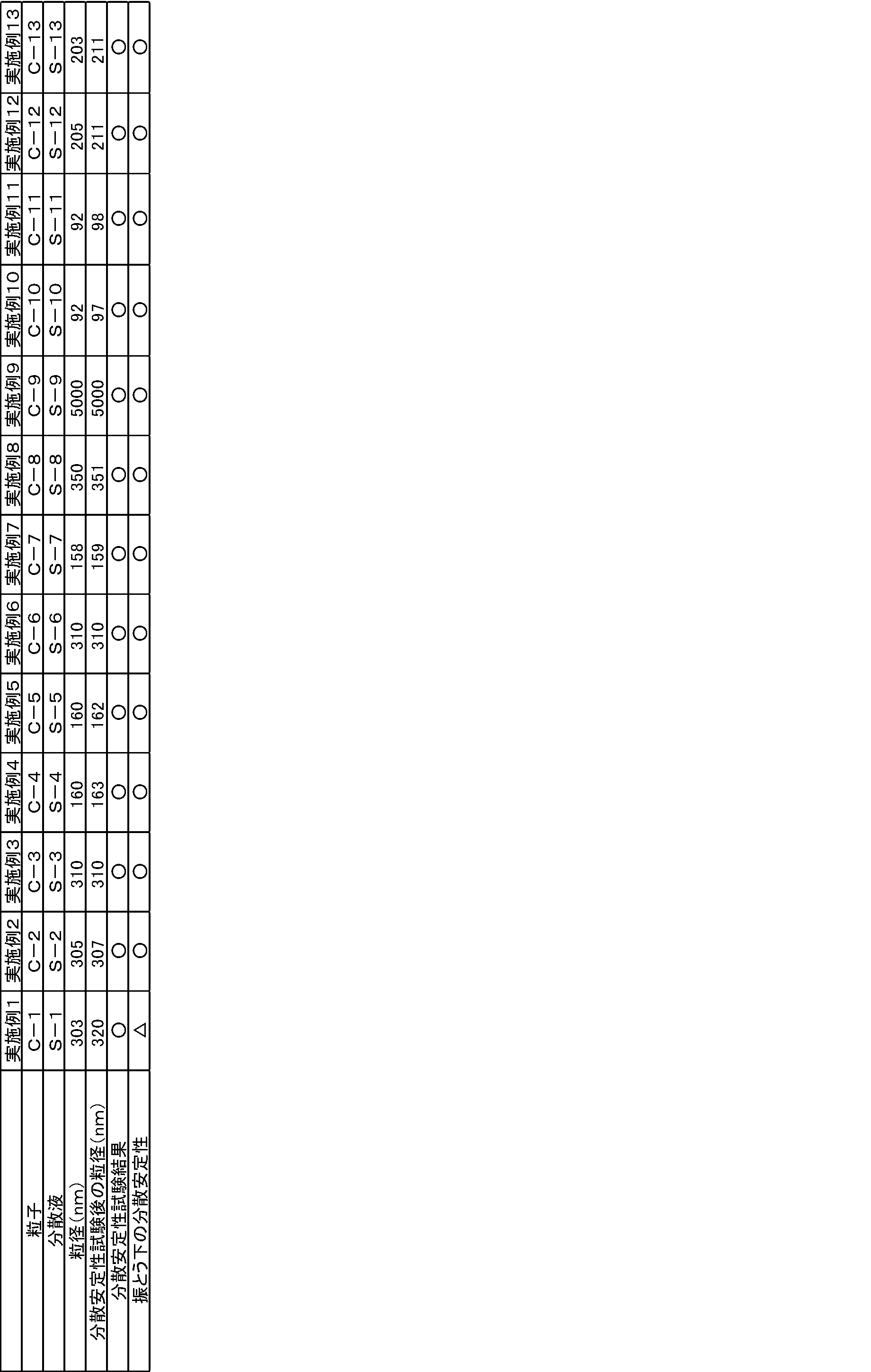
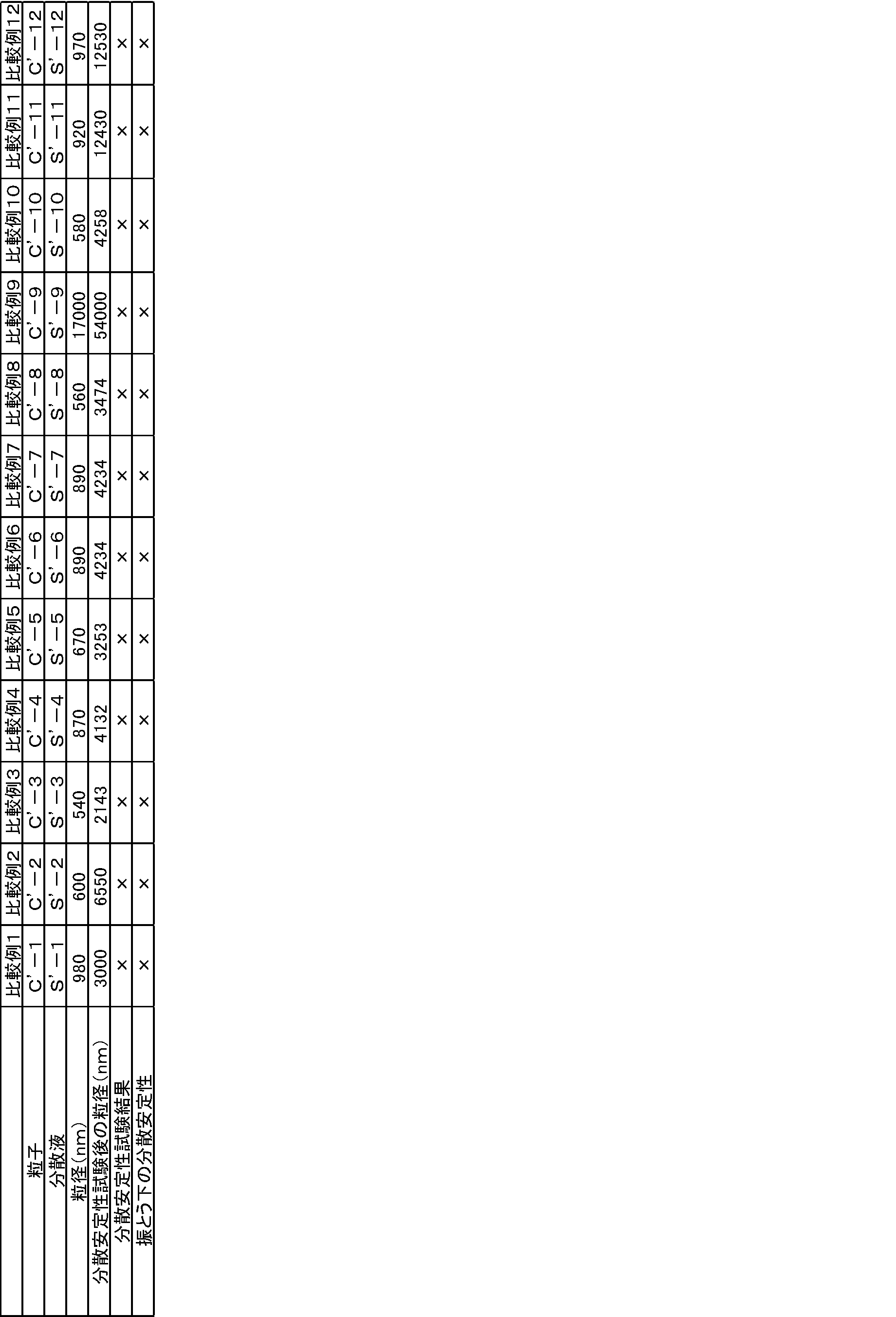
表1~2に示したように、実施例に記載の本発明の製造方法により製造された粒子は、比較例の粒子と比べて、分散安定性に優れることが明らかである。
本発明の製造方法により、少なくとも固体原料中に被覆物質を浸透させることで、粒子の表面で被覆物質と一体化させることができ、従来の被覆物質で覆われた粒子と比較して物性面で優れた粒子を得ることができる。被覆物質によって固体表面が被覆されているため、有機溶媒存在下においては、分散質の極性に依存せず分散剤を適切に選択可能であり、粒子の分散安定性又は再分散性にすぐれた分散液等を提供できる。
また被覆物質として反応性官能基を有するものを使用することで、被覆物質で被覆された粒子表面の被覆物質と有機分子を反応させた粒子複合体を形成させることができる。
また被覆物質として反応性官能基を有するものを使用することで、被覆物質で被覆された粒子表面の被覆物質と有機分子を反応させた粒子複合体を形成させることができる。
T1:溶解槽(最高使用圧力20MPa、最高使用温度200℃、攪拌機つき)
T2:耐圧受け槽
B1:二酸化炭素ボンベ
P1:溶液ポンプ
P2:二酸化炭素ポンプ
M1:スタティックミキサー(反応用耐圧容器)
V1:バルブ
T2:耐圧受け槽
B1:二酸化炭素ボンベ
P1:溶液ポンプ
P2:二酸化炭素ポンプ
M1:スタティックミキサー(反応用耐圧容器)
V1:バルブ
Claims (16)
- 固体原料(B)と圧縮性流体(F)と被覆物質(A)とを構成成分とする混合物(X)を用いてなる複合粒子(C)の製造方法であって、固体原料(B)を解砕する工程と被覆物質(A)を用いて被覆する工程を含むことを特徴とする複合粒子(C)の製造方法。
- 前記混合物(X)から圧縮性流体(F)を除去する工程を有する請求項1に記載の複合粒子(C)の製造方法。
- 前記混合物(X)を体積膨張すると共に、固体原料(B)を解砕して粒子(P)とする際に粒子(P)を被覆物質(A)によって被覆する工程を含む請求項1又は2に記載の複合粒子(C)の製造方法。
- 前記混合物(X)を体積膨張させ、固体原料(B)が解砕されてなる粒子(P)を、被覆物質(A)を用いて被覆する工程を含む請求項1又は2に記載の複合粒子(C)の製造方法。
- 被覆物質(A)によって被覆された固体原料(B)を含む前記混合物(X)を体積膨張させ、固体原料(B)を解砕し、粒子(P)が被覆物質(A)によって被覆された複合粒子(C)を製造する工程を含む請求項1又は2に記載の複合粒子(C)の製造方法。
- 粒子(P)の表面から内側に被覆物質(A)が浸透した浸透層を形成する工程を含む請求項3~5のいずれかに記載の複合粒子(C)の製造方法。
- 粒子(P)の体積平均粒径が0.01μm以上100μm未満であって、前記浸透層の厚みが粒子(P)の体積平均粒径の1%以上又は1nm以上であり、かつ粒子(P)の体積平均粒径の100%未満である請求項6に記載の複合粒子(C)の製造方法。
- 圧縮性流体(F)が、超臨界二酸化炭素、亜臨界二酸化炭素、又は液体二酸化炭素である請求項1~7のいずれかに記載の複合粒子(C)の製造方法。
- 被覆物質(A)が有機物(a1)及び/又は無機物(a2)を含む請求項1~8のいずれかに記載の複合粒子(C)の製造方法。
- 有機物(a1)が、単量体(a11)を構成単量体とする(共)重合体である請求項9に記載の複合粒子(C)の製造方法。
- 単量体(a11)を粒子(P)又は固体原料(B)に浸透させ、重合反応させることにより、粒子(P)又は固体原料(B)が単量体(a11)を構成単量体とする(共)重合体を含む被覆物質(A)によって被覆される工程を含む請求項10に記載の複合粒子(C)の製造方法。
- 有機物(a1)を粒子(P)又は固体原料(B)に浸透させ、粒子(P)又は固体原料(B)が有機物(a1)を含む被覆物質(A)によって被覆される工程を含む請求項9又は10に記載の複合粒子(C)の製造方法。
- 無機物(a2)の前駆体(a’0)を粒子(P)又は固体原料(B)に浸透させ、反応させることにより、粒子(P)又は固体原料(B)が無機物(a2)を含む被覆物質(A)によって被覆される工程を含む請求項9に記載の複合粒子(C)の製造方法。
- 更に媒体(M)を用いる請求項1~13のいずれかに記載の複合粒子(C)の製造方法。
- 請求項1~14のいずれかに記載の製造方法で製造された複合粒子(C)。
- 請求項15に記載の複合粒子(C)を含んでなる分散体。
Priority Applications (1)
| Application Number | Priority Date | Filing Date | Title |
|---|---|---|---|
| JP2015552520A JPWO2015087984A1 (ja) | 2013-12-11 | 2014-12-11 | 複合粒子の製造方法、複合粒子及び分散体 |
Applications Claiming Priority (4)
| Application Number | Priority Date | Filing Date | Title |
|---|---|---|---|
| JP2013255867 | 2013-12-11 | ||
| JP2013-255867 | 2013-12-11 | ||
| JP2014-144266 | 2014-07-14 | ||
| JP2014144266 | 2014-07-14 |
Publications (1)
| Publication Number | Publication Date |
|---|---|
| WO2015087984A1 true WO2015087984A1 (ja) | 2015-06-18 |
Family
ID=53371282
Family Applications (1)
| Application Number | Title | Priority Date | Filing Date |
|---|---|---|---|
| PCT/JP2014/082895 Ceased WO2015087984A1 (ja) | 2013-12-11 | 2014-12-11 | 複合粒子の製造方法、複合粒子及び分散体 |
Country Status (2)
| Country | Link |
|---|---|
| JP (1) | JPWO2015087984A1 (ja) |
| WO (1) | WO2015087984A1 (ja) |
Cited By (1)
| Publication number | Priority date | Publication date | Assignee | Title |
|---|---|---|---|---|
| CN117844291A (zh) * | 2023-12-07 | 2024-04-09 | 宁波南海化学有限公司 | 一种高透流平剂及其制备方法 |
Citations (8)
| Publication number | Priority date | Publication date | Assignee | Title |
|---|---|---|---|---|
| JP2004051937A (ja) * | 2002-05-31 | 2004-02-19 | Univ Nihon | 高分子複合材料及びその製造方法 |
| JP2004168843A (ja) * | 2002-11-19 | 2004-06-17 | Univ Nihon | 無機ナノ微粒子を含む有機ポリマー |
| JP2008530338A (ja) * | 2005-02-16 | 2008-08-07 | ダウ・コーニング・コーポレイション | ポリマー粒子、および、有機ボランアミン錯体を使用しているカプセル化組成物 |
| JP2009149723A (ja) * | 2007-12-19 | 2009-07-09 | National Univ Corp Shizuoka Univ | 着色重合粒子の製造方法および着色重合粒子、並びにこれを用いたトナー、現像剤、プロセスカートリッジ、画像形成装置及び画像形成方法 |
| JP2009167409A (ja) * | 2007-12-19 | 2009-07-30 | National Univ Corp Shizuoka Univ | 着色重合粒子の製造方法および着色重合粒子、並びにこれを用いたトナー、現像剤、プロセスカートリッジ、画像形成装置及び画像形成方法 |
| JP2011026540A (ja) * | 2009-01-30 | 2011-02-10 | Sanyo Chem Ind Ltd | 樹脂粒子及びその製造方法 |
| US20110171789A1 (en) * | 2004-10-07 | 2011-07-14 | Pinon Technologies, Inc. | Light-emitting nanoparticles and method of making same |
| JP2013137535A (ja) * | 2011-11-29 | 2013-07-11 | Canon Inc | トナー |
Family Cites Families (13)
| Publication number | Priority date | Publication date | Assignee | Title |
|---|---|---|---|---|
| KR100378500B1 (ko) * | 1994-07-28 | 2003-05-22 | 밀리포어 코포레이션 | 복합다공성막및형성방법 |
| WO1997031691A1 (en) * | 1996-03-01 | 1997-09-04 | The University Of Kansas | Methods and apparatus for particle precipitation and coating using near-critical and supercritical antisolvents |
| JP3491664B2 (ja) * | 1997-02-27 | 2004-01-26 | 三菱マテリアル株式会社 | 超臨界水を用いた石炭の転換方法 |
| JP4122491B2 (ja) * | 1999-12-28 | 2008-07-23 | 株式会社井上製作所 | ポリマ−―微粒子複合材料の製造方法及び装置 |
| JP3469223B2 (ja) * | 2000-10-10 | 2003-11-25 | 花王株式会社 | 複合化粒子の製造法 |
| JP2003105126A (ja) * | 2001-09-28 | 2003-04-09 | Du Pont Toray Co Ltd | 繊維の微細粉砕物およびその製造方法 |
| WO2003106540A2 (en) * | 2002-03-14 | 2003-12-24 | Shamrock Technologies, Inc. | Methods for producing submicron polytetrafluoroethylene powder and products thereof |
| JP2005120150A (ja) * | 2003-10-14 | 2005-05-12 | Sekisui Chem Co Ltd | 凝集体の解砕方法 |
| IL160145A0 (en) * | 2004-01-29 | 2004-06-20 | Univ Ben Gurion | Method for the preparation of dispersions of carbon nanotubes |
| JP2006346557A (ja) * | 2005-06-15 | 2006-12-28 | Ricoh Co Ltd | 粒子及びその製造方法、並びに、トナー及びこれを用いた画像形成方法 |
| JP4846496B2 (ja) * | 2006-09-14 | 2011-12-28 | 株式会社レイテック | 架橋ポリテトラフルオロエチレン樹脂とその製造方法 |
| JP2009227859A (ja) * | 2008-03-24 | 2009-10-08 | Bando Chem Ind Ltd | ゴム成形品及びゴム組成物の製造方法 |
| JPWO2010113798A1 (ja) * | 2009-03-30 | 2012-10-11 | 学校法人福岡大学 | コーティング絹微粒子およびその製造方法 |
-
2014
- 2014-12-11 WO PCT/JP2014/082895 patent/WO2015087984A1/ja not_active Ceased
- 2014-12-11 JP JP2015552520A patent/JPWO2015087984A1/ja active Pending
Patent Citations (8)
| Publication number | Priority date | Publication date | Assignee | Title |
|---|---|---|---|---|
| JP2004051937A (ja) * | 2002-05-31 | 2004-02-19 | Univ Nihon | 高分子複合材料及びその製造方法 |
| JP2004168843A (ja) * | 2002-11-19 | 2004-06-17 | Univ Nihon | 無機ナノ微粒子を含む有機ポリマー |
| US20110171789A1 (en) * | 2004-10-07 | 2011-07-14 | Pinon Technologies, Inc. | Light-emitting nanoparticles and method of making same |
| JP2008530338A (ja) * | 2005-02-16 | 2008-08-07 | ダウ・コーニング・コーポレイション | ポリマー粒子、および、有機ボランアミン錯体を使用しているカプセル化組成物 |
| JP2009149723A (ja) * | 2007-12-19 | 2009-07-09 | National Univ Corp Shizuoka Univ | 着色重合粒子の製造方法および着色重合粒子、並びにこれを用いたトナー、現像剤、プロセスカートリッジ、画像形成装置及び画像形成方法 |
| JP2009167409A (ja) * | 2007-12-19 | 2009-07-30 | National Univ Corp Shizuoka Univ | 着色重合粒子の製造方法および着色重合粒子、並びにこれを用いたトナー、現像剤、プロセスカートリッジ、画像形成装置及び画像形成方法 |
| JP2011026540A (ja) * | 2009-01-30 | 2011-02-10 | Sanyo Chem Ind Ltd | 樹脂粒子及びその製造方法 |
| JP2013137535A (ja) * | 2011-11-29 | 2013-07-11 | Canon Inc | トナー |
Cited By (1)
| Publication number | Priority date | Publication date | Assignee | Title |
|---|---|---|---|---|
| CN117844291A (zh) * | 2023-12-07 | 2024-04-09 | 宁波南海化学有限公司 | 一种高透流平剂及其制备方法 |
Also Published As
| Publication number | Publication date |
|---|---|
| JPWO2015087984A1 (ja) | 2017-03-16 |
Similar Documents
| Publication | Publication Date | Title |
|---|---|---|
| CN100395282C (zh) | 树脂颗粒及其制造方法 | |
| CN103097438B (zh) | 非水系树脂粒子分散液 | |
| Zou et al. | Polymer/silica nanocomposites: preparation, characterization, properties, and applications | |
| CN101977970B (zh) | 树脂粒子及其制造方法 | |
| WO2007144984A1 (ja) | 樹脂分散体の製造方法及び樹脂粒子 | |
| JP2012107229A (ja) | 樹脂粒子分散液の製造方法 | |
| JP4812557B2 (ja) | 樹脂粒子の製造方法 | |
| JP6121855B2 (ja) | 樹脂粒子の製造方法 | |
| CN101155859A (zh) | 树脂颗粒和树脂分散体 | |
| JP2006321830A (ja) | 樹脂粒子及びその製造法 | |
| CN101238168B (zh) | 树脂颗粒 | |
| JP2010155943A (ja) | 樹脂粒子の製造方法 | |
| WO2015087984A1 (ja) | 複合粒子の製造方法、複合粒子及び分散体 | |
| JP3808045B2 (ja) | 水分散粉体スラリー塗料 | |
| CN100448918C (zh) | 树脂分散体和树脂颗粒 | |
| JP2017001027A (ja) | 複合粒子及び分散体の製造方法 | |
| JP5208483B2 (ja) | 弾性樹脂粒子 | |
| JP2016029171A (ja) | 炭素含有組成物とその製造方法 | |
| JP4964834B2 (ja) | 樹脂粒子 | |
| JP2007291384A (ja) | 樹脂粒子および樹脂粒子の製造方法 | |
| JP2012140564A (ja) | 樹脂粒子分散液 | |
| JP2002194234A (ja) | 樹脂粒子組成物および製造方法 | |
| WO2008035460A1 (fr) | Procédé de fabrication d'une dispersion de résine et particule de résine | |
| WO2015087987A1 (ja) | 粒子の製造方法、粒子及び分散体 | |
| JP6474717B2 (ja) | 複合粒子及び複合粒子分散体 |
Legal Events
| Date | Code | Title | Description |
|---|---|---|---|
| 121 | Ep: the epo has been informed by wipo that ep was designated in this application |
Ref document number: 14869193 Country of ref document: EP Kind code of ref document: A1 |
|
| ENP | Entry into the national phase |
Ref document number: 2015552520 Country of ref document: JP Kind code of ref document: A |
|
| NENP | Non-entry into the national phase |
Ref country code: DE |
|
| 122 | Ep: pct application non-entry in european phase |
Ref document number: 14869193 Country of ref document: EP Kind code of ref document: A1 |