WO2015083744A1 - 環状アミド基含有重合体、環状アミドアクリレート含有組成物および環状アミドアクリレートの製造方法 - Google Patents
環状アミド基含有重合体、環状アミドアクリレート含有組成物および環状アミドアクリレートの製造方法 Download PDFInfo
- Publication number
- WO2015083744A1 WO2015083744A1 PCT/JP2014/081989 JP2014081989W WO2015083744A1 WO 2015083744 A1 WO2015083744 A1 WO 2015083744A1 JP 2014081989 W JP2014081989 W JP 2014081989W WO 2015083744 A1 WO2015083744 A1 WO 2015083744A1
- Authority
- WO
- WIPO (PCT)
- Prior art keywords
- group
- cyclic amide
- general formula
- acrylate
- mass
- Prior art date
- Legal status (The legal status is an assumption and is not a legal conclusion. Google has not performed a legal analysis and makes no representation as to the accuracy of the status listed.)
- Ceased
Links
- 0 CCC(C)(**)N(CC(CCN)C*1)C1=O Chemical compound CCC(C)(**)N(CC(CCN)C*1)C1=O 0.000 description 2
Images




Classifications
-
- C—CHEMISTRY; METALLURGY
- C07—ORGANIC CHEMISTRY
- C07D—HETEROCYCLIC COMPOUNDS
- C07D207/00—Heterocyclic compounds containing five-membered rings not condensed with other rings, with one nitrogen atom as the only ring hetero atom
- C07D207/02—Heterocyclic compounds containing five-membered rings not condensed with other rings, with one nitrogen atom as the only ring hetero atom with only hydrogen or carbon atoms directly attached to the ring nitrogen atom
- C07D207/18—Heterocyclic compounds containing five-membered rings not condensed with other rings, with one nitrogen atom as the only ring hetero atom with only hydrogen or carbon atoms directly attached to the ring nitrogen atom having one double bond between ring members or between a ring member and a non-ring member
- C07D207/22—Heterocyclic compounds containing five-membered rings not condensed with other rings, with one nitrogen atom as the only ring hetero atom with only hydrogen or carbon atoms directly attached to the ring nitrogen atom having one double bond between ring members or between a ring member and a non-ring member with hetero atoms or with carbon atoms having three bonds to hetero atoms with at the most one bond to halogen, e.g. ester or nitrile radicals, directly attached to ring carbon atoms
- C07D207/24—Oxygen or sulfur atoms
- C07D207/26—2-Pyrrolidones
- C07D207/263—2-Pyrrolidones with only hydrogen atoms or radicals containing only hydrogen and carbon atoms directly attached to other ring carbon atoms
- C07D207/27—2-Pyrrolidones with only hydrogen atoms or radicals containing only hydrogen and carbon atoms directly attached to other ring carbon atoms with substituted hydrocarbon radicals directly attached to the ring nitrogen atom
-
- C—CHEMISTRY; METALLURGY
- C08—ORGANIC MACROMOLECULAR COMPOUNDS; THEIR PREPARATION OR CHEMICAL WORKING-UP; COMPOSITIONS BASED THEREON
- C08F—MACROMOLECULAR COMPOUNDS OBTAINED BY REACTIONS ONLY INVOLVING CARBON-TO-CARBON UNSATURATED BONDS
- C08F226/00—Copolymers of compounds having one or more unsaturated aliphatic radicals, each having only one carbon-to-carbon double bond, and at least one being terminated by a single or double bond to nitrogen or by a heterocyclic ring containing nitrogen
- C08F226/06—Copolymers of compounds having one or more unsaturated aliphatic radicals, each having only one carbon-to-carbon double bond, and at least one being terminated by a single or double bond to nitrogen or by a heterocyclic ring containing nitrogen by a heterocyclic ring containing nitrogen
Definitions
- the present invention relates to a cyclic amide group-containing polymer, a cyclic amide acrylate-containing composition, and a method for producing a cyclic amide acrylate. More specifically, the present invention relates to a novel cyclic amide group-containing polymer excellent in color tone, heat yellowing resistance, and moisture resistance, a cyclic amide acrylate-containing composition that can be used as a raw material for the polymer, and a method for producing the cyclic amide acrylate.
- Vinylpyrrolidone-based polymers such as polyvinylpyrrolidone and vinylpyrrolidone copolymers, which are typical cyclic amide group-containing polymers, have advantages and benefits such as biocompatibility, safety, and hydrophilicity. It is widely used in various fields such as fiber modifiers, adhesives, paints, dispersants, dye solubilizers, inks and electronic parts.
- the conventional vinylpyrrolidone-based polymers have the above-mentioned advantages and advantages, but have the disadvantage that only those having poor color tone and heat-resistant yellowing can be obtained.
- conventional vinylpyrrolidone polymers are used in applications that require excellent color tone and heat yellowing resistance, such as paints, resin modifiers, inks, ink receiving layers, various surface treatment agents, various primers, and various binders. There was resistance to using.
- Polyvinylpyrrolidone has a very high hygroscopicity, and thus has a drawback that it is sticky and difficult to handle when it is used as a film or sheet or in various coating agents.
- Patent Document 1 describes a vinylpyrrolidone polymer having improved heat yellowing resistance by a polymerization method.
- Patent Documents 2 and 3 relate to a vinylpyrrolidone resin composition having improved moisture resistance. Are listed.
- Patent Document 4 describes the reaction in the presence of formaldehyde or paraformaldehyde and (a) C 1 -C 12 -alkanol or (b) C 1 -C 12 -alkanol and water. Or (c) using water in the presence of a secondary amine and a protonic acid at a temperature of 0 to 200 ° C.
- Z is a group COOR 2 , CN or COR 3
- R 1 is an aliphatic, alicyclic, araliphatic, aromatic or heterocyclic group optionally substituted by an inert group under the reaction conditions
- the group R 2 is an aliphatic, alicyclic or araliphatic group having 1 to 15 carbon atoms
- R 3 is 1 to 15 which may be substituted by a group inert under the reaction conditions
- a process for the preparation of 1,1-disubstituted ethylene compounds represented by (which may form an alkylene chain having ⁇ 10 carbon atoms) is disclosed.
- Example 21 of Patent Document 4 includes 2- (2-pyrrolidone-1-yl) -acrylic acid methyl ester from formaldehyde and 2-formyl-2- (2-pyrrolidone-1-yl) -acetic acid methyl ester. , It was obtained in a yield of 20% of theory.
- the method for producing 2- (2-pyrrolidone-1-yl) -acrylic acid methyl ester described in Patent Document 4 is poor in versatility because a special compound is used as a raw material. Moreover, the yield was low. Furthermore, since formaldehyde, 2-formyl-2- (2-pyrrolidone-1-yl) -acetic acid methyl ester used as a raw material has a formyl group, 2- (2-pyrrolidone-1-yl) -acrylic acid methyl ester is When used as a polymer raw material, it will adversely affect the polymerization, so it is preferable to reduce the residual amount as much as possible. Further, 2-formyl-2- (2-pyrrolidone-1-yl) -acetic acid methyl ester is formed. Due to the small difference in boiling point from the product, the remaining amount could not be reduced sufficiently.
- Patent Document 5 discloses 1-carbomethoxyvinylpyrrolidone obtained by reacting methylpropiolate and 2-pyrrolidone.
- Problems to be solved by the present invention include a cyclic amide group-containing polymer excellent in color tone, heat yellowing resistance, and moisture resistance, a cyclic amide acrylate that can be suitably used as a raw material for the cyclic amide group-containing polymer, and The manufacturing method is provided.
- a cyclic amide group-containing polymer having a specific structure solves the problems of color tone, heat yellowing resistance and moisture resistance.
- the present invention has been completed.
- the cyclic amide group-containing polymer of the first aspect of the present invention is a cyclic amide group-containing polymer having a structural unit represented by the following general formula (1).
- n represents a number of 1 to 4
- R 1 represents a hydrogen atom, an organic group having 1 to 30 carbon atoms, a metal atom, or an ammonium salt.
- 2nd this invention is a composition containing cyclic amide acrylate, Comprising:
- the said composition is 20 mass of cyclic amide acrylate represented by following General formula (2) with respect to 100 mass% of compositions.
- % Cyclic amide acrylate-containing composition containing a compound represented by the following general formula (3) in a proportion of 0.1 ppm or more and 50000 ppm or less.
- n represents a number of 1 to 4
- R 1 represents a hydrogen atom, an organic group having 1 to 30 carbon atoms, a metal atom, or an ammonium salt.
- n a number of 1 to 4.
- the third aspect of the present invention is a method for producing a cyclic amide acrylate represented by the following general formula (2):
- the above production method includes a step of reacting at least one compound selected from the group consisting of pyruvic acid, pyruvate, and pyruvate with a compound represented by the following general formula (3). It is a manufacturing method.
- n represents a number of 1 to 4
- R 1 represents a hydrogen atom, an organic group having 1 to 30 carbon atoms, a metal atom, or an ammonium salt.
- n represents a number of 1 to 4.
- the first present invention is a cyclic amide group-containing polymer excellent in color tone, heat-resistant yellowing and moisture resistance, optical materials, films, sheets, paints, fiber modifiers, resin modifiers, inks, ink acceptors It can be suitably used for a layer, various surface treatment agents, various primers, various binders and the like.
- the second present invention is a cyclic amide acrylate-containing composition having a low content of a compound having a formyl group, and therefore can be suitably used as a raw material for a polymer.
- this invention is a suitable manufacturing method of cyclic amide acrylate (cyclic amide acrylate containing composition) with little content of the compound which has a formyl group.
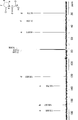
- FIG. 2 is a 1 HNMR chart of a composition of cyclic amide acrylate obtained in Example 2.
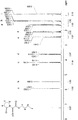
- FIG. 3 is a 13 C NMR chart of a cyclic amide acrylate composition obtained in Example 2.
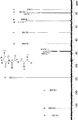
- FIG. 2 is a 1 HNMR chart of a composition of cyclic amide acrylate obtained in Example 3.
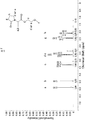
- FIG. 3 is a 13 C NMR chart of the cyclic amide acrylate composition obtained in Example 3.
- FIG. 2 is a 1 HNMR chart of a cyclic amide acrylate composition obtained in Example 4.
- FIG. 3 is a 13 C NMR chart of a cyclic amide acrylate composition obtained in Example 4.
- FIG. 2 is a 1 HNMR chart of a cyclic amide acrylate composition obtained in Example 5.
- FIG. 5 is a 1 HNMR chart of a cyclic amide acrylate composition obtained in Example 5.
- FIG. 6 is a 13 C NMR chart of a composition of cyclic amide acrylate obtained in Example 5.
- FIG. 2 is a 1 HNMR chart of a cyclic amide group-containing polymer obtained in Example 6.
- 3 is a 1 HNMR chart of a cyclic amide group-containing polymer obtained in Example 7.
- 2 is a 1 HNMR chart of a cyclic amide group-containing polymer obtained in Example 8.
- the present invention is a polymer having a structural unit represented by the general formula (1).
- the polymer has a plurality of structural units represented by the general formula (1), and n and R 1 in the plurality of structural units may be the same or different.
- the organic group having 1 to 30 carbon atoms in R 1 is not particularly limited, but is a substituted or unsubstituted alkyl group having 1 to 30 carbon atoms, a substituted or unsubstituted alkoxyalkyl group having 1 to 30 carbon atoms, a substituted group.
- an unsubstituted aryl group having 6 to 30 carbon atoms a substituted or unsubstituted organic amine salt having 1 to 20 carbon atoms, and the like.
- substituted or unsubstituted means that the group may or may not have a substituent.
- the number of carbons contained in the substituent is also included in the above carbon number.
- R 1 is preferably a hydrogen atom, a substituted or unsubstituted alkyl group having 1 to 20 carbon atoms, a substituted or unsubstituted alkoxyalkyl group having 1 to 20 carbon atoms, or a substituted or unsubstituted aryl group having 6 to 20 carbon atoms.
- R 1 represents a hydrogen atom, a substituted or unsubstituted alkyl group having 1 to 12 carbon atoms, a substituted or unsubstituted alkoxyalkyl group having 1 to 12 carbon atoms, a substituted or unsubstituted group. It is more preferably a substituted aryl group having 6 to 12 carbon atoms, a metal atom, an ammonium salt, or a substituted or unsubstituted organic amine salt having 1 to 12 carbon atoms, and a hydrogen atom, a substituted or unsubstituted carbon atom having 1 to 12 carbon atoms.
- the organic amine salt is a hydrogen atom, a substituted or unsubstituted alkyl group having 1 to 8 carbon atoms, a substituted or unsubstituted alkoxyalkyl group having 1 to 8 carbon atoms, a substituted or unsubstituted carbon number.
- R 1 is most preferably a hydrogen atom, a methyl group, an ethyl group, a butyl group, or a methoxyethyl group.
- Examples of the “unsubstituted alkyl group” include a methyl group, an ethyl group, an n-butyl group, a cyclohexyl group, and an ethylhexyl group.
- the “substituted alkyl group” refers to a group in which one or two or more hydrogen atoms of the alkyl group are substituted with a group other than the alkyl group.
- Examples of the group other than the alkyl group include an aryl group, a hydroxyl group, an alkoxy group, an amino group, an amide group, a sulfonic acid (salt) group, and a carboxylic acid (salt) group.
- Examples of the “unsubstituted alkoxyalkyl group” include methoxyethyl group, ethoxymethyl group and the like.
- the above “substituted alkoxyalkyl group” refers to a group in which one or more hydrogen atoms of an alkoxyalkyl group are substituted with a group other than an alkoxy group.
- Examples of the group other than the alkoxy group include an aryl group, a hydroxyl group, an amino group, an amide group, a sulfonic acid (salt) group, and a carboxylic acid (salt) group.
- Examples of the “unsubstituted aryl group” include a phenyl group, a biphenyl group, and a naphthyl group.
- the “substituted aryl group” refers to a group in which one or more of the hydrogen atoms of the aryl group are substituted with a group other than the aryl group.
- Examples of the group other than the aryl group include an alkyl group, a hydroxyl group, an alkoxy group, an amino group, an amide group, a sulfonic acid (salt) group, and a carboxylic acid (salt) group.
- Examples of the metal atom include alkali metals such as Li, Na, and K; alkaline earth metals such as Ca and Mg; and transition metals such as Al and Fe.
- the metal atom is preferably Na.
- Examples of the organic amine salt include alkanolamine salts such as monoethanolamine salts, diethanolamine salts, and propanolamine salts; alkylamine salts such as trimethylamine salts and triethylamine salts.
- the organic amine salt is preferably a monoethanolamine salt.
- n is preferably 2 to 3.
- the cyclic amide group-containing polymer of the present invention may have other structural units other than the structural unit represented by the general formula (1).
- the other structural unit is not particularly limited, but is a monomer other than the monomer represented by the general formula (2) described later, and is the same as the monomer represented by the general formula (2). It is preferably a structural unit derived from any polymerizable monomer.
- Specific examples of other monomers copolymerizable with the monomer represented by the general formula (2) include, for example, methyl (meth) acrylate, ethyl (meth) acrylate, and (meth) acrylic.
- (Meth) acrylic acid esters having 1 to 20 carbon atoms such as butyl acid, 2-ethylhexyl (meth) acrylate, cyclohexyl (meth) acrylate, hydroxyethyl (meth) acrylate;
- (Meth) acrylamide derivatives having 1 to 20 carbon atoms such as N-monomethyl (meth) acrylamide, N-monoethyl (meth) acrylamide, N, N-dimethyl (meth) acrylamide; dimethylaminoethyl (meth) acrylate, dimethyl Basic unsaturated monomers such as aminoethyl (meth) acrylamide, vinylpyridine, vinylimidazole and Salts or quaternized compounds;
- N-vinyl compounds such as N-vinylformamide, N-vinyloxazolidone, N-vinylpyrrolidone, N-vinylcaprolactam, N-vinylimidazole, N-vin
- the cyclic amide group-containing polymer of the present invention is a copolymer having a structural unit represented by the general formula (1) and a structural unit other than the structural unit represented by the general formula (1)
- the content of the structural unit represented by the general formula (1) is preferably 5% by mass or more and 95% by mass or less with respect to 100% by mass of all the structural units in the cyclic amide group-containing polymer. More preferably, it is 20 mass% or more and 90 mass% or less. More preferably, it is 50 mass% or more and 80 mass% or less.
- the content of the structural unit represented by the general formula (1) is 5% by mass or more, it is preferable because functions such as adsorptivity and hydrophilicity derived from the cyclic amide group can be more fully exhibited.
- a homopolymer consisting only of the structural unit represented by the general formula (1) is also a preferred embodiment of the present invention.
- the cyclic amide group-containing polymer of the present invention is a copolymer having a structural unit represented by the general formula (1) and a structural unit other than the structural unit represented by the general formula (1)
- the content of structural units other than the structural unit represented by the general formula (1) is preferably 5 to 95% by mass with respect to 100% by mass of all structural units of the cyclic amide group-containing polymer. More preferably, it is 10 to 80% by mass, and still more preferably 20 to 50% by mass.
- the weight average molecular weight of the cyclic amide group-containing polymer of the present invention is not particularly limited, but preferably the lower limit is 1,000 and the upper limit is 10,000,000. More preferably, the lower limit is 5,000, and the upper limit is 5,000,000.
- the weight average molecular weight is 1,000 or more, the cyclic amide group-containing polymer of the present invention is superior in strength and heat resistance. If the weight average molecular weight is 10,000,000 or less, the cyclic amide group-containing polymer of the present invention is more excellent in solubility in a solvent, and the viscosity of the polymer solution can be further reduced. It will be better.
- the weight average molecular weight of the cyclic amide group-containing polymer can be measured by the method described in Examples described later.
- the cyclic amide group-containing polymer according to the present invention can be obtained, for example, by polymerizing a monomer component containing a monomer represented by the following general formula (2).
- n represents a number of 1 to 4
- R 1 represents a hydrogen atom, an organic group having 1 to 30 carbon atoms, a metal atom, or an ammonium salt.
- organic group, metal atom and ammonium salt having 1 to 30 carbon atoms are the same as those of the organic group, metal atom and ammonium salt having 1 to 30 carbon atoms in the general formula (1).
- the n is preferably 2 to 3.
- Specific examples of the compound represented by the general formula (2) include 2- (2-oxopyrrolidin-1-yl) acrylic acid, methyl 2- (2-oxopyrrolidin-1-yl) acrylate, 2- (2-oxopyrrolidin-1-yl) ethyl acrylate, 2- (2-oxopyrrolidin-1-yl) propyl acrylate, 2- (2-oxopyrrolidin-1-yl) butyl acrylate, 2- (2 -Oxopyrrolidin-1-yl) methoxyethyl acrylate, 2- (2-oxoazepan-1-yl) acrylic acid, methyl 2- (2-oxoazepan-1-yl) acrylate, 2- (2-oxoazepane-1 Examples include -yl) ethyl acrylate, 2- (2-oxoazepan-1-yl) butyl acrylate, and the like.
- the monomer of the general formula (2) may be used alone or in combination of two
- Preferred specific examples of the compound represented by the general formula (2) include cyclic amide acrylates represented by the following general formula (4).
- R 1 represents a hydrogen atom, an organic group having 1 to 30 carbon atoms, a metal atom, or an ammonium salt.
- the organic group having 1 to 30 carbon atoms, metal atom and ammonium salt in R 1 are the same as the specific examples and preferred examples given in the general formula (1).
- the monomer component is not particularly limited as long as it contains at least the monomer represented by the general formula (2).
- the monomer represented by the general formula (2) is used alone. Or any other monomer other than the monomer represented by the general formula (2) that can be copolymerized with the monomer represented by the general formula (2). Good.
- the content of the monomer of the general formula (2) in the monomer component is particularly limited.
- the content of the monomer of the general formula (2) in the monomer component is 5% by mass or more and 95% by mass or less with respect to 100% by mass of the total monomer components. It is preferable to set it to 20% by mass or more and 90% by mass or less, and more preferably 50% by mass or more and 80% by mass or less.
- monomers other than the monomer represented by the general formula (2) are as described above. These may use only 1 type and may mix 2 or more types and the monomer represented by General formula (2).
- the content of the other monomers is not particularly limited, but is preferably 5 to 95% by mass, more preferably 10 to 80% by mass, and more preferably 10 to 80% by mass with respect to 100% by mass of all monomer components.
- the amount is preferably 20 to 50% by mass.
- the cyclic amide group-containing polymer of the present invention is a homopolymer obtained by polymerizing only the monomer represented by the general formula (2). That is, in this case, the content of the monomer other than the monomer represented by the general formula (2) in the monomer component used for the production of the cyclic amide group-containing polymer is 0% by mass. .
- the monomer component used in the production of the cyclic amide group-containing polymer includes the cyclic amide acrylate-containing composition of the second aspect of the present invention described later. That is, the cyclic amide group-containing polymer of the first invention is more preferably produced using the cyclic amide acrylate-containing composition of the second invention.
- the method of the polymerization reaction for obtaining the cyclic amide group-containing polymer according to the present invention is not particularly limited, and conventionally known methods such as bulk polymerization, solution polymerization, emulsion polymerization, suspension polymerization, precipitation polymerization, etc. It can be done by the method.
- N-vinyl-2-pyrrolidone NVP
- Emulsion polymerization is also possible by using the monomer represented by (2).
- the solvent used in the polymerization reaction is not particularly limited, and examples thereof include aromatic hydrocarbon solvents such as toluene, xylene, and ethylbenzene; ketone solvents such as methyl ethyl ketone and methyl isobutyl ketone; ethers such as tetrahydrofuran and dioxane. System solvents; and the like. These solvents may be used alone or in combination of two or more.
- water is preferable as a preferred polymerization solvent, but a solvent that dissolves in water, for example, an alcohol selected from methyl alcohol, ethyl alcohol, isopropyl alcohol, n-butyl alcohol, diethylene glycol, and the like alone or in combination of two or more thereof. It can also be used as a mixture.
- a solvent such as isopropyl alcohol or n-butyl alcohol mixed with water because the boiling point of water, that is, the polymerization temperature is lowered by the azeotropic action, so that side reactions are suppressed.
- the reaction conditions such as the reaction temperature are not particularly limited.
- the reaction temperature is preferably 20 to 150 ° C.
- the polymerization initiator is not particularly limited.
- cumene hydroperoxide diisopropylbenzene hydroperoxide, di-t-butyl peroxide, lauroyl peroxide, benzoyl peroxide, t-butylperoxyisopropyl
- Organic peroxides such as carbonate and t-amylperoxy-2-ethylhexanoate; hydrogen peroxide; persulfates such as potassium persulfate and ammonium persulfate; 2,2′-azobis (isobutyronitrile); And azo compounds such as 1,1′-azobis (cyclohexanecarbonitrile) and 2,2′-azobis (2,4-dimethylvaleronitrile).
- polymerization initiators may be used alone or in combination of two or more.
- the amount of the polymerization initiator used may be set as appropriate according to the combination of the polymerizable monomers and the reaction conditions, and is not particularly limited.
- the amount of the initiator used is not particularly limited, but is preferably 0.01 to 10% by mass, more preferably 0.1 to 5% by mass, and more preferably 0.5 to 3% by mass with respect to the polymerizable monomer component. % Is even more preferred.
- a conventionally known transition metal salt can be used for the purpose of promoting the polymerization reaction.
- the transition metal salt include carboxylates and chlorides such as copper, iron, cobalt, and nickel. These may be used alone or in combination of two or more. May be.
- the amount used is not particularly limited, but is preferably from 0.1 to 20000 ppb, more preferably from 1 to 5000 ppb, in terms of mass ratio to the polymerizable monomer component.
- any chain transfer agent, buffering agent, etc. can be used as necessary. .
- the content of a formyl group-containing compound such as formaldehyde as an impurity is preferably 0.1% by mass or less with respect to 100% by mass of the polymer, and 0.01% by mass. More preferably, it is% or less. Further, the content of the compound represented by the general formula (3) as an impurity is preferably 0.001 ppm or more and 50000 ppm or less with respect to 100% by mass of the polymer, and is 0.01 ppm or more and 5000 ppm or less. Is more preferable.
- the cyclic amide group-containing polymer according to the present invention can keep the residual monomer low by using, for example, a cyclic amide acrylate-containing composition described later as a raw material. That is, a polymer composition containing 0.01 to 10,000 ppm of the monomer represented by the general formula (2) with respect to 100% by mass of the cyclic amide group-containing polymer according to the present invention is also one aspect of the present invention. is there.
- the cyclic amide group-containing polymer according to the present invention has excellent color tone, heat-resistant yellowing, and moisture resistance, so that it is an optical material, film, sheet, paint, fiber modifier, resin. It can be used in various applications such as modifiers, inks, ink receiving layers, various surface treatment agents, various primers, various binders, and the like.
- composition of the cyclic amide acrylate of the present invention contains the cyclic amide acrylate represented by the general formula (2) as an essential component.
- n represents a number from 1 to 4. Since the cyclic amide acrylate represented by the general formula (2) tends to be obtained in a high yield, n is preferably a number of 2 to 3.
- Specific examples and preferred examples of the organic group having 1 to 30 carbon atoms, metal atom and ammonium salt in R 1 are the same as the specific examples and preferred examples given in the general formula (1).
- cyclic amide acrylate represented by the general formula (2) include cyclic amide acrylates represented by the following general formula (5).
- R 2 represents a hydrogen atom, an organic group having 2 to 30 carbon atoms, a metal atom, or an ammonium salt.
- Specific examples and preferred examples of the metal atom or an ammonium salt are the same as the specific examples and preferred examples of the metal atom or an ammonium salt in R 2 of the general formula (1).
- Specific examples and preferred examples of the organic group having 2 to 30 carbon atoms are the same as the specific examples and preferred examples of the organic group in R 2 of the general formula (1) except for the methyl group.
- R 2 is preferably a hydrogen atom, an ethyl group, a methoxyethyl group, or an n-butyl group.
- R 2 is a hydrogen atom
- the dispersibility of the inorganic particles of the polymer obtained by polymerizing the cyclic amide acrylate represented by the general formula (5) is preferable.
- R 2 is an ethyl group, a methoxyethyl group, or an n-butyl group
- when the polymer obtained by polymerizing the cyclic amide acrylate represented by the general formula (5) is used as a detergent raw material, it is soiled.
- the dispersibility of the components is improved.
- R 2 is an ethyl group
- the alcohol produced even when hydrolyzed is ethanol because it is relatively safe ethanol, which is preferable.
- the content of the cyclic amide acrylate represented by the general formula (2) is 20% by mass or more and 99.99999% by mass or less with respect to 100% by mass of the composition of the present invention.
- they are 50 mass% or more and 99.99998 mass% or less, More preferably, they are 90 mass% or more and 99.99997 mass% or less, Especially preferably, they are 95 mass% or more and 99.9995 mass% or less. is there.
- the composition of this invention contains the compound represented by the said General formula (3) as an essential component.
- n represents a number of 1 to 4.
- n is preferably a number from 2 to 4. More preferably, the number is 2 to 3.
- Specific examples of the compound represented by the general formula (3) include ⁇ -propiolactam, ⁇ -butyrolactam (2-pyrrolidone), ⁇ -valerolactam, and ⁇ -caprolactam.
- the content of the compound represented by the general formula (3) in the composition of the present invention is 0.1 ppm or more and 5% by mass or less with respect to 100% by mass of the composition of the present invention. They are 2 ppm or more and 3 mass% or less, More preferably, they are 0.3 ppm or more and 2 mass% or less, Especially preferably, they are 0.5 ppm or more and 1 mass% or less.
- the composition of the present invention preferably has a low content of a compound having a formyl group.
- the content of the compound having a formyl group in the composition of the present invention is preferably 0 to 10 mol%, preferably 0 to 5 mol%, relative to 100 mol% of the compound represented by the general formula (2). Is more preferable, and 0 to 1 mol% is more preferable.
- the compound having a formyl group is not particularly limited as long as it has a formyl group, and examples thereof include formaldehyde and 2-formyl-2- (2-pyrrolidone-1-yl) -acetic acid methyl ester.
- the composition of the present invention may contain a solvent.
- a solvent water is preferable.
- the content of the solvent in the composition of the present invention is preferably 0% by mass or more and 80% by mass or less, and is 0% by mass or more and 50% by mass or less with respect to 100% by mass of the composition of the present invention. It is more preferable.
- the composition of the present invention may contain a polymerization inhibitor, and the content of the polymerization inhibitor is preferably 0 to 5000 ppm, more preferably 0 to 1000 ppm with respect to the composition of the present invention. Preferably, it is 0 to 300 ppm.
- the polymerization inhibitor is a compound that has a function of suppressing the generation of a radical that is a starting point of a radical chain reaction in a reaction solution or a raw material, or stopping the chain reaction of the generated radical.
- Preferred polymerization inhibitors that can be used include hydroquinone, p-methoxyphenol (methoquinone), 2,2,6,6, -tetramethylpiperidine 1-oxyl (TEMPO), 4-hydroxy-2,2,6,6, -Tetramethylpiperidine 1-oxyl (4H-TEMPO) is exemplified.
- the polymerization inhibitor may be added in the reaction step described later, or may be added for the purpose of stabilizing the cyclic amide acrylate represented by the general formula (2) after the reaction step. I do not care.
- composition of the present invention further includes pigments, dyes, fragrances, antioxidants, radical generators, photosensitizers, ultraviolet absorbers, inorganic particles, organic particles, glass fibers, carbon fibers, antifoaming agents, viscosity modifiers, and the like. These various additives may be included.
- a composition containing a photo radical generator can be suitably used as an UV curable composition for inkjet inks and various coatings.
- the composition of the present invention can be preferably used as a raw material for a polymer. Since the composition of this invention can set content of the compound which has a formyl group low, when it uses as a polymer raw material, it becomes possible to show favorable polymerizability. Moreover, it becomes possible to reduce the content of the compound having a formyl group and impurities resulting therefrom contained in the polymer composition.
- the composition of the present invention may be used alone as a raw material for the polymer, but may be copolymerized with other monomers to produce a polymer. Specific examples and preferred examples of the other monomers include those similar to the other monomers described above.
- a polymer is produced using the above cyclic amide acrylate-containing composition, it is preferably produced by the same method as the production method of the cyclic amide group-containing polymer of the first invention.
- the present invention is also a method for producing the cyclic amide acrylate represented by the general formula (2), wherein the production method is at least one selected from the group consisting of pyruvate, pyruvate, and pyruvate. It is also a manufacturing method of cyclic amide acrylate including the process (henceforth a "reaction process") with which the compound of this and the compound represented by the said General formula (3) are made to react.
- pyruvic acid, pyruvate, pyruvate and secondary amide compound are difficult to react, but secondary amide compound like the compound represented by the above general formula (3) Has been found to react specifically with pyruvic acid, pyruvate, and pyruvate by forming a cyclic structure.
- the pyruvic acid, pyruvate, and pyruvate may be represented by the general formula CH 3 C ( ⁇ O) COOR 3 .
- R 3 is the same as R 1 in the general formula (2).
- the ratio of the total amount of pyruvic acid, pyruvate, and pyruvate used to the amount of the compound represented by the general formula (3) is 0.01: 1 to 100. Is preferably 1: 1, more preferably 0.05: 1 to 20: 1, and still more preferably 0.2: 1 to 5: 1. If it is the said range, it exists in the tendency for the reaction yield to improve.
- the reaction step may be performed without a catalyst, but is preferably performed in the presence of a catalyst.
- the catalyst is preferably an acid catalyst, for example, organic sulfonic acid such as p-toluenesulfonic acid, methanesulfonic acid, benzenesulfonic acid, naphthalenesulfonic acid, trifluoromethanesulfonic acid, p-octylbenzenesulfonic acid; organic sulfonic acid group
- Illustrative examples include ion exchange resins having: inorganic acids such as sulfuric acid and hydrochloric acid; heteropolyacids such as phosphotungstic acid and phosphotungstic acid; Among these, the organic sulfonic acid is more preferable and p-toluenesulfonic acid is particularly preferable because the yield of the cyclic amide acrylate represented by the general formula (2) is high and the side reaction tends to be suppressed.
- the amount of catalyst used in the reaction step is 0.01 mol% or more and 50 mol% with respect to the total amount of pyruvate, pyruvate, pyruvate, and the compound represented by the general formula (3). Or less, more preferably 0.05 mol% or more and 20 mol% or less, and further preferably 0.1 mol% or more and 10 mol% or less.
- the reaction step may be performed without a solvent, but is preferably performed in the presence of a solvent.
- a solvent it is preferable to azeotrope with water, for example, aromatic hydrocarbons such as toluene, xylene and benzene; aliphatic hydrocarbons such as hexane, heptane and octane; diethyl ether, tetrahydrofuran and dioxane. And ethers such as acetone and ketones such as methyl ethyl ketone.
- aromatic hydrocarbons such as toluene, xylene and benzene
- aliphatic hydrocarbons such as hexane, heptane and octane
- diethyl ether diethyl ether, tetrahydrofuran and dioxane.
- ethers such as acetone and ketones such as methyl ethyl ketone.
- the one part or all part can be made into the solvent used by the previous reaction. In that case, the solvent used in the previous reaction is reused as it is or after purification.
- the reaction temperature in the above reaction step is preferably 80 ° C. or higher and 160 ° C. or lower, more preferably 90 ° C. or higher and 150 ° C. or lower, and further preferably 100 ° C. or higher and 140 ° C. or lower.
- the reaction time is usually from 0.1 to 50 hours, preferably from 0.5 to 40 hours, more preferably from 1 to 30 hours.
- the reaction step is not particularly limited, but the reaction is preferably performed in the presence of molecular oxygen from the viewpoint of preventing radical polymerization.
- the reaction step may be performed under pressure, normal pressure, or reduced pressure.
- the reaction step may be performed in the presence of a polymerization inhibitor.
- Preferred examples of the polymerization inhibitor include those described above.
- the amount of the polymerization inhibitor used in the reaction step is 0 ppm or more by mass ratio with respect to the total amount of pyruvate, pyruvate, pyruvate, and the compound represented by the general formula (3). It is preferably 10,000 ppm or less, more preferably 5 ppm or more and 10,000 ppm or less, further preferably 10 ppm or more and 9000 ppm or less, and particularly preferably 20 ppm or more and 8000 ppm or less.
- the production method of the present invention preferably includes a purification step.
- the purification step preferably includes a distillation step and / or a crystallization step.
- the distillation step may be performed under pressure, normal pressure, or reduced pressure, but is preferably performed under reduced pressure or normal pressure.
- the distillation step is preferably performed at a liquid temperature of 60 to 160 ° C.
- the manufacturing method of this invention should just include the said reaction process as essential, and can include arbitrary other processes.
- the cyclic amide acrylate represented by the general formula (2) is an acid
- a neutralization step of neutralizing with an alkaline substance and when the cyclic amide acrylate represented by the general formula (2) is an ester
- hydrolysis to hydrolyze with an alkaline substance step of concentrating or removing the reaction solvent when a reaction solvent is used, step of diluting with water and / or an organic solvent, step of removing the catalyst used in the reaction,
- step of concentrating or removing the reaction solvent when a reaction solvent is used step of diluting with water and / or an organic solvent
- step of removing the catalyst used in the reaction include a purification step for removing the impurities, a step of deactivating the catalyst, a step of adding a polymerization inhibitor, a coloring inhibitor, and the like.
- composition of the present invention was quantified using a calibration curve prepared in advance by gas chromatography (hereinafter “GC”) or liquid chromatography (hereinafter “LC”) under the following conditions.
- GC gas chromatography
- LC liquid chromatography
- GC condition Measuring device: GC-2014 (trade name) manufactured by SHIMADZU
- Capillary column InertCap Pure-Wax (trade name) length 30 m ⁇ inner diameter 0.25 mm, film thickness 0.25 ⁇ m
- LC conditions Measuring device: 2695 manufactured by Waters Column: manufactured by Shiseido Co., Ltd.
- Flow rate 1.0 ml / min
- Temperature 40 ° C
- Detector UV (210 nm)
- Sample preparation 10 ⁇ l injection of 1% sample solution.
- 13 CNMR measurement conditions Measuring device: “Unity Plus” 400 MHz manufactured by Varian 13 CNMR (single pulse), pulse angle 45 °, pulse repetition time 0.939 seconds, number of integration 128 times.
- Pulse Sequence s2pul Ambient temperature Acq. time 1.061 sec Width 30165.9 Hz OBSERVE C13,100.4808268 MHz DECOUPLE H1,399.6073706 MHz Power 39 dB continuously on WALTZ-16 modulated DATA PROCESSING Line broadcasting 1.0 Hz FT size 65536 Total time 558 hr, 34 min, 6 sec
- the weight average molecular weight (Mw) and the weight average molecular weight (Mn) were determined by gel permeation chromatography (GPC) under the following conditions.
- the degree of dispersion is weight average molecular weight / number average molecular weight, and was calculated from the weight average molecular weight and the number average molecular weight.
- Example 1 In a 2 L four-necked flask equipped with a thermometer, condenser, stirrer, and Dean Stark, 307 g of methyl pyruvate, 171 g of 2-pyrrolidone, 1040 g of toluene, 300 mg of methoquinone as a polymerization inhibitor, 600 mg of 4H-TEMPO, and p-toluenesulfone as a catalyst 3.8 g of acid monohydrate was added, the mixture was heated with stirring until the bath temperature reached 132 ° C. and the internal temperature reached 114 ° C., and the mixture was reacted for 20 hours while distilling off water.
- composition 1 of the present invention methyl 2- (2-oxopyrrolidin-1-yl) acrylate (PyAM) (composition 1 of the present invention).
- the obtained composition 1 was analyzed by GC.
- the methyl 2- (2-oxopyrrolidin-1-yl) acrylate was 99.5% by mass, and 3000 ppm of 2-pyrrolidone was contained.
- the compound which has a formyl group was not detected (it was 0 ppm).
- Example 2 In a 500 mL four-necked flask equipped with a thermometer, condenser, stirrer, and Dean Stark, 87 g of ethyl pyruvate, 43 g of 2-pyrrolidone, 260 g of toluene, 75 mg of methoquinone as a polymerization inhibitor, 150 mg of 4H-TEMPO, and p-toluenesulfone as a catalyst 946 mg of acid monohydrate was added, the mixture was heated with stirring until the bath temperature reached 132 ° C. and the internal temperature reached 114 ° C., and the mixture was reacted for 15 hours while distilling off water in a reflux state.
- Example 3 In a four-necked flask equipped with a thermometer, condenser, stirrer, and Dean Stark, while stirring, 8.8 g of pyruvic acid, 4.8 g of 2-pyrrolidone, 52 g of toluene, 10 mg of methoquinone as a polymerization inhibitor and 10 mg of 4H-TEMPO were stirred. The mixture was heated to a temperature of 132 ° C. and an internal temperature of 114 ° C., and reacted for 6 hours while distilling off water under reflux. After the reaction, toluene was distilled off with an evaporator.
- composition 3 of the present invention 2- (2-oxopyrrolidin-1-yl) acrylic acid
- the obtained Composition 3 was analyzed by LC.
- concentration of 2- (2-oxopyrrolidin-1-yl) acrylic acid was 99.7 wt% and 2-pyrrolidone was contained at 90 ppm.
- the 1 HNMR and 13 CNMR of the obtained 2- (2-oxopyrrolidin-1-yl) acrylic acid are shown in FIGS.
- the compound which has a formyl group was not detected (it was 0 ppm).
- Example 4 Pyruvate 88.3 g, n-butanol 89.0 g, benzene 240 g, p-toluenesulfonic acid monohydrate 3.9 g as a catalyst in a 500 mL four-necked flask equipped with a thermometer, condenser, stirrer and Dean Stark The mixture was heated to a bath temperature of 95 ° C. and an internal temperature of 78 ° C. with stirring, and reacted for 6 hours while distilling off water under reflux.
- Example 5 A 500 mL four-necked flask equipped with a thermometer, condenser, stirrer, and Dean Stark was charged with 26.6 g of pyruvic acid, 30.4 g of methoxyethanol, 80 g of benzene, and 1.1 g of p-toluenesulfonic acid monohydrate as a catalyst. In addition, the mixture was heated to a bath temperature of 95 ° C. and an internal temperature of 78 ° C. with stirring, and reacted for 4 hours while distilling off water under reflux.
- composition 5 of the present invention 2- (2-oxopyrrolidin-1-yl) methoxyethyl acrylate (PyAME) (composition 5 of the present invention). 20.8 g was obtained. The obtained composition 5 was analyzed by GC. As a result, the concentration of methoxyethyl 2- (2-oxopyrrolidin-1-yl) acrylate was 99.6% by mass and 1000 ppm of 2-pyrrolidone was contained. The 1 HNMR and 13 CNMR of the resulting methoxyethyl 2- (2-oxopyrrolidin-1-yl) acrylate are shown in FIGS. In addition, the compound which has a formyl group was not detected (it was 0 ppm).
- the composition of the present invention has a formyl group that can set the purity of the cyclic amide acrylate represented by the general formula (2) to be high and may inhibit polymerization. It became clear that the content of the compound having it can be kept low.
- Example 6 A reactor equipped with a stirrer, a temperature sensor, a cooling tube, and a nitrogen introduction tube was charged with 10 parts by mass of PyAM obtained in Example 1 and 5 parts by mass of ion-exchanged water. The temperature was raised to. As a polymerization initiator, 0.02 part by mass of VA057 (manufactured by Wako Pure Chemical Industries, Ltd.) was added three times every 3 hours, and polymerization was carried out for 9 hours. The obtained polymer solution was reprecipitated with acetone and dried under reduced pressure to obtain a white polymer (polymer (1)). The weight average molecular weight (standard polystyrene conversion) of the polymer (1) was 18,000. The 1 HNMR of polymer (1) is shown in FIG. The polymer (1) was evaluated for coating film appearance, heat yellowing resistance, and moisture resistance by the above methods. The evaluation results are summarized in Table 1.
- Example 7 A reactor equipped with a stirrer, a temperature sensor, a cooling pipe and a nitrogen introduction pipe was charged with 6 parts by mass of PyAM obtained in Example 1, 4 parts by mass of styrene, and 10 parts by mass of 1,4-dioxane. The temperature was raised to 100 ° C. while introducing nitrogen, and 0.02 part by mass of Luperox 575 (manufactured by Arkema Yoshitsugu) was added three times every 3 hours as a polymerization initiator, and polymerization was carried out for 9 hours. The obtained polymer solution was reprecipitated with hexane and dried under reduced pressure to obtain a white polymer (polymer (2)).
- Luperox 575 manufactured by Arkema Yoshitsugu
- the weight average molecular weight (standard polystyrene conversion) of the polymer (2) was 88,000.
- FIG. 10 shows 1 HNMR of the polymer (2).
- the polymer (2) was evaluated for coating film appearance, heat yellowing resistance, and moisture resistance by the above methods. The evaluation results are summarized in Table 1.
- Example 8 A reactor equipped with a stirrer, a temperature sensor, a cooling tube, and a nitrogen introduction tube was charged with 10 parts by mass of PyAME obtained in Example 5 and 10 parts by mass of ion-exchanged water. The temperature was raised. As a polymerization initiator, 0.05 part by mass of VA057 (manufactured by Wako Pure Chemical Industries, Ltd.) was added three times every 3 hours, and polymerization was performed for 9 hours. The solvent water was distilled off using an evaporator, diluted with acetone and reprecipitated with diisopropyl ether. The obtained polymer was dried at 100 ° C. to obtain a white polymer (polymer (3)).
- VA057 manufactured by Wako Pure Chemical Industries, Ltd.
- the weight average molecular weight (standard polystyrene conversion) of the polymer (3) was 10,700.
- FIG. 11 shows 1 HNMR of the polymer (3).
- the polymer (3) was evaluated for coating film appearance, heat yellowing resistance, and moisture resistance by the above methods. The evaluation results are summarized in Table 1.
- N-vinylpyrrolidone homopolymer (commercial product, PVP K-30) was evaluated for coating film appearance, heat yellowing resistance, and moisture resistance by the above methods. The evaluation results are summarized in Table 1.
- Comparative Example 2 A white polymer (Comparative Polymer (2)) was obtained in the same manner as in Example 7 except that PyAM was changed to N-vinylpyrrolidone (NVP). The weight average molecular weight (in terms of standard polystyrene) of the comparative polymer (2) was 27,000. The comparative polymer (2) was evaluated for coating film appearance, heat yellowing resistance, and moisture resistance by the above methods. The evaluation results are summarized in Table 1.
- the cyclic amide group-containing polymer of the present invention has a coating film appearance, heat-resistant yellowing resistance, and moisture resistance as compared with the conventional typical cyclic amide group-containing polymer, which is an N-vinylpyrrolidone-based polymer. It is clear that this is excellent.
Landscapes
- Chemical & Material Sciences (AREA)
- Organic Chemistry (AREA)
- Health & Medical Sciences (AREA)
- Chemical Kinetics & Catalysis (AREA)
- Medicinal Chemistry (AREA)
- Polymers & Plastics (AREA)
- Addition Polymer Or Copolymer, Post-Treatments, Or Chemical Modifications (AREA)
Abstract
色調や、耐熱黄変性、耐湿性に優れた環状アミド基含有重合体、重合体の原料として好適に使用することができる環状アミドアクリレート及びその製造方法を提供することを目的とする。 下記一般式(1)で表される構造単位を有することを特徴とする環状アミド基含有重合体。 下記一般式(1)において、nは1~4の数を表し、R1は、水素原子、炭素数1~30の有機基、金属原子又はアンモニウム塩を表す。
Description
本発明は環状アミド基含有重合体、環状アミドアクリレート含有組成物および環状アミドアクリレートの製造方法に関する。さらに詳しくは、色調や耐熱黄変性、耐湿性に優れた新規な環状アミド基含有重合体、重合体の原料等として用いることができる環状アミドアクリレート含有組成物および環状アミドアクリレートの製造方法に関する。
代表的な環状アミド基含有重合体であるポリビニルピロリドンやビニルピロリドン共重合体等のビニルピロリドン系重合体は、生体適合性、安全性、親水性等の長所、利点があることから、医薬品、化粧品、繊維改質剤、粘接着剤、塗料、分散剤、染料可溶化剤、インキ、電子部品等の種々の分野で広く用いられている。
しかしながら、従来のビニルピロリドン系重合体は、上記の長所、利点を有する反面、色調や耐熱黄変性の劣ったものしか得られないという欠点があった。このため、塗料、樹脂改質剤、インク、インク受容層、各種表面処理剤、各種プライマー、各種バインダーなど、優れた色調や耐熱黄変性が要求される用途においては、従来のビニルピロリドン系重合体を用いることに対して抵抗があった。
また、ポリビニルピロリドンは吸湿性が非常に高いため、フィルムやシートにした際や、各種コーティング剤に用いた際など、べたつきが生じ、取扱いにくいなどの欠点があった。
特許文献1には、重合方法により耐熱黄変性を改良したビニルピロリドン系重合体が記載されている、また、特許文献2、特許文献3には耐湿性を改良したビニルピロリドン系の樹脂組成物に関して記載されている。
一方で、環状アミドアクリレートについて、特許文献4には、反応を、ホルムアルデヒドもしくはパラホルムアルデヒドと(a)C1~C12-アルカノールとの存在下に又は(b)C1~C12-アルカノール及び水からの混合物との存在下に、あるいは(c)二級アミン及びプロトン酸の存在下に水を用いて、0~200℃の温度において行うことを特徴とする、一般式

(式中Z及びR1は後記の意味を有する)で表わされるホルミル化合物から一般式

(式中Zは基COOR2、CN又はCOR3、R1は反応条件下で不活性な基により置換されていてもよい脂肪族、脂環族、芳香脂肪族、芳香族又は複素環族の基、R2は1~15個の炭素原子を有する脂肪族、脂環族又は芳香脂肪族の基、R3は反応条件下で不活性な基により置換されていてもよい1~15個の炭素原子を有する脂肪族、脂環族又は芳香脂肪族の基を意味し、その際R1とR2又はR1とR3は反応条件下で不活性な基により置換されていてもよい2~10個の炭素原子を有するアルキレン鎖を形成してもよい)で表わされる1,1-ジ置換されたエチレン化合物の製法が開示されている。特許文献4の実施例21には、ホルムアルデヒドと2-ホルミル-2-(2-ピロリドン-1-イル)-酢酸メチルエステルから、2-(2-ピロリドン-1-イル)-アクリル酸メチルエステルを、理論値の20%の収率で得たことが記載されている。
上記特許文献4に記載されている2-(2-ピロリドン-1-イル)-アクリル酸メチルエステルの製造方法は、原料として特殊な化合物を使用することから、汎用性に乏しいものであった。また、収率が低いものであった。さらに原料として使用するホルムアルデヒド、2-ホルミル-2-(2-ピロリドン-1-イル)-酢酸メチルエステルは、ホルミル基を有するため2-(2-ピロリドン-1-イル)-アクリル酸メチルエステルを重合体原料として使用する場合には重合に悪影響を与えることから、極力残存量を低減することが好ましく、さらに、2-ホルミル-2-(2-ピロリドン-1-イル)-酢酸メチルエステルは生成物との沸点差が少ないこと等に起因して、残存量を十分に低減することはできなかった。
また、特許文献5には、メチルプロピオレートと2-ピロリドンとを反応させることに得られる1-カルボメトキシビニルピロリドンが開示されている。
本発明が解決しようとする課題は、色調や、耐熱黄変性、耐湿性に優れた環状アミド基含有重合体、該環状アミド基含有重合体の原料として好適に使用することができる環状アミドアクリレート及びその製造方法を提供することである。
本発明者らは、上記課題を解決すべく鋭意研究を行った。その結果、特定の構造を有する環状アミド基含有重合体により、色調、耐熱黄変性及び耐湿性の課題が解決されることを見いだした。また、該環状アミド基含有重合体の原料として好適に使用することができる環状アミドアクリレートの製造方法、及び、それによって得られる、ホルミル基を有する化合物の含有量の少ない環状アミドアクリレート(環状アミドアクリレート含有組成物)を見いだし、本発明を完成させるに至った。
すなわち、第一の本発明の環状アミド基含有重合体は、下記一般式(1)で表される構造単位を有することを特徴とする環状アミド基含有重合体である。

上記一般式(1)において、nは1~4の数を表し、R1は、水素原子、炭素数1~30の有機基、金属原子又はアンモニウム塩を表す。
また、第二の本発明は、環状アミドアクリレートを含む組成物であって、上記組成物は、組成物100質量%に対して、下記一般式(2)で表される環状アミドアクリレートを20質量%以上、99.99999質量%以下の割合で含み、下記一般式(3)で表される化合物を0.1ppm以上、50000ppm以下の割合で含む環状アミドアクリレート含有組成物である。

上記一般式(2)において、nは1~4の数を表し、R1は、水素原子、炭素数1~30の有機基、金属原子又はアンモニウム塩を表す。

上記一般式(3)において、nは1~4の数を表す。
また、第三の本発明は、下記一般式(2)で表される環状アミドアクリレートを製造する方法であって、
上記製造方法は、ピルビン酸、ピルビン酸塩、ピルビン酸エステルからなる群より選ばれる少なくとも1種の化合物と、下記一般式(3)で表される化合物とを反応させる工程を含む環状アミドアクリレートの製造方法である。

上記一般式(2)において、nは1~4の数を表し、R1は、水素原子、炭素数1~30の有機基、金属原子又はアンモニウム塩を表す。

上記一般式(3)において、nは1~4の数を表す。
上記製造方法は、ピルビン酸、ピルビン酸塩、ピルビン酸エステルからなる群より選ばれる少なくとも1種の化合物と、下記一般式(3)で表される化合物とを反応させる工程を含む環状アミドアクリレートの製造方法である。
第一の本発明は色調や耐熱黄変性、耐湿性に優れた環状アミド基含有重合体であるので、光学材料、フィルム、シート、塗料、繊維改質剤、樹脂改質剤、インク、インク受容層、各種表面処理剤、各種プライマー、各種バインダー等に好適に使用することができる。また、第二の本発明は、ホルミル基を有する化合物の含有量の少ない環状アミドアクリレート含有組成物であるので、重合体の原料として好適に使用することができる。第三の本発明は、ホルミル基を有する化合物の含有量の少ない環状アミドアクリレート(環状アミドアクリレート含有組成物)の好適な製造方法である。
以下に本発明を詳述する。
なお、以下において記載する本発明の個々の好ましい形態を2つ以上組み合わせたものもまた、本発明の好ましい形態である。
なお、以下において記載する本発明の個々の好ましい形態を2つ以上組み合わせたものもまた、本発明の好ましい形態である。
≪第一の本発明≫
<環状アミド基含有重合体>
本発明は上記一般式(1)で表される構造単位を有する重合体である。上記重合体は、上記一般式(1)で表される構造単位を複数有するが、それら複数の構造単位におけるn、R1は、同一でも異なっていてもよい。
上記R1における炭素数1~30の有機基としては、特に制限されないが、置換又は無置換の炭素数1~30のアルキル基、置換又は無置換の炭素数1~30のアルコキシアルキル基、置換又は無置換の炭素数6~30のアリール基、置換又は無置換の炭素数1~20の有機アミン塩等が挙げられる。
ここで、上記「置換又は無置換の」とは、上記基が、置換基を有していても有していなくてもよいことを意味する。また、置換基を有している場合には、置換基に含まれる炭素の数についても上記炭素数に入れるものとする。
上記R1として好ましくは水素原子、置換又は無置換の炭素数1~20のアルキル基、置換又は無置換の炭素数1~20のアルコキシアルキル基、置換又は無置換の炭素数6~20のアリール基、金属原子、アンモニウム塩、置換又は無置換の炭素数1~20の有機アミン塩である。
重合体の水溶性が向上する観点から、R1は、水素原子、置換又は無置換の炭素数1~12のアルキル基、置換又は無置換の炭素数1~12のアルコキシアルキル基、置換又は無置換の炭素数6~12のアリール基、金属原子、アンモニウム塩、置換又は無置換の炭素数1~12の有機アミン塩であることがより好ましく、水素原子、置換又は無置換の炭素数1~10のアルキル基、置換又は無置換の炭素数1~10のアルコキシアルキル基、置換又は無置換の炭素数6~10のアリール基、金属原子、アンモニウム塩、置換又は無置換の炭素数1~10の有機アミン塩であることが更に好ましく、水素原子、置換又は無置換の炭素数1~8のアルキル基、置換又は無置換の炭素数1~8のアルコキシアルキル基、置換又は無置換の炭素数6~8のアリール基、金属原子、アンモニウム塩、置換又は無置換の炭素数1~8の有機アミン塩であることが特に好ましく、水素原子、置換又は無置換の炭素数1~5のアルキル基、置換又は無置換の炭素数1~5のアルコキシアルキル基、置換又は無置換の炭素数6~8のアリール基、金属原子、アンモニウム塩、置換又は無置換の炭素数1~5の有機アミン塩であることが一層好ましい。R1として最も好ましくは、水素原子、メチル基、エチル基、ブチル基、メトキシエチル基である。
<環状アミド基含有重合体>
本発明は上記一般式(1)で表される構造単位を有する重合体である。上記重合体は、上記一般式(1)で表される構造単位を複数有するが、それら複数の構造単位におけるn、R1は、同一でも異なっていてもよい。
上記R1における炭素数1~30の有機基としては、特に制限されないが、置換又は無置換の炭素数1~30のアルキル基、置換又は無置換の炭素数1~30のアルコキシアルキル基、置換又は無置換の炭素数6~30のアリール基、置換又は無置換の炭素数1~20の有機アミン塩等が挙げられる。
ここで、上記「置換又は無置換の」とは、上記基が、置換基を有していても有していなくてもよいことを意味する。また、置換基を有している場合には、置換基に含まれる炭素の数についても上記炭素数に入れるものとする。
上記R1として好ましくは水素原子、置換又は無置換の炭素数1~20のアルキル基、置換又は無置換の炭素数1~20のアルコキシアルキル基、置換又は無置換の炭素数6~20のアリール基、金属原子、アンモニウム塩、置換又は無置換の炭素数1~20の有機アミン塩である。
重合体の水溶性が向上する観点から、R1は、水素原子、置換又は無置換の炭素数1~12のアルキル基、置換又は無置換の炭素数1~12のアルコキシアルキル基、置換又は無置換の炭素数6~12のアリール基、金属原子、アンモニウム塩、置換又は無置換の炭素数1~12の有機アミン塩であることがより好ましく、水素原子、置換又は無置換の炭素数1~10のアルキル基、置換又は無置換の炭素数1~10のアルコキシアルキル基、置換又は無置換の炭素数6~10のアリール基、金属原子、アンモニウム塩、置換又は無置換の炭素数1~10の有機アミン塩であることが更に好ましく、水素原子、置換又は無置換の炭素数1~8のアルキル基、置換又は無置換の炭素数1~8のアルコキシアルキル基、置換又は無置換の炭素数6~8のアリール基、金属原子、アンモニウム塩、置換又は無置換の炭素数1~8の有機アミン塩であることが特に好ましく、水素原子、置換又は無置換の炭素数1~5のアルキル基、置換又は無置換の炭素数1~5のアルコキシアルキル基、置換又は無置換の炭素数6~8のアリール基、金属原子、アンモニウム塩、置換又は無置換の炭素数1~5の有機アミン塩であることが一層好ましい。R1として最も好ましくは、水素原子、メチル基、エチル基、ブチル基、メトキシエチル基である。
上記「無置換のアルキル基」としては、例えば、メチル基、エチル基、n-ブチル基、シクロヘキシル基、エチルヘキシル基等が例示される。
上記「置換のアルキル基」とは、アルキル基の水素原子の1つ又は2つ以上が、アルキル基以外の基で置換された基をいう。該アルキル基以外の基としては、アリール基、水酸基、アルコキシ基、アミノ基、アミド基、スルホン酸(塩)基、カルボン酸(塩)基等が例示される。
上記「置換のアルキル基」とは、アルキル基の水素原子の1つ又は2つ以上が、アルキル基以外の基で置換された基をいう。該アルキル基以外の基としては、アリール基、水酸基、アルコキシ基、アミノ基、アミド基、スルホン酸(塩)基、カルボン酸(塩)基等が例示される。
上記「無置換のアルコキシアルキル基」としては、例えば、メトキシエチル基、エトキシメチル基等が例示される。
上記「置換のアルコキシアルキル基」とは、アルコキシアルキル基の水素原子の1つ又は2つ以上が、アルコキシ基以外の基で置換された基をいう。該アルコキシ基以外の基としては、アリール基、水酸基、アミノ基、アミド基、スルホン酸(塩)基、カルボン酸(塩)基等が例示される。
上記「置換のアルコキシアルキル基」とは、アルコキシアルキル基の水素原子の1つ又は2つ以上が、アルコキシ基以外の基で置換された基をいう。該アルコキシ基以外の基としては、アリール基、水酸基、アミノ基、アミド基、スルホン酸(塩)基、カルボン酸(塩)基等が例示される。
上記「無置換のアリール基」としては、フェニル基、ビフェニル基、ナフチル基等が例示される。
上記「置換のアリール基」とは、アリール基の水素原子の1つ又は2つ以上が、アリール基以外の基で置換された基をいう。該アリール基以外の基としては、アルキル基、水酸基、アルコキシ基、アミノ基、アミド基、スルホン酸(塩)基、カルボン酸(塩)基等が例示される。
上記「置換のアリール基」とは、アリール基の水素原子の1つ又は2つ以上が、アリール基以外の基で置換された基をいう。該アリール基以外の基としては、アルキル基、水酸基、アルコキシ基、アミノ基、アミド基、スルホン酸(塩)基、カルボン酸(塩)基等が例示される。
上記金属原子としては、Li、Na、K等のアルカリ金属;Ca、Mg等のアルカリ土類金属;Al、Fe等の遷移金属が例示される。
上記金属原子として好ましくは、Naである。
上記有機アミン塩としては、モノエタノールアミン塩、ジエタノールアミン塩、プロパノールアミン塩等のアルカノールアミン塩;トリメチルアミン塩、トリエチルアミン塩等のアルキルアミン塩等が例示される。
上記有機アミン塩として好ましくは、モノエタノールアミン塩である。
上記一般式(1)におけるnとして、好ましくは2~3である。
上記金属原子として好ましくは、Naである。
上記有機アミン塩としては、モノエタノールアミン塩、ジエタノールアミン塩、プロパノールアミン塩等のアルカノールアミン塩;トリメチルアミン塩、トリエチルアミン塩等のアルキルアミン塩等が例示される。
上記有機アミン塩として好ましくは、モノエタノールアミン塩である。
上記一般式(1)におけるnとして、好ましくは2~3である。
本発明の環状アミド基含有重合体は、一般式(1)で表される構造単位以外のその他の構造単位を有していてもよい。
上記その他の構造単位としては、特に制限されないが、後述する一般式(2)で表される単量体以外の単量体であって、一般式(2)で表される単量体と共重合可能な任意の単量体由来の構造単位であることが好ましい。一般式(2)で表される単量体と共重合可能な他の単量体としては、具体的には、例えば、(メタ)アクリル酸メチル、(メタ)アクリル酸エチル、(メタ)アクリル酸ブチル、(メタ)アクリル酸2-エチルヘキシル、(メタ)アクリル酸シクロヘキシル、(メタ)アクリル酸ヒドロキシエチル等の、炭素数1~20 の(メタ)アクリル酸エステル類;(メタ)アクリルアミド、および、N-モノメチル(メタ)アクリルアミド、N-モノエチル(メタ)アクリルアミド、N,N-ジメチル(メタ)アクリルアミド等の、炭素数1~20の(メタ)アクリルアミド誘導体;(メタ)アクリル酸ジメチルアミノエチル、ジメチルアミノエチル(メタ)アクリルアミド、ビニルピリジン、ビニルイミダゾール等の、塩基性不飽和単量体およびその塩または第4級化物;N-ビニルホルムアミド、N-ビニルオキサゾリドン、N-ビニルピロリドン、N-ビニルカプロラクタム、N-ビニルイミダゾール、N-ビニルモルフォリン、N-ビニルアセトアミド等のN-ビニル化合物類;(メタ)アクリル酸、イタコン酸、マレイン酸、フマル酸等の、炭素数1~20のカルボキシル基含有不飽和単量体およびその塩;無水マレイン酸、無水イタコン酸等の、炭素数1~20の不飽和無水物類;酢酸ビニル、プロピオン酸ビニル等の、炭素数1~20のビニルエステル類;ビニルエチレンカーボネートおよびその誘導体;スチレンおよびその誘導体;(メタ)アクリル酸-2-スルホン酸エチルおよびその誘導体;ビニルスルホン酸およびその誘導体;メチルビニルエーテル、エチルビニルエーテル、ブチルビニルエーテル等の、炭素数1~20のビニルエーテル類;エチレン、プロピレン、オクテン、ブタジエン等の、炭素数1~20のオレフィン類;などが挙げられる。
上記その他の構造単位としては、特に制限されないが、後述する一般式(2)で表される単量体以外の単量体であって、一般式(2)で表される単量体と共重合可能な任意の単量体由来の構造単位であることが好ましい。一般式(2)で表される単量体と共重合可能な他の単量体としては、具体的には、例えば、(メタ)アクリル酸メチル、(メタ)アクリル酸エチル、(メタ)アクリル酸ブチル、(メタ)アクリル酸2-エチルヘキシル、(メタ)アクリル酸シクロヘキシル、(メタ)アクリル酸ヒドロキシエチル等の、炭素数1~20 の(メタ)アクリル酸エステル類;(メタ)アクリルアミド、および、N-モノメチル(メタ)アクリルアミド、N-モノエチル(メタ)アクリルアミド、N,N-ジメチル(メタ)アクリルアミド等の、炭素数1~20の(メタ)アクリルアミド誘導体;(メタ)アクリル酸ジメチルアミノエチル、ジメチルアミノエチル(メタ)アクリルアミド、ビニルピリジン、ビニルイミダゾール等の、塩基性不飽和単量体およびその塩または第4級化物;N-ビニルホルムアミド、N-ビニルオキサゾリドン、N-ビニルピロリドン、N-ビニルカプロラクタム、N-ビニルイミダゾール、N-ビニルモルフォリン、N-ビニルアセトアミド等のN-ビニル化合物類;(メタ)アクリル酸、イタコン酸、マレイン酸、フマル酸等の、炭素数1~20のカルボキシル基含有不飽和単量体およびその塩;無水マレイン酸、無水イタコン酸等の、炭素数1~20の不飽和無水物類;酢酸ビニル、プロピオン酸ビニル等の、炭素数1~20のビニルエステル類;ビニルエチレンカーボネートおよびその誘導体;スチレンおよびその誘導体;(メタ)アクリル酸-2-スルホン酸エチルおよびその誘導体;ビニルスルホン酸およびその誘導体;メチルビニルエーテル、エチルビニルエーテル、ブチルビニルエーテル等の、炭素数1~20のビニルエーテル類;エチレン、プロピレン、オクテン、ブタジエン等の、炭素数1~20のオレフィン類;などが挙げられる。
本発明の環状アミド基含有重合体が一般式(1)で表される構造単位と、一般式(1)で表される構造単位以外の他の構造単位とを有する共重合体である場合、一般式(1)で表される構造単位の含有量としては、環状アミド基含有重合体における全構造単位100質量%に対して、好ましくは5質量%以上、95質量%以下である。より好ましくは20質量%以上、90質量%以下である。更に好ましくは50質量%以上、80質量%以下である。一般式(1)で表される構造単位の含有量が5質量%以上である場合には、環状アミド基に由来する吸着性や親水性といった機能をより充分に発揮することができるため好ましい。
また、一般式(1)で表される構造単位だけからなるホモポリマーも、本発明の好ましい実施形態である。
また、一般式(1)で表される構造単位だけからなるホモポリマーも、本発明の好ましい実施形態である。
本発明の環状アミド基含有重合体が一般式(1)で表される構造単位と、一般式(1)で表される構造単位以外の他の構造単位とを有する共重合体である場合、一般式(1)で表される構造単位以外の他の構造単位の含有量としては、環状アミド基含有重合体の全構造単位100質量%に対して、好ましくは5~95質量%であり、より好ましくは10~80質量%であり、更に好ましくは20~50質量%である。
本発明の環状アミド基含有重合体の重量平均分子量は特に制限はないが、好ましくは下限が1,000であり、上限は10,000,000である。更に好ましくは下限5,000であり、上限は5,000,000である。
上記重量平均分子量が1,000以上であれば、本発明の環状アミド基含有重合体が強度や耐熱性により優れるものとなる。また、重量平均分子量が10,000,000以下であれば、本発明の環状アミド基含有重合体の溶剤への溶解性により優れるものとなり、重合体溶液の粘度をより低く抑えることができることにより取扱いにより優れるものとなる。
環状アミド基含有重合体の重量平均分子量は、後述する実施例に記載の方法により測定することができる。
上記重量平均分子量が1,000以上であれば、本発明の環状アミド基含有重合体が強度や耐熱性により優れるものとなる。また、重量平均分子量が10,000,000以下であれば、本発明の環状アミド基含有重合体の溶剤への溶解性により優れるものとなり、重合体溶液の粘度をより低く抑えることができることにより取扱いにより優れるものとなる。
環状アミド基含有重合体の重量平均分子量は、後述する実施例に記載の方法により測定することができる。
本発明にかかる環状アミド基含有重合体は、例えば、下記一般式(2)で表される単量体を含む単量体成分を、重合して得ることができる。

一般式(2)において、nは1~4の数を表し、R1は水素原子、炭素数1~30の有機基、金属原子又はアンモニウム塩を表す。
上記炭素数1~30の有機基、金属原子及びアンモニウム塩の具体例及び好ましい例は、一般式(1)における炭素数1~30の有機基、金属原子及びアンモニウム塩と同様である。また、上記nとしては、好ましくは2~3である。
上記一般式(2)で表される化合物の具体例としては、2-(2-オキソピロリジン-1-イル)アクリル酸、2-(2-オキソピロリジン-1-イル)アクリル酸メチル、2-(2-オキソピロリジン-1-イル)アクリル酸エチル、2-(2-オキソピロリジン-1-イル)アクリル酸プロピル、2-(2-オキソピロリジン-1-イル)アクリル酸ブチル、2-(2-オキソピロリジン-1-イル)アクリル酸メトキシエチル、2-(2-オキソアゼパン-1-イル)アクリル酸、2-(2-オキソアゼパン-1-イル)アクリル酸メチル、2-(2-オキソアゼパン-1-イル)アクリル酸エチル、2-(2-オキソアゼパン-1-イル)アクリル酸ブチル等が例示される。
上記一般式(2)の単量体は、1種のみで使用してもよく、2種以上を使用しても良い。
上記一般式(2)の単量体は、1種のみで使用してもよく、2種以上を使用しても良い。
上記一般式(2)で表される化合物の好ましい具体例としては、下記一般式(4)で表される環状アミドアクリレートが例示される。

上記一般式(4)において、R1は、水素原子、炭素数1~30の有機基、金属原子又はアンモニウム塩を表す。
上記R1における炭素数1~30の有機基、金属原子及びアンモニウム塩は、一般式(1)において挙げた具体例及び好ましい例と同様である。
上記R1における炭素数1~30の有機基、金属原子及びアンモニウム塩は、一般式(1)において挙げた具体例及び好ましい例と同様である。
上記単量体成分は、少なくとも一般式(2)で表される単量体を含有していれば特に制限されるものではなく、例えば、一般式(2)で表される単量体を単独で用いてもよいし、一般式(2)で表される単量体と共重合可能な任意の一般式(2)で表される単量体以外の他の単量体を併用してもよい。なお、一般式(2)で表される単量体以外の他の単量体を共重合させる場合、単量体成分中の一般式(2)の単量体の含有量は、特に限定されるものではないが、例えば、上記単量体成分中の一般式(2)の単量体の含有量を全単量体成分100質量%に対して、5質量%以上、95質量%以下とすることが好ましく、20質量%以上、90質量%以下とすることがより好ましく、50質量%以上、80質量%以下とすることが更に好ましい。
上記一般式(2)で表される単量体以外の他の単量体の具体例及び好ましい例は、上述した通りである。これらを、1種のみを用いてもよいし、2種以上を混合して一般式(2)で表される単量体と共重合させてもよい。
上記その他の単量体の含有量は、特に制限されないが、全単量体成分100質量%に対して、好ましくは5~95質量%であり、より好ましくは10~80質量%であり、更に好ましくは20~50質量%である。
上記その他の単量体の含有量は、特に制限されないが、全単量体成分100質量%に対して、好ましくは5~95質量%であり、より好ましくは10~80質量%であり、更に好ましくは20~50質量%である。
本発明の環状アミド基含有重合体が、一般式(2)で表される単量体のみを重合させて得られるホモポリマーであることもまた、本発明の好ましい実施形態である。すなわちこの場合、環状アミド基含有重合体の製造に用いられる単量体成分中の上記一般式(2)で表される単量体以外の他の単量体の含有量は0質量%となる。
上記環状アミド基含有重合体の製造に用いられる単量体成分は、後述する第二の本発明の環状アミドアクリレート含有組成物を含むことがより好ましい。すなわち、第一の本発明の環状アミド基含有重合体は、第二の本発明の環状アミドアクリレート含有組成物を用いて製造されることがより好ましい。
本発明にかかる環状アミド基含有重合体を得るための重合反応の方法は、特に制限されるものではなく、例えば、塊状重合、溶液重合、乳化重合、懸濁重合、沈殿重合等の従来公知の方法によって行うことができる。ピロリドン基を有する単量体として、従来のN-ビニル-2-ピロリドン(NVP)を使用する場合には、乳化重合により重合することは困難であるが、ピロリドン基を有する単量体として一般式(2)で表される単量体を使用することにより、乳化重合も可能となる。
前記重合反応に用いる溶媒としては、特に限定されるものではなく、例えば、トルエン、キシレン、エチルベンゼンなどの芳香族炭化水素系溶剤;メチルエチルケトン、メチルイソブチルケトンなどのケトン系溶剤;テトラヒドロフラン、ジオキサンなどのエーテル系溶剤;などが挙げられる。これらの溶剤は、単独で用いても2種以上を併用してもよい。
また、好ましい重合溶媒として水が挙げられるが、水に溶解する溶媒、例えば、メチルアルコール、エチルアルコール、イソプロピルアルコール、n-ブチルアルコール、ジエチレングリコール等のアルコール類等から選ばれる単独あるいは2種以上を水と混合して用いることもできる。特に、イソプロピルアルコール、n-ブチルアルコール等の溶媒を水と混合して使用すると、共沸作用により水の沸点、すなわち重合温度が低くなるので、副反応を抑制する点から好ましい。
前記重合反応を行う際には、例えば反応温度等の反応条件は、特に制限されるものではない。例えば、反応温度は、20~150℃が好ましい。
また、好ましい重合溶媒として水が挙げられるが、水に溶解する溶媒、例えば、メチルアルコール、エチルアルコール、イソプロピルアルコール、n-ブチルアルコール、ジエチレングリコール等のアルコール類等から選ばれる単独あるいは2種以上を水と混合して用いることもできる。特に、イソプロピルアルコール、n-ブチルアルコール等の溶媒を水と混合して使用すると、共沸作用により水の沸点、すなわち重合温度が低くなるので、副反応を抑制する点から好ましい。
前記重合反応を行う際には、例えば反応温度等の反応条件は、特に制限されるものではない。例えば、反応温度は、20~150℃が好ましい。
重合開始剤としては、特に限定されるものではないが、例えば、クメンハイドロパーオキサイド、ジイソプロピルベンゼンハイドロパーオキサイド、ジ-t-ブチルパーオキサイド、ラウロイルパーオキサイド、ベンゾイルパーオキサイド、t-ブチルパーオキシイソプロピルカーボネート、t-アミルパーオキシ-2-エチルヘキサノエートなどの有機過酸化物;過酸化水素;過硫酸カリウム、過硫酸アンモニウムなどの過硫酸塩;2,2’-アゾビス(イソブチロニトリル)、1,1’-アゾビス(シクロヘキサンカルボニトリル)、2,2’-アゾビス(2,4-ジメチルバレロニトリル)などのアゾ化合物;などが挙げられる。これらの重合開始剤は、単独で用いても2種以上を併用してもよい。重合開始剤の使用量は、重合性単量体の組合せや反応条件などに応じて適宜設定すればよく、特に限定されるものではない。
前記開始剤の使用量については、特に限定されないが、重合性単量体成分に対して0.01~10質量%が好ましく、0.1~5質量%がさらに好ましく、0.5~3質量%がさらにより好ましい。
前記開始剤の使用量については、特に限定されないが、重合性単量体成分に対して0.01~10質量%が好ましく、0.1~5質量%がさらに好ましく、0.5~3質量%がさらにより好ましい。
前記重合反応を行う際には、重合反応の促進等の目的で、従来公知の遷移金属塩を使用することもできる。遷移金属塩としては、具体的には、銅、鉄、コバルト、ニッケル等のカルボン酸塩や塩化物等が挙げられ、これらは、1種のみを用いてもよいし、2種以上を併用してもよい。遷移金属塩を用いる場合、その使用量については特に限定されないが、重合性単量体成分に対して質量比で0.1~20000ppbが好ましく、1~5000ppbがさらに好ましい。前記重合反応を行う際には、前記重合開始剤および必要に応じて前記pH調節剤、前記遷移金属塩の他に、必要に応じて、任意の連鎖移動剤、緩衝剤等を用いることもできる。
本発明にかかる環状アミド基含有重合体は、不純物としてホルムアルデヒド等のホルミル基含有化合物の含有量が重合体100質量%に対して、0.1質量%以下であることが好ましく、0.01質量%以下であることがさらに好ましい。また、不純物として、一般式(3)で表される化合物の含有量が重合体100質量%に対して0.001ppm以上、50000ppm以下であることが好ましく、0.01ppm以上、5000ppm以下であることがさらに好ましい。
本発明にかかる環状アミド基含有重合体は、例えば後述する環状アミドアクリレート含有組成物を原料とすることにより、残存単量体を低く抑えることが可能となる。すなわち、本発明にかかる環状アミド基含有重合体100質量%に対し、上記一般式(2)で表される単量体を0.01~10000ppm含む重合体組成物も、本発明の一つである。
本発明にかかる環状アミド基含有重合体は、例えば後述する環状アミドアクリレート含有組成物を原料とすることにより、残存単量体を低く抑えることが可能となる。すなわち、本発明にかかる環状アミド基含有重合体100質量%に対し、上記一般式(2)で表される単量体を0.01~10000ppm含む重合体組成物も、本発明の一つである。
本発明にかかる環状アミド基含有重合体は、以上述べたように、優れた色調と耐熱黄変性、耐湿性を有しているので、光学材料、フィルム、シート、塗料、繊維改質剤、樹脂改質剤、インク、インク受容層、各種表面処理剤、各種プライマー、各種バインダー等などの種々の用途で用いることができる。
≪第二の本発明≫
<環状アミドアクリレート含有組成物>
本発明の環状アミドアクリレートの組成物(以下、「本発明の組成物」とも言う。)は、上記一般式(2)で表される環状アミドアクリレートを必須成分として含む。
上記一般式(2)において、nは1~4の数を表す。一般式(2)で表される環状アミドアクリレートを高収率で得られる傾向にあることから、nは2~3の数であることが好ましい。
上記R1における炭素数1~30の有機基、金属原子及びアンモニウム塩の具体例及び好ましい例は、一般式(1)において挙げた具体例及び好ましい例と同様である。
<環状アミドアクリレート含有組成物>
本発明の環状アミドアクリレートの組成物(以下、「本発明の組成物」とも言う。)は、上記一般式(2)で表される環状アミドアクリレートを必須成分として含む。
上記一般式(2)において、nは1~4の数を表す。一般式(2)で表される環状アミドアクリレートを高収率で得られる傾向にあることから、nは2~3の数であることが好ましい。
上記R1における炭素数1~30の有機基、金属原子及びアンモニウム塩の具体例及び好ましい例は、一般式(1)において挙げた具体例及び好ましい例と同様である。
上記一般式(2)で表される環状アミドアクリレートの好ましい具体例としては、下記一般式(5)で表される環状アミドアクリレートが例示される。

上記一般式(5)において、R2は、水素原子、炭素数2~30の有機基、金属原子又はアンモニウム塩を表す。
上記金属原子又はアンモニウム塩の具体例及び好ましい例は、一般式(1)のR2における金属原子又はアンモニウム塩の具体例及び好ましい例と同様である。炭素数2~30の有機基の具体例及び好ましい例は、メチル基を除き、一般式(1)のR2における有機基の具体例及び好ましい例と同様である。
上記金属原子又はアンモニウム塩の具体例及び好ましい例は、一般式(1)のR2における金属原子又はアンモニウム塩の具体例及び好ましい例と同様である。炭素数2~30の有機基の具体例及び好ましい例は、メチル基を除き、一般式(1)のR2における有機基の具体例及び好ましい例と同様である。
上記R2として好ましくは、水素原子、エチル基、メトキシエチル基、又は、n-ブチル基である。R2が水素原子の場合、上記一般式(5)で表される環状アミドアクリレートを重合して得られる重合体の無機粒子の分散性が向上するため好ましい。R2がエチル基、メトキシエチル基、又は、n-ブチル基の場合、上記一般式(5)で表される環状アミドアクリレートを重合して得られる重合体を洗剤原料に使用した場合に、よごれ成分の分散性が向上する。加えて、R2がエチル基の場合、加水分解した場合でも生成するアルコールは比較的安全性の高いエタノールであるため好ましい。
本発明の組成物における、上記一般式(2)で表される環状アミドアクリレートの含有量は、本発明の組成物100質量%に対し、20質量%以上、99.99999質量%以下であり、好ましくは50質量%以上、99.99998質量%以下であり、より好ましくは、90質量%以上、99.99997質量%以下であり、特に好ましくは、95質量%以上、99.9995質量%以下である。
本発明の組成物は、上記一般式(3)で表される化合物を必須成分として含む。
上記一般式(3)において、nは1~4の数を表す。nは2~4の数であることが好ましい。より好ましくは2~3の数である。
上記一般式(3)で表される化合物の具体例としては、β-プロピオラクタム、γ-ブチロラクタム(2-ピロリドン)、δ-バレロラクタム、ε-カプロラクタム、が例示される。
本発明の組成物における、上記一般式(3)で表される化合物の含有量は、本発明の組成物100質量%に対し、0.1ppm以上、5質量%以下であり、好ましくは0.2ppm以上、3質量%以下であり、より好ましくは、0.3ppm以上、2質量%以下であり、特に好ましくは、0.5ppm以上、1質量%以下である。
上記一般式(3)において、nは1~4の数を表す。nは2~4の数であることが好ましい。より好ましくは2~3の数である。
上記一般式(3)で表される化合物の具体例としては、β-プロピオラクタム、γ-ブチロラクタム(2-ピロリドン)、δ-バレロラクタム、ε-カプロラクタム、が例示される。
本発明の組成物における、上記一般式(3)で表される化合物の含有量は、本発明の組成物100質量%に対し、0.1ppm以上、5質量%以下であり、好ましくは0.2ppm以上、3質量%以下であり、より好ましくは、0.3ppm以上、2質量%以下であり、特に好ましくは、0.5ppm以上、1質量%以下である。
本発明の組成物は、ホルミル基を有する化合物の含有量が少ないことが好ましい。ホルミル基を有する化合物の含有量が多いと、本発明の組成物を重合体の原料として使用したときに、重合率が低下したり、重合体の分子量のバラつきが大きくなったりする傾向がある。本発明の組成物のホルミル基を有する化合物の含有量は、上記一般式(2)で表される化合物100モル%に対して、0~10モル%であることが好ましく、0~5モル%であることがより好ましく、0~1モル%であることがより好ましい。
上記ホルミル基を有する化合物は、ホルミル基を有する限り特に制限されないが、例えば、ホルムアルデヒド、2-ホルミル-2-(2-ピロリドン-1-イル)-酢酸メチルエステルが挙げられる。
本発明の組成物は、溶剤を含んでいてもよい。溶剤としては、水が好ましい。本発明の組成物における、溶剤の含有量は、本発明の組成物100質量%に対し、0質量%以上、80質量%以下であることが好ましく、0質量%以上、50質量%以下であることがより好ましい。
本発明の組成物は、重合禁止剤を含んでいてもよく、重合禁止剤の含有量は、本発明の組成物に対し、0~5000ppmであることが好ましく、0~1000ppmであることがより好ましく、0~300ppmであることがさらに好ましい。
なお、本発明において、重合禁止剤とは、反応液や原料中でラジカル連鎖反応の開始点となるラジカルの生成を抑制する、あるいは生成したラジカルの連鎖反応を停止させる機能を有する化合物であり、好ましく使用できる重合禁止剤としては、ヒドロキノン、p-メトキシフェノール(メトキノン)、2,2,6,6,-テトラメチルピペリジン1-オキシル(TEMPO)、4-ヒドロキシ-2,2,6,6,-テトラメチルピペリジン1-オキシル(4H-TEMPO)が例示される。なお、重合禁止剤は、後述する反応工程で添加したものであっても、反応工程後に上記一般式(2)で表される環状アミドアクリレートの安定化を目的に添加されたものなど、いずれでも構わない。
なお、本発明において、重合禁止剤とは、反応液や原料中でラジカル連鎖反応の開始点となるラジカルの生成を抑制する、あるいは生成したラジカルの連鎖反応を停止させる機能を有する化合物であり、好ましく使用できる重合禁止剤としては、ヒドロキノン、p-メトキシフェノール(メトキノン)、2,2,6,6,-テトラメチルピペリジン1-オキシル(TEMPO)、4-ヒドロキシ-2,2,6,6,-テトラメチルピペリジン1-オキシル(4H-TEMPO)が例示される。なお、重合禁止剤は、後述する反応工程で添加したものであっても、反応工程後に上記一般式(2)で表される環状アミドアクリレートの安定化を目的に添加されたものなど、いずれでも構わない。
本発明の組成物は更に顔料、染料、香料、酸化防止剤、ラジカル発生剤、光増感剤、紫外線吸収剤、無機粒子、有機粒子、ガラス繊維、炭素繊維、消泡剤、粘度調整剤等の各種添加剤を含んでいても構わない。特に光ラジカル発生剤を含んだ組成物は、UV硬化性組成物として、インクジェットインクや各種コーティングに好適に用いることができる。
<本発明の組成物の用途>
本発明の組成物は、重合体の原料として好ましく使用することができる。
本発明の組成物は、ホルミル基を有する化合物の含有量を低く設定することが可能であることから、重合体原料として使用した場合、良好な重合性を示すことが可能となる。また、重合体組成物に含まれるホルミル基を有する化合物やそれに起因する不純物の含有量を低くすることが可能となる。
本発明の組成物は、単独で重合体の原料としても良いが、他の単量体と共重合して重合体を製造しても良い。
上記他の単量体の具体例及び好ましい例は、上述のその他の単量体と同様のものが挙げられる。
本発明の組成物は、重合体の原料として好ましく使用することができる。
本発明の組成物は、ホルミル基を有する化合物の含有量を低く設定することが可能であることから、重合体原料として使用した場合、良好な重合性を示すことが可能となる。また、重合体組成物に含まれるホルミル基を有する化合物やそれに起因する不純物の含有量を低くすることが可能となる。
本発明の組成物は、単独で重合体の原料としても良いが、他の単量体と共重合して重合体を製造しても良い。
上記他の単量体の具体例及び好ましい例は、上述のその他の単量体と同様のものが挙げられる。
上記環状アミドアクリレート含有組成物を用いて重合体を製造する場合には、第一の本発明の環状アミド基含有重合体の製造方法と同様の方法により製造することが好ましい。
≪第三の本発明≫
<環状アミドアクリレートの製造方法>
本発明はまた、上記一般式(2)で表される環状アミドアクリレートを製造する方法であって、上記製造方法は、ピルビン酸、ピルビン酸塩、ピルビン酸エステルからなる群より選ばれる少なくとも1種の化合物と、上記一般式(3)で表される化合物とを反応させる工程(以下、「反応工程」とも言う)を含む環状アミドアクリレートの製造方法でもある。これまで、ピルビン酸、ピルビン酸塩、ピルビン酸エステルと2級アミド化合物とは、反応しにくいことが知られていたが、上記一般式(3)で表される化合物のように2級アミド化合物を環状構造とすることにより、ピルビン酸、ピルビン酸塩、ピルビン酸エステルと特異的に反応することを見出した。
上記ピルビン酸、ピルビン酸塩、ピルビン酸エステルとは、一般式CH3C(=O)COOR3で表すことができる。ここでR3は、上記一般式(2)におけるR1と同様である。
<環状アミドアクリレートの製造方法>
本発明はまた、上記一般式(2)で表される環状アミドアクリレートを製造する方法であって、上記製造方法は、ピルビン酸、ピルビン酸塩、ピルビン酸エステルからなる群より選ばれる少なくとも1種の化合物と、上記一般式(3)で表される化合物とを反応させる工程(以下、「反応工程」とも言う)を含む環状アミドアクリレートの製造方法でもある。これまで、ピルビン酸、ピルビン酸塩、ピルビン酸エステルと2級アミド化合物とは、反応しにくいことが知られていたが、上記一般式(3)で表される化合物のように2級アミド化合物を環状構造とすることにより、ピルビン酸、ピルビン酸塩、ピルビン酸エステルと特異的に反応することを見出した。
上記ピルビン酸、ピルビン酸塩、ピルビン酸エステルとは、一般式CH3C(=O)COOR3で表すことができる。ここでR3は、上記一般式(2)におけるR1と同様である。
上記反応工程における、ピルビン酸、ピルビン酸塩、ピルビン酸エステルの合計の使用量と、上記一般式(3)で表される化合物の使用量の比はモル比で、0.01:1~100:1であることが好ましく、0.05:1~20:1であることがより好ましく、0.2:1~5:1であることがさらに好ましい。上記範囲であれば、反応収率が向上する傾向にある。
上記反応工程は、無触媒で行っても良いが、触媒の存在下で行うことが好ましい。触媒としては、酸触媒が好ましく、例えば、p-トルエンスルホン酸、メタンスルホン酸、ベンゼンスルホン酸、ナフタレンスルホン酸、トリフルオロメタンスルホン酸、p-オクチルベンゼンスルホン酸等の有機スルホン酸;有機スルホン酸基を有するイオン交換樹脂;硫酸、塩酸等の無機酸;リンタングステン酸、ホスホタングステン酸等のヘテロポリ酸;等が例示される。この中でも、上記一般式(2)で表される環状アミドアクリレートの収率が高く、副反応も抑えられる傾向にあることから、有機スルホン酸がより好ましく、p-トルエンスルホン酸が特に好ましい。触媒を使用する場合、一種のみを単独で使用しても良いし、二種以上を併用しても良い。
上記反応工程における触媒の使用量は、ピルビン酸、ピルビン酸塩、ピルビン酸エステル、上記一般式(3)で表される化合物の合計の使用量に対し、0.01モル%以上、50モル%以下であることが好ましく、0.05モル%以上、20モル%以下であることがより好ましく、0.1モル%以上、10モル%以下であることがさらに好ましい。
上記反応工程における触媒の使用量は、ピルビン酸、ピルビン酸塩、ピルビン酸エステル、上記一般式(3)で表される化合物の合計の使用量に対し、0.01モル%以上、50モル%以下であることが好ましく、0.05モル%以上、20モル%以下であることがより好ましく、0.1モル%以上、10モル%以下であることがさらに好ましい。
上記反応工程は、無溶媒で行っても良いが、溶媒の存在下で行うことが好ましい。使用可能な溶媒としては、水と共沸することが好ましく、例えば、トルエン、キシレン、ベンゼン等の芳香族炭化水素類;ヘキサン、ヘプタン、オクタン等の脂肪族炭化水素類;ジエチルエーテル、テトラヒドロフラン、ジオキサン等のエーテル類;アセトン、メチルエチルケトン等のケトン類を挙げることができる。溶媒を使用する場合、一種のみを単独で使用しても良いし、二種以上を併用しても良い。溶媒を使用する場合、その使用量に特に制限はないが、ピルビン酸、ピルビン酸塩、ピルビン酸エステル、上記一般式(3)で表される化合物の合計の使用量に対し、通常は0.005~20倍質量の範囲であり、好ましくは0.01~10倍質量の範囲である。
なお、溶媒を使用する場合、その一部または全部を、以前の反応で使用した溶媒とすることができる。その場合、以前の反応で使用した溶媒は、そのままで、あるいは精製後に、再使用される。
なお、溶媒を使用する場合、その一部または全部を、以前の反応で使用した溶媒とすることができる。その場合、以前の反応で使用した溶媒は、そのままで、あるいは精製後に、再使用される。
上記反応工程における反応温度は、80℃以上、160℃以下であることが好ましく、90℃以上、150℃以下であることがより好ましく、100℃以上、140℃以下であることがさらに好ましい。
反応時間としては、通常は0.1~50時間であり、好ましくは0.5~40時間であり、より好ましくは1~30時間である。
反応時間としては、通常は0.1~50時間であり、好ましくは0.5~40時間であり、より好ましくは1~30時間である。
上記反応工程は、特に制限されないが、ラジカル重合防止の観点から、分子状酸素の存在下で反応を行うことが好ましい。
なお、上記反応工程は、加圧下、常圧下、減圧下のいずれで行っても良い。
なお、上記反応工程は、加圧下、常圧下、減圧下のいずれで行っても良い。
上記反応工程は、重合禁止剤の存在下で行っても良い。好ましい重合禁止剤としては、上記のものが例示される。上記反応工程における、重合禁止剤の使用量は、ピルビン酸、ピルビン酸塩、ピルビン酸エステル、上記一般式(3)で表される化合物の合計の使用量に対して、質量比で、0ppm以上、10000ppm以下であることが好ましく、5ppm以上、10000ppm以下であることがより好ましく、10ppm以上、9000ppm以下であることがさらに好ましく、20ppm以上、8000ppm以下であることが特に好ましい。
本発明の製造方法は、精製工程を含むことが好ましい。精製工程としては、蒸留工程および/または晶析工程を含むことが好ましい。上記蒸留工程は、加圧下、常圧下、減圧下のいずれで行っても良いが、減圧下、又は常圧下で行なうことが好ましい。例えば蒸留工程は、液温を60~160℃で行うことが好ましい。
本発明の製造方法は、上記反応工程を必須として含めばよく、任意の他の工程を含むことができる。
例えば、上記一般式(2)で表される環状アミドアクリレートが酸である場合に、アルカリ物質で中和する中和工程、上記一般式(2)で表される環状アミドアクリレートがエステルである場合に、アルカリ物質で加水分解する加水分解、反応溶媒を使用した場合に濃縮または反応溶媒の除去を行なう工程、水および/または有機溶剤で希釈する工程、反応に使用した触媒等を除去する工程、上記した不純物を取り除く為の精製工程、触媒を失活させる工程、重合禁止剤や着色防止剤等を添加する工程等である。
<実施例>
例えば、上記一般式(2)で表される環状アミドアクリレートが酸である場合に、アルカリ物質で中和する中和工程、上記一般式(2)で表される環状アミドアクリレートがエステルである場合に、アルカリ物質で加水分解する加水分解、反応溶媒を使用した場合に濃縮または反応溶媒の除去を行なう工程、水および/または有機溶剤で希釈する工程、反応に使用した触媒等を除去する工程、上記した不純物を取り除く為の精製工程、触媒を失活させる工程、重合禁止剤や着色防止剤等を添加する工程等である。
<実施例>
以下、実施例を挙げて本発明をさらに詳細に説明するが、本発明はこれらの実施例によって何ら制限されるものではない。なお、特に断らない限り、以下において「部」は「質量部」を表すものとする。
<化合物の定量>
本発明の組成物は、下記条件にて、ガスクロマトグラフィー(以下、「GC」)もしくは液体クロマトグラフィー(以下、「LC」)により事前に作成した検量線を使用して定量した。
本発明の組成物は、下記条件にて、ガスクロマトグラフィー(以下、「GC」)もしくは液体クロマトグラフィー(以下、「LC」)により事前に作成した検量線を使用して定量した。
(GC条件)
測定装置:SHIMADZU社製 GC-2014(商品名)
キャピラリーカラム:InertCap Pure-Wax(商品名)長さ30m×内径0.25mm、膜厚0.25μm
(LC条件)
測定装置:Waters社製 2695
カラム:資生堂社製(CapCELLPakC18 MGII Size 4.6mmI.D. ×150mm)
溶離液:10mMリン酸ナトリウム水溶液/アセトニトリル=90/10(vol%)
流速:1.0ml/min
温度:40℃
検出器:UV(210nm)
試料調整:試料1%溶液を、10μl注入。
測定装置:SHIMADZU社製 GC-2014(商品名)
キャピラリーカラム:InertCap Pure-Wax(商品名)長さ30m×内径0.25mm、膜厚0.25μm
(LC条件)
測定装置:Waters社製 2695
カラム:資生堂社製(CapCELLPakC18 MGII Size 4.6mmI.D. ×150mm)
溶離液:10mMリン酸ナトリウム水溶液/アセトニトリル=90/10(vol%)
流速:1.0ml/min
温度:40℃
検出器:UV(210nm)
試料調整:試料1%溶液を、10μl注入。
(1HNMRおよび13CNMR測定条件)
試料を重クロロホルムに溶解させ、1HNMRおよび13CNMRにより評価した。
1HNMRの測定条件:
測定装置:Varian製「Unity Plus」400MHz
1HNMR(シングルパルス)、パルス角45°、パルス繰り返し時間3秒、積算回数16回。
Pulse Sequence:s2pul
Ambient temperature
Acq. time 4.000 sec
Width 8000.0 Hz
OBSERVE H1,399.6053723 MHz
DATA PROCESSING
FT size 65536
Total time 1 min, 52 sec
試料を重クロロホルムに溶解させ、1HNMRおよび13CNMRにより評価した。
1HNMRの測定条件:
測定装置:Varian製「Unity Plus」400MHz
1HNMR(シングルパルス)、パルス角45°、パルス繰り返し時間3秒、積算回数16回。
Pulse Sequence:s2pul
Ambient temperature
Acq. time 4.000 sec
Width 8000.0 Hz
OBSERVE H1,399.6053723 MHz
DATA PROCESSING
FT size 65536
Total time 1 min, 52 sec
13CNMR測定条件:
測定装置:Varian製「Unity Plus」400MHz
13CNMR(シングルパルス)、パルス角45°、パルス繰り返し時間0.939秒、積算回数128回。
Pulse Sequence:s2pul
Ambient temperature
Acq. time 1.061 sec
Width 30165.9 Hz
OBSERVE C13,100.4808268 MHz
DECOUPLE H1,399.6073706 MHz
Power 39 dB
continuously on
WALTZ-16 modulated
DATA PROCESSING
Line broadening 1.0 Hz
FT size 65536
Total time 558 hr, 34 min, 6 sec
測定装置:Varian製「Unity Plus」400MHz
13CNMR(シングルパルス)、パルス角45°、パルス繰り返し時間0.939秒、積算回数128回。
Pulse Sequence:s2pul
Ambient temperature
Acq. time 1.061 sec
Width 30165.9 Hz
OBSERVE C13,100.4808268 MHz
DECOUPLE H1,399.6073706 MHz
Power 39 dB
continuously on
WALTZ-16 modulated
DATA PROCESSING
Line broadening 1.0 Hz
FT size 65536
Total time 558 hr, 34 min, 6 sec
<重量平均分子量・分散度の測定>
重量平均分子量(Mw)と重量平均分子量(Mn)は、ゲル浸透クロマトグラフィー(GPC)により以下の条件で求めた。また、分散度は、重量平均分子量/数平均分子量であり、重量平均分子量と数平均分子量から算出した。
システム:東ソー社製GPCシステム HLC-8220
展開溶媒:クロロホルム(和光純薬工業製、特級)、流量:0.6ml/分
標準試料:TSK標準ポリスチレン(東ソー社製、PS-オリゴマーキット)
測定側カラム構成:ガードカラム(東ソー社製、TSKguardcolumn SuperHZ-L)、分離カラム(東ソー社製、TSKgel SuperHZM-M)2本直列接続
リファレンス側カラム構成:リファレンスカラム(東ソー社製、TSKgel SuperH-RC)
重量平均分子量(Mw)と重量平均分子量(Mn)は、ゲル浸透クロマトグラフィー(GPC)により以下の条件で求めた。また、分散度は、重量平均分子量/数平均分子量であり、重量平均分子量と数平均分子量から算出した。
システム:東ソー社製GPCシステム HLC-8220
展開溶媒:クロロホルム(和光純薬工業製、特級)、流量:0.6ml/分
標準試料:TSK標準ポリスチレン(東ソー社製、PS-オリゴマーキット)
測定側カラム構成:ガードカラム(東ソー社製、TSKguardcolumn SuperHZ-L)、分離カラム(東ソー社製、TSKgel SuperHZM-M)2本直列接続
リファレンス側カラム構成:リファレンスカラム(東ソー社製、TSKgel SuperH-RC)
(塗膜外観・耐熱黄変性の評価方法)
ポリマーをクロロホルムに溶解し、10%の溶液とし、ガラス板上にアプリケータを用いて塗付、室温で製膜した後、80℃の熱風乾燥機で20分間乾燥し、塗膜外観を目視観察した。引き続き、200℃の熱風乾燥機で20分間、熱処理し、塗膜の外観変化を目視観察した。
ポリマーをクロロホルムに溶解し、10%の溶液とし、ガラス板上にアプリケータを用いて塗付、室温で製膜した後、80℃の熱風乾燥機で20分間乾燥し、塗膜外観を目視観察した。引き続き、200℃の熱風乾燥機で20分間、熱処理し、塗膜の外観変化を目視観察した。
(耐湿性の評価方法)
ポリマーの粉体1gを直径5cmのアルミカップに広げ、23℃、50%RHの状態で24hr静置し、ポリマー粉体の状態を目視、指触で確認した。
ポリマーの粉体1gを直径5cmのアルミカップに広げ、23℃、50%RHの状態で24hr静置し、ポリマー粉体の状態を目視、指触で確認した。
<実施例1>
温度計、冷却管、撹拌器、ディーンスタークを付けた2L四つ口フラスコにピルビン酸メチル307g、2-ピロリドン171g、トルエン1040g、重合禁止剤としてメトキノン300mg、4H-TEMPO600mg、触媒としてp-トルエンスルホン酸一水和物3.8gを加え、撹拌しながらバス温132℃、内温が114℃になるまで加熱し、還流状態で水を留去しながら20時間反応させた。反応後、トルエンをエバポレーターで留去し、続いて、蒸留精製を行い、2-(2-オキソピロリジン-1-イル)アクリル酸メチル(PyAM)(本発明の組成物1)を203g得た。得られた組成物1をGCにて分析したところ、2-(2-オキソピロリジン-1-イル)アクリル酸メチル濃度が99.5質量%であり、2-ピロリドンが3000ppm含まれていた。なお、ホルミル基を有する化合物は検出されなかった(0ppmであった)。
温度計、冷却管、撹拌器、ディーンスタークを付けた2L四つ口フラスコにピルビン酸メチル307g、2-ピロリドン171g、トルエン1040g、重合禁止剤としてメトキノン300mg、4H-TEMPO600mg、触媒としてp-トルエンスルホン酸一水和物3.8gを加え、撹拌しながらバス温132℃、内温が114℃になるまで加熱し、還流状態で水を留去しながら20時間反応させた。反応後、トルエンをエバポレーターで留去し、続いて、蒸留精製を行い、2-(2-オキソピロリジン-1-イル)アクリル酸メチル(PyAM)(本発明の組成物1)を203g得た。得られた組成物1をGCにて分析したところ、2-(2-オキソピロリジン-1-イル)アクリル酸メチル濃度が99.5質量%であり、2-ピロリドンが3000ppm含まれていた。なお、ホルミル基を有する化合物は検出されなかった(0ppmであった)。
<実施例2>
温度計、冷却管、撹拌器、ディーンスタークを付けた500mL四つ口フラスコにピルビン酸エチル87g、2-ピロリドン43g、トルエン260g、重合禁止剤としてメトキノン75mg、4H-TEMPO150mg、触媒としてp-トルエンスルホン酸一水和物946mgを加え、撹拌しながらバス温132℃、内温が114℃になるまで加熱し、還流状態で水を留去しながら15時間反応させた。反応後、トルエンをエバポレーターで留去し、続いて、蒸留精製を行い、2-(2-オキソピロリジン-1-イル)アクリル酸エチル(本発明の組成物2)を43g得た。得られた組成物2をGCにて分析したところ、2-(2-オキソピロリジン-1-イル)アクリル酸エチル濃度が99.2wt%であり、2-ピロリドンが4800ppm含まれていた。得られた2-(2-オキソピロリジン-1-イル)アクリル酸エチルの1HNMR、13CNMRをそれぞれ図1、2に示す。なお、ホルミル基を有する化合物は検出されなかった(0ppmであった)。
温度計、冷却管、撹拌器、ディーンスタークを付けた500mL四つ口フラスコにピルビン酸エチル87g、2-ピロリドン43g、トルエン260g、重合禁止剤としてメトキノン75mg、4H-TEMPO150mg、触媒としてp-トルエンスルホン酸一水和物946mgを加え、撹拌しながらバス温132℃、内温が114℃になるまで加熱し、還流状態で水を留去しながら15時間反応させた。反応後、トルエンをエバポレーターで留去し、続いて、蒸留精製を行い、2-(2-オキソピロリジン-1-イル)アクリル酸エチル(本発明の組成物2)を43g得た。得られた組成物2をGCにて分析したところ、2-(2-オキソピロリジン-1-イル)アクリル酸エチル濃度が99.2wt%であり、2-ピロリドンが4800ppm含まれていた。得られた2-(2-オキソピロリジン-1-イル)アクリル酸エチルの1HNMR、13CNMRをそれぞれ図1、2に示す。なお、ホルミル基を有する化合物は検出されなかった(0ppmであった)。
<実施例3>
温度計、冷却管、撹拌器、ディーンスタークを付けた四つ口フラスコにピルビン酸8.8g、2-ピロリドン4.8g、トルエン52g、重合禁止剤としてメトキノン10mg、4H-TEMPO10mgを撹拌しながらバス温132℃、内温が114℃になるまで加熱し、還流状態で水を留去しながら6時間反応させた。反応後、トルエンをエバポレーターで留去した。続いて、イソプロピルアルコールを用いて再結晶を行い、2-(2-オキソピロリジン-1-イル)アクリル酸(本発明の組成物3)を3.1g得た。得られた組成物3をLCにて分析したところ、2-(2-オキソピロリジン-1-イル)アクリル酸濃度が99.7wt%であり、2-ピロリドンが90ppm含まれていた。得られた2-(2-オキソピロリジン-1-イル)アクリル酸の1HNMR、13CNMRをそれぞれ図3、4に示す。なお、ホルミル基を有する化合物は検出されなかった(0ppmであった)。
温度計、冷却管、撹拌器、ディーンスタークを付けた四つ口フラスコにピルビン酸8.8g、2-ピロリドン4.8g、トルエン52g、重合禁止剤としてメトキノン10mg、4H-TEMPO10mgを撹拌しながらバス温132℃、内温が114℃になるまで加熱し、還流状態で水を留去しながら6時間反応させた。反応後、トルエンをエバポレーターで留去した。続いて、イソプロピルアルコールを用いて再結晶を行い、2-(2-オキソピロリジン-1-イル)アクリル酸(本発明の組成物3)を3.1g得た。得られた組成物3をLCにて分析したところ、2-(2-オキソピロリジン-1-イル)アクリル酸濃度が99.7wt%であり、2-ピロリドンが90ppm含まれていた。得られた2-(2-オキソピロリジン-1-イル)アクリル酸の1HNMR、13CNMRをそれぞれ図3、4に示す。なお、ホルミル基を有する化合物は検出されなかった(0ppmであった)。
<実施例4>
温度計、冷却管、撹拌器、ディーンスタークを付けた500mL四つ口フラスコにピルビン酸88.3g、n-ブタノール89.0g、ベンゼン240g、触媒としてp-トルエンスルホン酸一水和物3.9gを加え、撹拌しながらバス温95℃、内温78℃になるまで加熱し、還流状態で水を留去しながら6時間反応させた。反応後、水で洗浄した後、トルエンをエバポレーターで留去し、続いて、蒸留精製を行い、ピルビン酸n-ブチルを120.2g取得した。
次に、温度計、冷却管、撹拌器、ディーンスタークを付けた300mL四つ口フラスコに、上記で合成したピルビン酸n-ブチル35.5g、2-ピロリドン12.8g、トルエン120g、重合禁止剤としてメトキノン50mg、4H-TEMPO50mg、触媒としてp-トルエンスルホン酸一水和物0.6gを加え、撹拌しながらバス温132℃、内温が114℃になるまで加熱し、還流状態で水を留去しながら13時間反応させた。反応後、トルエンをエバポレーターで留去し、続いて、カラムクロマトグラフィーにより精製を行い、2-(2-オキソピロリジン-1-イル)アクリル酸n-ブチル(PyAB)(本発明の組成物4)を13.3g得た。得られた組成物4をGCにて分析したところ、2-(2-オキソピロリジン-1-イル)アクリル酸n-ブチル濃度が99.2質量%であり、2-ピロリドンが1800ppm含まれていた。得られた2-(2-オキソピロリジン-1-イル)アクリル酸n-ブチルの1HNMR、13CNMRをそれぞれ図5、6に示す。
なお、ホルミル基を有する化合物は検出されなかった(0ppmであった)。
温度計、冷却管、撹拌器、ディーンスタークを付けた500mL四つ口フラスコにピルビン酸88.3g、n-ブタノール89.0g、ベンゼン240g、触媒としてp-トルエンスルホン酸一水和物3.9gを加え、撹拌しながらバス温95℃、内温78℃になるまで加熱し、還流状態で水を留去しながら6時間反応させた。反応後、水で洗浄した後、トルエンをエバポレーターで留去し、続いて、蒸留精製を行い、ピルビン酸n-ブチルを120.2g取得した。
次に、温度計、冷却管、撹拌器、ディーンスタークを付けた300mL四つ口フラスコに、上記で合成したピルビン酸n-ブチル35.5g、2-ピロリドン12.8g、トルエン120g、重合禁止剤としてメトキノン50mg、4H-TEMPO50mg、触媒としてp-トルエンスルホン酸一水和物0.6gを加え、撹拌しながらバス温132℃、内温が114℃になるまで加熱し、還流状態で水を留去しながら13時間反応させた。反応後、トルエンをエバポレーターで留去し、続いて、カラムクロマトグラフィーにより精製を行い、2-(2-オキソピロリジン-1-イル)アクリル酸n-ブチル(PyAB)(本発明の組成物4)を13.3g得た。得られた組成物4をGCにて分析したところ、2-(2-オキソピロリジン-1-イル)アクリル酸n-ブチル濃度が99.2質量%であり、2-ピロリドンが1800ppm含まれていた。得られた2-(2-オキソピロリジン-1-イル)アクリル酸n-ブチルの1HNMR、13CNMRをそれぞれ図5、6に示す。
なお、ホルミル基を有する化合物は検出されなかった(0ppmであった)。
<実施例5>
温度計、冷却管、撹拌器、ディーンスタークを付けた500mL四つ口フラスコにピルビン酸26.6g、メトキシエタノール30.4g、ベンゼン80g、触媒としてp-トルエンスルホン酸一水和物1.1gを加え、撹拌しながらバス温95℃、内温78℃になるまで加熱し、還流状態で水を留去しながら4時間反応させた。反応後、水で洗浄した後、トルエンをエバポレーターで留去し、続いて、蒸留精製を行い、ピルビン酸メトキシエチルを36.4g取得した。
次に、温度計、冷却管、撹拌器、ディーンスタークを付けた300mL四つ口フラスコにピルビン酸メトキシエチル29.3g、2-ピロリドン17.1g、トルエン120g、重合禁止剤としてメトキノン50mg、4H-TEMPO50mg、触媒としてp-トルエンスルホン酸一水和物0.6gを加え、撹拌しながらバス温132℃、内温が114℃になるまで加熱し、還流状態で水を留去しながら18時間反応させた。反応後、トルエンをエバポレーターで留去し、続いて、カラムクロマトグラフィーにより精製を行い、2-(2-オキソピロリジン-1-イル)アクリル酸メトキシエチル(PyAME)(本発明の組成物5)を20.8g得た。得られた組成物5をGCにて分析したところ、2-(2-オキソピロリジン-1-イル)アクリル酸メトキシエチル濃度が99.6質量%であり、2-ピロリドンが1000ppm含まれていた。得られた2-(2-オキソピロリジン-1-イル)アクリル酸メトキシエチルの1HNMR、13CNMRをそれぞれ図7、8に示す。
なお、ホルミル基を有する化合物は検出されなかった(0ppmであった)。
温度計、冷却管、撹拌器、ディーンスタークを付けた500mL四つ口フラスコにピルビン酸26.6g、メトキシエタノール30.4g、ベンゼン80g、触媒としてp-トルエンスルホン酸一水和物1.1gを加え、撹拌しながらバス温95℃、内温78℃になるまで加熱し、還流状態で水を留去しながら4時間反応させた。反応後、水で洗浄した後、トルエンをエバポレーターで留去し、続いて、蒸留精製を行い、ピルビン酸メトキシエチルを36.4g取得した。
次に、温度計、冷却管、撹拌器、ディーンスタークを付けた300mL四つ口フラスコにピルビン酸メトキシエチル29.3g、2-ピロリドン17.1g、トルエン120g、重合禁止剤としてメトキノン50mg、4H-TEMPO50mg、触媒としてp-トルエンスルホン酸一水和物0.6gを加え、撹拌しながらバス温132℃、内温が114℃になるまで加熱し、還流状態で水を留去しながら18時間反応させた。反応後、トルエンをエバポレーターで留去し、続いて、カラムクロマトグラフィーにより精製を行い、2-(2-オキソピロリジン-1-イル)アクリル酸メトキシエチル(PyAME)(本発明の組成物5)を20.8g得た。得られた組成物5をGCにて分析したところ、2-(2-オキソピロリジン-1-イル)アクリル酸メトキシエチル濃度が99.6質量%であり、2-ピロリドンが1000ppm含まれていた。得られた2-(2-オキソピロリジン-1-イル)アクリル酸メトキシエチルの1HNMR、13CNMRをそれぞれ図7、8に示す。
なお、ホルミル基を有する化合物は検出されなかった(0ppmであった)。
実施例1~5における結果から、本発明の組成物は、一般式(2)で表される環状アミドアクリレートの純度を高く設定することが可能であり、重合を阻害するおそれのあるホルミル基を有する化合物の含有量を低く押さえることが可能であることが明らかとなった。
(実施例6)
攪拌装置、温度センサー、冷却管および窒素導入管を備えた反応装置に、実施例1で得られたPyAM 10質量部と、イオン交換水5質量部とを仕込み、これに窒素を通じつつ、75℃まで昇温させた。重合開始剤として0.02質量部のVA057(和光純薬社製)を3時間毎に3回添加して9時間にわたり重合を行なった。得られたポリマー溶液をアセトンにより再沈し、減圧で乾燥することで、白色のポリマー(ポリマー(1))を得た。ポリマー(1)の重量平均分子量(標準ポリスチレン換算)は18,000であった。ポリマー(1)の1HNMRを図9に示す。
ポリマー(1)について、上記の方法で、塗膜外観、耐熱黄変性、耐湿性を評価した。評価結果を表1にまとめた。
攪拌装置、温度センサー、冷却管および窒素導入管を備えた反応装置に、実施例1で得られたPyAM 10質量部と、イオン交換水5質量部とを仕込み、これに窒素を通じつつ、75℃まで昇温させた。重合開始剤として0.02質量部のVA057(和光純薬社製)を3時間毎に3回添加して9時間にわたり重合を行なった。得られたポリマー溶液をアセトンにより再沈し、減圧で乾燥することで、白色のポリマー(ポリマー(1))を得た。ポリマー(1)の重量平均分子量(標準ポリスチレン換算)は18,000であった。ポリマー(1)の1HNMRを図9に示す。
ポリマー(1)について、上記の方法で、塗膜外観、耐熱黄変性、耐湿性を評価した。評価結果を表1にまとめた。
(実施例7)
攪拌装置、温度センサー、冷却管および窒素導入管を備えた反応装置に、実施例1で得られたPyAM6質量部と、スチレン4質量部、1,4-ジオキサン10質量部とを仕込み、これに窒素を通じつつ、100℃まで昇温させた後、重合開始剤として 0.02質量部のルペロックス575(アルケマ吉冨社製)を3時間毎に3回加え、9時間にわたり重合を行なった。得られたポリマー溶液をヘキサンにより再沈し、減圧で乾燥することで、白色のポリマー(ポリマー(2))を得た。ポリマー(2)の重量平均分子量(標準ポリスチレン換算)は88,000であった。ポリマー(2)の1HNMRを図10に示す。ポリマー(2)について、上記の方法で、塗膜外観、耐熱黄変性、耐湿性を評価した。評価結果を表1にまとめた。
攪拌装置、温度センサー、冷却管および窒素導入管を備えた反応装置に、実施例1で得られたPyAM6質量部と、スチレン4質量部、1,4-ジオキサン10質量部とを仕込み、これに窒素を通じつつ、100℃まで昇温させた後、重合開始剤として 0.02質量部のルペロックス575(アルケマ吉冨社製)を3時間毎に3回加え、9時間にわたり重合を行なった。得られたポリマー溶液をヘキサンにより再沈し、減圧で乾燥することで、白色のポリマー(ポリマー(2))を得た。ポリマー(2)の重量平均分子量(標準ポリスチレン換算)は88,000であった。ポリマー(2)の1HNMRを図10に示す。ポリマー(2)について、上記の方法で、塗膜外観、耐熱黄変性、耐湿性を評価した。評価結果を表1にまとめた。
(実施例8)
攪拌装置、温度センサー、冷却管および窒素導入管を備えた反応装置に、実施例5で得られたPyAME10質量部と、イオン交換水10質量部とを仕込み、これに窒素を通じつつ、75℃まで昇温させた。重合開始剤として0.05質量部のVA057(和光純薬社製)を3時間毎に3回添加して9時間にわたり重合を行なった。溶媒の水をエバポレーターを用いて留去したのち、アセトンに希釈してジイソプロピルエーテルにより再沈した。得られたポリマーを100℃で乾燥することで、白色のポリマー(ポリマー(3))を得た。ポリマー(3)の重量平均分子量(標準ポリスチレン換算)は10,700であった。ポリマー(3)の1HNMRを図11に示す。
ポリマー(3)について、上記の方法で、塗膜外観、耐熱黄変性、耐湿性を評価した。評価結果を表1にまとめた。
攪拌装置、温度センサー、冷却管および窒素導入管を備えた反応装置に、実施例5で得られたPyAME10質量部と、イオン交換水10質量部とを仕込み、これに窒素を通じつつ、75℃まで昇温させた。重合開始剤として0.05質量部のVA057(和光純薬社製)を3時間毎に3回添加して9時間にわたり重合を行なった。溶媒の水をエバポレーターを用いて留去したのち、アセトンに希釈してジイソプロピルエーテルにより再沈した。得られたポリマーを100℃で乾燥することで、白色のポリマー(ポリマー(3))を得た。ポリマー(3)の重量平均分子量(標準ポリスチレン換算)は10,700であった。ポリマー(3)の1HNMRを図11に示す。
ポリマー(3)について、上記の方法で、塗膜外観、耐熱黄変性、耐湿性を評価した。評価結果を表1にまとめた。
(比較例1)
N-ビニルピロリドンのホモポリマー(市販品、PVP K-30)について、上記の方法で、塗膜外観、耐熱黄変性、耐湿性を評価した。評価結果を表1にまとめた。
N-ビニルピロリドンのホモポリマー(市販品、PVP K-30)について、上記の方法で、塗膜外観、耐熱黄変性、耐湿性を評価した。評価結果を表1にまとめた。
(比較例2)
PyAMを、N-ビニルピロリドン(NVP)に変更した以外は、実施例7と同様にして、白色のポリマー(比較ポリマー(2))を得た。比較ポリマー(2)の重量平均分子量(標準ポリスチレン換算)は27,000であった。比較ポリマー(2)について、上記の方法で、塗膜外観、耐熱黄変性、耐湿性を評価した。評価結果を表1にまとめた。
PyAMを、N-ビニルピロリドン(NVP)に変更した以外は、実施例7と同様にして、白色のポリマー(比較ポリマー(2))を得た。比較ポリマー(2)の重量平均分子量(標準ポリスチレン換算)は27,000であった。比較ポリマー(2)について、上記の方法で、塗膜外観、耐熱黄変性、耐湿性を評価した。評価結果を表1にまとめた。

このように本発明の環状アミド基含有重合体は、従来の代表的な環状アミド基含有重合体である、N-ビニルピロリドン系ポリマーと比較して、塗膜の外観、耐熱黄変性、耐湿性に優れたものであることが明らかである。
Claims (4)
- 下記一般式(1)で表される構造単位を有することを特徴とする環状アミド基含有重合体。
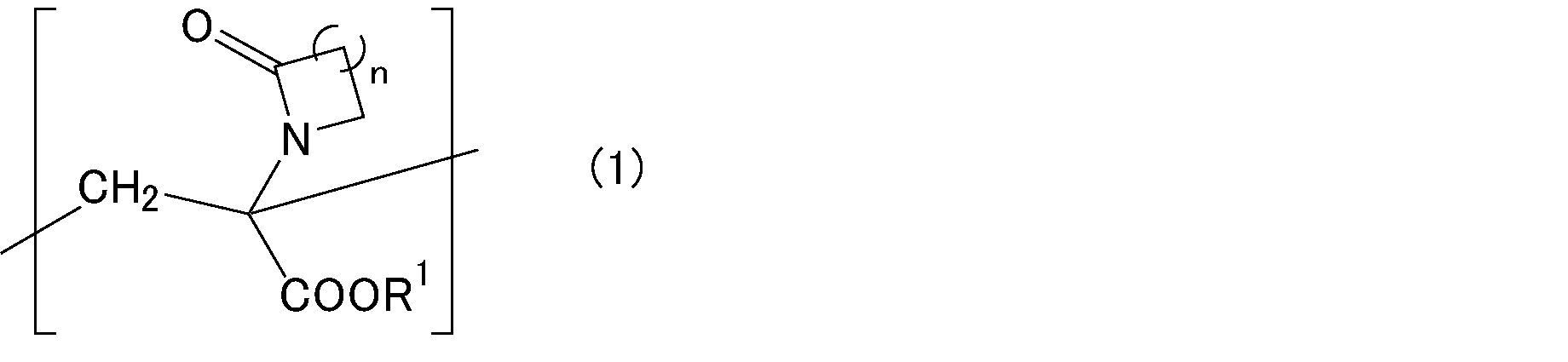
- 環状アミドアクリレートを含む組成物であって、
該組成物は、組成物100質量%に対して、下記一般式(2)で表される環状アミドアクリレートを20質量%以上、99.99999質量%以下の割合で含み、下記一般式(3)で表される化合物を0.1ppm以上、50000ppm以下の割合で含むことを特徴とする環状アミドアクリレート含有組成物。
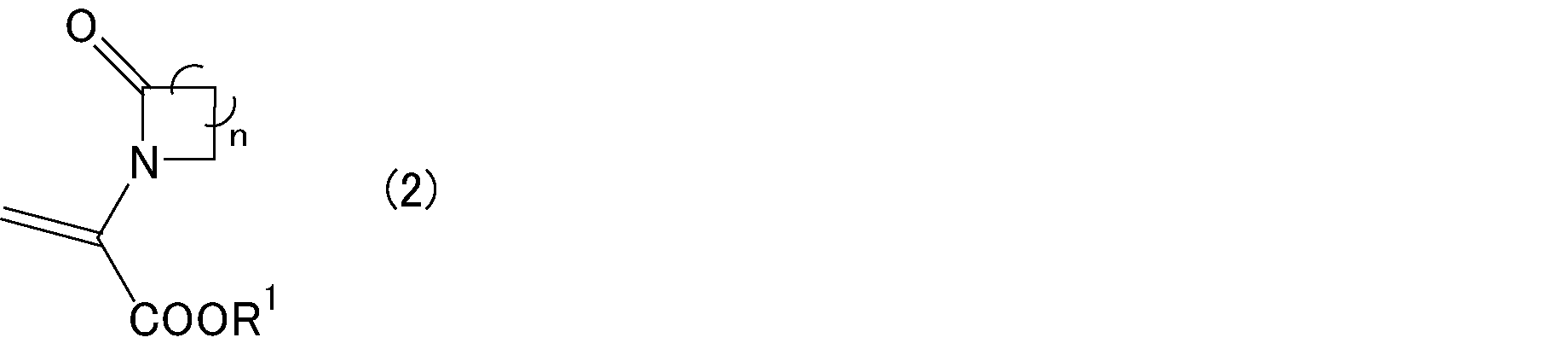

- 下記一般式(5)で表されることを特徴とする環状アミドアクリレート。
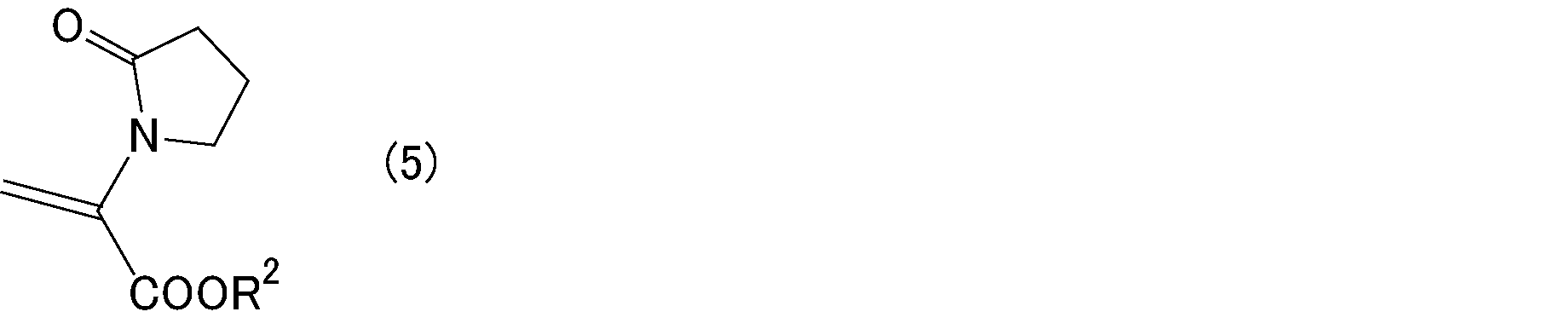
- 下記一般式(2)で表される環状アミドアクリレートを製造する方法であって、
該製造方法は、ピルビン酸、ピルビン酸塩、ピルビン酸エステルからなる群より選ばれる少なくとも1種の化合物と、下記一般式(3)で表される化合物とを反応させる工程を含むことを特徴とする環状アミドアクリレートの製造方法。
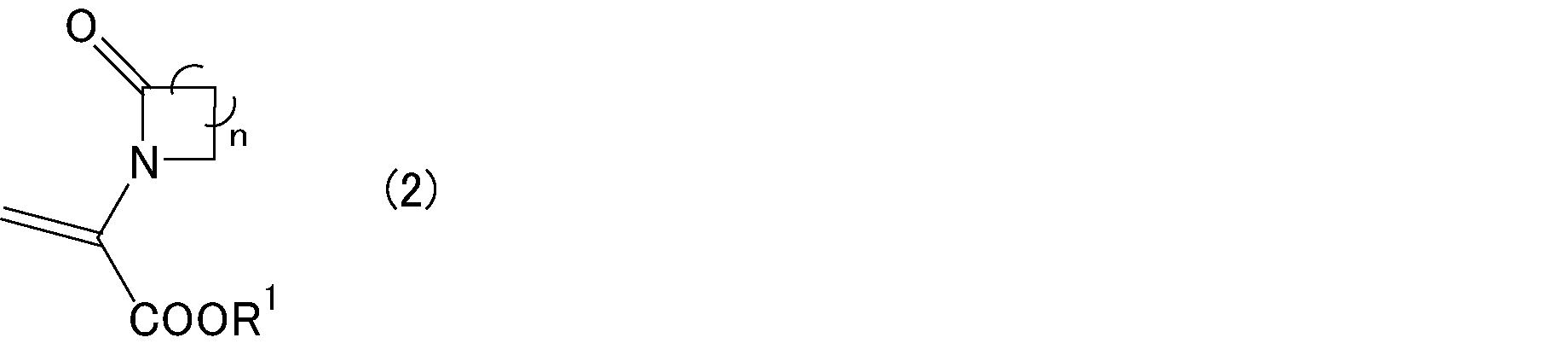

Applications Claiming Priority (4)
| Application Number | Priority Date | Filing Date | Title |
|---|---|---|---|
| JP2013-252021 | 2013-12-05 | ||
| JP2013252021 | 2013-12-05 | ||
| JP2013-252022 | 2013-12-05 | ||
| JP2013252022 | 2013-12-05 |
Publications (1)
| Publication Number | Publication Date |
|---|---|
| WO2015083744A1 true WO2015083744A1 (ja) | 2015-06-11 |
Family
ID=53273505
Family Applications (1)
| Application Number | Title | Priority Date | Filing Date |
|---|---|---|---|
| PCT/JP2014/081989 Ceased WO2015083744A1 (ja) | 2013-12-05 | 2014-12-03 | 環状アミド基含有重合体、環状アミドアクリレート含有組成物および環状アミドアクリレートの製造方法 |
Country Status (1)
| Country | Link |
|---|---|
| WO (1) | WO2015083744A1 (ja) |
Cited By (1)
| Publication number | Priority date | Publication date | Assignee | Title |
|---|---|---|---|---|
| TWI815894B (zh) * | 2018-07-06 | 2023-09-21 | 日商富士軟片股份有限公司 | 感光化射線性或感放射線性樹脂組成物、抗蝕劑膜、圖案形成方法、電子元件的製造方法、樹脂 |
Citations (4)
| Publication number | Priority date | Publication date | Assignee | Title |
|---|---|---|---|---|
| US3022293A (en) * | 1959-11-27 | 1962-02-20 | Monsanto Chemicals | Novel ethylenic compounds |
| JPS60500446A (ja) * | 1982-12-27 | 1985-04-04 | バイオテツク ソシエテ アノニム | アシル化エナミド化合物、それらを含有する医薬組成物および該化合物の製造法 |
| JPS6419026A (en) * | 1987-06-13 | 1989-01-23 | Basf Ag | Manufacture of 1,1-disubstituted ethylene compound |
| JP2004509947A (ja) * | 2000-09-29 | 2004-04-02 | イーストマン ケミカル カンパニー | 鏡像異性体純度が高いラクタム置換プロパン酸誘導体並びにそれらの製造方法及び使用方法 |
-
2014
- 2014-12-03 WO PCT/JP2014/081989 patent/WO2015083744A1/ja not_active Ceased
Patent Citations (4)
| Publication number | Priority date | Publication date | Assignee | Title |
|---|---|---|---|---|
| US3022293A (en) * | 1959-11-27 | 1962-02-20 | Monsanto Chemicals | Novel ethylenic compounds |
| JPS60500446A (ja) * | 1982-12-27 | 1985-04-04 | バイオテツク ソシエテ アノニム | アシル化エナミド化合物、それらを含有する医薬組成物および該化合物の製造法 |
| JPS6419026A (en) * | 1987-06-13 | 1989-01-23 | Basf Ag | Manufacture of 1,1-disubstituted ethylene compound |
| JP2004509947A (ja) * | 2000-09-29 | 2004-04-02 | イーストマン ケミカル カンパニー | 鏡像異性体純度が高いラクタム置換プロパン酸誘導体並びにそれらの製造方法及び使用方法 |
Cited By (2)
| Publication number | Priority date | Publication date | Assignee | Title |
|---|---|---|---|---|
| TWI815894B (zh) * | 2018-07-06 | 2023-09-21 | 日商富士軟片股份有限公司 | 感光化射線性或感放射線性樹脂組成物、抗蝕劑膜、圖案形成方法、電子元件的製造方法、樹脂 |
| US12007688B2 (en) | 2018-07-06 | 2024-06-11 | Fujifilm Corporation | Actinic ray-sensitive or radiation-sensitive resin composition, resist film, pattern forming method, method for manufacturing electronic device, and resin |
Similar Documents
| Publication | Publication Date | Title |
|---|---|---|
| JPH04308559A (ja) | 不飽和フェノン誘導体及び触圧接着剤としてのそれらの使用 | |
| JP3999022B2 (ja) | ビニルピロリドン系重合体 | |
| CN103562242B (zh) | 成型材料和成型体 | |
| JP7557980B2 (ja) | N-ビニルラクタム系共重合体の製造方法 | |
| WO2015083744A1 (ja) | 環状アミド基含有重合体、環状アミドアクリレート含有組成物および環状アミドアクリレートの製造方法 | |
| JP7236055B2 (ja) | ジアリルアミン系/ジアリルエーテル系共重合体、その製造方法及び用途 | |
| TWI773799B (zh) | 藉由自由基聚合的含有氧乙烯鏈的乙烯醚聚合物的製造方法 | |
| KR0152388B1 (ko) | N-비닐포름아미드와 아크릴 및 메트아크릴 에스테르의 마이클 부가반응 생성물 | |
| JP5638209B2 (ja) | N−ビニルカルバゾール重合体およびn−ビニルカルバゾール重合体の製造方法 | |
| JP6453632B2 (ja) | 環状アミドアクリレート含有組成物およびその製造方法 | |
| JPH09132615A (ja) | N−ビニルホルムアミド/アルキルアクリレートマイケル付加物 | |
| JP6465634B2 (ja) | 環状アミド基含有重合体 | |
| JP7418907B2 (ja) | N-ビニルラクタム系共重合体の製造方法 | |
| JP4724843B2 (ja) | マレイミド系重合体 | |
| JP6618812B2 (ja) | 2−メチレングルタル酸エステル系重合体 | |
| JP2022018857A (ja) | N-ビニルアミド系重合体の製造方法、及び、n-ビニルアミド系重合体 | |
| JP7134797B2 (ja) | ポリビニルピロリドン含有組成物 | |
| JP6298741B2 (ja) | (メタ)アリルアルコール共重合体およびその製造方法 | |
| JP2024130807A (ja) | 機能剤含有重合体の製造方法、機能剤含有共重合体 | |
| JP7803211B2 (ja) | ポリマーの生産方法 | |
| US20250320191A1 (en) | Method of preparing a monomeric photoinitiator | |
| TW202611110A (zh) | 自由基聚合控制劑、自由基聚合用組成物及聚合物之製造方法 | |
| JP2018095740A (ja) | 共重合体およびその製造方法 | |
| WO2026004891A1 (ja) | ラジカル重合制御剤、ラジカル重合用組成物及び重合体の製造方法 | |
| JPS6063213A (ja) | 4−ヒドロキシ−4′−ビニルビフエニル系共重合体およびその製造法 |
Legal Events
| Date | Code | Title | Description |
|---|---|---|---|
| 121 | Ep: the epo has been informed by wipo that ep was designated in this application |
Ref document number: 14868464 Country of ref document: EP Kind code of ref document: A1 |
|
| NENP | Non-entry into the national phase |
Ref country code: DE |
|
| 122 | Ep: pct application non-entry in european phase |
Ref document number: 14868464 Country of ref document: EP Kind code of ref document: A1 |