WO2015025902A1 - 経鼻的脳機能調整剤及び経鼻的に脳機能を調整する方法 - Google Patents
経鼻的脳機能調整剤及び経鼻的に脳機能を調整する方法 Download PDFInfo
- Publication number
- WO2015025902A1 WO2015025902A1 PCT/JP2014/071819 JP2014071819W WO2015025902A1 WO 2015025902 A1 WO2015025902 A1 WO 2015025902A1 JP 2014071819 W JP2014071819 W JP 2014071819W WO 2015025902 A1 WO2015025902 A1 WO 2015025902A1
- Authority
- WO
- WIPO (PCT)
- Prior art keywords
- brain
- brain function
- nasal
- activity
- extraction
- Prior art date
- Legal status (The legal status is an assumption and is not a legal conclusion. Google has not performed a legal analysis and makes no representation as to the accuracy of the status listed.)
- Ceased
Links
Images
Classifications
-
- A—HUMAN NECESSITIES
- A61—MEDICAL OR VETERINARY SCIENCE; HYGIENE
- A61K—PREPARATIONS FOR MEDICAL, DENTAL OR TOILETRY PURPOSES
- A61K36/00—Medicinal preparations of undetermined constitution containing material from algae, lichens, fungi or plants, or derivatives thereof, e.g. traditional herbal medicines
- A61K36/18—Magnoliophyta (angiosperms)
- A61K36/88—Liliopsida (monocotyledons)
- A61K36/899—Poaceae or Gramineae (Grass family), e.g. bamboo, corn or sugar cane
-
- A—HUMAN NECESSITIES
- A61—MEDICAL OR VETERINARY SCIENCE; HYGIENE
- A61K—PREPARATIONS FOR MEDICAL, DENTAL OR TOILETRY PURPOSES
- A61K9/00—Medicinal preparations characterised by special physical form
- A61K9/0012—Galenical forms characterised by the site of application
- A61K9/007—Pulmonary tract; Aromatherapy
-
- A—HUMAN NECESSITIES
- A61—MEDICAL OR VETERINARY SCIENCE; HYGIENE
- A61P—SPECIFIC THERAPEUTIC ACTIVITY OF CHEMICAL COMPOUNDS OR MEDICINAL PREPARATIONS
- A61P25/00—Drugs for disorders of the nervous system
-
- A—HUMAN NECESSITIES
- A61—MEDICAL OR VETERINARY SCIENCE; HYGIENE
- A61P—SPECIFIC THERAPEUTIC ACTIVITY OF CHEMICAL COMPOUNDS OR MEDICINAL PREPARATIONS
- A61P25/00—Drugs for disorders of the nervous system
- A61P25/14—Drugs for disorders of the nervous system for treating abnormal movements, e.g. chorea, dyskinesia
- A61P25/16—Anti-Parkinson drugs
-
- A—HUMAN NECESSITIES
- A61—MEDICAL OR VETERINARY SCIENCE; HYGIENE
- A61P—SPECIFIC THERAPEUTIC ACTIVITY OF CHEMICAL COMPOUNDS OR MEDICINAL PREPARATIONS
- A61P25/00—Drugs for disorders of the nervous system
- A61P25/18—Antipsychotics, i.e. neuroleptics; Drugs for mania or schizophrenia
-
- A—HUMAN NECESSITIES
- A61—MEDICAL OR VETERINARY SCIENCE; HYGIENE
- A61P—SPECIFIC THERAPEUTIC ACTIVITY OF CHEMICAL COMPOUNDS OR MEDICINAL PREPARATIONS
- A61P25/00—Drugs for disorders of the nervous system
- A61P25/24—Antidepressants
-
- A—HUMAN NECESSITIES
- A61—MEDICAL OR VETERINARY SCIENCE; HYGIENE
- A61P—SPECIFIC THERAPEUTIC ACTIVITY OF CHEMICAL COMPOUNDS OR MEDICINAL PREPARATIONS
- A61P25/00—Drugs for disorders of the nervous system
- A61P25/28—Drugs for disorders of the nervous system for treating neurodegenerative disorders of the central nervous system, e.g. nootropic agents, cognition enhancers, drugs for treating Alzheimer's disease or other forms of dementia
Definitions
- the present invention relates to a nasal brain function regulator comprising, as an active ingredient, an extract extracted from a specific plant, and the nasal brain function regulator is administered to give a brain function nasally. It relates to the method of adjustment.
- Patent Document 1 describes a preventive or therapeutic agent for senile dementia containing a ⁇ -secretase inhibitor containing an essential oil component having a specific functional group.
- Such essential oil components include clove oil and tea tree. It is said to be contained in oil.
- Patent Document 2 describes an olfactory function improving agent containing sage essential oil as an active ingredient, and is said to be effective when administered to a patient with dementia.
- nasal brain function regulators supported by effective evaluation methods for brain function activation, hyperactivity suppression, adjustment, etc., and there is no clear support. Some nasal brain function regulators have been desired.
- the present invention has been made in view of the above-mentioned background art, and its problem is to search for unknown actions of “substances extracted from plants” such as essential oils, fragrances, and extract liquids, and in particular, various effects on brain function.
- a novel “nasal brain function regulator containing an extract extracted from a plant as an active ingredient” capable of effectively regulating brain function, and using the same
- the object is to provide a method for adjusting brain function nasally.
- the present invention which contains an extract extracted from a “specific plant” as an active ingredient, has been found for the first time a remarkable effect that is extremely effective in the medical field, etc. It was newly made as a “regulator”.
- the present invention is a transnasal brain function regulator that acts on a specific location of the subject's brain using the sense of smell and activates or suppresses the activity of the specific location of the brain, Contains lemongrass extract extracted as an active ingredient by an extraction method that involves stirring the lemongrass with a stirring blade and extracting it under reduced pressure while applying heat from the outside under crushing and stirring. It is a nasal brain function regulator characterized by being.
- extraction method having a step of stirring while crushing with a stirring blade and extracting under reduced pressure while applying heat from the outside under crushing and stirring” is simply abbreviated as “low-temperature vacuum extraction method”.
- the present invention provides the above-mentioned nasal brain function regulator to a specific place in the patient's brain by administering it to a patient having a psychiatric disorder or systemic disorder that exhibits psychiatric symptoms, It is a method for adjusting brain function nasally, characterized by activating or suppressing activity at a specific location in the brain.
- the present invention provides the above-mentioned nasal brain function regulator to a specific location in the brain of the patient by administering it to a patient having an organic brain degeneration. It is a method of adjusting brain function nasally characterized by activating or suppressing the activity of a place.
- the present invention provides the above-mentioned nasal brain function regulator to a specific place in the brain of a person by administering it to a person who does not have a disease, and thereby the activity of the specific place in the brain is controlled. It is a method for adjusting brain function nasally characterized by activation or suppression.
- the above-mentioned problems and the above-mentioned problems are solved, and brain function activation, brain activity activation, including the activity location of the brain, the degree of the activity, etc.
- An effective nasal brain function regulator that is clearly supported by the evaluation method can be provided.
- an effective nasal cerebral function regulator whose brain activation location and degree, inhibition suppression location and degree, etc. are clearly clarified.
- a nasal brain function regulator having a specific effect for a person having a specific disease, a person who wants to adjust the activity of a specific brain function, or the like.
- the nasal brain function regulator of the present invention can stimulate the brain and regulate blood flow in a specific part of the brain, which can be performed in a short-term or continuously.
- the nasal cerebral function regulator of the present invention includes blood flow volume, blood volume, “volume of blood containing oxygen-bound hemoglobin”, “blood containing oxygen-bound hemoglobin, The ratio of the amount of blood containing hemoglobin to which no oxygen is bound can be adjusted.
- the nasal brain function regulator of the present invention can be used not only as a pharmaceutical product, but also as a prophylactic agent for people who do not have a disease, cosmetics, aromatherapy products, fragrances, care products, etc. It can also be used effectively for further adjustment of brain function activity of healthy subjects. There is no drug other than the nasal brain function regulator of the present invention that can selectively adjust the brain locally by a simple method.
- the nasal brain function regulator of the present invention may be administered to provide data for evaluating cranial nerve disease by a specific technique, or to provide data for regulating brain function activity. it can. If such a technique is used, it is also effective for determination of dose, determination of administration time, determination of administration method, and the like. Since the amount of brain activity of the subject can be improved, the use of the nasal brain function regulator of the present invention leads to improvement of cognitive functions such as improvement of work amount.
- the nasal brain function-regulating agent of the present invention reduces the risk of suffering from patients with psychiatric or systemic diseases that exhibit mental symptoms such as dementia, patients with organic brain degeneration, or those who do not have the disease. It can be used effectively for people who want to have it, and for healthy people who want to adjust their brain function activities.
- the subject for example, a patient having a mental disorder or systemic disorder exhibiting psychiatric symptoms, a patient exhibiting organic brain degeneration, or a disorder
- the activity of a brain function can be adjusted by activating or suppressing the activity of a specific place in the brain of a person who does not have ().
- the present invention can treat cranial nerve diseases or adjust the activity of brain function, and by using the method of providing the data of the present invention, determination of dosage, determination of timing of administration, administration method It is also effective in determining Since it is possible to improve the amount of brain activity, the use of the present invention can improve cognitive functions such as an improvement in the amount of work.
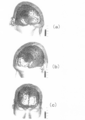
- (A) Head right side, (b) Head left side, (c) Head front It is the figure by the near infrared spectroscopy which shows the activation of the activity of the brain when the nasal brain function regulator containing the extract from the grapefruit as an active ingredient is administered. Indicates activation).
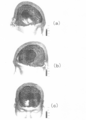
- (A) Head right side, (b) Head left side, (c) Head front It is the figure by the near infrared spectroscopy which shows the activation of the brain activity when the nasal brain function regulator containing the extract from lemon grass as an active ingredient is administered. Is activated).
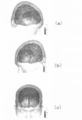
- (A) Head right side, (b) Head left side, (c) Head front It is the figure by the near infrared spectroscopy which shows the activation of the brain activity when the nasal brain function regulator containing the extract from patchouli as an active ingredient is administered. Indicates activation).
- (A) Head right side, (b) Head left side, (c) Head front It is the figure by the near infrared spectroscopy which shows activation of the brain activity when the nasal brain function regulator containing the extract from frankincense as an active ingredient is administered. Indicates activation).
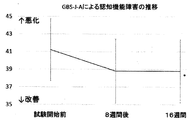
- (A) Head right side, (b) Head left side, (c) Head front It is a graph which shows the result (transition of cognitive dysfunction) which administered the lemon grass extracted by the low temperature vacuum extraction method to the subject of Alzheimer's dementia.
- the present invention is a transnasal brain function regulator that acts on a specific location of a target person's brain using olfaction and activates or suppresses the activity of the specific location of the brain.
- a nasal brain function regulator characterized by containing an extract of lemongrass extracted by an extraction method as an active ingredient.
- Lemongrass (C. citratus) is a perennial that belongs to the genus Cymbopogon of the Poaceae family.
- Lemongrass may be extracted from any tissue of the lemongrass, and extracted from the leaves of lemongrass; stems; corolla such as petals; buds; fruits; seeds; Extracting from leaves, stems is preferred. It is preferable to extract from “lemongrass tissue” containing a large amount of scent components. Moreover, you may extract from several structure
- the nasal brain function regulator of the present invention contains an extract extracted from lemongrass using a low-temperature vacuum extraction method as an active ingredient. That is, lemon grass extracted by “extraction method having a step of stirring while crushing with a stirring blade and extracting under reduced pressure while applying heat from the outside under crushing and stirring” (low-temperature vacuum extraction method) Contains glass extract as an active ingredient.
- the form of lemongrass to be subjected to the low temperature vacuum extraction method that is, the form before stirring the lemongrass while being crushed with a stirring blade, can be easily put into the apparatus used for the low temperature vacuum extraction method, and adapts to the apparatus.
- the length after cutting is preferably 0.5 cm to 20 cm, more preferably 1 cm to 15 cm, and particularly preferably 2 cm to 10 cm.
- the nasal brain function regulator of the present invention acts on a specific location of a subject's brain using olfaction, and activates or suppresses the activity of the specific location of the brain. It is a regulator and contains an extract extracted from lemongrass as an active ingredient using a low-temperature vacuum extraction method.
- the “low-temperature vacuum extraction method” is an extraction method having a step of stirring while crushing with a stirring blade and extracting under reduced pressure while applying heat from the outside under crushing and stirring.
- this extraction method is simply abbreviated as “low temperature vacuum extraction method”.
- low-temperature vacuum extraction method it is preferable to perform direct extraction by reducing the pressure at a low temperature without substantially using an extraction medium such as an organic solvent, water, or water vapor.
- low temperature means a temperature lower than a general temperature when solvent extraction is performed without reducing pressure.
- the temperature of the extraction vessel is The temperature of the lemongrass is preferably 90 ° C. or less. The extraction temperature will be described in detail.
- the method for producing an extract according to the present invention preferably includes a step of stirring the lemongrass once dried with crushing with a stirring blade, and extracting under reduced pressure while applying heat from the outside under crushing and stirring. .
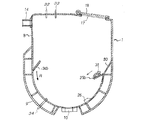
- FIG. 1 is a schematic view showing an embodiment of an apparatus used for an extraction step in the method for producing an extract of the present invention.
- the nasal brain function adjusting agent of the present invention is not limited to that extracted by the apparatus shown in the figure. 1 is a container containing lemongrass, stirred while being crushed with a stirring blade, and extracted under reduced pressure while applying heat from outside while being crushed and stirred, and 2 is for cooling the steam from the container 1 It is a cooling tank.
- the container 1 is composed of a lower semi-cylindrical portion 7 containing a stirring blade 6 and an upper square portion 8 formed thereon.
- a steam chamber 9 for applying heat to the inside of the container 1.
- a discharge port 10 for taking out the crushed lemongrass after extraction.
- An upper portion of the upper rectangular portion 8 is provided with an exhaust port 14 for sucked steam, and a pipe 16 connected to the cooling tank 2 is connected to the exhaust port 14.
- a lemongrass inlet 17 is provided, and a lid 18 for closing the inlet 17 is provided.
- an extract of the present invention it is essential to stir lemongrass while crushing it with a stirring blade and perform extraction under crushing and stirring.
- extraction becomes possible as soon as a freshly crushed surface is formed, so that denaturation due to thermal decomposition or the like of effective aroma components can be prevented.
- the crushing / stirring is particularly preferably performed in an extraction apparatus having a movable blade and / or a fixed blade in order to obtain the above-described effect.
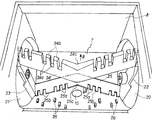
- FIG. 3 is a perspective view showing the configuration of the stirring blade 6, and the stirring blade 6 is rotated by a motor provided outside the container 1, and is attached to the end walls 20 and 21 of the container 1.
- a motor provided outside the container 1
- vanes 24 and 25 having a substantially " ⁇ " shape, both ends of which are fixed between the ends thereof, there is no central axis. It is structured into a structure.
- Reference numeral 26 denotes a plurality of fixed blades fixed to the inner surface of the lower semi-cylindrical portion 7.
- the portions corresponding to the fixed blades 26 in the blade bodies 24 and 25 pass through the fixed blade 26 portions of the blade bodies 24 and 25.
- Grooves 24a and 25a are formed, and movable blades 24b and 25b for cutting the lemongrass 31 between the fixed blades 26 are formed on both sides of the grooves.
- the fixed blade 26 and the movable blades 24 b and 25 b are arranged with their positions shifted in the circumferential direction so that the meshing is sequentially performed with a shift in time, whereby the drive motor of the stirring blade 6 is driven. The momentary increase in power is prevented.
- FIG. 2 there is an inclined surface 30 at the upper part of one side of the lower semi-cylindrical part 7 so that the lemongrass 31 placed thereon falls smoothly.
- 32 is a vacuum gauge for measuring the degree of vacuum in the container 1
- 33 and 34 are thermometers, which measure the pressure (decompression degree) and temperature in the container in the extraction process, and the temperature of the lemongrass during extraction. Is provided for indirectly measuring, and is provided for determining the start and end of extraction.
- the gas in the container 1 that is, the vapor and air of the extract
- a decompression device 46 such as an ejector or a vacuum pump
- the gas in the container 1 that is, the vapor and air of the extract
- Vapor and water evaporation begins.
- the amount of suction and the suction force with the decompression device 46 are adjusted so that the pressure (degree of decompression) at the time of extraction is in a preferable range described later.
- the suction by the decompression device 46 is stopped, the valve 45 is closed, and the valve 49 is opened to recover the recovered liquid.
- the recovered liquid may be allowed to stand and be separated, and the oil layer 50 and the aqueous layer 51 may be recovered as extract liquids. It is preferable to select whether to use the extract of the oil layer 50 or the extract of the aqueous layer 51 according to the application of the nasal brain function regulator of the present invention.
- aqueous phase when there is almost no oil layer or there are many active ingredients in an aqueous layer (aqueous phase), it is preferable to use an aqueous layer (aqueous phase), and there is almost no aqueous layer or an active ingredient is an oil layer. In the case of a large amount in (oil phase), it is preferable to use an oil layer (oil phase). Moreover, it is preferable to select the layer (phase) having more medicinal components according to the application.
- a diffuser which is a suitable device (high diffuser compatibility), blood flow in a specific place in the brain, “oxygen binding For adjusting the amount (ratio) of “blood containing hemoglobin” and adjusting the function of the brain, the content ratio of the alcohol component being higher than the aldehyde component (see Example 3), etc.
- aqueous layer aqueous phase, aqueous fraction.
- the temperature of the extraction is not particularly limited, but it is preferable that the lemongrass is maintained at a temperature of 55 ° C. or lower. More preferably, the extraction is performed such that lemongrass maintains a temperature of 20 ° C. or higher and 50 ° C. or lower, particularly preferably 25 ° C. or higher and 45 ° C. or lower, and more preferably 30 ° C. or higher and 40 ° C. or lower. It is below °C.
- the extraction time can be shortened, so that the decomposition and loss of the aroma components are suppressed, and there is no unnecessary time loss, which is economical.
- a fragrance component can fully be extracted.
- lemon grass is stirred while being crushed with a stirring blade, and extraction is performed with the crushing and stirring, so that extraction can be quickly performed when a fresh crushed surface is formed.
- the effect of suppressing the decomposition and loss of the fragrance component is more synergistic.
- the upper limit is within the above range, the active ingredient can be prevented from being denatured by heat, and the aromatic component can be sufficiently extracted while suppressing decomposition of the aromatic component. Moreover, unnecessary components are not extracted.
- the degree of decompression of the extraction is not particularly limited, but it is preferably performed while maintaining a pressure of 80 kPa or more lower than 101.3 kPa (1 atm). More preferably, it is carried out while maintaining a pressure of 85 kPa or lower relative to 101.3 kPa (1 atm), particularly preferably a pressure of 90 kPa or higher, and still more preferably a pressure of 95 kPa or higher.
- the degree of decompression is the above
- it becomes possible to extract the aroma component at a low temperature so that denaturation of the active ingredient can be prevented and the decomposition of the aroma component is suppressed, Aroma components can be extracted sufficiently.
- the extraction time can be shortened, decomposition and loss of the aroma components are suppressed, and there is no unnecessary time loss, which is economical.
- lemon grass is stirred while being crushed with a stirring blade, and extraction is performed with the crushing and stirring, so that extraction can be quickly performed when a fresh crushed surface is formed.
- the degree of decompression is as low as the above value, the effect of suppressing the decomposition and loss of the aroma component is more synergistic.
- the steam distillation method and direct extraction method are sufficient to extract scents that are effective for adjusting brain function because the aroma components are denatured due to the high temperature heating of lemongrass and the aroma components are dissipated. It was not obtained.
- the solvent extraction method it is difficult to extract a water-soluble component, the solvent remains in the extract, and the aromatic component may be removed when the solvent is removed. Even in the squeezing method, the oily component used as the extraction solvent remains in the extract, and it is sometimes impossible to remove the oily component.
- the supercritical extraction method has problems such as lack of an appropriate extraction solvent and high pressure because it requires high-pressure equipment.
- an effective aroma component for adjusting brain function cannot be efficiently extracted by a method of extracting lemon grass after crushing and stirring instead of crushing and stirring lemon grass.
- an effective aroma component may not be extracted in order to adjust brain function.
- the above-mentioned other extraction methods including the usual vacuum extraction method of extracting lemongrass by heating and decompressing it “not while crushing”, have various components contained in the tissues and cells of lemongrass.
- the fragrance component since it flows out together with the fragrance component, the fragrance component may not be extracted efficiently in order to adjust the brain function.
- other components contained in the lemongrass flow out together with the fragrance component, but other components come into contact with the fragrance component in water. In some cases, the fragrance component was modified.
- the aqueous phase (aqueous layer) of the extract from lemongrass has been confirmed to have a higher alcohol component content than the aldehyde component, and the extract of the present invention.
- an extract containing an aroma component that could not be obtained by a conventional extraction method or an aroma component of a component ratio that could not be obtained was obtained.
- aromatic water is obtained from the aqueous fraction (aqueous layer, aqueous phase), and essential oil is obtained from the oily fraction (aqueous layer, oil phase).
- the operation after extraction is not particularly limited, but it is preferable to separate and remove unnecessary components recovered simultaneously. For separation, decantation, liquid separation operation, or the like using the difference in specific gravity or the like is used.
- the present invention also has an advantage that the extract is obtained as “aromatic water or essential oil” that does not contain components not derived from plants.
- Extraction and separation of aroma components from plants other than the low-temperature vacuum extraction method include extraction using a steam distillation method and separation of the upper layer divided into two layers; Direct extraction method that separates the upper layer from the distillate components divided into two layers; Solvent extraction method that extracts using a solvent; Squeezing method that extracts by adding oily components and squeezing; Supercritical fluid that extracts using a supercritical fluid Examples include extraction methods.
- the extract extracted from the plant may be oil-soluble or water-soluble.
- essential oil essential oil
- resin resin
- it is a water-soluble extract. If it is a water-soluble extract, it can be easily sprayed indoors using a general-purpose sprayer (for example, a humidifier), and the filter etc. is not contaminated. It has the effect that it is not necessary. In addition, an effect that it is effective for activation, suppression, adjustment, etc. of brain function can be obtained. In addition, a larger amount of the water-soluble extract can be recovered in one extraction step than the oil-soluble extract. In addition, it has a light odor compared to oil-soluble extracts, but it has a relatively pleasant odor intensity and is easy to use at medical sites and at home. Furthermore, it is superior to oil-soluble extracts in that containers and parts can be easily cleaned.
- “Nasal brain function adjustment” refers to acting on a specific part of the subject's brain using the sense of smell and activating or suppressing the activity of that “specific part of the brain”
- the sensory organs are stimulated by sensing the scent, and the stimulus acts on a specific location in the brain to activate or suppress the activity at that location, or activate or suppress the excessive enhancement of the location. That means.
- Activation or suppression of activity at a specific location in the brain is detected by, for example, blood flow at that location.
- Brain function adjustment is, for example, acting on a specific location of the brain to increase the blood flow at that location, or conversely It means reducing or balancing (for example, equalizing) a place where the blood flow is high and a place where the blood flow is low.
- Brain function adjustment is quantitative and relative control of brain activity, and is reduction or treatment of reduction in brain activity caused by reduction of unnecessary increase in brain activity, decrease in blood flow in the brain, and the like.
- Activation or suppression of activity at a specific location in the brain is detected by, for example, the “amount of hemoglobin bound to oxygen” or “the ratio of the amount of hemoglobin bound to oxygen to the amount of hemoglobin bound to oxygen”. Is done.
- brain function adjustment refers to the amount of “blood containing hemoglobin combined with oxygen” acting on a specific place in the brain. It means increasing the ratio, conversely decreasing the blood volume or the blood ratio, and balancing (for example, making uniform) a place where the blood flow is high and a place where the blood flow is low.
- Brain function adjustment is quantitative and relative control of brain activity, such as reducing unnecessary hyperactivity of the brain, reducing the amount (ratio) of the brain's “blood containing oxygen-bound hemoglobin”, etc. It is the alleviation or treatment of the resulting decrease in brain activity.
- “the amount of hemoglobin to which oxygen is bound” or “the ratio of hemoglobin to which oxygen is bound to hemoglobin to which oxygen is not bound” may be simply abbreviated as “blood volume” or “blood flow”.
- the lemongrass is known to be used for aromatherapy, but as in the present invention, it can be used for “transnasal brain function adjustment” as defined above.
- the present invention newly found a remarkable effect effective for medical treatment, etc., as described above, as an “intranasal brain function regulator”, containing an extract extracted from lemongrass as an active ingredient. It was made.
- the “specific location of the brain” that regulates the brain function is preferably the frontal lobe, temporal lobe, parietal lobe, occipital lobe, limbic system or frontal orbital field.
- a portion where an increase in blood volume (activation of activity) and a decrease in blood volume (inhibition of activity) can be easily controlled as an image (pattern) is preferable.
- the frontal lobe has a role of managing mental actions such as thinking and judgment and voluntary movement.
- the association area is located between the motor area and the sensory area, and is divided into the frontal association area, the parietal association area, the temporal association area, the visual anterior area, and the marginal lobe.
- the frontal association area is an area ahead of the premotor area and consists of the frontal eye field, prefrontal area, orbital area, and frontal language area.
- frontal lobe examples include the upper frontal gyrus, middle frontal gyrus, lower frontal gyrus, central previous, frontal pole, direct rotation, frontal gyrus, primary motor area, prefrontal cortex, or frontal orbital area, Or those vicinity parts are preferable.
- central previous time, frontal pole, prefrontal cortex, or frontal orbital field, or the vicinity thereof it is easier to control the increase in blood volume (activation of activity) and the decrease in blood volume (inhibition of activity). This is particularly preferable.
- Additional specific locations of the temporal lobe include upper temporal gyrus, middle temporal gyrus, lower temporal gyrus, fusiform gyrus, lateral temporal gyrus, temporal pole, primary auditory cortex, and language areas including Wernicke area Or a temporal-parietal junction part or those vicinity parts are preferable.
- the upper temporal gyrus, middle temporal gyrus, lower temporal gyrus, lateral temporal gyrus, or temporal pole, or the vicinity thereof increase blood volume (activate activity) and decrease blood volume ( It is particularly preferable in terms of easier control of activity suppression.
- parietal lobe is preferably the central retrorotation, the upper parietal lobe, the lower parietal lobe, the wedge front, the central paralobule, or the vicinity thereof.
- a wedge portion As a further specific location of the occipital lobe, a wedge portion, a lingual gyrus, a occipital pole, a primary visual cortex, or a vicinity thereof is preferable.
- the transnasal brain function regulator of the present invention can effectively regulate blood flow and regulate brain function.
- a place is easily controlled as a pattern of near infrared spectroscopy (NIRS) when the nasal brain function regulator of the present invention is administered.
- NIRS near infrared spectroscopy
- the nasal brain function regulator of the present invention can regulate the blood flow more effectively to regulate the brain function. In other words, it is easy to control as a pattern of near infrared spectroscopy (NIRS).
- the present invention was made by detecting the blood volume at each location of the brain by near infrared spectroscopy (NIRS: Near-Infrared Spectroscopy or fNIRS: functional Near-Infrared Spectroscopy).
- NIRS Near-Infrared Spectroscopy
- fNIRS functional Near-Infrared Spectroscopy
- the “specific location of the brain” is preferably a location where blood flow is easily detected by NIRS or the like.
- NIRS Near-infrared spectroscopy
- optical topography is a registered trademark
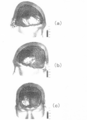
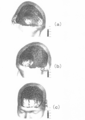
- FIGS. 4 to 8 are diagrams by near-infrared spectroscopy showing activation of brain activity when a nasal brain function regulator containing an extract from a specific plant as an active ingredient is administered. 4 to 8, (a) shows the left frontal orbital field, (b) shows the right temporal region, and (c) shows the left temporal region.
- each extract a nasal cerebral function regulator containing as an active ingredient
- Subjects who received each extract are characterized by their respective characteristics and regions, mainly in the prefrontal cortex, temporal lobe, and parietal lobe. Shows limited adjustment action.
- the shades of colors in FIGS. 4 to 8 indicate that the standard value is gray, and that the closer to black, the more brain activity is suppressed, and the closer to white, the more brain activity is activated. .
- extracts from plants other than the above can detect an increase in brain blood volume (activation of activity) or a decrease in blood volume (inhibition of activity) within the experimental range. Or the increase (activation) width or the decrease (suppression) width was small.
- FIG. 4 is chamomile
- FIG. 5 is grapefruit
- FIG. 6 is lemongrass
- FIG. 7 is patchouli
- FIG. 8 is a nasal brain function regulator containing an extract extracted from frankincense as an active ingredient. It is a figure which shows activation of the activity of the brain by a near infrared spectroscopy. 4 to 8, a significant increase (activation) or a significant decrease (suppression) of the blood volume (activity) for each brain location can be detected.
- FIG. 4 shows a case where an extract extracted from chamomile was administered, and an increase (activation) of blood volume (activity) was observed in the left frontal orbital field, the right temporal region and the left temporal region.
- FIG. 5 shows a case where an extract extracted from grapefruit was administered, and a strong increase in blood volume (activity) (strong activation) was observed in the entire frontal orbital area.
- FIG. 6 shows the case where an extract extracted from lemongrass was administered, but a slightly strong increase in blood volume (activity) was observed (somewhat strong activation) in the entire frontal orbital area.
- FIG. 7 shows a case where an extract extracted from patchouli was administered, and a strong blood volume (activity) decrease (strong suppression) was observed in the left temporal region, and a slightly strong blood volume (activity) was observed in the right temporal region. ) (A somewhat strong suppression).
- FIG. 8 shows a case where an extract extracted from frankincense was administered, and a slight increase in blood volume (activity) was observed from the upper temporal gyrus to the lower temporal gyrus of the right temporal lobe. .
- the transnasal brain function regulator of the present invention acts on the brain of a target person using olfaction.
- the subject person is preferably a patient having a mental illness or systemic illness that exhibits psychiatric symptoms because the therapeutic effect is easily achieved.
- the present invention allows the above-mentioned nasal brain function regulator to act on a specific place in the brain of a patient by administering it to a patient having a mental or systemic disease that exhibits psychiatric symptoms. It is also a method for adjusting brain function nasally, characterized by activating or suppressing the activity of a specific location of the brain.
- the subject person is a patient having organic brain degeneration because the therapeutic effect is easily achieved.
- the present invention relates to the identification of the brain by administering the above-mentioned nasal brain function regulator to a patient having an organic brain degeneration, and acting on a specific location of the patient's brain. It is also a method for adjusting brain function nasally, characterized by activating or suppressing the activity of the place.
- the subject person is a person who does not have a disease and is administered prophylactically in order to reduce the risk of disease.
- the person is a person who is administered to adjust the activity of brain function.
- the present invention allows the above-mentioned nasal brain function regulator to be administered to a person who does not have a disease, so that it acts on a specific part of the person's brain, and the activity of the specific part of the brain. It is also a method of adjusting brain function nasally characterized by activating or suppressing the above.
- the administration subject of the nasal brain function regulator of the present invention may be a healthy subject or a subject suffering from a disease.
- the “nasal brain function adjusting agent”, “method for adjusting brain function nasally”, and “method for providing data for evaluating cranial nerve disease” of the present invention Effective treatment with alleviation of mental symptoms in mental disorders such as depression and depressive neurosis, and adjustment of brain activity in other organic cranial nerve diseases such as dementia Connected.
- Adjusting the function of a specific location in the brain is a kind of (or included) in activating or suppressing the activity in a specific location in the brain.
- the target diseases include all diseases that cause anxiety and mood disorders such as depression and depressive neurosis.
- dementia includes Alzheimer's disease, Parkinson's disease, frontotemporal dementia, Pick's disease, Lewy body disease, Huntington's disease, progressive supranuclear palsy and other degenerative dementia; Creutzfeldt-Jakob disease, Dementia associated with infections such as HIV; and the like. Furthermore, it is used not only for these therapeutic purposes but also for preventive purposes, and is used to adjust the activity of brain functions even in healthy individuals.
- the present invention is also a preventive and therapeutic agent for nasal mental disorders, a preventive and therapeutic agent for nasal depressive neurosis, a preventive and therapeutic agent for nasal organic brain degeneration, and a preventive treatment for nasal dementia. It is also an agent.
- a cerebral nerve disease as described above can be treated or prevented by nasally administering a nasal brain function regulator and detecting the blood volume of the brain by near infrared spectroscopy. Can diagnose again.
- a nasal brain function regulator of the present invention is administered intranasally, data for adjusting brain function activity is provided by detecting the blood volume of the brain by near infrared spectroscopy. it can.
- ADVANTAGE OF THE INVENTION According to this invention, a nasal brain function regulator is administered nasally and the activity of a brain function can be adjusted and a diagnosis can be performed by detecting the blood volume of a brain by a near-infrared spectroscopy. .
- the nasal brain function regulator of the present invention When the nasal brain function regulator of the present invention is administered nasally, the brain function having the step of mapping as described above by detecting the blood volume at each brain location by near infrared spectroscopy.
- a method for determining or adjusting the activity of a person can be provided.
- a method for determining or adjusting brain function activity comprising a step of detecting and mapping a blood volume at each brain location by nasal administration of a nasal brain function regulator, by near infrared spectroscopy Can provide.
- the dosage of the nasal brain function regulator of the present invention can be determined by determining the amount by which the amount of brain activity changes significantly by detecting the blood volume in the brain by near infrared spectroscopy.
- the dosage of the nasal brain function adjusting agent can be determined by determining the amount by which the amount of brain activity changes significantly by detecting the blood volume of the brain by near infrared spectroscopy.
- the dose can be determined by observing the shading of the color representing the signal intensity of the measurement image of near infrared spectroscopy (NIRS).
- NIRS near infrared spectroscopy
- the present invention provides a method for providing data for treating cranial nerve disease or adjusting brain function activity, wherein a nasal brain function regulator is administered nasally, and a near infrared spectroscopy method is provided.
- a nasal brain function regulator is administered nasally, and a near infrared spectroscopy method is provided.
- it is also a method of providing data characterized by detecting and mapping the blood volume at each brain location.
- it is data for treating cranial nerve disease or adjusting the activity of brain function, and is also a “brain activity fluctuation map by scent” obtained by mapping as described above.
- the “brain activity fluctuation map by scent” of the present invention is a patient having a psychiatric disorder or systemic disorder exhibiting psychiatric symptoms; a patient having an organic brain degeneration; It is useful for healthy people who want to do it.
- the lemon grass may be used for aromatherapy.
- aromatherapy is effective by adjusting the amount of brain activity.
- aromatherapy it would normally have been thought to simply stimulate parts of the brain, such as the olfactory brain and limbic system And because the details were unknown, it wasn't thought that aromatherapy would regulate brain activity and even specific locations in the brain.
- the nasal brain function regulator and the aromatherapy material of the present invention are different.
- the present invention which contains an extract extracted from lemongrass as an active ingredient, as described above, works directly on a specific part of the brain to treat and prevent various diseases such as neuropsychiatric disorders. It was newly discovered as a remarkable effect effective in medical treatment including nasal and was made as a “nasal brain function regulator”.
- the method of using the nasal brain function regulator of the present invention and the method of administration to the subject may be nasal, and any known method may be used.
- the “agent” is preferably diluted appropriately with a solvent such as water, ethanol, vegetable oil, or a mixed solvent thereof, and atomized using a diffuser (aroma diffuser). Particularly preferred is a method of diluting with a solvent such as water or ethanol and atomizing with a diffuser from the viewpoint that the dose can be adjusted.
- the nasal brain function regulator of the present invention is heated by the heat of a candle, light bulb, etc. and diffused in the air, paper such as tissue paper, handkerchief, etc. It is also possible to use a method of soaking in a cloth or the like and diffusing in the air, a method of mixing with water and diffusing as mist in the air, a method of diffusing in the air by vibration, or the like. It can also be used in a bath, or diluted with carrier oil and used for massage.
- the “extract extracted from lemongrass” or “diluted product” soaked in felt, gauze, non-woven fabric, etc. may be sniffed by the subject or placed indoors. You may make it sniff. Further, they may be evaporated by heating, or may be used by being attached to what they wear. Moreover, you may make them contain in any raw material of what wears them.
- the dose and administration time are preferably 1 second to 3 hours at a time, more preferably 10 seconds to 60 minutes, and particularly preferably 1 minute to 10 minutes.
- the administration frequency is preferably once every 3 hours to 10 days, more preferably once every 6 hours to 3 days, and particularly preferably once every 12 hours to 1 day.
- the nasal brain function regulator of the present invention may contain one or more extracts from other than lemongrass. It is also preferable that the nasal brain function regulator contains an extract having an action of regulating brain function, for example, chamomile, clary sage, grapefruit, cypress, sandalwood, patchouli, frankincense, pepper, bergamot, benzoin, It is preferable to contain an extract extracted from at least one plant selected from the group consisting of lemon, myrrh, eucalyptus and marjuram. In addition, the nasal brain function regulator of the present invention may appropriately contain other components usually used in inhalation preparations.
- the nasal brain function regulator of the present invention can be used for pharmaceuticals, quasi drugs, vaporizing and sucking agents, compositions for external use, blended fragrances, cosmetics, bath preparations, fibers and the like. When used in these applications, various additives can be blended there if necessary.
- the action / principle that the lemongrass extract extracted by the low-temperature vacuum extraction method can adjust the brain function of a specific place of the brain by smell (by smelling the smell) is not clear. Further, the present invention is not limited to the scope of such action and principle, but the following can be considered.
- the low-temperature vacuum extraction method is an “extraction method having a step of stirring while crushing with a stirring blade and extracting under reduced pressure while applying heat from the outside under crushing and stirring” and includes impurities in the extraction step. It will never be.
- Example 1 For normal healthy people, camomile (Matricaria recutita), clarisage (Salvia sclarea), grapefruit (Citrus paradisi), cypress (Cupressus sempervire), sandalwood (Santalum album), patchouli (Pogostemon cablin), frankincense (Boswellia carterii), pepper (Piper nigrum), bergamot (Citrus bergamia), benzoin (Styrax benzoin), lemon (Citrus limon), lemongrass (Cymbopogon citratus), myrrha (Commiphora myrrha), eucalyptus (Eucalyptus), cypress (Chamaecyparis obtusa), majuram (igan) Majorana) were extracted with sweat-like odor, garlic-like odor, propolis-like odor, city gas-like odor, and brain function changes were examined.
- camomile Malvia sclarea
- Extraction from each plant was performed in a preferred manner for each plant by steam distillation, pressing extraction or solvent extraction.
- the obtained essential oil was used as a stock solution, and the essential oil or fragrance volatilized by the air compressor was administered to the subject by allowing it to flow into the nasal cavity of the subject for 30 seconds using a device prepared for fragrance exposure.
- the apparatus is designed to allow air from a compressor to flow into a chamber containing an extract such as essential oil, and to flow the air through a gas mask worn by the subject. It is intended to be exposed to the subject.
- SMARTNIRS near infrared light topography apparatus
- extracts from other plants that were evaluated including those known for aromatherapy
- simple substances such as sweat-like odor, garlic-like odor, propolis-like odor, city gas-like odor, etc.
- an increase (activation) of blood volume (activity) and / or a decrease (suppression) of blood volume (activity) was not observed or was observed in a specific place in the brain was very little.
- Figures 4-8 show the results of extracts from chamomile, grapefruit, lemongrass and patchouli. Further, FIG. 8 shows the result of an extract from frankincense, which showed an increase or decrease in blood volume but was not significantly observed. Thus, in addition to the presence or absence of the effects of the present invention, such as high effects, low effects, and intermediate effects, a difference in degree was also observed. It was shown that the nasal brain function regulator of the present invention has a local brain function regulating action. The nasal brain function regulator of the present invention can adjust (increase or decrease) the blood volume (activity) in a specific location in the brain to activate or suppress the activity in a specific location in the brain. Indicated.
- Example 2 Next, the harvested lemongrass was put in a dryer and dried in air at 30 to 50 ° C. for 24 hours.
- the dried lemongrass was extracted in the containers shown in FIGS.
- the extraction conditions were as follows. (1) Lemongrass temperature: 30-40 ° C (2) Set temperature in the container: 30-40 ° C (3) Pressure: 93-97 kPa lower pressure than 101.3 kPa (1 atm) (4) Rotation speed of stirring blade (movable blade): 4 rpm (rotation / min)
- the liquid in the aqueous layer (aqueous phase) 51 was used as the target extract.
- Example 3 The difference in the components contained in the lemongrass extract extracted by the low-temperature vacuum extraction method and the lemongrass extract extracted by the steam distillation method was compared using a gas chromatography method. The results are shown in Table 1. In Table 1, “%” indicates “mass%”, and “RT” indicates “retention time”.
- the alcohol-type component is 39%, which is more contained than that extracted by the steam distillation method. I found out. Further, it is said that the alcohol type component is safer and less toxic and irritating than the aldehyde type component, and has a sedative effect.
- Example 4 We investigated the improvement of intelligence function (cognitive function) by lemongrass extract extracted by low-temperature vacuum extraction.
- a commercially available ultrasonic humidifier was installed on the wall of the cafeteria in a nursing home for the elderly, and the lemongrass extract was administered to the subject using the humidifier.
- Nineteen residents (average age ⁇ standard deviation; 83.2 ⁇ 8.61 years old) in nursing care health facilities were targeted. When it was difficult to obtain informed consent from the person himself, the parent was given consent after explaining to the parent. The administration time was about 2 hours every day for 16 weeks.
- GBS scale Japanese version GBSS-J, Japanese version of senile dementia rating scale
- FIG. 9 shows the result of the above.
- the vertical axis of the graph in FIG. 9 indicates that the larger the number, the worse the intellectual function (cognitive function) disorder.
- a significant improvement in cognitive dysfunction was seen between 8 and 16 weeks after the start of the study compared to before the start of the study. This suggests that the lemongrass extract has an action of suppressing the development of cognitive impairment.
- a nasal brain function regulator that activates or suppresses the activity of a specific place in the brain, and an extract extracted from lemongrass by a low-temperature vacuum extraction method, particularly extraction of an aqueous phase Those containing a liquid (a water layer component) as an active ingredient have been found to be extremely useful.
- the nasal brain function regulator containing an extract extracted from a specific plant of the present invention as an active ingredient is excellent in regulating the local function of the brain. It is also widely used in the fields of therapy products, fragrances, care products and cosmetics.
Landscapes
- Health & Medical Sciences (AREA)
- Engineering & Computer Science (AREA)
- Bioinformatics & Cheminformatics (AREA)
- Life Sciences & Earth Sciences (AREA)
- Public Health (AREA)
- Pharmacology & Pharmacy (AREA)
- Biomedical Technology (AREA)
- Neurology (AREA)
- Neurosurgery (AREA)
- Chemical & Material Sciences (AREA)
- Veterinary Medicine (AREA)
- General Health & Medical Sciences (AREA)
- Medicinal Chemistry (AREA)
- Animal Behavior & Ethology (AREA)
- Chemical Kinetics & Catalysis (AREA)
- Nuclear Medicine, Radiotherapy & Molecular Imaging (AREA)
- General Chemical & Material Sciences (AREA)
- Organic Chemistry (AREA)
- Natural Medicines & Medicinal Plants (AREA)
- Psychiatry (AREA)
- Epidemiology (AREA)
- Psychology (AREA)
- Botany (AREA)
- Pain & Pain Management (AREA)
- Biotechnology (AREA)
- Hospice & Palliative Care (AREA)
- Medical Informatics (AREA)
- Microbiology (AREA)
- Mycology (AREA)
- Alternative & Traditional Medicine (AREA)
- Pulmonology (AREA)
- Medicines Containing Plant Substances (AREA)
- Measurement Of The Respiration, Hearing Ability, Form, And Blood Characteristics Of Living Organisms (AREA)
- Measuring Pulse, Heart Rate, Blood Pressure Or Blood Flow (AREA)
- Medicines That Contain Protein Lipid Enzymes And Other Medicines (AREA)
- Image Processing (AREA)
- Image Analysis (AREA)
Abstract
本発明は、嗅覚を利用して対象となる人の脳の特定の場所に作用して、該脳の特定の場所の活動を賦活又は抑制する経鼻的脳機能調整剤であって、レモングラスを、撹拌羽根で破砕しながら撹拌し、該破砕・撹拌下に外部から熱を加えつつ減圧して抽出する工程を有する抽出法により抽出されたレモングラスの抽出液を有効成分として含有するものであることを特徴とする経鼻的脳機能調整剤、及び、該経鼻的脳機能調整剤を、対象となる人に投与することによって、該人の脳の特定の場所に作用させて、該脳の特定の場所の活動を賦活又は抑制することを特徴とする経鼻的に脳機能を調整する方法に関する。
Description
本発明は、特定の植物から抽出された抽出物を有効成分として含有する経鼻的脳機能調整剤に関し、また、該経鼻的脳機能調整剤を投与して、経鼻的に脳機能を調整する方法に関する。
香料、精油等の植物から抽出された抽出物は、精神症状の対症療法として利用ができることが知られている。
しかしながら、その利用は対症療法に過ぎない場合が多く、その効果についても未知の部分が多く、事前検査等を用いてもその利益が得られるかどうかは不明であった。また、該効果の個人差も強く、誰にでも又は常に効果を奏するものか否かは明確ではなかった。
しかしながら、その利用は対症療法に過ぎない場合が多く、その効果についても未知の部分が多く、事前検査等を用いてもその利益が得られるかどうかは不明であった。また、該効果の個人差も強く、誰にでも又は常に効果を奏するものか否かは明確ではなかった。
ただ、我が国では、そういった状況を差し引いても、医療に精油を用いるアロマセラピーについては行なわれている。
特許文献1には、特定の官能基を有する精油成分を含有するβ-セクレターゼ阻害剤を含有する老人性痴呆症の予防又は治療薬が記載されており、かかる精油成分は、クローブ油やティーツリー油に含まれるとしている。
特許文献1には、特定の官能基を有する精油成分を含有するβ-セクレターゼ阻害剤を含有する老人性痴呆症の予防又は治療薬が記載されており、かかる精油成分は、クローブ油やティーツリー油に含まれるとしている。
また、特許文献2には、セージ精油を有効成分として含む嗅覚機能改善剤が記載されており、認知症患者に投与すれば有効であるとされている。
このように、精油及び香料は、その香りが、人体に感覚的に受容されることで、様々な作用を有すると考えられている。
しかしながら、その効果については、誰にでも又は常に効果を奏するものか否かは明確ではなく、上記の香り成分が、より効果的に用いられる手法については、検討が十分ではなかった。
また、香り成分の探索、香り成分の有効性の検討、香り成分の効果的な経鼻投与量の決定等についても十分ではなく、更に、脳の如何なる場所の如何なる機能の活性化、亢進抑制化、調整等の評価手法についても十分ではなく、更なる検討が必要であった。
しかしながら、その効果については、誰にでも又は常に効果を奏するものか否かは明確ではなく、上記の香り成分が、より効果的に用いられる手法については、検討が十分ではなかった。
また、香り成分の探索、香り成分の有効性の検討、香り成分の効果的な経鼻投与量の決定等についても十分ではなく、更に、脳の如何なる場所の如何なる機能の活性化、亢進抑制化、調整等の評価手法についても十分ではなく、更なる検討が必要であった。
このような状況の下、脳機能の活性化、亢進抑制化、調整等について、有効な評価手法によって裏付けられた経鼻的脳機能調整剤については、殆ど知られておらず、明確な裏付けがある経鼻的脳機能調整剤が望まれていた。
本発明は上記背景技術に鑑みてなされたものであり、その課題は、精油、香料、抽出液等の「植物から抽出された物質」の未知なる作用を検索し、特に脳機能に対する種々の効果を確認し、脳機能を効果的に調整可能な新規な「植物から抽出された抽出物を有効成分として含有する経鼻的脳機能調整剤」を提供することにあり、また、それを用いた経鼻的に脳機能を調整する方法を提供することにある。
本発明者は、上記の課題を解決すべく鋭意検討を重ねた結果、特定の植物からの抽出物が、脳の局所的な調整を、再現性を持って行うことが可能であることを見出して、本発明を完成するに至った。
本発明は、「特定植物」から抽出された抽出物を有効成分として含有するものに、医療分野等に極めて有効な顕著な効果が初めて見出され、効果が規定された「経鼻的脳機能調整剤」として新たになされたものである。
本発明は、「特定植物」から抽出された抽出物を有効成分として含有するものに、医療分野等に極めて有効な顕著な効果が初めて見出され、効果が規定された「経鼻的脳機能調整剤」として新たになされたものである。
すなわち、本発明は、嗅覚を利用して対象となる人の脳の特定の場所に作用して、該脳の特定の場所の活動を賦活又は抑制する経鼻的脳機能調整剤であって、レモングラスを撹拌羽根で破砕しながら撹拌し、該破砕・撹拌下に外部から熱を加えつつ減圧して抽出する工程を有する抽出法により抽出されたレモングラスの抽出液を有効成分として含有するものであることを特徴とする経鼻的脳機能調整剤である。
以下、「撹拌羽根で破砕しながら撹拌し、該破砕・撹拌下に外部から熱を加えつつ減圧して抽出する工程を有する抽出法」を、単に「低温真空抽出法」と略記する。
以下、「撹拌羽根で破砕しながら撹拌し、該破砕・撹拌下に外部から熱を加えつつ減圧して抽出する工程を有する抽出法」を、単に「低温真空抽出法」と略記する。
また、本発明は、上記の経鼻的脳機能調整剤を、精神症状を呈する精神疾患又は全身性疾患を持つ患者に投与することによって、該患者の脳の特定の場所に作用させて、該脳の特定の場所の活動を賦活又は抑制することを特徴とする経鼻的に脳機能を調整する方法である。
また、本発明は、上記の経鼻的脳機能調整剤を、器質性の脳の変性を有する患者に投与することによって、該患者の脳の特定の場所に作用させて、該脳の特定の場所の活動を賦活又は抑制することを特徴とする経鼻的に脳機能を調整する方法である。
また、本発明は、上記の経鼻的脳機能調整剤を、疾患を持たない人に投与することによって、該人の脳の特定の場所に作用させて、該脳の特定の場所の活動を賦活又は抑制することを特徴とする経鼻的に脳機能を調整する方法である。
本発明によれば、前記問題点や上記課題を解決し、脳機能の活性化、亢進抑制、調整等について、例えば、脳の活動場所や該活動の程度等を含めた、脳機能の活動の評価手法によって明確に裏付けられた、有効な経鼻的脳機能調整剤を提供できる。
また、脳の活性化場所や程度、亢進抑制化場所や程度等が、明確に判明した有効な経鼻的脳機能調整剤を提供できる。
また、特定の疾患を持った人、特定の脳機能の活動を調整したい人等に、特異的に効果を奏する経鼻的脳機能調整剤を提供できる。
また、脳の活性化場所や程度、亢進抑制化場所や程度等が、明確に判明した有効な経鼻的脳機能調整剤を提供できる。
また、特定の疾患を持った人、特定の脳機能の活動を調整したい人等に、特異的に効果を奏する経鼻的脳機能調整剤を提供できる。
本発明の経鼻的脳機能調整剤は、脳を刺激し、脳の特定の箇所の血流を調整でき、これらは、短期的又は持続的に行われる。
本発明の経鼻的脳機能調整剤は、脳の特定の箇所の、血流量、血液量、「酸素が結合したヘモグロビンを含有する血液の量」、「酸素が結合したヘモグロビンを含有する血液と酸素が結合していないヘモグロビンを含有する血液の量の比率」等を調整できる。
本発明の経鼻的脳機能調整剤は、脳の特定の箇所の、血流量、血液量、「酸素が結合したヘモグロビンを含有する血液の量」、「酸素が結合したヘモグロビンを含有する血液と酸素が結合していないヘモグロビンを含有する血液の量の比率」等を調整できる。
また、主作用が香りによって得られることから、対象者にとって負担や副作用が少ない経鼻的脳機能調整剤を提供できる。
従って、本発明の経鼻的脳機能調整剤は、医薬品としてはもちろん、疾患を有さない人向けの予防薬、化粧品、アロマセラピー用品、芳香剤、介護用品等に用いることができ、また、健常者の更なる脳機能の活動調整等にも有効に用いることができる。
簡便な方法で、脳の局所的な調整を選択的に行うことができる薬剤は、本発明の経鼻的脳機能調整剤以外には存在しない。
従って、本発明の経鼻的脳機能調整剤は、医薬品としてはもちろん、疾患を有さない人向けの予防薬、化粧品、アロマセラピー用品、芳香剤、介護用品等に用いることができ、また、健常者の更なる脳機能の活動調整等にも有効に用いることができる。
簡便な方法で、脳の局所的な調整を選択的に行うことができる薬剤は、本発明の経鼻的脳機能調整剤以外には存在しない。
また、本発明の経鼻的脳機能調整剤を投与し、特定の手法で脳神経疾患を評価するためのデータを提供したり、脳機能の活動を調整するためのデータを提供したりすることができる。
かかる、手法を用いれば、投与量の決定、投与時期の決定、投与方法の決定等にも有効である。
対象者の脳活動量の向上が可能であることから、本発明の経鼻的脳機能調整剤の利用で、作業量の向上等の認知機能の向上に繋がる。
かかる、手法を用いれば、投与量の決定、投与時期の決定、投与方法の決定等にも有効である。
対象者の脳活動量の向上が可能であることから、本発明の経鼻的脳機能調整剤の利用で、作業量の向上等の認知機能の向上に繋がる。
本発明の経鼻的脳機能調整剤は、認知症等の精神症状を呈する精神科疾患又は全身性疾患を持つ患者、器質性の脳の変性を有する患者、疾患を持たないが罹患リスクを減少させたい人、脳機能の活動を調整したい健常者等に有効に用いることができる。
また、本発明の経鼻的に脳機能を調整する方法を用いれば、対象者(例えば、精神症状を呈する精神疾患又は全身性疾患を持つ患者、器質性の脳の変性を呈する患者、又は疾患を持たない人)の脳の特定の場所の活動を賦活又は抑制することによって、脳機能の活動を調整することができる。
また、本発明は、脳神経疾患を治療したり、脳機能の活動を調整したりすることができ、本発明のデータを提供する方法を用いれば、投与量の決定、投与時期の決定、投与方法の決定等にも有効である。
脳活動量の向上が可能であることから、本発明の利用で、作業量の向上等の認知機能の向上が可能である。
脳活動量の向上が可能であることから、本発明の利用で、作業量の向上等の認知機能の向上が可能である。
以下、本発明について説明するが、本発明は、以下の具体的形態に限定されるものではなく、技術的思想の範囲内で任意に変形することができる。
本発明は、嗅覚を利用して対象となる人の脳の特定の場所に作用して、該脳の特定の場所の活動を賦活又は抑制する経鼻的脳機能調整剤であって、低温真空抽出法により抽出されたレモングラスの抽出液を有効成分として含有するものであることを特徴とする経鼻的脳機能調整剤である。
本発明は人の嗅覚を利用しているので、レモングラスから抽出された抽出物は「香り」を有する。
レモングラス(C.citratus)は、イネ科(Poaceae)のオガルカヤ属(Cymbopogon)に属する多年草である。
レモングラス(C.citratus)は、イネ科(Poaceae)のオガルカヤ属(Cymbopogon)に属する多年草である。
レモングラスの抽出は、該レモングラスの何れの組織から抽出してもよく、レモングラスの葉;茎;花弁等の花冠;萼;果実;種子;樹皮等の樹木;根等から抽出されるが、葉、茎から抽出することが好ましい。
香り成分を多く含む「レモングラスの組織」から抽出することが好ましい。また、レモングラスの複数の組織から抽出してもよい。
香り成分を多く含む「レモングラスの組織」から抽出することが好ましい。また、レモングラスの複数の組織から抽出してもよい。
抽出に用いられるものは、十分乾燥したもの、全く乾燥をしないもの(生のままのもの)、中程度に乾燥したもの、の何れでもよいが、好ましくは、十分乾燥したものである。
本発明の経鼻的脳機能調整剤は、レモングラスから低温真空抽出法を用いて抽出した抽出液を有効成分として含有する。すなわち、レモングラスを、「撹拌羽根で破砕しながら撹拌し、該破砕・撹拌下に外部から熱を加えつつ減圧して抽出する工程を有する抽出法」(低温真空抽出法)により抽出されたレモングラスの抽出液を有効成分として含有する。
ここで、低温真空抽出法に供するレモングラスの形態、すなわち、レモングラスを撹拌羽根で破砕しながら撹拌する前の形態については、低温真空抽出法に用いる装置に投入し易く、該装置に適応する形態であれば特に限定はないが、適度に切断されていることも好ましい。切断する場合は、切断後の長さは、0.5cm~20cmが好ましく、1cm~15cmがより好ましく、2cm~10cmが特に好ましい。
本発明の経鼻的脳機能調整剤は、嗅覚を利用して対象となる人の脳の特定の場所に作用して、該脳の特定の場所の活動を賦活又は抑制する経鼻的脳機能調整剤であって、低温真空抽出法を用いた、レモングラスから抽出された抽出物を有効成分として含有するものである。
ここで、「低温真空抽出法」とは、撹拌羽根で破砕しながら撹拌し、該破砕・撹拌下に外部から熱を加えつつ減圧して抽出する工程を有する抽出法である。以下、この抽出法を、単に「低温真空抽出法」と略記する。
ここで、「低温真空抽出法」とは、撹拌羽根で破砕しながら撹拌し、該破砕・撹拌下に外部から熱を加えつつ減圧して抽出する工程を有する抽出法である。以下、この抽出法を、単に「低温真空抽出法」と略記する。
低温真空抽出法では、有機溶媒、水、水蒸気等の抽出媒体を実質的に使用せず、低温で減圧して直接抽出することが好ましい。ここで「低温」とは、減圧しないで溶媒抽出するときの一般的温度より低い温度のことを言い、本発明の場合は、具体的には、(抽出容器の温度でも抽出器内の気体の温度でもなく)、レモングラスの温度が90℃以下の温度であることが好ましい。抽出温度については詳述する。
<破砕、撹拌、外部から熱を加えつつ減圧して抽出>
本発明の抽出液の製造方法では、好ましくは一旦乾燥がなされたレモングラスを、撹拌羽根で破砕しながら撹拌し、該破砕・撹拌下に外部から熱を加えつつ減圧して抽出する工程を有する。
本発明の抽出液の製造方法では、好ましくは一旦乾燥がなされたレモングラスを、撹拌羽根で破砕しながら撹拌し、該破砕・撹拌下に外部から熱を加えつつ減圧して抽出する工程を有する。
<<抽出装置>>
図1は、本発明の抽出液の製造方法において、抽出工程に用いられる装置の一形態を示す概略図である。本発明の趣旨の範囲内であれば、本発明の経鼻的脳機能調整剤は、図に示された装置で抽出されたものには限定されない。
1は、レモングラスを収容し、撹拌羽根で破砕しながら撹拌し、該破砕・撹拌下に外部から熱を加えつつ減圧して抽出する容器であり、2は、容器1から出る蒸気を冷却する冷却槽である。
図1は、本発明の抽出液の製造方法において、抽出工程に用いられる装置の一形態を示す概略図である。本発明の趣旨の範囲内であれば、本発明の経鼻的脳機能調整剤は、図に示された装置で抽出されたものには限定されない。
1は、レモングラスを収容し、撹拌羽根で破砕しながら撹拌し、該破砕・撹拌下に外部から熱を加えつつ減圧して抽出する容器であり、2は、容器1から出る蒸気を冷却する冷却槽である。
容器1は、攪拌羽根6を収容した下部半円筒部7と、その上に形成された上部角形部8とからなる。下部半円筒部7の周囲には、容器1の内部に熱を加える蒸気室9がある。
下部半円筒部7の最下部の中央には、抽出後のレモングラスの破砕物を取り出す排出口10が設けられている。
下部半円筒部7の最下部の中央には、抽出後のレモングラスの破砕物を取り出す排出口10が設けられている。
前記上部角形部8の上部には、吸引される蒸気の排気口14が設けられ、この排気口14には、前記冷却槽2につながる配管16が接続されている。
前記上部角形部8の上部には、レモングラスの投入口17を設けると共に、その投入口17を塞ぐ蓋18を設けている。
前記上部角形部8の上部には、レモングラスの投入口17を設けると共に、その投入口17を塞ぐ蓋18を設けている。
本発明の抽出液の製造方法においては、レモングラスを撹拌羽根で破砕しながら撹拌し、該破砕・撹拌下に抽出を行うことが必須である。このようにしながら、抽出することで、新鮮な破砕面ができたら直ぐに抽出が可能になるので、有効な香気成分の熱分解等による変性を防ぐことができる。
上記破砕・撹拌は、可動刃及び/又は固定刃を備えた抽出装置内で行うことが、上記効果を得るために特に好ましい。
上記破砕・撹拌は、可動刃及び/又は固定刃を備えた抽出装置内で行うことが、上記効果を得るために特に好ましい。
例えば、図3は、前記攪拌羽根6の構成を示す斜視図であり、攪拌羽根6は、容器1の外部に設けられたモータにより回転されるものであり、容器1の端壁20、21に回転可能に支持される左右の端板22、23と、その先端間に両端が固定された、ほぼ「く」の字形をなす羽根体24、25とによって構成することにより、中心軸を有しない構造に構成されている。
26は下部半円筒部7の内面に固着された複数の固定刃であり、羽根体24、25における固定刃26に対応する箇所には、羽根体24、25における固定刃26の部分を通過するための溝24a、25aが形成され、その溝の両側に、固定刃26との間でレモングラス31を切断するための可動刃24b、25bが形成されている。
なお、図3では、固定刃26と可動刃24b、25bとは、噛み合いが時間をずらして順次行なわれるように、周方向に位置をずらして配設し、これにより攪拌羽根6の駆動モータの動力の瞬間的増大が起こらないようにしている。
なお、図3では、固定刃26と可動刃24b、25bとは、噛み合いが時間をずらして順次行なわれるように、周方向に位置をずらして配設し、これにより攪拌羽根6の駆動モータの動力の瞬間的増大が起こらないようにしている。
図2に示すように、下部半円筒部7の片側上部には、この上に載るレモングラス31が円滑に落ちるように、傾斜面30がある。
32は前記容器1内の真空度を計測する真空計、33、34は温度計であり、これらは抽出工程における容器内の圧力(減圧度)と温度を測定し、抽出時のレモングラスの温度も間接的に測定するために設けられたものであり、また、抽出の開始と終了を判定するために設けられたものである。
32は前記容器1内の真空度を計測する真空計、33、34は温度計であり、これらは抽出工程における容器内の圧力(減圧度)と温度を測定し、抽出時のレモングラスの温度も間接的に測定するために設けられたものであり、また、抽出の開始と終了を判定するために設けられたものである。
<<抽出工程>>
この真空乾燥装置の操作・動作は、例えば、下記のように行なわれる。
まず、作業開始に当り、冷却槽2に冷却水が充填される。次いで、レモングラスを投入口17から容器1内に投入して蓋18を閉じる。そして、攪拌羽根6は、図1~図3の矢印Rの方向に回転させ、容器1内のレモングラスを攪拌しながら、可動刃24b、25bと固定刃26との間でレモングラスを小さく破砕する。
この真空乾燥装置の操作・動作は、例えば、下記のように行なわれる。
まず、作業開始に当り、冷却槽2に冷却水が充填される。次いで、レモングラスを投入口17から容器1内に投入して蓋18を閉じる。そして、攪拌羽根6は、図1~図3の矢印Rの方向に回転させ、容器1内のレモングラスを攪拌しながら、可動刃24b、25bと固定刃26との間でレモングラスを小さく破砕する。
レモングラスを破砕しながら抽出することで、新鮮な破砕面からの抽出が可能になり、香気成分の変性を防ぐことができる。
上記攪拌・破砕と同時に、蒸気室9内に加熱用蒸気を供給することにより、外部から熱を加える。容器1に加えられた熱は、レモングラスに伝達され、レモングラス31が攪拌羽根6によって攪拌されることにより、抽出が促進される。この抽出は、レモングラス31が、可動刃24b、25bと固定刃26とによって破砕されて小さくなることによって更に促進される。
その際、蒸気室9内に送り込む加熱用蒸気の温度や量を調節して、レモングラスの温度を、後記する好ましい範囲にする。
その際、蒸気室9内に送り込む加熱用蒸気の温度や量を調節して、レモングラスの温度を、後記する好ましい範囲にする。
エゼクタ、真空ポンプ等の減圧装置46で吸引することにより、容器1内の気体、すなわち、抽出液の蒸気及び空気は、配管16を通じて吸引され、容器1内のレモングラスに含まれている抽出液の蒸気と水の蒸発が始まる。
その際、減圧装置46で吸引する量や吸引力を調節して、抽出時の圧力(減圧度)を、後記する好ましい範囲にする。
その際、減圧装置46で吸引する量や吸引力を調節して、抽出時の圧力(減圧度)を、後記する好ましい範囲にする。
容器1内の「レモングラスに含まれている抽出液の蒸気」及び「水蒸気」は、配管16を通して吸引され、冷却槽2に導入・液化されて、回収液となって回収槽41内に溜まる。
回収槽41内に、回収液(油層50及び水層51)が所定量まで貯まったら、減圧装置46での吸引を停止し、バルブ45を閉じ、弁49を開いて、回収液を回収する。回収液は、静置して分液をして、油層50及び水層51を、それぞれ抽出液として回収すればよい。
本発明の経鼻的脳機能調整剤の用途に応じて、油層50の抽出液を使用するか、水層51の抽出液を使用するかを選択することが好ましい。
また、油層が殆どない、又は、有効成分が水層(水相)に多い等の場合は、水層(水相)を使用することが好ましく、水層が殆どない、又は、有効成分が油層(油相)に多い等の場合は、油層(油相)を使用することが好ましい。また、用途に応じた薬効成分が多い方の層(相)を選択することが好ましい。
本発明の経鼻的脳機能調整剤の用途に応じて、油層50の抽出液を使用するか、水層51の抽出液を使用するかを選択することが好ましい。
また、油層が殆どない、又は、有効成分が水層(水相)に多い等の場合は、水層(水相)を使用することが好ましく、水層が殆どない、又は、有効成分が油層(油相)に多い等の場合は、油層(油相)を使用することが好ましい。また、用途に応じた薬効成分が多い方の層(相)を選択することが好ましい。
本願発明においては、好適な装置であるディフューザー(芳香拡散器)を用いて霧化させるために好適であること(ディフューザー適合性が高いこと)、脳の特定の場所の血流量、「酸素が結合したヘモグロビンを含有する血液」の量(比)を調整して、脳の機能を調整する効果が大きいこと、アルデヒド成分よりアルコール成分の含有比率が多いこと(実施例3参照)等のために、水層(水相、水性画分)を使用することが特に好ましい。
<<抽出条件>>
本発明の抽出液の製造方法においては、上記抽出の温度は特に限定されないが、レモングラスが55℃以下の温度を維持するように行うことが好ましい。より好ましくは、上記抽出を、レモングラスが20℃以上50℃以下の温度を維持するように行うことであり、特に好ましくは、25℃以上45℃以下であり、更に好ましくは、30℃以上40℃以下である。
本発明の抽出液の製造方法においては、上記抽出の温度は特に限定されないが、レモングラスが55℃以下の温度を維持するように行うことが好ましい。より好ましくは、上記抽出を、レモングラスが20℃以上50℃以下の温度を維持するように行うことであり、特に好ましくは、25℃以上45℃以下であり、更に好ましくは、30℃以上40℃以下である。
下限が上記範囲の値であると、抽出時間を短くできるので、香気成分の分解・逸失が抑制され、また、不必要な時間のロスがなく経済的である。また、香気成分を十分に抽出可能である。
本発明の抽出液の製造方法では、レモングラスを撹拌羽根で破砕しながら撹拌し、該破砕・撹拌下に抽出を行うので、新鮮な破砕面ができた時点で早く抽出してしまうことができるが、下限が上記範囲の値であると、香気成分の分解・逸失が抑制される効果がより相乗される。
一方、上限が上記範囲の値であると、有効成分の熱による変性が防止でき、香気成分の分解を抑制しつつ、十分に香気成分を抽出できる。また、不必要な成分を抽出することがない。
本発明の抽出液の製造方法では、レモングラスを撹拌羽根で破砕しながら撹拌し、該破砕・撹拌下に抽出を行うので、新鮮な破砕面ができた時点で早く抽出してしまうことができるが、下限が上記範囲の値であると、香気成分の分解・逸失が抑制される効果がより相乗される。
一方、上限が上記範囲の値であると、有効成分の熱による変性が防止でき、香気成分の分解を抑制しつつ、十分に香気成分を抽出できる。また、不必要な成分を抽出することがない。
本発明の抽出液の製造方法においては、上記抽出の減圧度は特に限定されないが、101.3kPa(1気圧)に対し、80kPa以上低い圧力を維持しつつ行うことが好ましい。より好ましくは、101.3kPa(1気圧)に対し、85kPa以上低い圧力を維持しつつ行うことであり、特に好ましくは、90kPa以上低い圧力であり、更に好ましくは、95kPa以上低い圧力である。
圧力が上記値であると(減圧度が上記であると)、低い温度での香気成分の抽出が可能になるので、有効成分の熱による変性が防止でき、香気成分の分解を抑制しつつ、十分に香気成分を抽出できる。また、抽出時間を短くできるので、香気成分の分解・逸失が抑制され、また、不必要な時間のロスがなく経済的である。また、香気成分を十分に抽出可能となる。
本発明の抽出液の製造方法では、レモングラスを撹拌羽根で破砕しながら撹拌し、該破砕・撹拌下に抽出を行うので、新鮮な破砕面ができた時点で早く抽出してしまうことができるが、減圧度が上記値のように低いと、香気成分の分解・逸失が抑制される効果がより相乗される。
本発明の抽出液の製造方法では、レモングラスを撹拌羽根で破砕しながら撹拌し、該破砕・撹拌下に抽出を行うので、新鮮な破砕面ができた時点で早く抽出してしまうことができるが、減圧度が上記値のように低いと、香気成分の分解・逸失が抑制される効果がより相乗される。
<他の抽出方法との比較>
前記した通り、抽出方法には、本発明の低温真空抽出法以外にも、水蒸気蒸留法、直接抽出法、溶媒抽出法、圧搾法、超臨界抽出法等、種々の方法が知られている。
前記した通り、抽出方法には、本発明の低温真空抽出法以外にも、水蒸気蒸留法、直接抽出法、溶媒抽出法、圧搾法、超臨界抽出法等、種々の方法が知られている。
このうち、水蒸気蒸留法や直接抽出法では、レモングラスを高温加熱するため香気成分が変性する、香気成分が散逸する等で、脳機能を調整するために有効な香りのする抽出物が十分に得られなかった。
また、溶媒抽出法では、水溶性成分が抽出され難い、溶媒が抽出液中に残留し、また、その溶媒を除去する際に香気成分も除去されてしまうことがあった。
圧搾法でも、抽出溶媒として用いた油性成分が抽出液中に残留し、また、その油性成分を除去することが不可能なことがあった。
超臨界抽出法では、適当な抽出溶媒がない、高圧を要するので高価な設備を必要とする等の問題点があった。
また、レモングラスを破砕・撹拌をしながらではなく、一旦破砕・撹拌をした後に抽出する方法では、脳機能を調整するために有効な香気成分が効率的に抽出できない場合があった。通常の減圧抽出法等のように、破砕・撹拌をしながらではなく加熱・減圧して抽出する方法では、脳機能を調整するために有効な香気成分が抽出できない場合があった。
また、レモングラスを「破砕しつつではなく」加熱・減圧して抽出する通常の減圧抽出法を含め、上記他の抽出方法では、レモングラスの組織や細胞の中に含まれている種々の成分が、香気成分と一緒に流出するため、脳機能を調整するために香気成分が効率的に抽出できない場合があった。
また、レモングラスから水分と共に香気成分を取り出すときに、レモングラスの中に含まれている他の成分が、香気成分と一緒に流出するが、水中で、他の成分が香気成分と接触するため、香気成分が変性を受ける場合があった。
また、レモングラスから水分と共に香気成分を取り出すときに、レモングラスの中に含まれている他の成分が、香気成分と一緒に流出するが、水中で、他の成分が香気成分と接触するため、香気成分が変性を受ける場合があった。
また、例えば、実施例3で示すように、レモングラスからの抽出液の水相(水層)には、アルデヒド成分よりアルコール成分の含有比率が多いことが確認されており、本発明の抽出液の製造方法によると(低温真空抽出法によると)、従来の抽出方法では得ることができなかった香気成分や、得ることができなかった成分比率の香気成分を含有する抽出液が得られるので、経鼻的脳機能調整剤として効果を特に発揮する。
<抽出後の操作>
本発明における低温真空抽出法によると、水性画分(水層、水相)からは芳香水、油性画分(水層、油相)からは精油が得られる。
本発明においては、抽出後の操作は特に限定はされないが、同時に回収される不要成分は分離して除去することが好ましい。分離には、比重の違い等を利用した、デカンテーション、分液操作等が用いられる。
本発明においては、抽出物が、植物由来ではない成分を含有しない「芳香水又は精油」として得られるという特長もある。
本発明における低温真空抽出法によると、水性画分(水層、水相)からは芳香水、油性画分(水層、油相)からは精油が得られる。
本発明においては、抽出後の操作は特に限定はされないが、同時に回収される不要成分は分離して除去することが好ましい。分離には、比重の違い等を利用した、デカンテーション、分液操作等が用いられる。
本発明においては、抽出物が、植物由来ではない成分を含有しない「芳香水又は精油」として得られるという特長もある。
低温真空抽出法以外の植物から香気成分を抽出し分離する方法としては、水蒸気蒸留法を用いて抽出して2層に分かれた上層を分離する方法;水に直接浸漬させて加熱蒸発させてその2層に分かれた蒸留成分から上層を分離する直接抽出法;溶媒を用いて抽出する溶媒抽出法;油性成分を加えて圧搾することにより抽出する圧搾法;超臨界流体を用いて抽出する超臨界抽出法等が挙げられる。
植物から抽出された抽出物は、油溶性でも水溶性でもよい。また、精油(エッセンシャルオイル(essential oil))、樹脂、香料等でもよいが、好ましくは、水溶性の抽出液である。
水溶性の抽出液であれば、汎用の噴霧器(例えば、加湿器等)を利用して室内等に容易に噴霧させることができ、フィルター等が汚れないため、フィルター交換等のメンテナンスを頻繁にする必要がないという効果を有する。また、脳機能の活性化、亢進抑制、調整等に有効である、と言った効果が得られる。また、水溶性の抽出液は、油溶性の抽出液に比べて、1回の抽出工程でより多くの量を回収することができる。また、油溶性の抽出液に比べて匂いが薄いが、比較的心地よく感じるレベルの匂いの強度であり、医療現場や家庭で使いやすい。更に、容器や部品等の洗浄が容易である点で、油溶性の抽出液より優れている。
水溶性の抽出液であれば、汎用の噴霧器(例えば、加湿器等)を利用して室内等に容易に噴霧させることができ、フィルター等が汚れないため、フィルター交換等のメンテナンスを頻繁にする必要がないという効果を有する。また、脳機能の活性化、亢進抑制、調整等に有効である、と言った効果が得られる。また、水溶性の抽出液は、油溶性の抽出液に比べて、1回の抽出工程でより多くの量を回収することができる。また、油溶性の抽出液に比べて匂いが薄いが、比較的心地よく感じるレベルの匂いの強度であり、医療現場や家庭で使いやすい。更に、容器や部品等の洗浄が容易である点で、油溶性の抽出液より優れている。
「経鼻的脳機能調整」とは、嗅覚を利用して対象となる人の脳の特定の場所に作用して、その「脳の特定の場所」の活動を賦活又は抑制することをいい、言い換えれば、香りを感知することによって感覚器が刺激され、その刺激が脳の特定の場所に作用して、その場所の活動を賦活若しくは抑制、又は、その場所を活性化若しくは過剰亢進抑制をすることをいう。
脳の特定の場所の活動の賦活や抑制は、例えば、その場所の血流量で検知される。従って、血流量で検知される場合、具体的には、「脳機能調整」とは、例えば、脳の特定の場所に作用して、その場所の血流量を増加させたり、逆に血流量を減少させたり、血流量が多い場所と少ない場所とのバランスをとったりする(例えば、均一化する等)ことをいう。
脳機能調整は、脳活動の量的で相対的な制御であり、脳の不必要な活動亢進の軽減、脳の血流量の減少等に起因する脳活動の低下の緩和又は治療である。
脳の特定の場所の活動の賦活や抑制は、例えば、その場所の「酸素が結合したヘモグロビン量」や、「酸素が結合したヘモグロビン量と酸素が結合していないヘモグロビン量との比率」で検知される。従って、血流量で検知される場合、具体的には、「脳機能調整」とは、脳の特定の場所に作用して、その場所の「酸素が結合したヘモグロビンを含有する血液」の量や比率を増加させたり、逆に該血液量や該血液比率を減少させたり、該血流量が多い場所と少ない場所とのバランスをとったりする(例えば、均一化する等)ことをいう。
脳機能調整は、脳活動の量的で相対的な制御であり、脳の不必要な活動亢進の軽減、脳の「酸素が結合したヘモグロビンを含有する血液」の量(比)の減少等に起因する脳活動の低下の緩和又は治療である。
本発明では、「酸素が結合したヘモグロビン量」又は「酸素が結合したヘモグロビンの、酸素が結合していないヘモグロビンに対する比率」を、単に「血液量」又は「血流量」と略記する場合がある。
前記レモングラスは、アロマセラピーに用いられることが知られているが、本発明のように、上記で定義したような「経鼻的脳機能調整」が可能であり、嗅覚を利用して対象となる人の脳の特定の場所に作用する経鼻的脳機能調整剤として知られているものはない。
本発明は、レモングラスから抽出された抽出物を有効成分として含有するものに、前記したような、医療等に有効な顕著な効果を新たに見出して、「経鼻的脳機能調整剤」としてなされたものである。
本発明は、レモングラスから抽出された抽出物を有効成分として含有するものに、前記したような、医療等に有効な顕著な効果を新たに見出して、「経鼻的脳機能調整剤」としてなされたものである。
脳機能を調整する「脳の特定の場所」は、前頭葉、側頭葉、頭頂葉、後頭葉、大脳辺縁系又は前頭眼窩野が好ましい。
特に、血液量の増加(活動の賦活)と血液量の減少(活動の抑制)が、画像(パターン)として制御し易い部分が好ましい。
特に、血液量の増加(活動の賦活)と血液量の減少(活動の抑制)が、画像(パターン)として制御し易い部分が好ましい。
前頭葉は、思考・判断等の精神作用や随意運動を司る等の役割を有する。
連合野は運動野と感覚野の間にあり、前頭連合野、頭頂連合野、側頭連合野、視覚前野と辺縁葉に分けられる。前頭連合野は、運動前野より前方の領域で、前頭眼野、前頭前野、眼窩野、前言語野からなる。
連合野は運動野と感覚野の間にあり、前頭連合野、頭頂連合野、側頭連合野、視覚前野と辺縁葉に分けられる。前頭連合野は、運動前野より前方の領域で、前頭眼野、前頭前野、眼窩野、前言語野からなる。
上記前頭葉の更なる特定の場所としては、上前頭回、中前頭回、下前頭回、中心前回、前頭極、直回、前部帯状回、一次運動野、前頭前野、若しくは、前頭眼窩野、又は、それらの近傍部が好ましい。
中でも、中心前回、前頭極、前頭前野、若しくは、前頭眼窩野、又は、それらの近傍部が、血液量の増加(活動の賦活)と血液量の減少(活動の抑制)の制御が、より容易である点で特に好ましい。
中でも、中心前回、前頭極、前頭前野、若しくは、前頭眼窩野、又は、それらの近傍部が、血液量の増加(活動の賦活)と血液量の減少(活動の抑制)の制御が、より容易である点で特に好ましい。
上記側頭葉の更なる特定の場所としては、上側頭回、中側頭回、下側頭回、紡錘状回、横側頭回、側頭極、一次聴覚皮質、ウェルニッケ野を含む言語野、若しくは、側頭頭頂接合部、又は、それらの近傍部が好ましい。
中でも、上側頭回、中側頭回、下側頭回、横側頭回、若しくは、側頭極、又は、それらの近傍部が、血液量の増加(活動の賦活)と血液量の減少(活動の抑制)の制御が、より容易である点で特に好ましい。
中でも、上側頭回、中側頭回、下側頭回、横側頭回、若しくは、側頭極、又は、それらの近傍部が、血液量の増加(活動の賦活)と血液量の減少(活動の抑制)の制御が、より容易である点で特に好ましい。
上記頭頂葉の更なる特定の場所としては、中心後回、上頭頂小葉、下頭頂小葉、楔前部、若しくは、中心傍小葉、又は、それらの近傍部が好ましい。
上記後頭葉の更なる特定の場所としては、楔部、舌状回、後頭極、若しくは、一次視覚野、又は、それらの近傍部が好ましい。
前頭葉、側頭葉、頭頂葉、後頭葉、大脳辺縁系又は前頭眼窩野において、本発明の経鼻的脳機能調整剤は、効果的に血流量を調整して脳の機能を調整できる。このような場所は、本発明の経鼻的脳機能調整剤を投与した際、近赤外分光分析法(NIRS)のパターンとして制御し易い。
また、上記した「更なる特定の場所」において、本発明の経鼻的脳機能調整剤は、より効果的に血流量を調整して脳の機能を調整できる。言い換えれば、近赤外分光分析法(NIRS)のパターンとして制御し易い。
また、上記した「更なる特定の場所」において、本発明の経鼻的脳機能調整剤は、より効果的に血流量を調整して脳の機能を調整できる。言い換えれば、近赤外分光分析法(NIRS)のパターンとして制御し易い。
また、本発明は、近赤外分光分析法(NIRS:Near-Infrared Spectroscopy、又は、fNIRS:functional Near-Infrared Spectroscopy)によって、脳の場所ごとの血液量を検知することによってなされたので、該「脳の特定の場所」は、NIRS等によって血流量が検知し易い場所であることが好ましい。
近赤外分光分析法(NIRS)は、近赤外光光トポグラフィー(「光トポグラフィー」は登録商標)とも呼ばれ、酸素ヘモグロビン(ヘモグロビンに酸素が結合したもの)及びヘモグロビンの濃度変化を脳の場所ごとに検知してマッピングすることができる。
図4~8は、特定植物からの抽出物を有効成分として含有する経鼻的脳機能調整剤を投与したときの、脳の活動の賦活を示す近赤外分光分析法による図である。図4~8の何れでも、(a)は左前頭眼窩野、(b)は右側頭部、(c)は左側頭部を示している。
それぞれの抽出物(を有効成分として含有する経鼻的脳機能調整剤)を投与された対象者は、脳の前頭前野、側頭葉、頭頂葉を中心として、それぞれに特徴的で部位的に限定された調整作用を示す。図4~8中の色の濃淡は、標準値を灰色として、黒に近づくほど脳の活動を抑制していることを示し、また、白に近づくほど脳の活動を賦活していることを示す。
カモミール、クラリセージ、グレープフルーツ、サイプレス、サンダルウッド、パチュリ、フランキンセンス、ペッパー、ベルガモット、ベンゾイン、レモン、レモングラス、ミルラ、ユーカリ及びヒノキからの抽出物は、何れも脳の場所ごとの血液量の有意の増加(活動の賦活)又は血液量の有意の減少(活動の抑制)が検知できた。
一方、上記以外の植物(特定植物でない植物)からの抽出物は、実験した範囲内では、何れも脳の血液量の増加(活動の賦活)若しくは血液量の減少(活動の抑制)が検知できなかったか、又は、増加(賦活)幅若しくは減少(抑制)幅が小さかった。
一方、上記以外の植物(特定植物でない植物)からの抽出物は、実験した範囲内では、何れも脳の血液量の増加(活動の賦活)若しくは血液量の減少(活動の抑制)が検知できなかったか、又は、増加(賦活)幅若しくは減少(抑制)幅が小さかった。
図4はカモミール、図5はグレープフルーツ、図6はレモングラス、図7はパチュリ、図8はフランキンセンスから抽出された抽出物を有効成分として含有する経鼻的脳機能調整剤を投与したときの、近赤外分光分析法による脳の活動の賦活を示す図である。図4~8では、何れも脳の場所ごとの血液量(活動)の有意の増加(賦活)又は有意の減少(抑制)が検知できている。
図4は、カモミールから抽出された抽出物を投与した場合であるが、左前頭眼窩野、右側頭部及び左側頭部に、血液量(活動)の増加(賦活)が見られた。
図5は、グレープフルーツから抽出された抽出物を投与した場合であるが、前頭眼窩野全体において、強い血液量(活動)の増加(強い賦活)が見られた。
図6は、レモングラスから抽出された抽出物を投与した場合であるが、前頭眼窩野全体において、やや強い血液量(活動)の増加(やや強い賦活)が見られた。
図7は、パチュリから抽出された抽出物を投与した場合であるが、左側頭部において、強い血液量(活動)の減少(強い抑制)が見られ、右側頭部にやや強い血液量(活動)の減少(やや強い抑制)が見られた。
図8は、フランキンセンスから抽出された抽出物を投与した場合であるが、右側頭葉の上側頭回から下側頭回にかけて若干の血液量(活動)の増加(若干の賦活)が見られた。
本発明の経鼻的脳機能調整剤は、嗅覚を利用して対象となる人の脳に作用するものである。
本発明で、該対象となる人は、精神症状を呈する精神疾患又は全身性疾患を持つ患者であることが、治療の効果が奏され易いために好ましい。
言い換えると、本発明は、前記の経鼻的脳機能調整剤を、精神症状を呈する精神疾患又は全身性疾患を持つ患者に投与することによって、該患者の脳の特定の場所に作用させて、該脳の特定の場所の活動を賦活又は抑制することを特徴とする経鼻的に脳機能を調整する方法でもある。
本発明で、該対象となる人は、精神症状を呈する精神疾患又は全身性疾患を持つ患者であることが、治療の効果が奏され易いために好ましい。
言い換えると、本発明は、前記の経鼻的脳機能調整剤を、精神症状を呈する精神疾患又は全身性疾患を持つ患者に投与することによって、該患者の脳の特定の場所に作用させて、該脳の特定の場所の活動を賦活又は抑制することを特徴とする経鼻的に脳機能を調整する方法でもある。
また、該対象となる人は、器質性の脳の変性を有する患者であることも、治療の効果が奏され易いために好ましい。
言い換えると、本発明は、前記の経鼻的脳機能調整剤を、器質性の脳の変性を有する患者に投与することによって、該患者の脳の特定の場所に作用させて、該脳の特定の場所の活動を賦活又は抑制することを特徴とする経鼻的に脳機能を調整する方法でもある。
言い換えると、本発明は、前記の経鼻的脳機能調整剤を、器質性の脳の変性を有する患者に投与することによって、該患者の脳の特定の場所に作用させて、該脳の特定の場所の活動を賦活又は抑制することを特徴とする経鼻的に脳機能を調整する方法でもある。
また、該対象となる人は、疾患を持たない人であって、疾患の罹患リスクを減少させるために予防的に投与される人であることも好ましい。
また、該対象となる人は、健常者であっても、脳機能の活動を調整するために投与される人であることも好ましい。
言い換えると、本発明は、前記の経鼻的脳機能調整剤を、疾患を持たない人に投与することによって、該人の脳の特定の場所に作用させて、該脳の特定の場所の活動を賦活又は抑制することを特徴とする経鼻的に脳機能を調整する方法でもある。
また、該対象となる人は、健常者であっても、脳機能の活動を調整するために投与される人であることも好ましい。
言い換えると、本発明は、前記の経鼻的脳機能調整剤を、疾患を持たない人に投与することによって、該人の脳の特定の場所に作用させて、該脳の特定の場所の活動を賦活又は抑制することを特徴とする経鼻的に脳機能を調整する方法でもある。
すなわち、本発明の経鼻的脳機能調整剤の投与対象は、健康対象であってもよく、疾病にかかっている対象であってもよい。
本発明の「経鼻的脳機能調整剤」や、「経鼻的に脳機能を調整する方法」や、「脳神経疾患を評価するためのデータを提供する方法」を用いることで、主として、大うつ病やうつ性神経症に代表される精神疾患群の精神症状の緩和、及び、認知症等に代表されるその他器質性の脳神経疾患の脳の活動の調整が行えて、効果的な治療に繋がる。
本発明の「経鼻的脳機能調整剤」や、「経鼻的に脳機能を調整する方法」や、「脳神経疾患を評価するためのデータを提供する方法」を用いることで、主として、大うつ病やうつ性神経症に代表される精神疾患群の精神症状の緩和、及び、認知症等に代表されるその他器質性の脳神経疾患の脳の活動の調整が行えて、効果的な治療に繋がる。
脳の特定の場所の機能を調整するということは、脳の特定の場所の活動を賦活又は抑制することの一種である(することに含まれる)。
精神疾患のうち、対象となる疾患としては、うつ病、うつ性神経症等の不安障害や気分障害を来す疾患全般が挙げられる。
更に、認知症には、アルツハイマー病、パーキンソン病、前頭側頭型認知症、ピック病、レビー小体病、ハンチントン病、進行性核上性麻痺等の変性性認知症;クロイツフェルト・ヤコブ病、HIV等の感染症に関連した認知症;等が挙げられる。
更に、これらの治療目的のみならず、予防目的にも用いられ、健常者であっても、脳機能の活動を調整するために用いられる。
更に、認知症には、アルツハイマー病、パーキンソン病、前頭側頭型認知症、ピック病、レビー小体病、ハンチントン病、進行性核上性麻痺等の変性性認知症;クロイツフェルト・ヤコブ病、HIV等の感染症に関連した認知症;等が挙げられる。
更に、これらの治療目的のみならず、予防目的にも用いられ、健常者であっても、脳機能の活動を調整するために用いられる。
従って、本発明は、経鼻的精神疾患予防治療剤でもあり、経鼻的うつ性神経症予防治療剤でもあり、経鼻的器質性脳変性予防治療剤でもあり、経鼻的認知症予防治療剤でもある。
本発明の経鼻的脳機能調整剤を経鼻的に投与すれば、近赤外分光分析法によって脳の血液量を検知することによって、脳神経疾患を評価するためのデータが提供できる。
本発明によれば、経鼻的脳機能調整剤を経鼻的に投与し、近赤外分光分析法によって脳の血液量を検知することによって、前記したような脳神経疾患を治療や予防ができ、また診断ができる。
本発明によれば、経鼻的脳機能調整剤を経鼻的に投与し、近赤外分光分析法によって脳の血液量を検知することによって、前記したような脳神経疾患を治療や予防ができ、また診断ができる。
また、本発明の経鼻的脳機能調整剤を経鼻的に投与すれば、近赤外分光分析法によって脳の血液量を検知することによって、脳機能の活動を調整するためのデータが提供できる。
本発明によれば、経鼻的脳機能調整剤を経鼻的に投与し、近赤外分光分析法によって脳の血液量を検知することによって、脳機能の活動を調整し、また診断ができる。
本発明によれば、経鼻的脳機能調整剤を経鼻的に投与し、近赤外分光分析法によって脳の血液量を検知することによって、脳機能の活動を調整し、また診断ができる。
本発明の経鼻的脳機能調整剤を経鼻的に投与すれば、近赤外分光分析法によって、脳の場所ごとの血液量を検知して、前記のようなマッピングする工程を有する脳機能の活動の判定又は調整方法が提供できる。
経鼻的脳機能調整剤を経鼻的に投与することにより、近赤外分光分析法によって、脳の場所ごとの血液量を検知してマッピングする工程を有する脳機能の活動の判定又は調整方法を提供できる。
経鼻的脳機能調整剤を経鼻的に投与することにより、近赤外分光分析法によって、脳の場所ごとの血液量を検知してマッピングする工程を有する脳機能の活動の判定又は調整方法を提供できる。
本発明の経鼻的脳機能調整剤の投与量は、近赤外分光分析法によって脳の血液量を検知することによって、脳活動量が有意に変化する量を判定することによって決定できる。
経鼻的脳機能調整剤の投与量は、近赤外分光分析法によって脳の血液量を検知することによって、脳活動量が有意に変化する量を判定することにより決めることができる。
例えば、近赤外分光分析法(NIRS)の測定画像のシグナル強度を表わす色の濃淡等を観察することによって、投与量を決定できる。
経鼻的脳機能調整剤の投与量は、近赤外分光分析法によって脳の血液量を検知することによって、脳活動量が有意に変化する量を判定することにより決めることができる。
例えば、近赤外分光分析法(NIRS)の測定画像のシグナル強度を表わす色の濃淡等を観察することによって、投与量を決定できる。
本発明は、脳神経疾患を治療するため又は脳機能の活動を調整するためのデータを提供する方法であって、経鼻的脳機能調整剤を経鼻的に投与し、近赤外分光分析法によって、脳の場所ごとの血液量を検知してマッピングすることを特徴とするデータを提供する方法でもある。
また、脳神経疾患を治療するため又は脳機能の活動を調整するためのデータであって、上記のようにマッピングすることによって得られた「香りによる脳活動変動マップ」でもある。
本発明の「香りによる脳活動変動マップ」は、精神症状を呈する精神科疾患若しくは全身性疾患を持つ患者;器質性の脳の変性を有する患者;脳機能の活動を調整したい若しくは精神疾患を予防したい健常者;等にとって有用である。
また、脳神経疾患を治療するため又は脳機能の活動を調整するためのデータであって、上記のようにマッピングすることによって得られた「香りによる脳活動変動マップ」でもある。
本発明の「香りによる脳活動変動マップ」は、精神症状を呈する精神科疾患若しくは全身性疾患を持つ患者;器質性の脳の変性を有する患者;脳機能の活動を調整したい若しくは精神疾患を予防したい健常者;等にとって有用である。
前記レモングラスはアロマセラピーに用いられる場合がある。しかしながら、一般的には、アロマセラピーが脳の活動量の調整を行うことによって効果を得ているとは考えられていない。また、たとえ、アロマセラピーが脳に作用すると考えられていたと仮定したとしても、アロマセラピーの場合は、脳の嗅脳や大脳辺縁系といった部分を、単に刺激すると通常は考えられていたはずであり、しかもその詳細は未知であったのだから、アロマセラピーによって、脳の活動が、更には脳の特定の場所が、調整されると考えられていたわけではない。その点から、本発明の経鼻的脳機能調整剤とアロマセラピー用材料とは異なるものである。
本発明は、レモングラスから抽出された抽出物を有効成分として含有するものに、前記したように、脳の特定部位に直接働きかけて、神経精神疾患等を中心とした諸処の疾患の治療・予防を含めた医療に有効な顕著な効果を新たに見出して、「経鼻的脳機能調整剤」としてなされたものである。
本発明の経鼻的脳機能調整剤の使用方法や対象への投与方法は経鼻的であればよく、公知の何れの方法で行ってもよいが、「本発明の経鼻的脳機能調整剤」を、水、エタノール、植物油、それらの混合溶媒等の溶媒で適当に希釈し、ディフューザー(芳香拡散器)を用いて霧化させることが好ましい。
特に好ましくは、投与量を調整することができる点から水、エタノール等の溶媒で希釈し、ディフューザーを用いて霧化させる方法である。
特に好ましくは、投与量を調整することができる点から水、エタノール等の溶媒で希釈し、ディフューザーを用いて霧化させる方法である。
また、ディフューザーを用いて霧化させる方法の他に、本発明の経鼻的脳機能調整剤を、キャンドル、電球等の熱で温めて空気中に拡散させる方法、ティッシュペーパー等の紙、ハンカチ等の布等に染み込ませて空気中に拡散させる方法、水と混合して空気中に霧として拡散させる方法、振動によって空気中に拡散させる方法等も使用することができる。また、風呂に入れて使用したり、キャリアオイルで希釈して、マッサージに使用したりすることもできる。
また、「レモングラスから抽出された抽出物」又は「それを希釈したもの」を、フェルト、ガーゼ、不織布等に染みこませたものを、対象が嗅ぐようにしてもよいし、室内に置いて人が嗅げるようにしておいてもよい。
また、それらを加熱により蒸散させてもよいし、身に着けるものに付着させて使用してもよい。また、それらを身につけるものの何れかの原料に含有させてもよい。
また、それらを加熱により蒸散させてもよいし、身に着けるものに付着させて使用してもよい。また、それらを身につけるものの何れかの原料に含有させてもよい。
投与量や投与時間は、1回に1秒~3時間が好ましく、10秒~60分がより好ましく、1分~10分が特に好ましい。
また、投与頻度は、3時間~10日に1回が好ましく、6時間~3日に1回がより好ましく、12時間~1日に1回が特に好ましい。
また、投与頻度は、3時間~10日に1回が好ましく、6時間~3日に1回がより好ましく、12時間~1日に1回が特に好ましい。
なお、本発明の経鼻的脳機能調整剤の対象への投与方法は、上記に限定されないことはいうまでもない。
本発明の経鼻的脳機能調整剤は、レモングラス以外からの抽出物を1種類又は複数種類含んでいてもよい。該経鼻的脳機能調整剤に、脳機能を調整する作用を有する抽出物を含有させることも好ましく、例えば、カモミール、クラリセージ、グレープフルーツ、サイプレス、サンダルウッド、パチュリ、フランキンセンス、ペッパー、ベルガモット、ベンゾイン、レモン、ミルラ、ユーカリ及びマジュラムよりなる群から選択された少なくとも1つの植物から抽出された抽出物を含有させることが好ましい。
また、本発明の経鼻的脳機能調整剤は、吸入用製剤に通常使用される他の成分も適宜含んでいてもよい。
また、本発明の経鼻的脳機能調整剤は、吸入用製剤に通常使用される他の成分も適宜含んでいてもよい。
本発明の経鼻的脳機能調整剤は、医薬品、医薬部外品、気化吸引用剤、外用組成物、調合香料、化粧品、浴剤、繊維等に利用できる。これらの用途に使用するときには、そこに、要すれば種々の添加剤を配合して用いることができる。
<作用>
本発明において、低温真空抽出法により抽出されたレモングラスの抽出液が、嗅覚によって(臭いを嗅ぐことによって)、脳の特定の場所の脳機能を調整することができる作用・原理は明らかではなく、また、本発明は、かかる作用・原理の範囲に限定されるわけではないが、以下のことが考えられる。
すなわち、低温真空抽出法は、「撹拌羽根で破砕しながら撹拌し、該破砕・撹拌下に外部から熱を加えつつ減圧して抽出する工程を有する抽出法」であり、抽出工程において不純物が含まれることはない。また、従来の抽出法と比較して低い温度で抽出するため、従来の抽出方法では抽出され難い成分(熱に弱い成分や揮発成分等)を抽出することができ、該成分に脳の特定の場所の脳機能を調整する作用があることにより、本発明の前記効果が表れたと考えられる。
以下に、実施例及び比較例を挙げて本発明を更に具体的に説明するが、本発明は、その要旨を超えない限りこれらの実施例に限定されるものではない。
実施例1
一般健常者に対し、カモミール(Matricaria recutita)、クラリセージ(Salvia sclarea)、グレープフルーツ(Citrus paradisi)、サイプレス(Cupressus sempervire)、サンダルウッド(Santalum album)、パチュリ(Pogostemon cablin)、フランキンセンス(Boswellia carterii)、ペッパー(Piper nigrum)、ベルガモット(Citrus bergamia)、ベンゾイン(Styrax benzoin)、レモン(Citrus limon)、レモングラス(Cymbopogon citratus)、ミルラ(Commiphora myrrha)、ユーカリ(Eucalyptus)、ヒノキ(Chamaecyparis obtusa)、マジュラム(Origanum majorana)からそれぞれ抽出された抽出物、及び、汗様臭、ニンニク様臭、プロポリス様臭、都市ガス様臭を投与し、脳機能の変化について検討した。
一般健常者に対し、カモミール(Matricaria recutita)、クラリセージ(Salvia sclarea)、グレープフルーツ(Citrus paradisi)、サイプレス(Cupressus sempervire)、サンダルウッド(Santalum album)、パチュリ(Pogostemon cablin)、フランキンセンス(Boswellia carterii)、ペッパー(Piper nigrum)、ベルガモット(Citrus bergamia)、ベンゾイン(Styrax benzoin)、レモン(Citrus limon)、レモングラス(Cymbopogon citratus)、ミルラ(Commiphora myrrha)、ユーカリ(Eucalyptus)、ヒノキ(Chamaecyparis obtusa)、マジュラム(Origanum majorana)からそれぞれ抽出された抽出物、及び、汗様臭、ニンニク様臭、プロポリス様臭、都市ガス様臭を投与し、脳機能の変化について検討した。
それぞれの植物からの抽出は、水蒸気蒸留、圧搾抽出又は溶媒抽出によって、植物ごとに好ましい方法で行った。
得られた精油を原液とし、エアーコンプレッサーによって揮発した精油又は香料を、芳香曝露用に作成された装置によって、被験者の鼻腔内に30秒流入させることによって対象に投与した。
該装置は、精油等の抽出物を入れたチャンパーに、コンプレッサーから空気を通し、その空気を被験者の装着するガスマスクに流し込めるようにしたものであり、従って、自然蒸散した香りを、空気で被検者に曝露するようになっているものである。
得られた精油を原液とし、エアーコンプレッサーによって揮発した精油又は香料を、芳香曝露用に作成された装置によって、被験者の鼻腔内に30秒流入させることによって対象に投与した。
該装置は、精油等の抽出物を入れたチャンパーに、コンプレッサーから空気を通し、その空気を被験者の装着するガスマスクに流し込めるようにしたものであり、従って、自然蒸散した香りを、空気で被検者に曝露するようになっているものである。
経鼻的脳機能調整剤を、健常者12名(男性9名、女性3名、mean±SD=33.20±15.19歳)を全体の被験者として検討した。
投与後、1秒以内~15分以内に、近赤外光光トポグラフィー装置(SMARTNIRS:島津製作所社製)を用い、近赤外分光分析法により、頭皮上から非侵襲的にマッピングした。
その結果、カモミール、クラリセージ、グレープフルーツ、サイプレス、サンダルウッド、パチュリ、フランキンセンス、ペッパー、ベルガモット、ベンゾイン、レモン、レモングラス、ミルラ、ユーカリ、マジュラム及びヒノキにおいて、脳のそれぞれ特定の場所において、血液量(活動)の増加(賦活)、及び/又は、血液量(活動)の減少(抑制)が見られた。
一方、評価したそれ以外の植物からの抽出物(アロマセラピー用として知られているものも含む)、及び、汗様臭、ニンニク様臭、プロポリス様臭、都市ガス様臭等のような特に単一の香料の場合は、脳の特定の場所において、血液量(活動)の増加(賦活)、及び/又は、血液量(活動)の減少(抑制)が見られなかったか、又は、見られても極めて少ないものであった。
図4~8に、カモミール、グレープフルーツ、レモングラス、パチュリからの抽出物の結果を示す。
また、図8に、血液量の増加や減少が見られたが、著しくは見られなかったフランキンセンスからの抽出物の結果を示す。
このように、効果が高いもの、低いもの、中間的なもの等、本発明の効果の有無のほかに、程度の差も見られた。
本発明の経鼻的脳機能調整剤は、脳の局所的な機能調整作用を持つことが示された。本発明の経鼻的脳機能調整剤は、脳の特定の場所の血液量(活動)を調整(増加させたり減少させたり)して、脳の特定の場所の活動を賦活又は抑制することが示された。
また、図8に、血液量の増加や減少が見られたが、著しくは見られなかったフランキンセンスからの抽出物の結果を示す。
このように、効果が高いもの、低いもの、中間的なもの等、本発明の効果の有無のほかに、程度の差も見られた。
本発明の経鼻的脳機能調整剤は、脳の局所的な機能調整作用を持つことが示された。本発明の経鼻的脳機能調整剤は、脳の特定の場所の血液量(活動)を調整(増加させたり減少させたり)して、脳の特定の場所の活動を賦活又は抑制することが示された。
実施例2
次に、収穫したレモングラスを乾燥機に入れて、空気中で、30~50℃で24時間乾燥した。
次に、収穫したレモングラスを乾燥機に入れて、空気中で、30~50℃で24時間乾燥した。
乾燥したレモングラスは、図1~3に示した容器に入れて抽出を行った。
抽出条件は以下であった。
(1)レモングラスの温度:30~40℃
(2)容器内の設定温度:30~40℃
(3)圧力:101.3kPa(1気圧)に対し、93~97kPa低い圧力
(4)撹拌羽根(可動刃)の回転数:4rpm(回転/分)
抽出条件は以下であった。
(1)レモングラスの温度:30~40℃
(2)容器内の設定温度:30~40℃
(3)圧力:101.3kPa(1気圧)に対し、93~97kPa低い圧力
(4)撹拌羽根(可動刃)の回転数:4rpm(回転/分)
回収槽41に溜まった回収液のうち、水層(水相)51の液を目的の抽出液とした。
実施例3
低温真空抽出法によって抽出されたレモングラス抽出液と、水蒸気蒸留法によって抽出されたレモングラス抽出液に含まれる成分の違いを、ガスクロマトグラフィー法を用いて比較した。
結果を表1に示す。表1中、「%」は「質量%」、「RT」は「保持時間(Retention Time)」を示す。
低温真空抽出法によって抽出されたレモングラス抽出液と、水蒸気蒸留法によって抽出されたレモングラス抽出液に含まれる成分の違いを、ガスクロマトグラフィー法を用いて比較した。
結果を表1に示す。表1中、「%」は「質量%」、「RT」は「保持時間(Retention Time)」を示す。

水蒸気蒸留法によって抽出されたレモングラス抽出液に含まれる主要の4成分のうちの78%が、アルデヒド型の成分(ネラール及びゲラニアール)であり、12%がアルコール型の成分(ネロール及びゲラニオール)であることがわかった。
一方、低温真空抽出法によって抽出されたレモングラス抽出液に含まれる主要の4成分のうち、アルコール型の成分が39%であり、水蒸気蒸留法によって抽出されたものと比較して、多く含まれていることがわかった。
また、アルコール型の成分の方が、アルデヒド型の成分と比較して、毒性・刺激がなく安全であり、鎮静作用を有すると言われている。
一方、低温真空抽出法によって抽出されたレモングラス抽出液に含まれる主要の4成分のうち、アルコール型の成分が39%であり、水蒸気蒸留法によって抽出されたものと比較して、多く含まれていることがわかった。
また、アルコール型の成分の方が、アルデヒド型の成分と比較して、毒性・刺激がなく安全であり、鎮静作用を有すると言われている。
実施例4
低温真空抽出法で抽出されたレモングラス抽出液による知能機能(認知機能)の改善について検討を行った。
介護老人保健施設の食堂の壁面に市販の超音波式加湿器を設置し、該加湿器を用いて、上記レモングラス抽出液を対象者に投与した。介護老人保健施設の施設入居者19名(平均年齢±標準偏差;83.2±8.61歳)を対象者とした。本人からインフォームド・コンセントを得ることが難しい場合は、その保護者に説明の上、保護者から同意を得た。
投与時間は毎日2時間程度であり、16週間行った。上記レモングラス抽出液を投与した結果の検討のために、GBSスケール日本語版(GBSS-J、日本語版老年期認知症評価尺度)を実施し、GBSS-Jの下位項目群についても実施を行った(Homma A,Niina R,Ishii T and Hasegawa K:Alzheimer Dis Assoc Disord 5:40-48,(1991))。
上記対象者19名中、軽度~中等度のアルツハイマー型認知症と診断された4名(平均年齢±標準誤差;85.53±3.00歳)について、GBSS-J-A(知的機能評価)を実施した結果を、図9に示す。図9のグラフの縦軸は、数字が大きい程、知的機能(認知機能)障害が悪化していることを示している。
その結果、試験開始後、8週~16週で、試験開始前と比較して、有意に認知機能障害の改善が見られた。このことから、該レモングラス抽出液には、認知機能障害の進展を抑制する作用があることが示唆された。
その結果、試験開始後、8週~16週で、試験開始前と比較して、有意に認知機能障害の改善が見られた。このことから、該レモングラス抽出液には、認知機能障害の進展を抑制する作用があることが示唆された。
以上の実施例の結果より、脳の特定の場所の活動を賦活又は抑制する経鼻的脳機能調整剤であって、レモングラスから低温真空抽出法により抽出された抽出液、特に水相の抽出液(水層の成分)を有効成分として含有するものは、極めて有用であることがわかった。
本発明の特定植物から抽出された抽出物を有効成分として含有する経鼻的脳機能調整剤は、脳の局所的な機能の調整に優れているため、医薬品の分野にはもちろんのこと、アロマセラピー用品、芳香剤、介護用品、化粧品等の分野においても広く利用されるものである。
本願は、2013年8月21日に出願した日本の特許出願である特願2013-171088に基づくものであり、それらの出願の全ての内容はここに引用し、本発明の明細書の開示として取り込まれるものである。
1 容器
2 冷却槽
6 攪拌羽根
7 下部半円筒部
8 上部角形部
9 蒸気室
10 排出口
14 排気口
16 配管
17 投入口
18 蓋
20 端壁
21 端壁
22 端板
23 端板
24 羽根体
24a 溝
24b 可動刃
25 羽根板
25a 溝
25b 可動刃
26 固定刃
30 傾斜面
31 レモングラス
32 真空計
33 温度計
34 温度計
41 回収槽
45 バルブ
46 減圧装置
49 弁
50 油層
51 水層
R 回転方向
2 冷却槽
6 攪拌羽根
7 下部半円筒部
8 上部角形部
9 蒸気室
10 排出口
14 排気口
16 配管
17 投入口
18 蓋
20 端壁
21 端壁
22 端板
23 端板
24 羽根体
24a 溝
24b 可動刃
25 羽根板
25a 溝
25b 可動刃
26 固定刃
30 傾斜面
31 レモングラス
32 真空計
33 温度計
34 温度計
41 回収槽
45 バルブ
46 減圧装置
49 弁
50 油層
51 水層
R 回転方向
Claims (11)
- 嗅覚を利用して対象となる人の脳の特定の場所に作用して、該脳の特定の場所の活動を賦活又は抑制する経鼻的脳機能調整剤であって、レモングラスを撹拌羽根で破砕しながら撹拌し、該破砕・撹拌下に外部から熱を加えつつ減圧して抽出する工程を有する抽出法により抽出されたレモングラスの抽出液を有効成分として含有するものであることを特徴とする経鼻的脳機能調整剤。
- 上記抽出が、レモングラスが55℃以下の温度を維持しつつなされた請求項1に記載の経鼻的脳機能調整剤。
- 上記抽出が、レモングラスが20℃以上50℃以下の温度を維持しつつなされた請求項1又は請求項2に記載の経鼻的脳機能調整剤。
- 上記抽出が、101.3kPa(1気圧)に対し、80kPa以上低い圧力を維持しつつなされた請求項1ないし請求項3の何れかの請求項に記載の経鼻的脳機能調整剤。
- 上記破砕しながらの撹拌が、可動刃及び/又は固定刃を備えた抽出装置内でなされた請求項1ないし請求項4の何れかの請求項に記載の経鼻的脳機能調整剤。
- 前記対象となる人が、精神症状を呈する精神疾患又は全身性疾患を持つ患者である請求項1ないし請求項5の何れかの請求項に記載の経鼻的脳機能調整剤。
- 前記対象となる人が、器質性の脳の変性を有する患者である請求項1ないし請求項5の何れかの請求項に記載の経鼻的脳機能調整剤。
- 前記対象となる人が疾患を持たない人であって、疾患の罹患リスクを減少させるために予防的に投与される、又は、脳機能の活動を調整するために投与される請求項1ないし請求項5の何れかの請求項に記載の経鼻的脳機能調整剤。
- 請求項6に記載の経鼻的脳機能調整剤を、精神症状を呈する精神疾患又は全身性疾患を持つ患者に投与することによって、該患者の脳の特定の場所に作用させて、該脳の特定の場所の活動を賦活又は抑制することを特徴とする経鼻的に脳機能を調整する方法。
- 請求項7に記載の経鼻的脳機能調整剤を、器質性の脳の変性を有する患者に投与することによって、該患者の脳の特定の場所に作用させて、該脳の特定の場所の活動を賦活又は抑制することを特徴とする経鼻的に脳機能を調整する方法。
- 請求項8に記載の経鼻的脳機能調整剤を、疾患を持たない人に投与することによって、該人の脳の特定の場所に作用させて、該脳の特定の場所の活動を賦活又は抑制することを特徴とする経鼻的に脳機能を調整する方法。
Priority Applications (1)
| Application Number | Priority Date | Filing Date | Title |
|---|---|---|---|
| JP2015532885A JP6478411B2 (ja) | 2013-08-21 | 2014-08-21 | 経鼻的脳機能調整剤及び経鼻的に脳機能を調整する方法 |
Applications Claiming Priority (2)
| Application Number | Priority Date | Filing Date | Title |
|---|---|---|---|
| JP2013171088 | 2013-08-21 | ||
| JP2013-171088 | 2013-08-21 |
Publications (1)
| Publication Number | Publication Date |
|---|---|
| WO2015025902A1 true WO2015025902A1 (ja) | 2015-02-26 |
Family
ID=52483673
Family Applications (1)
| Application Number | Title | Priority Date | Filing Date |
|---|---|---|---|
| PCT/JP2014/071819 Ceased WO2015025902A1 (ja) | 2013-08-21 | 2014-08-21 | 経鼻的脳機能調整剤及び経鼻的に脳機能を調整する方法 |
Country Status (2)
| Country | Link |
|---|---|
| JP (3) | JP6506927B2 (ja) |
| WO (1) | WO2015025902A1 (ja) |
Cited By (3)
| Publication number | Priority date | Publication date | Assignee | Title |
|---|---|---|---|---|
| JP2018007654A (ja) * | 2016-06-30 | 2018-01-18 | 株式会社F・E・C | 生物由来液獲得方法 |
| JPWO2025023322A1 (ja) * | 2023-07-27 | 2025-01-30 | ||
| JP7909711B2 (ja) | 2023-07-27 | 2026-08-21 | アサヒグループホールディングス株式会社 | 活動性向上剤および活動性向上用飲食品 |
Families Citing this family (9)
| Publication number | Priority date | Publication date | Assignee | Title |
|---|---|---|---|---|
| JP6169641B2 (ja) * | 2015-05-01 | 2017-07-26 | Shiodaライフサイエンス株式会社 | 抗酸化・抗炎症剤、及び該抗酸化・抗炎症剤を含有するコルチゾール分泌抑制剤 |
| JP6761261B2 (ja) * | 2016-03-08 | 2020-09-23 | パイオニア株式会社 | 評価装置、出力方法、並びにコンピュータプログラム |
| RU2674944C1 (ru) * | 2018-01-24 | 2018-12-13 | Павел Павлович Хорошутин | Способ оказания дистанционной психологической помощи |
| WO2018211742A1 (ja) * | 2017-05-19 | 2018-11-22 | Shiodaライフサイエンス株式会社 | 脳活性化用マスク及び認知症予防治療用マスク |
| CN110691585B (zh) * | 2017-06-19 | 2023-08-29 | 日本椎名洋兰园 | 抗氧化剂、含有该抗氧化剂的酪氨酸酶活性抑制剂和美白剂、以及该抗氧化剂和该美白剂的制造方法 |
| KR102371110B1 (ko) * | 2017-08-29 | 2022-03-07 | (주)아모레퍼시픽 | 멀티모달 생체신호 측정기술을 이용한 에센셜 오일 조성물의 향취 효능 검증방법 및 멀티모달 생체신호 측정기술을 이용한 에센셜 오일 조성물의 향취 효능 검증 시스템 |
| JP7260090B2 (ja) * | 2019-03-15 | 2023-04-18 | Shiodaライフサイエンス株式会社 | 自律神経調節剤及び該自律神経調節剤を含有する気体経鼻投与剤 |
| KR102459360B1 (ko) * | 2020-05-12 | 2022-10-28 | 광주과학기술원 | 후각을 이용한 치매 진단 시스템 및 이를 이용한 후각을 이용한 치매 진단 방법 |
| GB202107716D0 (en) * | 2021-05-28 | 2021-07-14 | Givaudan Sa | Method |
Citations (2)
| Publication number | Priority date | Publication date | Assignee | Title |
|---|---|---|---|---|
| JP2007302572A (ja) * | 2006-05-09 | 2007-11-22 | Pokka Corp | 脳機能改善剤及びそれを含有する脳機能改善組成物 |
| JP2012062374A (ja) * | 2010-09-14 | 2012-03-29 | Kaori Kk | 天然香気成分の抽出方法 |
Family Cites Families (7)
| Publication number | Priority date | Publication date | Assignee | Title |
|---|---|---|---|---|
| ATE539681T1 (de) * | 2001-01-30 | 2012-01-15 | R Christopher Decharms | Methoden für die physiologische überwachung, schulung und regulierung |
| JP2006022036A (ja) * | 2004-07-07 | 2006-01-26 | Suntory Ltd | 脳の処理機能を効率化させる作用を有する香気組成物、およびその利用 |
| JP5188798B2 (ja) * | 2007-01-17 | 2013-04-24 | 株式会社日立製作所 | 生体光計測装置 |
| WO2010050170A1 (ja) * | 2008-10-30 | 2010-05-06 | 株式会社日立製作所 | 生体光計測装置 |
| JP2011157344A (ja) * | 2009-10-23 | 2011-08-18 | Kracie Seiyaku Kk | 心身不調を改善し、脳の活動効率を向上させる作用を有する香気組成物及びそれを含有する製剤 |
| JP5225969B2 (ja) * | 2009-12-03 | 2013-07-03 | 長谷川香料株式会社 | 脳血流変化測定に基づく刺激の嗜好性評価方法 |
| JP5959016B2 (ja) * | 2011-05-31 | 2016-08-02 | 国立大学法人 名古屋工業大学 | 認知機能障害判別装置、認知機能障害判別システム、およびプログラム |
-
2014
- 2014-08-21 JP JP2014168057A patent/JP6506927B2/ja not_active Expired - Fee Related
- 2014-08-21 WO PCT/JP2014/071819 patent/WO2015025902A1/ja not_active Ceased
- 2014-08-21 JP JP2015532885A patent/JP6478411B2/ja not_active Expired - Fee Related
-
2019
- 2019-03-29 JP JP2019065437A patent/JP6758614B2/ja active Active
Patent Citations (2)
| Publication number | Priority date | Publication date | Assignee | Title |
|---|---|---|---|---|
| JP2007302572A (ja) * | 2006-05-09 | 2007-11-22 | Pokka Corp | 脳機能改善剤及びそれを含有する脳機能改善組成物 |
| JP2012062374A (ja) * | 2010-09-14 | 2012-03-29 | Kaori Kk | 天然香気成分の抽出方法 |
Non-Patent Citations (3)
| Title |
|---|
| "The cerebral blood flow change by fragrance: An evaluation using near-infrared spectroscopic topography", CLINICAL ELECTROENCEPHALOGRAPHY, vol. 44, no. 2, 2002, pages 86 - 90 * |
| SETSU IIJIMA: "The Baltimore longitudinal study of aging (BLSA", JAPANESE JOURNAL OF CLINICAL MEDICINE, vol. 69, no. ISSUE, 2011, pages 587 - 593 * |
| TAKASHI YOSHIURA: "Cerebral Perfusion Imaging Using ASL at 3T MRI", JAPANESE JOURNAL OF DIAGNOSTIC IMAGING, vol. 28, no. 10, 2008, pages 1072 - 1080 * |
Cited By (6)
| Publication number | Priority date | Publication date | Assignee | Title |
|---|---|---|---|---|
| JP2018007654A (ja) * | 2016-06-30 | 2018-01-18 | 株式会社F・E・C | 生物由来液獲得方法 |
| JP7054084B2 (ja) | 2016-06-30 | 2022-04-13 | 株式会社F・E・C | 生物由来液獲得方法 |
| JPWO2025023322A1 (ja) * | 2023-07-27 | 2025-01-30 | ||
| WO2025023322A1 (ja) | 2023-07-27 | 2025-01-30 | アサヒグループホールディングス株式会社 | 活動性向上剤および活動性向上用飲食品 |
| EP4751580A1 (en) | 2023-07-27 | 2026-06-03 | Asahi Group Holdings, Ltd. | Activity improver and food and drink for improving activity |
| JP7909711B2 (ja) | 2023-07-27 | 2026-08-21 | アサヒグループホールディングス株式会社 | 活動性向上剤および活動性向上用飲食品 |
Also Published As
| Publication number | Publication date |
|---|---|
| JPWO2015025902A1 (ja) | 2017-03-02 |
| JP2015061827A (ja) | 2015-04-02 |
| JP6506927B2 (ja) | 2019-04-24 |
| JP6478411B2 (ja) | 2019-03-06 |
| JP6758614B2 (ja) | 2020-09-23 |
| JP2019177140A (ja) | 2019-10-17 |
Similar Documents
| Publication | Publication Date | Title |
|---|---|---|
| JP6478411B2 (ja) | 経鼻的脳機能調整剤及び経鼻的に脳機能を調整する方法 | |
| JP2011157344A (ja) | 心身不調を改善し、脳の活動効率を向上させる作用を有する香気組成物及びそれを含有する製剤 | |
| WO2002051428A1 (en) | Sympathetic-activating perfume composition | |
| TWI478719B (zh) | Skin blood flow improver and skin temperature riser | |
| Sayowan et al. | The harmonizing effects of citronella oil on mood states and brain activities | |
| JPH04149135A (ja) | 覚醒用香料組成物および香粧品 | |
| Burlec et al. | Essential oils in wellness centers: overview on european union legislation, potential therapeutic effects and toxicity | |
| CN108635441A (zh) | 复方精油组合物、其应用以及改善睡眠的产品 | |
| CN109464320A (zh) | 一种婴儿泡澡液及其制备方法 | |
| CN101849889B (zh) | 一种用于美容和精油疗法的天然精油纳米乳及其制备方法 | |
| Mihailov et al. | Aromatherapy–a non-pharmacological approach in pain control | |
| CN114515324A (zh) | 一种中药防疫香薰组合物及其制品 | |
| Halligudi et al. | The science and art of aromatherapy: a brief review | |
| CA3150874A1 (en) | Compositions comprising functional fragrances and cannabis-derived compounds | |
| Buchbauer | Aromatherapy: do essential oils have therapeutic properties | |
| CN105078822A (zh) | 一种丰胸组合物及其制备方法 | |
| Adetuyi et al. | Application of essential oil in aromatherapy: current trends | |
| Valnet | Essential oils & aromatherapy | |
| JPS63199292A (ja) | 香料組成物及び該香料組成物を含む香粧品 | |
| KR20220090742A (ko) | 아로마테라피 효과가 있는 발마사지용 화장료 조성물 | |
| KR20180064643A (ko) | 천연식물 추출물로 만들어진 섬유향수 | |
| JP7584117B2 (ja) | 脳活性化用マスク及び認知症予防治療用マスク | |
| KR102814814B1 (ko) | 심리 안정 및 셀룰라이트 저감용 아로마테라피 조성물 및 그 제조방법 | |
| CN109432318B (zh) | 复方精油、其应用以及复方精油产品 | |
| KR101661120B1 (ko) | 신이 정유를 유효성분으로 하는 각성 효과 또는 집중력 향상용 향료 조성물 |
Legal Events
| Date | Code | Title | Description |
|---|---|---|---|
| 121 | Ep: the epo has been informed by wipo that ep was designated in this application |
Ref document number: 14838014 Country of ref document: EP Kind code of ref document: A1 |
|
| ENP | Entry into the national phase |
Ref document number: 2015532885 Country of ref document: JP Kind code of ref document: A |
|
| NENP | Non-entry into the national phase |
Ref country code: DE |
|
| 122 | Ep: pct application non-entry in european phase |
Ref document number: 14838014 Country of ref document: EP Kind code of ref document: A1 |