WO2015019757A1 - ハードコート層形成用組成物および積層体 - Google Patents
ハードコート層形成用組成物および積層体 Download PDFInfo
- Publication number
- WO2015019757A1 WO2015019757A1 PCT/JP2014/067651 JP2014067651W WO2015019757A1 WO 2015019757 A1 WO2015019757 A1 WO 2015019757A1 JP 2014067651 W JP2014067651 W JP 2014067651W WO 2015019757 A1 WO2015019757 A1 WO 2015019757A1
- Authority
- WO
- WIPO (PCT)
- Prior art keywords
- hard coat
- coat layer
- meth
- group
- composition
- Prior art date
- Legal status (The legal status is an assumption and is not a legal conclusion. Google has not performed a legal analysis and makes no representation as to the accuracy of the status listed.)
- Ceased
Links
Images
Classifications
-
- B—PERFORMING OPERATIONS; TRANSPORTING
- B32—LAYERED PRODUCTS
- B32B—LAYERED PRODUCTS, i.e. PRODUCTS BUILT-UP OF STRATA OF FLAT OR NON-FLAT, e.g. CELLULAR OR HONEYCOMB, FORM
- B32B27/00—Layered products comprising a layer of synthetic resin
- B32B27/18—Layered products comprising a layer of synthetic resin characterised by the use of special additives
- B32B27/20—Layered products comprising a layer of synthetic resin characterised by the use of special additives using fillers, pigments, thixotroping agents
-
- B—PERFORMING OPERATIONS; TRANSPORTING
- B32—LAYERED PRODUCTS
- B32B—LAYERED PRODUCTS, i.e. PRODUCTS BUILT-UP OF STRATA OF FLAT OR NON-FLAT, e.g. CELLULAR OR HONEYCOMB, FORM
- B32B27/00—Layered products comprising a layer of synthetic resin
- B32B27/06—Layered products comprising a layer of synthetic resin as the main or only constituent of a layer, which is next to another layer of the same or of a different material
-
- B—PERFORMING OPERATIONS; TRANSPORTING
- B32—LAYERED PRODUCTS
- B32B—LAYERED PRODUCTS, i.e. PRODUCTS BUILT-UP OF STRATA OF FLAT OR NON-FLAT, e.g. CELLULAR OR HONEYCOMB, FORM
- B32B27/00—Layered products comprising a layer of synthetic resin
- B32B27/30—Layered products comprising a layer of synthetic resin comprising vinyl (co)polymers; comprising acrylic (co)polymers
- B32B27/308—Layered products comprising a layer of synthetic resin comprising vinyl (co)polymers; comprising acrylic (co)polymers comprising acrylic (co)polymers
-
- B—PERFORMING OPERATIONS; TRANSPORTING
- B32—LAYERED PRODUCTS
- B32B—LAYERED PRODUCTS, i.e. PRODUCTS BUILT-UP OF STRATA OF FLAT OR NON-FLAT, e.g. CELLULAR OR HONEYCOMB, FORM
- B32B3/00—Layered products comprising a layer with external or internal discontinuities or unevennesses, or a layer of non-planar shape; Layered products comprising a layer having particular features of form
- B32B3/02—Layered products comprising a layer with external or internal discontinuities or unevennesses, or a layer of non-planar shape; Layered products comprising a layer having particular features of form characterised by features of form at particular places, e.g. in edge regions
- B32B3/08—Layered products comprising a layer with external or internal discontinuities or unevennesses, or a layer of non-planar shape; Layered products comprising a layer having particular features of form characterised by features of form at particular places, e.g. in edge regions characterised by added members at particular parts
- B32B3/085—Layered products comprising a layer with external or internal discontinuities or unevennesses, or a layer of non-planar shape; Layered products comprising a layer having particular features of form characterised by features of form at particular places, e.g. in edge regions characterised by added members at particular parts spaced apart pieces on the surface of a layer
-
- C—CHEMISTRY; METALLURGY
- C08—ORGANIC MACROMOLECULAR COMPOUNDS; THEIR PREPARATION OR CHEMICAL WORKING-UP; COMPOSITIONS BASED THEREON
- C08F—MACROMOLECULAR COMPOUNDS OBTAINED BY REACTIONS ONLY INVOLVING CARBON-TO-CARBON UNSATURATED BONDS
- C08F222/00—Copolymers of compounds having one or more unsaturated aliphatic radicals, each having only one carbon-to-carbon double bond, and at least one being terminated by a carboxyl radical and containing at least one other carboxyl radical in the molecule; Salts, anhydrides, esters, amides, imides, or nitriles thereof
- C08F222/10—Esters
-
- C—CHEMISTRY; METALLURGY
- C09—DYES; PAINTS; POLISHES; NATURAL RESINS; ADHESIVES; COMPOSITIONS NOT OTHERWISE PROVIDED FOR; APPLICATIONS OF MATERIALS NOT OTHERWISE PROVIDED FOR
- C09D—COATING COMPOSITIONS, e.g. PAINTS, VARNISHES OR LACQUERS; FILLING PASTES; CHEMICAL PAINT OR INK REMOVERS; INKS; CORRECTING FLUIDS; WOODSTAINS; PASTES OR SOLIDS FOR COLOURING OR PRINTING; USE OF MATERIALS THEREFOR
- C09D4/00—Coating compositions, e.g. paints, varnishes or lacquers, based on organic non-macromolecular compounds having at least one polymerisable carbon-to-carbon unsaturated bond ; Coating compositions, based on monomers of macromolecular compounds of groups C09D183/00 - C09D183/16
-
- C—CHEMISTRY; METALLURGY
- C09—DYES; PAINTS; POLISHES; NATURAL RESINS; ADHESIVES; COMPOSITIONS NOT OTHERWISE PROVIDED FOR; APPLICATIONS OF MATERIALS NOT OTHERWISE PROVIDED FOR
- C09D—COATING COMPOSITIONS, e.g. PAINTS, VARNISHES OR LACQUERS; FILLING PASTES; CHEMICAL PAINT OR INK REMOVERS; INKS; CORRECTING FLUIDS; WOODSTAINS; PASTES OR SOLIDS FOR COLOURING OR PRINTING; USE OF MATERIALS THEREFOR
- C09D7/00—Features of coating compositions, not provided for in group C09D5/00; Processes for incorporating ingredients in coating compositions
- C09D7/40—Additives
- C09D7/66—Additives characterised by particle size
- C09D7/68—Particle size between 100-1000 nm
-
- B—PERFORMING OPERATIONS; TRANSPORTING
- B32—LAYERED PRODUCTS
- B32B—LAYERED PRODUCTS, i.e. PRODUCTS BUILT-UP OF STRATA OF FLAT OR NON-FLAT, e.g. CELLULAR OR HONEYCOMB, FORM
- B32B2264/00—Composition or properties of particles which form a particulate layer or are present as additives
- B32B2264/10—Inorganic particles
- B32B2264/102—Oxide or hydroxide
-
- B—PERFORMING OPERATIONS; TRANSPORTING
- B32—LAYERED PRODUCTS
- B32B—LAYERED PRODUCTS, i.e. PRODUCTS BUILT-UP OF STRATA OF FLAT OR NON-FLAT, e.g. CELLULAR OR HONEYCOMB, FORM
- B32B2307/00—Properties of the layers or laminate
- B32B2307/20—Properties of the layers or laminate having particular electrical or magnetic properties, e.g. piezoelectric
- B32B2307/202—Conductive
-
- B—PERFORMING OPERATIONS; TRANSPORTING
- B32—LAYERED PRODUCTS
- B32B—LAYERED PRODUCTS, i.e. PRODUCTS BUILT-UP OF STRATA OF FLAT OR NON-FLAT, e.g. CELLULAR OR HONEYCOMB, FORM
- B32B2307/00—Properties of the layers or laminate
- B32B2307/70—Other properties
- B32B2307/73—Hydrophobic
-
- B—PERFORMING OPERATIONS; TRANSPORTING
- B32—LAYERED PRODUCTS
- B32B—LAYERED PRODUCTS, i.e. PRODUCTS BUILT-UP OF STRATA OF FLAT OR NON-FLAT, e.g. CELLULAR OR HONEYCOMB, FORM
- B32B2457/00—Electrical equipment
- B32B2457/20—Displays, e.g. liquid crystal displays, plasma displays
-
- B—PERFORMING OPERATIONS; TRANSPORTING
- B32—LAYERED PRODUCTS
- B32B—LAYERED PRODUCTS, i.e. PRODUCTS BUILT-UP OF STRATA OF FLAT OR NON-FLAT, e.g. CELLULAR OR HONEYCOMB, FORM
- B32B2457/00—Electrical equipment
- B32B2457/20—Displays, e.g. liquid crystal displays, plasma displays
- B32B2457/202—LCD, i.e. liquid crystal displays
-
- B—PERFORMING OPERATIONS; TRANSPORTING
- B32—LAYERED PRODUCTS
- B32B—LAYERED PRODUCTS, i.e. PRODUCTS BUILT-UP OF STRATA OF FLAT OR NON-FLAT, e.g. CELLULAR OR HONEYCOMB, FORM
- B32B2457/00—Electrical equipment
- B32B2457/20—Displays, e.g. liquid crystal displays, plasma displays
- B32B2457/206—Organic displays, e.g. OLED
Definitions
- the present invention relates to a composition for forming a hard coat layer and a laminate.
- a thin electronic device is generally produced by forming a conductive pattern such as ITO (Indium Tin Oxide) on a substrate such as PET (Polyethylene terephthalate) film.
- a conductive pattern such as ITO (Indium Tin Oxide)
- PET Polyethylene terephthalate
- an optical adjustment layer index matching layer
- the laminate 10 may further include first index matching layers 24 provided between the base film 11 and the first transparent conductive layer 21.
- the index matching layer 24 is composed of a high refractive index layer 25 having a higher refractive index than the transparent conductive layer 21 and a low refractive index layer 26 having a lower refractive index than the transparent conductive layer 21.
- the stacked body 10 is used.
- the touch panel sensor 80 is manufactured, the light transmittance between the area where the transparent conductive patterns 81... Are provided and the area where the transparent conductive patterns 81.
- the substrate film 11 may further include a first hard coat layer 13 provided on one surface.
- the first hard coat By providing the layers 13, it is possible to improve the scratch resistance of the base film 11 against scratches, etc.
- a material constituting the hard coat layer 13 for example, an acrylic resin is used.
- an electronic device such as a touch panel has a laminate including a base material such as a PET film, a hard coat layer provided on the base material, and an index matching layer provided on the hard coat layer.
- a conductive pattern such as ITO is formed on the index matching layer of the laminate (see, for example, Patent Document 1).
- a laminate in which a hard coat layer is formed on a substrate such as a PET film is then wound before forming an index matching layer.
- a substrate such as a PET film
- the hard coat layer of such a laminate is required to have performance (anti-blocking property) for preventing sticking.
- the present invention has been made in view of the above points, and an object of the present invention is to provide a composition for forming a hard coat layer in which a coating film (hard coat layer) obtained by curing has excellent anti-blocking properties.
- composition used for forming the hard coat layer composition for forming the hard coat layer
- polyfunctional (meth) acrylic compound it has been found that the anti-blocking property of the resulting coating film is improved by blending dry barium titanate having a specific particle size, a specific amount of hydrophobic dry silica, and a specific additive, and the present invention.
- Good anti-blocking effect cannot be obtained when hydrophilic dry silica or wet colloidal silica is added instead of hydrophobic dry silica, or when the particle size of dry barium titanate is removed or wet. Met.
- the present invention provides the following (1) to (9).
- composition for forming a hard coat layer according to (1) wherein the polyfunctional (meth) acrylic compound (A) further has an aromatic ring and / or one or more urethane bonds in one molecule. .
- the silane coupling agent (D) is a compound represented by the formula (I) described later.
- the content of the dry nano-barium titanate (B) is 40 to 200 parts by mass with respect to 100 parts by mass of the polyfunctional (meth) acrylic compound (A).
- (7) The above-mentioned (1) to (6), wherein the content of the surfactant (G) is 0.01 parts by mass or more with respect to 100 parts by mass of the polyfunctional (meth) acrylic compound (A).
- a laminate which is a coating film obtained by curing.
- composition for forming a hard coat layer in which a coating film (hard coat layer) obtained by curing is excellent in antiblock properties.
- composition for forming a hard coat layer of the present invention is a polyfunctional (meth) acrylic compound (A) having two or more (meth) acryloyloxy groups in one molecule. And dry nano-barium titanate (B) having an average primary particle size of 200 nm or less, hydrophobic dry silica (C), silane coupling agent (D), photopolymerization initiator (E), and organic solvent (F) and a surfactant (G), and the content of the hydrophobic dry silica (C) is from 1 to 100 parts by mass with respect to 100 parts by mass of the polyfunctional (meth) acrylic compound (A).
- the composition for forming a hard coat layer is 15 parts by mass.
- the composition of the present invention is a coating film (hard) obtained by using the dry nano-barium titanate (B), a specific amount of the hydrophobic dry silica (C), and the surfactant (G) in combination. Excellent anti-blocking properties of the coating layer). This is considered because the dry nano-barium titanate (B) and the hydrophobic dry silica (C) form moderate irregularities on the surface of the hard coat layer in the presence of the surfactant (G). .
- the polyfunctional (meth) acrylic compound (A) is not particularly limited as long as it is a compound having two or more (meth) acryloyloxy groups in one molecule.
- the “(meth) acryloyloxy group” means an acryloyloxy group (CH 2 ⁇ CHCOO—) and / or a methacryloyloxy group (CH 2 ⁇ C (CH 3 ) COO—).
- the number of (meth) acryloyloxy groups contained in one molecule of the polyfunctional (meth) acrylic compound (A) is preferably 3 or more from the viewpoint that the coating property and curability of the composition of the present invention are excellent. 4 to 15 is more preferable.
- the polyfunctional (meth) acrylic compound (A) is a compound having an aromatic ring and two or more (meth) acryloyloxy groups in one molecule
- the aromatic ring include a benzene ring and a naphthalene ring.
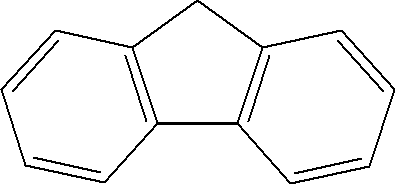
- Fluorene ring (fluorene) represented by the following formula, and the like. Among them, a fluorene ring is more preferable.
- Two or more (meth) acryloyloxy groups can be bonded to the aromatic ring as described above directly or through a linking group.
- the linking group include a hetero atom; a divalent aliphatic hydrocarbon group; a divalent aromatic hydrocarbon group; and the like.
- the hetero atom include an oxygen atom, a nitrogen atom, and a sulfur atom.
- the divalent aliphatic hydrocarbon group include an alkylene group, a cycloalkylene group, and an alkenylene group.
- alkylene group examples include alkylene groups having 1 to 6 carbon atoms, and specific examples thereof include methylene group, ethylene group, propane-1,3-diyl group, butane-1,4-diyl group, heptane- Examples include 1,5-diyl group and hexane-1,6-diyl group.
- Specific examples of the cycloalkylene group include a cyclohexylene group.
- alkenylene group examples include a vinylene group and a propenylene group.
- divalent aromatic hydrocarbon group examples include an arylene group and an aralkylene group.
- arylene group examples include 1,2-phenylene group, 1,3-phenylene group, 1,4-phenylene group, biphenyl-4,4′-diyl group, diphenylmethane-4,4′-diyl group, 3 , 3′-dimethylbiphenyl-4,4′-diyl group and the like.
- aralkylene group examples include a benzylene group.
- a compound having an aromatic ring and two or more (meth) acryloyloxy groups in one molecule a commercially available product can be used.
- Specific examples thereof include a fluorene-containing acrylate (trade name: OGZOL). EA-HC936, manufactured by Osaka Gas Chemical Co., Ltd., weight average molecular weight: 689, (number of (meth) acryloyloxy groups in one molecule: 4)) is preferable.
- the isocyanate compound is not particularly limited as long as it is a compound having one or more isocyanate groups, and examples thereof include polyisocyanate.
- the polyisocyanate is not particularly limited as long as it is a polyisocyanate having two or more isocyanate groups in one molecule.
- hexamethylene diisocyanate (HDI) trimethylhexamethylene diisocyanate (TMHDI)
- TMHDI trimethylhexamethylene diisocyanate
- lysine diisocyanate norbornane diisocyanate
- Alicyclic polyisocyanates such as transcyclohexane-1,4-diisocyanate, isophorone diisocyanate (IPDI), bis (isocyanatemethyl) cyclohexane (hydrogenated XDI), dicyclohexylmethane diisocyanate (hydrogenated MDI) TDI (eg, 2,4-tolylene diisocyanate (2,4-TDI), 2,6-tolylene diisocyanate (2,6-TDI)) MDI (for example, 4,4′-diphenylmethane diisocyanate (4,4′-MDI), 2,4′-diphenylmethane diisocyanate (2,4′-MDI)), 1,4-phenylene diisocyanate, polymethylene polyphenylene polyisocyanate, Aromatic polyisocyanates such as xylylene diisocyanate (XDI), tetramethylxylylene diisocyanate (TMXD
- examples of such a hydroxy compound include pentaerythritol poly (meth) acrylates such as pentaerythritol tri (meth) acrylate; dipentaerythritol tri (meta) ) Acrylate, dipentaerythritol tetra (meth) acrylate, dipentaerythritol penta (meth) acrylate, polypentaerythritol poly (meth) acrylate such as dipentaerythritol hexa (meth) acrylate, etc., among others, pentaerythritol Triacrylate (PETA), dipentaerythritol pentaacrylate (DPPA), and dipentaerythritol hexaacrylate (DPHA) are preferable.
- pentaerythritol Triacrylate PETA
- dipentaerythritol pentaacrylate DPPA
- DPHA dipent
- the said polyfunctional (meth) acrylic compound (A) may be used individually by 1 type, and may use 2 or more types together.
- the weight average molecular weight of the polyfunctional (meth) acrylic compound (A) is preferably 100 to 5,000, more preferably 400 to 2,000.
- a weight average molecular weight shall be measured by gel permeation chromatography (GPC) by standard polystyrene conversion.
- the dry nano-barium titanate (B) is a dry nano-barium titanate having an average primary particle size of 200 nm or less. Even if dry-type barium titanate is used, when the average primary particle diameter exceeds 200 nm, the anti-blocking property of the resulting coating film is inferior, but the dry primary-barium titanate has an average primary particle diameter of 200 nm or less. By using (B), the anti-blocking property is excellent.
- the dry type means powdery (powdered).
- the average primary particle diameter of the dry nano-barium titanate (B) is preferably 10 to 200 nm, more preferably 10 to 50 nm. In addition, the average primary particle diameter of the dry nano-barium titanate (B) is measured according to the dynamic light scattering method.
- the dry nano-barium titanate (B) may be used alone or in combination of two or more.
- the content of the dry nano-barium titanate (B) is such that the anti-blocking property of the resulting coating film is more excellent, and the haze is lowered and the refractive index is increased, so that the polyfunctional (meth) acrylic compound ( A)
- the amount is preferably 40 to 200 parts by mass, more preferably 50 to 125 parts by mass with respect to 100 parts by mass.
- the composition of the present invention contains 1 to 15 parts by mass of the hydrophobic dry silica (C) with respect to 100 parts by mass of the polyfunctional (meth) acrylic compound (A).
- the content of the hydrophobic dry silica (C) is less than 1 part by mass, the anti-blocking property of the resulting coating film is inferior, but the anti-blocking property is excellent when the content is within the above range.
- dry silica for example, synthesized by a combustion method in which vaporized silicon tetrachloride and hydrogen are mixed in air at 1000 to 1200 ° C. or higher to obtain very fine particles.
- the hydrophobic dry silica (C) is, for example, a hydrophilic group on the surface of dry silica by heating such dry silica to about 400 ° C. together with a hydrophobized surface treatment agent, water vapor and an inert carrier gas. Examples thereof include those obtained by reacting a silanol group with a hydrophobic surface treatment agent.
- hydrophobic dry silica (C) is not particularly limited, but is preferably 5 to 200 nm, and more preferably 5 to 50 nm.
- the average primary particle diameter of the hydrophobic dry silica (C) is measured according to the dynamic light scattering method.
- hydrophobic dry silica (C) Commercially available products can be used as the hydrophobic dry silica (C), and specific examples thereof include, for example, Aerosil R972, R972V, R972CF, R974, R976, R812, RX200 (or more, Nippon Aerosil Co., Ltd.).
- the said hydrophobic dry silica (C) may be used individually by 1 type, and may use 2 or more types together.
- the content of the hydrophobic dry silica (C) is 1 to 15 parts by mass with respect to 100 parts by mass of the polyfunctional (meth) acrylic compound (A), and the polyfunctional (meth) acrylic compound (A) Reasons such as good dispersibility of the above-mentioned hydrophobic dry silica (C), good coatability of the composition of the present invention, and excellent optical properties such as transparency and haze of the resulting coating film Therefore, 1 to 10 parts by mass is preferable, and 1 to 5 parts by mass is more preferable.
- silane coupling agent (D) Although it does not specifically limit as said silane coupling agent (D), The silane coupling agent which has 1 or more (meth) acryloyloxy group in 1 molecule is preferable, and the coating property and hardening of the composition of this invention From the viewpoint of excellent properties, a compound represented by the following formula (I) is preferable.
- each R 1 is independently a (meth) acryloyloxy group
- each R 2 is independently an alkyl group having 1 to 20 carbon atoms which may have a substituent
- each R 3 is independently a divalent hydrocarbon group
- n is 0 or 1.
- alkyl group having 1 to 20 carbon atoms as R 2 examples include methyl group, ethyl group, n-propyl group, isopropyl group, n-butyl group, isobutyl group, sec-butyl group, tert-butyl group, n -Pentyl group, isopentyl group, neopentyl group, tert-pentyl group, 1-methylbutyl group, 2-methylbutyl group, 1,2-dimethylpropyl group, n-hexyl group, n-heptyl group, n-octyl group, etc.
- an alkyl group having 1 to 18 carbon atoms is preferable, and an alkyl group having 1 to 6 carbon atoms is more preferable.
- the substituent that the alkyl group having 1 to 20 carbon atoms that is R 2 may have is not particularly limited, and examples thereof include a lower alkyl group having 1 to 4 carbon atoms, a hydroxy group, an amino group, and a nitro group.
- Examples of the divalent hydrocarbon group represented by R 3 include an alkylene group having 1 to 6 carbon atoms, and specific examples thereof include a methylene group, an ethylene group, a propane-1,3-diyl group, butane. -1,4-diyl group, heptane-1,5-diyl group, and hexane-1,6-diyl group.
- silane coupling agent (D) represented by the formula (I) include 3-methacryloxypropyltrimethoxysilane, 3-methacryloxypropyltriethoxysilane, 3-methacryloxymethyltrimethoxysilane, 3 -Methacryloxyethyltriethoxysilane and the like may be mentioned, and these may be used alone or in combination of two or more.
- the viewpoint that the content of the silane coupling agent (D) is excellent in compatibility between the polyfunctional (meth) acrylic compound (A), the dry nano-barium titanate (B), and the hydrophobic dry silica (C). Therefore, 1 to 30 parts by mass is preferable and 1 to 15 parts by mass is more preferable with respect to 100 parts by mass of the polyfunctional (meth) acrylic compound (A).
- the photopolymerization initiator (E) is not particularly limited as long as it can polymerize a vinyl functional group by light.
- an alkylphenone photopolymerization initiator acetophenones, benzophenones, Michler benzoylbenzoate
- Examples include ⁇ -amyloxime ester, tetramethylchuram monosulfide, benzoins, benzoin methyl ether, thioxanthones, propiophenones, benzyls, acylphosphine oxides, and these may be used alone. Two or more kinds may be used in combination.
- alkylphenone photopolymerization initiators are preferred from the viewpoints of light stability, high efficiency of photocleavage, compatibility, low volatility, and low odor.
- Specific examples of the alkylphenone photopolymerization initiator include 1-hydroxy-cyclohexyl-phenyl-ketone, 2-hydroxy-2-methyl-1-phenyl-propan-1-one, and 1- [4- (2-hydroxyethoxy) -phenyl] -2-hydroxy-2-methyl-1-propan-1-one and the like.
- the content of the photopolymerization initiator (E) is 1 to 10 parts by mass with respect to 100 parts by mass of the polyfunctional (meth) acrylic compound (A) from the viewpoint of excellent curability of the composition of the present invention. It is preferably 2 to 5 parts by mass.
- Organic solvent (F) is not particularly limited, and examples thereof include alicyclic hydrocarbons such as cyclohexane, methylcyclohexane and decalin; aromatic hydrocarbons such as benzene, toluene, xylene, mesitylene, dodecylbenzene and methylnaphthalene.
- Halides such as methylene chloride, chloroform, ethylene chloride, chlorobenzene; ethers such as THF (tetrahydrofuran), dibutyl ether, dipentyl ether, dihexyl ether, diheptyl ether, dioctyl ether; ethyl acetate, butyl acetate, butyl acrylate , Esters such as methyl methacrylate, hexamethylene diacrylate, trimethylolpropane triacrylate; methyl ethyl ketone, methyl isobutyl ketone, cyclohexanone, etc.
- ethers such as THF (tetrahydrofuran), dibutyl ether, dipentyl ether, dihexyl ether, diheptyl ether, dioctyl ether
- ethyl acetate, butyl acetate, butyl acrylate Esters such as methyl me
- Ketones such as propylene glycol monomethyl ether, methyl cellosolve, ethyl cellosolve, propyl cellosolve, butyl cellosolve; and the like. These may be used alone or in combination of two or more. May be.
- the amount is preferably 100 to 500 parts by weight, more preferably 200 to 400 parts by weight with respect to 100 parts by weight of the polyfunctional (meth) acrylic compound (A).
- surfactant (G) It does not specifically limit as said surfactant (G), A conventionally well-known thing can be used. Even if the dry nano barium titanate (B) and the hydrophobic dry silica (C) are used and the surfactant (G) is not used, the anti-blocking property of the resulting coating film is inferior, By using the surfactant (G), the antiblock property is excellent.
- a surfactant (G) a basic surfactant and a fluorosurfactant are preferably mentioned because the anti-blocking effect is more excellent, and these may be used alone. Or two or more of them may be used in combination.
- the said basic surfactant stabilizes the said dry-type nano barium titanate (B) which is acidic on the surface of the coating film obtained using an acid-base reaction.
- the fluorine-containing surfactant is hydrophobic, the fluorine-containing surfactant moves to the surface of the coating film (interface with the atmosphere), and the hydrophobic dry silica is driven by this movement.
- (C) etc. are also considered to be arranged on the outermost surface.
- the basic surfactant is a surfactant having a basic group in the molecule, and examples of the basic group include an amine group, amino group, amide group, pyrrolidone group, imine group, imino group, and urethane group. Quaternary ammonium group, ammonium group, pyridino group, pyridium group, imidazolino group, imidazolium group and the like.
- the basic surfactant commercially available products can be used.
- SOLPERSE series 13240, 13940, 24000SC, 24000GR, 26000, 31845, 32000, 32500, 32550, 34750, 35100, 35200 37500 manufactured by Nippon Lubrizol Corporation
- Ajisper PB821, PB822, PB881 manufactured by Ajinomoto Co., Inc.
- the fluorine-based surfactant is a fluorine-containing surfactant, and examples thereof include compounds having a fluoroalkyl group and / or a fluoroalkylene group in at least one of the terminal, main chain and side chain. Commercially available products can be used as the fluorosurfactant.
- BM-1000, BM-1100 (above, manufactured by BM CHEMIE), MegaFuck F142D, F172, F173, F183, F178, F191, F191, F471, F476 (above, manufactured by Dainippon Ink and Chemicals), Florard FC-170C, FC-171, FC-430, FC-431 (above, Sumitomo 3M) Manufactured by the same company), Surflon S-112, S-113, S-131, S-141, S-145, S-382, SC-101, SC-102, SC-103, SC-104, SC-105, SC-106 (above, manufactured by Asahi Glass), F-top EF301, EF303, EF352 (above, made by Shin-Akita Kasei), FT-100, FT-110, FT-140A, FT-150, FT-250, FT-251, FT-300, FT-310, FT-400S, FTX-218
- Content of the said surfactant (G) is 100 mass of said polyfunctional (meth) acrylic compounds (A) from the reason that the antiblocking effect of the coating film obtained is more excellent, and an external appearance becomes favorable.
- the amount is preferably 0.01 parts by mass or more, more preferably 0.01 to 0.1 parts by mass with respect to parts.
- composition of the present invention in addition to the above essential components, for example, an antioxidant, an antistatic agent, a flame retardant, an adhesion-imparting agent, a dispersant, an antioxidant, an antifoaming agent, as long as the object of the present invention is not impaired. It can further contain additives such as agents, matting agents, light stabilizers, dyes, pigments.
- the production method of the composition of the present invention is not particularly limited, and examples thereof include a method in which the above-described essential components and optional components are placed in a reaction vessel and sufficiently mixed using a stirrer such as a mixing mixer under reduced pressure. .
- the composition of the present invention (hard coat layer forming composition) is applied on at least one side of the substrate and then cured to form a hard coat layer as a coating film, and the hard coat is formed on one side of the substrate.
- a laminate provided with layers is obtained.
- a base material although the film which consists of PET resin etc. is mentioned, for example, it is not limited to this.
- the method for applying the composition of the present invention is not particularly limited, and for example, known application methods such as brush coating, flow coating, dip coating, spray coating, and spin coating can be employed.
- the coating amount of the composition of the present invention is not particularly limited, and examples thereof include an amount such that the film thickness of the coating film upon curing is about 1 to 5 ⁇ m.
- the composition of the present invention can be cured by ultraviolet rays.
- the irradiation amount of ultraviolet rays used for curing the composition of the present invention is not particularly limited, and examples thereof include 100 to 3000 mJ / cm 2 from the viewpoint of fast curability and workability.
- the temperature at which the composition of the present invention is cured by ultraviolet irradiation is, for example, 20 to 80 ° C.
- the apparatus for irradiating ultraviolet rays is not particularly limited, and a conventionally known apparatus can be used.
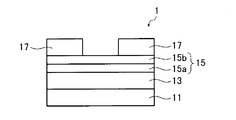
- FIG. 1 is a cross-sectional view schematically showing an example of a specific embodiment of the laminate of the present invention.
- the laminate 1 has a substrate 11 such as a PET film.
- the thickness of the substrate 11 is about 50 to 300 ⁇ m.
- a hard coat layer 13 which is a coating film obtained by curing the composition of the present invention is formed.
- the thickness of the hard coat layer 13 is about 1 to 10 ⁇ m.
- a hard coat layer (not shown) may be formed on the other surface (lower surface) of the substrate 11.
- an ITO layer 17 serving as an electrode is formed above the hard coat layer 13 via an index matching layer 15 having a thickness of about 10 to 500 nm.
- the index matching layer 15 is a layer for making it difficult to see the conductive pattern of the ITO layer 17 after the etching process, and the refractive index matching layer 15 a having a refractive index higher than that of the ITO layer 17 and the refractive index higher than that of the ITO layer 17.
- the low bending index matching layer 15b Such a laminated body 1 is used for thin electronic devices, such as a touch panel apparatus, and comprises the components of an electronic device. Such a laminate 1 is wound up or stacked in the manufacturing process.
- the hard coat layer 13 is a coating film obtained by curing the composition of the present invention. Since it is excellent in anti-blocking property, sticking is prevented and in-process defects can be suppressed.
- composition for forming a hard coat layer (hereinafter also simply referred to as “composition”).
- ⁇ Haze> Using a haze meter (HM-150, manufactured by Murakami Color Research Laboratory), the haze of the produced laminate was measured according to JIS K7105. The haze is preferably 2.0 or less.
- ⁇ Refractive index> The refractive index of the sodium spectrum at the D-line of 589.6 nm was measured using the ATAGO Ablectrometer with a measuring method based on JIS K 7105: 1981 (measurement range: 1.3). ⁇ 1.71).
- the hard coat layer has a high refractive index (about 1.66) that approximates the refractive index of the PET film that is the base material. By doing so, the effect of preventing the bone appearance of the conductive pattern by the index matching layer is more excellent. Therefore, the measured refractive index is preferably 1.63 to 1.67.
- ⁇ Anti-block property> First, a plurality of individual samples (50 mm ⁇ 50 mm) were cut out from the manufactured laminate. Next, the two individual samples were overlapped and rubbed in a direction in which the hard coat layer of one individual sample and the PET film of the other individual sample were in contact with each other, and the anti-blocking property was evaluated.
- the evaluation standard for anti-blocking is “ ⁇ ” when two individual samples do not stick and slide well together, and “ ⁇ ” when some sticks but rubs several times and begins to slide. When two pieces of individual samples were attached, “x” was given. If it is “ ⁇ ” or “ ⁇ ”, it can be evaluated as having excellent anti-blocking properties.
- HDI hexamethylene diisocyanate
- DPPA dipentaerythritol pentaacrylate
- 6 weight average molecular weight: 944, number of (meth) acryloyloxy groups in one molecule: 8-10)
- Fluorene-containing acrylate Ogsol EA-HC936 (Osaka Gas Chemical Co., Ltd., weight average molecular weight: 689, number of (meth) acryloyloxy groups in one molecule: 4)
- Dry nano-barium titanate 1 BT-HP9DX (manufactured by Kyoritsu Material Co., Ltd., average primary particle size: 150 nm)
- -Dry nano barium titanate 2 BTO-020RF (manufactured by Toda Kogyo Co., Ltd., average primary particle size: 20 nm)
- -Wet nano-barium titanate developed product (average primary particle size: 30 nm)
- Hydrophobic dry silica 1 Aerosil R972CF (Nippon Aerosil, average primary particle size: 16 nm)
- Hydrophobic dry silica 2 Aerosil R974 (manufactured by Nippon Aerosil Co., Ltd., average primary particle size: 12 nm)
- Hydrophobic dry silica 3 Aerosil R976 (Nippon Aerosil, average primary particle size: 7 nm)
- Hydrophilic dry silica Aerosil 130 (manufactured by Nippon Aerosil Co., Ltd., average primary particle size: 16 nm)
- Wet colloidal silica MEK-AC-5101 (manufactured by Nissan Chemical Industries, average primary particle size: 70 nm)
- Silane coupling agent KBM-503 (3-methacryloxypropyltrimethoxysilane, manufactured by Shin-Etsu Chemical Co., Ltd.)
- Photopolymerization initiator Irgacure 184 (manufactured by BASF Japan)
- Organic solvent Cyclohexanone
- Fluorosurfactant Footgent FTX-218 (manufactured by Neos)
- Basic surfactant SOLPERSE 32500 (manufactured by Nippon Lubrizol)
- Example 3 and Examples 12 and 13 are compared, Examples in which the compounding amount of dry nano-barium titanate 1 falls outside the range of 40 to 200 parts by mass are within this range. No. 3 was superior in anti-blocking property.
- Example 12 had a high haze, and Example 13 had a slightly low refractive index.
- Examples 3, 10 and 14 are compared, Examples 3 and 10 in which the blending amount of hydrophobic dry silica 1 is within this range are more than Example 14 which is outside the range of 1 to 10 parts by mass. Excellent anti-blocking property.
- the haze was high and the refractive index was slightly low.
- Comparative Example 1 using hydrophilic dry silica without using hydrophobic dry silica 1 to 3 was inferior in anti-blocking properties and high in haze.
- Comparative Example 2 using wet colloidal silica without using hydrophobic dry silicas 1 to 3 was inferior in antiblock property.
- Comparative Example 3 using dry nano-barium titanate (large) having an average primary particle diameter exceeding 200 nm without using dry nano-barium titanate 1 or 2 was inferior in antiblock property and high in haze.
- the comparative example 4 using wet nano barium titanate without using dry nano barium titanate 1 or 2 was inferior in antiblock property, had high haze, and the refractive index was too high.
- the comparative example 5 which did not use a fluorine-type surfactant or a basic surfactant was inferior to antiblock property.
- the comparative example 6 whose compounding quantity of hydrophobic dry silica 1 was less than 1 was inferior to antiblock property.
- Laminated body 11 Base material 13: Hard coat layer 15: Index matching layer 15a: High bending index matching layer 15b: Low bending index matching layer 17: ITO layer (conductive pattern)
Landscapes
- Chemical & Material Sciences (AREA)
- Organic Chemistry (AREA)
- Engineering & Computer Science (AREA)
- Wood Science & Technology (AREA)
- Life Sciences & Earth Sciences (AREA)
- Materials Engineering (AREA)
- Polymers & Plastics (AREA)
- Medicinal Chemistry (AREA)
- Chemical Kinetics & Catalysis (AREA)
- Health & Medical Sciences (AREA)
- Nanotechnology (AREA)
- Laminated Bodies (AREA)
- Paints Or Removers (AREA)
Abstract
硬化させて得られる塗膜(ハードコート層)がアンチブロック性に優れるハードコート層形成用組成物を提供する。このハードコート層形成用組成物は、1分子中に(メタ)アクリロイルオキシ基を2個以上有する多官能(メタ)アクリル化合物(A)と、平均1次粒子径が200nm以下である乾式ナノチタン酸バリウム(B)と、疎水性乾式シリカ(C)と、シランカップリング剤(D)と、光重合開始剤(E)と、有機溶剤(F)と、界面活性剤(G)と、を含有し、上記疎水性乾式シリカ(C)の含有量が、上記多官能(メタ)アクリル化合物(A)100質量部に対して、1~15質量部である。
Description
本発明はハードコート層形成用組成物および積層体に関する。
近年、タッチパネル装置、有機EL表示装置、液晶表示装置、電子ペーパー等の様々な薄型の電子デバイスが実用化されている。
薄型の電子デバイスは、一般的に、PET(ポリエチレンテレフタレート:Polyethylene terephthalate)フィルムなどの基材上に、ITO(スズドープ酸化インジウム:Indium Tin Oxide)などの導電パターン等を形成することによって作製される。
また、ITOなどの導電パターンの骨見え防止(不可視化)のため、基材上に光学調整層(インデックスマッチング層)を設けた積層体を用いることが知られている。
薄型の電子デバイスは、一般的に、PET(ポリエチレンテレフタレート:Polyethylene terephthalate)フィルムなどの基材上に、ITO(スズドープ酸化インジウム:Indium Tin Oxide)などの導電パターン等を形成することによって作製される。
また、ITOなどの導電パターンの骨見え防止(不可視化)のため、基材上に光学調整層(インデックスマッチング層)を設けた積層体を用いることが知られている。
例えば、特許文献1の[0069]には、「積層体10は、基材フィルム11と第1透明導電層21との間に設けられた第1インデックスマッチング層24…をさらに備えていてもよい。…インデックスマッチング層24…は、…透明導電層21…よりも高い屈折率を有する高屈折率層25…と、透明導電層21…よりも低い屈折率を有する低屈折率層26…と、を少なくとも1組含んでいる。このようなインデックスマッチング層24…を設けることにより、積層体10における光の透過率および反射率を適切に調整することが可能となる。例えば、積層体10を用いてタッチパネルセンサ80を作製した場合に、透明導電パターン81…が設けられている領域と透明導電パターン81…が設けられてない領域との間における光の透過率および反射率の差が小さくなるよう、インデックスマッチング層24…を適宜設定することができる」と記載されている。
また、特許文献1の[0022]には、「基材フィルム11は、…一方の側の面上に設けられた第1ハードコート層13…をさらに有していてもよい。第1ハードコート層13…を設けることにより、擦り傷などに対する基材フィルム11の耐擦傷性を高めることができる。ハードコート層13…を構成する材料としては、例えばアクリル樹脂が用いられる」と記載されている。
また、特許文献1の[0022]には、「基材フィルム11は、…一方の側の面上に設けられた第1ハードコート層13…をさらに有していてもよい。第1ハードコート層13…を設けることにより、擦り傷などに対する基材フィルム11の耐擦傷性を高めることができる。ハードコート層13…を構成する材料としては、例えばアクリル樹脂が用いられる」と記載されている。
上述したように、タッチパネル等の電子デバイスには、PETフィルムなどの基材と、基材上に設けられたハードコート層と、ハードコート層上に設けられたインデックスマッチング層とを有する積層体が用いられ、この積層体のインデックスマッチング層上に、ITOなどの導電パターンが形成される(例えば、特許文献1を参照)。
PETフィルムなどの基材上にハードコート層を形成した積層体は、その後、インデックスマッチング層を形成する前に、巻き取られる。この巻き取り工程において、積層体どうしのブロッキング(貼り付き)が生じると、諸性能の低下が生じるおそれがある。このため、諸性能の低下を回避する観点から、このような積層体のハードコート層には、貼り付きを防止する性能(アンチブロック性)が要求される。
本発明は、以上の点を鑑みてなされたものであり、硬化させて得られる塗膜(ハードコート層)がアンチブロック性に優れるハードコート層形成用組成物を提供することを目的とする。
本発明者らが、上記目的を達成するために鋭意検討した結果、ハードコート層の形成に用いる組成物(ハードコート層形成用組成物)において、多官能(メタ)アクリル化合物に併用させて、特定の粒子径を有する乾式チタン酸バリウムと、特定量の疎水性乾式シリカと、特定の添加剤とを配合することで、得られる塗膜のアンチブロック性が良好になることを見出し、本発明を完成させた。
良好なアンチブロック性は、疎水性乾式シリカに代えて親水性乾式シリカや湿式コロイダルシリカを添加した場合や、乾式チタン酸バリウムの粒子径を外したり湿式にしたりした場合には、得られない効果であった。
良好なアンチブロック性は、疎水性乾式シリカに代えて親水性乾式シリカや湿式コロイダルシリカを添加した場合や、乾式チタン酸バリウムの粒子径を外したり湿式にしたりした場合には、得られない効果であった。
すなわち、本発明は、以下の(1)~(9)を提供する。
(1)1分子中に(メタ)アクリロイルオキシ基を2個以上有する多官能(メタ)アクリル化合物(A)と、平均1次粒子径が200nm以下である乾式ナノチタン酸バリウム(B)と、疎水性乾式シリカ(C)と、シランカップリング剤(D)と、光重合開始剤(E)と、有機溶剤(F)と、界面活性剤(G)と、を含有し、上記疎水性乾式シリカ(C)の含有量が、上記多官能(メタ)アクリル化合物(A)100質量部に対して、1~15質量部である、ハードコート層形成用組成物。
(2)上記多官能(メタ)アクリル化合物(A)が、1分子中に、芳香環および/または1個以上のウレタン結合をさらに有する、上記(1)に記載のハードコート層形成用組成物。
(3)上記疎水性乾式シリカ(C)の平均1次粒子径が、50nm以下である、上記(1)または(2)に記載のハードコート層形成用組成物。
(4)上記シランカップリング剤(D)が、後述する式(I)で表される化合物である、上記(1)~(3)のいずれかに記載のハードコート層形成用組成物。
(5)上記界面活性剤(G)が、塩基性界面活性剤および/またはフッ素系界面活性剤である、上記(1)~(4)のいずれかに記載のハードコート層形成用組成物。
(6)上記乾式ナノチタン酸バリウム(B)の含有量が、上記多官能(メタ)アクリル化合物(A)100質量部に対して、40~200質量部である、上記(1)~(5)のいずれかに記載のハードコート層形成用組成物。
(7)上記界面活性剤(G)の含有量が、上記多官能(メタ)アクリル化合物(A)100質量部に対して、0.01質量部以上である、上記(1)~(6)のいずれかに記載のハードコート層形成用組成物。
(8)基材と、上記基材上に設けられたハードコート層とを備え、上記ハードコート層が、上記(1)~(7)のいずれかに記載のハードコート層形成用組成物を硬化させて得られる塗膜である、積層体。
(9)上記ハードコート層上に設けられたインデックスマッチング層と、上記インデックスマッチング層上に設けられた導電パターンとを備える、上記(8)に記載の積層体。
(1)1分子中に(メタ)アクリロイルオキシ基を2個以上有する多官能(メタ)アクリル化合物(A)と、平均1次粒子径が200nm以下である乾式ナノチタン酸バリウム(B)と、疎水性乾式シリカ(C)と、シランカップリング剤(D)と、光重合開始剤(E)と、有機溶剤(F)と、界面活性剤(G)と、を含有し、上記疎水性乾式シリカ(C)の含有量が、上記多官能(メタ)アクリル化合物(A)100質量部に対して、1~15質量部である、ハードコート層形成用組成物。
(2)上記多官能(メタ)アクリル化合物(A)が、1分子中に、芳香環および/または1個以上のウレタン結合をさらに有する、上記(1)に記載のハードコート層形成用組成物。
(3)上記疎水性乾式シリカ(C)の平均1次粒子径が、50nm以下である、上記(1)または(2)に記載のハードコート層形成用組成物。
(4)上記シランカップリング剤(D)が、後述する式(I)で表される化合物である、上記(1)~(3)のいずれかに記載のハードコート層形成用組成物。
(5)上記界面活性剤(G)が、塩基性界面活性剤および/またはフッ素系界面活性剤である、上記(1)~(4)のいずれかに記載のハードコート層形成用組成物。
(6)上記乾式ナノチタン酸バリウム(B)の含有量が、上記多官能(メタ)アクリル化合物(A)100質量部に対して、40~200質量部である、上記(1)~(5)のいずれかに記載のハードコート層形成用組成物。
(7)上記界面活性剤(G)の含有量が、上記多官能(メタ)アクリル化合物(A)100質量部に対して、0.01質量部以上である、上記(1)~(6)のいずれかに記載のハードコート層形成用組成物。
(8)基材と、上記基材上に設けられたハードコート層とを備え、上記ハードコート層が、上記(1)~(7)のいずれかに記載のハードコート層形成用組成物を硬化させて得られる塗膜である、積層体。
(9)上記ハードコート層上に設けられたインデックスマッチング層と、上記インデックスマッチング層上に設けられた導電パターンとを備える、上記(8)に記載の積層体。
本発明によれば、硬化させて得られる塗膜(ハードコート層)がアンチブロック性に優れるハードコート層形成用組成物を提供できる。
[ハードコート層形成用組成物]
本発明のハードコート層形成用組成物(以下、「本発明の組成物」ともいう)は、1分子中に(メタ)アクリロイルオキシ基を2個以上有する多官能(メタ)アクリル化合物(A)と、平均1次粒子径が200nm以下である乾式ナノチタン酸バリウム(B)と、疎水性乾式シリカ(C)と、シランカップリング剤(D)と、光重合開始剤(E)と、有機溶剤(F)と、界面活性剤(G)と、を含有し、上記疎水性乾式シリカ(C)の含有量が、上記多官能(メタ)アクリル化合物(A)100質量部に対して、1~15質量部である、ハードコート層形成用組成物である。
本発明のハードコート層形成用組成物(以下、「本発明の組成物」ともいう)は、1分子中に(メタ)アクリロイルオキシ基を2個以上有する多官能(メタ)アクリル化合物(A)と、平均1次粒子径が200nm以下である乾式ナノチタン酸バリウム(B)と、疎水性乾式シリカ(C)と、シランカップリング剤(D)と、光重合開始剤(E)と、有機溶剤(F)と、界面活性剤(G)と、を含有し、上記疎水性乾式シリカ(C)の含有量が、上記多官能(メタ)アクリル化合物(A)100質量部に対して、1~15質量部である、ハードコート層形成用組成物である。
本発明の組成物は、上記乾式ナノチタン酸バリウム(B)と、特定量の上記疎水性乾式シリカ(C)と、上記界面活性剤(G)とを併用することで、得られる塗膜(ハードコート層)のアンチブロック性に優れる。
これは、上記界面活性剤(G)の存在下で、上記乾式ナノチタン酸バリウム(B)および上記疎水性乾式シリカ(C)が、ハードコート層の表面に適度な凹凸を形成するためと考えられる。
これは、上記界面活性剤(G)の存在下で、上記乾式ナノチタン酸バリウム(B)および上記疎水性乾式シリカ(C)が、ハードコート層の表面に適度な凹凸を形成するためと考えられる。
〔多官能(メタ)アクリル化合物(A)〕
上記多官能(メタ)アクリル化合物(A)は、1分子中に(メタ)アクリロイルオキシ基を2個以上有する化合物であれば特に限定されない。
なお、「(メタ)アクリロイルオキシ基」とは、アクリロイルオキシ基(CH2=CHCOO-)および/またはメタクリロイルオキシ基(CH2=C(CH3)COO-)を意味するものとする。
上記多官能(メタ)アクリル化合物(A)が1分子中に有する(メタ)アクリロイルオキシ基の数は、本発明の組成物の塗工性および硬化性が優れるという観点から、3個以上が好ましく、4~15個がより好ましい。
上記多官能(メタ)アクリル化合物(A)は、1分子中に(メタ)アクリロイルオキシ基を2個以上有する化合物であれば特に限定されない。
なお、「(メタ)アクリロイルオキシ基」とは、アクリロイルオキシ基(CH2=CHCOO-)および/またはメタクリロイルオキシ基(CH2=C(CH3)COO-)を意味するものとする。
上記多官能(メタ)アクリル化合物(A)が1分子中に有する(メタ)アクリロイルオキシ基の数は、本発明の組成物の塗工性および硬化性が優れるという観点から、3個以上が好ましく、4~15個がより好ましい。
〈好適態様〉
上記多官能(メタ)アクリル化合物(A)の好適態様としては、1分子中に、芳香環および/または1個以上のウレタン結合をさらに有する化合物が挙げられる。
上記多官能(メタ)アクリル化合物(A)の好適態様としては、1分子中に、芳香環および/または1個以上のウレタン結合をさらに有する化合物が挙げられる。
《芳香環を有する態様》
上記多官能(メタ)アクリル化合物(A)が、1分子中に芳香環と2個以上の(メタ)アクリロイルオキシ基とを有する化合物である場合、芳香環としては、例えば、ベンゼン環、ナフタレン環、下記式で表されるフルオレン環(フルオレン)などが挙げられ、なかでも、フルオレン環がより好ましい。
上記多官能(メタ)アクリル化合物(A)が、1分子中に芳香環と2個以上の(メタ)アクリロイルオキシ基とを有する化合物である場合、芳香環としては、例えば、ベンゼン環、ナフタレン環、下記式で表されるフルオレン環(フルオレン)などが挙げられ、なかでも、フルオレン環がより好ましい。
2個以上の(メタ)アクリロイルオキシ基は、上述したような芳香環に、直接または連結基を介して、結合できる。ここで、連結基としては、例えば、ヘテロ原子;2価の脂肪族炭化水素基;2価の芳香族炭化水素基;等が挙げられる。
ヘテロ原子としては、例えば、酸素原子、窒素原子、硫黄原子などが挙げられる。
2価の脂肪族炭化水素基としては、例えば、アルキレン基、シクロアルキレン基、アルケニレン基などが挙げられる。アルキレン基としては、炭素原子数1~6のアルキレン基が挙げられ、その具体例としては、メチレン基、エチレン基、プロパン-1,3-ジイル基、ブタン-1,4-ジイル基、ヘプタン-1,5-ジイル基、ヘキサン-1,6-ジイル基が挙げられる。シクロアルキレン基の具体例としては、シクロヘキシレン基などが挙げられる。アルケニレン基の具体例としては、ビニレン基、プロペニレン基などが挙げられる。
2価の芳香族炭化水素基としては、例えば、アリーレン基、アラルキレン基などが挙げられる。アリーレン基の具体例としては、1,2-フェニレン基、1,3-フェニレン基、1,4-フェニレン基、ビフェニル-4,4’-ジイル基、ジフェニルメタン-4,4’-ジイル基、3,3’-ジメチルビフェニル-4,4’-ジイル基などが挙げられる。アラルキレン基の具体例としては、ベンジレン基などが挙げられる。
このような、1分子中に芳香環と2個以上の(メタ)アクリロイルオキシ基とを有する化合物としては、市販品を用いることができ、その具体例としては、フルオレン含有アクリレート(商品名:オグゾールEA-HC936、大阪ガスケミカル社製、重量平均分子量:689、1分子中の(メタ)アクリロイルオキシ基の数:4個)が好適に挙げられる。
ヘテロ原子としては、例えば、酸素原子、窒素原子、硫黄原子などが挙げられる。
2価の脂肪族炭化水素基としては、例えば、アルキレン基、シクロアルキレン基、アルケニレン基などが挙げられる。アルキレン基としては、炭素原子数1~6のアルキレン基が挙げられ、その具体例としては、メチレン基、エチレン基、プロパン-1,3-ジイル基、ブタン-1,4-ジイル基、ヘプタン-1,5-ジイル基、ヘキサン-1,6-ジイル基が挙げられる。シクロアルキレン基の具体例としては、シクロヘキシレン基などが挙げられる。アルケニレン基の具体例としては、ビニレン基、プロペニレン基などが挙げられる。
2価の芳香族炭化水素基としては、例えば、アリーレン基、アラルキレン基などが挙げられる。アリーレン基の具体例としては、1,2-フェニレン基、1,3-フェニレン基、1,4-フェニレン基、ビフェニル-4,4’-ジイル基、ジフェニルメタン-4,4’-ジイル基、3,3’-ジメチルビフェニル-4,4’-ジイル基などが挙げられる。アラルキレン基の具体例としては、ベンジレン基などが挙げられる。
このような、1分子中に芳香環と2個以上の(メタ)アクリロイルオキシ基とを有する化合物としては、市販品を用いることができ、その具体例としては、フルオレン含有アクリレート(商品名:オグゾールEA-HC936、大阪ガスケミカル社製、重量平均分子量:689、1分子中の(メタ)アクリロイルオキシ基の数:4個)が好適に挙げられる。
《ウレタン結合を有する態様》
上記多官能(メタ)アクリル化合物(A)が、1分子中に1個以上のウレタン結合と2個以上の(メタ)アクリロイルオキシ基とを有する化合物である場合、このような化合物は、例えば、イソシアネート化合物とヒドロキシ化合物との反応により得られる。このとき、反応生成物が有する(メタ)アクリロイル基の数が2個以上であれば、使用するイソシアネート化合物およびヒドロキシ化合物について、どちらが(メタ)アクリロイルオキシ基を有していてもよく、その反応比率なども特に限定されない。
上記多官能(メタ)アクリル化合物(A)が、1分子中に1個以上のウレタン結合と2個以上の(メタ)アクリロイルオキシ基とを有する化合物である場合、このような化合物は、例えば、イソシアネート化合物とヒドロキシ化合物との反応により得られる。このとき、反応生成物が有する(メタ)アクリロイル基の数が2個以上であれば、使用するイソシアネート化合物およびヒドロキシ化合物について、どちらが(メタ)アクリロイルオキシ基を有していてもよく、その反応比率なども特に限定されない。
イソシアネート化合物は、イソシアネート基を1個以上有する化合物であれば特に限定されず、例えば、ポリイソシアネートが挙げられる。
ポリイソシアネートとしては、1分子内にイソシアネート基を2個以上有するポリイソシアネートであれば特に限定されず、例えば、ヘキサメチレンジイソシアネート(HDI)、トリメチルヘキサメチレンジイソシアネート(TMHDI)、リジンジイソシアネート、ノルボルナンジイソシアネート(NBDI)などの脂肪族ポリイソシアネート;トランスシクロヘキサン-1,4-ジイソシアネート、イソホロンジイソシアネート(IPDI)、ビス(イソシアネートメチル)シクロヘキサン(水添XDI)、ジシクロヘキシルメタンジイソシアネート(水添MDI)などの脂環式ポリイソシアネート;TDI(例えば、2,4-トリレンジイソシアネート(2,4-TDI)、2,6-トリレンジイソシアネート(2,6-TDI))、MDI(例えば、4,4′-ジフェニルメタンジイソシアネート(4,4′-MDI)、2,4′-ジフェニルメタンジイソシアネート(2,4′-MDI))、1,4-フェニレンジイソシアネート、ポリメチレンポリフェニレンポリイソシアネート、キシリレンジイソシアネート(XDI)、テトラメチルキシリレンジイソシアネート(TMXDI)、トリジンジイソシアネート(TODI)、1,5-ナフタレンジイソシアネート(NDI)、トリフェニルメタントリイソシアネートなどの芳香族ポリイソシアネート;これらのイソシアヌレート体;等が挙げられ、これらを1種単独で用いてもよく、2種以上を併用してもよい。
これらのうち、脂肪族ポリイソシアネート、脂環式ポリイソシアネートが好ましく、HDI、IPDI、水添XDI、水添MDIがより好ましい。
ポリイソシアネートとしては、1分子内にイソシアネート基を2個以上有するポリイソシアネートであれば特に限定されず、例えば、ヘキサメチレンジイソシアネート(HDI)、トリメチルヘキサメチレンジイソシアネート(TMHDI)、リジンジイソシアネート、ノルボルナンジイソシアネート(NBDI)などの脂肪族ポリイソシアネート;トランスシクロヘキサン-1,4-ジイソシアネート、イソホロンジイソシアネート(IPDI)、ビス(イソシアネートメチル)シクロヘキサン(水添XDI)、ジシクロヘキシルメタンジイソシアネート(水添MDI)などの脂環式ポリイソシアネート;TDI(例えば、2,4-トリレンジイソシアネート(2,4-TDI)、2,6-トリレンジイソシアネート(2,6-TDI))、MDI(例えば、4,4′-ジフェニルメタンジイソシアネート(4,4′-MDI)、2,4′-ジフェニルメタンジイソシアネート(2,4′-MDI))、1,4-フェニレンジイソシアネート、ポリメチレンポリフェニレンポリイソシアネート、キシリレンジイソシアネート(XDI)、テトラメチルキシリレンジイソシアネート(TMXDI)、トリジンジイソシアネート(TODI)、1,5-ナフタレンジイソシアネート(NDI)、トリフェニルメタントリイソシアネートなどの芳香族ポリイソシアネート;これらのイソシアヌレート体;等が挙げられ、これらを1種単独で用いてもよく、2種以上を併用してもよい。
これらのうち、脂肪族ポリイソシアネート、脂環式ポリイソシアネートが好ましく、HDI、IPDI、水添XDI、水添MDIがより好ましい。
ヒドロキシ化合物が2個以上の(メタ)アクリロイルオキシ基を有する場合、このようなヒドロキシ化合物としては、例えば、ペンタエリスリトールトリ(メタ)アクリレートなどのペンタエリスリトールポリ(メタ)アクリレート;ジペンタエリスリトールトリ(メタ)アクリレート、ジペンタエリスリトールテトラ(メタ)アクリレート、ジペンタエリスリトールペンタ(メタ)アクリレート、ジペンタエリスリトールヘキサ(メタ)アクリレートなどのポリペンタエリスリトールポリ(メタ)アクリレート;等が挙げられ、なかでも、ペンタエリスリトールトリアクリレート(PETA)、ジペンタエリスリトールペンタアクリレート(DPPA)、ジペンタエリスリトールヘキサアクリレート(DPHA)が好ましい。
上記多官能(メタ)アクリル化合物(A)は、1種単独で用いてもよく、2種以上を併用してもよい。
また、上記多官能(メタ)アクリル化合物(A)の重量平均分子量は、100~5,000が好ましく、400~2,000がより好ましい。なお、重量平均分子量は、ゲルパーミエーションクロマトグラフィー(GPC)により標準ポリスチレン換算により測定するものとする。
また、上記多官能(メタ)アクリル化合物(A)の重量平均分子量は、100~5,000が好ましく、400~2,000がより好ましい。なお、重量平均分子量は、ゲルパーミエーションクロマトグラフィー(GPC)により標準ポリスチレン換算により測定するものとする。
〔乾式ナノチタン酸バリウム(B)〕
上記乾式ナノチタン酸バリウム(B)は、平均1次粒子径が200nm以下であり、かつ、乾式であるナノチタン酸バリウムである。乾式ナノチタン酸バリウムを用いても、その平均1次粒子径が200nmを超える場合には、得られる塗膜のアンチブロック性が劣るが、平均1次粒子径が200nm以下である上記乾式ナノチタン酸バリウム(B)を用いることで、アンチブロック性に優れる。
なお、本発明において、乾式であるとは、粉状(パウダー状)であることを意味する。
上記乾式ナノチタン酸バリウム(B)は、平均1次粒子径が200nm以下であり、かつ、乾式であるナノチタン酸バリウムである。乾式ナノチタン酸バリウムを用いても、その平均1次粒子径が200nmを超える場合には、得られる塗膜のアンチブロック性が劣るが、平均1次粒子径が200nm以下である上記乾式ナノチタン酸バリウム(B)を用いることで、アンチブロック性に優れる。
なお、本発明において、乾式であるとは、粉状(パウダー状)であることを意味する。
上記乾式ナノチタン酸バリウム(B)の平均1次粒子径は、10~200nmが好ましく、10~50nmがより好ましい。なお、上記乾式ナノチタン酸バリウム(B)の平均1次粒子径は、動的光散乱法に準じて測定されたものである。
上記乾式ナノチタン酸バリウム(B)は、1種単独で用いてもよく、2種以上を併用してもよい。
上記乾式ナノチタン酸バリウム(B)の含有量は、得られる塗膜のアンチブロック性がより優れ、かつ、ヘイズが低くなり、屈折率が高くなるという理由から、上記多官能(メタ)アクリル化合物(A)100質量部に対して、40~200質量部が好ましく、50~125質量部がより好ましい。
上記乾式ナノチタン酸バリウム(B)は、1種単独で用いてもよく、2種以上を併用してもよい。
上記乾式ナノチタン酸バリウム(B)の含有量は、得られる塗膜のアンチブロック性がより優れ、かつ、ヘイズが低くなり、屈折率が高くなるという理由から、上記多官能(メタ)アクリル化合物(A)100質量部に対して、40~200質量部が好ましく、50~125質量部がより好ましい。
〔疎水性乾式シリカ(C)〕
本発明の組成物は、上記疎水性乾式シリカ(C)を、上記多官能(メタ)アクリル化合物(A)100質量部に対して、1~15質量部含有する。上記疎水性乾式シリカ(C)の含有量が1質量部未満である場合には、得られる塗膜のアンチブロック性が劣るが、上記範囲内とすることで、アンチブロック性が優れる。
本発明の組成物は、上記疎水性乾式シリカ(C)を、上記多官能(メタ)アクリル化合物(A)100質量部に対して、1~15質量部含有する。上記疎水性乾式シリカ(C)の含有量が1質量部未満である場合には、得られる塗膜のアンチブロック性が劣るが、上記範囲内とすることで、アンチブロック性が優れる。
ここで、まず、乾式シリカとしては、例えば、気化させた四塩化ケイ素と水素とを混合させたものを1000~1200℃以上の空気中で燃焼させて非常に微細な粒子を得る燃焼法により合成されるものが挙げられる。
上記疎水性乾式シリカ(C)は、例えば、このような乾式シリカを、疎水化表面処理剤および水蒸気と不活性のキャリアガスとともに約400℃に加熱して、乾式シリカ表面の親水性基であるシラノール基を疎水化表面処理剤と反応させて得られるものが挙げられる。ここで、疎水化表面処理剤としては、特に限定されず、例えば、オルガノポリシロキサン、オルガノポリシラザン、クロロシラン、アルコキシシラン等が挙げられる。
上記疎水性乾式シリカ(C)の平均1次粒子径は、特に限定されないが、5~200nmが好ましく、5~50nmがより好ましい。なお、上記疎水性乾式シリカ(C)の平均1次粒子径は、動的光散乱法に準じて測定されたものである。
上記疎水性乾式シリカ(C)としては、市販品を用いることができ、その具体例としては、例えば、アエロジルR972、同R972V、同R972CF、同R974、同R976、同R812、同RX200(以上、日本アエロジル社製)が挙げられる。
上記疎水性乾式シリカ(C)は、1種単独で用いてもよく、2種以上を併用してもよい。
上記疎水性乾式シリカ(C)の含有量は、上記多官能(メタ)アクリル化合物(A)100質量部に対して、1~15質量部であり、上記多官能(メタ)アクリル化合物(A)への上記疎水性乾式シリカ(C)の分散性が良好となる、本発明の組成物の塗工性が良好となる、得られる塗膜の透明性やヘイズ等の光学特性が優れる等の理由から、1~10質量部が好ましく、1~5質量部がより好ましい。
上記疎水性乾式シリカ(C)は、例えば、このような乾式シリカを、疎水化表面処理剤および水蒸気と不活性のキャリアガスとともに約400℃に加熱して、乾式シリカ表面の親水性基であるシラノール基を疎水化表面処理剤と反応させて得られるものが挙げられる。ここで、疎水化表面処理剤としては、特に限定されず、例えば、オルガノポリシロキサン、オルガノポリシラザン、クロロシラン、アルコキシシラン等が挙げられる。
上記疎水性乾式シリカ(C)の平均1次粒子径は、特に限定されないが、5~200nmが好ましく、5~50nmがより好ましい。なお、上記疎水性乾式シリカ(C)の平均1次粒子径は、動的光散乱法に準じて測定されたものである。
上記疎水性乾式シリカ(C)としては、市販品を用いることができ、その具体例としては、例えば、アエロジルR972、同R972V、同R972CF、同R974、同R976、同R812、同RX200(以上、日本アエロジル社製)が挙げられる。
上記疎水性乾式シリカ(C)は、1種単独で用いてもよく、2種以上を併用してもよい。
上記疎水性乾式シリカ(C)の含有量は、上記多官能(メタ)アクリル化合物(A)100質量部に対して、1~15質量部であり、上記多官能(メタ)アクリル化合物(A)への上記疎水性乾式シリカ(C)の分散性が良好となる、本発明の組成物の塗工性が良好となる、得られる塗膜の透明性やヘイズ等の光学特性が優れる等の理由から、1~10質量部が好ましく、1~5質量部がより好ましい。
〔シランカップリング剤(D)〕
上記シランカップリング剤(D)としては、特に限定されないが、1分子中に1個以上の(メタ)アクリロイルオキシ基を有するシランカップリング剤が好ましく、本発明の組成物の塗工性および硬化性が優れるという観点から、下記式(I)で表される化合物が好ましい。
[R1-(R3)n]a-Si-(OR2)4-a (I)
式(I)中、R1はそれぞれ独立に(メタ)アクリロイルオキシ基であり、R2はそれぞれ独立に置換基を有していてもよい炭素数1~20のアルキル基であり、1≦a<4であり、R3はそれぞれ独立に2価の炭化水素基であり、nは0または1である。
R2である炭素数1~20のアルキル基としては、例えば、メチル基、エチル基、n-プロピル基、イソプロピル基、n-ブチル基、イソブチル基、sec-ブチル基、tert-ブチル基、n-ペンチル基、イソペンチル基、ネオペンチル基、tert-ペンチル基、1-メチルブチル基、2-メチルブチル基、1,2-ジメチルプロピル基、n-ヘキシル基、n-ヘプチル基、n-オクチル基などが挙げられ、なかでも、炭素数1~18のアルキル基が好ましく、炭素数1~6のアルキル基がより好ましい。
なお、R2である炭素数1~20のアルキル基が有していてもよい置換基としては、特に限定されず、例えば、炭素数1~4の低級アルキル基、ヒドロキシ基、アミノ基、ニトロ基、カルボニル基、カーボネート基、ウレタン基、スルホニル基、アルコキシ基、エステル基、ハロゲン原子などが挙げられる。
R3である2価の炭化水素基としては、例えば、炭素原子数1~6のアルキレン基が挙げられ、その具体例としては、メチレン基、エチレン基、プロパン-1,3-ジイル基、ブタン-1,4-ジイル基、ヘプタン-1,5-ジイル基、ヘキサン-1,6-ジイル基が挙げられる。
式(I)で表される上記シランカップリング剤(D)の具体例としては、3-メタクリロキシプロピルトリメトキシシラン、3-メタクリロキシプロピルトリエトキシシラン、3-メタクリロキシメチルトリメトキシシラン、3-メタクリロキシエチルトリエトキシシラン等が挙げられ、これらを1種単独で用いてもよく、2種以上を併用してもよい。
上記シランカップリング剤(D)の含有量は、上記多官能(メタ)アクリル化合物(A)と上記乾式ナノチタン酸バリウム(B)および上記疎水性乾式シリカ(C)との相溶性に優れるという観点から、上記多官能(メタ)アクリル化合物(A)100質量部に対して、1~30質量部が好ましく、1~15質量部がより好ましい。
上記シランカップリング剤(D)としては、特に限定されないが、1分子中に1個以上の(メタ)アクリロイルオキシ基を有するシランカップリング剤が好ましく、本発明の組成物の塗工性および硬化性が優れるという観点から、下記式(I)で表される化合物が好ましい。
[R1-(R3)n]a-Si-(OR2)4-a (I)
式(I)中、R1はそれぞれ独立に(メタ)アクリロイルオキシ基であり、R2はそれぞれ独立に置換基を有していてもよい炭素数1~20のアルキル基であり、1≦a<4であり、R3はそれぞれ独立に2価の炭化水素基であり、nは0または1である。
R2である炭素数1~20のアルキル基としては、例えば、メチル基、エチル基、n-プロピル基、イソプロピル基、n-ブチル基、イソブチル基、sec-ブチル基、tert-ブチル基、n-ペンチル基、イソペンチル基、ネオペンチル基、tert-ペンチル基、1-メチルブチル基、2-メチルブチル基、1,2-ジメチルプロピル基、n-ヘキシル基、n-ヘプチル基、n-オクチル基などが挙げられ、なかでも、炭素数1~18のアルキル基が好ましく、炭素数1~6のアルキル基がより好ましい。
なお、R2である炭素数1~20のアルキル基が有していてもよい置換基としては、特に限定されず、例えば、炭素数1~4の低級アルキル基、ヒドロキシ基、アミノ基、ニトロ基、カルボニル基、カーボネート基、ウレタン基、スルホニル基、アルコキシ基、エステル基、ハロゲン原子などが挙げられる。
R3である2価の炭化水素基としては、例えば、炭素原子数1~6のアルキレン基が挙げられ、その具体例としては、メチレン基、エチレン基、プロパン-1,3-ジイル基、ブタン-1,4-ジイル基、ヘプタン-1,5-ジイル基、ヘキサン-1,6-ジイル基が挙げられる。
式(I)で表される上記シランカップリング剤(D)の具体例としては、3-メタクリロキシプロピルトリメトキシシラン、3-メタクリロキシプロピルトリエトキシシラン、3-メタクリロキシメチルトリメトキシシラン、3-メタクリロキシエチルトリエトキシシラン等が挙げられ、これらを1種単独で用いてもよく、2種以上を併用してもよい。
上記シランカップリング剤(D)の含有量は、上記多官能(メタ)アクリル化合物(A)と上記乾式ナノチタン酸バリウム(B)および上記疎水性乾式シリカ(C)との相溶性に優れるという観点から、上記多官能(メタ)アクリル化合物(A)100質量部に対して、1~30質量部が好ましく、1~15質量部がより好ましい。
〔光重合開始剤(E)〕
上記光重合開始剤(E)は、ビニル系官能基を光によって重合させ得るものであれば特に限定されず、例えば、アルキルフェノン系光重合開始剤、アセトフェノン類、ベンゾフェノン類、ミヒラーベンゾイルベンゾエート、α-アミロキシムエステル、テトラメチルチュウラムモノサルファイド、ベンゾイン類、ベンゾインメチルエーテル、チオキサントン類、プロピオフェノン類、ベンジル類、アシルホスフィンオキシド類などが挙げられ、これらを1種単独で用いてもよく、2種以上を併用してもよい。
これらのうち、光安定性、光開裂の高効率性、相溶性、低揮発、低臭気という観点から、アルキルフェノン系光重合開始剤であるのが好ましい。
アルキルフェノン系光重合開始剤としては、具体的には、例えば、1-ヒドロキシ-シクロヘキシル-フェニル-ケトン、2-ヒドロキシ-2-メチル-1-フェニル-プロパン-1-オン、1-[4-(2-ヒドロキシエトキシ)-フェニル]-2-ヒドロキシ-2-メチル-1-プロパン-1-オン等が挙げられる。
上記光重合開始剤(E)の含有量は、本発明の組成物の硬化性が優れるという観点から、上記多官能(メタ)アクリル化合物(A)100質量部に対して、1~10質量部が好ましく、2~5質量部がより好ましい。
上記光重合開始剤(E)は、ビニル系官能基を光によって重合させ得るものであれば特に限定されず、例えば、アルキルフェノン系光重合開始剤、アセトフェノン類、ベンゾフェノン類、ミヒラーベンゾイルベンゾエート、α-アミロキシムエステル、テトラメチルチュウラムモノサルファイド、ベンゾイン類、ベンゾインメチルエーテル、チオキサントン類、プロピオフェノン類、ベンジル類、アシルホスフィンオキシド類などが挙げられ、これらを1種単独で用いてもよく、2種以上を併用してもよい。
これらのうち、光安定性、光開裂の高効率性、相溶性、低揮発、低臭気という観点から、アルキルフェノン系光重合開始剤であるのが好ましい。
アルキルフェノン系光重合開始剤としては、具体的には、例えば、1-ヒドロキシ-シクロヘキシル-フェニル-ケトン、2-ヒドロキシ-2-メチル-1-フェニル-プロパン-1-オン、1-[4-(2-ヒドロキシエトキシ)-フェニル]-2-ヒドロキシ-2-メチル-1-プロパン-1-オン等が挙げられる。
上記光重合開始剤(E)の含有量は、本発明の組成物の硬化性が優れるという観点から、上記多官能(メタ)アクリル化合物(A)100質量部に対して、1~10質量部が好ましく、2~5質量部がより好ましい。
〔有機溶剤(F)〕
上記有機溶剤(F)としては、特に限定されず、例えば、シクロヘキサン、メチルシクロヘキサン、デカリンなどの脂環式炭化水素類;ベンゼン、トルエン、キシレン、メシチレン、ドデシルベンゼン、メチルナフタレンなどの芳香族炭化水素類;メチレンクロライド、クロロホルム、エチレンクロライド、クロロベンゼンなどのハロゲン化物;THF(テトラヒドロフラン)、ジブチルエーテル、ジペンチルエーテル、ジヘキシルエーテル、ジヘプチルエーテル、ジオクチルエーテルなどのエーテル類;酢酸エチル、酢酸ブチル、アクリル酸ブチル、メタクリル酸メチル、ヘキサメチレンジアクリレート、トリメチロールプロパントリアクリレートなどのエステル類;メチルエチルケトン、メチルイソブチルケトン、シクロヘキサノンなどのケトン類;プロピレングリコールモノメチルエーテル、メチルセルソルブ、エチルセルソルブ、プロピルセルソルブ、ブチルセルソルブなどのグリコールエーテル類;等が挙げられ、これらを1種単独で用いてもよく、2種以上を併用してもよい。
上記有機溶剤(F)の含有量は、上記多官能(メタ)アクリル化合物(A)と上記乾式ナノチタン酸バリウム(B)および上記疎水性乾式シリカ(C)との相溶性に優れるという観点から、上記多官能(メタ)アクリル化合物(A)100質量部に対して、100~500質量部が好ましく、200~400質量部がより好ましい。
上記有機溶剤(F)としては、特に限定されず、例えば、シクロヘキサン、メチルシクロヘキサン、デカリンなどの脂環式炭化水素類;ベンゼン、トルエン、キシレン、メシチレン、ドデシルベンゼン、メチルナフタレンなどの芳香族炭化水素類;メチレンクロライド、クロロホルム、エチレンクロライド、クロロベンゼンなどのハロゲン化物;THF(テトラヒドロフラン)、ジブチルエーテル、ジペンチルエーテル、ジヘキシルエーテル、ジヘプチルエーテル、ジオクチルエーテルなどのエーテル類;酢酸エチル、酢酸ブチル、アクリル酸ブチル、メタクリル酸メチル、ヘキサメチレンジアクリレート、トリメチロールプロパントリアクリレートなどのエステル類;メチルエチルケトン、メチルイソブチルケトン、シクロヘキサノンなどのケトン類;プロピレングリコールモノメチルエーテル、メチルセルソルブ、エチルセルソルブ、プロピルセルソルブ、ブチルセルソルブなどのグリコールエーテル類;等が挙げられ、これらを1種単独で用いてもよく、2種以上を併用してもよい。
上記有機溶剤(F)の含有量は、上記多官能(メタ)アクリル化合物(A)と上記乾式ナノチタン酸バリウム(B)および上記疎水性乾式シリカ(C)との相溶性に優れるという観点から、上記多官能(メタ)アクリル化合物(A)100質量部に対して、100~500質量部が好ましく、200~400質量部がより好ましい。
〔界面活性剤(G)〕
上記界面活性剤(G)としては、特に限定されず、従来公知のものを使用できる。上記乾式ナノチタン酸バリウム(B)と上記疎水性乾式シリカ(C)とを用いても、さらに上記界面活性剤(G)を使用しない場合には、得られる塗膜のアンチブロック性が劣るが、上記界面活性剤(G)を使用することで、アンチブロック性が優れる。
このような上記界面活性剤(G)としては、アンチブロック性の効果がより優れるという理由から、塩基性界面活性剤およびフッ素系界面活性剤が好適に挙げられ、これらを1種単独で用いてもよく、2種以上を併用してもよい。
なお、上記塩基性界面活性剤は、酸塩基反応を利用して、酸性である上記乾式ナノチタン酸バリウム(B)を、得られる塗膜の表面で安定させると考えられる。
また、上記フッ素系界面活性剤は、含有するフッ素が疎水性であることから、塗膜の表面(大気との界面)に移動して配置され、この移動を駆動力として、上記疎水性乾式シリカ(C)等も、最表面に配置されるものと考えられる。
上記界面活性剤(G)としては、特に限定されず、従来公知のものを使用できる。上記乾式ナノチタン酸バリウム(B)と上記疎水性乾式シリカ(C)とを用いても、さらに上記界面活性剤(G)を使用しない場合には、得られる塗膜のアンチブロック性が劣るが、上記界面活性剤(G)を使用することで、アンチブロック性が優れる。
このような上記界面活性剤(G)としては、アンチブロック性の効果がより優れるという理由から、塩基性界面活性剤およびフッ素系界面活性剤が好適に挙げられ、これらを1種単独で用いてもよく、2種以上を併用してもよい。
なお、上記塩基性界面活性剤は、酸塩基反応を利用して、酸性である上記乾式ナノチタン酸バリウム(B)を、得られる塗膜の表面で安定させると考えられる。
また、上記フッ素系界面活性剤は、含有するフッ素が疎水性であることから、塗膜の表面(大気との界面)に移動して配置され、この移動を駆動力として、上記疎水性乾式シリカ(C)等も、最表面に配置されるものと考えられる。
〈塩基性界面活性剤〉
上記塩基性界面活性剤は、分子内に塩基性基を有する界面活性剤であり、塩基性基としては、例えば、アミン基、アミノ基、アミド基、ピロリドン基、イミン基、イミノ基、ウレタン基、四級アンモニウム基、アンモニウム基、ピリジノ基、ピリジウム基、イミダゾリノ基、イミダゾリウム基などが挙げられる。
上記塩基性界面活性剤としては、市販品を用いることができ、具体的には、例えば、SOLSPERSEシリーズの13240、13940、24000SC、24000GR、26000、31845、32000、32500、32550、34750、35100、35200、37500(以上、日本ルーブリゾール社製)、アジスパーPB821、同PB822、同PB881(以上、味の素社製)等が挙げられる。
上記塩基性界面活性剤は、分子内に塩基性基を有する界面活性剤であり、塩基性基としては、例えば、アミン基、アミノ基、アミド基、ピロリドン基、イミン基、イミノ基、ウレタン基、四級アンモニウム基、アンモニウム基、ピリジノ基、ピリジウム基、イミダゾリノ基、イミダゾリウム基などが挙げられる。
上記塩基性界面活性剤としては、市販品を用いることができ、具体的には、例えば、SOLSPERSEシリーズの13240、13940、24000SC、24000GR、26000、31845、32000、32500、32550、34750、35100、35200、37500(以上、日本ルーブリゾール社製)、アジスパーPB821、同PB822、同PB881(以上、味の素社製)等が挙げられる。
〈フッ素系界面活性剤〉
上記フッ素系界面活性剤は、フッ素を含有する界面活性剤であり、例えば、末端、主鎖および側鎖の少なくともいずれかの部位にフルオロアルキル基および/またはフルオロアルキレン基を有する化合物が挙げられる。
上記フッ素系界面活性剤としては、市販品を用いることができ、具体的には、例えば、BM-1000、BM-1100(以上、BM CHEMIE社製)、メガファックF142D、同F172、同F173、同F183、同F178、同F191、同F471、同F476(以上、大日本インキ化学工業社製)、フロラードFC-170C、同FC-171、同FC-430、同FC-431(以上、住友スリーエム社製)、サーフロンS-112、同S-113、同S-131、同S-141、同S-145、同S-382、同SC-101、同SC-102、同SC-103、同SC-104、同SC-105、同SC-106(以上、旭硝子社製)、エフトップEF301、同EF303、同EF352(以上、新秋田化成社製)、フタージェントFT-100、同FT-110、同FT-140A、同FT-150、同FT-250、同FT-251、同FT-300、同FT-310、同FT-400S、同FTX-218、同FT-251(以上、ネオス社製)等が挙げられる。
上記フッ素系界面活性剤は、フッ素を含有する界面活性剤であり、例えば、末端、主鎖および側鎖の少なくともいずれかの部位にフルオロアルキル基および/またはフルオロアルキレン基を有する化合物が挙げられる。
上記フッ素系界面活性剤としては、市販品を用いることができ、具体的には、例えば、BM-1000、BM-1100(以上、BM CHEMIE社製)、メガファックF142D、同F172、同F173、同F183、同F178、同F191、同F471、同F476(以上、大日本インキ化学工業社製)、フロラードFC-170C、同FC-171、同FC-430、同FC-431(以上、住友スリーエム社製)、サーフロンS-112、同S-113、同S-131、同S-141、同S-145、同S-382、同SC-101、同SC-102、同SC-103、同SC-104、同SC-105、同SC-106(以上、旭硝子社製)、エフトップEF301、同EF303、同EF352(以上、新秋田化成社製)、フタージェントFT-100、同FT-110、同FT-140A、同FT-150、同FT-250、同FT-251、同FT-300、同FT-310、同FT-400S、同FTX-218、同FT-251(以上、ネオス社製)等が挙げられる。
上記界面活性剤(G)の含有量は、得られる塗膜のアンチブロック性の効果がより優れ、かつ、外観が良好となるという理由から、上記多官能(メタ)アクリル化合物(A)100質量部に対して、0.01質量部以上が好ましく、0.01~0.1質量部がより好ましい。
〔その他の添加剤〕
本発明の組成物は、本発明の目的を損なわない範囲で、上記必須成分以外に、例えば、老化防止剤、帯電防止剤、難燃剤、接着性付与剤、分散剤、酸化防止剤、消泡剤、艶消し剤、光安定剤、染料、顔料などの添加剤をさらに含有できる。
本発明の組成物は、本発明の目的を損なわない範囲で、上記必須成分以外に、例えば、老化防止剤、帯電防止剤、難燃剤、接着性付与剤、分散剤、酸化防止剤、消泡剤、艶消し剤、光安定剤、染料、顔料などの添加剤をさらに含有できる。
[製造方法]
本発明の組成物の製造方法は、特に限定されず、例えば、反応容器に上述した必須成分および任意成分を入れ、減圧下で混合ミキサー等のかくはん機を用いて十分に混合する方法が挙げられる。
本発明の組成物の製造方法は、特に限定されず、例えば、反応容器に上述した必須成分および任意成分を入れ、減圧下で混合ミキサー等のかくはん機を用いて十分に混合する方法が挙げられる。
[用途等]
本発明の組成物(ハードコート層形成用組成物)を、基材の少なくとも片面上に塗布した後に硬化させることにより、塗膜であるハードコート層が形成され、基材の片面上にハードコート層が設けられた積層体が得られる。
ここで、基材としては、例えば、PET樹脂等からなるフィルムが挙げられるが、これに限定されない。
本発明の組成物を塗布する方法は、特に限定されず、例えば、はけ塗り、流し塗り、浸漬塗り、スプレー塗り、スピンコート等の公知の塗布方法を採用できる。
このとき、本発明の組成物の塗布量としては、特に限定されないが、例えば、硬化時の塗膜の膜厚が1~5μm程度となる量が挙げられる。
また、本発明の組成物の硬化は、紫外線により行なうことができる。本発明の組成物を硬化させる際に使用する紫外線の照射量としては、特に限定されないが、速硬化性、作業性の観点から、例えば、100~3000mJ/cm2が挙げられる。本発明の組成物を紫外線照射により硬化させる際の温度は、例えば、20~80℃である。紫外線を照射する装置としては、特に限定されず、従来公知のものを使用できる。
本発明の組成物(ハードコート層形成用組成物)を、基材の少なくとも片面上に塗布した後に硬化させることにより、塗膜であるハードコート層が形成され、基材の片面上にハードコート層が設けられた積層体が得られる。
ここで、基材としては、例えば、PET樹脂等からなるフィルムが挙げられるが、これに限定されない。
本発明の組成物を塗布する方法は、特に限定されず、例えば、はけ塗り、流し塗り、浸漬塗り、スプレー塗り、スピンコート等の公知の塗布方法を採用できる。
このとき、本発明の組成物の塗布量としては、特に限定されないが、例えば、硬化時の塗膜の膜厚が1~5μm程度となる量が挙げられる。
また、本発明の組成物の硬化は、紫外線により行なうことができる。本発明の組成物を硬化させる際に使用する紫外線の照射量としては、特に限定されないが、速硬化性、作業性の観点から、例えば、100~3000mJ/cm2が挙げられる。本発明の組成物を紫外線照射により硬化させる際の温度は、例えば、20~80℃である。紫外線を照射する装置としては、特に限定されず、従来公知のものを使用できる。
次に、本発明の組成物(ハードコート層形成用組成物)を用いた積層体について、図1に基いてより詳細に説明する。
図1は、本発明の積層体の具体的態様の一例を模式的に示す断面図である。
図1は、本発明の積層体の具体的態様の一例を模式的に示す断面図である。
図1に示すように、積層体1は、PETフィルム等の基材11を有する。基材11の厚さは、50~300μm程度である。基材11の片面(上側の面)上には、本発明の組成物を硬化させて得られる塗膜であるハードコート層13が形成されている。ハードコート層13の厚さは、1~10μm程度である。なお、基材11の他方の片面(下側の面)には、図示しないハードコート層が形成されていてもよい。
そして、図1に示すように、ハードコート層13の上側には、厚さが10~500nm程度であるインデックスマッチング層15を介して、電極となるITO層17が形成されている。インデックスマッチング層15は、エッチング処理後のITO層17の導電パターンを見えにくくするための層であり、ITO層17よりも屈折率の高い高屈インデックスマッチング層15aと、ITO層17よりも屈折率の低い低屈インデックスマッチング層15bとで構成されている。
このような積層体1は、例えば、タッチパネル装置などの薄型の電子デバイスに用いられ、電子デバイスの部品を構成する。
このような積層体1は、その製造工程において、巻き取られたり重ねられたりするが、このとき、ハードコート層13は、本発明の組成物を硬化させて得られる塗膜であることから、アンチブロック性に優れるため、貼り付きが防止され、工程内不良を抑制できる。
そして、図1に示すように、ハードコート層13の上側には、厚さが10~500nm程度であるインデックスマッチング層15を介して、電極となるITO層17が形成されている。インデックスマッチング層15は、エッチング処理後のITO層17の導電パターンを見えにくくするための層であり、ITO層17よりも屈折率の高い高屈インデックスマッチング層15aと、ITO層17よりも屈折率の低い低屈インデックスマッチング層15bとで構成されている。
このような積層体1は、例えば、タッチパネル装置などの薄型の電子デバイスに用いられ、電子デバイスの部品を構成する。
このような積層体1は、その製造工程において、巻き取られたり重ねられたりするが、このとき、ハードコート層13は、本発明の組成物を硬化させて得られる塗膜であることから、アンチブロック性に優れるため、貼り付きが防止され、工程内不良を抑制できる。
以下に実施例を示して本発明を具体的に説明する。ただし本発明はこれらに限定されない。
[ハードコート層形成用組成物の製造]
下記第1表に示す成分を同表に示す量(質量部)で用いて、これらを混合してハードコート層形成用組成物(以下、単に「組成物」ともいう)を製造した。
下記第1表に示す成分を同表に示す量(質量部)で用いて、これらを混合してハードコート層形成用組成物(以下、単に「組成物」ともいう)を製造した。
[塗膜の形成(積層体の製造)]
上記製造された組成物を、基材であるPETフィルム(商品名:ルミラーU-46、東レ社製、厚さ:125μm)上に、バーコーターNo.5で塗装(膜厚:2~3μmになるように調整)し、その後、50℃で1時間乾燥して、300mW/cm2、300mJ/cm2の条件下で、組成物にUVを照射して硬化させて、PETフィルム上に塗膜(ハードコート層)が形成された積層体を製造した。
上記製造された組成物を、基材であるPETフィルム(商品名:ルミラーU-46、東レ社製、厚さ:125μm)上に、バーコーターNo.5で塗装(膜厚:2~3μmになるように調整)し、その後、50℃で1時間乾燥して、300mW/cm2、300mJ/cm2の条件下で、組成物にUVを照射して硬化させて、PETフィルム上に塗膜(ハードコート層)が形成された積層体を製造した。
[評価]
上記製造した積層体を用いて、以下の評価を行なった。結果を下記第1表に示す。
上記製造した積層体を用いて、以下の評価を行なった。結果を下記第1表に示す。
〔塗膜物性〕
〈全光線透過率〉
ヘイズメーター(HM-150、村上色彩技術研究所製)を用いて、JIS K7361に準じて、上記製造した積層体の全光線透過率を測定した。
〈全光線透過率〉
ヘイズメーター(HM-150、村上色彩技術研究所製)を用いて、JIS K7361に準じて、上記製造した積層体の全光線透過率を測定した。
〈ヘイズ〉
ヘイズメーター(HM-150、村上色彩技術研究所製)を用いて、JIS K7105に準じて、上記製造した積層体のヘイズを測定した。ヘイズは2.0以下が好ましい。
ヘイズメーター(HM-150、村上色彩技術研究所製)を用いて、JIS K7105に準じて、上記製造した積層体のヘイズを測定した。ヘイズは2.0以下が好ましい。
〈屈折率〉
上記製造した積層体について、JIS K 7105:1981に準拠する測定法でATAGO社製アッベリフレクトメータを用いて、ナトリウムのスペクトルのD線589.6nmにおける屈折率を測定した(測定範囲:1.3~1.71)。
なお、積層体に、さらにインデックスマッチング層およびITO層(導電パターン)を形成した場合、ハードコート層に、基材であるPETフィルムの屈折率に近似した高い屈折率(約1.66)を持たせることで、インデックスマッチング層による導電パターンの骨見え防止効果がより優れる。このため、測定される屈折率は、1.63~1.67が好ましい。
上記製造した積層体について、JIS K 7105:1981に準拠する測定法でATAGO社製アッベリフレクトメータを用いて、ナトリウムのスペクトルのD線589.6nmにおける屈折率を測定した(測定範囲:1.3~1.71)。
なお、積層体に、さらにインデックスマッチング層およびITO層(導電パターン)を形成した場合、ハードコート層に、基材であるPETフィルムの屈折率に近似した高い屈折率(約1.66)を持たせることで、インデックスマッチング層による導電パターンの骨見え防止効果がより優れる。このため、測定される屈折率は、1.63~1.67が好ましい。
〈アンチブロック性〉
まず、上記製造した積層体から、複数枚の個片サンプル(50mm×50mm)を切り出した。次に、2枚の個片サンプルを、一方の個片サンプルのハードコート層と、他方の個片サンプルのPETフィルムとが接する向きで重ねて擦り合わせ、アンチブロック性を評価した。
アンチブロック性の評価基準は、2枚の個片サンプルが貼り付かず互いによく滑る場合には「○」、一部が貼り付いたが数回強くこすり合わせると滑り始めた場合には「△」、2枚の個片サンプルが貼り付いた場合には「×」とした。「○」または「△」であれば、アンチブロック性に優れるものとして評価できる。
まず、上記製造した積層体から、複数枚の個片サンプル(50mm×50mm)を切り出した。次に、2枚の個片サンプルを、一方の個片サンプルのハードコート層と、他方の個片サンプルのPETフィルムとが接する向きで重ねて擦り合わせ、アンチブロック性を評価した。
アンチブロック性の評価基準は、2枚の個片サンプルが貼り付かず互いによく滑る場合には「○」、一部が貼り付いたが数回強くこすり合わせると滑り始めた場合には「△」、2枚の個片サンプルが貼り付いた場合には「×」とした。「○」または「△」であれば、アンチブロック性に優れるものとして評価できる。

上記第1表に示す各成分の詳細は以下のとおりである。
・ウレタンアクリレート:ヘキサメチレンジイソシアネート(HDI)とジペンタエリスリトールペンタアクリレート(DPPA)とを反応させて得られるウレタンアクリレート(DPPA中の全活性水素基濃度に対するHDI中のイソシアネート基濃度の当量比=0.6、重量平均分子量:944、1分子中の(メタ)アクリロイルオキシ基の数:8~10個)
・フルオレン含有アクリレート:オグゾールEA-HC936(大阪ガスケミカル社製、重量平均分子量:689、1分子中の(メタ)アクリロイルオキシ基の数:4個)
・ウレタンアクリレート:ヘキサメチレンジイソシアネート(HDI)とジペンタエリスリトールペンタアクリレート(DPPA)とを反応させて得られるウレタンアクリレート(DPPA中の全活性水素基濃度に対するHDI中のイソシアネート基濃度の当量比=0.6、重量平均分子量:944、1分子中の(メタ)アクリロイルオキシ基の数:8~10個)
・フルオレン含有アクリレート:オグゾールEA-HC936(大阪ガスケミカル社製、重量平均分子量:689、1分子中の(メタ)アクリロイルオキシ基の数:4個)
・乾式ナノチタン酸バリウム1:BT-HP9DX(共立マテリアル社製、平均1次粒子径:150nm)
・乾式ナノチタン酸バリウム2:BTO-020RF(戸田工業社製、平均1次粒子径:20nm)
・乾式ナノチタン酸バリウム(大):パルセラムAKBT-L(日本化学工業社製、平均1次粒子径:500nm)
・湿式ナノチタン酸バリウム:開発品(平均1次粒子径:30nm)
・乾式ナノチタン酸バリウム2:BTO-020RF(戸田工業社製、平均1次粒子径:20nm)
・乾式ナノチタン酸バリウム(大):パルセラムAKBT-L(日本化学工業社製、平均1次粒子径:500nm)
・湿式ナノチタン酸バリウム:開発品(平均1次粒子径:30nm)
・疎水性乾式シリカ1:アエロジルR972CF(日本アエロジル社製、平均1次粒子径:16nm)
・疎水性乾式シリカ2:アエロジルR974(日本アエロジル社製、平均1次粒子径:12nm)
・疎水性乾式シリカ3:アエロジルR976(日本アエロジル社製、平均1次粒子径:7nm)
・親水性乾式シリカ:アエロジル130(日本アエロジル社製、平均1次粒子径:16nm)
・湿式コロイダルシリカ:MEK-AC-5101(日産化学工業社製、平均1次粒子径:70nm)
・疎水性乾式シリカ2:アエロジルR974(日本アエロジル社製、平均1次粒子径:12nm)
・疎水性乾式シリカ3:アエロジルR976(日本アエロジル社製、平均1次粒子径:7nm)
・親水性乾式シリカ:アエロジル130(日本アエロジル社製、平均1次粒子径:16nm)
・湿式コロイダルシリカ:MEK-AC-5101(日産化学工業社製、平均1次粒子径:70nm)
・シランカップリング剤:KBM-503(3-メタクリロキシプロピルトリメトキシシラン、信越化学工業社製)
・光重合開始剤:イルガキュア184(BASFジャパン社製)
・有機溶剤:シクロヘキサノン
・フッ素系界面活性剤:フタージェントFTX-218(ネオス社製)
・塩基性界面活性剤:SOLSPERSE 32500(日本ルーブリゾール社製)
・光重合開始剤:イルガキュア184(BASFジャパン社製)
・有機溶剤:シクロヘキサノン
・フッ素系界面活性剤:フタージェントFTX-218(ネオス社製)
・塩基性界面活性剤:SOLSPERSE 32500(日本ルーブリゾール社製)
上記第1表に示す結果から明らかなように、実施例1~14は、アンチブロック性が優れていた。
また、実施例3と、実施例12および13とを対比すると、乾式ナノチタン酸バリウム1の配合量が40~200質量部の範囲を外れる実施例12および13よりも、この範囲内である実施例3の方が、アンチブロック性により優れていた。なお、実施例12はヘイズが高く、実施例13は屈折率がやや低かった。
また、実施例3,10および14を対比すると、疎水性乾式シリカ1の配合量が1~10質量部の範囲を外れる実施例14よりも、この範囲内である実施例3および10の方が、アンチブロック性により優れていた。なお、実施例14は、ヘイズが高く、屈折率がやや低かった。
また、実施例3,10および14を対比すると、疎水性乾式シリカ1の配合量が1~10質量部の範囲を外れる実施例14よりも、この範囲内である実施例3および10の方が、アンチブロック性により優れていた。なお、実施例14は、ヘイズが高く、屈折率がやや低かった。
これに対して、疎水性乾式シリカ1~3を使用せずに親水性乾式シリカを用いた比較例1は、アンチブロック性が劣り、ヘイズが高かった。
また、疎水性乾式シリカ1~3を使用せずに湿式コロイダルシリカを用いた比較例2は、アンチブロック性が劣っていた。
また、乾式ナノチタン酸バリウム1または2を使用せずに、平均1次粒子径が200nmを超える乾式ナノチタン酸バリウム(大)を用いた比較例3は、アンチブロック性が劣り、ヘイズが高かった。
また、乾式ナノチタン酸バリウム1または2を使用せずに、湿式ナノチタン酸バリウムを用いた比較例4は、アンチブロック性が劣り、ヘイズが高く、屈折率も高すぎた。
また、フッ素系界面活性剤または塩基性界面活性剤を使用しなかった比較例5は、アンチブロック性に劣っていた。
また、疎水性乾式シリカ1の配合量が1未満であった比較例6は、アンチブロック性に劣っていた。
また、疎水性乾式シリカ1~3を使用せずに湿式コロイダルシリカを用いた比較例2は、アンチブロック性が劣っていた。
また、乾式ナノチタン酸バリウム1または2を使用せずに、平均1次粒子径が200nmを超える乾式ナノチタン酸バリウム(大)を用いた比較例3は、アンチブロック性が劣り、ヘイズが高かった。
また、乾式ナノチタン酸バリウム1または2を使用せずに、湿式ナノチタン酸バリウムを用いた比較例4は、アンチブロック性が劣り、ヘイズが高く、屈折率も高すぎた。
また、フッ素系界面活性剤または塩基性界面活性剤を使用しなかった比較例5は、アンチブロック性に劣っていた。
また、疎水性乾式シリカ1の配合量が1未満であった比較例6は、アンチブロック性に劣っていた。
1:積層体
11:基材
13:ハードコート層
15:インデックスマッチング層
15a:高屈インデックスマッチング層
15b:低屈インデックスマッチング層
17:ITO層(導電パターン)
11:基材
13:ハードコート層
15:インデックスマッチング層
15a:高屈インデックスマッチング層
15b:低屈インデックスマッチング層
17:ITO層(導電パターン)
Claims (9)
- 1分子中に(メタ)アクリロイルオキシ基を2個以上有する多官能(メタ)アクリル化合物(A)と、平均1次粒子径が200nm以下である乾式ナノチタン酸バリウム(B)と、疎水性乾式シリカ(C)と、シランカップリング剤(D)と、光重合開始剤(E)と、有機溶剤(F)と、界面活性剤(G)と、を含有し、
前記疎水性乾式シリカ(C)の含有量が、前記多官能(メタ)アクリル化合物(A)100質量部に対して、1~15質量部である、ハードコート層形成用組成物。 - 前記多官能(メタ)アクリル化合物(A)が、1分子中に、芳香環および/または1個以上のウレタン結合をさらに有する、請求項1に記載のハードコート層形成用組成物。
- 前記疎水性乾式シリカ(C)の平均1次粒子径が、50nm以下である、請求項1または2に記載のハードコート層形成用組成物。
- 前記シランカップリング剤(D)が、下記式(I)で表される化合物である、請求項1~3のいずれかに記載のハードコート層形成用組成物。
[R1-(R3)n]a-Si-(OR2)4-a (I)
(式(I)中、R1はそれぞれ独立に(メタ)アクリロイルオキシ基であり、R2はそれぞれ独立に置換基を有していてもよい炭素数1~20のアルキル基であり、1≦a<4であり、R3はそれぞれ独立に2価の炭化水素基であり、nは0または1である。) - 前記界面活性剤(G)が、塩基性界面活性剤および/またはフッ素系界面活性剤である、請求項1~4のいずれかに記載のハードコート層形成用組成物。
- 前記乾式ナノチタン酸バリウム(B)の含有量が、前記多官能(メタ)アクリル化合物(A)100質量部に対して、40~200質量部である、請求項1~5のいずれかに記載のハードコート層形成用組成物。
- 前記界面活性剤(G)の含有量が、前記多官能(メタ)アクリル化合物(A)100質量部に対して、0.01質量部以上である、請求項1~6のいずれかに記載のハードコート層形成用組成物。
- 基材と、前記基材上に設けられたハードコート層とを備え、
前記ハードコート層が、請求項1~7のいずれかに記載のハードコート層形成用組成物を硬化させて得られる塗膜である、積層体。 - 前記ハードコート層上に設けられたインデックスマッチング層と、前記インデックスマッチング層上に設けられた導電パターンとを備える、請求項8に記載の積層体。
Priority Applications (1)
| Application Number | Priority Date | Filing Date | Title |
|---|---|---|---|
| JP2015530755A JP6414063B2 (ja) | 2013-08-09 | 2014-07-02 | ハードコート層形成用組成物および積層体 |
Applications Claiming Priority (2)
| Application Number | Priority Date | Filing Date | Title |
|---|---|---|---|
| JP2013166228 | 2013-08-09 | ||
| JP2013-166228 | 2013-08-09 |
Publications (1)
| Publication Number | Publication Date |
|---|---|
| WO2015019757A1 true WO2015019757A1 (ja) | 2015-02-12 |
Family
ID=52461096
Family Applications (1)
| Application Number | Title | Priority Date | Filing Date |
|---|---|---|---|
| PCT/JP2014/067651 Ceased WO2015019757A1 (ja) | 2013-08-09 | 2014-07-02 | ハードコート層形成用組成物および積層体 |
Country Status (3)
| Country | Link |
|---|---|
| JP (1) | JP6414063B2 (ja) |
| TW (1) | TW201512338A (ja) |
| WO (1) | WO2015019757A1 (ja) |
Cited By (4)
| Publication number | Priority date | Publication date | Assignee | Title |
|---|---|---|---|---|
| JP2015096297A (ja) * | 2013-11-15 | 2015-05-21 | リンテック株式会社 | ハードコートフィルム、透明導電性フィルムおよび静電容量タッチパネル |
| WO2015098449A1 (ja) * | 2013-12-24 | 2015-07-02 | 横浜ゴム株式会社 | ハードコート層形成用組成物 |
| WO2022172752A1 (ja) * | 2021-02-10 | 2022-08-18 | 三菱瓦斯化学株式会社 | 樹脂組成物、プリプレグ、樹脂シート、積層板、金属箔張積層板、及びプリント配線板 |
| KR20250162850A (ko) | 2023-04-10 | 2025-11-19 | 산요가세이고교 가부시키가이샤 | 활성 에너지선 경화성 조성물 및 그 경화물 |
Families Citing this family (1)
| Publication number | Priority date | Publication date | Assignee | Title |
|---|---|---|---|---|
| CN106675135A (zh) * | 2016-12-25 | 2017-05-17 | 合肥乐凯科技产业有限公司 | 一种涂层组合物及含有该组合物的聚酯薄膜 |
Citations (5)
| Publication number | Priority date | Publication date | Assignee | Title |
|---|---|---|---|---|
| JPS5986631A (ja) * | 1982-11-11 | 1984-05-18 | Mitsui Petrochem Ind Ltd | 被覆用硬化型樹脂組成物 |
| JP2006096861A (ja) * | 2004-09-29 | 2006-04-13 | Fuji Photo Film Co Ltd | 塗布組成物、光学機能層、反射防止フィルム、偏光板、及び画像表示装置 |
| JP2009197155A (ja) * | 2008-02-22 | 2009-09-03 | Bridgestone Corp | 光硬化性組成物、その組成物の反射防止膜を有する反射防止フィルム、及びこれを備えたディスプレイ用光学フィルタ |
| JP2010120182A (ja) * | 2008-10-23 | 2010-06-03 | Dainippon Printing Co Ltd | ハードコート層用硬化性樹脂組成物、及びハードコートフィルム |
| JP2011102373A (ja) * | 2009-11-12 | 2011-05-26 | Toray Ind Inc | ペーストおよびこれを用いた光導波路 |
Family Cites Families (1)
| Publication number | Priority date | Publication date | Assignee | Title |
|---|---|---|---|---|
| DE102006025770A1 (de) * | 2006-05-31 | 2007-12-13 | Jürgen Dr. Dornseiffer | Herstellung von Beschichtungslösungen nebst hergestellten Produkten |
-
2014
- 2014-07-02 JP JP2015530755A patent/JP6414063B2/ja active Active
- 2014-07-02 WO PCT/JP2014/067651 patent/WO2015019757A1/ja not_active Ceased
- 2014-07-17 TW TW103124523A patent/TW201512338A/zh unknown
Patent Citations (5)
| Publication number | Priority date | Publication date | Assignee | Title |
|---|---|---|---|---|
| JPS5986631A (ja) * | 1982-11-11 | 1984-05-18 | Mitsui Petrochem Ind Ltd | 被覆用硬化型樹脂組成物 |
| JP2006096861A (ja) * | 2004-09-29 | 2006-04-13 | Fuji Photo Film Co Ltd | 塗布組成物、光学機能層、反射防止フィルム、偏光板、及び画像表示装置 |
| JP2009197155A (ja) * | 2008-02-22 | 2009-09-03 | Bridgestone Corp | 光硬化性組成物、その組成物の反射防止膜を有する反射防止フィルム、及びこれを備えたディスプレイ用光学フィルタ |
| JP2010120182A (ja) * | 2008-10-23 | 2010-06-03 | Dainippon Printing Co Ltd | ハードコート層用硬化性樹脂組成物、及びハードコートフィルム |
| JP2011102373A (ja) * | 2009-11-12 | 2011-05-26 | Toray Ind Inc | ペーストおよびこれを用いた光導波路 |
Cited By (10)
| Publication number | Priority date | Publication date | Assignee | Title |
|---|---|---|---|---|
| JP2015096297A (ja) * | 2013-11-15 | 2015-05-21 | リンテック株式会社 | ハードコートフィルム、透明導電性フィルムおよび静電容量タッチパネル |
| WO2015098449A1 (ja) * | 2013-12-24 | 2015-07-02 | 横浜ゴム株式会社 | ハードコート層形成用組成物 |
| WO2022172752A1 (ja) * | 2021-02-10 | 2022-08-18 | 三菱瓦斯化学株式会社 | 樹脂組成物、プリプレグ、樹脂シート、積層板、金属箔張積層板、及びプリント配線板 |
| JPWO2022172752A1 (ja) * | 2021-02-10 | 2022-08-18 | ||
| KR20220151024A (ko) * | 2021-02-10 | 2022-11-11 | 미츠비시 가스 가가쿠 가부시키가이샤 | 수지 조성물, 프리프레그, 수지 시트, 적층판, 금속박 피복 적층판, 및 프린트 배선판 |
| JP7223357B2 (ja) | 2021-02-10 | 2023-02-16 | 三菱瓦斯化学株式会社 | 樹脂組成物、プリプレグ、樹脂シート、積層板、金属箔張積層板、及びプリント配線板 |
| KR102506720B1 (ko) | 2021-02-10 | 2023-03-07 | 미츠비시 가스 가가쿠 가부시키가이샤 | 수지 조성물, 프리프레그, 수지 시트, 적층판, 금속박 피복 적층판, 및 프린트 배선판 |
| CN116457417A (zh) * | 2021-02-10 | 2023-07-18 | 三菱瓦斯化学株式会社 | 树脂组合物、预浸料、树脂片、层叠板、覆金属箔层叠板和印刷电路板 |
| US12134696B2 (en) | 2021-02-10 | 2024-11-05 | Mitsubishi Gas Chemical Company, Inc. | Resin composition, prepreg, resin sheet, laminate, metal foil-clad laminate, and printed wiring board |
| KR20250162850A (ko) | 2023-04-10 | 2025-11-19 | 산요가세이고교 가부시키가이샤 | 활성 에너지선 경화성 조성물 및 그 경화물 |
Also Published As
| Publication number | Publication date |
|---|---|
| JPWO2015019757A1 (ja) | 2017-03-02 |
| TW201512338A (zh) | 2015-04-01 |
| JP6414063B2 (ja) | 2018-10-31 |
Similar Documents
| Publication | Publication Date | Title |
|---|---|---|
| US8492450B2 (en) | Siloxane resin composition and protective film for touch panel using the same | |
| JP6414063B2 (ja) | ハードコート層形成用組成物および積層体 | |
| CN105733434B (zh) | 光固化性树脂组合物、及固化膜、带膜基材及其制造方法 | |
| JP6582993B2 (ja) | ハードコート層形成用組成物 | |
| JP2012082393A (ja) | ポリシロキサン組成物、並びにその硬化膜及びその形成方法 | |
| JP2009029979A (ja) | 硬化性樹脂組成物及び反射防止膜 | |
| JP2025522773A (ja) | ハードコートフィルム並びにこれを適用したウィンドウおよび画像表示装置 | |
| JP2010095569A (ja) | 活性エネルギー線硬化性樹脂組成物、硬化物及び物品 | |
| WO2016043263A1 (ja) | 紫外線硬化性樹脂組成物及びこれを用いる積層体 | |
| KR20090049517A (ko) | 반사방지 코팅 조성물 및 이것을 이용하여 제조된 반사방지필름 | |
| JP6147130B2 (ja) | 耐指紋性を有する硬化被膜を形成可能な光硬化性組成物、その被膜およびその被覆基材 | |
| WO2015019758A1 (ja) | 屈折率調整用コート材組成物及びその積層体 | |
| JP2008056789A (ja) | 防汚性ハードコート用組成物 | |
| JP7678408B2 (ja) | ウレタン(メタ)アクリレート及び表面修飾されたシリカ粒子を含むハードコート層形成用硬化性組成物 | |
| JP6631523B2 (ja) | 紫外線硬化性樹脂組成物及びこれを用いる積層体 | |
| KR20220162208A (ko) | 하드코팅 조성물 및 이를 포함하는 하드코팅 유리, 플렉서블 디스플레이 윈도우 및 표시장치 | |
| TWI586767B (zh) | Cyclic olefin resin film | |
| JP2012031312A (ja) | 光硬化型塗料組成物 | |
| JP7295769B2 (ja) | ハードコートフィルム | |
| JP2013177503A (ja) | 被覆用組成物、透明被覆成形品及びその製造方法 | |
| JP2023549311A (ja) | 無-基材タイプのディスプレイ装置用カバーウィンドウ、これを含むディスプレイ装置およびその製造方法 | |
| CN113423771B (zh) | 用于柔性显示器的窗口膜 | |
| JP6288509B2 (ja) | 防汚コーティング剤及び物品 | |
| JP2007277504A (ja) | 硬化性樹脂組成物及び反射防止膜 | |
| JP2018127512A (ja) | 紫外線硬化型樹脂組成物、硬化皮膜及び積層体 |
Legal Events
| Date | Code | Title | Description |
|---|---|---|---|
| 121 | Ep: the epo has been informed by wipo that ep was designated in this application |
Ref document number: 14835344 Country of ref document: EP Kind code of ref document: A1 |
|
| ENP | Entry into the national phase |
Ref document number: 2015530755 Country of ref document: JP Kind code of ref document: A |
|
| NENP | Non-entry into the national phase |
Ref country code: DE |
|
| 122 | Ep: pct application non-entry in european phase |
Ref document number: 14835344 Country of ref document: EP Kind code of ref document: A1 |