WO2014207948A1 - 積層フィルム - Google Patents
積層フィルム Download PDFInfo
- Publication number
- WO2014207948A1 WO2014207948A1 PCT/JP2013/072700 JP2013072700W WO2014207948A1 WO 2014207948 A1 WO2014207948 A1 WO 2014207948A1 JP 2013072700 W JP2013072700 W JP 2013072700W WO 2014207948 A1 WO2014207948 A1 WO 2014207948A1
- Authority
- WO
- WIPO (PCT)
- Prior art keywords
- layer
- polyamide
- laminated film
- nylon
- resin composition
- Prior art date
- Legal status (The legal status is an assumption and is not a legal conclusion. Google has not performed a legal analysis and makes no representation as to the accuracy of the status listed.)
- Ceased
Links
Images


Classifications
-
- B—PERFORMING OPERATIONS; TRANSPORTING
- B32—LAYERED PRODUCTS
- B32B—LAYERED PRODUCTS, i.e. PRODUCTS BUILT-UP OF STRATA OF FLAT OR NON-FLAT, e.g. CELLULAR OR HONEYCOMB, FORM
- B32B27/00—Layered products comprising a layer of synthetic resin
- B32B27/06—Layered products comprising a layer of synthetic resin as the main or only constituent of a layer, which is next to another layer of the same or of a different material
- B32B27/08—Layered products comprising a layer of synthetic resin as the main or only constituent of a layer, which is next to another layer of the same or of a different material of synthetic resin
-
- B—PERFORMING OPERATIONS; TRANSPORTING
- B32—LAYERED PRODUCTS
- B32B—LAYERED PRODUCTS, i.e. PRODUCTS BUILT-UP OF STRATA OF FLAT OR NON-FLAT, e.g. CELLULAR OR HONEYCOMB, FORM
- B32B27/00—Layered products comprising a layer of synthetic resin
- B32B27/30—Layered products comprising a layer of synthetic resin comprising vinyl (co)polymers; comprising acrylic (co)polymers
-
- B—PERFORMING OPERATIONS; TRANSPORTING
- B32—LAYERED PRODUCTS
- B32B—LAYERED PRODUCTS, i.e. PRODUCTS BUILT-UP OF STRATA OF FLAT OR NON-FLAT, e.g. CELLULAR OR HONEYCOMB, FORM
- B32B27/00—Layered products comprising a layer of synthetic resin
- B32B27/34—Layered products comprising a layer of synthetic resin comprising polyamides
-
- B—PERFORMING OPERATIONS; TRANSPORTING
- B32—LAYERED PRODUCTS
- B32B—LAYERED PRODUCTS, i.e. PRODUCTS BUILT-UP OF STRATA OF FLAT OR NON-FLAT, e.g. CELLULAR OR HONEYCOMB, FORM
- B32B7/00—Layered products characterised by the relation between layers; Layered products characterised by the relative orientation of features between layers, or by the relative values of a measurable parameter between layers, i.e. products comprising layers having different physical, chemical or physicochemical properties; Layered products characterised by the interconnection of layers
- B32B7/04—Interconnection of layers
- B32B7/12—Interconnection of layers using interposed adhesives or interposed materials with bonding properties
-
- B—PERFORMING OPERATIONS; TRANSPORTING
- B32—LAYERED PRODUCTS
- B32B—LAYERED PRODUCTS, i.e. PRODUCTS BUILT-UP OF STRATA OF FLAT OR NON-FLAT, e.g. CELLULAR OR HONEYCOMB, FORM
- B32B2307/00—Properties of the layers or laminate
- B32B2307/70—Other properties
- B32B2307/724—Permeability to gases, adsorption
- B32B2307/7242—Non-permeable
- B32B2307/7244—Oxygen barrier
-
- B—PERFORMING OPERATIONS; TRANSPORTING
- B32—LAYERED PRODUCTS
- B32B—LAYERED PRODUCTS, i.e. PRODUCTS BUILT-UP OF STRATA OF FLAT OR NON-FLAT, e.g. CELLULAR OR HONEYCOMB, FORM
- B32B2439/00—Containers; Receptacles
- B32B2439/70—Food packaging
Definitions
- the present disclosure relates to a laminated film and a food packaging film.
- This application claims priority based on Japanese Patent Application No. 2013-131480 filed in Japan on June 24, 2013, the contents of which are incorporated herein by reference.
- Retort food In order to improve QOL in an aging society and to secure a lifeline in the event of a disaster, retort food that can be stored at room temperature for a long period of time is required.
- Retort food refers to food that has been sterilized by retort (pressurization and heating), and products that have been sterilized by retort can be put into commercial aseptic conditions, so that distribution at room temperature is possible.
- Retort food packaging films include, for example, a multilayer polyamide layer including two or more polyamide layers via an adhesive layer, a gas barrier layer, an adhesive layer, and a sealant layer, which are in this order.
- Various films such as laminated composite films for example, Patent Documents 1 and 2) have been proposed.
- ⁇ Packaging materials used for packaging retort foods and the like are required to have an oxygen barrier property that prevents the permeation of oxygen from the viewpoint of maintaining the quality of food such as taste and freshness.
- the conventional film has a problem that the oxygen barrier property of the gas barrier layer is lowered during retort treatment, and it takes a long time to recover the lowered oxygen barrier property.
- Patent 2073397 Patent 2073398
- the present disclosure has been made in view of the above circumstances, and an object of the present disclosure is to provide a laminated film that is excellent in the ability to recover oxygen barrier properties that are reduced by retort processing.
- the laminated film of the present invention comprises (1) a polyamide layer A comprising a polyamide resin composition (A), a gas barrier layer comprising a resin composition comprising an ethylene-vinyl alcohol copolymer and amorphous polyamide, and a polyamide resin composition.
- the polyamide film A and the gas barrier layer are laminated in this order, and are laminated films without using an adhesive layer.
- the polyamide resin composition (A) is a laminated film according to (1), which contains a polyamide resin and an antioxidant.
- the antioxidant is at least one selected from the group consisting of hydroxyphenylpropionic acid esters, phenolic antioxidants, phosphorus antioxidants, and sulfur antioxidants, (1) or It is a laminated film as described in (2).
- a food packaging film comprising the laminated film according to any one of (1) to (8).
- FIG. 1 is a schematic diagram showing the configuration of the laminated film of the example.
- FIG. 2 is a schematic diagram illustrating a configuration of a laminated film of a comparative example.
- FIG. 3 is a graph showing an example of changes in oxygen permeability (recovery of oxygen barrier properties) after retorting of the laminated films of Examples and Comparative Examples.
- a gas barrier layer made of a resin composition containing an ethylene-vinyl alcohol copolymer and an amorphous polyamide and a polyamide layer A made of a polyamide resin composition (A) are laminated without an adhesive layer interposed therebetween.
- the oxygen barrier property of the gas barrier layer is prevented from lowering during the retort treatment, and the laminated film is excellent in the ability to recover the oxygen barrier property reduced by the retort treatment.
- the reason why the laminated film of the present disclosure enables faster recovery of the oxygen barrier property that is lowered by the retort treatment is not necessarily clear, but is estimated as follows.
- the gas barrier layer normally absorbs moisture by retort treatment, and the moisture absorbed is retained in the gas barrier layer.
- the laminated film of the present disclosure since there is no moisture-proof resin layer formed of a polyolefin resin such as an adhesive layer between the polyamide layer A and the gas barrier layer, moisture absorbed in the gas barrier layer It is considered that the oxygen barrier property that is quickly discharged and thereby reduced is recovered more quickly.
- the present disclosure is not limited to these mechanisms.
- the present disclosure provides a polyamide layer A composed of a polyamide resin composition (A), a gas barrier layer composed of a resin composition containing an ethylene-vinyl alcohol copolymer and amorphous polyamide, and a polyamide resin composition.
- (B) comprising a polyamide layer B, an adhesive layer, and a sealant layer, and the polyamide layer A, the gas barrier layer, the polyamide layer B, the adhesive layer, and the sealant layer were laminated in this order.
- the present invention relates to a laminated film. In the laminated film of the present disclosure, the polyamide layer A and the gas barrier layer are laminated without interposing an adhesive layer.
- the laminated film of the present invention does not have a layer formed of an olefin resin such as an adhesive layer on the polyamide layer A side (that is, the outermost layer side during packaging) from the gas barrier layer, so that oxygen reduced by retorting The barrier property can be recovered early.
- an olefin resin such as an adhesive layer on the polyamide layer A side (that is, the outermost layer side during packaging) from the gas barrier layer, so that oxygen reduced by retorting The barrier property can be recovered early.
- the gas barrier layer in the laminated film of the present disclosure is composed of a resin composition containing an ethylene-vinyl alcohol copolymer and amorphous polyamide (hereinafter also referred to as “EVOH resin composition”).
- EVOH resin composition a resin composition containing an ethylene-vinyl alcohol copolymer and amorphous polyamide
- the “ethylene-vinyl alcohol copolymer” in the present disclosure can be produced by copolymerizing ethylene and vinyl acetate and then hydrolyzing the vinyl acetate component to generate vinyl alcohol groups.
- Amorphous polyamide in the present disclosure refers to a polyamide lacking crystallinity as shown by the lack of an endothermic crystal melting peak at 10 ° C./min in a differential scanning calorimeter test (ASTM D-3417).
- Amorphous polyamides include hexamethylenediamine, 2-methylpentamethylenediamine, 2,2,4-trimethylhexamethylenediamine, bis (4-aminocyclohexyl) amine, and 2,2- (4-aminocyclohexyl) isopropylidine.
- Amorphous polyamides may include amorphous polymers made from dicarboxylic acids such as isophthalic acid, terephthalic acid, alkyl-substituted iso-terephthalic acid, adipic acid, sebacic acid, and butanedicarboxylic acid. .
- the amorphous polyamide may include semi-crystalline aliphatic polyamides such as 6-nylon and 66-nylon.
- the EVOH resin composition constituting the gas barrier layer may contain an ethylene-vinyl alcohol copolymer and amorphous polyamide.
- the content of the ethylene-vinyl alcohol copolymer in the EVOH resin composition is 70 to 95 wt% because sufficient oxygen barrier properties can be obtained in the gas barrier layer, and deterioration in appearance such as whitening after retort treatment can be sufficiently reduced. %, Preferably 75 to 85% by weight.
- the content of the amorphous polyamide in the EVOH resin composition is 5 to 30% by weight from the viewpoint that sufficient oxygen barrier properties can be obtained in the gas barrier layer, and appearance deterioration such as whitening after retort treatment can be sufficiently reduced.
- the ethylene content in the ethylene-vinyl alcohol copolymer is 20 to 60 mol% because sufficient gas barrier properties can be obtained in the gas barrier layer, and deterioration in appearance such as whitening after retort treatment can be sufficiently reduced. It is preferably 25 to 50 mol%. Further, the saponification degree in the ethylene-vinyl alcohol copolymer is 90% or more from the viewpoint that sufficient oxygen barrier properties can be obtained in the gas barrier layer, and deterioration in appearance such as whitening after retort treatment can be sufficiently reduced. Is preferable, and it is more preferable that it is 95% or more.
- a resin composition containing an ethylene-vinyl alcohol copolymer is a blend described in JP-A-64-70544, having a copolymerized ethylene content of about 20 to about 60 mol% and at least about 90
- a blend consisting essentially of about 70 to about 95% by weight of an ethylene vinyl alcohol copolymer having a degree of saponification of 5% and about 5 to about 30% by weight of an amorphous polyamide can be used.
- a resin composition containing an ethylene-vinyl alcohol copolymer Soarnol RB7204B (manufactured by Nippon Synthetic Chemical Industry Co., Ltd.), Eval LR171B (manufactured by Kuraray Co., Ltd.) or the like can be used.
- the thickness of the gas barrier layer is preferably 3 to 30 ⁇ m, and preferably 5 to 25 ⁇ m.
- the polyamide layer A of the present disclosure is composed of a polyamide resin composition (A).
- the “layer comprising the polyamide resin composition (A)” in the present disclosure means a layer substantially constituted by the polyamide resin composition (A).
- the polyamide resin composition (A) contains a polyamide resin, and preferably contains a polyamide resin and an antioxidant from the viewpoint that the strength reduction of the laminated film after the retort treatment can be reduced and the pinhole resistance is excellent.
- the polyamide resin is a polyamide resin obtained by polymerizing or copolymerizing a nylon salt composed of a lactam having three or more members, an amino acid, or a diamine and a dicarboxylic acid.
- lactam having three or more members examples include ⁇ -caprolactam, ⁇ -enantolactam, ⁇ -laurolactam, ⁇ -pyrrolidone, and ⁇ -piperidone.
- amino acids examples include 6-aminocaproic acid, 7-aminoheptanoic acid, 9-aminononanoic acid, 11-aminoundecanoic acid, and 12-aminododecanoic acid.
- Examples of the diamine constituting the nylon salt include aliphatic amines, alicyclic diamines, and aromatic diamines.
- Examples of aliphatic amines include tetramethylene diamine, hexamethylene diamine, heptamethylene diamine, octamethylene diamine, nonamethylene diamine, decamethylene diamine, undecamethylene diamine, dodecamethylene diamine, 2,2,4-trimethylhexamethylene diamine, And 2,4,4-trimethylhexamethylenediamine and the like.
- Alicyclic diamines include 1,3-bis (aminomethyl) cyclohexane, 1,4-bis (aminomethyl) cyclohexane, isophorone diamine, piperazine, bis (4-aminocyclohexyl) methane, and 2,2-bis- (4'-aminocyclohexyl) propane and the like.
- aromatic diamine examples include metaxylylenediamine and paraxylylenediamine.
- Examples of the dicarboxylic acid constituting the nylon salt include aliphatic dicarboxylic acid, alicyclic carboxylic acid, and aromatic dicarboxylic acid.
- Examples of the aliphatic dicarboxylic acid include glutaric acid, adipic acid, pimelic acid, suberic acid, azelaic acid, cepatic acid, undecanedioic acid, and dodecanedioic acid.
- Examples of the alicyclic carboxylic acid include hexahydroterephthalic acid and hexahydroisophthalic acid.
- Aromatic dicarboxylic acids include terephthalic acid, isophthalic acid, naphthalenedicarboxylic acid (1,2-form, 1,3-form 1,4-form, 1,5-form, 1,6-form, 1,7- , 1,8-isomer, 2,3-isomer, 2,6-isomer, or 2,7-isomer).
- Polyamide resins include 4-nylon, 6-nylon, 7-nylon, 11-nylon, 12-nylon, 46-nylon, 66-nylon, 69-nylon, 610-nylon, 611-nylon, 612-nylon, 6T -Nylon, 6I-nylon, 6-nylon and 66-nylon copolymer (nylon 6/66), 6-nylon and 610-nylon copolymer, 6-nylon and 611-nylon copolymer, 6-nylon and 12-nylon Copolymer (nylon 6/12), 6-nylon and 612-nylon copolymer, 6-nylon and 6T-nylon copolymer, 6-nylon and 6I-nylon copolymer, 6-nylon and 66-nylon and 610-nylon Copolymer of 6-nylon and 66-nylon and 1 -Copolymer of nylon 12 (nylon 6/66/12), copolymer of 6-nylon and 66-nylon and 612-nylon, copoly
- antioxidant examples include hydroxyphenyl propionic acid ester, phenolic antioxidant, phosphorus antioxidant, sulfur antioxidant and the like.
- hydroxyphenylpropionic acid ester examples include hydroxyphenylpropionic acid esters represented by the following formula (I).
- R1 represents an alkyl group having 1 to 3 carbon atoms, and a methyl group is preferable from the viewpoint of thermal stability.
- Hydroxyphenylpropionic acid esters include 3,9-bis [2- [3- (3-tert-butyl-4-hydroxy-5-methylphenyl) propionyloxy] -1,1-dimethylethyl] -2,4, 8,10-tetraoxaspiro [5.5] undecane, 3,9-bis [2- [3- (3-tert-butyl-4-hydroxy-5-ethylphenyl) propionyloxy] -1,1-dimethylethyl ] -2,4,8,10-tetraoxaspiro [5 ⁇ 5] undecane and 3,9-bis [2- [3- (3-tert-butyl-4-hydroxy-5-isopropylphenyl) propionyl And oxy] -1,1-dimethylethyl] -2,4,8,10-
- the hydroxyphenylpropionic acid ester represented by the formula (I) is a reactive derivative such as 3- (3-alkyl-5-tert-butyl-4-hydroxyphenyl) propionic acid or an acid chloride or acid anhydride thereof.
- 3,9-bis (1,1-dimethyl-2-hydroxyethyl) 2,4,8,10-tetraoxaspiro [5 ⁇ 5] undecane can be produced by a known method. it can.
- Known phenolic antioxidants, phosphorus antioxidants, and sulfur antioxidants can be used.
- phosphorus antioxidants include tris (2,4-di-t-butylphenyl) phosphite and tetrakis (2,4-di-t-butylphenyl) -4,4′-biphenylene phosphite. It is done.
- the content of the polyamide resin and the antioxidant in the polyamide resin composition (A) is not particularly limited, but the reduction in strength of the laminated film after the retort treatment can be reduced, and the pinhole resistance is excellent. Therefore, the antioxidant is preferably contained in an amount of 0.01 to 1.0 part by weight, more preferably 0.01 to 0.5 part by weight, based on 100 parts by weight of the polyamide resin. Most preferably it contains parts by weight.
- polyamide resin composition (A) UBE nylon 1022FDR3 (manufactured by Ube Industries, Ltd.) can be used.
- the thickness of the polyamide layer A is preferably 3 to 60 ⁇ m, more preferably 5 to 50 ⁇ m.
- the polyamide layer B of the present disclosure is composed of a polyamide resin composition (B).
- the “layer comprising the polyamide resin composition (B)” in the present disclosure means a layer substantially constituted by the polyamide resin composition (B).
- the polyamide resin described above can be used as the polyamide resin composition (B).
- the polyamide resin composition (B) may contain the above-mentioned antioxidant.
- the thickness of the polyamide layer B is preferably 3 to 60 ⁇ m, more preferably 5 to 50 ⁇ m.
- the laminated film of the present disclosure may further include a sealant layer.
- the material for the sealant layer include polyolefin resin and the like as one or more embodiments.
- Polyolefin resins include polypropylene (PP), polyethylene (PE), ethylene / vinyl acetate copolymer (EVA), ethylene / acrylic acid copolymer (EAA), ethylene / methacrylic acid copolymer (EMAA), ethylene / Examples include methyl acrylate copolymer (EMA), ethylene / methyl methacrylate copolymer (EMMA), ethylene / ethyl acrylate copolymer (EEA), and ionomer resin.
- PE low density polyethylene
- LLDPE linear low density polyethylene
- the sealant layer may be formed of one of the above materials, or may be formed by blending two or more types.
- the thickness of the sealant layer is preferably 20 to 200 ⁇ m, more preferably 40 to 150 ⁇ m.
- the sealant layer is laminated on the polyamide layer B through an adhesive layer.
- adhesive resins and adhesives can be used, and examples thereof include acid-modified olefin resins, isocyanate compounds, polyester compounds, and polyurethane compounds.
- the thickness of the adhesive layer is preferably 1 to 30 ⁇ m, or more preferably 3 to 25 ⁇ m.
- the sealant layer may be a single layer or a multilayer structure of two or more layers. In the case of a multilayer structure, it may be formed of materials having different physical properties or compositions, or may be formed of the same material.
- the laminated film of the present disclosure may include a polyamide layer C made of a polyamide resin composition having a physical property or composition different from that of the polyamide layer A between the polyamide layer A and the gas barrier layer.
- the polyamide layer A and the polyamide layer C, and the polyamide layer C and the gas barrier layer can suppress a decrease in the oxygen barrier property of the gas barrier layer during the retort treatment, and can recover the oxygen barrier property lowered by the retort treatment at an early stage. From the point of view, it is preferable that the layers are laminated without using an adhesive layer.
- a polyamide resin composition which comprises the polyamide layer C the above-mentioned polyamide resin can be used and the above-mentioned antioxidant may be included.
- the retort treatment of the present invention refers to heating under pressure at a pressure of 1.3 to 3.0 (kgf / cm 2 ) and a temperature of 100 to 130 ° C. for 3 to 60 minutes.
- the laminated film of the present disclosure has an oxygen permeability of 3 cc / (m 2 / day / atm) or less, preferably 10 cc / (m 2 / day / atm) or less after 3 hours of retorting.
- the oxygen permeability of the laminated film before and after the retort treatment can be measured by the JIS K7126B method (isobaric method).
- the number of pinholes generated before and after the retort treatment is 2 times or less, preferably 1.5 times or less.
- the number of pinholes generated before and after the retort treatment can be obtained by the following formula using the obtained values by measuring the number of pinholes generated in the laminated film before and after the retort treatment.
- the number of pinholes can be measured by performing a gelbo flex test.
- the rate of change in tensile strength (at least one of MD and TD) before and after retorting is 25% or less, preferably 20% or less, more preferably 15% or less, and most preferably 10%. It is as follows.
- the rate of change in tensile strength before and after the retort treatment can be obtained by the following formula using the obtained values obtained by measuring the tensile strength of the laminated film before and after the retort treatment.
- the rate of change in breaking elongation (at least one of MD and TD) before and after retorting is 25% or less, preferably 20% or less, more preferably 15% or less, and most preferably 10 % Or less.
- the rate of change in the breaking elongation before and after the retort treatment can be determined by the following formula using the obtained values after measuring the breaking elongation of the laminated film before and after the retort treatment.
- the laminated film of the present disclosure includes at least five layers of polyamide layer A / gas barrier layer / polyamide layer B / adhesive layer / sealant layer in this order.
- the laminated film of the present disclosure can be produced using a known film lamination method, and can be produced by a coextrusion method. Specifically, using a multilayer multi-manifold coextrusion die, the temperature of the extruder is 200 to 260 ° C for the polyamide layer, 200 to 240 ° C for the gas barrier layer, 160 to 240 ° C for the adhesive layer, and 160 to 240 ° C for the sealant layer. The co-extrusion die is set to 160 to 240 ° C., and the resin forming each layer is extruded and laminated simultaneously with the film formation.
- the laminated film of the present disclosure can be used as a packaging application for performing pressure heat sterilization treatment such as retort treatment.
- the laminated film of the present disclosure can be used for packaging foods such as meat, raw noodles, processed foods, and pickles, and can be used particularly for packaging retort foods.
- the present disclosure relates to a packaging film for retort sterilization constituted by the laminated film of the present disclosure, and the packaging film of the present disclosure can be used as a packaging film for retort food.
- a laminated film having the structure shown in FIG. 1 was produced using a multi-manifold coextrusion die (manufactured by SunNT Co., Ltd.) using the raw materials shown below.
- the produced laminated film is composed of a polyamide layer A11, a gas barrier layer 12, a polyamide layer B13, an adhesive layer 14, a sealant layer A15, and a sealant layer B16.
- the thickness of each layer is polyamide layer A: 10 ⁇ m, gas barrier layer: 10 ⁇ m, polyamide layer.
- B 20 ⁇ m
- adhesive layer 10 ⁇ m
- sealant layer A 40 ⁇ m
- sealant layer B 60 ⁇ m.
- the thickness of each layer was measured with a polarizing microscope.
- the temperature of the extruder is set to 200 to 260 ° C. for the polyamide layer, 200 to 240 ° C. for the gas barrier layer, 160 to 240 ° C. for the adhesive layer, and 160 to 240 ° C. for the sealant layer,
- the co-pressing die was set at 260 ° C.
- Polyamide layer A UBE nylon 1022FDR3 (Ube Industries, Ltd., 6NY + antioxidant) Relative viscosity: 3.4 Gas barrier layer: EVAL (trademark) LR171B (trade name, manufactured by Kuraray Co., Ltd., EVOH resin (containing ethylene-vinyl alcohol copolymer and amorphous polyamide)) Ethylene content: 27 mol%, density: 1.18 g / Cm 3 , melting point: 220 ° C., glass transition temperature 60 ° C., MFR: 9.0g / 10min Polyamide layer B: UBE nylon 1022B (trade name, manufactured by Ube Industries, Ltd., 6NY) Relative viscosity: 3.4 Adhesive layer: Admer (trademark) QB550 (trade name, manufactured by Mitsui Chemicals, adhesive polyolefin) Density: 0.89 g / cm 3 , Melting point: 140 ° C., MFR: 2.8 g / 10 min Sealant layer
- a laminated film comprising a polyamide layer A′111, an adhesive layer 17, a polyamide layer A ′′ 112, a gas barrier layer 12, a polyamide layer B13, an adhesive layer 14, a sealant layer A15, and a sealant layer B16 was produced.
- the laminated film was produced using the coextrusion method in the same manner as in the examples except that the raw materials shown below were used.
- Polyamide layer A ′ UBE nylon 1022B (trade name, manufactured by Ube Industries, Ltd., 6NY) Relative viscosity: 3.4
- Adhesive layer Admer (trademark) QB550 (trade name, manufactured by Mitsui Chemicals, adhesive polyolefin) Density: 0.89 g / cm 3 , Melting point: 140 ° C., MFR: 2.8 g / 10 min
- Polyamide layer A ′′ UBE nylon 1030B (trade name, manufactured by Ube Industries, Ltd., 6NY) Relative viscosity: 4.1
- the obtained laminated film was evaluated.
- the evaluation was performed before and after the retort treatment. Evaluation was performed by the following method. The evaluation results are shown in Table 1 below.
- An example of the change in oxygen permeability after the retort treatment is shown in FIG.
- the measurement of oxygen permeability was set in the measuring apparatus immediately after the retort process, and measurement was started, and the oxygen permeability after 3 hours passed from the retort process was measured.
- Tensile strength, elongation at break, pinhole resistance and haze were measured after one week from the retort treatment.
- Retort treatment The retort treatment is carried out by using a pressurized hot water cooking sterilizer (TOC-1) manufactured by Sakai Boiler Co., Ltd. 30 minutes at C.
- OOC-1 pressurized hot water cooking sterilizer
- Oxygen permeability The oxygen permeability was measured at 25 ° C. and 65% RH with an oxygen permeability measuring device (OX-TRAN 2/21) manufactured by MOCON, based on the JISK7126B method (isobaric method).
- OX-TRAN 2/21 oxygen permeability measuring device manufactured by MOCON, based on the JISK7126B method (isobaric method).
- Tensile strength The tensile strength was evaluated based on JISZ1702. Specifically, it was measured with a tensile tester (RTC-1250) manufactured by Orientec Co., Ltd.
- the breaking elongation was evaluated based on JISZ1702. Specifically, it was measured with a tensile tester (RTC-1250) manufactured by Orientec Co., Ltd. (5) Pinhole resistance The pinhole resistance was evaluated by conducting a gelboflex test. Specifically, after performing a bending test 500 times at 25 ° C. in accordance with MIL-B-131C using a Gelboflex tester (BE-1005) manufactured by Tester Sangyo Co., Ltd., the number of pinholes generated in the film was determined. It was measured. (6) Haze The breaking elongation was evaluated based on JISK7136. Specifically, it measured with the Nippon Denshoku Industries Co., Ltd. haze meter (NDH2000).
- the laminated film of the example had a faster recovery of the oxygen barrier property that was lowered by the retort treatment than the laminated film of the comparative example. Moreover, even if it was after the retort process, it has confirmed that the laminated
- the laminated films of the examples have smaller changes in tensile strength, breaking elongation, and haze before and after the retort treatment than the laminated film of the comparative example, and after the retort treatment It was also confirmed that excellent pinhole resistance was exhibited.
Landscapes
- Wrappers (AREA)
- Laminated Bodies (AREA)
- Packging For Living Organisms, Food Or Medicinal Products That Are Sensitive To Environmental Conditiond (AREA)
Abstract
レトルト処理により低下する酸素バリア性の回復能に優れる積層フィルムを提供する。一態様において、ポリアミド樹脂組成物(A)からなるポリアミド層Aと、エチレン-ビニルアルコール共重合体と非晶性ポリアミドとを含む樹脂組成物からなるガスバリア層と、ポリアミド樹脂組成物(B)からなるポリアミド層Bと、接着層と、シーラント層とを含む積層フィルムであって、ポリアミド層A、ガスバリア層、ポリアミド層B、接着層、及びシーラント層は、この順序で積層された積層フィルムに関する。ポリアミド層Aとガスバリア層とは、接着層を介することなく積層されている。
Description
本開示は、積層フィルム、及び食品包装用フィルムに関する。本願は、2013年6月24日に、日本に出願された特願2013-131480号に基づき優先権を主張し、その内容をここに援用する。
高齢化社会におけるQOLの向上や、災害時のライフラインの確保の点から、常温でかつ長期に保存可能なレトルト食品が求められている。レトルト食品とは、レトルト(加圧加熱)殺菌処理された食品のことをいい、レトルト殺菌処理された商品は商業的な無菌状態にできることから、常温での流通が可能になる。レトルト食品包装用のフィルムとしては、例えば、接着剤層を介して2層以上のポリアミド層を含む多層ポリアミド層と、ガスバリア層と、接着剤層と、シーラント層とを含み、これらがこの順番で積層された複合フィルム等(例えば、特許文献1及び2)といった様々なフィルムが提案されている。
レトルト食品等の包装に使用される包装材料は、食品の味・鮮度等といった品質の保持の点から、酸素の透過を防止する酸素バリア性が要求されている。しかしながら、従来のフィルムでは、レトルト処理時にガスバリア層の酸素バリア性が低下し、また、低下した酸素バリア性の回復に長い時間を要するという問題がある。
本開示は上記事情を鑑みてなされたもので、レトルト処理により低下する酸素バリア性の回復能に優れる積層フィルムを提供することを課題とする。
本発明の積層フィルムは
(1) ポリアミド樹脂組成物(A)からなるポリアミド層Aと、エチレン-ビニルアルコール共重合体と非晶性ポリアミドとを含む樹脂組成物からなるガスバリア層と、ポリアミド樹脂組成物(B)からなるポリアミド層Bと、接着層と、シーラント層とを含む積層フィルムであって、前記ポリアミド層A、前記ガスバリア層、前記ポリアミド層B、前記接着層、及び前記シーラント層は、この順序で積層され、前記ポリアミド層Aと前記ガスバリア層とは、接着層を介することなく積層されることを特徴とする積層フィルムである。
(2) 前記ポリアミド樹脂組成物(A)は、ポリアミド樹脂と、酸化防止剤とを含む、(1)記載の積層フィルムである。
(3) 前記酸化防止剤は、ヒドロキシフェニルプロピオン酸エステル、フェノール系酸化防止剤、リン系酸化防止剤、及びイオウ系酸化防止剤からなる群から選択される少なくとも一つである、(1)又は(2)に記載の積層フィルムである。
(4) レトルト処理3時間経過後における酸素透過度が、15cc/(m2/day/atm)以下である、(1)から(3)のいずれかに記載の積層フィルムである。
(5) レトルト処理前後における引張強度の変化率が、25%以下である、(1)から(4)のいずれかに記載の積層フィルムである。
(6) 共押出により成形され積層される、(1)から(5)のいずれかに記載の積層フィルムである。
(7) 前記シーラント層が2層のポリオレフィン樹脂からなる、(1)から(6)のいずれかに記載の積層フィルムである。
(8) レトルト食品を包装するための、(1)から(7)のいずれかに記載の積層フィルムである。
(9) (1)から(8)のいずれかに記載の積層フィルムにより構成された食品包装用フィルムである。
(1) ポリアミド樹脂組成物(A)からなるポリアミド層Aと、エチレン-ビニルアルコール共重合体と非晶性ポリアミドとを含む樹脂組成物からなるガスバリア層と、ポリアミド樹脂組成物(B)からなるポリアミド層Bと、接着層と、シーラント層とを含む積層フィルムであって、前記ポリアミド層A、前記ガスバリア層、前記ポリアミド層B、前記接着層、及び前記シーラント層は、この順序で積層され、前記ポリアミド層Aと前記ガスバリア層とは、接着層を介することなく積層されることを特徴とする積層フィルムである。
(2) 前記ポリアミド樹脂組成物(A)は、ポリアミド樹脂と、酸化防止剤とを含む、(1)記載の積層フィルムである。
(3) 前記酸化防止剤は、ヒドロキシフェニルプロピオン酸エステル、フェノール系酸化防止剤、リン系酸化防止剤、及びイオウ系酸化防止剤からなる群から選択される少なくとも一つである、(1)又は(2)に記載の積層フィルムである。
(4) レトルト処理3時間経過後における酸素透過度が、15cc/(m2/day/atm)以下である、(1)から(3)のいずれかに記載の積層フィルムである。
(5) レトルト処理前後における引張強度の変化率が、25%以下である、(1)から(4)のいずれかに記載の積層フィルムである。
(6) 共押出により成形され積層される、(1)から(5)のいずれかに記載の積層フィルムである。
(7) 前記シーラント層が2層のポリオレフィン樹脂からなる、(1)から(6)のいずれかに記載の積層フィルムである。
(8) レトルト食品を包装するための、(1)から(7)のいずれかに記載の積層フィルムである。
(9) (1)から(8)のいずれかに記載の積層フィルムにより構成された食品包装用フィルムである。
本開示によれば、一態様において、レトルト処理により低下する酸素バリア性の回復能に優れる積層フィルムが提供できる。
以下、本発明を詳細に説明する。
本開示は、エチレン-ビニルアルコール共重合体と非晶性ポリアミドとを含む樹脂組成物からなるガスバリア層と、ポリアミド樹脂組成物(A)からなるポリアミド層Aとを、接着層を介することなく積層することにより、レトルト処理時にガスバリア層の酸素バリア性の低下が抑制され、また、レトルト処理により低下する酸素バリア性の回復能に優れる積層フィルムである。
本開示は、エチレン-ビニルアルコール共重合体と非晶性ポリアミドとを含む樹脂組成物からなるガスバリア層と、ポリアミド樹脂組成物(A)からなるポリアミド層Aとを、接着層を介することなく積層することにより、レトルト処理時にガスバリア層の酸素バリア性の低下が抑制され、また、レトルト処理により低下する酸素バリア性の回復能に優れる積層フィルムである。
本開示の積層フィルムによれば、レトルト処理により低下する酸素バリア性のより早い回復が可能になる理由は必ずしも明らかではないが、以下のように推定される。ガスバリア層は、通常、レトルト処理により吸湿し、吸湿された水分がガスバリア層に保持される。本開示の積層フィルムによれば、ポリアミド層Aとガスバリア層との間に接着層等といったポリオレフィン樹脂で形成された防湿性を有する樹脂層を有さないことから、ガスバリア層に吸収された水分が速やかに排出され、それにより低下する酸素バリア性がより早く回復されるものと考えられる。但し、本開示はこれらのメカニズムに限定されない。
本開示は、一態様において、ポリアミド樹脂組成物(A)からなるポリアミド層Aと、エチレン-ビニルアルコール共重合体と非晶性ポリアミドとを含む樹脂組成物からなるガスバリア層と、ポリアミド樹脂組成物(B)からなるポリアミド層Bと、接着層と、シーラント層とを含み、前記ポリアミド層A、前記ガスバリア層、前記ポリアミド層B、前記接着層、及び前記シーラント層は、この順序で積層された積層フィルムに関する。本開示の積層フィルムにおいて、前記ポリアミド層Aと前記ガスバリア層とは、接着層を介することなく積層されている。
本発明の積層フィルムは、ガスバリア層から向かってポリアミド層A側(すなわち、包装時の最外層側)に接着層等のオレフィン樹脂で形成された層を備えないことにより、レトルト処理により低下した酸素バリア性を早期に回復させることができる。
<ガスバリア層>
本開示の積層フィルムにおけるガスバリア層は、エチレン-ビニルアルコール共重合体と非晶性ポリアミドとを含む樹脂組成物(以下、「EVOH樹脂組成物」ともいう)からなる。
本開示の積層フィルムにおけるガスバリア層は、エチレン-ビニルアルコール共重合体と非晶性ポリアミドとを含む樹脂組成物(以下、「EVOH樹脂組成物」ともいう)からなる。
本開示における「エチレン-ビニルアルコール共重合体」は、エチレンと酢酸ビニルとを共重合した後、酢酸ビニル成分を加水分解してビニルアルコール基を生じさせることにより製造できる。
本開示における「非晶性ポリアミド」とは、示差走査熱量計試験(ASTM D-3417)、10℃/分において吸熱性結晶溶融ピークの欠如に示される結晶性に欠けたポリアミドのことをいう。非晶性ポリアミドとしては、ヘキサメチレンジアミン、2-メチルペンタメチレンジアミン、2,2,4-トリメチルヘキサメチレンジアミン、ビス(4-アミノシクロヘキシル)アミン、2,2-(4-アミノシクロヘキシル)イソプロピリジン、1,4-ジアミノシクロヘキサン、1,3-ジアミノシクロヘキサン、メタ-キシレンジアミン、1,5-ジアミノペンタン、1,4-ジアミノブタン、1,3-ジアミノプロパン、2-エチルジアミノブタン、1,4-ジアミノメチルシクロヘキサン、p-キシレンジアミン、m-フェニレンジアミン、m-フェニレンジアミン、アルキル置換されたm-フェニレンジアミン、及びアルキル置換されたp-フェニレンジアミン等のジアミンから製造される非晶性重合体が挙げられる。
非晶性ポリアミドは、イソフタル酸、テレフタル酸、アルキル置換されたイソ-テレフタル酸、アジピン酸、セバシン酸、及びブタンジカルボン酸等のジカルボン酸から製造される非晶性重合体を含んでいてもよい。非晶性ポリアミドは、6-ナイロン、及び66-ナイロン等の半結晶性の脂肪族ポリアミドを含んでいてもよい。
ガスバリア層を構成するEVOH樹脂組成物は、エチレン-ビニルアルコール共重合体と非晶性ポリアミドとを含んでいればよい。EVOH樹脂組成物におけるエチレン-ビニルアルコール共重合体の含有量は、ガスバリア層において十分な酸素バリア性が得られ、レトルト処理後における白化等の外観低下が十分に低減できる点から、70~95重量%であることが好ましく、75~85重量%であることが更に好ましい。EVOH樹脂組成物における非晶性ポリアミドの含有量は、ガスバリア層において十分な酸素バリア性が得られ、レトルト処理後における白化等の外観低下が十分に低減できる点から、5~30重量%であることが好ましく、又は15~25重量%であることがさらに好ましい。
エチレン-ビニルアルコール共重合体におけるエチレン含有率は、ガスバリア層において十分な酸素バリア性が得られ、レトルト処理後における白化等の外観低下が十分に低減できる点から、20~60モル%であることが好ましく、25~50モル%であることがさらに好ましい。また、エチレン-ビニルアルコール共重合体におけるケン化度は、ガスバリア層において十分な酸素バリア性が得られ、レトルト処理後における白化等の外観低下が十分に低減できる点から、90%以上であることが好ましく、95%以上であることがさらに好ましい。
エチレン-ビニルアルコール共重合体を含む樹脂組成物としては、特開昭64-70544号公報に記載の配合物であり、約20~約60モル%の共重合されたエチレン含有量及び少なくとも約90%のけん化の度合いを有するエチレンビニルアルコール共重合体約70~約95重量%並びに非晶性ポリアミド約5~約30重量%から実質的になる配合物が使用できる。また、エチレン-ビニルアルコール共重合体を含む樹脂組成物としては、ソアノール RB7204B(日本合成化学工業株式会社製)、エバールLR171B(株式会社クラレ製)等が使用できる。
ガスバリア層の厚みは、3~30μmが好ましく、5~25μmであることが好ましい。
<ポリアミド層A>
本開示のポリアミド層Aは、ポリアミド樹脂組成物(A)からなる。本開示における「ポリアミド樹脂組成物(A)からなる層」とは、実質的に、ポリアミド樹脂組成物(A)によって構成された層をいう。
本開示のポリアミド層Aは、ポリアミド樹脂組成物(A)からなる。本開示における「ポリアミド樹脂組成物(A)からなる層」とは、実質的に、ポリアミド樹脂組成物(A)によって構成された層をいう。
ポリアミド樹脂組成物(A)は、ポリアミド樹脂を含み、レトルト処理後における積層フィルムの強度低下を低減でき、耐ピンホール性に優れる点から、ポリアミド樹脂と、酸化防止剤とを含むことが好ましい。
[ポリアミド樹脂]
ポリアミド樹脂は、3員環以上のラクタム、アミノ酸、又はジアミンとジカルボン酸とからなるナイロン塩を重合、又は共重合することによって得られるポリアミド樹脂である。
ポリアミド樹脂は、3員環以上のラクタム、アミノ酸、又はジアミンとジカルボン酸とからなるナイロン塩を重合、又は共重合することによって得られるポリアミド樹脂である。
3員環以上のラクタムとしては、ε―カプロラクタム、ω-エナントラクタム、ω-ラウロラクタム、α―ピロリドン、及びα―ピペリドン等が挙げられる。
アミノ酸としては、6―アミノカプロン酸、7―アミノヘプタン酸、9―アミノノナン酸、11―アミノウンデカン酸、及び12―アミノドデカン酸等が挙げられる。
ナイロン塩を構成するジアミンとしては、脂肪族アミン、脂環族ジアミン及び芳香族ジアミン等が挙げられる。脂肪族アミンとしては、テトラメチレンジアミン、ヘキサメチレンジアミン、ヘプタメチレンジアミン、オクタメチレンジアミン、ノナメチレンジアミン、デカメチレンジアミン、ウンデカメチレンジアミン、ドデカメチレンジアミン、2,2,4-トリメチルヘキサメチレンジアミン、及び2,4,4-トリメチルヘキサメチレンジアミン等が挙げられる。脂環族ジアミンとしては、1,3-ビス(アミノメチル)シクロヘキサン、1,4-ビス(アミノメチル)シクロヘキサン、イソホロンジアミン、ピペラジン、ビス(4-アミノシクロヘキシル)メタン、及び2,2-ビス-(4’-アミノシクロヘキシル)プロパン等が挙げられる。芳香族ジアミンとしては、メタキシリレンジアミン、及びパラキシリレンジアミン等が挙げられる。
ナイロン塩を構成するジカルボン酸としては、脂肪族ジカルボン酸、脂環族カルボン酸、及び芳香族ジカルボン酸等が挙げられる。脂肪族ジカルボン酸としては、グルタル酸、アジピン酸、ピメリン酸、スベリン酸、アゼライン酸、セパチン酸、ウンデカンジオン酸、及びドデカンジオン酸等が挙げられる。脂環族カルボン酸としては、ヘキサヒドロテレフタル酸、及びヘキサヒドロイソフタル酸等が挙げられる。芳香族ジカルボン酸としては、テレフタル酸、イソフタル酸、ナフタレンジカルボン酸(1,2-体、1,3-体1,4-体、1,5-体、1,6-体、1,7-体、1,8-体、2,3-体、2,6-体、又は2,7-体)等が挙げられる。
ポリアミド樹脂としては、4-ナイロン、6-ナイロン、7-ナイロン、11-ナイロン、12-ナイロン、46-ナイロン、66-ナイロン、69-ナイロン、610-ナイロン、611-ナイロン、612-ナイロン、6T-ナイロン、6I-ナイロン、6-ナイロンと66-ナイロンのコポリマー(ナイロン6/66)、6-ナイロンと610-ナイロンのコポリマー、6-ナイロンと611-ナイロンのコポリマー、6-ナイロンと12-ナイロンのコポリマー(ナイロン6/12)、6-ナイロンと612-ナイロンのコポリマー、6-ナイロンと6T-ナイロンのコポリマー、6-ナイロンと6I-ナイロンのコポリマー、6-ナイロンと66-ナイロンと610-ナイロンのコポリマー、6-ナイロンと66-ナイロンと12-ナイロン12のコポリマー(ナイロン6/66/12)、6-ナイロンと66-ナイロンと612-ナイロンのコポリマー、66-ナイロンと6T-ナイロンのコポリマー、66-ナイロンと6I-ナイロンのコポリマー、6T-ナイロンと6I-ナイロンのコポリマー、及び66-ナイロンと6T-ナイロンと6I-ナイロンのコポリマー等が挙げられる。中でも、耐熱性、機械的強度、及び入手の容易性の点から、6-ナイロン、12-ナイロン、66-ナイロン、ナイロン6/66、ナイロン6/12、及びナイロン6/66/12等が好ましい。
[酸化防止剤]
酸化防止剤は、ヒドロキシフェニルプロピオン酸エステル、フェノール系酸化防止剤、リン系酸化防止剤、及びイオウ系酸化防止剤等が挙げられる。
酸化防止剤は、ヒドロキシフェニルプロピオン酸エステル、フェノール系酸化防止剤、リン系酸化防止剤、及びイオウ系酸化防止剤等が挙げられる。
ヒドロキシフェニルプロピオン酸エステルとしては、下記式(I)で表されるヒドロキシフェニルプロピオン酸エステルが挙げられる。

式(I)において、R1は、炭素数1~3のアルキル基を示し、中でも熱安定性の点から、メチル基が好ましい。ヒドロキシフェニルプロピオン酸エステルとしては、3,9-ビス[2-〔3-(3-t-ブチル-4-ヒドロキシ-5-メチルフエニル)プロピオニルオキシ〕-1,1-ジメチルエチル]-2,4,8,10-テトラオキサスピロ[5・5]ウンデカン、3,9-ビス[2-〔3-(3-t-ブチル-4-ヒドロキシ-5-エチルフエニル)プロピオニルオキシ〕-1,1-ジメチルエチル]-2,4,8,10-テトラオキサスピロ[5・5]ウンデカン、及び3,9-ビス[2-〔3-(3-t-ブチル-4-ヒドロキシ-5-イソプロピルフエニル)プロピオニルオキシ〕-1,1-ジメチルエチル]-2,4,8,10-テトラオキサスピロ[5・5]ウンデカン等が挙げられる。
式(I)で表わされるヒドロキシフェニルプロピオン酸エステルは、3-(3-アルキル-5-t-ブチル-4-ヒドロキシフェニル)プロピオン酸、又はその酸塩化物若しくは酸無水物等の反応性誘導体と、3,9-ビス(1,1-ジメチル-2-ヒドロキシエチル)2,4,8,10-テトラオキサスピロ[5・5]ウンデカン類とを公知の方法で反応させることにより製造することができる。
フェノール系酸化防止剤、リン系酸化防止剤、及びイオウ系酸化防止剤は、公知のものが使用できる。リン系酸化防止剤としては、トリス(2,4-ジ-t-ブチルフェニル)フォスファイト、及びテトラキス(2,4-ジ-t-ブチルフェニル)-4,4’-ビフェニレンフォスファイト等が挙げられる。
ポリアミド樹脂組成物(A)における、ポリアミド樹脂及び酸化防止剤の含有量は特に限定されるものではないが、レトルト処理後の積層フィルムの強度の低下を低減でき、また耐ピンホール性に優れる点から、ポリアミド樹脂100重量部に対して、酸化防止剤を0.01~1.0重量部含むことが好ましく、0.01~0.5重量部含むことがさらに好ましく0.05~0.25重量部を含むことが最も好ましい。
ポリアミド樹脂組成物(A)としては、UBEナイロン1022FDR3(宇部興産株式会社製)を使用できる。
ポリアミド層Aの厚みは、3~60μmであることが好ましく、5~50μmであるであることがさらに好ましい。
<ポリアミド層B>
本開示のポリアミド層Bは、ポリアミド樹脂組成物(B)からなる。本開示における「ポリアミド樹脂組成物(B)からなる層」とは、実質的に、ポリアミド樹脂組成物(B)によって構成された層をいう。ポリアミド樹脂組成物(B)としては、上述のポリアミド樹脂が使用できる。ポリアミド樹脂組成物(B)は、上述の酸化防止剤を含んでいてもよい。
本開示のポリアミド層Bは、ポリアミド樹脂組成物(B)からなる。本開示における「ポリアミド樹脂組成物(B)からなる層」とは、実質的に、ポリアミド樹脂組成物(B)によって構成された層をいう。ポリアミド樹脂組成物(B)としては、上述のポリアミド樹脂が使用できる。ポリアミド樹脂組成物(B)は、上述の酸化防止剤を含んでいてもよい。
ポリアミド層Bの厚みは、3~60μmであることが好ましく、5~50μmであることがさらに好ましい。
<シーラント層>
本開示の積層フィルムは、さらに、シーラント層を含んでいてもよい。シーラント層の材料としては、一又は複数の実施形態として、ポリオレフィン樹脂等が挙げられる。ポリオレフィン樹脂としては、ポリプロピレン(PP)、ポリエチレン(PE)、エチレン/酢酸ビニル共重合体(EVA)、エチレン/アクリル酸共重合体(EAA)、エチレン/メタクリル酸共重合体(EMAA)、エチレン/アクリル酸メチル共重合体(EMA)、エチレン/メタクリル酸メチル共重合体(EMMA)、エチレン/アクリル酸エチル共重合体(EEA)、及びアイオノマー樹脂等が挙げられる。ポリエチレン(PE)としては、一又は複数の実施形態として、低密度ポリエチレン(LDPE)、及び直鎖状低密度ポリエチレン(LLDPE)等が挙げられる。シーラント層は、上記材料を1種類で形成されたものであってもよいし、2種類以上をブレンドして形成されたものでもよい。
本開示の積層フィルムは、さらに、シーラント層を含んでいてもよい。シーラント層の材料としては、一又は複数の実施形態として、ポリオレフィン樹脂等が挙げられる。ポリオレフィン樹脂としては、ポリプロピレン(PP)、ポリエチレン(PE)、エチレン/酢酸ビニル共重合体(EVA)、エチレン/アクリル酸共重合体(EAA)、エチレン/メタクリル酸共重合体(EMAA)、エチレン/アクリル酸メチル共重合体(EMA)、エチレン/メタクリル酸メチル共重合体(EMMA)、エチレン/アクリル酸エチル共重合体(EEA)、及びアイオノマー樹脂等が挙げられる。ポリエチレン(PE)としては、一又は複数の実施形態として、低密度ポリエチレン(LDPE)、及び直鎖状低密度ポリエチレン(LLDPE)等が挙げられる。シーラント層は、上記材料を1種類で形成されたものであってもよいし、2種類以上をブレンドして形成されたものでもよい。
シーラント層の厚みは、20~200μmであることが好ましく、40~150μmであることがさらに好ましい。
シーラント層は、接着層を介してポリアミド層Bに積層される。接着層の材料としては、公知の接着性樹脂や接着剤を使用でき、酸変性されたオレフィン系樹脂や、イソシアネート化合物、ポリエステル系化合物、及びポリウレタン化合物等が挙げられる。接着層の厚みは、1~30μmであることが好ましく、又は3~25μmであることがさらに好ましい。
シーラント層は、1層であってもよいし、2層以上の多層構造であってもよい。多層構造の場合、異なる物性又は組成等を有する材料で形成されていてもよいし、同じ材料で形成されていてもよい。
本開示の積層フィルムは、ポリアミド層Aとガスバリア層との間に、ポリアミド層Aとは異なる物性又は組成のポリアミド樹脂組成物からなるポリアミド層Cを含んでいてもよい。ポリアミド層Aとポリアミド層C、ポリアミド層Cとガスバリア層とは、レトルト処理時におけるガスバリア層の酸素バリア性の低下が抑制でき、かつレトルト処理により低下した酸素バリア性を早期に回復させることができる点から、接着層を介することなく積層されていることが好ましい。ポリアミド層Cを構成するポリアミド樹脂組成物としては、上述のポリアミド樹脂が使用でき、また、上述の酸化防止剤を含んでいてもよい。
本発明のレトルト処理とは、圧力1.3~3.0(kgf/cm2)、温度100~130℃において、3~60分間、加圧加熱することをさす。
本開示の積層フィルムは、レトルト処理3時間経過後における酸素透過度が、15cc/(m2/day/atm)以下であり、好ましくは10cc/(m2/day/atm)以下である。レトルト処理前後における積層フィルムの酸素透過度は、JIS K7126B法(等圧法)により測定できる。
本開示の積層フィルムは、レトルト処理3時間経過後における酸素透過度が、15cc/(m2/day/atm)以下であり、好ましくは10cc/(m2/day/atm)以下である。レトルト処理前後における積層フィルムの酸素透過度は、JIS K7126B法(等圧法)により測定できる。
本開示の積層フィルムは、レトルト処理前後におけるピンホールの発生数が、2倍以下であり、好ましくは1.5倍以下である。レトルト処理前後におけるピンホールの発生数は、レトルト処理前とレトルト処理後とにおいて積層フィルムのピンホールの発生数を測定し、得られた値を用いて下記式により求めることができる。ピンホールの発生数は、ゲルボフレックス試験を行うことにより測定できる。
本開示の積層フィルムは、レトルト処理前後における引張強度(MD及びTDの少なくとも一方)の変化率が、25%以下であり、好ましくは20%以下、さらに好ましくは15%以下、最も好ましくは10%以下である。レトルト処理前後における引張強度の変化率は、レトルト処理前とレトルト処理後とにおいて積層フィルムの引張強度を測定し、得られた値を用いて下記式により求めることができる。引張強度は、JISZ1702に基き測定できる。
(引張強度の変化率)=(1-(レトルト処理後の引張強度)/(レトルト処理前の引張強度))×100
(引張強度の変化率)=(1-(レトルト処理後の引張強度)/(レトルト処理前の引張強度))×100
本開示の積層フィルムは、レトルト処理前後における破断伸度(MD及びTDの少なくとも一方)の変化率が、25%以下であり、好ましくは20%以下、さらに好ましくは15%以下、最も好ましくは10%以下である。レトルト処理前後における破断伸度の変化率は、レトルト処理前とレトルト処理後とにおいて積層フィルムの破断伸度を測定し、得られた値を用いて下記式により求めることができる。破断伸度は、JISZ1702に基き測定できる。
(破断伸度の変化率)=(1-(レトルト処理後の破断伸度)/(レトルト処理前の破断伸度))×100
(破断伸度の変化率)=(1-(レトルト処理後の破断伸度)/(レトルト処理前の破断伸度))×100
本開示の積層フィルムは、一または複数の実施形態において、ポリアミド層A/ガスバリア層/ポリアミド層B/接着層/シーラント層の5層をこの順番で少なくとも含む。
本開示の積層フィルムは、公知のフィルム積層法を用いて作製することができ、共押出法によって作製することができる。具体的には、多層マルチマニホールド共押出しダイスを用い、押出機の温度を、ポリアミド層は200~260℃に、ガスバリア層は200~240℃に、接着層は160~240℃に、シーラント層は160~240℃に、共押ダイスは200~280℃に設定し、それぞれの層となる樹脂を押し出し、製膜と同時に積層させる。
本開示の積層フィルムは、レトルト処理等の加圧加熱殺菌処理を行う包装用途として用いることができる。本開示の積層フィルムは、肉類、生麺、加工食品、及び漬物等の食品を包装するために使用でき、特にレトルト食品の包装用途として用いることができる。
本開示は、その他の態様において、本開示の積層フィルムにより構成されたレトルト殺菌用包装フィルムに関し、本開示の包装用フィルムは、レトルト食品の包装用フィルムとして使用できる。
以下、本開示を以下の実施例及び比較例に基づいて説明するが、本開示はこれに限定されるものではない。
(実施例)
図1に示す構成の積層フィルムを、以下に示す原料を使用し、多層マルチマニホールド共押出しダイス(株式会社サン・エヌ・ティ製)を用いて作製した。作製した積層フィルムは、ポリアミド層A11、ガスバリア層12、ポリアミド層B13、接着層14、シーラント層A15及びシーラント層B16からなり、各層の厚みは、ポリアミド層A:10μm、ガスバリア層:10μm、ポリアミド層B:20μm、接着層:10μm、シーラント層A:40μm及びシーラント層B:60μmとした。各層の厚みは、偏光顕微鏡により測定した。なお、共押出しは、押出機の温度を、ポリアミド層は200~260℃に、ガスバリア層は200~240℃に、接着層は160~240℃に、シーラント層は160~240℃に設定し、共押ダイスは260℃に設定して行った。
図1に示す構成の積層フィルムを、以下に示す原料を使用し、多層マルチマニホールド共押出しダイス(株式会社サン・エヌ・ティ製)を用いて作製した。作製した積層フィルムは、ポリアミド層A11、ガスバリア層12、ポリアミド層B13、接着層14、シーラント層A15及びシーラント層B16からなり、各層の厚みは、ポリアミド層A:10μm、ガスバリア層:10μm、ポリアミド層B:20μm、接着層:10μm、シーラント層A:40μm及びシーラント層B:60μmとした。各層の厚みは、偏光顕微鏡により測定した。なお、共押出しは、押出機の温度を、ポリアミド層は200~260℃に、ガスバリア層は200~240℃に、接着層は160~240℃に、シーラント層は160~240℃に設定し、共押ダイスは260℃に設定して行った。
ポリアミド層A:UBEナイロン1022FDR3(宇部興産株式会社製、6NY+酸化防止剤)相対粘度:3.4
ガスバリア層:エバール(商標)LR171B(商品名、株式会社クラレ製、EVOH樹脂(エチレン-ビニルアルコール共重合体と非晶性ポリアミドとを含有))エチレン含有量:27モル%、密度:1.18g/cm3、融点:220℃、ガラス転移温度60℃、
MFR:9.0g/10min
ポリアミド層B:UBEナイロン1022B(商品名、宇部興産株式会社製、6NY)相対粘度:3.4
接着層:アドマー(商標)QB550(商品名、三井化学株式会社製、接着性ポリオレフィン)密度:0.89g/cm3、融点:140℃、MFR:2.8g/10min
シーラント層A:住友ノーブレンS131(商品名、住友化学株式会社製、ポリプロピレン)密度:0.89g/cm3、融点:132℃、MFR:1.5g/10min
シーラント層B:住友(商標)ノーブレン(商標)FL6737(商品名、住友化学株式会社製、ポリプロピレン)密度:0.89g/cm3、融点:130℃、MFR:6.0g/10min
ガスバリア層:エバール(商標)LR171B(商品名、株式会社クラレ製、EVOH樹脂(エチレン-ビニルアルコール共重合体と非晶性ポリアミドとを含有))エチレン含有量:27モル%、密度:1.18g/cm3、融点:220℃、ガラス転移温度60℃、
MFR:9.0g/10min
ポリアミド層B:UBEナイロン1022B(商品名、宇部興産株式会社製、6NY)相対粘度:3.4
接着層:アドマー(商標)QB550(商品名、三井化学株式会社製、接着性ポリオレフィン)密度:0.89g/cm3、融点:140℃、MFR:2.8g/10min
シーラント層A:住友ノーブレンS131(商品名、住友化学株式会社製、ポリプロピレン)密度:0.89g/cm3、融点:132℃、MFR:1.5g/10min
シーラント層B:住友(商標)ノーブレン(商標)FL6737(商品名、住友化学株式会社製、ポリプロピレン)密度:0.89g/cm3、融点:130℃、MFR:6.0g/10min
(比較例)
図2に示すように、ポリアミド層A’111、接着層17、ポリアミド層A’’112、ガスバリア層12、ポリアミド層B13、接着層14、シーラント層A15及びシーラント層B16からなる積層フィルムを作製した。積層フィルムは、以下に示す原料を使用した以外は、実施例と同様に共押出法を用いて作製した。
ポリアミド層A’::UBEナイロン1022B(商品名、宇部興産株式会社製、6NY)相対粘度:3.4
接着層:アドマー(商標)QB550(商品名、三井化学株式会社製、接着性ポリオレフィン)密度:0.89g/cm3、融点:140℃、MFR:2.8g/10min
ポリアミド層A’’:UBEナイロン1030B(商品名、宇部興産株式会社製、6NY)相対粘度:4.1
ガスバリア層:エバール(商標)LR171B(商品名、株式会社クラレ製、EVOH樹脂(エチレン-ビニルアルコール共重合体と非晶性ポリアミドとを含有))エチレン含有量:27モル%、密度:1.18g/cm3、融点:220℃、ガラス転移温度60℃、
MFR:9.0g/10min
ポリアミド層B:UBEナイロン1030B(商品名、宇部興産株式会社製、6NY)
接着層:アドマー(商標)QB550(商品名、三井化学株式会社製、接着性ポリオレフィン)
シーラント層A:住友ノーブレンS131(商品名、住友化学株式会社製、ポリプロピレン)密度:0.89g/cm3、融点:132℃、MFR:1.5g/10min
シーラント層B:住友ノーブレンS131(商品名、住友化学株式会社製、ポリプロピレン)密度:0.89g/cm3、融点:132℃、MFR:1.5g/10min
図2に示すように、ポリアミド層A’111、接着層17、ポリアミド層A’’112、ガスバリア層12、ポリアミド層B13、接着層14、シーラント層A15及びシーラント層B16からなる積層フィルムを作製した。積層フィルムは、以下に示す原料を使用した以外は、実施例と同様に共押出法を用いて作製した。
ポリアミド層A’::UBEナイロン1022B(商品名、宇部興産株式会社製、6NY)相対粘度:3.4
接着層:アドマー(商標)QB550(商品名、三井化学株式会社製、接着性ポリオレフィン)密度:0.89g/cm3、融点:140℃、MFR:2.8g/10min
ポリアミド層A’’:UBEナイロン1030B(商品名、宇部興産株式会社製、6NY)相対粘度:4.1
ガスバリア層:エバール(商標)LR171B(商品名、株式会社クラレ製、EVOH樹脂(エチレン-ビニルアルコール共重合体と非晶性ポリアミドとを含有))エチレン含有量:27モル%、密度:1.18g/cm3、融点:220℃、ガラス転移温度60℃、
MFR:9.0g/10min
ポリアミド層B:UBEナイロン1030B(商品名、宇部興産株式会社製、6NY)
接着層:アドマー(商標)QB550(商品名、三井化学株式会社製、接着性ポリオレフィン)
シーラント層A:住友ノーブレンS131(商品名、住友化学株式会社製、ポリプロピレン)密度:0.89g/cm3、融点:132℃、MFR:1.5g/10min
シーラント層B:住友ノーブレンS131(商品名、住友化学株式会社製、ポリプロピレン)密度:0.89g/cm3、融点:132℃、MFR:1.5g/10min
得られた積層フィルムについて評価を行った。評価は、レトルト処理前、及びレトルト処理後のそれぞれにおいて行った。評価は下記の方法で行った。評価の結果を下記表1に示す。また、レトルト処理後における酸素透過率の変化の一例を図3に示す。なお、酸素透過度の測定は、レトルト処理後、直ぐに測定装置にセットして計測を開始し、レトルト処理から3時間経過後の酸素透過度を測定した。引張強度、破断伸度、耐ピンホール性及び曇度は、レトルト処理から1週間経過後に測定した。
(1)レトルト処理
レトルト処理は、積層フィルムで作られた横300mm×縦300mmの袋に水を充填したパック品を楠ボイラ株式会社製加圧式熱水調理殺菌装置(TOC-1)により、120℃で30分間行った。
(2)酸素透過度
酸素透過度は、JISK7126B法(等圧法)に基づき、MOCON社製酸素透過率測定装置(OX-TRAN 2/21)により、25℃・65%RHで測定した。
(3)引張強度
引張強度は、JISZ1702に基づき評価した。具体的には、株式会社オリエンテック社製引張試験機(RTC-1250)により測定した。
(4)破断伸度
破断伸度は、JISZ1702に基づき評価した。具体的には、株式会社オリエンテック社製引張試験機(RTC-1250)により測定した。
(5)耐ピンホール性
耐ピンホール性は、ゲルボフレックス試験を行うことにより評価した。具体的には、テスター産業株式会社製ゲルボフレックステスター(BE-1005)により、MIL-B-131Cに従い、25℃で500回の屈曲テストを行った後、フィルムに生じたピンホールの個数を測定した。
(6)曇度
破断伸度は、JISK7136に基づき評価した。具体的には、日本電色工業株式会社製ヘーズメーター(NDH2000)により測定した。
(1)レトルト処理
レトルト処理は、積層フィルムで作られた横300mm×縦300mmの袋に水を充填したパック品を楠ボイラ株式会社製加圧式熱水調理殺菌装置(TOC-1)により、120℃で30分間行った。
(2)酸素透過度
酸素透過度は、JISK7126B法(等圧法)に基づき、MOCON社製酸素透過率測定装置(OX-TRAN 2/21)により、25℃・65%RHで測定した。
(3)引張強度
引張強度は、JISZ1702に基づき評価した。具体的には、株式会社オリエンテック社製引張試験機(RTC-1250)により測定した。
(4)破断伸度
破断伸度は、JISZ1702に基づき評価した。具体的には、株式会社オリエンテック社製引張試験機(RTC-1250)により測定した。
(5)耐ピンホール性
耐ピンホール性は、ゲルボフレックス試験を行うことにより評価した。具体的には、テスター産業株式会社製ゲルボフレックステスター(BE-1005)により、MIL-B-131Cに従い、25℃で500回の屈曲テストを行った後、フィルムに生じたピンホールの個数を測定した。
(6)曇度
破断伸度は、JISK7136に基づき評価した。具体的には、日本電色工業株式会社製ヘーズメーター(NDH2000)により測定した。
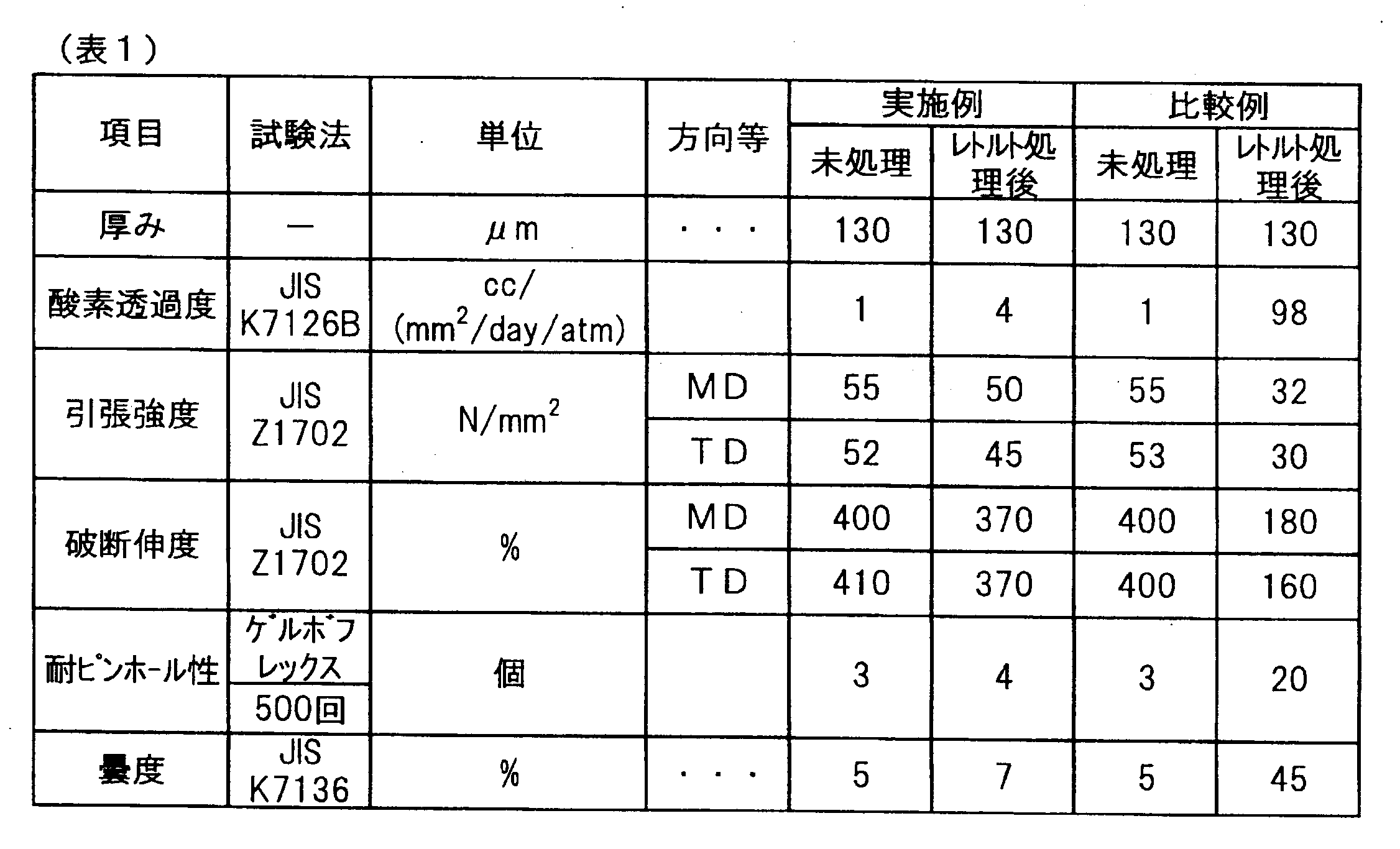
図3に示すように、実施例の積層フィルムは、比較例の積層フィルムと比較して、レトルト処理により低下する酸素バリア性の回復が早かった。また、実施例の積層フィルムは、レトルト処理後であっても、十分に高いガスバリア性を示すことが確認できた。
また、表1に示すように、実施例の積層フィルムは、比較例の積層フィルムと比較して、レトルト処理前後における引張強度、破断伸度、及び曇度の変化が小さく、また、レトルト処理後においても優れた耐ピンホール性を示すことが確認できた。
本開示によれば、一態様において、レトルト処理により低下する酸素バリア性の回復能に優れる積層フィルムが提供できる。
Claims (9)
- ポリアミド樹脂組成物(A)からなるポリアミド層Aと、
エチレン-ビニルアルコール共重合体と非晶性ポリアミドとを含む樹脂組成物からなるガスバリア層と、
ポリアミド樹脂組成物(B)からなるポリアミド層Bと、
接着層と、
シーラント層と、を含む積層フィルムであって、
前記ポリアミド層A、前記ガスバリア層、前記ポリアミド層B、前記接着層、及び前記シーラント層は、この順序で積層され、
前記ポリアミド層Aと前記ガスバリア層とは、接着層を介することなく積層された、積層フィルム。 - 前記ポリアミド樹脂組成物(A)は、ポリアミド樹脂と、酸化防止剤とを含む、請求項1記載の積層フィルム。
- 前記酸化防止剤は、ヒドロキシフェニルプロピオン酸エステル、フェノール系酸化防止剤、リン系酸化防止剤、及びイオウ系酸化防止剤からなる群から選択される少なくとも一つである、請求項1又は2に記載の積層フィルム。
- レトルト処理3時間経過後における酸素透過度が、15cc/(m2/day/atm)以下である、請求項1から3のいずれかに記載の積層フィルム。
- レトルト処理前後における引張強度の変化率が、25%以下である、請求項1から4のいずれかに記載の積層フィルム。
- 共押出により成形され積層された、請求項1から5のいずれかに記載の積層フィルム。
- 前記シーラント層が2層のポリオレフィン樹脂からなる、請求項1から6のいずれかに記載の積層フィルム。
- レトルト食品を包装するための、請求項1から7のいずれかに記載の積層フィルム。
- 請求項1から8のいずれかに記載の積層フィルムにより構成された食品包装用フィルム。
Priority Applications (1)
| Application Number | Priority Date | Filing Date | Title |
|---|---|---|---|
| JP2015523820A JP6249017B2 (ja) | 2013-06-24 | 2013-08-26 | 積層フィルム |
Applications Claiming Priority (2)
| Application Number | Priority Date | Filing Date | Title |
|---|---|---|---|
| JP2013131480 | 2013-06-24 | ||
| JP2013-131480 | 2013-06-24 |
Publications (1)
| Publication Number | Publication Date |
|---|---|
| WO2014207948A1 true WO2014207948A1 (ja) | 2014-12-31 |
Family
ID=52141336
Family Applications (1)
| Application Number | Title | Priority Date | Filing Date |
|---|---|---|---|
| PCT/JP2013/072700 Ceased WO2014207948A1 (ja) | 2013-06-24 | 2013-08-26 | 積層フィルム |
Country Status (3)
| Country | Link |
|---|---|
| JP (1) | JP6249017B2 (ja) |
| TW (1) | TWI564158B (ja) |
| WO (1) | WO2014207948A1 (ja) |
Cited By (6)
| Publication number | Priority date | Publication date | Assignee | Title |
|---|---|---|---|---|
| WO2016171192A1 (ja) * | 2015-04-20 | 2016-10-27 | 日本合成化学工業株式会社 | レトルト用スタンドアップパウチ |
| JP2018122487A (ja) * | 2017-01-31 | 2018-08-09 | 住友ベークライト株式会社 | 多層フィルム及び包装体 |
| JP2021518281A (ja) * | 2018-03-15 | 2021-08-02 | アドバンシックス・レジンズ・アンド・ケミカルズ・リミテッド・ライアビリティ・カンパニーAdvansix Resins & Chemicals Llc | 酸素感受性材料のための積層フィルム、パッケージ、及び方法 |
| JP2021193036A (ja) * | 2020-06-08 | 2021-12-23 | 株式会社悠心 | 固形物含有被包装物の充填包装体 |
| JP2022026118A (ja) * | 2020-07-30 | 2022-02-10 | 住友ベークライト株式会社 | 積層フィルム及び包装体 |
| CN115871306A (zh) * | 2023-03-03 | 2023-03-31 | 苏州博大永旺新材股份有限公司 | 一种高阻隔多层共挤复合包装膜及其制备方法 |
Citations (10)
| Publication number | Priority date | Publication date | Assignee | Title |
|---|---|---|---|---|
| JPS564571A (en) * | 1979-05-11 | 1981-01-17 | American Can Co | Heat sealed packing body |
| JPS5981168A (ja) * | 1982-08-06 | 1984-05-10 | アメリカン・キヤン・コムパニ− | 包装用多層はり合せ柔軟構造物 |
| JPS61179737A (ja) * | 1984-11-28 | 1986-08-12 | アメリカン・カン・カンパニ− | ナイロン及びエチレンビニルアルコ−ルコポリマ−の延伸層を包含する多層フイルム |
| JPS6470544A (en) * | 1987-08-24 | 1989-03-16 | Du Pont | Blend of ethylene vinyl alcohol copolymer and amorphous polyamide |
| JPH02245043A (ja) * | 1989-01-26 | 1990-09-28 | E I Du Pont De Nemours & Co | エチレンビニルアルコール共重合体と無定形ポリアミドとの配合物、およびそれから製造される多層容器 |
| JPH04226553A (ja) * | 1990-07-19 | 1992-08-17 | E I Du Pont De Nemours & Co | エチレンビニルアルコール共重合体とポリアミド類とのブレンド物、並びにそれから製造される多層容器 |
| JPH04226752A (ja) * | 1990-08-03 | 1992-08-17 | W R Grace & Co | 非晶質ナイロン組成物及びフィルム |
| JPH09504748A (ja) * | 1993-09-07 | 1997-05-13 | アライドシグナル・インコーポレーテッド | レトルト適性ポリマーフィルム |
| JP2002122273A (ja) * | 2001-07-23 | 2002-04-26 | Kuraray Co Ltd | 燃料用パイプまたはタンク |
| JP2009241321A (ja) * | 2008-03-31 | 2009-10-22 | Unitika Ltd | ガスバリア性二軸延伸ポリアミド樹脂フィルム |
Family Cites Families (2)
| Publication number | Priority date | Publication date | Assignee | Title |
|---|---|---|---|---|
| ES2087179T3 (es) * | 1990-06-27 | 1996-07-16 | Gunze Kk | Pelicula multicapa y procedimiento para su preparacion. |
| KR101074211B1 (ko) * | 2003-06-18 | 2011-10-14 | 군제 가부시키가이샤 | 폴리아미드계 다층 필름 |
-
2013
- 2013-08-26 JP JP2015523820A patent/JP6249017B2/ja active Active
- 2013-08-26 WO PCT/JP2013/072700 patent/WO2014207948A1/ja not_active Ceased
- 2013-08-27 TW TW102130643A patent/TWI564158B/zh not_active IP Right Cessation
Patent Citations (10)
| Publication number | Priority date | Publication date | Assignee | Title |
|---|---|---|---|---|
| JPS564571A (en) * | 1979-05-11 | 1981-01-17 | American Can Co | Heat sealed packing body |
| JPS5981168A (ja) * | 1982-08-06 | 1984-05-10 | アメリカン・キヤン・コムパニ− | 包装用多層はり合せ柔軟構造物 |
| JPS61179737A (ja) * | 1984-11-28 | 1986-08-12 | アメリカン・カン・カンパニ− | ナイロン及びエチレンビニルアルコ−ルコポリマ−の延伸層を包含する多層フイルム |
| JPS6470544A (en) * | 1987-08-24 | 1989-03-16 | Du Pont | Blend of ethylene vinyl alcohol copolymer and amorphous polyamide |
| JPH02245043A (ja) * | 1989-01-26 | 1990-09-28 | E I Du Pont De Nemours & Co | エチレンビニルアルコール共重合体と無定形ポリアミドとの配合物、およびそれから製造される多層容器 |
| JPH04226553A (ja) * | 1990-07-19 | 1992-08-17 | E I Du Pont De Nemours & Co | エチレンビニルアルコール共重合体とポリアミド類とのブレンド物、並びにそれから製造される多層容器 |
| JPH04226752A (ja) * | 1990-08-03 | 1992-08-17 | W R Grace & Co | 非晶質ナイロン組成物及びフィルム |
| JPH09504748A (ja) * | 1993-09-07 | 1997-05-13 | アライドシグナル・インコーポレーテッド | レトルト適性ポリマーフィルム |
| JP2002122273A (ja) * | 2001-07-23 | 2002-04-26 | Kuraray Co Ltd | 燃料用パイプまたはタンク |
| JP2009241321A (ja) * | 2008-03-31 | 2009-10-22 | Unitika Ltd | ガスバリア性二軸延伸ポリアミド樹脂フィルム |
Cited By (9)
| Publication number | Priority date | Publication date | Assignee | Title |
|---|---|---|---|---|
| WO2016171192A1 (ja) * | 2015-04-20 | 2016-10-27 | 日本合成化学工業株式会社 | レトルト用スタンドアップパウチ |
| JP2018122487A (ja) * | 2017-01-31 | 2018-08-09 | 住友ベークライト株式会社 | 多層フィルム及び包装体 |
| JP2021518281A (ja) * | 2018-03-15 | 2021-08-02 | アドバンシックス・レジンズ・アンド・ケミカルズ・リミテッド・ライアビリティ・カンパニーAdvansix Resins & Chemicals Llc | 酸素感受性材料のための積層フィルム、パッケージ、及び方法 |
| JP7309742B2 (ja) | 2018-03-15 | 2023-07-18 | アドバンシックス・レジンズ・アンド・ケミカルズ・リミテッド・ライアビリティ・カンパニー | 酸素感受性材料のための積層フィルム、パッケージ、及び方法 |
| JP2021193036A (ja) * | 2020-06-08 | 2021-12-23 | 株式会社悠心 | 固形物含有被包装物の充填包装体 |
| JP7212959B2 (ja) | 2020-06-08 | 2023-01-26 | 株式会社悠心 | 固形物含有被包装物の充填包装体 |
| JP2022026118A (ja) * | 2020-07-30 | 2022-02-10 | 住友ベークライト株式会社 | 積層フィルム及び包装体 |
| JP7547838B2 (ja) | 2020-07-30 | 2024-09-10 | 住友ベークライト株式会社 | 積層フィルム及び包装体 |
| CN115871306A (zh) * | 2023-03-03 | 2023-03-31 | 苏州博大永旺新材股份有限公司 | 一种高阻隔多层共挤复合包装膜及其制备方法 |
Also Published As
| Publication number | Publication date |
|---|---|
| TW201500219A (zh) | 2015-01-01 |
| JPWO2014207948A1 (ja) | 2017-02-23 |
| JP6249017B2 (ja) | 2017-12-20 |
| TWI564158B (zh) | 2017-01-01 |
Similar Documents
| Publication | Publication Date | Title |
|---|---|---|
| KR102392294B1 (ko) | 이열성 알루미늄증착 이축연신필름 | |
| JP6249017B2 (ja) | 積層フィルム | |
| US10016962B2 (en) | Multilayer structure | |
| TW575616B (en) | Stretched polyamide film | |
| JP6728707B2 (ja) | 多層フィルム及び包装体 | |
| US20080020218A1 (en) | Stretched Aromatic-Polyamide Film | |
| CN102307936A (zh) | 热收缩性薄膜 | |
| JP4710219B2 (ja) | ポリアミド多層フィルム | |
| JP2018099818A (ja) | 多層フィルム及び包装体 | |
| JP7547838B2 (ja) | 積層フィルム及び包装体 | |
| JP2018122487A (ja) | 多層フィルム及び包装体 | |
| JP2018062141A (ja) | 多層フィルム及び包装体 | |
| JP5199838B2 (ja) | 二軸延伸ポリアミド積層フィルム及びその製造方法 | |
| JP2006028289A (ja) | 易引裂性二軸延伸ポリアミドフィルムおよびその応用 | |
| EP1792933A1 (en) | Stretched polyamide film | |
| JP2008080687A (ja) | ポリアミド延伸フィルム製造方法 | |
| JP5946376B2 (ja) | ポリアミド系樹脂積層フィルム | |
| JP2019059122A (ja) | 多層フィルム及び包装体 | |
| JP6180097B2 (ja) | 光起電力モジュールのための酸素透過バリヤを有する多層シートの使用 | |
| JP5188407B2 (ja) | 二軸延伸ポリアミド積層フィルム及びその製造方法 | |
| JP7722168B2 (ja) | ポリアミド系樹脂フィルムおよび包装体 | |
| JP2024071814A (ja) | 積層フィルム及び包装体 | |
| JP2023099931A (ja) | ポリアミド系フィルム | |
| JP2008080690A (ja) | ポリアミド延伸フィルムおよび製造方法 | |
| JP4812395B2 (ja) | 多層フィルム及びその製造方法 |
Legal Events
| Date | Code | Title | Description |
|---|---|---|---|
| 121 | Ep: the epo has been informed by wipo that ep was designated in this application |
Ref document number: 13887923 Country of ref document: EP Kind code of ref document: A1 |
|
| ENP | Entry into the national phase |
Ref document number: 2015523820 Country of ref document: JP Kind code of ref document: A |
|
| NENP | Non-entry into the national phase |
Ref country code: DE |
|
| 122 | Ep: pct application non-entry in european phase |
Ref document number: 13887923 Country of ref document: EP Kind code of ref document: A1 |