WO2014178256A1 - 癒着防止剤 - Google Patents
癒着防止剤 Download PDFInfo
- Publication number
- WO2014178256A1 WO2014178256A1 PCT/JP2014/059785 JP2014059785W WO2014178256A1 WO 2014178256 A1 WO2014178256 A1 WO 2014178256A1 JP 2014059785 W JP2014059785 W JP 2014059785W WO 2014178256 A1 WO2014178256 A1 WO 2014178256A1
- Authority
- WO
- WIPO (PCT)
- Prior art keywords
- mono
- glycerol
- adhesion
- mmol
- erythritol
- Prior art date
- Legal status (The legal status is an assumption and is not a legal conclusion. Google has not performed a legal analysis and makes no representation as to the accuracy of the status listed.)
- Ceased
Links
Images


Classifications
-
- A—HUMAN NECESSITIES
- A61—MEDICAL OR VETERINARY SCIENCE; HYGIENE
- A61K—PREPARATIONS FOR MEDICAL, DENTAL OR TOILETRY PURPOSES
- A61K31/00—Medicinal preparations containing organic active ingredients
- A61K31/21—Esters, e.g. nitroglycerine, selenocyanates
- A61K31/215—Esters, e.g. nitroglycerine, selenocyanates of carboxylic acids
- A61K31/22—Esters, e.g. nitroglycerine, selenocyanates of carboxylic acids of acyclic acids, e.g. pravastatin
- A61K31/23—Esters, e.g. nitroglycerine, selenocyanates of carboxylic acids of acyclic acids, e.g. pravastatin of acids having a carboxyl group bound to a chain of seven or more carbon atoms
-
- A—HUMAN NECESSITIES
- A61—MEDICAL OR VETERINARY SCIENCE; HYGIENE
- A61K—PREPARATIONS FOR MEDICAL, DENTAL OR TOILETRY PURPOSES
- A61K31/00—Medicinal preparations containing organic active ingredients
- A61K31/045—Hydroxy compounds, e.g. alcohols; Salts thereof, e.g. alcoholates
- A61K31/047—Hydroxy compounds, e.g. alcohols; Salts thereof, e.g. alcoholates having two or more hydroxy groups, e.g. sorbitol
-
- A—HUMAN NECESSITIES
- A61—MEDICAL OR VETERINARY SCIENCE; HYGIENE
- A61K—PREPARATIONS FOR MEDICAL, DENTAL OR TOILETRY PURPOSES
- A61K31/00—Medicinal preparations containing organic active ingredients
- A61K31/21—Esters, e.g. nitroglycerine, selenocyanates
- A61K31/215—Esters, e.g. nitroglycerine, selenocyanates of carboxylic acids
- A61K31/22—Esters, e.g. nitroglycerine, selenocyanates of carboxylic acids of acyclic acids, e.g. pravastatin
- A61K31/23—Esters, e.g. nitroglycerine, selenocyanates of carboxylic acids of acyclic acids, e.g. pravastatin of acids having a carboxyl group bound to a chain of seven or more carbon atoms
- A61K31/231—Esters, e.g. nitroglycerine, selenocyanates of carboxylic acids of acyclic acids, e.g. pravastatin of acids having a carboxyl group bound to a chain of seven or more carbon atoms having one or two double bonds
-
- A—HUMAN NECESSITIES
- A61—MEDICAL OR VETERINARY SCIENCE; HYGIENE
- A61K—PREPARATIONS FOR MEDICAL, DENTAL OR TOILETRY PURPOSES
- A61K31/00—Medicinal preparations containing organic active ingredients
- A61K31/21—Esters, e.g. nitroglycerine, selenocyanates
- A61K31/215—Esters, e.g. nitroglycerine, selenocyanates of carboxylic acids
- A61K31/22—Esters, e.g. nitroglycerine, selenocyanates of carboxylic acids of acyclic acids, e.g. pravastatin
- A61K31/23—Esters, e.g. nitroglycerine, selenocyanates of carboxylic acids of acyclic acids, e.g. pravastatin of acids having a carboxyl group bound to a chain of seven or more carbon atoms
- A61K31/232—Esters, e.g. nitroglycerine, selenocyanates of carboxylic acids of acyclic acids, e.g. pravastatin of acids having a carboxyl group bound to a chain of seven or more carbon atoms having three or more double bonds, e.g. etretinate
-
- A—HUMAN NECESSITIES
- A61—MEDICAL OR VETERINARY SCIENCE; HYGIENE
- A61K—PREPARATIONS FOR MEDICAL, DENTAL OR TOILETRY PURPOSES
- A61K31/00—Medicinal preparations containing organic active ingredients
- A61K31/70—Carbohydrates; Sugars; Derivatives thereof
- A61K31/7028—Compounds having saccharide radicals attached to non-saccharide compounds by glycosidic linkages
-
- A—HUMAN NECESSITIES
- A61—MEDICAL OR VETERINARY SCIENCE; HYGIENE
- A61L—METHODS OR APPARATUS FOR STERILISING MATERIALS OR OBJECTS IN GENERAL; DISINFECTION, STERILISATION OR DEODORISATION OF AIR; CHEMICAL ASPECTS OF BANDAGES, DRESSINGS, ABSORBENT PADS OR SURGICAL ARTICLES; MATERIALS FOR BANDAGES, DRESSINGS, ABSORBENT PADS OR SURGICAL ARTICLES
- A61L26/00—Chemical aspects of, or use of materials for, wound dressings or bandages in liquid, gel or powder form
- A61L26/0009—Chemical aspects of, or use of materials for, wound dressings or bandages in liquid, gel or powder form containing macromolecular materials
- A61L26/0023—Polysaccharides
-
- A—HUMAN NECESSITIES
- A61—MEDICAL OR VETERINARY SCIENCE; HYGIENE
- A61L—METHODS OR APPARATUS FOR STERILISING MATERIALS OR OBJECTS IN GENERAL; DISINFECTION, STERILISATION OR DEODORISATION OF AIR; CHEMICAL ASPECTS OF BANDAGES, DRESSINGS, ABSORBENT PADS OR SURGICAL ARTICLES; MATERIALS FOR BANDAGES, DRESSINGS, ABSORBENT PADS OR SURGICAL ARTICLES
- A61L26/00—Chemical aspects of, or use of materials for, wound dressings or bandages in liquid, gel or powder form
- A61L26/0061—Use of materials characterised by their function or physical properties
- A61L26/0076—Sprayable compositions
-
- A—HUMAN NECESSITIES
- A61—MEDICAL OR VETERINARY SCIENCE; HYGIENE
- A61P—SPECIFIC THERAPEUTIC ACTIVITY OF CHEMICAL COMPOUNDS OR MEDICINAL PREPARATIONS
- A61P41/00—Drugs used in surgical methods, e.g. surgery adjuvants for preventing adhesion or for vitreum substitution
-
- C—CHEMISTRY; METALLURGY
- C07—ORGANIC CHEMISTRY
- C07C—ACYCLIC OR CARBOCYCLIC COMPOUNDS
- C07C43/00—Ethers; Compounds having groups, groups or groups
- C07C43/02—Ethers
- C07C43/03—Ethers having all ether-oxygen atoms bound to acyclic carbon atoms
- C07C43/14—Unsaturated ethers
- C07C43/178—Unsaturated ethers containing hydroxy or O-metal groups
-
- C—CHEMISTRY; METALLURGY
- C07—ORGANIC CHEMISTRY
- C07C—ACYCLIC OR CARBOCYCLIC COMPOUNDS
- C07C43/00—Ethers; Compounds having groups, groups or groups
- C07C43/02—Ethers
- C07C43/03—Ethers having all ether-oxygen atoms bound to acyclic carbon atoms
- C07C43/14—Unsaturated ethers
- C07C43/178—Unsaturated ethers containing hydroxy or O-metal groups
- C07C43/1785—Unsaturated ethers containing hydroxy or O-metal groups having more than one ether bound
-
- C—CHEMISTRY; METALLURGY
- C07—ORGANIC CHEMISTRY
- C07C—ACYCLIC OR CARBOCYCLIC COMPOUNDS
- C07C69/00—Esters of carboxylic acids; Esters of carbonic or haloformic acids
- C07C69/52—Esters of acyclic unsaturated carboxylic acids having the esterified carboxyl group bound to an acyclic carbon atom
- C07C69/533—Monocarboxylic acid esters having only one carbon-to-carbon double bond
-
- C—CHEMISTRY; METALLURGY
- C07—ORGANIC CHEMISTRY
- C07C—ACYCLIC OR CARBOCYCLIC COMPOUNDS
- C07C69/00—Esters of carboxylic acids; Esters of carbonic or haloformic acids
- C07C69/52—Esters of acyclic unsaturated carboxylic acids having the esterified carboxyl group bound to an acyclic carbon atom
- C07C69/587—Monocarboxylic acid esters having at least two carbon-to-carbon double bonds
-
- C—CHEMISTRY; METALLURGY
- C07—ORGANIC CHEMISTRY
- C07C—ACYCLIC OR CARBOCYCLIC COMPOUNDS
- C07C69/00—Esters of carboxylic acids; Esters of carbonic or haloformic acids
- C07C69/66—Esters of carboxylic acids having esterified carboxylic groups bound to acyclic carbon atoms and having any of the groups OH, O—metal, —CHO, keto, ether, acyloxy, groups, groups, or in the acid moiety
- C07C69/67—Esters of carboxylic acids having esterified carboxylic groups bound to acyclic carbon atoms and having any of the groups OH, O—metal, —CHO, keto, ether, acyloxy, groups, groups, or in the acid moiety of saturated acids
- C07C69/675—Esters of carboxylic acids having esterified carboxylic groups bound to acyclic carbon atoms and having any of the groups OH, O—metal, —CHO, keto, ether, acyloxy, groups, groups, or in the acid moiety of saturated acids of saturated hydroxy-carboxylic acids
Definitions
- the present invention relates to an anti-adhesion agent for body tissues.
- Organ / tissue adhesion is a typical complication that occurs after surgery. The frequency of occurrence is 55% or more in abdominal surgery, and serious medical conditions such as chronic abdominal pain, bowel obstruction, and infertility persist for the patient. Adhesion is a universal post-surgical problem that occurs in thoracic and brain surgery as well as abdominal surgery.
- a technique of inserting a film-like or sheet-like adhesion preventing material as a barrier between an affected area and an organ with potential for adhesion is used in the medical field.
- Sepurafilm registered trademark
- Sepurafilm which is a translucent film containing sodium hyaluronate and carboxymethylcellulose in a ratio of 2: 1 developed by Genzyme
- the organ is not flat but intricately complicated, and such a film-like or sheet-like anti-adhesive material is applied so as to completely cover the uneven part of the tissue or organ or the part where the operable range is narrow. It ’s difficult.
- film- or sheet-like anti-adhesive materials are prone to adhere to surgical gloves, and are difficult to apply properly to damaged sites during surgery, and are easy to tear or shift. There is also the problem of requiring advanced surgical techniques.
- Patent Document 1 an anti-adhesion agent using a hydrogel containing a polysaccharide derivative has been developed.
- Patent Document 2 a gel-like adhesion inhibitor composed of a crosslinkable polysaccharide derivative into which an active ester group is introduced.
- Patent Document 3 a gel-like adhesion inhibitor composed of a crosslinkable polysaccharide derivative into which an active ester group is introduced.
- Patent Document 3 a gel-like adhesion inhibitor composed of a crosslinkable polysaccharide derivative into which an active ester group is introduced.
- Patent Document 2 since many of these anti-adhesive agents are high in viscosity, it is difficult to use easy application means such as injection, so there is a problem that a large-scale device is required for application or it is difficult to apply to narrow sites. . Therefore, development of a further anti-adhesion agent that can be applied easily and can be applied to a narrow site and has high operability is still desired.
- amphiphilic compounds are known to form liquid crystals in water, and are used in various applications in the cosmetics and pharmaceutical fields.
- DDS drug delivery systems
- amphiphilic compounds have been very active, including drug delivery systems in which drugs are embedded in the aqueous phase of liposomes and lipid bilayers made from lamellar liquid crystals.
- a wide variety of forms of drug delivery carriers have been manufactured. Among them, non-lamellar liquid crystals such as cubic liquid crystals and reverse hexagonal liquid crystals are attracting attention as particularly useful drug delivery carriers because of their high structural stability and the ability to stably hold various drugs inside.
- Patent Document 3 discloses a drug delivery system using a composition obtained by adding a surfactant and ethanol to a mixed lipid of soybean-derived phosphatidylcholine (SPC) and diacylglycerol (GDO), which forms a non-lamellar liquid crystal. ing.
- SPC soybean-derived phosphatidylcholine
- GDO diacylglycerol
- the majority of cubic liquid crystals found in amphiphile / water systems can only exist stably in a narrow concentration and temperature range.
- amphiphilic compounds capable of forming cubic liquid crystals exhibiting high stability even at low temperatures (less than 6 ° C.) have been developed, and the use of the liquid crystals in sustained-release preparations has also been reported (Patent Document 4).
- An object of the present invention is to provide an adhesion preventive agent that can be easily applied.
- lipid can provide an effect of preventing tissue adhesion by a simple application method such as spraying or coating.
- a simple application method such as spraying or coating.
- the headline and the present invention were completed.
- the present invention includes the following.
- n 1 or 2 in the above formula.
- R in the formula is glycerol, erythritol, pentaerythritol, diglycerol, glyceric acid, triglycerol, xylose, sorbitol, ascorbic acid, glucose, galactose, mannose, dipentaerythritol, maltose, mannitol, and It represents a hydrophilic group in which one hydroxyl group is removed from any one selected from the group consisting of xylitol.
- R in the above formula represents a hydrophilic group in which one hydroxyl group is removed from glycerol, erythritol, diglycerol, or xylose.
- amphiphilic compound examples include the following: Mono-O- (5,9,13-trimethyltetradec-4-enoyl) glycerol, Mono-O- (5,9,13,17-tetramethyloctadeca-4-enoyl) diglycerol, Mono-O- (5,9,13-trimethyltetradecanoyl) glycerol, Mono-O- (5,9,13,17-tetramethyloctadecanoyl) erythritol, 1-O- (3,7,11,15-tetramethylhexadecyl) - ⁇ -D-xylopyranoside, and mono-O- (5,9,13-trimethyltetradeca-4,8,12-trienoyl) glycerol.
- the anti-adhesion agent may further comprise a pharmaceutically acceptable carrier.
- the carrier is a liquid carrier and / or a gas carrier.
- the liquid carrier preferably includes at least one selected from the group consisting of silicone oil, alcohol, and an aqueous medium.
- the adhesion preventing agent according to the present invention preferably further contains a pharmaceutically acceptable surfactant.
- the adhesion preventing agent according to the present invention may contain hyaluronic acid or a salt thereof.
- X and Y each represent a hydrogen atom or together represent an oxygen atom
- n represents an integer of 0 to 2
- m represents 1 or 2
- R represents glycerol, erythritol, pentaerythritol
- n represents 1 or 2
- m represents 2.
- amphiphilic compound examples include the following: Mono-O- (5,9,13,17-tetramethyloctadeca-4,8,12,16-tetraenoyl) glycerol, Mono-O- (5,9,13,17-tetramethyloctadeca-4,8,12,16-tetraenoyl) erythritol, Mono-O- (5,9,13,17-tetramethyloctadeca-4,8,12,16-tetraenoyl) pentaerythritol, Mono-O- (5,9,13-trimethyltetradeca-4,8,12-trienyl) erythritol, Mono-O- (5,9,13-trimethyltetradeca-4,8,12-trienyl) pentaerythritol, Mono-O- (3,7,11,15-tetramethylhexadeca-2,6,10,14-tetraenoyl)
- [3] A method for preventing adhesion of an affected area, comprising applying the anti-adhesion agent according to [1] to the affected area.
- an adhesion prevention effect can be obtained by an easy application method.
- FIG. 1 is a diagram showing the results of SAXS measurement on mono-O- (5,9,13-trimethyltetradeca-4,8,12-trienoyl) glycerol.
- FIG. 2 is a diagram showing the results of SAXS measurement on mono-O- (5,9,13,17-tetramethyloctadeca-4,8,12,16-tetraenoyl) glycerol.
- FIG. 3 is a diagram showing the results of SAXS measurement on mono-O- (5,9,13,17-tetramethyloctadeca-4,8,12,16-tetraenoyl) erythritol.
- FIG. 1 is a diagram showing the results of SAXS measurement on mono-O- (5,9,13-trimethyltetradeca-4,8,12-trienoyl) glycerol.
- FIG. 2 is a diagram showing the results of SAXS measurement on mono-O- (5,9,13,17-
- FIG. 4 is a diagram showing the results of SAXS measurement on mono-O- (5,9,13,17-tetramethyloctadeca-4,8,12,16-tetraenoyl) pentaerythritol.
- FIG. 5 is a photograph showing that the tissue was coated by spraying test sample 18 (C17 glycerin ester (o / w)). A is before spraying and B is the peritoneum of the rat upper abdominal wall after spraying. C is before spraying, D is rat liver after spraying.
- FIG. 6 is a photograph showing that the tissue was coated by spraying test sample 13 (C17 glycerin ester) and saline. A is before spraying, B is rat liver after spraying.
- FIG. 5 is a photograph showing that the tissue was coated by spraying test sample 18 (C17 glycerin ester (o / w)). A is before spraying and B is the peritoneum of the rat upper abdominal wall after
- FIG. 7 is a diagram showing the results of SAXS measurement of a liquid crystal gel of mono-O- (5,9,13-trimethyltetradeca-4,8,12-trienyl) erythritol.
- FIG. 8 is a diagram showing the results of SAXS measurement of a liquid crystal gel of mono-O- (5,9,13-trimethyltetradeca-4,8,12-trienyl) pentaerythritol.
- FIG. 9 is a diagram showing the results of SAXS measurement of a liquid crystal gel of mono-O- (3,7,11,15-tetramethylhexadeca-2,6,10,14-tetraenyl) erythritol.
- FIG. 10 is a diagram showing the results of SAXS measurement of mono O- (3,7,11,15-tetramethylhexadeca-2,6,10,14-tetraenoyl) pentaerythritol liquid crystal gel.
- FIG. 11 is a diagram showing the results of SAXS measurement of a liquid crystal gel of mono-O- (5,9,13,17-tetramethyloctadeca-4,8,12,16-tetraenyl) erythritol.
- FIG. 12 shows the results of SAXS measurement of a liquid crystal gel of mono-O- (5,9,13,17-tetramethyloctadeca-4,8,12,16-tetraenyl) pentaerythritol.
- FIG. 13 is a diagram showing the results of SAXS measurement of an o / w dispersant containing C17 glycerin ester.
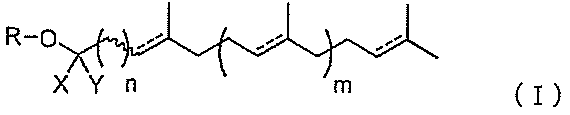
- Amphiphilic Compound The antiadhesive agent according to the present invention has the following general formula (I): Containing an amphiphilic compound represented by:
- X and Y each represent a hydrogen atom or together represent an oxygen atom.
- n an integer of 0 to 2 (preferably 1 or 2), and m represents 1 or 2.
- R in the general formula (I) represents a hydrophilic group having two or more hydroxyl groups, and is not limited to the following, for example, glycerol, erythritol, pentaerythritol, diglycerol, glyceric acid, triglycerol, Examples thereof include a hydrophilic group in which one hydroxyl group is removed from any one selected from the group consisting of xylose, sorbitol, ascorbic acid, glucose, galactose, mannose, dipentaerythritol, maltose, mannitol, and xylitol.
- R in the general formula (I) is particularly preferably a hydrophilic group obtained by removing one hydroxyl group from glycerol, erythritol, diglycerol, glyceric acid, or xylose.
- the notation in the general formula (I) Means that the amphiphilic compound is an E-form (cis-form) or Z-form (trans-form) of geometric isomers or a mixture thereof.
- amphiphilic compound represented by the general formula (I) examples include amphiphilic compounds (polyunsaturated fatty acid esters) represented by the following general formula (II).
- R in the general formula (II) is composed of glycerol, erythritol, pentaerythritol, diglycerol, glyceric acid, triglycerol, xylose, sorbitol, ascorbic acid, glucose, galactose, mannose, dipentaerythritol, maltose, mannitol, and xylitol.
- R represents a hydrophilic group in which one hydroxyl group is removed from any one selected from the group consisting of glycerol, erythritol, pentaerythritol, diglycerol, glyceric acid, and xylose.
- one hydroxyl group is removed from any one selected from the group consisting of glycerol, erythritol, pentaerythritol, and diglycerol. It is preferably a hydrophilic group.
- R is preferably a hydrophilic group in which one hydroxyl group is removed from any one selected from the group consisting of erythritol, pentaerythritol, diglycerol, and xylose.
- the notation in the general formula (II) Means that the amphiphilic compound is an E-form (cis-form) or Z-form (trans-form) of geometric isomers or a mixture thereof.
- amphiphilic compound represented by the general formula (II) include, for example, the following ester compounds.
- amphiphilic compound represented by the general formula (II) examples include the following ether compounds or glycoside compounds.
- amphiphilic compound represented by the general formula (I) includes an amphiphilic compound represented by the following general formula (III).
- X and Y each represent a hydrogen atom or together represent an oxygen atom
- n represents an integer of 0 to 2 (preferably 1 or 2)
- m represents 1 or 2 Represents.
- R in the general formula (III) represents a hydrophilic group having two or more hydroxyl groups, and is not limited to, for example, glycerol, erythritol, pentaerythritol, diglycerol, glyceric acid, triglycerol, xylose And a hydrophilic group in which one hydroxyl group is removed from any one selected from the group consisting of sorbitol, ascorbic acid, glucose, galactose, mannose, dipentaerythritol, maltose, mannitol, and xylitol.
- the notation in the general formula (III) Means that the amphiphilic compound is an E-form (cis-form) or Z-form (trans-form) of geometric isomers or a mixture thereof.
- preferred amphiphilic compounds represented by the general formula (III) include the following compounds.
- amphiphilic compound represented by the general formula (I) is an amphiphilic compound represented by the following general formula (IV).
- X and Y each represent a hydrogen atom or together represent an oxygen atom
- n represents an integer of 0 to 2 (preferably 1 or 2)
- m represents 1 or 2 Represents.
- R in the general formula (IV) represents a hydrophilic group having two or more hydroxyl groups, and is not limited to the following.
- amphiphilic compound represented by the general formula (IV) include the following compounds.
- amphiphilic compound used in the anti-adhesion agent according to the present invention is a liquid crystal compound, and can form a non-lamellar liquid crystal in an aqueous medium.
- the adhesion preventing effect according to the present invention is brought about by coating (coating) the tissue surface with a non-lamellar liquid crystal formed by an amphiphilic compound.
- an aqueous medium containing an amphiphilic compound is sometimes referred to as “amphiphilic compound / water system”.
- the non-lamellar liquid crystal formed by the amphiphilic compound used in the present invention is preferably a type II (water-in-oil) liquid crystal having a hydrophobic group oriented outward, specifically, a cubic liquid crystal or A reverse hexagonal liquid crystal is more preferable.
- the cubic liquid crystal is preferably a type II cubic liquid crystal.
- the structure of cubic liquid crystals is generally classified into type I and type II.
- the case of an “oil-in-water” structure is called an I-type cubic liquid crystal
- the case of an “water-in-oil” structure is called an II-type cubic liquid crystal.
- Type I and type II can be determined from the phase behavior of the amphiphilic compound / water system. For example, in the case of type I, when the water content of the amphiphilic compound / water system is increased, the liquid crystal is transferred from other liquid crystals (for example, lamellar liquid crystals) to micelles, and finally a uniform aqueous solution Become.
- the type II liquid crystal when the water amount exceeds a certain level, the liquid crystal containing a saturated amount of water and the excess water coexist in two phases, “liquid crystal + excess water”. It does not become an aqueous solution.
- the cubic liquid crystal also belongs to the cubic liquid crystal belonging to the crystallographic space group Ia3d (hereinafter referred to as Ia3d cubic liquid crystal), the cubic liquid crystal belonging to the crystallographic space group Pn3m (hereinafter referred to as Pn3m cubic liquid crystal), or the crystallographic space group Im3m.
- Ia3d cubic liquid crystal the cubic liquid crystal belonging to the crystallographic space group
- Pn3m cubic liquid crystal hereinafter referred to as Pn3m cubic liquid crystal
- Im3m cubic liquid crystal it is more preferably Pn3m cubic liquid crystal.
- the aqueous medium in which the amphiphilic compound according to the present invention can form a non-lamellar liquid crystal is not particularly limited, but water such as sterilized water, purified water, distilled water, ion-exchanged water, ultrapure water; Water, aqueous solution of sodium chloride, aqueous solution of calcium chloride, aqueous solution of magnesium chloride, aqueous solution of sodium sulfate, aqueous solution of potassium sulfate, aqueous solution of sodium carbonate, aqueous solution of sodium acetate, etc .; buffer solution such as phosphate buffer solution or Tris-HCl buffer solution; glycerin, An aqueous solution containing water-soluble organic substances such as ethylene glycol and ethanol; an aqueous solution containing sugar molecules such as glucose, sucrose, and maltose; an aqueous solution containing water-soluble polymers such as polyethylene glycol and polyvinyl alcohol; octyl glu
- the amphiphilic compound according to the present invention exhibits high stability under a wide range of environmental conditions.
- the amphiphilic compound according to the present invention is characterized by having an isoprenoid chain as a hydrophobic group, and unlike an amphiphilic compound having a linear fatty chain such as oleic acid as a hydrophobic group, it is resistant to hydrolysis. And oxidation stability is relatively high.
- the amphiphilic compound according to the present invention also has a wide temperature range in which liquid crystal can be obtained, has a low craft temperature, and can stably form liquid crystals even at low temperatures (6 ° C. or lower, preferably 0 ° C. or lower). .
- the amphiphilic compound according to the present invention when applied on a tissue in a living body, contains a body fluid (including but not limited to, intracellular fluid, extracellular fluid, interstitial fluid, lymph fluid, spinal fluid) , Blood, serum, plasma, etc.) can stably form type II non-lamellar liquid crystal and form a coating.
- the amphiphilic compound according to the present invention is also applied to a living tissue in a mixed solution with the aqueous medium as described above, thereby stably forming a type II non-lamellar liquid crystal on the tissue and covering the tissue. Can be formed.
- the analysis of the liquid crystal structure formed by the amphiphilic compound can be carried out by a conventional method, for example, by the following method.
- the penetration method is used as a simple method for determining whether an amphiphilic compound forms a liquid crystal in an aqueous medium, and if it is a cubic liquid crystal, type I or type II. it can.
- a small amount (several mg) of an amphiphilic compound is placed on a microscope slide glass, gently pressed with a cover glass, and an amphiphilic compound thin film (about 10 microns thick) in the gap between the slide glass and the cover glass. A diameter of about 1 to 5 mm).
- the liquid crystal structure may be examined to have a cubic lattice by the X-ray small angle scattering (SAXS) method.
- SAXS X-ray small angle scattering
- the space group and the lattice constant can be easily determined by calculating the peak value from the SAXS data according to a method well known to those skilled in the art and further obtaining the reciprocal ratio thereof.
- the amphiphilic compound used in the antiadhesive agent according to the present invention itself has a low viscosity.
- the amphiphilic compound used in the anti-adhesion agent according to the present invention is preferably 15.0 Pa ⁇ s or less, more preferably 11.0 Pa ⁇ s or less, as measured at 25 ° C. More preferably, it has a viscosity of 6.0 Pa ⁇ s or less. This viscosity can be measured at a temperature of 25 ° C. using, for example, a viscosity / viscoelasticity measuring apparatus (Gemini II, Malvern).
- amphiphilic compound used in the present invention can be synthesized with reference to the description of Examples described later.
- the amphiphilic compound represented by the general formula (III) can be synthesized according to a synthesis method described in, for example, International Publication WO 2011/078383.
- the amphiphilic compound represented by the general formula (IV) can be synthesized, for example, according to a synthesis method described in International Publication WO 2006/043705.
- amphiphilic compound represented by the general formula (II) is one molecule of polyhydric alcohol (preferably glycerol, erythritol, pentaerythritol, diglycerol, glyceric acid, triglycerol, xylose, sorbitol.
- polyhydric alcohol preferably glycerol, erythritol, pentaerythritol, diglycerol, glyceric acid, triglycerol, xylose, sorbitol.
- Ascorbic acid glucose, galactose, mannose, dipentaerythritol, maltose, mannitol, or xylitol, more preferably glycerol, erythritol, pentaerythritol, diglycerol, glyceric acid, xylose
- amphiphilic compound represented by the general formula (II) according to the present invention can be produced (synthesized) as follows, for example.
- an ester compound in which X and Y in the formula together represent an oxygen atom (the following general formula (II-1)) is:
- it can be produced by an ester exchange reaction between an ester compound represented by the following general formula (V) and a hydrophilic compound R—OH.
- the reaction conditions for the transesterification reaction are not particularly limited.
- the reaction is performed using an acid or base catalyst.
- ester compound (general formula (II-1)) can be produced by esterification of a carboxylic acid corresponding to the ester compound represented by the general formula (V) and a hydrophilic compound R—OH.
- the reaction conditions for esterification are not particularly limited.
- the reaction is performed using an acid or base catalyst, a halogenating agent such as thionyl chloride, or a condensing agent.
- a transesterification reaction or an esterification reaction may be performed while protecting some or all of the hydroxyl groups in R of the hydrophilic compound R—OH.
- the ester compound (V) can be produced by deprotection after the transesterification reaction or esterification reaction.
- an ether compound (a compound represented by the following general formula (II-2)) in which X and Y in the formula are both hydrogen atoms
- an etherification reaction between a compound having a leaving group Z represented by the following general formula (VI) and a hydrophilic compound R—OH, or an alcohol and a leaving group Z represented by the following general formula (VII) It can be produced by an etherification reaction with RZ.
- the reaction conditions for etherification are not particularly limited.
- the reaction is performed using a base.
- the etherification reaction may be carried out while protecting some or all of the hydroxyl groups in R of the hydrophilic compound R—OH.
- the ether compound (II-2) can be produced by deprotection after the etherification reaction.
- the glycoside compound represented by the general formula (II-2) in which X and Y are both hydrogen atoms and R is a sugar residue For example, as shown below, a glycosylation reaction of an alcohol represented by the general formula (VII) and a saccharide R ′′ -Z in which the hydroxyl group is protected with the anomeric position as a leaving group Z is performed to remove the deprotection (R ′′ ⁇ R).
- the reaction conditions for the glycosylation reaction are not particularly limited.
- the reaction is performed using a Lewis acid.
- the deprotection reaction conditions are not particularly limited, the deprotection reaction conditions are selected so as not to impair the glycosidic bond with respect to the specific protecting group.
- ester compounds represented by the general formula (II-2) in which X and Y are both hydrogen atoms and R is a carboxyl group include, for example, It can manufacture by deprotecting after transesterification with the alcohol represented by Formula (VII), and the glycerol acid ester which protected the hydroxyl group, or esterification with the glycerol acid which protected the hydroxyl group.
- orthoacetate was used from 3,7,11-trimethyldodeca-1,6,10-trien-3-ol (nerolidol). Obtained by Johnson-Kreisen reaction.
- the synthesized compound it is preferable to confirm that the target compound has been obtained by a conventional method such as NMR measurement.
- the anti-adhesion agent according to the present invention contains the above-mentioned amphiphilic compound in an effective amount.
- concentration of the amphiphilic compound contained in the anti-adhesion agent according to the present invention is not limited, but is, for example, 1 to 80%, preferably 10 to 50%, based on the total amount of the anti-adhesion agent. Good.
- the anti-adhesion agent according to the present invention may be in any dosage form (typically a parenteral dosage form), but a tissue such as an aerosol or a spray such as a pump spray, a coating agent or an injection. It is preferable to formulate a dosage form that can be directly applied to the above and has good operability.
- the spray agent refers to a pharmaceutical in a dosage form in which a target substance is ejected into droplets, mists, fine particles, bubbles, or the like by applying pressure manually, by power or by a propellant (gas). .
- an aerosol agent refers to a pharmaceutical in a dosage form in which a target substance is ejected by the pressure of a propellant filled together with the target substance in the same container.
- the pump spray agent refers to a medicine in a dosage form in which a target substance is ejected without using a propellant by using a sprayer or a power sprayer.
- the “medicament” may be a medical material.
- the present invention also relates to a medicament containing the adhesion preventing agent according to the present invention, for example, a medical material for adhesion prevention.
- the adhesion preventing agent according to the present invention is preferably a composition further comprising a pharmaceutically acceptable carrier.
- a pharmaceutically acceptable carrier can be appropriately selected by those skilled in the art according to the dosage form to be used, and may be a gas carrier or a liquid carrier.
- the gas carrier include, but are not limited to, for example, a liquefied gas (butane gas, dimethyl ether, LP gas, carbon dioxide gas, nitrogen gas, etc., or a mixture thereof), an inert gas such as a compressed gas or a cracked gas. be able to.
- a gas carrier is suitably used for an aerosol agent.
- liquid carriers examples include, but are not limited to, oils such as silicone oil (preferably dimethicone), esters such as isopropyl myristate, alcohols (ethanol, isopropanol, etc.), and physiologically acceptable organic solvents. (Dimethyl sulfoxide (DMSO) etc.) and an aqueous medium etc. can be used.
- oils such as silicone oil (preferably dimethicone)
- esters such as isopropyl myristate, alcohols (ethanol, isopropanol, etc.)
- physiologically acceptable organic solvents such as dimethyl sulfoxide (DMSO) etc.
- DMSO dimethyl sulfoxide
- aqueous medium etc. can be used.
- Such a liquid carrier is suitably used in sprays, coating agents, injections and the like.
- the anti-adhesive agent according to the present invention can promote non-lamellar liquid crystal formation by an amphiphilic compound by containing an aqueous medium, and can effectively bring out an anti-adhesion action.
- the amount of the aqueous medium is preferably such that the liquid crystal gel is not formed before application to the body, depending on the dosage form to be used, but may be such an amount that the liquid crystal gel is formed.
- the aqueous medium may be water such as sterilized water, purified water, distilled water, ion exchange water, ultrapure water, or a physiologically acceptable aqueous solution.
- physiologically acceptable aqueous solution examples include physiological saline; electrolyte aqueous solution such as sodium chloride aqueous solution, calcium chloride aqueous solution, magnesium chloride aqueous solution, sodium sulfate aqueous solution, potassium sulfate aqueous solution, sodium carbonate aqueous solution and sodium acetate aqueous solution; phosphoric acid Examples include buffer solutions such as buffer solutions and Tris-HCl buffer solutions; aqueous solutions containing sugar molecules such as glucose, sucrose, maltose, and hyaluronic acid; aqueous solutions containing water-soluble polymers such as polyethylene glycol and polyvinyl alcohol.
- the physiologically acceptable aqueous solution include an aqueous hyaluronic acid solution containing hyaluronic acid or a salt thereof (such as sodium hyaluronate).
- the hyaluronic acid aqueous solution is not limited to the following, but may be, for example, a 0.01% to 5%, preferably a 0.1 to 1% hyaluronic acid aqueous solution.
- the adhesion preventing agent according to the present invention preferably contains hyaluronic acid or a salt thereof.
- the adhesion inhibitor according to the present invention may be an o / w dispersant (oil-in-water type) or a w / o dispersant (water-in-oil type) when it contains an aqueous medium.
- the adhesion preventing agent according to the present invention may further contain a pharmaceutically acceptable surfactant.
- a pharmaceutically acceptable surfactant any of those used in the pharmaceutical or cosmetic field can be used, and it is not limited to the following.
- pluronic Polyoxyethylene polyoxy) Propylene (200EO) (70PO)
- polysorbate 80 polyoxyethylene sorbitan oleate; Tween 80
- propylene carbonate and the like can be used.
- One preferred embodiment of the anti-adhesion agent includes oils such as silicone oil (preferably dimethicone), esters such as isopropyl myristate, alcohols (ethanol, isopropanol, etc.), and physiologically acceptable organic solvents (dimethyl sulfoxide). (DMSO) and the like) and at least one liquid carrier selected from the group consisting of one or more amphiphilic compounds.
- oils such as silicone oils (preferably dimethicone), esters such as isopropyl myristate, alcohols (ethanol, isopropanol, etc.), and physiologically acceptable organic solvents (dimethyl).
- DMSO sulfoxide
- amphiphilic compounds such as sodium bicarbonate
- aqueous medium such as water
- the anti-adhesion agent more specifically, for example, a mixture of an amphiphilic compound and silicone oil (preferably dimethicone), or an amphiphilic compound and silicone oil (preferably dimethicone) and water Of the mixture.
- an amphiphilic compound and silicone oil preferably dimethicone
- an amphiphilic compound and silicone oil preferably dimethicone
- Another preferred embodiment of the anti-adhesive agent includes a mixture of an amphiphilic compound, an alcohol (preferably ethanol), an aqueous medium (preferably water or an aqueous solution of hyaluronic acid) and a surfactant (preferably pluronic). .
- an alcohol preferably ethanol
- an aqueous medium preferably water or an aqueous solution of hyaluronic acid
- a surfactant preferably pluronic
- Still another preferred embodiment of the anti-adhesion agent includes a mixture of an amphiphilic compound, an aqueous medium (preferably water or an aqueous solution of hyaluronic acid), and a surfactant (preferably pluronic).
- the anti-adhesion agent according to the present invention does not contain an aqueous medium, or contains only an amount of an aqueous medium that does not form a liquid crystal gel before application to the body, the aqueous medium is applied after application to the tissue. Further application to the application site is preferred. With the additional application of the aqueous medium, the amphiphilic compound contained in the anti-adhesive agent forms a liquid crystal gel better at the application site.
- the anti-adhesion agent according to the present invention may also contain additives such as stabilizers, buffers, preservatives, fragrances, and coloring agents that are generally used in pharmacy.
- the anti-adhesion agent containing an amphiphilic compound according to the present invention can be produced in an arbitrary dosage form such as an aerosol, a spray, a coating agent, an injection, etc., using a normal formulation method.
- the anti-adhesion agent according to the present invention can prevent adhesion of tissue by applying it to a tissue that has the risk of adhesion.
- the “adhesion prevention effect” refers to an effect of preventing the state where a tissue is adhered to another tissue or organ and becoming difficult to peel, and suppressing adhesion completely or at a low level.
- the anti-adhesion effect of the anti-adhesion agent according to the present invention is brought about by the above-mentioned amphiphilic compound contained in the anti-adhesion agent forming a film based on non-lamellar liquid crystal formation on the applied tissue surface. is there.
- the formed coating prevents contact between the tissue and other tissues or organs, thereby reducing adhesion.
- the anti-adhesion effect of the anti-adhesion agent according to the present invention can be confirmed, for example, by applying the anti-adhesion agent to a tissue incision part of an opened animal model, closing the abdomen, and observing the progress.
- the rat was opened by a midline abdominal incision (for example, about 30 mm), an incision of about 20 mm was added to the peritoneum on the upper abdominal wall side, and after complete hemostasis, a peritoneal incision (for example, using 5-0 silk thread)
- Adhesion-preventing agent is applied to cover the peritoneal suture, and the abdominal wall is closed and closed after a certain period (for example, 7 days) after this operation. You can evaluate whether there is adhesions.
- the anti-adhesion agent may be performed by a method according to the dosage form.
- the application amount of the anti-adhesion agent in this evaluation is typically preferably an amount that is 10 mg in terms of lipid.
- Adhesion evaluation can be performed by attaching the following evaluation score, for example.
- Adhesion prevention refers to reducing the frequency and / or degree of adhesion compared to the untreated group.
- Adhesion prevention method The present invention relates to an anti-adhesion agent according to the present invention, wherein the affected area of a patient, specifically a site where there is a risk of adhesion, specifically a site where tissue repair is supposed to occur (for example, an inflamed site in the body) Also provided is a method for preventing tissue adhesions in an affected area comprising applying an effective amount to the wound site).
- sites where there is a risk of adhesion include exogenous or endogenous inflammation sites in the body, wound sites such as incision sites in surgery, and tissue surfaces damaged by artificial treatment such as touching during surgery A part etc. are mentioned.
- “injured site” refers to a part of a tissue or organ damaged by surgery, trauma, disease or the like.
- tissues or organs to which anti-adhesive agents are applied include peritoneum, small intestine, large intestine, rectum, stomach, duodenum, cecum, liver, uterus, fallopian tube, lymphatic vessel, heart, pericardium, lung, brain, ovary, tendon However, it is not limited to these.
- the antiadhesive agent according to the present invention is applied to an entire organ having an incision, around the incision, or an incision during surgery.
- the anti-adhesion agent according to the present invention may be applied to a site in the body that comes into contact with a wound site or an inflammatory site.
- an affected area such as a damaged site (for example, a wound site) or an inflamed site may be performed using a method according to the dosage form of the anti-adhesion agent.
- the anti-adhesion agent is an aerosol agent
- the anti-adhesion agent may be sprayed onto an affected area such as a damaged site (for example, a wound site) or an inflamed site using a gas jet type aerosol container.
- the anti-adhesion agent is a pump spray agent
- the anti-adhesion agent is applied to an affected area such as a damaged site (for example, a wound site) or an inflamed site using, for example, a general-purpose manual-type non-gas jet spray container.
- the affected area such as a damaged site (for example, a wound site) is treated with an anti-adhesive agent using a spray nozzle or the like used for endoscopic or laparoscopic surgery. Can also be sprayed on.
- “spraying” refers to spraying (spraying and / or spraying) a target substance into droplets, mists, fine particles, bubbles, or the like under pressure.
- the anti-adhesion agent is a coating agent, an appropriate amount may be taken and applied to an affected area such as a damaged site (for example, a wound site) or an inflammatory site.
- the anti-adhesion agent is an injection, the anti-adhesion agent may be injected into an affected area such as a damaged site (for example, a wound site) or an inflammatory site.
- the anti-adhesion agent according to the present invention is applied to an affected site such as an injured site (for example, a wound site) or an inflammatory site in an amount capable of sufficiently covering the affected site such as an injured site (for example, a wound site) or an inflammatory site. It is preferable.
- the specific application amount of the anti-adhesion agent according to the present invention is 50 mg to 50 g (more preferably 600 mg to 1500 mg) for humans.
- the adhesion preventing agent according to the present invention contains a sufficient amount of an aqueous medium
- the amphiphilic compound contained in the adhesion preventing agent can form a non-lamellar liquid crystal on the applied tissue surface.
- the adhesion preventing agent according to the present invention does not contain a sufficient amount of an aqueous medium, a non-lamellar liquid crystal is formed by moisture in the body, but in order to promote film formation, an aqueous medium is used in addition to the adhesion preventing agent. It is preferable to apply to an affected part such as a damaged site (for example, a wound site) or an inflammatory site.
- the aqueous medium is the same as that described as the component of the anti-adhesion agent, and may be, for example, water such as sterilized water, purified water, distilled water, ion exchange water, ultrapure water, or physiologically acceptable.
- An aqueous solution may be used.
- physiologically acceptable aqueous solution examples include physiological saline; electrolyte aqueous solution such as sodium chloride aqueous solution, calcium chloride aqueous solution, magnesium chloride aqueous solution, sodium sulfate aqueous solution, potassium sulfate aqueous solution, sodium carbonate aqueous solution and sodium acetate aqueous solution; phosphoric acid Examples include buffer solutions such as buffer solutions and Tris-HCl buffer solutions; aqueous solutions containing sugar molecules such as glucose, sucrose, maltose, and hyaluronic acid; aqueous solutions containing water-soluble polymers such as polyethylene glycol and polyvinyl alcohol.
- the physiologically acceptable aqueous solution include an aqueous hyaluronic acid solution containing hyaluronic acid or a salt thereof (such as sodium hyaluronate).
- the hyaluronic acid aqueous solution is not limited to the following, but may be, for example, a 0.01% to 5%, preferably a 0.1 to 1% hyaluronic acid aqueous solution.
- the aqueous medium is preferably applied over the anti-adhesive agent after the application of the anti-adhesive agent, but is not limited thereto.
- the aqueous medium can be applied by the same application method as that for the anti-adhesion agent, for example, by spraying, coating, or injection. After the aqueous medium is thus applied to the tissue or organ, it can be left for a predetermined time (but not limited to, for example, 1 to 30 minutes, preferably 5 to 10 minutes) to promote film formation. preferable.
- the subject (patient) to which the adhesion prevention method using the adhesion inhibitor of the present invention is applied is typically a mammal such as a human, domestic animal, pet animal, laboratory animal or the like. Particularly preferred is a subject whose tissue (organ) is damaged or expected to be damaged by surgery, trauma, disease or the like. Surgery includes endoscopic surgery and laparoscopic surgery in addition to laparotomy.
- Polyunsaturated fatty acid ester and use thereof includes the amphiphilic compound (polyunsaturated fatty acid ester) itself represented by the general formula (II) among the amphiphilic compounds according to the present invention. Related.
- X and Y each represent a hydrogen atom or together represent an oxygen atom
- n represents an integer of 0 to 2
- m represents 1 or 2.
- n represents 1 or 2
- m represents 2.
- R is any one selected from the group consisting of glycerol, erythritol, pentaerythritol, diglycerol, glyceric acid, triglycerol, xylose, sorbitol, ascorbic acid, glucose, galactose, mannose, dipentaerythritol, maltose, mannitol, and xylitol 1 represents a hydrophilic group in which one hydroxyl group is removed, and a preferable example of R is one hydroxyl group selected from the group consisting of glycerol, erythritol, pentaerythritol, diglycerol, glyceric acid, and xylose.
- R represents a hydrophilic group in which one hydroxyl group is removed from any one selected from the group consisting of glycerol, erythritol, pentaerythritol, diglycerol, glyceric acid, and xylose. It is preferable that When X and Y together represent an oxygen atom, R represents a hydrophilic group in which one hydroxyl group is removed from any one selected from the group consisting of glycerol, erythritol, pentaerythritol, and diglycerol.
- R is preferably a hydrophilic group in which one hydroxyl group is removed from any one selected from the group consisting of erythritol, pentaerythritol, diglycerol, glyceric acid, and xylose.
- R is particularly preferably a hydrophilic group in which one hydroxyl group is removed from any one selected from the group consisting of glycerol, erythritol, pentaerythritol, and diglycerol. Specific examples of this compound are as described above.
- the present invention also relates to a salt of the amphiphilic compound represented by the general formula (II).
- the salt of the amphiphilic compound represented by the general formula (II) according to the present invention may be any salt, and may be a salt of an alkali metal such as sodium, potassium, calcium, magnesium, or an alkaline earth metal. Examples thereof include sodium salt and potassium salt.
- the salt of the amphiphilic compound represented by the general formula (II) of the present invention is a salt that is acceptable for the production of food, cosmetics, pharmaceuticals, or agricultural chemicals, for example, a pharmaceutically acceptable salt, depending on the use. It may be.
- This amphiphilic compound has a considerably low viscosity of a gel (liquid crystal gel) formed by adding water in addition to the viscosity of the lipid itself.
- the viscosity of the liquid crystal gel is not limited, but when measured using a viscosity / viscoelasticity measuring device (Gemini II, Malvern) at a shear rate of about 100 1 / s, preferably 100 Pa ⁇ s ( Pas ⁇ sec) or less, more preferably 50 Pa ⁇ s or less. Therefore, it is easy to formulate various preparations such as injections and can be advantageously used as a base for preparations. Furthermore, since this amphiphilic compound has a low viscosity, it can also be used in cosmetics for the purpose of improving the feeling of use.
- amphiphilic compounds represented by general formula (II) include, but are not limited to: Mono-O- (5,9,13,17-tetramethyloctadeca-4,8,12,16-tetraenoyl) glycerol, Mono-O- (5,9,13,17-tetramethyloctadeca-4,8,12,16-tetraenoyl) erythritol, Mono-O- (5,9,13,17-tetramethyloctadeca-4,8,12,16-tetraenoyl) pentaerythritol, Mono-O- (5,9,13-trimethyltetradeca-4,8,12-trienyl) erythritol, Mono-O- (5,9,13-trimethyltetradeca-4,8,12-trienyl) pentaerythritol, Mono-O- (3,7,11,15-tetramethylhexadeca-2,6,10
- the viscosity of each compound described in Examples 1 to 7 below was measured at a temperature of 25 ° C. using a viscosity / viscoelasticity measuring device (Gemini II, Malvern).
- the obtained reaction solution was diluted with a mixed solvent of ethyl acetate / hexane (1: 1, 150 mL), washed with water, saturated aqueous sodium hydrogen carbonate, and saturated brine (twice), and then dried over magnesium sulfate.
- the results of 1 H-NMR measurement and viscosity measurement of the obtained compound are as follows.
- Example 4 Synthesized in Example 4 (1) at 85 ° C. in a dry N, N-dimethylformamide (16 mL) solution of 7.4 g (80 mmol) of glycerol and 5.5 g (40 mmol) of potassium carbonate under reduced pressure of 200 to 250 mmHg , 9,13,17-tetramethyloctadeca-4,8,12,16-methyl tetraenoate (geranylgeranylacetate methyl) 13.9 g (40.0 mmol) was gradually added dropwise and stirred at the same temperature for 6 hours. During this time, methanol produced by the reaction was distilled off.
- the obtained reaction solution was diluted with a mixed solvent of ethyl acetate / hexane (1: 1, 200 mL), washed with water, saturated aqueous sodium hydrogen carbonate and saturated brine (twice), and then dried over magnesium sulfate.
- the results of 1 H-NMR measurement and viscosity measurement of the obtained compound are as follows.
- Example 4 (2) According to the same procedure as in Example 4 (2), 7.4 g (80 mmol) of glycerol was replaced with 9.8 g (80 mmol) of erythritol, and synthesis and measurement were performed, whereby the title compound having the following 1 H-NMR spectrum and viscosity was obtained. (4.01 g, 23% yield) was obtained as a clear liquid.
- Example 9 Formation and analysis of liquid crystal with mono-O- (5,9,13-trimethyltetradeca-4,8,12-trienoyl) glycerol Mono-O- (5,9,13 obtained in Example 1 -Tri-O- (5,9,13-trimethyltetradeca-4,8,12-) such that the concentration of trimethyltetradeca-4,8,12-trienoyl) glycerol is 50% by mass (water excess condition). Trienoyl) Glycerol and pure water were added to a mixing device, and both were mixed at room temperature (25 ° C.) and left to stand for 24 hours to uniformly mix and remove the separated water.
- SAXS X-ray small angle scattering
- FIG. 1 shows the SAXS measurement results.
- Example 10 Formation and analysis of liquid crystal with mono-O- (5,9,13,17-tetramethyloctadeca-4,8,12,16-tetraenoyl) glycerol Mono-O- ( 5,9,13,17-tetramethyloctadeca-4,8,12,16-tetraenoyl) glycerol and water were mixed uniformly according to the same procedure as in Example 9, and the appearance was a cloudy gel composition. A mono-O- (5,9,13,17-tetramethyloctadeca-4,8,12,16-tetraenoyl) glycerol / water sample was obtained.
- Example 11 Formation and analysis of liquid crystal with mono-O- (5,9,13,17-tetramethyloctadeca-4,8,12,16-tetraenoyl) erythritol Mono-O- ( 5,9,13,17-tetramethyloctadeca-4,8,12,16-tetraenoyl) erythritol and water were uniformly mixed according to the same procedure as in Example 9, and the appearance was a colorless and transparent gel composition Mono-O- (5,9,13,17-tetramethyloctadeca-4,8,12,16-tetraenoyl) erythritol / water sample was obtained.
- Example 12 Formation and analysis of liquid crystal with mono-O- (5,9,13,17-tetramethyloctadeca-4,8,12,16-tetraenoyl) pentaerythritol
- Mono-O- obtained in Example 6 (5,9,13,17-tetramethyloctadeca-4,8,12,16-tetraenoyl) pentaerythritol and water were uniformly mixed according to the same procedure as in Example 9, and the appearance was cloudy in appearance.
- Mono-O- (5,9,13,17-tetramethyloctadeca-4,8,12,16-tetraenoyl) pentaerythritol / water sample was obtained.
- the obtained filtrate was washed twice with 10% aqueous sodium bicarbonate, and then treated with activated carbon (8 g) for decolorization.
- the residue obtained by concentration after filtration was dissolved in ethanol and filtered through cellulose powder.
- the residue obtained by concentration was purified by silica gel column chromatography (hexane / ethyl acetate mixed solution) to obtain the title compound as a transparent viscous liquid.
- tetra-O-acetyl- ⁇ -D-xylopyranoside 5 g, 15.7 mM
- 100 ml of methylene chloride dried under reduced pressure were added to the dried molecular sieve 4A (2 g), and the mixture was stirred for 10 to 30 minutes.
- 16 ml of 1M tin chloride in methylene chloride was added dropwise and stirred at room temperature for 20 minutes.
- Test samples 1 to 5 Lipid / water / 0.65cs dimethicone According to the amount shown in Table 1, the compound (lipid) synthesized in the above example was mixed with distilled water. Thereafter, 0.65 cs dimethicone (Dow Corning Q7-9180 Silcon Fluid 0.65 CST) was added and stirred to prepare Test Samples 1 to 5 as coating agents.
- 0.65 cs dimethicone Dow Corning Q7-9180 Silcon Fluid 0.65 CST
- Test Samples 7 to 12 Lipid / Pluronic / EtOH / Water According to the amounts shown in Table 2, the compound (lipid) synthesized in the above example was mixed with Pluronic (Uniloop 70DP-950B, NOF Corporation) and ethanol (EtOH). ) And stirred with a stirrer chip for 1 hour, distilled water was added and the mixture was further stirred for 1 hour to prepare test samples 7 to 12 as coating agents.
- Pluronic Uniloop 70DP-950B, NOF Corporation
- EtOH ethanol
- Example 18 Preparation of pump spray agent sample (1) Test samples 17, 18, 22, 24, 25: Lipid / Pluronic / EtOH / Water Compounds synthesized in the above examples (lipids) according to the amounts shown in Table 3 Pluronic (Uniloop 70DP-950B, NOF Corporation) and ethanol were added to the mixture, and the mixture was stirred with a stirrer chip for 1 hour, then distilled water was added, and the mixture was further stirred for 1 hour. Test samples 17, 18, 22, 24, and 25 were prepared as pump sprays by filling 2 to 4 mL of the obtained solutions into commercially available simple spray bottles.
- Pluronic Uniloop 70DP-950B, NOF Corporation
- Test Samples 19 and 20 Lipid / Pluronic / EtOH / Water / Sodium Hyaluronate Pluronic (Uniloop 70DP-950B, NOF Corporation) was added to the compound (lipid) synthesized in the above examples according to the amounts shown in Table 4. And ethanol were added and stirred with a stirrer chip for 1 hour, and then an aqueous solution of sodium hyaluronate (hyaluronic acid FCH (FCH-80), Kikkoman Biochemifa Co., Ltd.) prepared in advance was added and stirred for another hour. Test samples 19 and 20 were prepared as pump sprays by filling 2 to 4 mL of each of the obtained solutions into commercially available simple manual spray bottles.
- Test Samples 13, 14, 21, 23 Preparation of Lipid / Dimethicone According to the amounts shown in Table 5, 0.65 cs dimethicone (Dow Corning Q7-9180 Silicon Fluid 0. 65CST) was added and stirred. Test samples 13, 14, 21, and 23 were prepared as pump sprays by filling 2 to 4 mL of each of the obtained solutions into commercially available manual spray bottles.
- physiological saline pump spray was prepared by filling 2 to 4 mL of physiological saline (Otsuka raw food injection, Otsuka Pharmaceutical Factory) into a commercially available simple manual spray bottle.
- Example 20 Tissue Coating with Pump Spray
- the test sample 18 was sprayed 5 times on the upper abdominal wall peritoneum and liver of 10 week old male Wistar rats. As a result, it was observed that the tissue surfaces of the peritoneum and liver were coated.
- FIG. 5 shows photographs of the peritoneum (FIGS. 5A and B) and the liver (FIGS. 5C and D) before and after spraying of the test sample 18.
- FIG. 6 shows photographs of the liver (FIGS. 6A and B) before and after spraying the test sample 13.
- the tissue surface before spraying was covered with moisture and strongly reflecting light
- the tissue surface after spraying was covered with a liquid crystal film, so that light reflection was weakly observed.
- Example 21 Evaluation of adhesion prevention effect (1) Evaluation method In this example, the adhesion prevention effect of each test sample was evaluated using 10-week-old male Wistar rats. First, rats were subjected to general anesthesia using pentobarbital, placed in a supine position, and laparotomized by a midline abdominal incision of about 30 mm. An incision of about 20 mm was made in the left and right upper abdominal wall side peritoneum, and the blood was completely stopped. The peritoneal incision was closed continuously with 6 needles using 5-0 silk thread.
- test sample was applied so as to cover the suture part on the right side of the peritoneum (see (2) to (4) below). After confirming that a film was formed (coated), the abdominal wall was closed with two layers and the operation was terminated.
- Adhesion rating score ⁇ Grade 0 No adhesion ⁇ Grade 1 Adhesion that can be peeled off with light traction ⁇ Grade 2 Adhesion that can be peeled off with strong traction (Cannot be peeled off with light traction) ⁇ Grade 3 with tissue damage due to exfoliation (strong fat adhesion) without adhesion to other organs ⁇ Grade 4 Adhesion with other organs is observed, and exfoliation is difficult including exfoliation.
- the average score for adhesion evaluation in the group (10 specimens) was mean ⁇ standard deviation 2.90 ⁇ 1.10.
- test samples 1 to 12 prepared in Example 17 were applied to the stitched portions by spreading and applying with a finger to draw a substantially circular shape with a diameter of 2.5 to 3 cm.
- the average score of adhesion evaluation obtained in each of the three rat specimens is, for example, mean ⁇ standard deviation 2.67 ⁇ 1.15 for test sample 1 and mean ⁇ standard deviation 2.33 ⁇ for test samples 4, 5 and 7, respectively. 0.58, 2.67 ⁇ 0.58, and 2.00 ⁇ 1.73. In test samples 10 and 11, the mean ⁇ standard deviation was 2.33 ⁇ 0.58 and 1.0 ⁇ 1.73, respectively.
- test samples 17-20, 22, 24, and 25 prepared in Examples 18 (1) and (2) were sprayed onto the sutured part, and then left for 5 to 10 minutes.
- the abdominal wall was closed with two layers and the operation was completed.
- Example 18 (3) After spraying with respect to a stitching
- Example 18 a 0.1% or 0.5% sodium hyaluronate aqueous solution prepared in Example 18 (5) was sprayed on the sutured part instead of physiological saline, and the same evaluation was performed. .
- the average score of adhesion evaluation was mean ⁇ standard deviation 1.67 ⁇ 0.82, indicating a good adhesion prevention effect.
- the average score for adhesion evaluation was mean ⁇ standard deviation 2.67 ⁇ 1.15, 2.67 ⁇ 0.58, respectively, and adhesion was clearly prevented (reduced).
- Example 19 (4) Application of aerosol preparation and adhesion evaluation
- a predetermined number of times (1 to 3 times) was separated from the sutured part by about 10 cm.
- the test sample was applied so as to cover the sutured part on the right side of the peritoneum. After leaving for 2 minutes, spray the saline prepared in Example 18 (4) well onto the sutured part, leave it for 5-10 minutes and then suture the abdominal wall in two layers. Closed and finished the operation.
- GMO glyceryl monooleate
- 0.65 cs dimethicone Dow Corning Q7-9180 Silcon Fluid 0.65CST
- the solution was prepared by stirring.
- test sample 6 which is a component in test sample 6, did not dissolve in phase separation with dimethicone, and lipid / dimethicone such as test samples 13, 14, 21, and 23 could not be prepared.
- the test sample 6 was filled in a spray bottle (WO 00/47079) and spraying was attempted, but it was impossible to spray uniformly. This is probably due to the high viscosity of the sample.
- Example 3 Evaluation of adhesion prevention effect by Sepra film Using the method shown in Example 21 (1), instead of a test sample, Sepra film (Kaken Pharmaceutical Co., Ltd.) was applied to evaluate the adhesion prevention effect ( 10 rats), the average score of adhesion evaluation was mean ⁇ standard deviation 2.30 ⁇ 1.70.
- Example 22 Viscosity measurement of gel Viscosity of the compounds synthesized in Examples 1, 4, and 5 was measured in a gel state prepared by adding water. Specifically, for a gel-like sample obtained by uniformly mixing according to the same procedure as in Example 9, a viscosity / viscoelasticity measuring device (Gemini II, Malvern; cone plate ⁇ 25, cone angle 1 °) was used. The shear viscosity was measured at a temperature of 25 ° C.
- Table 6 shows the measurement results at shear rates of 12 1 / s and 100.8 1 / s.
- the extract was washed successively with saturated aqueous sodium hydrogen carbonate and saturated brine, and dried over magnesium sulfate.
- the residue obtained by filtration and concentration was purified by silica gel column chromatography (ethyl acetate / hexane mixed solution) to obtain 2.16 g (yield 20%) of the title compound as a pale yellow transparent liquid.
- the results of 1 H-NMR measurement and viscosity measurement of the obtained compound are as follows.
- Example 28 using the same relative amount of reagent replacing 16.2 g (40.0 mmol) of trimethyltetradeca-4,8,12-trien-1-yl p-toluenesulfonate and 7.33 g (60 mmol) of erythritol By the same synthesis, 2.05 g (yield 14%) of the title compound having the following 1 H-NMR spectrum and viscosity was obtained as a colorless transparent liquid.
- Example 23 By replacing 51.1 g (230 mmol) of farnesol in Example 23 with 20.3 g (70.0 mmol) of geranylgeraniol and using the same relative amount of reagent, the synthesis was carried out in the same manner as in Example 23 to obtain the following 1 H-NMR. 16.6 g (2 step yield 78%) of the title compound having a spectrum was obtained as a pale yellow transparent liquid.
- Example 24 By replacing 16.7 g (60.0 mmol) of geranylgeraniol with 26.7 g (120 mmol) of farnesol in Example 24 and carrying out the synthesis in the same manner as in Example 24 using the same relative amount of reagent, the following 1 H-NMR was obtained. 18.8 g (100% yield) of the title compound having a spectrum was obtained as an orange transparent liquid.
- Example 28 1-Chloro-3,7,11-trimethyldodeca-2,6,10-triene of Example 28 8.77 g (36.4 mmol) and glycerol 5.03 g (54.6 mmol) were respectively added to , 7,11,15-tetramethylhexadeca-2,6,10,14-tetraene 5.56 g (18.0 mmol) and glycerol 2.49 g (27.0 mmol) Synthesis was carried out in the same manner as in Example 28 to obtain 1.12 g (yield 17%) of the title compound having the following 1 H-NMR spectrum and viscosity as a light yellow transparent liquid.
- Example 28 1-Chloro-3,7,11-trimethyldodeca-2,6,10-triene of Example 28 8.77 g (36.4 mmol) and glycerol 5.03 g (54.6 mmol) were respectively added to 1-chloro-3. , 7,11,15-tetramethylhexadeca-2,6,10,14-tetraene 0.31 g (1.0 mmol) and diglycerol 0.25 g (1.5 mmol) were used, and the same relative amount of reagent was used. In the same manner as in Example 28, 13.4 mg (yield 3.0%) of the title compound having the following 1 H-NMR spectrum was obtained as a pale yellow transparent liquid.
- the obtained residue was purified by silica gel column chromatography (ethyl acetate / hexane mixed solution) to obtain 537 mg (yield 37%) of the title compound as a transparent viscous liquid.
- the results of 1 H-NMR measurement and viscosity measurement of the obtained compound are as follows.
- N-chlorosuccinimide (0.90 g, 6.7 mmol) was suspended in methylene chloride (8 mL), 0.52 mL (7.1 mmol) of dimethyl sulfide was added at 0 ° C., and the mixture was stirred for 20 minutes.
- Phytol (1.0 g, 3.4 mmol) was added, and the mixture was stirred at 0 ° C. for 1 hour and at room temperature for 6 hours.
- Saturated aqueous sodium hydrogen carbonate was added to the reaction mixture, and the mixture was extracted with methylene chloride. The extract was washed with saturated brine, dried over anhydrous sodium sulfate, filtered, and concentrated to obtain a crude product of 3,7,11,15-tetramethylhexadec-2-en-1-chloride.
- the extract was washed successively with water, 1M hydrochloric acid, saturated aqueous sodium hydrogen carbonate, and saturated brine, and then dried over anhydrous sodium sulfate.
- the residue obtained by filtration and concentration was purified by silica gel column chromatography (mixed ethyl acetate / hexane) to give the title compound as a clear liquid.
- the results of 1 H-NMR measurement of the obtained compound are as follows.
- the extract was washed successively with water, 1M hydrochloric acid, saturated aqueous sodium hydrogen carbonate, and saturated brine, and then dried over anhydrous sodium sulfate.
- the residue obtained after filtration and concentration was purified by silica gel column chromatography (methanol / methylene chloride mixed solution) to obtain 494 mg of the title compound (2 step yield: 19%) as a transparent liquid.
- the results of 1 H-NMR measurement and viscosity measurement of the obtained compound are as follows.
- Example 59 Formation and analysis of liquid crystal (1) Liquid crystal gel
- each compound and water were uniformly mixed according to the same procedure as in Example 9. By mixing, each compound / water sample having a gel-like appearance was obtained. These gel samples were subjected to SAXS measurement in the same manner as in Example 9.
- each compound / water sample was a cubic liquid crystal belonging to the crystallographic space group Pn3m.
- FIG. 7 shows the compound / water sample of Example 32
- FIG. 8 shows the compound / water sample of Example 33
- FIG. 9 shows the SAXS measurement result of the compound / water sample of Example 45.
- FIG. 10 shows the compound / water sample of Example 43
- FIG. 11 shows the compound / water sample of Example 49
- FIG. 12 shows the SAXS measurement result of the compound / water sample of Example 50.
- Example 60 Measurement of gel viscosity Viscosity of the compound synthesized in Examples 45 and 50 and the C17 glycerin ester synthesized in Example 13 was measured in a gel state prepared by adding water. Specifically, for a gel-like sample obtained by uniformly mixing according to the same procedure as in Example 9, a viscosity / viscoelasticity measuring device (Gemini II, Malvern; cone plate ⁇ 25, cone angle 1 °) was used. The shear viscosity was measured at a temperature of 25 ° C.
- Table 7 shows the measurement results at shear rates of 10 1 / s and 105 1 / s.
- Example 61 Preparation of ethanol-free pump spray
- the o / w dispersant using C17 glycerin ester as a lipid was used as a pump spray by the same procedure as in Example 18 (1) except that ethanol was not used.
- the mixing ratio (weight ratio) of C17 glycerin ester: pluronic: distilled water was 6: 2: 92.
- an o / w dispersant using C17 glycerin ester as a lipid was prepared as a pump spray sample by the same procedure as in Example 18 (2) except that ethanol was not used (o / w dispersant 2).
- the mixing ratio (weight ratio) of C17 glycerin ester: pluronic: distilled water: sodium hyaluronate was 13.5: 3.375: 83.025: 0.1.
- Example 62 Evaluation of Adhesion Prevention Effect
- the o / w dispersant 1 prepared in Example 61 was used as a pump spray and applied to a rat peritoneal suture part in the same manner as in Example 21 to evaluate adhesion.
- the adhesion evaluation was performed in the same manner as in Example 21 for the untreated rat group.
- the o / w dispersant 2 prepared in Example 61 was similarly evaluated for adhesion according to Example 21.
- the o / w dispersant 1 was applied to 9 samples, and the o / w dispersant 2 was applied to 12 samples for evaluation.
- the average score of adhesion evaluation of o / w dispersant 1 was 2.22, whereas the average score of adhesion evaluation of the untreated group was 2.89.
- the average score for adhesion evaluation of o / w Dispersant 2 was 2.08, whereas the average score for adhesion evaluation in the untreated group was 2.83. Therefore, it was shown that the dispersant which does not use ethanol also has a good adhesion preventing effect.
- Example 63 Analysis of tissue section
- each of the test sample 18 and the test sample 13 prepared in Example 18 was used and applied to the suture part in the same manner as in Example 18 (3).
- the untreated group only an incision was made and application to the sutured part was not performed.
- Sepra film was applied in the same manner as in Comparative Example 3.
- the histological findings obtained by analyzing the tissue section of the sutured part 7 days after the operation were as follows.
- +, ++, and +++ represent that the level of fibrosis / inflammation / angiogenesis increases in the order of + ⁇ ++ ⁇ ++++.
- the lipid compound according to the present invention itself does not inhibit a biological reaction (inflammatory reaction) and does not cause inflammation.
- the cause of the inflammation was not due to the application of the test sample or Sepra film, but was considered to be an invasion by peritoneal incision or a foreign body reaction due to suture silk.
- the liquid crystal gel containing the lipid compound according to the present invention was used. It has been shown that the coating suppresses inflammation-derived adhesion by exerting a physical barrier function.
- Example 64 Bioadhesive test
- the lipid compound (adhesion inhibitor) according to the present invention forms a non-lamellar liquid crystal film together with water. It was considered that the liquid crystal film formed on the affected area by the adhesion preventing agent according to the present invention stayed in the affected area for a certain period without flowing down due to bioadhesiveness. The bioadhesiveness is important for the non-lamellar liquid crystal to exhibit an adhesion preventing effect.
- rat peritoneum slices (about 1.5 cm x 1.5 cm square) were pinned to the rubber plate in the petri dish with 4 corners, and 1 mL of PBS (+) (commercially available from Aldrich) was applied to 5 After standing for a minute and pouring PBS (+) accumulated on the peritoneum, the evaluation lipid (20 mg) was applied. Next, 1 mL of PBS (+) was slowly applied to the application part and left for 10 minutes to form a liquid crystal gel on the peritoneum. The PBS (+) solution in the peritoneum slice and petri dish prepared in this way was mixed with a stirring bar and No. 5 containing PBS (+) 5 mL. In addition to the 7 screw tube, it was gently stirred (400 rpm) in a 37 ° C. water bath for 1 hour.
- PBS (+) commercially available from Aldrich
- the evaluation lipid was hardly detected in the TLC analysis, or only a small amount was detected. That is, it was shown that the evaluation lipid according to the present invention remained mostly in the peritoneal slices. Therefore, it was shown that the lipid compound according to the present invention forms a liquid crystal gel film exhibiting high bioadhesiveness.
- sodium hyaluronate aqueous gel 18.0 mg was used instead of lipid and applied to rat peritoneal slices in the same manner as above, and PBS (+) was applied.
- the sodium hyaluronate 5% aqueous gel was prepared by dissolving sodium hyaluronate (hyaluronic acid FCH (FCH-80), Kikkoman Biochemifa Co., Ltd.) in sterile water. When this peritoneum slice after the treatment was observed, no gel remained in appearance, and no sample could be recovered even when scraped with a spatula.
- the anti-adhesive agent of the present invention can be applied to a site where tissue adhesion is a concern with a simple method such as a spray method or an application method for the purpose of preventing adhesion. Accordingly, application by spraying, coating, or the like using a simple container can be performed without using a film or sheet-like form that is difficult to operate like a conventional anti-adhesion agent. This facilitates use in, for example, endoscopic surgery and laparoscopic surgery. Furthermore, since the compound of the present invention has a low viscosity, it can be advantageously used in sprays, injections and the like. Since the compound of the present invention is a low molecular weight compound and can be sterilized by filtration, it is useful for further simplifying the production process of the antiadhesive agent.
Landscapes
- Health & Medical Sciences (AREA)
- Chemical & Material Sciences (AREA)
- Organic Chemistry (AREA)
- Life Sciences & Earth Sciences (AREA)
- Animal Behavior & Ethology (AREA)
- General Health & Medical Sciences (AREA)
- Public Health (AREA)
- Veterinary Medicine (AREA)
- Epidemiology (AREA)
- Medicinal Chemistry (AREA)
- Pharmacology & Pharmacy (AREA)
- Emergency Medicine (AREA)
- Engineering & Computer Science (AREA)
- Materials Engineering (AREA)
- Molecular Biology (AREA)
- Bioinformatics & Cheminformatics (AREA)
- Surgery (AREA)
- Chemical Kinetics & Catalysis (AREA)
- General Chemical & Material Sciences (AREA)
- Nuclear Medicine, Radiotherapy & Molecular Imaging (AREA)
- Medicinal Preparation (AREA)
- Acyclic And Carbocyclic Compounds In Medicinal Compositions (AREA)
- Organic Low-Molecular-Weight Compounds And Preparation Thereof (AREA)
- Cosmetics (AREA)
Abstract
Description

好ましい一実施形態では、前記式中のRがグリセロール、エリスリトール、ペンタエリスリトール、ジグリセロール、グリセリン酸、トリグリセロール、キシロース、ソルビトール、アスコルビン酸、グルコース、ガラクトース、マンノース、ジペンタエリスリトール、マルトース、マンニトール、及びキシリトールからなる群から選択されるいずれか1つから1つの水酸基が除かれた親水性基を表す。
モノO-(5,9,13-トリメチルテトラデカ-4-エノイル)グリセロール、
モノO-(5,9,13,17-テトラメチルオクタデカ-4-エノイル)ジグリセロール、
モノO-(5,9,13-トリメチルテトラデカノイル)グリセロール、
モノO-(5,9,13,17-テトラメチルオクタデカノイル)エリスリトール、
1-O-(3,7,11,15-テトラメチルヘキサデシル)-β-D-キシロピラノシド、及び
モノO-(5,9,13-トリメチルテトラデカ-4,8,12-トリエノイル)グリセロール。

好ましい一実施形態では、前記式中、nは1又は2を表し、mは2を表す。
モノO-(5,9,13,17-テトラメチルオクタデカ-4,8,12,16-テトラエノイル)グリセロール、
モノO-(5,9,13,17-テトラメチルオクタデカ-4,8,12,16-テトラエノイル)エリスリトール、
モノO-(5,9,13,17-テトラメチルオクタデカ-4,8,12,16-テトラエノイル)ペンタエリスリトール、
モノO-(5,9,13-トリメチルテトラデカ-4,8,12-トリエニル)エリスリトール、
モノO-(5,9,13-トリメチルテトラデカ-4,8,12-トリエニル)ペンタエリスリトール、
モノO-(3,7,11,15-テトラメチルヘキサデカ-2,6,10,14-テトラエノイル)ペンタエリスリトール、
モノO-(3,7,11,15-テトラメチルヘキサデカ-2,6,10,14-テトラエニル)エリスリトール、
モノO-(5,9,13,17-テトラメチルオクタデカ-4,8,12,16-テトラエニル)エリスリトール、及び
モノO-(5,9,13,17-テトラメチルオクタデカ-4,8,12,16-テトラエニル)ペンタエリスリトール。
本発明に係る癒着防止剤は、下記一般式(I):
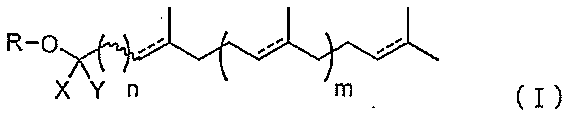




モノO-(3,7,11-トリメチルドデカ-2,6,10-トリエノイル)グリセロール
グリセリン酸3,7,11-トリメチルドデカ-2,6,10-トリエニル
・n=0、m=2の化合物
モノO-(3,7,11,15-テトラメチルヘキサデカ-2,6,10,14-テトラエノイル)グリセロール
モノO-(3,7,11,15-テトラメチルヘキサデカ-2,6,10,14-テトラエノイル)エリスリトール
モノO-(3,7,11,15-テトラメチルヘキサデカ-2,6,10,14-テトラエノイル)ペンタエリスリトール
モノO-(3,7,11,15-テトラメチルヘキサデカ-2,6,10,14-テトラエノイル)ジグリセロール
グリセリン酸3,7,11,15-テトラメチルヘキサデカ-2,6,10,14-テトラエニル
・n=1、m=1の化合物
モノO-(4,8,12-トリメチルトリデカ-3,7,11-トリエノイル)グリセロール
グリセリン酸4,8,12-トリメチルトリデカ-3,7,11-トリエニル
・n=1、m=2の化合物
モノO-(4,8,12,16-テトラメチルヘプタデカ-3,7,11,15-テトラエノイル)グリセロール
モノO-(4,8,12,16-テトラメチルヘプタデカ-3,7,11,15-テトラエノイル)エリスリトール
モノO-(4,8,12,16-テトラメチルヘプタデカ-3,7,11,15-テトラエノイル)ペンタエリスリトール
モノO-(4,8,12,16-テトラメチルヘプタデカ-3,7,11,15-テトラエノイル)ジグリセロール
グリセリン酸4,8,12,16-テトラメチルヘプタデカ-3,7,11,15-テトラエニル
・n=2、m=1の化合物
モノO-(5,9,13-トリメチルテトラデカ-4,8,12-トリエノイル)グリセロール
モノO-(5,9,13-トリメチルテトラデカ-4,8,12-トリエノイル)エリスリトール
モノO-(5,9,13-トリメチルテトラデカ-4,8,12-トリエノイル)ペンタエリスリトール
モノO-(5,9,13-トリメチルテトラデカ-4,8,12-トリエノイル)ジグリセロール
グリセリン酸5,9,13-トリメチルテトラデカ-4,8,12-トリエニル
・n=2、m=2の化合物
モノO-(5,9,13,17-テトラメチルオクタデカ-4,8,12,16-テトラエノイル)グリセロール
モノO-(5,9,13,17-テトラメチルオクタデカ-4,8,12,16-テトラエノイル)エリスリトール
モノO-(5,9,13,17-テトラメチルオクタデカ-4,8,12,16-テトラエノイル)ペンタエリスリトール
モノO-(5,9,13,17-テトラメチルオクタデカ-4,8,12,16-テトラエノイル)ジグリセロール
グリセリン酸5,9,13,17-テトラメチルオクタデカ-4,8,12,16-テトラエニル
モノO-(3,7,11-トリメチルドデカ-2,6,10-トリエニル)グリセロール
モノO-(3,7,11-トリメチルドデカ-2,6,10-トリエニル)エリスリトール
モノO-(3,7,11-トリメチルドデカ-2,6,10-トリエニル)ペンタエリスリトール
1-O-(3,7,11-トリメチルドデカ-2,6,10-トリエニル)-D-キシロピラノシド
・n=0、m=2の化合物
モノO-(3,7,11,15-テトラメチルヘキサデカ-2,6,10,14-テトラエニル)グリセロール
モノO-(3,7,11,15-テトラメチルヘキサデカ-2,6,10,14-テトラエニル)エリスリトール
モノO-(3,7,11,15-テトラメチルヘキサデカ-2,6,10,14-テトラエニル)ペンタエリスリトール
1-O-(3,7,11,15-テトラメチルヘキサデカ-2,6,10,14-テトラエニル)-D-キシロピラノシド
モノO-(3,7,11,15-テトラメチルヘキサデカ-2,6,10,14-テトラエニル)ジグリセロール
・n=1、m=1の化合物
モノO-(4,8,12-トリメチルトリデカ-3,7,11-トリエニル)グリセロール
モノO-(4,8,12-トリメチルトリデカ-3,7,11-トリエニル)エリスリトール
モノO-(4,8,12-トリメチルトリデカ-3,7,11-トリエニル)ペンタエリスリトール
1-O-(4,8,12-トリメチルトリデカ-3,7,11-トリエニル)-D-キシロピラノシド
・n=1、m=2の化合物
モノO-(4,8,12,16-テトラメチルヘプタデカ-3,7,11,15-テトラエニル)グリセロール
モノO-(4,8,12,16-テトラメチルヘプタデカ-3,7,11,15-テトラエニル)エリスリトール
モノO-(4,8,12,16-テトラメチルヘプタデカ-3,7,11,15-テトラエノイル)ペンタエリスリトール
1-O-(4,8,12,16-テトラメチルヘプタデカ-3,7,11,15-テトラエニル)-D-キシロピラノシド
・n=2、m=1の化合物
モノO-(5,9,13-トリメチルテトラデカ-4,8,12-トリエニル)グリセロール
モノO-(5,9,13-トリメチルテトラデカ-4,8,12-トリエニル)エリスリトール
モノO-(5,9,13-トリメチルテトラデカ-4,8,12-トリエニル)ペンタエリスリトール
1-O-(5,9,13-トリメチルテトラデカ-4,8,12-トリエニル)-D-キシロピラノシド
モノO-(5,9,13-トリメチルテトラデカ-4,8,12-トリエニル)ジグリセロール
・n=2、m=2の化合物
モノO-(5,9,13,17-テトラメチルオクタデカ-4,8,12,16-テトラエニル)グリセロール
モノO-(5,9,13,17-テトラメチルオクタデカ-4,8,12,16-テトラエニル)エリスリトール
モノO-(5,9,13,17-テトラメチルオクタデカ-4,8,12,16-テトラエニル)ペンタエリスリトール
1-O-(5,9,13,17-テトラメチルオクタデカ-4,8,12,16-テトラエニル)-D-キシロピラノシド
モノO-(5,9,13,17-テトラメチルオクタデカ-4,8,12,16-テトラエニル)ジグリセロール


モノO-(5,9,13,17-テトラメチルオクタデカ-4-エノイル)グリセロール
モノO-(5,9,13,17-テトラメチルオクタデカ-4-エノイル)エリスリトール
モノO-(5,9,13,17-テトラメチルオクタデカ-4-エノイル)ペンタエリスリトール
モノO-(5,9,13,17-テトラメチルオクタデカ-4-エノイル)ジグリセロール

1-O-(3,7,11,15-テトラメチルヘキサデシル)-β-D-キシロピラノシド
モノO-(5,9,13,17-テトラメチルオクタデカノイル)グリセロール
モノO-(5,9,13,17-テトラメチルオクタデカノイル)エリスリトール
モノO-(5,9,13,17-テトラメチルオクタデカノイル)ペンタエリスリトール
1-O-(5,9,13,17-テトラメチルオクタデカニル)-β-D-キシロピラノシド
本発明に係る癒着防止剤に用いる両親媒性化合物は、液晶化合物であり、水性媒体中で非ラメラ液晶を形成することができる。本発明に係る癒着防止効果は、両親媒性化合物によって形成された非ラメラ液晶が組織表面を被覆(コーティング)することによって、もたらされるものである。なお本明細書中、両親媒性化合物を含む水性媒体を「両親媒性化合物/水系」と表すことがある。
両親媒性化合物が水性媒体中で液晶を形成するか否か、また、キュービック液晶であればI型かII型かを簡便に判定する方法として、ペネトレイション法が利用できる。少量(数mg)の両親媒性化合物を顕微鏡用スライドグラス上に置き、カバーグラスでそっと圧力を加え、スライドグラスとカバーグラスの間の間隙に10ミクロン程度の厚さの両親媒性化合物薄膜(直径1~5mm位)を形成する。スライドグラスとカバーグラス間隙側面から毛管現象で水又は水性媒体を加えると、水は両親媒性化合物薄膜の外縁部から除々に内部に浸透し、両親媒性化合物薄膜/水界面から両親媒性化合物薄膜内部に向かって水含有量の勾配が形成される。これを偏光顕微鏡で観察すると、両親媒性化合物/水系の濃度に依存してどのような相ができるのかを判定でき、水領域と接して水領域と同じ等方性のテクスチャーを与える領域(キュービック液晶)、明るいテクスチャーを与える領域(ラメラ液晶)、及び等方性のテクスチャーを与える領域(ドライの両親媒性化合物)を観察することにより、この両親媒性化合物がキュービック液晶を形成することを確認できる。また、キュービック液晶が過剰の水と両親媒性化合物の界面部に安定に形成されていることからII型であることを判断できる。
液晶形成を確認するために、エックス線小角散乱(SAXS)法により、液晶構造が立方格子を有することを調べてもよい。まず、所定の濃度の両親媒性化合物/水系サンプルを例えば石英製エックス線キャピラリーチューブに入れた後、キャピラリーを酸素バーナーで封じ、SAXS測定に供すればよい。



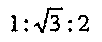
本発明で用いる上記両親媒性化合物は、後述の実施例の記載を参照して合成することができる。あるいは、一般式(III)で表される両親媒性化合物は、例えば、国際公開WO 2011/078383に記載された合成法に従って合成することができる。さらに、一般式(IV)で表される両親媒性化合物は、例えば、国際公開WO 2006/043705に記載された合成法に従って合成することができる。

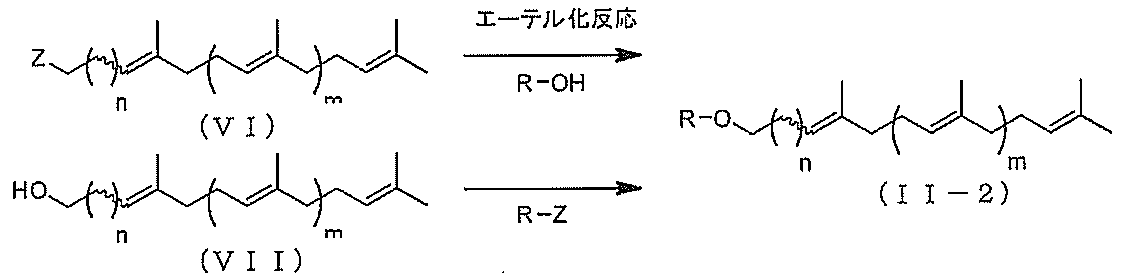

本発明に係る癒着防止剤は、上記両親媒性化合物を有効量で含む。本発明に係る癒着防止剤に含まれる上記両親媒性化合物の濃度は、限定するものではないが、例えば、癒着防止剤の総量に対して1~80%、好ましくは10~50%であってよい。
本発明に係る癒着防止剤は、癒着の恐れがある組織に適用することにより、組織の癒着を防止することができる。本発明において「癒着防止効果」とは、組織が他の組織又は臓器と癒着して剥離困難になる状態を防止し、癒着を完全に又は低レベルに抑える効果をいう。
・グレード1 軽い牽引で剥離可能な癒着
・グレード2 強い牽引で剥離可能な癒着(軽い牽引では剥離できない)
・グレード3 剥離により組織損傷を伴う(強い脂肪の癒着)が他臓器との癒着なし
・グレード4 他臓器との癒着が認められ、剥離不可能を含む剥離困難な状態にある
無処置群と比較して癒着評価スコアが低い場合、癒着防止効果が認められると判断することができる。すなわち、本発明において「癒着防止」とは、無処置群と比較して癒着の頻度及び/又は程度を低減することを指す。
本発明は、本発明に係る癒着防止剤を、患者の患部、具体的には癒着のおそれがある部位、具体的には組織修復が起こると想定される部位(例えば体内の炎症部位又は損傷部位)に有効量で適用することを含む、患部における組織の癒着を防止する方法も提供する。そのような癒着のおそれがある部位の具体例としては、体内の外因性又は内因性の炎症部位、手術における切開部位などの創傷部位、手術中に触れるなどの人為的処理によって組織表面が損傷した部位などが挙げられる。本発明において「損傷部位」とは、手術、外傷、疾患等により損傷を受けた組織又は臓器の部分をいう。癒着防止剤を適用する組織又は臓器の例としては、腹膜、小腸、大腸、直腸、胃、十二指腸、盲腸、肝臓、子宮、卵管、リンパ管、心臓、心膜、肺、脳、卵巣、腱等が挙げられるが、これらに限定するものではない。典型例では、本発明に係る癒着防止剤は、手術の際、切開部、切開部周囲、又は切開部を有する臓器全体に適用される。本発明に係る癒着防止剤は、創傷部位や炎症部位などに接触する体内の部位に適用してもよい。
本発明は、本発明に係る両親媒性化合物のうち、一般式(II)で表される上記両親媒性化合物(多価不飽和脂肪酸エステル)それ自体にも関する。

モノO-(5,9,13,17-テトラメチルオクタデカ-4,8,12,16-テトラエノイル)グリセロール、
モノO-(5,9,13,17-テトラメチルオクタデカ-4,8,12,16-テトラエノイル)エリスリトール、
モノO-(5,9,13,17-テトラメチルオクタデカ-4,8,12,16-テトラエノイル)ペンタエリスリトール、
モノO-(5,9,13-トリメチルテトラデカ-4,8,12-トリエニル)エリスリトール、
モノO-(5,9,13-トリメチルテトラデカ-4,8,12-トリエニル)ペンタエリスリトール、
モノO-(3,7,11,15-テトラメチルヘキサデカ-2,6,10,14-テトラエノイル)ペンタエリスリトール、
モノO-(3,7,11,15-テトラメチルヘキサデカ-2,6,10,14-テトラエニル)エリスリトール、
モノO-(5,9,13,17-テトラメチルオクタデカ-4,8,12,16-テトラエニル)エリスリトール、及び
モノO-(5,9,13,17-テトラメチルオクタデカ-4,8,12,16-テトラエニル)ペンタエリスリトール。

粘度:0.26Pa・s(せん断速度92 1/s)
合成されたモノO-(5,9,13-トリメチルテトラデカ-4,8,12-トリエノイル)グリセロールを以下、ファルネシル酢酸グリセリルとも称する。

粘度:4.7Pa・s(せん断速度92 1/s)
合成されたモノO-(5,9,13-トリメチルテトラデカ-4,8,12-トリエノイル)エリスリトールは低い粘度を示した。
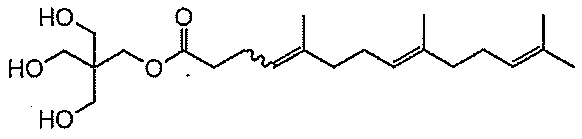
粘度:2.5Pa・s(せん断速度92 1/s)
合成されたモノO-(5,9,13-トリメチルテトラデカ-4,8,12-トリエノイル)ペンタエリスリトールは低い粘度を示した。
(1)5,9,13,17-テトラメチルオクタデカ-4,8,12,16-テトラエン酸メチル(ゲラニルゲラニル酢酸メチル)の合成
窒素雰囲気下、3,7,11,15-テトラメチルヘキサデカ-1,6,10,14-テトラエン-3-オール(ゲラニルリナロール)58.1g(200mmol)、オルト酢酸トリメチル19mL(0.15mol)の溶液に、135℃でオルト酢酸トリメチル53mL(0.42mol)とn-ヘキサン酸5.0mL(40mmol)の溶液を8時間かけて滴下した。同一温度で6時間撹拌した後、さらにオルト酢酸トリメチル5.3mL(42mmol)とn-ヘキサン酸0.5mL(4mmol)の溶液を滴下し、さらに同一温度で2時間撹拌した。得られた反応溶液を酢酸エチル/ヘキサン混合溶媒(3:1,300mL)で希釈し、飽和重曹水(2回)、飽和食塩水で洗浄した後、硫酸マグネシウムで乾燥した。濾過後濃縮することによって、表題の化合物67.24gを粗生成物の液体として得た。本粗生成物をそのまま次の反応に用いた。

粘度:0.37Pa・s(せん断速度92 1/s)
合成されたモノO-(5,9,13,17-テトラメチルオクタデカ-4,8,12,16-テトラエノイル)グリセロールは非常に低い粘度を示した。

粘度:5.8Pa・s(せん断速度92 1/s)
合成されたモノO-(5,9,13,17-テトラメチルオクタデカ-4,8,12,16-テトラエノイル)エリスリトールは低い粘度を示した。
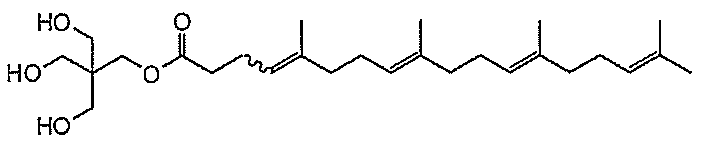
粘度:3.3Pa・s(せん断速度92 1/s)
合成されたモノO-(5,9,13,17-テトラメチルオクタデカ-4,8,12,16-テトラエノイル)ペンタエリスリトールは低い粘度を示した。

粘度:2.6Pa・s(せん断速度92 1/s)
合成されたモノO-(5,9,13,17-テトラメチルオクタデカ-4,8,12,16-テトラエノイル)ジグリセロールは低い粘度を示した。

合成されたモノO-(5,9,13-トリメチルテトラデカノイル)グリセロールを以下、飽和C17グリセリンエステルとも称する。
実施例1で得られたモノO-(5,9,13-トリメチルテトラデカ-4,8,12-トリエノイル)グリセロールの濃度が50質量%(水過剰条件)となるように、モノO-(5,9,13-トリメチルテトラデカ-4,8,12-トリエノイル)グリセロールと純水を混合デバイス中に加え、両者を室温(25℃)で混合操作を行い、24時間静置することで均一に混合し、分離した水分を除いた。その結果、外観上は白濁~無色透明なゲル状組成物であるモノO-(5,9,13-トリメチルテトラデカ-4,8,12-トリエノイル)グリセロール/水系サンプルを得た(以下、ゲル状サンプルと呼ぶ)。

実施例4で得られたモノO-(5,9,13,17-テトラメチルオクタデカ-4,8,12,16-テトラエノイル)グリセロールと水を実施例9と同様の手順に従って均一に混合し、外観上は白濁したゲル状組成物であるモノO-(5,9,13,17-テトラメチルオクタデカ-4,8,12,16-テトラエノイル)グリセロール/水系サンプルを得た。このゲル状サンプルについて実施例9と同様にしてSAXS測定を行ったところ、少なくとも3本の散乱ピークが観測され、ピークの比は逆ヘキサゴナル液晶に特有の比:
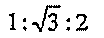
実施例5で得られたモノO-(5,9,13,17-テトラメチルオクタデカ-4,8,12,16-テトラエノイル)エリスリトールと水を実施例9と同様の手順に従って均一に混合し、外観上は無色透明なゲル状組成物であるモノO-(5,9,13,17-テトラメチルオクタデカ-4,8,12,16-テトラエノイル)エリスリトール/水系サンプルを得た。このゲル状サンプルについて実施例9と同様にしてSAXS測定を行ったところ、少なくとも6本の散乱ピークが観測され、ピークの比は結晶学的空間群Pn3mに属するキュービック液晶に特有の比:

実施例6で得られたモノO-(5,9,13,17-テトラメチルオクタデカ-4,8,12,16-テトラエノイル)ペンタエリスリトールと水を実施例9と同様の手順に従って均一に混合し、外観上は白濁したゲル状組成物であるモノO-(5,9,13,17-テトラメチルオクタデカ-4,8,12,16-テトラエノイル)ペンタエリスリトール/水系サンプルを得た。このゲル状サンプルについて実施例9と同様にしてSAXS測定を行ったところ、少なくとも6本の散乱ピークが観測され、ピークの比は結晶学的空間群Pn3mに属するキュービック液晶に特有の比:

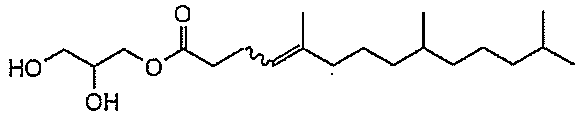
粘度:0.48Pa・s(せん断速度92 1/s)
合成されたモノO-(5,9,13-トリメチルテトラデカ-4-エノイル)グリセロールを以下、C17グリセリンエステルとも称する。

合成されたモノO-(5,9,13,17-テトラメチルオクタデカ-4-エノイル)ジグリセロールを以下、C22ジグリセリンエステルとも称する。

なお、合成された1-O-(3,7,11,15-テトラメチルヘキサデシル)-β-D-キシロピラノシドを以下、β-XPとも称する。

合成されたモノO-(5,9,13,17-テトラメチルオクタデカノイル)エリスリトールを以下、飽和C22エリスリトールエステルとも称する。
(1)試験サンプル1~5: 脂質/水/0.65csジメチコン
表1に示す量に従い、上記実施例において合成した化合物(脂質)を蒸留水と混合した後、0.65csジメチコン(Dow Corning Q7-9180 Silocon Fluid 0.65CST)を添加して撹拌することにより、塗布剤として試験サンプル1~5を調製した。

表2に示す量に従い、上記実施例において合成した化合物(脂質)にプルロニック(ユニループ70DP-950B、日油株式会社)及びエタノール(EtOH)を添加し、スターラーチップで1時間撹拌した後、蒸留水を添加してさらに1時間撹拌することによって、塗布剤として試験サンプル7~12を調製した。

(1)試験サンプル17、18、22、24、25: 脂質/プルロニック/EtOH/水
表3に示す量に従い、上記実施例において合成した化合物(脂質)にプルロニック(ユニループ70DP-950B、日油株式会社)及びエタノールを添加し、スターラーチップで1時間撹拌した後、蒸留水を添加してさらに1時間撹拌した。得られた各溶液をそれぞれ2~4mLずつ、市販の手動式簡易スプレーボトルに充填することによりポンプスプレー剤として試験サンプル17、18、22、24及び25を調製した。
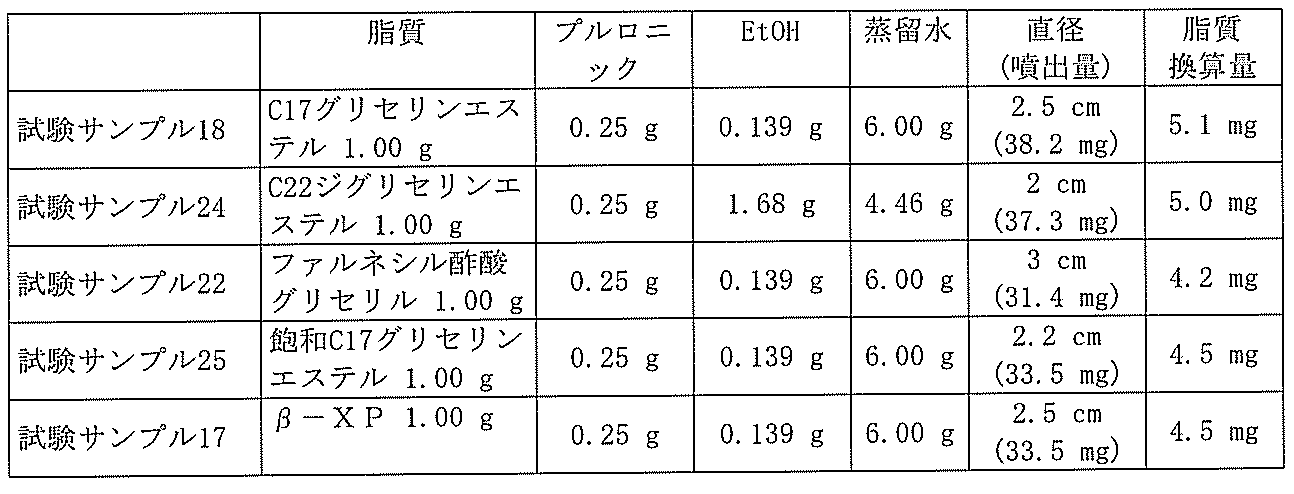
表4に示す量に従い、上記実施例において合成した化合物(脂質)にプルロニック(ユニループ70DP-950B、日油株式会社)及びエタノールを添加し、スターラーチップで1時間撹拌した後、予め調製したヒアルロン酸ナトリウム(ヒアルロン酸FCH(FCH-80)、キッコーマンバイオケミファ株式会社)の水溶液を添加してさらに1時間撹拌した。得られた各溶液をそれぞれ2~4mLずつ、市販の手動式簡易スプレーボトルに充填することによりポンプスプレー剤として試験サンプル19及び20を調製した。
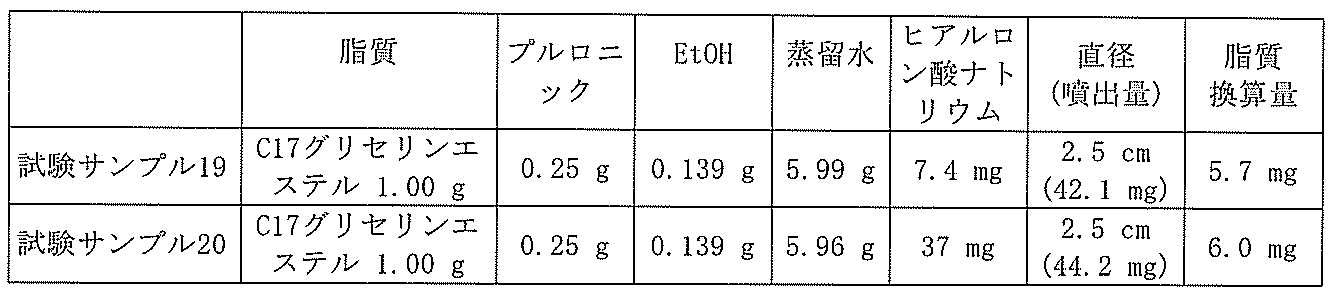
表5に示す量に従い、上記実施例において合成した化合物(脂質)に0.65csジメチコン(Dow Corning Q7-9180 Silocon Fluid 0.65CST)を添加して撹拌した。得られた各溶液をそれぞれ2~4mLずつ、市販の手動式簡易スプレーボトルに充填することによりポンプスプレー剤として試験サンプル13、14、21、23を調製した。

生理食塩水(大塚生食注、株式会社大塚製薬工場)2~4mLを市販の手動式簡易スプレーボトルに充填することにより、生理食塩水のポンプスプレー剤を調製した。
ヒアルロン酸ナトリウム(ヒアルロン酸FCH(FCH-80)、キッコーマンバイオケミファ株式会社)50mgを蒸留水9.95gで溶解し、2~4mLの溶液を市販の手動式簡易スプレーボトルに充填することにより、0.5%ヒアルロン酸ナトリウム水溶液のポンプスプレー剤を調製した。
(1)C17グリセリンエステル/n-ブタン=5:95
正立用定量バルブ及びストレートボタン(孔径0.9mm)を備えた容器に、C17グリセリンエステル 1.2g、液化石油ガス、0.15MPa、20℃)22.8gを充填してエアゾール剤を調製した。このエアゾール剤の内圧(25℃)は0.17MPaであった。
正立用定量バルブ及びストレートボタン(孔径0.9mm)を備えた容器に、C17グリセリンエステル 2.4g、液化石油ガス(0.15MPa、20℃)21.6gを充填してエアゾール剤を調製した。このエアゾール剤の内圧(25℃)は0.23MPaであった。
10週齢雄Wistarラットの上腹部壁側腹膜及び肝臓に対して、試験サンプル18を5回スプレーした。その結果、腹膜及び肝臓の組織表面がコーティングされたことが観察された。図5に試験サンプル18のスプレー前後の腹膜(図5A及びB)並びに肝臓(図5C及びD)の写真を示す。
(1)評価方法
本実施例では10週齢雄Wistarラットを用いて各試験サンプルの癒着防止効果を評価した。まず、ラットに対しペントバルビタールを用いて全身麻酔を施行し、仰臥位とし、約30mmの腹部正中切開で開腹した。左右上腹部壁側腹膜に約20mmの切開を加え、完全に止血した。5-0絹糸を用いて腹膜切開部を6針で連続縫合閉鎖した。
・グレード0 癒着なし
・グレード1 軽い牽引で剥離可能な癒着
・グレード2 強い牽引で剥離可能な癒着(軽い牽引では剥離できない)
・グレード3 剥離により組織損傷を伴う(強い脂肪の癒着)が他臓器との癒着なし
・グレード4 他臓器との癒着が認められ、剥離不可能を含む剥離困難な状態にある
なお、ラット無処置群(10検体)での癒着評価の平均スコアは平均±標準偏差2.90±1.10であった。
実施例17で調製した試験サンプル1~12の溶液から、脂質換算量で10mgとなる量をピペッターで測りとり、縫合部に滴下後、ラテックス製手袋をはめた指で直径2.5~3cmの略円形を描くように広げて塗布することにより、試験サンプル1~12を縫合部に適用した。
実施例18(1)~(3)で調製した各試験サンプル(ポンプスプレー剤)について、縫合部まで約2cmの距離を離して、所定回数(1~3回のいずれか)をスプレーし、溶液が付着した範囲が縫合部を略円形に覆うように試験サンプルを適用した。
実施例19(1)及び(2)で調製した各試験サンプル(エアゾール剤)について、縫合部まで約10cmの距離を離して、所定回数(1~3回のいずれか)をスプレーし、腹膜右側の縫合部を覆うように試験サンプルを適用した。2分間そのままの状態で置き、続いて実施例18(4)で調製した生理食塩水を縫合部に十分にスプレーした後、5~10分間そのままの状態で置いてから、腹壁を2層で縫合閉鎖して手術を終了した。
GMO(リケマールXO-100L、理研ビタミン株式会社)1.00gに0.65csジメチコン(Dow Corning Q7-9180 Silocon Fluid 0.65CST)2.33gを添加して撹拌することによって溶液を調製した。
特表2008-528463公報の実施例14の記載に従って、GDO(4.30g)、SPC(レシノールS-10E、2.90g)、P80(1.80g)、エタノール(1.00g)を混合することによって、液晶前駆体組成物GDO/SPC/P80/EtOH=43:29:18:10を調製した。
実施例21(1)に示した方法を用い、試験サンプルの代わりに、セプラフィルム(科研製薬株式会社)を貼付して癒着防止効果を評価(ラット10検体)したところ、癒着評価の平均スコアは平均±標準偏差2.30±1.70であった。
実施例1、4、及び5で合成した化合物について、水を加えて調製したゲルの状態で粘度を測定した。具体的には、実施例9と同様の手順に従って均一に混合して得たゲル状サンプルについて、粘度・粘弾性測定装置(Gemini II、マルバーン社;コーンプレートφ25、コーン角度1°)を使用し、温度25℃でせん断粘度測定を行った。
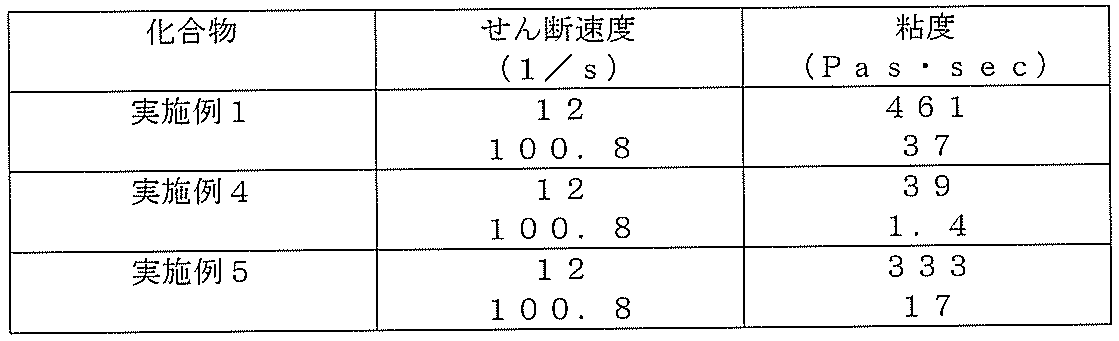




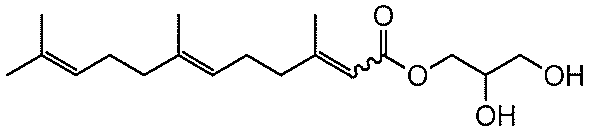
粘度:3.0Pa・s(せん断速度92 1/s)

粘度:0.20Pa・s(せん断速度92 1/s)


粘度:1.6Pa・s(せん断速度92 1/s)

粘度:0.23Pa・s(せん断速度92 1/s)
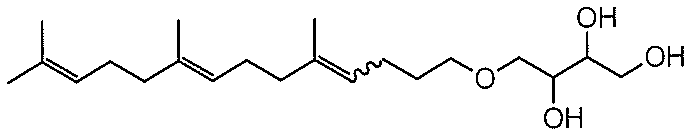
粘度:1.2Pa・s(せん断速度92 1/s)
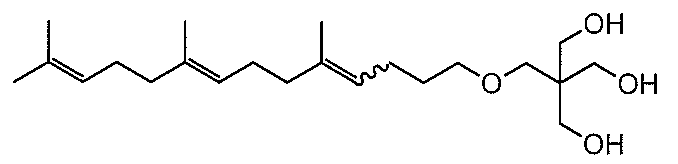
粘度:0.63Pa・s(せん断速度92 1/s)

粘度:0.37Pa・s(せん断速度92 1/s)
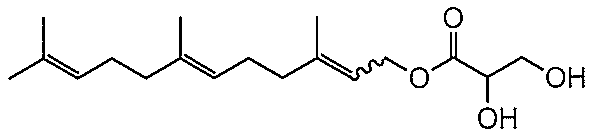

粘度:0.16Pa・s(せん断速度92 1/s)





粘度:3.8Pa・s(せん断速度92 1/s)


粘度:14Pa・s(せん断速度92 1/s)

粘度:0.26Pa・s(せん断速度92 1/s)

粘度:1.9Pa・s(せん断速度92 1/s)

粘度:2.9Pa・s(せん断速度92 1/s)


粘度:0.16Pa・s(せん断速度92 1/s)

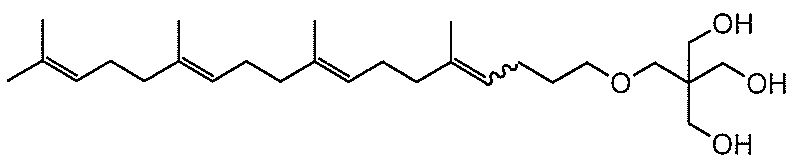
粘度:0.78Pa・s(せん断速度92 1/s)

粘度:1.4Pa・s(せん断速度92 1/s)
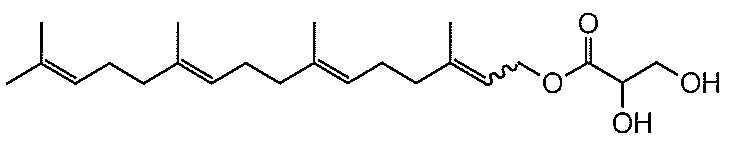
粘度:0.23Pa・s(せん断速度92 1/s)

粘度:0.21Pa・s(せん断速度92 1/s)
粘度:0.45Pa・s(せん断速度92 1/s)
合成されたモノO-(3,7,11-トリメチルドデカ-2-エノイル)グリセロールを以下、C15グリセリンエステルとも称する。

粘度:10.6Pa・s(せん断速度92 1/s)
合成されたモノO-(3,7,11,15-テトラメチルヘキサデカ-2-エノイル)ペンタエリスリトールを以下、C20ペンタエリスリトールエステルとも称する。
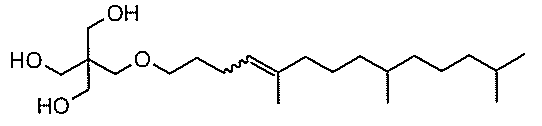
粘度:0.98Pa・s(せん断速度92 1/s)
合成されたモノO-(5,9,13-トリメチルテトラデカ-4-エニル)ペンタエリスリトールを以下、C17ペンタエリスリトールエーテルとも称する。

合成されたモノO-(3,7,11,15-テトラメチルヘキサデカ-2-エニル)エリスリトールを以下、C20エリスリトールエーテルとも称する。

粘度:0.44Pa・s(せん断速度92 1/s)
合成されたモノO-(5,9,13,17-テトラメチルオクタデカ-4-エニル)グリセロールを以下、C22グリセリンエーテルとも称する。
(1)液晶ゲル
実施例32、33、43、45、49及び50で合成した化合物について、それぞれの化合物と水を実施例9と同様の手順に従って均一に混合し、ゲル状の外観を有するそれぞれの化合物/水系サンプルを得た。これらゲル状サンプルについて実施例9と同様にしてSAXS測定を行った。

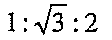
C17グリセリンエステルに、プルロニック(ユニループ70DP-950B、日油株式会社)及びエタノールを添加し、スターラーチップで1時間撹拌した後、蒸留水を添加してさらに1時間撹拌することにより、o/w分散剤を調製した。なおC17グリセリンエステル:プルロニック:エタノール:蒸留水の混合比(重量比)は13.5:3.4:1.9:80.2とした。
実施例45及び50で合成した化合物並びに実施例13で合成したC17グリセリンエステルについて、水を加えて調製したゲルの状態で粘度を測定した。具体的には、実施例9と同様の手順に従って均一に混合して得たゲル状サンプルについて、粘度・粘弾性測定装置(Gemini II、マルバーン社;コーンプレートφ25、コーン角度1°)を使用し、温度25℃でせん断粘度測定を行った。
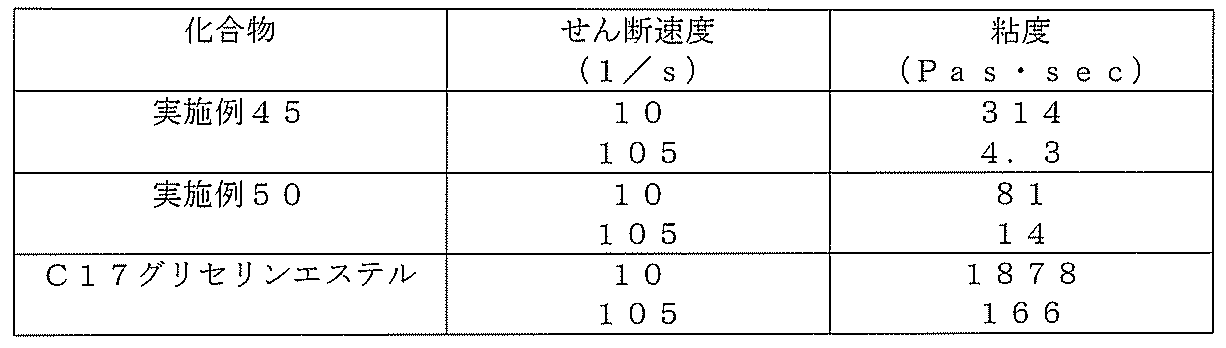
エタノールを用いないこと以外は実施例18(1)と同様の手順により、脂質としてC17グリセリンエステルを使用したo/w分散剤をポンプスプレー剤として調製した(o/w分散剤1)。C17グリセリンエステル:プルロニック:蒸留水の混合比(重量比)を6:2:92とした。
実施例61で調製したo/w分散剤1をポンプスプレー剤として用い、実施例21と同様にしてラット腹膜縫合部に適用し、癒着評価を行った。ラット無処置群についても実施例21と同様に癒着評価を行った。実施例61で調製したo/w分散剤2についても同様に実施例21に従って癒着評価を行った。なおo/w分散剤1は9検体、o/w分散剤2は12検体に適用し、評価した。
試験群では、実施例18で調製した試験サンプル18及び試験サンプル13をそれぞれ用いて、実施例18(3)と同様にして縫合部への適用を行った。無処置群では、切開創をつけるのみで縫合部への適用は行わなかった。さらに、比較群では、比較例3と同様にしてセプラフィルムを適用した。
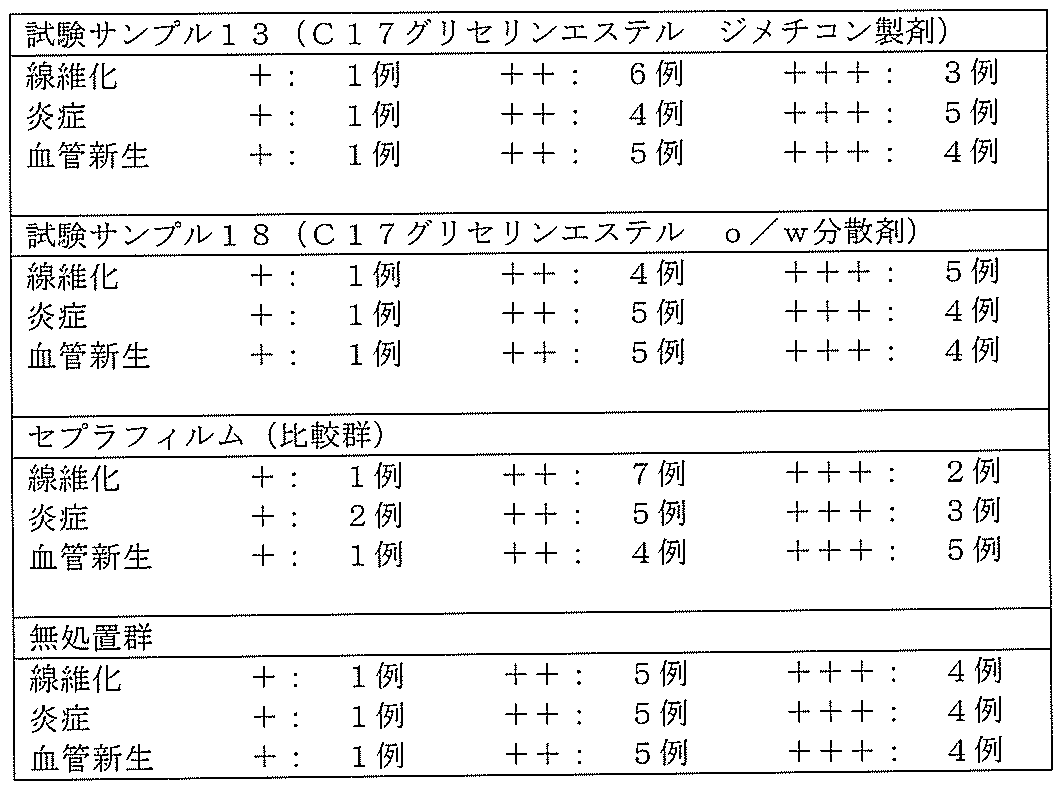
本発明に係る脂質化合物(癒着防止剤)は水とともに非ラメラ液晶の被膜を形成する。本発明に係る癒着防止剤により患部で形成された液晶被膜は、生体接着性により、流れ落ちずに患部に一定期間留まると思われた。非ラメラ液晶が癒着防止効果を発揮する上で、その生体接着性は重要である。
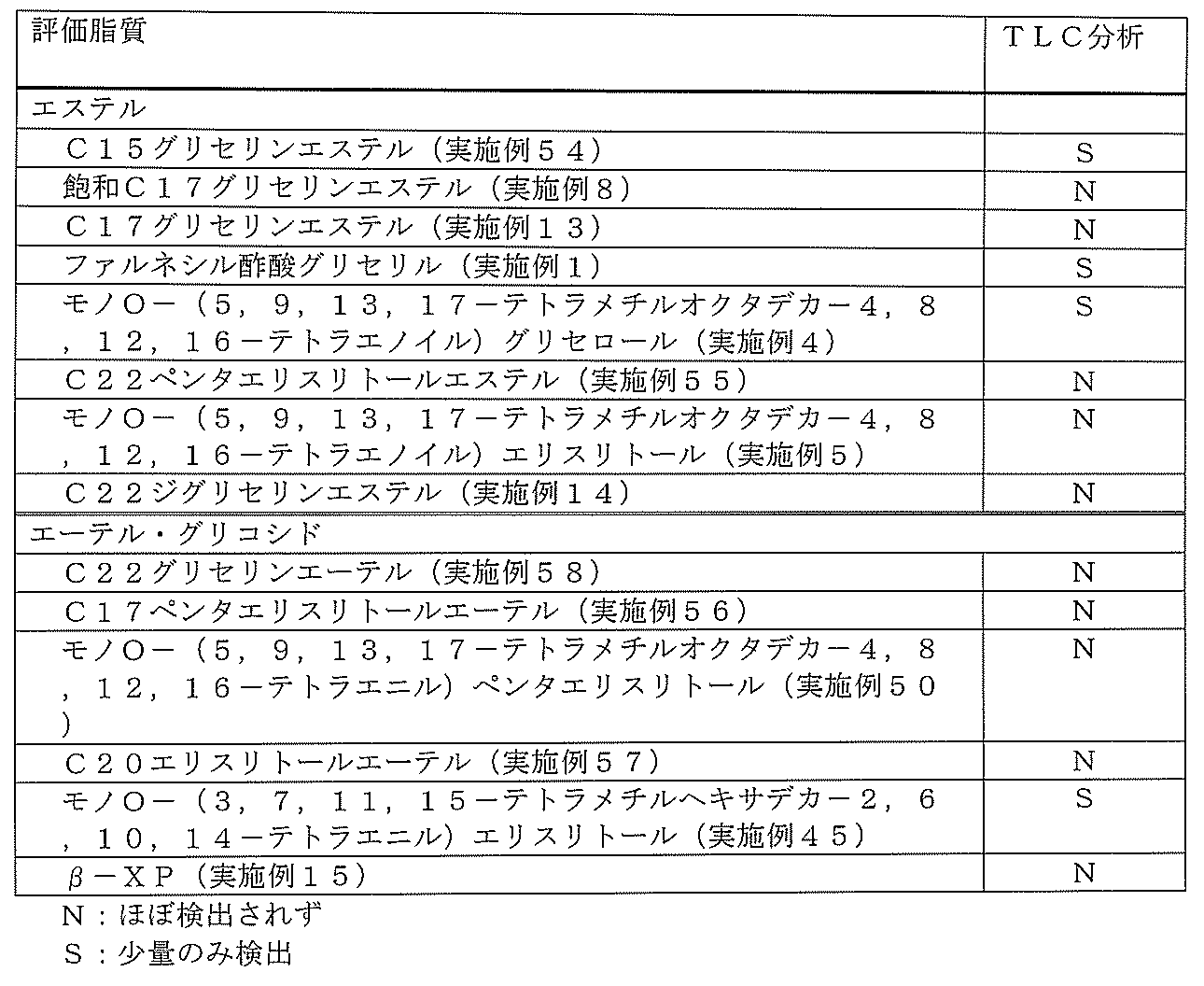
Claims (14)
- 下記一般式(I)で表される両親媒性化合物を含有する、癒着防止剤。

は一重結合又は2重結合を表し、Rは2つ以上の水酸基を有する親水性基を表す)
- 前記式中、nは1又は2を表す、請求項1に記載の癒着防止剤。
- 前記式中のRがグリセロール、エリスリトール、ペンタエリスリトール、ジグリセロール、グリセリン酸、トリグリセロール、キシロース、ソルビトール、アスコルビン酸、グルコース、ガラクトース、マンノース、ジペンタエリスリトール、マルトース、マンニトール、及びキシリトールからなる群から選択されるいずれか1つから1つの水酸基が除かれた親水性基を表す、請求項1又は2に記載の癒着防止剤。
- 前記式中のRがグリセロール、エリスリトール、ジグリセロール、又はキシロースから1つの水酸基が除かれた親水性基を表す、請求項1~3のいずれか1項に記載の癒着防止剤。
- 前記両親媒性化合物が、以下のいずれかである、請求項1~4のいずれか1項に記載の癒着防止剤:
モノO-(5,9,13-トリメチルテトラデカ-4-エノイル)グリセロール、
モノO-(5,9,13,17-テトラメチルオクタデカ-4-エノイル)ジグリセロール、
モノO-(5,9,13-トリメチルテトラデカノイル)グリセロール、
モノO-(5,9,13,17-テトラメチルオクタデカノイル)エリスリトール、
1-O-(3,7,11,15-テトラメチルヘキサデシル)-β-D-キシロピラノシド、及び
モノO-(5,9,13-トリメチルテトラデカ-4,8,12-トリエノイル)グリセロール。 - 製薬上許容される担体をさらに含む、請求項1~5のいずれか1項に記載の癒着防止剤。
- 前記担体が液体担体及び/又はガス担体である、請求項6に記載の癒着防止剤。
- 液体担体が、シリコーンオイル、アルコール及び水性媒体からなる群から選択される少なくとも1つを含む、請求項7に記載の癒着防止剤。
- 製薬上許容される界面活性剤をさらに含む、請求項1~8のいずれか1項に記載の癒着防止剤。
- ヒアルロン酸又はその塩を含む、請求項1~9のいずれか1項に記載の癒着防止剤。
- 下記一般式(II)で表される両親媒性化合物又はその塩。

- 前記式中、nは1又は2を表し、mは2を表す、請求項11に記載の化合物又はその塩。
- 前記化合物が以下のいずれかの化合物である、請求項11に記載の化合物又はその塩。
モノO-(5,9,13,17-テトラメチルオクタデカ-4,8,12,16-テトラエノイル)グリセロール、
モノO-(5,9,13,17-テトラメチルオクタデカ-4,8,12,16-テトラエノイル)エリスリトール、
モノO-(5,9,13,17-テトラメチルオクタデカ-4,8,12,16-テトラエノイル)ペンタエリスリトール、
モノO-(5,9,13-トリメチルテトラデカ-4,8,12-トリエニル)エリスリトール、
モノO-(5,9,13-トリメチルテトラデカ-4,8,12-トリエニル)ペンタエリスリトール、
モノO-(3,7,11,15-テトラメチルヘキサデカ-2,6,10,14-テトラエノイル)ペンタエリスリトール、
モノO-(3,7,11,15-テトラメチルヘキサデカ-2,6,10,14-テトラエニル)エリスリトール、
モノO-(5,9,13,17-テトラメチルオクタデカ-4,8,12,16-テトラエニル)エリスリトール、及び
モノO-(5,9,13,17-テトラメチルオクタデカ-4,8,12,16-テトラエニル)ペンタエリスリトール - 請求項1~10のいずれか1項に記載の癒着防止剤を患部に適用することを含む、患部の癒着を防止する方法。
Priority Applications (4)
| Application Number | Priority Date | Filing Date | Title |
|---|---|---|---|
| US14/888,220 US20160067208A1 (en) | 2013-05-01 | 2014-04-02 | Adhesion preventing agent |
| CN201480038464.XA CN105358190A (zh) | 2013-05-01 | 2014-04-02 | 防粘剂 |
| EP14792315.5A EP2992910A4 (en) | 2013-05-01 | 2014-04-02 | DISABLED MEDIUM |
| JP2015514792A JP5867950B2 (ja) | 2013-05-01 | 2014-04-02 | 癒着防止剤 |
Applications Claiming Priority (2)
| Application Number | Priority Date | Filing Date | Title |
|---|---|---|---|
| JP2013096499 | 2013-05-01 | ||
| JP2013-096499 | 2013-05-01 |
Publications (1)
| Publication Number | Publication Date |
|---|---|
| WO2014178256A1 true WO2014178256A1 (ja) | 2014-11-06 |
Family
ID=51843391
Family Applications (1)
| Application Number | Title | Priority Date | Filing Date |
|---|---|---|---|
| PCT/JP2014/059785 Ceased WO2014178256A1 (ja) | 2013-05-01 | 2014-04-02 | 癒着防止剤 |
Country Status (5)
| Country | Link |
|---|---|
| US (1) | US20160067208A1 (ja) |
| EP (1) | EP2992910A4 (ja) |
| JP (2) | JP5867950B2 (ja) |
| CN (1) | CN105358190A (ja) |
| WO (1) | WO2014178256A1 (ja) |
Cited By (8)
| Publication number | Priority date | Publication date | Assignee | Title |
|---|---|---|---|---|
| WO2016121962A1 (ja) * | 2015-01-30 | 2016-08-04 | 株式会社ファルネックス | メラニン産生抑制剤 |
| WO2017104840A1 (ja) * | 2015-12-18 | 2017-06-22 | メディギア・インターナショナル株式会社 | 生体分解性腫瘍封止剤 |
| WO2018043731A1 (ja) * | 2016-09-05 | 2018-03-08 | 株式会社ファルネックス | 油分を含むエマルションを用いた癒着防止剤 |
| WO2019082991A1 (ja) | 2017-10-25 | 2019-05-02 | メディギア・インターナショナル株式会社 | 生体分解性及び生体代謝性の腫瘍封止剤 |
| WO2020050423A1 (ja) | 2018-09-07 | 2020-03-12 | 株式会社ファルネックス | 非ラメラ液晶形成脂質を含む外用剤 |
| WO2021153635A1 (ja) | 2020-01-27 | 2021-08-05 | 株式会社ファルネックス | 安全性の高い非ラメラ液晶形成性組成物 |
| JP2021181428A (ja) * | 2020-04-24 | 2021-11-25 | 博唯生技股▲フン▼有限公司Pro‐View Biotech Co., Ltd. | 癒着防止用アミノ酸修飾ポリマーおよびその用途 |
| WO2023008498A1 (ja) * | 2021-07-27 | 2023-02-02 | 株式会社ファルネックス | 非ラメラ液晶形成性組成物及びその用途 |
Families Citing this family (3)
| Publication number | Priority date | Publication date | Assignee | Title |
|---|---|---|---|---|
| KR101784863B1 (ko) * | 2015-09-03 | 2017-10-13 | (주)진우바이오 | 히알루론산염이 코팅된 고 기능성 봉합사의 제조방법 및 이로부터 제조된 고 기능성 봉합사 |
| CN111772802B (zh) * | 2020-06-19 | 2023-09-19 | 南昌大学第二附属医院 | 一种疏血型手套的制作方法 |
| KR102388506B1 (ko) * | 2021-06-14 | 2022-04-20 | (주)씨앤엘디 | 유착방지용 조성물 |
Citations (14)
| Publication number | Priority date | Publication date | Assignee | Title |
|---|---|---|---|---|
| JPS5129434A (en) | 1974-09-02 | 1976-03-12 | Kuraray Co | Ritsutaikiseisareta fuaruneshirusakusan mataha sonoesuterurui no seizohoho |
| JPS5129435A (en) | 1974-09-02 | 1976-03-12 | Kuraray Co | Ritsutaikiseisareta fuaruneshirusakusan mataha sonoesuteru no seizohoho |
| JPS5129436A (en) | 1974-09-02 | 1976-03-12 | Kuraray Co | Deruta 4 *deruta 88 toransufuaruneshirusakusan mataha sonoesuterurui no seizoho |
| JPS5129431A (en) | 1974-09-02 | 1976-03-12 | Kuraray Co | Ritsutaikiseisareta fuaruneshirusakusan mataha sonoesuterurui no seizoho |
| JPS5134108A (en) | 1974-09-02 | 1976-03-23 | Kuraray Co | Deruta 4 *deruta 88 toransufuaruneshirusakusan mataha sonoesuterurui no seizohoho |
| JPS6028945A (ja) * | 1983-07-25 | 1985-02-14 | Kao Corp | テルペンアルコ−ルのグリセリルエ−テル及びこれを含有する化粧料 |
| JPS6028946A (ja) * | 1983-07-28 | 1985-02-14 | Kao Corp | テルペンアルコ−ルのジグリセリンアルキルエ−テル及びこれを含有する化粧料 |
| JP2004059470A (ja) * | 2002-07-26 | 2004-02-26 | Kanebo Ltd | 養毛料 |
| WO2005087289A1 (ja) | 2004-03-15 | 2005-09-22 | Terumo Kabushiki Kaisha | 癒着防止材 |
| WO2006043705A1 (ja) | 2004-10-19 | 2006-04-27 | National Institute Of Advanced Industrial Scienceand Technology | Ii型キュービック液晶組成物 |
| WO2006077362A1 (en) | 2005-01-21 | 2006-07-27 | Camurus Ab | Pharmaceutical lipid compositions |
| WO2010119994A1 (ja) | 2009-04-17 | 2010-10-21 | 帝人株式会社 | 多糖類誘導体およびそのハイドロゲル |
| WO2011078383A1 (ja) | 2009-12-25 | 2011-06-30 | 株式会社サイトパスファインダー | 低粘度液晶化合物 |
| JP2013096499A (ja) | 2011-10-31 | 2013-05-20 | Air Water Safety Service Inc | ガス供給ソケット |
Family Cites Families (3)
| Publication number | Priority date | Publication date | Assignee | Title |
|---|---|---|---|---|
| JP4617477B2 (ja) * | 2004-10-19 | 2011-01-26 | 独立行政法人産業技術総合研究所 | Ii型キュービック液晶組成物にリソソーム酵素を包埋した複合体 |
| GB0625965D0 (en) * | 2006-12-23 | 2007-02-07 | Renovo Ltd | Medicaments for wound healing |
| JP2012017318A (ja) * | 2010-06-07 | 2012-01-26 | Nikko Chemical Co Ltd | 液晶及びそれを含有する皮膚外用剤 |
-
2014
- 2014-04-02 WO PCT/JP2014/059785 patent/WO2014178256A1/ja not_active Ceased
- 2014-04-02 US US14/888,220 patent/US20160067208A1/en not_active Abandoned
- 2014-04-02 EP EP14792315.5A patent/EP2992910A4/en not_active Withdrawn
- 2014-04-02 JP JP2015514792A patent/JP5867950B2/ja active Active
- 2014-04-02 CN CN201480038464.XA patent/CN105358190A/zh active Pending
-
2015
- 2015-12-28 JP JP2015255781A patent/JP2016040339A/ja not_active Ceased
Patent Citations (15)
| Publication number | Priority date | Publication date | Assignee | Title |
|---|---|---|---|---|
| JPS5129434A (en) | 1974-09-02 | 1976-03-12 | Kuraray Co | Ritsutaikiseisareta fuaruneshirusakusan mataha sonoesuterurui no seizohoho |
| JPS5129435A (en) | 1974-09-02 | 1976-03-12 | Kuraray Co | Ritsutaikiseisareta fuaruneshirusakusan mataha sonoesuteru no seizohoho |
| JPS5129436A (en) | 1974-09-02 | 1976-03-12 | Kuraray Co | Deruta 4 *deruta 88 toransufuaruneshirusakusan mataha sonoesuterurui no seizoho |
| JPS5129431A (en) | 1974-09-02 | 1976-03-12 | Kuraray Co | Ritsutaikiseisareta fuaruneshirusakusan mataha sonoesuterurui no seizoho |
| JPS5134108A (en) | 1974-09-02 | 1976-03-23 | Kuraray Co | Deruta 4 *deruta 88 toransufuaruneshirusakusan mataha sonoesuterurui no seizohoho |
| JPS6028945A (ja) * | 1983-07-25 | 1985-02-14 | Kao Corp | テルペンアルコ−ルのグリセリルエ−テル及びこれを含有する化粧料 |
| JPS6028946A (ja) * | 1983-07-28 | 1985-02-14 | Kao Corp | テルペンアルコ−ルのジグリセリンアルキルエ−テル及びこれを含有する化粧料 |
| JP2004059470A (ja) * | 2002-07-26 | 2004-02-26 | Kanebo Ltd | 養毛料 |
| WO2005087289A1 (ja) | 2004-03-15 | 2005-09-22 | Terumo Kabushiki Kaisha | 癒着防止材 |
| WO2006043705A1 (ja) | 2004-10-19 | 2006-04-27 | National Institute Of Advanced Industrial Scienceand Technology | Ii型キュービック液晶組成物 |
| WO2006077362A1 (en) | 2005-01-21 | 2006-07-27 | Camurus Ab | Pharmaceutical lipid compositions |
| JP2008528463A (ja) | 2005-01-21 | 2008-07-31 | カムルス エービー | 医薬脂質組成物 |
| WO2010119994A1 (ja) | 2009-04-17 | 2010-10-21 | 帝人株式会社 | 多糖類誘導体およびそのハイドロゲル |
| WO2011078383A1 (ja) | 2009-12-25 | 2011-06-30 | 株式会社サイトパスファインダー | 低粘度液晶化合物 |
| JP2013096499A (ja) | 2011-10-31 | 2013-05-20 | Air Water Safety Service Inc | ガス供給ソケット |
Non-Patent Citations (5)
| Title |
|---|
| APPENDINO, G. ET AL.: "Homologues and isomers of noladin ether, a putative novel endocannabinoid: interaction with rat cannabinoid CB1 receptors", BIOORGANIC & MEDICINAL CHEMISTRY LETTERS, vol. 13, no. 1, 2003, pages 43 - 46, XP055289918 * |
| KENJIRO HIRAI ET AL.: "Hi-Lamella Ekisho Shishitsu Spray ni yoru Yuchaku Boshi Koka no Kento", JOURNAL OF JAPAN SURGICAL SOCIETY, vol. 115, no. ISSUE, 5 March 2014 (2014-03-05), pages 346, XP008181386 * |
| LUGEMWA, FN. ET AL.: "Estradiol beta-D-xyloside, an efficient primer for heparan sulfate biosynthesis", JOURNAL OF BIOLOGICAL CHEMISTRY, vol. 266, no. 11, 1991, pages 6674 - 7, XP055289923 * |
| See also references of EP2992910A4 * |
| UNGUR, N. ET AL.: "Absolute stereochemistry of natural sesquiterpenoid diacylglycerols", TETRAHEDRON : ASYMMETRY, vol. 10, no. 7, 1999, pages 1263 - 1273, XP004164833 * |
Cited By (17)
| Publication number | Priority date | Publication date | Assignee | Title |
|---|---|---|---|---|
| WO2016121962A1 (ja) * | 2015-01-30 | 2016-08-04 | 株式会社ファルネックス | メラニン産生抑制剤 |
| WO2017104840A1 (ja) * | 2015-12-18 | 2017-06-22 | メディギア・インターナショナル株式会社 | 生体分解性腫瘍封止剤 |
| CN108472373A (zh) * | 2015-12-18 | 2018-08-31 | 医用装置国际株式会社 | 生物降解性肿瘤密封剂 |
| JPWO2017104840A1 (ja) * | 2015-12-18 | 2018-12-06 | メディギア・インターナショナル株式会社 | 生体分解性腫瘍封止剤 |
| EP3391906A4 (en) * | 2015-12-18 | 2019-08-28 | Medigear International Corporation | BIODEGRADABLE TUMOR SEALANT |
| WO2018043731A1 (ja) * | 2016-09-05 | 2018-03-08 | 株式会社ファルネックス | 油分を含むエマルションを用いた癒着防止剤 |
| WO2019082991A1 (ja) | 2017-10-25 | 2019-05-02 | メディギア・インターナショナル株式会社 | 生体分解性及び生体代謝性の腫瘍封止剤 |
| WO2020050423A1 (ja) | 2018-09-07 | 2020-03-12 | 株式会社ファルネックス | 非ラメラ液晶形成脂質を含む外用剤 |
| WO2021153635A1 (ja) | 2020-01-27 | 2021-08-05 | 株式会社ファルネックス | 安全性の高い非ラメラ液晶形成性組成物 |
| JPWO2021153635A1 (ja) * | 2020-01-27 | 2021-08-05 | ||
| CN115461084A (zh) * | 2020-01-27 | 2022-12-09 | 法纳克斯株式会社 | 安全性高的非层状液晶形成性组合物 |
| JP7761929B2 (ja) | 2020-01-27 | 2025-10-29 | 株式会社ファルネックス | 安全性の高い非ラメラ液晶形成性組成物 |
| CN115461084B (zh) * | 2020-01-27 | 2026-03-27 | 法纳克斯株式会社 | 安全性高的非层状液晶形成性组合物 |
| JP2021181428A (ja) * | 2020-04-24 | 2021-11-25 | 博唯生技股▲フン▼有限公司Pro‐View Biotech Co., Ltd. | 癒着防止用アミノ酸修飾ポリマーおよびその用途 |
| JP7225486B2 (ja) | 2020-04-24 | 2023-02-21 | 博唯弘展生技股▲フン▼有限公司 | 癒着防止用アミノ酸修飾ポリマーおよびその用途 |
| WO2023008498A1 (ja) * | 2021-07-27 | 2023-02-02 | 株式会社ファルネックス | 非ラメラ液晶形成性組成物及びその用途 |
| EP4378452A4 (en) * | 2021-07-27 | 2025-07-23 | Farnex Incorporated | NON-LAMELLAR LIQUID CRYSTAL FORMING COMPOSITION AND ITS USE |
Also Published As
| Publication number | Publication date |
|---|---|
| CN105358190A (zh) | 2016-02-24 |
| JPWO2014178256A1 (ja) | 2017-02-23 |
| EP2992910A1 (en) | 2016-03-09 |
| JP2016040339A (ja) | 2016-03-24 |
| US20160067208A1 (en) | 2016-03-10 |
| EP2992910A4 (en) | 2016-12-07 |
| JP5867950B2 (ja) | 2016-02-24 |
Similar Documents
| Publication | Publication Date | Title |
|---|---|---|
| JP5867950B2 (ja) | 癒着防止剤 | |
| EP2518040B1 (en) | Low-viscosity liquid-crystal compound | |
| JPS6333401A (ja) | アルギン酸の新規エステル | |
| GB2148711A (en) | Topical pharmaceutical compositions | |
| MX2012009068A (es) | Composicion portadora. | |
| CN105358134B (zh) | 多层状乳化物结构的经皮药物传递系统 | |
| CN101157612B (zh) | 一类有机酸的薄荷醇衍生物及含有该衍生物的经皮给药制剂 | |
| TW201002369A (en) | Percutaneously absorbable preparation | |
| JP2019193684A (ja) | 油分を含むエマルションを用いた癒着防止剤 | |
| WO2018043731A1 (ja) | 油分を含むエマルションを用いた癒着防止剤 | |
| Wnętrzak et al. | Lithocholic acid-based oligomers as drug delivery candidates targeting model of lipid raft | |
| CN115461084B (zh) | 安全性高的非层状液晶形成性组合物 | |
| CN117794519A (zh) | 非层状液晶形成性组合物及其用途 | |
| CN103251553A (zh) | 水飞蓟宾糖苷水溶液及皮肤外用组合物 | |
| JP6193278B2 (ja) | ビタミンc複合体 | |
| JPH01228920A (ja) | 吸収促進剤 | |
| CN119857055A (zh) | 一种包裹玻色因的制备方法及其应用 | |
| WO2021043194A1 (zh) | 一种卤代四环三萜衍生物及其制备与应用 | |
| Avendaño et al. | New Monoester Surfactants as Potential Fragance Releasers | |
| CN107118101A (zh) | 香叶醇脂肪酸酯类衍生物及其应用和制备方法 |
Legal Events
| Date | Code | Title | Description |
|---|---|---|---|
| WWE | Wipo information: entry into national phase |
Ref document number: 201480038464.X Country of ref document: CN |
|
| 121 | Ep: the epo has been informed by wipo that ep was designated in this application |
Ref document number: 14792315 Country of ref document: EP Kind code of ref document: A1 |
|
| ENP | Entry into the national phase |
Ref document number: 2015514792 Country of ref document: JP Kind code of ref document: A |
|
| WWE | Wipo information: entry into national phase |
Ref document number: 14888220 Country of ref document: US |
|
| NENP | Non-entry into the national phase |
Ref country code: DE |
|
| WWE | Wipo information: entry into national phase |
Ref document number: 2014792315 Country of ref document: EP |