WO2014076851A1 - チューブ型のオゾン生成装置及びその製造方法 - Google Patents
チューブ型のオゾン生成装置及びその製造方法 Download PDFInfo
- Publication number
- WO2014076851A1 WO2014076851A1 PCT/JP2013/000546 JP2013000546W WO2014076851A1 WO 2014076851 A1 WO2014076851 A1 WO 2014076851A1 JP 2013000546 W JP2013000546 W JP 2013000546W WO 2014076851 A1 WO2014076851 A1 WO 2014076851A1
- Authority
- WO
- WIPO (PCT)
- Prior art keywords
- tube
- electrode
- conductor
- ozone
- dielectric tube
- Prior art date
- Legal status (The legal status is an assumption and is not a legal conclusion. Google has not performed a legal analysis and makes no representation as to the accuracy of the status listed.)
- Ceased
Links
- 0 C(C1)CC2*C*C1C2 Chemical compound C(C1)CC2*C*C1C2 0.000 description 2
Images





Classifications
-
- C—CHEMISTRY; METALLURGY
- C25—ELECTROLYTIC OR ELECTROPHORETIC PROCESSES; APPARATUS THEREFOR
- C25B—ELECTROLYTIC OR ELECTROPHORETIC PROCESSES FOR THE PRODUCTION OF COMPOUNDS OR NON-METALS; APPARATUS THEREFOR
- C25B9/00—Cells or assemblies of cells; Constructional parts of cells; Assemblies of constructional parts, e.g. electrode-diaphragm assemblies; Process-related cell features
- C25B9/17—Cells comprising dimensionally-stable non-movable electrodes; Assemblies of constructional parts thereof
- C25B9/19—Cells comprising dimensionally-stable non-movable electrodes; Assemblies of constructional parts thereof with diaphragms
-
- C—CHEMISTRY; METALLURGY
- C01—INORGANIC CHEMISTRY
- C01B—NON-METALLIC ELEMENTS; COMPOUNDS THEREOF; METALLOIDS OR COMPOUNDS THEREOF NOT COVERED BY SUBCLASS C01C
- C01B13/00—Oxygen; Ozone; Oxides or hydroxides in general
- C01B13/10—Preparation of ozone
- C01B13/11—Preparation of ozone by electric discharge
-
- C—CHEMISTRY; METALLURGY
- C25—ELECTROLYTIC OR ELECTROPHORETIC PROCESSES; APPARATUS THEREFOR
- C25B—ELECTROLYTIC OR ELECTROPHORETIC PROCESSES FOR THE PRODUCTION OF COMPOUNDS OR NON-METALS; APPARATUS THEREFOR
- C25B1/00—Electrolytic production of inorganic compounds or non-metals
- C25B1/01—Products
- C25B1/13—Ozone
-
- C—CHEMISTRY; METALLURGY
- C01—INORGANIC CHEMISTRY
- C01B—NON-METALLIC ELEMENTS; COMPOUNDS THEREOF; METALLOIDS OR COMPOUNDS THEREOF NOT COVERED BY SUBCLASS C01C
- C01B2201/00—Preparation of ozone by electrical discharge
- C01B2201/10—Dischargers used for production of ozone
- C01B2201/14—Concentric/tubular dischargers
-
- C—CHEMISTRY; METALLURGY
- C01—INORGANIC CHEMISTRY
- C01B—NON-METALLIC ELEMENTS; COMPOUNDS THEREOF; METALLOIDS OR COMPOUNDS THEREOF NOT COVERED BY SUBCLASS C01C
- C01B2201/00—Preparation of ozone by electrical discharge
- C01B2201/30—Dielectrics used in the electrical dischargers
- C01B2201/32—Constructional details of the dielectrics
-
- C—CHEMISTRY; METALLURGY
- C02—TREATMENT OF WATER, WASTE WATER, SEWAGE, OR SLUDGE
- C02F—TREATMENT OF WATER, WASTE WATER, SEWAGE, OR SLUDGE
- C02F2201/00—Apparatus for treatment of water, waste water or sewage
- C02F2201/78—Details relating to ozone treatment devices
- C02F2201/782—Ozone generators
Definitions
- the present invention relates to a tube-type ozone generator and a manufacturing method thereof.
- Ozone has a strong oxidizing action, and the ozone after action decomposes into harmless oxygen. Therefore, ozone is frequently used for processing such as cleaning, sterilization, and deodorization in the fields of semiconductor manufacturing, food manufacturing, water treatment and the like.
- Silent discharge method is adopted in many ozone generators in practical use.
- a gap (discharge gap) is provided between a pair of electrodes opposed via a dielectric.
- silent discharge occurs in the discharge gap.
- a source gas containing oxygen in the discharge gap the source gas is ozonized and ozone is generated.
- Such a silent discharge type ozone generator has a plate type and a tube type due to structural differences.
- the unit that generates ozone has a plate shape.
- the unit of the tube-type ozone generator has a tube shape.
- a plate-type ozone generator tends to be unsuitable for an increase in size, whereas a tube-type ozone generator can increase the number of units without causing such a problem. Therefore, the tube-type ozone generator has the advantage of being easily increased in size as compared with the plate-type ozone generator.
- Patent Document 1 As prior art documents related to the present invention, there are, for example, Patent Document 1 and Patent Document 2.
- Patent Document 1 discloses a tube-type ozone generator. This ozone generator is provided with a cylindrical glass dielectric tube whose one end is closed to a spherical shape. A first electrode made of a metal such as stainless steel is formed on the inner surface of the dielectric tube, specifically, on the inner surface of the portion extending from the spherical end to the side of the dielectric tube.
- a rod-shaped high-voltage power supply electrically connected to a high-voltage power supply is arranged inside the dielectric tube.
- the first electrode is electrically connected to the high-voltage power supply via a stainless steel wool material.
- a cylindrical second electrode is disposed so as to surround the outer side of the dielectric tube, and a discharge gap is formed between the dielectric tube and the second electrode.
- the raw material gas is ozonized while passing through a discharge gap to which a high voltage is applied.
- the ozonized gas is led out from the ozonized gas outlet where the spherical end is located.
- Patent Document 2 also discloses a tube-type ozone generator similar to Patent Document 1. Specifically, a conductive film formed by a method such as vapor deposition or thermal spraying corresponding to the first electrode is formed on the inner surface of the dielectric electrode corresponding to the glass dielectric tube.
- a bundle of stainless steel wires in the shape of a twisted brush is attached to a power supply shaft corresponding to a high voltage power supply.
- the conductive film is electrically connected to the electron supply shaft by pressing these strands against a cylindrical metal plate attached to a part of the inner surface of the conductive film.
- ozone may flow back or diffuse upstream of the dielectric tube, and ozone may enter the dielectric tube. If ozone enters the inside of the dielectric tube, problems such as rust may occur, and the electrode may need to be replaced.
- the electrode of the conventional ozone generator is formed using a method such as vapor deposition, it cannot be separated from the dielectric tube. Therefore, when the electrode needs to be replaced, the entire dielectric tube must be replaced.
- an object of the present invention is to provide a tube-type ozone generating device in which electrodes can be easily replaced and a method for manufacturing the same.
- the present invention relates to a tube-type ozone generator having a tubular ozone generating unit.
- the ozone generation unit includes a cylindrical outer electrode tube and an inner electrode tube disposed inside the outer electrode tube with a discharge gap therebetween.
- the inner electrode tube has a cylindrical dielectric tube and a cylindrical electrode in close contact with the inner peripheral surface of the dielectric tube. The electrode is inserted into the dielectric tube in a removable state.
- a cylindrical electrode that is in close contact with the inner peripheral surface of the dielectric tube is inserted into the dielectric tube in a removable state. Therefore, the electrode can be removed from the dielectric tube and replaced.
- the electrode is made of a plate-like conductor having elasticity, and may be in close contact with the inner peripheral surface of the dielectric tube by expanding inside the dielectric tube by its own elastic force. .
- the electrode can be attached to the dielectric tube simply by rolling the conductor and inserting it into the dielectric tube, so that the electrode can be easily exchanged.
- the electrode can be electrically connected to an external power source via a terminal lead extending from the electrode.
- the inner electrode tube further has a terminal rod inserted into the dielectric tube, and one end of the conductor extending in the radial direction is joined to the terminal rod, and the electrode is connected to the terminal It can also be electrically connected to an external power source via a rod.
- a preparation step of rounding the conductor into a cylindrical shape for example, a preparation step of rounding the conductor into a cylindrical shape, an insertion step of inserting the rounded conductor into the dielectric tube, and applying an external force inside the dielectric tube It can manufacture using the manufacturing method including the expansion process which expands the said conductor, without expanding.
- a joining step of joining an end portion of the conductor to the terminal rod, a winding step of winding the conductor around the terminal rod, and the terminal around which the conductor is wound It can be manufactured using a manufacturing method including an insertion step of inserting a rod into the dielectric tube and an expansion step of expanding the conductor without applying an external force inside the dielectric tube.
- the electrode of the ozone generation unit can be easily replaced.
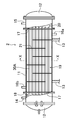
- FIG. 1 is a schematic perspective view showing the ozone generator of the first embodiment.
- FIG. 2 is a schematic diagram showing the internal structure of the apparatus main body.
- FIG. 3 is a schematic sectional view taken along line XX in FIG.
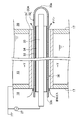
- FIG. 4 is a schematic cross-sectional view showing the structure of the ozone generation unit.
- FIG. 5 is a schematic cross-sectional view taken along line YY in FIG.
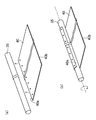
- FIGS. 6A and 6B are schematic perspective views illustrating a part of the manufacturing process of the ozone generator according to the first embodiment.
- FIGS. 7A and 7B are schematic perspective views illustrating a part of the manufacturing process of the ozone generator according to the first embodiment.
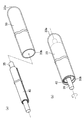
- FIG. 8 is a schematic cross-sectional view showing the ozone generator of the second embodiment.
- FIG. 9 is a schematic perspective view illustrating a part of the manufacturing process of the ozone generator according to the second embodiment.
- FIG. 1 shows a tube-type ozone generator 1 according to this embodiment.
- the ozone generator 1 includes an apparatus main body 2, an incidental facility 3 including a control device, an operation panel, and the like that cooperate with the apparatus main body 2.
- the apparatus main body 2 is a stainless steel pressure-resistant container having excellent corrosion resistance, and ozone is generated therein.
- the apparatus main body 2 includes a cylindrical body portion 11 and two lid portions 12 that block both ends of the body portion 11.
- the apparatus main body 2 is supported by a pair of leg portions 13 and 13 in a horizontally placed state.
- One of the lid parts 12 is attached to the trunk part 11 via a hinge, and is a door that can be opened and closed.
- the apparatus main body 2 is connected to a raw material gas pipe 14, an ozone pipe 15, a cooling pipe 16 and the like.
- the source gas pipe 14 is connected to a source gas supply source (not shown), and a source gas such as oxygen or air is supplied to the apparatus main body 2 through the source gas pipe 14.
- the ozone pipe 15 is connected to an ozone supply destination (not shown), and ozone generated by the apparatus main body 2 is sent to the supply destination through the ozone pipe 15.
- the cooling pipe 16 has two cooling pipes 16a and 16b for incoming and outgoing water, each connected to a heat exchanger or the like not shown. Cooling water is circulated and supplied to the apparatus main body 2 through these cooling pipes 16a and 16b.
- the inside of the apparatus main body 2 is partitioned into a source gas chamber 18, a cooling chamber 19, and an ozone chamber 20 by two partition plates 17 and 17 made of stainless steel.
- the source gas chamber 18 is disposed at one end of the apparatus main body 2 and communicates with the source gas pipe 14.
- the ozone chamber 20 is disposed at the other end of the apparatus main body 2 and communicates with the ozone pipe 15.
- the cooling chamber 19 is disposed between the source gas chamber 18 and the ozone chamber 20 and occupies most of the apparatus main body 2.
- the cooling chamber 19 communicates with the incoming cooling pipe 16a at the lower corner portion on the ozone chamber 20 side, and communicates with the outgoing cooling piping 16b at the upper corner portion on the source gas chamber 18 side.
- a plurality of regulating plates 21 are installed at predetermined intervals. By these restriction plates 21, the inside of the cooling chamber 19 is partitioned in a staggered manner, and the cooling water is designed to meander and flow.
- a plurality of tubular ozone generation units 30 ⁇ / b> A are densely installed inside the apparatus main body 2.
- Each ozone generation unit 30 ⁇ / b> A is installed so as to cross the cooling chamber 19 and extend along the longitudinal direction of the trunk portion 11.
- the upstream end protrudes into the source gas chamber 18, and the downstream end protrudes into the ozone chamber 20.
- the end of the ozone generation unit 30A protrudes into the source gas chamber 18 or the ozone chamber 20.
- the end of the ozone generation unit 30A may be located inside the cooling chamber 19 or at the boundary between the cooling chamber 19 and the source gas chamber 18 or the like. In each of these ozone generation units 30A, ozone is generated from the source gas.
- FIG. 4 shows details of the ozone generation unit 30A.
- the ozone generation unit 30 ⁇ / b> A includes an outer electrode tube 31 and an inner electrode tube 32.
- the outer electrode tube 31 is made of a cylindrical stainless steel tube, and each end thereof is joined to each partition plate 17 without a gap.
- the outer electrode tube 31 is electrically grounded via the partition plate 17 and constitutes a low voltage side electrode.
- the periphery of the outer electrode tube 31 is filled with cooling water, and each ozone generation unit 30A is cooled by the cooling water.
- An inner electrode tube 32 is concentrically arranged inside the outer electrode tube 31.
- the inner electrode tube 32 of the present embodiment is composed of a dielectric tube 33, an electrode 34, a terminal bar 35, and the like.
- the dielectric tube 33 is a cylindrical elongated member whose one end is closed, and is formed of ceramic, glass, or the like.
- the outer peripheral surface of the dielectric tube 33 faces the inner peripheral surface of the outer electrode tube 31 with a slight gap (discharge gap 36) therebetween.
- the closed end portion (closed end portion 33a) of the dielectric tube 33 is located in the ozone chamber 20, and the open end portion (open end portion 33b) of the dielectric tube 33 is located in the source gas chamber 18. ing.
- the terminal bar 35 is made of a long and thin bar-shaped conductor such as stainless steel.
- the front end of the terminal rod 35 is inserted into the dielectric tube 33 until it reaches the vicinity of the closed end portion 33a.
- the rear end of the terminal rod 35 protrudes from the open end portion 33b.
- the high voltage side of the external power source 37 is connected to the rear end.
- the electrode 34 is formed in a cylindrical shape by using a long and thin rectangular thin plate-like conductor 40 having high elasticity and excellent electrical conductivity, such as a stainless steel spring steel plate.
- the terminal bar 35 is joined to the longer end of the conductor 40 (fixed end 40 a). Then, the conductor 40 expands radially outward inside the dielectric tube 33 by its own elastic force, so that the longer end of the conductor 40 (the free end 40b) side of the conductor 40 becomes It is pressed radially outward and is in close contact with the inner peripheral surface of the dielectric tube 33.
- the free end 40b overlaps the inner and outer portions of the conductor 40 on the inner peripheral surface of the dielectric tube 33, and the inner peripheral surface of the dielectric tube 33 is covered with the conductor 40 over the entire periphery. Thereby, the cylindrical electrode 34 is formed.
- the conductor 40 is bent in a spiral shape, and extends in the circumferential direction to form the electrode 34, and extends in the radial direction to connect the electrode 34 and the terminal rod 35.
- the electrode 34 is directly connected to the terminal bar 35 and is electrically connected to the external power source 37 via the terminal bar 35.
- Cooling water is circulated and supplied to the cooling chamber 19, and each ozone generation unit 30A is cooled.
- a high voltage is applied between the outer electrode tube 31 and the inner electrode tube 32 of each ozone generation unit 30 ⁇ / b> A by the external power source 37. By doing so, silent discharge occurs in each discharge gap 36.
- the ozone generator 1 is stopped and the supply of the raw material gas is stopped, the ozone remaining in the discharge gap 36 and the ozone chamber 20 may flow backward and enter the raw material gas chamber 18.
- the ozone enters the source gas chamber 18 and enters the inside of the dielectric tube 33, the electrode 34 and the like corrode.
- the electrode 34 is only inserted into the dielectric tube 33, it can be easily removed. Specifically, the terminal bar 35 may be pulled out from the dielectric tube 33 together with the electrode 34. If it becomes the large sized ozone production
- the end of the conductor 40 is joined to the terminal bar 35 (joining step). Specifically, spot welding is performed to join the portion of the fixed end 40 a of the conductor 40 to the terminal rod 35. Then, as shown in FIG. 6B, the conductor 40 is wound around the terminal bar 35 (winding step).
- the terminal bar 35 around which the conductor 40 is wound is inserted into the dielectric tube 33 (insertion step).
- the conductor 40 is unconstrained and the terminal bar 35 is appropriately rotated in the direction opposite to the winding direction, and the state shown in FIG. 5 is obtained. Until the conductor 40 is expanded inside the dielectric tube 33 (expansion step).
- the ozone generation unit 30A can be manufactured extremely easily. Since a large number of ozone generation units 30A are installed in the ozone generation apparatus 1, according to this manufacturing method, productivity can be improved.
- FIG. 8 shows an ozone generation unit 30B that is a main part of the ozone generation apparatus of the present embodiment.
- the ozone generation unit 30B of this embodiment is different in structure from the ozone generation unit 30A of the first embodiment in that the terminal bar 35 is not provided.
- the electrode 34 is electrically connected to an external power source 37 via a terminal lead.
- an elongated metal plate piece 50 such as stainless steel having excellent electrical conductivity is joined to one end of the electrode 34 located on the open end portion 33b side. A part of the metal plate piece 50 protrudes from the open end portion 33 b to form a terminal lead, and is electrically connected to the external power source 37.
- This ozone generation unit 30B can be easily manufactured.
- a metal plate piece 50 is bonded to one end of the shorter conductor 40 in advance. Then, as shown in FIG. 9, the conductor 40 is rolled into a cylindrical shape with the metal plate piece 50 facing inward (preparation step), and the conductor 40 is connected to the dielectric tube from the other end of the shorter side of the conductor 40 33 is inserted (insertion step). At this time, a guide rod G may be inserted inside the rounded conductor 40 in order to assist these steps.
- the conductor 40 is expanded inside the dielectric tube 33 as in the ozone generator 1 of the first embodiment (expansion process).
- the guide rod G When the guide rod G is used, it may be pulled out at this time.
- the entire conductor 40 extends along the inner peripheral surface of the dielectric tube 33. Therefore, the conductor 40 is only a portion that extends in the circumferential direction and forms the electrode 34, and a portion that extends in the radial direction. There is no.
- the terminal lead may be formed integrally with the conductor 40 constituting the electrode 34. That is, the protruding portion constituting the terminal lead may be partially protruded from the shorter end of the conductor 40.
- the metal plate piece 50 constituting the terminal lead may be attached after the expansion process.
- the electrode 34 Since the electrode 34 is replaceable, it does not necessarily require a high degree of corrosion resistance. Therefore, an inexpensive metal conductor excellent in electrical conductivity other than stainless steel can be used as the material of the electrode 34. It suffices that at least one ozone generating unit is provided for one ozone generating device.
Landscapes
- Chemical & Material Sciences (AREA)
- Organic Chemistry (AREA)
- Inorganic Chemistry (AREA)
- Engineering & Computer Science (AREA)
- Chemical Kinetics & Catalysis (AREA)
- Electrochemistry (AREA)
- Materials Engineering (AREA)
- Metallurgy (AREA)
- Oxygen, Ozone, And Oxides In General (AREA)
Priority Applications (3)
| Application Number | Priority Date | Filing Date | Title |
|---|---|---|---|
| CN201380000830.8A CN103958399B (zh) | 2012-11-19 | 2013-01-31 | 管型臭氧生成装置及其制造方法 |
| EP13855640.2A EP2921454A4 (en) | 2012-11-19 | 2013-01-31 | TUBULAR TYPE OZONE PRODUCTION DEVICE AND MANUFACTURING METHOD THEREFOR |
| US14/430,053 US9803289B2 (en) | 2012-11-19 | 2013-01-31 | Tube-type ozone generator and manufacturing method therefor |
Applications Claiming Priority (2)
| Application Number | Priority Date | Filing Date | Title |
|---|---|---|---|
| JP2012-253606 | 2012-11-19 | ||
| JP2012253606A JP6271833B2 (ja) | 2012-11-19 | 2012-11-19 | チューブ型のオゾン生成装置及びその製造方法 |
Publications (1)
| Publication Number | Publication Date |
|---|---|
| WO2014076851A1 true WO2014076851A1 (ja) | 2014-05-22 |
Family
ID=50730789
Family Applications (1)
| Application Number | Title | Priority Date | Filing Date |
|---|---|---|---|
| PCT/JP2013/000546 Ceased WO2014076851A1 (ja) | 2012-11-19 | 2013-01-31 | チューブ型のオゾン生成装置及びその製造方法 |
Country Status (6)
| Country | Link |
|---|---|
| US (1) | US9803289B2 (https=) |
| EP (1) | EP2921454A4 (https=) |
| JP (1) | JP6271833B2 (https=) |
| CN (1) | CN103958399B (https=) |
| TW (1) | TWI591015B (https=) |
| WO (1) | WO2014076851A1 (https=) |
Cited By (4)
| Publication number | Priority date | Publication date | Assignee | Title |
|---|---|---|---|---|
| WO2015122131A1 (ja) * | 2014-02-17 | 2015-08-20 | 住友精密工業株式会社 | チューブ型のオゾン発生装置 |
| WO2015122132A1 (ja) * | 2014-02-17 | 2015-08-20 | 住友精密工業株式会社 | チューブ型のオゾン発生装置 |
| WO2015190017A1 (ja) * | 2014-06-12 | 2015-12-17 | 株式会社 東芝 | オゾン発生装置 |
| CN106793437A (zh) * | 2016-12-29 | 2017-05-31 | 江苏河海新能源股份有限公司 | 等离子水发生装置 |
Families Citing this family (8)
| Publication number | Priority date | Publication date | Assignee | Title |
|---|---|---|---|---|
| CA2995598A1 (en) * | 2015-08-14 | 2017-02-23 | Robert De La Torre STONE | Multiple oxygen allotrope generator |
| JP6462605B2 (ja) * | 2016-02-08 | 2019-01-30 | 株式会社東芝 | オゾン発生装置 |
| JP6721364B2 (ja) * | 2016-03-11 | 2020-07-15 | 株式会社東芝 | オゾン発生装置 |
| CN106379864B (zh) * | 2016-10-18 | 2018-10-09 | 河南牧业经济学院 | 一种高效节能臭氧发生器 |
| RU179209U1 (ru) * | 2017-12-19 | 2018-05-04 | Федеральное государственное бюджетное учреждение "Национальный исследовательский центр "Курчатовский институт" | Электролизер высокого давления |
| CN108017040B (zh) * | 2018-01-31 | 2021-01-12 | 纵晓明 | 一种高浓度臭氧发生装置 |
| JP6935014B2 (ja) * | 2018-05-30 | 2021-09-15 | 三菱電機株式会社 | オゾン発生装置 |
| US11384718B2 (en) * | 2020-03-06 | 2022-07-12 | Clack Technologies, Llc | Apparatus for improving efficiency and emissions of combustion |
Citations (12)
| Publication number | Priority date | Publication date | Assignee | Title |
|---|---|---|---|---|
| JPS51145489A (en) * | 1975-05-27 | 1976-12-14 | Fuji Electric Co Ltd | Ozonizer |
| JPS5347394A (en) * | 1976-10-13 | 1978-04-27 | Toshiba Corp | Movable electrode-type ozonizer |
| JPS55100205A (en) * | 1980-01-16 | 1980-07-31 | Toshiba Corp | Electrode assembling method 0f ozonizer |
| JPH0617210B2 (ja) * | 1985-11-11 | 1994-03-09 | 閃一 増田 | オゾナイザ |
| JPH0745073B2 (ja) * | 1989-08-14 | 1995-05-17 | 新日本製鐵株式会社 | 金属箔の巻取方法および装置 |
| US5433927A (en) * | 1992-02-10 | 1995-07-18 | Figgie International | Ozone generator having a conductor with projections extending through an inner electrode and associated fabrication method |
| JPH09173868A (ja) * | 1995-12-27 | 1997-07-08 | Cataler Kogyo Kk | メタル担体の製造方法 |
| JPH111305A (ja) * | 1997-06-11 | 1999-01-06 | Shozo Uchida | オゾン発生装置 |
| US20070166209A1 (en) * | 2003-04-10 | 2007-07-19 | Stefan Zimmerman | Discharge tube |
| JP2009291695A (ja) * | 2008-06-04 | 2009-12-17 | Kao Corp | フィルム状触媒構造体の中間体 |
| WO2010021022A1 (ja) | 2008-08-19 | 2010-02-25 | 三菱電機株式会社 | オゾン発生装置 |
| JP2012144425A (ja) | 2010-12-21 | 2012-08-02 | Toshiba Corp | オゾン発生装置 |
Family Cites Families (6)
| Publication number | Priority date | Publication date | Assignee | Title |
|---|---|---|---|---|
| GB219387A (en) * | 1923-04-24 | 1924-07-24 | James Mcblain | Improvements in electrical apparatus for generating ozone |
| BE486620A (https=) * | 1948-01-17 | |||
| US3967131A (en) * | 1974-06-04 | 1976-06-29 | Ozone Incorporated | Corona discharge ozone generating unit |
| JPS5373253U (https=) * | 1976-11-19 | 1978-06-19 | ||
| JP4999503B2 (ja) * | 2007-03-13 | 2012-08-15 | 三菱電機株式会社 | オゾン発生装置 |
| JP5048714B2 (ja) * | 2009-05-19 | 2012-10-17 | 三菱電機株式会社 | オゾン発生装置 |
-
2012
- 2012-11-19 JP JP2012253606A patent/JP6271833B2/ja active Active
-
2013
- 2013-01-31 EP EP13855640.2A patent/EP2921454A4/en not_active Withdrawn
- 2013-01-31 US US14/430,053 patent/US9803289B2/en active Active
- 2013-01-31 CN CN201380000830.8A patent/CN103958399B/zh active Active
- 2013-01-31 WO PCT/JP2013/000546 patent/WO2014076851A1/ja not_active Ceased
- 2013-02-04 TW TW102104231A patent/TWI591015B/zh active
Patent Citations (12)
| Publication number | Priority date | Publication date | Assignee | Title |
|---|---|---|---|---|
| JPS51145489A (en) * | 1975-05-27 | 1976-12-14 | Fuji Electric Co Ltd | Ozonizer |
| JPS5347394A (en) * | 1976-10-13 | 1978-04-27 | Toshiba Corp | Movable electrode-type ozonizer |
| JPS55100205A (en) * | 1980-01-16 | 1980-07-31 | Toshiba Corp | Electrode assembling method 0f ozonizer |
| JPH0617210B2 (ja) * | 1985-11-11 | 1994-03-09 | 閃一 増田 | オゾナイザ |
| JPH0745073B2 (ja) * | 1989-08-14 | 1995-05-17 | 新日本製鐵株式会社 | 金属箔の巻取方法および装置 |
| US5433927A (en) * | 1992-02-10 | 1995-07-18 | Figgie International | Ozone generator having a conductor with projections extending through an inner electrode and associated fabrication method |
| JPH09173868A (ja) * | 1995-12-27 | 1997-07-08 | Cataler Kogyo Kk | メタル担体の製造方法 |
| JPH111305A (ja) * | 1997-06-11 | 1999-01-06 | Shozo Uchida | オゾン発生装置 |
| US20070166209A1 (en) * | 2003-04-10 | 2007-07-19 | Stefan Zimmerman | Discharge tube |
| JP2009291695A (ja) * | 2008-06-04 | 2009-12-17 | Kao Corp | フィルム状触媒構造体の中間体 |
| WO2010021022A1 (ja) | 2008-08-19 | 2010-02-25 | 三菱電機株式会社 | オゾン発生装置 |
| JP2012144425A (ja) | 2010-12-21 | 2012-08-02 | Toshiba Corp | オゾン発生装置 |
Non-Patent Citations (1)
| Title |
|---|
| See also references of EP2921454A4 |
Cited By (9)
| Publication number | Priority date | Publication date | Assignee | Title |
|---|---|---|---|---|
| WO2015122131A1 (ja) * | 2014-02-17 | 2015-08-20 | 住友精密工業株式会社 | チューブ型のオゾン発生装置 |
| WO2015122132A1 (ja) * | 2014-02-17 | 2015-08-20 | 住友精密工業株式会社 | チューブ型のオゾン発生装置 |
| JP2015151311A (ja) * | 2014-02-17 | 2015-08-24 | 住友精密工業株式会社 | チューブ型のオゾン発生装置 |
| WO2015190017A1 (ja) * | 2014-06-12 | 2015-12-17 | 株式会社 東芝 | オゾン発生装置 |
| JP2016000676A (ja) * | 2014-06-12 | 2016-01-07 | 株式会社東芝 | オゾン発生装置 |
| CN106458583A (zh) * | 2014-06-12 | 2017-02-22 | 株式会社东芝 | 臭氧发生装置 |
| AU2015272980B2 (en) * | 2014-06-12 | 2018-04-26 | Kabushiki Kaisha Toshiba | Ozone generation device |
| CN106458583B (zh) * | 2014-06-12 | 2019-01-29 | 株式会社东芝 | 臭氧发生装置 |
| CN106793437A (zh) * | 2016-12-29 | 2017-05-31 | 江苏河海新能源股份有限公司 | 等离子水发生装置 |
Also Published As
| Publication number | Publication date |
|---|---|
| US20150247246A1 (en) | 2015-09-03 |
| TW201420493A (zh) | 2014-06-01 |
| US9803289B2 (en) | 2017-10-31 |
| TWI591015B (zh) | 2017-07-11 |
| CN103958399B (zh) | 2016-06-08 |
| JP6271833B2 (ja) | 2018-01-31 |
| CN103958399A (zh) | 2014-07-30 |
| EP2921454A1 (en) | 2015-09-23 |
| JP2014101245A (ja) | 2014-06-05 |
| EP2921454A4 (en) | 2016-07-13 |
Similar Documents
| Publication | Publication Date | Title |
|---|---|---|
| JP6271833B2 (ja) | チューブ型のオゾン生成装置及びその製造方法 | |
| JP6196913B2 (ja) | チューブ型のオゾン発生装置 | |
| JP5048714B2 (ja) | オゾン発生装置 | |
| JP6291276B2 (ja) | チューブ型のオゾン発生装置 | |
| KR102415353B1 (ko) | 이중오존발생을 위한 방전관 | |
| JP5669685B2 (ja) | オゾン発生装置、およびオゾン発生装置の製造方法 | |
| JP5981323B2 (ja) | オゾン発生装置 | |
| JP4138684B2 (ja) | オゾン発生方法およびオゾン発生装置 | |
| JP2006143522A (ja) | オゾン発生器 | |
| JP5072817B2 (ja) | オゾン発生装置 | |
| JP2002087804A (ja) | オゾン発生装置 | |
| JP2000226202A (ja) | 管型オゾン発生装置 | |
| JP5836808B2 (ja) | オゾン発生装置 | |
| JP2012041267A (ja) | オゾン発生装置 | |
| JP2006083013A (ja) | オゾン発生装置 | |
| JP5905084B2 (ja) | オゾン発生装置 | |
| JP2008100897A (ja) | オゾン発生装置 | |
| JP2005255429A (ja) | オゾン発生管おおびそれを備えたオゾン発生装置 | |
| JPH1143312A (ja) | オゾン発生装置 | |
| JPH06305708A (ja) | オゾン発生装置 | |
| JP2003146622A (ja) | オゾン発生装置 |
Legal Events
| Date | Code | Title | Description |
|---|---|---|---|
| 121 | Ep: the epo has been informed by wipo that ep was designated in this application |
Ref document number: 13855640 Country of ref document: EP Kind code of ref document: A1 |
|
| WWE | Wipo information: entry into national phase |
Ref document number: 14430053 Country of ref document: US Ref document number: 2013855640 Country of ref document: EP |
|
| NENP | Non-entry into the national phase |
Ref country code: DE |