WO2014042225A1 - 三次元細胞培養体の製造方法 - Google Patents
三次元細胞培養体の製造方法 Download PDFInfo
- Publication number
- WO2014042225A1 WO2014042225A1 PCT/JP2013/074743 JP2013074743W WO2014042225A1 WO 2014042225 A1 WO2014042225 A1 WO 2014042225A1 JP 2013074743 W JP2013074743 W JP 2013074743W WO 2014042225 A1 WO2014042225 A1 WO 2014042225A1
- Authority
- WO
- WIPO (PCT)
- Prior art keywords
- cells
- medium
- coated
- culture
- cell culture
- Prior art date
- Legal status (The legal status is an assumption and is not a legal conclusion. Google has not performed a legal analysis and makes no representation as to the accuracy of the status listed.)
- Ceased
Links
Images


Classifications
-
- C—CHEMISTRY; METALLURGY
- C12—BIOCHEMISTRY; BEER; SPIRITS; WINE; VINEGAR; MICROBIOLOGY; ENZYMOLOGY; MUTATION OR GENETIC ENGINEERING
- C12N—MICROORGANISMS OR ENZYMES; COMPOSITIONS THEREOF; PROPAGATING, PRESERVING, OR MAINTAINING MICROORGANISMS; MUTATION OR GENETIC ENGINEERING; CULTURE MEDIA
- C12N5/00—Undifferentiated human, animal or plant cells, e.g. cell lines; Tissues; Cultivation or maintenance thereof; Culture media therefor
- C12N5/0062—General methods for three-dimensional culture
-
- C—CHEMISTRY; METALLURGY
- C12—BIOCHEMISTRY; BEER; SPIRITS; WINE; VINEGAR; MICROBIOLOGY; ENZYMOLOGY; MUTATION OR GENETIC ENGINEERING
- C12N—MICROORGANISMS OR ENZYMES; COMPOSITIONS THEREOF; PROPAGATING, PRESERVING, OR MAINTAINING MICROORGANISMS; MUTATION OR GENETIC ENGINEERING; CULTURE MEDIA
- C12N5/00—Undifferentiated human, animal or plant cells, e.g. cell lines; Tissues; Cultivation or maintenance thereof; Culture media therefor
- C12N5/06—Animal cells or tissues; Human cells or tissues
- C12N5/0602—Vertebrate cells
- C12N5/067—Hepatocytes
- C12N5/0671—Three-dimensional culture, tissue culture or organ culture; Encapsulated cells
-
- C—CHEMISTRY; METALLURGY
- C12—BIOCHEMISTRY; BEER; SPIRITS; WINE; VINEGAR; MICROBIOLOGY; ENZYMOLOGY; MUTATION OR GENETIC ENGINEERING
- C12N—MICROORGANISMS OR ENZYMES; COMPOSITIONS THEREOF; PROPAGATING, PRESERVING, OR MAINTAINING MICROORGANISMS; MUTATION OR GENETIC ENGINEERING; CULTURE MEDIA
- C12N2533/00—Supports or coatings for cell culture, characterised by material
- C12N2533/50—Proteins
- C12N2533/52—Fibronectin; Laminin
-
- C—CHEMISTRY; METALLURGY
- C12—BIOCHEMISTRY; BEER; SPIRITS; WINE; VINEGAR; MICROBIOLOGY; ENZYMOLOGY; MUTATION OR GENETIC ENGINEERING
- C12N—MICROORGANISMS OR ENZYMES; COMPOSITIONS THEREOF; PROPAGATING, PRESERVING, OR MAINTAINING MICROORGANISMS; MUTATION OR GENETIC ENGINEERING; CULTURE MEDIA
- C12N2533/00—Supports or coatings for cell culture, characterised by material
- C12N2533/90—Substrates of biological origin, e.g. extracellular matrix, decellularised tissue
Definitions
- the present invention relates to a method for producing a three-dimensional cell culture.
- Patent Documents 1 and 2 In recent years, regenerative medicine has attracted attention as a new medicine, and various methods for three-dimensional organization of cells have been proposed (for example, Patent Documents 1 and 2).
- Patent Document 1 a step of forming a cell layer and a step of alternately bringing a first substance-containing liquid and a second substance-containing liquid into contact with the cell layer are repeated, and the cell layer is stacked via an extracellular matrix.
- Patent Document 2 describes a technique of culturing coated cells in which the entire surface of cultured cells is coated with an adhesive film in a state where adjacent coated cells are adhered to each other.
- this indication provides the manufacturing method of the three-dimensional cell culture body which can manufacture a highly active three-dimensional cell culture body.
- the present disclosure is a method for producing a three-dimensional cell culture body in which at least two cell layers are laminated, and the surface of a cell is coated with a coating containing an extracellular matrix component , Culturing the seeded coated cells in a medium, and continuously using at least a part of the medium for 5 days or more.
- the present disclosure is a method for producing a three-dimensional cell culture body in which at least two cell layers are laminated, and a cell surface is coated with a coating containing an extracellular matrix component. Seeding the coated cells and culturing the seeded coated cells in a medium, wherein the culturing of the coated cells comprises culturing the coated cells in a medium of 70 ⁇ L or more per 1 ⁇ 10 4 cells. This relates to a manufacturing method.
- a highly active three-dimensional cell culture can be provided.
- FIG. 1 is a graph showing the absorbance (560 nm) of the solution inside and outside the insert before medium replacement.
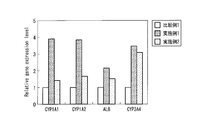
- FIG. 2 is a graph showing gene expression levels of CYP1A1, CYP1A2, ALB and CYP3A4 after 9 days of culture under various conditions.
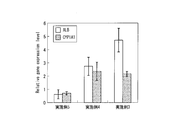
- FIG. 3 is a graph showing gene expression levels of CYP1A1 and ALB after 9 days of culture under various conditions.
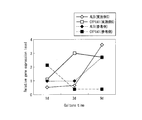
- FIG. 4 is a graph showing changes over time in gene expression levels of CYP1A1 and ALB.
- FIG. 5 is a photomicrograph of the three-dimensional cell culture produced in Examples 3-5.
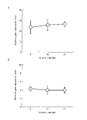
- FIG. 6 is a graph showing changes over time in gene expression levels of ALB and CYP1A1.
- the present disclosure cultivates coated cells whose surfaces are coated with a coating containing an extracellular matrix component by continuously using at least a part of the medium for 5 days or more and / or 70 ⁇ L per 1 ⁇ 10 4 cells. Based on the knowledge that a highly active three-dimensional cell culture can be obtained by culturing in the above medium.
- the medium and the three-dimensional cell culture are manufactured by changing the medium every one to two days. Further, in a method for producing a three-dimensional cell culture by culturing coated cells whose surfaces are coated with a coating containing an extracellular matrix component, if the medium is changed after culturing for 12 hours, the culture is performed for 24 hours. There is also a report that the number of layers of a three-dimensional cell culture obtained by comparison with the case where the medium is changed later is large (for example, Adv. Mater. 2011, 23, 3506-3510).
- humoral factors such as cytokines produced by the cells themselves are accumulated. When the medium is replaced, these humoral factors are removed. However, these humoral factors are accumulated in the medium by culturing while continuing to use the medium for at least 5 days without replacing the medium. . And it is thought that a three-dimensional cell culture body with higher activity can be obtained by receiving and culturing the humoral factor accumulated in the medium.
- the amount of the medium to 70 ⁇ L or more per 1 ⁇ 10 4 cells, damage to the three-dimensional cell culture by waste accumulated in the medium can be reduced, and the liquid factor calculated in the medium can be reduced. Since the amount increases, it is considered that the activity of the three-dimensional cell culture is improved.
- these assumptions do not limit the present invention.
- the “highly active three-dimensional cell culture” means that, in one or a plurality of embodiments, the activity of cells constituting the three-dimensional cell culture is high and / or the tertiary in the three-dimensional cell culture. Including that the original form is easily maintained.
- the high activity of the cells constituting the three-dimensional cell culture includes, in one or more embodiments, a high expression level of a gene involved in metabolism. Maintaining a three-dimensional form in a three-dimensional cell culture includes improving the thickness and / or the number of layers of the obtained three-dimensional cell culture in one or more embodiments.
- the “three-dimensional cell culture body” refers to an assembly of cells and an extracellular matrix, in which cells are laminated in at least two layers via the extracellular matrix. .
- the “three-dimensional cell culture body in which two or more cell layers are laminated” means that the cell layer is not a single-layer cell culture body.
- the three-dimensional cell culture can include a cell structure in which cells adhere to each other without adhering to the substrate and cells that grow are present. There may be one kind of cell contained in a three-dimensional cell culture body, and two or more kinds may be sufficient as it.
- coated cell refers to a cell containing a coating containing extracellular matrix components and cells, and the cell surface of which is covered by the coating.
- the cells to be coated include, but are not limited to, cultured cells.
- the cultured cells are human cells or non-human cells, and examples thereof include primary cultured cells, subcultured cells, and cell line cells.
- the cells are cancer cells such as fibroblasts and hepatoma cells, epithelial cells, vascular endothelial cells, lymphatic endothelial cells, nerve cells, tissue stem cells, embryonic stem cells, and immune cells. Examples include adherent cells such as cells.
- the cell may be a human-derived cell or a non-human-derived cell.
- One type of cell may be used, or two or more types may be used.
- the coated cells can be prepared by the method disclosed in JP2012-115254A.
- extracellular matrix component refers to a substance that fills the space outside a cell in a living body and performs a function such as a skeletal role, a role of providing a scaffold, and a role of holding a biological factor Say.
- the extracellular matrix component may further contain a substance that can perform functions such as a skeletal role, a role of providing a scaffold, and a role of retaining a biological factor in in vitro cell culture.
- a film containing an extracellular matrix component preferably includes a film containing substance A and a film containing substance B that interacts with substance A in one or more embodiments.
- a protein or polymer having an RGD sequence hereinafter also referred to as “substance having an RGD sequence”
- a protein or polymer having the RGD sequence are used as a combination of the substance A and the substance B.
- a combination with a protein or polymer that interacts with the protein hereinafter also referred to as “substance having interaction”
- a protein or polymer that has a positive charge hereinafter also referred to as “substance with a positive charge”.
- a protein or polymer having a negative charge hereinafter also referred to as “substance having a negative charge”.
- the present disclosure is a method for producing a three-dimensional cell culture body in which at least two cell layers are stacked, and the surface of a cell is coated with a coating containing an extracellular matrix component Including seeding cells, culturing the seeded coated cells in a medium, and continuously using at least a part of the medium for at least 5 days (hereinafter also referred to as "first production method of the present disclosure”) Say).
- first production method of the present disclosure a three-dimensional cell culture body exhibiting high activity can be provided.
- the first production method of the present disclosure includes culturing the coated cells by continuously using at least a part of the medium for 5 days or more.
- “culturing the coated cells by continuously using at least a part of the medium for 5 days or more” means, in one or more embodiments, 20% or more, 30% of the medium in which the coated cells are cultured. More than 40%, 50% or more, 60% or more, 70% or more, 80% or more, 90% or more, or approximately 100%, and culturing the coated cells in a state of being used for at least 5 days. .
- the first production method of the present disclosure may include adding a new medium when culturing the coated cells.
- the period of continuous use of at least part of the medium is at least 5 days, and in one or more embodiments, 6 days or more, 7 days or more, 8 days or more, 9 days or more, 10 days or more, 15 days or more, 20 days or more, or 25 days or more.
- the upper limit of the period of continuous use is not particularly limited, and can be appropriately determined according to the amount of the medium, the number of cells to be seeded, the type of cells, etc. In one or a plurality of embodiments, 90 days or less, 60 days Or less or 40 days or less.
- the coated cells may be cultured without changing the medium for at least 5 days, and the medium changing cycle may be 5 days or more.
- the first production method of the present disclosure is such that the first medium exchange (first medium exchange) from the start of culture is performed at least on the fifth day after the start of culture, or the second time. The medium may be changed at least after 6 days.
- “medium replacement” refers to removing almost the whole amount of the medium in which the coated cells are cultured and replacing it with a new medium.
- the first production method of the present disclosure may include performing medium exchange 16 to 36 hours after seeding the coated cells.
- the amount of the medium during the culture is not particularly limited, but is preferably 70 ⁇ L or more per 1 ⁇ 10 4 cells, more preferably 170 ⁇ L or more from the viewpoint of reducing the influence of waste contained in the medium during the culture. Or 1 mL or more.
- the quantity of a culture medium is 100 mL or less per 1 * 10 ⁇ 4 > cells or 10 mL or less in one or some embodiment.
- the first production method of the present disclosure includes continuously using at least a part of a medium for 5 days or more, and culturing coated cells in a medium of 70 ⁇ L or more per 1 ⁇ 10 4 cells. Including doing. In one or more embodiments of the first production method of the present disclosure, the coated cells are cultured in a medium of 70 ⁇ L or more per 1 ⁇ 10 4 cells while continuously using at least a part of the medium. Including that.
- the medium is not particularly limited and can be appropriately determined depending on the cell. Etc.
- seeding of coated cells may be performed so that at least two layers of coated cells are laminated.
- the density of the coated cells at the time of seeding can be appropriately determined according to, for example, the thickness of the target three-dimensional cell culture and / or the number of cells to be stacked. In embodiments, 1 ⁇ 10 2 pieces / m 3 to 1 ⁇ 10 9 pieces / cm 3 , 1 ⁇ 10 4 pieces / cm 3 to 1 ⁇ 10 8 pieces / cm 3 , or 1 ⁇ 10 5 pieces / cm 3 to 1 ⁇ 10 7 pieces / cm 3 .
- the incubation temperature is 4 to 60 ° C., 20 to 40 ° C., or 30 to 37 ° C. in one or more embodiments.
- the culture of the coated cells is preferably performed on a membrane filter for the reason of easy handling, more preferably a culture plate having a membrane filter, more preferably a housing part and a base part, and the base part being a membrane. This is performed using a culture plate as a filter.
- the housing part is preferably transparent.
- a commercial item may be used for this culture plate. Examples of commercially available products include Transwell (registered trademark), Cell Culture Insert (trade name), and the like.
- the pore size of the membrane filter is not particularly limited as long as the cultured cells can be retained on the membrane filter, and in one or a plurality of embodiments, it is 0.1 ⁇ m to 2 ⁇ m, or 0.4 ⁇ m to 1.0 ⁇ m. .
- the material of the membrane includes, for example, polyethylene terephthalate (PET), polycarbonate, or polytetrafluoroethylene (PTFE).
- the ratio of the bottom area of the insert to the bottom area of the container in which the insert is placed is one or In some embodiments, it is 7 or more, 30 or more, 100 or more, or 160 or more, and 16000 or less, or 1600 or less.
- the present disclosure is a method for producing a three-dimensional cell culture body in which at least two cell layers are stacked, and the surface of a cell is coated with a coating containing an extracellular matrix component Seeding cells, and culturing the seeded coated cells in a medium, wherein culturing the coated cells comprises culturing the coated cells in a medium of 70 ⁇ L or more per 1 ⁇ 10 4 cells.
- second manufacturing method of the present disclosure hereinafter also referred to as “second manufacturing method of the present disclosure”.
- the amount of the medium during culture is 70 ⁇ L or more per 1 ⁇ 10 4 cells, and preferably 170 ⁇ L or more from the viewpoint of reducing the influence of waste products contained in the medium during culture. Or 1 mL or more, and 100 mL or less, or 10 mL or less.
- the second production method of the present disclosure may include performing medium exchange in one or a plurality of embodiments.
- the cycle for performing the medium exchange is not particularly limited, and may be performed every other day, every second day, every third day, or every fourth day in one or more embodiments.
- the coated cells are cultured by continuously using at least a part of the medium for 5 days or more. May be included.
- the period of continuous use is 6 days or more, 7 days or more, 8 days or more, 9 days or more, 10 days or more, 15 days or more, 20 days or more, or 25 days or more, and 90 days or less, 60 days or less, or 40 days or less.
- the medium replacement cycle may be 5 days or more.
- the second production method of the present disclosure includes performing an initial medium exchange (first medium exchange) from the start of culture, 16 to 36 hours after seeding the coated cells. Also good.
- the type of medium and the culture conditions such as the incubation temperature are the same as those of the first production method of the present disclosure.
- the thickness of the coating containing an extracellular matrix component is preferably 1 nm to 1 ⁇ 10 3 nm, or 2 nm to 1 ⁇ 10 2 nm in one or more embodiments, The reason is that 3 nm to 1 ⁇ 10 2 nm is more preferable because a three-dimensional cell culture pair in which coated cells are more densely stacked can be obtained.
- the thickness of the coating containing the extracellular matrix component can be appropriately controlled by, for example, the number of membranes constituting the coating.
- the coating containing the extracellular matrix component is not particularly limited, and may be a single layer. In one or a plurality of embodiments, for example, 3, 5, 7, 9, 11, 13, 15 layers or more It may be a multilayer.
- the thickness of a film can be calculated
- the first and second production methods of the present disclosure may further include a step of preparing coated cells.
- Coated cells can be prepared by alternately contacting cells containing a solution containing substance A and a solution containing substance B.
- the combination of the substance A and the substance B includes a combination of a substance having an RGD sequence and a substance having an interaction, or a combination of a substance having a positive charge and a substance having a negative charge. It is done.
- a substance having an RGD sequence refers to a protein or polymer having an “Arg-Gly-Asp” (RGD) sequence, which is an amino acid sequence responsible for cell adhesion activity.
- RGD Arg-Gly-Asp
- having an RGD sequence may originally have an RGD sequence, or may have a RGD sequence chemically bound thereto.
- the substance having the RGD sequence is preferably biodegradable.
- the protein having an RGD sequence examples include, in one or a plurality of embodiments, conventionally known adhesive proteins or water-soluble proteins having an RGD sequence.
- the adhesive protein examples include fibronectin, vitronectin, laminin, cadherin, and collagen in one or more embodiments.
- the water-soluble protein having an RGD sequence includes, for example, collagen, gelatin, albumin, globulin, proteoglycan, an enzyme, an antibody, or the like to which the RGD sequence is bound.
- the polymer having an RGD sequence includes, for example, a naturally-derived polymer or a synthetic polymer.
- the naturally-derived polymer having an RGD sequence include, in one or more embodiments, water-soluble polypeptides, low-molecular peptides, polyamino acids such as ⁇ -polylysine or ⁇ -polylysine, and sugars such as chitin or chitosan.
- the synthetic polymer having an RGD sequence includes, for example, a polymer or copolymer having an RGD sequence such as a linear type, graft type, comb type, dendritic type, or star type. It is done.
- polyurethane for example, polyurethane, polycarbonate, polyamide, or a copolymer thereof, polyester, poly (N-isopropylacrylamide-co-polyacrylic acid), polyamidoamine dendrimer , Polyethylene oxide, poly ⁇ -caprolactam, polyacrylamide, or poly (methyl methacrylate- ⁇ -polyoxyethylene methacrylate).
- the substance having the RGD sequence is preferably fibronectin, vitronectin, laminin, cadherin, polylysine, elastin, collagen to which the RGD sequence is bound, gelatin, chitin or chitosan to which the RGD sequence is bound, and more preferably fibronectin.
- the substance that interacts refers to a protein or polymer that interacts with a substance having an RGD sequence.
- “interact” refers to, in one or more embodiments, for example, electrostatic interaction, hydrophobic interaction, hydrogen bonding, charge transfer interaction, covalent bond formation, specific between proteins It means that a substance that interacts with a substance having an RGD sequence chemically and / or physically due to interaction and / or van der Waals force is close enough to be able to bind, adhere, adsorb, or exchange electrons. .
- the interacting substance is preferably biodegradable.
- Examples of the protein that interacts with a substance having an RGD sequence include collagen, gelatin, proteoglycan, integrin, enzyme, and antibody in one or a plurality of embodiments.
- Examples of the polymer that interacts with a substance having an RGD sequence include, in one or more embodiments, a naturally-derived polymer or a synthetic polymer.
- the naturally-derived polymer that interacts with a substance having an RGD sequence includes, for example, a water-soluble polypeptide, a low-molecular peptide, a polyamino acid, elastin, heparin, heparan sulfate, or dextran sulfate. , And hyaluronic acid.
- polyamino acid examples include, in one or more embodiments, polylysine such as ⁇ -polylysine or ⁇ -polylysine, polyglutamic acid, or polyaspartic acid.
- a synthetic polymer that interacts with a substance having an RGD sequence includes, for example, a polymer having an RGD sequence such as a linear type, a graft type, a comb type, a dendritic type, or a star type, or A copolymer is mentioned.
- polyurethane, polyamide, polycarbonate, or a copolymer thereof polyester, polyacrylic acid, polymethacrylic acid, polyethylene glycol-graft-polyacrylic acid, examples include poly (N-isopropylacrylamide-co-polyacrylic acid), polyamidoamine dendrimer, polyethylene oxide, poly ⁇ -caprolactam, polyacrylamide, poly (methyl methacrylate- ⁇ -polyoxymethacrylate).
- the interacting substance is preferably gelatin, dextran sulfate, heparin, hyaluronic acid, globulin, albumin, polyglutamic acid, collagen, or elastin, more preferably gelatin, dextran sulfate, heparin, hyaluronic acid, or collagen, More preferred is gelatin, dextran sulfate, heparin, or hyaluronic acid.
- the combination of the substance having the RGD sequence and the substance that interacts is not particularly limited as long as it is a combination of different substances that interact with each other, and either one is a polymer or protein containing the RGD sequence, and the other is this. Any polymer or protein that interacts with the protein may be used.
- the combination of the substance having an RGD sequence and the substance having an interaction includes, for example, fibronectin and gelatin, fibronectin and ⁇ -polylysine, fibronectin and hyaluronic acid, fibronectin and dextran sulfate, fibronectin and heparin.
- fibronectin and collagen laminin and gelatin, laminin and collagen, polylysine and elastin, vitronectin and collagen, RGD-bound collagen or RGD-bound gelatin and collagen or gelatin, and the like.
- fibronectin and gelatin fibronectin and ⁇ -polylysine, fibronectin and hyaluronic acid, fibronectin and dextran sulfate, fibronectin and heparin, or laminin and gelatin are preferable, and fibronectin and gelatin are more preferable.
- sequence, and the substance which has interaction may be one each, respectively, and may use 2 or more types together in the range which shows interaction, respectively.
- a substance having a positive charge refers to a protein or polymer having a positive charge.
- a protein having a positive charge in one or a plurality of embodiments, for example, a water-soluble protein is preferable.
- the water-soluble protein include basic collagen, basic gelatin, lysozyme, cytochrome c, peroxidase, or myoglobin in one or a plurality of embodiments.
- the polymer having a positive charge include, in one or a plurality of embodiments, a naturally-derived polymer and a synthetic polymer.
- the naturally-derived polymer includes, for example, a water-soluble polypeptide, a low-molecular peptide, a polyamino acid, a sugar such as chitin or chitosan, and the like.
- the polyamino acid include polylysine such as poly ( ⁇ -lysine) and poly ( ⁇ -lysine), polyarginine, and polyhistidine in one or more embodiments.
- the synthetic polymer include, in one or a plurality of embodiments, polymers or copolymers such as linear, graft, comb, dendritic, or star.
- polyurethane for example, polyurethane, polyamide, polycarbonate, or a copolymer thereof, polyester, polydiallyldimethylammonium chloride (PDDA), polyallylamine hydrochloride, polyethyleneimine , Polyvinylamine, or polyamidoamine dendrimer.
- PDDA polydiallyldimethylammonium chloride
- polyallylamine hydrochloride polyethyleneimine
- Polyvinylamine or polyamidoamine dendrimer
- a substance having a negative charge refers to a protein or polymer having a negative charge.
- a protein having a negative charge is preferably a water-soluble protein.
- the water-soluble protein include, in one or a plurality of embodiments, acidic collagen, acidic gelatin, albumin, globulin, catalase, ⁇ -lactoglobulin, thyroglobulin, ⁇ -lactalbumin, or egg white albumin.
- the negatively charged polymer include naturally derived polymers and synthetic polymers.
- the naturally-derived polymer includes, for example, a water-soluble polypeptide, a low molecular peptide, a polyamino acid such as poly ( ⁇ -lysine), dextran sulfate, and the like.
- the synthetic polymer include, in one or a plurality of embodiments, polymers or copolymers such as linear, graft, comb, dendritic, or star.
- polyurethane for example, polyurethane, polyamide, polycarbonate, and copolymers thereof, polyester, polyacrylic acid, polymethacrylic acid, polystyrene sulfonic acid, polyacrylamide methylpropane
- examples include sulfonic acid, terminal carboxylated polyethylene glycol, polydiallyldimethylammonium salt, polyallylamine salt, polyethyleneimine, polyvinylamine, or polyamideamine dendrimer.
- the combination of the substance having a positive charge and the substance having a negative charge includes, for example, ⁇ -polylysine salt and polysulfonate, ⁇ -polylysine and polysulfonate, chitosan and dextran sulfate in one or more embodiments.
- polysulfonate examples include sodium polysulfonate (PSS) and the like in one or more embodiments.
- PPS sodium polysulfonate
- the substance having a positive charge and the substance having a negative charge may each be one kind, or two or more kinds may be used in combination within a range showing an interaction.
- a cell is first contacted with a solution A containing a substance having an RGD sequence, and then a solution containing a substance having an interaction with the substance having an RGD sequence.
- a method for preparing coated cells by contacting with B will be described as an example. However, the present disclosure is not construed as being limited to the following embodiments.
- the cells are brought into contact with the solution A.
- a film containing a substance having an RGD sequence is formed on the cell surface, and the cell surface is covered with a film containing a substance having an RGD sequence.
- the contact between the cells and the solution A is, for example, applying or adding the solution A to the cells, immersing the cells in the solution A, dropping or spraying the solution A on the cells, etc. Can be performed.
- the contact condition can be appropriately determined according to a contact method, a substance having an RGD sequence and / or a cell type, a concentration of a contained liquid, and the like.
- the contact time is preferably 30 seconds to 24 hours, 1 minute to 60 minutes, 1 minute to 15 minutes, 1 minute to 10 minutes, or 1 minute to 5 minutes.
- the ambient temperature at the time of contact and / or the temperature of the solution A is preferably 4 to 60 ° C., 20 to 40 ° C., or 30 to 37 ° C.
- Solution A only needs to contain a substance having an RGD sequence, and preferably contains a substance having an RGD sequence and a solvent or dispersion medium (hereinafter also simply referred to as “solvent”).
- solvent a solvent or dispersion medium
- the content of the substance having an RGD sequence in the solution A is 0.0001 to 1% by mass, 0.01 to 0.5% by mass, or 0.02 to 0.1% by mass. preferable.
- the solvent include an aqueous solvent such as water, phosphate buffered saline (PBS), and a buffer solution in one or more embodiments.
- Tris buffer such as Tris-HCl buffer, phosphate buffer, HEPES buffer, citrate-phosphate buffer, glycylglycine-sodium hydroxide Examples thereof include a buffer solution, Britton-Robinson buffer solution, and GTA buffer solution.
- the pH of the solvent is not particularly limited, and in one or more embodiments, 3 to 11, 6 to 8, or 7.2 to 7.4 is preferable.
- the solution A may further contain a salt, a cell growth factor, a cytokine, a chemokine, a hormone, a bioactive peptide, a pharmaceutical composition, or the like.
- the pharmaceutical composition include, in one or a plurality of embodiments, a therapeutic agent, a preventive agent, an inhibitor, an antibacterial agent, or an anti-inflammatory agent for diseases.
- the salt include sodium chloride, calcium chloride, sodium hydrogen carbonate, sodium acetate, sodium citrate, potassium chloride, sodium hydrogen phosphate, magnesium sulfate, and sodium succinate in one or more embodiments.
- One kind of salt may be contained, or two or more kinds of salts may be contained.
- Both the solution A and the solution B may contain a salt, or one of them may contain a salt.
- the salt concentration in the solution A is not particularly limited, but in one or more embodiments, for example, 1 ⁇ 10 ⁇ 6 M to 2M, preferably 1 ⁇ 10 ⁇ 4 M to 1M, more preferably 1 ⁇ . 10 ⁇ 4 M to 0.05 M.
- the removal can be performed by, for example, centrifugation or filtration.
- the removal by centrifugation can be performed, for example, by centrifuging in a state where the cells are dispersed in the solution A, and then removing the supernatant. Centrifugation conditions can be appropriately determined depending on the type of cells, the concentration of cells, and the composition of inclusions contained in the solution A.
- washing can be performed, for example, by centrifugation or filtration.
- washing by centrifugation can be performed, for example, by adding a solvent to the cells from which the supernatant has been removed, followed by centrifugation and removal of the supernatant.
- the solvent used for washing is preferably the same as the solvent of the solution A.
- the cell covered with the membrane containing the substance having the RGD sequence is brought into contact with the solution B.
- a membrane containing an interacting substance is formed on the membrane surface containing the substance having the RGD sequence, and the cell surface covered with the membrane containing the substance having the RGD sequence is covered with the membrane containing the interacting substance.
- the contact with the solution B can be performed in the same manner as the contact with the solution A, except that a substance that interacts instead of the substance having the RGD sequence is used.
- the extracellular surface in which the membrane containing the substance having the RGD sequence and the membrane containing the interacting substance are alternately laminated on the entire cell surface A coating containing a matrix component can be formed.
- the number of times that the solution A or the solution B is brought into contact with the cells can be appropriately determined according to, for example, the thickness of the coating containing the extracellular matrix component to be formed.
- the present disclosure is a three-dimensional cell culture that includes at least two or more stacked cells and an extracellular matrix component, and is manufactured by the first or second manufacturing method of the present disclosure. About.
- the three-dimensional cell culture body of this indication can show high activity in one or some embodiment.
- the cells and extracellular matrix components in the three-dimensional cell culture of the present disclosure are as described above.
- the present disclosure in one or a plurality of aspects, seeds coated cells whose surfaces are coated with a coating containing an extracellular matrix component, culturing the seeded coated cells in a medium, and
- the present invention relates to a method for culturing coated cells, comprising continuously using at least a part for 5 days or more.
- the present disclosure includes seeding a coated cell whose surface is coated with a coating containing an extracellular matrix component, and culturing the seeded coated cell in a medium.
- the culturing of the coated cell relates to a method for culturing the coated cell, comprising culturing the coated cell in a medium of 70 ⁇ L or more per 1 ⁇ 10 4 cells.
- the culture conditions and the like in the coated cell culture method of the present disclosure are as described above.
- the present disclosure is a method for producing a three-dimensional cell culture body in which at least two cell layers are stacked, and the surface of a cell is coated with a coating containing an extracellular matrix component
- the present invention relates to a method for producing a three-dimensional cell culture, which comprises seeding cells, culturing the seeded coated cells in a medium, and continuously using at least a part of the medium for 5 days or more.
- the present disclosure is a method for producing a three-dimensional cell culture body in which at least two cell layers are laminated, and a cell surface is coated with a coating containing an extracellular matrix component.
- the present invention relates to a method for culturing a three-dimensional cell culture.
- the culture conditions and the like in the culture method of the three-dimensional cell culture of the present disclosure are as described above.
- Example 1 7 ⁇ 10 5 HepG2-coated cells were seeded on a membrane filter of a transwell (Corning; pore size: 0.4 ⁇ m, surface area: 0.33 cm 2 ) placed in a 24-well culture plate, and 10 wt% fetal bovine serum Eagle's MEM medium containing 2.5 mL was added and cultured at 37 ° C. for 1 day.
- the transwell seeded with the coated cells is placed in a 6-well culture plate, and 12 ml of Eagle's MEM medium containing 10% by weight fetal calf serum is added and cultured at 37 ° C. for 8 days without changing the medium.
- Cell cultures were produced (medium volume during culture: 170 ⁇ L per 1 ⁇ 10 4 cells).
- Example 2 A three-dimensional cell culture was produced in the same manner as in Example 1 except that the culture was performed while changing the medium every two days after placing in a 6-well culture plate. The medium was replaced by removing almost the whole amount of the medium contained in the well and adding a new medium (the amount of medium during the culture: 170 ⁇ L per 1 ⁇ 10 4 cells).
- Example 1 A three-dimensional cell culture was produced in the same manner as in Example 1 except that the culture was performed while the transwell was placed in a 24-well culture plate and the medium was replaced one day after seeding and the medium was changed every two days. The medium was replaced by removing almost the whole amount of the medium contained in the well and adding a new medium (the amount of the medium during the culture: 36 ⁇ L per 1 ⁇ 10 4 cells).
- FIGS. 1A to 1C are graphs showing the absorbance of the respective solutions inside and outside the insert, wherein FIG. 1A shows the absorbance of the solution before the medium exchange on the third day of culture, and FIG. FIG. 1C shows the absorbance of the solution on the ninth day of culture.
- FIG. 1 shows the absorbance of the solution before the medium exchange on the third day of culture
- FIG. 1C shows the absorbance of the solution on the ninth day of culture.
- the results are shown in FIG. 2 as relative values where the gene expression level of Comparative Example 1 is 1.
- the samples of Examples 1 and 2 had higher CYP activity and albumin production than the sample of Comparative Example 1. From these results, it was suggested that a more active three-dimensional cell culture can be obtained by producing a three-dimensional cell culture by the methods of Examples 1 and 2.
- Example 3 the coated cells were cultured under the same conditions as in Example 1 except that a 100 mm dish was used instead of 6 wells (medium amount during culture: 1 mL per 1 ⁇ 10 4 cells). Further, as Example 4, the coated cells were cultured under the same conditions as in Example 1. As Example 5, the coated cells were cultured under the same conditions as in Example 1 except that 24 wells were used instead of 6 wells (medium amount during culture: 36 ⁇ L per 1 ⁇ 10 4 cells). The expression level of the gene was evaluated for the three-dimensional cell cultures obtained in Examples 3 to 5. The results are shown in FIG. 3 as relative values where the gene expression level is 1 under the same conditions as in Comparative Example 1 (conventional method).
- the expression level of ALB increased as the amount of medium increased.
- the expression levels of CYP1A1 were similar in Examples 3 and 4. From these results, it was suggested that a more active three-dimensional cell culture can be produced by increasing the amount of the medium.
- Example 6 the coated cells were cultured under the same conditions as in Example 1.
- the coated cells were cultured under the same conditions as in Example 1 except that 7 ⁇ 10 5 cells were seeded in the wells as they were without using an insert.
- the expression level of the gene was evaluated for the three-dimensional cell culture obtained in Example 6 and the cells of the reference example. The results are shown in FIG. 4 as relative values where the gene expression level of the sample after 9 days of culture is 1 under the same conditions as in Comparative Example 1 (conventional method).
- Example 6 there was no significant difference in the expression level of ALB between Example 6 in which the coated cells were cultured in a stacked state and Reference Example 1 in which the cells were cultured in an independent state.
- the expression level of CYP1A1 was not significantly different between Example 6 and Reference Example 1 on the first day of culture, the expression level was decreased in Reference Example 1 after the third day of culture. In Example 6, the expression level increased and the expression level was maintained on the ninth day of culture.
- Example 3 The three-dimensional cell cultures obtained in Examples 3 to 5 were evaluated. As shown in FIG. 3, the three-dimensional cell culture obtained in Examples 3 and 4 showed higher activity than the conventional three-dimensional cell culture, and the three-dimensional cell culture obtained in Example 5 Showed almost the same activity as that of the conventional three-dimensional cell culture.
- An example of a microphotograph of the three-dimensional cell culture obtained in Examples 3 to 5 is shown in FIG. As shown in FIG. 5, the three-dimensional cell cultures of Example 3 cultured in 6 wells and Example 4 cultured in 100 mm dishes have larger thickness and number of layers than Example 5 cultured in 24 wells. It was.
- Example 7 [Relationship between continuous use period of medium and gene expression level] As Example 7, the coated cells were cultured for 27 days under the same conditions as in Example 3 (amount of medium during culture: 1 mL per 1 ⁇ 10 4 cells, no medium exchange after the second day). For the samples on day 9, 18 and 27 of culture, the gene expression levels of CYP1A1 and ALB were measured by real-time PCR. The results are shown in FIG. 6 as relative values in which the gene expression level of the sample after 9 days of culture is 1 according to the conventional method (medium amount: 36 ⁇ L per 1 ⁇ 10 4 cells, medium exchange every 2 days after the second day). Shown in FIG. 6A is a graph showing the expression level of ALB, and FIG.
- 6B is a graph showing the expression level of CYP1A1. As shown in FIG. 6, both ALB and CYP1A1 maintained a high expression level during the 27-day culture period. Accordingly, even when the coated cells are cultured using the medium continuously without exchanging the medium for 27 days, the activity of the three-dimensional cell culture is maintained, and the three-dimensional cell culture with high activity maintained. It was confirmed that it was obtained.
Landscapes
- Health & Medical Sciences (AREA)
- Engineering & Computer Science (AREA)
- Life Sciences & Earth Sciences (AREA)
- Biomedical Technology (AREA)
- Biotechnology (AREA)
- Chemical & Material Sciences (AREA)
- Organic Chemistry (AREA)
- Bioinformatics & Cheminformatics (AREA)
- Genetics & Genomics (AREA)
- Wood Science & Technology (AREA)
- Zoology (AREA)
- Microbiology (AREA)
- Biochemistry (AREA)
- General Engineering & Computer Science (AREA)
- General Health & Medical Sciences (AREA)
- Cell Biology (AREA)
- Gastroenterology & Hepatology (AREA)
- Micro-Organisms Or Cultivation Processes Thereof (AREA)
Priority Applications (2)
| Application Number | Priority Date | Filing Date | Title |
|---|---|---|---|
| US14/427,536 US20150247118A1 (en) | 2012-09-14 | 2013-09-12 | Method for producing 3d cell culture |
| EP13837501.9A EP2896687B1 (en) | 2012-09-14 | 2013-09-12 | Method for producing 3d cell culture |
Applications Claiming Priority (2)
| Application Number | Priority Date | Filing Date | Title |
|---|---|---|---|
| JP2012203154A JP6041199B2 (ja) | 2012-09-14 | 2012-09-14 | 三次元細胞培養体の製造方法 |
| JP2012-203154 | 2012-09-14 |
Publications (1)
| Publication Number | Publication Date |
|---|---|
| WO2014042225A1 true WO2014042225A1 (ja) | 2014-03-20 |
Family
ID=50278333
Family Applications (1)
| Application Number | Title | Priority Date | Filing Date |
|---|---|---|---|
| PCT/JP2013/074743 Ceased WO2014042225A1 (ja) | 2012-09-14 | 2013-09-12 | 三次元細胞培養体の製造方法 |
Country Status (4)
| Country | Link |
|---|---|
| US (1) | US20150247118A1 (https=) |
| EP (1) | EP2896687B1 (https=) |
| JP (1) | JP6041199B2 (https=) |
| WO (1) | WO2014042225A1 (https=) |
Cited By (1)
| Publication number | Priority date | Publication date | Assignee | Title |
|---|---|---|---|---|
| WO2016027853A1 (ja) * | 2014-08-22 | 2016-02-25 | 国立大学法人大阪大学 | 被覆細胞、その製造方法及び被覆細胞を用いた三次元組織体の製造方法 |
Families Citing this family (2)
| Publication number | Priority date | Publication date | Assignee | Title |
|---|---|---|---|---|
| JP2936526B2 (ja) | 1991-11-25 | 1999-08-23 | 飛島建設株式会社 | 立坑掘削におけるずり出し工法とその装置 |
| WO2022073090A1 (pt) * | 2020-10-06 | 2022-04-14 | Janaina De Andrea Dernowsek Ltda | Método para a produção de uma composição de proteínas de matriz extracelular e produto obtido por tal método |
Citations (5)
| Publication number | Priority date | Publication date | Assignee | Title |
|---|---|---|---|---|
| JP2006519023A (ja) * | 2003-03-03 | 2006-08-24 | グラクソスミスクライン バイオロジカルズ ソシエテ アノニム | 動物を含まない細胞培養方法 |
| JP2007228921A (ja) | 2006-03-02 | 2007-09-13 | Osaka Univ | 三次元組織の製造方法およびそれに用いる細胞外マトリックスの製造方法。 |
| WO2011033260A1 (en) * | 2009-09-18 | 2011-03-24 | Msd Biologics (Uk) Limited | Stem cell conditioned medium compositions |
| JP2012029684A (ja) * | 2010-06-30 | 2012-02-16 | Cell Aid Kenkyusho:Kk | 細胞の製造方法 |
| JP2012115254A (ja) | 2010-11-11 | 2012-06-21 | Osaka Univ | 細胞の三次元構造体、及び、これを製造する方法 |
-
2012
- 2012-09-14 JP JP2012203154A patent/JP6041199B2/ja not_active Expired - Fee Related
-
2013
- 2013-09-12 WO PCT/JP2013/074743 patent/WO2014042225A1/ja not_active Ceased
- 2013-09-12 EP EP13837501.9A patent/EP2896687B1/en not_active Not-in-force
- 2013-09-12 US US14/427,536 patent/US20150247118A1/en not_active Abandoned
Patent Citations (5)
| Publication number | Priority date | Publication date | Assignee | Title |
|---|---|---|---|---|
| JP2006519023A (ja) * | 2003-03-03 | 2006-08-24 | グラクソスミスクライン バイオロジカルズ ソシエテ アノニム | 動物を含まない細胞培養方法 |
| JP2007228921A (ja) | 2006-03-02 | 2007-09-13 | Osaka Univ | 三次元組織の製造方法およびそれに用いる細胞外マトリックスの製造方法。 |
| WO2011033260A1 (en) * | 2009-09-18 | 2011-03-24 | Msd Biologics (Uk) Limited | Stem cell conditioned medium compositions |
| JP2012029684A (ja) * | 2010-06-30 | 2012-02-16 | Cell Aid Kenkyusho:Kk | 細胞の製造方法 |
| JP2012115254A (ja) | 2010-11-11 | 2012-06-21 | Osaka Univ | 細胞の三次元構造体、及び、これを製造する方法 |
Non-Patent Citations (1)
| Title |
|---|
| ADV MATER., vol. 23, 2011, pages 3506 - 3510 |
Cited By (1)
| Publication number | Priority date | Publication date | Assignee | Title |
|---|---|---|---|---|
| WO2016027853A1 (ja) * | 2014-08-22 | 2016-02-25 | 国立大学法人大阪大学 | 被覆細胞、その製造方法及び被覆細胞を用いた三次元組織体の製造方法 |
Also Published As
| Publication number | Publication date |
|---|---|
| EP2896687A4 (en) | 2016-03-02 |
| US20150247118A1 (en) | 2015-09-03 |
| JP2014057527A (ja) | 2014-04-03 |
| EP2896687A1 (en) | 2015-07-22 |
| JP6041199B2 (ja) | 2016-12-07 |
| EP2896687B1 (en) | 2019-06-26 |
Similar Documents
| Publication | Publication Date | Title |
|---|---|---|
| JP5850419B2 (ja) | 細胞の三次元構造体、及び、これを製造する方法 | |
| US8137964B2 (en) | Method of producing three-dimensional tissue and method of producing extracellular matrix used in the same | |
| JP2012205516A (ja) | 人工皮膚モデルの製造方法、及び人工皮膚モデル | |
| JP7727339B2 (ja) | コラーゲン発現量が制御された三次元線維芽細胞集合体を生成する方法、及び当該線維芽細胞集合体を含むインビトロ3d皮膚真皮モデル | |
| Ryu et al. | Nanothin coculture membranes with tunable pore architecture and thermoresponsive functionality for transfer-printable stem cell-derived cardiac sheets | |
| JP6519050B2 (ja) | 人工皮膚組織、人工皮膚モデル及びそれらの製造方法 | |
| JP6341553B2 (ja) | 三次元組織体及びその製造方法 | |
| Kotobuki et al. | Proliferation and harvest of human mesenchymal stem cells using new thermoresponsive nanocomposite gels | |
| WO2015025957A1 (ja) | 薬剤候補化合物のスクリーニングに用いる心筋組織チップの製造方法 | |
| JP6041199B2 (ja) | 三次元細胞培養体の製造方法 | |
| JPH05168470A (ja) | 複数の細胞種からなる細胞塊状体とシートおよびその製造法 | |
| JPWO2015025958A1 (ja) | ペースメーカー組織片の製造方法 | |
| Qiu et al. | A simple method for cell sheet fabrication using mica surfaces grafted with peptide detergent A6K | |
| JP5884218B2 (ja) | 腫瘍組織モデルの製造方法 | |
| JP5819056B2 (ja) | 細胞培養用基材 | |
| JP5920749B2 (ja) | 人工皮膚モデルの製造方法、及び人工皮膚モデル | |
| JP6315604B2 (ja) | 人工皮膚モデルの製造方法、及び人工皮膚モデル | |
| KR102261934B1 (ko) | Mbp-fgf2를 이용한 3차원 섬유아세포집합체를 제조하는 방법 | |
| US20260092254A1 (en) | Fully defined matrices for organoid culture | |
| KR102236977B1 (ko) | 3차원 섬유아세포집합체 및 그의 생산방법 | |
| JP2013233113A (ja) | 物理的負荷への耐性が向上した細胞の製造方法 | |
| Matsusaki et al. | Cell surface engineering using a layer-by-layer nanofilm for biomedical applications | |
| Patel | A spin-coated thermoresponsive substrate for rapid cell sheet detachment and its applications in cardiac tissue engineering |
Legal Events
| Date | Code | Title | Description |
|---|---|---|---|
| 121 | Ep: the epo has been informed by wipo that ep was designated in this application |
Ref document number: 13837501 Country of ref document: EP Kind code of ref document: A1 |
|
| WWE | Wipo information: entry into national phase |
Ref document number: 14427536 Country of ref document: US |
|
| NENP | Non-entry into the national phase |
Ref country code: DE |