WO2014034965A1 - 中華麺の製造方法及び中華麺改質用製剤 - Google Patents
中華麺の製造方法及び中華麺改質用製剤 Download PDFInfo
- Publication number
- WO2014034965A1 WO2014034965A1 PCT/JP2013/074168 JP2013074168W WO2014034965A1 WO 2014034965 A1 WO2014034965 A1 WO 2014034965A1 JP 2013074168 W JP2013074168 W JP 2013074168W WO 2014034965 A1 WO2014034965 A1 WO 2014034965A1
- Authority
- WO
- WIPO (PCT)
- Prior art keywords
- arginine
- noodles
- salt
- flour
- chinese noodles
- Prior art date
- Legal status (The legal status is an assumption and is not a legal conclusion. Google has not performed a legal analysis and makes no representation as to the accuracy of the status listed.)
- Ceased
Links
Images



Classifications
-
- A—HUMAN NECESSITIES
- A23—FOODS OR FOODSTUFFS; TREATMENT THEREOF, NOT COVERED BY OTHER CLASSES
- A23L—FOODS, FOODSTUFFS OR NON-ALCOHOLIC BEVERAGES, NOT OTHERWISE PROVIDED FOR; PREPARATION OR TREATMENT THEREOF
- A23L2/00—Non-alcoholic beverages; Dry compositions or concentrates therefor; Preparation or treatment thereof
- A23L2/385—Concentrates of non-alcoholic beverages
-
- A—HUMAN NECESSITIES
- A23—FOODS OR FOODSTUFFS; TREATMENT THEREOF, NOT COVERED BY OTHER CLASSES
- A23L—FOODS, FOODSTUFFS OR NON-ALCOHOLIC BEVERAGES, NOT OTHERWISE PROVIDED FOR; PREPARATION OR TREATMENT THEREOF
- A23L7/00—Cereal-derived products; Malt products; Preparation or treatment thereof
- A23L7/10—Cereal-derived products
- A23L7/101—Addition of antibiotics, vitamins, amino-acids, or minerals
-
- A—HUMAN NECESSITIES
- A23—FOODS OR FOODSTUFFS; TREATMENT THEREOF, NOT COVERED BY OTHER CLASSES
- A23L—FOODS, FOODSTUFFS OR NON-ALCOHOLIC BEVERAGES, NOT OTHERWISE PROVIDED FOR; PREPARATION OR TREATMENT THEREOF
- A23L7/00—Cereal-derived products; Malt products; Preparation or treatment thereof
- A23L7/10—Cereal-derived products
- A23L7/109—Types of pasta, e.g. macaroni or noodles
Definitions
- the present invention relates to a method for producing Chinese noodles using arginine or an arginine salt, and a preparation for improving salt-free or salt-reduced Chinese noodles.
- Chinese noodles are alkaline noodles made from wheat flour, water, citrus and salt to make noodle dough. Is eaten in many countries and regions around the world. In Japan, ramen, yakisoba and chilled Chinese are often eaten, but instant noodles of ramen are widely used all over the world.
- the elements that make up the texture of Chinese noodles include protein and starch in wheat flour, citrus, salt, and water. In recent years, various technologies have been developed to provide a stronger resilience and texture. The texture improvement needs are increasing.
- Chinese noodles are eaten by cooking and rejuvenating hot water from the state of raw noodles, fried noodles, and dry noodles. A phenomenon occurs, and the texture is significantly lowered with time.
- a method using at least one selected from pectin, carrageenan and egg white (Japanese Patent Laid-Open No. 2007-54003), a method using at least one selected from xanthan gum, agar and alginic acid together with lanthanum gum (Japanese Patent Laid-Open No. 2007-159564), etc. Is disclosed.
- Each of the methods shows a remarkable effect of improving the texture of the noodles, but improves the texture of the noodles themselves, and there is no description about the decrease in the texture of the noodles due to hot water elongation or boiled elongation. Moreover, there is no description regarding arginine.
- Japanese Patent Application Laid-Open No. 2011-62169 is a technology for seasoning noodles, that is, technology for enhancing the salty taste of soup, sauce, and sauce.
- the technology for improving the physical properties of the noodle itself of the present invention is a technical field. Is different.
- Japanese Patent Application Laid-Open No. 2005-278448 and Japanese Patent Application Laid-Open No. 3-123461 specifically describe a method of kneading a basic amino acid into noodles, but Japanese Patent Application Laid-Open No.
- 2005-278448 discloses histidine and lysine.
- the effect of arginine is lower than that of arginine, and the optimum addition amount of histidine and lysine is 1 to 5%, which is 0.05 to 1 which is the optimum addition amount of arginine in the present invention. %, Preferably 0.1-0.5%.
- the optimal addition amount of basic amino acid is very low, 0.1%, more preferably 0.01 to 0.03%, and the optimal addition of arginine in the present invention.
- the amount of the desired effect is clearly different from the amount of 0.05 to 1%, preferably 0.1 to 0.5%.
- JP 2005-278448 A, JP 2005-21150 A, JP 2011-62169 A, and JP 3-123461 A has no description on texture, and together with arginine for noodles There is no example of using polysaccharides such as guar gum and alginic acid and egg white in combination.
- An object of the present invention is to provide a method for producing Chinese noodles with improved texture and a preparation for modifying Chinese noodles, and in particular, to provide a method for suppressing Chinese noodle hot water elongation and boil elongation. . Furthermore, the present invention is to provide a method for suppressing the elongation of boiled Chinese noodles without salt or reduced salt.
- the present inventors have found that the above object can be achieved by using arginine or an arginine salt, and have completed the present invention. That is, the present invention is as follows.
- a method for producing Chinese noodles comprising mixing wheat flour with arginine or an arginine salt to produce noodles, wherein the amount of arginine or arginine salt is 0.05 to 1 g in terms of arginine per 100 g of flour.
- a method for producing Chinese noodles (2) The method according to (1), further comprising mixing less than 1 g of salt per 100 g of flour to make noodles.
- the amount of arginine or arginine salt is 0.1 to 0.5 g in terms of arginine per 100 g of flour, and the salt content of Chinese noodles is 0.01 to 0.9 g per 100 g of raw material flour (1) the method of. (5) The method according to any one of (1) to (4), further comprising mixing one or more selected from the group consisting of egg white, guar gum, alginic acid, and alginate to make noodles. (6) The amount of egg white per 100 g of raw flour is 0.1 to 5 g, the amount of guar gum is 0.1 to 5 g, the amount of alginic acid is 0.01 to 2 g, and the amount of alginate is 0.01 to 2 g (5 ) The method described.
- the physical properties of Chinese noodles can be improved.
- the elongation of Chinese noodles with hot water and boil can be suppressed, and further, the growth of unsalted or reduced salt Chinese noodles with hot water and boil can be suppressed.
- the method for producing Chinese noodles of the present invention is characterized in that wheat flour and arginine or an arginine salt are mixed to produce noodles.
- the Chinese noodles of the present invention are alkaline noodles made by mixing wheat flour, arginine or arginine salt, water, kansui, etc. to make a noodle dough, stretching the noodle dough and cutting it out into thin pieces.
- the flour to be used may be of any variety, and may be any flour such as strong flour, semi-strong flour, medium strength flour, weak flour, durum semolina flour.
- you may mix and use flour other than wheat flour, such as rice flour, barley flour, and rye flour.
- egg white, guar gum, alginic acid, alginates (such as sodium alginate), starch (including processed starch), gluten, pigments and the like may be mixed when making the noodle dough.
- the Chinese noodles of the present invention are boiled or reheated for hot water, and the state of the noodles before boiled or reheated may be any state such as raw noodles, fried noodles, and dried noodles. Moreover, you may eat in any state after boiled or reconstituted with hot water.
- boiled elongation refers to the fact that after boiling and hot water refining, the moisture gradient in the noodle strings disappears, and the hardness, elasticity, and feeling of the core are lost and the body is not stiff.
- Examples of the arginine or arginine salt of the present invention include arginine, arginine glutamate, arginine hydrochloride, arginine acetate, arginine butyrate, arginine sulfate, etc., any other salt, or a combination thereof. . L-form, D-form, and a mixture thereof may be used.
- the arginine or arginine salt used in the present invention may be produced by any method such as a fermentation method or an extraction method.
- An example is L-arginine commercially available from Ajinomoto Co., Inc.
- the amount of arginine or arginine salt is suitably in the range of 0.05 to 1 g, preferably 0.1 to 0.5 g in terms of arginine per 100 g of flour.
- the amount of egg white per 100 g of raw flour is 0.1-5 g
- the amount of guar gum is preferably 0.1 to 5 g
- the amount of alginic acid is 0.01 to 2 g
- the amount of alginate is preferably 0.01 to 2 g.
- the salt-free or salt-reduced Chinese noodles in the present invention mean Chinese noodles having a salt content of the noodle itself (noodle strings) of less than 1 g, preferably 0.01 to 0.9 g, per 100 g of raw material flour.
- Arginine or arginine salt egg white, guar gum, alginic acid, alginate, salt, sugar, starch, processed starch, excipients such as dextrin, seasonings such as plant extracts, reducing agents such as gluten and glutathione, emulsifier, kansui,
- excipients such as dextrin
- seasonings such as plant extracts
- reducing agents such as gluten and glutathione
- emulsifier emulsifier
- kansui kansui
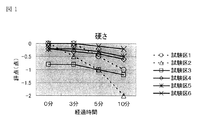
- FIG. 1 shows the results regarding the hardness of Chinese noodles according to Example 1 of the present invention.
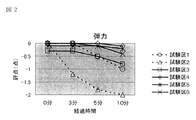
- FIG. 2 shows the results of elasticity of Chinese noodles according to Example 1 of the present invention.
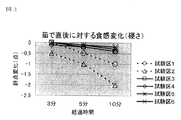
- FIG. 3 is a result of a change in the hardness immediately after boiling in accordance with Example 1 of the present invention.
- FIG. 4 is a result of the change of the elasticity according to Example 1 of the present invention immediately after boiling.
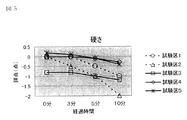
- FIG. 5 shows the results regarding the hardness of the Chinese noodles according to Example 2 of the present invention.
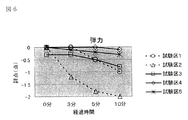
- FIG. 6 shows the results of the elasticity of Chinese noodles according to Example 2 of the present invention.
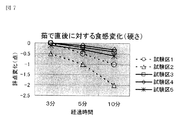
- FIG. 7 is a result of a change with respect to immediately after boiling of the hardness according to Example 2 of the present invention.
- FIG. 8 is a result of a change in the elasticity immediately after stroking according to Example 2 of the present invention.
- FIG. 9 shows the results of the elasticity of Chinese noodles according to Example 3 of the present invention.
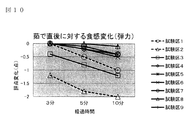
- FIG. 10 is a result of a change in the elasticity immediately after stroking according to Example 3 of the present invention.
- the powder classification with the composition shown in Table 1 was put into a kneader “2 kg vacuum kneader” (manufactured by Otake Noodle Machine Co., Ltd.) and mixed at 100 rpm for 1 minute. A total amount of the aqueous solution dissolved in the composition shown in the water section of Table 1 was added to the mixed powder material, and mixed for 3.5 minutes (100 rpm; 2 minutes, 50 rpm; 1.5 minutes) with a kneader.
- the noodle making machine “Small Coarse Noodle Banding Machine / Small Continuous Rolling Machine” (manufactured by Tom Co., Ltd.) is loosened, combined, rolled, and allowed to stand at room temperature for 1 hour, and then cut using a # 18 cutting blade Went. Cut out noodle strings were divided into 100 g portions and steamed for 2 minutes with a steamer “Steam Tunnel Conveyor” (Fuji Seisakusho) to obtain steamed noodles. The steamed noodles were put into a circular mold and fried with palm oil at 140 ° C.
- Hardness was defined as the stress felt when starting to bite, and “elasticity” was defined as the stress repelling when biting, that is, the strength of the restoring force.
- rating scale 0.5 points were “difference”, 1 point was “significant difference”, and 2 points were “very significant difference”.
- the amount of change relative to the score after 0 minutes of boiling was calculated as an index of hot water elongation and boiling elongation. The result regarding hardness is shown in FIG. 3, and the result regarding elasticity is shown in FIG.
- Wheat flour is “Shirakaba” (Nisshin Flour Mills), Kansui is “Powder Kansui A” (Nihon Colloid), Gardenia pigment is "Yellow Color TH-G” (Hasegawa Fragrance), Arginine is “L-” Arginine (manufactured by Ajinomoto Co.), egg white used “egg white powder” (manufactured by Taiyo Kagaku), guar gum used “VIDOGUM GHK 175” (manufactured by Unitech Foods), and sodium alginate used “Kimika arginine” (manufactured by Kimika). . As shown in FIG. 1 and FIG.
- the hardness and elasticity of the test group 1 are greatly reduced after about 5 minutes after boiling, but in the test group 2 from which salt has been removed, there is a marked decrease in texture immediately after boiling. It was.
- test group 1 there is no decrease in texture immediately after boiling in 3 minutes after boiling, but in test group 2 without salt, food texture is 3 minutes after boiling. Decrease was observed. From this, it is considered that the salt has a hot water elongation and boil elongation suppressing function.
- FIG. 1 to FIG. 4 in the test group 3 to which arginine was added instead of salt, although the hardness and elasticity immediately after boiling were weak, the deterioration of the texture with time was very small.
- fried noodles were produced by the same method as in Example 1, and sensory evaluation was performed using a ramen system.
- the result regarding hardness is shown in FIG. 5, and the result regarding elasticity is shown in FIG.
- the amount of change with respect to the score after 0 minutes of boiling was also calculated as an index of hot water elongation and boiling elongation.
- the result regarding hardness is shown in FIG. 7, and the result regarding elasticity is shown in FIG.
- FIG. 5 and FIG. 6 in the test group 1, the hardness and elasticity are greatly reduced after about 5 minutes after boiling, but in the test group 2 from which salt has been removed, there is a marked decrease in texture immediately after boiling. It was.
- FIG. 5 and FIG. 6 in the test group 1, the hardness and elasticity are greatly reduced after about 5 minutes after boiling, but in the test group 2 from which salt has been removed, there is a marked decrease in texture immediately after boiling. It was.
- FIG. 5 and FIG. 6 in the test group 1, the hardness and elasticity are greatly reduced after about 5 minutes
- fried noodles were produced by the same method as in Example 1, and sensory evaluation was performed using a ramen system.
- the result regarding elasticity is shown in FIG.
- the amount of change with respect to the score after 0 minutes of boiling was also calculated as an index of hot water elongation and boiling elongation.
- the results regarding elasticity are shown in FIG.
- the elasticity was greatly reduced after about 5 minutes from the boil, but in the test group 2 from which the salt was removed, a remarkable decrease in elasticity was observed immediately after the boil.
Landscapes
- Health & Medical Sciences (AREA)
- Nutrition Science (AREA)
- Life Sciences & Earth Sciences (AREA)
- Chemical & Material Sciences (AREA)
- Engineering & Computer Science (AREA)
- Food Science & Technology (AREA)
- Polymers & Plastics (AREA)
- Noodles (AREA)
Description
本発明は、アルギニン又はアルギニン塩を用いる中華麺の製造方法、並びに無塩又は減塩中華麺改質用製剤に関するものである。
中華麺は、小麦粉を主原料とし、水、かんすい、食塩などを加えて麺生地を作り、麺生地を細く切り出して製麺されるアルカリ性の麺であり、かんすいの作用による独特の風味が好まれ、世界中の多くの国と地域で食されている。日本においては、ラーメン、やきそば、冷やし中華などの形態で喫食されることが多いが、ラーメンの即席麺等は、世界中に広く普及している。
中華麺の食感を構成する要素としては、小麦粉中のタンパク質や澱粉、かんすい、食塩、そして水などが挙げられるが、近年はより強い弾力やもちもち感を出すために、様々な技術が開発されてきており、食感改質ニーズは高まっている。また、中華麺は、生麺、フライ麺、乾燥麺の状態から、加熱調理や湯戻しをして喫食されるため、加熱調理や湯戻し直後から喫食するまでの間に湯伸び、茹で伸びといった現象が起こり、経時的に食感が著しく低下する。従って、いかに加熱調理や湯戻し直後の好ましい食感を維持することができるかは、中華麺の品質を決める非常に重要な要素であり、最も高いニーズとなっている。更に近年では、健康志向の高まりから、減塩ニーズも顕在化してきているが、食塩の添加量を減らすことにより湯伸び、茹で伸びの速度が速くなるため、減塩または無塩の実現には他の方法にて湯伸び、茹で伸びを抑制する必要がある。
麺類の食感改質技術としては多くの知見が開示されているが、ガム等の多糖類を使用する技術が多く、例えば、大豆粉と共に、寒天、コンニャク粉、セルロース、カードラン、グアガム、アルギン酸、ペクチン、カラギーナン、卵白から選ばれる少なくともひとつを使用する方法(特開2007−54003公報)、ランザンガムと共に、キサンタンガム、寒天、アルギン酸から選ばれる少なくともひとつを使用する方法(特開2007−159564公報)などが開示されている。いずれの方法も、顕著な麺の食感改質効果を示すものの、麺そのものの食感を改質するものであり、湯伸びや茹で伸びによる麺の食感低下に関する記載はない。また、アルギニンに関する記載は一切無い。
麺類の湯伸び、茹で伸び抑制効果に関する知見としては、微細セルロース、ローカストビーンガム、キサンタンガム、親水性物質を併用する方法(特開2004−24155公報)、アルギン酸カルシウムを用いる方法(特開2004−147576公報)、卵白の酵素加水分解物を用いる方法(特開2001−112425公報)、トランスグルコシダーゼを用いる方法(特許第04862842号)などが開示されている。いずれも一定の効果は認められるものの、その効果の程度は十分なものではなかった。また、アルギニンに関する記載は一切無い。
麺類への、アルギニンを含む塩基性アミノ酸の添加に関する知見としては、塩基性アミノ酸、カルシウム塩、ローズマリー抽出物のうち少なくともひとつを用いることによる加工食品用アクリルアミド生成抑制剤(特開2005−278448公報)、塩基性アミノ酸、中性アミノ酸、中性イミノ酸、スルホン酸のうち少なくともひとつを用いることによる加熱食品のアクリルアミド生成抑制剤(特開2005−21150公報)、塩基性アミノ酸、塩化カリウム、動物タンパク酵素分解物、植物タンパク酵素分解物を併用する米飯類または麺類の塩味増強方法(特開2011−62169公報)、ベタインおよび塩基性アミノ酸または塩基性ペプチドを使用する蒸し中華麺の保存性向上方法(特開平3−123461号公報)が開示されている。このうち、特開2011−62169号公報は麺類を味付けする調味料、すなわち、スープ、たれ、ソースの塩味増強に関する技術であり、本発明の麺そのものの物性を改良する技術とは、技術分野が異なるものである。特開2005−278448号公報および特開平3−123461号公報には、麺類に塩基性アミノ酸を練り込む手法が具体的に記載されているが、特開2005−278448号公報においては、ヒスチジン、リジンに比べてアルギニンの効果が低い旨が記載されている上、ヒスチジンおよびリジンの至適添加量が1~5%と非常に高く、本発明におけるアルギニンの至適添加量である0.05~1%、好ましくは0.1~0.5%とは明らかに異なっている。一方、特開平3−123461号公報においては、塩基性アミノ酸の至適添加量は0.1%、より好ましくは0.01~0.03%と非常に低く、本発明におけるアルギニンの至適添加量である0.05~1%、好ましくは0.1~0.5%とは、好ましい効果の得られる領域が明らかに異なっている。また、特開2005−278448号公報、特開2005−21150号公報、特開2011−62169号公報、特開平3−123461号公報のいずれにおいても食感に関する記載は無く、麺類に対してアルギニンと共にグアガム、アルギン酸などの多糖類や、卵白を併用した例はない。
中華麺の食感を構成する要素としては、小麦粉中のタンパク質や澱粉、かんすい、食塩、そして水などが挙げられるが、近年はより強い弾力やもちもち感を出すために、様々な技術が開発されてきており、食感改質ニーズは高まっている。また、中華麺は、生麺、フライ麺、乾燥麺の状態から、加熱調理や湯戻しをして喫食されるため、加熱調理や湯戻し直後から喫食するまでの間に湯伸び、茹で伸びといった現象が起こり、経時的に食感が著しく低下する。従って、いかに加熱調理や湯戻し直後の好ましい食感を維持することができるかは、中華麺の品質を決める非常に重要な要素であり、最も高いニーズとなっている。更に近年では、健康志向の高まりから、減塩ニーズも顕在化してきているが、食塩の添加量を減らすことにより湯伸び、茹で伸びの速度が速くなるため、減塩または無塩の実現には他の方法にて湯伸び、茹で伸びを抑制する必要がある。
麺類の食感改質技術としては多くの知見が開示されているが、ガム等の多糖類を使用する技術が多く、例えば、大豆粉と共に、寒天、コンニャク粉、セルロース、カードラン、グアガム、アルギン酸、ペクチン、カラギーナン、卵白から選ばれる少なくともひとつを使用する方法(特開2007−54003公報)、ランザンガムと共に、キサンタンガム、寒天、アルギン酸から選ばれる少なくともひとつを使用する方法(特開2007−159564公報)などが開示されている。いずれの方法も、顕著な麺の食感改質効果を示すものの、麺そのものの食感を改質するものであり、湯伸びや茹で伸びによる麺の食感低下に関する記載はない。また、アルギニンに関する記載は一切無い。
麺類の湯伸び、茹で伸び抑制効果に関する知見としては、微細セルロース、ローカストビーンガム、キサンタンガム、親水性物質を併用する方法(特開2004−24155公報)、アルギン酸カルシウムを用いる方法(特開2004−147576公報)、卵白の酵素加水分解物を用いる方法(特開2001−112425公報)、トランスグルコシダーゼを用いる方法(特許第04862842号)などが開示されている。いずれも一定の効果は認められるものの、その効果の程度は十分なものではなかった。また、アルギニンに関する記載は一切無い。
麺類への、アルギニンを含む塩基性アミノ酸の添加に関する知見としては、塩基性アミノ酸、カルシウム塩、ローズマリー抽出物のうち少なくともひとつを用いることによる加工食品用アクリルアミド生成抑制剤(特開2005−278448公報)、塩基性アミノ酸、中性アミノ酸、中性イミノ酸、スルホン酸のうち少なくともひとつを用いることによる加熱食品のアクリルアミド生成抑制剤(特開2005−21150公報)、塩基性アミノ酸、塩化カリウム、動物タンパク酵素分解物、植物タンパク酵素分解物を併用する米飯類または麺類の塩味増強方法(特開2011−62169公報)、ベタインおよび塩基性アミノ酸または塩基性ペプチドを使用する蒸し中華麺の保存性向上方法(特開平3−123461号公報)が開示されている。このうち、特開2011−62169号公報は麺類を味付けする調味料、すなわち、スープ、たれ、ソースの塩味増強に関する技術であり、本発明の麺そのものの物性を改良する技術とは、技術分野が異なるものである。特開2005−278448号公報および特開平3−123461号公報には、麺類に塩基性アミノ酸を練り込む手法が具体的に記載されているが、特開2005−278448号公報においては、ヒスチジン、リジンに比べてアルギニンの効果が低い旨が記載されている上、ヒスチジンおよびリジンの至適添加量が1~5%と非常に高く、本発明におけるアルギニンの至適添加量である0.05~1%、好ましくは0.1~0.5%とは明らかに異なっている。一方、特開平3−123461号公報においては、塩基性アミノ酸の至適添加量は0.1%、より好ましくは0.01~0.03%と非常に低く、本発明におけるアルギニンの至適添加量である0.05~1%、好ましくは0.1~0.5%とは、好ましい効果の得られる領域が明らかに異なっている。また、特開2005−278448号公報、特開2005−21150号公報、特開2011−62169号公報、特開平3−123461号公報のいずれにおいても食感に関する記載は無く、麺類に対してアルギニンと共にグアガム、アルギン酸などの多糖類や、卵白を併用した例はない。
本発明の目的は、食感の改善された中華麺の製造方法及び中華麺改質用製剤を提供することであり、特に中華麺の湯伸び、茹で伸びを抑制する方法を提供することである。更には、無塩もしくは減塩の中華麺の湯伸び、茹で伸びを抑制する方法を提供することである。
本発明者等は、鋭意研究を行った結果、本発明は、アルギニン又はアルギニン塩を用いることにより、上記目的を達成しうることを見出し、本発明を完成するに至った。即ち、本発明は以下の通りである。
(1)小麦粉とアルギニン又はアルギニン塩とを混合し製麺することを特徴とする中華麺の製造方法であって、アルギニン又はアルギニン塩の量が、小麦粉100gあたり、アルギニン換算で0.05~1gである中華麺の製造方法。
(2)さらに、小麦粉100gあたり1g未満の食塩を混合し製麺することを特徴とする(1)記載の方法。
(3)さらに、小麦粉100gあたり0.01~0.9gの食塩を混合し製麺することを特徴とする(1)記載の方法。
(4)アルギニン又はアルギニン塩の量が、小麦粉100gあたりアルギニン換算で0.1~0.5gであり、中華麺の食塩含量が原料小麦粉100gあたり0.01~0.9gである(1)記載の方法。
(5)さらに、卵白、グアガム、アルギン酸、アルギン酸塩より成る群より選ばれる1以上を混合し製麺することを特徴とする(1)乃至(4)記載の方法。
(6)原料小麦粉100gあたりの卵白の量が0.1~5g、グアガムの量が0.1~5g、アルギン酸の量が0.01~2g及びアルギン酸塩が0.01~2gである(5)記載の方法。
(7)中華麺がフライ麺である(1)乃至(6)記載の方法。
(8)アルギニン又はアルギニン塩を含有することを特徴とする無塩又は減塩中華麺製麺用製剤。
本発明により、中華麺の物性を向上することができる。特に、中華麺の湯伸び、茹で伸びを抑制することができ、更には、無塩もしくは減塩の中華麺の湯伸び、茹で伸びを抑制することができる。
本発明の中華麺の製造方法は、小麦粉とアルギニン又はアルギニン塩とを混合し製麺することを特徴とする。すなわち、本発明の中華麺は、小麦粉、アルギニン又はアルギニン塩、水、かんすいなどを混合して麺生地を作り、麺生地を伸ばし、細く切り出すことにより製麺されるアルカリ性の麺である。使用する小麦粉はどのような品種のものでもよく、強力粉、準強力粉、中力粉、薄力粉、デュラムセモリナ粉等、いかなる小麦粉でも構わない。また、米粉、大麦粉、ライ麦粉等の小麦粉以外の穀粉と混合して使用しても構わない。さらには、麺生地を作る際に、卵白、グアガム、アルギン酸、アルギン酸塩(アルギン酸ナトリウム等)、澱粉(加工澱粉を含む)、グルテン、色素等を混合してもよい。
本発明の中華麺は、茹でて、又は湯戻しをして喫食するが、茹で又は湯戻し前の麺の状態は、生麺、フライ麺、乾燥麺等、いかなる状態でもよい。また、茹で又は湯戻し後、いかなる状態で食しても構わない。尚、茹で伸びとは茹でた後に、湯伸びとは湯戻しした後に、麺線内の水分勾配がなくなり、硬さ、弾力、中芯感が失われてコシのない状態になることを言う。
本発明のアルギニン又はアルギニン塩の例としては、アルギニン、アルギニングルタミン酸塩、アルギニン塩酸塩、アルギニン酢酸塩、アルギニン酪酸塩、アルギニン硫酸塩などが挙げられ、その他いかなる塩でもよく、それらの組み合わせでも構わない。L体、D体、それらの混合物でもよい。また、本発明で用いるアルギニンもしくはアルギニン塩は、醗酵法、抽出法などいかなる方法で製造されたものでも構わない。尚、味の素(株)より市販されているL−アルギニンがその一例である。
中華麺にアルギニン又はアルギニン塩を添加する場合は、中華麺の製麺時のどの段階で添加し作用させても構わないが、粉混合時に原料小麦粉に粉末で添加するか、加水時に水に事前溶解させて混練するのが望ましい。
本発明の中華麺の製造において、アルギニン又はアルギニン塩の量は、小麦粉100gあたり、アルギニン換算で0.05~1g、好ましくは0.1~0.5gの範囲が適正である。尚、アルギニン換算とは、アルギニン塩の重量にアルギニンの分子量を乗じ、アルギニン塩の分子量で除した値を意味する。例えば、アルギニン塩酸塩(分子量210.66)の場合、アルギニン塩酸塩1gのアルギニン換算は、1g×174.20÷210.66=0.83gとなる。
小麦粉、アルギニン又はアルギニン塩に加え、さらに、卵白、グアガム、アルギン酸、アルギン酸塩より成る群より選ばれる1以上を混合し製麺する場合、原料小麦粉100gあたりの卵白の量は0.1~5g、グアガムの量は0.1~5g、アルギン酸の量は0.01~2g、アルギン酸塩は0.01~2gが好ましい。
本発明における無塩又は減塩中華麺とは、麺そのもの(麺線)の食塩含量が原料小麦粉100g当たり1g未満、好ましくは0.01~0.9gである中華麺を意味する。アルギニン又はアルギニン塩を用いることにより、もしくはアルギニン又はアルギニン塩と食塩を混合することにより、原料小麦粉100g当たり1g未満の食塩量でも、湯伸び、茹で伸びの抑制された中華麺を製造することができる。
アルギニン又はアルギニン塩に、卵白、グアガム、アルギン酸、アルギン酸塩、食塩、砂糖、澱粉、加工澱粉、デキストリン等の賦形剤、植物エキス等の調味料、グルテン、グルタチオン等の還元剤、乳化剤、かんすい、香料、色素等その他の食品素材や食品添加物等と混合することにより、無塩又は減塩中華麺改質用の製剤を得ることができる。本発明の中華麺改質用製剤は、液体状、ペースト状、顆粒状、粉末状のいずれの形態でも構わない。
本発明者等は、鋭意研究を行った結果、本発明は、アルギニン又はアルギニン塩を用いることにより、上記目的を達成しうることを見出し、本発明を完成するに至った。即ち、本発明は以下の通りである。
(1)小麦粉とアルギニン又はアルギニン塩とを混合し製麺することを特徴とする中華麺の製造方法であって、アルギニン又はアルギニン塩の量が、小麦粉100gあたり、アルギニン換算で0.05~1gである中華麺の製造方法。
(2)さらに、小麦粉100gあたり1g未満の食塩を混合し製麺することを特徴とする(1)記載の方法。
(3)さらに、小麦粉100gあたり0.01~0.9gの食塩を混合し製麺することを特徴とする(1)記載の方法。
(4)アルギニン又はアルギニン塩の量が、小麦粉100gあたりアルギニン換算で0.1~0.5gであり、中華麺の食塩含量が原料小麦粉100gあたり0.01~0.9gである(1)記載の方法。
(5)さらに、卵白、グアガム、アルギン酸、アルギン酸塩より成る群より選ばれる1以上を混合し製麺することを特徴とする(1)乃至(4)記載の方法。
(6)原料小麦粉100gあたりの卵白の量が0.1~5g、グアガムの量が0.1~5g、アルギン酸の量が0.01~2g及びアルギン酸塩が0.01~2gである(5)記載の方法。
(7)中華麺がフライ麺である(1)乃至(6)記載の方法。
(8)アルギニン又はアルギニン塩を含有することを特徴とする無塩又は減塩中華麺製麺用製剤。
本発明により、中華麺の物性を向上することができる。特に、中華麺の湯伸び、茹で伸びを抑制することができ、更には、無塩もしくは減塩の中華麺の湯伸び、茹で伸びを抑制することができる。
本発明の中華麺の製造方法は、小麦粉とアルギニン又はアルギニン塩とを混合し製麺することを特徴とする。すなわち、本発明の中華麺は、小麦粉、アルギニン又はアルギニン塩、水、かんすいなどを混合して麺生地を作り、麺生地を伸ばし、細く切り出すことにより製麺されるアルカリ性の麺である。使用する小麦粉はどのような品種のものでもよく、強力粉、準強力粉、中力粉、薄力粉、デュラムセモリナ粉等、いかなる小麦粉でも構わない。また、米粉、大麦粉、ライ麦粉等の小麦粉以外の穀粉と混合して使用しても構わない。さらには、麺生地を作る際に、卵白、グアガム、アルギン酸、アルギン酸塩(アルギン酸ナトリウム等)、澱粉(加工澱粉を含む)、グルテン、色素等を混合してもよい。
本発明の中華麺は、茹でて、又は湯戻しをして喫食するが、茹で又は湯戻し前の麺の状態は、生麺、フライ麺、乾燥麺等、いかなる状態でもよい。また、茹で又は湯戻し後、いかなる状態で食しても構わない。尚、茹で伸びとは茹でた後に、湯伸びとは湯戻しした後に、麺線内の水分勾配がなくなり、硬さ、弾力、中芯感が失われてコシのない状態になることを言う。
本発明のアルギニン又はアルギニン塩の例としては、アルギニン、アルギニングルタミン酸塩、アルギニン塩酸塩、アルギニン酢酸塩、アルギニン酪酸塩、アルギニン硫酸塩などが挙げられ、その他いかなる塩でもよく、それらの組み合わせでも構わない。L体、D体、それらの混合物でもよい。また、本発明で用いるアルギニンもしくはアルギニン塩は、醗酵法、抽出法などいかなる方法で製造されたものでも構わない。尚、味の素(株)より市販されているL−アルギニンがその一例である。
中華麺にアルギニン又はアルギニン塩を添加する場合は、中華麺の製麺時のどの段階で添加し作用させても構わないが、粉混合時に原料小麦粉に粉末で添加するか、加水時に水に事前溶解させて混練するのが望ましい。
本発明の中華麺の製造において、アルギニン又はアルギニン塩の量は、小麦粉100gあたり、アルギニン換算で0.05~1g、好ましくは0.1~0.5gの範囲が適正である。尚、アルギニン換算とは、アルギニン塩の重量にアルギニンの分子量を乗じ、アルギニン塩の分子量で除した値を意味する。例えば、アルギニン塩酸塩(分子量210.66)の場合、アルギニン塩酸塩1gのアルギニン換算は、1g×174.20÷210.66=0.83gとなる。
小麦粉、アルギニン又はアルギニン塩に加え、さらに、卵白、グアガム、アルギン酸、アルギン酸塩より成る群より選ばれる1以上を混合し製麺する場合、原料小麦粉100gあたりの卵白の量は0.1~5g、グアガムの量は0.1~5g、アルギン酸の量は0.01~2g、アルギン酸塩は0.01~2gが好ましい。
本発明における無塩又は減塩中華麺とは、麺そのもの(麺線)の食塩含量が原料小麦粉100g当たり1g未満、好ましくは0.01~0.9gである中華麺を意味する。アルギニン又はアルギニン塩を用いることにより、もしくはアルギニン又はアルギニン塩と食塩を混合することにより、原料小麦粉100g当たり1g未満の食塩量でも、湯伸び、茹で伸びの抑制された中華麺を製造することができる。
アルギニン又はアルギニン塩に、卵白、グアガム、アルギン酸、アルギン酸塩、食塩、砂糖、澱粉、加工澱粉、デキストリン等の賦形剤、植物エキス等の調味料、グルテン、グルタチオン等の還元剤、乳化剤、かんすい、香料、色素等その他の食品素材や食品添加物等と混合することにより、無塩又は減塩中華麺改質用の製剤を得ることができる。本発明の中華麺改質用製剤は、液体状、ペースト状、顆粒状、粉末状のいずれの形態でも構わない。
図1は、本発明の実施例1に係る中華麺の硬さについての結果である。
図2は、本発明の実施例1に係る中華麺の弾力についての結果である。
図3は、本発明の実施例1に係る硬さの茹で直後に対する変化についての結果である。
図4は、本発明の実施例1に係る弾力の茹で直後に対する変化についての結果である。
図5は、本発明の実施例2に係る中華麺の硬さについての結果である。
図6は、本発明の実施例2に係る中華麺の弾力についての結果である。
図7は、本発明の実施例2に係る硬さの茹で直後に対する変化についての結果である。
図8は、本発明の実施例2に係る弾力の茹で直後に対する変化についての結果である。
図9は、本発明の実施例3に係る中華麺の弾力についての結果である。
図10は、本発明の実施例3に係る弾力の茹で直後に対する変化についての結果である。
図2は、本発明の実施例1に係る中華麺の弾力についての結果である。
図3は、本発明の実施例1に係る硬さの茹で直後に対する変化についての結果である。
図4は、本発明の実施例1に係る弾力の茹で直後に対する変化についての結果である。
図5は、本発明の実施例2に係る中華麺の硬さについての結果である。
図6は、本発明の実施例2に係る中華麺の弾力についての結果である。
図7は、本発明の実施例2に係る硬さの茹で直後に対する変化についての結果である。
図8は、本発明の実施例2に係る弾力の茹で直後に対する変化についての結果である。
図9は、本発明の実施例3に係る中華麺の弾力についての結果である。
図10は、本発明の実施例3に係る弾力の茹で直後に対する変化についての結果である。
以下に実施例を挙げ、本発明をさらに詳しく説明する。本発明は、この実施例により何ら限定されない。
表1に示す配合にて粉区分を混練機「2kg真空捏機」(大竹麺機社製)に投入し、100rpmにて1分混合した。表1の水区分に示す配合にて溶解させた水溶液を、上記混合粉原料に全量加えて、混練機にて3.5分間(100rpm;2分、50rpm;1.5分)混合した。混練後、製麺機「小型粗麺帯機・小型連続圧延機」(トム社製)にてバラ掛け、複合、圧延し、室温にて1時間寝かせた後に#18の切り刃を用いて切り出しを行った。切り出した麺線は100gずつ小分けにし、スチーマー「スチームトンネルコンベア」(富士製作所社製)にて2分間蒸し、蒸し麺を得た。蒸し麺は、円形の型に入れ、フライヤー「コンパクトオートフライヤー」(北沢産業社製)にて140℃のパーム油で2分間揚げてフライ麺を得た。得られたフライ麺は、沸騰水にて5分間茹でた後、熱水の入ったどんぶりに移し、ラーメン系にて官能評価を行った。官能評価は、硬さおよび弾力に関して、茹で直後のコントロール区分を0点とし、−2点から2点までの評点法にて評価人数4人で行った。評価タイミングは、茹で0分後(茹で直後)、茹で3分後、茹で5分後、茹で10分後の4回とした。硬さに関する結果を図1、弾力に関する結果を図2に示す。尚、「硬さ」とは噛み始める際に感じる応力、「弾力」とは噛み潰した際に反発してくる応力すなわち復元力の強さと定義した。評点の尺度は、0.5点が「差あり」、1点が「顕著な差あり」、2点が「非常に顕著な差あり」とした。更に、湯伸び、茹で伸びの指標として、茹で0分後(茹で直後)の評点に対する変化量を算出した。硬さに関する結果を図3、弾力に関する結果を図4に示す。小麦粉は「白椿」(日清製粉社製)、かんすいは「粉末かんすいA」(日本コロイド社製)、クチナシ色素は「イエローカラーTH−G」(長谷川香料社製)、アルギニンは「L−アルギニン」(味の素社製)、卵白は「卵白粉末」(太陽化学社製)、グアガムは「VIDOGUM GHK 175」(ユニテックフーズ社製)、アルギン酸ナトリウムは「キミカアルギニン」(キミカ社製)を用いた。

図1および図2に示す通り、試験区1においては茹で後5分程度経過すると硬さや弾力が大きく低下するが、食塩を抜いた試験区2においては茹で直後から著しい食感の低下が見られた。また、図3および図4に示す通り、試験区1においては茹で後3分では茹で直後に対する食感の低下は見られないが、食塩を抜いた試験区2においては茹で後3分で食感の低下が見られた。このことから、食塩には湯伸び、茹で伸び抑制機能があると考えられる。一方、図1~図4に示す通り、食塩の代わりにアルギニンを添加した試験区3においては、茹で直後の硬さや弾力は弱いものの、経時的な食感の低下は非常に少なく、図3および図4からは食塩を添加した試験区1よりも食感の低下が少ないことが確認された。従って、アルギニンにより中華麺の湯伸び、茹で伸び抑制効果が得られることが示唆された。また、アルギニンと共に卵白、グアガム、アルギン酸ナトリウムを添加することで、アルギニンによる湯伸び、茹で伸び抑制効果が得られると同時に、茹で直後の食感も試験区1とほぼ同等となることが明らかとなった(試験区4~6)。以上より、アルギニンと共に卵白、グアガム、アルギン酸ナトリウムのいずれかを併用することで、茹で直後に硬さと弾力のある食感を有し、時間が経過してもその食感が維持されることが明らかとなった。また、湯伸び、茹で伸びにおける食塩の機能をアルギニンにより十分に代替しうることから、アルギニンを用いることで減塩又は無塩の中華麺を製造できることが明らかとなった。
表2に示す配合に従い、実施例1と同様の方法にてフライ麺を作製し、ラーメン系にて官能評価を行った。硬さに関する結果を図5、弾力に関する結果を図6に示す。また、実施例1と同様に、湯伸び、茹で伸びの指標として、茹で0分後(茹で直後)の評点に対する変化量も算出した。硬さに関する結果を図7、弾力に関する結果を図8に示す。

図5および図6に示す通り、試験区1においては茹で後5分程度経過すると硬さや弾力が大きく低下するが、食塩を抜いた試験区2においては茹で直後から著しい食感の低下が見られた。また、図7および図8に示す通り、試験区1においては茹で後3分では茹で直後に対する食感の低下は見られないが、食塩を抜いた試験区2においては茹で後3分で食感の低下が見られた。一方、図5~図8に示す通り、食塩の代わりにアルギニンを添加した試験区3においては、茹で直後の硬さや弾力は弱いものの、経時的な食感の低下は非常に少なく、図7および図8からは食塩を添加した試験区1よりも食感の低下が少ないことが確認され、アルギニンにより中華麺の湯伸び、茹で伸び抑制効果が得られることが示唆された。また、アルギニンと共に卵白とアルギン酸ナトリウム、もしくはグアガムとアルギン酸ナトリウムを添加することで、アルギニンによる湯伸び、茹で伸び抑制効果が得られると同時に、茹で直後の食感も試験区1とほぼ同等となることが明らかとなった(試験区4~6)。以上より、中華麺の製造において、アルギニンと共に、卵白、グアガム、アルギン酸ナトリウムより選ばれる2種を併用することで、製造された中華麺は茹で直後に十分な食感を有し、時間が経過してもその食感が維持されることが明らかとなった。
表3に示す配合に従い、実施例1と同様の方法にてフライ麺を作製し、ラーメン系にて官能評価を行った。弾力に関する結果を図9に示す。また、実施例1と同様に、湯伸び、茹で伸びの指標として、茹で0分後(茹で直後)の評点に対する変化量も算出した。弾力に関する結果を図10に示す。

図9に示す通り、試験区1においては茹で後5分程度経過すると弾力が大きく低下するが、食塩を抜いた試験区2では茹で直後から著しい弾力の低下が見られた。アルギニン添加区においては、試験区4~8において茹で後10分経過した際の弾力が試験区1の食塩添加区を上回っており、特に試験区5~7においてその効果は顕著であった。試験区3はアルギニンの添加量が少ないため茹で後10分が経過すると試験区2に近い弾力にまで低下した。試験区9はアルギニンの添加量が過剰であるため、弾力があまり感じられない硬もろい食感となった。また、図10に示す通り、試験区1においては茹で後3分では茹で直後に対する弾力の低下は見られないが、食塩を抜いた試験区2では茹で後3分で弾力の低下が見られた。アルギニン添加区においては、試験区4~9において茹で後3分での弾力低下は全く見られず、茹で後5~10分の弾力低下幅も試験区1より少なく、食塩を上回る顕著な食感維持機能が確認された。ただし、試験区9は、食感維持機能はあるが、上述の通りそもそも弾力が十分に付与されていない。一方、試験区3はアルギニンの添加量が少ないため、試験区1に比べ弾力の低下幅が大きかった。以上より、中華麺の製造において、小麦粉100gあたり0.01~1g、好ましくは0.1~0.5gのアルギニンを添加することで食感の改善された中華麺を製造できること、特に中華麺の湯伸び、茹で伸びを抑制できることが明らかとなった。
本発明によると、中華麺の物性を向上できるため、食品分野において極めて有用である。
Claims (8)
- 小麦粉とアルギニン又はアルギニン塩とを混合し製麺することを特徴とする中華麺の製造方法であって、アルギニン又はアルギニン塩の量が、小麦粉100gあたり、アルギニン換算で0.05~1gである中華麺の製造方法。
- さらに、小麦粉100gあたり1g未満の食塩を混合し製麺することを特徴とする請求項1記載の方法。
- さらに、小麦粉100gあたり0.01~0.9gの食塩を混合し製麺することを特徴とする請求項1記載の方法。
- アルギニン又はアルギニン塩の量が、小麦粉100gあたりアルギニン換算で0.1~0.5gであり、中華麺の食塩含量が原料小麦粉100gあたり0.01~0.9gである請求項1記載の方法。
- さらに、卵白、グアガム、アルギン酸、アルギン酸塩より成る群より選ばれる1以上を混合し製麺することを特徴とする請求項1乃至4記載の方法。
- 原料小麦粉100gあたりの卵白の量が0.1~5g、グアガムの量が0.1~5g、アルギン酸の量が0.01~2g及びアルギン酸塩が0.01~2gである請求項5記載の方法。
- 中華麺がフライ麺である請求項1乃至6記載の方法。
- アルギニン又はアルギニン塩を含有することを特徴とする無塩又は減塩中華麺製麺用製剤。
Applications Claiming Priority (2)
| Application Number | Priority Date | Filing Date | Title |
|---|---|---|---|
| JP2012-193116 | 2012-09-03 | ||
| JP2012193116A JP2015213434A (ja) | 2012-09-03 | 2012-09-03 | 中華麺の製造方法及び中華麺改質用製剤 |
Publications (1)
| Publication Number | Publication Date |
|---|---|
| WO2014034965A1 true WO2014034965A1 (ja) | 2014-03-06 |
Family
ID=50183760
Family Applications (1)
| Application Number | Title | Priority Date | Filing Date |
|---|---|---|---|
| PCT/JP2013/074168 Ceased WO2014034965A1 (ja) | 2012-09-03 | 2013-09-02 | 中華麺の製造方法及び中華麺改質用製剤 |
Country Status (2)
| Country | Link |
|---|---|
| JP (1) | JP2015213434A (ja) |
| WO (1) | WO2014034965A1 (ja) |
Cited By (1)
| Publication number | Priority date | Publication date | Assignee | Title |
|---|---|---|---|---|
| WO2024262384A1 (ja) * | 2023-06-19 | 2024-12-26 | 三菱商事ライフサイエンス株式会社 | カードランとアルギニンを含有する食品の品質改善剤 |
Families Citing this family (9)
| Publication number | Priority date | Publication date | Assignee | Title |
|---|---|---|---|---|
| JP6353499B2 (ja) * | 2016-08-31 | 2018-07-04 | 日清食品ホールディングス株式会社 | フライ麺の製造方法 |
| JP6334623B2 (ja) | 2016-08-31 | 2018-05-30 | 日清食品ホールディングス株式会社 | ノンフライ麺の製造方法 |
| US20200205449A1 (en) * | 2017-05-24 | 2020-07-02 | Yuki Gosei Kogyo Co., Ltd. | Hardening inhibitor for brine-containing noodles or brine-containing wonton wrapper |
| HUE062945T2 (hu) | 2017-12-13 | 2023-12-28 | Nissin Foods Holdings Co Ltd | Eljárás instant tészta elõállítására |
| JP7055033B2 (ja) | 2018-02-20 | 2022-04-15 | 日清食品ホールディングス株式会社 | 即席麺の製造方法 |
| JP7155640B2 (ja) * | 2018-06-14 | 2022-10-19 | 味の素株式会社 | 澱粉含有食品の製造方法 |
| JP6960954B2 (ja) * | 2019-03-29 | 2021-11-05 | 日清食品ホールディングス株式会社 | 即席和風麺の製造方法 |
| JP7655734B2 (ja) * | 2021-02-05 | 2025-04-02 | 日清食品ホールディングス株式会社 | 即席麺の製造方法 |
| JP7570938B2 (ja) * | 2021-02-05 | 2024-10-22 | 日清食品ホールディングス株式会社 | 即席麺の製造方法 |
Citations (7)
| Publication number | Priority date | Publication date | Assignee | Title |
|---|---|---|---|---|
| JPS55165775A (en) * | 1979-06-13 | 1980-12-24 | Nisshin Flour Milling Co Ltd | Improver for chinese noodle |
| JP2000083610A (ja) * | 1998-09-11 | 2000-03-28 | Nisshin Flour Milling Co Ltd | 麺類の製造方法 |
| JP2004147576A (ja) * | 2002-10-31 | 2004-05-27 | Taiyo Kagaku Co Ltd | 麺質改良剤及び麺類の製造方法 |
| JP2005021150A (ja) * | 2002-12-03 | 2005-01-27 | Toyo Suisan Kaisha Ltd | アクリルアミドを低減化し得る加熱調理食品の製造方法 |
| JP2005087085A (ja) * | 2003-09-17 | 2005-04-07 | Kumamoto Seifun Kk | 食用ミックス粉 |
| JP2005278448A (ja) * | 2004-03-29 | 2005-10-13 | Nissin Food Prod Co Ltd | 加工食品のアクリルアミド生成抑制方法、アクリルアミド生成抑制剤、および、加工食品の製造方法 |
| WO2011034133A1 (ja) * | 2009-09-18 | 2011-03-24 | 日本水産株式会社 | 塩味増強剤及びそれを含有する飲食品 |
-
2012
- 2012-09-03 JP JP2012193116A patent/JP2015213434A/ja active Pending
-
2013
- 2013-09-02 WO PCT/JP2013/074168 patent/WO2014034965A1/ja not_active Ceased
Patent Citations (7)
| Publication number | Priority date | Publication date | Assignee | Title |
|---|---|---|---|---|
| JPS55165775A (en) * | 1979-06-13 | 1980-12-24 | Nisshin Flour Milling Co Ltd | Improver for chinese noodle |
| JP2000083610A (ja) * | 1998-09-11 | 2000-03-28 | Nisshin Flour Milling Co Ltd | 麺類の製造方法 |
| JP2004147576A (ja) * | 2002-10-31 | 2004-05-27 | Taiyo Kagaku Co Ltd | 麺質改良剤及び麺類の製造方法 |
| JP2005021150A (ja) * | 2002-12-03 | 2005-01-27 | Toyo Suisan Kaisha Ltd | アクリルアミドを低減化し得る加熱調理食品の製造方法 |
| JP2005087085A (ja) * | 2003-09-17 | 2005-04-07 | Kumamoto Seifun Kk | 食用ミックス粉 |
| JP2005278448A (ja) * | 2004-03-29 | 2005-10-13 | Nissin Food Prod Co Ltd | 加工食品のアクリルアミド生成抑制方法、アクリルアミド生成抑制剤、および、加工食品の製造方法 |
| WO2011034133A1 (ja) * | 2009-09-18 | 2011-03-24 | 日本水産株式会社 | 塩味増強剤及びそれを含有する飲食品 |
Cited By (1)
| Publication number | Priority date | Publication date | Assignee | Title |
|---|---|---|---|---|
| WO2024262384A1 (ja) * | 2023-06-19 | 2024-12-26 | 三菱商事ライフサイエンス株式会社 | カードランとアルギニンを含有する食品の品質改善剤 |
Also Published As
| Publication number | Publication date |
|---|---|
| JP2015213434A (ja) | 2015-12-03 |
Similar Documents
| Publication | Publication Date | Title |
|---|---|---|
| JP2015213434A (ja) | 中華麺の製造方法及び中華麺改質用製剤 | |
| RU2212177C2 (ru) | Способ производства рыбных котлет | |
| JP4880081B1 (ja) | アセチル化アジピン酸架橋タピオカ澱粉及びその製造方法 | |
| RU2210949C2 (ru) | Способ производства рыбных котлет | |
| JP2021029138A (ja) | 麺類用品質改良剤 | |
| JP2021003096A (ja) | 卵様食品 | |
| KR102135435B1 (ko) | 곱창의 풍미 증진용 조성물의 제조 방법 | |
| KR20160112311A (ko) | 누에 분말을 이용한 가공식품 및 그 제조방법 | |
| KR101226097B1 (ko) | 요리용 소스 및 이의 제조방법 | |
| JP6936721B2 (ja) | 減塩手延べ干しめん及びその製造方法 | |
| JP2004147576A (ja) | 麺質改良剤及び麺類の製造方法 | |
| JP2008237124A (ja) | ホワイトソース用添加剤及び該添加剤を使用した食品 | |
| JP6089779B2 (ja) | 電子レンジ加熱麺類の製造方法及び電子レンジ加熱麺類改質用酵素製剤 | |
| JP2014124127A (ja) | 中華麺の製造方法 | |
| JP6451091B2 (ja) | タコ代替素材の製造法 | |
| RU2198569C2 (ru) | Способ производства рыбных котлет | |
| JP2019170348A (ja) | フライ即席麺の製造方法 | |
| JP2022140411A (ja) | 穀粉生地、麺及び麺セット | |
| CN104783117A (zh) | 一种蘑菇鲜味料的制备方法 | |
| JP4908970B2 (ja) | 麺類の復元性向上剤 | |
| WO2013141412A1 (ja) | シリアル食品の製造方法及びシリアル食品改質用製剤 | |
| JP2021141871A (ja) | 麺類用品質改良剤 | |
| RU2200439C1 (ru) | Способ производства фрикаделей на рыбной основе | |
| JP2015100292A (ja) | 中華麺用の食感改良剤、中華麺、および、中華麺の製造方法 | |
| RU2201118C1 (ru) | Способ производства фрикаделей на рыбной основе |
Legal Events
| Date | Code | Title | Description |
|---|---|---|---|
| 121 | Ep: the epo has been informed by wipo that ep was designated in this application |
Ref document number: 13832102 Country of ref document: EP Kind code of ref document: A1 |
|
| NENP | Non-entry into the national phase |
Ref country code: DE |
|
| 122 | Ep: pct application non-entry in european phase |
Ref document number: 13832102 Country of ref document: EP Kind code of ref document: A1 |
|
| NENP | Non-entry into the national phase |
Ref country code: JP |